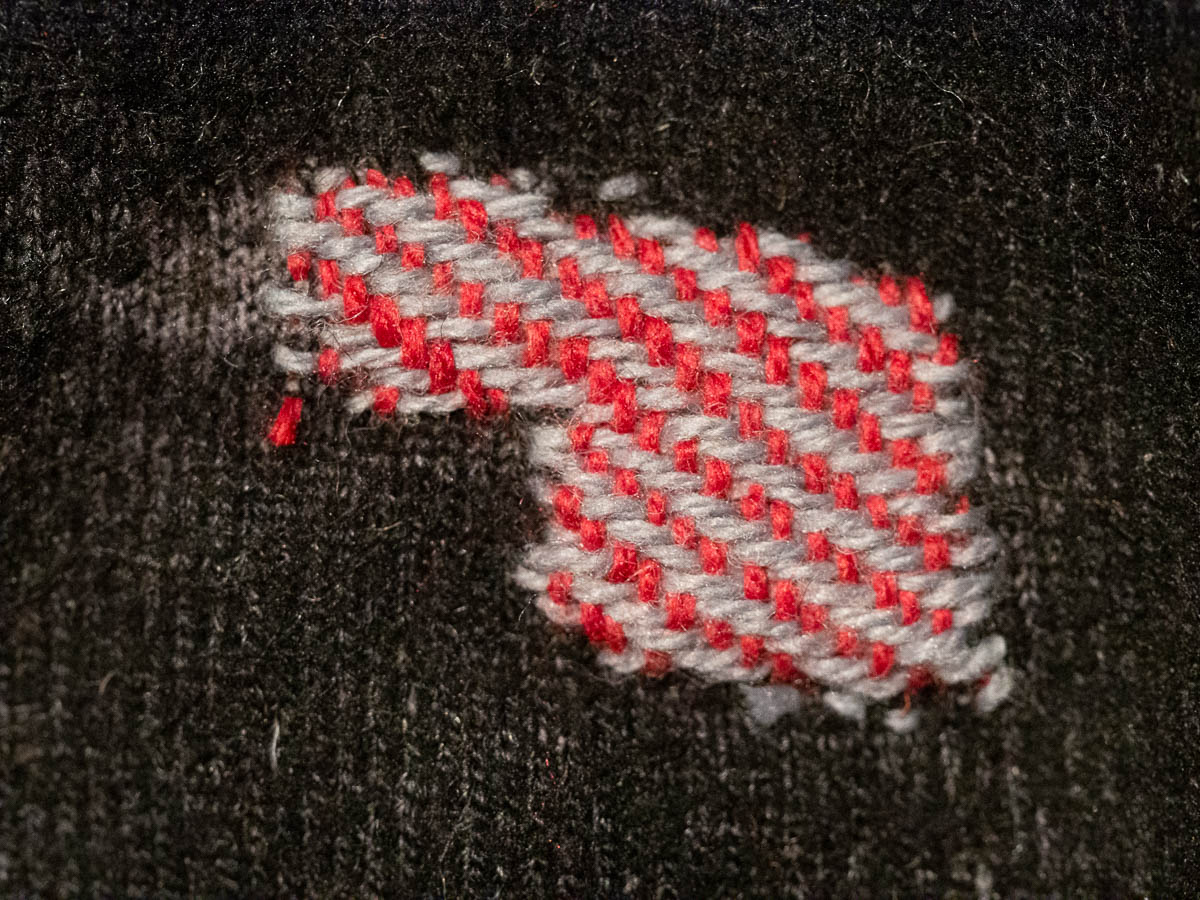
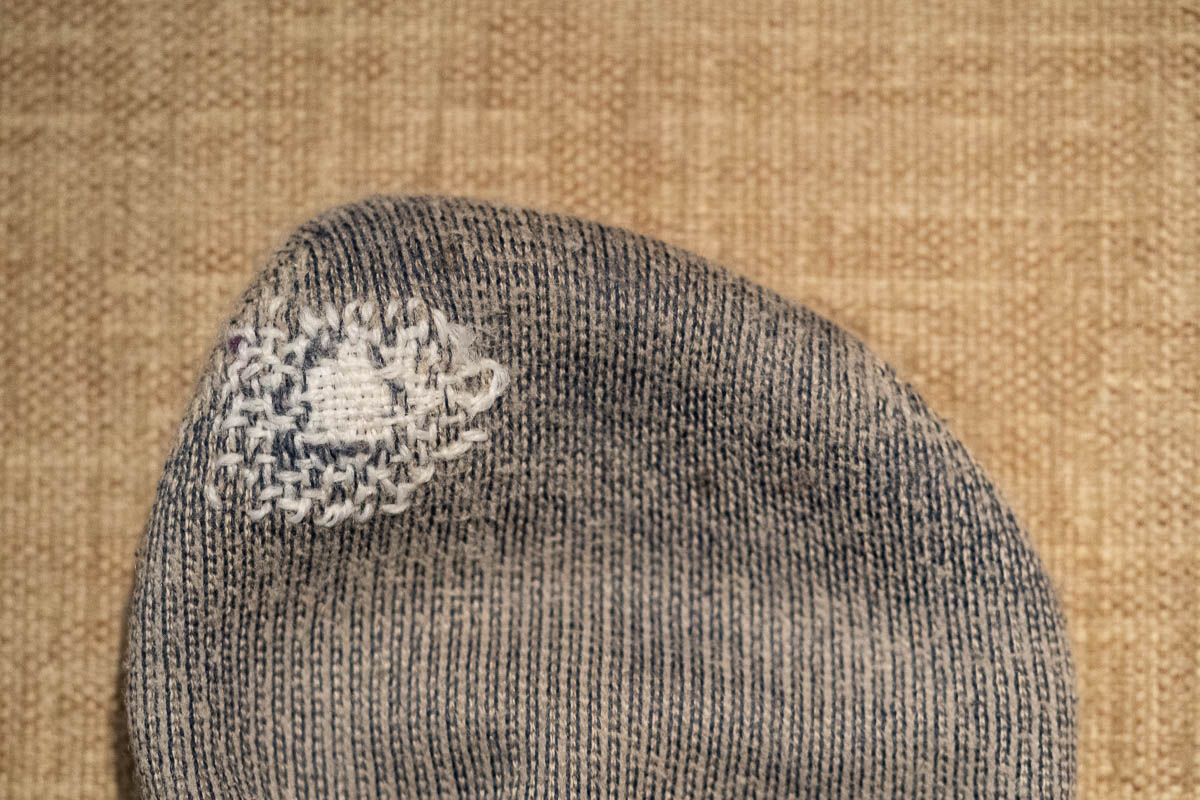
My favourite socks are ready for wear again. One hole and one very thin place are now properly darned. That thin place could have done with a slightly larger mend but as usual I underestimated how much yarn I would need and ran out a bit too early.
Sometimes a day goes by and fades into evening and I realize I haven’t done a single photo-worthy thing. I have sat at my desk, behind my computer. I have worked out (yes!) and read a bit of the Economist while eating lunch. I have cooked and eaten dinner. That’s it.
In the evening it is dark outside and I cannot take photos of anything in the garden. It is dark inside as well, and the rest of the family are all sitting in their dim corners of the house.
Occasionally this is enough to give me a gentle kick and make me do something physical that I can take a photo of. Which is backwards in a way – doing things just so I get a photo – but since these are things that I’ve been wanting to do anyway and simply procrastinating about, it’s not so backwards after all. The photo is just an odd kind of motivational carrot.
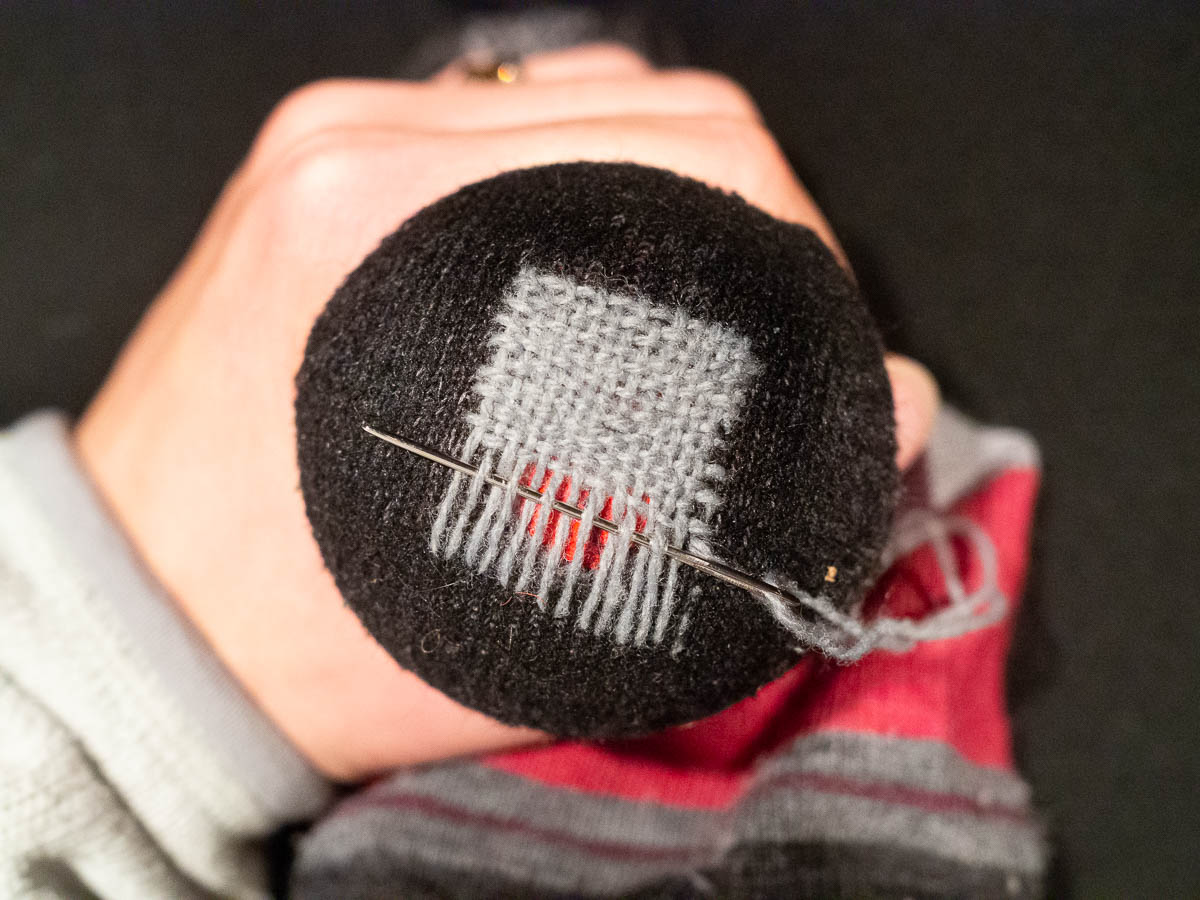
So this evening I darned a hole in a sock that has been waiting for my attention for a week or so.
It is sock darning season, because it is sock wearing season. The house usually starts getting cold enough for socks in the middle of the day around mid-September.
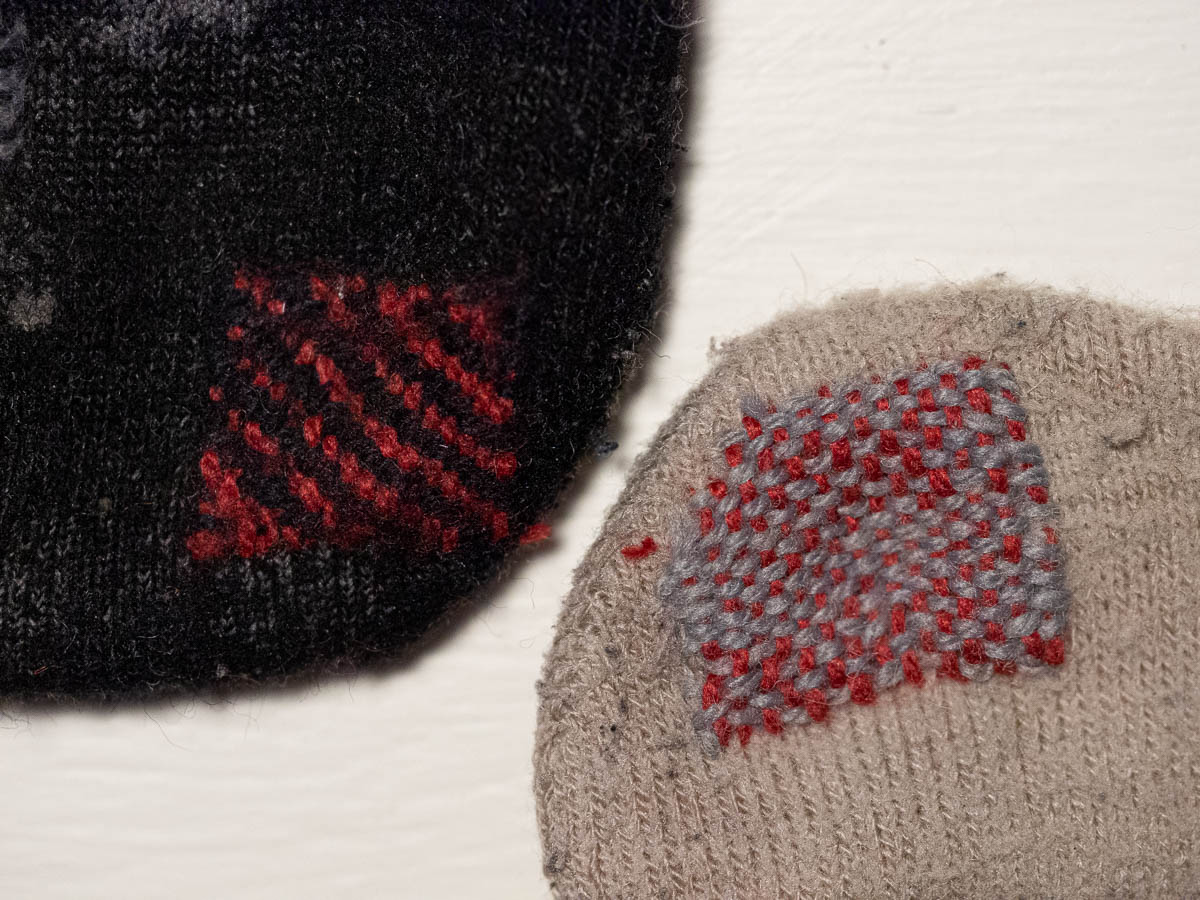
This fresh darning looks crisp and smart compared to the ones I did half a year ago. Almost too crisp, in fact: it doesn’t blend in. The older ones have become slightly felted by wear (even though the darning yarn is a wool mix rather than pure wool) and look a lot more cosy and natural.
It’s nearly always the spot under the big toe that wears out first on my indoor socks.
No, I’m not mending books. These are books about mending.
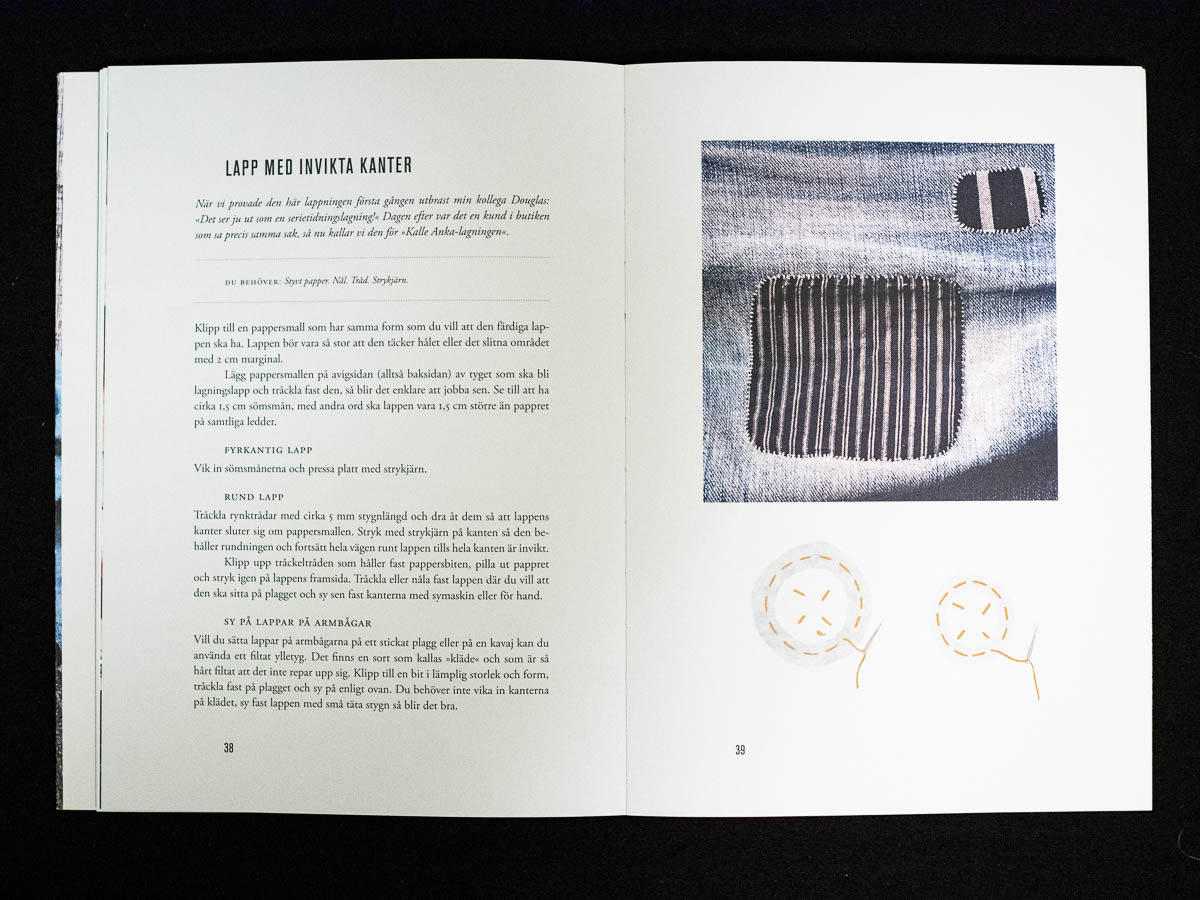
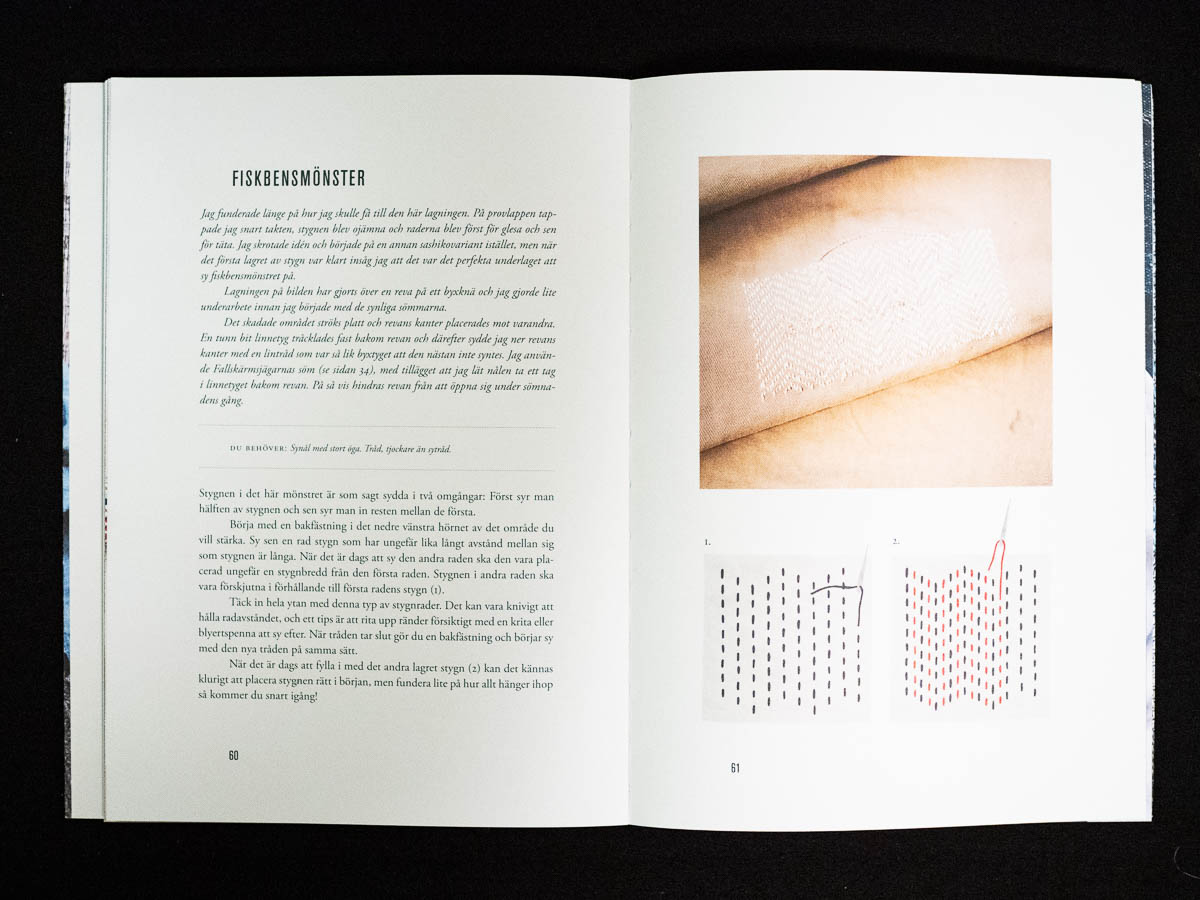
I have three. Two go together, and the third one stands on its own. All three are in Swedish.
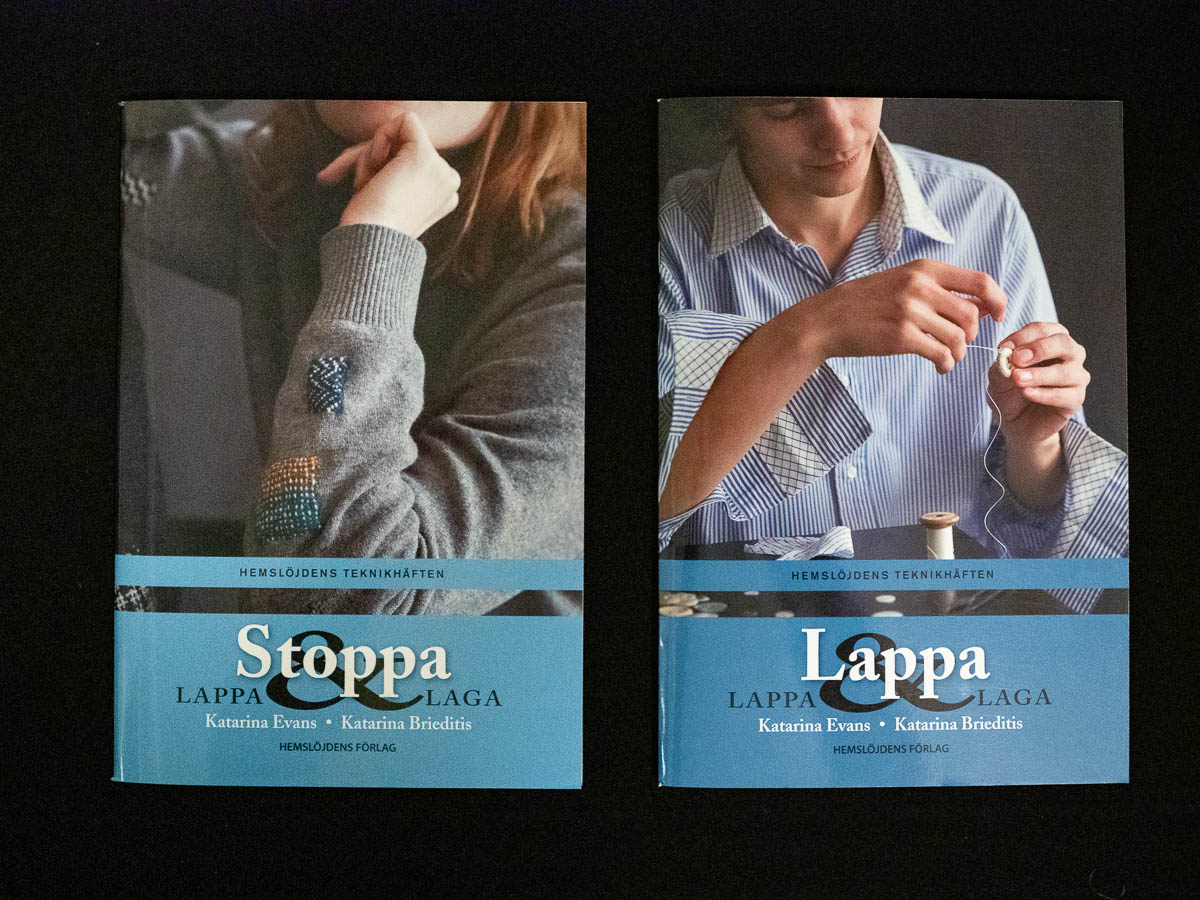
The two are called simply Lappa and Stoppa – “Patch” and “Darn”. They’re published by Hemslöjdens Förlag, a small publishing house (owned by a non-profit) that specializes in books about crafts. These two are part of their “technique booklets” series – slim, focused, practically oriented booklets about a specific technique, such as darning. Their other books are also practical in nature, rather than shiny heavy coffee table books.
I like their books in general. I think I own about a fifth of their catalogue… But these two books are my favourites. They combine practicality with just the right amount of fun without turning too silly. Their examples are varied in style. And their way of mending things is wonderfully lighthearted and irreverent. Have a hole in your sweater? Make it larger! Or make more of them!
The booklets are heavy on pictures, both inspirational and instructional. Texts are mostly brief, often step-by-step.

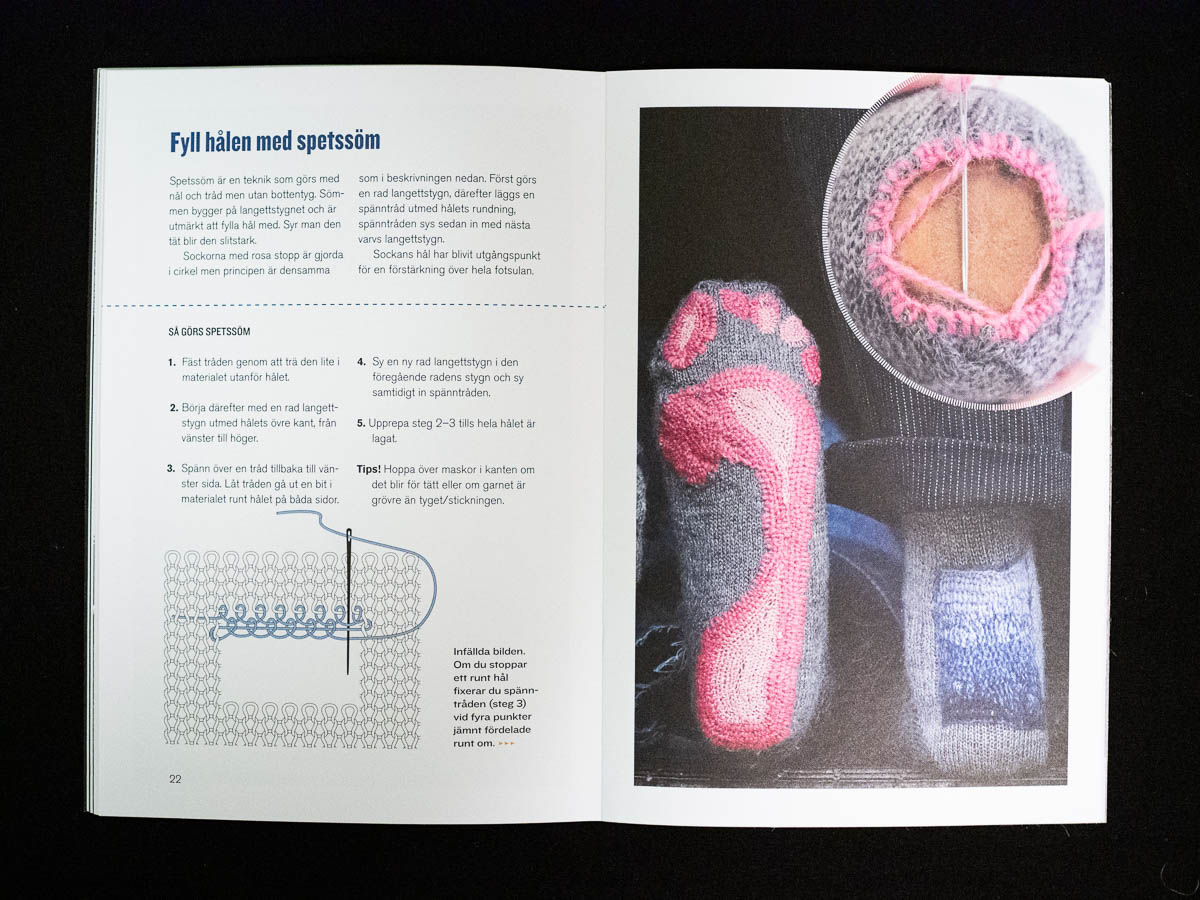
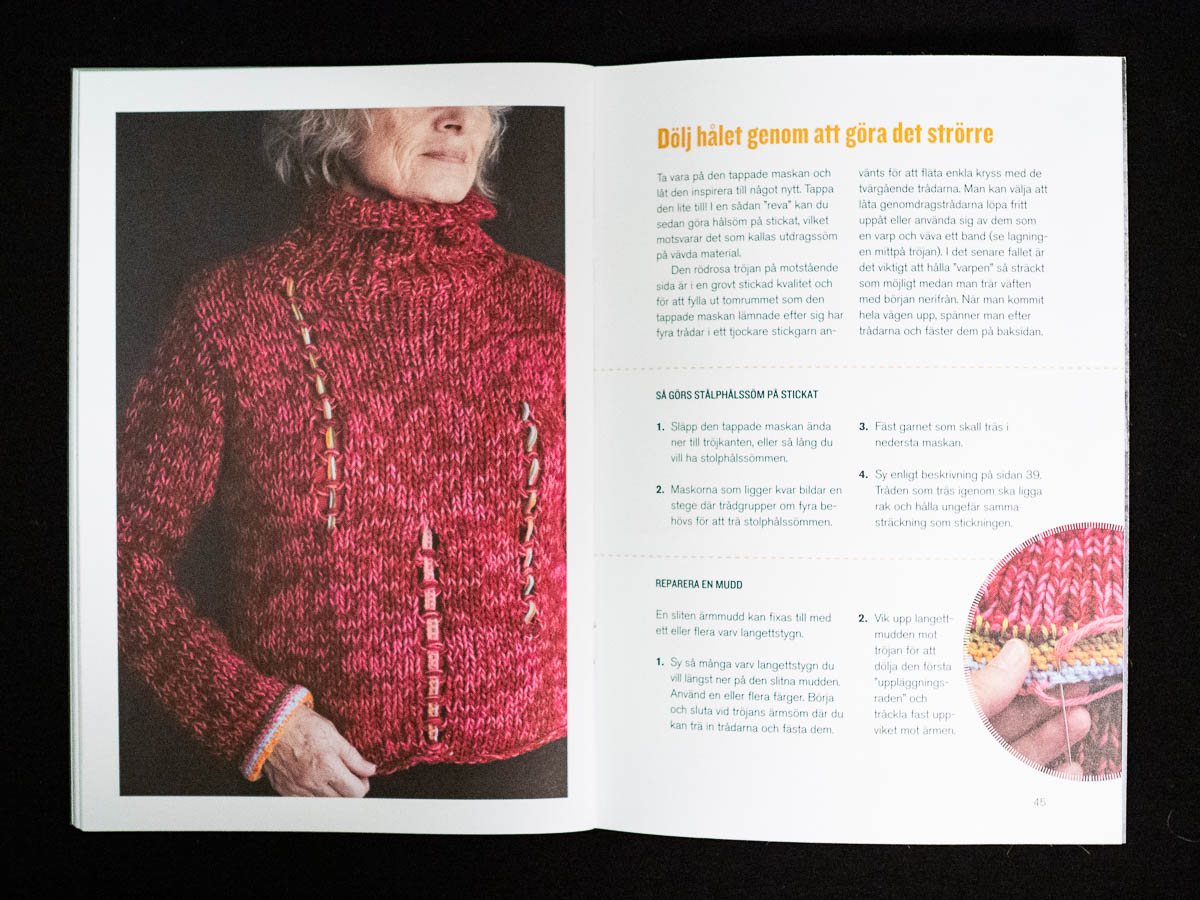
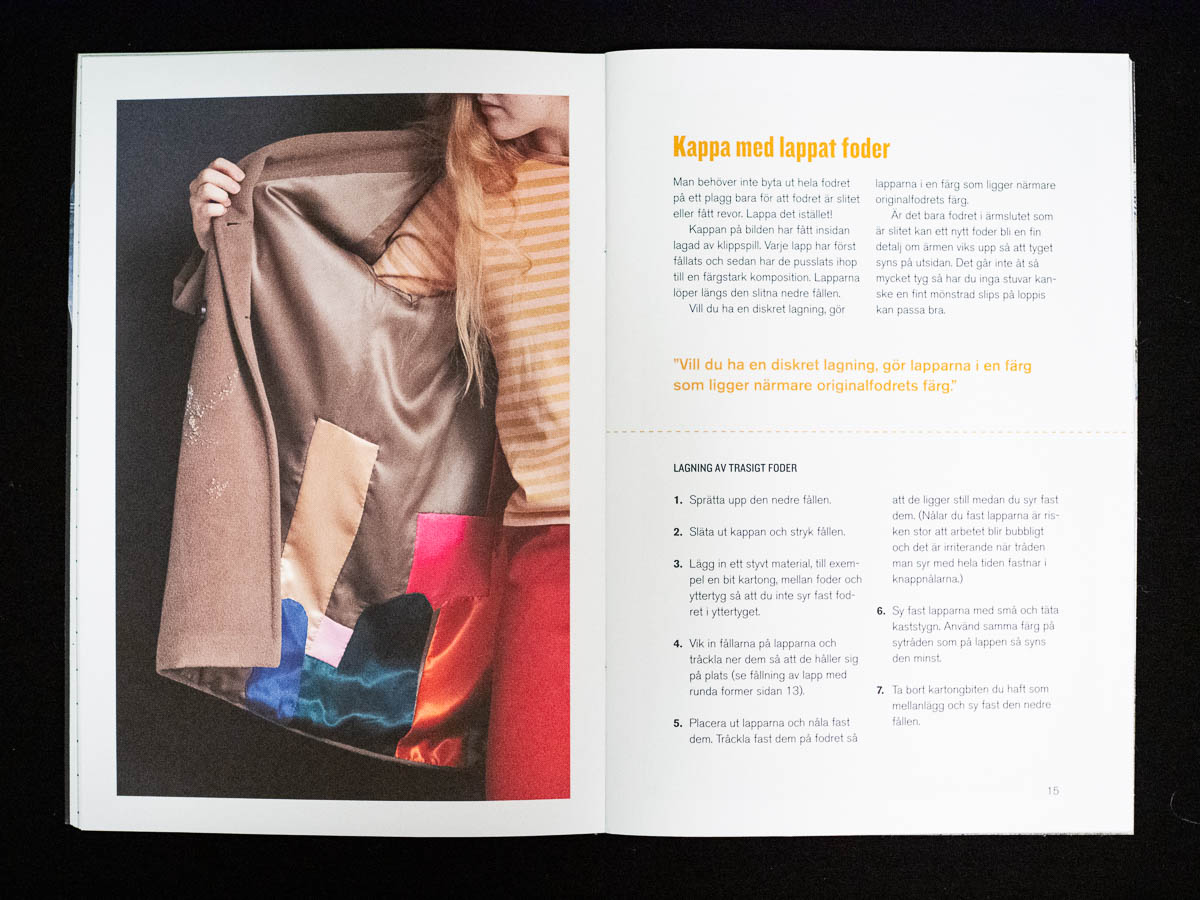
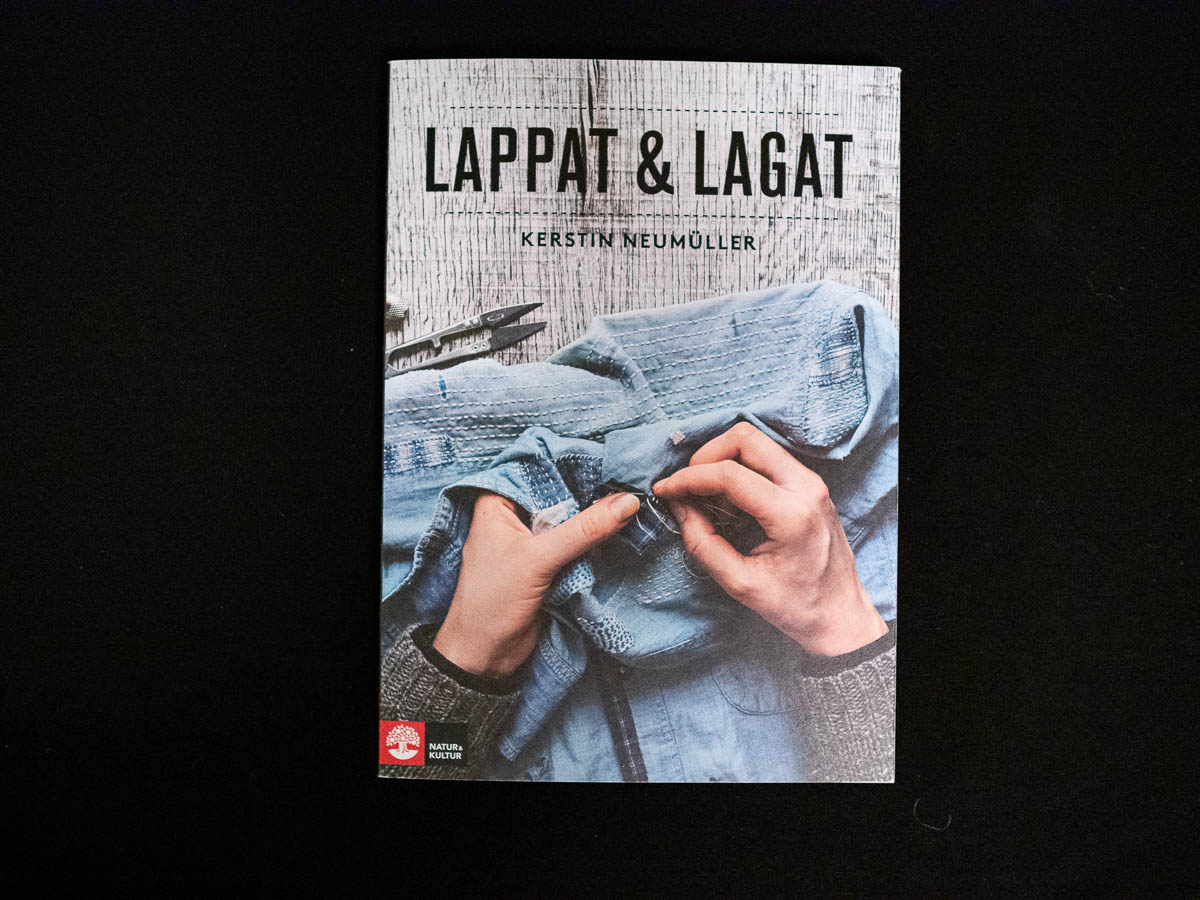
The standalone book by Kerstin Neumüller is also named simply Lappat & lagat, “Patched and mended”. It’s an actual book, thicker and more solid than the two booklets, and covers a broader range of mending topics than just patching and darning: how to repair a buttonhole, how to repair leather goods, etc. It’s more solid and serious in tone as well. More instruction and less inspiration; more text and fewer step-by-step lists. It’s a useful book and I’ve learned things from it, and if I didn’t have the others I’d probably be quite happy with it – but it’s simply not quite as much fun to pick up than the other two.
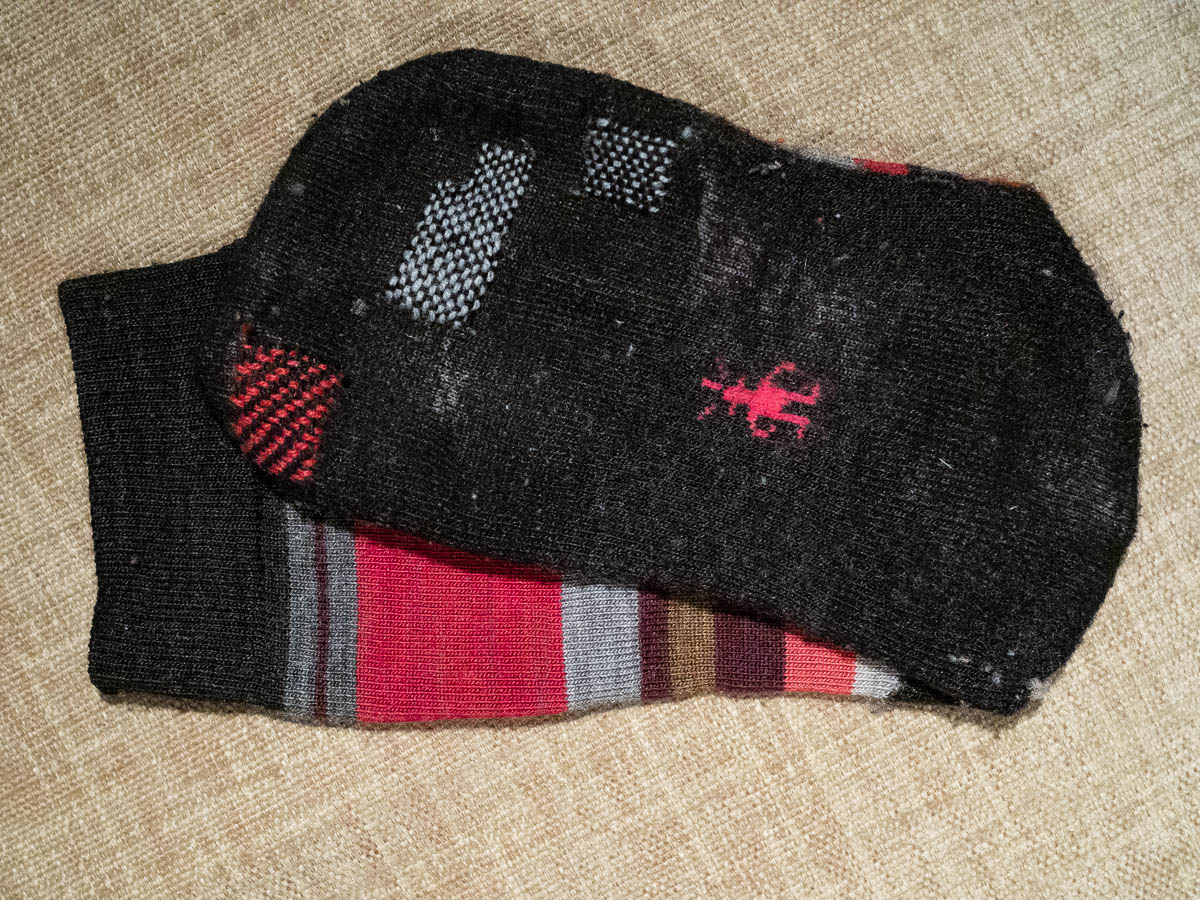
Darning black socks with black yarn turned out to be really hard. In my efforts to see the individual threads I kept stretching the holes too wide, so when I was done with the darning it didn’t lie flat.
At some point I realized how stupid this was. Why was I making this so hard for myself? I picked up a yarn in a contrasting colour. And now I could see what I was doing! My darning on this third sock looks a lot more even and tidy than the first two I did before it.
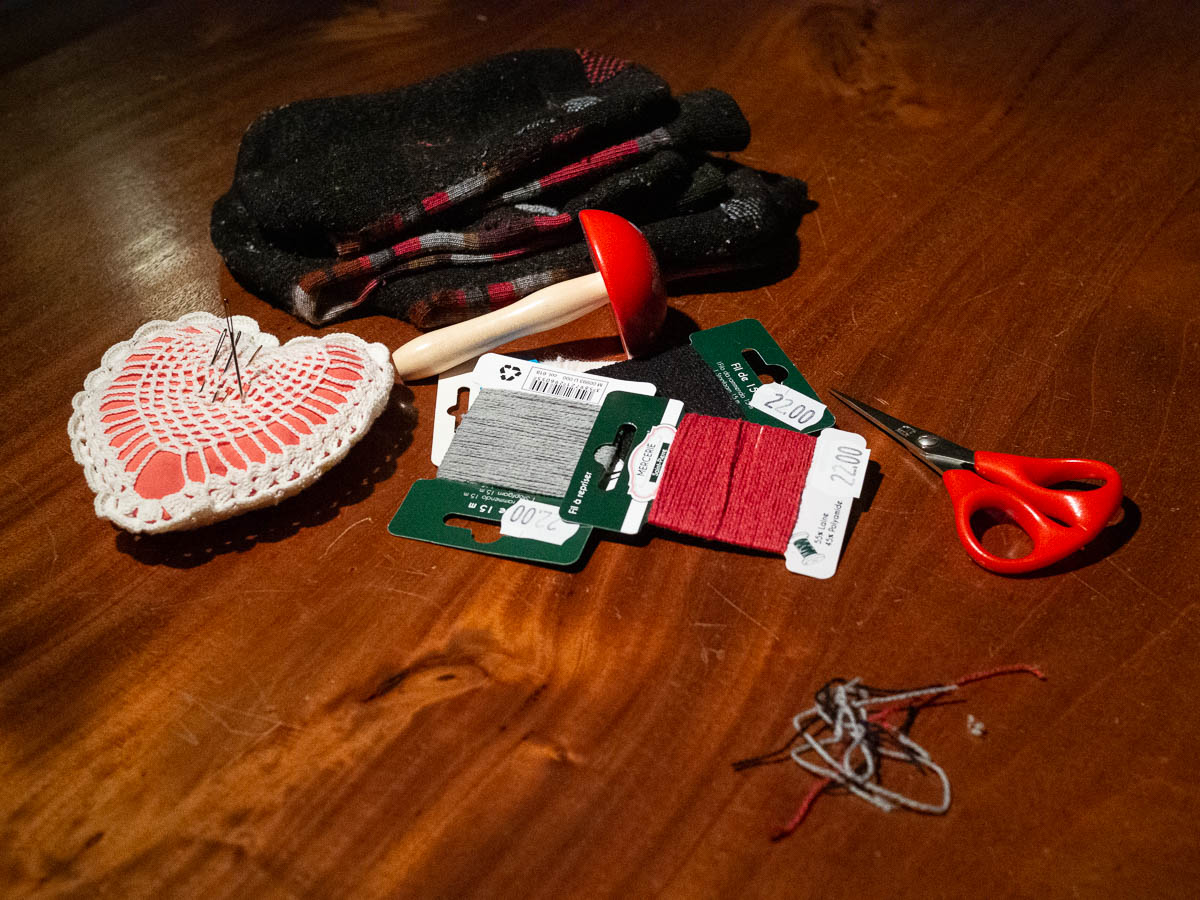
I’m darning socks again. I recently rediscovered a very nice shop that sells Swedish crafts (which I remembered) and crafts materials (which I had mostly forgotten). The best thing they had was darning mushrooms. I’ve been able to darn some of my favourite socks anyway, but this makes the job a lot easier, and the end result looks better.
The BBC, meanwhile, considers darning mushrooms a historical object, no longer used.
The darning mushroom would have been an essential tool in an era when women were constantly repairing worn socks. Before the advent of synthetic materials, socks and other items of clothing were in constant need of repair. Darning would have been considered a necessary skill for girls and young women, part of their education as future wives and mothers. The mushroom was used to make repairs to clothing, bed linen etc a practice that has largely disappeared with the development of modern textiles.
I don’t agree with the BBC about using the mushroom for bed linen, though. This is for darning holes in stretchy, knitted materials, not in woven textiles.
The mushroom brought back memories of a mending tool that really is no longer used: latch ladder menders. My mum had one of these. It was really fiddly to use, but the mend was practically invisible. The instructions in the photo suggest stretching the stocking over an egg cup. Since my mum worked in chemistry, we used a small lab beaker instead.
I don’t like throwing things away. I think it’s partly due to my Soviet childhood, when everything was scarce and you couldn’t just get another one when you broke the one you had. It wasn’t so with everything, of course, but that was my overall feeling: things that you valued needed to be treated with some care.
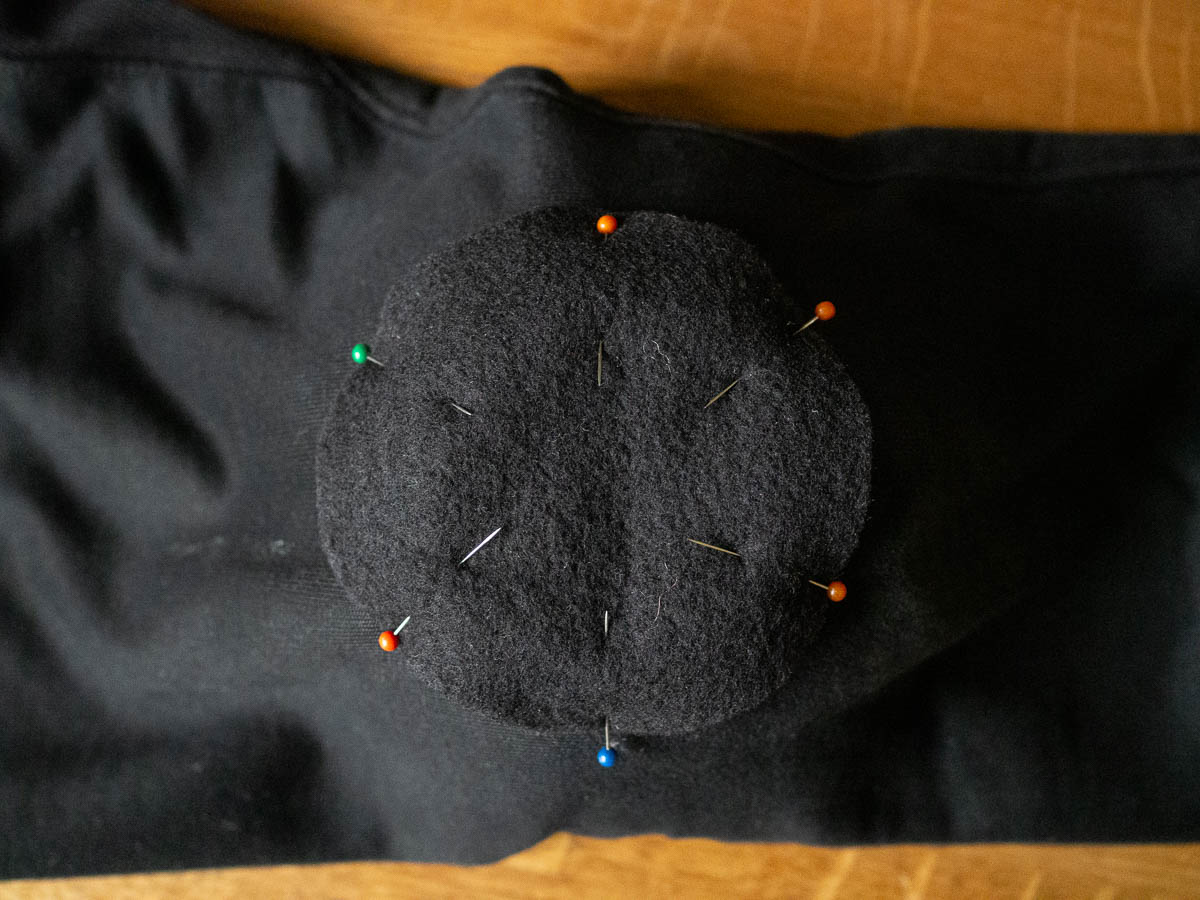
Another pair of patches on another pair of trousers. These I’ve mended before but Adrian keeps wearing out the knees. Apparently they’re really comfortable, I had to confiscate them and promise Adrian he’d get them back the same day before he let me have them.
Polar fleece is the ultimate fabric for patching children’s clothes. Soft, stretchy, comes in a multitude of colours and doesn’t fray at the edges.
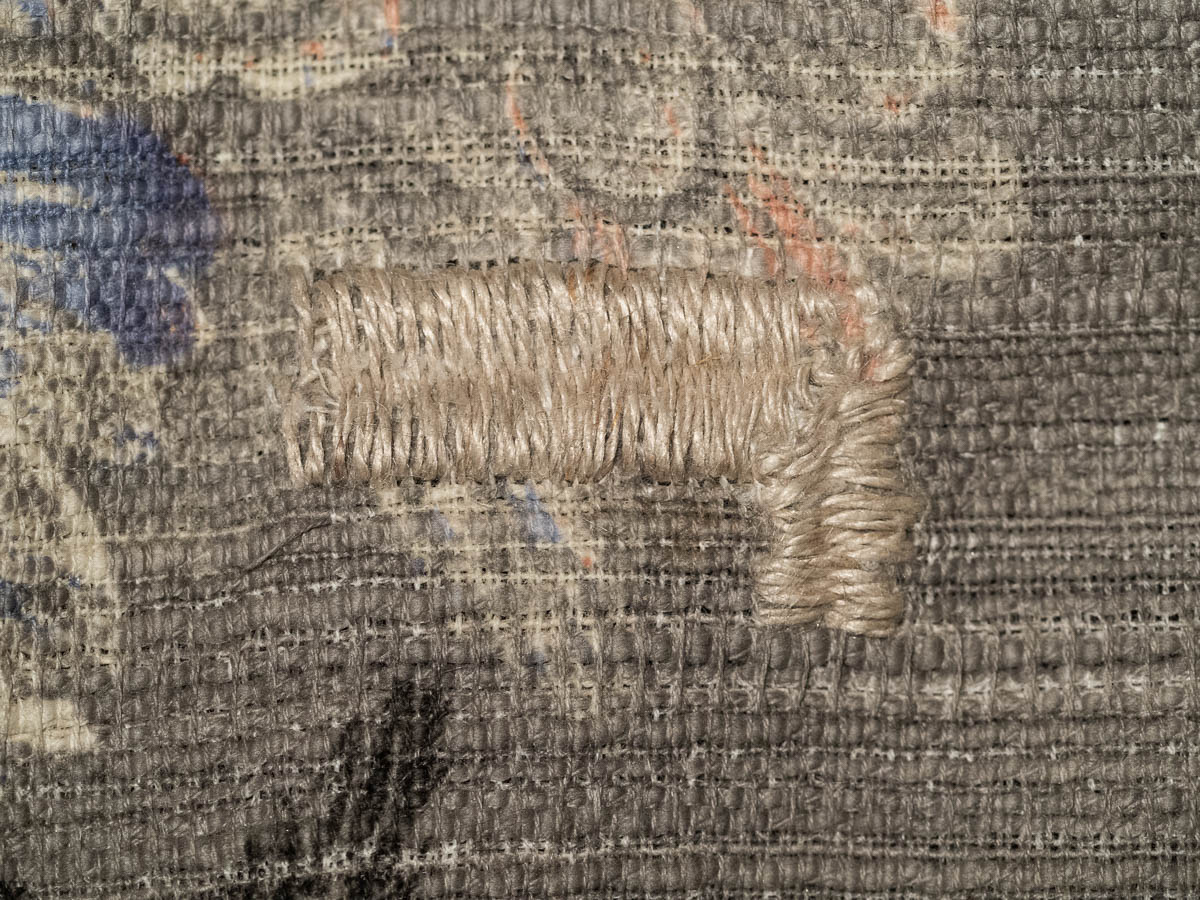
I ripped my spring/autumn coat some months ago. A fold of fabric literally got caught on the end of a door handle and I kept walking and tore a great big L-shaped hole in it. (This fabric looks pretty and feels nice but is way too flimsy for a coat; it’s already wearing thin around the edges of the buttons as well.)
Now I’ve finally mended that rip and I’m quite pleased with the result. The two arms of the L were easy but I couldn’t come up with a good solution for the corner. In the end I just sort of fudged it, which is luckily not too noticeable.
I learned this stitch from a book. They called it the paratrooper’s stitch, recommended it for field repairs of tents and such and demonstrated it on heavy duty canvas. I think it worked pretty nicely for this case as well.
There are books about mending things. I own three.
At what point does something I like doing become a hobby? When I start buying books about it, maybe?
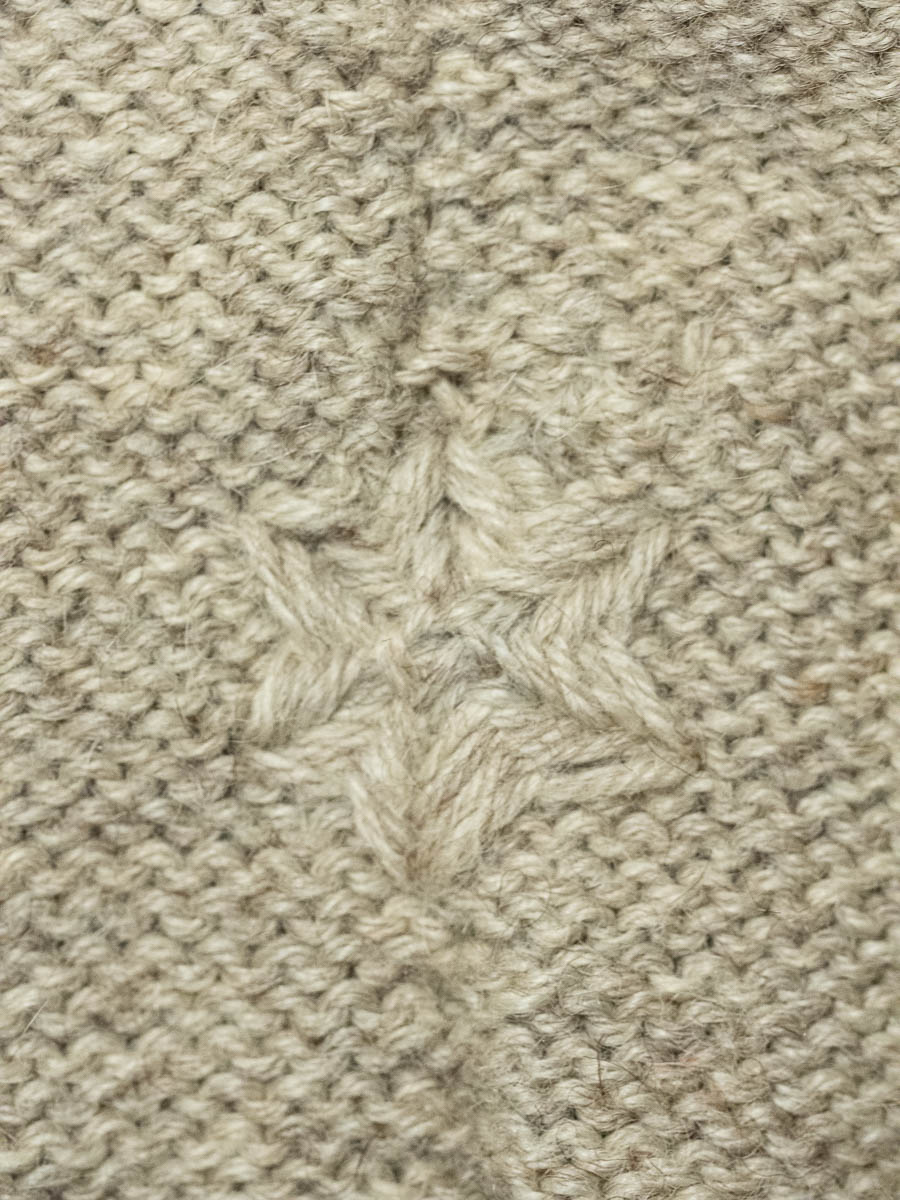
I learned a new technique for mending holes in an aesthetically pleasing way (from reddit) and tried it out on a knitted vest that some wool-eating bug had nibbled a hole in.
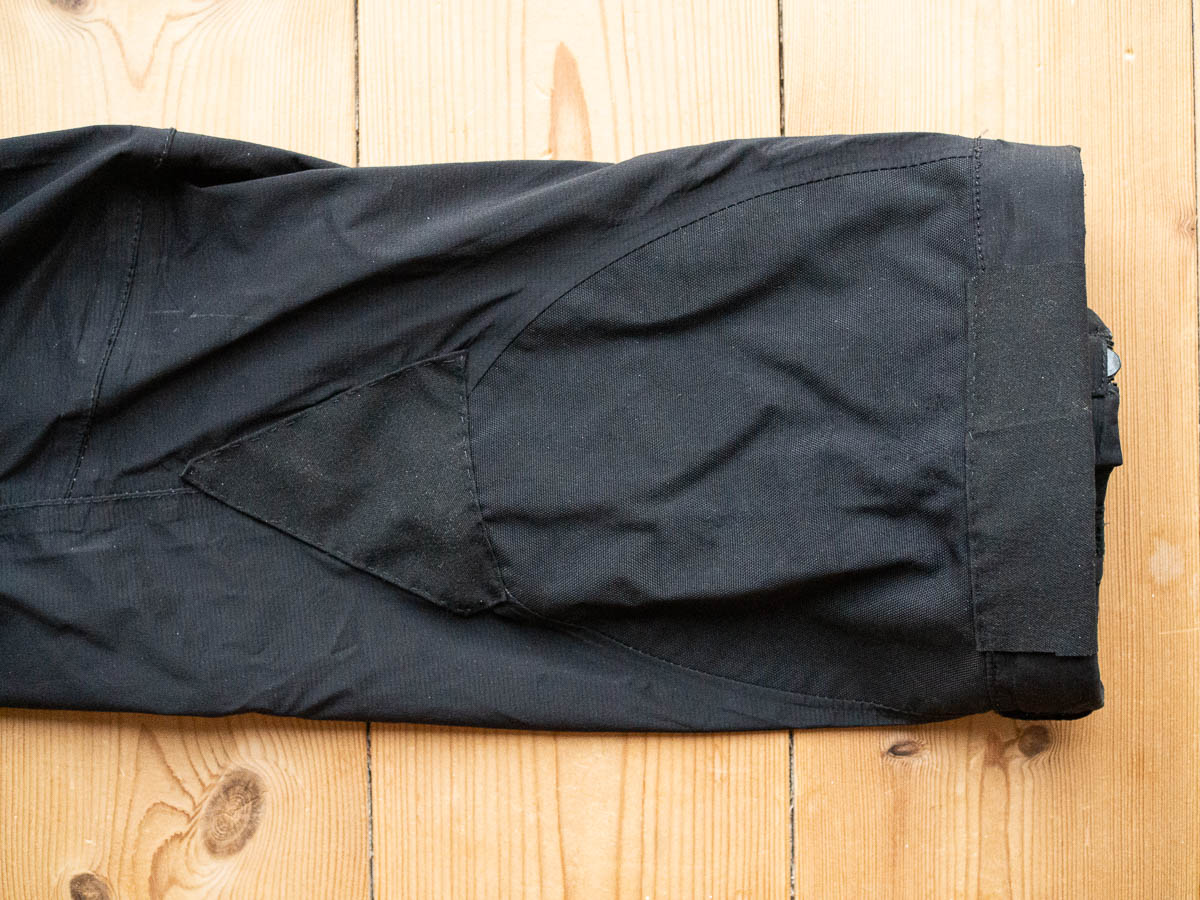
I like mending clothes and other such things. There’s something deeply satisfying about it. It’s almost as good as making something from scratch, but with much lower effort, and it’s inherently un-wasteful.
Today, while the rest of the family are visiting Eric’s parents in the countryside, I spent half a day mending things: a hoodie, a pair of Adrian’ stretchy trousers, some tights, a pair of woollen liner gloves, and finally my autumn/winter outdoor trousers. Those last ones took a good two hours, because each leg needed two patches, and the fabric was both thick and slippery. But it felt so good to have finished them. And now they’re almost better than new!
| « Older posts | Newer posts » |
