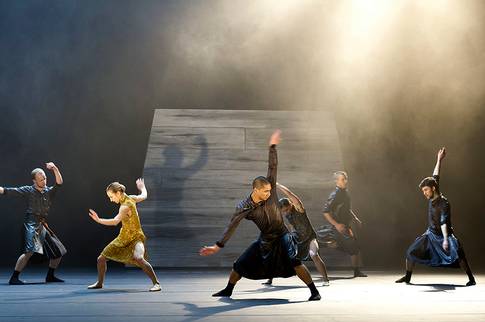
Another ballet triple bill. We had great seats, middle of the front row. Unfortunately Eric was ill and didn’t get well in time so I went on my own.

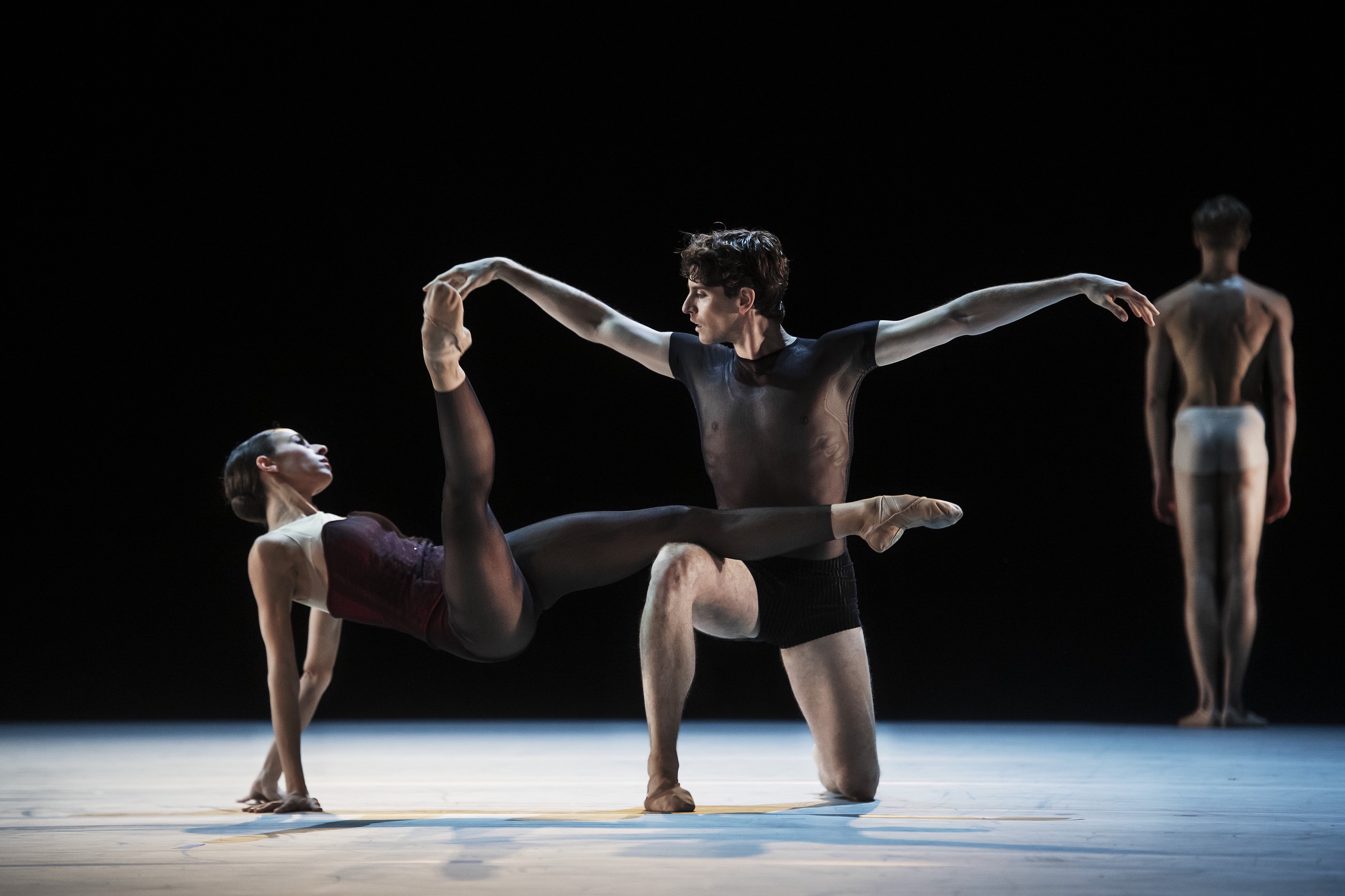
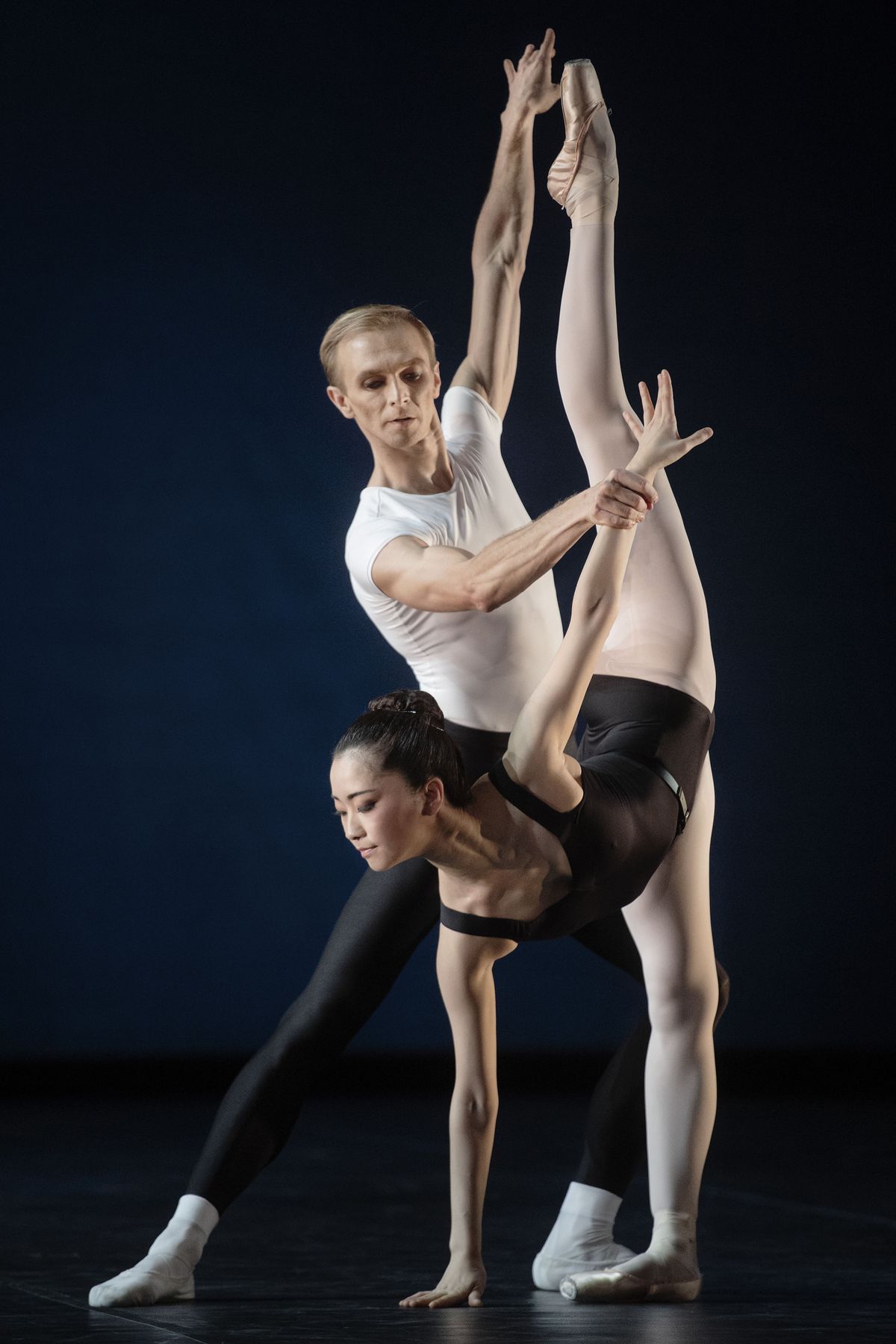
Jiři Kylián, Wings of Wax. I’m pretty ure I’ve seen something by Kylian before but I can’t find a mention of him on my blog so I can’t remember what it might have been. Wings of Wax was set to lovely music by Bach and Glass and Cage and (a new one for me) Heinrich Biber. The choreography was soft, simple, light and lyrical, and closely tied to the music. It reminded me a bit of Balanchine’s Agon in how the dancers’ movements seemed like an embodiment of the music, but softer. Lovely.

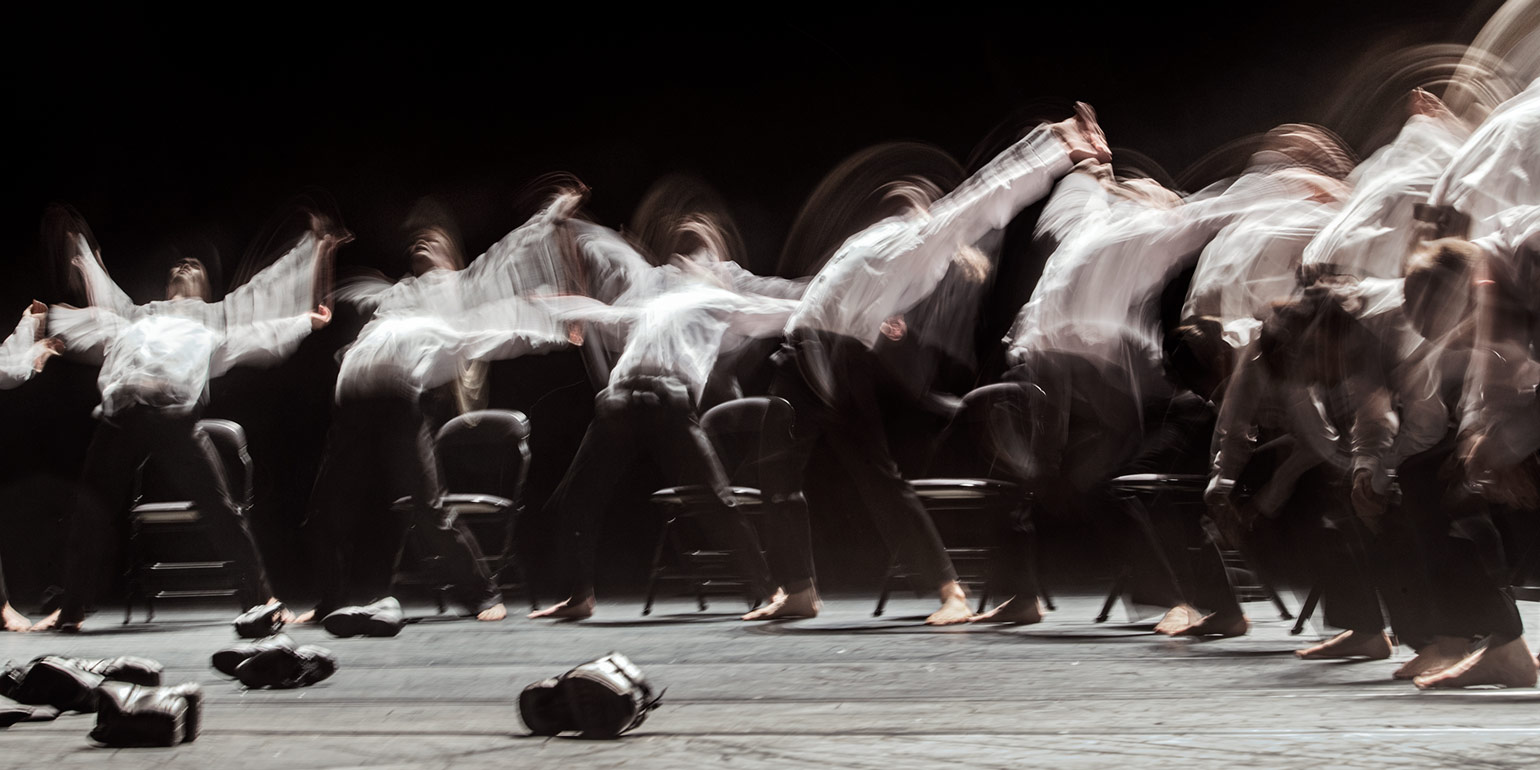
Ohad Naharin, Minus 16. This piece was in turn made up of several smaller pieces, and the connections between them were not very clear to me. The first and by far most memorable of the pieces has a name of its own, since it is built around a song: “Echad Mi Yodea”. It starts with twenty dancers sitting on chairs in a semicircle at the front of the scene. The song – and the dance – consists of repetitions of the same verse, with new phrases added to the front of the verse with every repetition. The dancers throw their bodies around, and throw their clothes and shoes off. I liked the dancing but I really loved the music – intense, powerful and energetic.

Other parts of Minus 16 were less interesting. Some were simply unmemorable. Others were crowd-pleasers, such as inviting people from the audience to the scene, or just “letting go” dance party style and seemingly dancing without any choreography. It makes the audience laugh and clap their hands, yes, but it’s not what I came for.

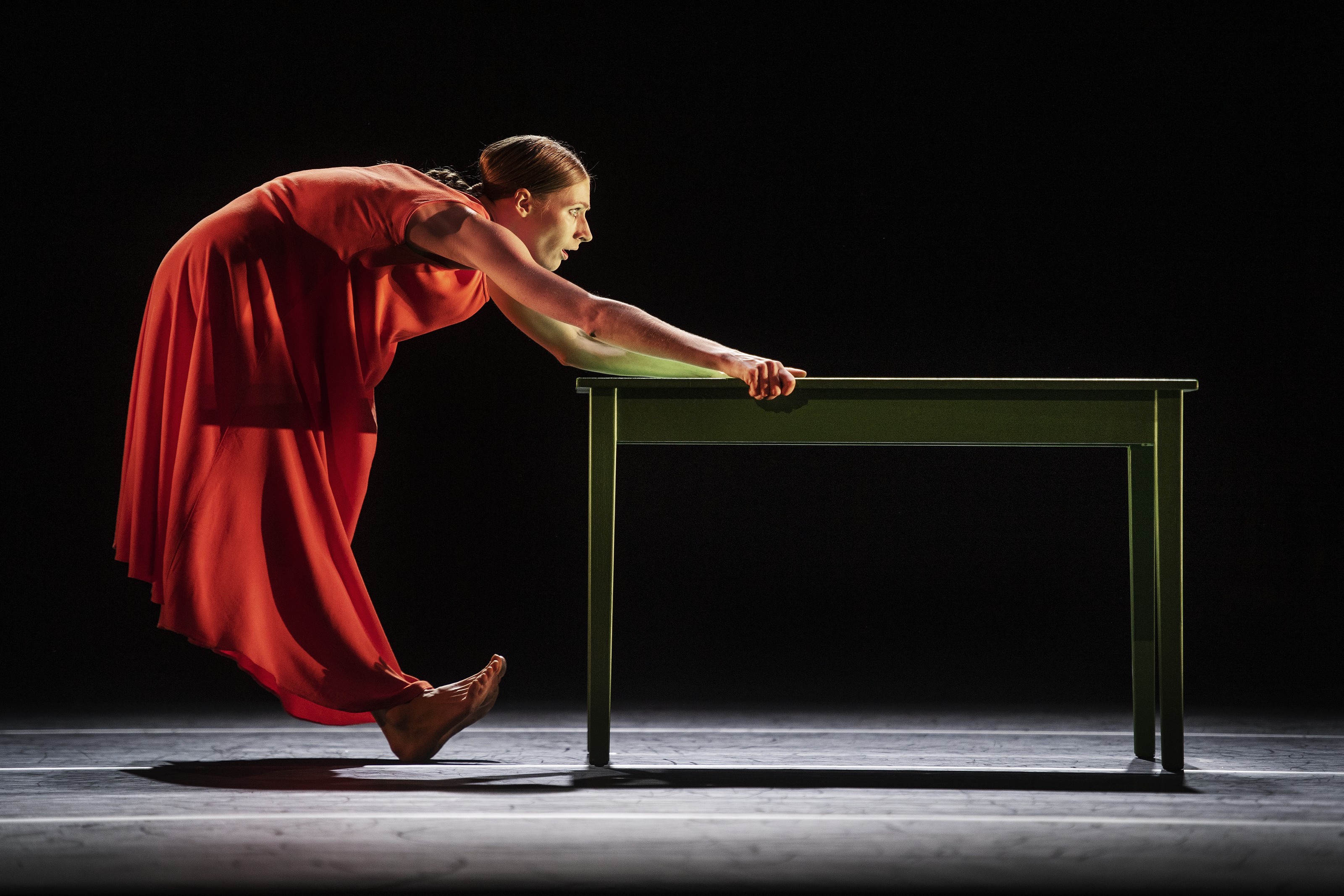
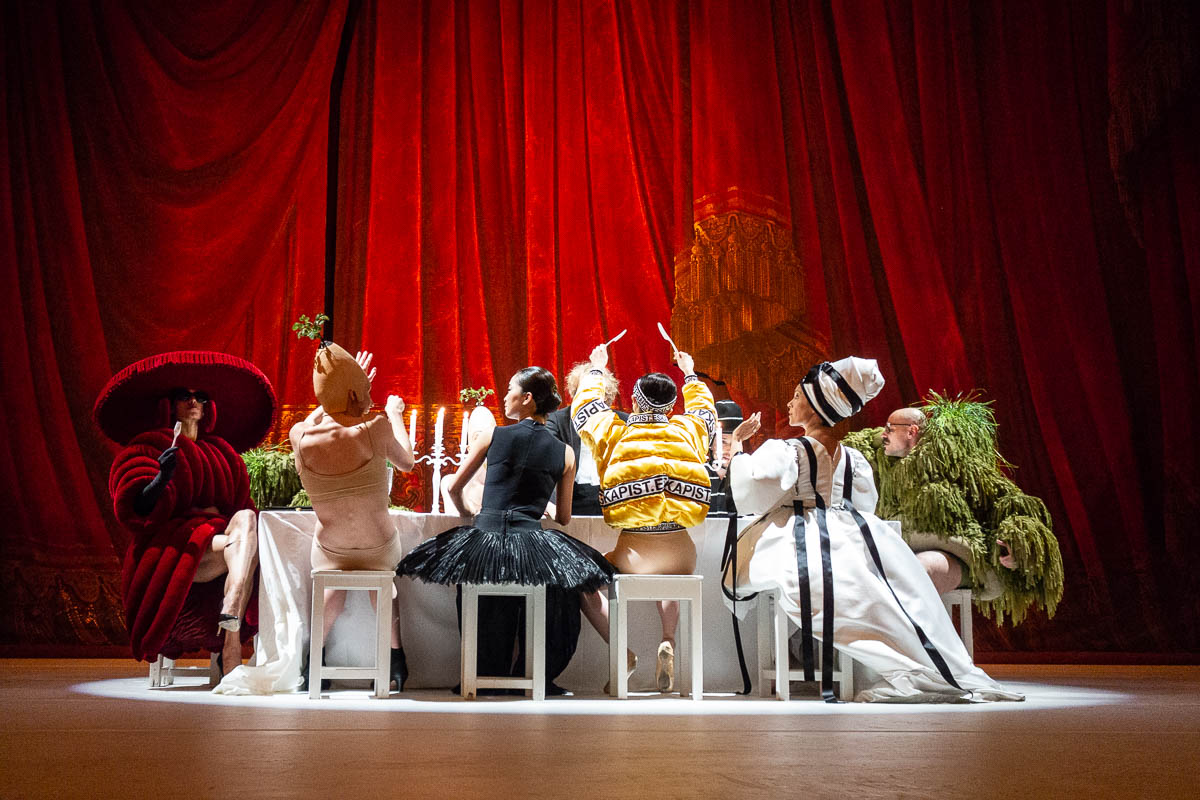
Mats Ek’s Woman with Water is actually inserted in between parts of Minus 16. (That’s how disjointed Naharin’s piece was.) Very Mats Ek. He makes the world and the human body look alien. The dancer’s back is hunched as if she didn’t quite fit inside the world; she moves around a table as if she was completely unfamiliar with tables.


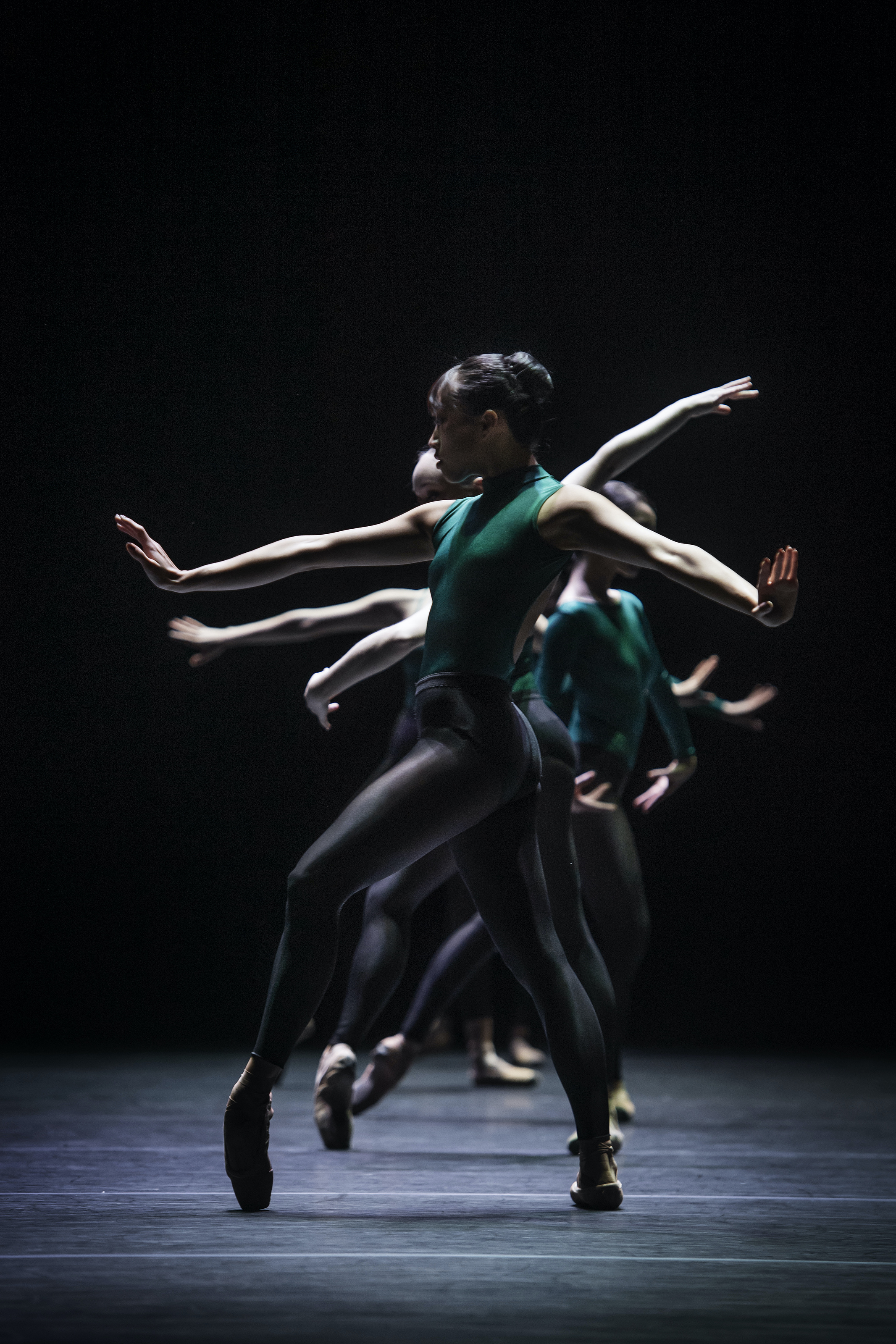
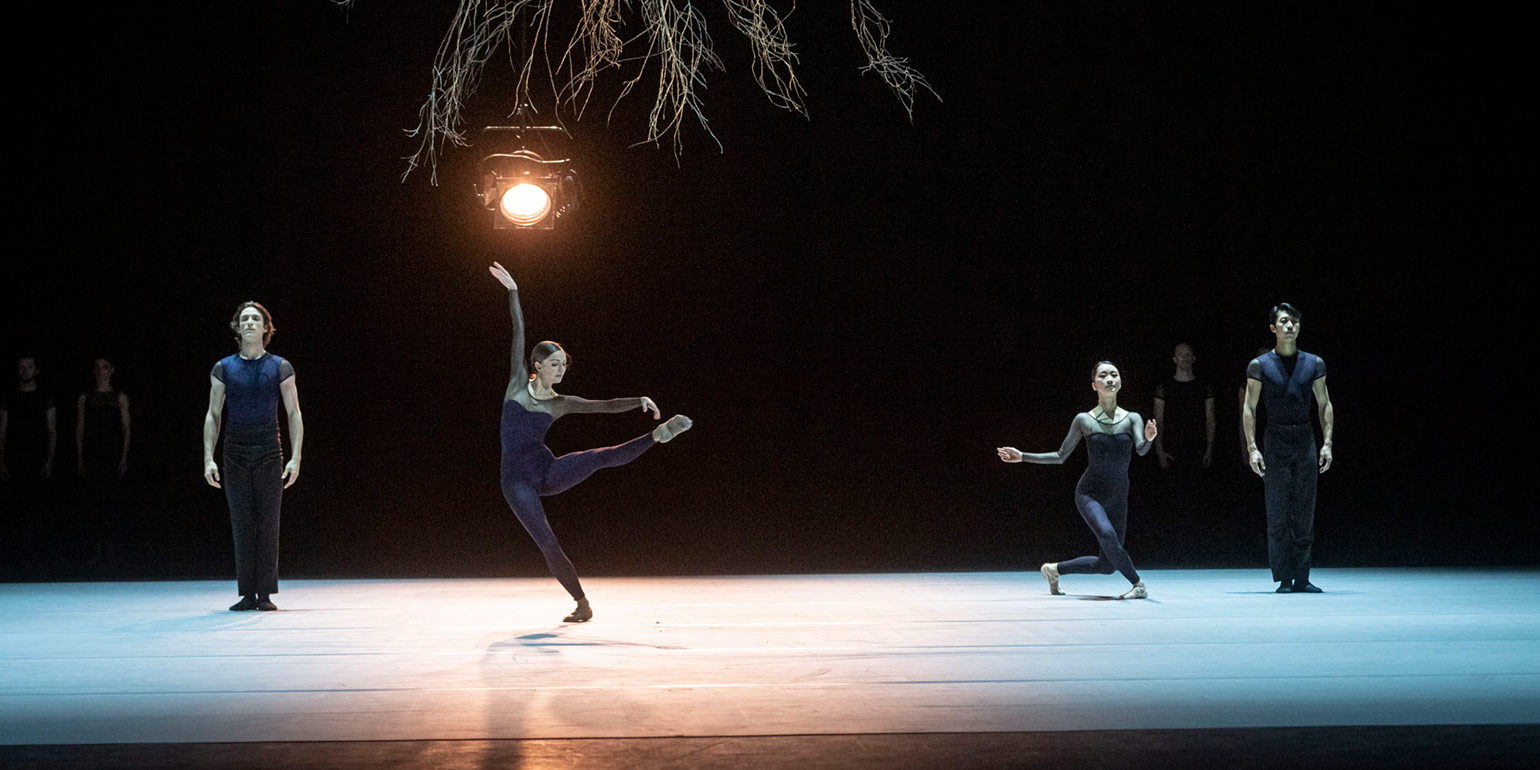
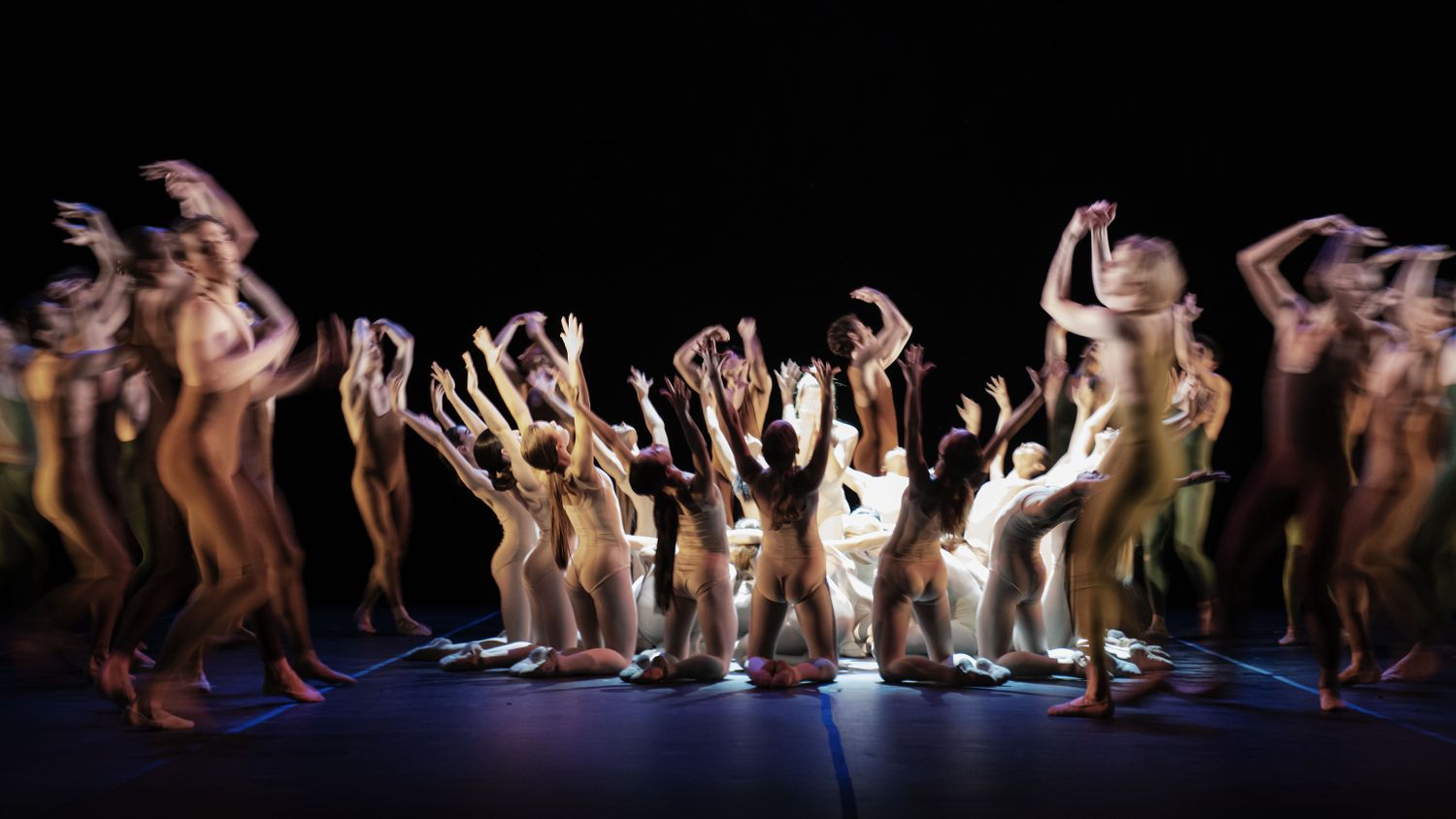
All three photos by the Royal Opera.

Noces / Agon / Rite of Spring, all set to music by Stravinsky.

A ballet evening with three pieces. The second part reminded me of a ballet I think we’ve seen previously but I couldn’t remember any details, nor find them here on the blog. So I’m going to take better notes this time.

Noces, choreography by Angelin Preljocaj. On a scale from abstract ballet to storytelling, this leaned towards the latter – something about wedding rites. Five couples, the women in dresses of vaguely Eastern European style, the men in white shirts and ties. Sometimes they were throwing around human-sized rag dolls clothed in white wedding dresses. Frankly I had difficulty focusing on the dancing because the music was jarringly, distractingly shrill and unpleasant. But the dresses were beautiful: knee-length velvet in deep, rich jewel tones, with wide skirts and embroidered/appliqued borders.

Agon, choreography by George Balanchine. This was very much an abstract ballet. It was somewhat like a symphony, made up of a number of movements. The dancers (six men, six women, in simple black and white leotards) simply gave physical form to the music. As the music reached for a high note, the dancers reached up; as the music paused, so did the dancers. And sometimes the dancers drive the music, rather than vice versa: the dancers’ first steps are a signal to the orchestra to start.

The elements felt classical – plenty of arabesques and stretched toes – and the overall impression was of grace and elegance, but with plenty of modern, humourous touches. Pas de deux with a man and a woman in their traditional roles alternated with parts where men and women performed the same steps and movements.

I would have enjoyed this ballet more if it wasn’t so broken up. Many of the movements ended with bows to the audience, which naturally invited applause. These breaks kept knocking me out of my flow and concentration, and just as I was getting into it again, there was another pause for applause.

The Rite of Spring, choreography by Maurice Béjart. If the first of tonight’s ballets told a story, and the second was abstract, then this one communicated emotions: youth, energy, joy and awakening, unashamed sexuality. Some versions of the Rite of Spring are aggressive and the rite is one of sacrifice; this one was full of vitality and sensuality. So easy to enjoy.

The Royal Opera still doesn’t allow any photography, and the official photos I could find tend to focus on the final climax, but I found some of the earlier, all-male scenes with their trembling, newly woken animal bodies even stronger. I also enjoyed the geometrical scenes, where all the dancers arranged themselves in lines and moved as a strong, vibrant mass of bodies.


(Pictures not mine, they’re press photos provided by the Royal Opera.)

A year ago, when the Royal Opera published their calendar for this year, the piece we saw today was simply presented as “Alexander Ekman is back”. No title, no photos, no description. I guess he wasn’t as done with the piece at the time of publication as he was supposed to be.

We booked tickets nevertheless. The last piece by Alexander Ekman that we saw was “A Midsummer Night’s Dream”. There was perhaps a bit too much theatre and too little dance in that one, but it was far from boring. I could think of many worse ways to spend an afternoon.
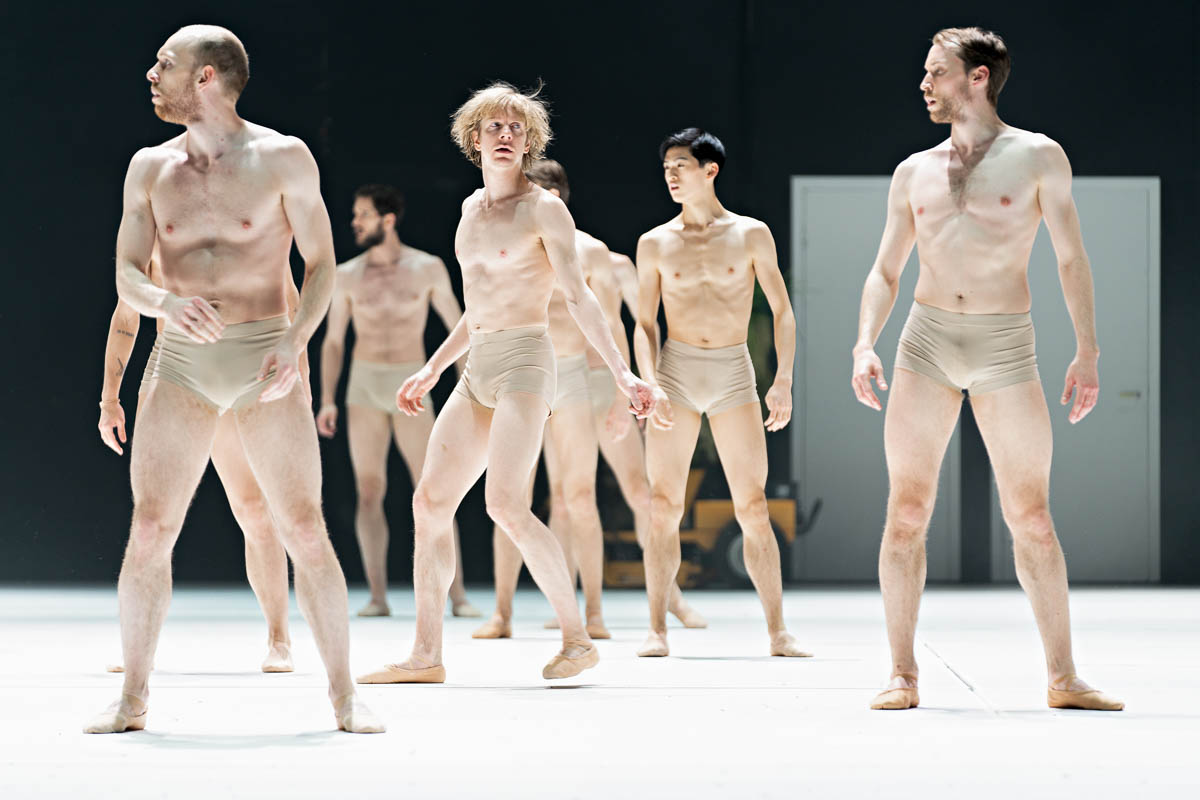
Before the start of the performance, it’s started already: in the orchestra pit, a silent, slow-motion dinner party is taking place, with guests in surreal costumes.

The performance is sprawling and contains not only group dances, solos and duets, but also a movie and a monologue. The movie explains the concept of the escapist: a man who doesn’t just dream of a more interesting, pleasant life, but truly makes himself believe that he is living that life. That he is digging his feet into sun-warmed sand on a beach when he is getting out of bed in the morning, and that he is playing with large, friendly dogs during his boring afternoon in the office.

(Side note: This whole idea of escapism as a way to escape “dead time” is presented as fun and uplifting and heartwarming. After all, sun-warmed beaches are pleasant, and so are large fluffy dogs. But I couldn’t help finding it rather sad. That his life, or our life, is so empty that it needs to be escaped so thoroughly and completely.)


The performance is energetic and entrancing. Sometimes absurd, sometimes sublime and lyrical. But above all and through it all, it’s playful, as Ekman lets his fantasy run loose. This playfulness seems to annoy some reviewers, it’s “pandering to the audience” apparently. I guess ballet is supposed to be a serious thing, for serious viewers only. (I admit, there were a few cheap gimmicks, but those were few.)

The stage design is mostly minimalist, to the point where the backstage mechanisms are visible. Except when it isn’t minimalist, and the entire scene is decorated with white furniture – beds, chairs, shelves, potted plants, a cot.

The lighting likewise was simple and harsh. The costumes, like the stage design, ranged from minimalist skin-coloured underwear – to beautiful, graphical, rich designs in black and white.

The most interesting aspects of the performance to me were those that seemed random and absurd, but also very intentional. Groups of people are dancing, in large, swelling movements – and one man is sitting alone on a chair at the very far end of the scene, flexing his legs. Or a large outline of a flamingo that stands slightly off center. None of the dancers interact with it while it rises ever so slowly until it is out of sight.

My eyes hurt because I forgot to blink for long stretches of time.

Note to self: great music by Mikael Karlsson.
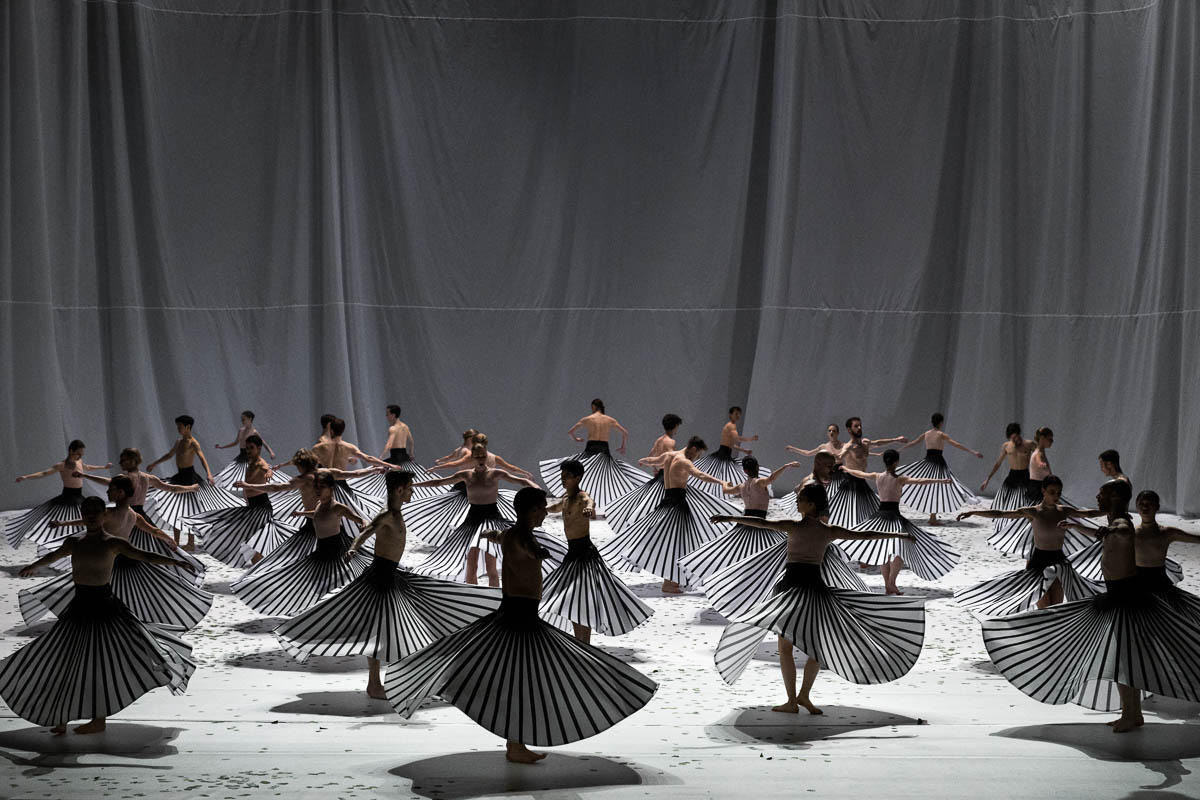

Alexander Ekman’s Eskapist at the Opera was visually quite memorable.

Olivier Dubois – De l’origine

A dark scene. Two barely visible figures, in a field of indistinguishable black objects. With time we see that the objects are floppy and roughly human in shape. Dead bodies perhaps?

The two perform movements that I would barely describe as dance – more like crawling. This is accompanied by rumbling droning sound, somewhere in the borderland between music and industrial noise.

I’m no stranger to modern dance, and I don’t mind dark themes. But when I simply cannot see what it happening on the scene, I don’t find it “intensively mystifying and anguish-filled” (as a reviewer put it) but boring, plain and simple. The music, the lighting, the movements, the decor for this piece were all designed to give me a minimum of input, which is the definition of boring.

I can’t quite say it was contentless. There was definitely content and ideas and a message of some kind. It might be described as performance art perhaps, a philosophical commentary on life (or mostly death). But it was not dance, and it was not interesting.


The couple sitting next to us was so disappointed by the first piece that they left during the interval – so they missed the good part of tonight’s show.

Sharon Eyal – Half Life

A man and a woman near the front of the scene dance in one place. Their movements that are monotonous and strict, but also forceful and entrancing.

A group enters from the side of the scene. With minimal movements, barely moving forward, they approach the couple. When the group arrives, it encloses them and they become part of the group.

They are swallowed, but they survive. The rest of the piece is about the balance/opposition between the individual and the group.

The group and its movements swell and flow. One figure – a head taller than the rest – appears to be leading and subtly influencing them. Other dancers sometimes do something different but then return to the main flow. Are they forced to conformity by the group? Or are they experimenting and then returning to the comfort of the familiar?

The techno music is akin to the soundtrack for the first act, but this clearly actually music, and much more interesting. The dancers wear minimal skin-coloured costumes, which exposes their bodies as well as each distinct movement in Eyal’s exact, twisting choreography.

Half Life is absorbing and intense. Every moment is rich and beautiful. I can’t look away. I wish there was more of it


(Both photos are from the marketing material published by the Royal Opera.)


This Monday Eric, Ingrid and I saw Alice in Wonderland, a ballet at Kungliga Operan.

This ballet was originally created for and by the Royal Opera House in London and has now been exported wholesale to Stockholm, with the original choreography by Christopher Wheeldon, scenography, and everything else.

The performance was spectacular and wonderfully crazy, quite befitting Alice’s crazy adventures.

The costumes and scenography were fanciful and colourful, yet also stylish. I loved the ingeniously designed Cheshire cat – a giant cat of disconnected parts moved around by invisible dancers in black costumes. The fabulously choleric and bloodthirsty, blood-red queen was also memorable.

Alice herself was almost pale in comparison to the rest of the characters. But so she is in the book: she is an observer, pulled in to the craziness against her own will, rather than participating whole-heartedly.

I was a bit sceptical initially to the idea of making a ballet of Alice in Wonderland. So much of the book is about word-play and nonsensical use of language – how can you possibly translate that into dance? Surprisingly well, for the most part. A tap-dancing Mad Hatter in the middle of a ballet was nonsensical enough; a whirling and almost overwhelming dance of flowers was another.

The decorations of course played a major role in making the book’s crazy dream world real. The Cheshire cat was one clever solution; using projected video sequences for Alice’s falling through the tunnel and for her growing and shrinking was another.

I am no connaisseur of classical music so I cannot say much about the score, other than that I liked it, and that it fit the ballet perfectly.

It was a long time since I read the actual book and my recall of the plot is mostly based on the Disney version, of which I feel rather ashamed. I had no recollection of the scenes from the book that didn’t make it into the movie – the one with the Duchess and the Cook and the Pig Baby for example, which was wonderfully over-the-top and grotesque on scene.

I had also forgotten that the trial in the end of the story is about a case of stolen jam tarts. In this ballet version the plot line of a Knave of Hearts stealing jam tarts is extended into the real world at the very beginning of the story, before Alice goes down the rabbit hole. A gardener’s boy is accused of stealing a jam tart (while in fact it was given to him by Alice). And to complicate things further, Alice is in love with that boy, so we get a whole extra plot thread of young love. Rather unnecessary in my opinion, because it really doesn’t contribute to the larger picture, other than giving the two a chance to perform some quite romantic but boring but love duets.

But that’s a minor quibble; overall it was a wonderful performance that I really enjoyed.


The end-of-term show for Ingrid’s dance school.

We went there to see Ingrid’s group perform, but the rest of the show was unexpectedly interesting to watch. Not artistically interesting, perhaps, but intellectually.

A few points I observed:

Expression and emotion matter at least as much as technical and physical skills. Dancers who looked like they were really enjoying themselves were more fun to look at than others who perhaps performed the movements with more skill and precision.

After an hour, it started feeling repetitive. The choreographies mostly consisted of the same basic moves, and the similarities outweighed the differences after a while. I guess there is a limited number of moves you can use for kids who have danced maybe a year or two, once a week.

The more advanced groups had more interesting choreographies, but the competition groups almost went in the other direction: their acts were technically more complicated, and a lot faster, but not so much more interesting from an artistic point of view – choreographed with judges in mind, not general audiences.

It turned out that one of the teachers at the school (Kindahls dansskola) is the choreographer behind several of the performances at Melodifestivalen. Those also consisted of the same “vocabulary” of moves.


A ballet evening in two parts.

Part 1, Ballader by Roy Assaf, was an intimate piece: a man and a woman and a pianist. It was as if we were watching a couple in their living room. I found it utterly boring. The straightforward story-telling choreographies that are half theatre, half dance, are not my thing.

It struck me after seeing this piece that I have similar preferences when it comes to dance and to books: plain realism does not interest me. Novels about quarrelling couples etc, or kids growing up in concrete apartment blocks – why would I want to read about it? Instead, give me something that I haven’t seen yet, cannot have seen yet.

But the music! I don’t go to concerts to listen to classical music, and I don’t know any of the names, the famous musicians, the conductors. So I had no idea who was playing; the name meant nothing to me. But listening to him play Brahms was wonderful. About half the time I sat with my eyes closed, ignoring the dance and focusing only on the piano music. (Afterwards I found out that it was Roland Pöntinen, one of Sweden’s foremost pianists.)

Part 2, Rite of Spring, was something completely different. So different that I wondered how this combination was arrived at. Who thought that this combination made sense, and why?

The music is wild and so was Johan Inger’s choreography. Wild and forceful, at times uncomfortable, dark and brutal. Never a dull moment. Add to this interesting but subtle costume design, and well-designed lighting that ranged from smoky to stark and made great use of shadows, and the sum of it all was a stunning performance.

Watch a trailer here.


We saw a ballet evening titled Bill at the Stockholm Royal Opera.

The first piece, Artifact Suite by William Forsythe, consisted of two parts. The first part, with violin music by Bach, has a focus on solo performances with the rest of the dancers more in the background. Nice but not particularly exciting.

The second part of this piece, with piano music described as “baroque fantasies”, is more of an ensemble performance. The dancers move in geometrical patterns. They follow, imitate and echo each other. Both the music and the dancers’ movements have a very rhythmic quality. It reminded me of Gurdjieff Movements, both in the geometrical, pattern-based movements of the group as a whole, and the minimalist, somewhat angular movements of the dancers, with an emphasis on arms. Mesmerizing – not just figuratively but also literally. I got so entranced by the movement and the music that I found myself drifting off into a dream several times, without even feeling sleepy.

The second piece, The Other You, I found less interesting. A man and his shadow/mirror image/doppelgänger, struggling. Too little dance, too much “concept” and mime show.

The third piece was more interesting again. Bill (which was also the name of the ballet evening as a whole) by Sharon Eyal was set to rave music, performed by dancers in skin-tight colourless bodysuits, on a smoke-filled blue scene. The choreography felt organic, forceful and wild, but also rather chaotic.

There was one dancer who really excelled during this performance. Jérôme Marchand was easy to pick out from the ensemble not only because he was taller than the others and had a shaved head. He also moved as if the piece had been written with him in mind: fluidly, softly, almost seeming non-human at times. He made me think of Dr. Manhattan from the Watchmen comics.

The opera house have a short video clip, but no good photos unfortunately, so the photos here are from Pennsylvania Ballet’s performance of Artifact Suite.

For my non-Swedish readers, here’s a representative sample of bugg.

Plain old link, in case the embedded object above decays and stops working (which it has done once): a video of bugg on Youtube