An exhibition at Waldemarsudde, titled “In Bloom: Art and Botany” – about flowers in art. I like flowers, I like art, sounds nice. Maybe not super exciting (how exciting can a bunch of paintings of flowers be?) but pleasant, I’m sure.
How wrong I was. This was an incredibly varied and interesting exhibition, with so much more than just paintings of flower bouquets.
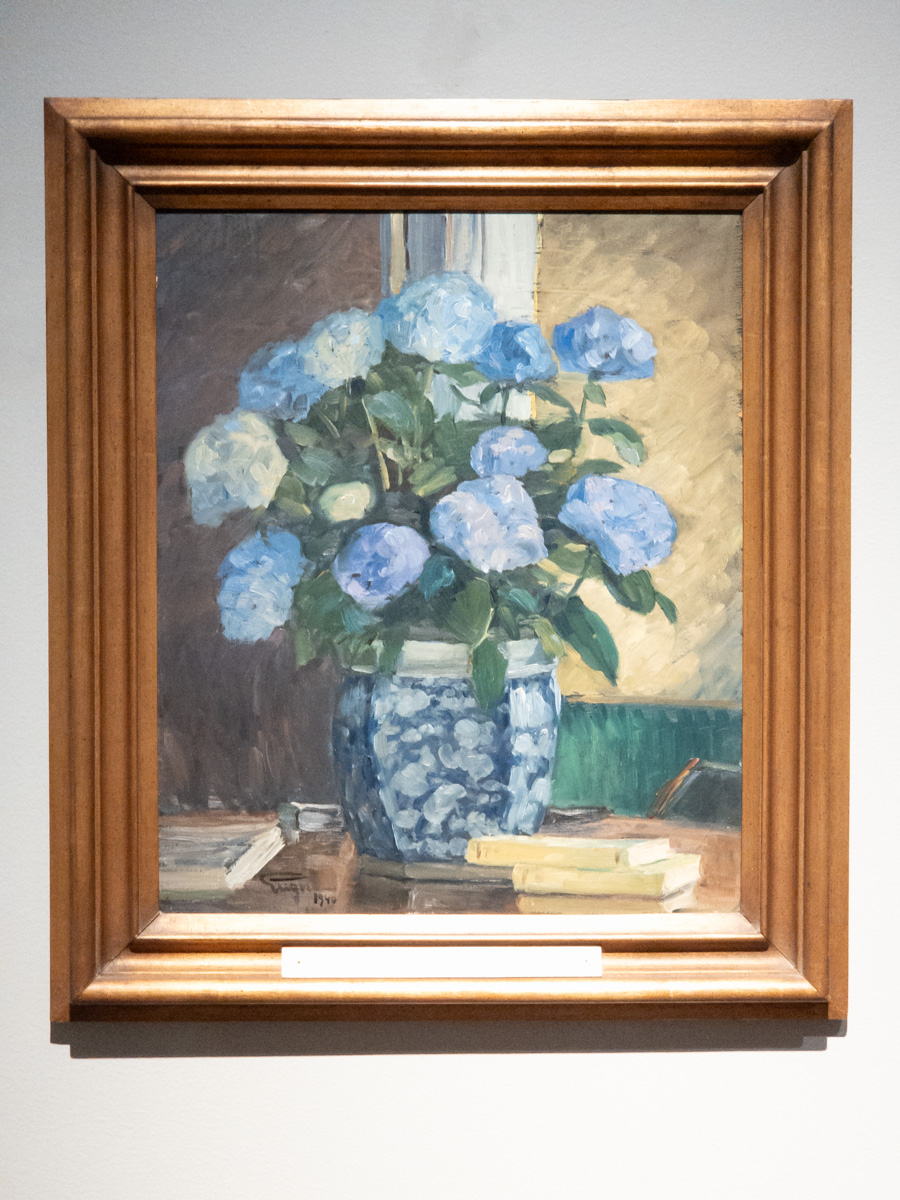
There were a few of those, of course. Prince Eugen, who originally had Waldemarsudde built, was fond of both gardening and painting, and some of his works introduce the theme. This first painting reminds me of one that Ingrid made, that I now realize I don’t have any photos of.
17th-century paintings of flowers were more varied than I had realized. There were paintings of individual varieties of tulips, from the tulip mania era. There were vanitas paintings to remind viewers of their mortality. There were paintings with dozens of individually identifiable species and varieties of flowers, that don’t even all flower at the same time, depicted with complete botanical accuracy
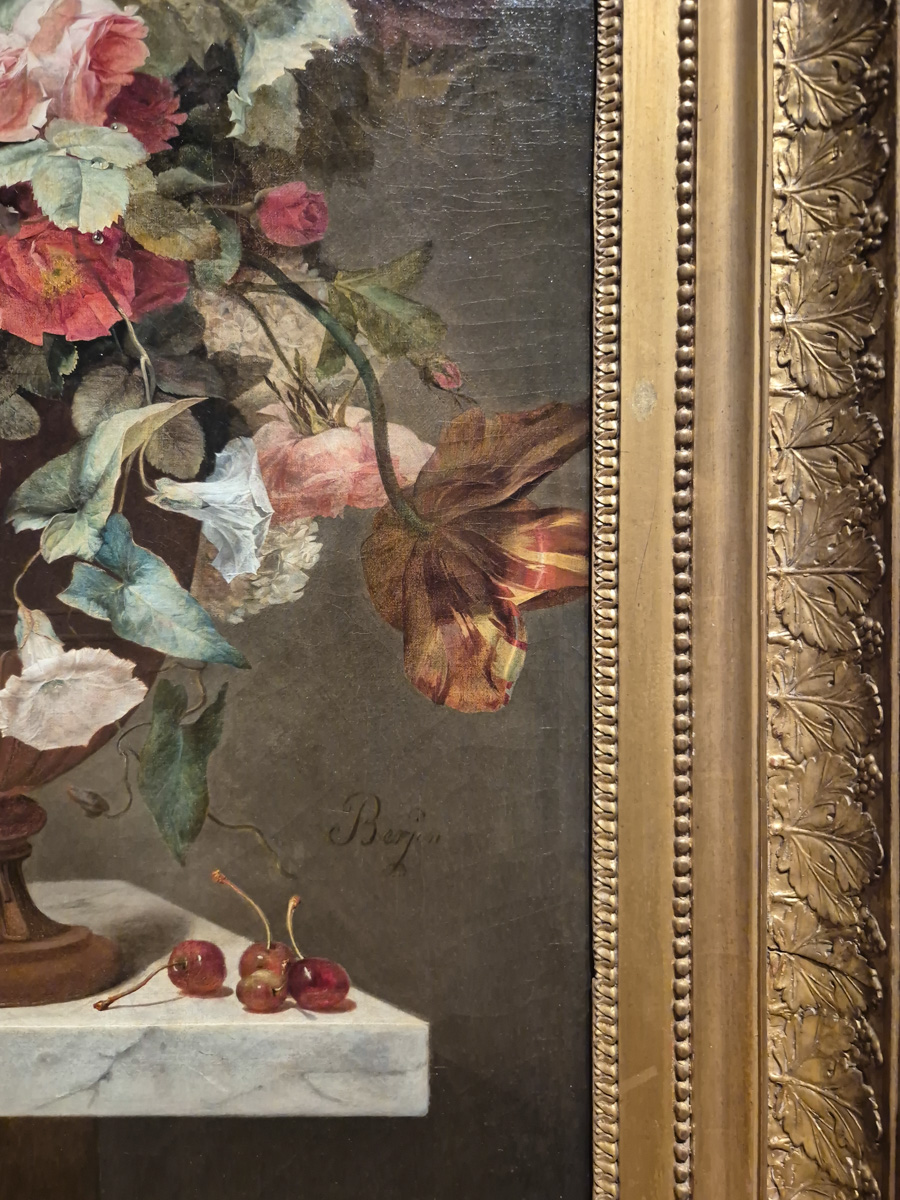
Some were cropped in surprising ways. As a photographer, one of the first things you learn is to be careful about cutting of body parts or other important parts of your subject. Do it intentionally if you want, but watch out for e.g. cropping people’s feet off. And here we have parts of a large blossom cut off. Was it actually painted like this? Was it cropped later? Is the flower behind the edge of the frame, and if yes, why? Surely if you own a painting like this, you can make sure it gets a frame that’s large enough to display all of it.
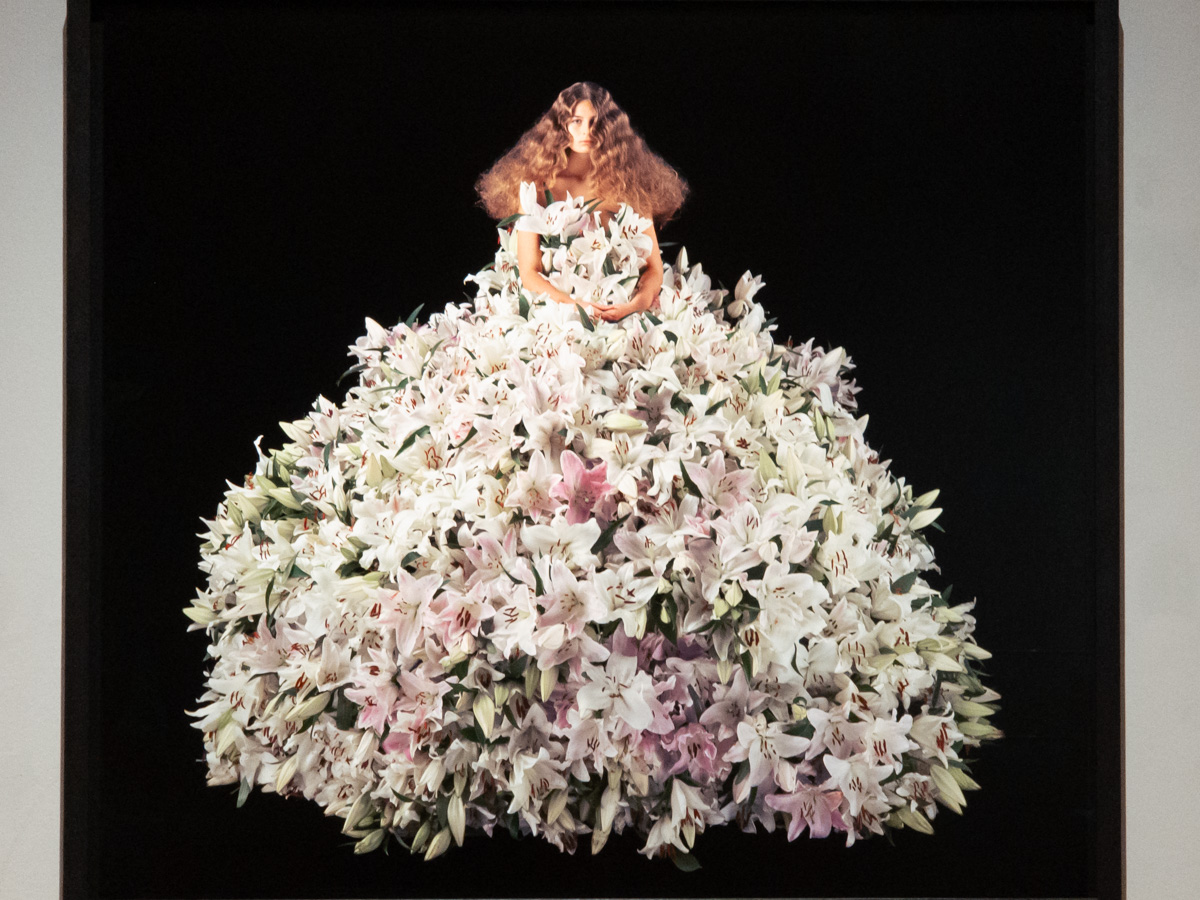
Nathalia Edenmont’s larger-than-life photos of people bedecked in flowers. Hyper-real, to the point that I started doubting whether these were even photos, or if they had been manipulated. This bring to mind 18th-century lavish court dresses, doesn’t it?
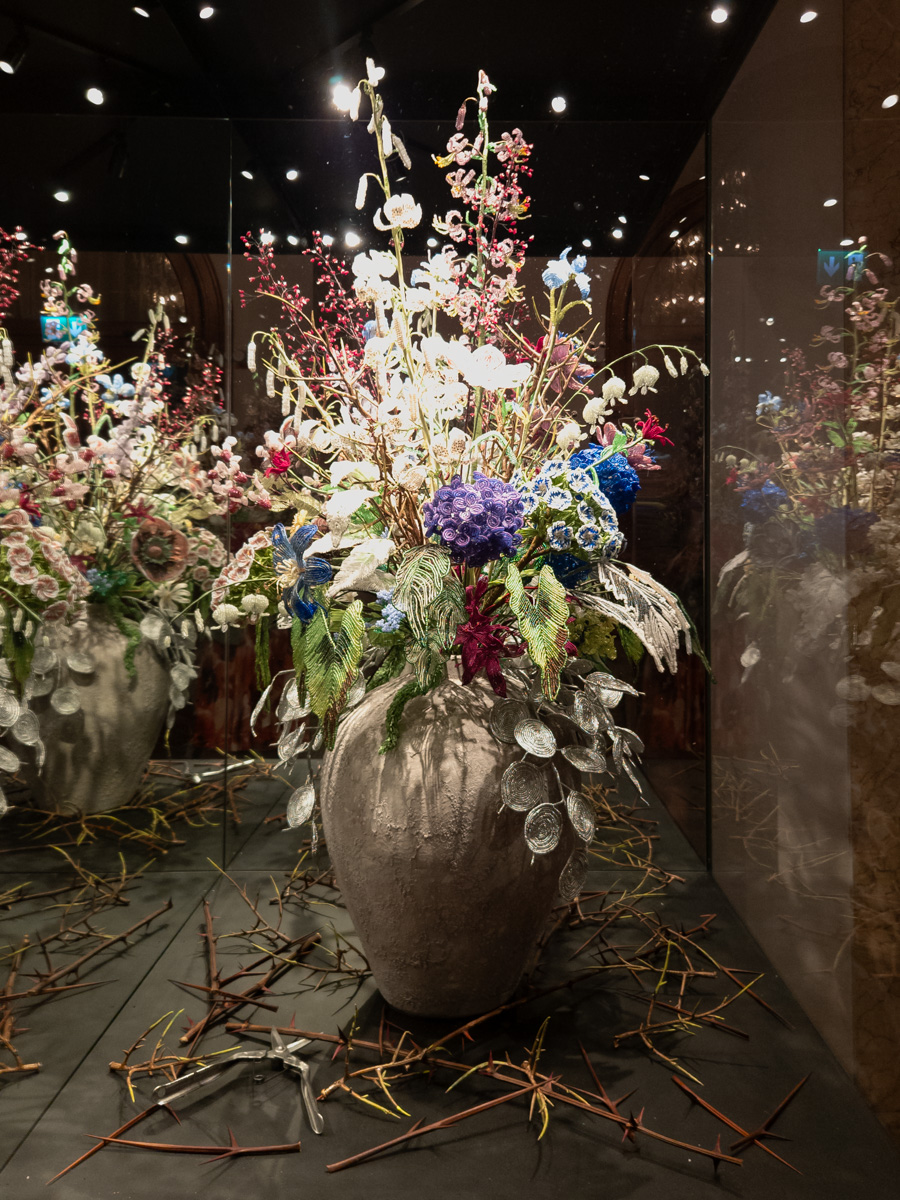
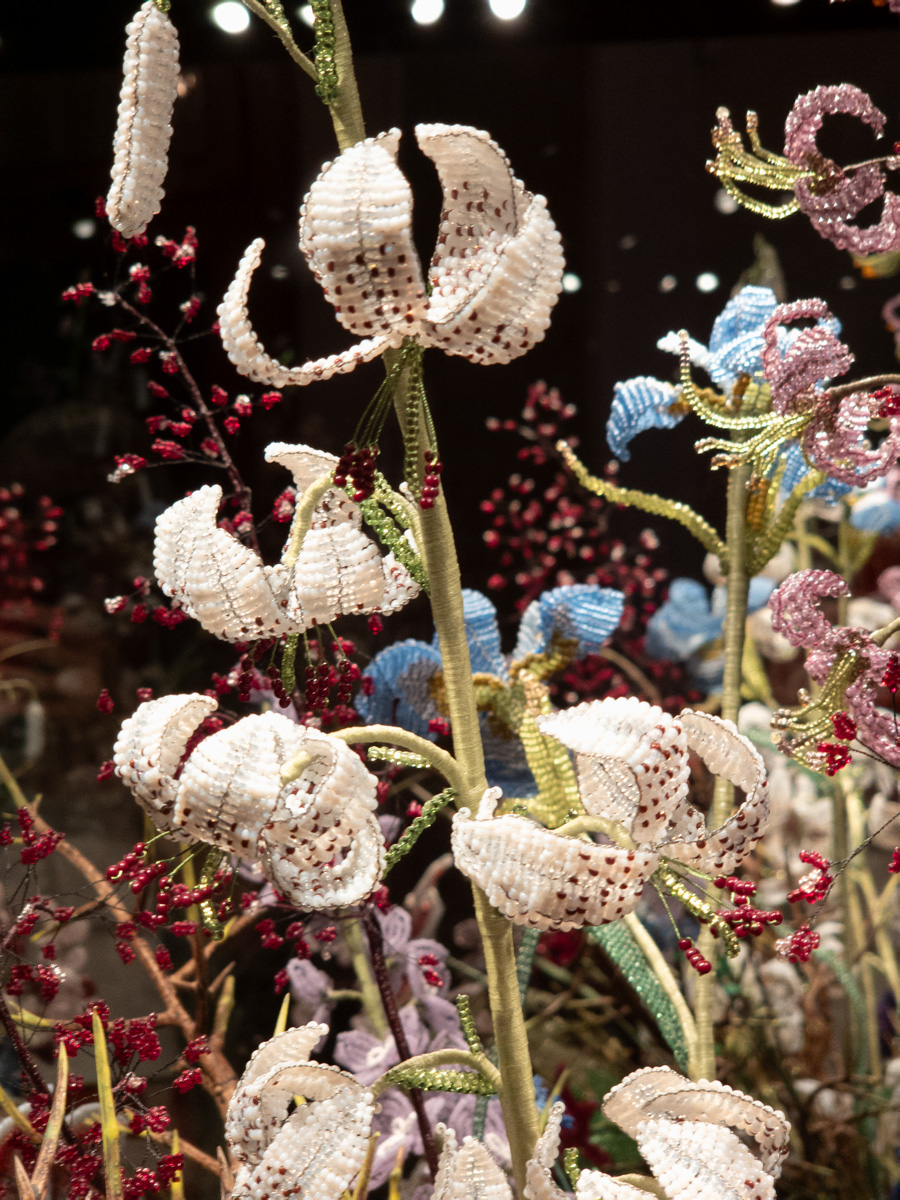
Leaving the room with paintings, there were two amazing arrangements of beaded flowers, by Georg Ragnar Levi. He is a collector of antique and modern flowers made of beads of glass, and these bouquets were made up of flowers by many different craftspeople. Just like the Dutch paintings, these have been made with great attention to botanical detail. If there are two varieties of lilies in the bouquet, then they’re not just of different colour and size, but their petals curve differently, and the proportional length of their stamens is appropriate to each one.
One room was filled with botanical books and prints, and photos of Carl von Linné’s original herbarium pages. The amount of effort that must have gone into these works is amazing.
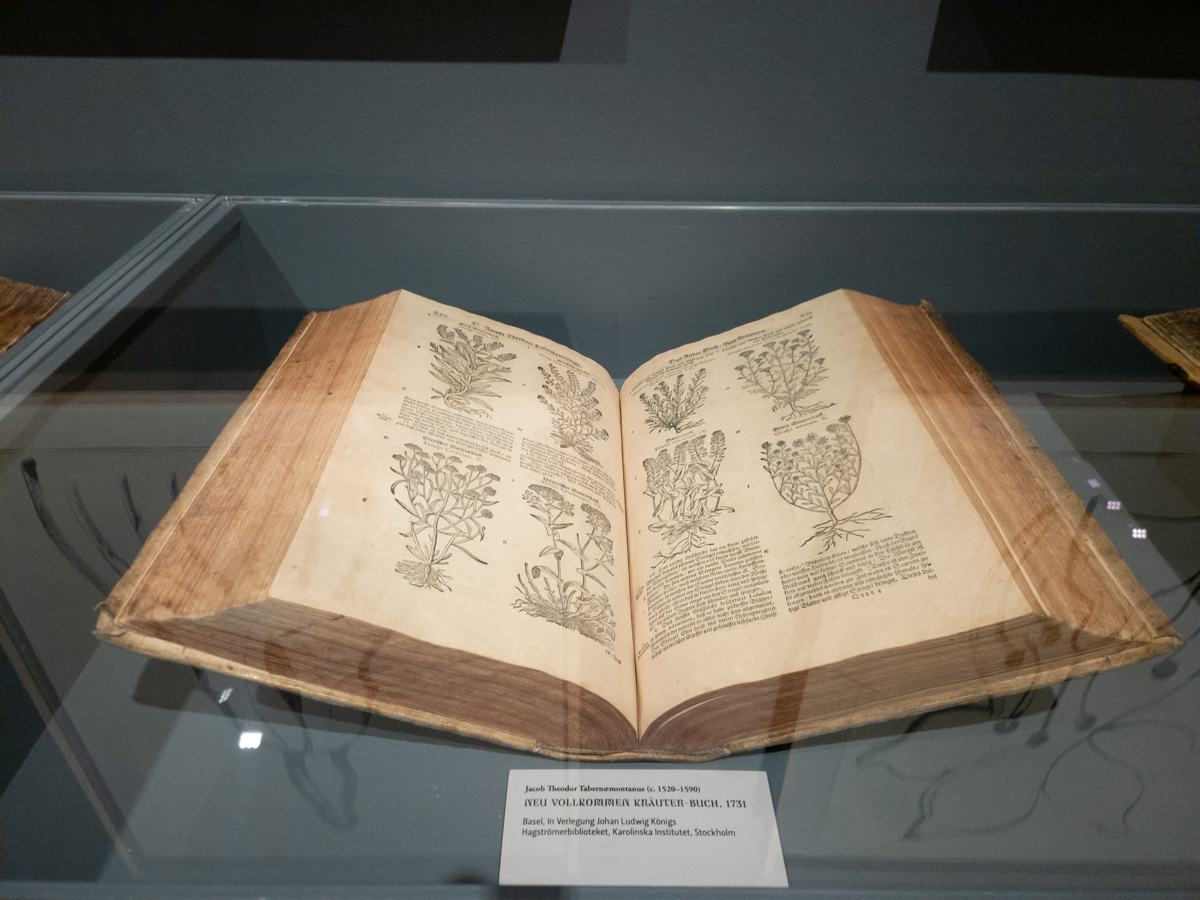
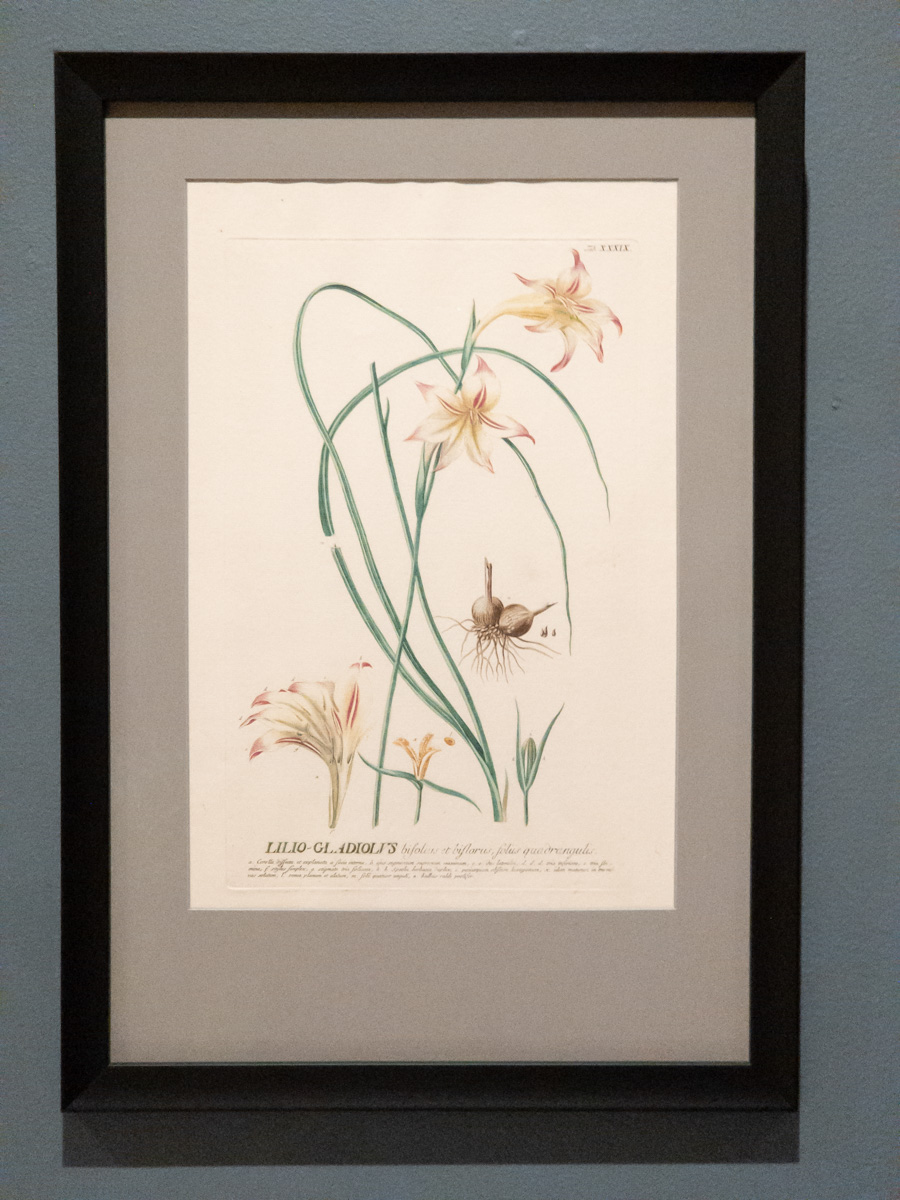
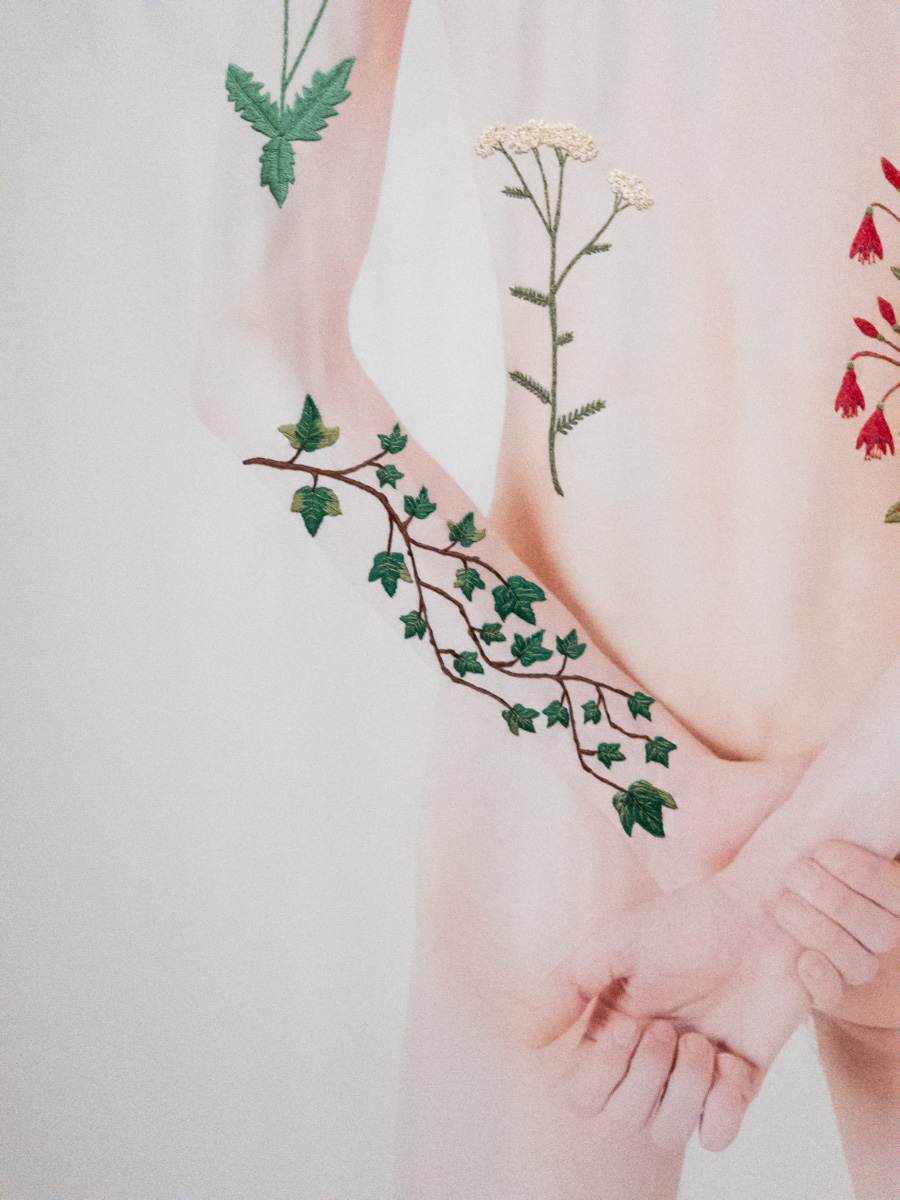
Not just paintings and sculpture, but also embroidered works. My favourite was this one by Maja Stjärna, from a series where she has embroidered flowers on life-size canvas prints of photos of her friends.
It makes me think of tattoos. Sweden is the second most tattooed country in the world – 47% of the people have one, according to a statistic I saw. I can’t really imagine modifying my body in such a permanent way. But if I had to – gun to my head – I’d pick something floral, in a naturalistic style. Or like one of those botanical prints. Some ordinary northern European plant, like a dandelion or a cowslip, or maybe a cornflower.