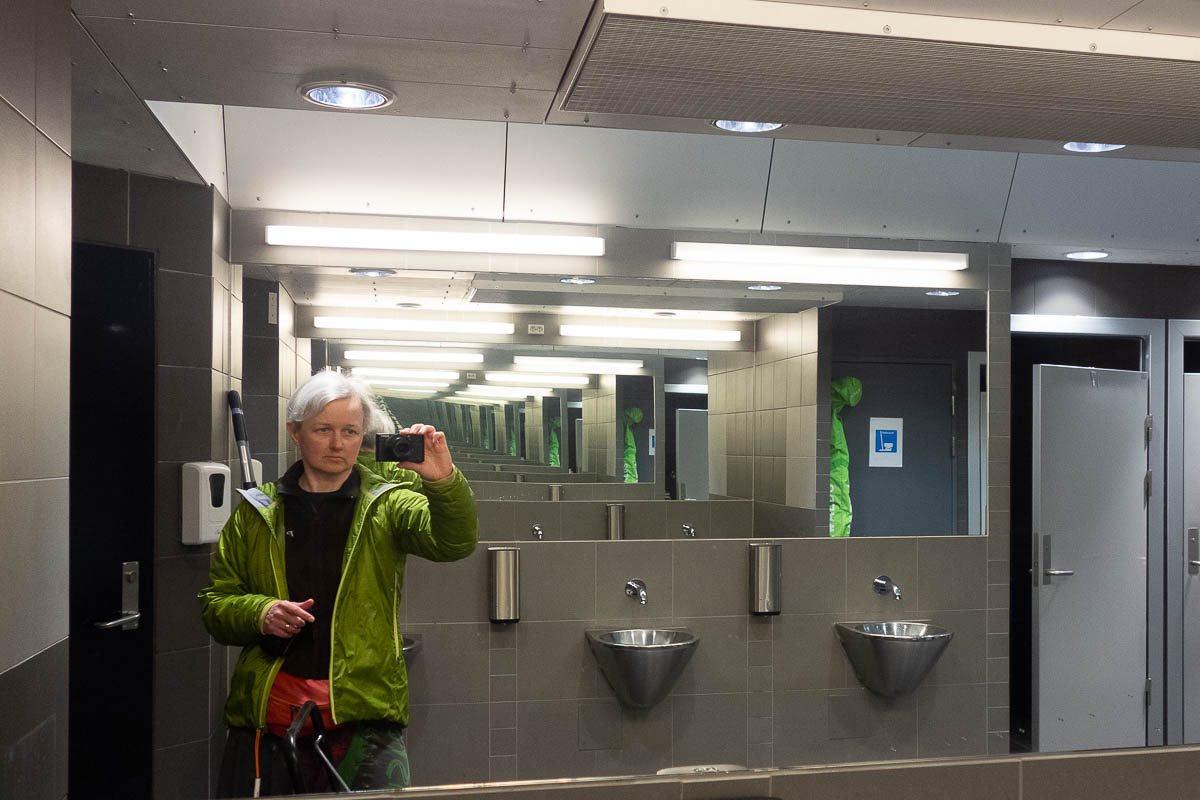
Many hours on a bus, some time on a train, many hours at Oslo Sentralstasjon, and many hours on another train.
Oslo Sentralstasjon has a bathroom with endless mirrors.
Many hours on a bus, some time on a train, many hours at Oslo Sentralstasjon, and many hours on another train.
Oslo Sentralstasjon has a bathroom with endless mirrors.
Mårbu to Solheimstulen. Not sure about the distance as I forgot to take notes, maybe 15 km?
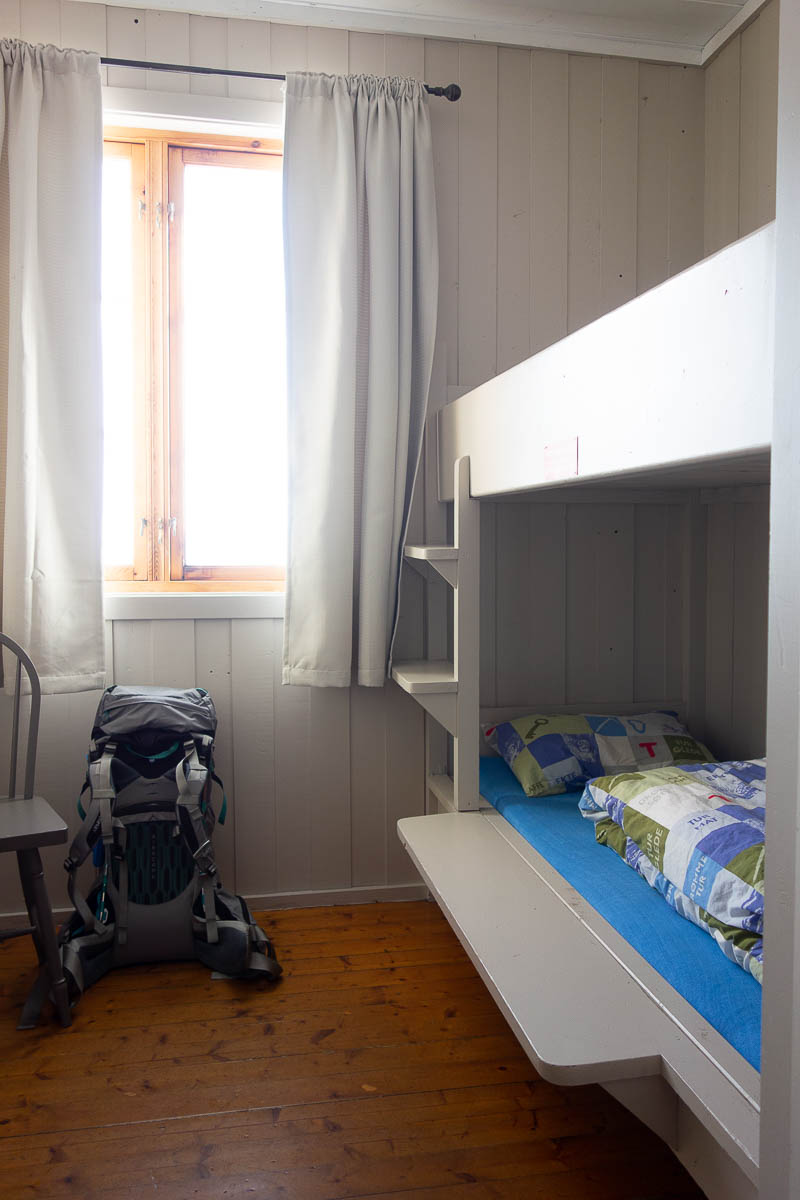
After my trips, skiing or other, I always realize that I’ve only taken photos of the main “attraction” and have few or none of the things around it. The huts, the meals, the breaks, the equipment. And I’ve fallen into the same trap this time.
At least I have this one of our room at the Mårbu hut. It’s reasonably typical of what the rooms in the DNT huts look like. Solidly built bunk beds, pine floors, maybe a chair or a small table. Hooks on the wall. Possibly a small stove for heating. Pillow and duvet covered in DNT fabric.
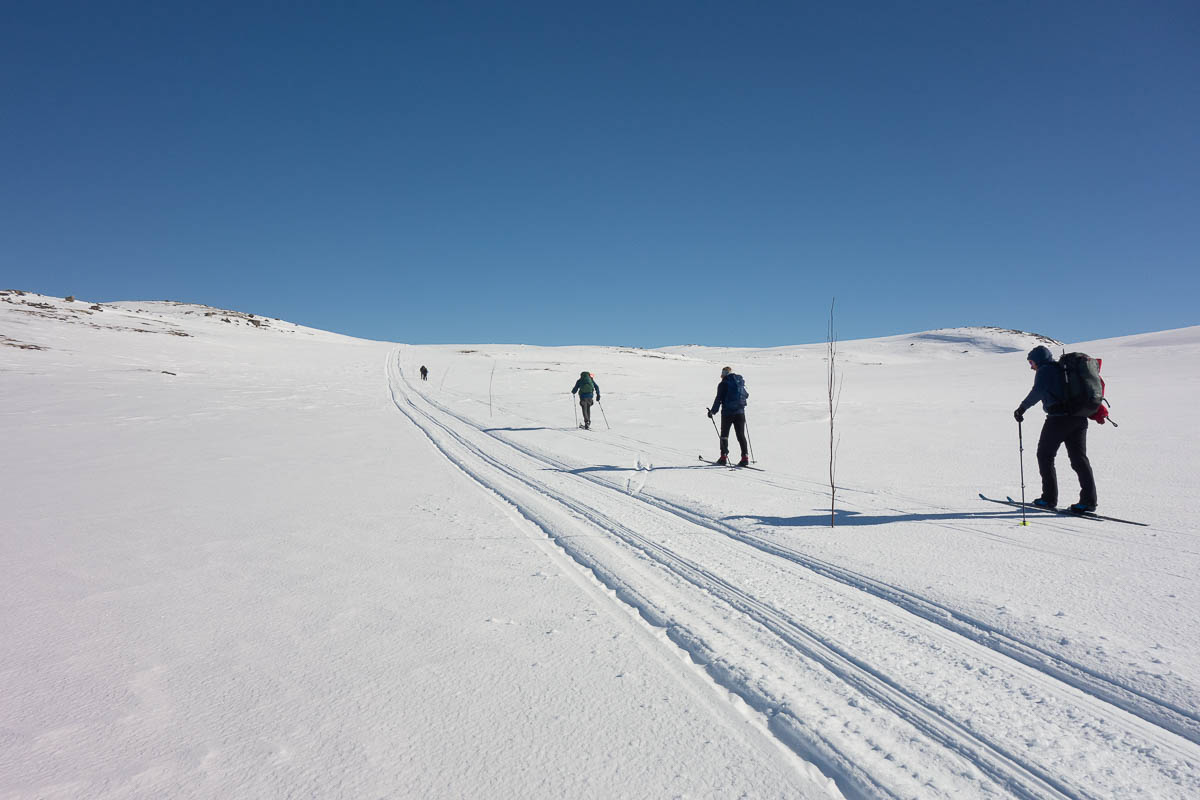
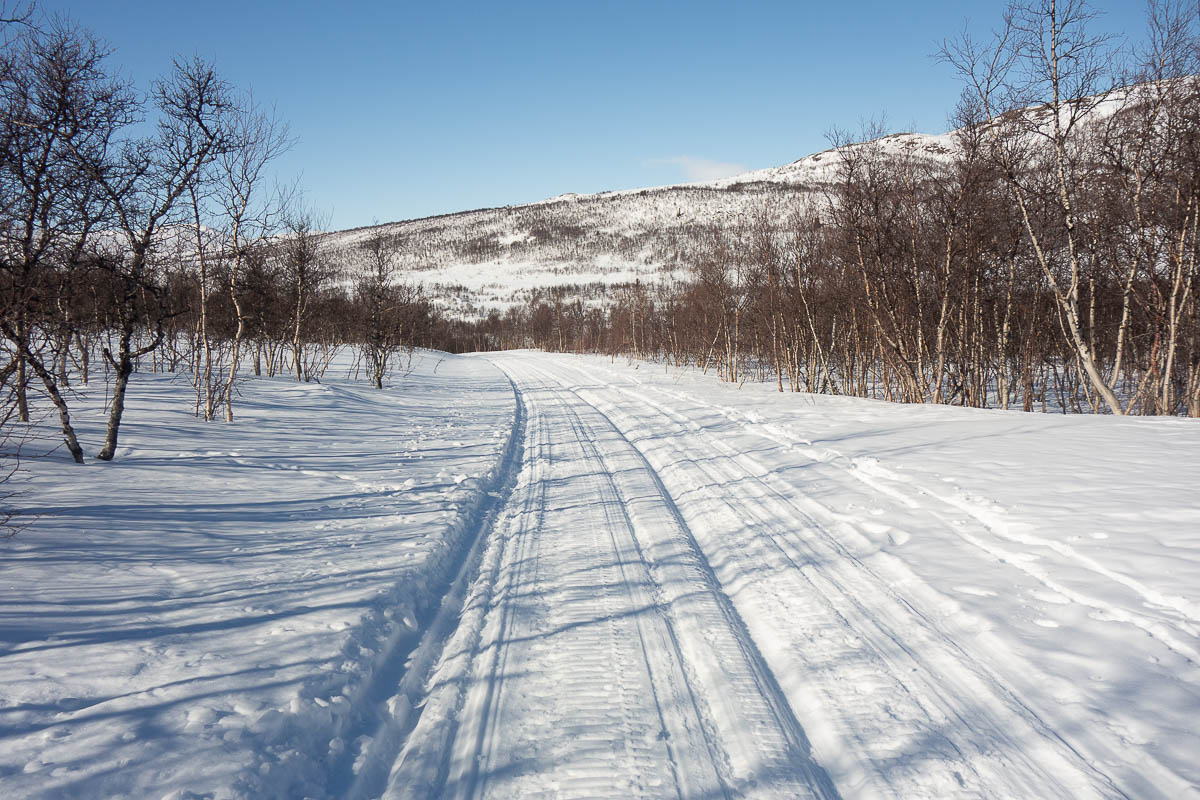
There was no doubt that we were getting closer to civilization today. No more untracked trails – now we had snowmobile tracks to follow. Which can be convenient at times, but they can also be icy and uneven, and more work than they’re worth, so we ski next to them.
As we came further down the mountain, trees appeared and then filled up the valleys. After a while the snowmobile tracks were the only open ground where we could ski. Once your skis get into the snowmobile groove, there’s no way to control your descent, though. As the descent got steeper and steeper, and the tracks deeper and deeper, we had to get off our skis and walk down.
Then we had a few hours’ wait at Solheimstulen hut for a taxi to take us to Geilo. In Geilo we were staying at an actual hotel (that had seen better days but was still pretty grand) and ate dinner on a white tablecloth. Something of a shock after the mountain huts.
The food on this trip was mostly quite uninspired, and they really did not know how to handle vegetables. I think three of our dinners included boiled carrots with absolutely no flavouring. I guess it’s a Norwegian thing. The dinner at Geiterygghytta was a rare exception.
Rauhelleren to Mårbu, 20 km.
The day was overcast, windy and warm. The snow was warm and squeaky, sticking to my skis until I applied glide wax. Glide wax is one of those things that I make sure to pack every time, but don’t know if I will actually use, and then sometimes think that maybe I should just leave it at home – until the moment when I need it and realize that doing without would have been really, really inconvenient. Just like climbing skins, which we also only used on a single hour-long occasion during this trip, but which were absolutely necessary at that time.
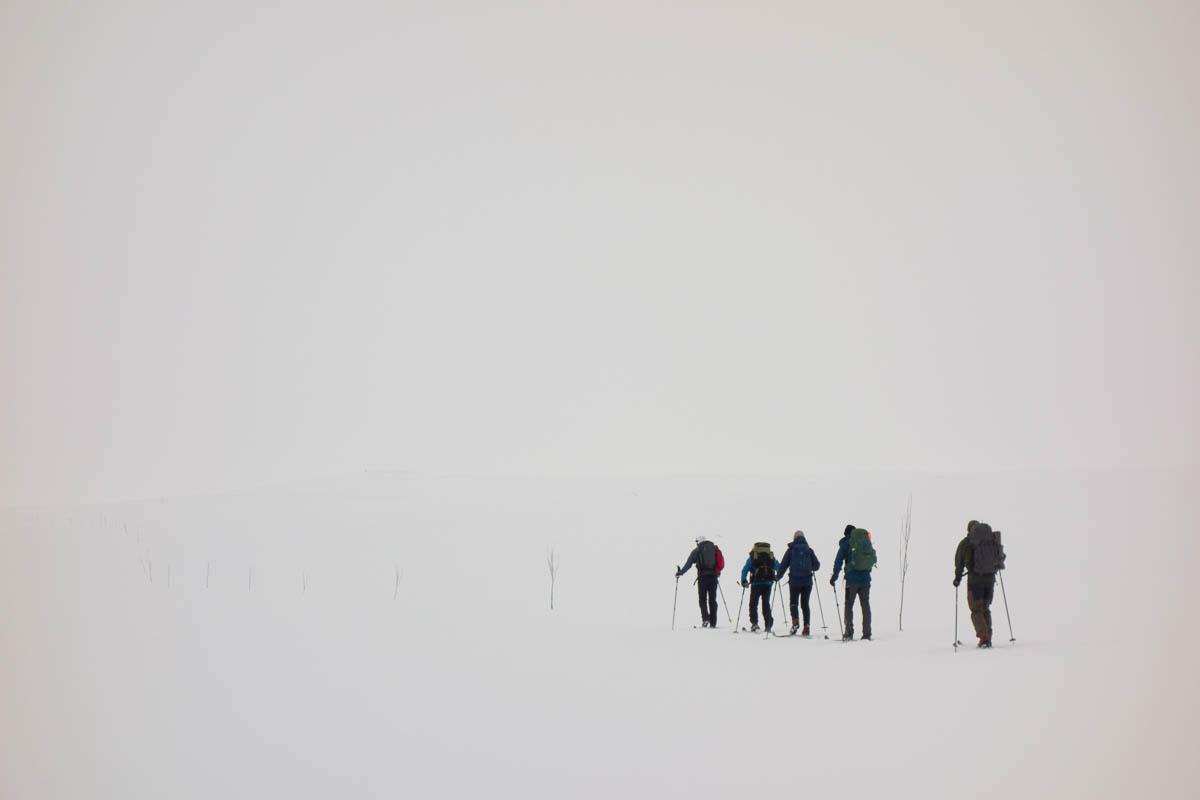
Back-country skiing in the mountains is a monotonous activity. Not much changes around me from one minute to another. It’s not like hiking, where there are new trees or streams or mushrooms or flowers with every step that you can pay attention to.
Instead I can be mindful of two simple things: myself, and the snow around me.
I make sure to pay attention to how my body feels. Are any parts too cold or too warm? Am I distributing the work well – should I take it easy with the poles for a while to let my upper body rest? How do my feet feel – am I moving them in a way that causes pressure from the boots at any point? Is the pack well-balanced? Do I need to drink more water? How is my blood sugar level?
The ski tours I go on are not extreme (especially when compared to the people skiing across Antarctica and whatnot) but the temperatures and distances are still such that small misses can compound into large problems. People get blisters, pull muscles, get dehydrated or hypothermic – sometimes just enough to cause problems for themselves, other times so much that they affect the whole group. I’ve managed to avoid all of those issues, and I like to believe that it’s not just down to luck but also to awareness.
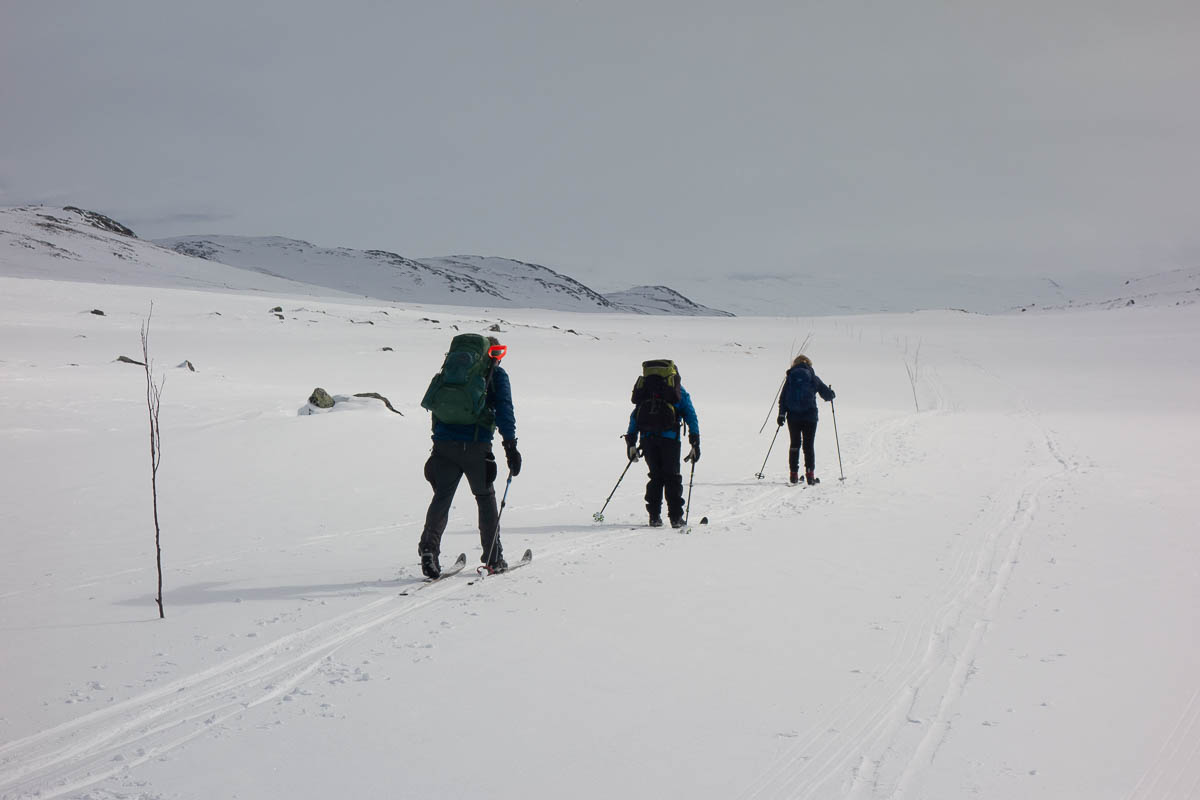
I pay attention to the snow because it is everywhere around me, and – apart from myself – the only thing nearby that I can pay attention to. Theoretically I could pay attention to the other people, but they are often not close enough for that. Also, the snow is more interesting.
The snow can be soft or hard, icy or glidy or grippy. With practice you can see the difference at some distance, and avoid the soft drifts that suddenly stop your smooth descent – or the icy patches where you lose all grip. The weather can make all the difference: if the sky is overcast then sometimes instead you lose all depth perception and can’t even see whether you’re going uphill or down.
The winds in the open landscape smooth everything out on the large scale. Where the ground is uneven in the summer with rocks and bushes, in the winter it’s a mostly featureless plain. But the on the small scale, the snow blows into dune-like shapes called zastrugi. Sometimes they’re just millimetres in height and you can barely see them except when the sun is low; sometimes they measure in decimetres and you have to watch where you aim your skis. If I was doing this on my own, I’d want to stop a lot to to take close-up photos of all the snow and ice formations.
And then there are all the sounds that the snow makes. It can squeak and creak; it can crackle when icy; it can shush when you sink into soft snow. It can hum when you go across it at speed. The poles make a particular sharp sound when they go through the crust of ice on top of older snow, and then a different one when they cut through the crust as they tilt with my forward movement. Today at one point when I was going downhill through really wet snow it vibrated so strongly that I felt it through all my bones.
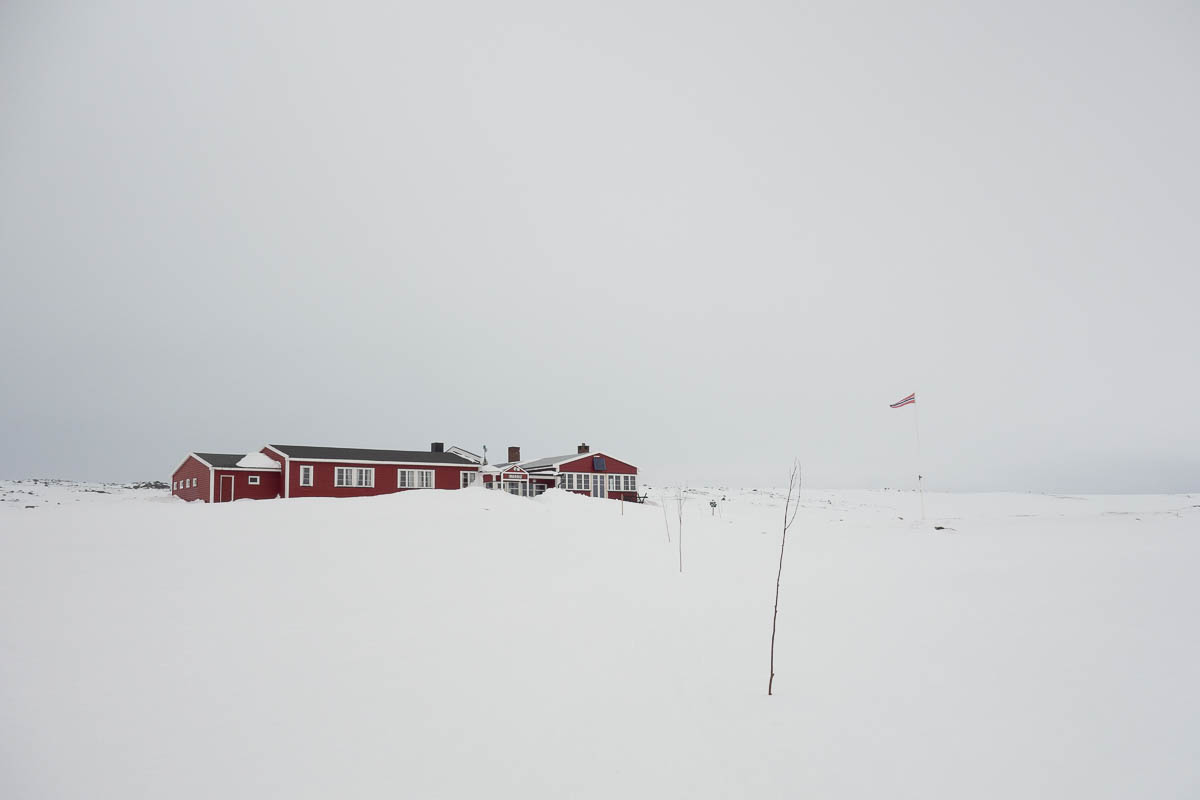
We had an early start again today to get the best weather we could, and reached the hut by lunchtime. Lunch on Norwegian ski tours, by the way, is sandwiches that you make yourself with materials from the breakfast buffet. I am getting just a little bit tired of cheese sandwiches by now. Boiled eggs are a good complement when I know we’ll eat lunch at a hut, like today, but harder to manage en route.
In the afternoon the weather got even warmer, until the eaves were all dripping and it was raining outside. This hut had a lovely seating nook by the entrance where we established ourselves for the rest of the day. There was no network connection, not even a paid one supplied by the hut like at the previous place. But they did serve waffles and I had books downloaded, so it was pleasant.
We’re back on track, skiing to the next hut. Well… we’re back on a track, but not the planned one. Having lost a day and a half, we can’t get to where we were supposed to be. So our guide Keith has done a lot of re-planning and re-re-planning to give us as much skiing as possible for the days remaining, while also getting us in range of public transport so that we can all get back to Oslo somehow in time for our trains and flights.
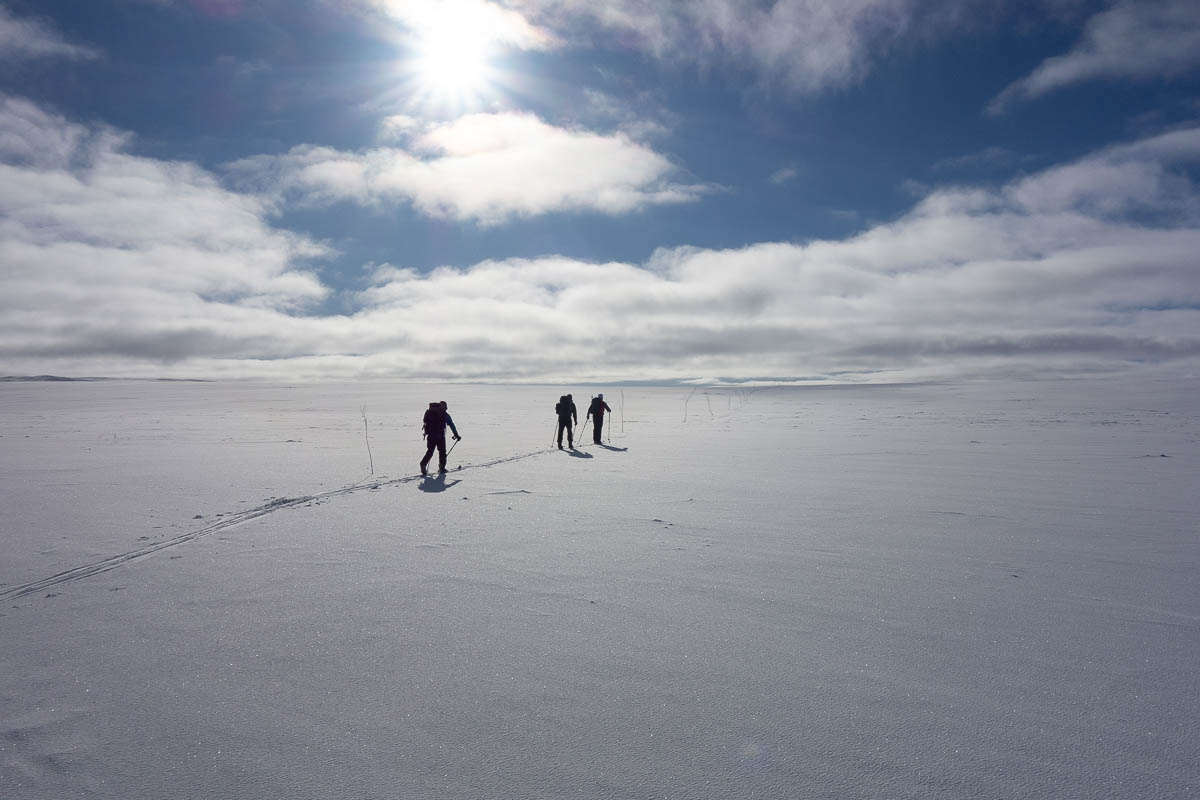
Today we skied from Dyranut via Stigstuv to Rauhelleren. Maps and other information sources claimed the distance to be 19 km. After the first day’s surprise, Keith carefully re-measured the distance on his map to 21 km. We still joked that he’d “find another few kilometres for us in his back pocket during the day” and indeed – when we arrived, we had done 25 km.
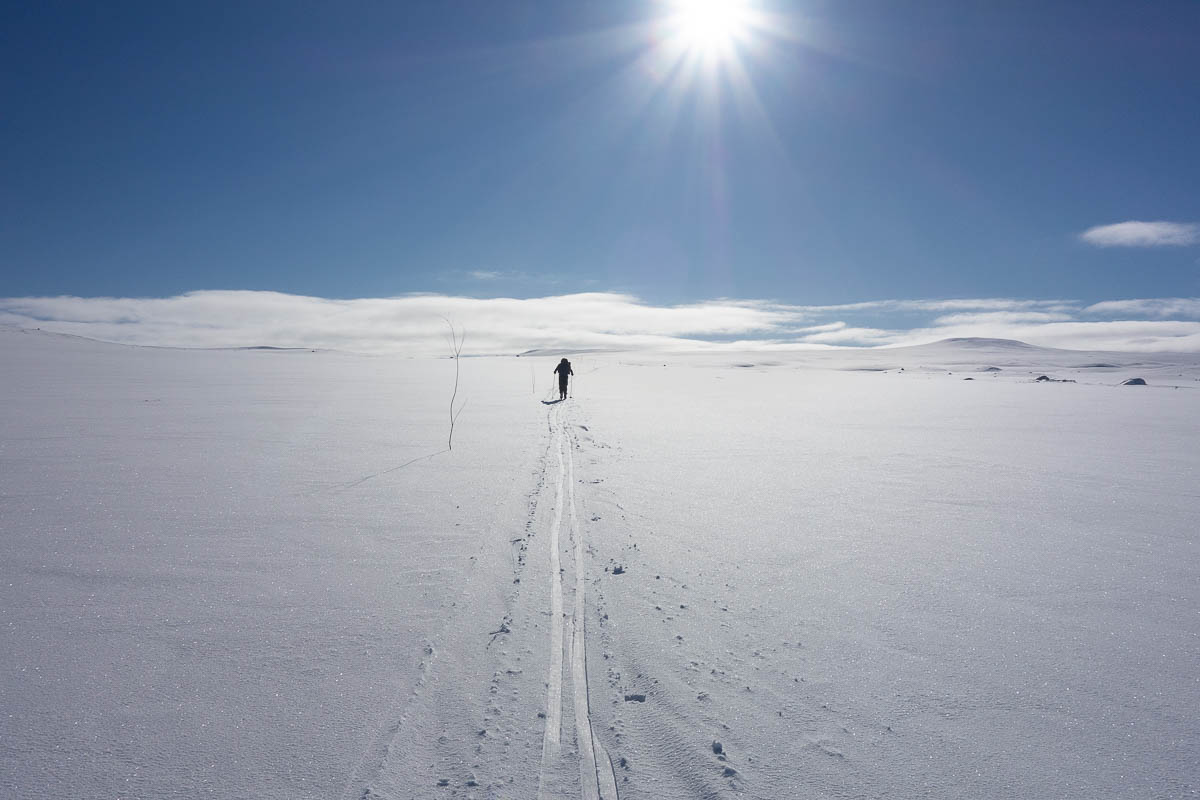
The first half of the day we had brilliant sunshine and no wind. And there was plenty of fresh snow after the storm, so the skiing was about as perfect as it can get. This is what we came here for, and we felt pretty lucky to get to experience this day.
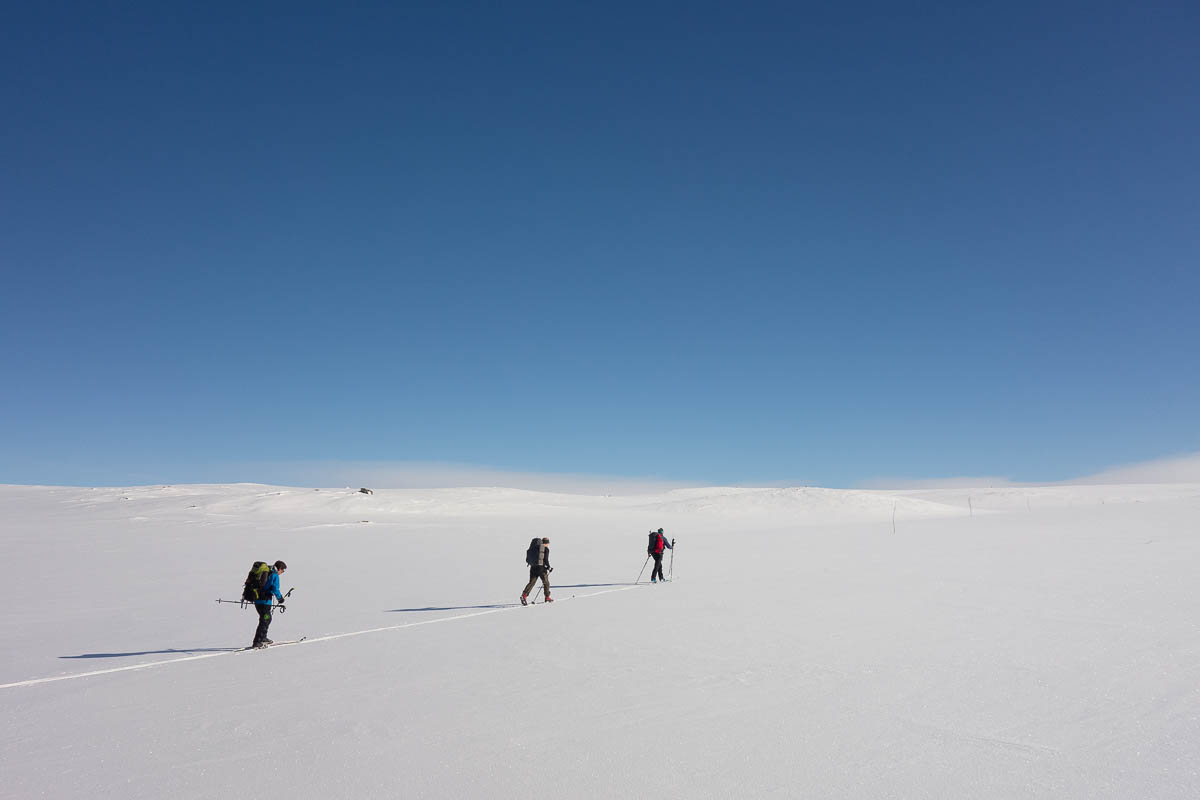
Stigstuv hut was about halfway. We saw it in the distance when we were still maybe 15–20 minutes away, and were looking forward to a picnic in the sun on their porch or picnic table or whatever they might have.
Minutes later a cloud descended, or maybe it was a fog that the wind blew up the slope. Either way, we were suddenly enveloped in water vapour. No more warm sunshine, and no more stunning views. The hut just disappeared.
When we finally stumbled upon the hut, the hut porch held a somewhat angry dog (and his owner) who was not inclined to share it with us.
For the first half of the day, the tracks of a fox criss-crossed the ski trail were were following. When we got to the hut, it turned out that the man with the dog had shot the fox and hung it on the wall of the hut. Trails of blood in front of the hut. Once we saw that, we didn’t much want to share the porch with them anyway.
Luckily the hut had a picnic table where we could sit instead. But the fog was still there and none of us wanted to sit around for a long lunch with no sun to warm us.
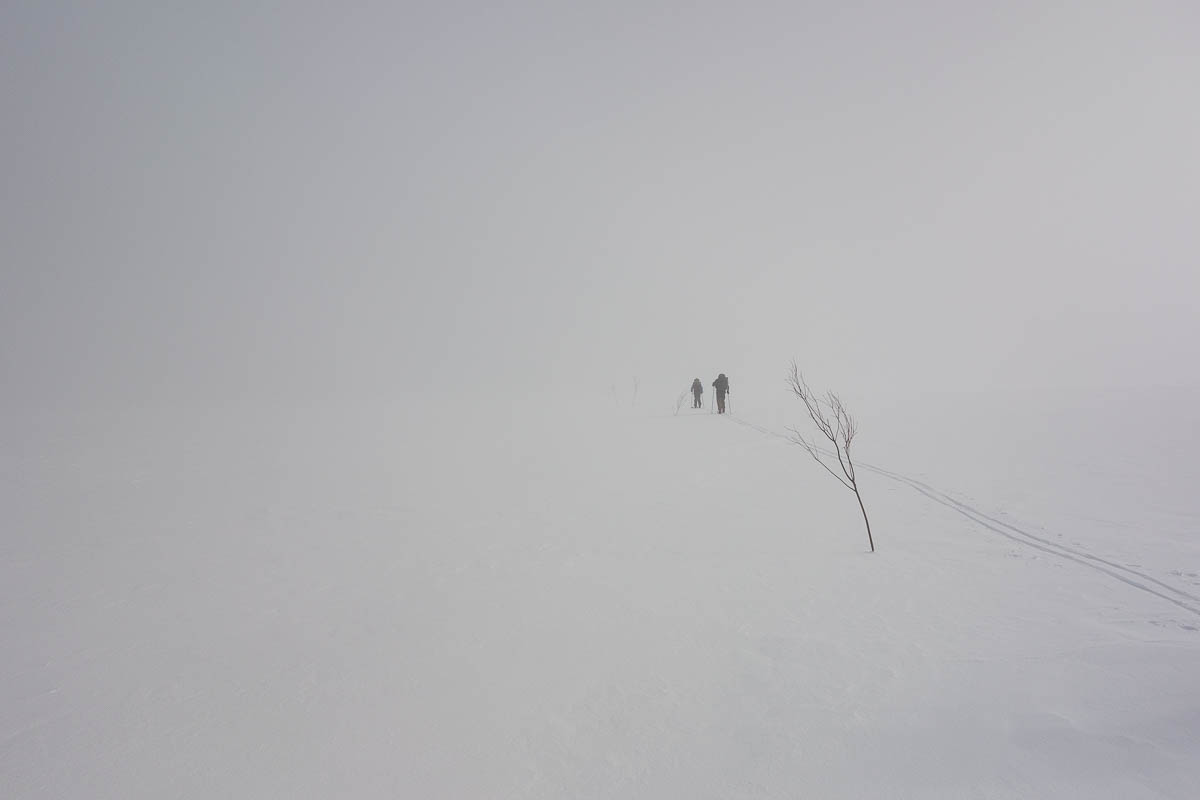
Later on we got clear skies again and more fresh snow on gently undulating terrain, for a near-perfect ski experience.
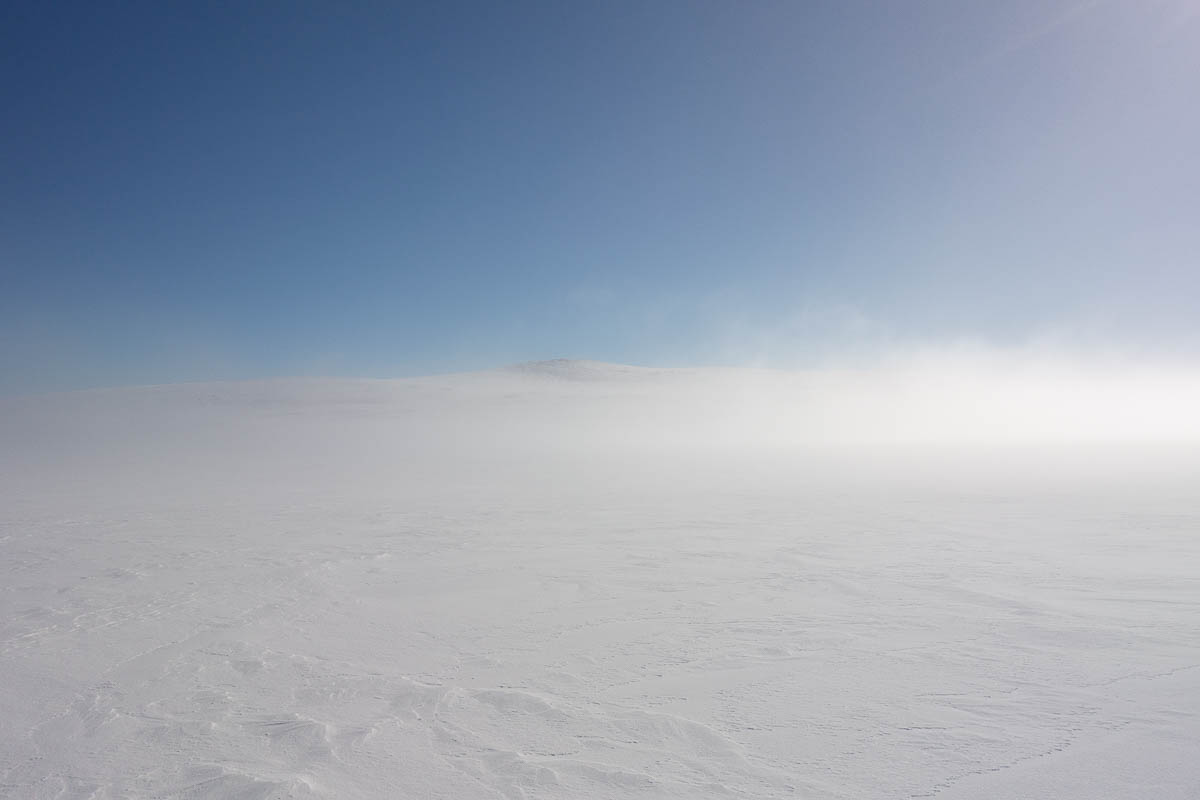
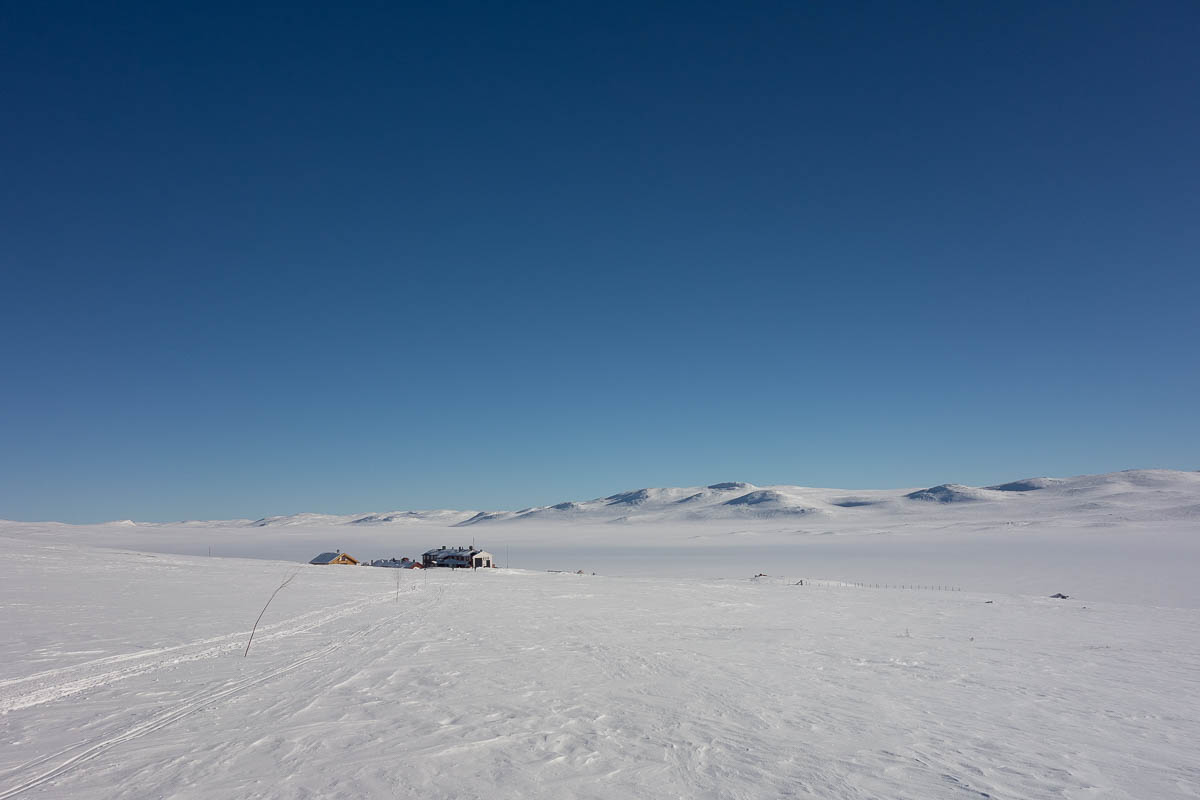
The weather was still pretty awful the first half of the day, but then gradually improved. Not in time for us to undertake a longer ski and move on to the next hut, but enough to allow us to go out and stretch our legs on a little circuit near the hut.
Bright white skies and white snow made photography difficult today, plus I had my ski goggles on to protect against the wind. Most of the time I couldn’t see anything on the camera LCD screen. I almost thought the camera was broken, but I could just barely make out some of the indicators in the corners. I just set the camera to Auto mode, pointed it roughly in the right direction, clicked and hoped for the best.
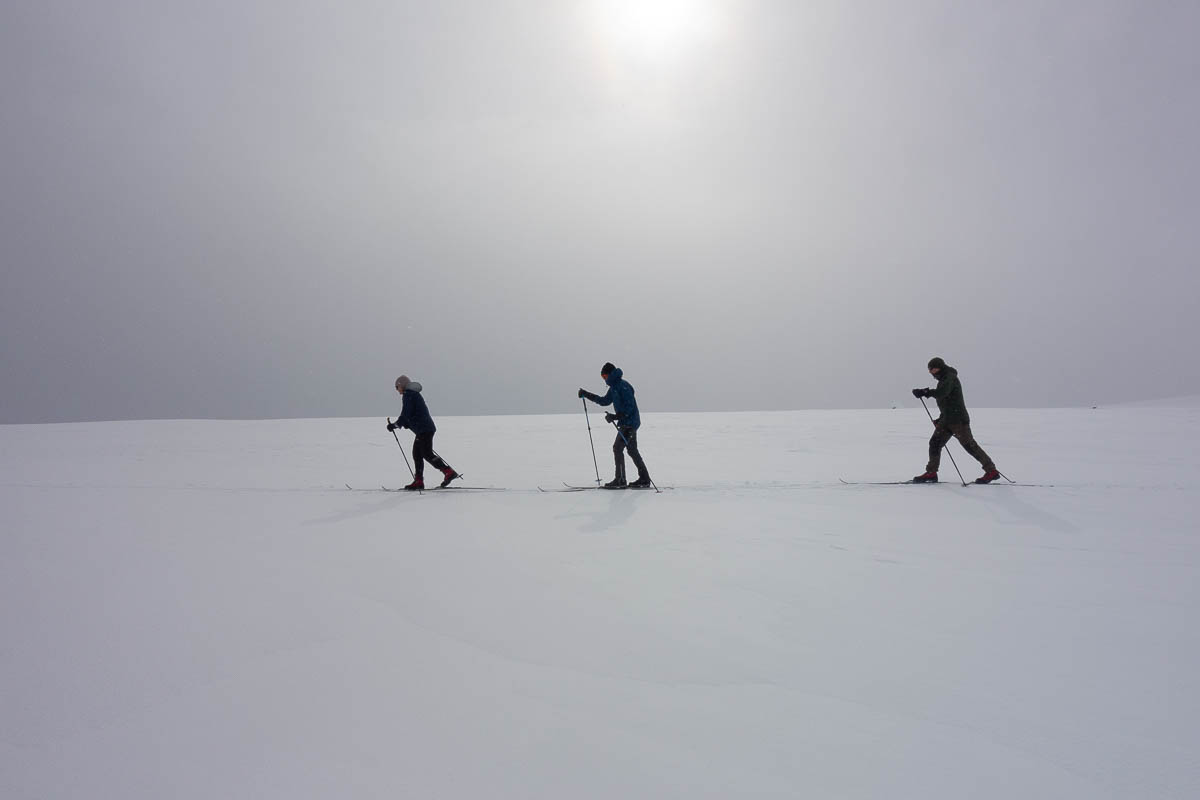
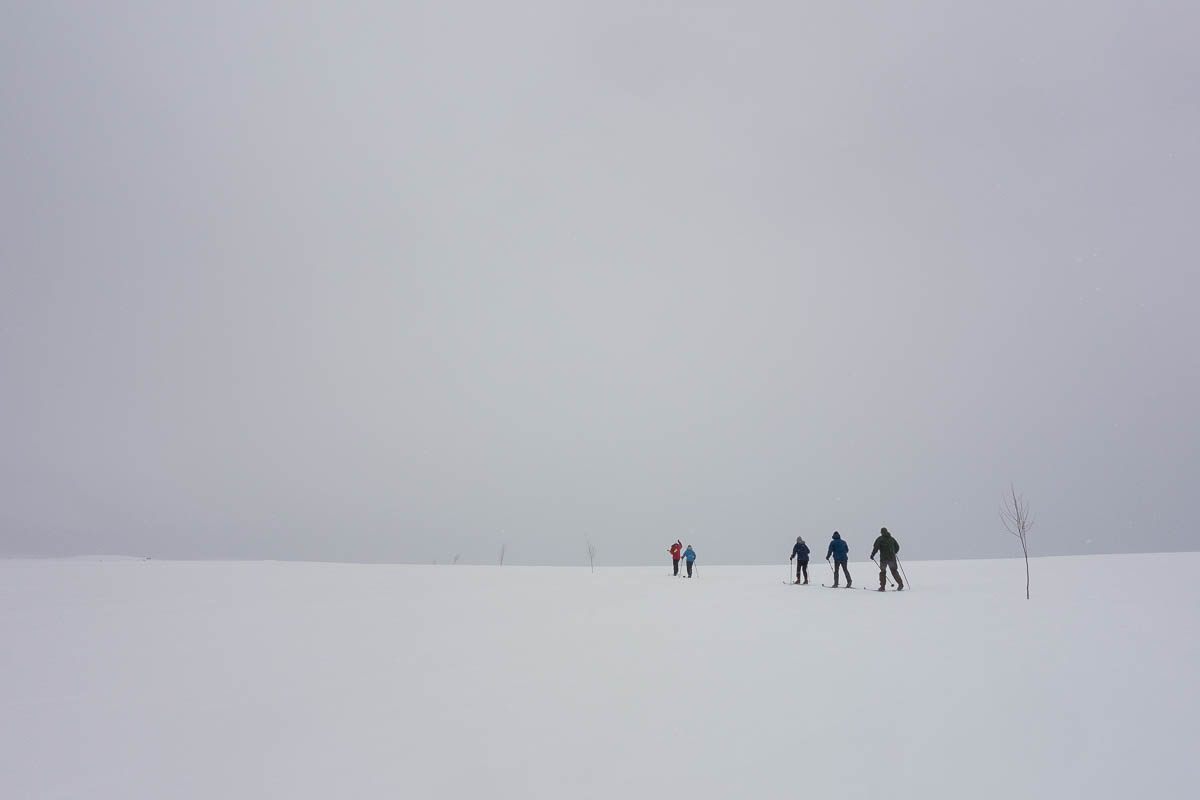
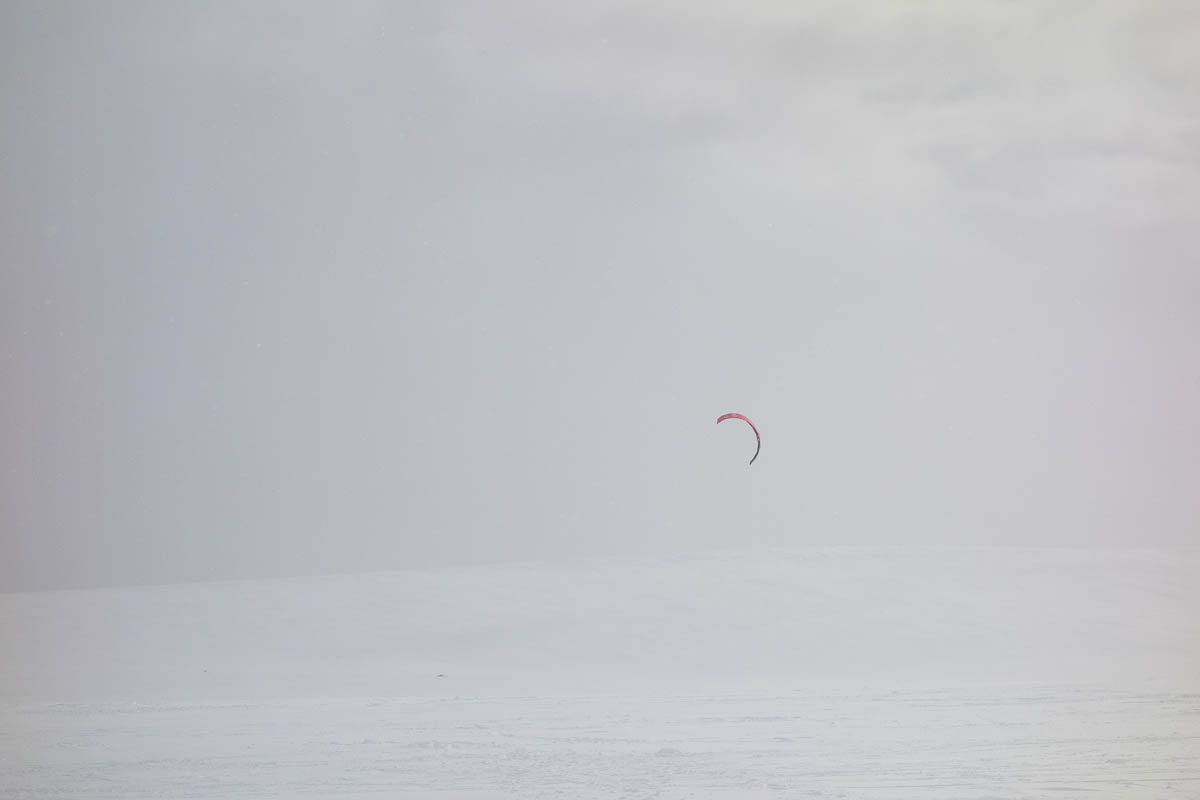
Dyranut seems to be a centre for kite skiing. We saw numerous kite skiers and kite snowboarders both yesterday before the storm, and today after it. Yesterday’s winds were strong enough, even well before the storm, to lift the skiers in to air – I literally saw some of them flying. Flying among icy rocks with your skis on seems like a dangerous idea, but on the other hand they seemed to be fully in control, so I guess they know what they’re doing.
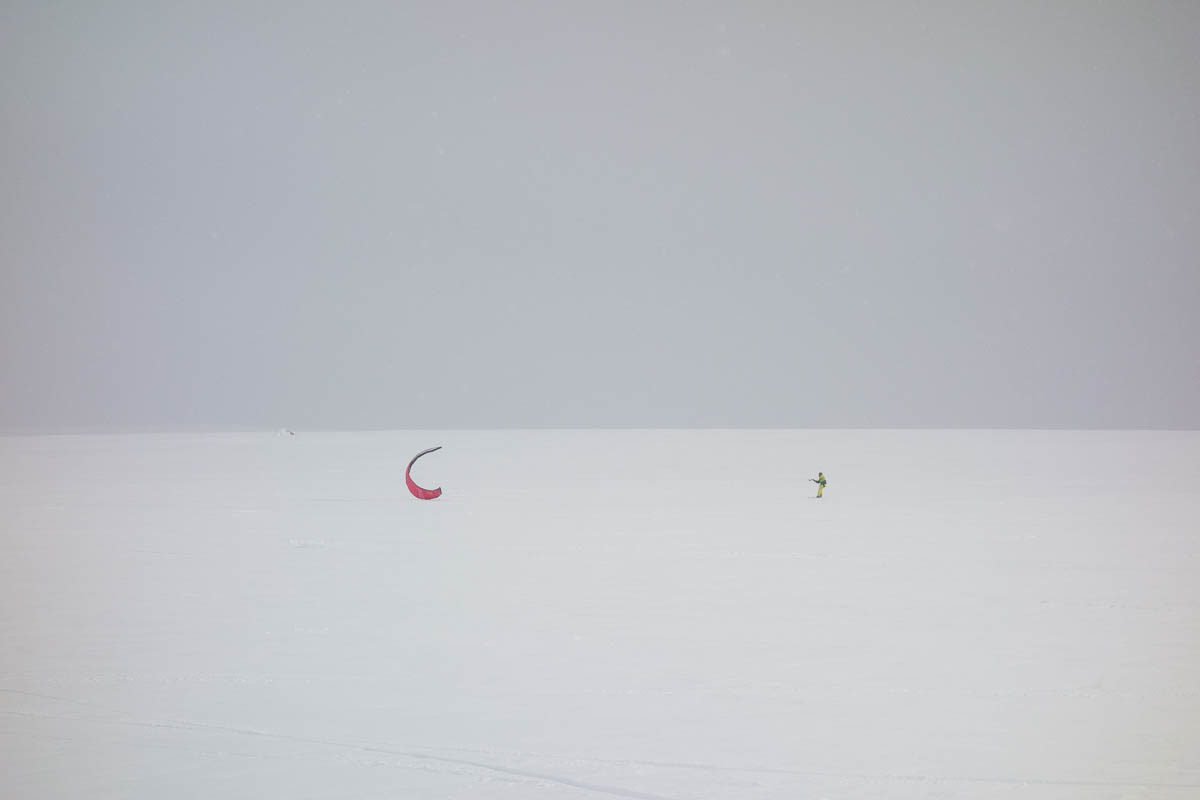
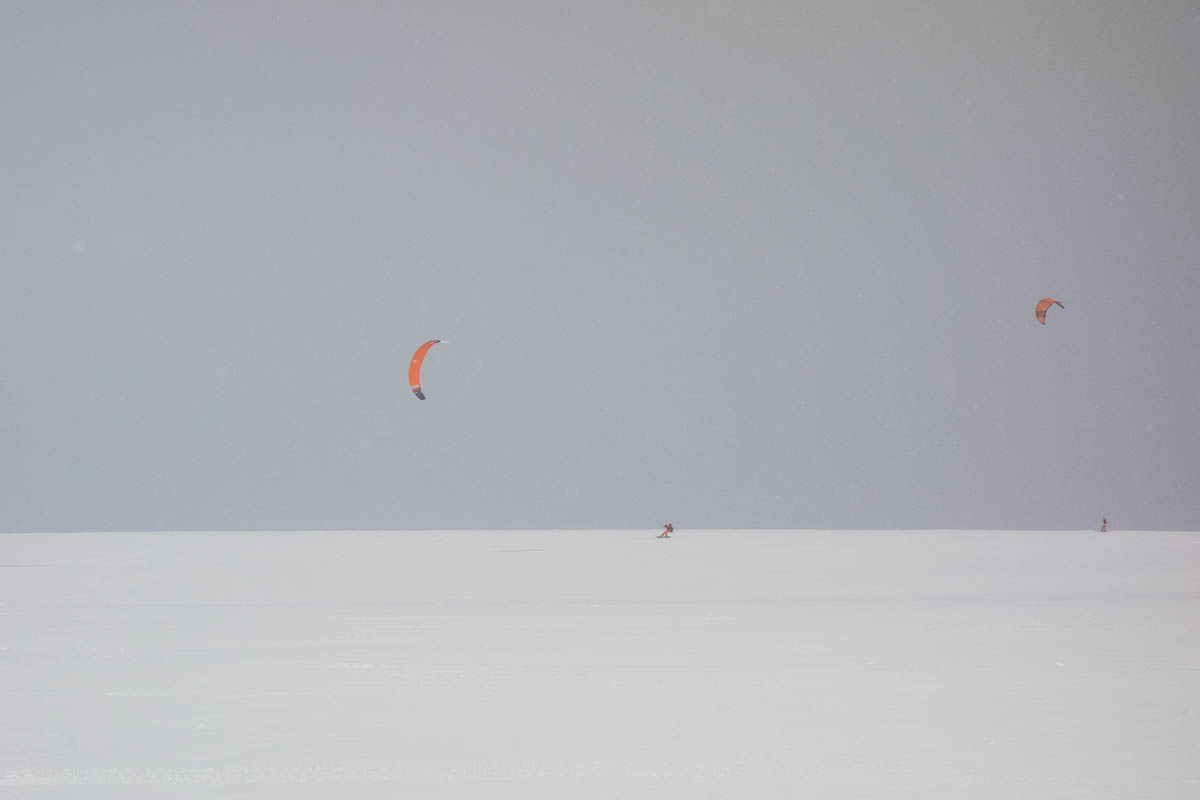
There were a couple of dog sled teams here overnight. I wonder if the dogs stayed out in the storm all night.
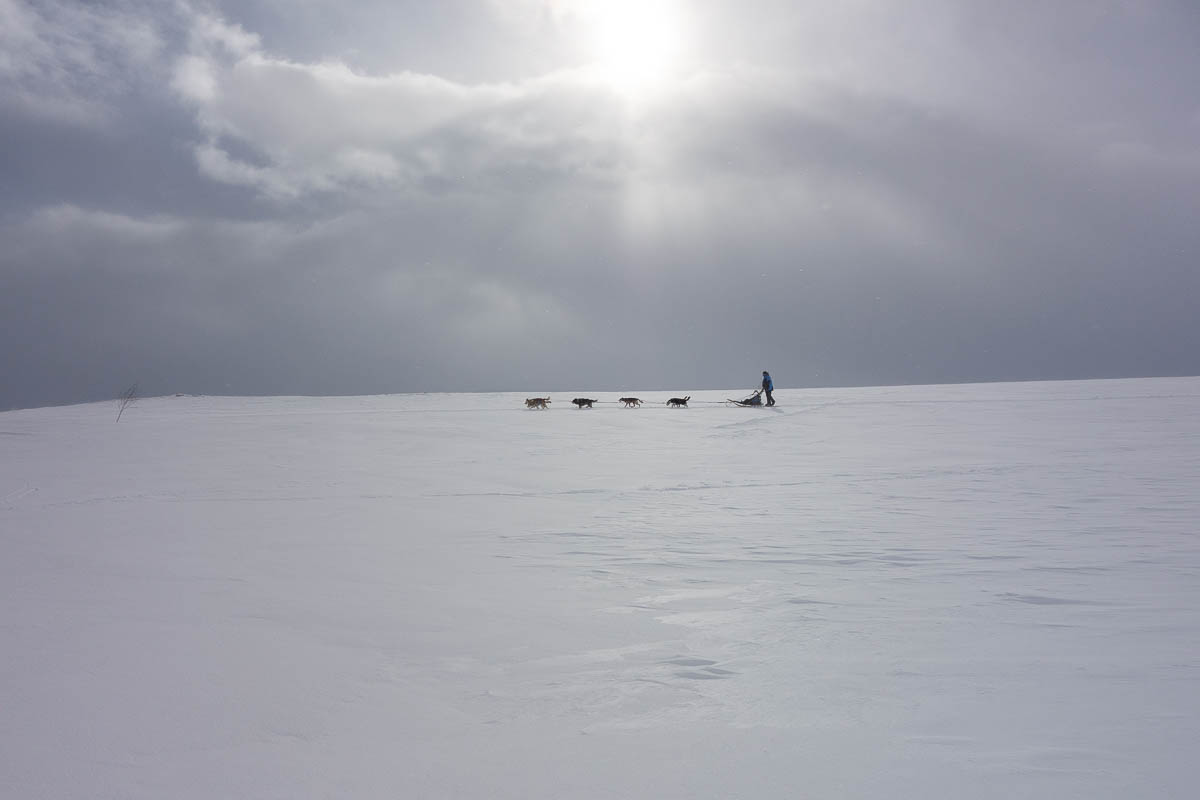
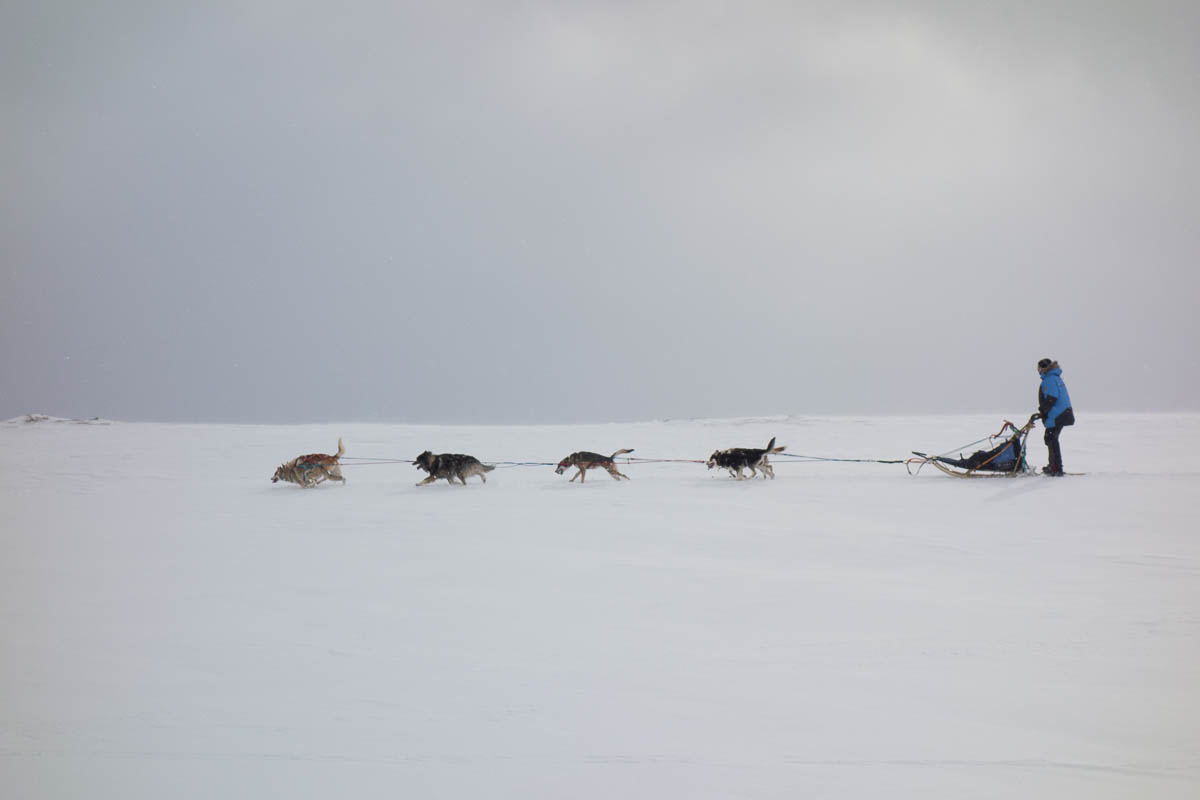
Yesterday on the trail we also passed groups who were camping out in tents. One of the groups was training for a trip across the South Pole, if I caught the conversation correctly. I guess if that’s what you’re aiming for, then a night out in a snowstorm with temperatures no lower than –10°C is peanuts.
The plan for today was to ski from Kjeldebu to Rauhelleren, which should be about 25 km. Unfortunately the weather forecast promised very strong wind (gusting up to 100 km/h) together with plentiful snowfall. Planning for 8 hours of skiing in horrible conditions would be nothing short of reckless. But we also didn’t want to get snowed in at the small, chilly, unmanned hut with limited amenities.
So, plan B: we got up early to get ahead of the storm and skied just 8 km to Dyranut, the nearest manned hut, where we will wait out the storm.
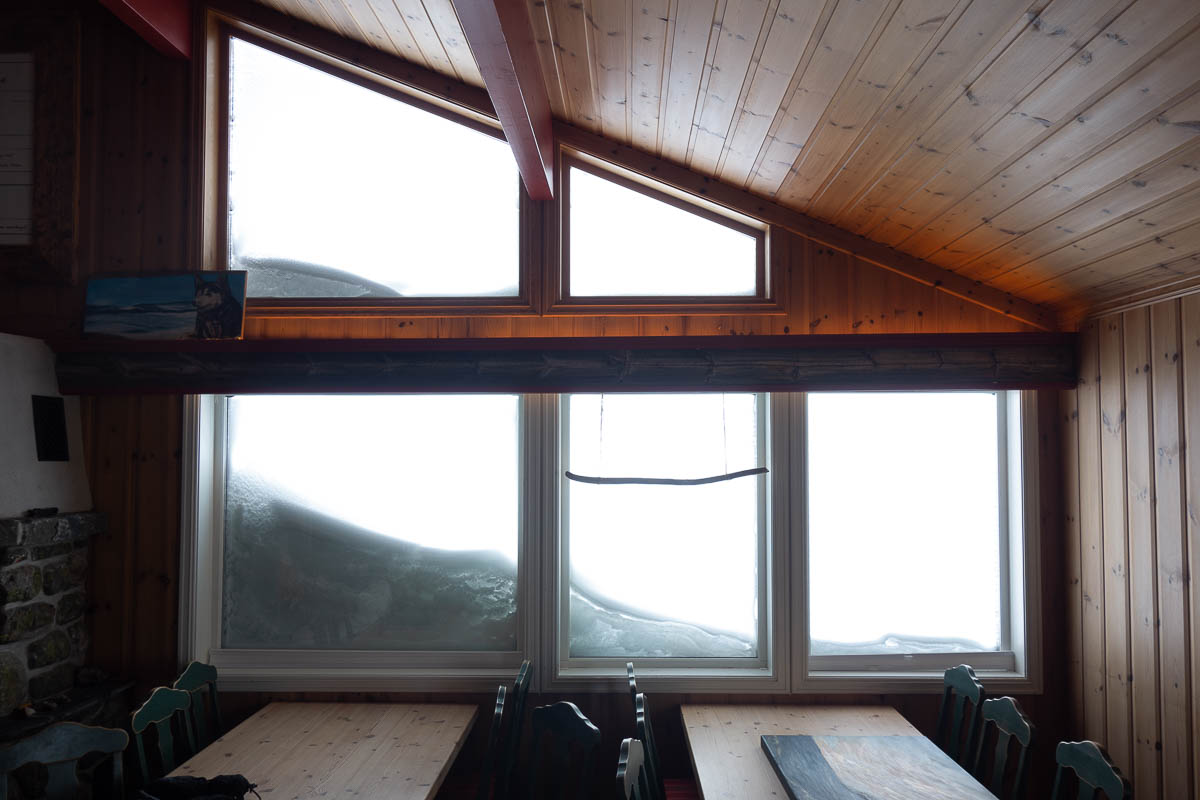
We arrived at Dyranut already at 10 o’clock, after two-ish hours of skiing. It was windy already in the morning, but not exceptionally so.
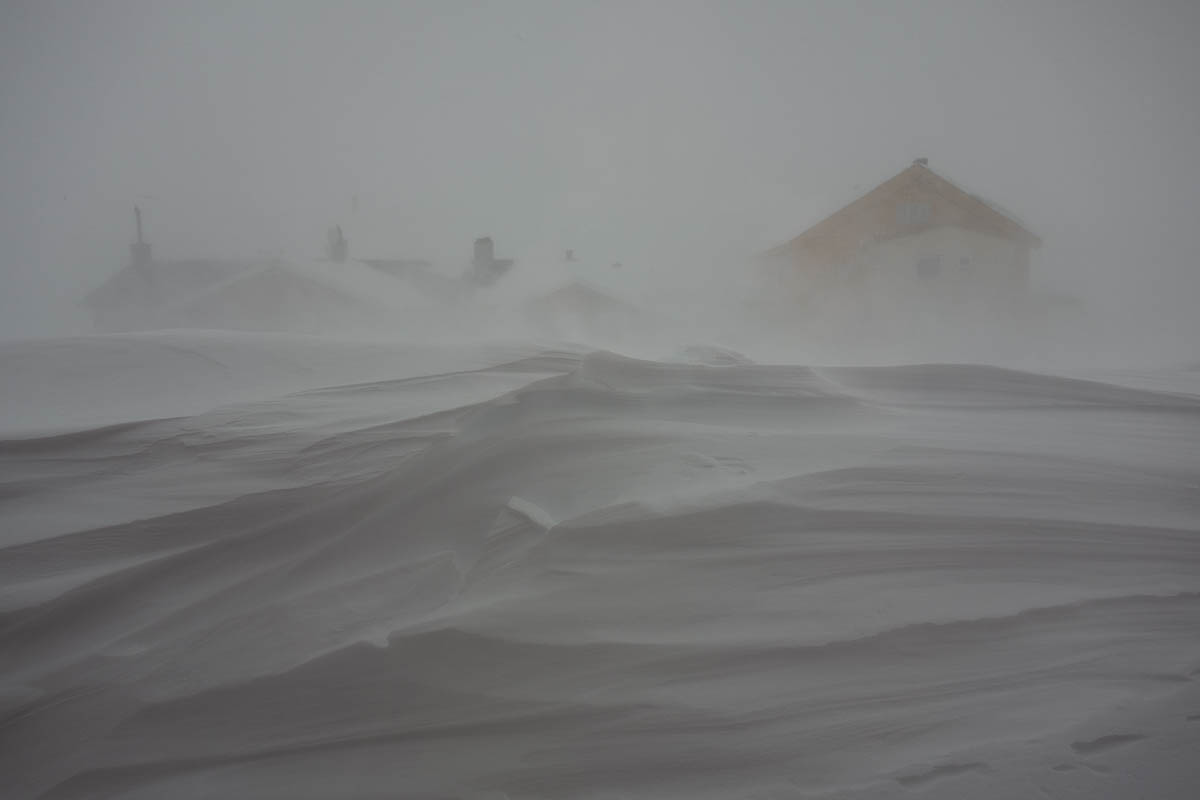
Modern, accurate, high-precision weather forecasts are truly a miraculous boon to skiers. The weather gradually got worse, starting just an hour or two after our arrival. By the afternoon it was truly horrible. Had we gotten caught in this weather out in the open, it would have been life-threatening.
As it was, moving between the two buildings at Dyranut – one of which had all the common areas, including the toilets, and the other all the bedrooms – was very challenging. We avoided it as best we could, but still needed to make the trip a few times during the day and evening. It was just a 20-metre walk – but with steep banks of snow, piles of soft snow, no visibility due to the air being full of yet more snow, and gale-force winds. On my first trip there and back I think I fell over four times. For the next time, I brought a ski pole for help.
As an added bonus there was a fire alarm at one point in the building with the bedrooms, so we all had to fight our way there to check it out. It turned out to be something with the generator (running out of coolant I think). Imagining what would happen if the hut actually burned down, with all our warm clothes and equipment, in this weather, was pretty scary. And it does happen! Various STF huts have burned in 2000 at Rogen, in 2010 at Stensdalen, and in 2022 at Sälka. All those open fires are risky.
So the day was mostly quite boring but interspersed with moments of fear and tension.
This year being the 50th anniversary of the Norwegian heavy water sabotage operations, and the majority of my skiing companions being of military background, the year’s ski tour goes across the Hardangervidda to Rjukan. I’m interested enough in the backstory to be looking forward to the talk we’ve been promised for the night at Rjukan, but mostly I’m just here for the great skiing, the stunning views, and the good company.
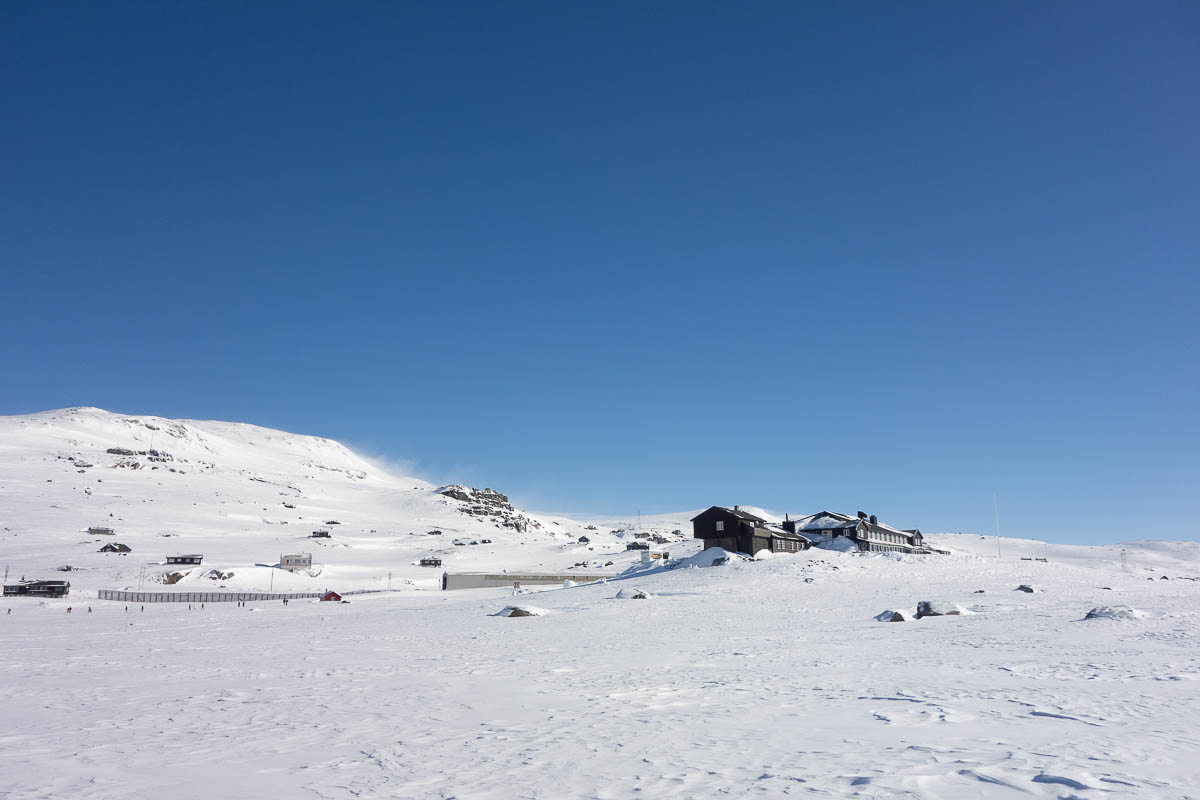
Day 1 – Finse to Kjeldebu. This photo above shows the Finse hut.
The guide said today would be 19 km but that later turned out to be measured as the crow flies, not as the human skis, so the real distance was 29 km. Which is a tough distance to do on the first day when we’re all still somewhat uncertain on our skis and finding our footing.
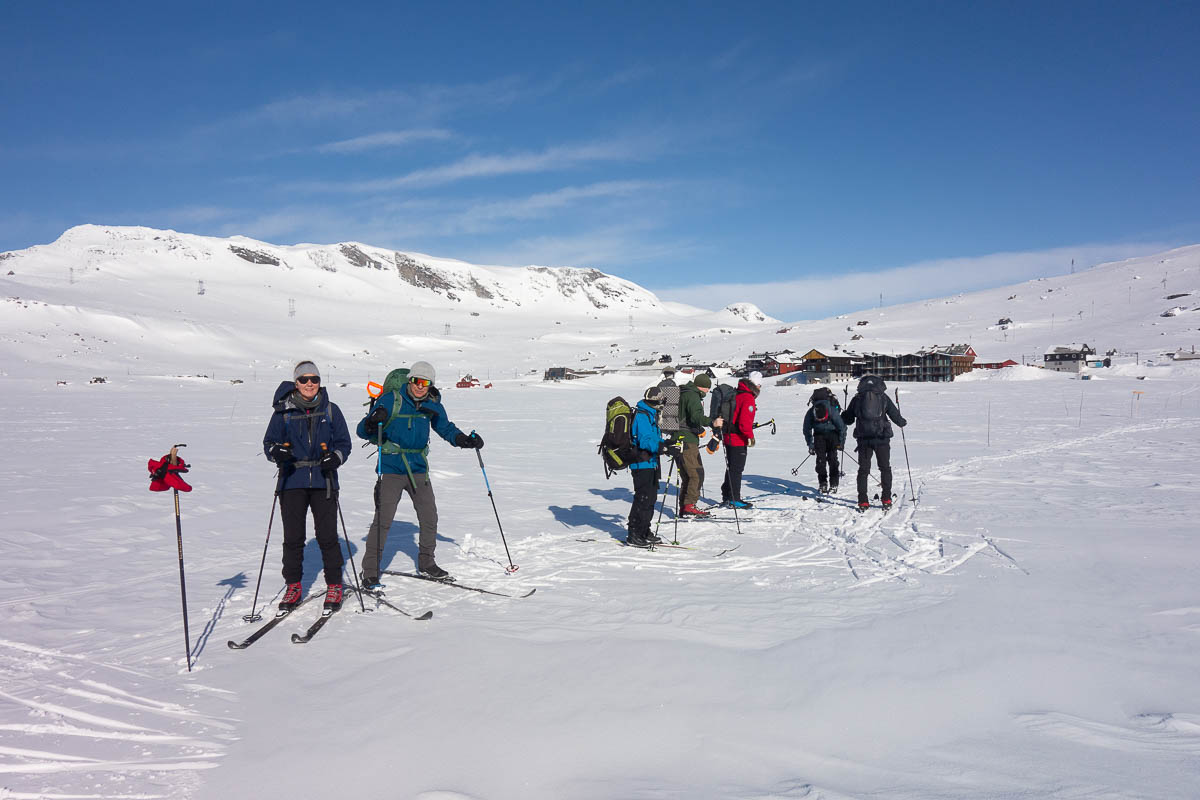
With a full pack, somewhere around 20 km my body usually starts sending me signals that “maybe now would be a good time to call it a day” and “this is kind of enough, isn’t it”. I start feeling my knees and maybe my hips, and noticing various muscles that I otherwise don’t think about. So when I started getting that feeling when we we still had a good 9 km to go, I got a bit concerned. Am I so out of shape? Nope, our estimates were just so far off.
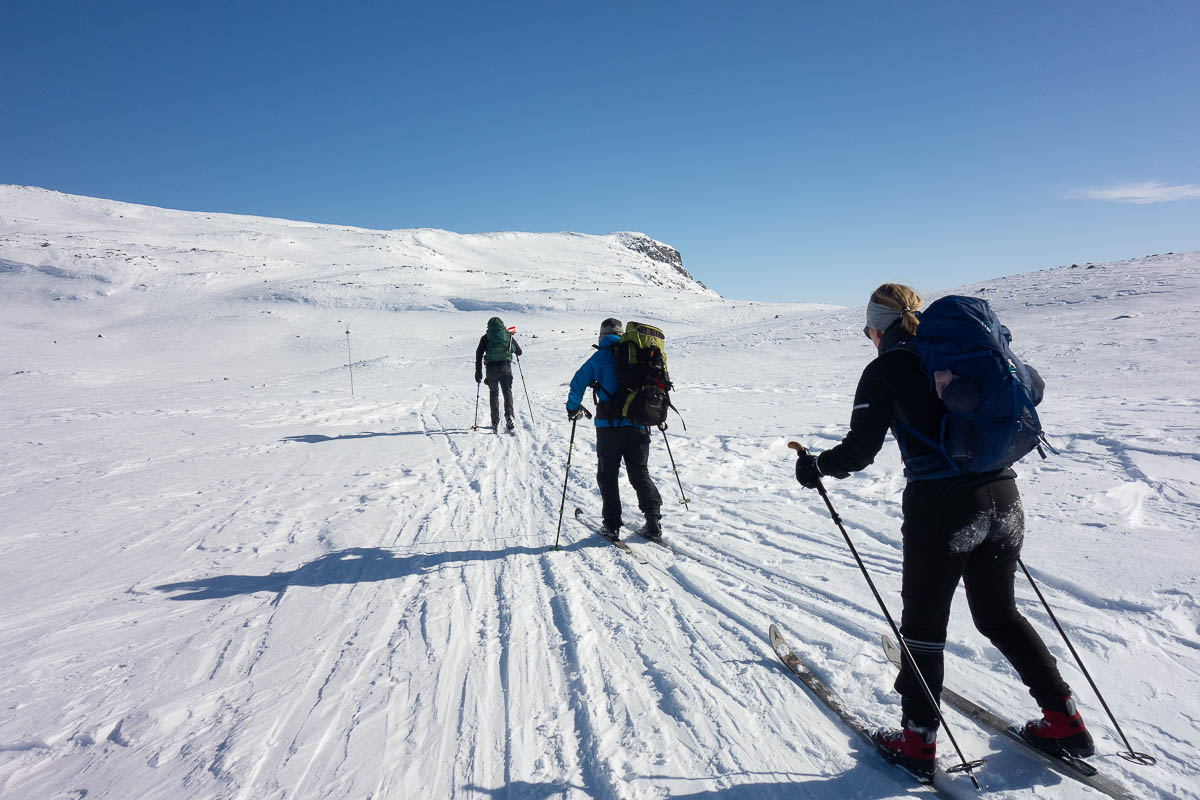
The weather forecast for Finse today was horrible, when I checked even as late as yesterday evening. We were promised –10°C and strong winds. Instead we got a day of brilliant sunshine, just a few degrees below freezing, and almost no wind. Absolutely perfect skiing weather, and beautiful views.
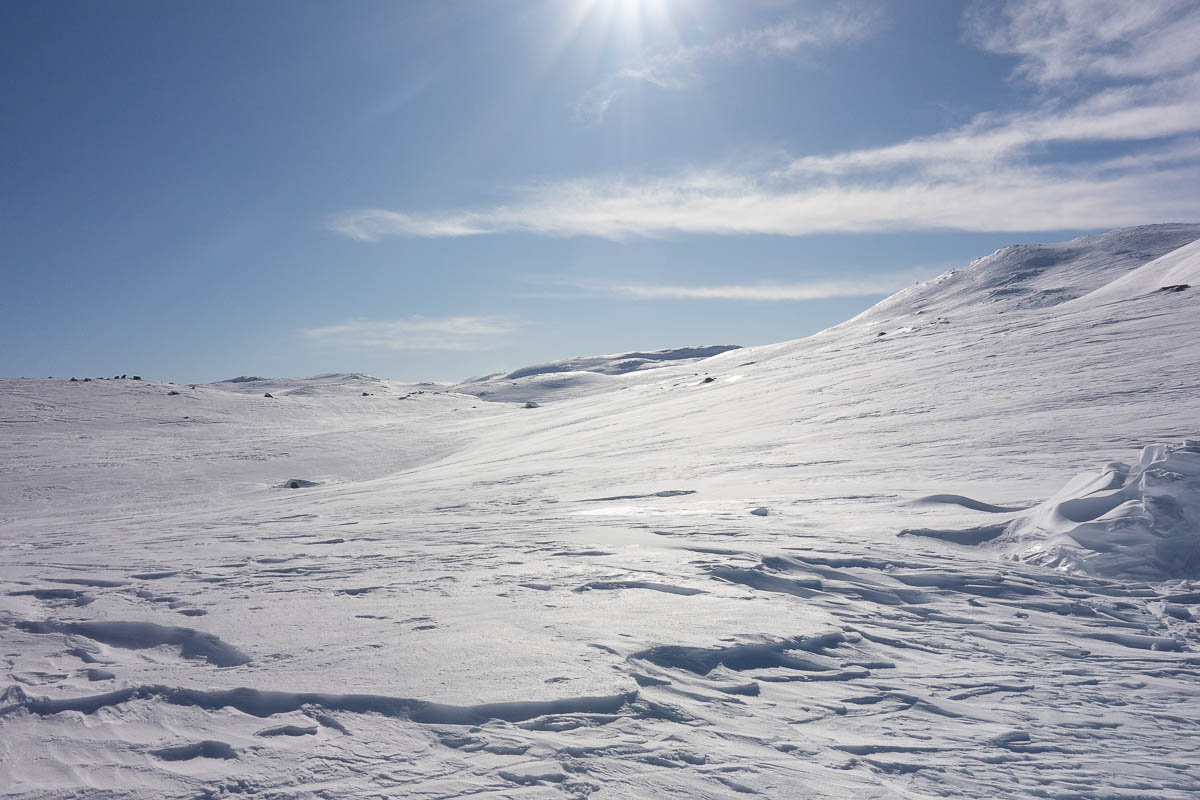
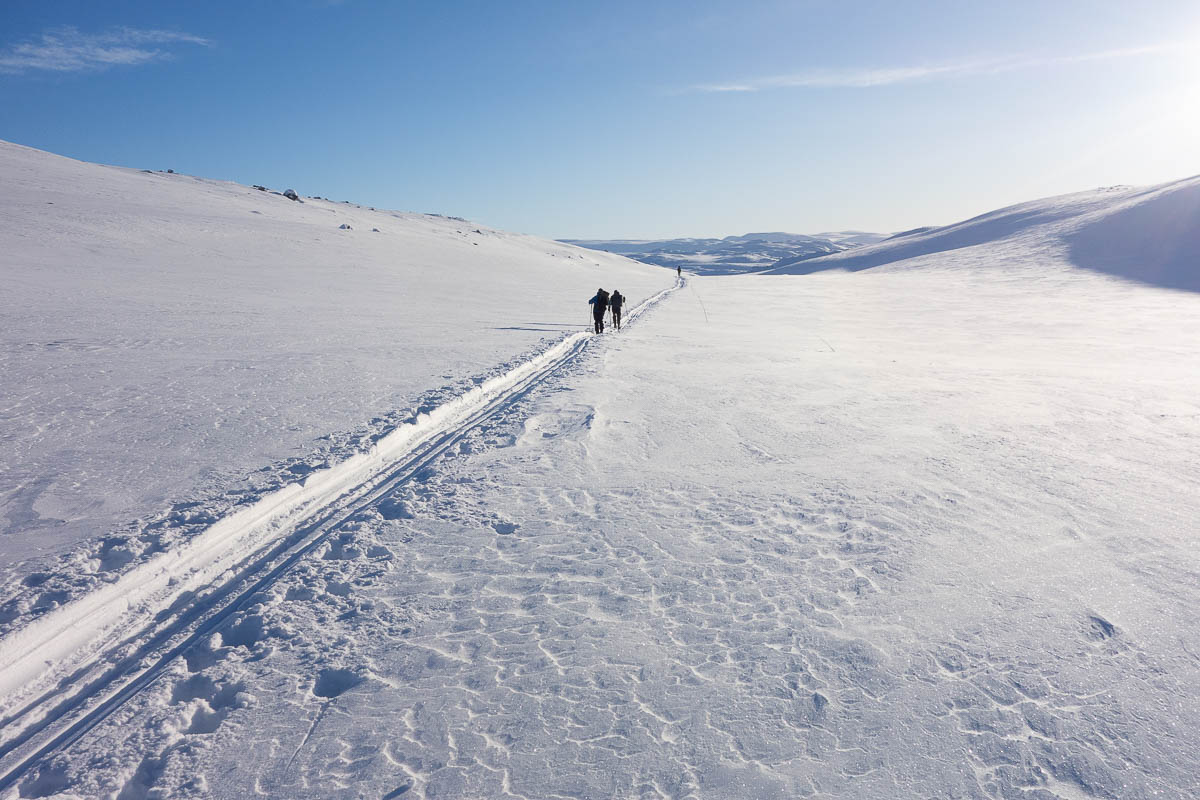
Gentle descents through soft snow are lovely. In the gentlest slopes you want to follow the tracks of the skier in front of you, to get the best glide – the soft snow acts as a brake. If the slope is slightly steeper but not steep enough to require turns, everyone tends to make their own tracks in order to have the most control. And then towards the bottom we all converge again, and take off in a row like a bunch of ducklings.
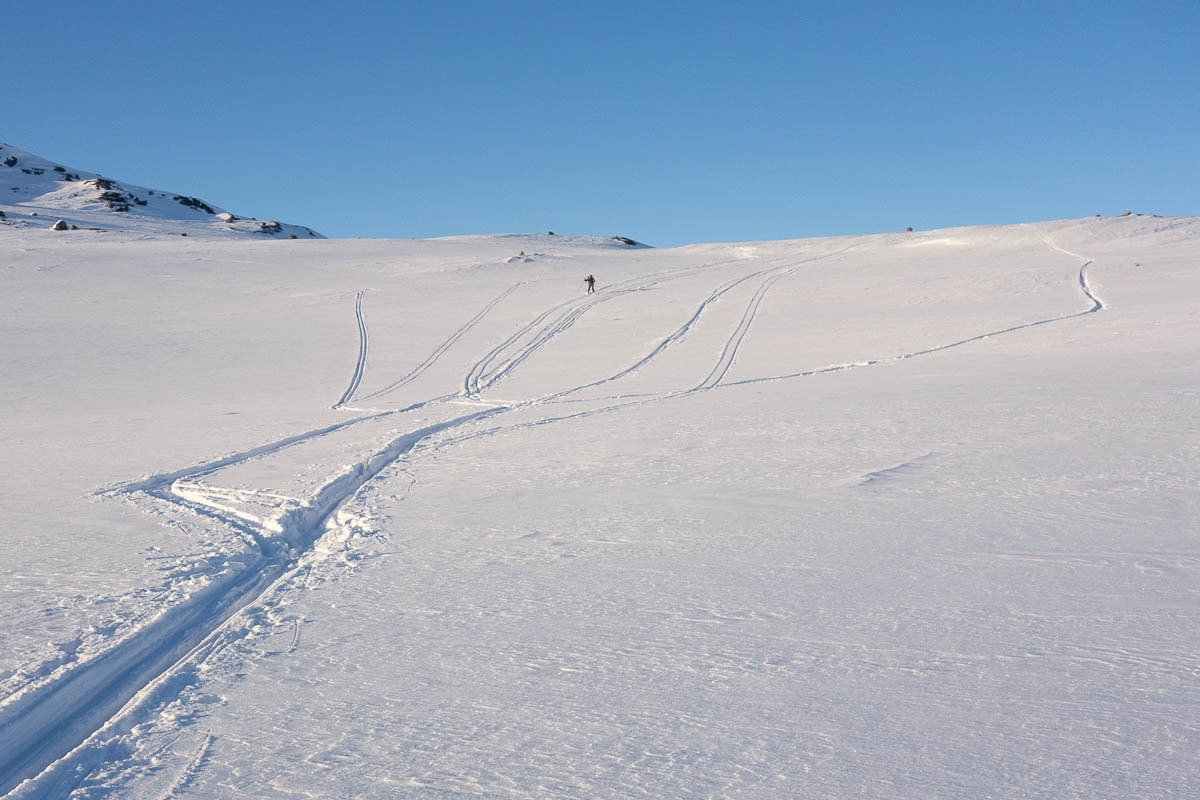
This is us arriving at the unmanned Kjeldebu hut, buried in snow. As with many alpine huts, there is also no source of fresh water, apart from melting snow. A bucket packed full of snow melts down to maybe a quarter-bucket’s worth of water at best, so there were a lot of trips out to fetch more snow.
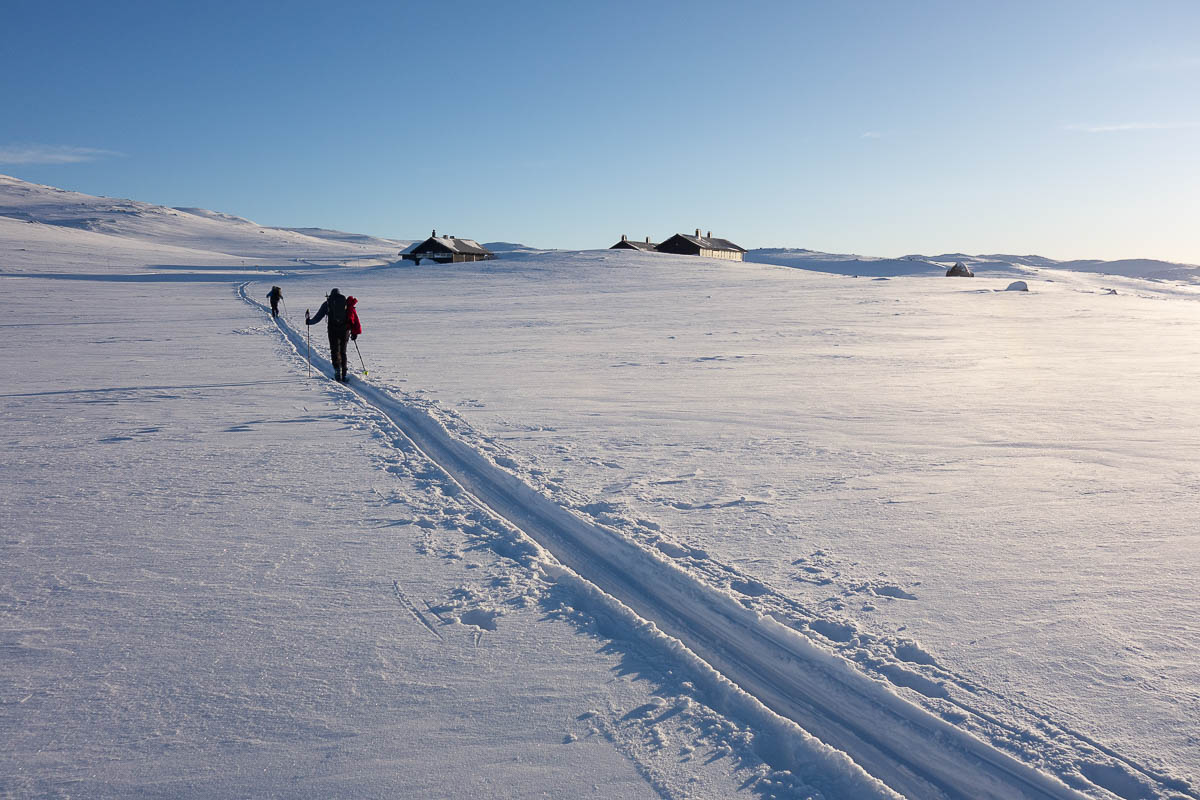
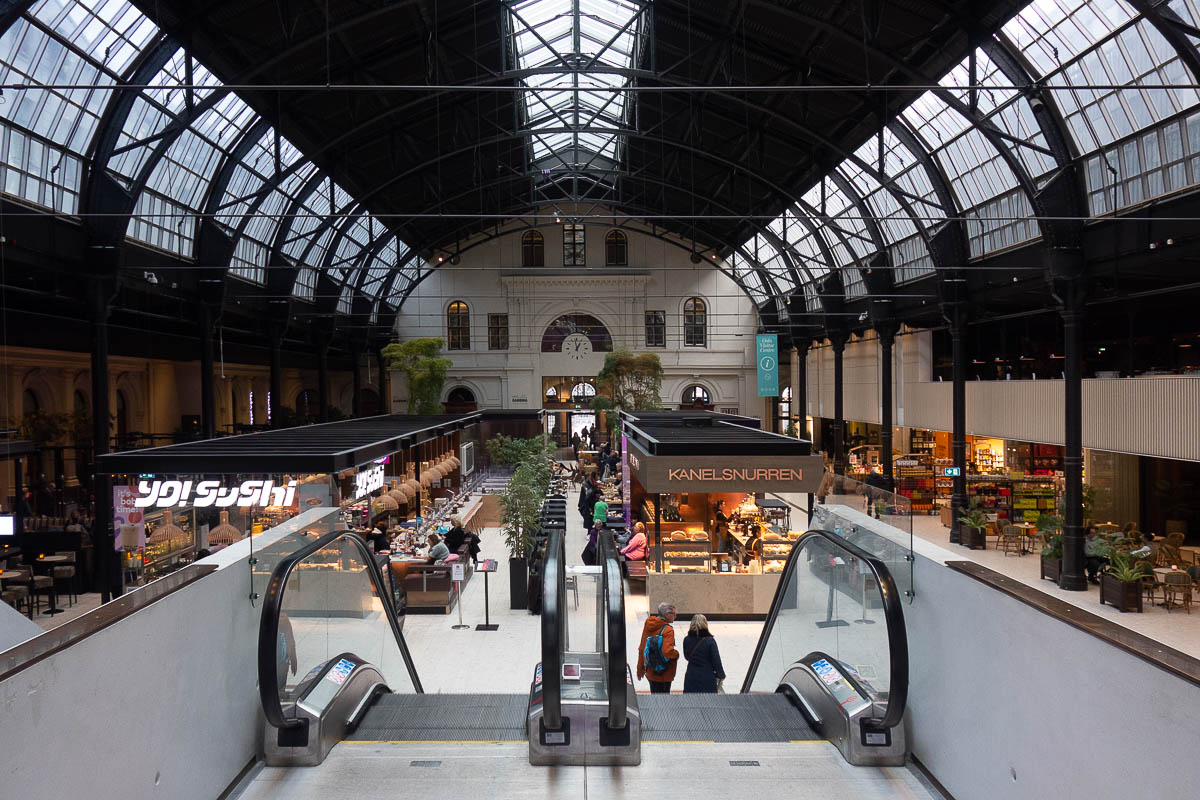
On my way to a ski tour in Norway this year again.
Last year I missed my connecting train even though I was supposed to have an hour between the arrival of one train and the departure of the next one. That was not fun at all, so this time I left myself three hours in Oslo Sentralstasjon. Which is, honestly, not that much fun either, but at least it’s less stressful.
Last year I also discovered the upmarket end of the station. Previously I only knew about the main station concourse on the upper level, and the food options there were sorely disappointing, especially given Norwegian prices. But then I learned that if I go down and to the right and down again, I can at least get a nice Neapolitan style pizza, or expensive conveyor belt sushi. Norwegian restaurant prices are eye-watering when seen with Swedish eyes, but I tell myself that I’m on vacation, and I do have to eat, and I’d rather pay for an expensive, good meal than an almost as expensive but crappy one.
No snacks, though. When a small 250 ml bottle of juice costs 50 NOK (that’s about 4.5 EUR) and a croissant is 42 NOK, I’ll make do with my bottled water from home.
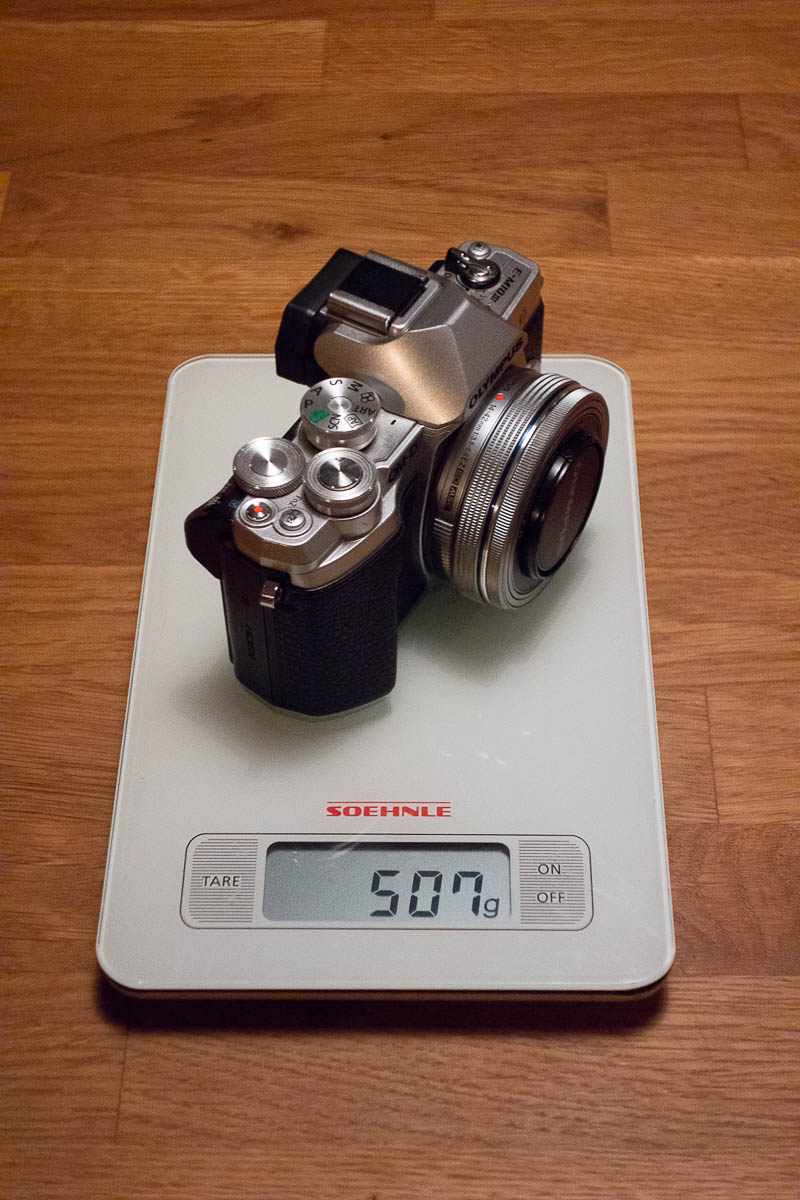
Packing for my ski trip and making difficult choices about what to take and what to leave.
At 500 grams, the big camera is staying at home. I’m hoping to get the pack down to 10 kg, and that means I can’t spend 5% of my budget on a camera.
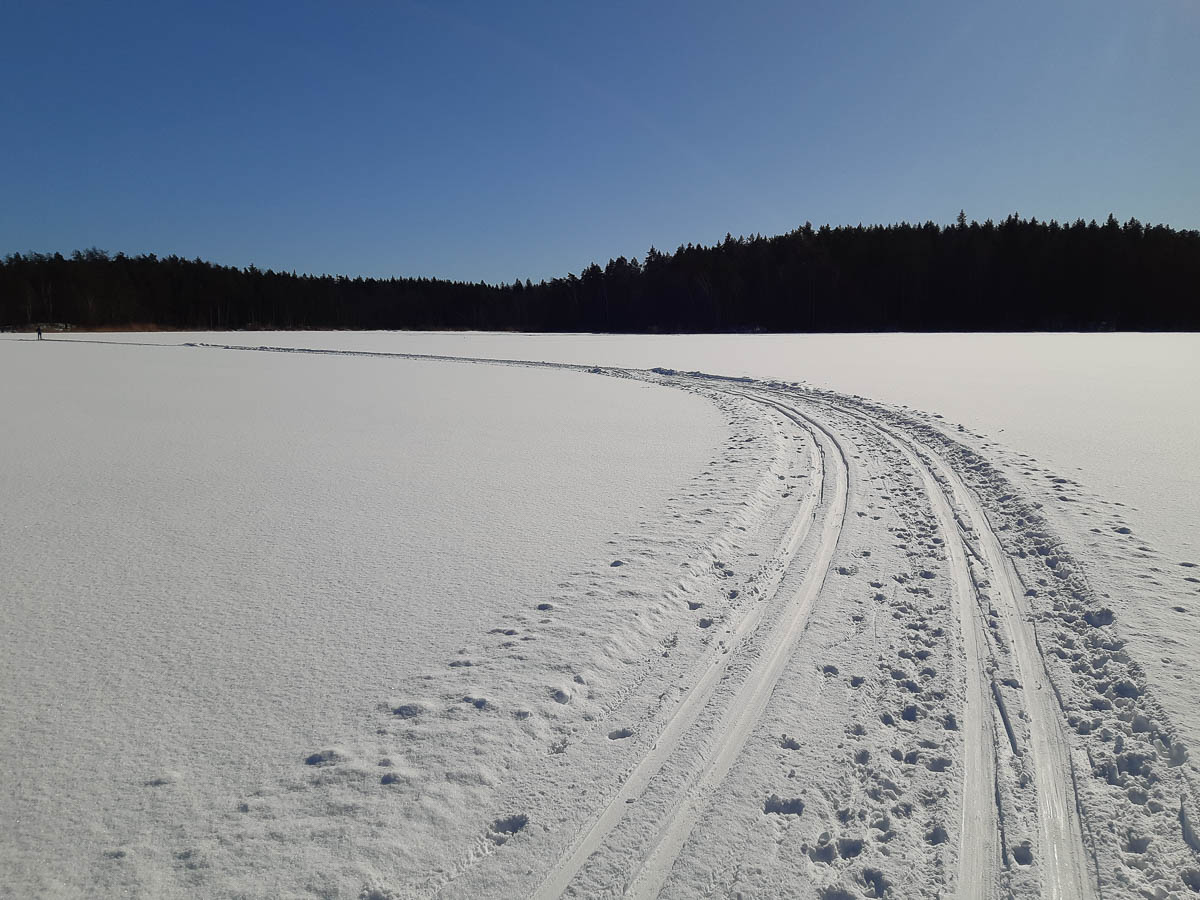
During yesterday’s walk I realized that there is enough snow in Stockholm for me to actually do a bit of skiing. I dug out my skis from the basement (and spent half an hour looking for my ski boots, because I was so sure they were in a black box but it was, in fact, brown) and drove to Järvafältet to wake up my skiing muscles.
Last year I had covid just before my ski tour, and it really affected my performance. This time I’ve been hesitating whether I should go at all, because I was even sicker this year. But I’ve had more time to recover, and yesterday’s hike proved that I’m back in decent shape, so I won’t have to cancel last minute. Which would have been a real pity, because I’ve been looking forward to this trip since November. Or since last year’s trip, more like.
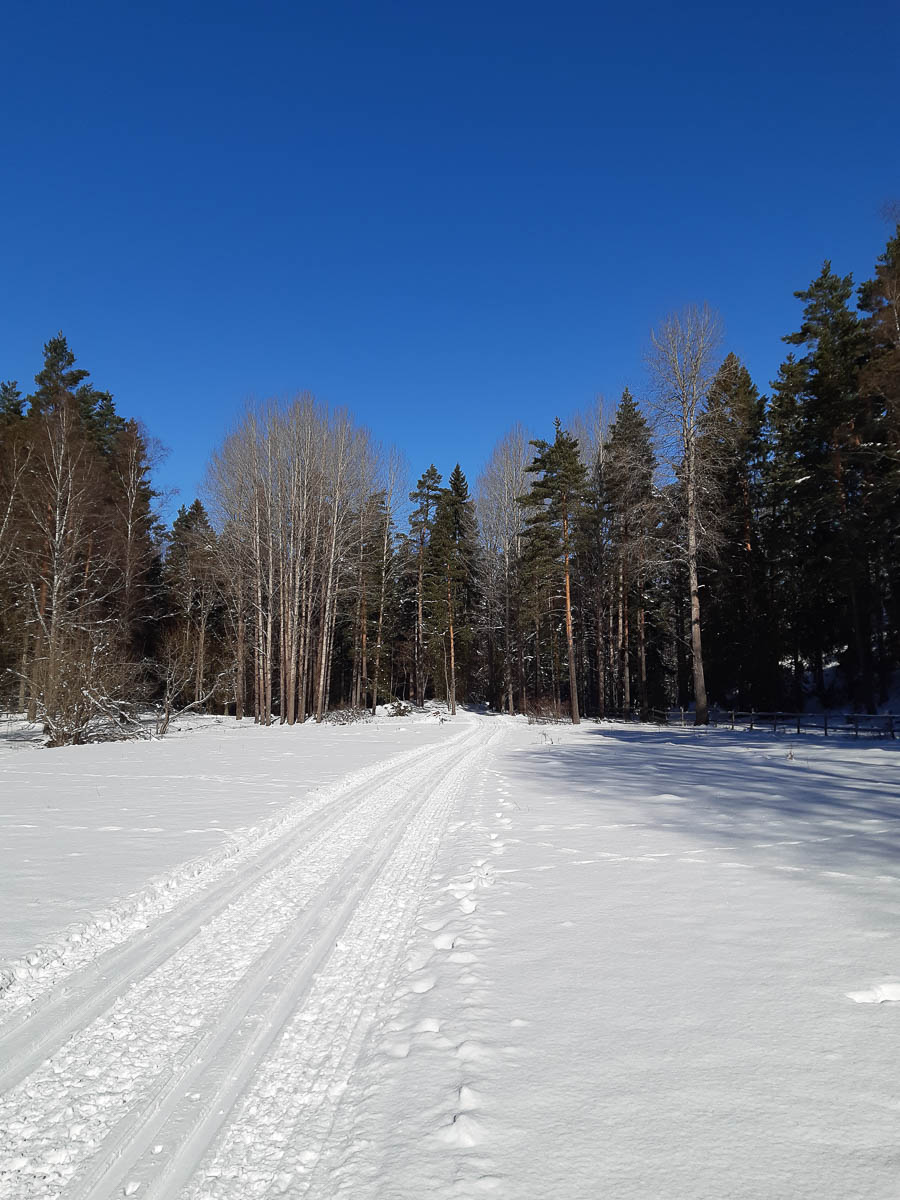
Prepared tracks on perfectly flat ground are not very interesting or inspiring. But the snow was good, and the views were pretty nice. And it felt good to have a training day to re-discover my skiing technique before having to do it for real. Since I usually only get one chance a year, it takes a little while each time.
| « Older posts | Newer posts » |
