Sörmlandsleden stage 16, there and back, 10 + 10 km.
Walking the same stretch of the trail there and back again feels somewhat boring. But even though I considered all sorts of variations, I couldn’t come up with any better alternatives. With all the restrictions in place I can’t use public transport to get to and from the hike. I could ask Eric to drop me off and pick me up again, but so much driving for just a one-day hike would feel like wasting his time. I could do a longer hike with an overnight stay but with the short daylight hours I would spend way too much of the day in my tent in the dark. So I just made the most use of those daylight hours: got up at 6:30, left the house at 7 and was out walking shortly after 8. By the time I started driving home at 16 it was near dark.
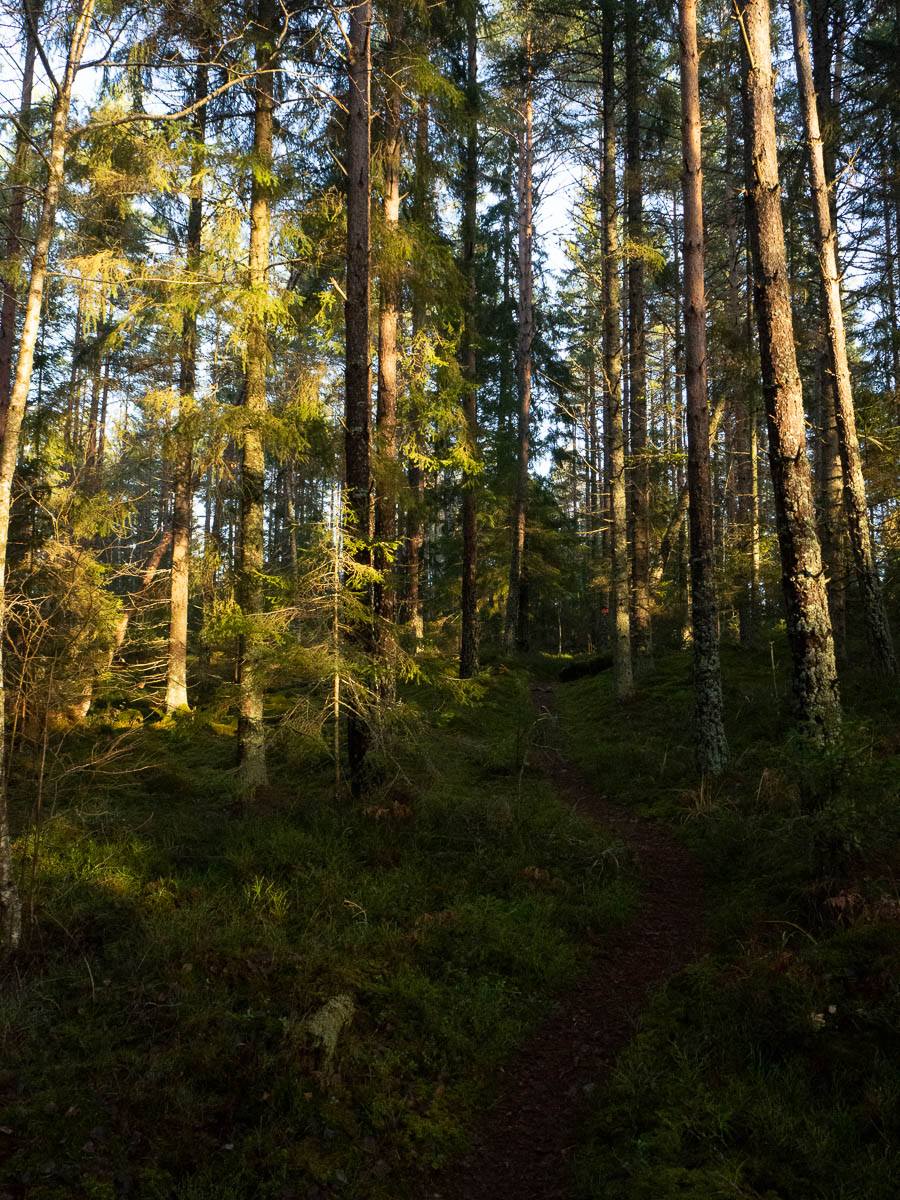
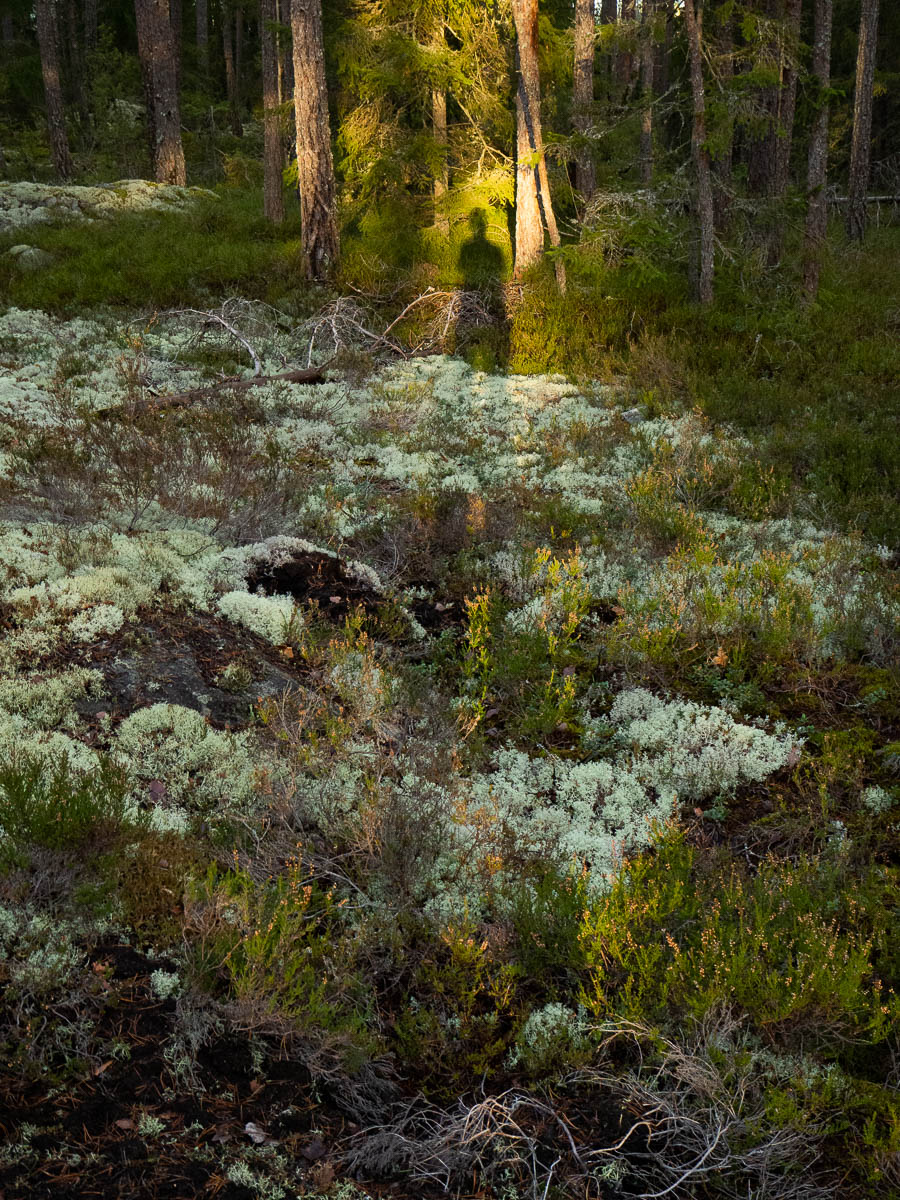
The day was fine and sunny and pleasant for walking, even though the sun barely got high enough to reach me. I knew it was there, though, and I could see it gild the treetops here and there. And the mere presence of bright daylight and a blue sky did a lot to cheer me up.
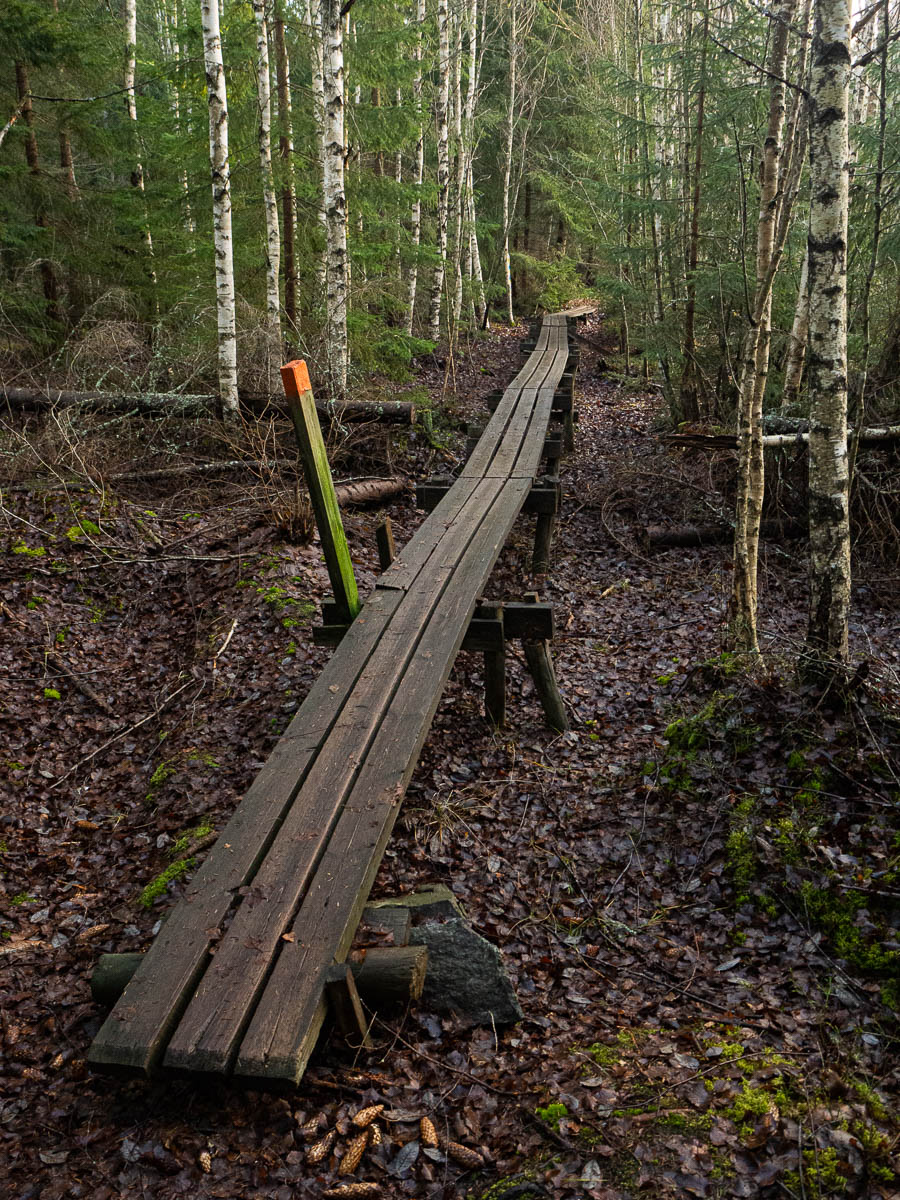
The ground was sodden and muddy everywhere after the recent rains and the footbridges (which are many on this part of the trail) were incredibly slippery. I fell down once quite painfully and decided to be more careful. There’s a certain way to walk on slippery surfaces with some reasonable speed still, rolling from heel to toe, never pushing away. But as soon as I don’t think about it, I forget and revert to a normal brisk walk. After falling again for a second time, hurting my bum and unpleasantly jarring my whole spine and head, I crossed them very, very carefully.
For some reason that made sense yesterday when I was packing, I left my macro lens at home. I think I didn’t expect anything photo-worthy at this time of the year. It’s all mostly rotting leaves and brown grass.
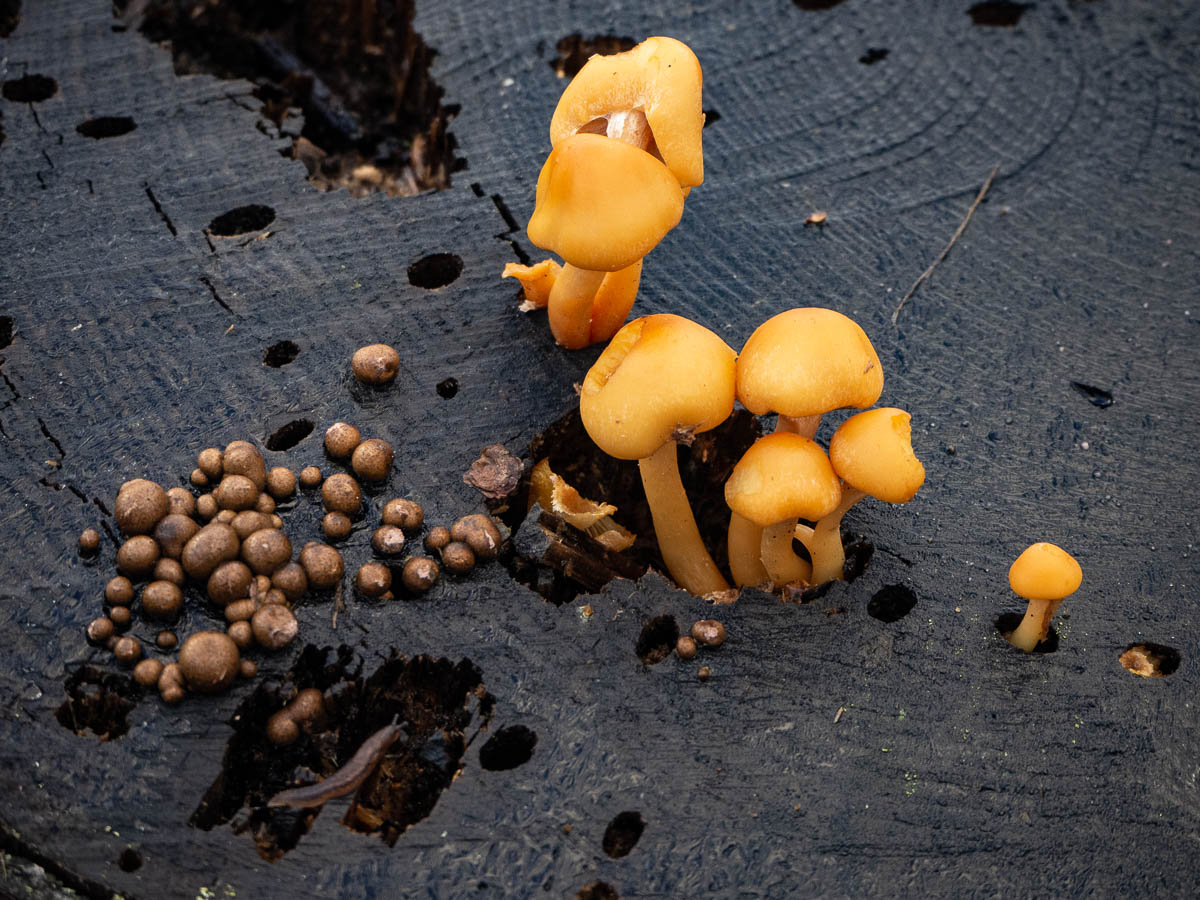
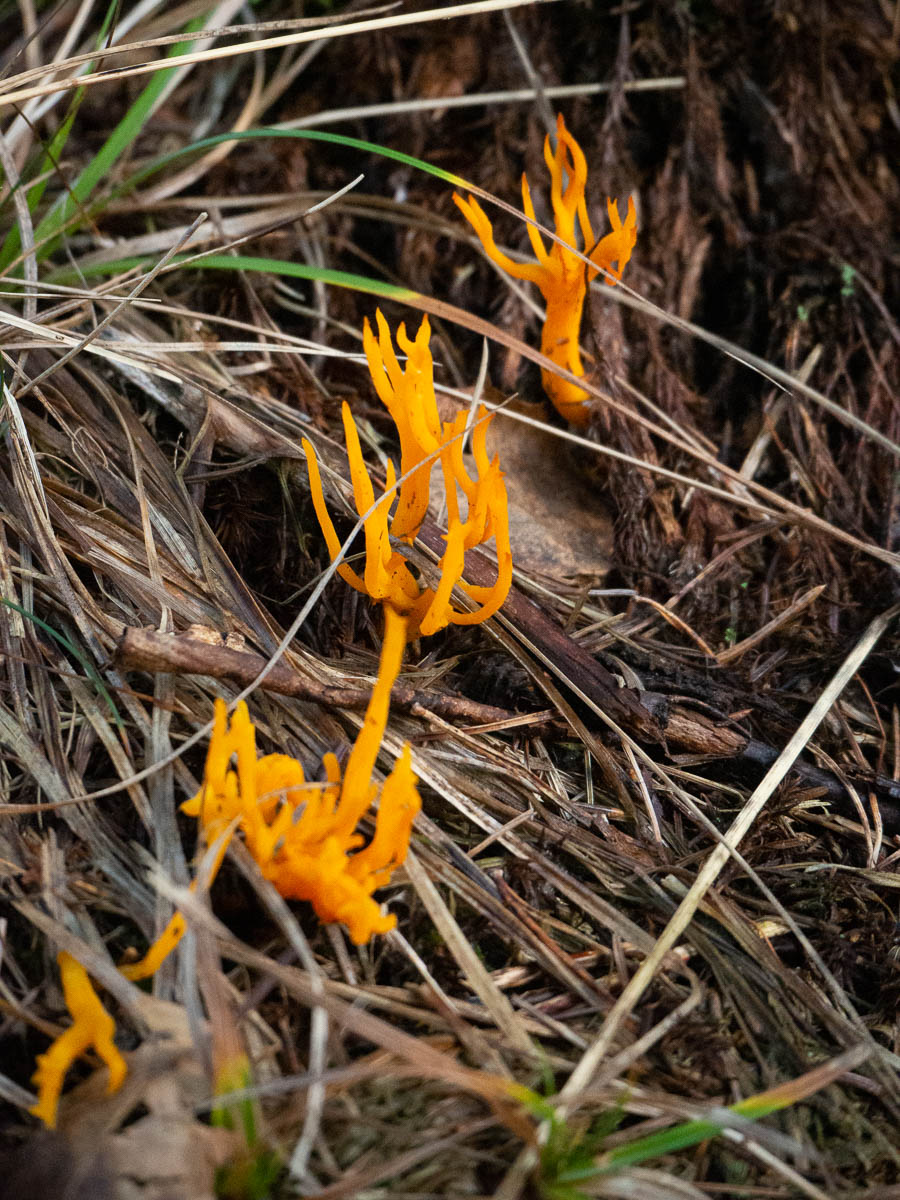
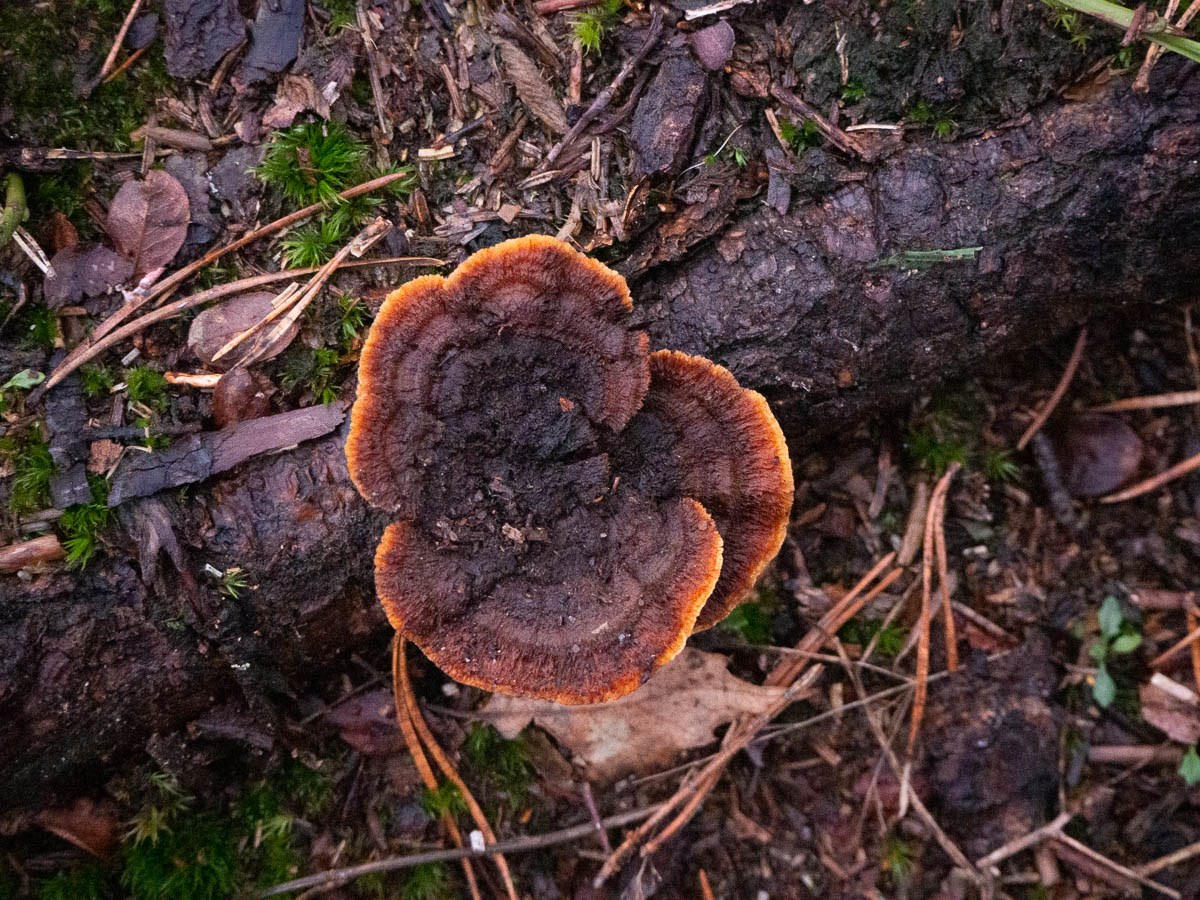
That was a mistake. I walked past some really odd-looking funguses thriving on all that rotting vegetation. I know I could have taken better photos with the right lens.
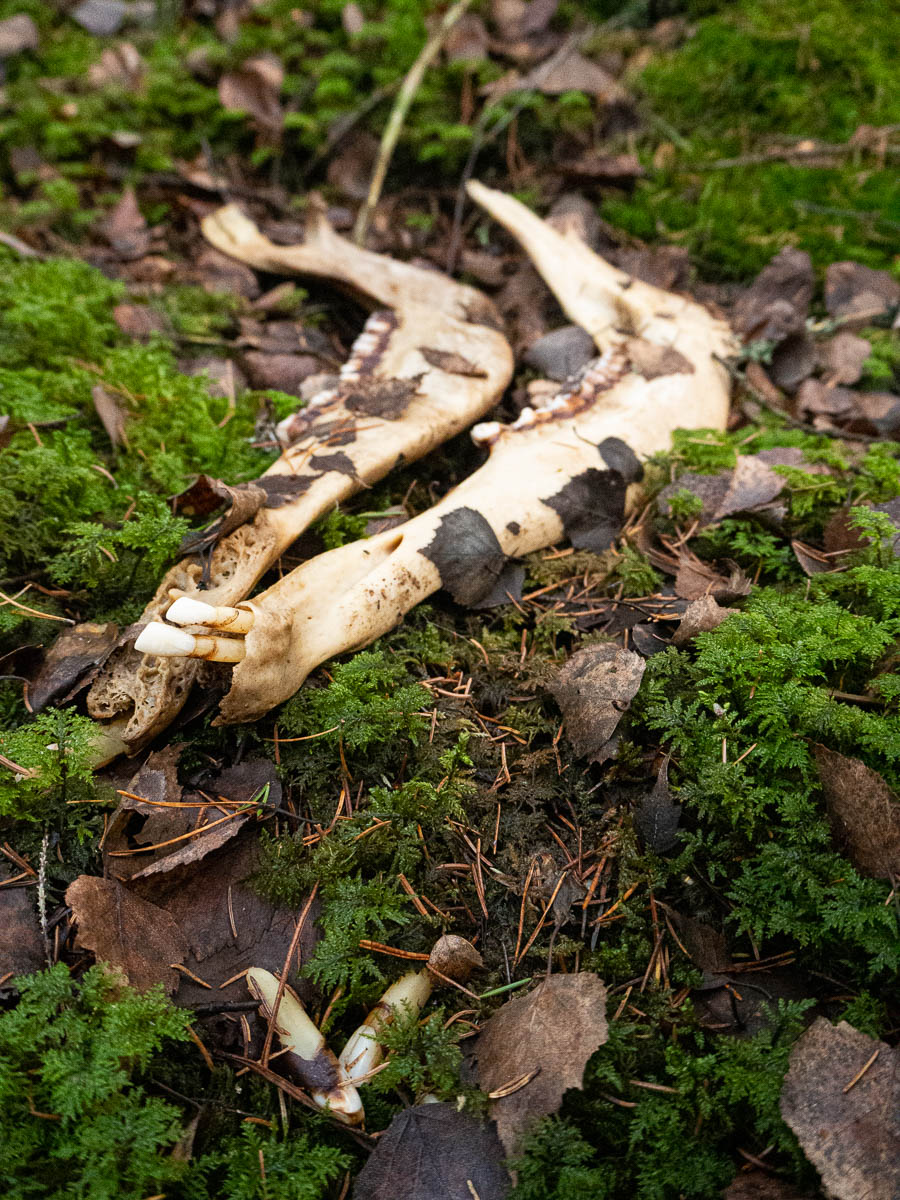
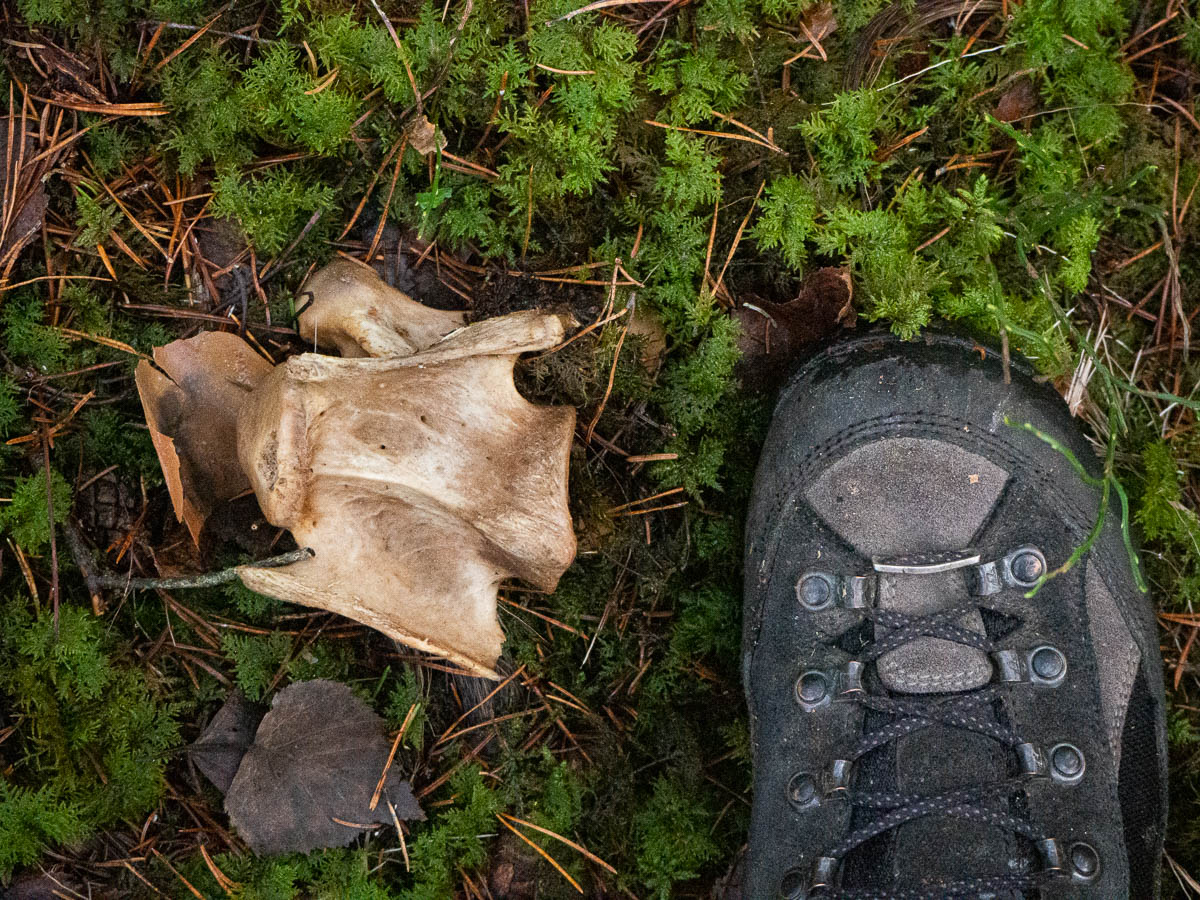
I also spotted the remains of a dead animal right next to the path. I first noticed the tufts of coarse gray hairs spread out a few paces. Then a vertebra, then another, and then many more bits and pieces, including both halves of the lower jaw. All were clearly old and thoroughly cleaned by scavengers big and small, so the ick factor was very low.
A cervid of some kind, clearly, with a jaw like that. Moose? Deer? The jawbones were quite large, as long as from my fingertips to my elbow, so perhaps a moose?
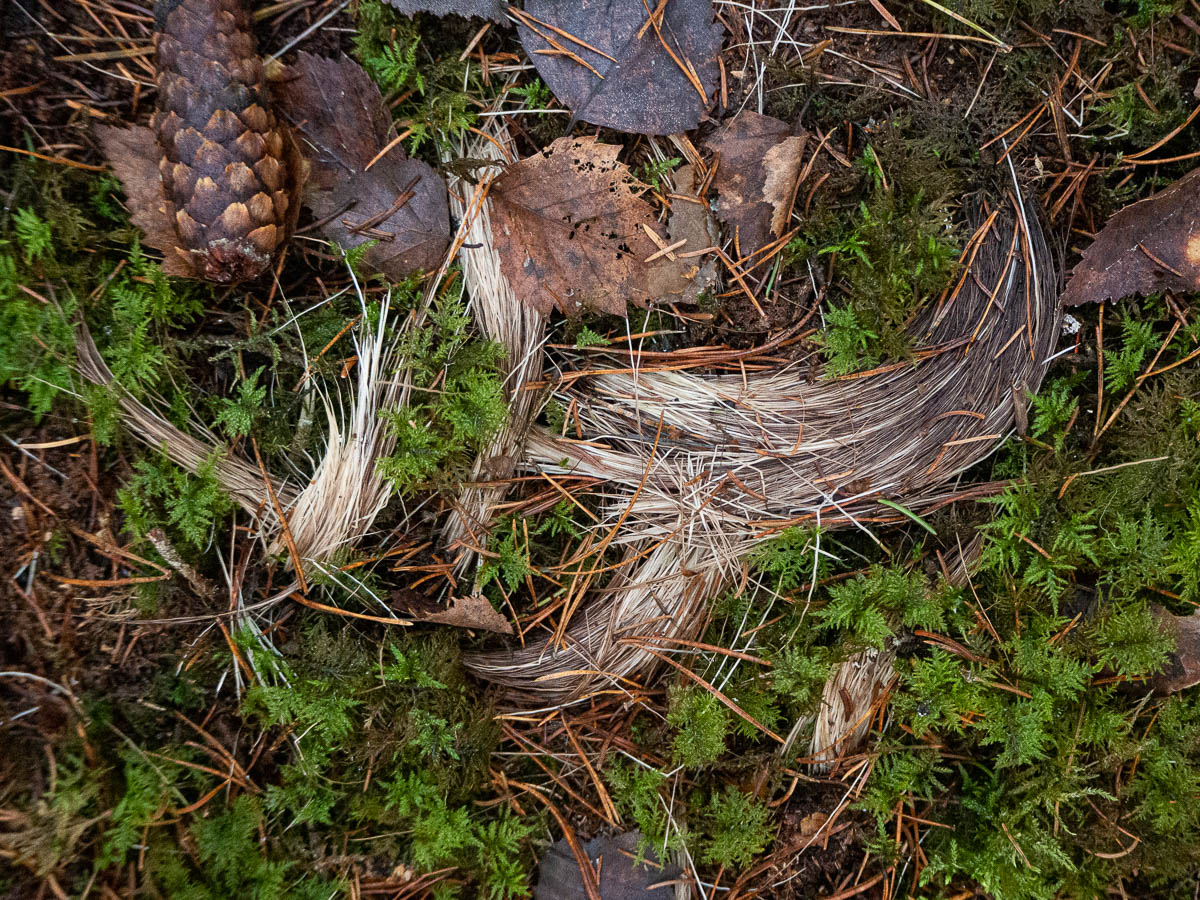
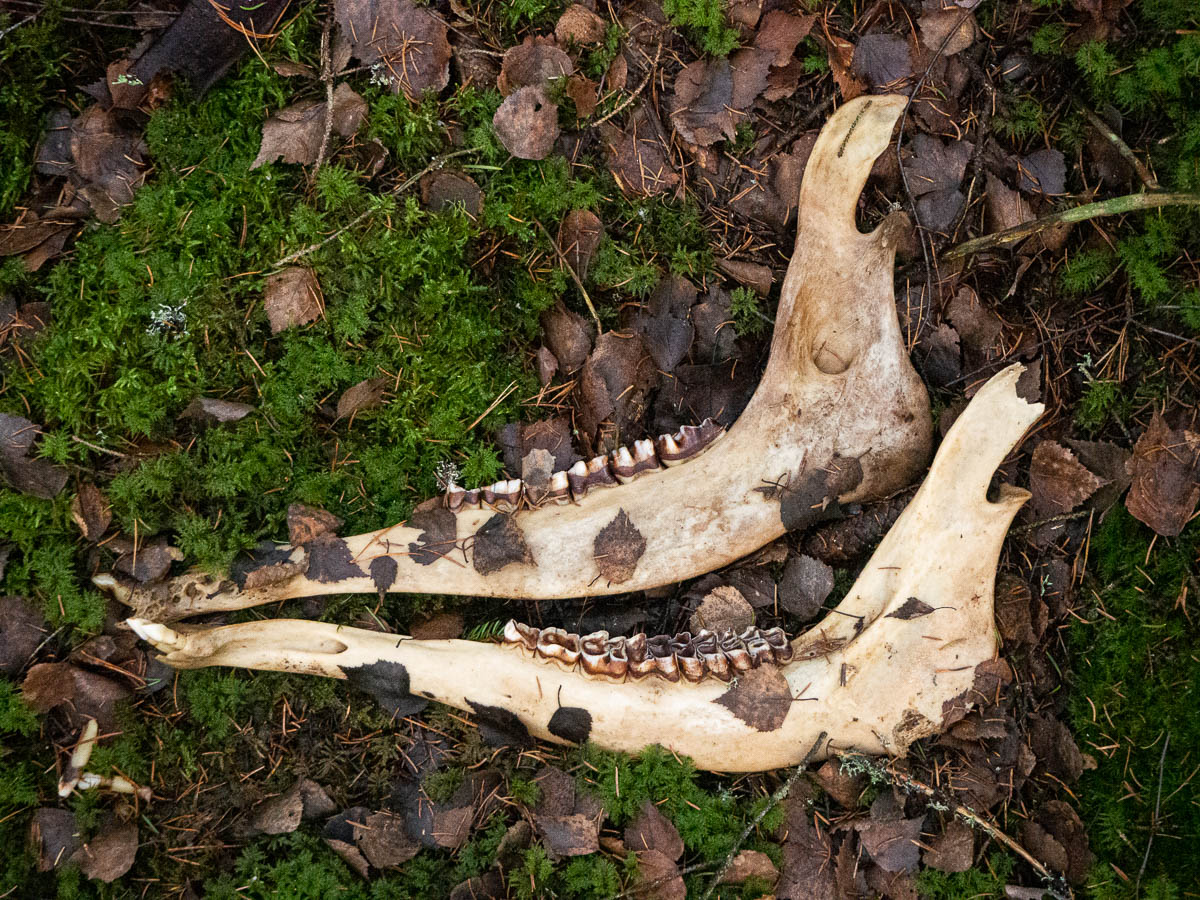
Bones remaining intact after a long time are no surprise, but I hadn’t expected hair to last so long. It makes sense, though. Hair is tough, made to last for a long time on your body, and it’s not digestible (other than by fungi and bacteria).
Now I had to go google about the decomposition of hair. I found out that human hair can take two years to decompose, and is considered a problematic type of waste. I also found an article specifically about microbial decomposition of keratine which was mostly too technical to be interesting to me, but I did learn from it that:
-
the word for “hard to break down” proteins is “recalcitrant”,
-
keratin is the third most abundant polymer in nature after cellulose and chitin, and
-
it is a component of not just hair and nails and horns but also fish teeth.