I’m rewatching the 1995 BBC Pride and Prejudice mini-series, and that also triggered a re-read of the book. There is some competition in the house about the TV, but none about the Kindle, so while I’ve only seen the first two episodes, I’ve spent the day binge-reading the book and have almost finished it. As a side effect, I have no photo from today.

Consuming both in parallel highlighted the TV series’ accuracy. They complement each other nicely. The TV series, inevitably, has to take some shortcuts and leave some gaps, which my reading of the book fills in. Also, I’m not good with faces, and the characters are often introduced so briefly or indirectly that, without the book’s support, I wouldn’t really know who they are.

When I first watched the series in , for example, I remember being puzzled by the girl who accompanies Lizzy on her visit to Hunsford. Yes, yes, if I had been paying perfect attention to all the faces then I would have remembered that I first saw that girl together with the Lucases, and that Charlotte asked Lizzy to join her (Charlotte’s) father and sister to Hunsford.

The TV series, on the other hand, brings the characters to life. Austen is very parsimonious with her descriptions. Which gives her works a timelessness they wouldn’t otherwise have, but I personally do want to know what the people in the story look like – not just that they have fine eyes and a noble mien, but to know the colour of their hair, the kind of dress they wear.


Afterwards I tried to buy Sense and Sensibility. The Kindle store was absolutely flooded with fake copies where certain words had been replaced with random near-synonyms. The books were probably generated by some thesaurus-based process that is supposed to modify the text just enough to ensure that Amazon’s own algorithms will not flag it as an exact copy of an already-registered work. Some even had stolen covers – there was one purporting to be from the Wordsworth Classics series. I bought one of these fakes by accident, but already the first page had such gratingly clumsy word substitutions that its fakeness became obvious, and some phrases were completely nonsensical.

“For many generations” becomes “for plenty generations” in one copy, and “for lots generations” (sic) in another. “The legal inheritor” becomes “the criminal inheritor” and “the felony inheritor”. One describes John Dashwood as a “young guy”.

With the next few books, I downloaded a sample before buying, so I wouldn’t get scammed again. Finally after several frustrations I realized that the upload date was a giveaway. All the fakes had been uploaded within the last few days. This sped up the winnowing process significantly and allowed me to find an actual, real, ungarbled copy.
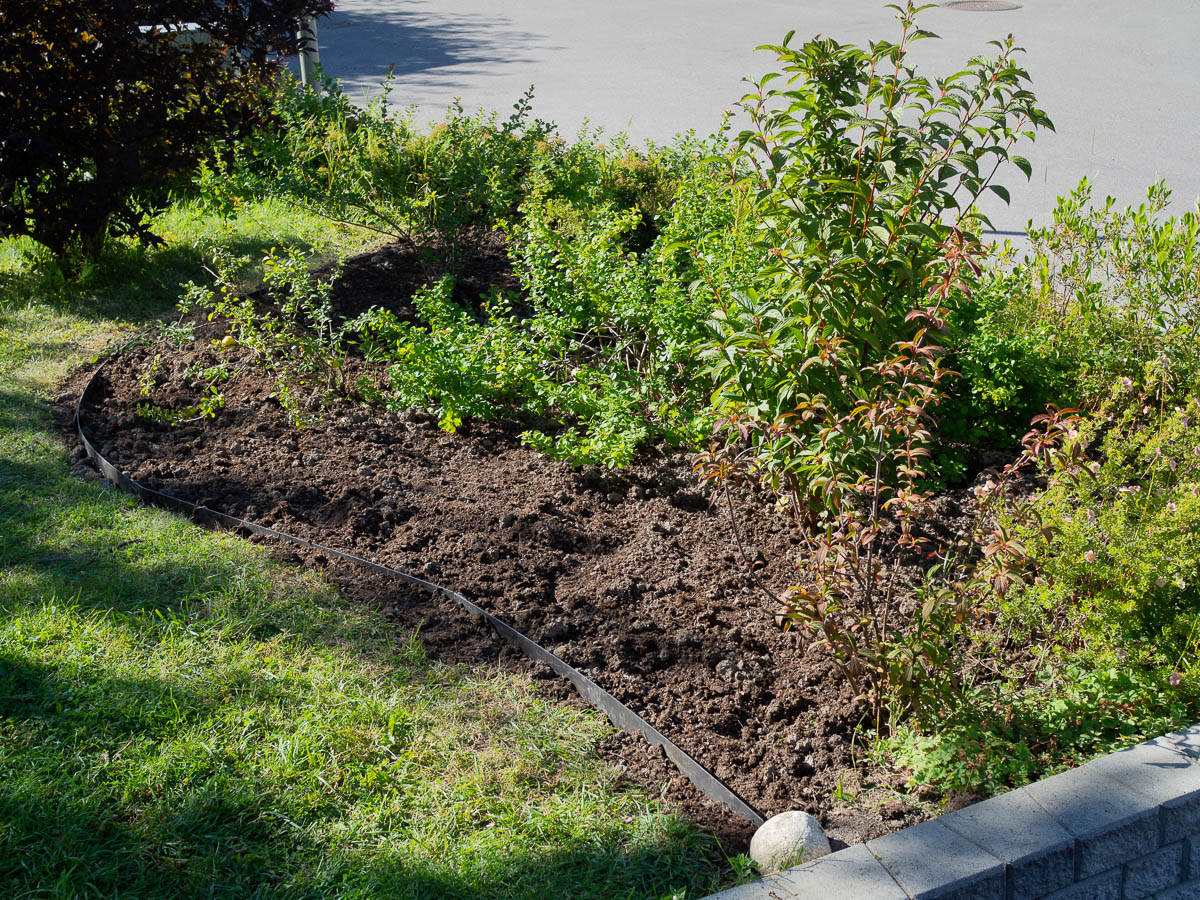
The steel edging for the new flowerbed arrived today. I got it installed with a bit of shovelling – which was easy now that the soil is all soft and prepared. Ready for planting!

I have generally thought of this corner of the garden as sunny, but the time I’ve spent here digging has shown otherwise. It gets shade from the house almost all morning. And in the afternoon the cherry tree gives shade. The elder will also start shading the flowerbed more and more as it grows. So the most sun-loving plants will probably not work here.

A peony, I think, and daylilies, for some colour.

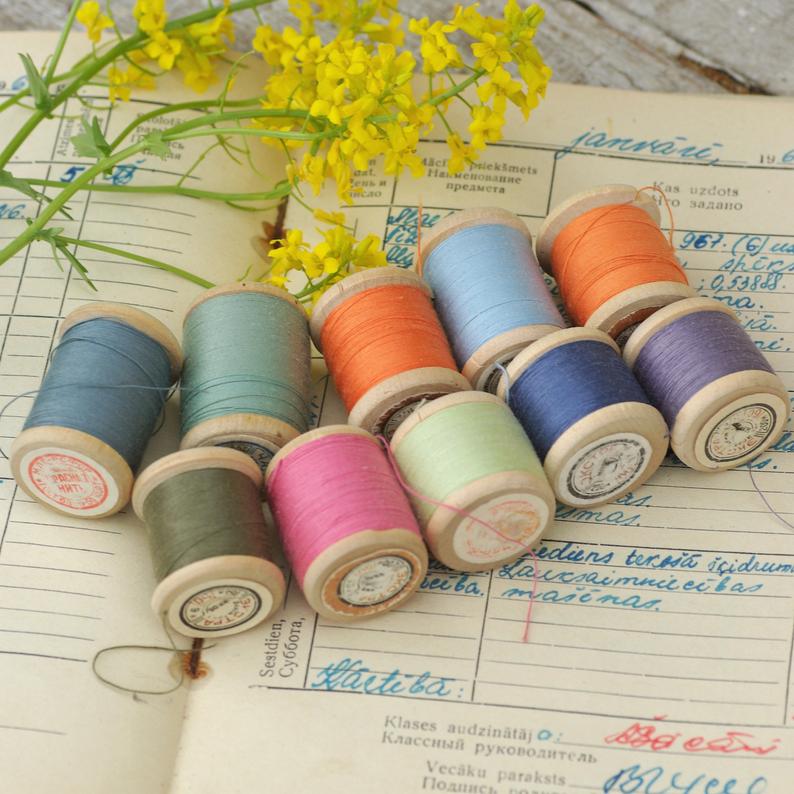
There were shortages of most manufactured goods in Soviet Estonia in the 70s and 80s. Good quality sewing thread was among those things. We had a box of sewing thread in all sorts of colours. Maybe sent from abroad by some friend or relative? Sewing thread was to be used with restraint and not wasted.

Sewing thread came on short, stubby wooden spools. There was a small notch in the edge of each spool, so you could fasten the end of the thread there.

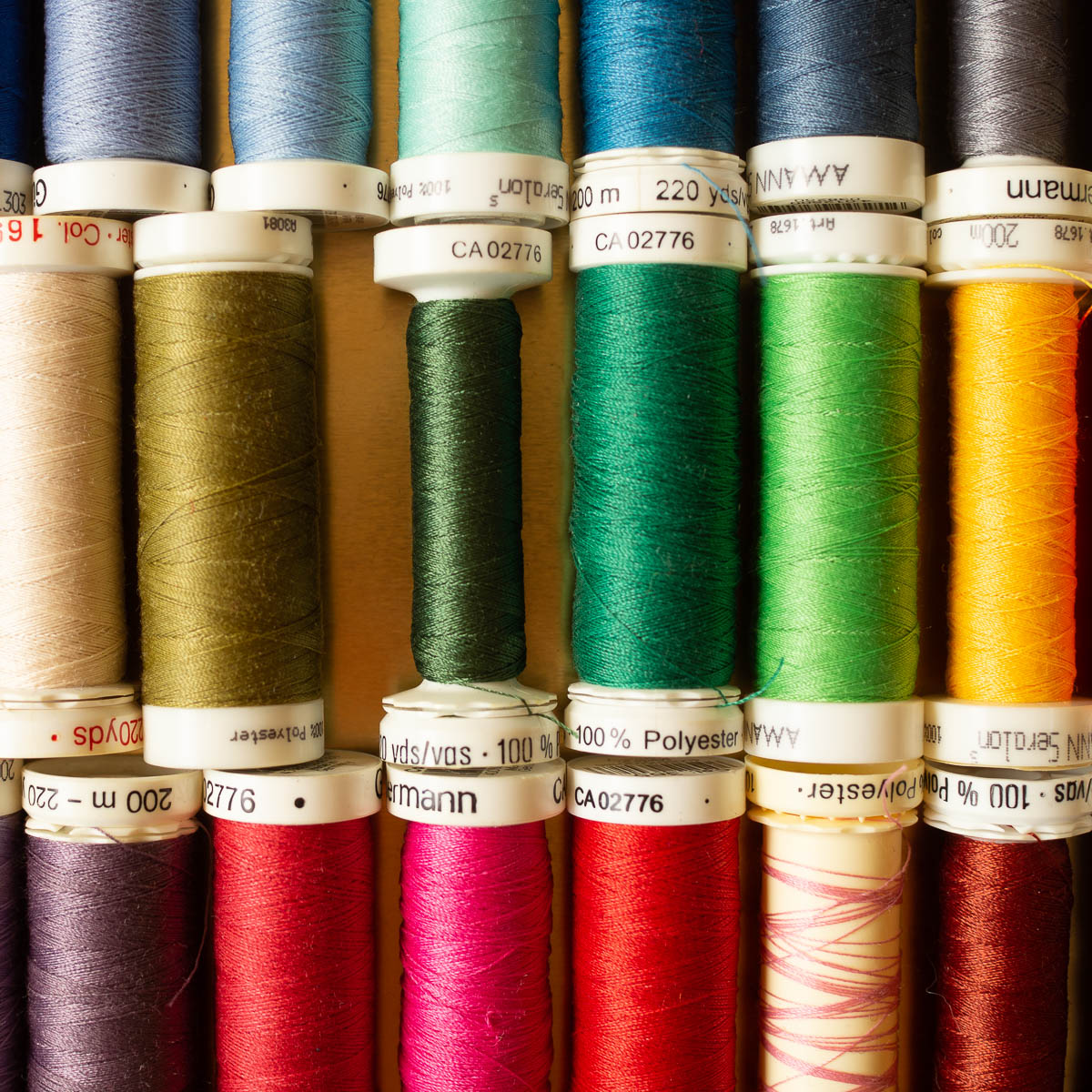
The photo of old spools is, again, from an auction site. I found it through Google Image Search, but the original has already been removed, so I cannot link to it. The photo of modern spools is my own.


Nõukogude Eestis olid 1970-ndatel ja 1980-ndatel aastatel paljud tööstuskaubad defitsiit, s.t. neid polnud poes saada. Hea kvaliteediga õmblusniit oli ka üks selline kaup. Meil oli kodus karp igatsugu värvi niidirullidega. Ei tea, ehk olime selle saanud mõnelt sõbralt või sugulaselt välismaal? Õmblusniiti kasutati kokkuhoidlikult ja ei raisatud.

Niidirullid olid puidust ja töntsakad. Niidirulli servas oli väike täke, kuhu vahele sai niidiotsa kinni panna.

Vanade niidirullide foto on jälle ühelt oksjonileheküljelt. Leidsin pildi Google Image Search’i abil, aga originaalpilt on juba ära võetud, nii et linkida ei saa. Foto moodsatest niidirullidest on minu tehtud.


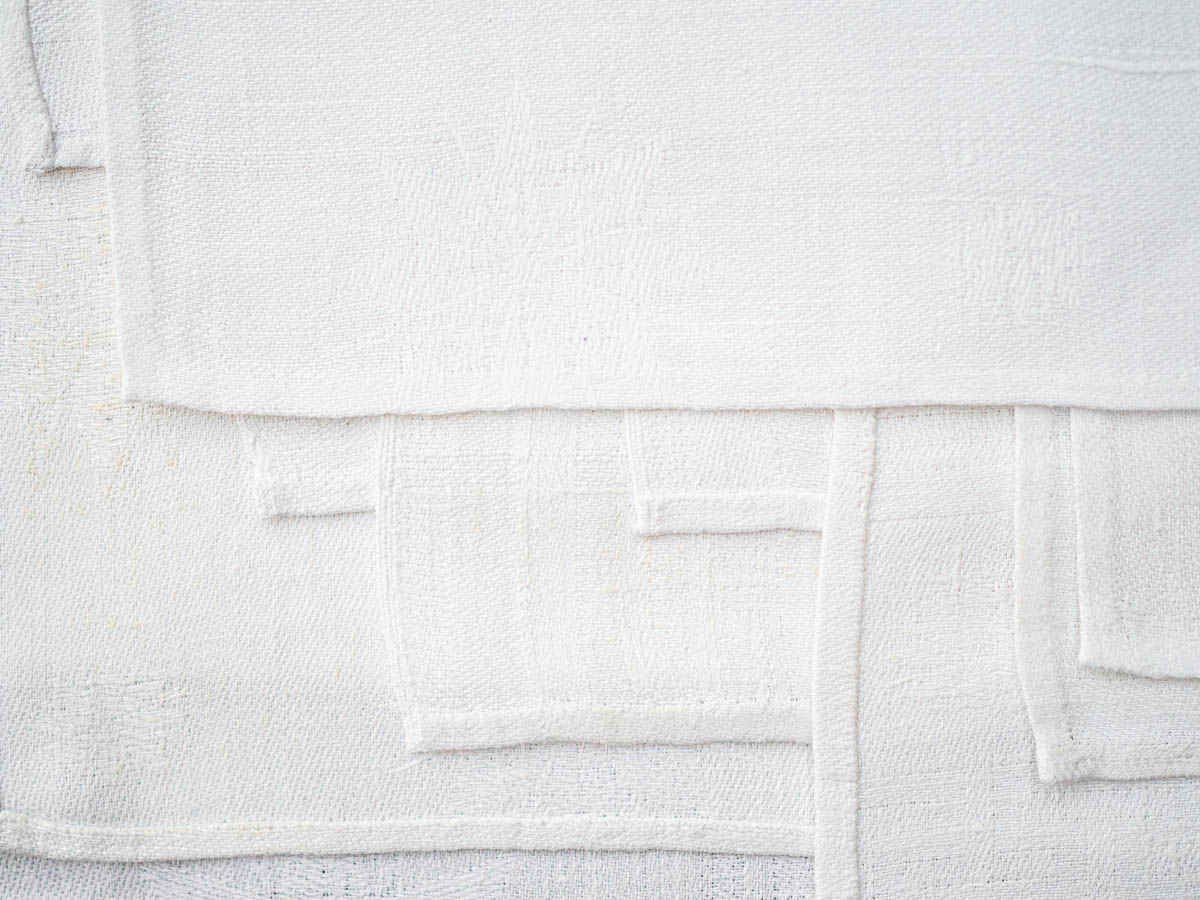
I’m done with the 48 napkin hems! And I’ve washed them, and Eric ironed them, and now they’re looking very sharp.

Some of them got discoloured somehow by the ironing – not burnt, but stained with some brown gunk, probably from the ironing board. (You can barely see one of the stains in this photo, along the left edge.) I washed them again and was very, very relieved to see that they were white again.

We didn’t go hiking as a family when I was a child in Estonia, just day trips. I remember my father going away on long hikes in faraway places. I guess that was one of the few benefits of being part of the Soviet Union: travelling to the far ends of that empire, from Sakhalin in the Far East to the Crimea and the Caucasus mountains in the south. I remember looking forward to being old enough to join. Unfortunately I never got to that point.

Our school class did at least two hikes together. One was to Piusa. I think we slept in the hay loft at a classmate’s grandparents’ farm. At Piusa I remember we wandered around in the sandstone caves – man-made, the result of digging for sand for glass-making. The caves are now mostly closed to the public because of safety concerns, otherwise I’d love to back and visit them again.

The other hike was somewhere near Aegviidu, I believe. I remember forest lanes and not much else. That time we carried tents with us.

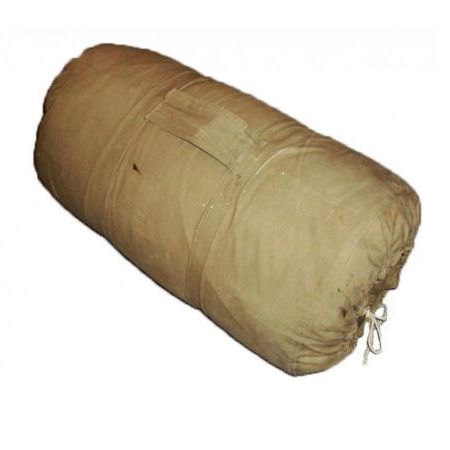
It’s easy to take kids on a hike these days. Back then, equipment weighed a ton. Sleeping bags were rectangular and made of cotton – canvas on the outside, thinner cotton on the inside, some kind of wadding in between. The wadding was probably cotton as well. Cotton is heavy. One of our sleeping bags had a blue lining with a pattern of small white flowers.

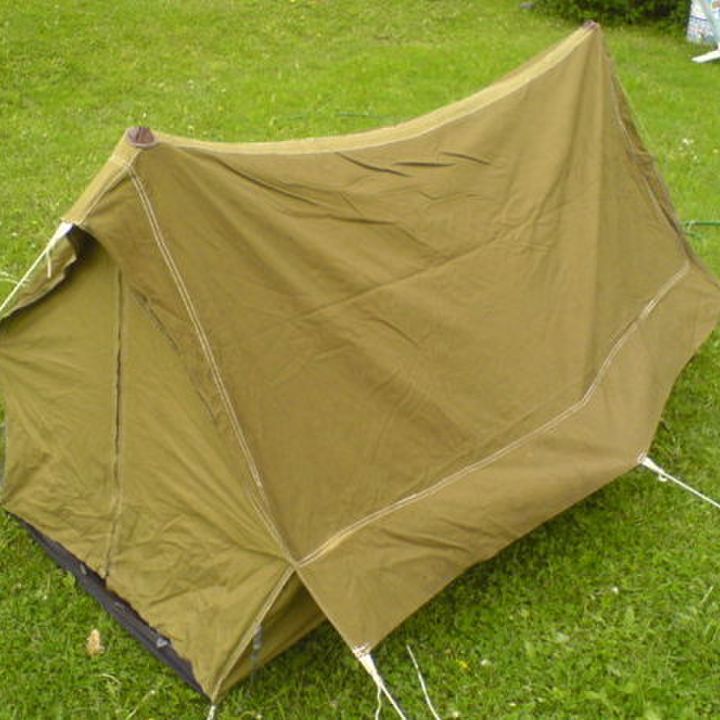
Tents were also made of heavy-duty canvas and had that classical ridge shape. They weren’t waterproof at all. For rain protection you covered the tent with a piece of heavy plastic, and you spread another piece of plastic under the tent. Nevertheless the tent usually leaked and grew mouldy with time.

I had a bright green rucksack on those hikes. It was heavy, and definitely did not have a hip belt. I remember the buckles at the bottom ends of the shoulder straps digging into my hips.

The photos are not mine, but what I see matches what I remember. Both are from sites selling old stuff. The bag is a sleeping bag, imagine it being about 40 cm long.


Minu lapsepõlves me perega matkamas ei käinud, tegime ainult lühemaid väljasõite. Mäletan, kuidas mu isa käis pikkadel matkadel kaugetes kohtades. Eks see oli vist Nõukogude Liitu kuulumise üks vähestest headest külgedest: võimalus reisida selle suurriigi kaugetesse nurkadesse, alates Sahhalinist Kaug-Idas kuni Krimmi ja Kaukasuseni lõunas. Mäletan, kuidas ma ootasin, et saaksin ka piisavalt suureks, et mind kaasa võetaks. Ei jõudnudki kunagi nii kaugele.

Meie klass tegi koos vähemalt kaks matka. Üks viis Piusale. Magasime vist ühe klassikaaslase vanavanemate talus, heinalakas. Piusal uitasime ringi liivakivikoobastes – neis, mis sinna klaasitööstuse jaoks liiva kaevandamisest on tekkinud. Koopad on nüüd avalikkusele enamalt jaolt suletud, muidu oleks tore sinna jälle tagasi minna ja uuesti koobastes käia.

Teine matk oli vist kusagil Aegviidu kandis. Mäletan metsasihte ja muud eriti midagi. Tol korral tassisime telke kaasa.

Tänapäeval on lihtne lastega matkale minna. Tol ajal kaalus kogu varustus väga palju. Magamiskotid olid nelinurksed ja puuvillast – väljaspool paksem kangas, seespool mustriline sits, nende vahel mingit sorti vatiin. Vatiin oli tõenäoliselt ka puuvillane. Puuvill on raske. Ühel meie magamiskottidest oli sinine vooder valge lillemustriga.

Telgid olid samuti presendist ja olid seesugused traditsioonilise telgi kujuga. Veekindlad polnud nad üldse. Vihma eest kaitsti telk kiletükiga, ja teine kiletükk pandi telgi alla. Sellegipoolest lekkis telk alati ja kogus aegamööda hallitust.

Mul oli neil matkadel ereroheline seljakott. Kott oli raske, ja mingit puusavööd küll ei olnud. Mäletan, kuidas õlarihmade alumises otsas olevad pandlad mul puusakohas vastu keha vajutasid.

Fotod pole minu tehtud, aga asjad näevad välja umbes nii, nagu ma neid mäletan. Mõlemad on vana kraami müügikohtadest. Paks vorstikujuline kott on magamiskott, umbes 40 cm pikk.

Both Adrian and I slept really, really well. Adrian didn’t wake until eight o’clock, which is about an hour later than he normally gets up at home. He said the hammock was great. I think we might need to get another one so that he and Ingrid won’t have to argue about who gets to sleep in it.

I always wake several times per night when I am not in my own bed. That’s normal and expected by now. I’m happy, though, when we’ve been camping and I don’t wake up all stiff and sore. The combination of inflatable mattress, extra wide sleeping bag, and nobody poking me with their elbows (which often tends to happen in tents) made for a good night’s sleep.

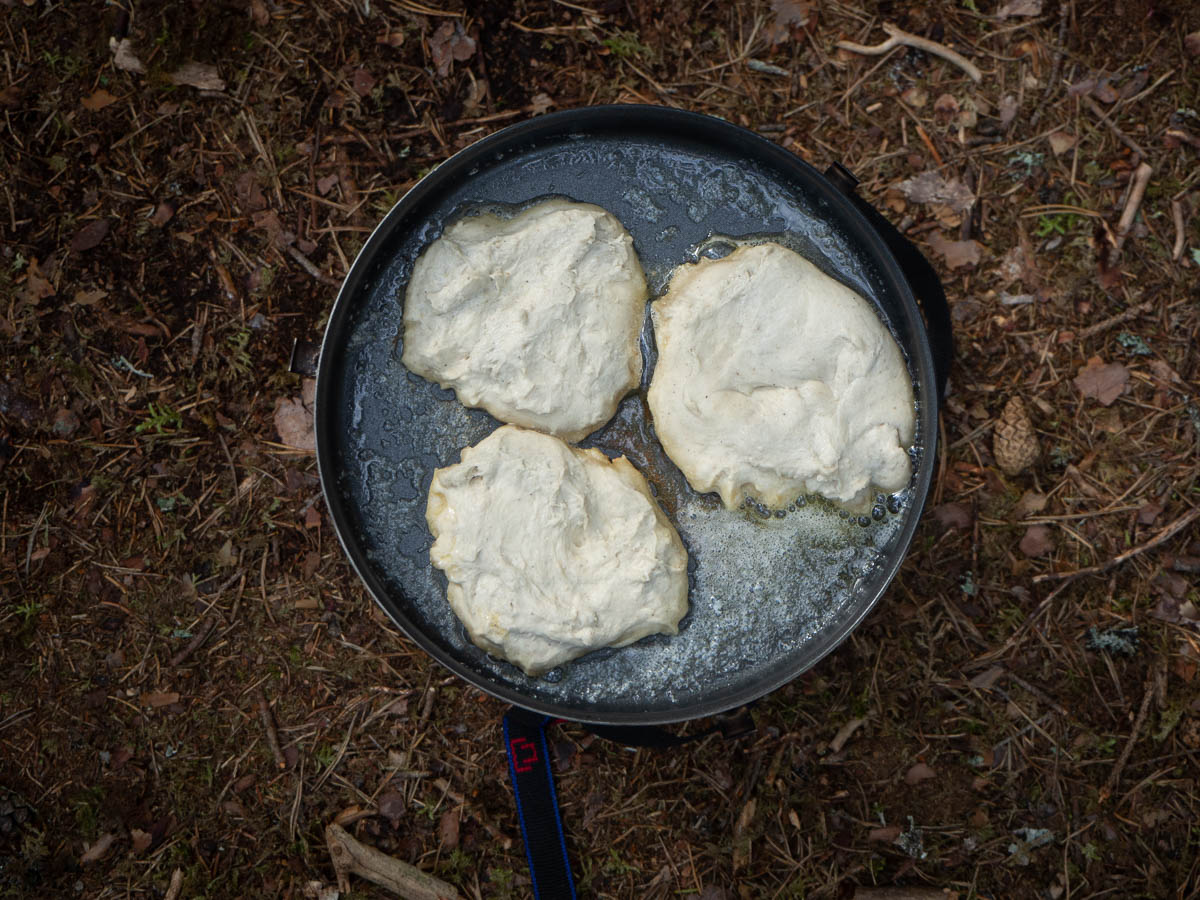
Breakfast was pancakes of sorts, fried in plenty of butter. They were more delicious than they look in the photo. Why did I photograph them before flipping them?

After breakfast we had a swim in the lake. Or rather, I swam while Adrian just sort of was in the water. He likes bathing but not swimming, and very much prefers to do it in shallow water, with predictable footing and in the company of friends.

Then we walked back to the car.

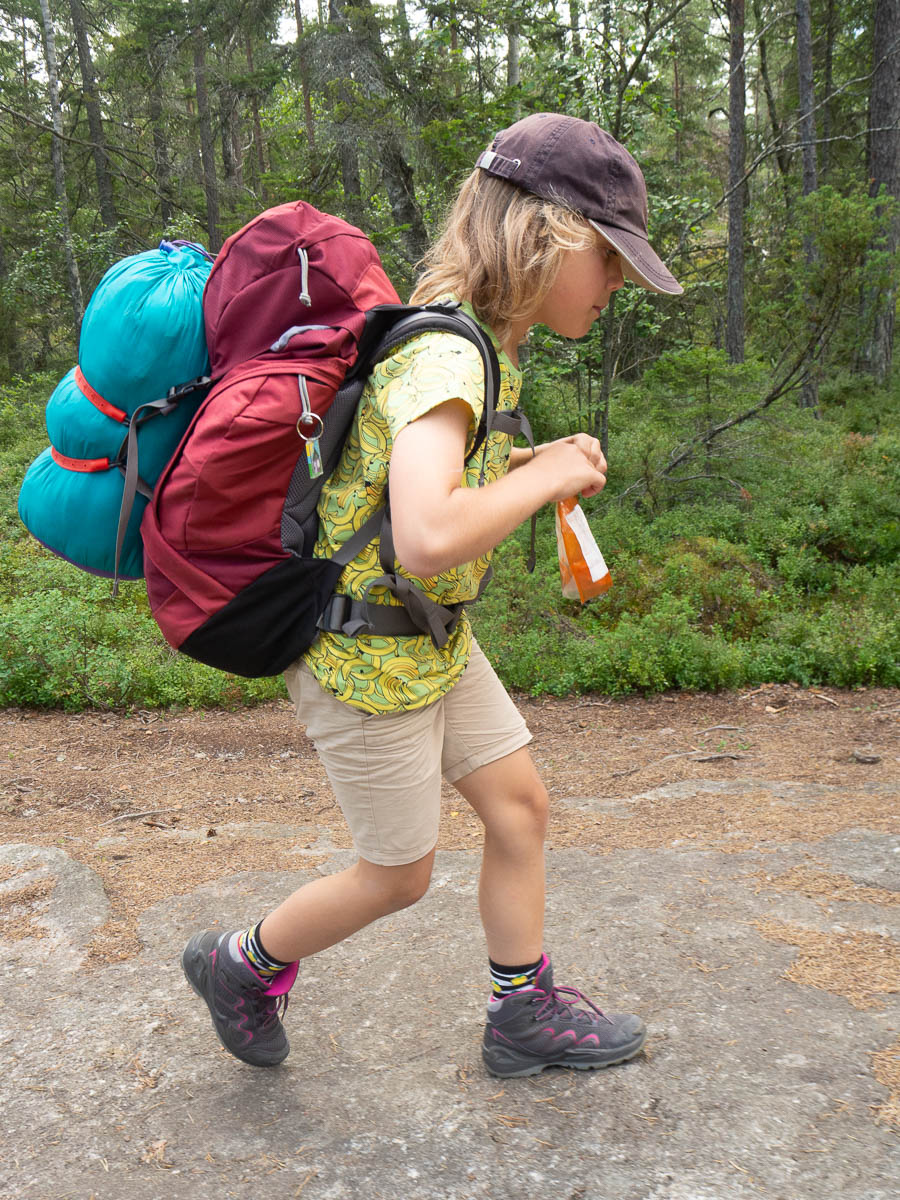
Walking home was apparently not much more fun than walking out. We took several breaks again. At the last one, Adrian borrowed my camera.


Ingrid gets a week of corona-adjusted scout camp, because her age group (“Upptäckarna”) can pretty much manage themselves, cook their own food, etc. But the youngest scouts, “Spårarna” like Adrian, don’t get any summer camp this year. Adrian likes camps and camping, and is a bit disappointed by this. So he and I went camping on our own, while Eric stayed at home and got some peace and quiet.

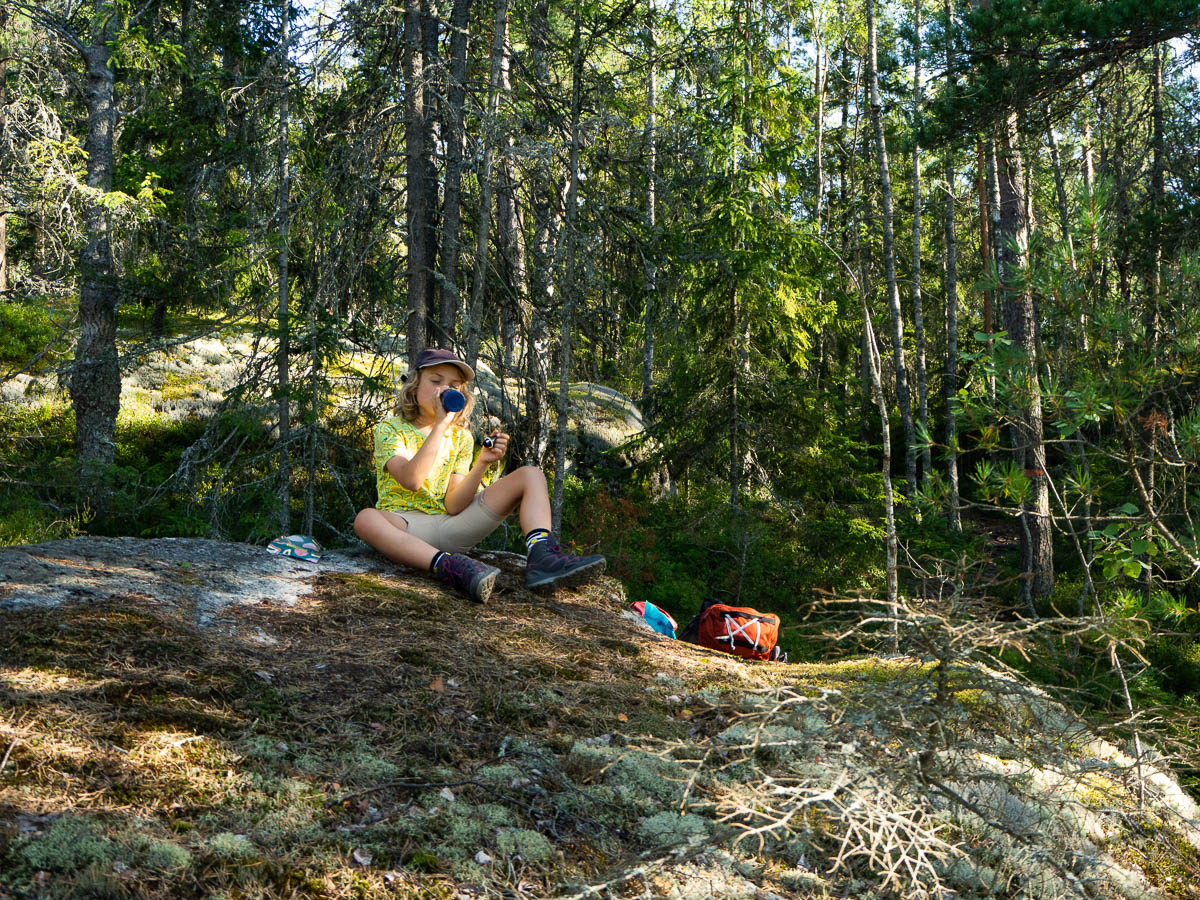
We aimed for the camping spot next to Årsjön in Tyresta. That’s about a 3 km hike from the parking lot. That’s nothing for Adrian, really, but today he really wasn’t in much of a walking mood and seemed to struggle with every single step. We took plenty of water and snack breaks on the way.

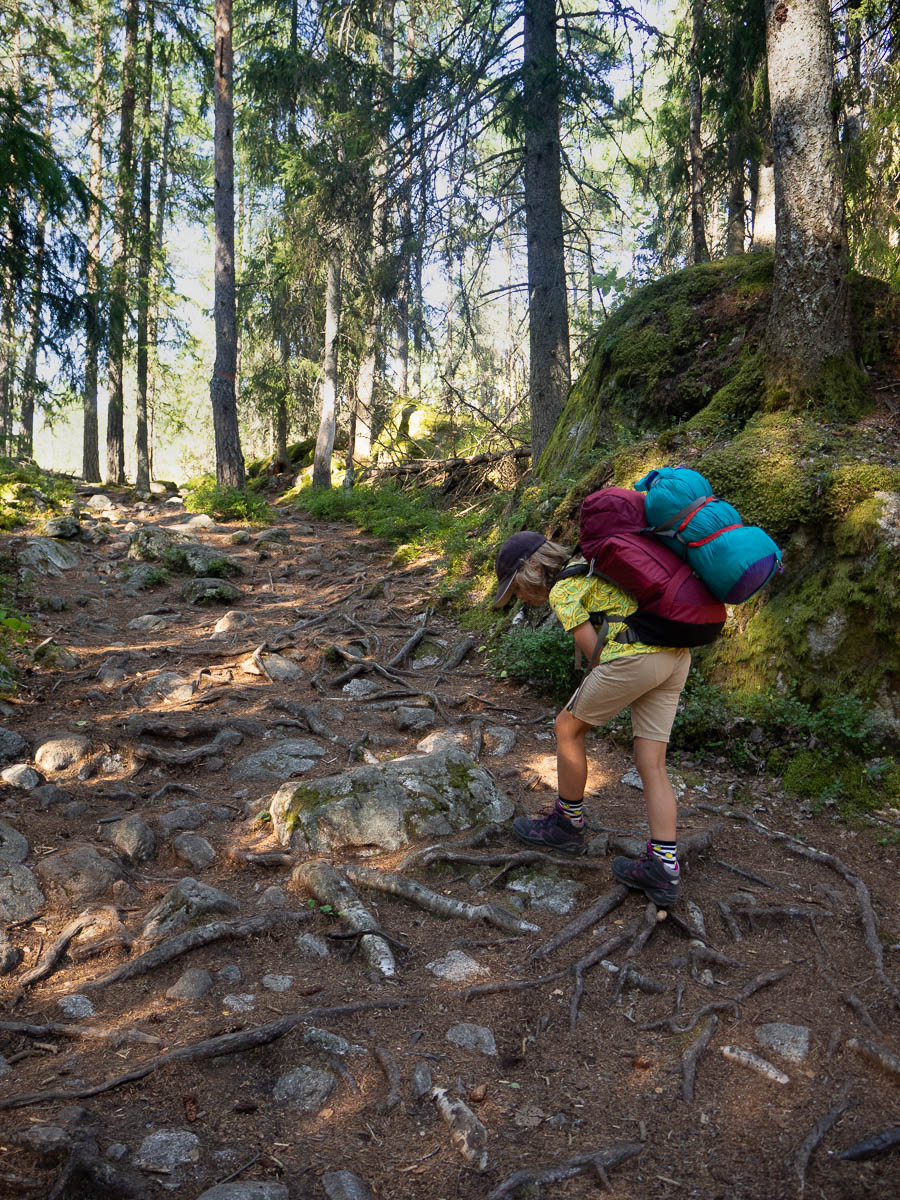
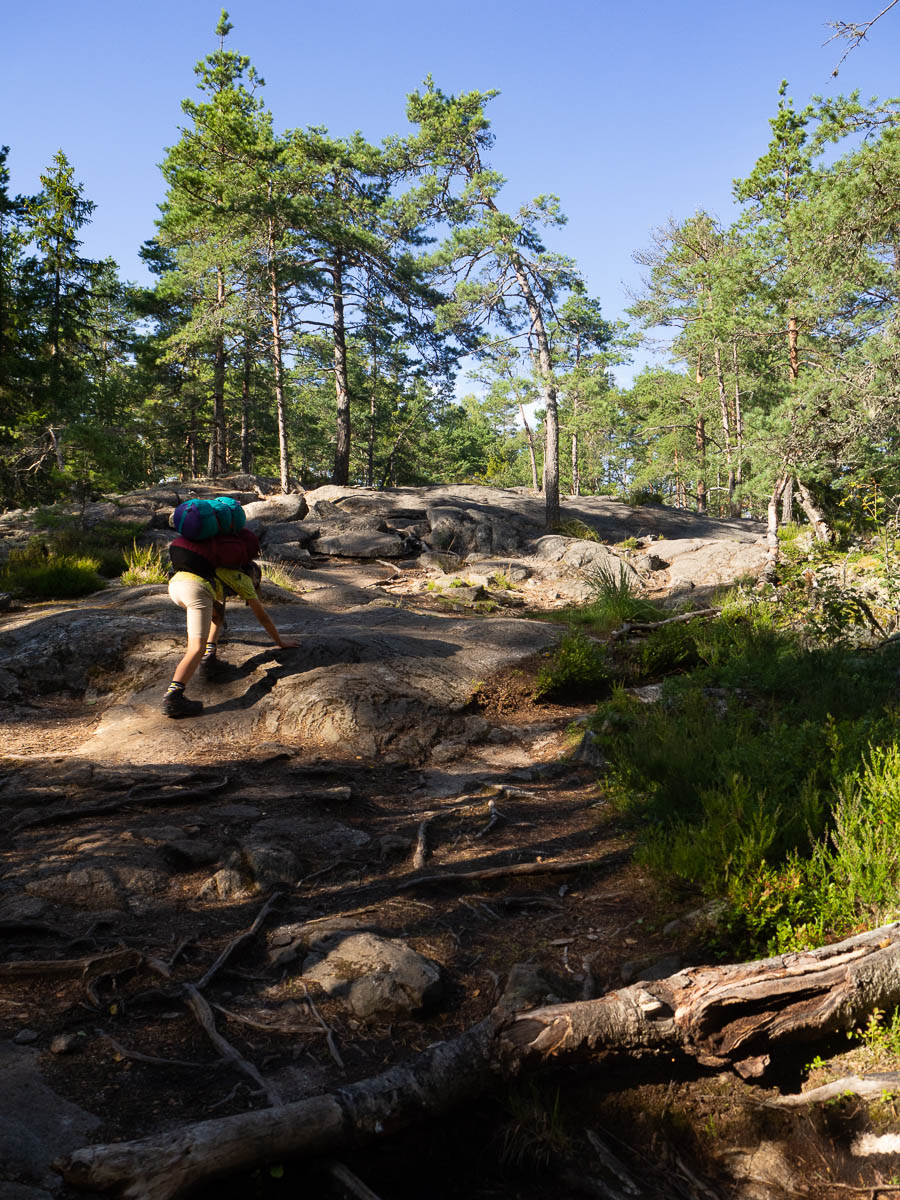
Part of the problem is his rucksack. At about 140 cm, he’s too short for most junior rucksacks. He uses the shortest large rucksack I could find, back when Ingrid was preparing for her first scout camp. It’s a decent pack, but it lacks a proper padded hip belt, so all the weight rests on his shoulders.

No, he doesn’t walk bent over as he is in the photos – he was demonstrating for me just how unbearably heavy his pack was, especially when the path went uphill over rocks and roots. All it contained was his sleeping bag and mattress, a few small items of clothing, our toiletries and his water bottle…

When we got to the camping site, we were surprised to find it incredibly crowded. This is not an organized camping ground with flat ground and amenities like water and electricity – it’s simply one of the few spots in the Tyresta national park where tenting is allowed. Today, there were at least thirty tents here. I’ve never seen anything like it.

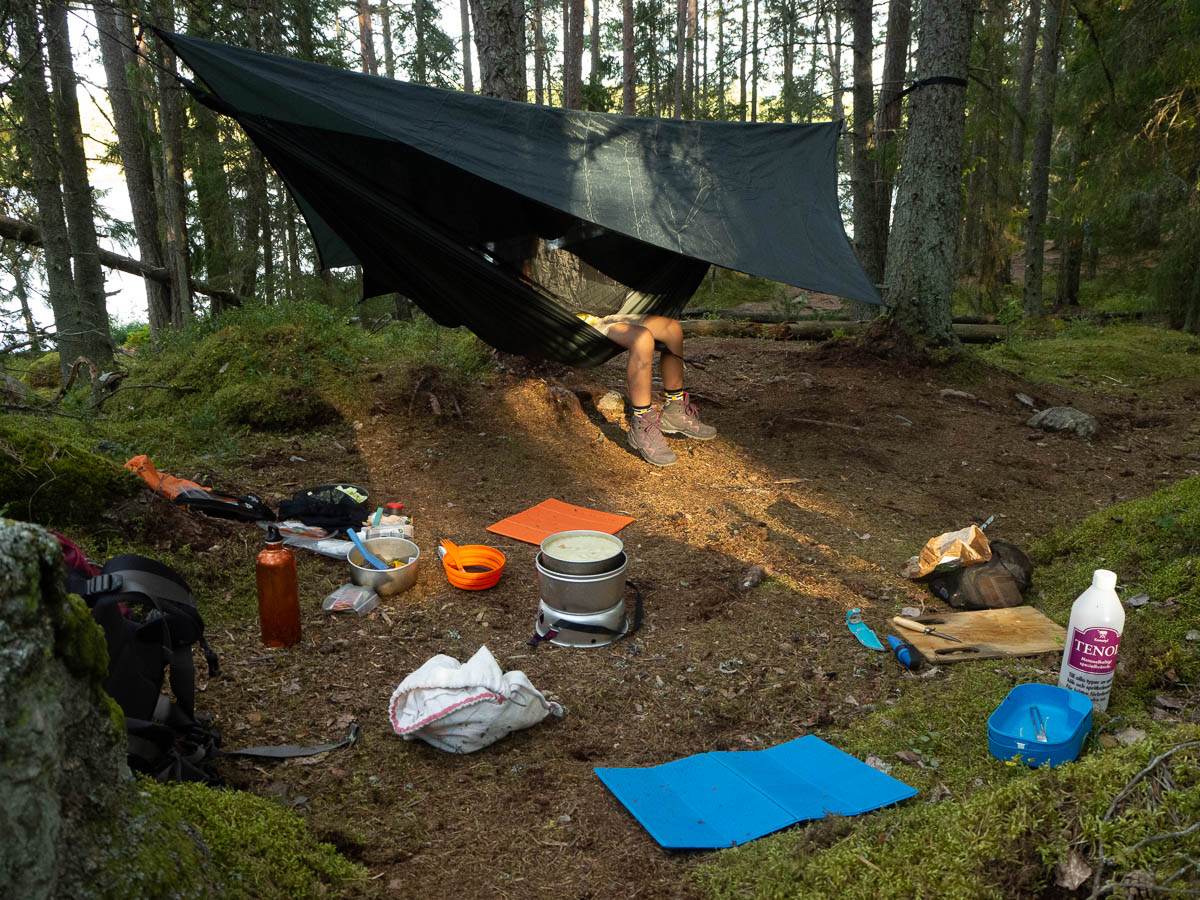
This was not at all what we had been hoping for. But it is what it is, so we just wandered as far as possible from the other people and the lake and the loo (this place now has a loo!) while still staying within the allowed area – and put up our hammock. Last time we were out camping and Ingrid waxed lyrical about the pleasures of sleeping in a hammock, I promised Adrian that it would be his turn in the hammock next time. Which was today. He flopped down in the hammock as soon as it was up.

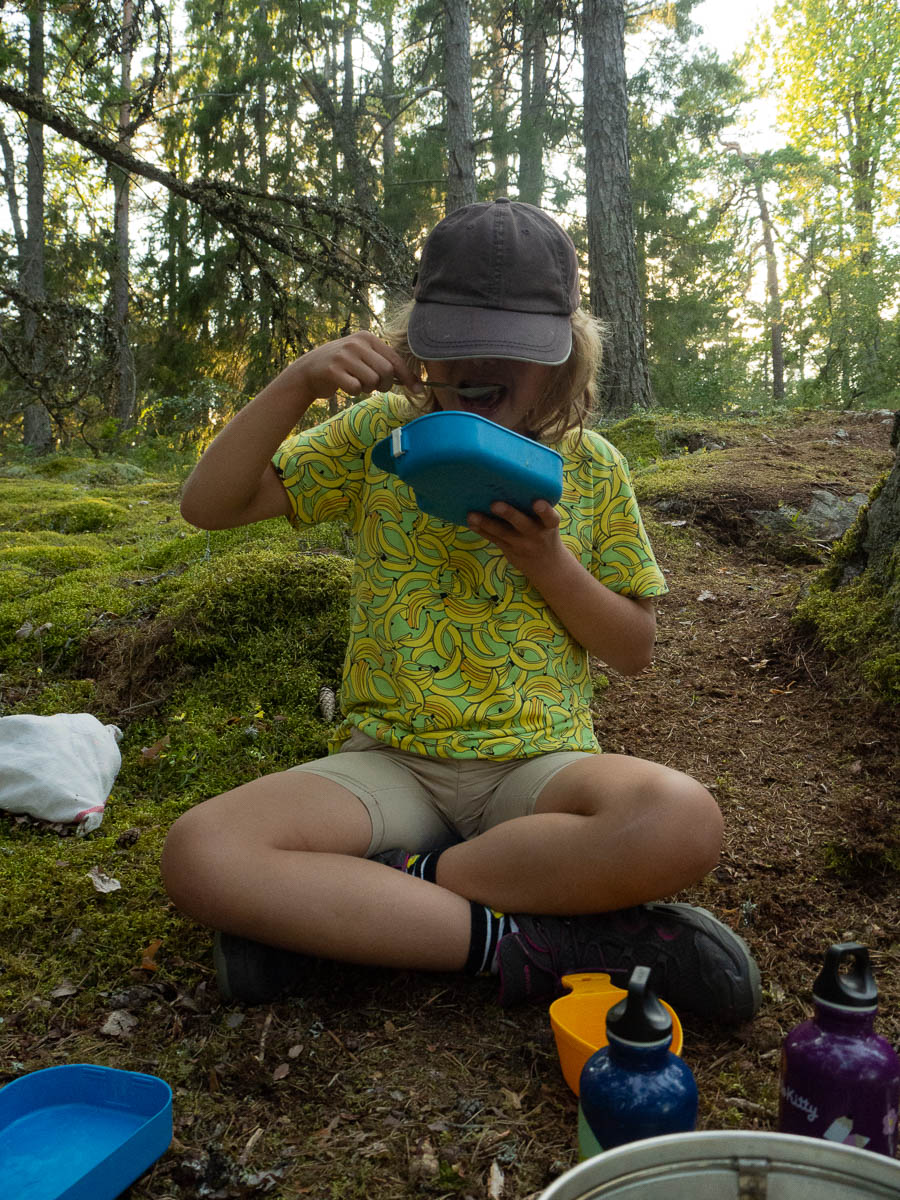
Once the packs were down and the hammock was up, we made dinner: a potato, chickpea and coconut curry. This is what Adrian called “shovel time”: when the food has cooled enough that he can shovel it into his mouth at a constant pace with barely any breaks for chewing.

Dessert was diced apples fried in butter, with almonds and melted dark chocolate.

We had some concerns about the noise level at the camp site: there were some larger groups there, and a band of young children who were still running around shouting quite late. But it did quiet down just when Adrian wanted to go to sleep.

I myself had hoped to sleep in the shelter here at Årsjön, and the shelter was also my plan B for Adrian in case he didn’t like the hammock. (He did like it.) But with the amount of people here, the shelter was out of the question. I fell back to plan C which was simply sleeping on the ground. The nights are warm and cloudless right now, so the only potential problem was mosquitoes.

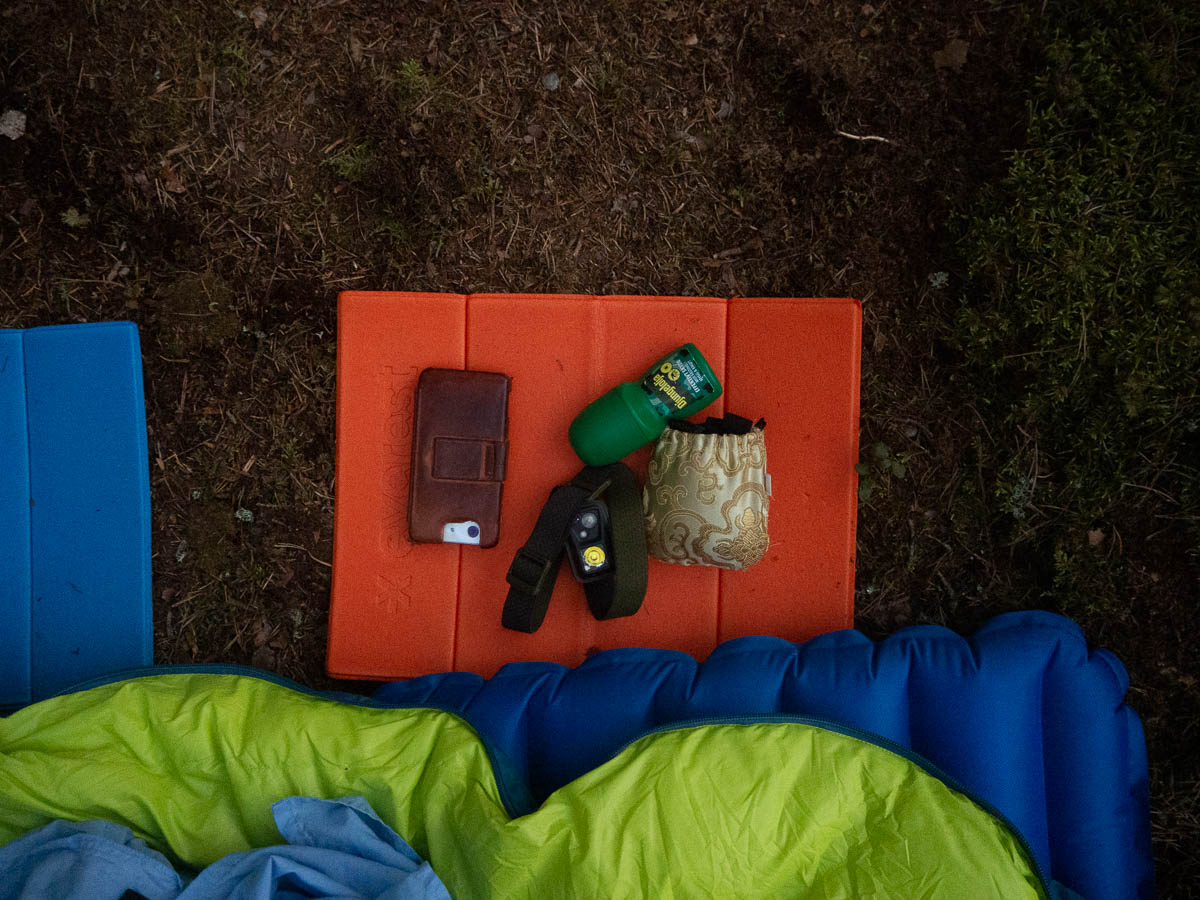
This was my “bedside table” for the night: phone, insect repellent, head torch, and a little bag with earplugs and a sleeping mask. I am a light sleeper and those last two are my lifesavers (sleepsavers?) when I sleep away from home.