Well, now they’re all in the ground, including the half-dead ones. Although I ended up throwing out about half of the bare-rooted Spireas that looked completely dead, and buying replacements (potted!) from a nearby garden centre at about four times the price.

Meanwhile Adrian and Ingrid built “björkspirea kingdom” from all the black plastic flowerpots, which is why there are pots lying around everywhere in the photos.

I’ve been calling this a hedge but what I have in mind is not a traditional hedge, i.e. a straight line of identical bushes. And definitely not a clipped hedge. This is going to be a mixed flowering hedge, with multiple species, wider in some places and narrower in others. In my mind I have a vision of natural, undulating shapes and lines, and a variety of leaf and flower, texture and colour. Like most of the rest of the garden.

I was aiming for a hedge of medium height, waist-high or a bit more, until I realized that there are regulations about hedges next to street crossings. Which appears rather obvious, now that I think about it. Most people around here seem to ignore the regulations, and there are many places where hedges have me fuming about bad visibility. I will be a good member of society and try not to add to the problem.

We’re limited to a height of 80 cm within 10 metres of the crossing, which, taken strictly, would cover most of the planned hedge except for a few metres nearest the entrance stairs. But I’m going to interpret this limit a bit loosely and dot the hedge with some slightly taller bushes here and there, which might reach a metre in height. Since this won’t be a uniform hedge and there will be gaps between the taller bushes, I’m hoping that they won’t hinder much. And I also have room for a bunch of taller bushes near the entrance.

In no particular order (since they’re mostly mixed up anyway):

  • Spirea cinerea “Grefsheim”
  • Ribes sanguineum “King Edward VII”
  • Weigela florida “Alexandra”
  • Spirea betulifolia “Tor”
  • Potentilla fruticosa “Pink Beauty”
  • Spirea japonica “Froebelii”
  • Mahonia aquifolium “Maqu”
  • Aronia melanocarpa “Hugin”
  • Viburnum bodnantense “Charles Lamont”


I decided that this summer the third and last section of the hedge will get planted, come what may. I dug the trench, weeded, spread fresh soil on top and ordered bushes.

And waited.

And waited.

And by the time it was time for us to fly to Austria, I still hadn’t gotten all the bushes, even though I’d left a ten-day margin beyond the estimated delivery date, just in case there were delays. I just wasn’t prepared for delays of this magnitude.

Now we’re back and I’ve also finally received all the bushes I ordered. Some are near death after waiting here for a week, even though I put them in the shade. Some are near death for no visible reason – I’m guessing the garden centre used different suppliers for different species and some were faster than others, so the ones they got early were left lying around somewhere for a week or so, while they waited for the rest. And finally some are near death because I got sold bare-rooted plants instead of potted ones. I thought I was so careful when I double-checked my orders but somehow I still missed this. Who on earth delivers bare-rooted plants in July?!

Luckily I also have some bushes that have not languished without water, and they’re looking strong and green. I also hope that the near-death ones will revive, given time and water. So I’m going to plant them all and hope for the best. But the planting is far from the joyful task I had been looking forward to.


Time to go home after a week of hiking in Zillertal.

Zillertal was a great place for family hiking, and Mayrhofen was a great place to stay.

On our way to the airport I was already thinking that if I could retire today, this could be a good place for it.

There are endless options for hiking, of all levels of difficulty, all of them very scenic. Many are easily accessible by bus. The paths are well maintained and clearly marked. Everything is super clean; there is no garbage anywhere.

The town of Mayrhofen likewise is clean, tidy, pretty and friendly. The entire town looks like this photo: flowers and blindingly white walls everywhere. I keep wondering whether the guesthouse owners get fined if they don’t plant flowers on their balconies.

The lack of vegetarian food was the only noticeable minus here.

The flip side of this convenience is that it lacks adventure, I guess. You won’t come here and go home a changed person, or see the world with new eyes. But that has never been what hiking is about for me.


For our last day here, we took a trip to the Hintertux glacier.

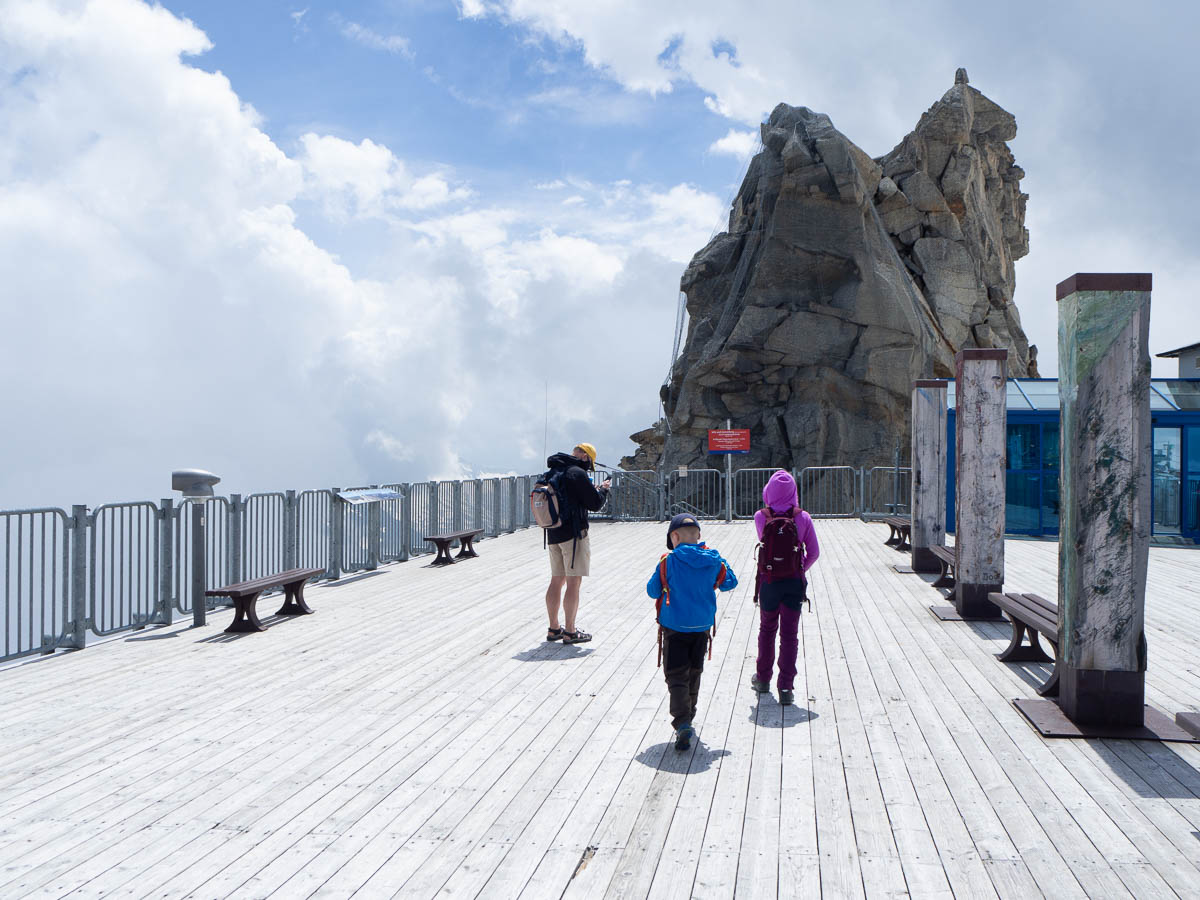
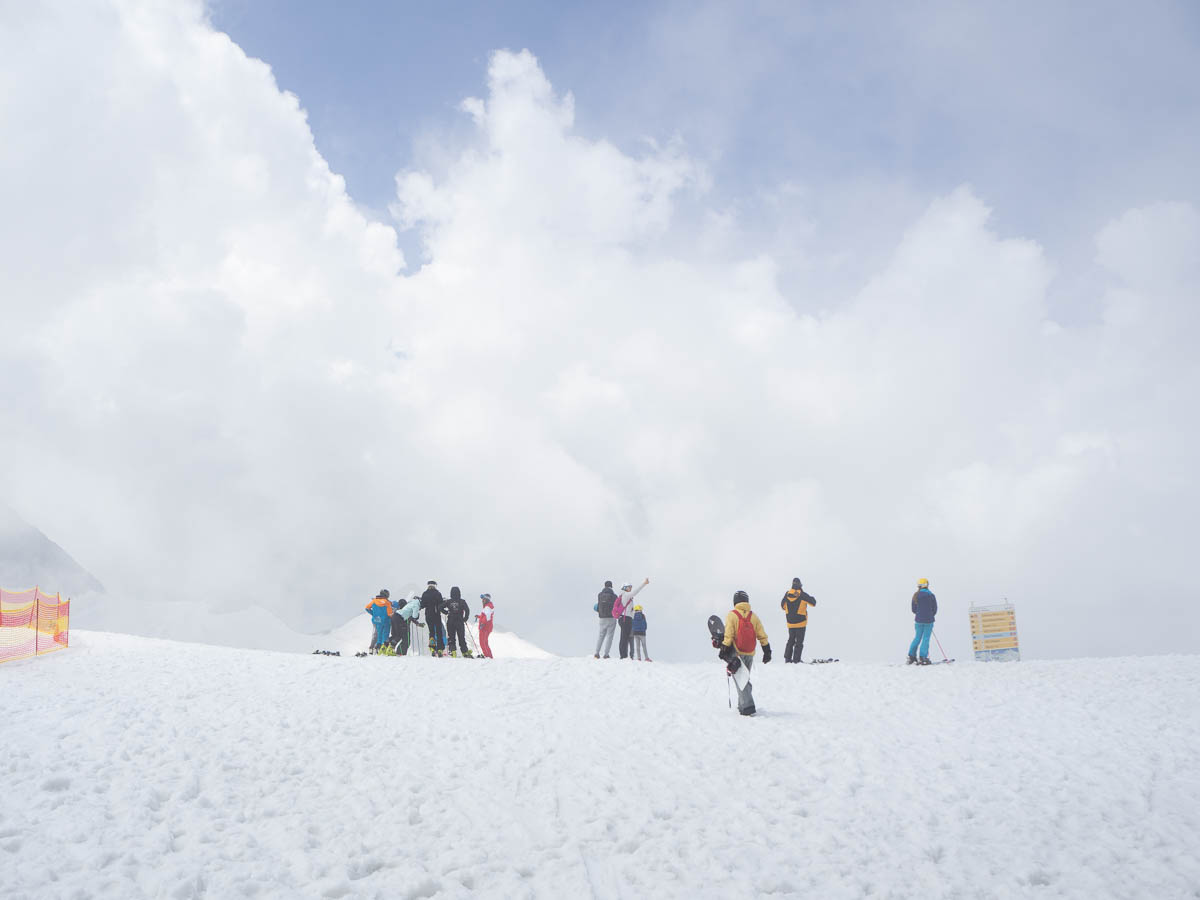
From Hintertux village, a chain of gondolas can take you all the way up to the top, above the clouds. There is enough snow there for year-round skiing. It felt pretty bizarre to arrive in sandals and t-shirt (although we quickly added fleeces and jackets) and meet skiers and snowboarders.

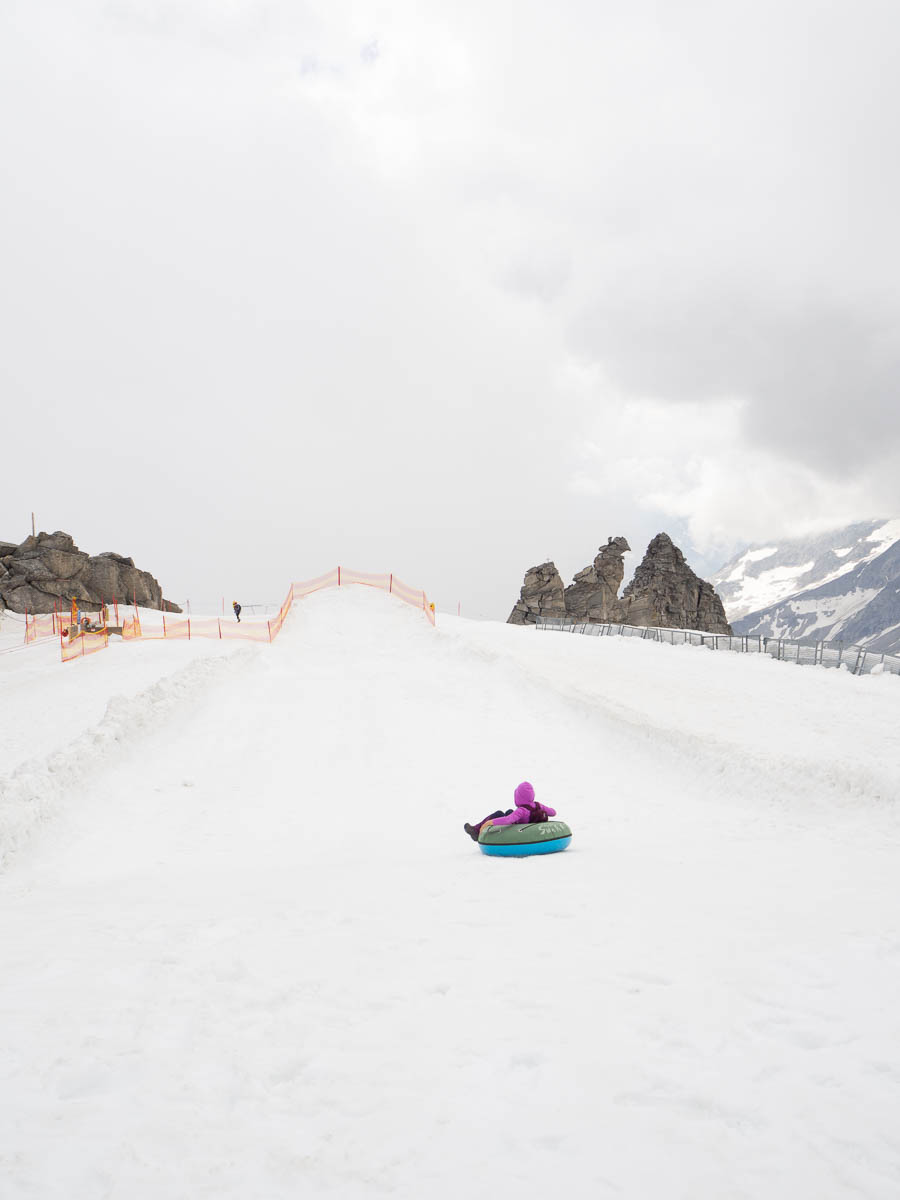
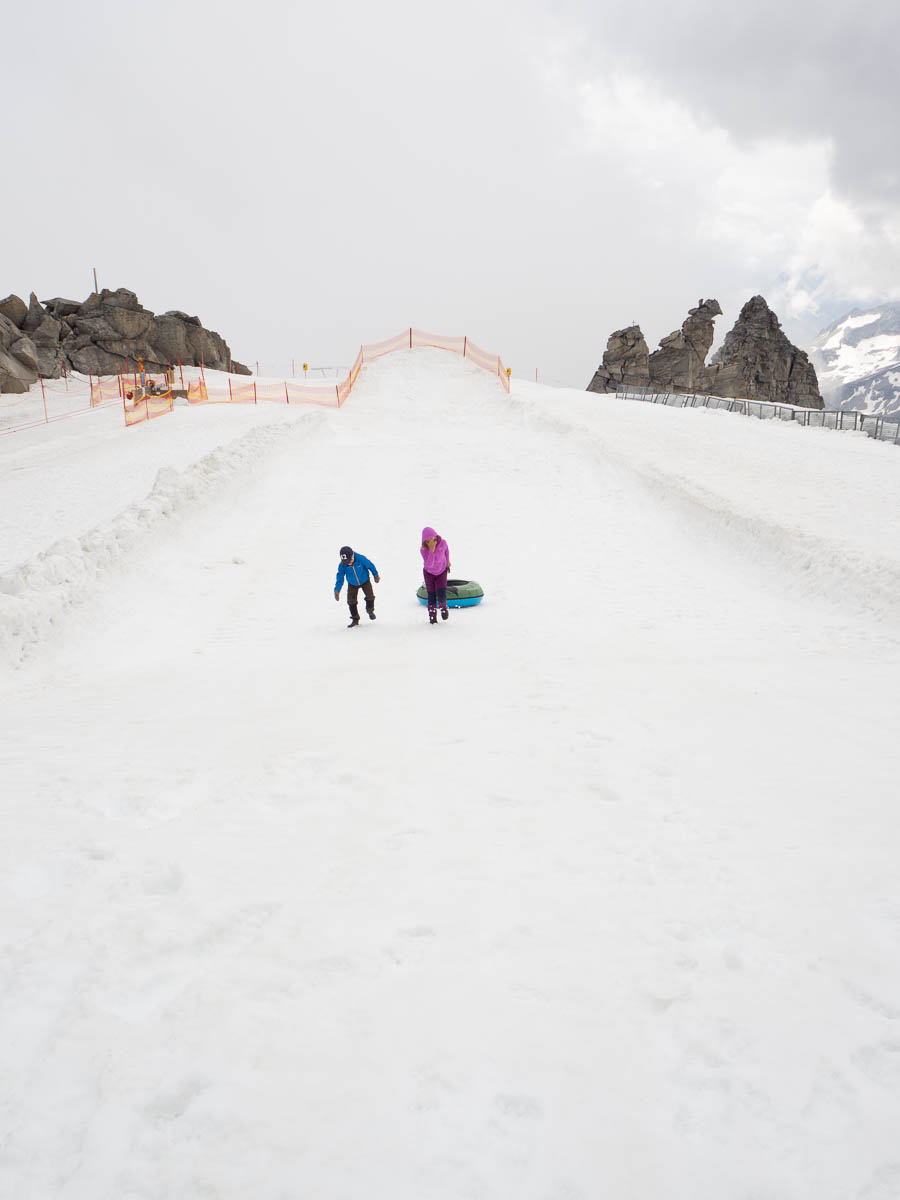
We had no plans to do any skiing, but there were some snowy attractions for kids. They had fun sledding on inflated rubber tubes, but the snow kept getting into Adrian’s sandals.

Gondolas took us partway down, and all of a sudden we were back in summer. Then we walked the last bit down, from Sommerbergalm to Hintertux village.

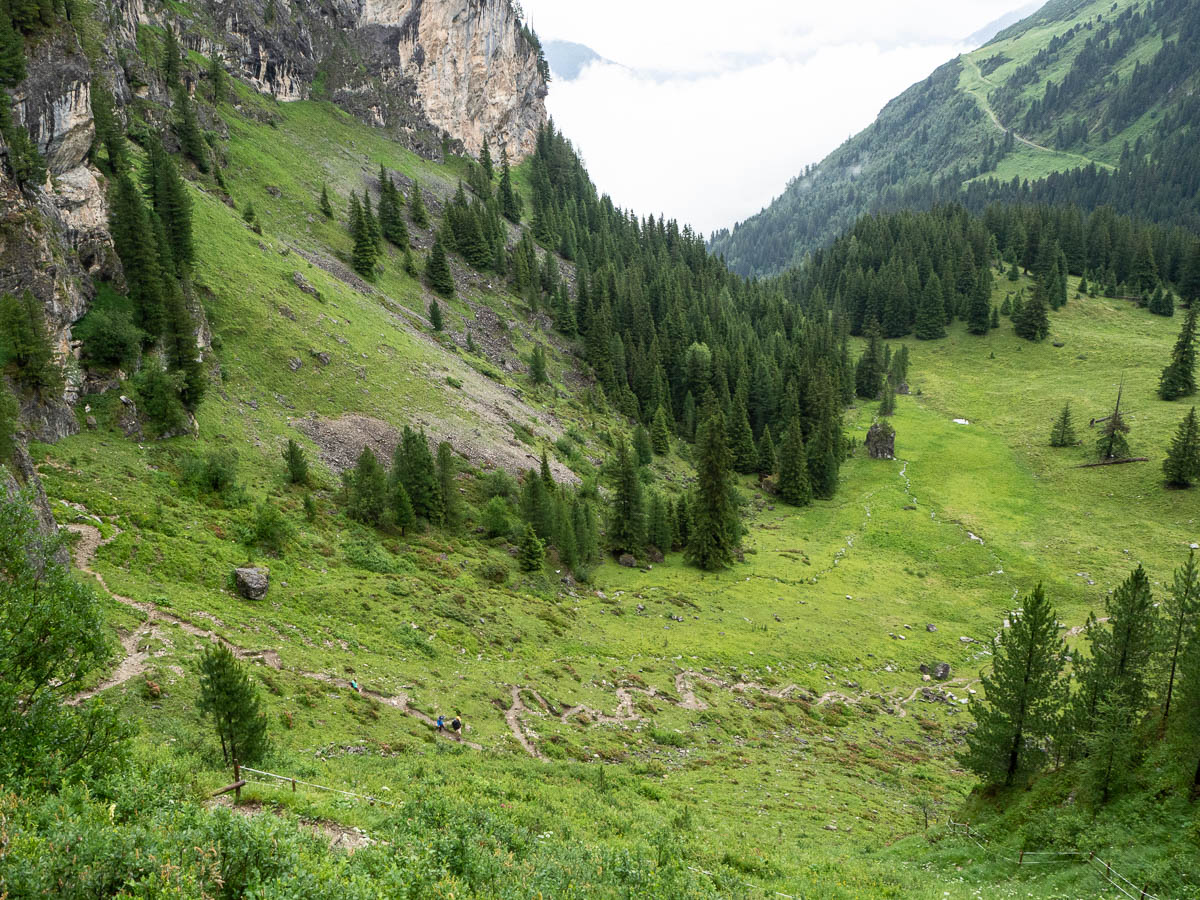
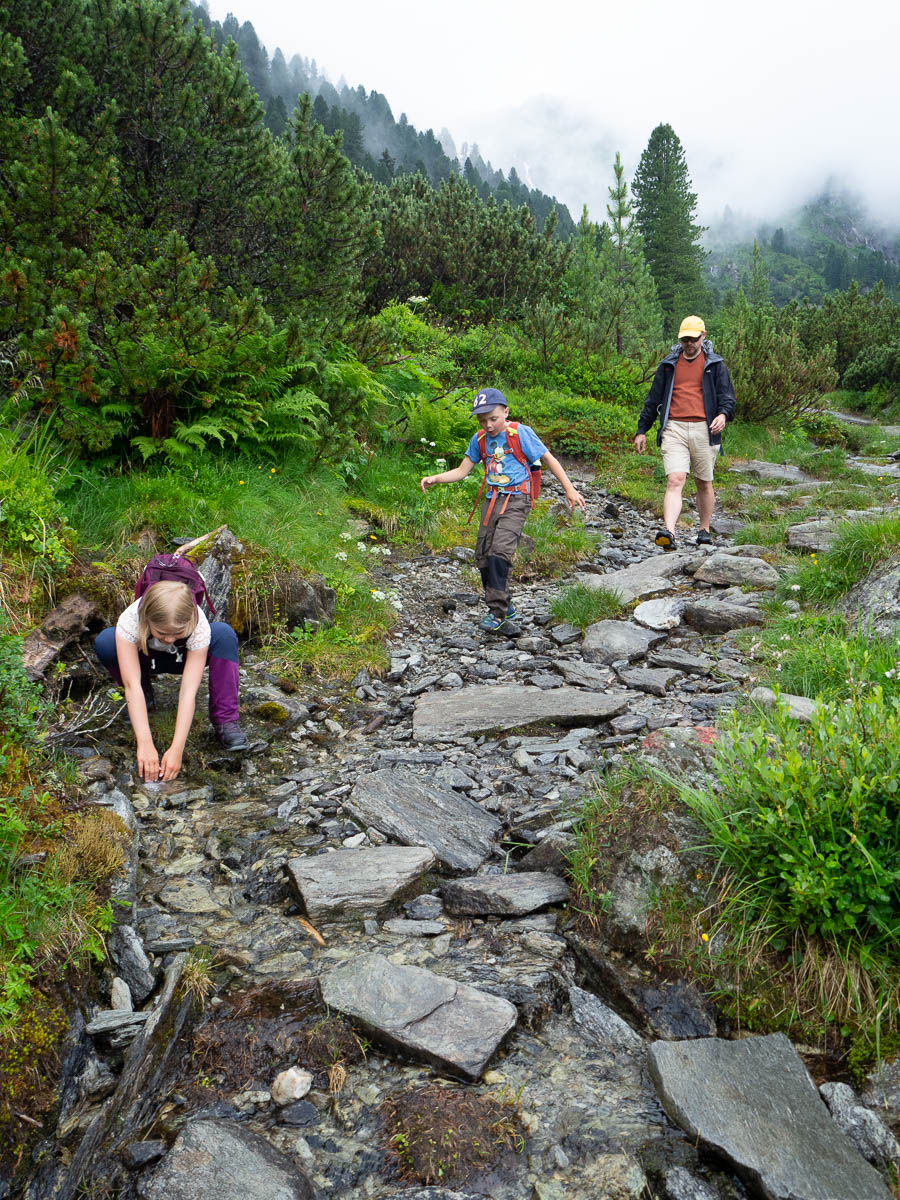
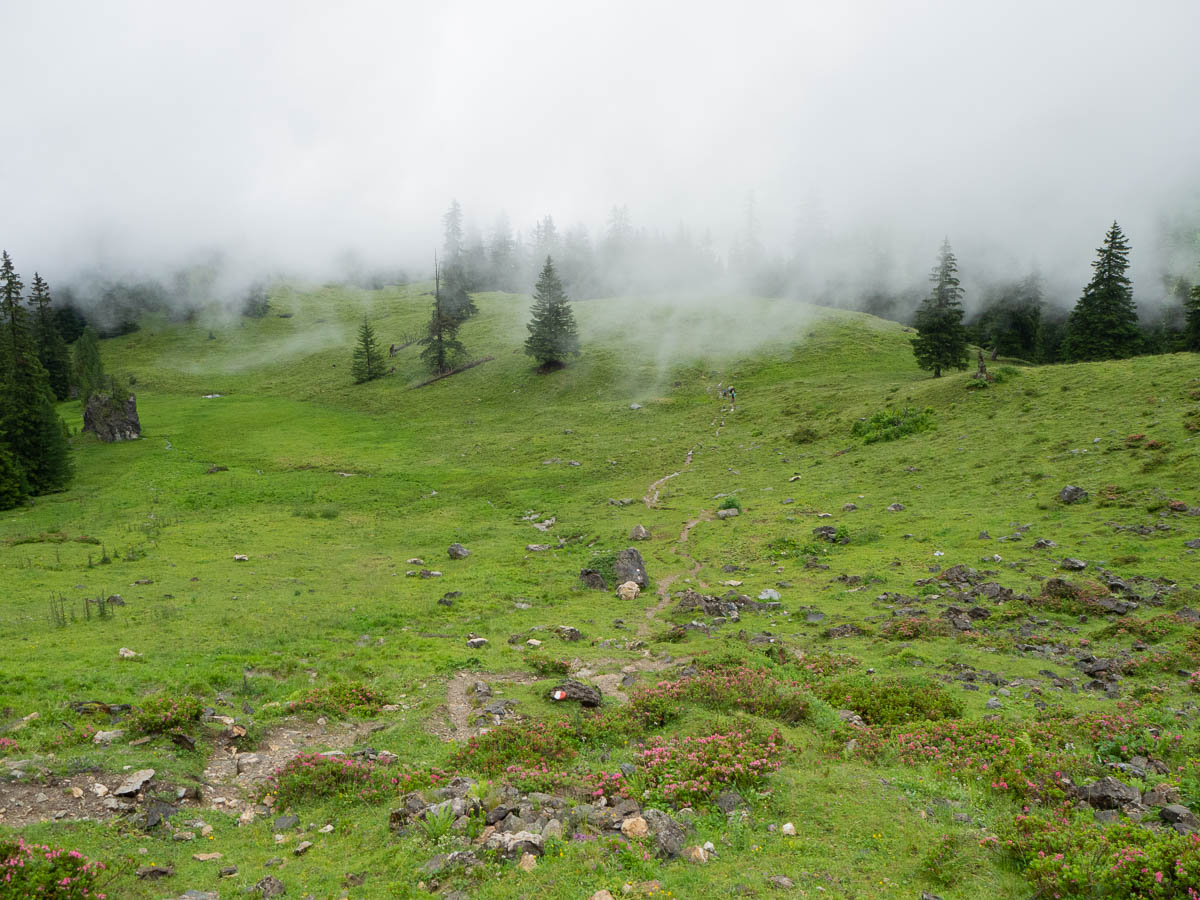
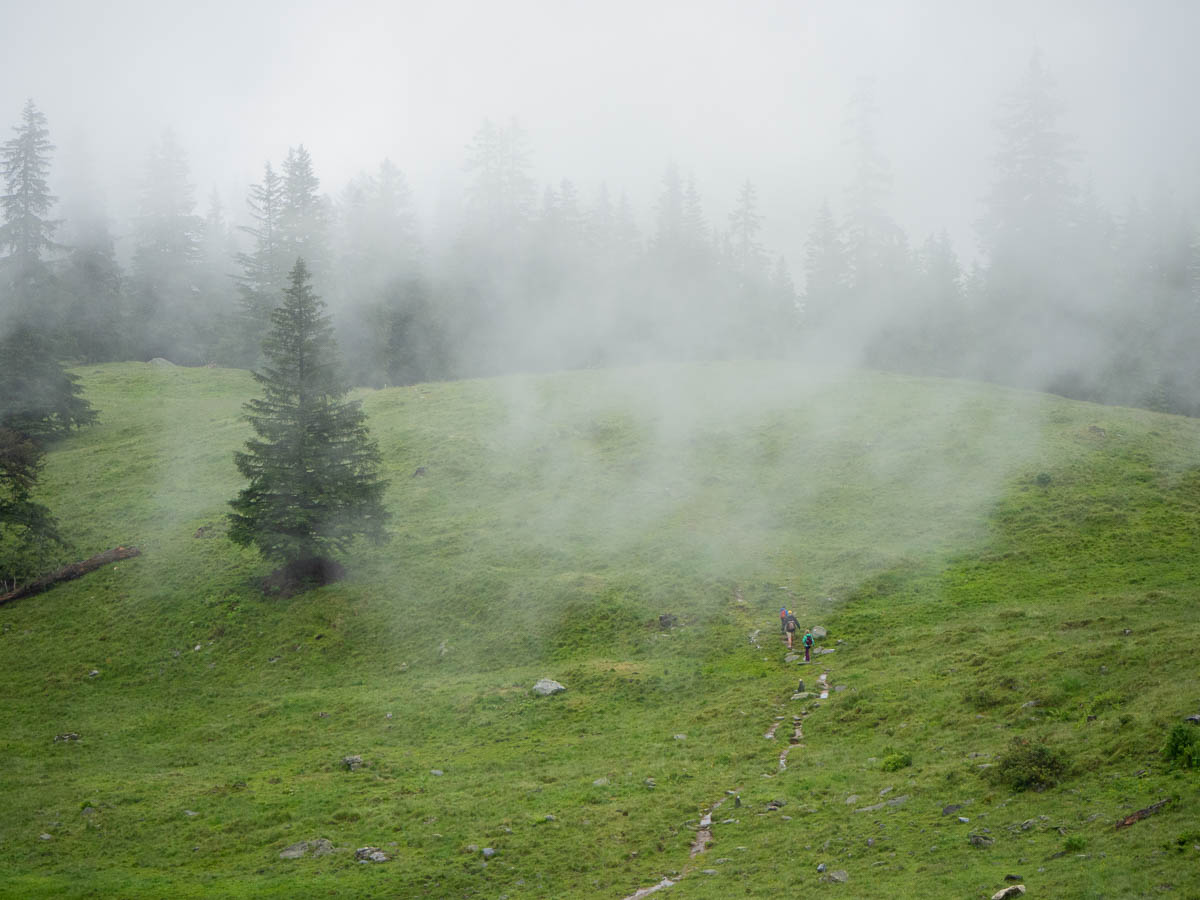
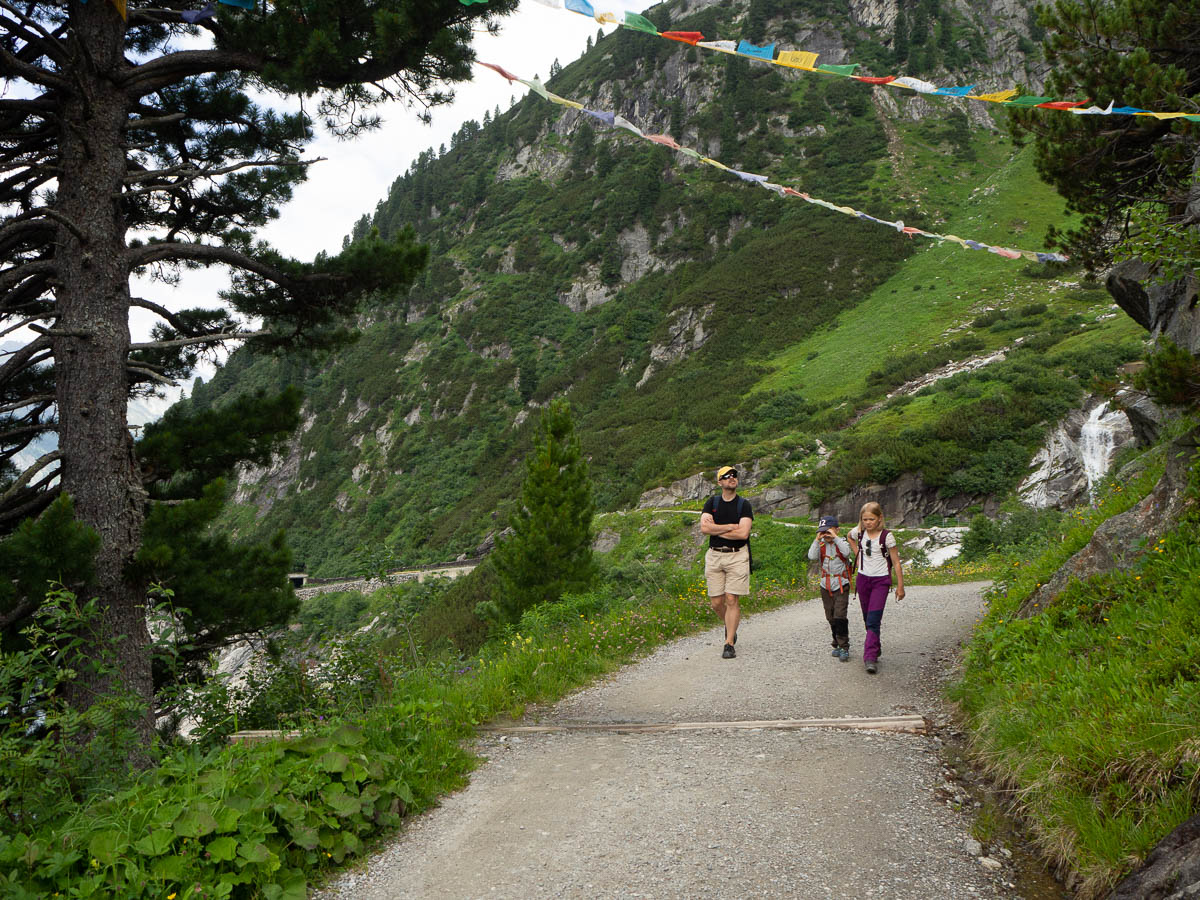
This was a very picturesque walk, like most of them here – steep rocky mountains, winding paths with wide views, meadows dotted with fir and pine, lovely little brooks and waterfalls.


We do have mountains in Sweden and there are plenty of hiking paths among them, so one might wonder what the point is of travelling so far to hike in yet more mountains. But the Swedish mountains are very different from the Alps. The Scandes are old and worn-down. While they can look quite mountainous from afar, when you get closer, they usually aren’t that impressive. Whereas here in the Alps, it’s all steep, bare rocky walls and narrow valleys. The Alps are also much lusher.


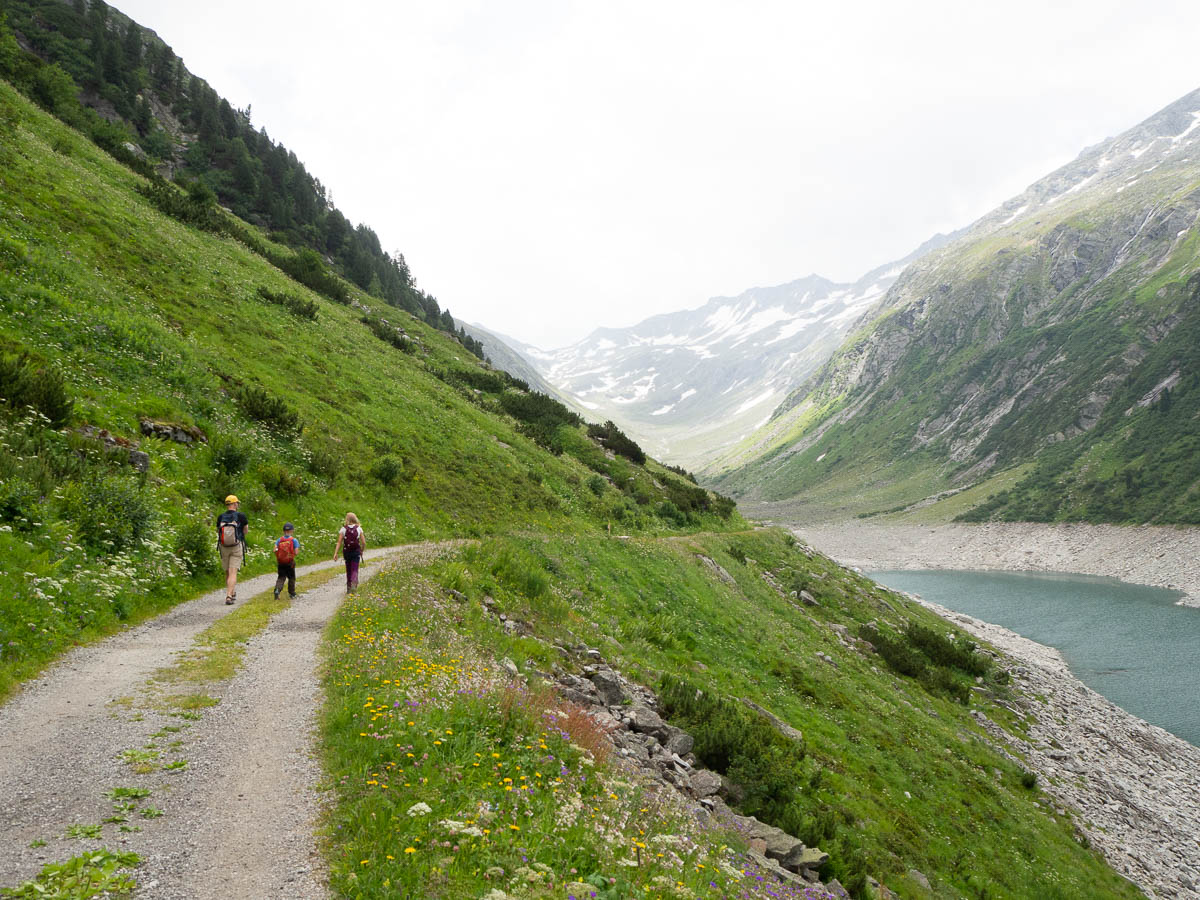
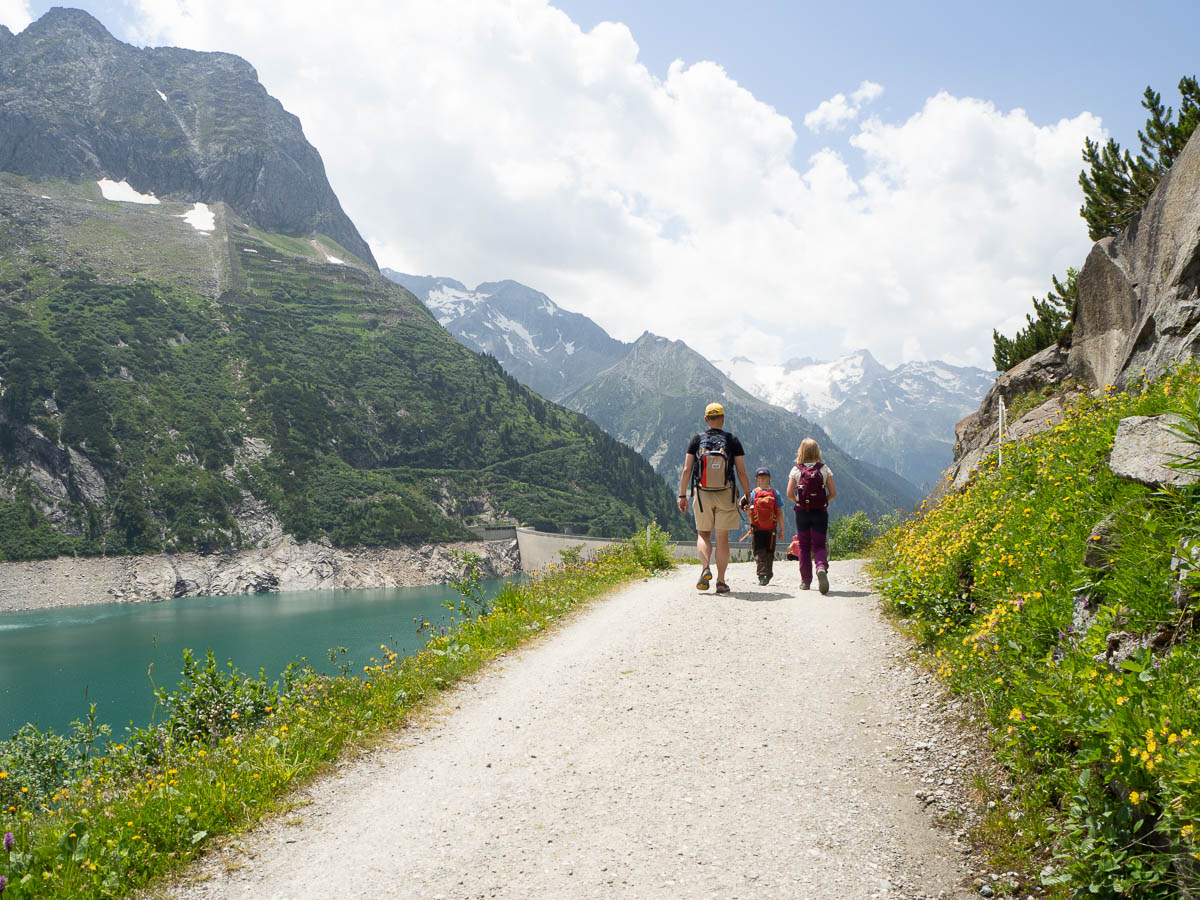
For today, we chose a flat walk. From Bärenau a local bus took us to the Zillergrund dam, and from there we walked along the reservoir lake to Hohenaualm and back.


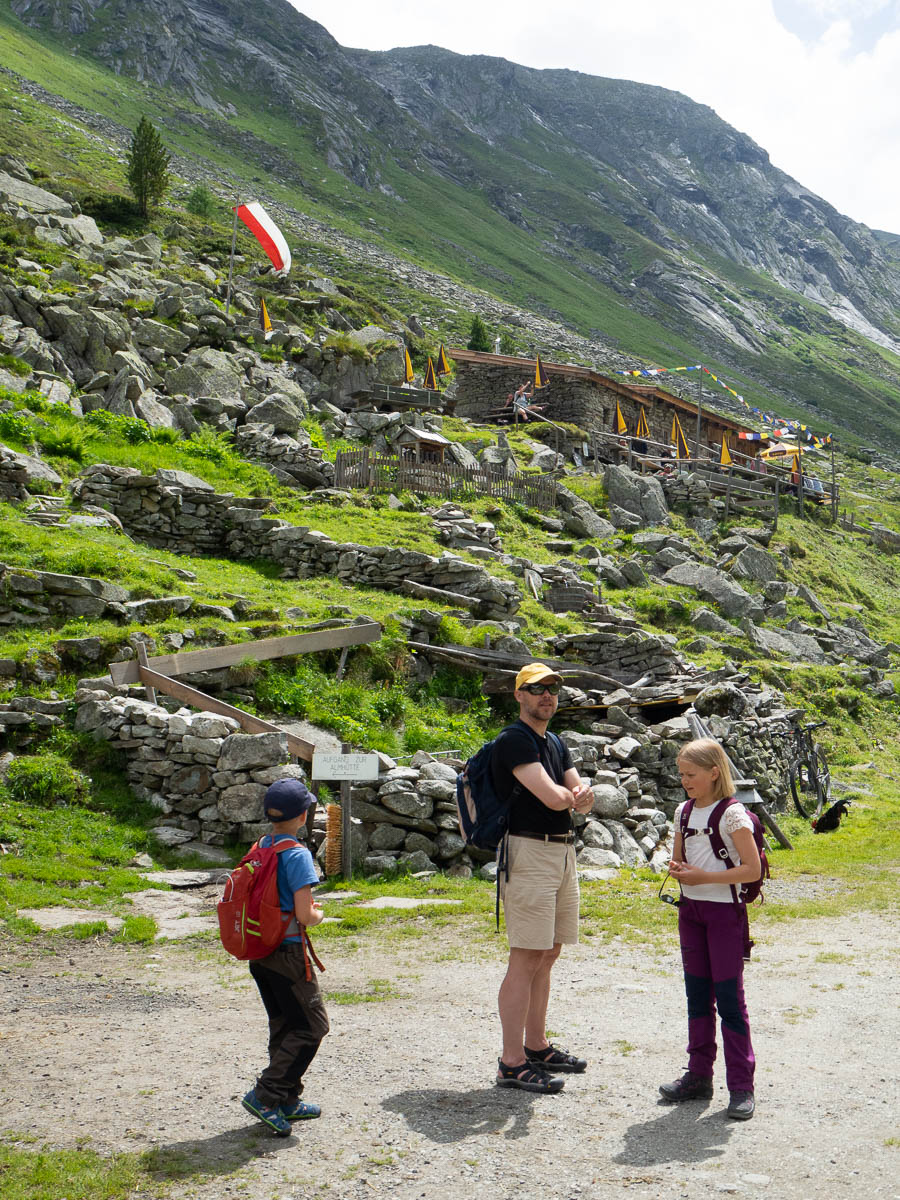
Hohenaualm has a Tibetan theme, with prayer wheels and flags. It’s a small and rustic hut, very cosy and pretty but unfortunately not at all familiar with vegetarianism. Which I guess is kind of in keeping with the whole Tibetan theme. They served sausages and cheeses of various kinds, and that was that.

We tried a cheese platter with a local “gray cheese”. It had a potent smell and didn’t taste particularly good. At least it came with some bread and pickled cucumbers.

Adrian ordered “sausages and bread” which we all expected to look vaguely like a hot dog, but it was truly sausages and bread – two wiener sausages and two slices of white bread.

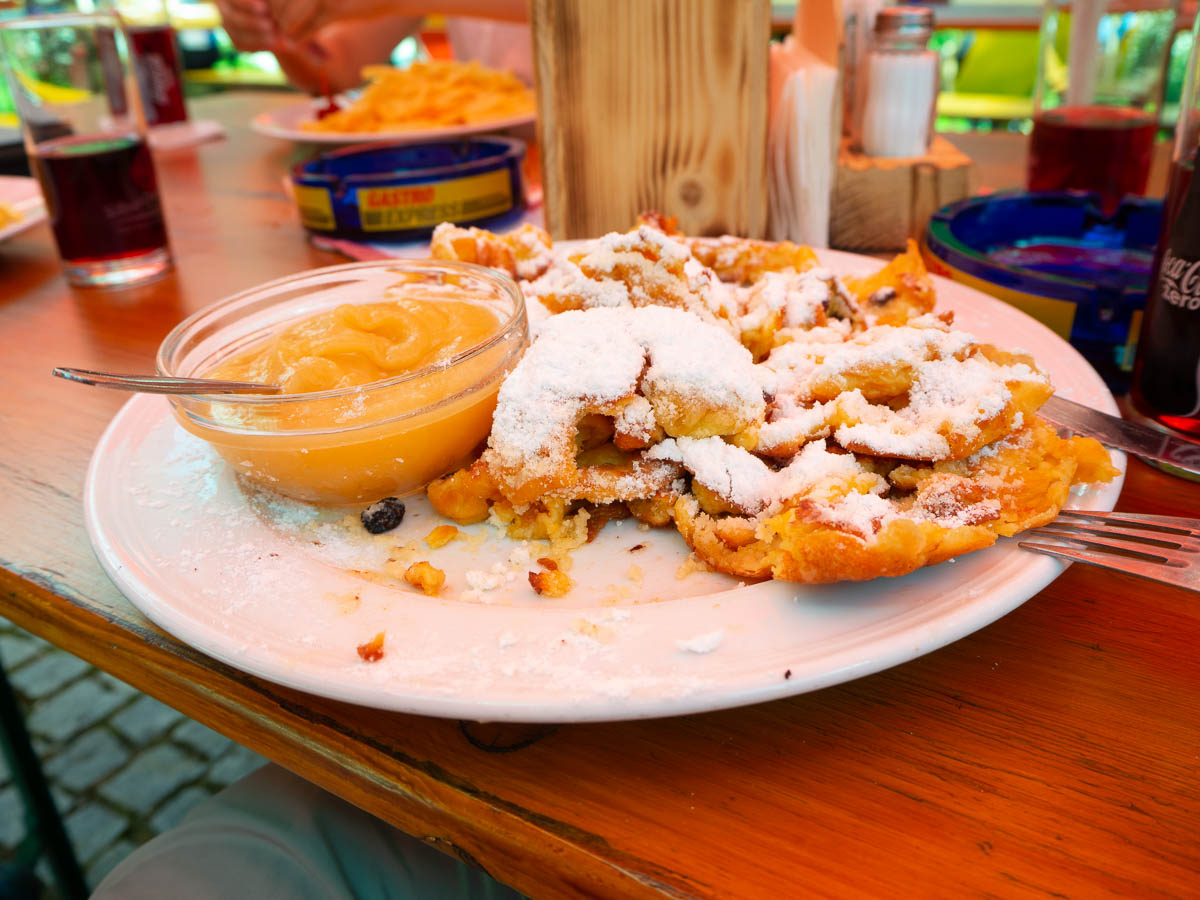
We thought that perhaps the bigger huts near the start of the hike would have more choice for us, so we hiked back. They had more choice, but were no more prepared for vegetarians than the cottage at the end of the road. The two options on the menu for us were French fries, or pancakes, so that’s what we had for lunch.

The locals are very, very fond of pancakes. Their version is called Kaiserschmarrn, and it’s to pancakes like scrambled eggs is to an omelette: it’s a scrambled pancake. Quite sweet to begin with, then covered with mounds of icing sugar and served with a large bowl of jam on the side (preferably apple sauce). Tastes quite good when you first try it but when you have to eat a whole large platter of it or go hungry then it’s not quite so appealing any more…


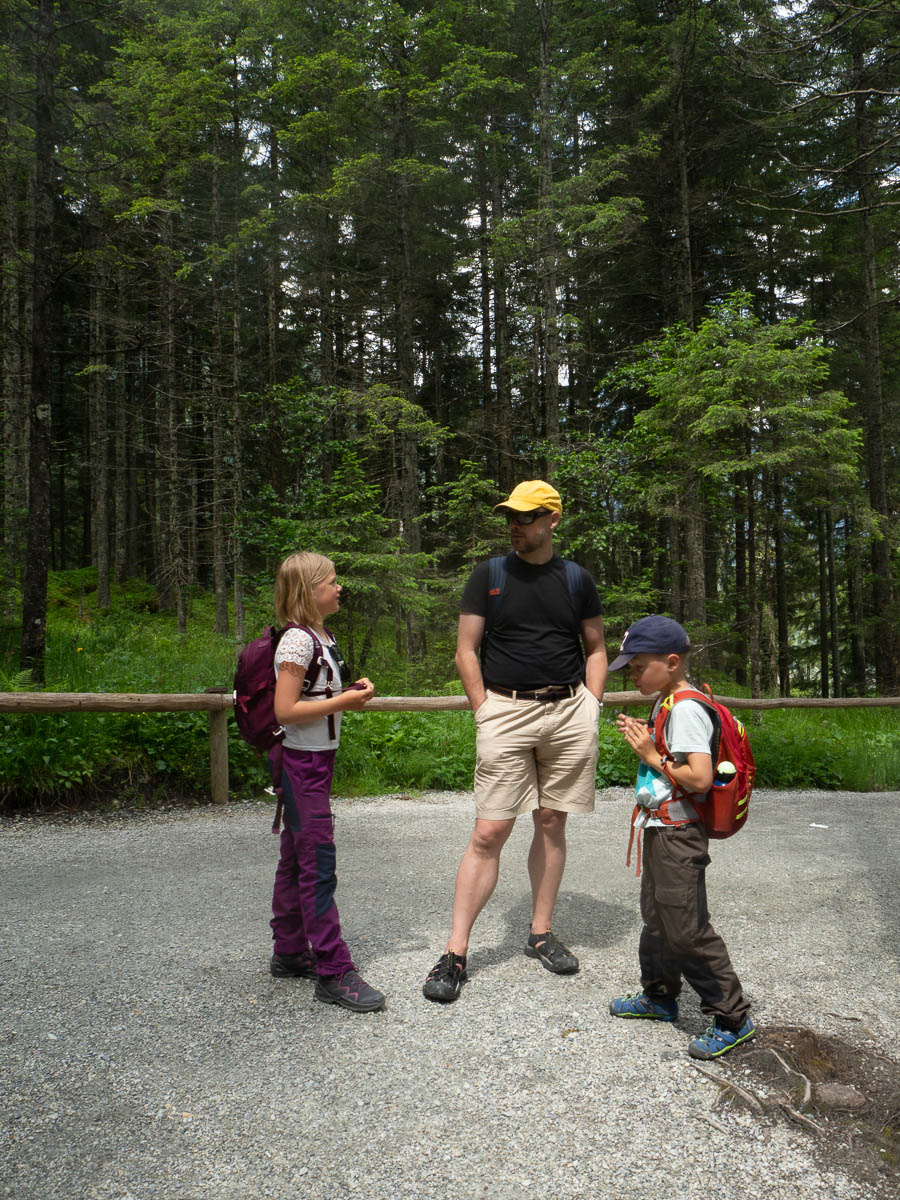
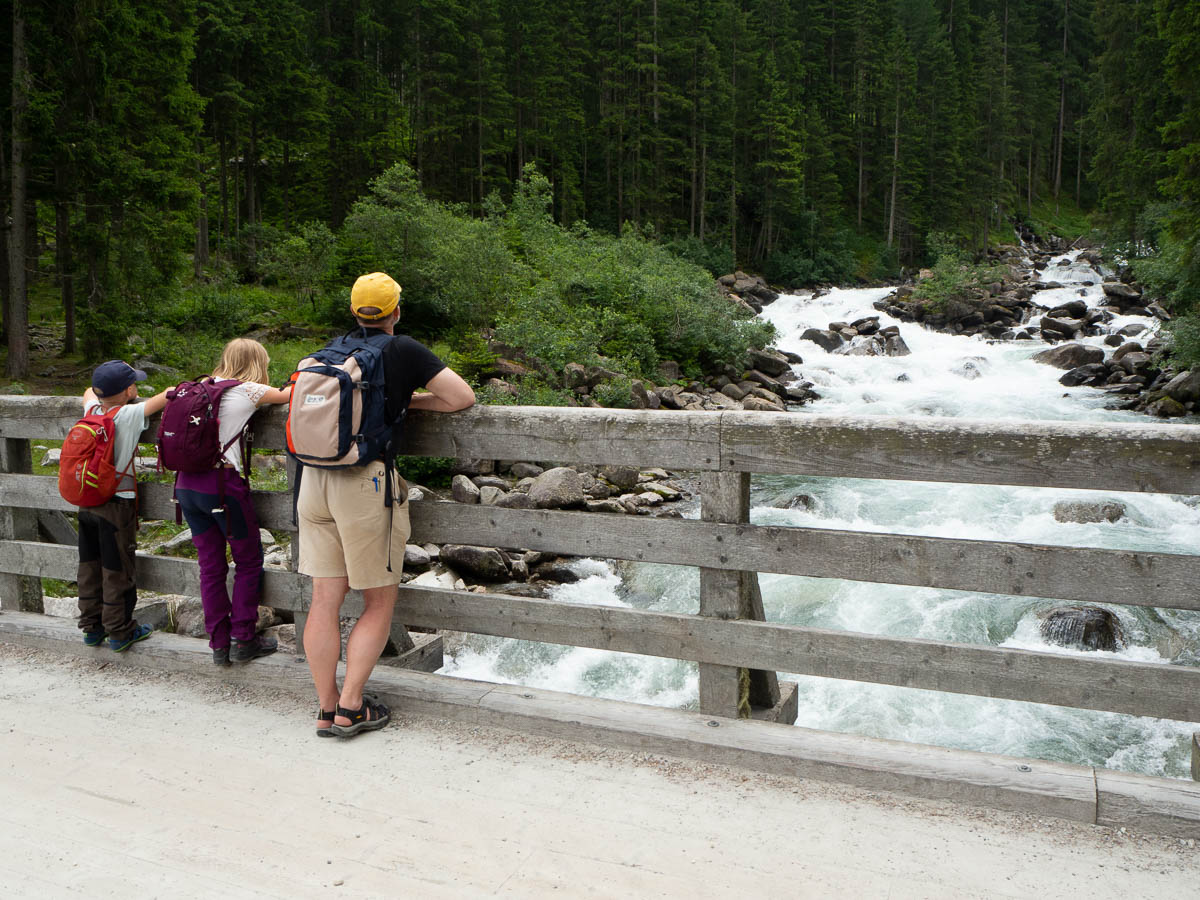
We made a second attempt at an easier, “rest” day and went to see the waterfalls at Krimml. There was plenty of uphill walking today again, and all-in we walked over 6 km, but the path was even and smooth, even accessible to pushchairs, so our legs got some rest.

The Krimml waterfalls lie well outside the Zillertal valley covered by our maps, and we probably wouldn’t have found out about them if it hadn’t been for a couple of friendly hikers that we struck up a conversation with during an earlier walk. Now I realize that they’re one of the top 10 sights in Austria and marketed as the largest in Europe (according to some unclear measure).

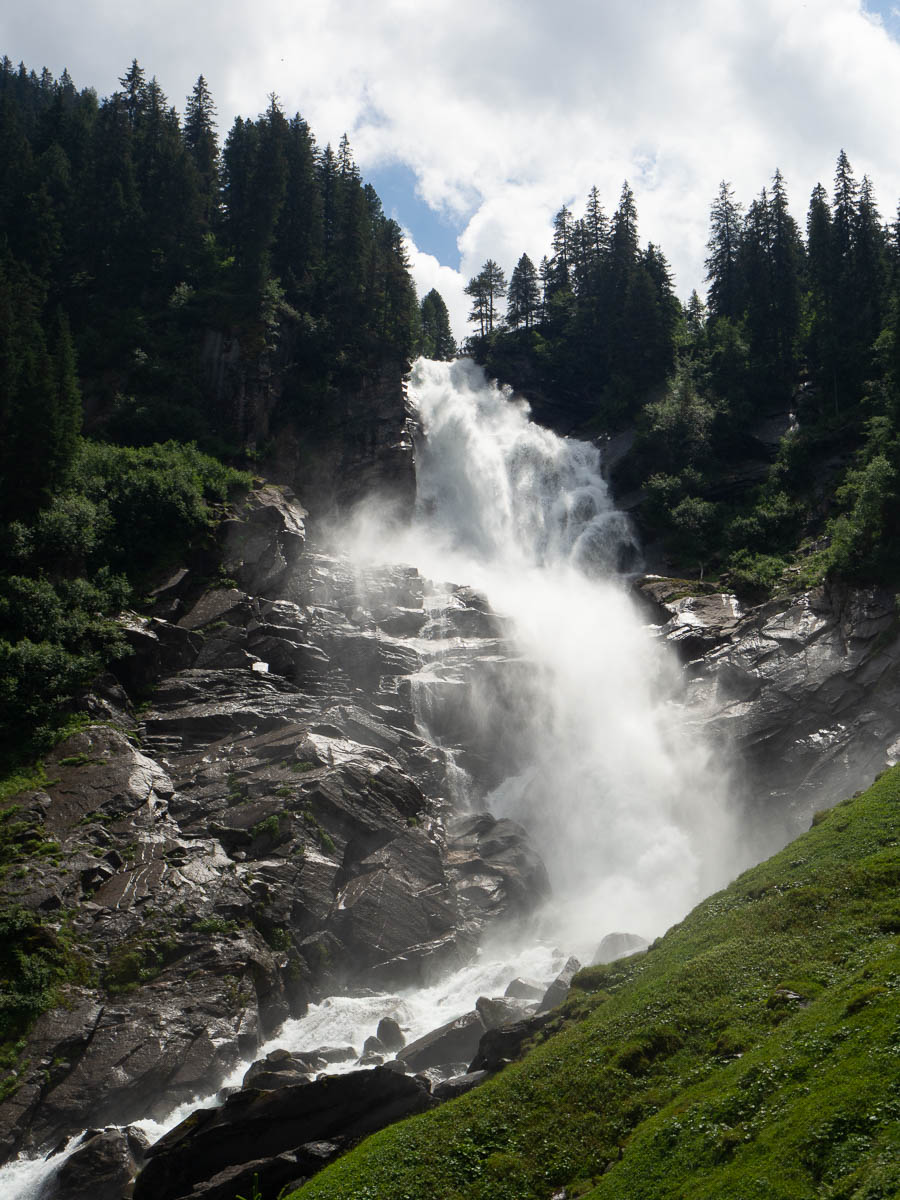
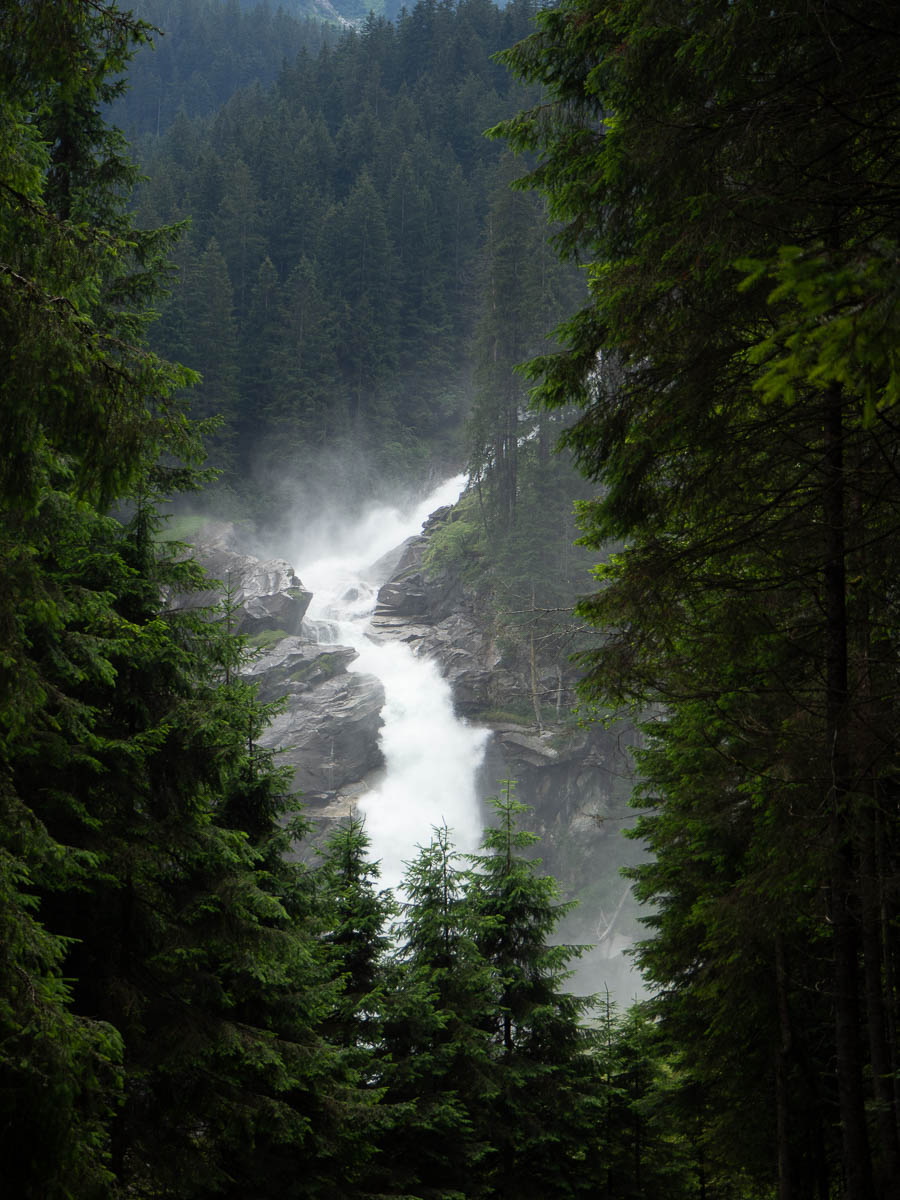
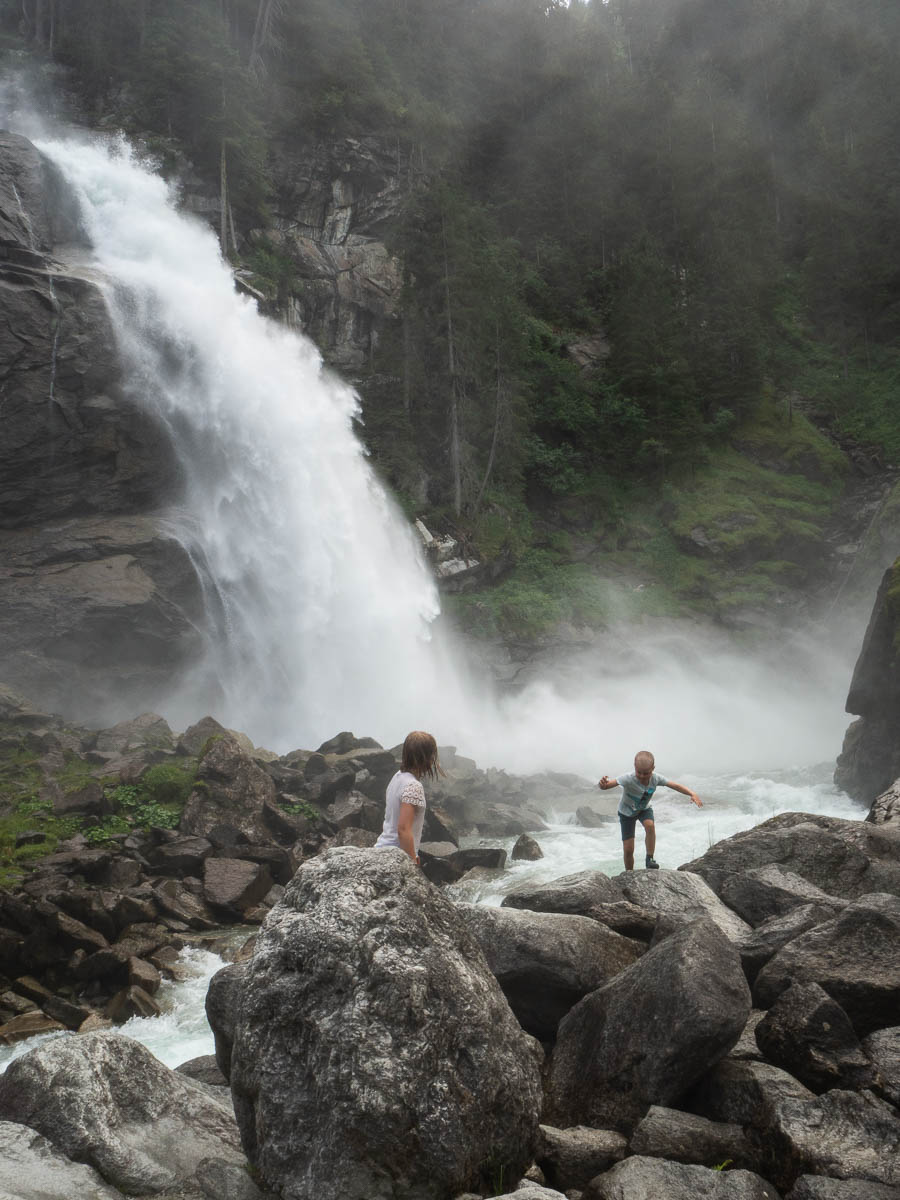
Largest or not, the waterfalls are beautiful and impressive. They are actually a series of waterfalls, one after another, quite close together. A path winds up the mountain right next to the waterfalls, with plenty of viewing platforms along the way. Of course there is a Hütte partway up for lunch. And at the bottom, where the waterfalls land in a rocky expanse, there’s plenty of opportunity to scramble up close and get drenched by the spray.