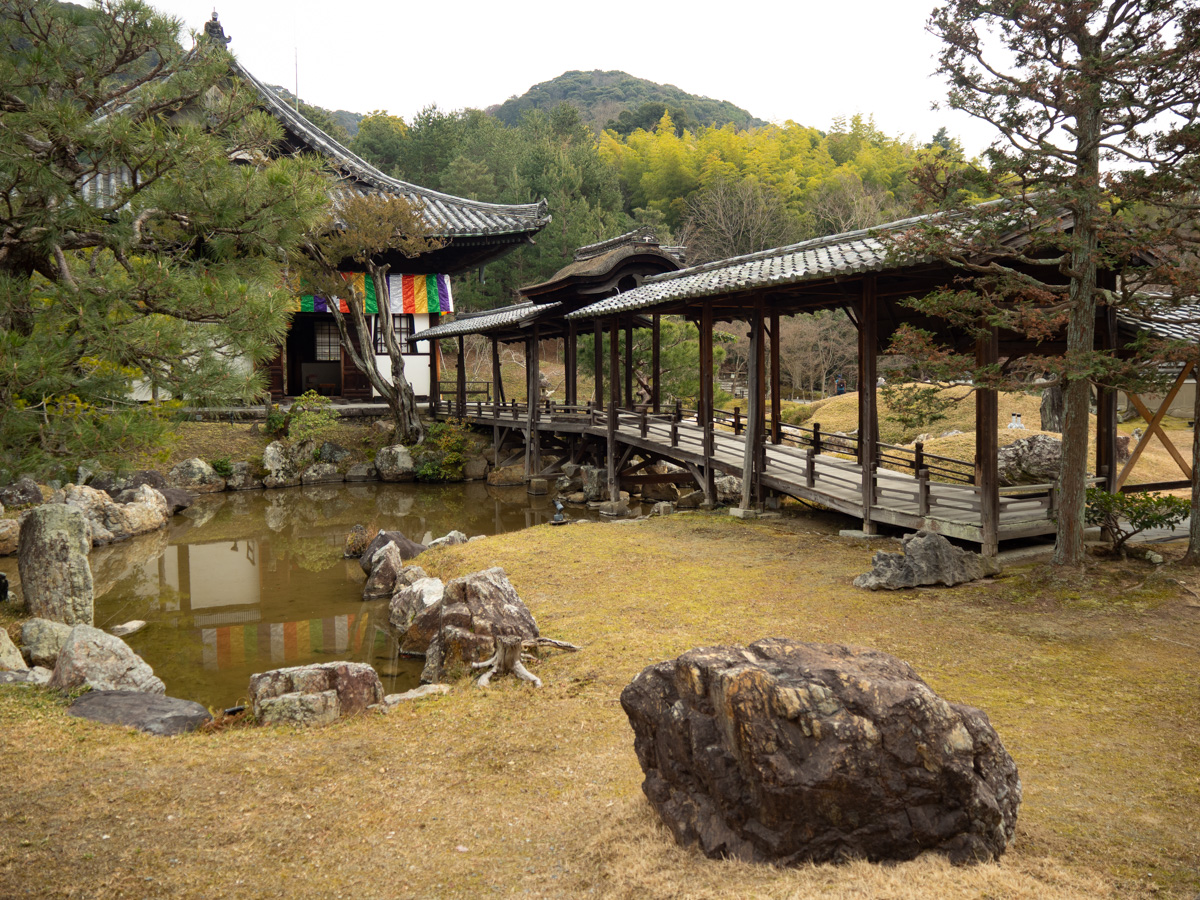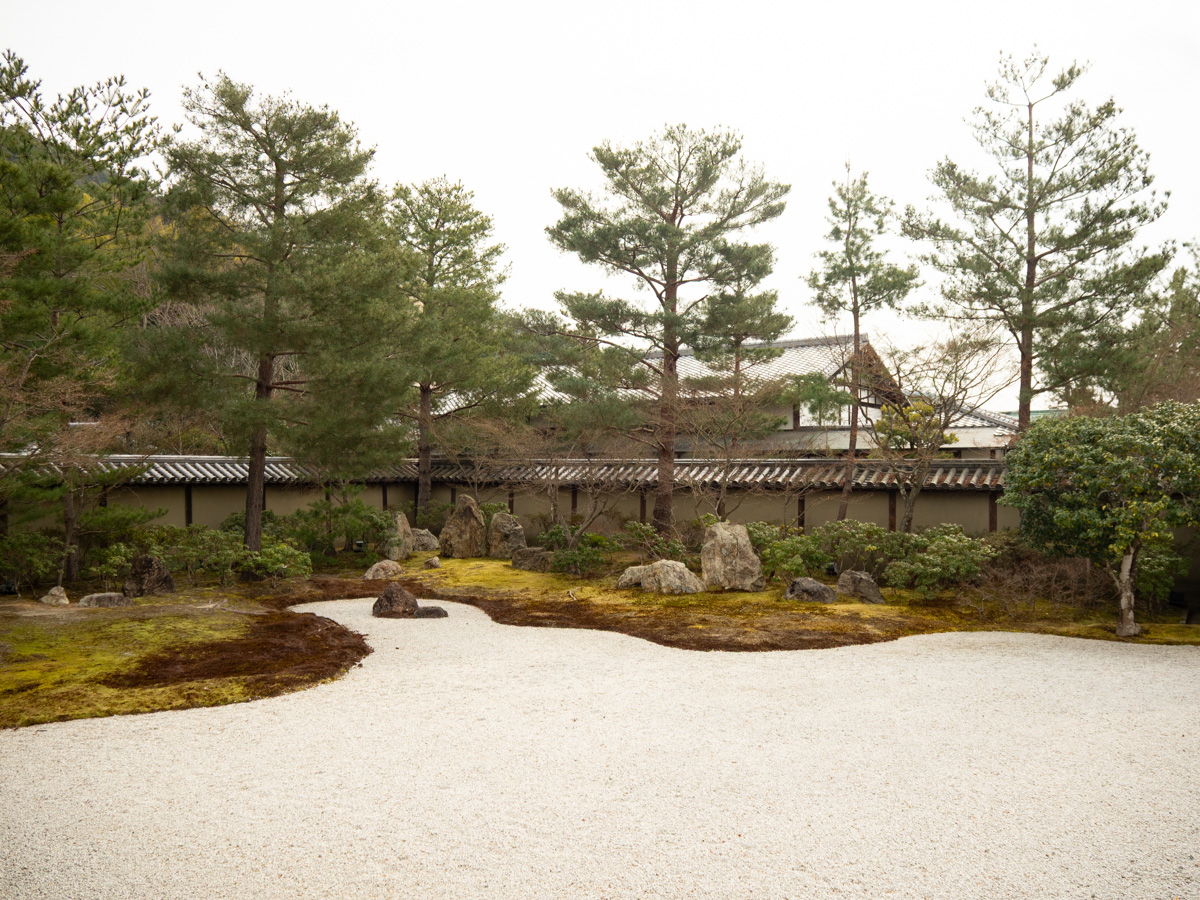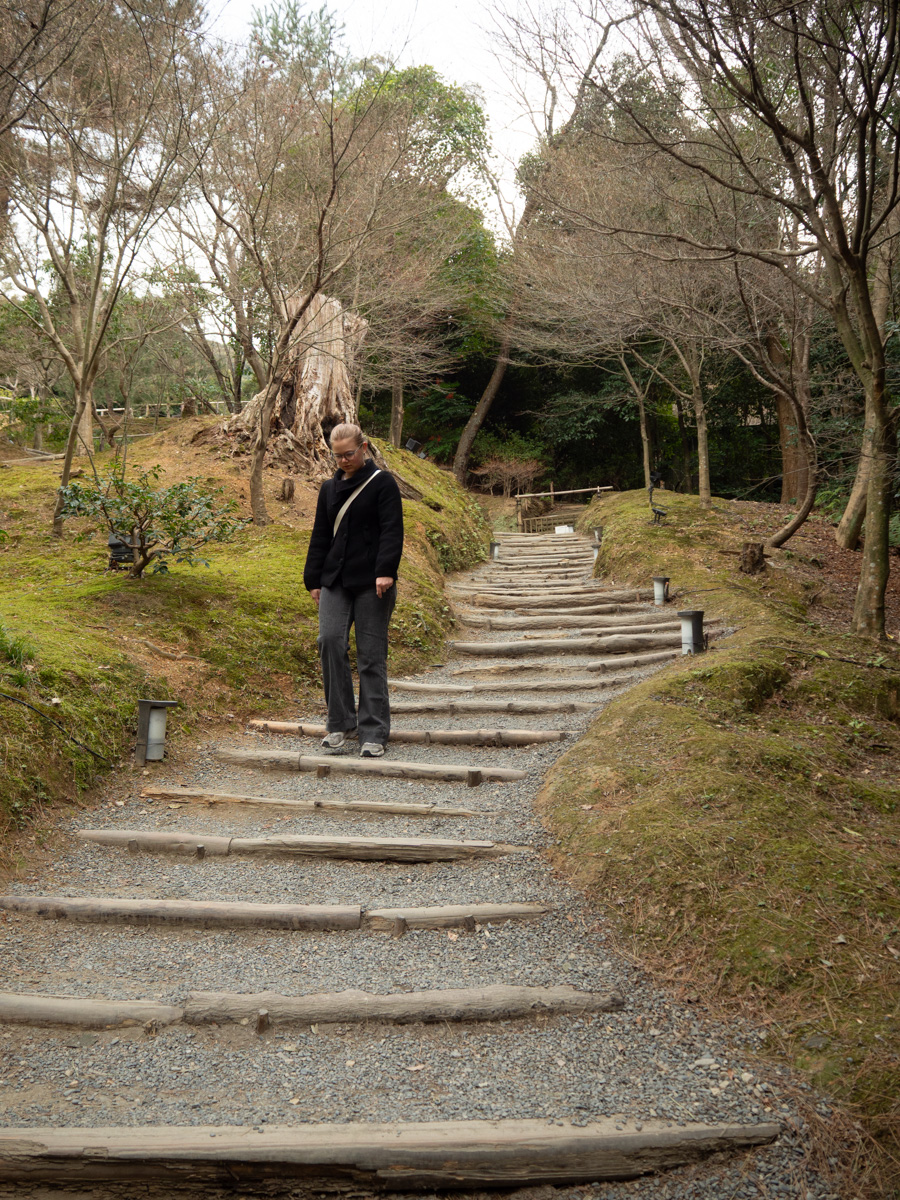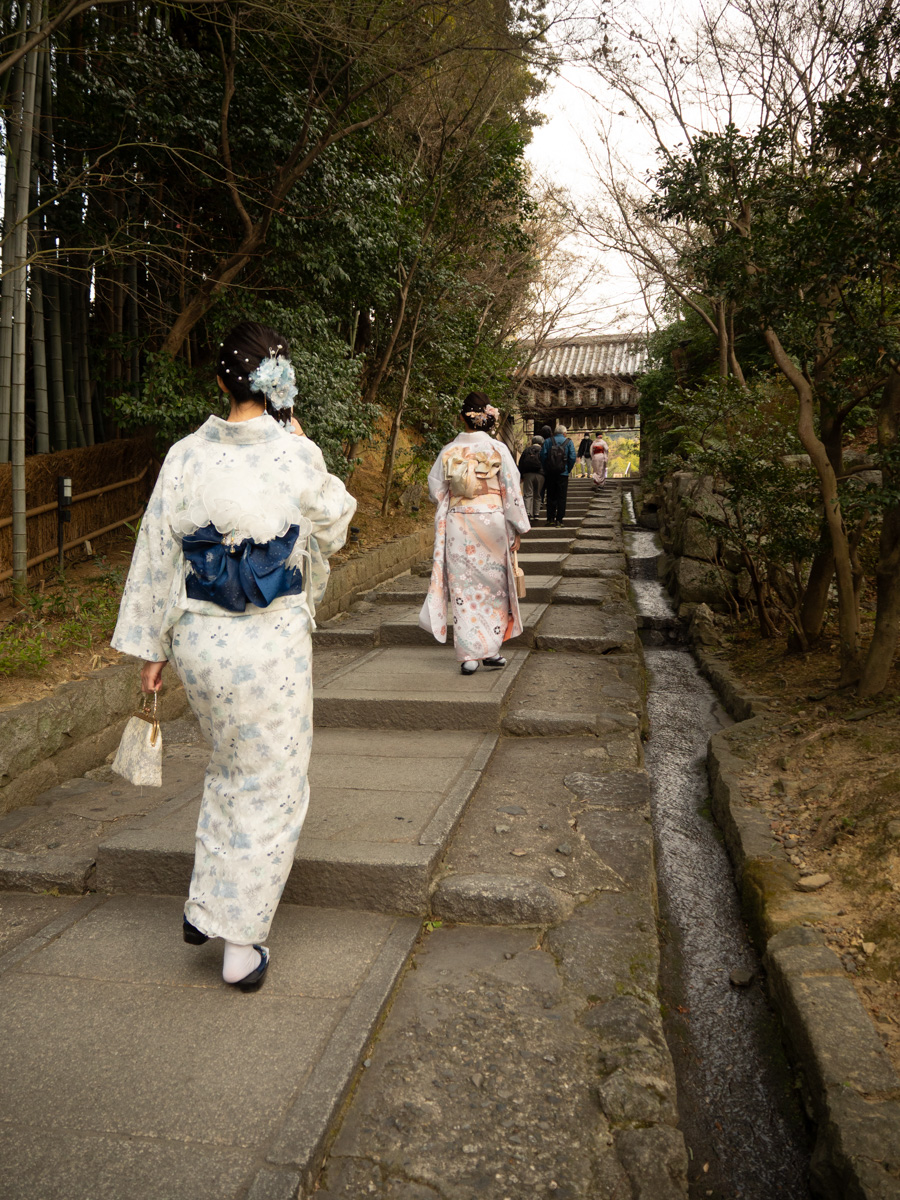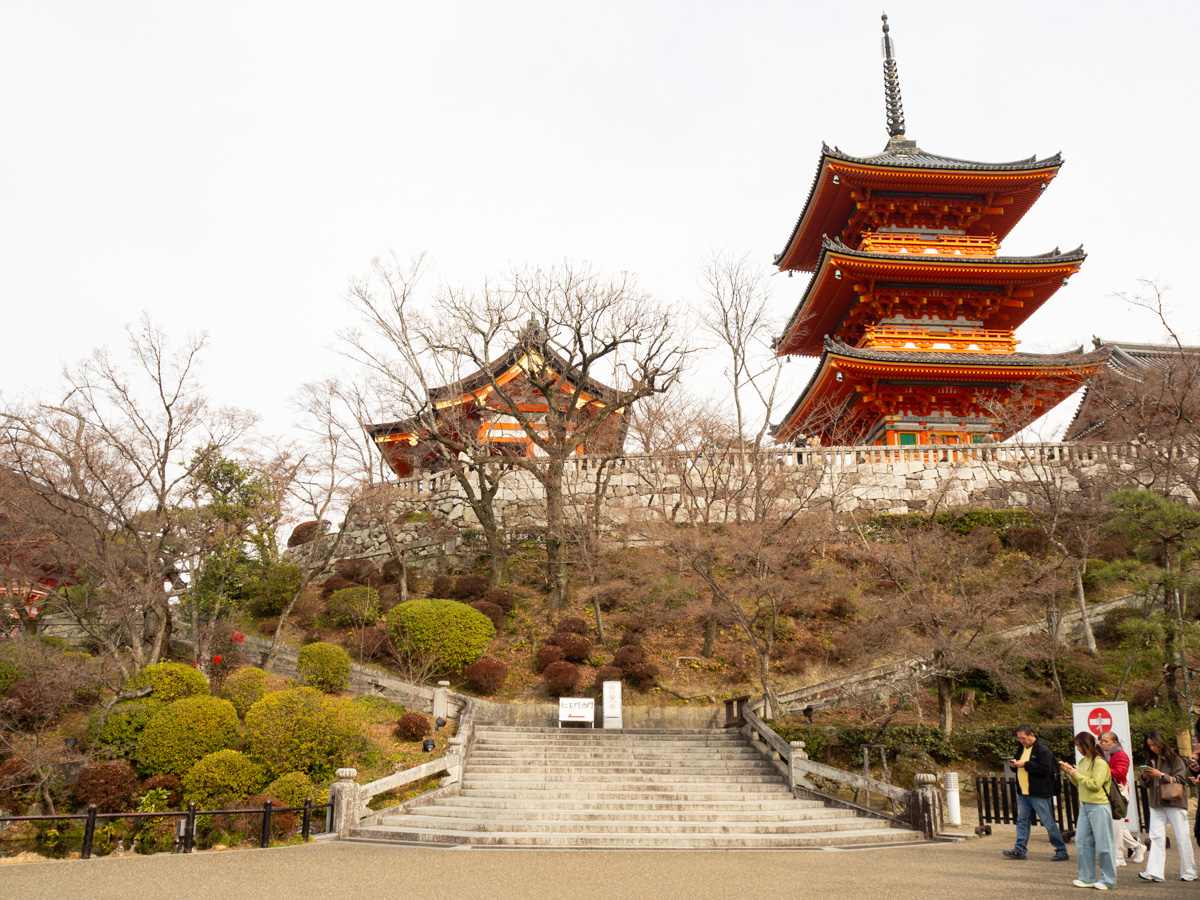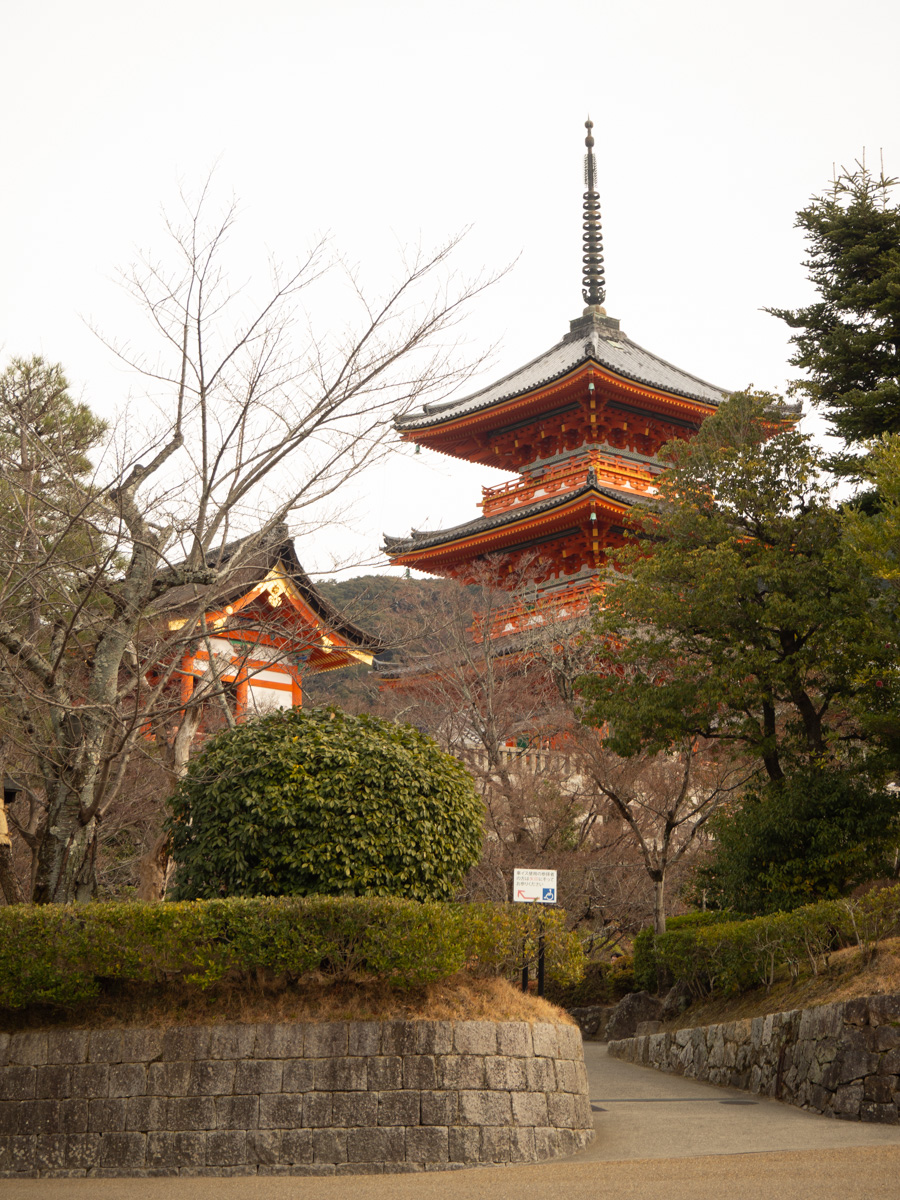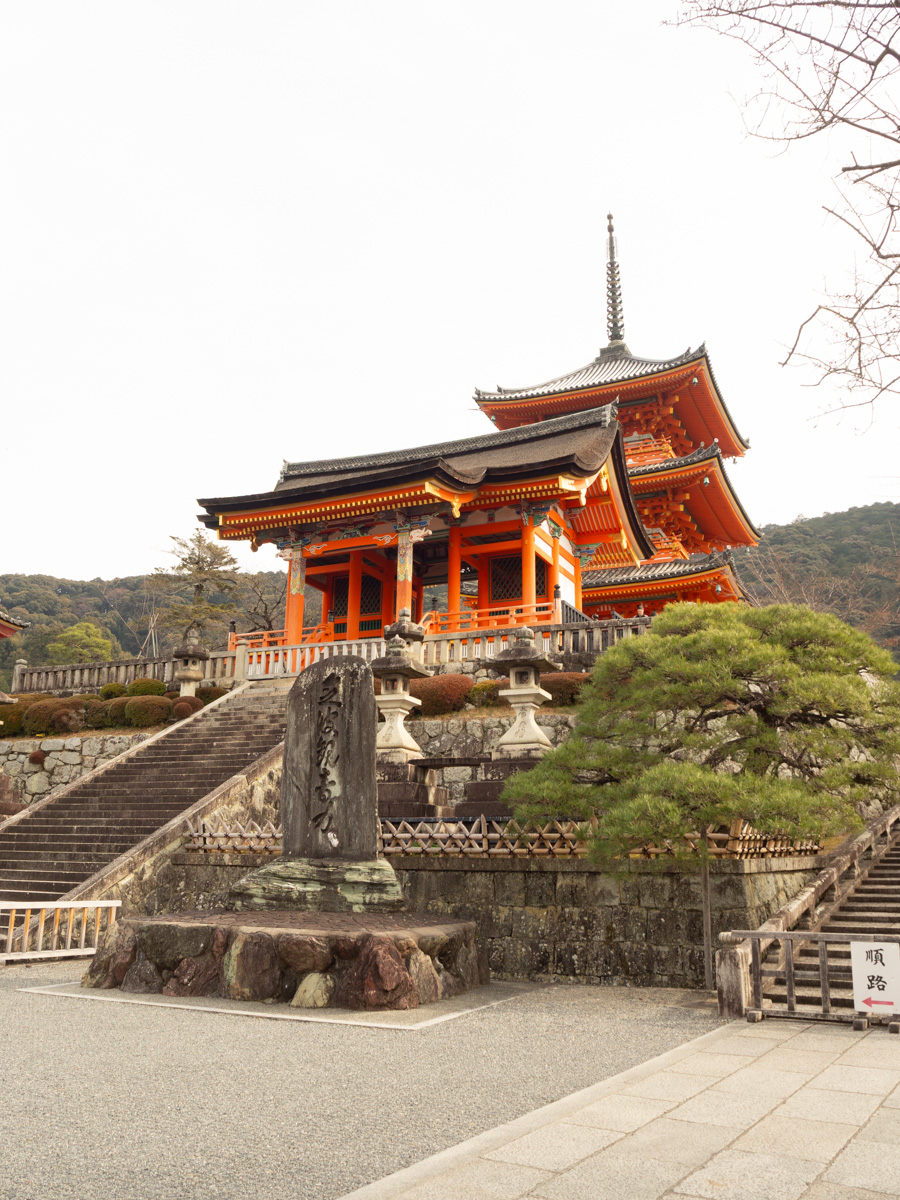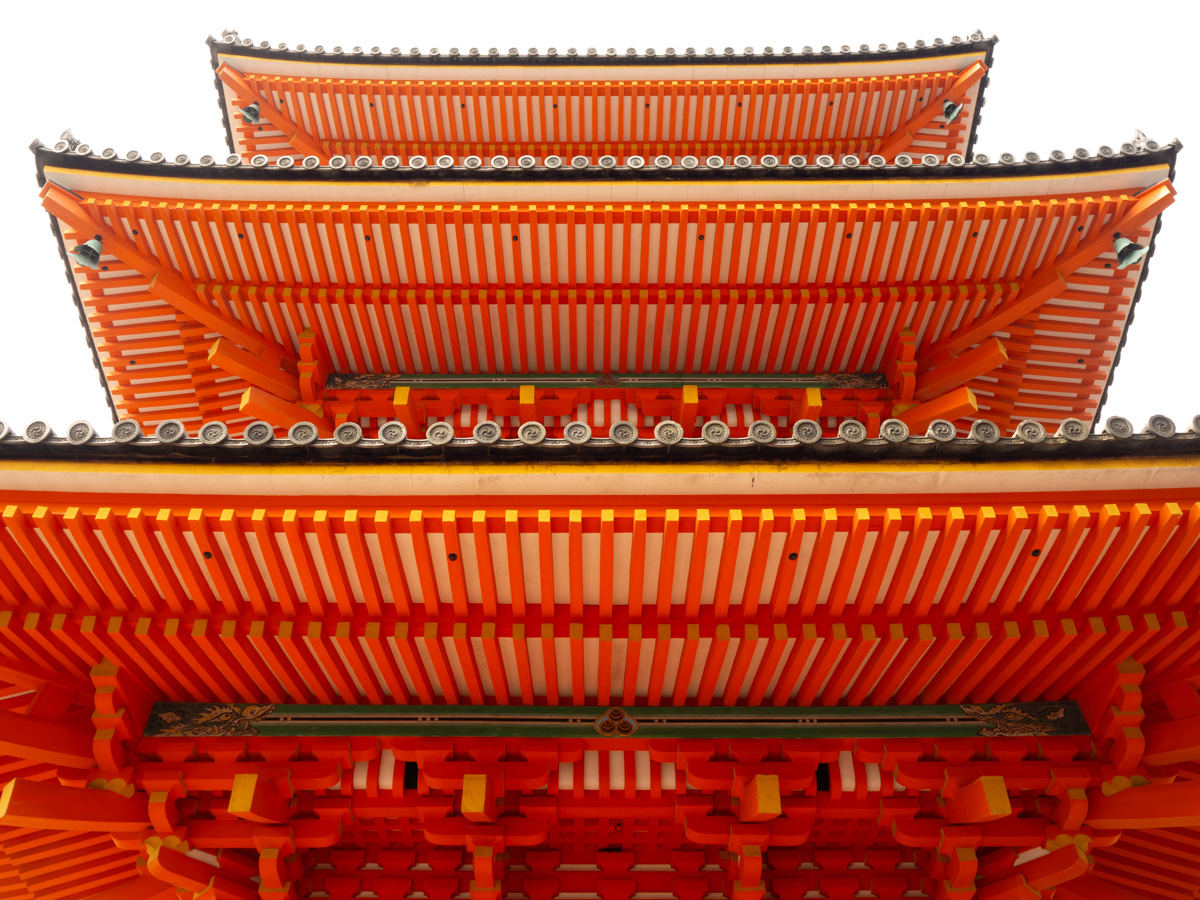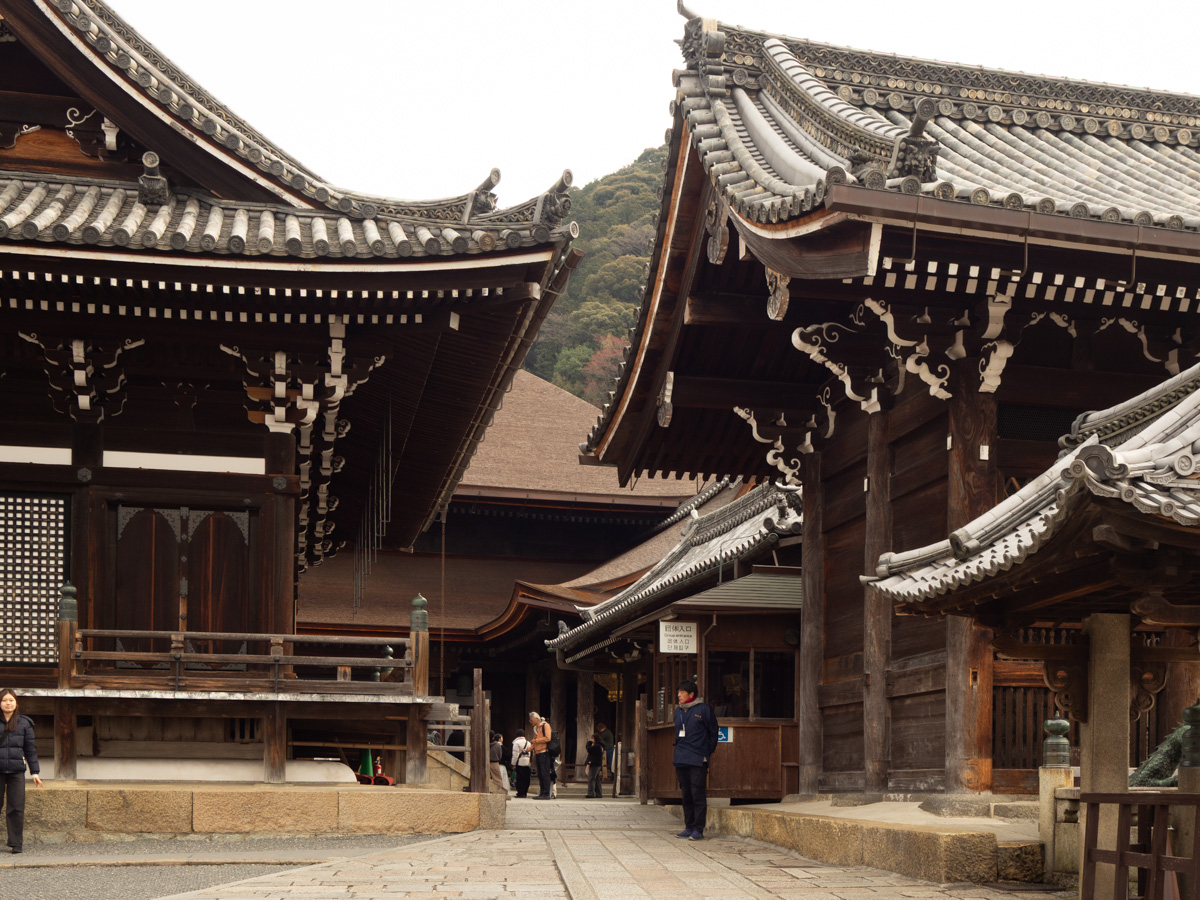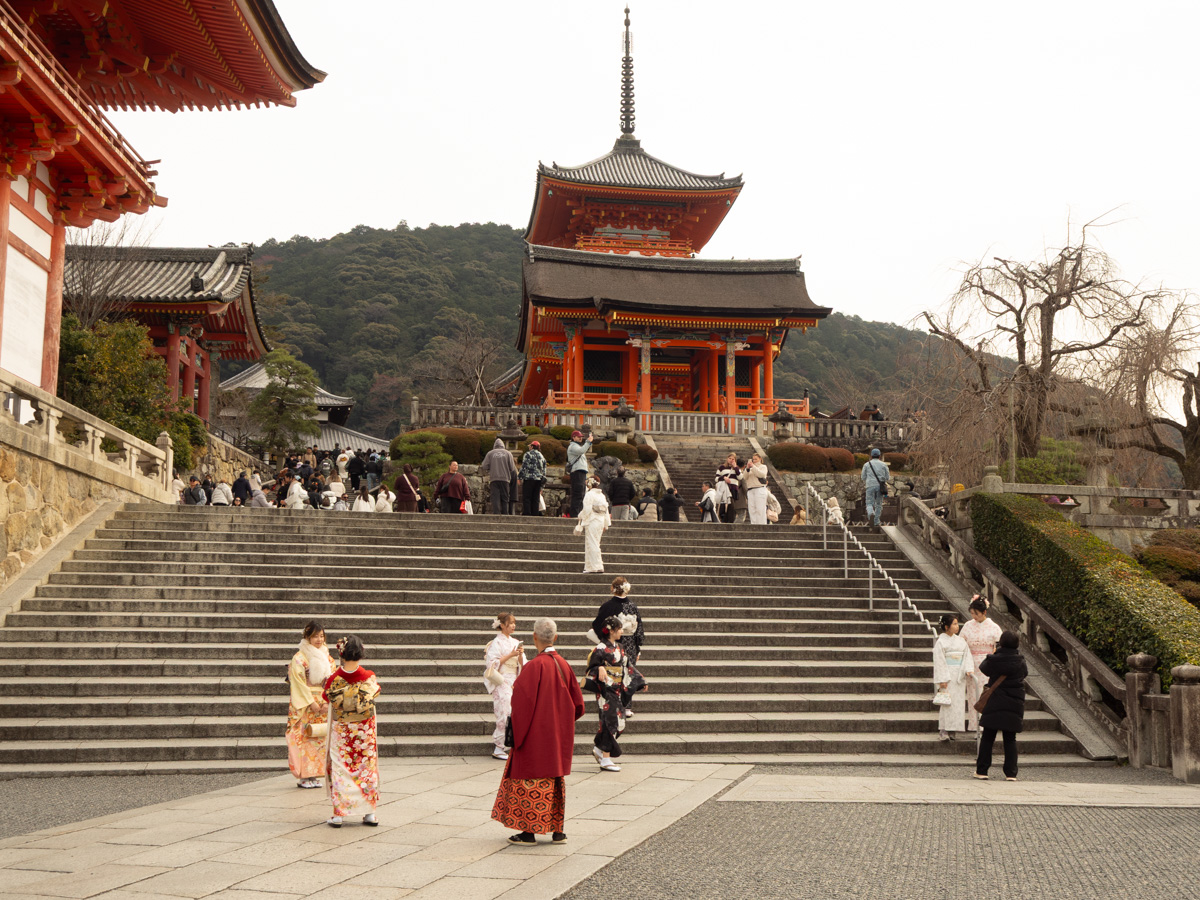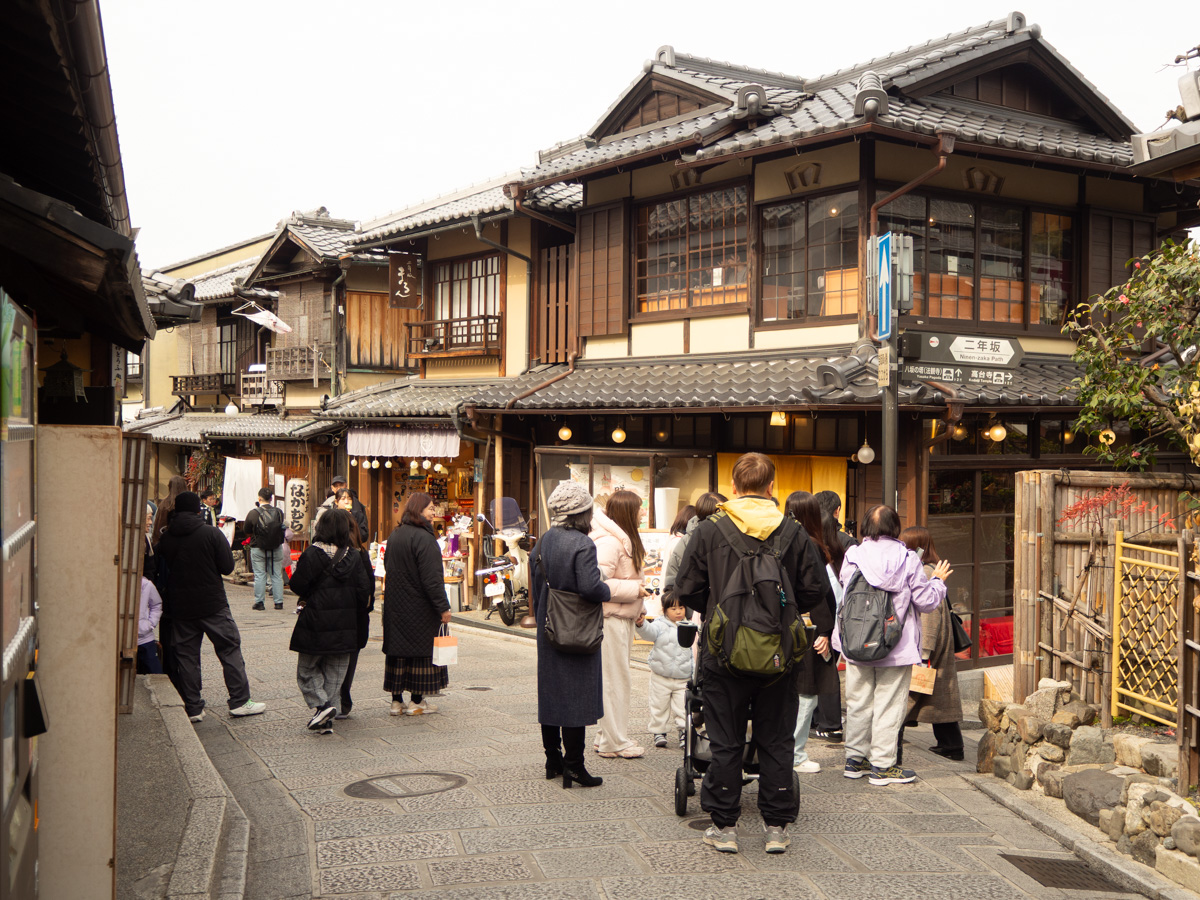
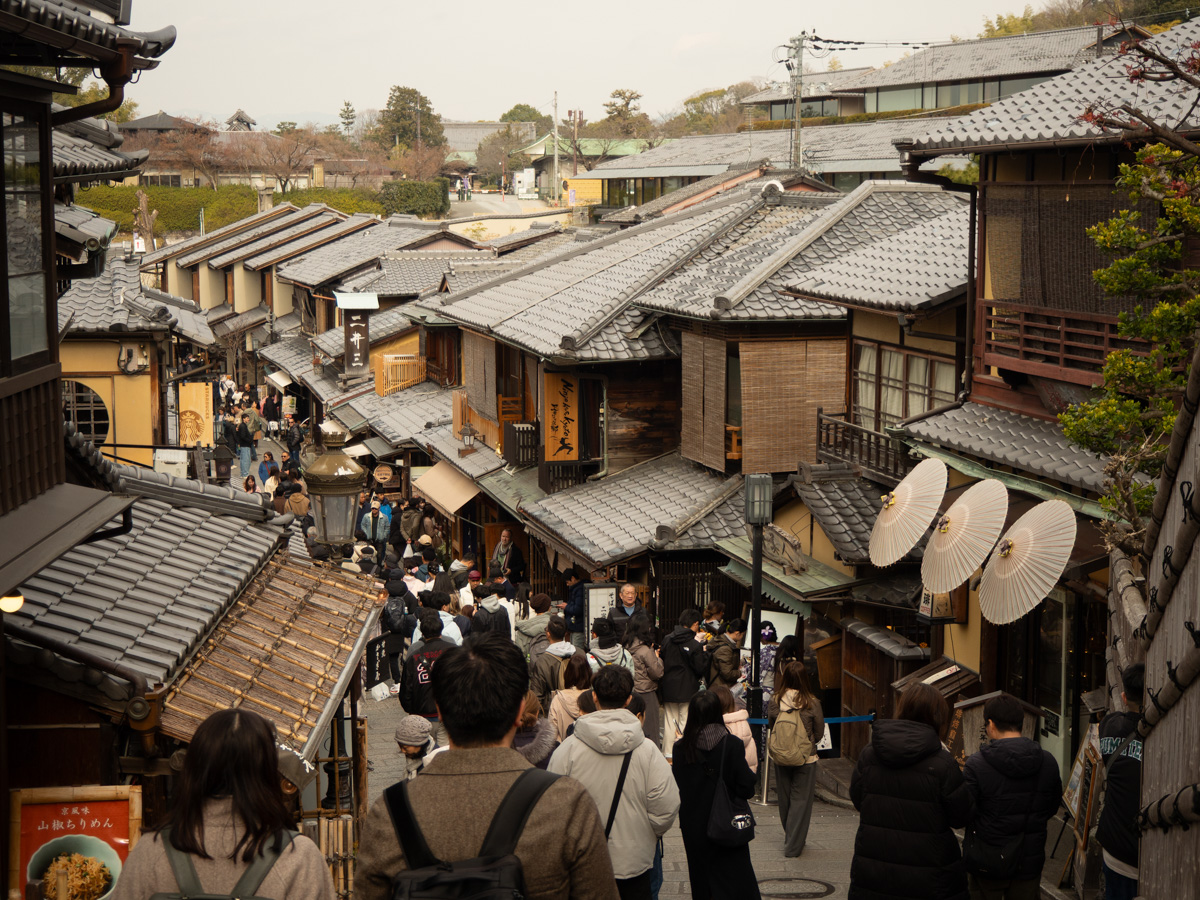
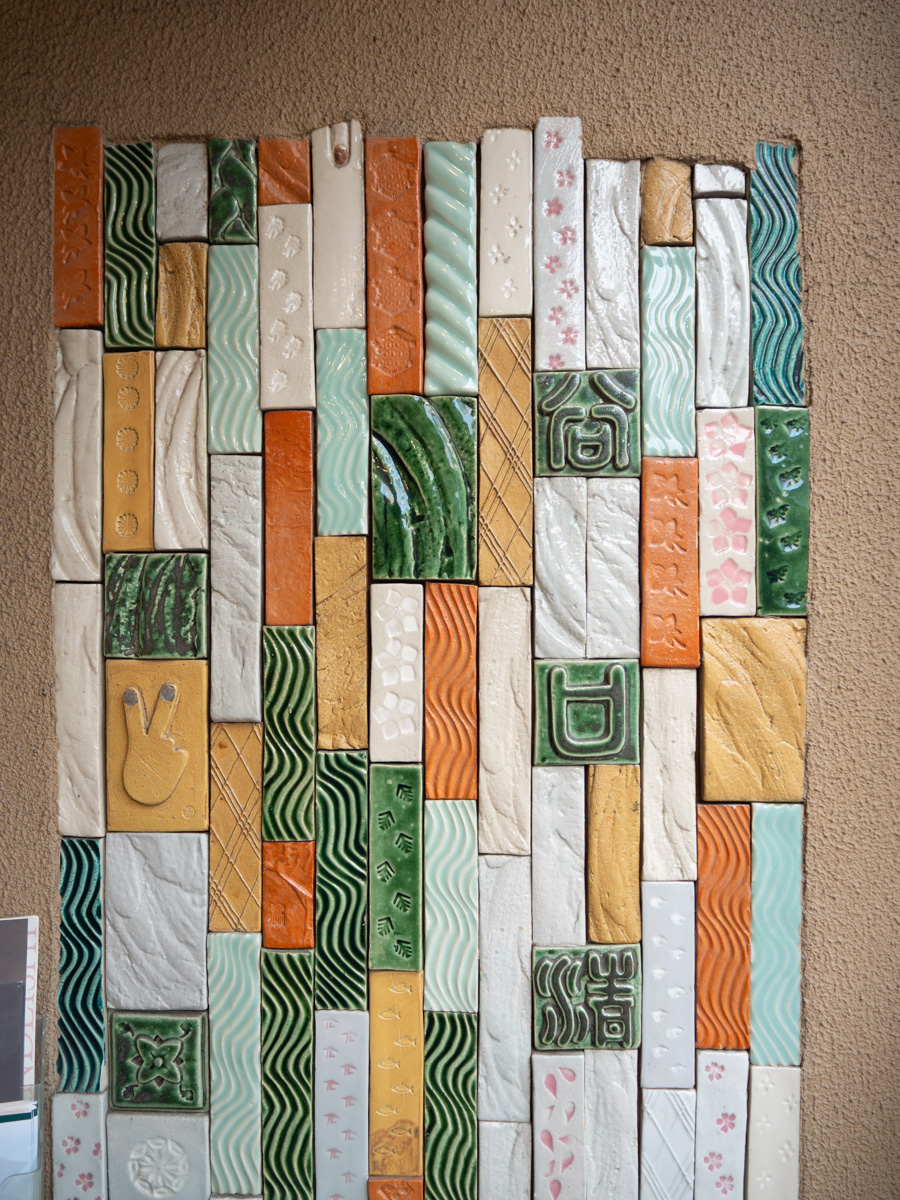
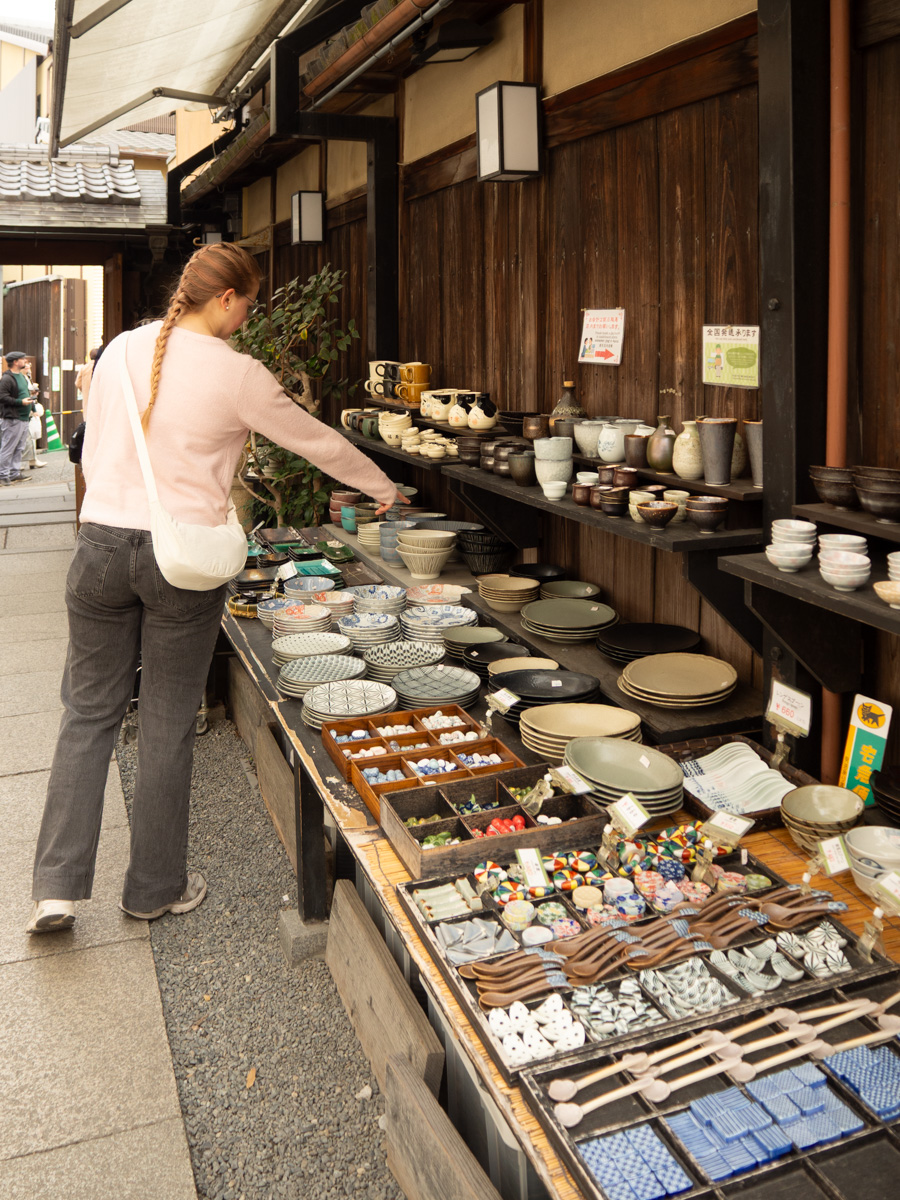
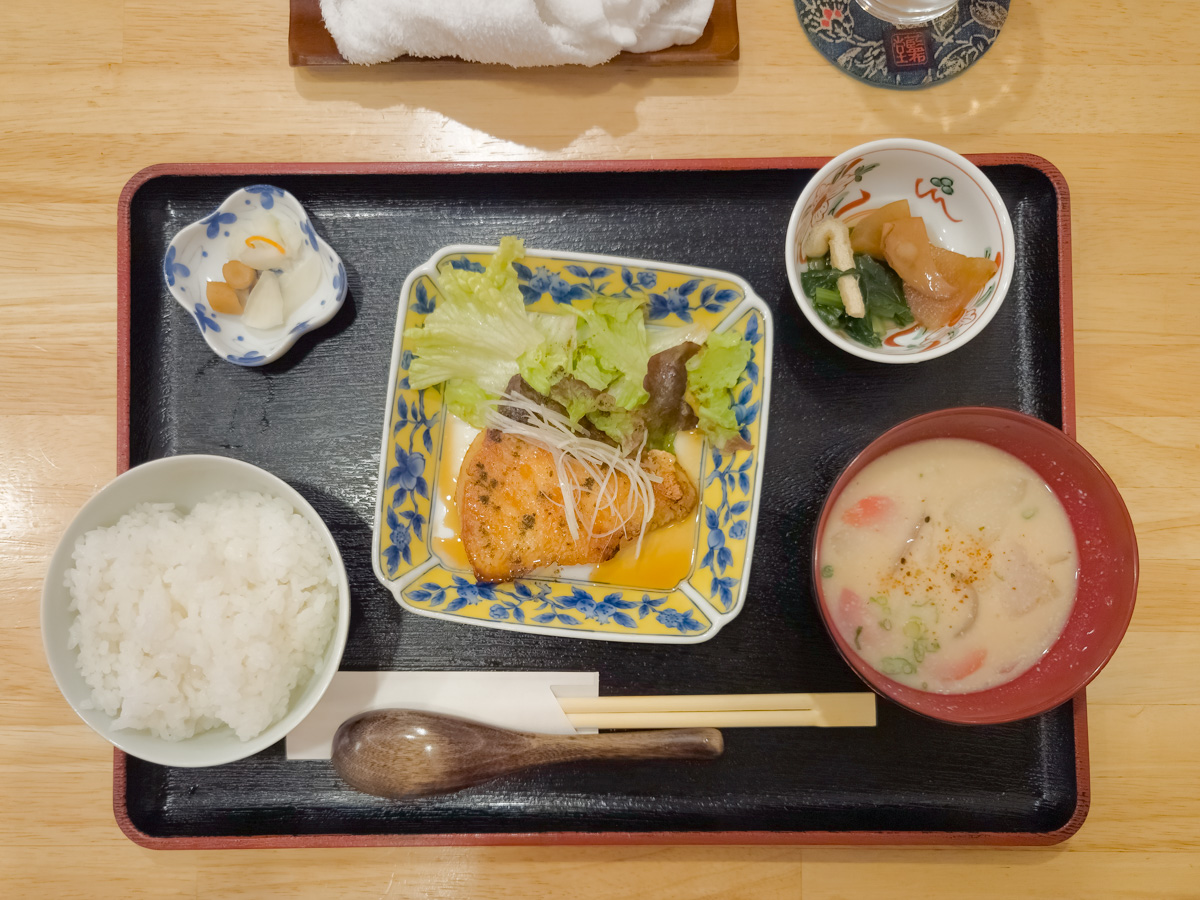
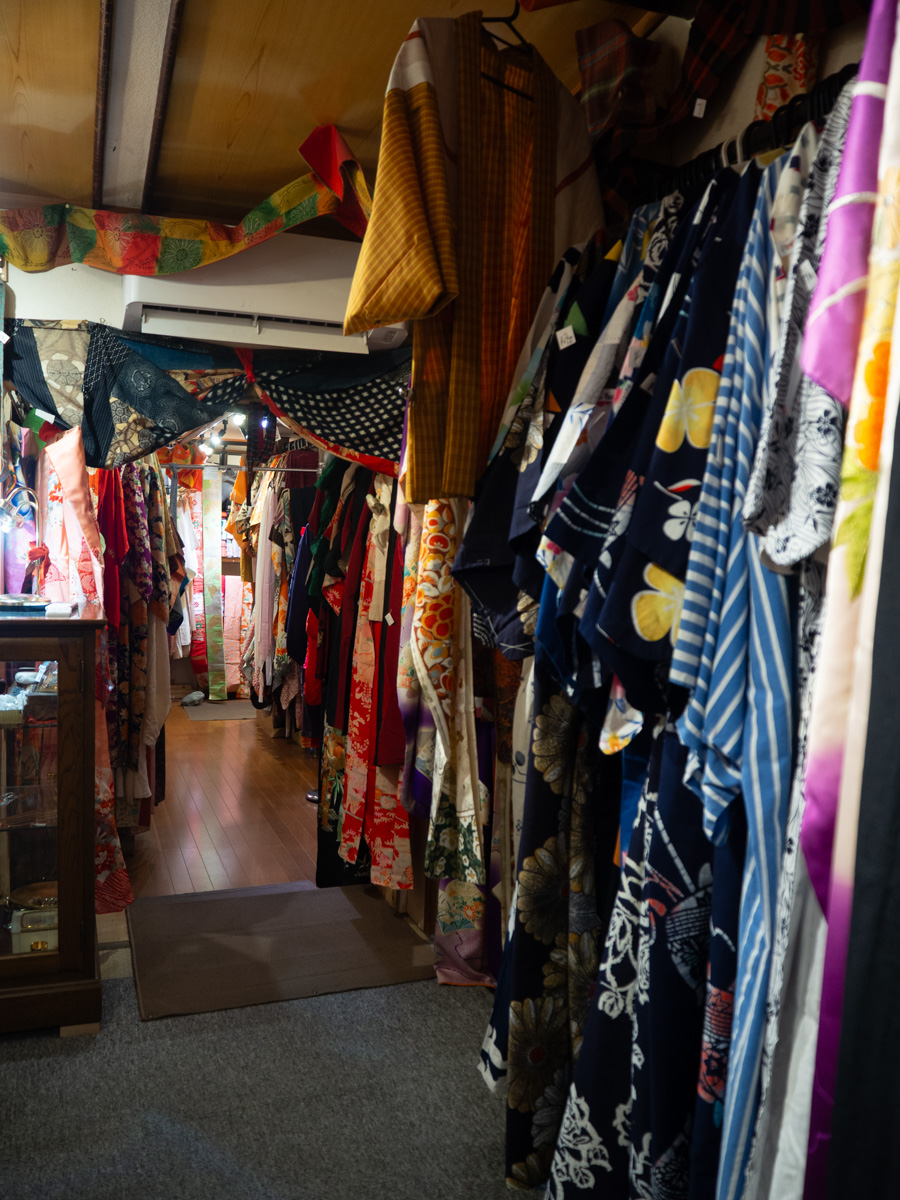
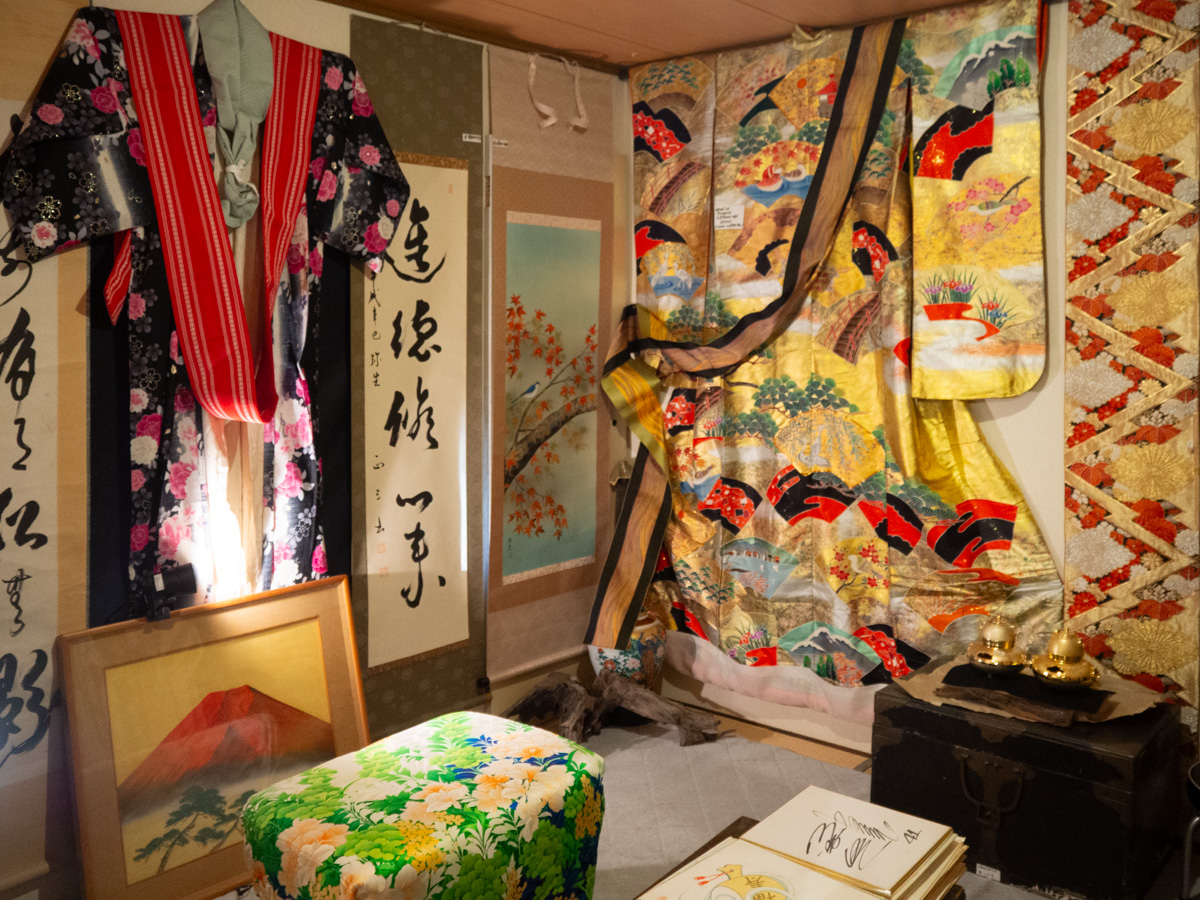
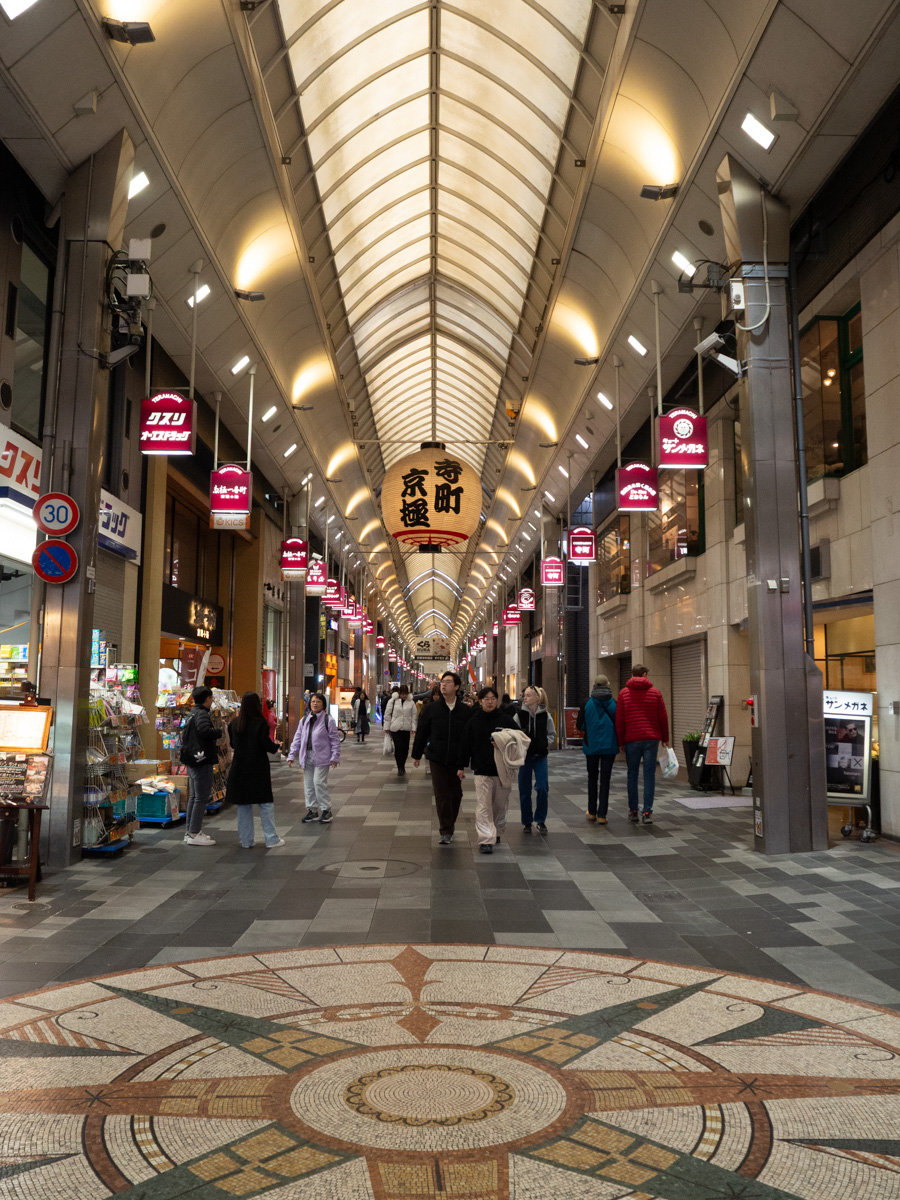
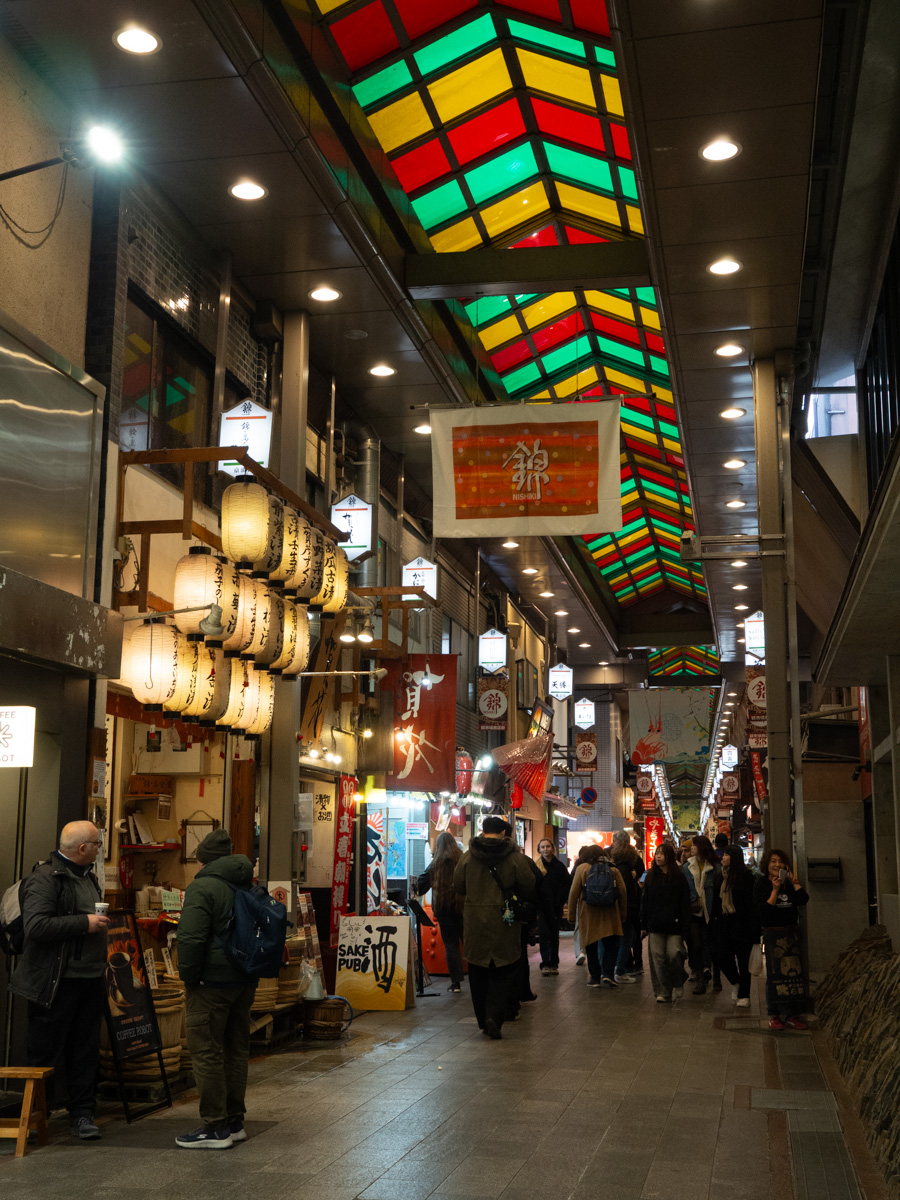
Smaller bits and pieces of Kyoto, between the larger sights we saw.
Katsura river. There was a boat rental that rented out blue boats to tourists that looked like plastic bath tubs. These covered boats were not that. These look a bit like Venetian gondolas, but on closer inspection seemed to be small cargo boats.
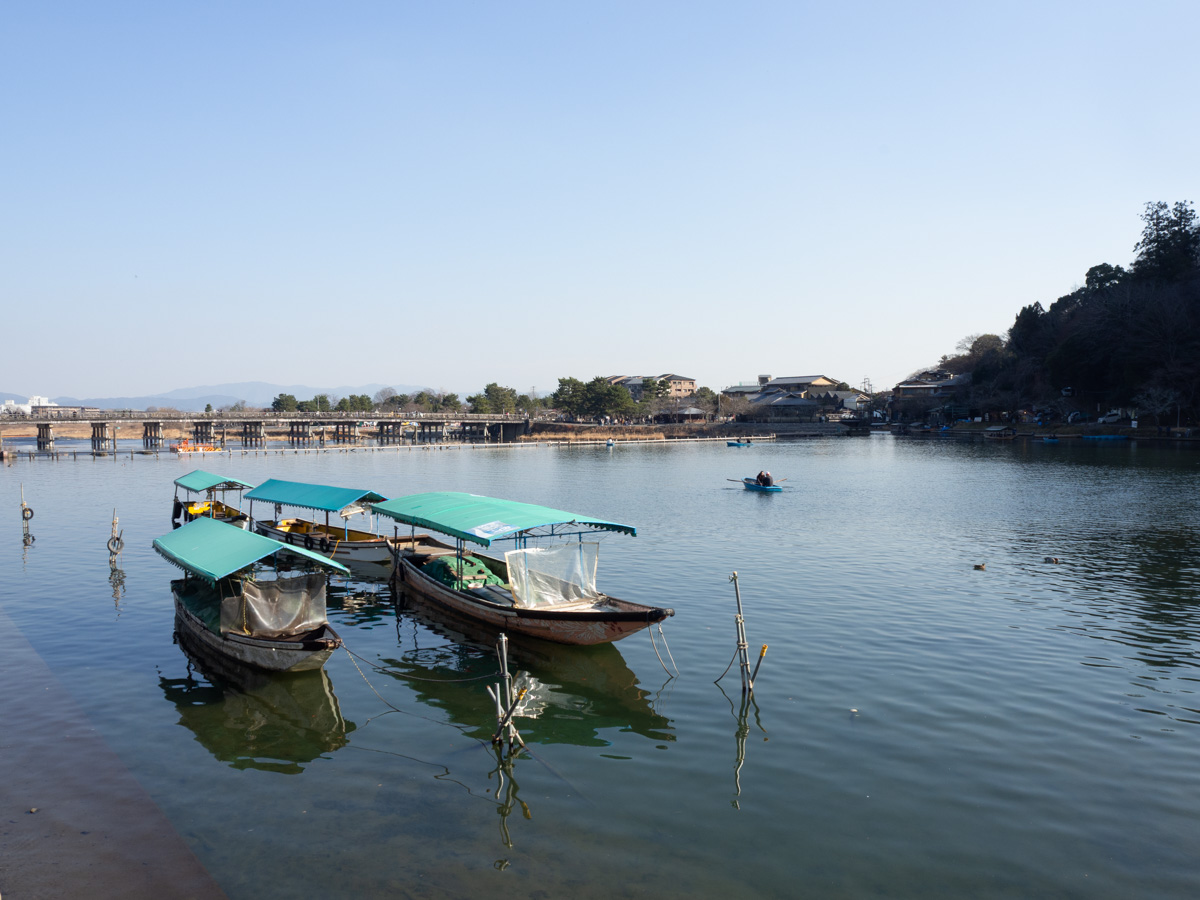
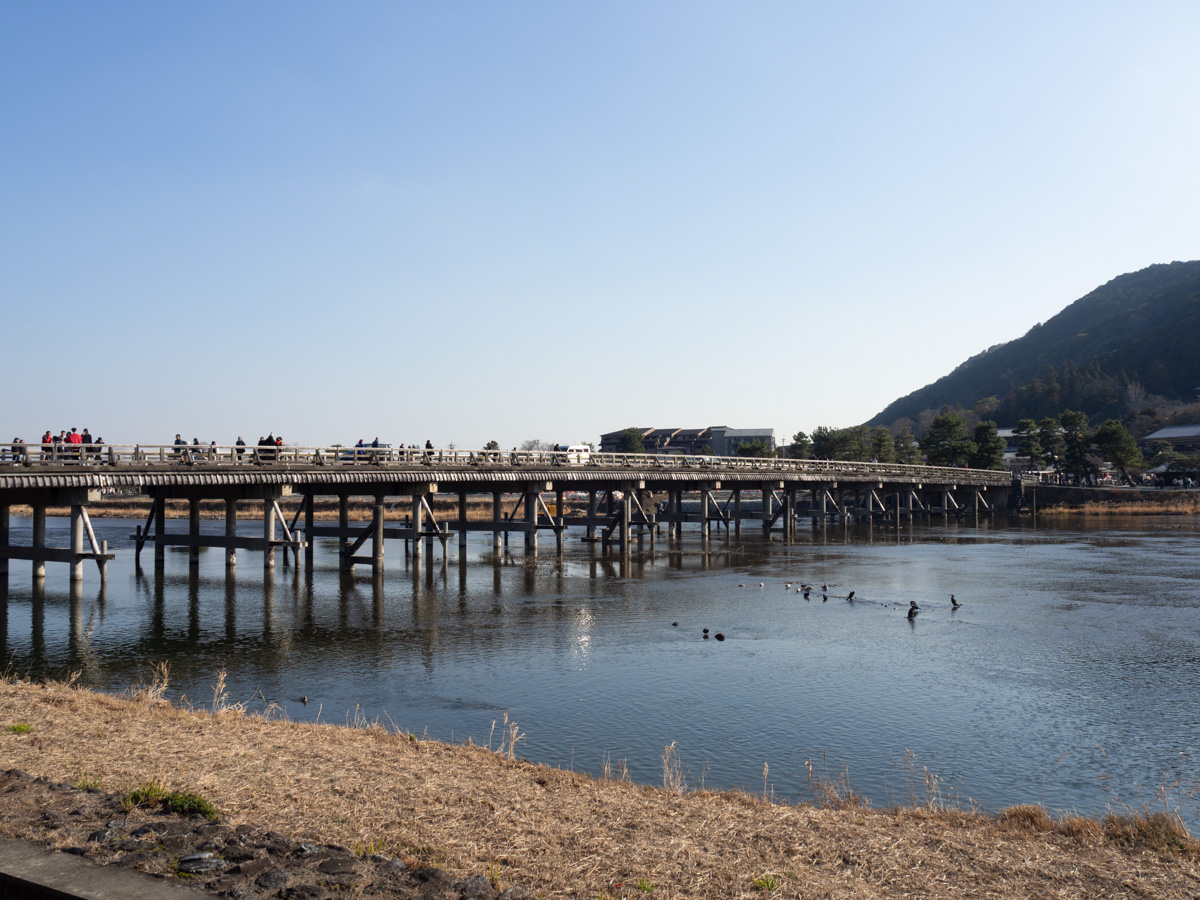
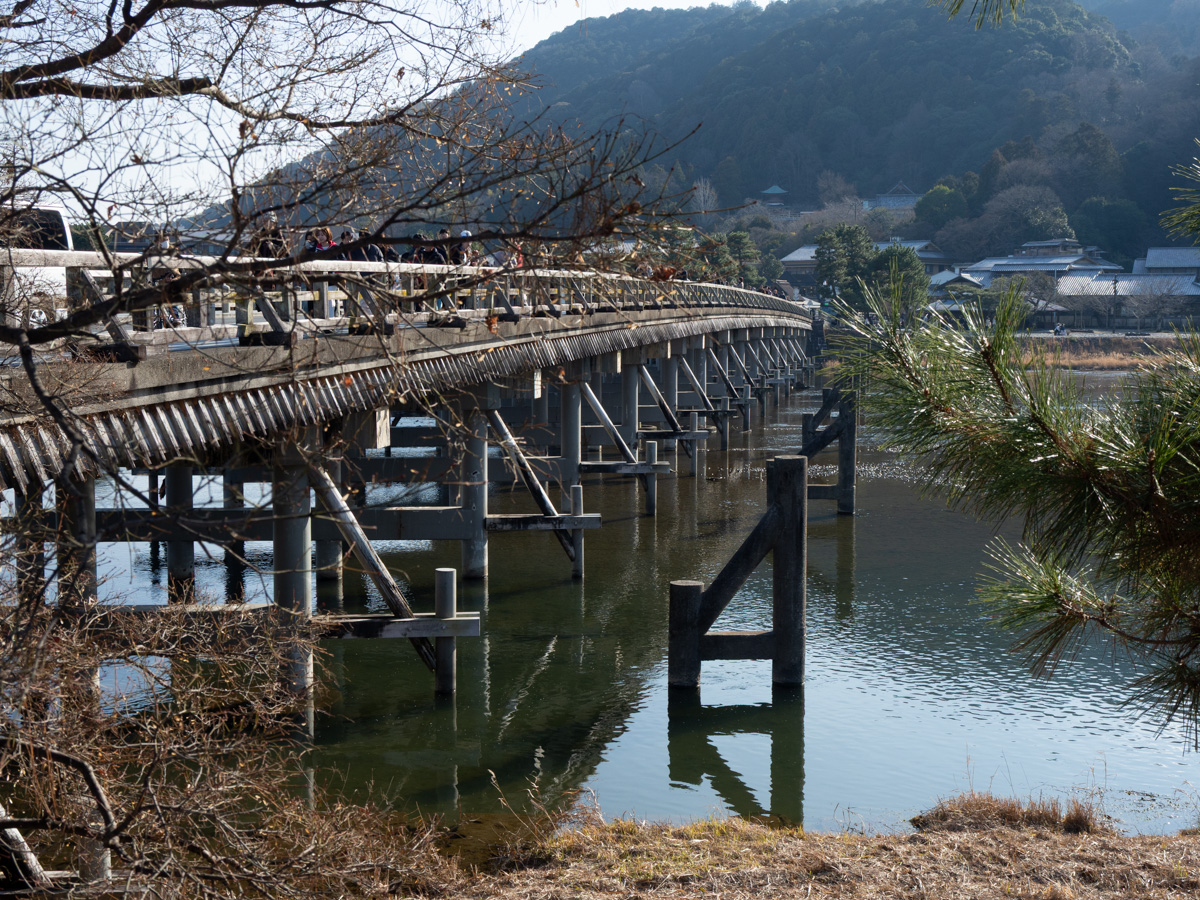
Togetsukyo bridge across the Katsura river. It looks like a wooden bridge from a distance, and used to be. It was rebuilt in concrete about a hundred years ago, keeping something close to the original design.
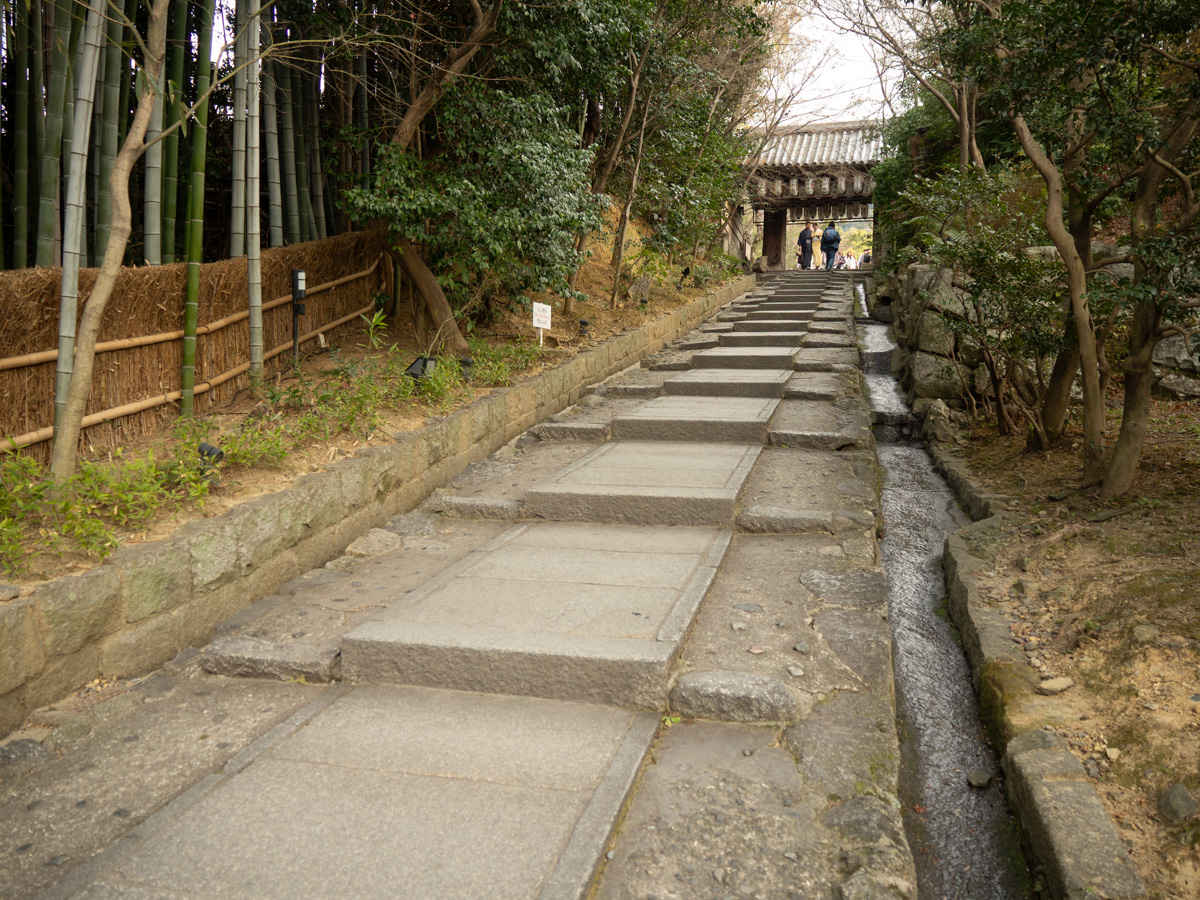
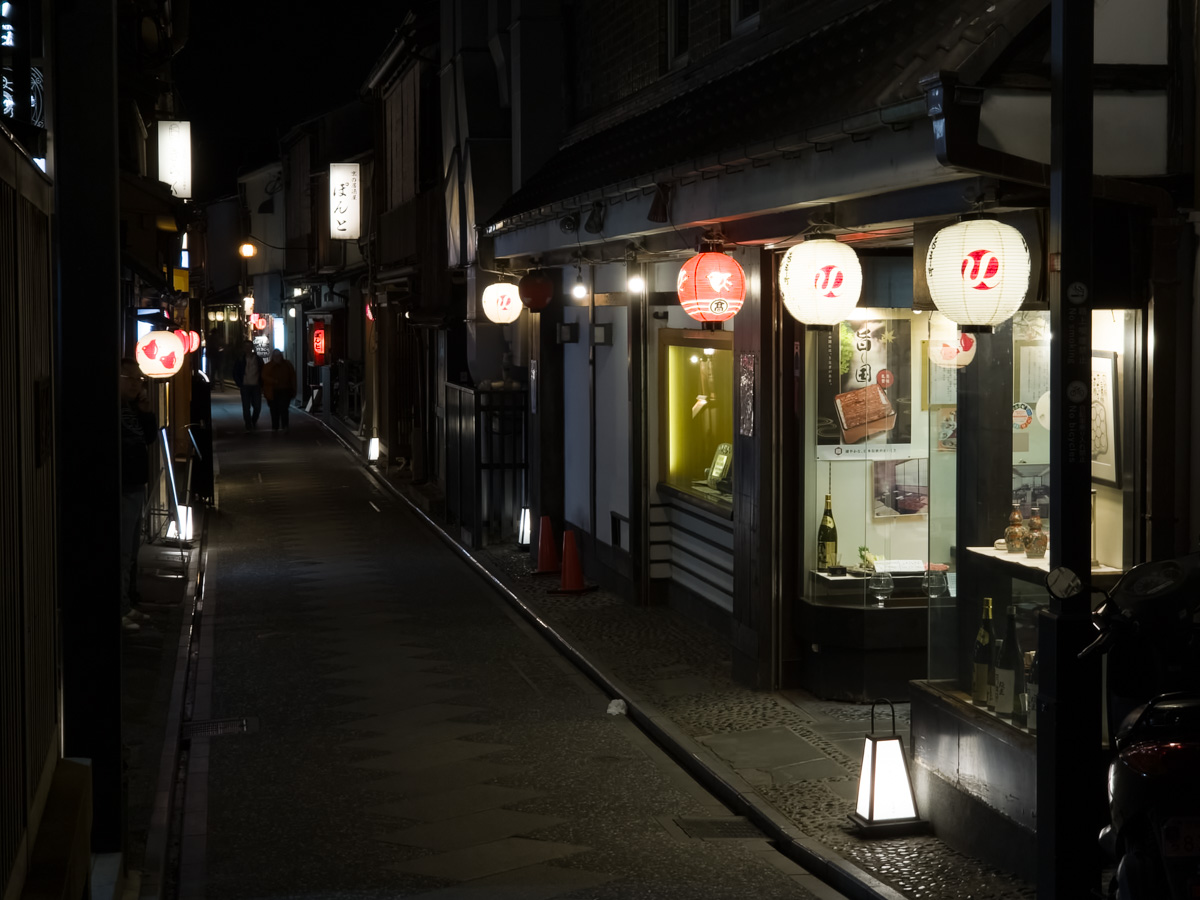
Horin-ji, a small and quiet buddhist temple.
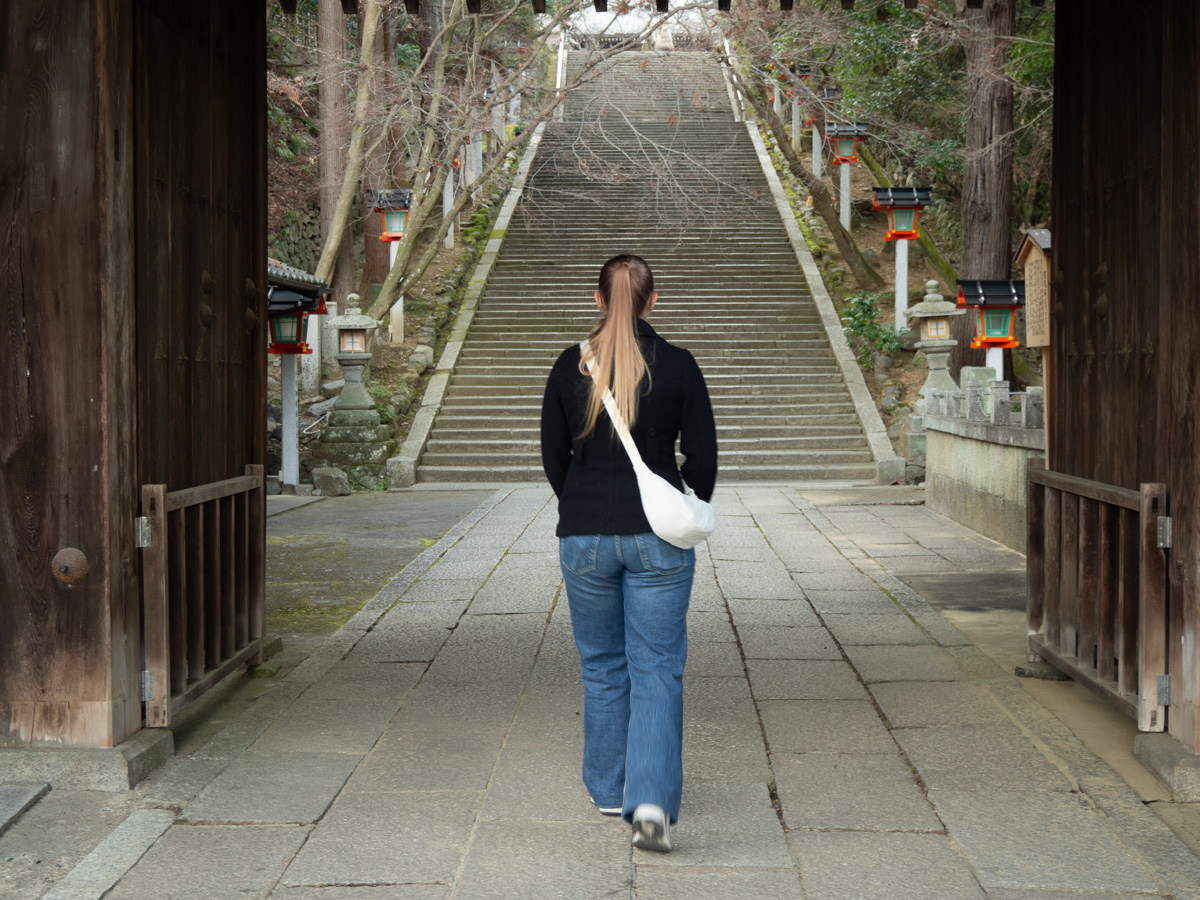
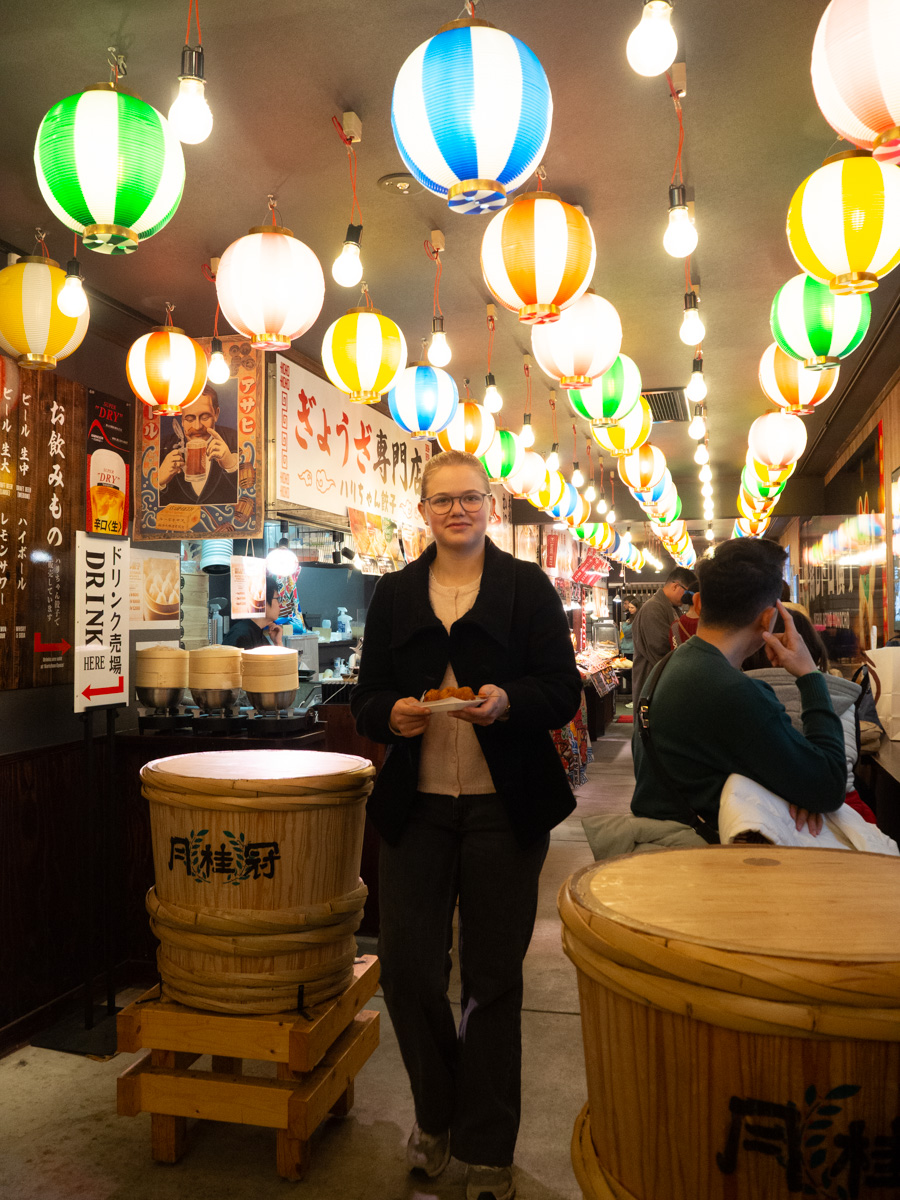
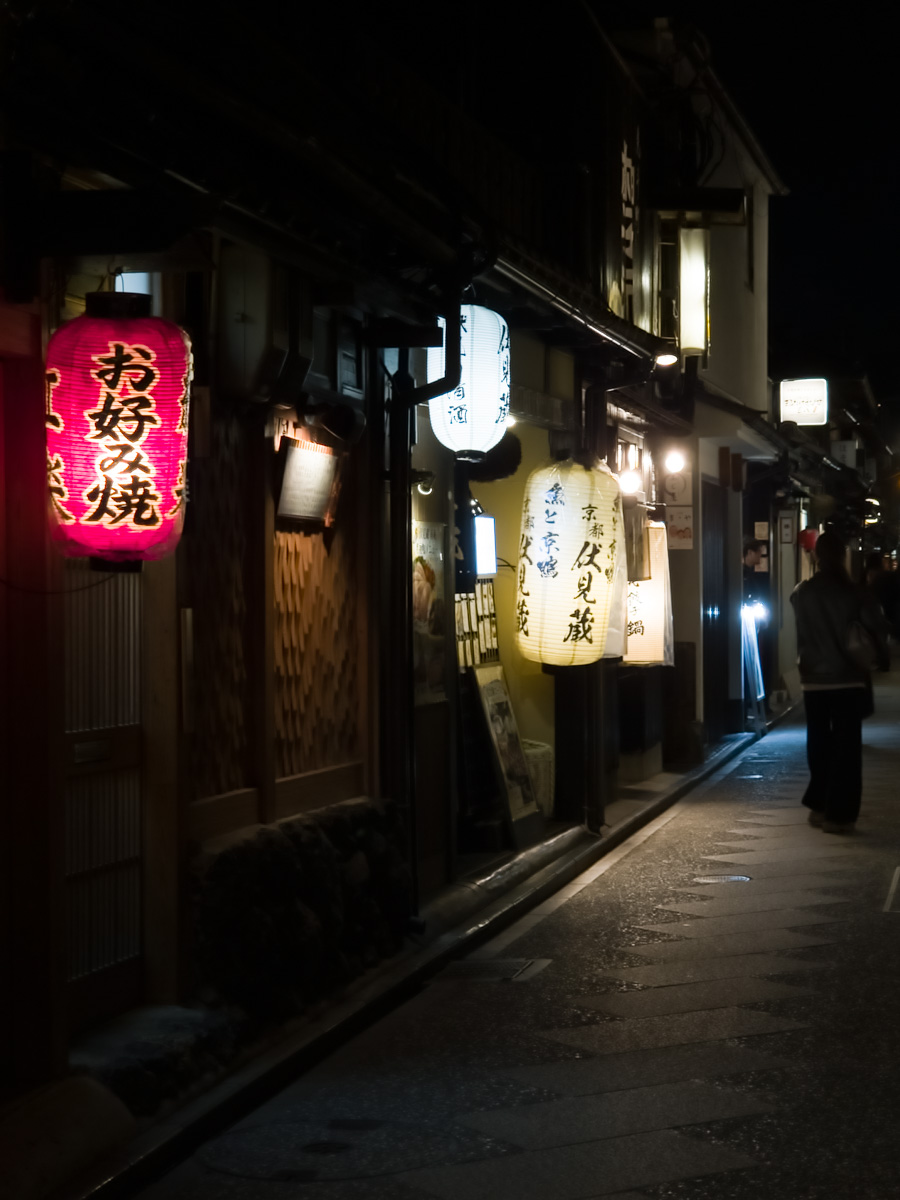
Nighttime in Pontocho alley with lanterns providing much of the lighting.
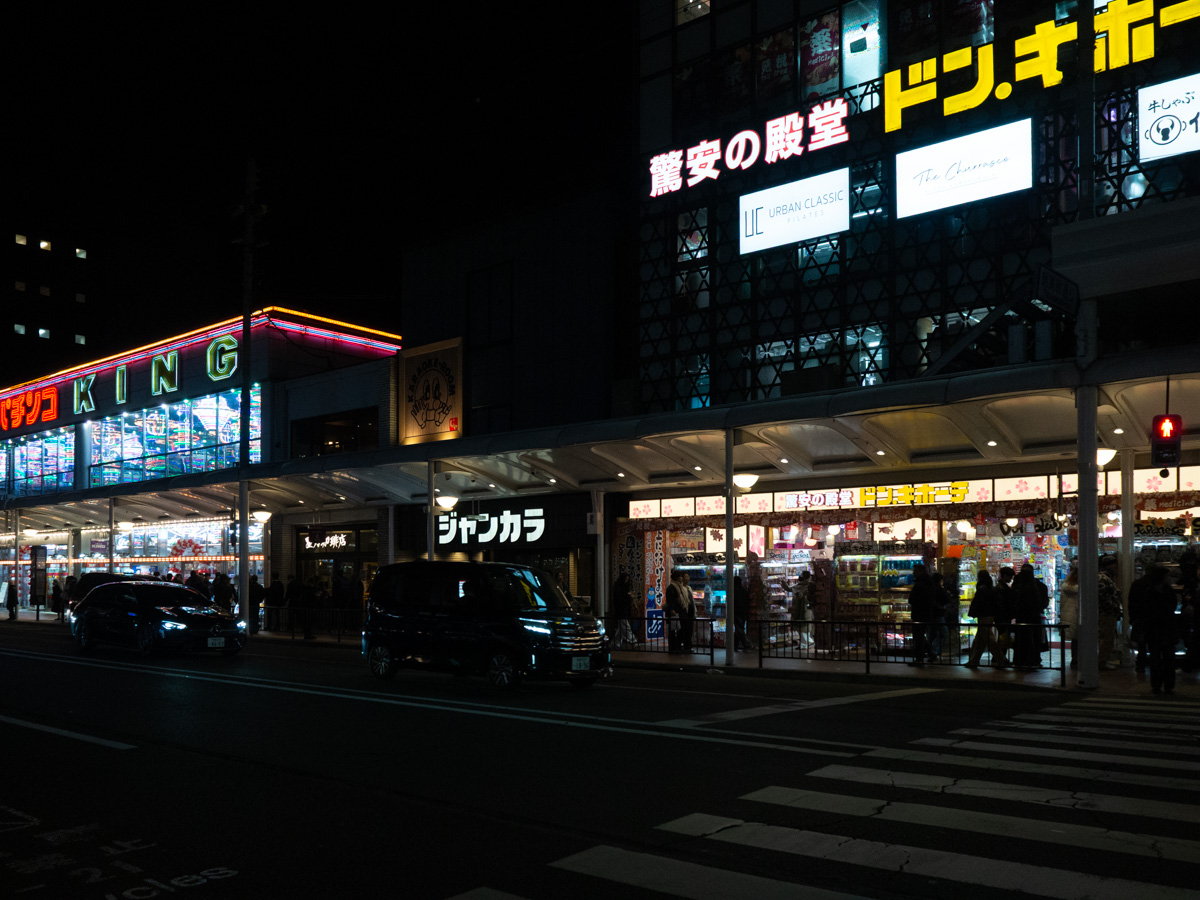
Main street shops, by way of contrast.
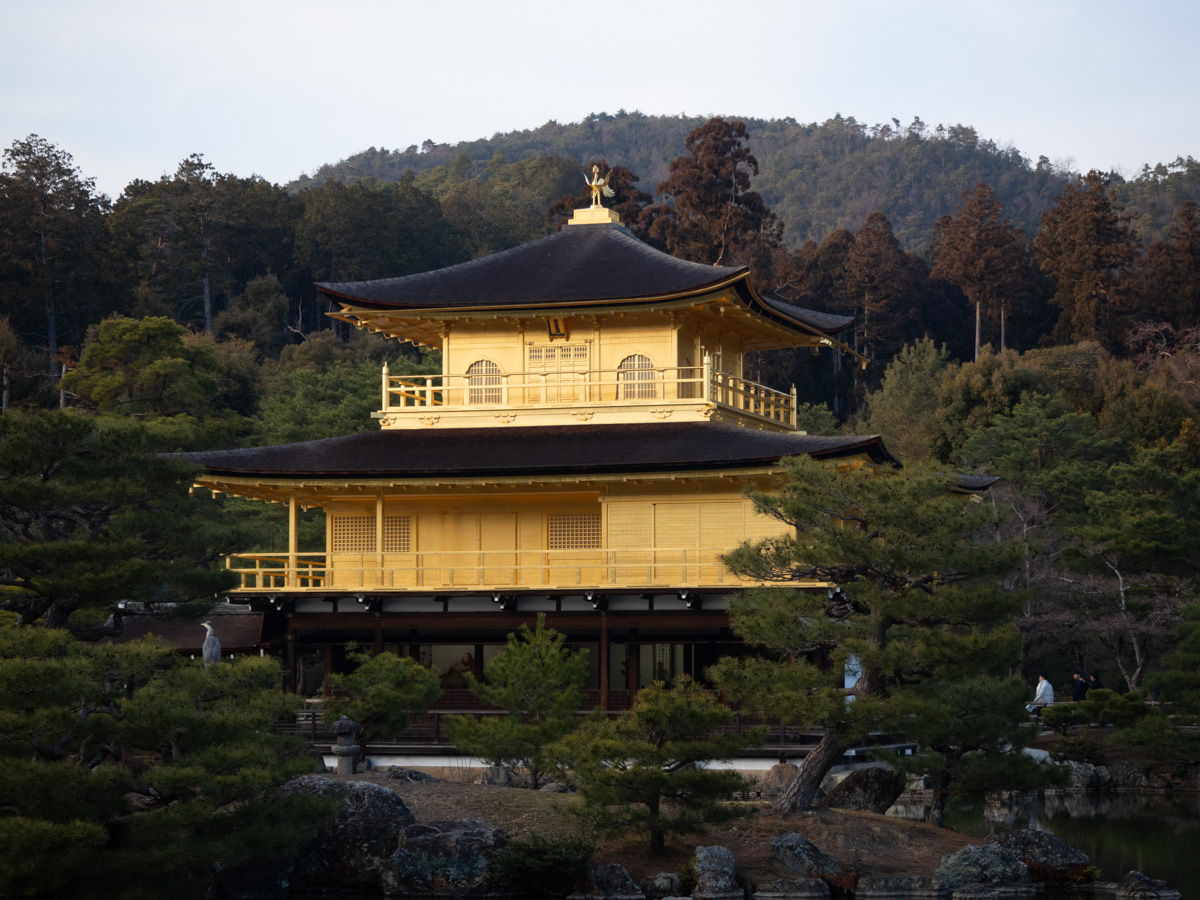
In the last remains of the afternoon light, we visited Kinkaku-ji, the temple of the golden pavilion.
I thought it would just be a pavilion painted in some golden colour, but the pavilion’s walls are literally covered in gold leaf. It shone quite spectacularly in the setting sun, in contrast to the dark pines surrounding it.
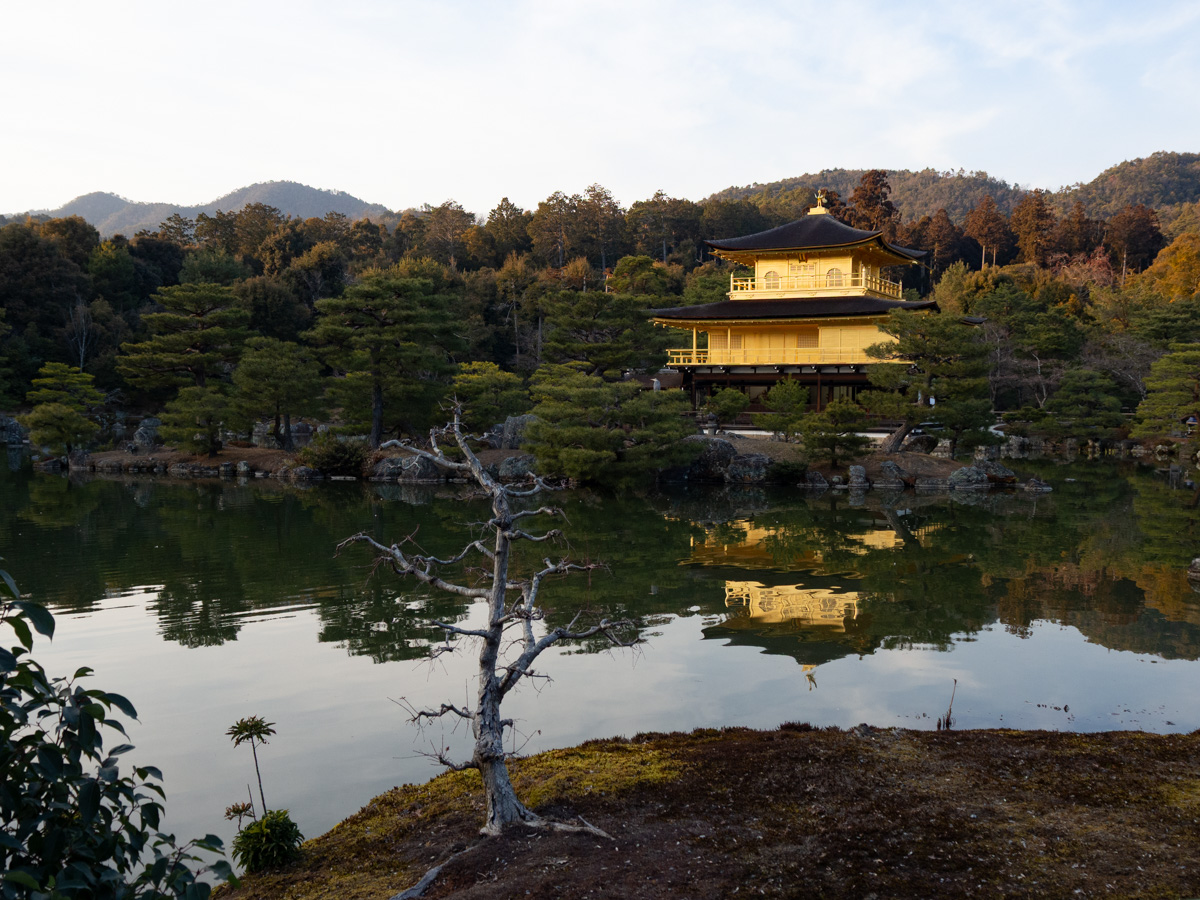
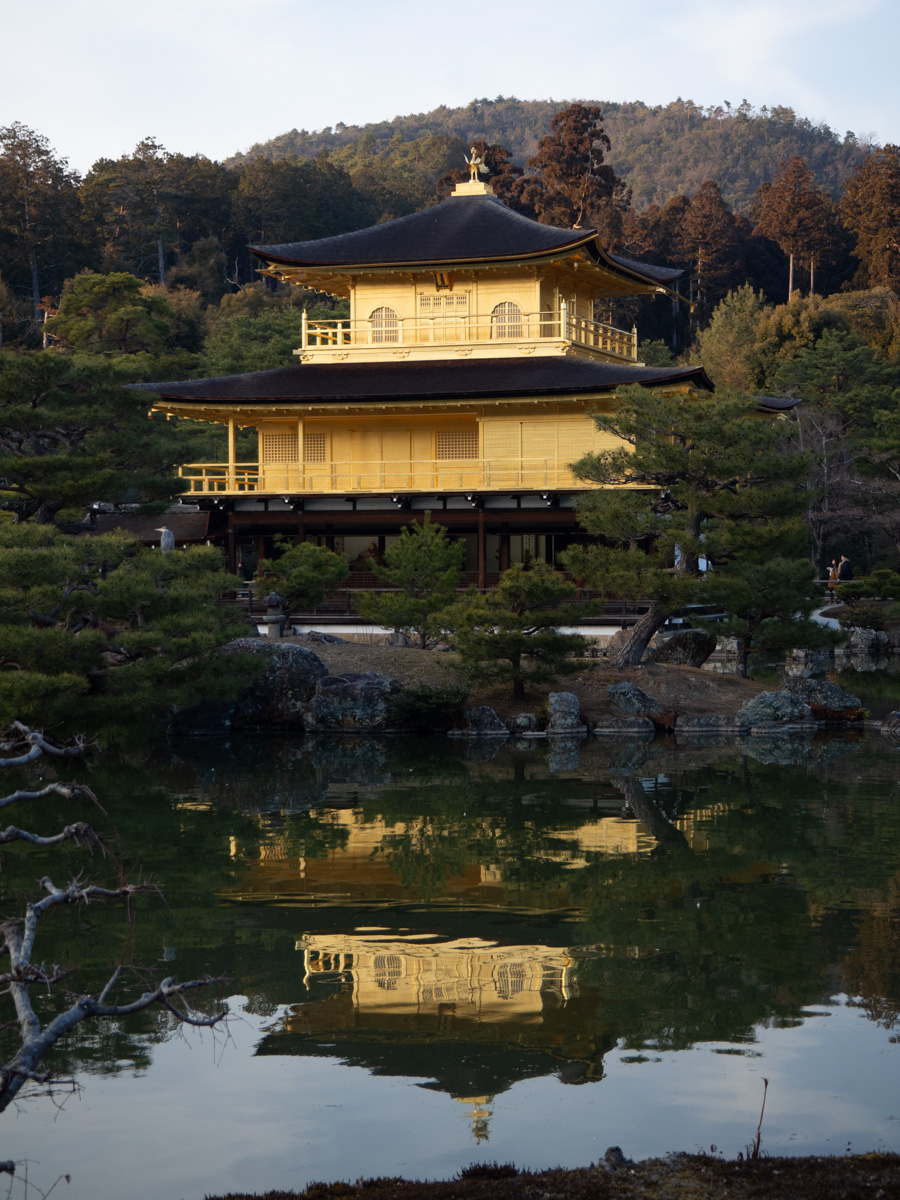
The pavilion was situated on the edge of a small lake. It looks so effortlessly beautiful. I have to wonder how much of it just was that way entirely naturally, and how much has been carefully curated and designed and pruned.
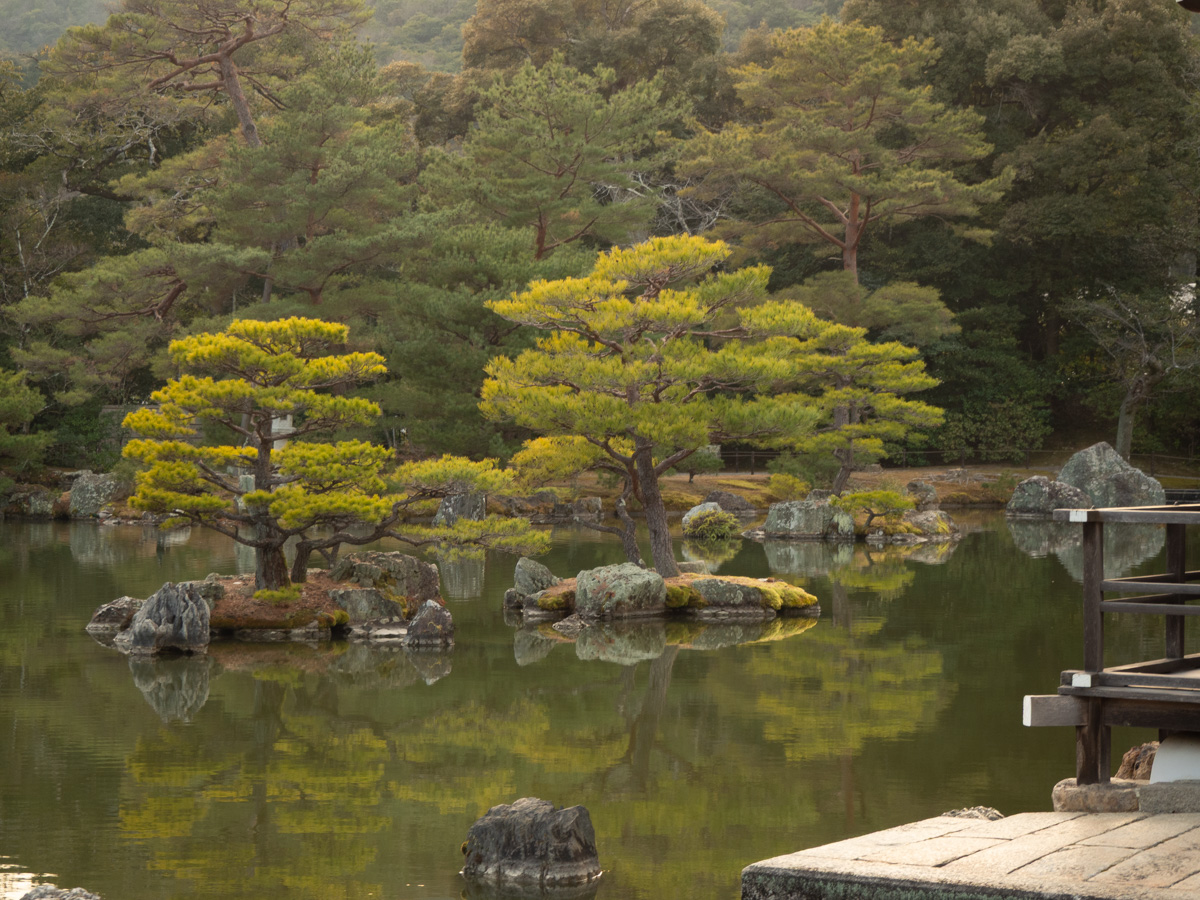
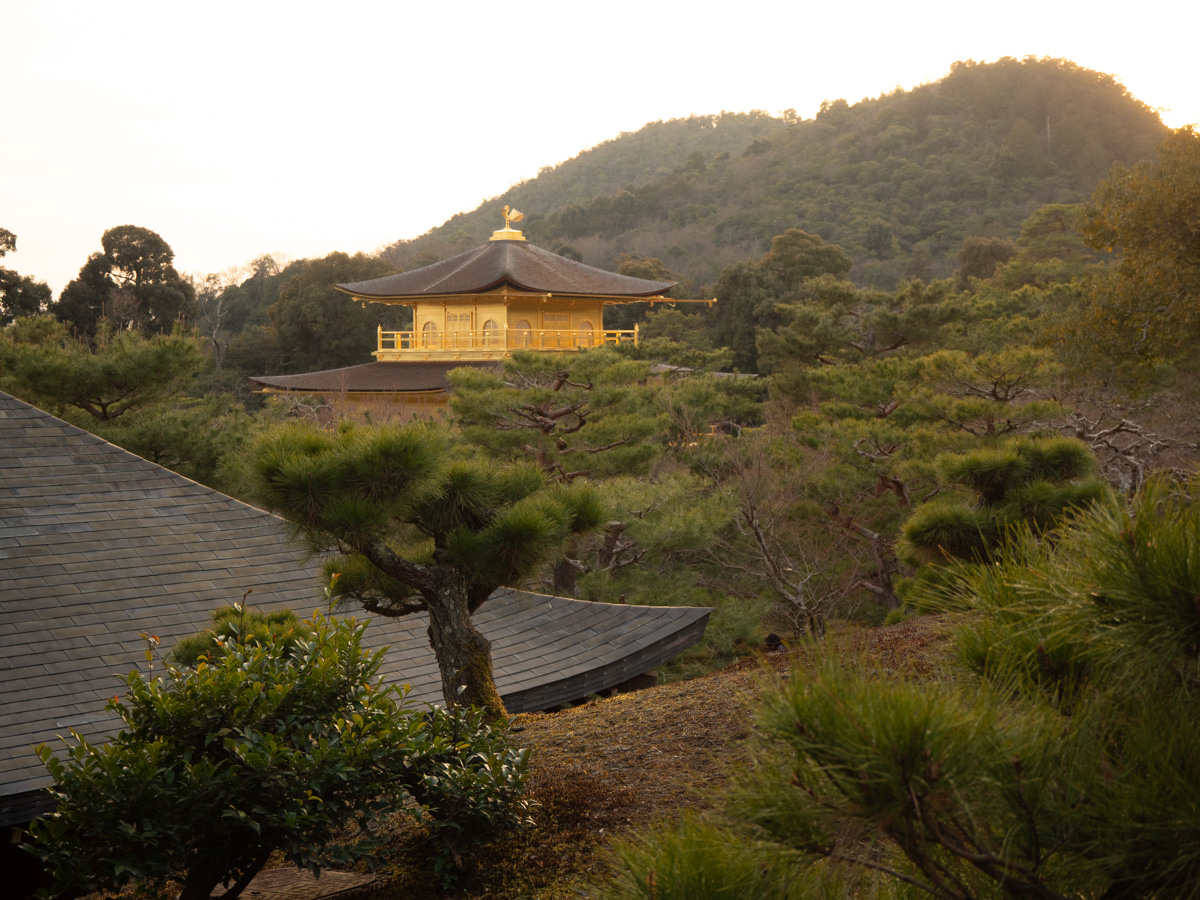
Adashino Nenbutsu-ji, a beautiful Buddhist temple on the outskirts of Kyoto.
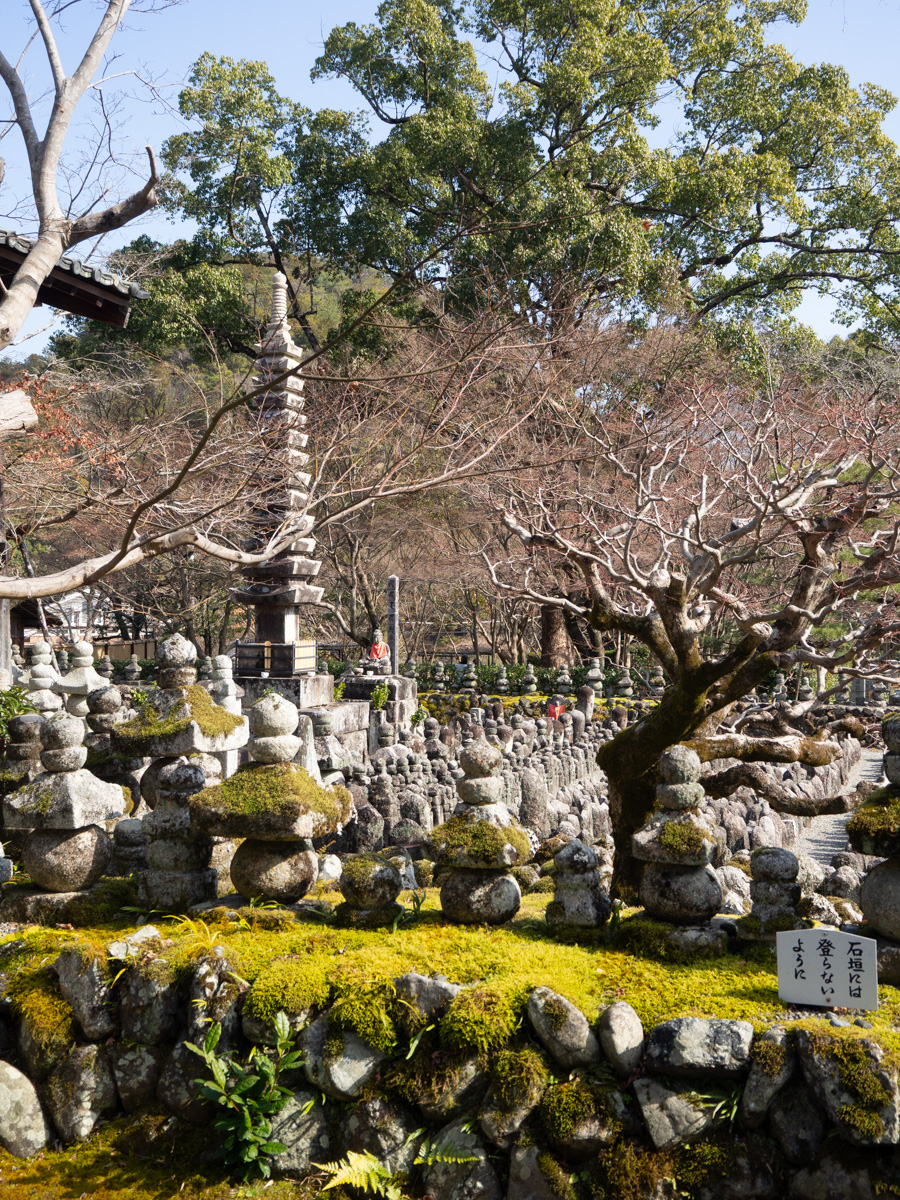
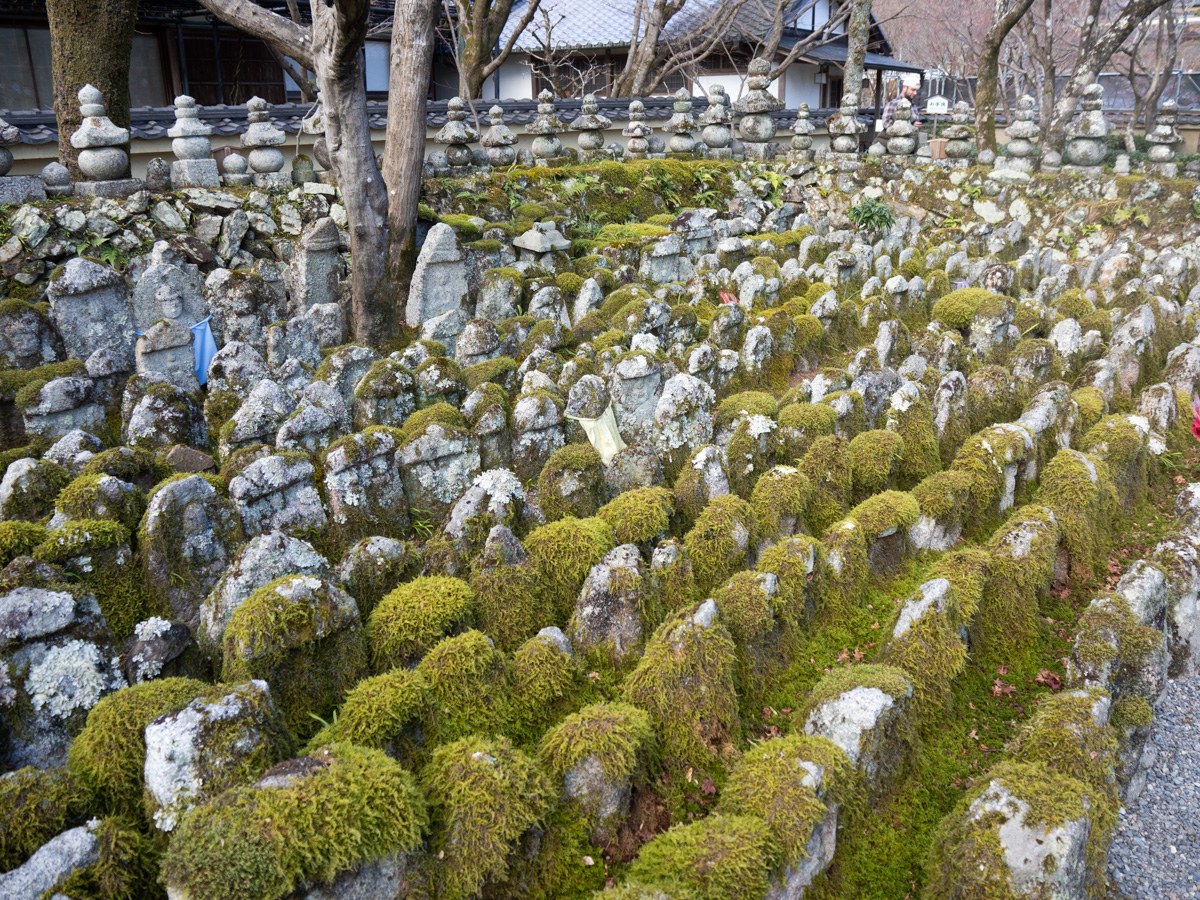
This used to be a place where people left the bodies of their dead. Now the temple holds thousands of burial statuettes that memorialize the souls of the dead. The statuettes used to be scattered around but where gathered into one place a hundred years ago.
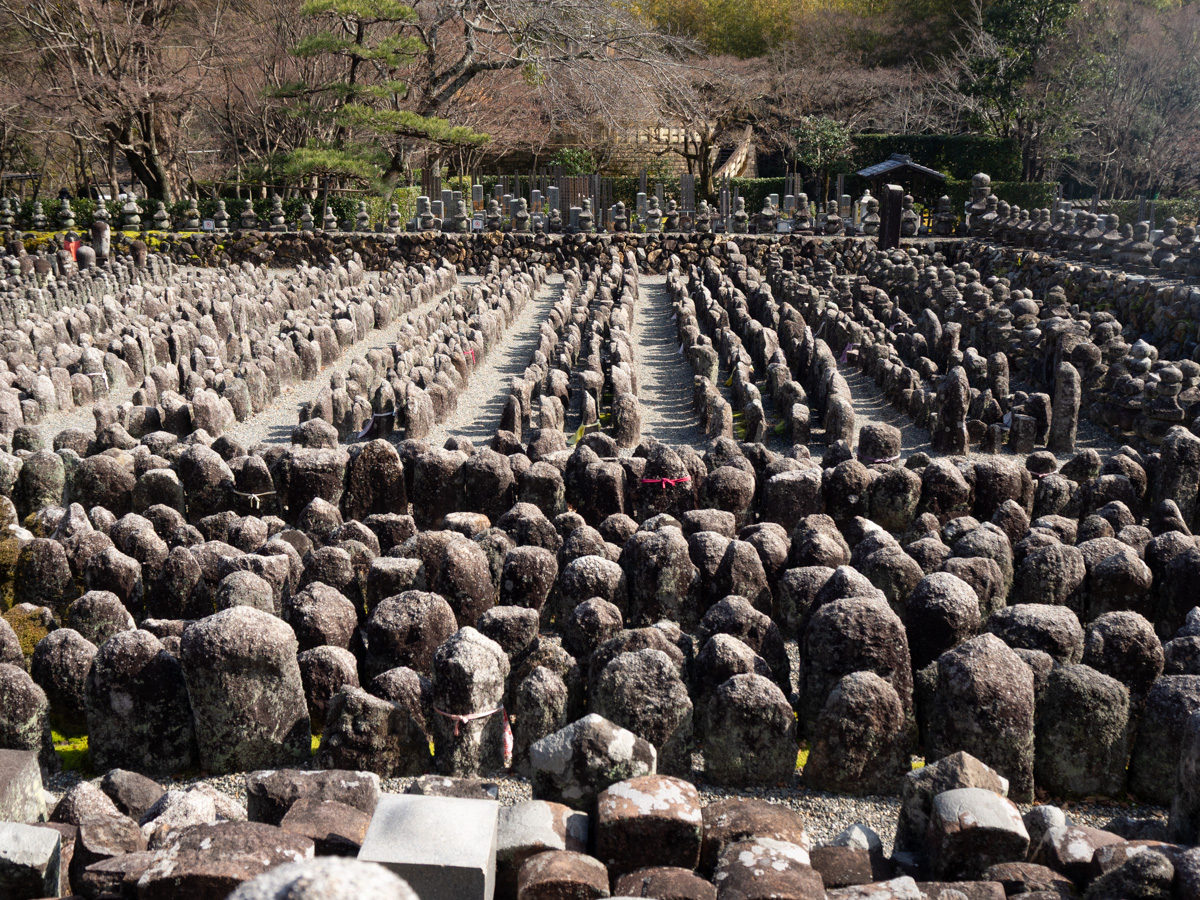
I guess that at one point the statuettes had shape and features. Now they’ve been worn down by weather and wind into a soft-edged sameness. Rather symbolic of what happens with ourselves after we die. At first we are distinct in people’s memories; later we become just a vague concept of a distant ancestor.
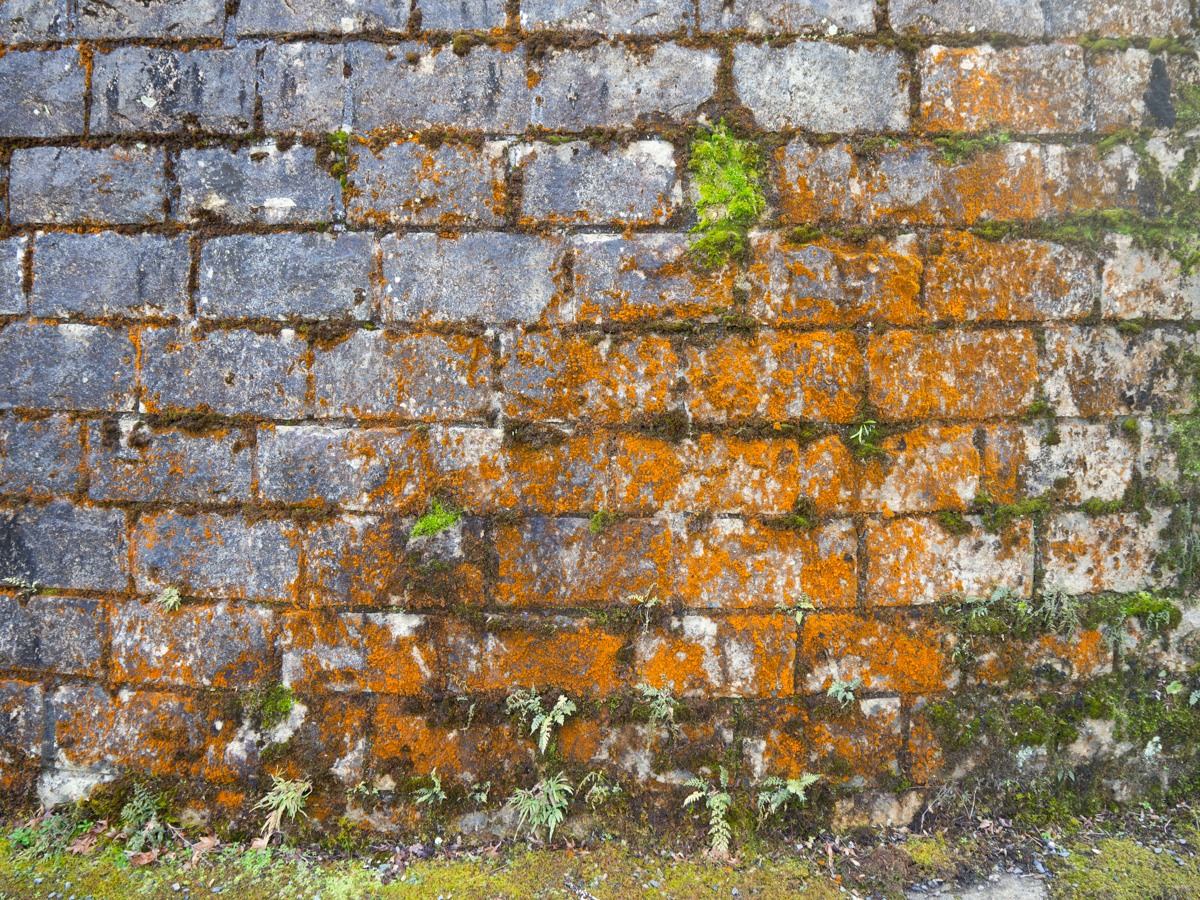
Just the beautiful lichen-covered wall of a round stone structure inside the temple area.
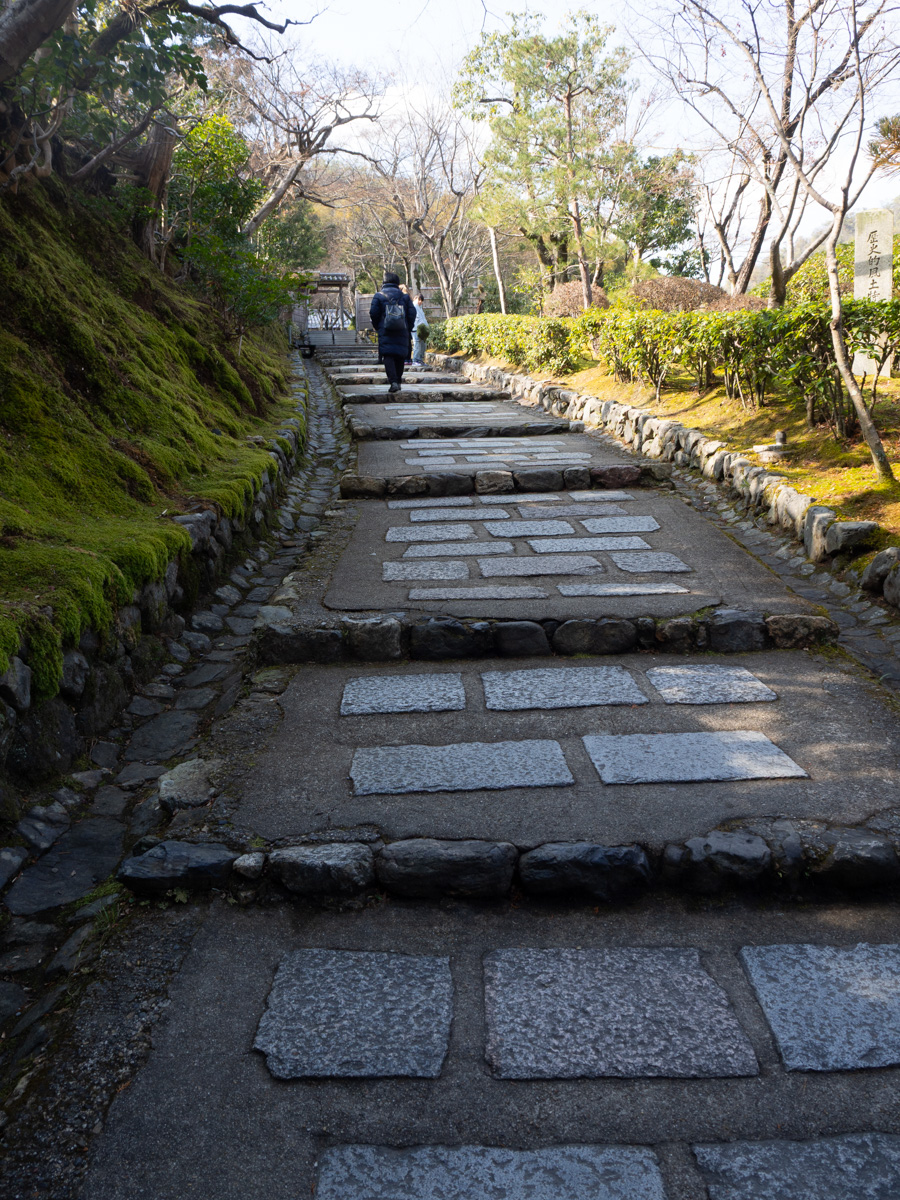
Geographically we’re not that far from central Kyoto, but it certainly feels distant.
Kyoto is nestled in a valley between rocky, wooded hills. The city hasn’t crept up on the hills much – either they’re too difficult to build on, or they’ve been intentionally left untouched. On the outer edges of the city, the hills show very clearly where the city stops and nature starts.
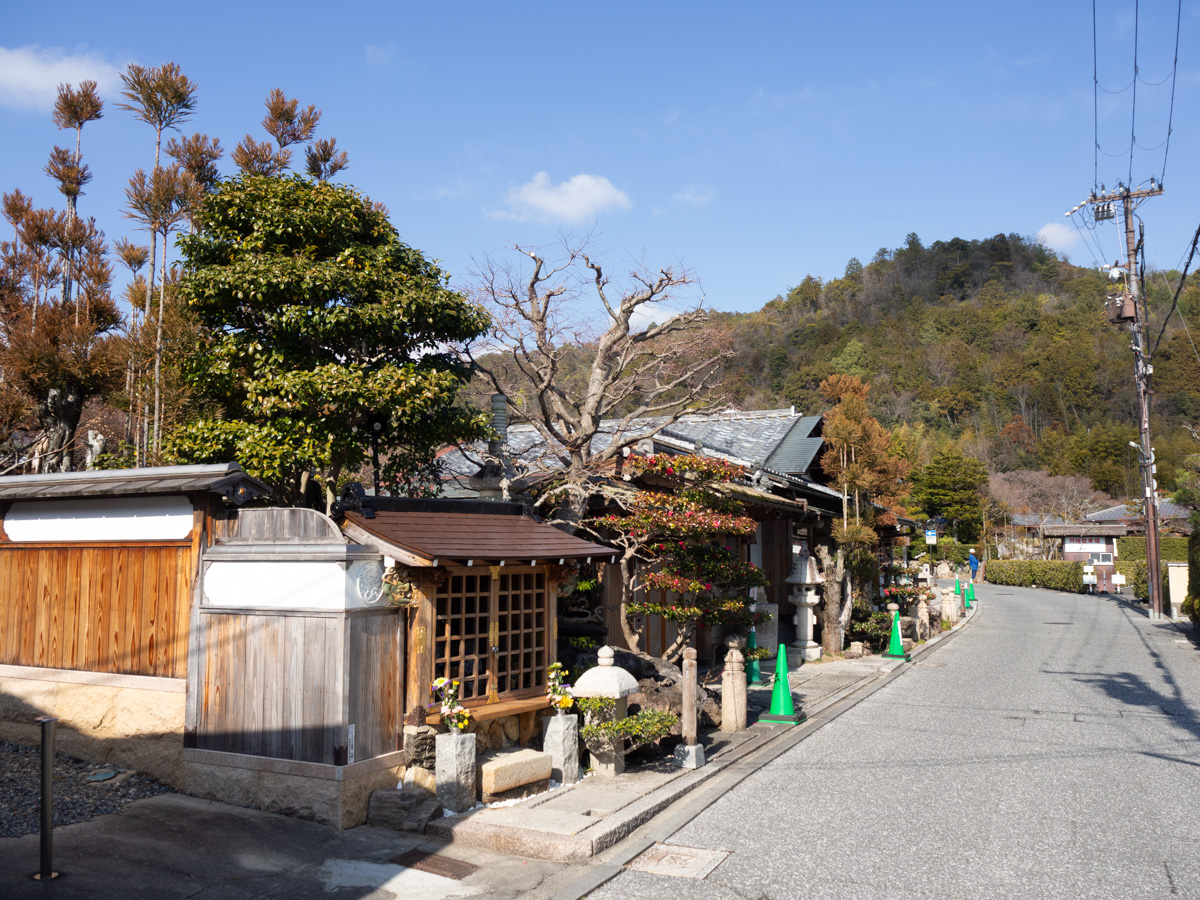
The suburban streets we walked through were very pleasant and pretty. Very different from the streets of Tokyo. Then again, we never really got as far out as the edges of Tokyo.
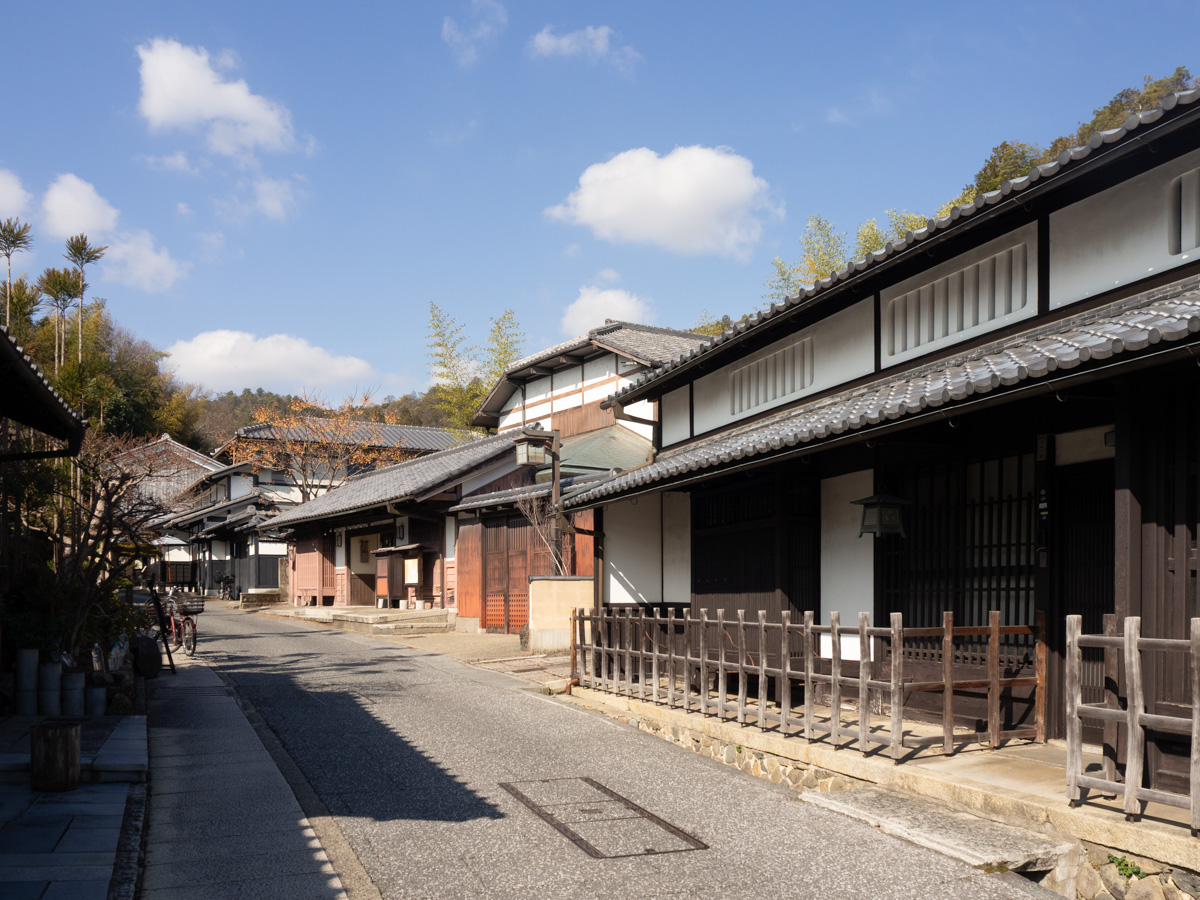
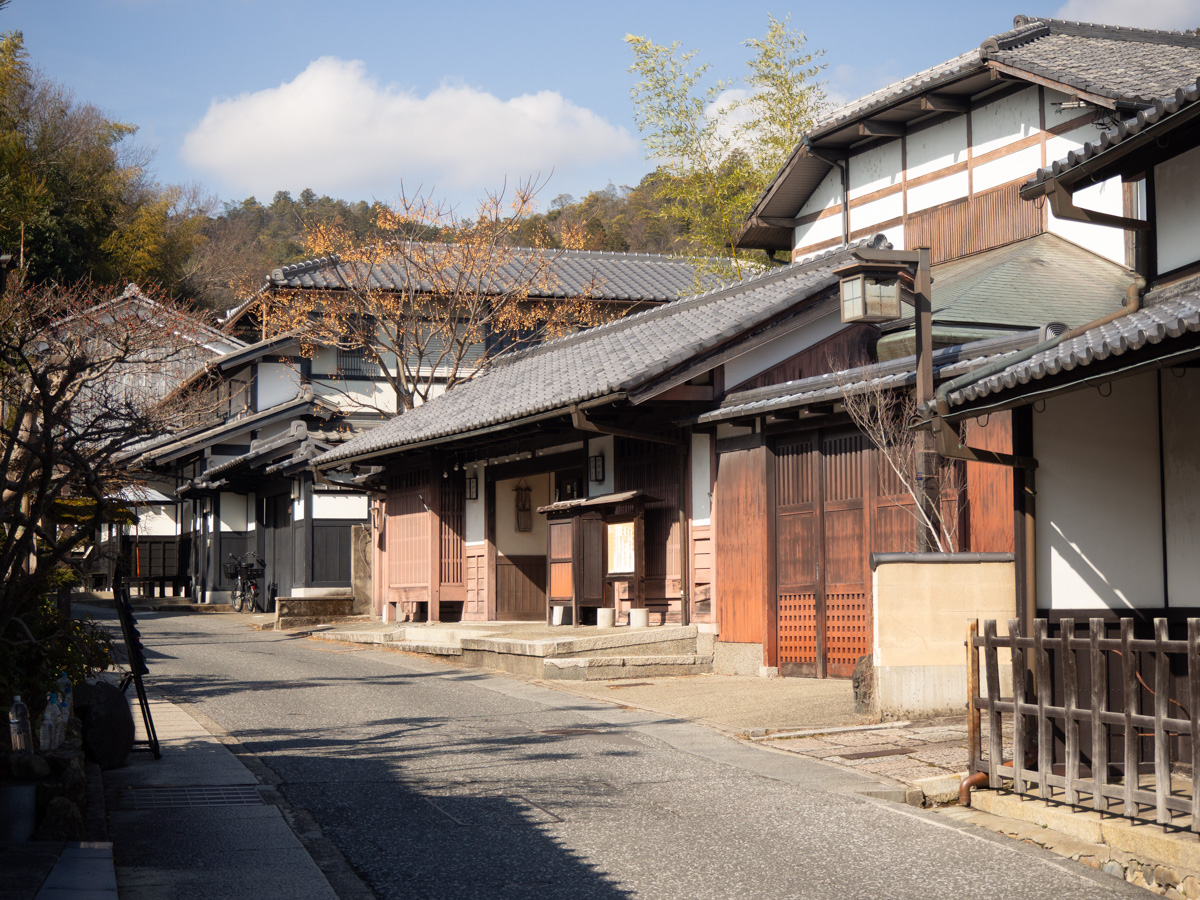
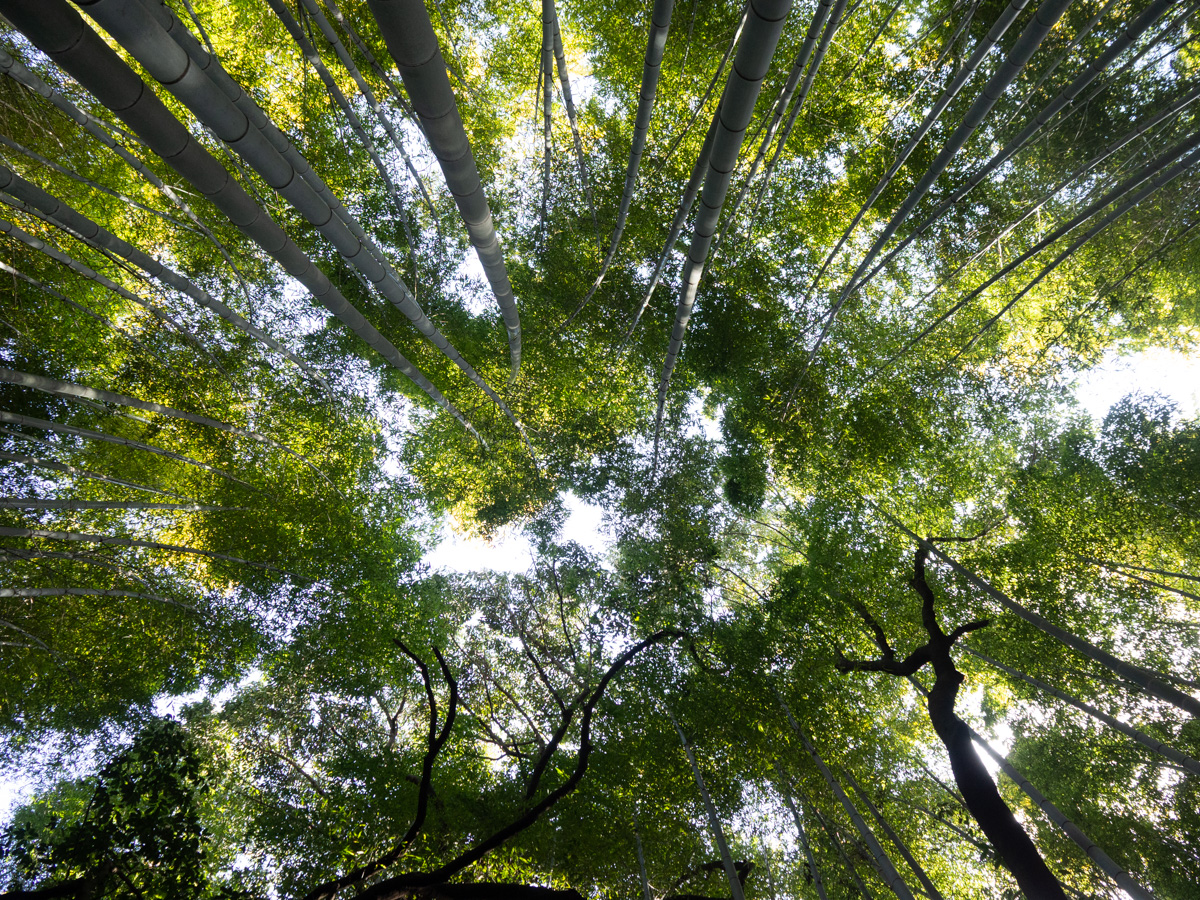
Among Kyoto’s many sights are bamboo groves. Some are famous and much-photographed, others are just there.
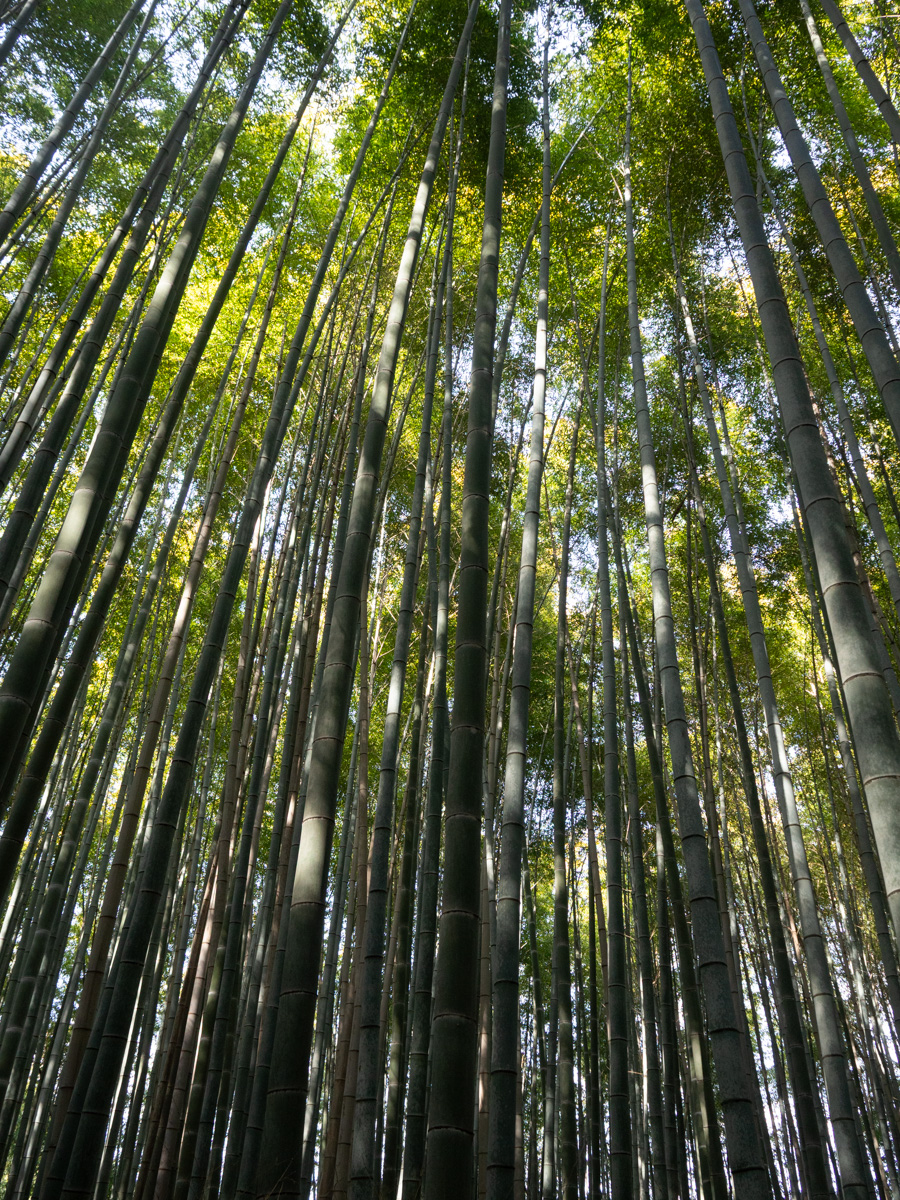
On our way to one of the famous ones with many Instagram photos, we passed one that was barely marked on the map. The low sun made for pretty light and shadow,
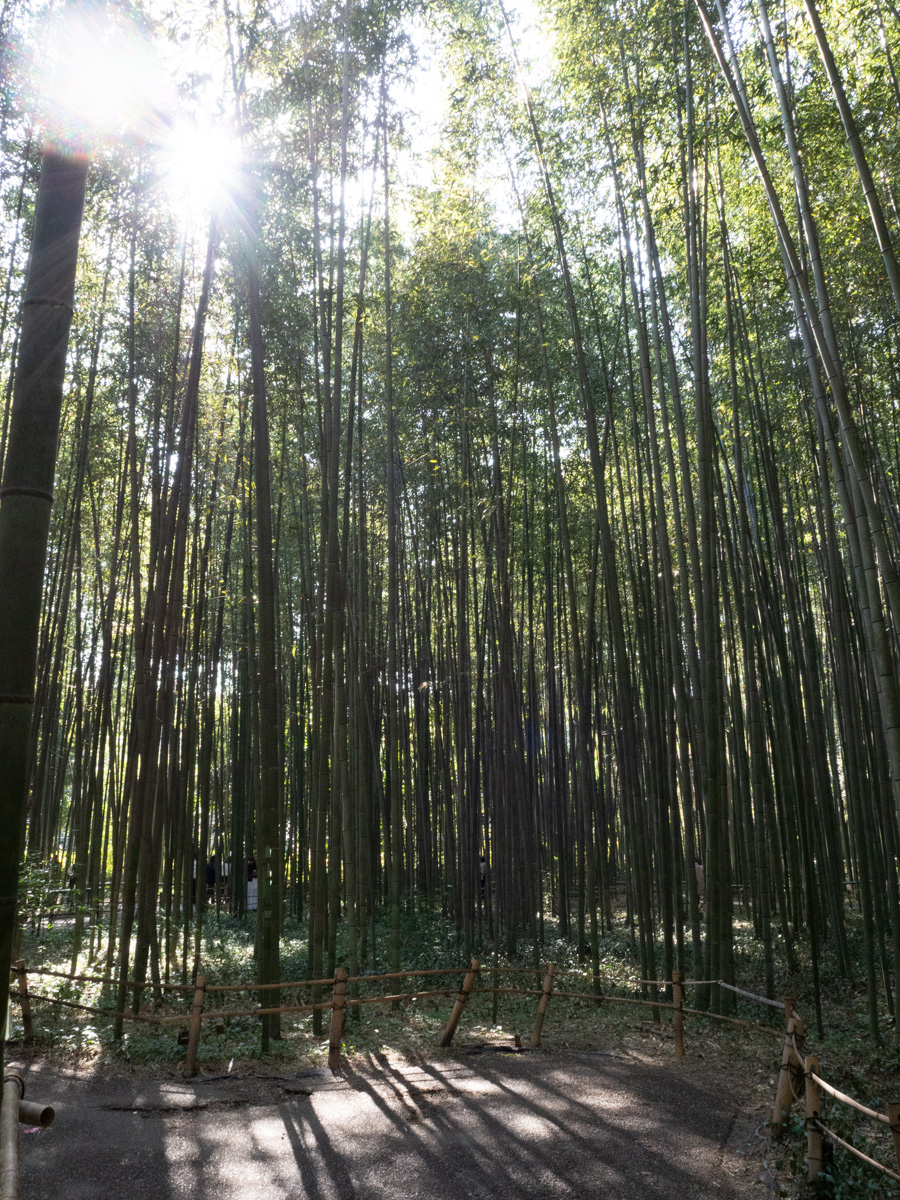
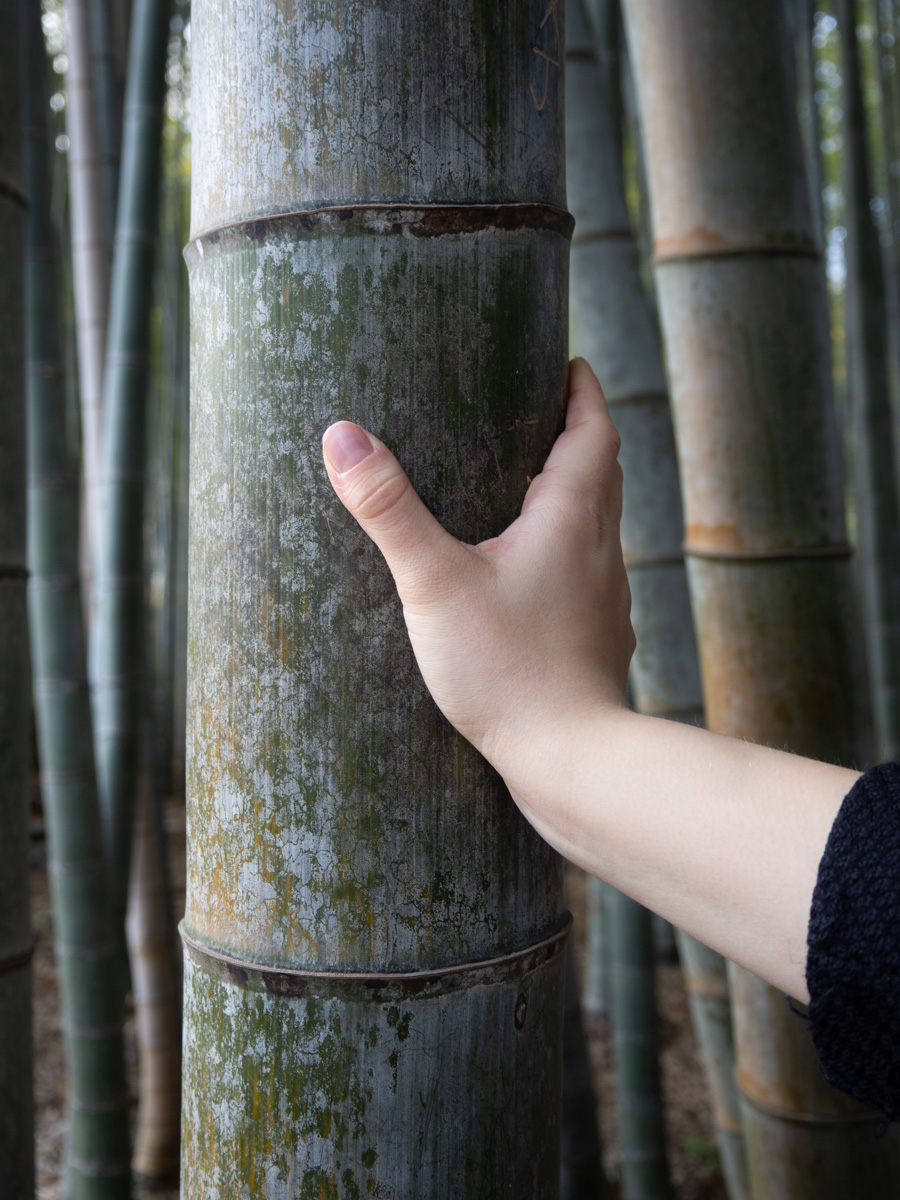
The largest bamboo stalks were as thick as tree trunks.
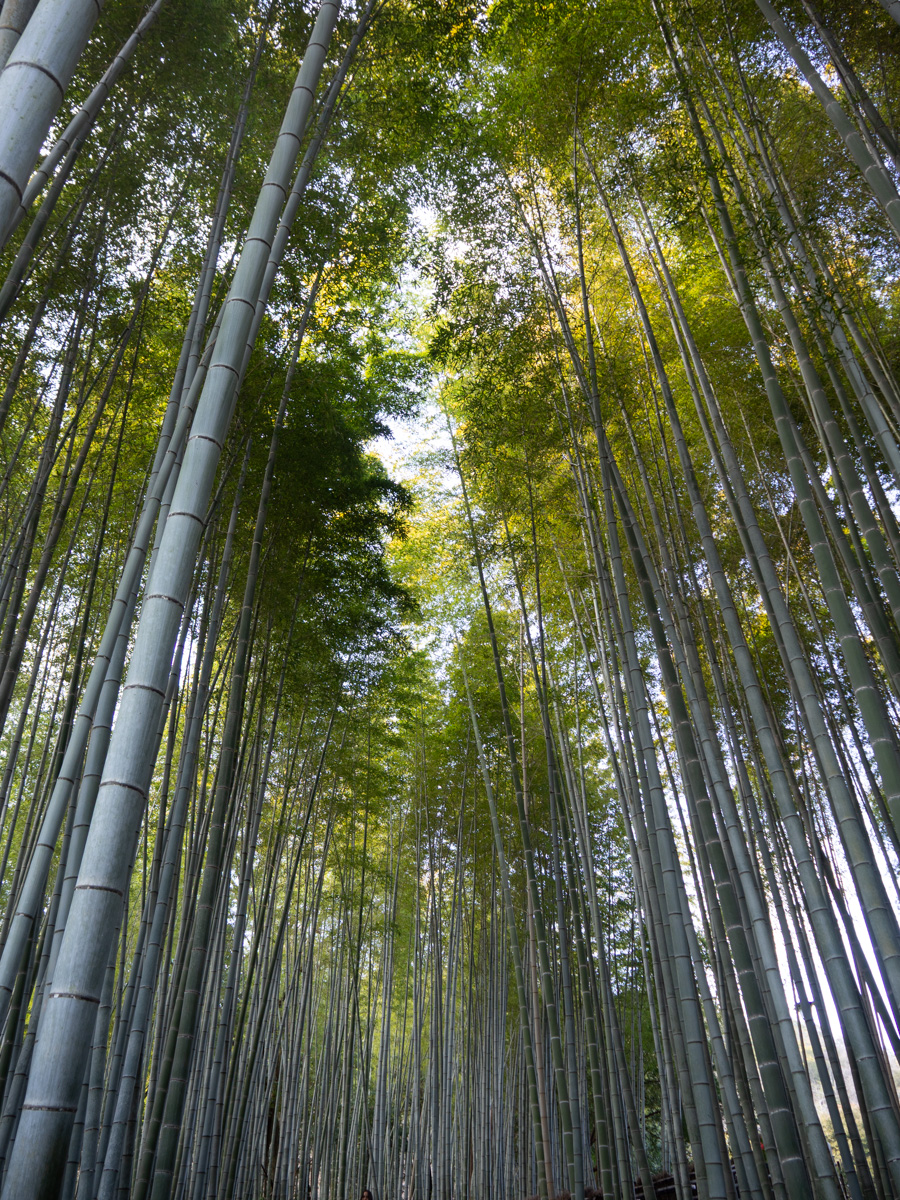
The tall, straight stalks, and the light filtering through the tufts of leaves at the top, make it feel sort of like the ribbed vaults of a Gothic church.
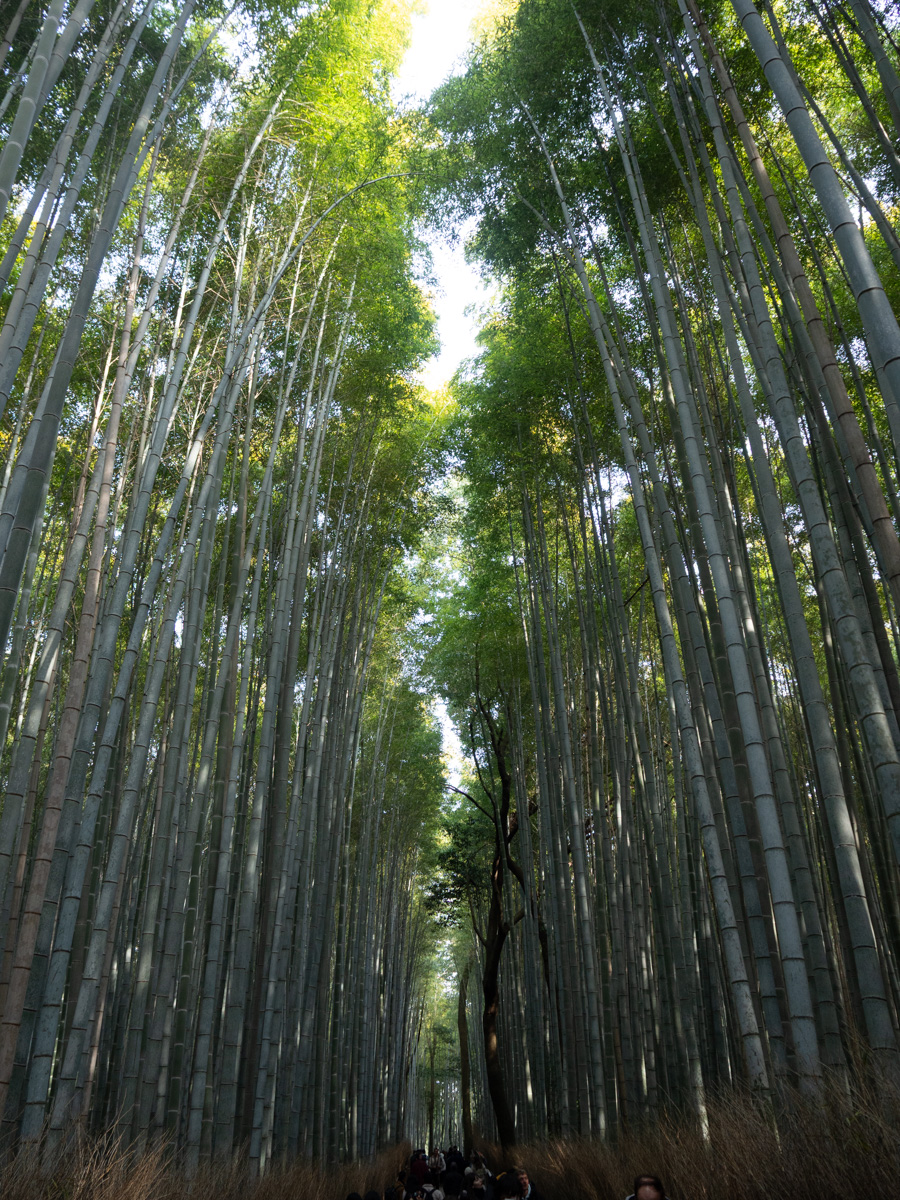
Arashiyama bamboo grove is a popular one. I had expected something the size of a small forest, but it was much smaller. Basically a single, mostly straight path of maybe a hundred metres, with bamboo on both sides. Given that there was only one path, it was quite full of people. You can’t see them very well because I mostly aimed the camera away from them, but the bottom of the photo is all full of people’s heads.
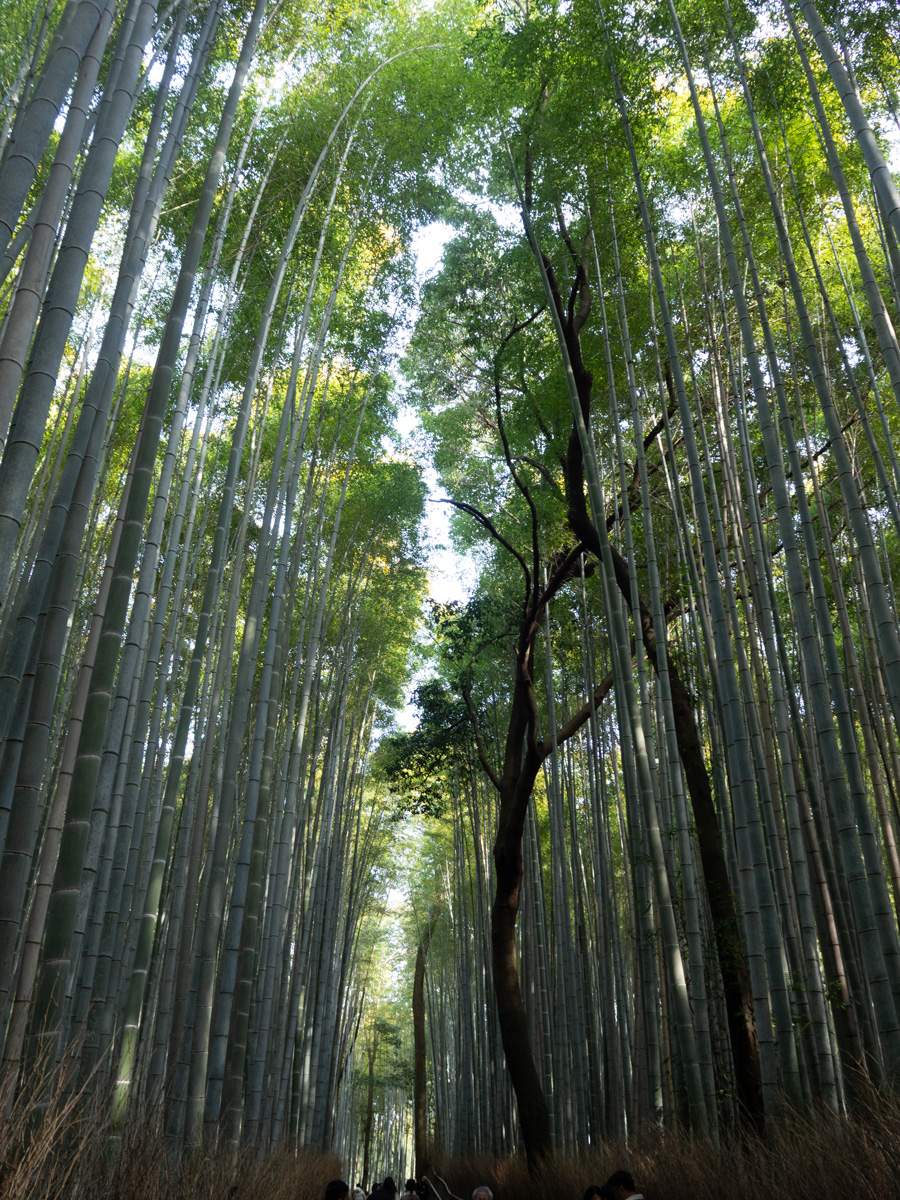
Among all the arrow-straight bamboo – a single dark and twisty tree.
I imagine the bamboo groves used to be larger. Probably still are, somewhere out in the countryside. I wonder what it would feel like to walk, surrounded by nothing but these straight pillars. Meditative?
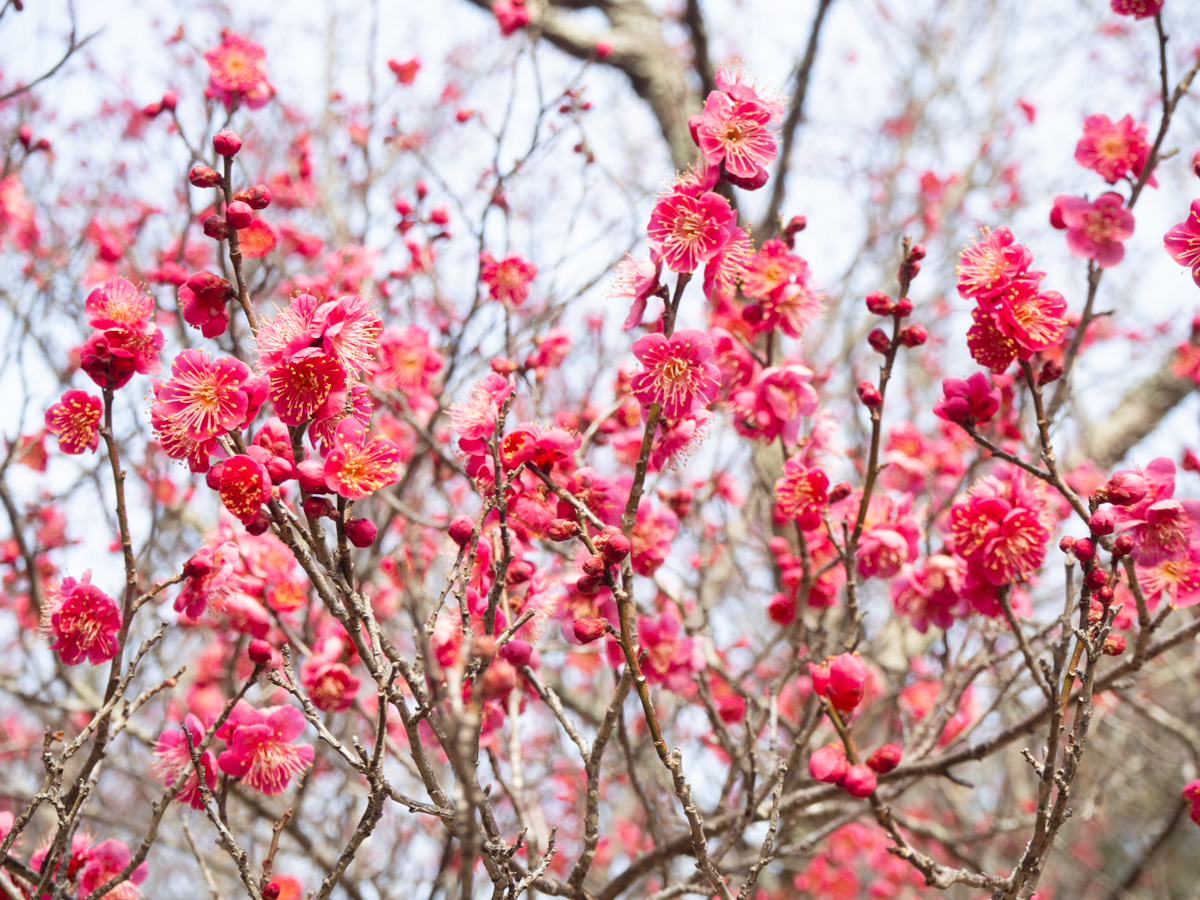
In Japan, February 4th is considered the first day of spring. In Stockholm it’s the deepest winter, but here there are already plum trees blossoming.
We were far from any busy restaurant districts when it was time for dinner. First we tried our luck at a highly-rated sushi place, but there was an hour’s waiting time, and that was more than we wanted to wait. Ingrid’s legs were tired, and I was so hungry that I would have accepted a McDonald’s meal, so we just picked the next closest place.
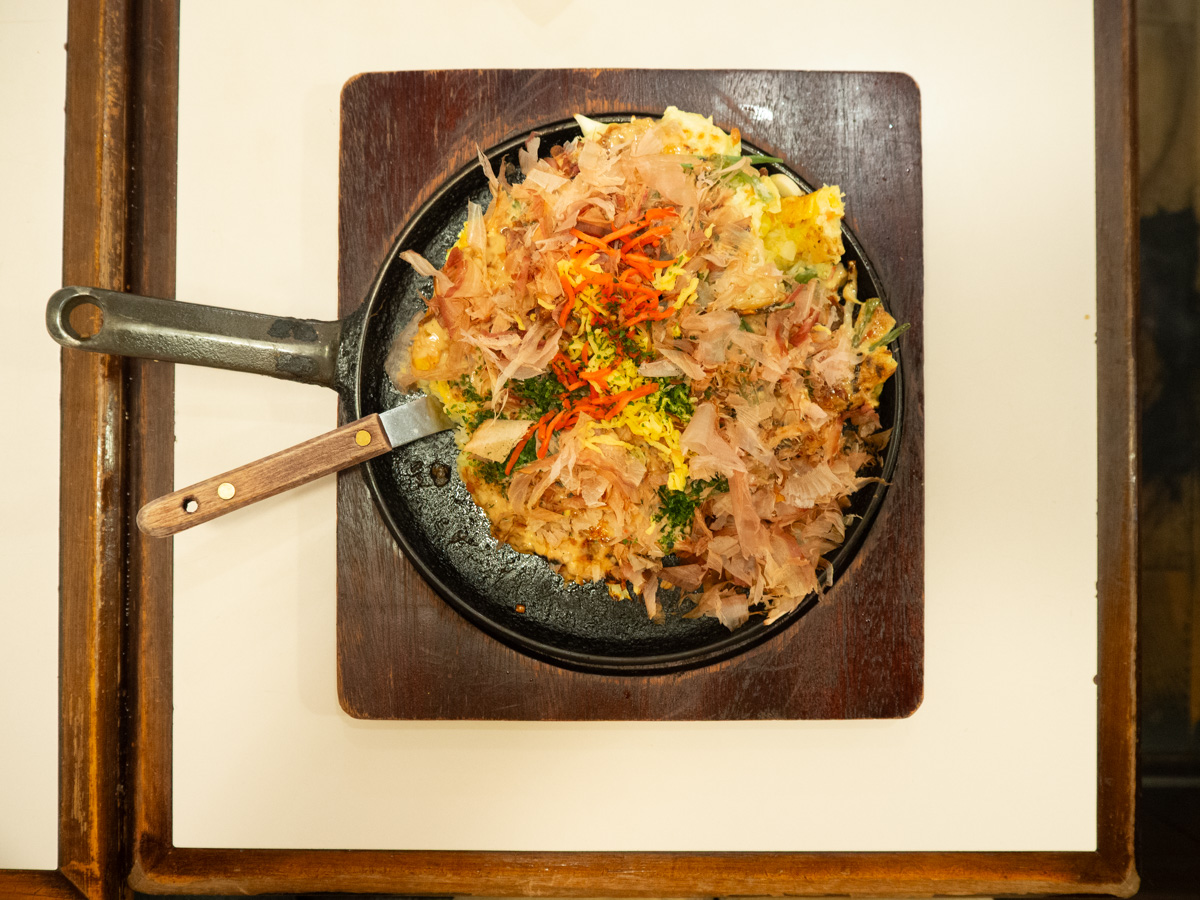
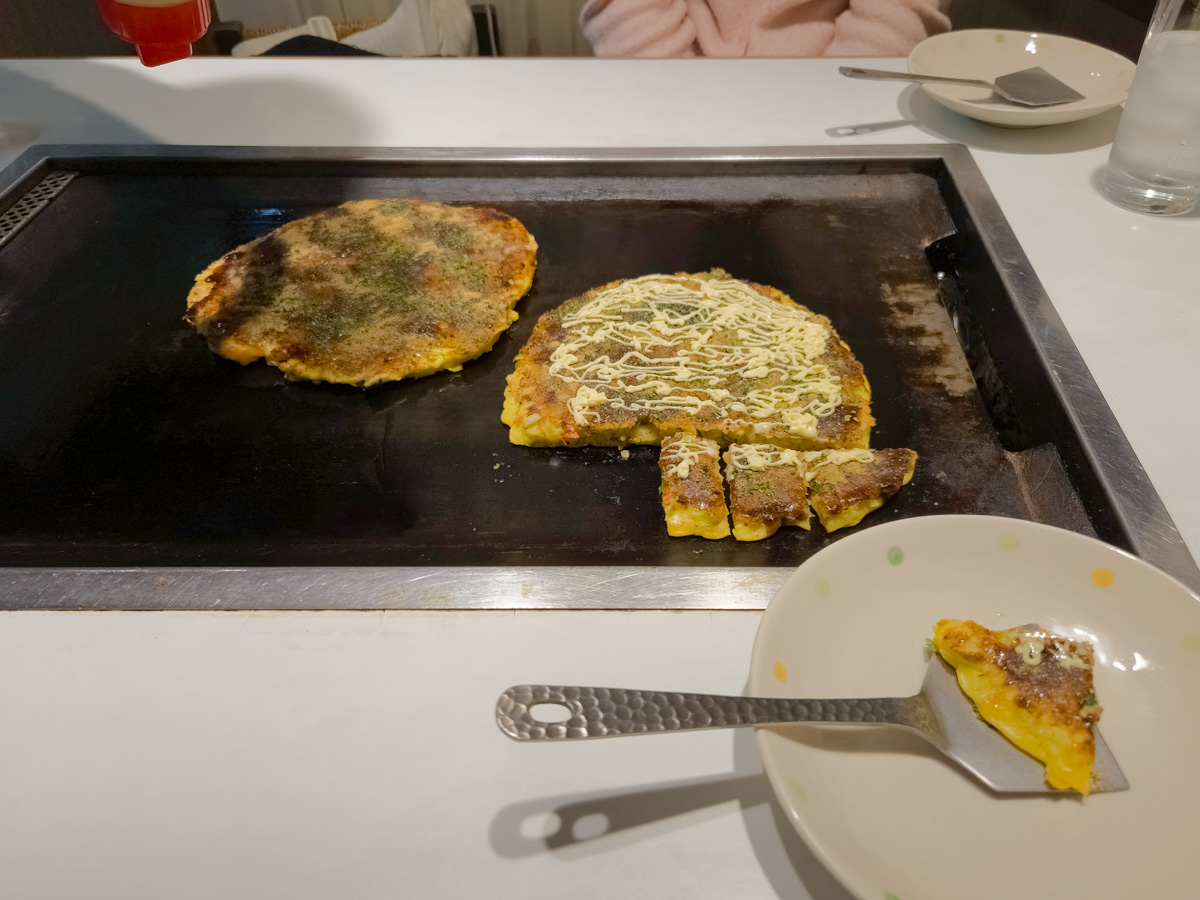
Which turned out to be a tiny corner place that served okonomiyaki, pancakes with shredded cabbage. Clearly a place that wasn’t aimed at tourists at all, what with its location and all-Japanese signage, and staff who didn’t have a word of English. But the menu had English translations, and we managed to order by pointing.
We were served absolutely delicious okonomiyaki by a very kind older gentleman, who also demonstrated the correct way of eating it. (You definitely don’t cut it like a pizza, but in square pieces.)
This would turn out to be the best okonomiyaki of the whole trip. We ordered okonomiyaki at two more restaurants, but neither could measure up to this.
Okonomiyaki is one of a very few Japanese dishes that I’ve cooked at home, based on a recipe from the Linas Matkasse meal kits. I was curious to see how close the Swedish version was to the original. Pretty close, actually! The meal kit version was fully vegetarian whereas here okonomiyaki is often topped with tiny bonito flakes. The squirted mayo topping, which I’ve always found a bit strange, is very much present in the real deal.
Upon arrival in Kyoto, we aimed straight for our top sight here and spent the whole afternoon at Fushimi Inari-taisha, a shrine complex known for its “thousand torii”. Inari is worshipped as the patron of business, and there is a tradition for businesses to donate a torii gate to the shrine.
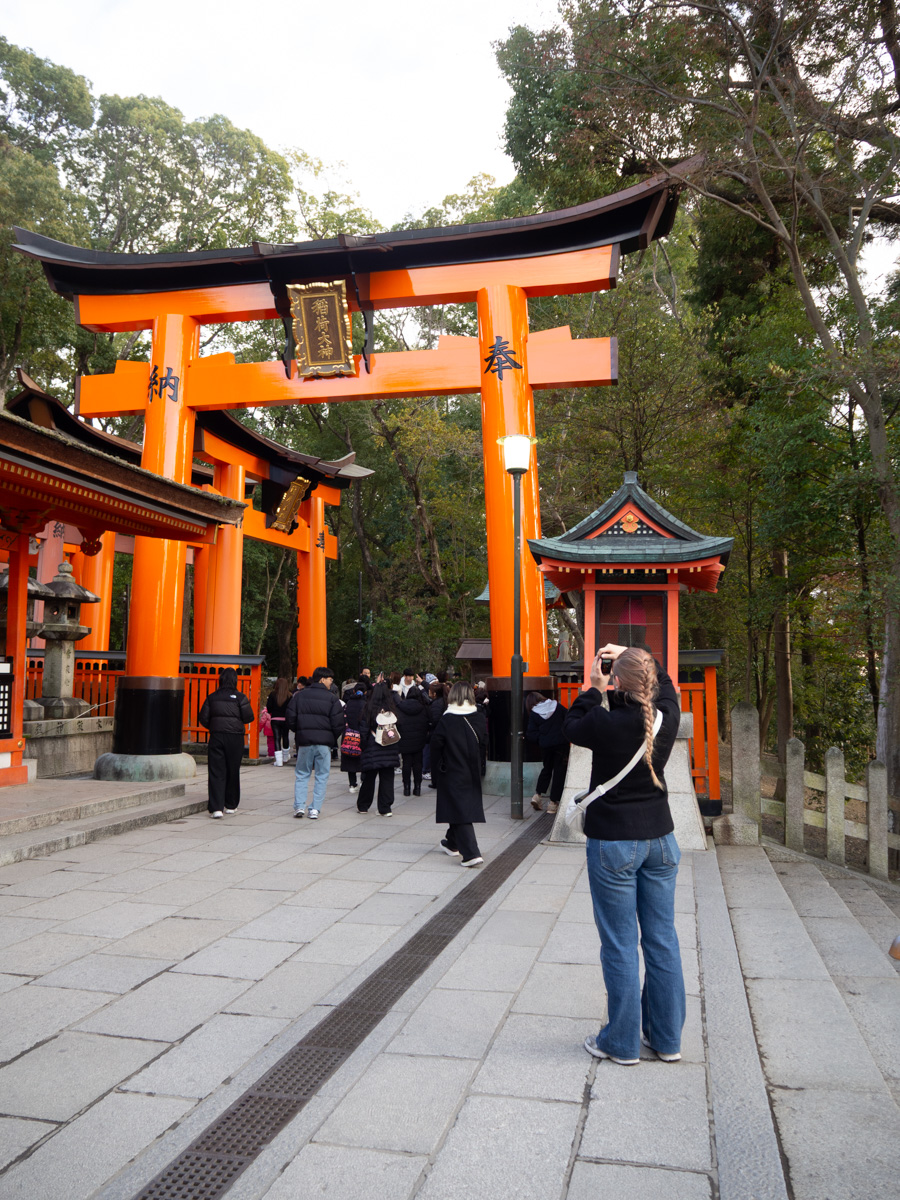
Fushimi Inari-taisha is very photogenic and very popular. The torii are arranged so as to form tunnels along the paths up the hill, and their uniform colour and size makes for unique and stunning views. The first few tunnels were full of people, as expected. But once you move up the hill, the crowds thin out very quickly.
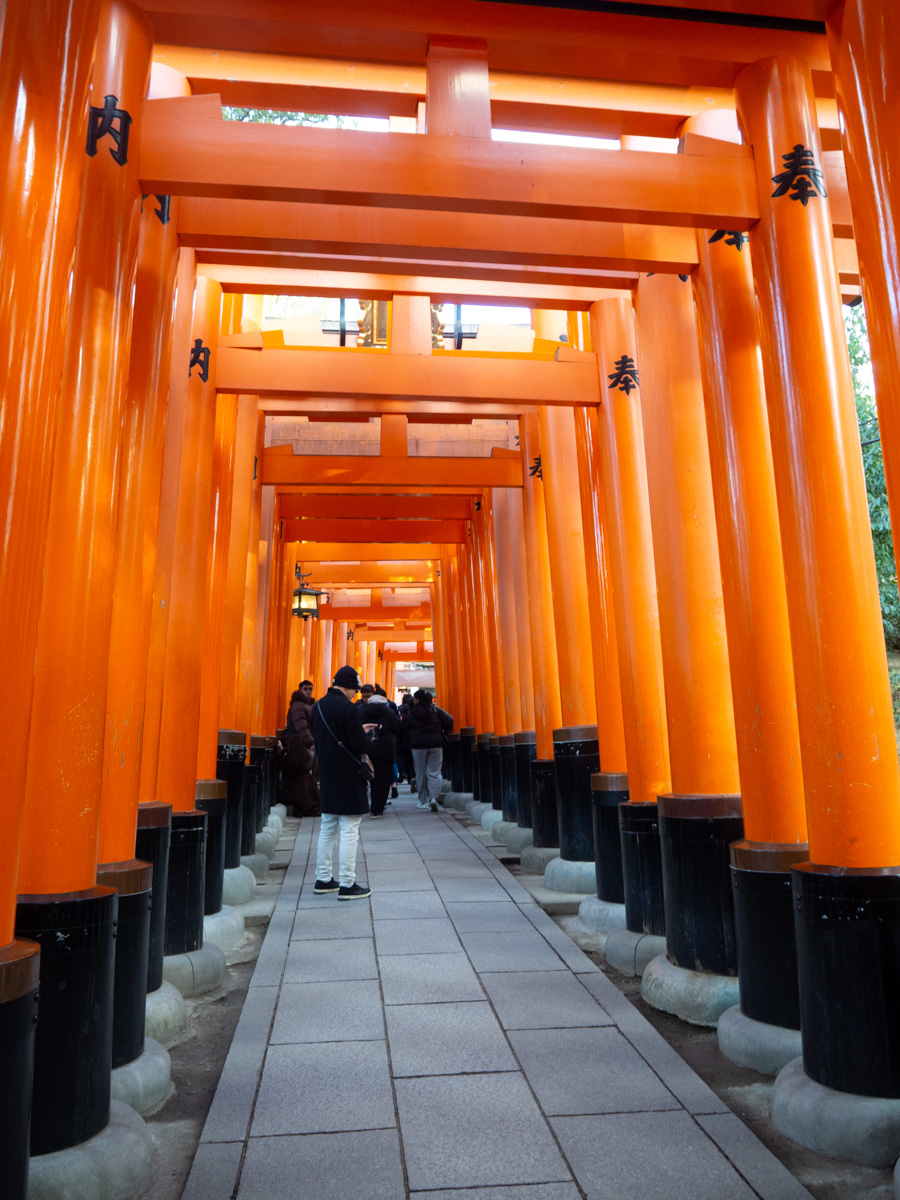
Initially I thought that the sight of orange-red torii gates would get boring fast. I mean, how many identical gates do I want to look at? Then we started walking and saw just how much variety there was.
Torii on the shade side of the hill loomed almost spookily.
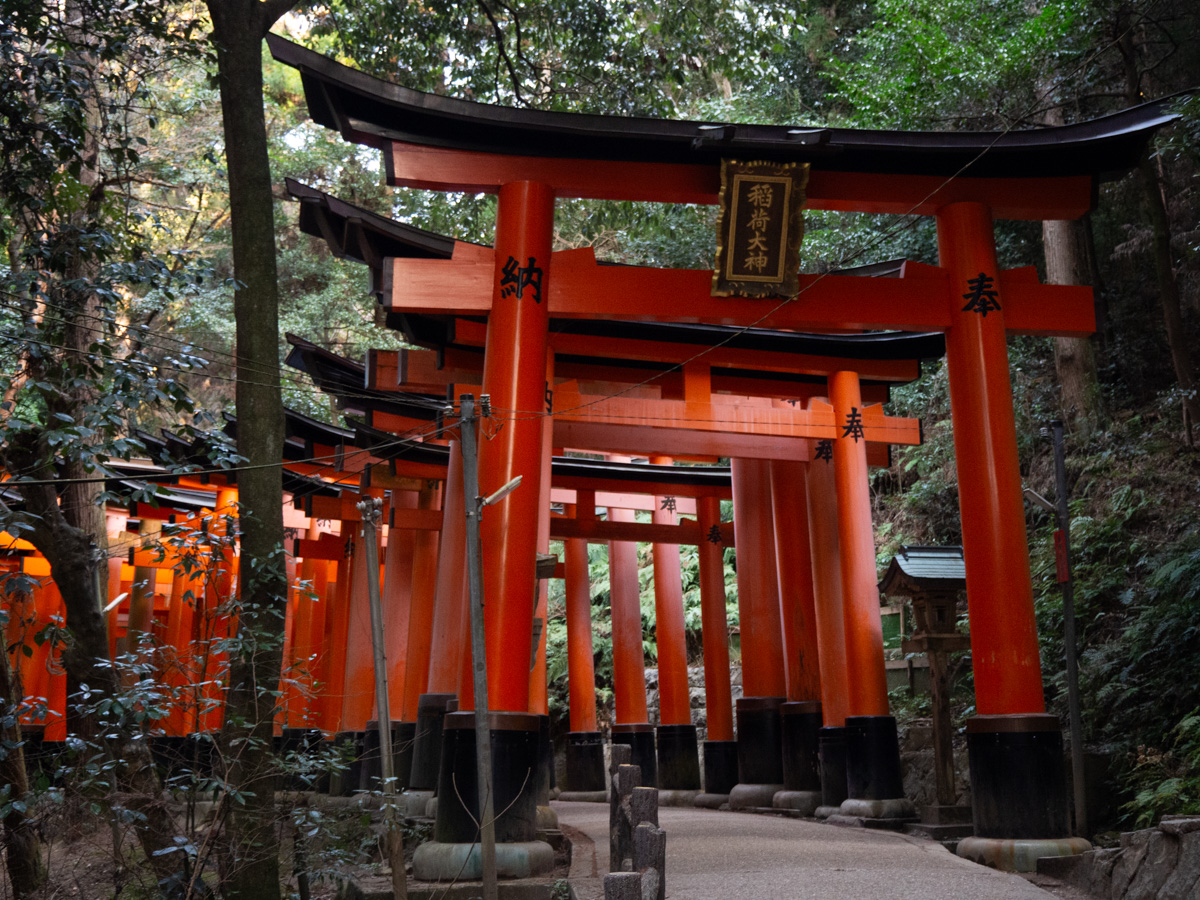
Small knee-high torii were propped up next to the path.
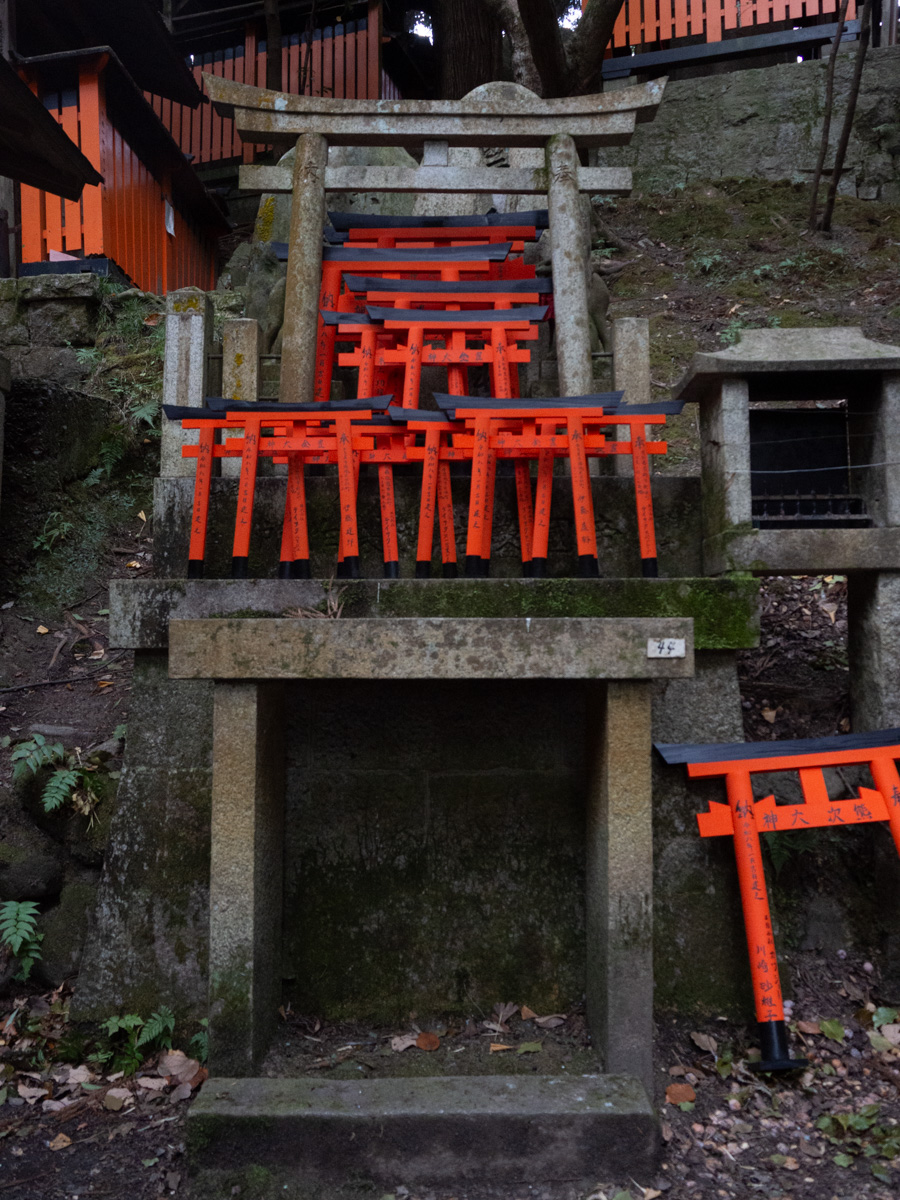
Further up the hill, the gates got smaller and less shiny.
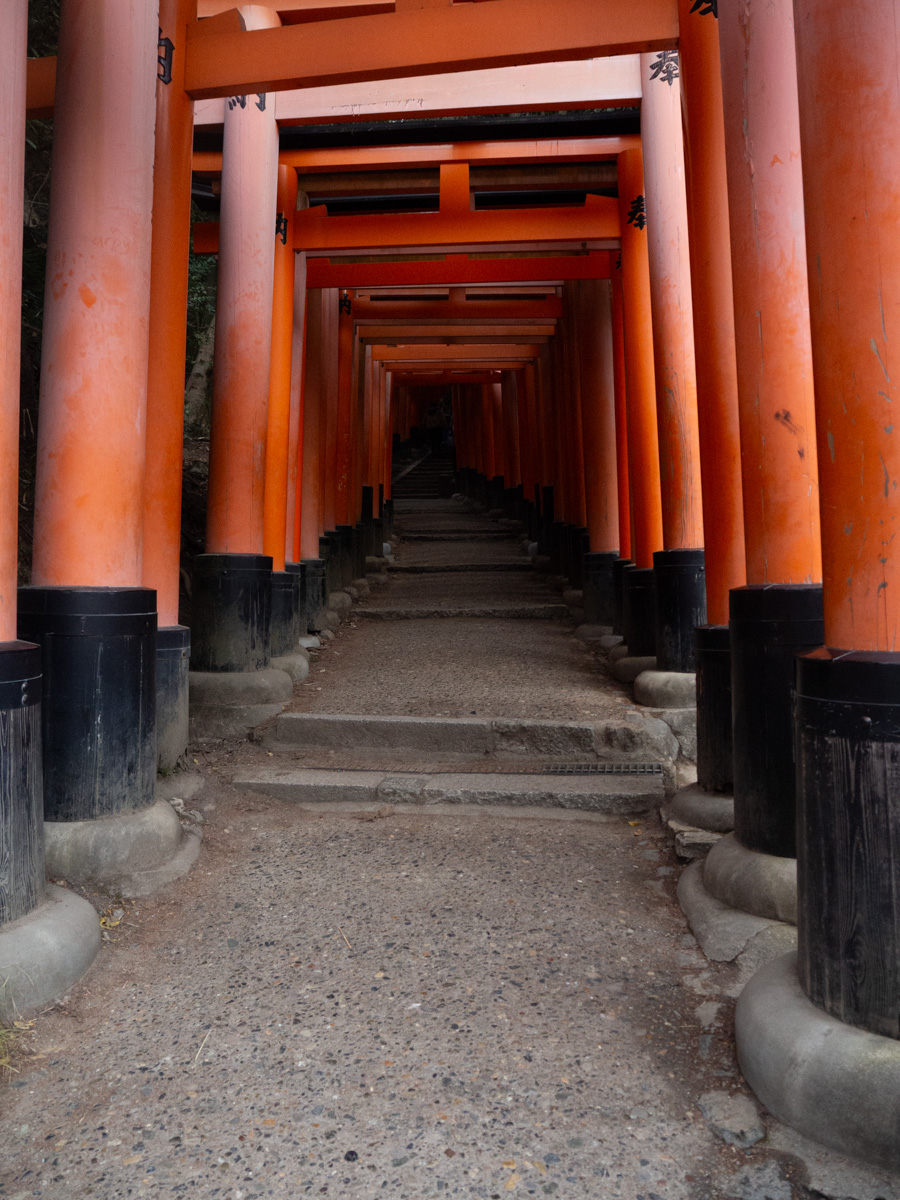
Stairs and afternoon shadows.
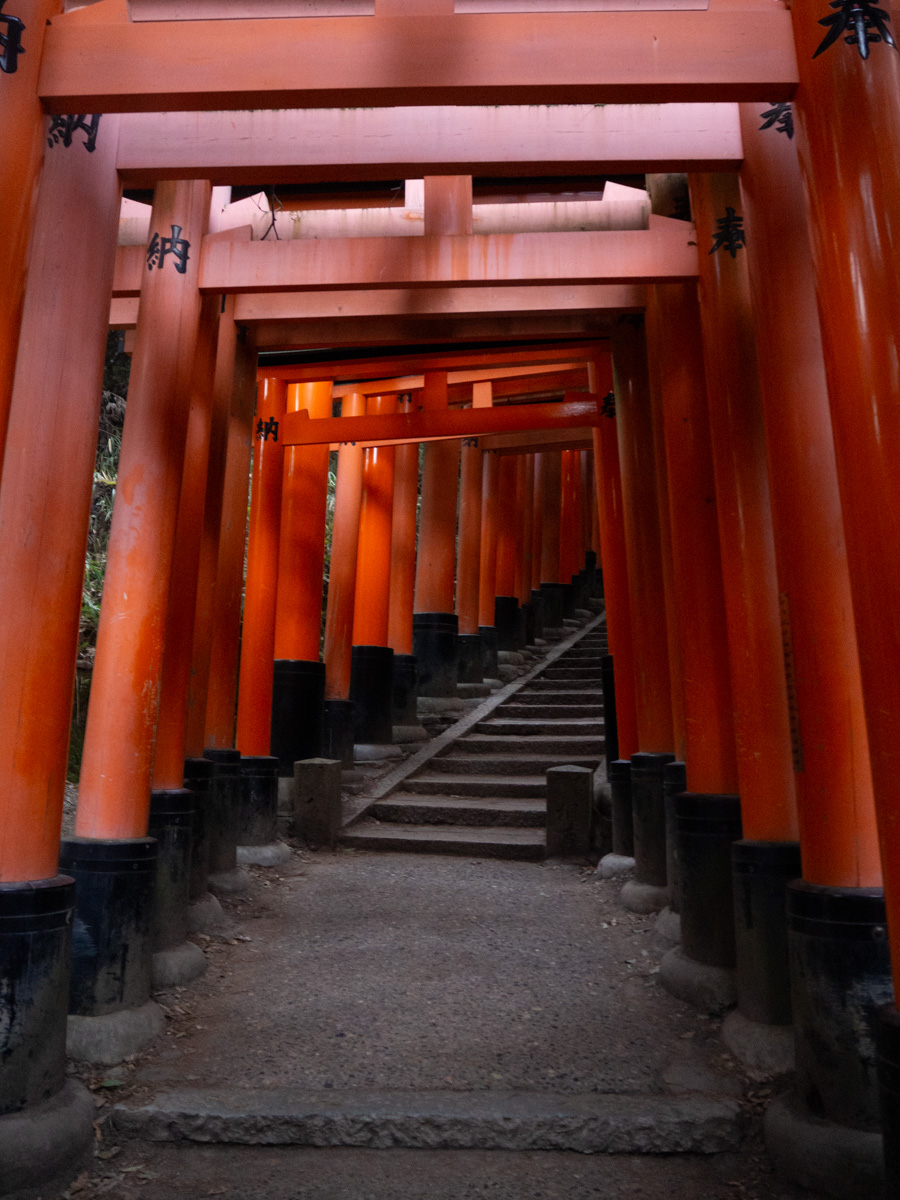
Ingrid, for scale.
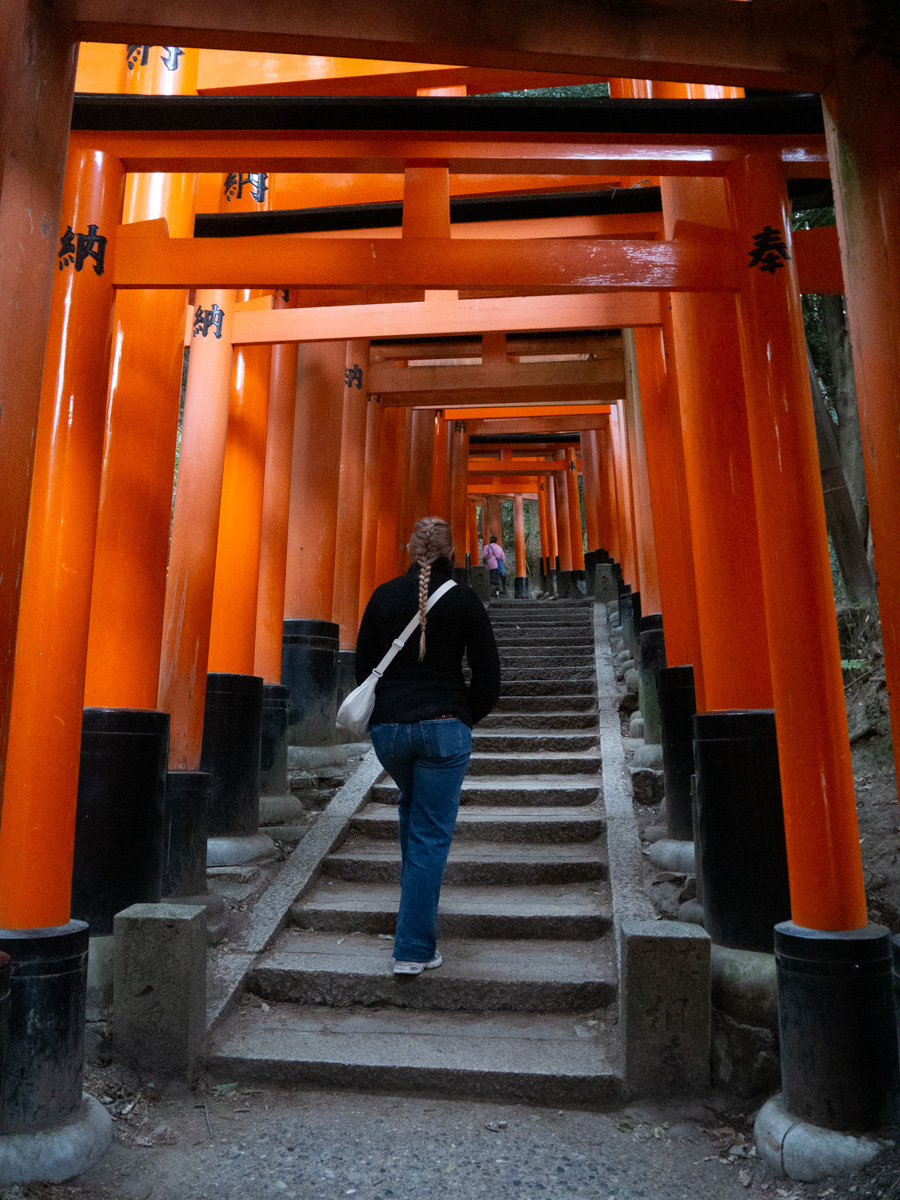
Turning around and looking back down the hill, you can see the writing on each gate. The torii are donated when making a wish or when a wish has come true, so I assume the writing details each donator’s wish.
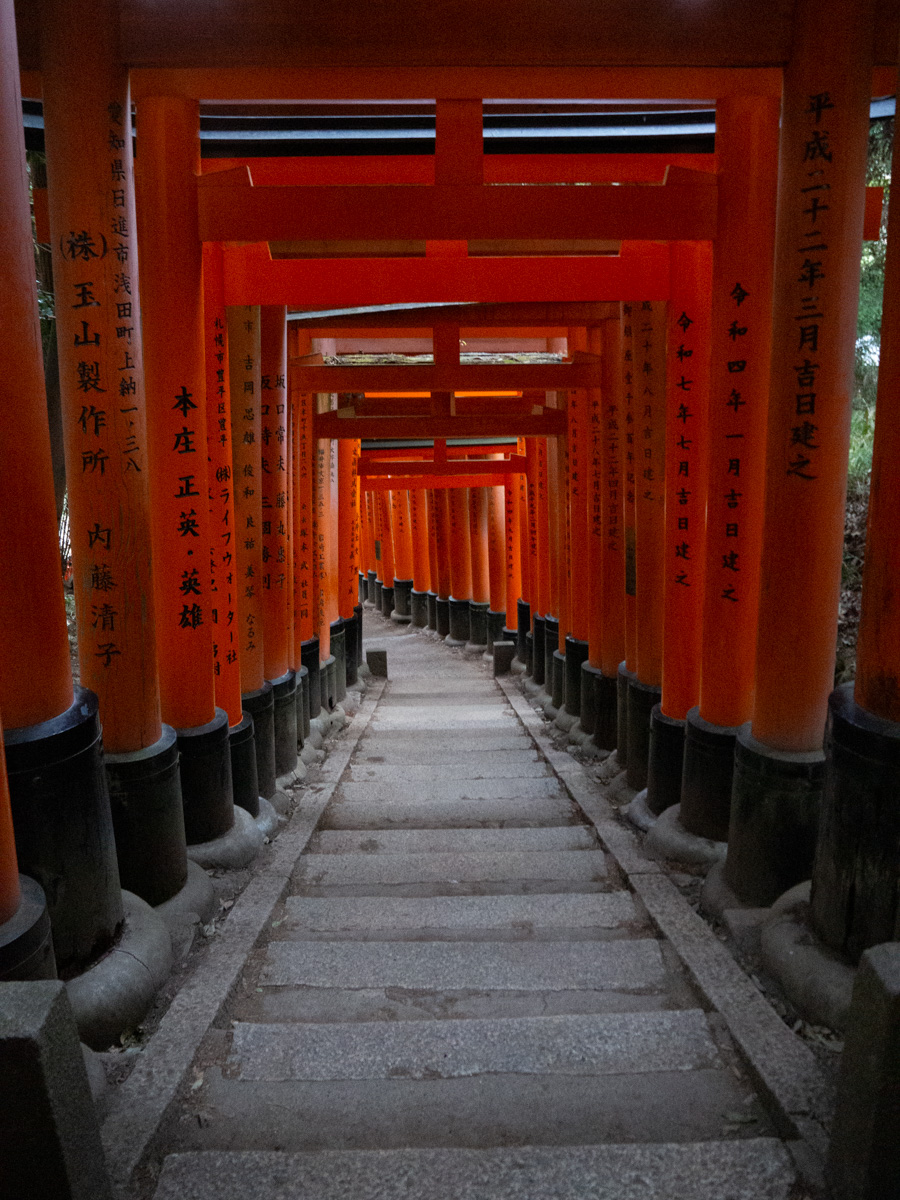
Each time we rounded a corner, there were new, interesting views. We only turned back down the hill when the light really started failing.
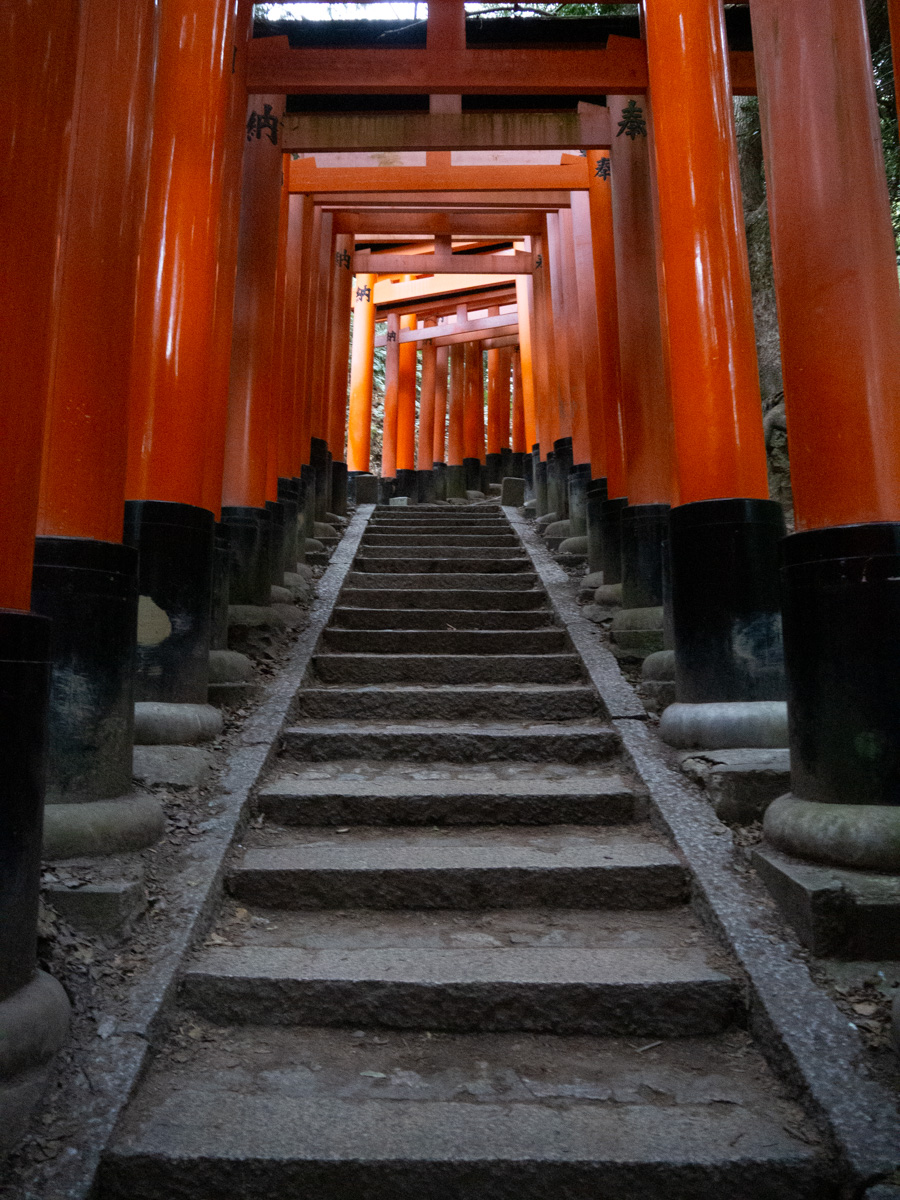
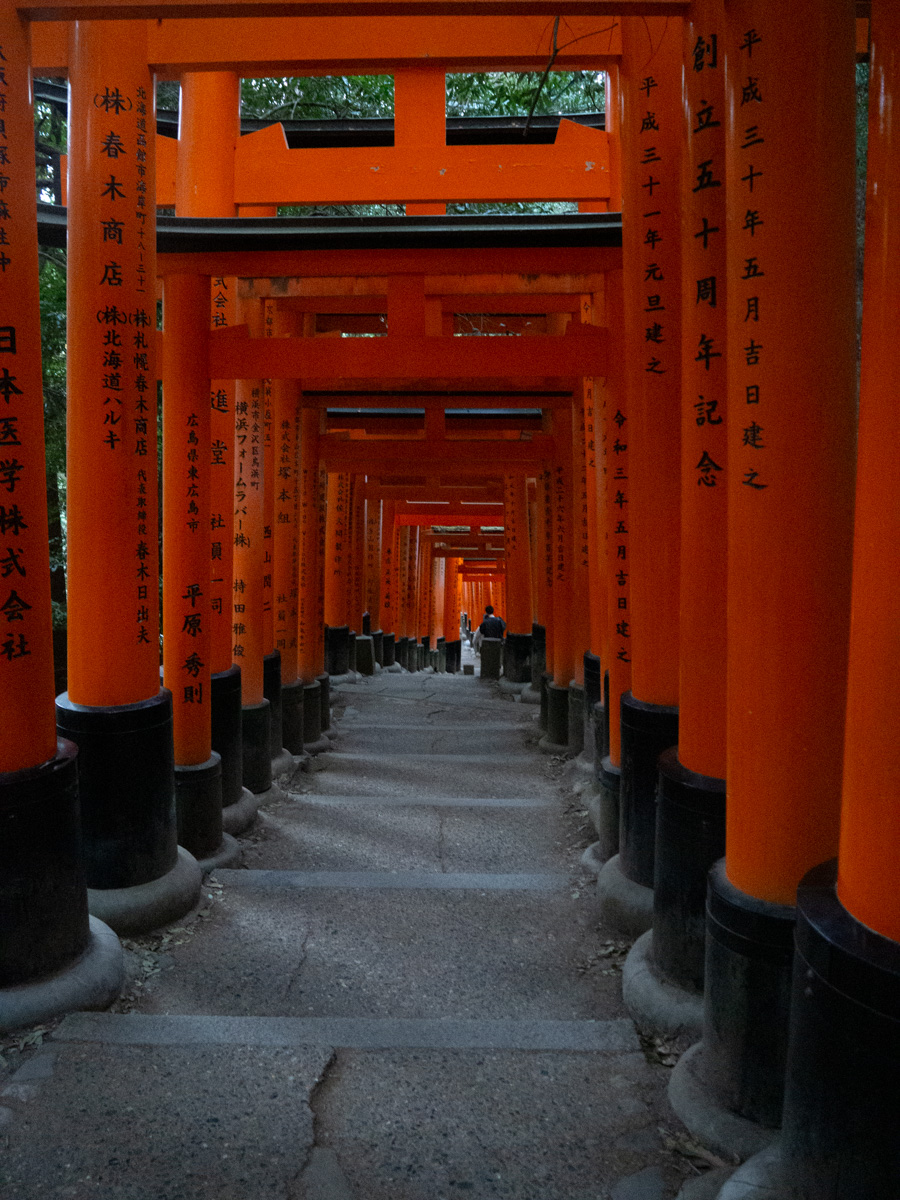
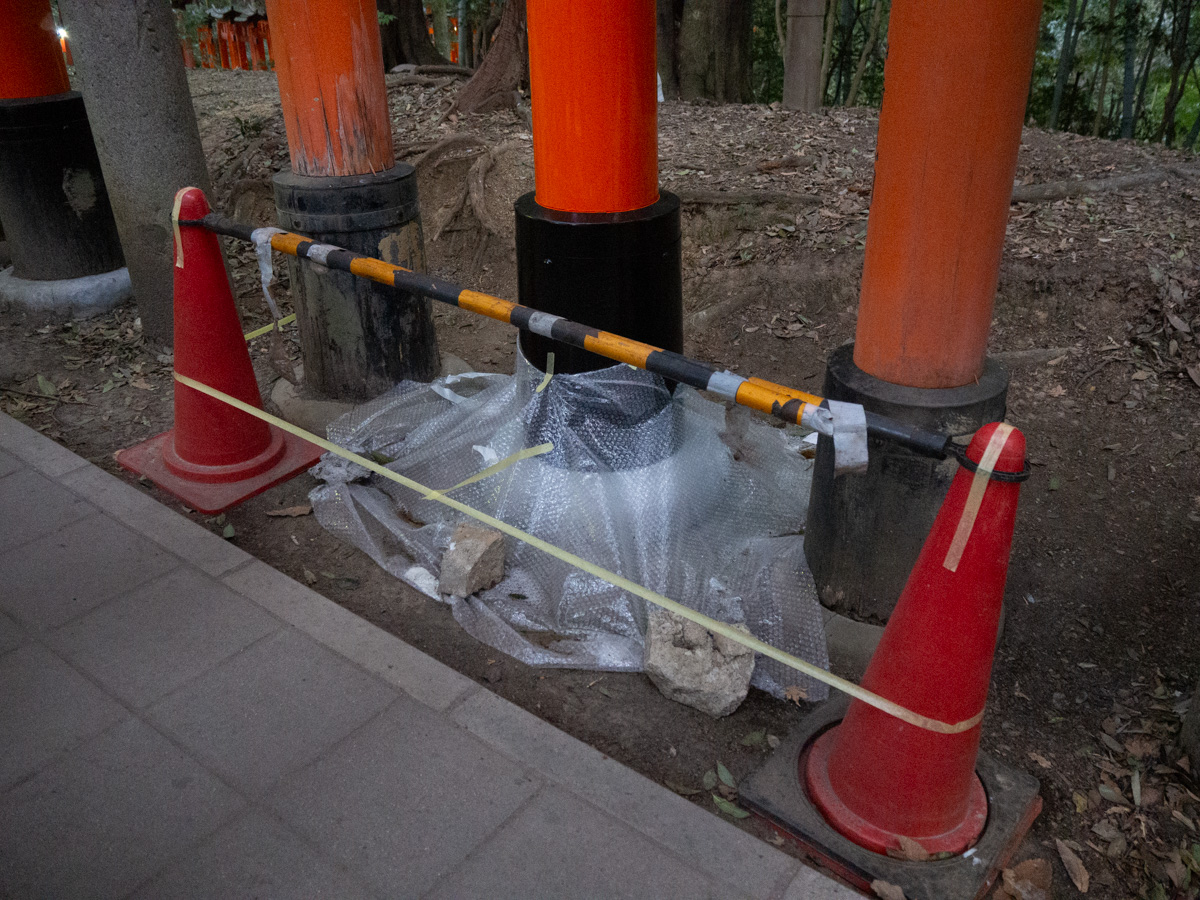
Many of the torii were bright and shiny, especially near the entrance, but further up the hill there were those that had started fading and rotting with age – as well as brand new ones that had only just been erected.
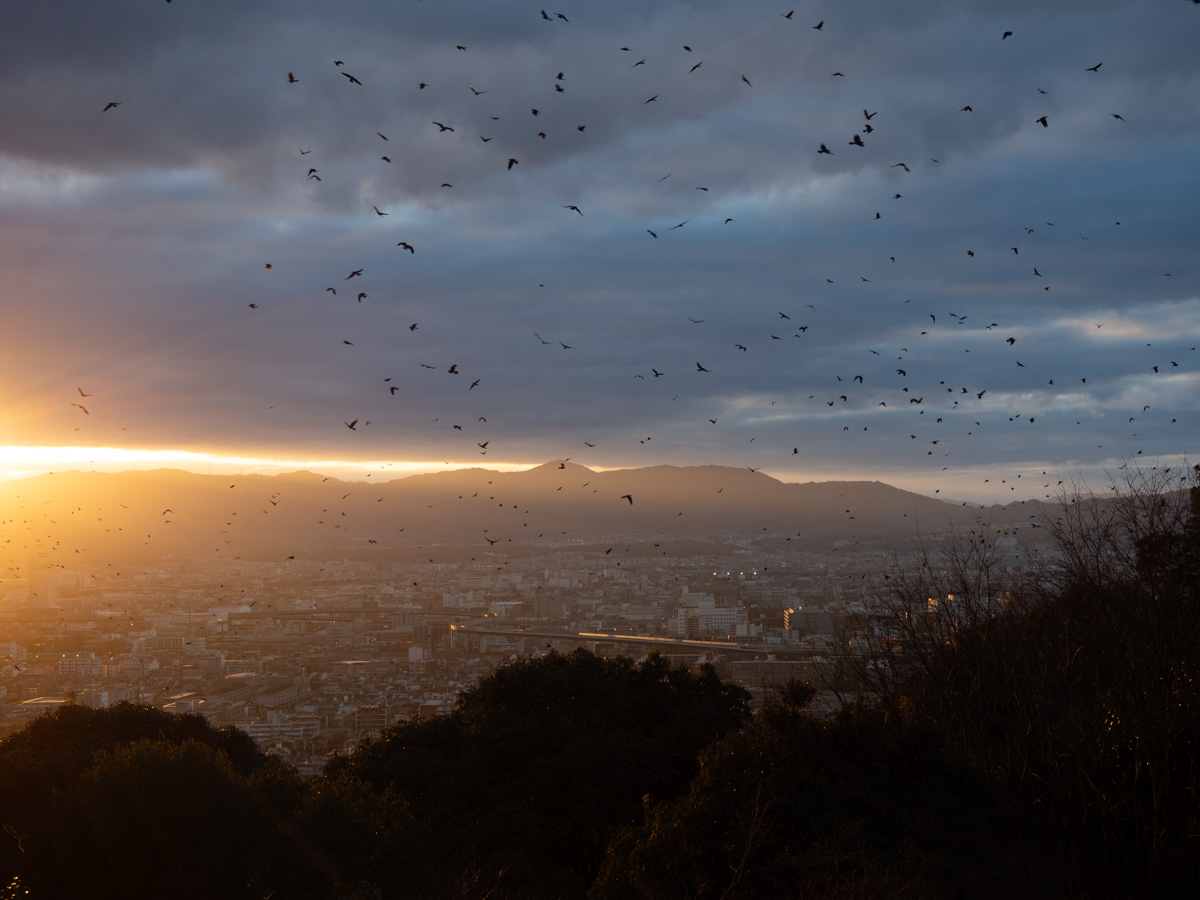
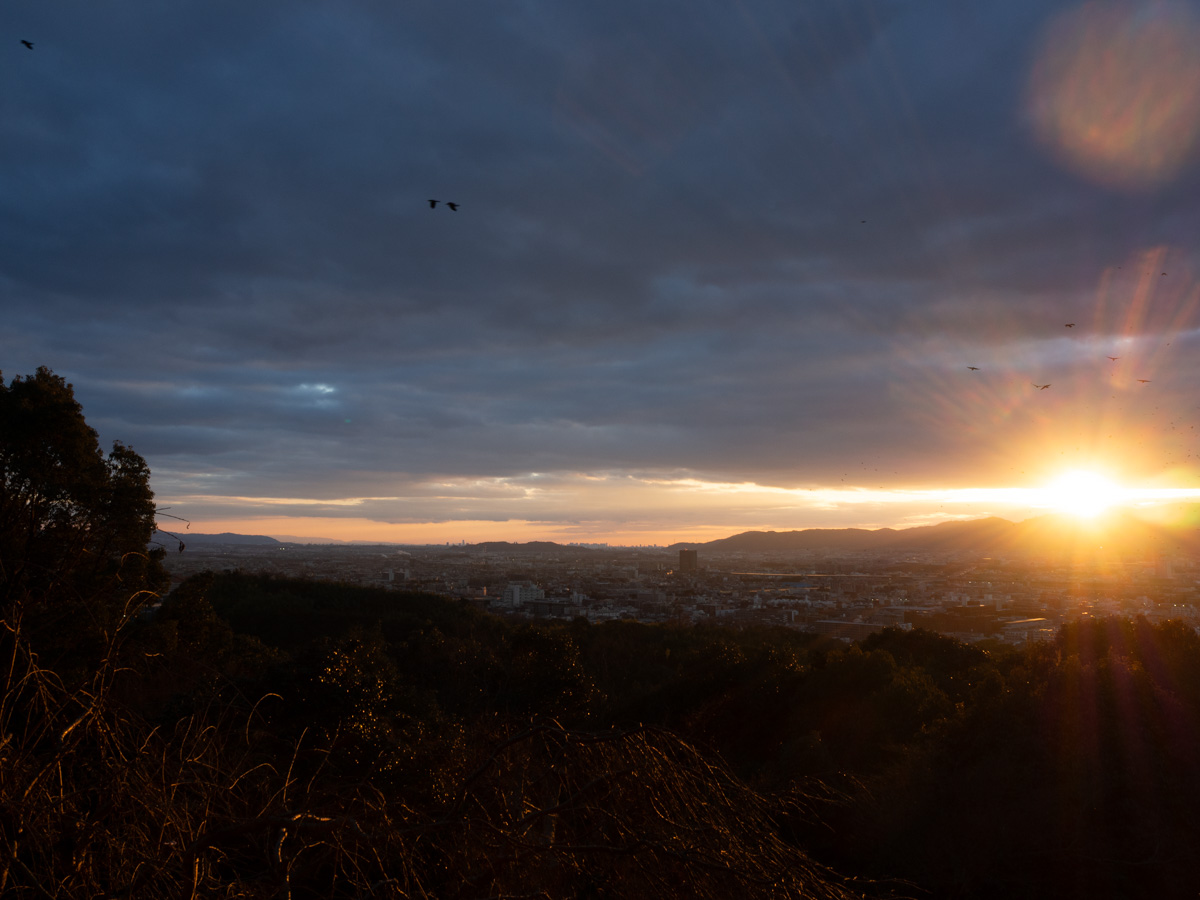
Our walk up and down the paths was accompanied by the constant cawing of crows. There were giant hordes of them here. Mostly hidden in the trees, but we saw them when we had come down to the edge of the wooded hill.
| « Older posts | Newer posts » |