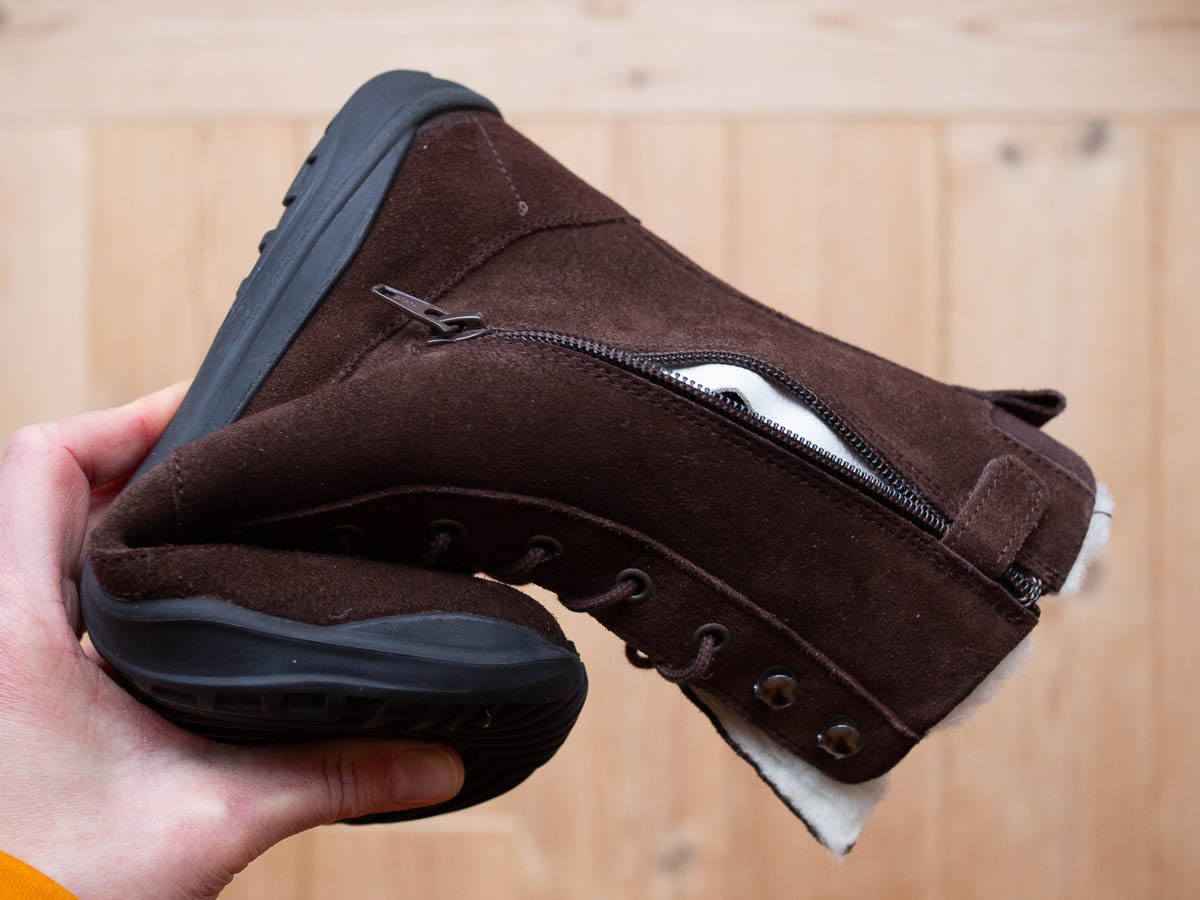
I really was going to try and not spend money on yet another pair of winter boots. But when my feet literally started cramping in the old ones, I grit my teeth and started looking for barefoot winter boots, expecting it to be a painful, drawn-out process.

I’m picky. I wear skirts and dresses so I want tallish boots; I like my footwear to look elegant rather than sporty or space-agey (although I’ve been known to make exceptions); I’ve got thick calves so I need lacing and not just a zipper.

To my very pleasant surprise, I managed to find a pair that I’m happy with already on my second attempt.

The first pair looked like clown shoes on my feet. Literal centimetres of space left over on each side of the front of the foot. When I buy mainstream shoes – although I guess I’m now at “when I used to buy mainstream shoes” – I always asked for the widest model they had. With barefoot shoes, as I have now learned, I should definitely not do that. There are shoes for way wider feet than mine.

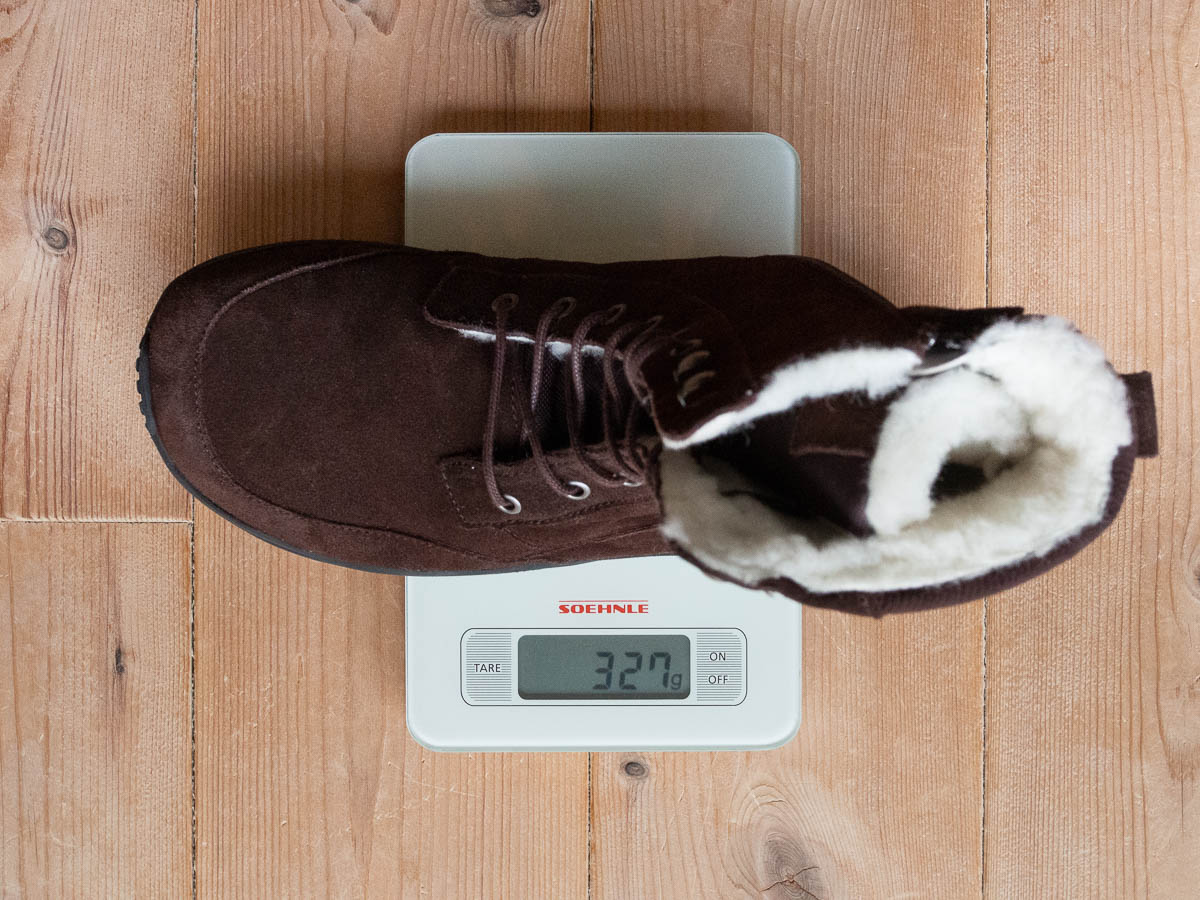
The second pair are lovely. Nice colour, soft soles, natural materials, lightweight. They weigh about 60% as much as my old ones.

With mainstream footwear, I used to be happy if the shoes didn’t straight-up hurt my feet. But it was always a relief to take them off. When I put these on, I felt like I could just keep them on around the house all day, because why not?

This was a very international experience. Free movement of goods FTW! There are a few web shops in Sweden for barefoot shoes, but there’s not a lot to choose from. The first pair I ordered from the Czech Republic; these came from bLifestyle in Germany.


I am almost but not quite coming down with a cold. The symptoms never went further than a scratchy throat, chills, and tiredness. Feeling better today than yesterday so I’m pretty sure that was that.

I’m still cold, though. I don’t like drinking tea or coffee, and hot chocolate is too sweet, so I warmed myself with a hot glass of low-alcohol glögg. It’s traditionally a Christmas drink in Sweden, but I’m not Swedish enough to care about that and can happily drink glögg all the way to February.

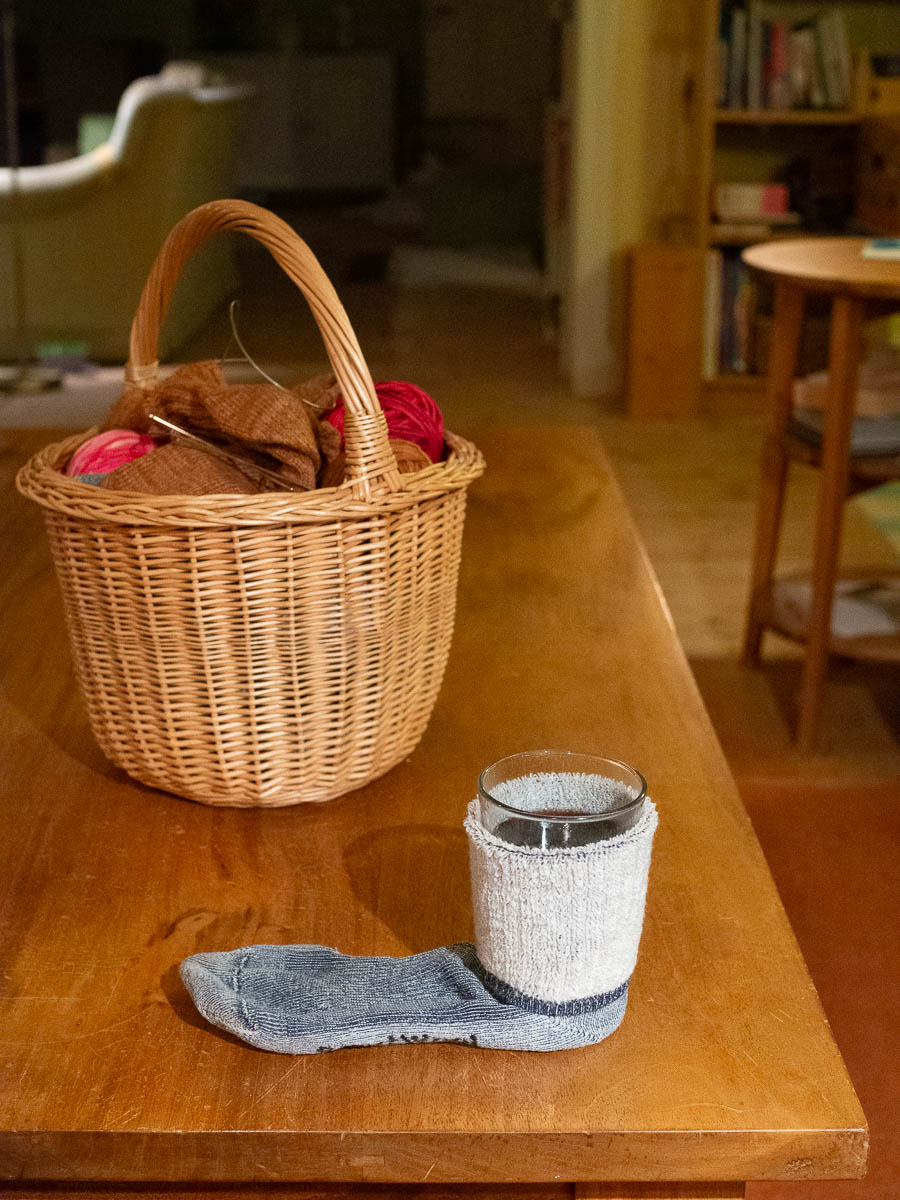
Not being used to hot drinks, I need to be careful about the temperature of my drink. Coffee drinkers are sometimes like fire swallowers – how they don’t damage their mouths, I have no idea. There’s a narrow range of temperature where it’s hot enough to warm me, but not hot enough to burn me. Hence my improvised glass cosy, to keep it in that range.

Immediately I thought – I should knit a proper one! No, I should not. I would use it literally once or twice a year at most. A sock is a much better solution.

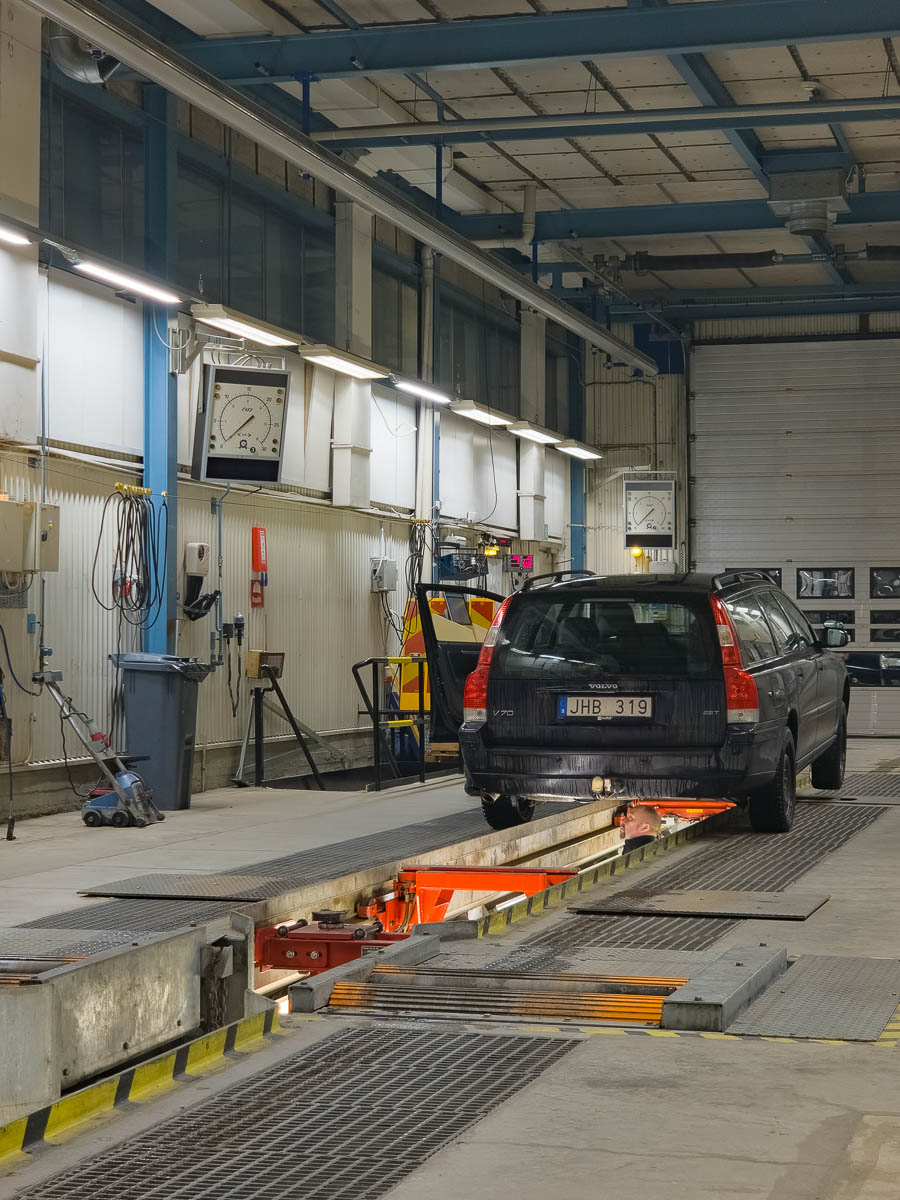
The car and taking care of it was always Eric’s thing. Now that I’m newly independent, I’m learning all sorts of new things and gaining life skills. I have replaced wiper blades (front and rear) for the first time in my life, and, today, seen what a car inspection looks like.

Verdict: the styrleder (Google says tie rods?) are worn out on both sides and need replacing. Good to know, I guess.

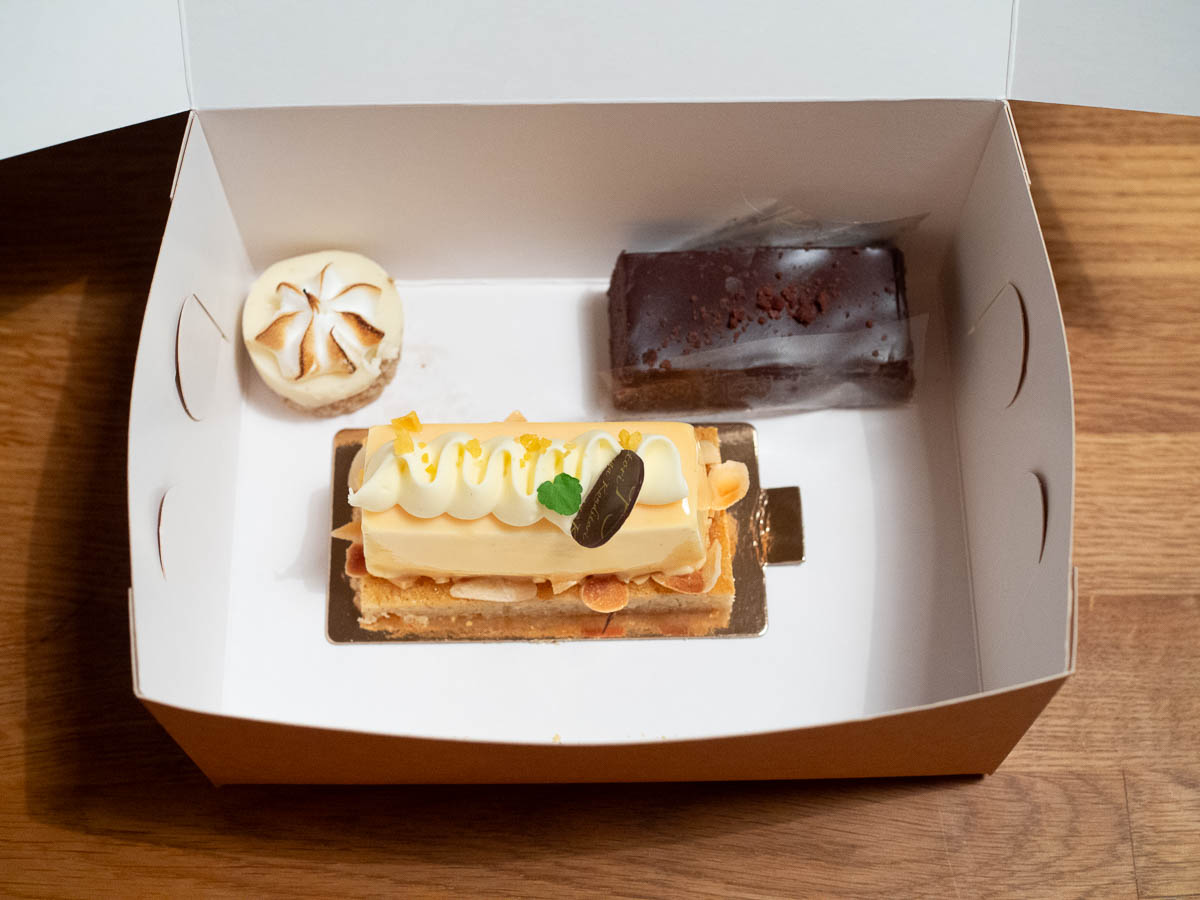
Ingrid works extra at Spånga konditori, a local café-patisserie-bakery. When she works the closing shift, she brings home all sorts of leftovers. Sourdough bread that’s too old to sell; buns that are too misshapen or have been baked slightly too dark; cakes that to my eye have nothing wrong with them at all but for some reason are unsellable. Tons more stuff gets simply thrown out.

I take a sourdough loaf to work on most Mondays and drop it off in the lunch room. Sometimes Ingrid drives round to a bunch of her friends to deliver day-old pastries. Sometimes the friends are narrow-minded philistines and say no to delicious chocolate and almond pastries, because they’ve never eaten those particular ones before, and I get take a whole box of them to serve for fika at Sortera.

Sometimes I get fancy pastries all to myself. This weekend I got a mini lime pie, a vegan brownie, and a mango/passion fruit pastry. They were all absolutely delicious.

Last Friday, tretton37 went into bankruptcy. Early last week they lost their company tax approval, and three days later they were declared bankrupt. Sad, but not the least bit surprising.

I had been hoping that they’d limp along past the January payday and I’d get my full final salary payment (accrued vacation days and flex hours) but no. Luckily the state salary guarantee will take care of about 80% of what I’m owed. I’ll only be losing the value of six saved vacation days from last year, and sixteen flex hours which were more than 3 months old.

Could have been much worse. If I hadn’t quit when I did, I’d be unemployed and frantically looking for work.

It is grey today, and it will be grey tomorrow, and it will continue to be grey forever.

The snow is all long gone, the temperature is above zero, and if it the days weren’t so short, you’d think we’ve left winter behind and moved on to not-winter-not-spring, March-ish or thereabouts.

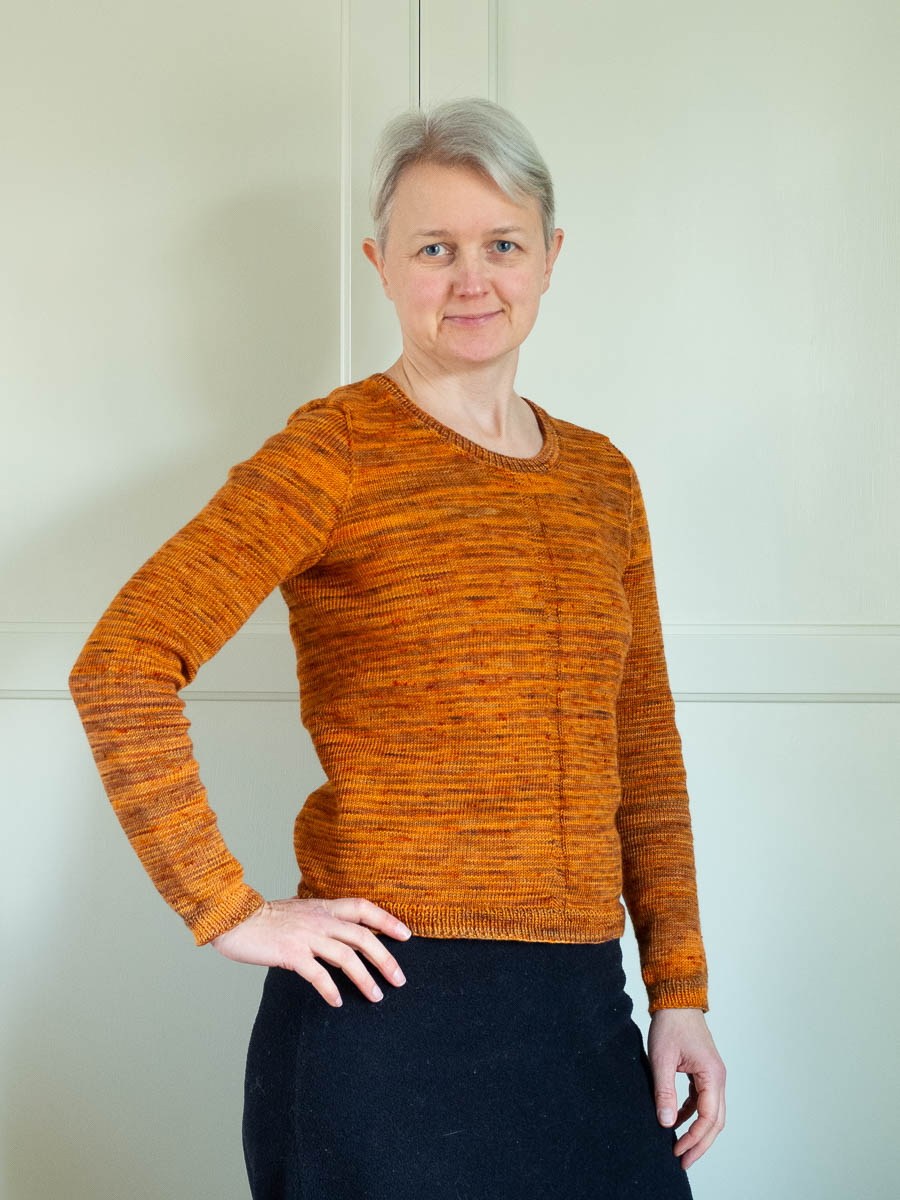
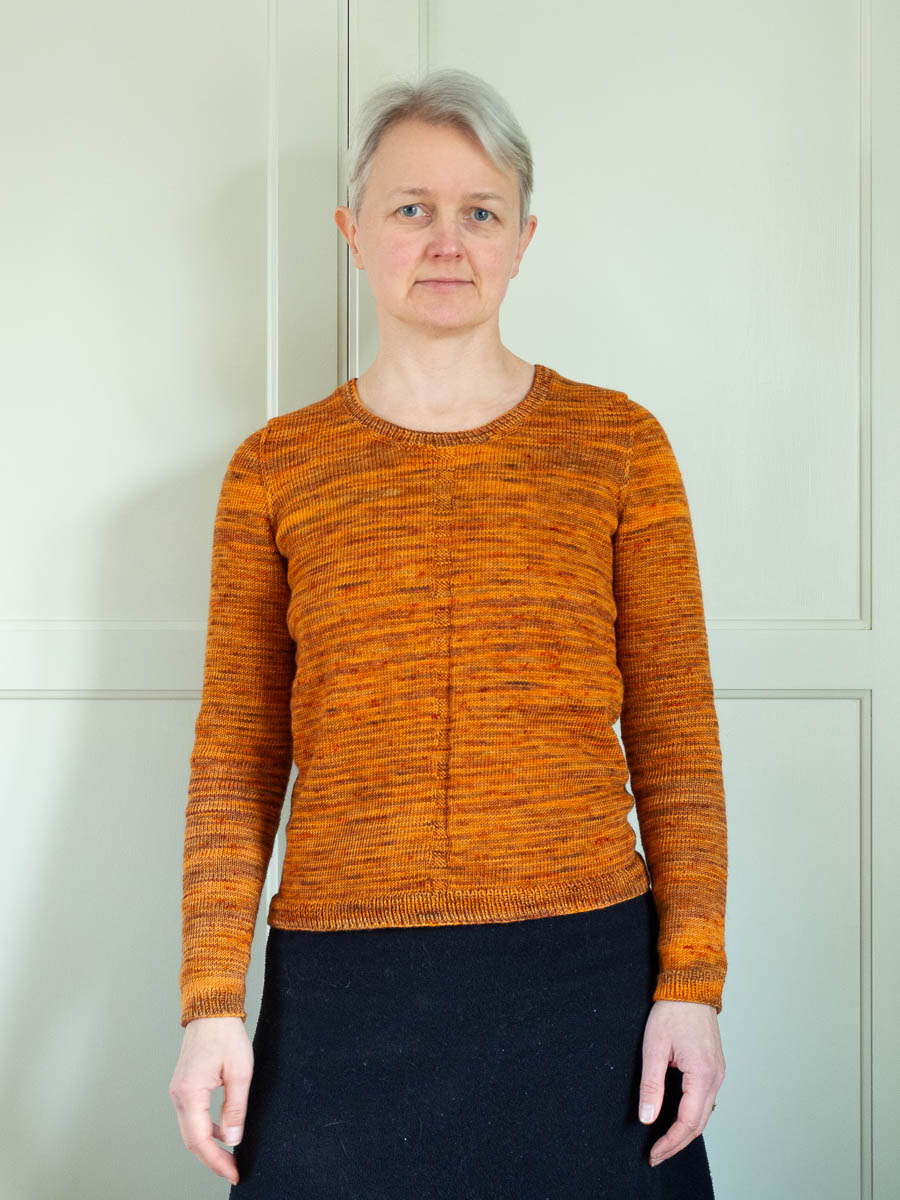
The orange sweater is done.

Like almost all the sweaters I’ve made, there are things I like about it and things I don’t.

I like the fit and the construction of the Sweatrrr pattern, which is why I’m using it for the third time. It fits me perfectly around the neck and shoulders.

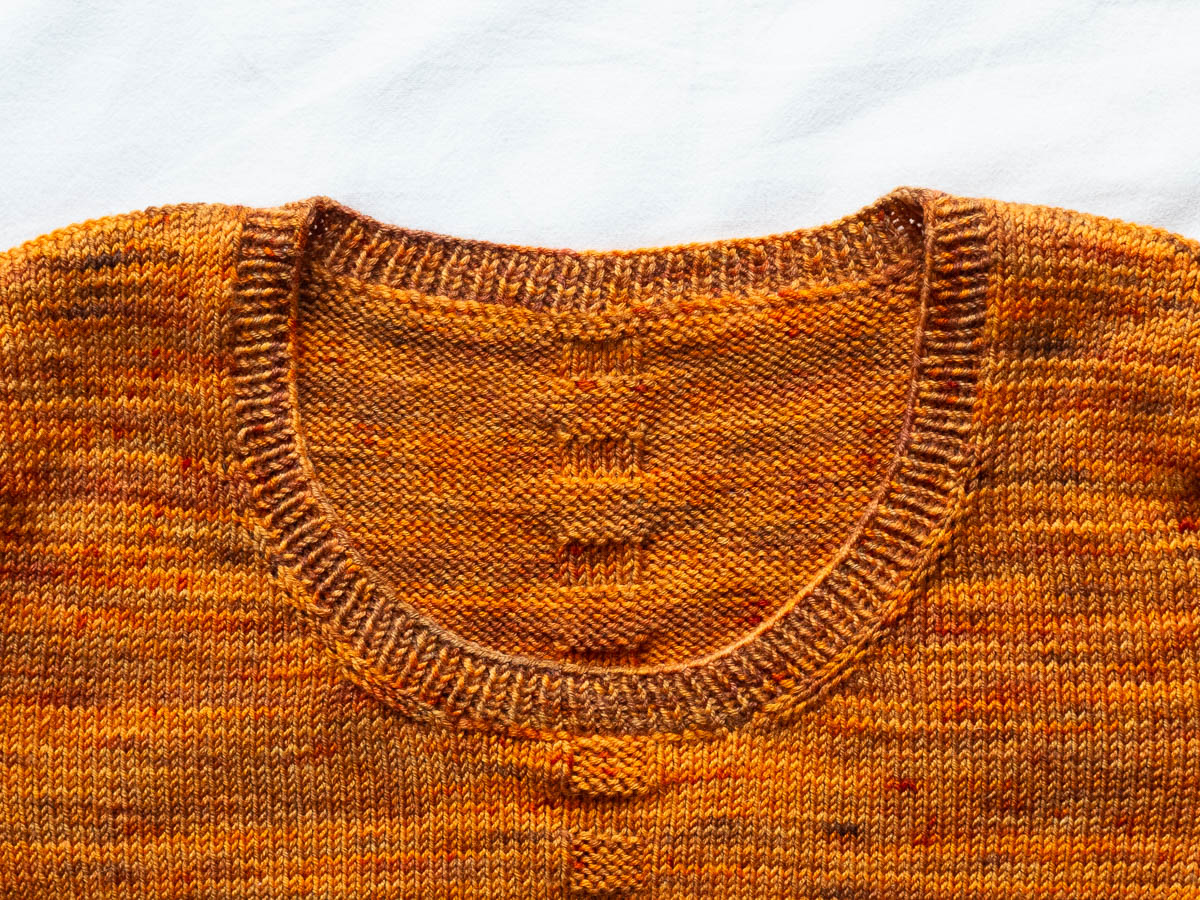
Just like last time I only used the basic construction and skipped the design elements. I used a simple 1×1 ribbing for the hem and cuffs and neckline this time. These came out really nice and tidy and look great.

The yarn is Monoceros by Apmezga, 100% hand-dyed merino. The overall colour is lovely, and the yarn feels very soft. It’s going to feel very comfortable to wear.

I’ve got mixed feelings about the yarn in the context of this sweater, though. The variegated colour worked out so-so. It led to ugly striping at first, and I did end up ripping back the body all the way to the start of the waist shaping and re-knitting without shaping. It fit better than I had expected; it drapes well enough that the boxier fit looks good on me.

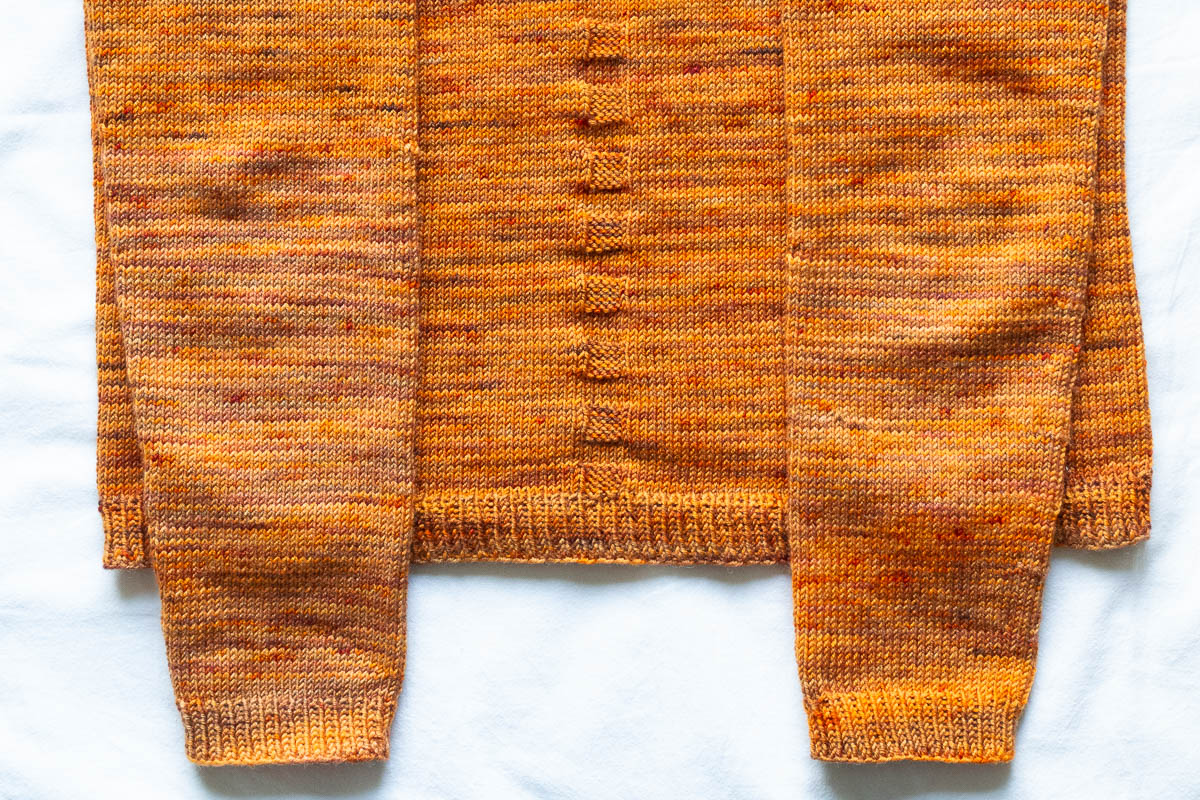
The narrower, more even stripes on the re-knitted body aren’t bad. But because they’re not in sync with the width of the body, the stripes “travel”, so they end up looking slightly slanted. When I look at the sweater straight on, it looks like I’m not wearing it straight. I’m not sure what I think of that. And I’m not very fond of the abrupt transition from wide colour blotches on the shoulders to the super narrow striping on the sleeves.

Even though all four hanks of yarn were from the same dye lot, one was slightly different. It’s missing the smallest, darkest specks of brown. I didn’t see it before using the yarn – only when I switched from one hank to the next near the bottom of the sweater. Alternating two hanks didn’t help because it was not the abrupt transition that was problematic, but the fact that the skeins just didn’t match. I ripped that back and used the deviant hank for the sleeves, and now I can barely see the difference even when I’m looking for it.

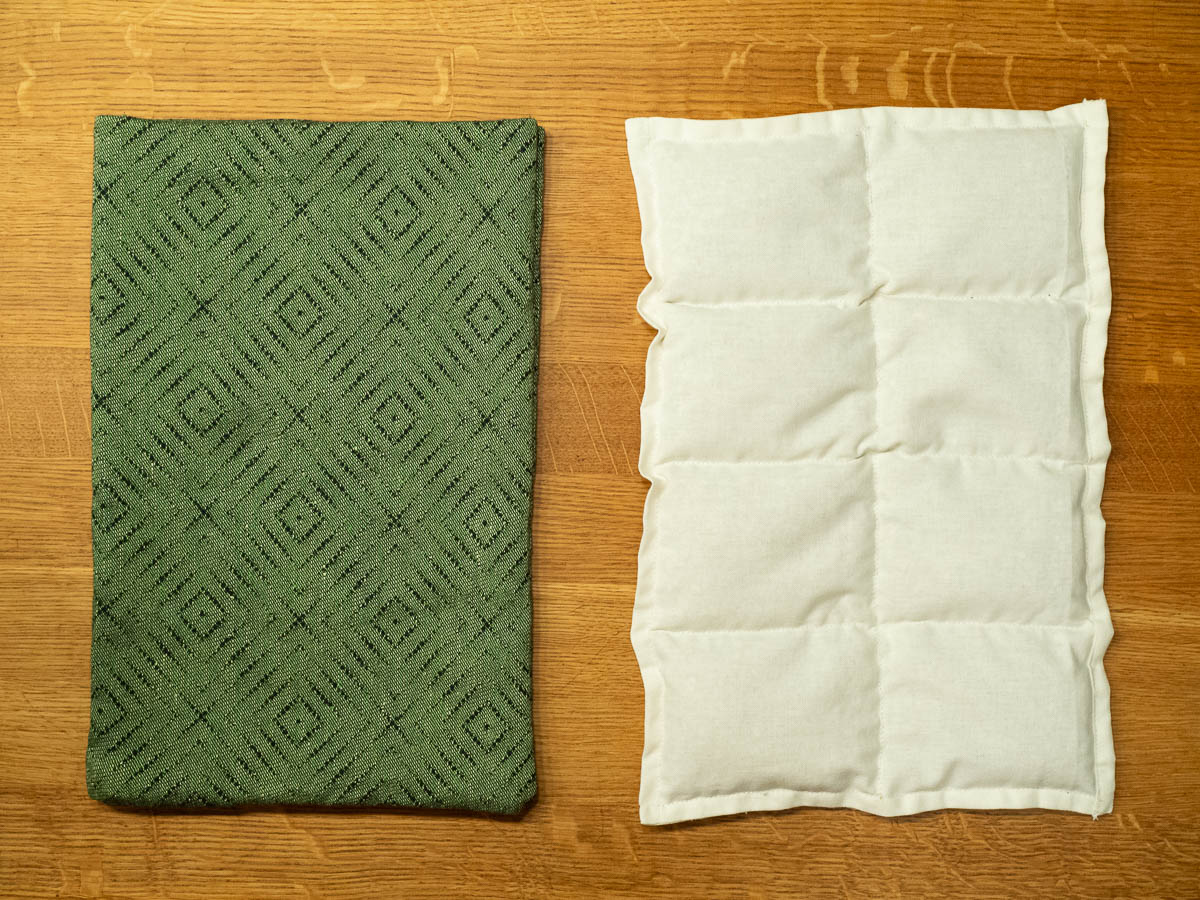
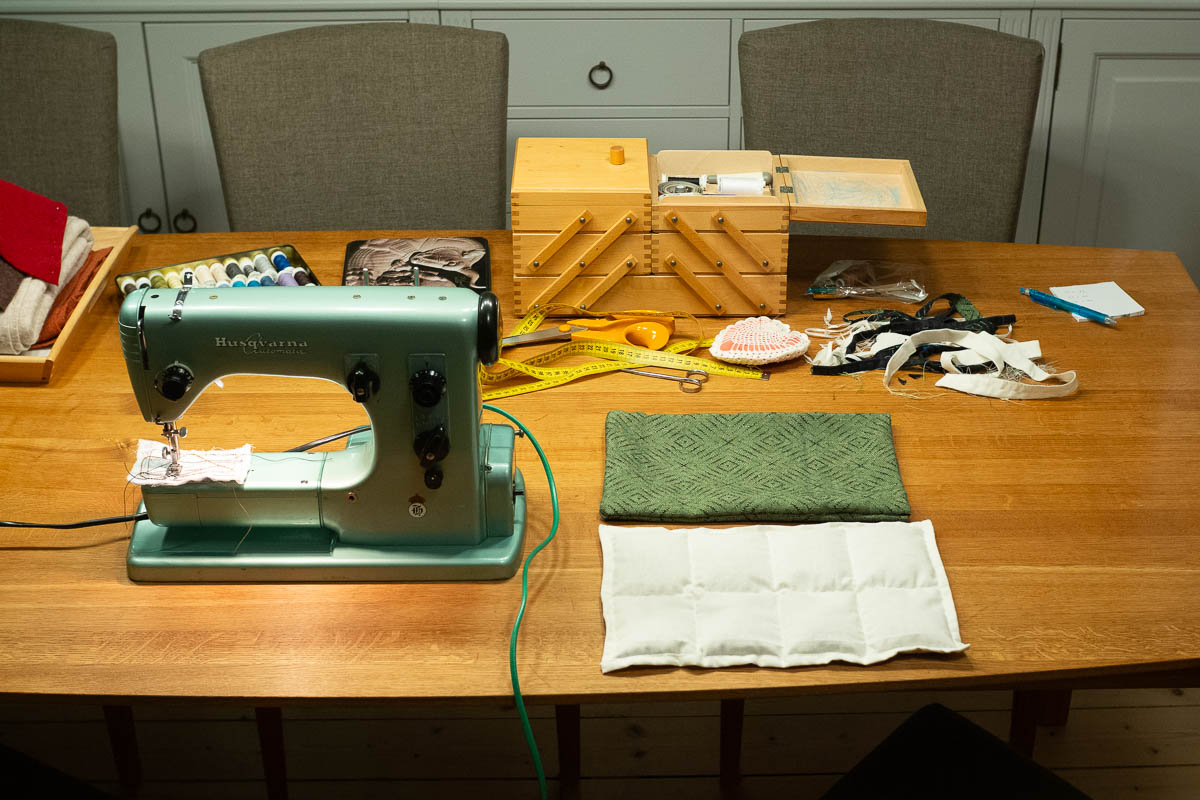
I sewed a wheat warmer. Both because I wanted one, and because this seemed like a good first project to actually make friends with the new sewing machine. (The first attempt didn’t get me very far.) A wheat warmer is small and simple, has nothing but straight seams, and doesn’t involve any challenging fabrics.


The outer covering is a barely-used towel that I think we got as a gift. I like the look of the fabric, and it’s thick and nice. It went a few rounds in the kitchen but I was always disappointed in its inability to dry things – it’s a 50/50 cotton/linen mix, and I’ve come to expect the absorbing power of pure linen. Then it spent some years in my fabric stash, and now it got a second life, to which it is much better suited.

For the inner pillow I cut up a storage bag that came with a pair of upmarket shoes. And the filling is plain barley.

Learning point (obvious in hindsight): The final measurements of the pillow are smaller than the cut measurements, even when I’ve properly calculated and measured the seam allowances, because the filling puffs it up and pulls it in. I was aiming for a slightly larger pillow. But it’s good enough. Much better than the store-bought one I had before, which wasn’t divided into pockets, so all the filling immediately ended up at one end, no matter how I held it.


I struggled with the sewing machine. So much. The bottom thread kept breaking all the time. I’d start, and sew five or six centimetres, only to discover that the thread has broken again, and rip it out and start over. Or I’d make it as far as 15 out of 30 centimetres, and then – too far from the edge to rip it all out – skip back and stitch over the last bit again.

Finally I figured out that this (only?) happened after I stopped and started. Obviously there’s a start at the edge, but I’d also stop at each pin to take it out, because I didn’t want to sew over them, and then of course I start again. Somehow at each stop-and-start the tension of the bottom thread goes wonky and it gets tangled around the bobbin axis and then of course it breaks.

With more experimentation I noticed that the problem didn’t happen if I managed to stop with the needle properly in the down position. You’d want to do that anyway for turning corners and such, not for the sake of the machine but to keep the fabric in place. For just taking out a pin it normally wouldn’t matter much. Except on this machine it clearly does.

Then I realized that the important bit was not the stopping but the starting. If I “take off” with the needle in the optimal position (all the way down) then I guess the bobbin thread gets the right tension from the start and doesn’t break. Otherwise it gets tangled for some reason.

That meant it didn’t matter so much if I couldn’t always manage to stop at the exact right moment. (I need more practice with the foot pedal for that kind of precision timing.) When I happened to stop with the needle not down, I could hand-wheel the last little bit to get the needle where the machine wanted it to be, do whatever I needed with the pins or what not, and then I and the machine would be in position for a good start.

Even though I now have a way around the problem, it’s still rather annoying to have to be so persnickety about the needle position. This doesn’t seem entirely normal, and the user manual says nothing about this kind of behaviour. But I guess I’ll live with it. We’re maybe not friends yet, but sort of getting there.
I totally forgot to post on Wednesday – Ingrid got approved on her driving test!

This was her 2nd attempt. On the first one, the instructor was a stone-faced guy who said almost nothing during the whole session, and then said that Ingrid wasn’t aggressive enough. So we practised being more aggressive, even though I disagreed with the verdict. It’s not like Ingrid was dawdling or being so slow that she’d get in the way of other drivers; she just wasn’t taking every last opportunity.

This time she had a friendly instructor with whom she chit-chatted all the way, so she didn’t even have time to be nervous, and at the end there was no hesitation when she got her approval. I think a more friendly instructor made more of a difference to the result than Ingrid’s intention of being more aggressive.

Now we’re done with the driving practice!

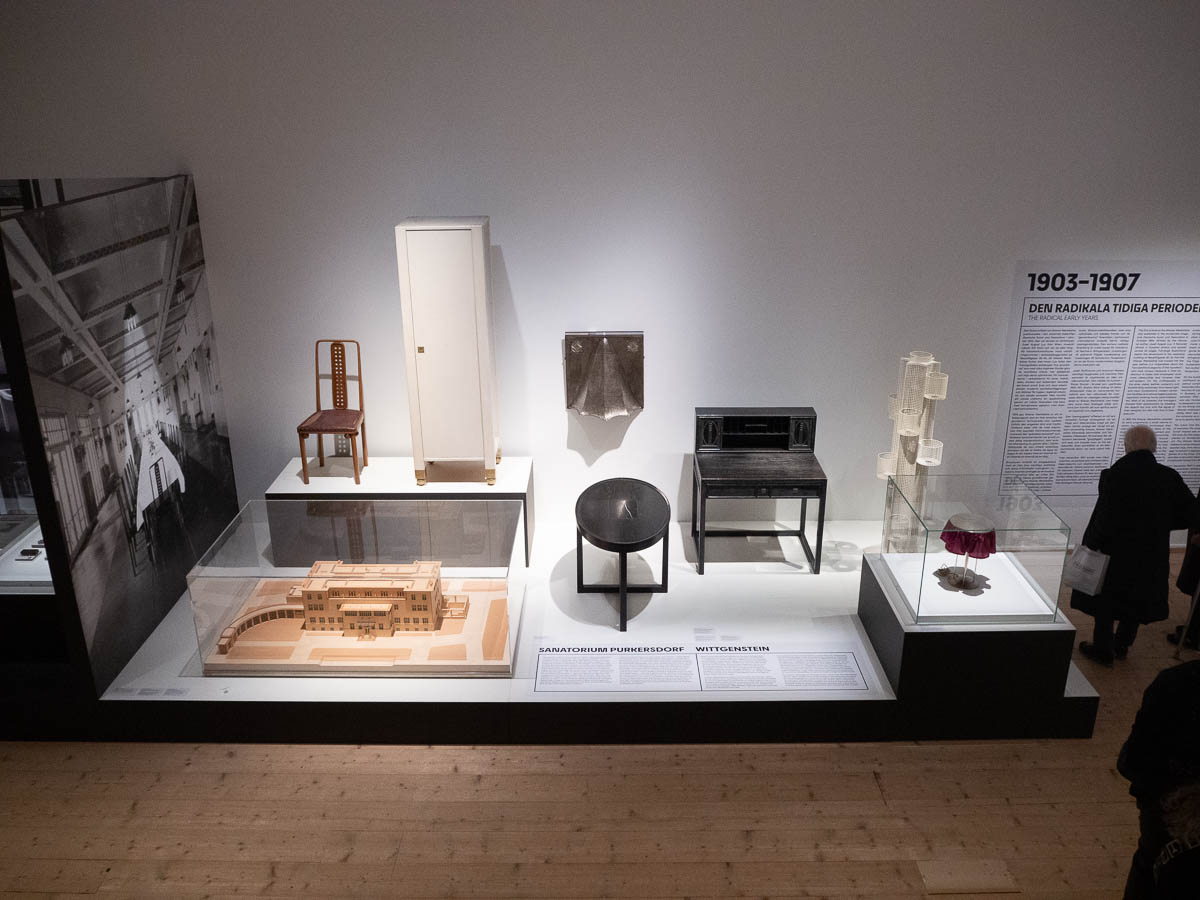
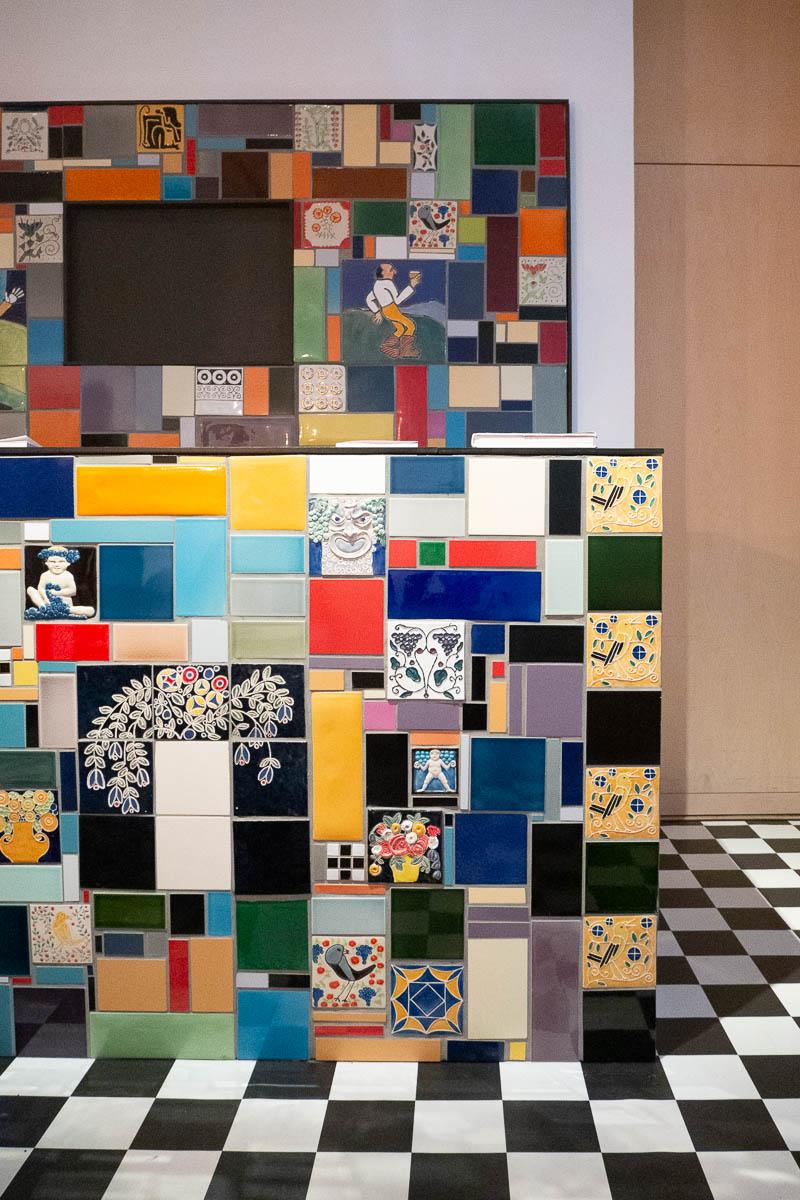
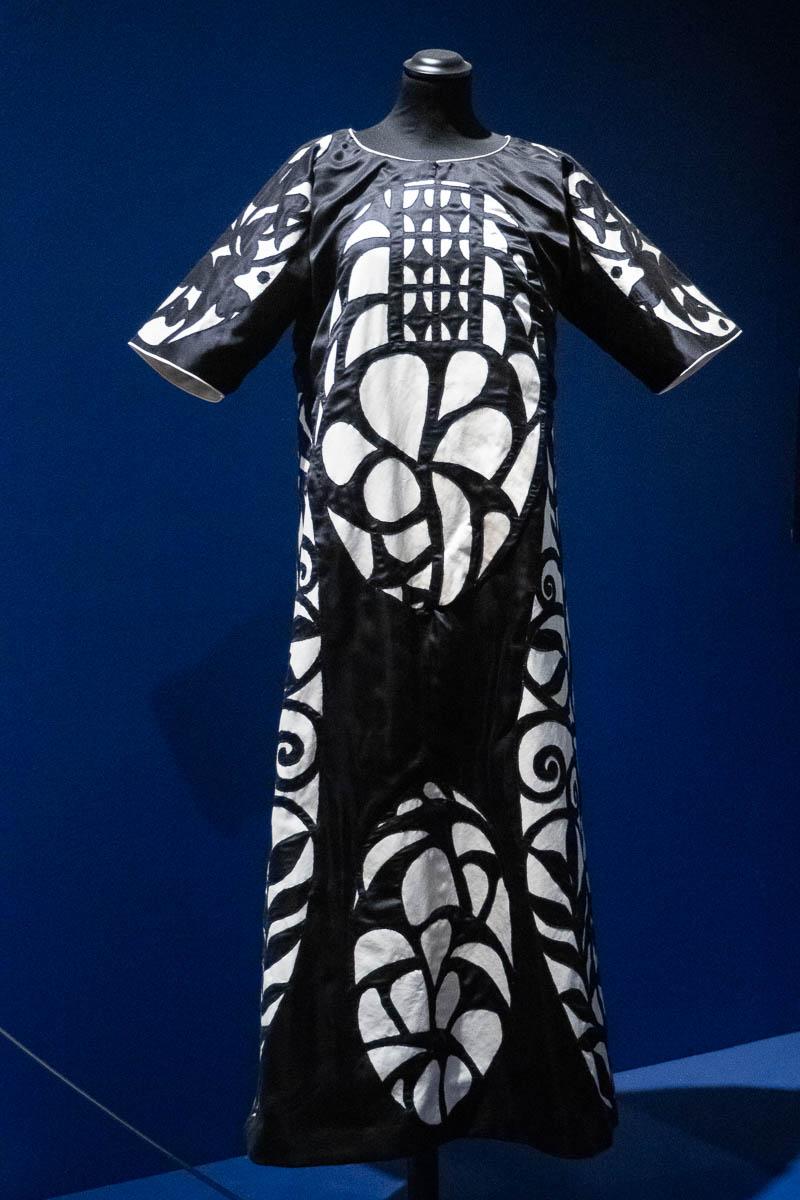
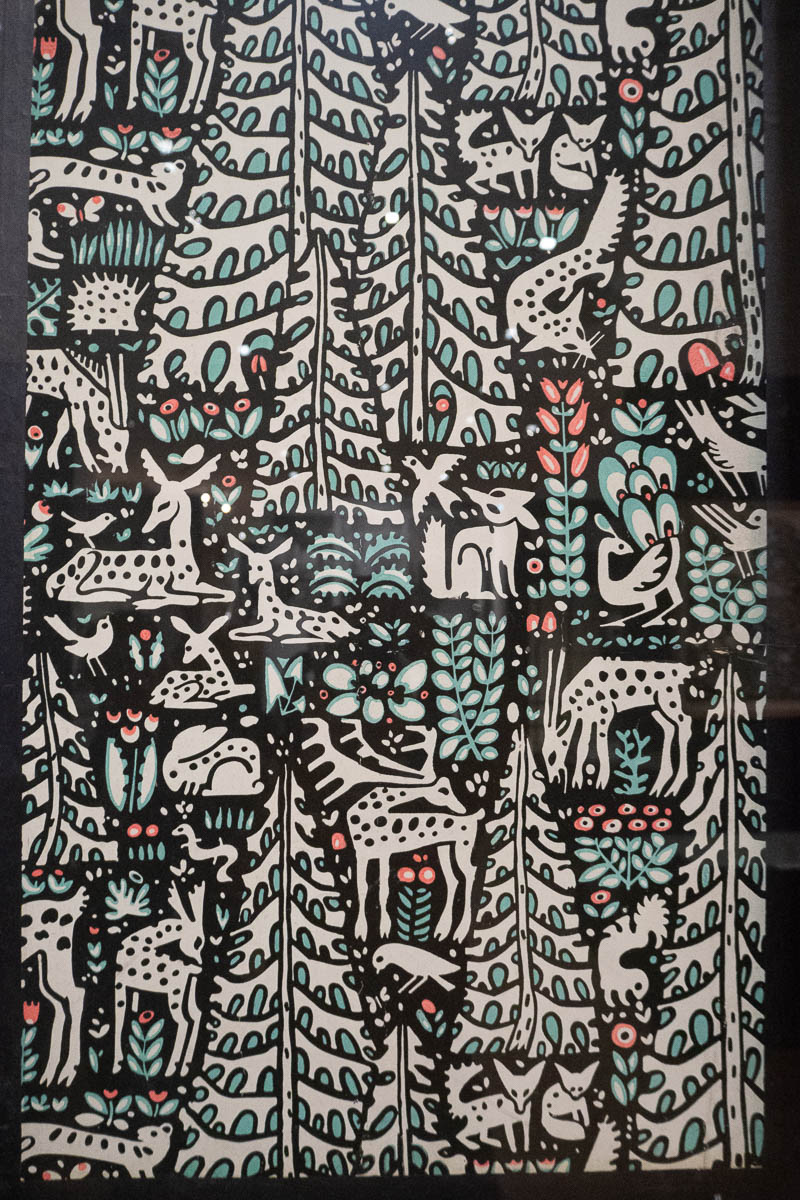
Went to see an exhibition of the work of Wiener Werkstätte, at Millesgården. (A workshop “dedicated to the artistic production of utilitarian items in a wide range of media, including metalwork, leatherwork, bookbinding, woodworking, ceramics, postcards and graphic art, and jewelry”, in Wien from 1903 to 1932.)

The exhibition was full of luxurious, beautiful objects, designed and made for a very different time. Their style must have felt radical back then. But I can see why they went bankrupt.

The story about the cooperative workshop and their ideology of Gesamtkunstwerk and raising design and craftsmanship to be equal with art was interesting. I couldn’t make sense of their actual design principles, though.

The first parts of the exhibition present them as valuing function strictly above ornamentation – furniture with pared-down lines, much black and white, logos and graphical design with pure geometric forms only.

But then the bar of the Fledermaus cabaret – reconstructed in its full glory – is almost psychedelic in comparison.

There’s an austere black-and-white masquerade gown, next to a wallpaper embroidery design that is all full of extra everything.

Pretty, but also confusing and thus somehow unsatisfying.