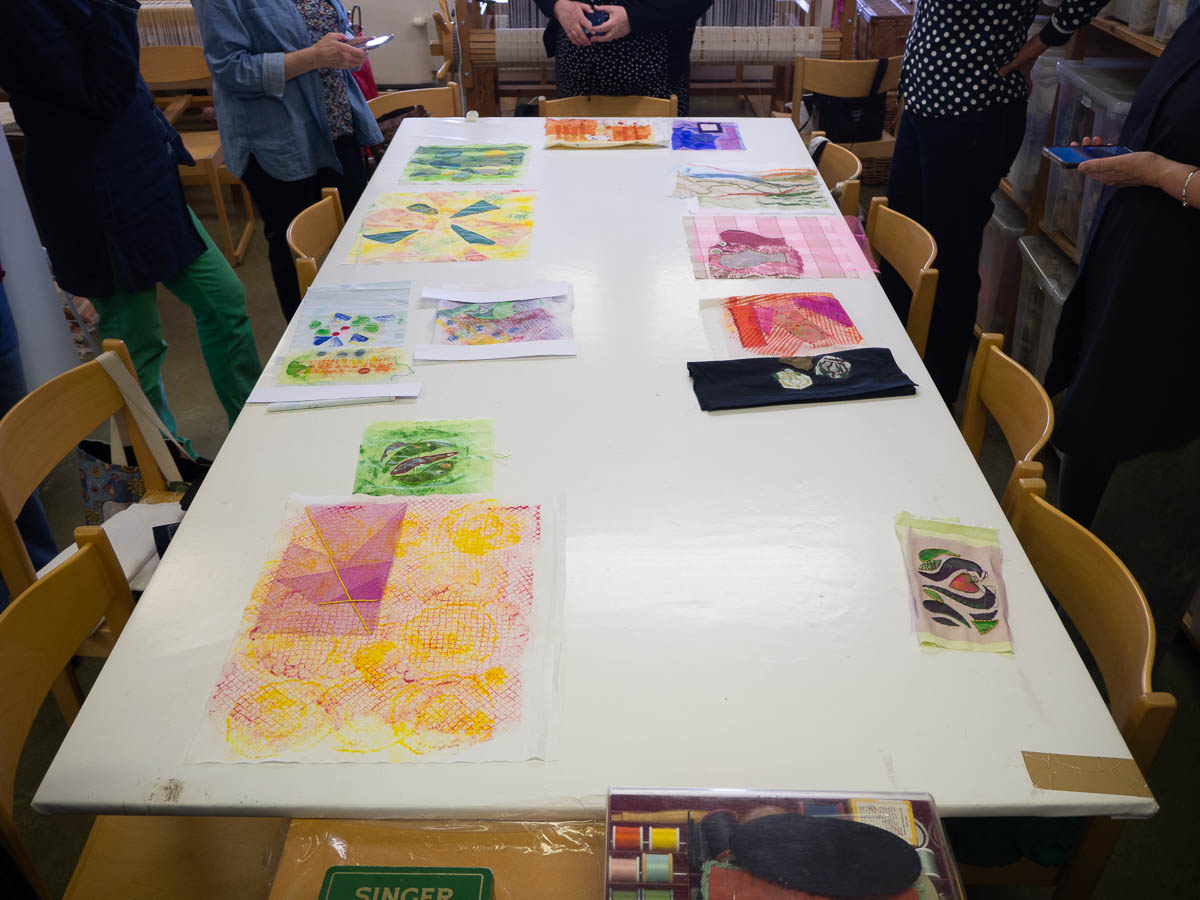
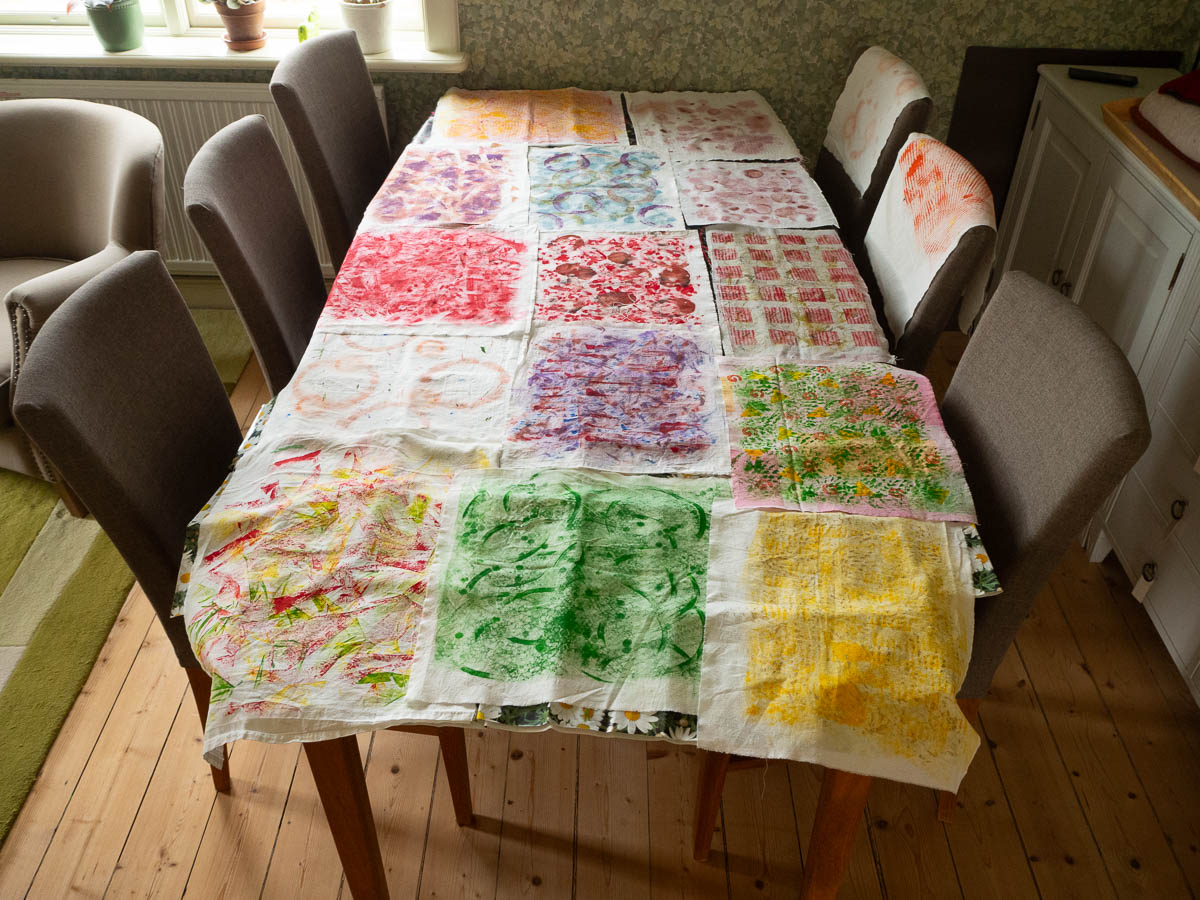
More photos of the results of this weekend’s textile printing workshop. I want to remember what we did and note down some of the key things I learned, so I can do more of this in the future.

The traditional way of making patterns on fabric, in my head at least, is that you first put paint on an object of some sort, such as a stamp, or a leaf, or whatever, and then press that object to the fabric. We did a little bit of that, but I didn’t find the results too exciting. It’s very intentional, and you tend to end up with very regular patterns. You don’t have to, of course, but these designs tend in that direction. The regularity and repetition of it makes my brain itch and I just want to mess it all up and make it more random and unpredictable.

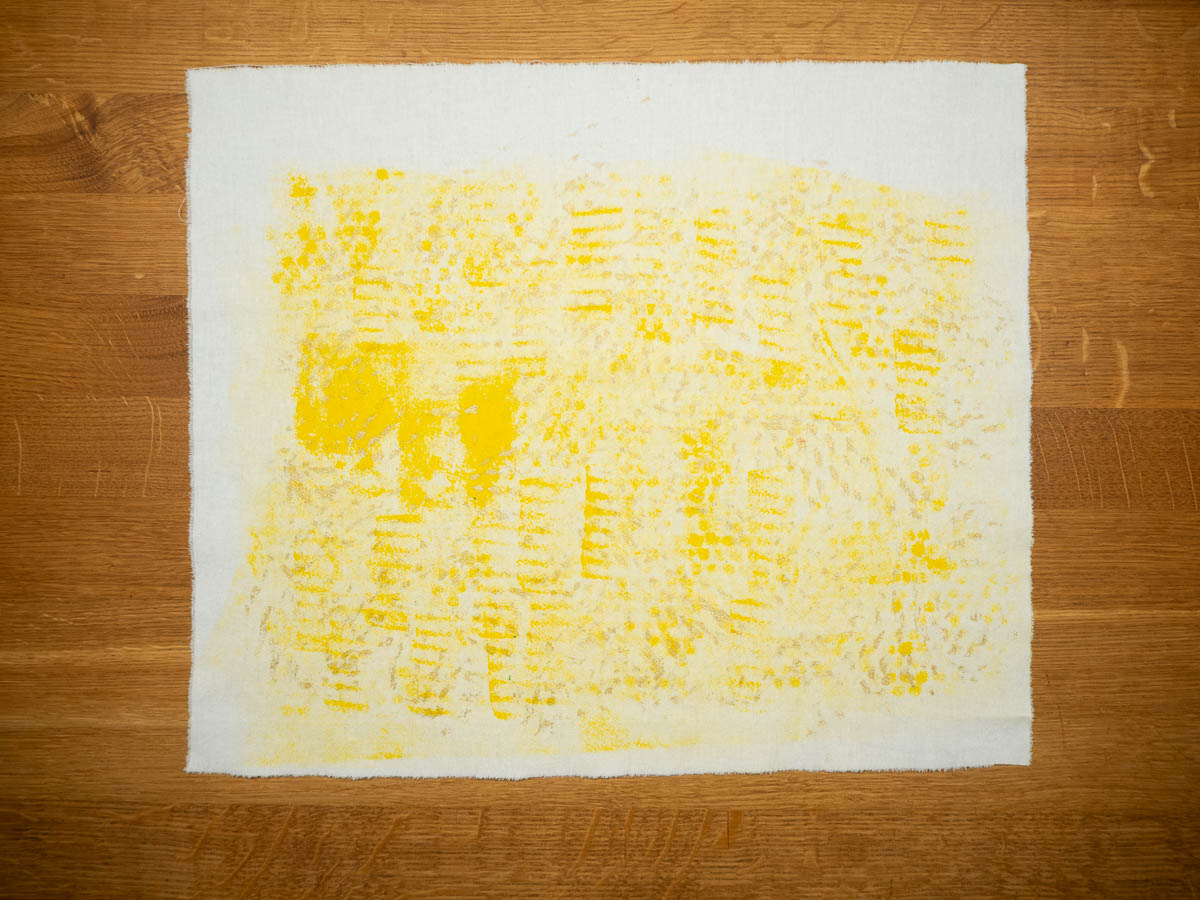
Here’s my one and only stamp print from the workshop. It was the day’s warm-up exercise, on scrap fabric from the workshop leader, and I knew right then and there that I wouldn’t be doing any more of that.
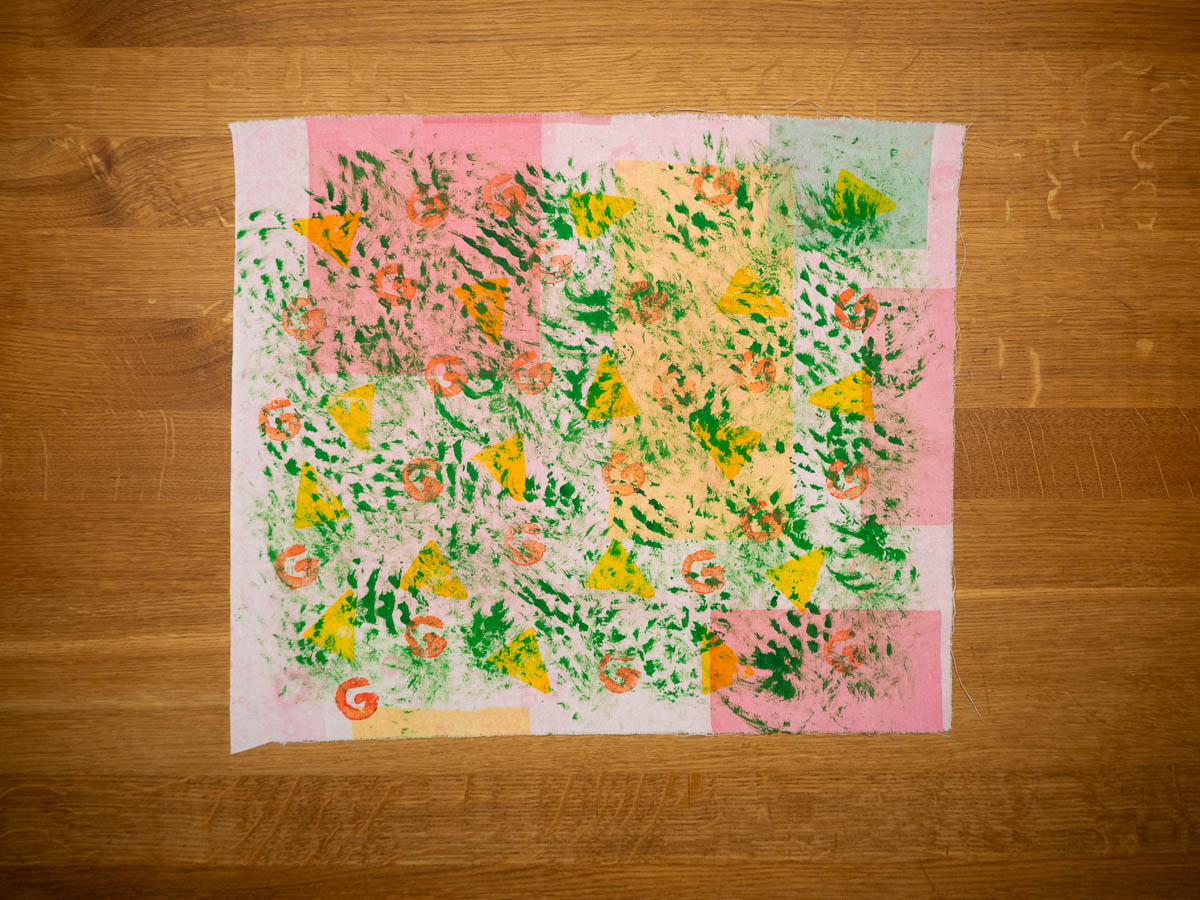
Learning #1: instead of putting objects ON the fabric, put them UNDER the fabric, and then run a roller over the fabric. The stuff under the fabric presses it up against the roller, so the fabric gets paint where there was stuff, and little to no paint where there wasn’t. And you can do this with just about anything.

Corrugated cardboard:
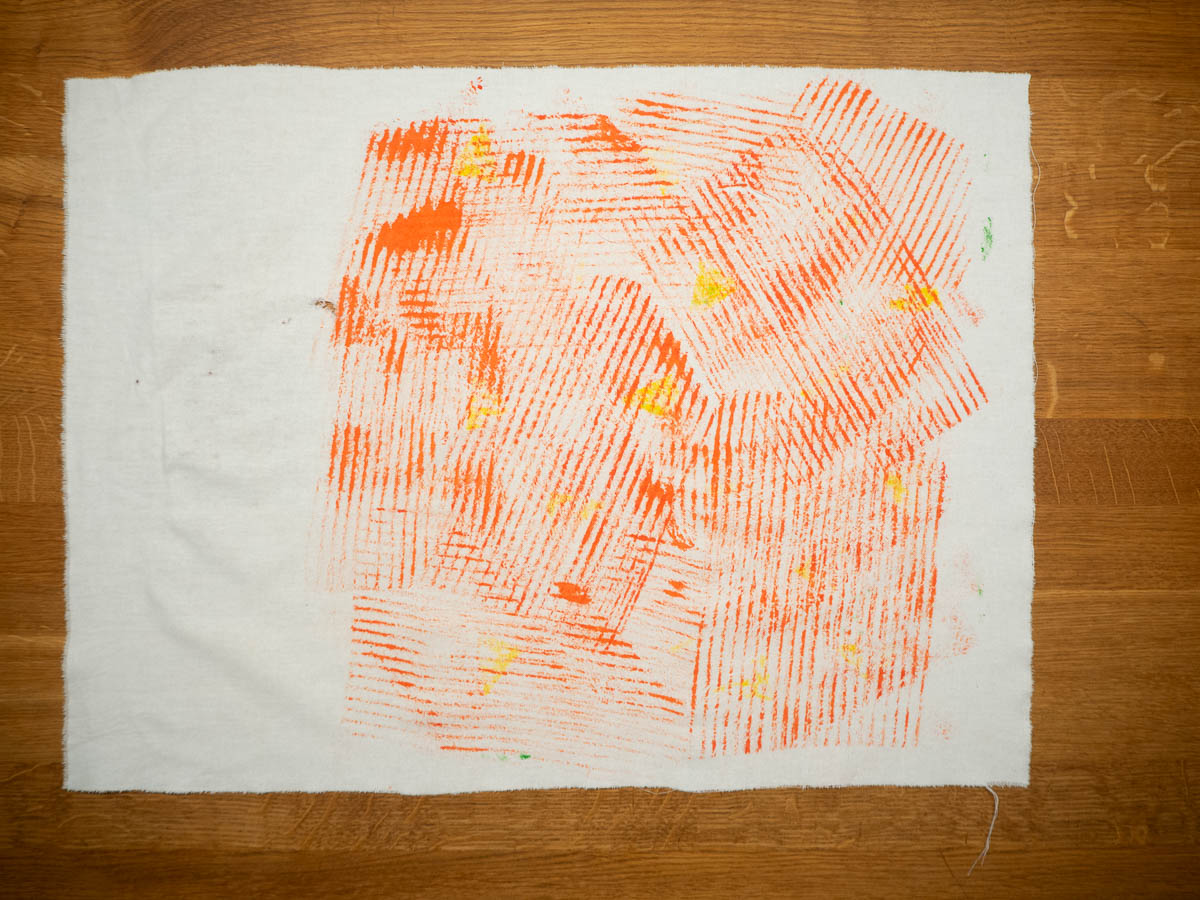
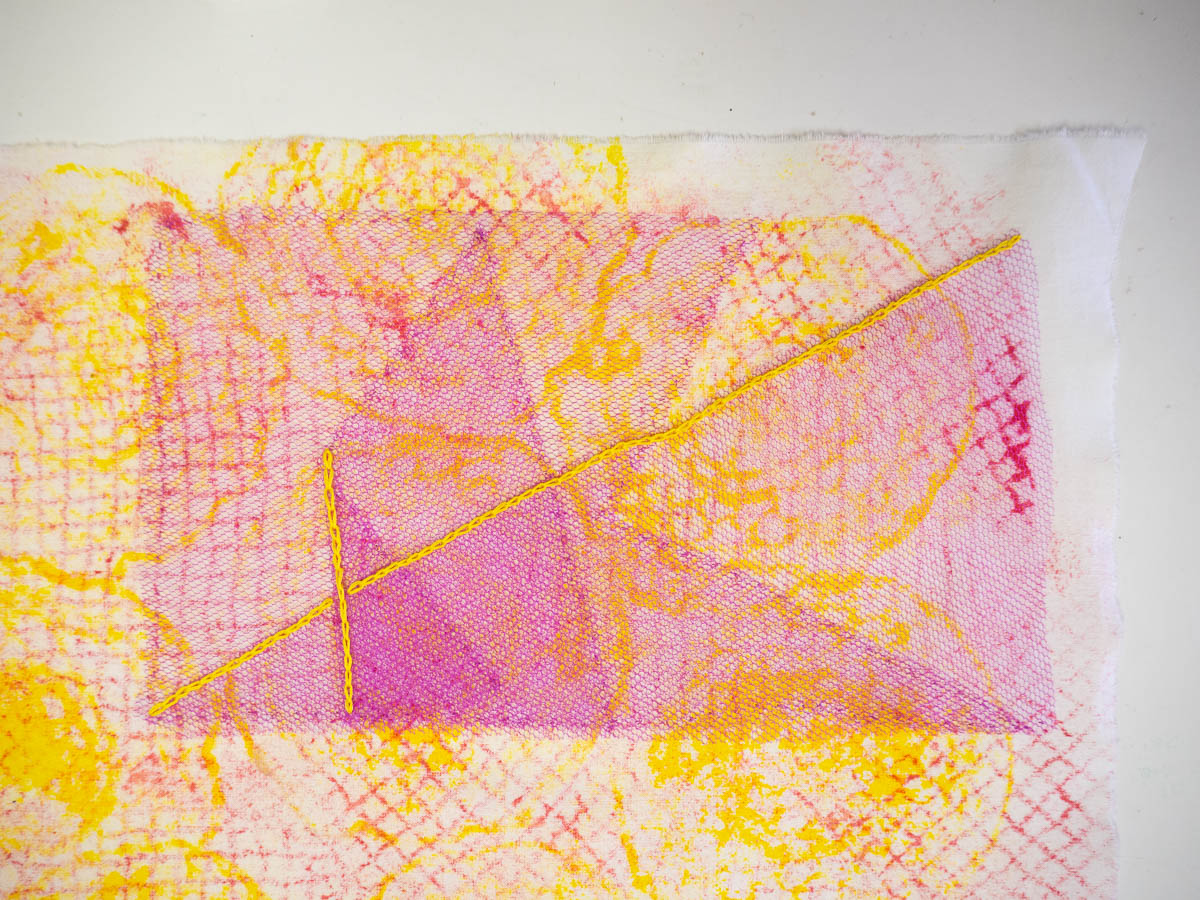
Old crochet doilies:
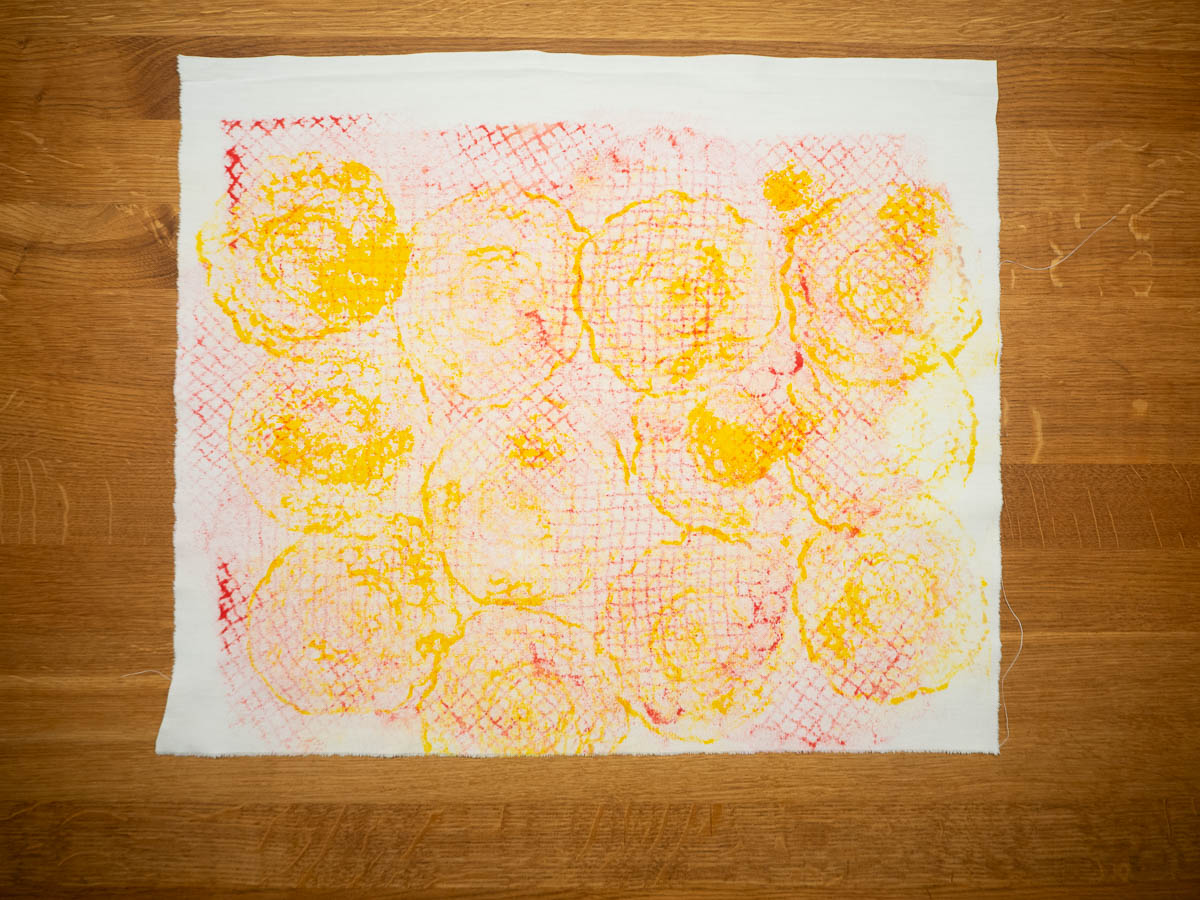
You can combine them, with different colours for different objects. You can move the objects around, so a tiny piece can make prints on the whole fabric. You can roll over just a part of the stuff, or roll at an angle.

Bubble wrap and a roll of masking tape:
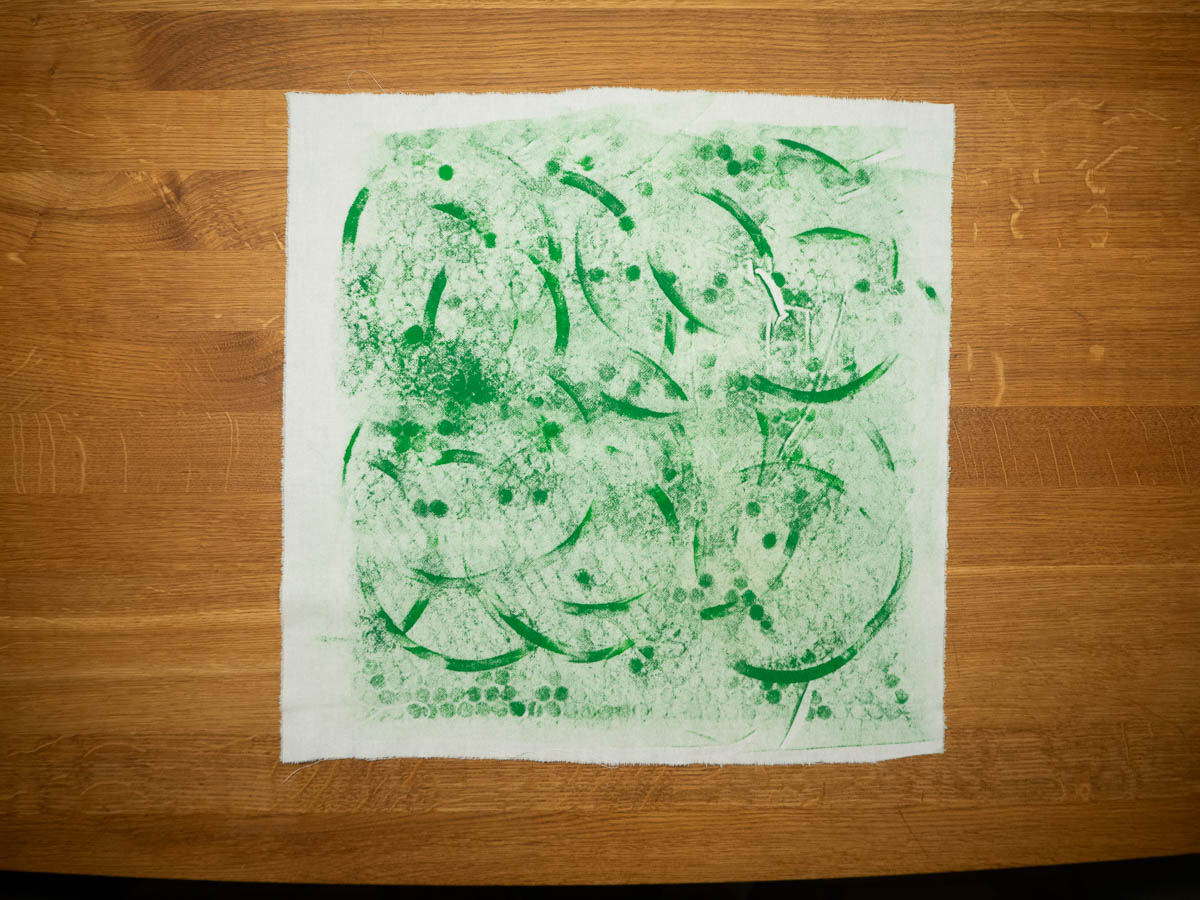
Jumbled-up strips of bedsheet hems:
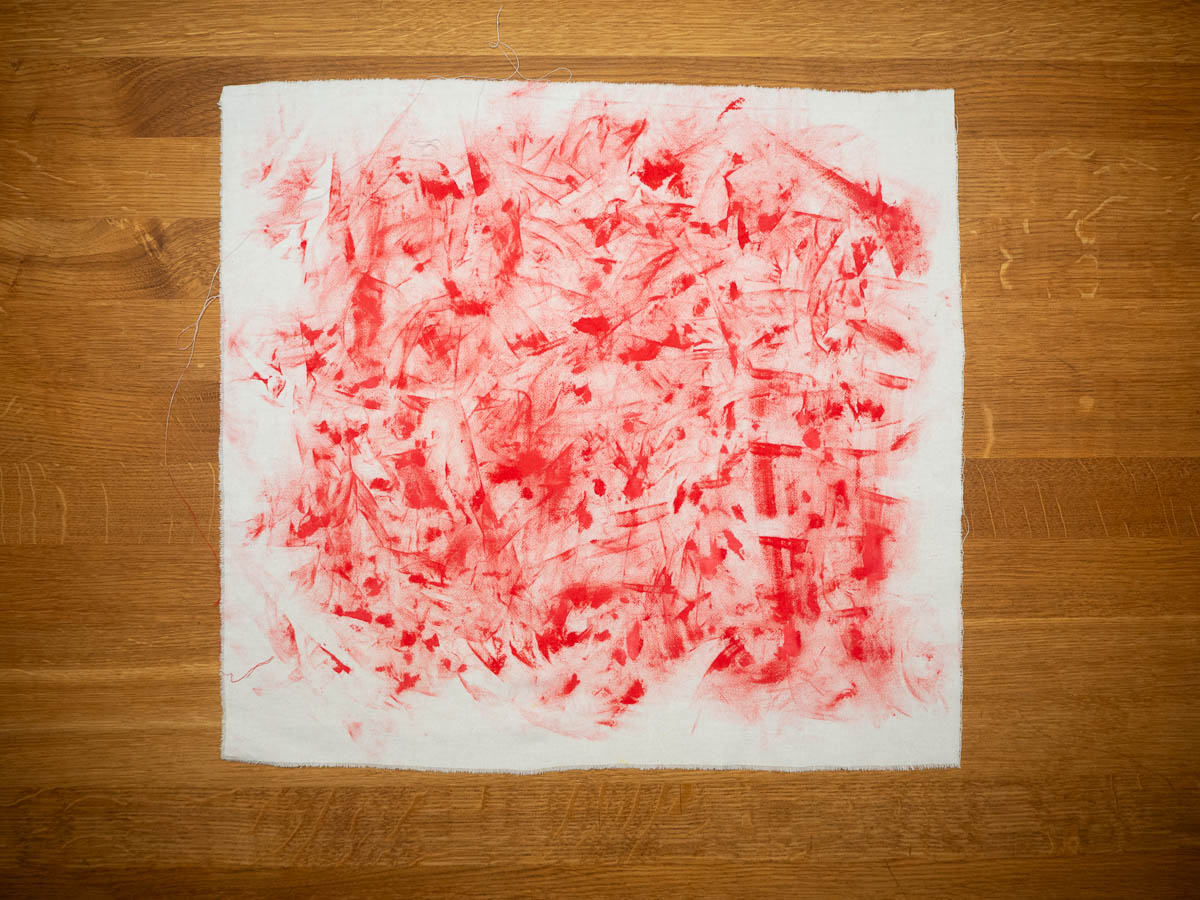
Roll of masking tape and jumbled-up strips of bedsheet hems combined:
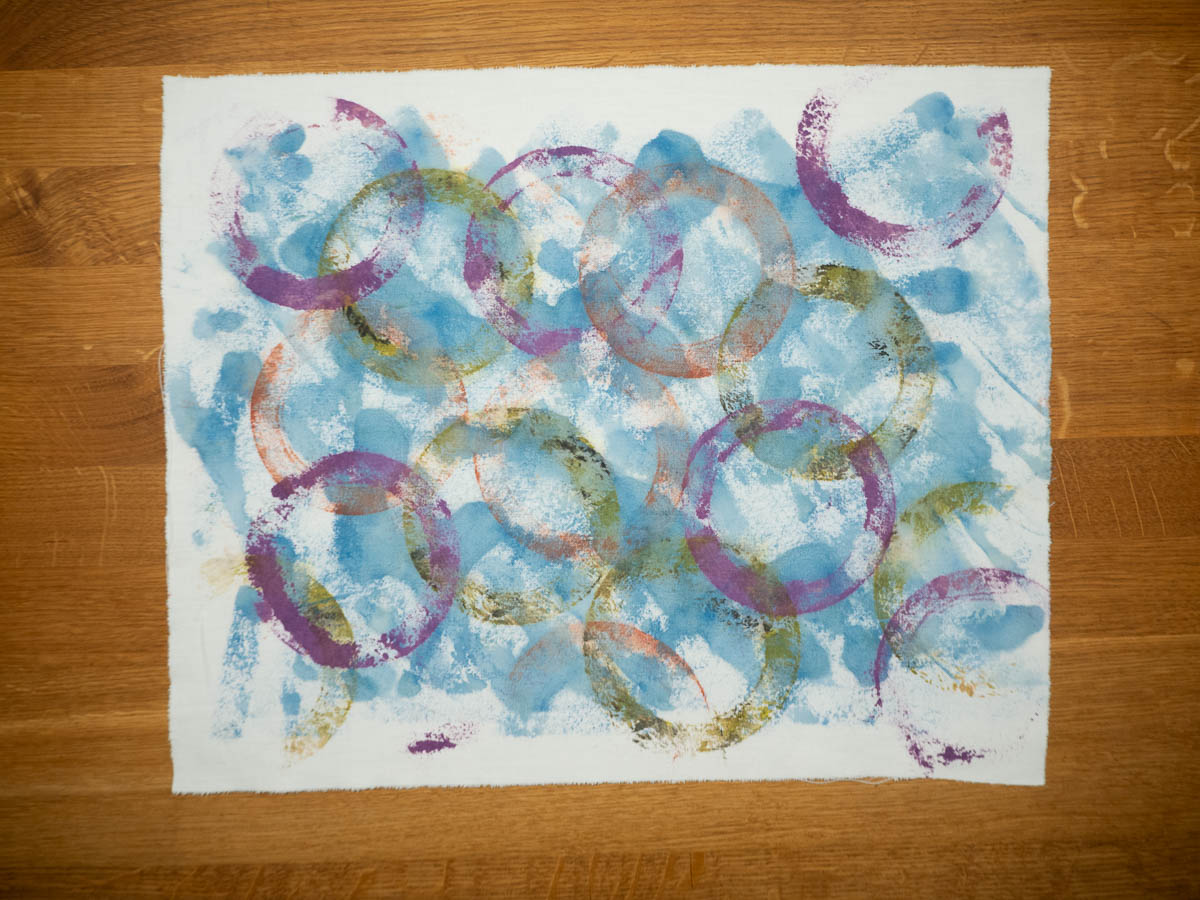
You can mask off parts of the fabric so those don’t get paint (corrugated cardboard and a bundle of string):
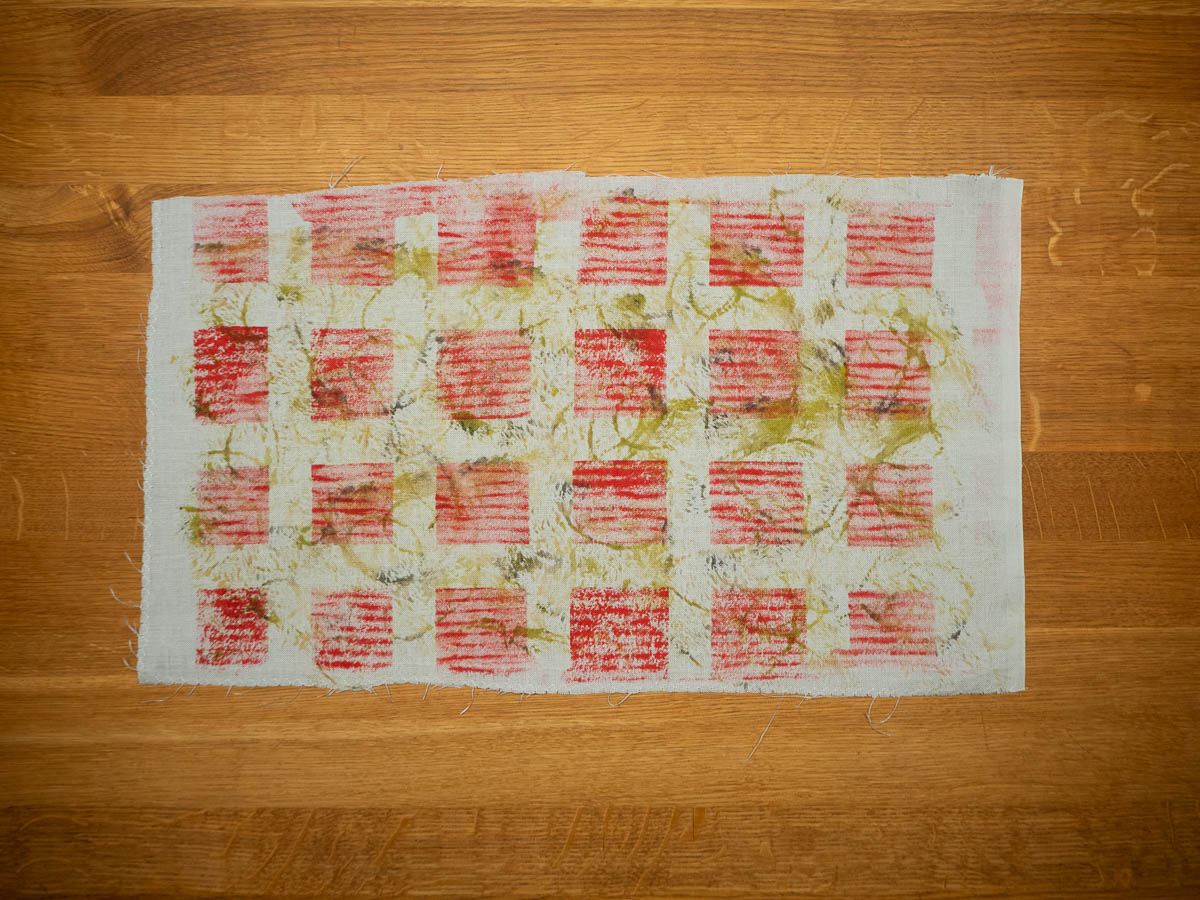
You can dilute the paint to make it wet and runny (roll of masking tape again):
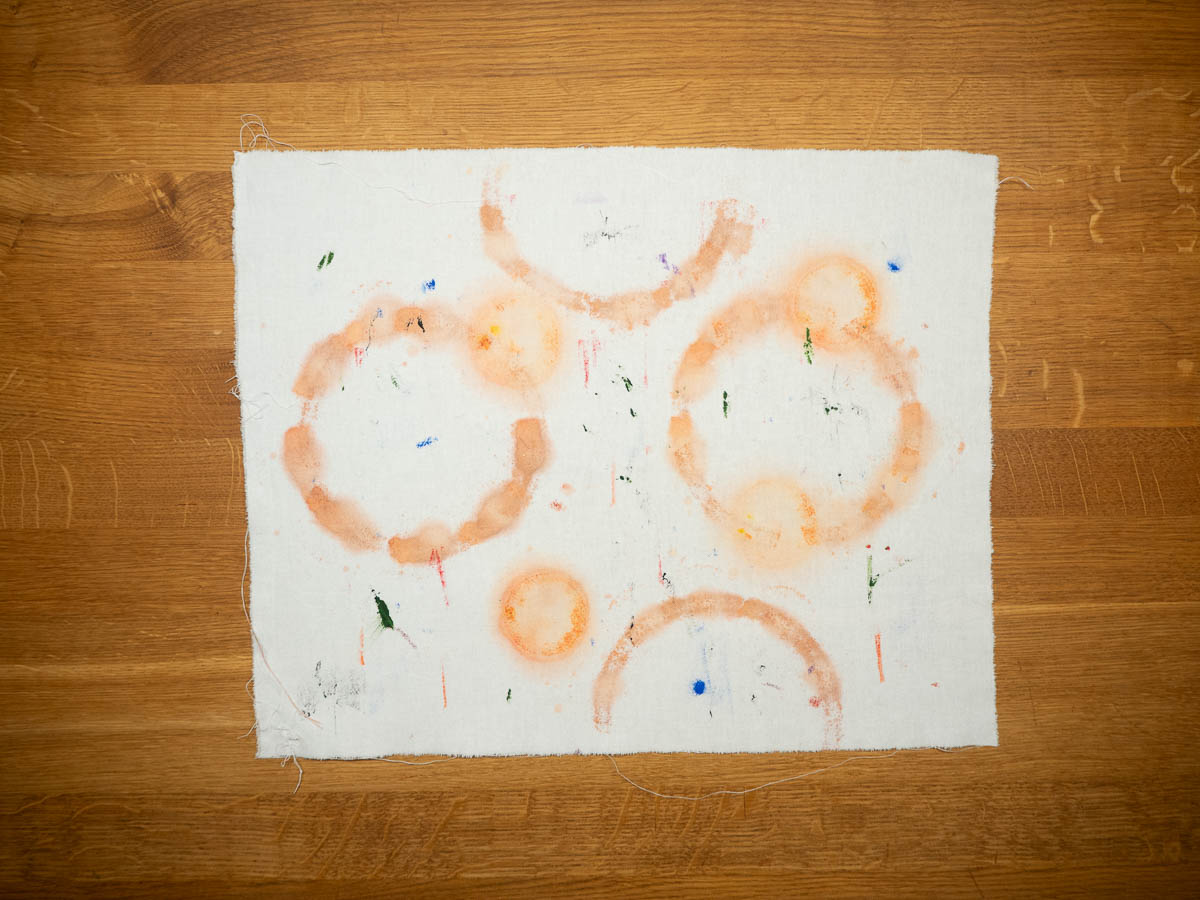
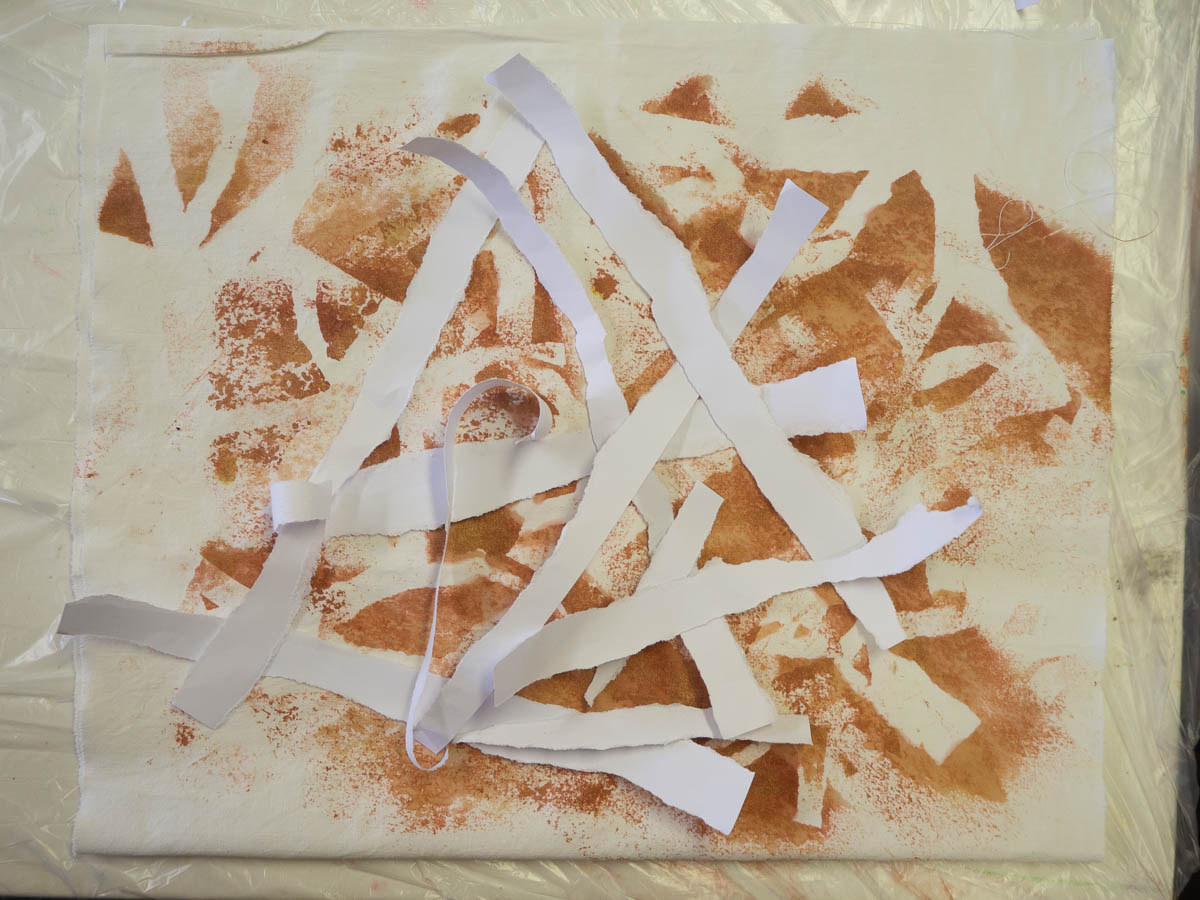
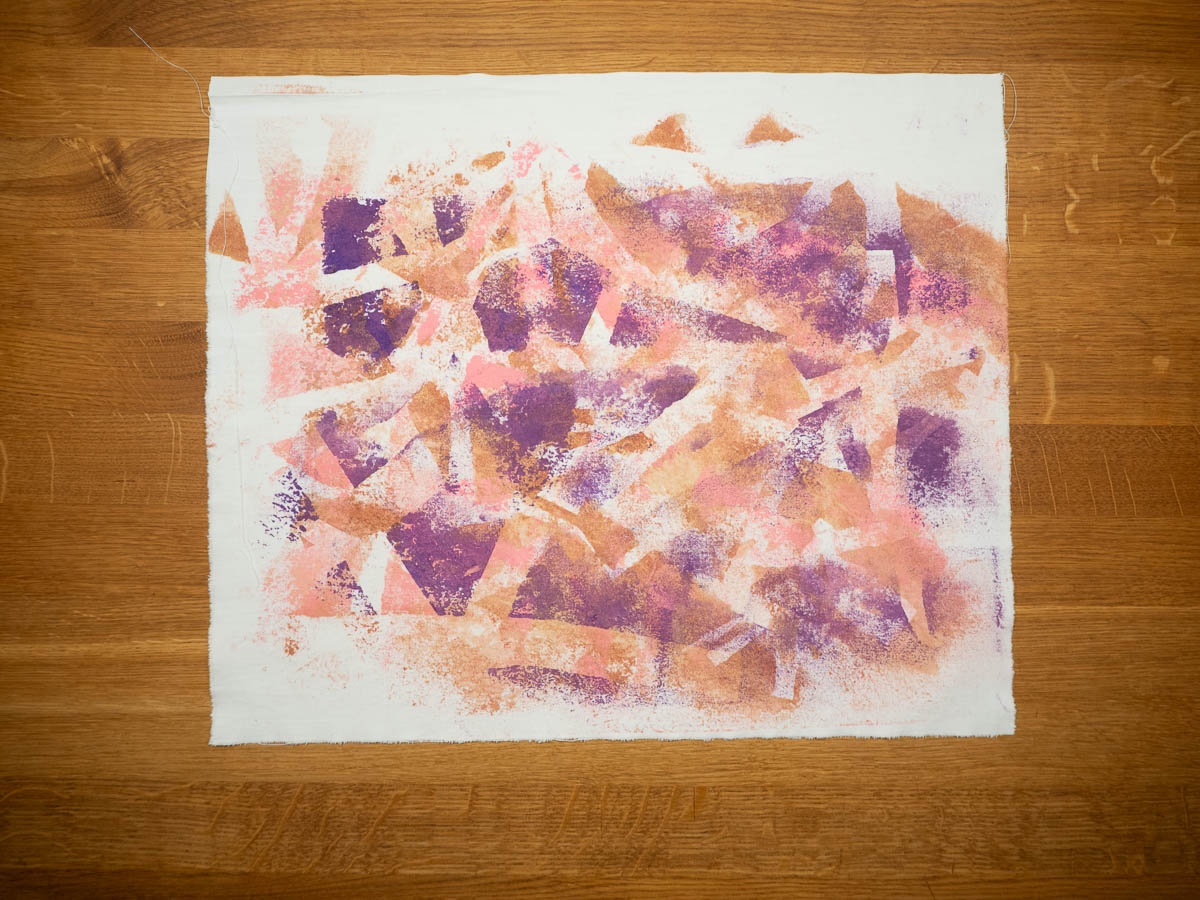
Learning #2: you can mask off parts of the fabric with all kinds of things, not just masking tape and tidy stencils.

For example, a random jumble of paper strips:
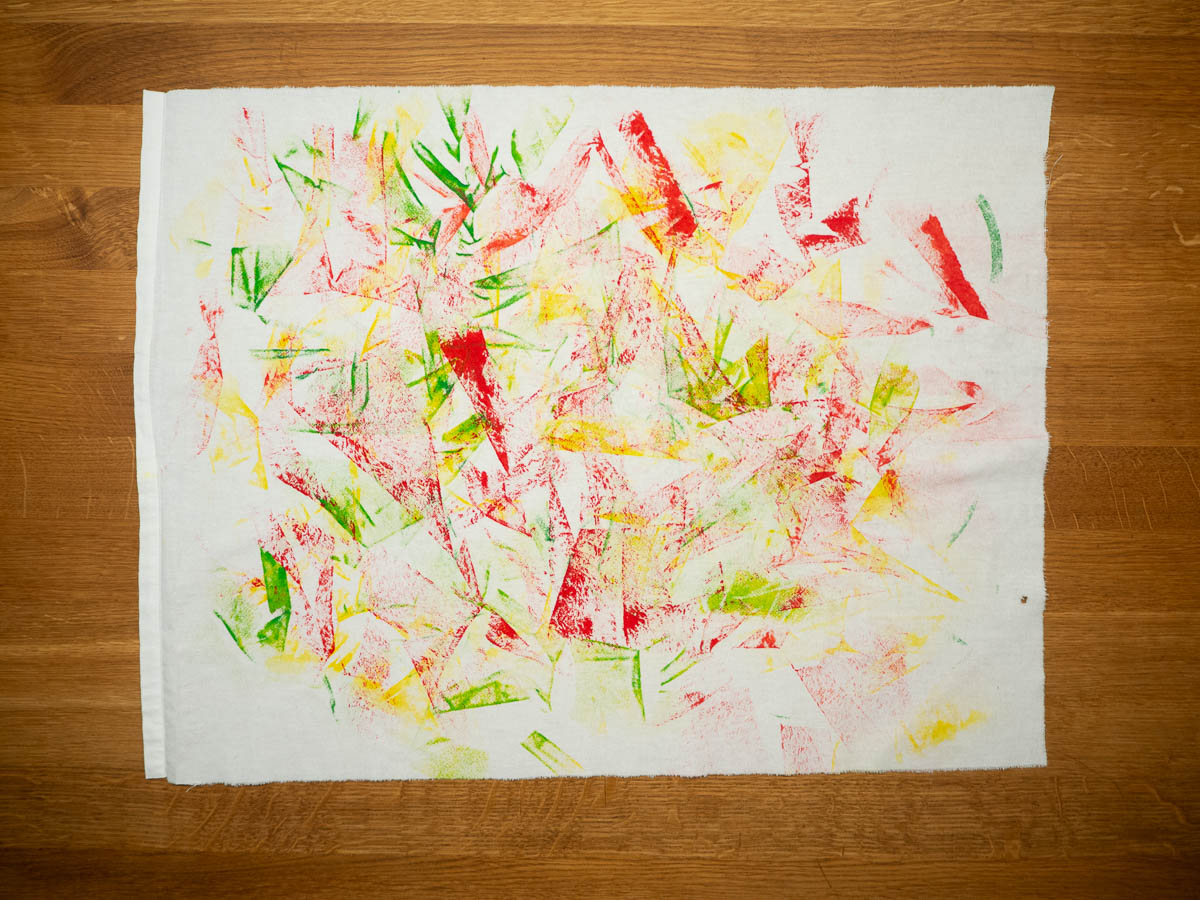
Or just wrinkles and folds in the fabric itself – bunch it up and run a roller over it:
Learning #3: use non-traditional things to apply paint.

A dish brush:
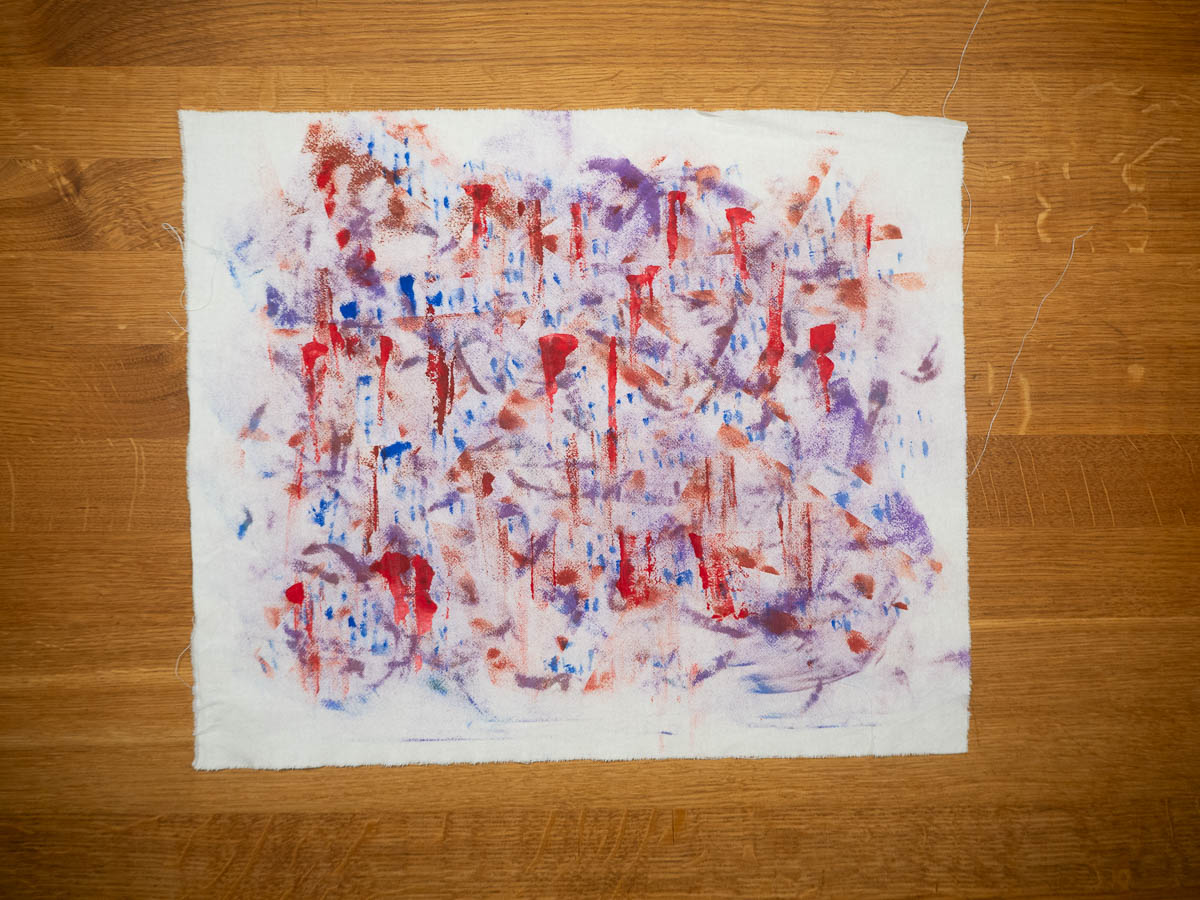
A paint mixing chopstick (for the red – and I can’t even remember what I used for everything else, although it looks like corrugated cardboard was involved for the green):
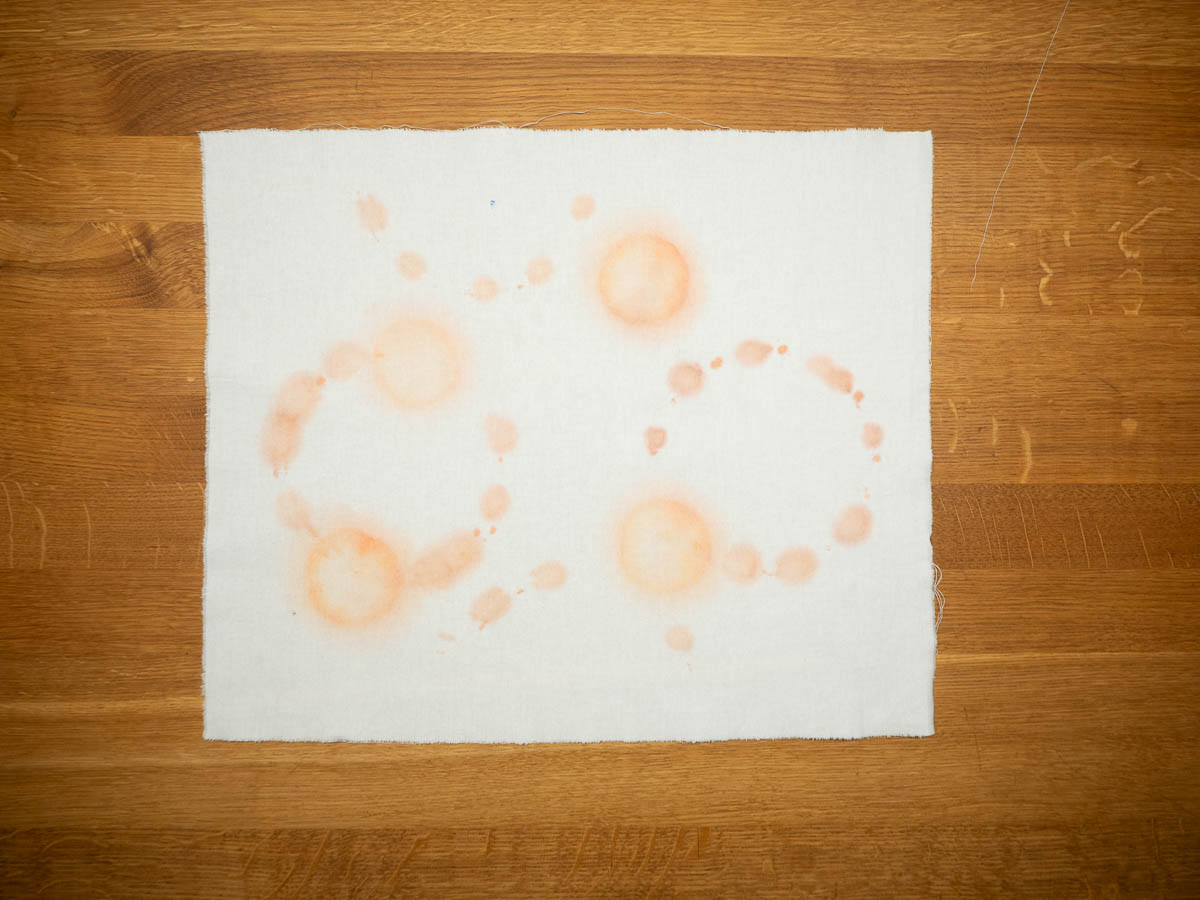
Learning #4: put another layer of fabric underneath the one you’re actively working on, for subtle patterns and serendipitous leakage.
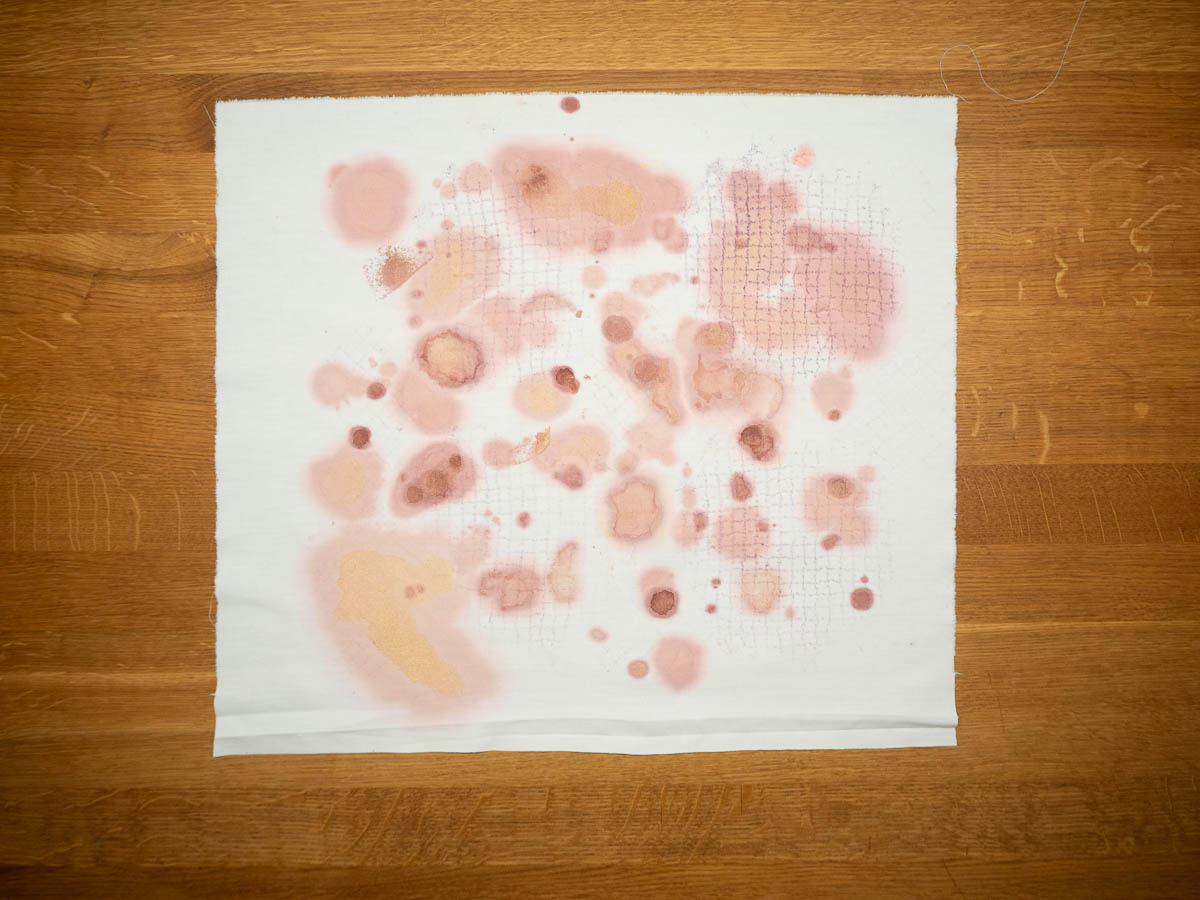
Learning #5: any time you’re reaching for paper towels to wipe something off, use a fabric scrap instead. Have paint left over on the roller? Sloppily roll it onto a piece of fabric. Have a wet roller? Dry it with yet more fabric.

A paint-covered doily left accidental prints on an underlayer of fabric. I then used it to dry a wet, mostly rinsed-off roller, and got lovely watercolour effects.
Learning #6: go with the flow. There are no free rollers for the green you had in mind, but someone has made a purple and blue mixture? Sure, why not. Someone spilled water in the paint so it’s too wet for rolling? Use a sponge to drip it on the fabric instead. The red roller got used for black by accident? Interesting colour combinations will arise.
Day two of our weekend textile workshop with Lena Larsson. Yesterday we printed on fabric; today we’re embroidering on our printed fabrics.

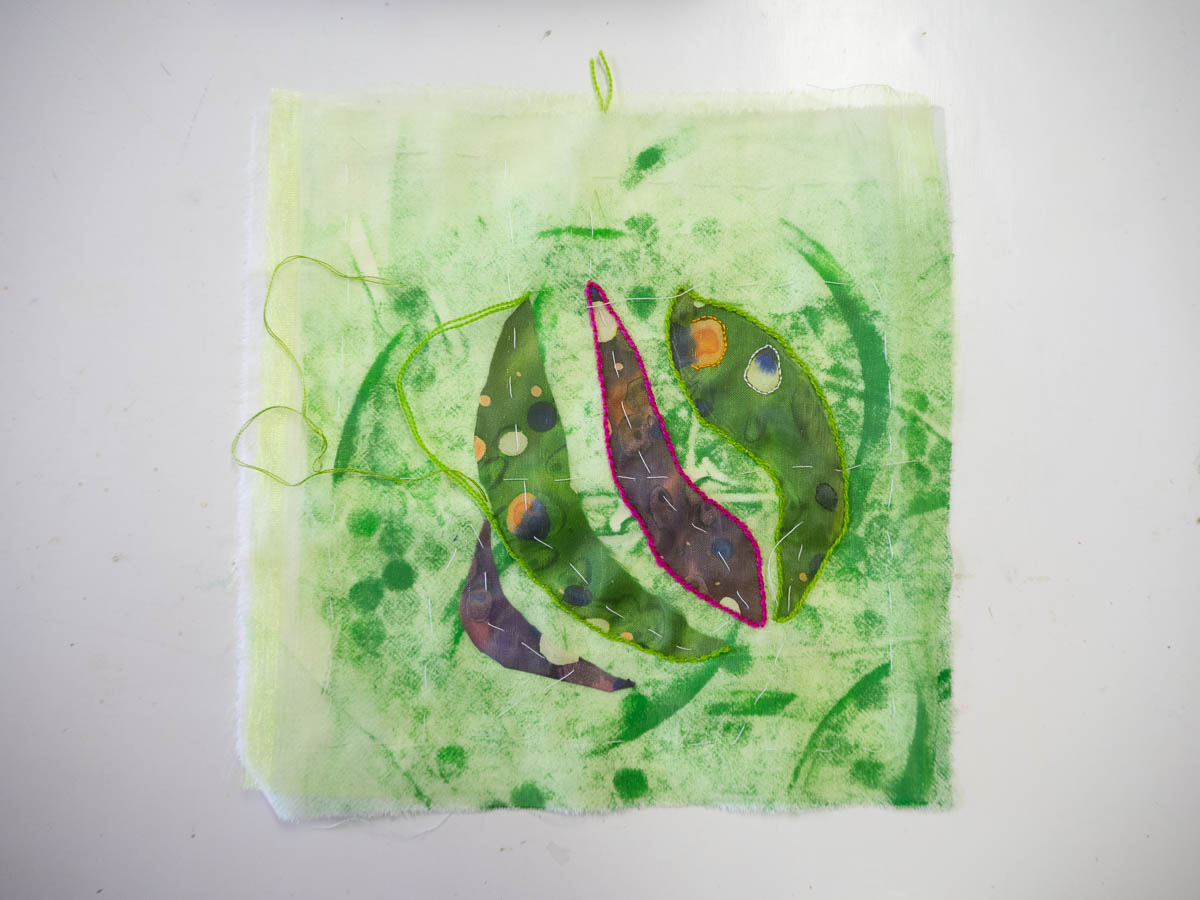
Lena uses a lot of applique in her embroidery, and she has a particular technique for this that I haven’t run across in anyone else’s work. During the first half of the day I experimented with her technique. She puts a layer of thin, translucent fabric such as organza or tulle on top of her printed fabric, and then sets applique pieces between these two layers. Then she stitches along the contours of the applique pieces. So the applique pieces are not actually sewn to the fabric – they’re only held in place by the contouring stitches. They almost hover in place.

I tried light green organza over a fabric with plenty of green, strips of patterned silk in between, and couched contours. I liked the technique, but I think my fabric choice wasn’t the best. I thought green and purple would give me vibrant contrast, and they would have, if they had been side by side – but the green organza on top of the purple silk strips just made them look washed out and muddy. I tried bringing back some of their colour with embroidery, but I still don’t like the look.

After lunch I switched techniques and experimented with stacking layers of tulle on top of each other, and embroidering on that.

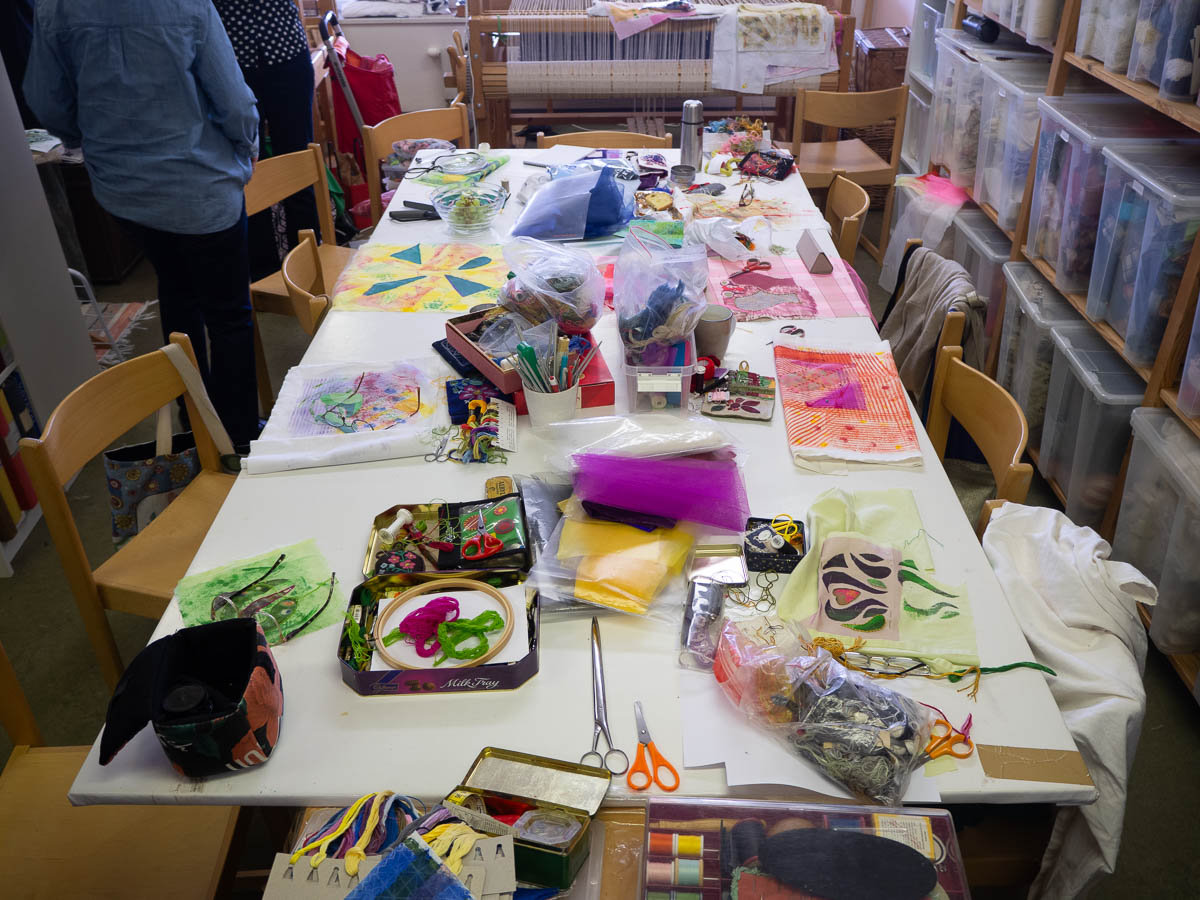
Ten people, all given the same materials and instructions, ended up with ten very different results.

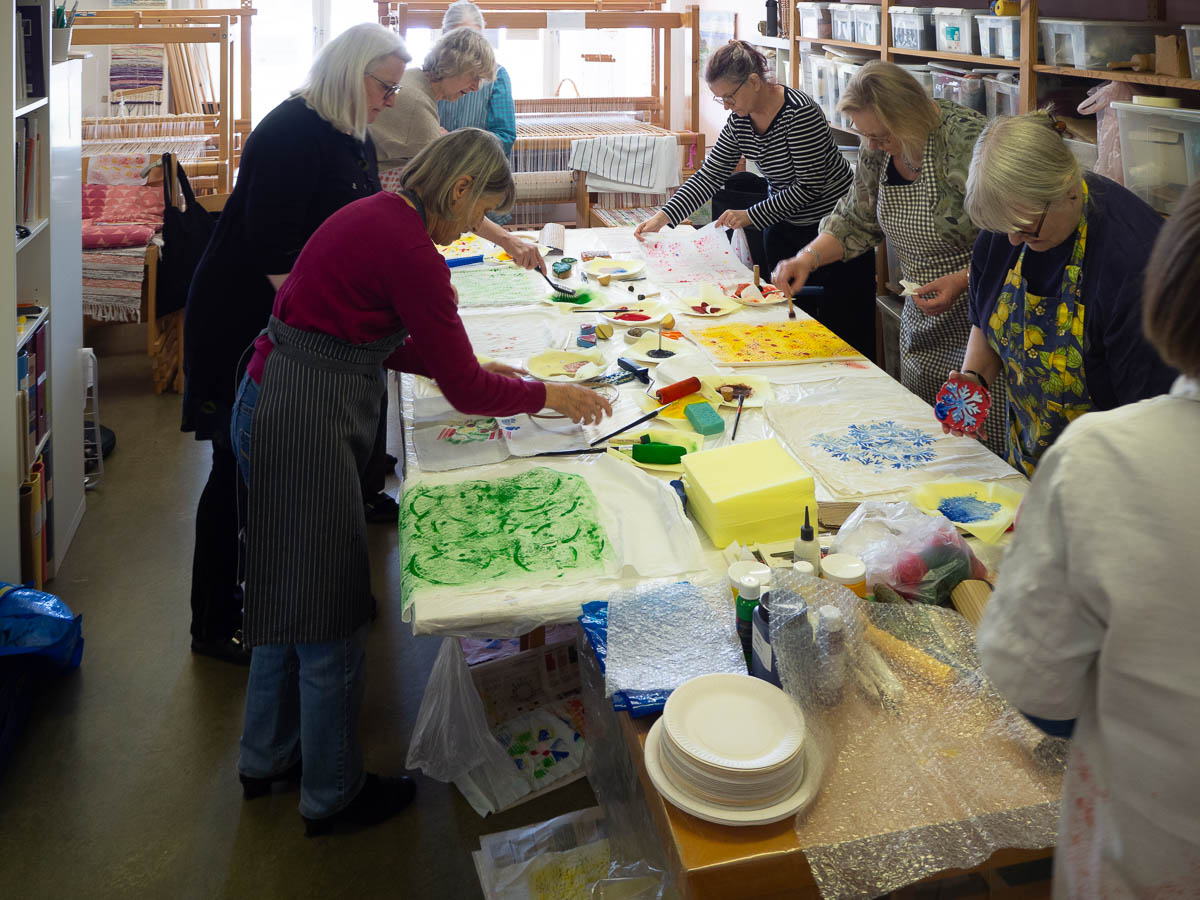
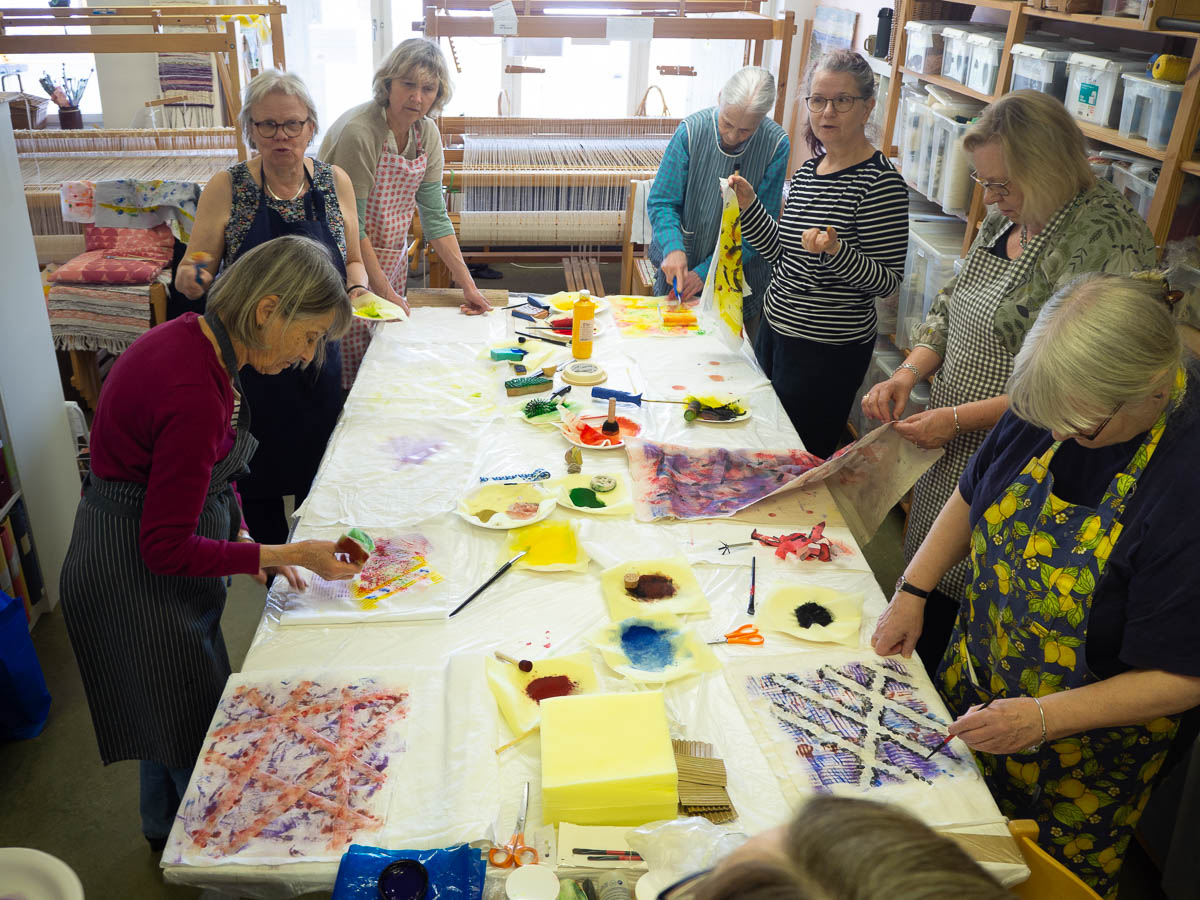
A full-day textile printing workshop with the ladies from my Thursday embroidery club, led by Lena Larsson, whom we discovered through her exhibition at Husby Gård back in October. Several of us visited the exhibition, enjoyed it, ended up talking to the artist herself, and at some point someone proposed that she could show us how she does stuff. Half a year later, here we are!

This was an incredibly fun way to spend a day. Just playing around with paint on fabric, in all kinds ways. I haven’t been so immediately, playfully creative since I mucked around with children’s crafts back when Ingrid and Adrian were in their first years of school.

Doing this together made it so much better than it would have been on my own. Lena showed us examples of her work and gave us some ideas to get started with. Then someone came up with a variation, and someone else thought of a different one, and a third person combined the two into something entirely new. The ideas just kept flowing.

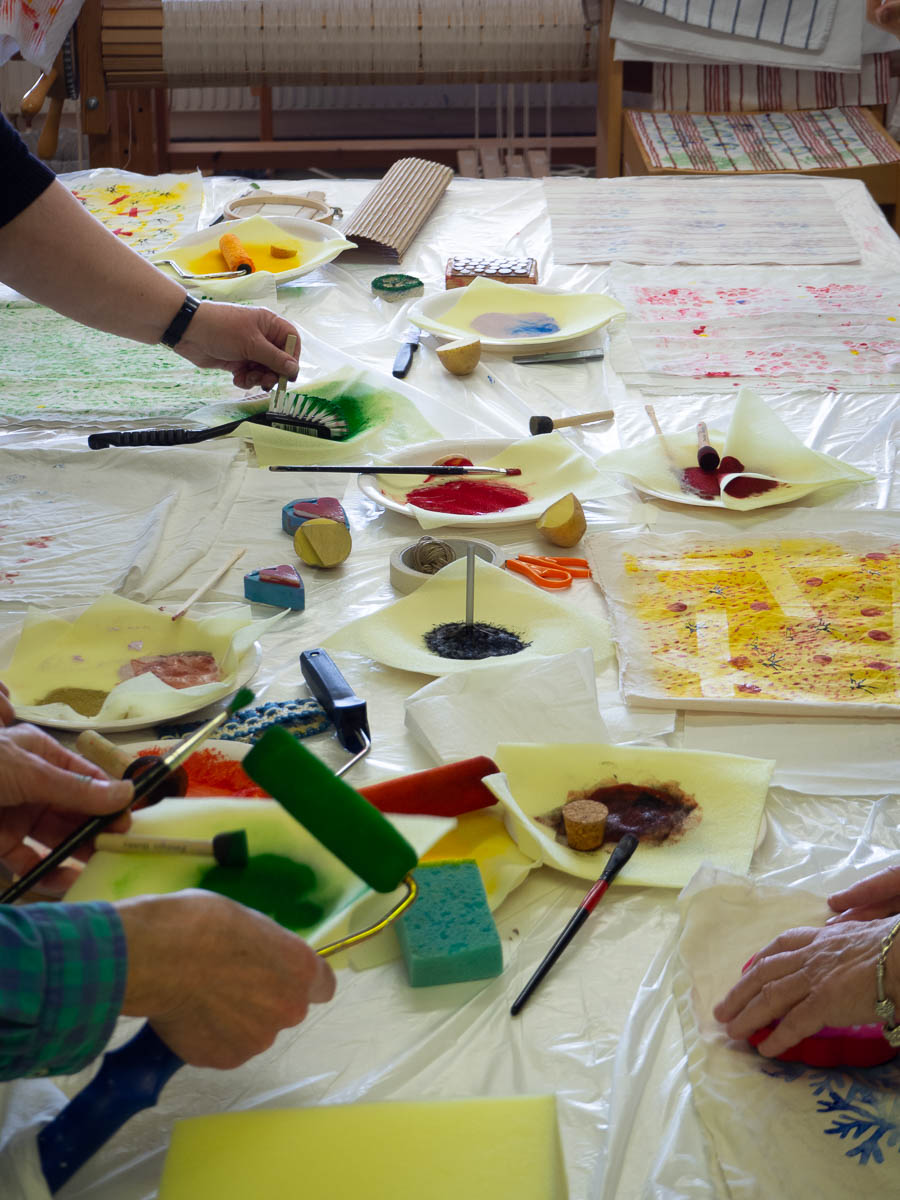
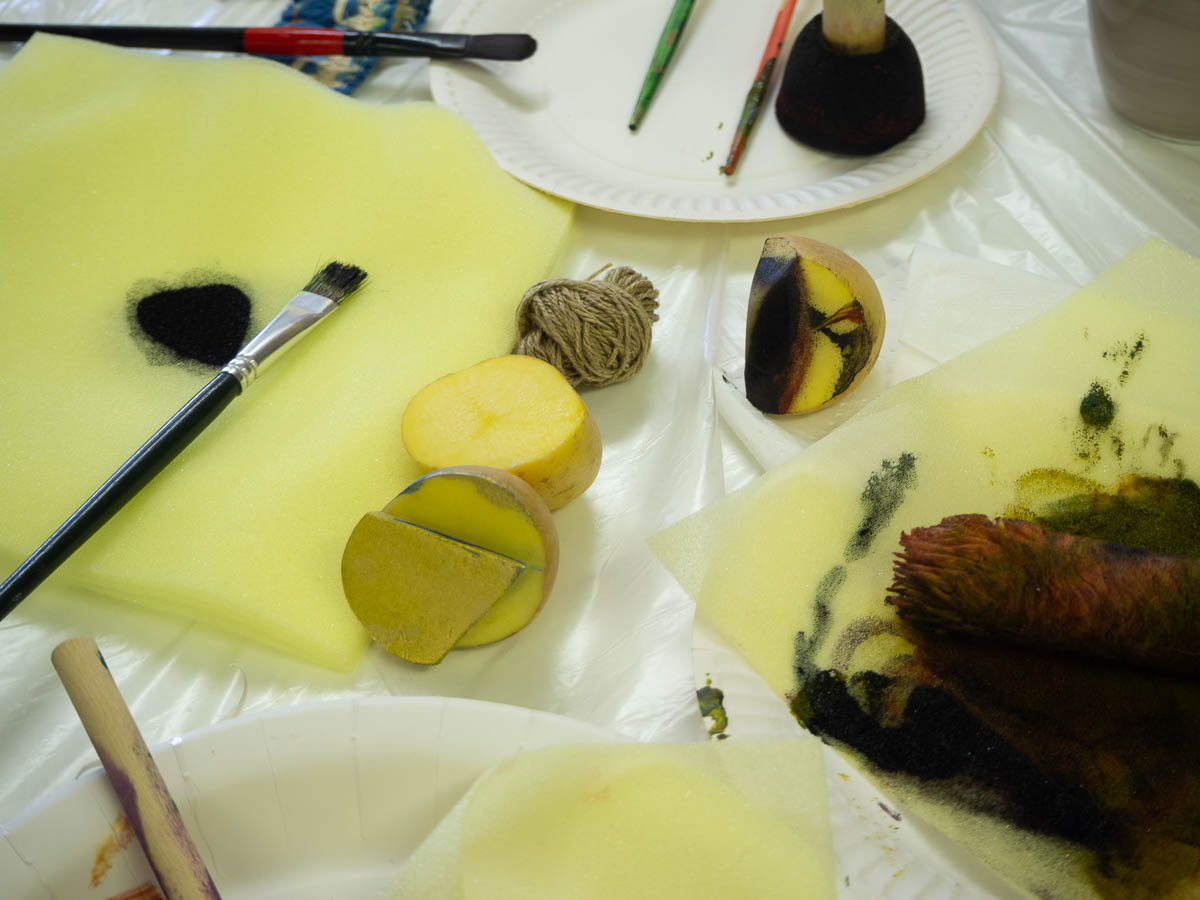
Textile printing sounds like it might require all sorts of equipment, but it really didn’t. Textile paint, paper plates to put it on, some cheap paint rollers – that’s all you need. And then random stuff we found lying around: pieces of string, rolls of masking tape, scraps of old lace, strips of paper. Potatoes, for cheap stamp-making, if you want.

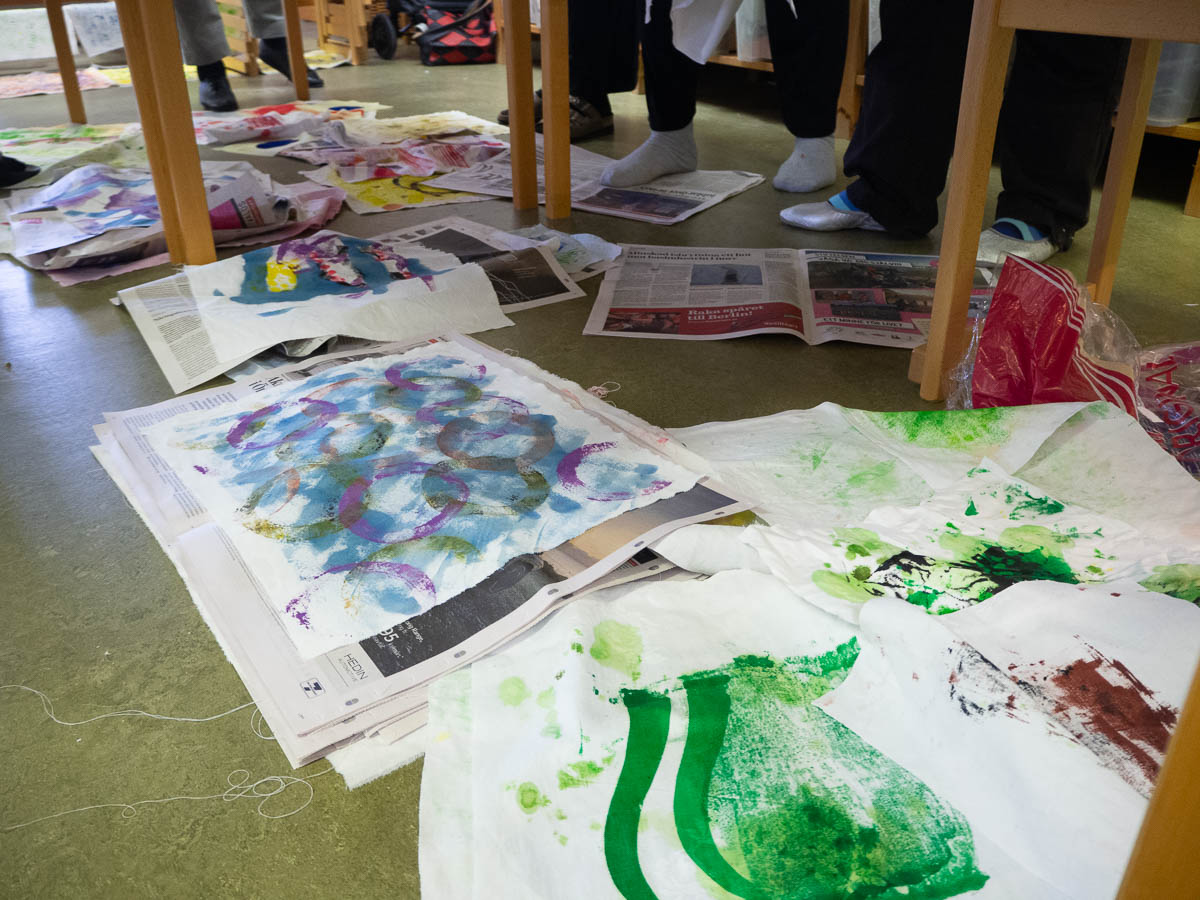
For fabric, we used old bedsheets that we ripped into smaller pieces, and thrifted towels. With cheap and plentiful fabric, we could play freely, without any concern for the cost of the materials, or any worry about running out. We all ended up with piles of experiments stacked on the floor under our work stations, with layers of newspapers in between to keep the paint from spreading.

I came home with tons of pieces of printed fabric, each one based on a different technique or idea. They just barely fit on my dining table to dry, and it took an hour to iron them all to set the paint.

Tomorrow we will have the second half of the workshop, where we’ll be embroidering on our newly printed fabrics.

Ingrid works part-time at Spånga Konditori on weekends, and often brings home leftover bread and pastries that would otherwise be thrown out. Buns that are too lopsided, pastries that look uneven, various things that are just too old to sell.

Almost every time, she brings home a loaf of sourdough bread. The darker kinds of bread, the bakery sells at half price the day after. But the light sourdough bread they don’t think is good enough even at half price, so all that’s left over at the end of the day gets thrown out.

She doesn’t bring it home for us to eat, because there’s no way we would be able to eat that much! I’d get bored of the bread well before it’s gone. It’s good, but this kind of light bread is a bit too bland for my taste.

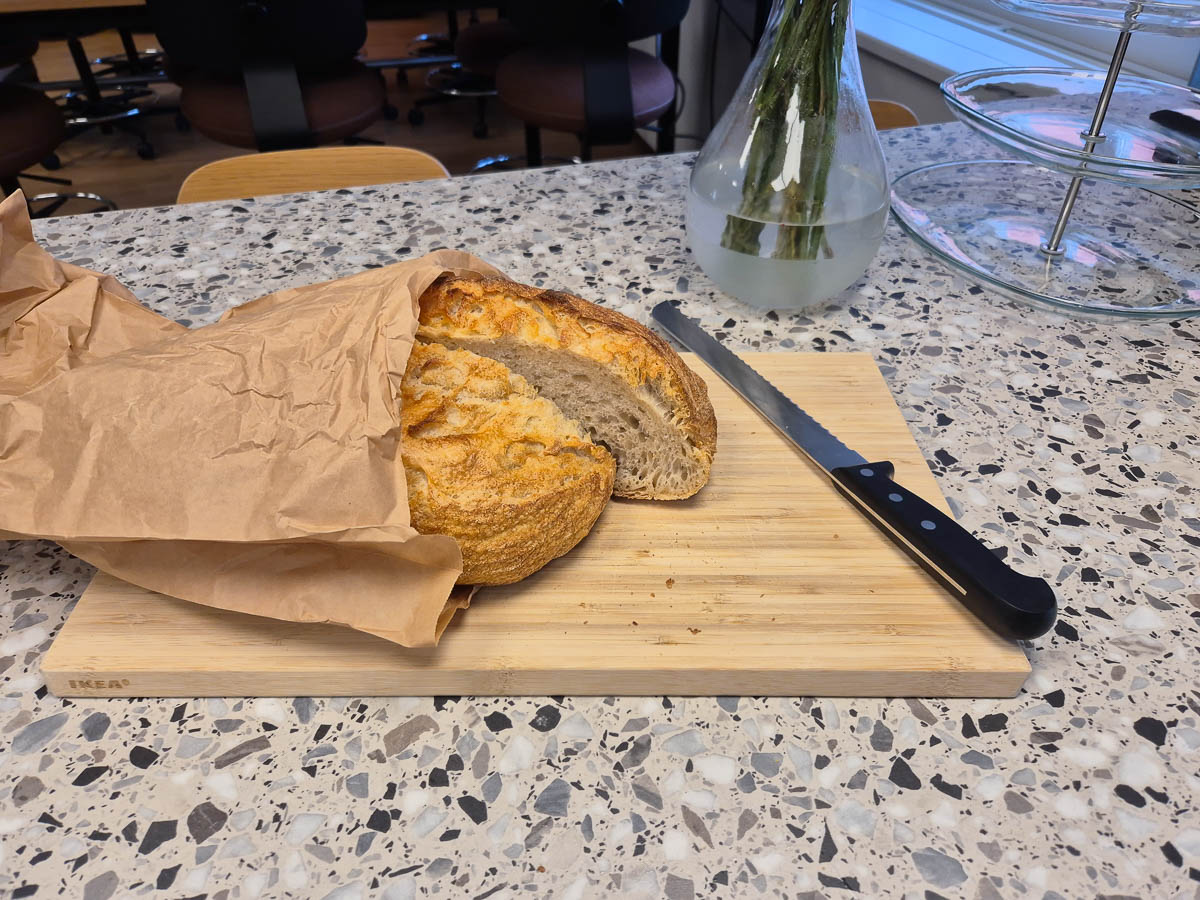
No, she brings it to me so that I can take it with me to work. I used to do it at tretton37, and now I do it at Sortera. The folks at the Sortera office are getting used to having nearly-fresh sourdough bread for lunch on Mondays. I tend to plan my own lunch around it as well – maybe a soup or a lighter stew – and together we eat all or nearly all of it.

Today I brought a loaf with me to Active Solution. And discovered that the people at this office have very different meal habits. Many go out to eat lunch at a restaurant; lunch boxes are far less common here, so they don’t even sit in the kitchen for lunch, and then of course have less opportunity to eat the bread.

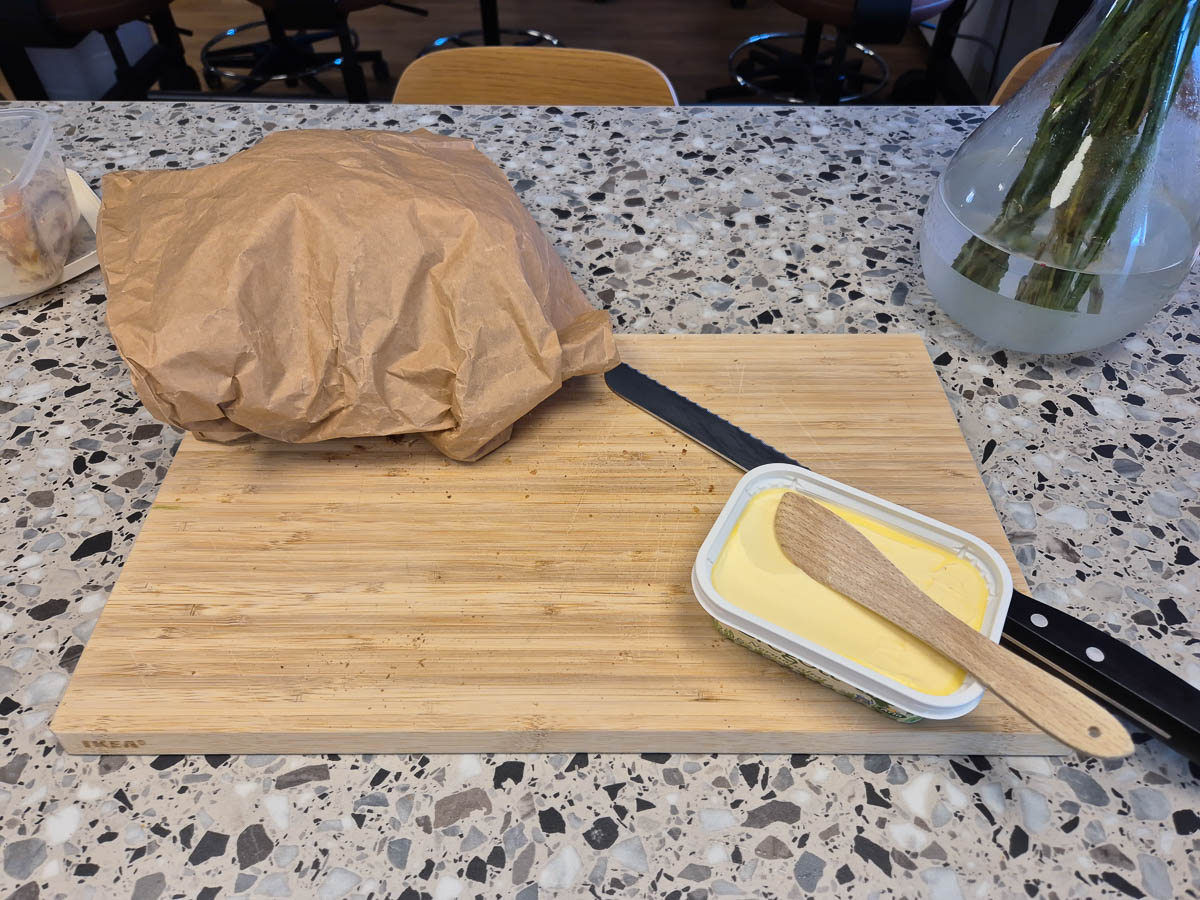
Probably as a result of the above, there’s also much less of a culture of shared stuff in the fridge. I’m so used from all previous offices that there would always be at least, like, butter, cheese and ketchup in the fridge. Here I had to go out and buy a package of butter.

At the end of the day, three quarters of the loaf was still there and came home with me again. Over half of what did get eaten, I ate myself. I think I’ll be making bread pudding of the rest tomorrow.

Just… interesting to see how such a basic thing as bread and butter can work differently in different places.

It’s embroidery club Thursday.

I think I am actually done with the Stockholm embroidery. I’ve been hesitating about adding a little bit more, but I suspect I’d end up overworking it, so I’m stopping now. I did take a photo but the lighting in our meeting room is not very good and I only had the phone camera, and the picture did not do it justice. A proper photo will be coming up when I have it mounted and ready for hanging.

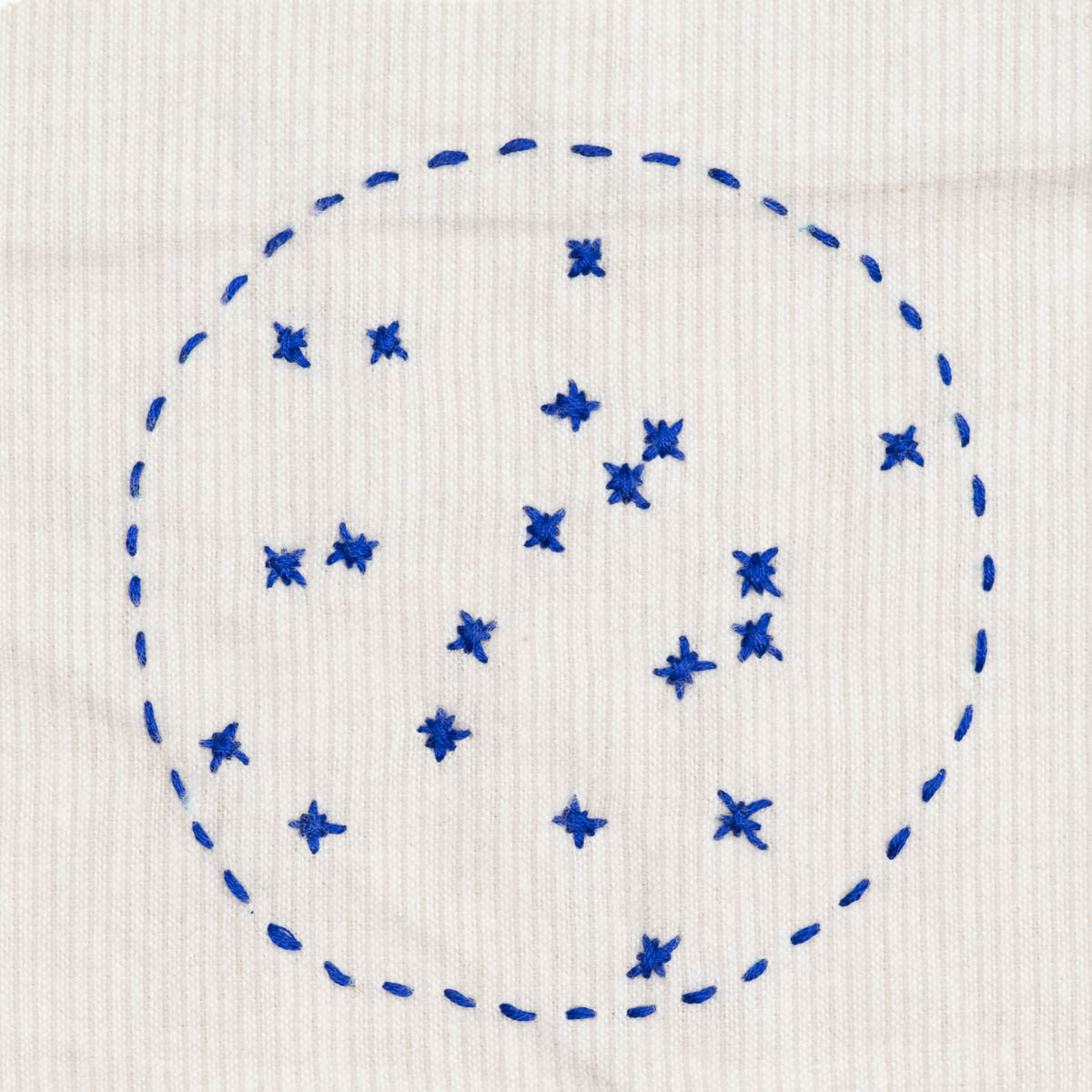
This week’s dogma embroidery: use fabric in the colour of your hair. Randomly sprinkle hole punch confetti on your circle of fabric and embroider them with star stitches. I had no hole punch so I made do with other pieces of paper. Afterwards I saw that others had fastened their confetti with their stitches; I had misunderstood and just used it to mark the spots where to put the stitches.

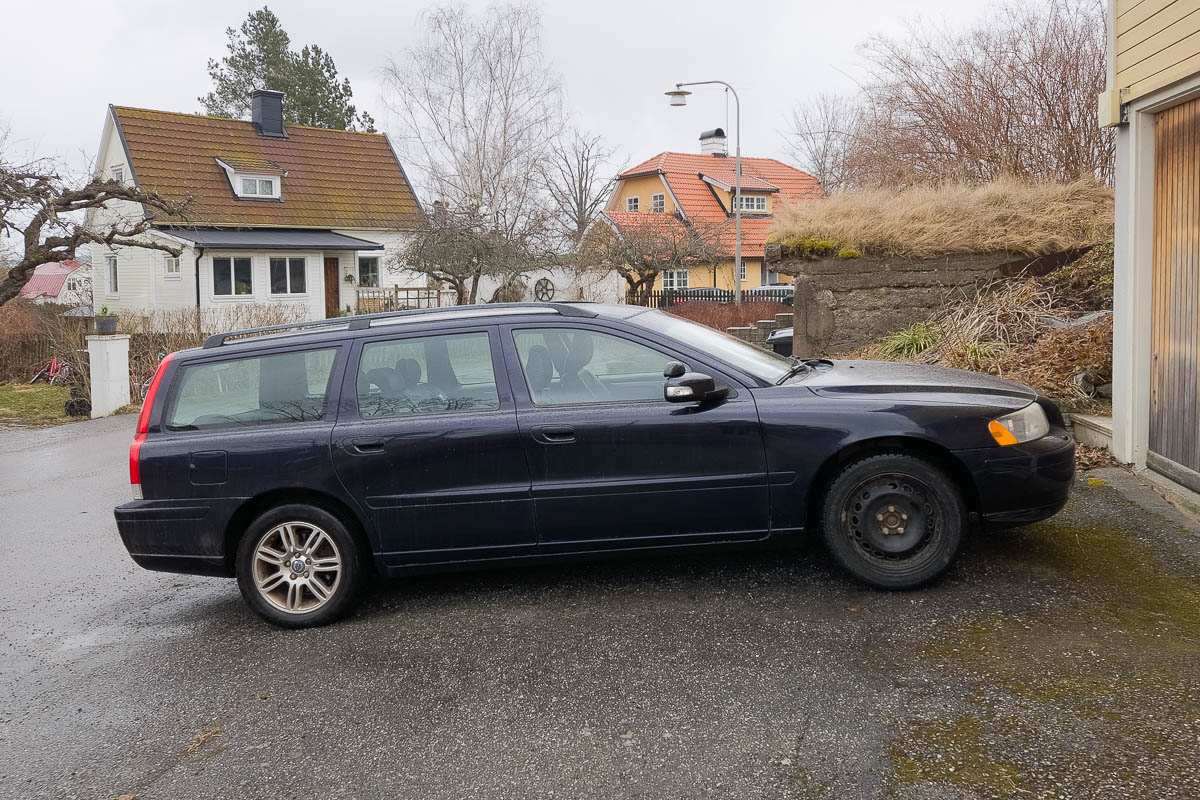
Tried swapping tires on the car this weekend, from winter to summer tires. Got the rear wheels done, but just could not get the bolts loose on the front ones, even though I have a long lug wrench for plenty of leverage, on which I hung with my entire body weight.

Admitted defeat, accepted the idea of paying for a tire swap, and took the car to the nearest, cheapest tire swap place. They gave it a try, then another one, and then gave up as well. I felt rather less ashamed of my puny attempts after that.

Perhaps I could have found some clever trick on the internet but I really didn’t want to spend more time on this, so I booked a time at an actual car repair workshop. They finally got the front tires swapped, for a cool 1000 SEK. Ouch.

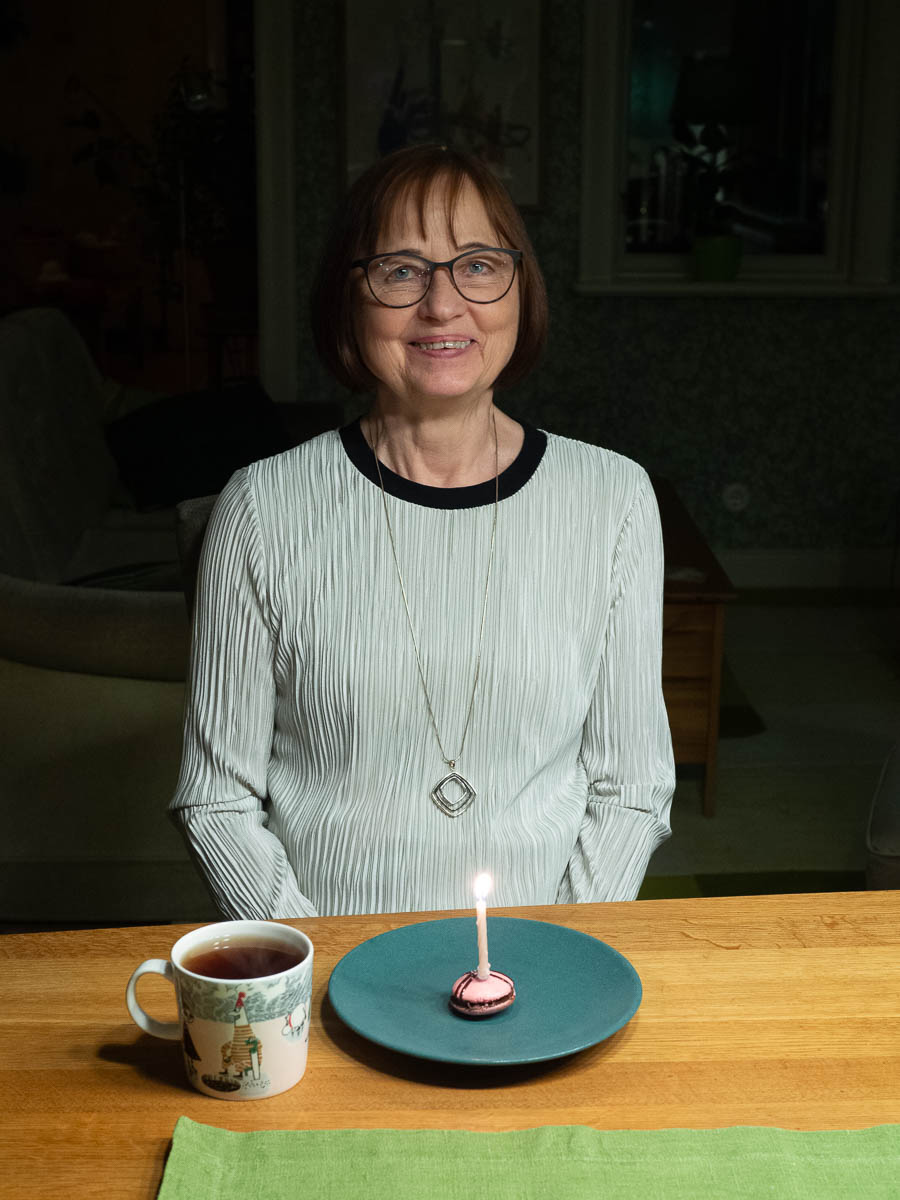
Today was not my mum’s birthday, but we celebrated anyway. The kids are both very used to having birthday parties on some random day, chosen for reasons of practicality rather than calendrical accuracy. My mum is not quite as convinced that this is an acceptable way of doing things, but didn’t object to being offered dinner and cake.

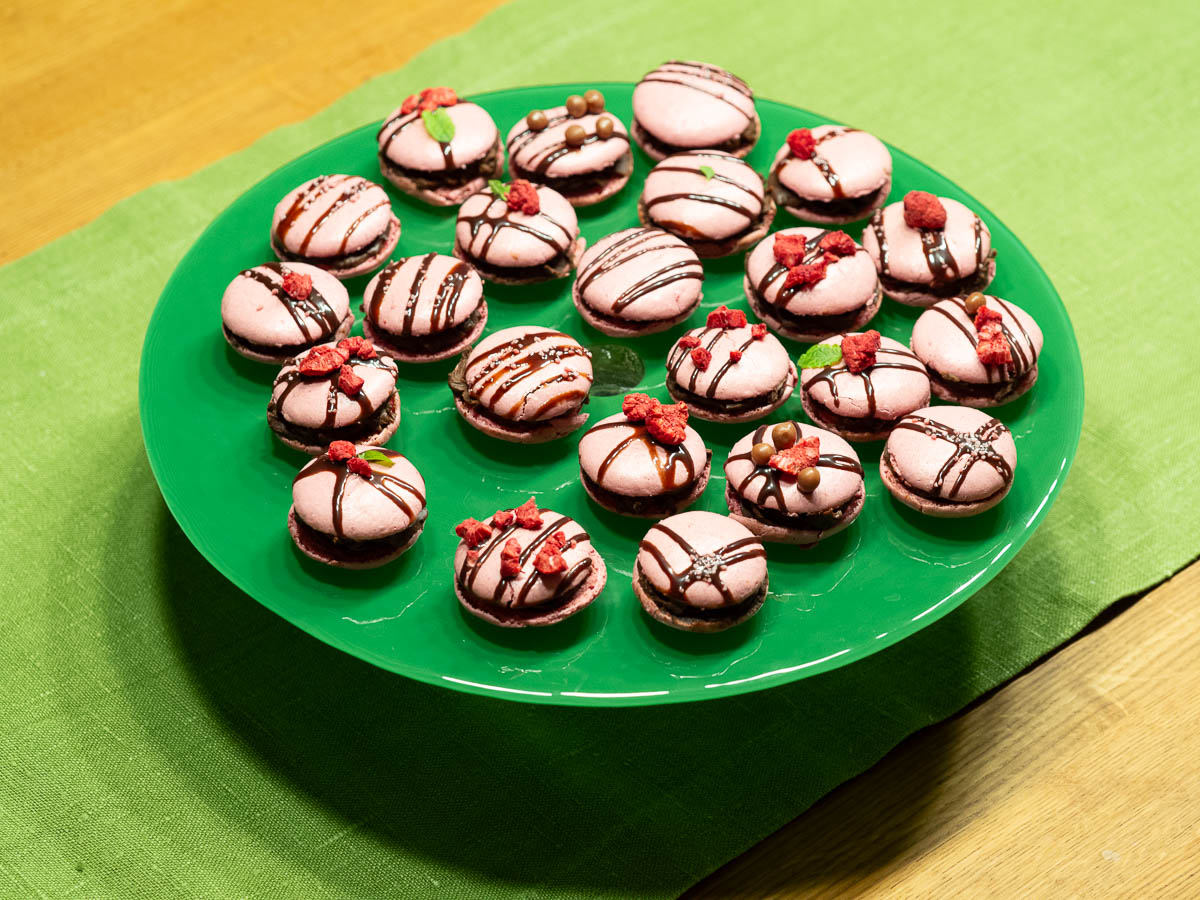
For the cake part of things, Ingrid made and decorated macarons.

Raspberry and dark chocolate macarons, using freeze-dried raspberries both in the macarons and for decorations. Much less messy than fresh or puréed raspberries, very clever.


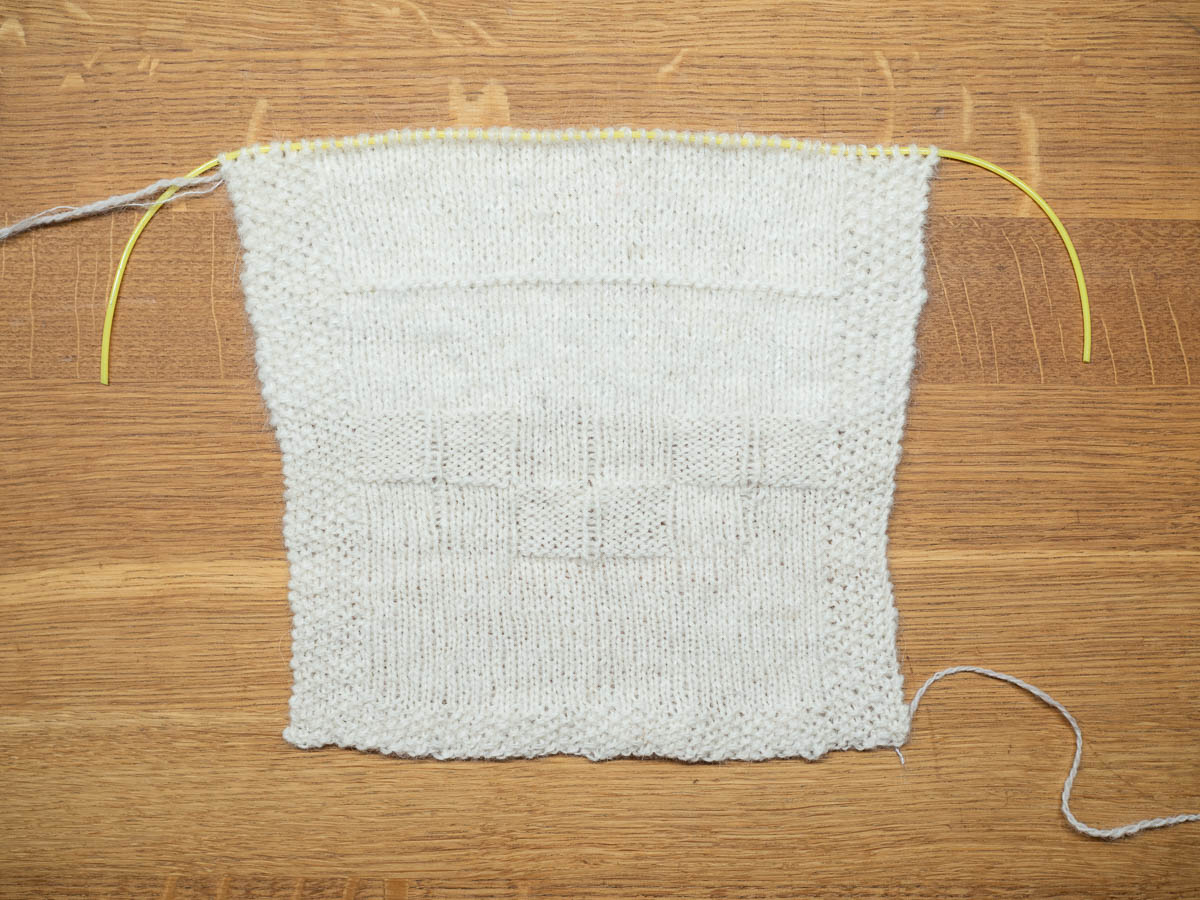
Remember the stiff white yarn I was struggling with? The internet reminded me to wash and block my swatches before drawing any conclusions. I did that, and the fabric was a lot softer afterwards. Actually floppy; much more wearable.

I also tried combining it with some white mohair (in the top half of this swatch) and the result was very nice. Fluffier and with more body than the wool on its own. It even looks a bit whiter – I’m not sure if the wool yarn is a teeny bit grey, or if it’s just the background shining through.

I had pretty much given up on the idea using the yarn for a dress, due to its lack of drape, and started picturing it as a sweater, holding the yarn double and adding mohair. I had even decided on a rough design. (A white sweater with a green design, something that could be a Christmas tree but could also just be a fir tree.) Now this swatch is making the dress idea seem not absurd, so it’s back in the game again.

I’ve been picturing a dress with the skirt knit sideways, with short rows in a contrast colour for shaping, something vaguely like this. An all-white dress seems impractical for everyday use, and the contrasting stripes would make it more versatile. However I have no idea how much fabric the yarn will knit into, and even if I did try to estimate, chances are I’d be wrong. I obviously have no way of getting more, so a skirt knit sideways seems risky. Make the skirt too long, run out of yarn too early, and I will have half an unwearable skirt. Make the skirt too short, and end up with unused yarn.

Today I was idly looking at my one and only (store-bought) merino wool dress, which is knit top-down, and realized that I could knit the white one top-down as well and just add embroidered vertical stripes afterwards. That would be a much more low-risk approach. I can knit a sideways skirt some other time, with store-bought yarn that I can top up when needed.

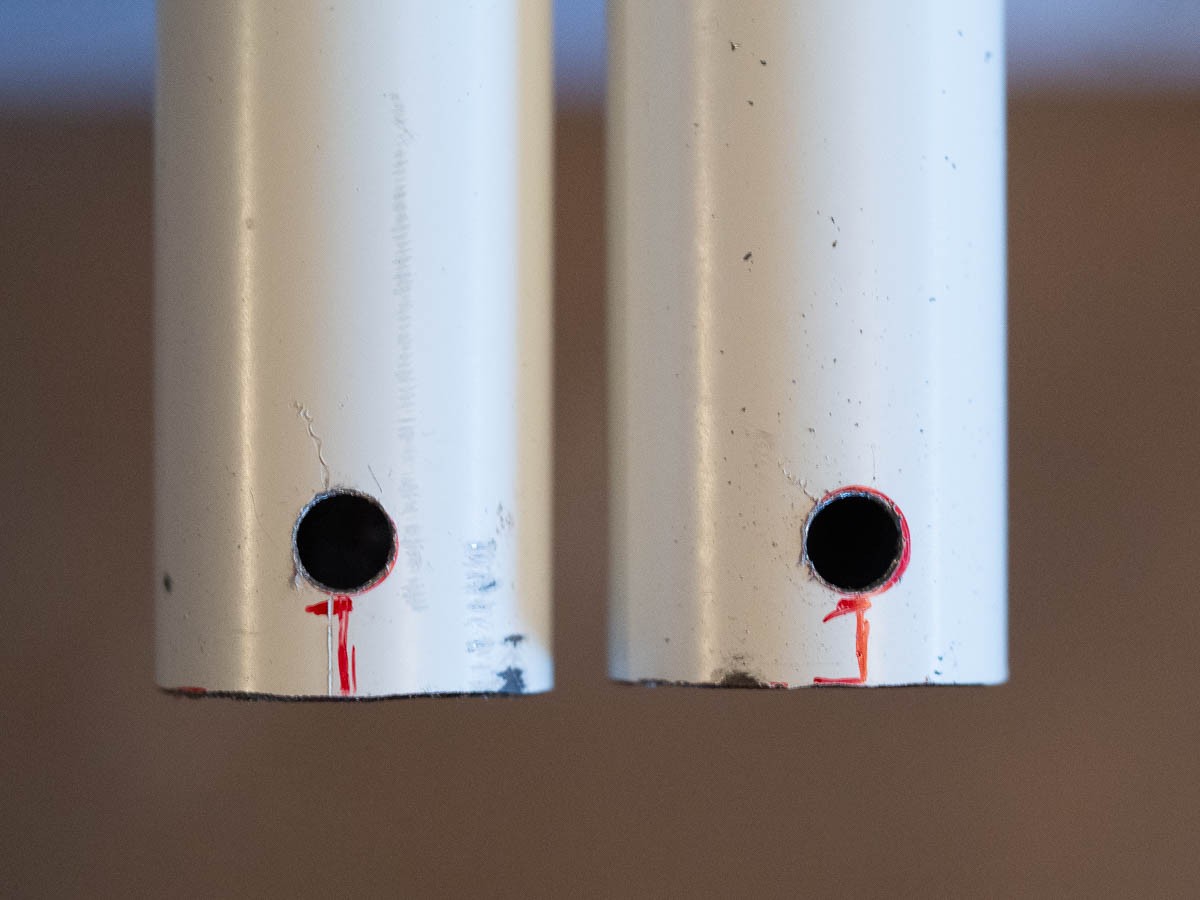
I proudly present to you these holes I drilled all by myself! I’m rather pleased with my drilling precision, given that this is my first time with metalwork.

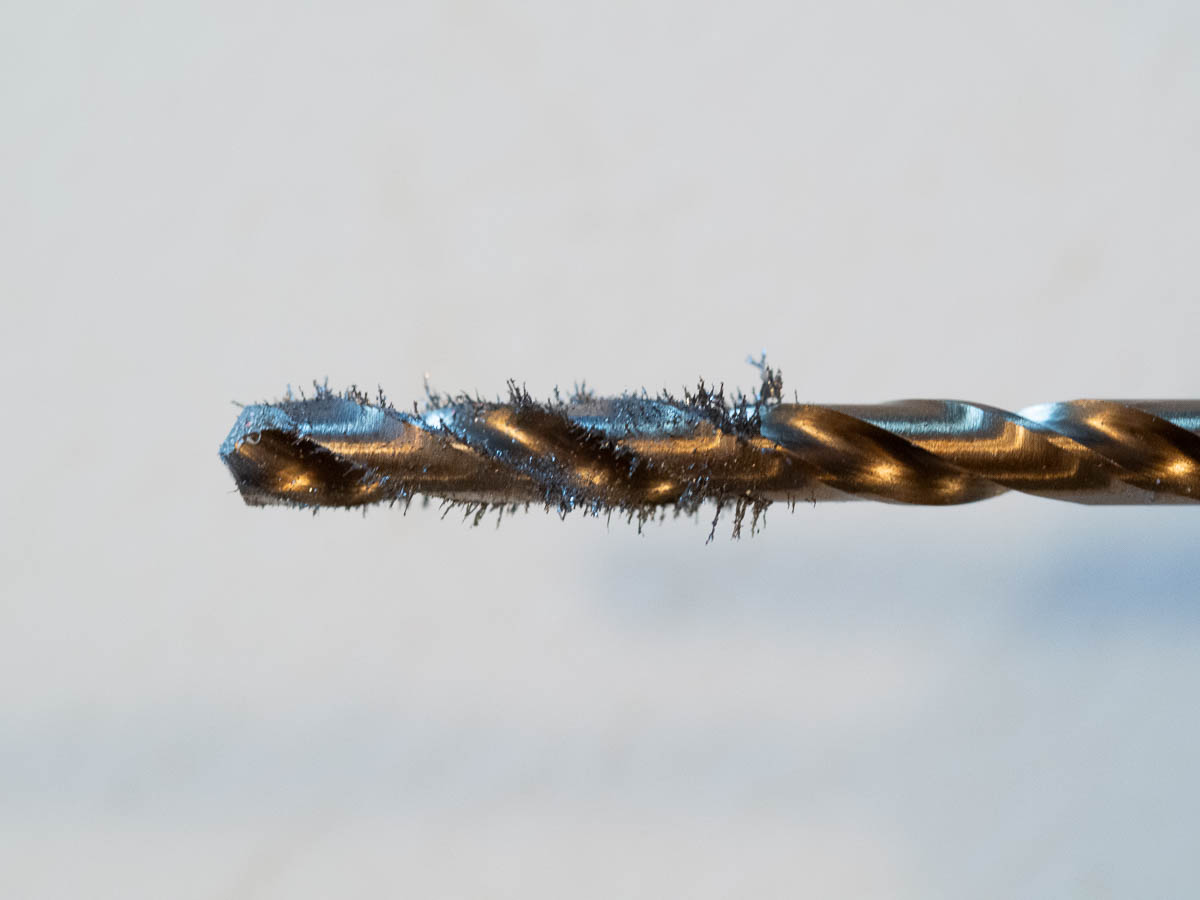
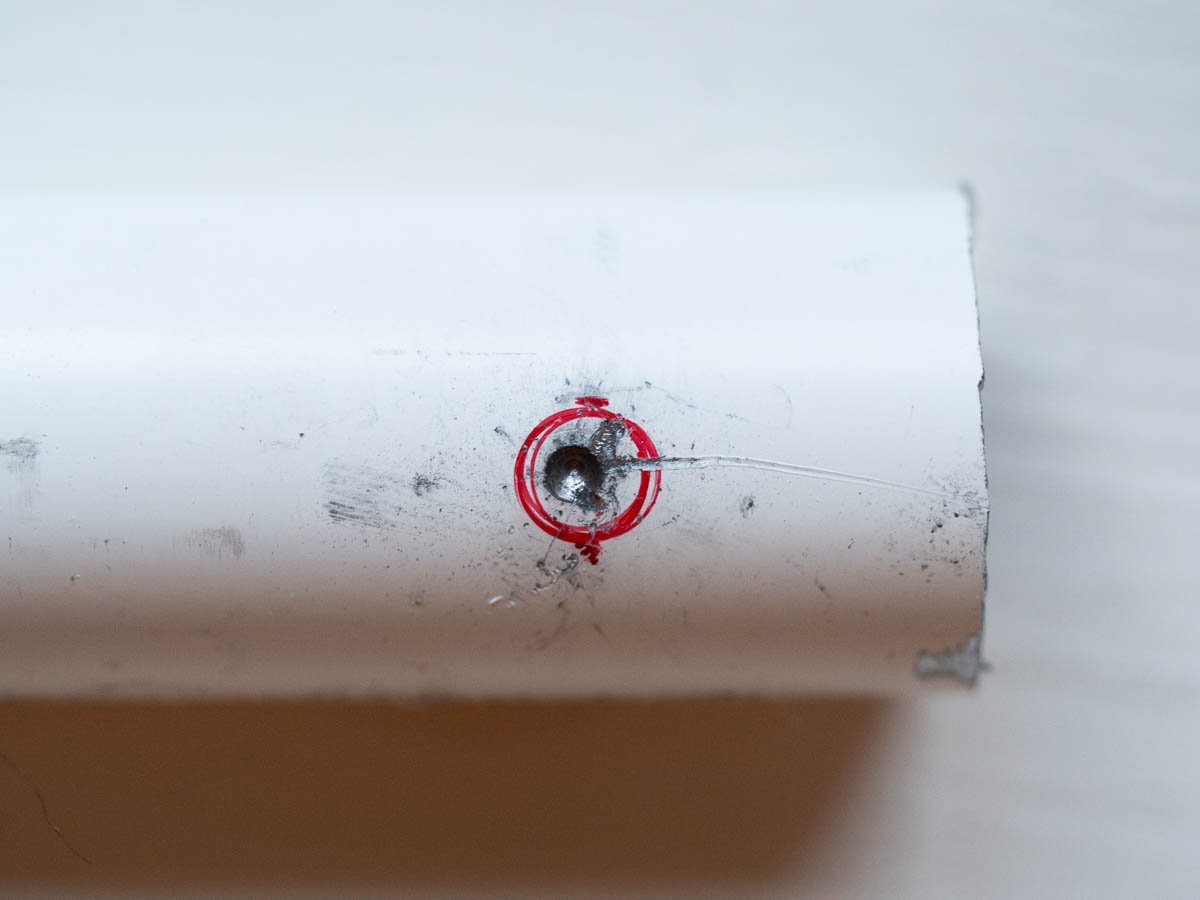
The drilling was rather less straightforward than the sawing and filing. My first attempt with a standard metal drill bit failed. After a long struggle, I had nothing more than a tiny divot to show. (This is a trial hole in one of the sawed-off pieces, hence why it looks so sloppy.)

The weekend after I went off to Bauhaus and bought drill bits made for high-density stainless steel. This weekend I put them to use, and the difference was immediate. With them, it was no struggle at all to drill through the steel pipe.

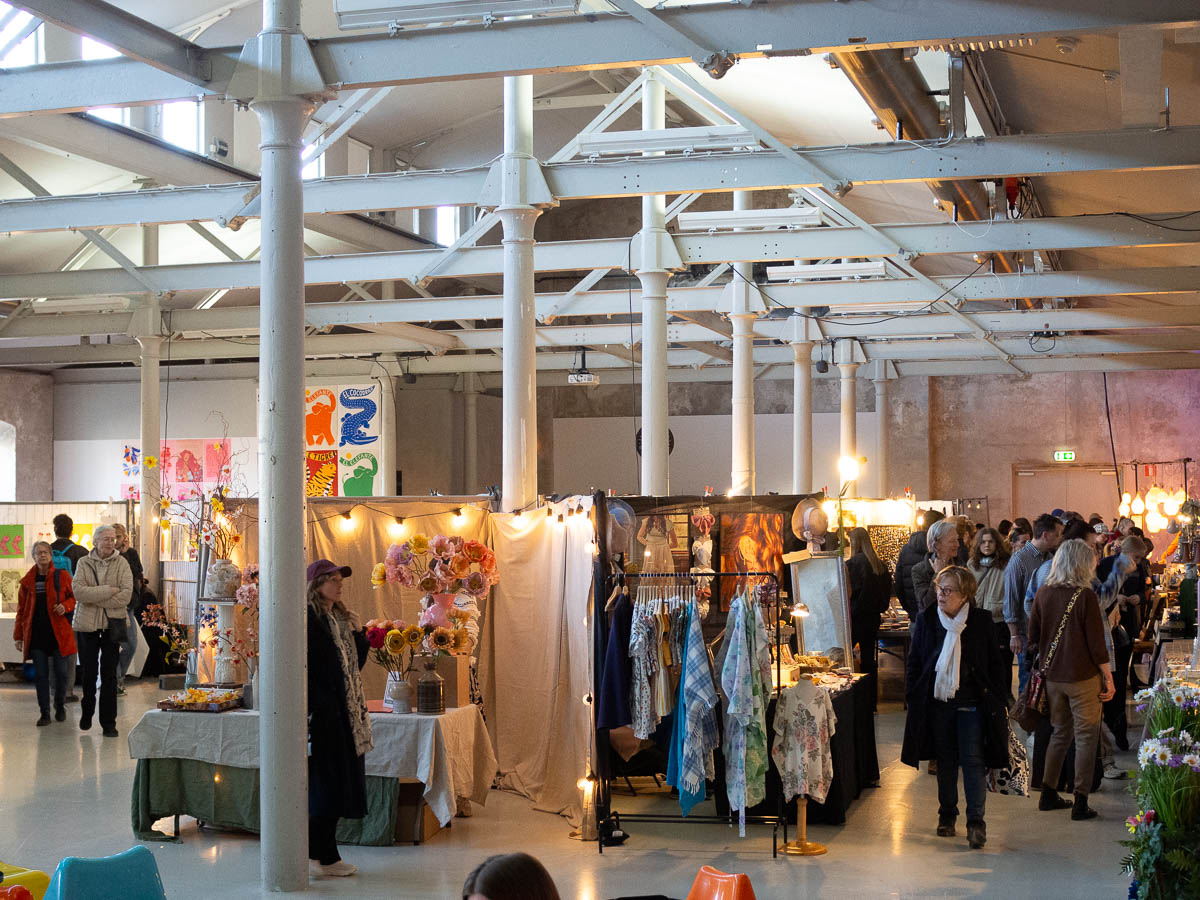
Färgfabriken had their design fair this year again. I found out about it last year but I suppose it is an annual thing.

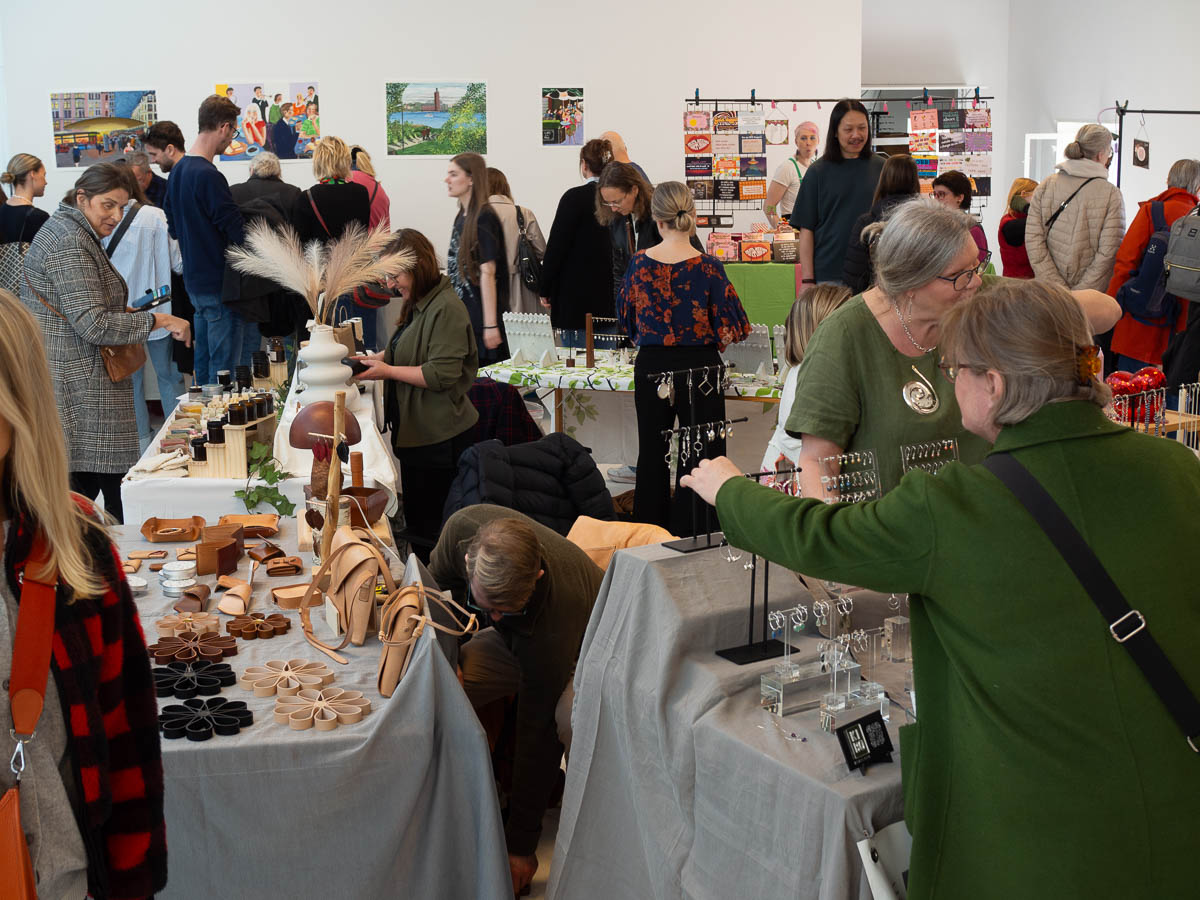
Most of it is stuff I am not at all interested in buying, so I mostly saw this as an excuse for a bicycle trip in the spring sun, and an opportunity to look at pretty, shiny things. An awful lot of prints again (do people actually decorate their homes with colour prints of tongue-in-cheek sayings?). Ceramics in pastel colours and silver jewellery were popular again. I think half the sellers were the same ones as last year, and they had even set up in the same spots.

Last year I bought a small ceramic plate, and I was actually hoping that the guy would be back again, because I am in “need” of small plates for serving small appetisers. He wasn’t there, though.

Instead I was instantly charmed by a photographer selling prints of his photos of flowers and insects. I couldn’t stop thinking of them, and ended up buying two. I have to hang them up at home first before I can share photos, though.