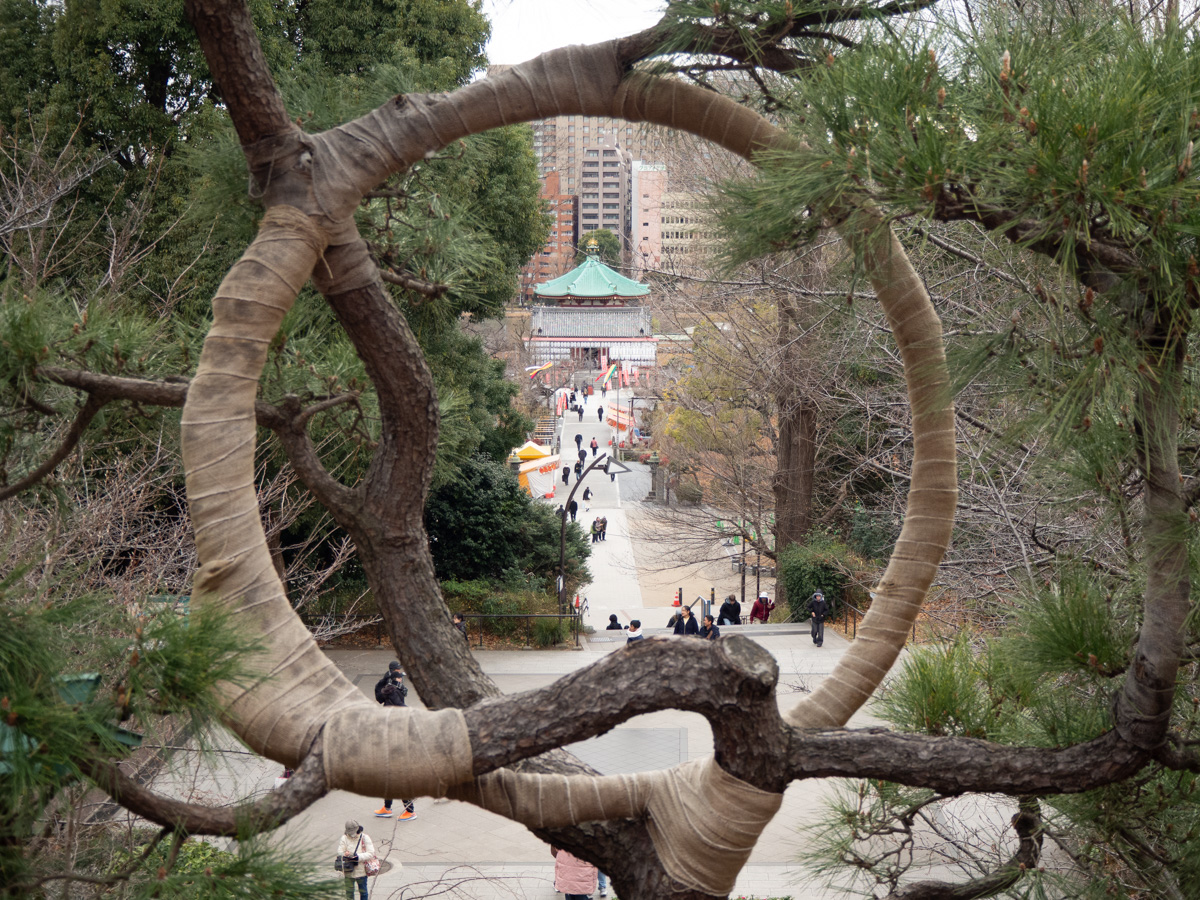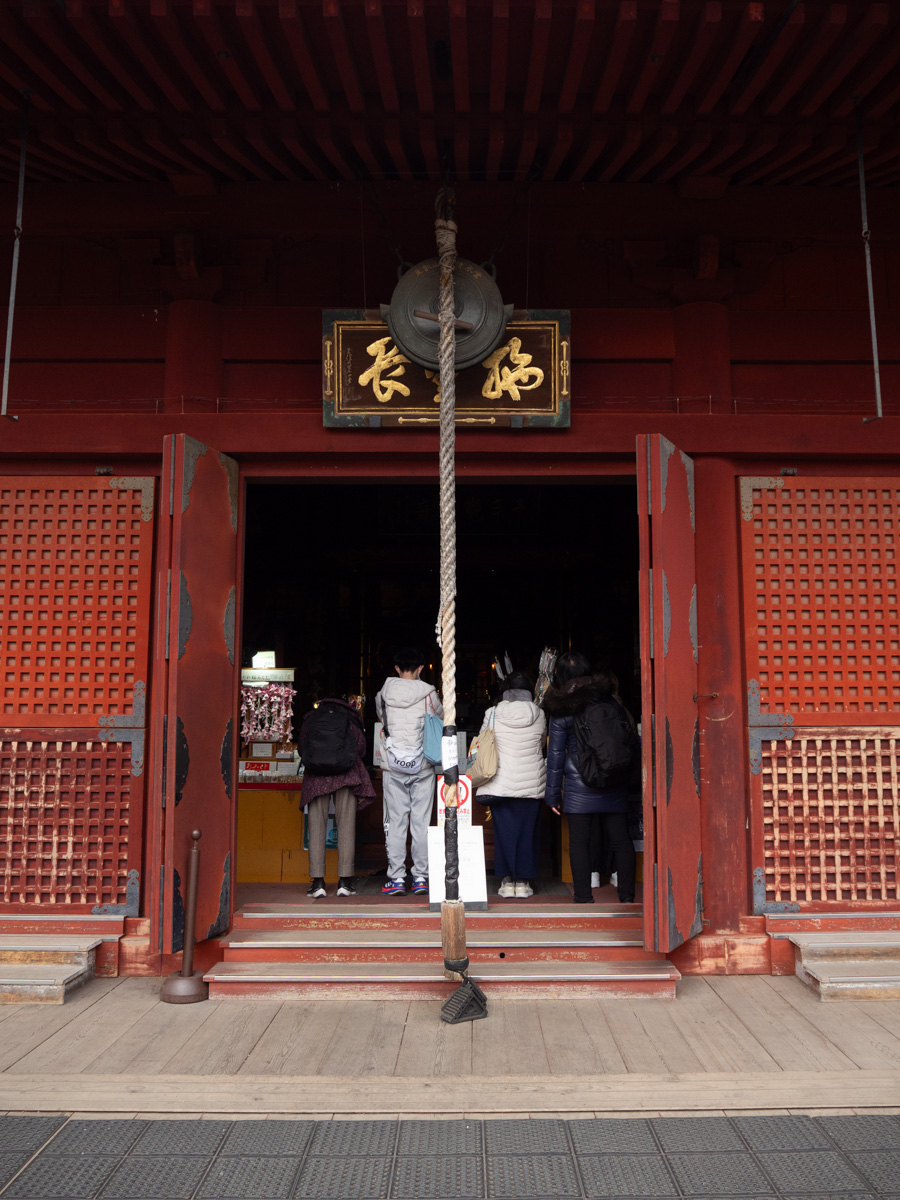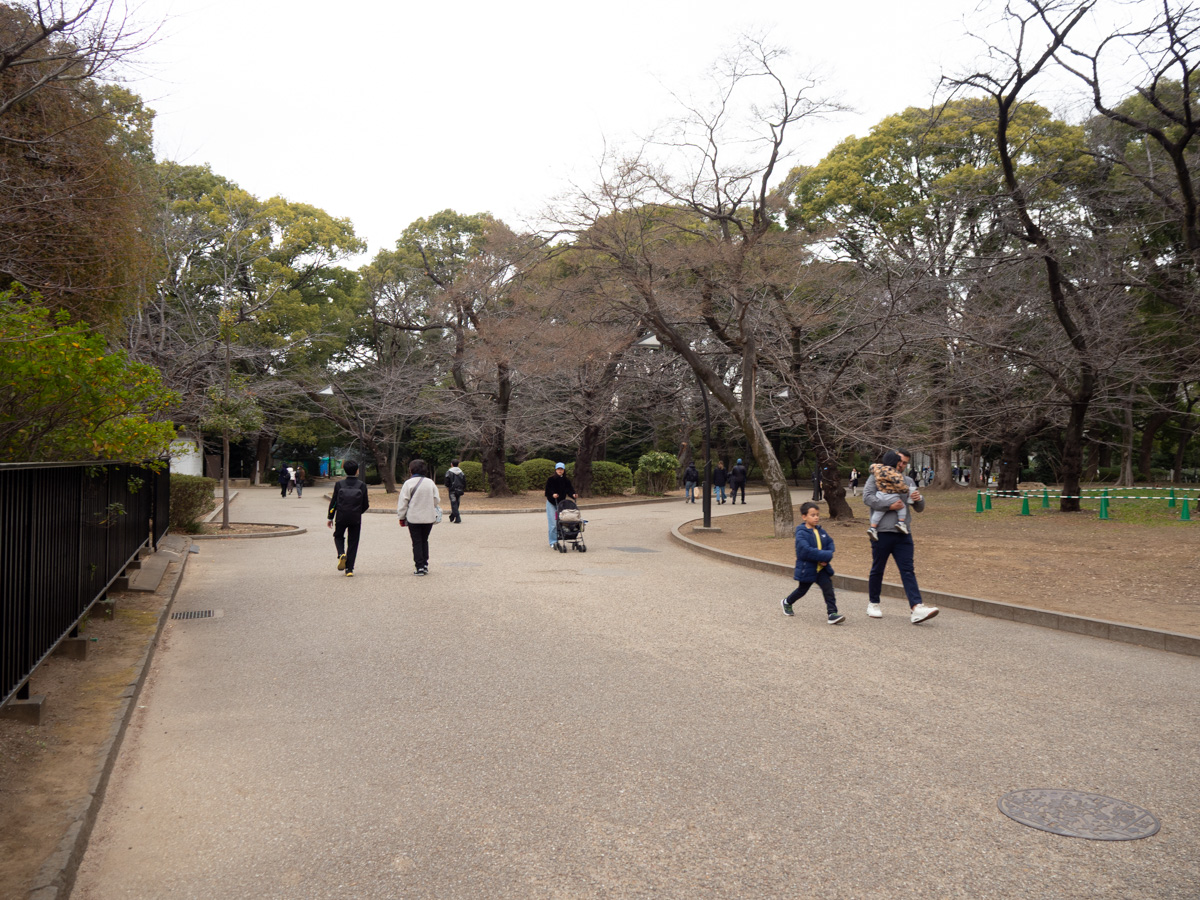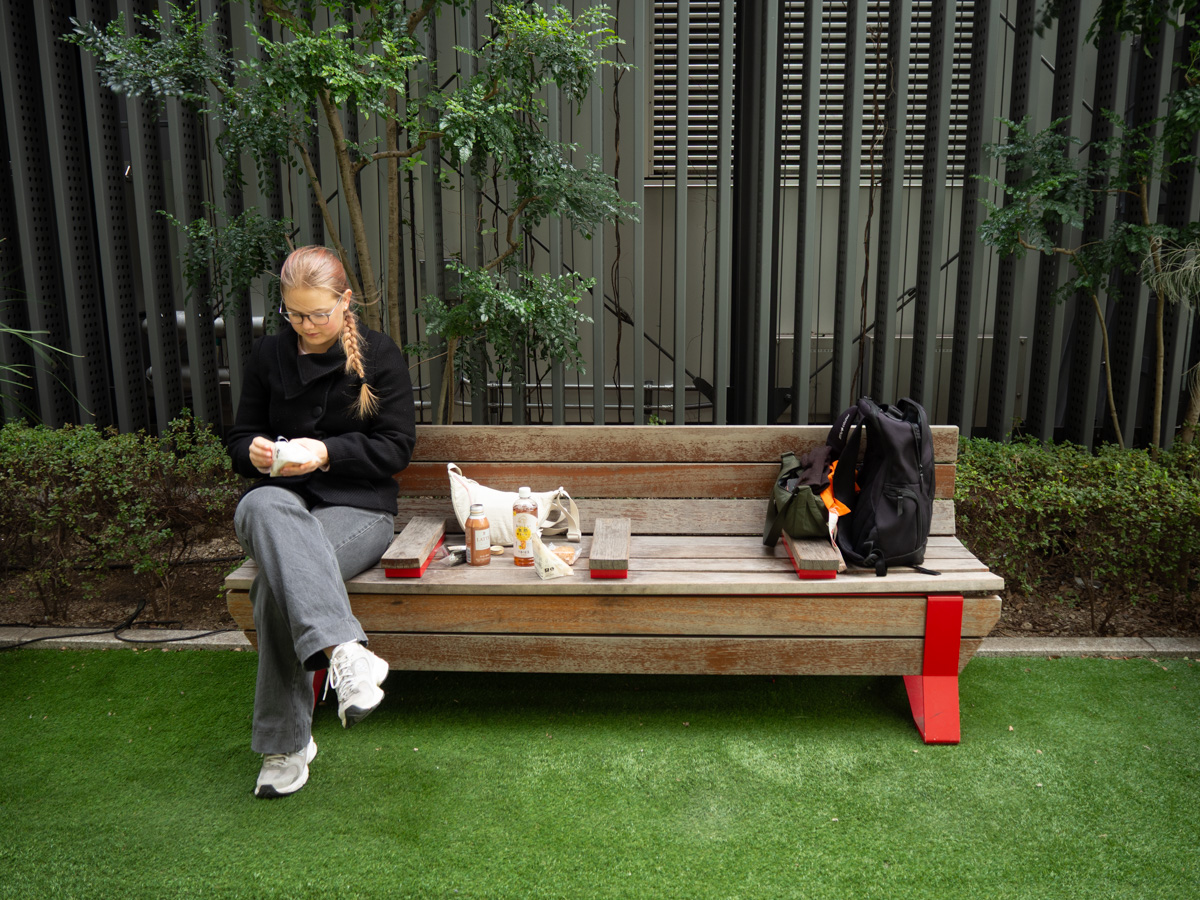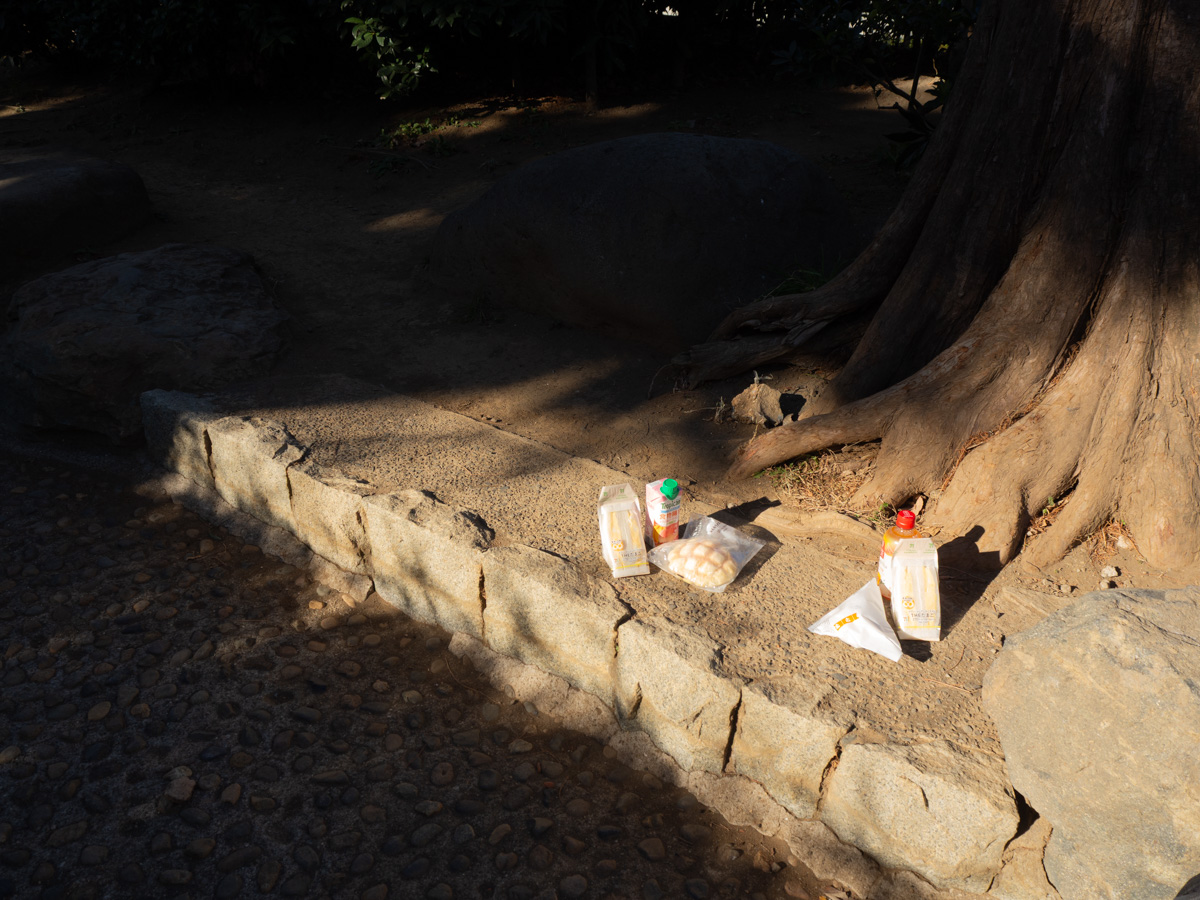
Our day started with the same challenge as yesterday: where to eat our convenience store breakfast. There was a park on the map, very close to us. Surely a park will have a bench, we thought. Nope. We ended up eating our egg sandwiches and rice balls on a concrete edge. And it was cold. We will need a better plan for our future breakfasts.
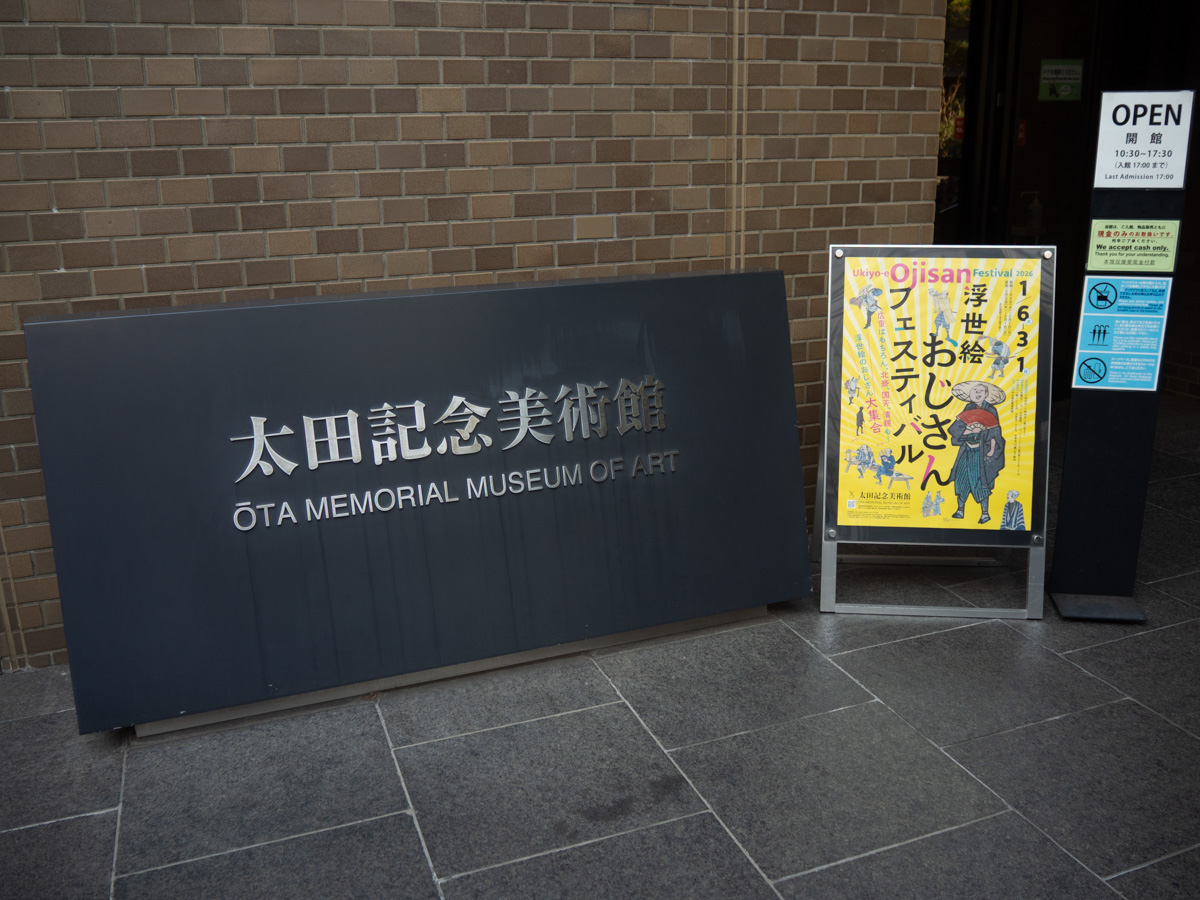
In the morning we visited Ota Memorial Museum of Art, which hosts a large collection of woodblock prints. They rotate which works from their collection are on display at any time. Right now, the theme was “Ojisan” or “uncle”, meaning “middle-aged man”.
Many of the exhibited prints were from famous series, like “The fifty-three stations of the Tokaido” etc.
The “uncles” were never the focal point of any of the works, but they were everywhere. Walking, sunning themselves, carrying things, smoking a pipe.
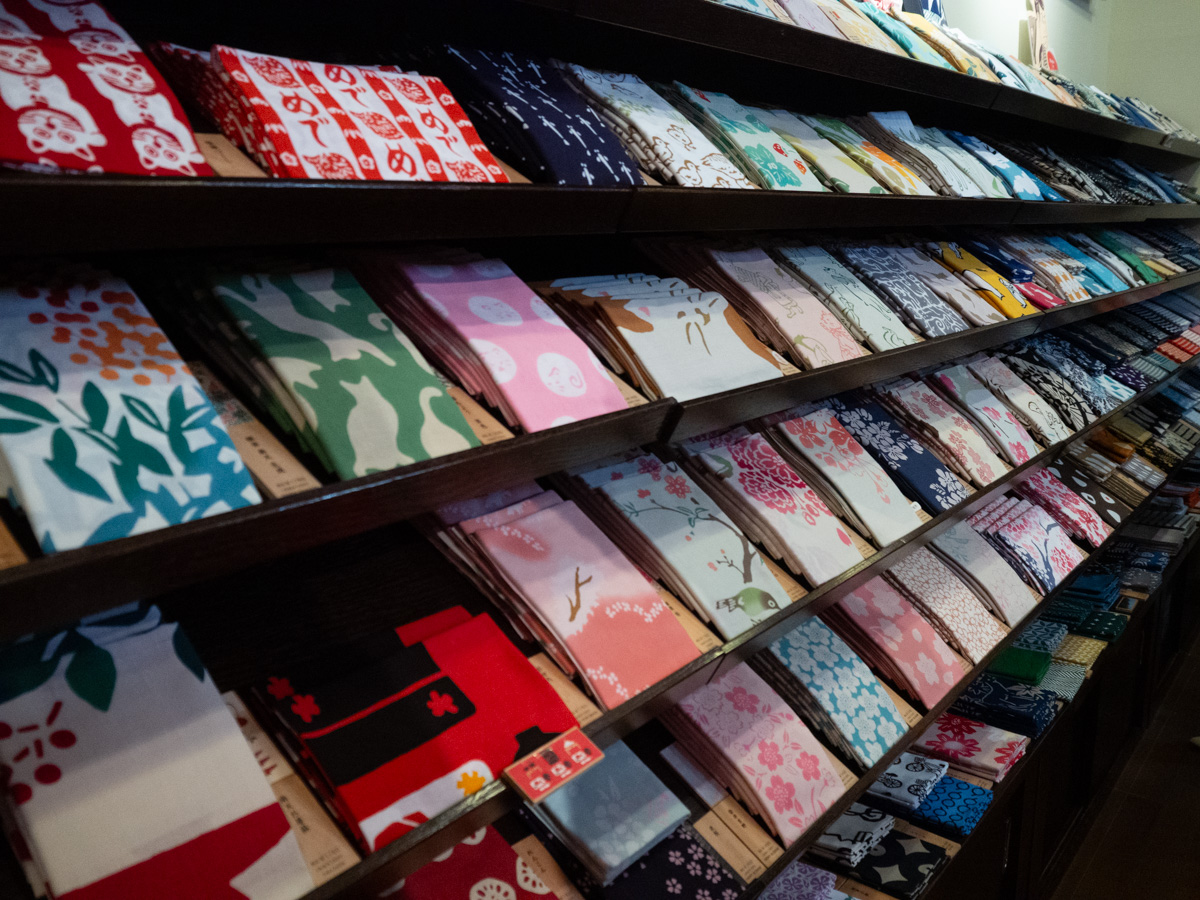
Unfortunately photography was not allowed inside the museum – not even in the foyer. The only exception was the museum shop, which had a wonderful range of tenugui, printed cotton towels. I bought several, even though I have no idea what I will do with them.
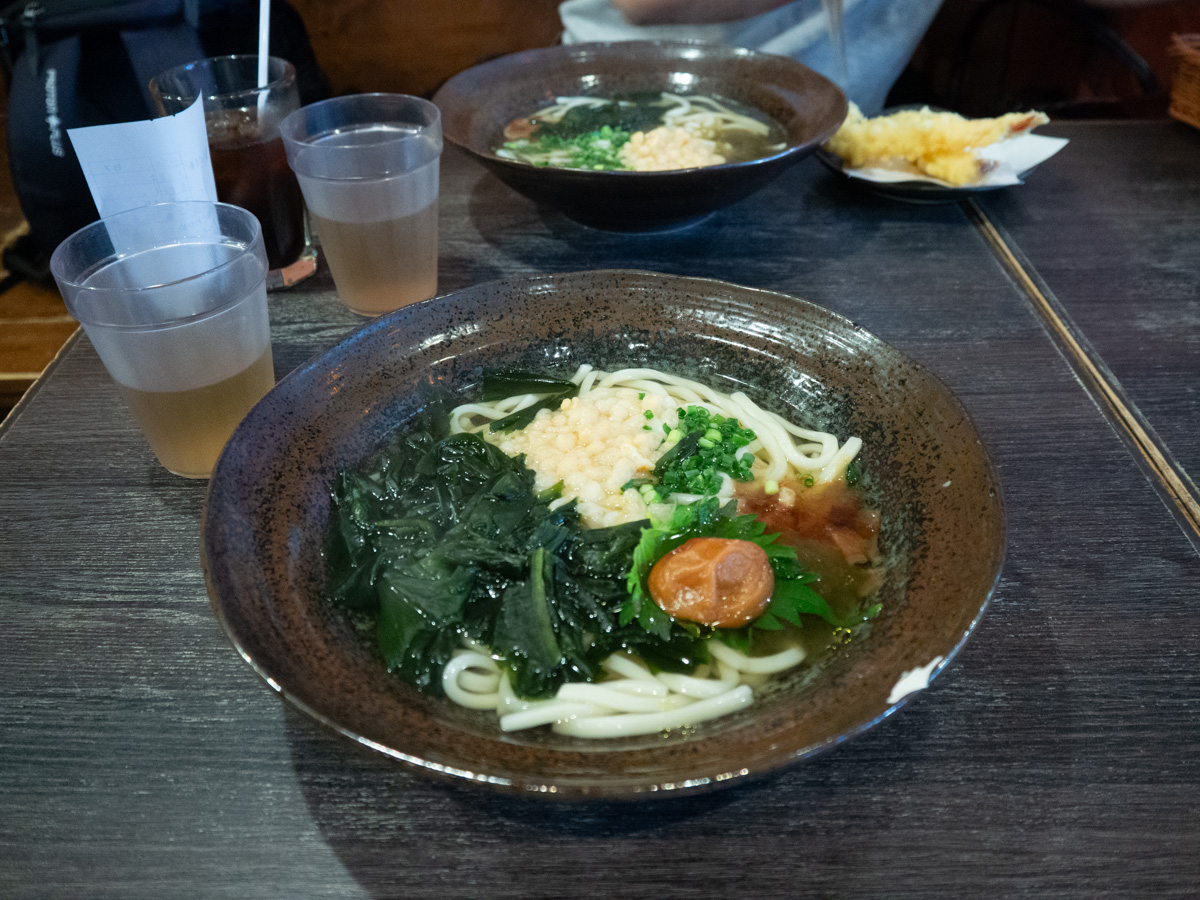
For lunch – udon noodles at – Udon Iroha. The restaurant actually offered paper aprons to guests, which I said no to. Maybe I was cheating when I sometimes bit off the longest noodles, but nobody was watching.
After lunch we spent a few hours browsing various kinds of shops in Harajuku. The vintage clothes shops were impressively organized and curated. A metre of short, plaid skirts; two metres of corduroy shirts. Kimonos, yukatas, haori jackets in all colours.

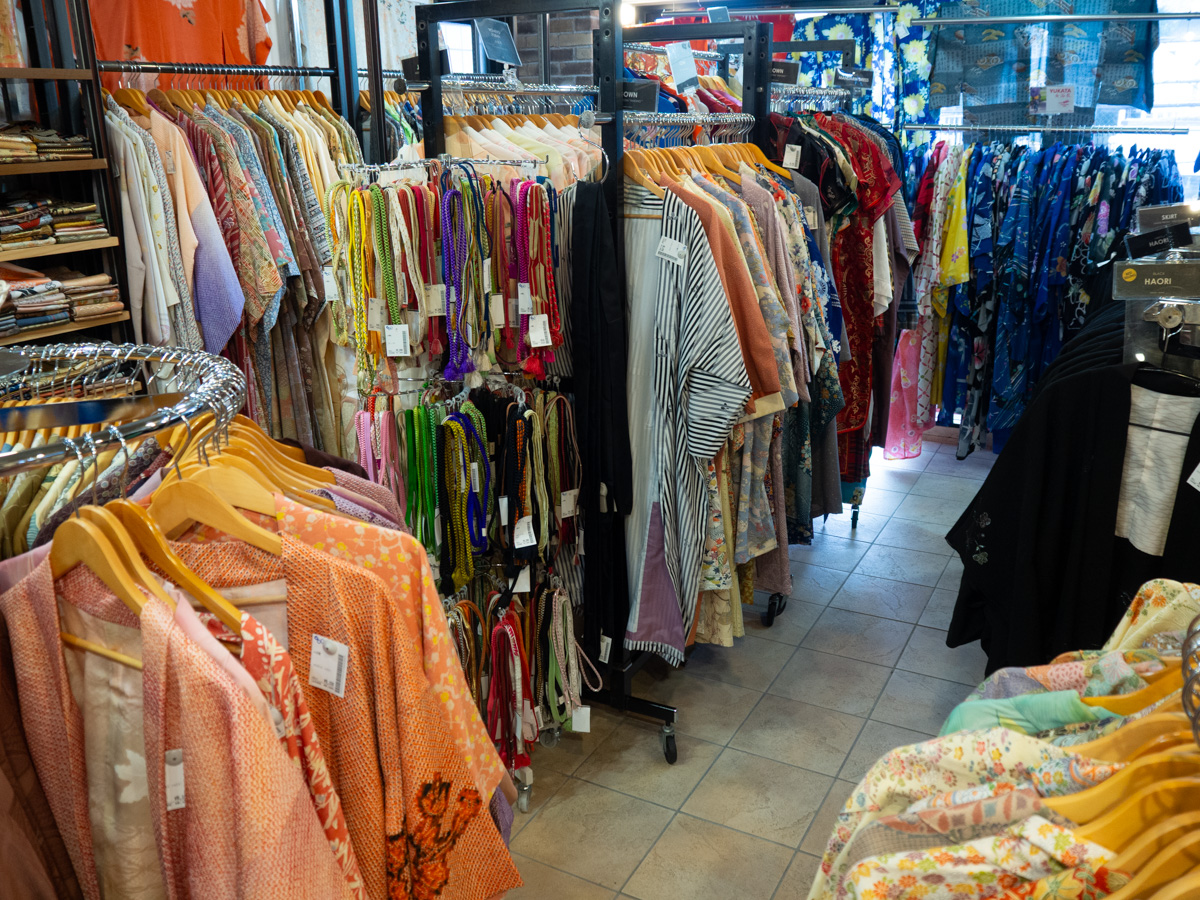
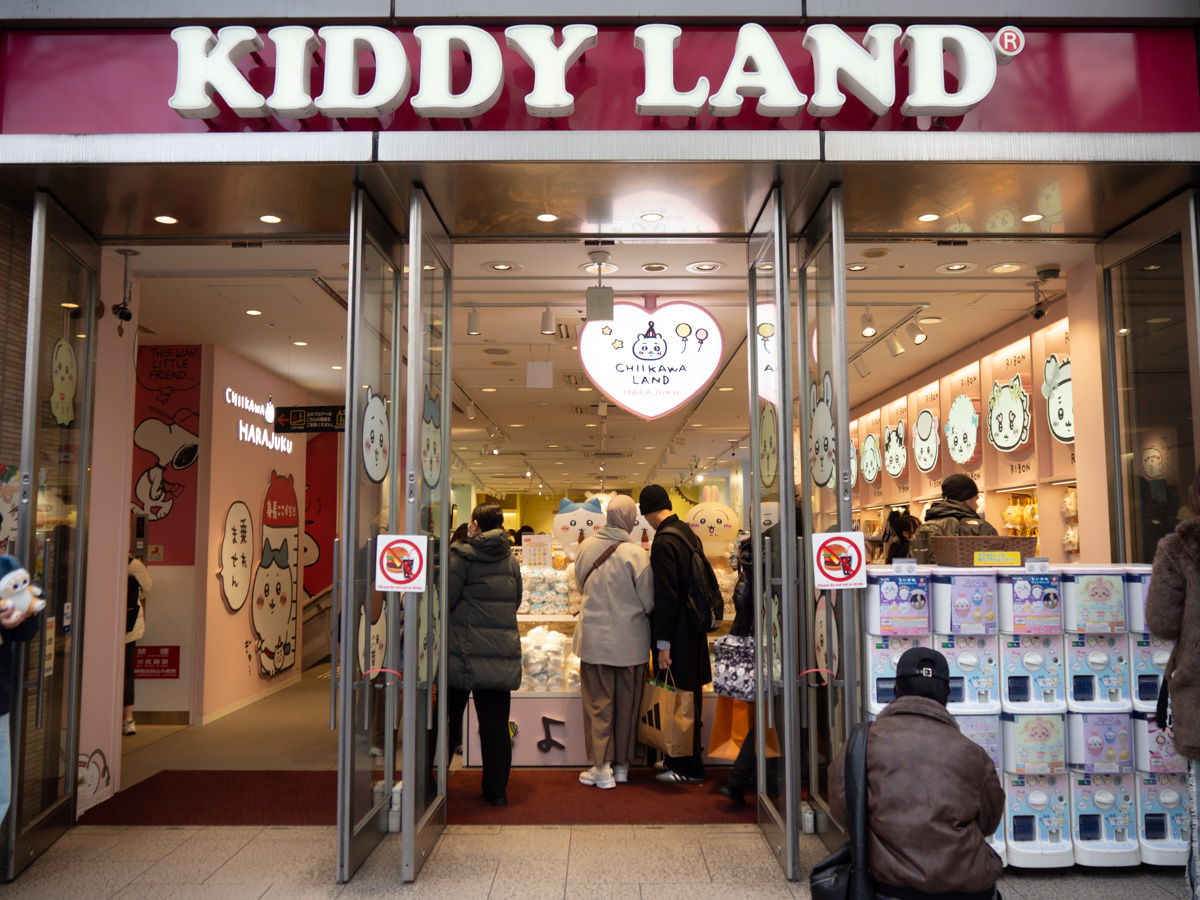
Ingrid had a list of shops with toys and pop culture doodads to visit. I discovered yet again that Tokyo does not like people just hanging around. There was never any place to sit when I was waiting for her.
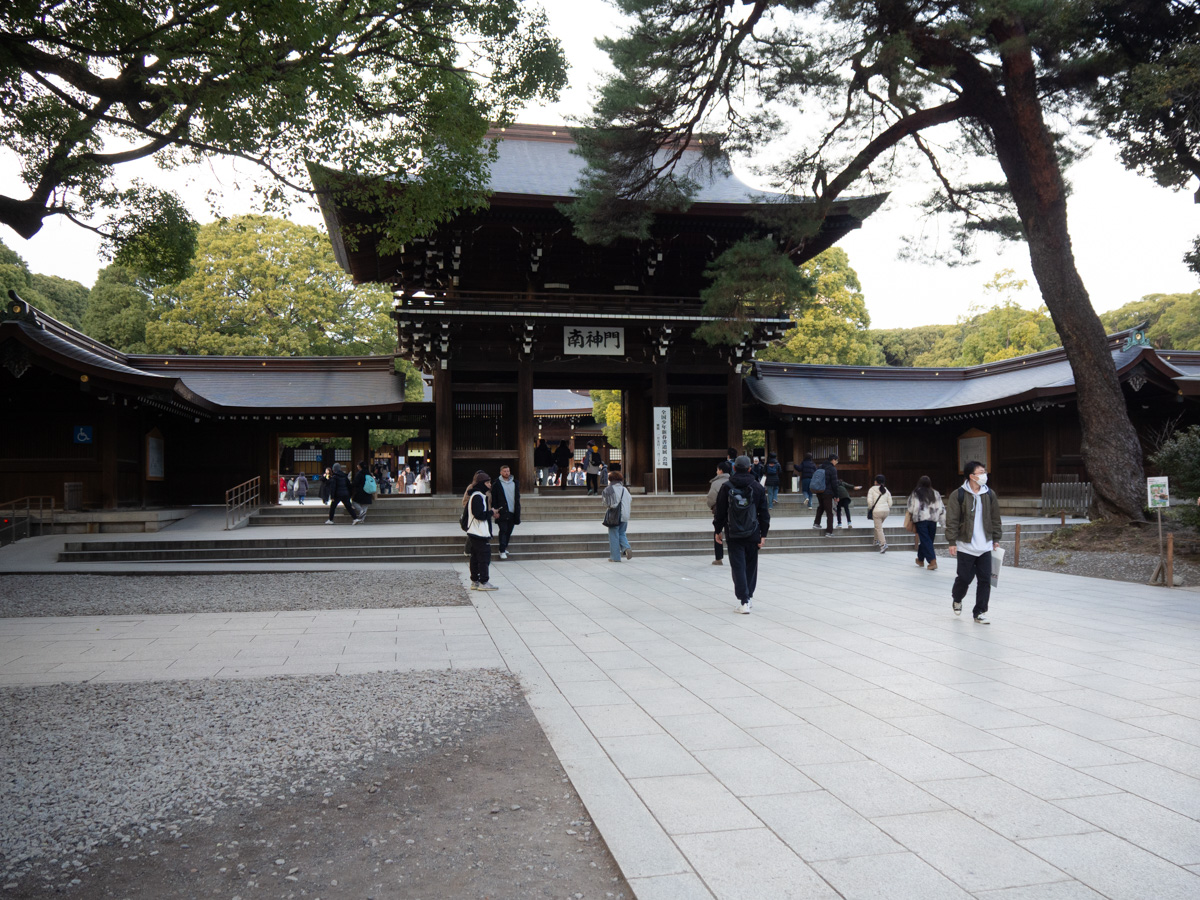
Right next to Shibuya is Meiji Jingu shrine, built to honor Emperor Meiji and his wife, Empress Shoken.
I liked the giant torii gate on the way through the park to the shrine. It looks like each pillar is a single tree trunk.
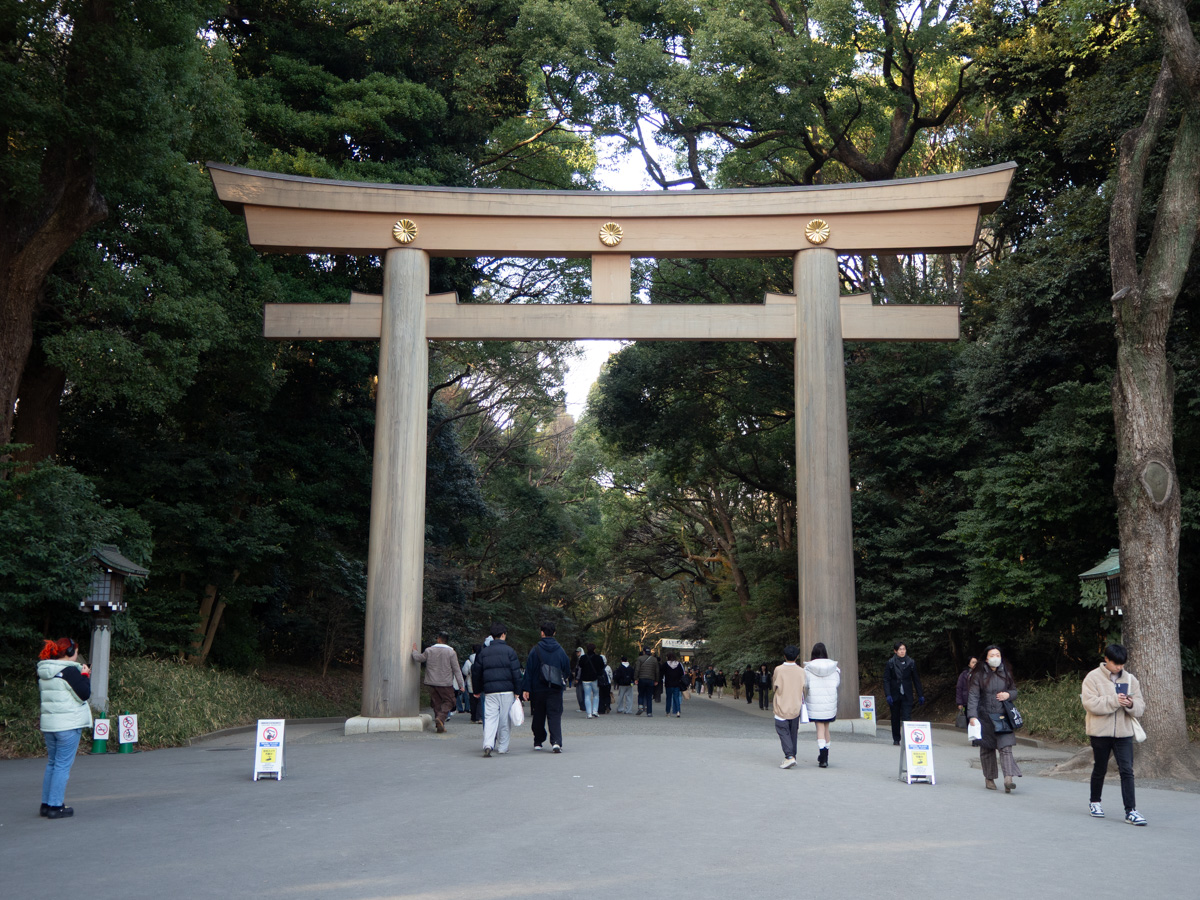
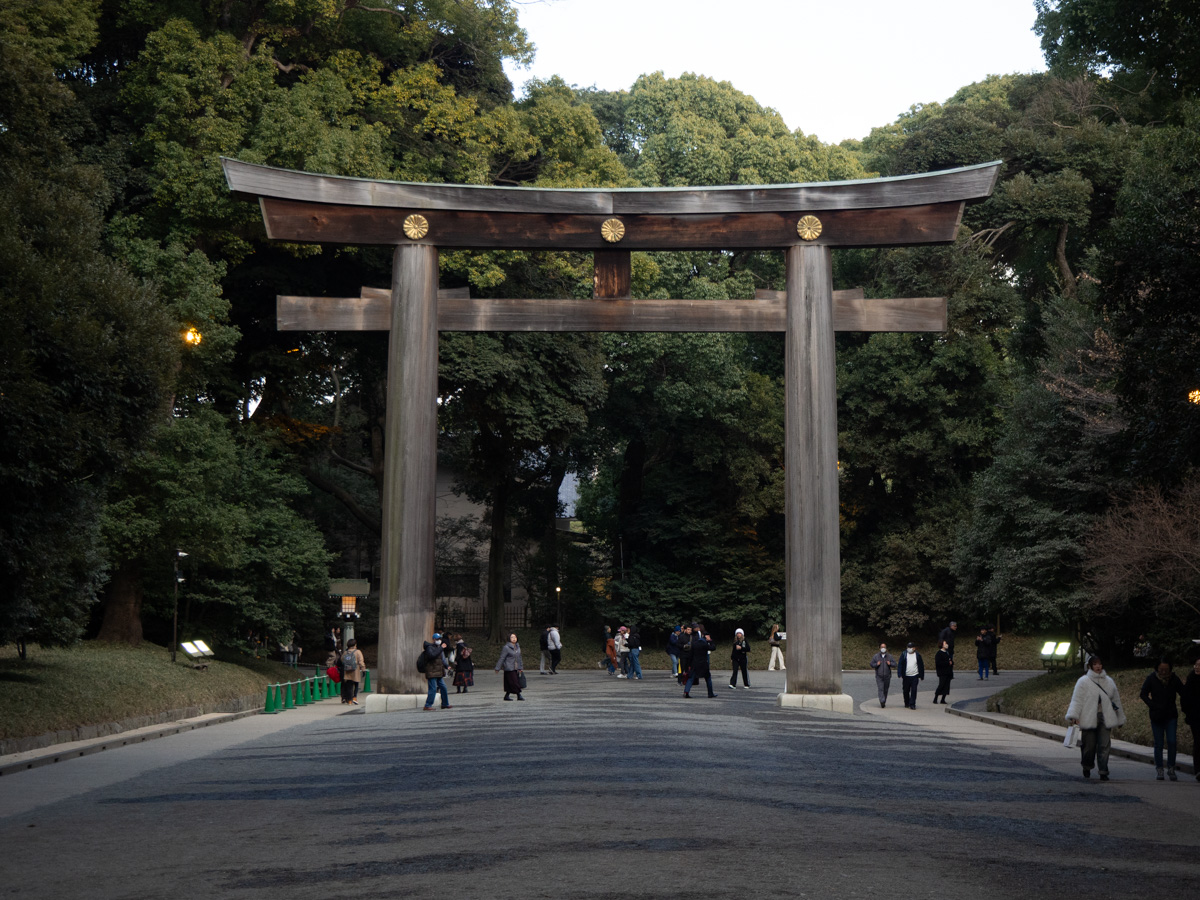
I read somewhere that, back when the shrine was being designed, there were intense debates about what the appropriate architectural style would be for a shrine erected for a deified emperor, since there was no real precedent.
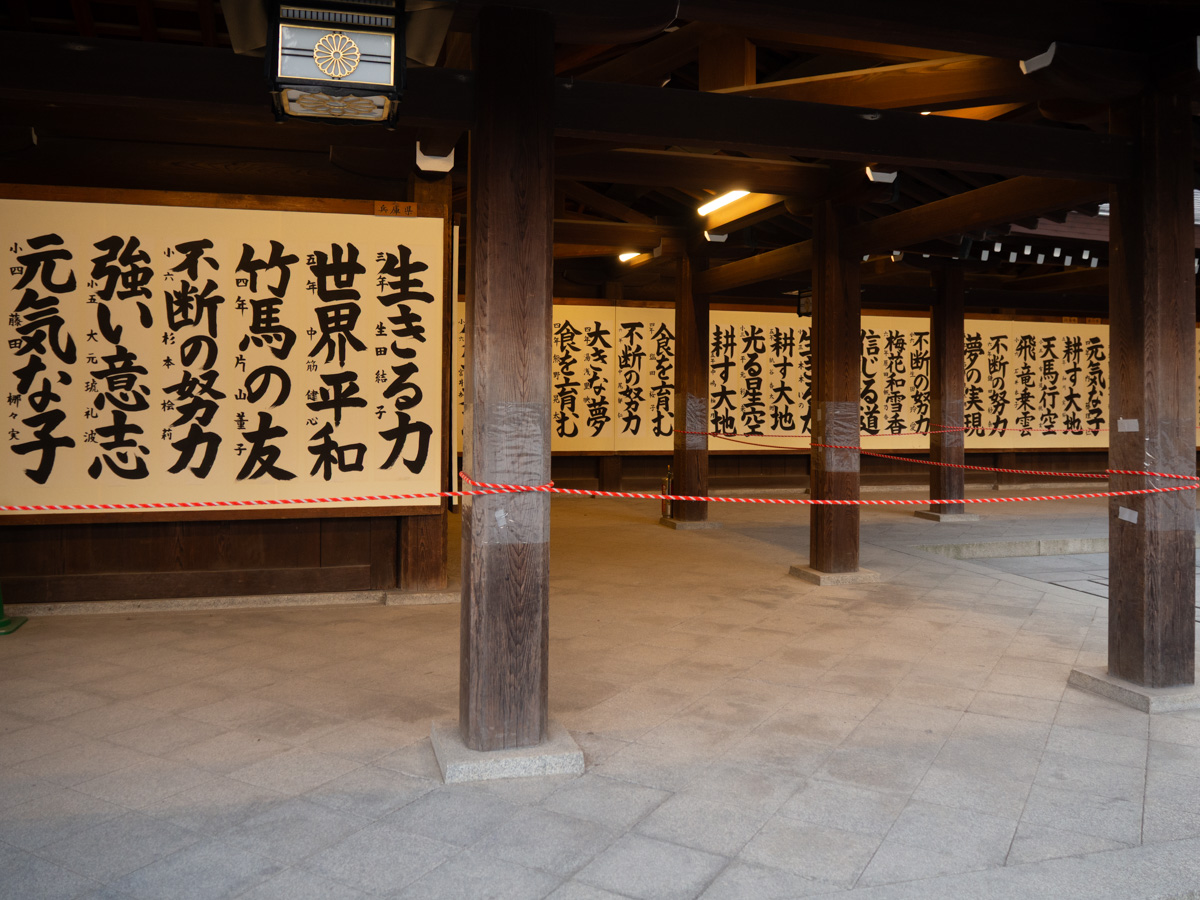
Emperor Meiji apparently wrote 100,000 poems during this life. I presume that these are some of them. I do wish someone had spent at least a little time on some English-language signage. Perhaps even a few translations of the poems?
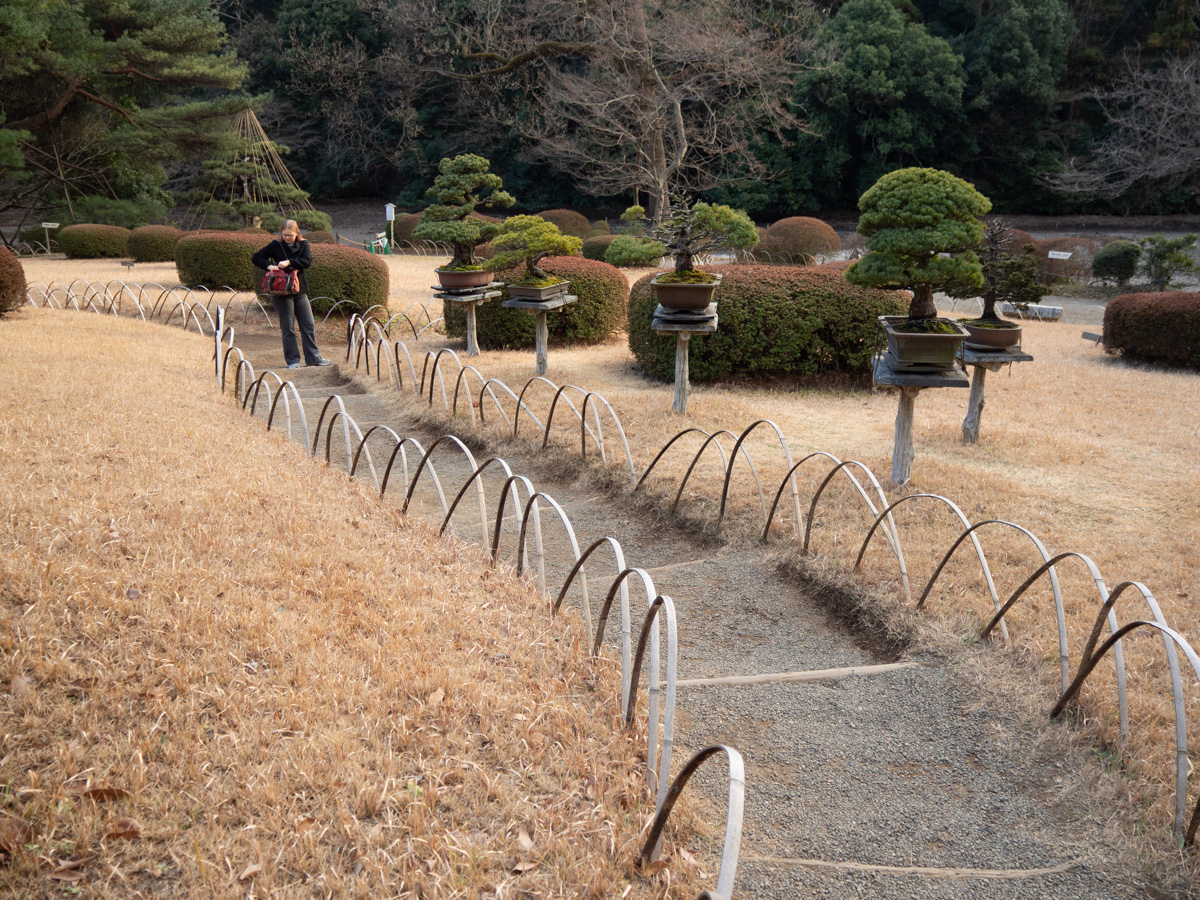
Close to the temple itself, there was the Emperor’s garden. Even though its more spectacular parts (like the iris garden) are nothing to look at in late winter, I appreciated its design, with winding paths and bonsai trees.
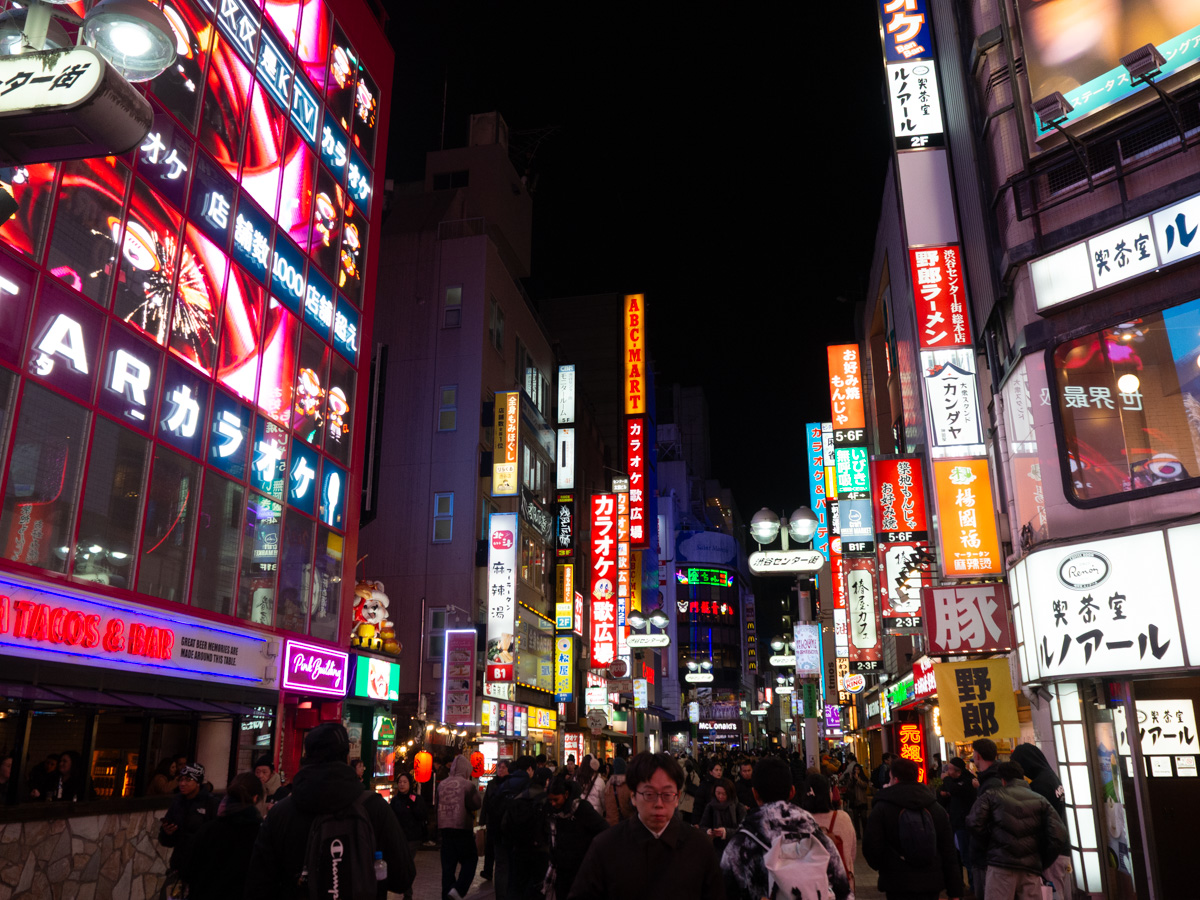
Tokyo at night looked exactly as colourful and neon-bright as movies had made me expect.