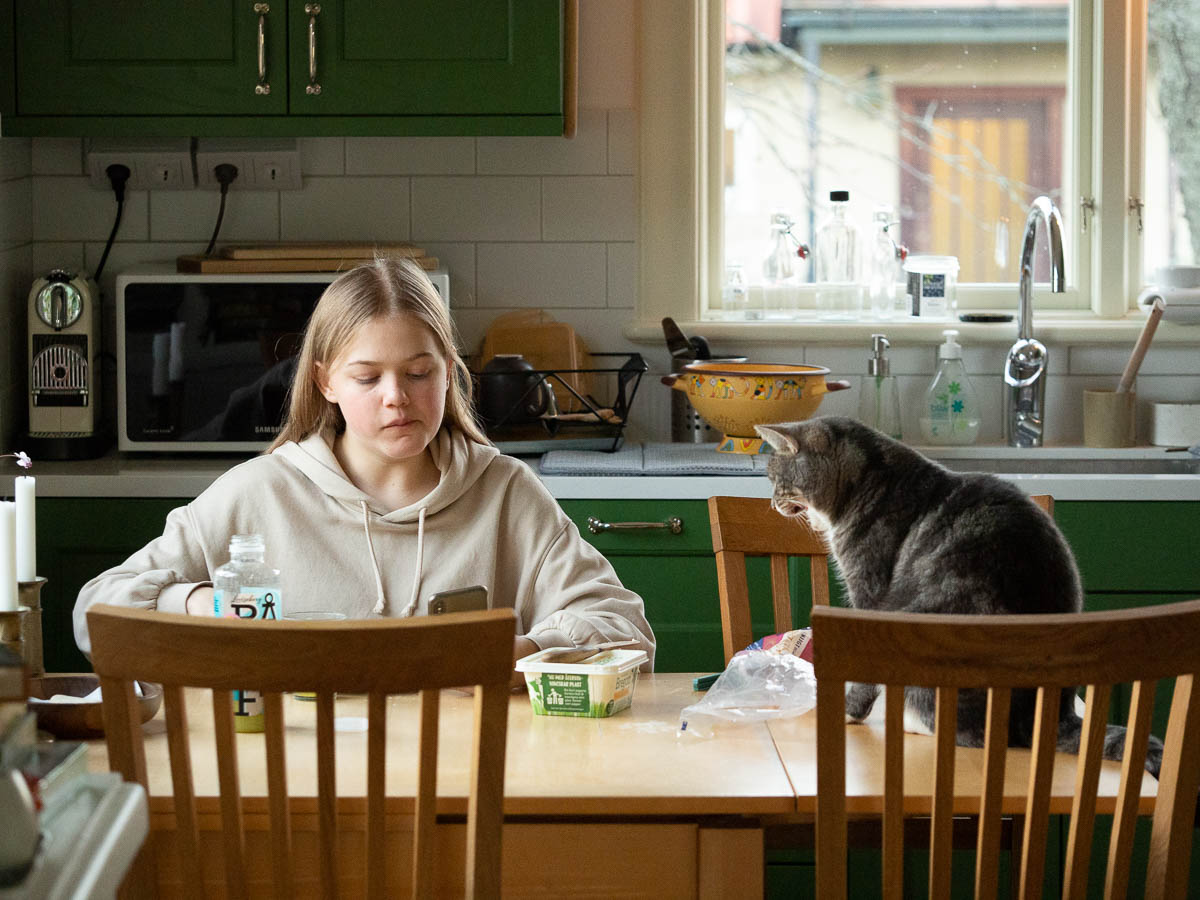
Did I mention the cat getting comfortable here?
I wonder what its family thinks about its long absences.
Did I mention the cat getting comfortable here?
I wonder what its family thinks about its long absences.
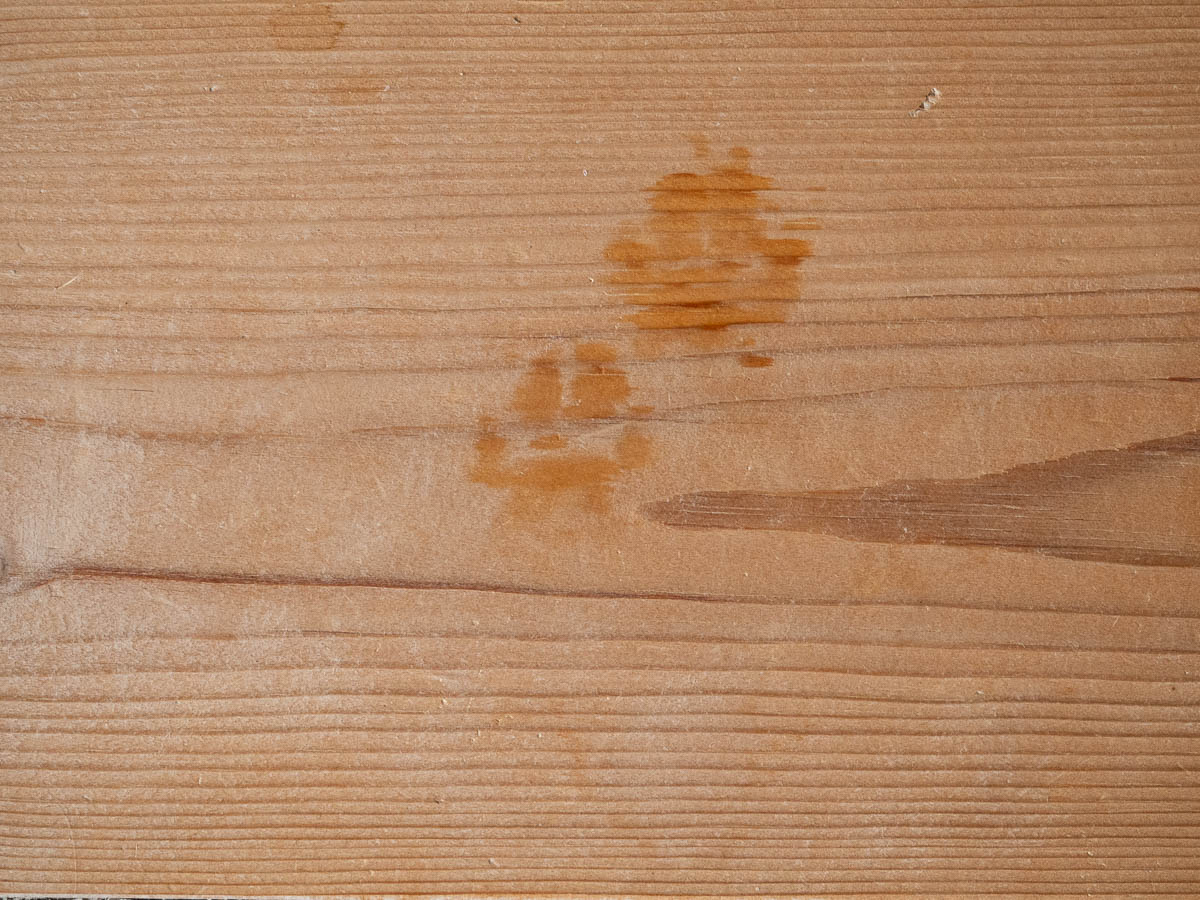
The neighbourhood cat is coming by several times a week now. I think it’s adopted our house a second home.
It used to come in when it saw the French doors being open. Now it actively signals its desire to be let in by tapping the French doors.
I used to put it back out at eleven-ish at night, in case its family was waiting for it to come home for the night. But it’s come by around midnight on occasion, so I guess it doesn’t go home for the night. I still put it out when I go to bed; I don’t want to have a strange animal loose in the house when nobody is awake. But I feel a bit bad about moving it from a nap on a warm, cosy sofa to a dark, chilly, wet reality.
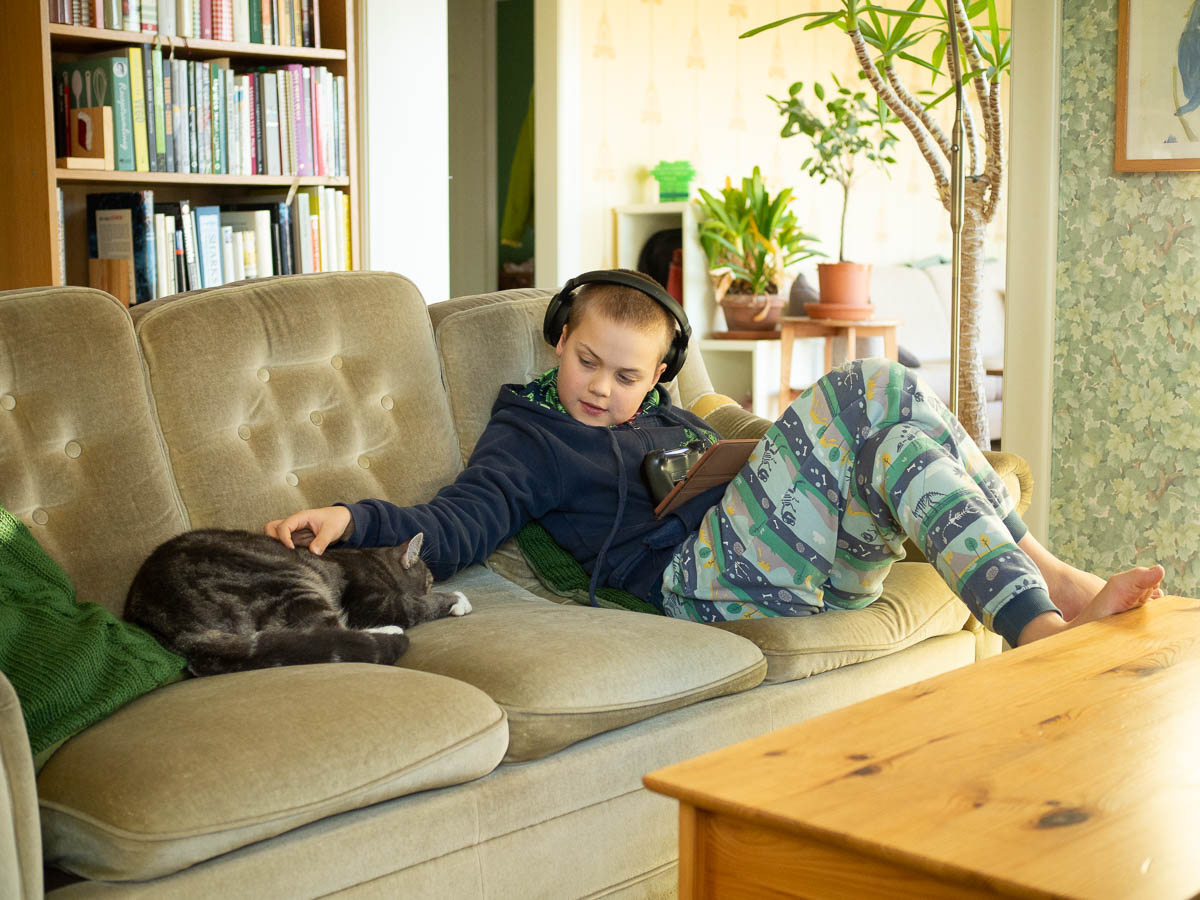
The neighbourhood cat who’s been visiting occasionally is getting more comfortable in our house. Previously it used to cautiously look around but stay at a distance from us. Now it’s OK with being touched and sleeping in our sofa.
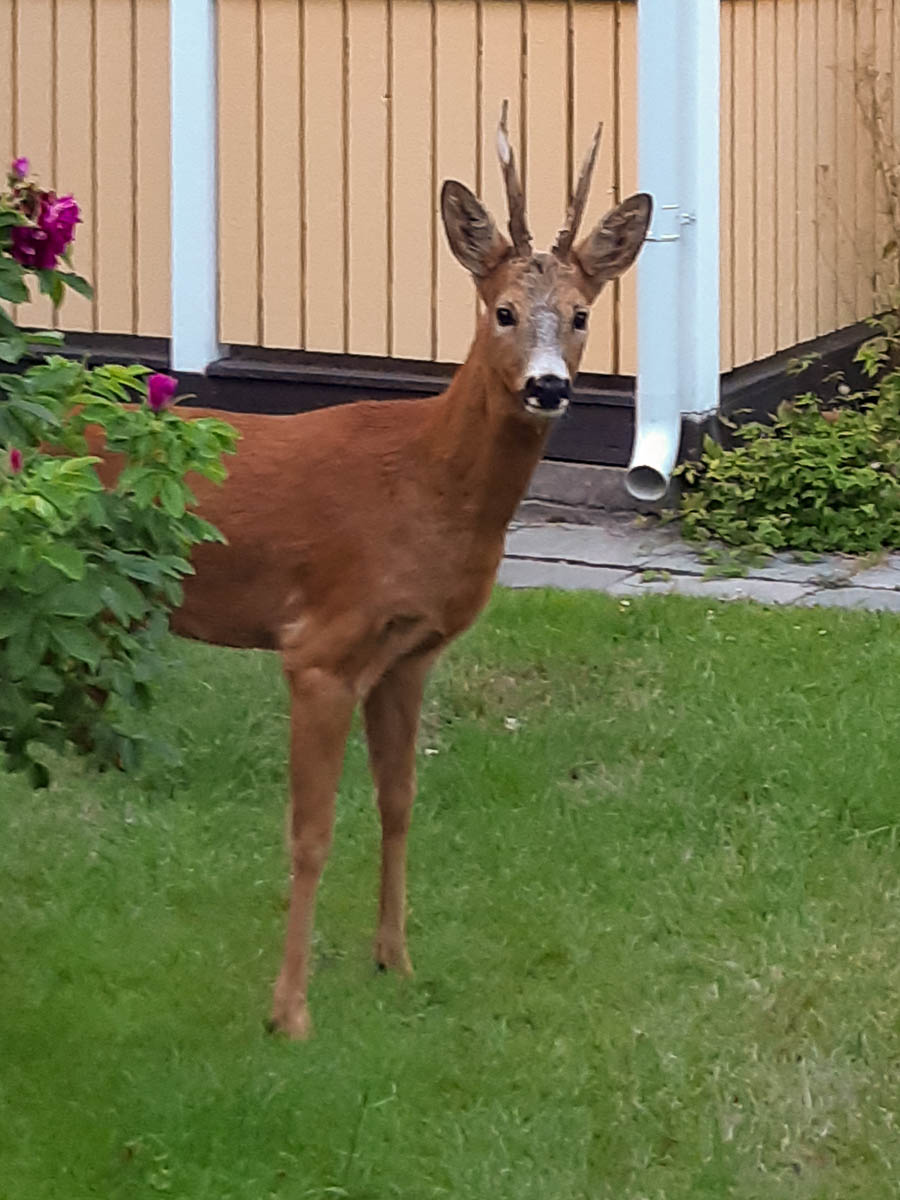
I see deer passing through our garden almost daily. And when I was out walking this evening, I met this guy. They’re barely even shy. I guess there aren’t many people around right now, with vacations and everything, so they deer can be bolder than usual.
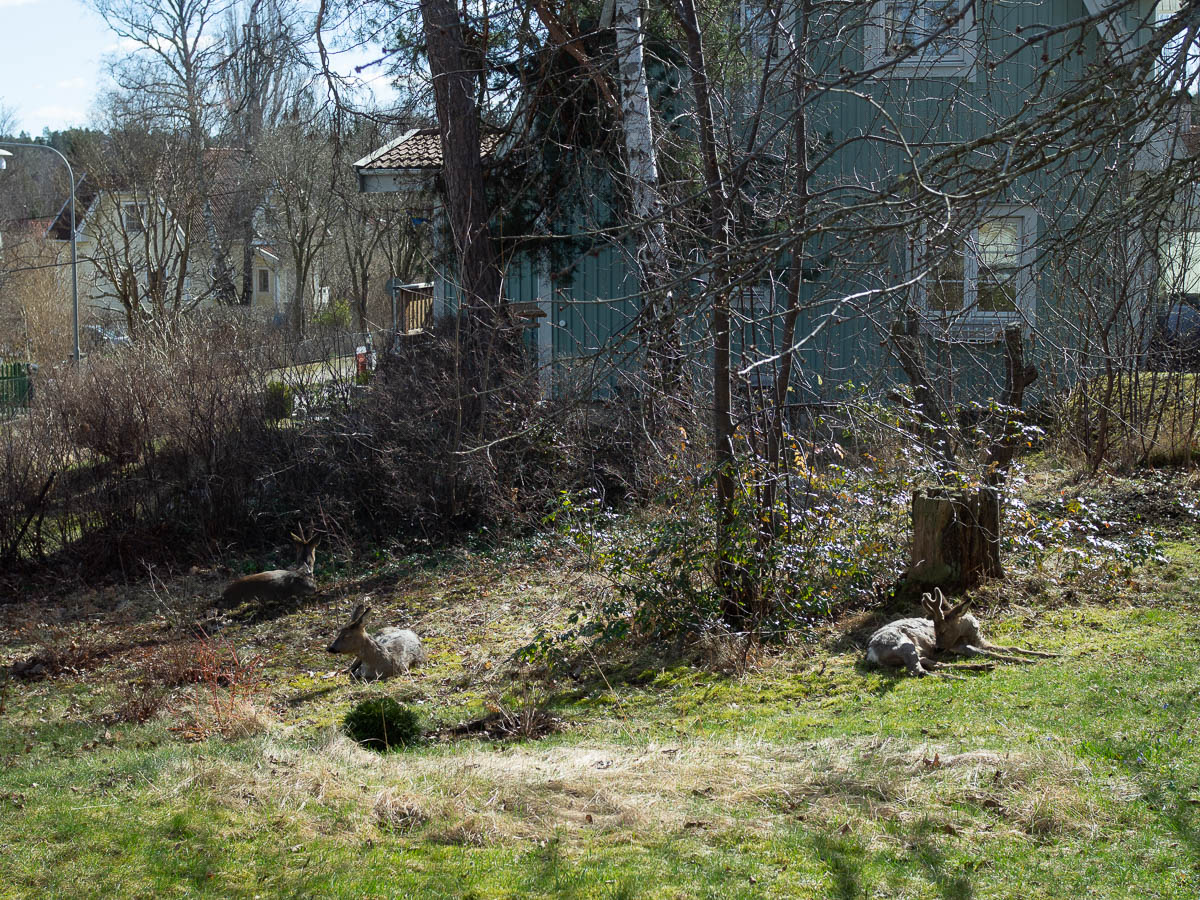
Three deer lazing around in the spring sunshine in the garden. Clearly feeling right at home here.
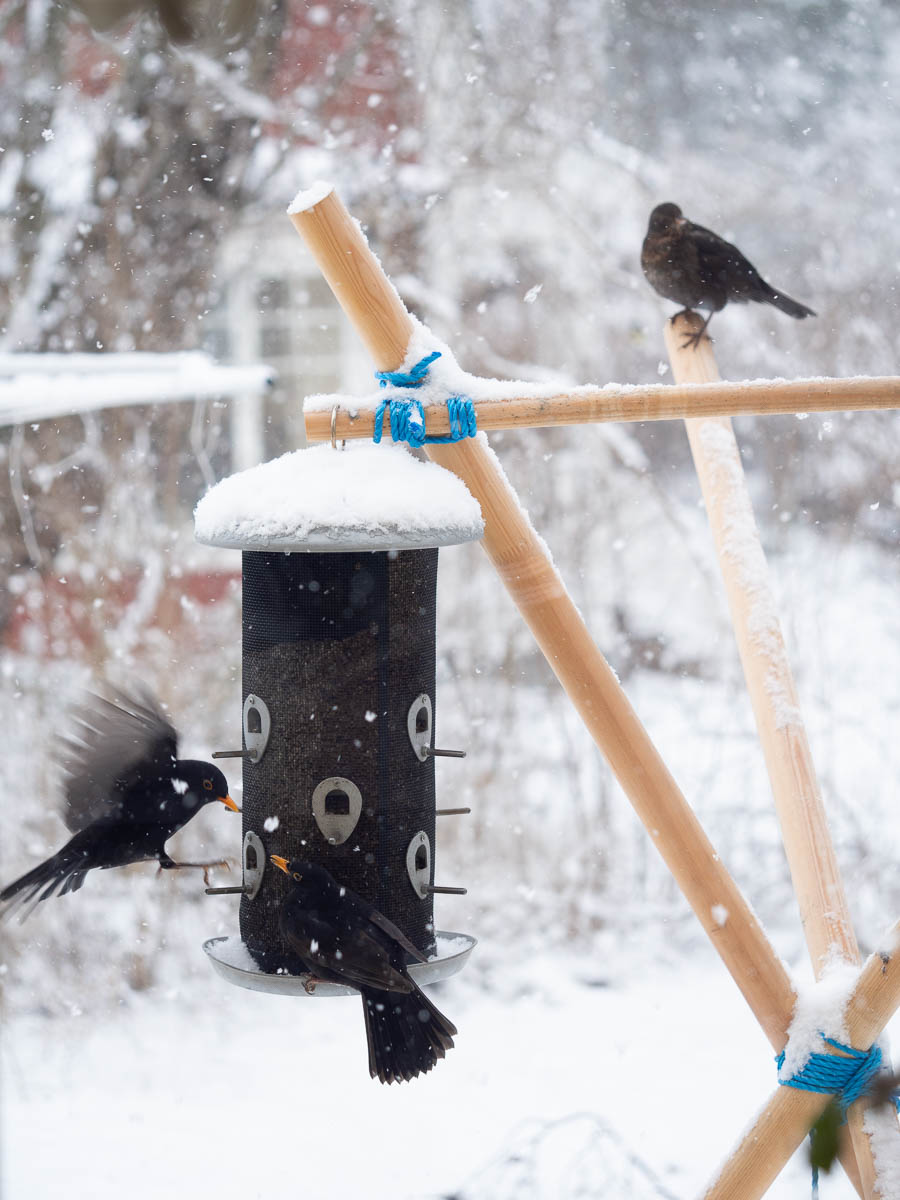
Even with the snow and the cold, there are very few birds at the feeder. Mostly fieldfares and blackbirds, and the occasional blue tit or nuthatch. I wonder where the swarms of redpolls and goldfinches are this year, and all the great tits and blue tits we’ve seen in the past.
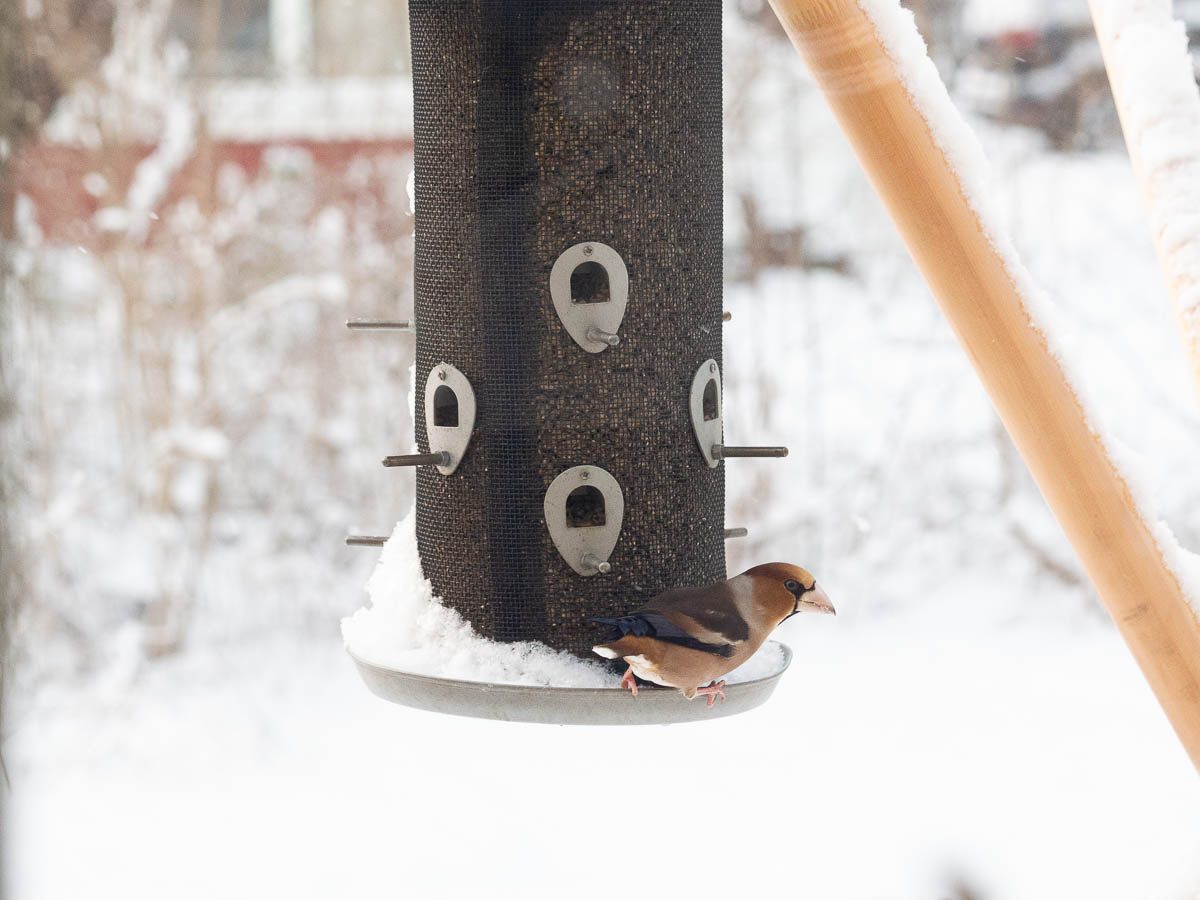
The cold and snowy weather has finally brought some birds to our feeder! It’s been nearly empty until now. I can’t remember a winter with so few birds to look at.
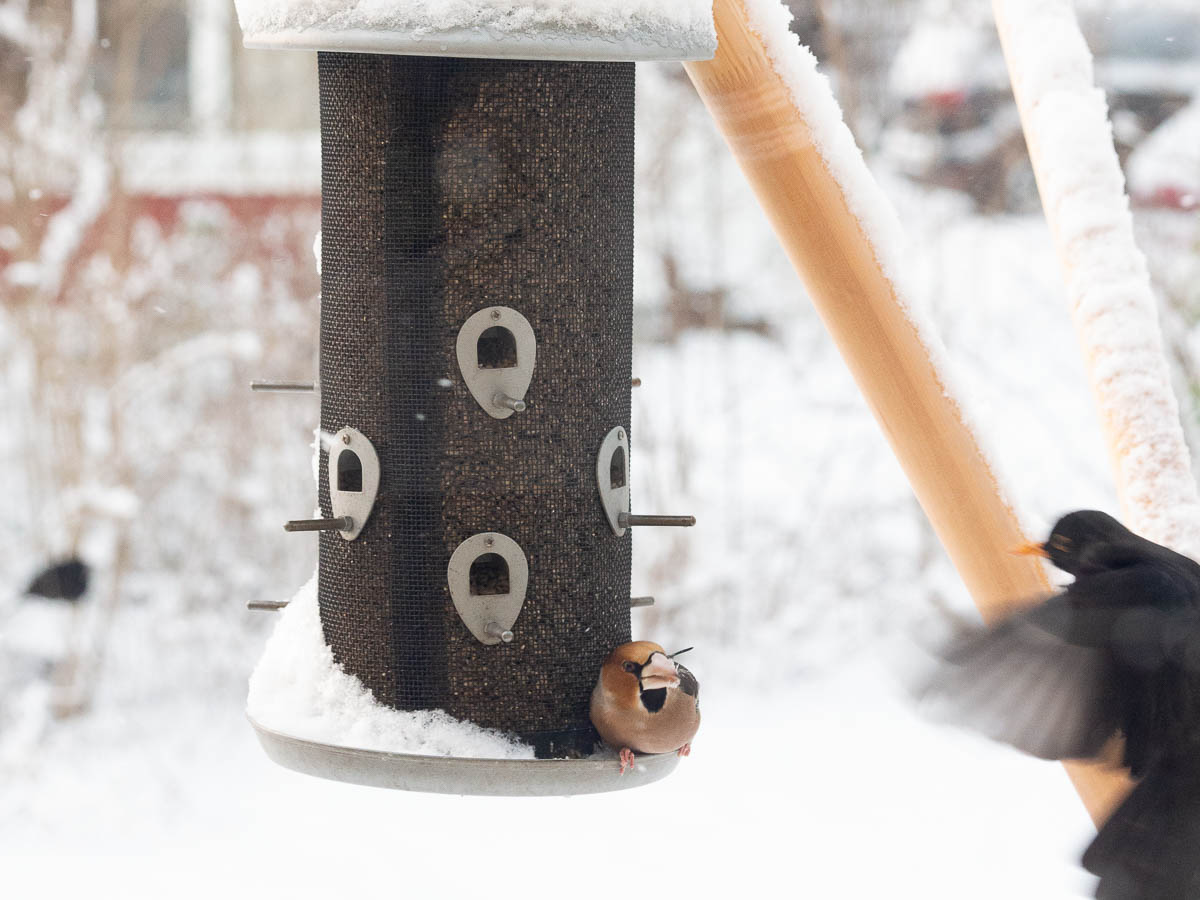
Today I saw a hawfinch here for the first time. The Swedish name stenknäck means “stone crusher” and the Estonian suurnokk means “big beak” and there’s no doubt that the names fit! According to my bird book it eats cherry pits, after crushing them with its beak. The book says it visits feeders to eat hemp seeds, but here it seems to prefer sunflower seeds.
It’s clear that there is a power hierarchy among different breeds of birds. Sometimes it correlates with size. Most smaller birds avoid jays and magpies; blue tits and great tits avoid nuthatches. But not always: the hawfinch barely needs to turn its head, and blackbirds flee.
Sörmlandsleden stage 16, there and back, 10 + 10 km.
Walking the same stretch of the trail there and back again feels somewhat boring. But even though I considered all sorts of variations, I couldn’t come up with any better alternatives. With all the restrictions in place I can’t use public transport to get to and from the hike. I could ask Eric to drop me off and pick me up again, but so much driving for just a one-day hike would feel like wasting his time. I could do a longer hike with an overnight stay but with the short daylight hours I would spend way too much of the day in my tent in the dark. So I just made the most use of those daylight hours: got up at 6:30, left the house at 7 and was out walking shortly after 8. By the time I started driving home at 16 it was near dark.
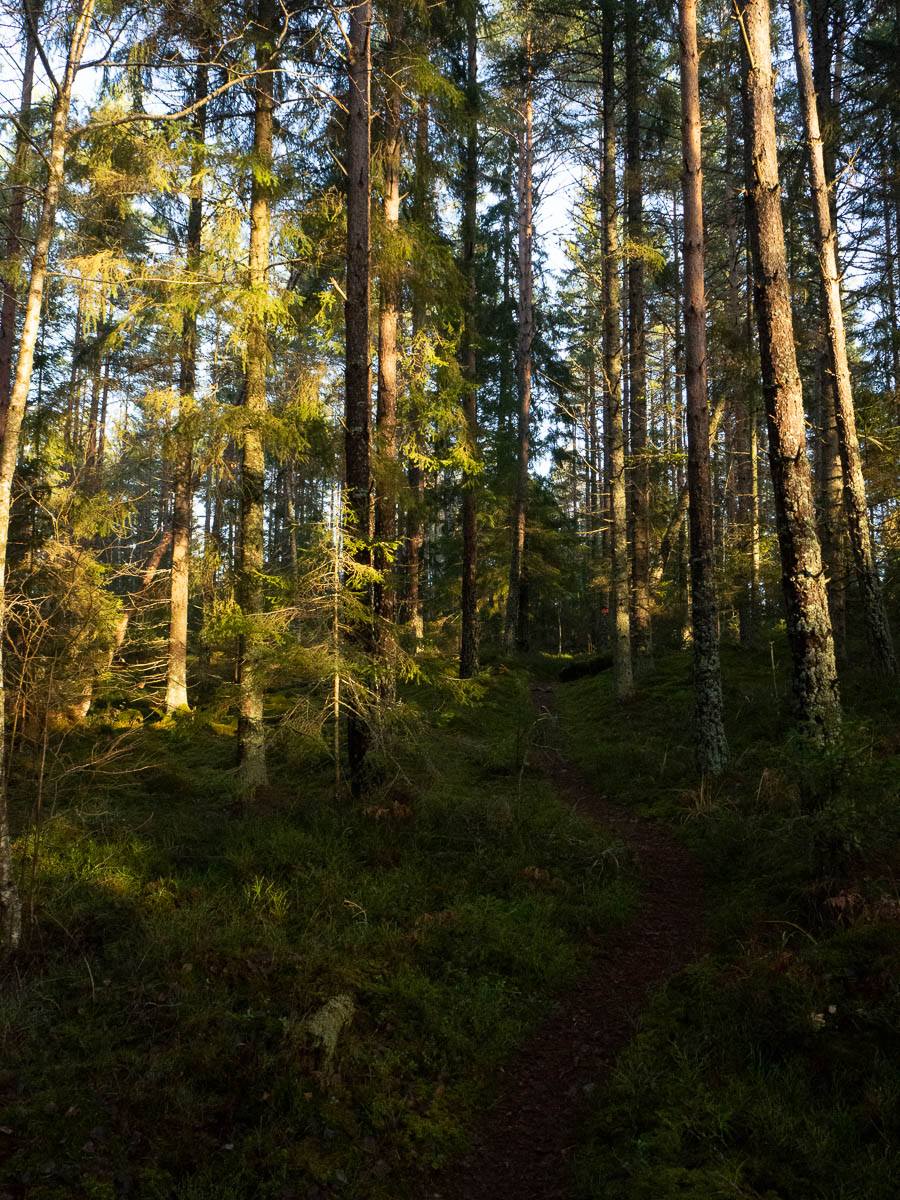
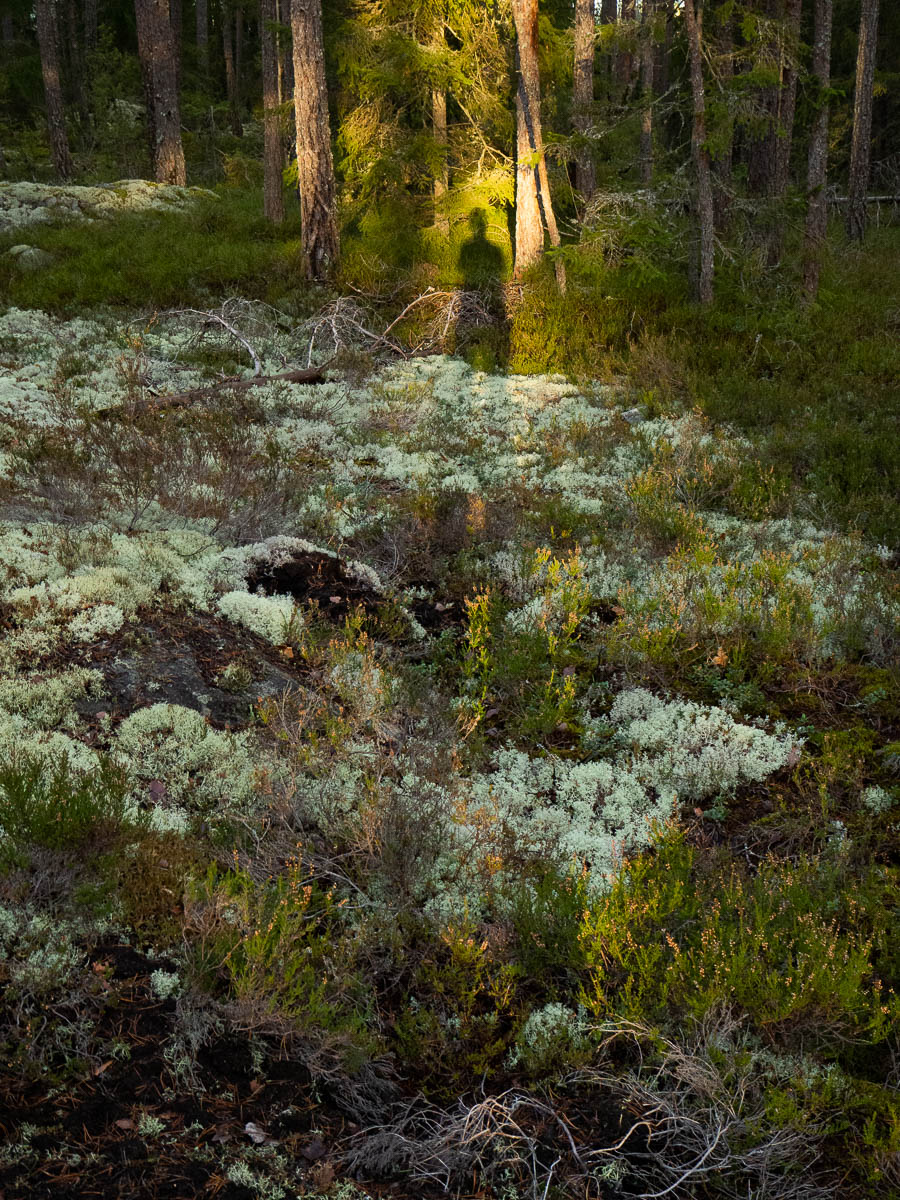
The day was fine and sunny and pleasant for walking, even though the sun barely got high enough to reach me. I knew it was there, though, and I could see it gild the treetops here and there. And the mere presence of bright daylight and a blue sky did a lot to cheer me up.
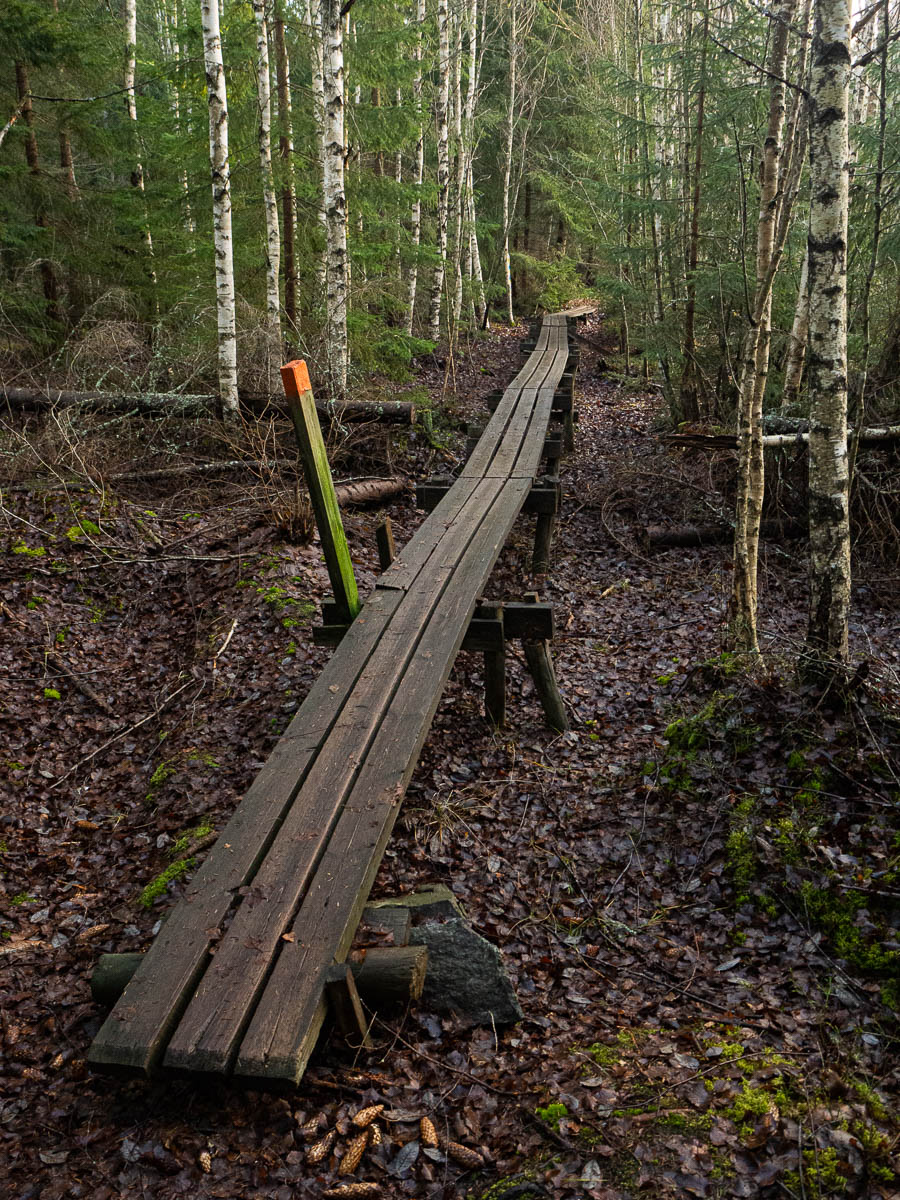
The ground was sodden and muddy everywhere after the recent rains and the footbridges (which are many on this part of the trail) were incredibly slippery. I fell down once quite painfully and decided to be more careful. There’s a certain way to walk on slippery surfaces with some reasonable speed still, rolling from heel to toe, never pushing away. But as soon as I don’t think about it, I forget and revert to a normal brisk walk. After falling again for a second time, hurting my bum and unpleasantly jarring my whole spine and head, I crossed them very, very carefully.
For some reason that made sense yesterday when I was packing, I left my macro lens at home. I think I didn’t expect anything photo-worthy at this time of the year. It’s all mostly rotting leaves and brown grass.
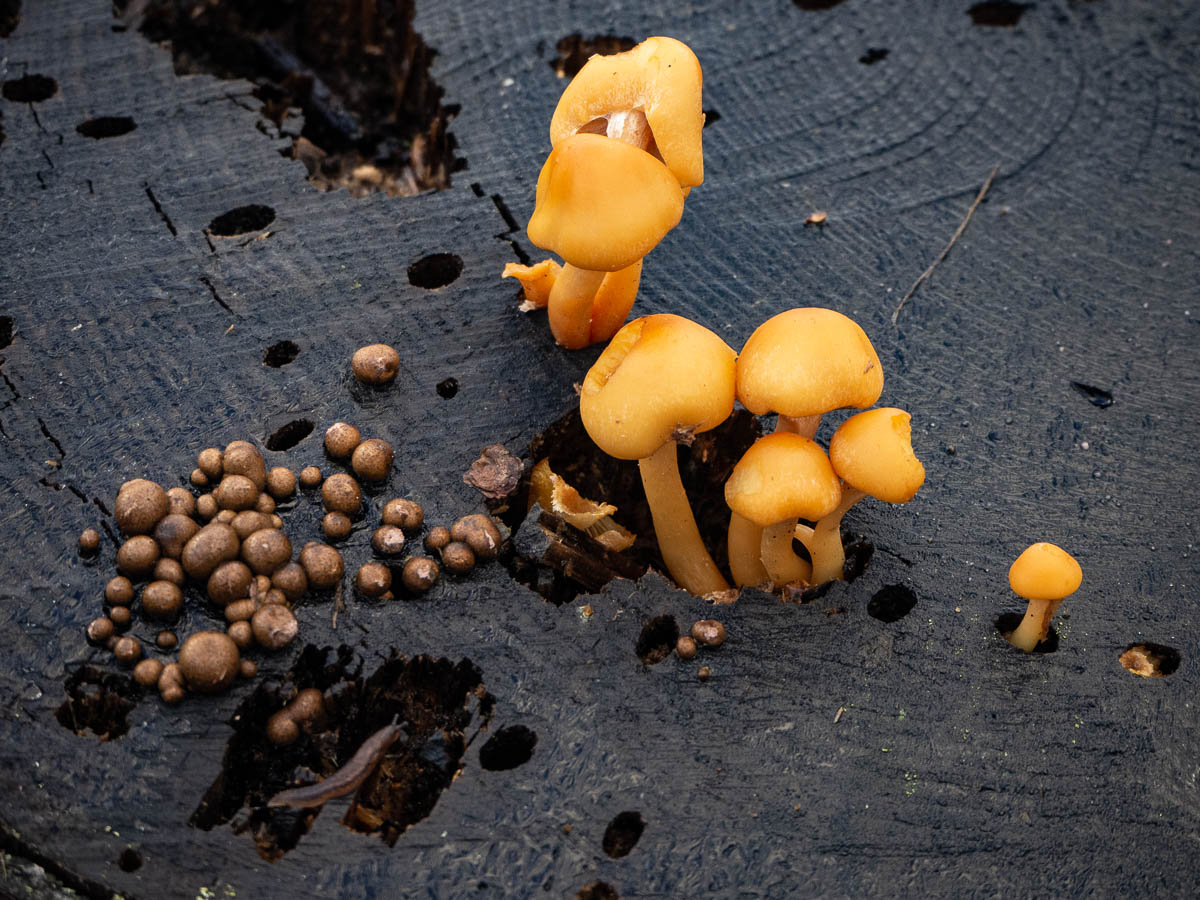
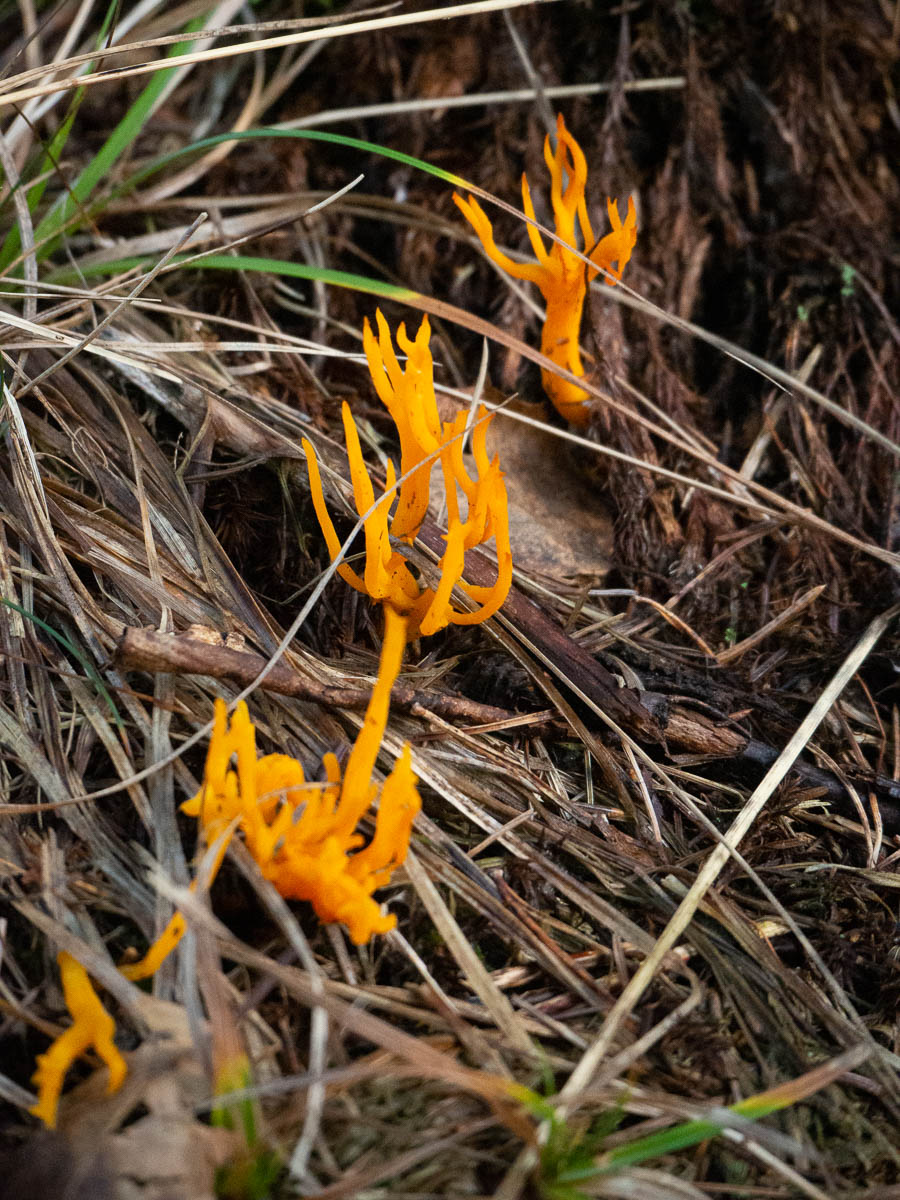
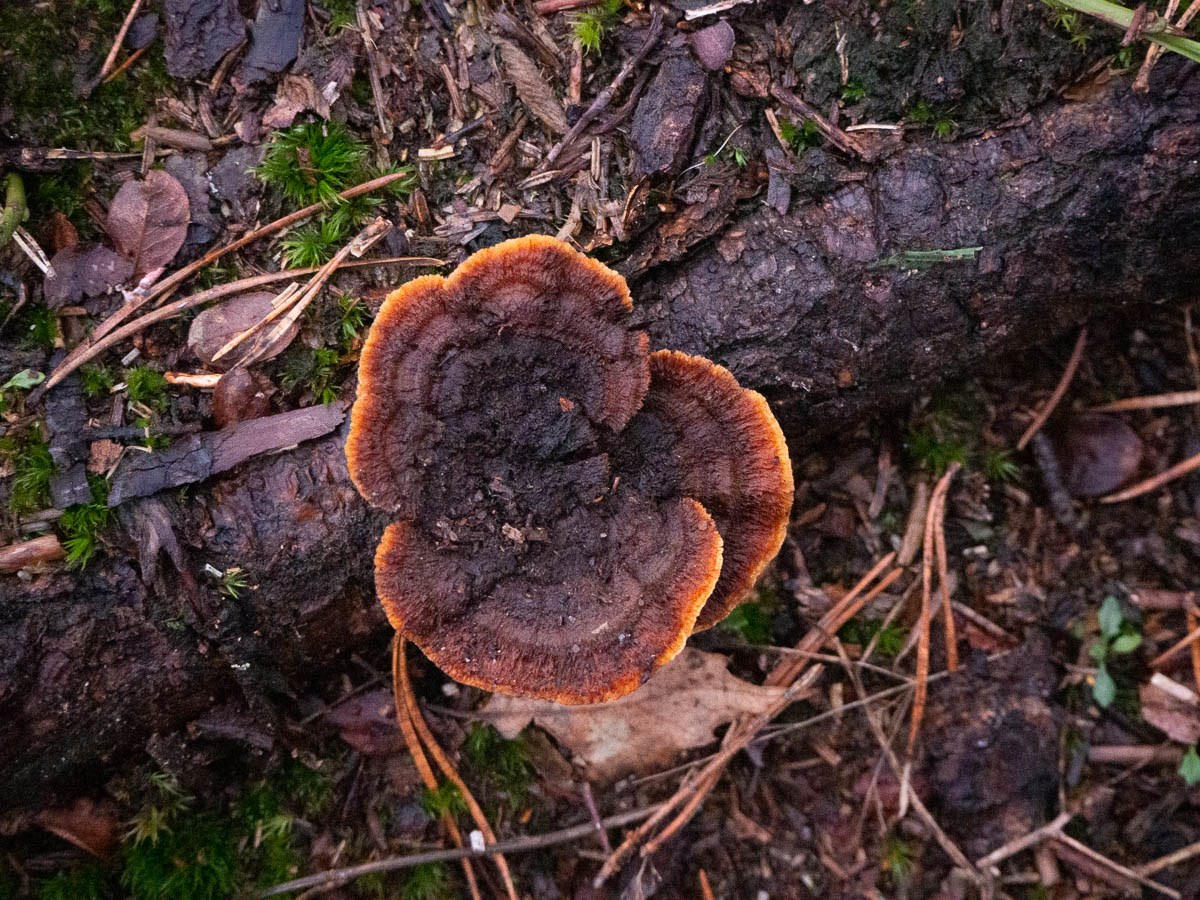
That was a mistake. I walked past some really odd-looking funguses thriving on all that rotting vegetation. I know I could have taken better photos with the right lens.
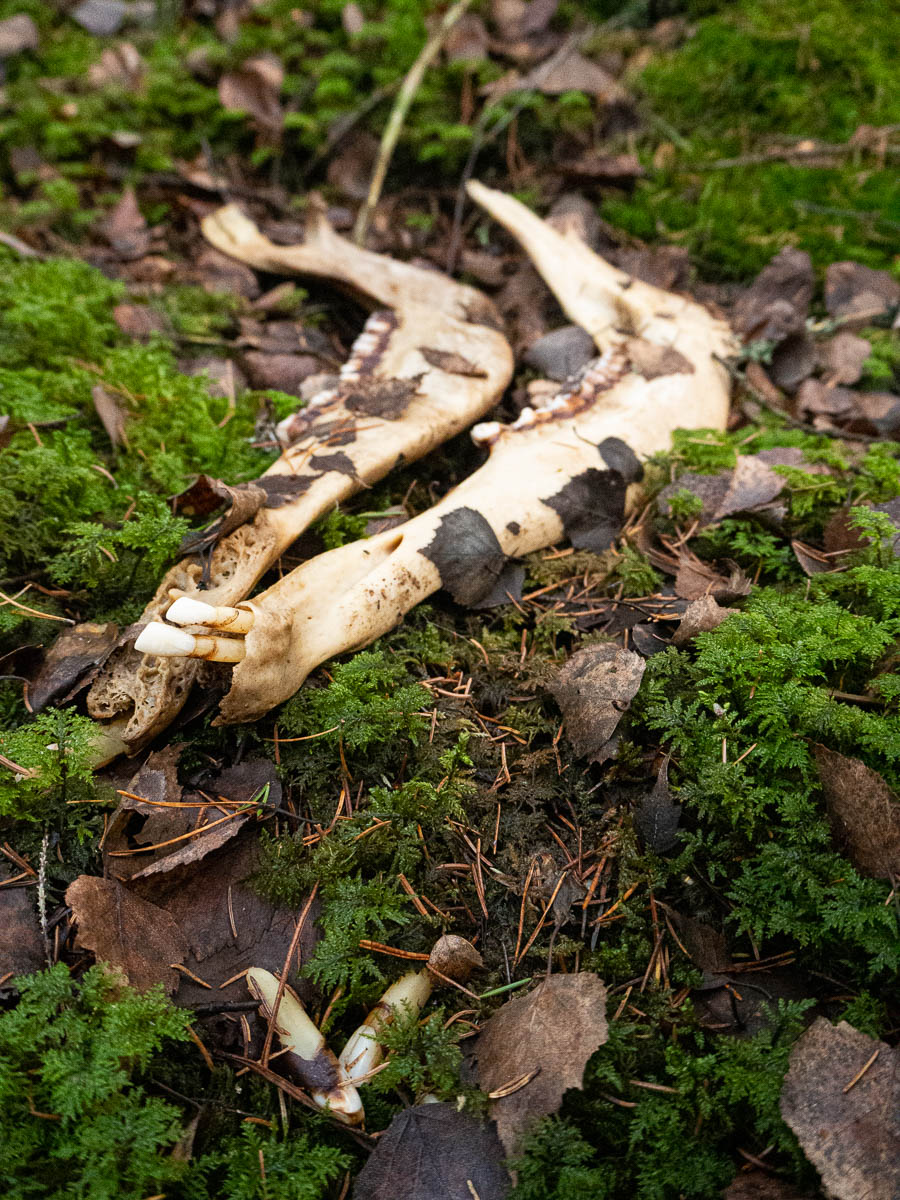
I also spotted the remains of a dead animal right next to the path. I first noticed the tufts of coarse gray hairs spread out a few paces. Then a vertebra, then another, and then many more bits and pieces, including both halves of the lower jaw. All were clearly old and thoroughly cleaned by scavengers big and small, so the ick factor was very low.
A cervid of some kind, clearly, with a jaw like that. Moose? Deer? The jawbones were quite large, as long as from my fingertips to my elbow, so perhaps a moose?
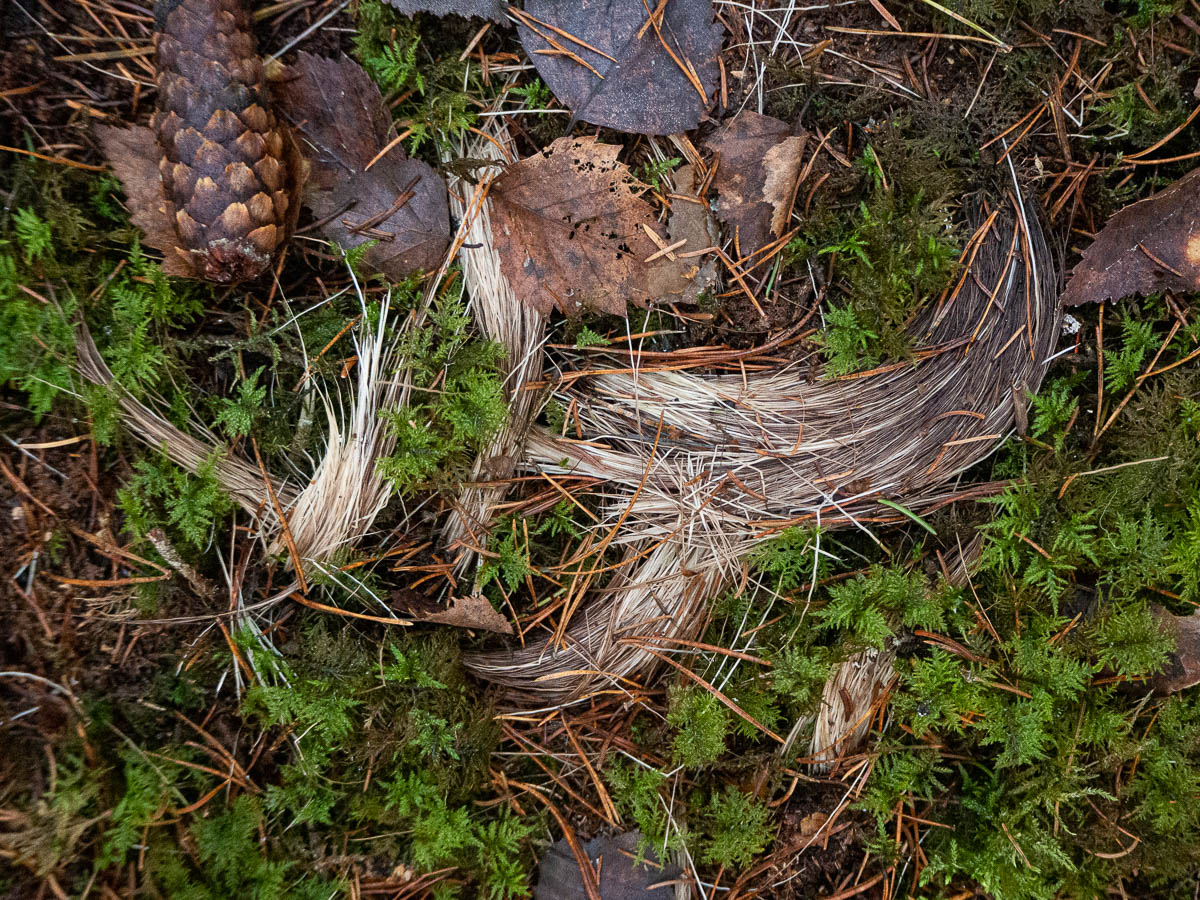
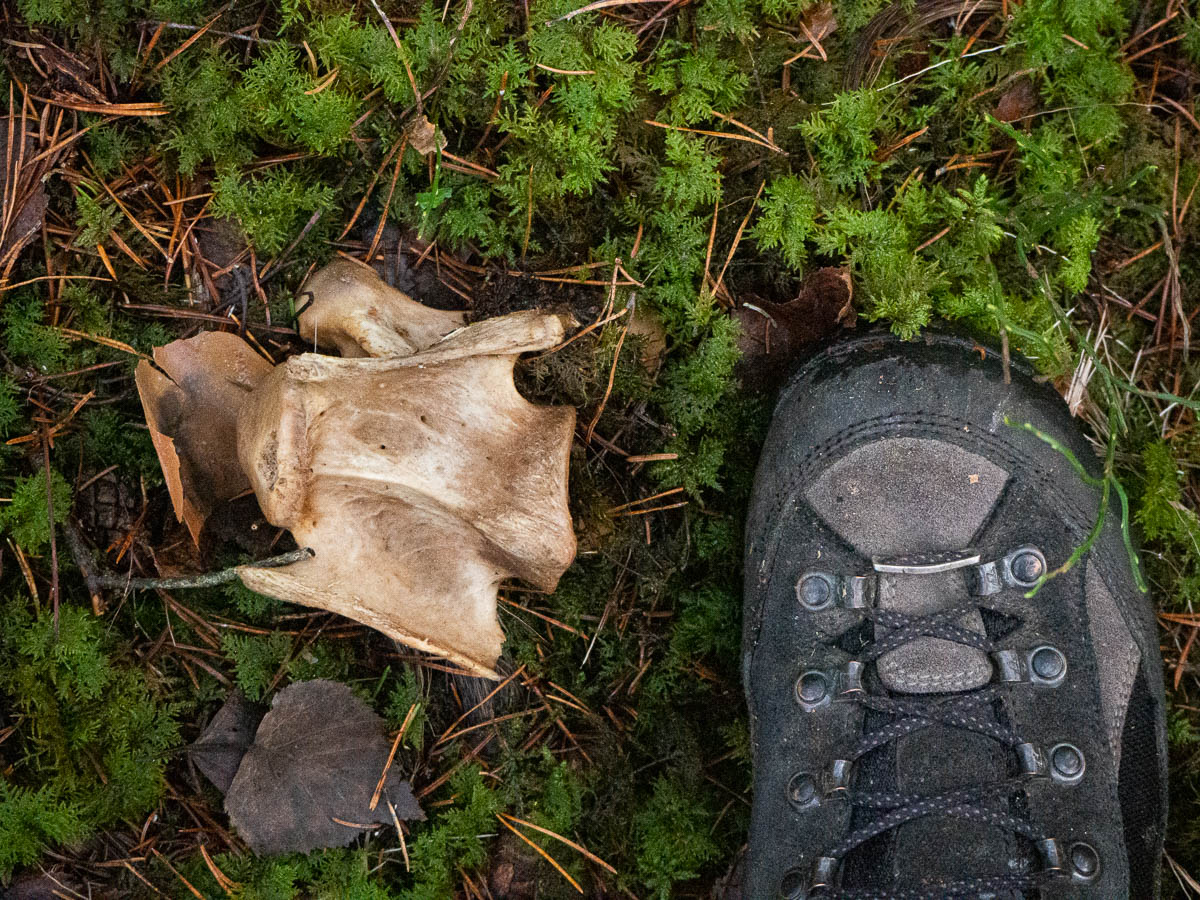
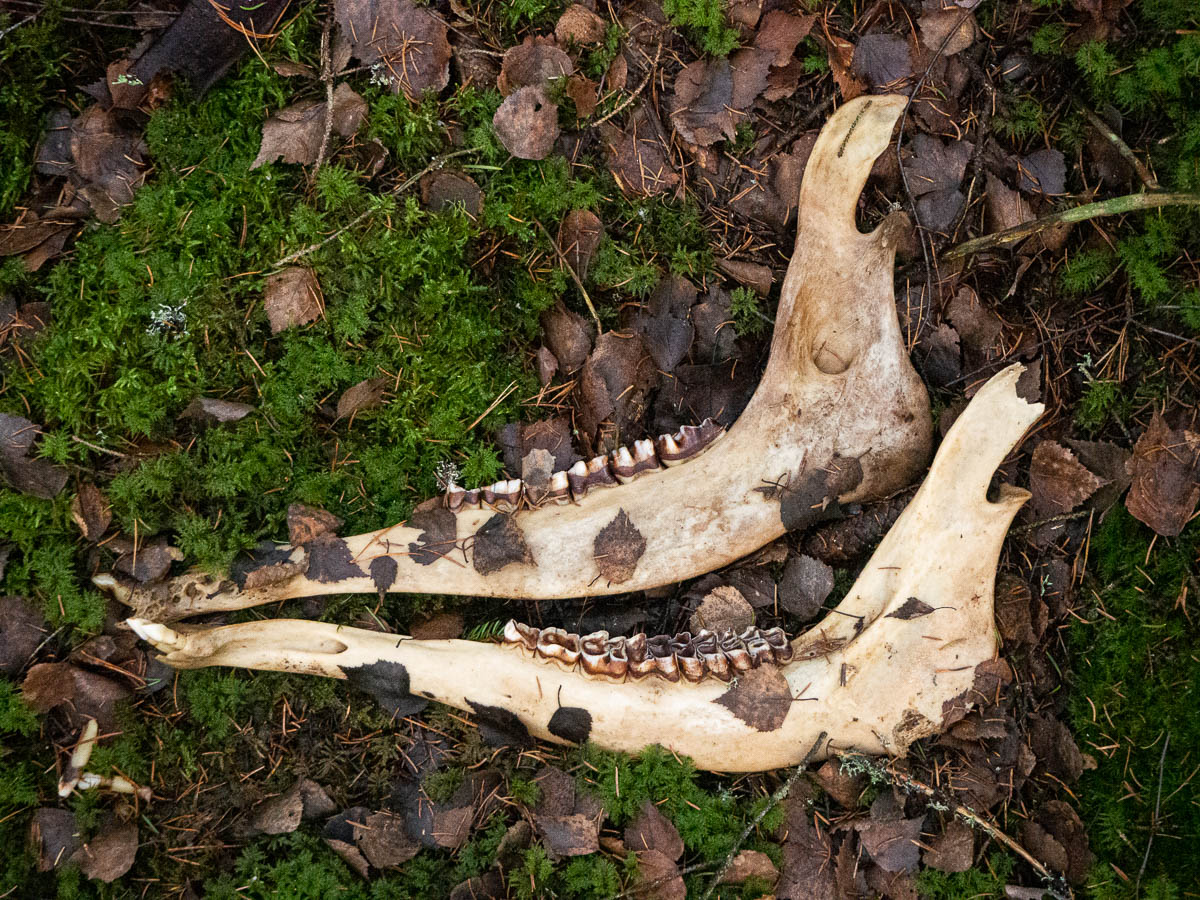
Bones remaining intact after a long time are no surprise, but I hadn’t expected hair to last so long. It makes sense, though. Hair is tough, made to last for a long time on your body, and it’s not digestible (other than by fungi and bacteria).
Now I had to go google about the decomposition of hair. I found out that human hair can take two years to decompose, and is considered a problematic type of waste. I also found an article specifically about microbial decomposition of keratine which was mostly too technical to be interesting to me, but I did learn from it that:
From the path near Sandtorp to Flyhov and back, 7 km. Then to Gössäter, 14 km.
Last night’s camping spot was very deliberately chosen to be as close as possible to the Bronze Age rock carvings at Flyhov. They are not on the Kinnekulle path but they are close enough that I decided to make a detour to go and see them. So I got up again with the sun this morning, packed my rucksack but left it in the tent, and went off the path, across fields and along lanes.
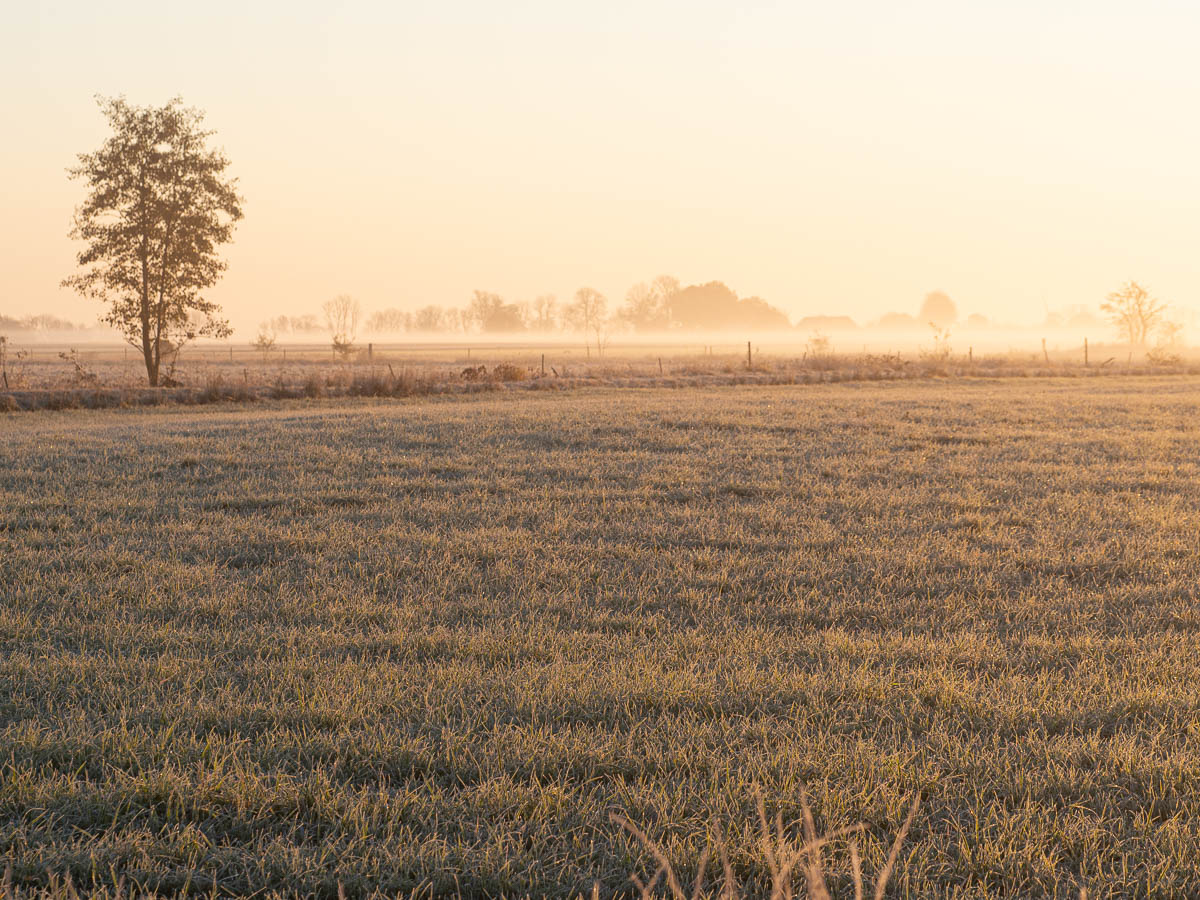
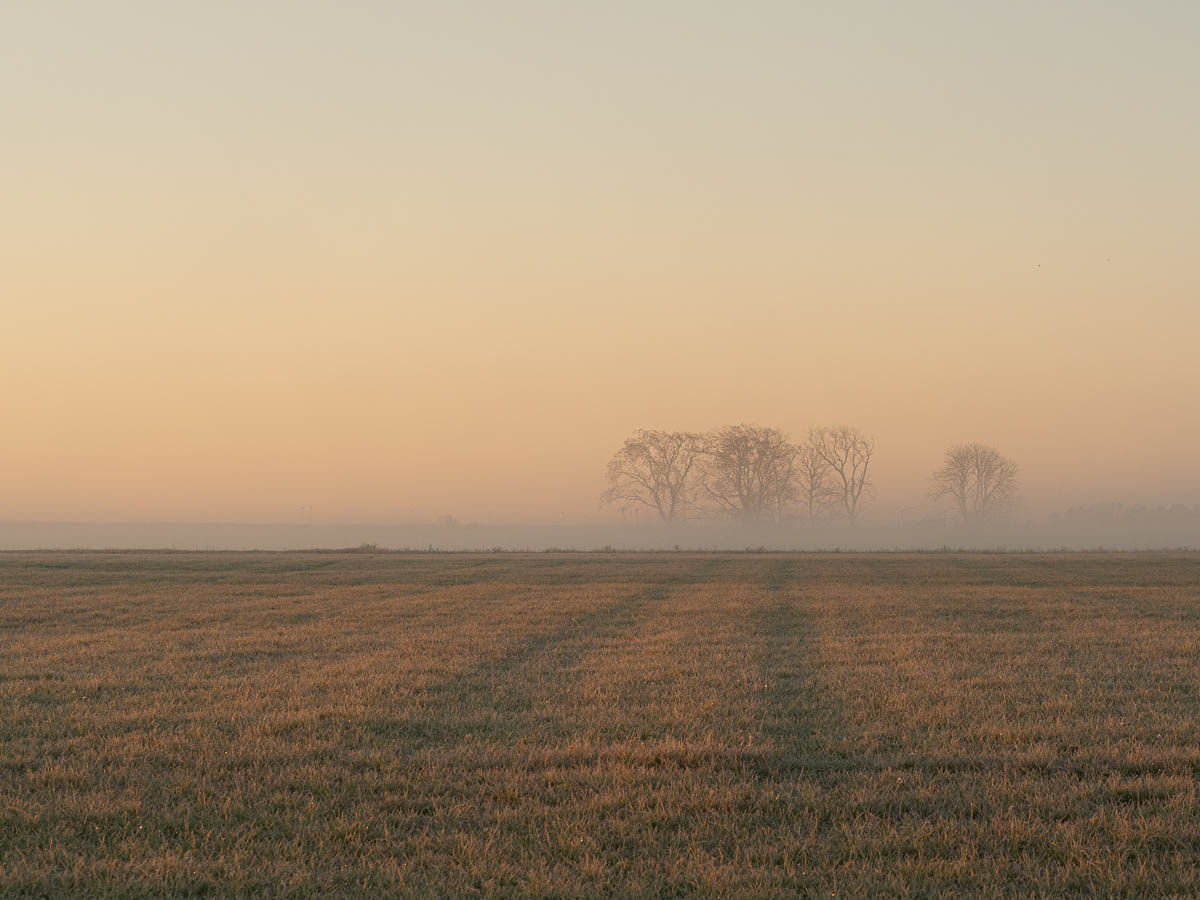
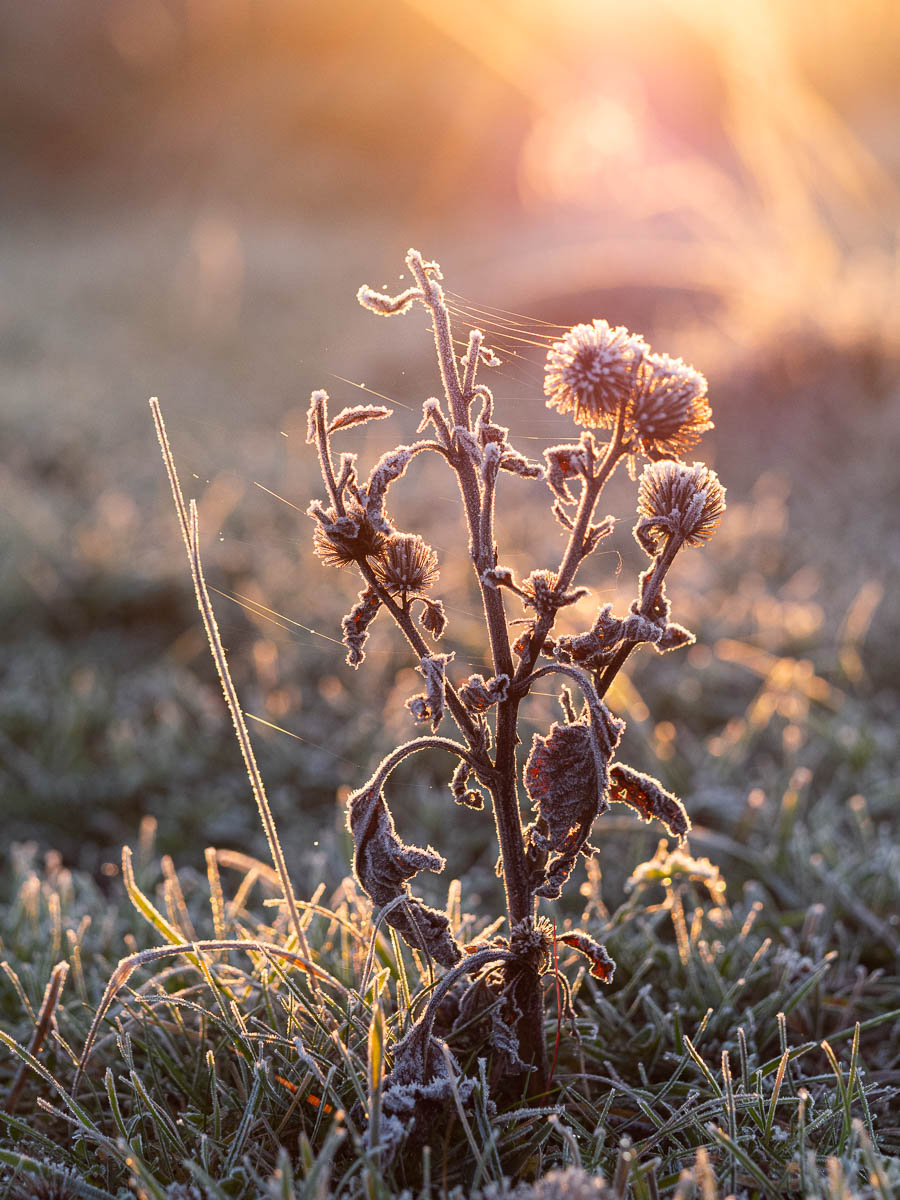
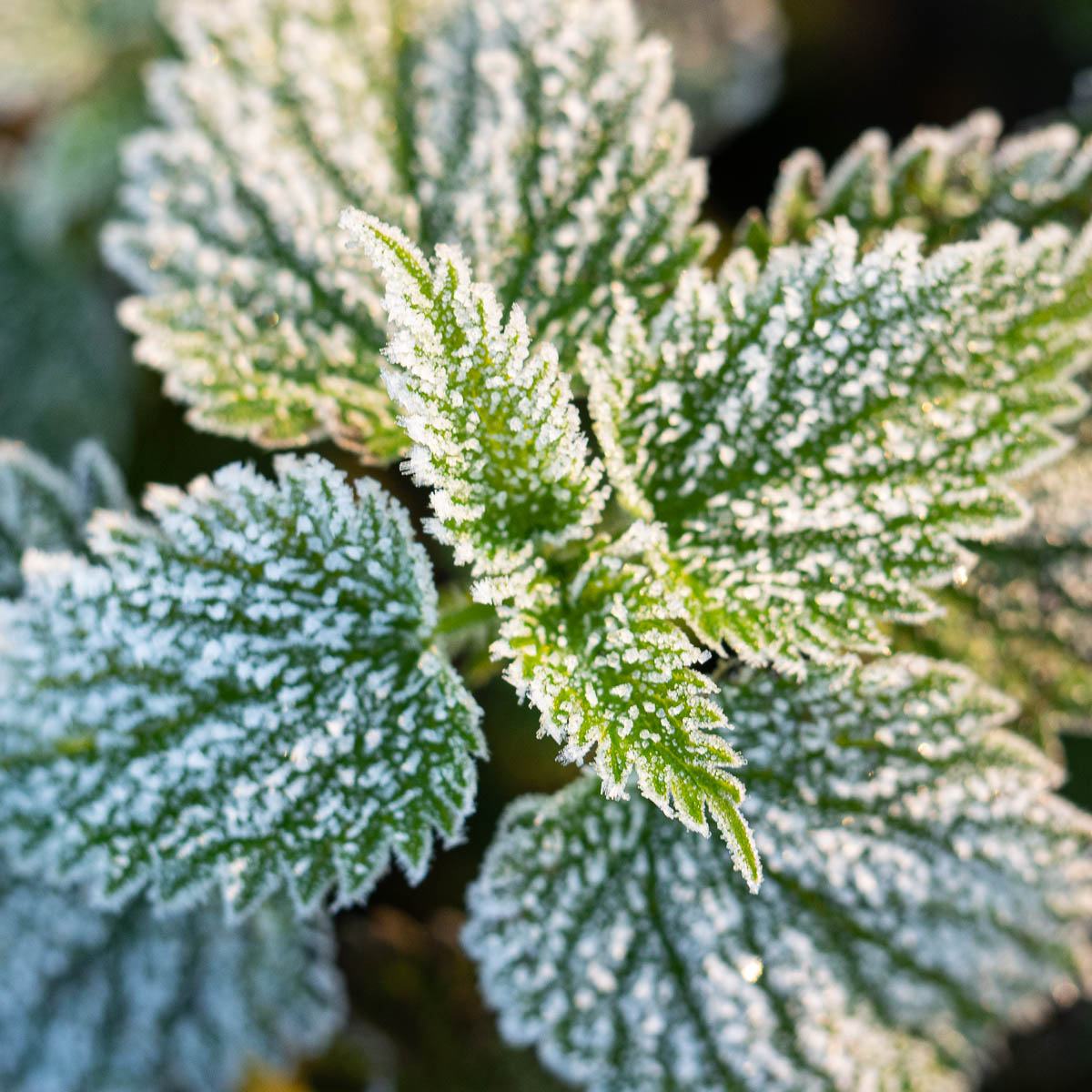
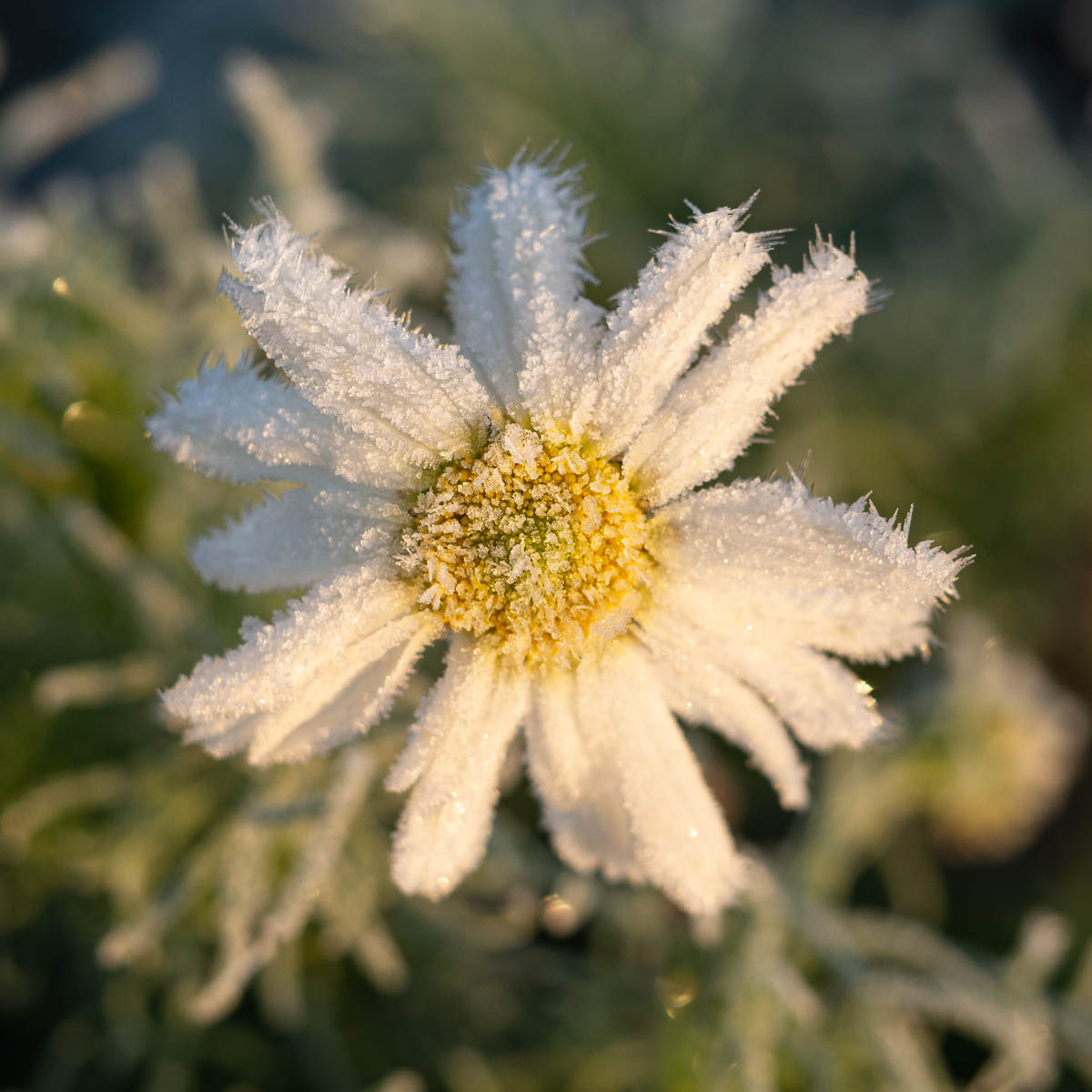
The first thing I noticed when I got out of the tent was the frost on the ground. I rather suspected it would be there, already before I’d seen it, given how cold the night was. I slept with my fleece jacket as an extra blanket on my upper body and I was still feeling cold much of the time.
But the payoff was incredible. The morning mist and the frost made the world so beautiful. The days have been sunny and warm so the field edges were still full of lush plant life, not just dry grass: daisies, thistles, nettles, dandelion seed heads. And all of it decked out in thick, sparkling crystals of ice.
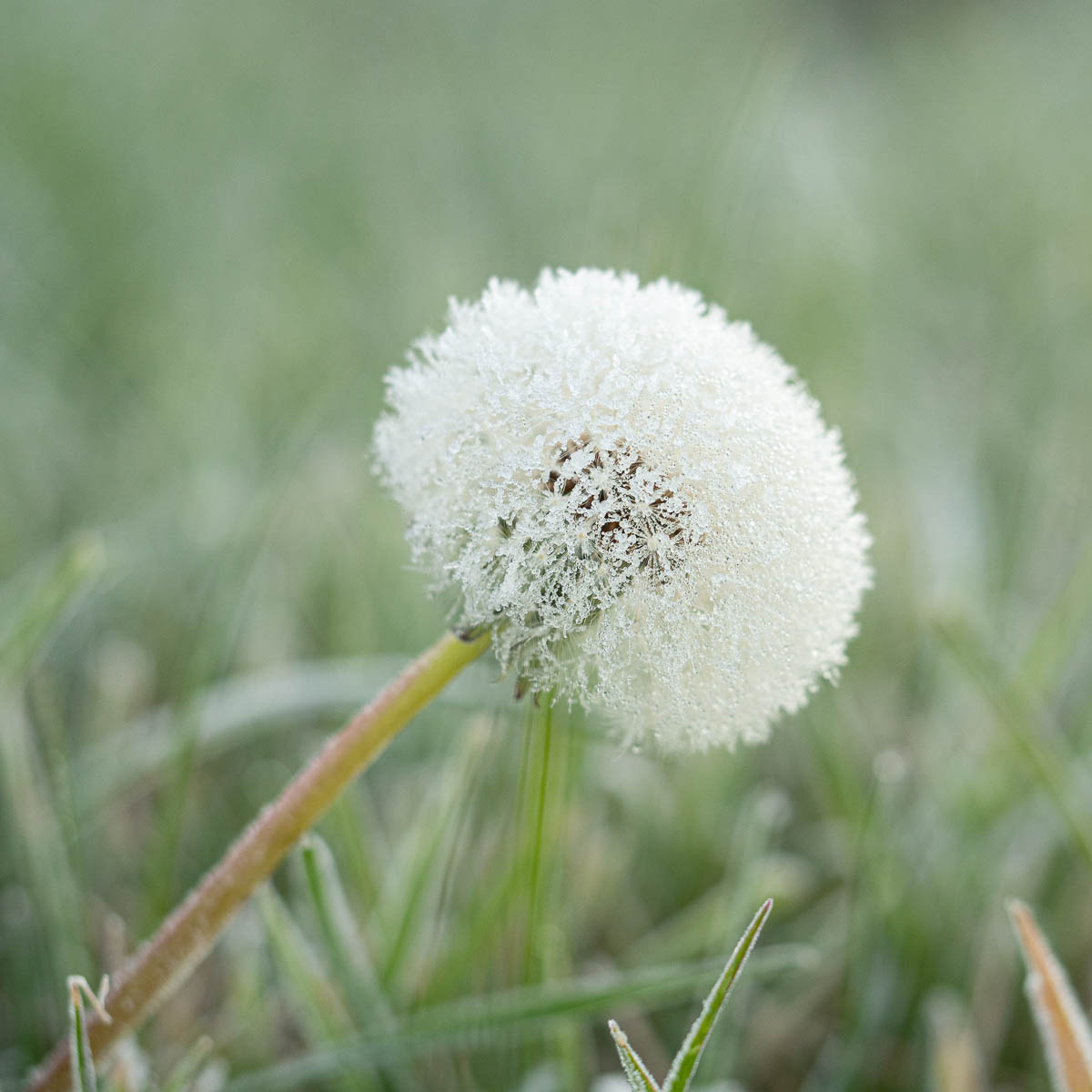
This early in the morning there were other creatures around than just humans. I scared a hare into flight and saw a fox at the edge of a field. On the way back I saw not just one but two herds of fallow deer. At home I’m used to seeing the occasional red deer or two, or maybe three, but the herds here were twenty or thirty strong at least.
The rock carvings were well worth a visit as well. They’re nicely presented, with a walkway that allows visitors to get quite close, and signs explaining what is what. Ships, wheels, men with swords and axes, mysterious networks of lines.
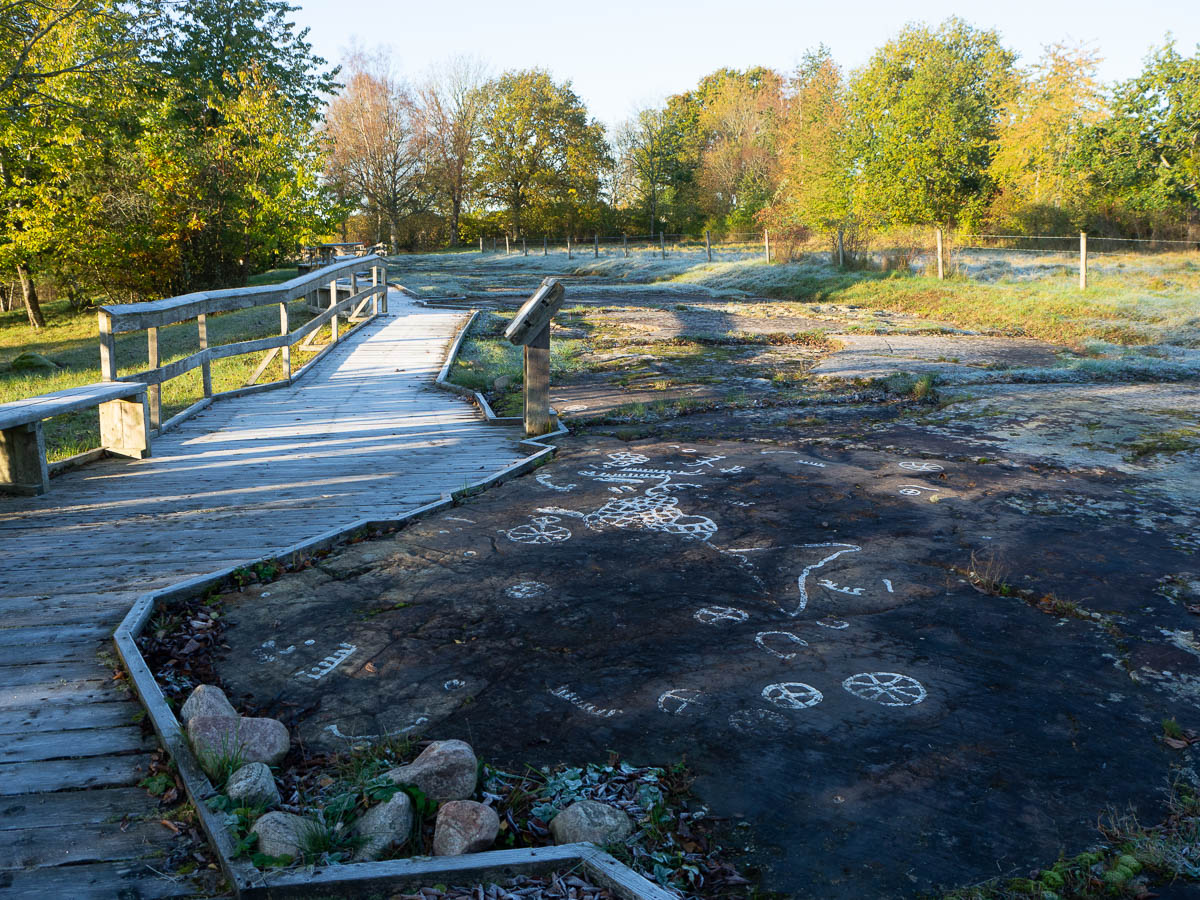
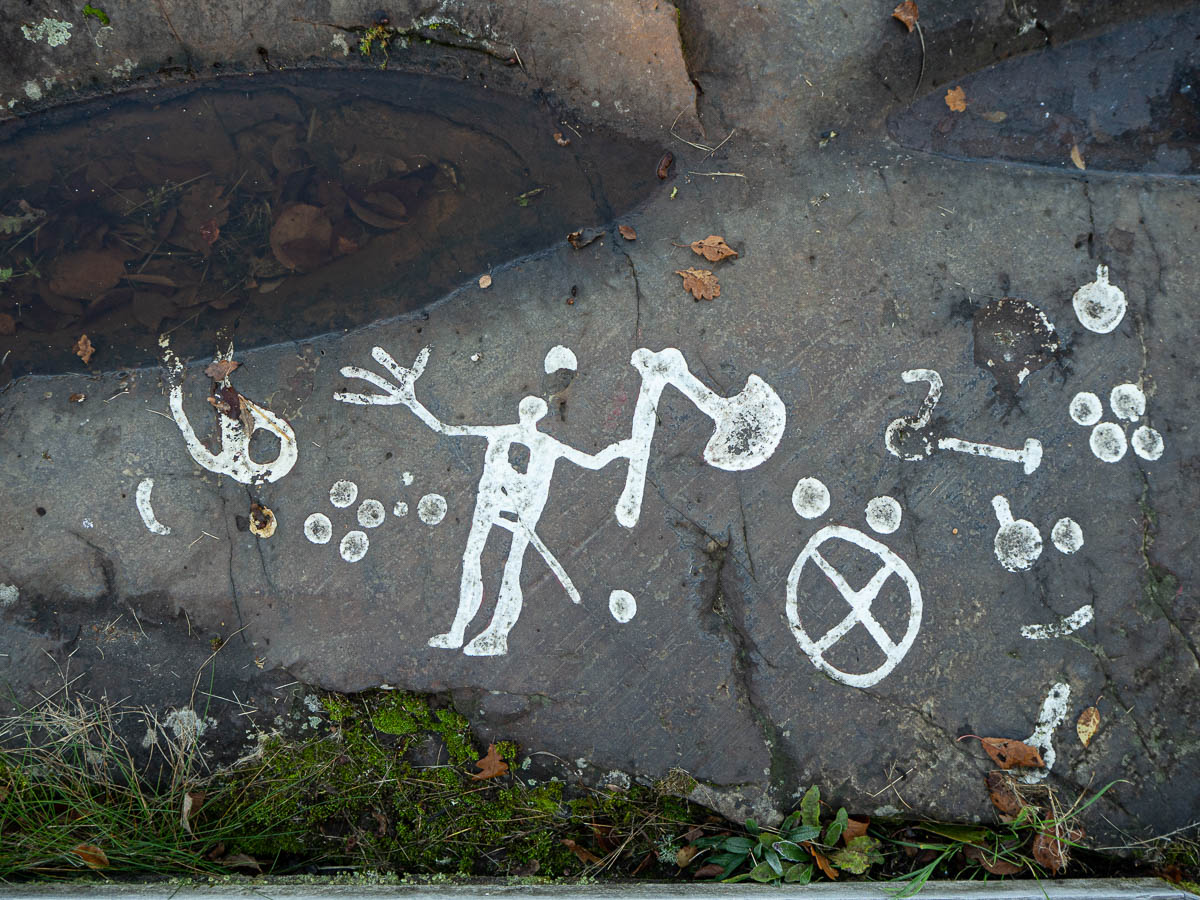
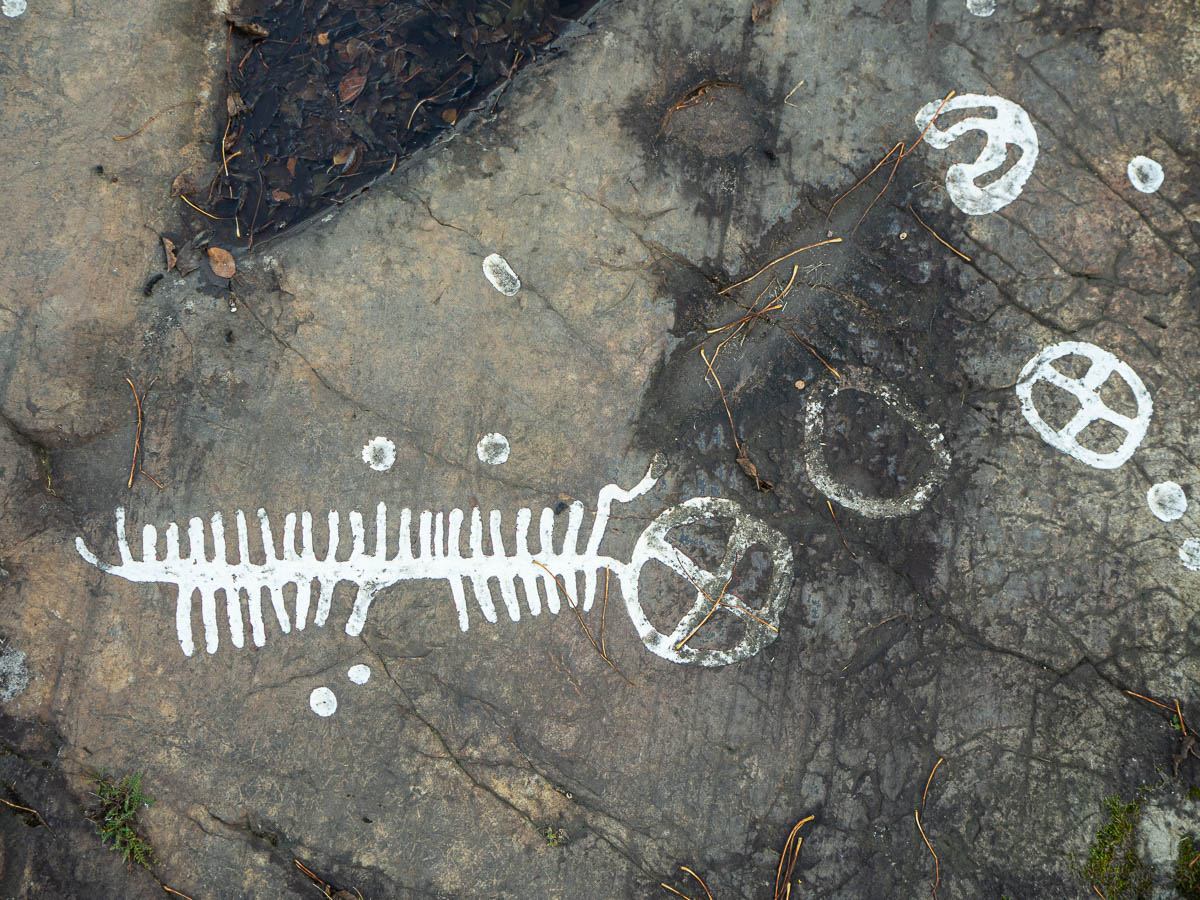
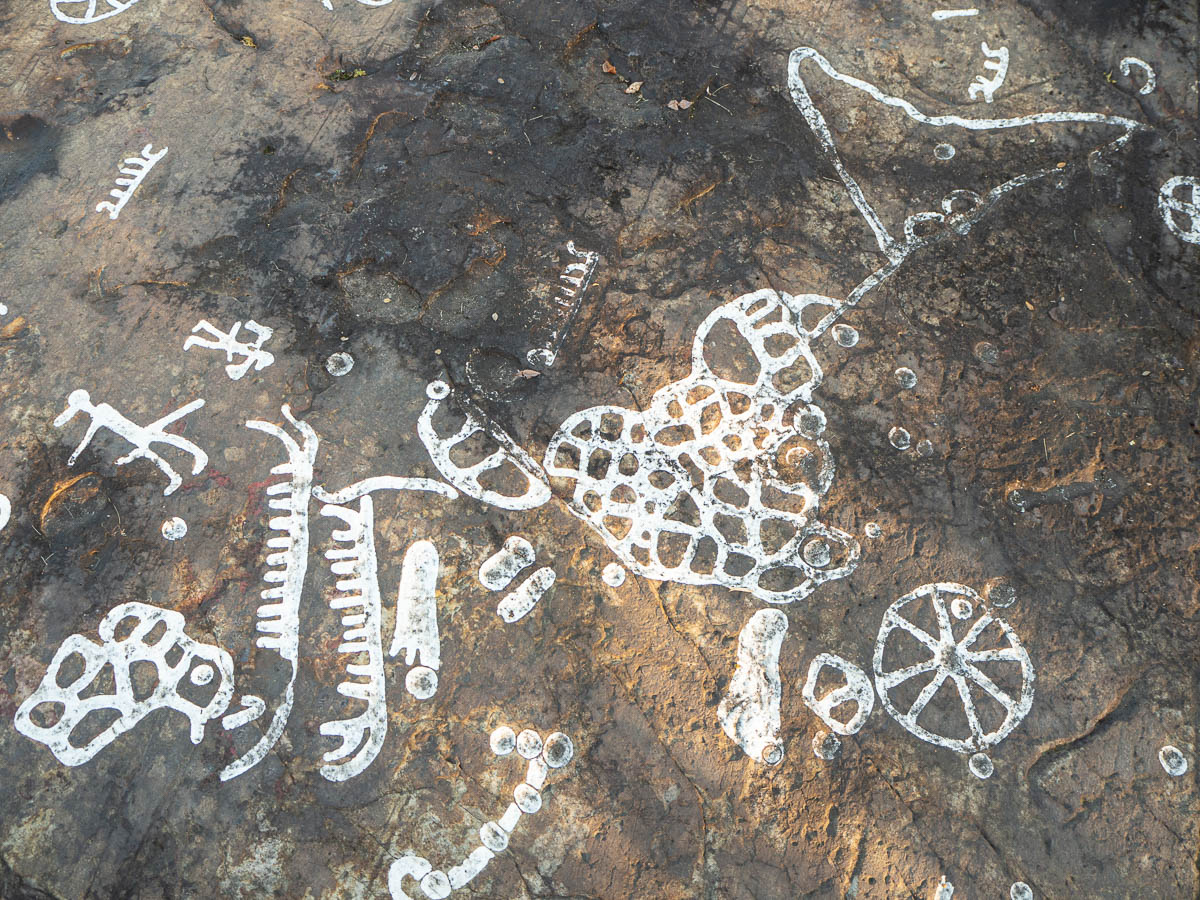
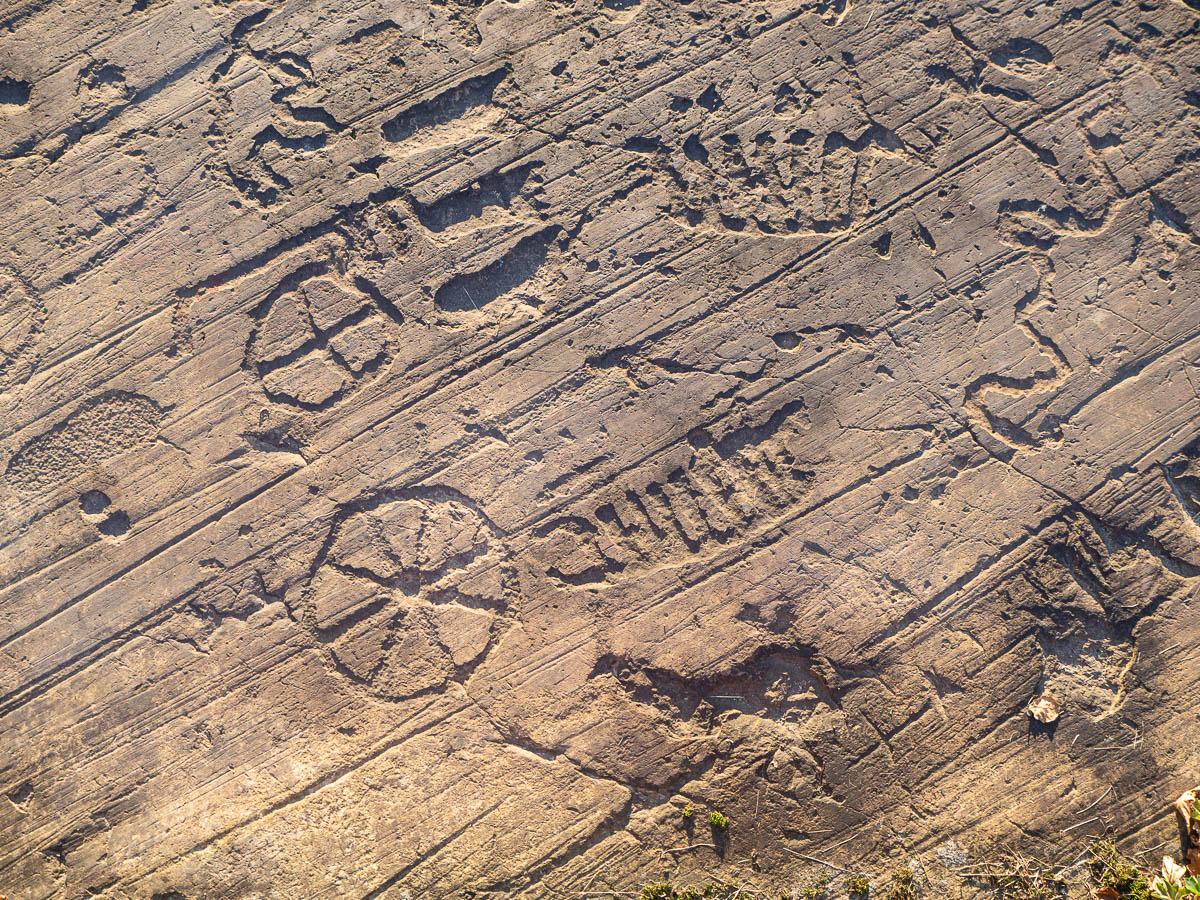
Most of the carvings are filled in with white paint to make them easier to see, but one section has been left unpainted so you can see what they originally looked like. And the carvings were all in surprisingly good state: I think some may have been uncovered only quite recently. At another site I read that some carvings get covered up for winter, to protect against the weather and especially ice I guess. Perhaps this is done here as well.
My quick packless 7 km walk, which could have taken an hour and a half, took nearly twice as long because I kept stopping for photos. By the time I was back the sun was well up and I was quite starving. I made my usual porridge breakfast and finally started walking on the Kinnekulle path at around 10.
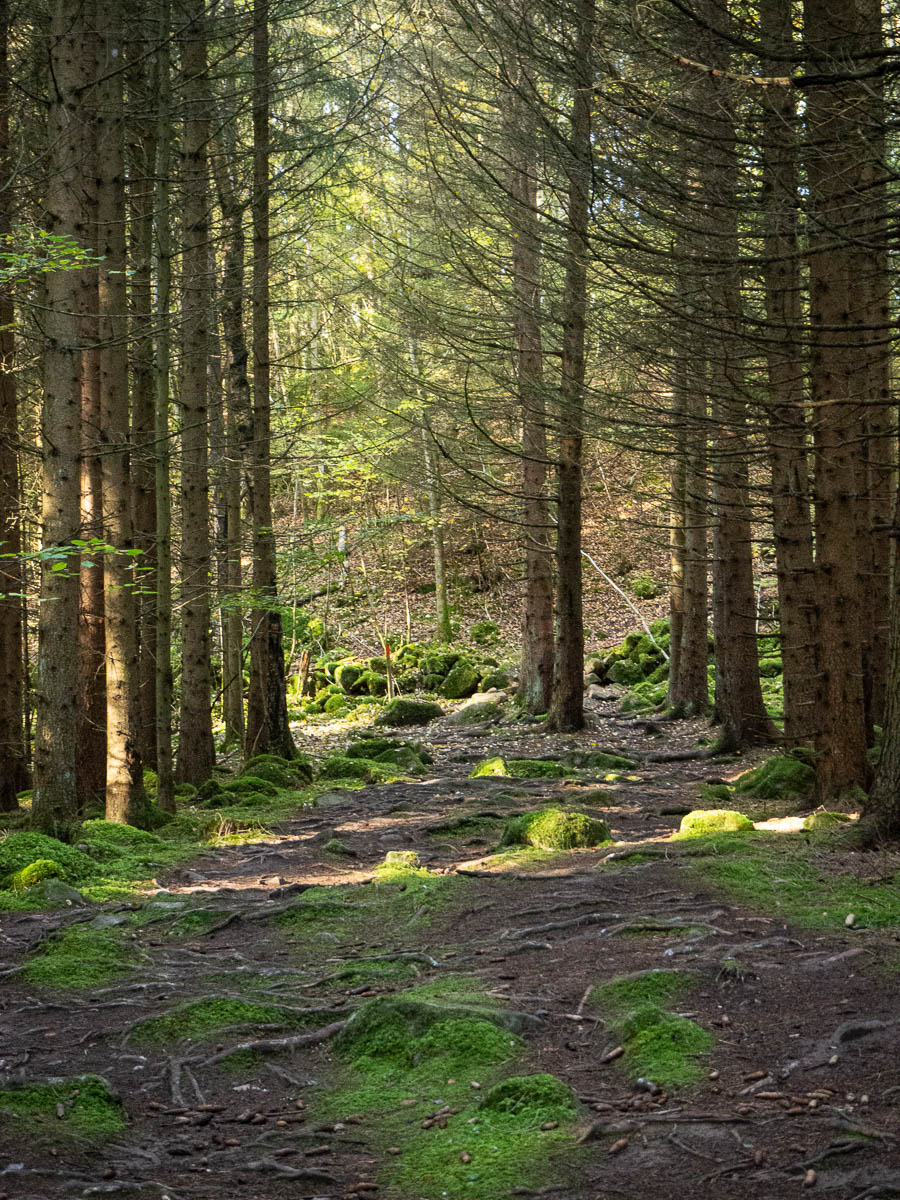
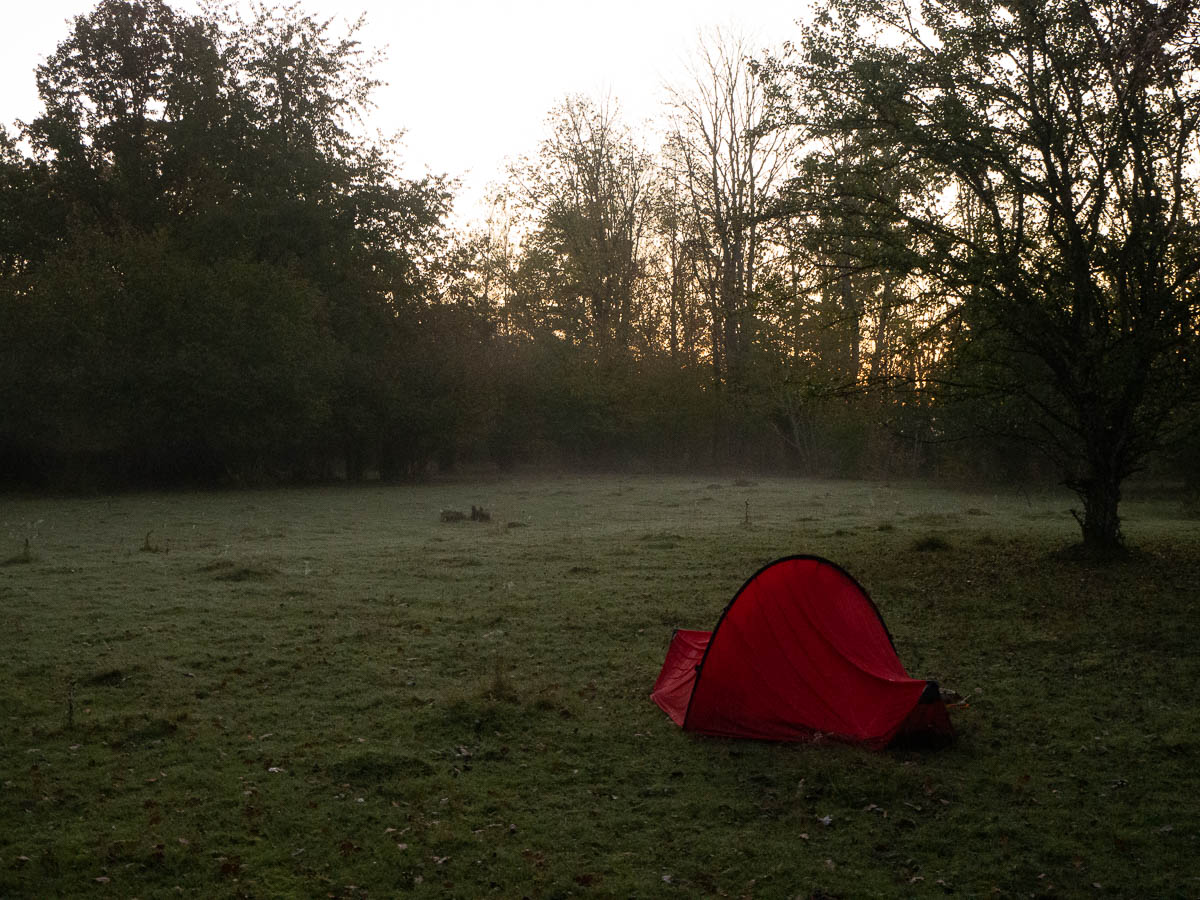
My tent was, of course, dripping again this morning. Condensation on the inside, melting frost on the outside. I’ve started unpacking it every time I make a slightly longer stop. I choose a flat, sunny, dry spot; spread out the tent in the sun and weigh it down with a couple of stones, and rearrange it occasionally to expose new parts to the sun and the wind. By the evening, after several such stops, the tent is more or less dry again, both inside and out.
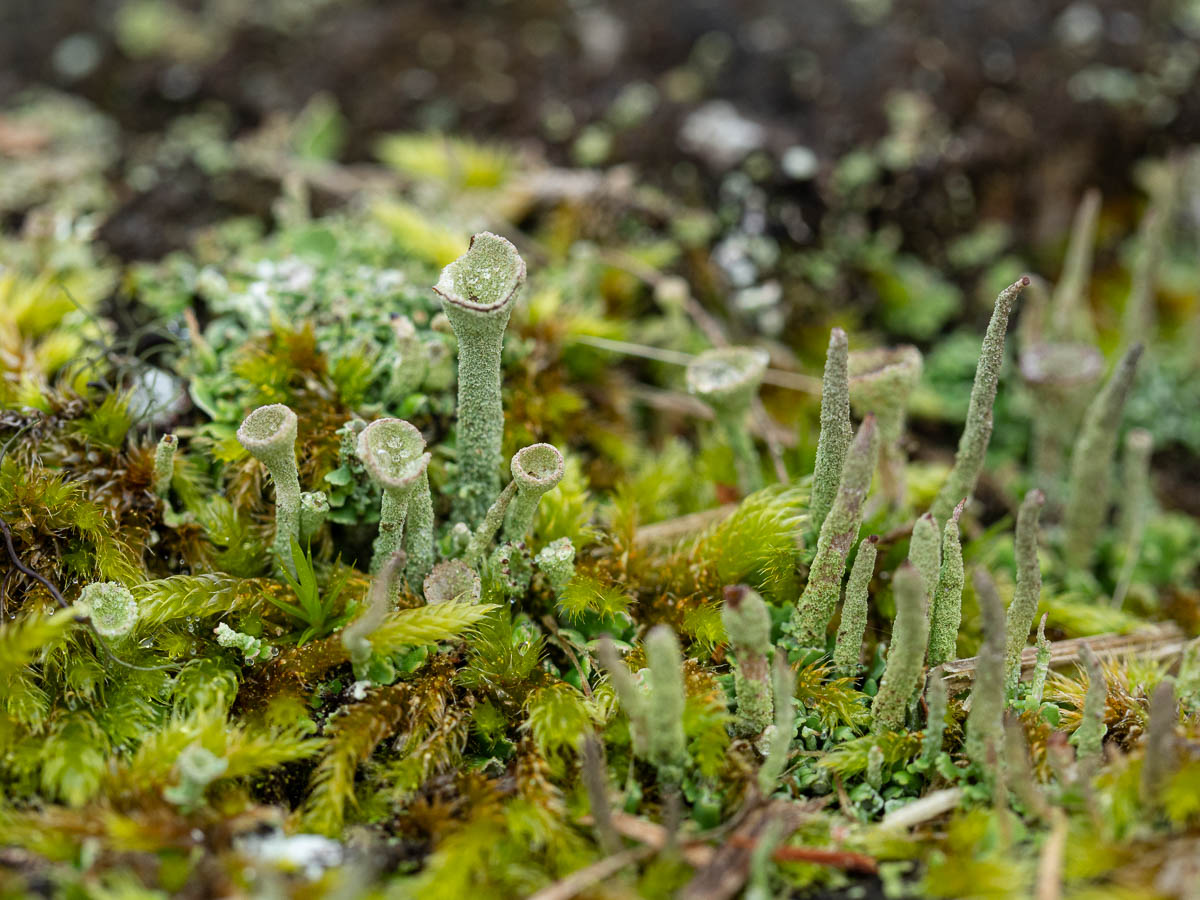
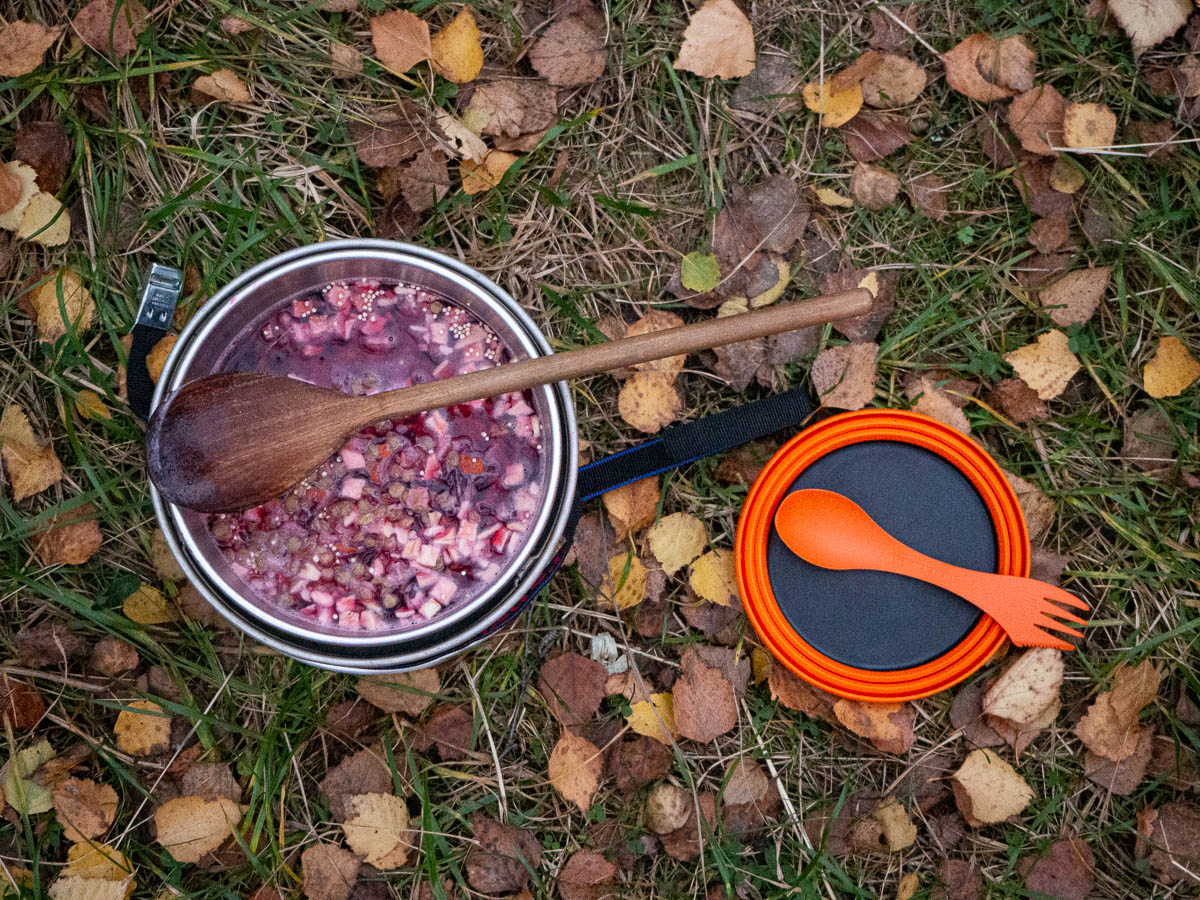
I take several long breaks every day. Like hobbits: elevenses, lunch, afternoon snack. For lunch I cook a hot meal; the others are cold snacks. I eat and I read, and perhaps make some photos. It’s very pleasant to sit out on a rock in a quiet sunny meadow and just read. I have no reason to hurry, because if I get “there” too early then all I get is a long evening of sitting and reading next my tent. Better to spread out that sitting and reading through the day.
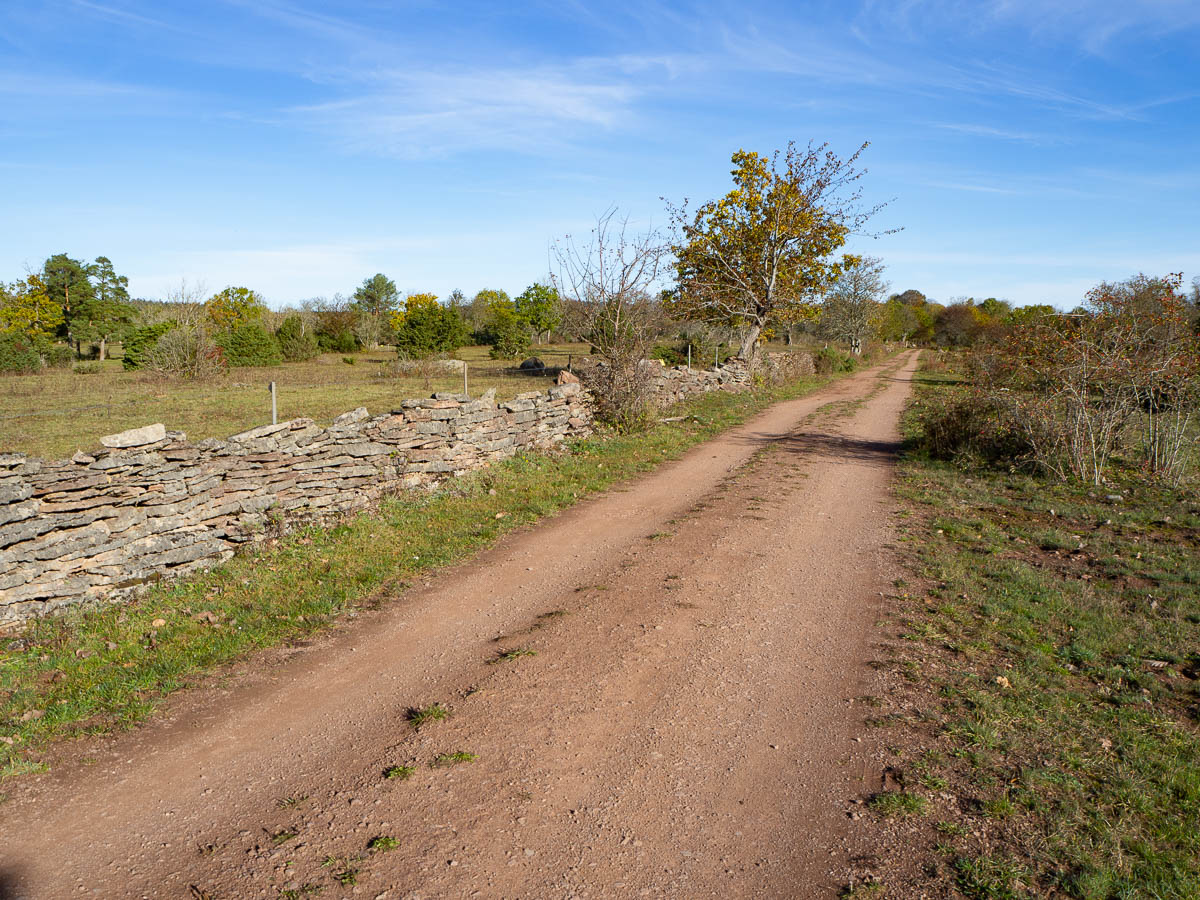
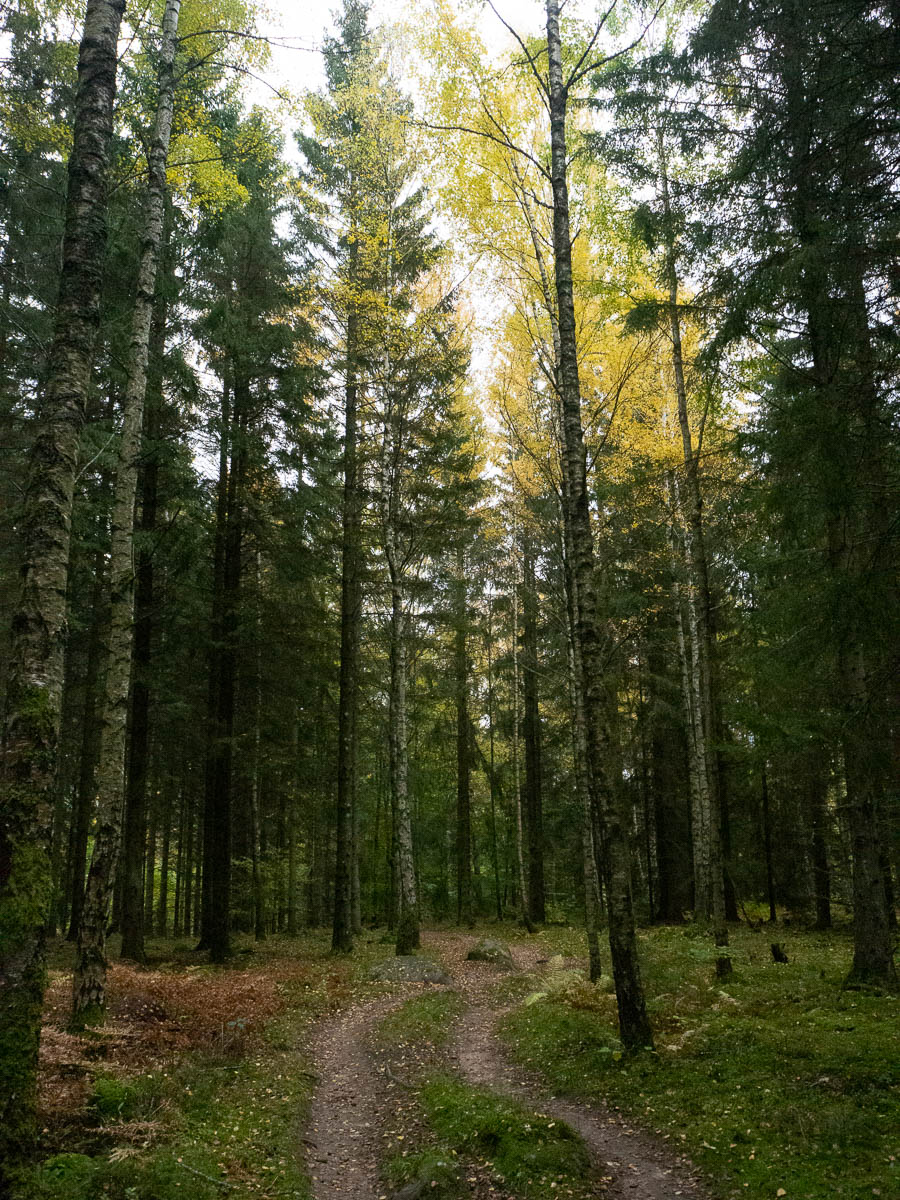
Today’s walking was much like the past two days: interesting and varied. Pastures and limestone meadows and forests of various kinds.
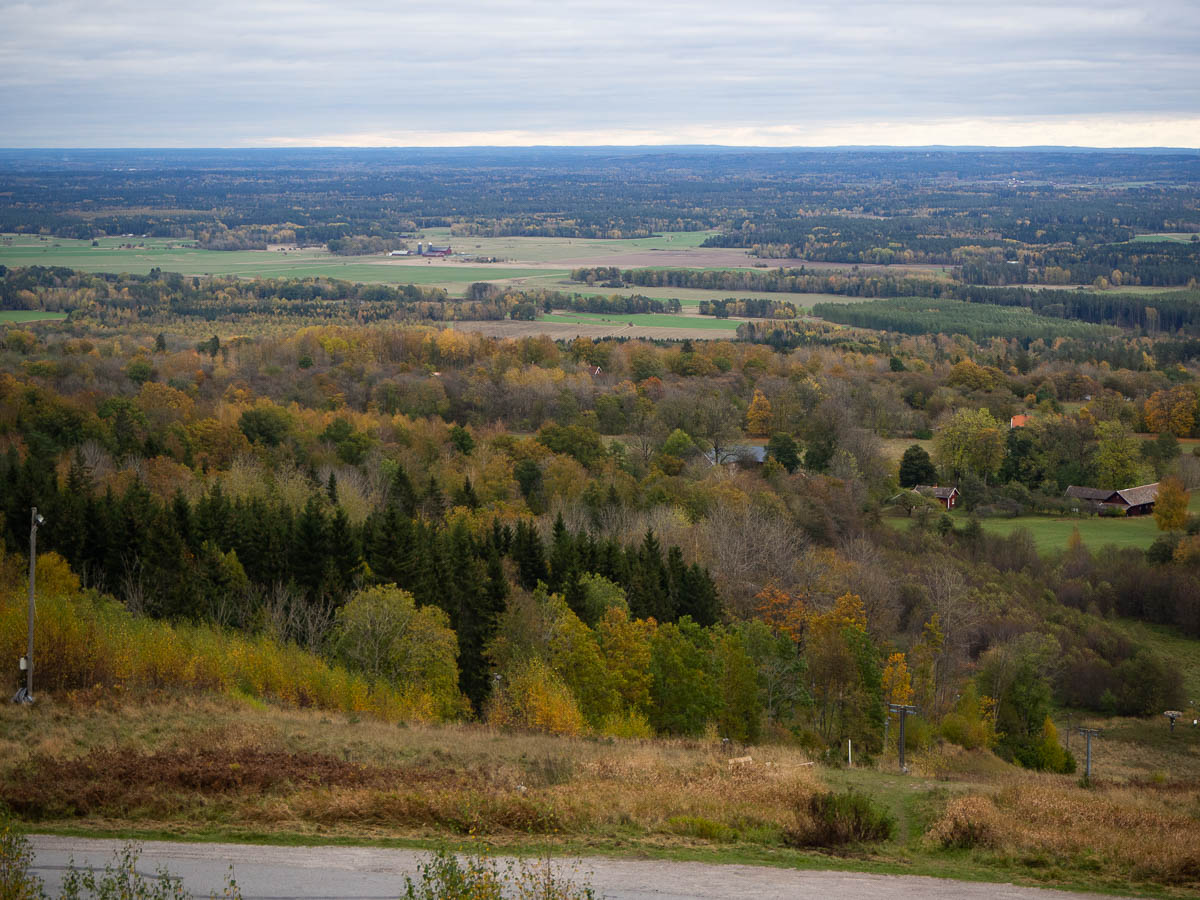
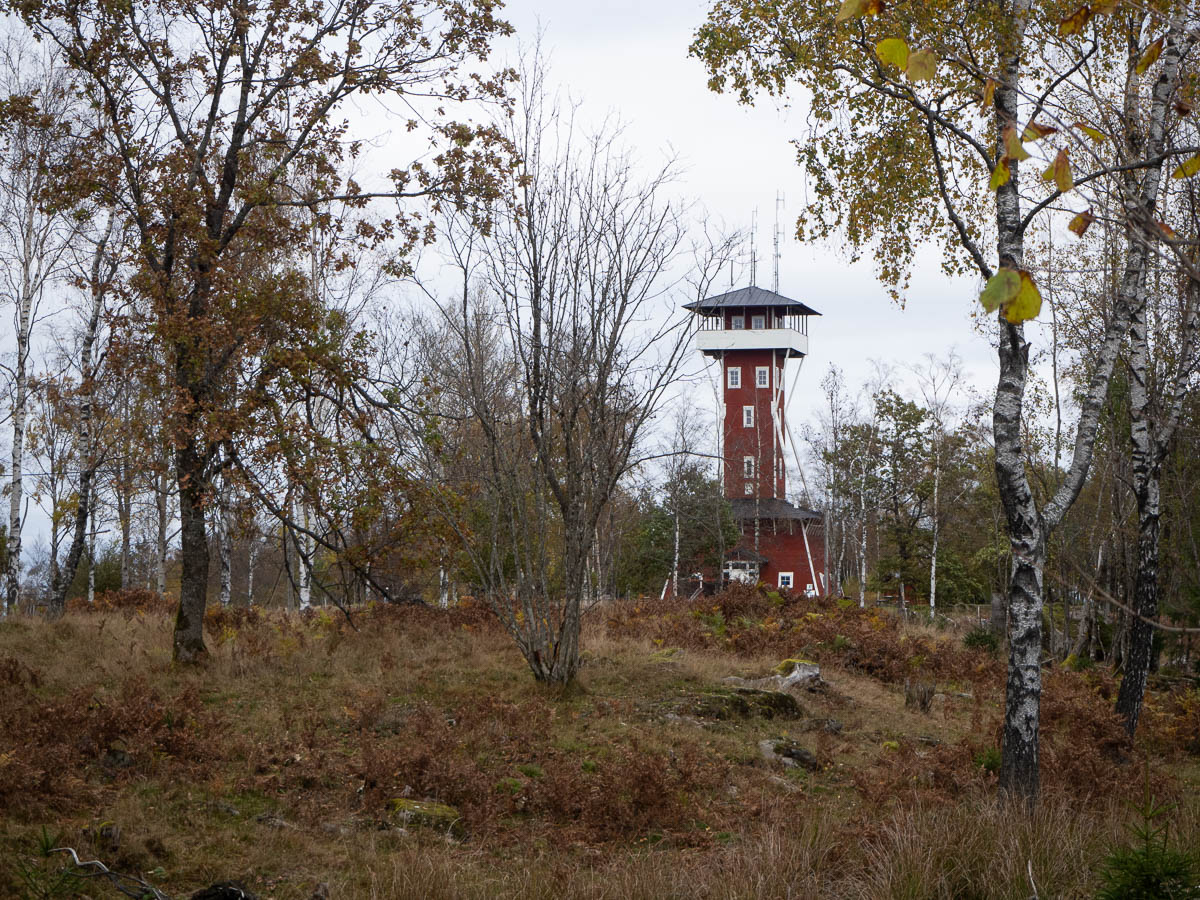
In the afternoon I reached the peak of Kinnekulle plateau mountain, which I’ve been circling since Thursday afternoon. There was a viewing tower, unfortunately closed this late in the season. But even without the tower, just looking out from on top of the hill, the views were wide.
As evening approached, I realized I was running out of water again. So I kept walking for a bit longer than I had perhaps otherwise planned, all the way to the easternmost tip of the circular path, where it gets close to Gössäter. There I left my pack behind a pile of logs, left the path and aimed for civilization. Crossed the main road, knocked on the door of the first house I came to, and got my water bottles filled up again.
I pack as light as possible and my food is all dry and lightweight. I don’t want to undo all that scrimping by carrying too much water. But the drier the food, the more water I need for cooking, of course… On the whole, though, I’d rather carry fewer kilograms but walk more kilometres. This evening’s extra kilometre to get water, walked without any pack, was hardly noticeable – but an extra litre of water, carried all day, would not have been.
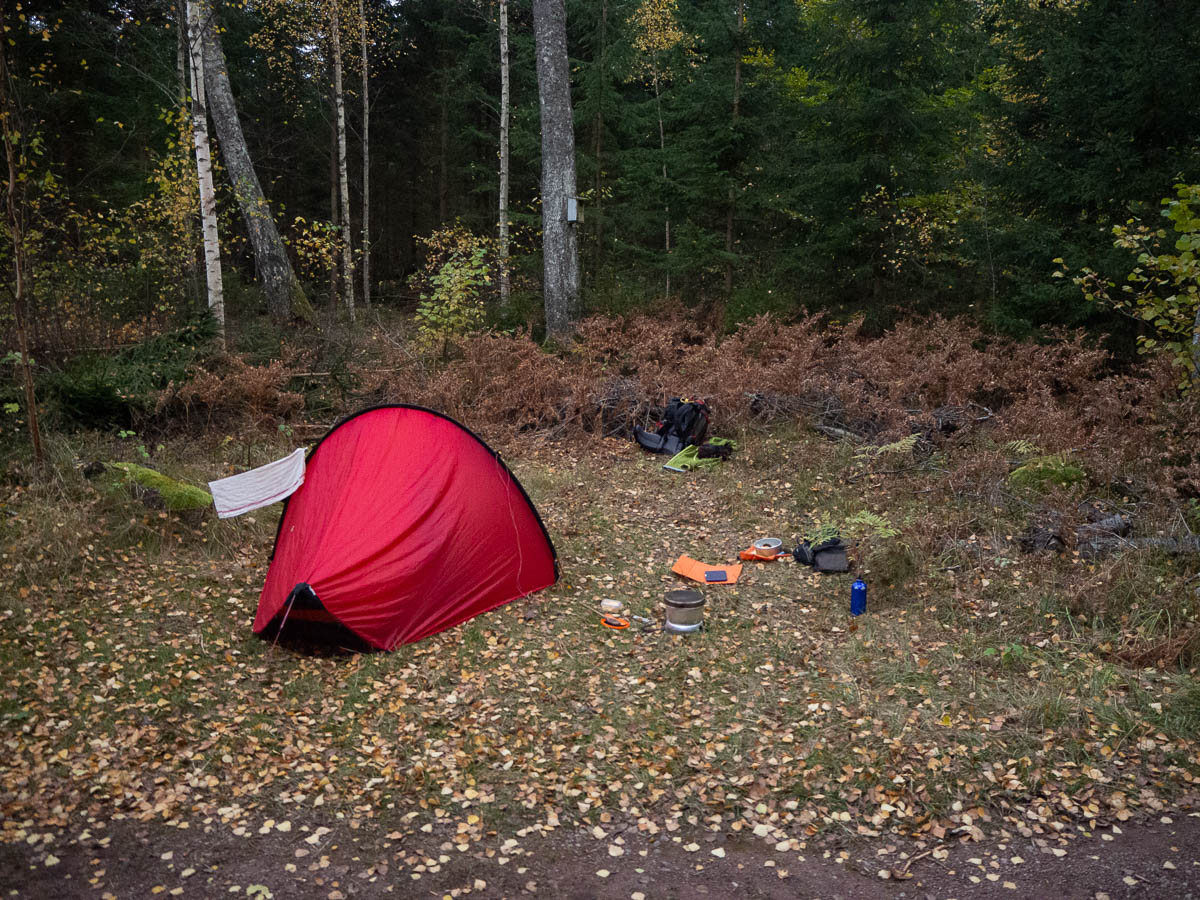
By now evening was approaching and it was really time to stop and set up camp. But I was in on a gravel road in a dense, scruffy spruce forest, full of tangled undergrowth, with no room anywhere to put up a tent. Finally I came to a rectangular, flat, cleared patch of ground next to a by-road – probably someone’s parking spot.
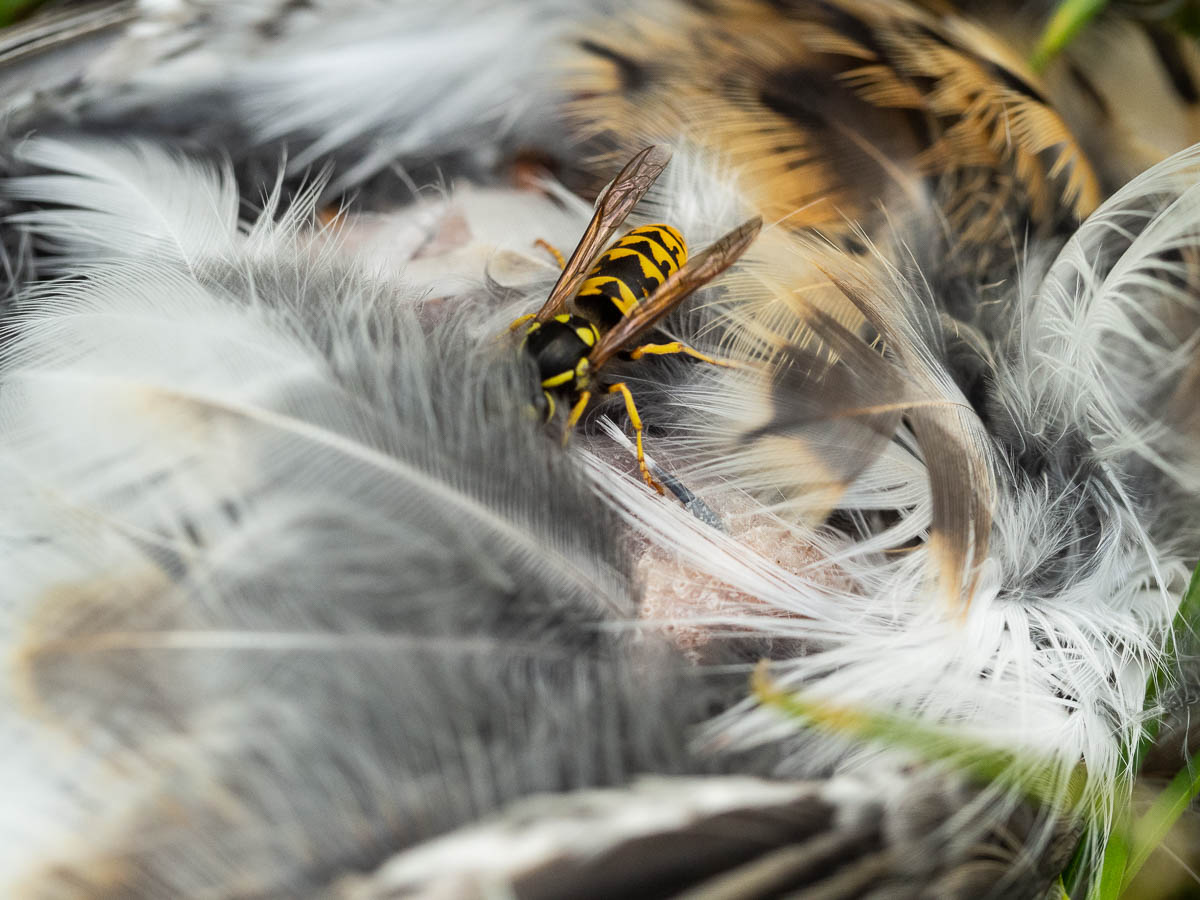
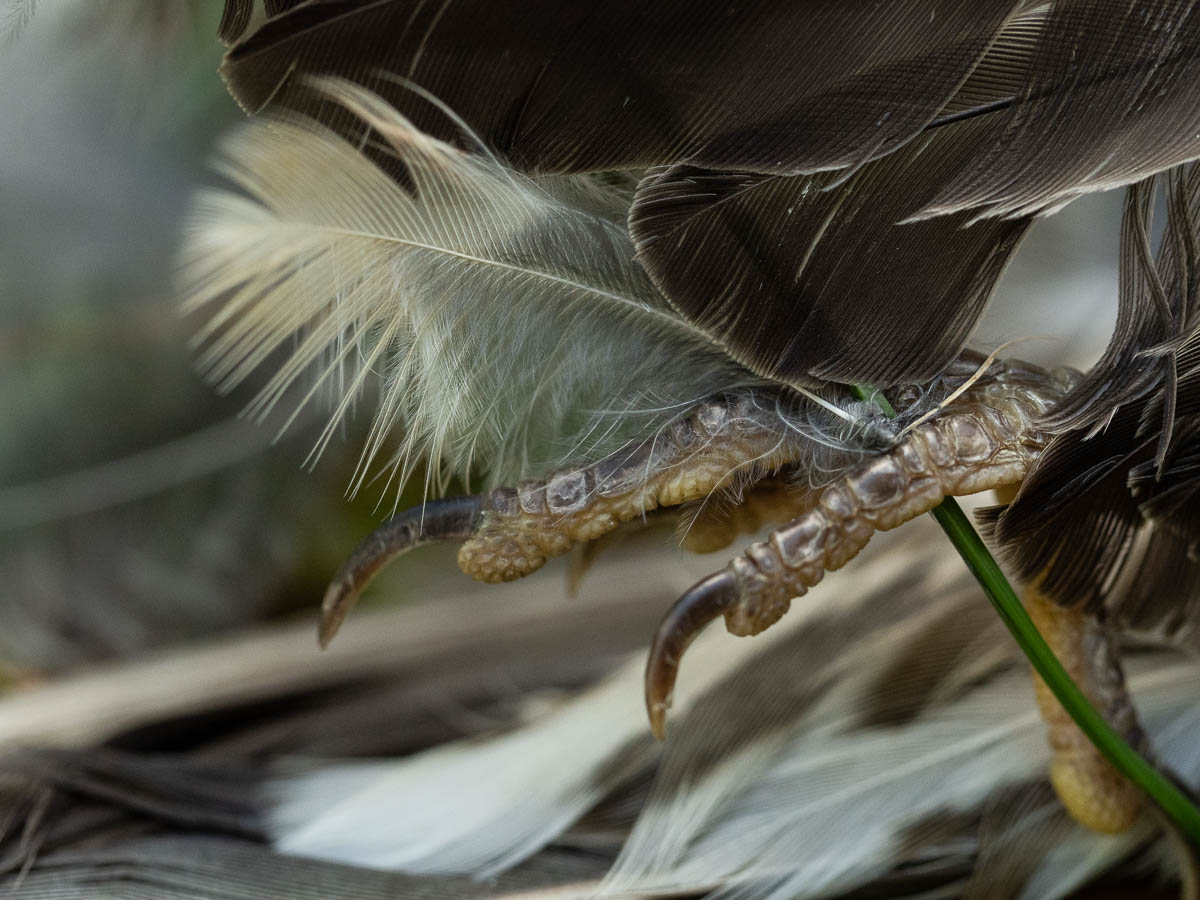
Adrian discovered a dead thrush in the garden. He found it a bit icky. My first thought was “I must get the camera”.
I’ve seen dead birds before; they’ve all looked very clean, soft and lovely – quite the opposite of icky. I often wish I could touch them, but with all the diseases they can spread, I’m going to follow recommendations and use gloves to put it in a plastic bag for disposal.
I didn’t see any flies around the bird, but wasps seemed to like it.
| « Older posts | Newer posts » |
