From Ottenby to Seby, around 18 km. Sun and sea birds and the sound of the sea. And cattle.

I paid for my stay as soon as the camping reception opened, filled up my water bottles, and was on my way shortly after eight in the morning.

The trail first followed the asphalt road through Näsby village, a medieval-style “row village” with all the dwelling houses arranged ribbon-like along the two sides of the road.

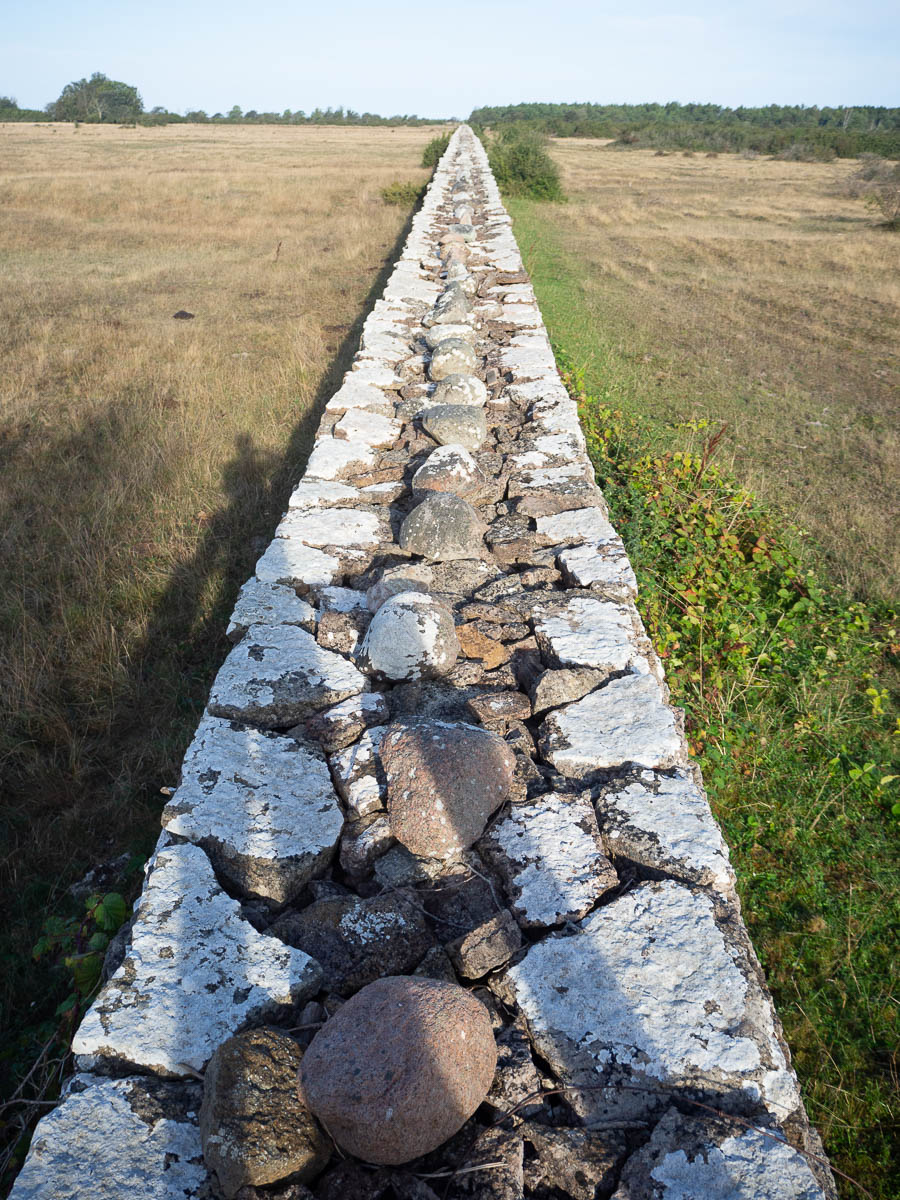
On the edge of Näsby lies “the wall of Karl X Gustav”, built by a 17th-century king to keep the deer herd on one side and the peasants on the other. Originally supposed to be “tall enough that a man on a horse couldn’t see over it”, these days it’s about shoulder-height for me. It wouldn’t stop any deer (and those are kept in place with electric fences instead, anyway) but it’s a pretty impressive sight. Five kilometres long, straight as a ruler, interrupted only in two places by the road (as it goes south on one side of the island and loops back up north on the other).
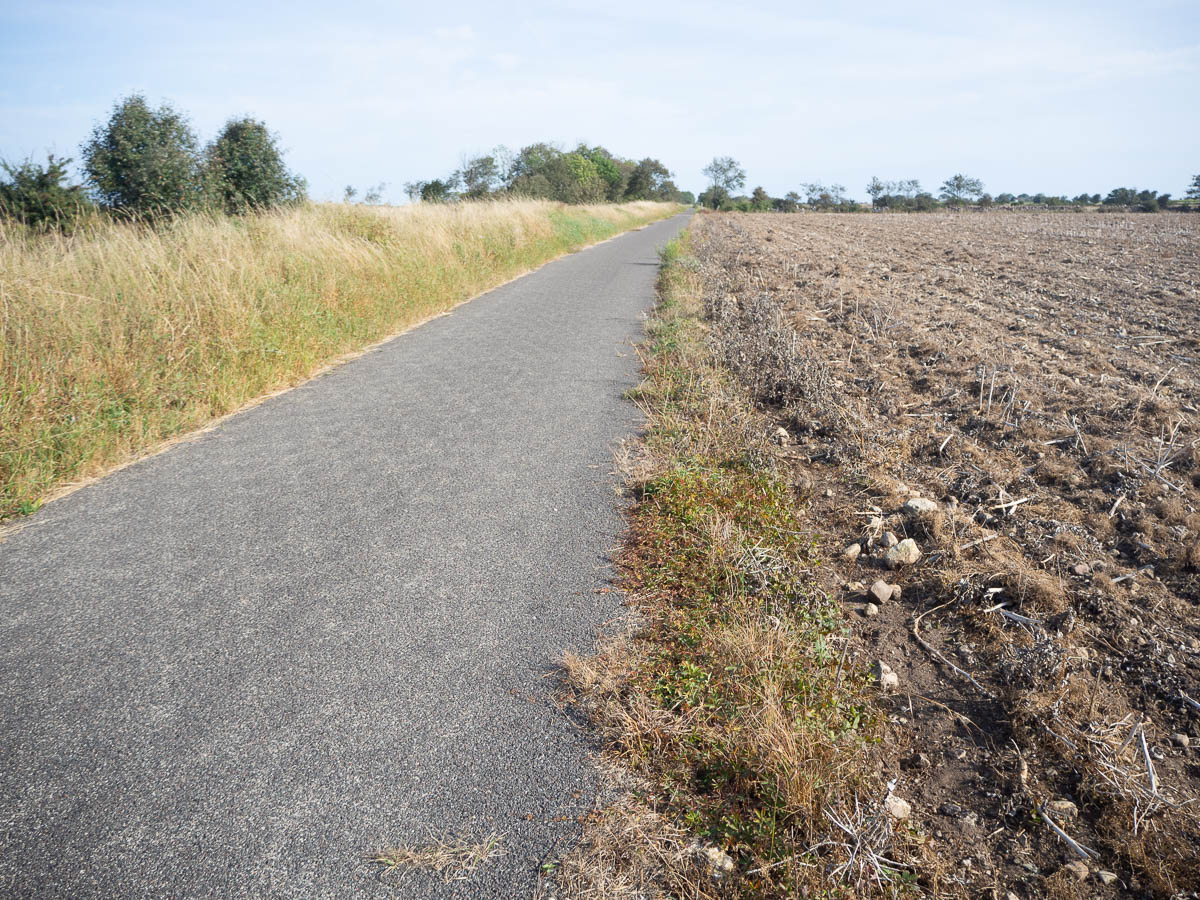
Soon after Näsby the trail left the main road for paved cycle paths.

I could still hear the road all the time – except after a while I realized that it wasn’t the road but the sea. The road did not have enough traffic to make that constant rushing noise. It was the sea, with the wind from the east making waves crash against the rocky shore all the time, just out of sight but not out of hearing range.
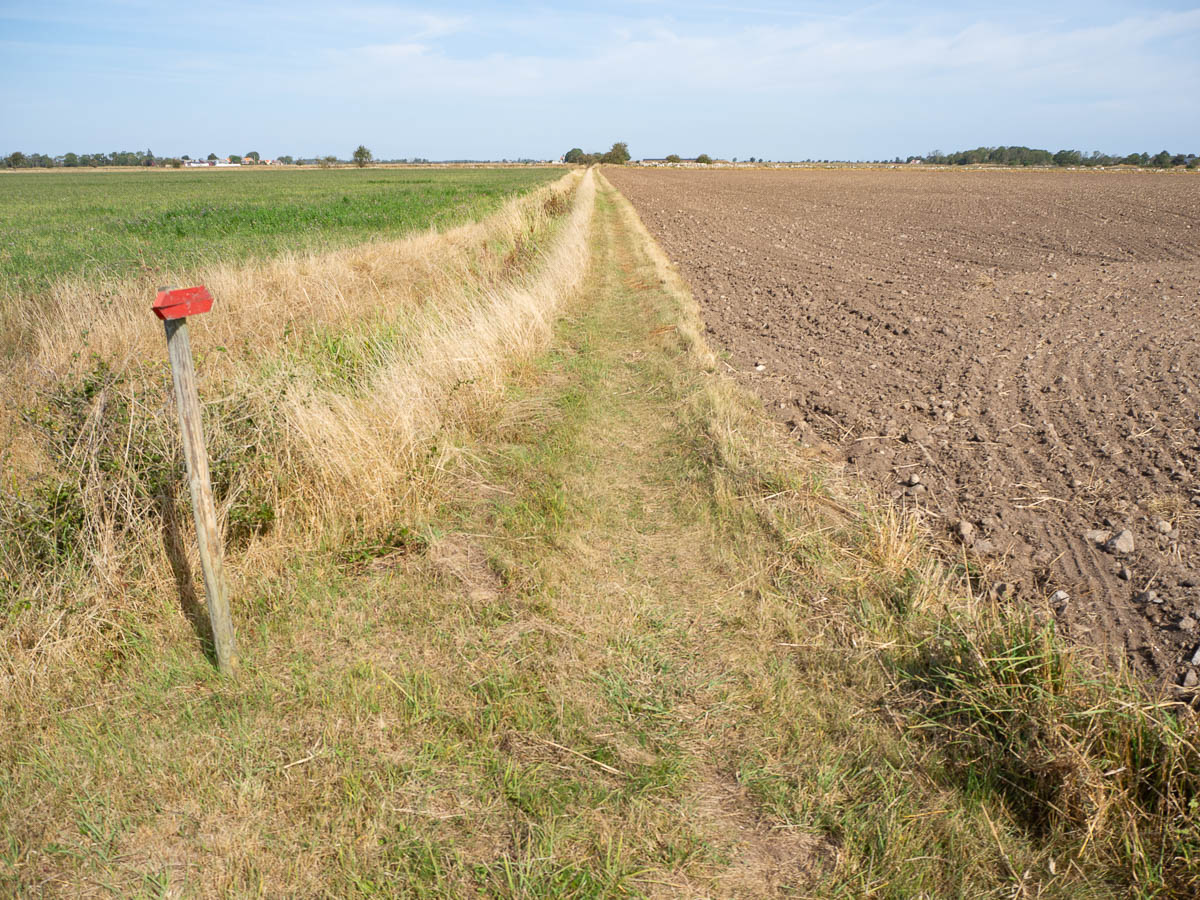
The trail continued gradually onto smaller and smaller footpaths between fields and meadows and cow pastures.
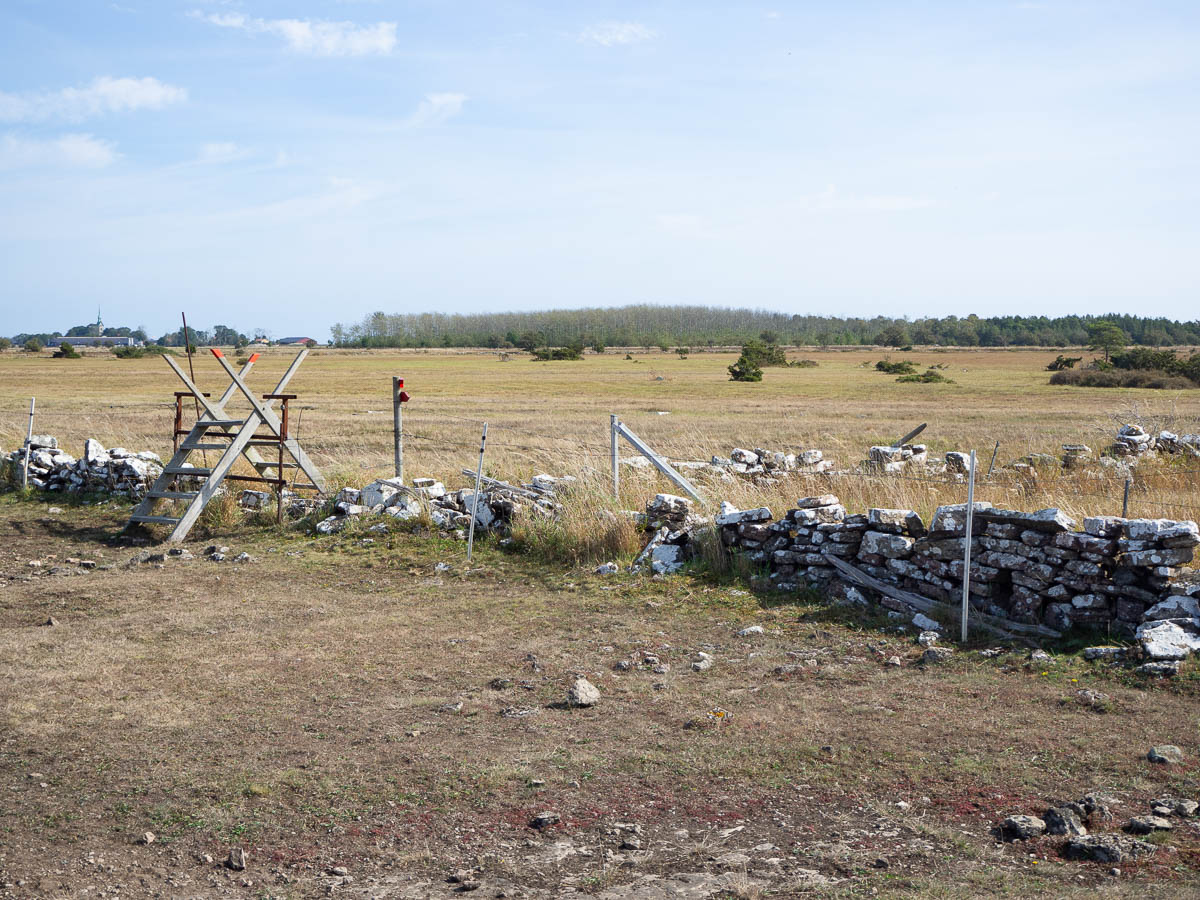
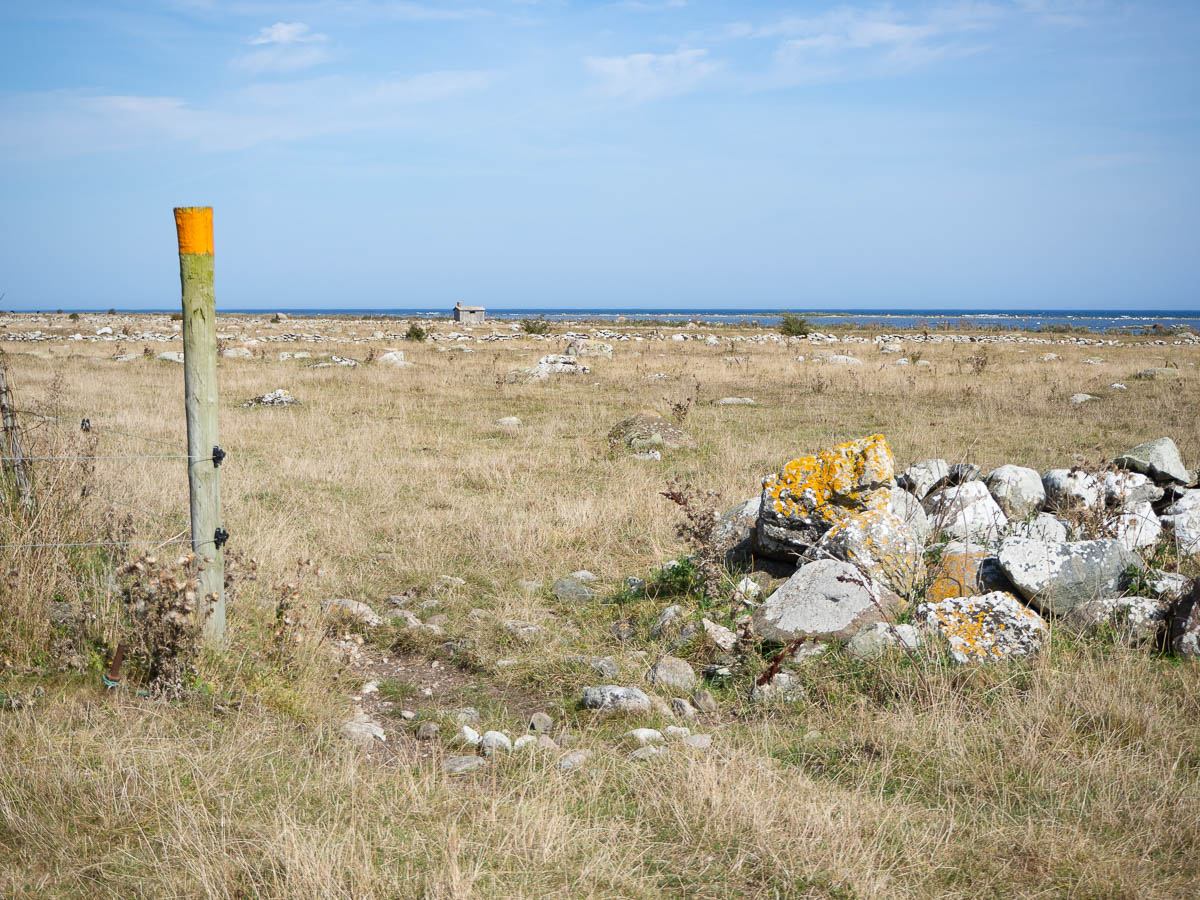
The cow pastures were all bordered by limestone walls, mostly somewhat crumbled. They seemed mostly decorative and symbolic, because the electric fences are doing the actual job of keeping the cows where they’re supposed to be. But I guess the stone walls are much more visible than thin electric wires, and might get more respect from cows. And humans.
Roughly halfway along, the trail passes Eketorp, a reconstructed Iron Age ring fort. It was technically not open yet for the day (low season again, and the ticket office wouldn’t open until 11) but it also wasn’t closed or locked, so I went wandering around anyway. I probably missed out on some booklets and what not, but it was rather interesting even with just the info plaques that were out there.
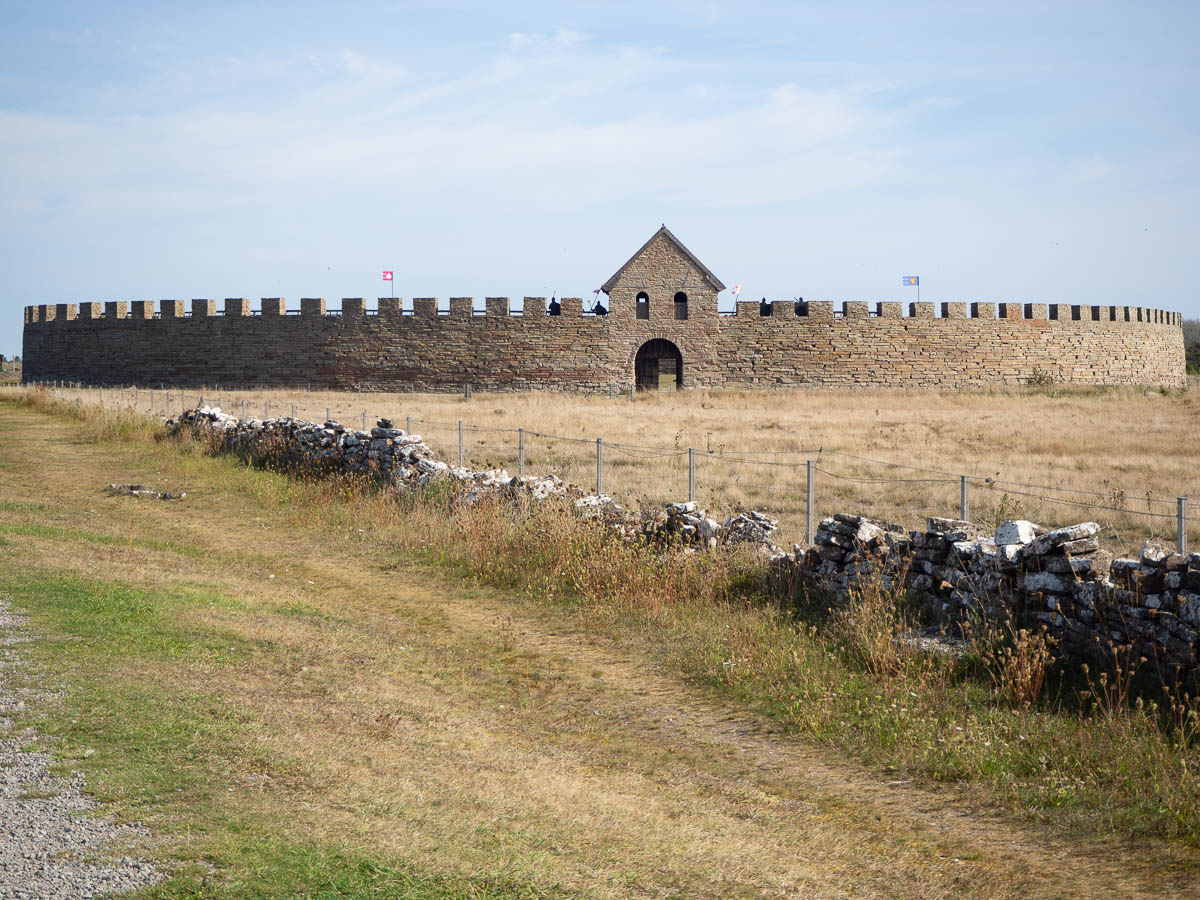
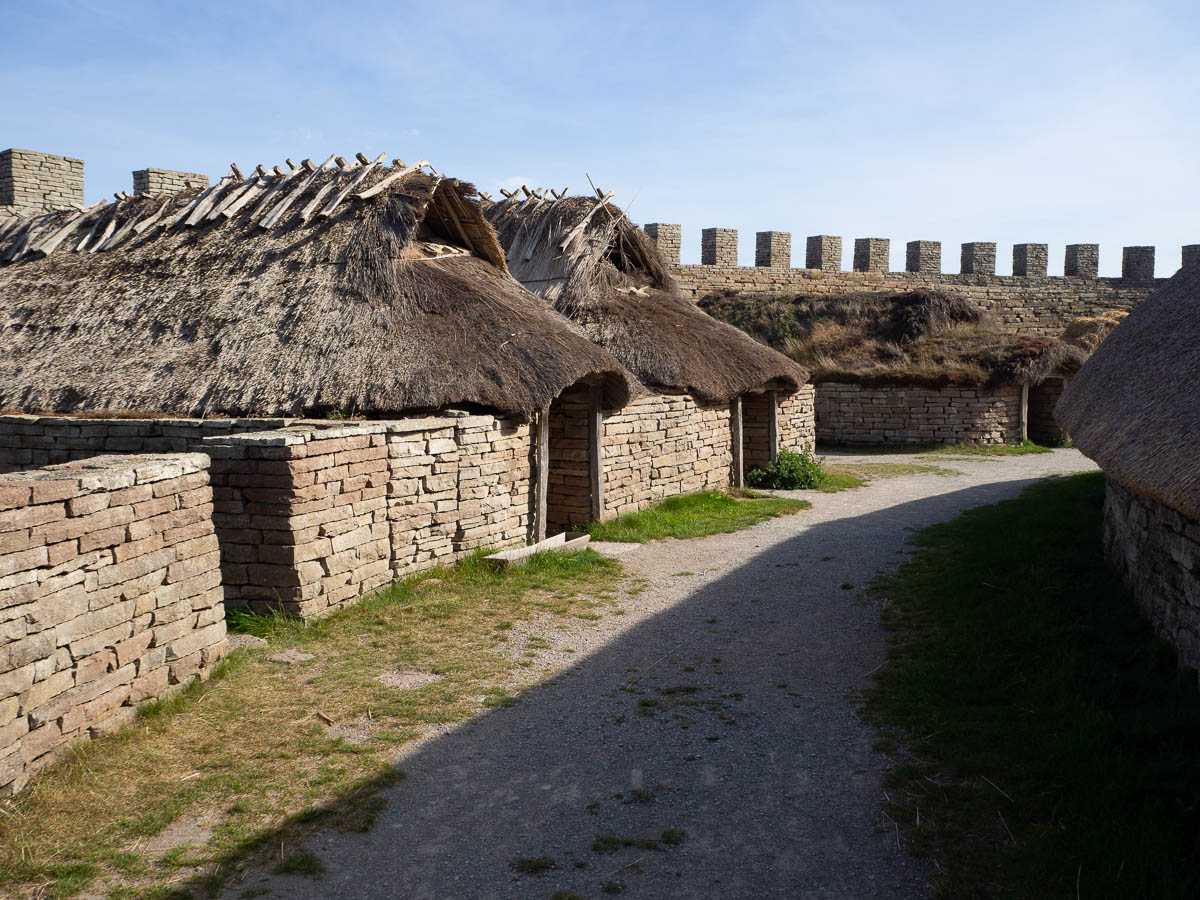
The fort had been put to different uses over centuries of time. The reconstructed version shows several side by side. One part has been left as it was found, with just ground-level traces of stone walls. Another part has been built up as it probably was during the Iron Age, with small densely-packed stone huts. On the other side, timber houses have been rebuilt to mimic the fort in its reincarnation as a medieval garrison.
A few days ago at home I was swapping out my summer dresses for an autumn wardrobe and starting the sock season, and today it was at least 25°C. Judging from the state of the vegetation, uninterrupted sunshine seems to be the standard here.

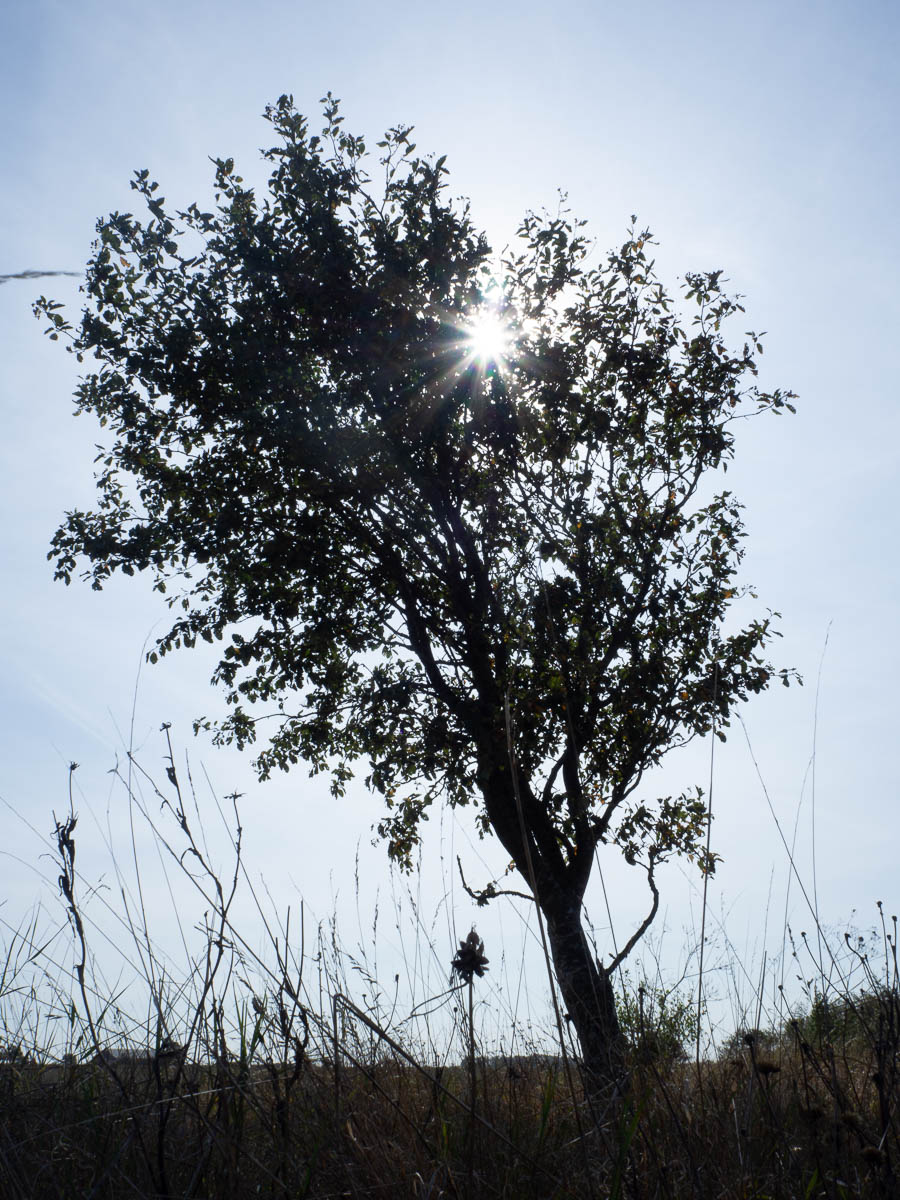
And there was not much shade to be had along the trail. There were plenty of large trees in the villages, but nothing out among the meadows and fields. When I finally spotted a lone tree – scraggly and sparse – I knew I had found my lunch spot.
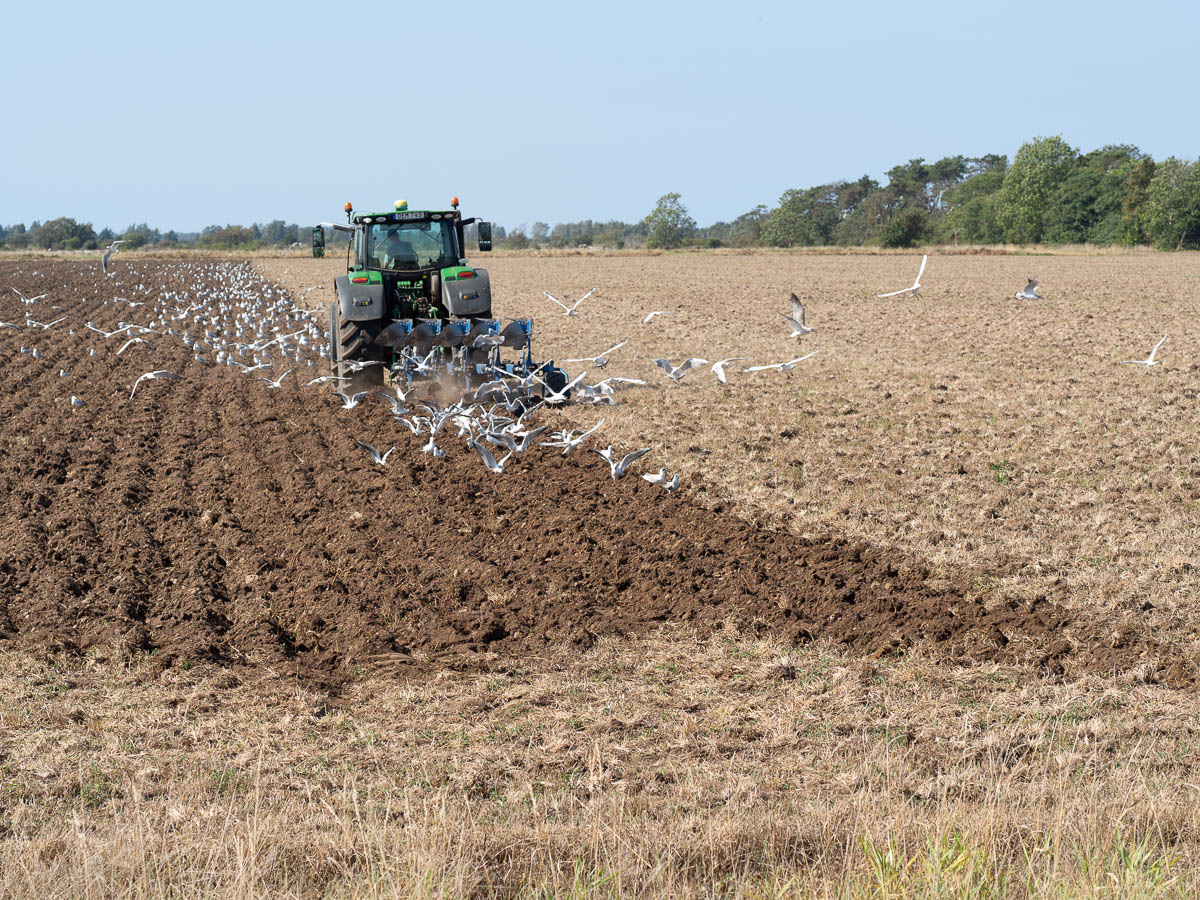
The sea birds were never far away. Large flocks of geese flew noisily overhead every now and again, often 70 or 80 heads strong. Gulls congregated en masse around tractors ploughing the fields. They remained on the ground until (it looked to me) the tractor was a finger’s width away from crushing them, before taking flight, and then immediately landing behind the tractor to get at all juicy the worms.
In the late afternoon the trail turned back to the seashore.
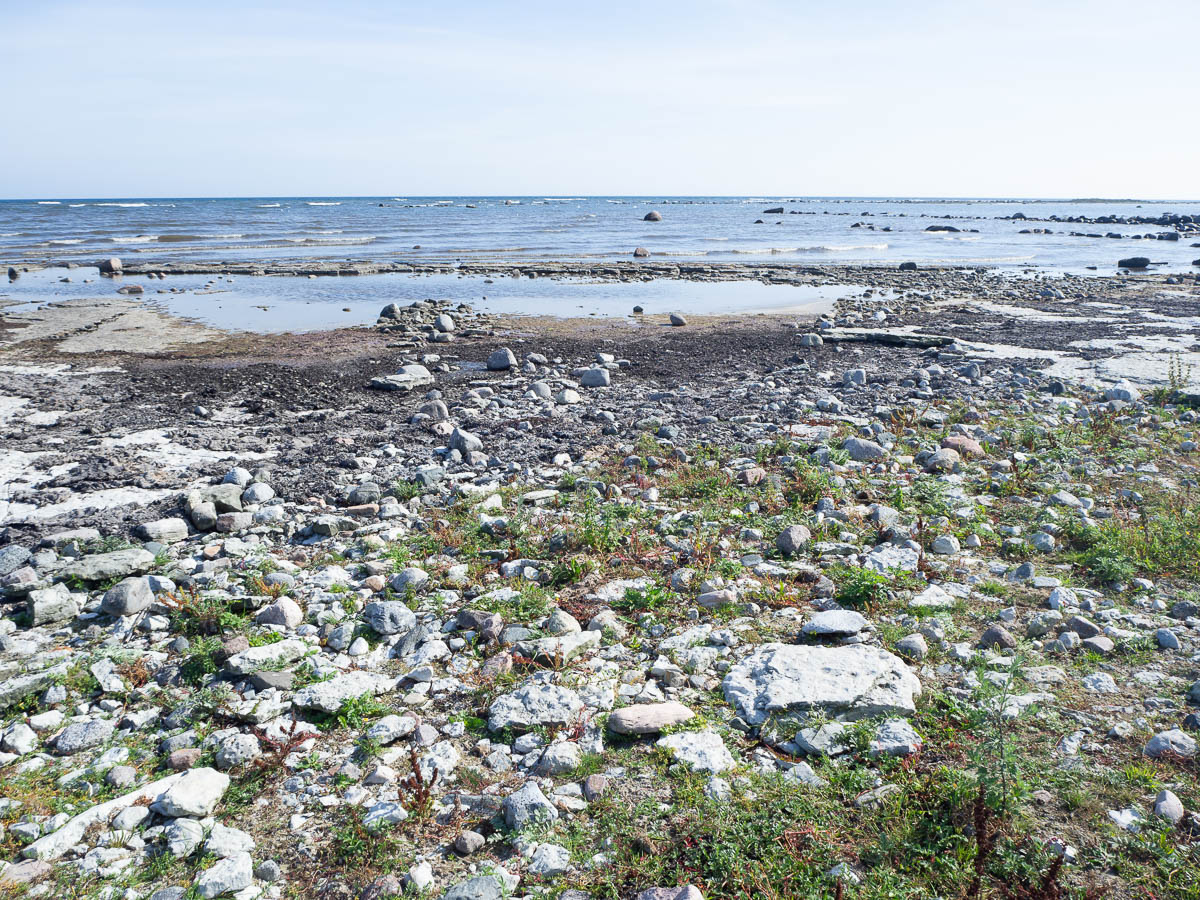
The beach could not in any way be described as pretty. Weeds, churned-up mud, cow pats, bird droppings. And hundreds and hundreds of sea birds, making the sea look like bird soup just fifty metres out.
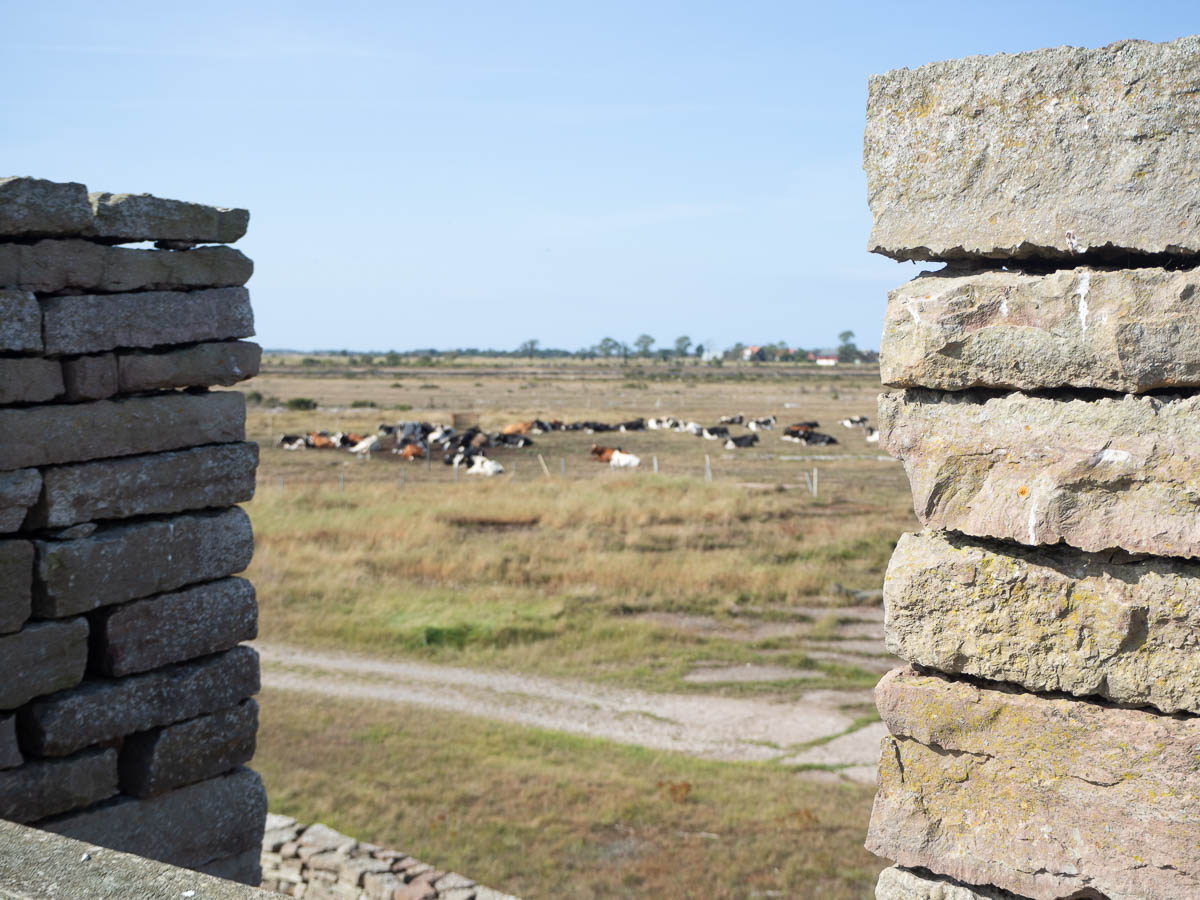
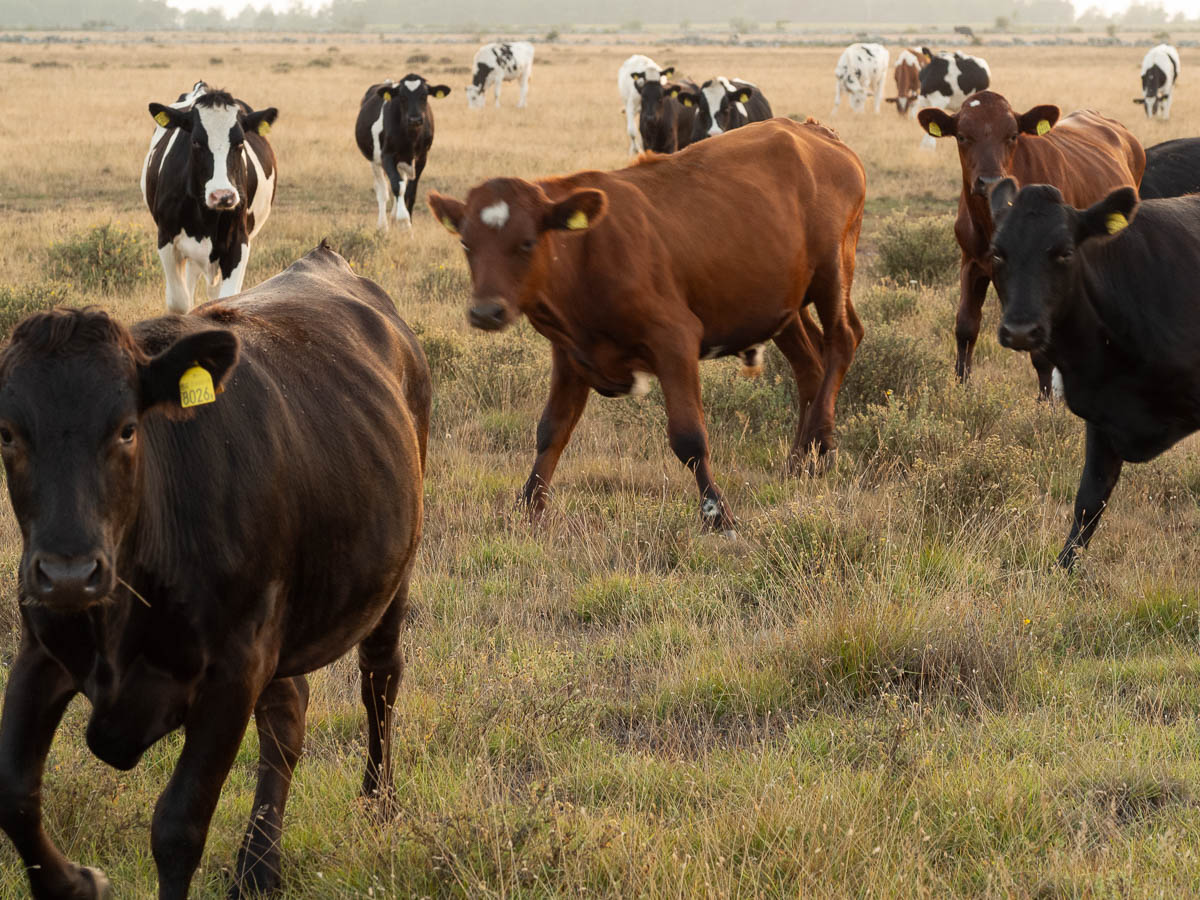
There were cattle everywhere, all the way to the water’s edge. Southern Öland is cattle country, and they roam free and wide.

There are numerous info signs along the hiking trails and at other tourist spots, informing people how to behave around cattle. Keep your distance, close all gates, don’t get between a cow and its calf, don’t feed them, don’t bring any dogs.
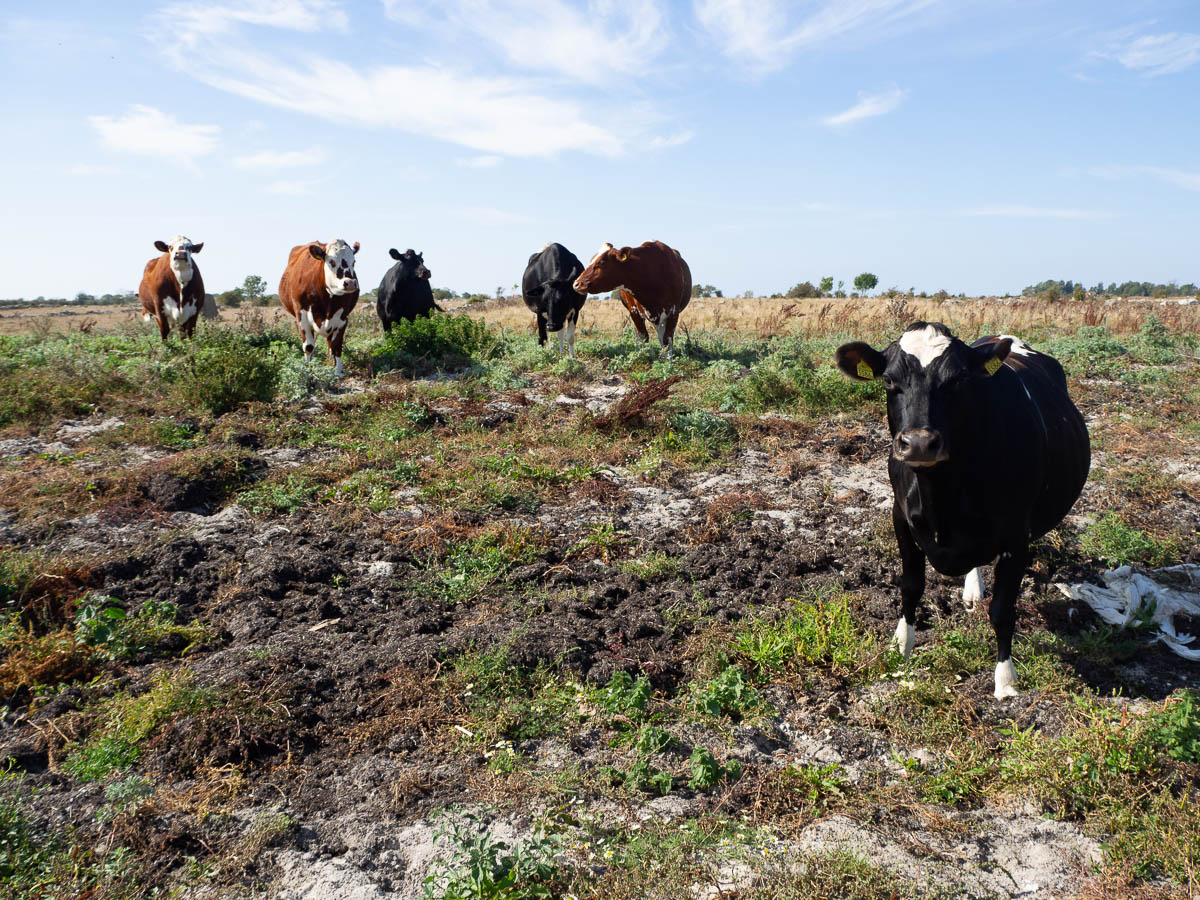
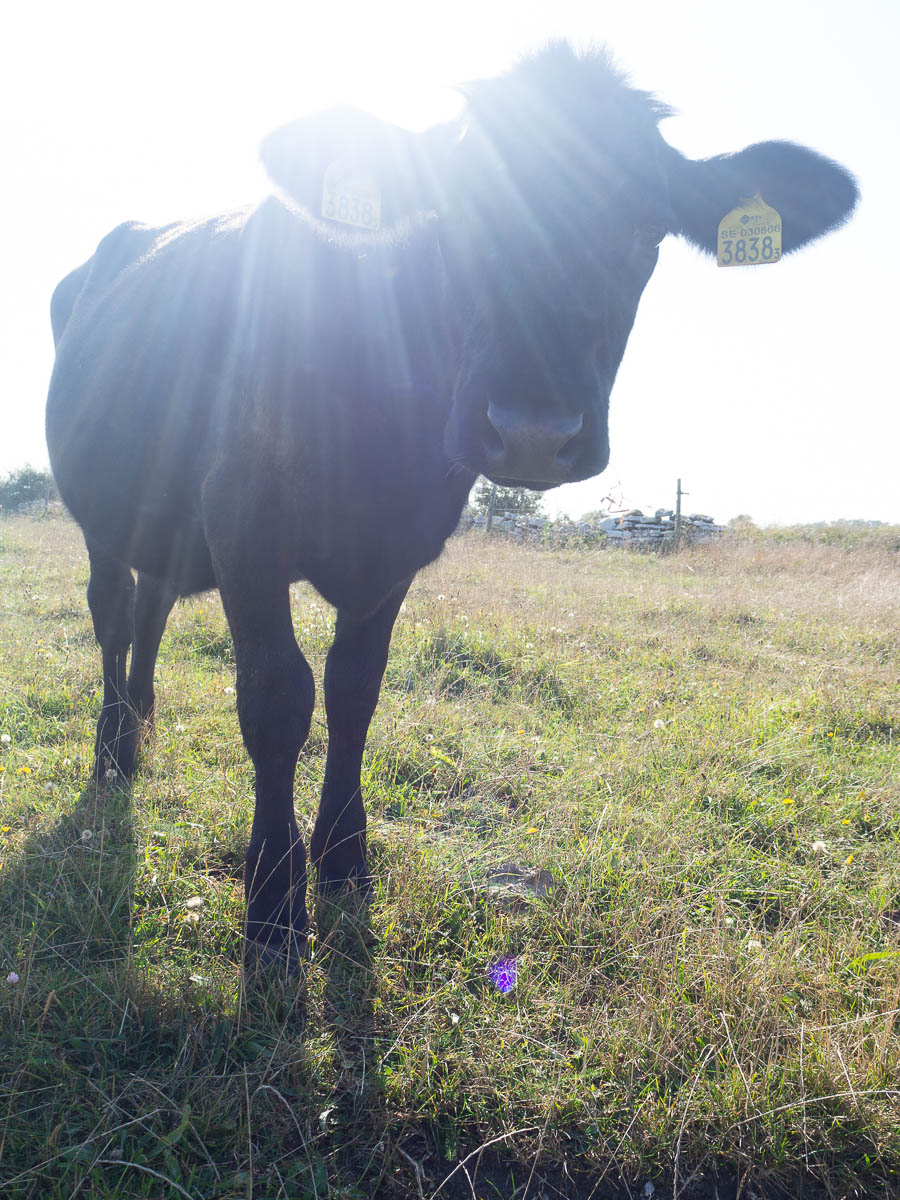
The cattle – mostly young ones, by their looks – were curious and nosy. As long as I walked past them, they didn’t pay me any attention, but whenever I stopped for a while, they noticed me and all decided to come have a look. Poked at my backpack where I had put it down while photographing; nosed at me and my clothes.
This stage of the trail officially ended at Seby boat harbour, where there is a parking lot, but that spot was clearly picked for ease of access and not with tenting in mind. There was, however, a shelter a few kilometres further along the trail, so that’s where I headed for the night. It was in a small copse in the middle of cattle pastures. And of course fully surrounded by electric fencing, because otherwise it would immediately be overrun by cattle.
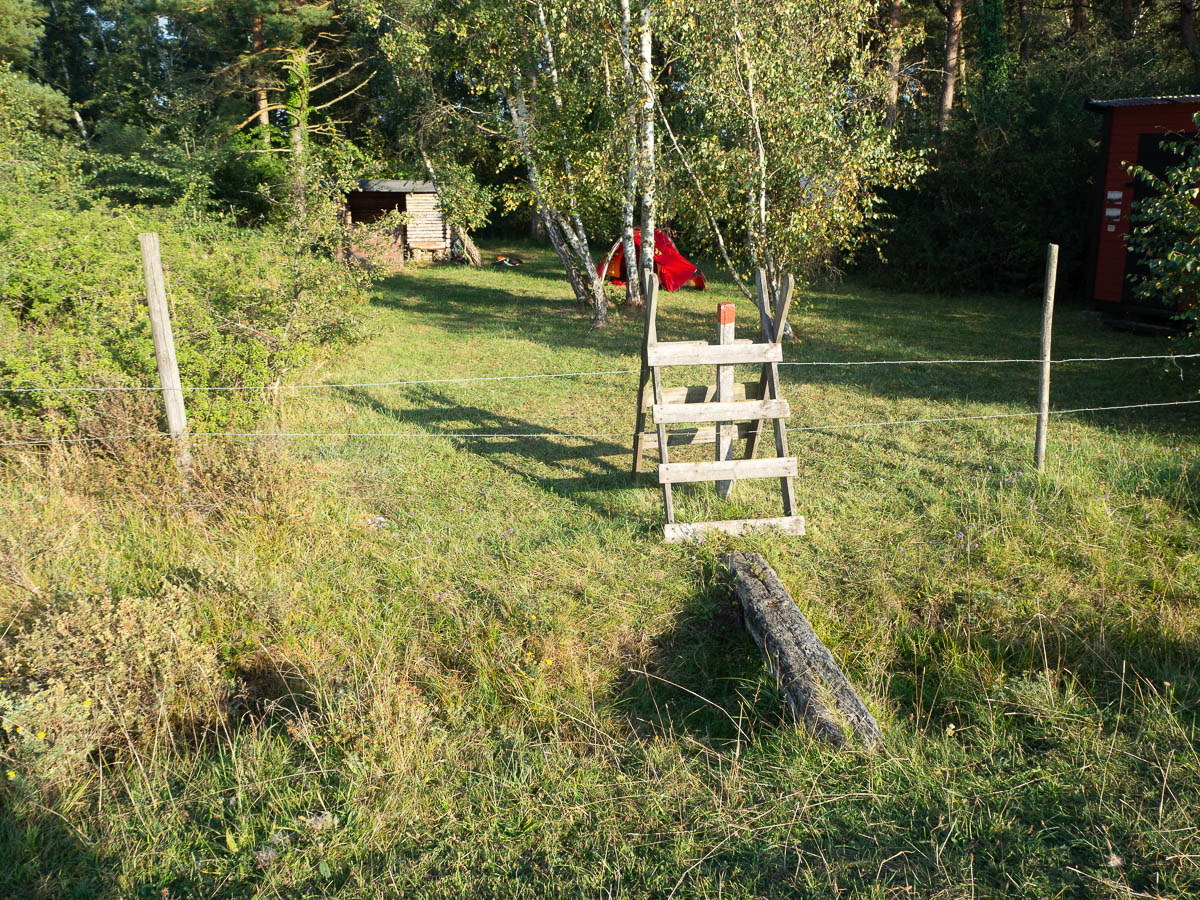
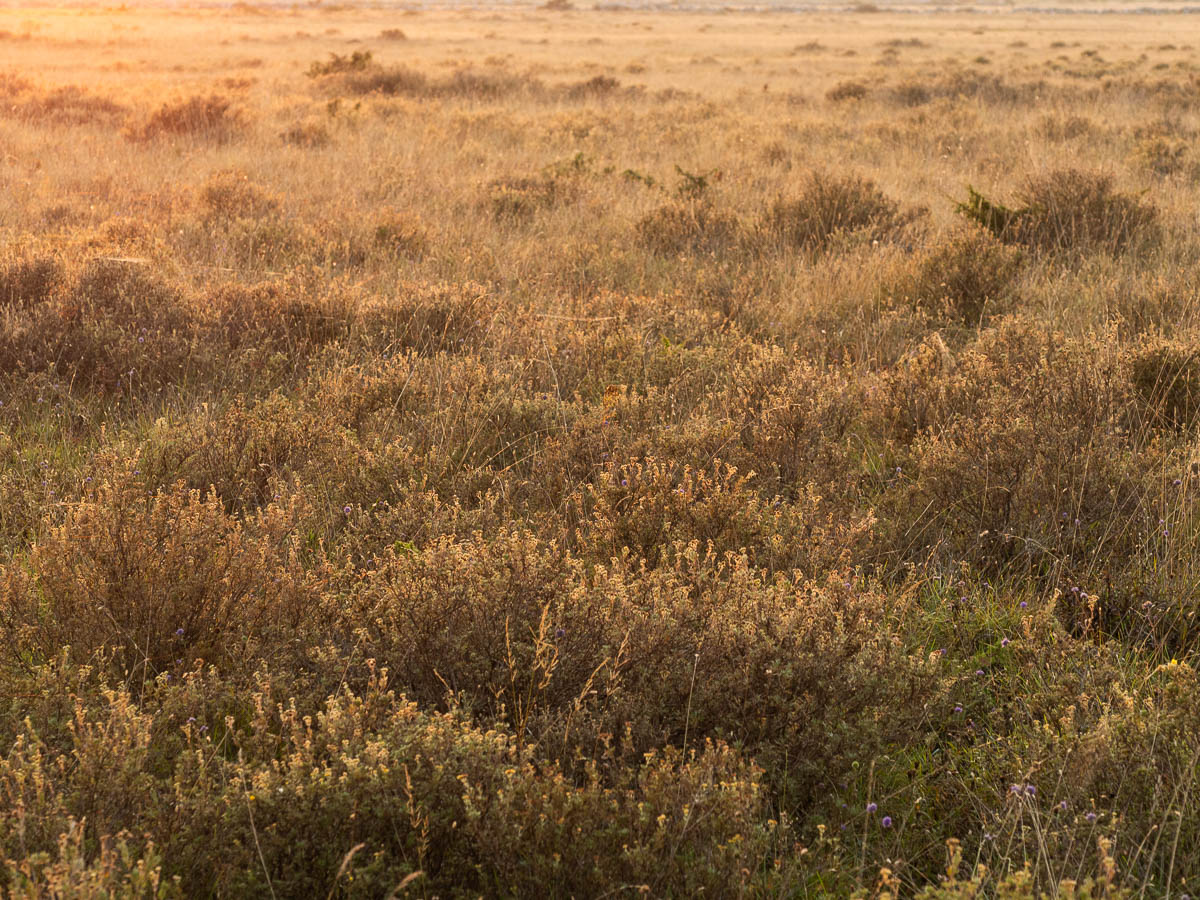
It was a beautiful evening. I went out to take photos in the golden sunset.
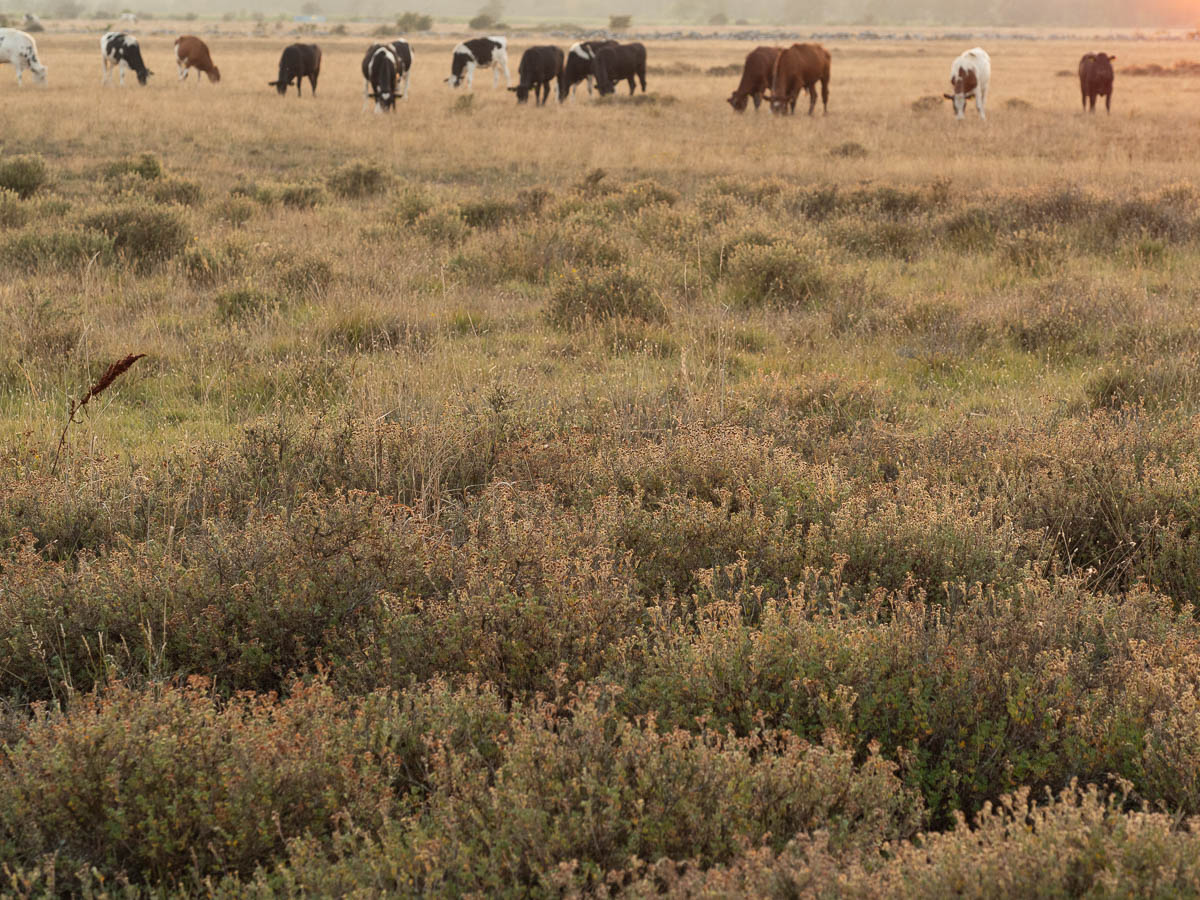
And of course I got accosted by cattle. I stayed away from them, but they did not stay away from me. I think this herd hadn’t seen many people recently and were extra curious. Or something. In any case, they first got rather uncomfortably close, and then kind of started rushing me. Not actually aggressively, I believe – they pulled up a metre or two away from me every time – but enough to make me move away very carefully and slowly, without turning my back to them. They are very much bigger and stronger than me, after all. I breathed out in relief when I was back at the shelter, on the other side of the fence again.
The evening sky was clear, and the forecast for the night was the same. I set an alarm for 1 o’clock in the morning and got up to look at the stars. The view was pretty good, but not the best I’ve ever seen. Villages on the west coast of Öland spread hazy light in the west, and a slowly pulsating light in the south must have been Långe Jan, a good 20 km away.

The Milky Way was distinguishable if you knew what to look for, but not bright. As a bonus, I saw three meteors.
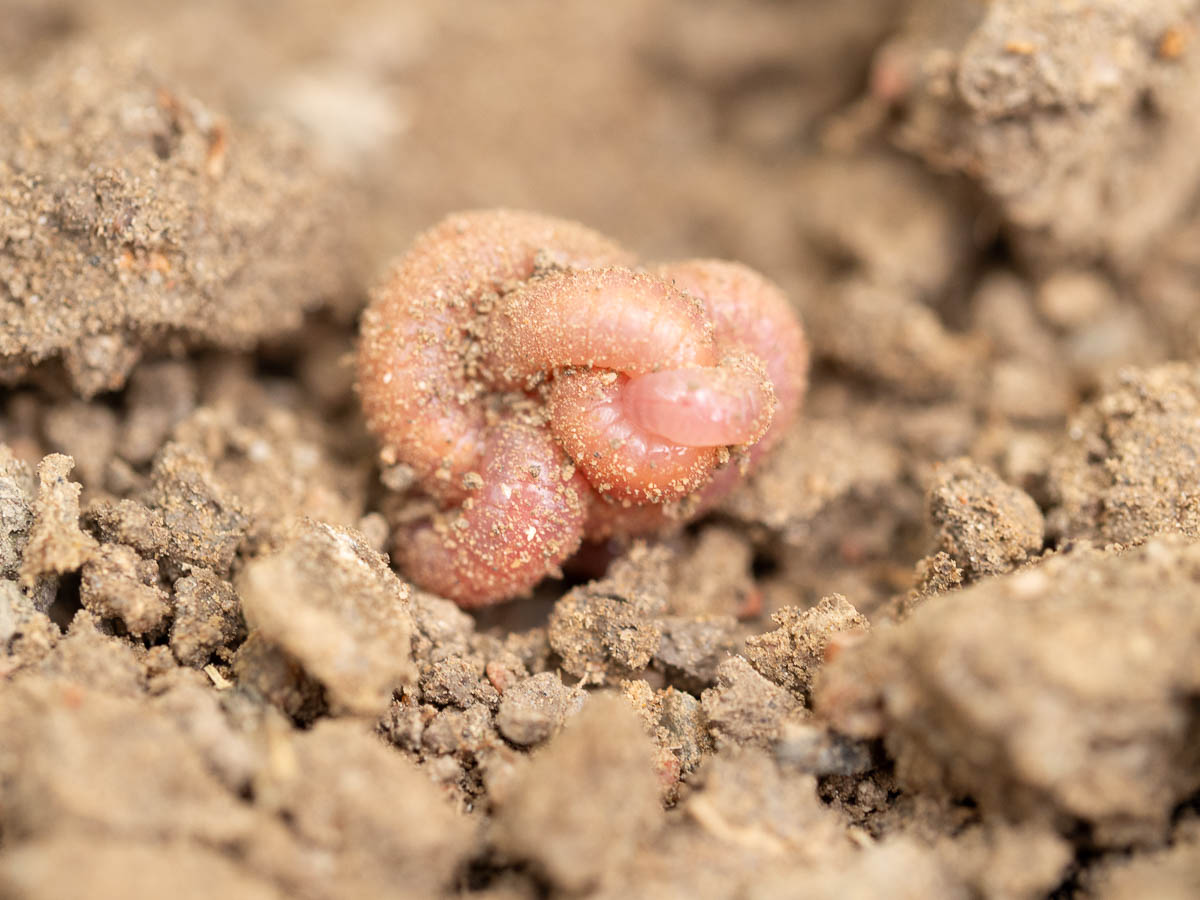
Doing a bit of digging in the new planting area to be. The ground is hard as concrete and I’m barely making any progress. Despite that, I am finding earthworms and earthworm passages way down in the ground. Somehow earthworms manage to get through soil that I seriously struggle with.

Also, the fact that they tie themselves in knots never ceases to amaze me.


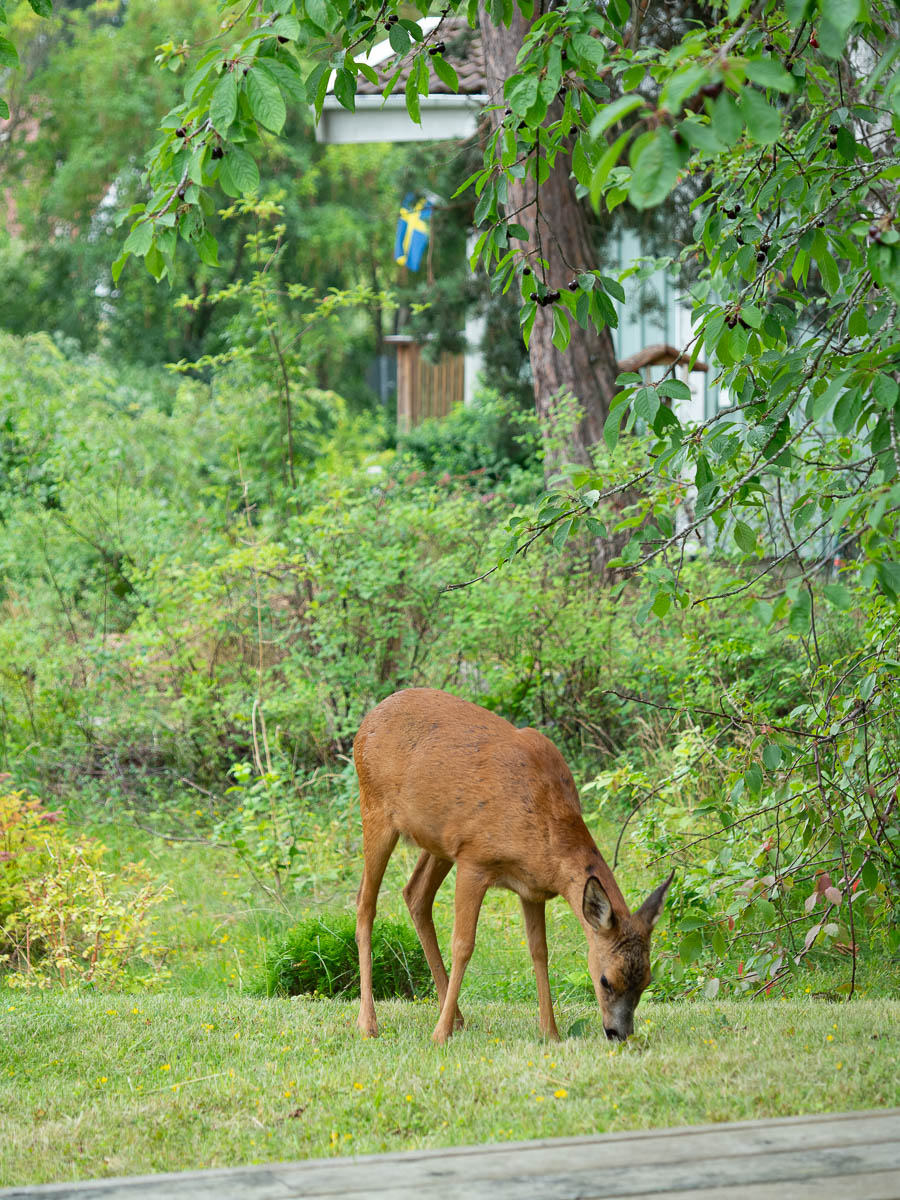
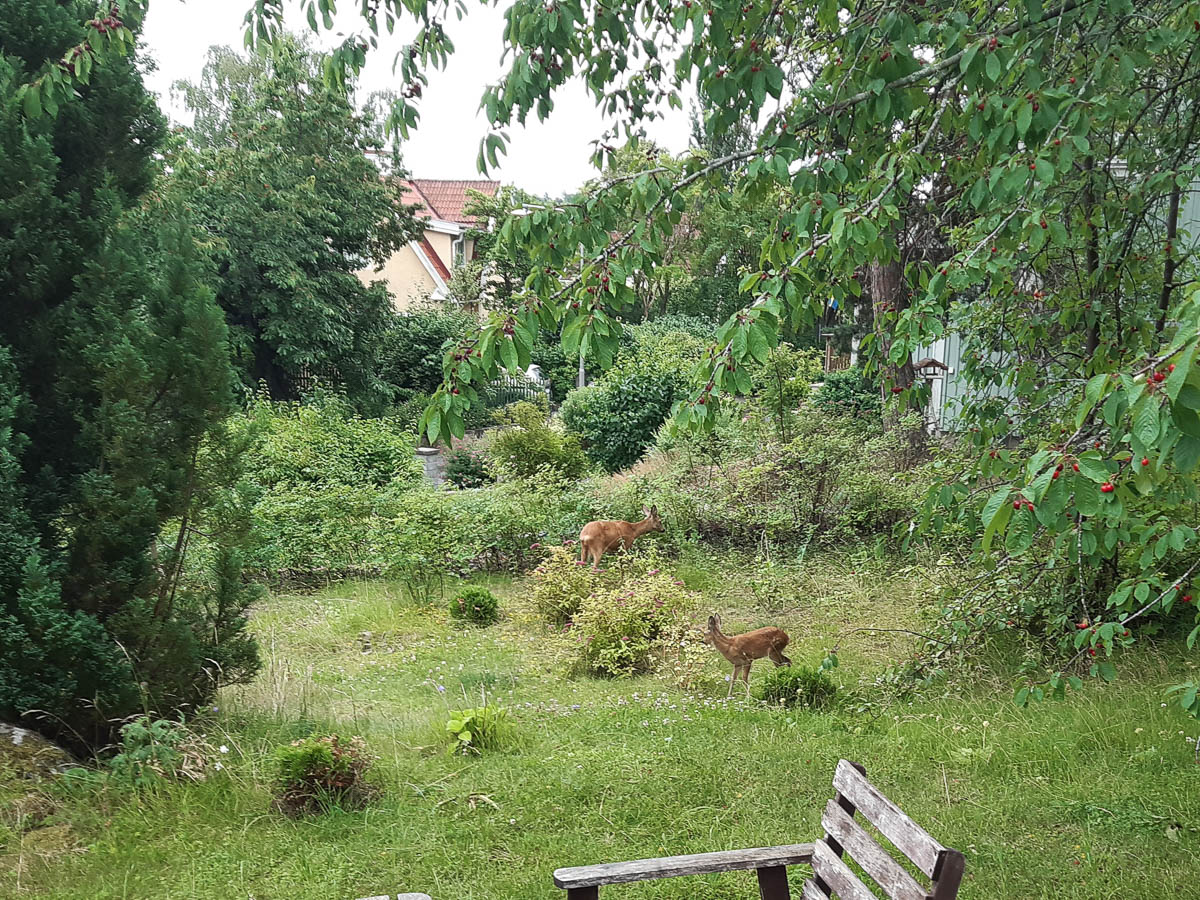
Humans and their cars are away on vacations, so the deer can be more bold than usual. A family of them (dad, and mum with baby) have been traipsing through the garden repeatedly in the last few days.

Or it could be because of the ripe cherries that have dropped from the tree, and the newly cut grass that makes the cherries easy to reach.


This year’s deer kids are old enough to be walking around with their mums.

When mum jumped over the hedge and the chain link fence behind it, the baby instead found the cat passage under the fence and used that.

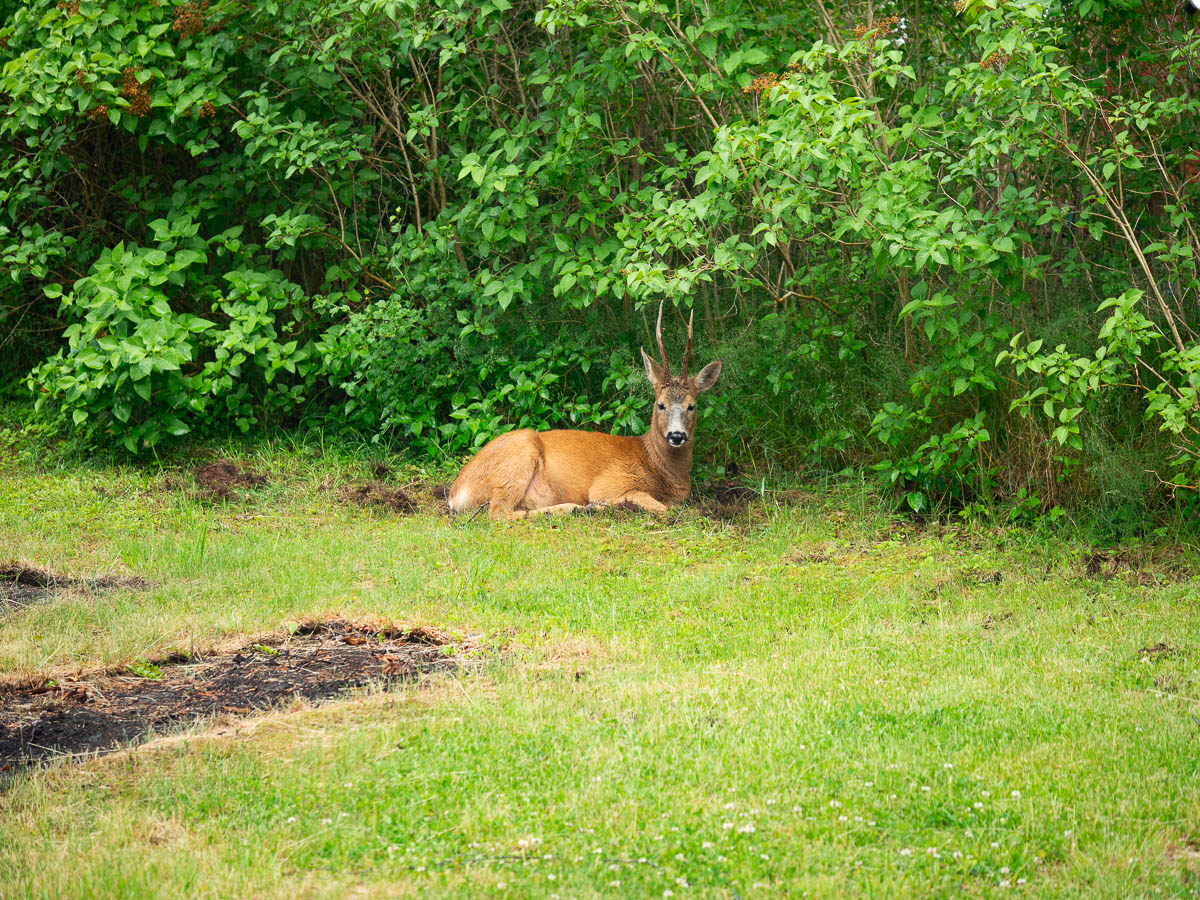
A very heavily pregnant deer stopped to rest in our lilac hedge. I was wondering if she would stay here to give birth, and we’d get a deer nursery again, but a few hours later she was gone.


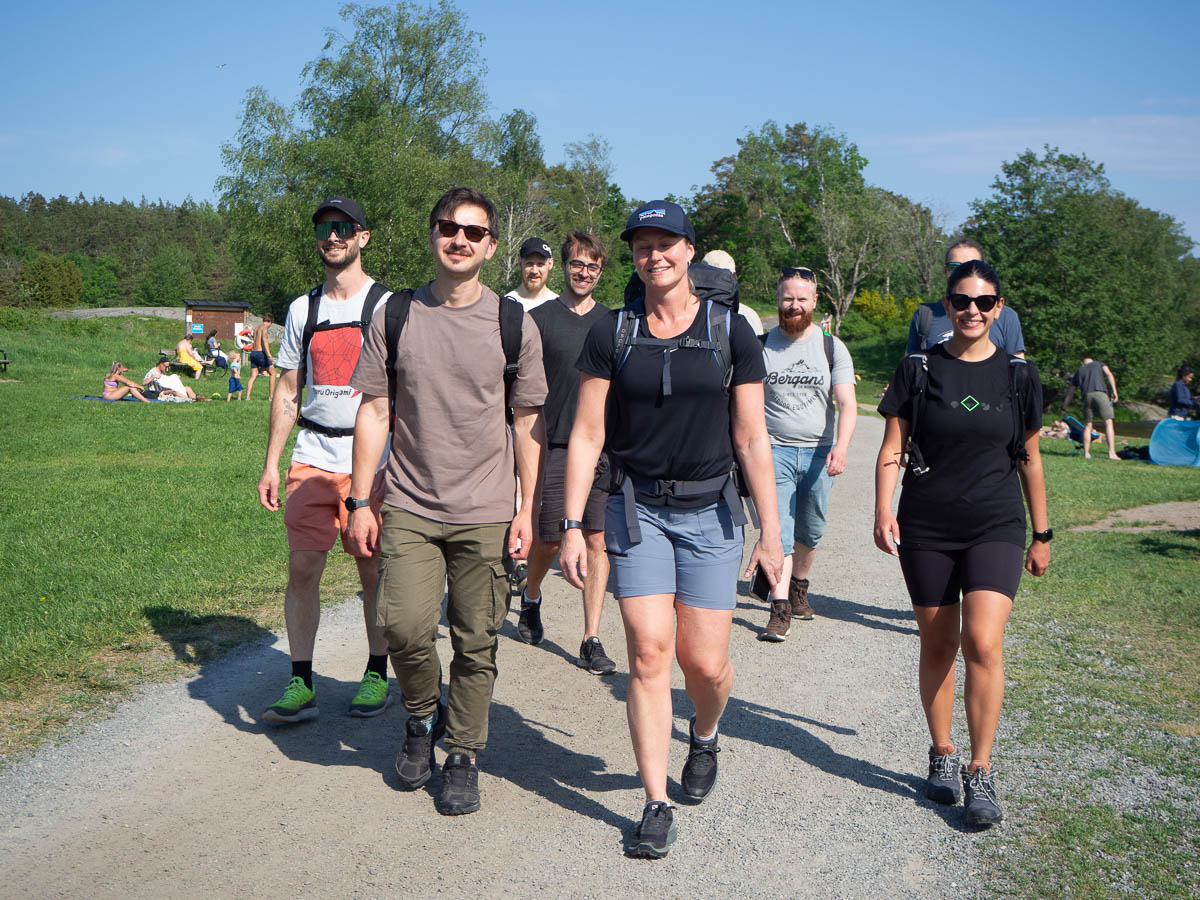
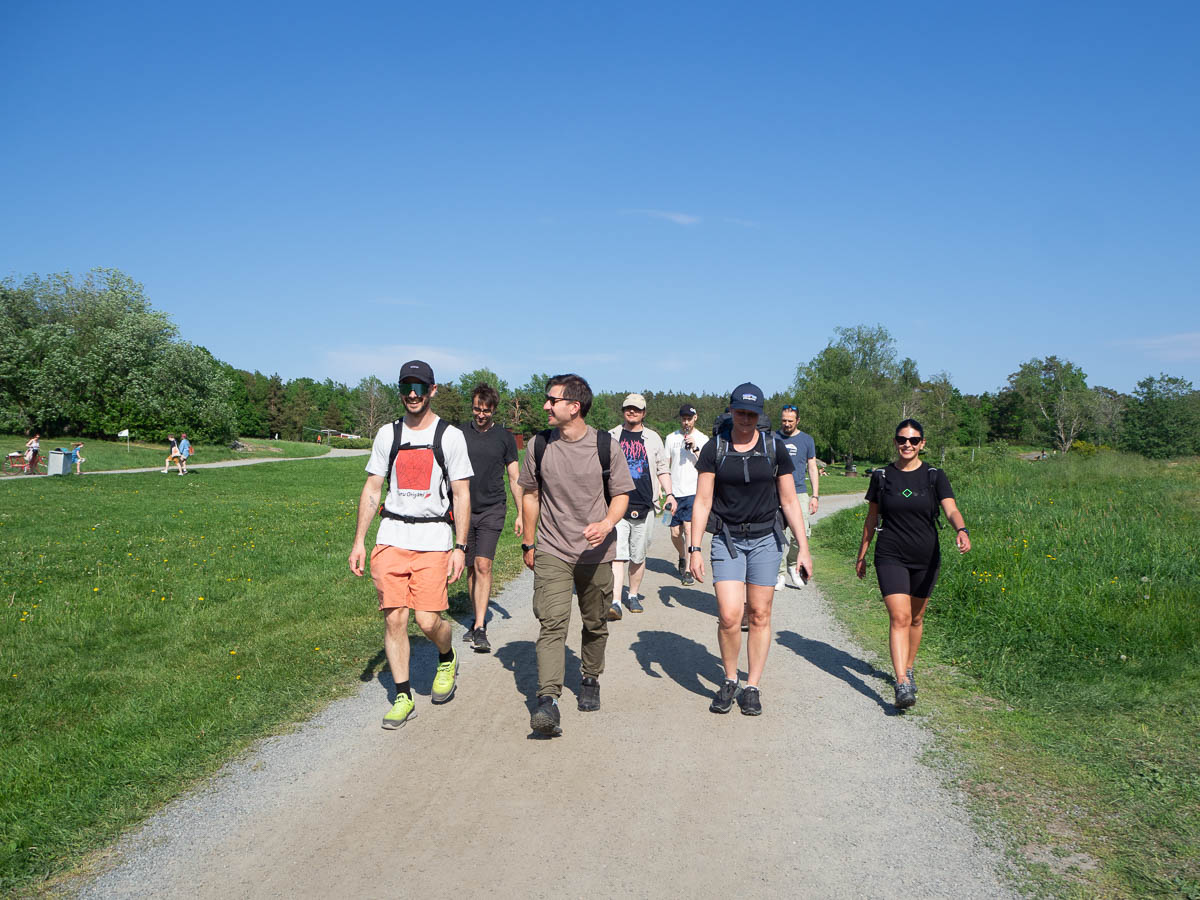
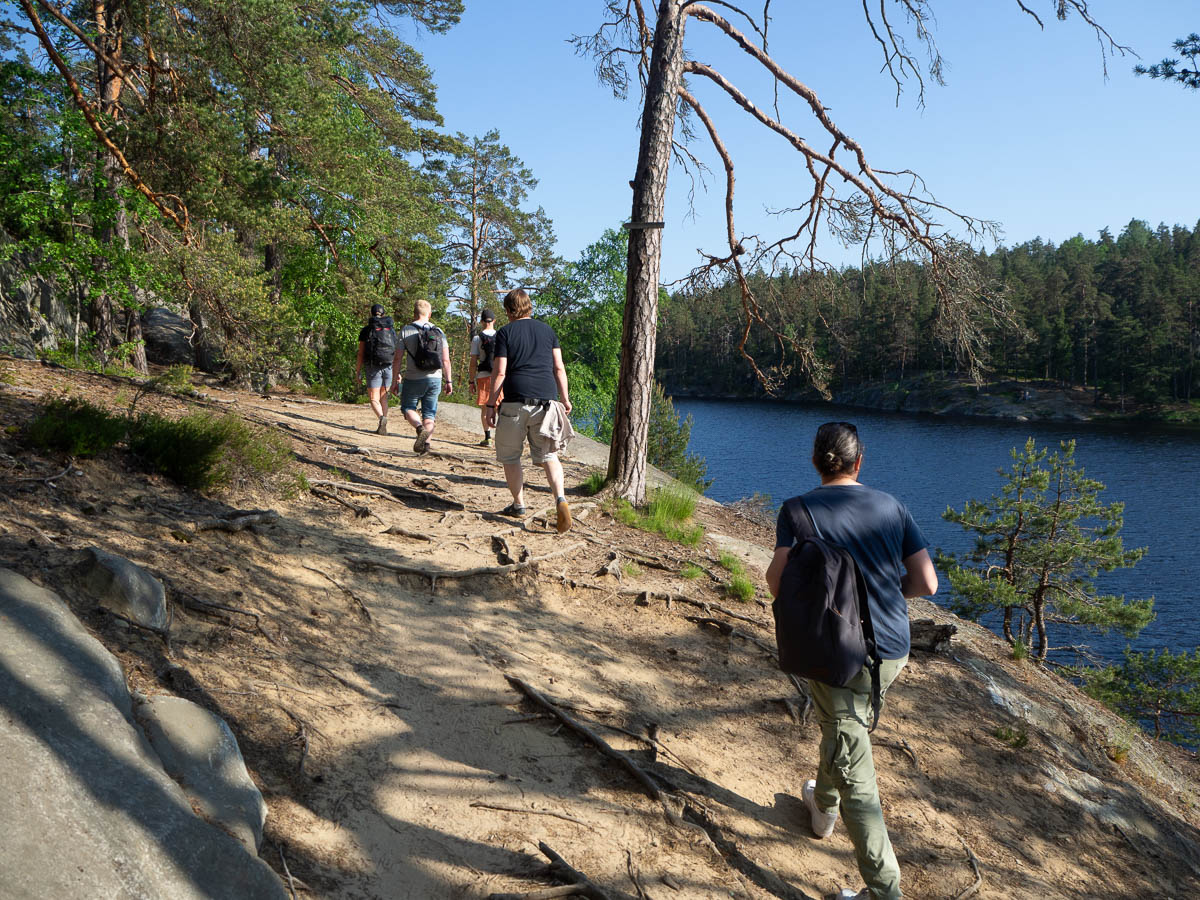
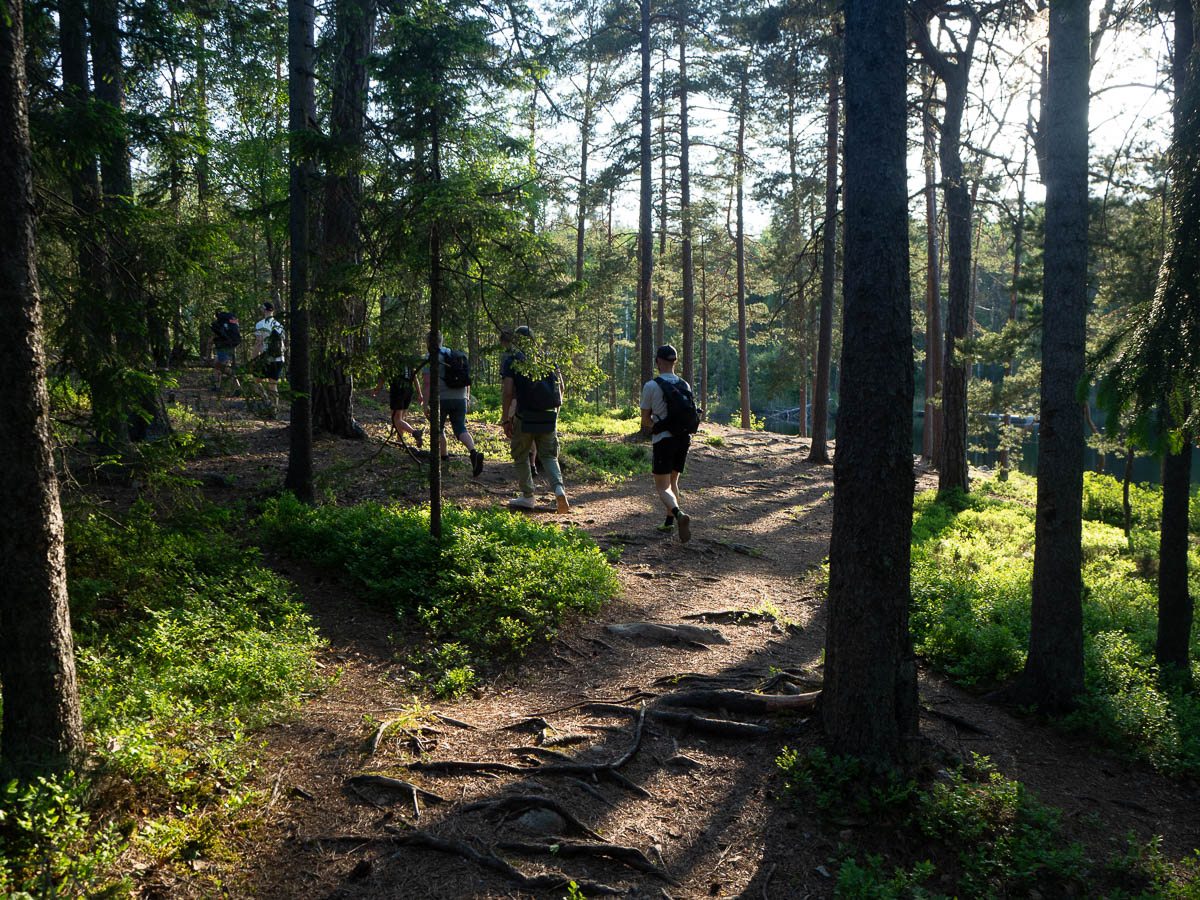
It’s “health week” at tretton37, which includes both a step challenge and group activities, one of which is a hike of the first stage of Sörmlandsleden (which gave us plenty of steps for the step challenge).


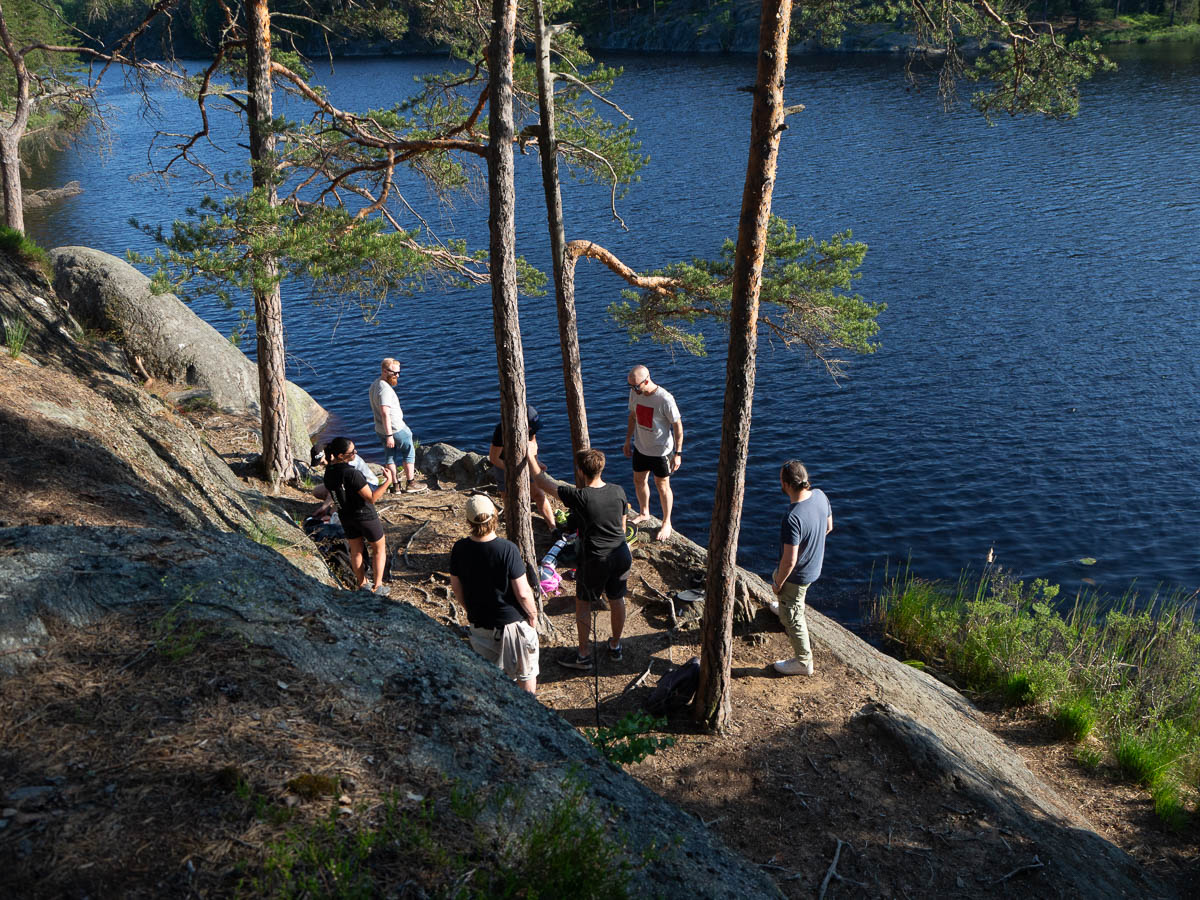
The leader of our group had prepared and packed a picnic dinner for us all, which we ate on a pleasantly secluded little cliff shelf by Sandasjön lake.


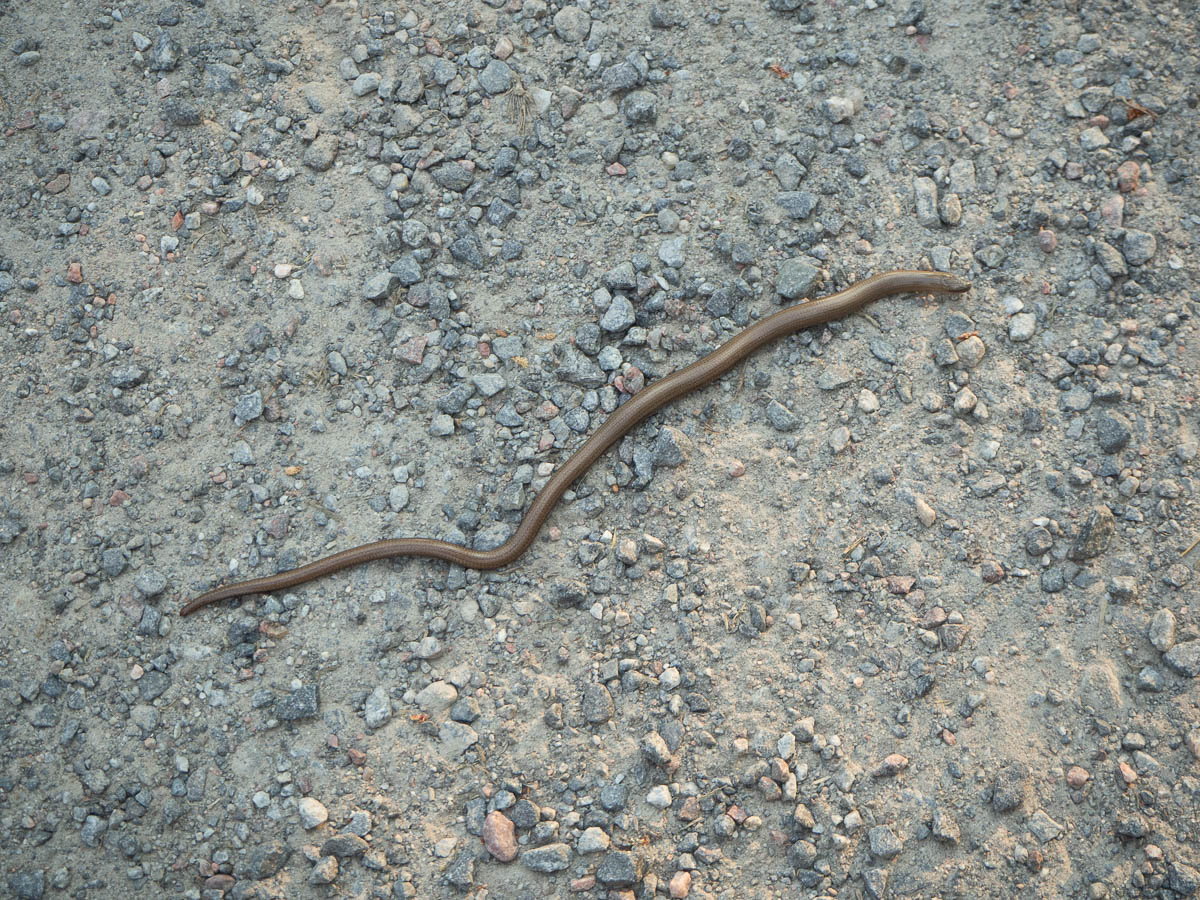
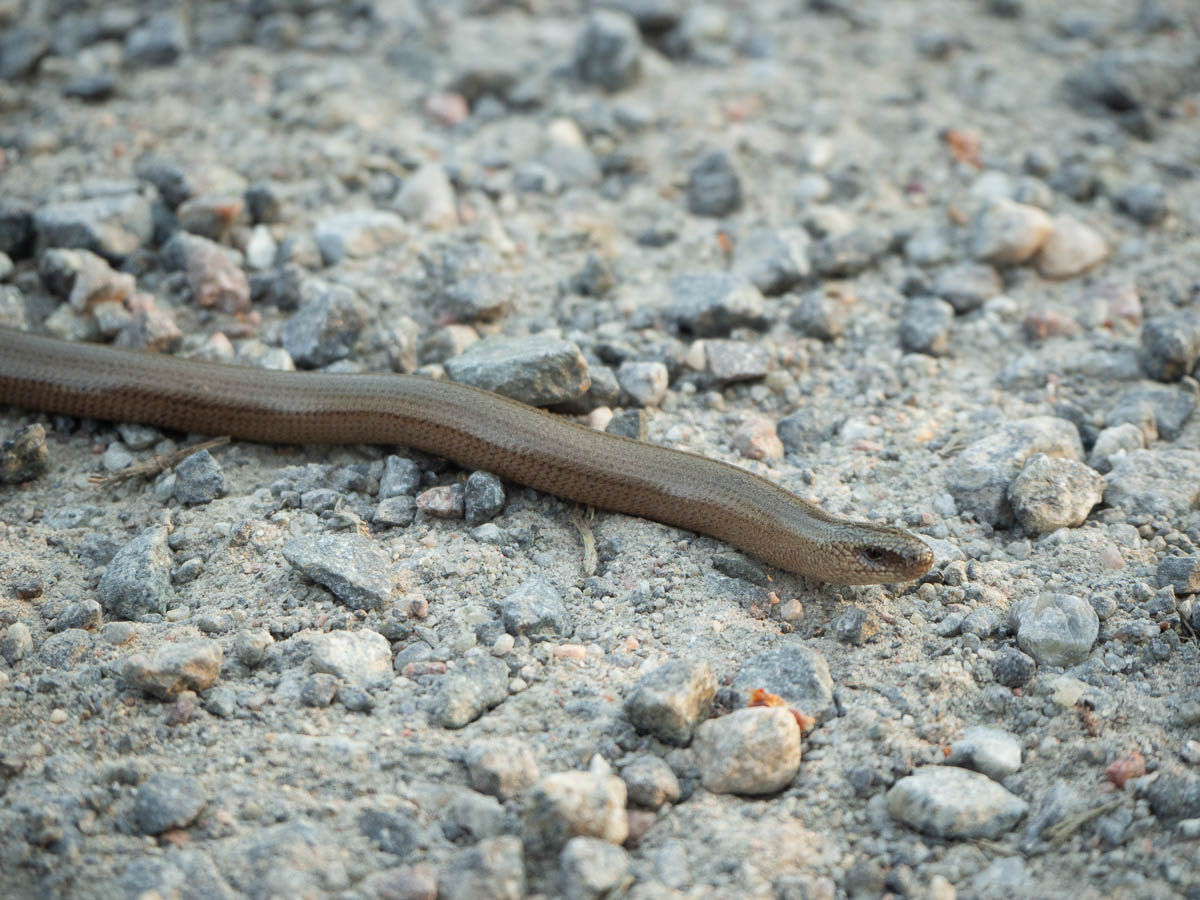
On our way out we spotted a sleepy slowworm on the gravel road. The first one I’ve seen in many years.

Back the way I came yesterday, from Henaredalen to Ånhammar, 13 km.

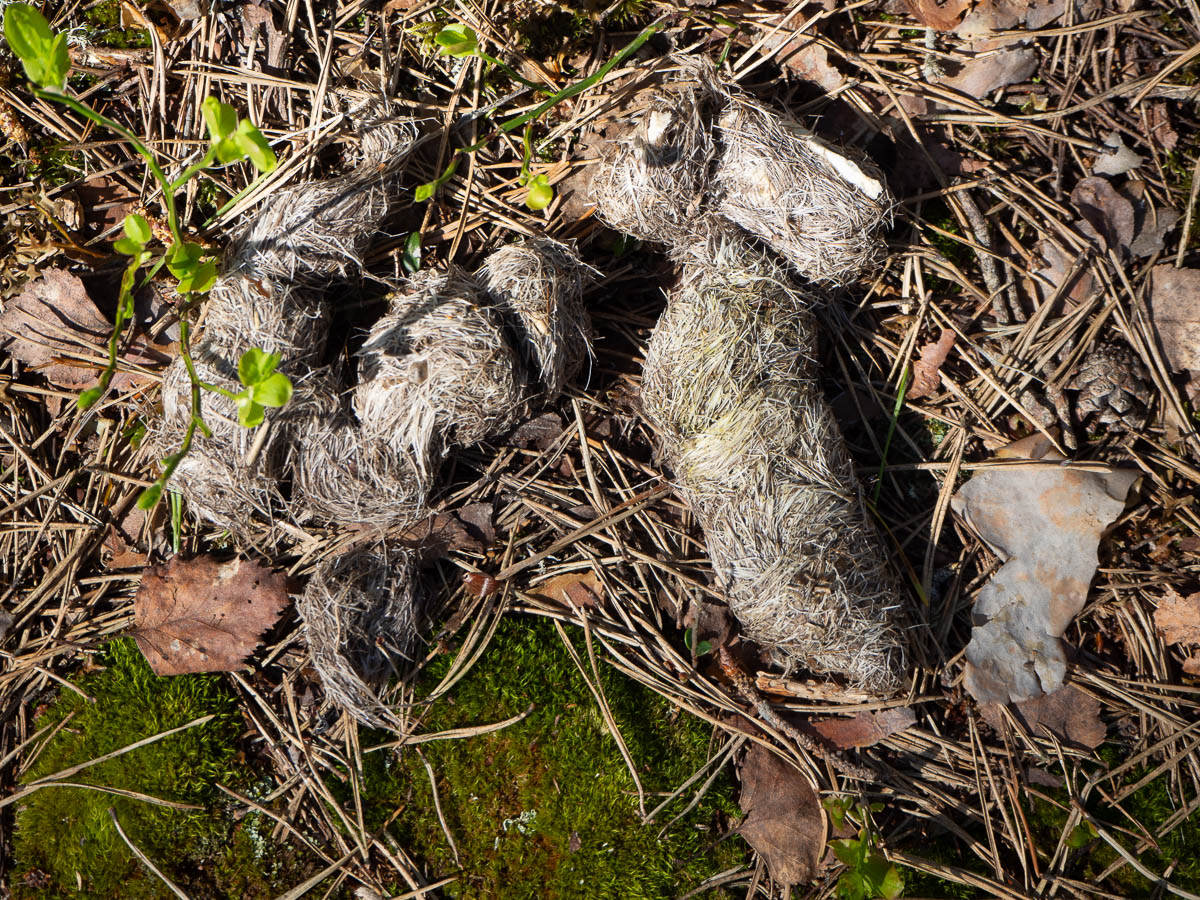
The paw print yesterday may have been wolf or dog, but the droppings I spotted are most definitely from a wolf, because they’re mostly made up of the hair of whatever animal the wolf ate.

I also met a hiker on the trail who was here specifically because he had seen a wolf here a year earlier and was hoping for a repeat. But I never saw anything more than the droppings.

Unsurprisingly today was similar to yesterday.

As a bonus I already knew the best spots for taking a break.

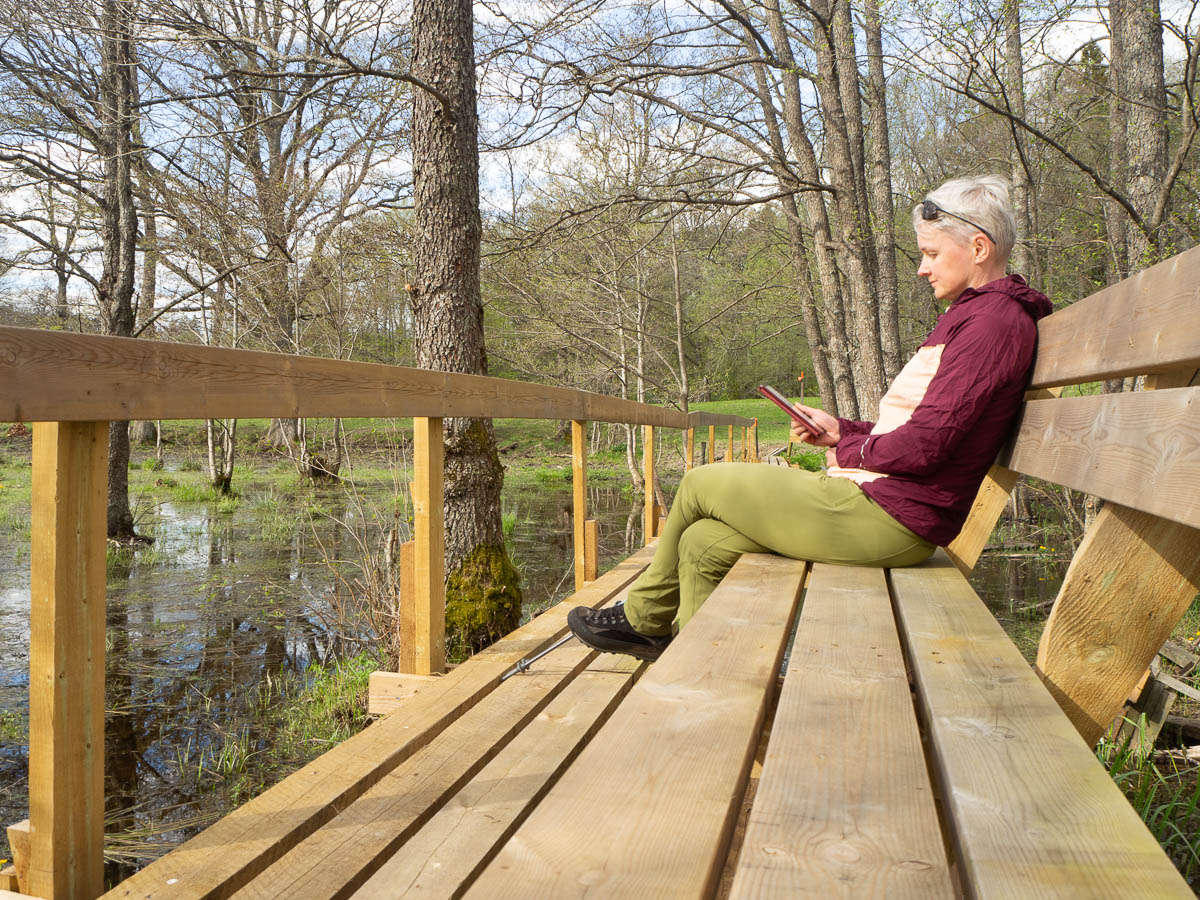
In no rush to get back early, I took a longer break towards the end of the trail, on what I guessed was a bird-watching bench next to a large lake, where I had the company of geese and ducks and herons.


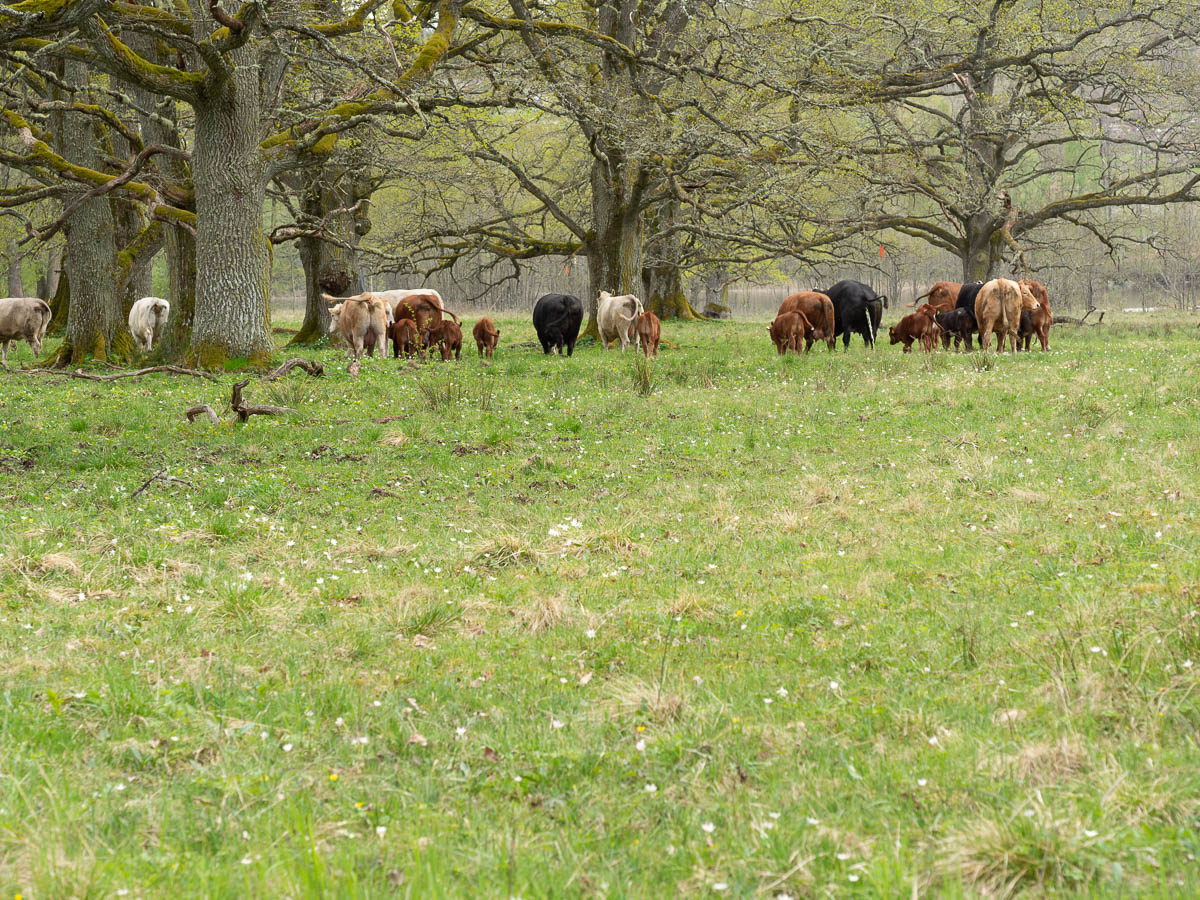
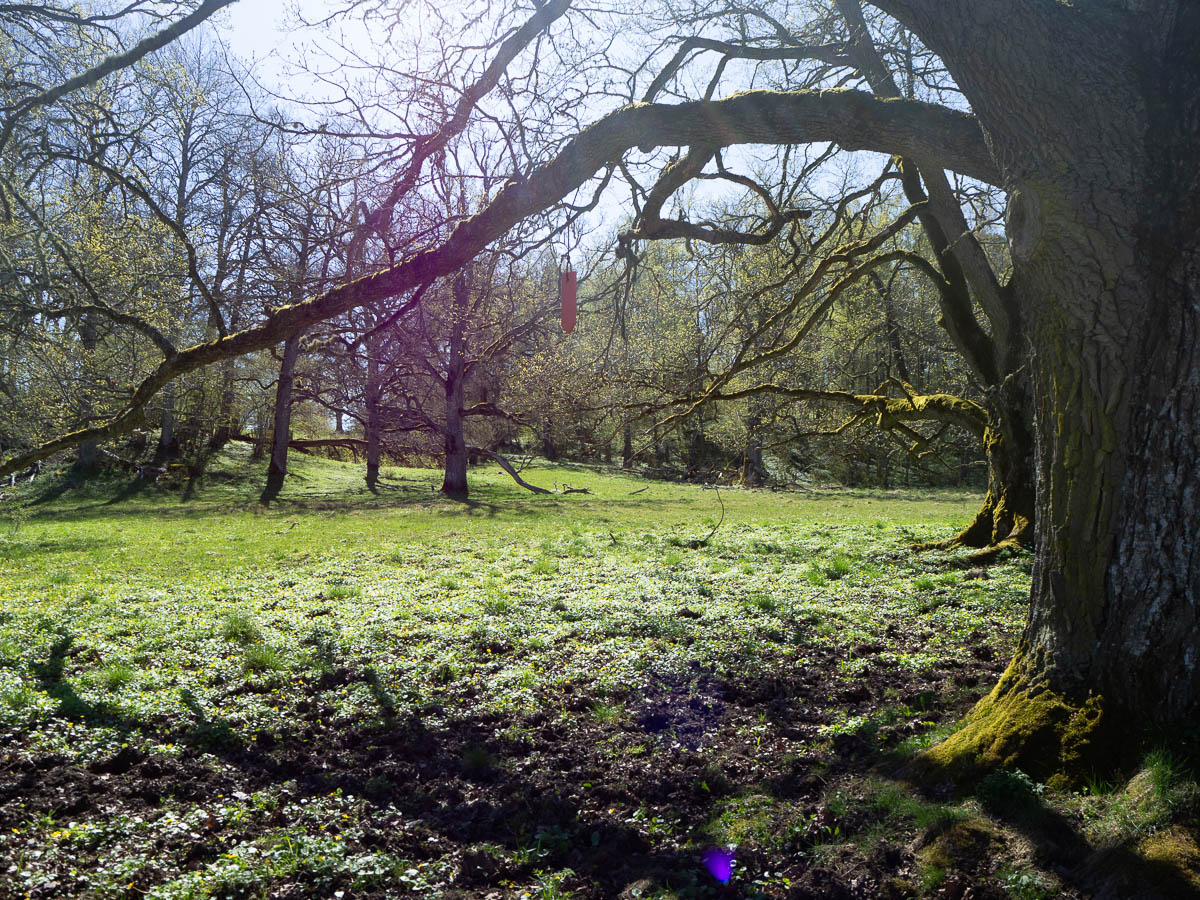
The cows in the oak pasture were at the near end of the pasture today, and seemed quite curious about me. I didn’t mind the curious cows or the calves, but they were accompanied by one or two bulls of impressive size, and I felt rather more cautious about them, so I hightailed it out of there.


Sörmlandsleden stage 19 + a little bit of stage 20, 14.5 km. From Ånhammar to Henaredalen in the middle of nowhere.

Stage 19 on its own is officially 12 km, which is a bit too short to make a full day, but also a bit too much for a there-and-back in a single day. Rather than pressing myself, I’m doing it over two days, and I added on an extra ramble around Henaredalen for this afternoon.

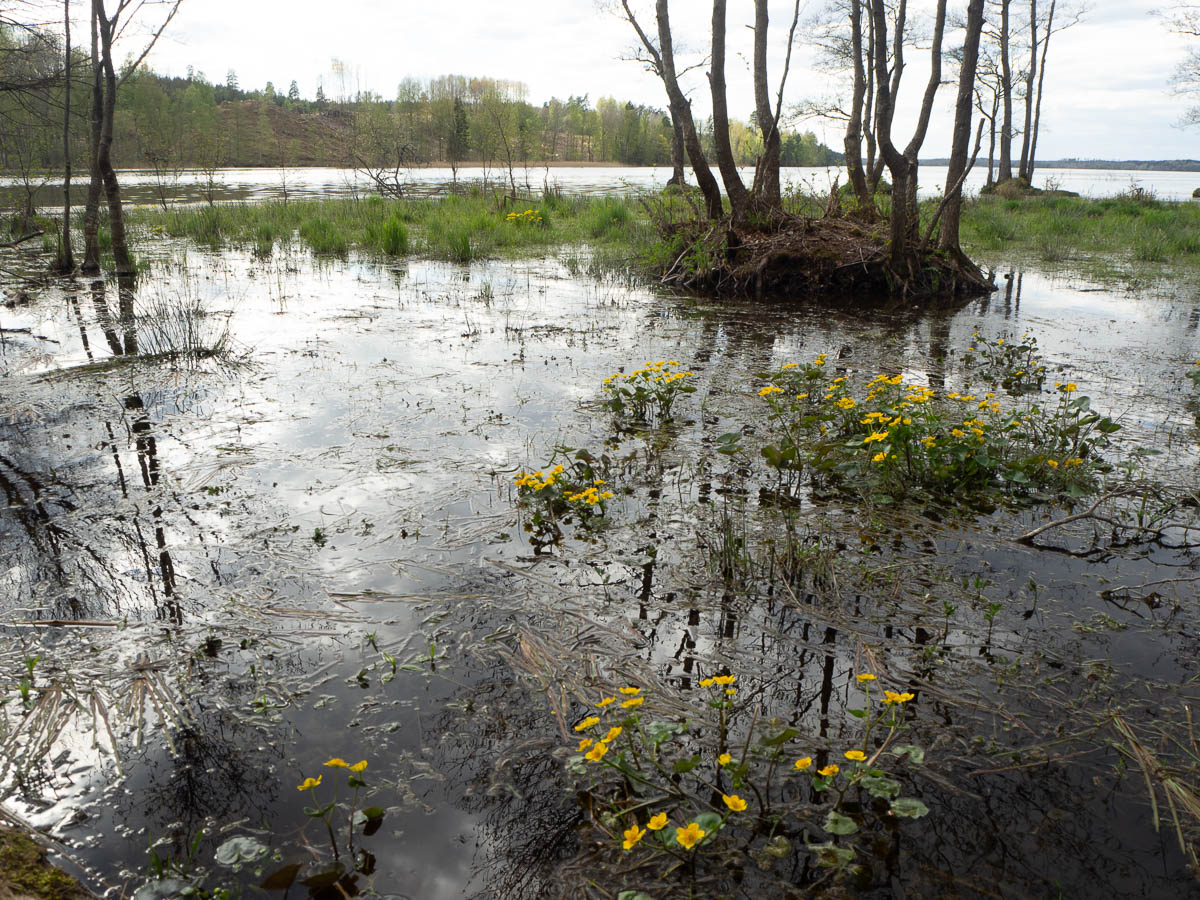
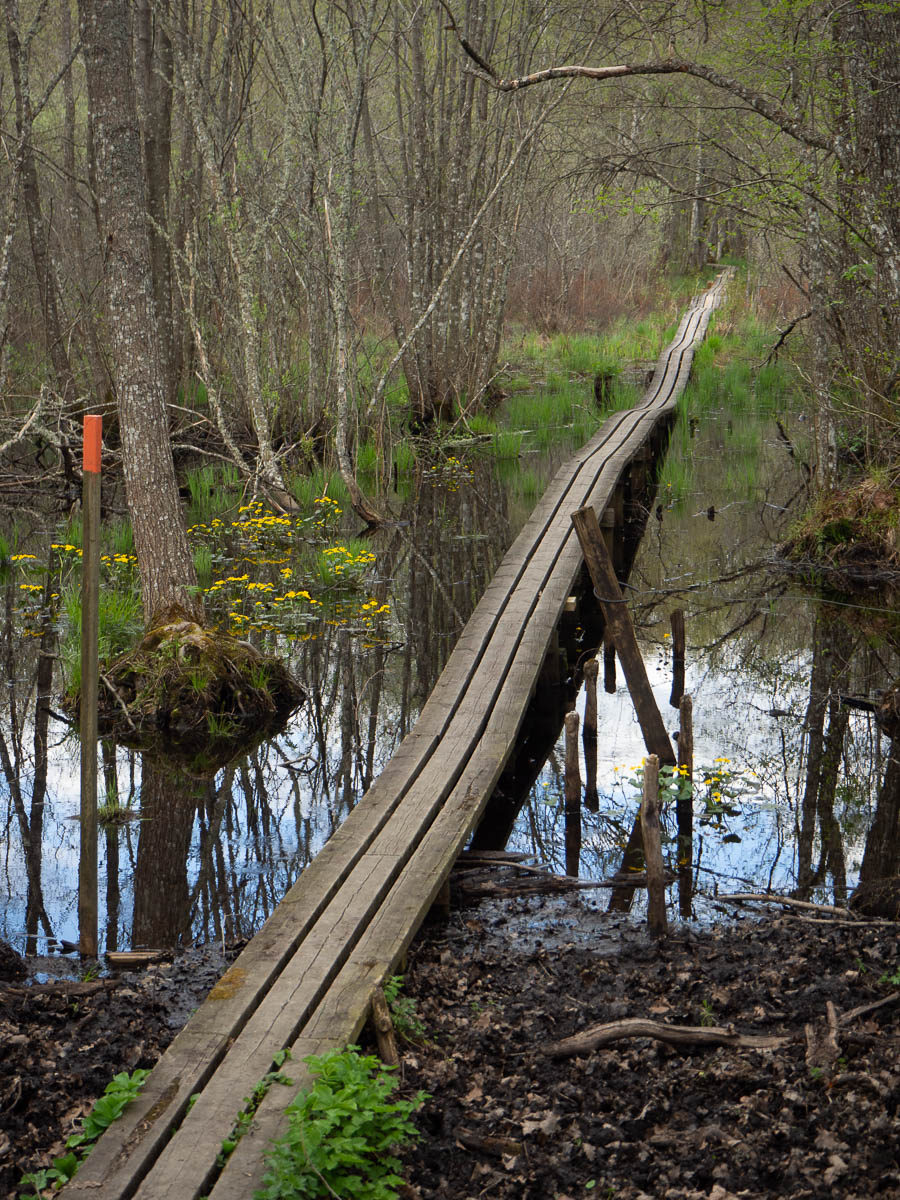
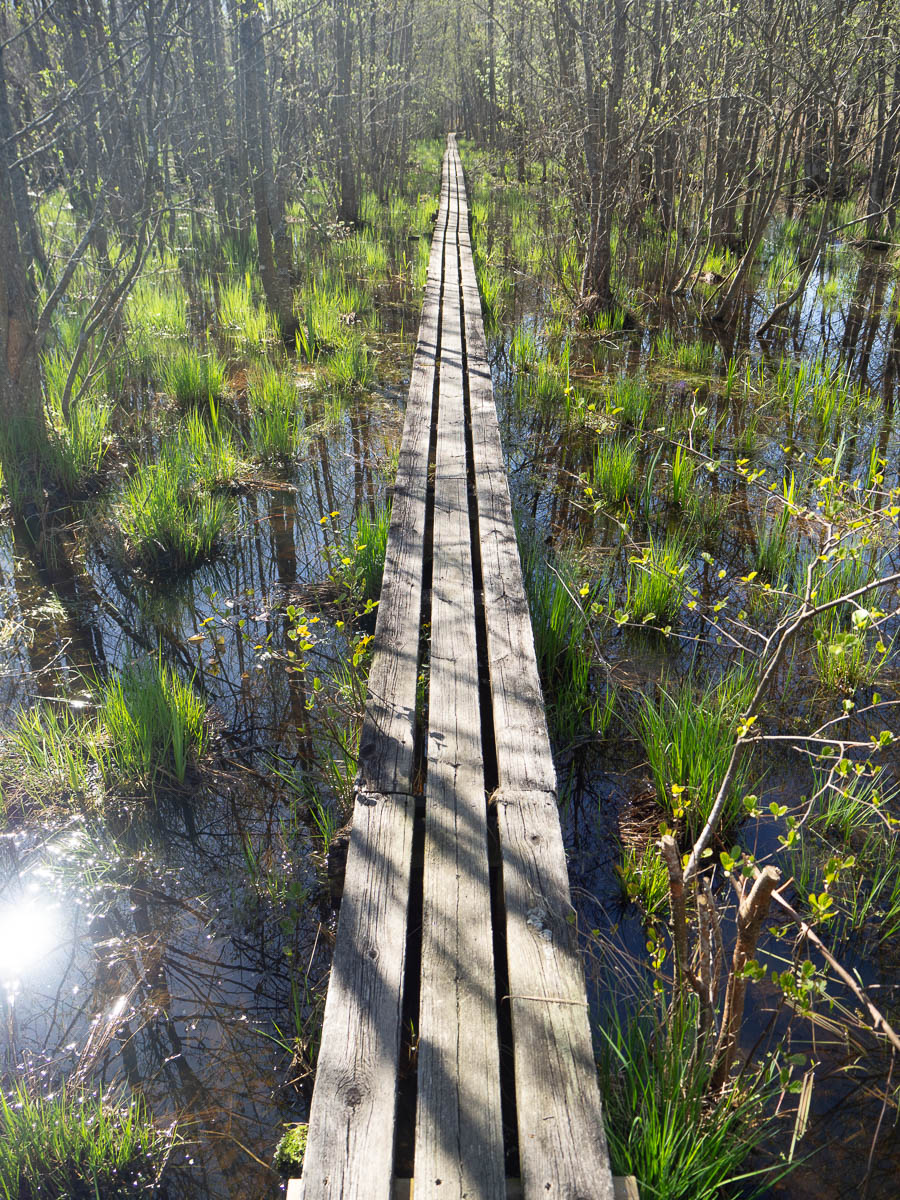
This was a beautiful and varied hike, going a flowering lakeside marsh…

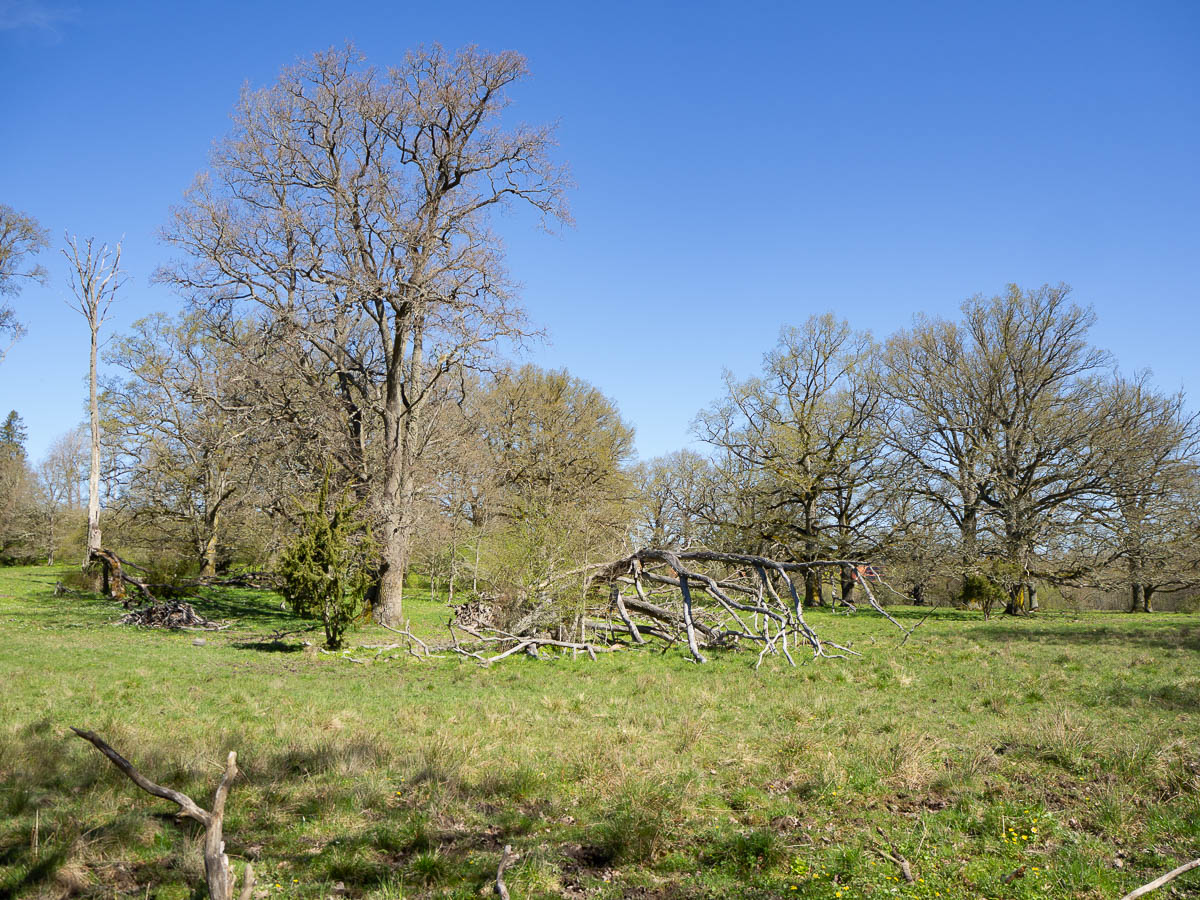
… through oak pastures…

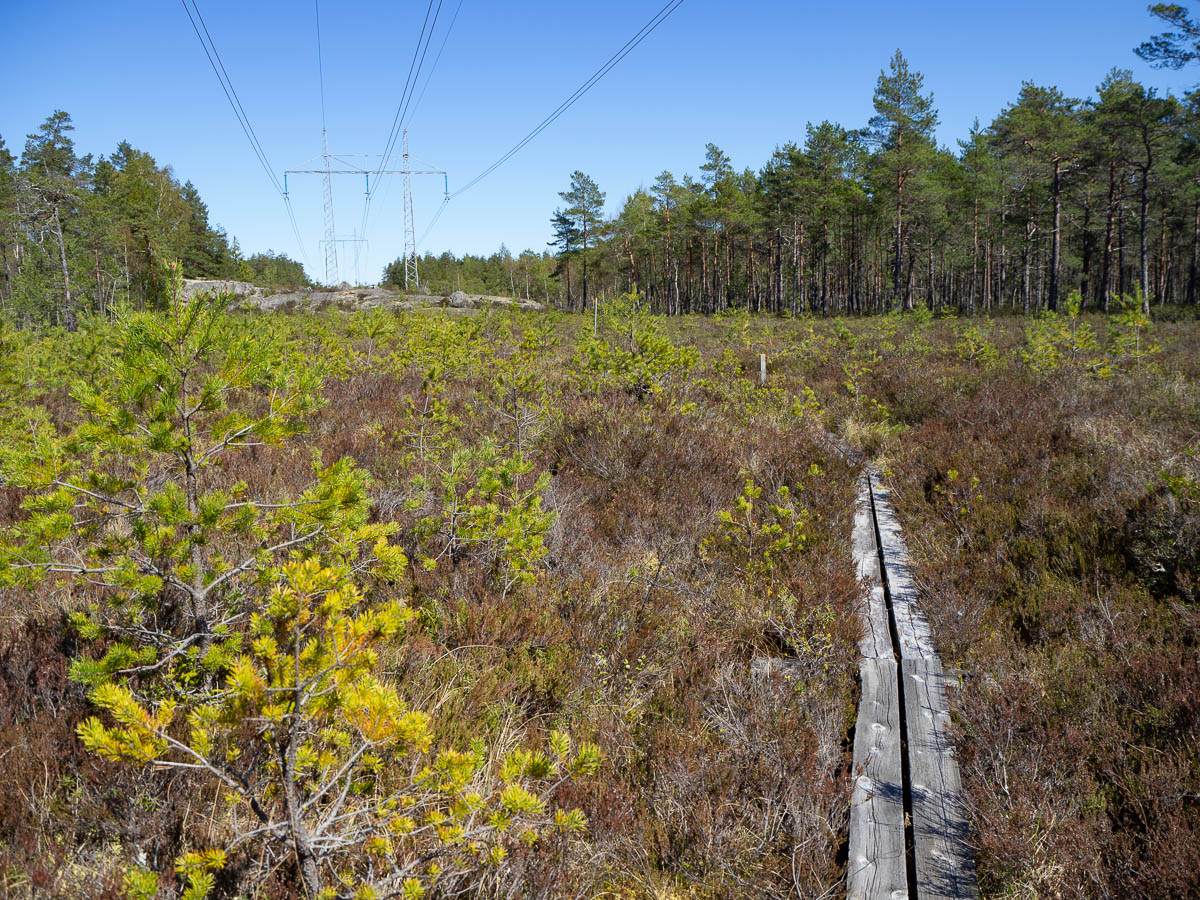
… and heathery bogs…

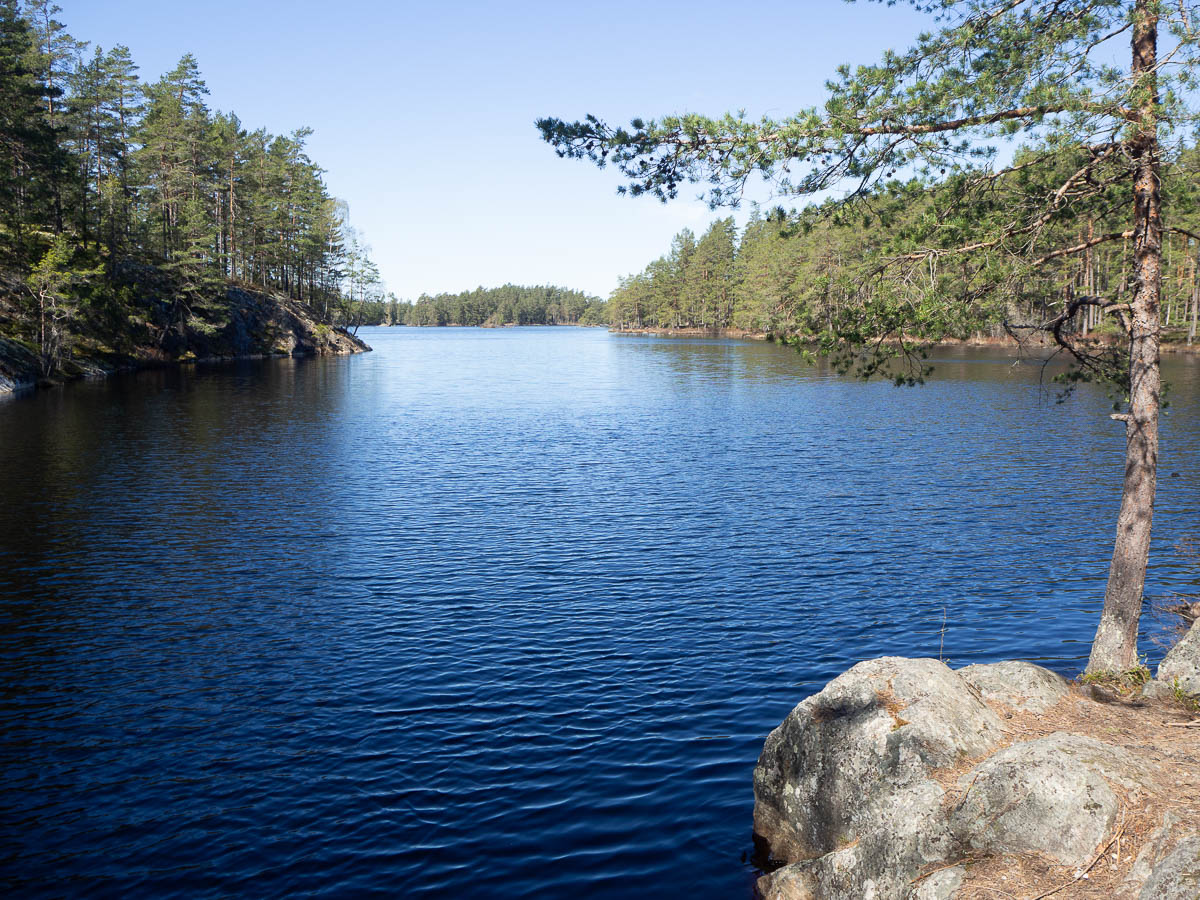
… to rocky pine forests dotted with little rocky lakes.

I’m glad I didn’t try to do the 12 + 12 km in a single day because this was not the easiest stage to walk. It wasn’t so much the ups and downs that made it hard, but the uneven path. Rocks and roots everywhere, and muddy patches.

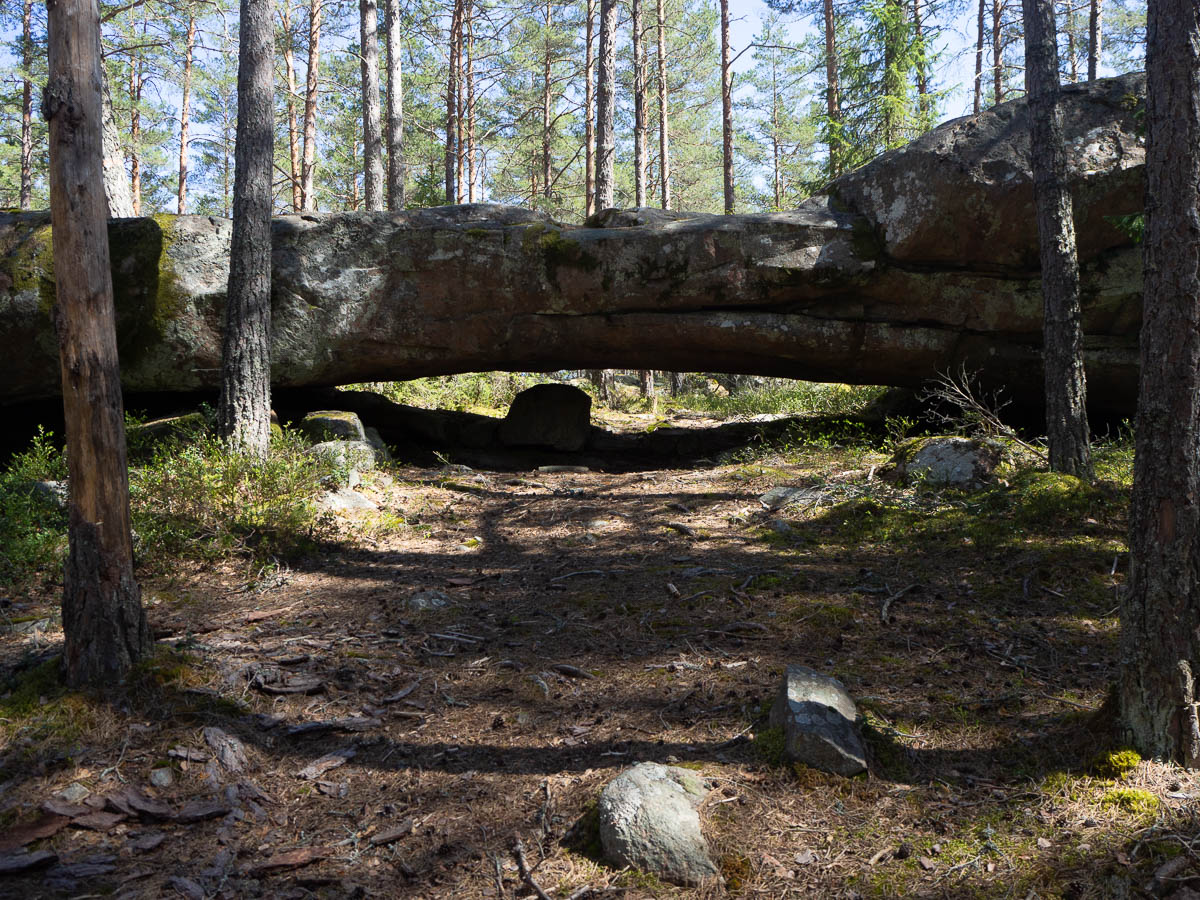
In the middle there was a ten-metre natural arch, all one unbroken piece of rock.

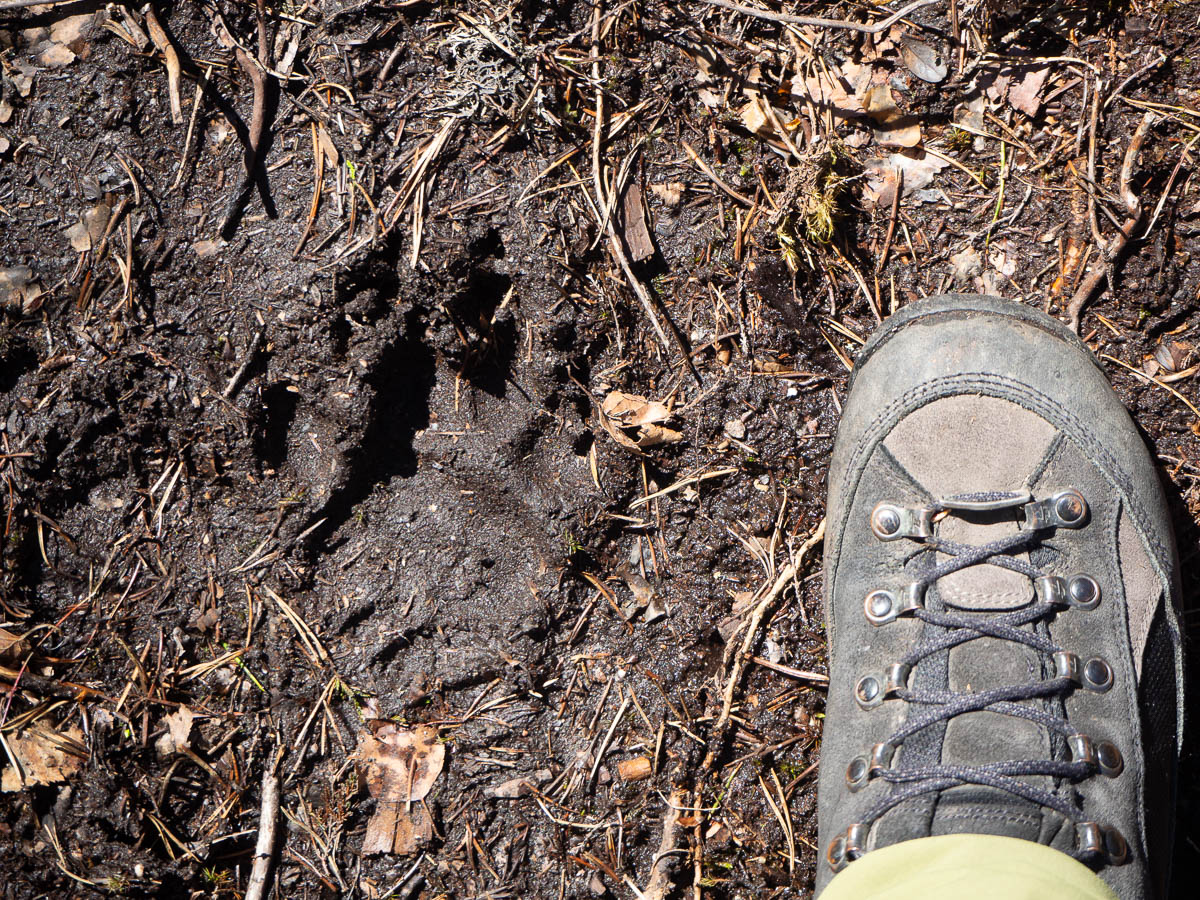
Another interesting sight was a very large paw print in the mud. Either a really large dog that somehow avoided all the other muddy spots on the path, or an actual wolf. I’ve heard from other hikers that there are several established wolf territories in this part of Sörmland, so that’s not entirely far-fetched.

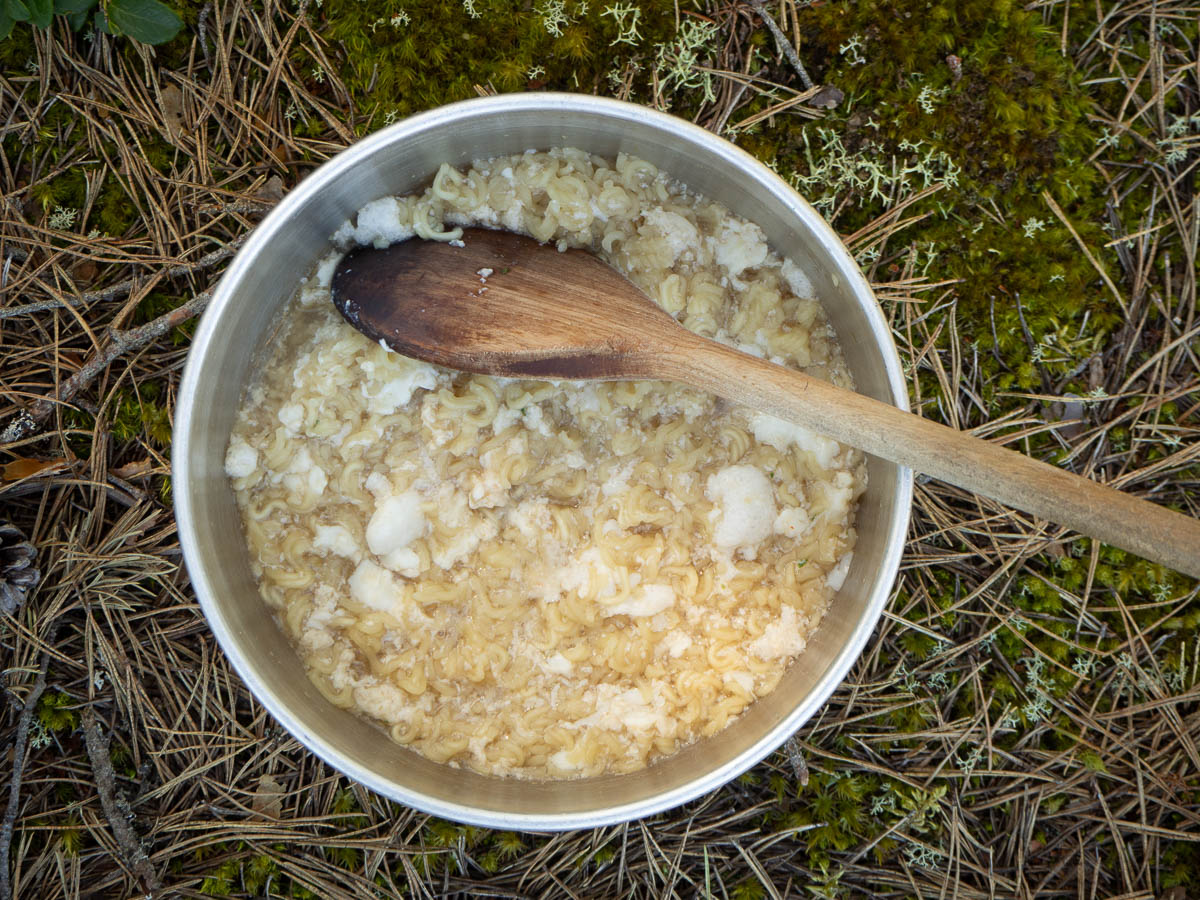
In other news, it turns out that walking around with egg whites in your rucksack will slowly whisk those egg whites into a soft foamy fluff. And if you then dump those egg whites into your hot instant noodles, they solidify into little foamy islands, sort of like sugarless îles flottantes.

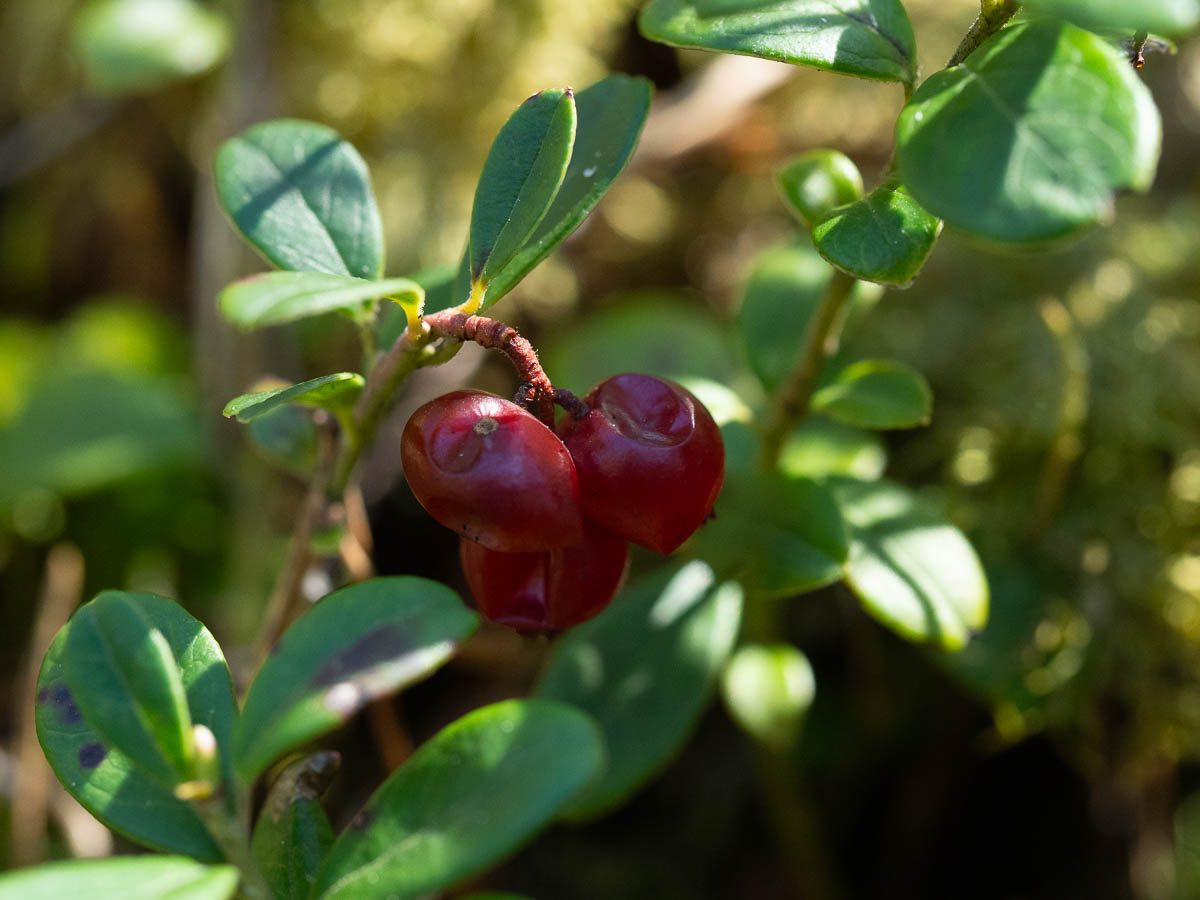
Speaking of food, I wasn’t expecting to find anything edible in the forest at this time of the year, but I was wrong – some of last year’s lingonberries were still there and waiting to be eaten. Frozen and then thawed, and partially sun-dried, they were wrinkly but juicy, tart and sweet. Few and far between, and hard to spot, not like fresh ones where you can stop anywhere and eat your fill.

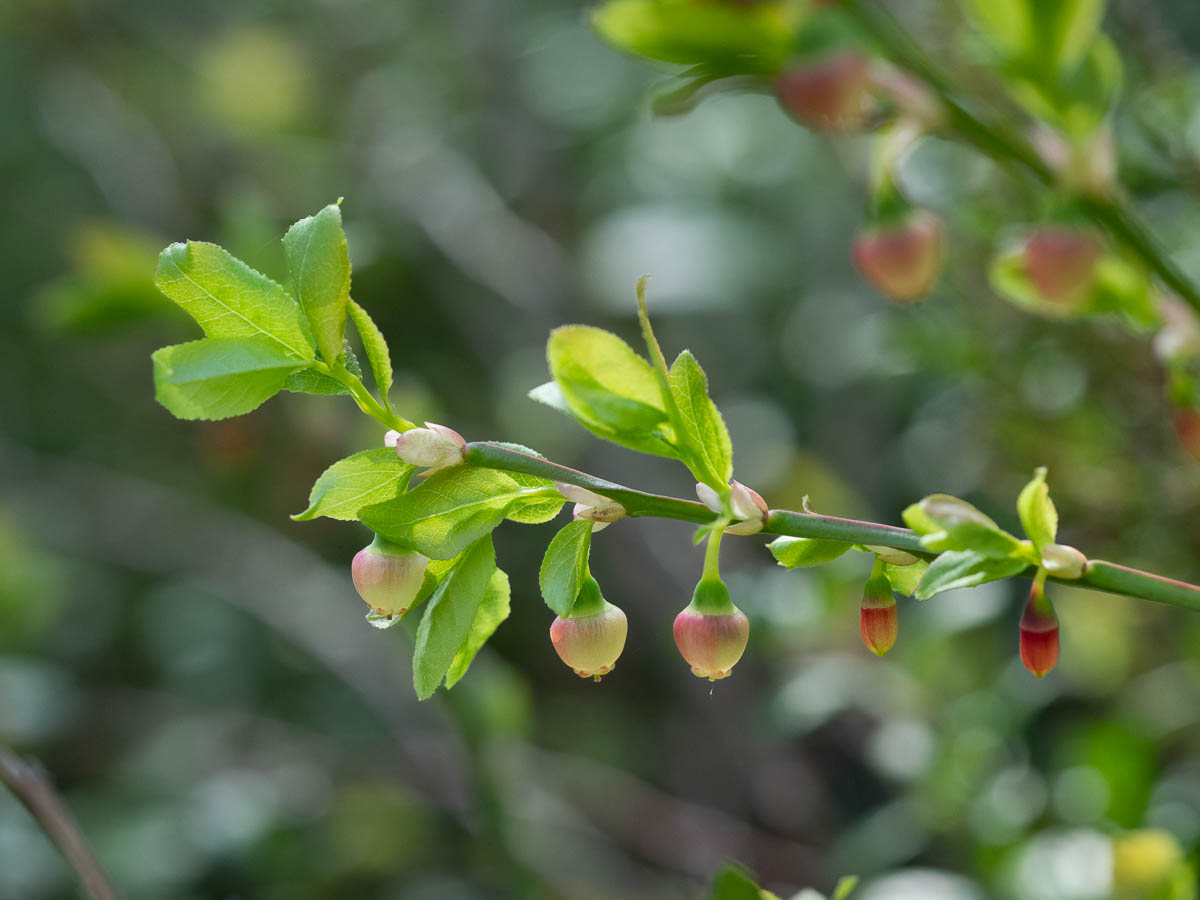
The forest was full of bilberry and lingonberry bushes, so later in the season there will be lots to eat here. Right now the bilberries taunted me with their berry-like flowers.

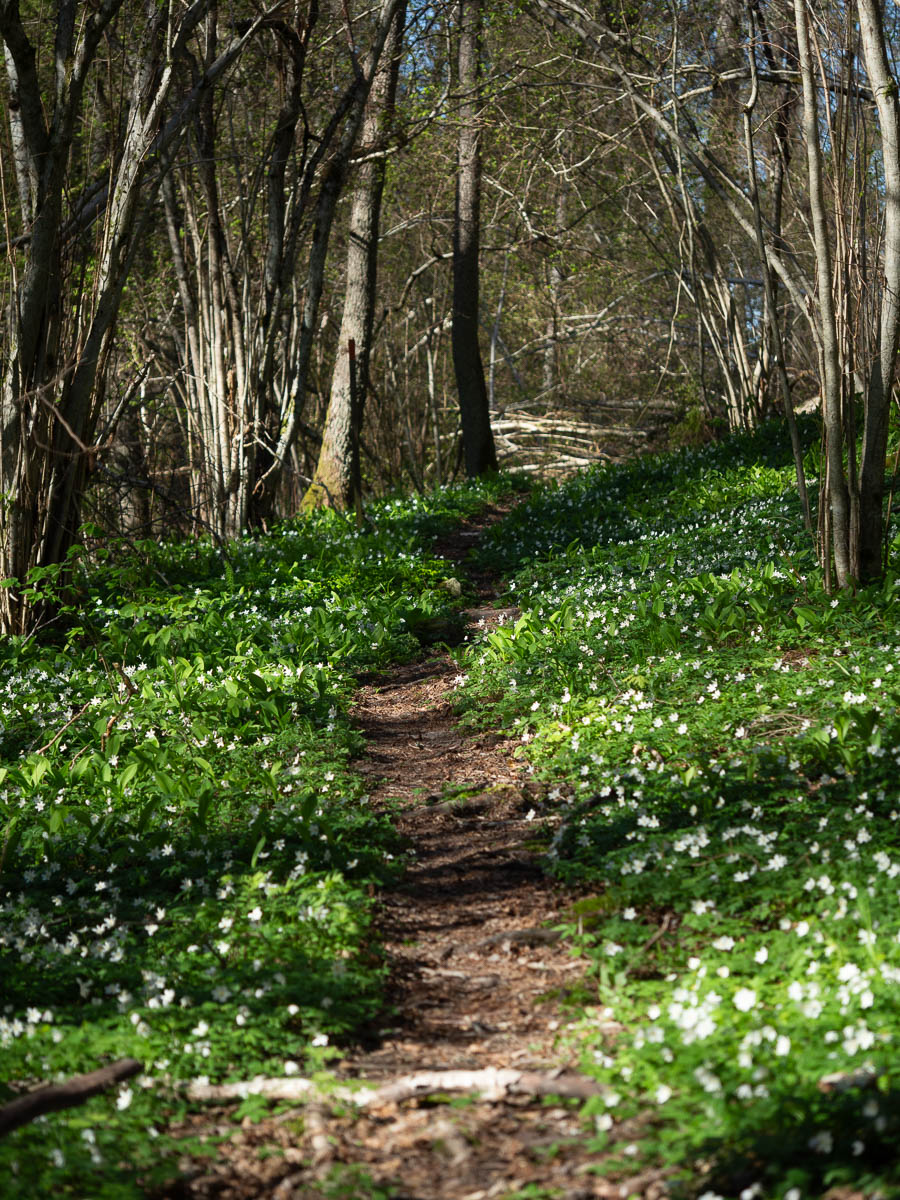
Henaredalen is a river valley that I walked in 2018 and wasn’t too impressed by. That was also in May, but this year, spring has come a lot further and the valley is more full of flowers. Much of the ground was covered by wood anemones.

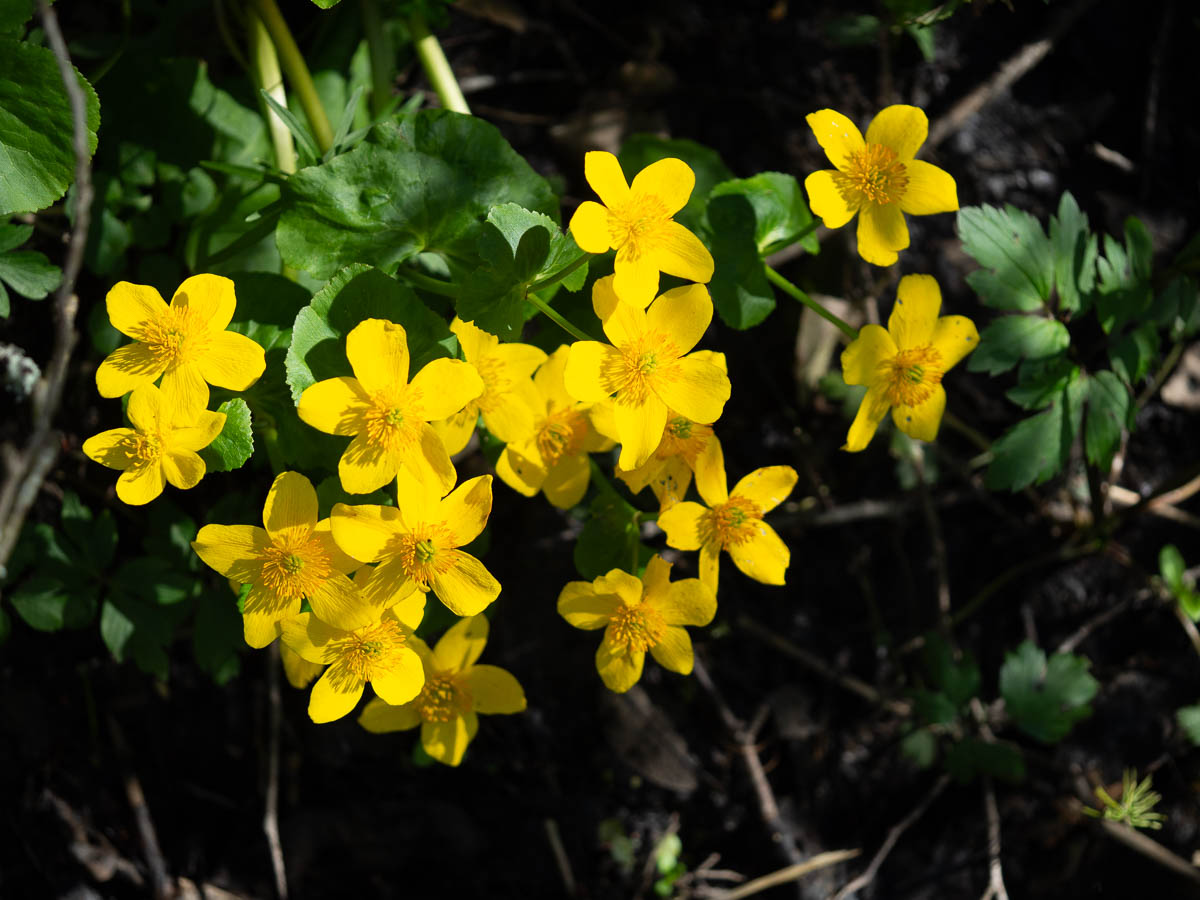
In between there were marsh marigolds…

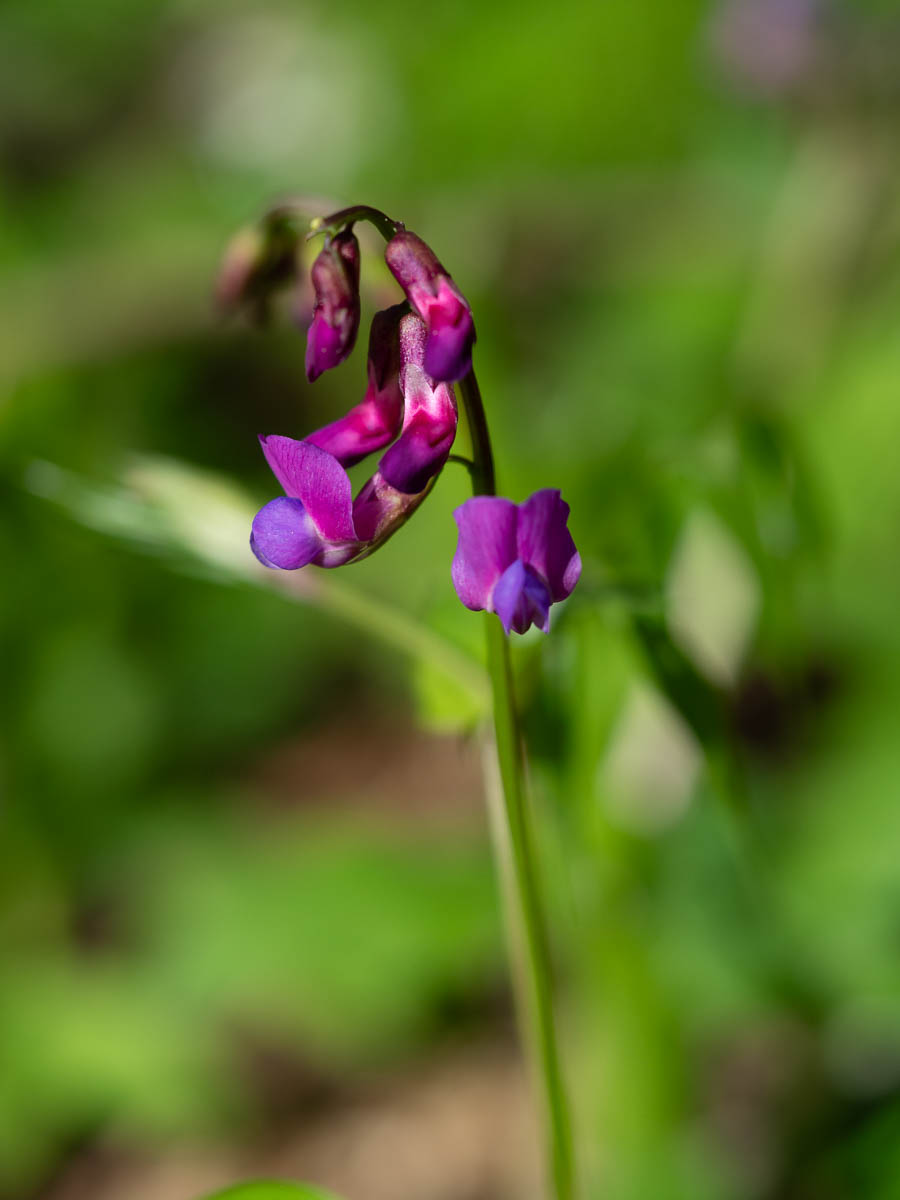
… and a pretty purplish-red flower that I later identified as some kind of Lathyrus (possibly gökärt, seahernes).

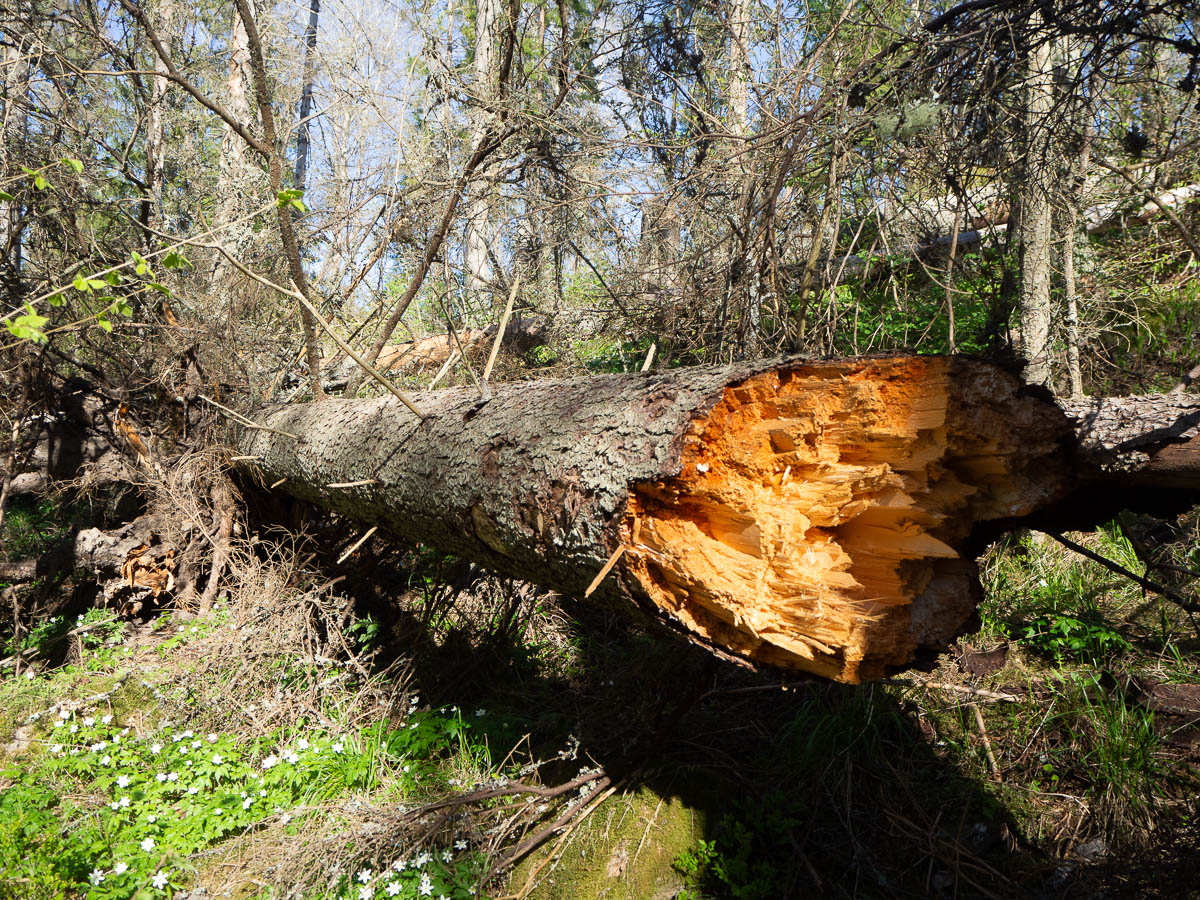
One big change from my last visit was the large number of fallen spruces. There was a sign explaining that the area is badly affected by the spruce bark beetle, and there’s a risk of spruces falling without warning. It looked to be at least a year old, and clearly plenty of trees had toppled since then.

Of wildlife, apart from the possible wolf print: butterflies of all sizes and colours. Birds, especially geese in that marshy lake, blackbirds in the deciduous forests and cuckoos in the pine forests.

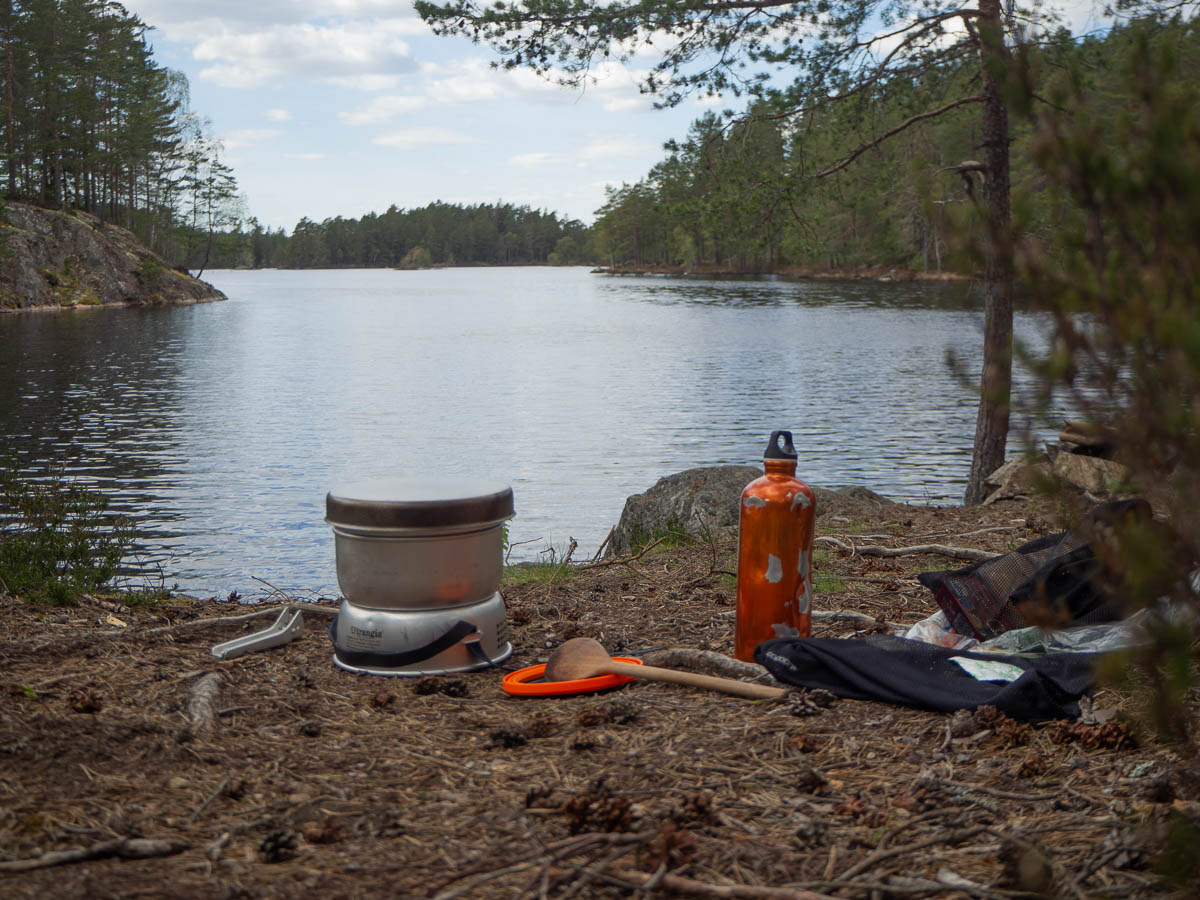
Of other hikers, very few. For a while it looked like I would get the camping site all to myself, but just as I was making dinner, a couple turned up. We talked about other hiking trails in this general part of Sweden, and about the tricky logistics of hiking these hard-to-reach parts of Sörmlandsleden. They did it with a car + bicycle combo.


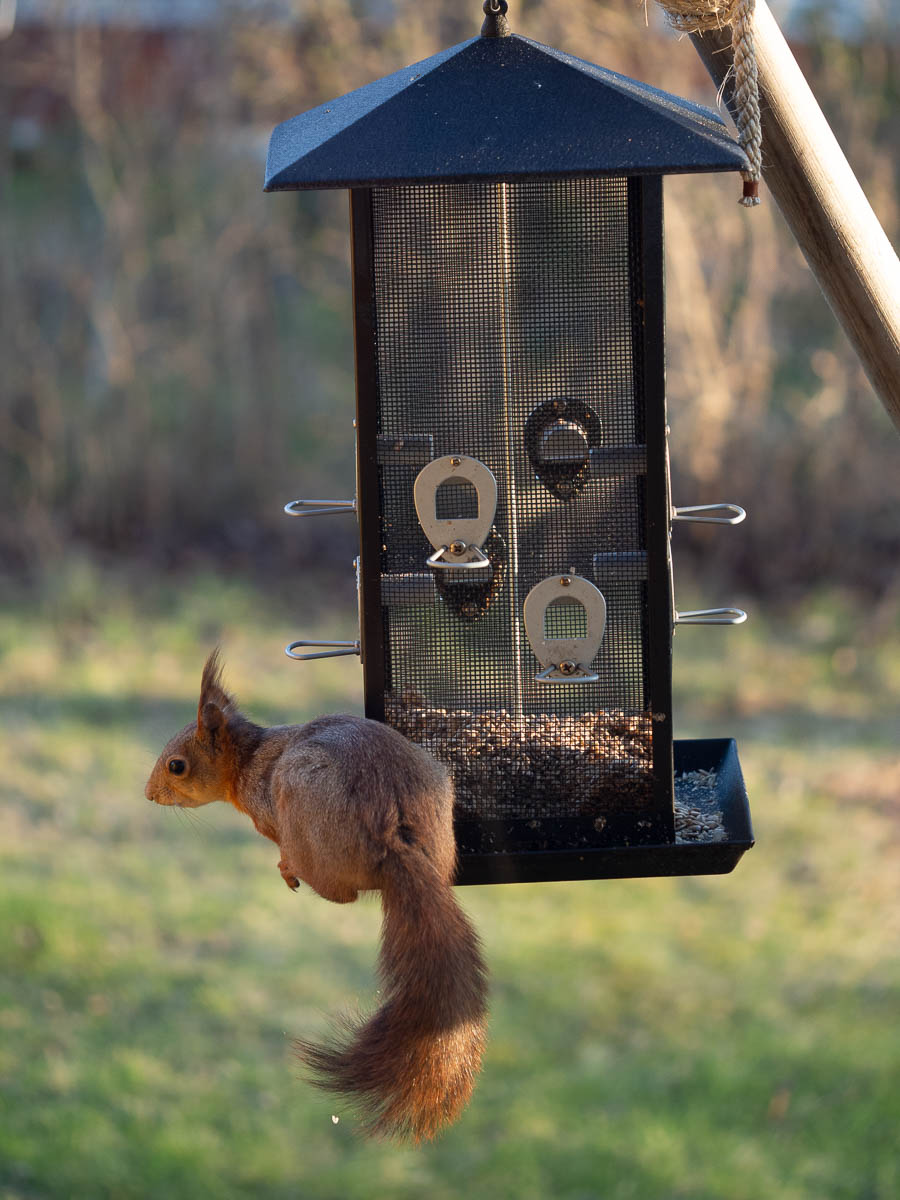
The bird feeder is still up. It’s still cold outside and insect life is not exactly teeming, so birds are still coming by. And occasionally, a squirrel.

Someone killed a rat and got interrupted before eating it. Or perhaps they only wanted the best bits, that is, its heart and lungs? In any case, they left the rest of it in our garden.

I’m sure it won’t be here for long.

Click to view the dead rat.