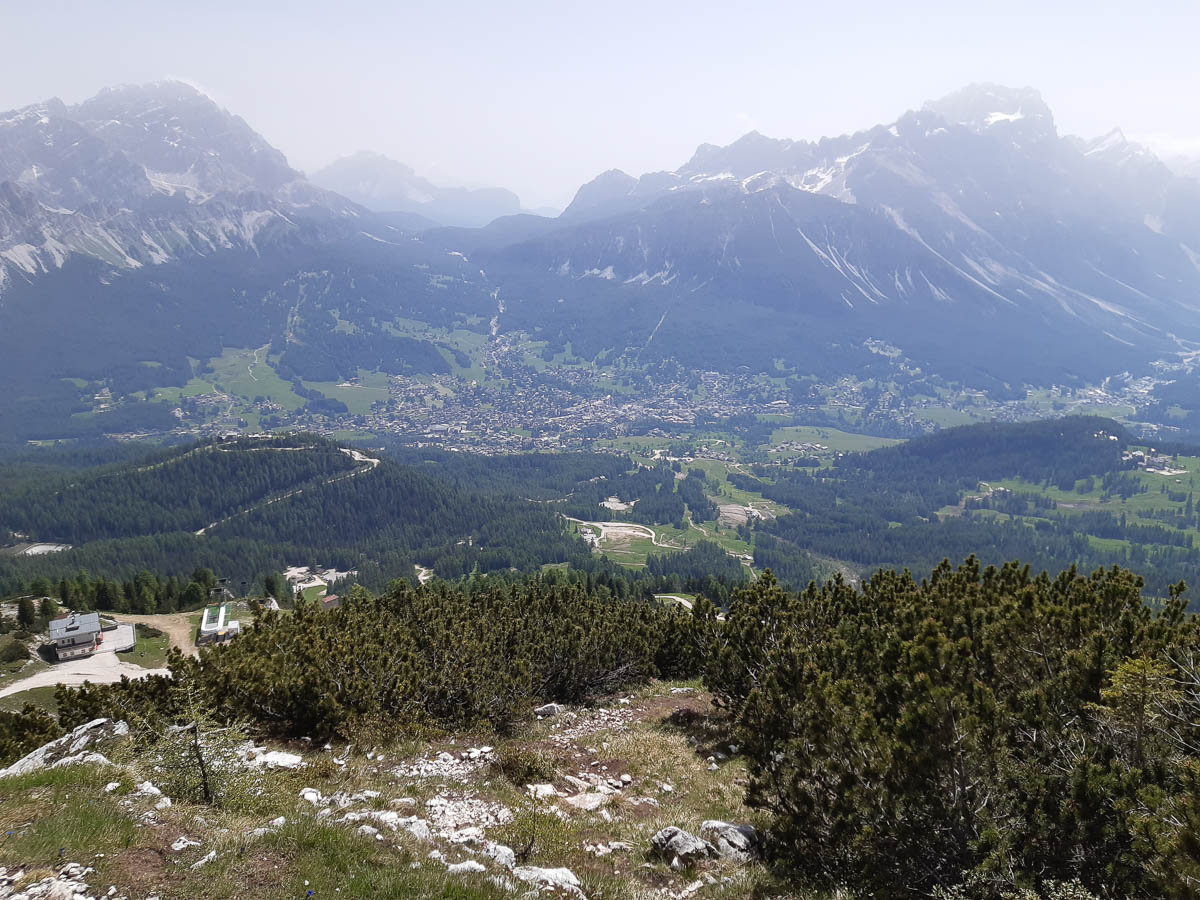
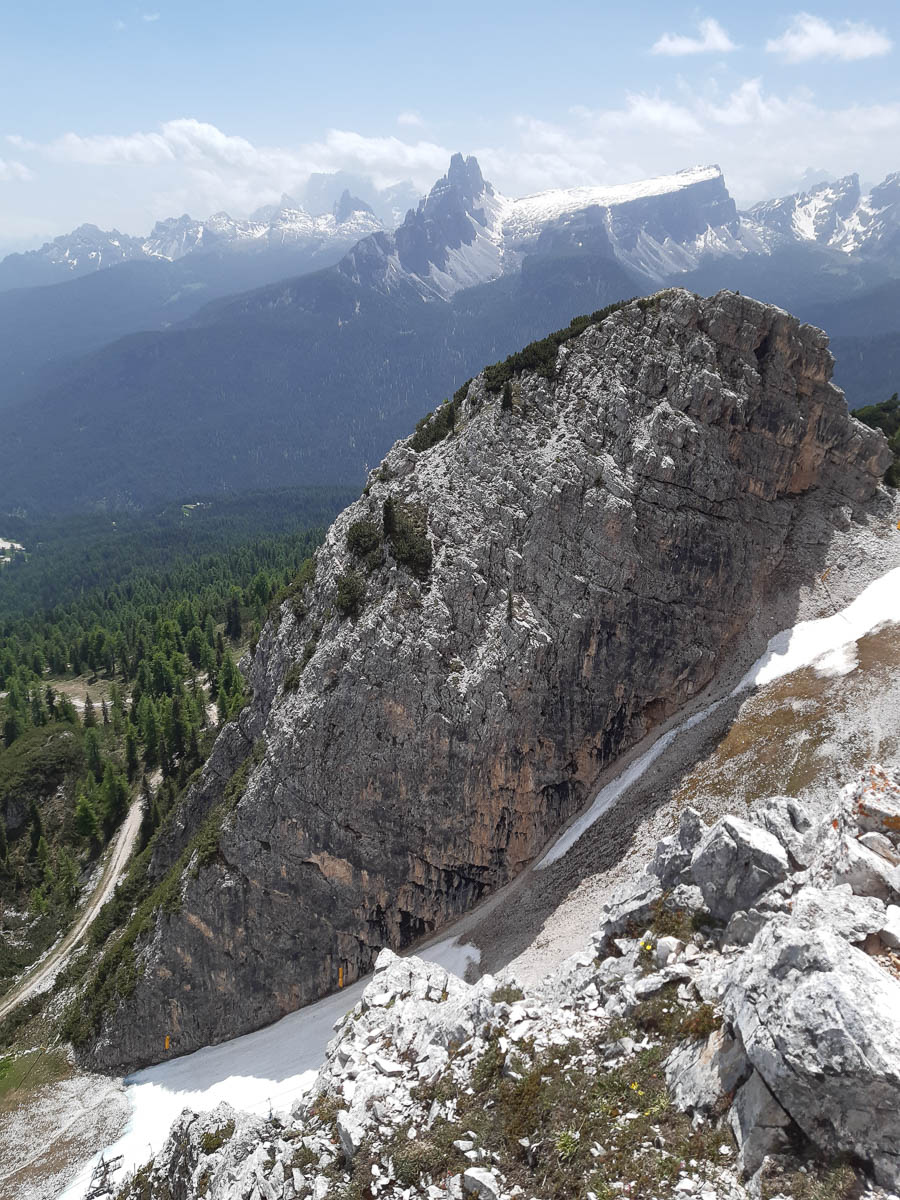
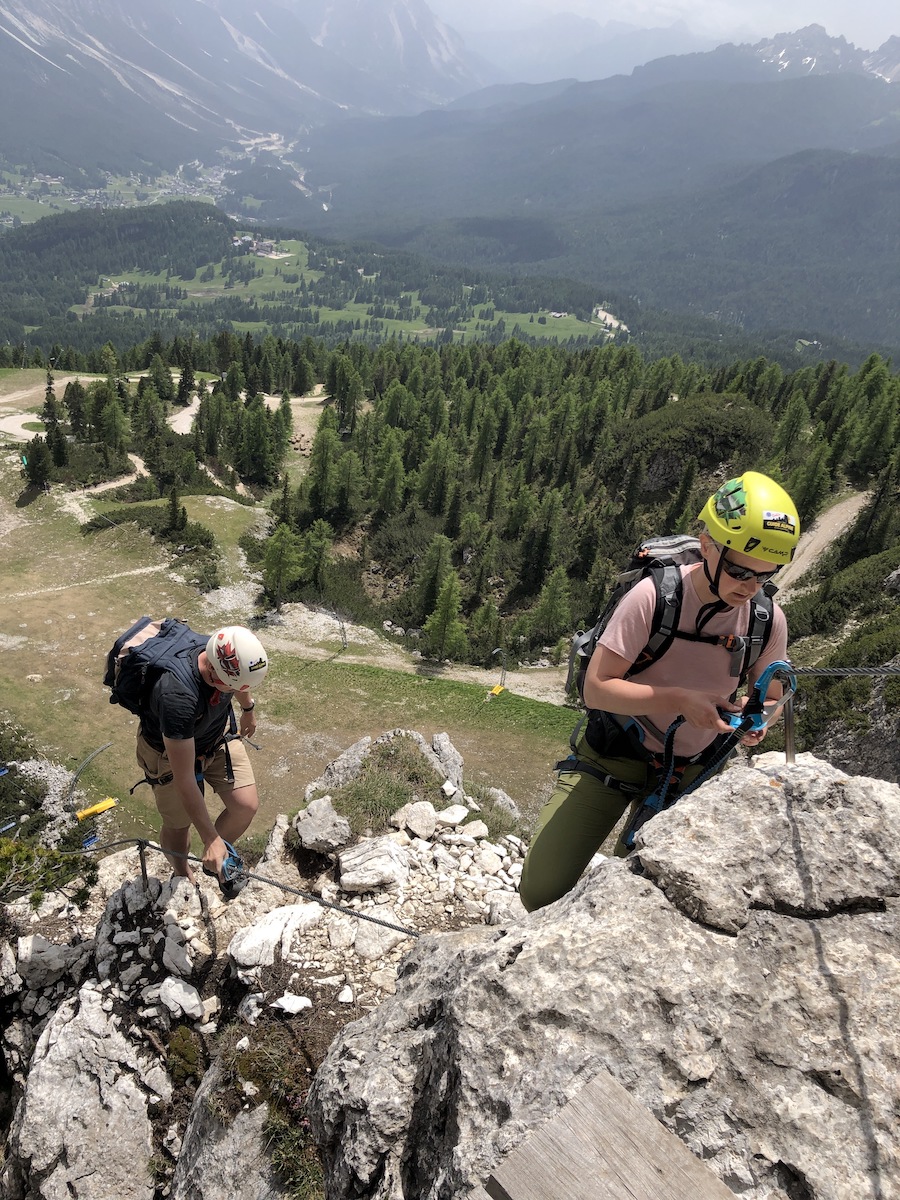
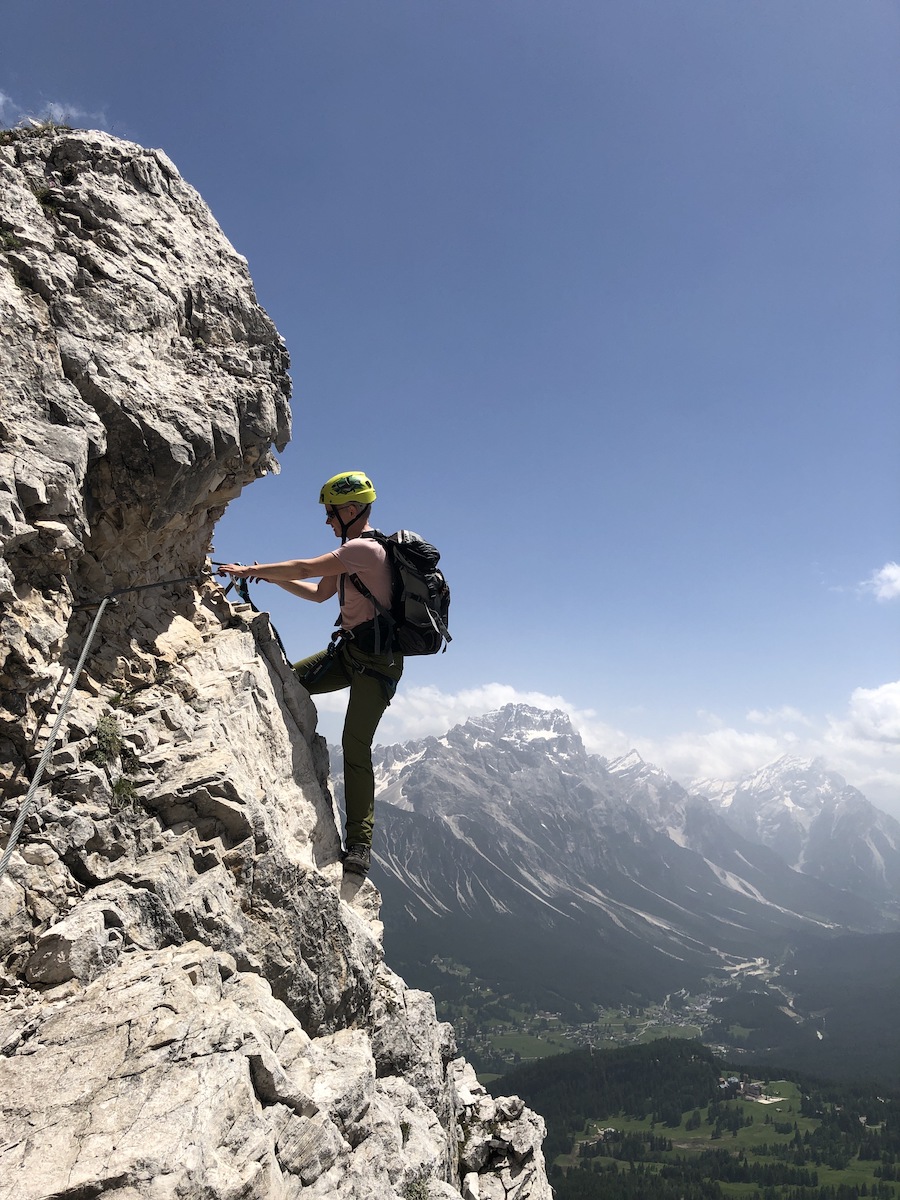
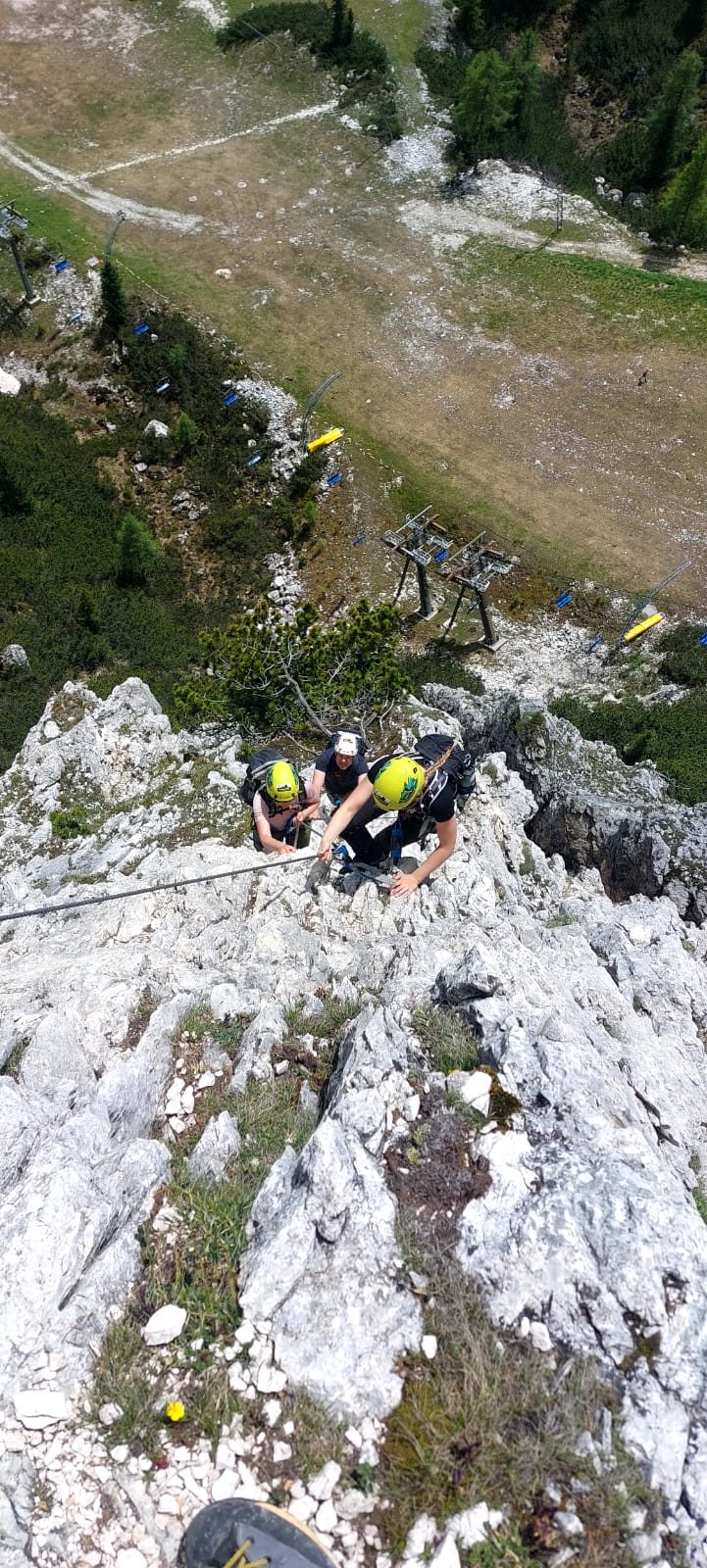
This morning we left Venice and Mestre behind and drove to Cortina d’Ampezzo.

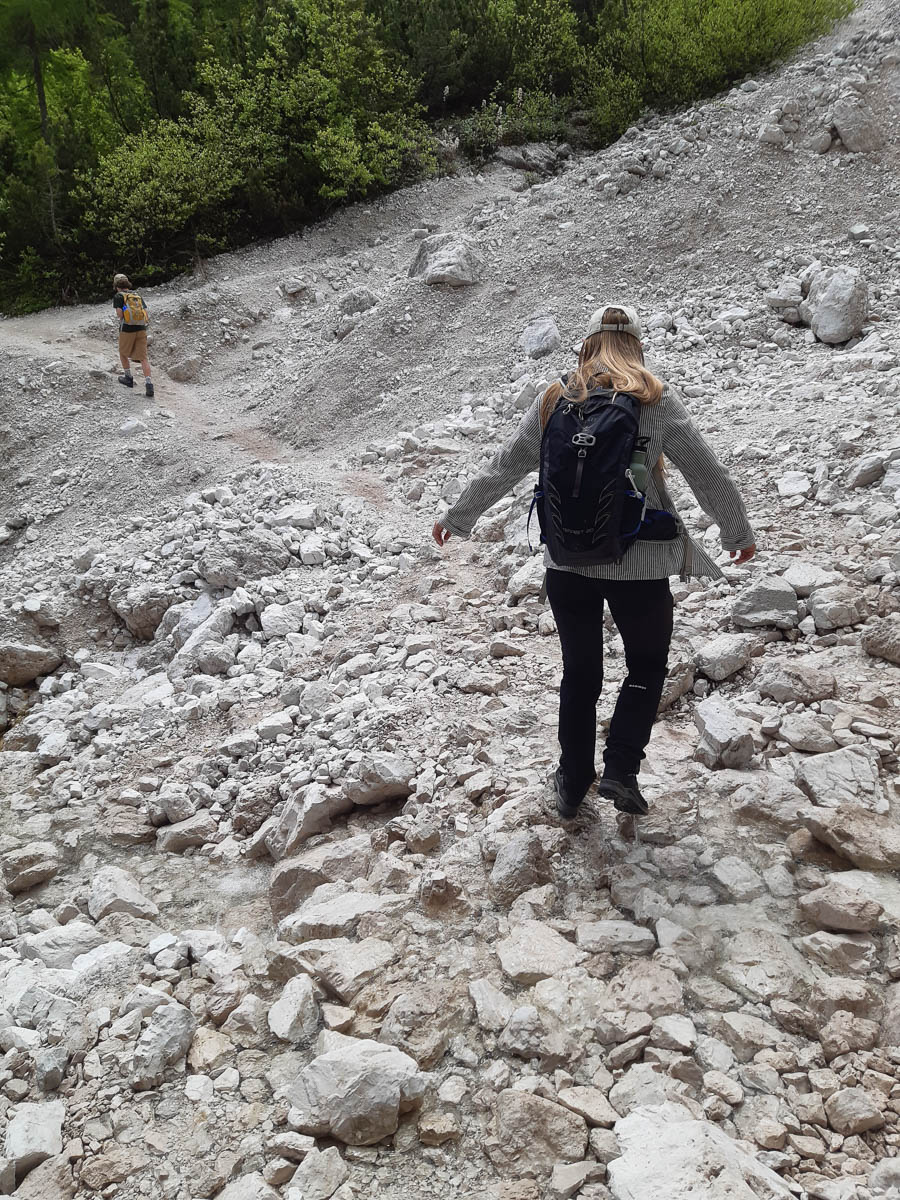
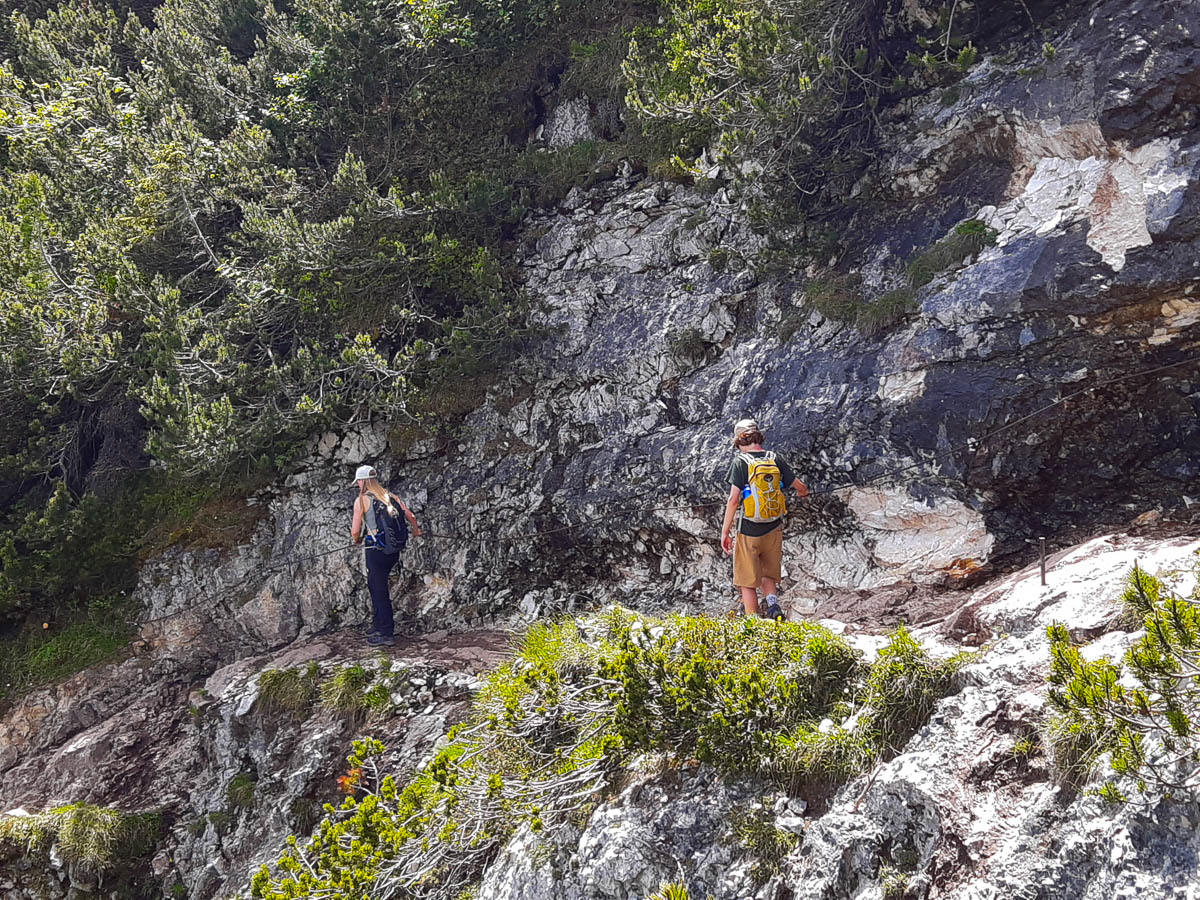
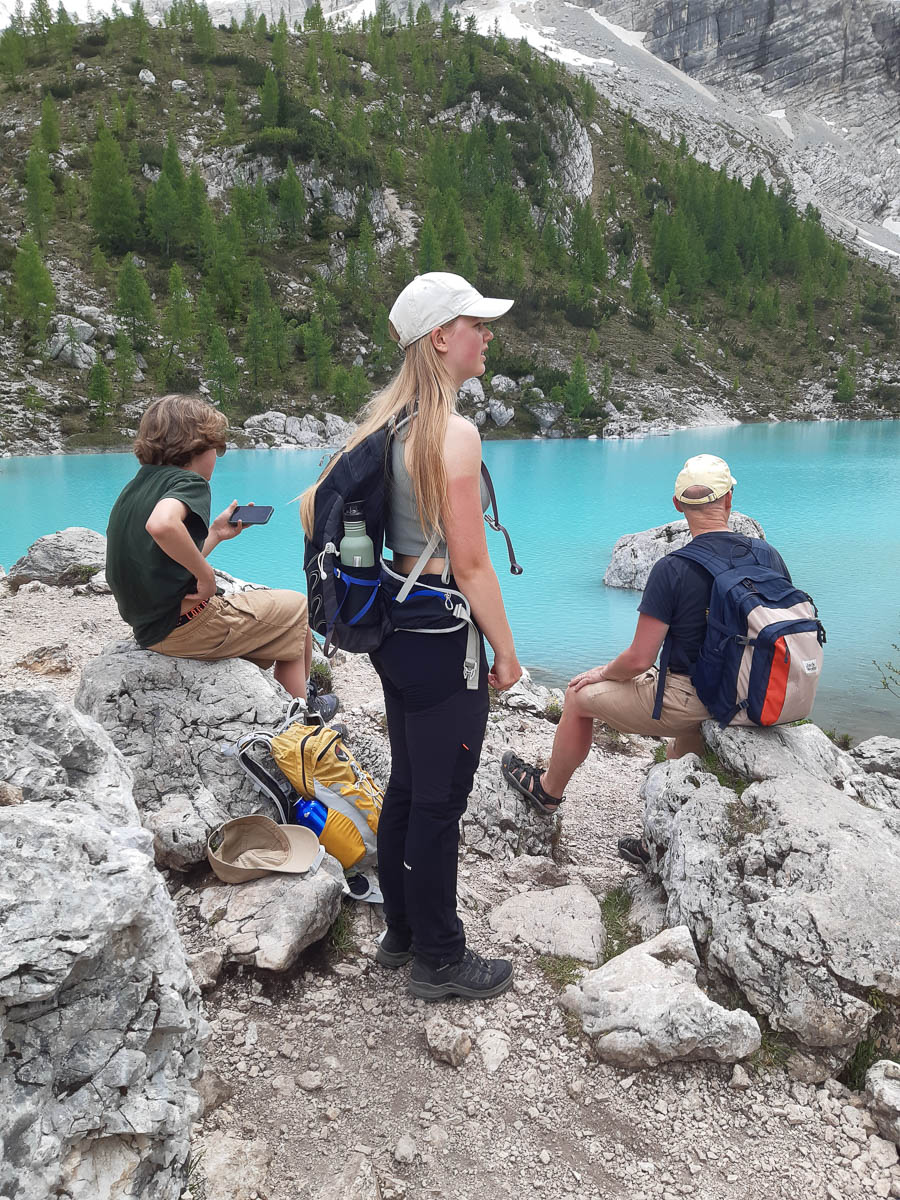
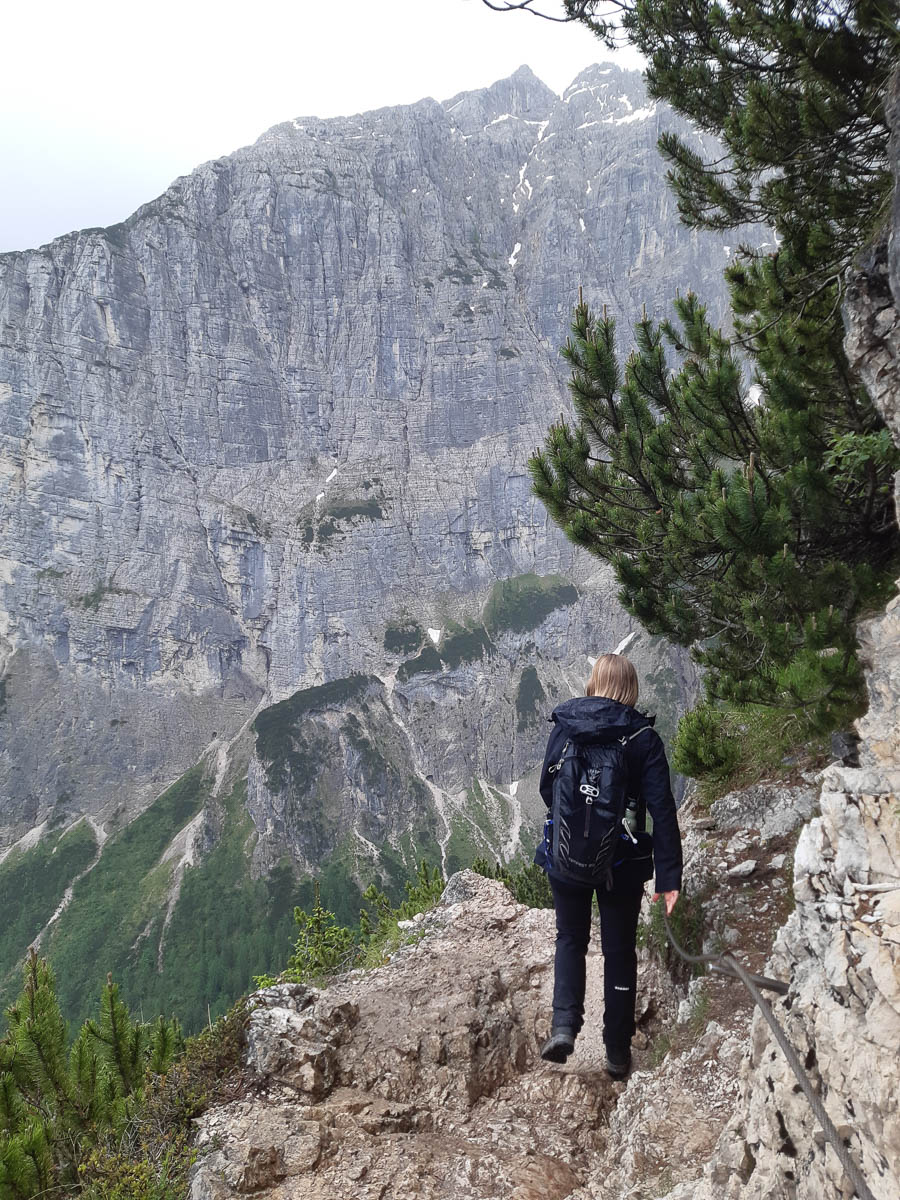
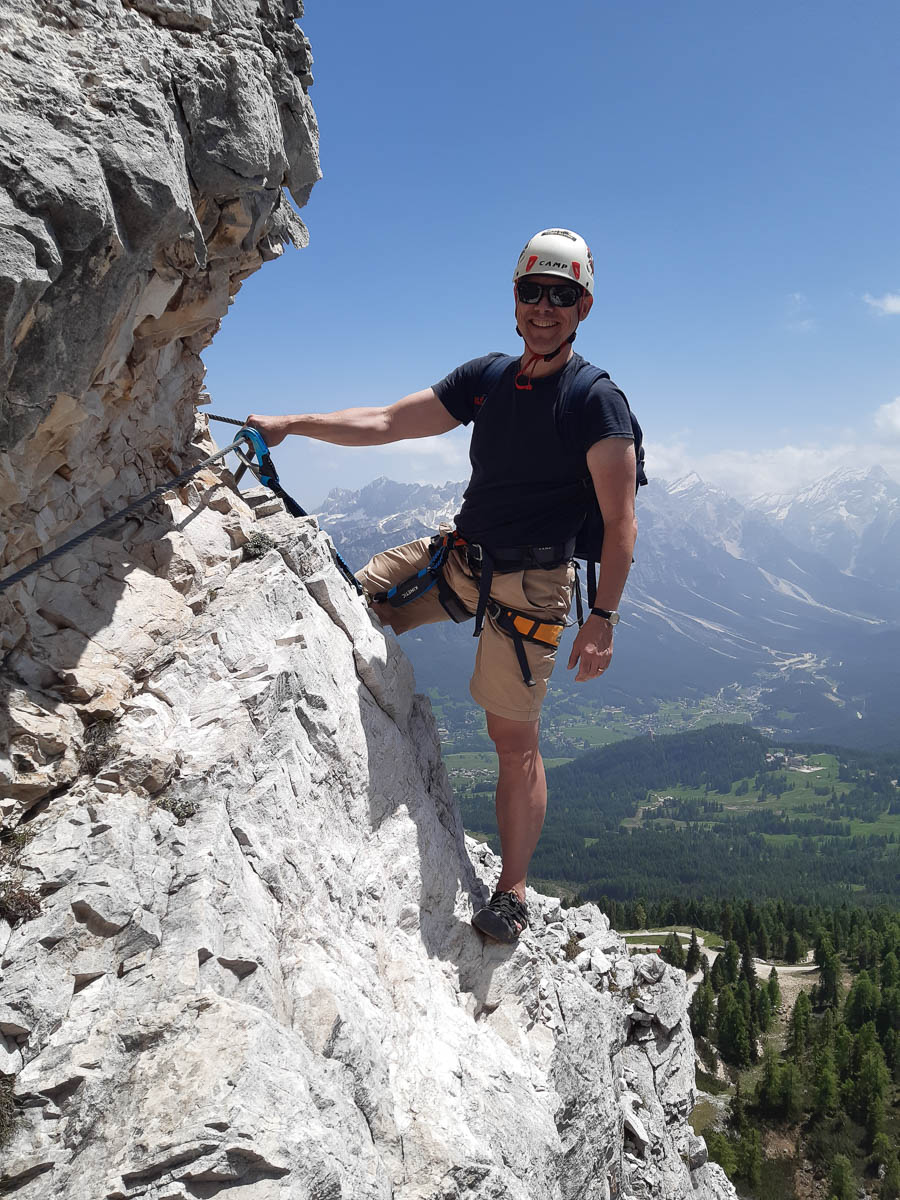
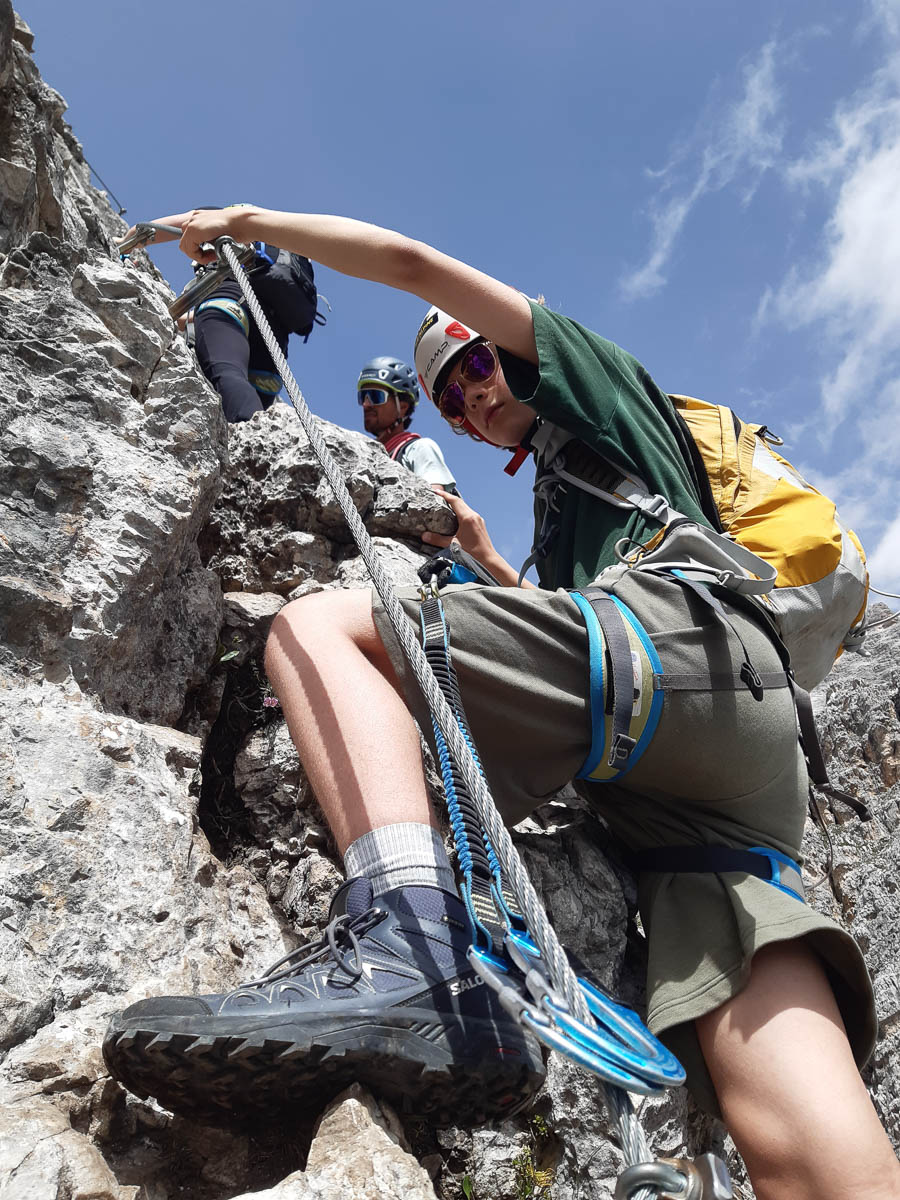
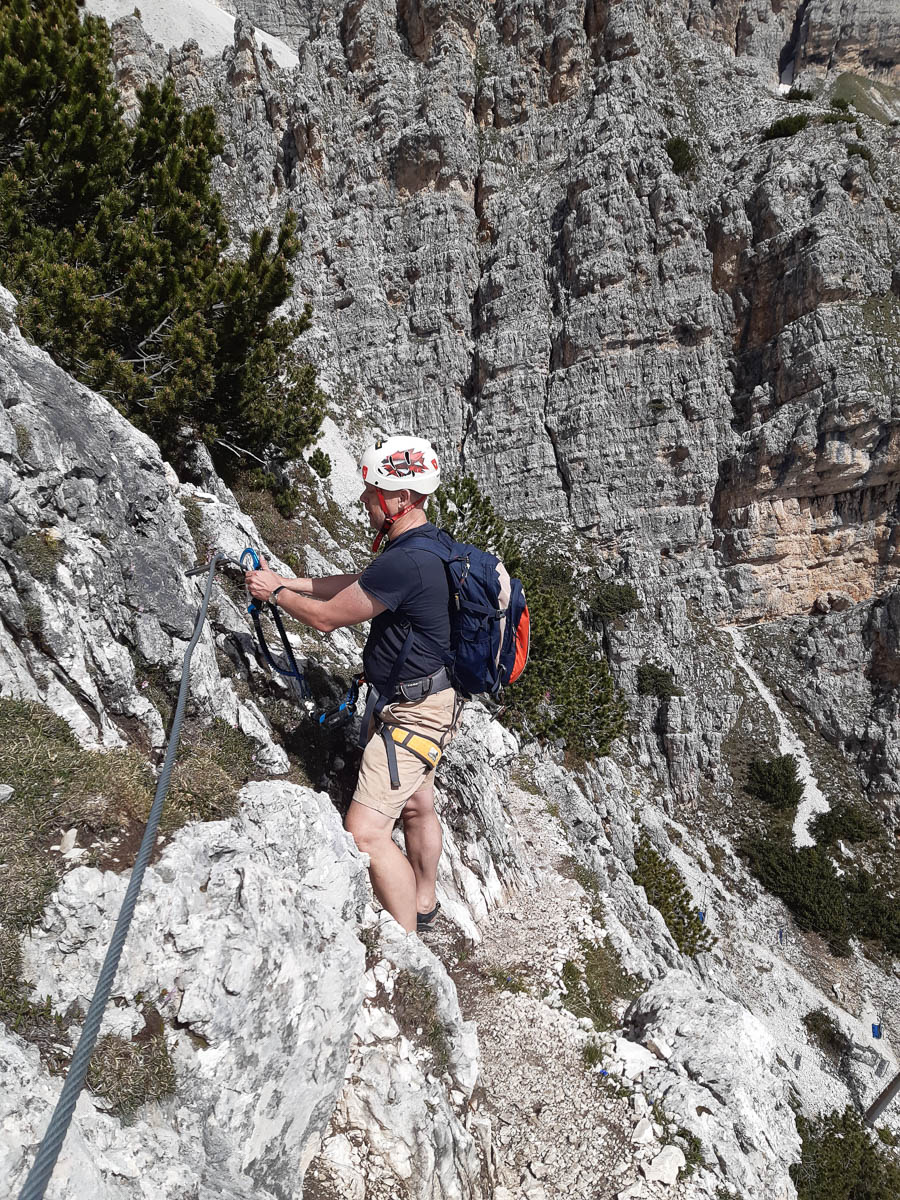
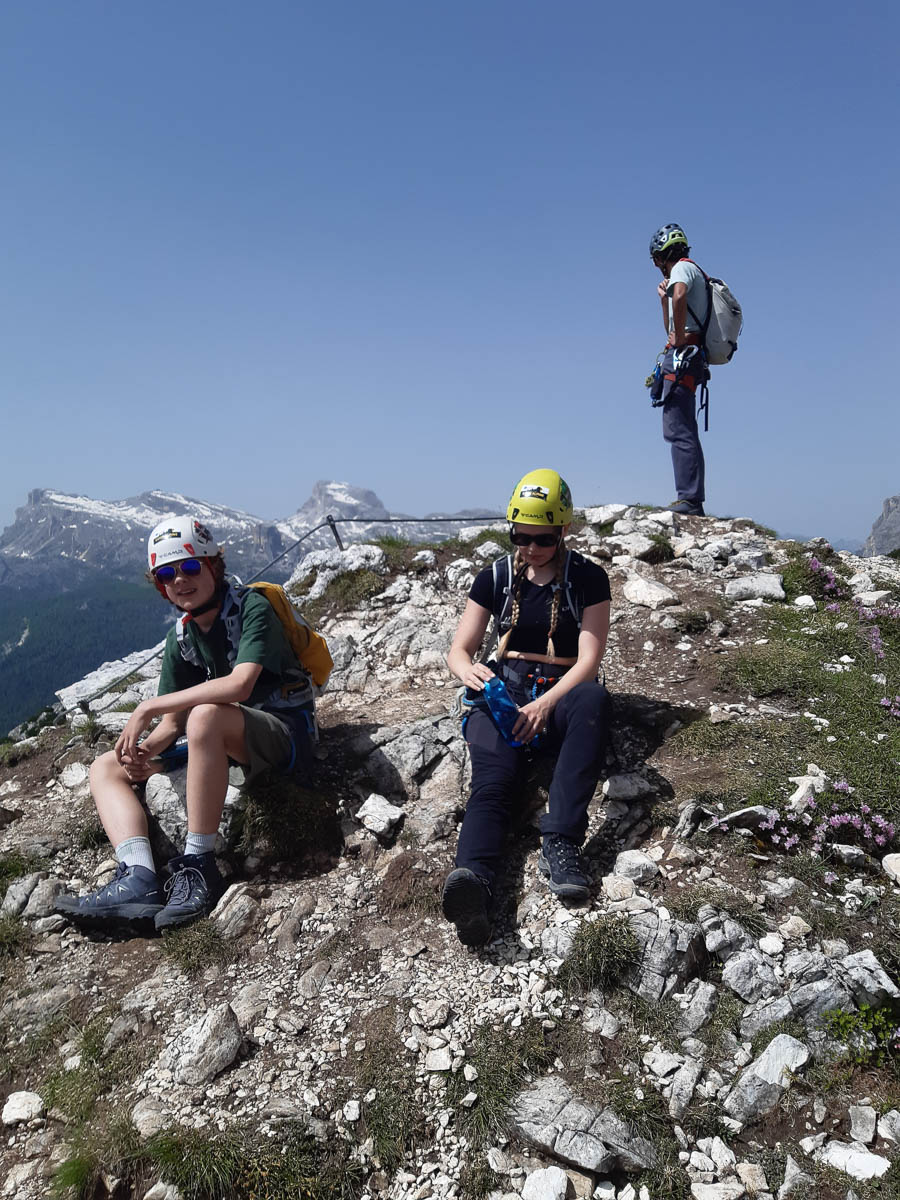
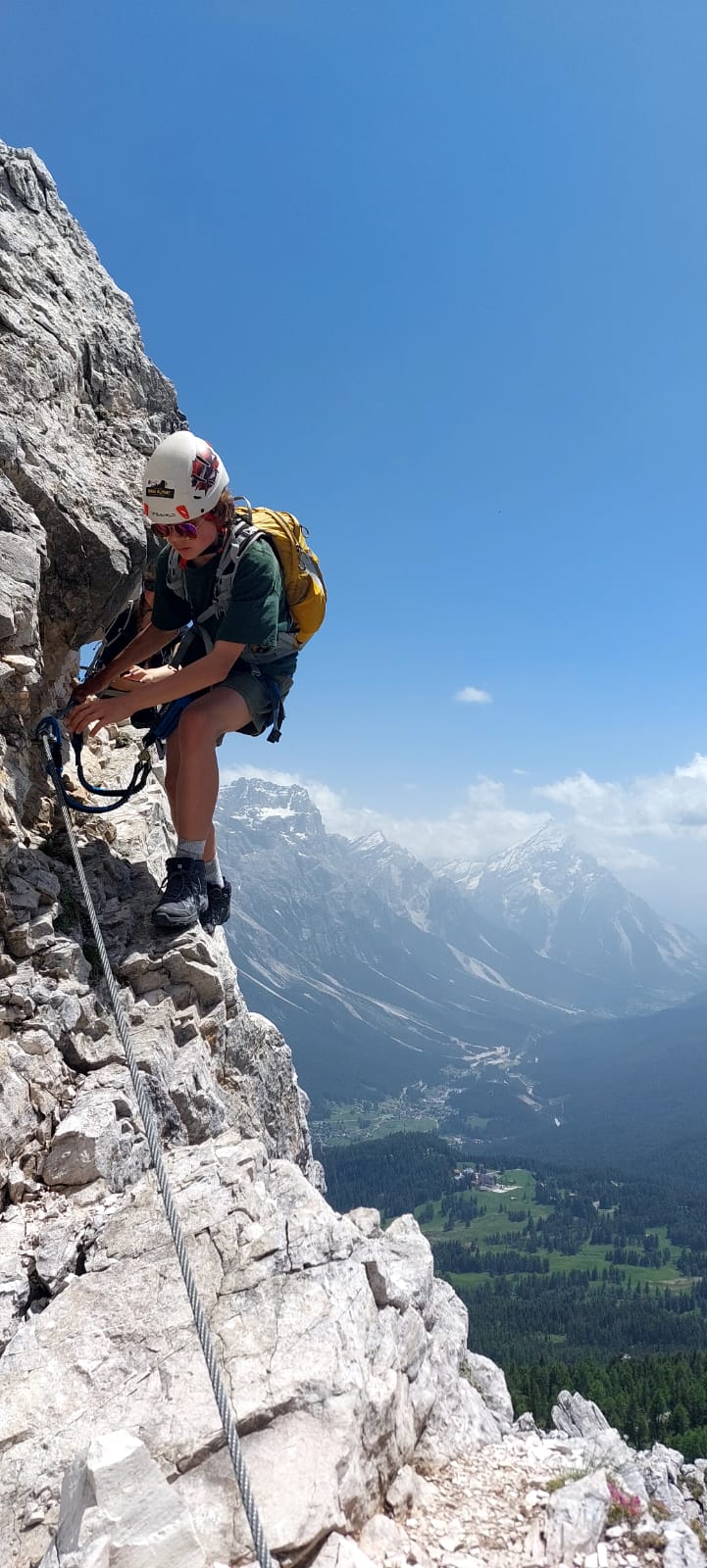
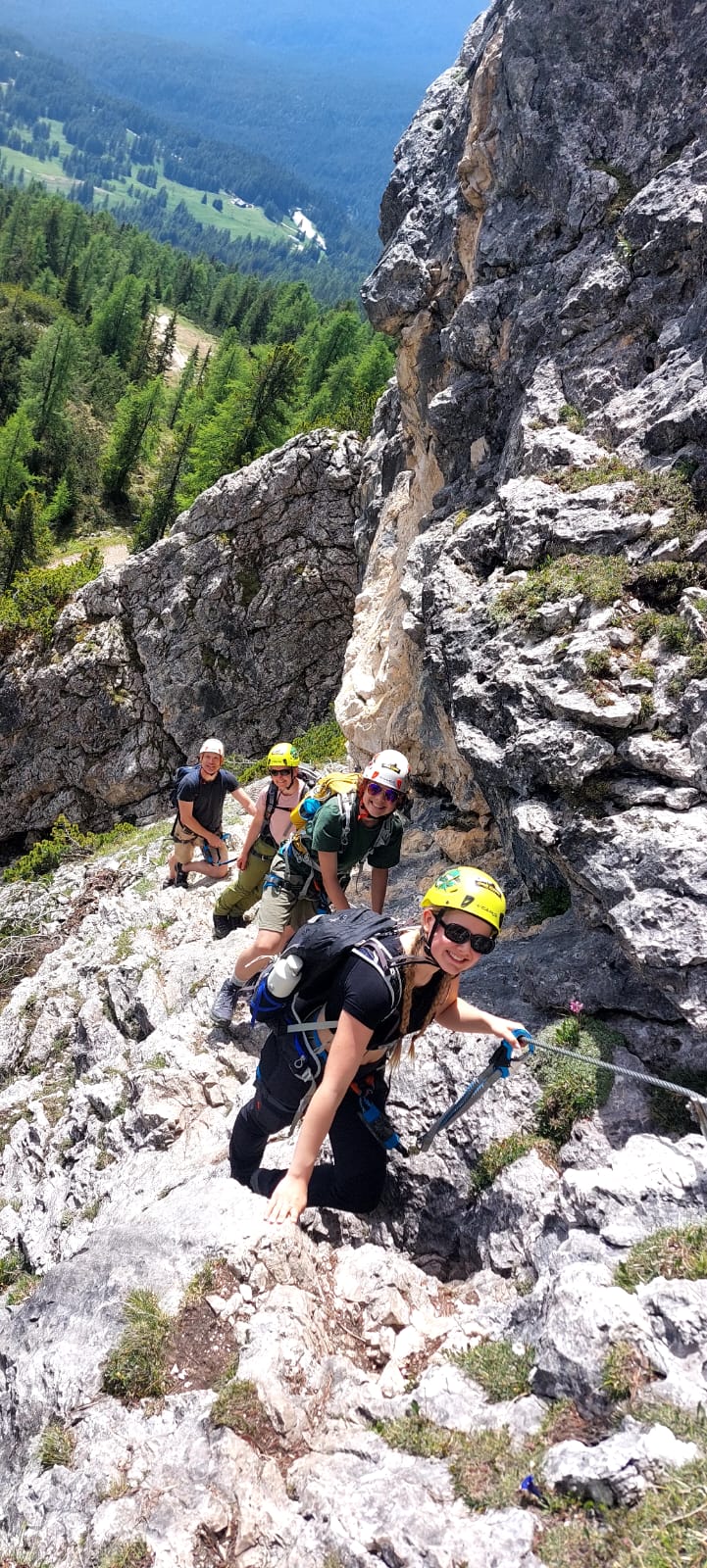
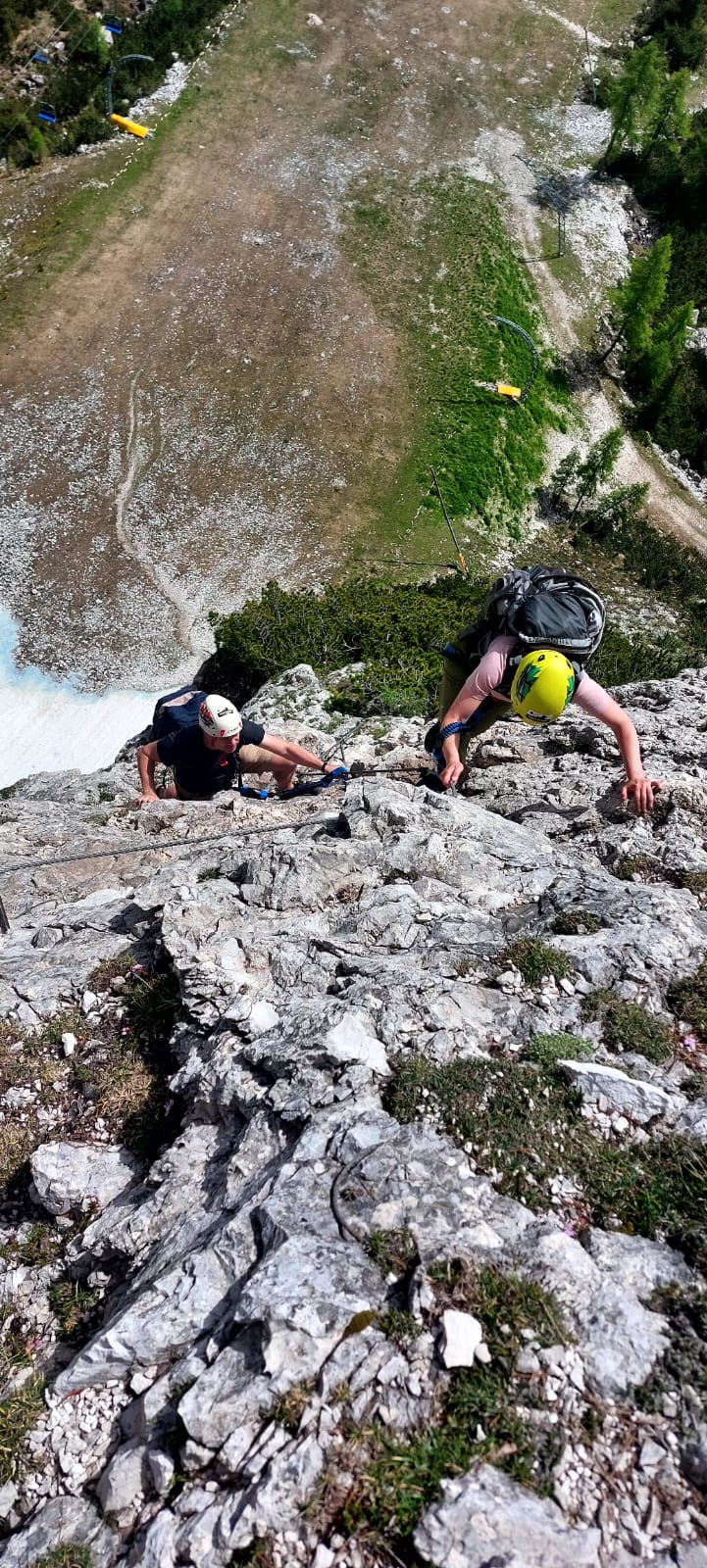
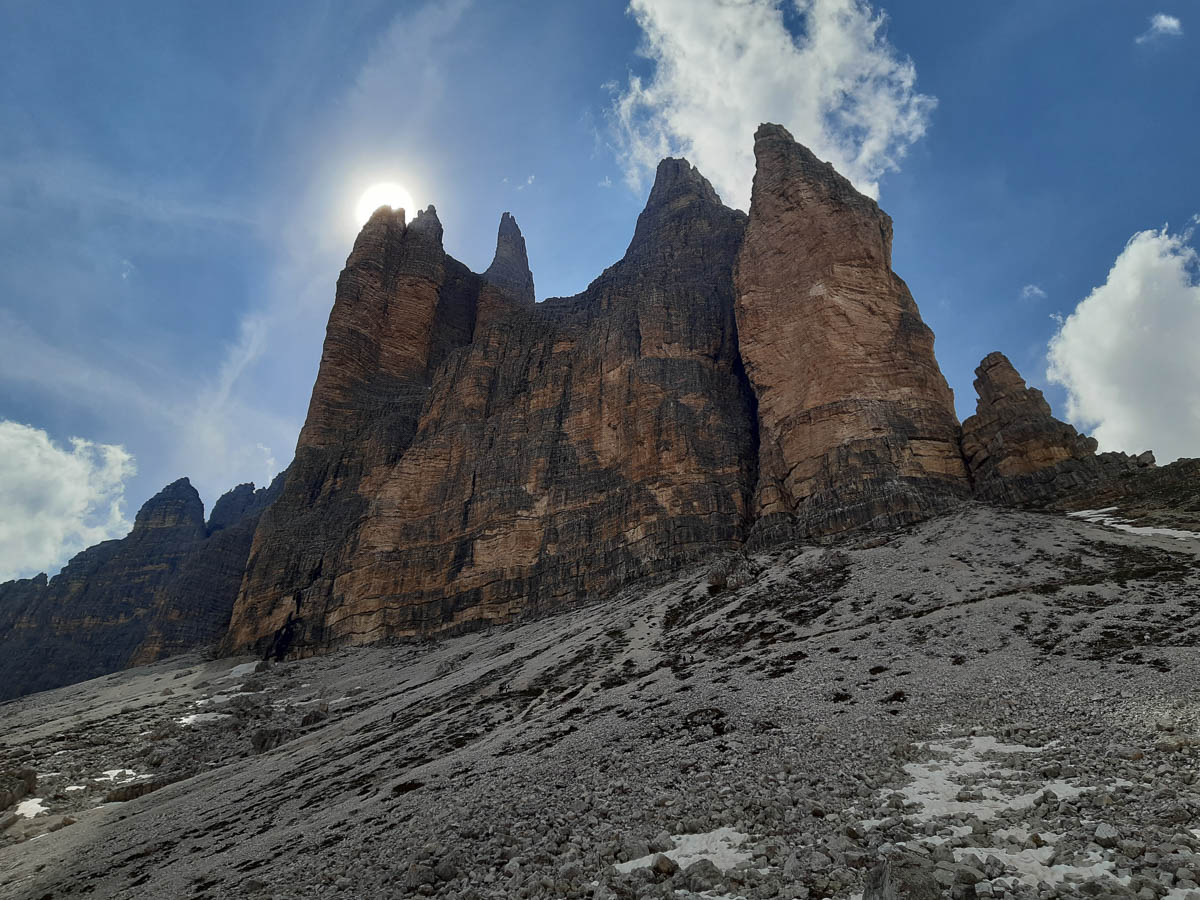
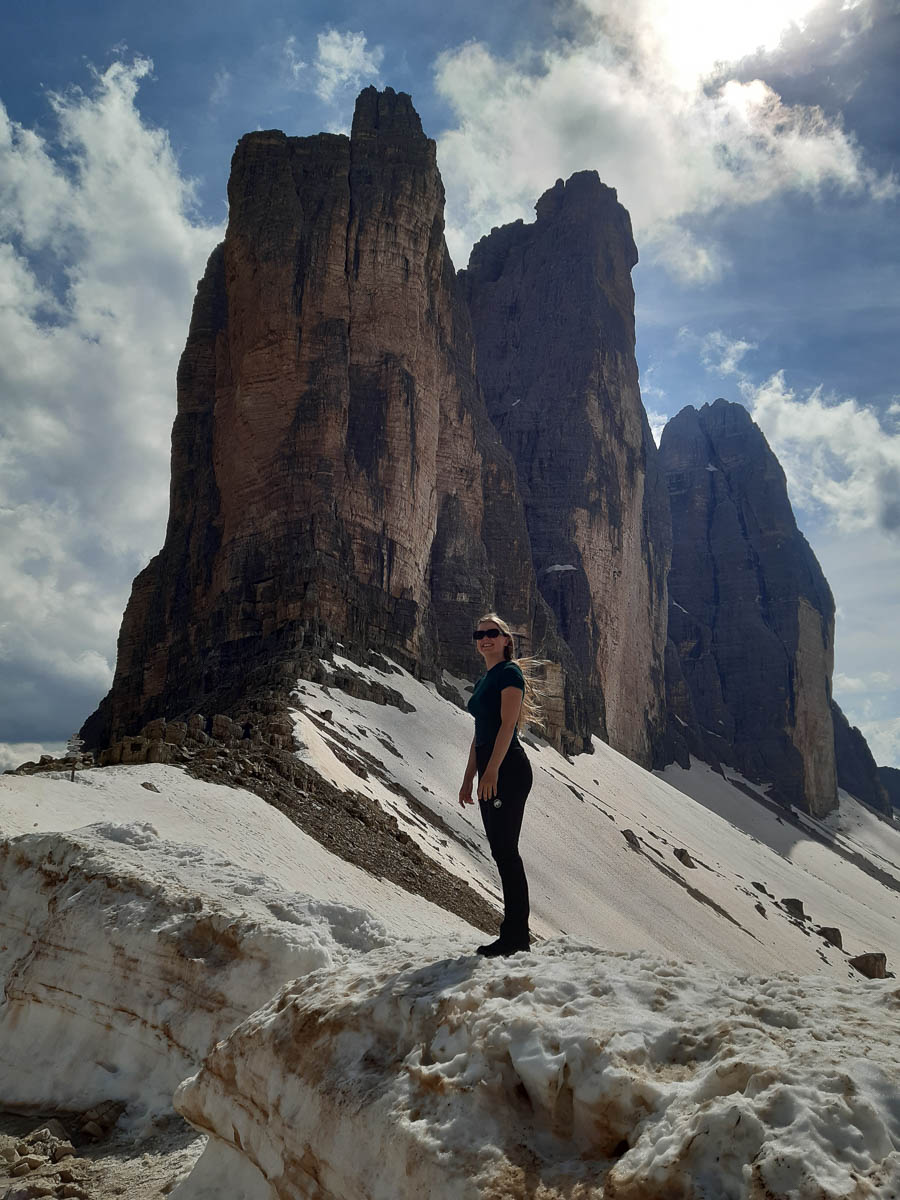
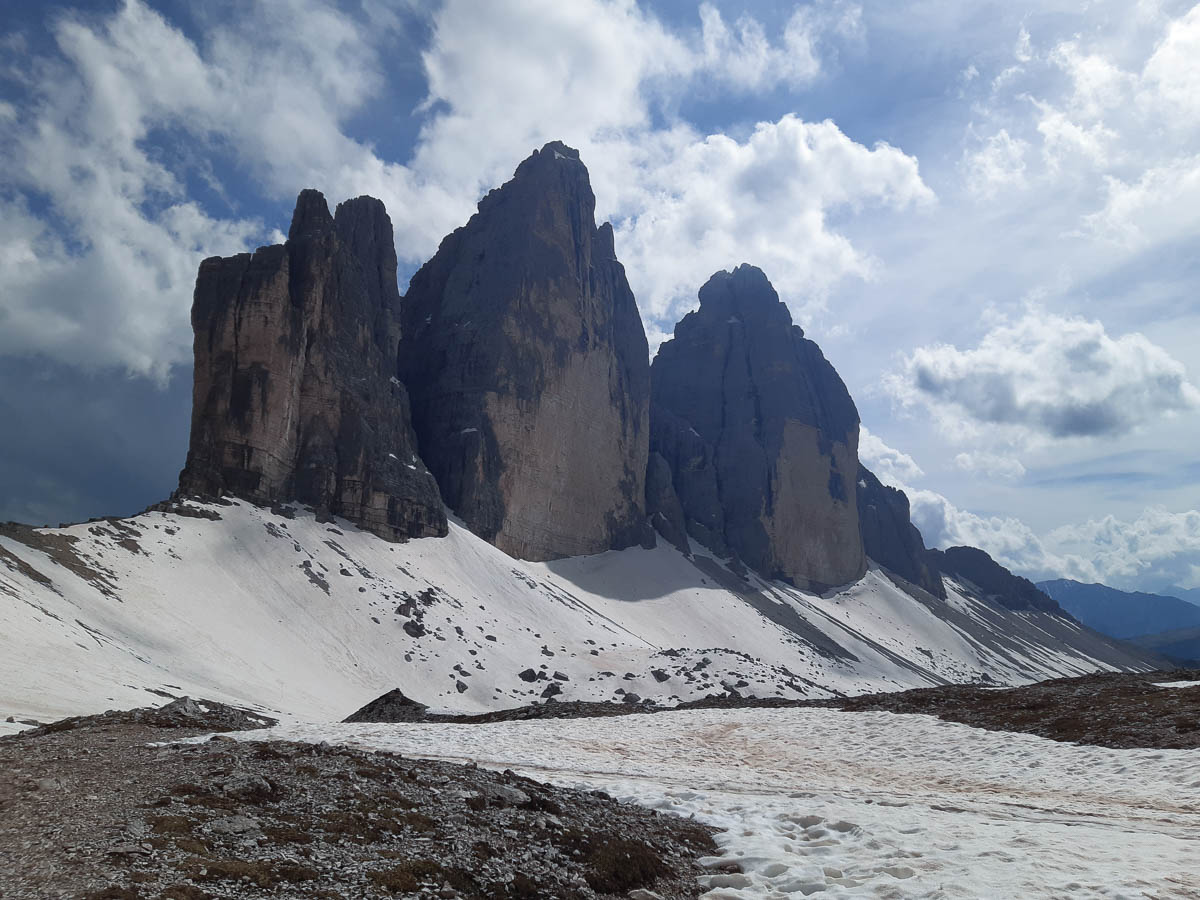
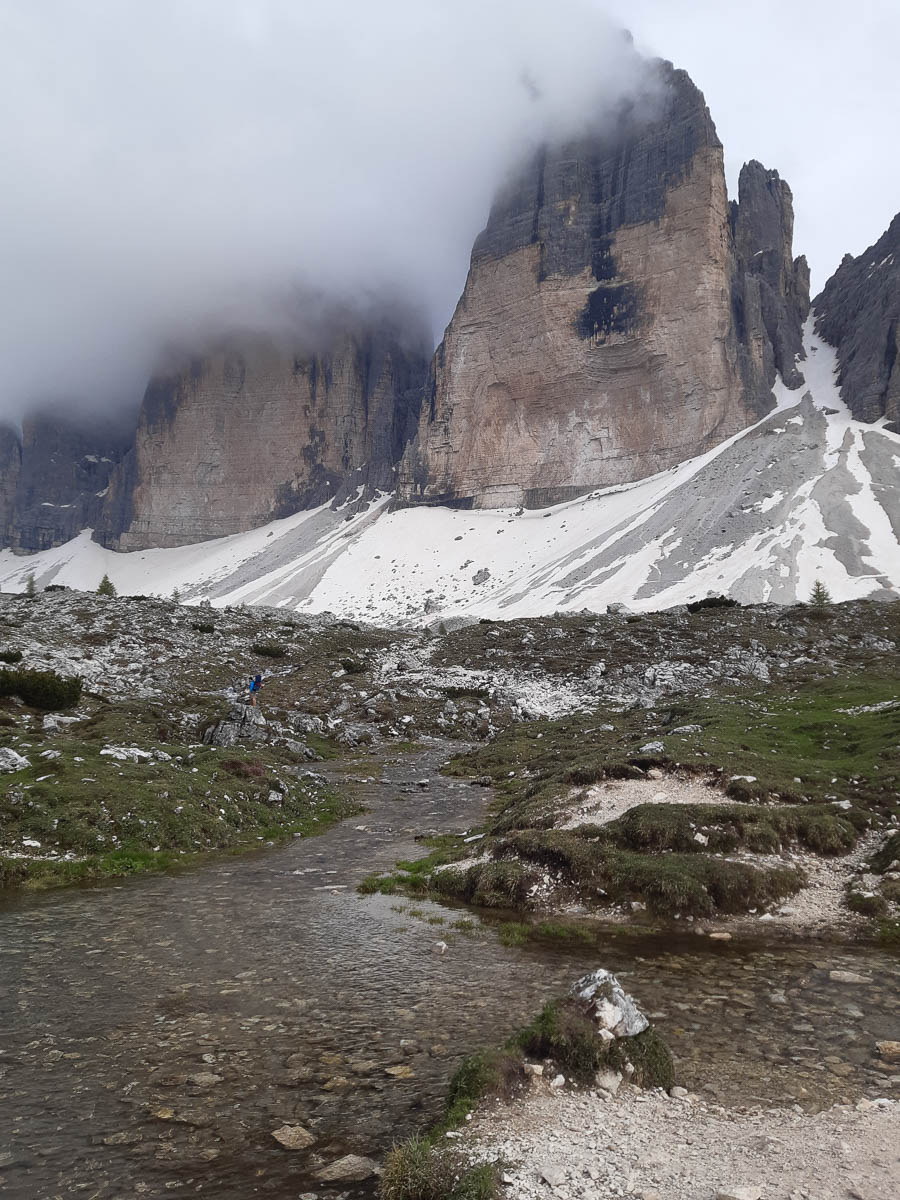
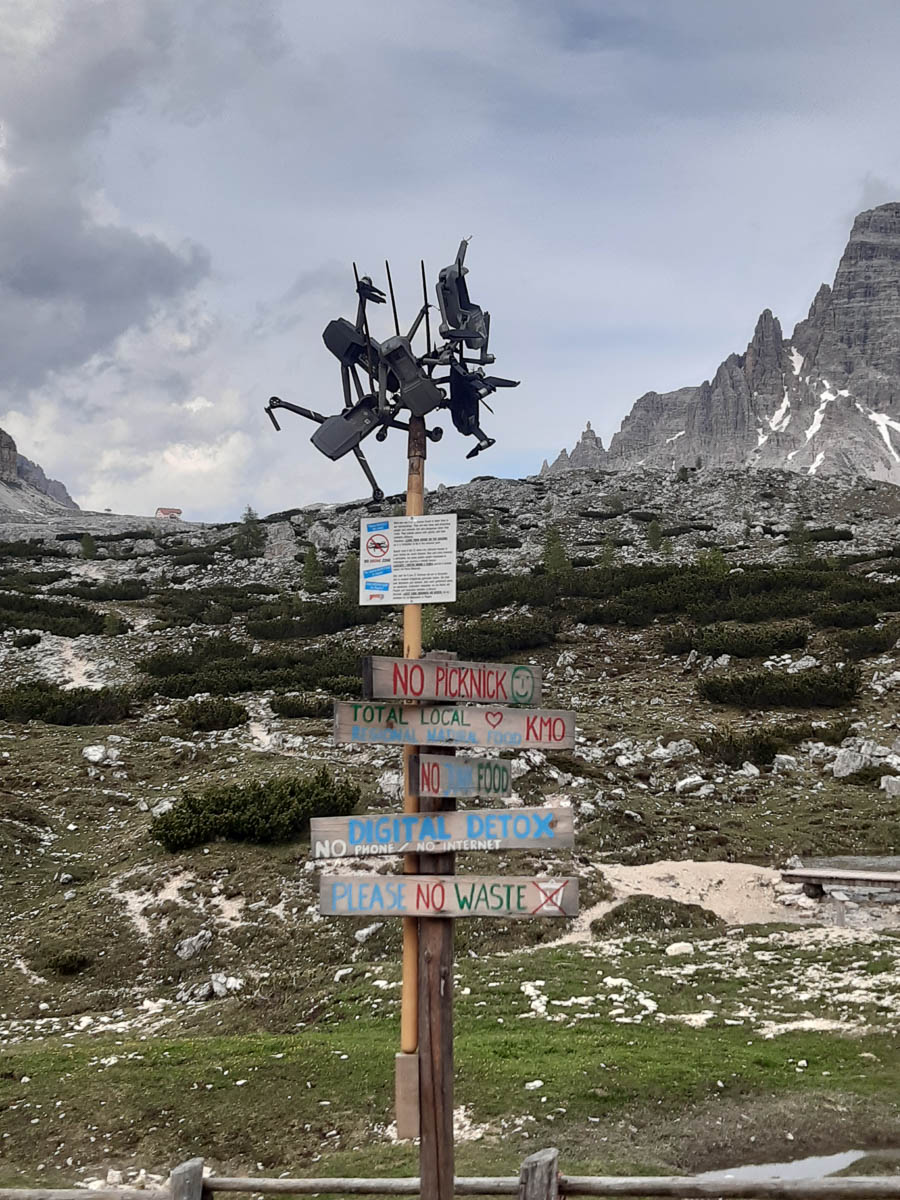
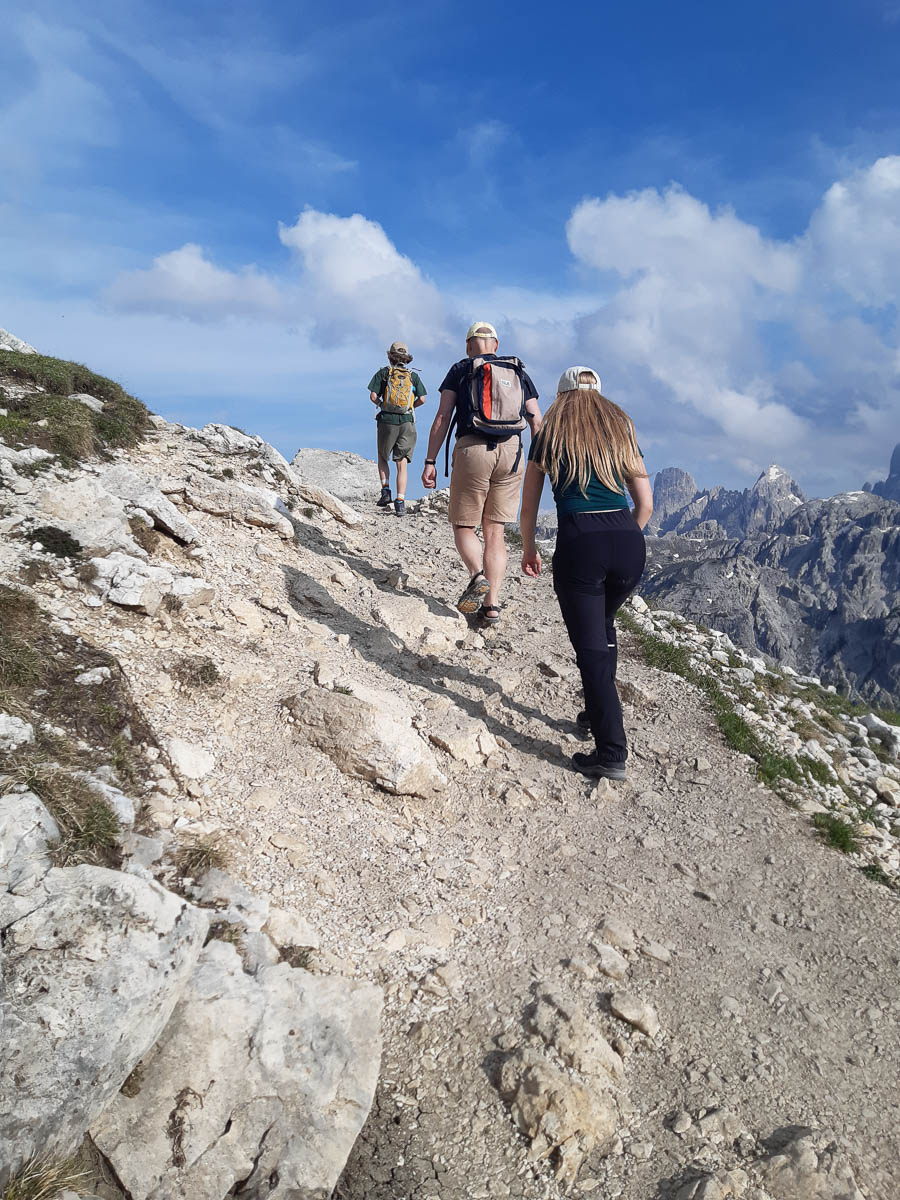
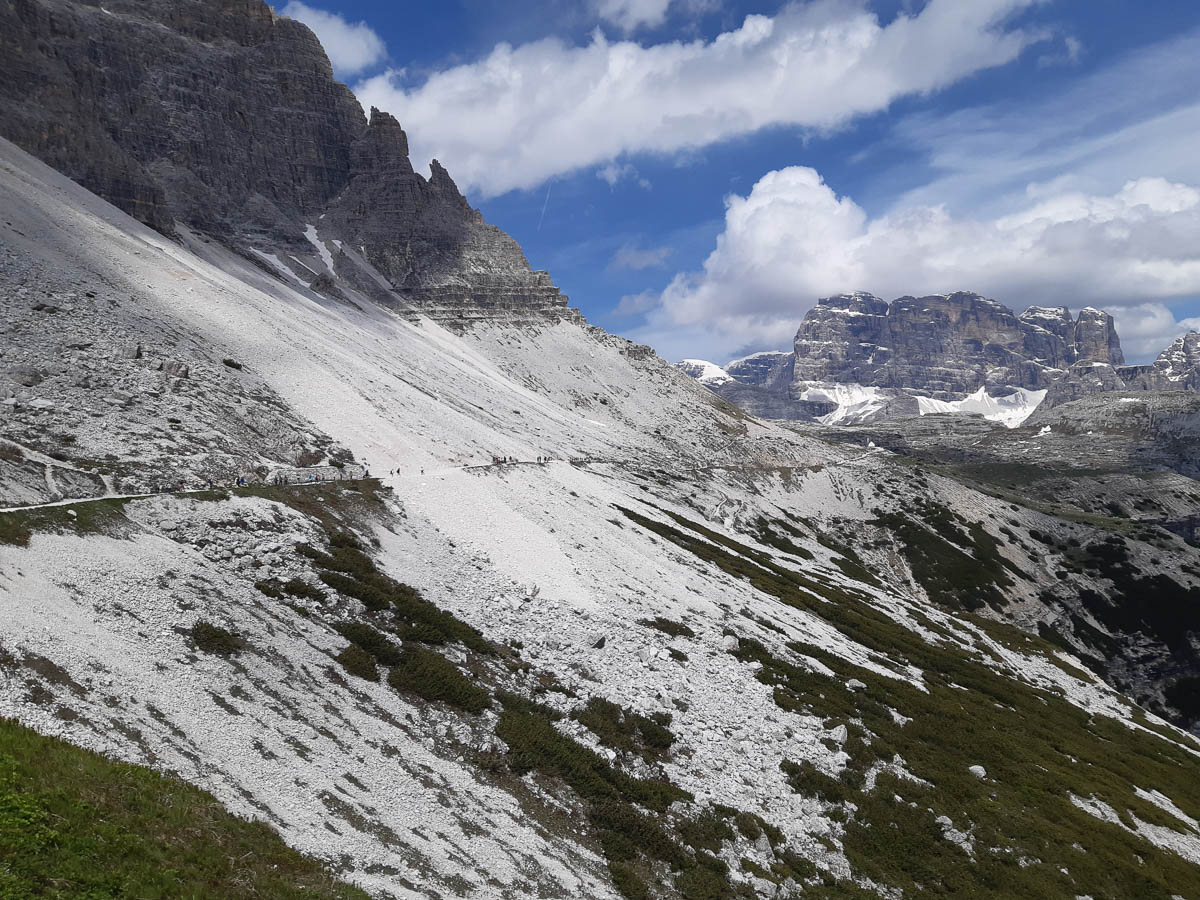
In the afternoon, we hiked the loop trail circles around the famous three peaks of Tre Cime di Lavaredo.

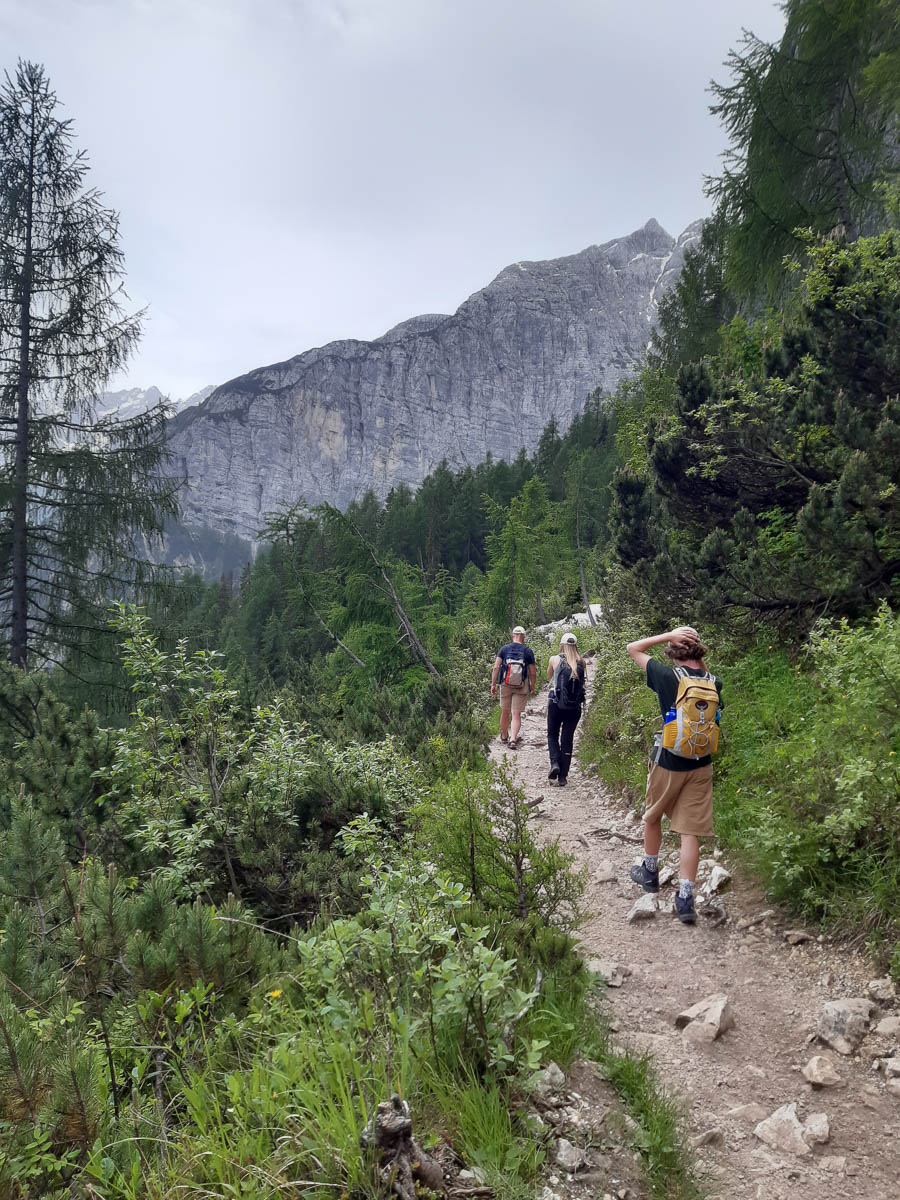
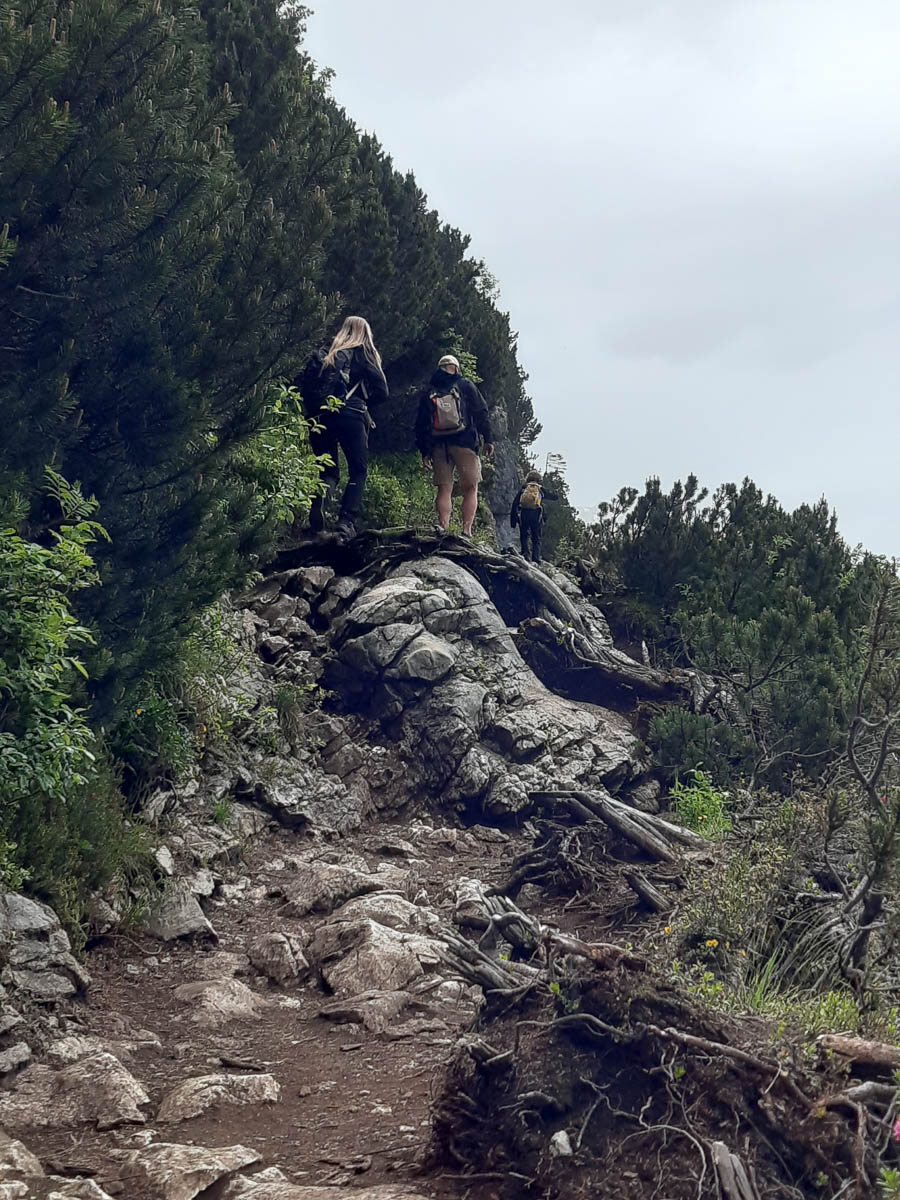
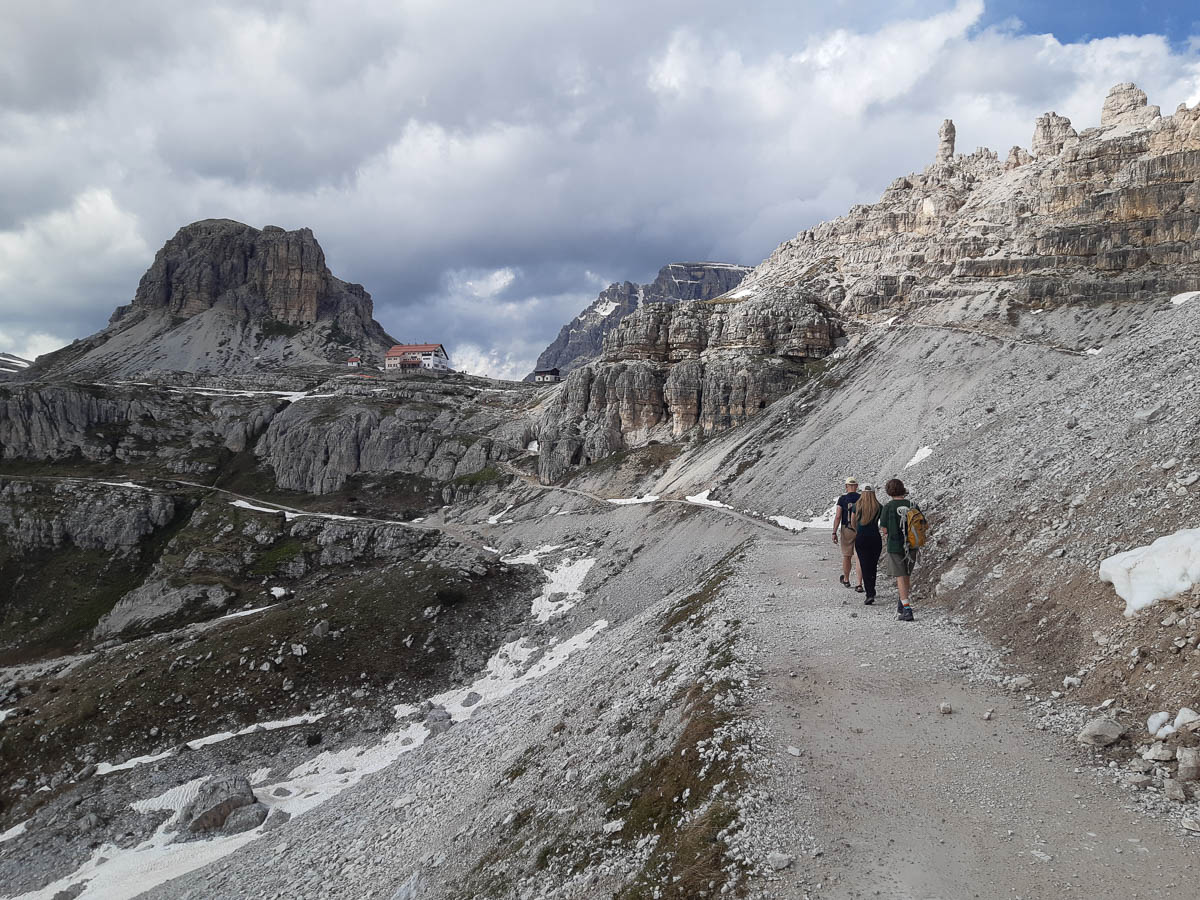
Starting at the Rifugio Auronzo, the trail initially loops behind the mountains, so you can’t see them very well. But the trail is pretty stunning in and of itself.

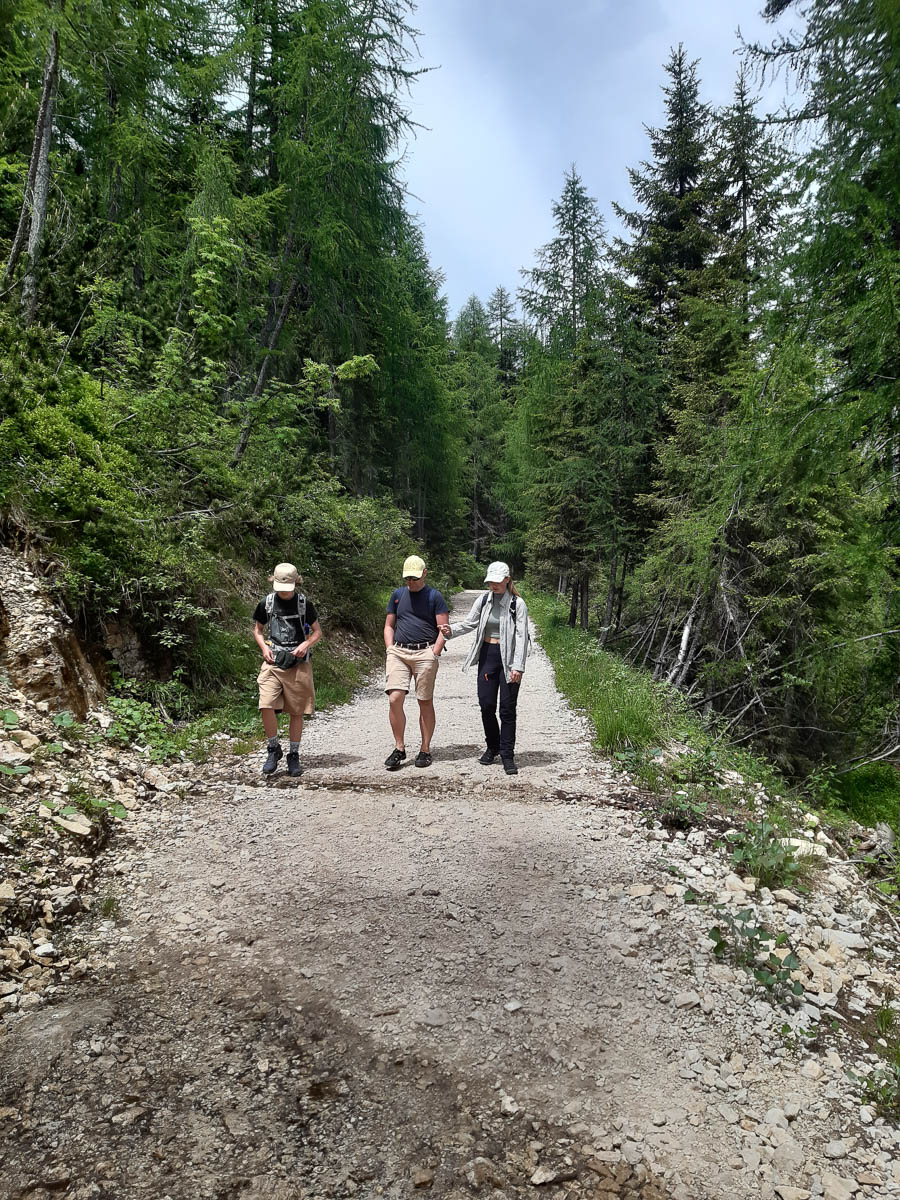
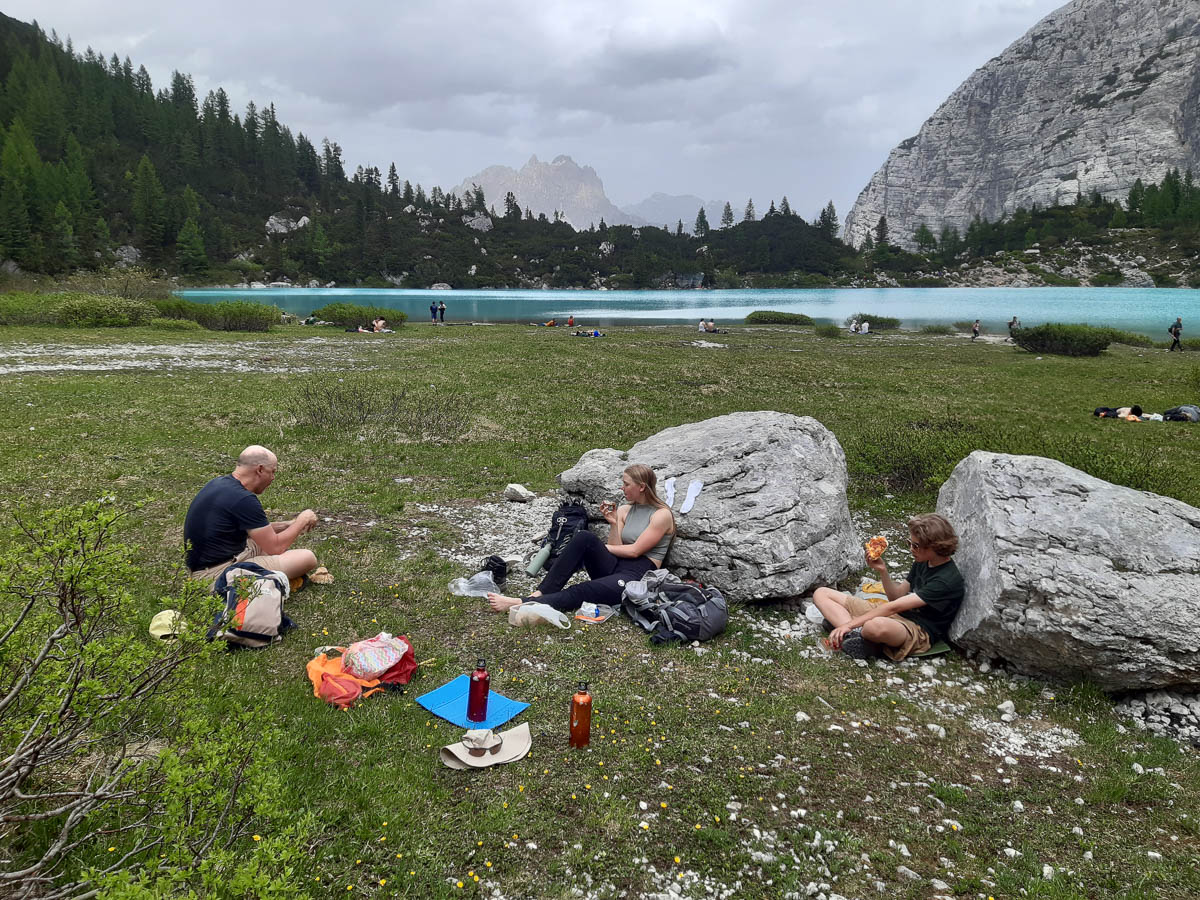
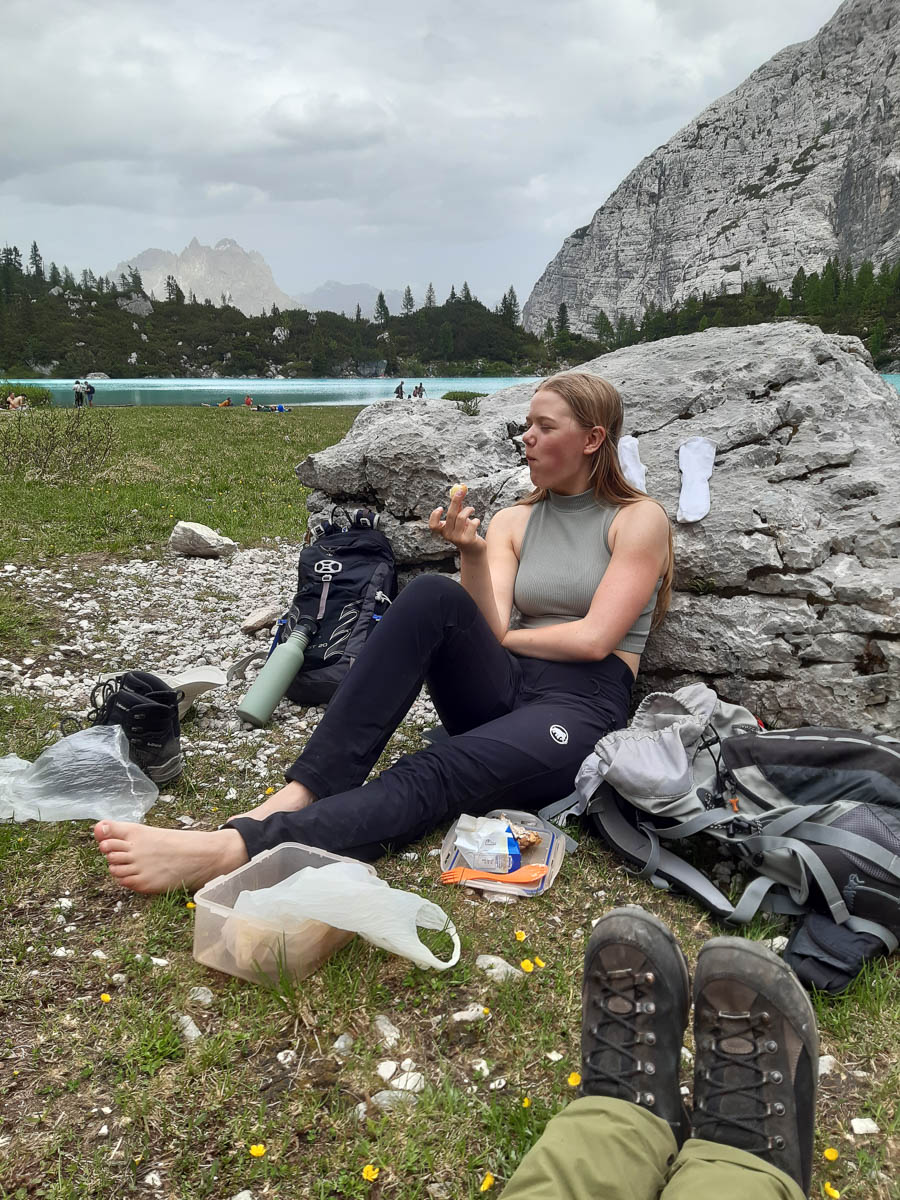
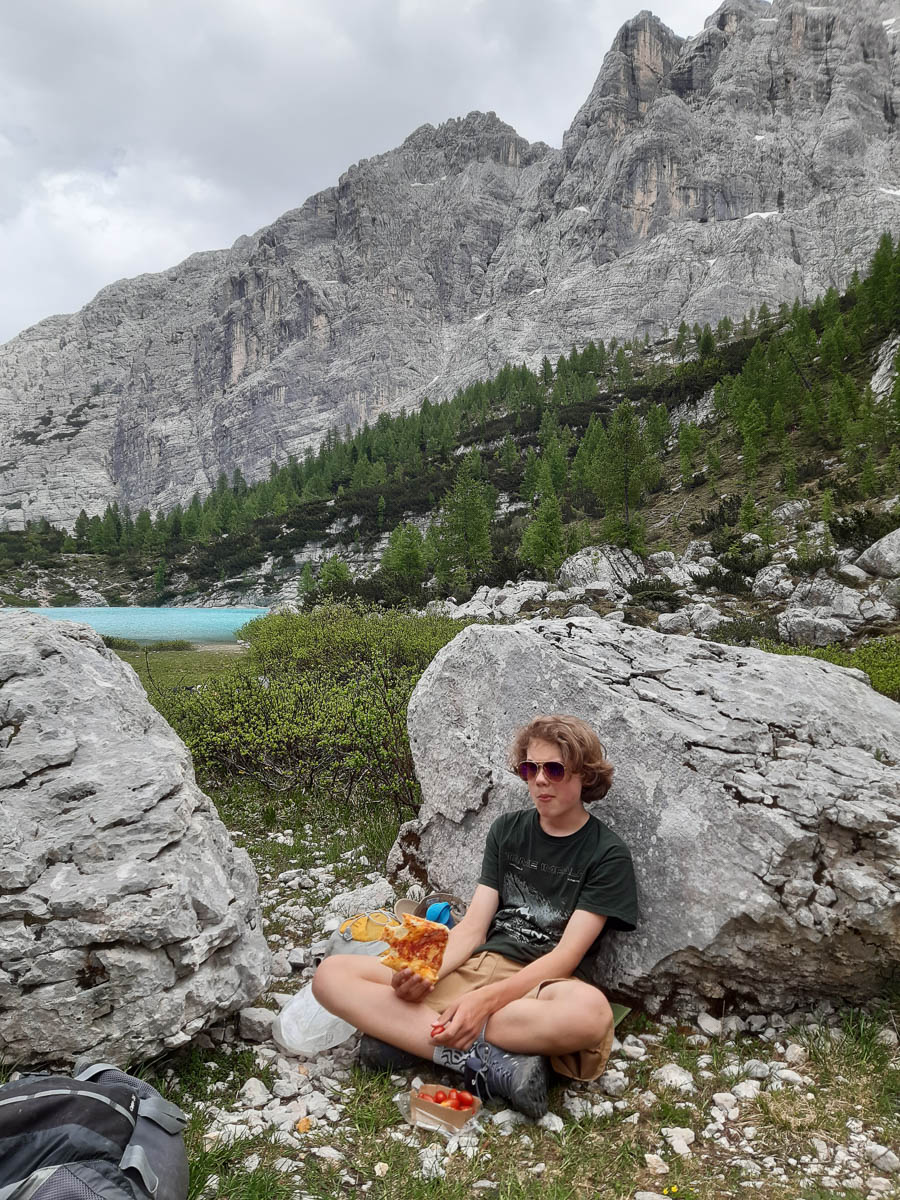
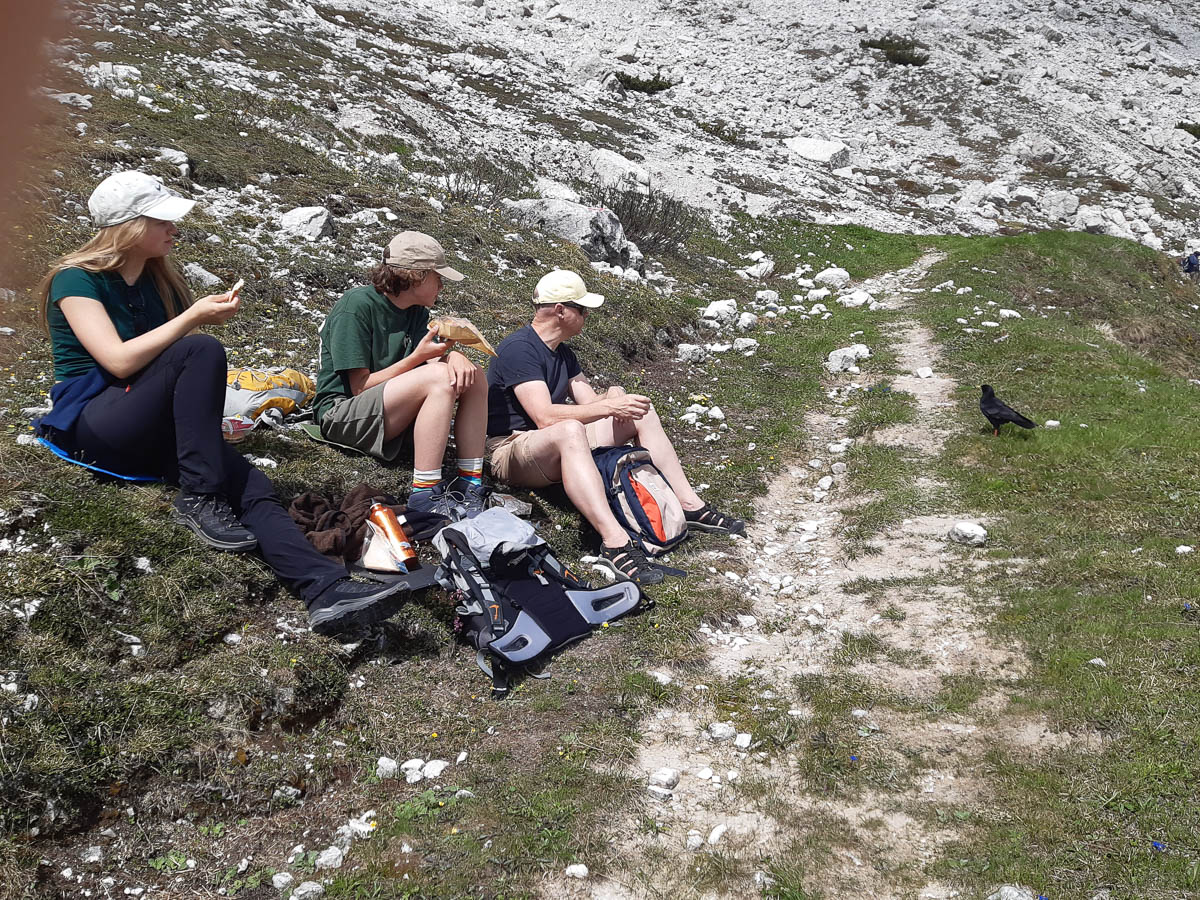
We had a late picnic lunch as soon as we found a place where we could step off the trail a bit. Immediately, birds approached us in the hopes of food scraps. Looks like alpine choughs are the gulls of the mountains.

(And I am clearly a noob when it comes to using my phone camera, even getting my finger in the picture. That just never occurs with an actual camera – you’d have to make a real effort to make that happen.)

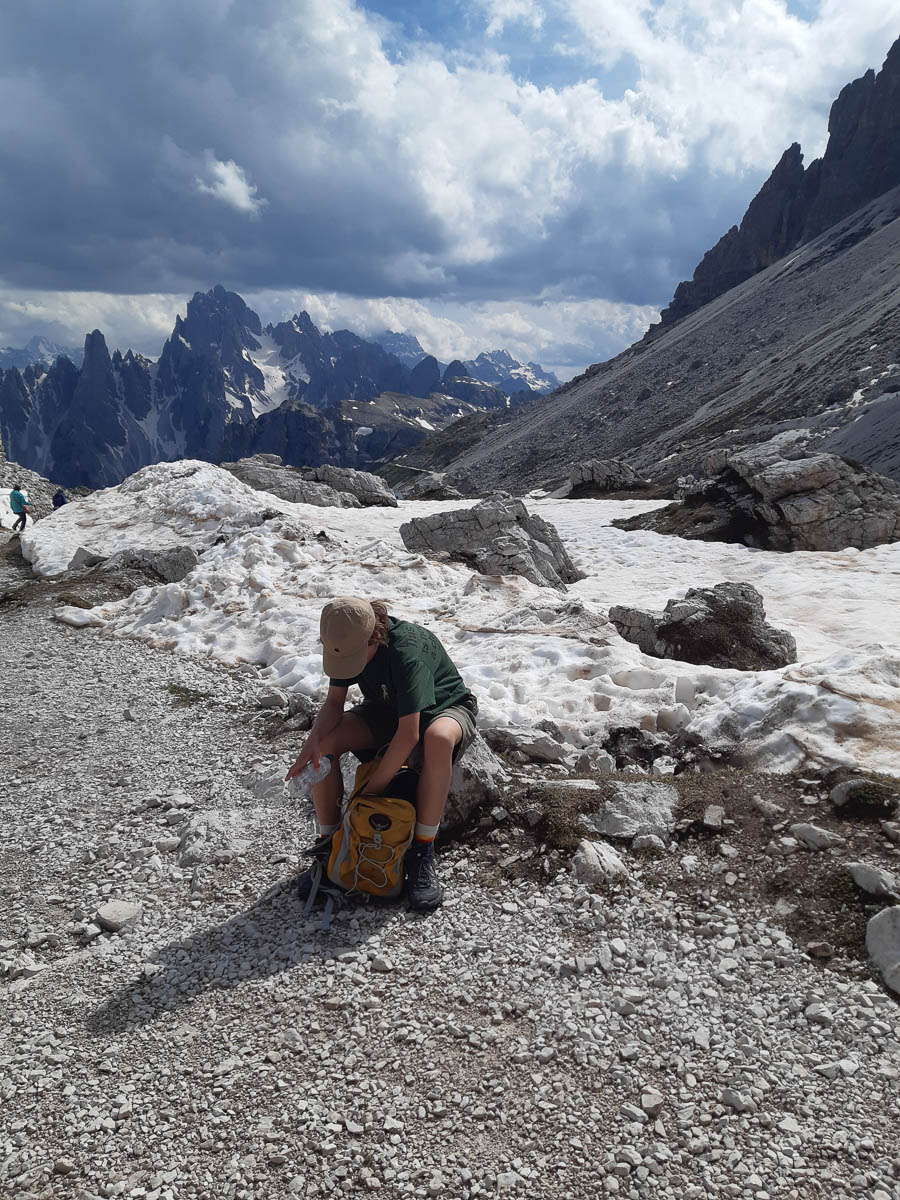
The start of the trail is just over 2000 metres above sea level, but since we gained all of those 2000 m of altitude in just half a day, we felt them. Nothing like real altitude sickness, but enough to make us feel slightly short of breath when walking uphill, so we had to pause quite often.

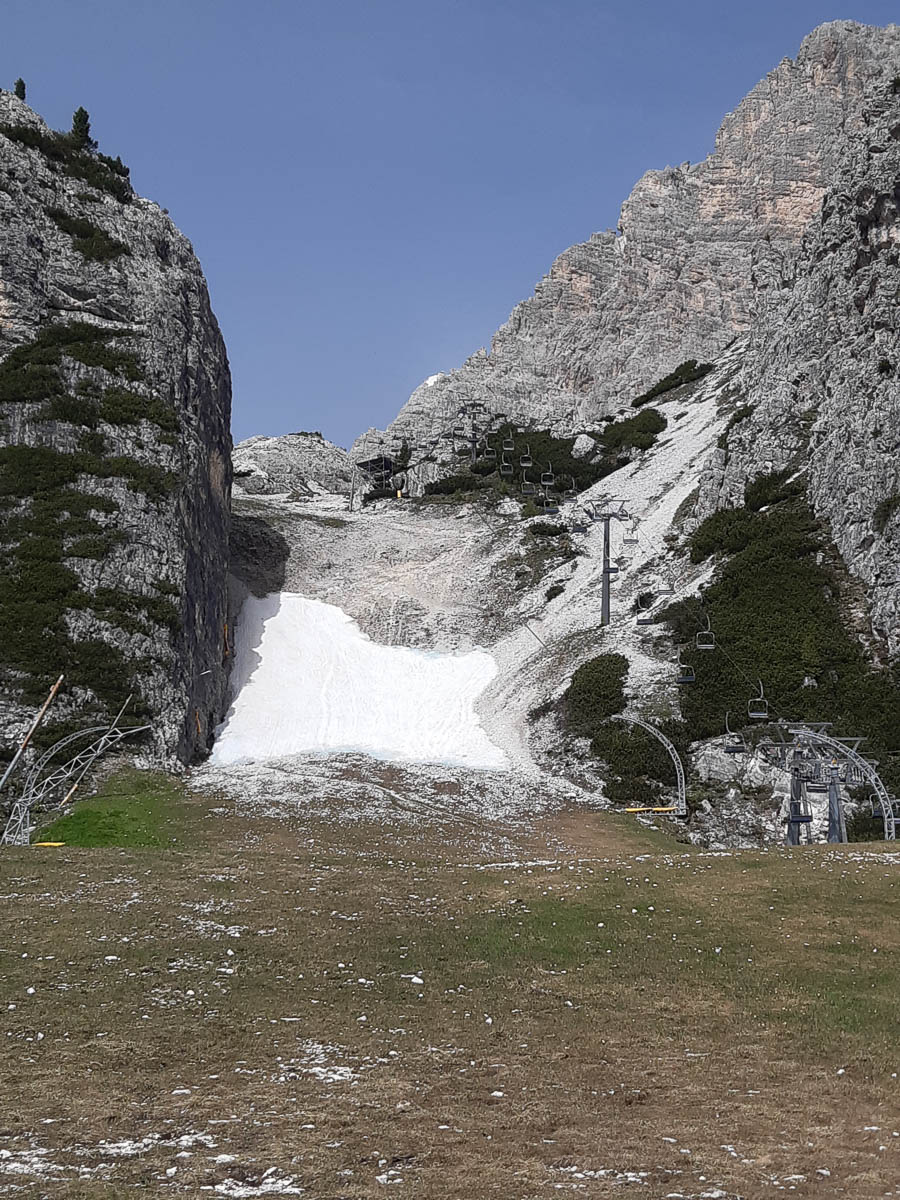
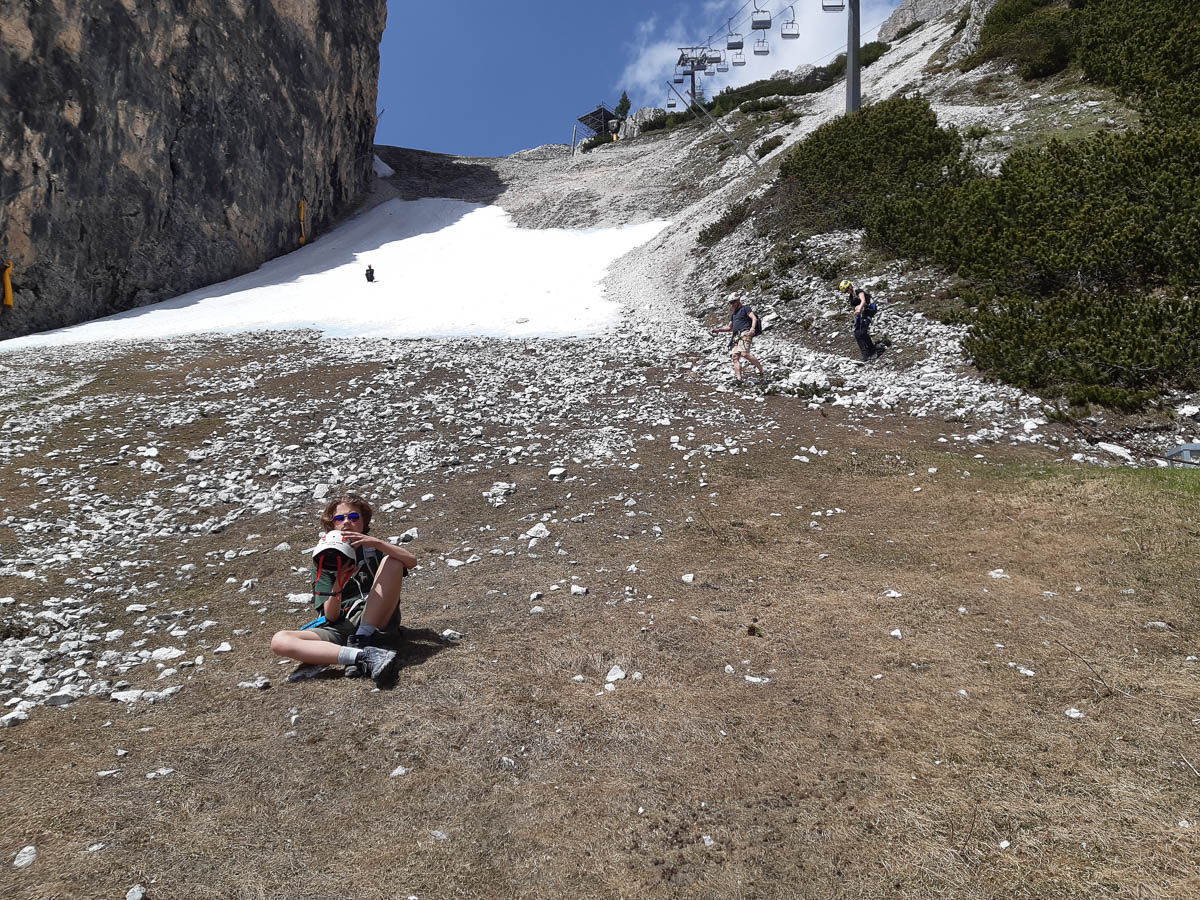
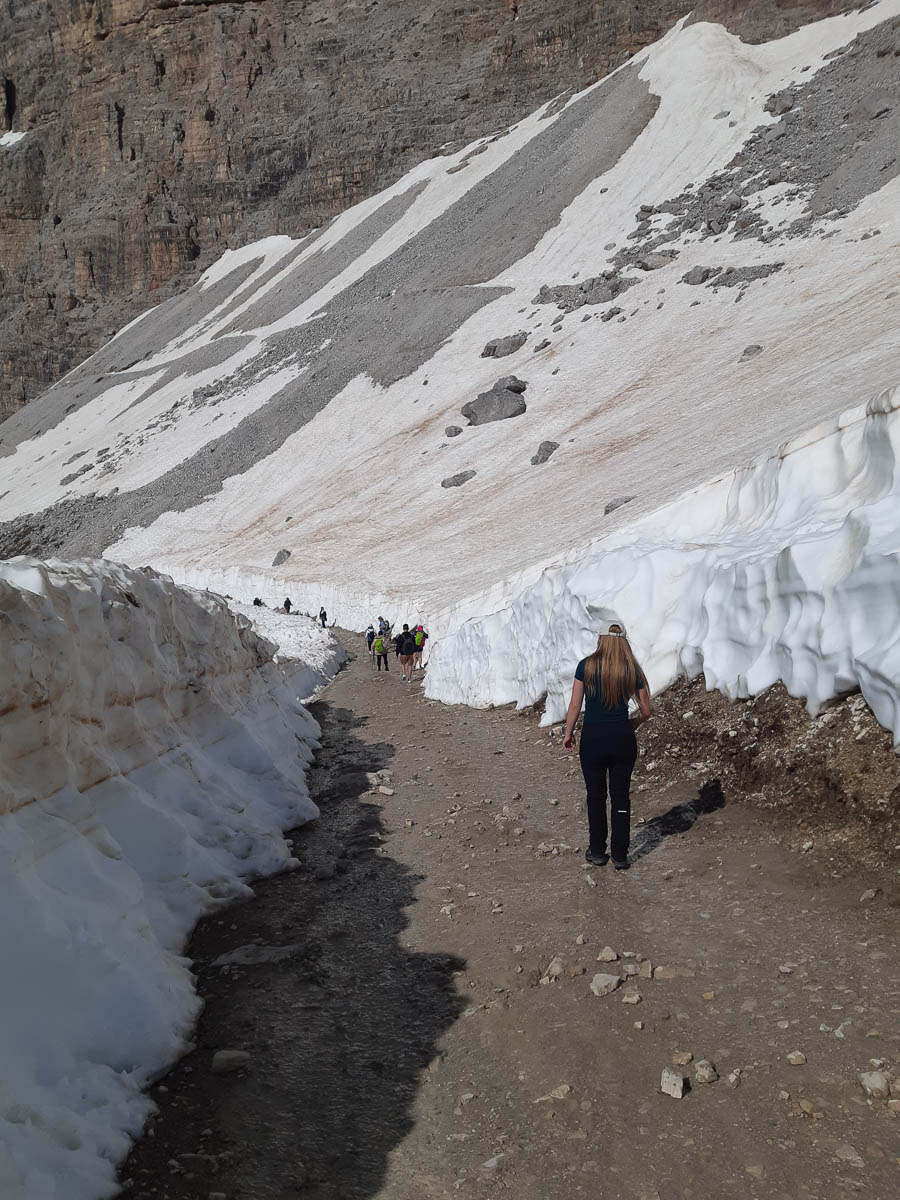
There were still significant amounts of snow up there – packed drifts taller than us. The sun was quite hot, and the trail was like a little stream in places.

The trail itself had been cleared of snow, so we were walking in a canyon between tall walls of snow.

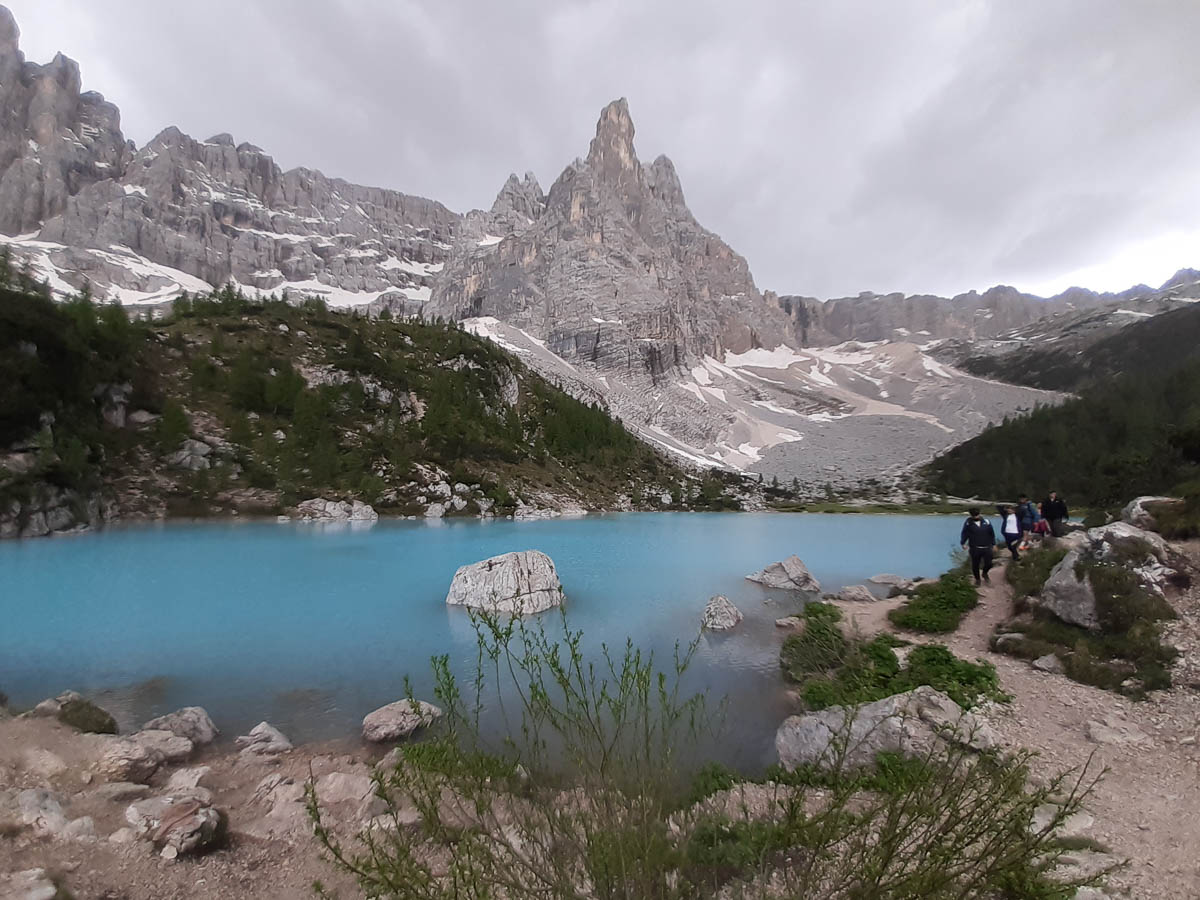
Rounding the mountain, the shapeless lump was starting to separate into three distinct peaks…

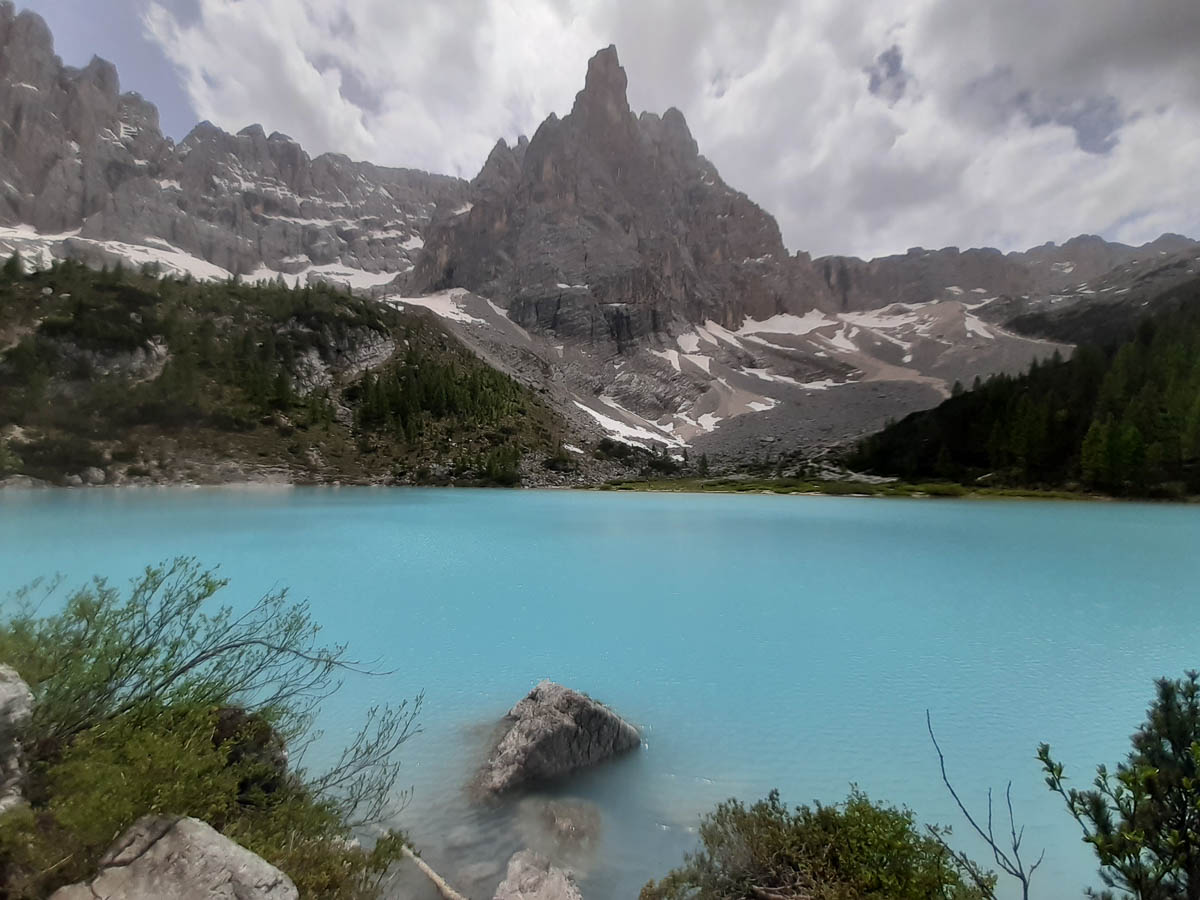
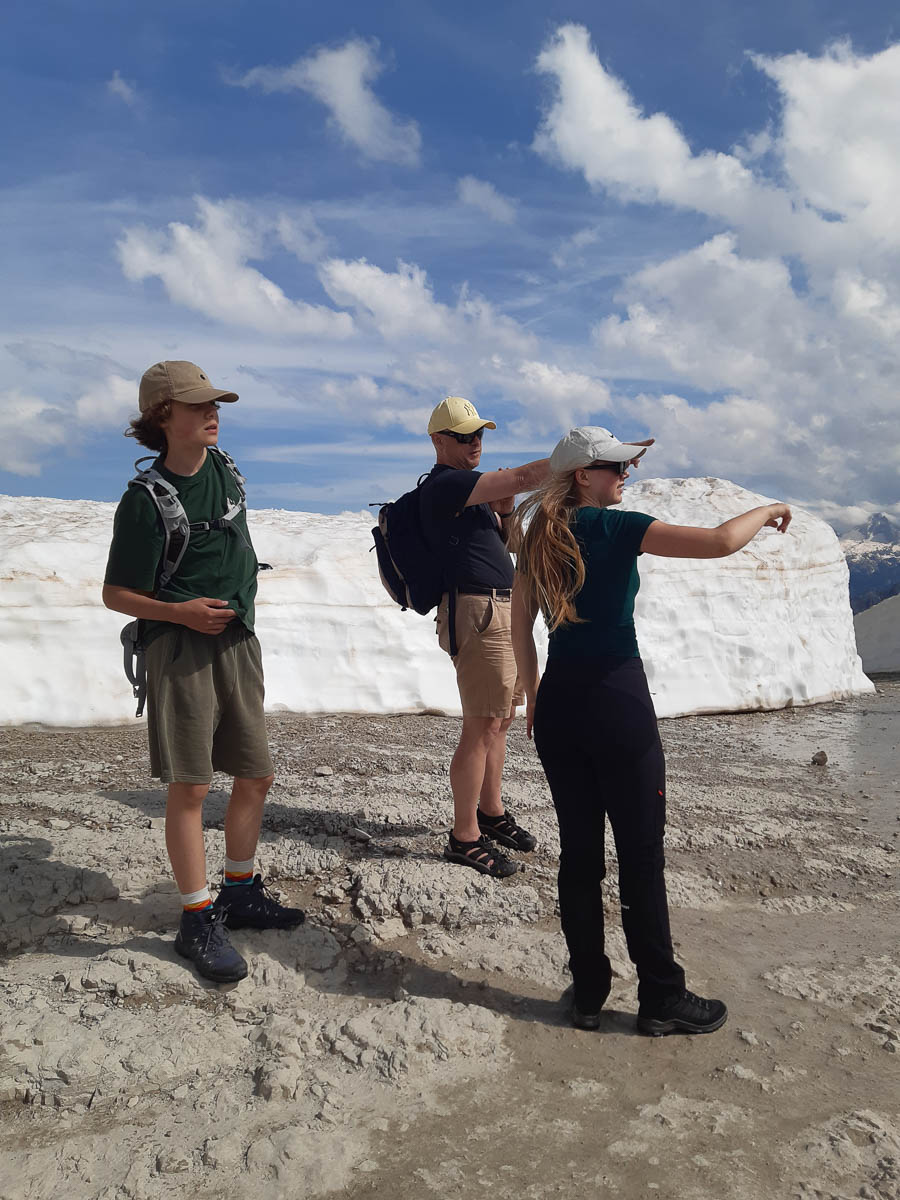
… and a kilometre later, we got those dramatic vistas of the peaks nicely lined up next to each other.

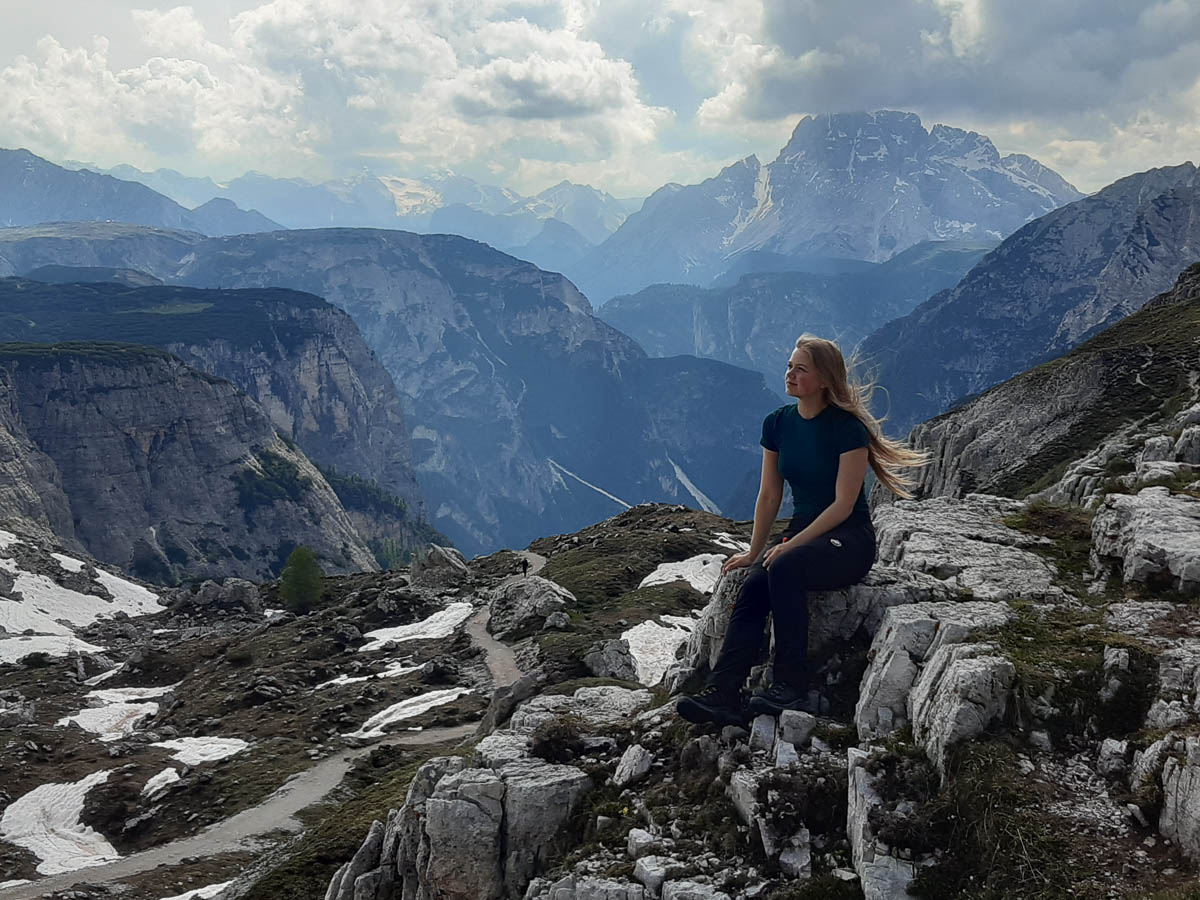
Many people seemed to turn back at this point. Got the views, done. We continued along the trail as it circled a wide valley to the north of the peaks, with more beautiful views.

There was some threat of rain but nothing that actually materialized.

The Dolomites are generously equipped with huts, much more than I am used to seeing anywhere else I’ve hiked – we passed 4 rifugios during the 10-kilometre loop. I can imagine how crowded it must get here during high season.

The last ridge is never actually the last ridge!

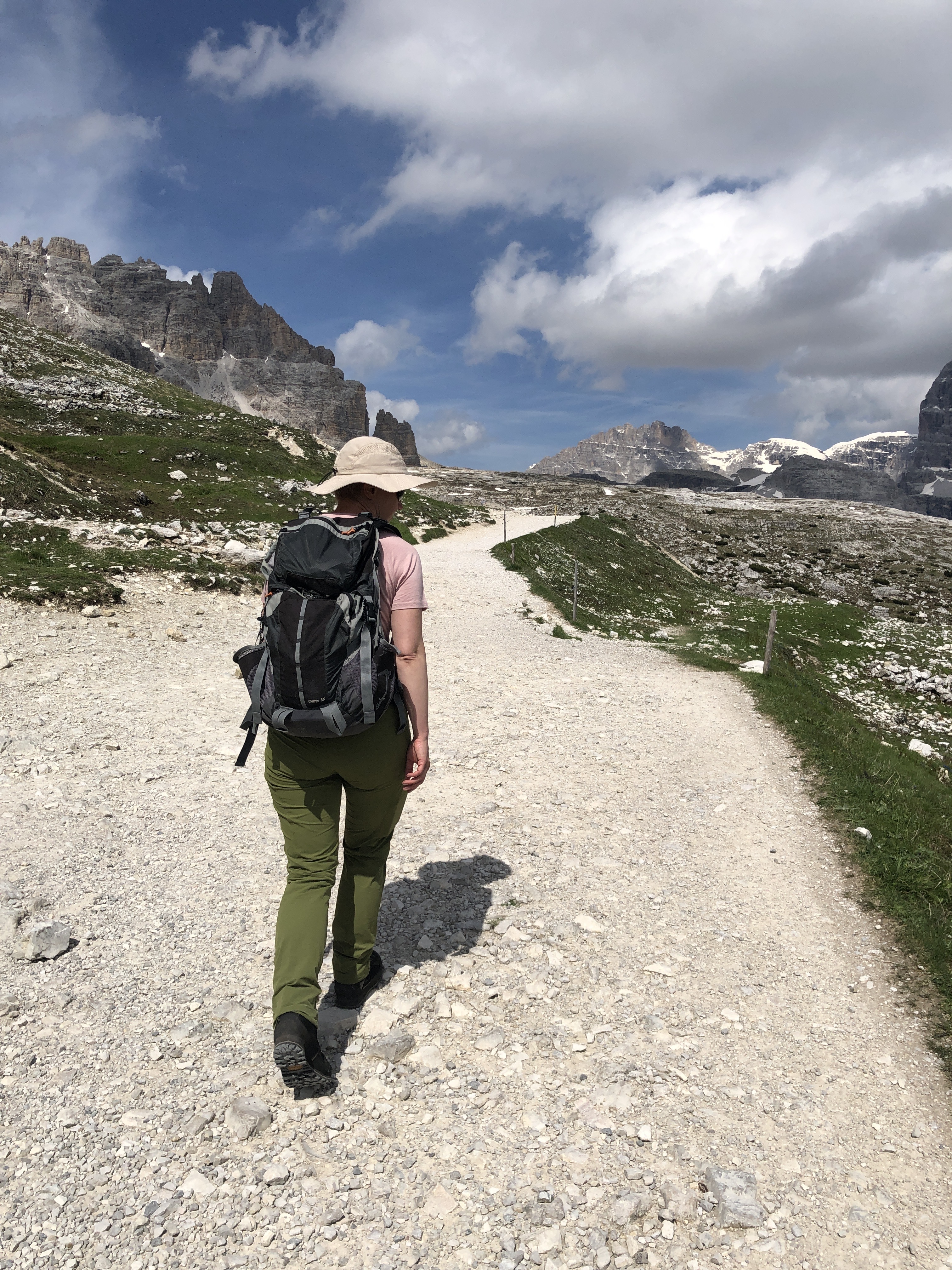
Bonus photo by Ingrid:

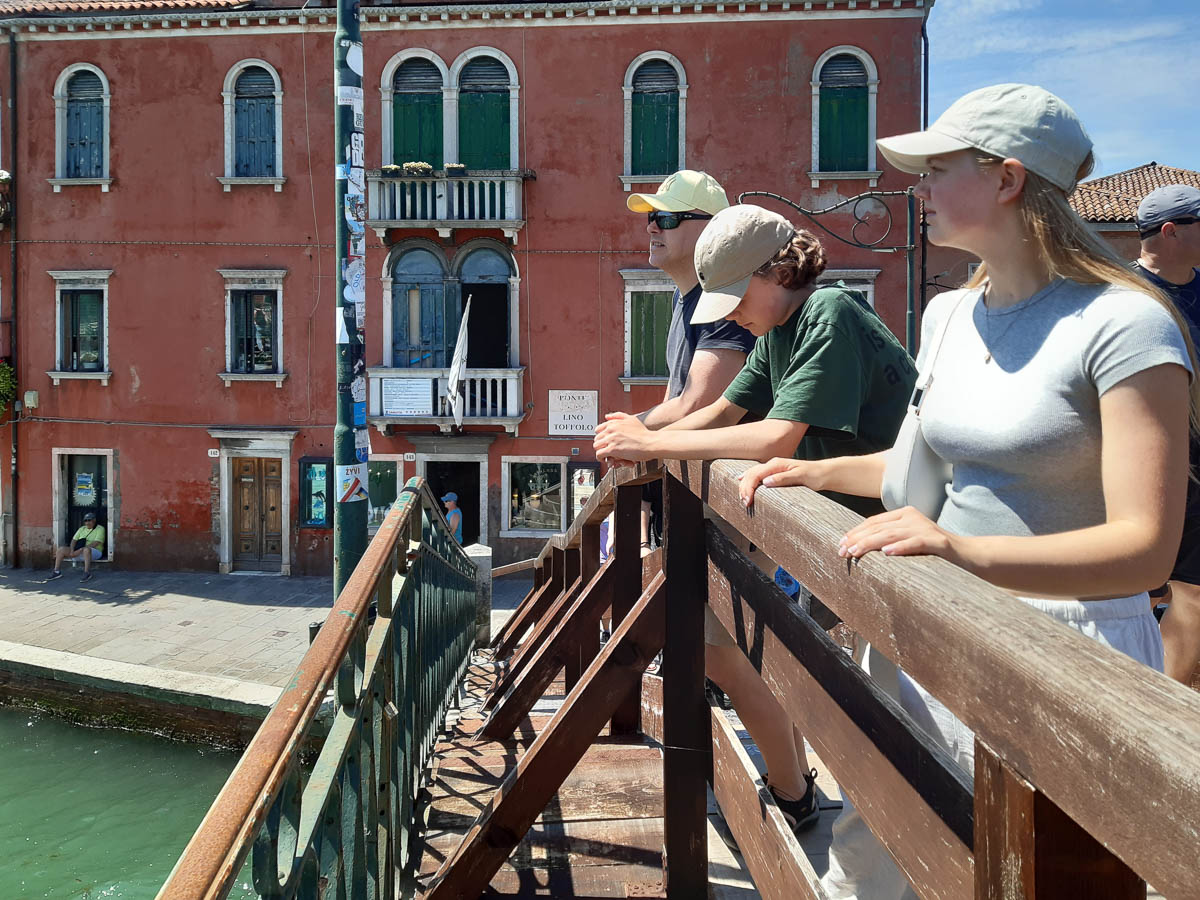
Today we took the boat to the island of Murano, with its glassworks.

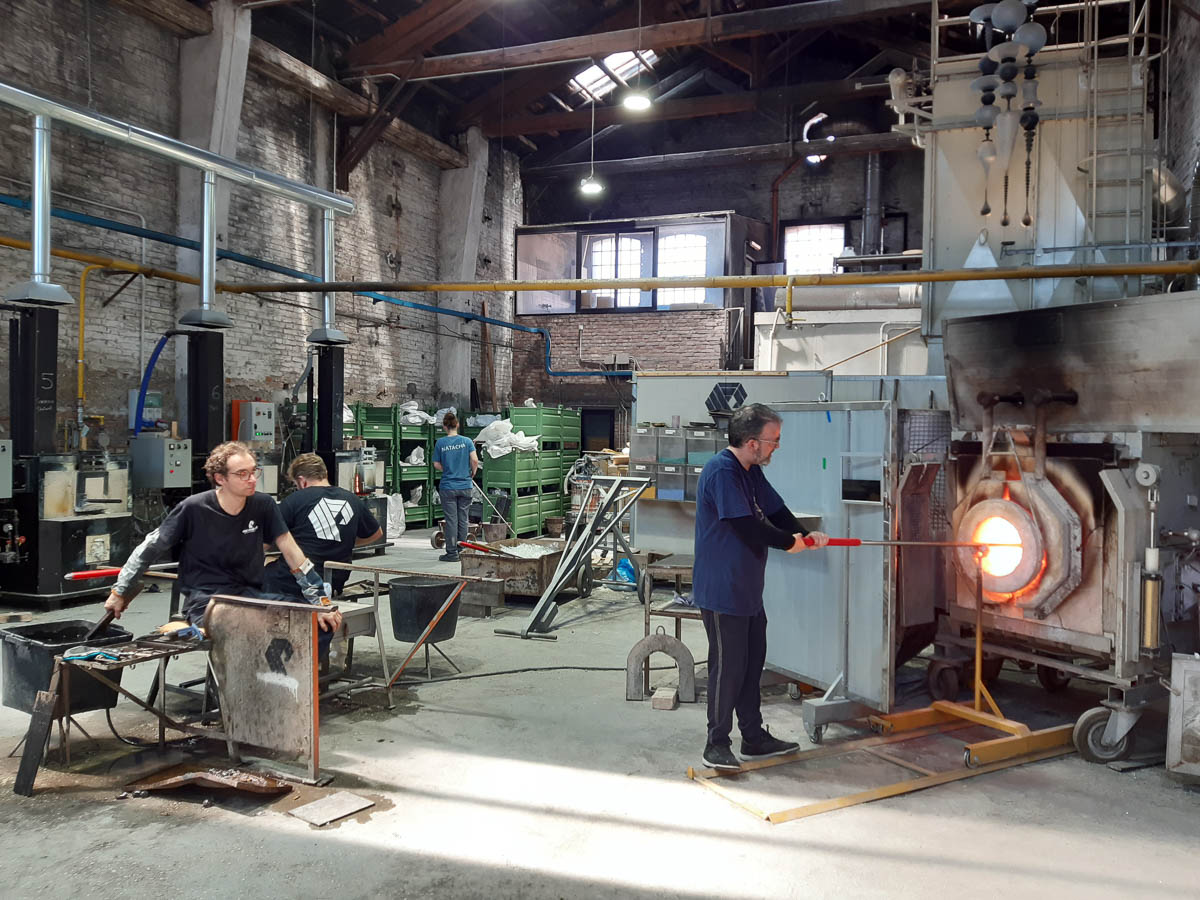
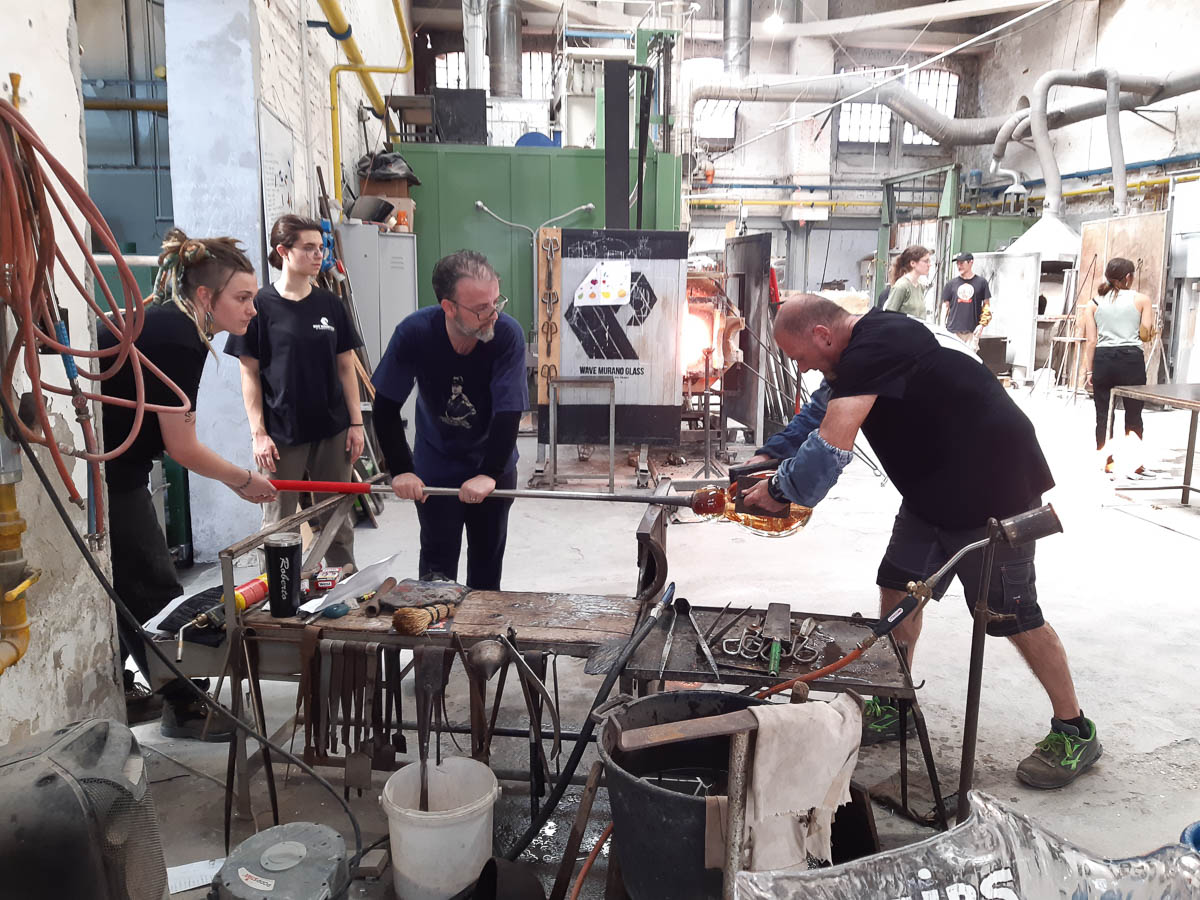
After some initial aimless wandering, we picked one of the workshops to visit. Wave was a wonderful place.

They do offer tours, but there was also the option of just hanging around in one corner of the workshop and watching the glassblowers at their work. This was far more interesting than a more formal tour would have been. It was fascinating to see how all the different steps of manipulating the blob of glass led to the final product. Several times we thought we knew what effect a step would have – and then they did something to twist it to something completely unexpected.


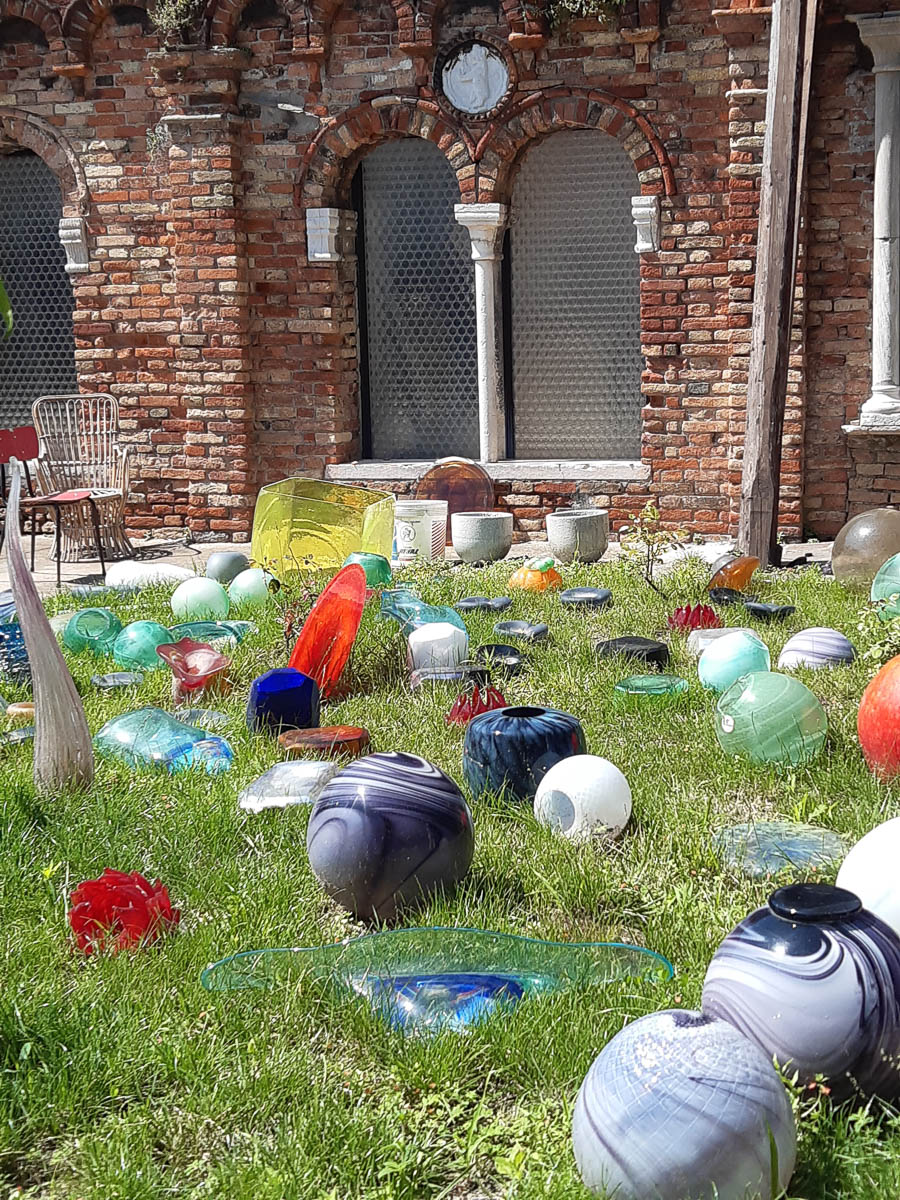
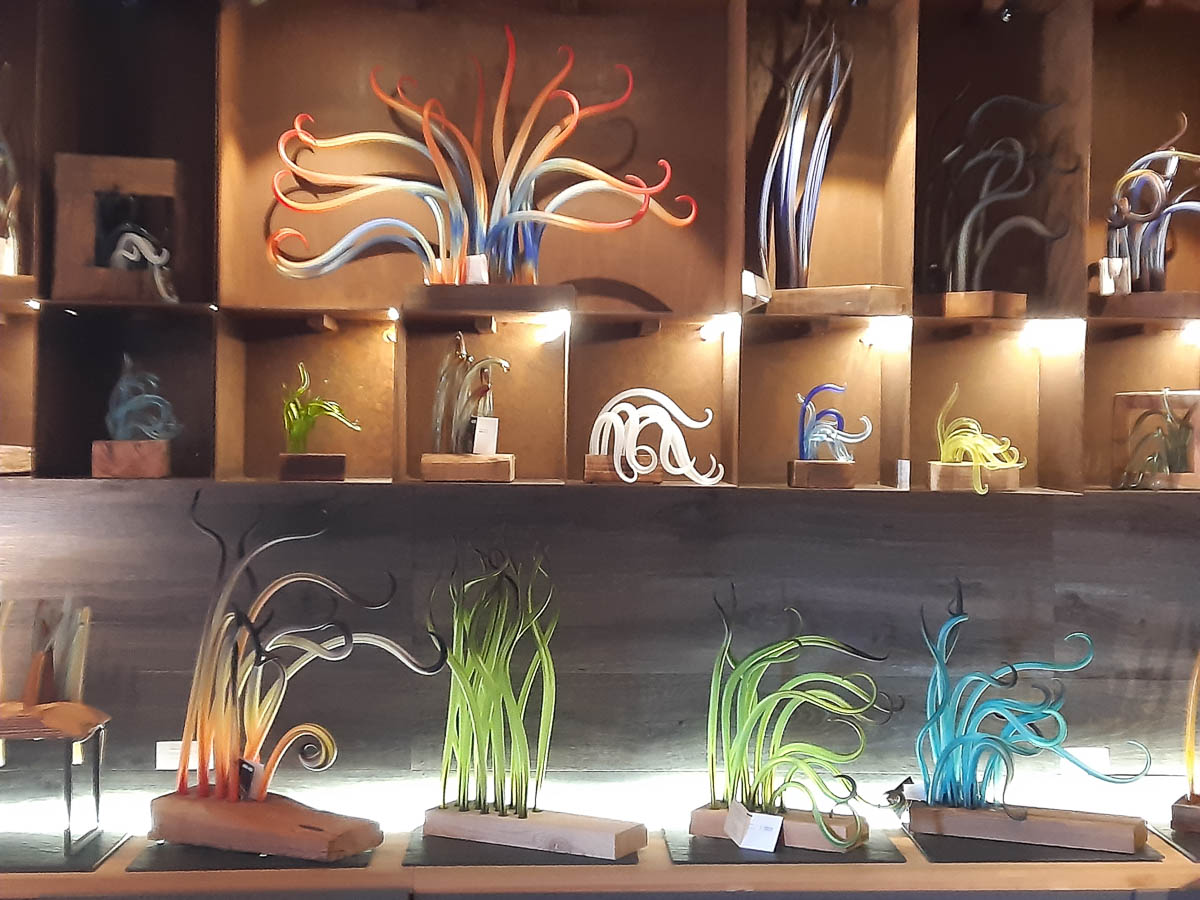
Another amazing workshop displayed seaweed glass sculptures by Davide Penso. If I was rich enough to have more rooms in my house than I knew what to do with, I wouldn’t mind having something like this in my home.

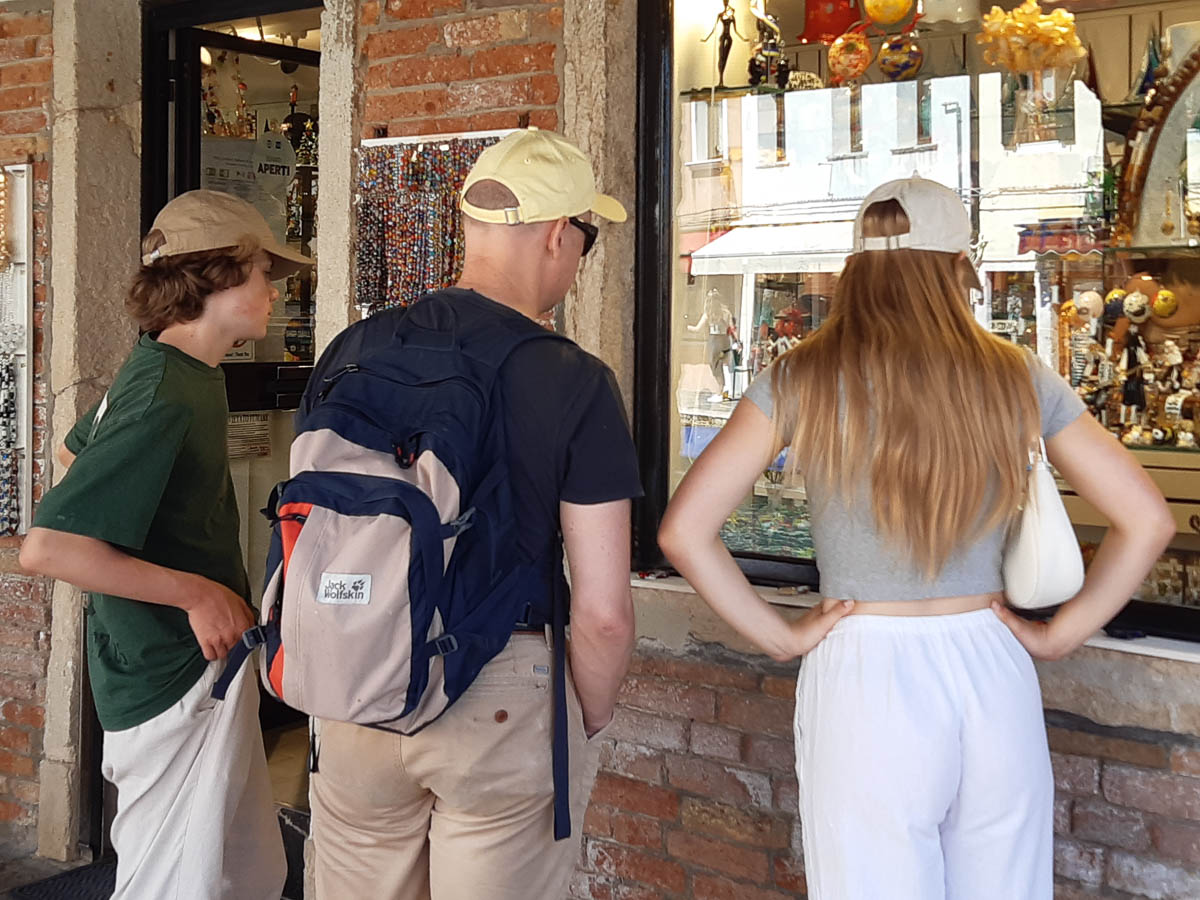
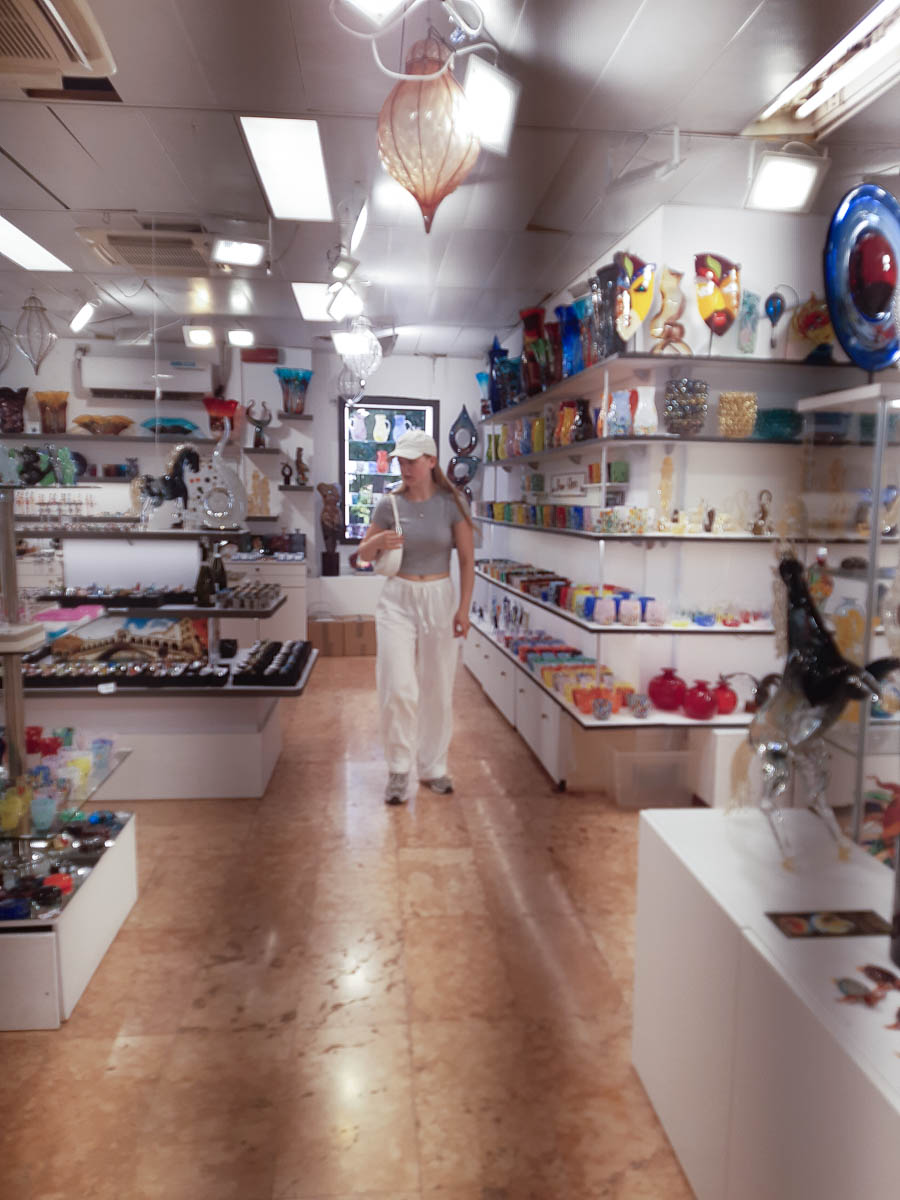
That’s not going to happen, but we did want to bring some small glass item home with us from Murano. There was a lot of choice, but at the same time many of the shops seemed to sell copies of the same kind of things, with less variety than I had expected. I guess people come here with specific expectations when it comes to design and style.


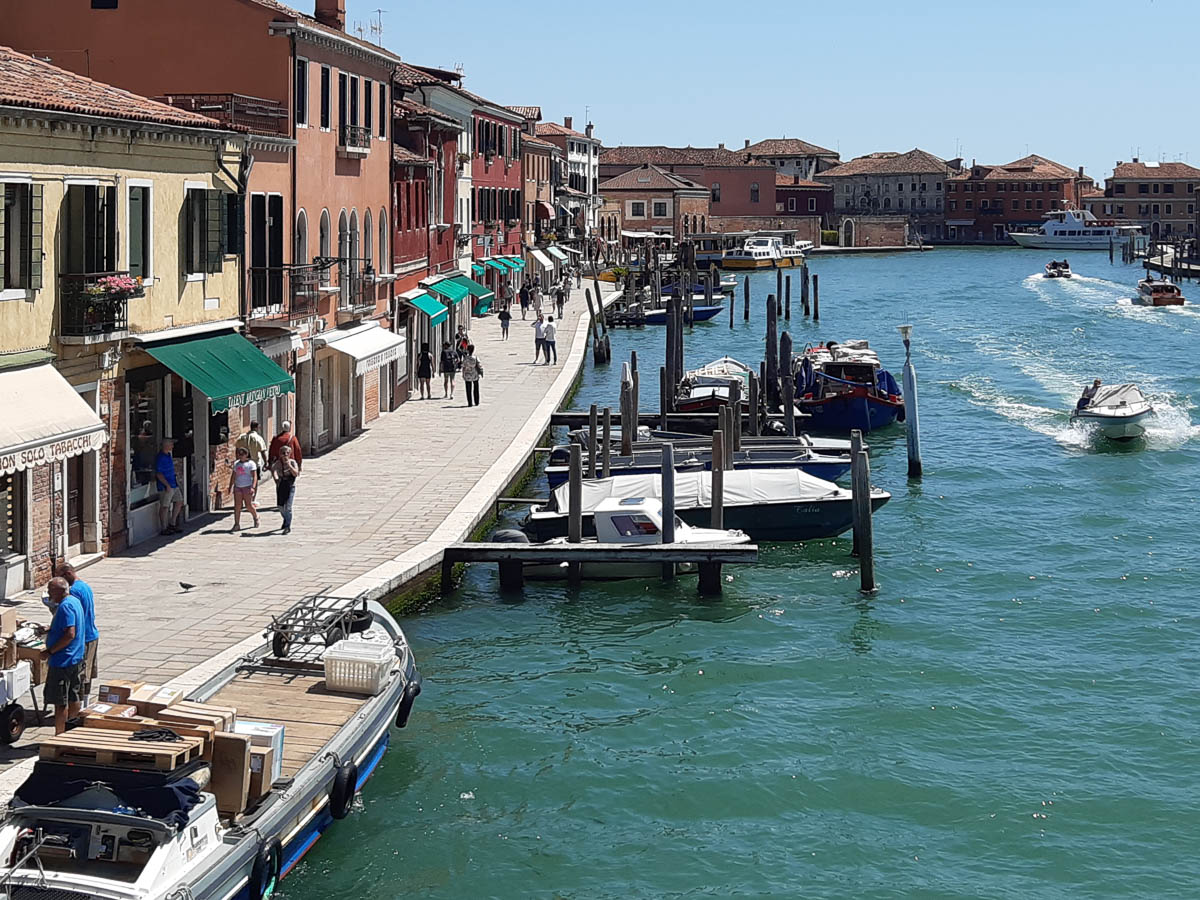
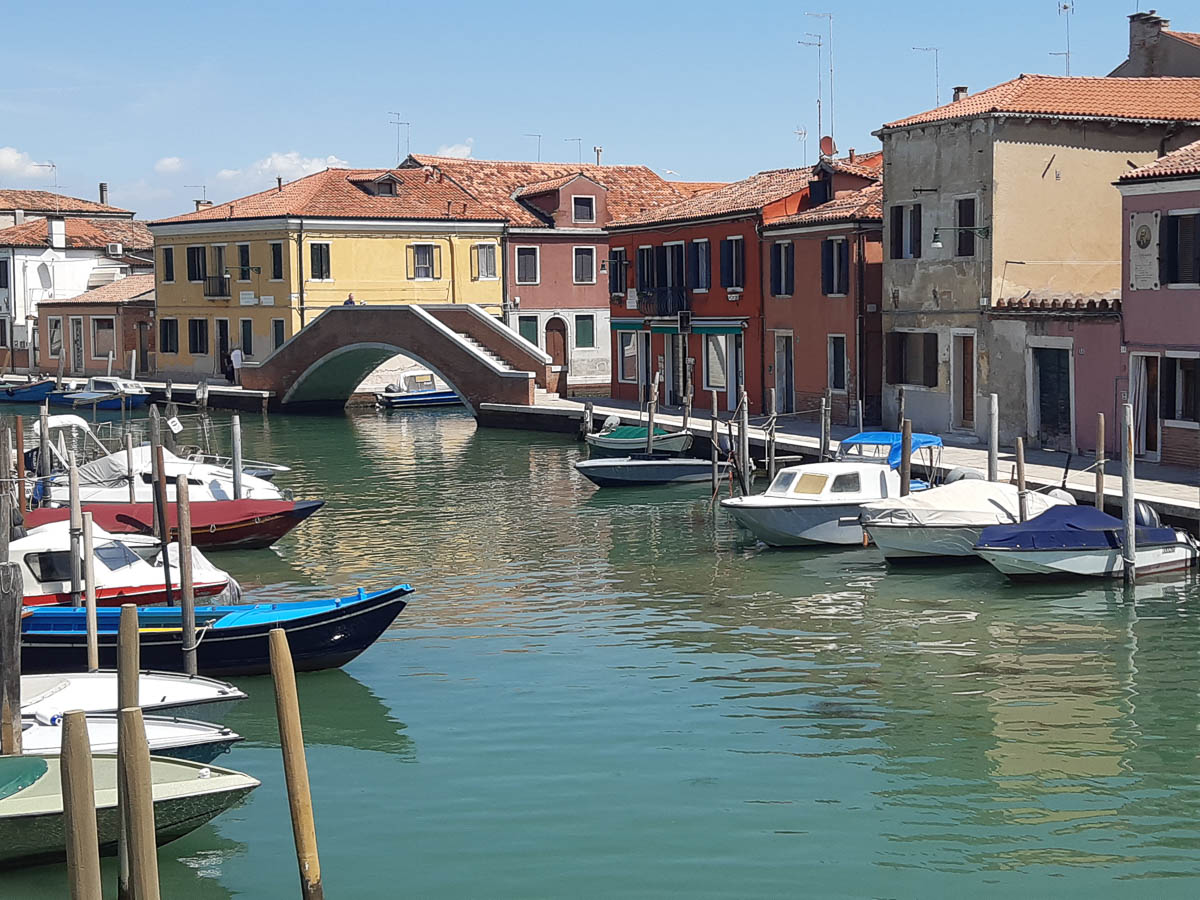
Aside from the glassworks, Murano seemed more residential and everyday than the main island of Venice.

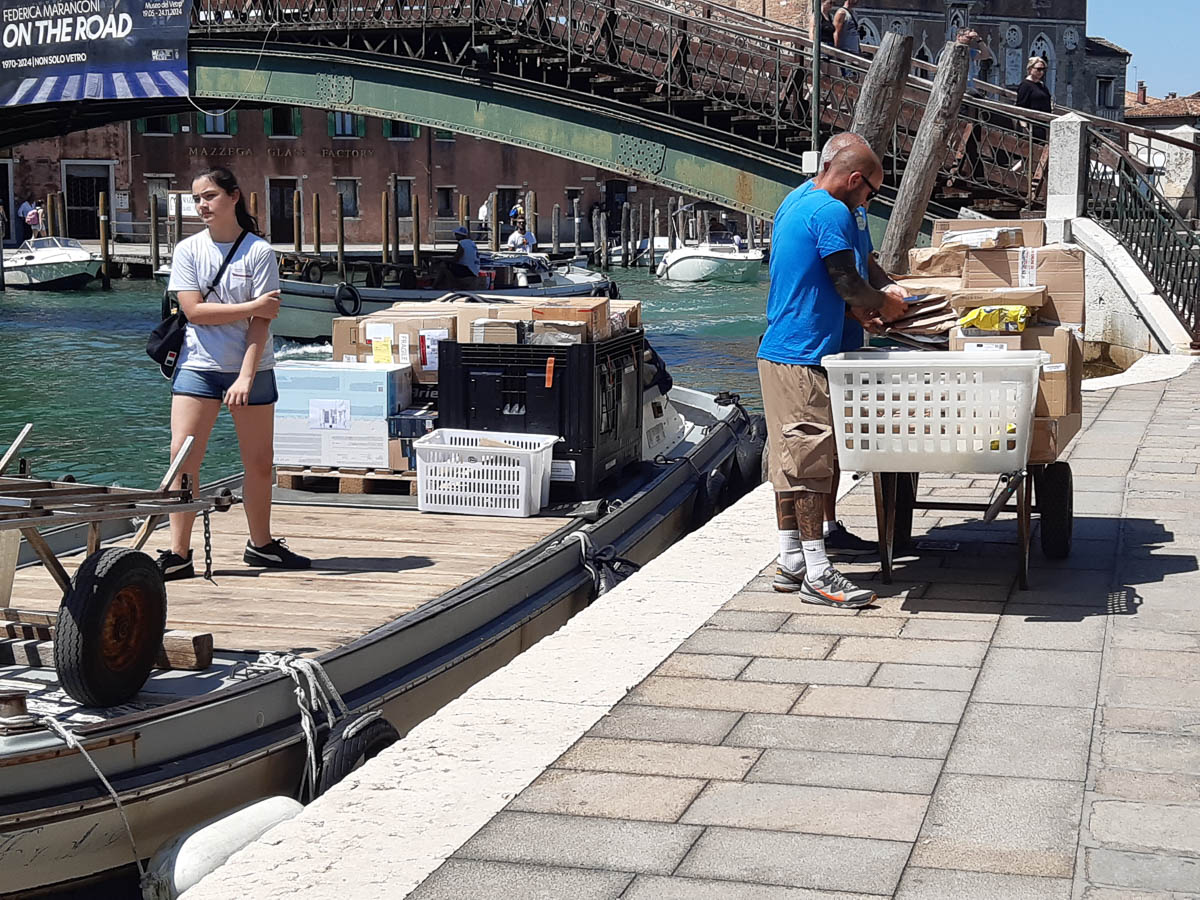
Boats everywhere, still, of course, used like cars and vans would be in any other city – such as for parcel delivery.


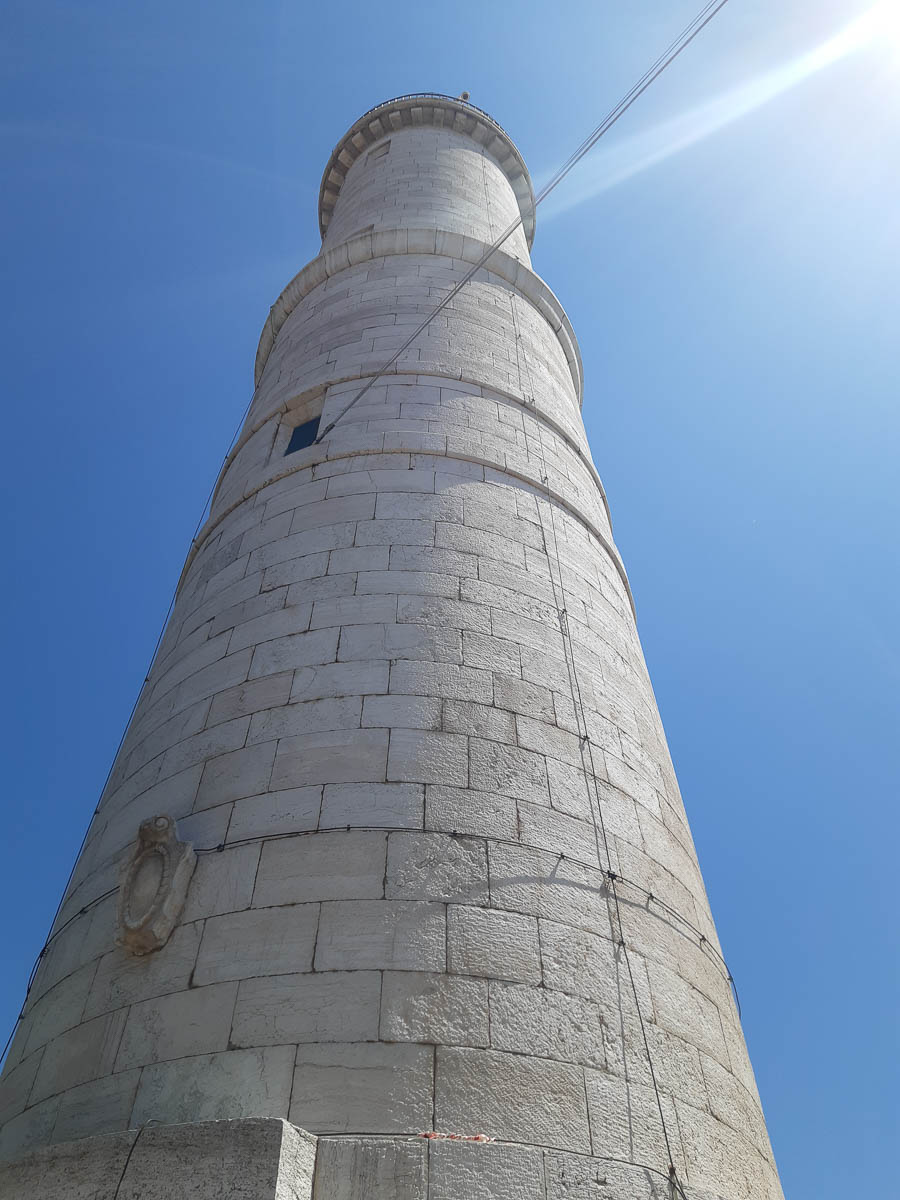
After a lovely lunch at restaurant Alla Vecchia Pescheria (where the food was, of course, served on flatware of Murano glass) we headed towards the lighthouse and the waterbus stop there.

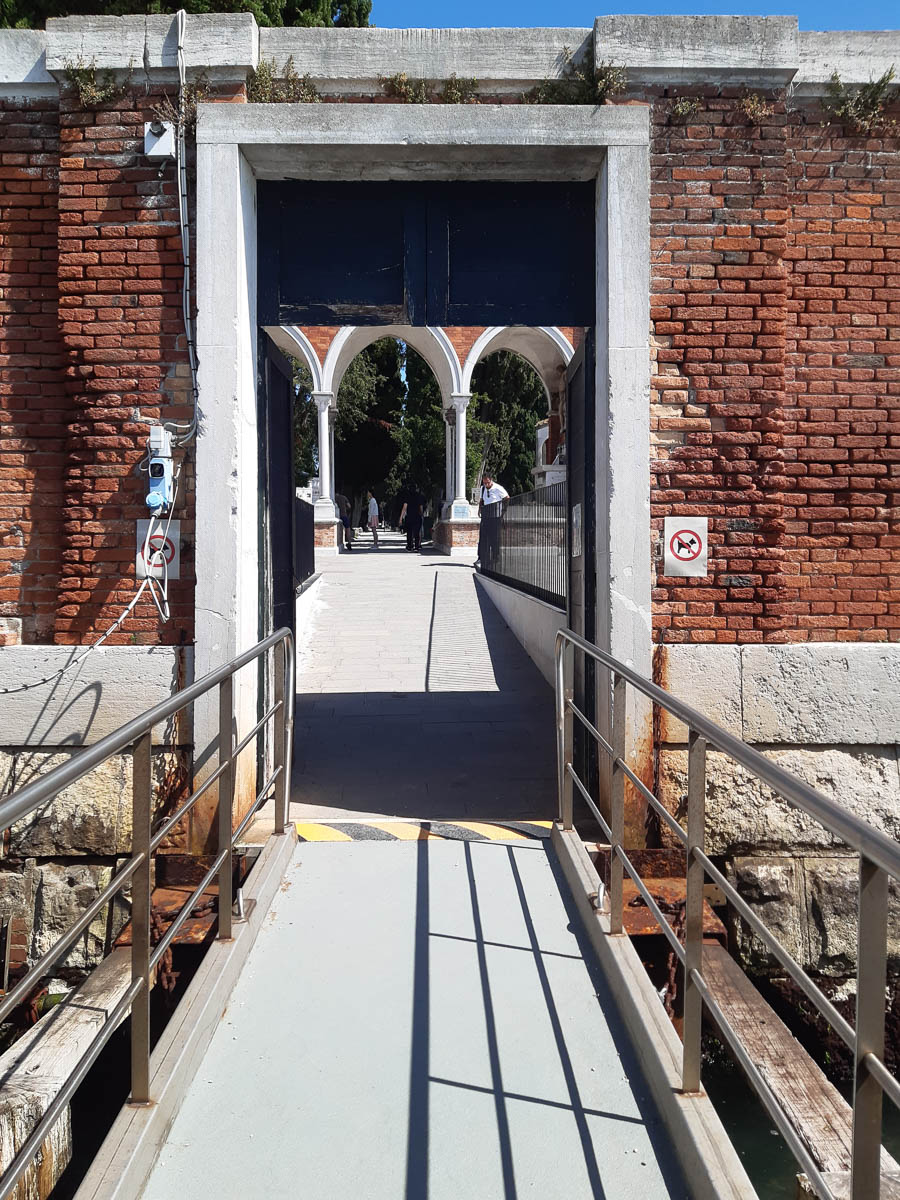
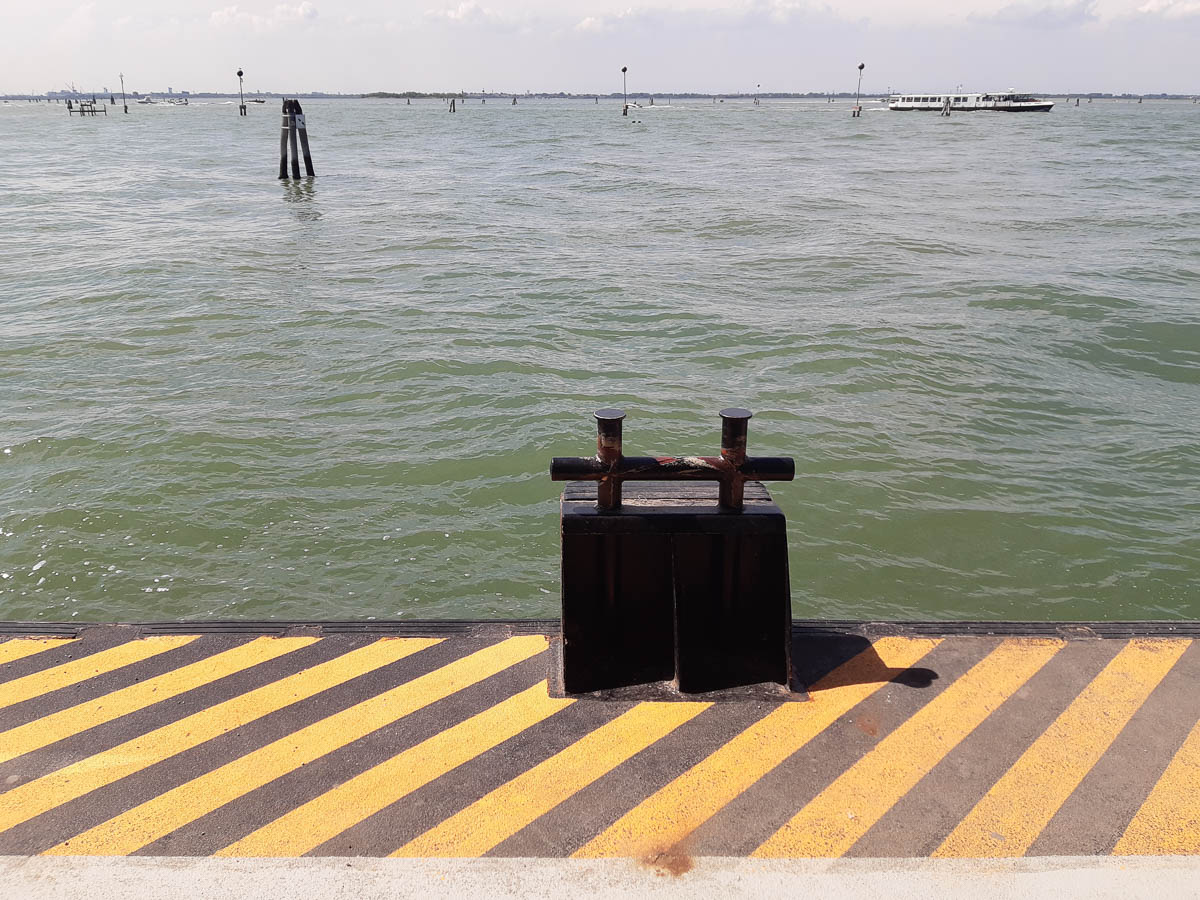
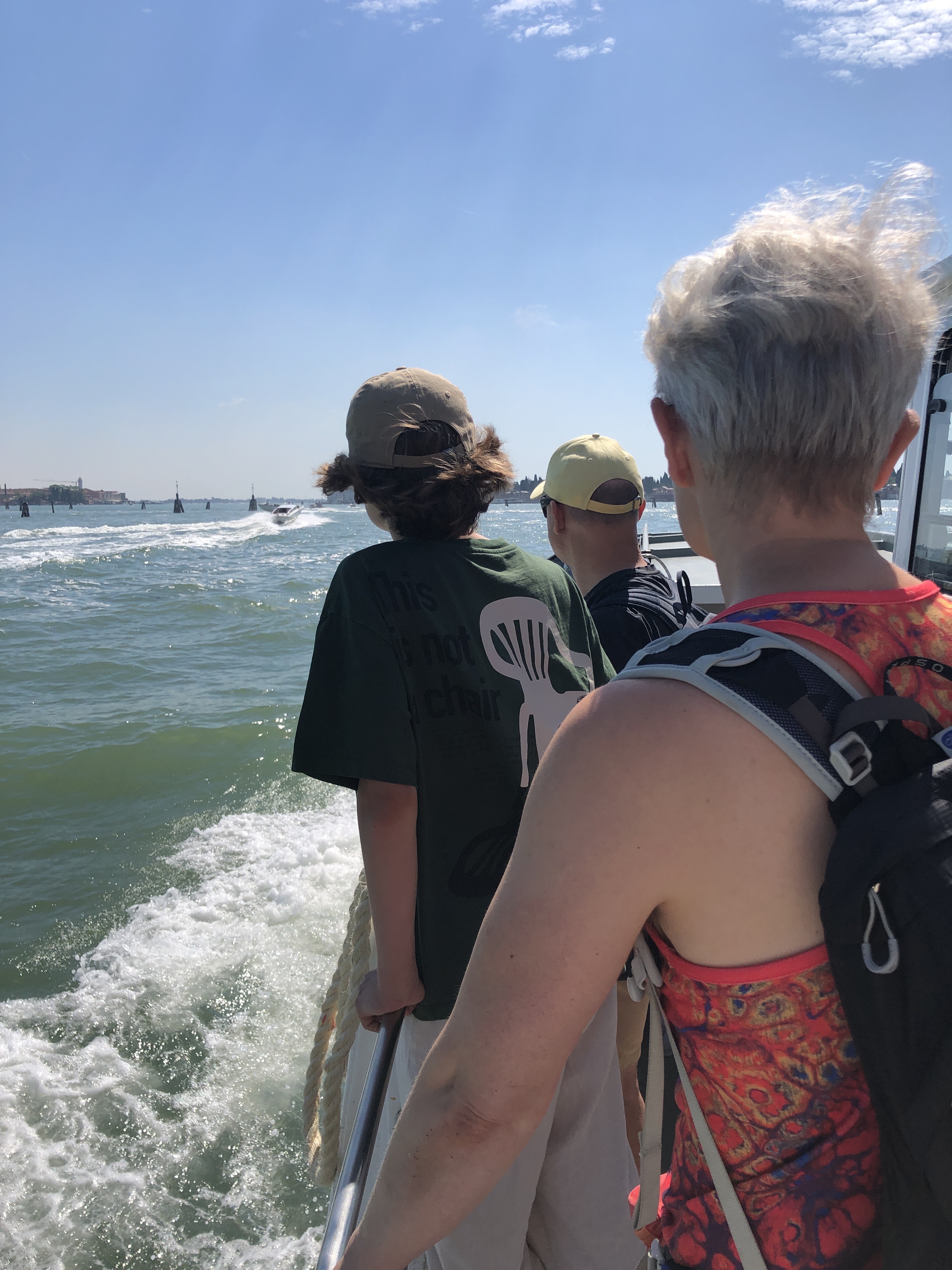
We took the waterbus to the island of San Michele for some shade and walking. The entire island is a cemetery and photography was prohibited, so I can only share a view of the entrance, and one of the waterbus quay.


The evening brought more walking, and a pretty mediocre dinner. In fact we haven’t been very impressed with the restaurants here. Lots of focus on meat, of course; difficult to find places with more than one or two vegetarian options. Salads, when offered, have oftentimes been no more than uninspired piles of ingredients – like a tuna salad consisting of a bed of lettuce, then a pile of tinned sweetcorn, and another of tinned tuna.

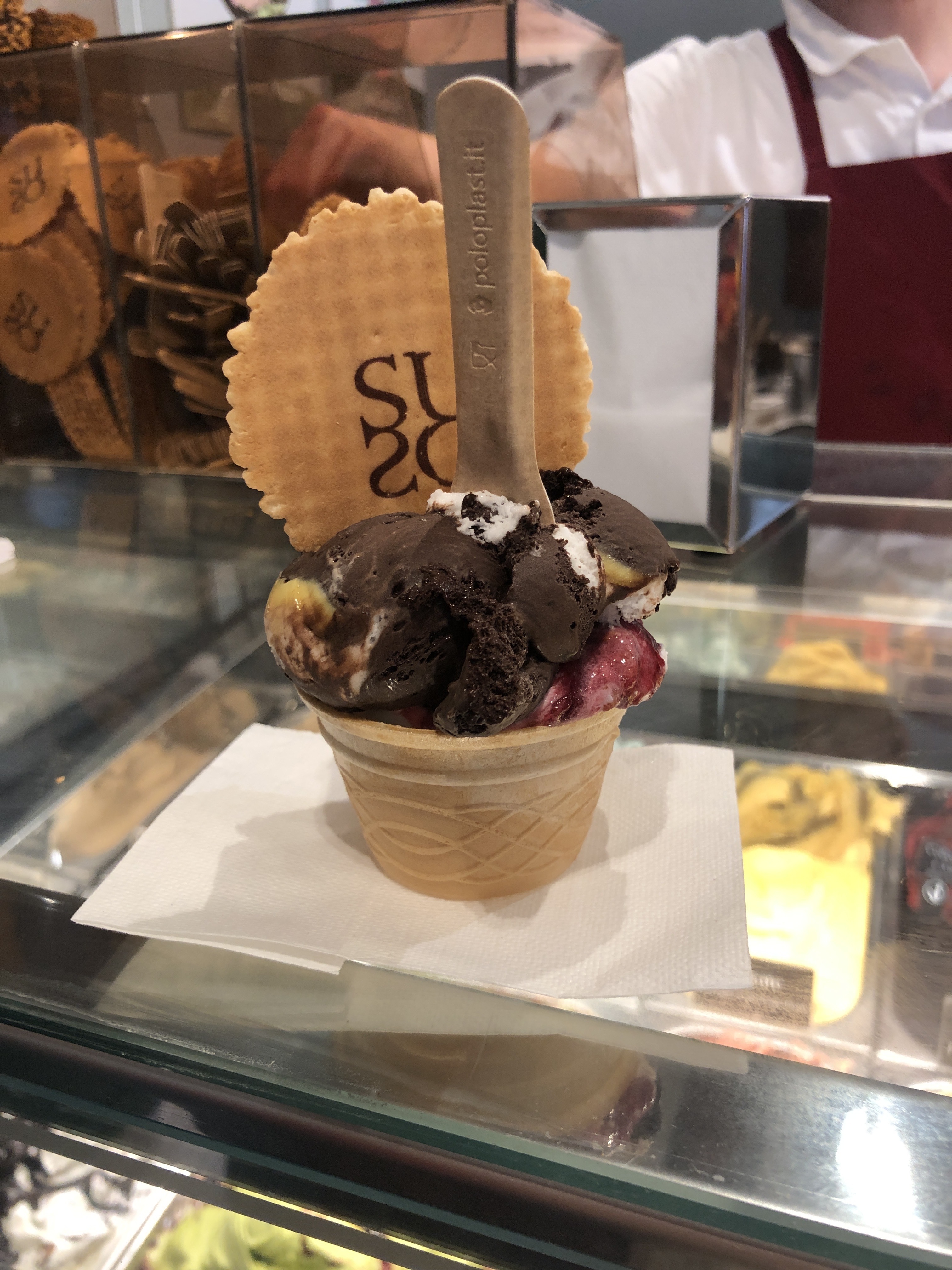
Great gelato, though! Gelatoteca Susa had a wide range of excellent ice cream, with both classical flavours and more modern ones – dark chocolate with lemon, or mango with grapefruit. I didn’t remember to take a photo, but luckily Ingrid did.

And then it was evening again.

We could certainly have entertained ourselves here for longer – museums, churches, other islands, etc – but two days did not feel too short.

Bonus photo by Ingrid:

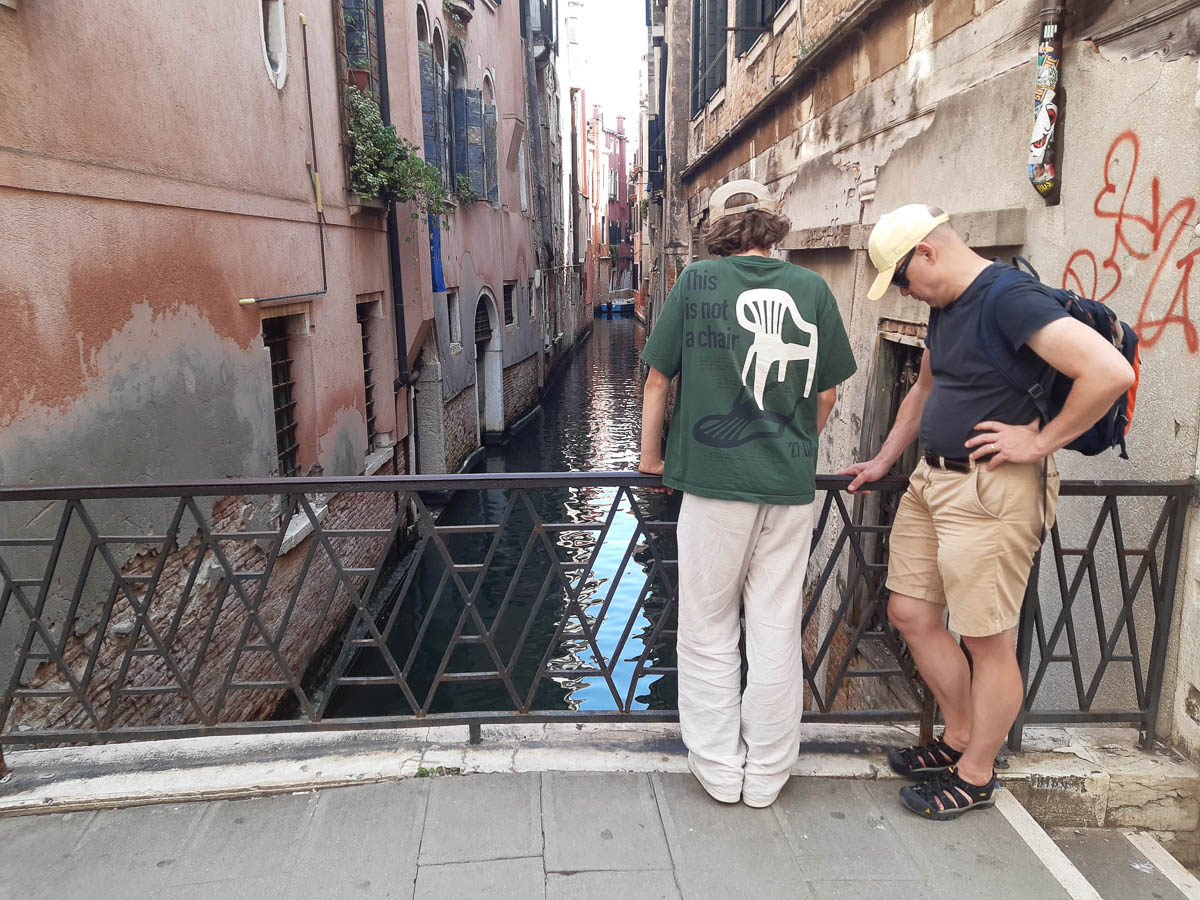
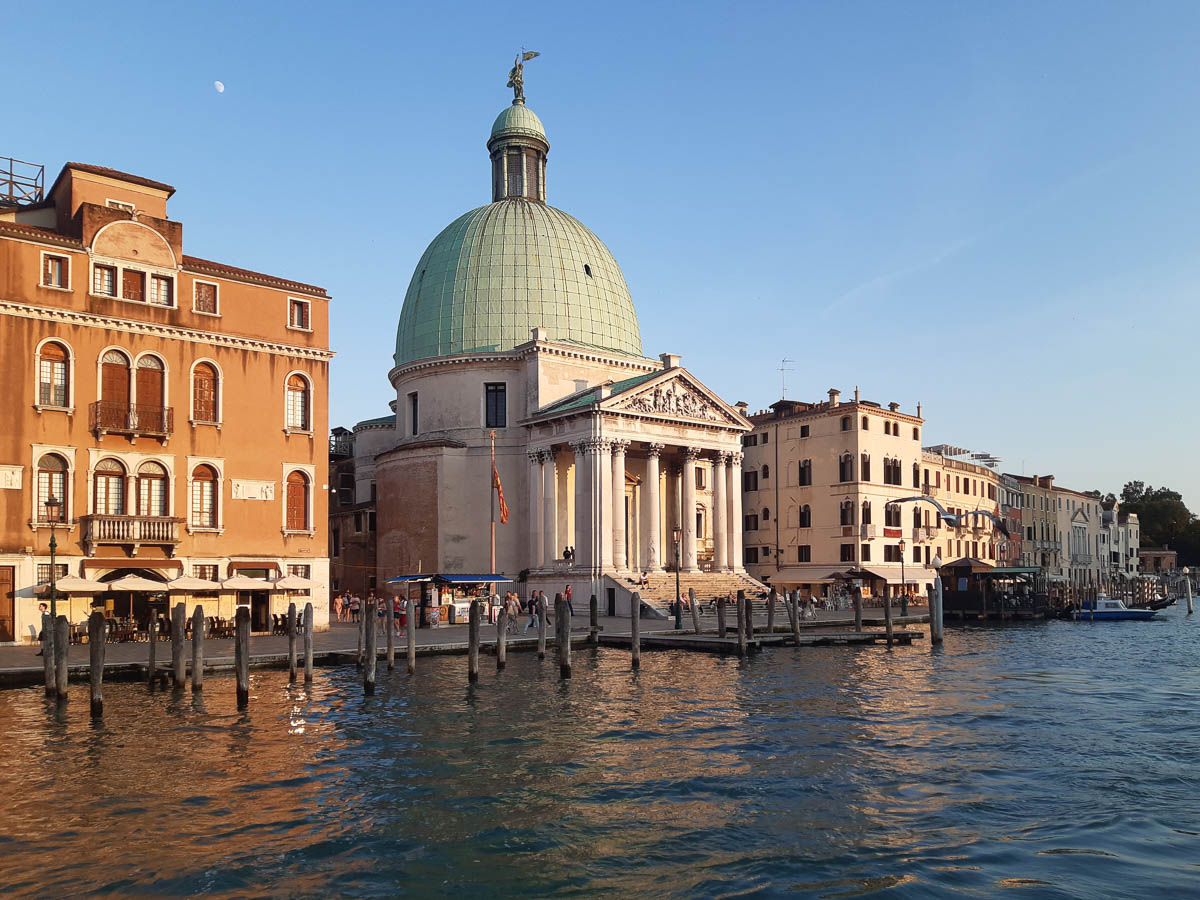
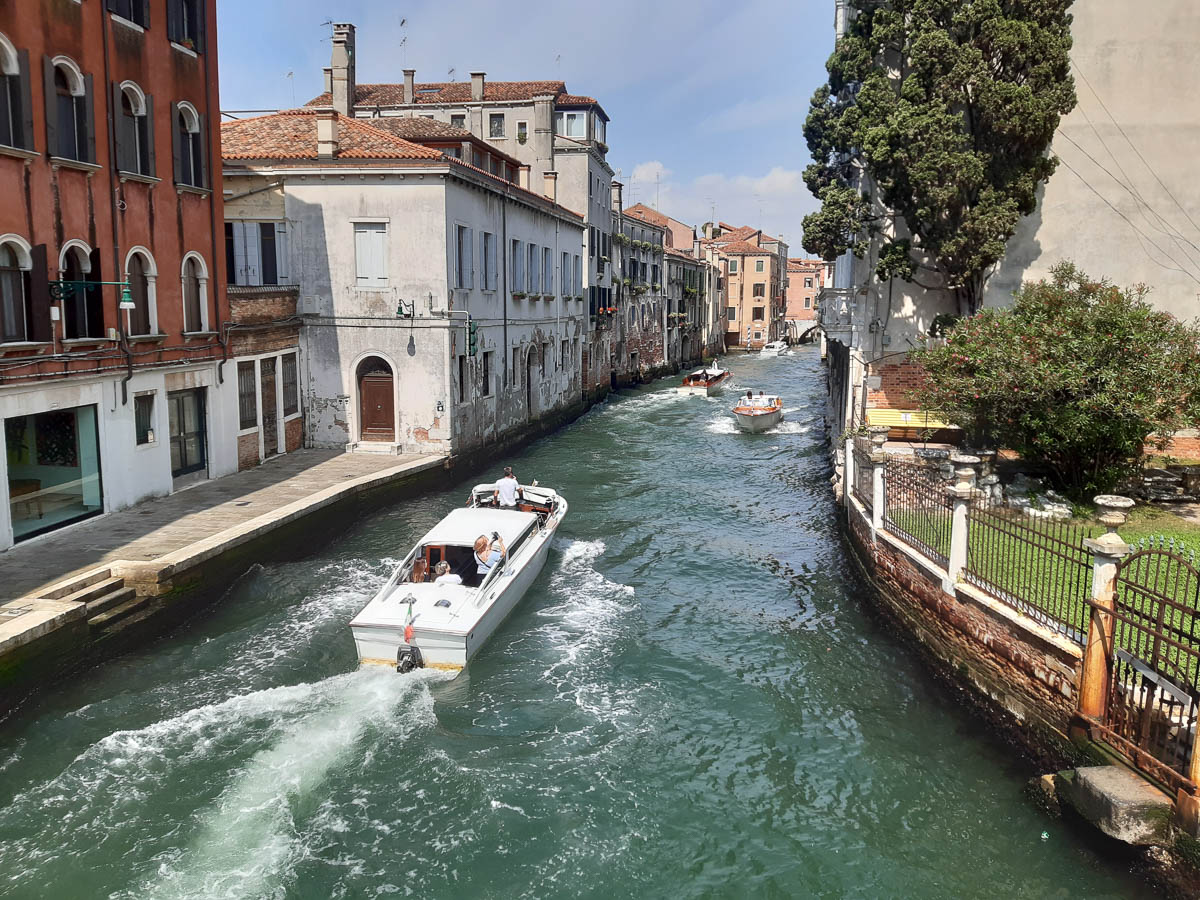
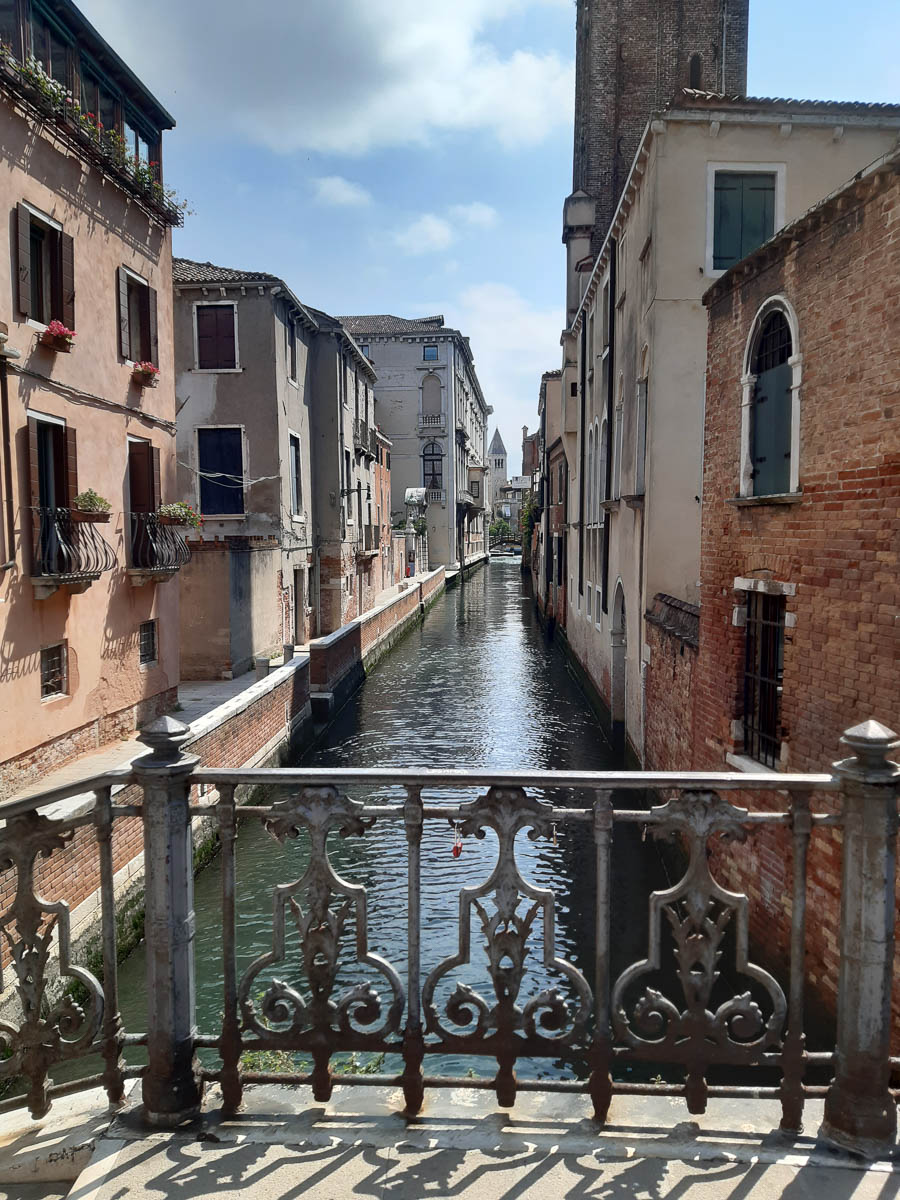
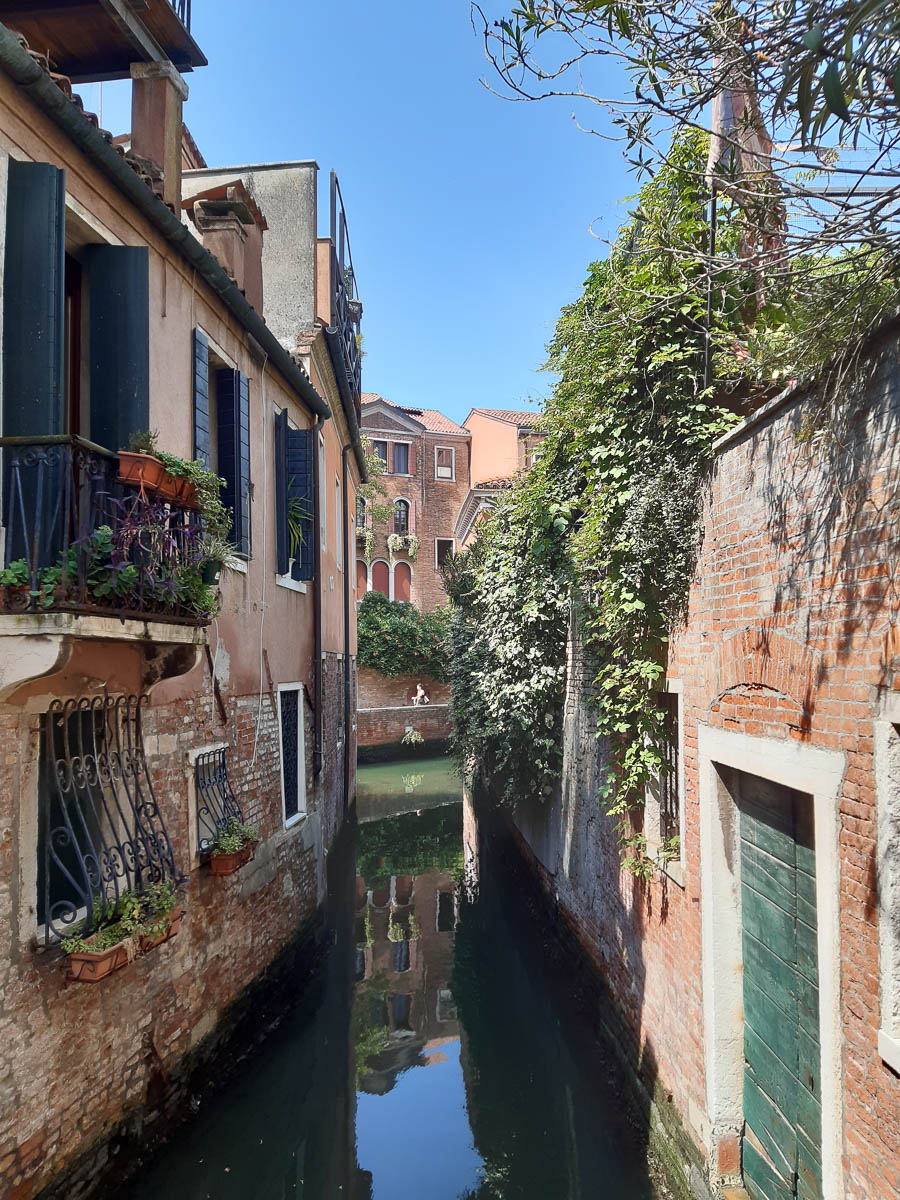
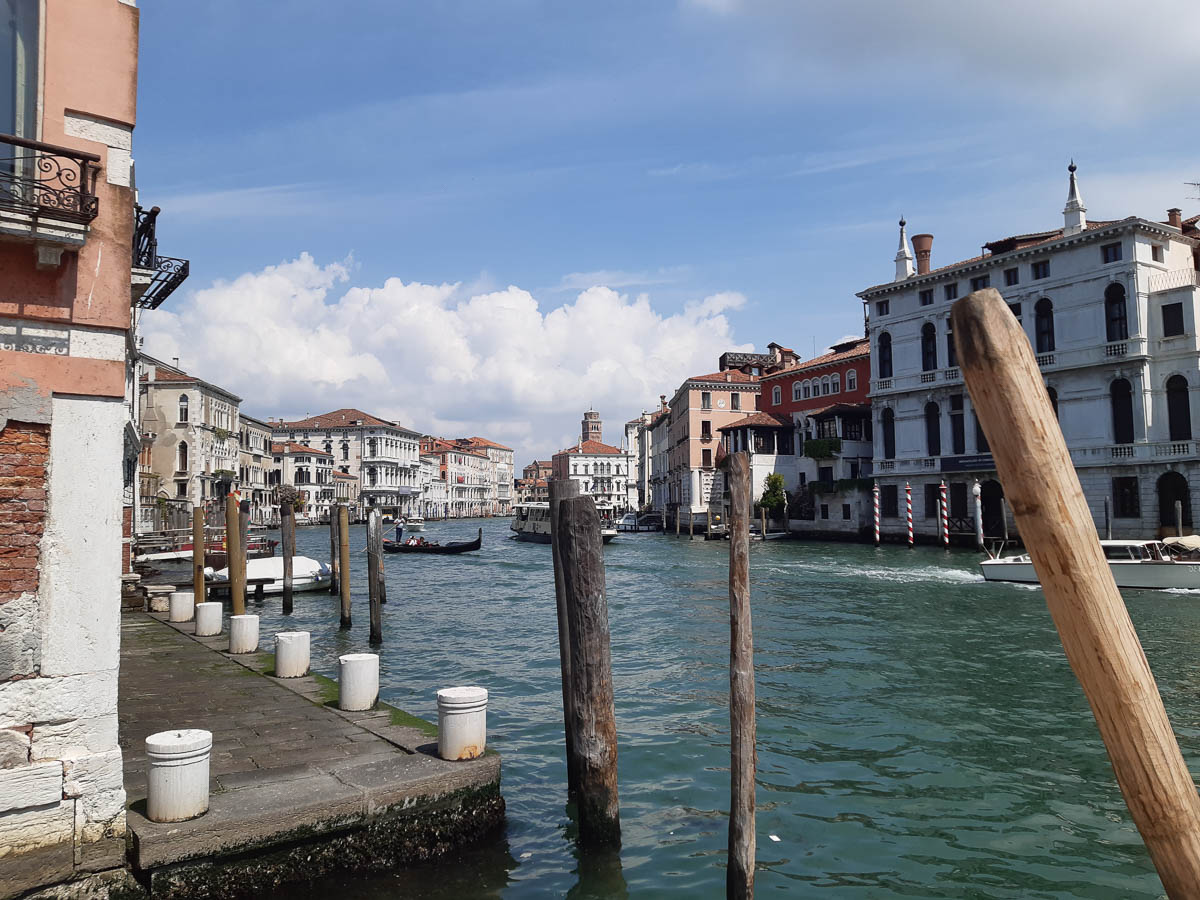
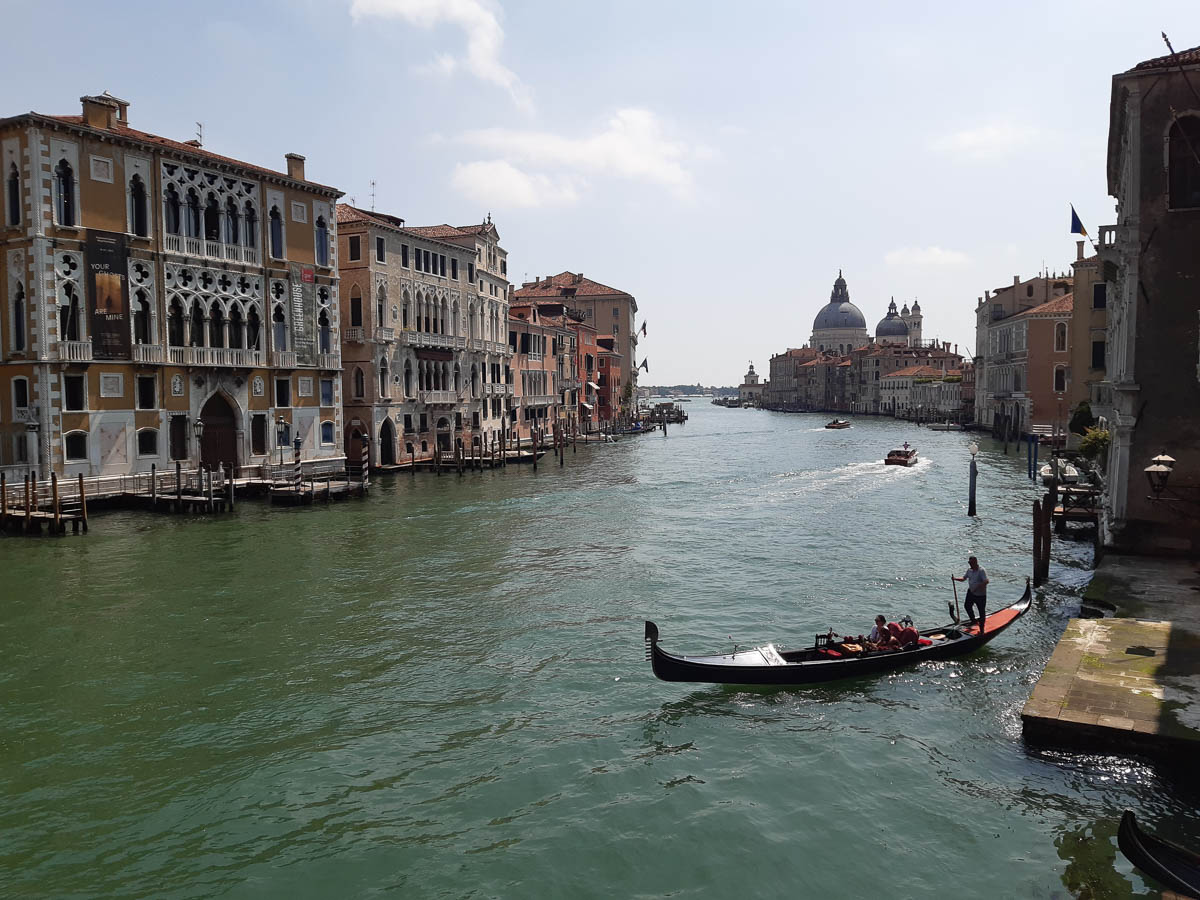
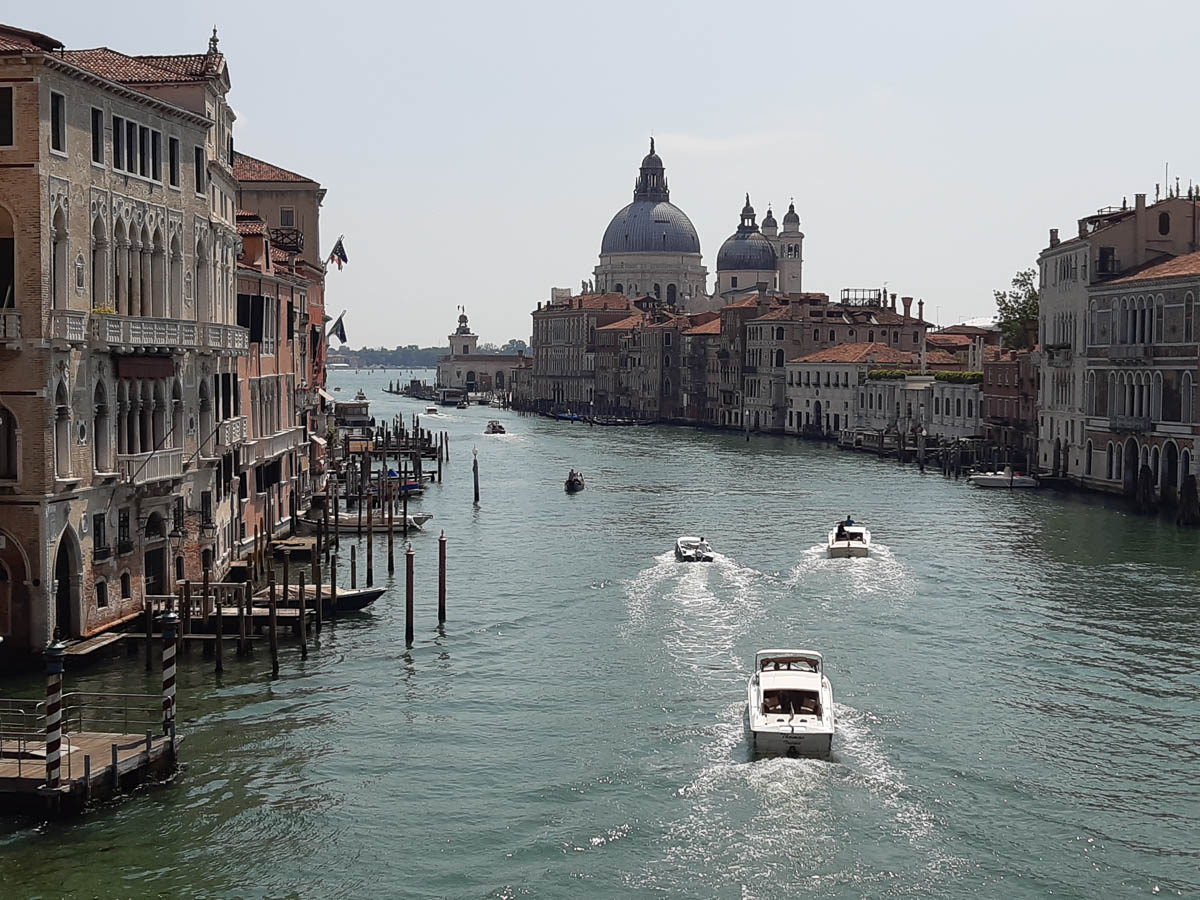
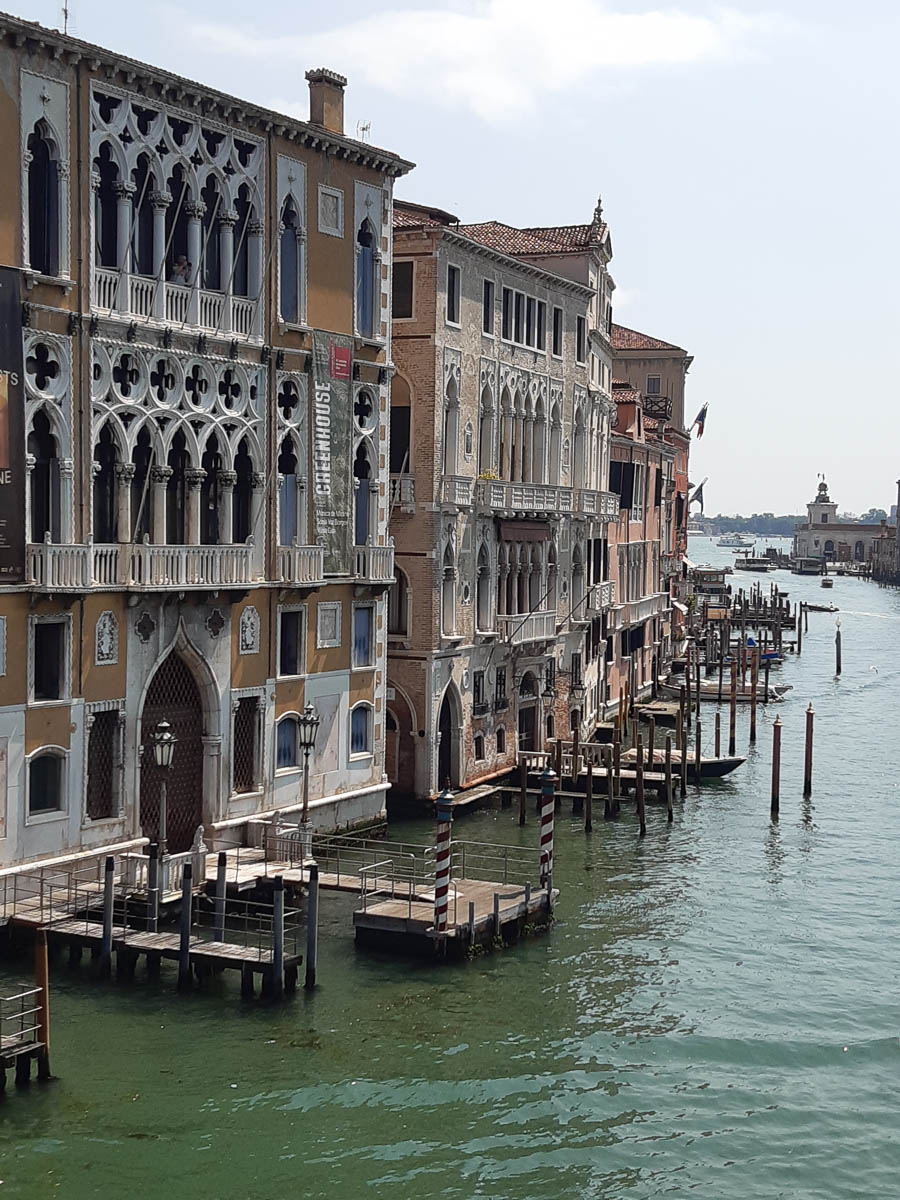
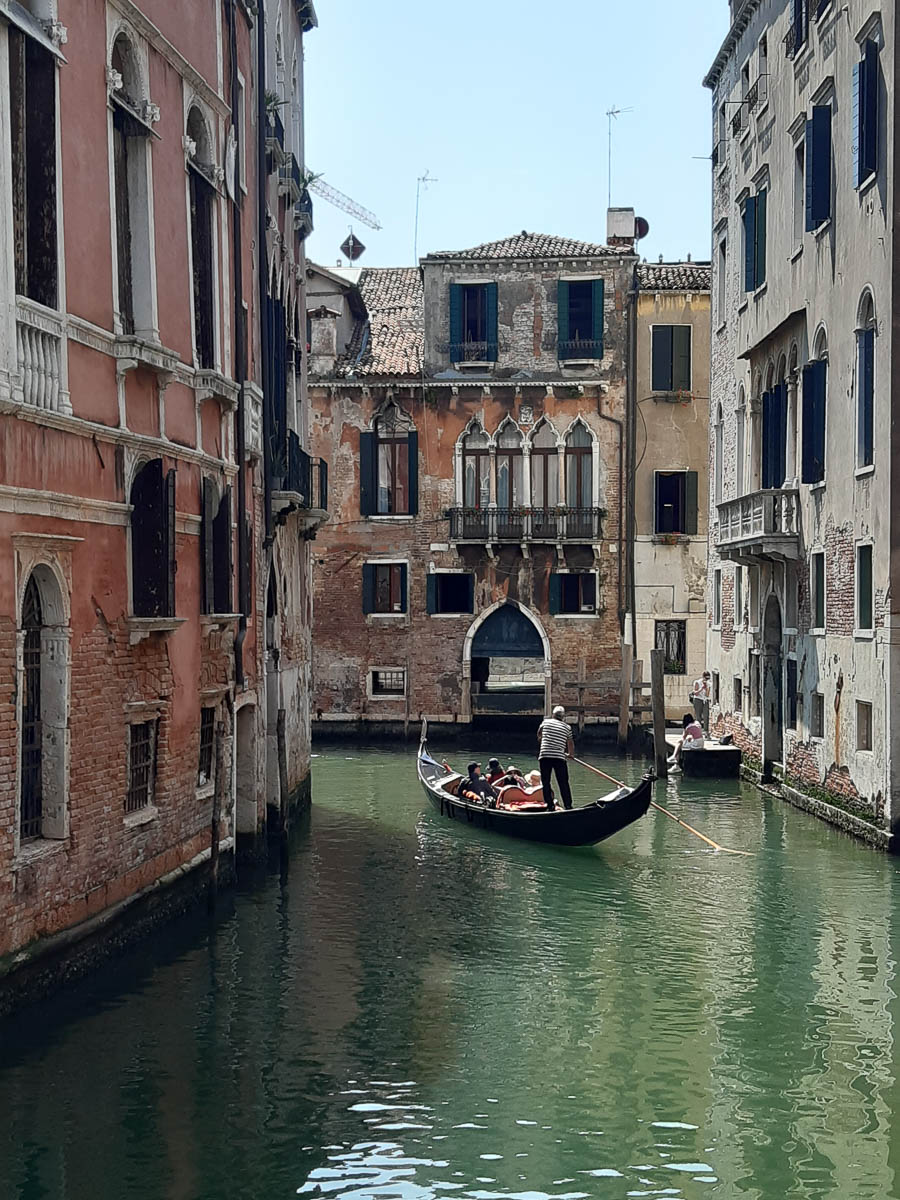
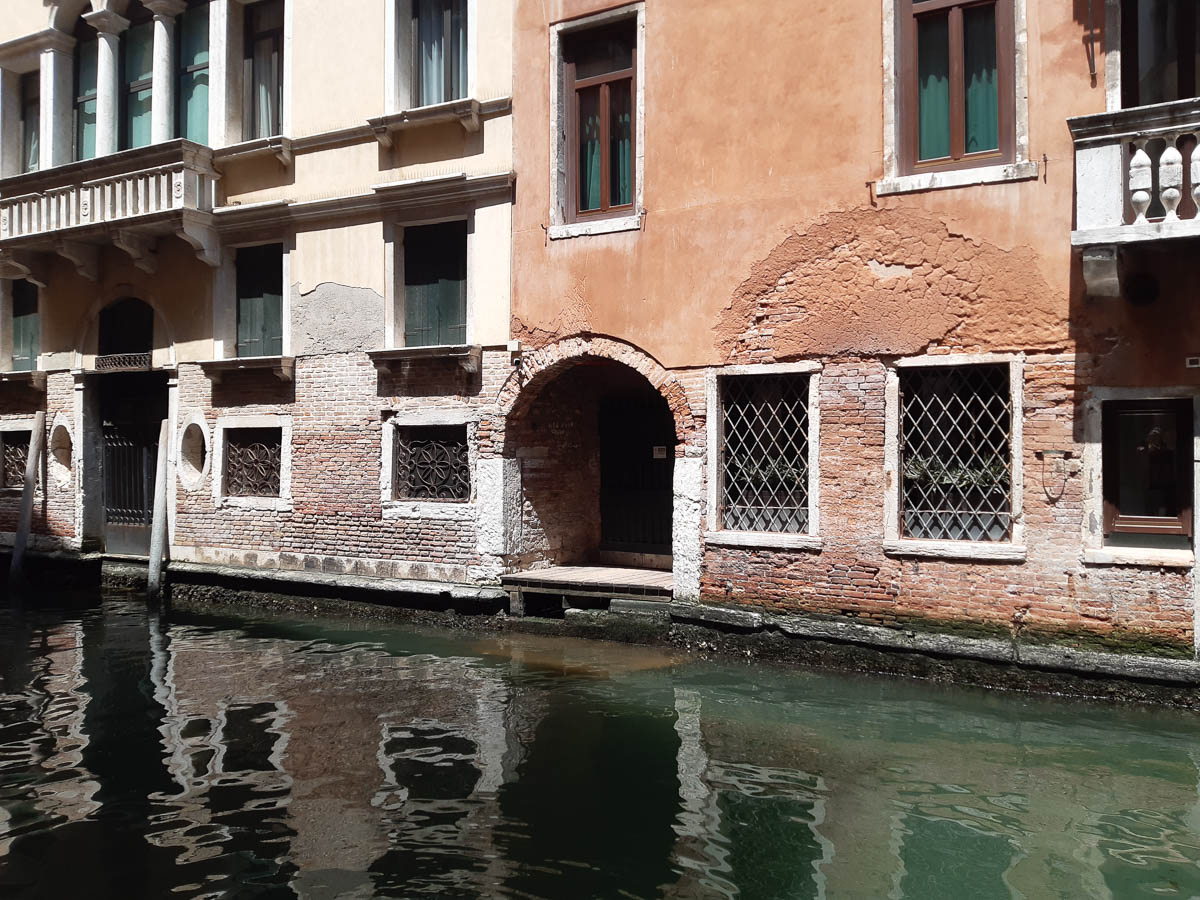
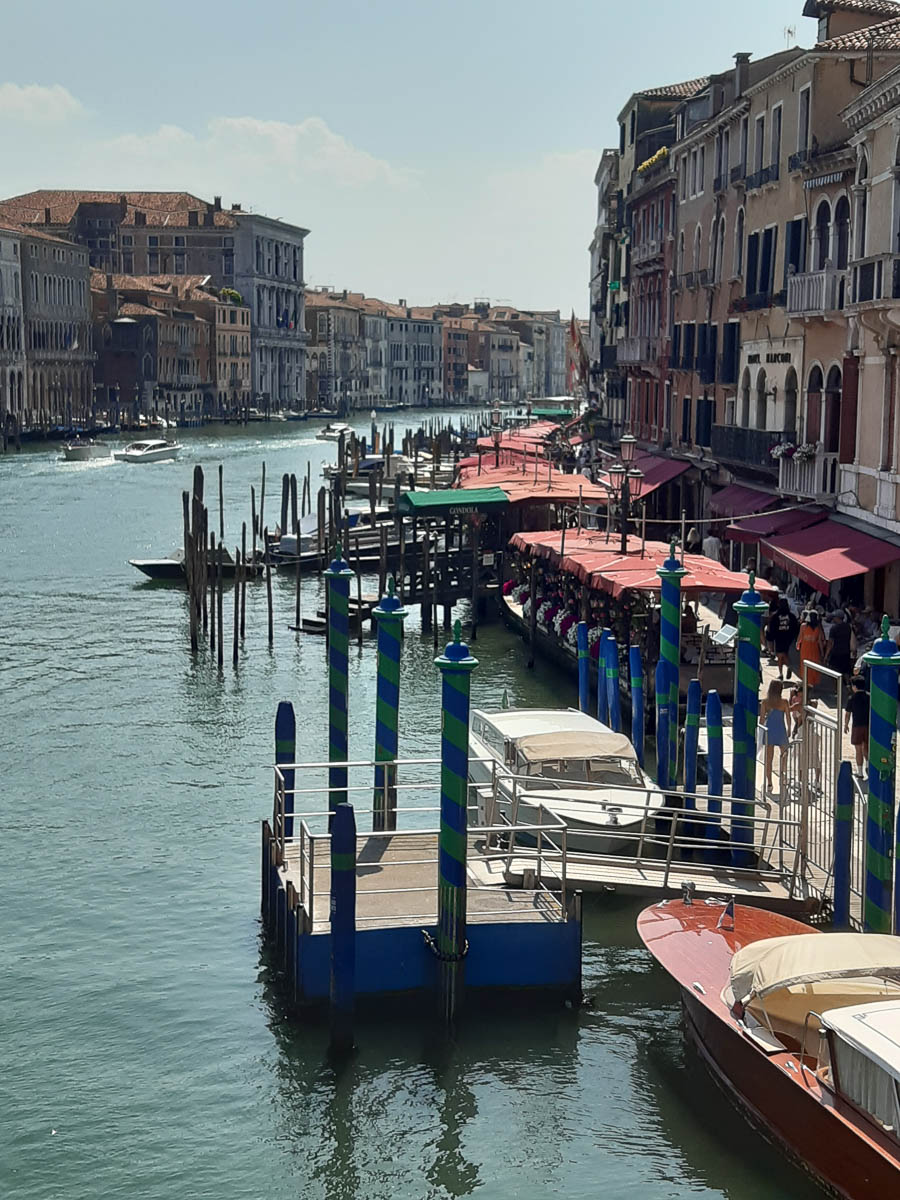
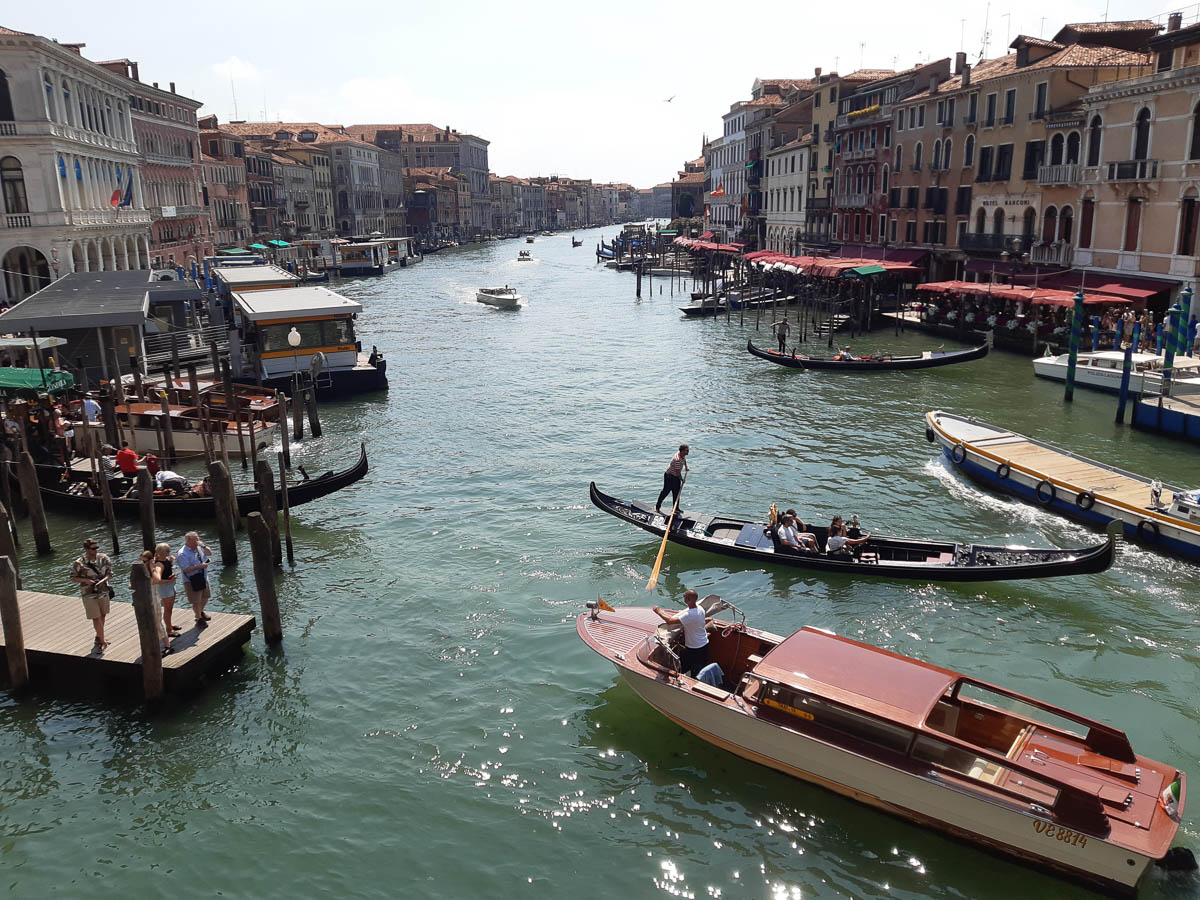
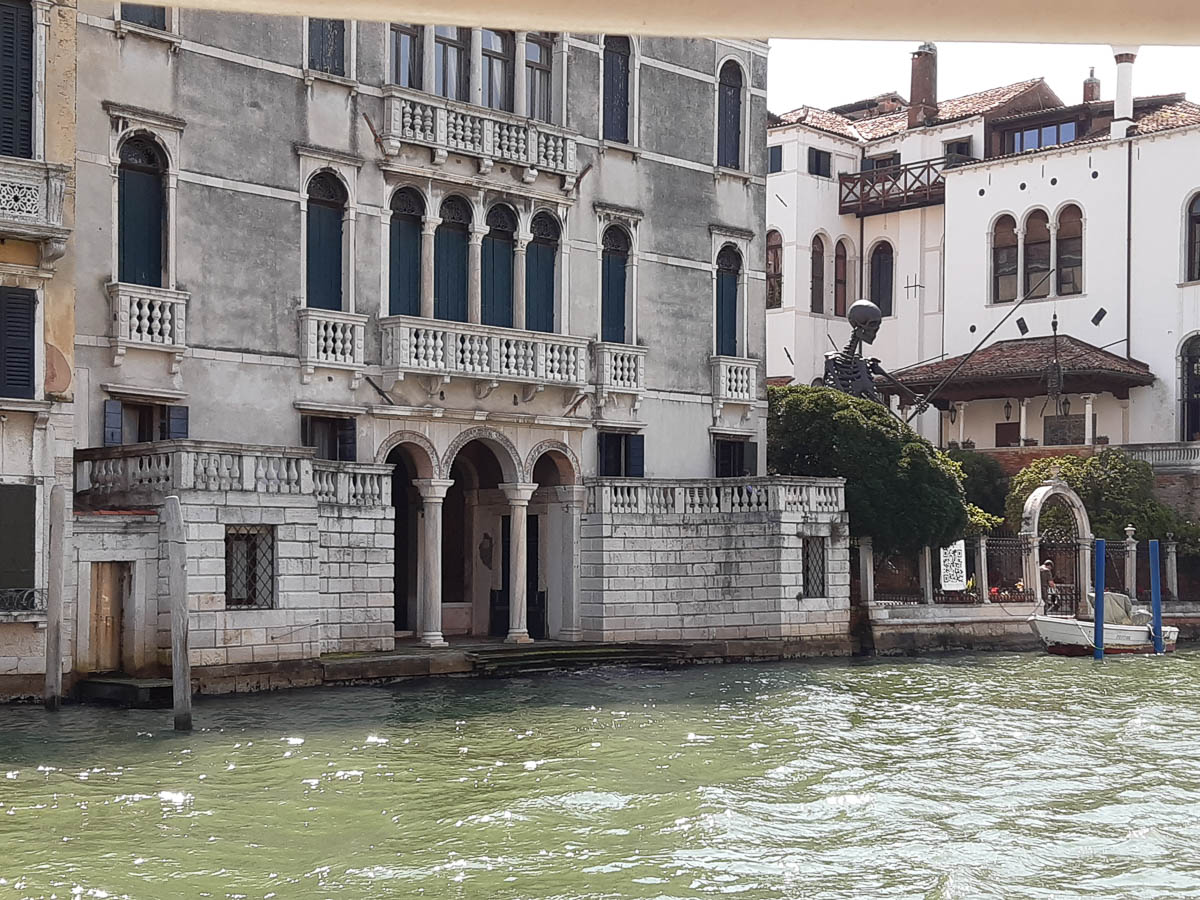
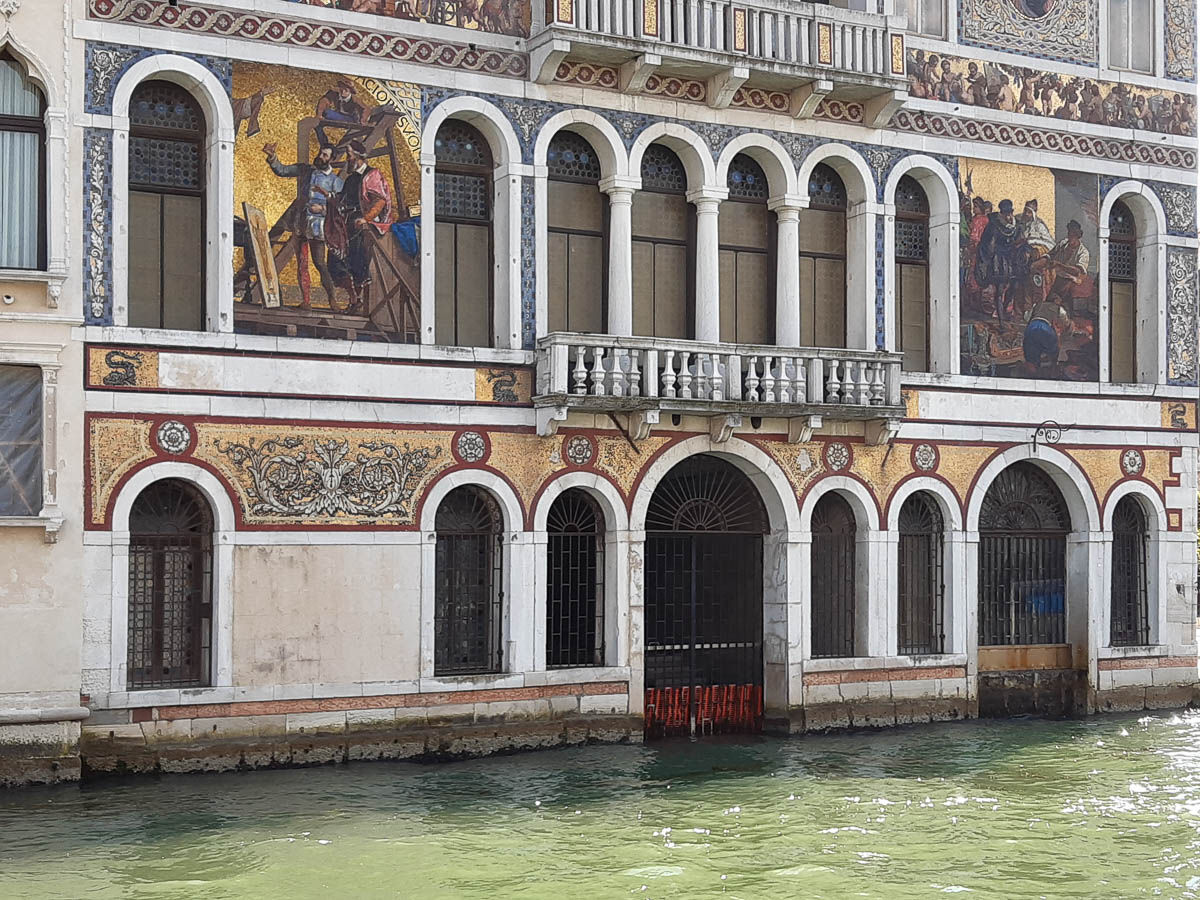
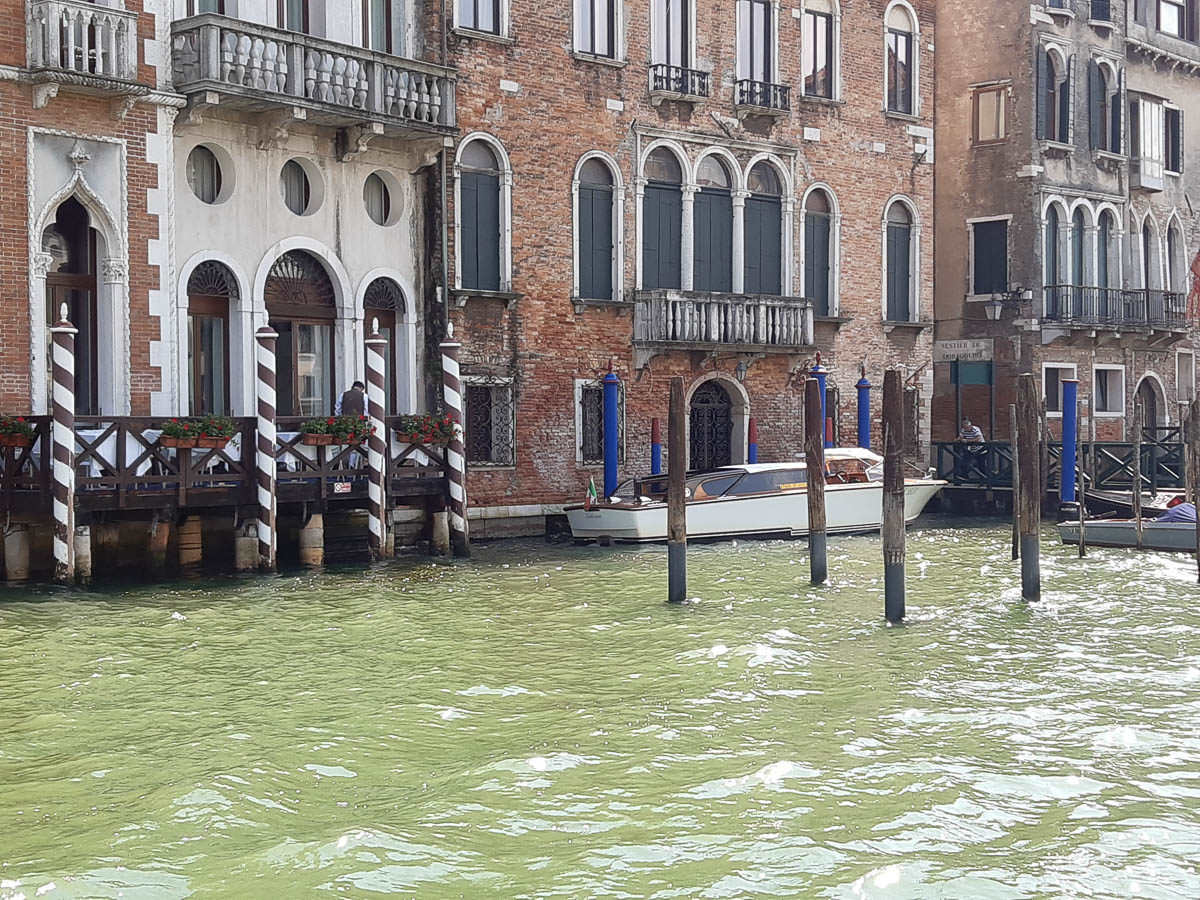
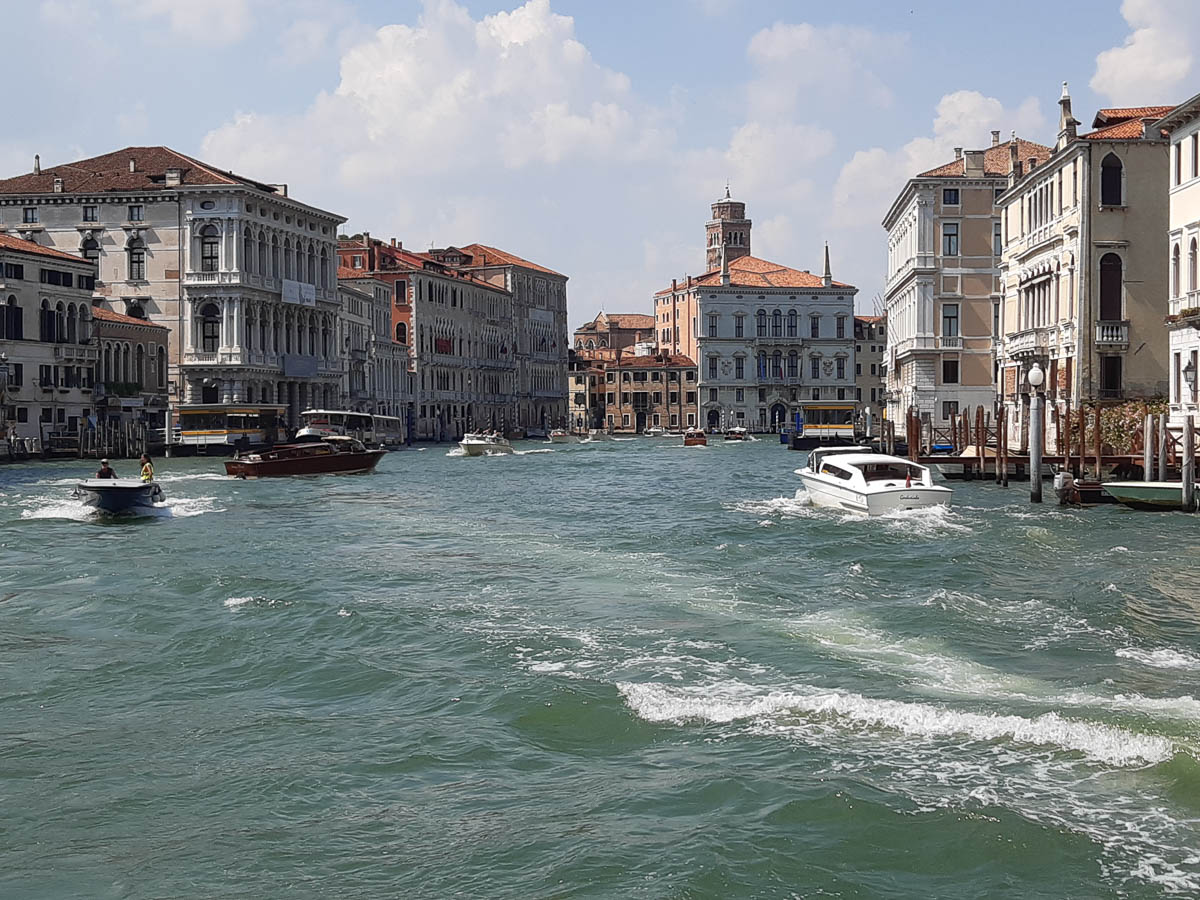
I took so many photos of the canals of Venice that I couldn’t fit them all into the daily post. Here’s some more.

.

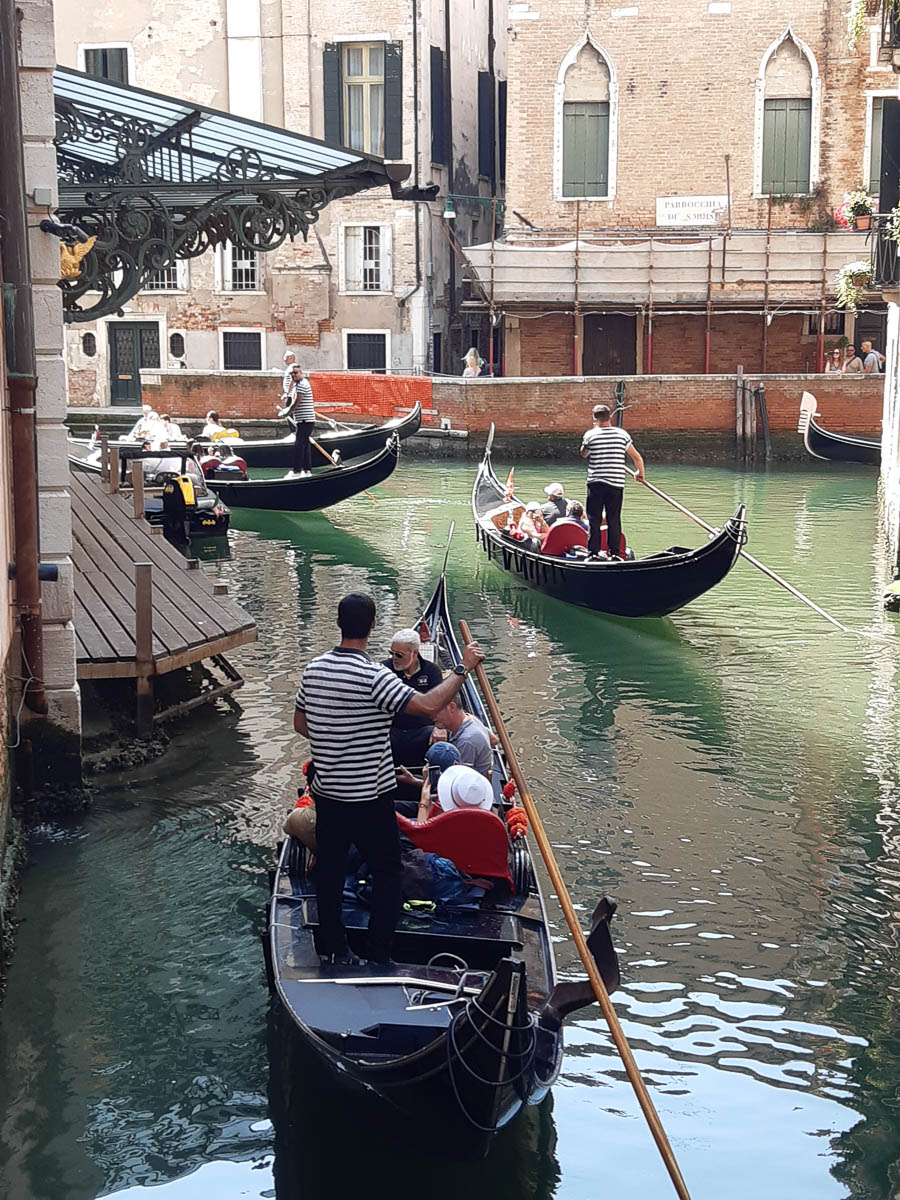
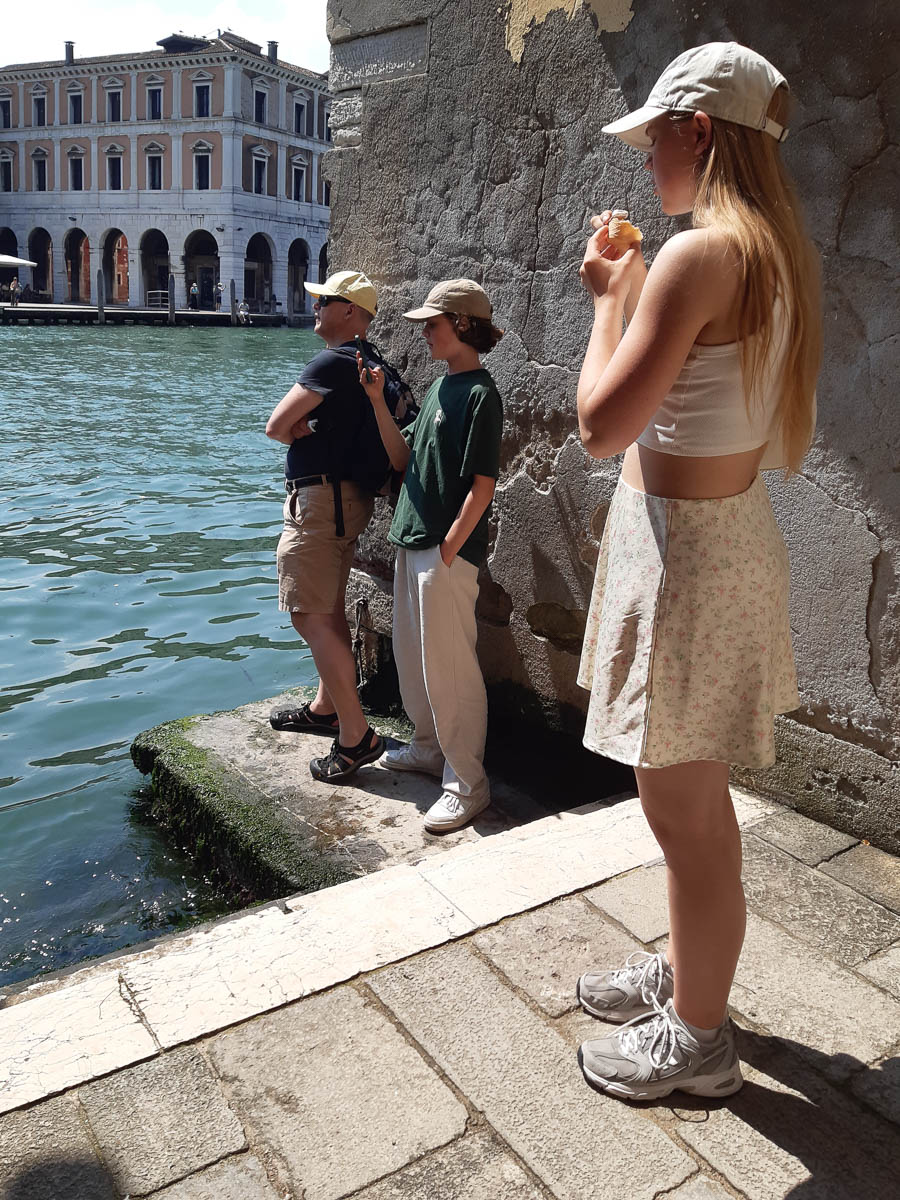
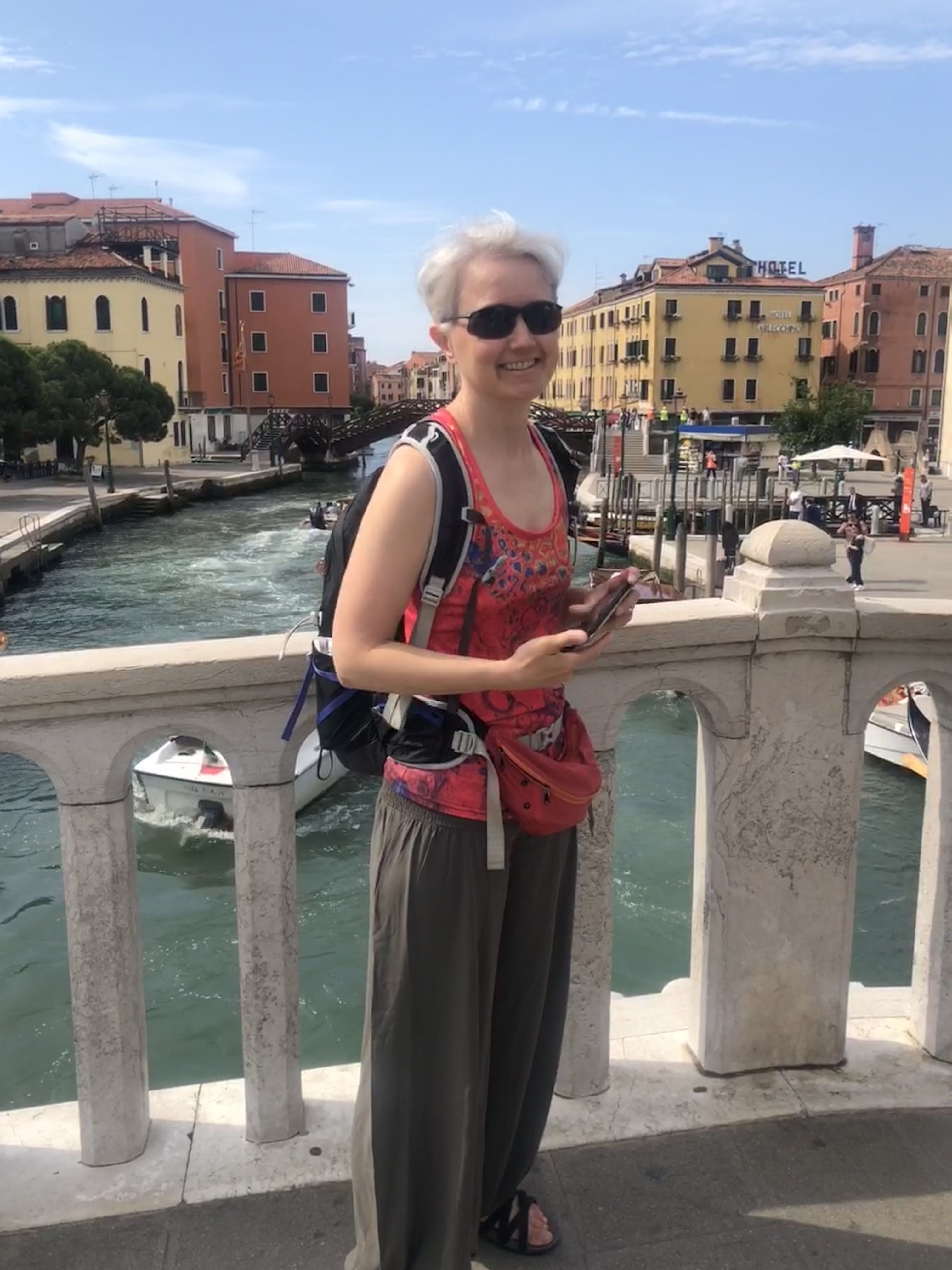
A full day in Venice. There’s just no way to do the day justice in less than a gazillion pictures, brace yourselves.

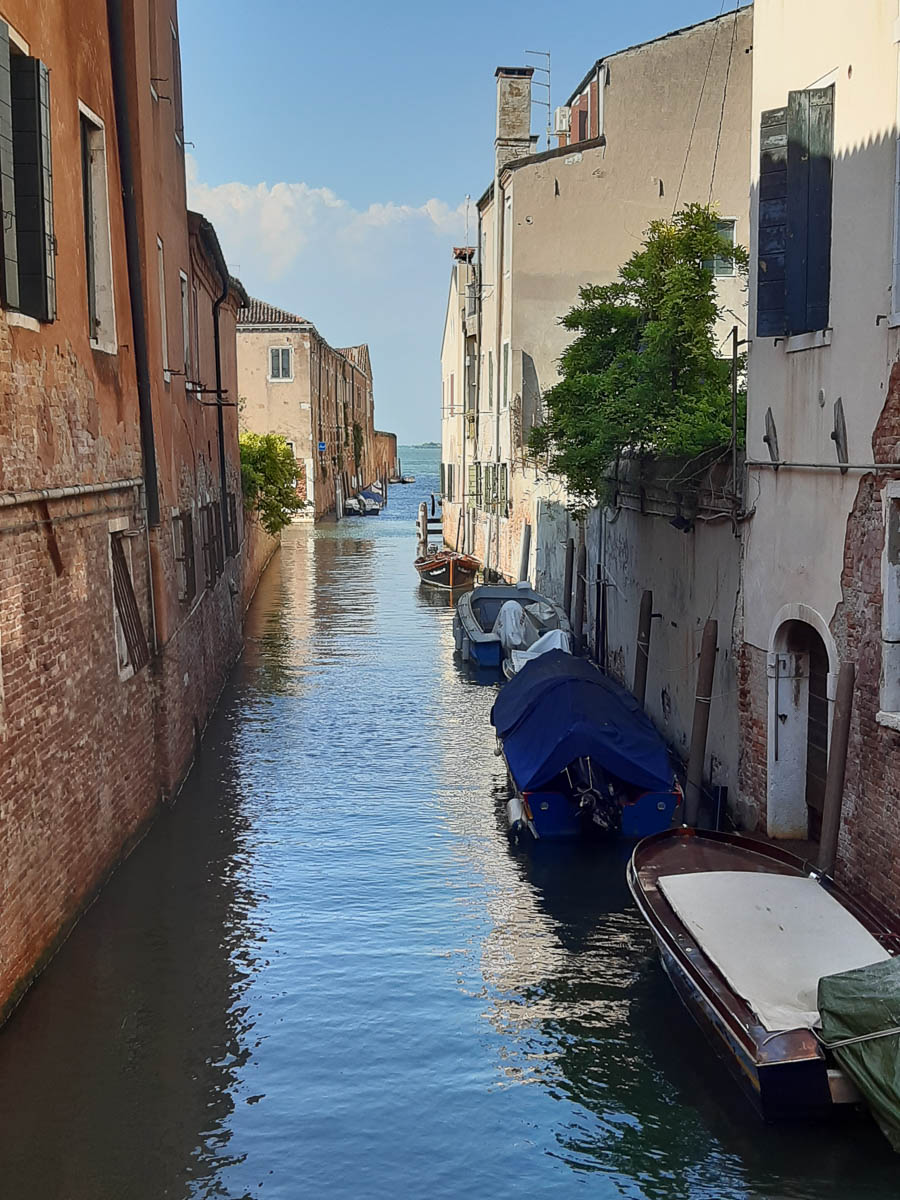
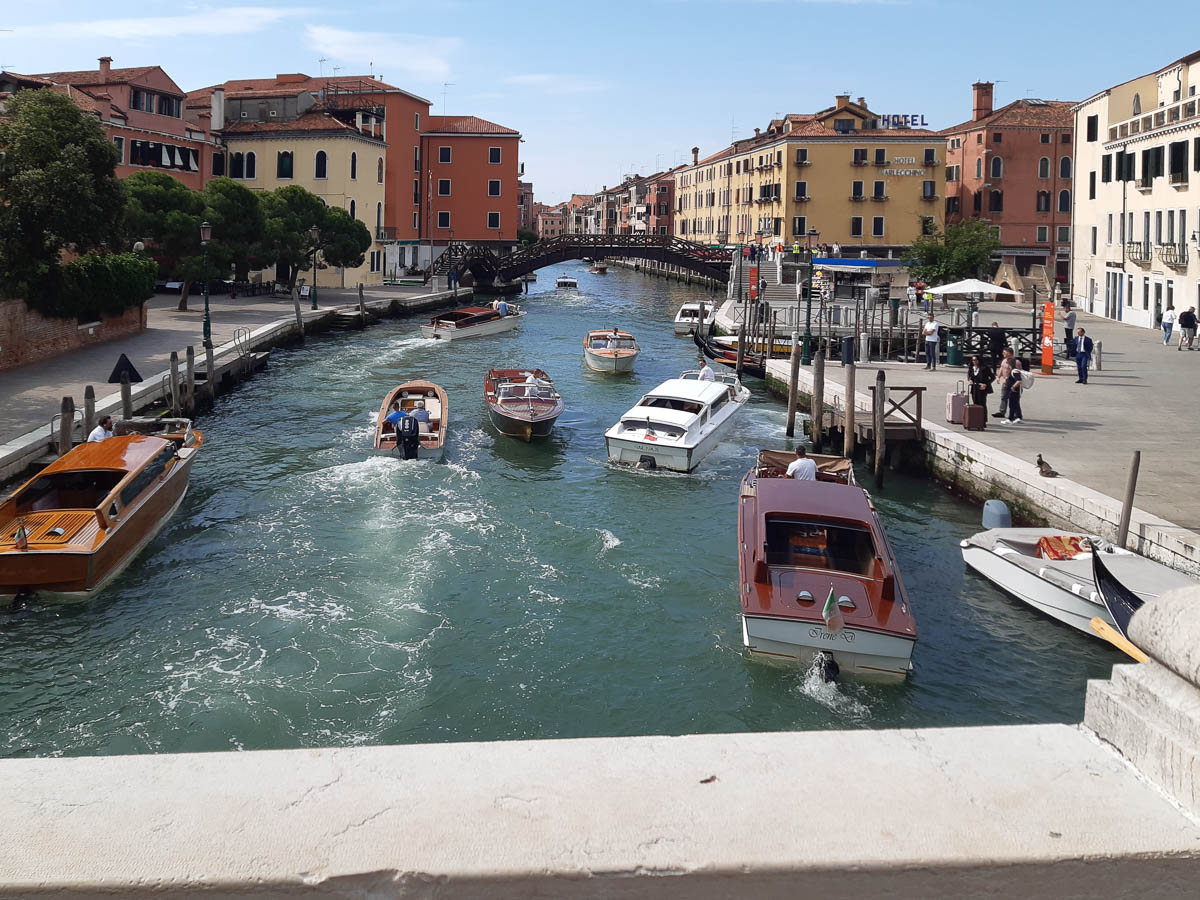
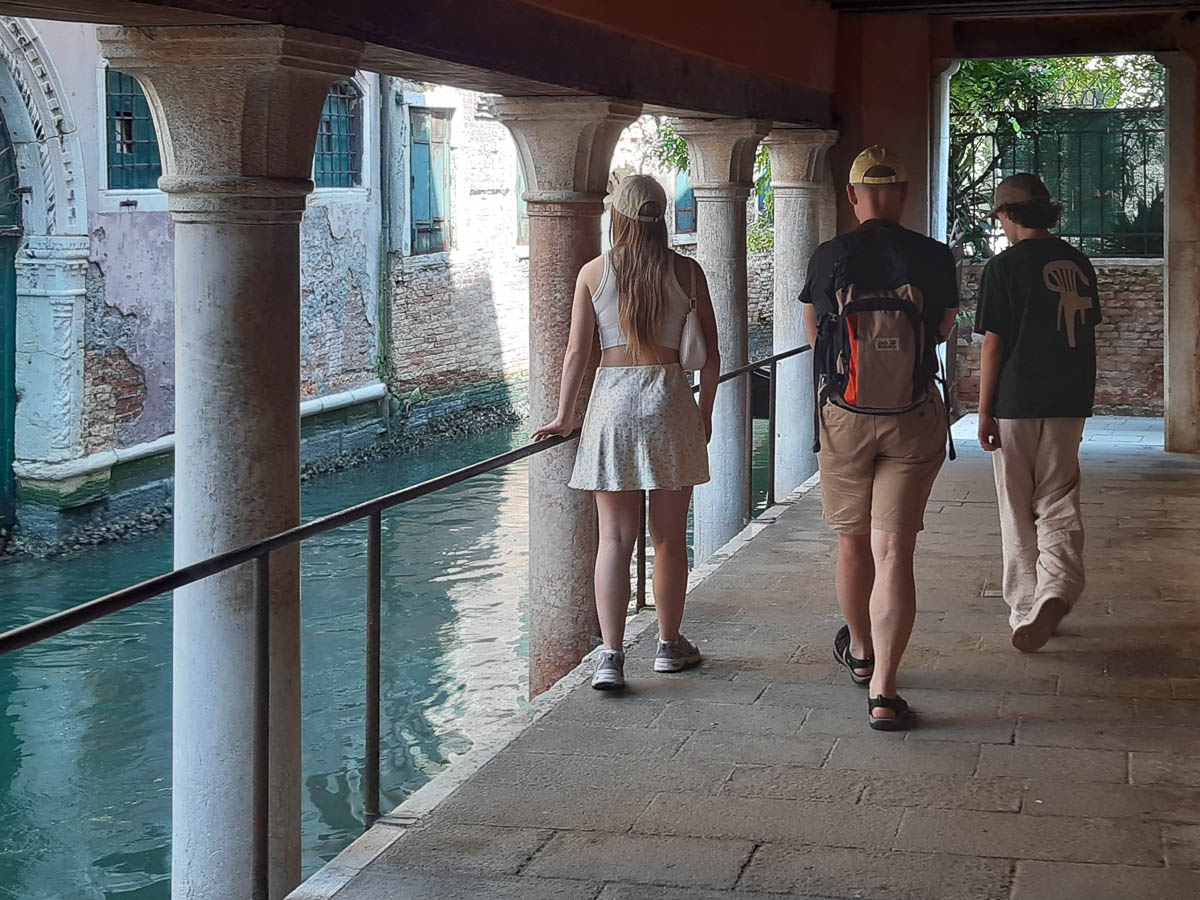
Everyone knows Venice is the city of canals. But the corollary of that is that Venice is fully car-free. There is a bus terminal and a giant parking garage at the end of the bridge between the mainland and the island, and beyond that, it’s either walking or boating. Which makes the city incredibly pedestrian-friendly.

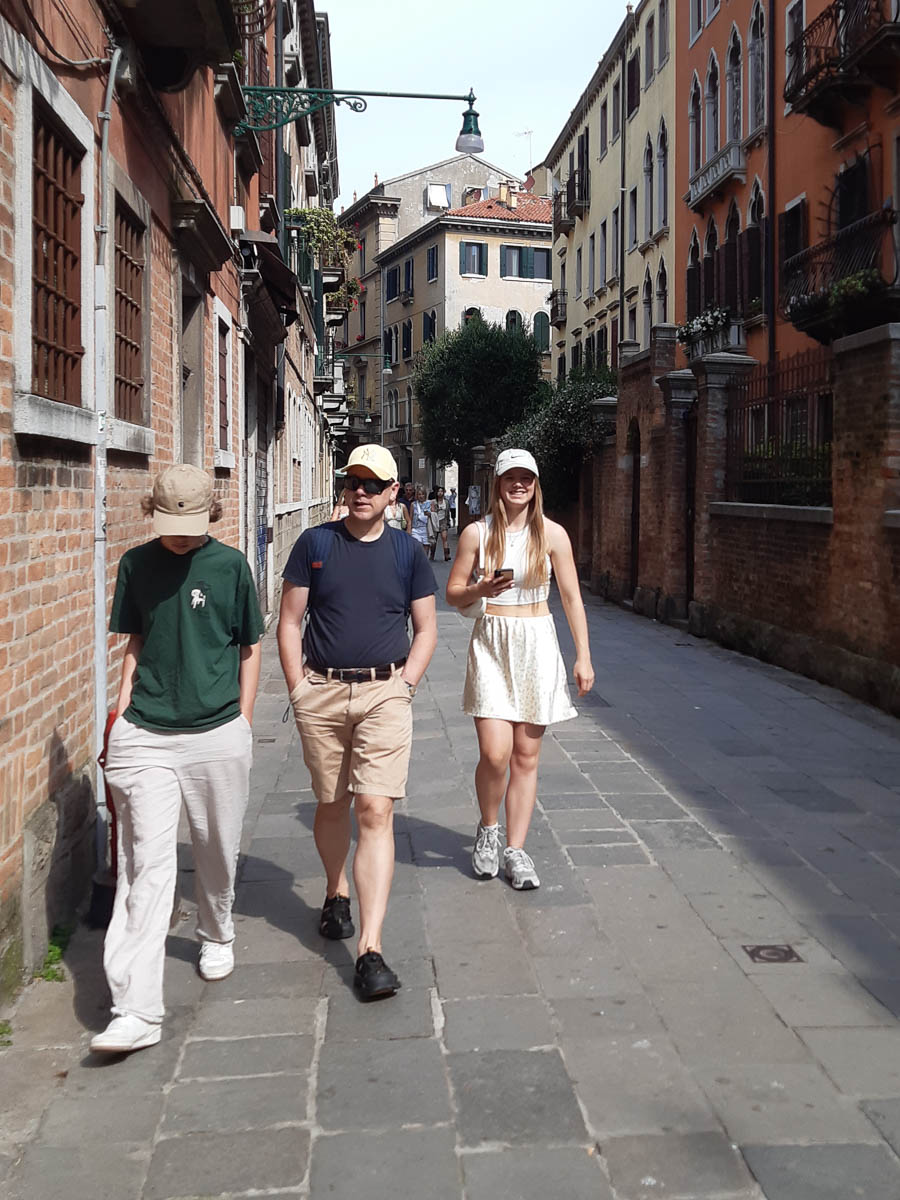
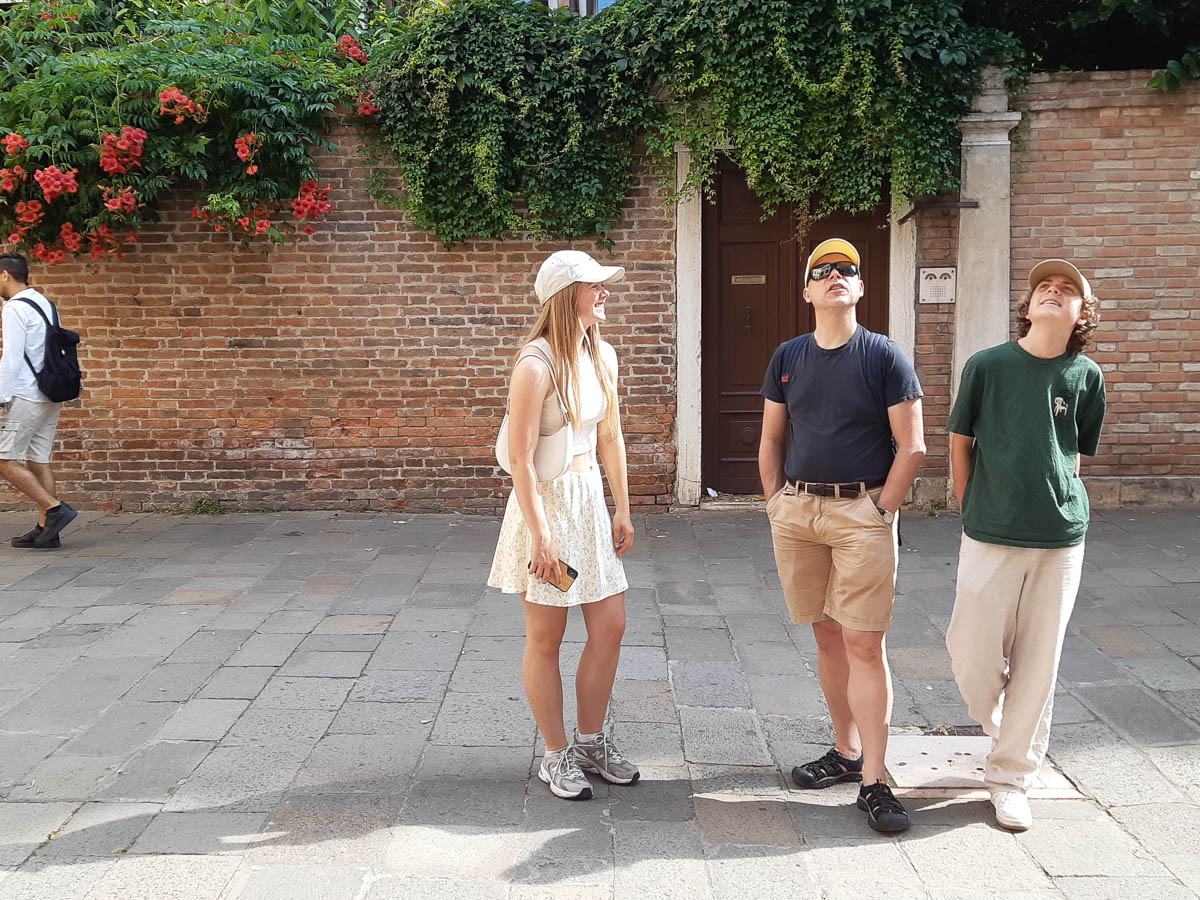
So we spent most of the day simply walking. There were a few spots we wanted to check out, and as those happened to be spread out across the island, just going from one to the next let us see a lot of the city.


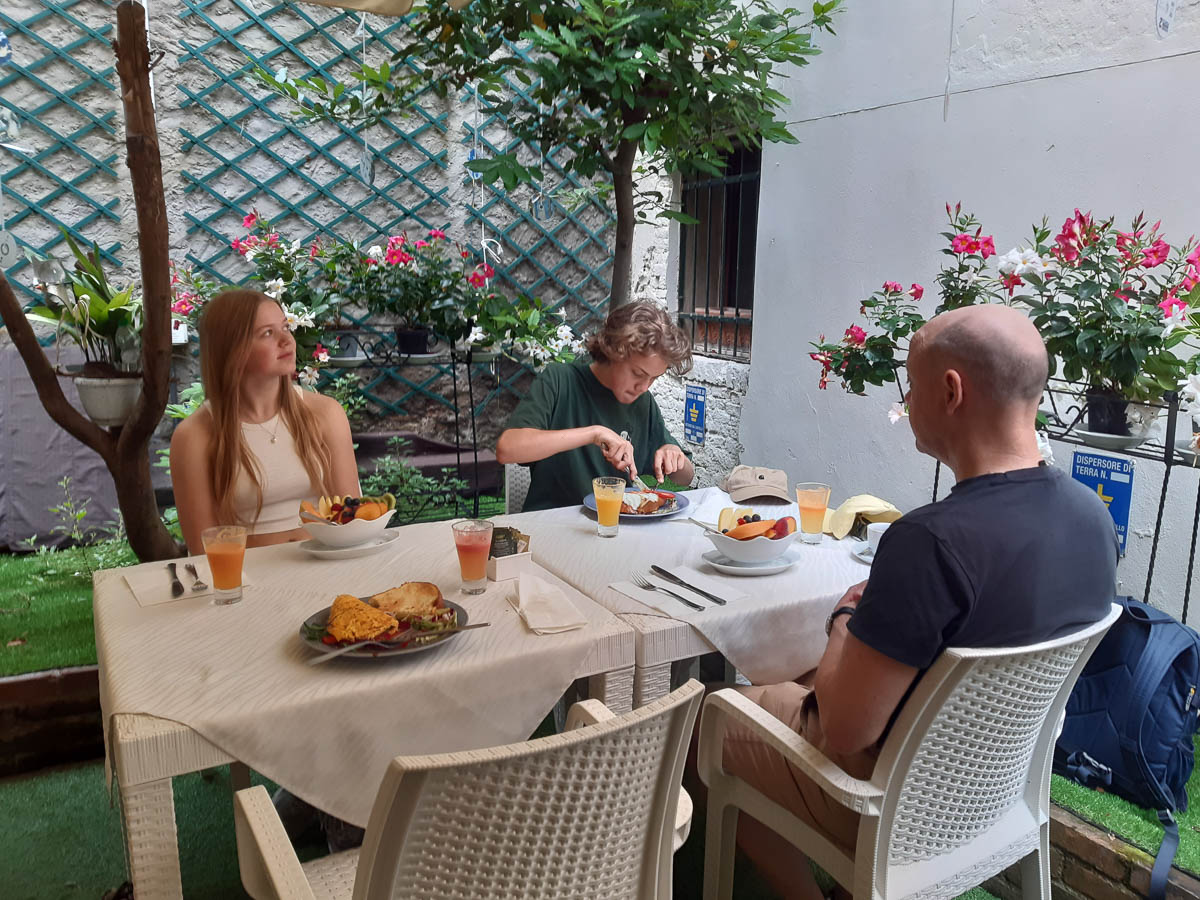
Ingrid’s research led us to a nice brunch place with courtyard seating and generous yoghurt, fruit and granola bowls.

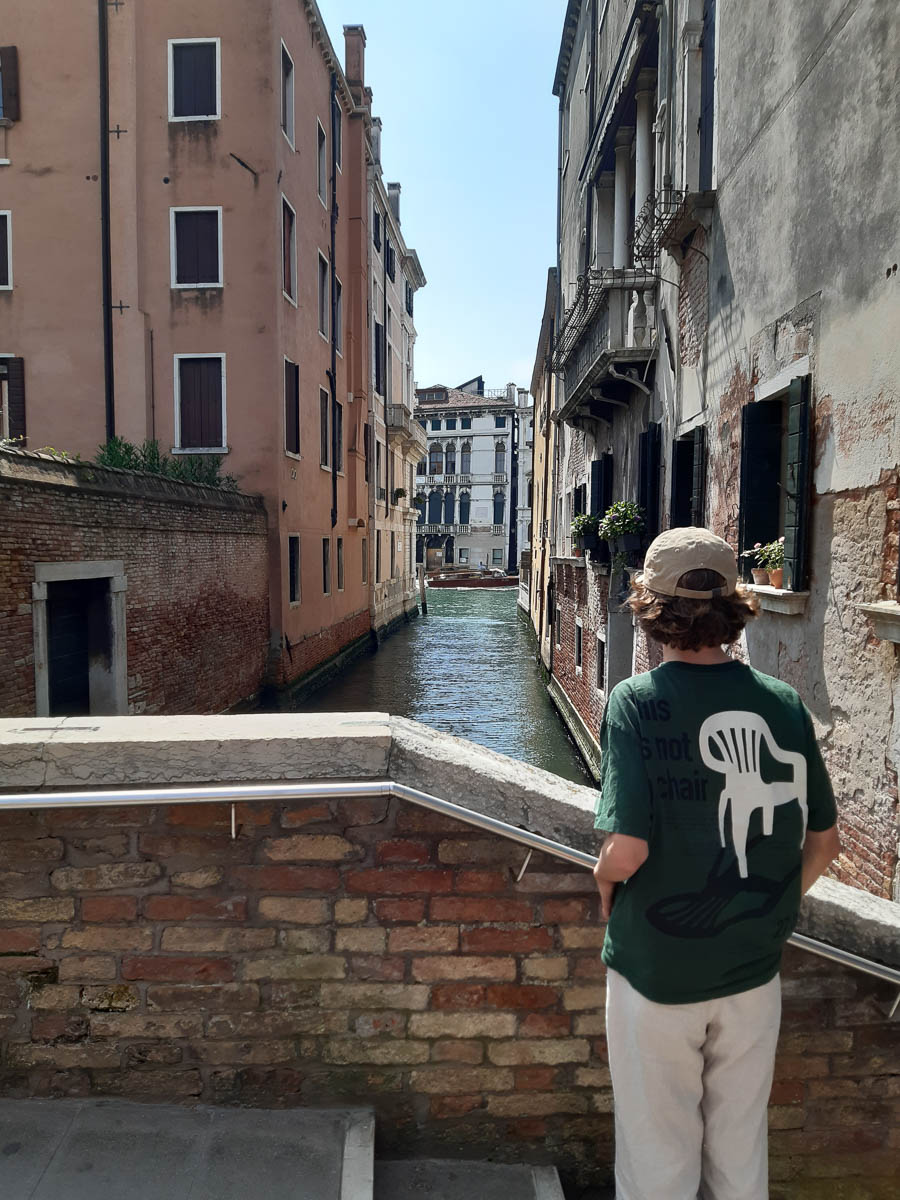
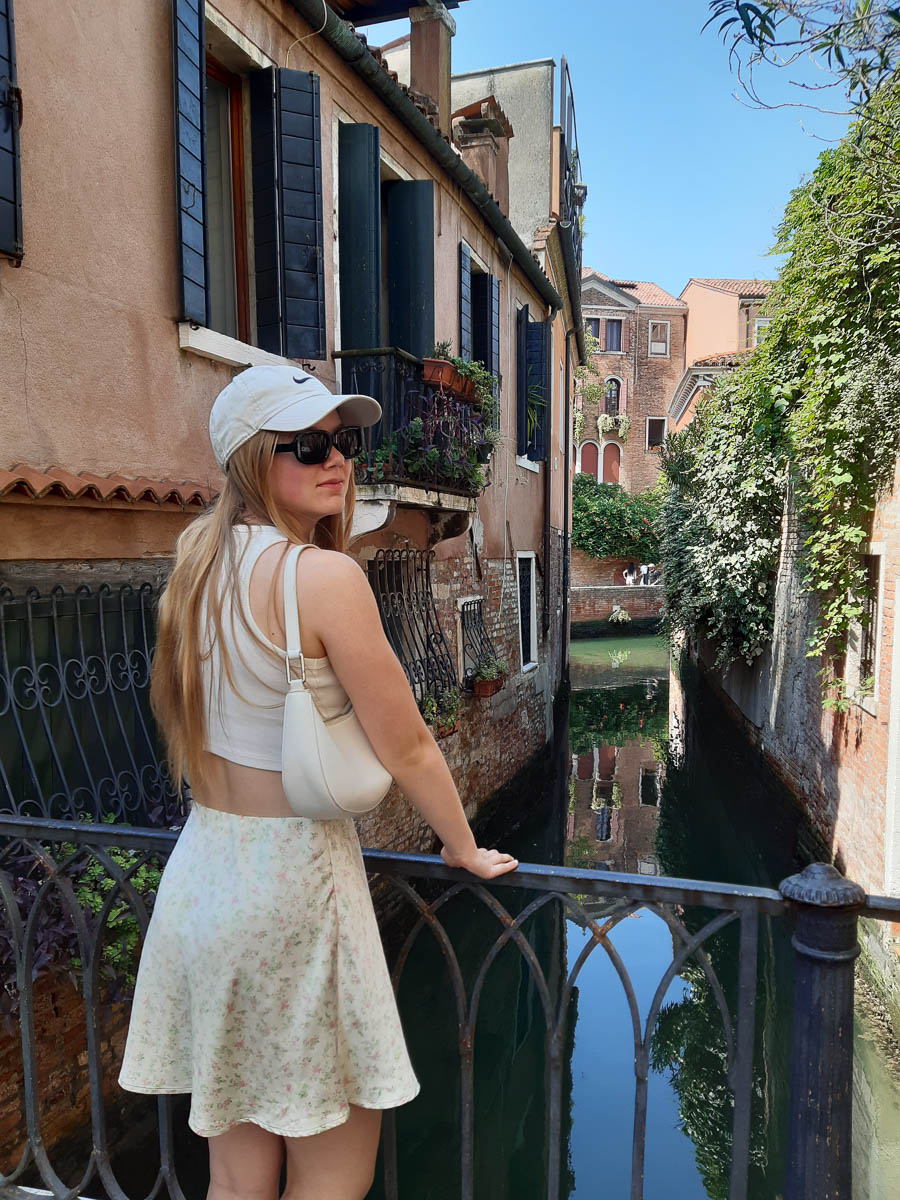
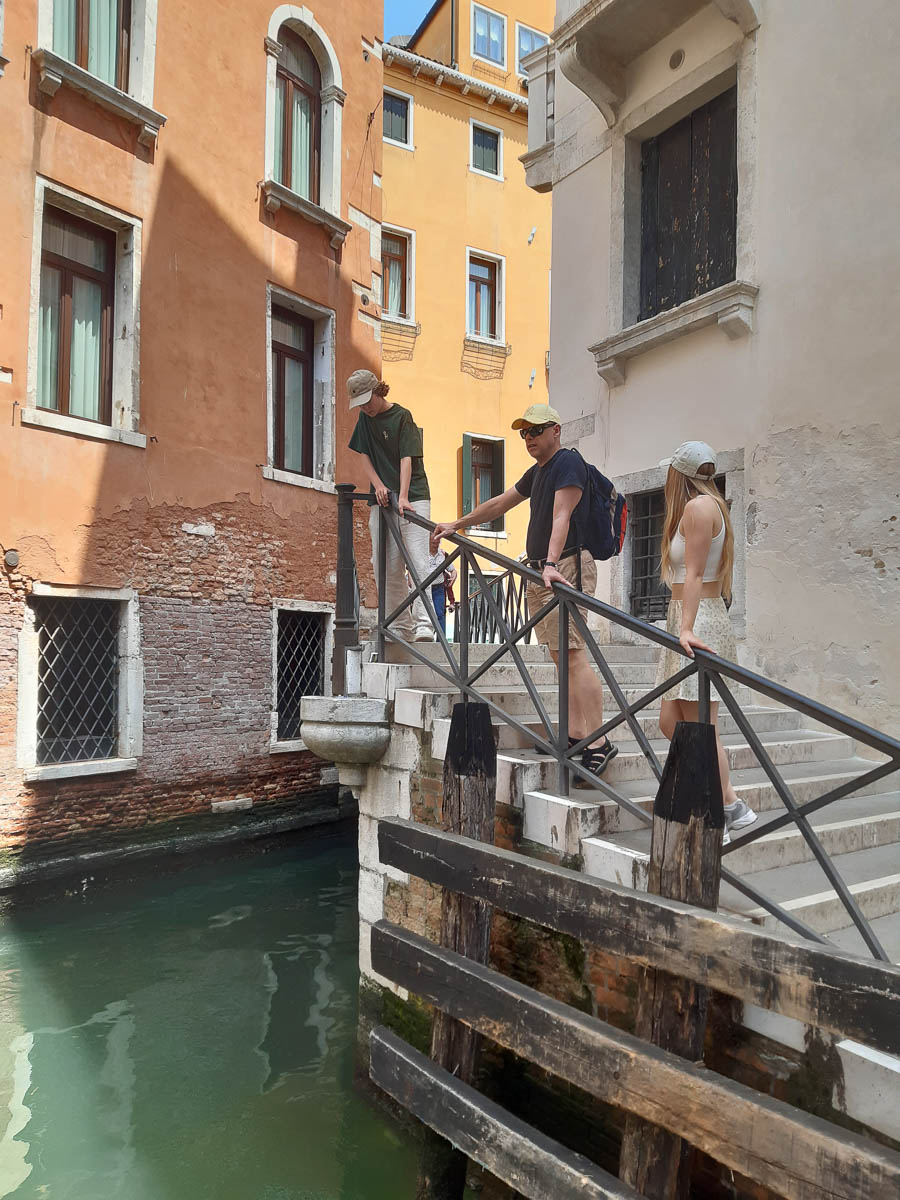
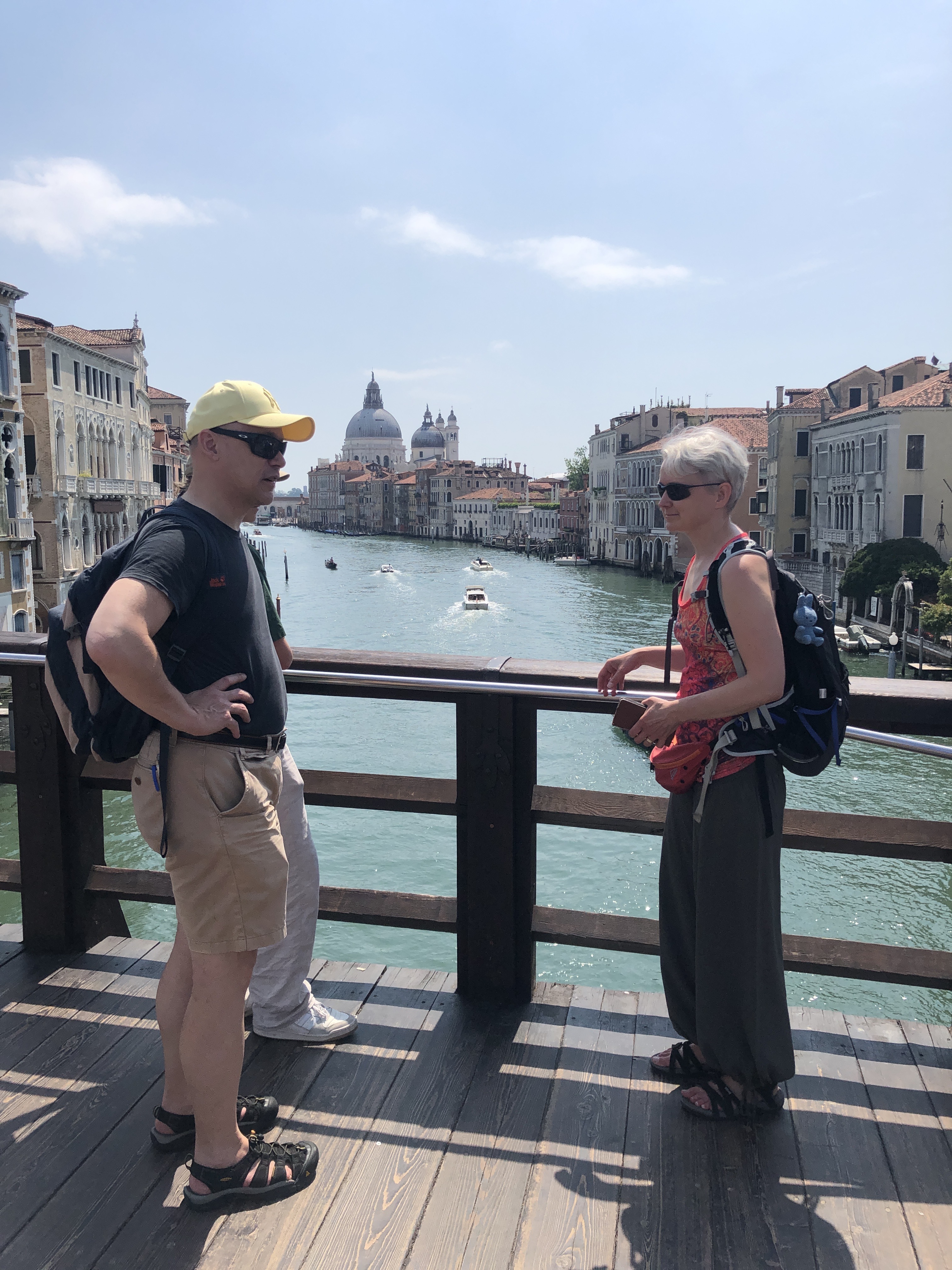
Fortified by our brunch, we walked more. Every channel was picturesque enough for photos; every bridge invited us to stop and admire the views. I wonder how long you’d have to stay here to get inured to the prettiness of everything.


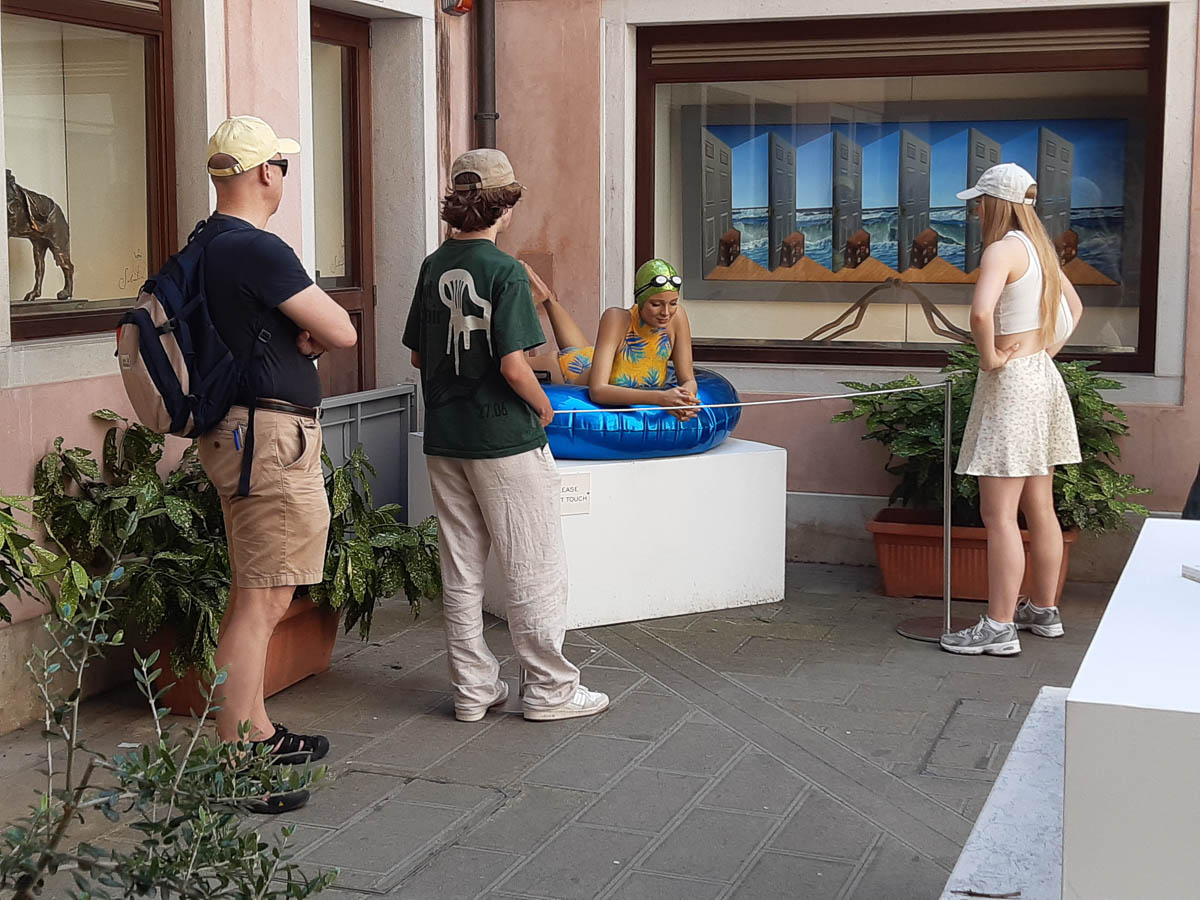
We ran across a gallery with hyperrealistic life-sized sculptures of swimmers by Carol Feuerman.

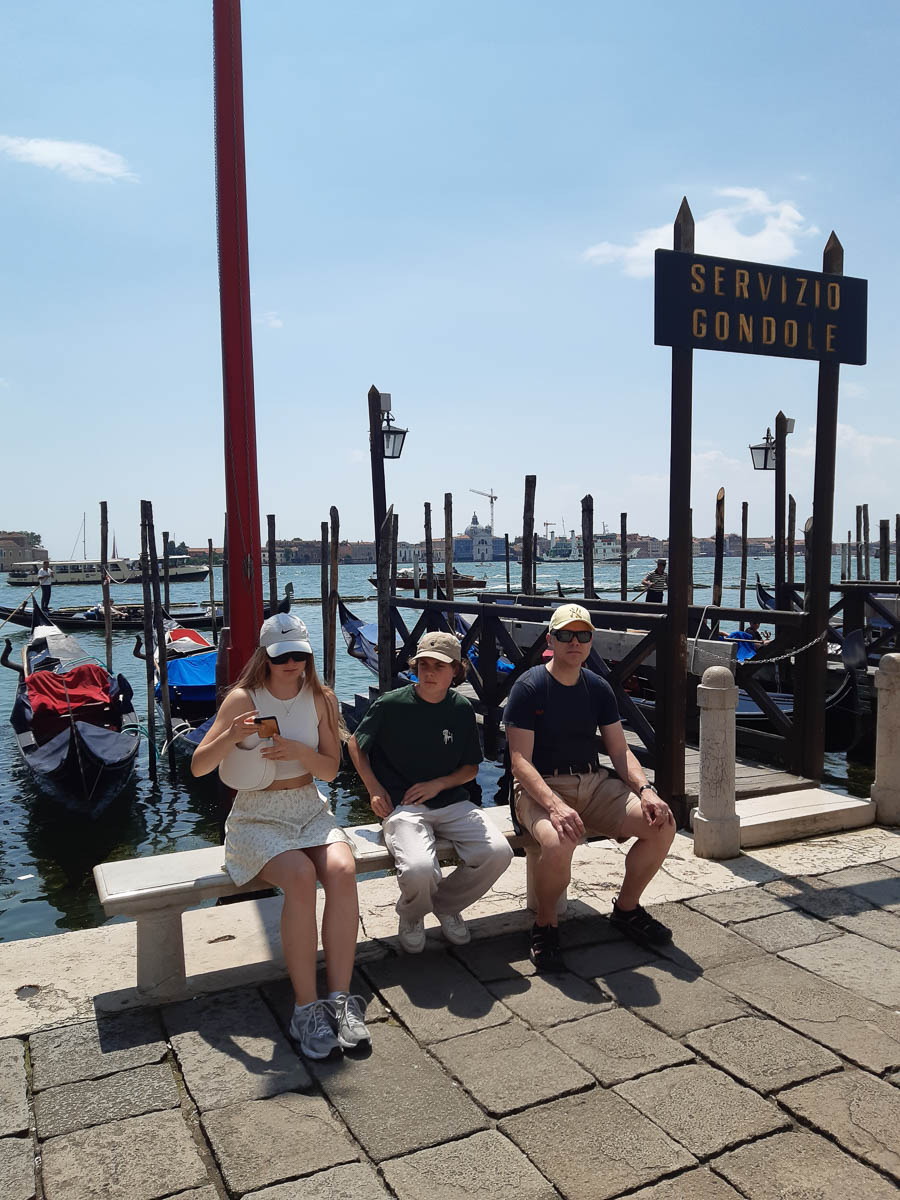
More walking. And sometimes resting, because it was a bit hot.


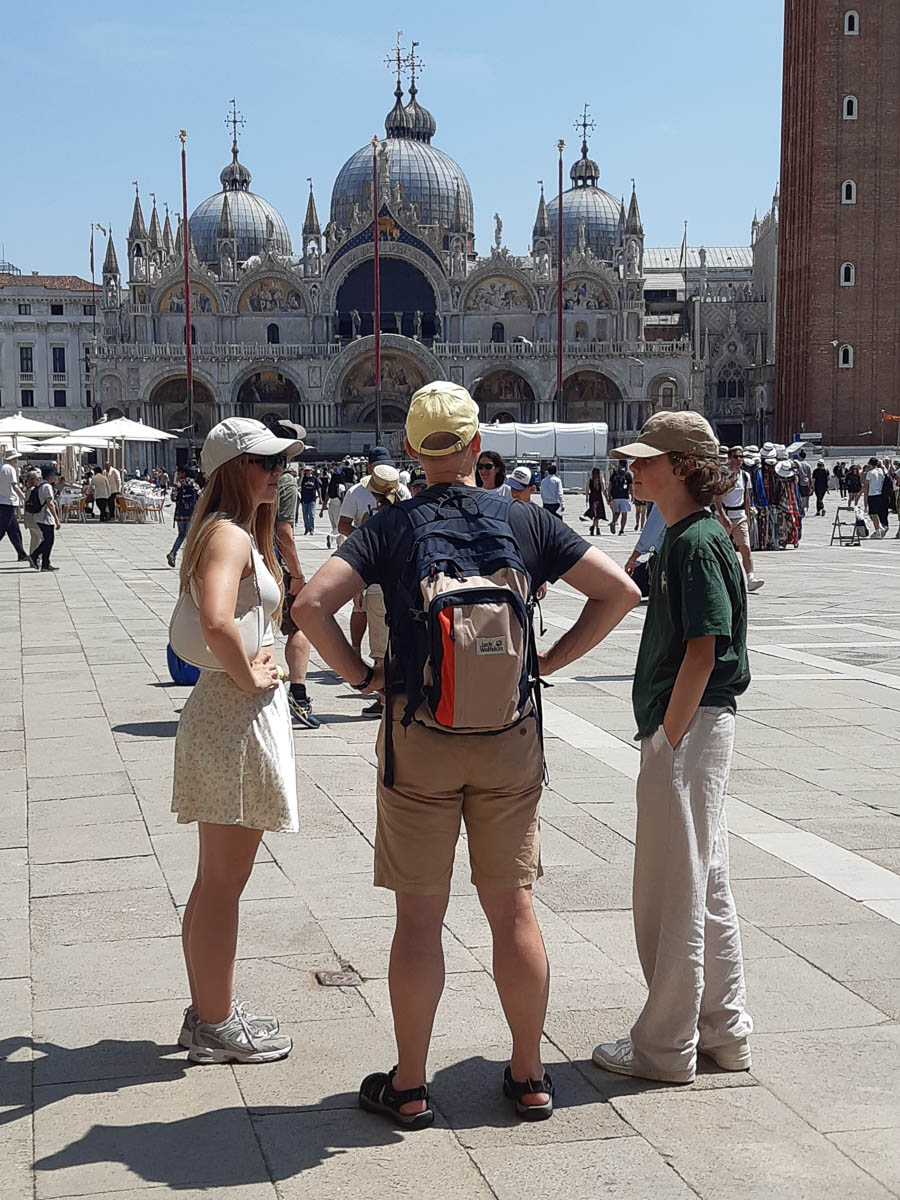
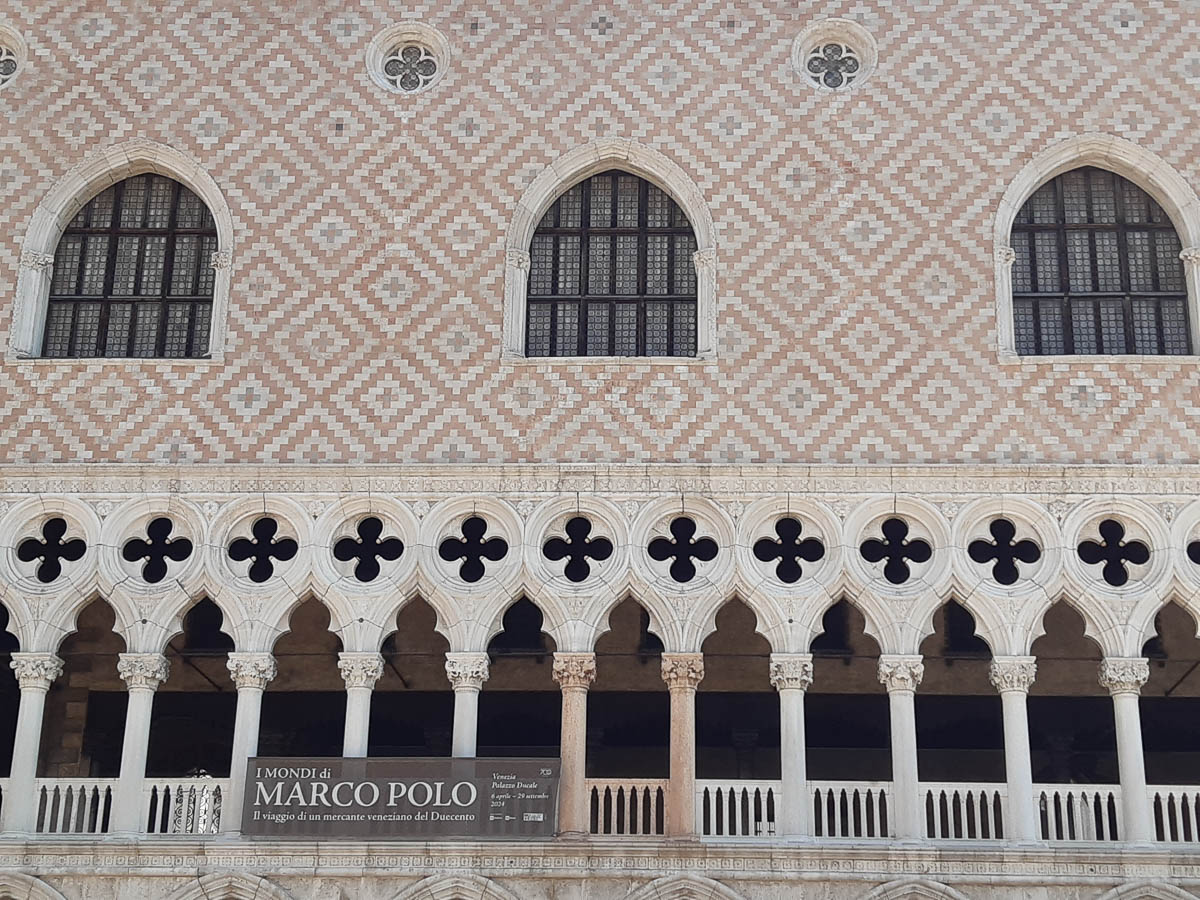
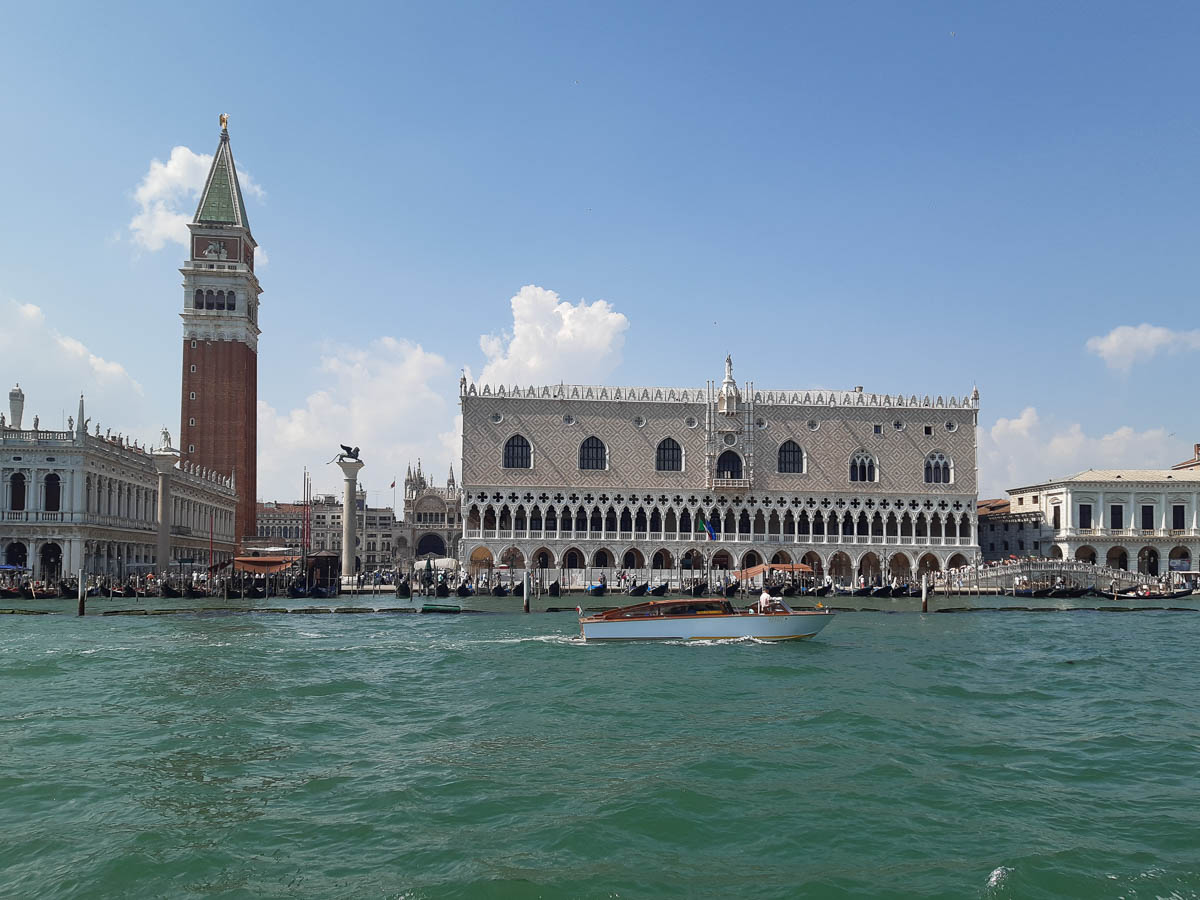
Gradually we made our way to Piazza San Marco. I had expected crowds and was pleasantly surprised to not find any. Not just here, but everywhere in the city. There’s people, of course, but not ridiculous amounts of them.

We did book our trip as early as possible after the end of the school year, to avoid both the crowds and the heat, and it looks like we succeeded. Verona was perhaps even more crowded than Venice.

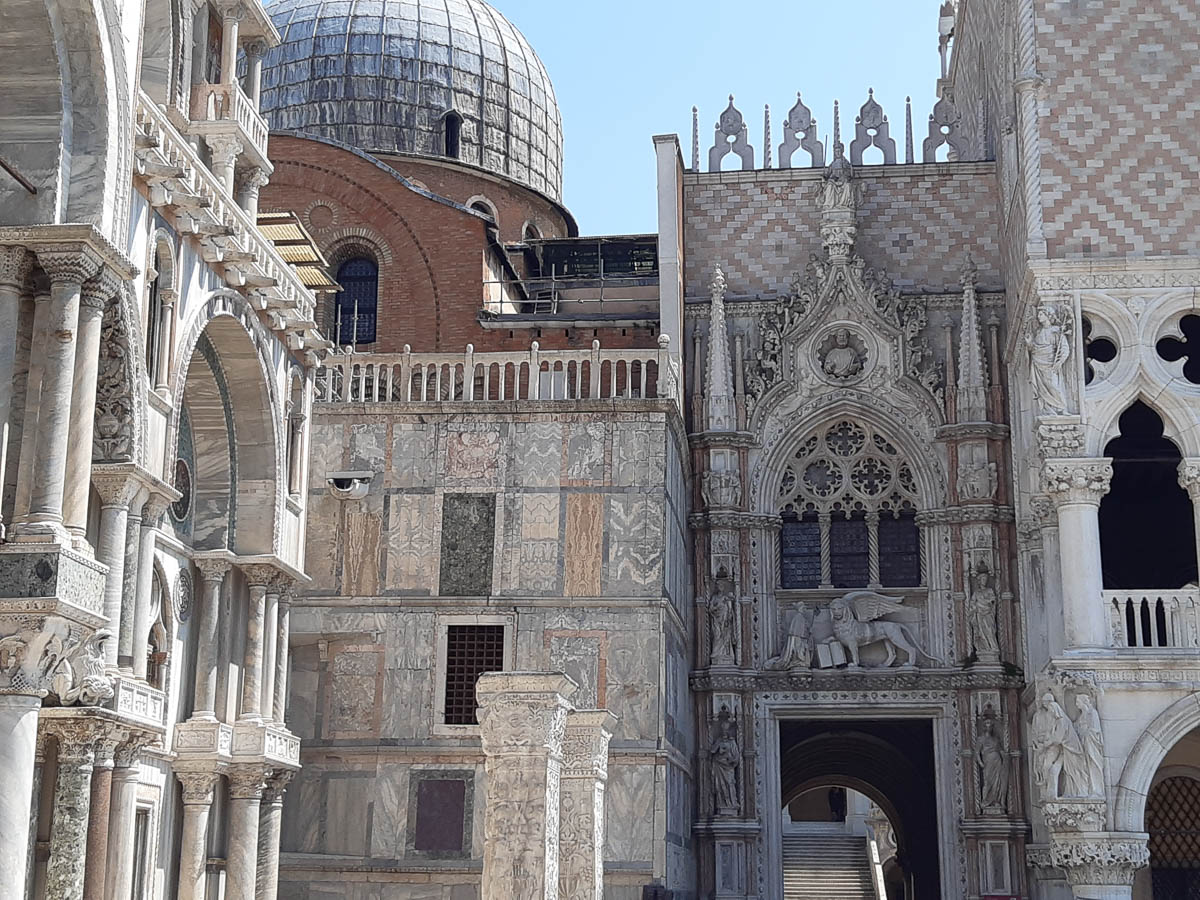
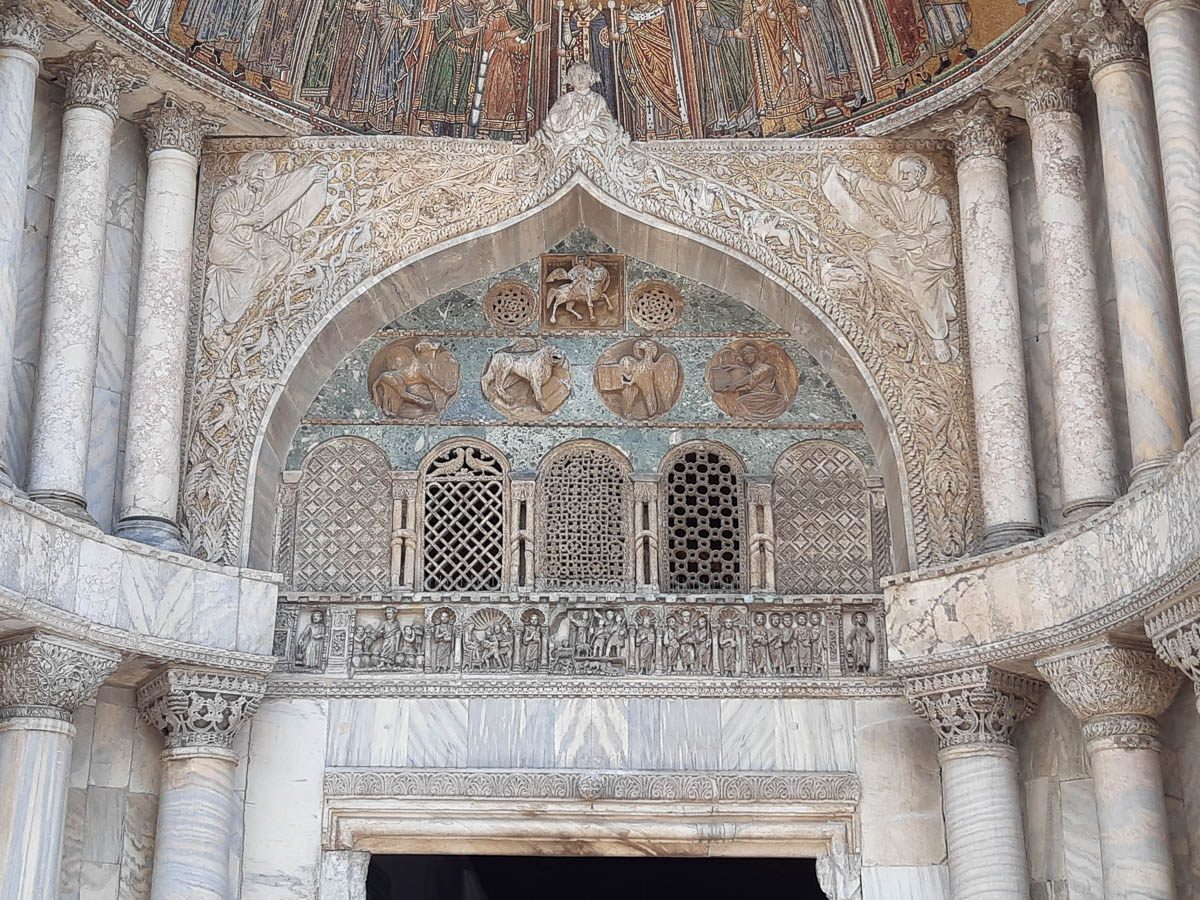
The basilica of San Marco is a stunning piece of architecture. Had we been in town for a week, I’d have spent a few hours just looking at it, inside and out. And just admiring all the different kinds of marble.


It’s a bit jarring to see two huge squares, lined with giant straight buildings, in a city where real estate is so scarce and and all other buildings are relatively small.

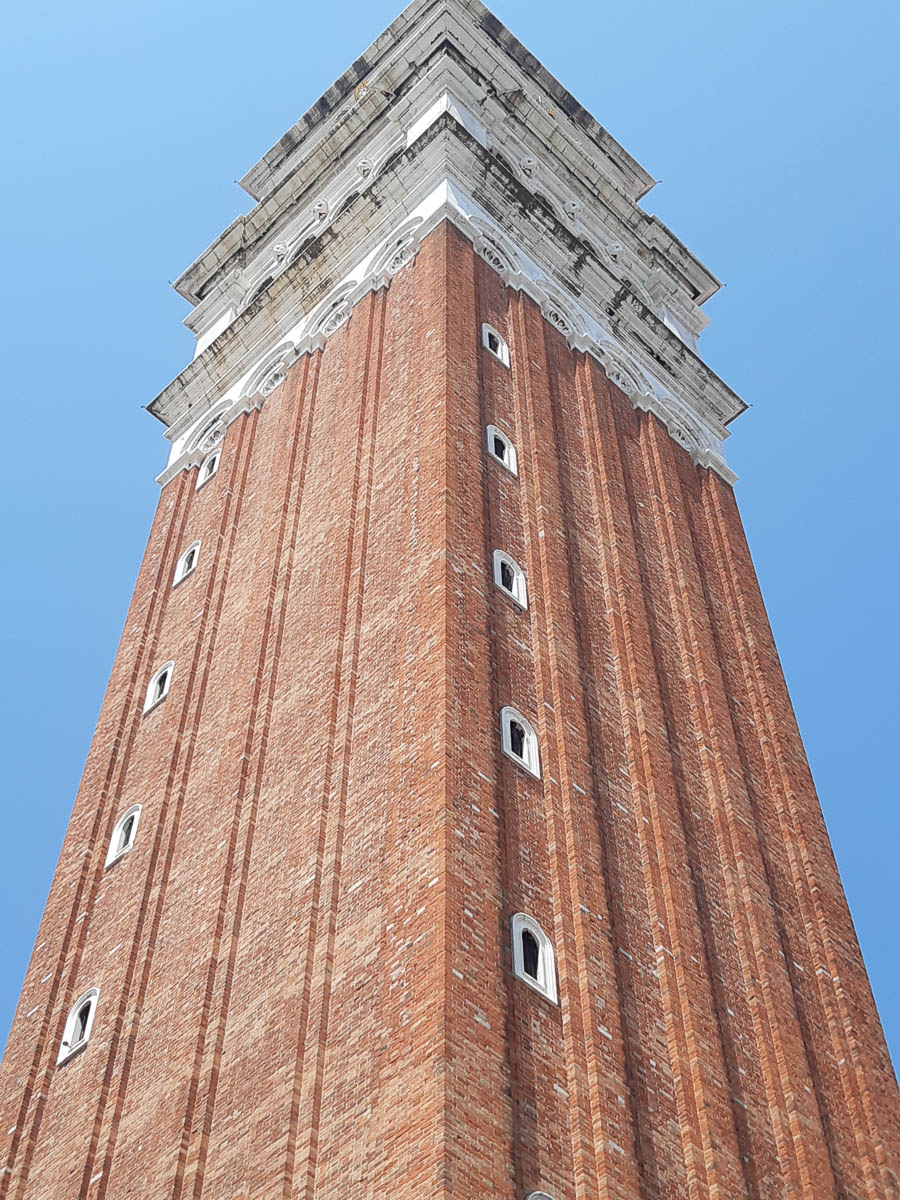
The campanile was open and barely even had a queue, so we paid our 10 EUR each and took the lifts up. I had hoped to climb the stairs to get the full tower experience and feel the height, but that was not an option.

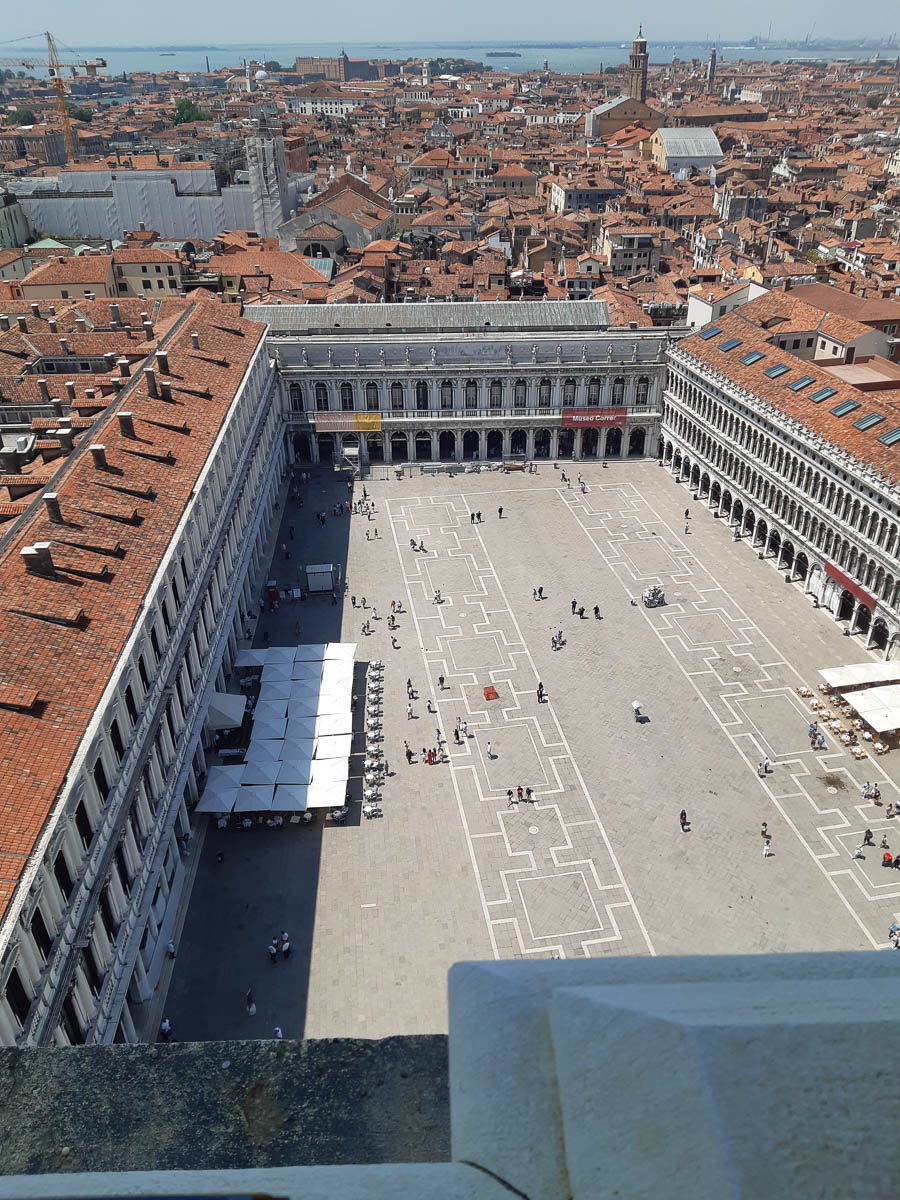
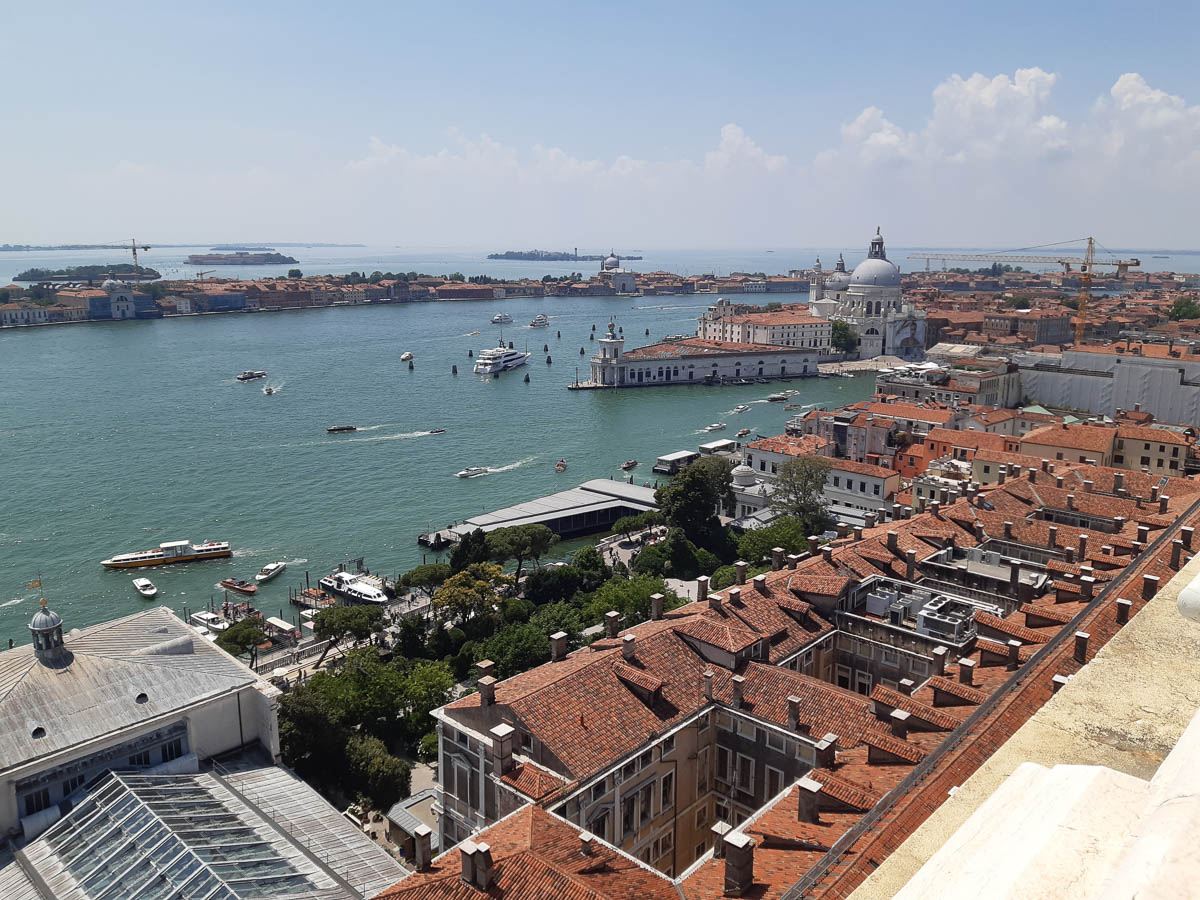
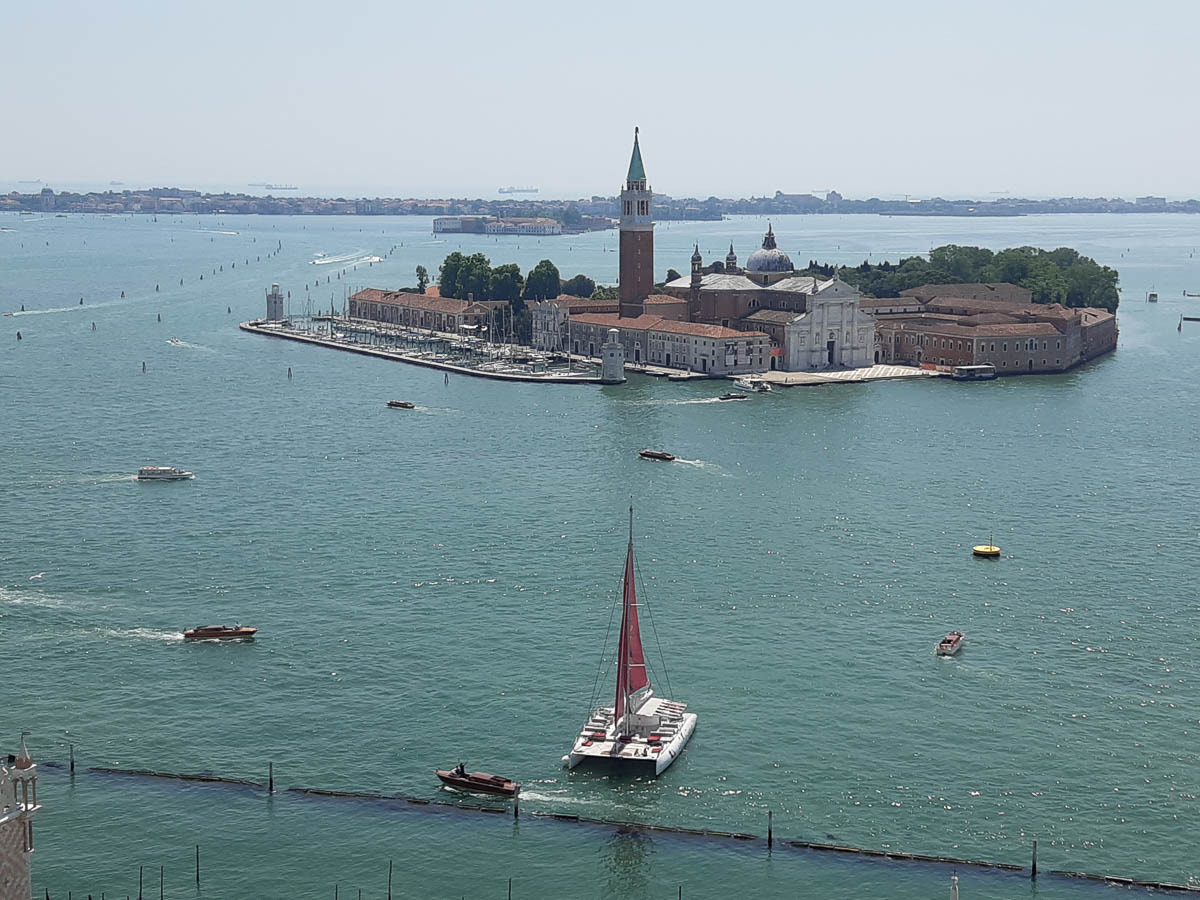
The views from the tower were stunning, as expected.

The view from up here makes it obvious just how small and flat the island is. And how uniformly red all the roofs are.

You can also see the shipping lanes between the islands, marked with wooden poles.

Onwards.


After that we needed a bit of a break from walking along more alleys to more bridges to cross more canals. We decided to take the waterbus to Lido, a neighbouring island, both to rest our legs and to see the city from new angles.


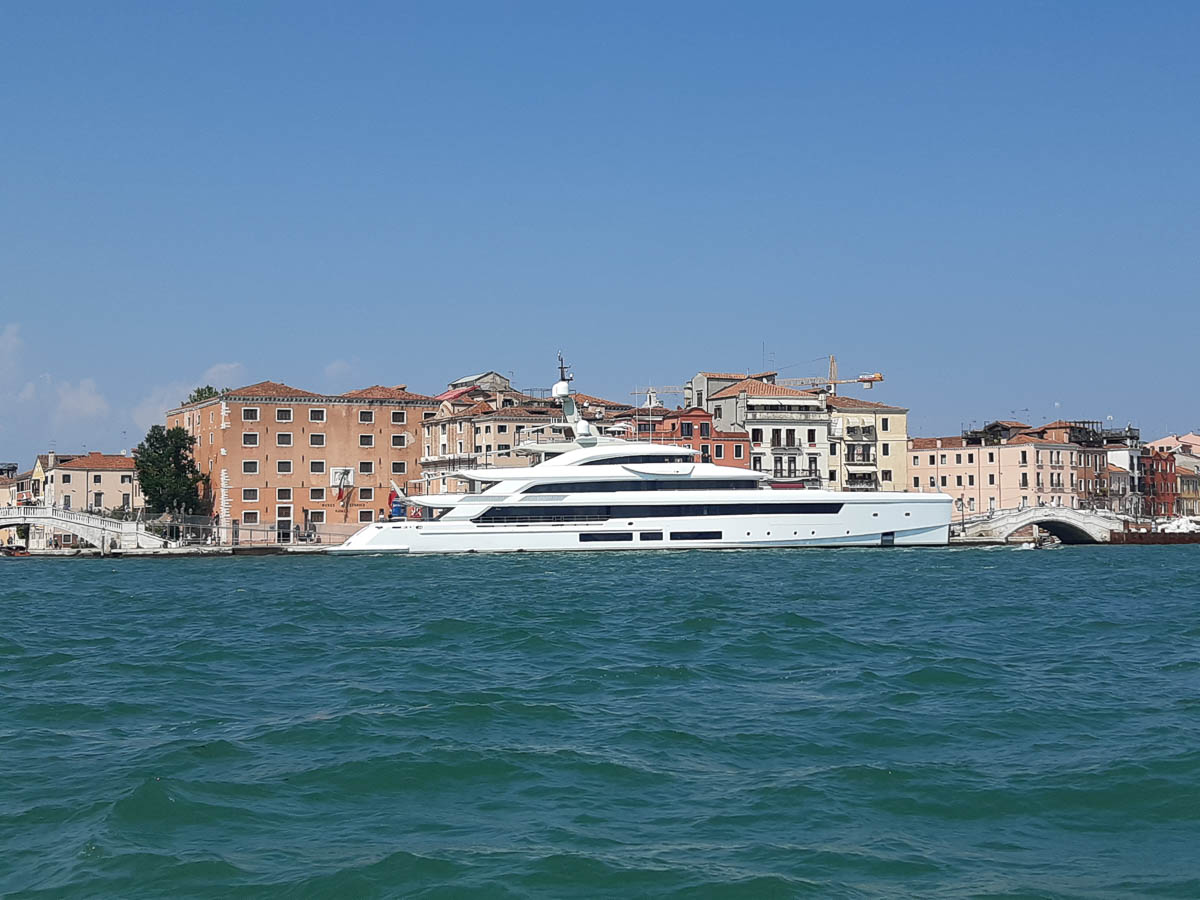
On our way to Lido we passed a super yacht, larger than most buildings in the city. Google Image Search identified it as the Italian-built Lady A, completed this year. Apparently it’s only the 360th largest yacht in the world.

Lido is a long and narrow island. The waterbus stop is at one of its widest points, but even there the walk across the island was no more than a few city blocks. Unlike the main island, this one has streets and cars and space between buildings.

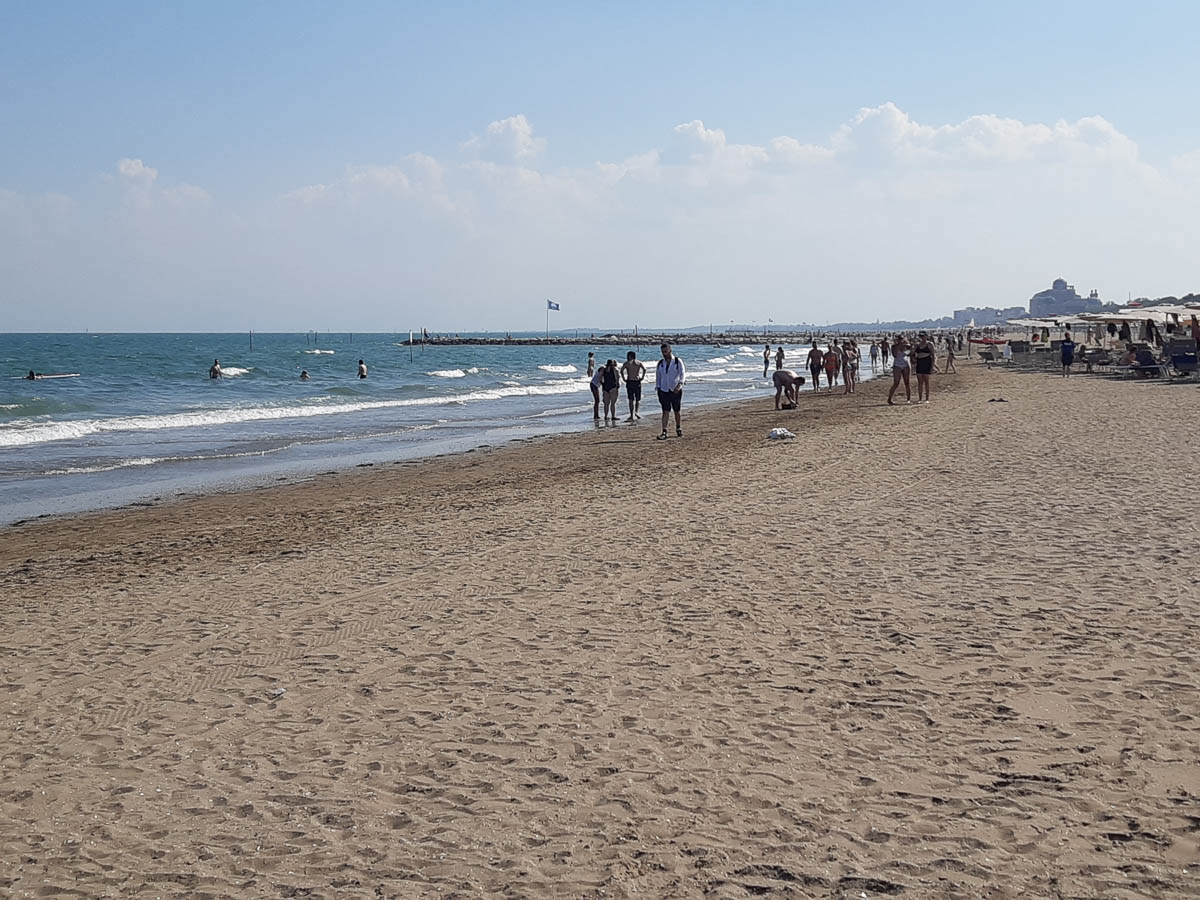
On the other side of the island we found a sandy beach.


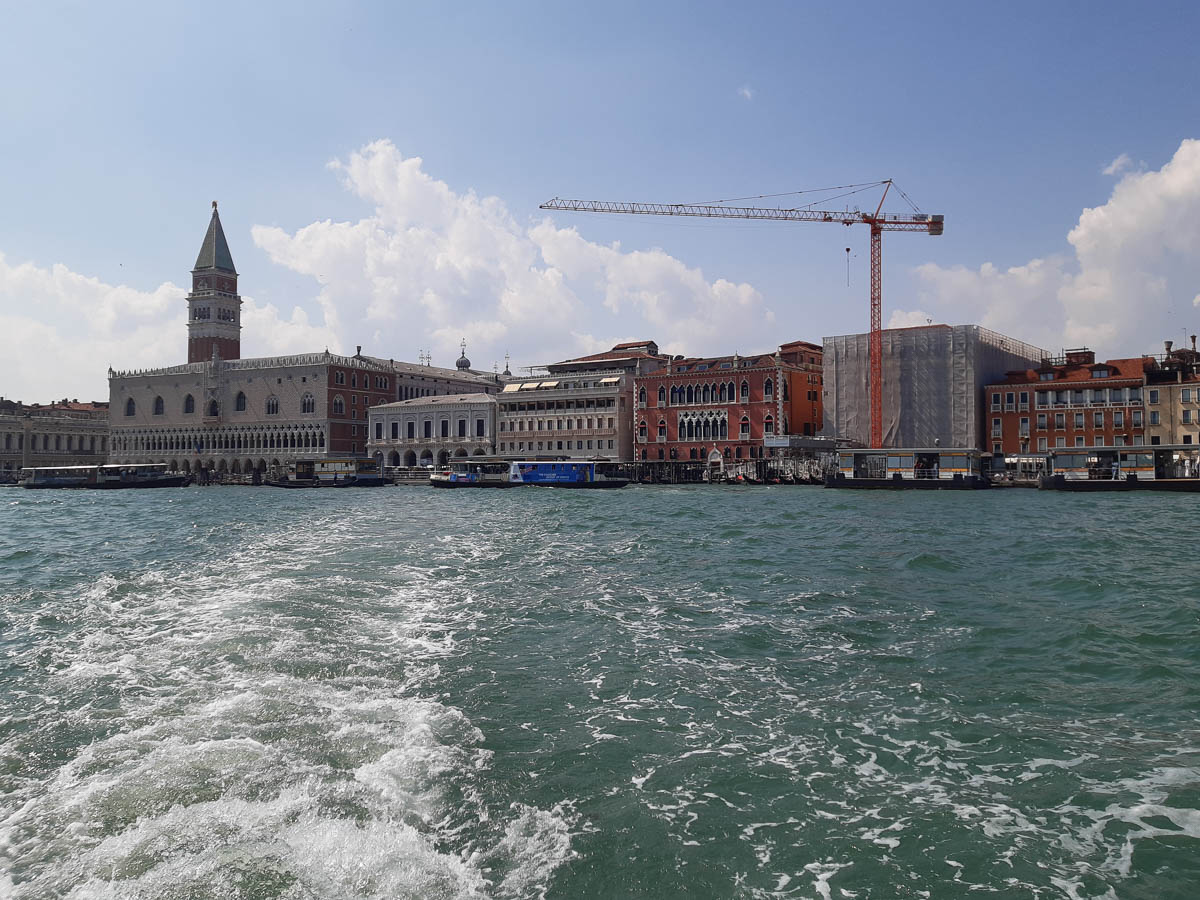
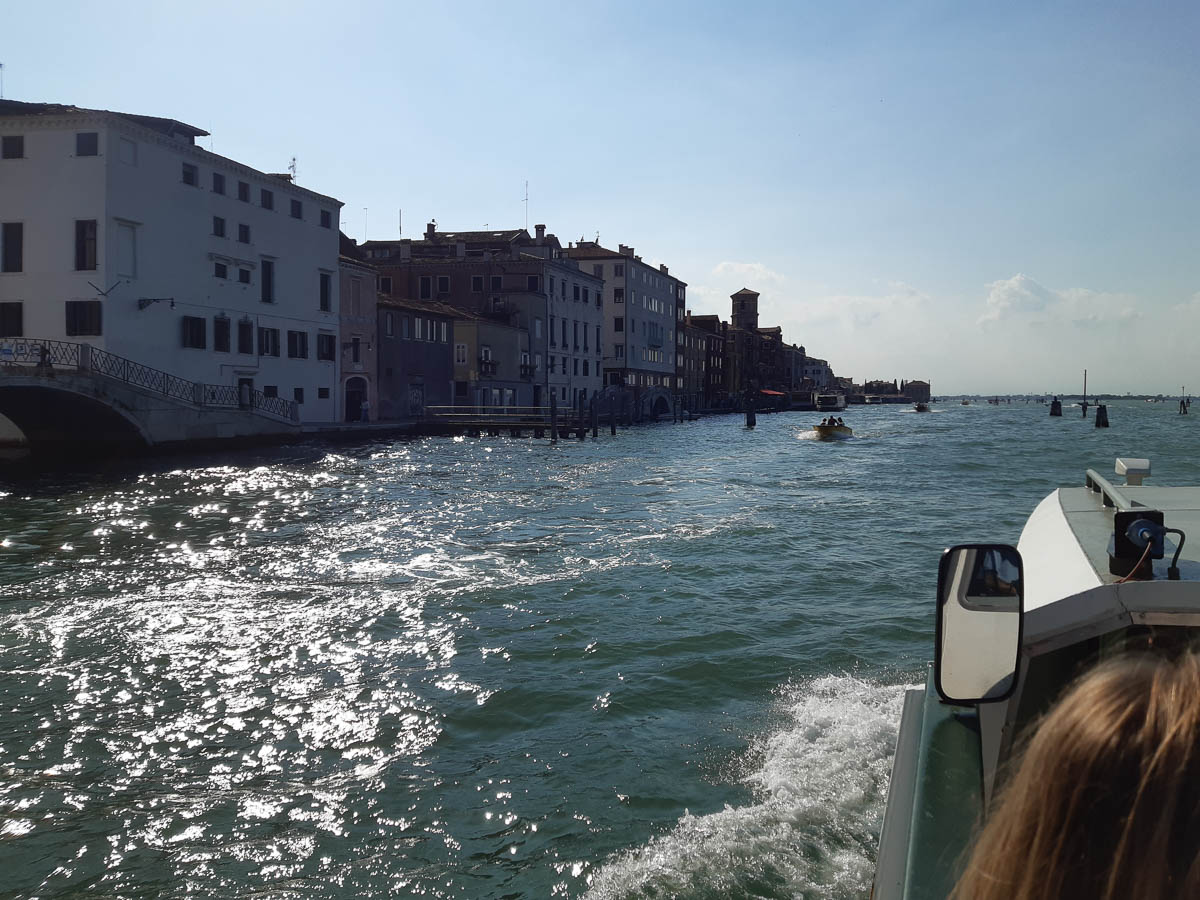
The boat trip back gave us a chance to see the “back side” of Venice. Fewer scenic historical buildings; more boat garages and loading docks.

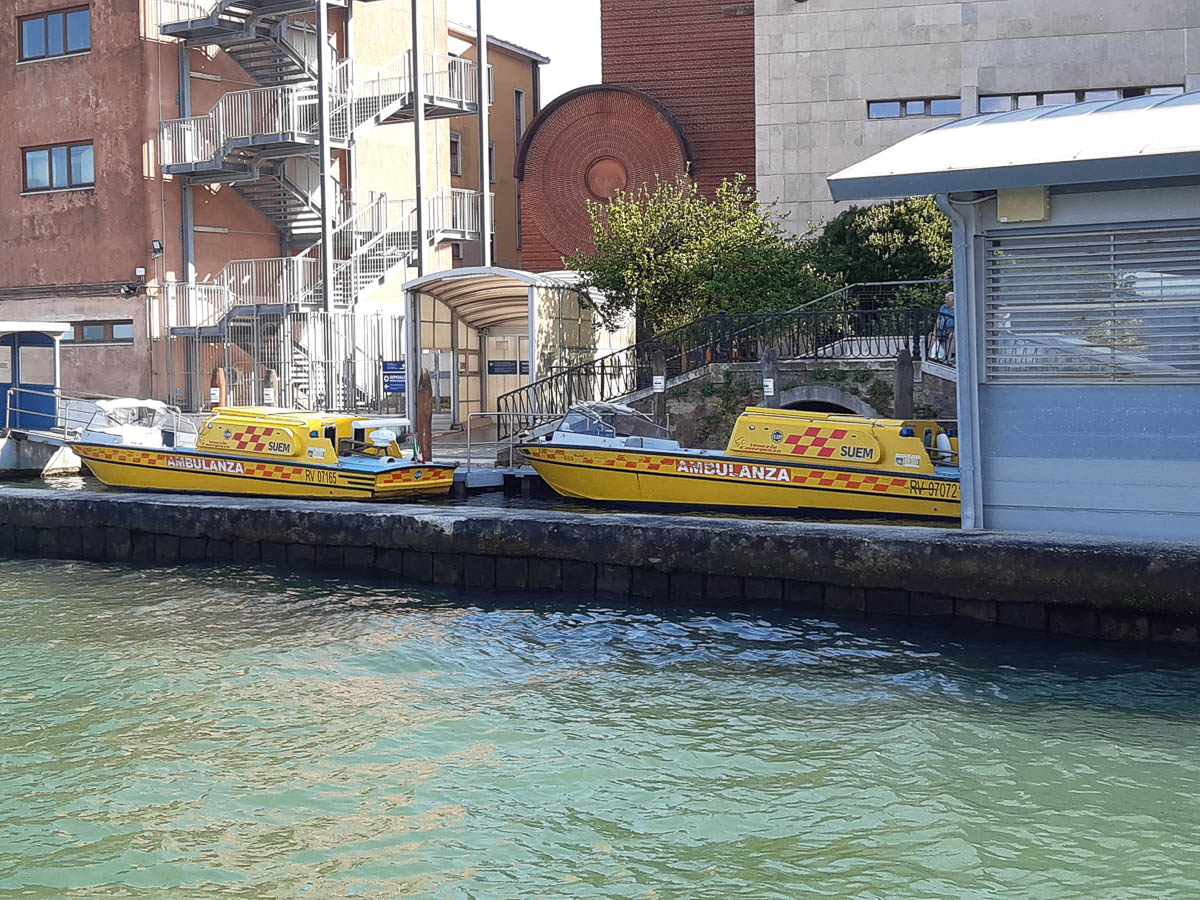
Of course the city hospital’s emergency department is also accessible by boat.

We got off the boat at a stop that was somewhat outside the most well-beaten paths to see some new corners of the city.

We ended up having a pretty lousy dinner at restaurant (Due Fratelli) that a 4.7 average rating on Google Reviews but managed to botch just about everything. The servers mixed up tables, some of the items we got were only vaguely similar to what the menu said, the salads were crap, the pasta was overcooked, and when it was time to pay, card payment was suddenly and mysteriously not available due to “internet troubles” so the only payment option was cash with no receipt for a 10% discount. Clearly a tourist trap, and I guess the Google Reviews were all paid for. It was so bad that it was funny. At least the food was not too bad.

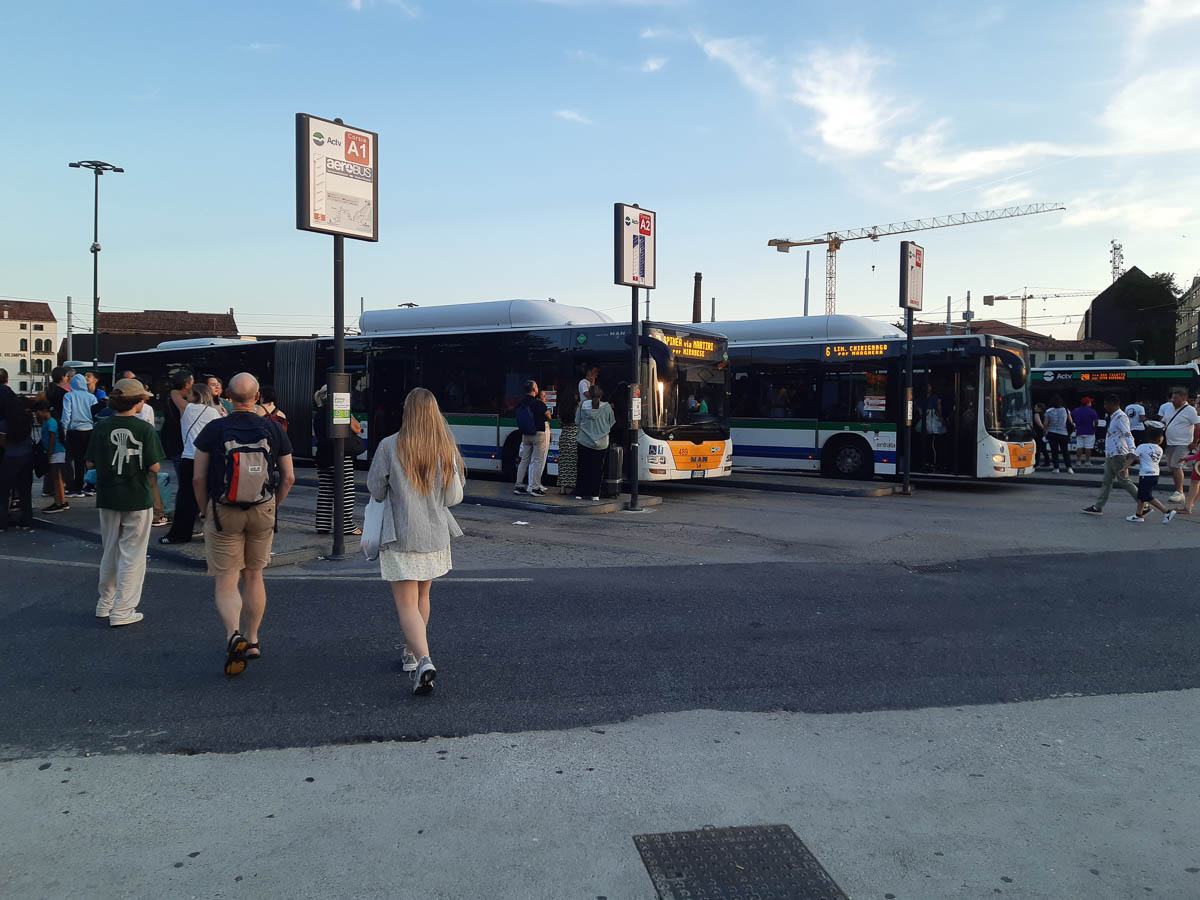
And then the bus took us back to Mestre to our apartment.

Bonus photos by Ingrid:


Postdated. I knew I took more photos this day! And in the mess of my camera stopping working, I somehow misplaced them, but now (three weeks later) I found them again.

Airport car rental. Waiting. No matter how short the queue, it always takes half an hour at least to get through the process.

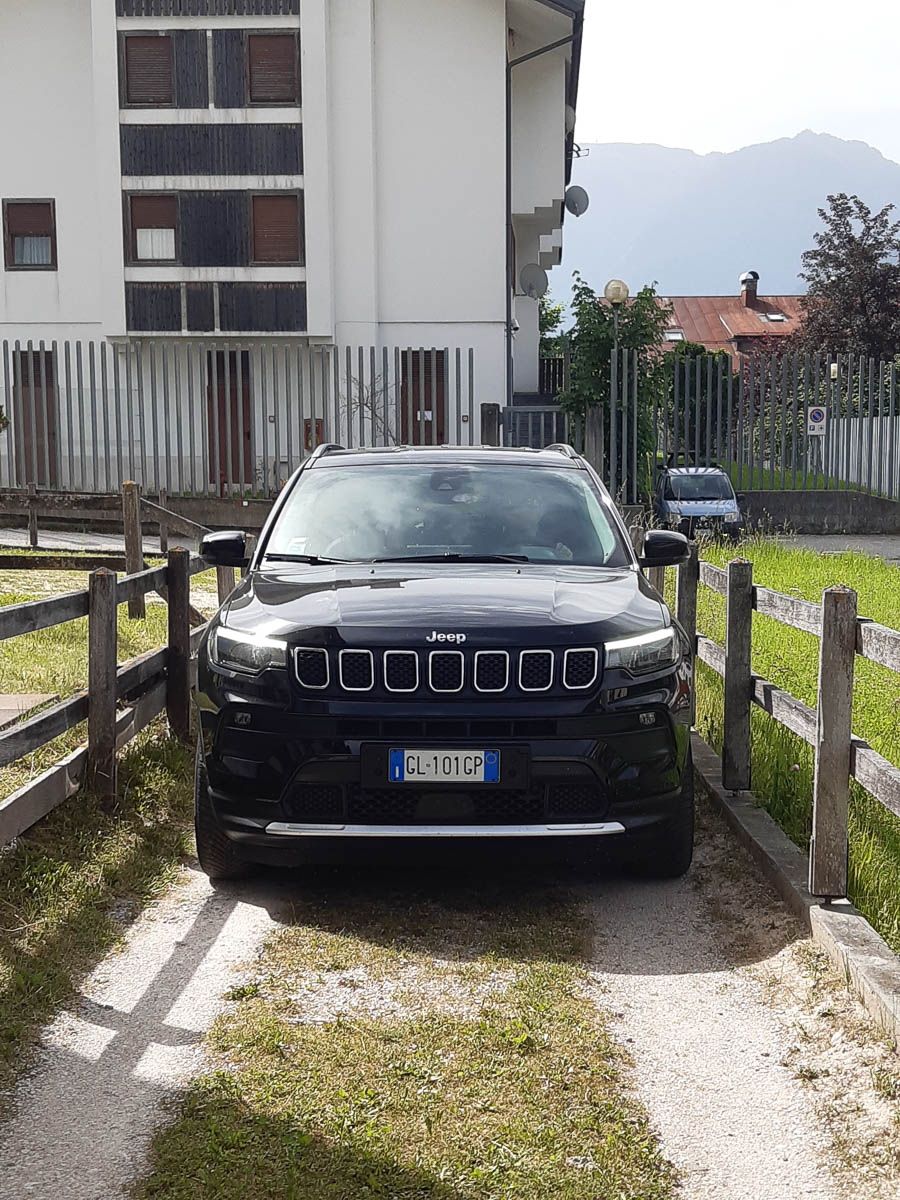
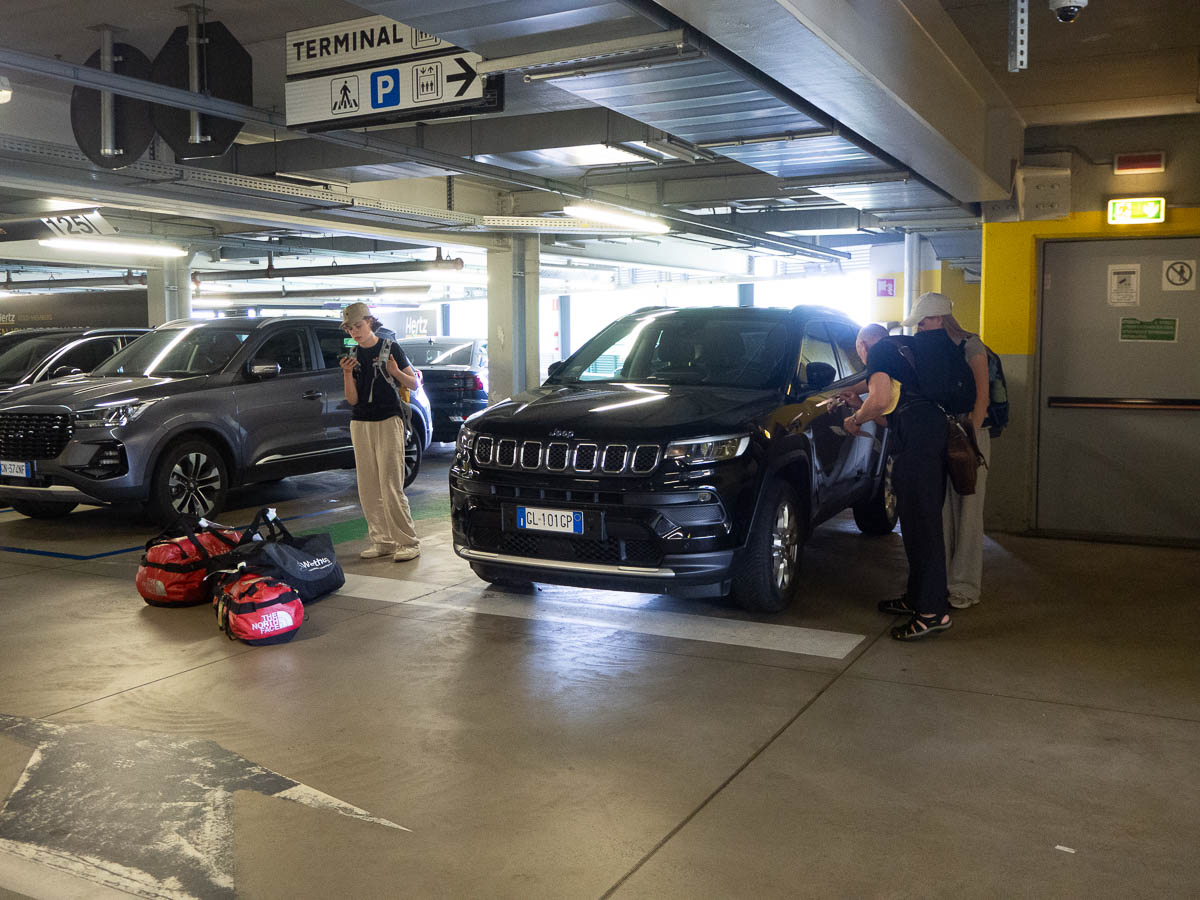
Our giant Jeep Compass. On the one hand – giant. On the other hand – spacious and modern. I could connect my Android phone to the car’s infotainment system and get Google Maps up on a big screen, and get Spotify to play without fiddling around with a separate Bluetooth speaker.

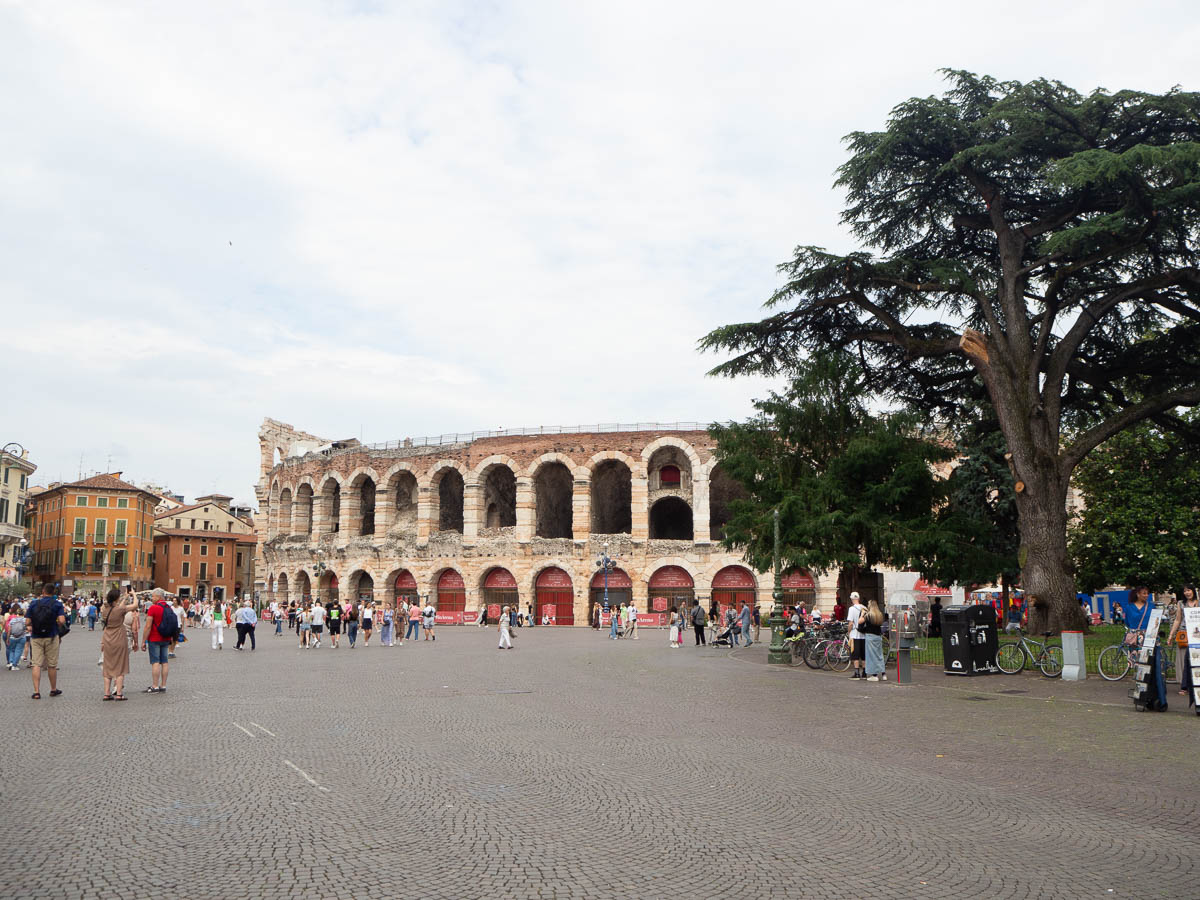
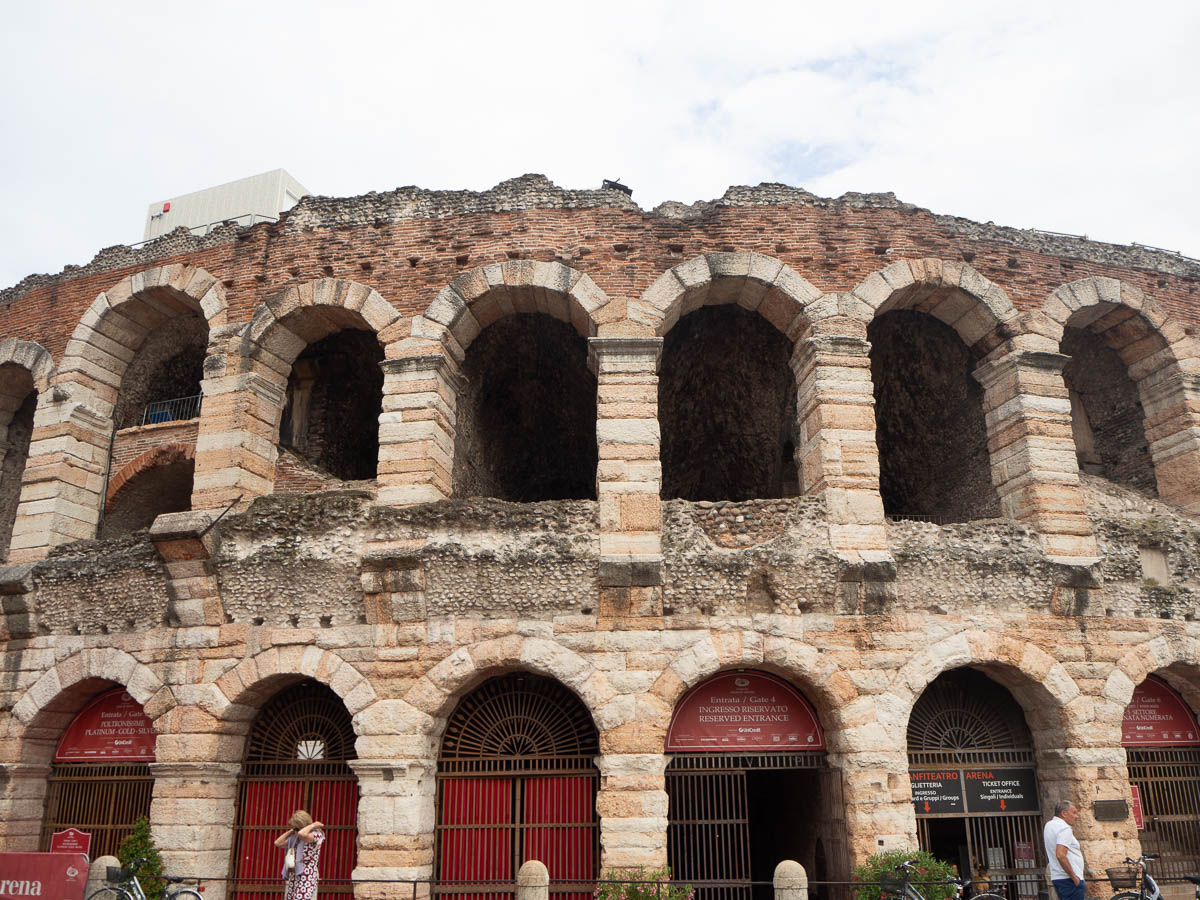
The main sight in Verona was the Roman-era Arena. I wish we had the time to visit it properly.


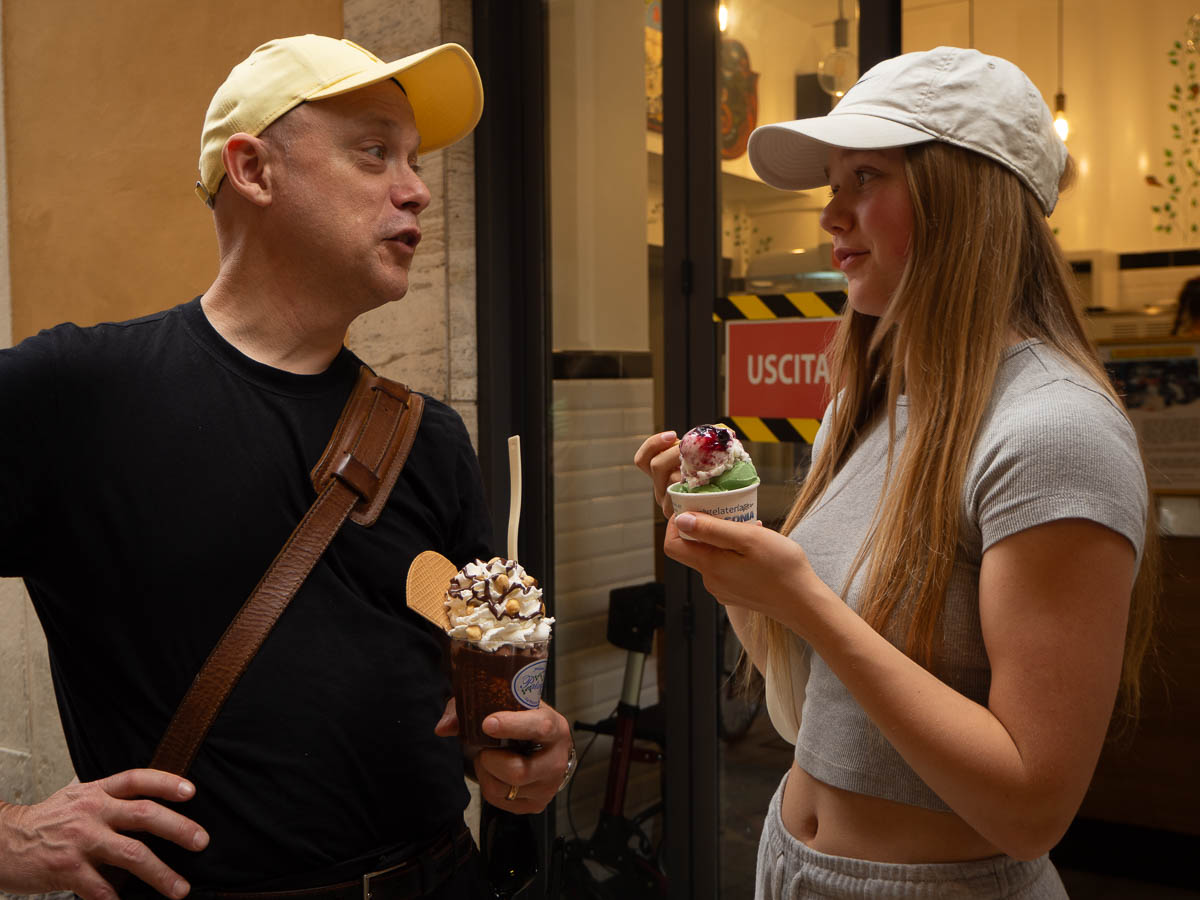
When in Italy, gelato is a must. The ice cream parlors here were leaning in hard on the Romeo and Juliet theme, so Eric got a “Coppa Julieta”.

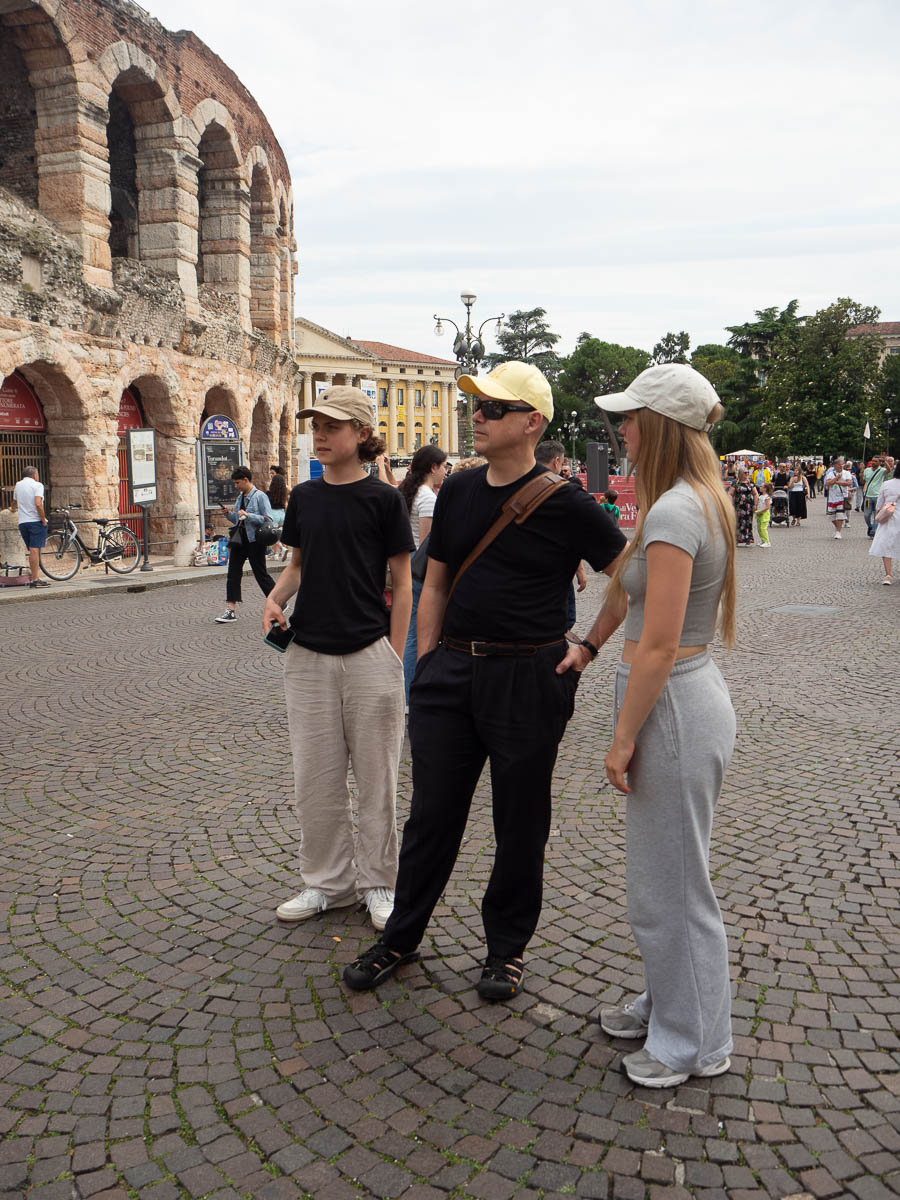
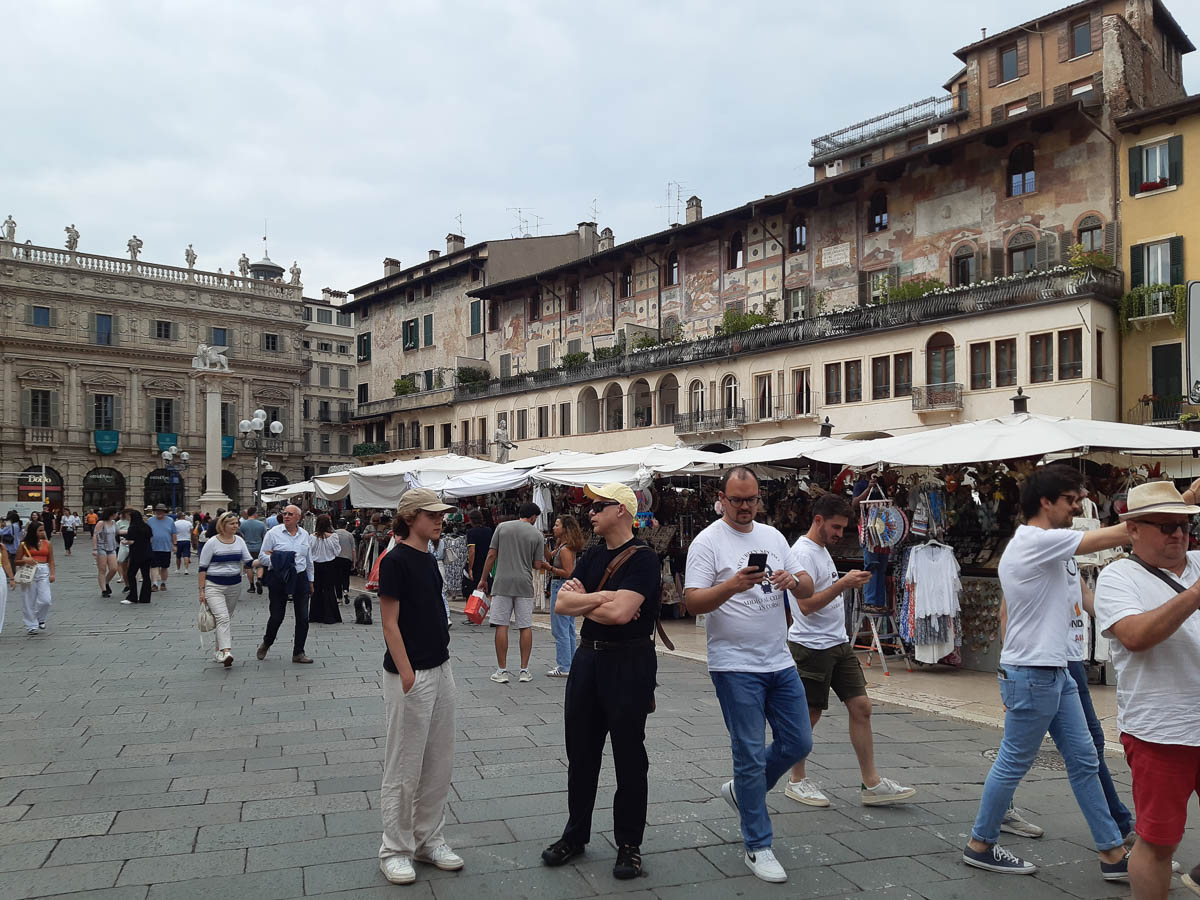
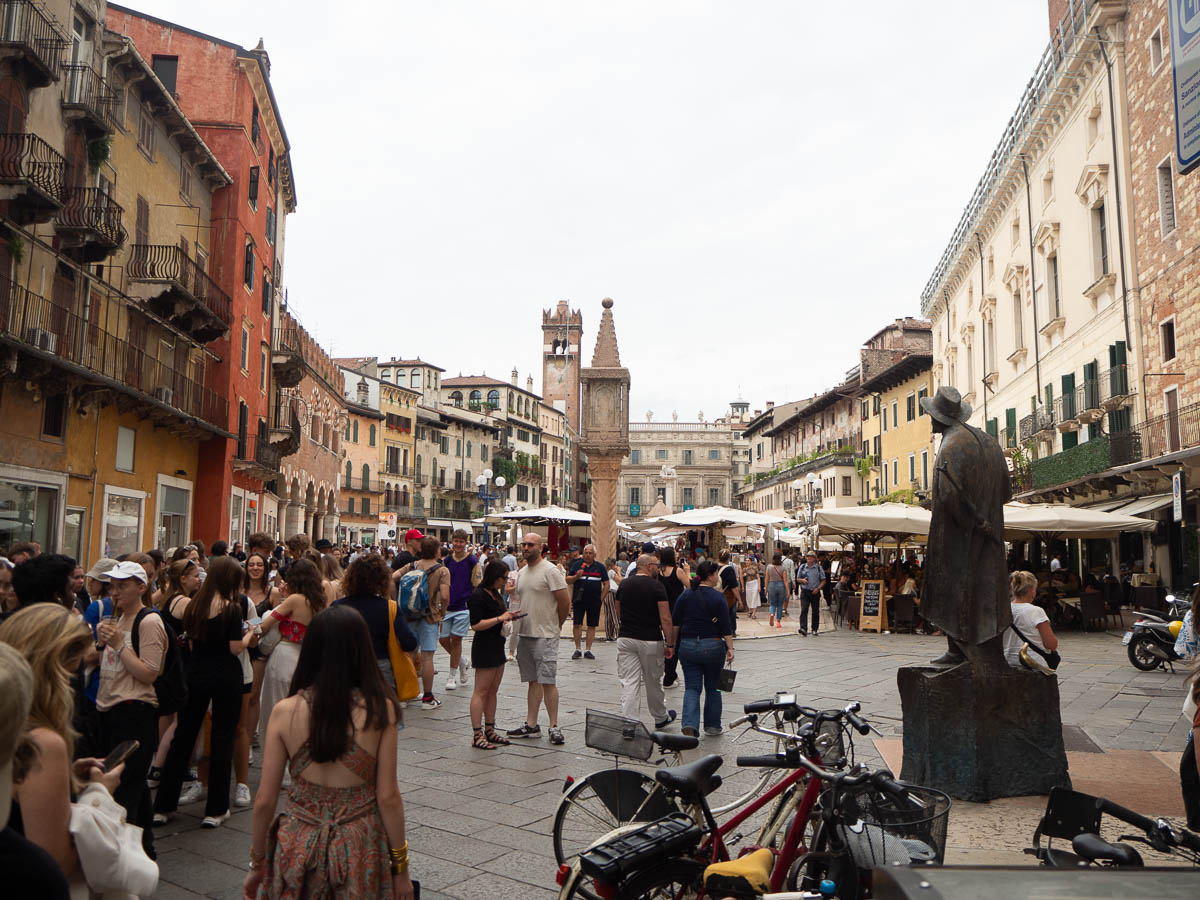
The main square was very crowded. I wonder if this is what we can expect to see Venice as well.

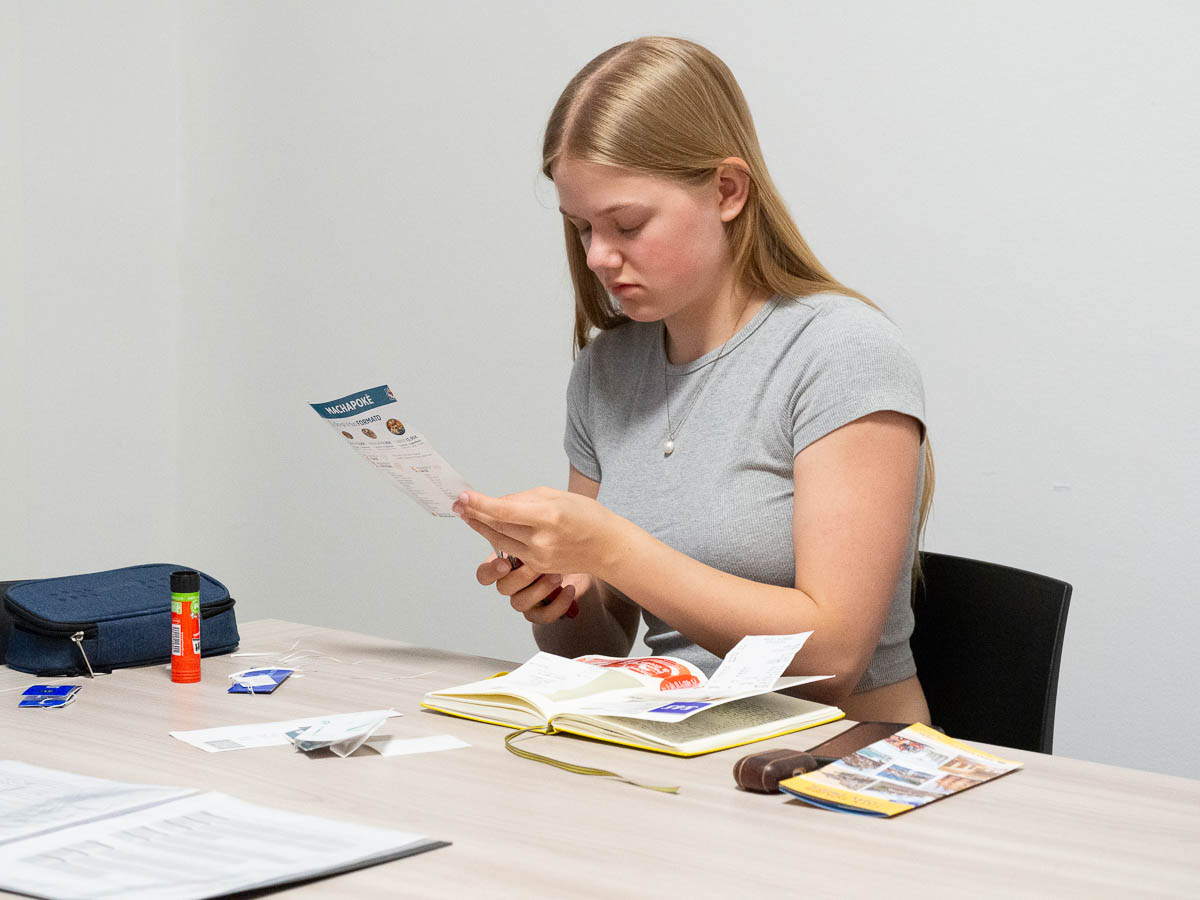
I take photos; Ingrid saves her memories by scrapbooking.

We’re on vacation in northern Italy. Today was mostly a transportation day – flying to Milan and driving to Venice, stopping in Verona on the way to stretch our legs and buy ice cream.

I discovered that my camera lens had stopped working when I unpacked it. I didn’t bring my small camera for the trip so I only have my phone. I feel handicapped and confused and lost.

Anyway, here’s a random street scene from Verona. Verona was prettier and more full of tourists than I had expected.

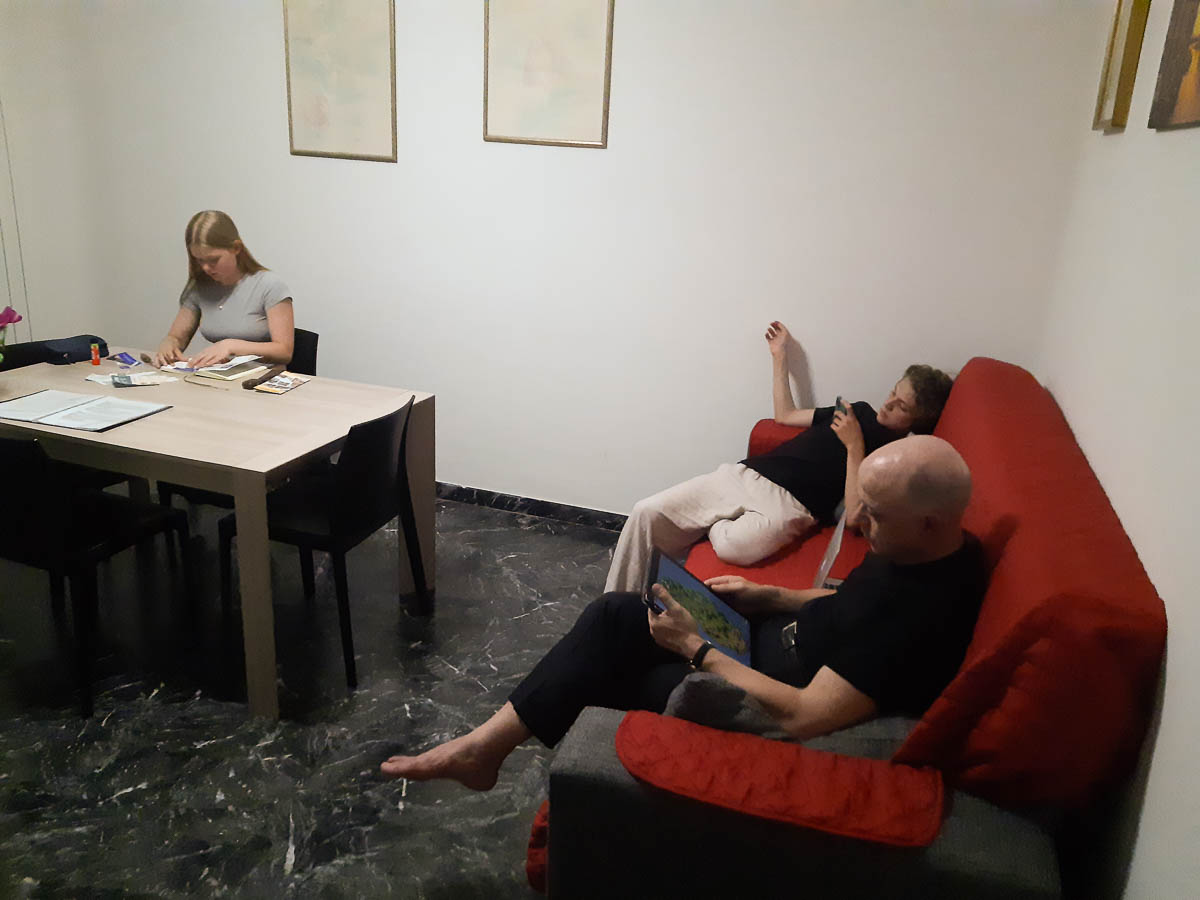
By the evening we were in Mestre, in mainland Venice. We’re staying in apartments for the whole trip. Hotels in Venice were eye-wateringly expensive – three nights in Venice would have cost as much as return flights from Stockholm to Milan. And apartments suit us better, anyway. We appreciate having access to a kitchen, if for nothing more than the ability to make tea, and a living room with actual sitting furniture. In hotels quite often the bed is the only place where you can sit, and after a week of that my back is always complaining.

My trip from Jokkmokk back to Stockholm starts at two in the afternoon. Bus to Murjek, train to Boden, sleeper train to Stockholm.

Which leaves me with half a day to kill in Jokkmokk. There’s a museum here that I had thought I might visit, but they’re closed on Sundays, so that was not an option.

I walked around the Talvatis lake instead. A bit slippery, since I didn’t have proper footwear, but sunny and nice. And saw the old church.

In Murjek I had another hour and a half to wait, so I left all my luggage at the station and went for another walk. Just headed off along the first road that looked like it might not have much traffic, walked for half an hour, and then turned back. My body has gotten all used to moving and gets restless after a day of inactivity.

Såmmarlappa to the old Darreädno shelter, 10-ish km, flat.

Skiing along the Darreädno river towards civilization, leaving Padjelanta behind us. A spring day with dripping eaves and warm but changeable weather.

I realize I haven’t shown or said much about the pulks we were using. Here’s a typical morning scene: those who are done with their individual packing, as well as any cleaning tasks, bring out the pulks from wherever we’ve stacked them for the night and line them up, ready for packing.
Every pulk gets a black crate of shared food (quite empty and lightweight by now) and a big bag for everything else. The bags are not waterproof – their only job is to keep things inside and snow outside, and then be strapped onto the pulks. Inside we have our stuff in dry bags, and perhaps some loose items. I always shove my emergency sleeping mat and my Crocs in loose. The sleeping mat is too large to fit in the dry bag (and doesn’t need it either) and the Crocs are the first things I want when we arrive at a hut (and also don’t need to be kept dry).

Today’s skiing was very flat, along the Darreädno river. The weather was warm and the snow wet and mushy. In places we were skiing through puddles.


We skied until lunchtime and stopped at the old Darreädno shelter – one of the very first ones built by STF, in 1889. Unfortunately I didn’t have time to see whether it was open, or what it looked like inside.

After lunch we were picked up by a pair of snowmobiles and trailers. We packed ourselves and all our kit into the trailers, and were ferried back to civilization.

Driving a snowmobile, with a heavily-loaded double trailer, along a twisty and bumpy trail, occasionally through wet patches and over small bridges, clearly required significant skill and attention from the driver. At one point, where the track did a sharp turn just before crossing a small bridge, we had to get out of the trailer and let the snowmobile basically jump across (with the rear trailer only nominally using the bridge to cross).

The ride went mostly through sparse forest and was quite scenic. This time the trailer had actual cushions and reindeer skins to sit on, and there was no storm in our faces, so it was rather pleasant.

Duottar to Såmmarlappa, 26 km. 75 m ascent, 450 m descent. 8.5 hours.

The day started with nice, easy skiing across gently undulating terrain, under a light cloud cover.


Then the views opened up towards the south-east.

With excellent timing, the clouds also cleared away, and the wind died down, and we had some truly excellent skiing. From this point onwards our route followed a chain of connected lakes, which make for great skiing – flattish ground, views all around. If I recall correctly, some of the views we had here were out over the mountains in Sarek national park, to the east of Padjelanta, and someone probably pointed out which mountain was which. Having nothing to relate those names to, I promptly forgot them, but I did appreciate the views.


Towards the afternoon we had a lovely, gentle, long descent down (and then out) from the Padjelanta national park. The spectacular views of nothing but mountains and rocks and snow were replaced with birch forest. Not as dramatic, but I do like skiing through forests as well.


The weather got gradually warmer and wetter as the afternoon went on. We arrived at Såmmarlappa through thick, wet snow.

Såmmarlappa is a manned hut so we were greeted with pre-warmed rooms and hot blackcurrant cordial.


Staying at Duottar for another night. Today was planned as a slack day, in case we needed to adjust our route or timing due to the weather – or to be used for a day trip. In the end it was a bit of both. The day started out very windy, continuing on from yesterday, so we mostly stayed in the huts until lunchtime.

In the middle of the day we had a couple of fine hours of beautiful sunshine, and went out on a small circuit on the nearby lake. On the other side of the lake we took off our skis and climbed to the top of the (very small) peak to get some views.

It was rather satisfying to get some good glide going. Swish, swoosh, across a flat lake, with the wind at our backs and the sun brilliant above us.

More dark clouds were piling up when we were turning back, and the wind picked up again soon after, so our outing remained short.

The rest of the day we just puttered around our huts. I think many in the group appreciated the rest. There isn’t much space nor comfortable furniture in the huts. You can lounge in your bed, or on one of the small, hard chairs.

I had packed some knitting, given the more generous “luggage allowance” with the pulks. I finished a pair of socks this morning and wound the yarn for the next pair. A ball of sock yarn weighs 100 g, so the two didn’t make my bag much heavier.

At one point we took the time to dig out another stall in the outhouse. When we got here, only one of the stalls was clear of snow. Two others were full of snow inside, and the fourth had a large drift in front of the door. But we were getting low on toilet paper in the one that we were using, so it was worth digging out a second one.

When there’s nothing else to do, there’s almost always water to melt and boil. It’s the first thing we do in the morning, and likewise the first thing we start when we get into a hut in the afternoon. There’s almost always two pots of water on the stove and a bucket of snow next to it.

Had I been on my own, I’d most likely not have bothered with the boiling. Fresh snow, freshly melted, is good enough for me. But I understand that the guides feel like they need to be more responsible with the group’s hygiene.

During this trip I’ve learned that there is technique and tricks to melting snow for drinking water. Sure, you can just shovel snow in a pot and put it on a stove, but there are ways be efficient about it.

Firstly and most importantly, don’t start with snow in an empty pot – you want some water at the bottom. Otherwise the first snow to melt will immediately boil and evaporate, which is a waste. So you prime the pot with the last dregs from your thermos.

Secondly, the first batch of ready, boiled water goes not in the thermos but in ordinary bottles, which you then put in the bucket of snow waiting to be melted next. This way you start warming up the snow while also cooling your drinking water. The thermoses you fill last.

And, of course, don’t leave any of your leftover water in the kettle, like some fool had done, because by the time the next guests get there it will be a solid chunk of ice, spiced with dead flies, which you can’t even pour out because it’s larger than the opening of the kettle.

On any normal trip we’d also spend a fair bit of time cooking. This time we had packed, frozen meals for all dinners, and the guides took care of breakfast porridge. I’ve never eaten as well on a hut-to-hut tour, with as little work.