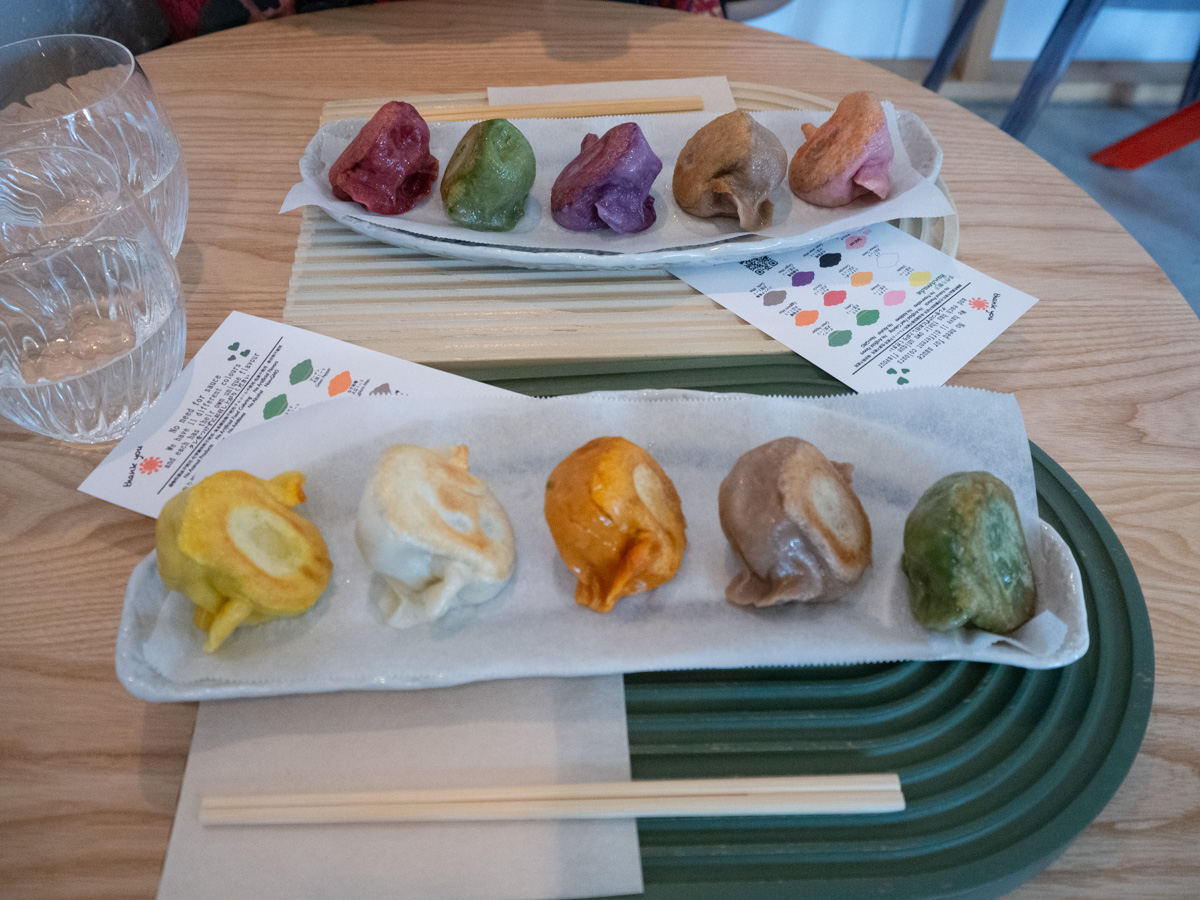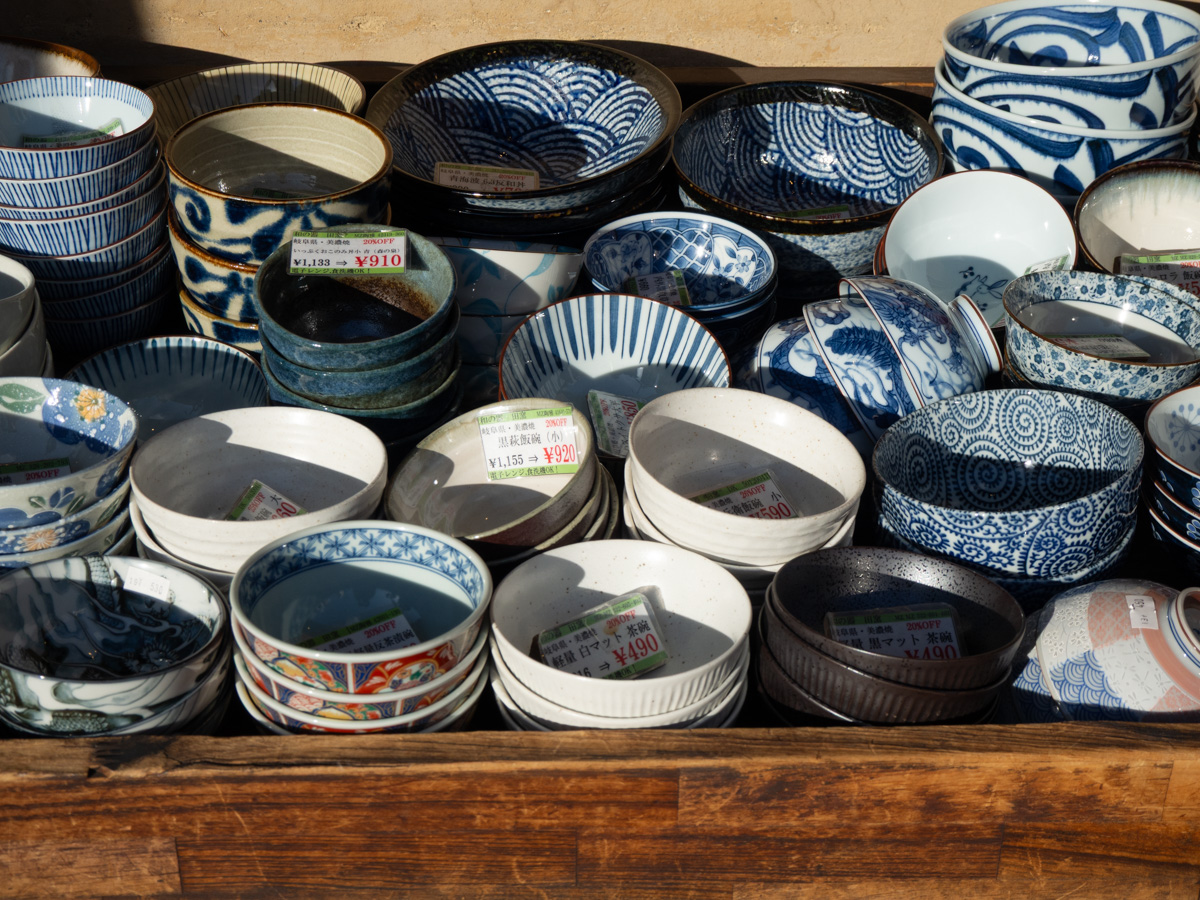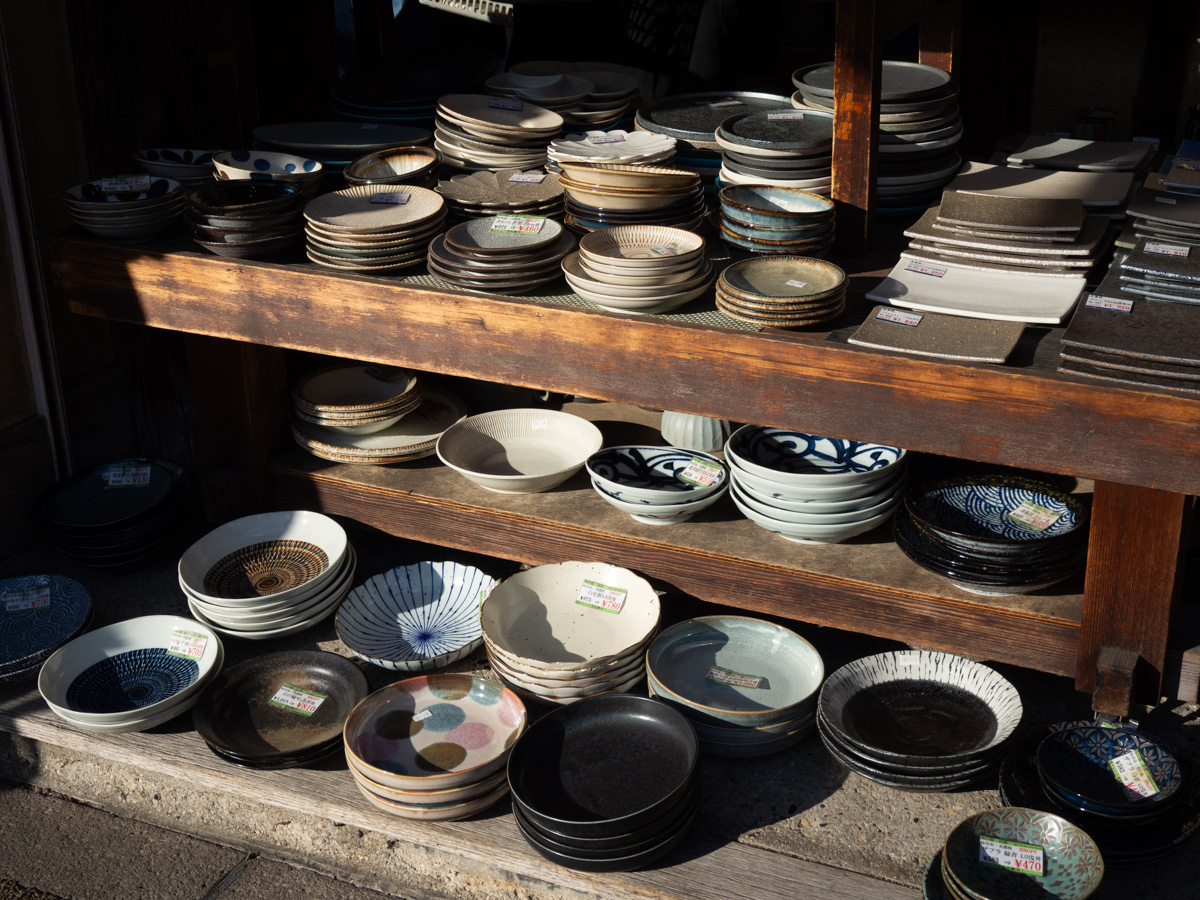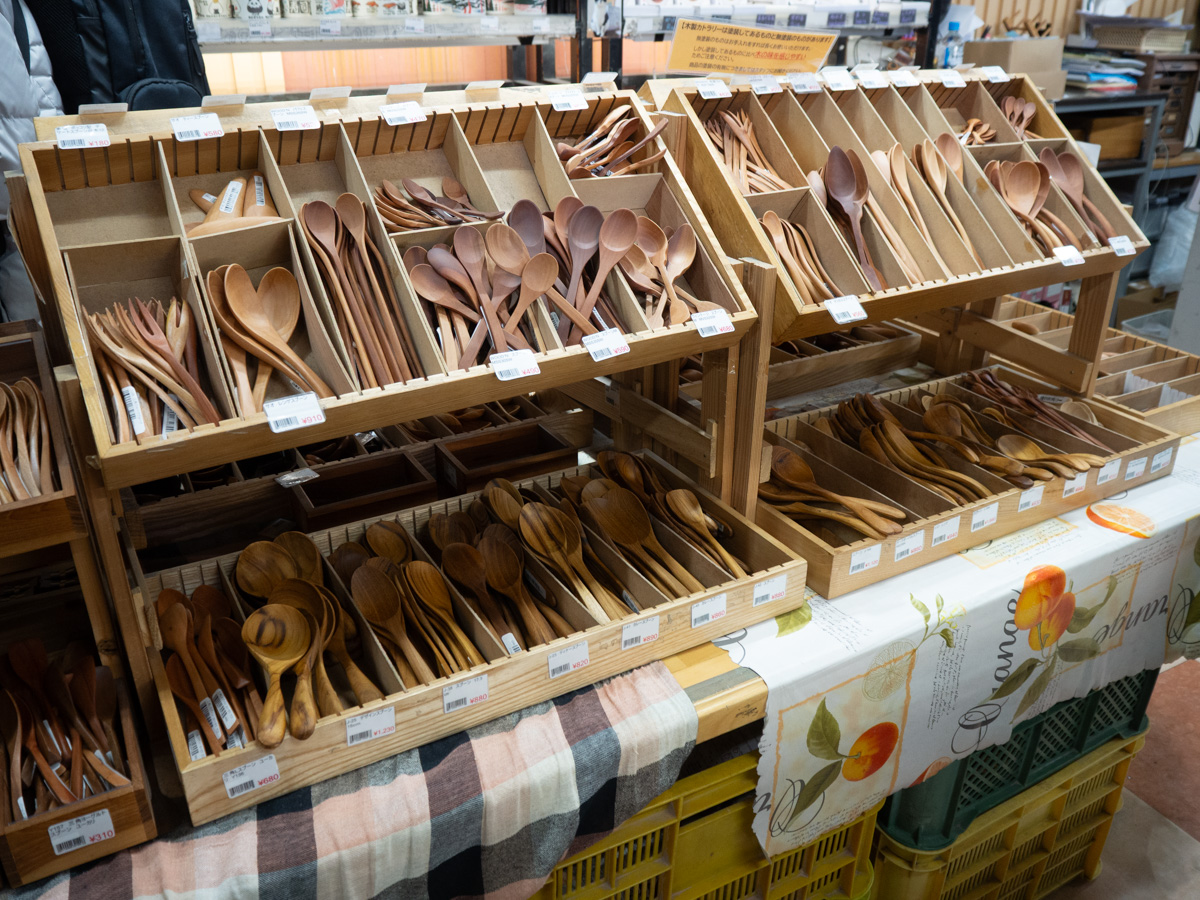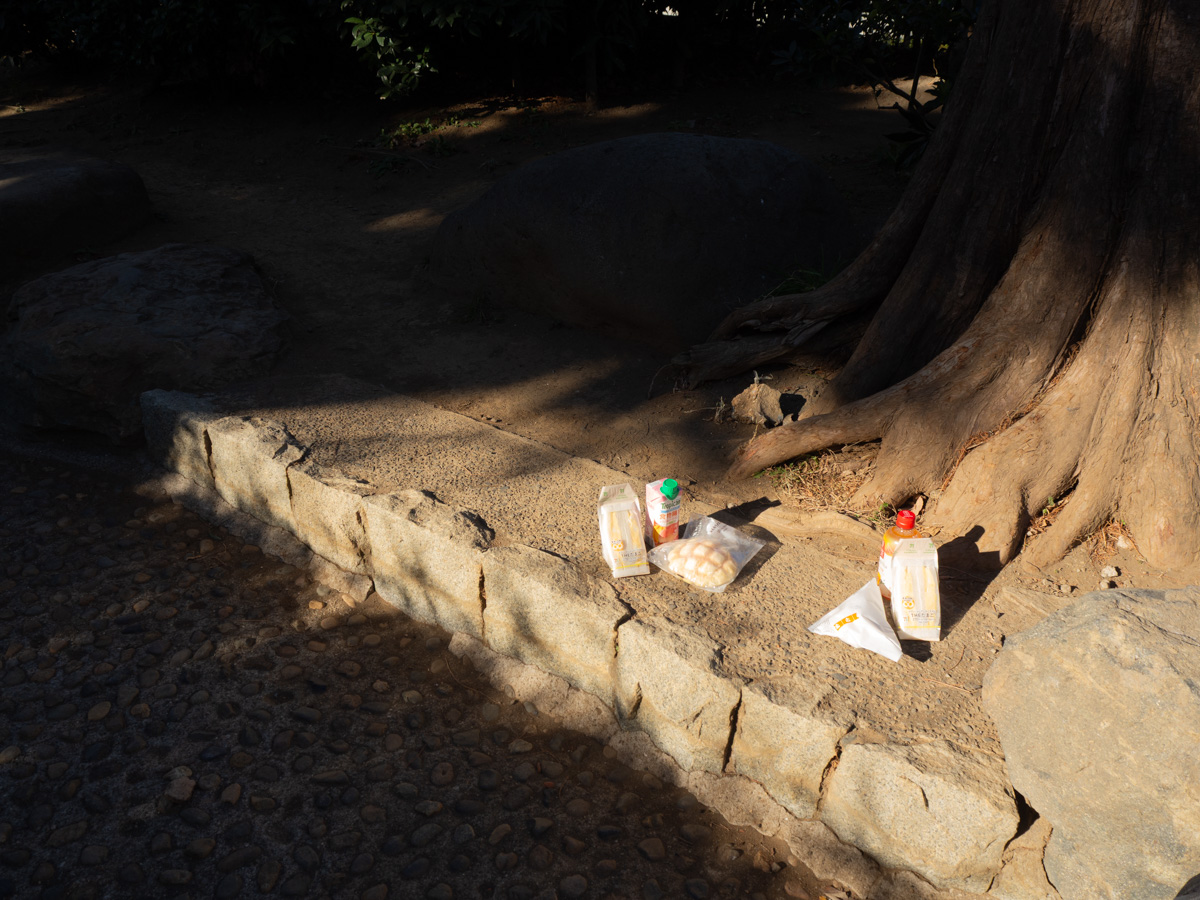
Our day started with the same challenge as yesterday: where to eat our convenience store breakfast. There was a park on the map, very close to us. Surely a park will have a bench, we thought. Nope. We ended up eating our egg sandwiches and rice balls on a concrete edge. And it was cold. We will need a better plan for our future breakfasts.
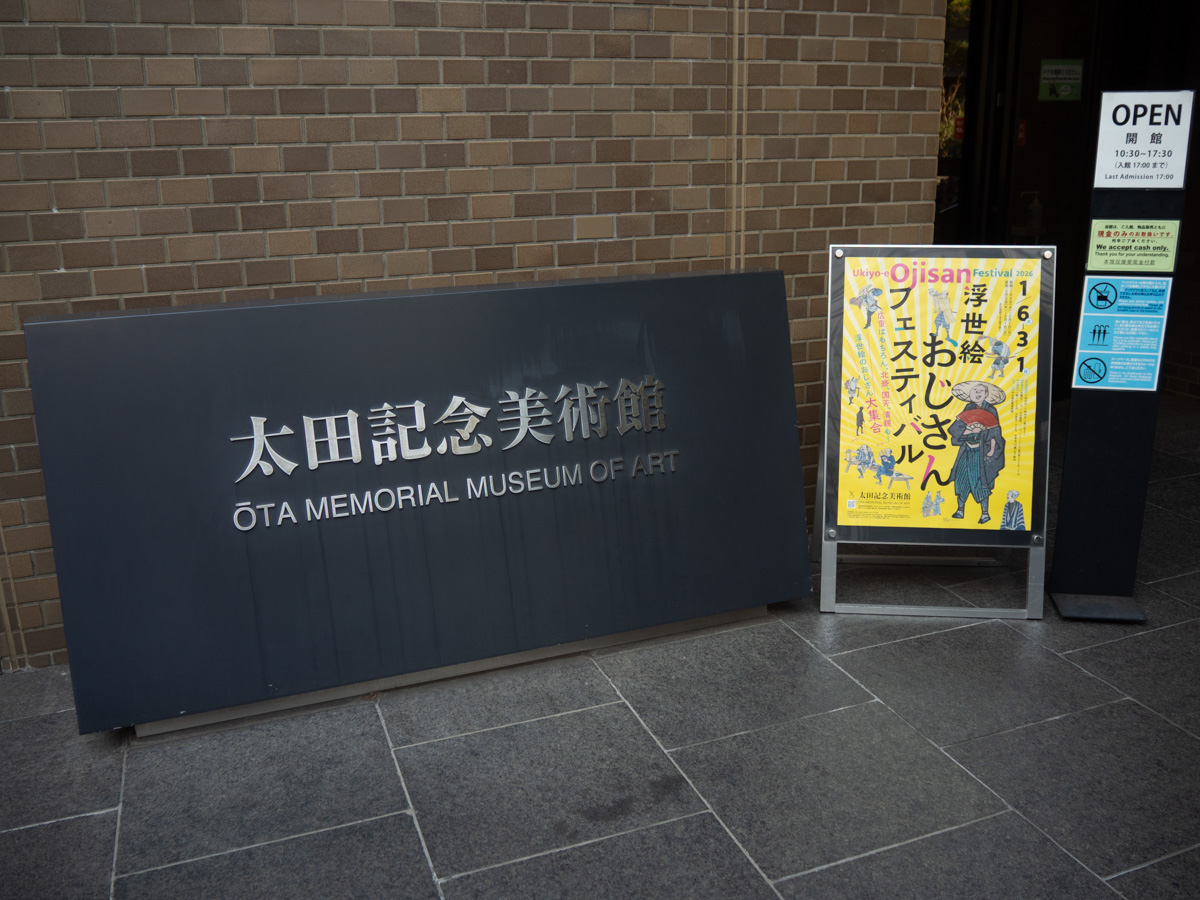
In the morning we visited Ota Memorial Museum of Art, which hosts a large collection of woodblock prints. They rotate which works from their collection are on display at any time. Right now, the theme was “Ojisan” or “uncle”, meaning “middle-aged man”.

Many of the exhibited prints were from famous series, like “The fifty-three stations of the Tokaido” etc.
The “uncles” were never the focal point of any of the works, but they were everywhere. Walking, sunning themselves, carrying things, smoking a pipe.

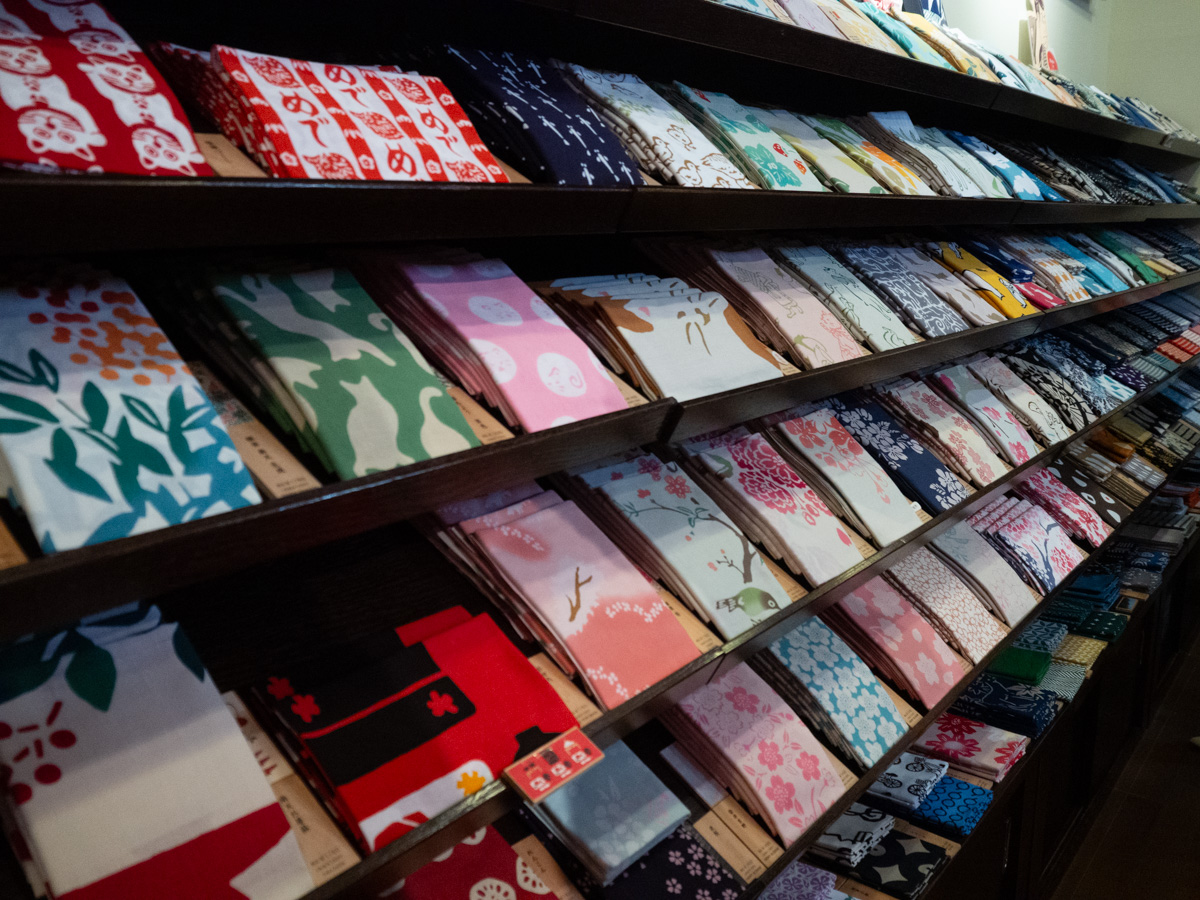
Unfortunately photography was not allowed inside the museum – not even in the foyer. The only exception was the museum shop, which had a wonderful range of tenugui, printed cotton towels. I bought several, even though I have no idea what I will do with them.
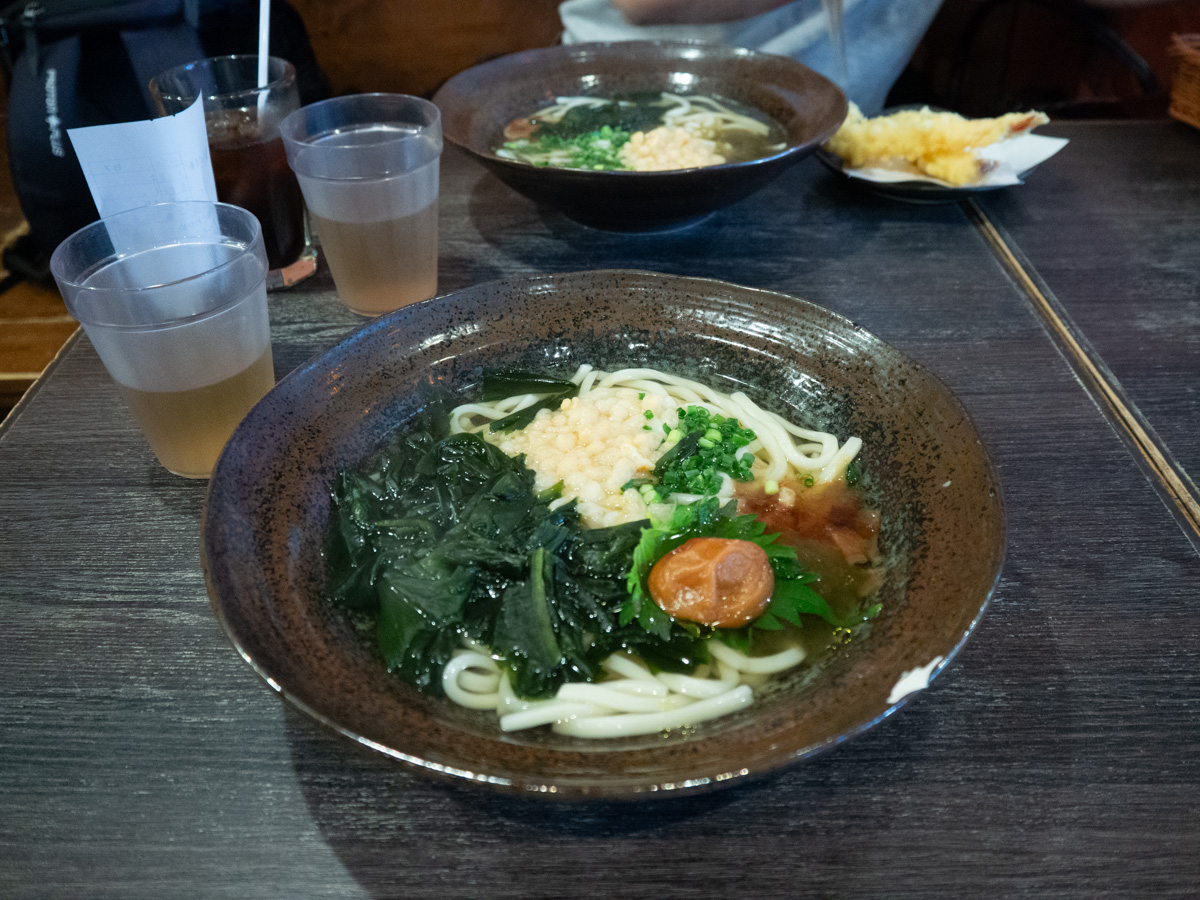
For lunch – udon noodles at – Udon Iroha. The restaurant actually offered paper aprons to guests, which I said no to. Maybe I was cheating when I sometimes bit off the longest noodles, but nobody was watching.
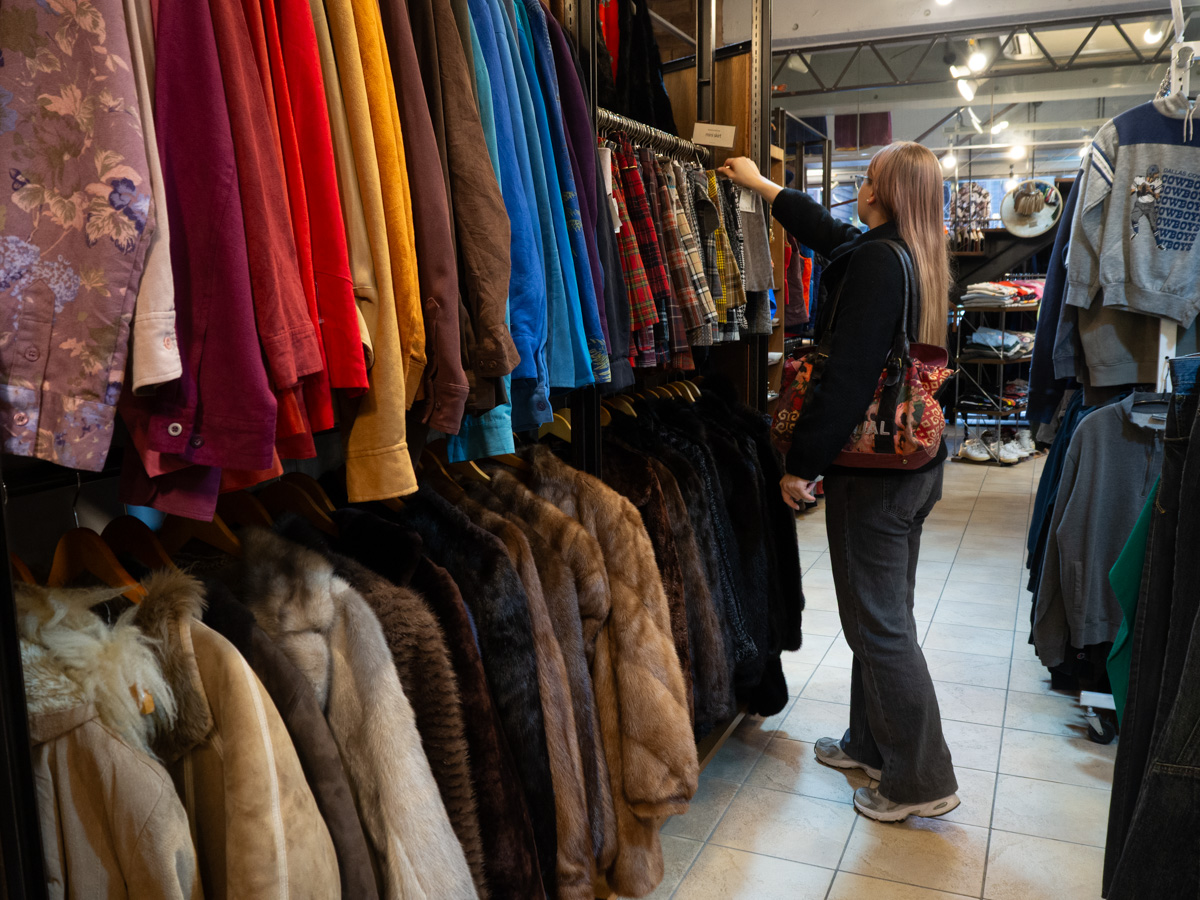
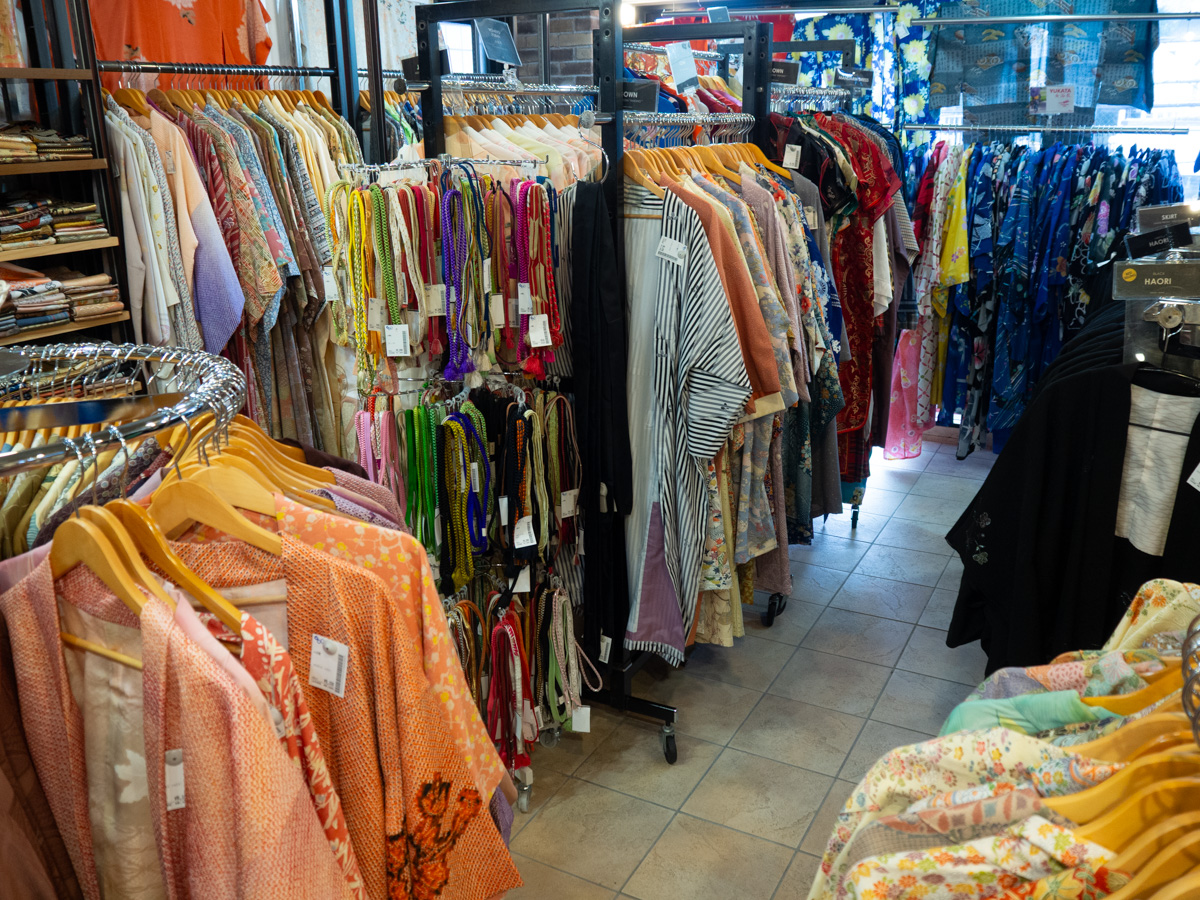
After lunch we spent a few hours browsing various kinds of shops in Harajuku. The vintage clothes shops were impressively organized and curated. A metre of short, plaid skirts; two metres of corduroy shirts. Kimonos, yukatas, haori jackets in all colours.
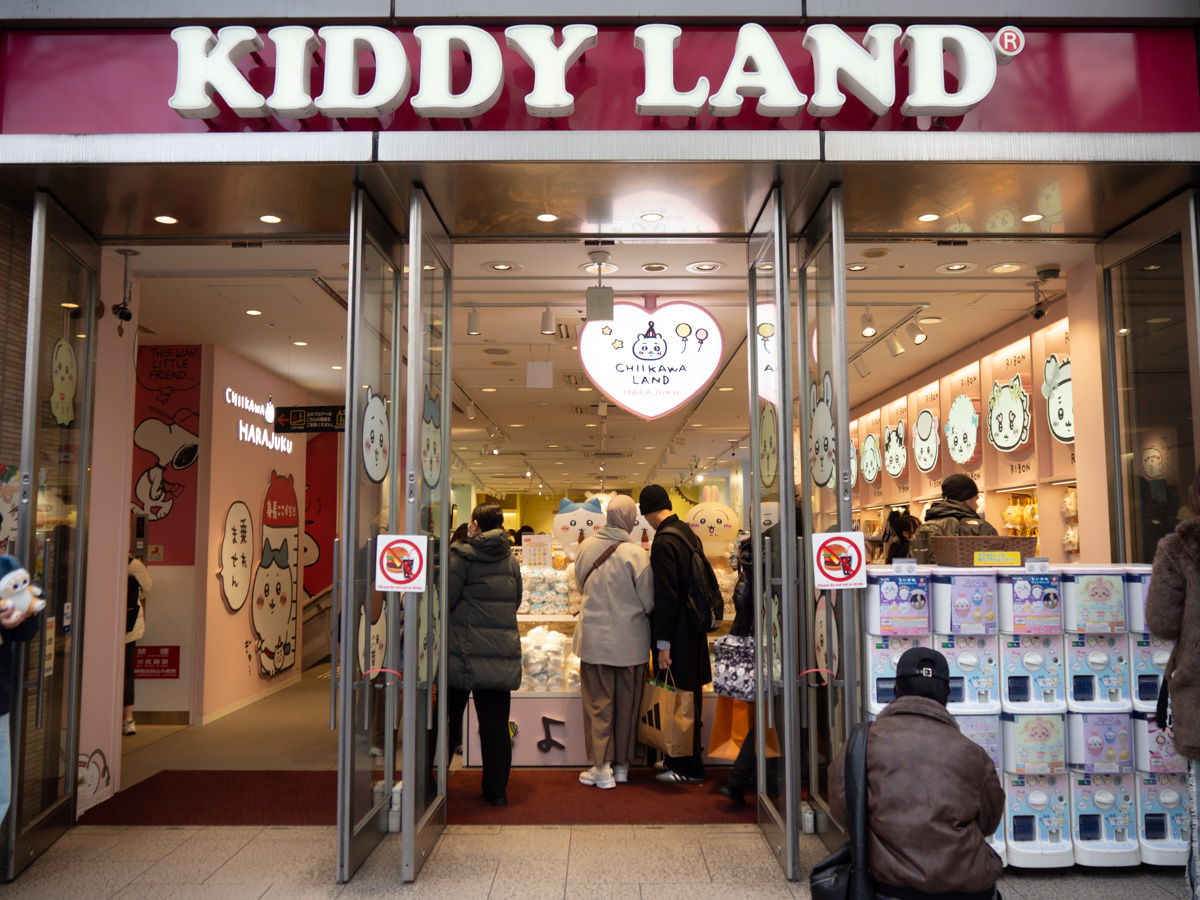
Ingrid had a list of shops with toys and pop culture doodads to visit. I discovered yet again that Tokyo does not like people just hanging around. There was never any place to sit when I was waiting for her.
Right next to Shibuya is Meiji Jingu shrine, built to honor Emperor Meiji and his wife, Empress Shoken.

I liked the giant torii gate on the way through the park to the shrine. It looks like each pillar is a single tree trunk.
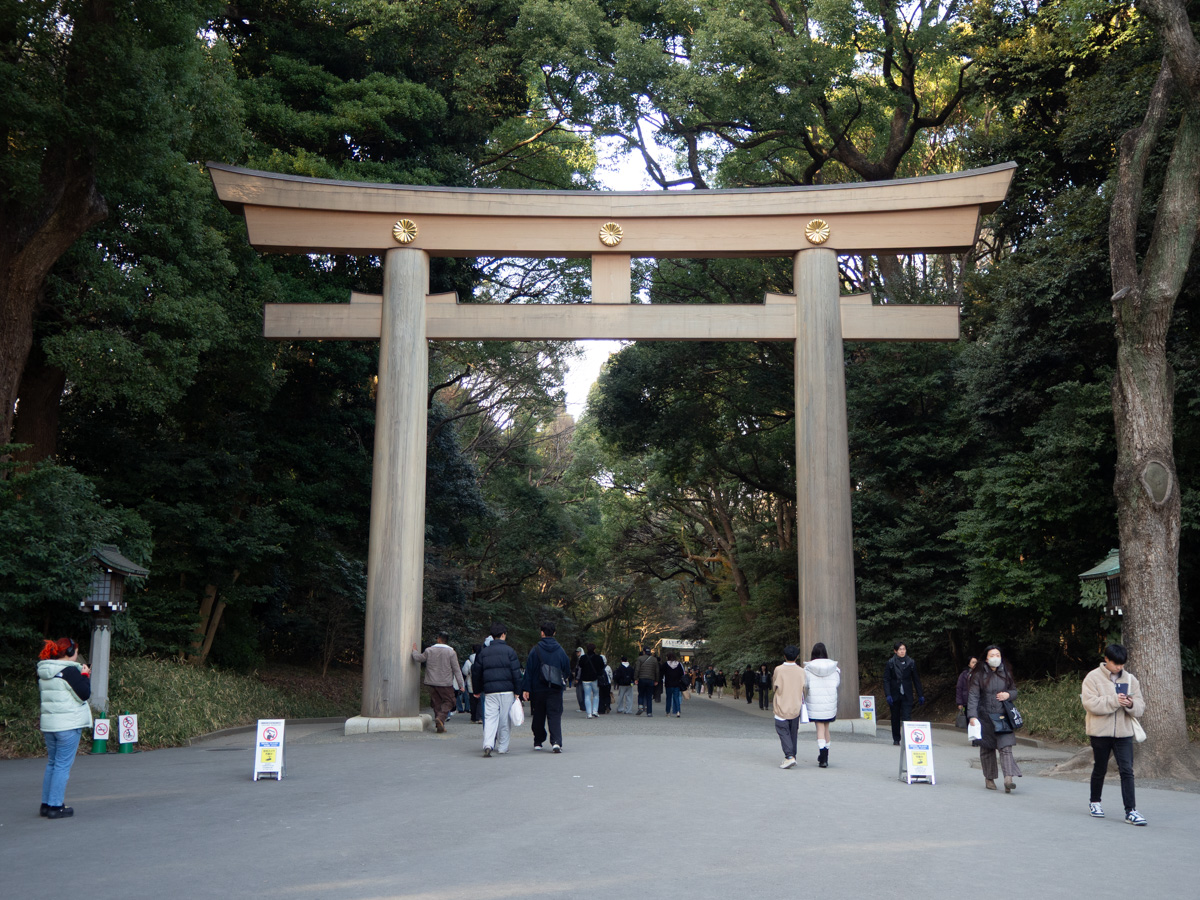
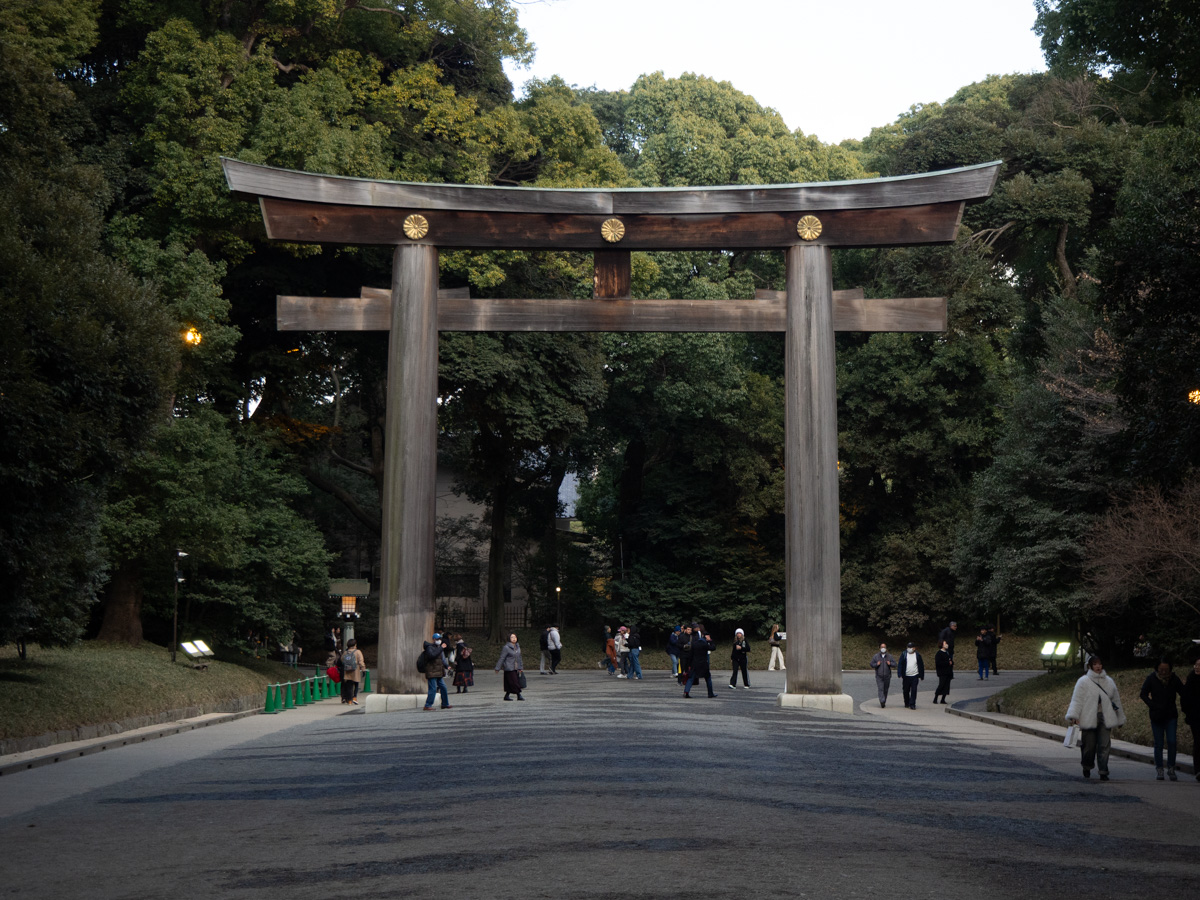
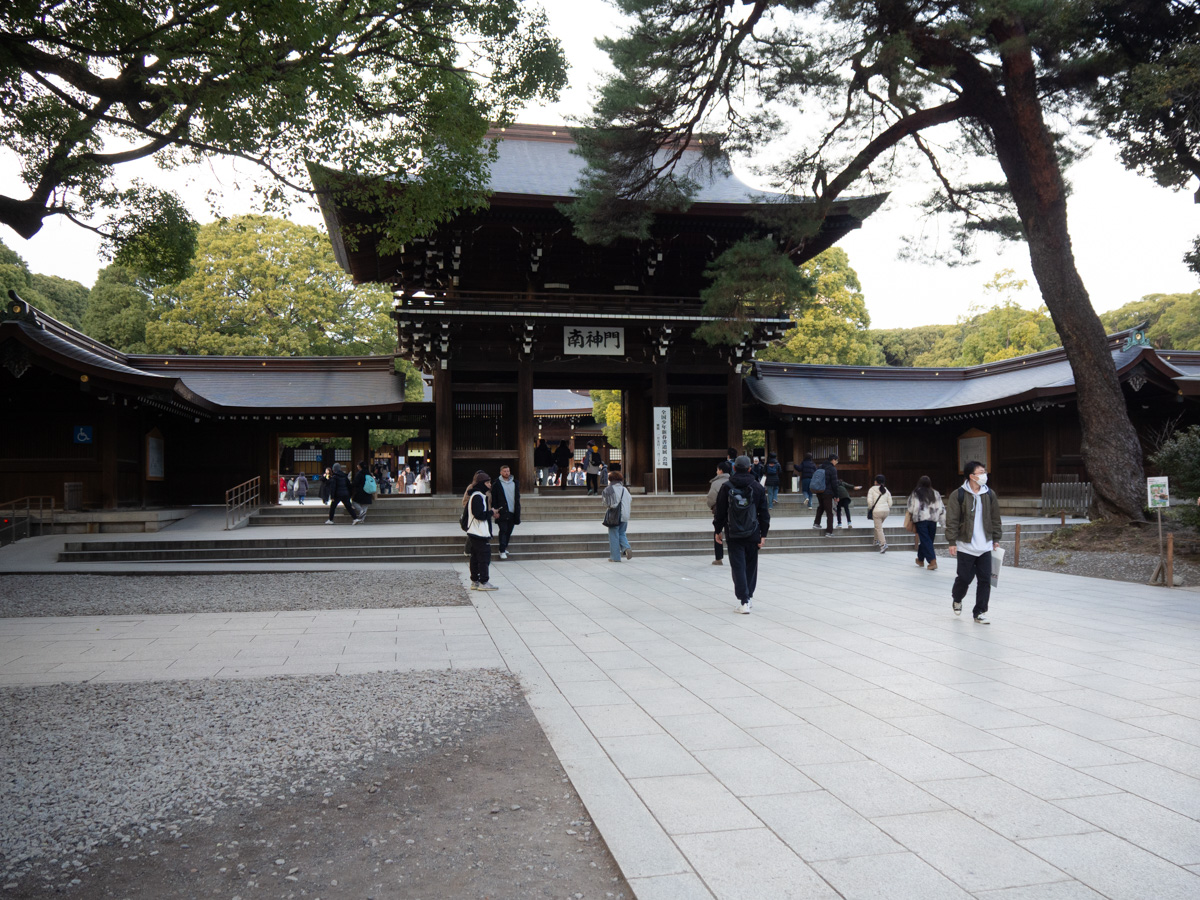
I read somewhere that, back when the shrine was being designed, there were intense debates about what the appropriate architectural style would be for a shrine erected for a deified emperor, since there was no real precedent.
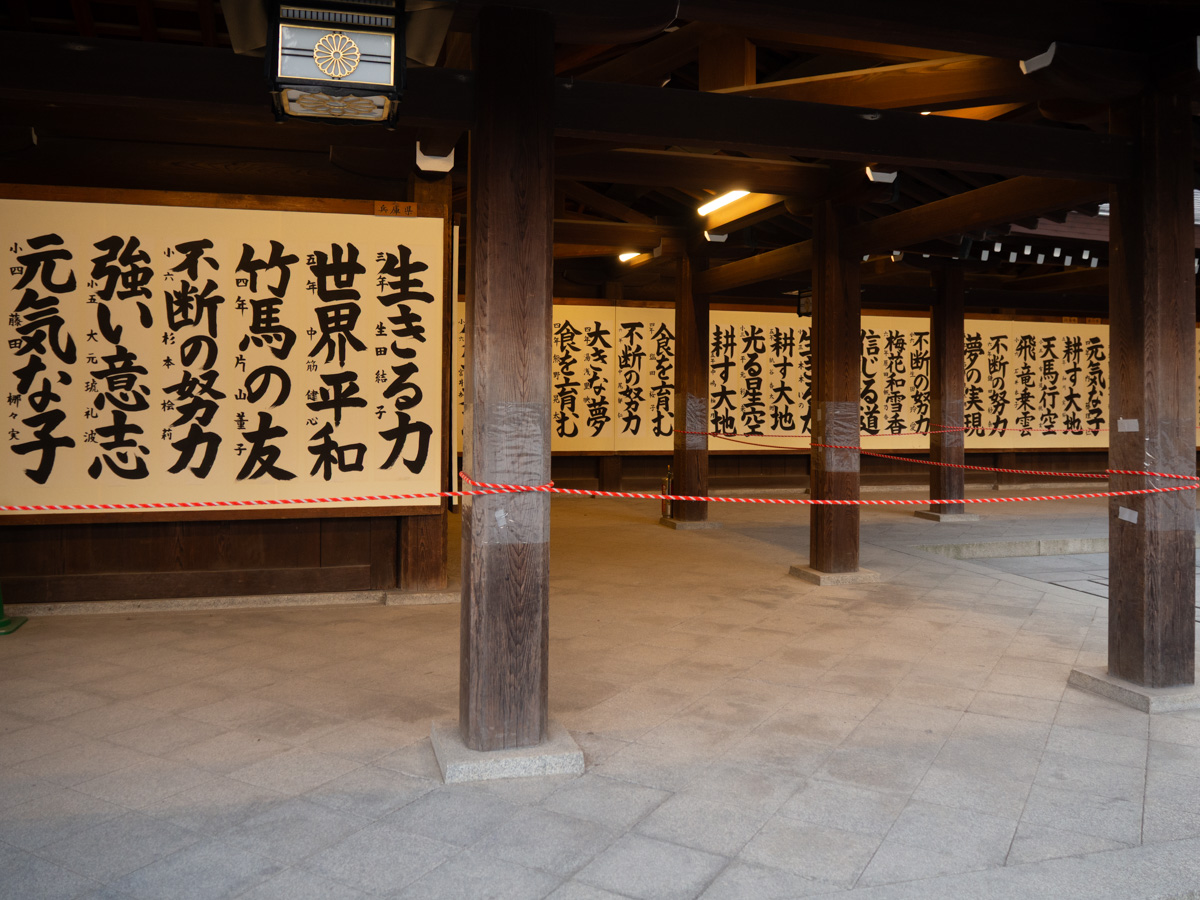
Emperor Meiji apparently wrote 100,000 poems during this life. I presume that these are some of them. I do wish someone had spent at least a little time on some English-language signage. Perhaps even a few translations of the poems?
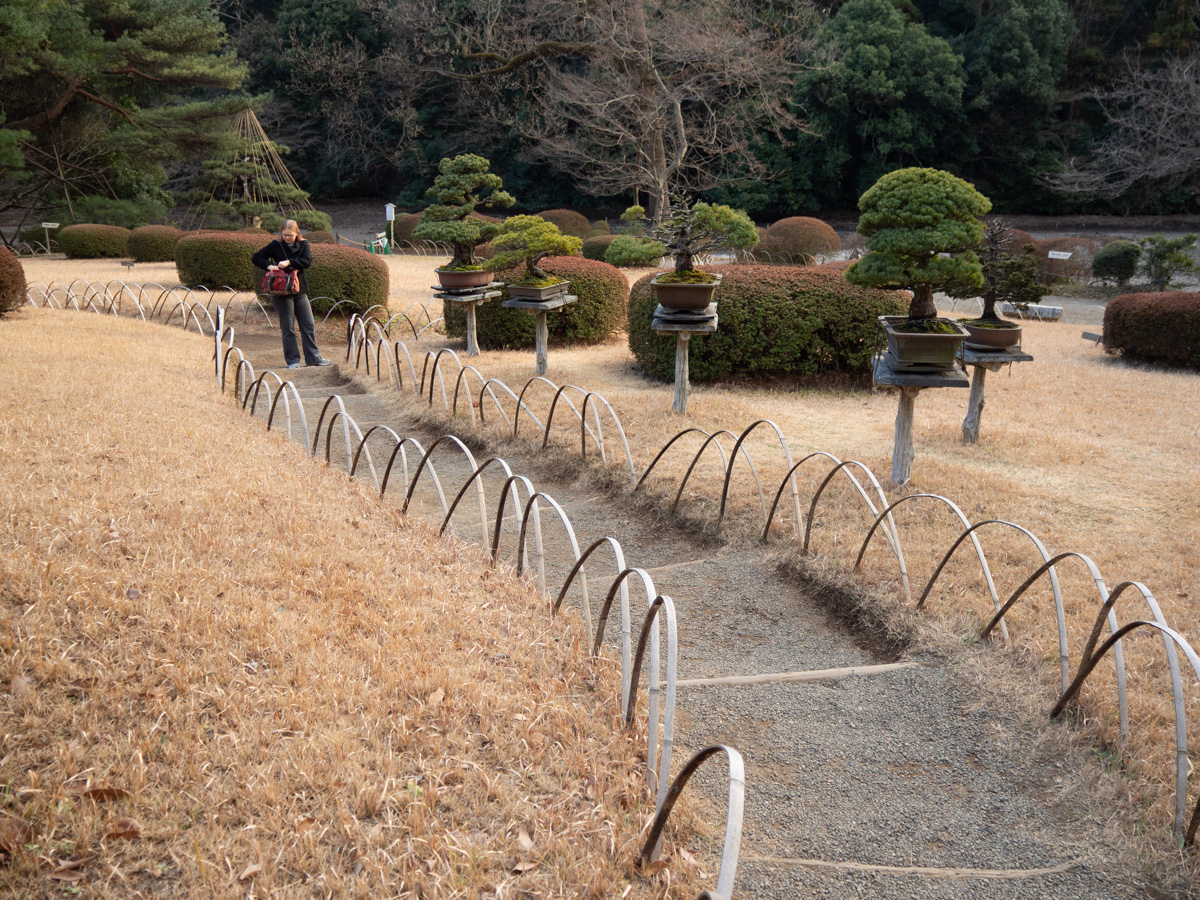
Close to the temple itself, there was the Emperor’s garden. Even though its more spectacular parts (like the iris garden) are nothing to look at in late winter, I appreciated its design, with winding paths and bonsai trees.
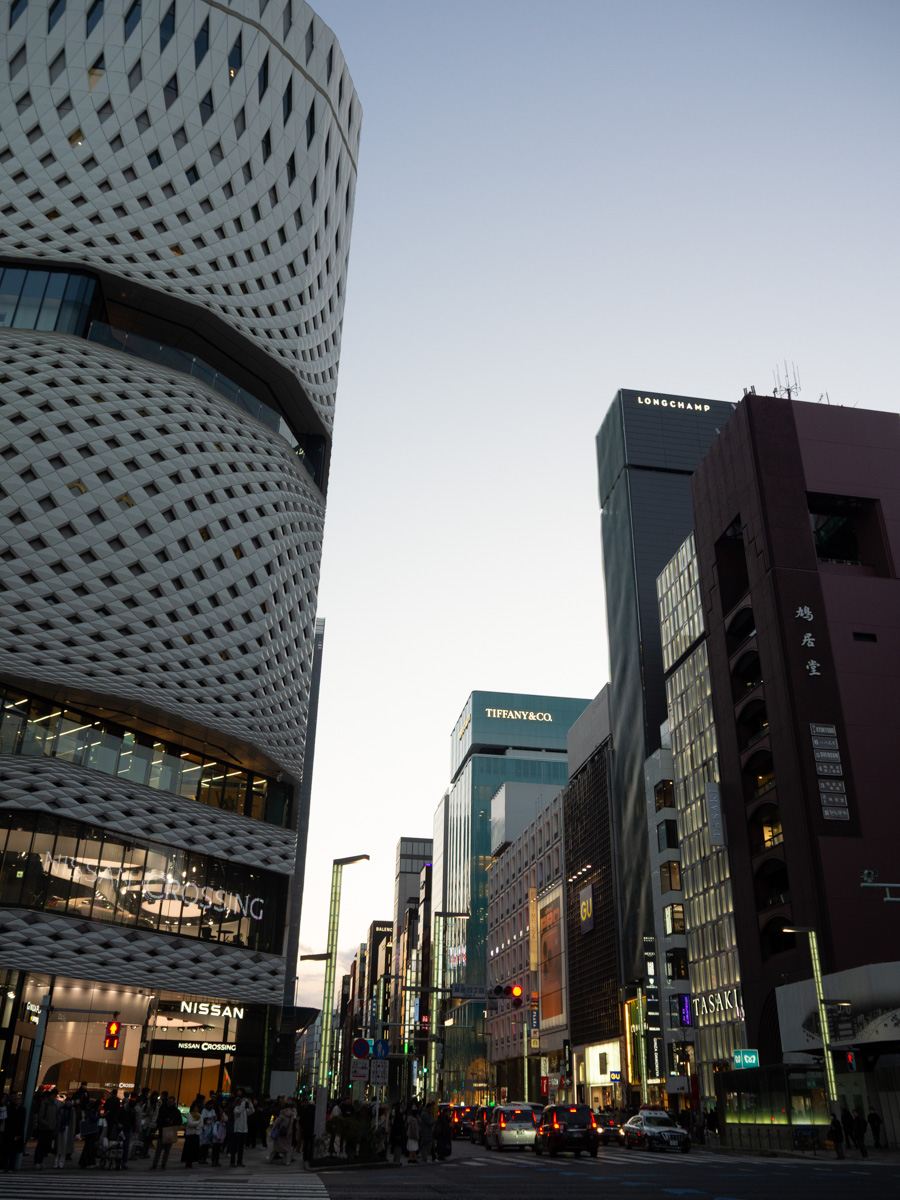
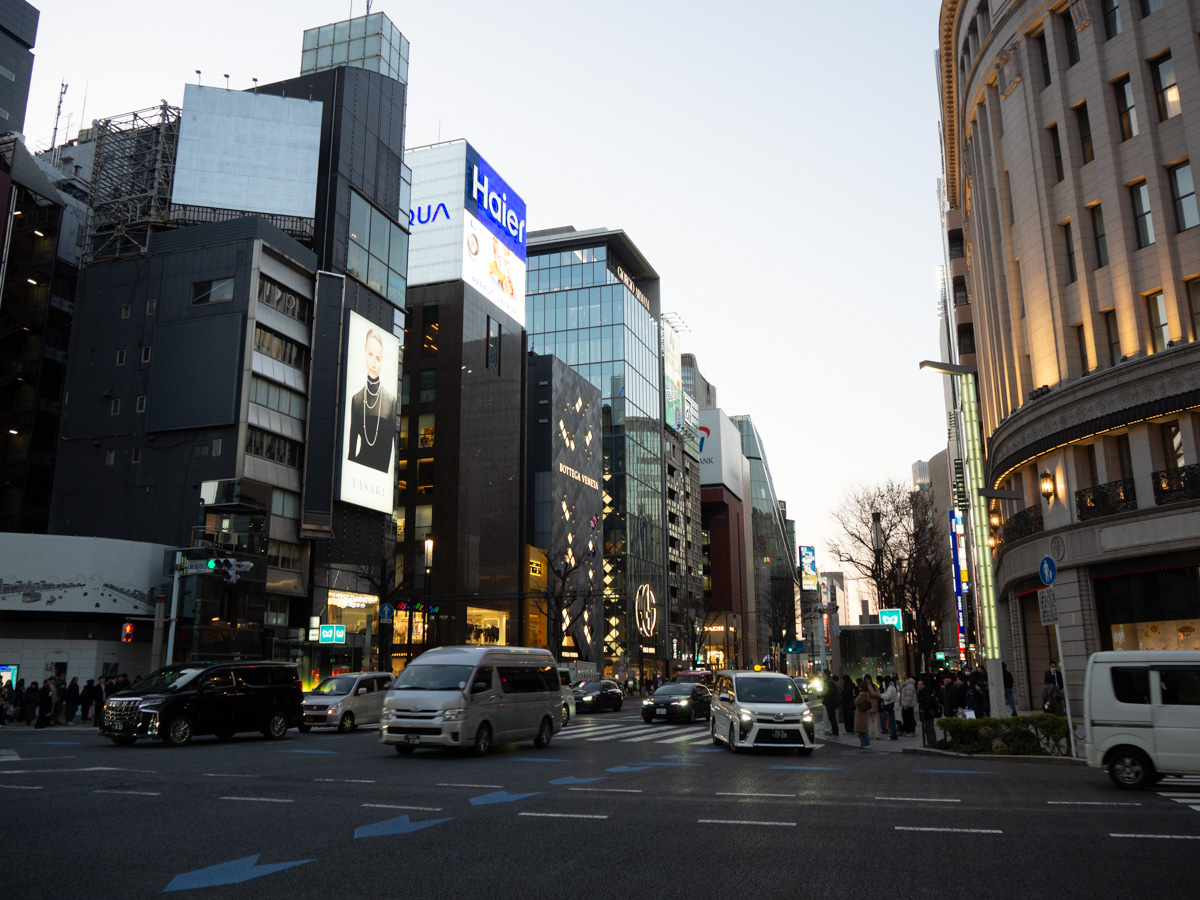
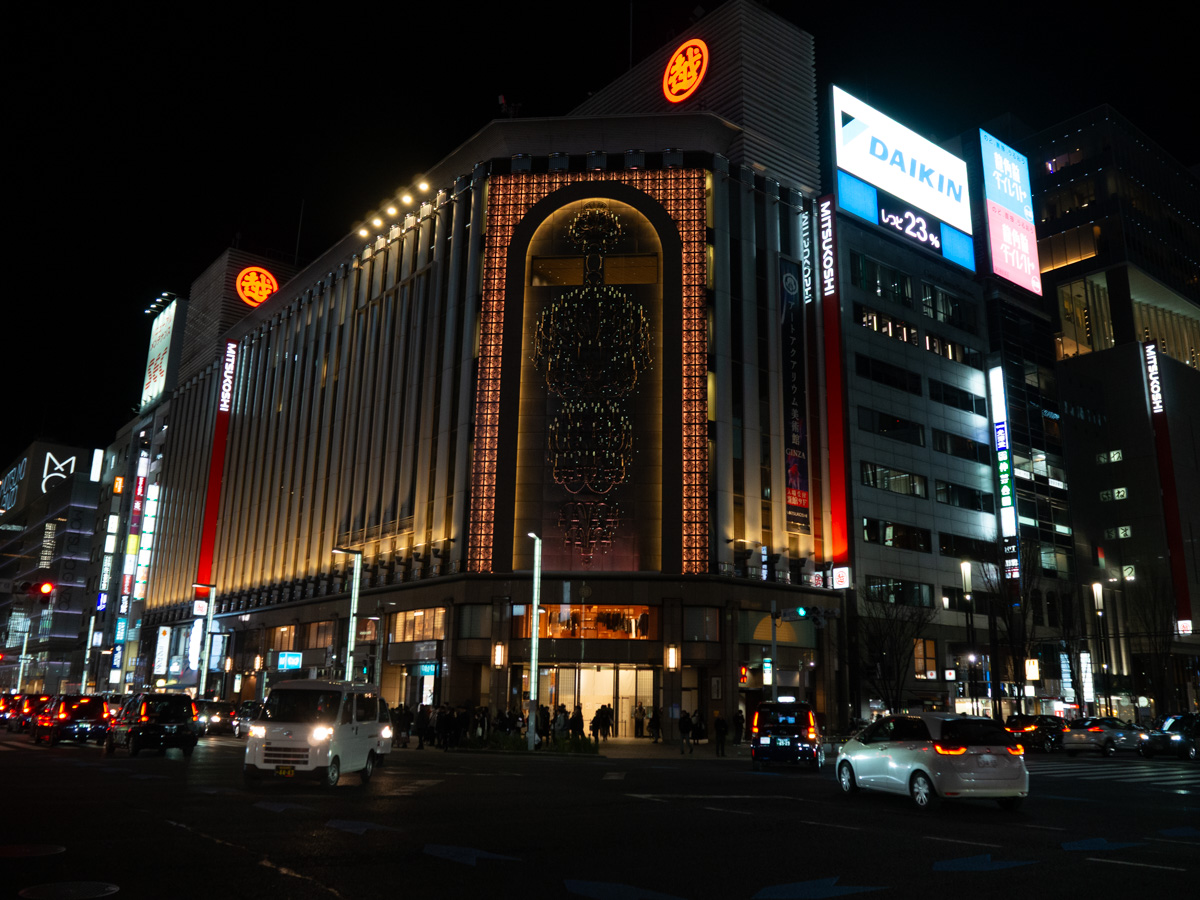
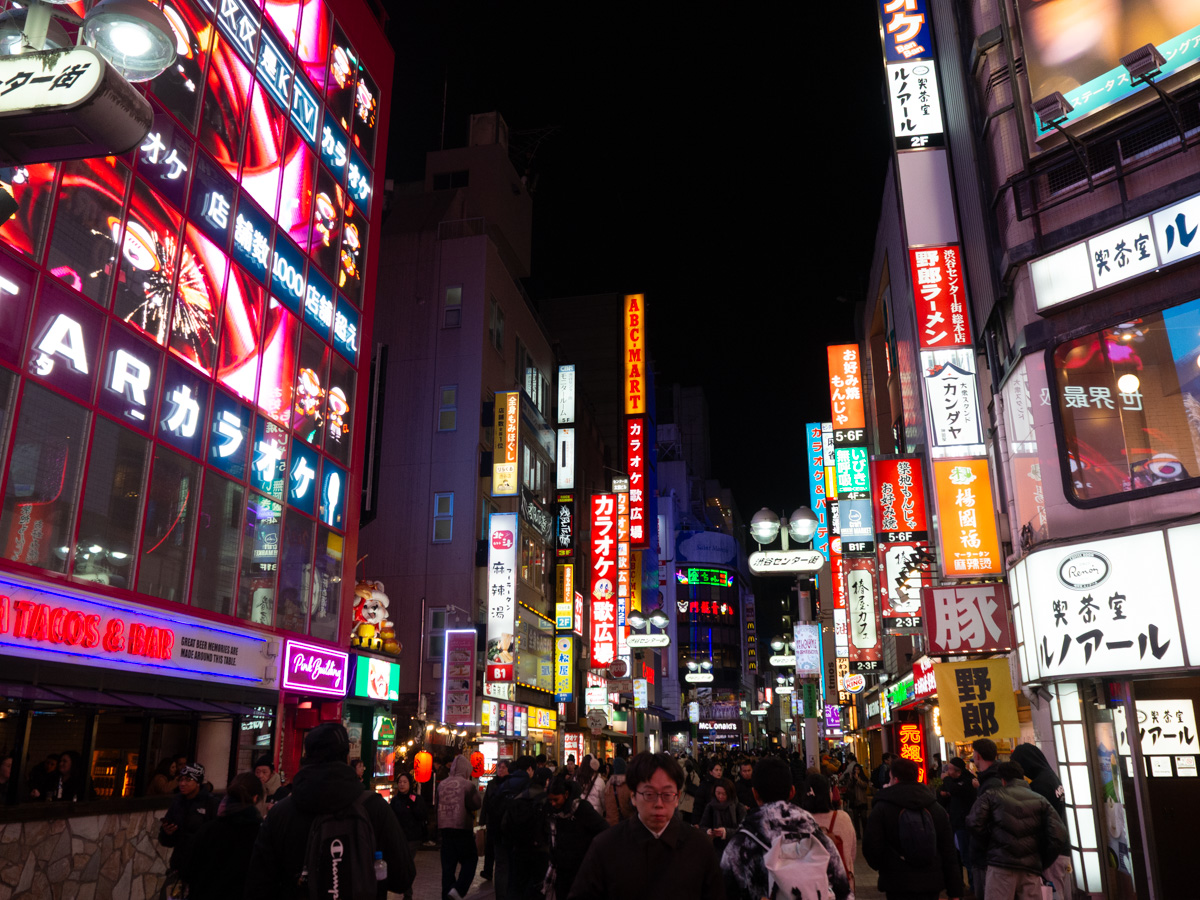
Tokyo at night looked exactly as colourful and neon-bright as movies had made me expect.
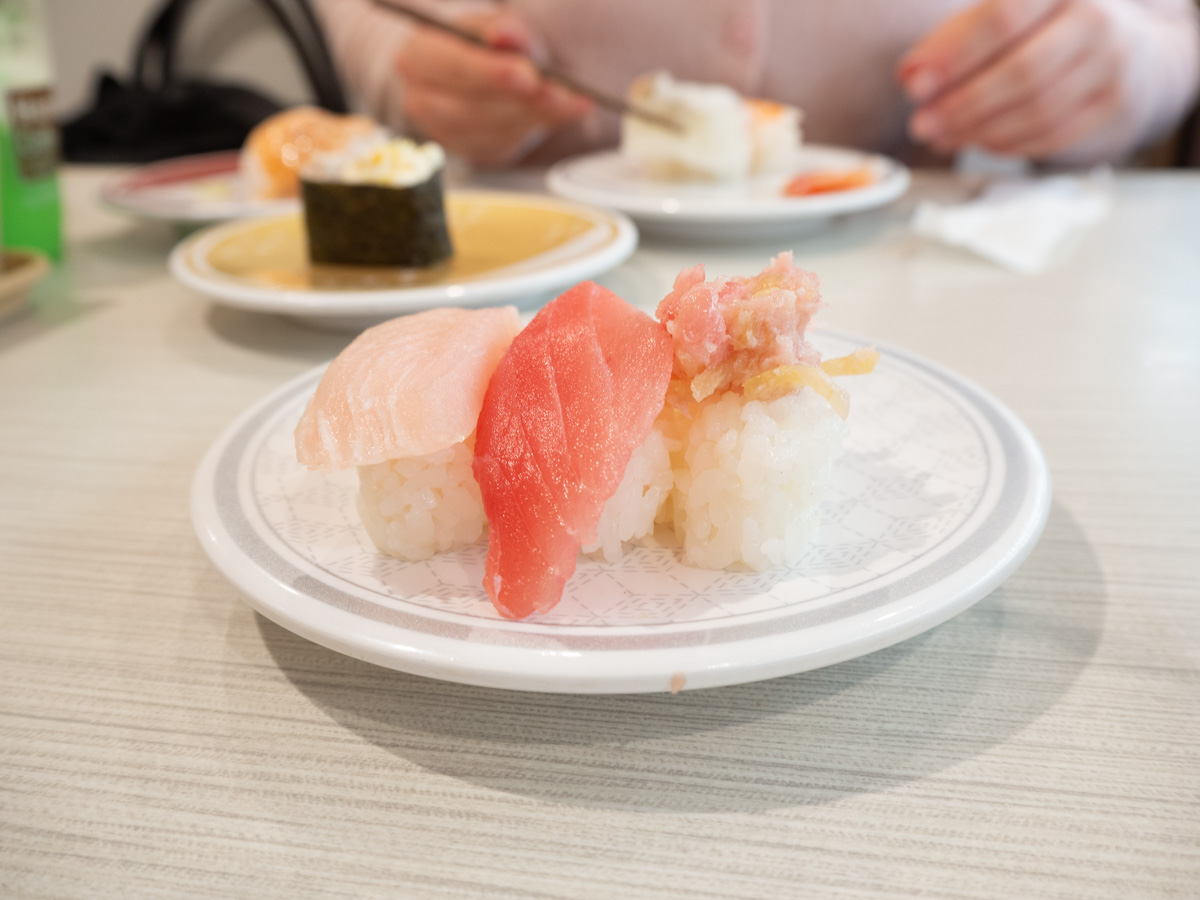
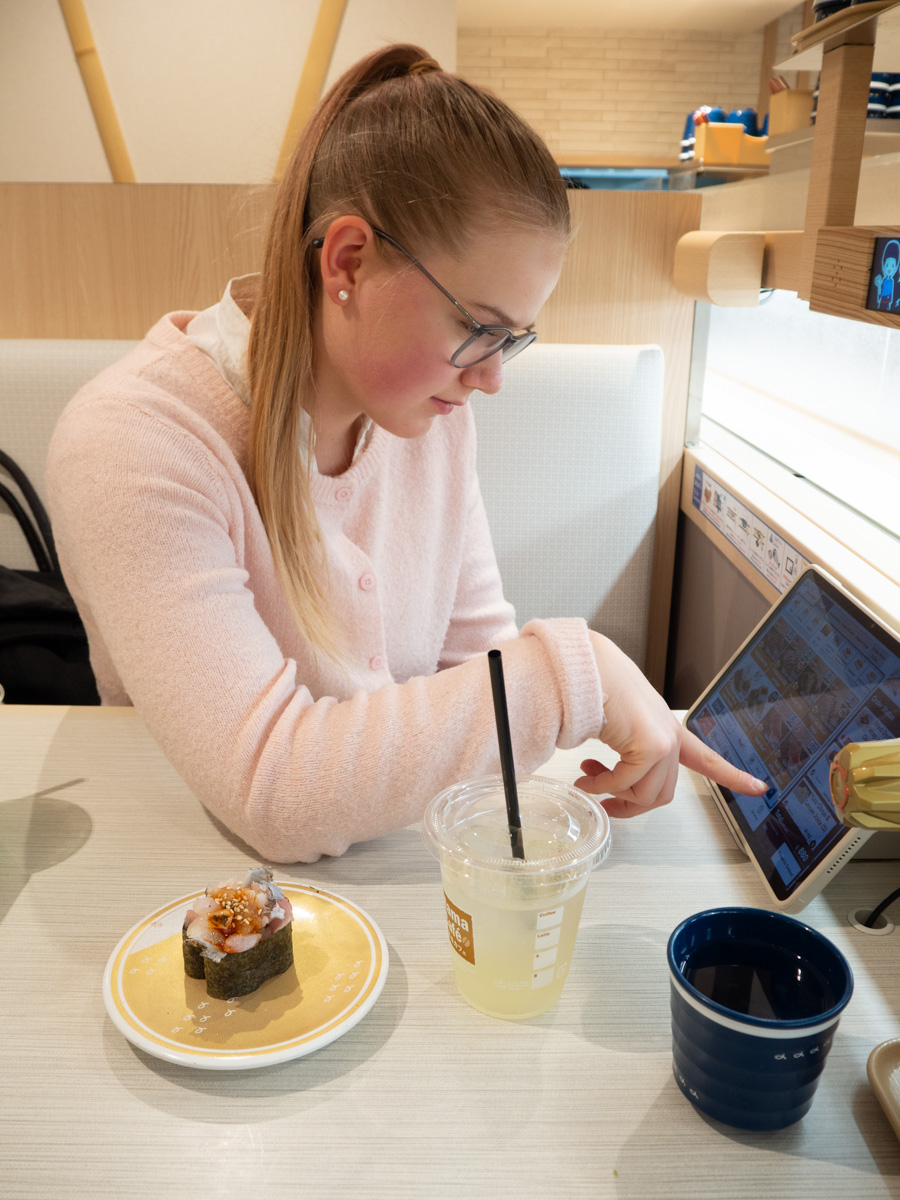
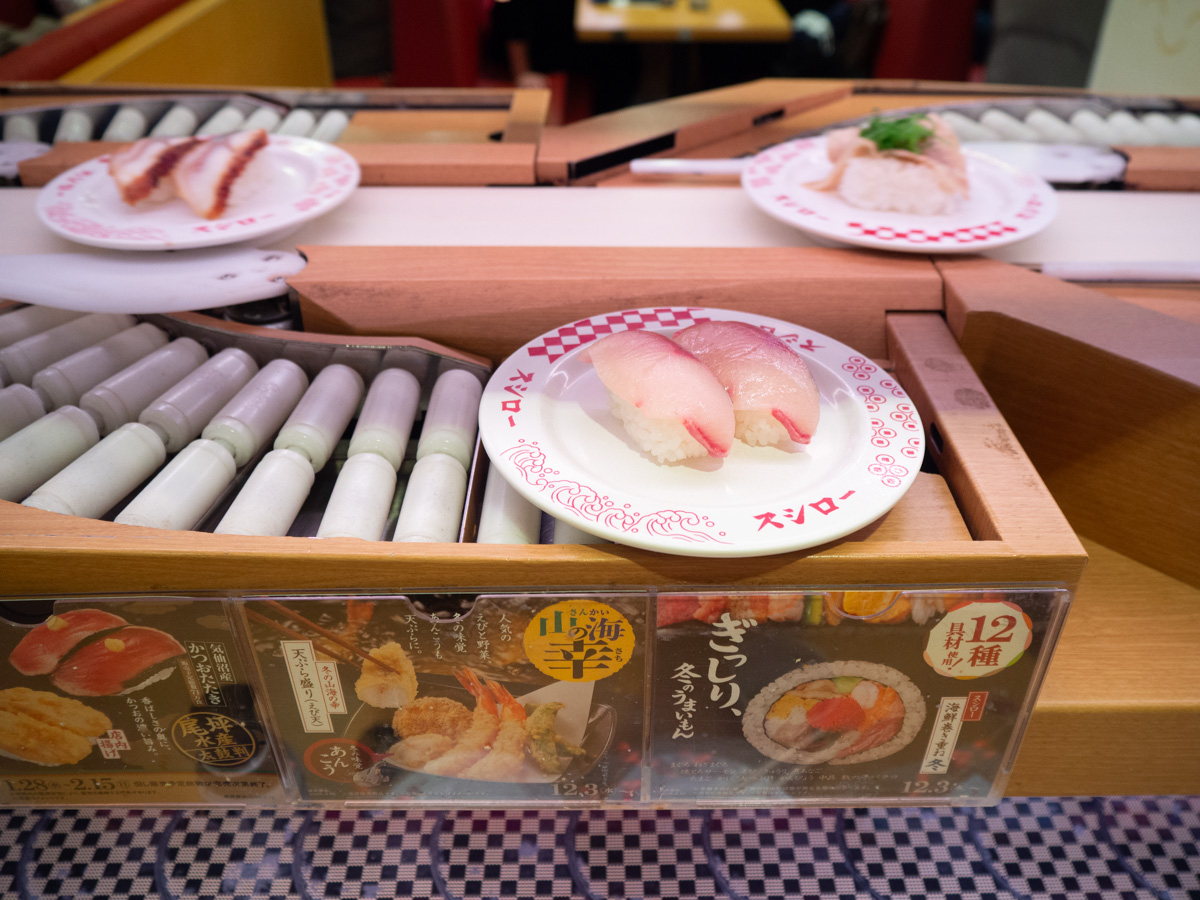
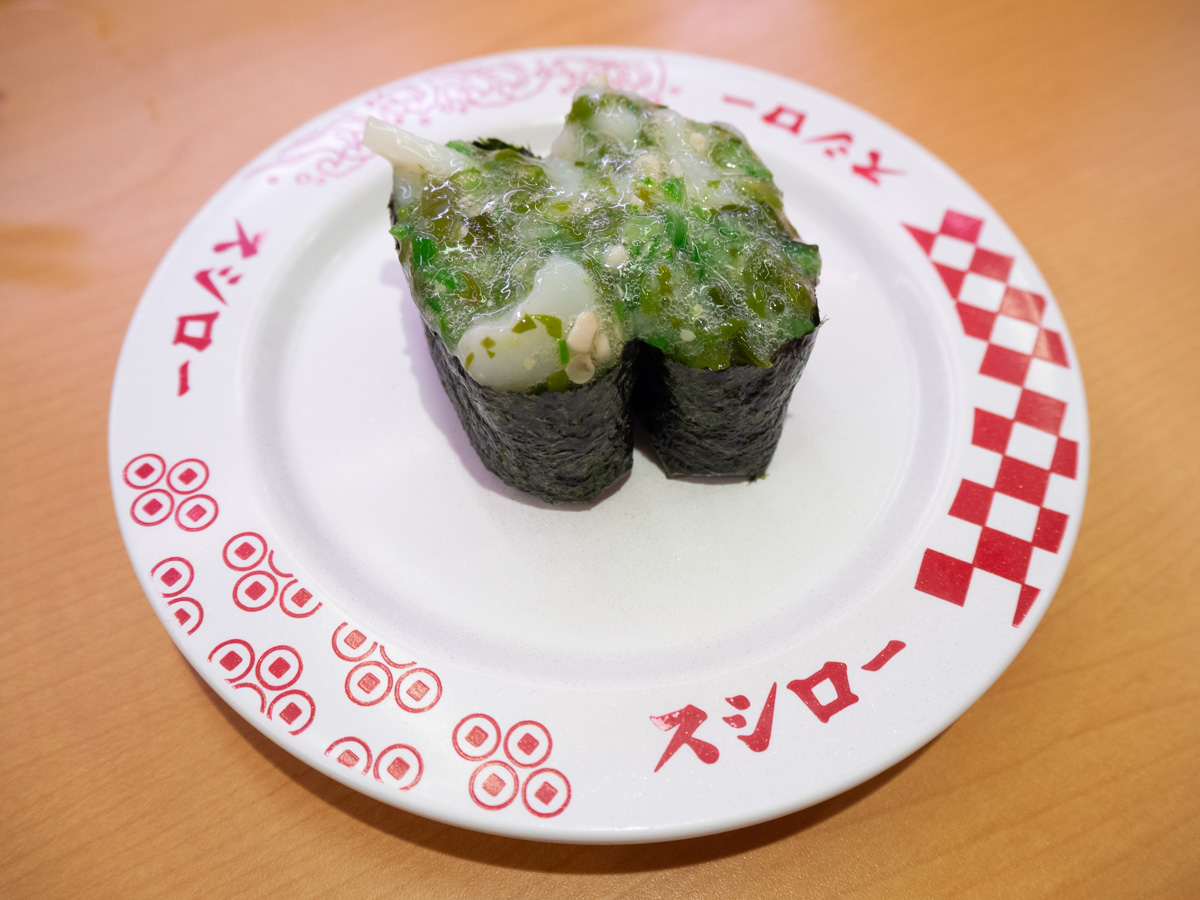
For our first restaurant meal in Tokyo, we went for conveyor belt sushi at Sushiro. Ingrid could probably live on just sushi for a week, and while I’m not quite that enamoured with it, I do love eating good sushi.

Japanese conveyor belt sushi is not like Swedish conveyor belt sushi. In both, there is a belt that snakes its way through the entire restaurant, and tables next to the belt, and the belt brings food to everyone.

In Stockholm and London, there is always food on the belt. You look at the food that glides past, and pick whatever you like. When you’re done, you count the empty plates and pay for each one. Usually they’re colour-coded for different price groups.

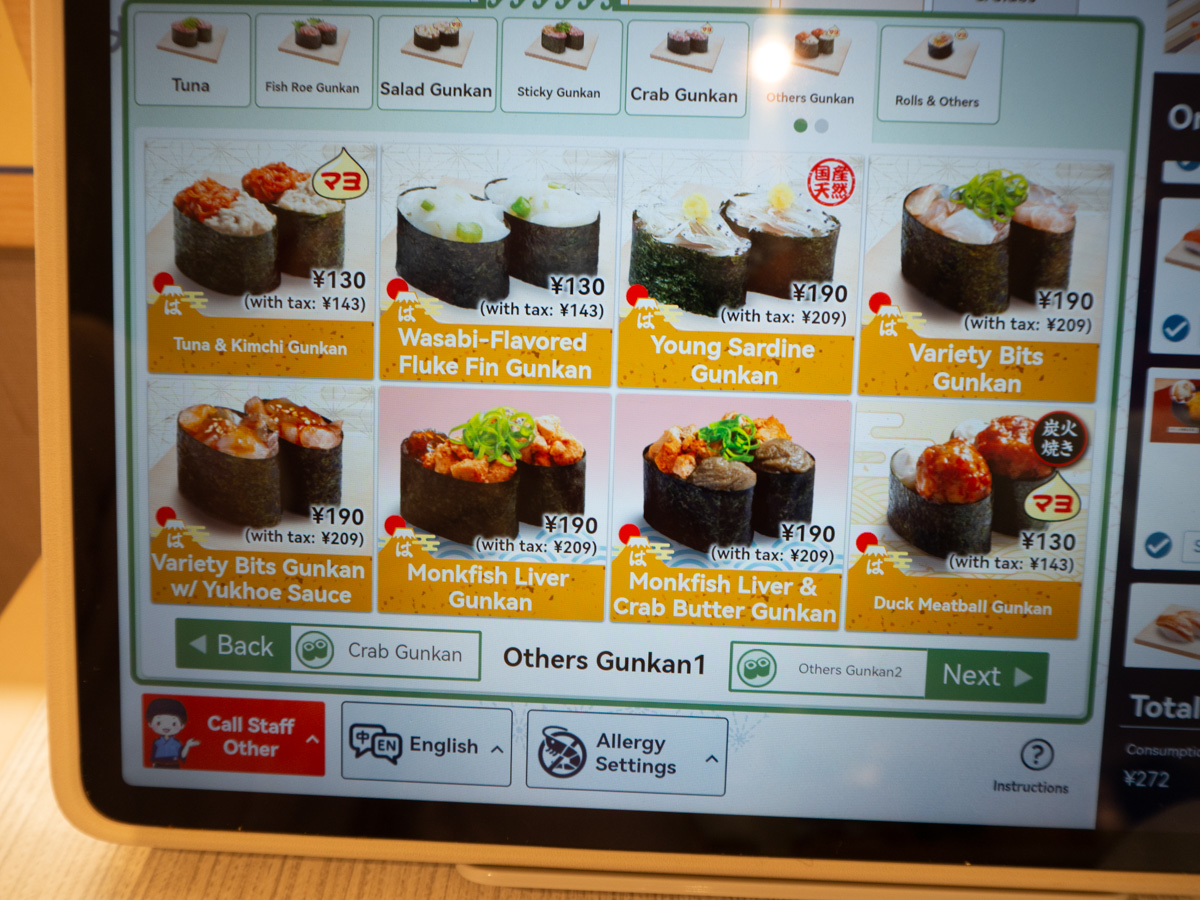
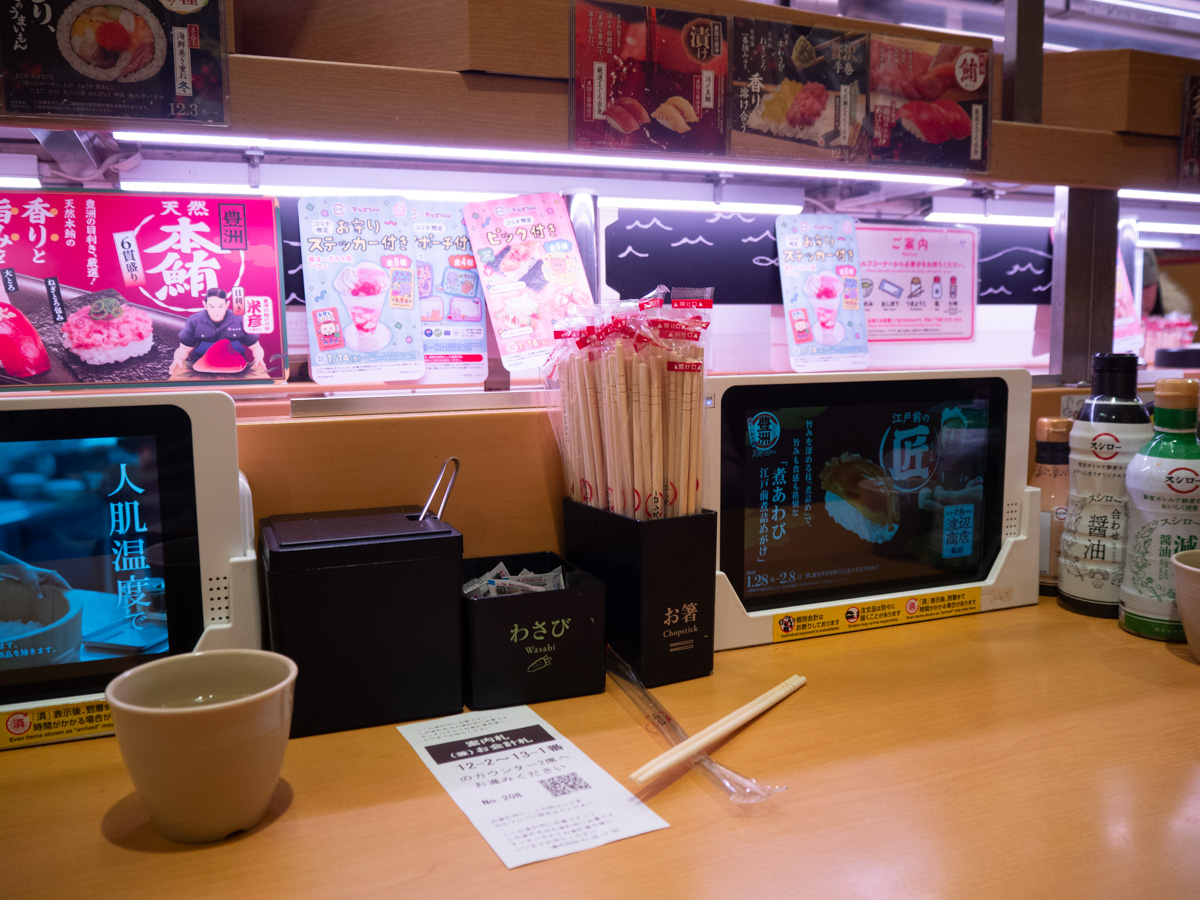
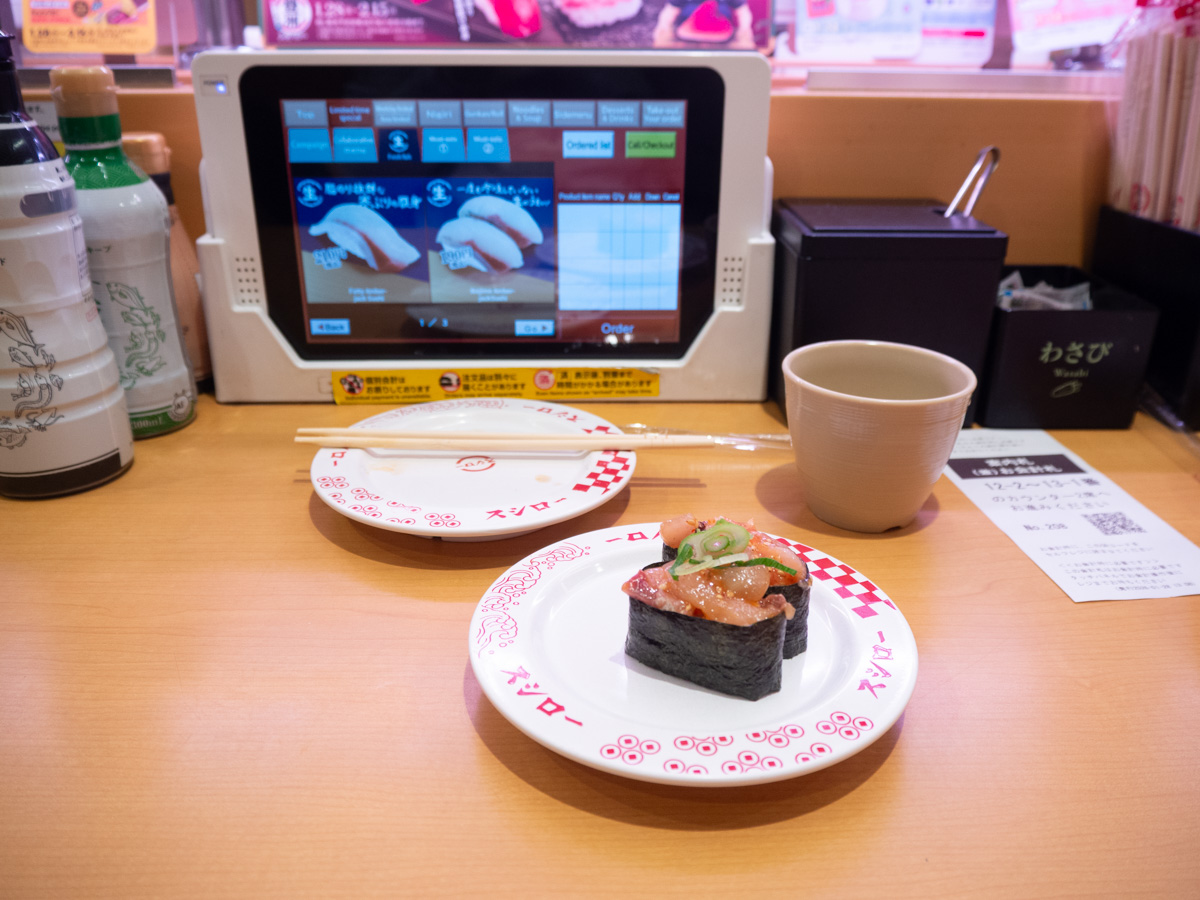
In Tokyo, it’s all individual and customized and computerized. There’s a tablet at each table with an incredibly long menu of sushi, sashimi, side orders, desserts etc. Tap and order, and a few minutes later, your plate arrives on the belt and stops in front of you.

We had counter seats (as opposed to a full table) which was about as glamorous as a fast food restaurant. It was a fast food restaurant, I guess.

But the choice of fish was incredible to my Swedish eyes, and the quality of it was great.

At first we ordered things we recognized and knew we would love. You can’t go wrong with seared salmon. Later I got more adventurous and tried a few more odd items out of pure curiosity. I ate this thing and I can’t even remember what it was.

From Senso-ji temple through the quiet streets of Asakusa, we came to Ueno.

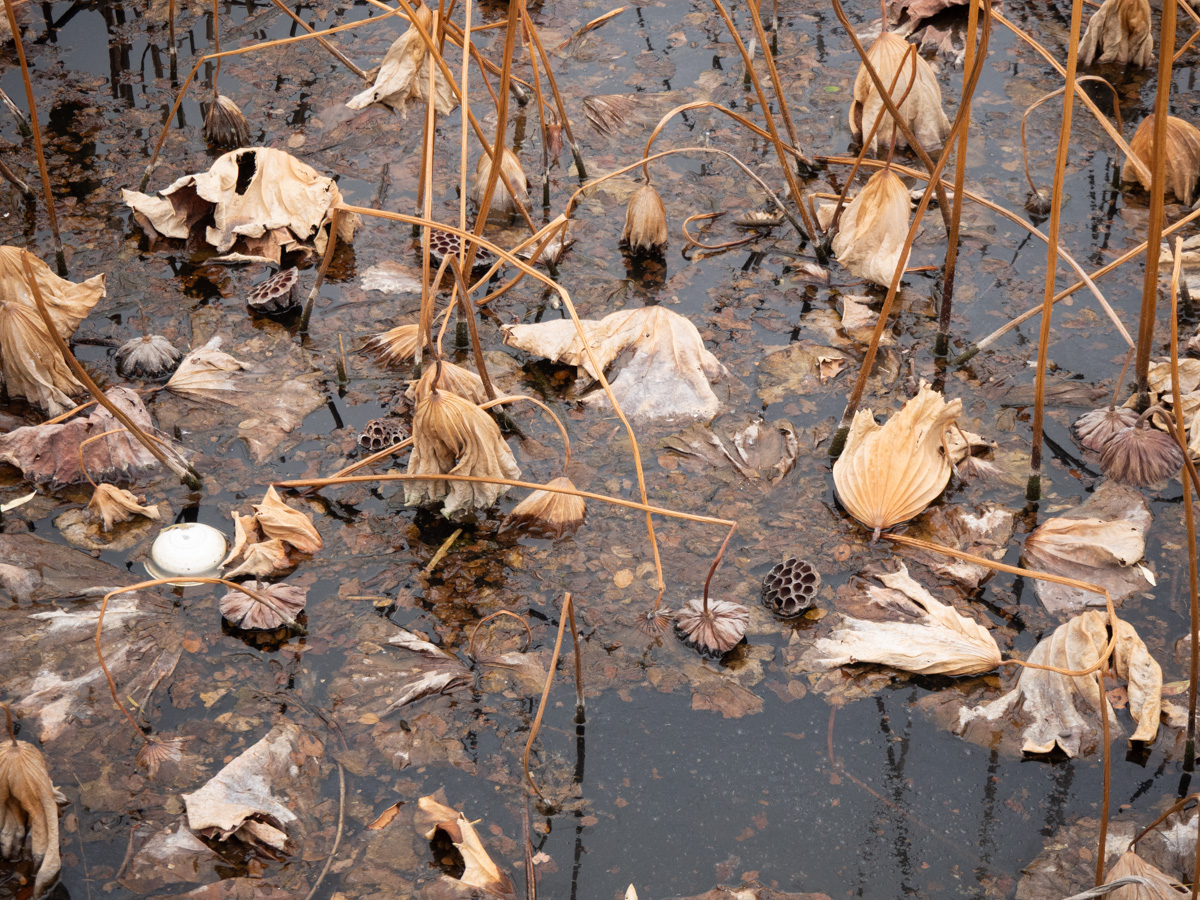
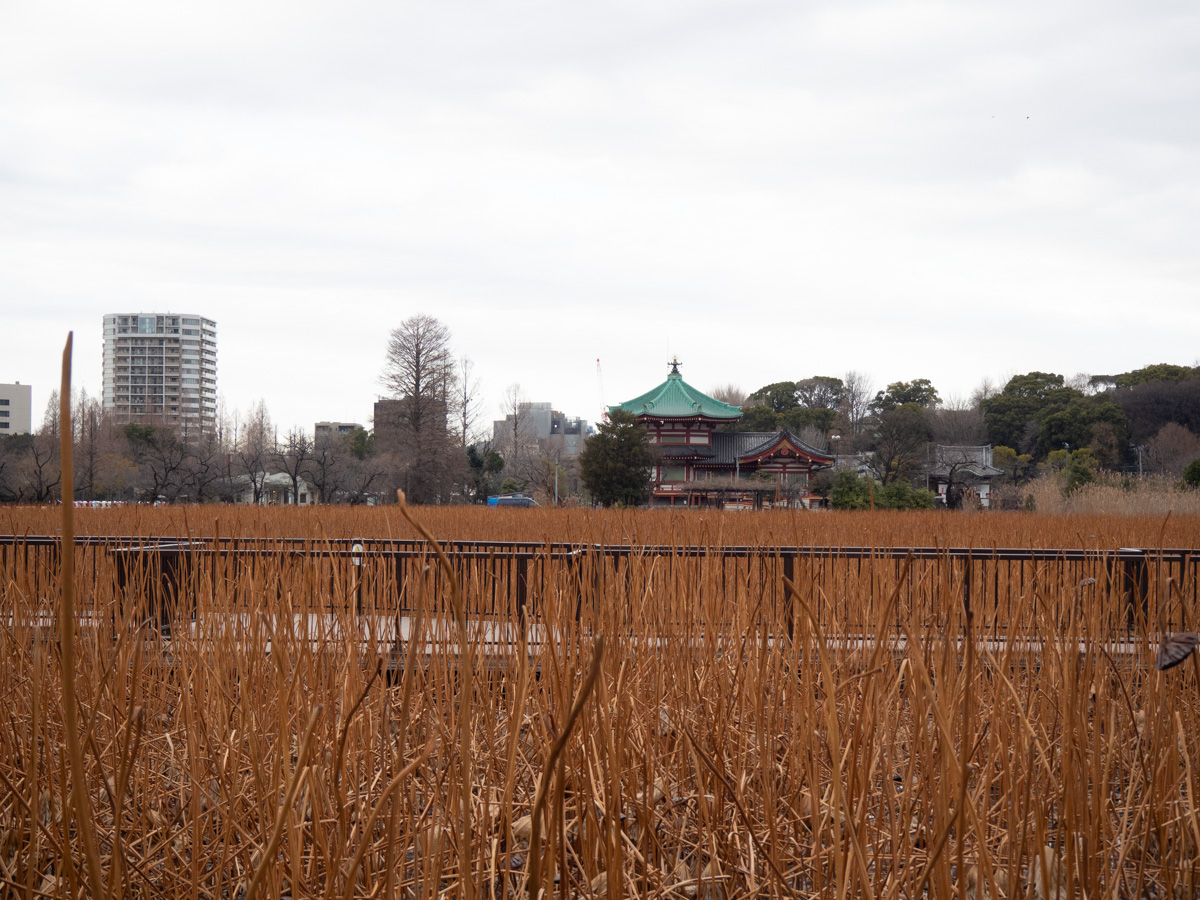
Ueno park and its lotus lake were maybe not at their peak in January, but they were striking in their own way.

On a small island in the middle of a lake, there was a lovely temple. The city was right there in the distance, but here it was peaceful and quiet.

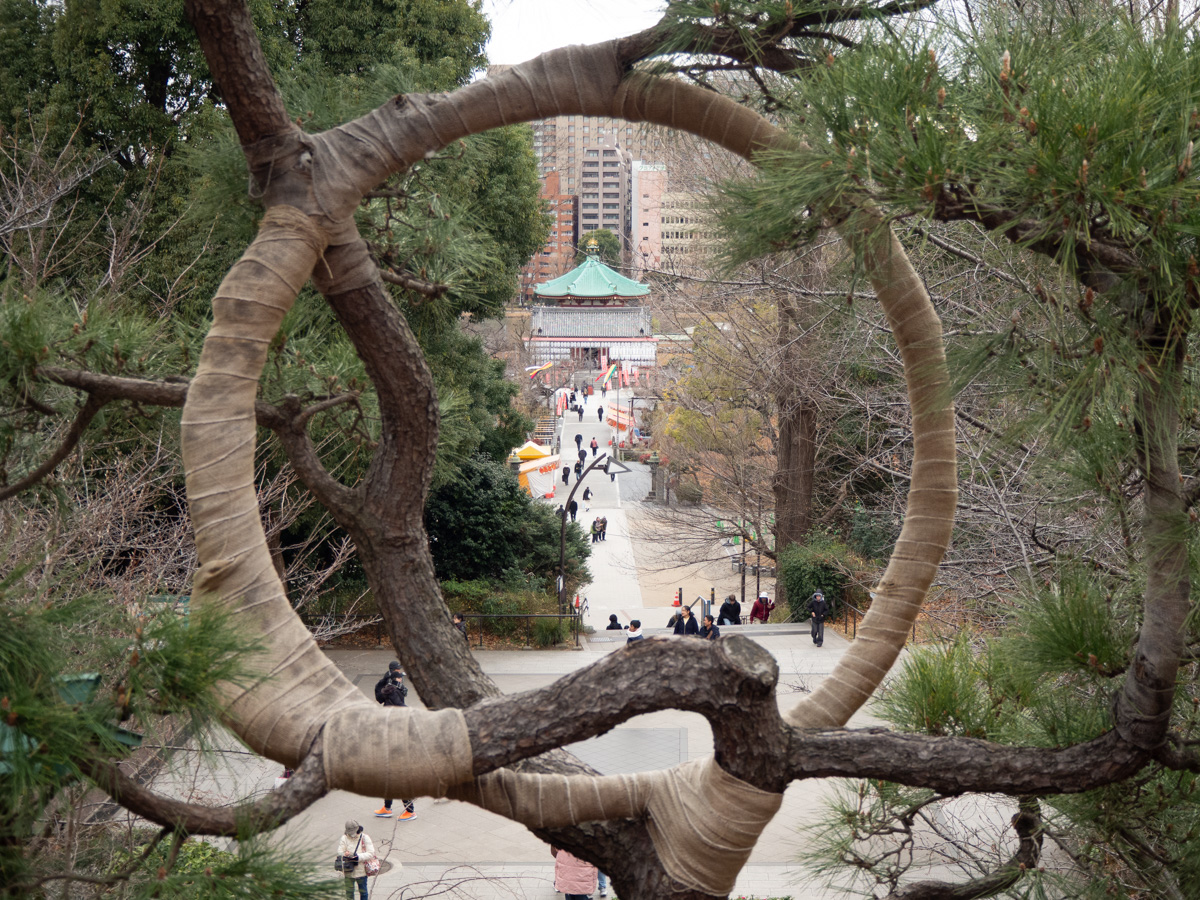
From the balcony of one temple there’s a view towards the next one, through a pine bough trained in a round shape. According to the internet, the bough is a recreation of a similar bough from a woodblock print from the Edo era.

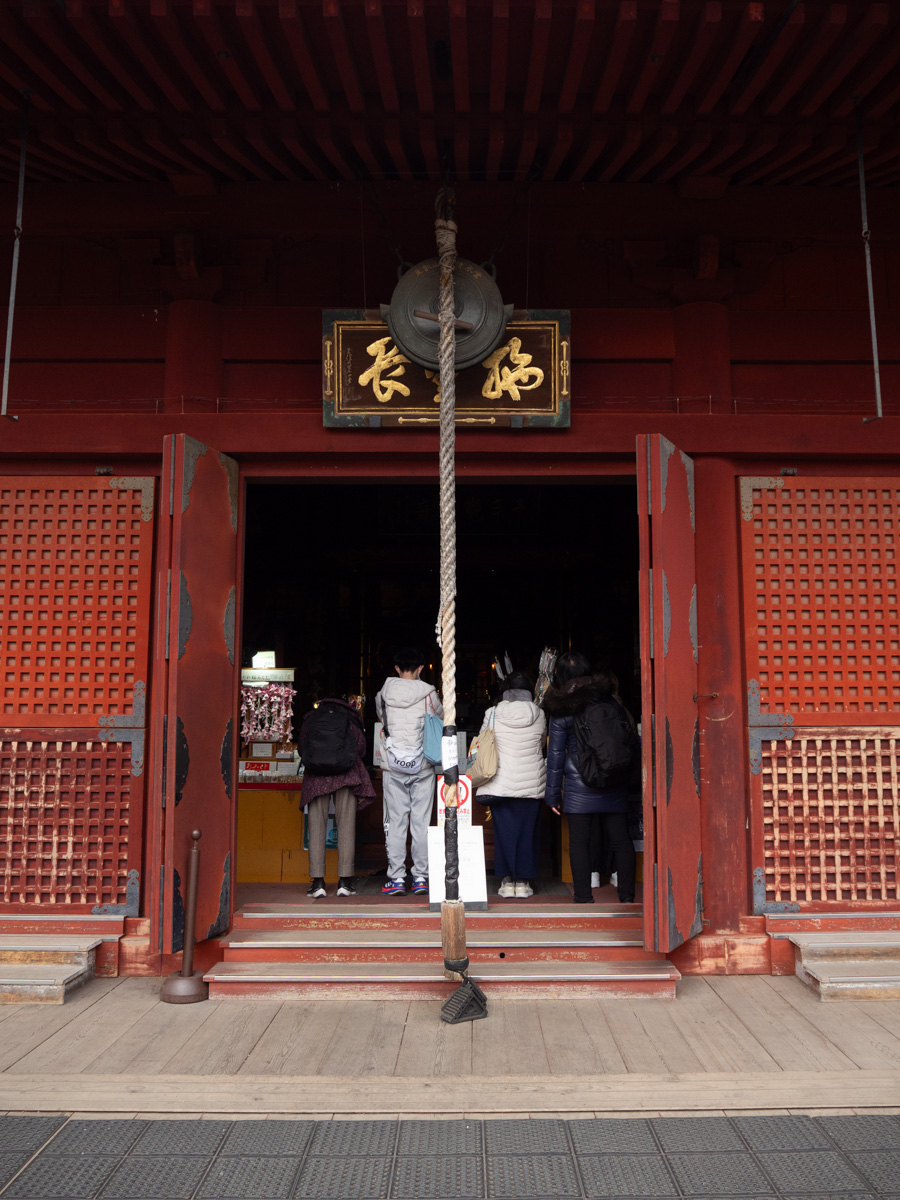
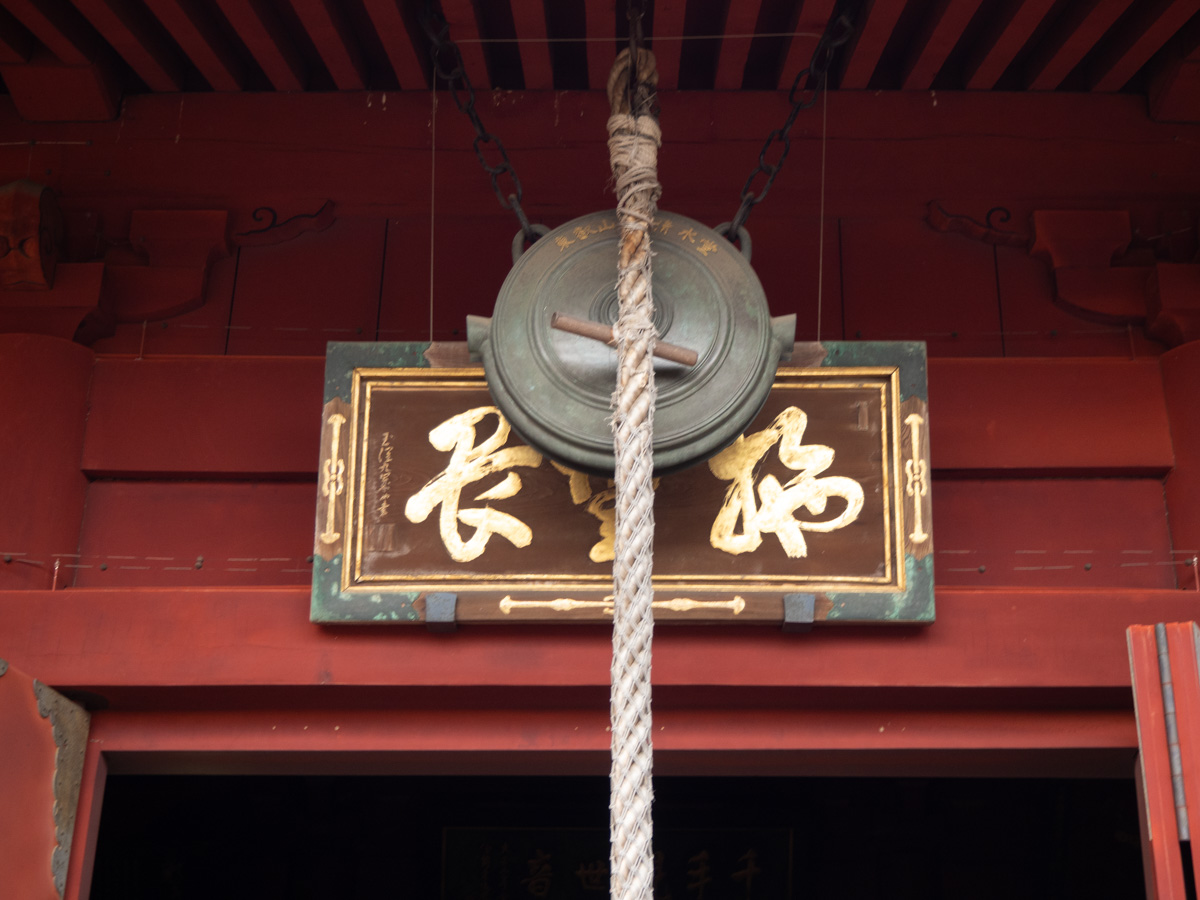
The Kiyomizu Kannon-do temple had a very tempting gonggong that made my fingers itch.


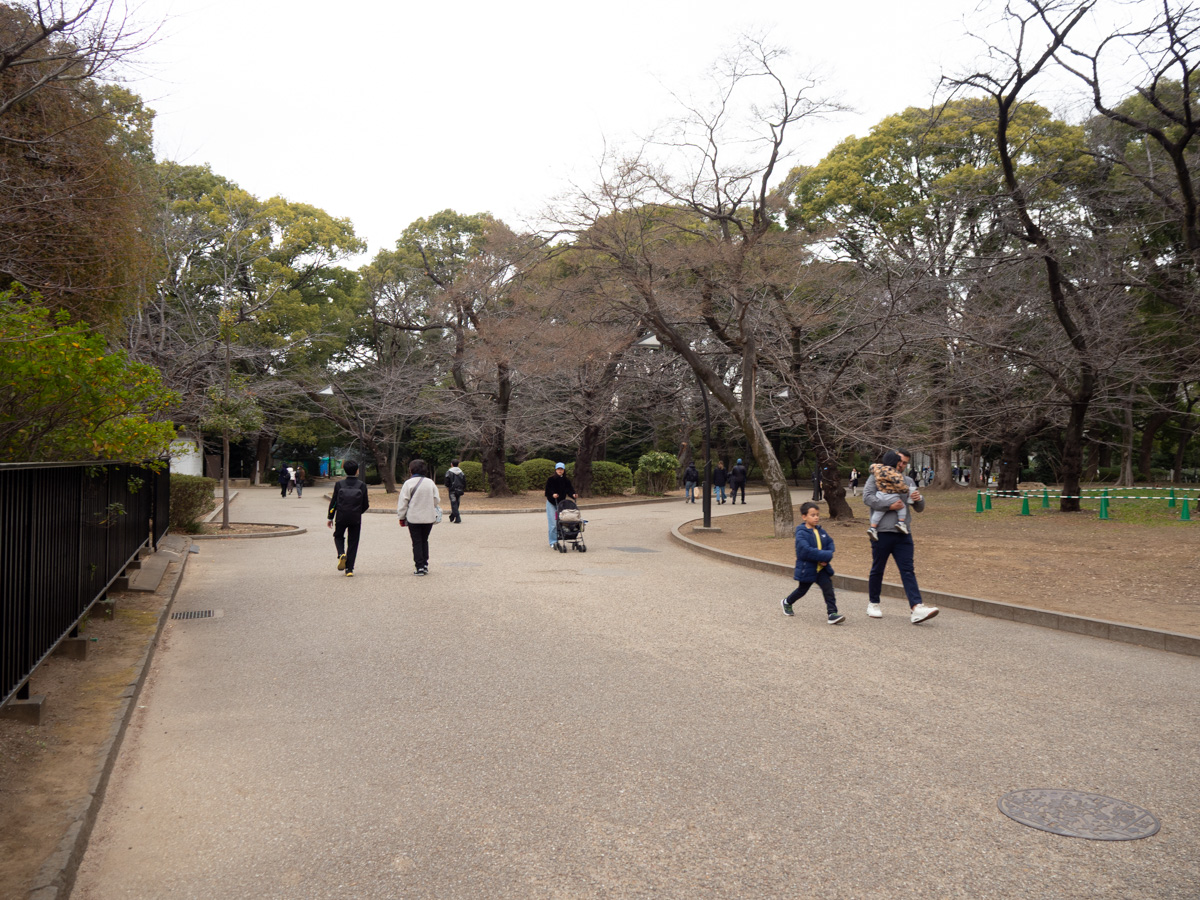
Ueno park itself was somewhat underwhelming. It (and other parks we saw later) had a lot of concrete and bare ground, and not as much greenery as I would expect. It’s January, I know, but it didn’t look like there would be much grass here during summer either.
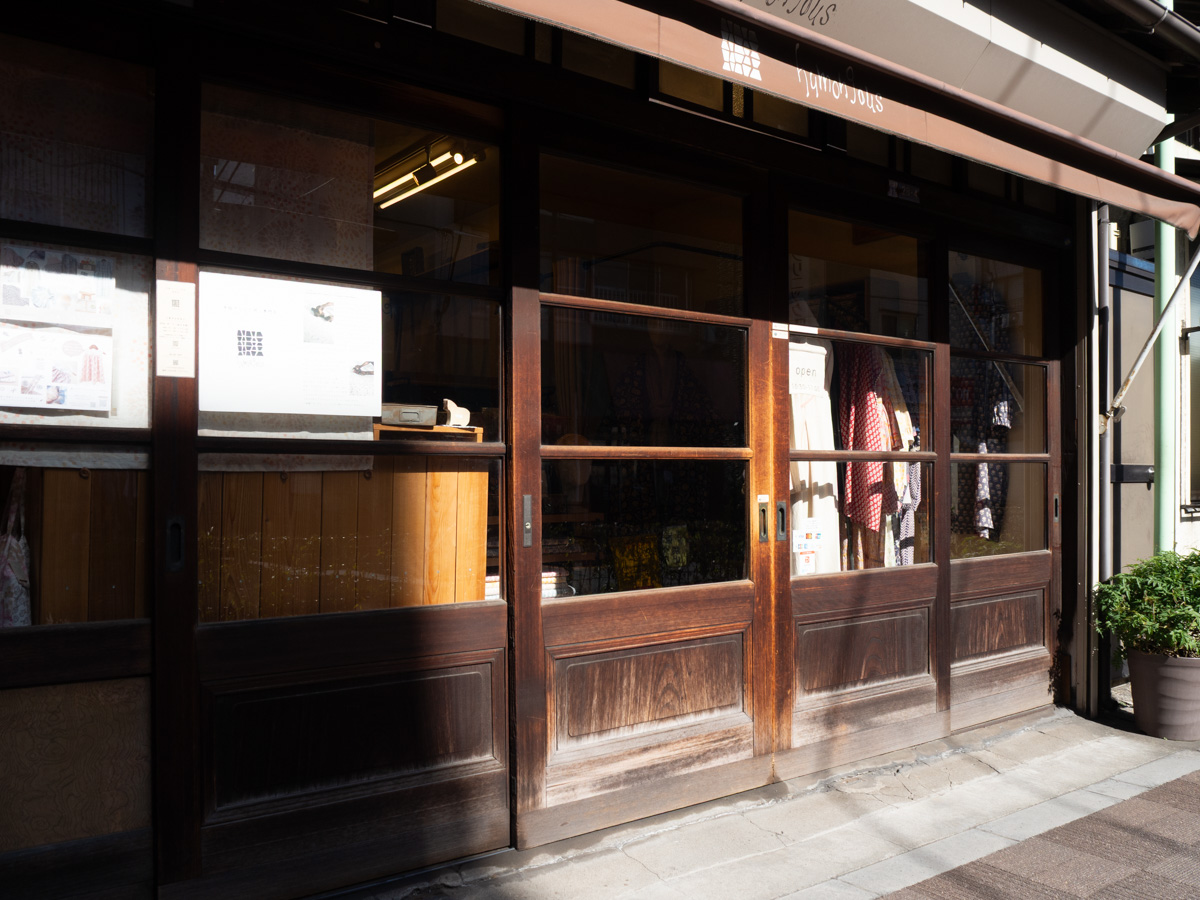
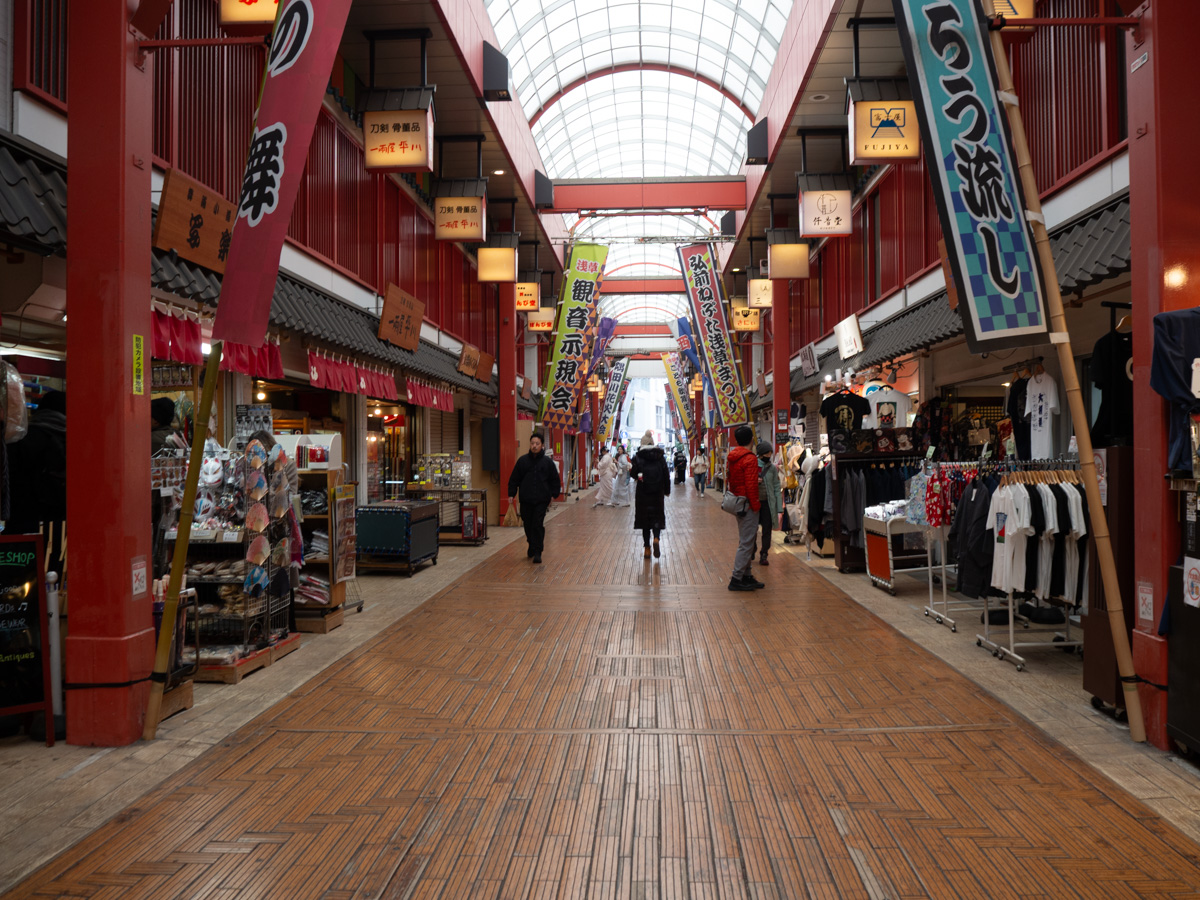
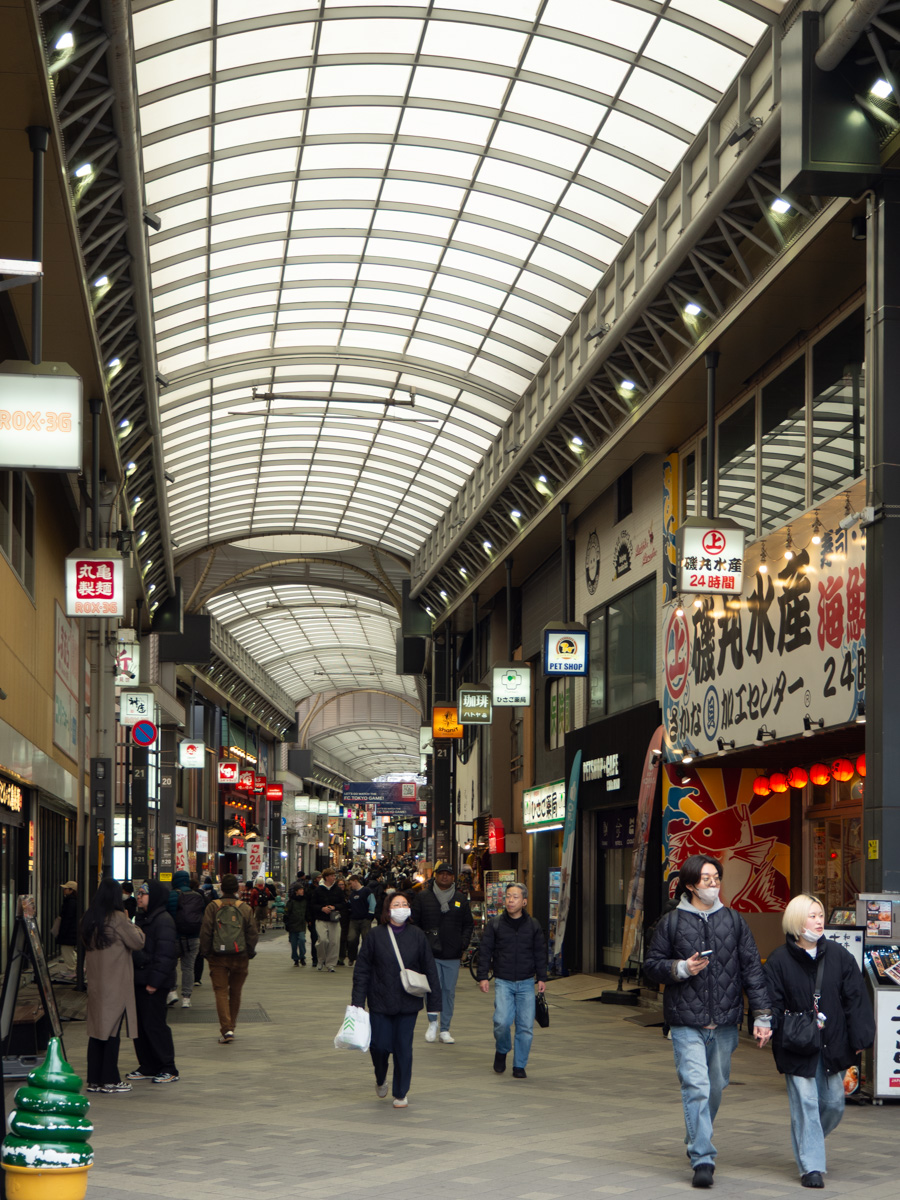
After Senso-ji, we walked back through the Asakusa district towards the nearest metro line. Through a picturesque but strangely empty shopping gallery, onwards to small residential streets. We stumbled upon a small shop selling vintage kimonos where we browsed around for a while. A lot of beautiful fabrics, but I resisted. Can’t start shopping at the first store we run into, when I don’t yet have a clue about general price levels, or what’s available.


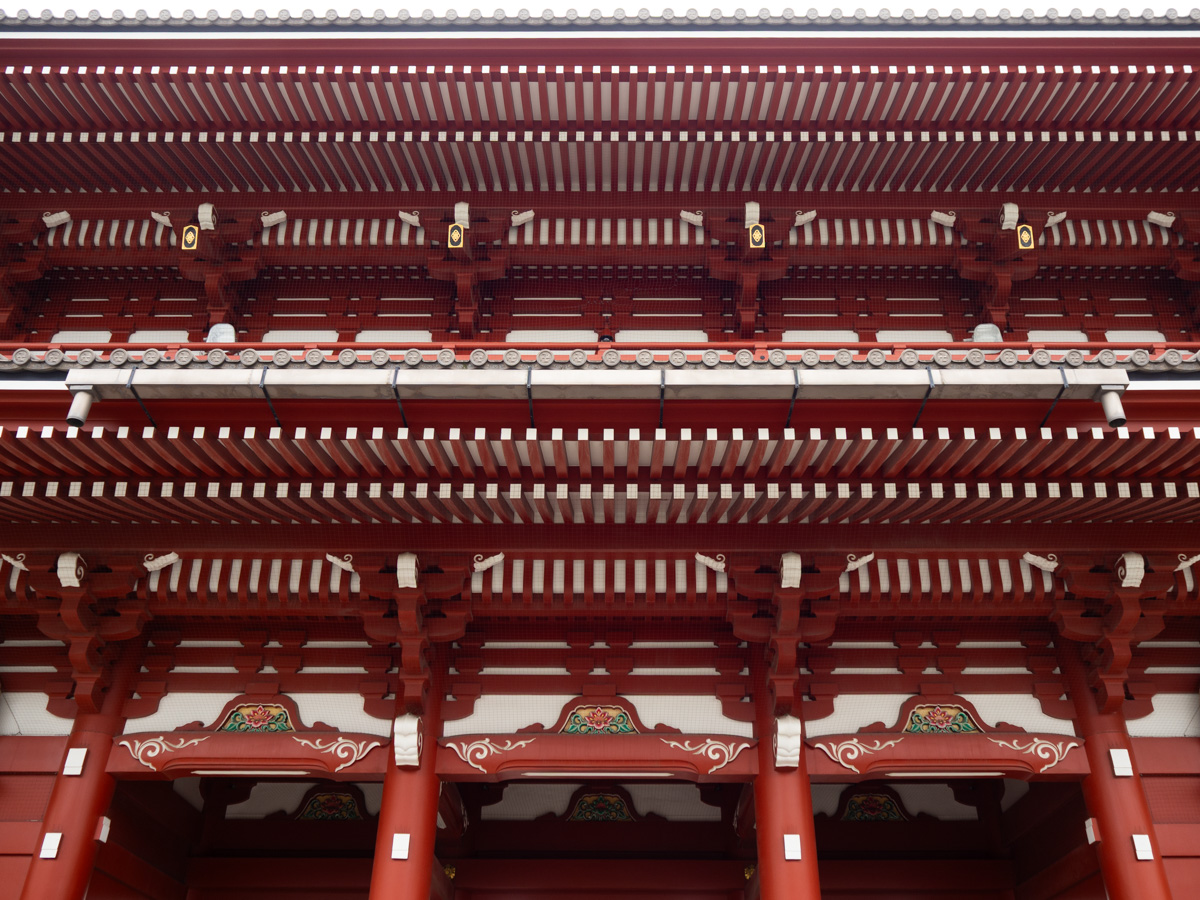
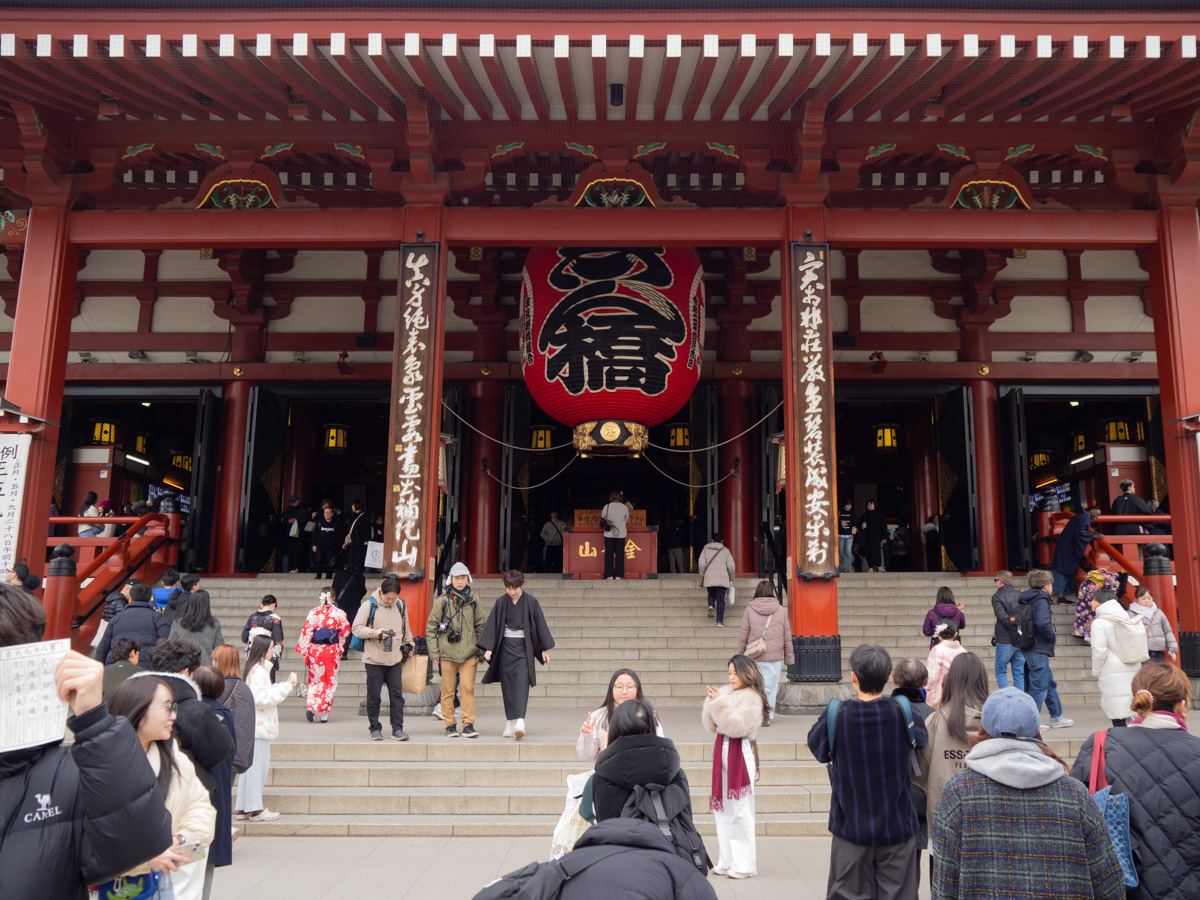
Our first sight for the day is Senso-ji temple. Built in 645, it’s the oldest temple in Tokyo.

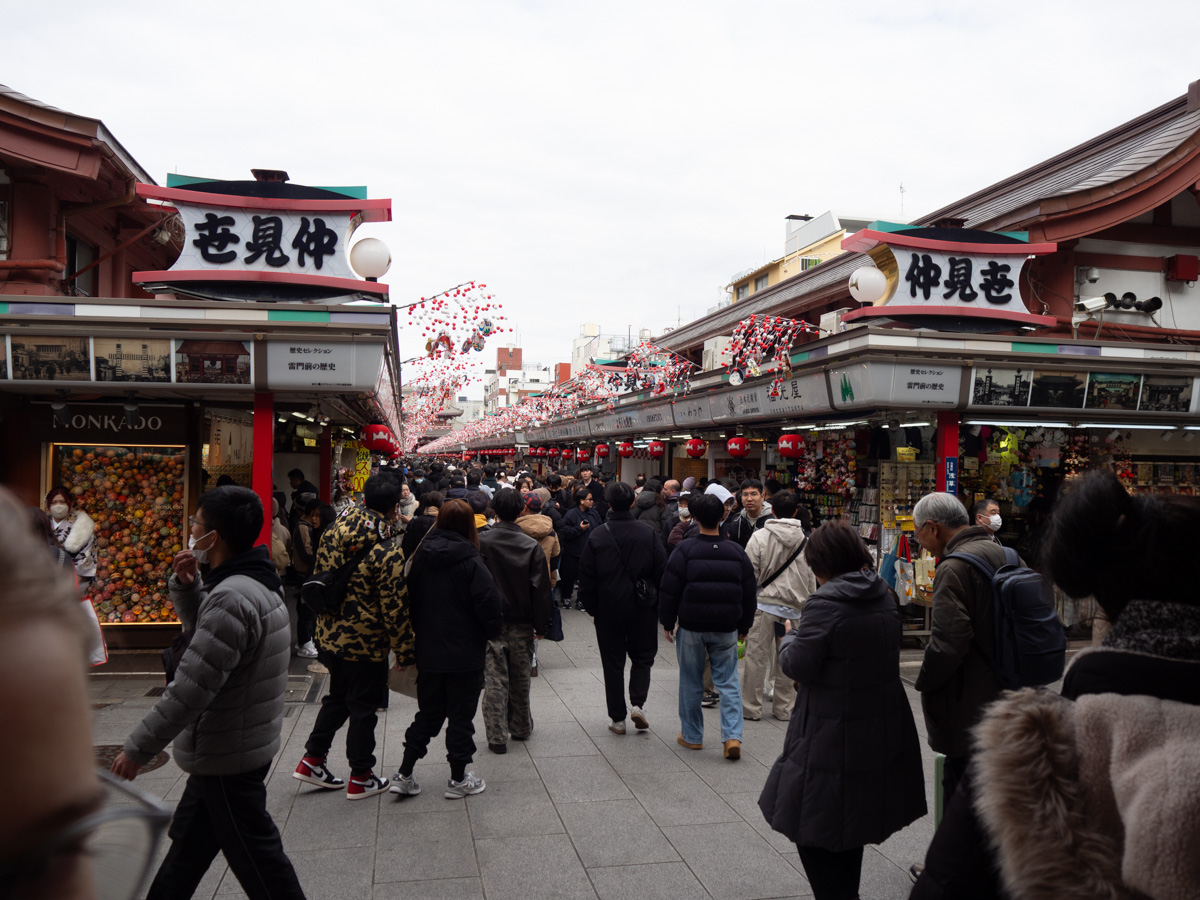
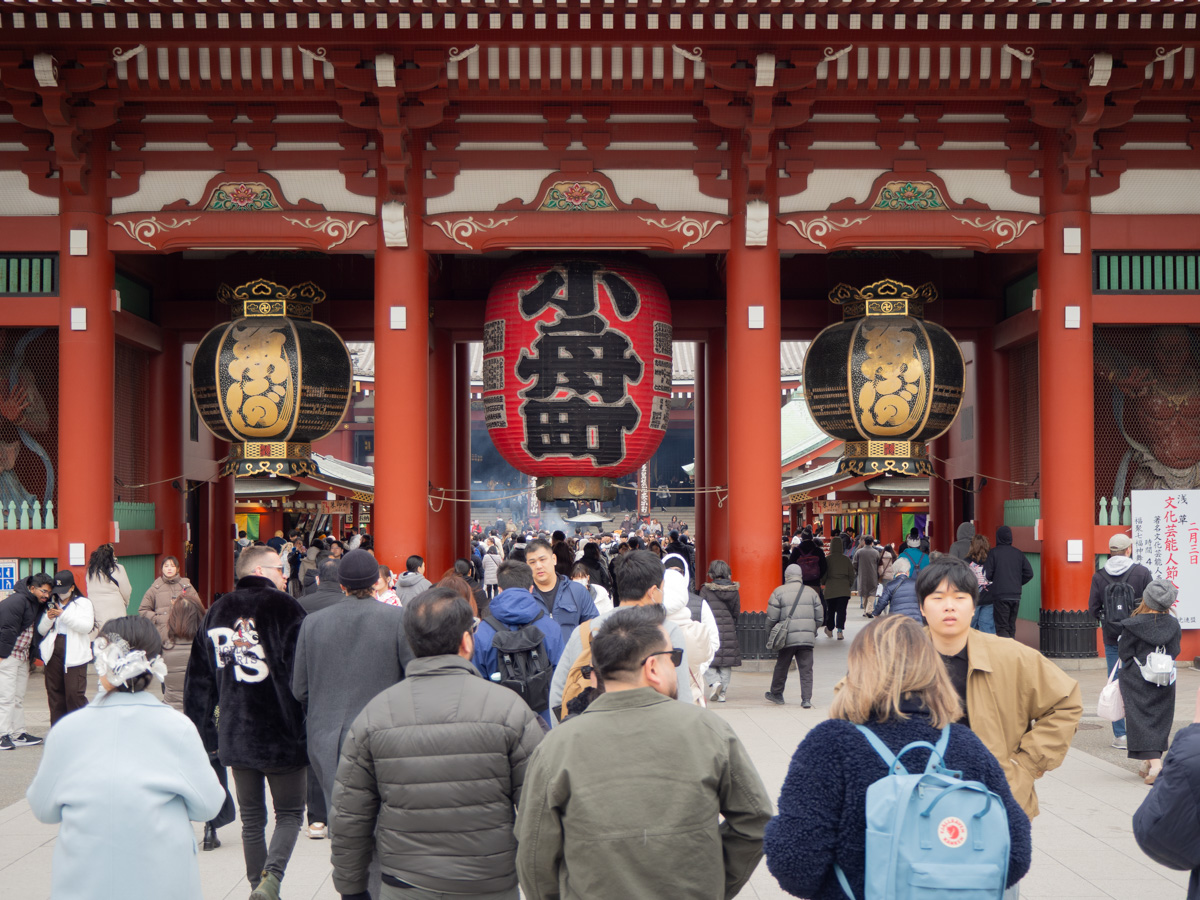
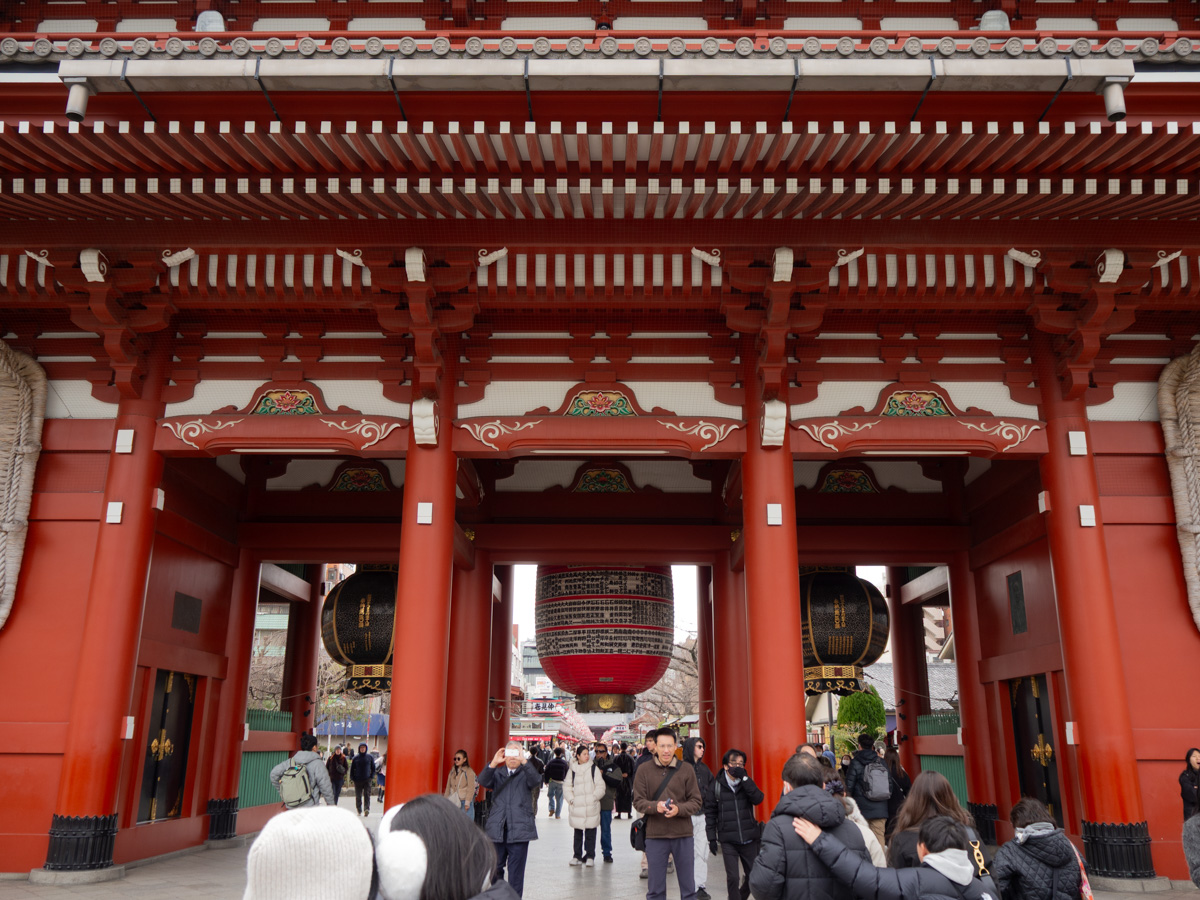
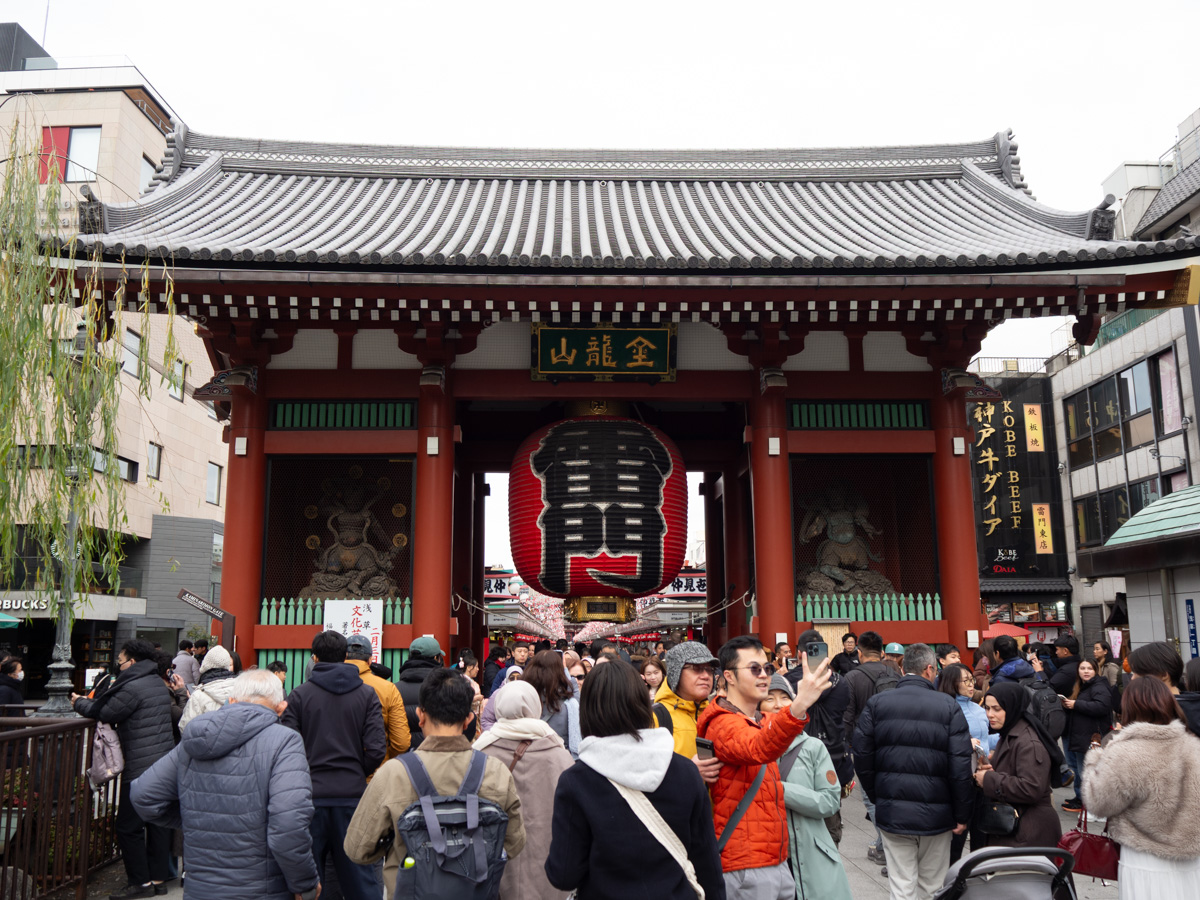
When we first got to the temple, I was confused. There was a temple gate (with a lot of tourists taking selfies) but beyond the template gate there was not a temple but a large shopping street. That turned out to be part of the temple complex somehow.
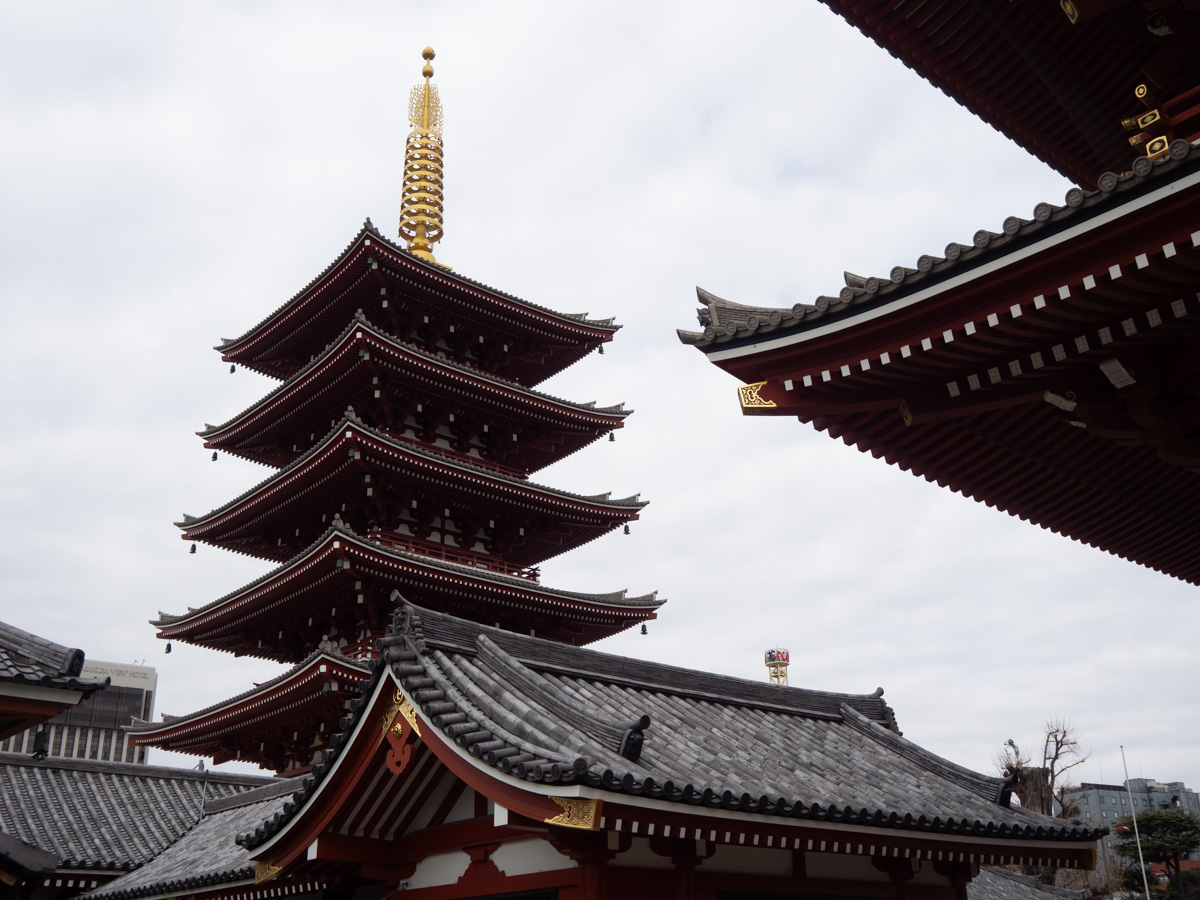
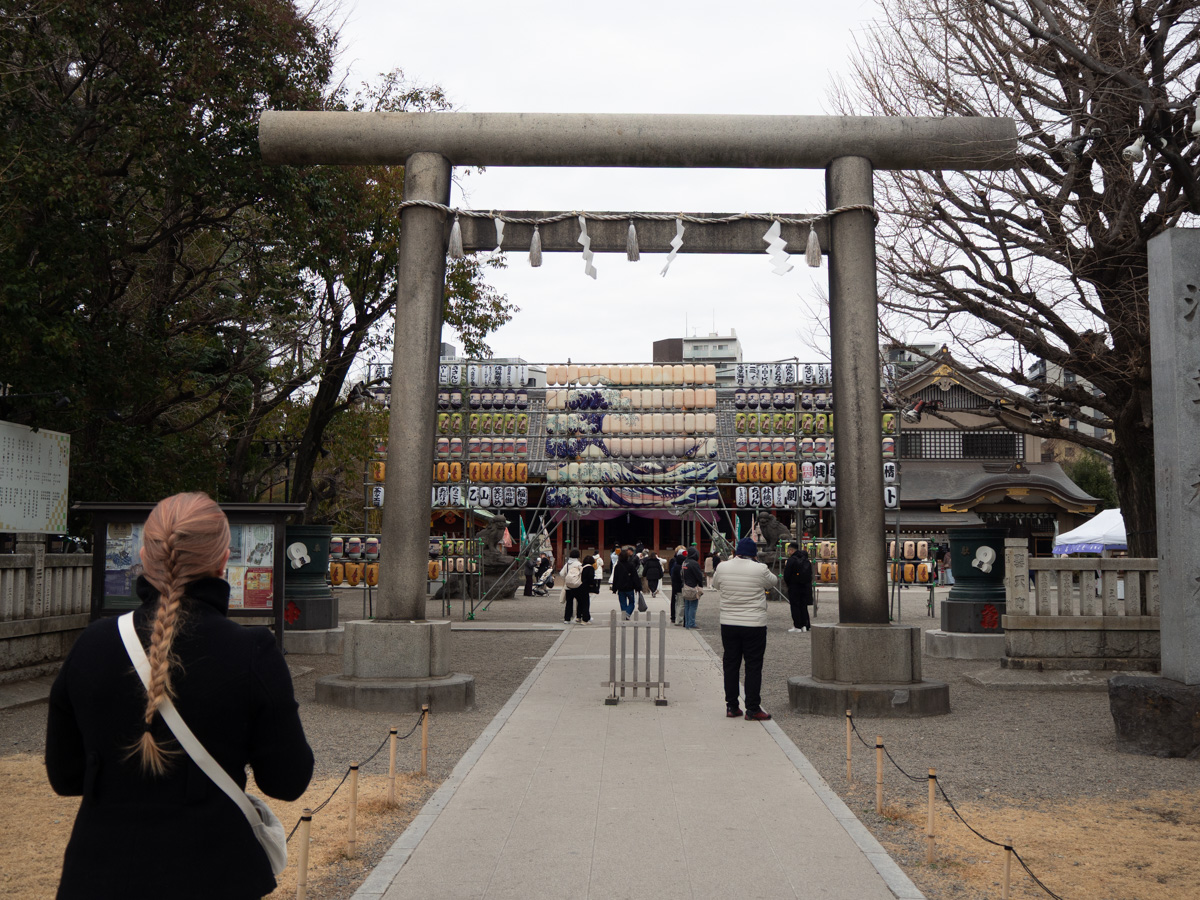
At the end of the shopping street, a second, very similar gate led to an area that was more like what I thought a temple would be like, with large lanterns and ornate roofs,


There were quite a lot of people here. Many seemed to be there for family or couples photos, dressed up in traditional kimonos.


Right next to the Buddhist temple, there was a Shinto shrine. Places of worship for two separate religions co-existing side by side, and the same visitors worshipping first at one and then at the other.

We did read up on the proper rituals for both, but I felt uncomfortable with the idea of going through the motions without believing in any of it, and just stayed respectfully to the side.


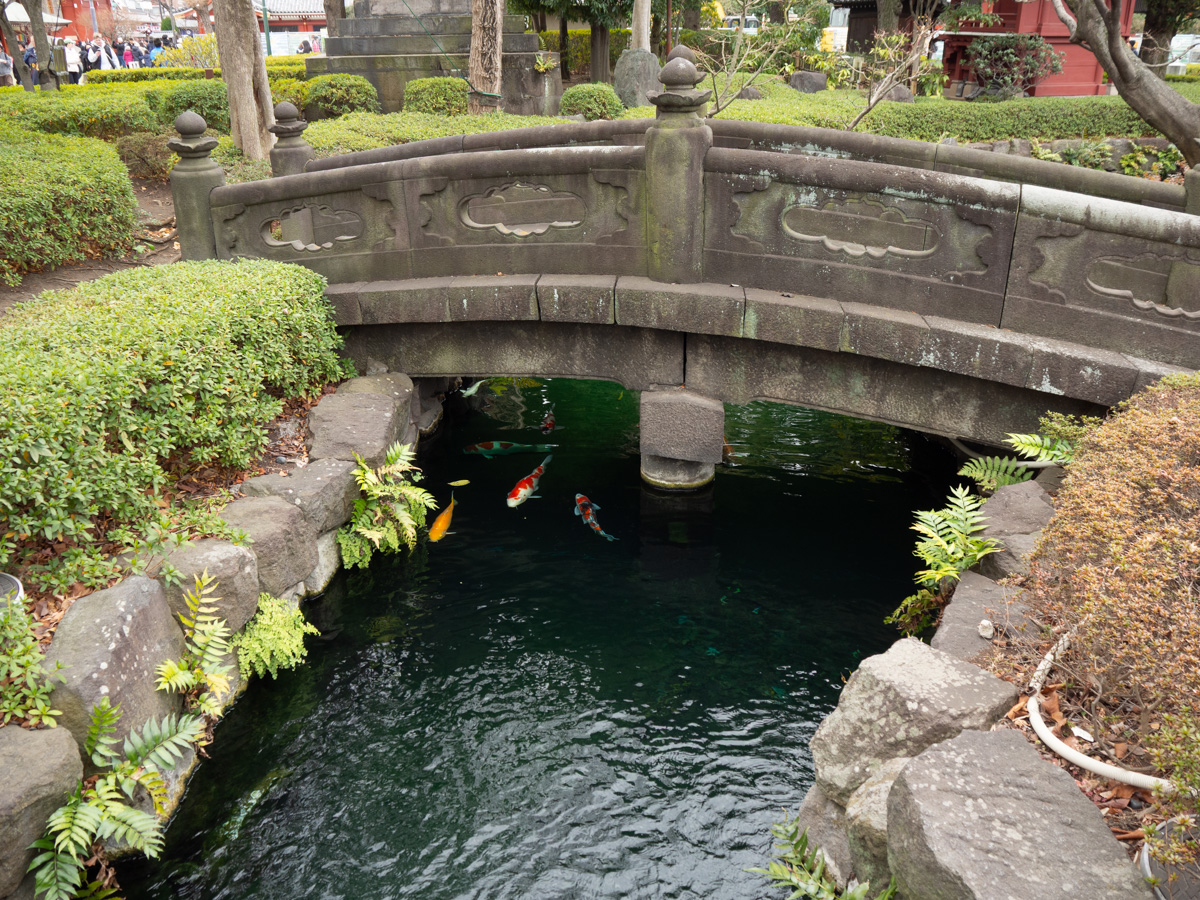
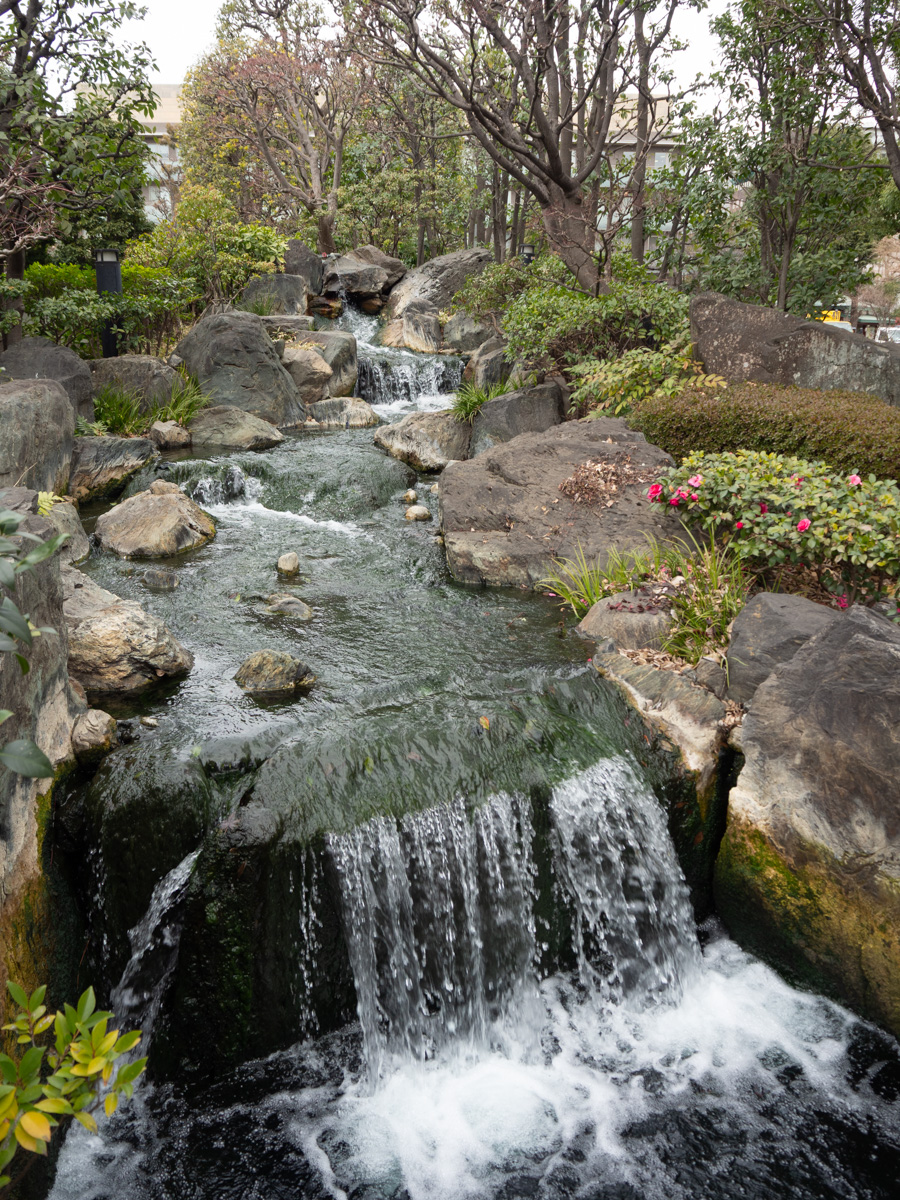
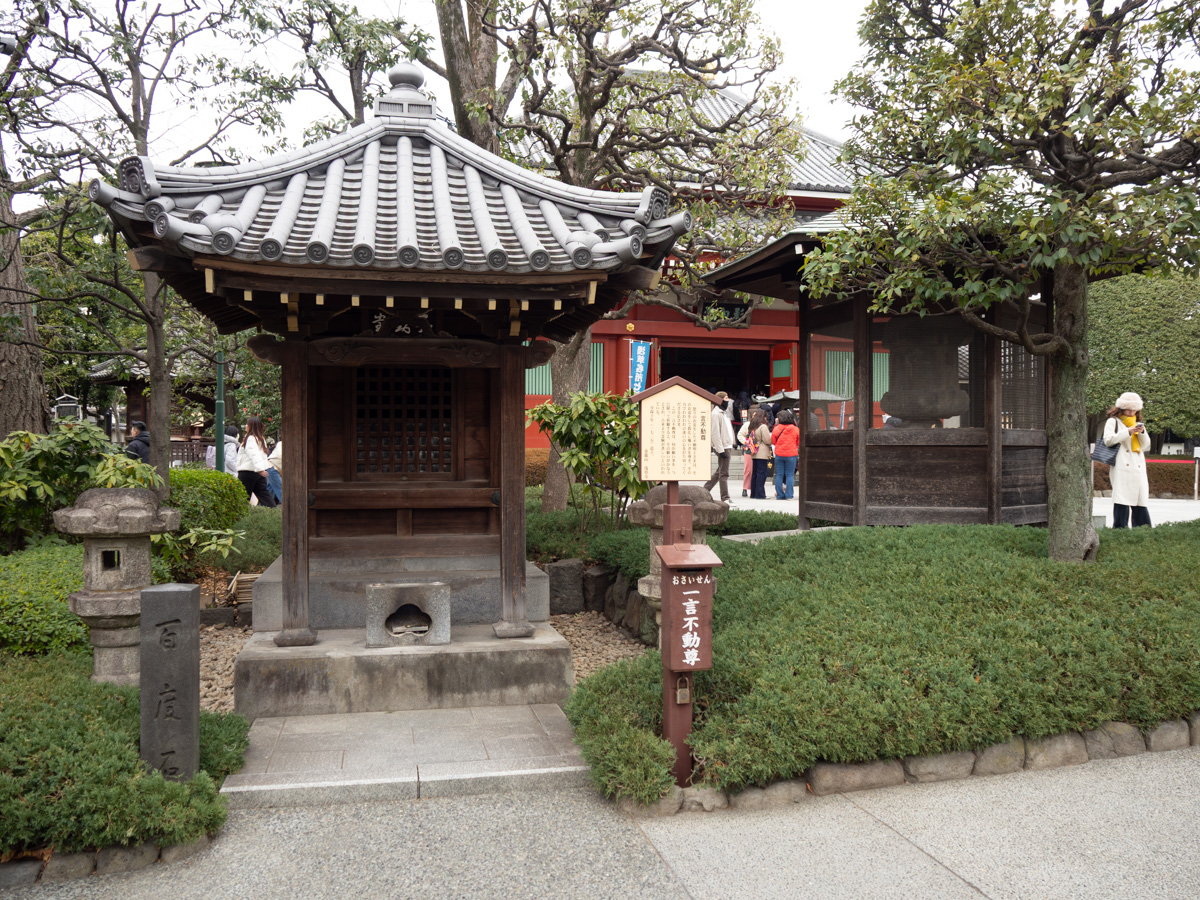
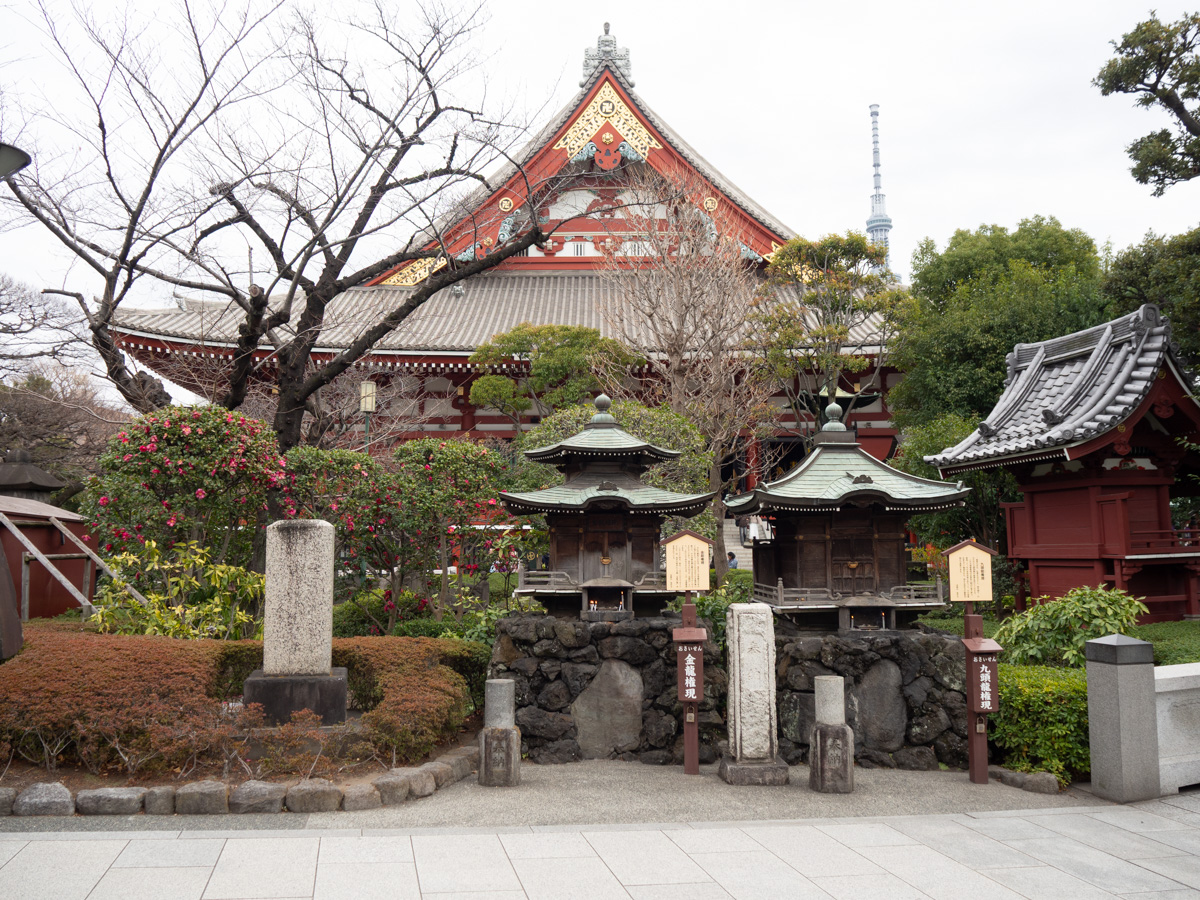
There was also a small, beautiful park, with a waterfall and a koi pond, as well as several small shrines and altars that we didn’t really understand much about, since the signage was all in Japanese only.


This being our first temple visit, I felt mostly clueless. Which bits are special about this one? Which ones are typical?


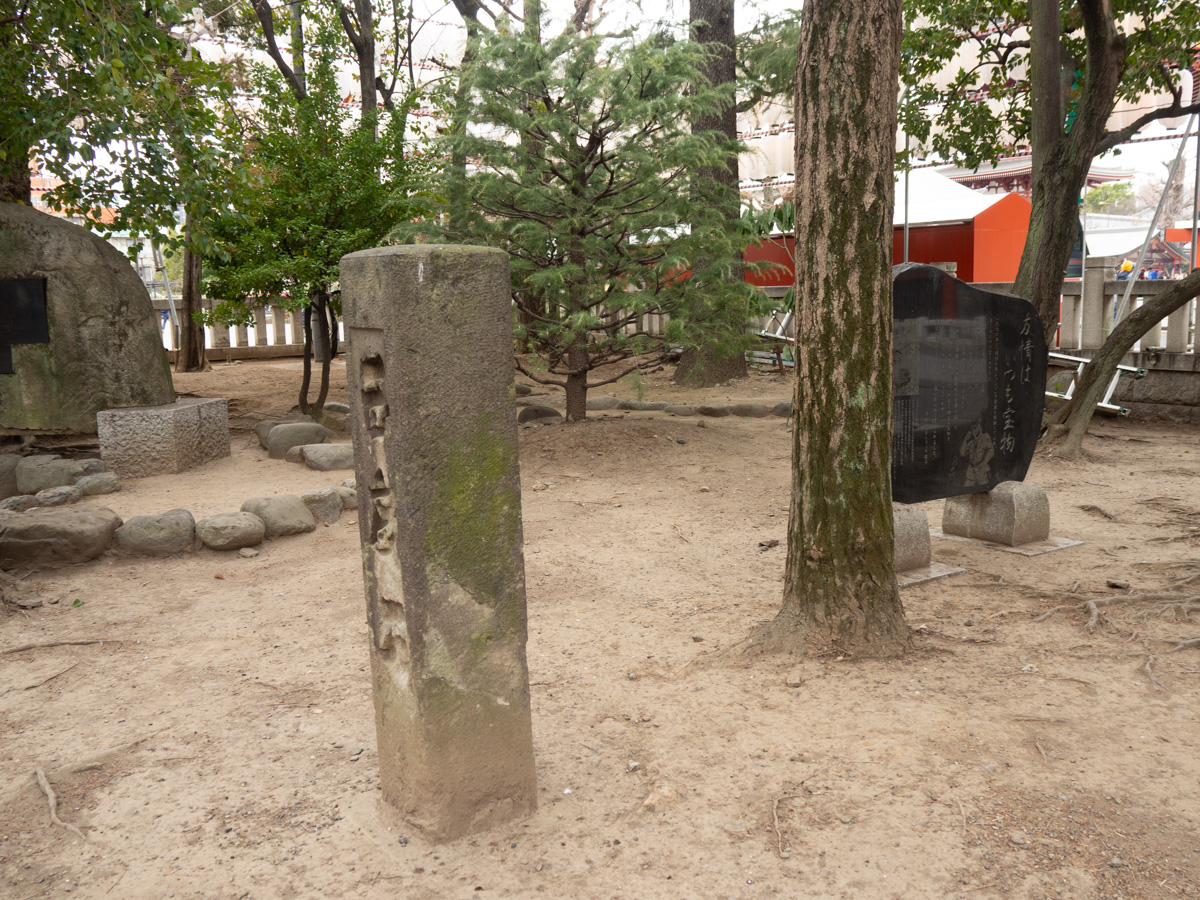
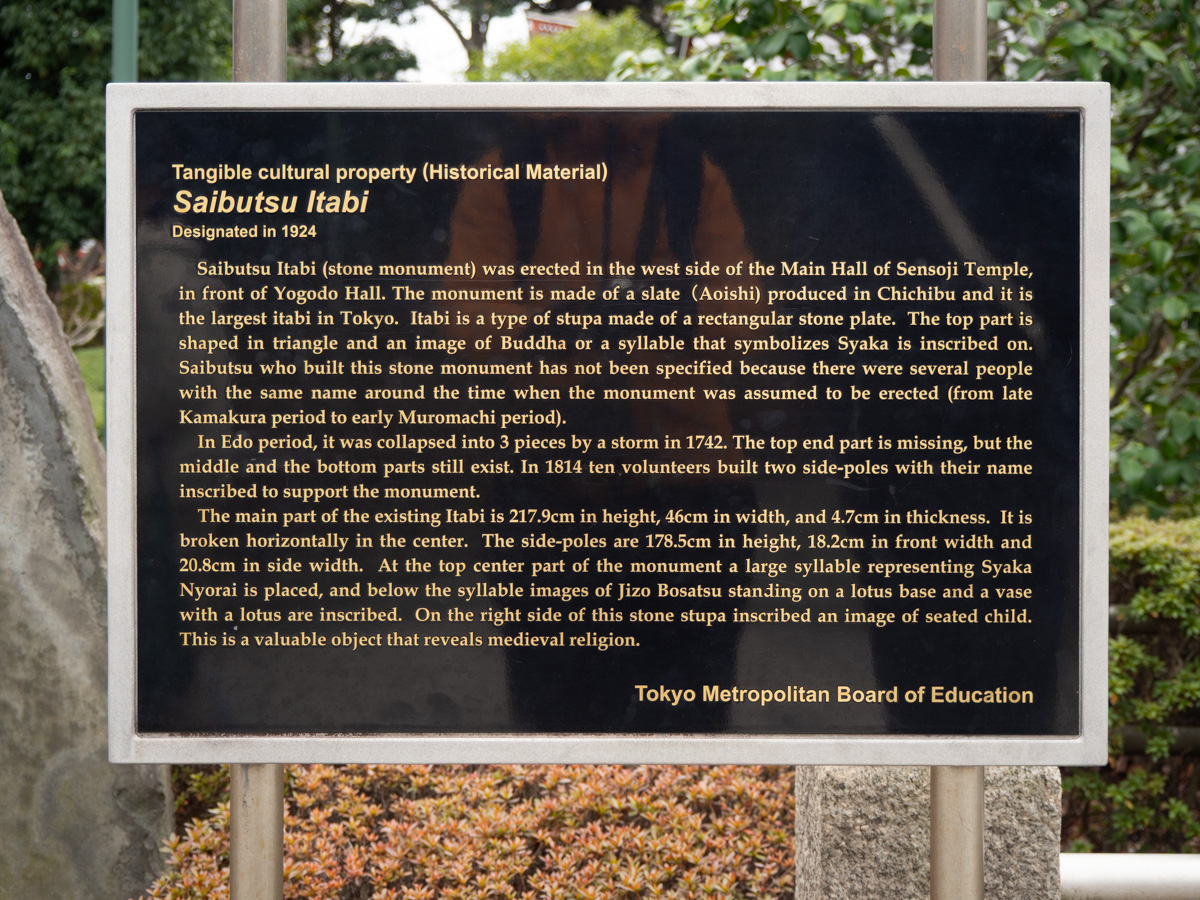
The few informational plaques that were in English – both here and later at other sites – had a bizarre focus on dates and measurements. This one is better than most in that it actually tells us the history of the object that we’re looking at, before it dives into precise measurements (217.9 cm in height, not 218!). But in general we soon gave up expecting any insight from info plaques, and their millimetre precision became a running joke between us.

We have landed in Tokyo. Early in the morning on a weekday, somewhat groggy with jet lag, and hungry. The first order of business was to get rid of our luggage (in a large locker at Tokyo station). The second was breakfast.

Finding breakfast wasn’t hard. There are convenience stores absolutely everywhere. Finding a place to eat that breakfast was harder. You aren’t allowed to eat and drink while walking in the streets; it’s considered disorderly. There are also almost no benches anywhere. Benches encourage people to sit and hang around, especially young people, and that is kind of considered to be “loitering”. I think they generally just don’t want people to hang around in public places. You can use streets and parks to go from A to B, but keep your socializing and living out of the public eye. Such a contrast to many European towns and cities that go out of their way to liven up their public spaces, with benches and greenery etc, to encourage people to hang around.

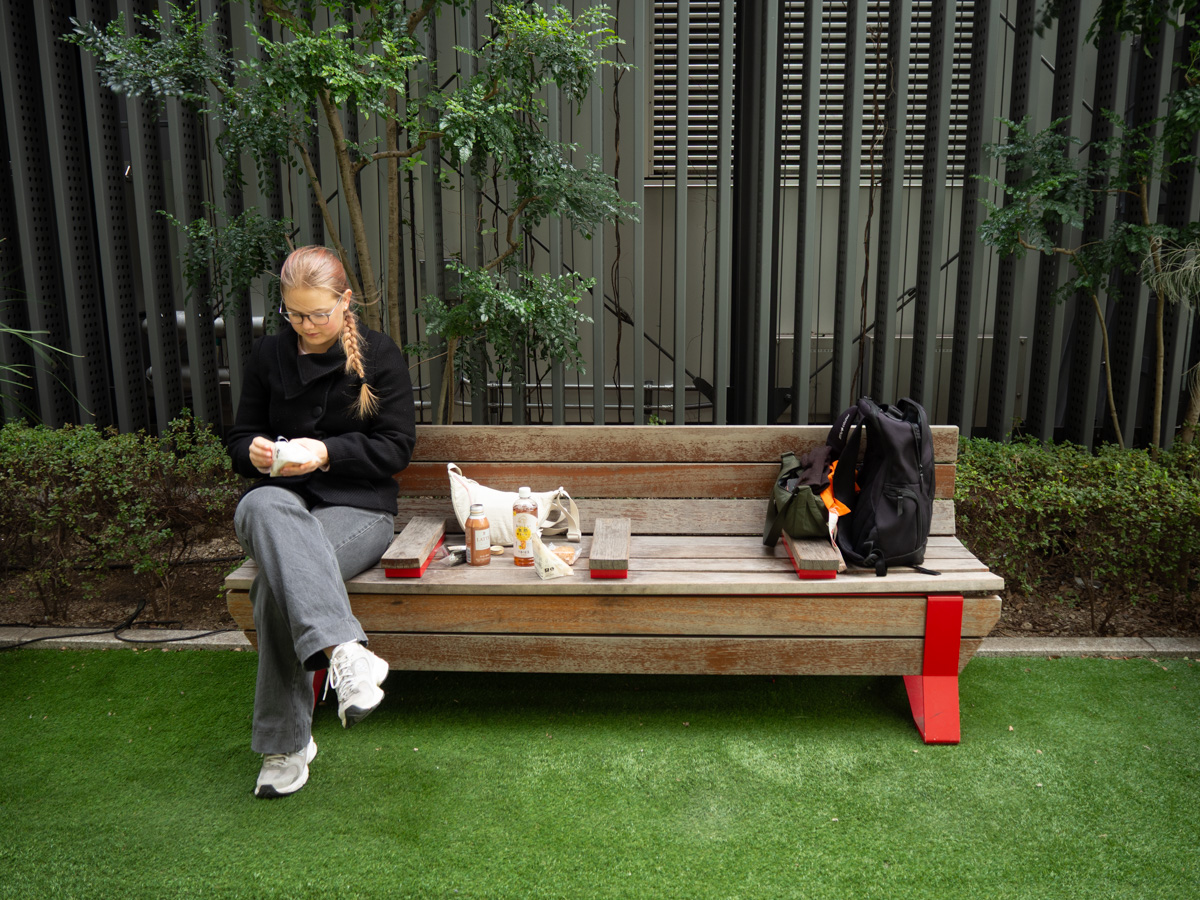
We did find a pocket park consisting of about three bushes, a few metres of artificial turf, and a bench where we could sit and eat.

After that we just wandered around to get a general feeling for the city.

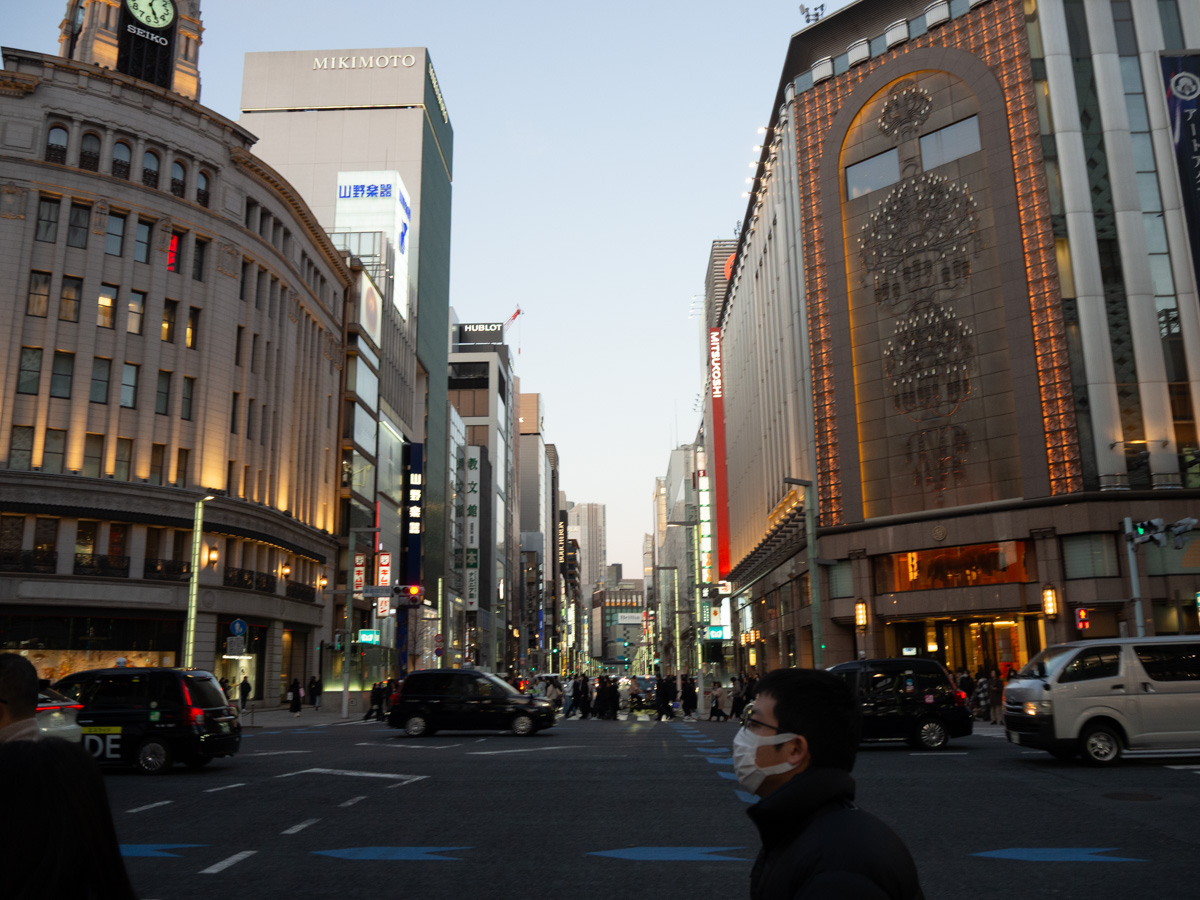
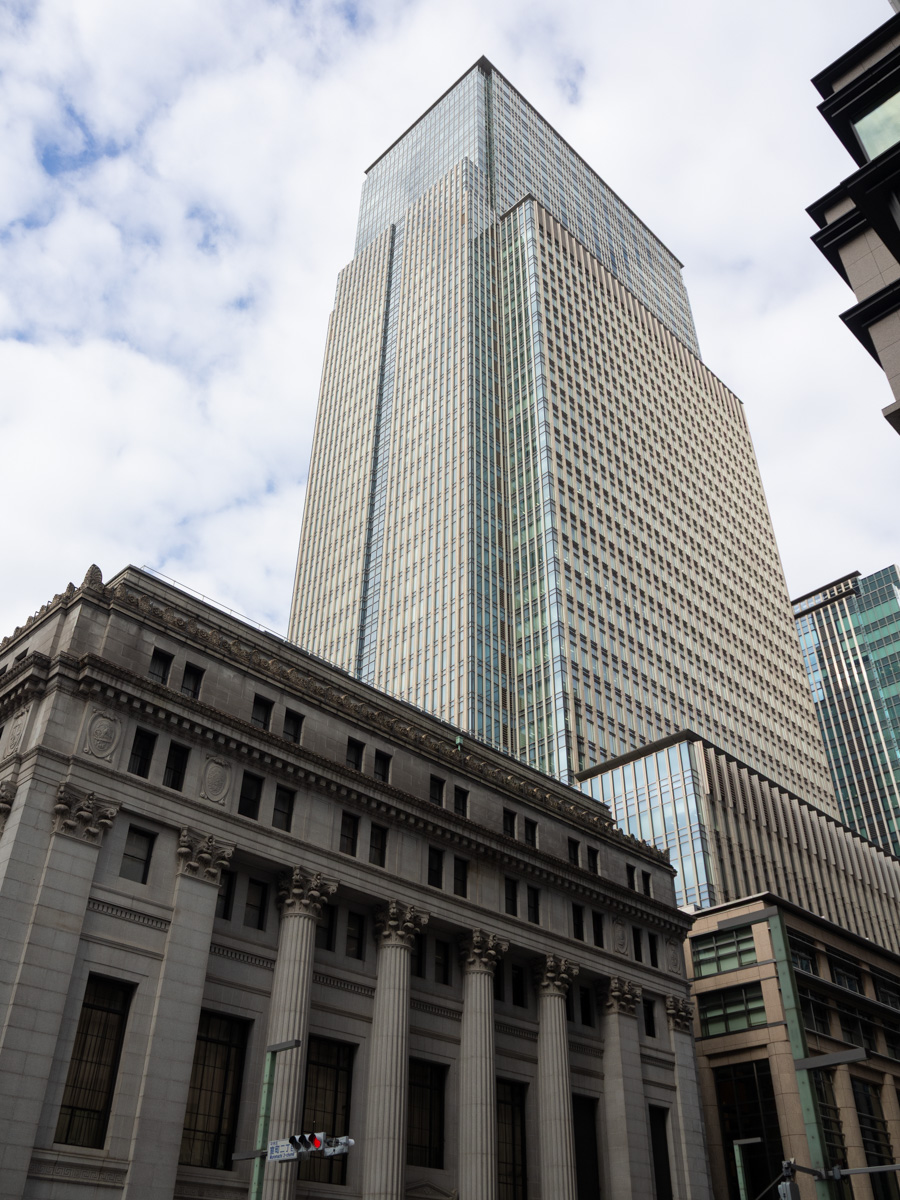
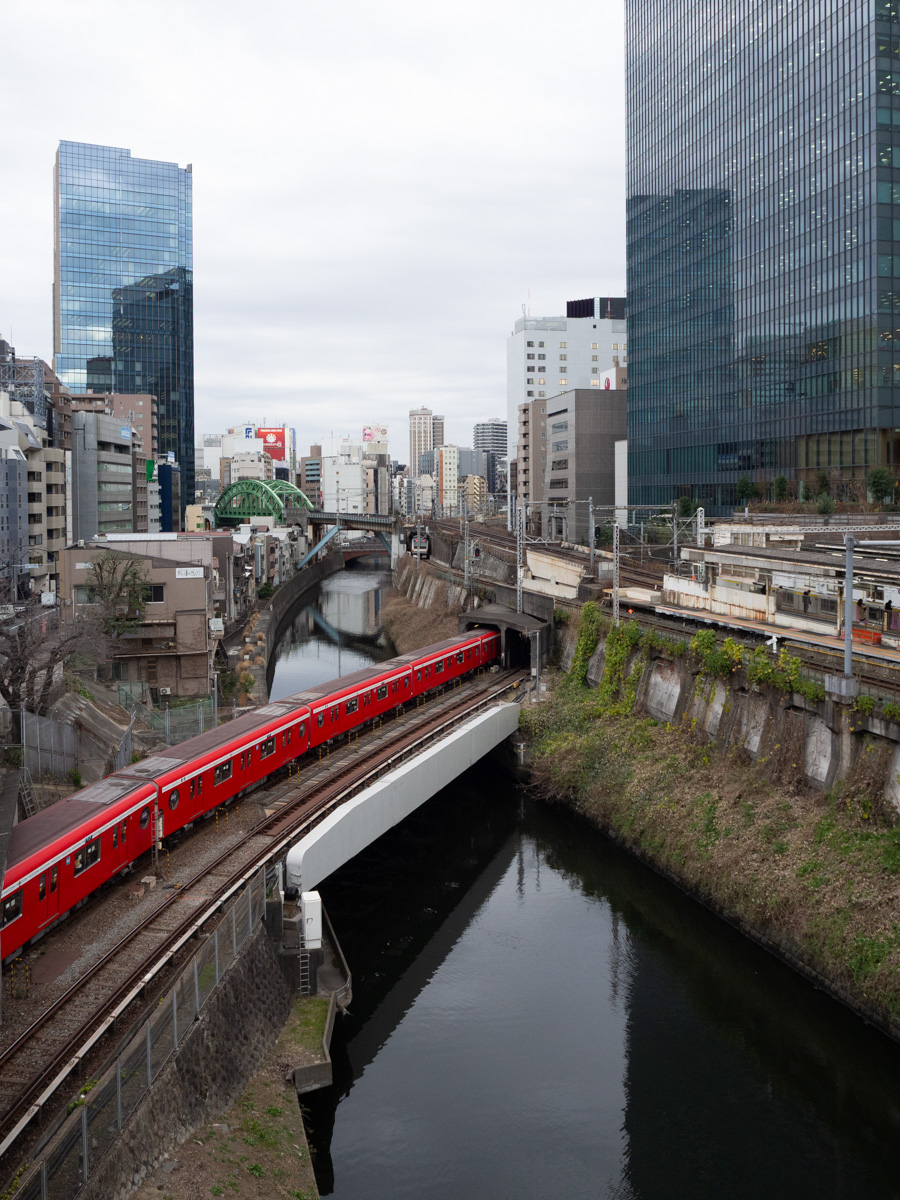
A lot of it is very tall and modern.

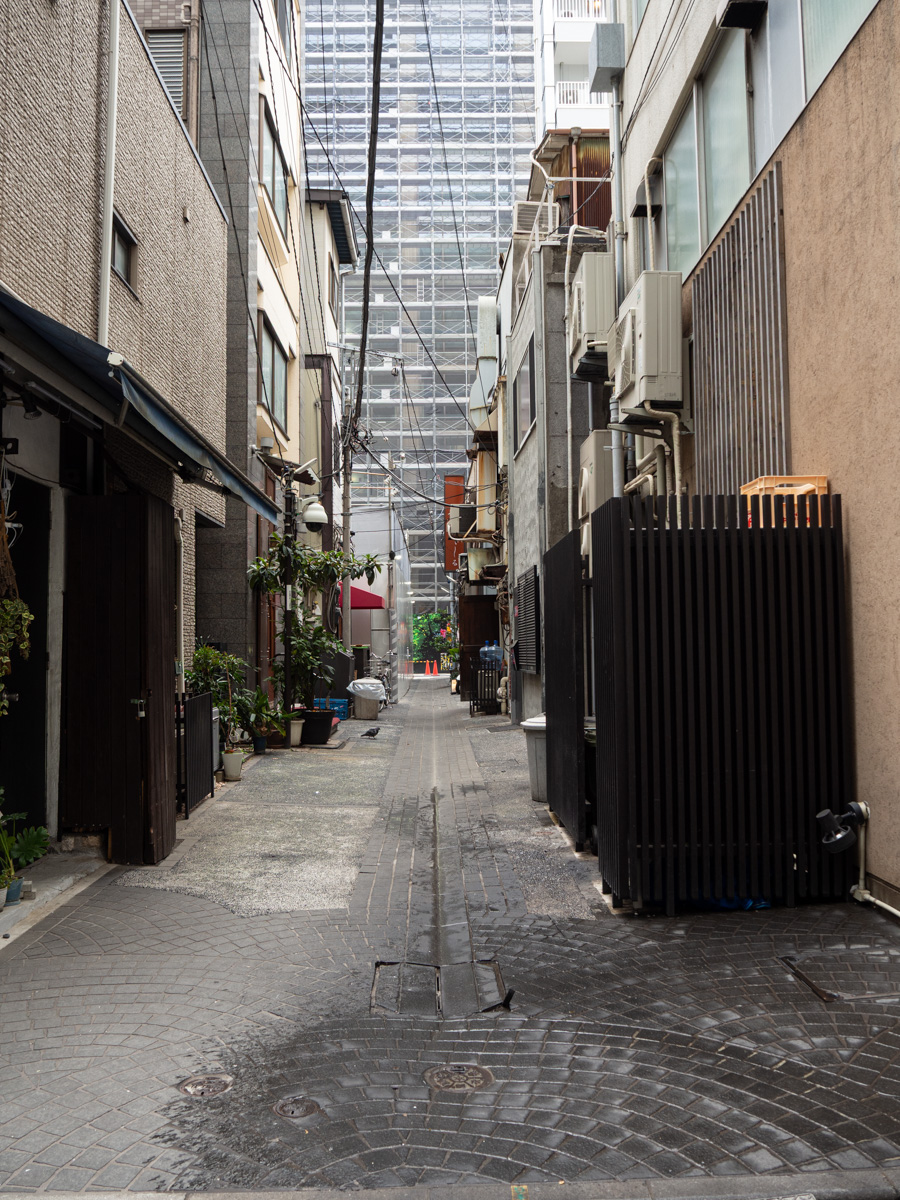
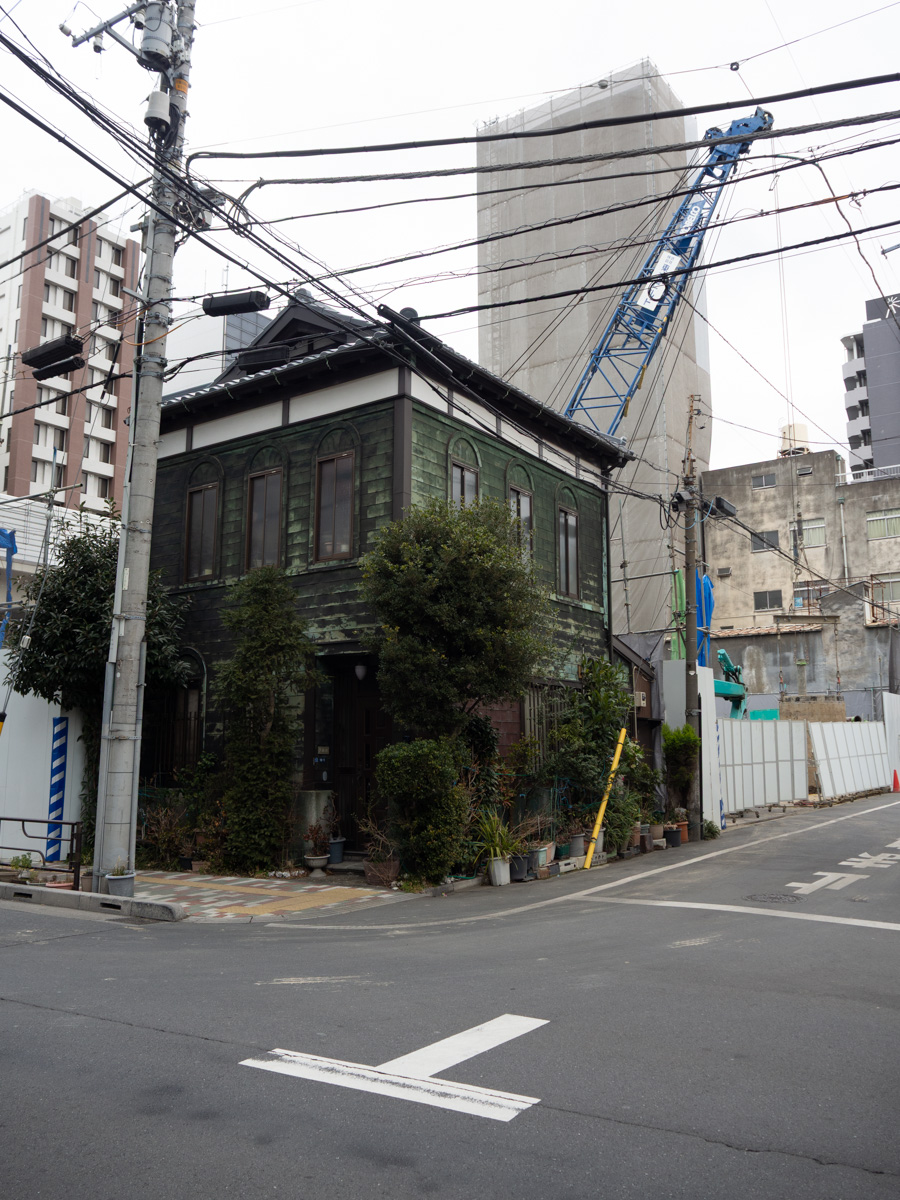
Then you turn off the main streets and wander into the smaller ones, and the atmosphere changes abruptly. Small concrete houses, little back alleys with potted plants.

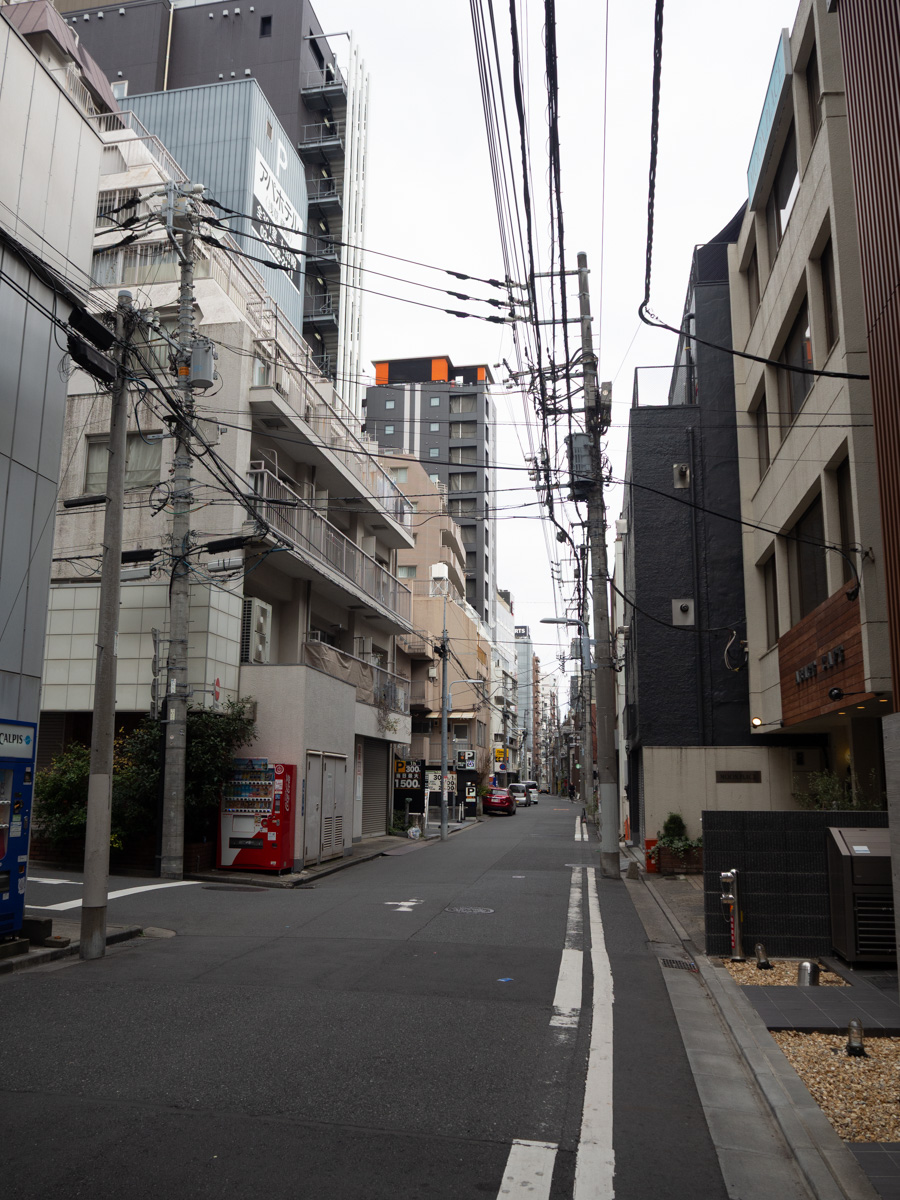
A lot of the smaller streets are completely without sidewalks. Which doesn’t mean that they’re not for pedestrians. There’s this little strip of asphalt on one side, demarcated by a painted line, that is sort of reserved for pedestrians. But not really. You just have to co-exist with cars, bicycles etc. It mostly works out. It helps that there isn’t that much traffic on these back streets.

The building lots are often small. In Stockholm an inner-city building can be tens of metres in each direction; here they’re sometimes smaller than an average Swedish single-family house.

We saw so much every day, and I took so many photos, that I’ve broken up each day into multiple posts. After our general wandering on this day, we walked to Senso-ji temple and the surrounding Asakusa district, and then onwards to Ueno, all of which get their own posts.

Jet lag caught up with us around four or five in the afternoon. We picked up our luggage and started making our way towards our apartment in Ikebukuro.

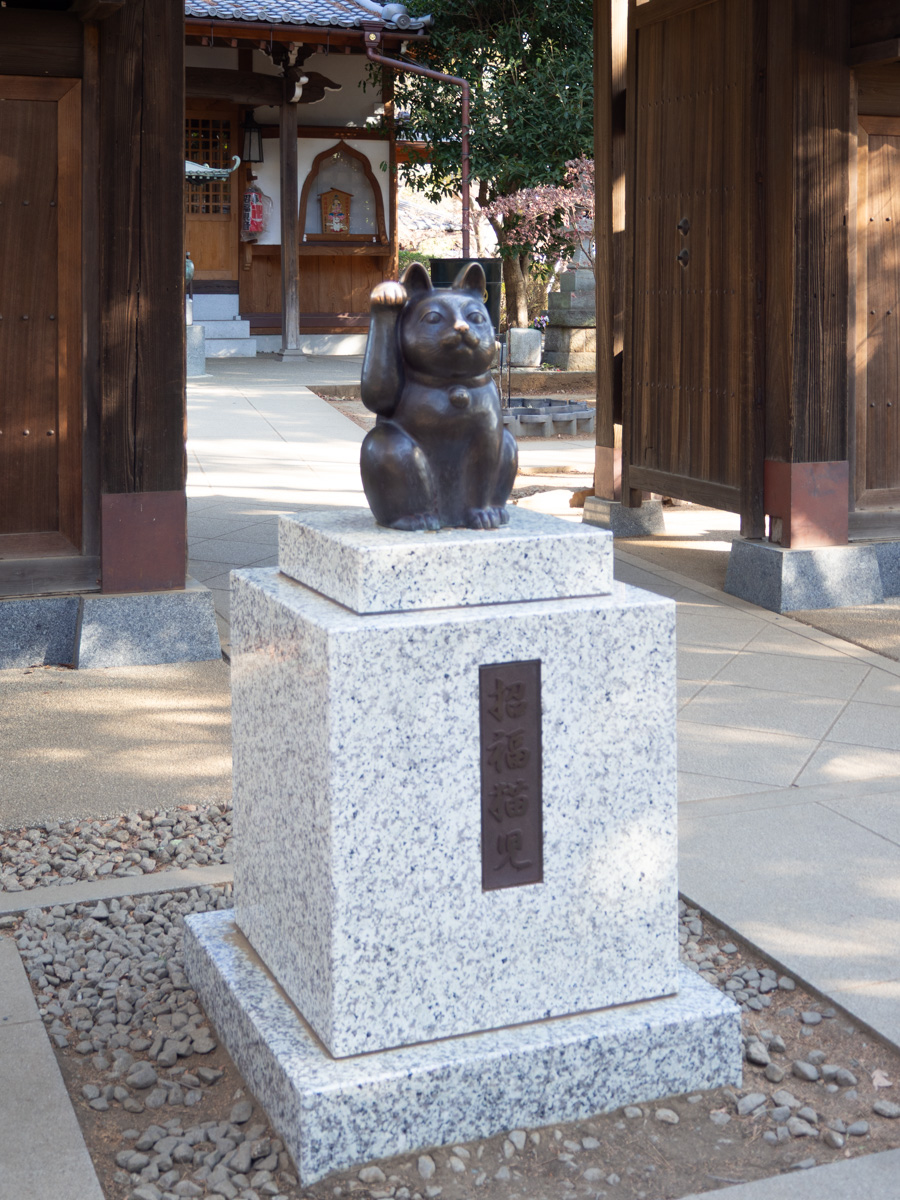
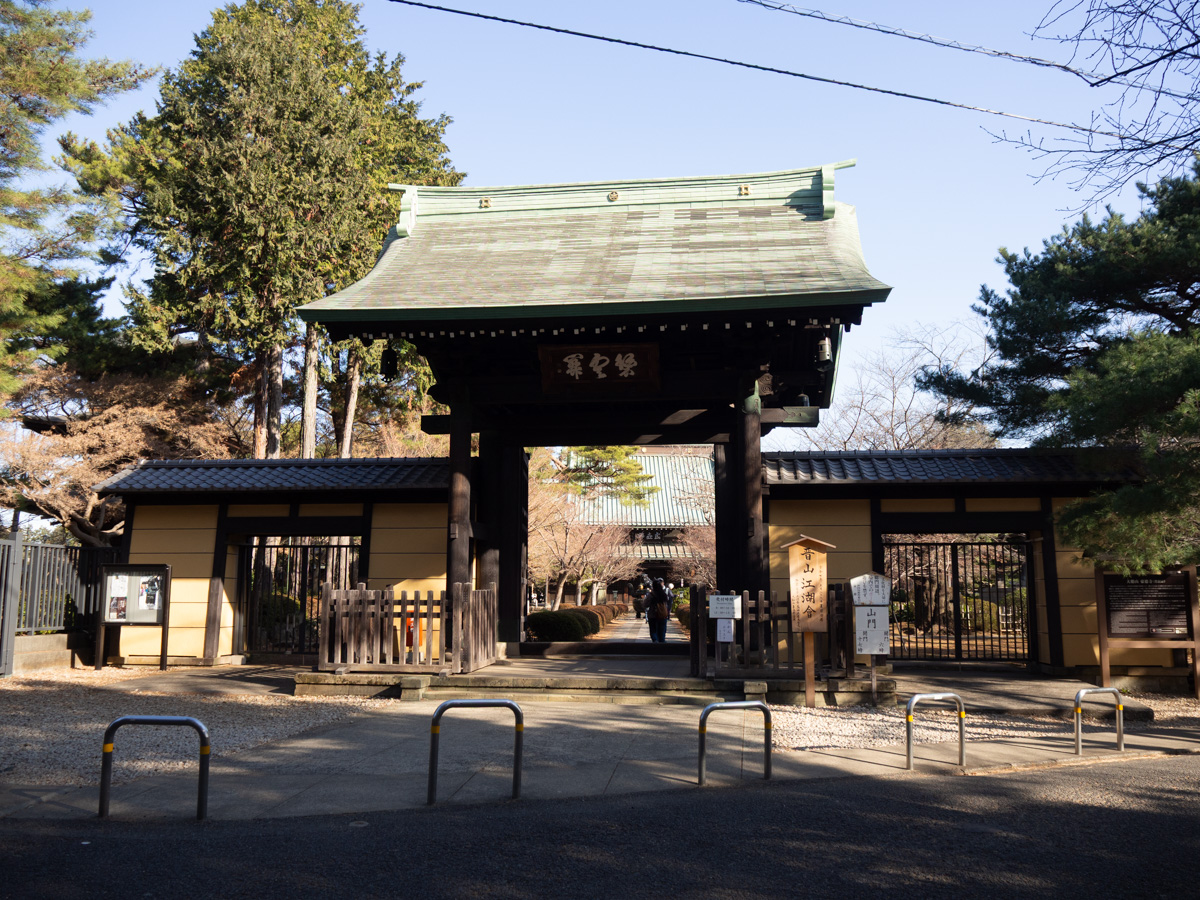
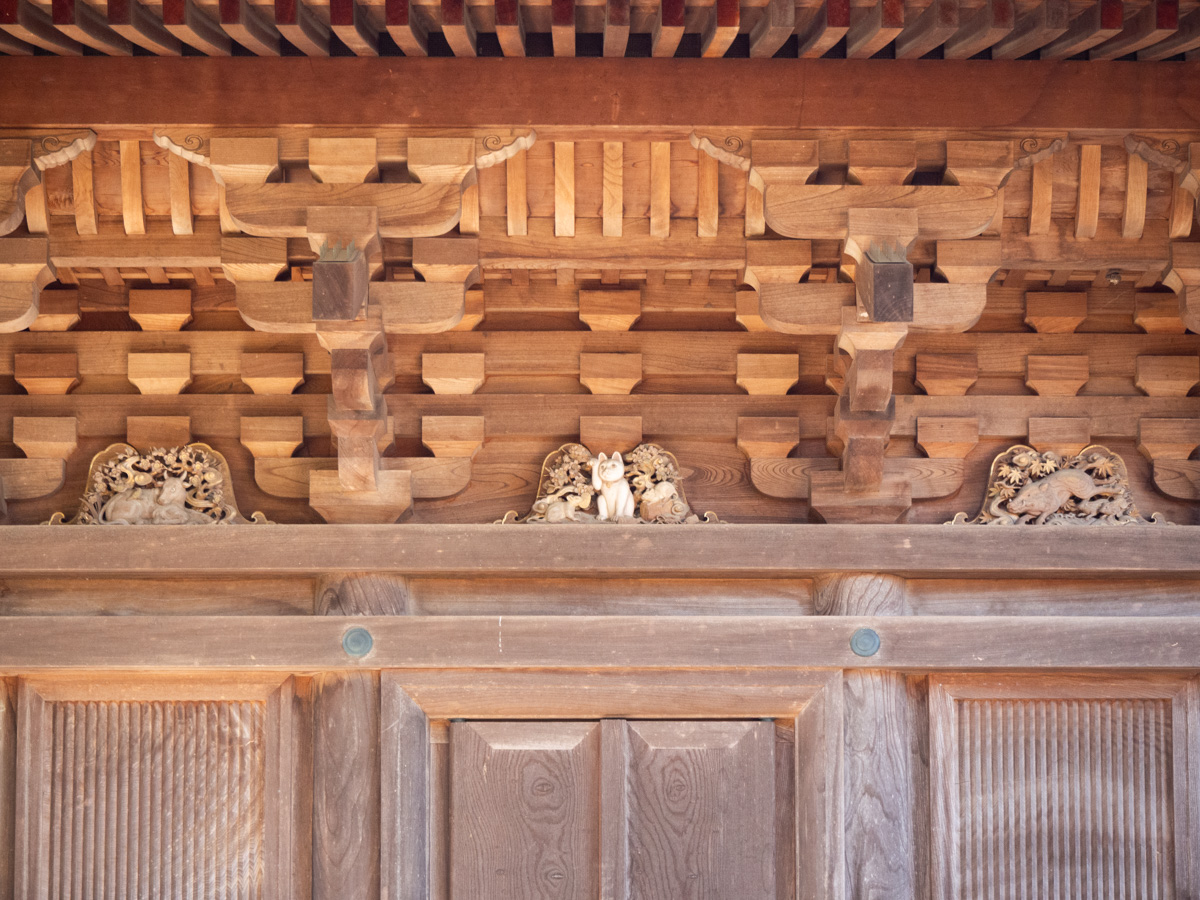
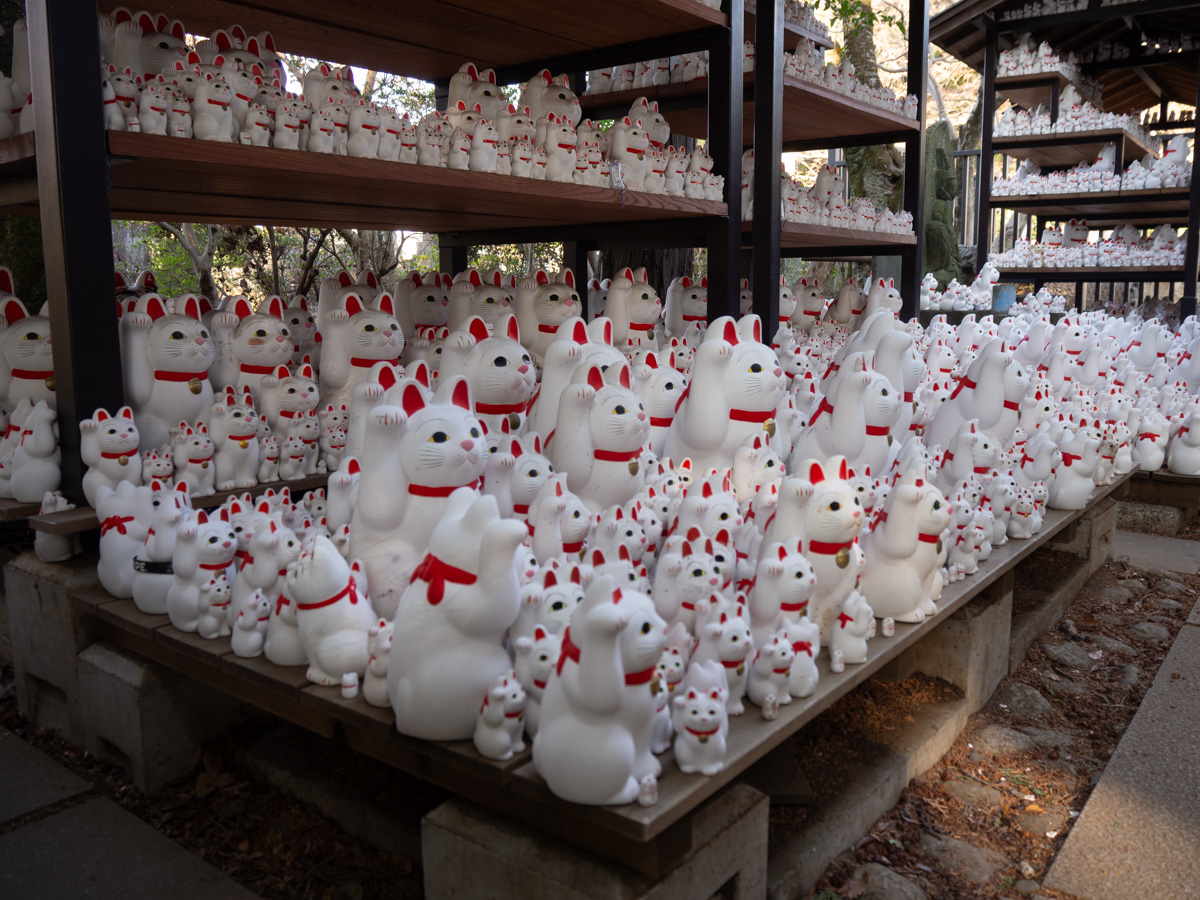
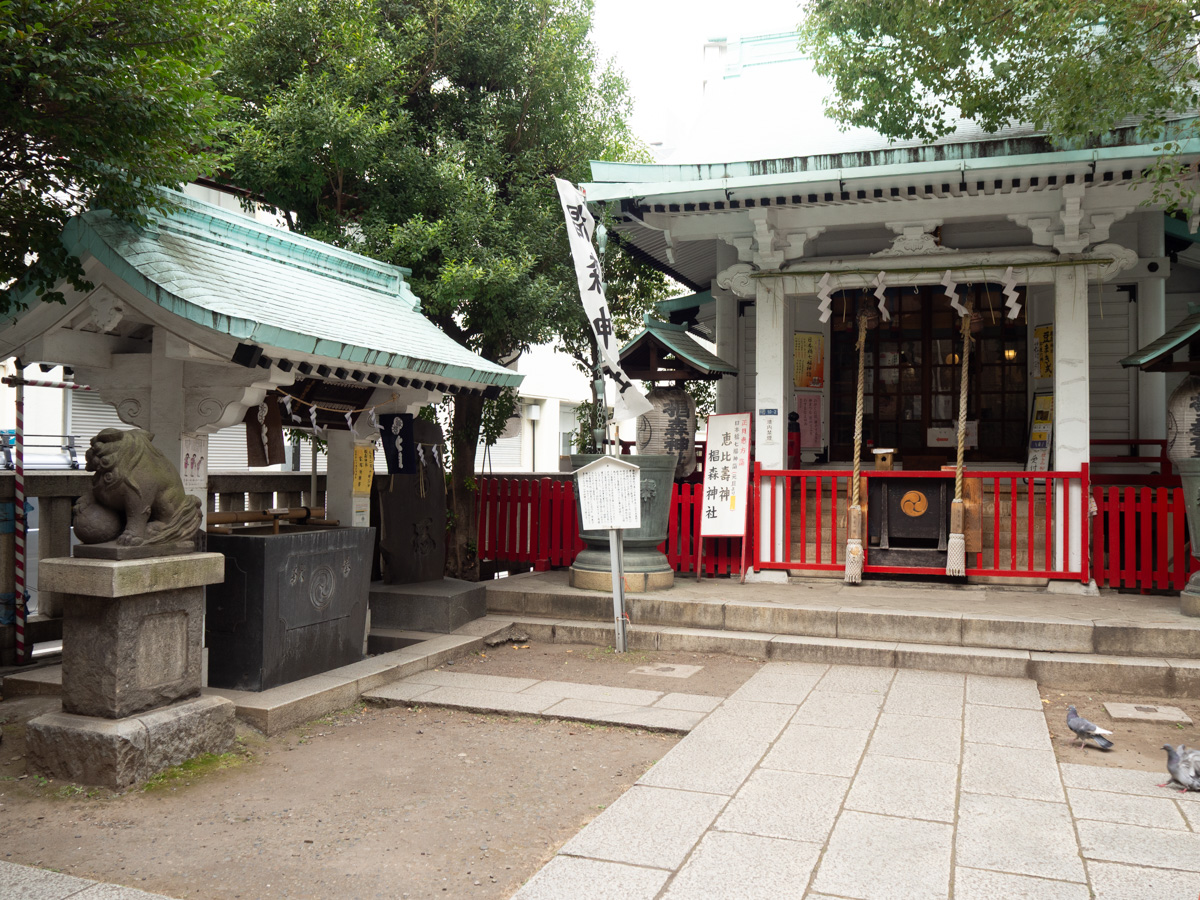
Wherever we walked, there were shrines and temples everywhere. Outside of the central business and shopping districts, I think there’s a shrine almost in every city block. Some smaller, some larger.

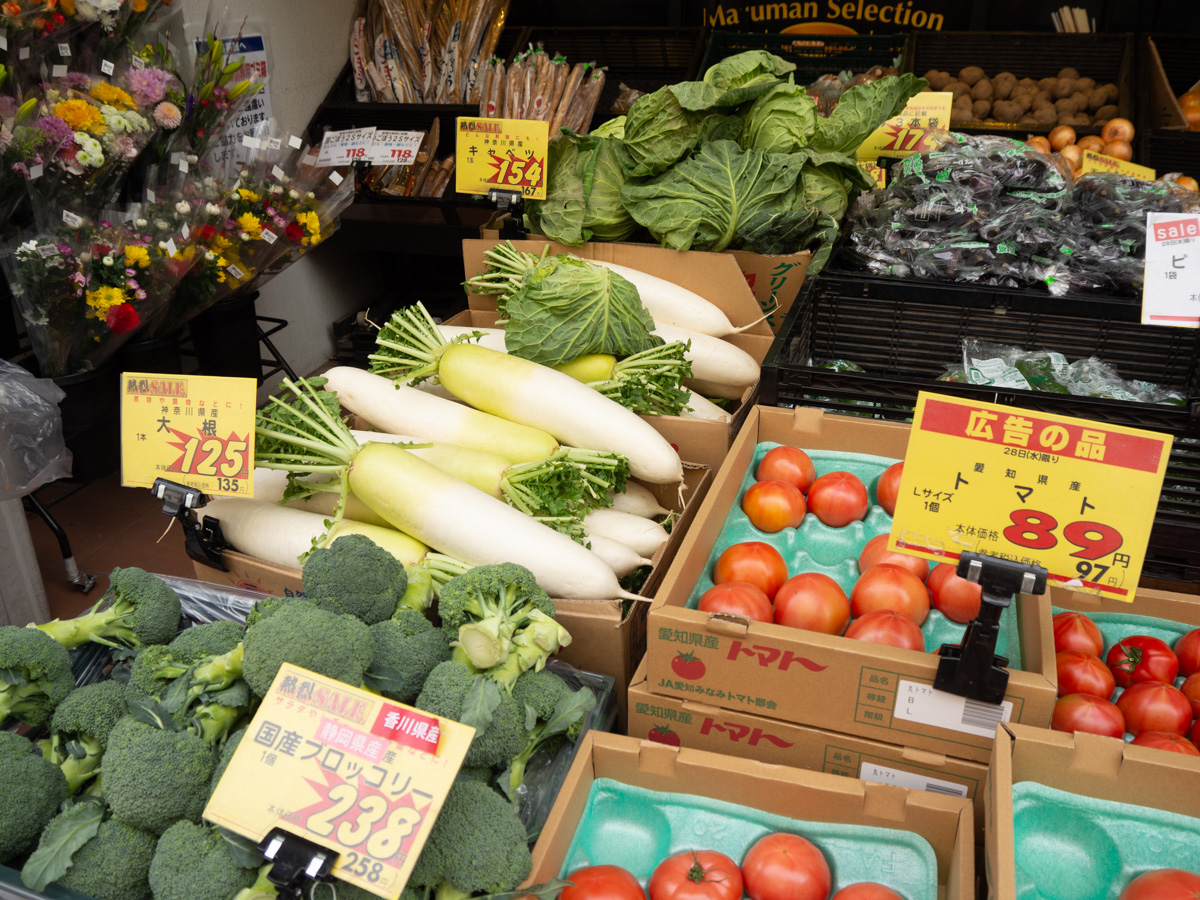
Everything is slightly alien. I feel displaced. The streets are not like streets usually are; the familiar vegetables at the grocery shop are interspersed with strange ones. None of the signs are readable; none of the prices are relatable.

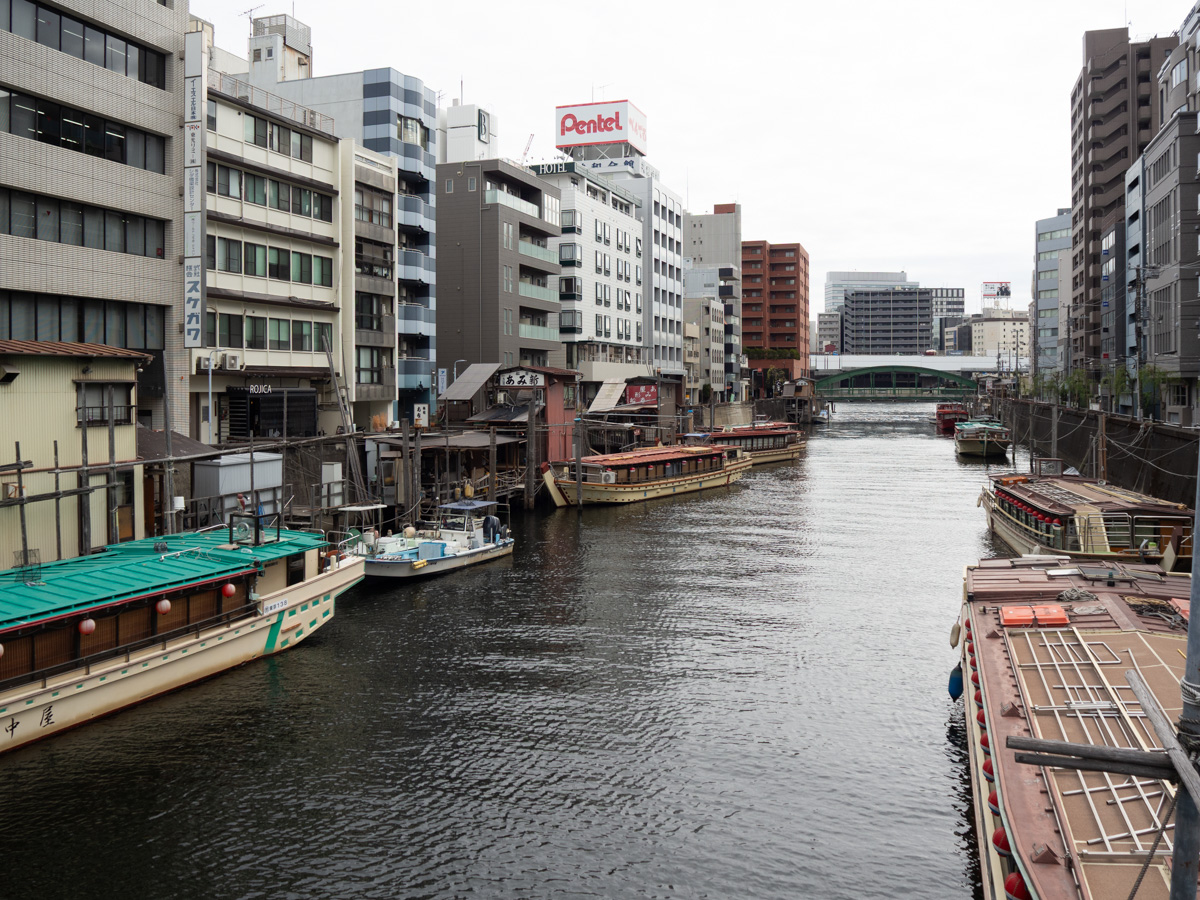
Tokyo is located by the sea and has some waterways flowing through it. In the places where we ended up, they were hardly noticeable, and mostly we forgot the sea was even there.

We’re on our way to Japan! I am so excited.

This is a bit of a dream trip for Ingrid and myself. We’ve both wanted to see Japan for years, but it has never seemed feasible. Mostly because of the cost, but also because of school etc.

Now Ingrid is old enough to earn her own money, and has been working and saving up all autumn (in addition to what she had been able to set aside from her job at the cafe). She had been thinking of doing a long Interrail vacation in Europe, but then found out just how advantageous the SEK/JPY exchange rate is right now and changed her plans. Initially she was going to do this on her own, but when I asked if I could join her, she said yes, so we’re going together.

We’re at very different stages of our lives, but in surprisingly similar financial situations – on a tight budget – so our preferences and priorities line up very well. Cheap flights, and the cheapest accommodation that gives us clean beds and a private bathroom. Two-week group trips to Japan start at about 45,000 SEK per person, and that’s without most meals; we expect our total cost per person, including meals and shopping, to come in at half of that at most. That’s less than I’ve paid for a one-week guided ski tour.

Ingrid has done all the heavy lifting in terms of planning: flights, dates, hotels, overall itinerary. Going on a custom vacation without having to do the majority (if not all) of the planning is a luxury I’ve not experienced in many years. That’s another thing that has made this previously impossible trip possible: Ingrid being between jobs and having ample time for planning and research.

This will be amazing.

Had breakfast at Grounded again, even though a breakfast buffet was included in our hotel stay. The buffet was just like the hotel itself: clean, tidy, nothing wrong with it, but very much on the budget end of the scale. For a hotel room, I don’t mind that at all. All I want is a clean room in a safe building, with decent beds. The beds and pillows here were actually really good – many more expensive hotels opt for too-soft everything, and this place had nice, firm ones. But a low-budget breakfast, with the cheapest possible sliced bread and sandwich stuff, and only water and coffee to drink, no juice, is not for me. Even the boiled eggs somehow managed to taste really cheap. If the food isn’t appetizing, I struggle to make myself eat.

The rest of the morning we spent at the British Museum.

This time we hadn’t booked any tickets in advance, but had no trouble getting in.

There were quite a lot of people, but they were unevenly distributed. There might be a dense crowd in front of a popular exhibit one moment, only for them all to somehow disappear minutes later and leave us mostly on our own.

Just like at the NHM, we wandered wherever our fancy took us, and looked at whatever we felt like at that moment, without any particular focus. This meant a lot of old Egypt, but also the Parthenon marbles, Mesoamerica, Iron Age Britain, and China.

I have mixed feelings about the collections at the British Museum. On the one hand – amazement and gratefulness that we have all these unique, priceless artefacts from thousands of years ago. That they have been excavated and preserved and exhibited, and that we have learned so much from them. It’s mind-boggling, when I stop to think about it, that we have detailed records about an individual dead person from thousands of years ago, and we know who they where, what they did, how they died, what they were buried with, and why.

That we have examples of writing from five thousand years ago, and that we have been able to decipher it, and we know how much this merchant owed to that one, or what a mother was writing to their son. That the Rosetta stone was created, and survived, and could be used to decode Egyptian hieroglyphs.

On the other hand… the imperialism and ruthless plundering and the complete disregard for the wishes of the people whose history this is, that enabled this collection.

One could stay here for days and keep discovering more amazing things about the history of human civilization. We could only stay a few hours, though, since we had a flight to catch in the afternoon.

Harrods, V&A, Natural History Museum, food.

We started the day by checking off another food-related wish: an English breakfast, with hash browns, baked beans, mushrooms, sausages, etc., at Grounded. No black pudding, though. I wondered why that was, and realized later that it’s because the food at the café was all halal, and I don’t think you can make black pudding without pork blood.

I am not interested in any part of an English breakfast, really, so I had Eggs Florentine – I like poached eggs but never quite managed to get the hang of making, so whenever we have brunch at a restaurant (which happens maybe once or twice a year) I let them make me poached eggs.

The forecast promised more rain today than yesterday, even though the forecast has been much downgraded from the 18 mm that was promised for today just a week ago, so we had mostly indoors plans. First: a circuit of Harrods, for Adrian.

We had a bit of an awkward time to fill between Harrods and our early-afternoon slot at the Natural History Museum. (Timed tickets, again.) I took us to the Victoria & Albert Museum. Partly because of convenience – it’s right next door to the NHM – but also because it’s a lovely museum. There’s something for everyone there.

I’d be happy to wander through any and all parts of it, so I let Adrian’s interests guide us, while stopping to look whenever we ran into anything interesting on our way. We ambled past British decorative arts 1760–1900, then a bit of ironwork, to architecture. Down, a brief tour through the Cast Courts, and on to lunch.

Museum restaurants these days usually serve great food, having to compete for visitors’ attention against all sorts of other attractions. The lunch at the V&A café was surprisingly disappointing. The food in and of itself wasn’t bad, but nothing exciting either. The process of getting it was awkward, with flows of people crossing checkout queues, nowhere to rest your tray while queueing, and truly horribly noisy dining rooms. Sumptuous, yes, stylish, yes – but not at all pleasant. I guess it may have been nice a hundred and fifty years ago with half the number of tables, or something.

Adrian needed a top-up because his lunch portion wasn’t large enough, so he bought a cinnamon bun – which must have been the world’s worst cinnamon bun ever, for seven pounds – and we went out into the courtyard to rest our senses.

After a browse through the museum shop, we crossed the street to the Natural History Museum. Started with a tour through their garden, with a bronze cast of their famed Diplodocus skeleton (which was apparently technically challenging to make), surrounded with plants similar to what was around during the era of the Diplodocus.

Passed the impressive skeleton of a blue whale inside.

Instead we went to see the Wildlife Photographer of the Year exhibition, which had opened just two weeks earlier. It’s an annual exhibition, but I haven’t seen it since 2007.

I would have expected Adrian to want to see more skeletons and such, but he opted for geology. I don’t know if I’ve ever visited the crystals and minerals hall of the NHM. It was astoundingly expansive. Several metres of sulphur in various shapes, case after case of copper-base minerals… Crystals, gemstones, natural chunks of pure metallic gold, you name it.


For dinner today we made our way to Chinatown for dim sum. I was too tired to spend much time and energy on choosing a restaurant, so we just picked the first one that looked decent. It turned out to be, indeed, decent.


The Tower, the Eye, comic books and Halloween cake.

I booked us rooms at a hotel very close to where I used to live, near Aldgate East. Far enough from the touristy sites to be reasonable in price, and an area I still feel roughly familiar with. There were similarly-priced places in West London, but I couldn’t judge whether the area would be reasonably safe and clean or not.

In the morning we had tickets to the Tower of London. Most major sites require advance booking of timed tickets these days, and the Tower is no exception. The Tower was walking distance from the hotel, and it was surprisingly not raining at all. But first, a quick stop by the building where I used to live. It’s still there and looks more or less like before, except the building opposite our apartment gaining a few floors and blocking what used to be our view. Not that it matters anymore.

Then through St Katherine’s Docks to the Tower. Getting there early in the day was the right choice – there were no crowds at all. Wise from previous experience, I took us straight to the Crown Jewels, which I knew would gain massive queues later in the day.

The crown jewels themselves are almost unreal. Royal crowns encrusted with hundreds of priceless jewels, giant diamonds. Orbs and sceptres and whatnot. Unfortunately but understandably there’s no photography allowed in there.

We spent a couple of hours wandering around the Tower itself, visiting the various exhibitions, checking out old armour, reading about the menagerie that used to be housed here, etc etc.

If I was utterly filthy rich, I wouldn’t mind having a castle of my own, with plenty of picturesque passages and spiral staircases and wrought-iron details.

It was nearing lunchtime when we felt done with the Tower. On Adrian’s “to do” list for London was proper English fish and chips. Instead of a pub, we headed for Borough Market. It is – like most things – much more touristy than it used to be, but I still like the vibe.

I wasn’t quite sure what I wanted to eat. Nothing sounded quite right, until I saw this risotto place, and immediately knew that that was what I wanted for lunch. It was delicious.

The fish was good but greasy, Adrian said. The mushy peas were the best part of the meal.

The ergonomics of eating on a bench were so-so.

Next up: comic books. We browsed comics in the basement of Gosh! Comics

… and then browsed some more at Forbidden Planet.

By now it had been a couple of hours since lunch, and we needed an afternoon snack. I wanted a smoothie, Adrian wanted good cake. Both were willing to consider ice cream instead. We wandered around in the Neal Street and Covent Garden area, Googled, still couldn’t quite find anything that we really liked. Finally we ran across a cake shop that immediately pulled us in with amazing-looking Halloween-themed cakes in the window, called L’ETO.

And they had smoothies as well! Smoothies seem to have a strong healthy eating vibe in London – every single one had some fad food in them. This green one sounded the fruitiest, even though it had kale in it. Tasted less detox-y than it looked.

The cakes looked even more amazing up close. Adrian’s was called “Feel the beat” and was decorated with an anatomically correct heart (as far as I could judge). The inside (raspberry and pistachio) was good but not amazing – could have more flavour, he said. We’ve been spoiled by delicacies we get at Spånga Konditori.

My “Poison Apple” had a shiny outside and a core of ginger spiced apple compote inside.

We topped off the day with a twilight ride on the London Eye. Eye-wateringly expensive, but not quite so bad that I would skip it

London at night looks pretty awesome.