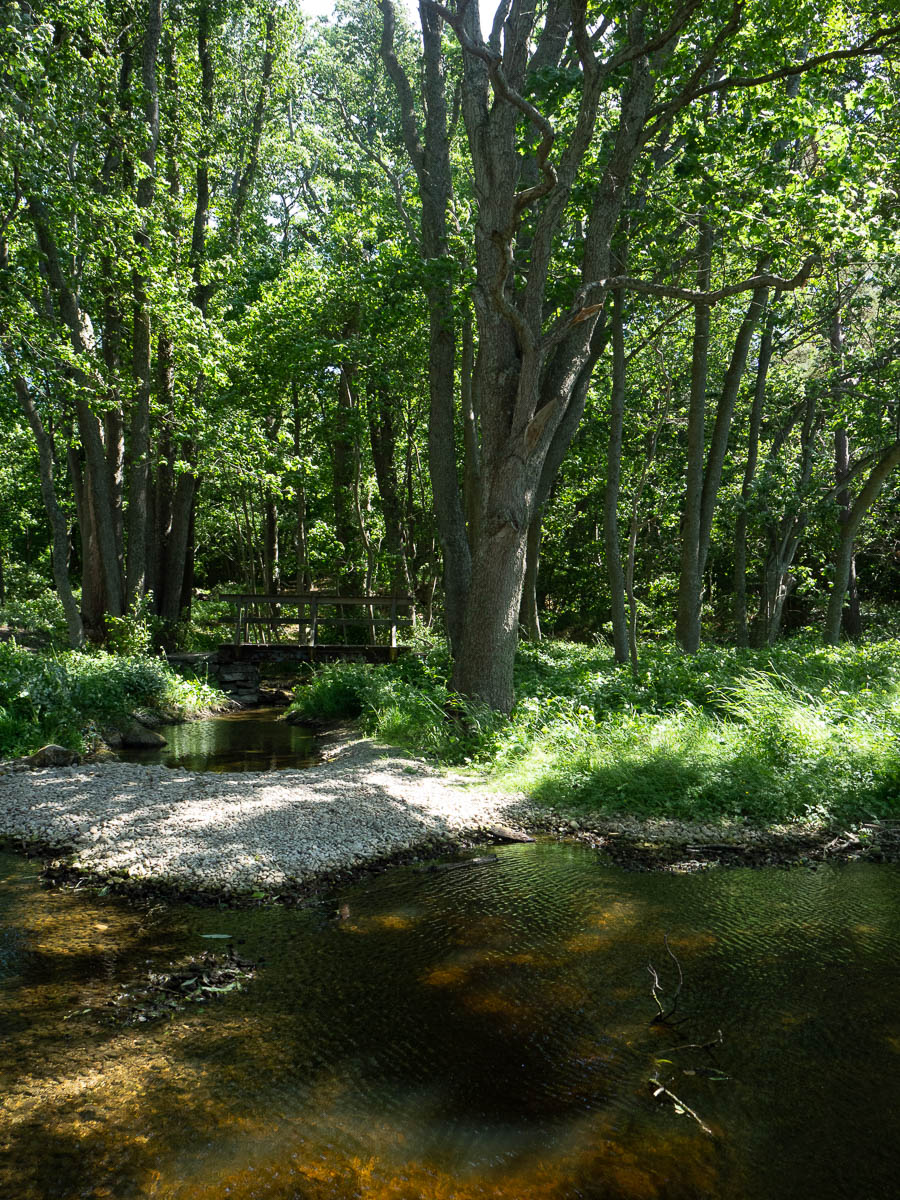
Is there even a point to writing a review for the year that ended? I thought. But what is obvious and top of mind for everybody right now, won’t be as obvious a few years from now.

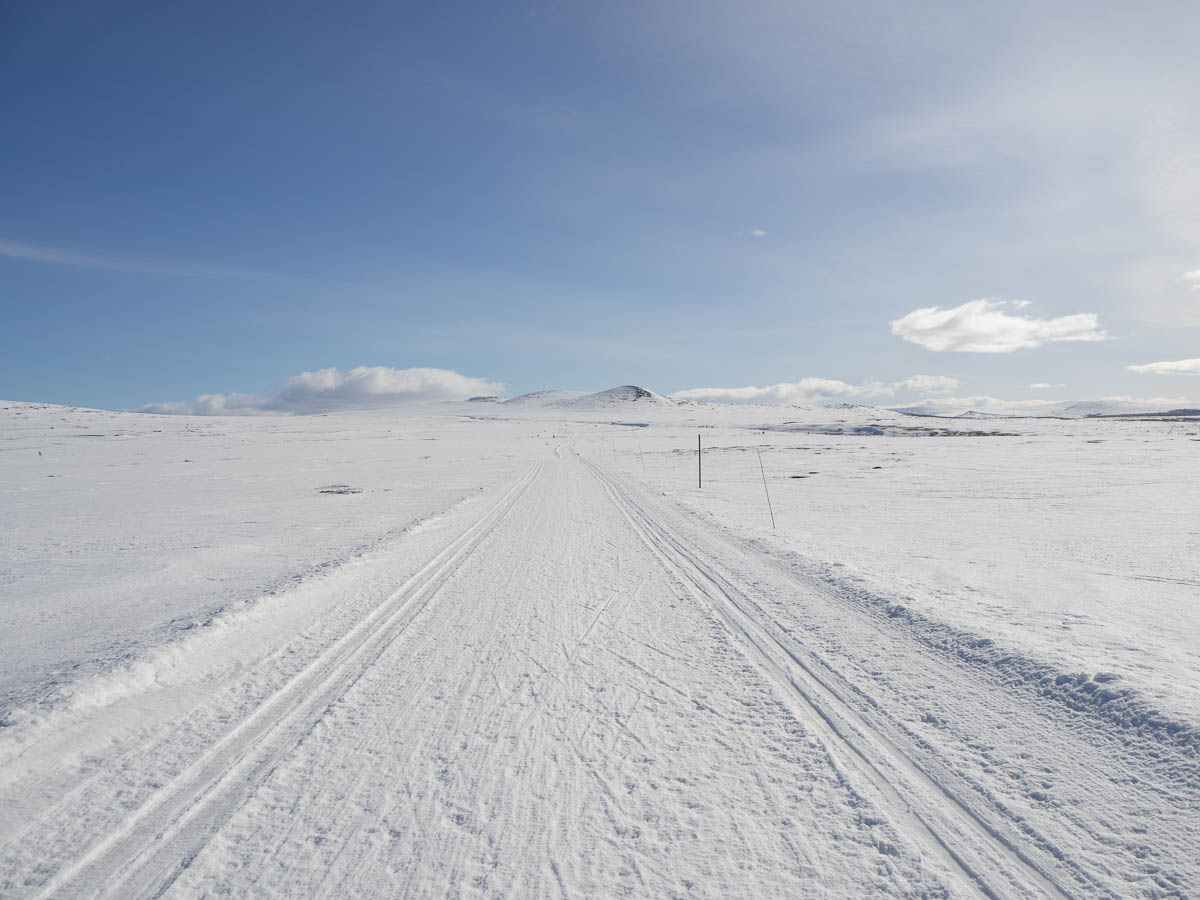
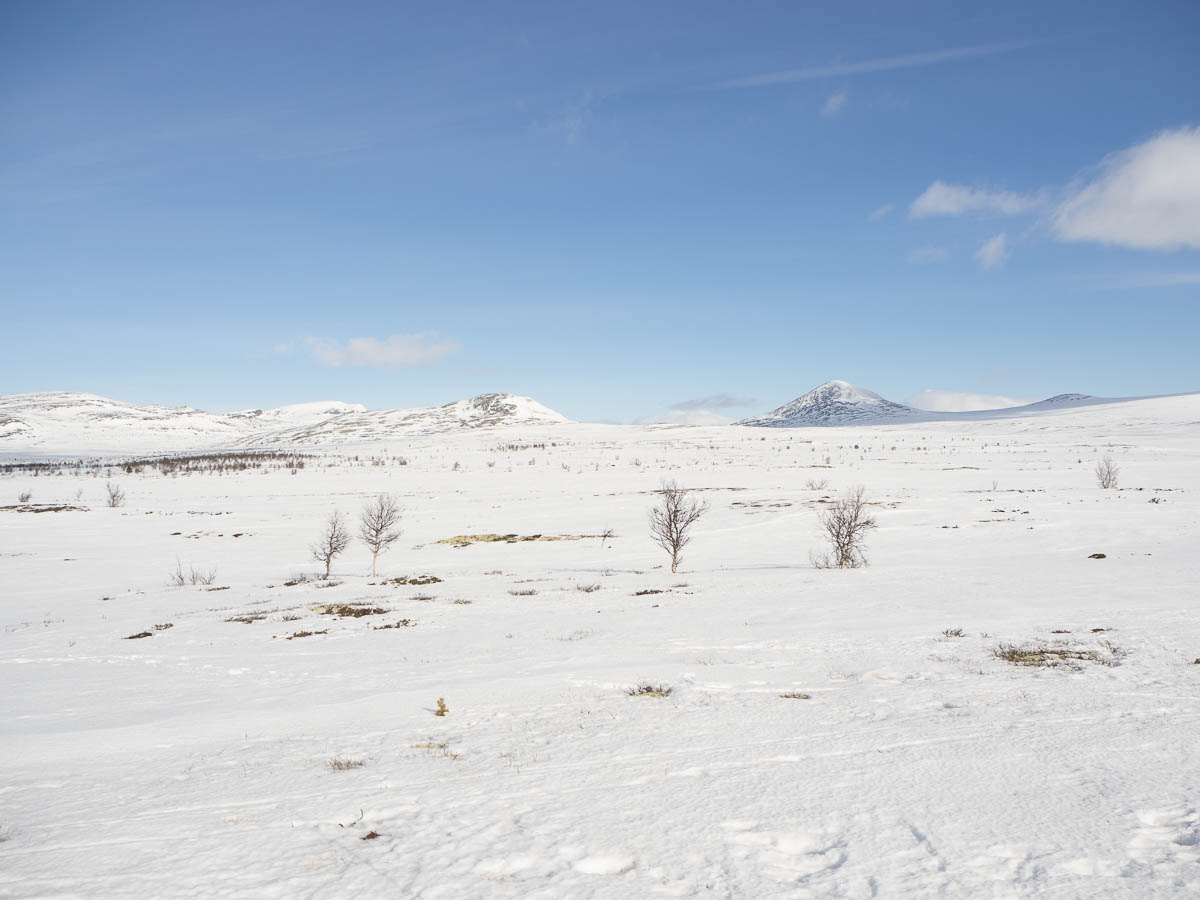
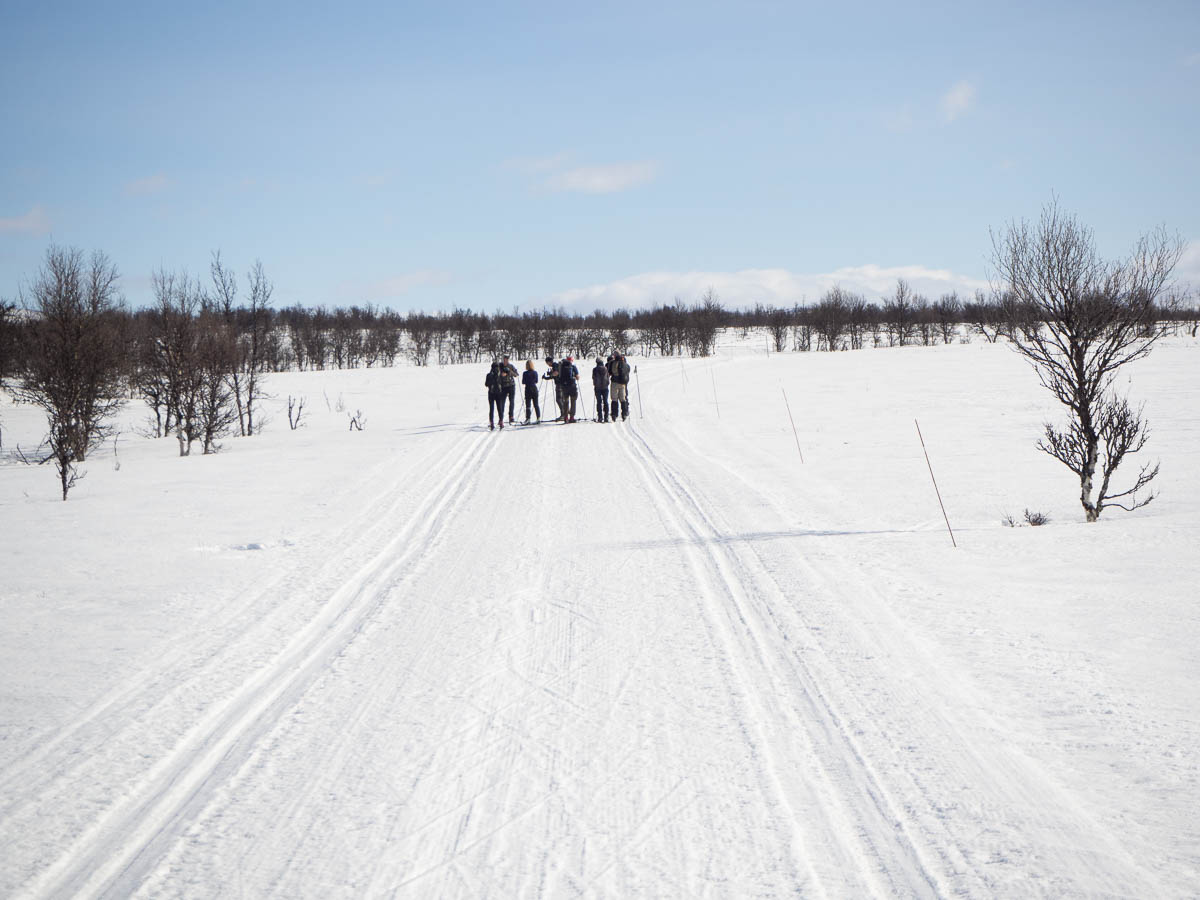
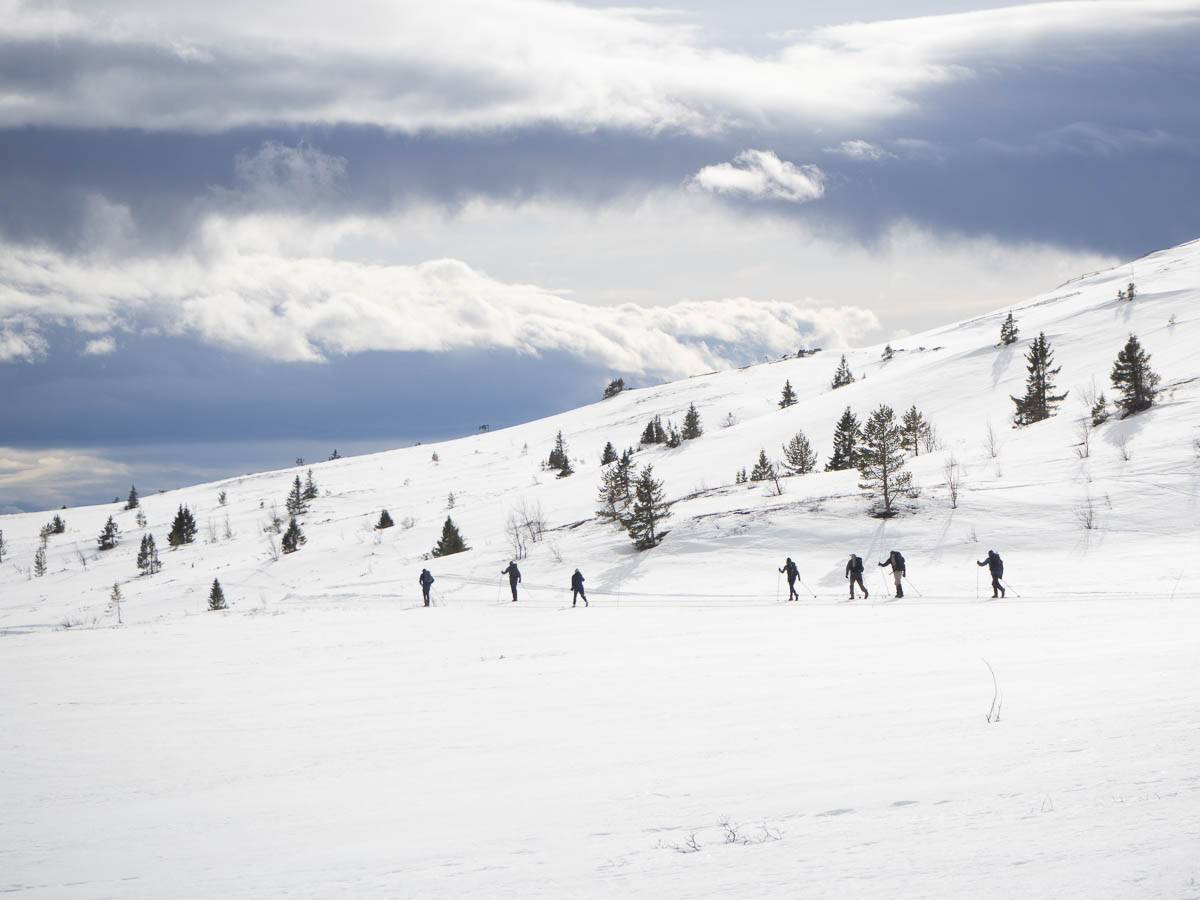
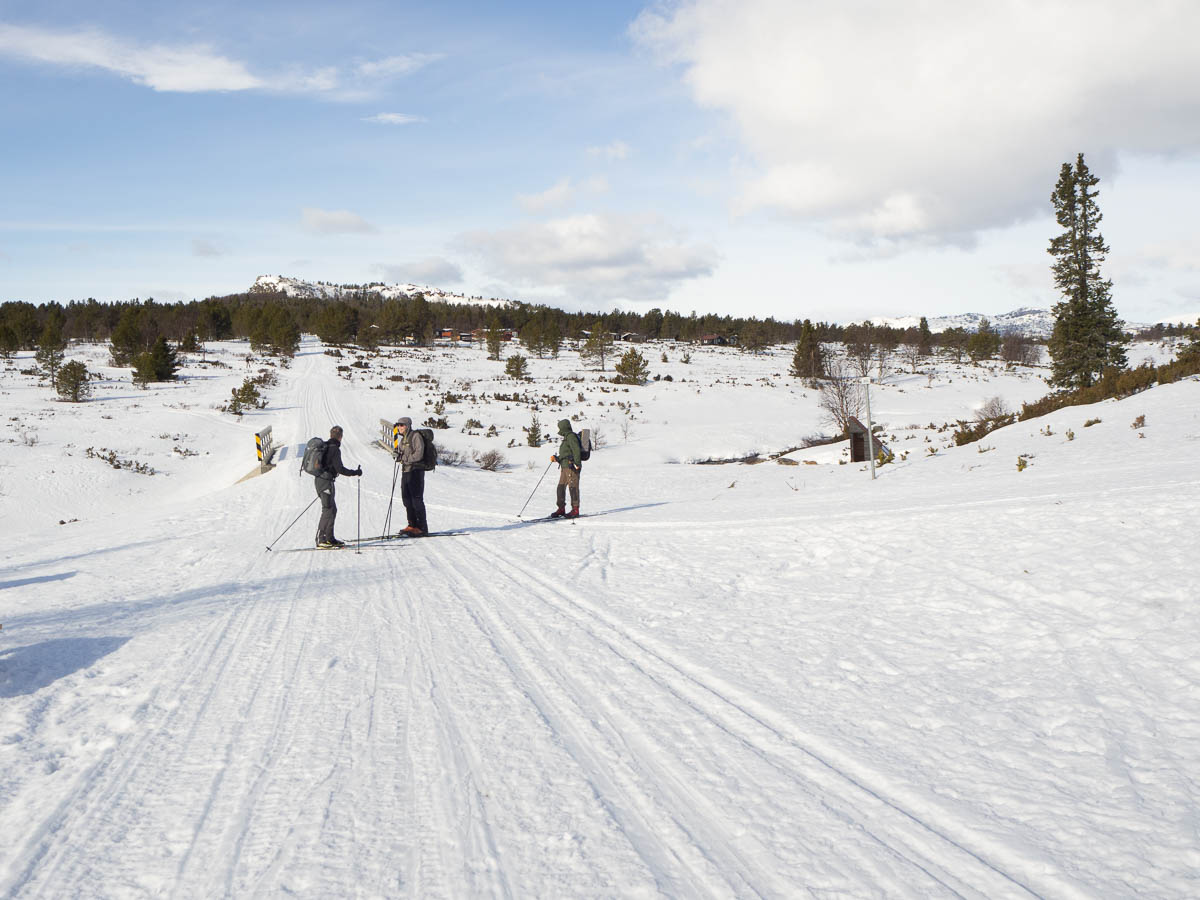
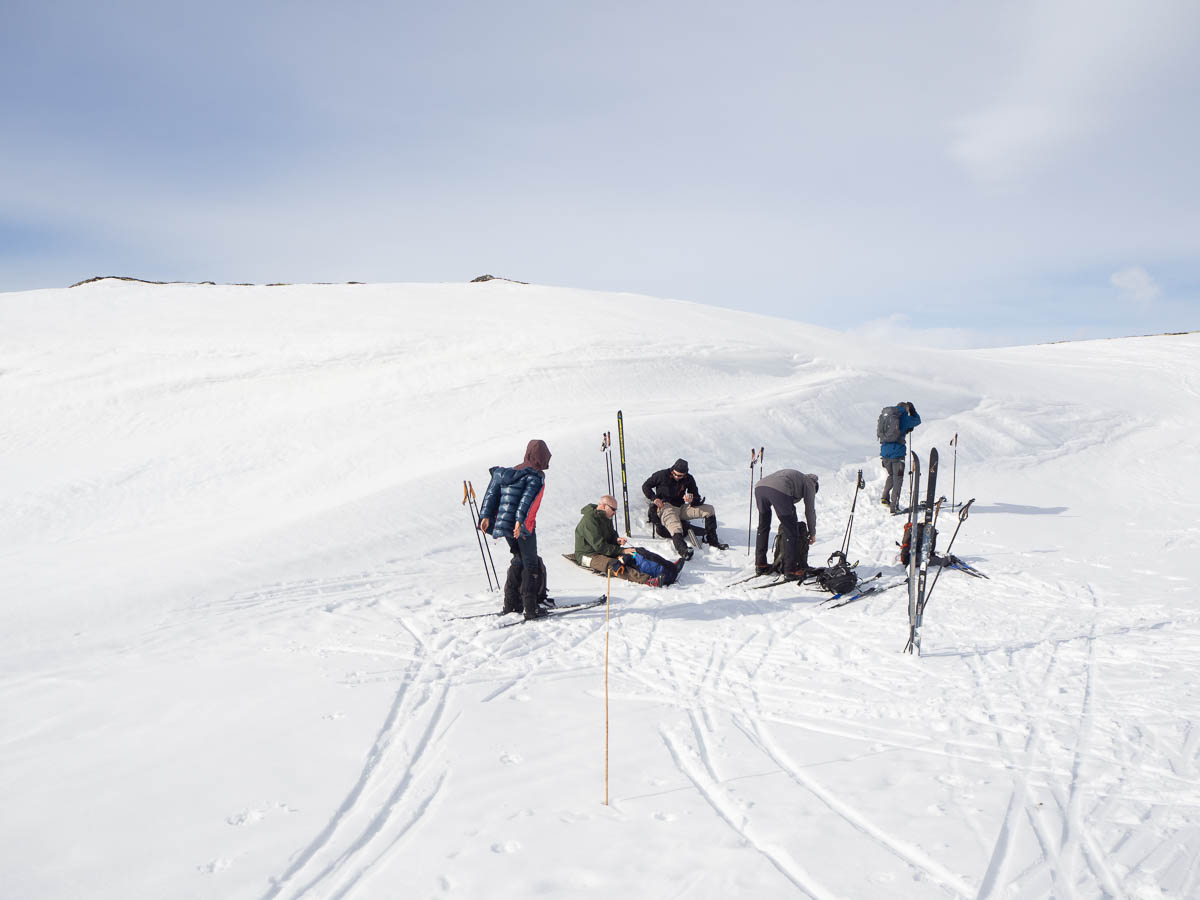
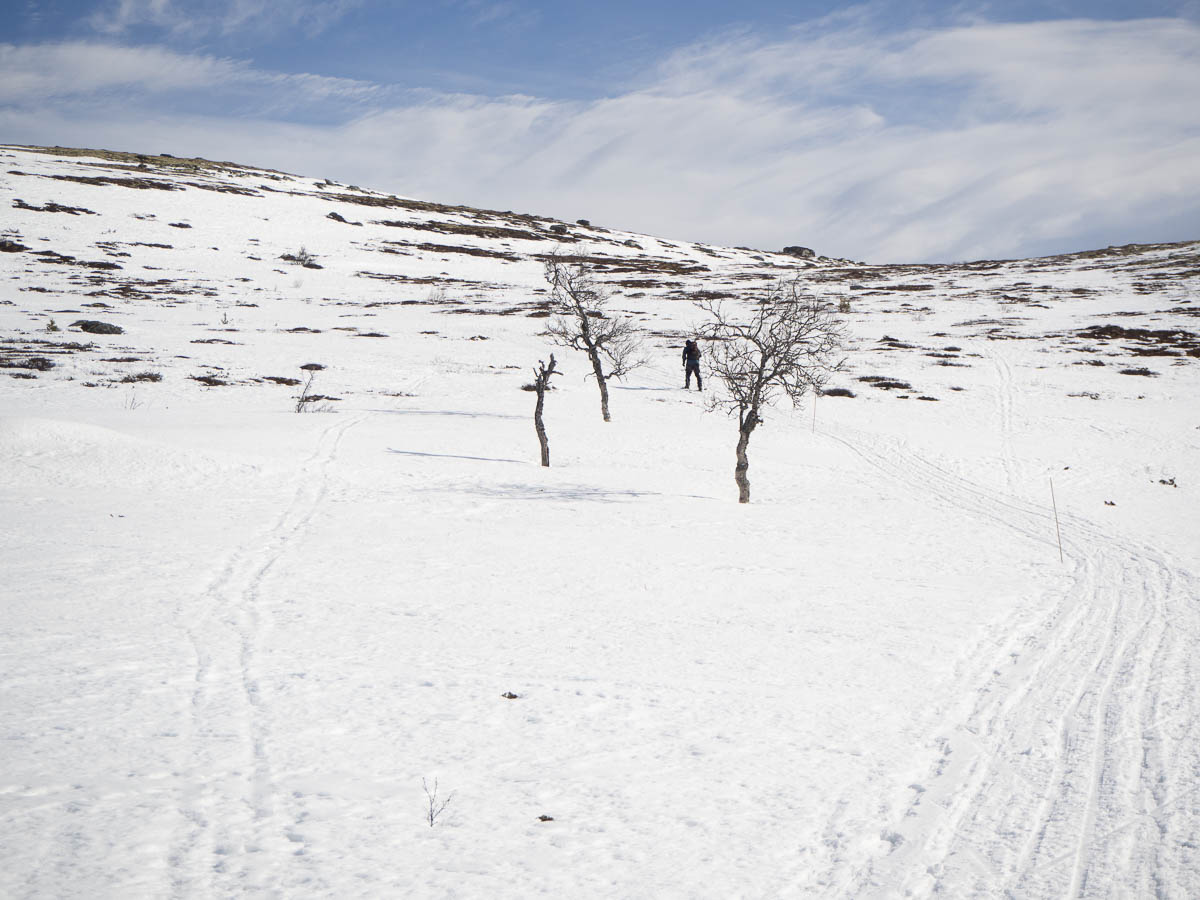
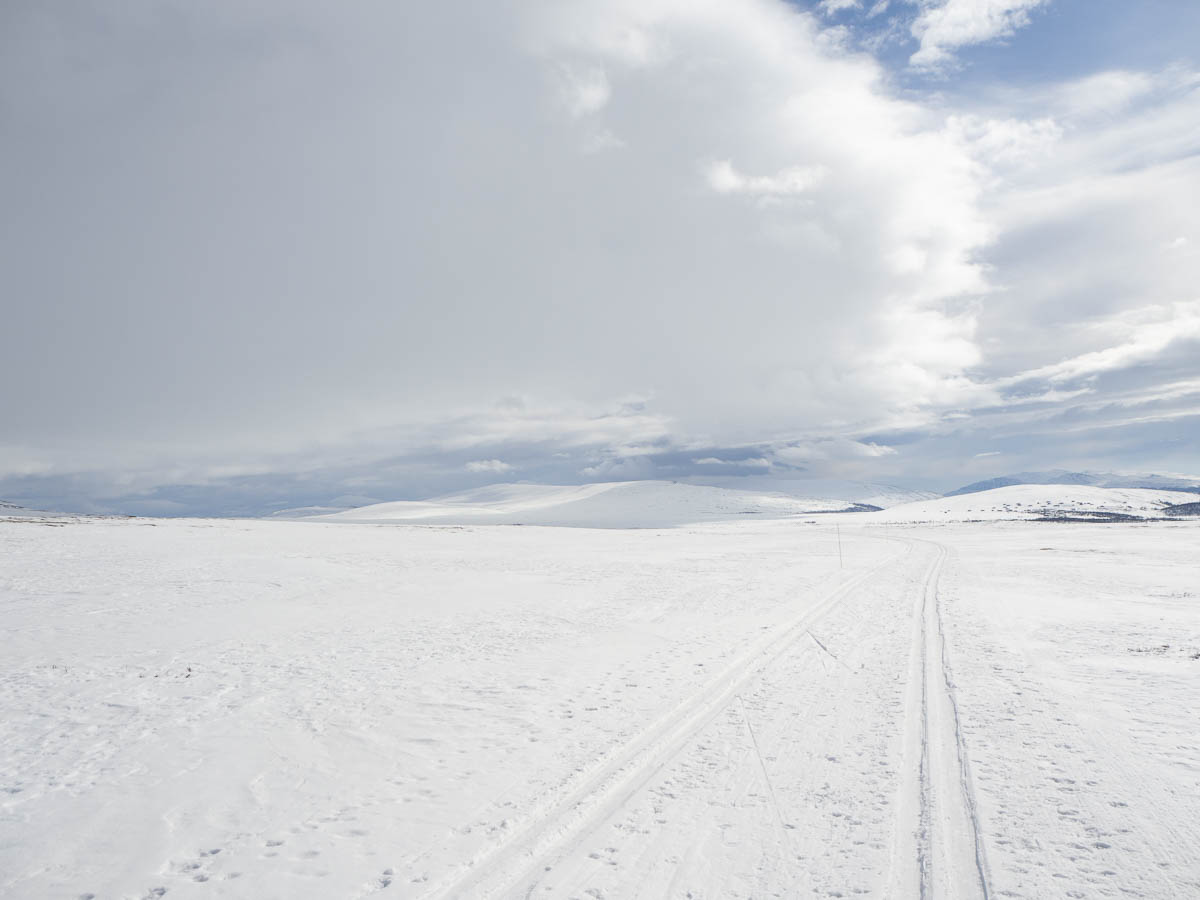
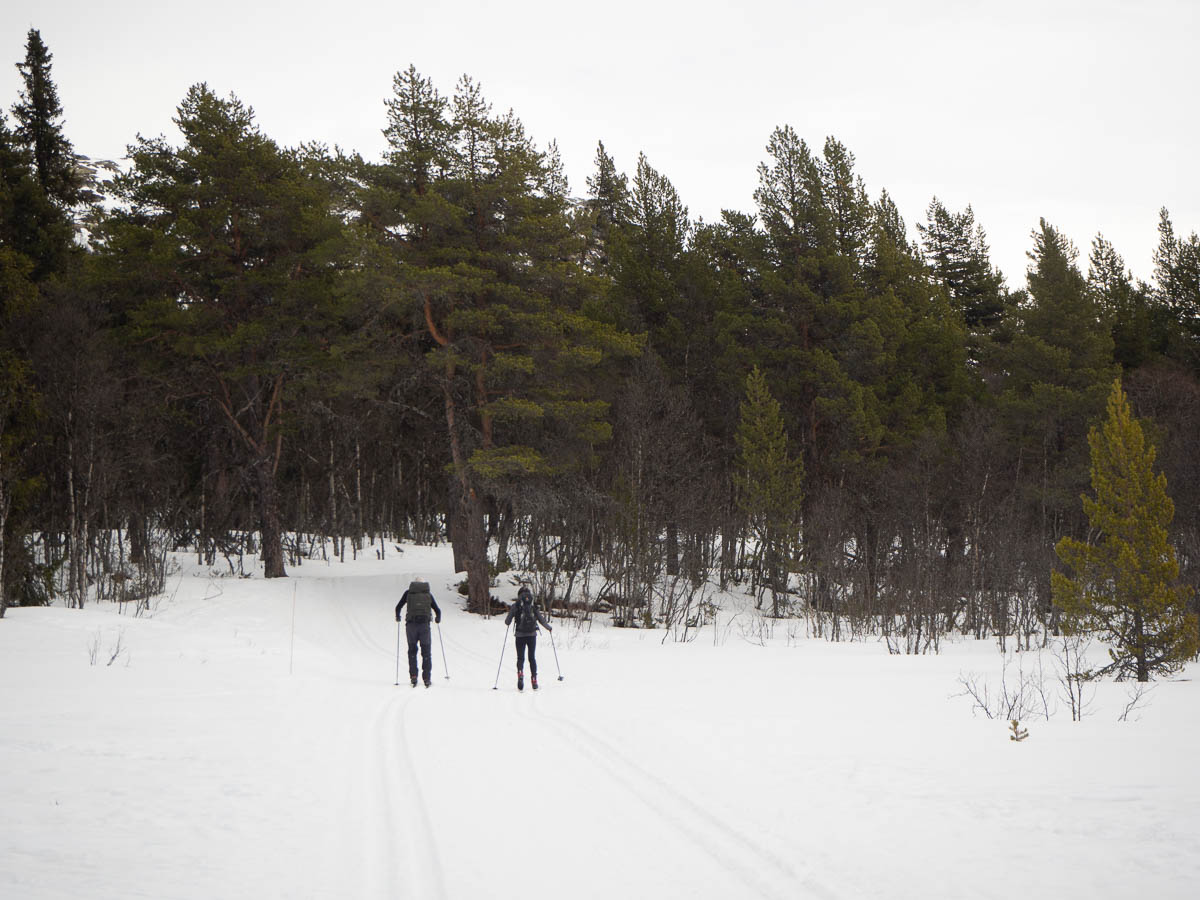
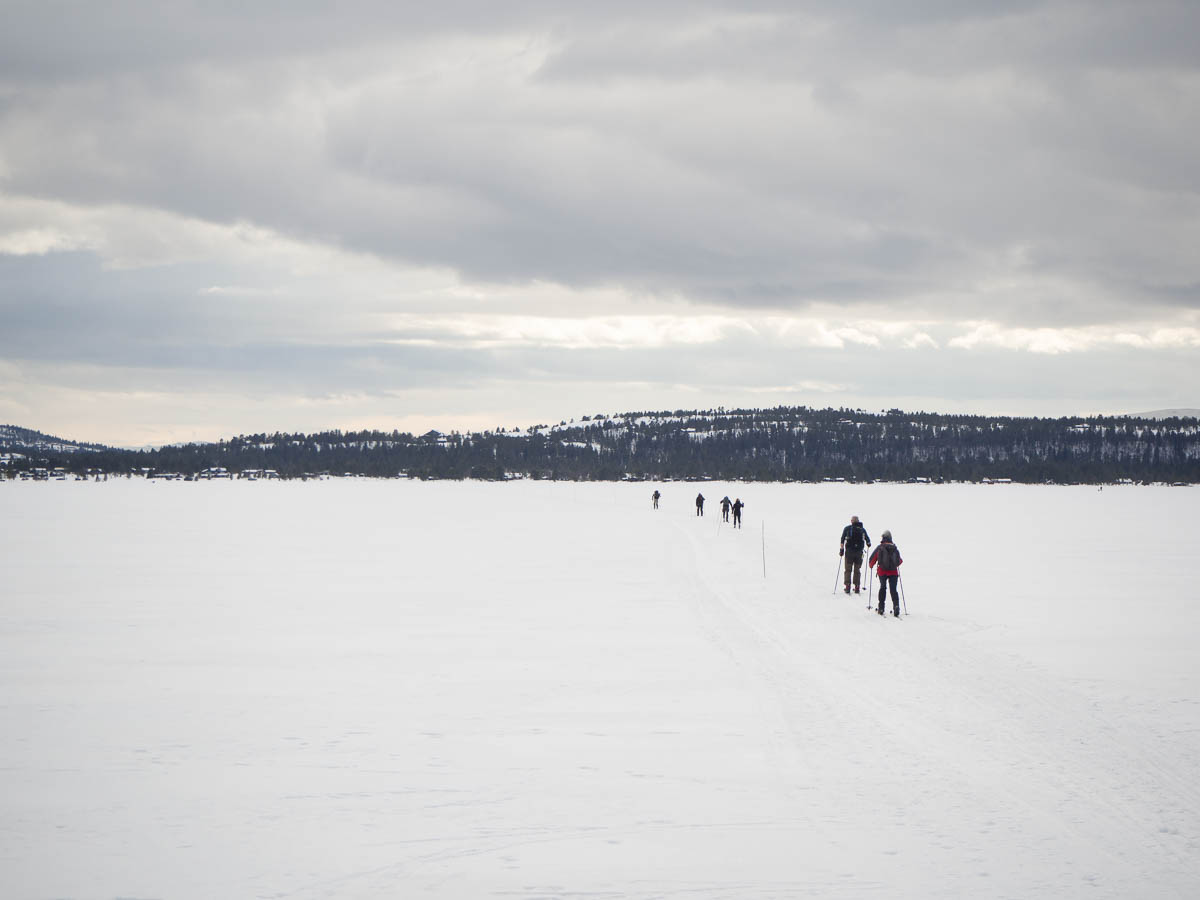
2020 was the year of the coronavirus and its associated disease, covid-19. It became a topic during the last week of February in conjunction with winter break, when many people go on ski trips either in the Swedish mountains or in the Alps. (We went to Åre: day 1, day 2, day 3, day 4, day 5, day 6, day 7.)

There were plentiful reports of lots of people being hospitalized with covid-19 in Italy but the Swedish authorities still thought it unnecessary for tourists returning from the Alps to self-quarantine. Just two weeks later the situation had deteriorated enough for the authorities to recommend working from home. People were stockpiling toilet paper, fearing a full lockdown, which never came. The summer was a bit better (the virus being less active during the summer, just like other coronaviruses such as the common cold) but in autumn it all went downhill again.

Some countries managed to contain the virus and limit its spread but Sweden plainly didn’t, and the situation now is worse than ever. Hospitals are nearly full and people are dying in record amounts. 8727 deaths thus far in Sweden, which is about 870 deaths per million people – ten times more than Norway (80 per million) and Finland (100). The authorities keep trying to redirect comparisons towards the worst-hit countries instead and of course we could be up there with France, Italy, Spain and the UK (1000+ deaths per million) or even Belgium (near 1700) but given that we are closer in all ways to our neighbouring countries, this just looks like a futile effort to deflect blame.

I started working from home on March 13. While things were calmer in the spring and summer I made a handful of trips to the office for workshops and retrospectives, but I haven’t been there at all since early September.

Working from home felt unfamiliar at first. Then during summer I quite enjoyed it. It’s more flexible than working in the office: I could have lunch outside in the sun, or work in the garden. I dug and planted bushes behind the house as well as a new flowerbed. Not commuting saves me at least an hour and a half every day – I’ve never been so little stressed about times and schedules. And I am mostly more productive this way.

Now during the dark, dull half of the year I am enjoying it rather less, especially with all the extra restrictions.

Eric has been working in the office mostly (or sometimes at a customer’s office) but commuting by bicycle. Ingrid and Adrian’s daily lives have been least affected. Adrian’s least of all; Ingrid would be hanging out at the movies or McDonald’s or a gaming centre with her friends, if it wasn’t for the virus.

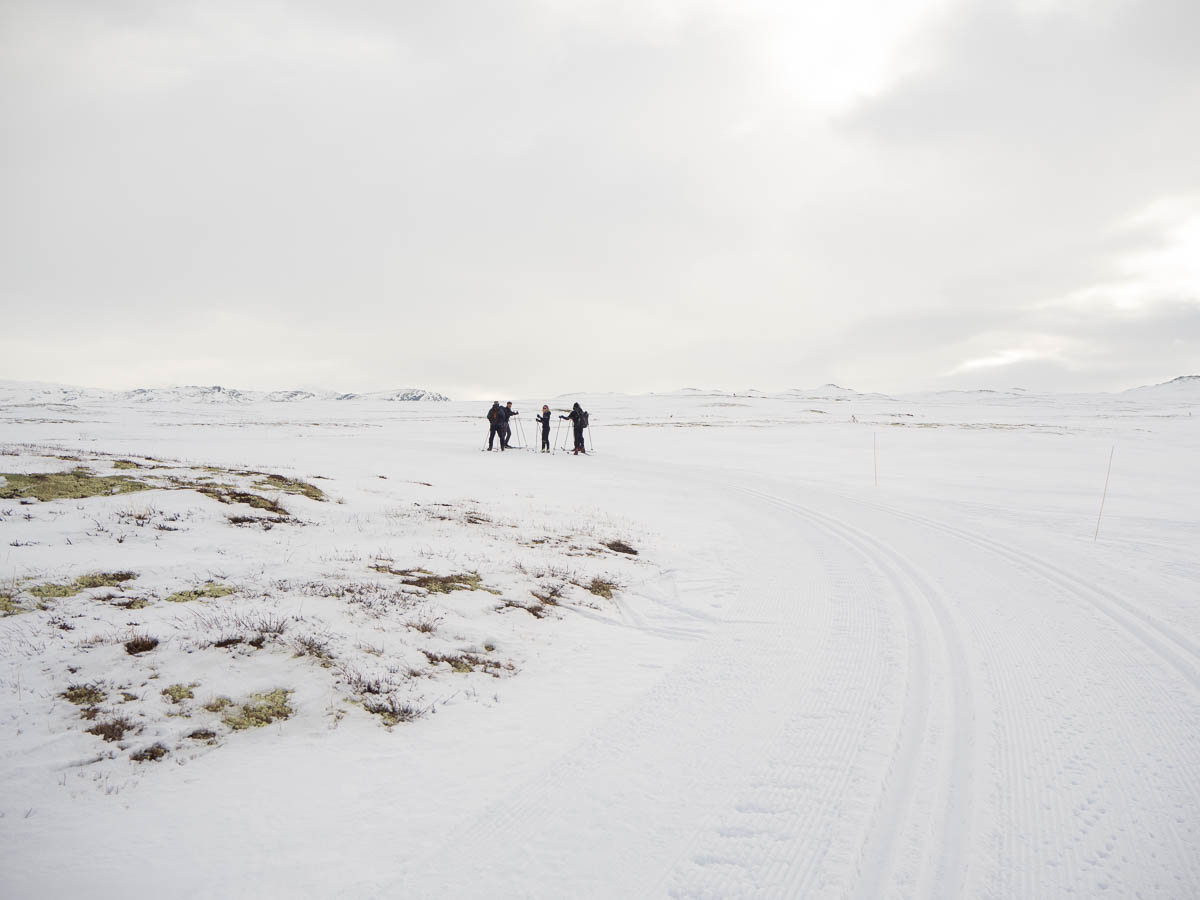
All trips abroad for the rest of the year were cancelled and most domestic trips as well, some before booking and some after. We were forced to cancel our annual trip to Estonia. We replaced our usual summer hiking trip with a week in Gotland, just before the larger crowds got there. (Day 1, day 2, day 3, day 4, day 5, day 6. I missed my ski tour in Norway and my autumn hike in Jämtland, but replaced it with two lowland hikes (Kinnekulleleden day 1, day 2, day 3, day 4, and Sörmlandsleden day 1, day 2, day 3.)

And of course we have been to no concerts, theatre, dance performances, museums, or other culture (apart from one movie, with two empty seats between each family group for distancing, back when the cinemas were still open) since March. No visits to gyms or swimming pools. No scout camp. No birthday parties and no Christmas celebration with the extended Bergheden family. Only a funeral.

For the past month or so I’ve started to really chafe at the restrictions. I used to get fresh air, exercise and at least a little bit of variety from cycling on small errands in the middle of the day, but since November all that is also strongly discouraged. I feel locked in, and I struggle to find ways to fill my time at home. Reading, knitting, blogging, cooking, etc… All nice activities, but I would enjoy them more if I could choose them freely, rather than doing them because I cannot do much else. Reading a new book is still just more reading. I want out.

Even though vaccines are on their way (and the first doses have arrived) covid-19 will be with us for many months still. But I’m about to start working on a new project at work in a few weeks: something new in my life! And the days will become longer, and January and February are usually colder than December, so perhaps we will get freezing weather and firm ground so that I can go walking without wading in mud.


PS: other notable events or achievements for this year include developing my Sonos companion app which I am quite proud of, and finally finishing my green cardigan.

I also made two skirts, one scarf, two pairs of socks and two pairs of mittens.

This was also the year of the wasp invasion in Ingrid’s room.
The Gotland trip is over and we’re home again.

I like travelling. I like being at home again (sleeping in my own bed!). But I don’t like coming home from a trip. The end of a trip always puts me out of sorts. Somehow the transition makes me feel out of balance and disoriented. I feel irritable and down.

A night’s sleep generally cures me. And sleeping in my own bed feels so nice after a week on bad mattresses. We stayed in hostels this time; the one in Visby really had pretty crappy beds. It was nice otherwise, though, and very centrally located.

When I’m booking a package holiday, like the one on Mallorca last year, the cost of the hotels is all mixed up with other costs and becomes almost invisible. Now that I was booking three nights here and two nights there, the cost of each night became very tangible. Do I really want to pay two thousand SEK extra per night for a fancier place? Not really.

We economized a bit on the living arrangements, but not on meals. It’s a vacation; I don’t want to spend my evenings in the kitchen. And we found some really nice restaurants! Some of my favourites were:

  • Krusmyntagården north of Visby. The vegetarian option (lentils with oven-baked cauliflower) was an actual vegetarian dish, rather than something where the chef has tried to replace the meat. Juicy and full of flavour.
  • Magasinet in Fårösund. Looks like nothing on the outside and doesn’t have a web site (only a Facebook page) but serves great fish dishes and Thai food, with an real live Thai chef in the kitchen I believe.
  • Mille Lire and Isola Bella, two Italian pizzerias in Visby.
  • Last but definitely not least, Cafe Amalia in Visby. They don’t seem to have a Facebook page even. It’s a small cafe in the middle of Visby that serves breakfast all day. Porridge, overnight oats, omelettes, sandwiches, all vegetarian, hand made and utterly delicious. (Overnight oats with rhubarb compote and golden roasted coconut chips; toast with nut butter and sliced banana; sandwiches on moist sourdough bread.) The prices are steep; our breakfasts here cost as much a normal lunch. But so good!

Also, the best ice cream we had was at Visby Glass. This place is worth a detour! Glassmagasinet near the harbour is the most visible ice cream place and boasts that they serve hundreds of flavours, but the ice cream they have is mostly the standard, mass-produced stuff. Visby Glass on the other hand makes their own ice cream and the difference is huge. They had lots of interesting flavours – apple sorbet, dark chocolate, pomegranate sorbet, and so on – and I wish we could have tried more of them.


We are leaving Fårösund behind and heading towards Visby again, so we can take the ferry back tomorrow.

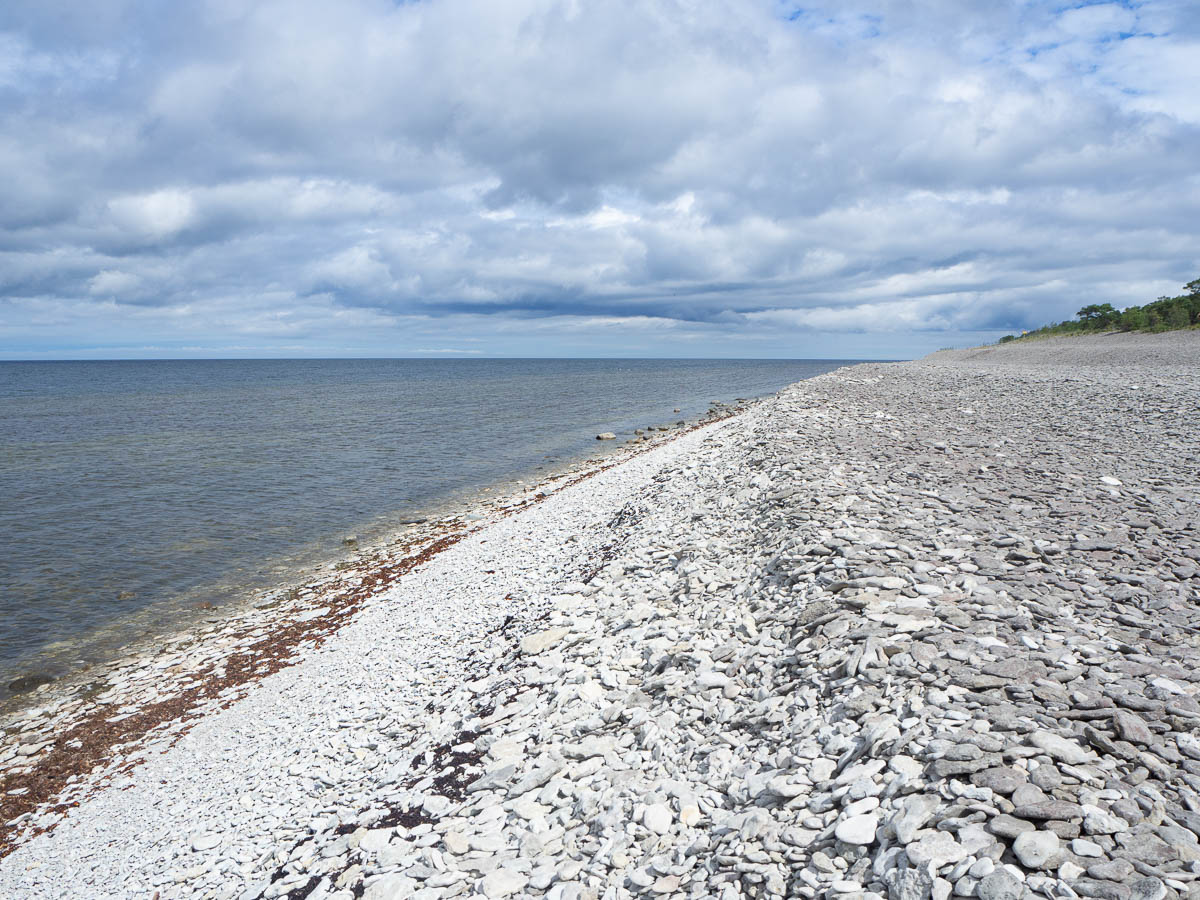
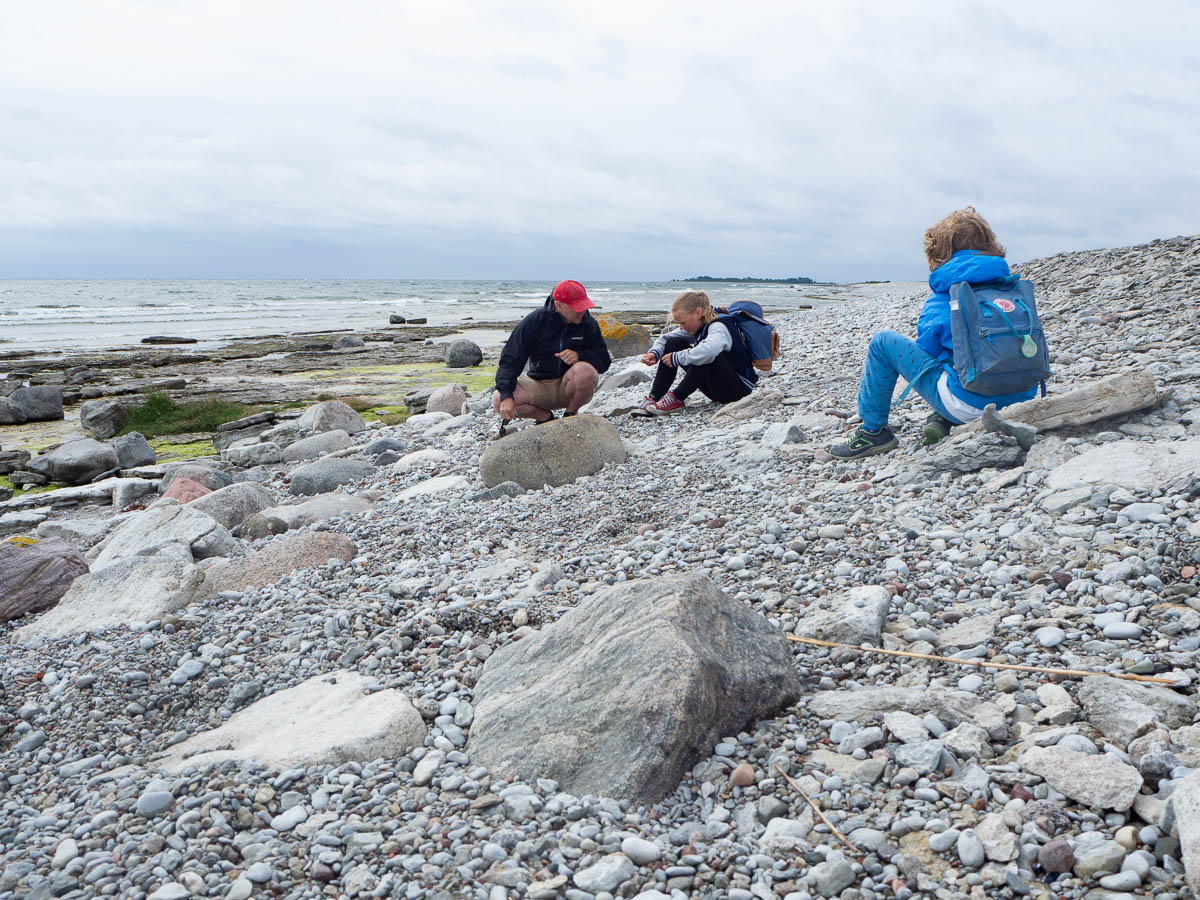
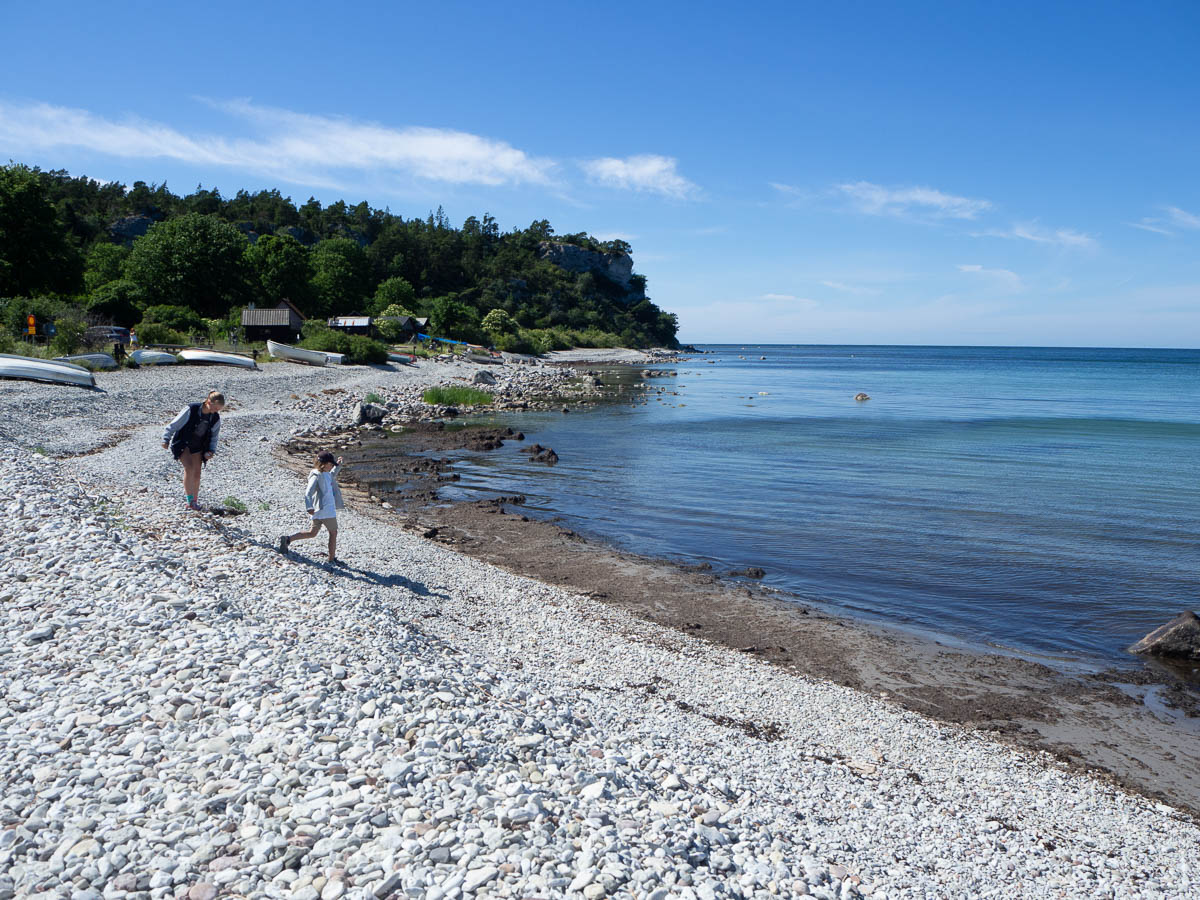
First stop: Stenkusten, the stone coast. This place looks unreal and a bit spooky. The beach is all stones, nothing else, in even-looking layers, looking almost artificial in their arrangement. At the top, furthest from the water, is a very flat surface of sharp-edged chunks of crushed limestone, which looks as if it came out of a production line at a cement factory and was evened out by a bulldozer. Next to the flat is a steep slope towards the sea, and then a flat surface again, but here the stones have been bleached white and tumbled to rounded shapes.

Next we headed for the lakeside beach of Tingstäde Träsk. Adrian wanted a beach where the water was warm and didn’t have any waves. When we got there, we were met by signs warning us of swimmer’s itch. Well, maybe a more protected seaside beach, then? But by now it was time for lunch, and finding a veggie-friendly lunch spot was not as easy in this part of Gotland as in Visby, and when we were done with lunch the weather had turned cold and windy again.

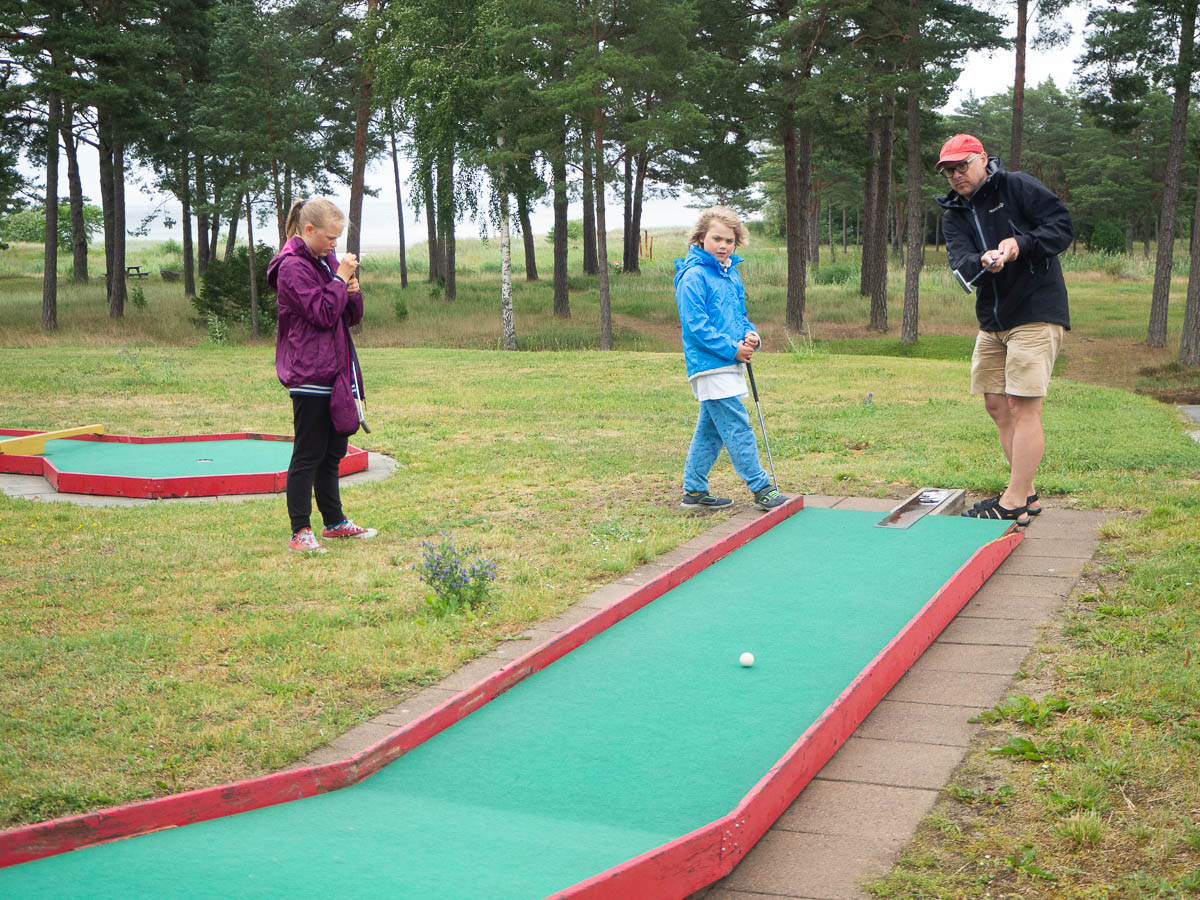
We postponed the bathing to another day and played minigolf instead. Through mostly dumb luck I won the game – I hit several holes with shots that I had no real hope for.


A full day of Fårö.

The ferry trip, which at peak times can involve hour-long queues, went quickly. Gotland in general seems to be relatively empty of tourists right now. Today the weather is wet and windy so almost nobody wants to make a day trip to Fårö. We shared the car ferry with just 5 other cars.

Initially we had a somewhat structured plan for exploring the island, but in practice Fårö is so small that you can criss-cross it repeatedly in an hour. So we just drove wherever we felt like.

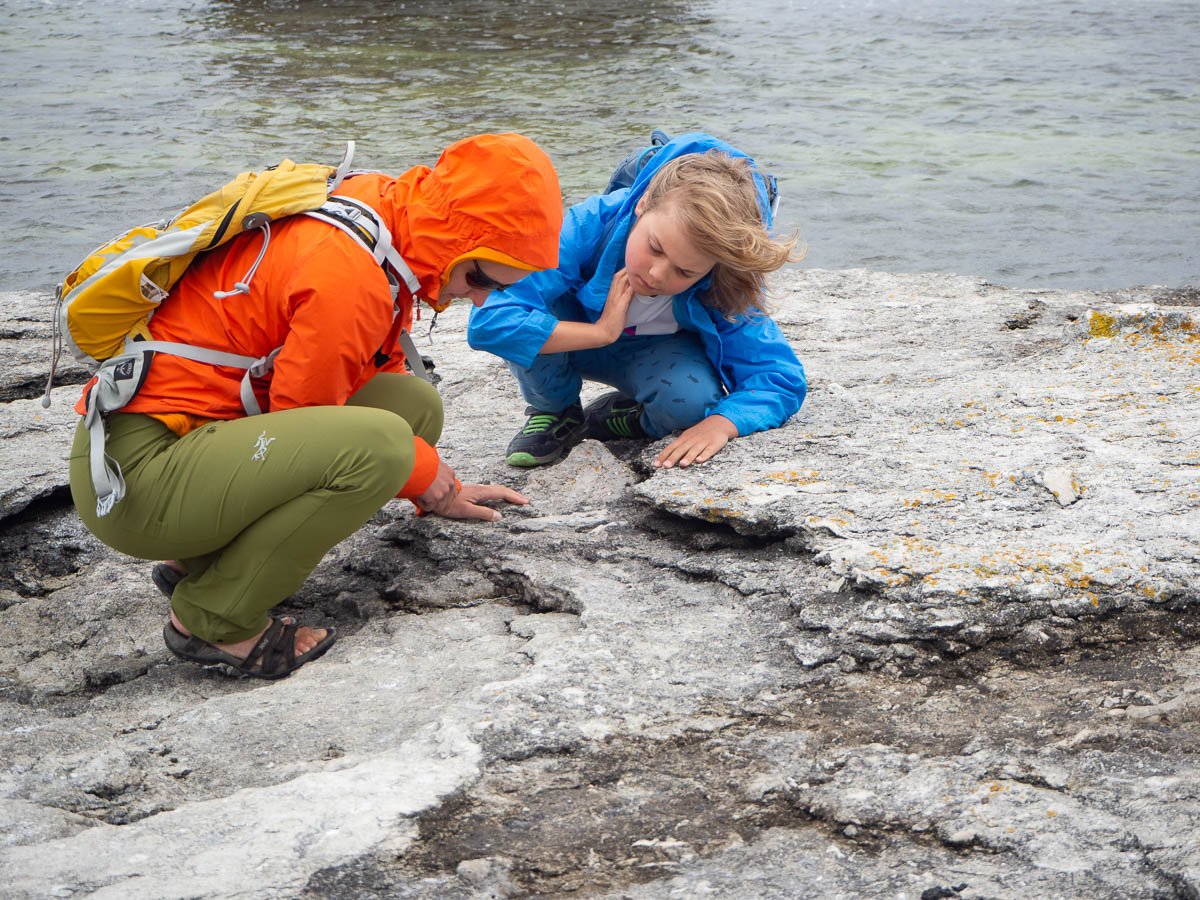
First we headed south and wandered around Ryssnäset for a bit. It was seriously windy. We found more fossils, and plenty of tiny clams.


From there we turned north to see the rauk at Gamlehamn. It’s got a large, individualized rauk icon on the map so it’s got to be impressive!

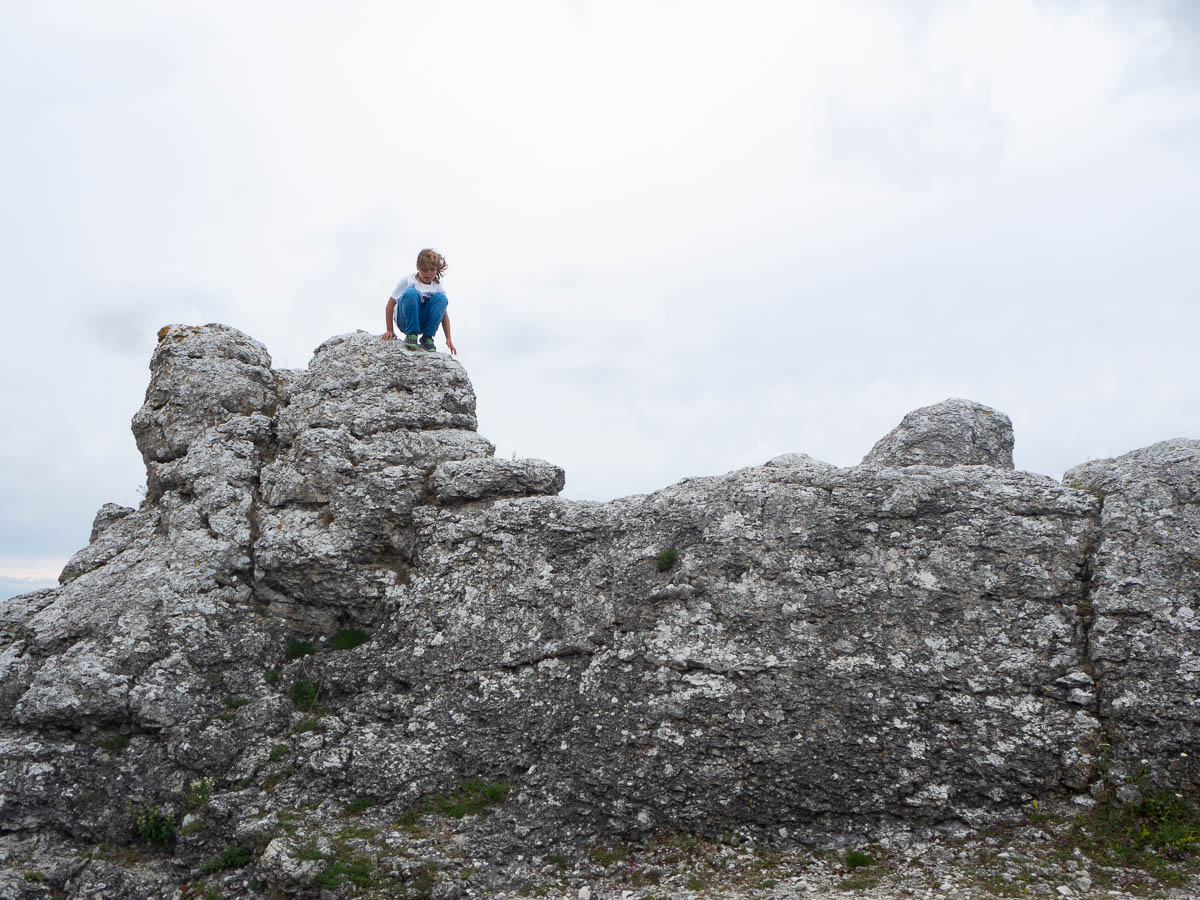
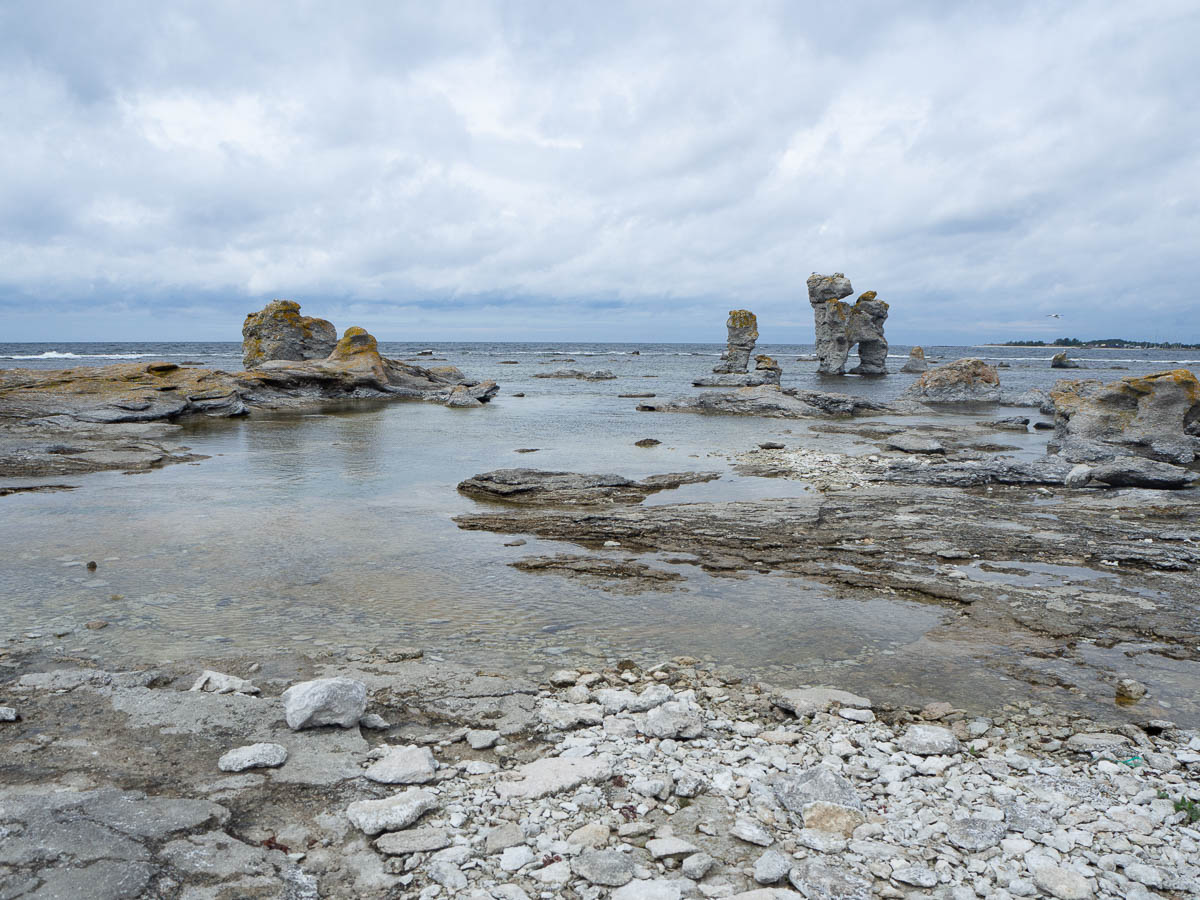
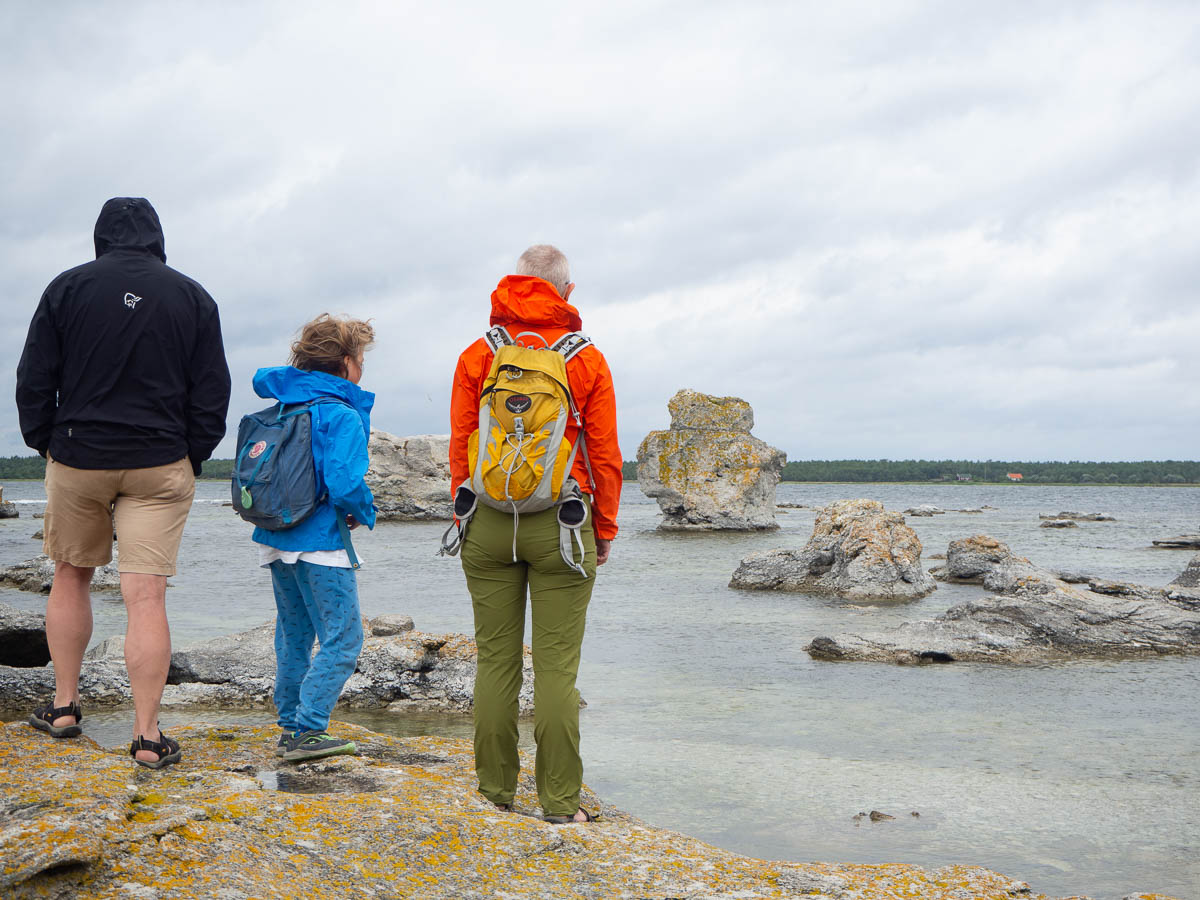
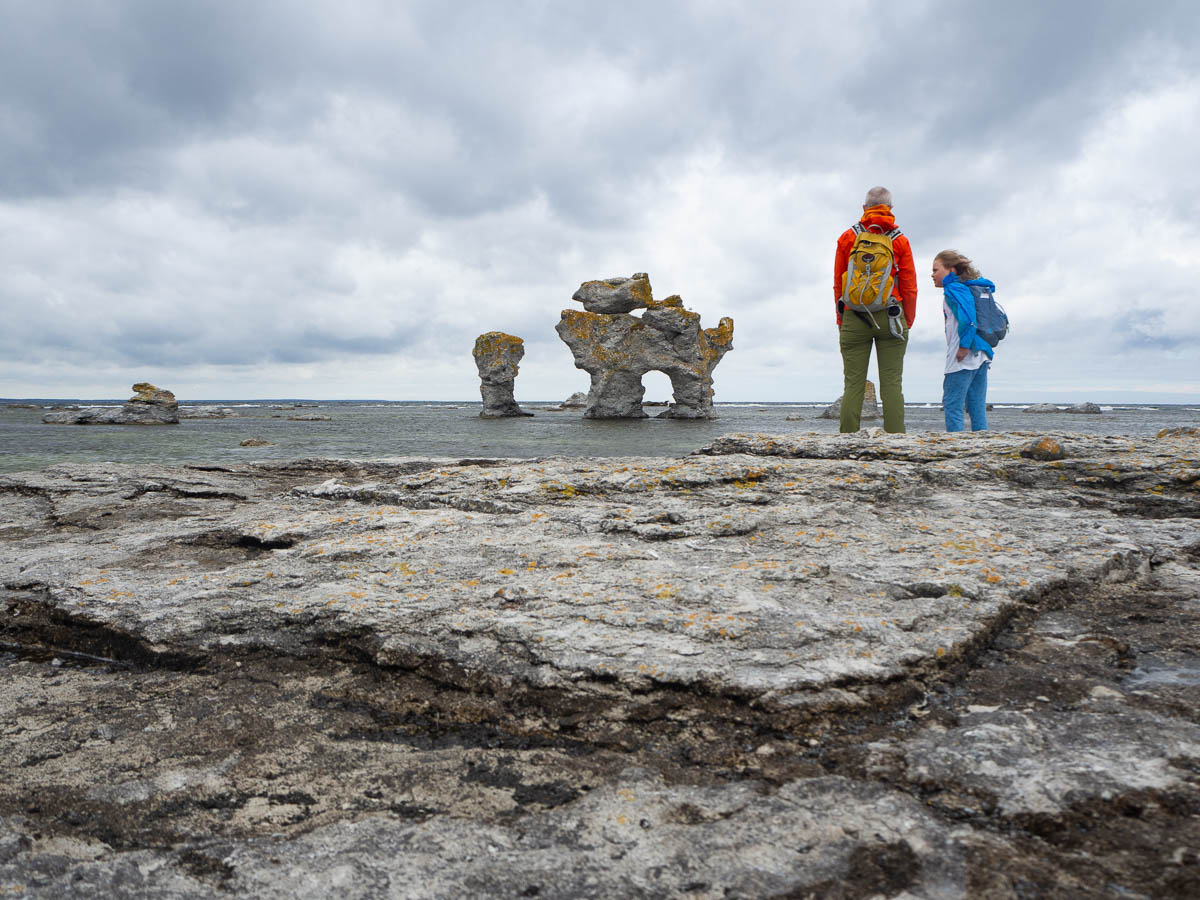
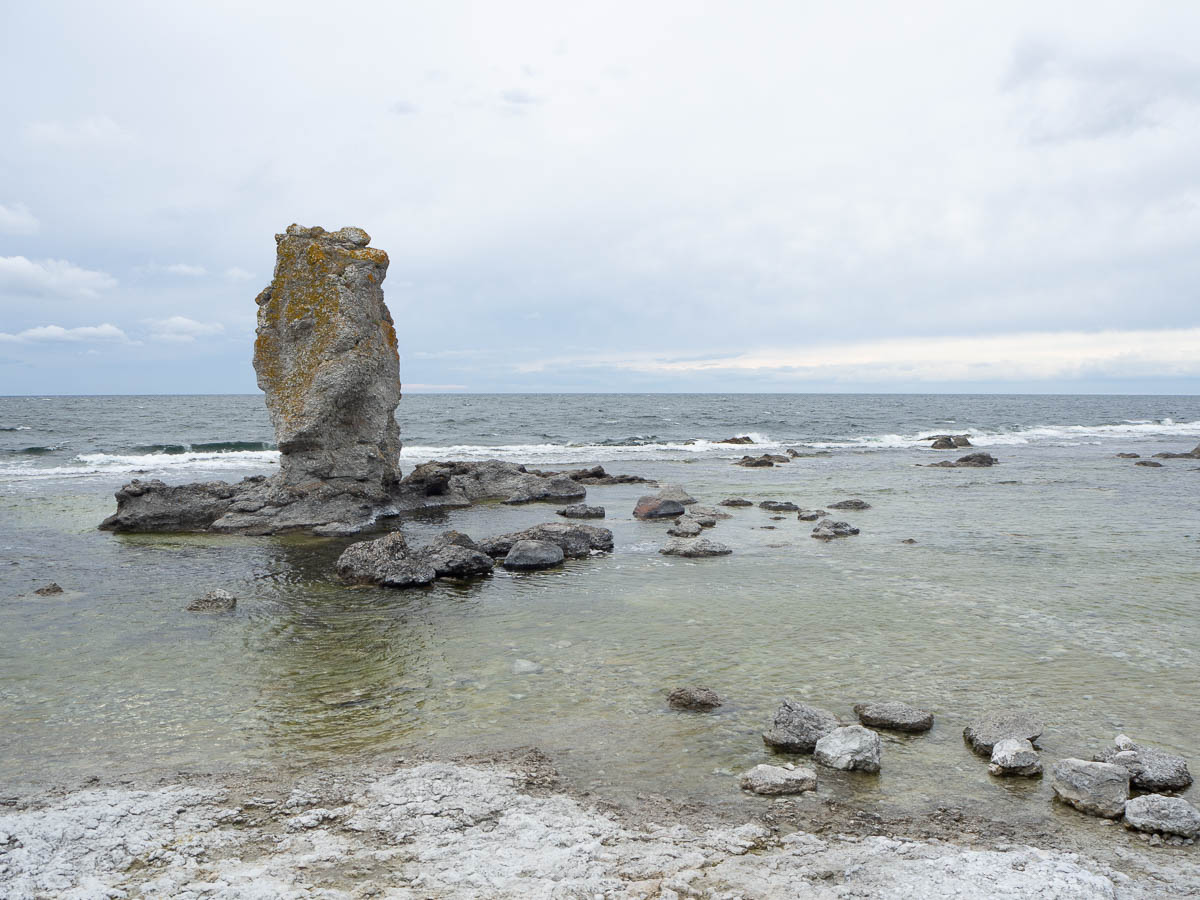
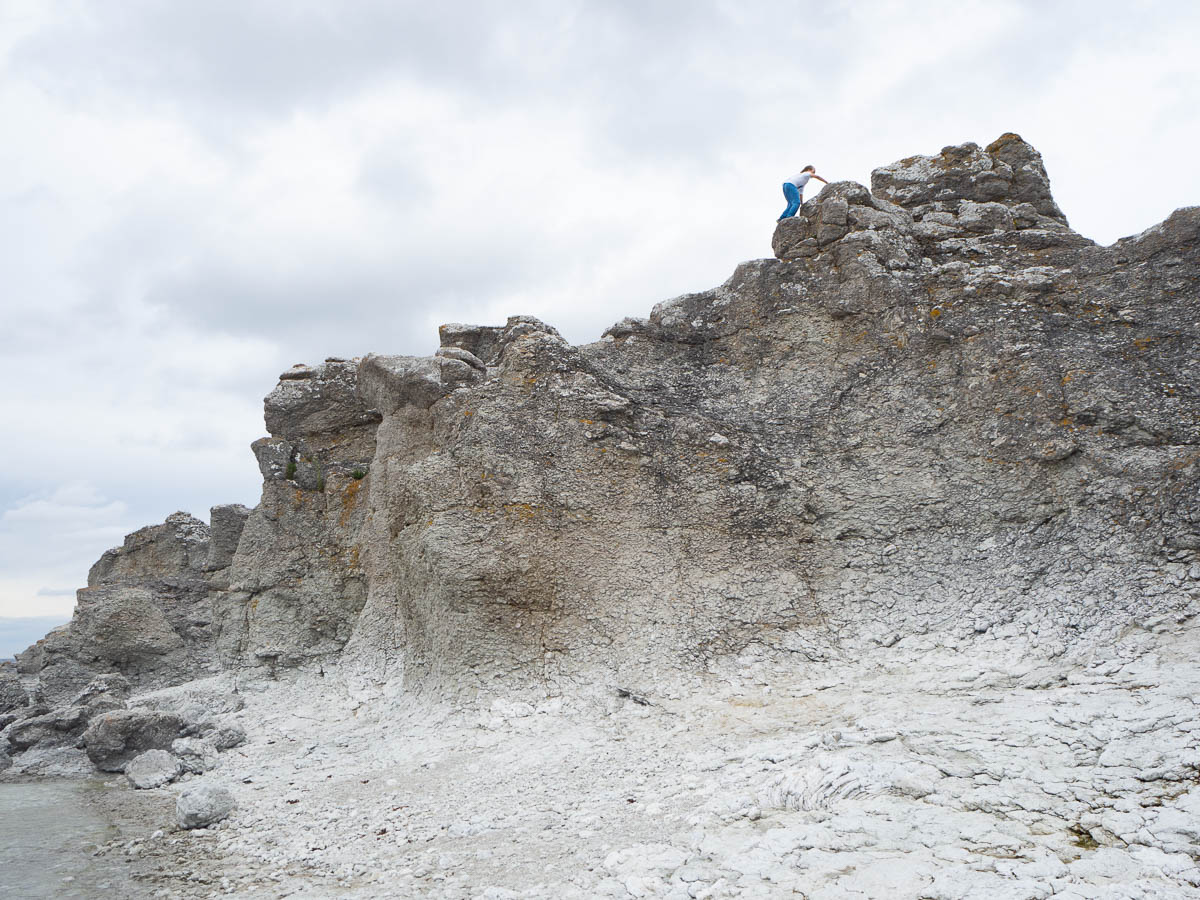
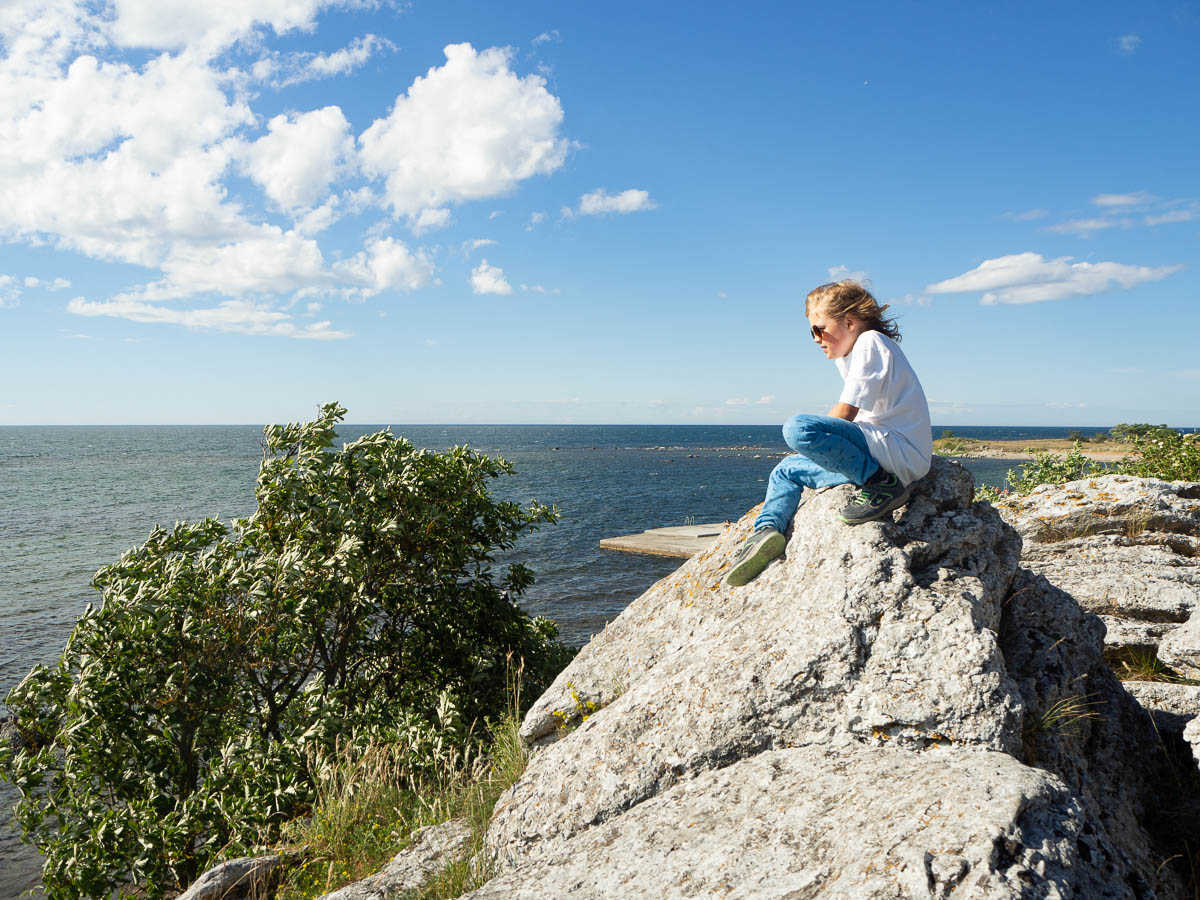
The famous one is vaguely dog-shaped one with two supports. It had many companions, and all together they made for an interesting place: the rocky coastline was broken up and varied, not like the straight and even stony beaches we’ve seen before. This place really invited to scrambling and jumping from rock to rock.


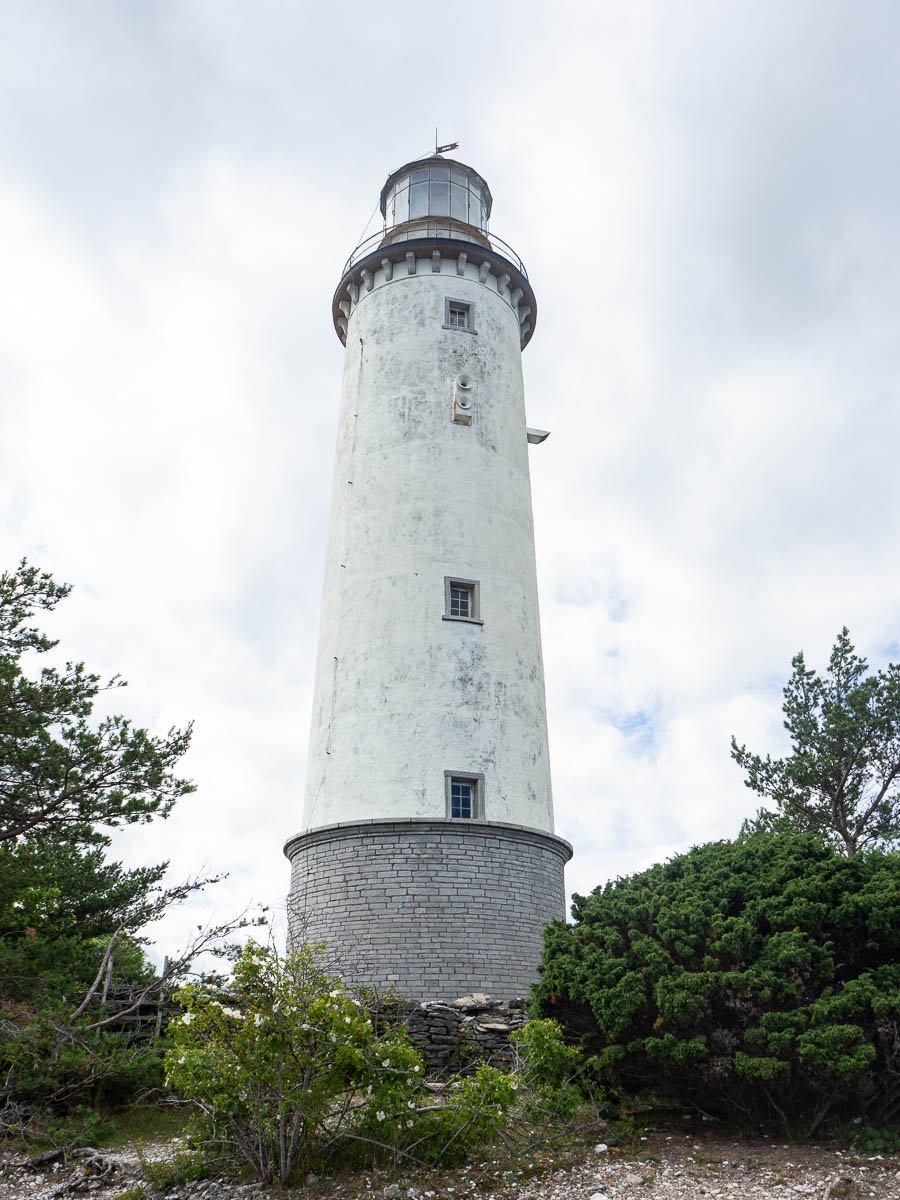
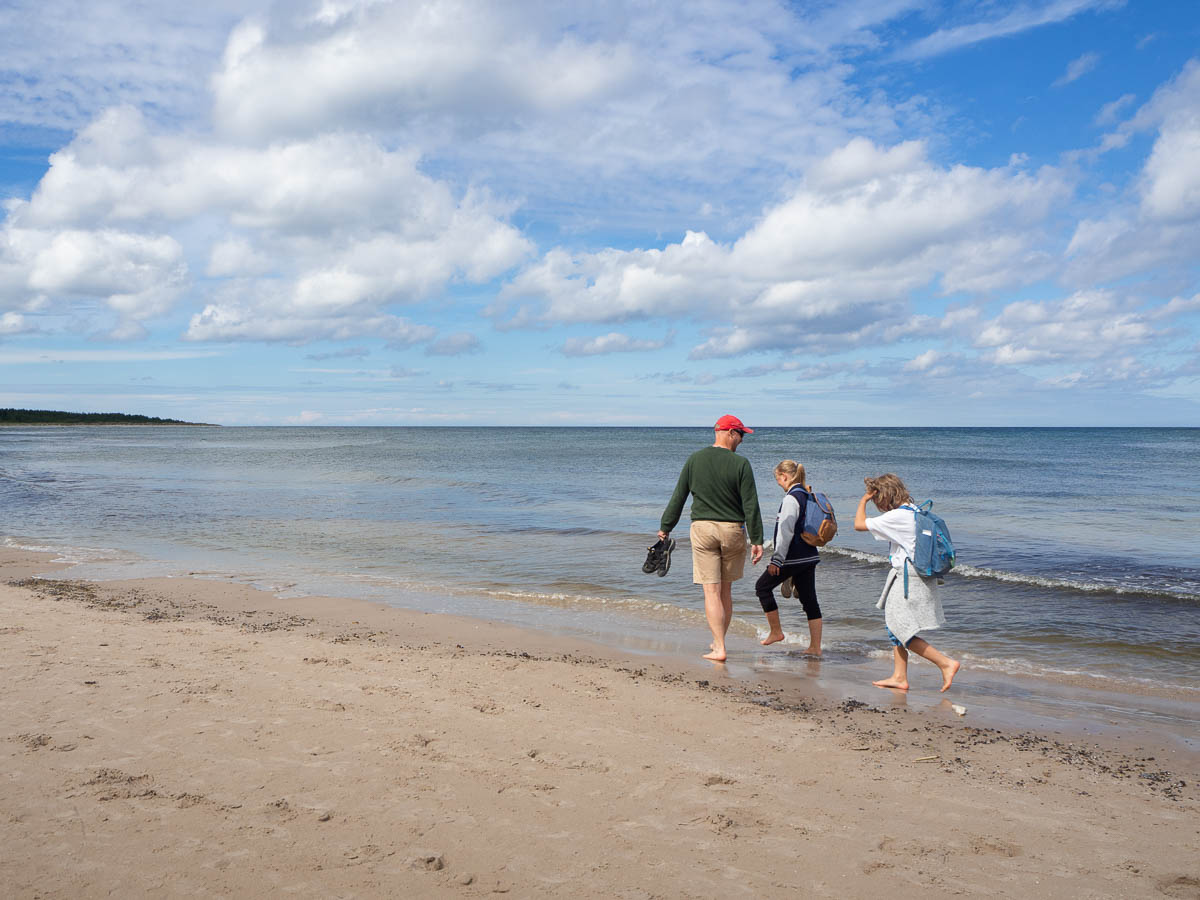
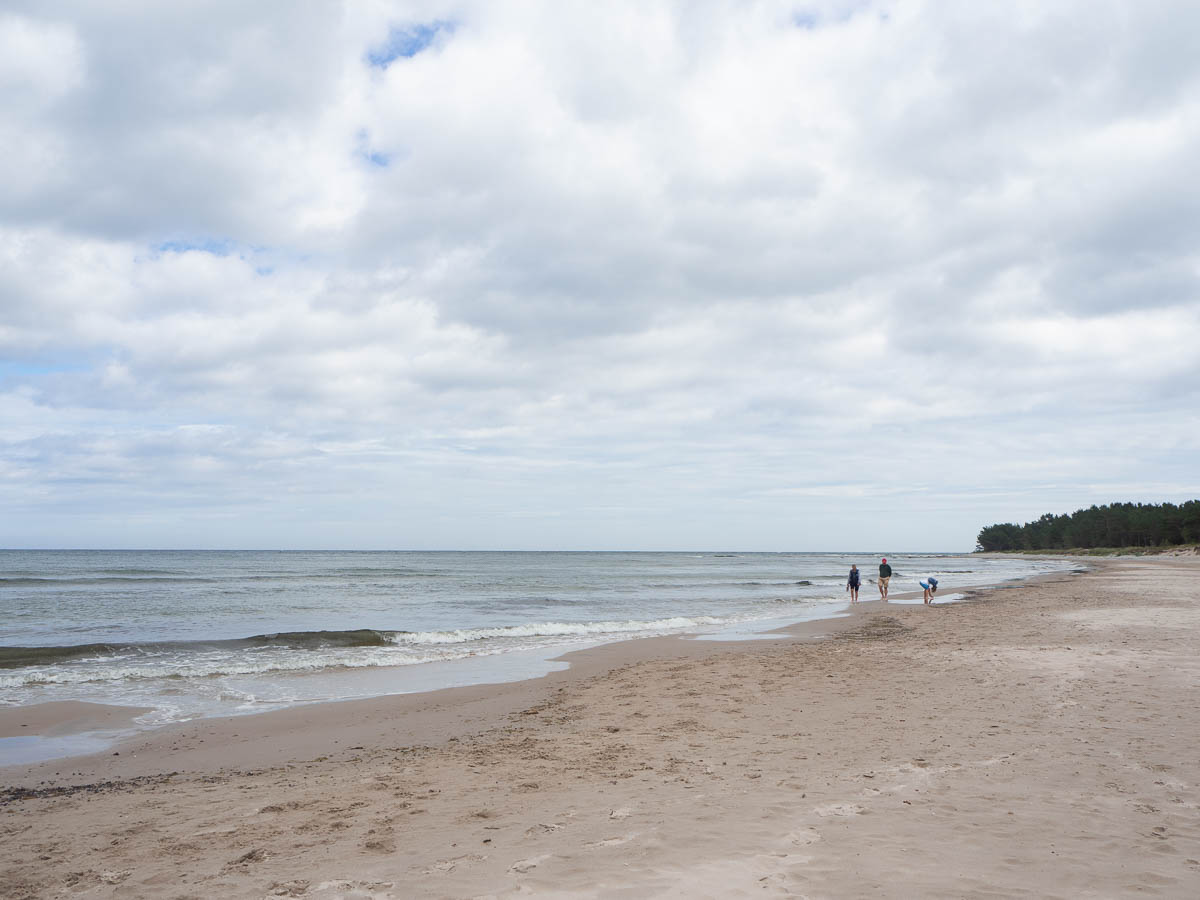
After lunch we drove east to Fårö lighthouse. Not a very interesting sight. But at the end of the road, beyond the lighthouse, there was a wonderful sandy beach, which we had all to ourselves!


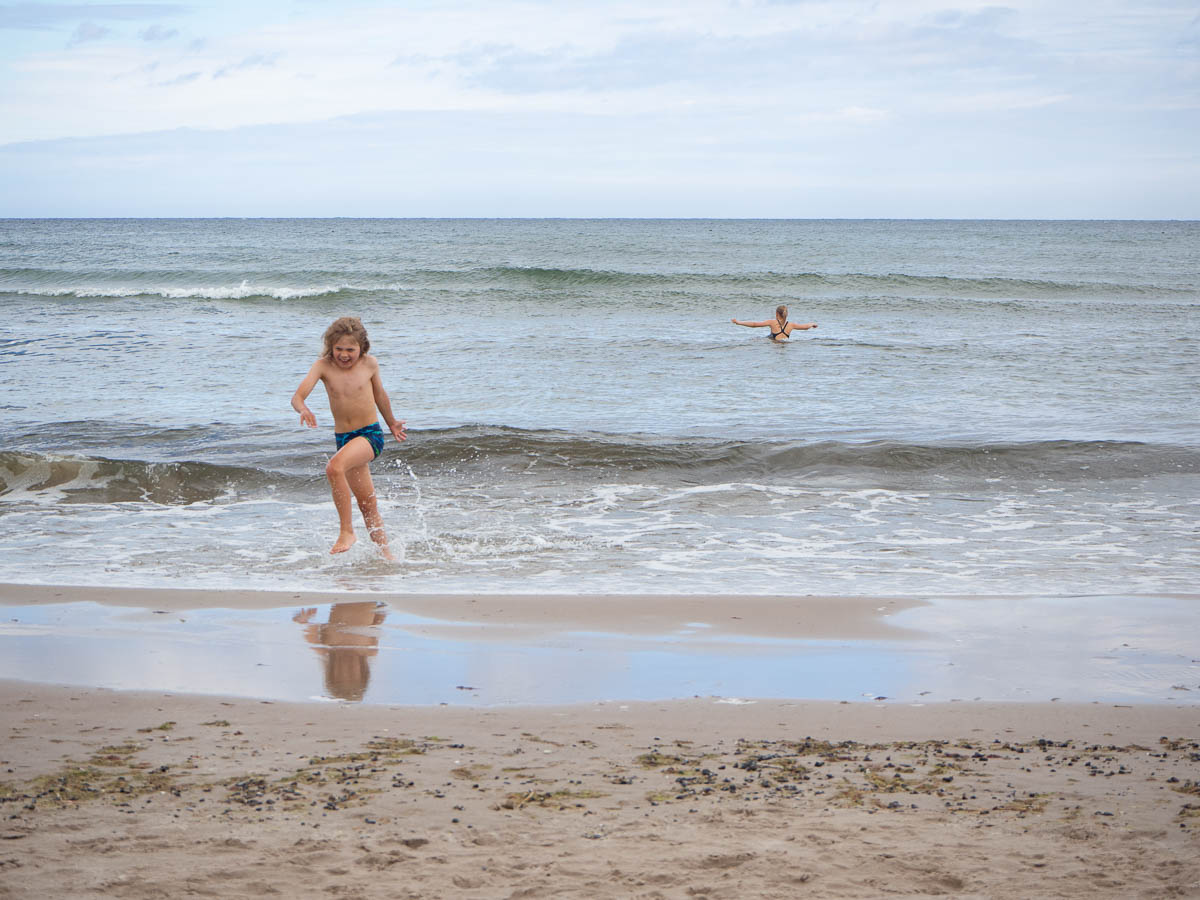
The weather was still windy and the water was pretty cold. Eric and Adrian took a very quick dip and then stayed on the beach instead.

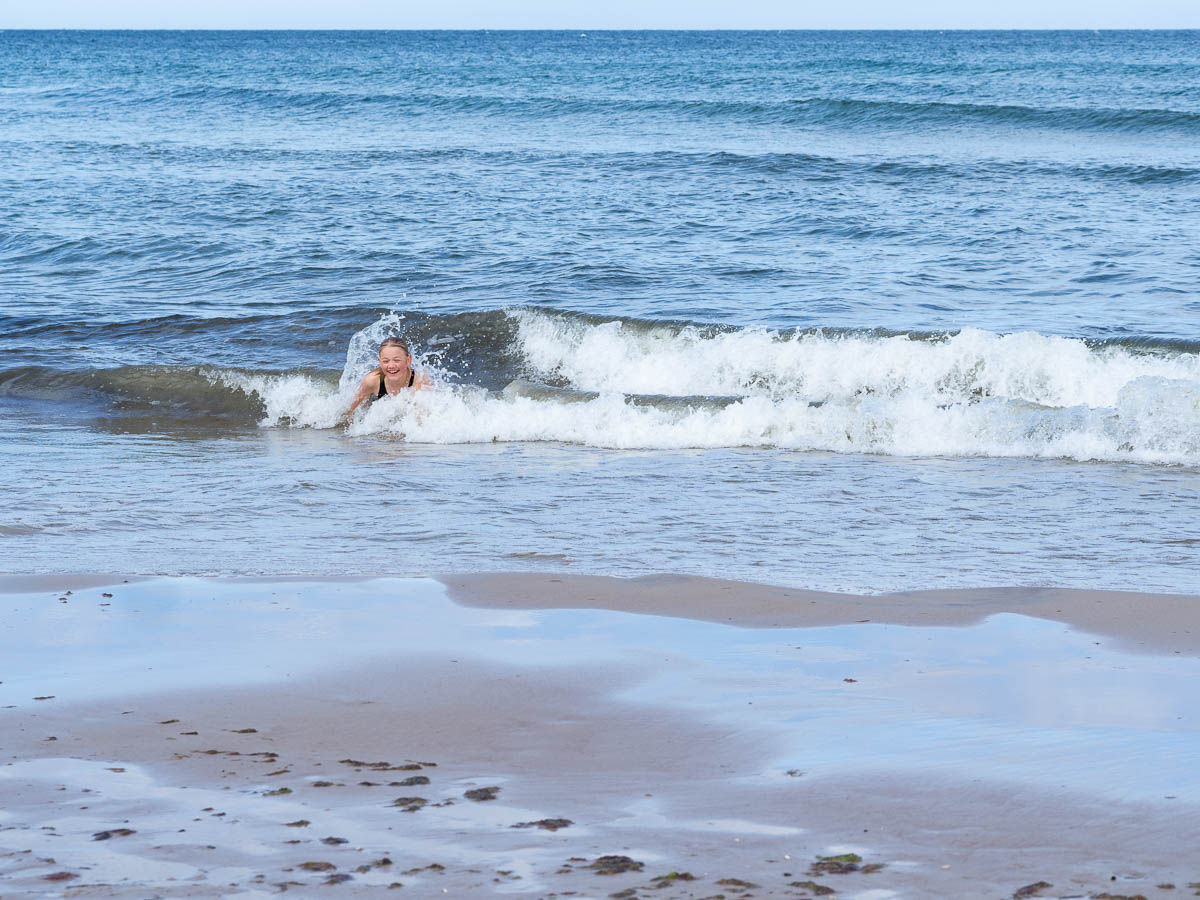
Ingrid however absolutely loved this! The cold didn’t bother her much, and the beach was made extra wonderful today by waves. Well, they weren’t large waves on any absolute scale, but for a kid who has had to make do with Mälaren and Kyrksjön and other very placid bathing spots, this was exquisite fun. She jumped the waves for a long, long time. I stayed with her for as long as I could, sharing her enjoyment. We kept looking for the spot with the best waves. Ingrid cheered every time we got one that was large enough to break into foam and was literally jumping up and down with excitement. Afterwards she said this was the highlight of the whole trip for her.


Afterwards we took the long way back towards the ferry harbour, driving past the rauk area on the north-west side of Fårö. Eric and Ingrid had had enough of rauks and rocky coasts by now so towards the end they stayed in the car while Adrian and I went out to climb and scramble among the rocks (and take photos).


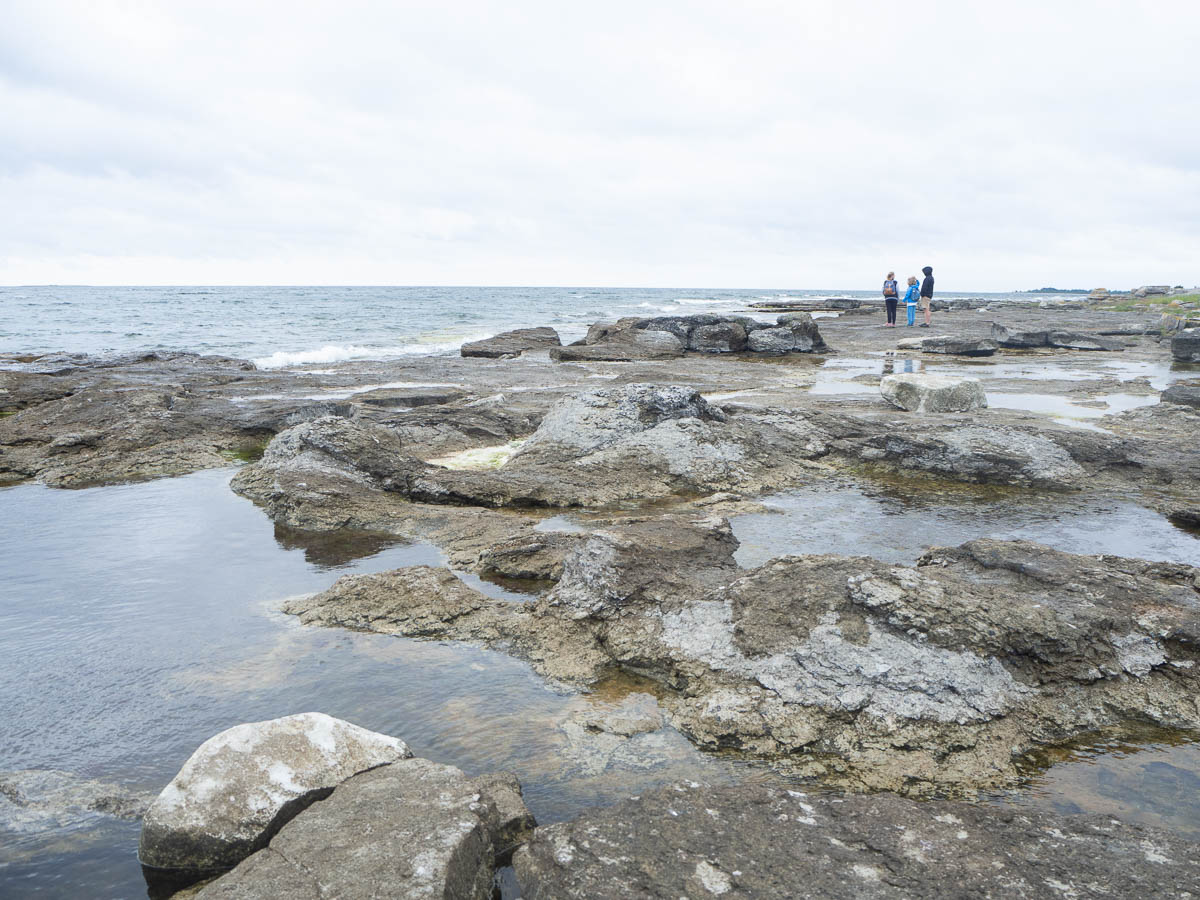
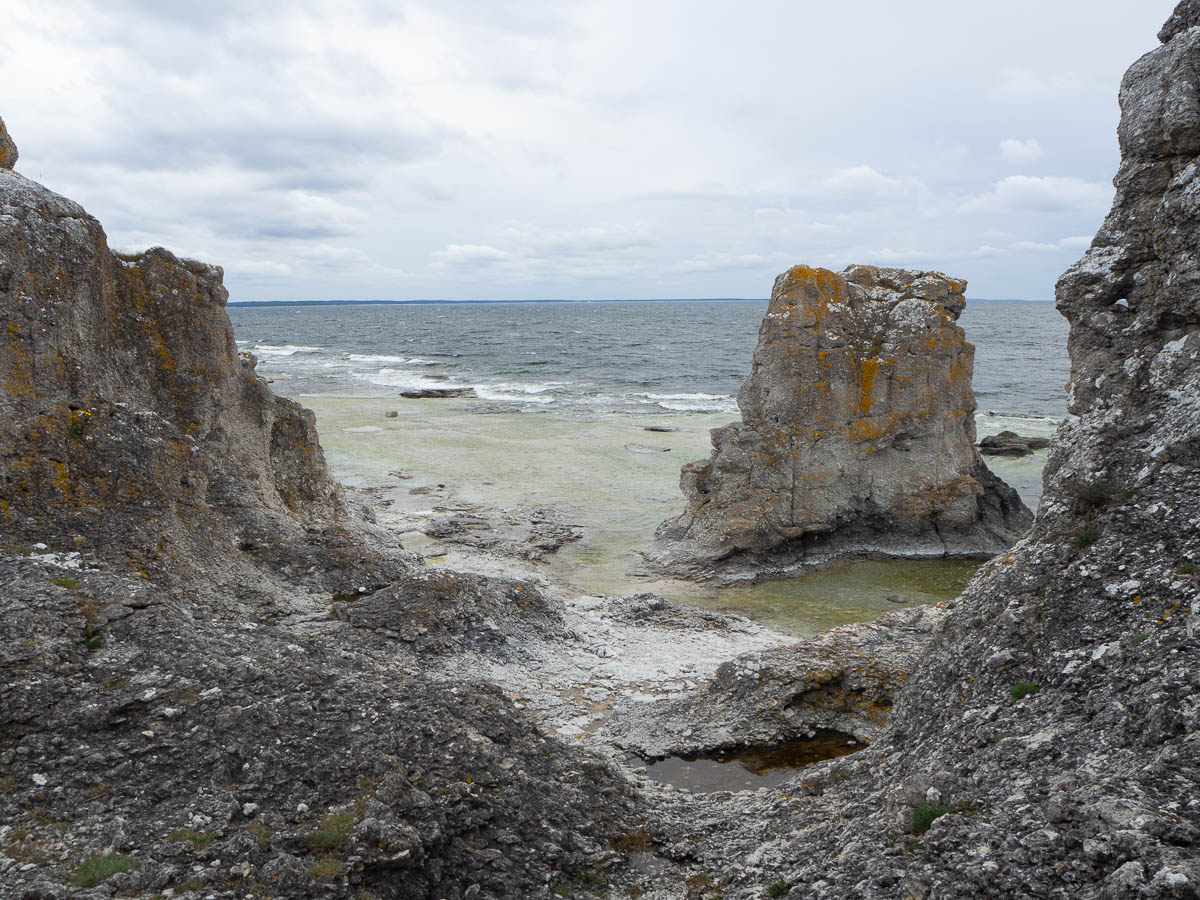
Parts of the coastline here looked like something from another planet. There was water, and there were rocks in various tones of gray – and nothing else. Not even the smallest sprig of grass.


We’re leaving Visby behind and heading north and then north-east towards Fårösund, stopping whenever we feel like it.

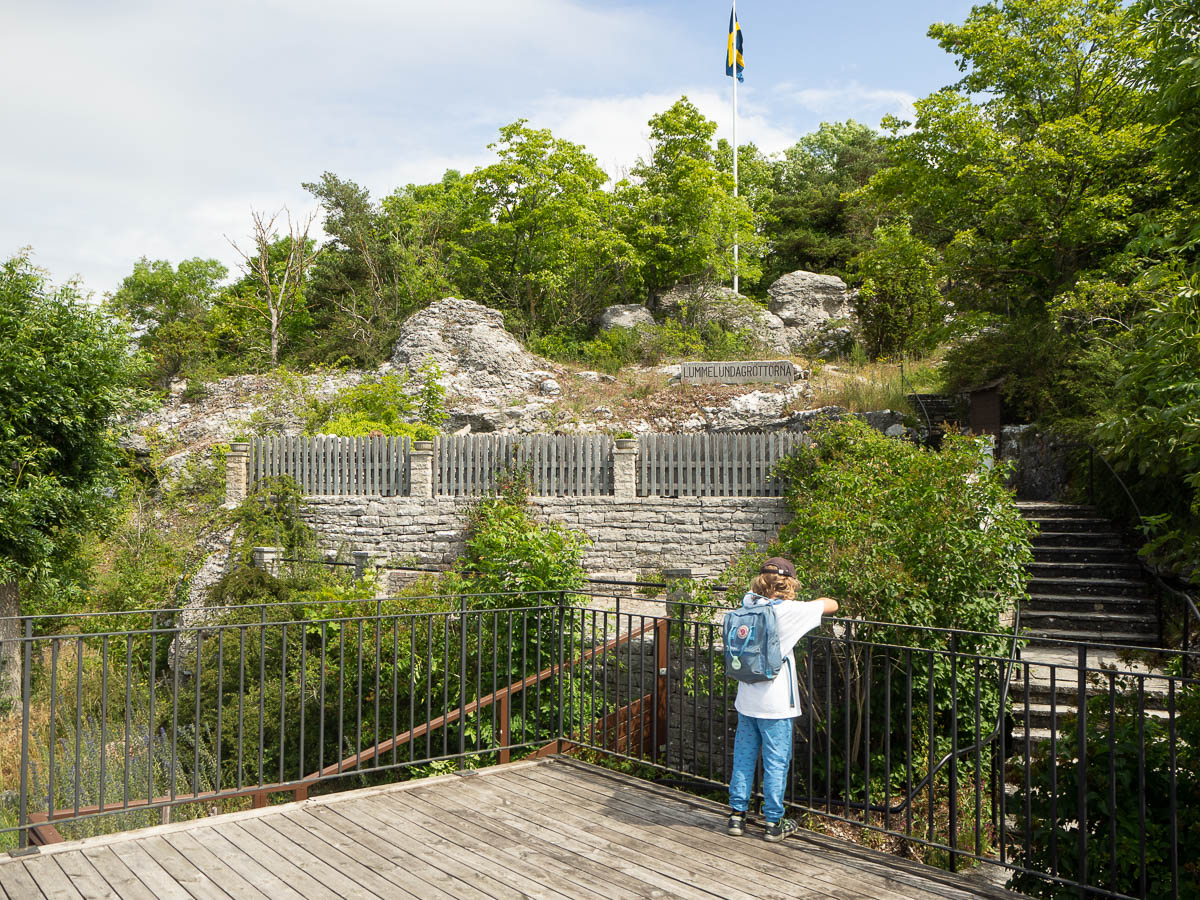
The first stop was already at Lummelunda even though we were there only yesterday. There’s a nature trail there that’s supposed to be nice, but we didn’t the chance to walk it yesterday. After our visit to the caves it was high time for lunch, but the café there had no proper vegetarian dishes so we started cycling back towards Visby to find food. Today we were properly fed and did that walk. It was rather underwhelming and the signage was laughably unclear and out of date.

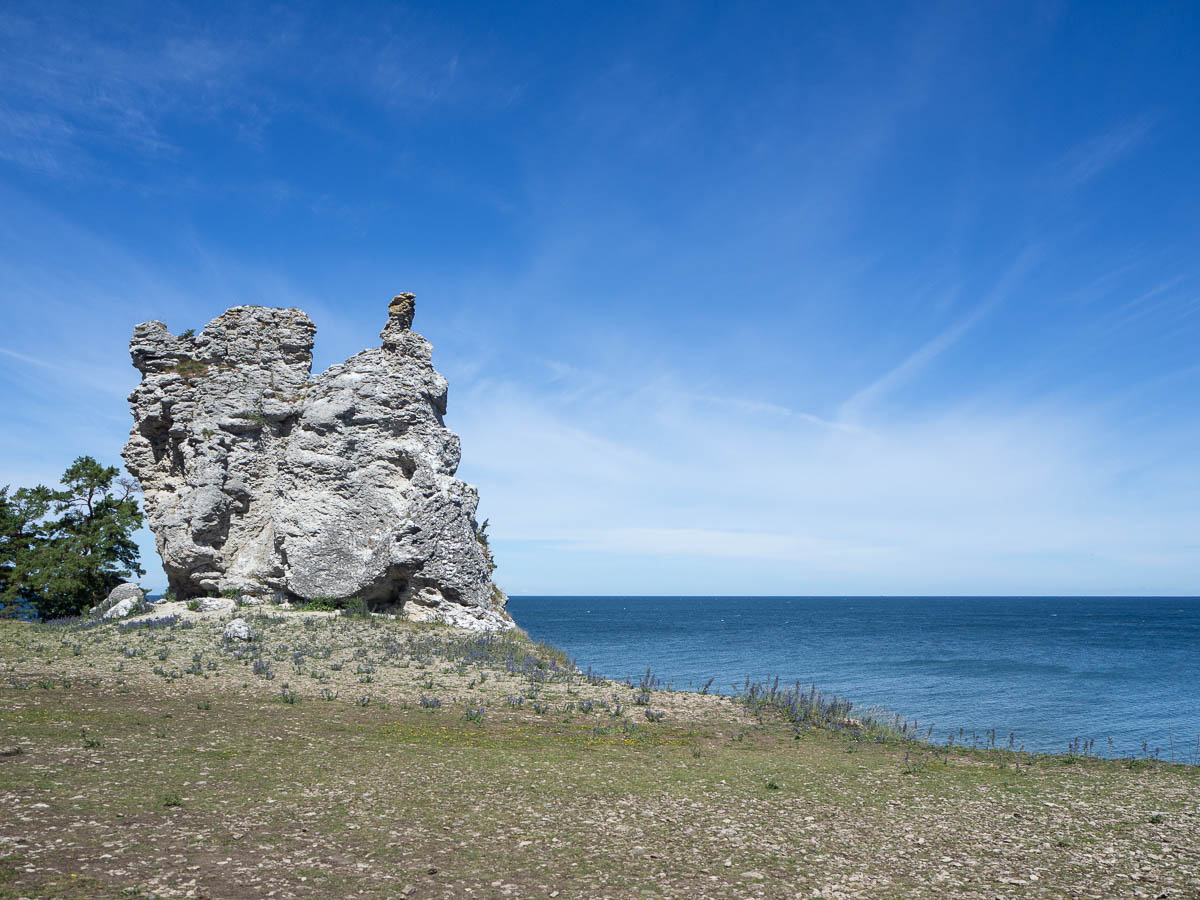
Next stop: Lickershamn, to see our first rauk – the Jungfrun. The rauk was cool, but the walk from the village to the rauk was actually even nicer. It’s mostly pine forest, which we do admittedly get a lot of near Stockholm as well, but it’s different here. The ground here is limestone instead of granite, so the undergrowth is completely different. It looks and smells like the pine forests of my childhood. (I lived in Tartu as a child but spent most summers near Tallinn, where the forests were just like this.)

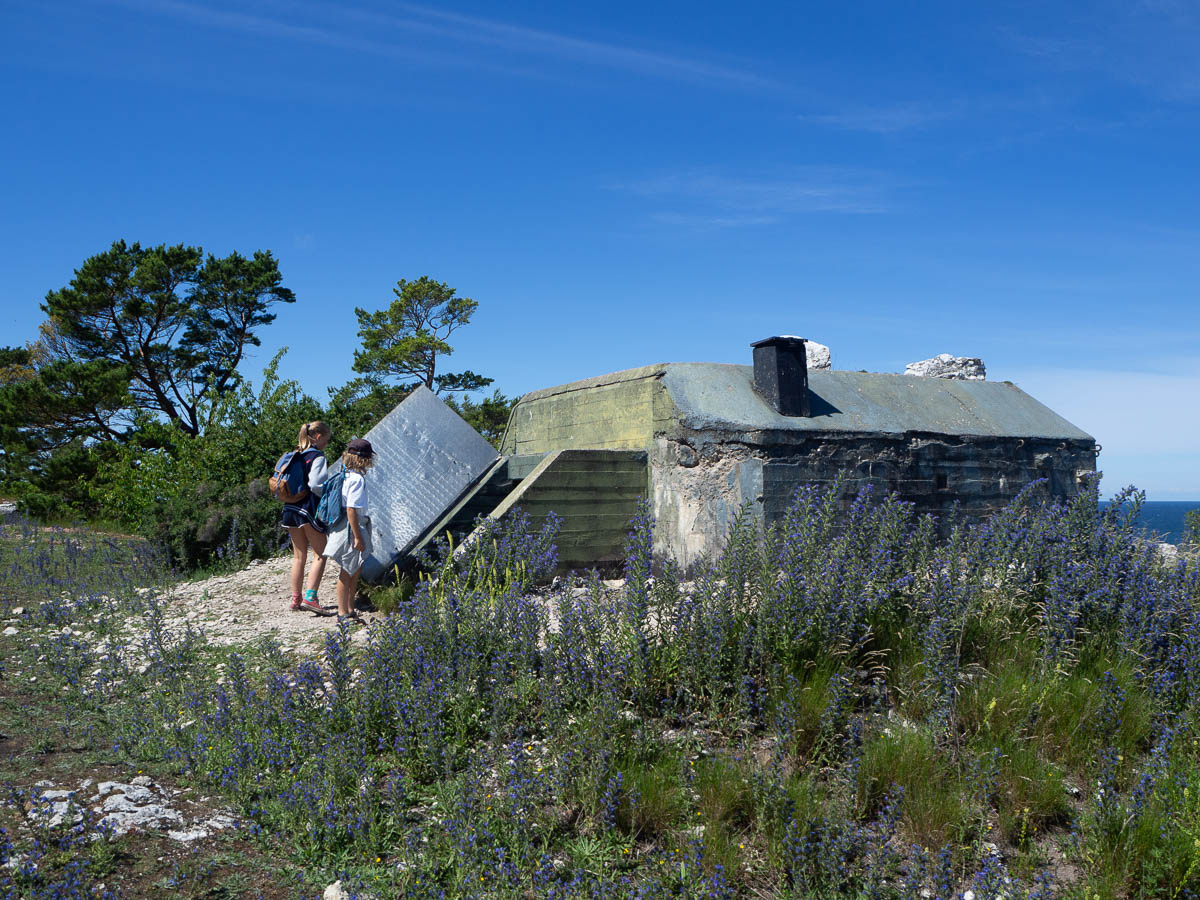
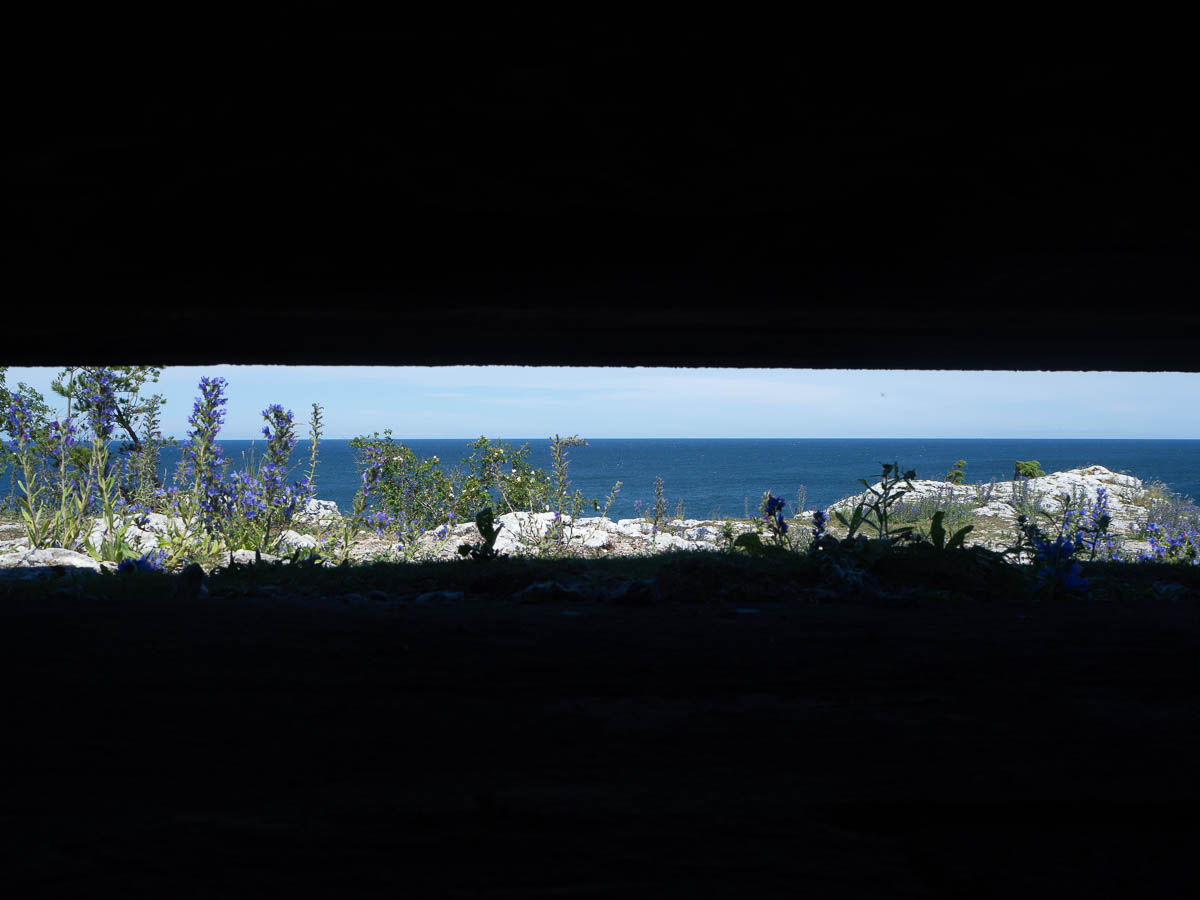
Ingrid and Adrian were more interested in the WW2-era concrete bunker that was situated high on a clifftop near the rauk.


After lunch we drove all of 8 km north to the next beach, at Ireviken. (Gotland is so small that we could start driving towards our next hotel at dinnertime and still make it there before the night.)

Ireviken one was recommended by the internet as a nice bathing spot and, even more interestingly, as a great place for fossil hunting.


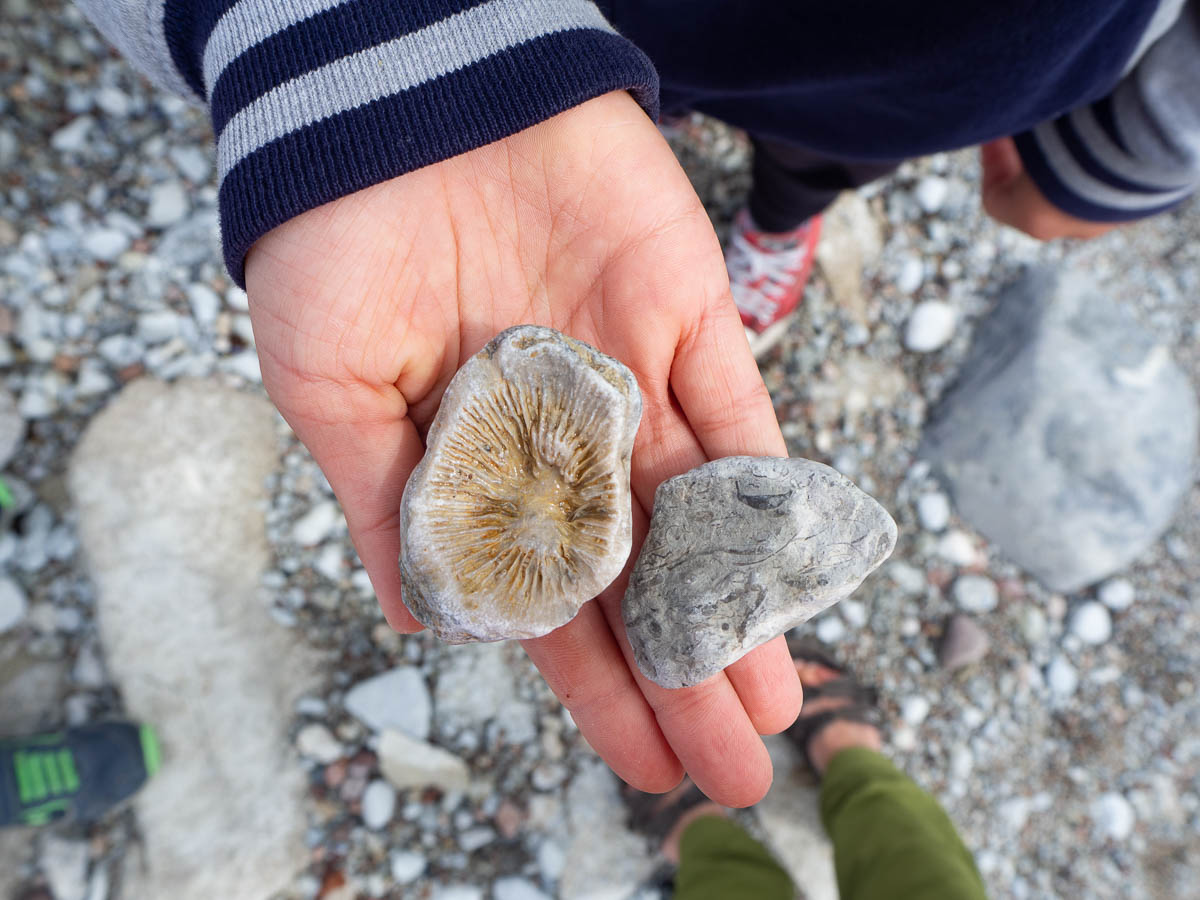
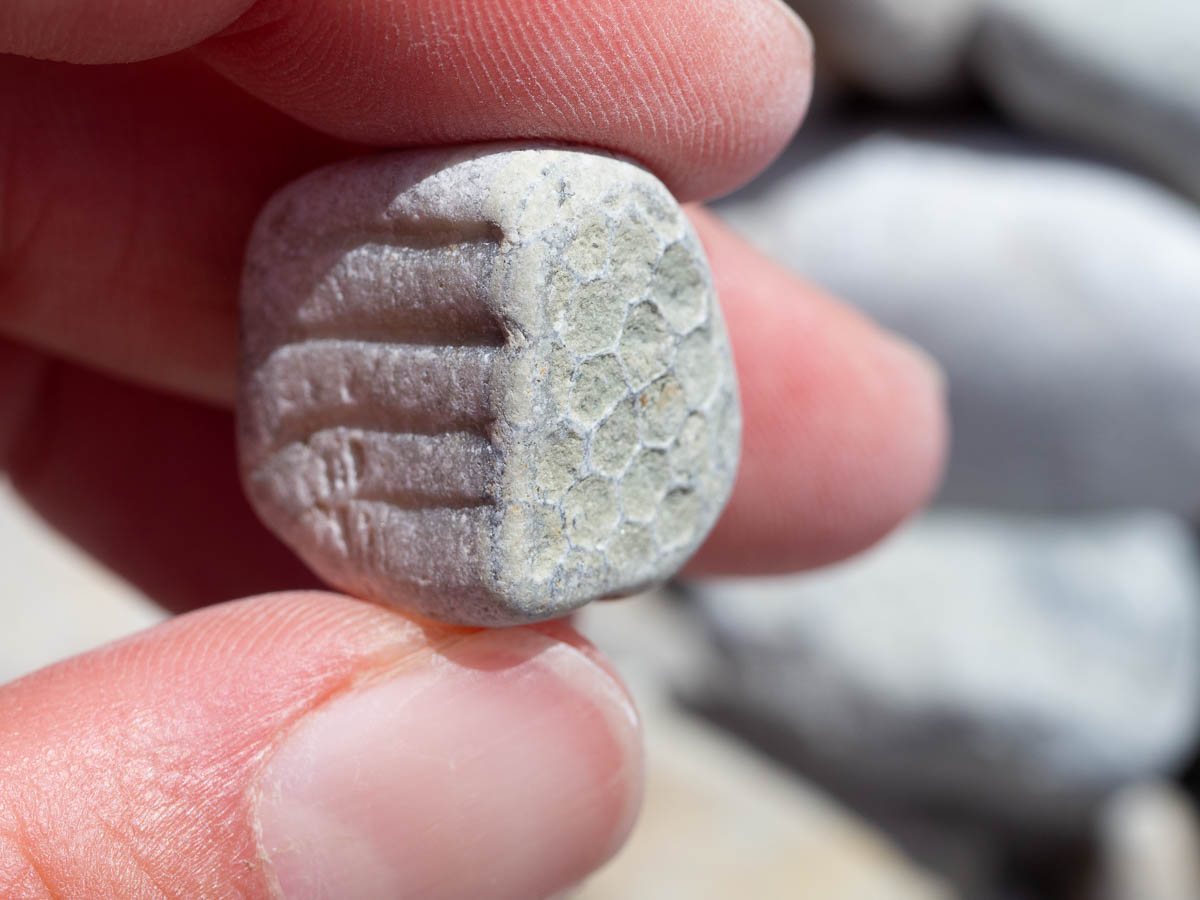
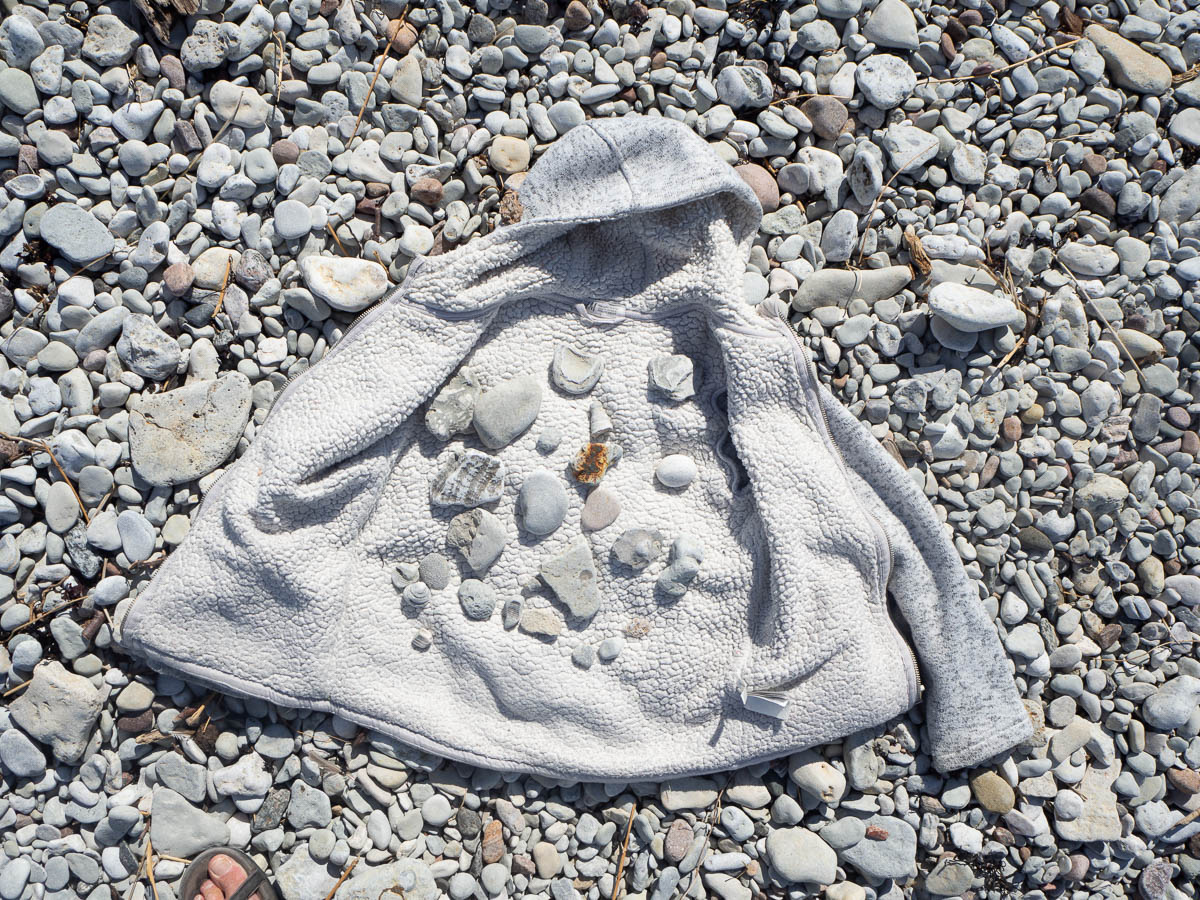
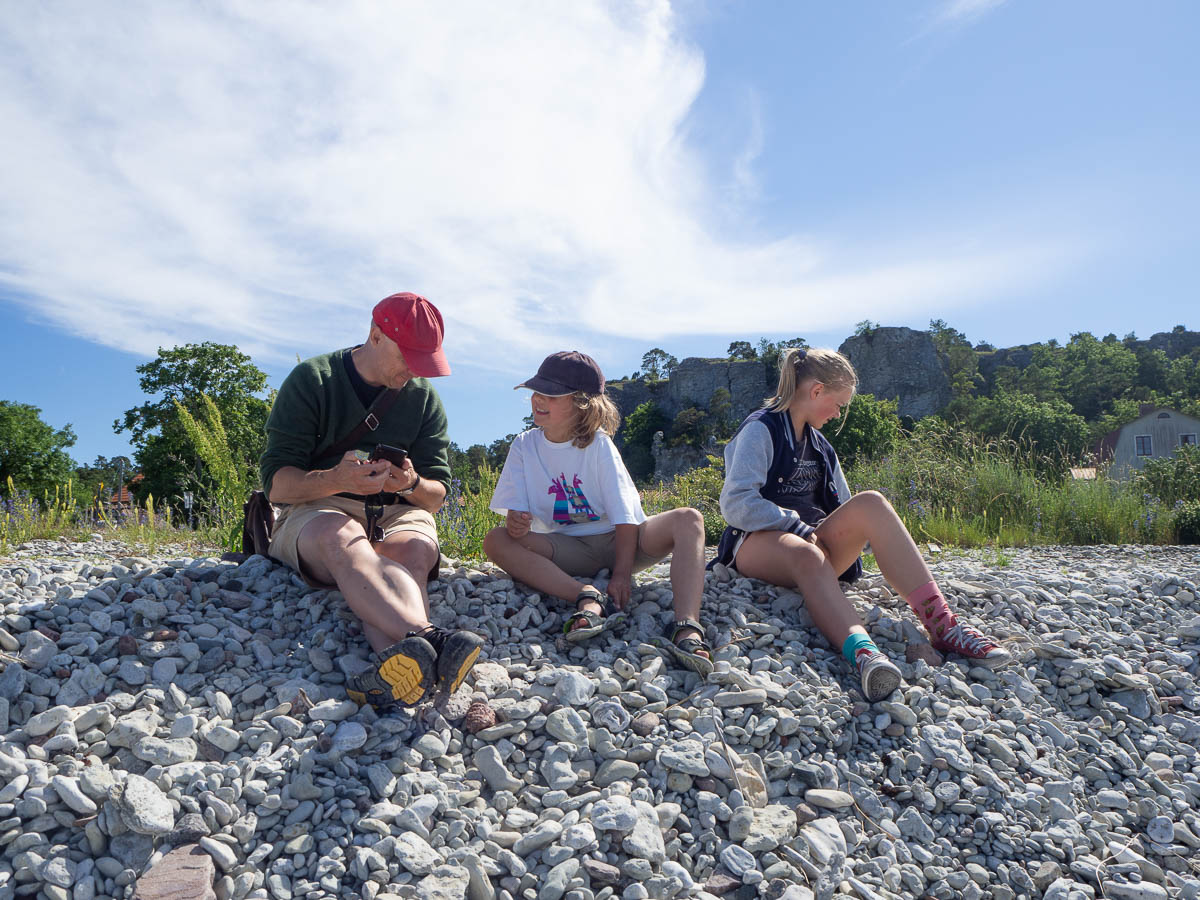
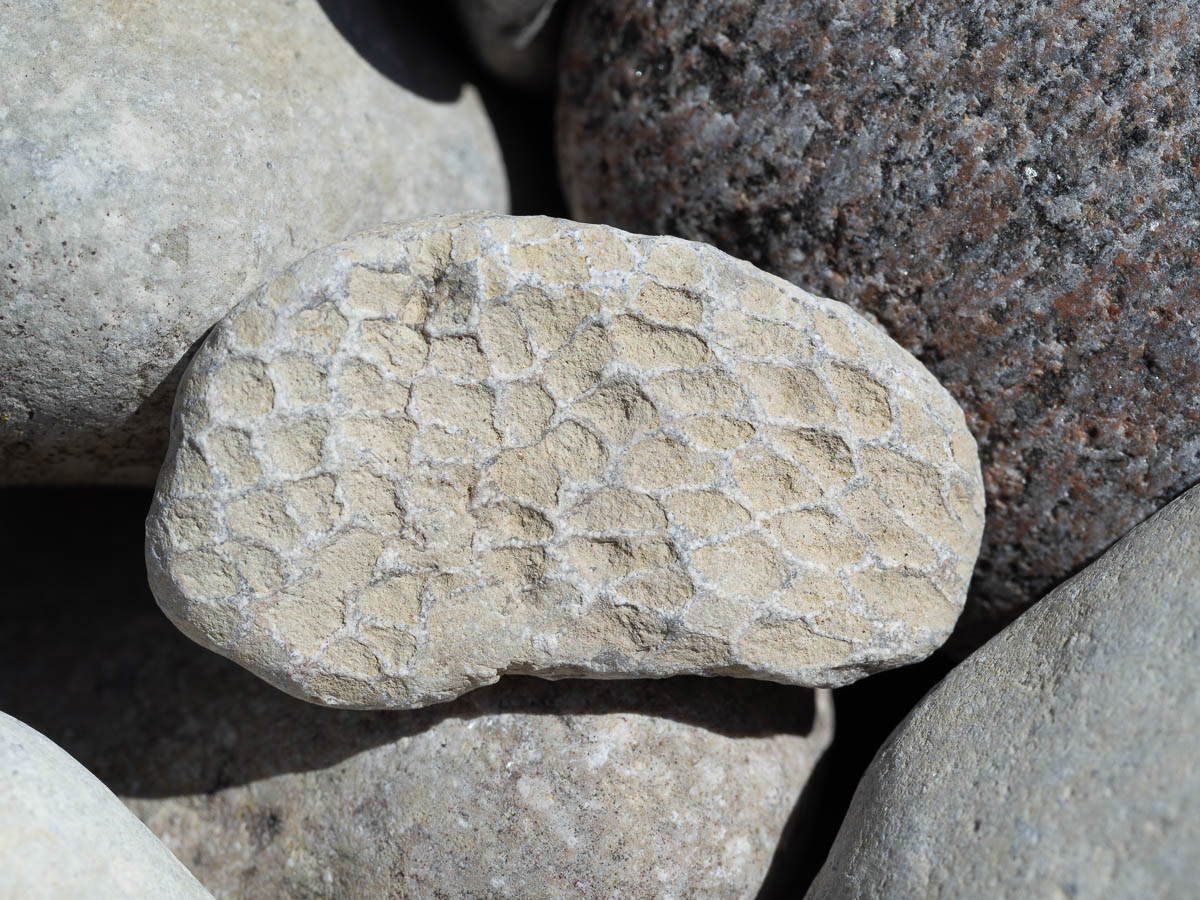
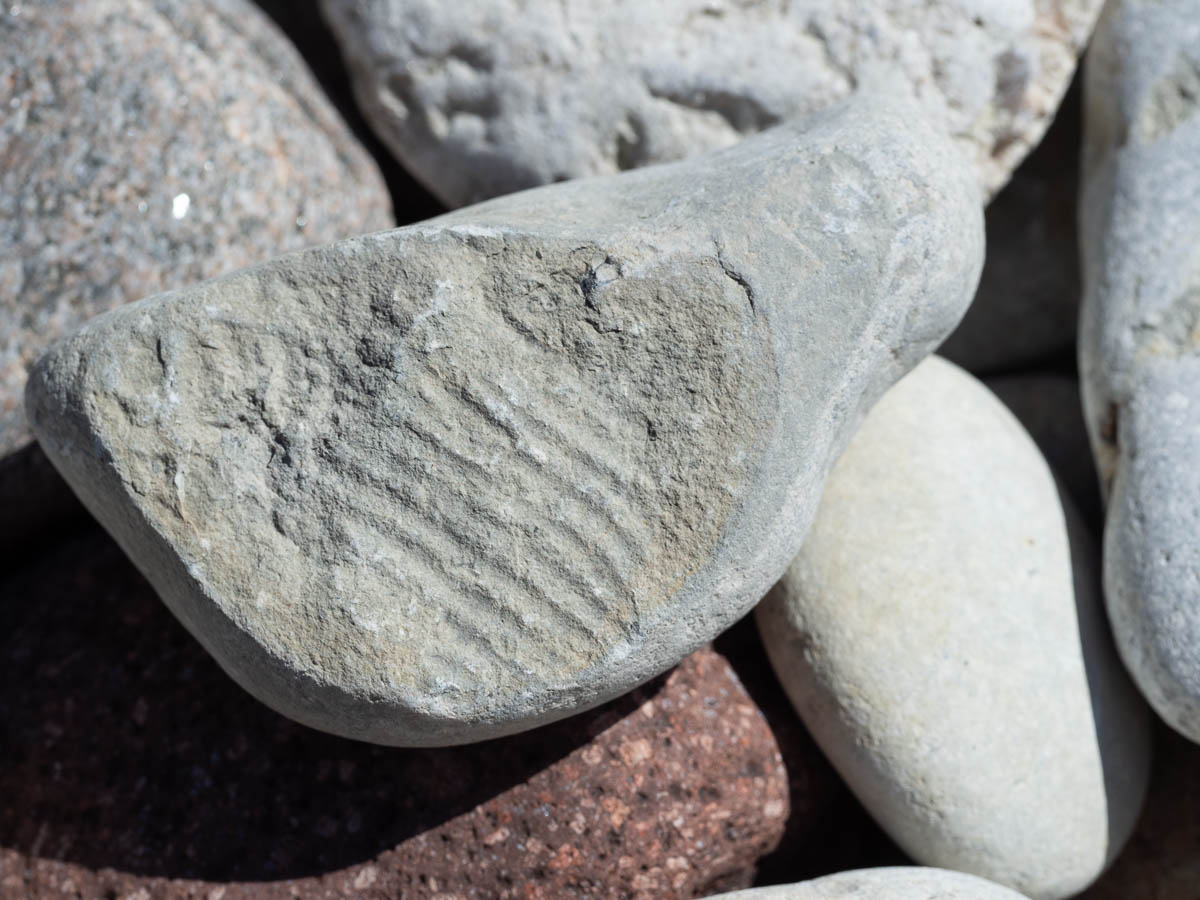
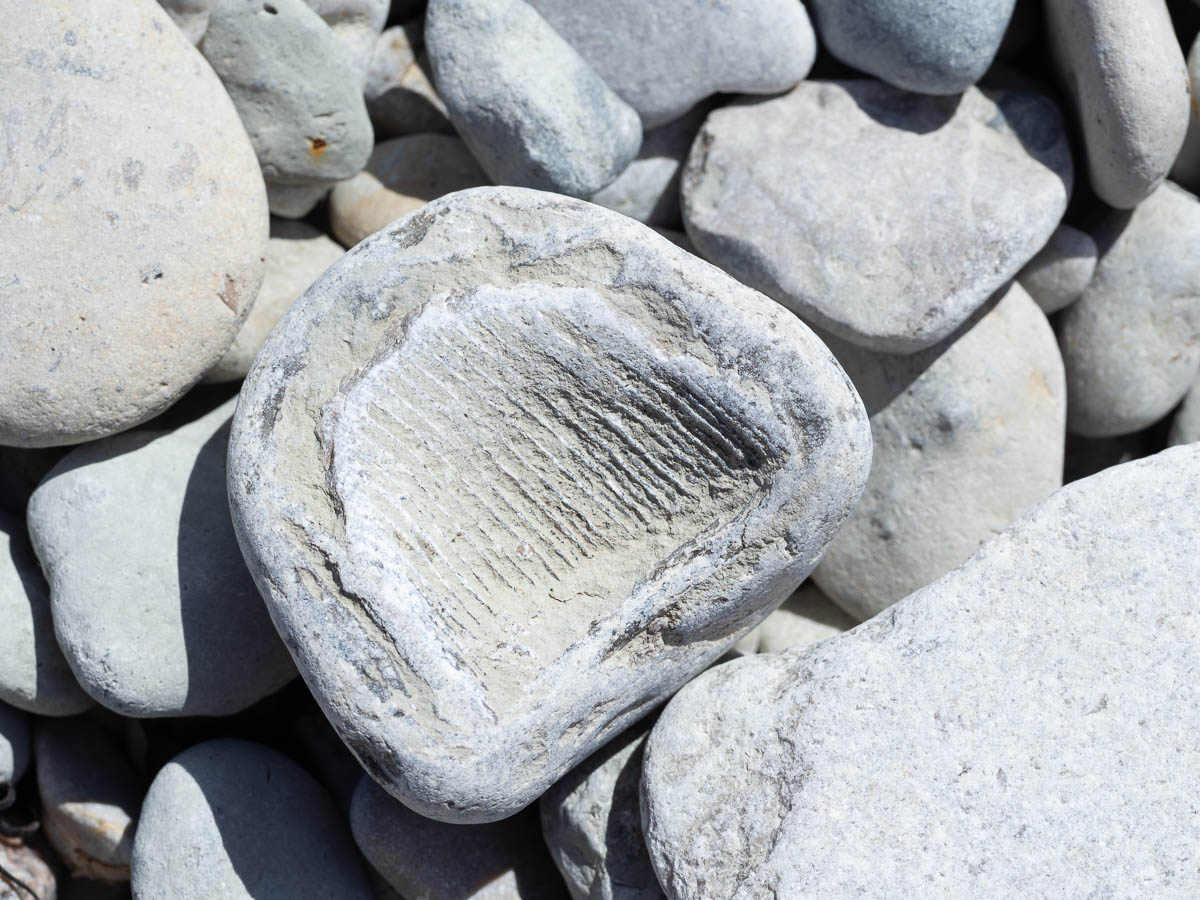
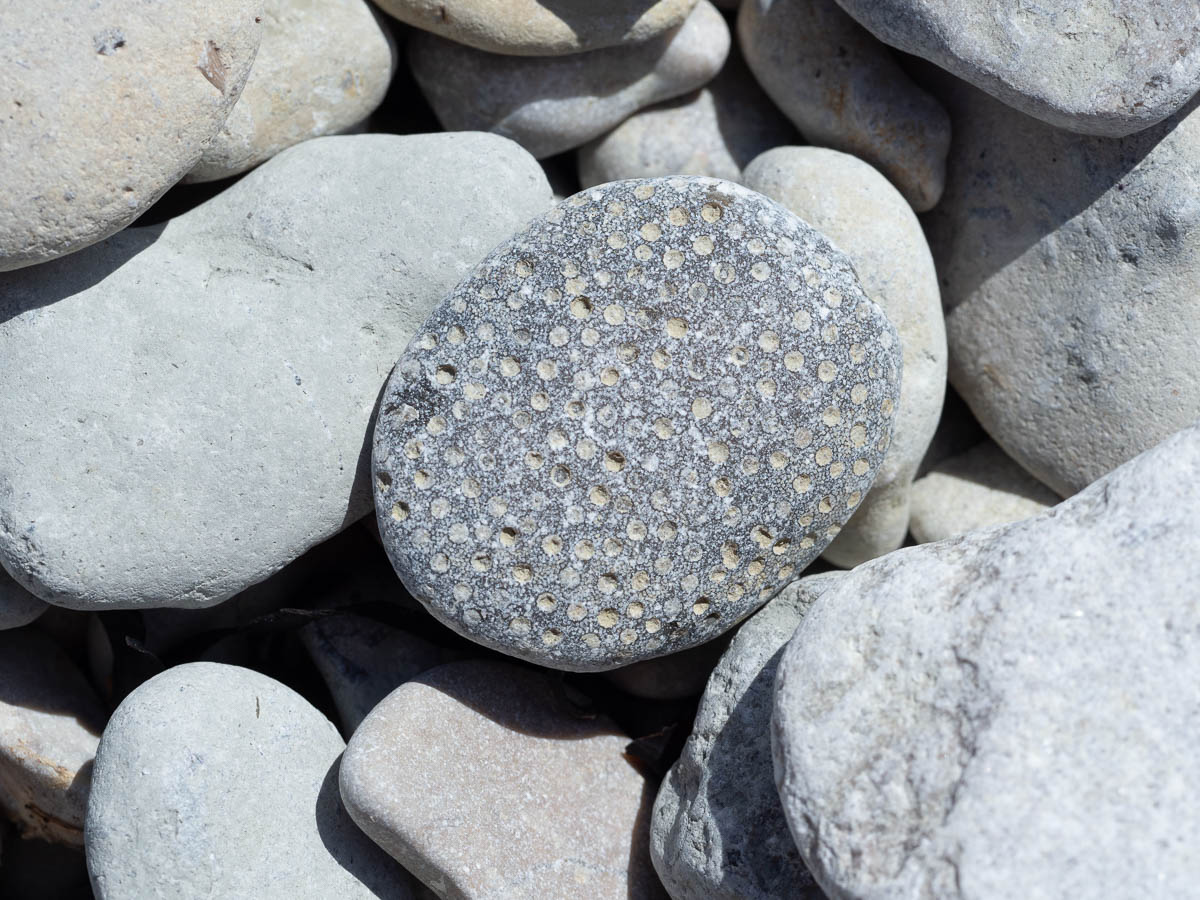
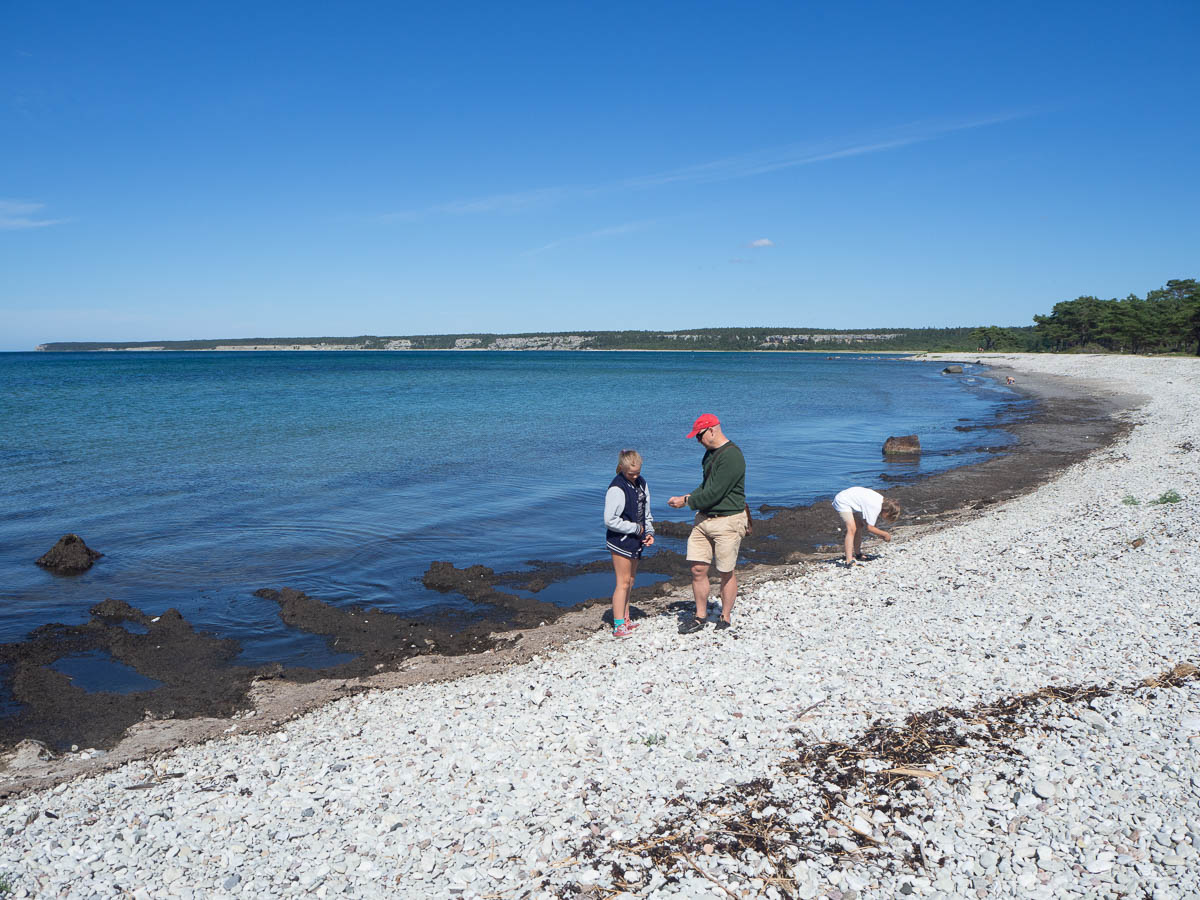
We spent a lot of time searching for fossils. At first when we looked at the rocks we couldn’t see anything other than pretty smooth rocks, all white and tumbled into round shapes by the sea – but mostly featureless. But when we sat down and looked more closely, there were fossils everywhere, of all kinds of shapes and sizes! There were fossils clearly shaped like seashells and snail shells, fossils that looked like corals, and loads of small round shapes.


This was definitely today’s highlight and we had a lot of fun combing through the rocks.

When we finally had enough of fossils, we had a quick swim in the sea. The water was pretty cold, but we wanted to at least take a dip so we could say we’d done it – just in case we don’t get a better chance. Swedish summer weather can be unreliable.


We’ve seen enough of Visby for now. Time for something different. We rented bikes today and cycled to Lummelunda and back.

The caves at Lummelunda were our destination in a way but the cycling there and back was almost more important. And we made several stops on the way – to admire the views, climb rocks, take a walk in a nature reserve, etc. We took a long and lovely lunch break at Krusmyntagården. Almost all our food here on Gotland has been good but this was the best meal I’ve had here.

The caves themselves were somewhat underwhelming, to be honest. The parts that the public tour visits are so tourist-adapted, with wide concrete walkways and large man-made pillars, that it barely feels like being in a cave. And the guide was some random guy, probably employed for the summer only. He delivered his talk by rote with rather fake-seeming enthusiasm, and probably knows nothing more about the cave than the words of that talk.


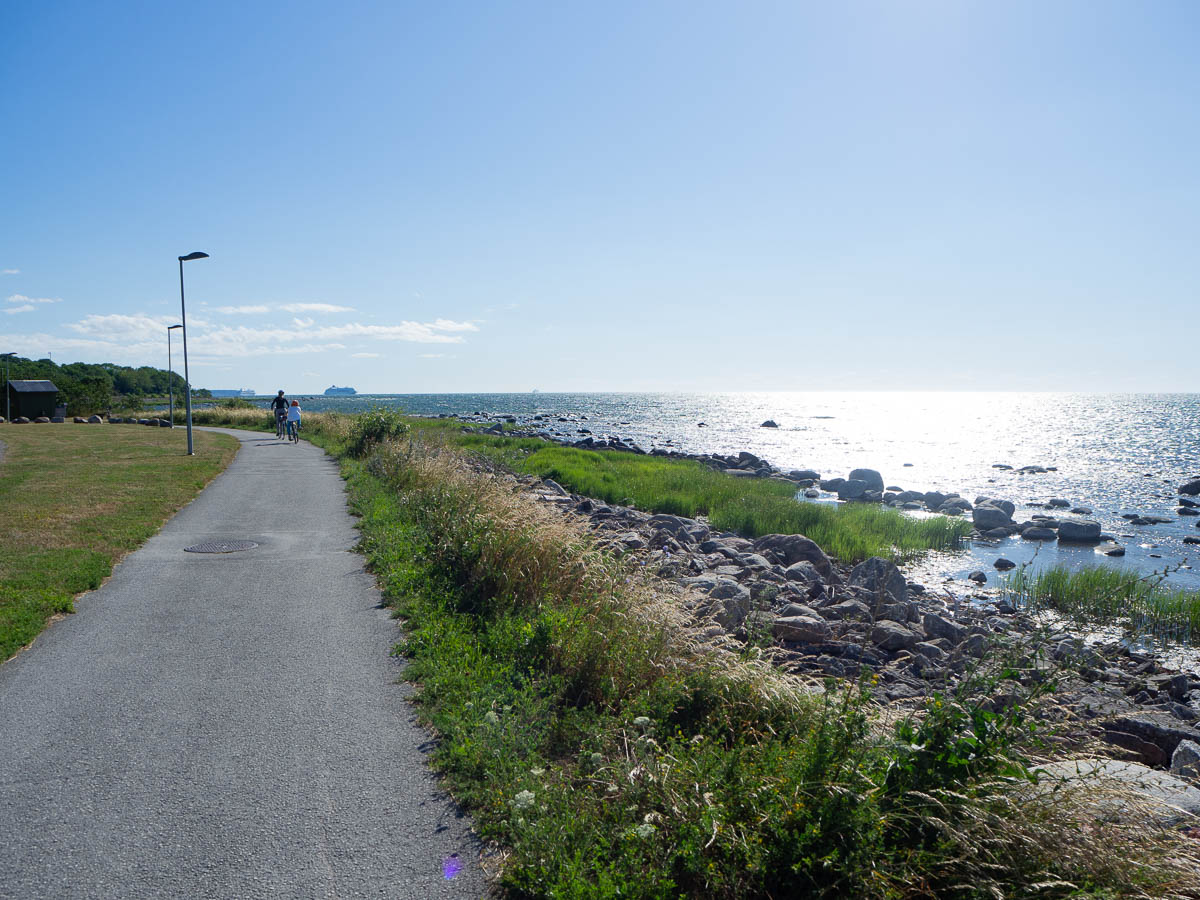
The cycling was very nice. Gotland is flat and bike-friendly. Much of the bike route from Visby to Lummelunda goes along a small seaside bike track with lovely views. Other parts followed small roads, although a part of the trip was along the main road as well (where cyclist had either a separate track off to one side, or at least a dedicated wide strip of road).

Even though the distance from Visby to Lummelunda is just 15 km, the outing took us the whole day: we left the bike rental at 11 and were back just before 18.

Adrian was pretty tired after the trip. He hasn’t learned to pace himself yet; he enjoys cycling fast so he does that until he runs out of energy and then instead of slowing down, or asking us to slow down, he just pedals harder. I had thought that maybe we could cycle around Fårö (which we’ll be visiting on Saturday) but that’s going to be even longer so I guess it’ll be the car then.

The only trouble with cycling is that it’s hard to take photos!


A day of walking in Visby among its rosebushes and church ruins. There are more roses than ruins in Visby, but the ruins were definitely more fun to look at and to photograph.

The first ruins we passed today didn’t look super exciting from the outside but had an invitingly open gate so why not. And while they weren’t super exciting, they were pretty nice, so we went inside the next ruins as well, and the ones after that, and then some more. And some of the later ruins turned out to be quite exciting indeed!

The churches were abandoned during the reformation, five hundred years ago, give or take. Just… deemed so worthless that they were abandoned. Not worth keeping dry, not worth tearing down. I guess there would have been beggars or vagrants living in them, maybe. And now they’re tourist sights.

Some are more broken down and overgrown with grass. Others have pillars and vaults still standing. In a few we found stairs inside the walls, and in one them a walkway high up circling most of the nave, still walkable all the way around.

I like vaults. And pillars, and towers, and walls thick enough to have stairs inside them. If I was filthy rich, I could totally imagine buying an old church to live in. I guess there might not be any available in Sweden, though. I wonder what it would cost to build a medieval-style stone church.


What I really liked about these ruins is how un-tourist-adapted they were. No handrails, no warning signs, no bars to keep you from falling (except where there were large openings where you could by accident literally walk off the edge). Wander at your own risk.

There are myriad rose bushes lining the streets in Visby old town. Hollyhocks, snapdragons and poppies also grow just about everywhere, even in pavement cracks.


By the way, Visby turned out to be quite empty of tourists. There are no hordes of Stockholmers filling the streets. This really was the best time to visit!


Because of the coronavirus situation, our annual Estonia trip and our equally-annual hiking trip both get added to the long list of “things we were looking forward to but had to cancel”.

Non-essential travel in Sweden is now allowed, though, and I’ve been vacillating about whether and where and how we should travel.

On the one hand, we don’t need to travel. But on the other hand, if we’re careful and avoid crowds and travel by car and don’t go too far (so we can get home if anyone falls ill despite everything) then it should be OK.

On the one hand, this might be the best time ever to travel to e.g. Gotland. No crowds, hopefully, which would be really nice. (Adrian’s and my trip to the empty Old Town in Stockholm was my best time there, ever.) And the hospitality industry could do with some support or the whole bunch will go bankrupt. But on the other hand, what if everyone thinks like that, and we’ll be one of a gazillion annoying Stockholmers there?

We took the chance, in the end, and here we are on Gotland. We arrived in mid-afternoon and spent the rest of the day simply walking around the town, following the city wall.

The wall is pretty amazing. It’s worn and dilapidated and none of the towers are standing (unlike some of the medieval towers in Tallinn for example). But the wall itself is still standing along its entire length, and you can follow it all the way around the centre of Visby, which is pretty darn impressive.

I am surprised at how much vegetation I see growing on the wall everywhere. It looks pretty, but roots generally tend to weaken walls, so I would have expected it all to be cleaned away.


Last day. We’re taking a train to Stockholm in the afternoon, but squeezed in a few hours of skiing in the morning. As usual, the slopes are very empty on switchover days (weekends) which makes for extra pleasant skiing. Just look at these empty slopes! There’s barely anyone there!

As usual, I’m a much better skier when I have the slope all for myself. I don’t have to think about where other people are and where they might be going. I can get into a flow and just turn. Swish, swish, swish.

I liked Åre. But then again I’ve liked all the other ski resorts we’ve been to as well.

Åre is larger than most ski resorts in Sweden, with more pistes to choose from. For everyone except Ingrid, that wide choice doesn’t matter much – we won’t use the red or black runs anyway. Mostly what we want is a variety of blue slopes. Our excursions to the plateau and the peak were fun, though.
I was afraid that it might feel too large, and since it’s very well-known, that it would be crowded. But it was no more crowded than any of the other places we’ve been to. It did feel a little bit more commercial and less familiar than e.g. Kläppen, where all the lift attendants always said hi and high-fived the kids.

One thing that really impressed me in Åre was food. The quality of food was really good in all the restaurants where we ate, and the range of vegetarian options much wider than what I’ve seen in other ski resorts. I remember hopelessly alternating between pizza and the same boring halloumi burger every single day for a week in Idre, and the one and only dinner option there was a cheap, greasy pizza and kebab joint. Here, too, most restaurants had a vegetarian burger on the menu – but all had some other vegetarian choices as well, and even the burgers varied. I can survive on dull food of course, but I’m much happier if I get tasty, varied food.


Another beautiful but cold day, and we made another outing to the top.

Skiing from here to there involves one really steep red run. It’s so steep and icy that when I reached it last time I was uncertain whether I would be able to ski it at all. I was very sure that Adrian wouldn’t be able to do it. Instead we took the free ski bus to the cable car station, queued for a while and took the cable car straight to the top. Very convenient.

At the top (which is not technically the top of the mountain but I’m going to call it the top anyway) everything is encrusted with snow. The cable car station doorway, all the buildings, the signposts, the cables. It looks almost surreal.

From the top it’s mostly nice, gentle, long ski routes down. Pure pleasure and sightseeing!