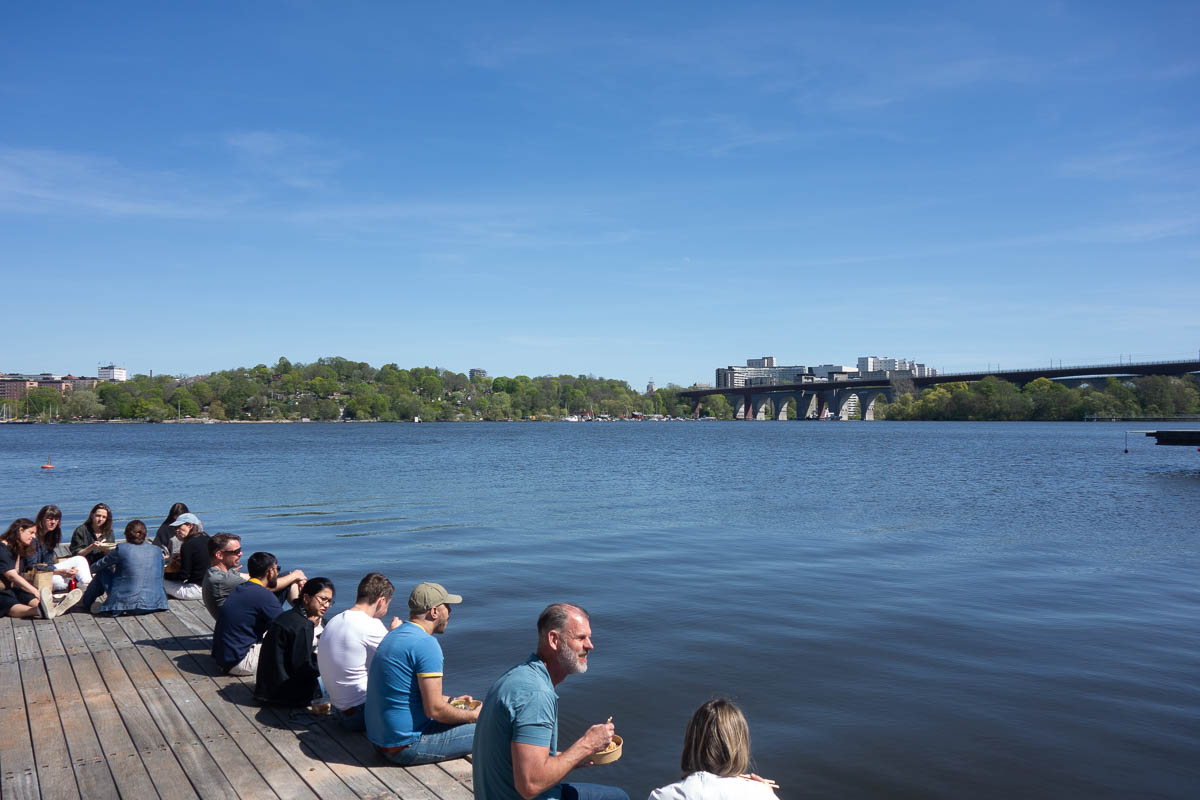
Lunch out in the sun on the quay at Liljeholmen.
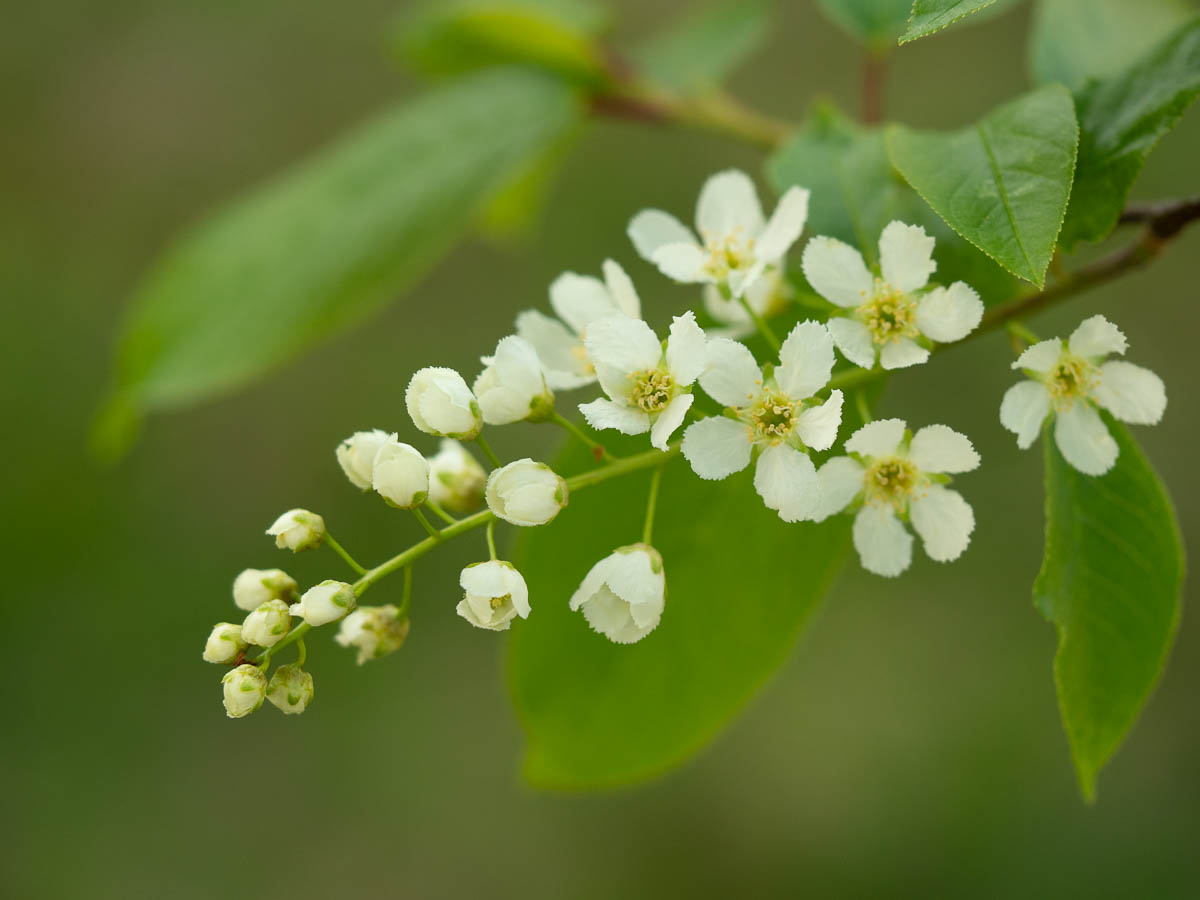
The bird cherry is flowering.
Back the way I came yesterday, from Henaredalen to Ånhammar, 13 km.
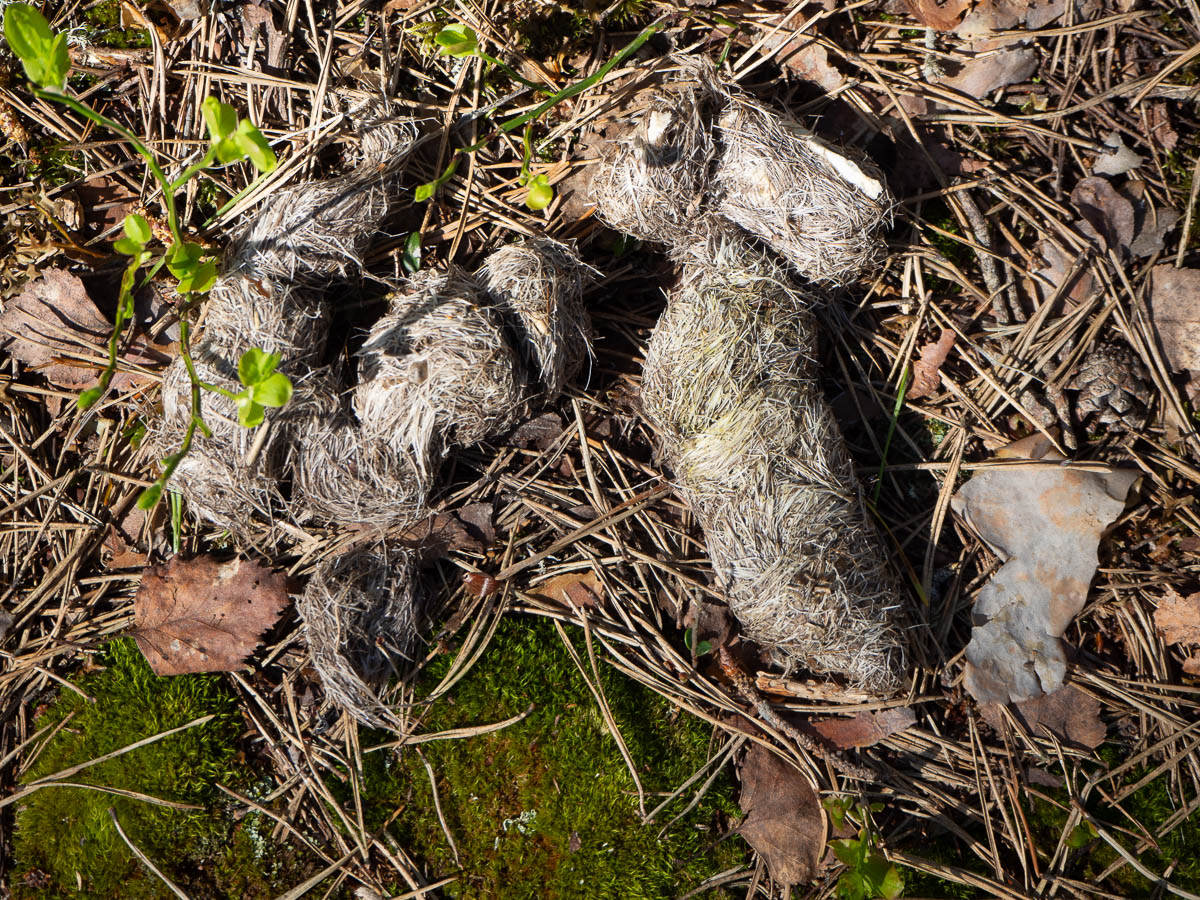
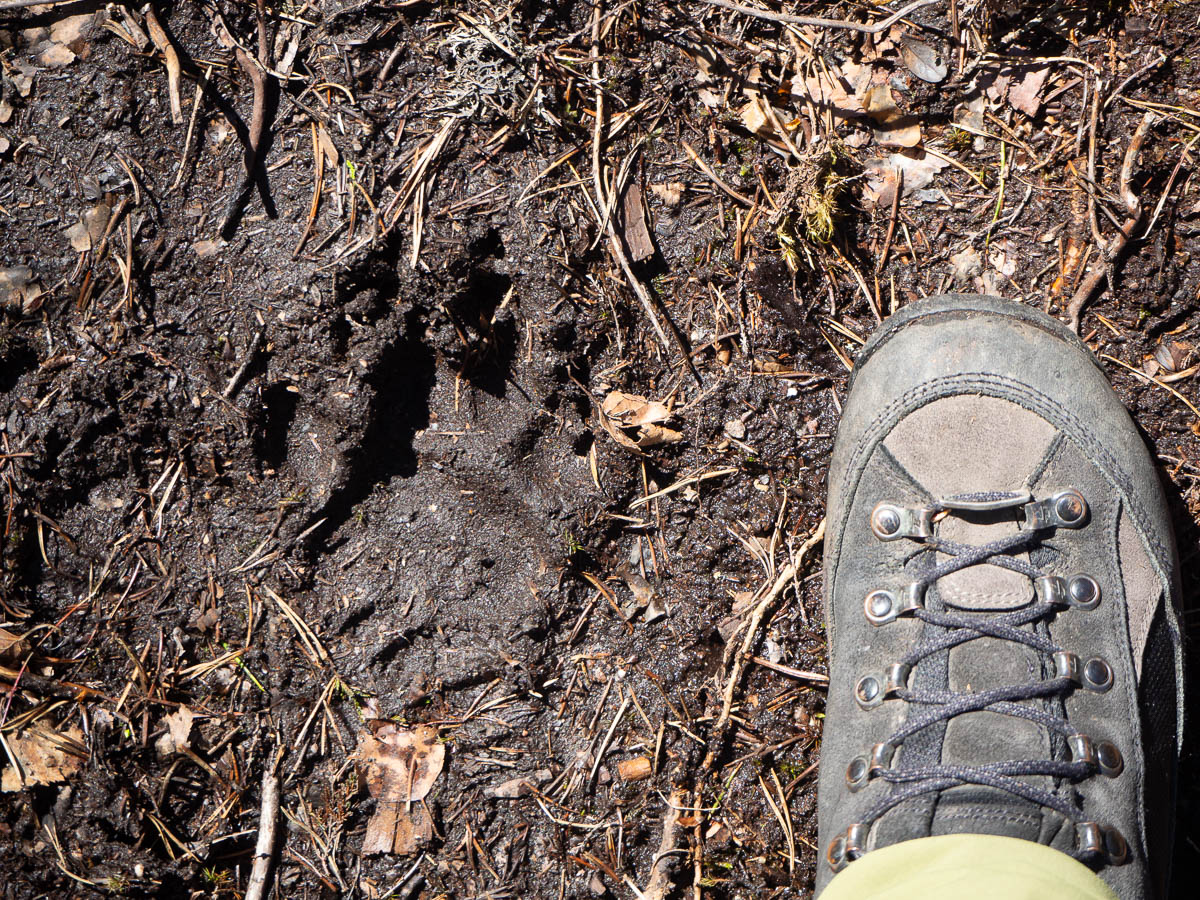
The paw print yesterday may have been wolf or dog, but the droppings I spotted are most definitely from a wolf, because they’re mostly made up of the hair of whatever animal the wolf ate.
I also met a hiker on the trail who was here specifically because he had seen a wolf here a year earlier and was hoping for a repeat. But I never saw anything more than the droppings.
Unsurprisingly today was similar to yesterday.
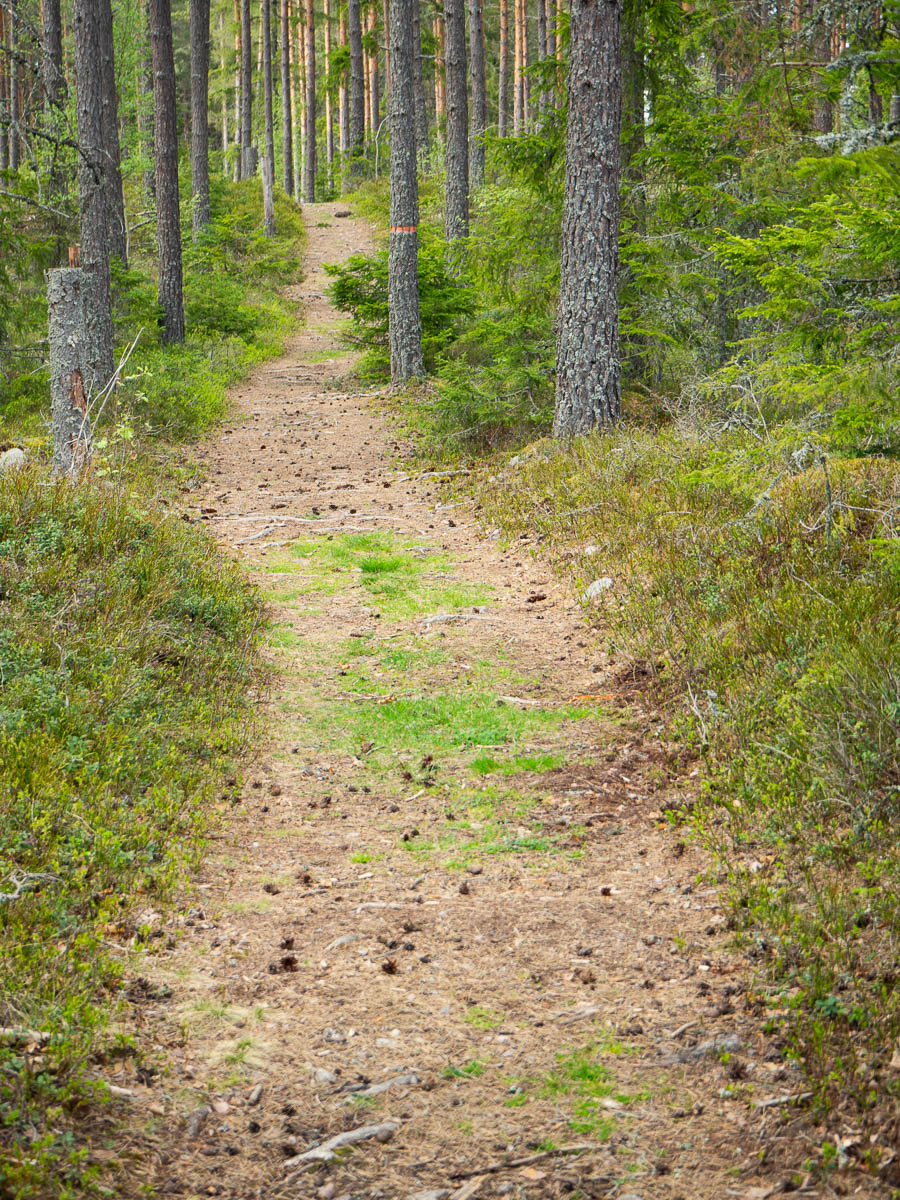
As a bonus I already knew the best spots for taking a break.
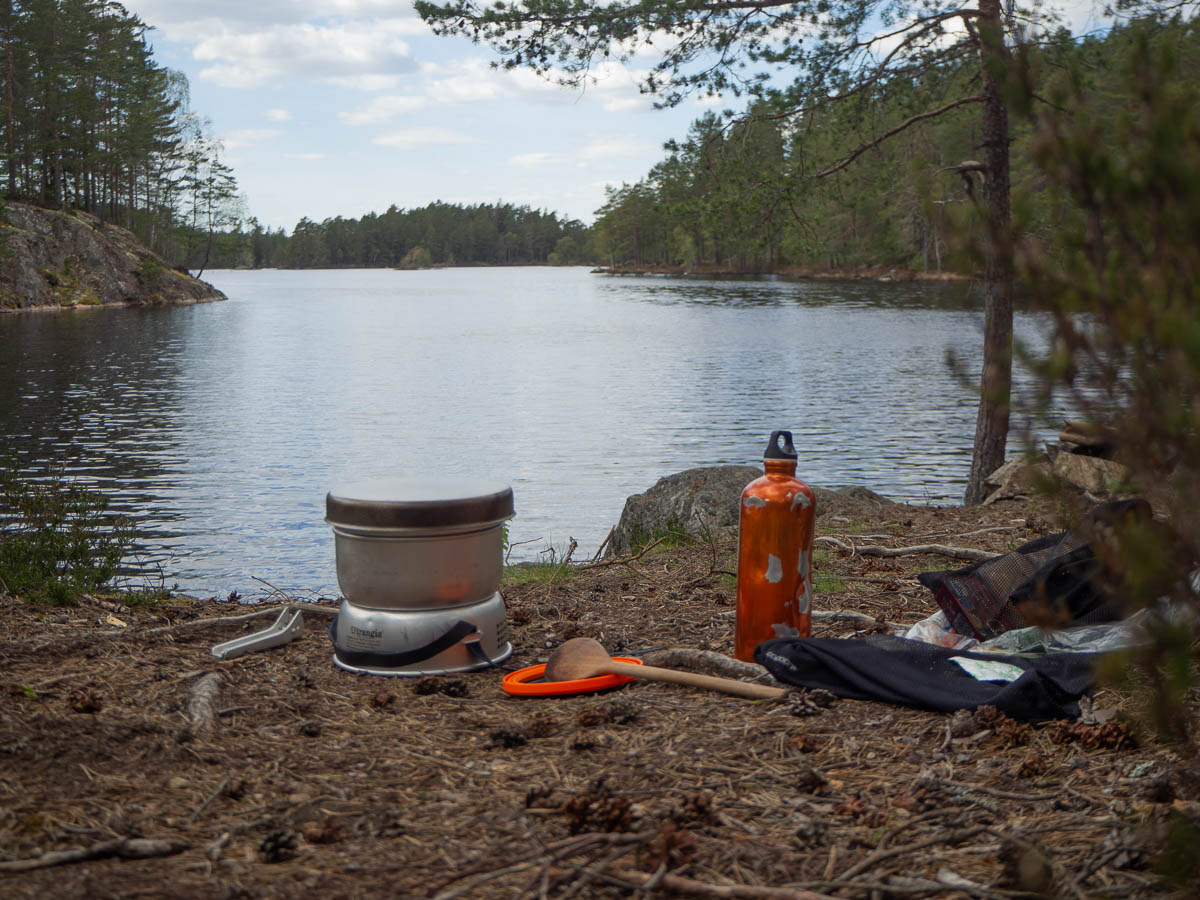
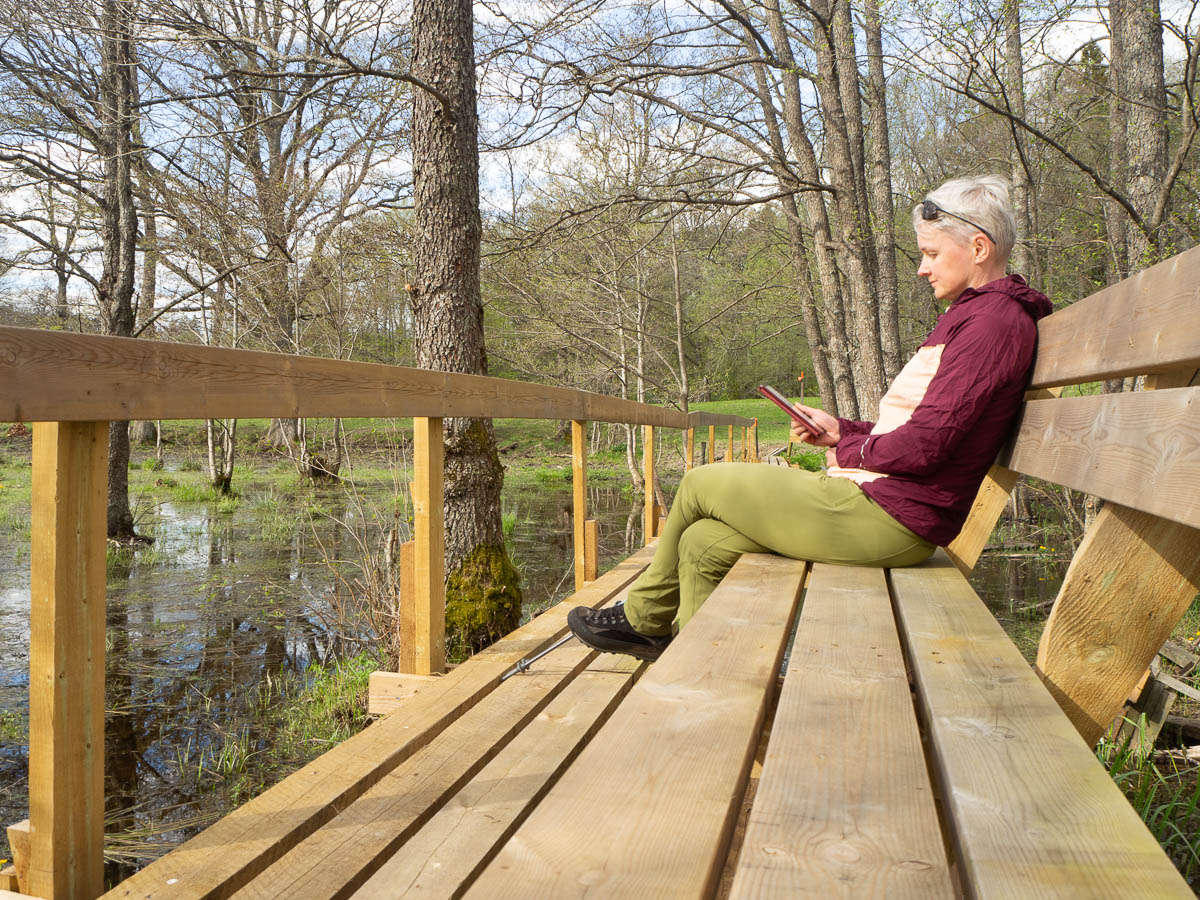
In no rush to get back early, I took a longer break towards the end of the trail, on what I guessed was a bird-watching bench next to a large lake, where I had the company of geese and ducks and herons.
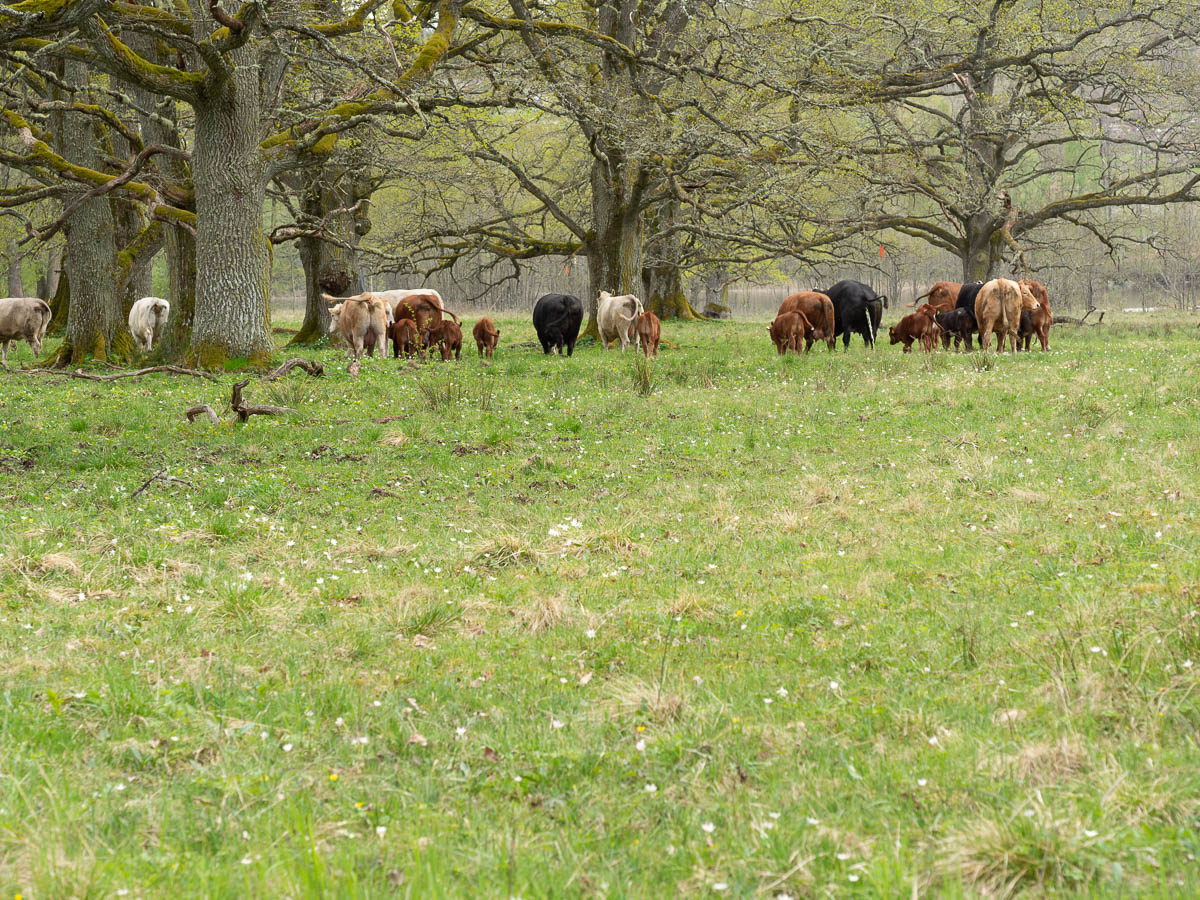
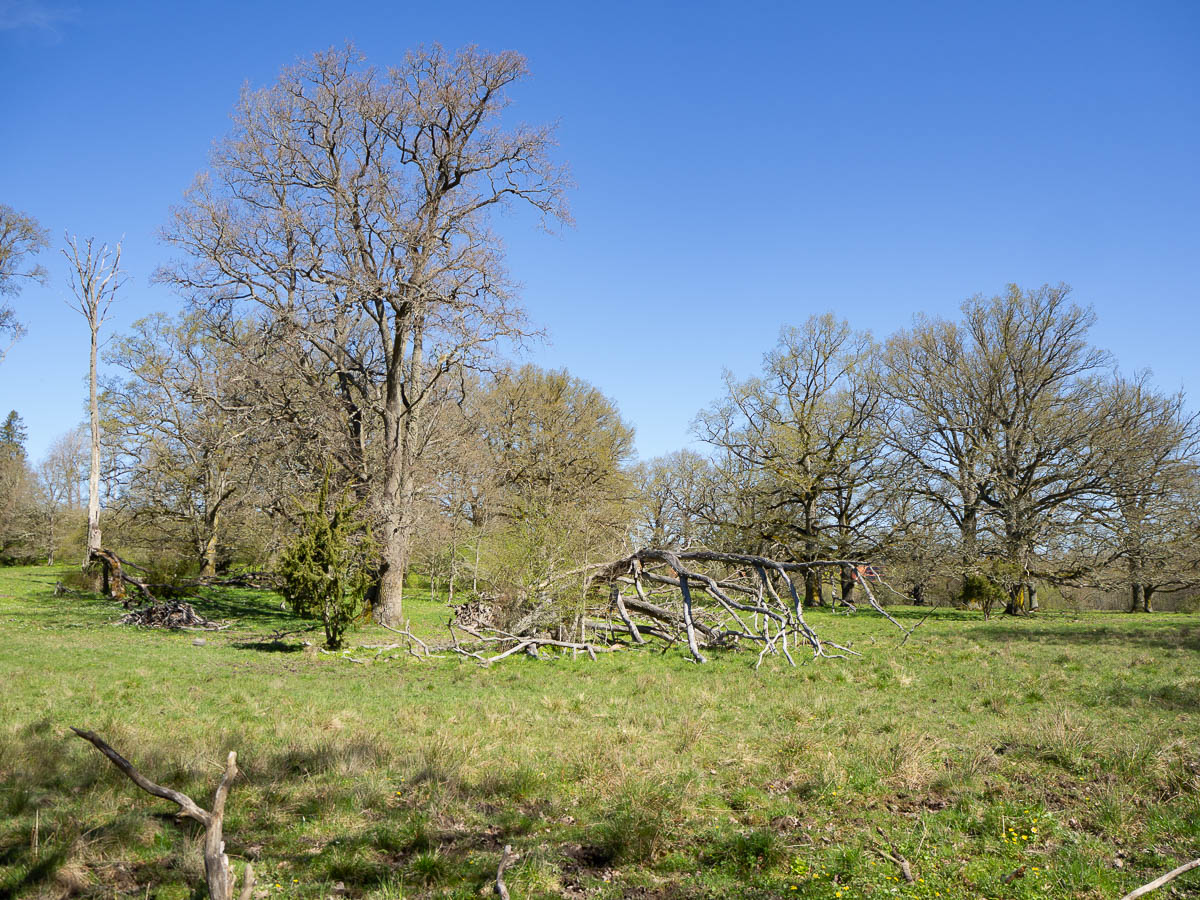
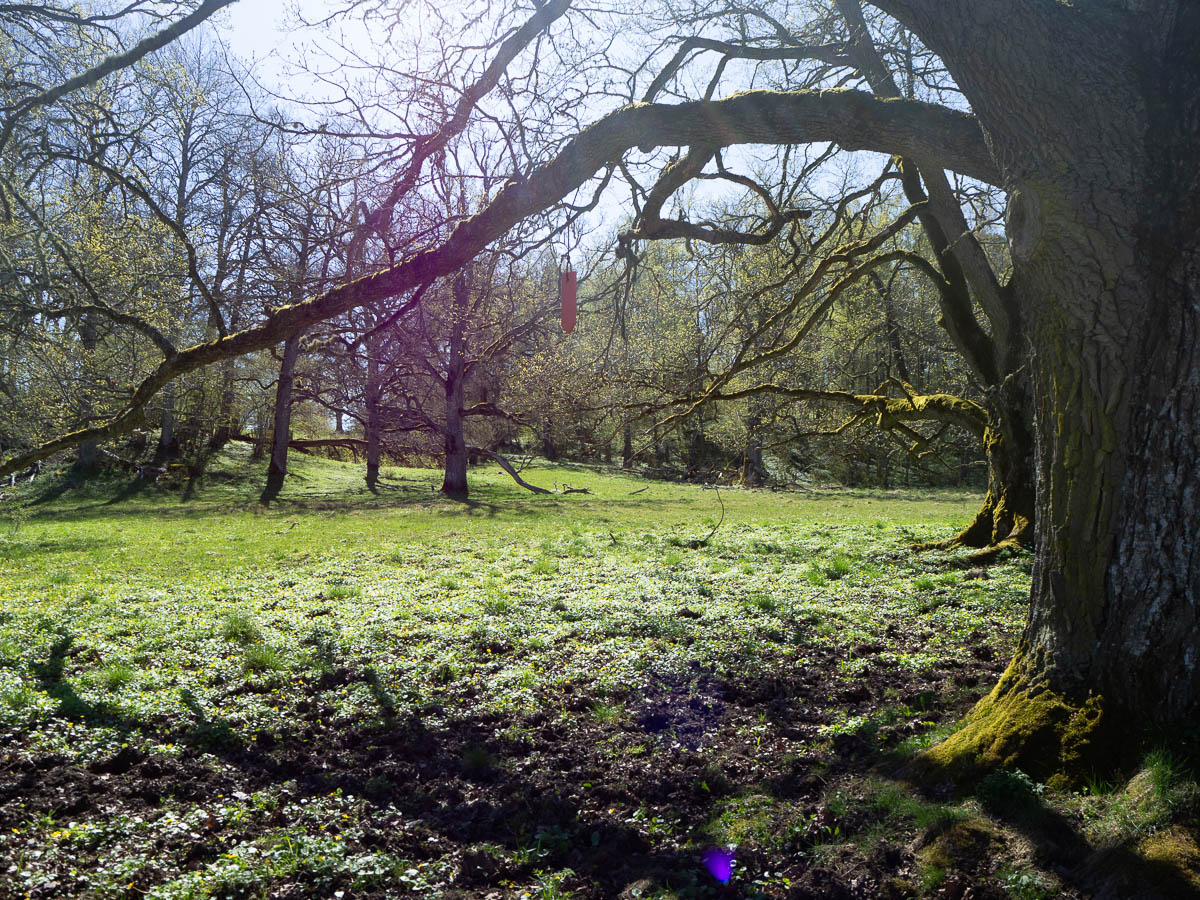
The cows in the oak pasture were at the near end of the pasture today, and seemed quite curious about me. I didn’t mind the curious cows or the calves, but they were accompanied by one or two bulls of impressive size, and I felt rather more cautious about them, so I hightailed it out of there.
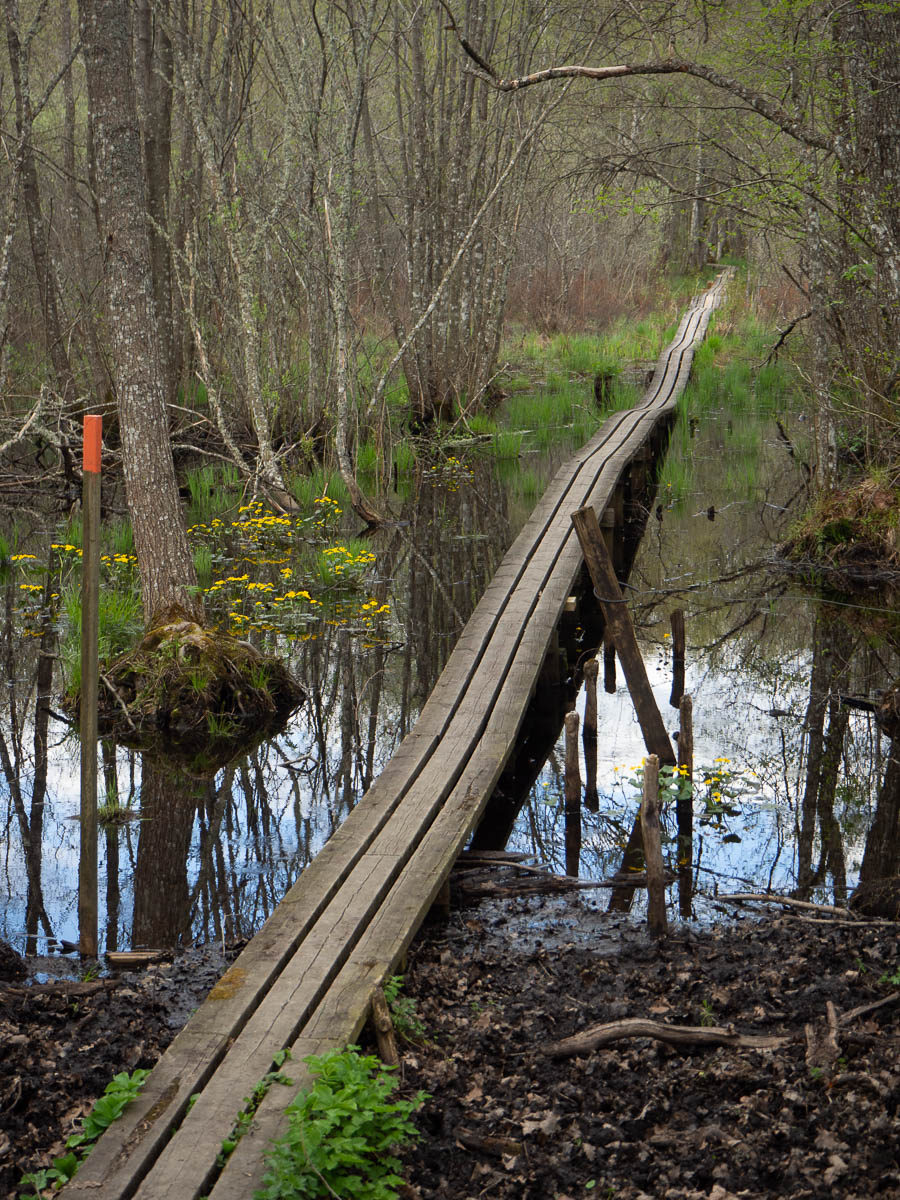
Sörmlandsleden stage 19 + a little bit of stage 20, 14.5 km. From Ånhammar to Henaredalen in the middle of nowhere.
Stage 19 on its own is officially 12 km, which is a bit too short to make a full day, but also a bit too much for a there-and-back in a single day. Rather than pressing myself, I’m doing it over two days, and I added on an extra ramble around Henaredalen for this afternoon.
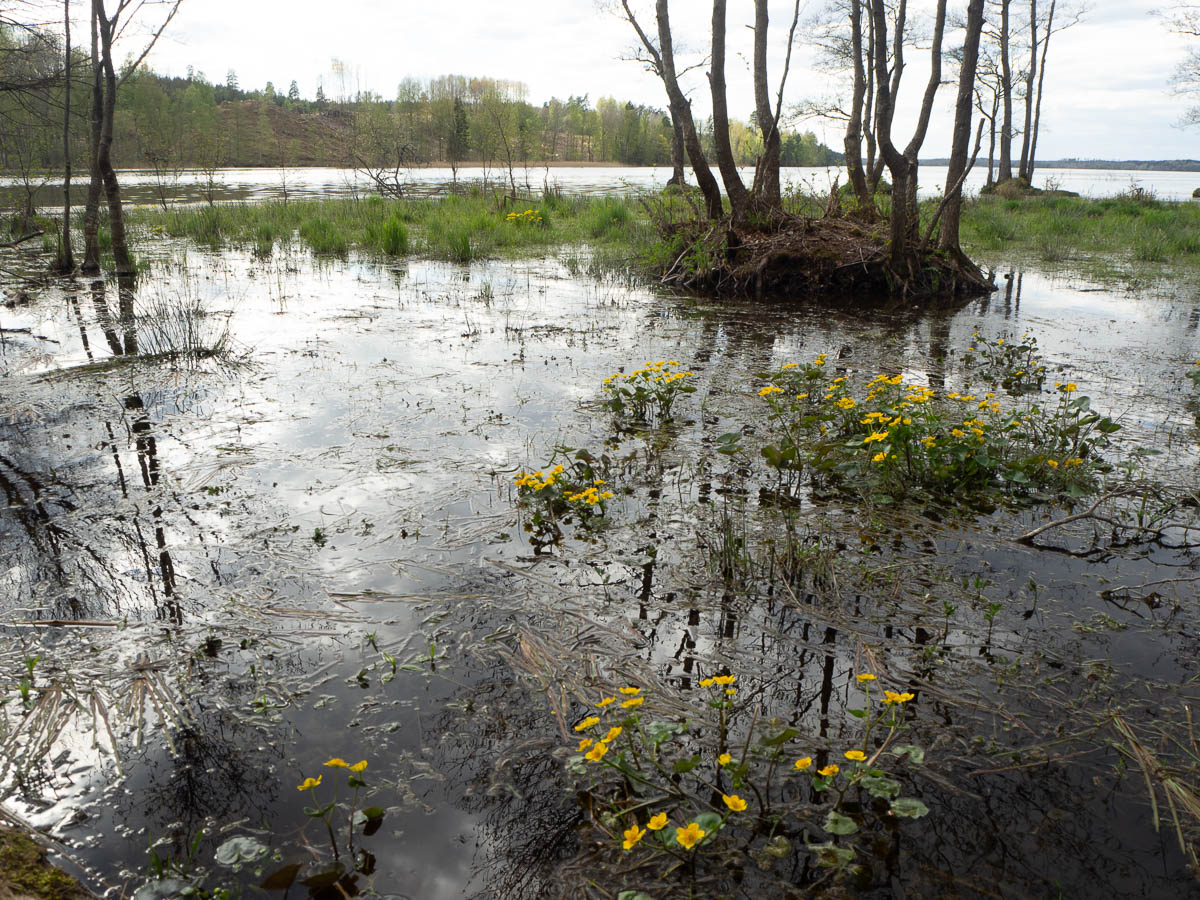
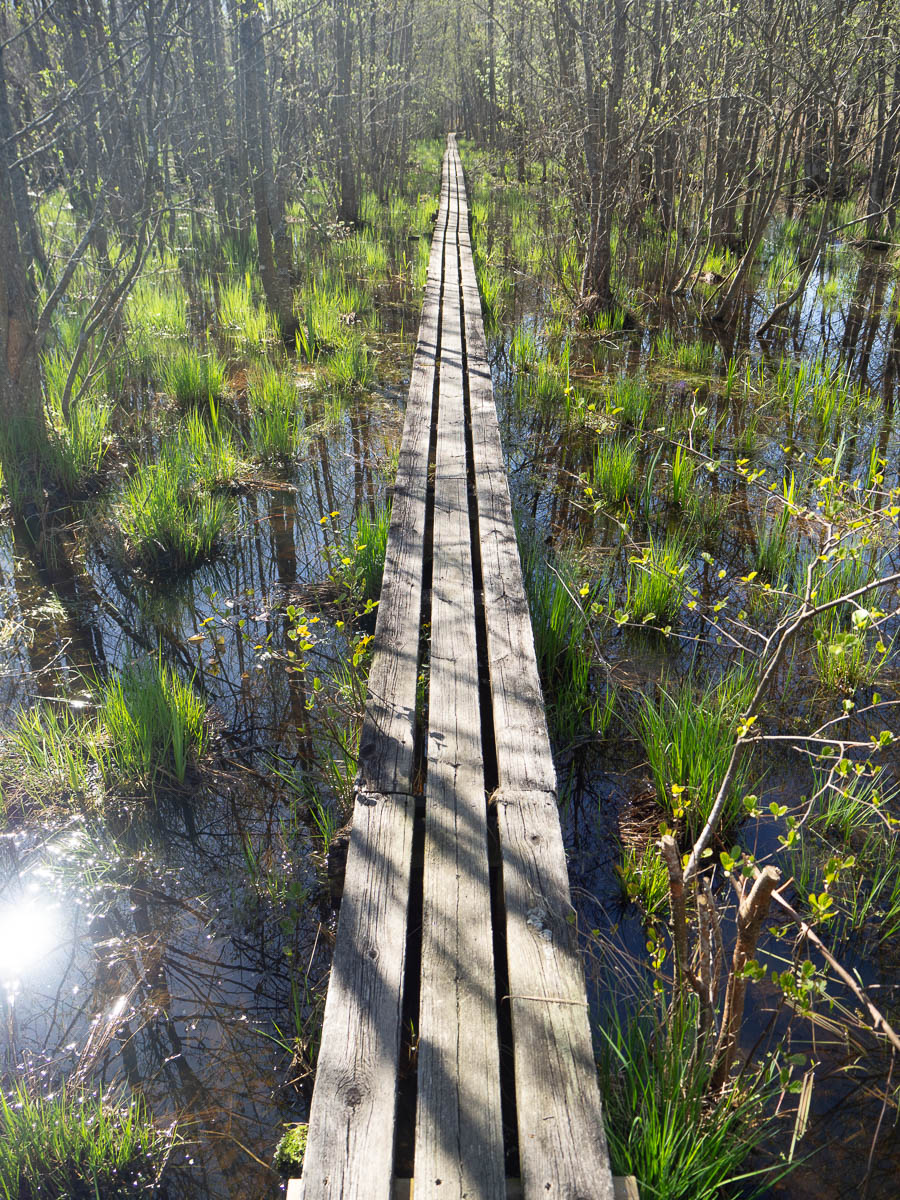
This was a beautiful and varied hike, going a flowering lakeside marsh…
… through oak pastures…
… and heathery bogs…
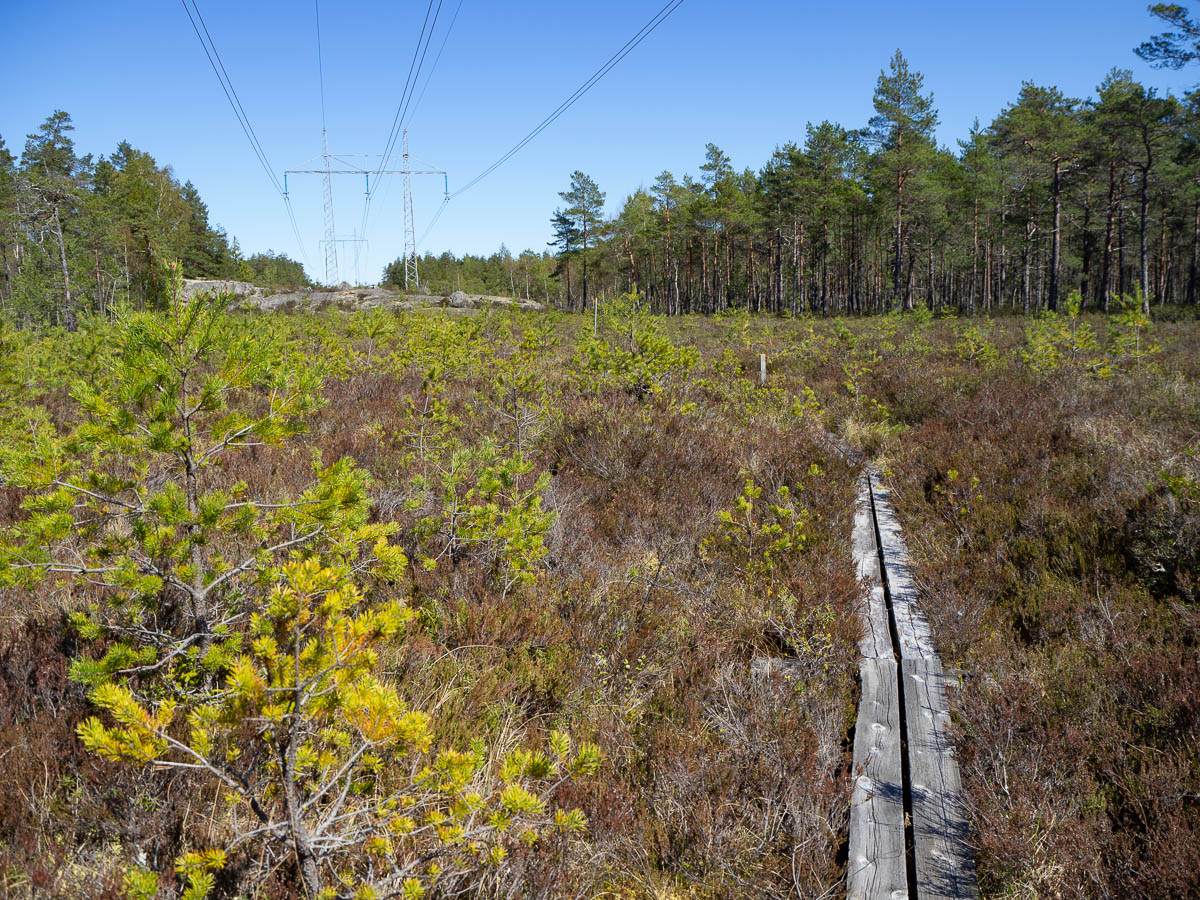
… to rocky pine forests dotted with little rocky lakes.
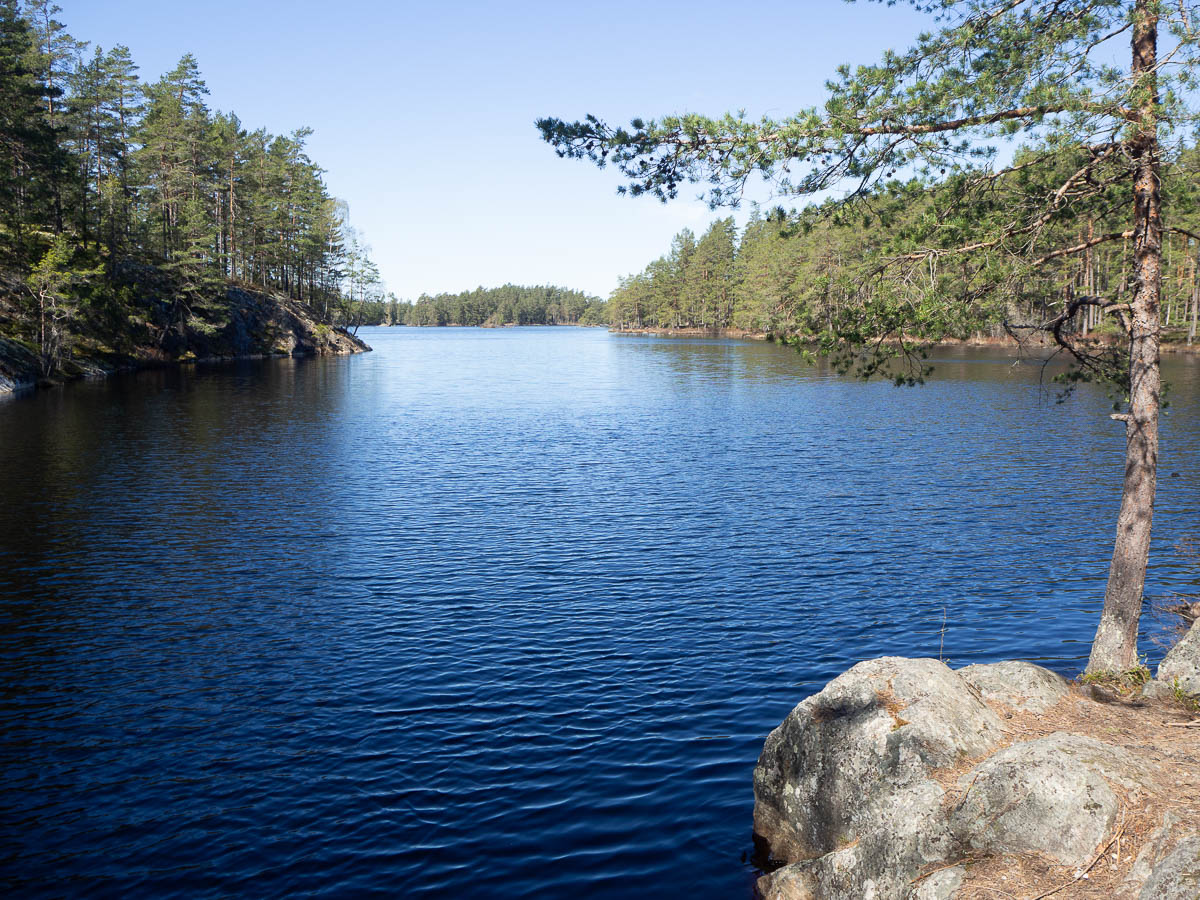
I’m glad I didn’t try to do the 12 + 12 km in a single day because this was not the easiest stage to walk. It wasn’t so much the ups and downs that made it hard, but the uneven path. Rocks and roots everywhere, and muddy patches.
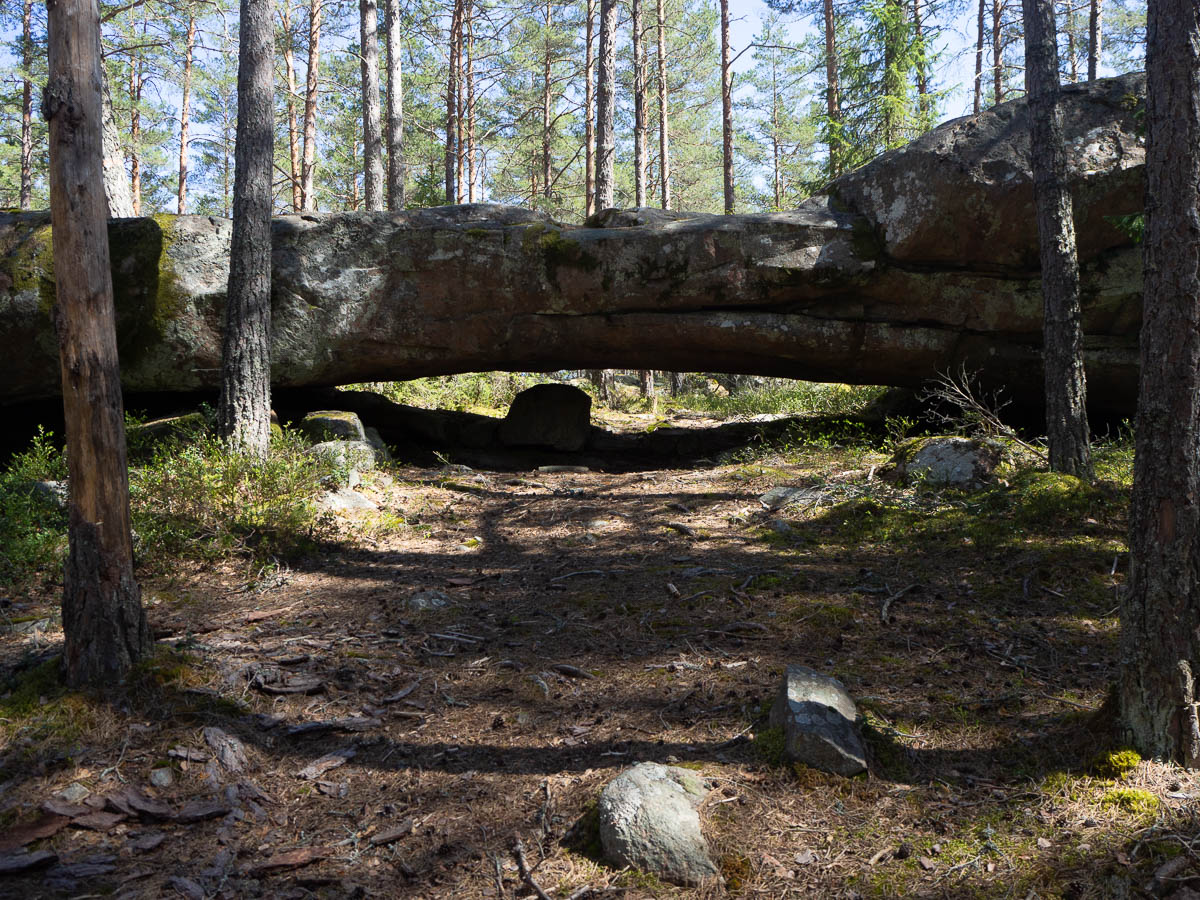
In the middle there was a ten-metre natural arch, all one unbroken piece of rock.
Another interesting sight was a very large paw print in the mud. Either a really large dog that somehow avoided all the other muddy spots on the path, or an actual wolf. I’ve heard from other hikers that there are several established wolf territories in this part of Sörmland, so that’s not entirely far-fetched.
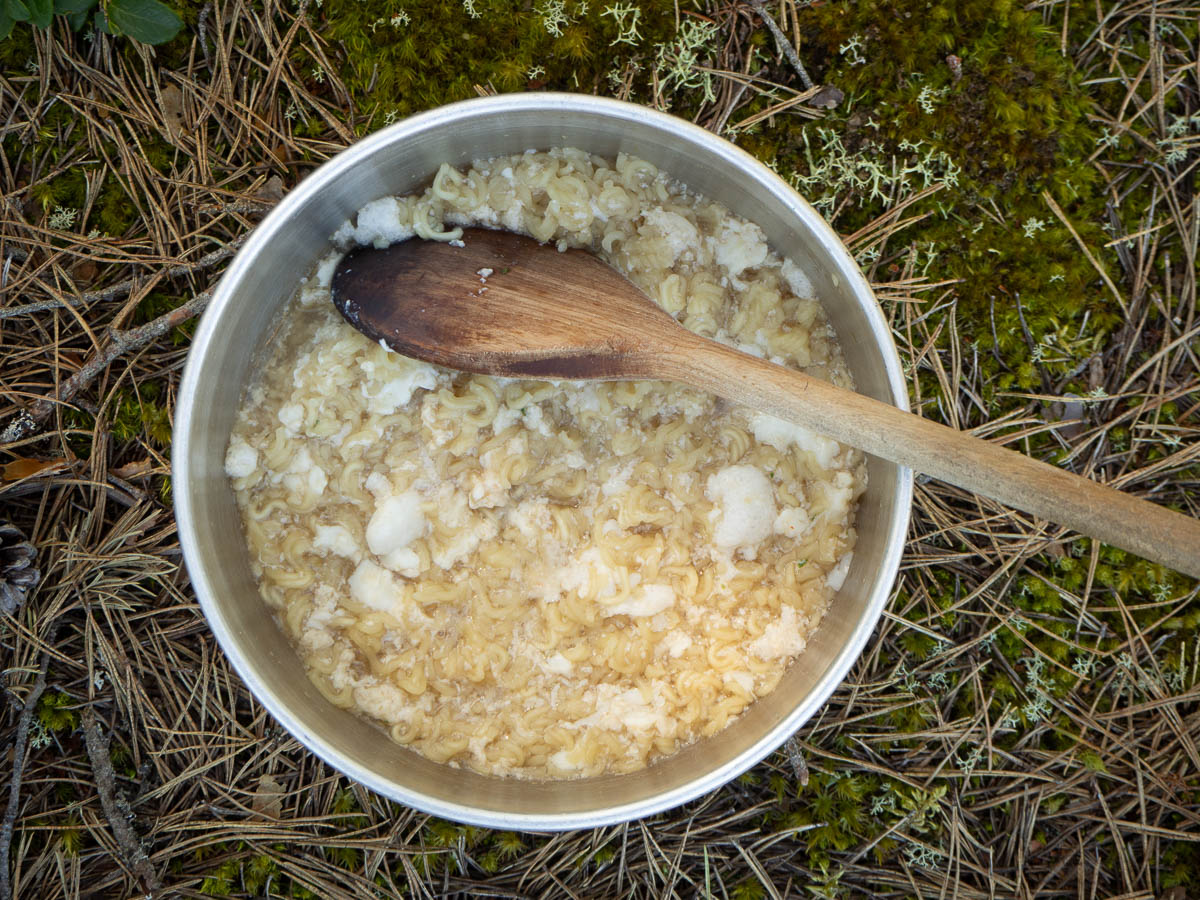
In other news, it turns out that walking around with egg whites in your rucksack will slowly whisk those egg whites into a soft foamy fluff. And if you then dump those egg whites into your hot instant noodles, they solidify into little foamy islands, sort of like sugarless îles flottantes.
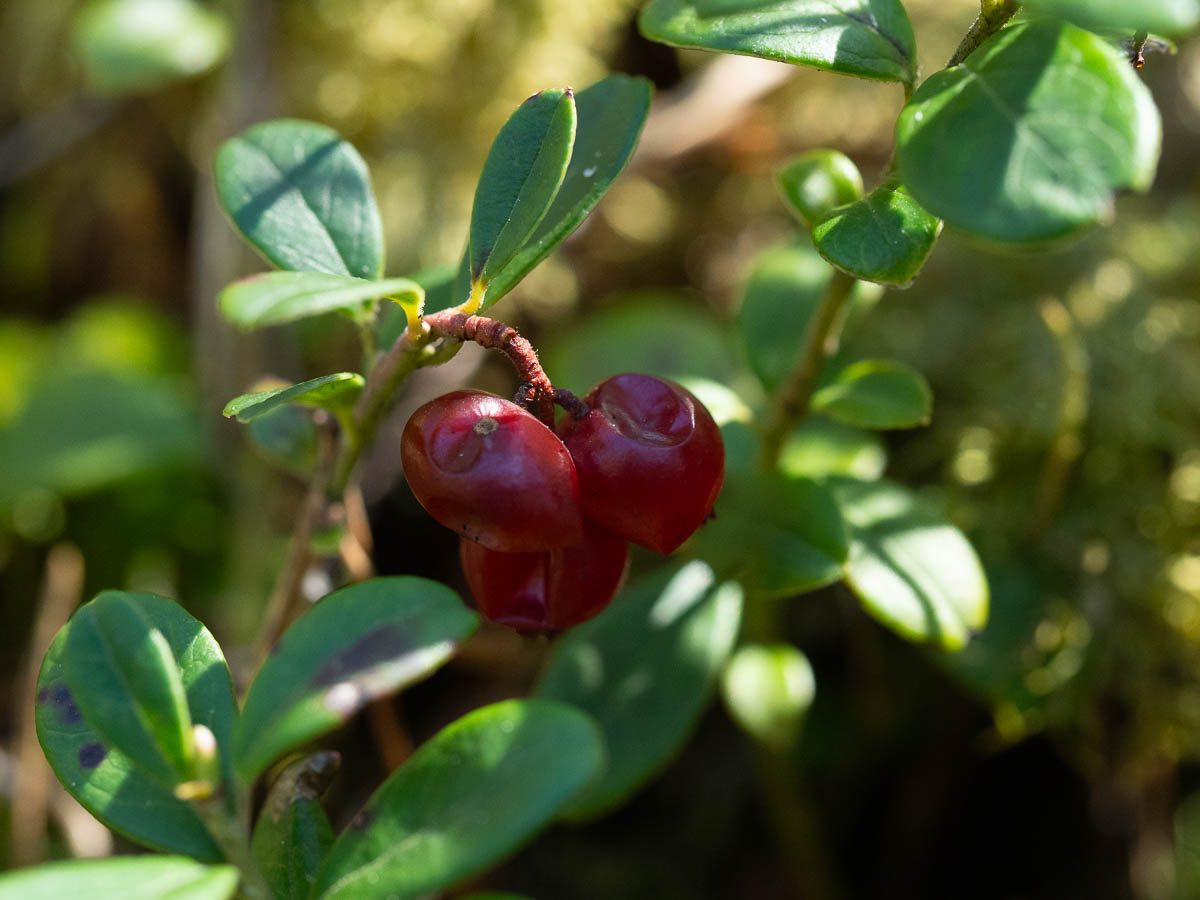
Speaking of food, I wasn’t expecting to find anything edible in the forest at this time of the year, but I was wrong – some of last year’s lingonberries were still there and waiting to be eaten. Frozen and then thawed, and partially sun-dried, they were wrinkly but juicy, tart and sweet. Few and far between, and hard to spot, not like fresh ones where you can stop anywhere and eat your fill.
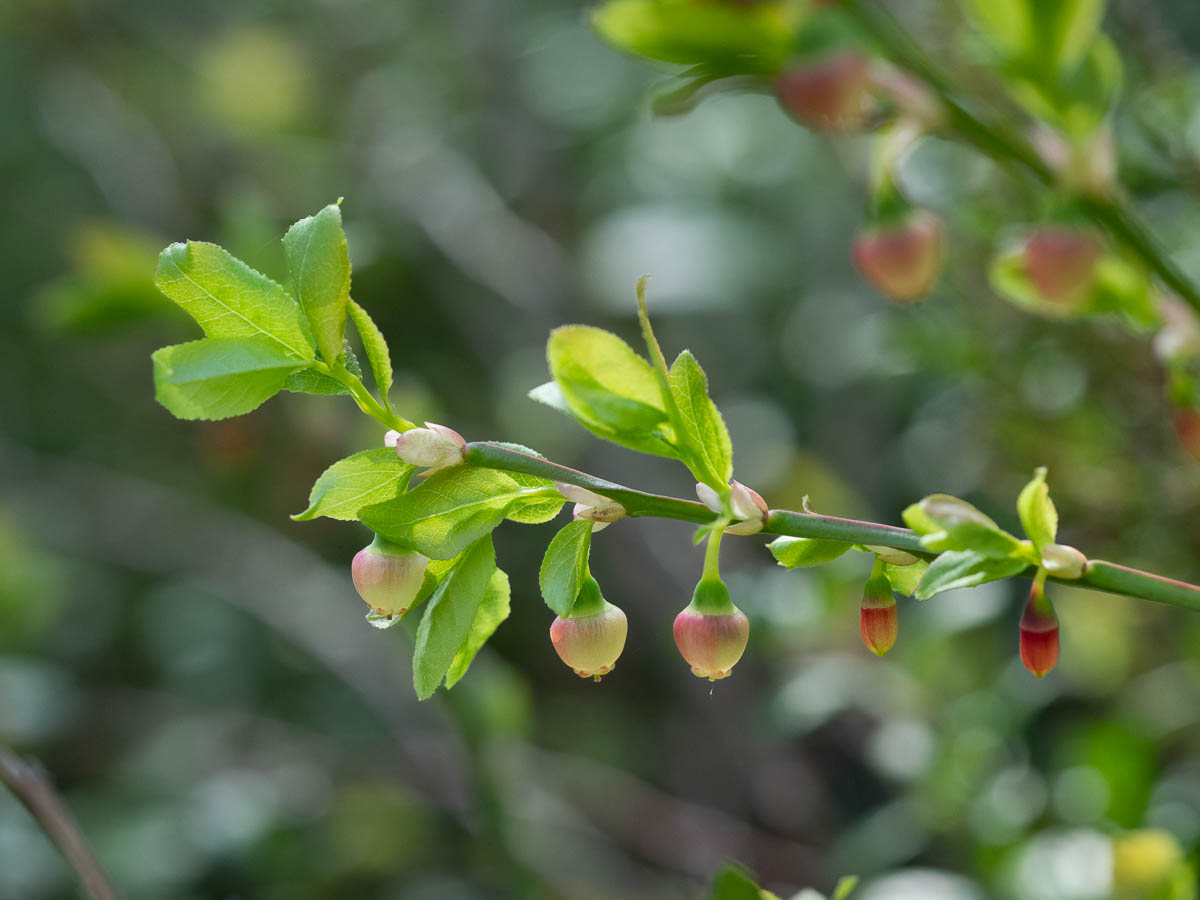
The forest was full of bilberry and lingonberry bushes, so later in the season there will be lots to eat here. Right now the bilberries taunted me with their berry-like flowers.
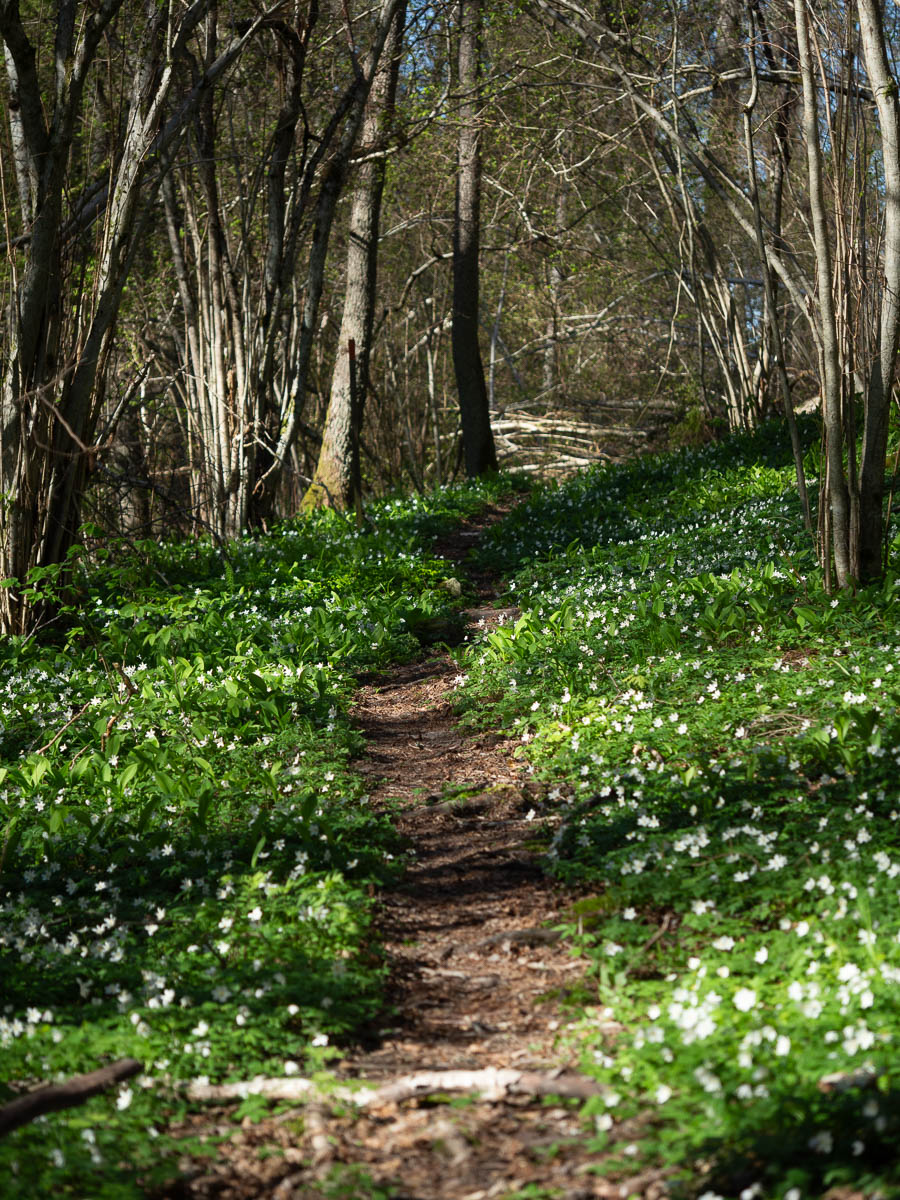
Henaredalen is a river valley that I walked in 2018 and wasn’t too impressed by. That was also in May, but this year, spring has come a lot further and the valley is more full of flowers. Much of the ground was covered by wood anemones.
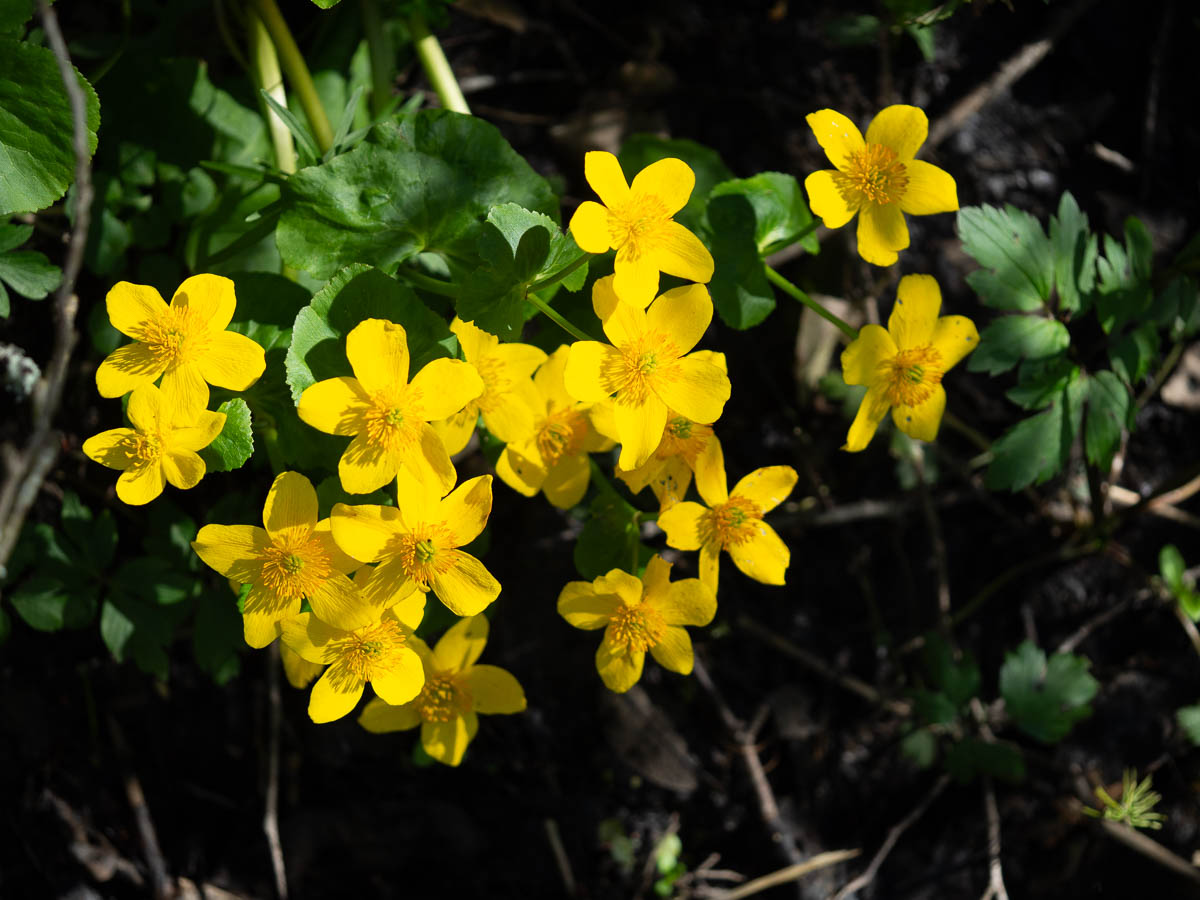
In between there were marsh marigolds…
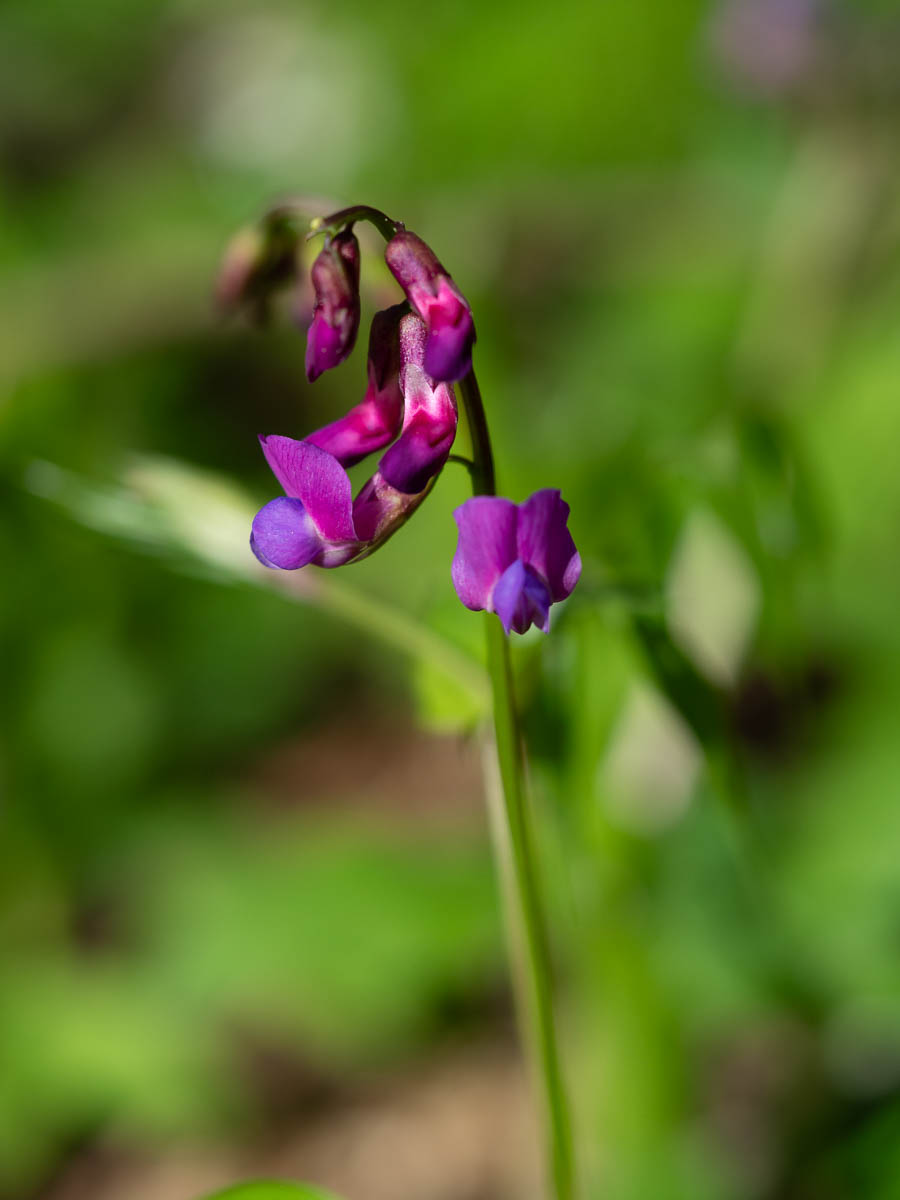
… and a pretty purplish-red flower that I later identified as some kind of Lathyrus (possibly gökärt, seahernes).
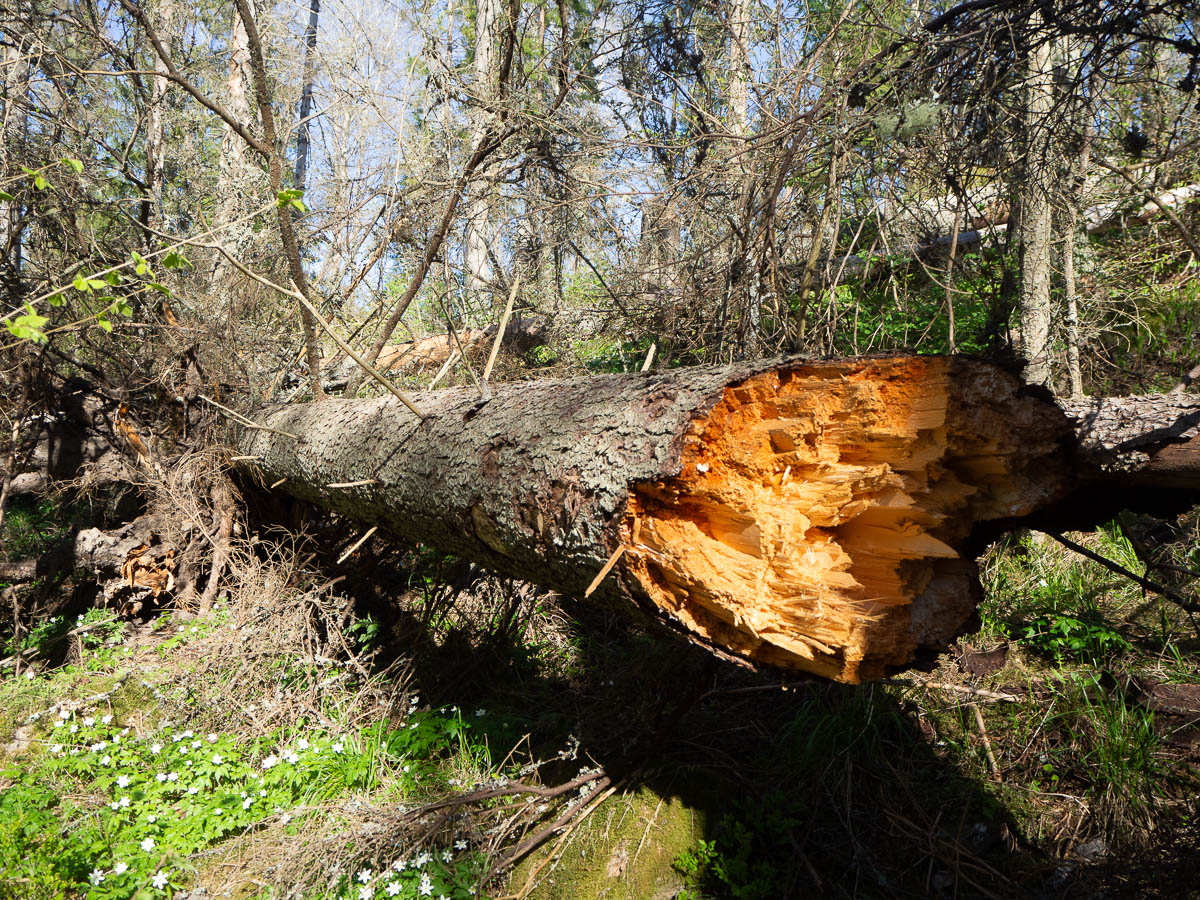
One big change from my last visit was the large number of fallen spruces. There was a sign explaining that the area is badly affected by the spruce bark beetle, and there’s a risk of spruces falling without warning. It looked to be at least a year old, and clearly plenty of trees had toppled since then.
Of wildlife, apart from the possible wolf print: butterflies of all sizes and colours. Birds, especially geese in that marshy lake, blackbirds in the deciduous forests and cuckoos in the pine forests.
Of other hikers, very few. For a while it looked like I would get the camping site all to myself, but just as I was making dinner, a couple turned up. We talked about other hiking trails in this general part of Sweden, and about the tricky logistics of hiking these hard-to-reach parts of Sörmlandsleden. They did it with a car + bicycle combo.
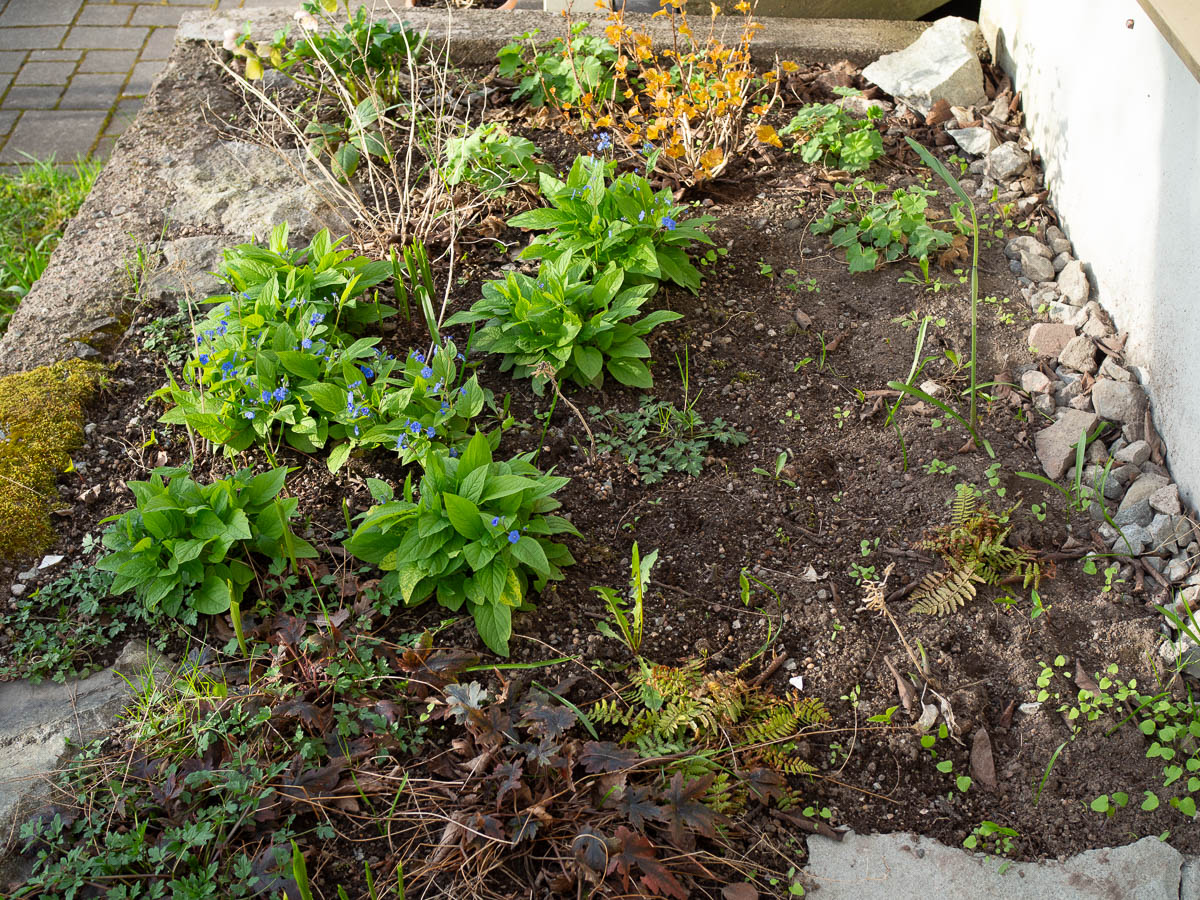
The planting in the corner in front of the house is delivering mixed results, which is pretty much as expected. The Omphalodes and Alchemilla are growing well, like the Helleborus that I’ve photographed before. The funkias, lilies of the valley and Tiarellas are slower to come up, but are present and accounted for.
The toad lily is technically alive, but its shoots have all been eaten level with the ground. I can see them when I push away the soil, but the ends are all bitten off. I’m not going to try and coddle it through this; it’s going out. The Polygonatum are mostly gone – a single one remains – and I really like them so I might give those another try. The Thalictrum have all disappeared; there’s not a single sign of them ever having been here, even. Time to replace them with something more suitable.
We saw Alexander Ekman’s Midsommarnattsdröm (“A Midsummer Night’s Dream”) at the Royal Opera during its first run, which must have been in 2015 or 2016. Now it’s back, and we saw it again.
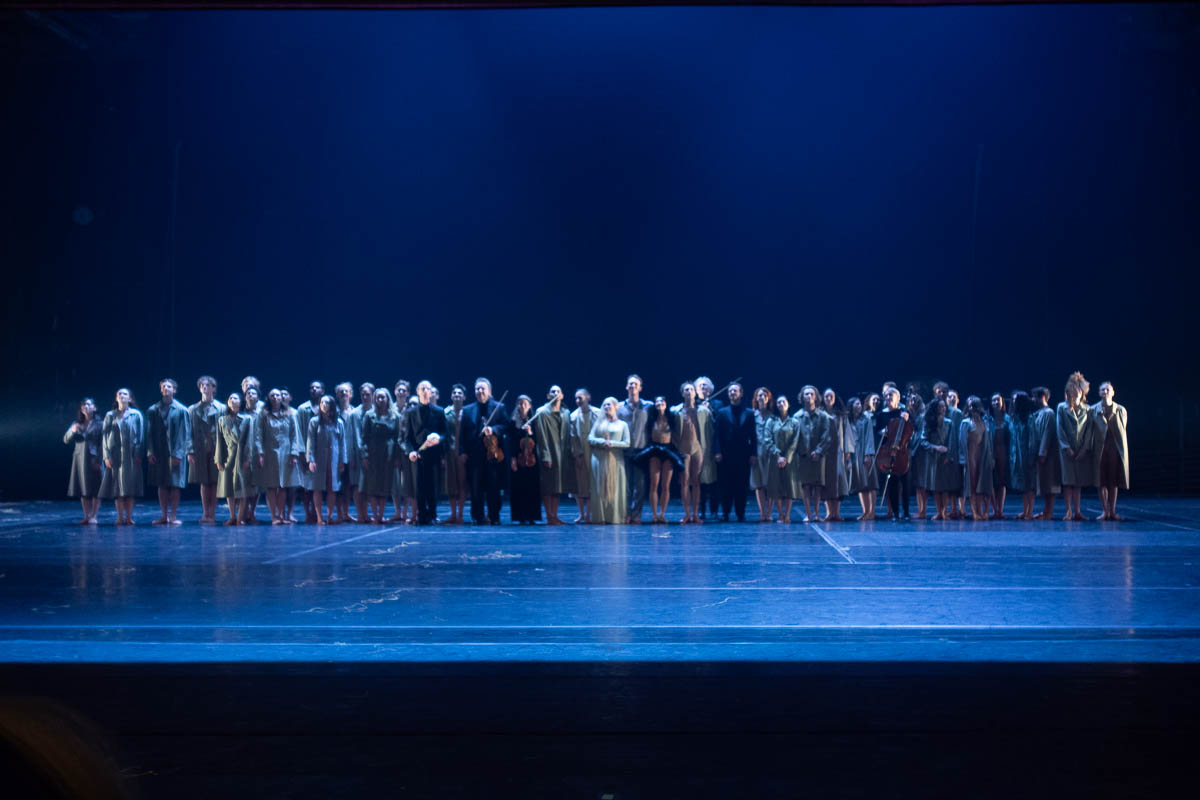
I’m glad that the Opera is willing to invest in a show with such a large cast. (I counted 40+ people on the stage.) The mass scenes would not have had the same impact with, say, half the number of dancers. Forty people marching, chest to back, makes an impression. Forty people streaming back and forth fills the scene, Twenty people doing the same thing would be puny.
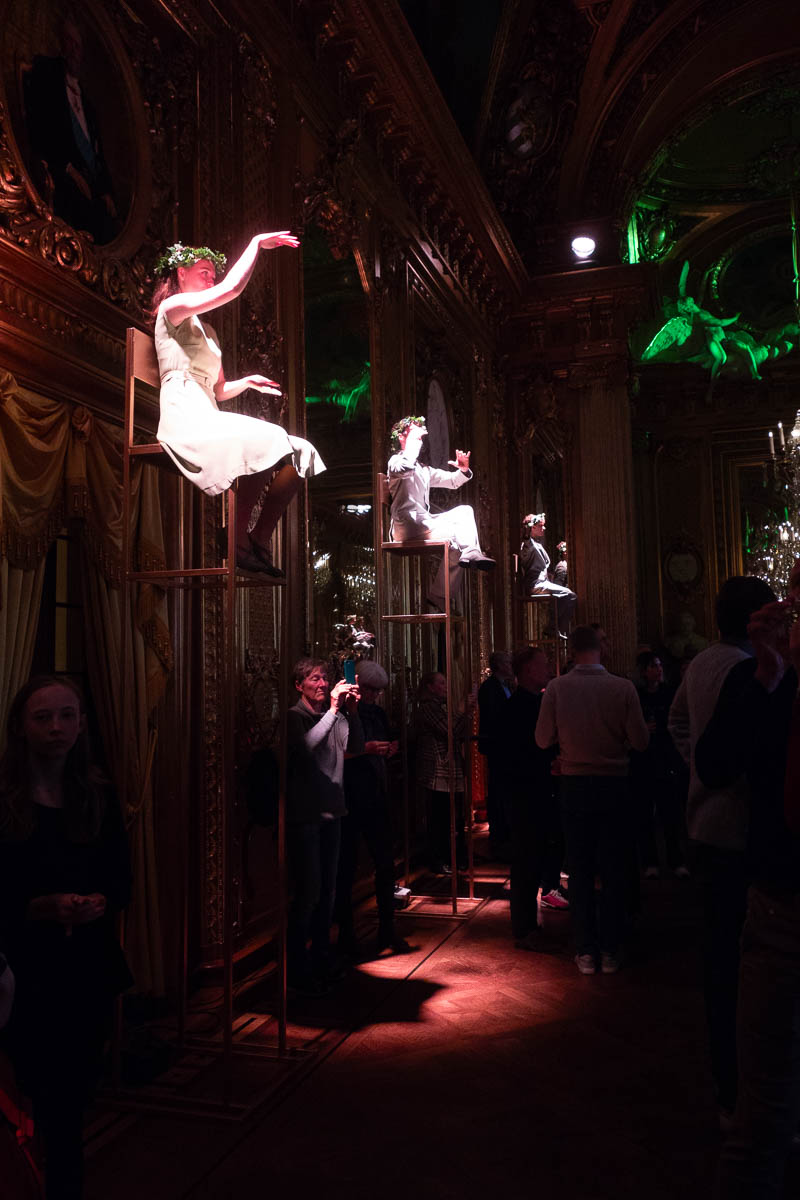
During the interval, dancers were performing in the Golden Foyer of the opera house, seated on three-metre-tall chairs. Mostly a gimmick, and while there were people taking photos, I didn’t see anyone pay them real attention for any longer time.
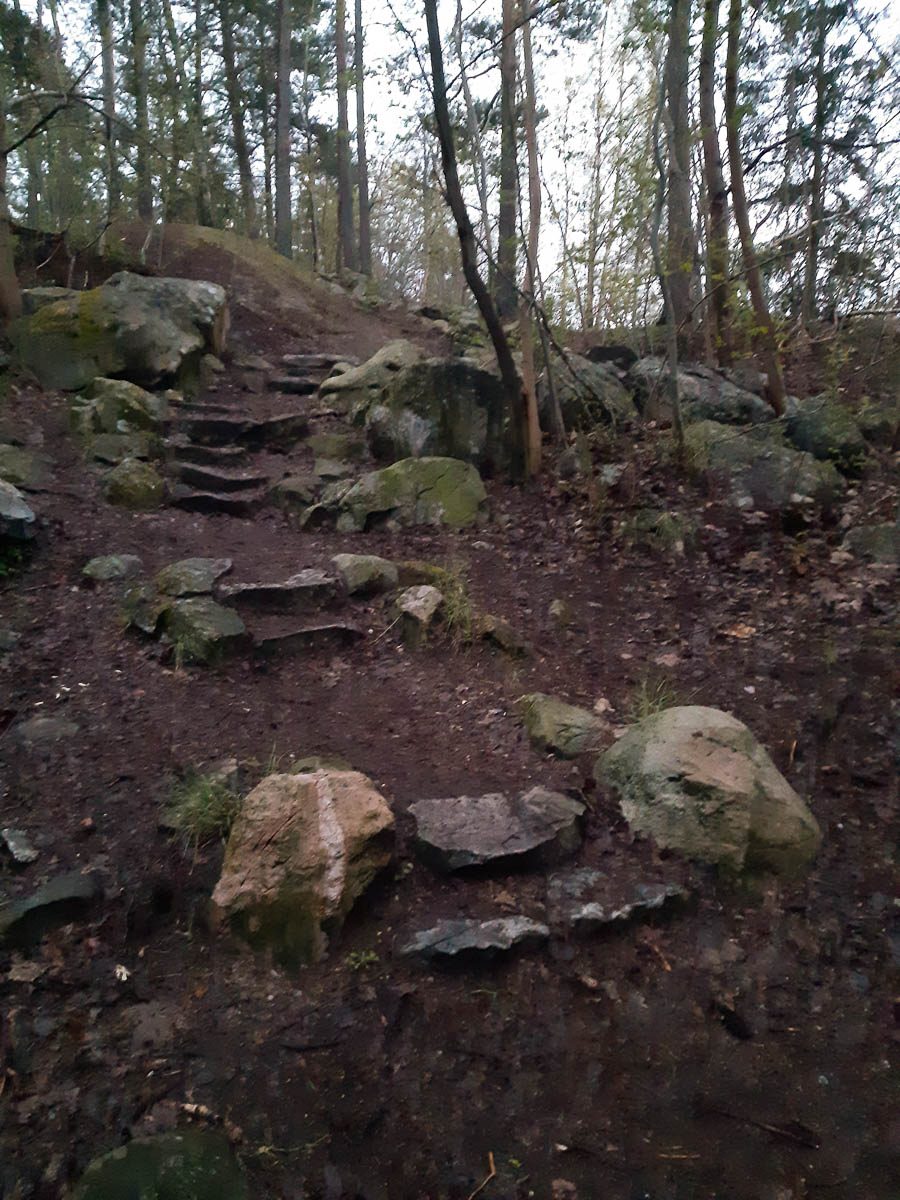
Blogging about the hidden woods in the neighbourhood made me curious. I looked at a map and spotted another green area, less than ten minutes’ walk away, that I didn’t know anything about. It’s nestled among residential quarters just like ours, but there’s a slightly larger road between here and there, so I never end up there if I just go out for a walk.
It’s right across the street from a small park with a playground where I know for sure that I’ve been with the kids at some point, but even then I didn’t even notice the woods.
Now I went there to explore. It turned out to be a designated area for off-leash dog walking. There wasn’t a single dog there, at nine o’clock at night, nor any humans. But there were some paths and hills and rocks, as usual. The hills ended in a cliff, tall and steep enough to be fenced at the top, with a view out over old residential quarters towards the new student housing next to the railway line. I should go back there in proper daylight and with a proper camera some day.
The woods were mostly pine on the hilly bits and the cliff, but deciduous trees lower down, which was rather nice, because songbirds like them a lot better. Pine forests are much quieter than leafy ones.
Finish one sweater, start thinking about the next one. First step: knit, block and measure a gauge swatch. I don’t much like keeping my gauge swatches – they take up space, and it’s unlikely that I’ll ever have any benefit from them – so I usually rip them up and reuse the yarn immediately.
The yarn looks unusable, and mostly is unusable. Crinkly and uneven. But then I put it in lukewarm water for ten minutes, gently massage it a bit, squeeze out the water – and it looks just like new. Like magic. Except now it smells like a wet sheep, which is less magical but also kind of wonderful.




I finished the crazy sweater, and even wove in all the ends – of which there was a lot, due to both the stripes and the shaped construction.
It didn’t come out quite as I had pictured it. The stripes could have been more uneven in width and distribution. Now I just eyeballed things, and clearly ended up converging at some kind of comfortable width and comfortable distance. Also, I had imagined a more drapey look, but the garter stitch made the fabric a bit stiff.

To let the stripes and the crazy yarn get most of the attention, I kept everything else as simple as possible. No ribbing or anything around the neckline, just one row of single crochet to even out and strengthen the edge, and nothing at all along the cuffs and hem. I rather like this simple, pared-down look.


Initially as I finished the sweater and looked at it, I wasn’t sure how much I liked its combination of loose fit and thick fabric. But then I put it on and it felt amazingly comfortable – soft, loose and very stretchy without being baggy. And it is kind of fun. So now I’ve been wearing it around the house in the evenings almost every day. I think it might be a perfect sweater for the in-between seasons, especially when lounging at home. It may not see much use outside the house – it’s too bulky to fit under a coat (at least under any of mine), and somewhat loosely knit so not much protection at all against the wind on its own.
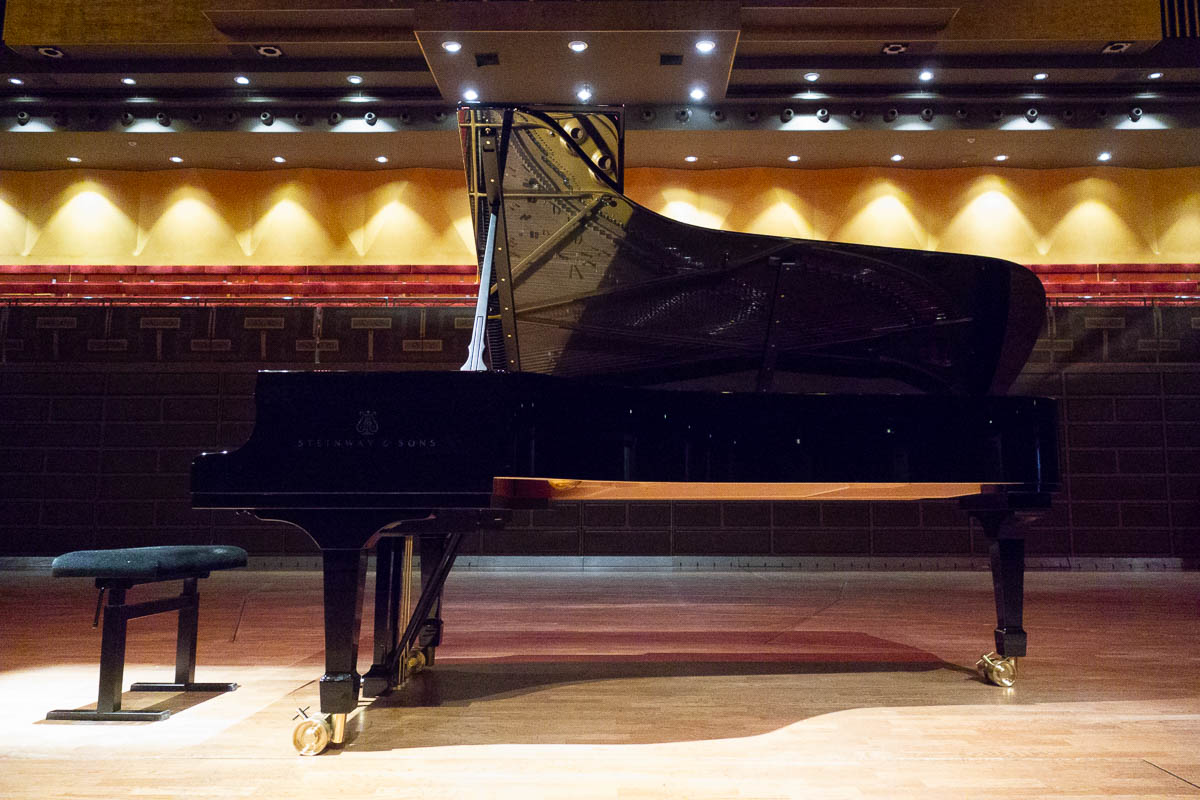
The last in the series of solo piano concerts at Konserthuset/Stockholm Concert Hall, today with Peter Friis Johansson.
First, Henry Cowell’s Three Irish Legends – avant-garde music from 1922. Interesting and energetic. At times the piece requires the pianist to use his entire lower arms to play, not just his fingers. Perhaps not my favourite, but I’m glad I heard this.
Next, Bo Linde, a mid-century Swedish composer. OK, bot not this music didn’t really do anything for me.
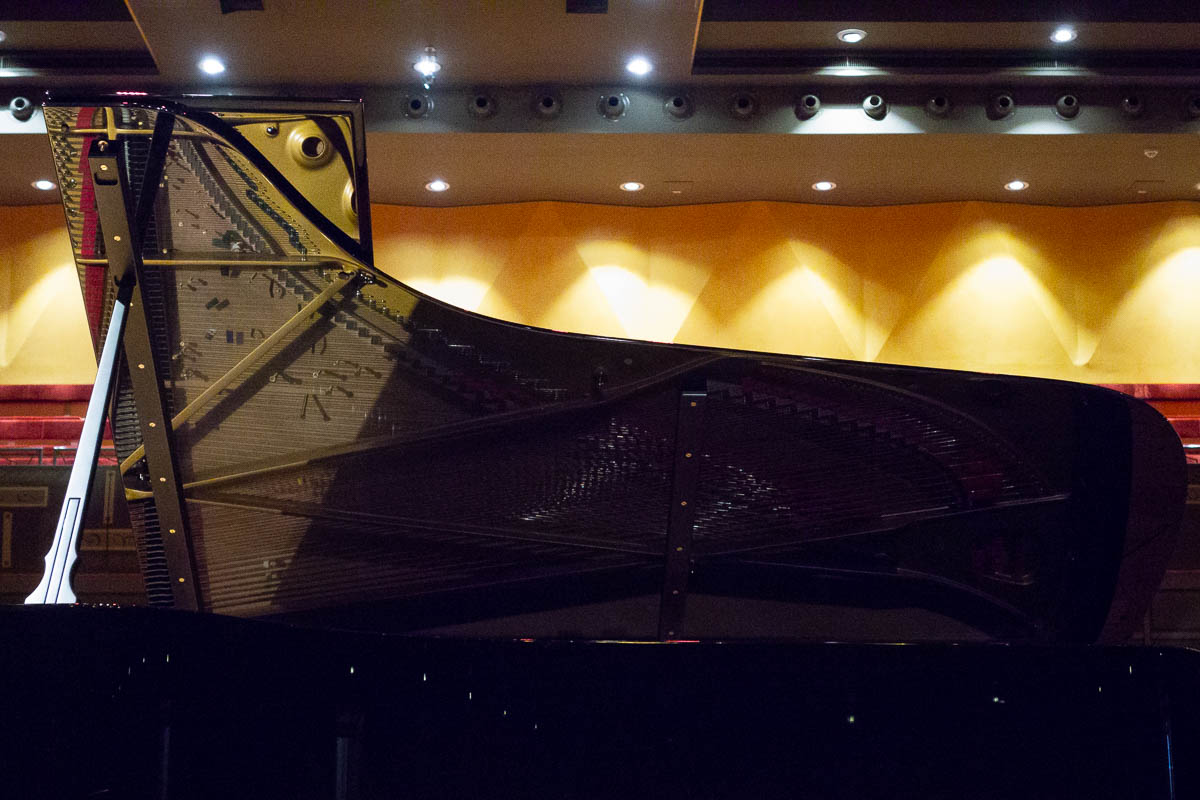
Last, John Cage’s Sonatas and Interludes for Prepared Piano, which means a piano that has been modified by putting small objects – screws, erasers, pieces of plastic – on or between the strings. This sounded intriguing before I’d heard it, remained interesting for the first ten or fifteen minutes, but there wasn’t enough actual music to keep my interest beyond that. Also after a while the music felt like it was just… fading out. Like a constant diminuendo, as if the music was about to end – for half an hour.
I like simple music, and minimalist music, but this was too minimal for me. It wasn’t even meditative. Some music can sometimes put me in a state that’s almost awake dreaming, and I have to rouse myself to keep listening. This didn’t even capture enough of my brain to do that. It just became background noise while I sat and thought of other things.
Several people in the audience left in the interval before the John Cage piece. More walked out about ten minutes into it. (I couldn’t make myself do that.) Many rose and left as soon as the applause started – some in clear relief, others voicing complaints. And at the same time, a few were shouting “Bravo!” at the back.
I asked if I could step up on the stage to see the prepared piano up close, but the staff clearly just wanted the audience to be gone so they could clean up and go home, so I had to make do with photos of the strings and objects as reflected in the lid of the piano, from a distance.
| « Older posts | Newer posts » |
