Conference day two, with Active Solution on Monte Isola and in Iseo.

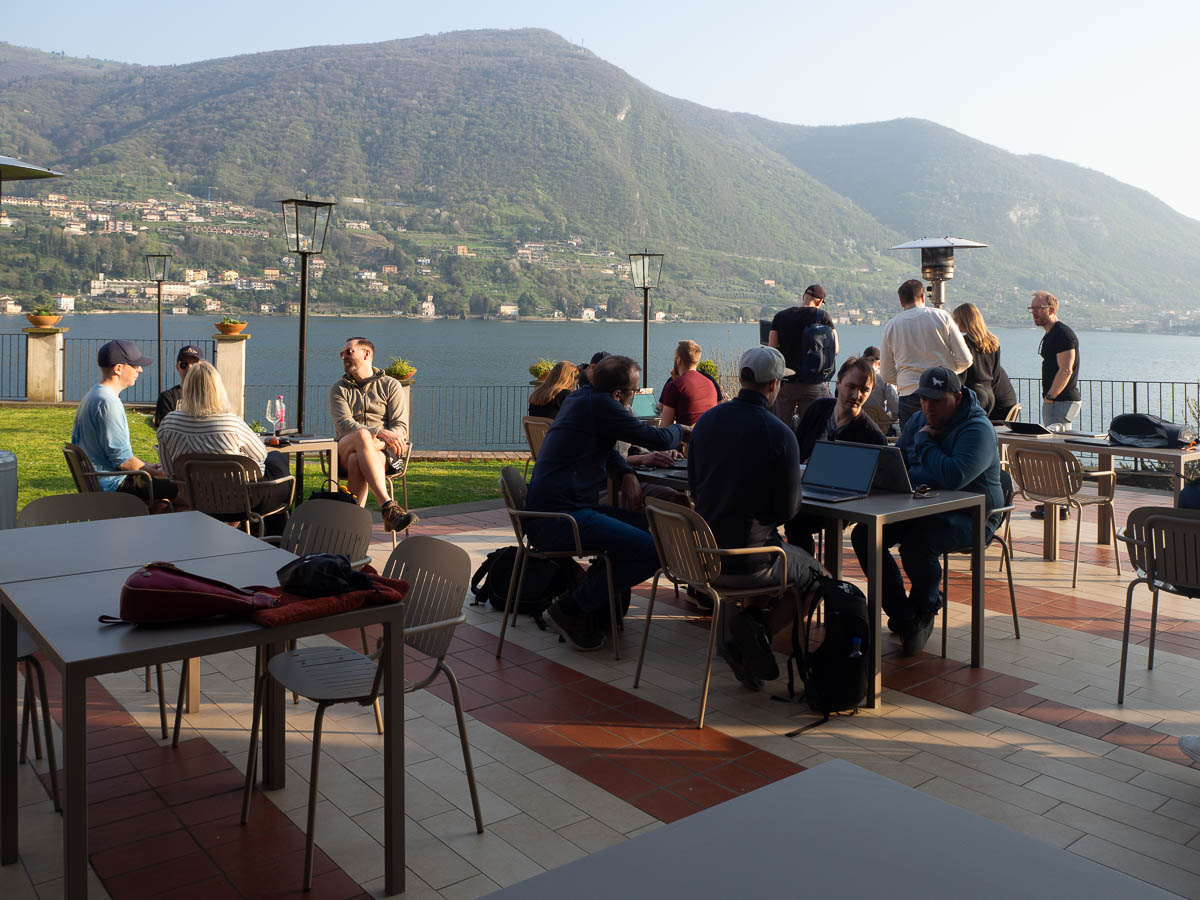
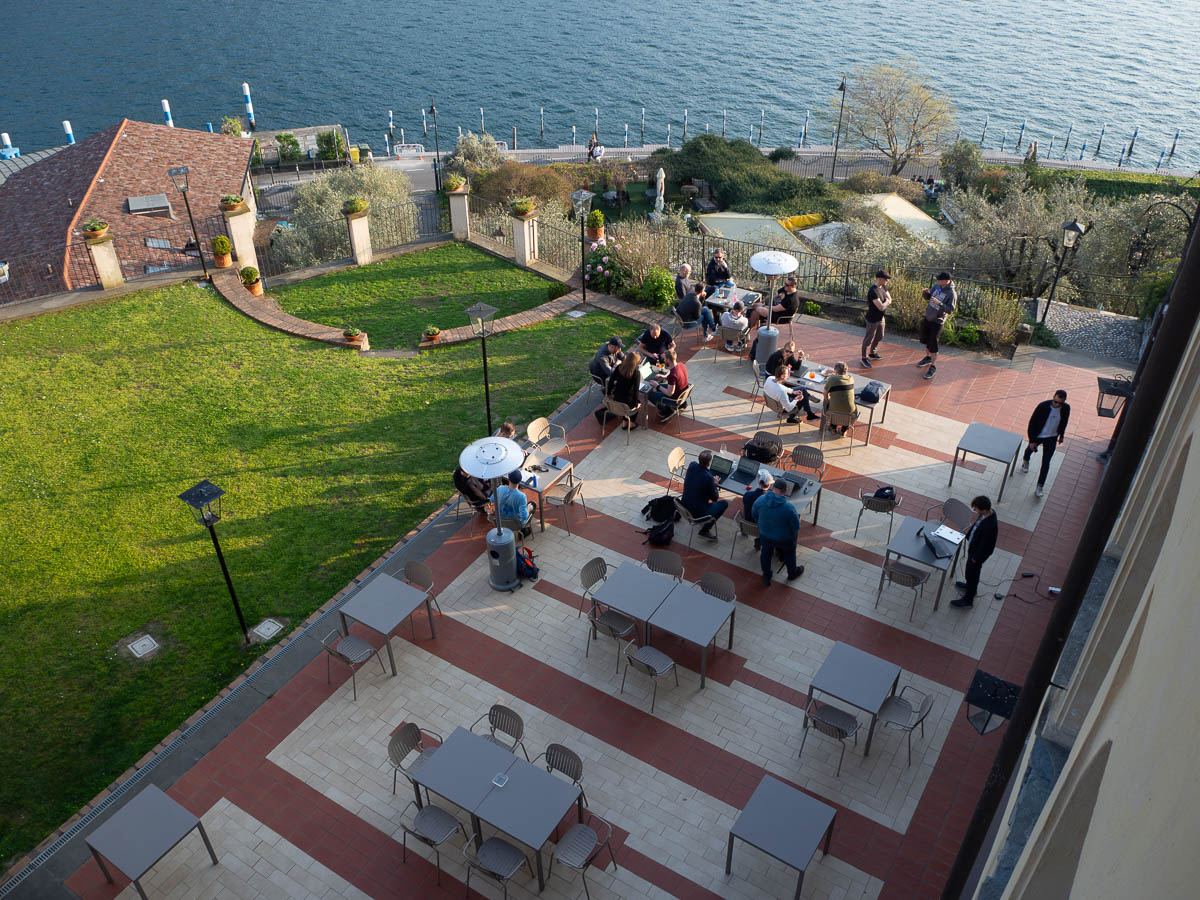
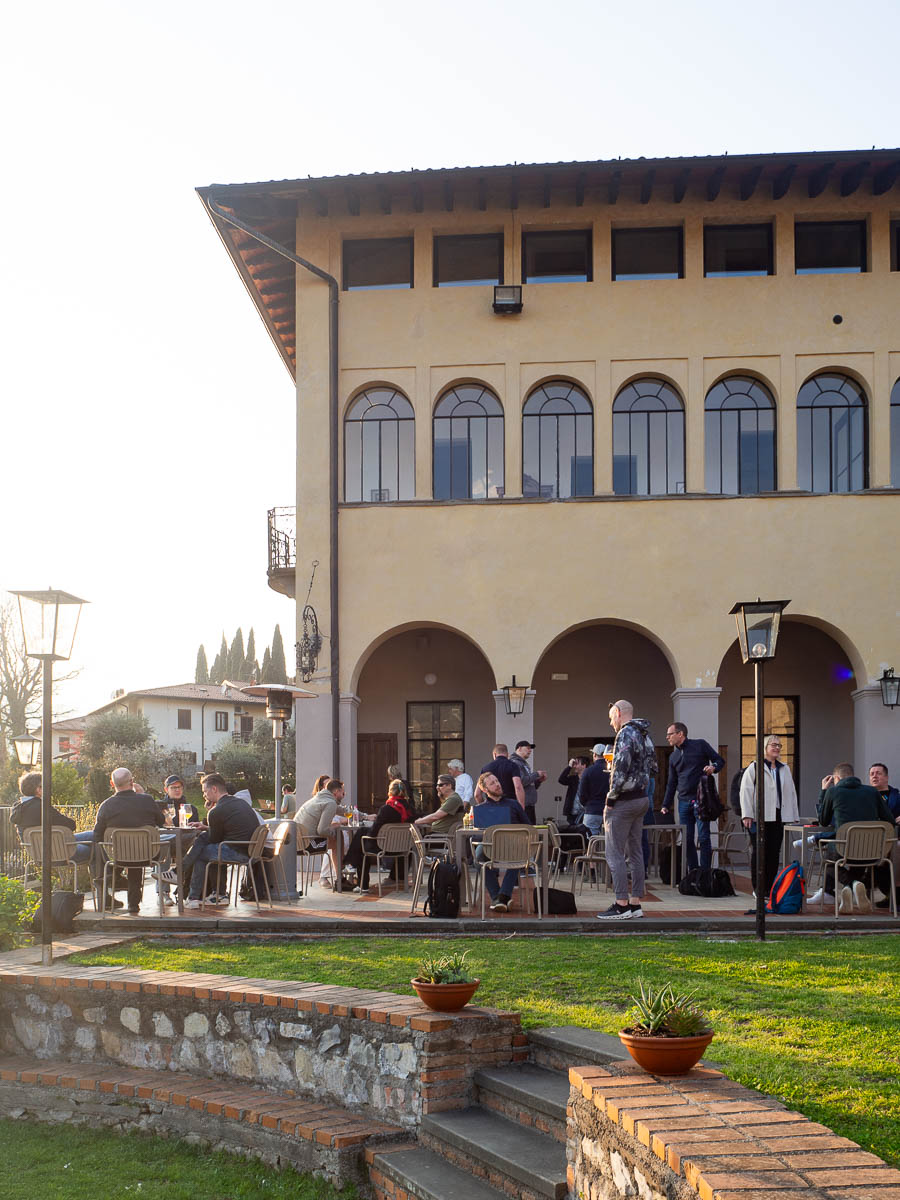
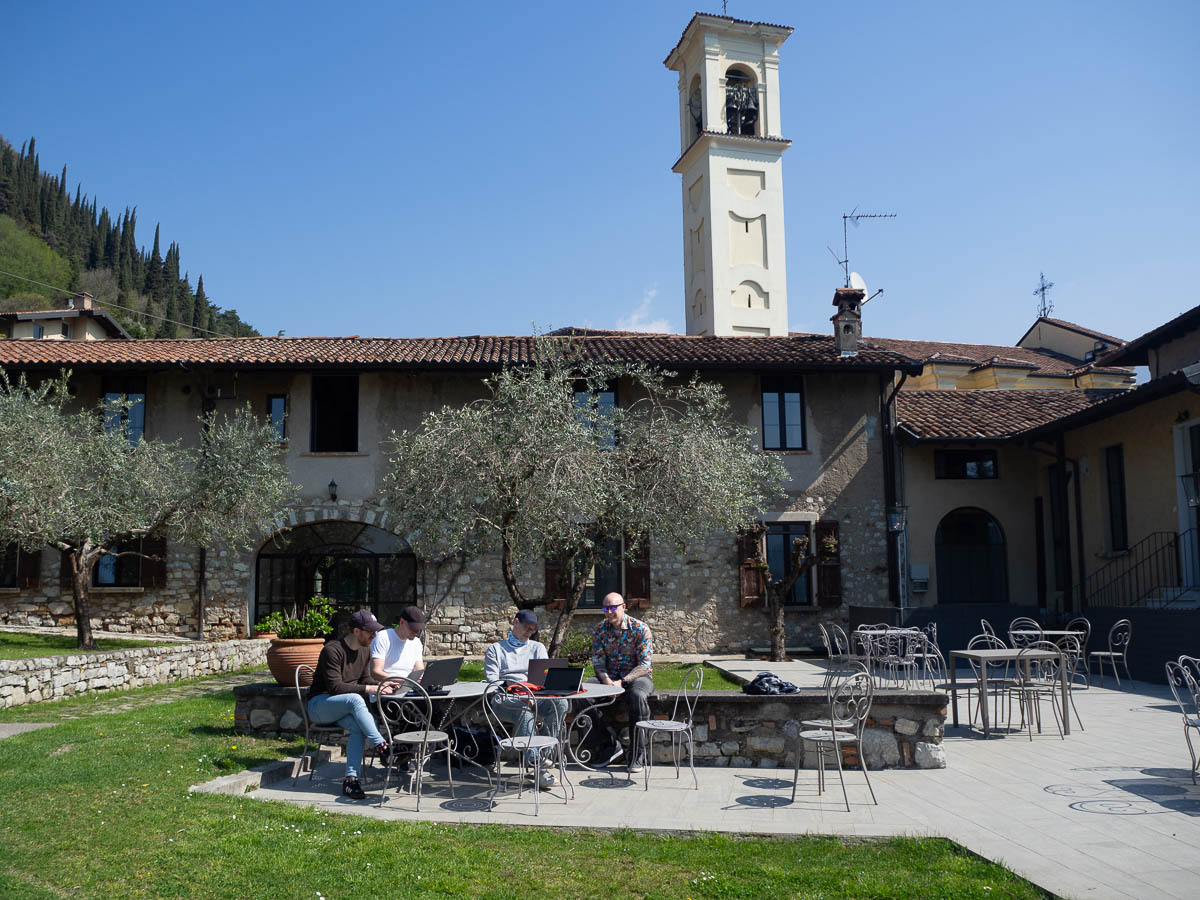
The morning was dedicated to knowledge activities, just like yesterday. A talk, and then coding together in small teams. The weather was pretty fabulous again and we could sit and code outside in the garden behind the castle, without layers of sweaters. There was even a power outlet hidden in the stone wall – as if this spot was made for developers.
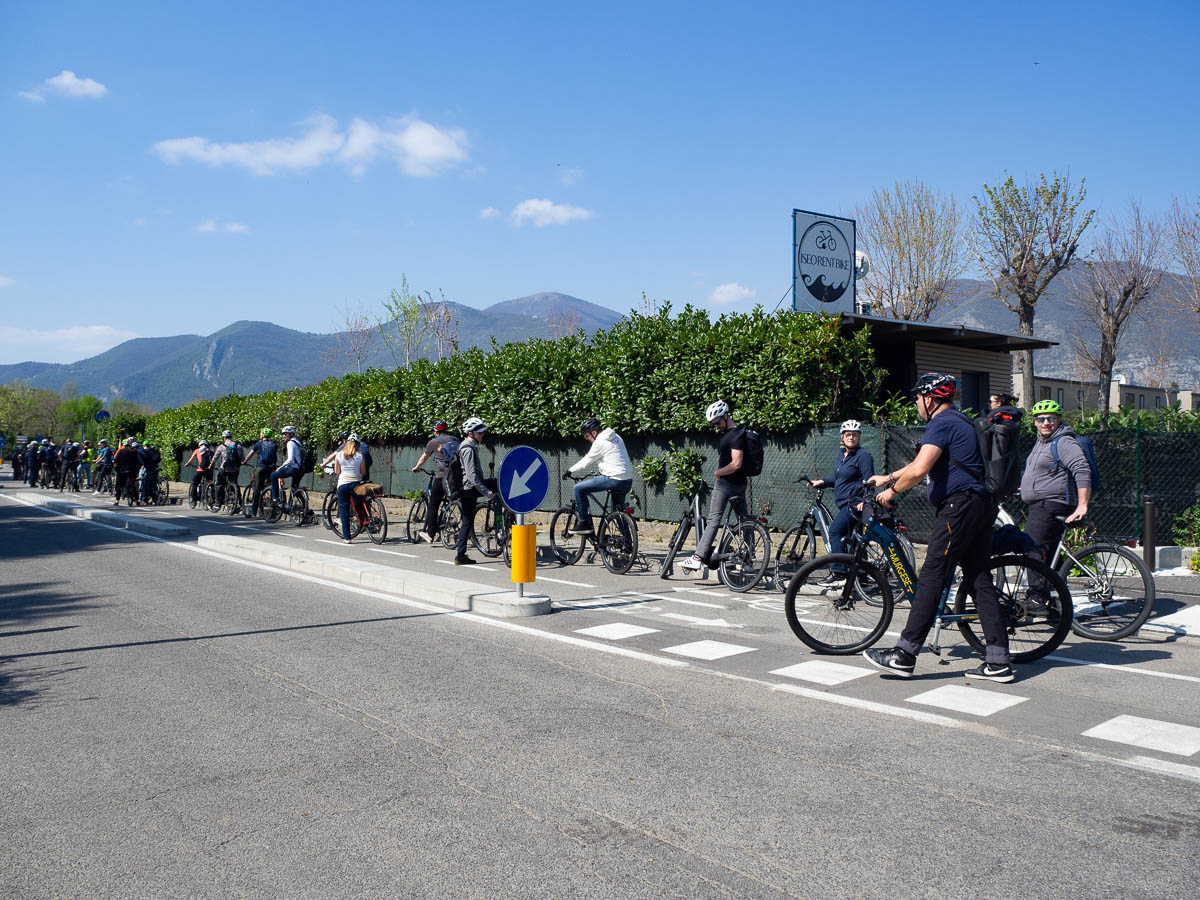
In the afternoon we went on a e-bike tour. All forty-plus of us. It meant a very slow pace and plenty of stopping, so that the group could gather up and cross larger roads with as little traffic disruption as possible.
The tour started in central Iseo, right where we got off the boat from Monte Isola, but soon took us out of town onto more rural lanes.

This was my first time using an e-bike. I’m not sure I like it very much. It felt strange to not have any resistance at all when pedalling – I felt that I didn’t get any proper contact with the bike, and it felt a bit unstable and unsafe. In the end I ended up turning off the electric feature on the flat, and only switched it on very briefly for going uphill, where I would normally have shifted into a lower gear. It felt good to feel the bike. I can imagine that e-bikes would be very convenient for commuting – there’s no way you’d work up a sweat, so there’s no need to shower and change when you get to the office.
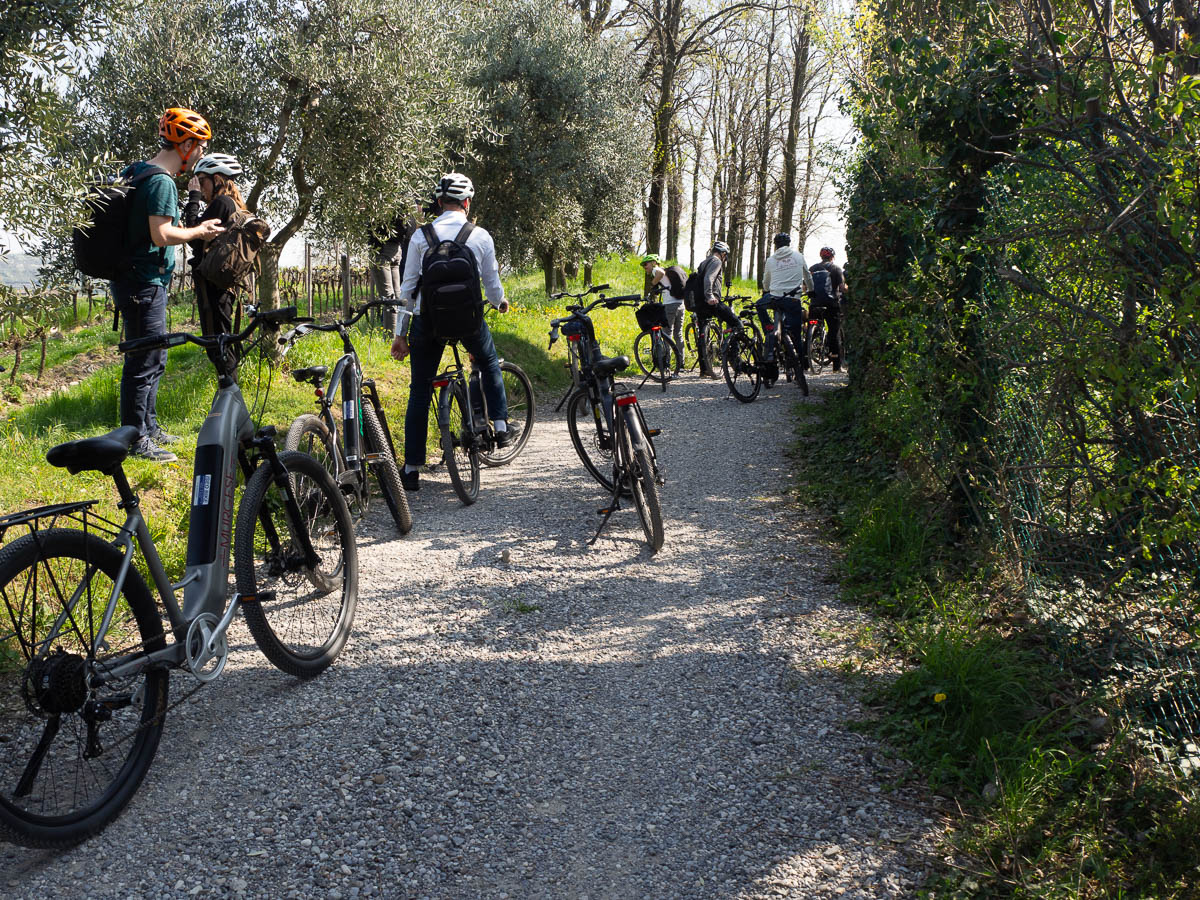
More waiting – but with very pretty views and beautiful spring sunshine. Did I mention that Stockholm was barely above freezing when we left? Here it was the season for short sleeves and sun lotion.
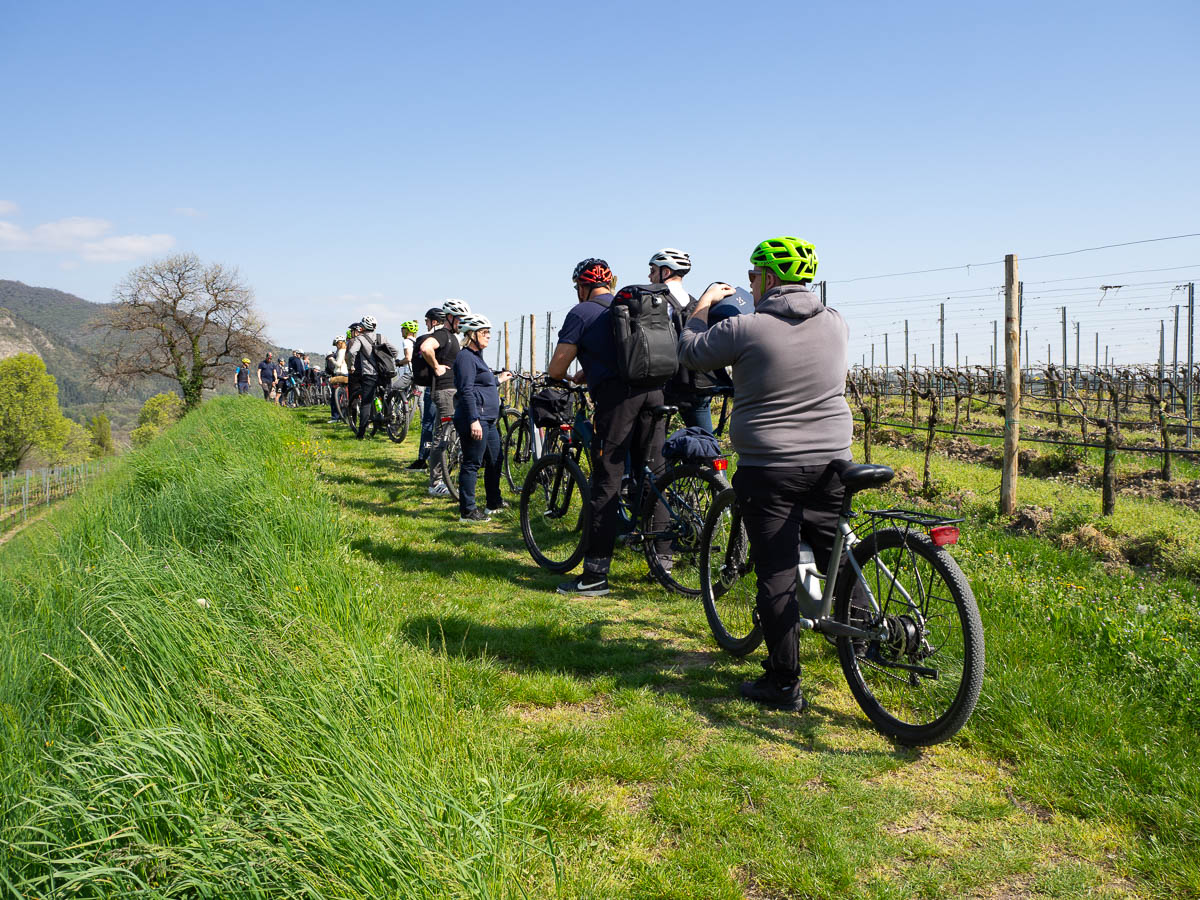
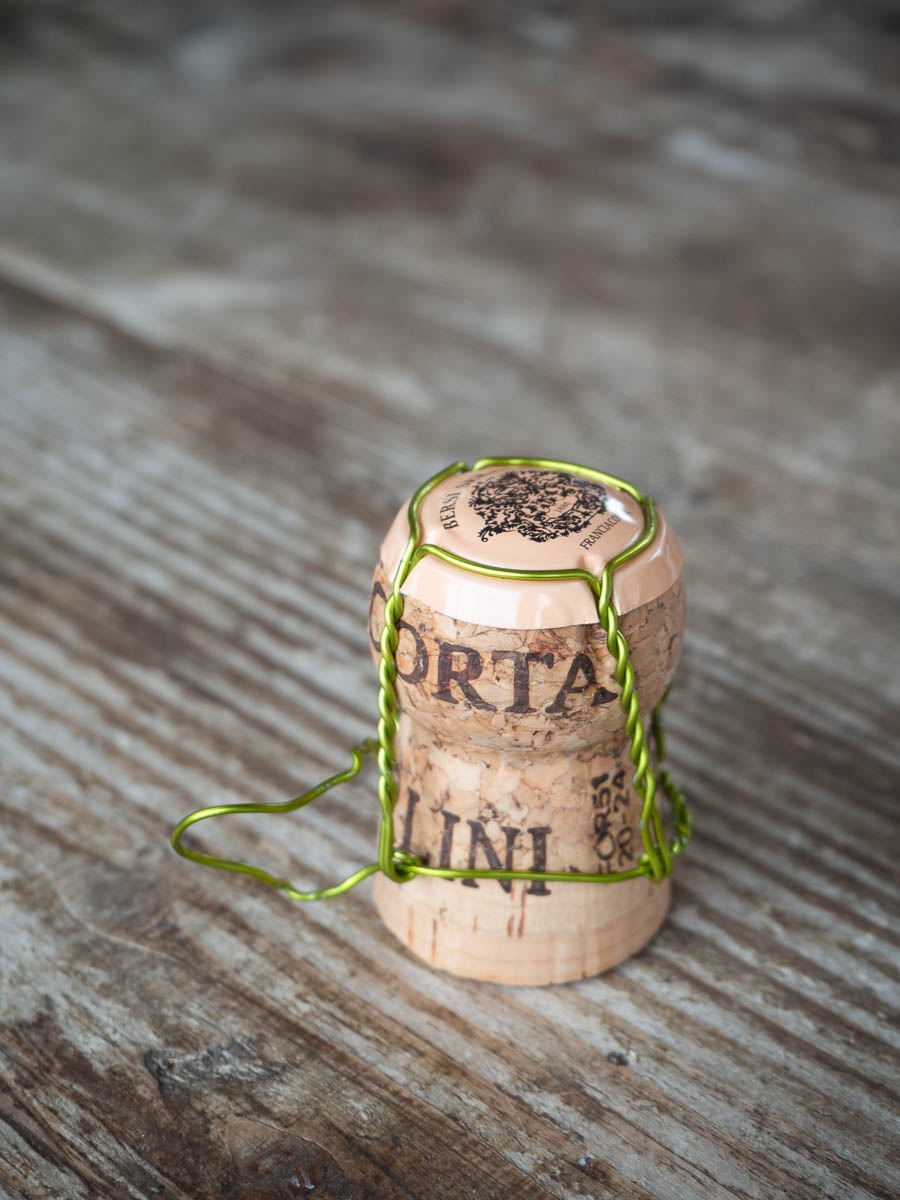
Our destination was the Bersi Serlini vineyard.
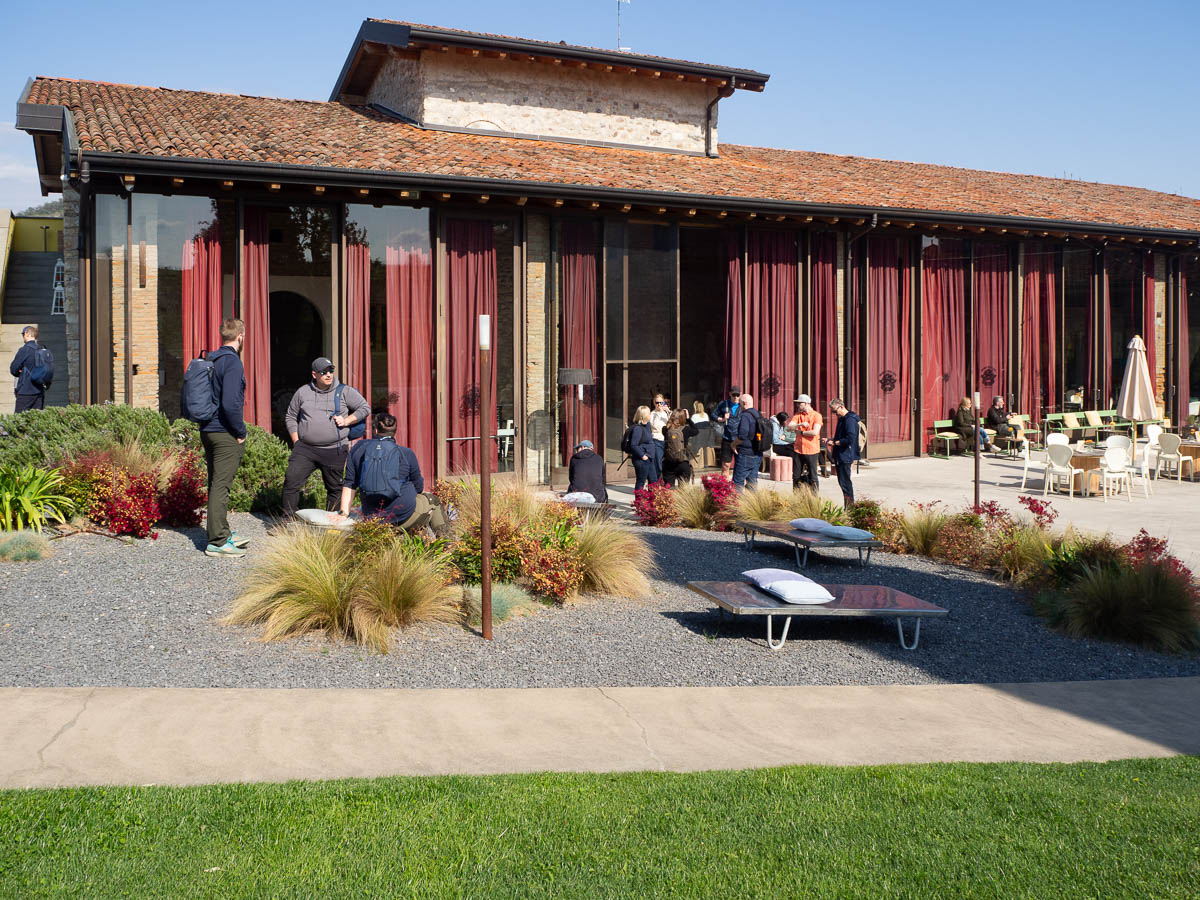
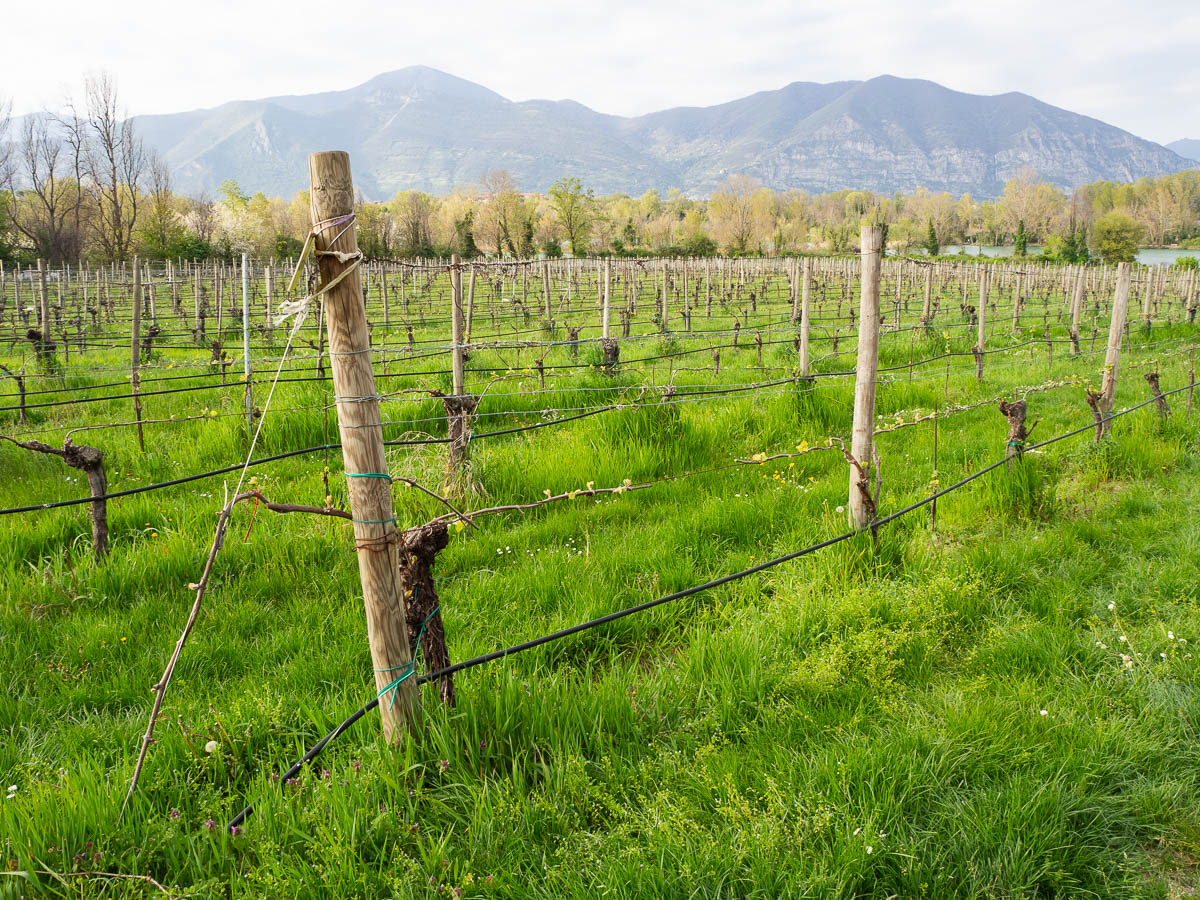
We got a tour of the winery and a brief lecture about their history and process, learning most importantly that Franciacorta sparkling wines are definitely not prosecco.
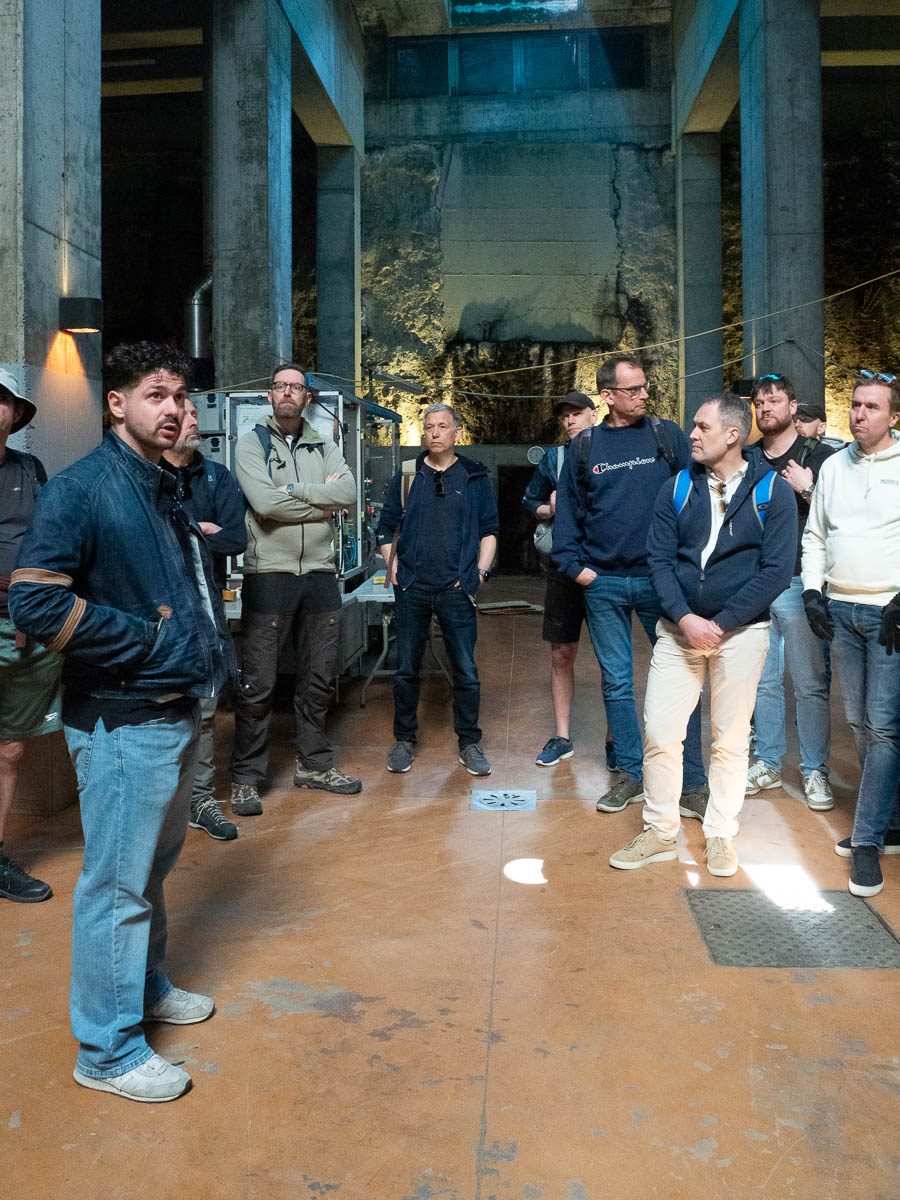
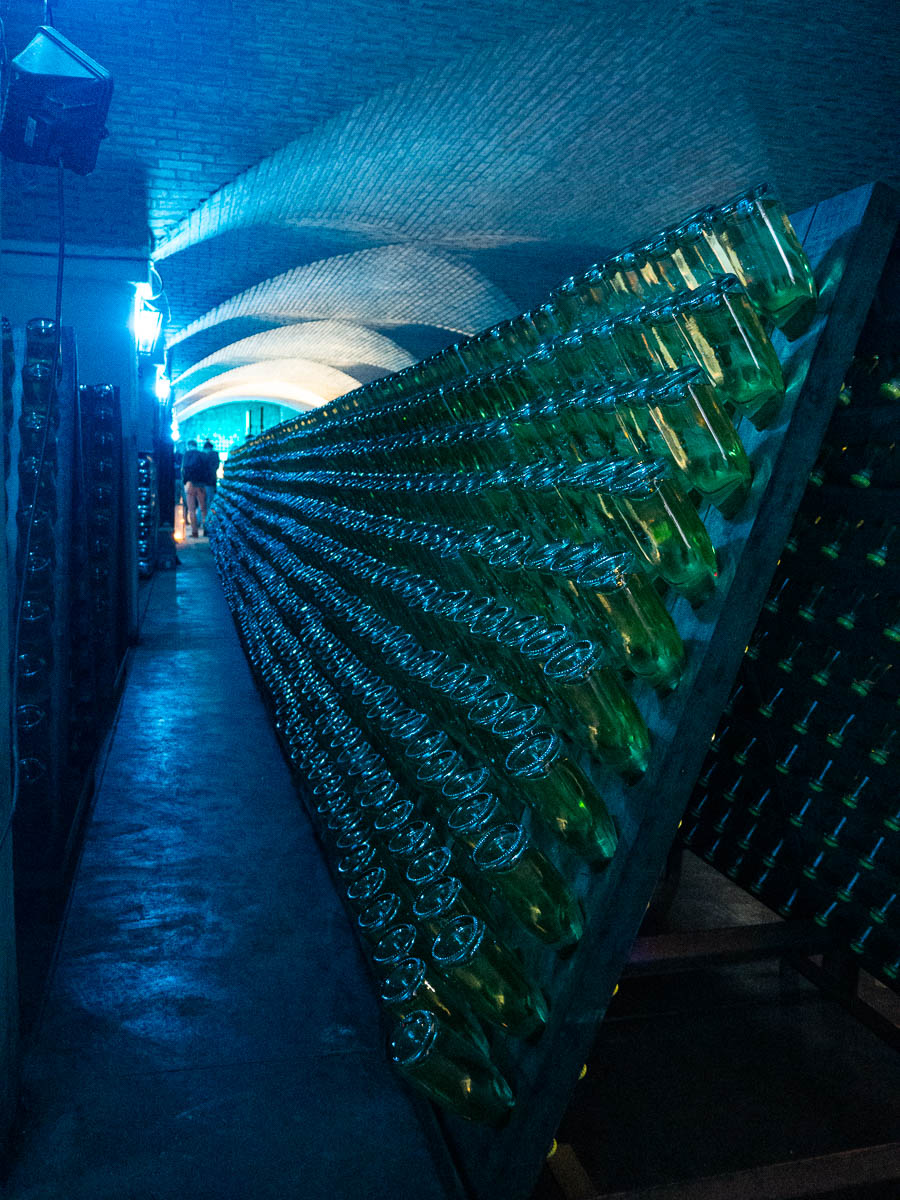
A walk through their somewhat spooky cellars.
Afterwards there was a wine tasting, where we got to try out four different varieties of Bersi Serlini sparkling wines. They were… nice? I rarely consume any alcohol at all, and when I do drink wine then dry sparkling wine is probably the kind I am least interested in.
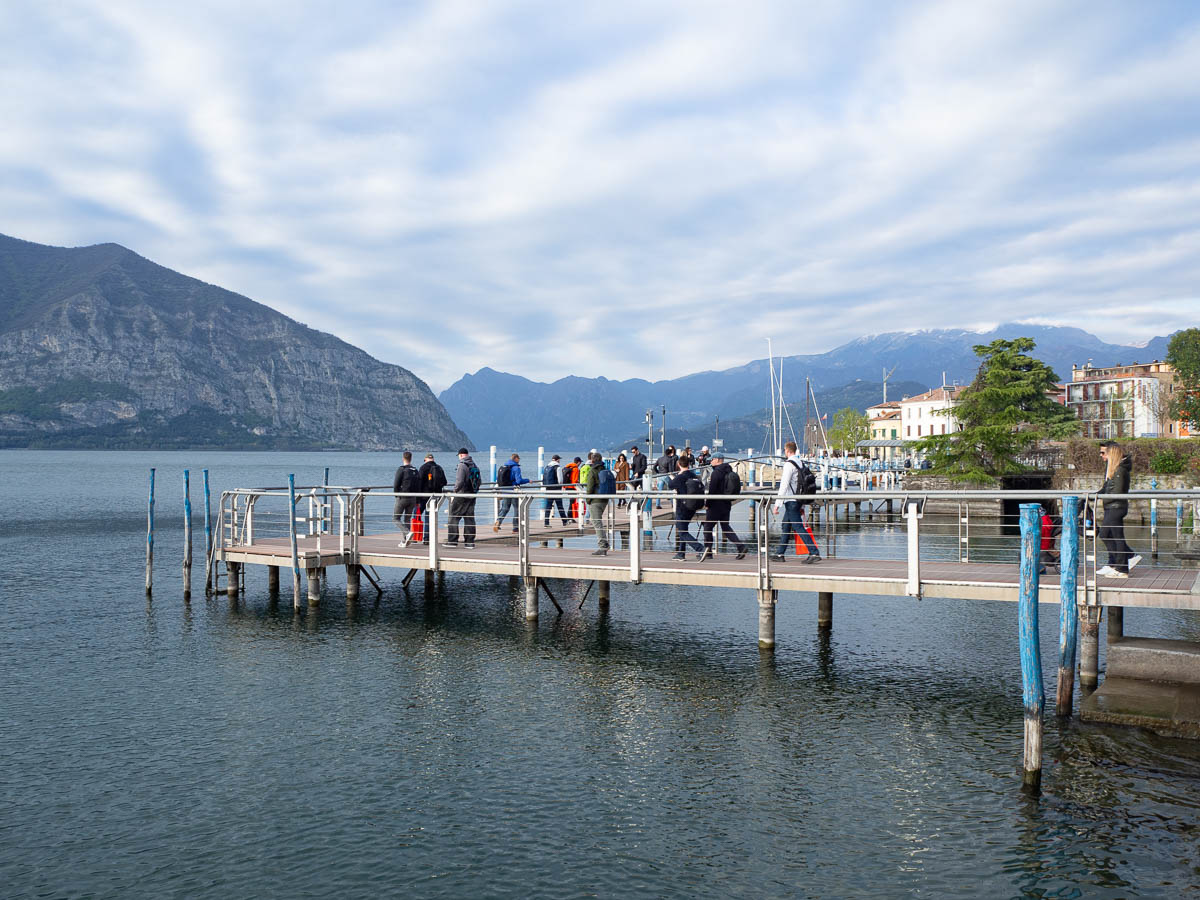
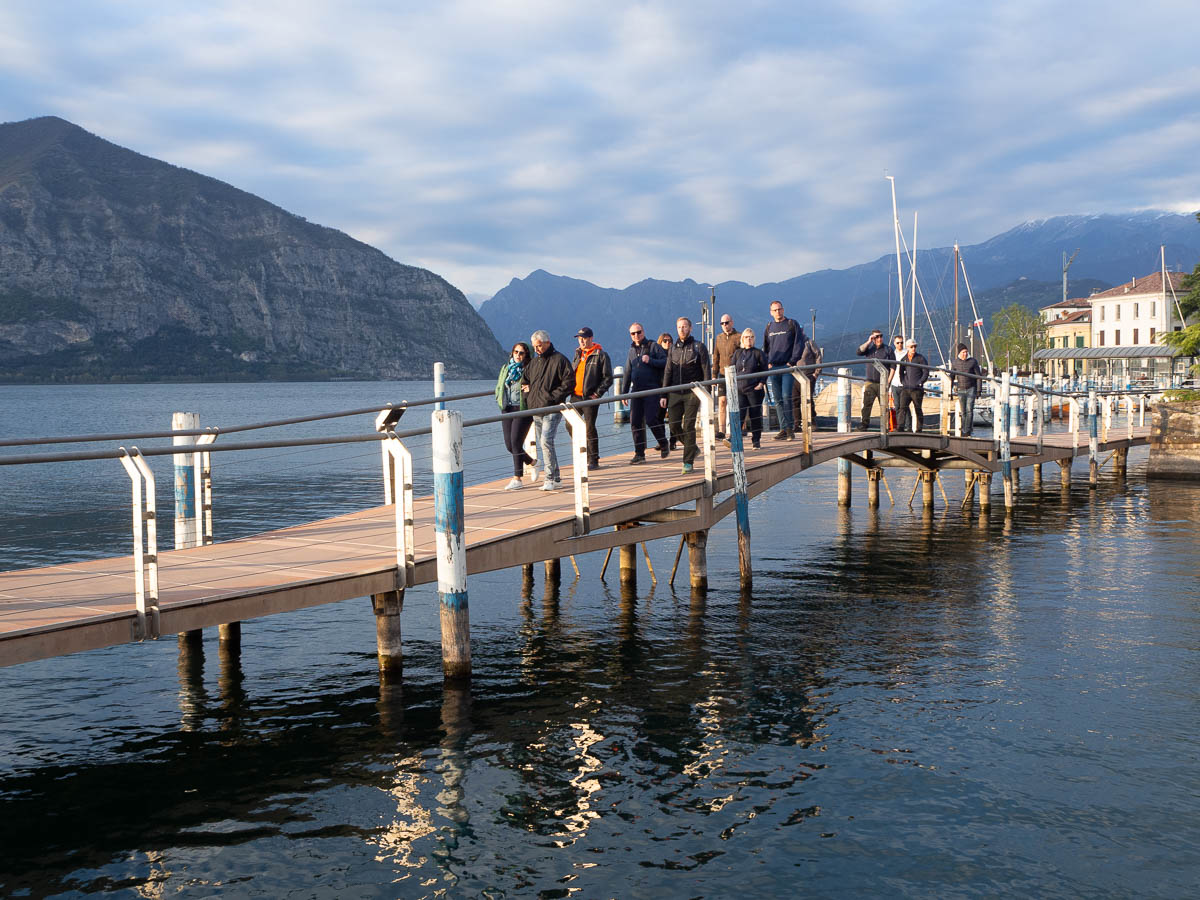
Afterwards we cycled back to Iseo. Had a half-hour of free time for a brief walk around.
Excellent pizza dinner at Pizzeria La Filanda. All the pizzas were served to share, and I was most happy to see that at least half of them were vegetarian, so I enjoyed this meal a lot.
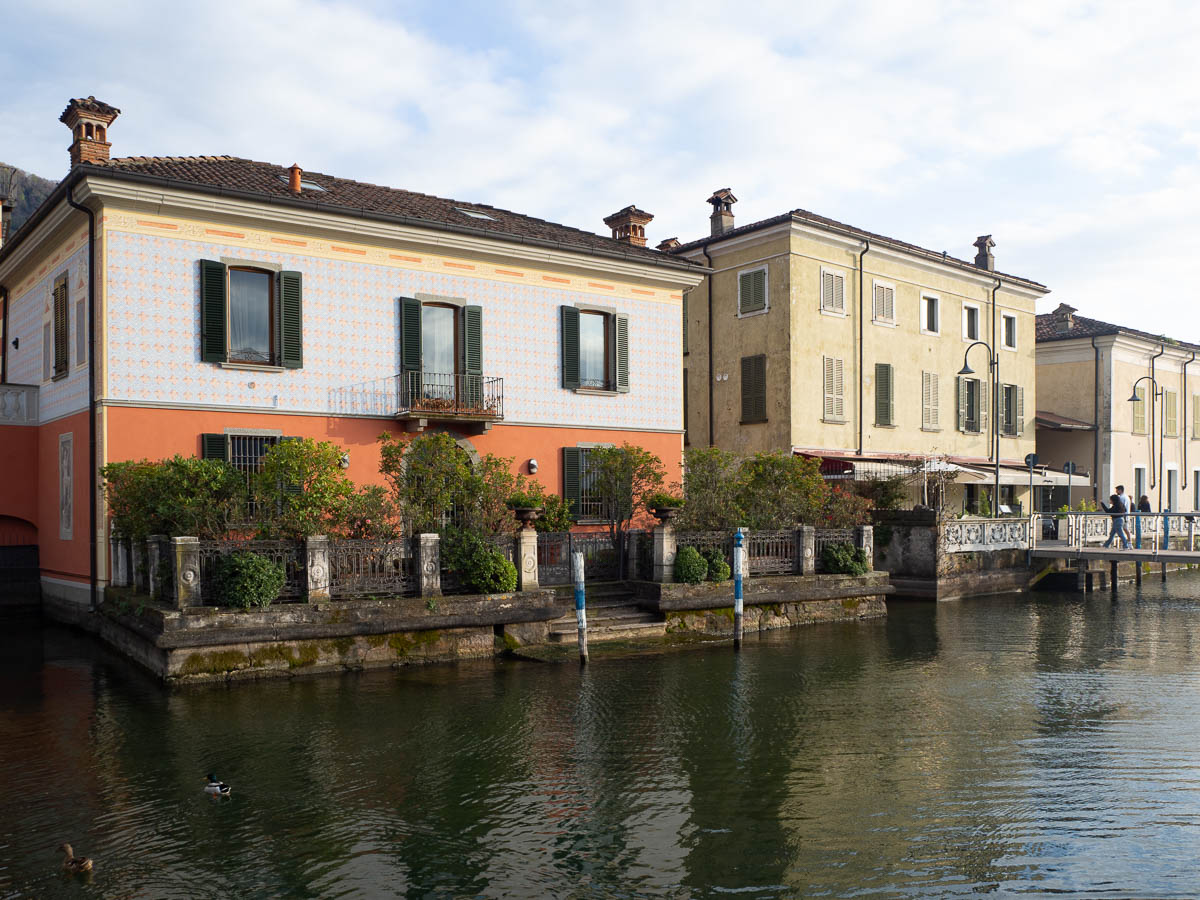
Conference trip with Active Solution to Monte Isola in Italy.

tretton37 used to have annual conferences for the whole company, until everything went downhill. Active Solution isn’t going downhill so I got to go on a three-day conference trip.

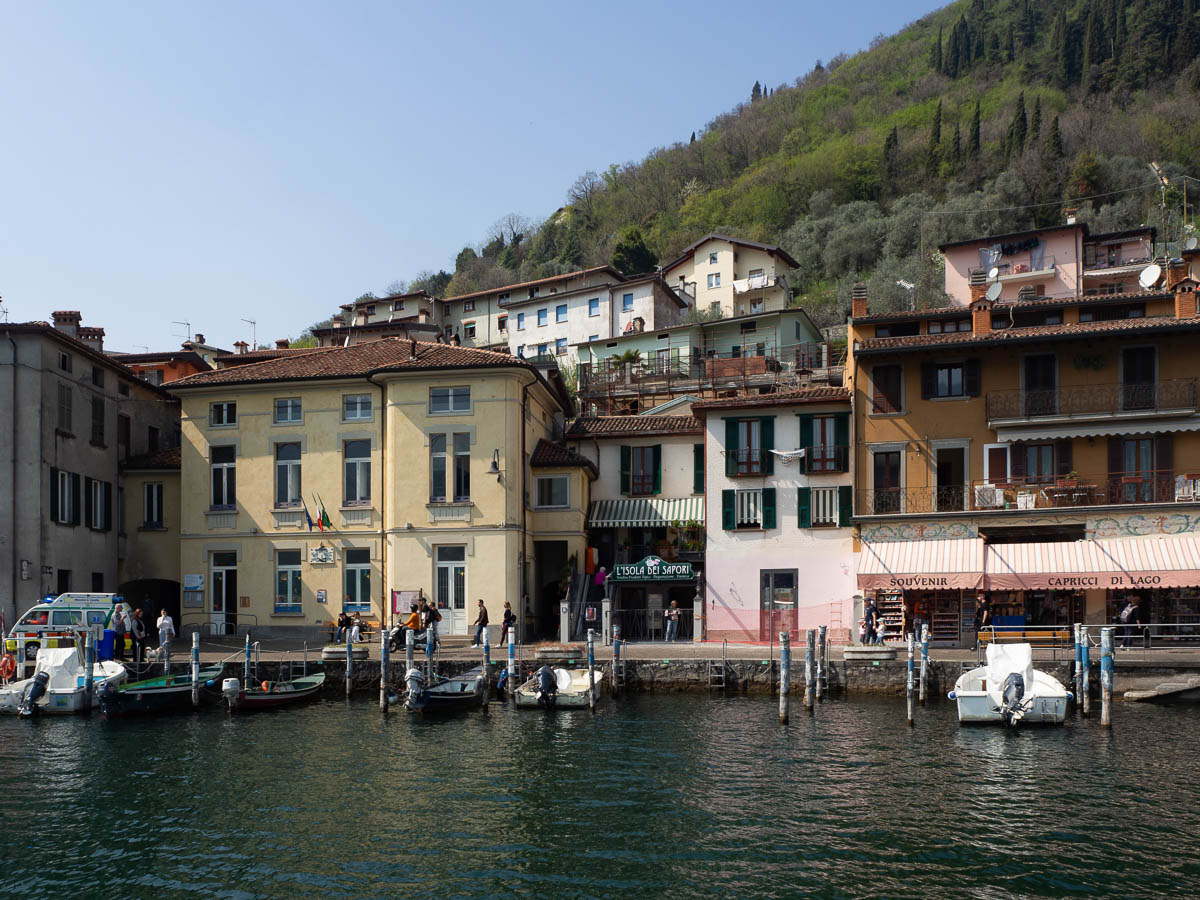
Monte Isola is a pretty little island in Lake Iseo in northern Italy, an hour east of Milano. We flew to Milano, were transported by bus to Iseo on the coast of the lake, and then by boat to the island.

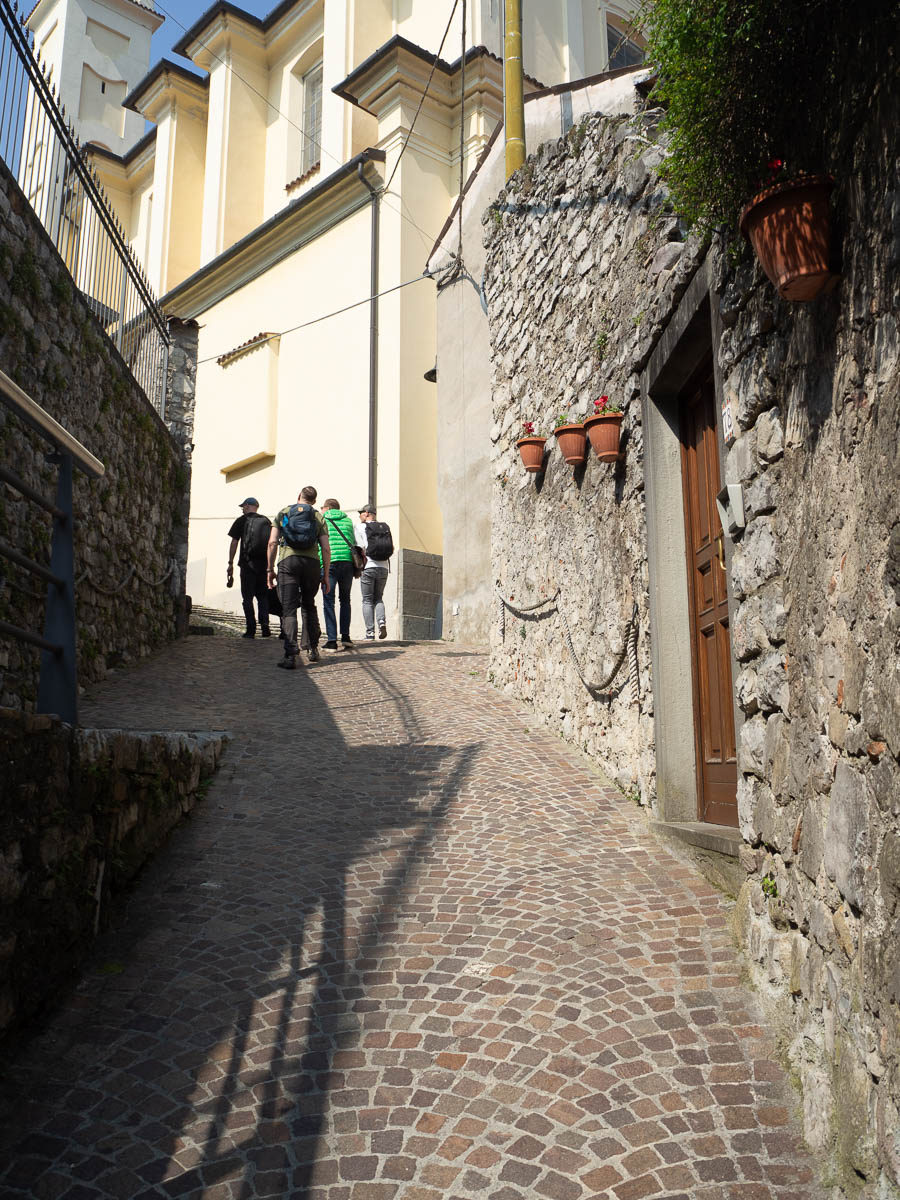
The island is basically a hilltop sticking out of the lake. There’s a ring of villages along the lake shore, connected by a road, and as soon as you leave the road, it’s all uphill.

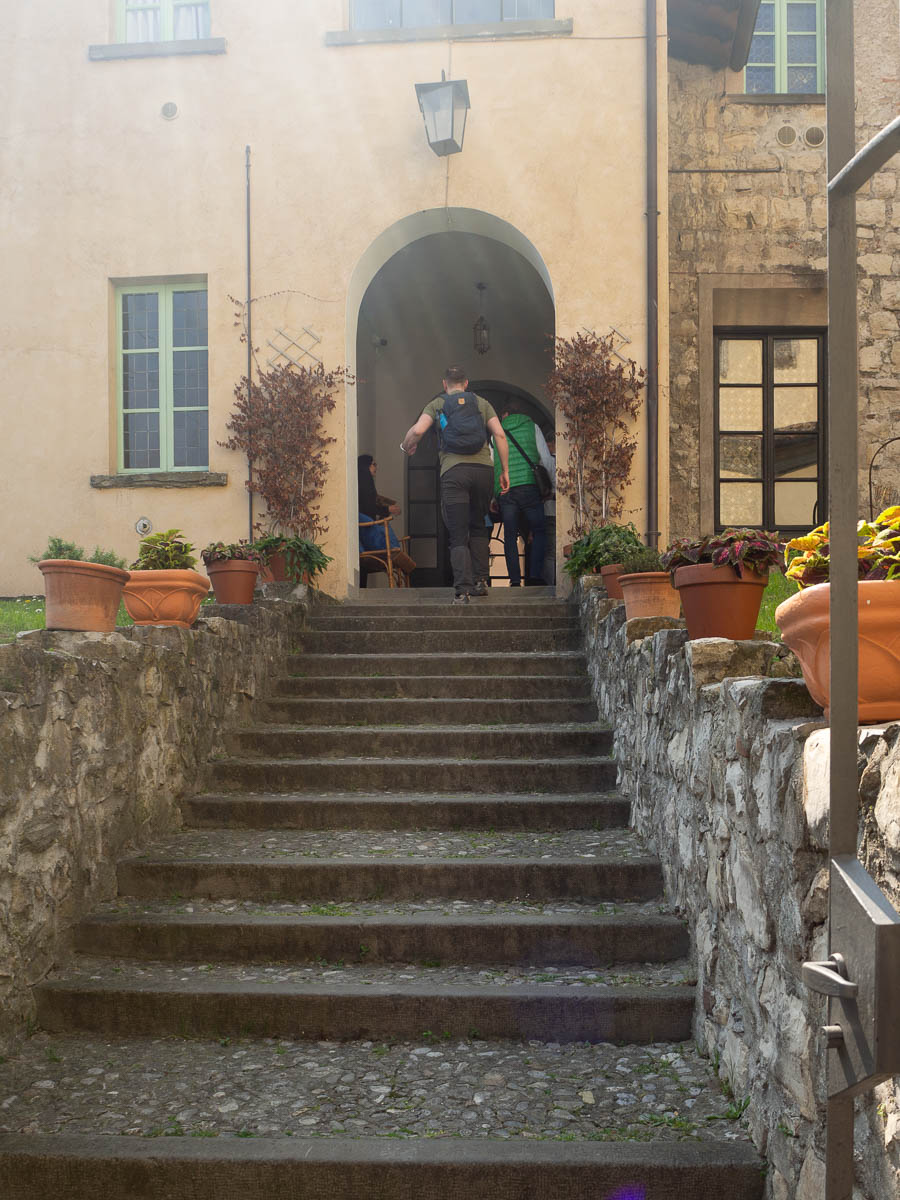
We’re staying in Castello Oldofredi, an actual castle, parts of which date back to the late-medieval era.

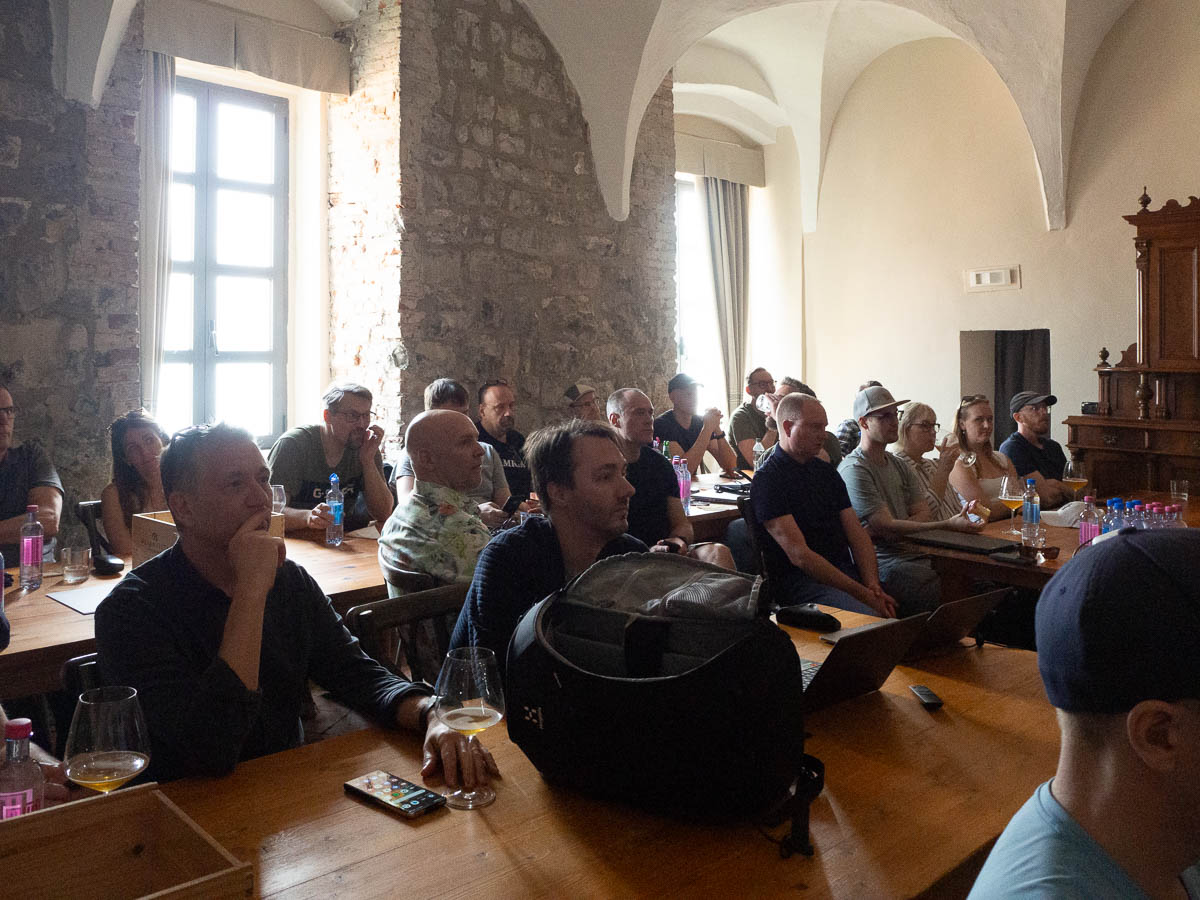
Here’s us, listening to a talk about new features in the latest versions of .NET, in a vaulted renaissance hall.

After the talk, we had collaborative coding sessions. Most teams opted to sit out on the terrace. Quite a difference to the +3°C and light snow we left behind us in Stockholm.

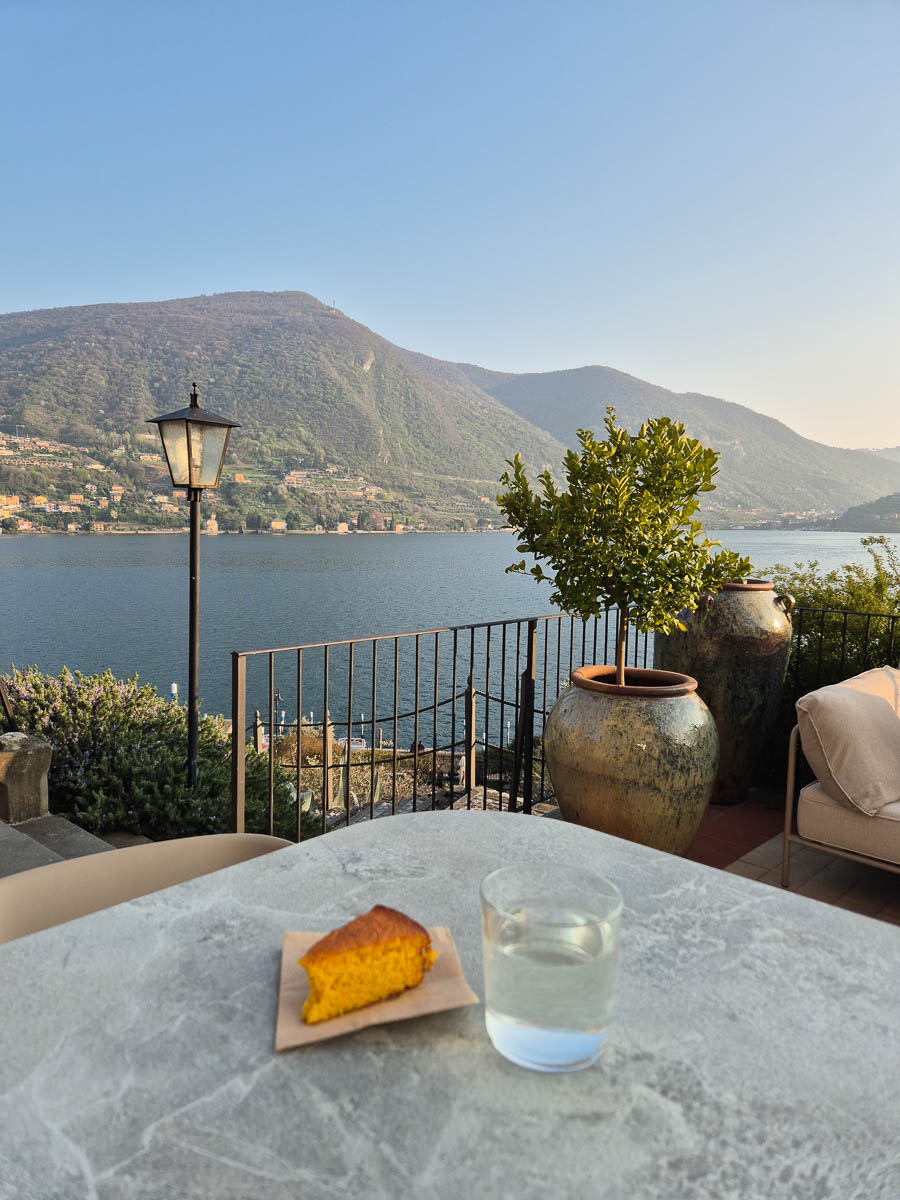
Afterwards there was more enjoying of the spring sun.

For me, being so new to the company, the biggest benefit of the trip was to get to know the people. I make a point to go to the office once a week, but it tends to be the same faces there every week. Now I could put faces to the names I’ve seen, talk to the people I’ve seen only at a distance, and meet people from the other offices as well.


Viburnum in all its pink glory. And the season’s first bee, gathering nectar.

April is doing its usual thing, swinging back and forth between +10°C sunshine and barely-above-freezing days.

The first daffodil is blossoming.

Deer are frequent visitors in our garden, and are totally unbothered by my presence.

This past weekend was the last weekend of March and brought with it the turning of the clocks, i.e. the switch to summer time.

The Sunday I usually don’t notice it much. The Monday is still OK, I’ve got reserves and I don’t notice using them. But then on the Tuesday I’m tired and sluggish and everything feels off. Wednesday is often no better, and only towards the end of the week do I feel back to normal. How I wish we could stop this madness.

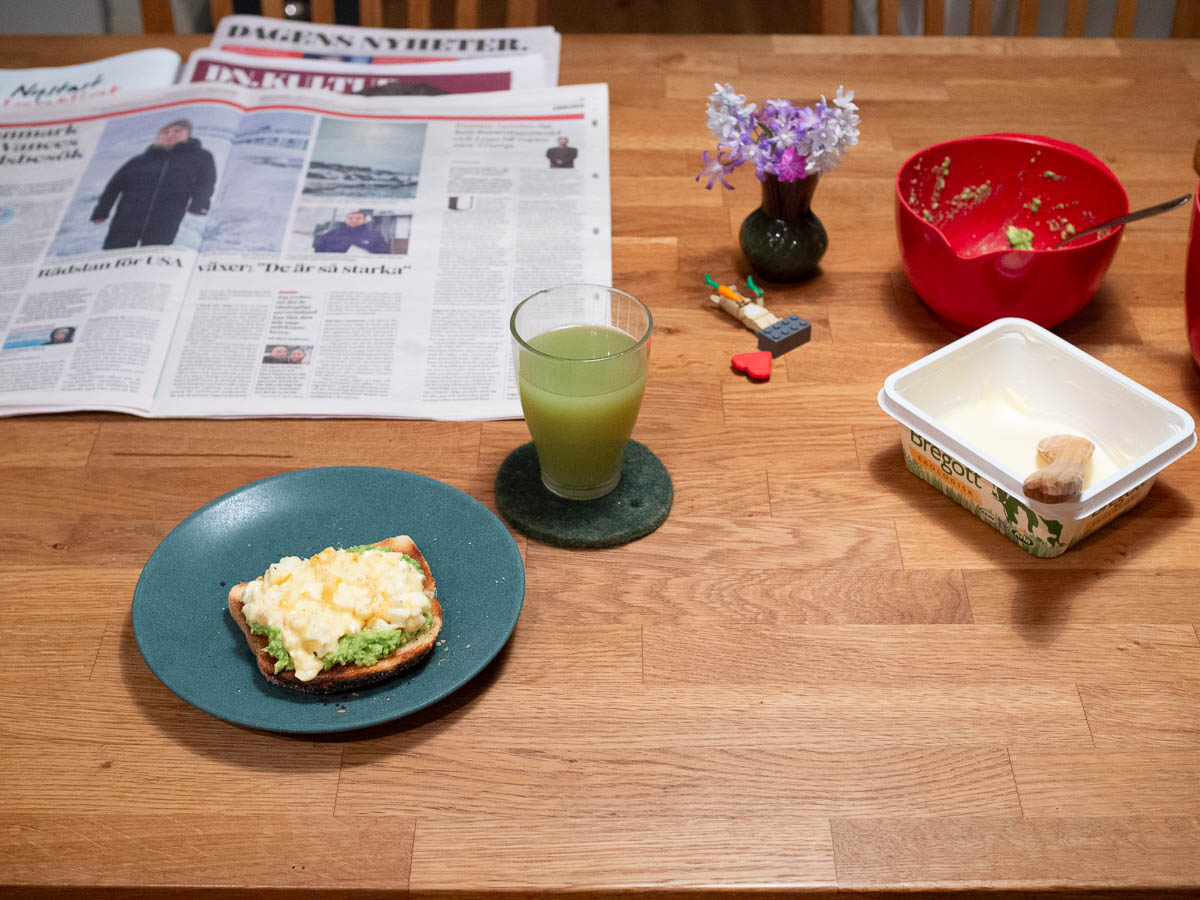
This evening I was too tired to cook and too tired to have much of an appetite, so it was breakfast for dinner. (Toast, smashed avocado, egg mayo, and my favourite juice – cucumber, kiwi and apple.) Complete with the morning paper that I didn’t have time to read this weekend. And with a little vase with the first spring flowers, that Ingrid surprised me with.

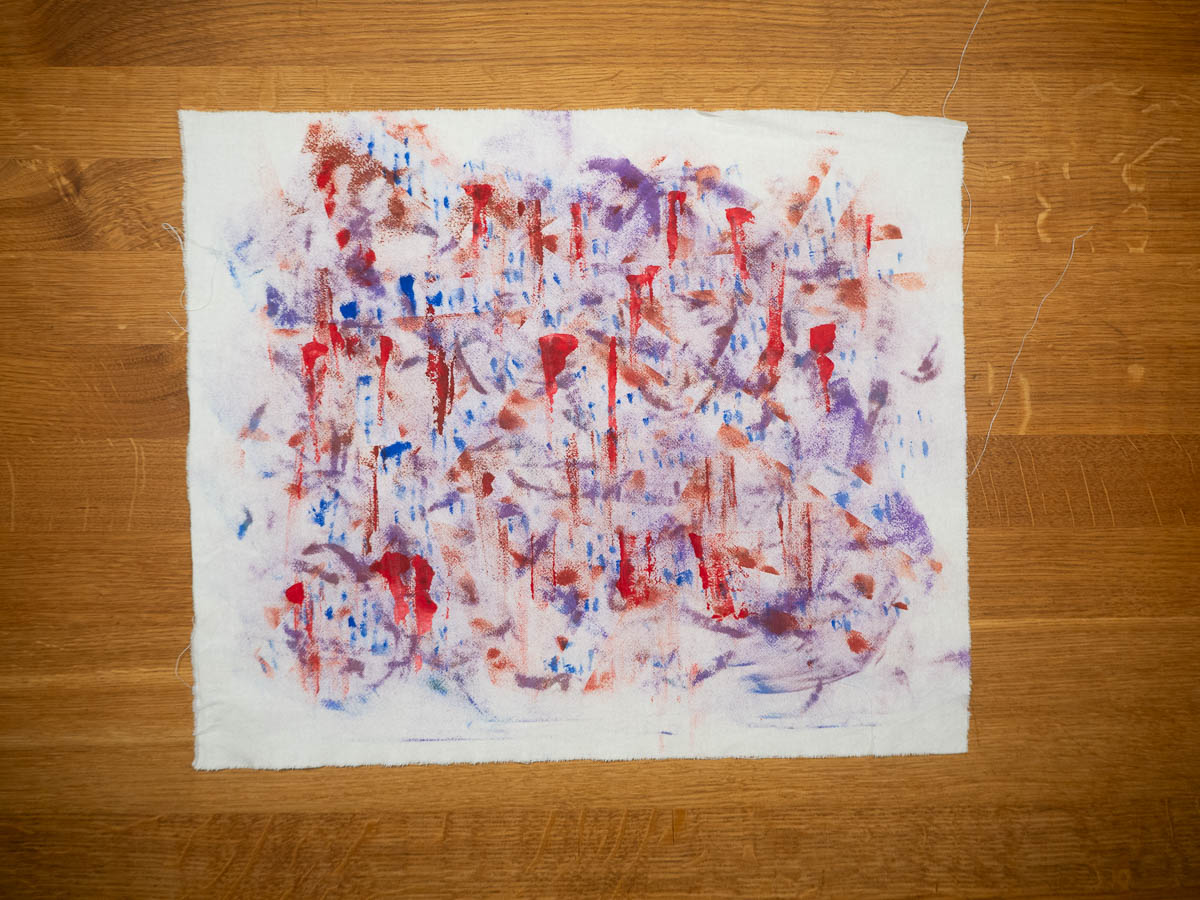
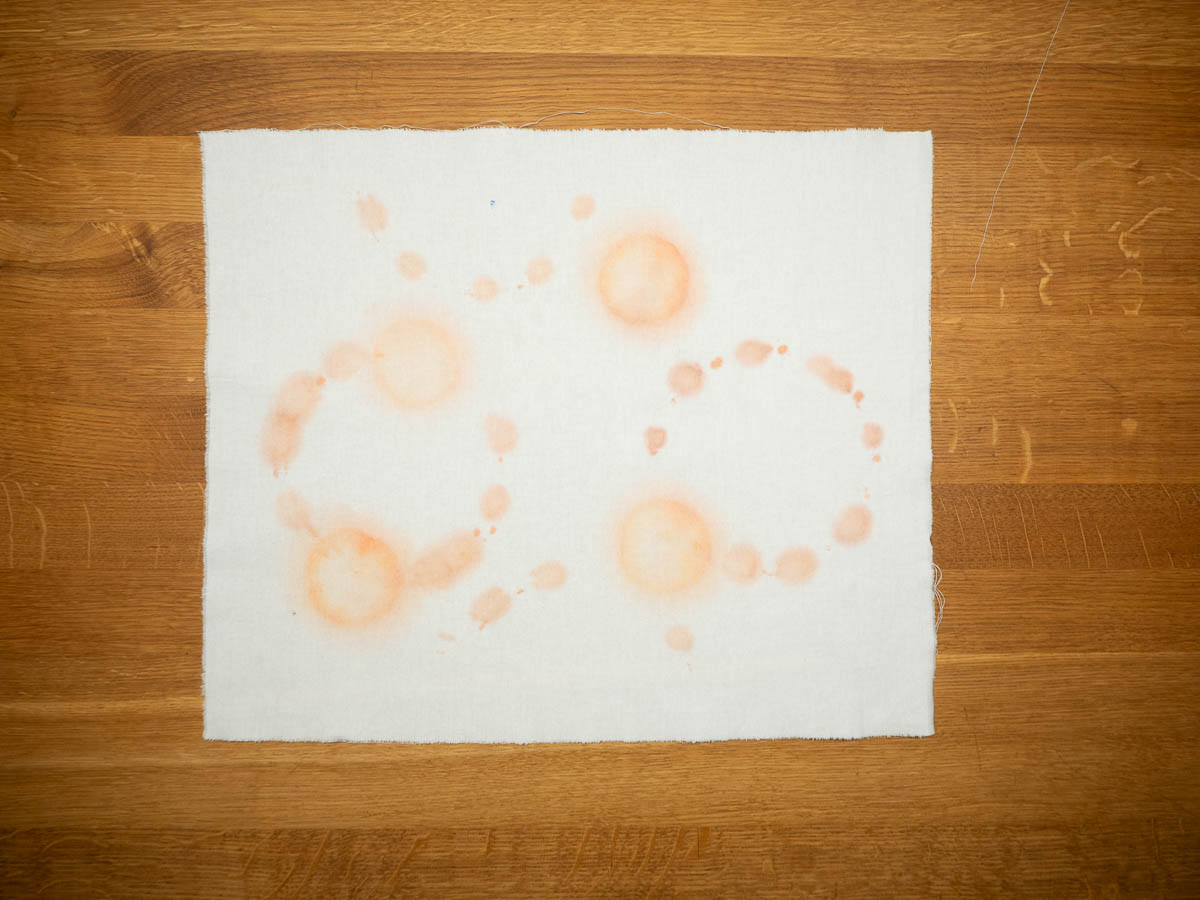
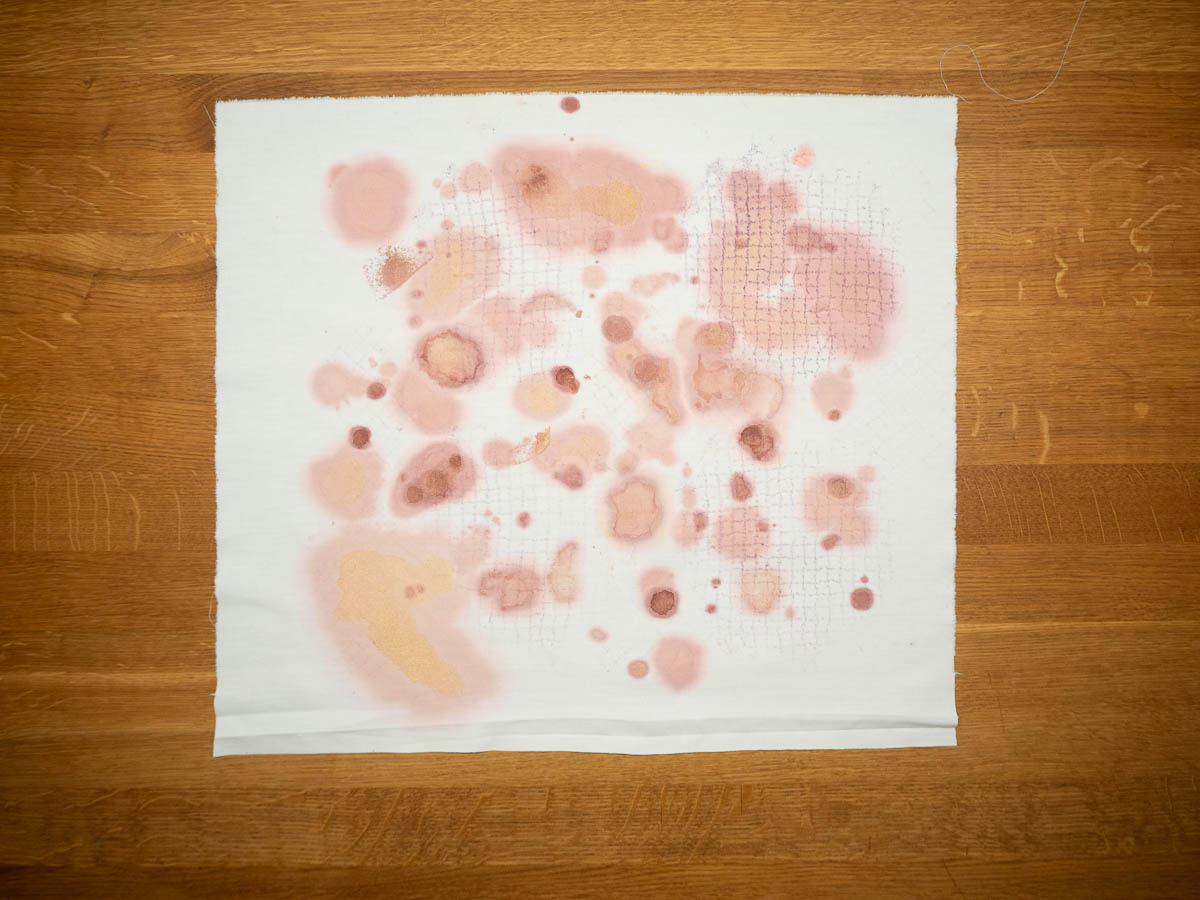
More photos of the results of this weekend’s textile printing workshop. I want to remember what we did and note down some of the key things I learned, so I can do more of this in the future.

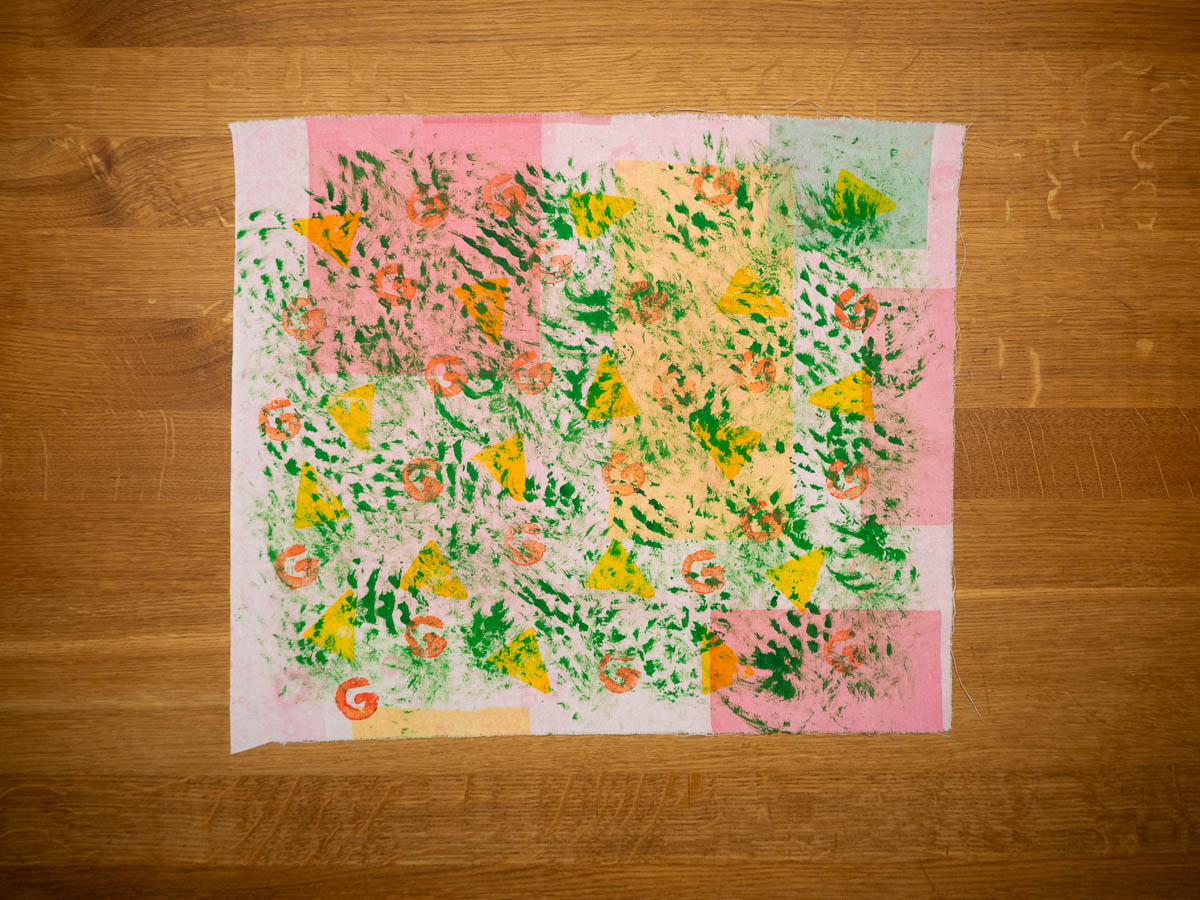
The traditional way of making patterns on fabric, in my head at least, is that you first put paint on an object of some sort, such as a stamp, or a leaf, or whatever, and then press that object to the fabric. We did a little bit of that, but I didn’t find the results too exciting. It’s very intentional, and you tend to end up with very regular patterns. You don’t have to, of course, but these designs tend in that direction. The regularity and repetition of it makes my brain itch and I just want to mess it all up and make it more random and unpredictable.

Here’s my one and only stamp print from the workshop. It was the day’s warm-up exercise, on scrap fabric from the workshop leader, and I knew right then and there that I wouldn’t be doing any more of that.

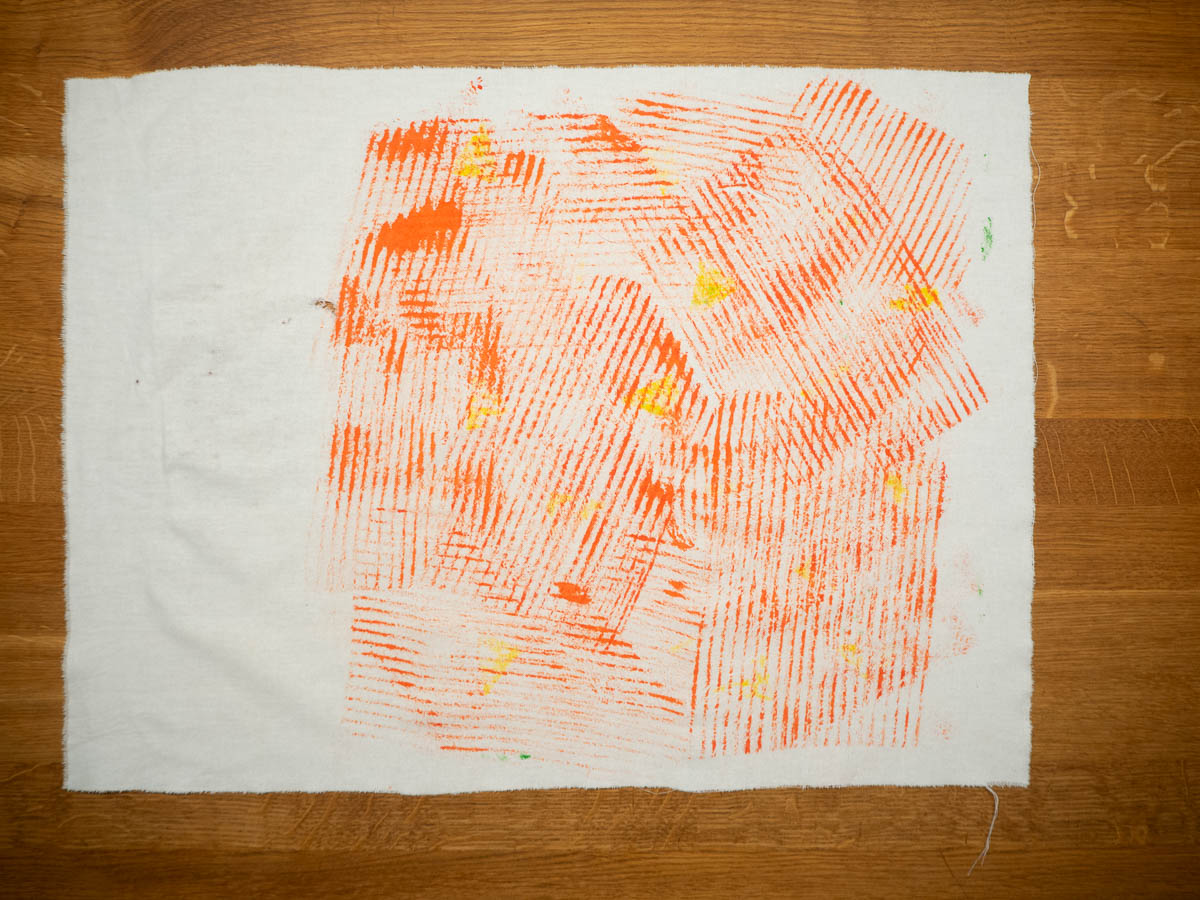
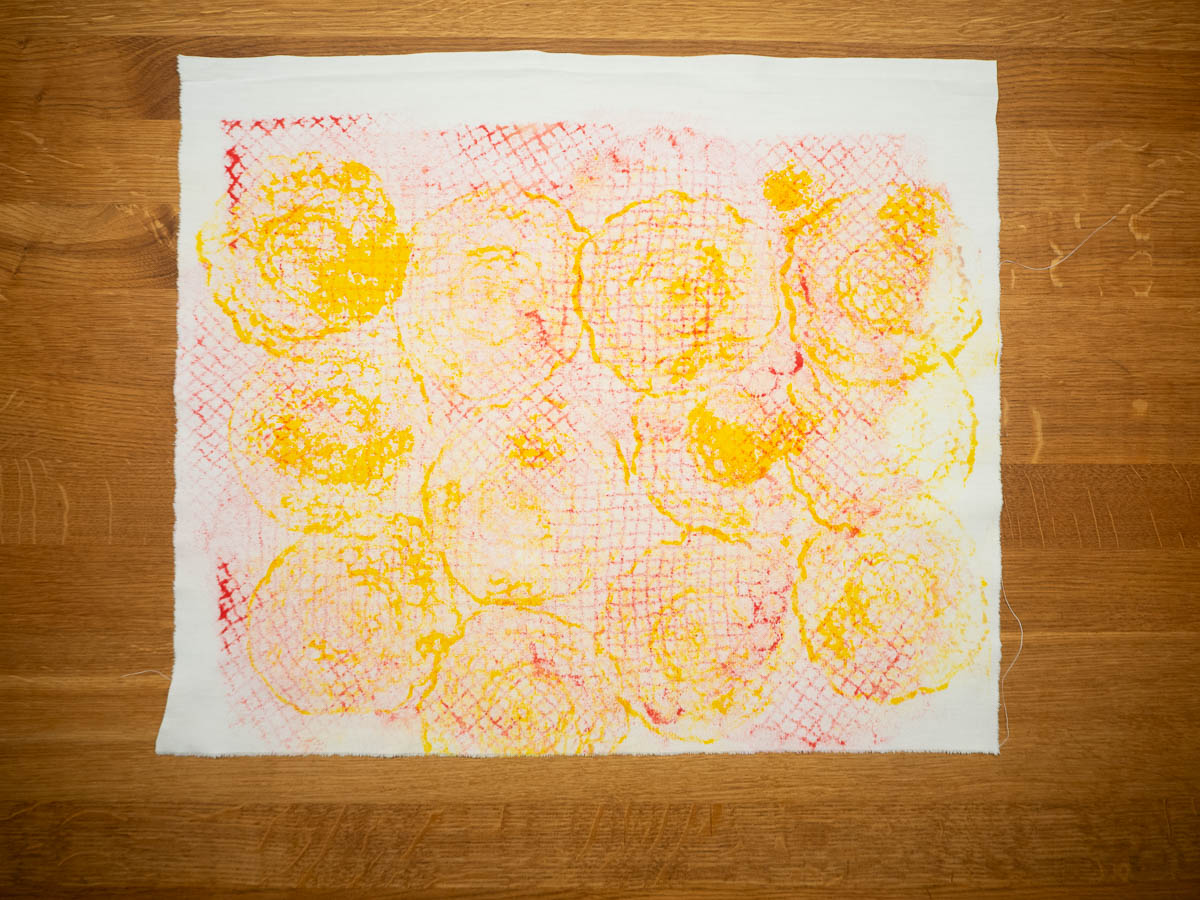
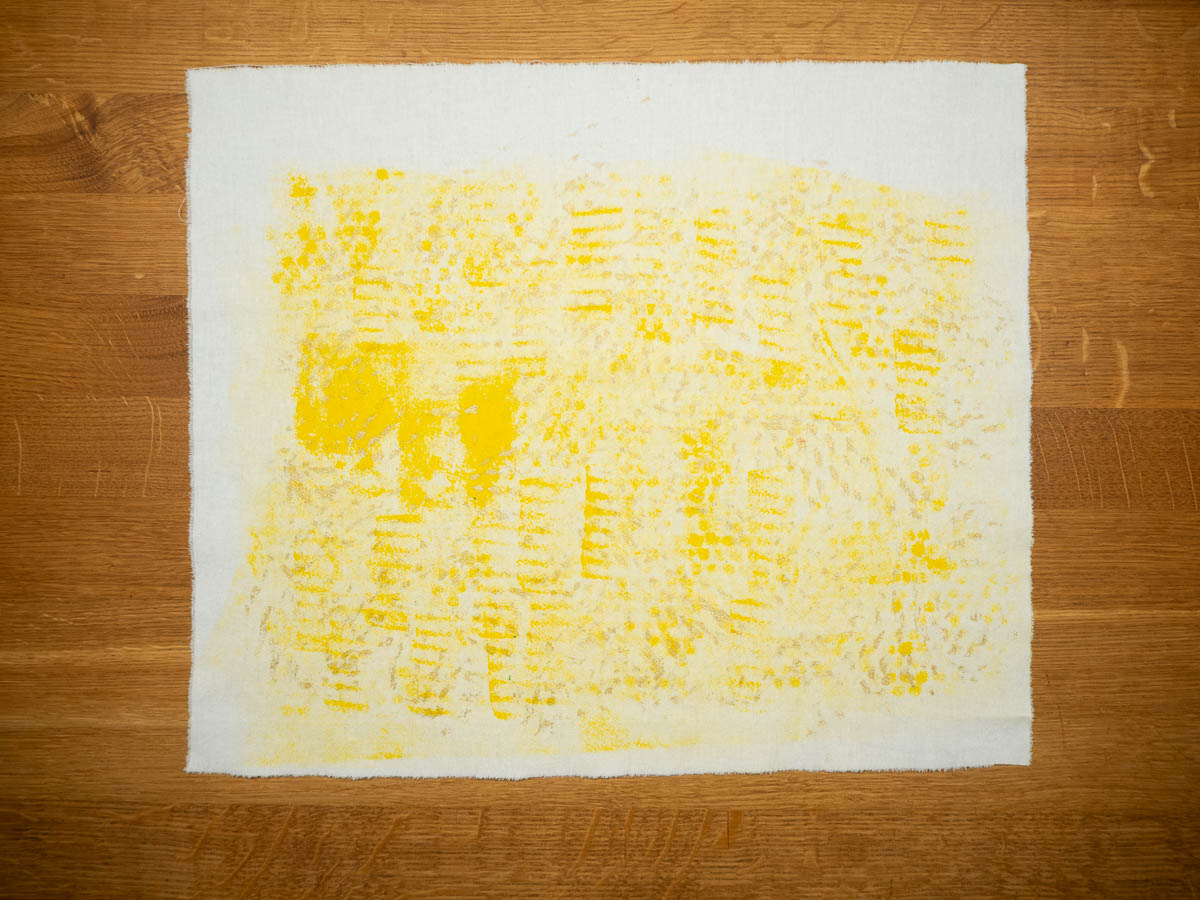
Learning #1: instead of putting objects ON the fabric, put them UNDER the fabric, and then run a roller over the fabric. The stuff under the fabric presses it up against the roller, so the fabric gets paint where there was stuff, and little to no paint where there wasn’t. And you can do this with just about anything.

Corrugated cardboard:

Old crochet doilies:

You can combine them, with different colours for different objects. You can move the objects around, so a tiny piece can make prints on the whole fabric. You can roll over just a part of the stuff, or roll at an angle.

Bubble wrap and a roll of masking tape:

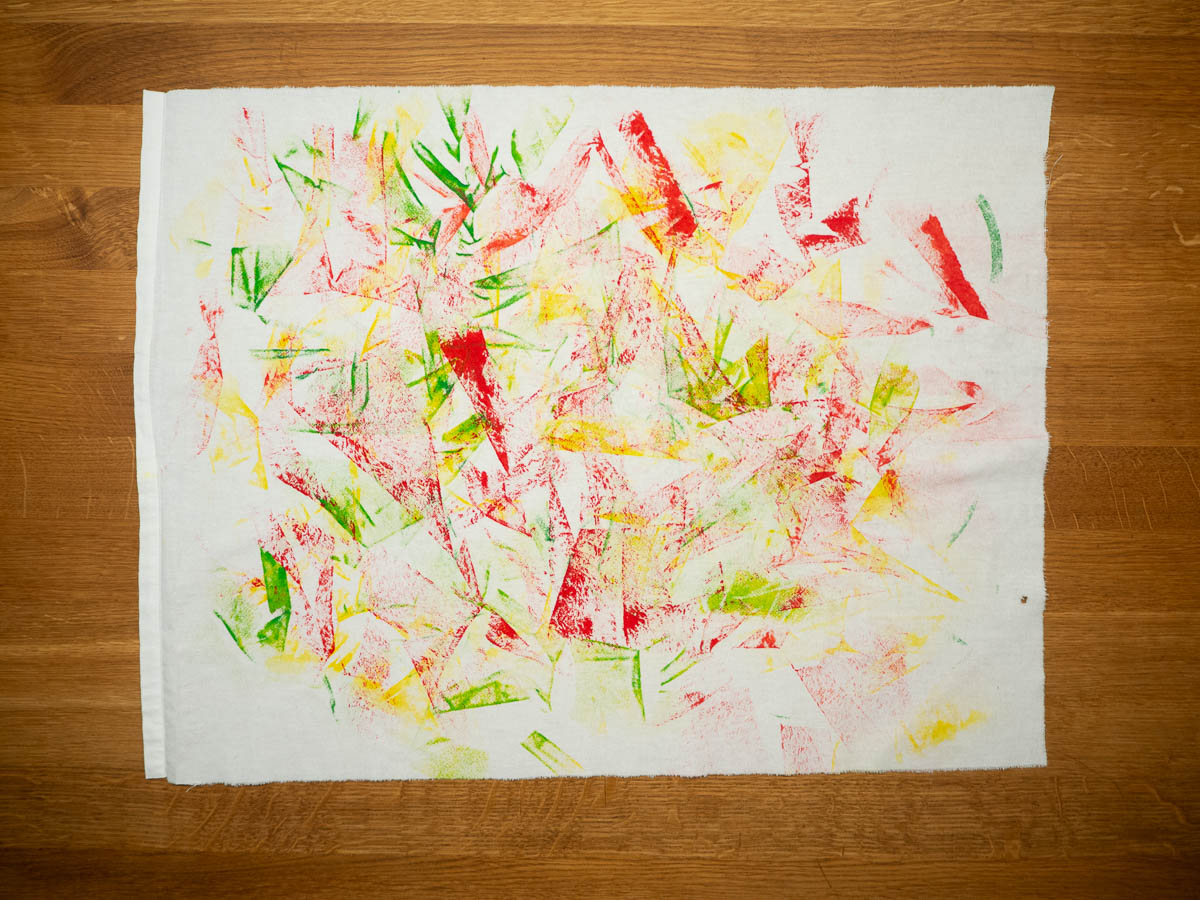
Jumbled-up strips of bedsheet hems:

Roll of masking tape and jumbled-up strips of bedsheet hems combined:

You can mask off parts of the fabric so those don’t get paint (corrugated cardboard and a bundle of string):

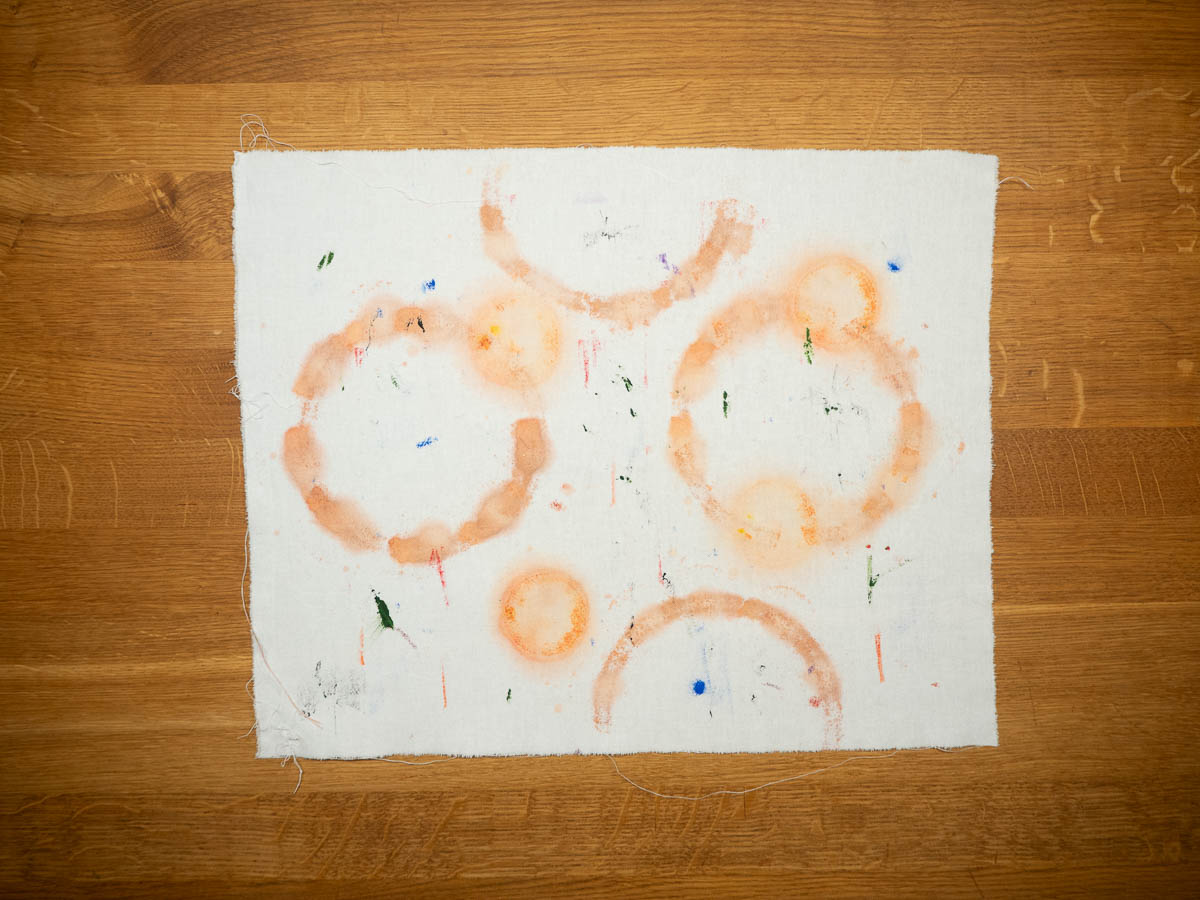
You can dilute the paint to make it wet and runny (roll of masking tape again):

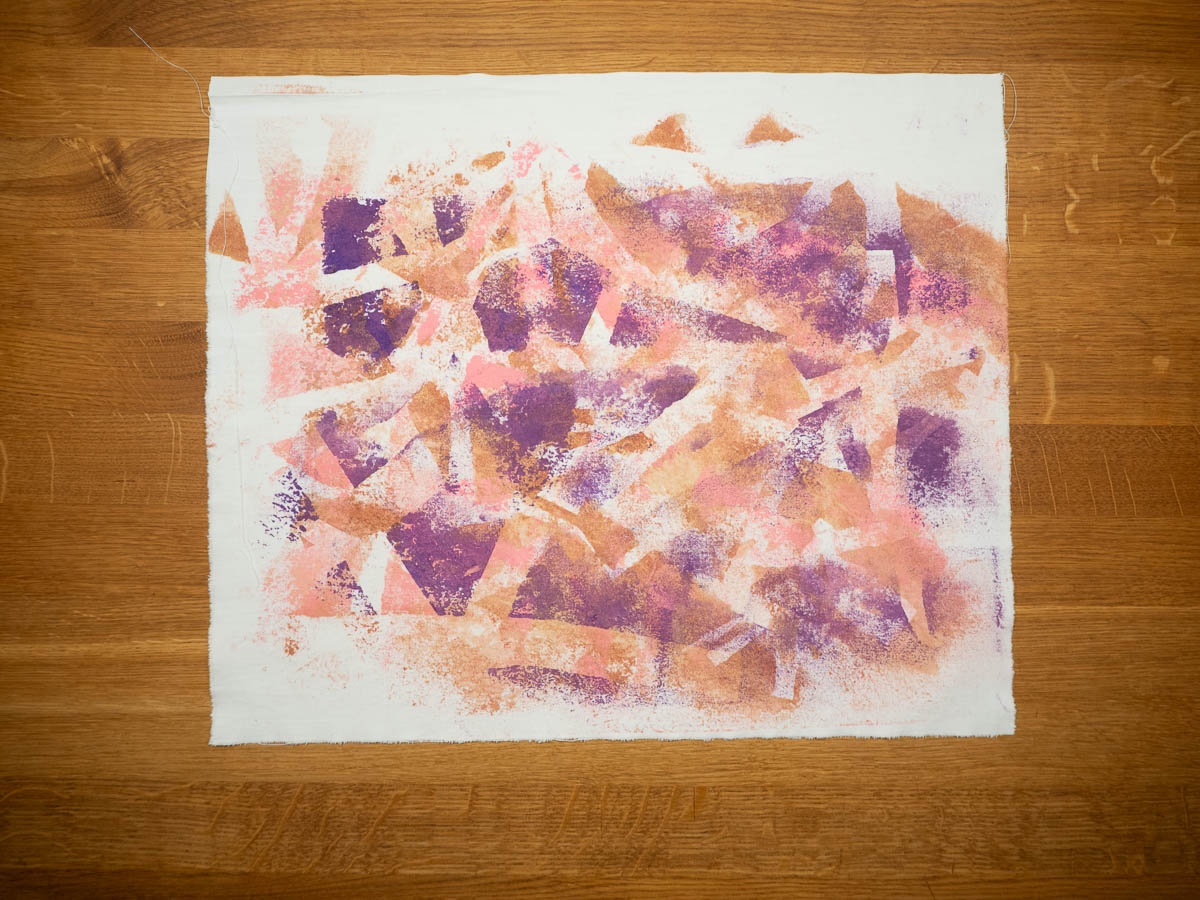
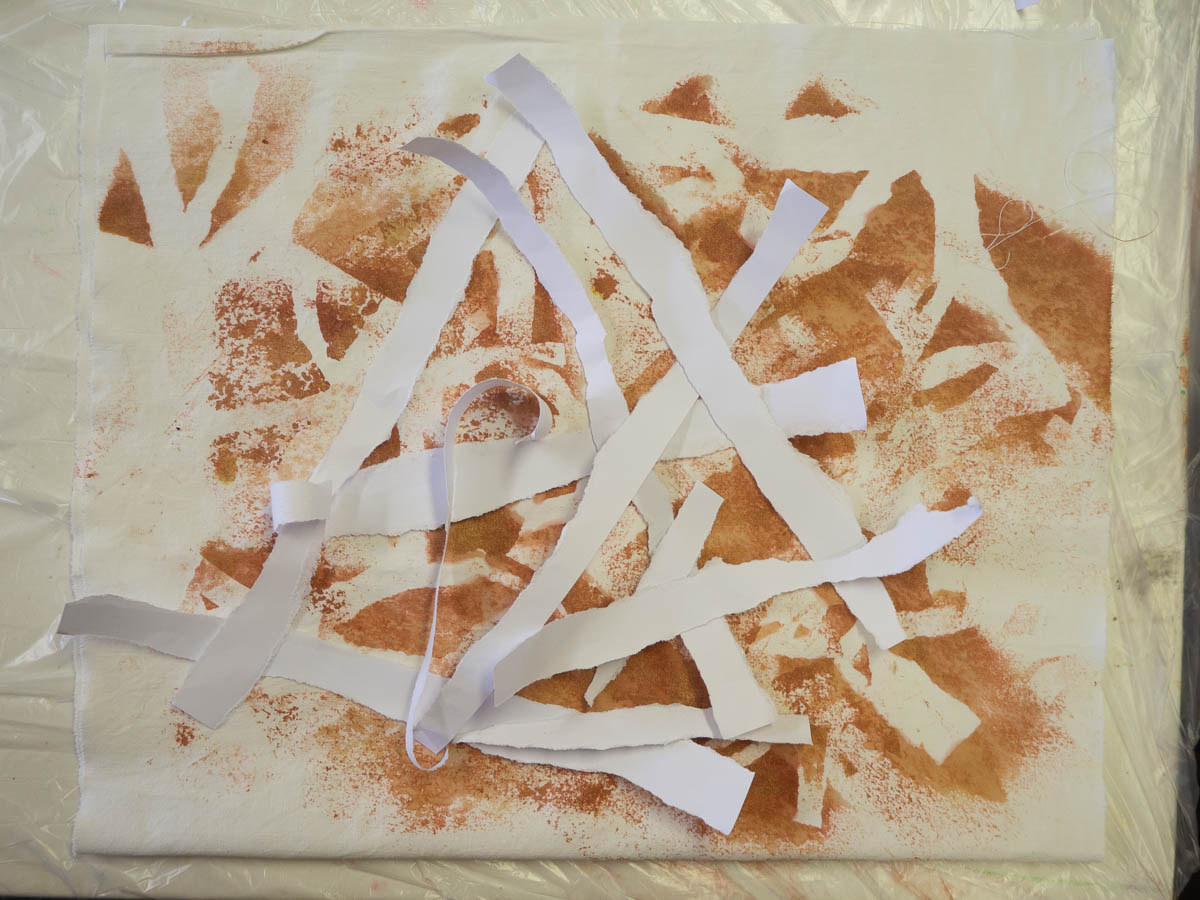
Learning #2: you can mask off parts of the fabric with all kinds of things, not just masking tape and tidy stencils.

For example, a random jumble of paper strips:

Or just wrinkles and folds in the fabric itself – bunch it up and run a roller over it:

Learning #3: use non-traditional things to apply paint.

A dish brush:

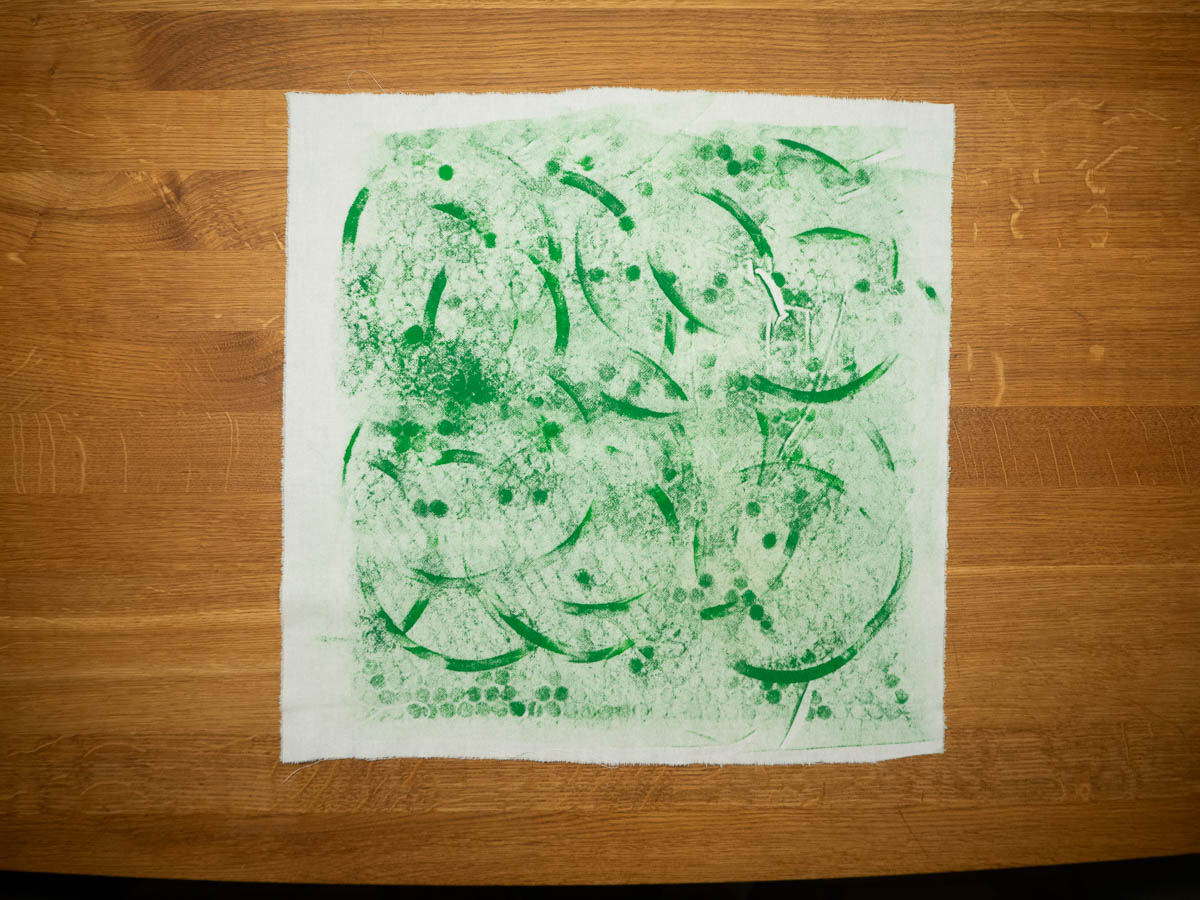
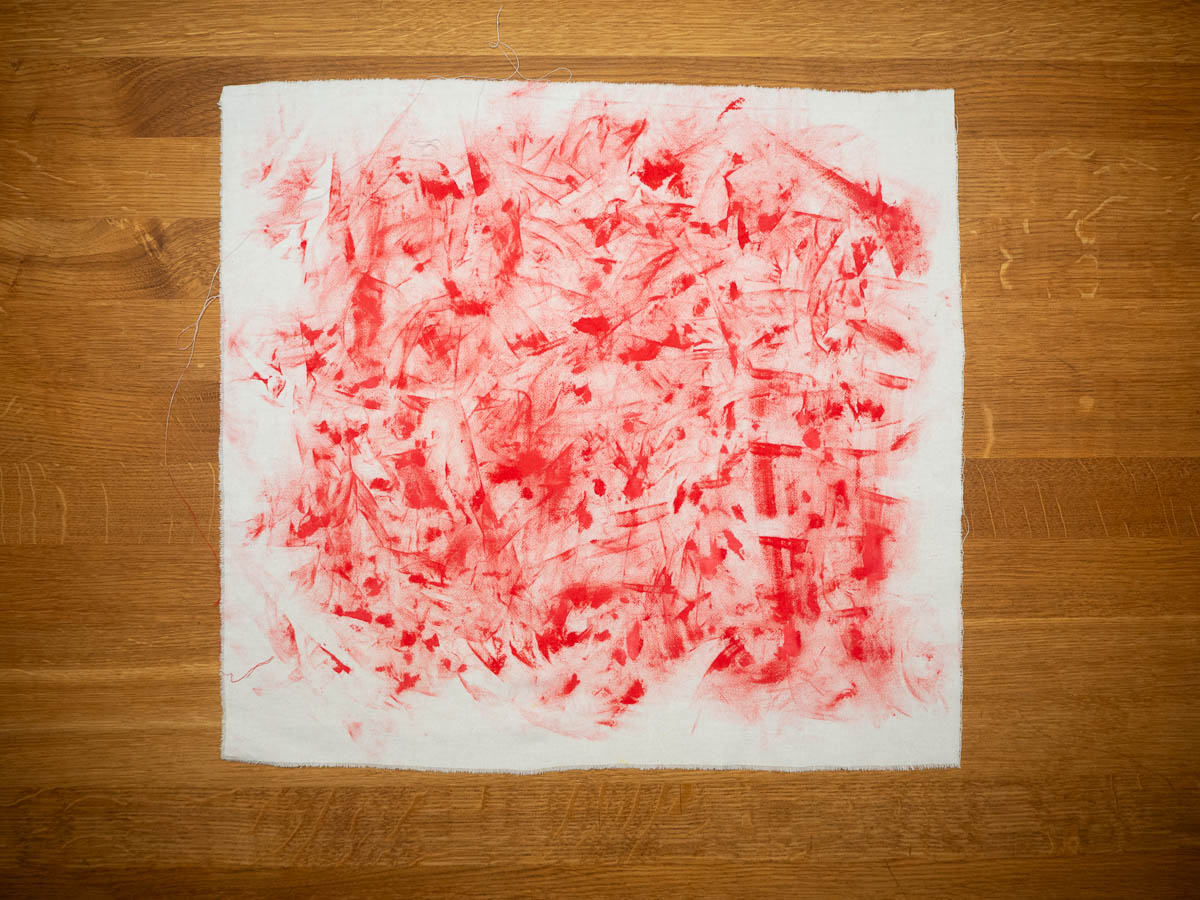
A paint mixing chopstick (for the red – and I can’t even remember what I used for everything else, although it looks like corrugated cardboard was involved for the green):

Learning #4: put another layer of fabric underneath the one you’re actively working on, for subtle patterns and serendipitous leakage.

Learning #5: any time you’re reaching for paper towels to wipe something off, use a fabric scrap instead. Have paint left over on the roller? Sloppily roll it onto a piece of fabric. Have a wet roller? Dry it with yet more fabric.

A paint-covered doily left accidental prints on an underlayer of fabric. I then used it to dry a wet, mostly rinsed-off roller, and got lovely watercolour effects.

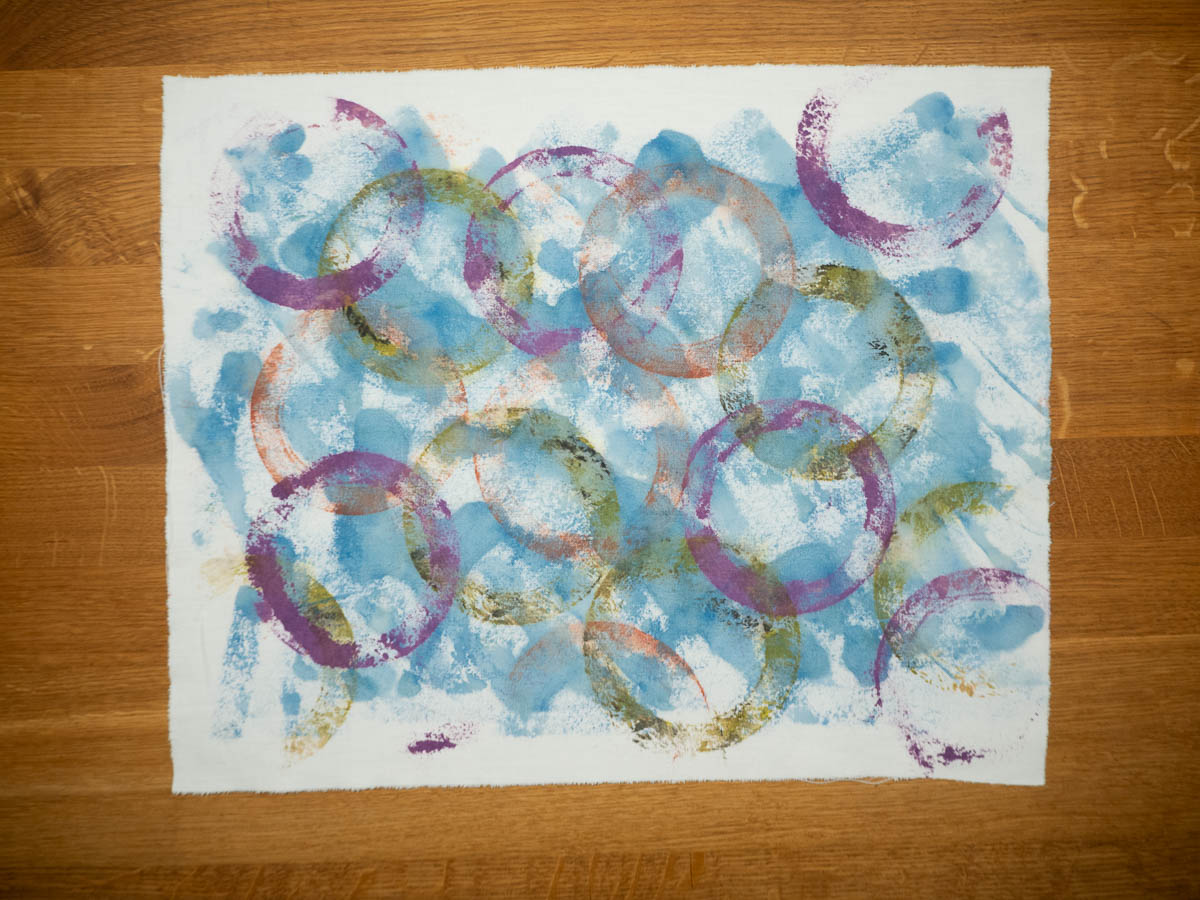
Learning #6: go with the flow. There are no free rollers for the green you had in mind, but someone has made a purple and blue mixture? Sure, why not. Someone spilled water in the paint so it’s too wet for rolling? Use a sponge to drip it on the fabric instead. The red roller got used for black by accident? Interesting colour combinations will arise.
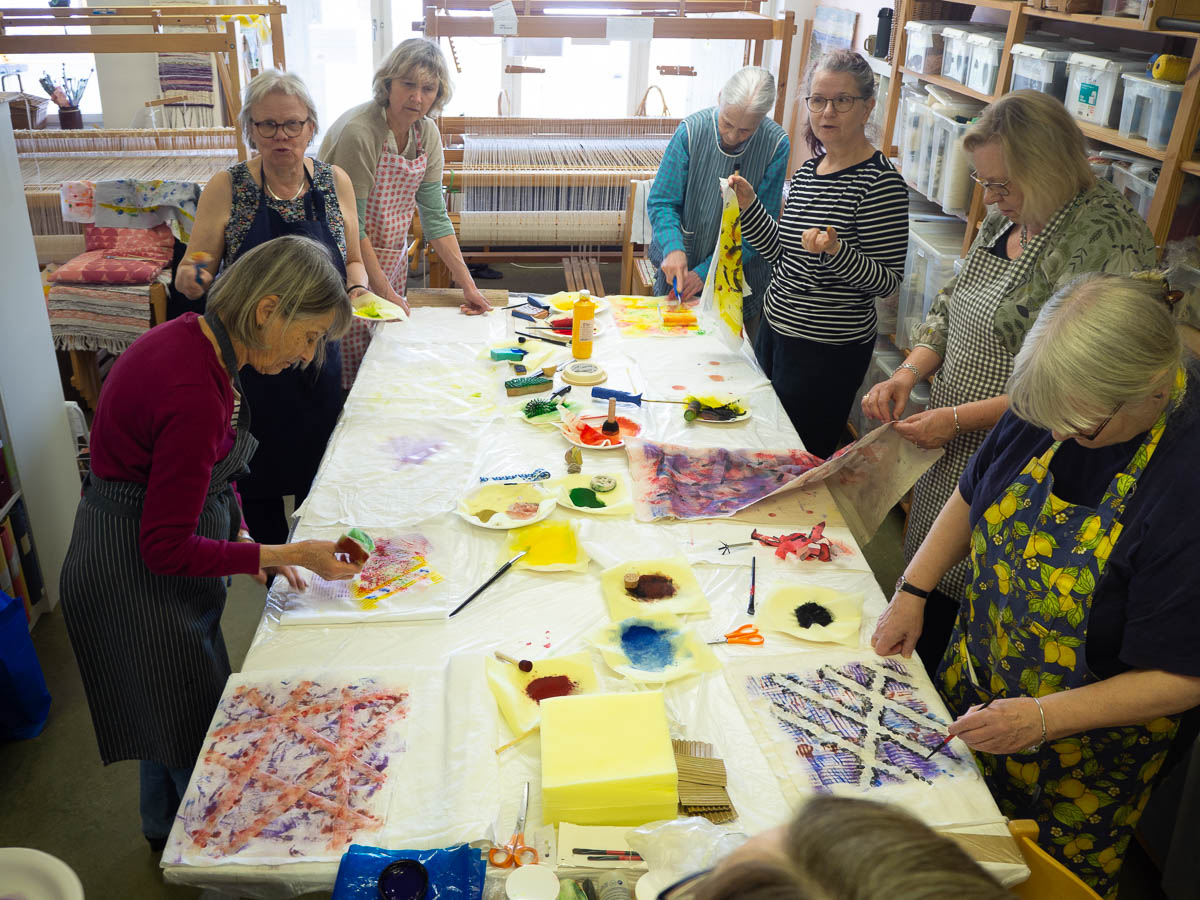
Day two of our weekend textile workshop with Lena Larsson. Yesterday we printed on fabric; today we’re embroidering on our printed fabrics.

Lena uses a lot of applique in her embroidery, and she has a particular technique for this that I haven’t run across in anyone else’s work. During the first half of the day I experimented with her technique. She puts a layer of thin, translucent fabric such as organza or tulle on top of her printed fabric, and then sets applique pieces between these two layers. Then she stitches along the contours of the applique pieces. So the applique pieces are not actually sewn to the fabric – they’re only held in place by the contouring stitches. They almost hover in place.

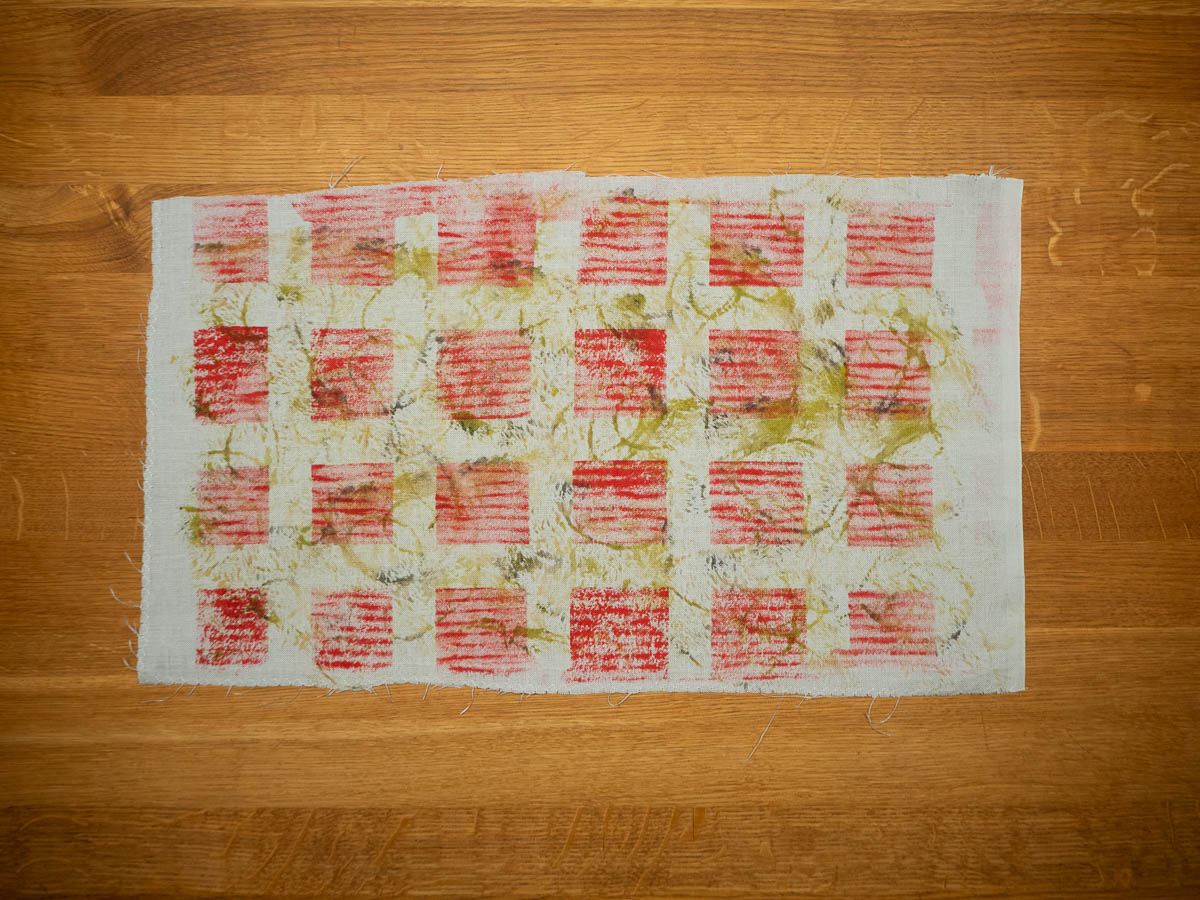
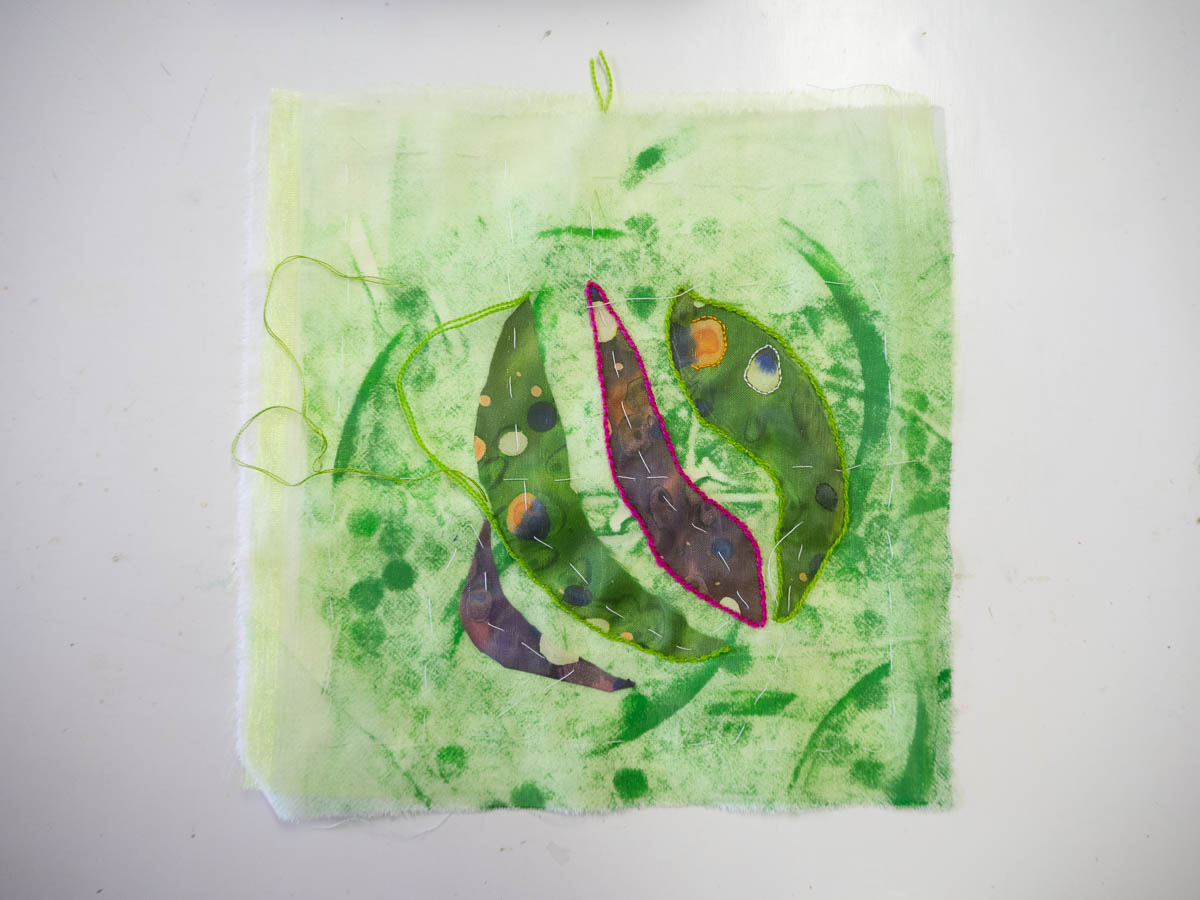
I tried light green organza over a fabric with plenty of green, strips of patterned silk in between, and couched contours. I liked the technique, but I think my fabric choice wasn’t the best. I thought green and purple would give me vibrant contrast, and they would have, if they had been side by side – but the green organza on top of the purple silk strips just made them look washed out and muddy. I tried bringing back some of their colour with embroidery, but I still don’t like the look.
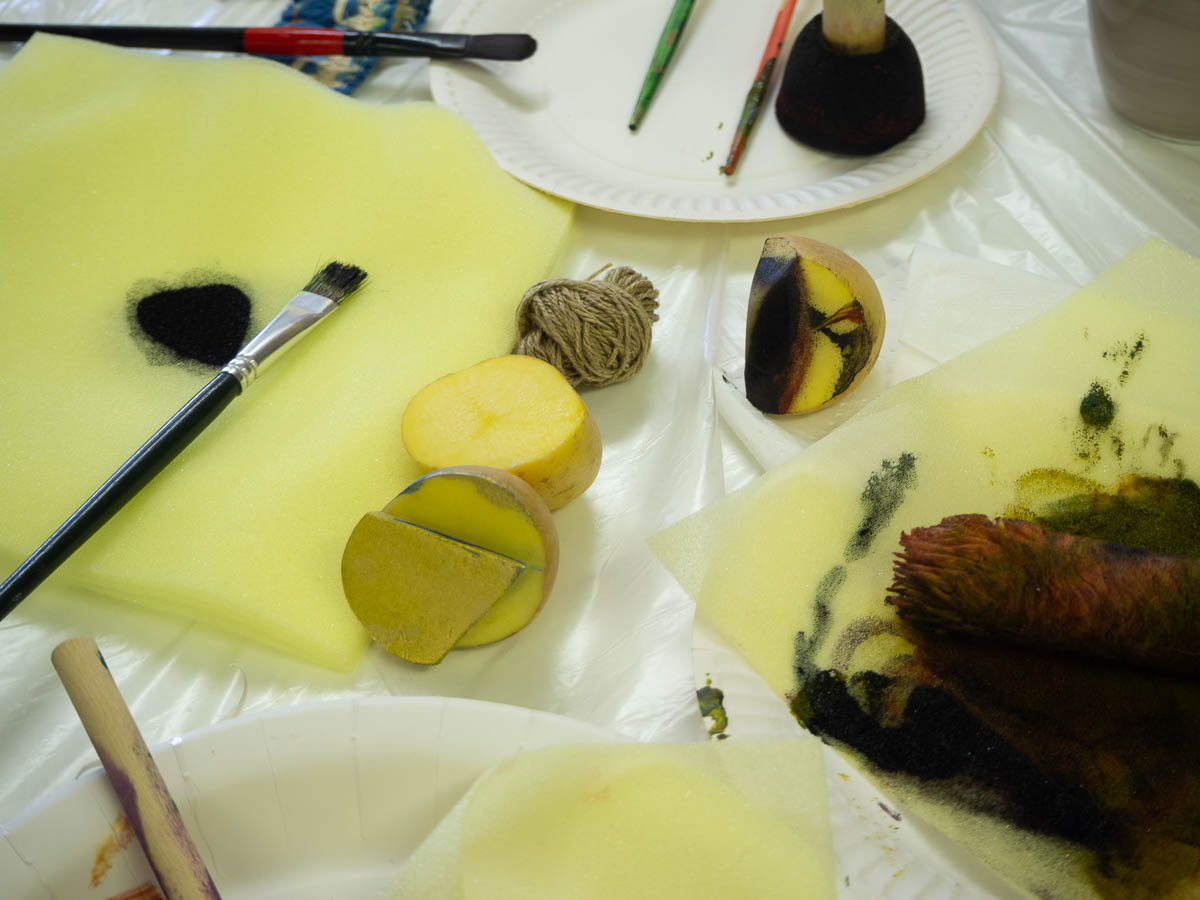
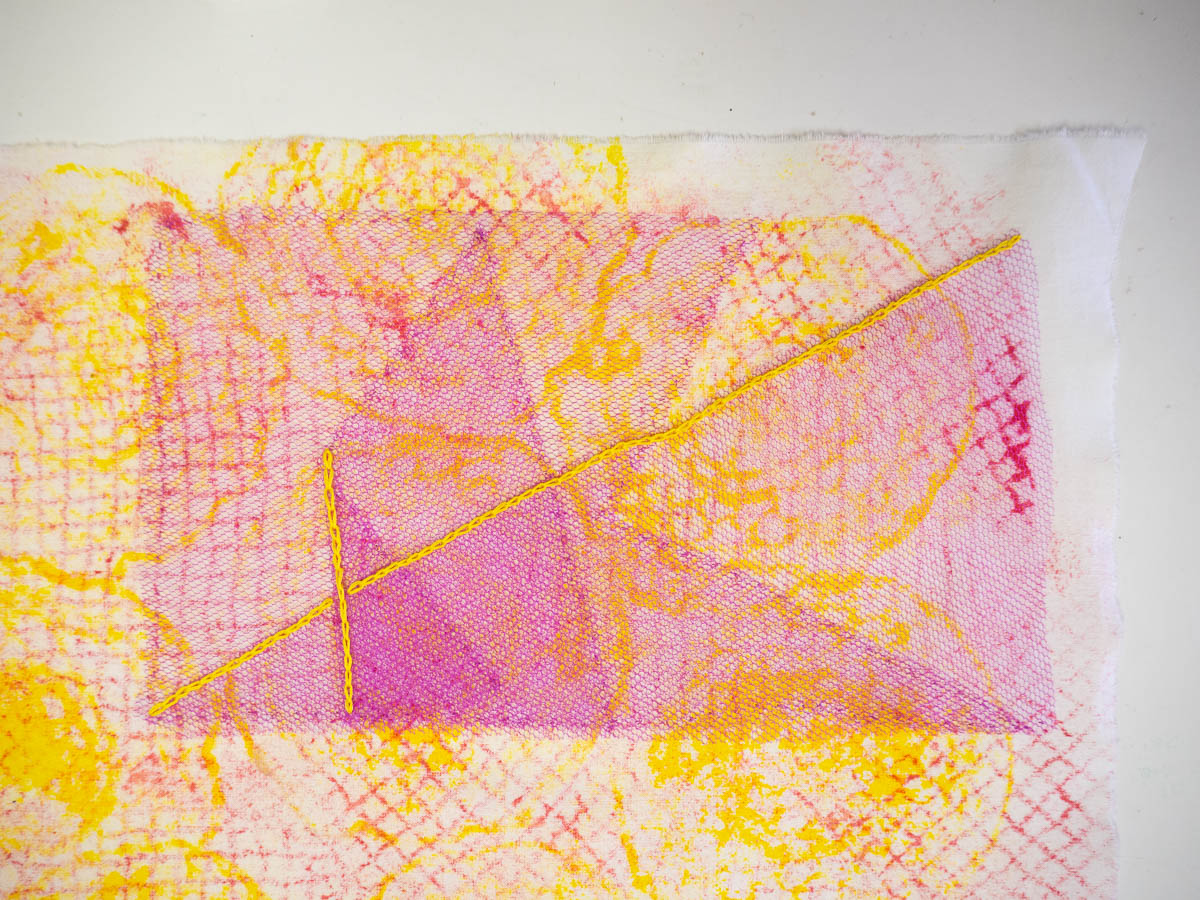
After lunch I switched techniques and experimented with stacking layers of tulle on top of each other, and embroidering on that.

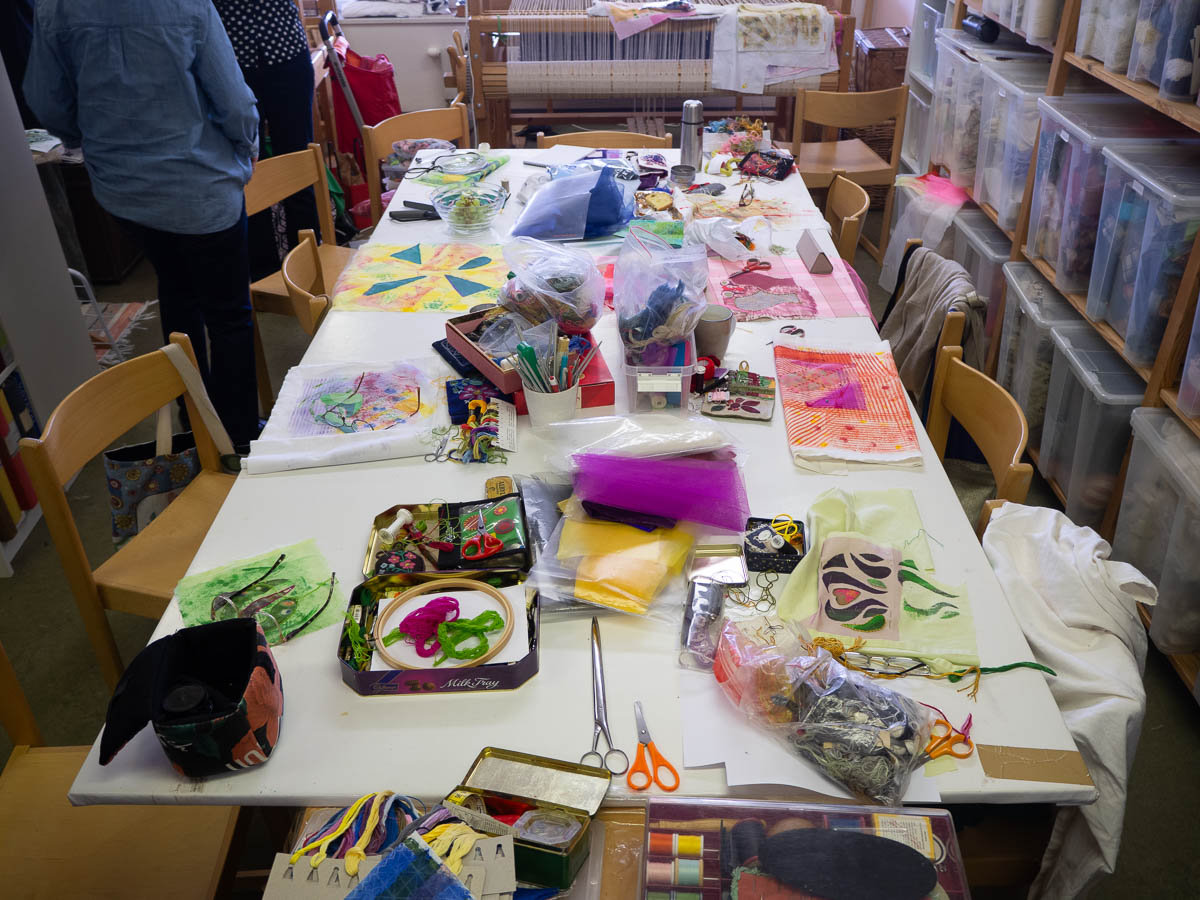
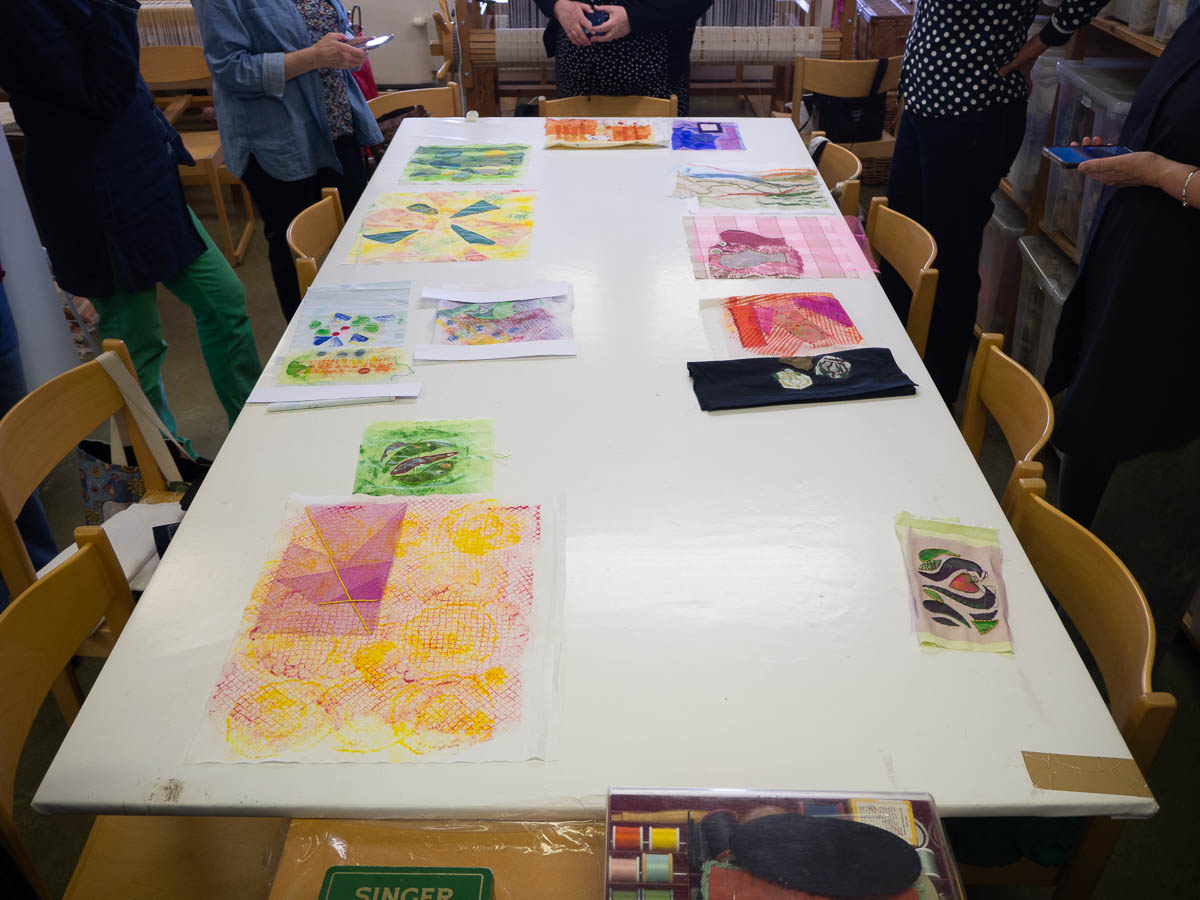
Ten people, all given the same materials and instructions, ended up with ten very different results.

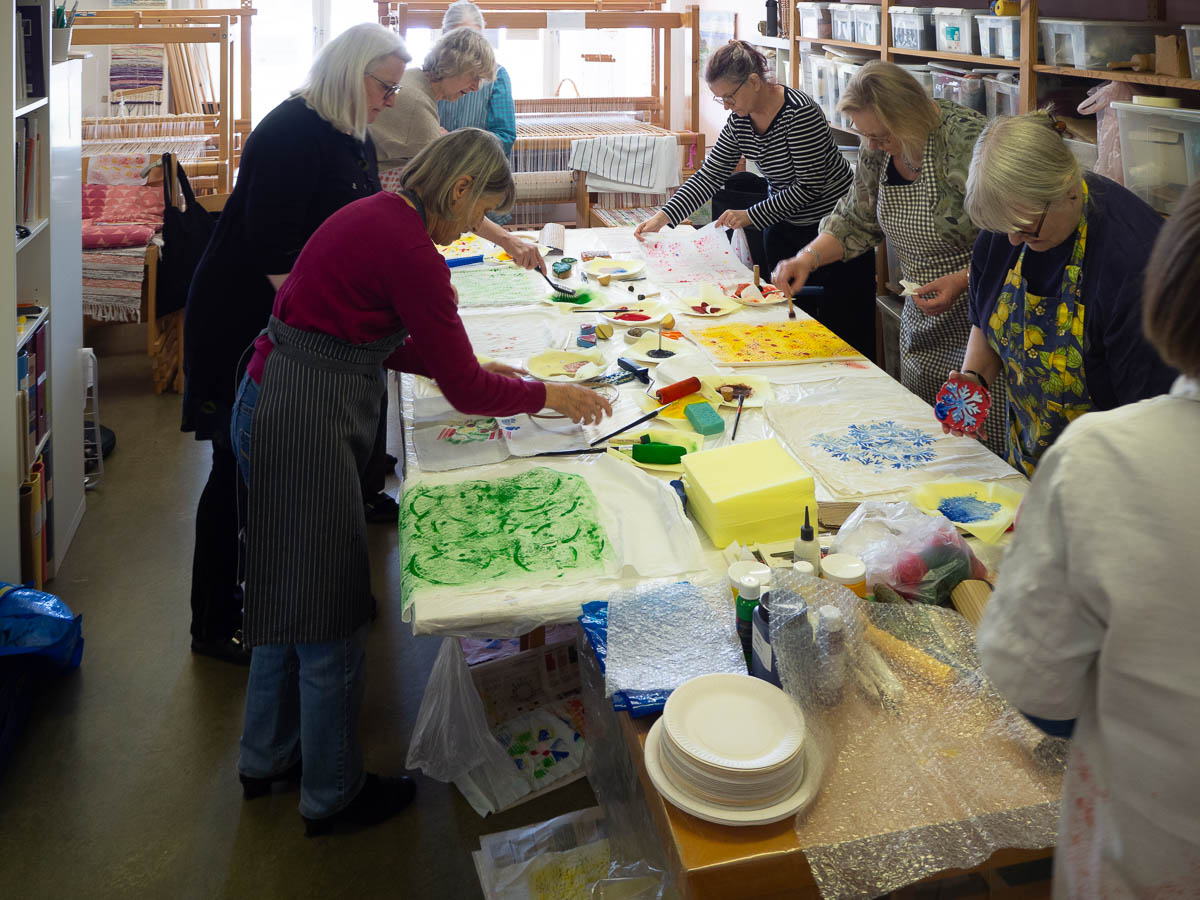
A full-day textile printing workshop with the ladies from my Thursday embroidery club, led by Lena Larsson, whom we discovered through her exhibition at Husby Gård back in October. Several of us visited the exhibition, enjoyed it, ended up talking to the artist herself, and at some point someone proposed that she could show us how she does stuff. Half a year later, here we are!

This was an incredibly fun way to spend a day. Just playing around with paint on fabric, in all kinds ways. I haven’t been so immediately, playfully creative since I mucked around with children’s crafts back when Ingrid and Adrian were in their first years of school.

Doing this together made it so much better than it would have been on my own. Lena showed us examples of her work and gave us some ideas to get started with. Then someone came up with a variation, and someone else thought of a different one, and a third person combined the two into something entirely new. The ideas just kept flowing.

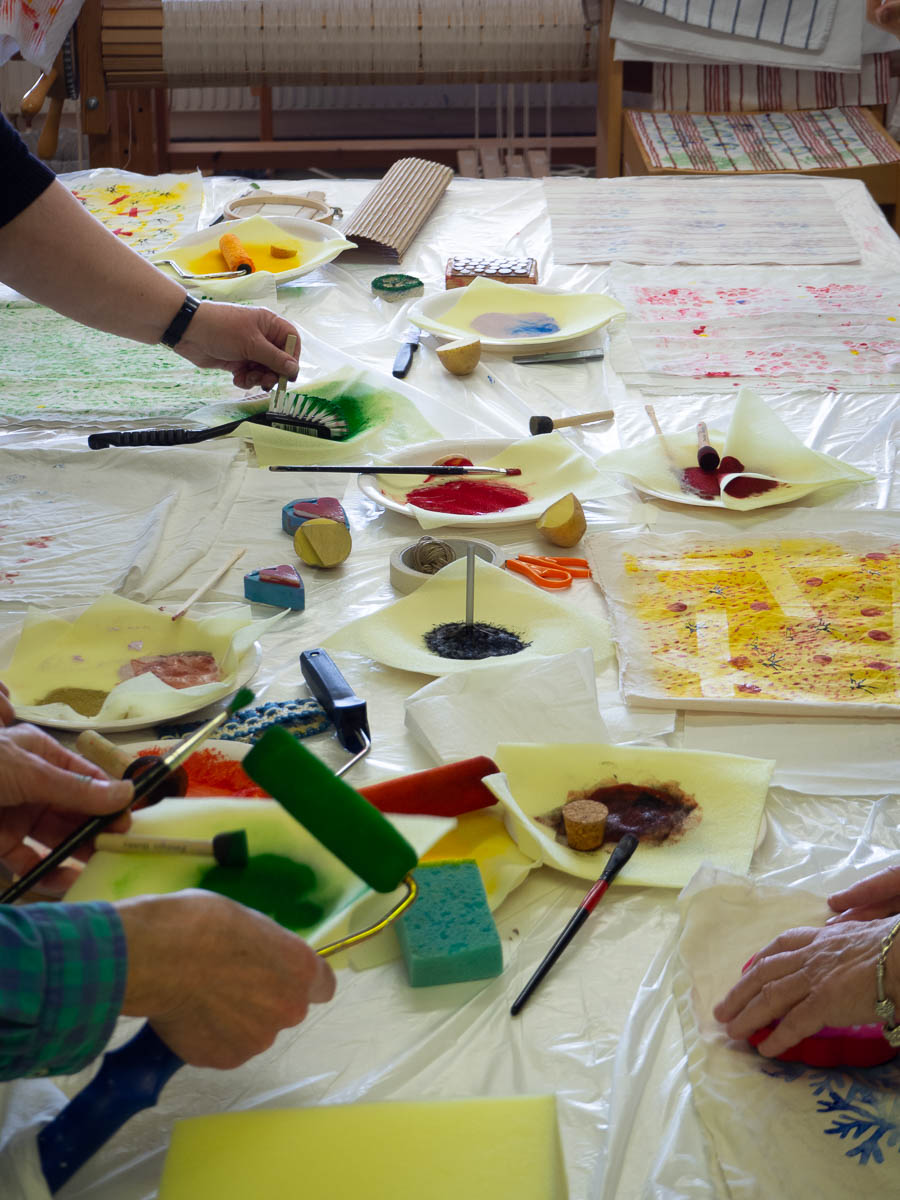
Textile printing sounds like it might require all sorts of equipment, but it really didn’t. Textile paint, paper plates to put it on, some cheap paint rollers – that’s all you need. And then random stuff we found lying around: pieces of string, rolls of masking tape, scraps of old lace, strips of paper. Potatoes, for cheap stamp-making, if you want.

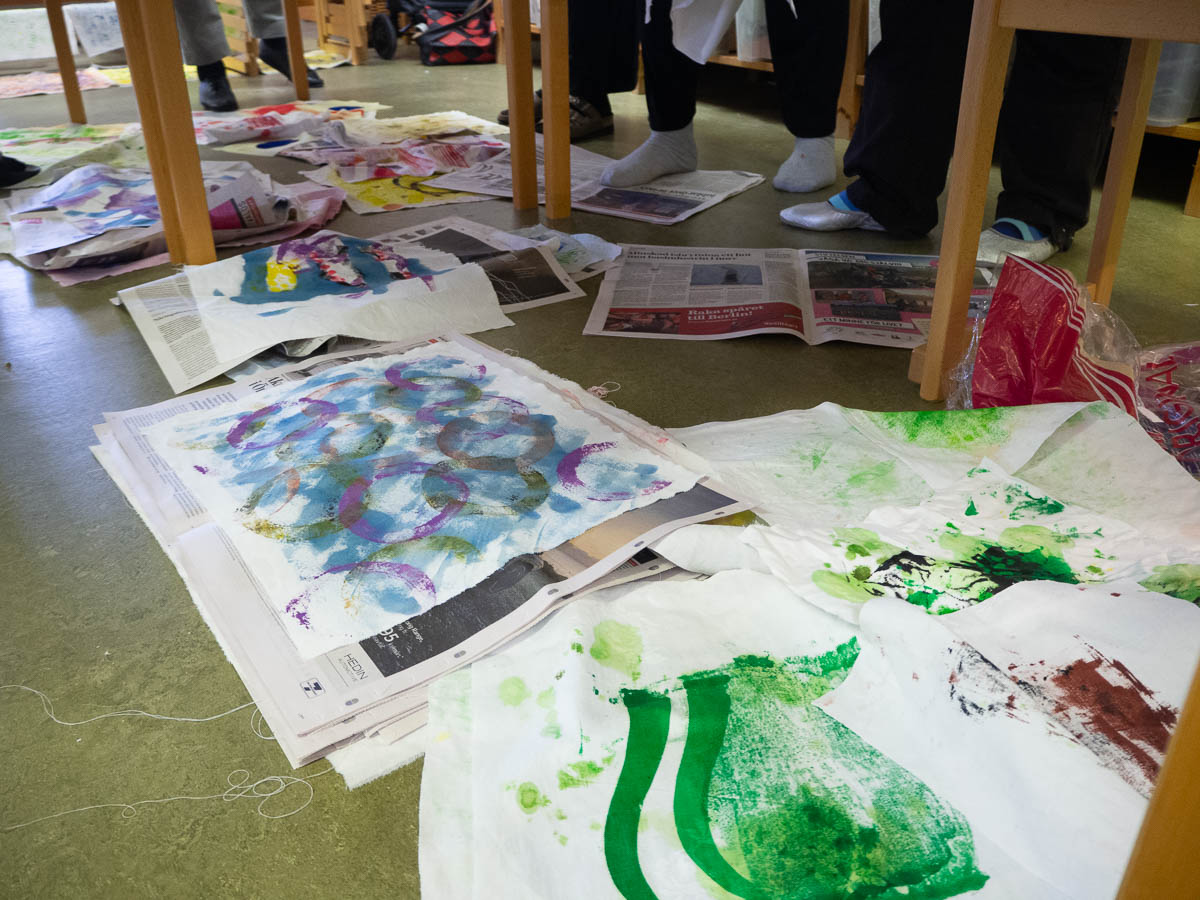
For fabric, we used old bedsheets that we ripped into smaller pieces, and thrifted towels. With cheap and plentiful fabric, we could play freely, without any concern for the cost of the materials, or any worry about running out. We all ended up with piles of experiments stacked on the floor under our work stations, with layers of newspapers in between to keep the paint from spreading.

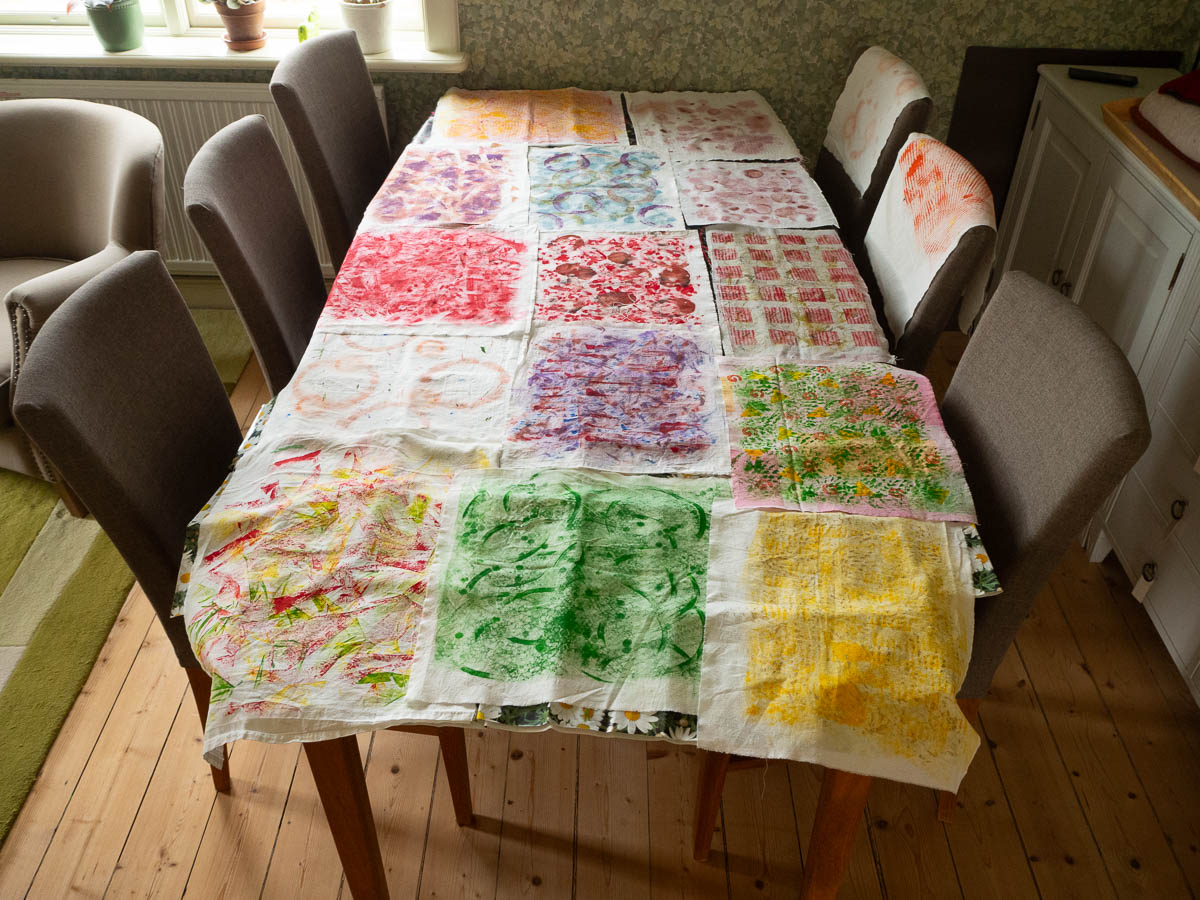
I came home with tons of pieces of printed fabric, each one based on a different technique or idea. They just barely fit on my dining table to dry, and it took an hour to iron them all to set the paint.

Tomorrow we will have the second half of the workshop, where we’ll be embroidering on our newly printed fabrics.

Ingrid works part-time at Spånga Konditori on weekends, and often brings home leftover bread and pastries that would otherwise be thrown out. Buns that are too lopsided, pastries that look uneven, various things that are just too old to sell.

Almost every time, she brings home a loaf of sourdough bread. The darker kinds of bread, the bakery sells at half price the day after. But the light sourdough bread they don’t think is good enough even at half price, so all that’s left over at the end of the day gets thrown out.

She doesn’t bring it home for us to eat, because there’s no way we would be able to eat that much! I’d get bored of the bread well before it’s gone. It’s good, but this kind of light bread is a bit too bland for my taste.

No, she brings it to me so that I can take it with me to work. I used to do it at tretton37, and now I do it at Sortera. The folks at the Sortera office are getting used to having nearly-fresh sourdough bread for lunch on Mondays. I tend to plan my own lunch around it as well – maybe a soup or a lighter stew – and together we eat all or nearly all of it.

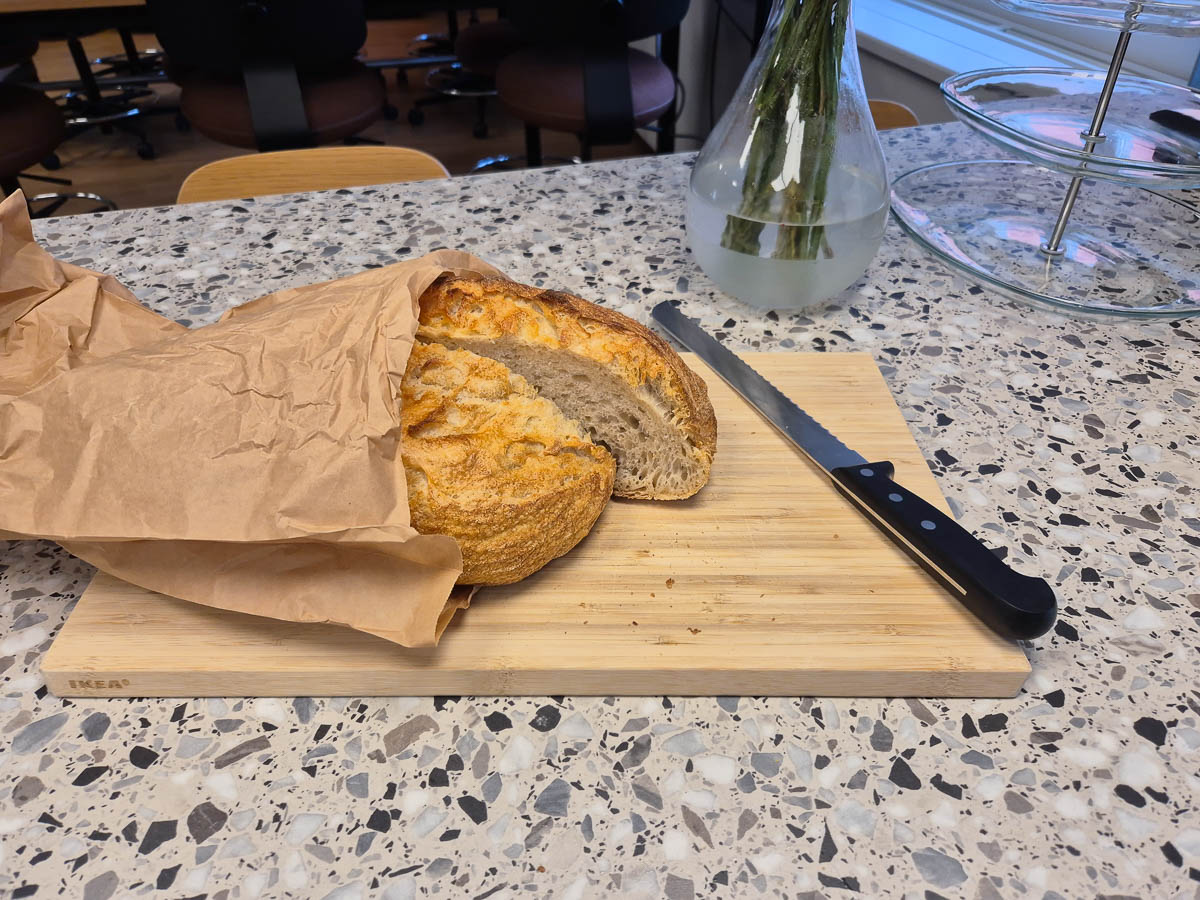
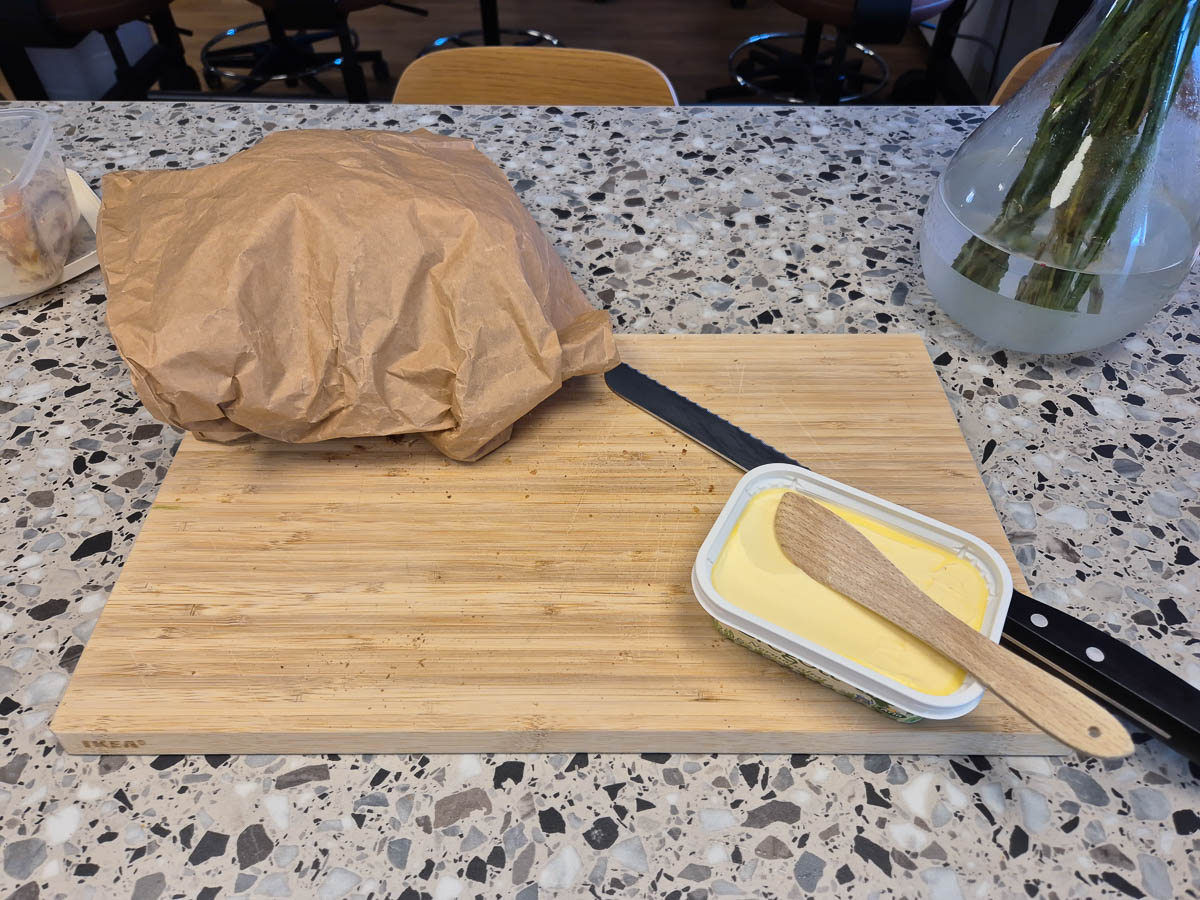
Today I brought a loaf with me to Active Solution. And discovered that the people at this office have very different meal habits. Many go out to eat lunch at a restaurant; lunch boxes are far less common here, so they don’t even sit in the kitchen for lunch, and then of course have less opportunity to eat the bread.

Probably as a result of the above, there’s also much less of a culture of shared stuff in the fridge. I’m so used from all previous offices that there would always be at least, like, butter, cheese and ketchup in the fridge. Here I had to go out and buy a package of butter.

At the end of the day, three quarters of the loaf was still there and came home with me again. Over half of what did get eaten, I ate myself. I think I’ll be making bread pudding of the rest tomorrow.

Just… interesting to see how such a basic thing as bread and butter can work differently in different places.