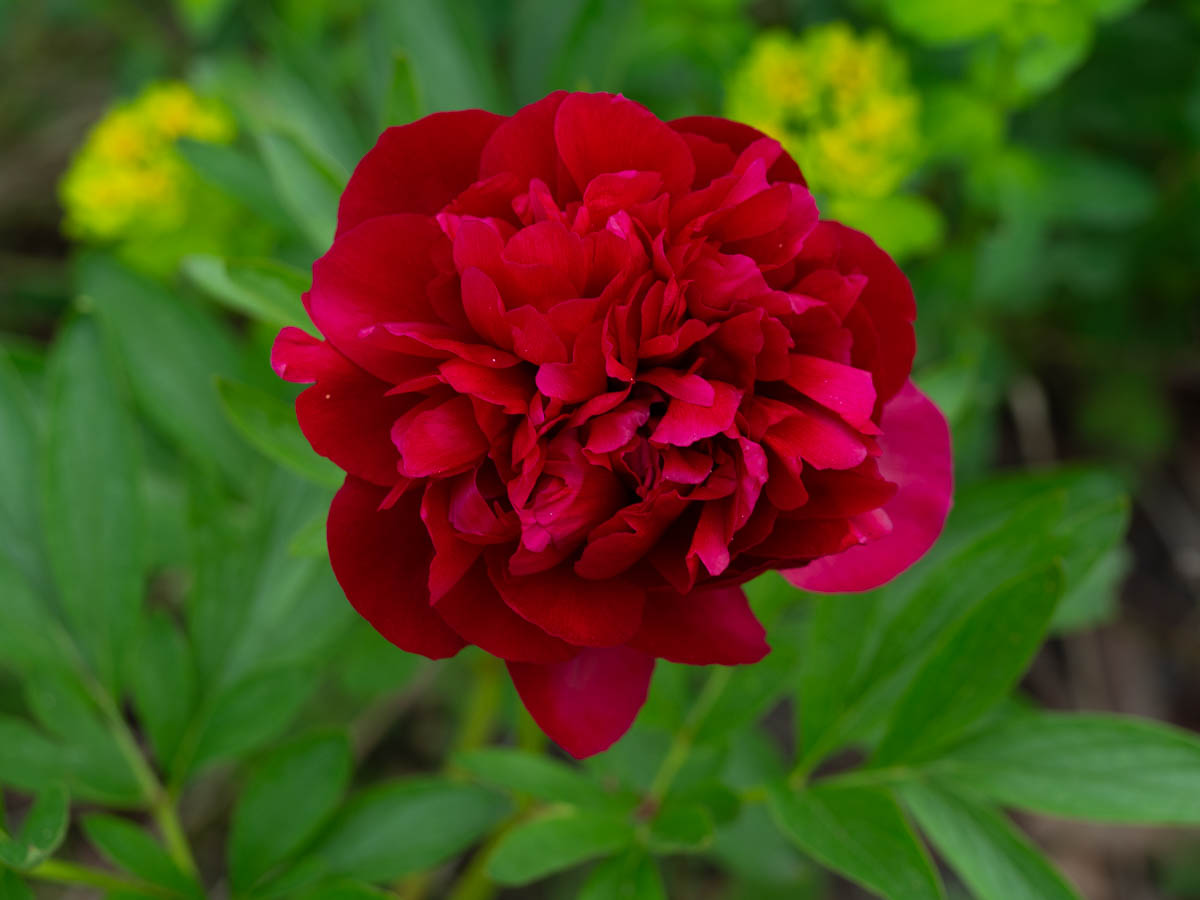
I planted a peony in 2021. It’s been failing to thrive since then. Every season I’ve been mildly surprised to see it come up again. I bought a backup peony last year because I’d mostly given up hope of the first one ever properly taking off.

This year it gave me a flower! Maybe it was doing better under the surface than I thought.

National day cake by Ingrid.

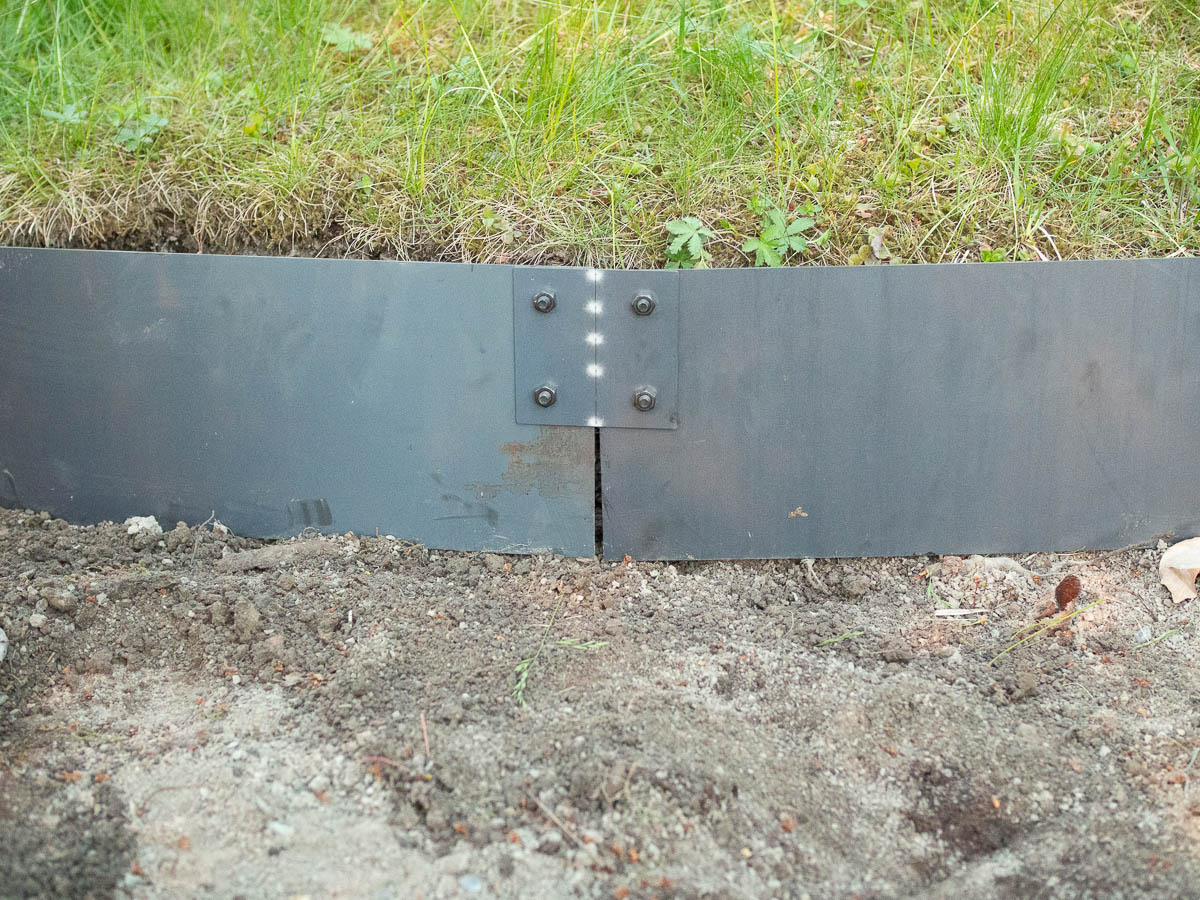
Now that the old planting boxes are gone, and the flat section of the garden is presentable enough to host Ingrid’s graduation party, I’m back working on the planting towards the street. The steel edging has been waiting for me since November. Today I got it in place.

I’ve got a cubic metre of new soil waiting for me, to replace the grass sod I cut away.

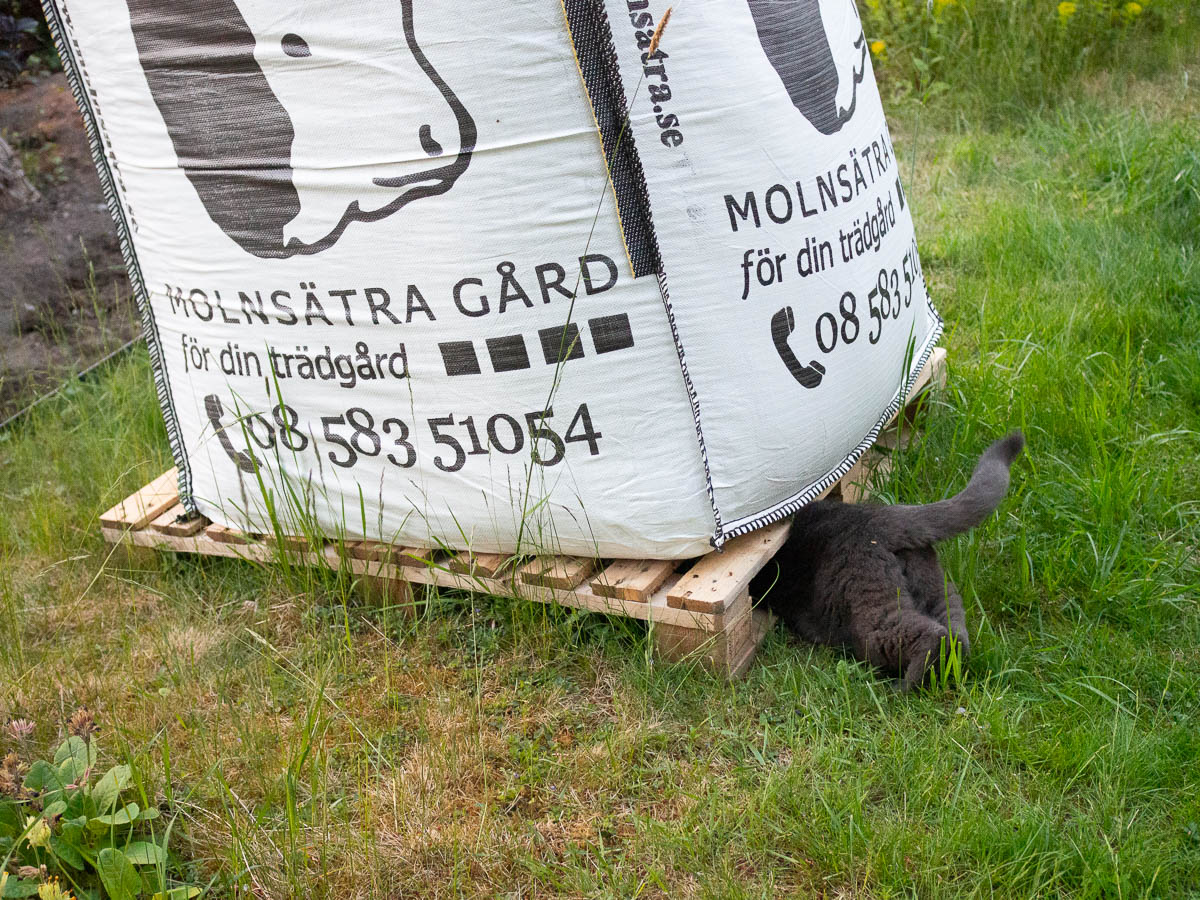
Nysse was obsessed with trying to get in under the pallet that the bag of soil was delivered on. Some small creature must be hiding under it.

Gymnasium graduation season is upon us. Truck bed parties (studentflak) which involve lots of beer and screaming and squealing passed by the Active Solution office yesterday, and the Sortera office today.

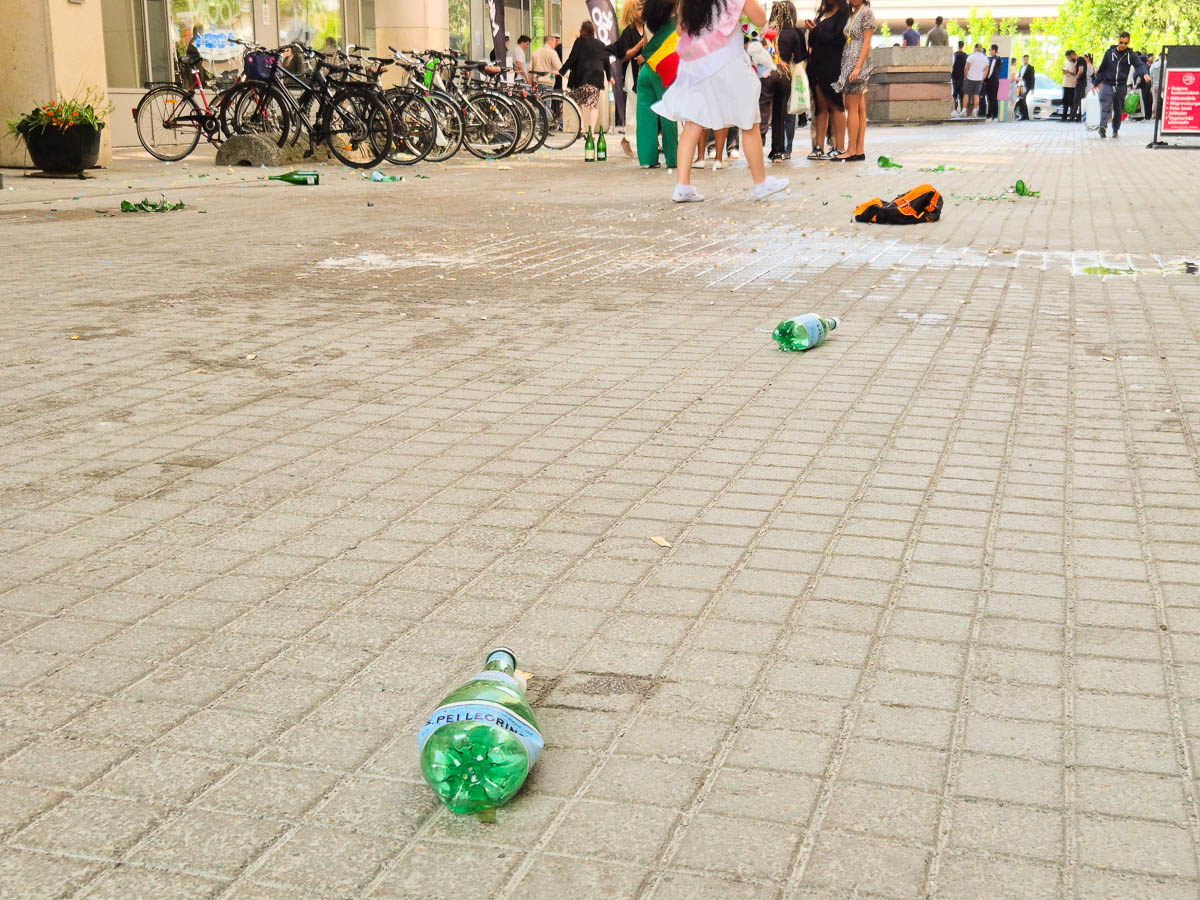
There must be some school very close to us – we went out to eat our lunch on the quay, and there were clumps of students with their families everywhere. And traces of inebriated celebration.

I was afraid I’d have to carry my bicycle across this field of broken bottles in the evening, but by then, someone had cleared away all traces of the party.

Got the last pieces of the planting boxes removed. Found another layer of geotextile under one of them. All grown through with roots, difficult to detach, but the material has not degraded at all.

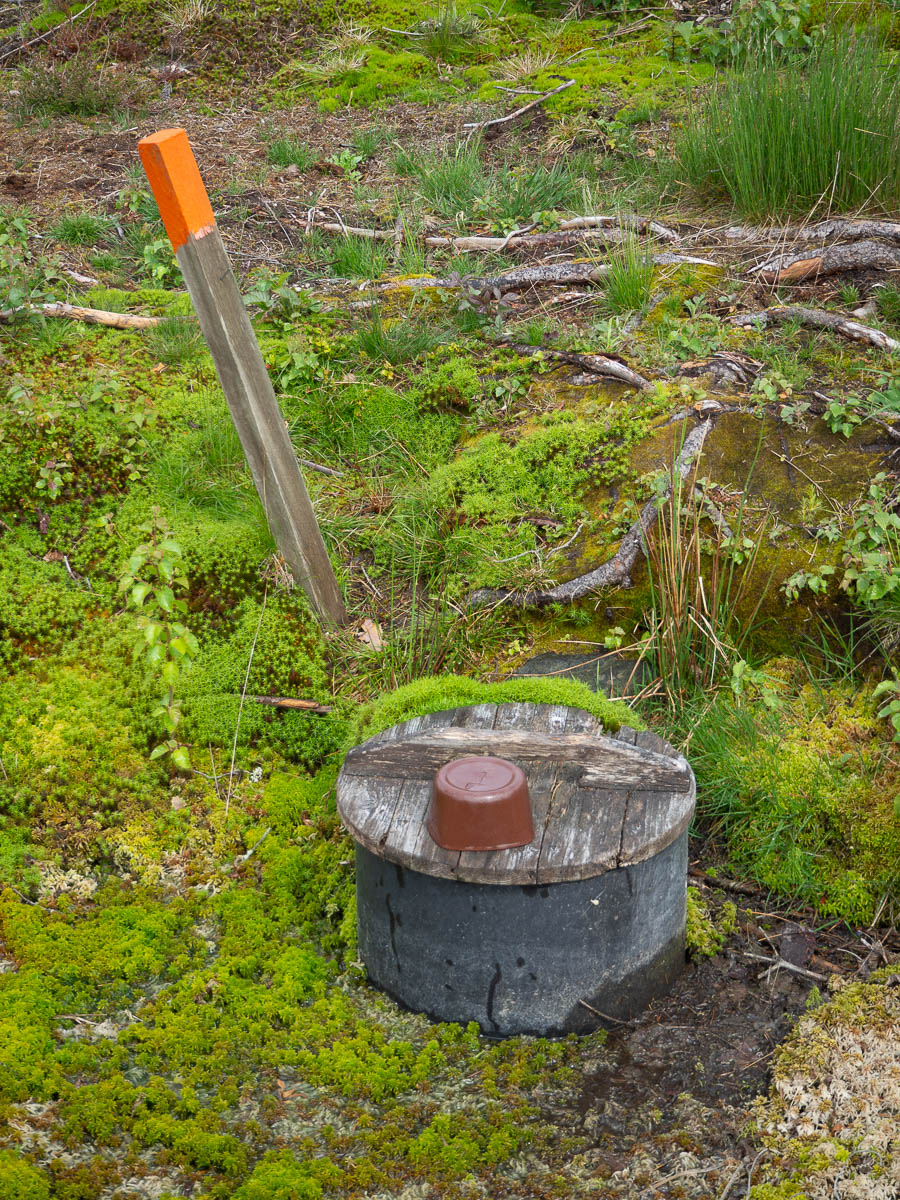
A typical spring in Sörmland is a gentle upwelling of water, protected by a concrete ring and a wooden lid. There’s sand and gravel at the bottom to filter the water. Often, but not always, there’s a dipper lying around. The water is usually right at ground level, so the ground around the spring is all muddy.

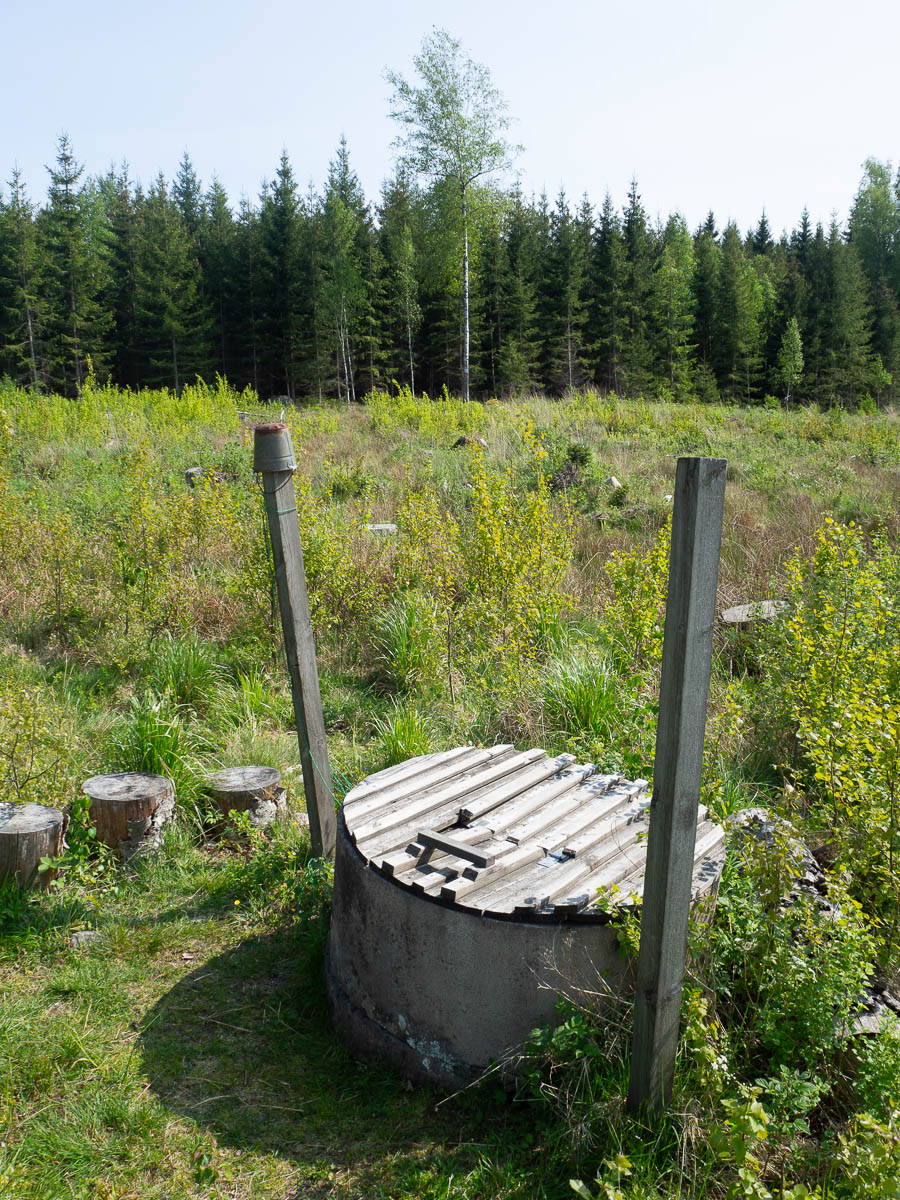
Sometimes the water is further down. On this hike, one of the marked springs was an actual well, with a tiny baby bucket on a piece of rope.

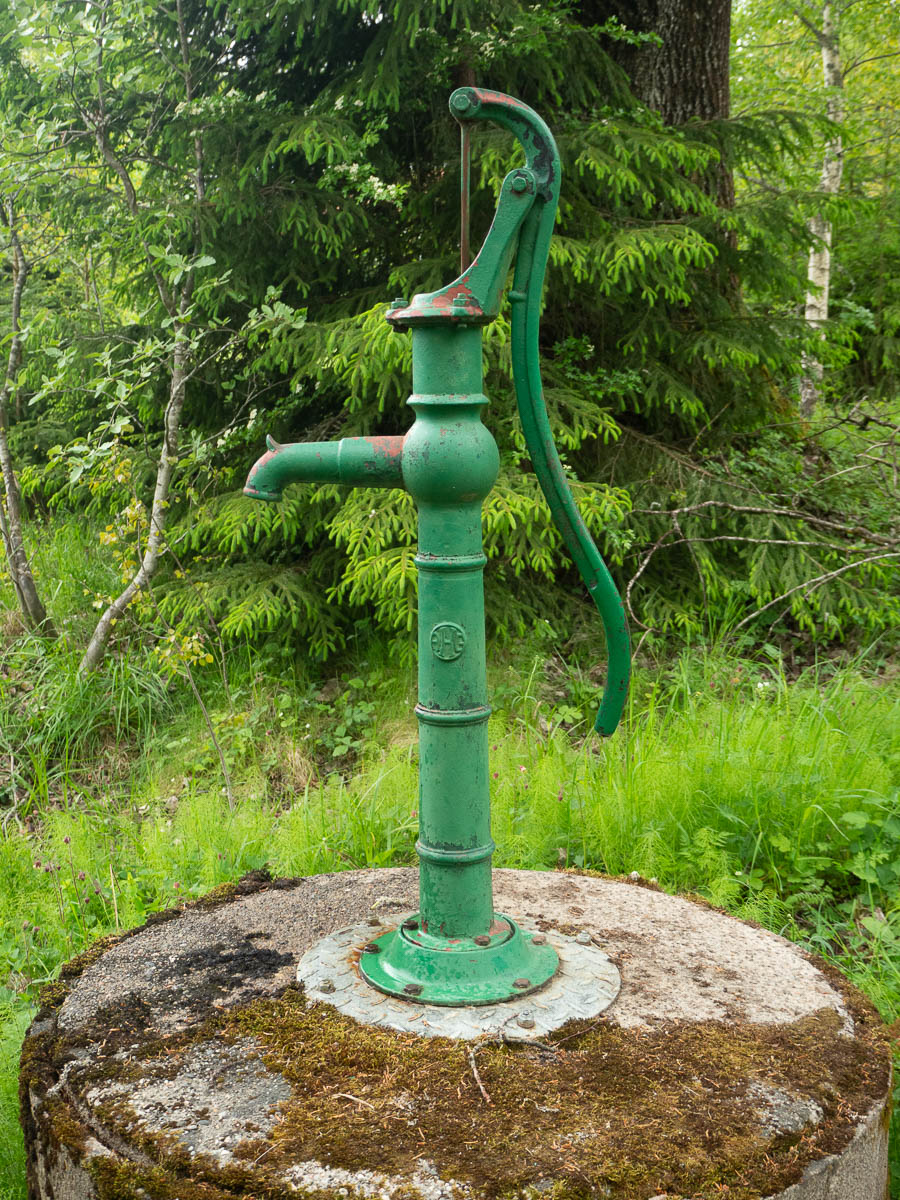
Very rarely there’s a water pump. Seeing this one made me wonder how old it is (looks old) and if manual water pumps like this are still being made and produced. They are, and the ones from reputable manufacturers cost about 5000-6000 SEK. You can also buy just the above-ground parts and install them as a decorative item; there’s a market for that.

Sörmlandsleden from Kolmården to Katrineholm. Today: Forssjö to Katrineholm, 12 km.

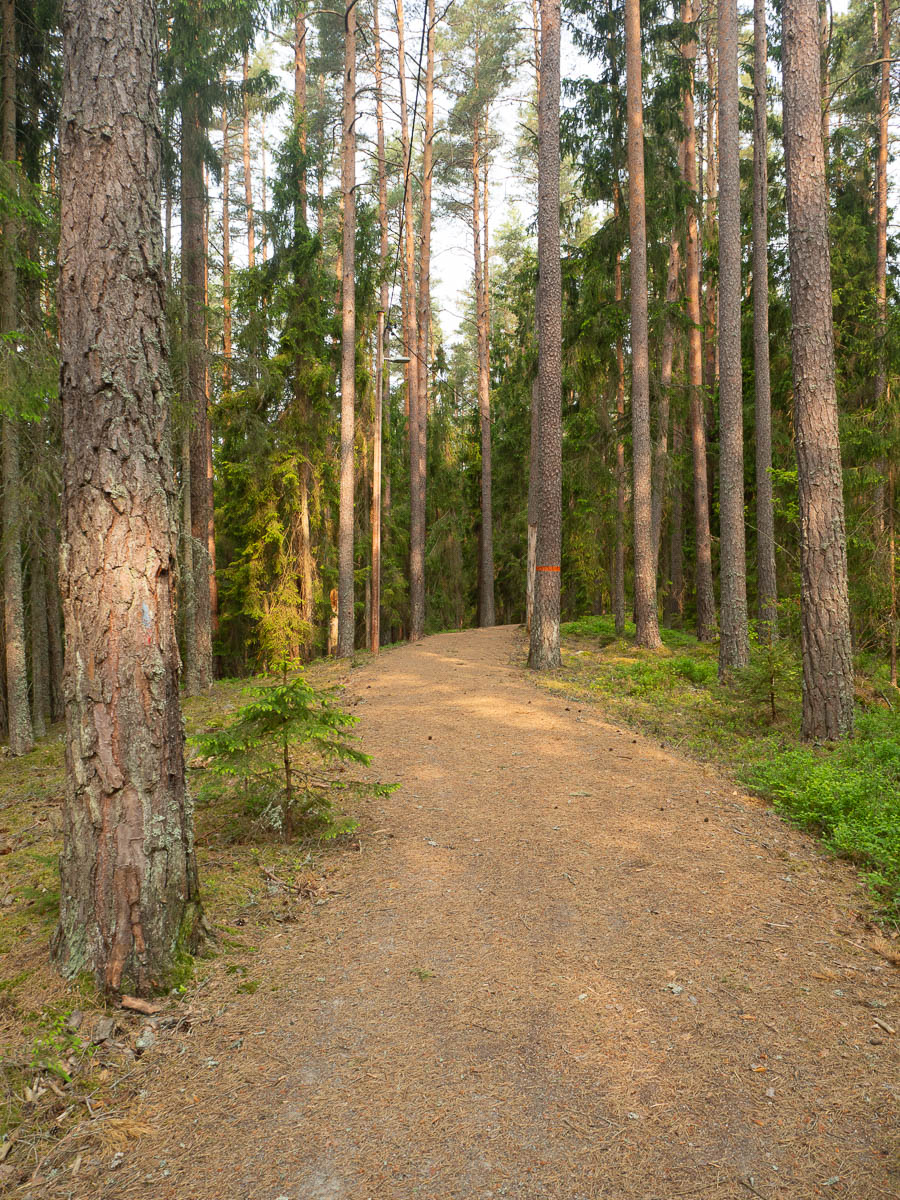
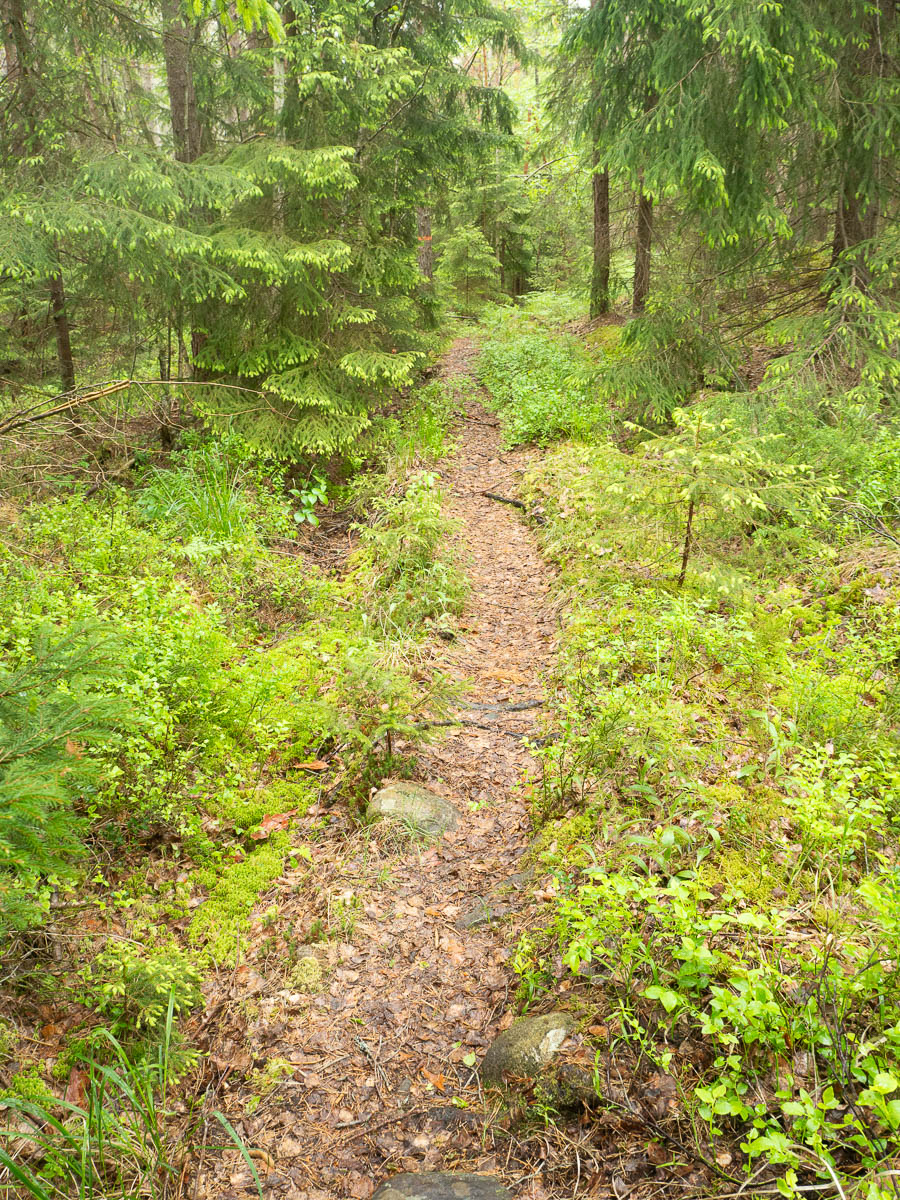
Semi-civilized nature reserves and recreation areas, with comfortable, even paths, made for easy walking.


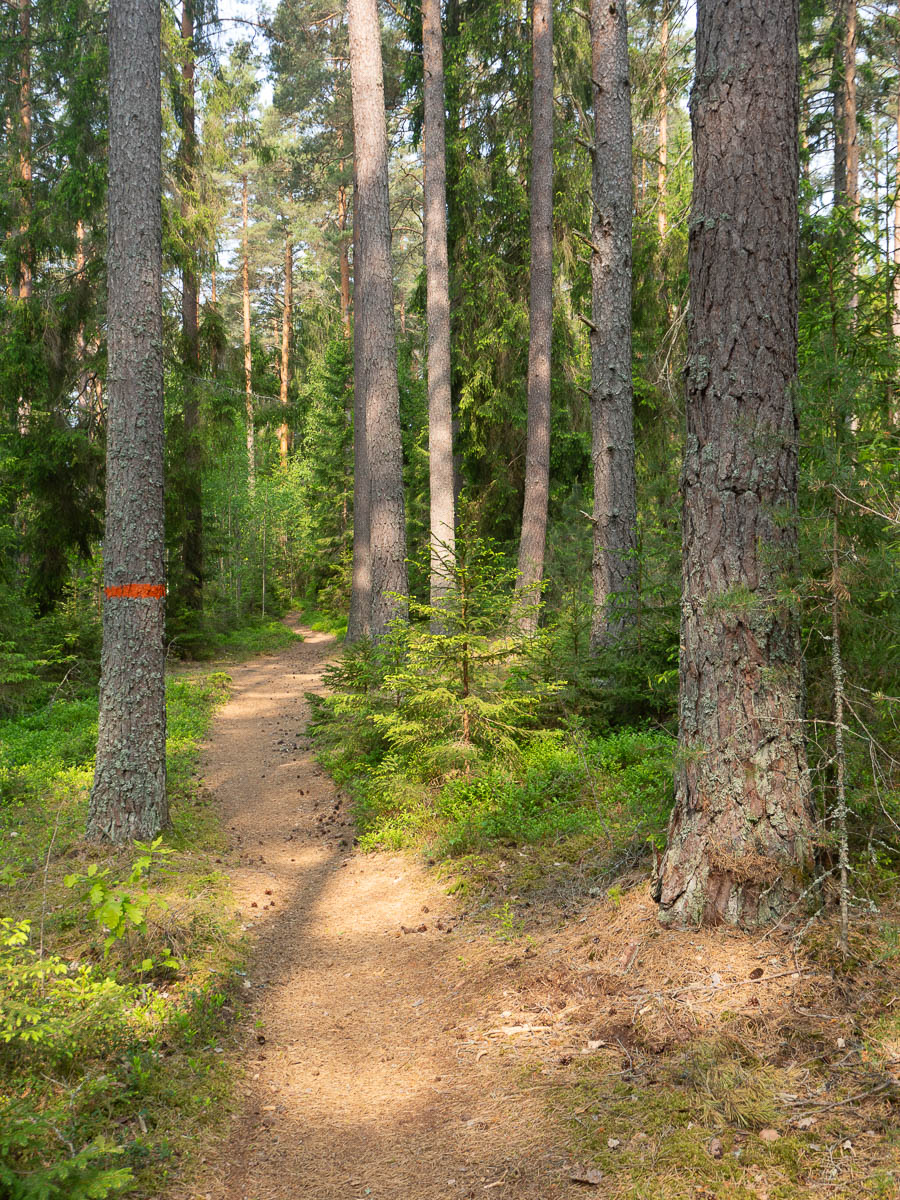
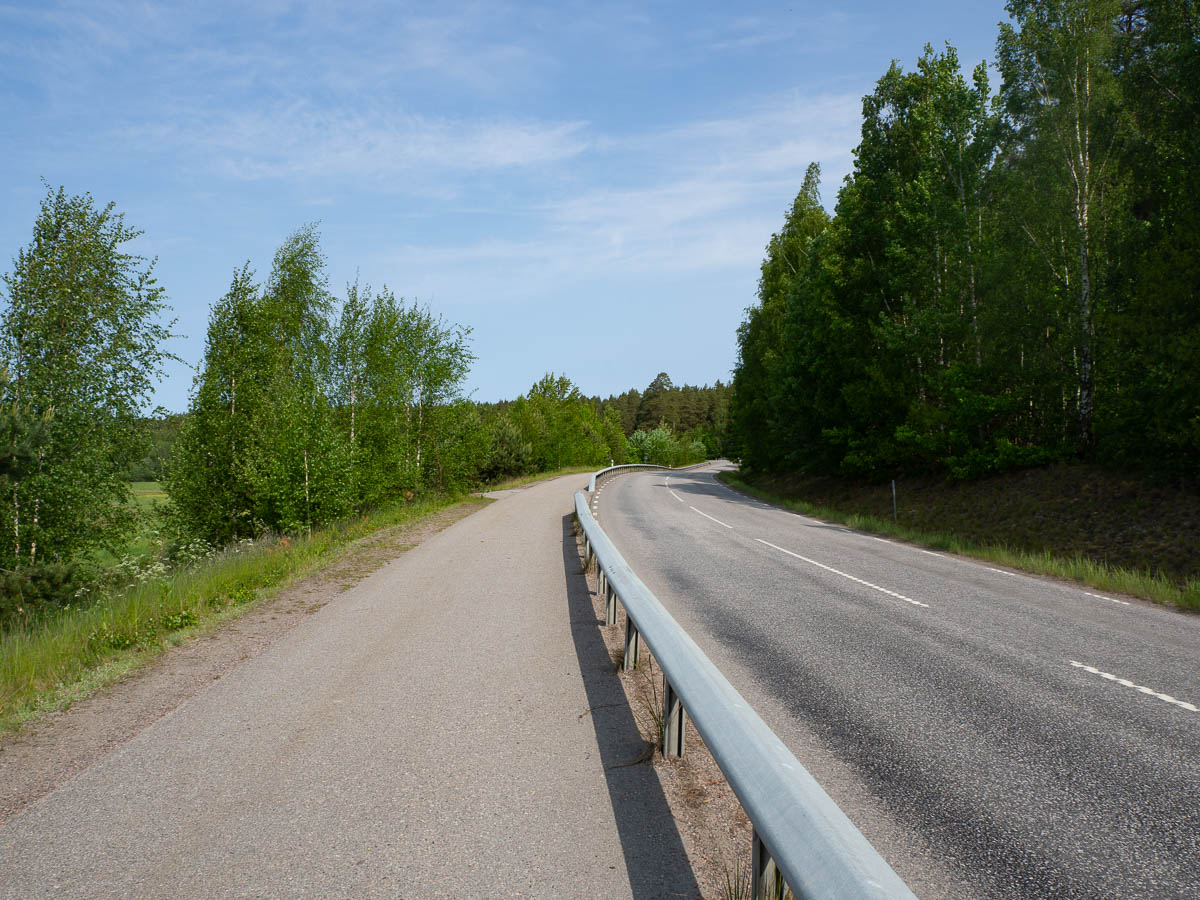
Inevitably, as I got closer to Katrineholm, the soft paths covered in pine needles were interrupted by stretches of asphalt, to get across roads and past farms. Asphalt truly is the nemesis of my feet – hard and unyielding. It looks like easy walking, and I guess objectively I make good time, but it is not comfortable.

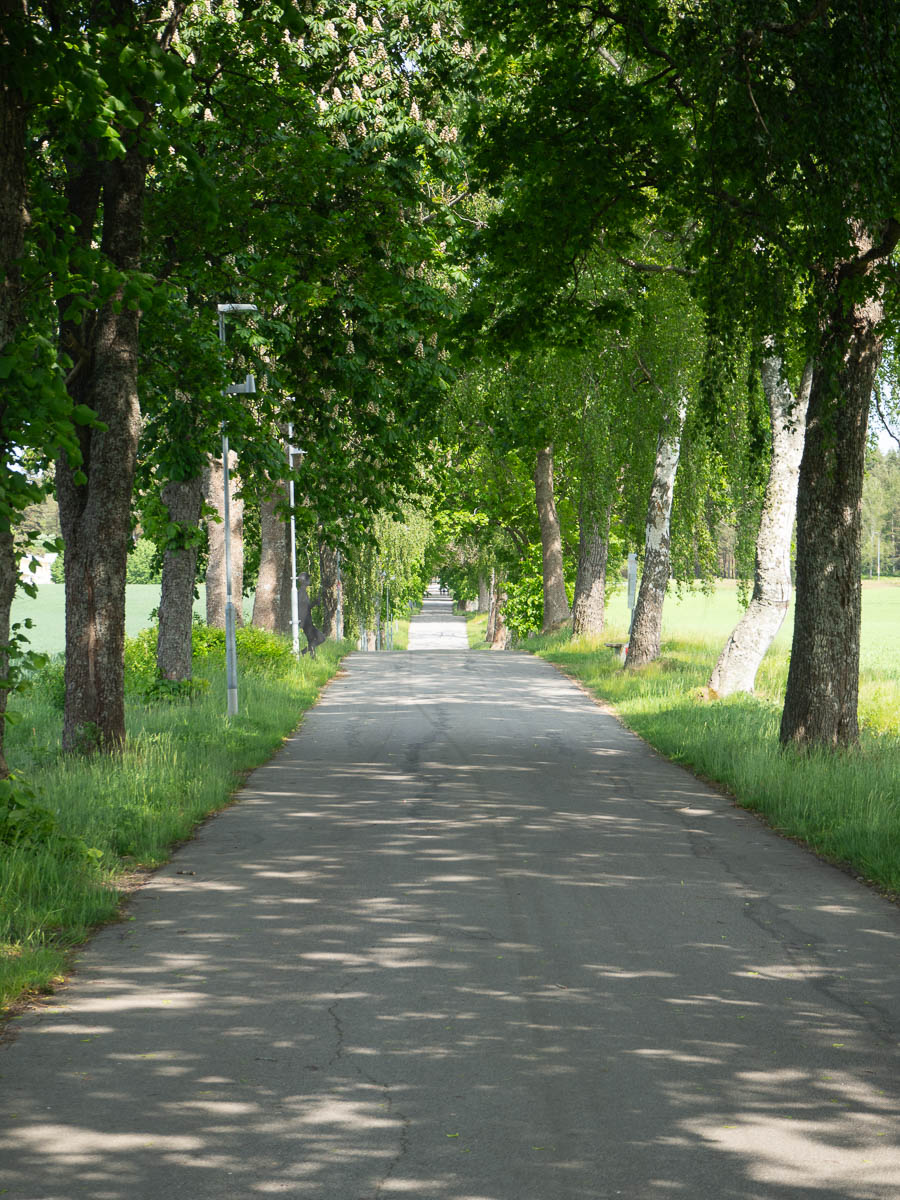
This tree-lined lane, just before I hit the first suburban streets, was popular with locals. Very nice if you’re cycling, or if you’re just out walking without a pack, but I felt every thud of my feet against it.

I think of these last kilometres as my payment to get access to the good kilometres out in the forest.

Compared to the wild nature of the past three days, this stage was blandly pleasant. Looked pretty enough, lacked character, so I don’t have much more to show or say about it.

Sörmlandsleden from Kolmården to Katrineholm. Today: Fagerö to Forssjö, stages 29, 28 and 27, for a total of 26 km.

Leaving the wilder parts of Sörmland behind me and getting closer to more inhabited areas around Katrineholm. The past two days I’ve seen maybe two or three people each day, but today I met several. Around me there were roads and farmland, and not just forest.
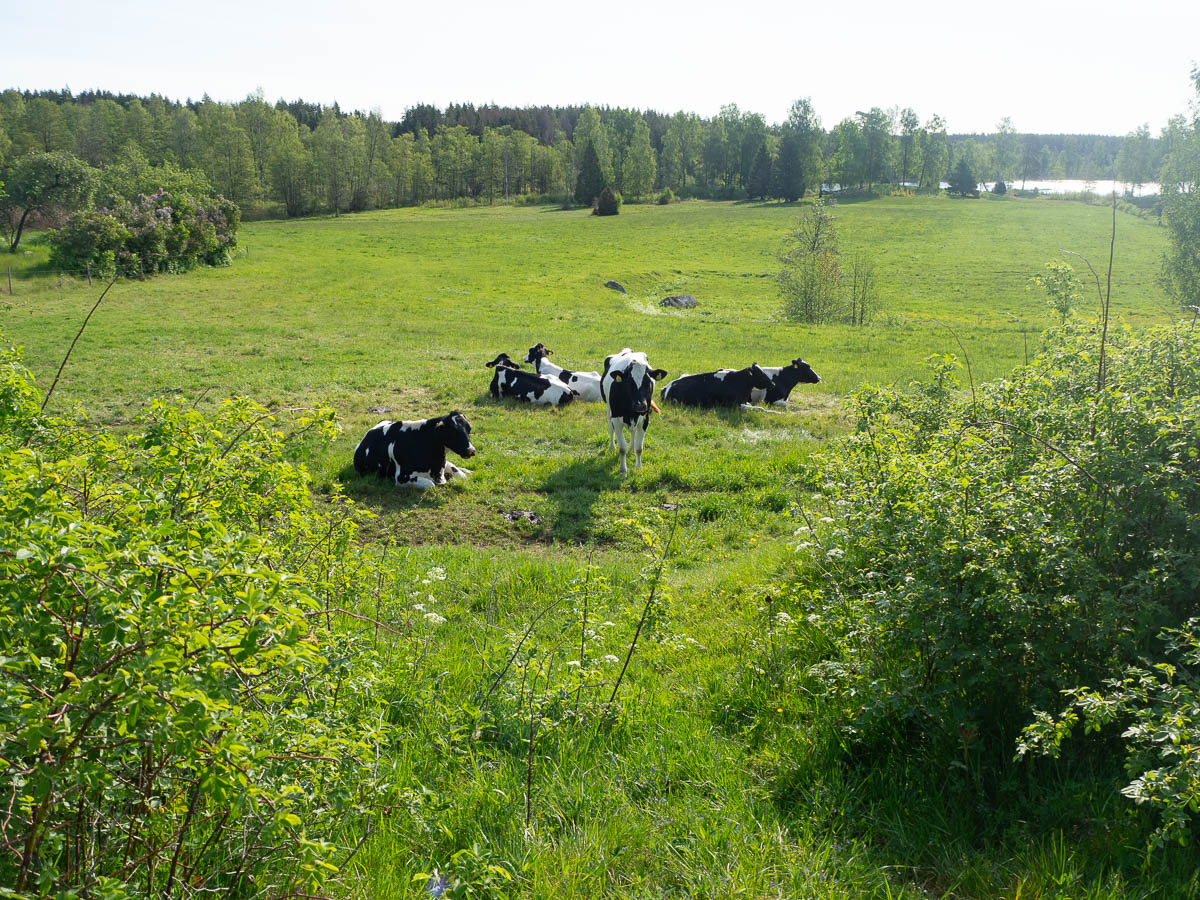
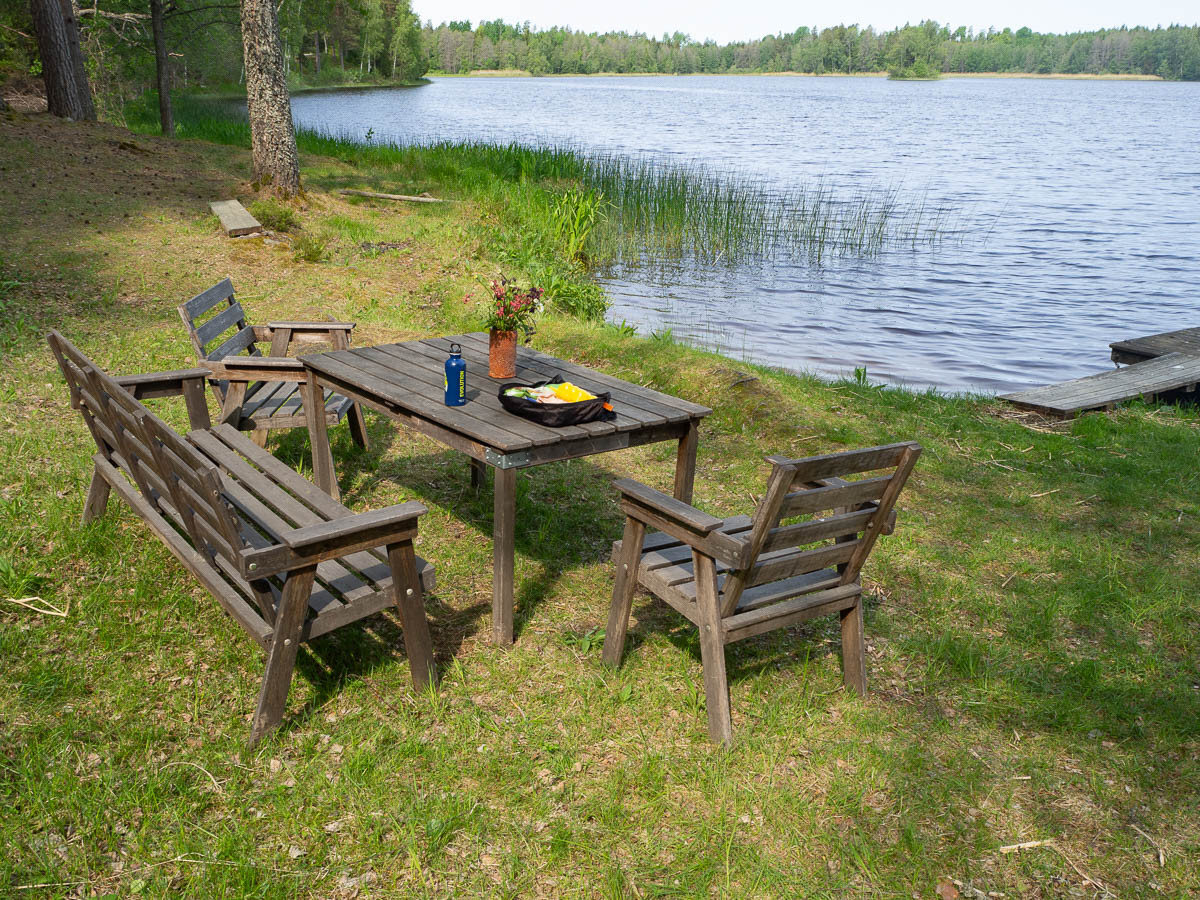
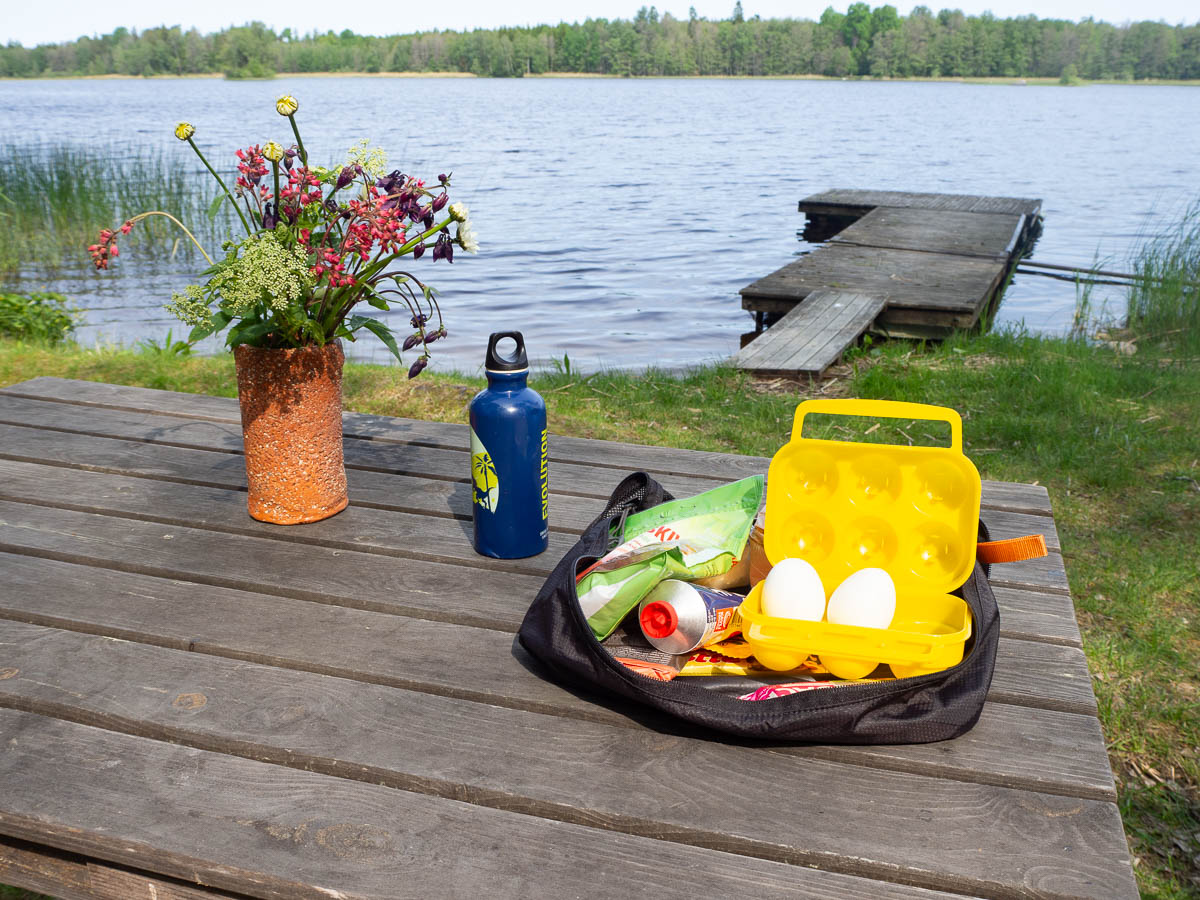
Right next to the small road that the trail was following, where it passed close to a lake, some kind local person had set up a picnic area. There were even fresh cut flowers in a vase. My snack breaks are not usually as pretty as this. It was quite windy, though, so I walked on.
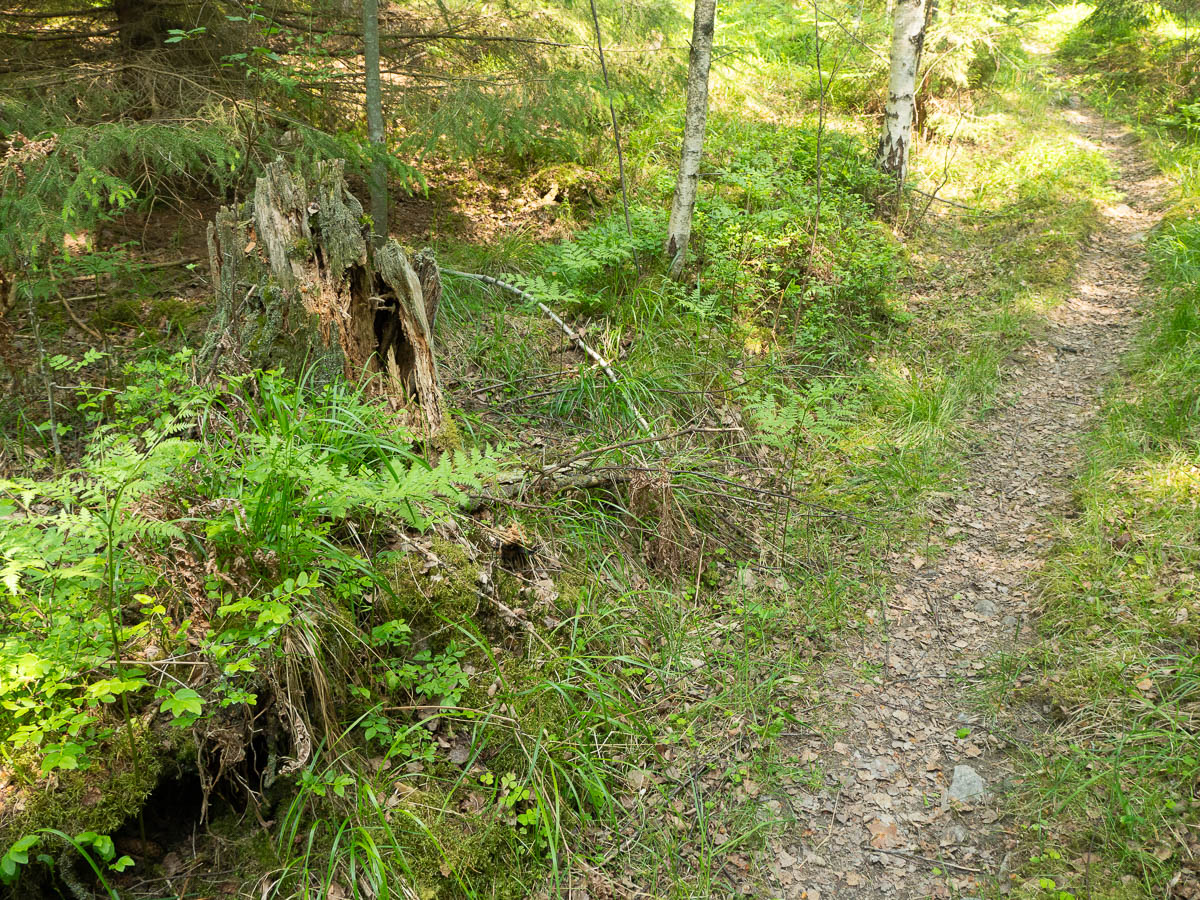
Speaking of stopping for meals, and my troubles finding places for it due to rocks and roots and tree stumps, it was suggested to me that I could just sit on the tree stumps. Like, clearly I am an idiot who cannot see what is in front of me, and clearly that person with their very urban habits, who hasn’t been in a forest in decades, knows much better than me how I should be behaving outdoors.

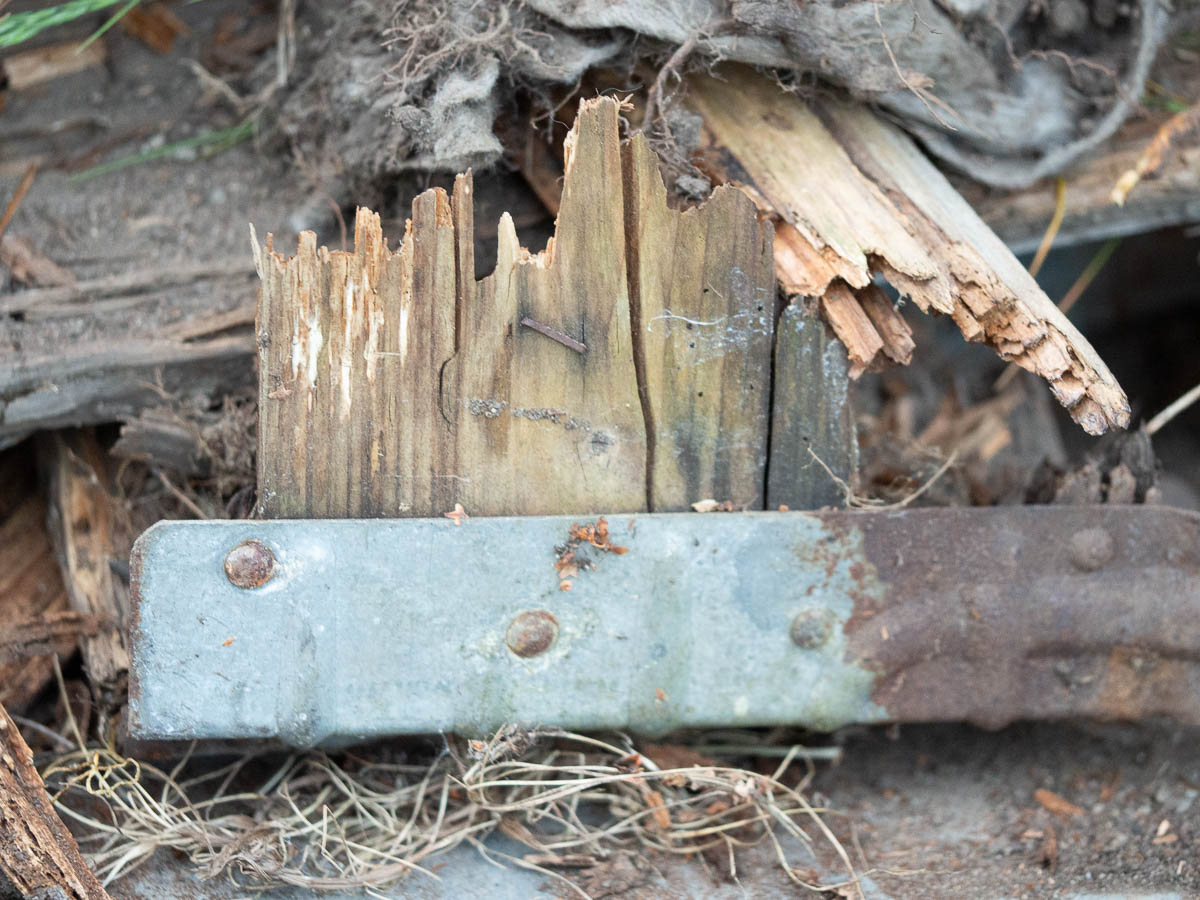
For the record, tree stumps in the wild are not like those in your garden or in a picnic area. They do not look like tree stumps do in picture books, or in stock photos. They are not dry, flat, even, and just wide enough for your bottom. This is what a real-life tree stump in the forest can look like: jagged, uneven, half-rotten. Or they can be a hands-breadth across, so you could at best fit half of one of your buttocks on them. Either way, not something you want to sit on.
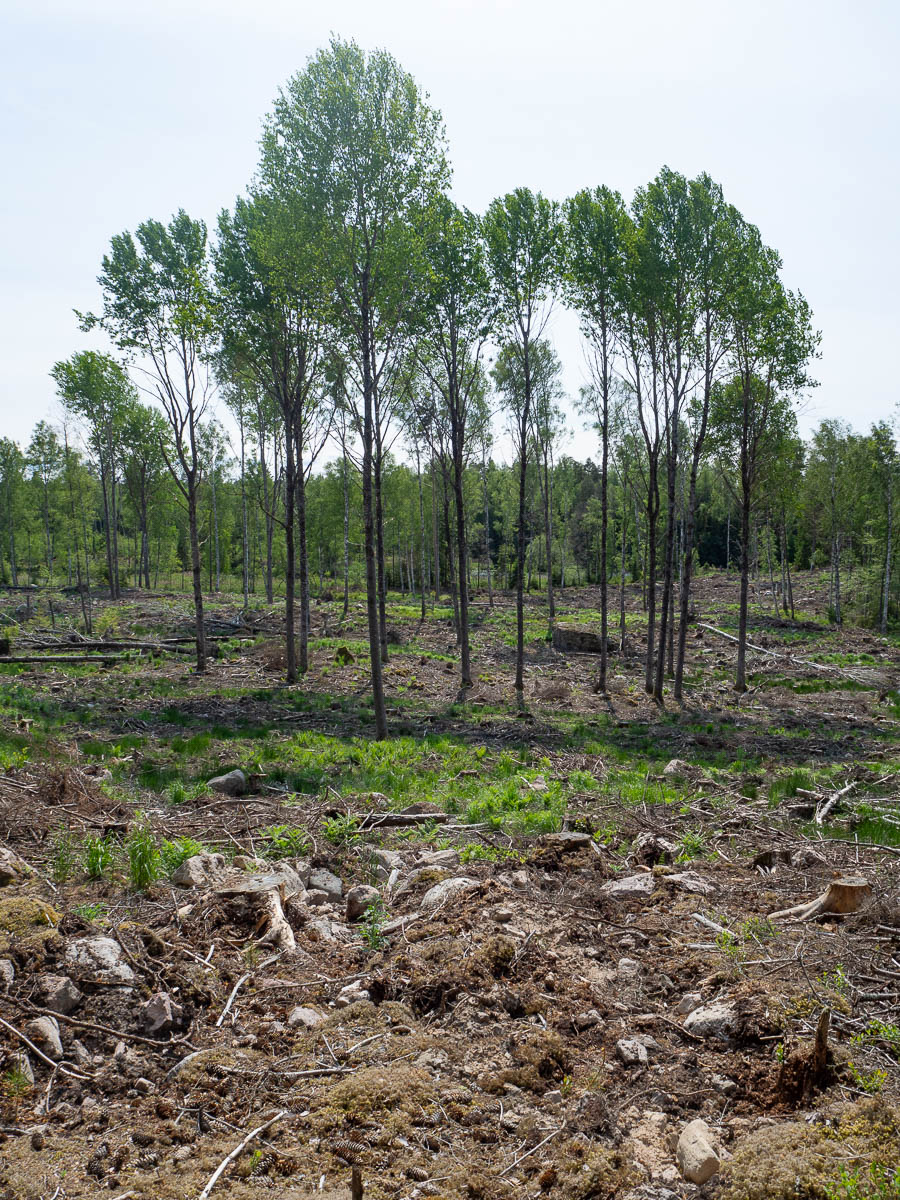
The closer I got to Katrineholm, the more clear-cut areas there were, just like on my previous hike when I approached Katrineholm from the other side. Is it an accident of timing, all the forests here reaching harvestable maturity at the same time, or something else? Unpleasant, in any case.
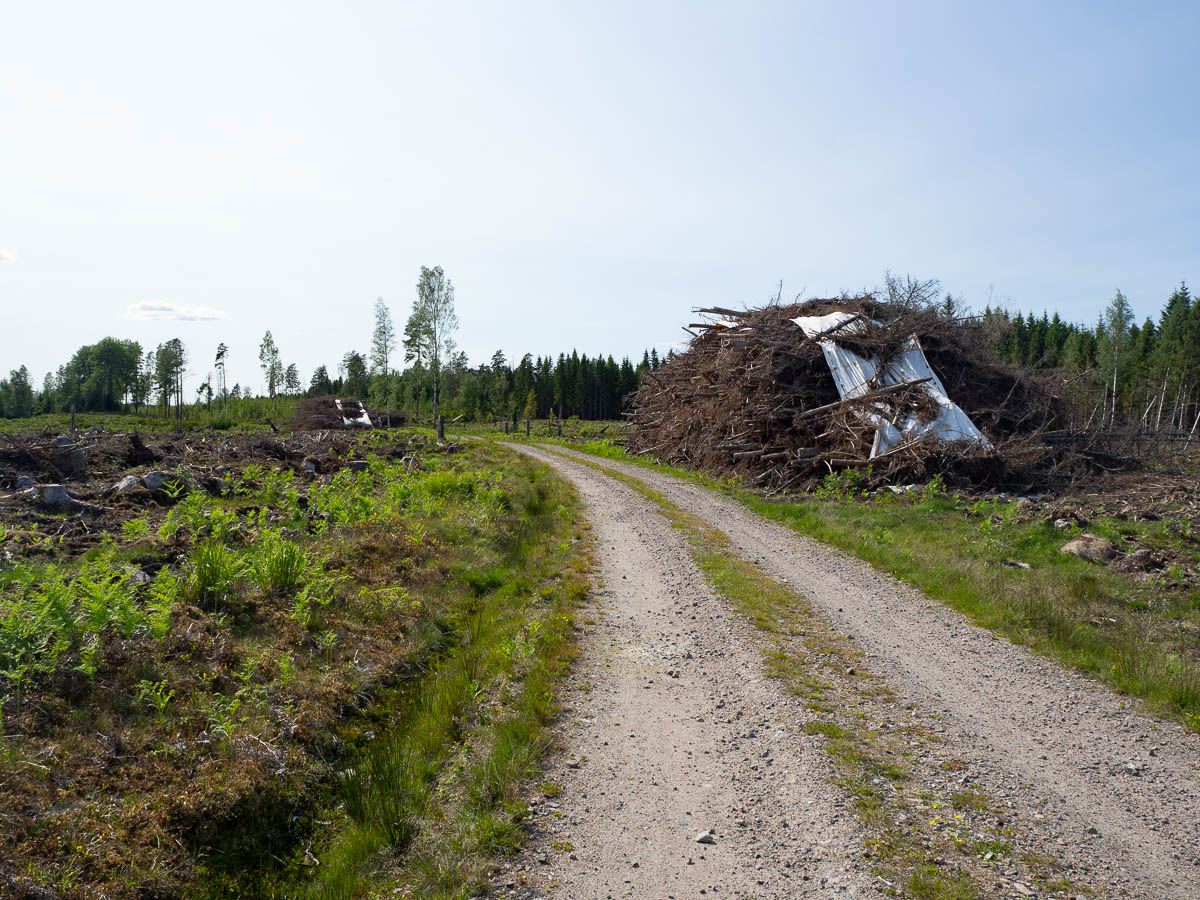
More clear-cut ground in the rough area where I had hoped to stop for the night, at the end of stage 28. Not much to do, other than keep going. I ended up walking 26 kilometres today, which is the longest I’ve ever done while carrying a tent and everything. It was light outside, the weather was good, the ground tent-unfriendly everywhere, and given the choice between stopping and going, going remained the better option for a long while.
I was less tired and sore this time than during my previous hike. Even though that one was just a long weekend, and an entire month has passed, I’m still feeling the benefits. And I’d had two days of warm-up, so all my muscles were in good shape. The part that got tired were my feet. Training doesn’t seem to help – after a full day of walking, the soles of my feet just get sore. Proper sit-down stops, even taking my boots and socks off, kept me going, all the way to Forssjö. The map promised a lakeside beach in Forssjö, and if that were to turn out not tent-friendly then at the very least there’s always some flat, grassy no-mans-land on the outskirts of a town.

Forssjö is apparently also where the local timber ends up.
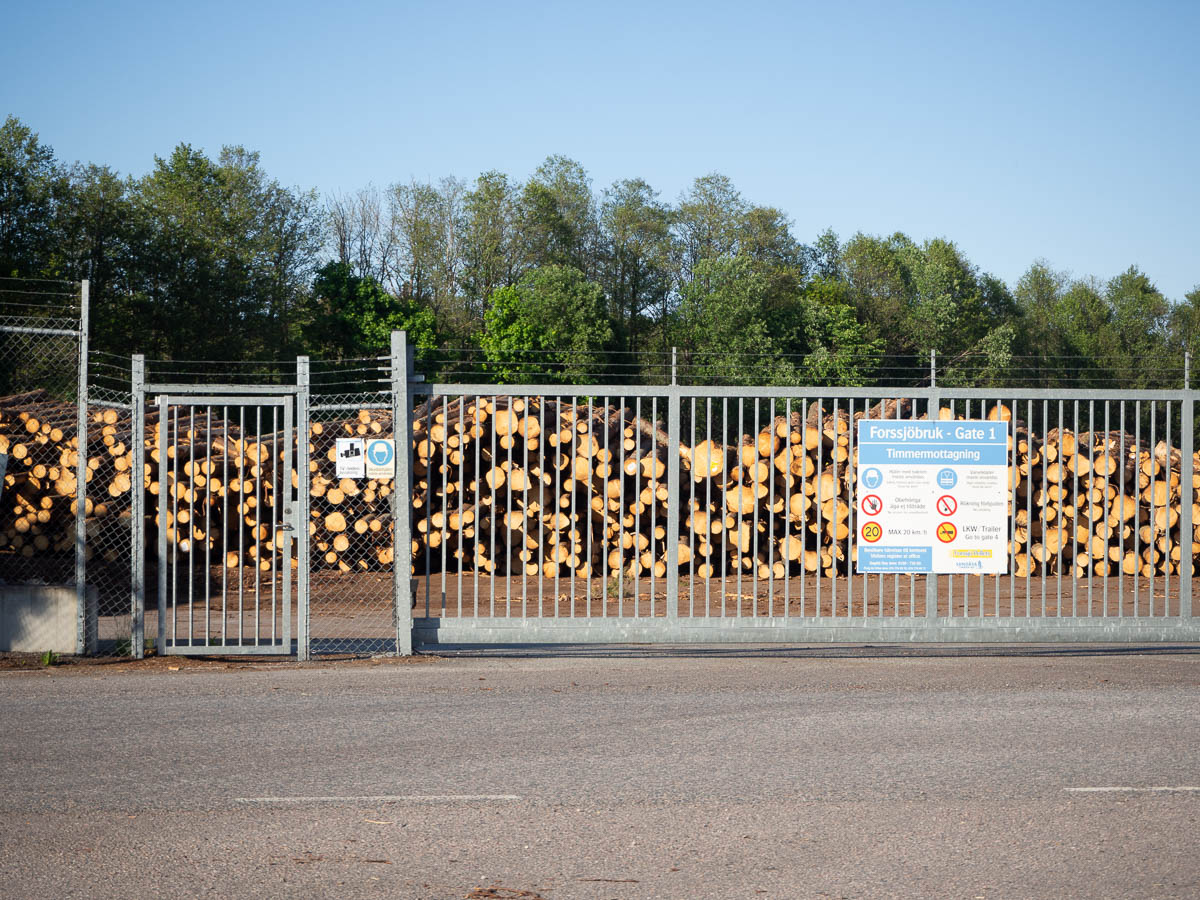
The map also promised a 24-hour grocery shop in Forssjö, where, I hoped, I could find some way to charge my phone battery. The shop turned out to be an unmanned one – which I rather should have expected. Not a problem, register for the app with the last dregs of charge on my phone, and get in. But inside the shop there were no visible power outlets except the two used for the self-checkout computer and some other electronics. So, no charging. I did get an ice cream and a lemonade, though.

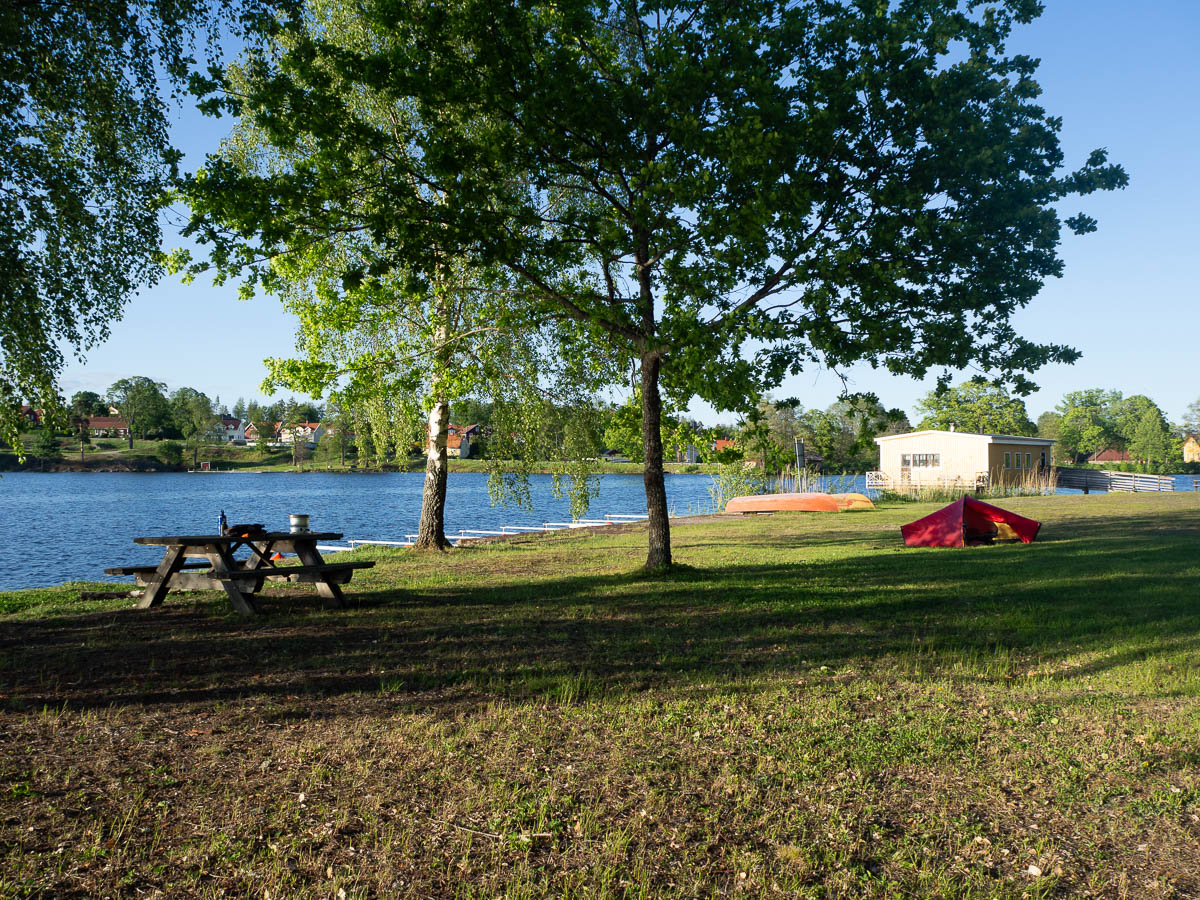
So I headed for a likely-looking area on lake shore to set up my tent. The last house on the edge of town had its door open, so I knocked and asked if I could charge my phone. It’s always worked out well for me when I’ve needed to top up drinking water, after all. It worked out equally well here – I left my phone charging in their hallway while I set up camp and made dinner, and got it back charged later. Thank you, kind stranger.
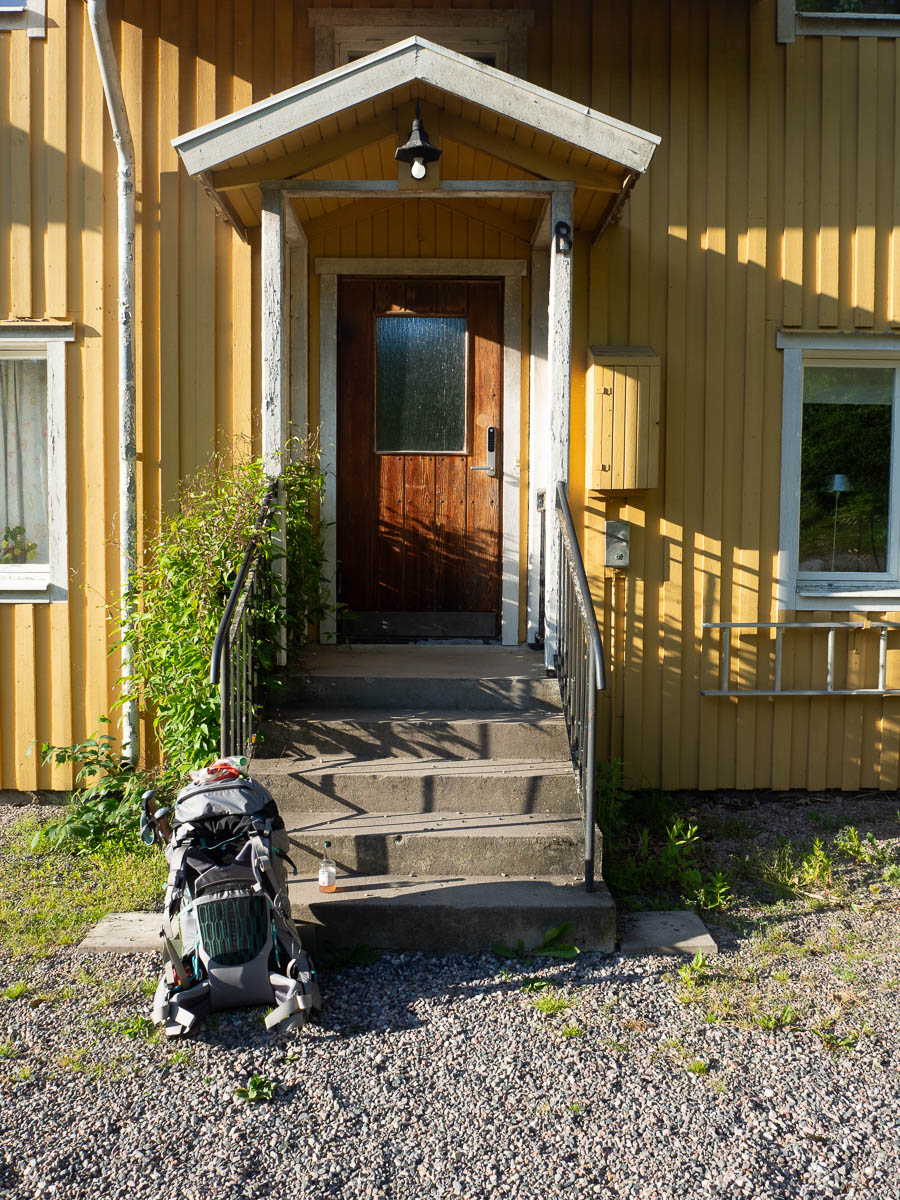
I ended up camping next to a harbour for small fishing boats.
Wildlife today: Hare. Roe deer with two kids. A small herd of fallow deer. A pair of cranes of some sort, glimpsed through the trees.

Sörmlandsleden from Kolmården to Katrineholm. Today: Eskilstorp to Fagerö. Part of stage 31, all of 30, and a teeny bit of 29; 20 km in total.

The first half felt pleasant but ordinary, while the later parts of the day were more scenic, and I’d say that stage 30 is among my favourites of the ones I’ve walked up until now.

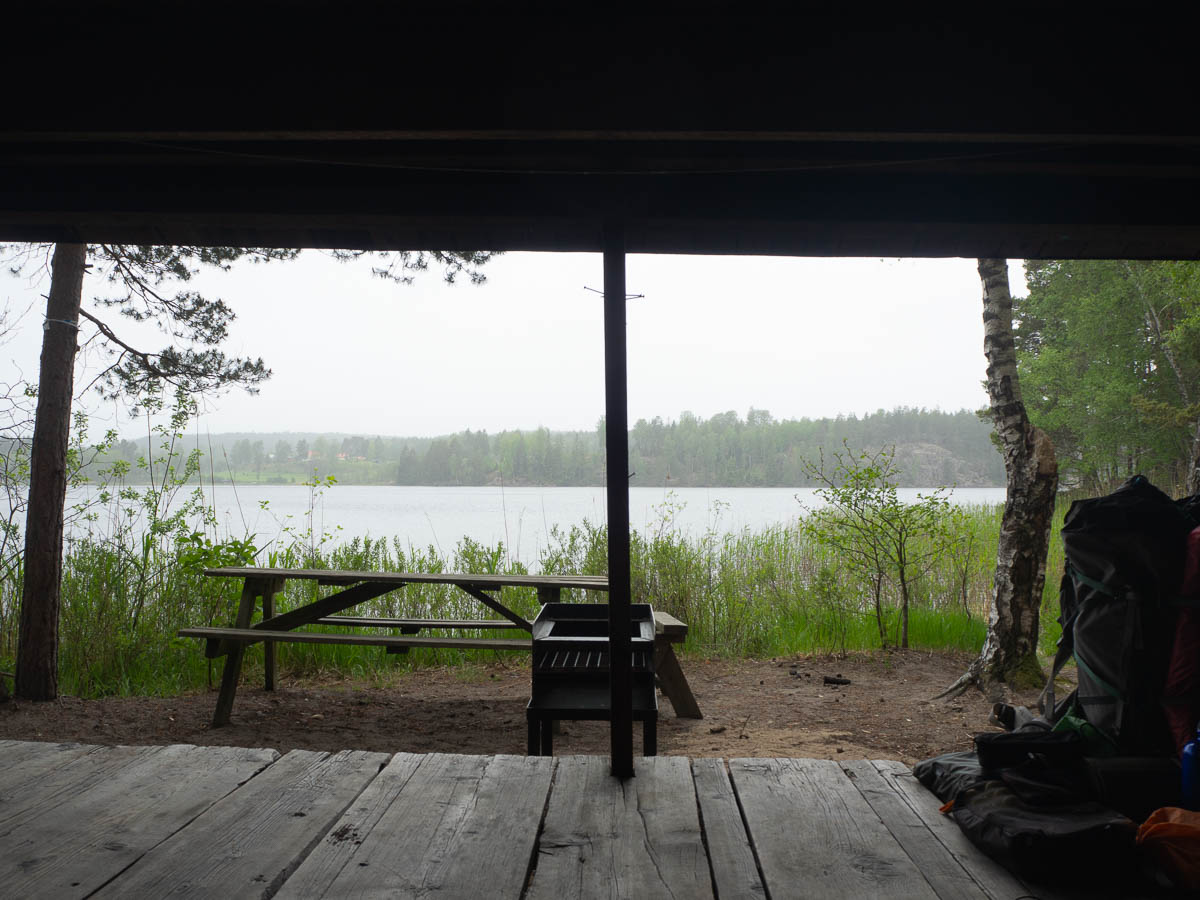
Today was the day that the weather app had originally forecast a full day of pouring rain for, but that got downgraded over time, until all that was left was some rain in the morning. I had reached a lakeside shelter and had my breakfast shortly before the rain was supposed to arrive, and thought that I might sit it out in the shelter. It would be convenient to not have any wet gear to pack.

The sky was an even grey, I couldn’t see any difference in the direction where the rain was supposed to come from, so maybe another layer of clouds higher up was responsible for that?

The rain that finally came was so weak that I was almost disappointed. And instead of stopping, it petered out into a misty almost-drizzle. I didn’t want to sit around any longer, so I ended up getting out the rain cover and rain coat after all. An hour wasted for nothing.

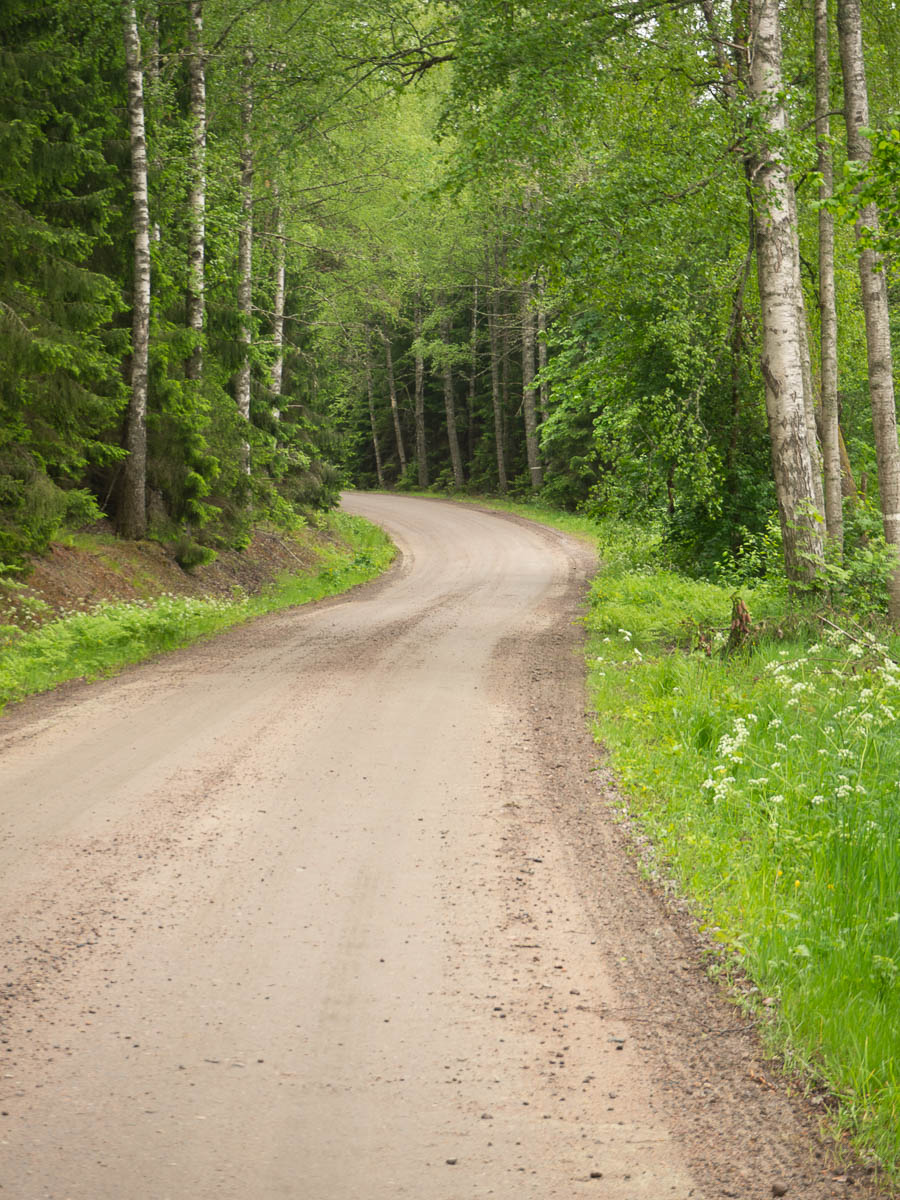
Stage 31 mostly went through the usual pine forests. There was a brief deviation onto a gravel road…

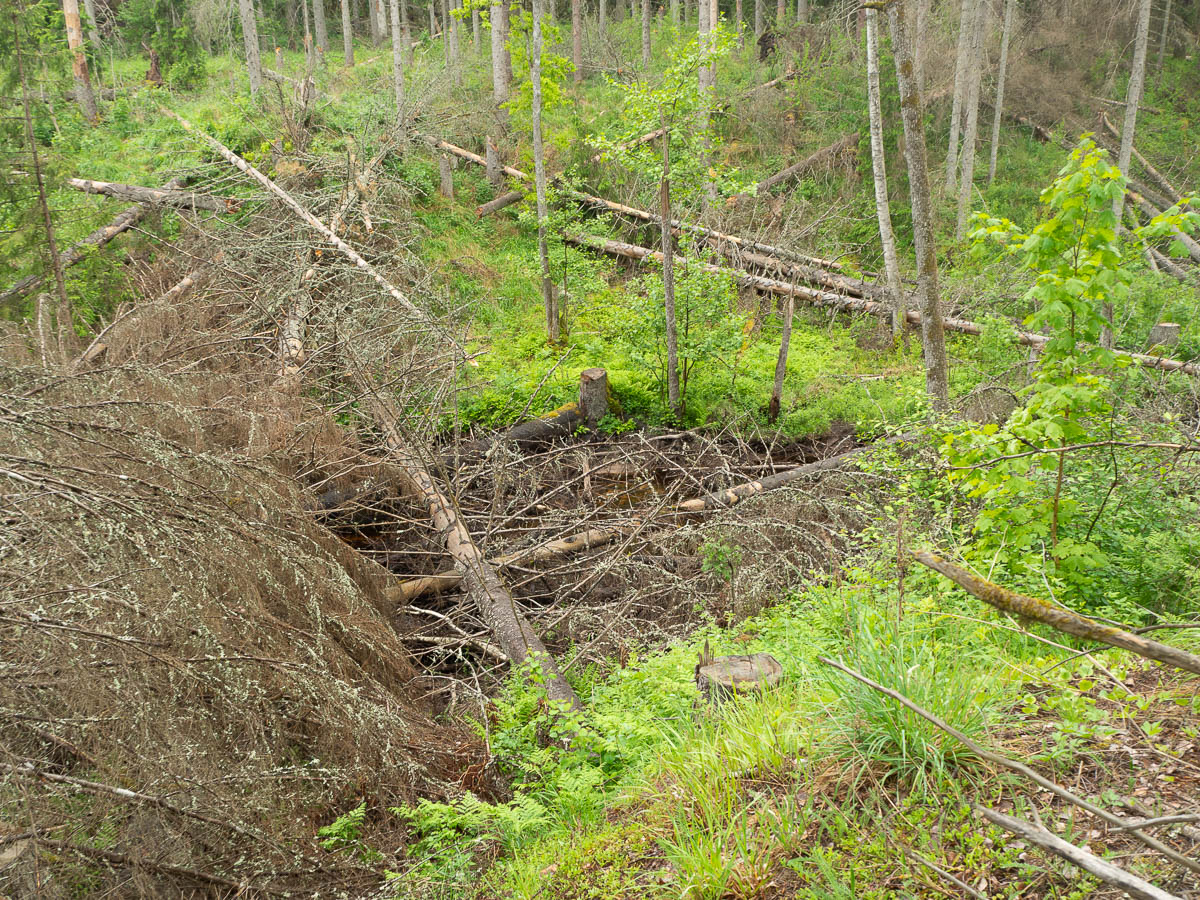
… because the original trail somehow passed through (or at least skirted the edges of) an area badly hit by the spruce bark beetle. That looks both unpleasant and dangerous.

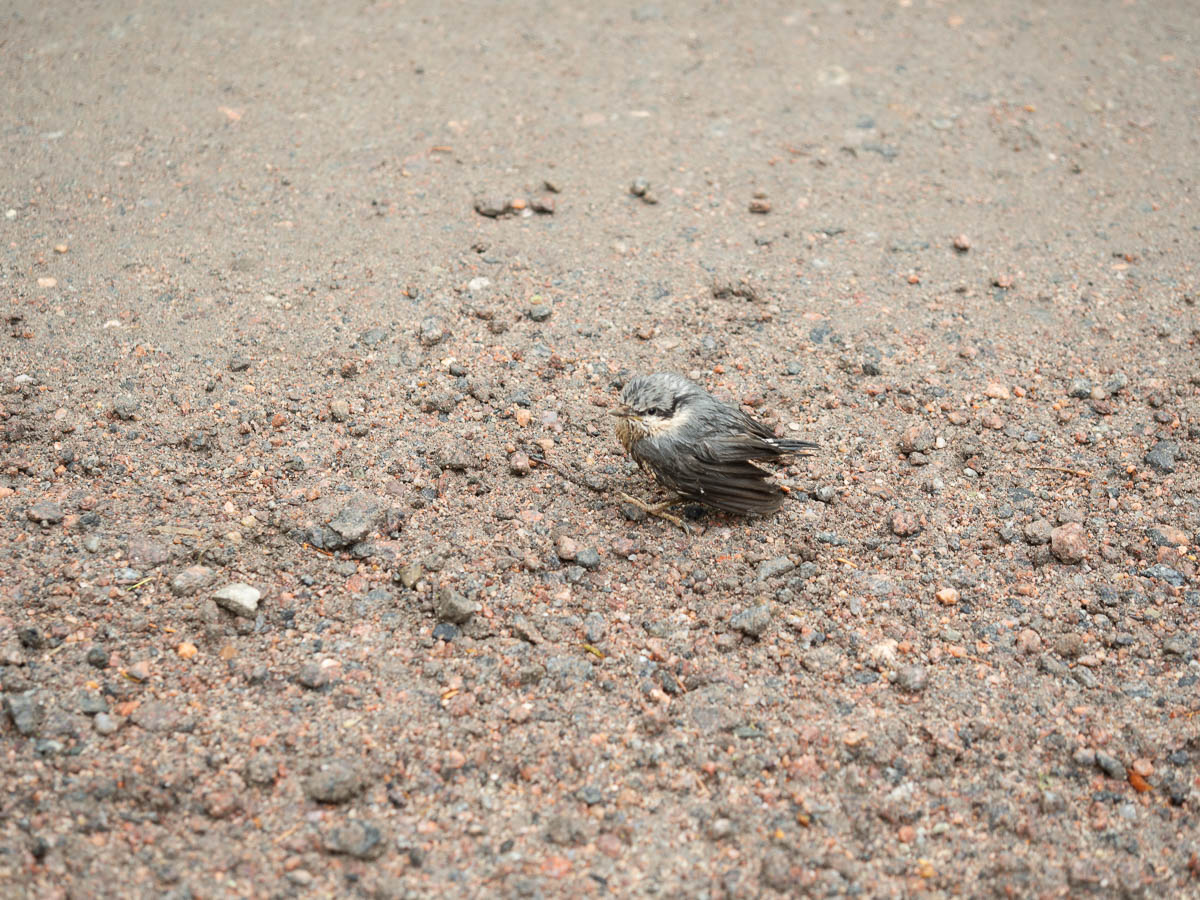
On the gravel road I saw two baby birds. Still partly baby-coloured, but I think they looked like nuthatches. Apparently old enough to leave the nest – but still so young that they were just cluelessly wandering around in the middle of the road and chirping. A dangerous way to start your life.
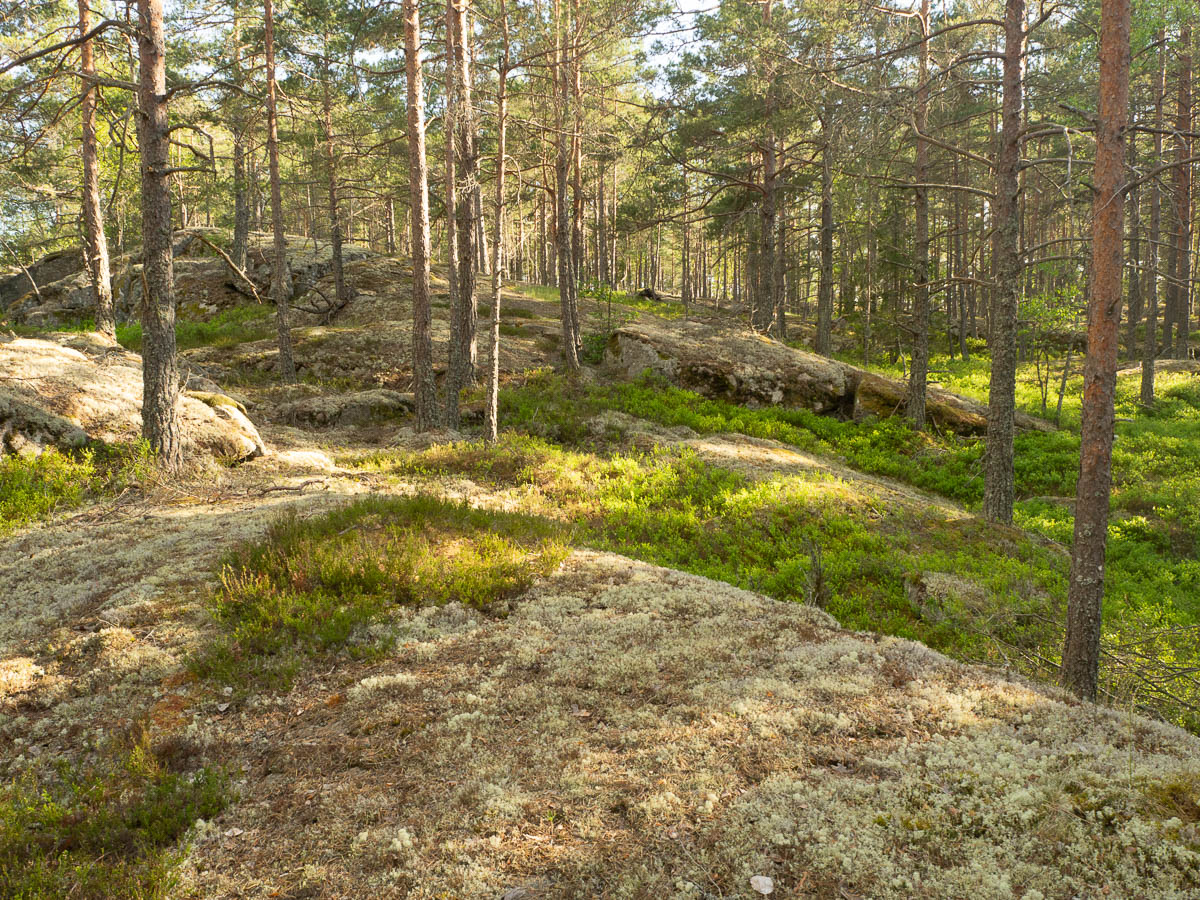
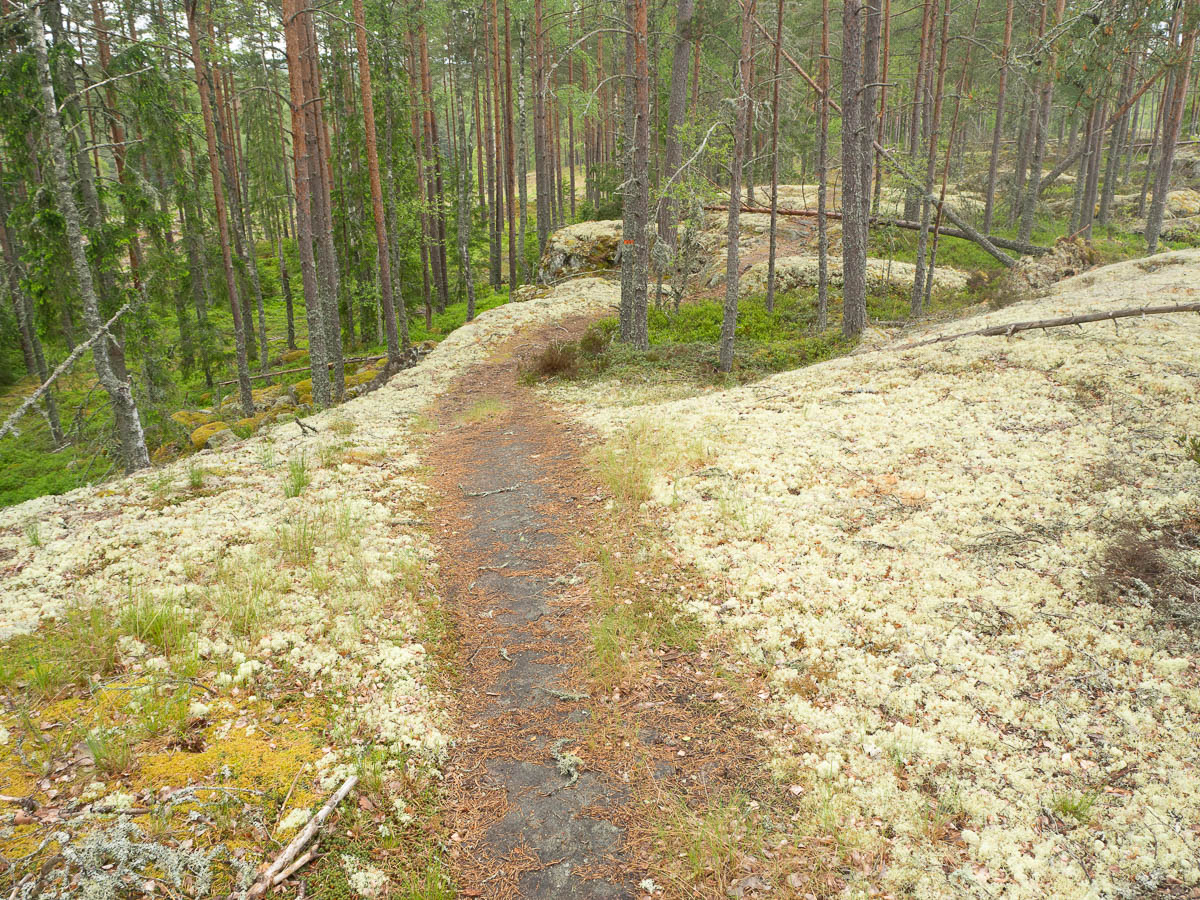
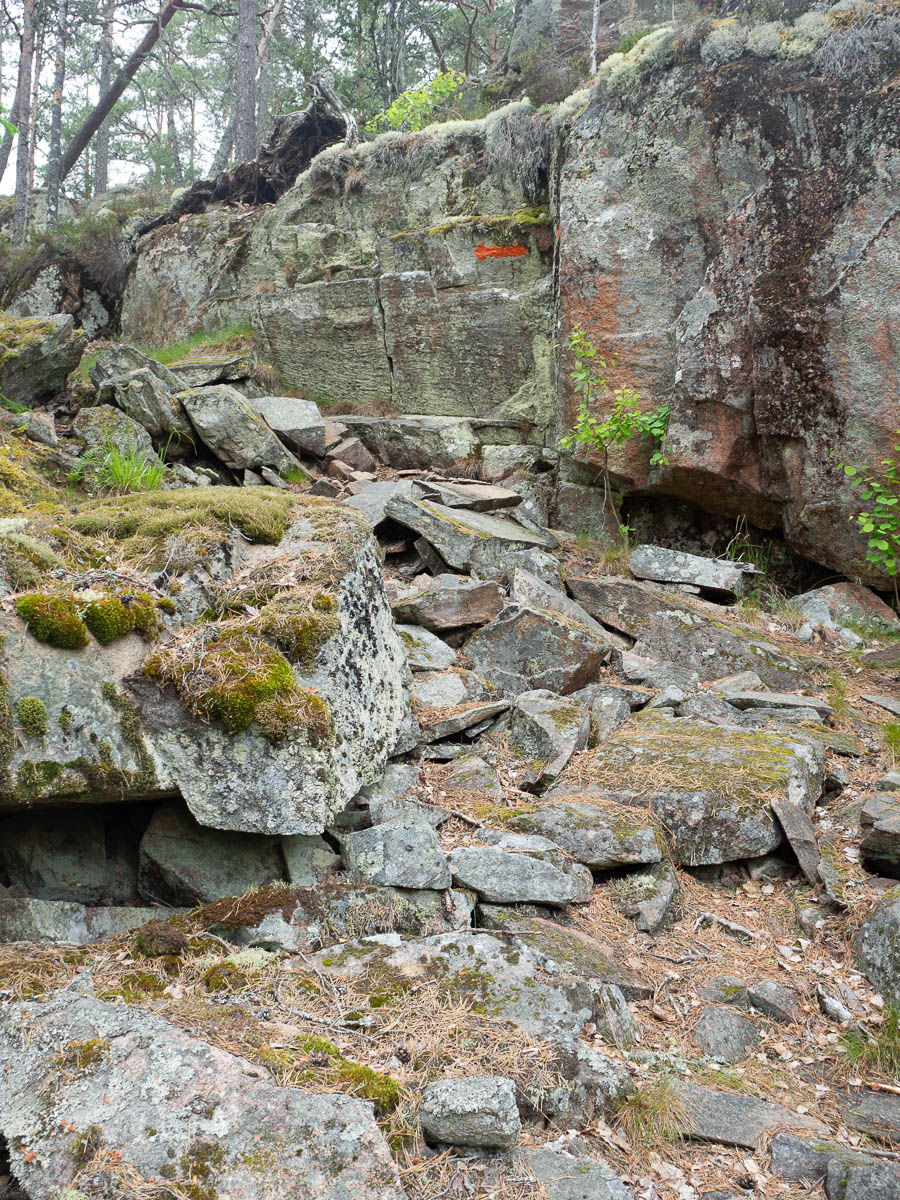
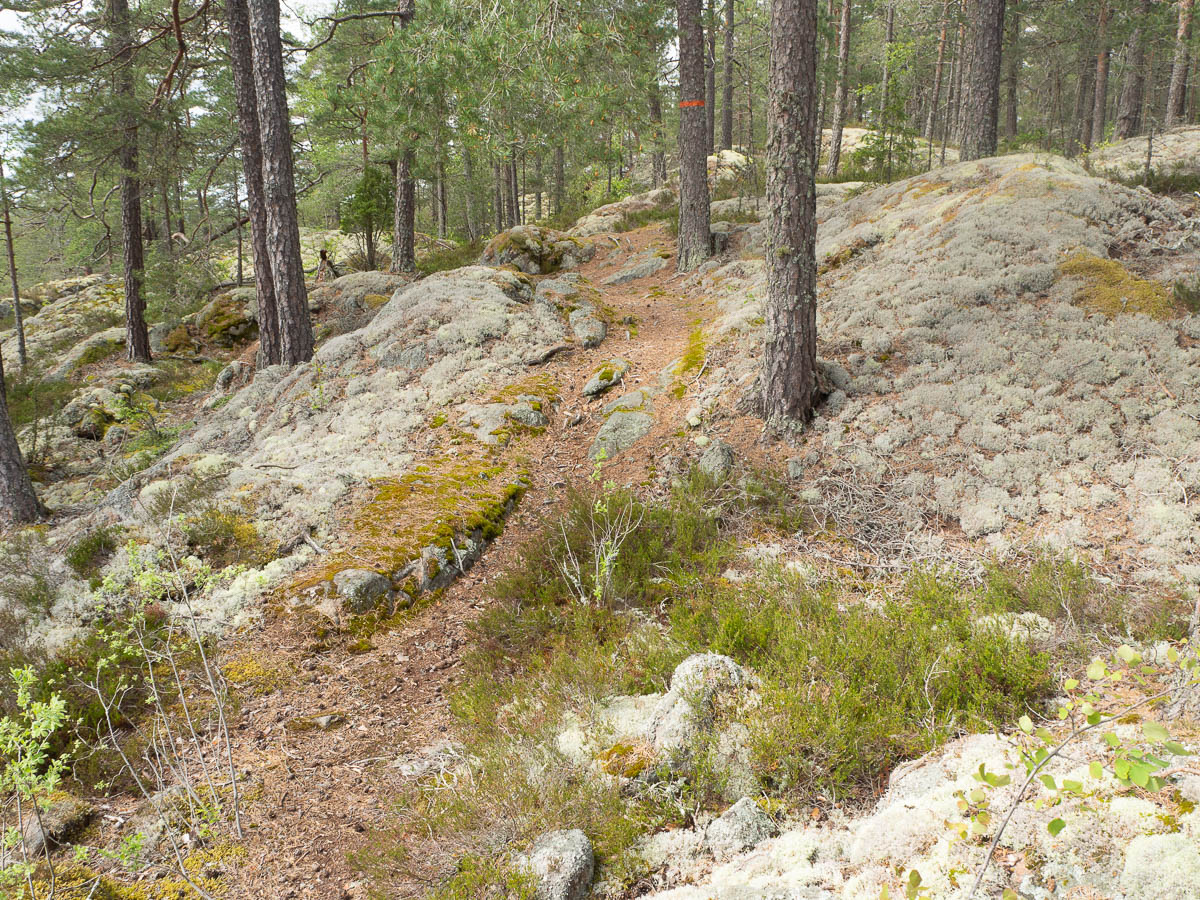
Stage 30 had a more dramatic nature, with exposed bedrock and the occasional big boulder.

I was happy for my trekking poles – without them, I’d have spent all my time watching my footing, and probably still stumbled. Now I still stared a lot at the ground but could relax a little bit about it.


Lunch was late AGAIN because there was just nowhere to stop, with enough space for me, my pack, and my stove. I didn’t get a proper lunch until two o’clock, and I was starving by then. It feels inconsiderate to spread out my stuff right on the path itself, but I might have to force myself to get over that feeling, because eating does feel rather important.

My current go-to lunch on overnight hikes is instant noodles that I top up with other stuff to make it more filling. For this trip, my noodle toppings are canned sweetcorn and hard-boiled eggs. Half a small can of corn is just right for one portion of noodles, and the other half keeps well enough overnight in a small air-tight container.
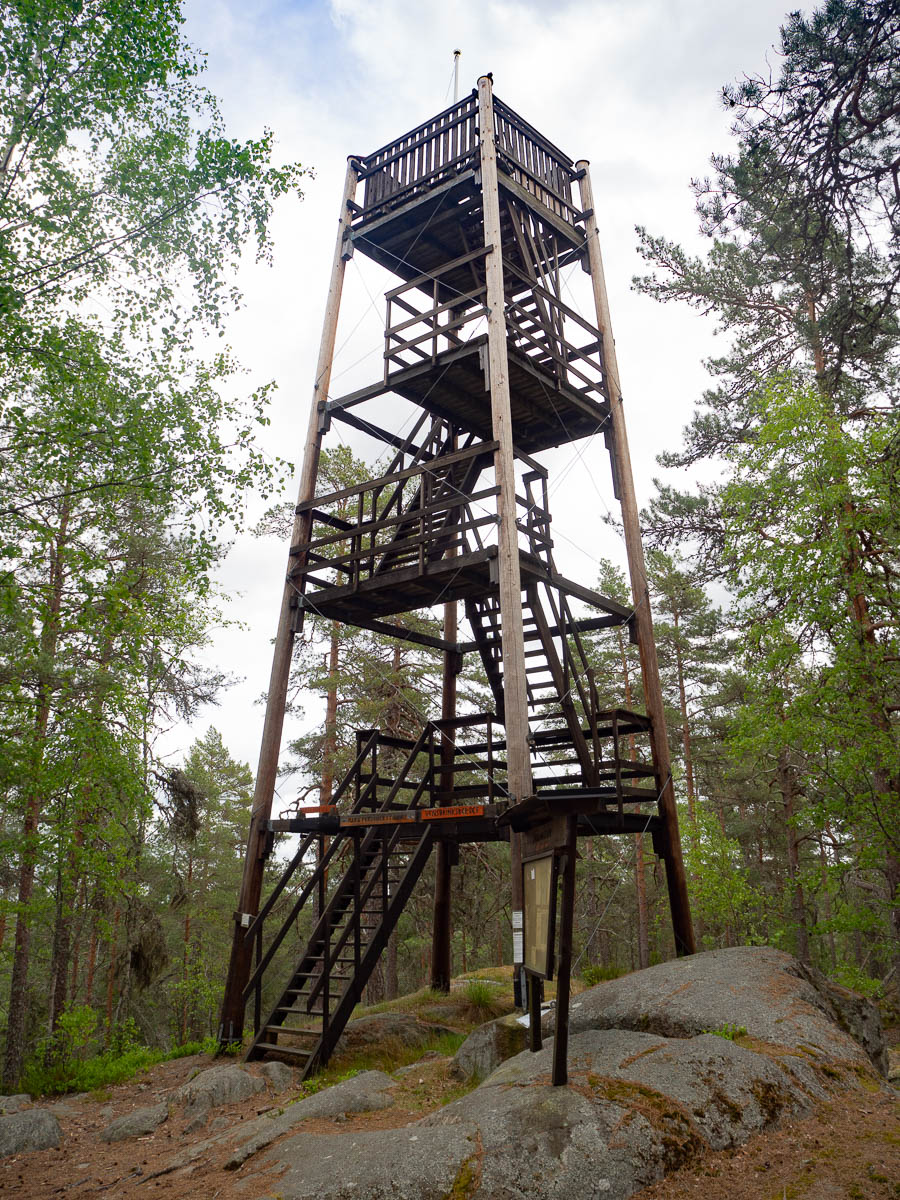
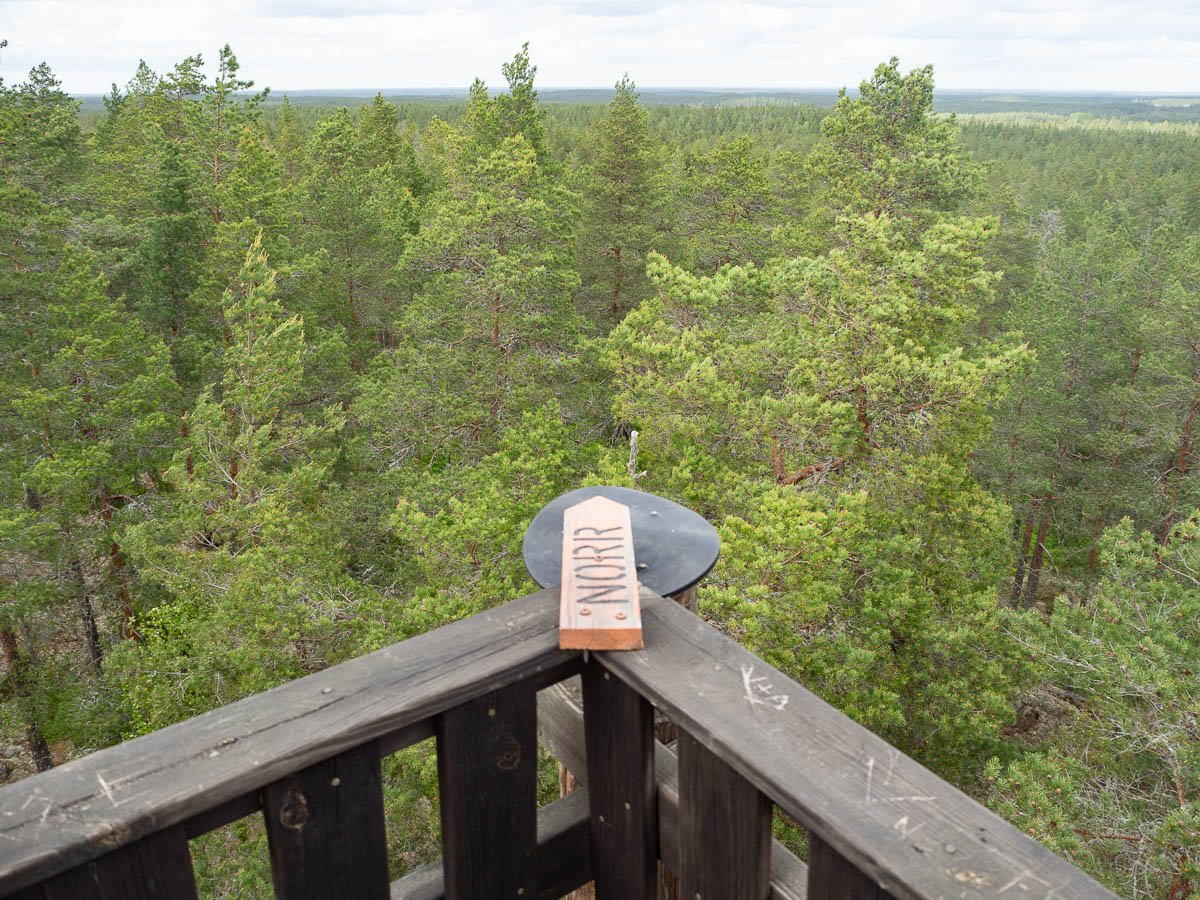
My lunch stop was at the top of Vensbrinksberget, the highest point in Sörmland. It has a viewing tower, which I now climbed. I’m impressed by the work that must have gone into this – hauling all the materials up here, and then building the tower. How do you even build a tower like this, in a place like this?

The views from the top of the tower were wide but not very exciting. There were markers for the cardinal directions at the viewing platform at the top, but they didn’t make much of a difference – everywhere I looked, it was just forest. The forest is much better viewed from ground level.

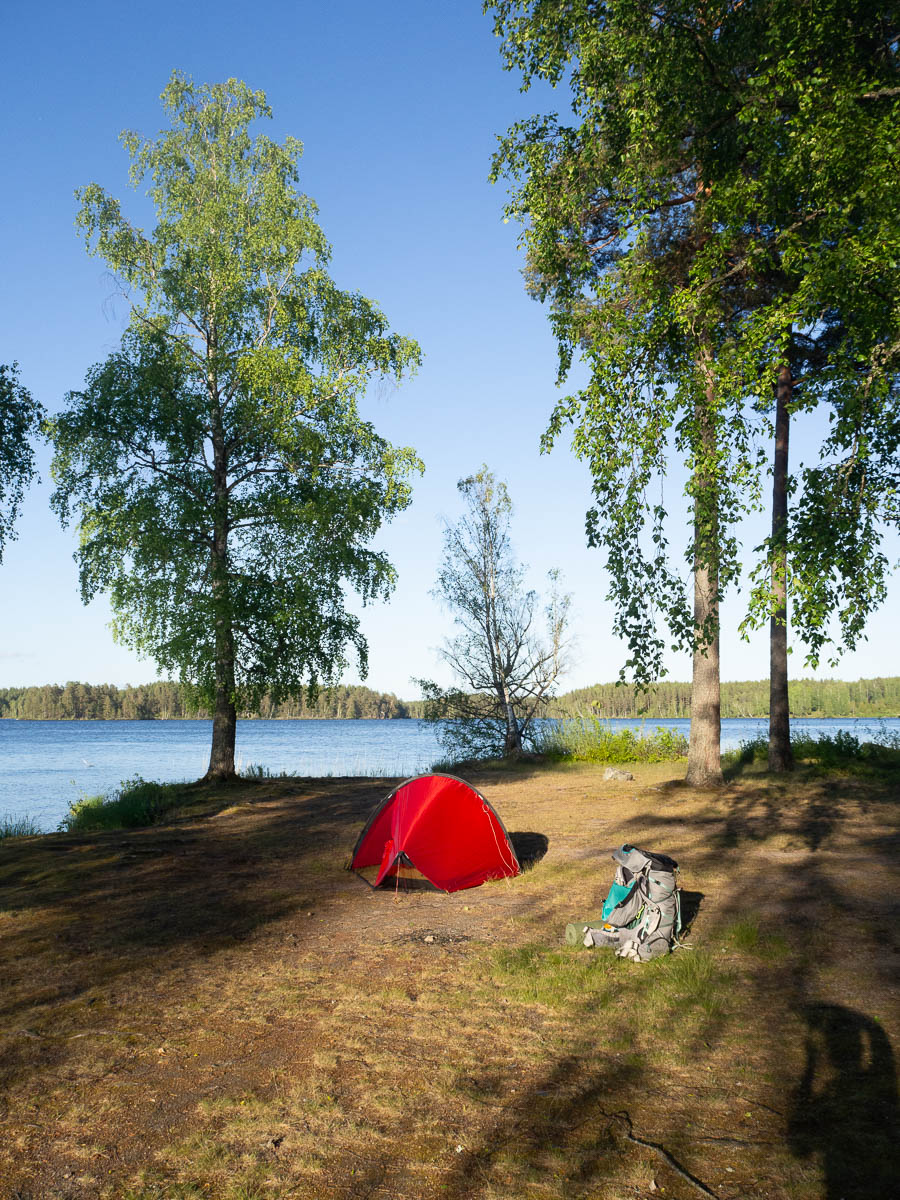
I stopped for the night at a municipal lakeside beach on Fagerö. According to the map there’s a shelter coming up in just over a kilometre, but it’s open towards the west, and that’s where the (strong) winds were coming from, so I chose an east-facing spot instead.

Wildlife: A fox, who ran as soon as it heard me. A small rodent who ran across the path during one of my breaks; I don’t know enough about them to say what kind. Loads of songbirds.

In addition to the baby nuthatches, I also saw a family of Great Crested Grebes (tuttpütt/skäggdopping). When they noticed me, the five babies all scrambled onto the back of their parent who took them into safer waters.

Sörmlandsleden from Kolmården to Katrineholm. This will cover stages 32:1, 32 to 28, half of 27, and 27:1. The planning is entirely dictated by public transport. Train + bus to Kolmården today, and I’ll be taking a train back to Stockholm from Katrineholm, so that’s where I’ll have to be by Friday mid-day-ish.

Today I walked the connecting trail 32:1 from Kolmården to the main trail, and then all of stage 32 and part of 31. 17 km altogether.

Stage 32 was among the most beautiful ones I’ve walked thus far. Not due to any spectacular feature or stunning views, but just the overall everything.

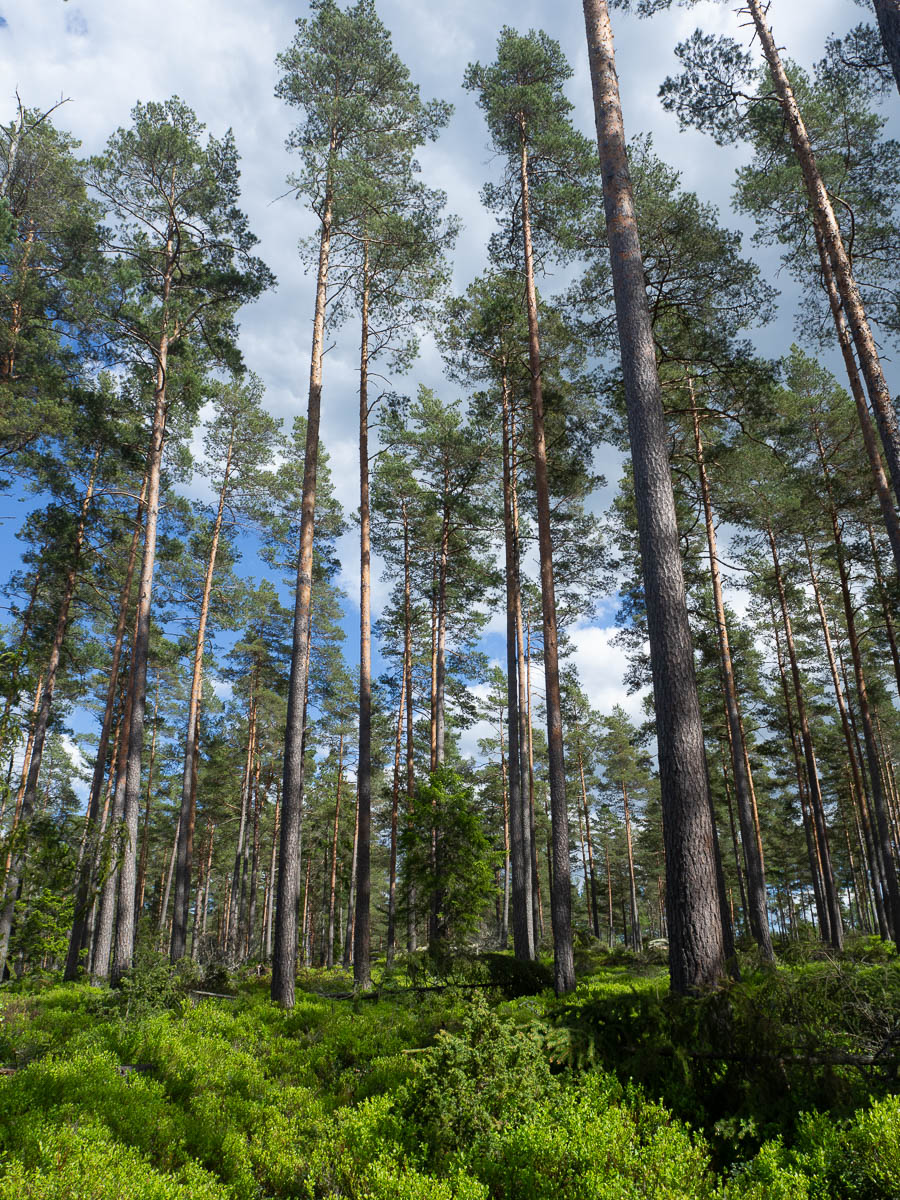
There was a lot of airy, open pine forest. The absence of scruffy undergrowth just makes it look extra beautiful.

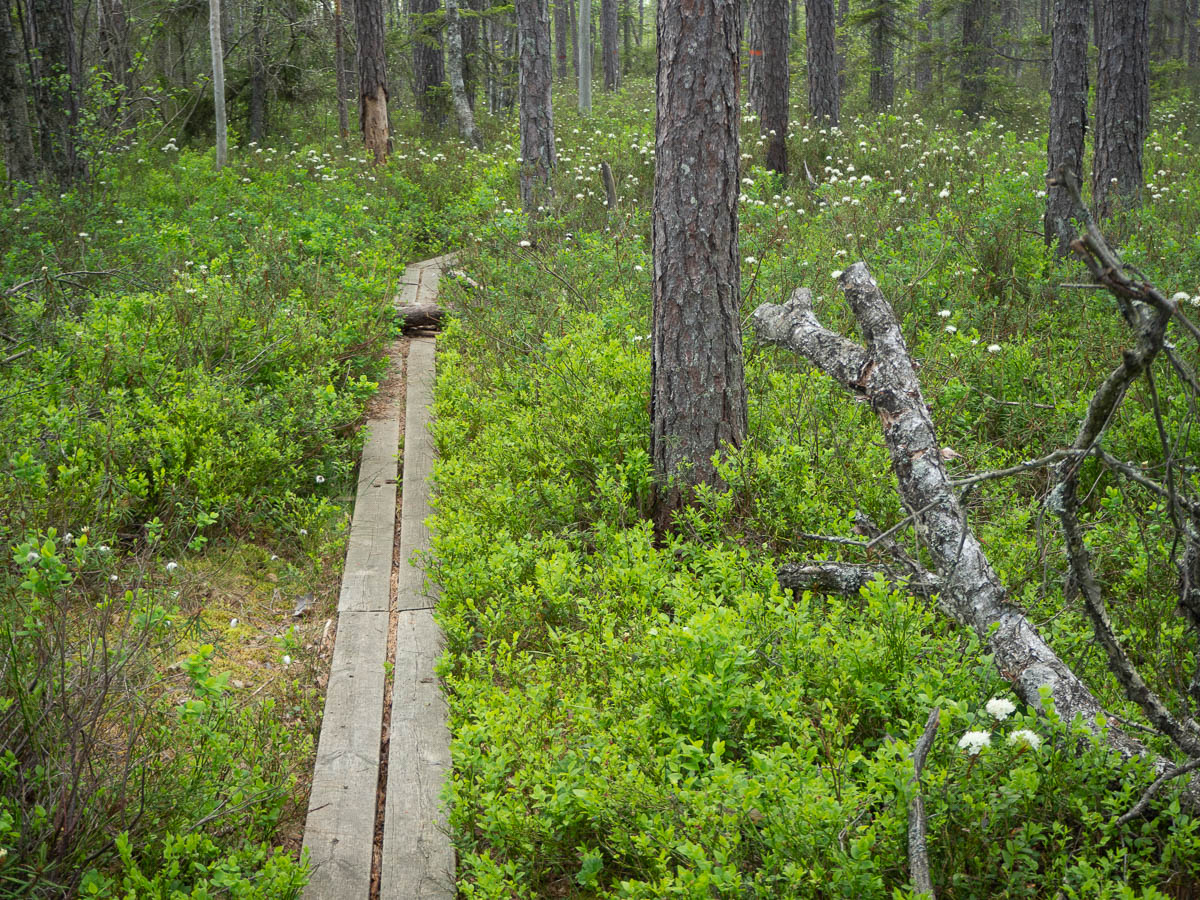
There were stretches of plank walks across bogs. The bog was all dotted with the white flowers of Marsh Labrador Tea (skvattram/sookail). It’s a common plant, but I don’t think I’ve ever timed any of my bog walks to coincide with its flowering. Photos don’t do them justice (especially since the densest patches were a bit away from the path) – they were like swarms of tiny clouds hovering over the lower plants.

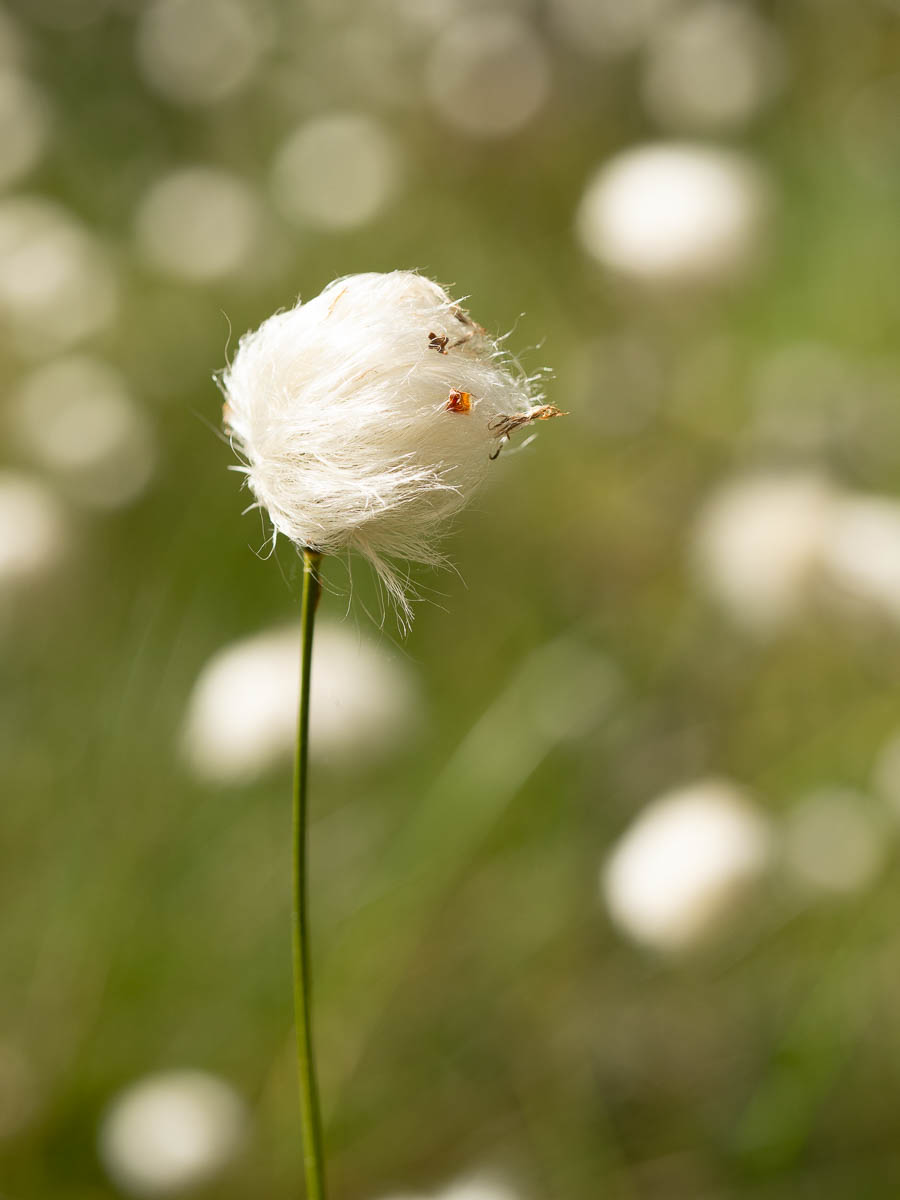
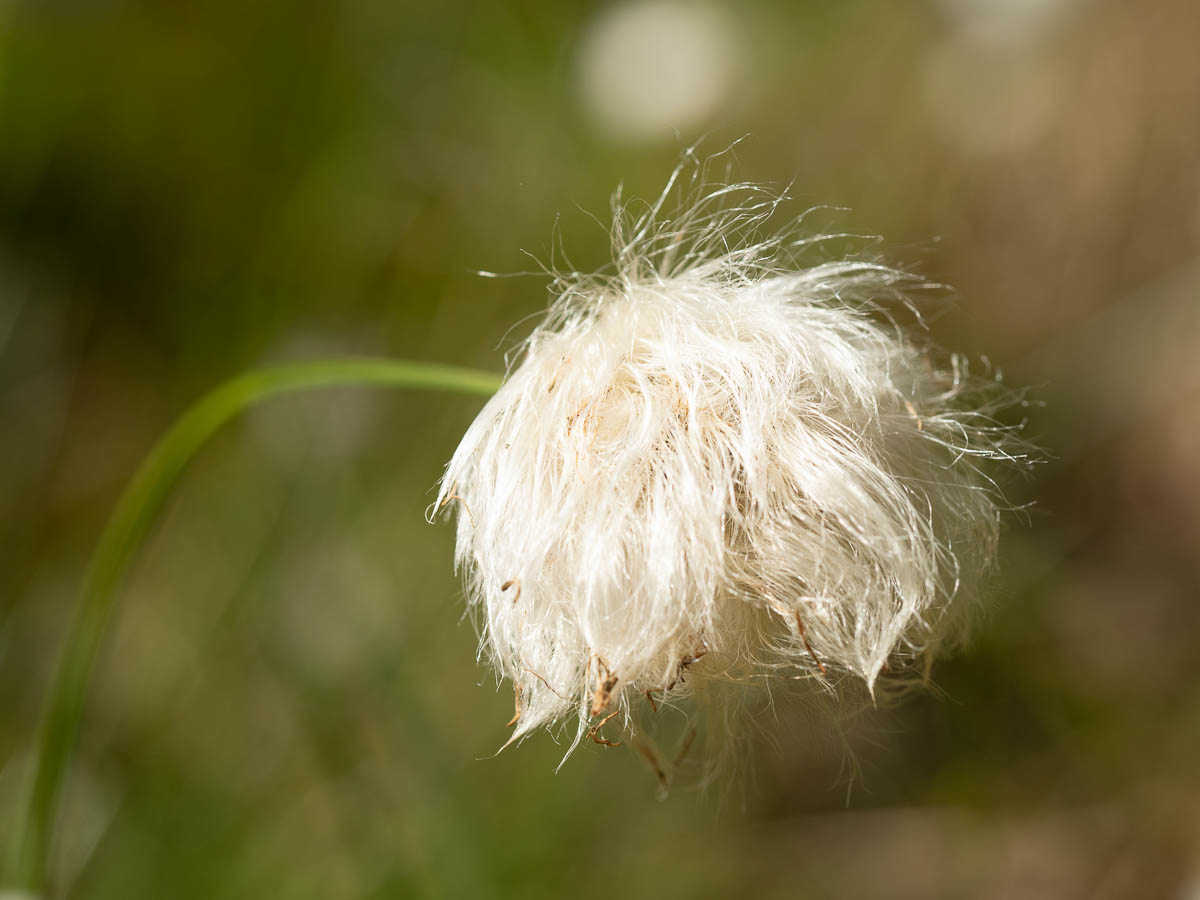
Cottongrass was doing the same.


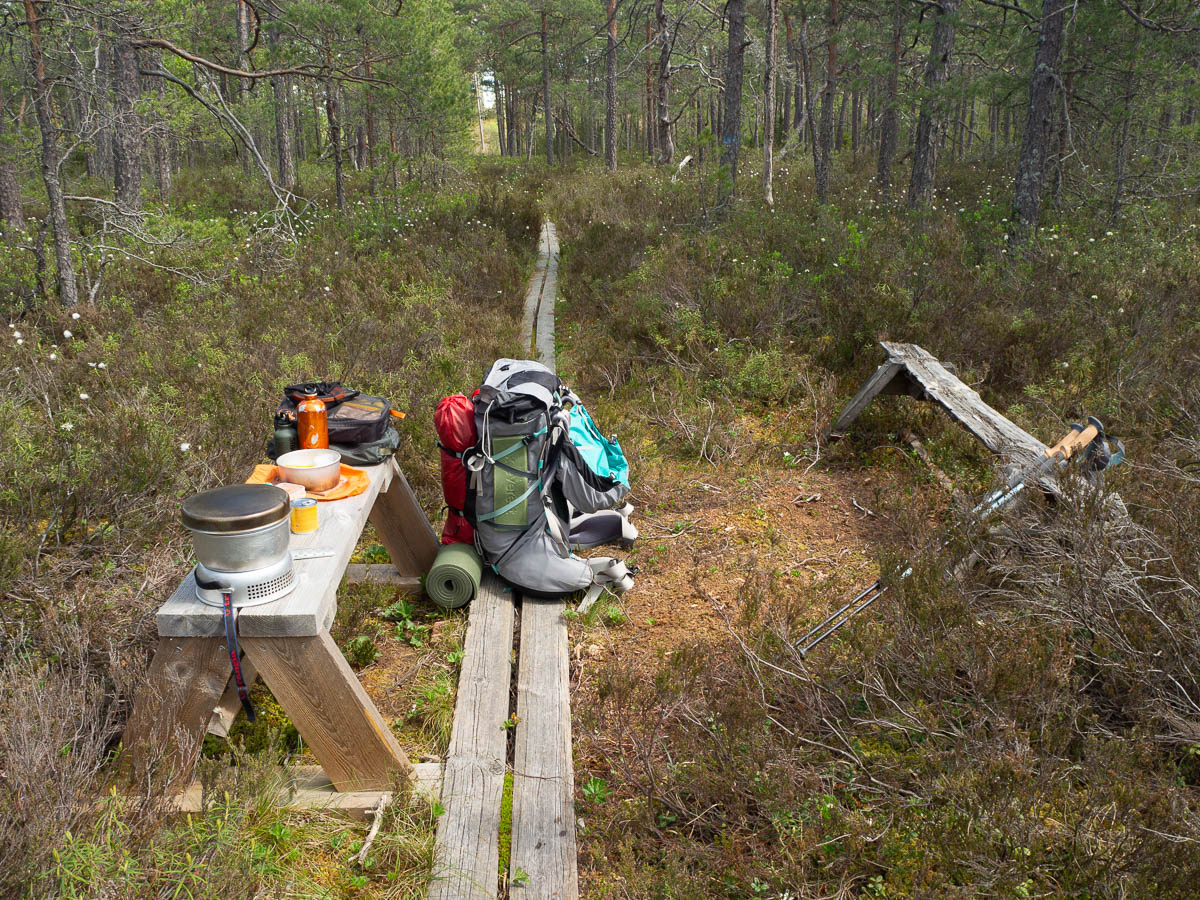
I took my lunch break later than I might otherwise have done (again, I’m kind of getting used to this) because there just weren’t any good places. The spot I finally found was very cosy, though, even if the bench only had room for my things, especially the stove, and not for myself. The ground around the bench was firm enough to stand on, but very waterlogged.

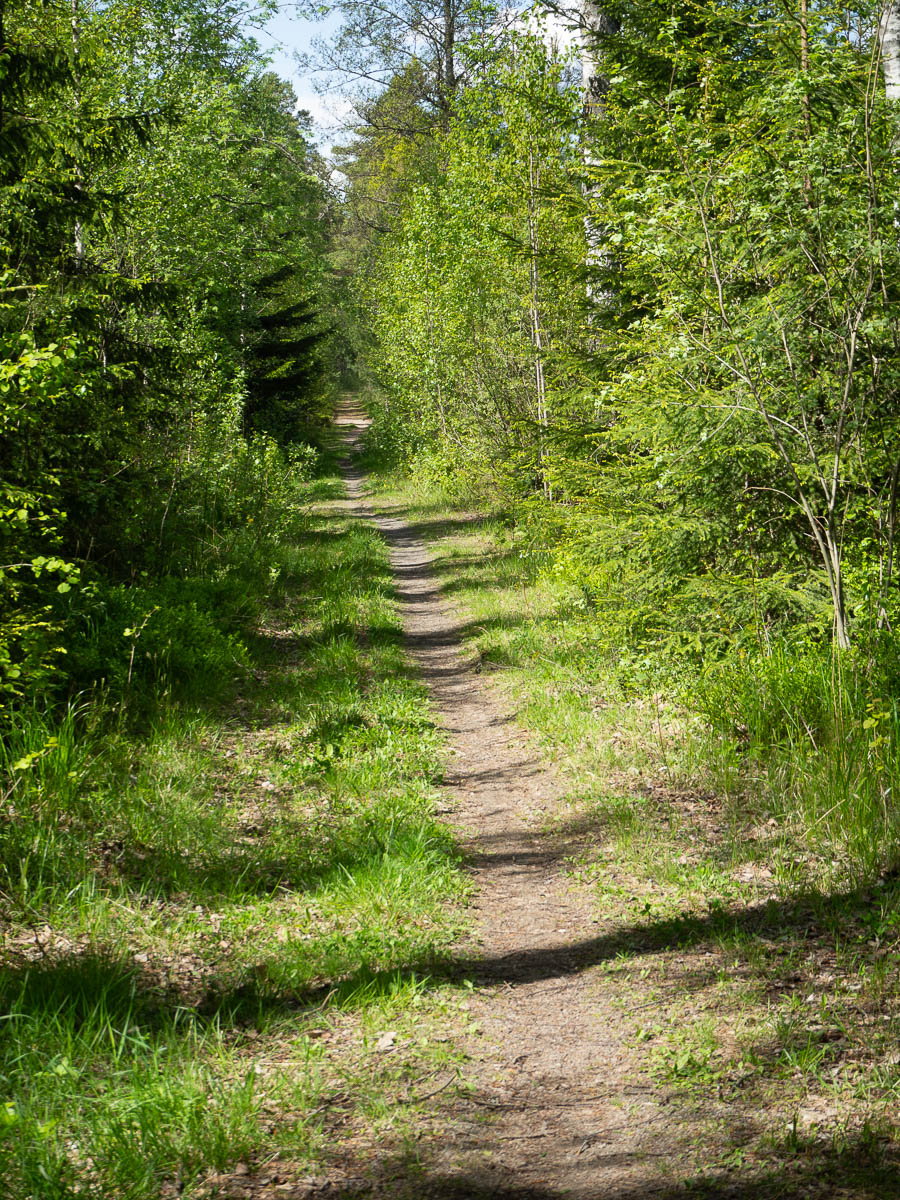
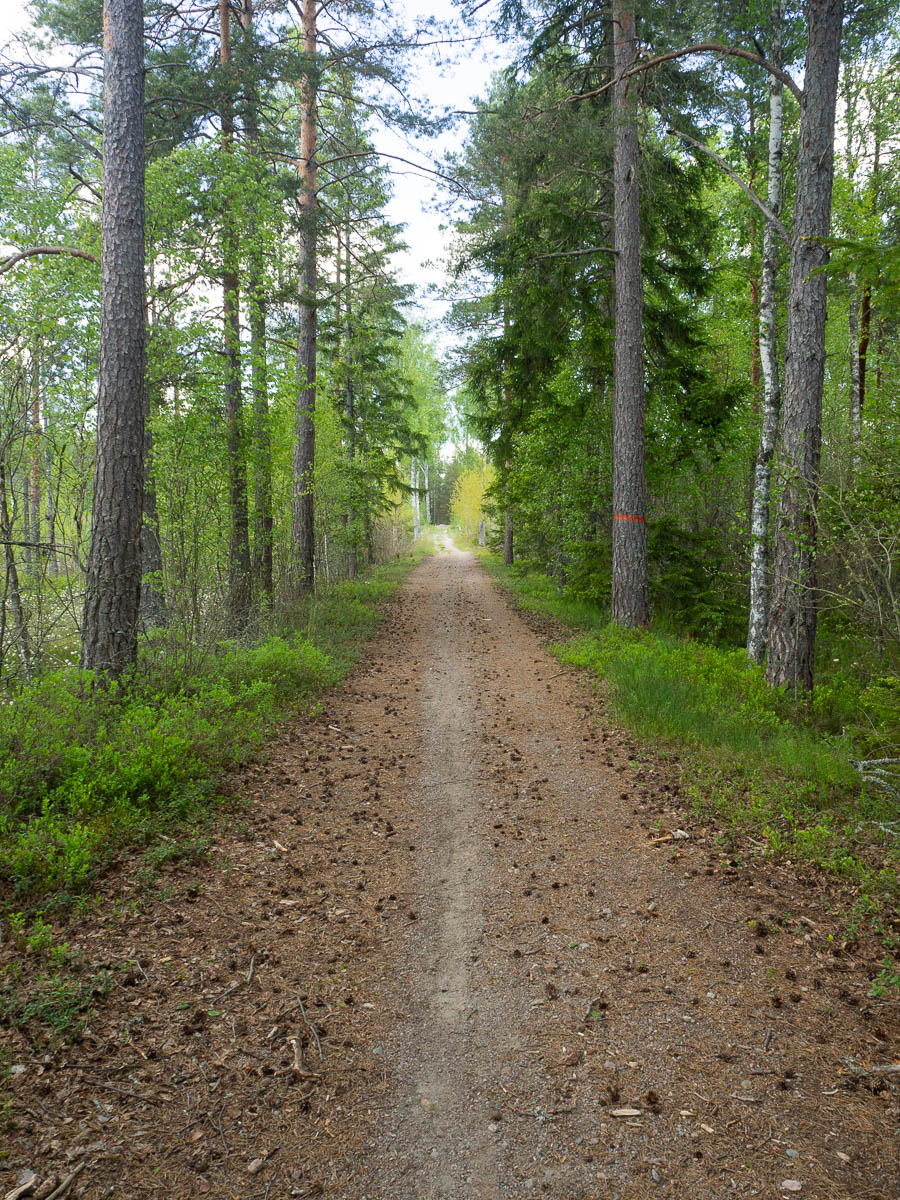
After the bog, the trail followed the tracks of an old railway, long gone. Straight and even and smooth, it made for easy walking.


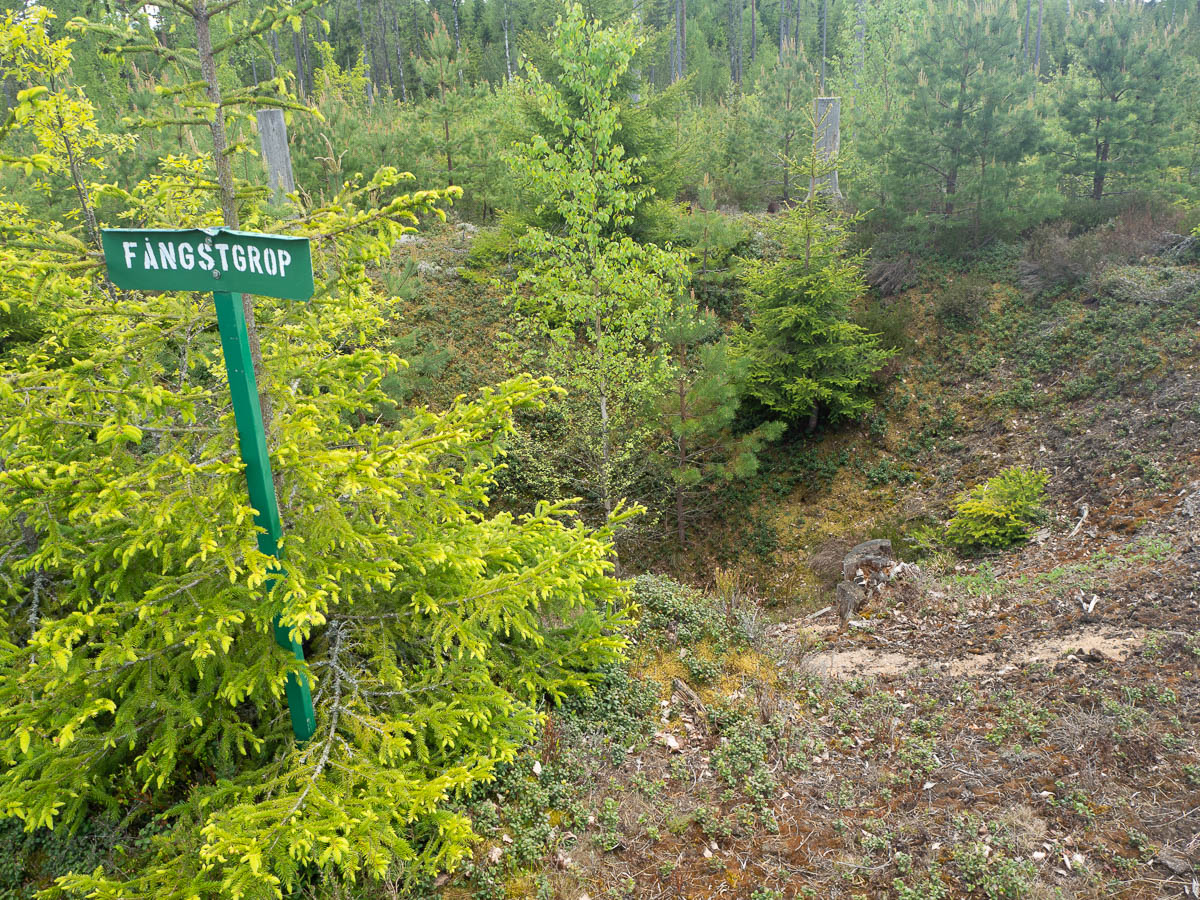
I passed a signposted hunting pit. It’s kind of weird that, nearly two hundred years after it was last used, it’s still here and recognisable for what it was. (With the help of a sign, at least.)

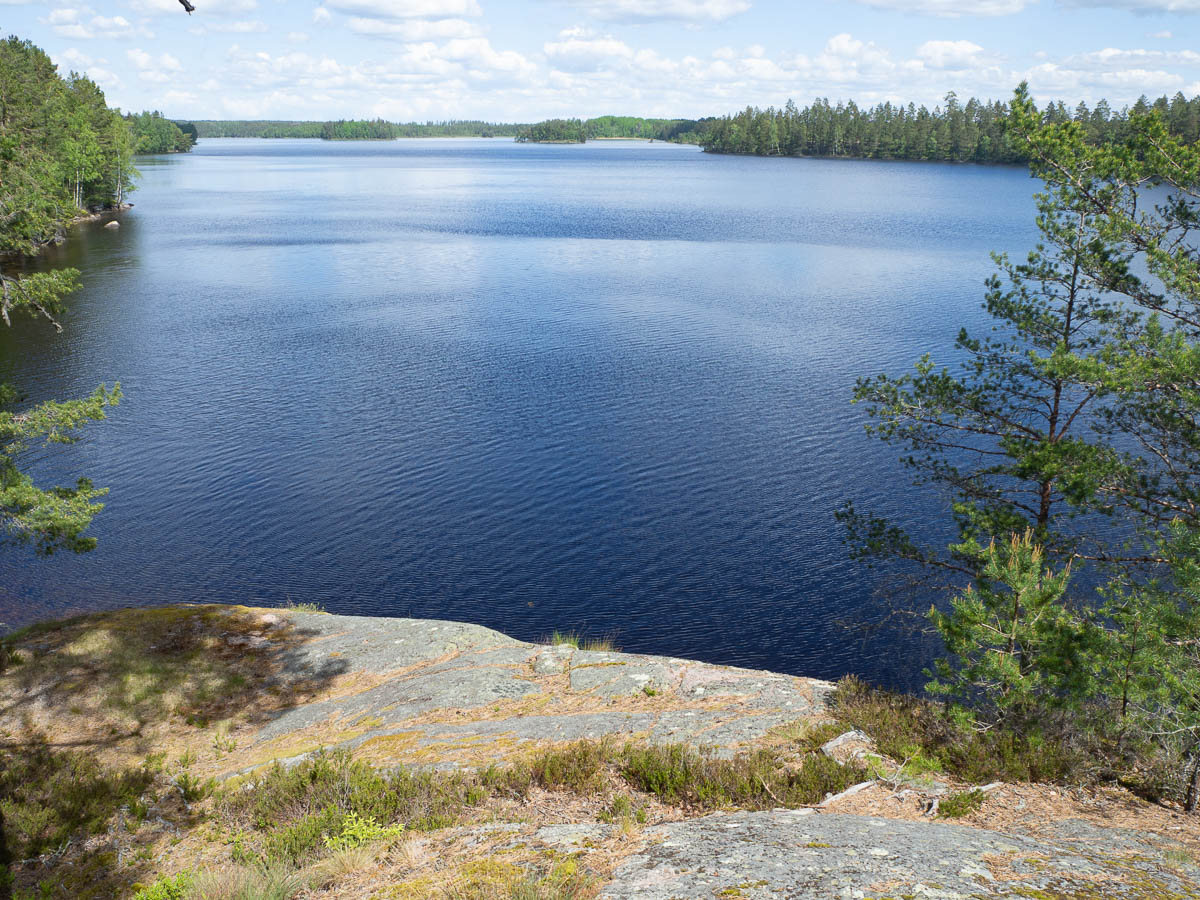
There were pretty lakes, as usual.

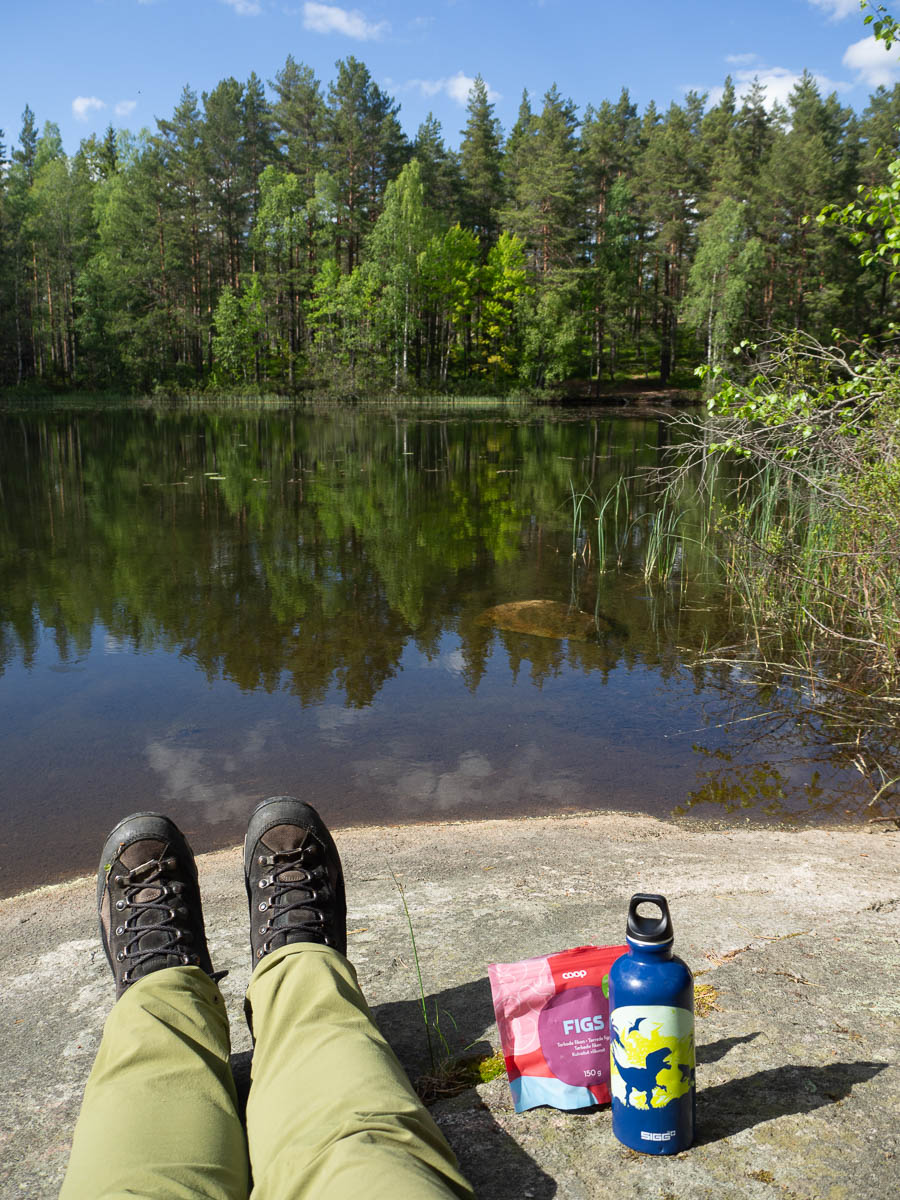
Dried fruit is the best trail snack. Especially larger fruit (so, like, figs or apricots rather than raisins or cranberries) that’s firm and dry. Sometimes I accidentally buy “wet” dried apricots – I don’t know what they do with them, but I find them horrible.

I’ve got two one-litre water bottles inside my pack, and a small one easily accessible in a hip belt pocket. The small one I inherited from Adrian. He’s too cool for dinosaurs now. I’ve got a Hello Kitty one from Ingrid as well. I’m not too cool to embrace my inner child.

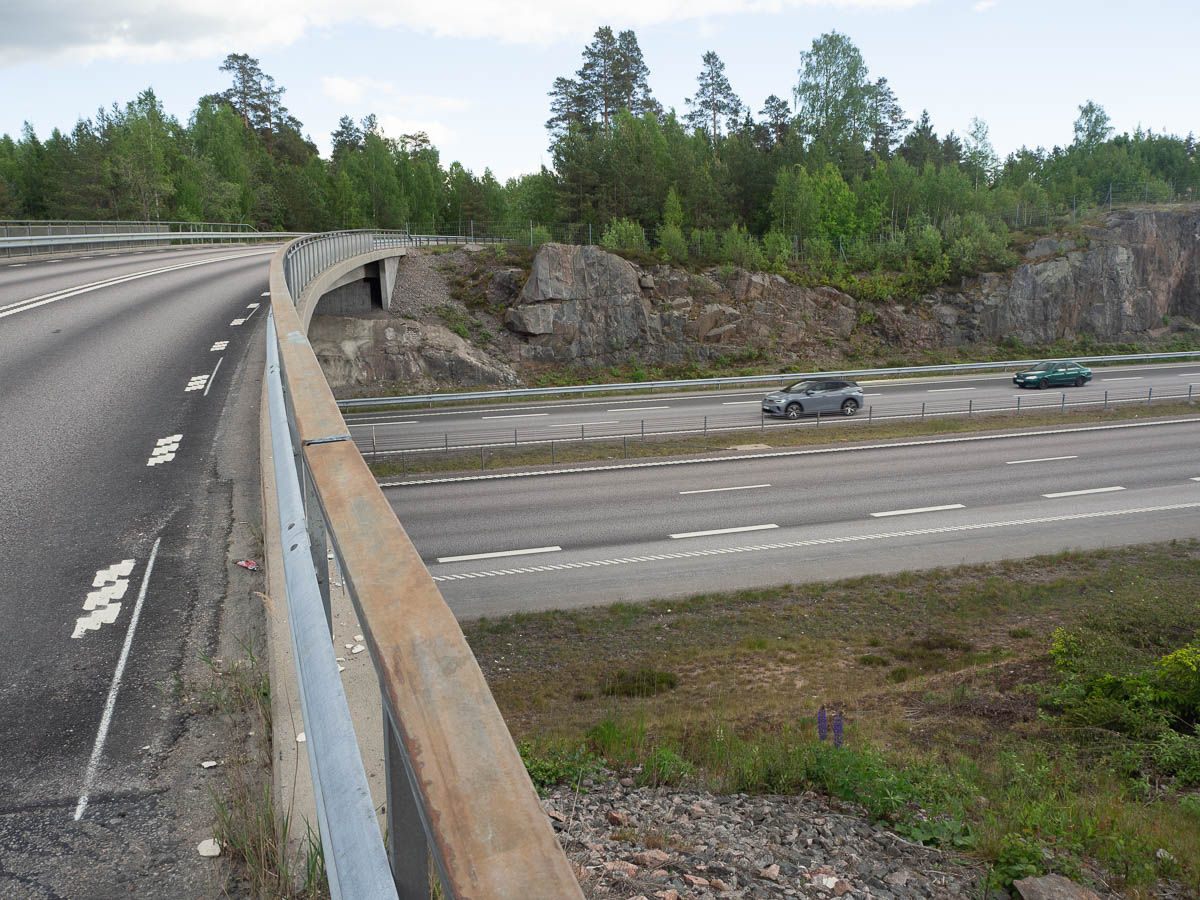
The trail managed to stay away from human habitation nearly all the way. There were no clear-cuts and no gravel roads. Very beautiful and pleasant walking. Only once did the trail descend onto a short stretch of highway, to cross an even larger highway, but as soon as that was done, it moved onto a small path again.

Evening brought interesting rock formations in pretty evening light.

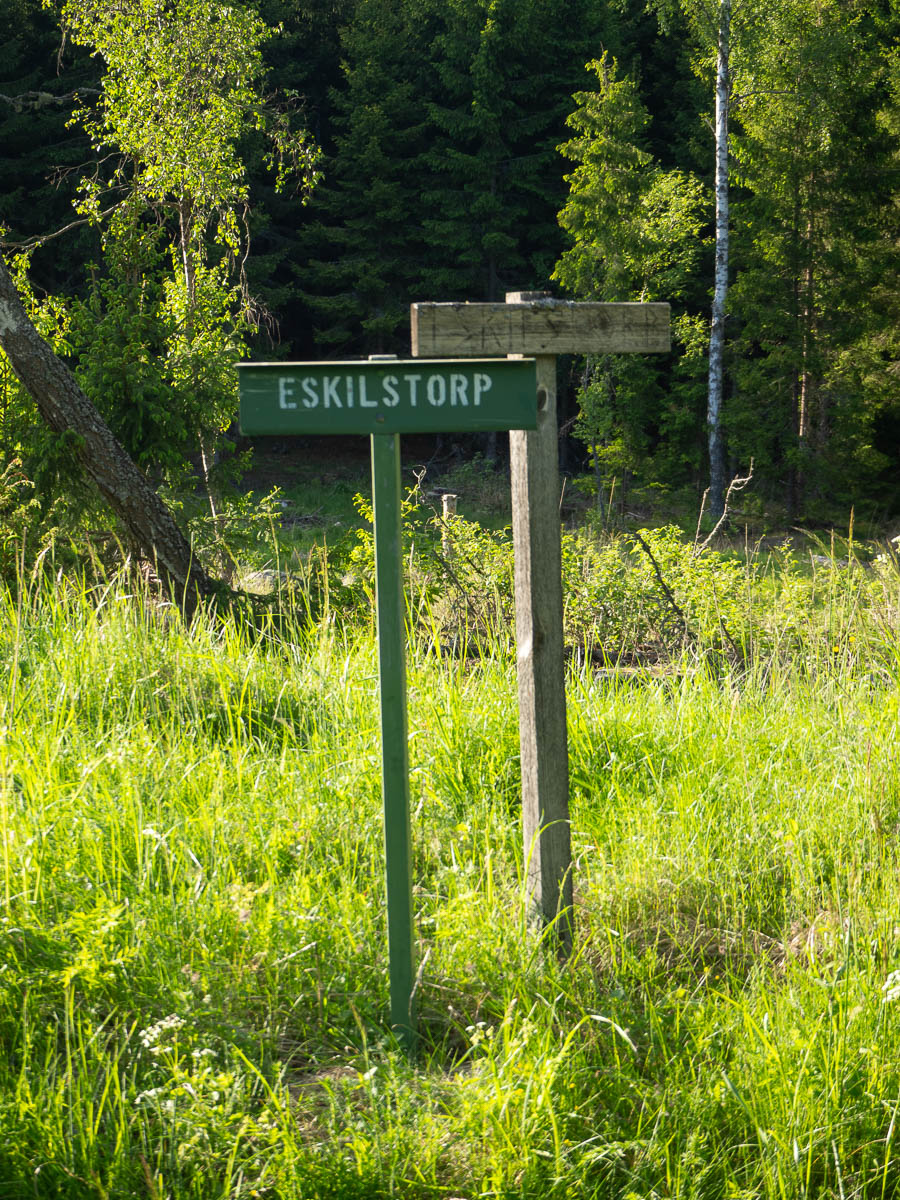
I had vaguely been thinking of aiming for the lakeside shelter halfway through stage 31, but got tired before I got that far. Stopped for the night at Eskilstorp, which, judging from the name, was at one point the site of a small farm or crofter’s cottage. The cottage was all gone, except for the stone foundation, which was still all square and house-shaped.

It was tempting to put up my tent in the middle of the foundation, but the ground there was lumpy and full of big tussocks of grass, so I had to move a few metres away.

Wildlife: a few bones of a dead deer, and birds. So much birdsong! Blackbirds and chaffinches everywhere, but I also heard cuckoos many times, and of course a background chorus of various smaller songbirds. Earplugs were a necessity to be able to sleep.