Adrian likes watching cooking shows. We’ve been watching Sveriges mästerkock together, and he likes Sveriges yngsta mästerkock, the junior version, even better. We’re waiting for the new season to be released. He also watches Gordon Ramsay on his own.

He sometimes asks me if I think I could be on that show, or if some meal I cooked would be good enough for it. I guess that’s a sign that he appreciates my cooking.

The most obvious difference is that the contestants always cook carnivore food. Many challenges are explicitly meat-based. But they nearly never make vegetarian meals otherwise either, even when the challenge to me looks incredibly vegetarian-friendly. (I think a very few pastas and soups have been vegetarian.)

But what if they had a “Sweden’s best vegetarian chef” contest, Adrian asked?

I explained that the food I cook – no matter how good – is of a different kind. I cook everyday food.

The flavours are part of it. My cooking is way more varied and interesting and flavourful than what the average Swede cooks, I believe, but ultimately still comfortable rather than adventurous.

But it’s not just that. I could easily use flavours with more edge. What is it really that makes my food “everyday” food and not “master chef” food?

I think the answer is a low level of complexity.

When I improvise a meal without a recipe (which is often how I approach cooking) I tend to end up with a single complex part, with potentially some simple ones accompanying it. And with “complex” I mean something made up of many elements.

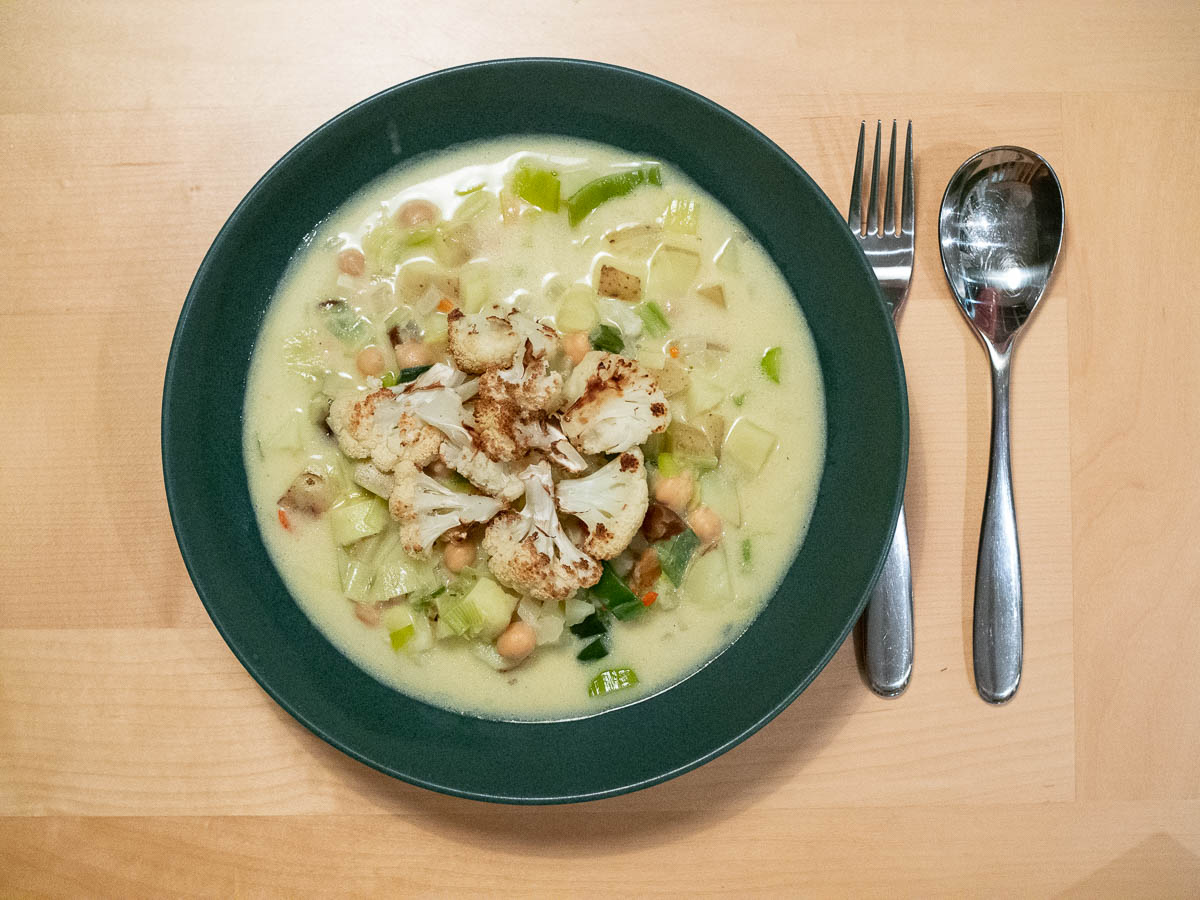
Sometimes it’s just the one complex thing on its own: a soup, or a stew, or fried rice, or even something like a lasagna or frittata. Like the stew in this photo.

Sometimes the complex thing could be a rich saucy thing, or a stir-fry, and then it would be accompanied a simple thing like carbs (rice, pasta, potato, bread) or maybe a separate protein (halloumi, tofu) or vegetables (fried broccoli, steamed asparagus). These simple things may be flavoured or marinated etc, but they clearly have just one main ingredient.

Master chef meals often have several complex parts. If there is a soup, then it has a topping and some dipping sauce for the bread. If there is a meaty thing then it has both a fancy sauce and a complex vegetable thing and possibly even more things.

The meal kits from Lina’s Matkasse were also often like that. That’s why I liked those meals: they had not just new flavours, but often a whole different structure.

The snowdrops at Spånga torg are already flowering in large bunches, so they’ve probably been at it for a good while already. These are the earliest snowdrops I can remember seeing, ever.

It looks like we will literally not have winter this year. We had one small batch of snow in November, and the occasional night with sub-zero (Celsius) temperatures, and that seems to be it. If winter hasn’t come by mid-February, it probably isn’t going to.

I wonder if this is the new normal now. Will snow be just a thing in stories and faraway lands for my grandchildren?


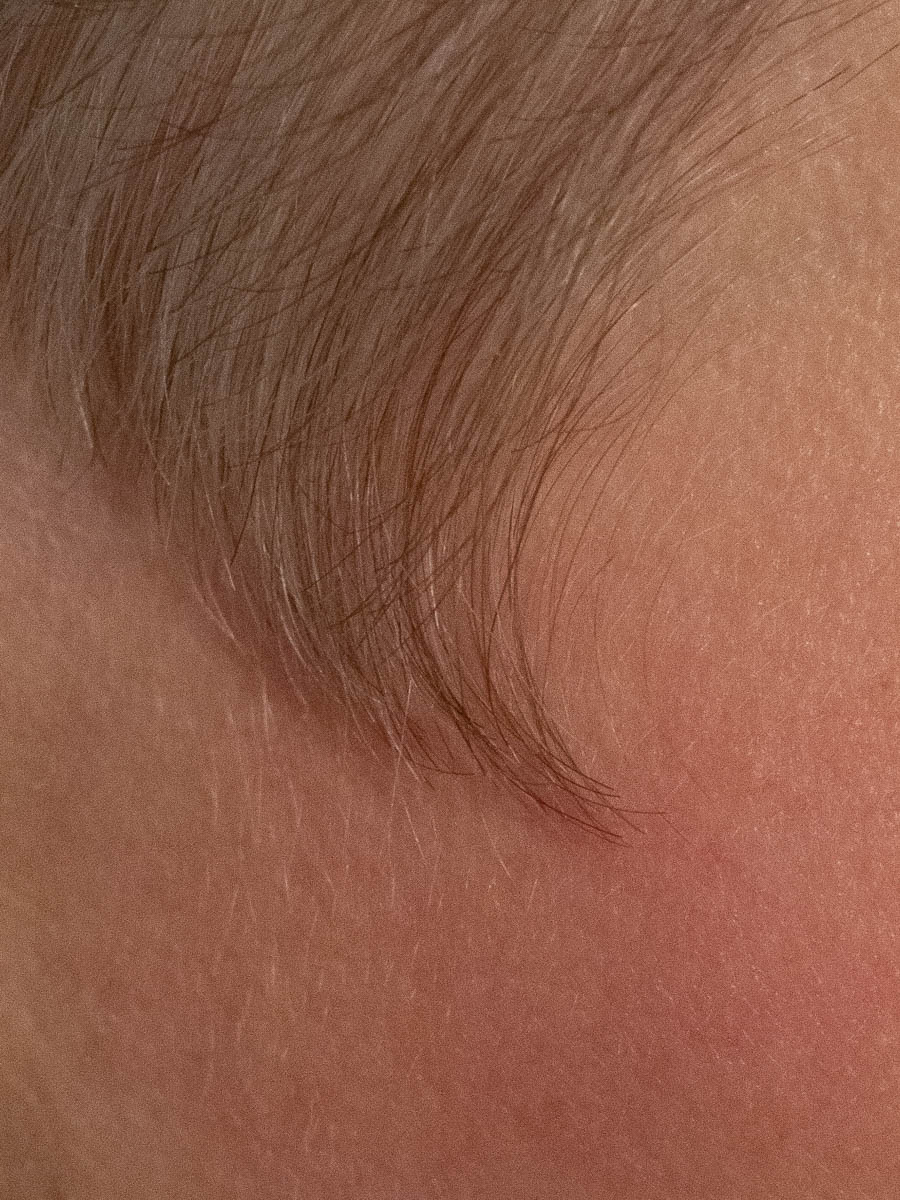
I was going to take a self-portrait with my new haircut (which I got today) but it’s dark and the light just doesn’t work so I gave up. Here is the hair, without the rest of me.

If I could freeze my hair in time and have it never grow, never change, I’d be quite happy. Getting a haircut can feel nice and all, but it feels like such a waste of time. So I usually put it off as long as possible. But my hair is thin and flat these days, and doesn’t look good if I let it grow. And what’s worse – when it grows past a certain point it starts touching the back of my neck, and that is really itchy. So I have to cut it.


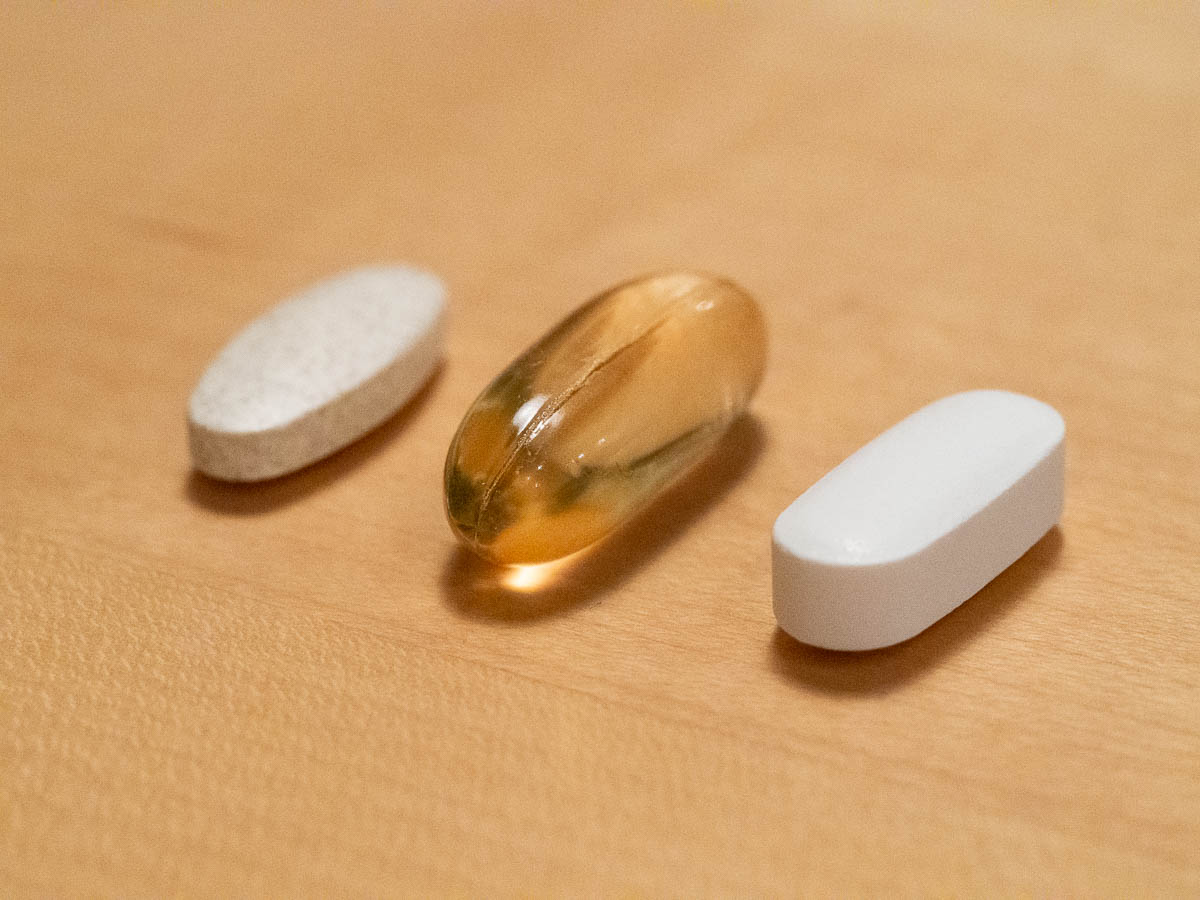
I finish every dinner with three pills.

Pill one is glucosamine. Many years ago I had trouble with my knees and my hips. They hurt a bit and “clicked”. My biochemist parents suggested glucosamine. Apparently vegetarians may need glucosamine supplements. It made an immediate difference. Whenever I take a break – travelling, running out of pills – it takes about a week before I miss it.

Pill two is omega-3. I’ve been taking these for years as well. For every supplement I read about there are studies with conclusions in both directions. Omega-3 is one of the few where the benefits seem clear, especially (again) for vegetarians.

Pill three is a multivitamin for vegans. This is a very recent addition.

I eat a varied diet, not vegan, not even 100% vegetarian since I eat some occasional fish, so I’ve lived in the belief that I get all I need from just eating food. I even had my B12 and iron levels checked as recently as November, on a hunch, and according to the doctor all was good.

Recently I got cracks in the corners of my mouth that just wouldn’t heal. Weeks of treatment with balms and creams made no difference. I did some research and guessed that maybe I have a vitamin B deficiency after all. The pharmacy had no products with vitamin B only; this “for vegans” thing was the closest I found.

Literally after a week the cracks stopped bothering me, and another week later they are effectively gone.

It bothers me that the doctor said that all is good when all is apparently not good.


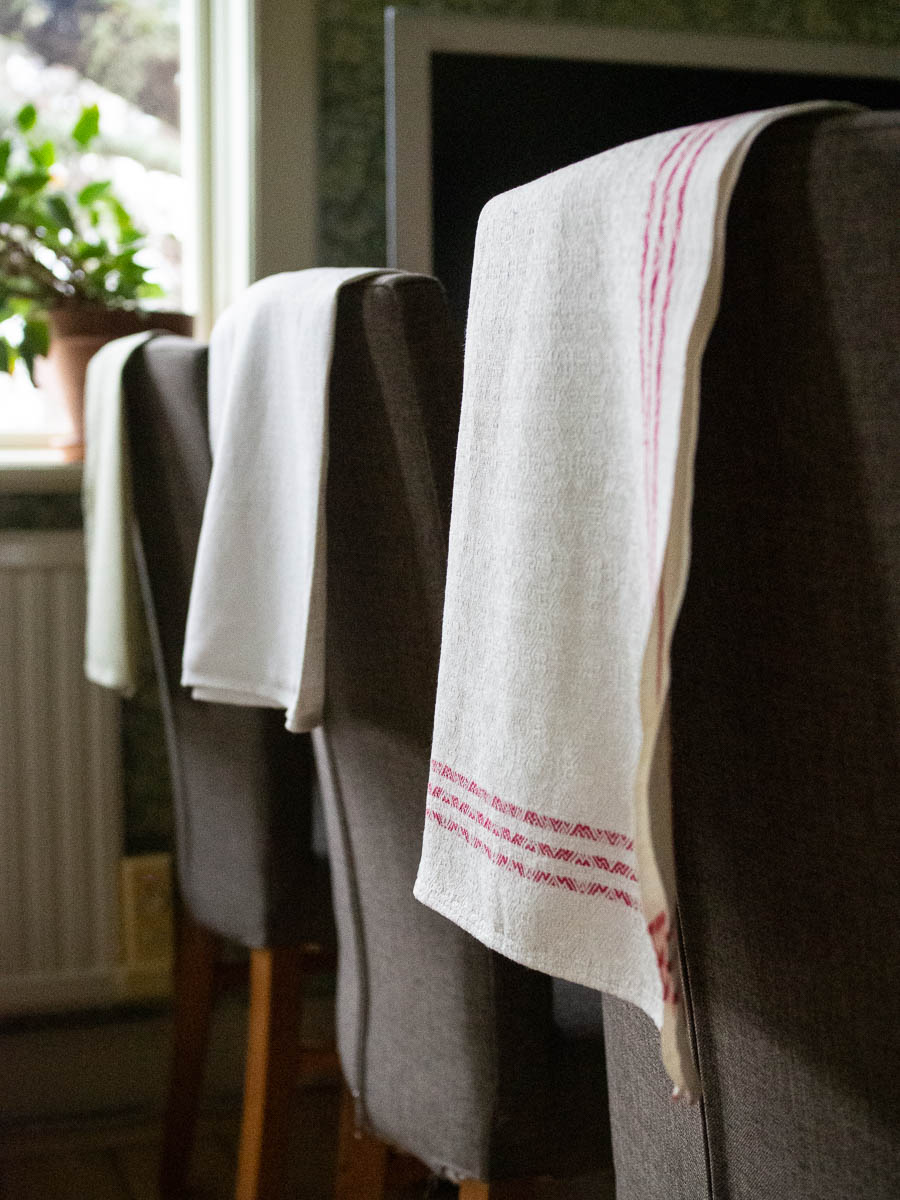
Newly ironed kitchen towels, cooling.


I’m helping Ingrid with her physics homework, while she coughs all the time.

Their current area of study is mechanics, which has a lot of counter-intuitive topics. I’ve really struggled to explain some of these to Ingrid in a way that makes sense for her.

Why do satellites at different altitudes move at different speeds?

When a hammer thrower releases the handle, in which direction does the hammer fly, and why?

You have two jars containing wasps. In one the wasps are dead, in another they are alive and flying around in the jar. How do the weights of the jars differ?


Quintessential Adrian. Dressed in colourful, loose, comfy clothes, slouched in his favourite corner in the sofa, feet on the table, reading Kalle Anka.


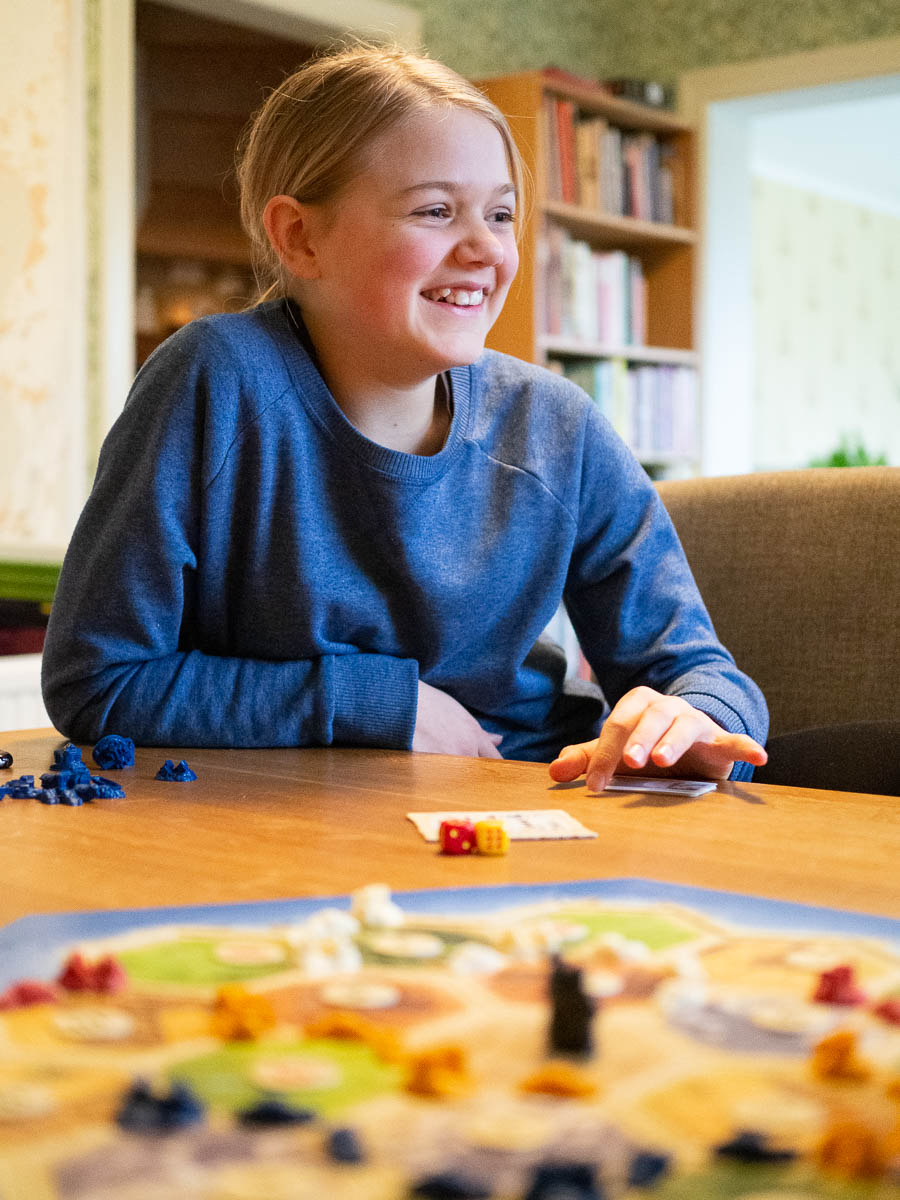
We played Catan. It was fun for about an hour and a half but the game dragged on and the fun started disappearing. In the end Ingrid traded some rocks to Eric to let him win.


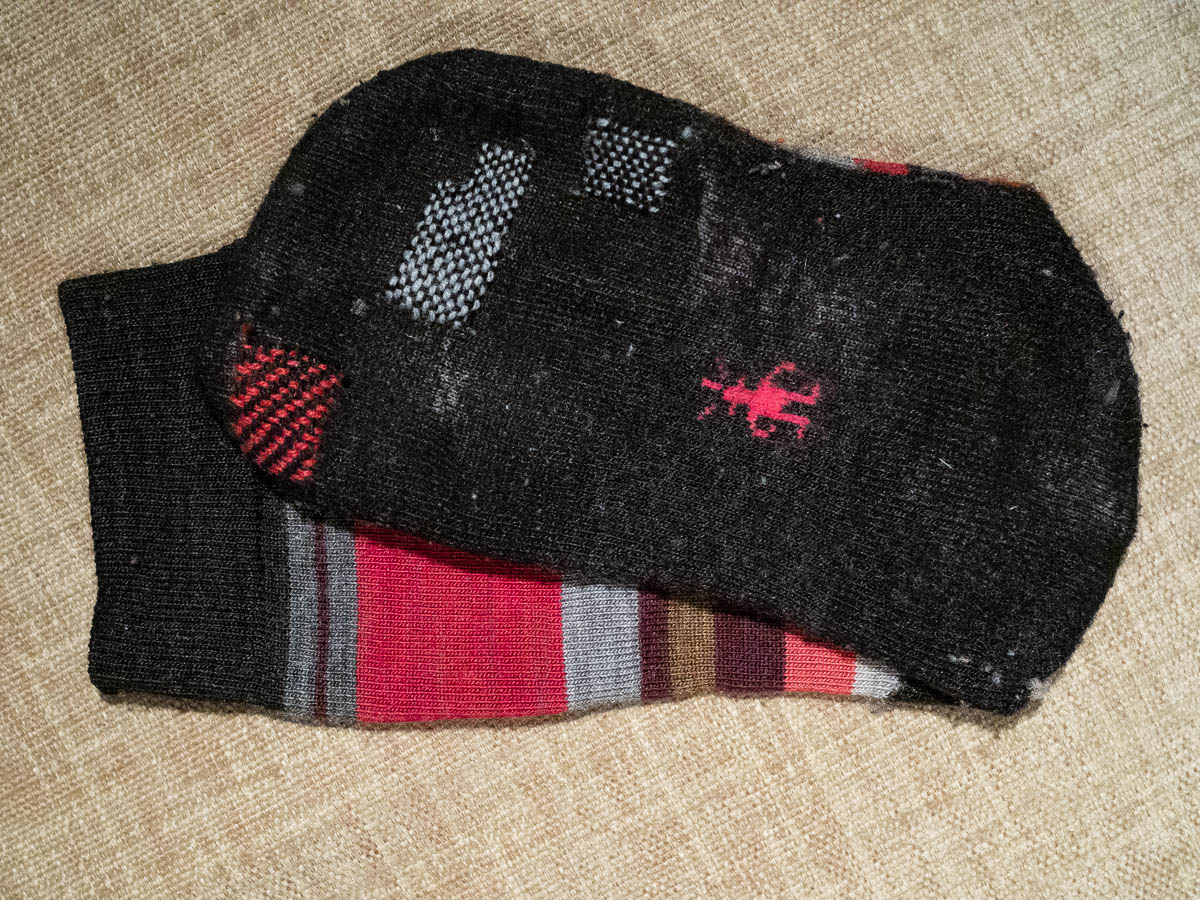
Darning black socks with black yarn turned out to be really hard. In my efforts to see the individual threads I kept stretching the holes too wide, so when I was done with the darning it didn’t lie flat.

At some point I realized how stupid this was. Why was I making this so hard for myself? I picked up a yarn in a contrasting colour. And now I could see what I was doing! My darning on this third sock looks a lot more even and tidy than the first two I did before it.


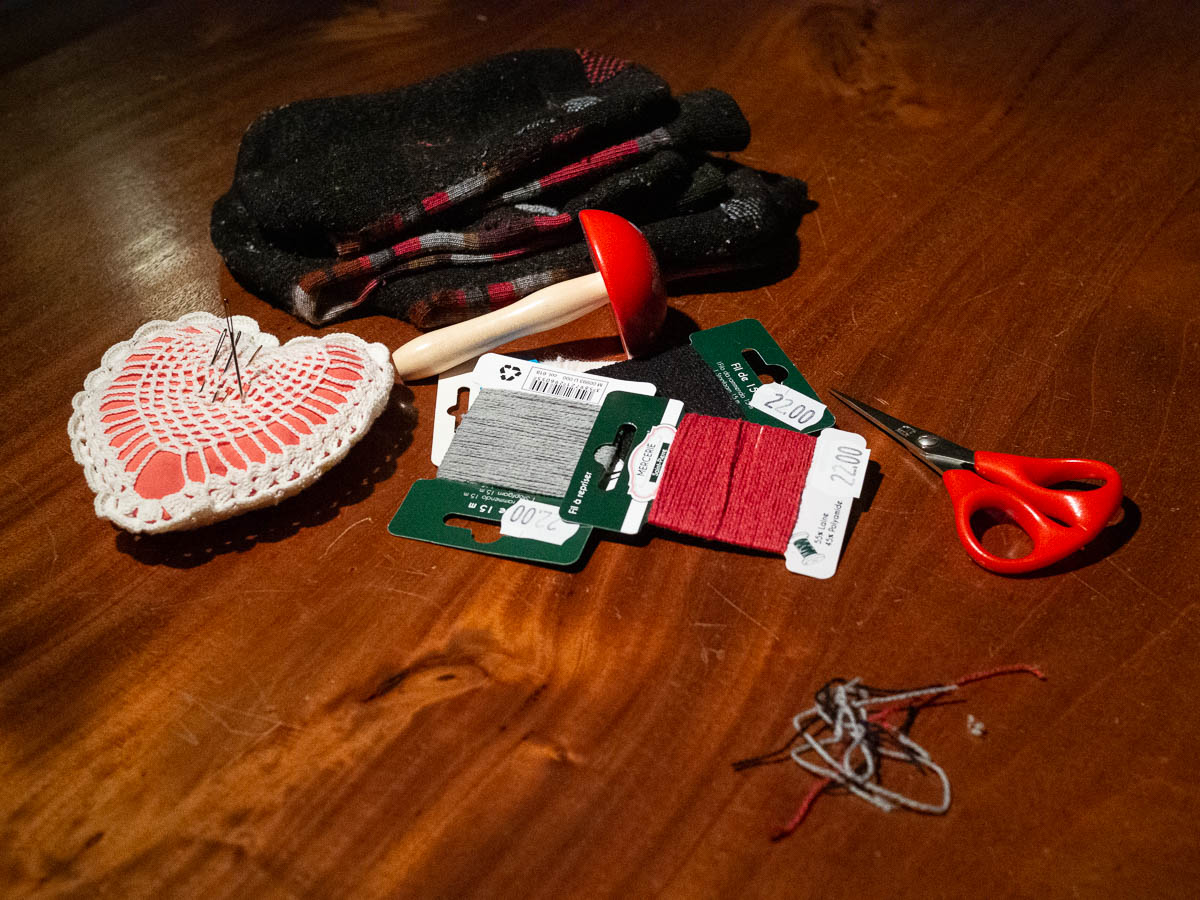
I’m darning socks again. I recently rediscovered a very nice shop that sells Swedish crafts (which I remembered) and crafts materials (which I had mostly forgotten). The best thing they had was darning mushrooms. I’ve been able to darn some of my favourite socks anyway, but this makes the job a lot easier, and the end result looks better.

The BBC, meanwhile, considers darning mushrooms a historical object, no longer used.

The darning mushroom would have been an essential tool in an era when women were constantly repairing worn socks. Before the advent of synthetic materials, socks and other items of clothing were in constant need of repair. Darning would have been considered a necessary skill for girls and young women, part of their education as future wives and mothers. The mushroom was used to make repairs to clothing, bed linen etc a practice that has largely disappeared with the development of modern textiles.

I don’t agree with the BBC about using the mushroom for bed linen, though. This is for darning holes in stretchy, knitted materials, not in woven textiles.

The mushroom brought back memories of a mending tool that really is no longer used: latch ladder menders. My mum had one of these. It was really fiddly to use, but the mend was practically invisible. The instructions in the photo suggest stretching the stocking over an egg cup. Since my mum worked in chemistry, we used a small lab beaker instead.