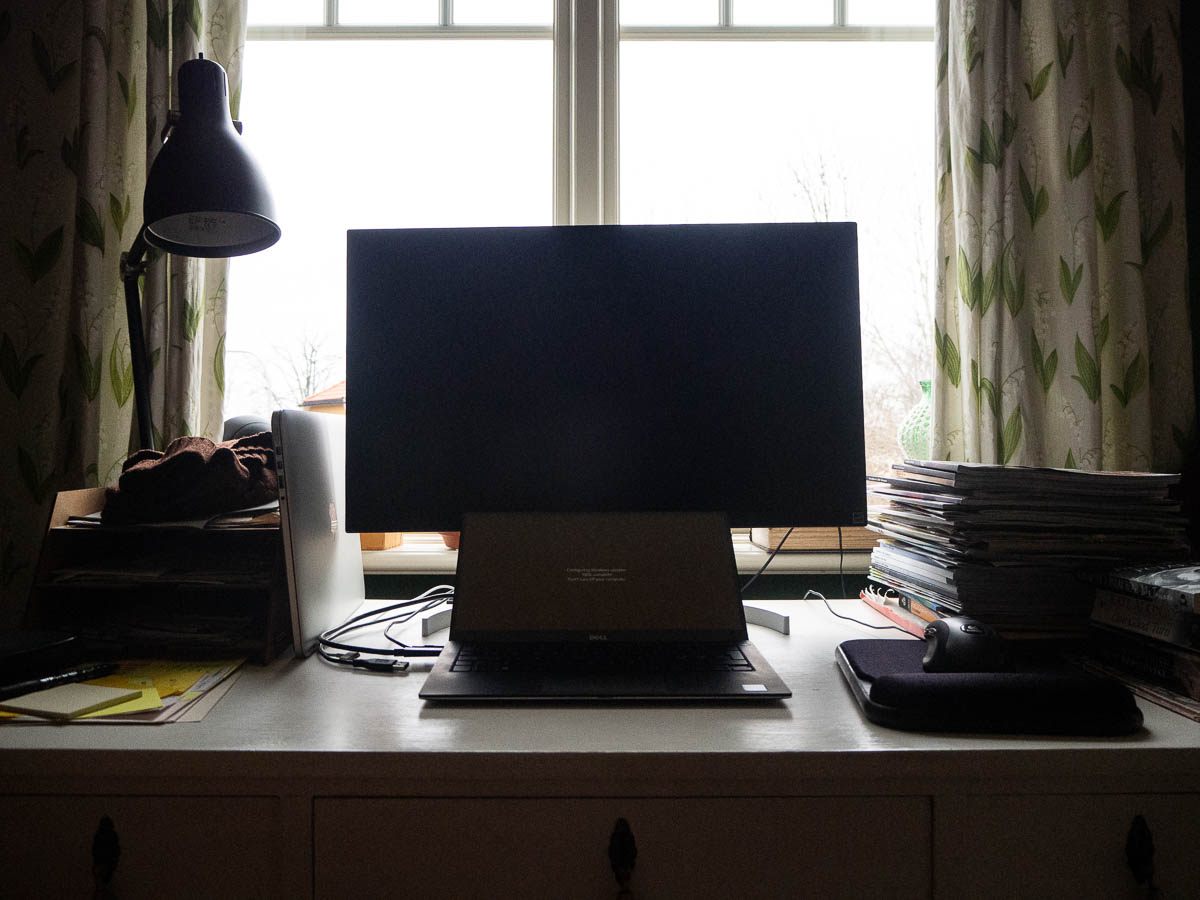
If working from home is going to be the new normal, I need to be properly equipped.

Yesterday I went to the office to take home one of the monitors. Wrapped it in a blanket and put it in a big bag to carry it home. But if I take the monitor then I’m going to need the dock as well, because the laptop has so few ports. And if I take the dock then I might as well take the mouse and keyboard as well. And if I take the mouse then I’ll also want the mouse pad with wrist support.

I ended up lugging home a very full and very heavy bag. My arms and hands were so tired they hurt when I got home.

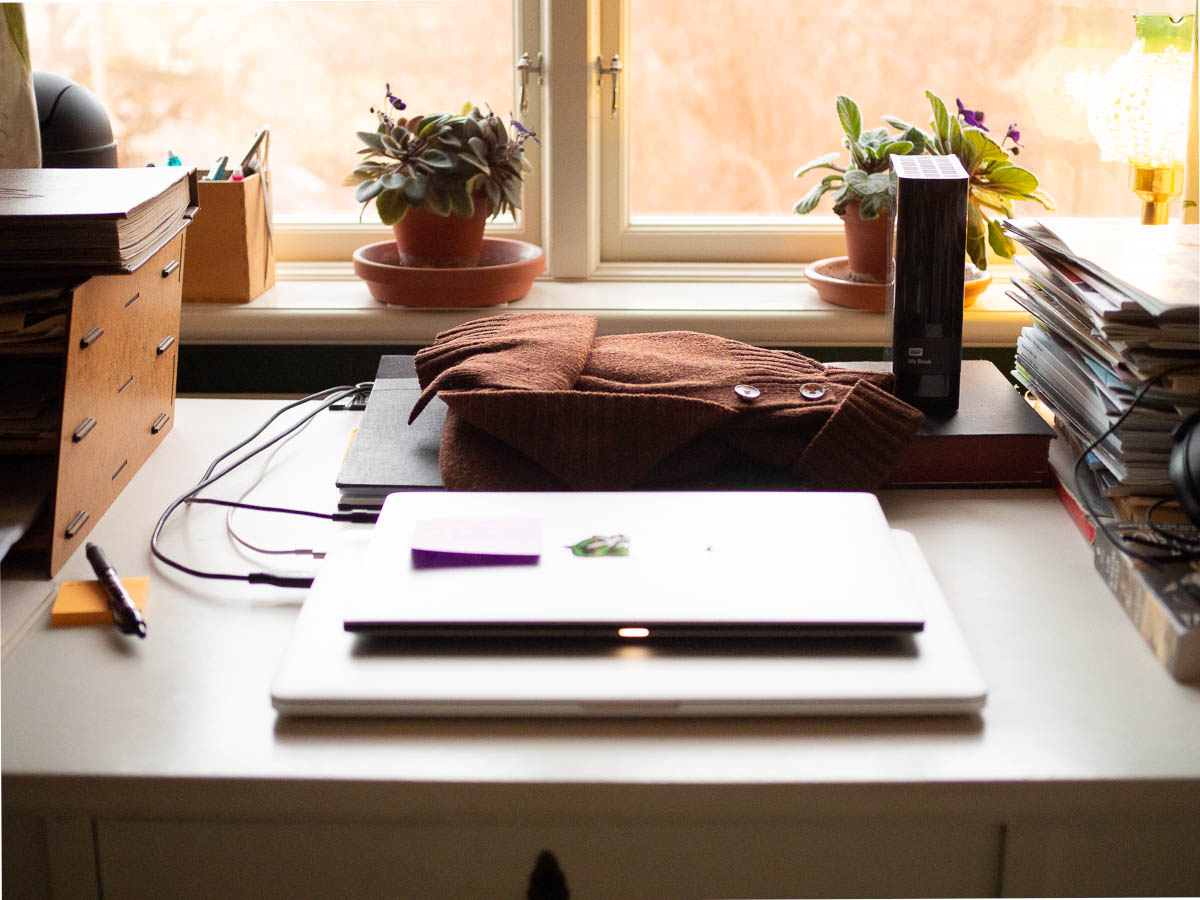
Today I set it most of it up on my desk at home. I managed to just squeeze in the monitor between all the other things on my desk.

This definitely makes for more productive working conditions.

But I lost my view… When I look up, I cannot see outside any more. All I see is a big screen. I cannot even see the African violets on my window sill, and they are flowering so nicely right now.
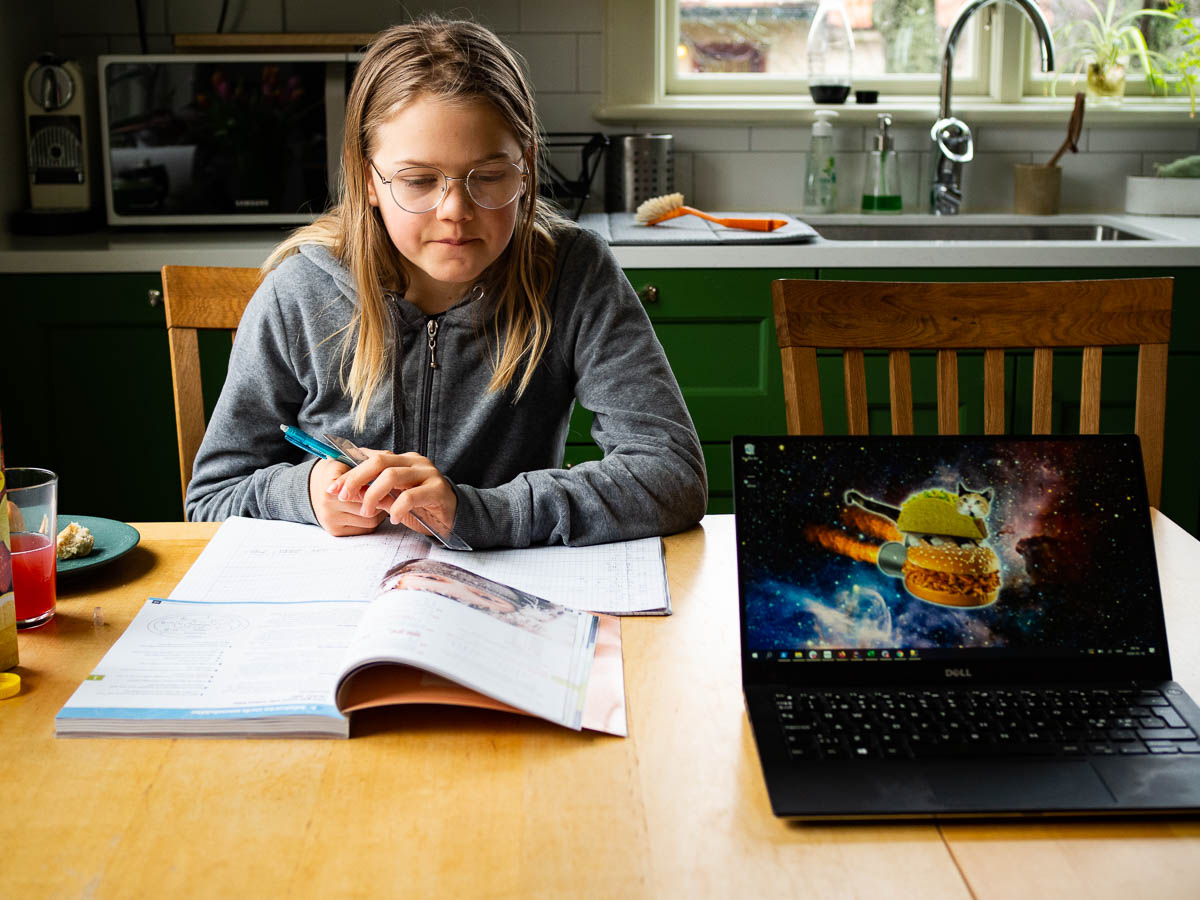
Two of us are working from home now: myself and Ingrid.

For me it was a team decision. For Ingrid it’s quarantine. She has a slight cold, with a sore throat and a stuffy nose. Students with any symptoms of a respiratory infection are to stay at home.

On top of that, she also has whooping cough. Despite all the vaccinations! The next top-up vaccination is due next year, in eighth grade. I guess her immunity wore out a bit faster than whatever percentile the general vaccination schedule is based on.

I am somewhat proud of my ability to diagnose her whooping cough based on symptoms only. The doctor at the local clinic was sceptical but swabbed her anyway, and then replied a few days later that the test came back positive. Unfortunately she had been coughing for three weeks by then, so it was too late for antibiotics. And she might keep coughing for several more weeks. No school in sight for some while.

Adrian is still at school, and Eric’s job hasn’t decided to work from home yet.


PS later at night: Eric’s company is following suit, and will also switch to working from home as soon as practical.


I’ve had enough of coronavirus thoughts, and enough of gray March weather. I want spring!


Usually I shop for groceries online once a week and get all the heavy or bulky basic goods delivered to our door. All sorts of dairy goods, canned beans and tomatoes, frozen vegetables, pasta, rice and flour, etc. Then I top up with fresh fruit and vegetables at the local supermarket, and with any special ingredients for the day’s dinner that I don’t keep at home. Or Ingrid does the top-up shopping when she cooks.

I sat down to order food yesterday night and discovered that the next available delivery date from MatHem was five days from now – instead of tomorrow, like usual. Time for a new plan, I guess…

So we drove to a larger supermarket today and did our weekly grocery shopping ourselves. For the first time in weeks, if not months.

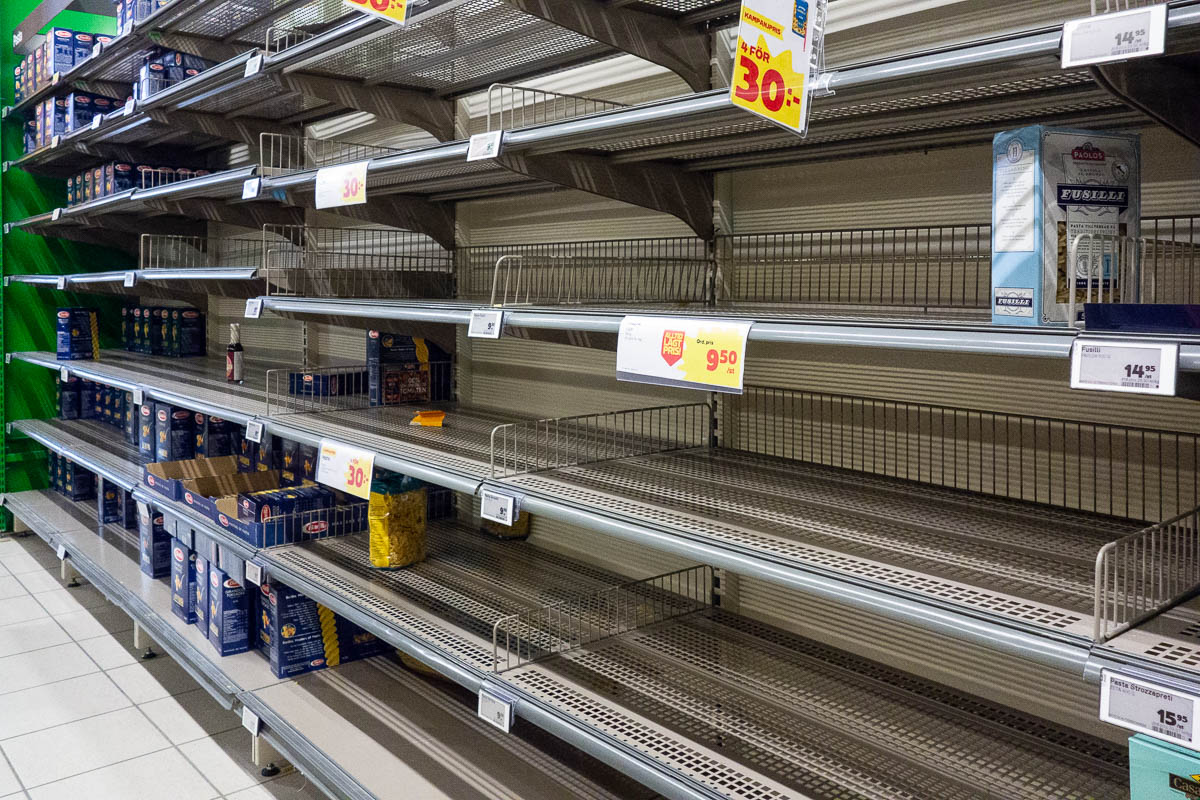
The mood in the supermarket was calm (no fights like in Australia!) but it looked like people were preparing for a major catastrophe. Shelves and freezer boxes were gaping empty and staff were everywhere, rushing to restock.

It was interesting to see what people stockpile.

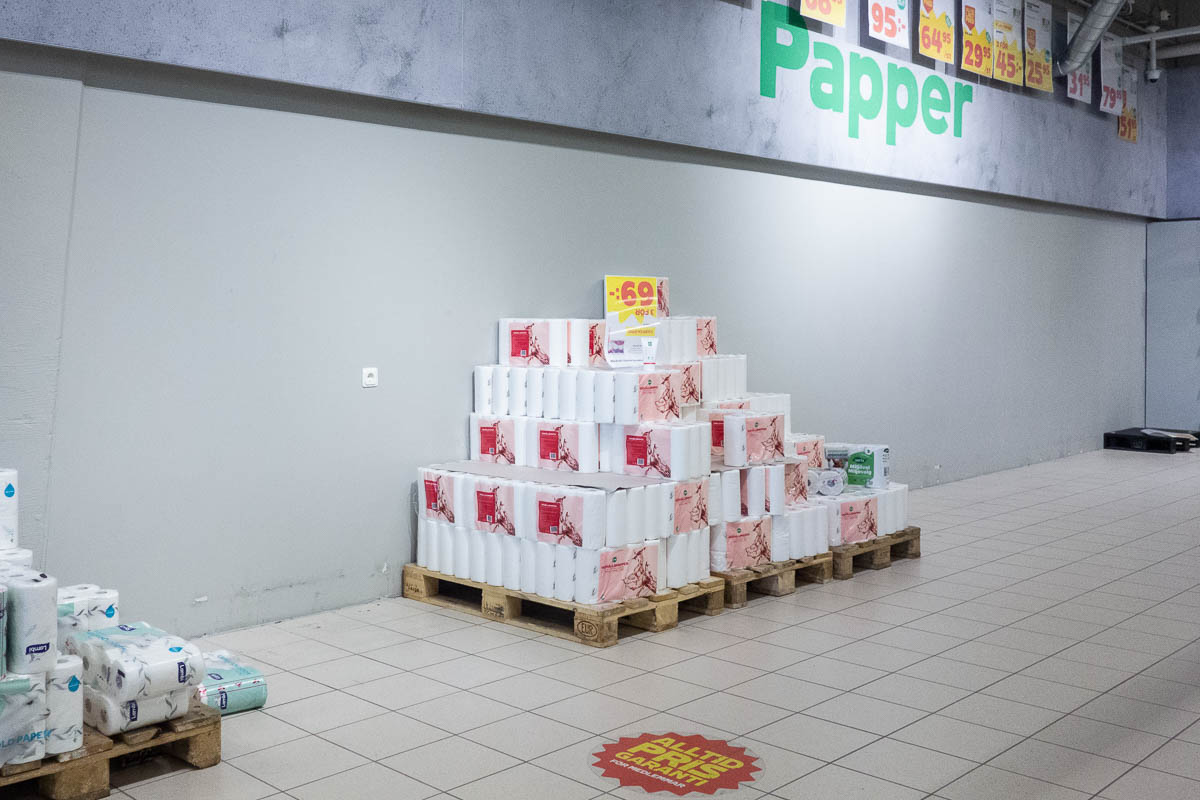
Toilet paper, of course, just like elsewhere in the world. There wasn’t a single bale to be had at Stora Coop in Bromma Blocks. I wonder what the reasoning is. Is toilet paper truly the most important thing for your survival and well-being? Good thing we didn’t need any today.

Pasta and rice and noodles, I can understand. If you are going to stockpile food because you’re panicking, then it makes sense to buy these. They’re good bases for most meals, cheap, easy to store. Canned and frozen vegetables likewise, and frozen meat if you’re into that sort of thing.

Canned ready meals, like generic “canned meat soup”? Getting stranger. Who actually wants to eat that stuff daily, for real? What kind of scenario are you preparing for, when you think you’ll need to subsist on this?

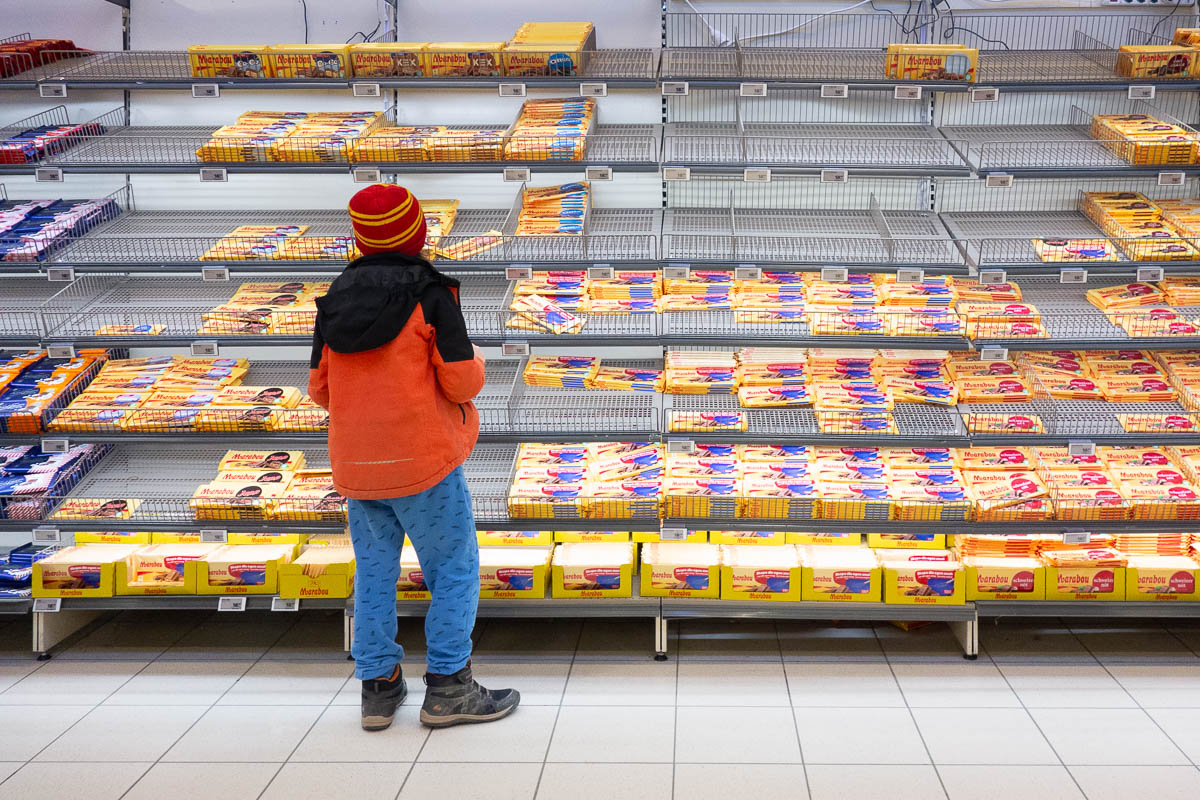
Chocolate bars, though? What the heck?


A recommendation came today at work that we should work from home from now on, to help reduce the spread of covid-19.

A recommendation, not an order, but it’s one I definitely agree with. Especially after reading this article about what a big difference earlier social distancing can make to slow down the virus’s spread.

I don’t enjoy working from home. I feel isolated and shut in.

I’m going to miss the physical act of getting to work. My commute is not the best part of my day but it’s good for me. In the morning it’s a good way to gradually come fully alert and ready to work. In the afternoon it’s a good way to wind down and let go of work tasks.

My desk at home is not set up for long work sessions. It’s more of a storage area for “to do” items – paperwork, magazines to read, books to blog about – than a place for work.

I only have the small 11-inch laptop monitor to work on – nothing like my three-monitor setup at the office. Working on a small monitor makes me less productive but also has a weird kind of effect on my brain – after staring at a small rectangle for eight hours, by the end of the day I feel weird in the head. It’s like I get a kind of mental tunnel vision.

I’m going to have to think about how to make this work, if this is the new reality for the foreseeable future.


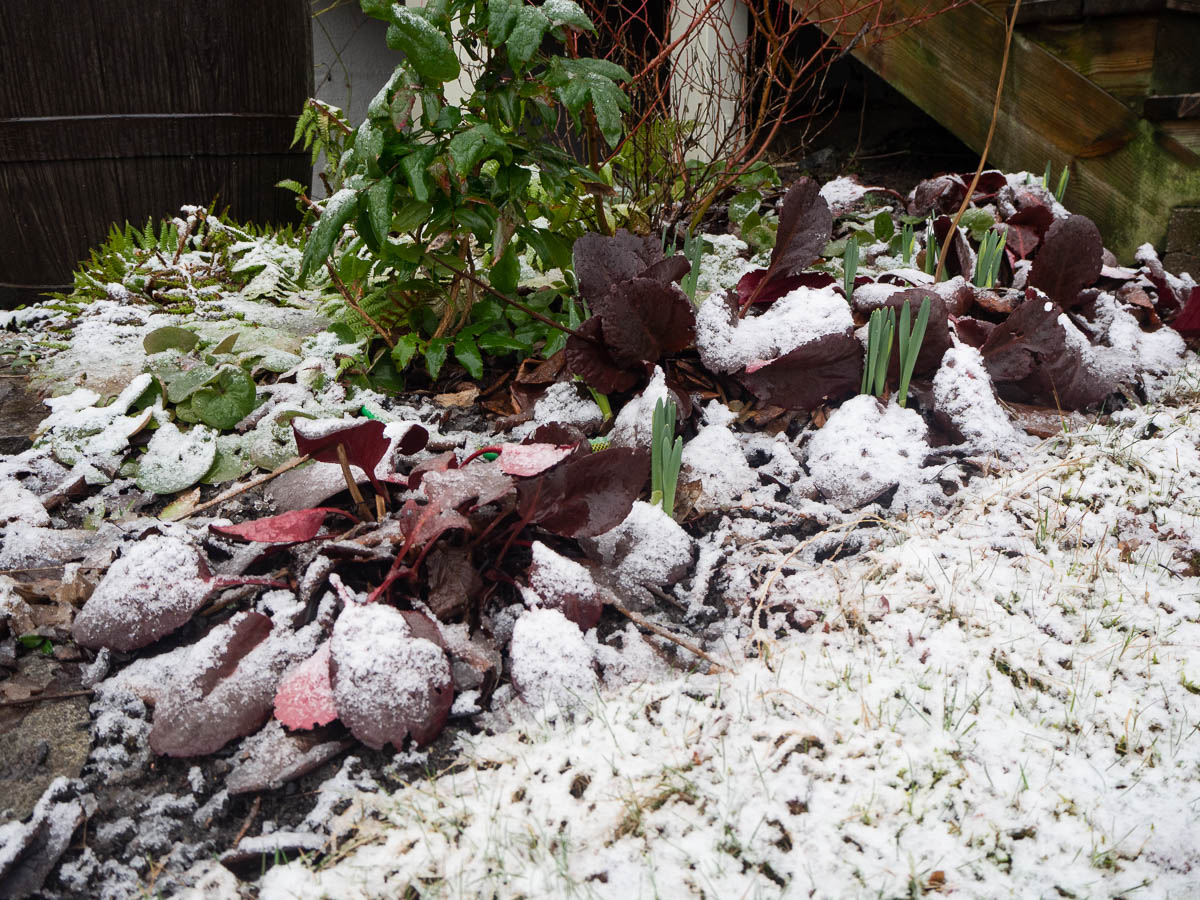
Crocus buds are out (but I haven’t seen any of them open since there hasn’t been any sun) and daffodil shoots are a third of the way there – and then we get this. Sleet and slush.


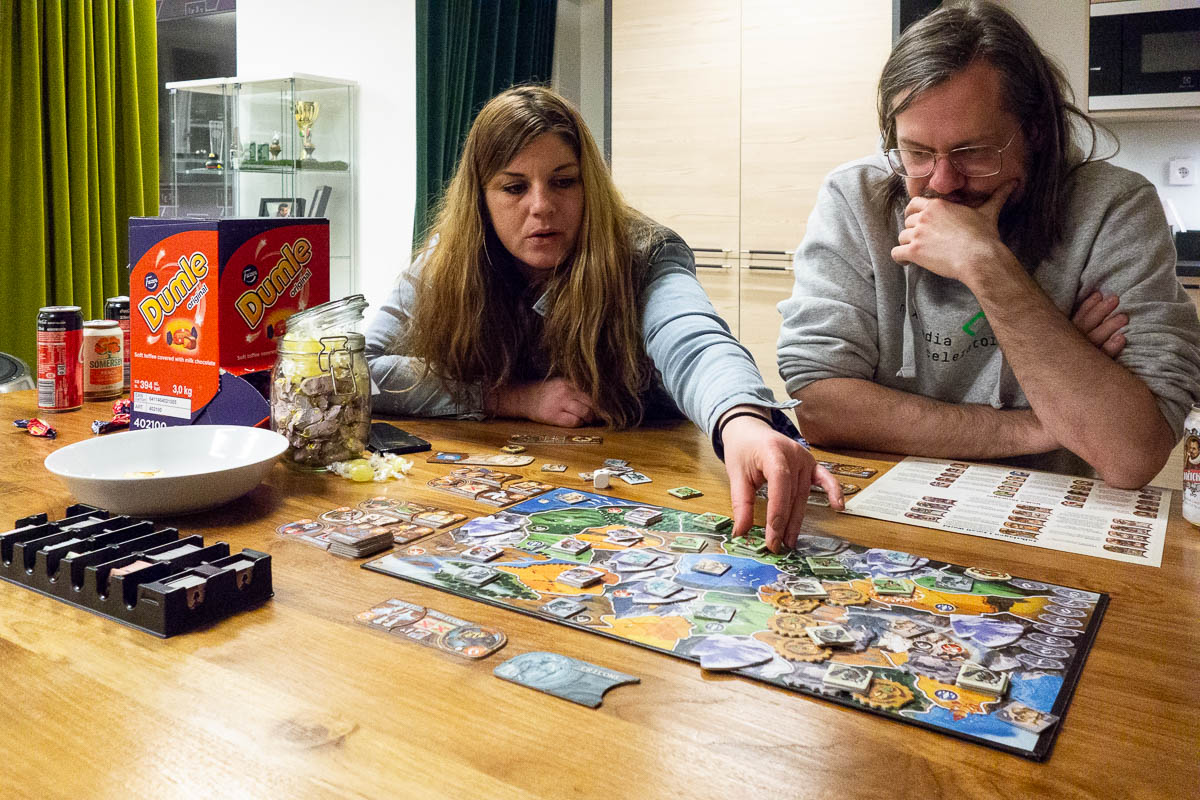
Board game nights at tretton37 are on again, after a long hiatus. We ended up being only three today, but Small World adjusts so well to different numbers of players that we still had great game.


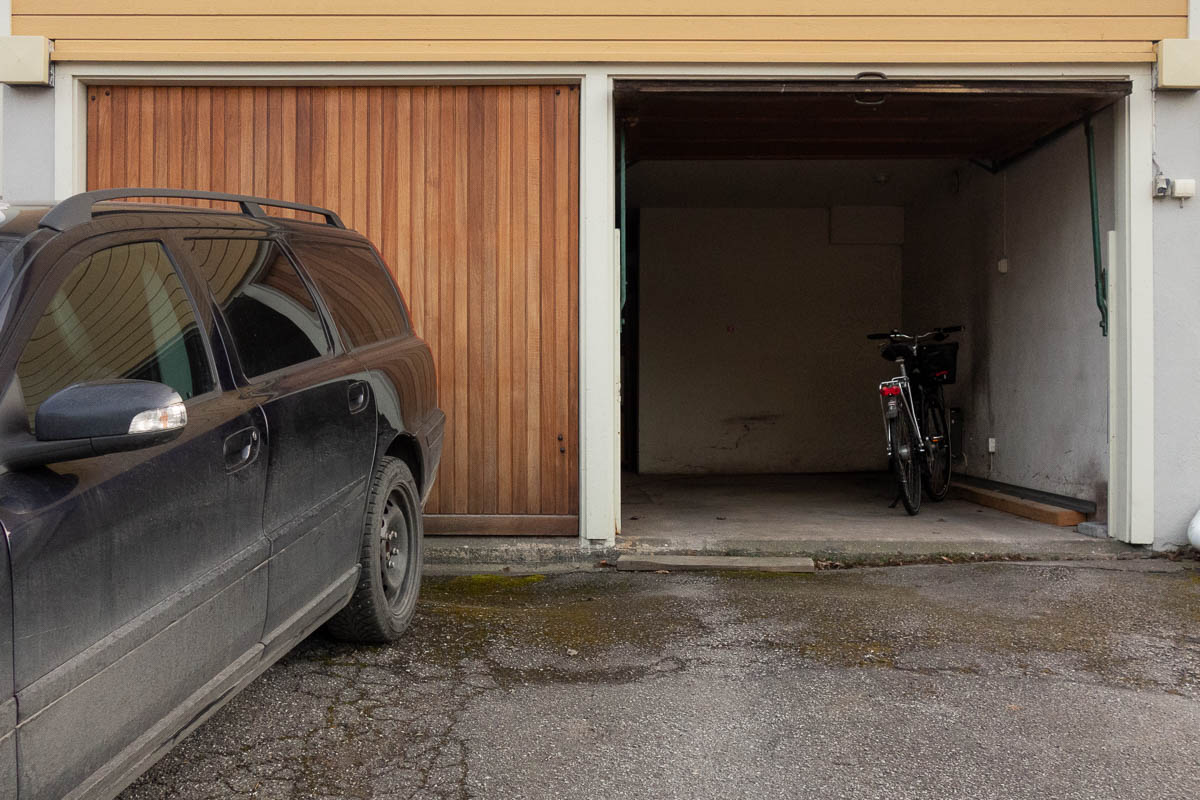
Out with the car, in with the bike!

I was going to start cycling to work last week, but various complications (doctor’s visits etc) made it unworkable. Today I cycled to work for the first time this season.

It’s light like in spring, and it’s warm like in spring. But it doesn’t feel like spring. The world is still asphalt-coloured. The grass is still dead, and the trees aren’t budding yet. Not enough to be visible from a distance, at least.


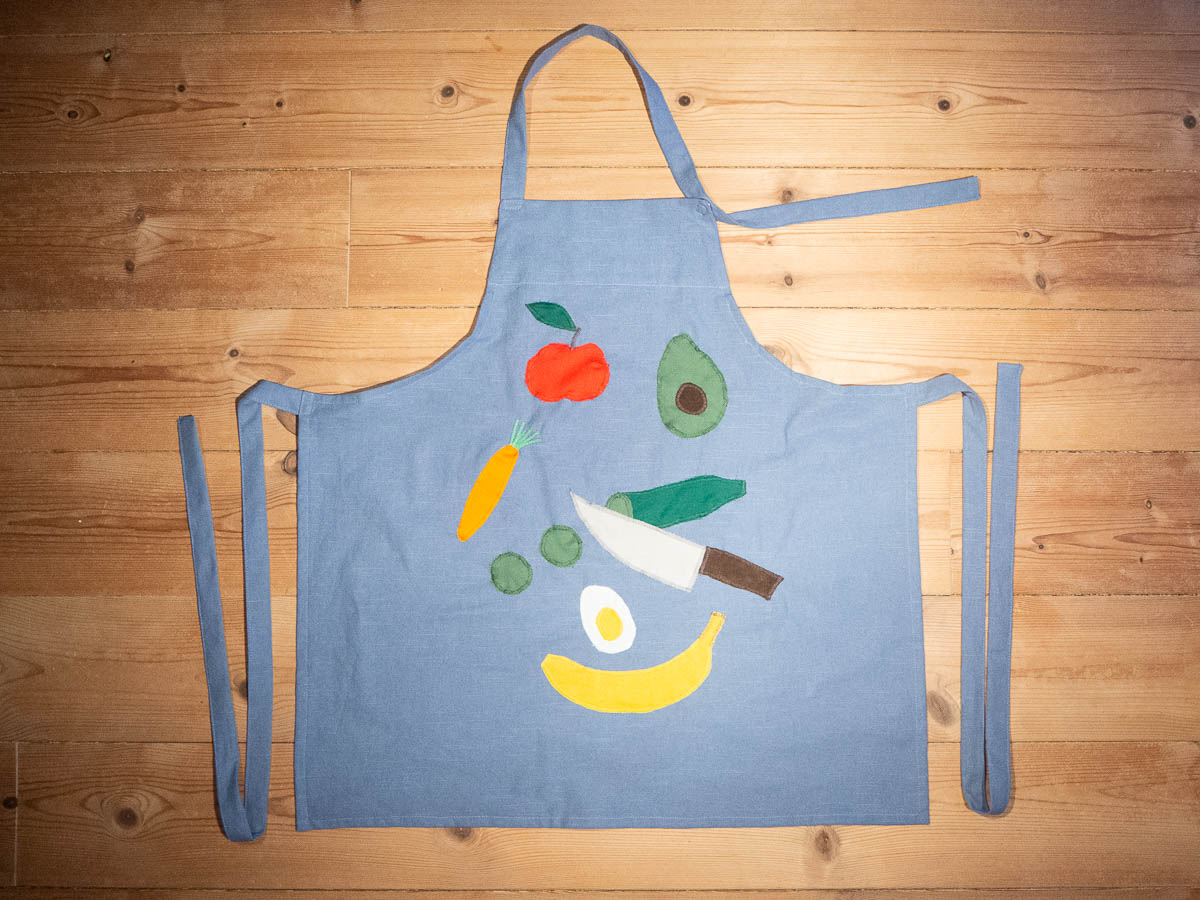
Everyone in this household is now cooking or baking regularly. Alone among us, Adrian had no apron that fit him.

Store-bought aprons aren’t quite one size fits all, but nearly: there are two sizes on the market instead of one. Kids’ aprons are sized for kids aged 4 to 6 or thereabouts, and the ones we had are now way too small for Adrian. Adult-sized ones are still way too large.

What does one do? Make one, of course!

I like easy sewing projects like this. No worrying about fit, just have fun. And it takes no more than a few hours to get done.

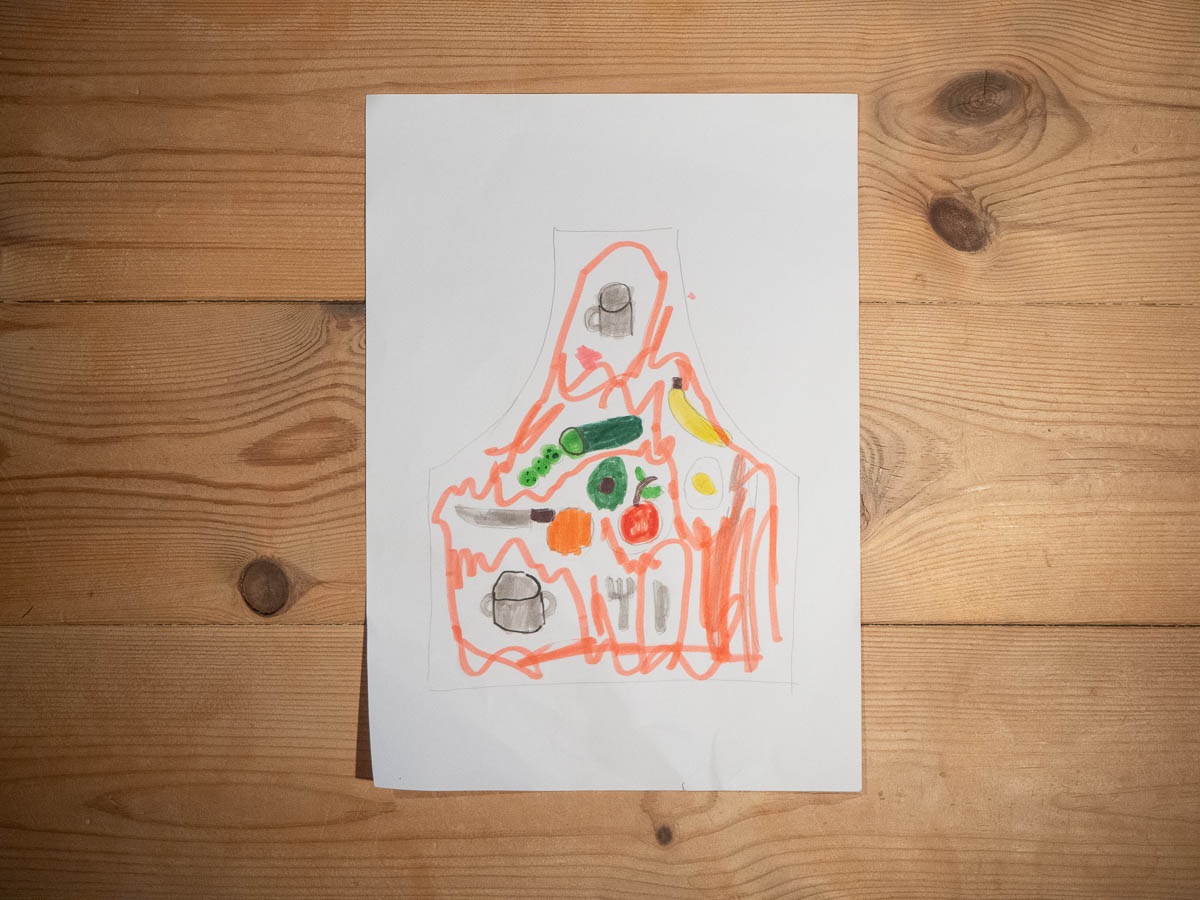
Adrian made the design, I made it happen.

He had a very clear idea of what his apron should look like, with colourful appliques of fruit and vegetables (and an egg) and cooking utensils. Most of them he chose, I think, because they look cool – he doesn’t even really eat avocados – but the cucumber got pride of place because it is his favourite vegetable.

We later replaced the orange with a carrot, because it’s hard to make an orange not look like an orange-coloured ball, and had to skip most of the utensils because we couldn’t fit them into the space we had. We switched from pink to blue because we couldn’t find a sturdy fabric in the kind of dusky pink he had in mind. But the final result is pretty close to the original design.

Functionally, the apron has three tweaks that I wish all my aprons had as well.
One: no pocket. I’ve never used any of the pockets on my aprons – all they do is get in the way and get dirty.
Two: ties of generous length. Both Adrian and I like taking the ties all the way around the waist and tying the knot in the front.
Three: neck strap adjustable using snaps instead of rings. Non-adjustable neck straps suck; I’ve ended up tying ugly hard knots in some to make them fit. And D-rings always end up slipping. Watching Master Chef on TV, I noticed that they had snaps instead. Of course that’s the way to go!


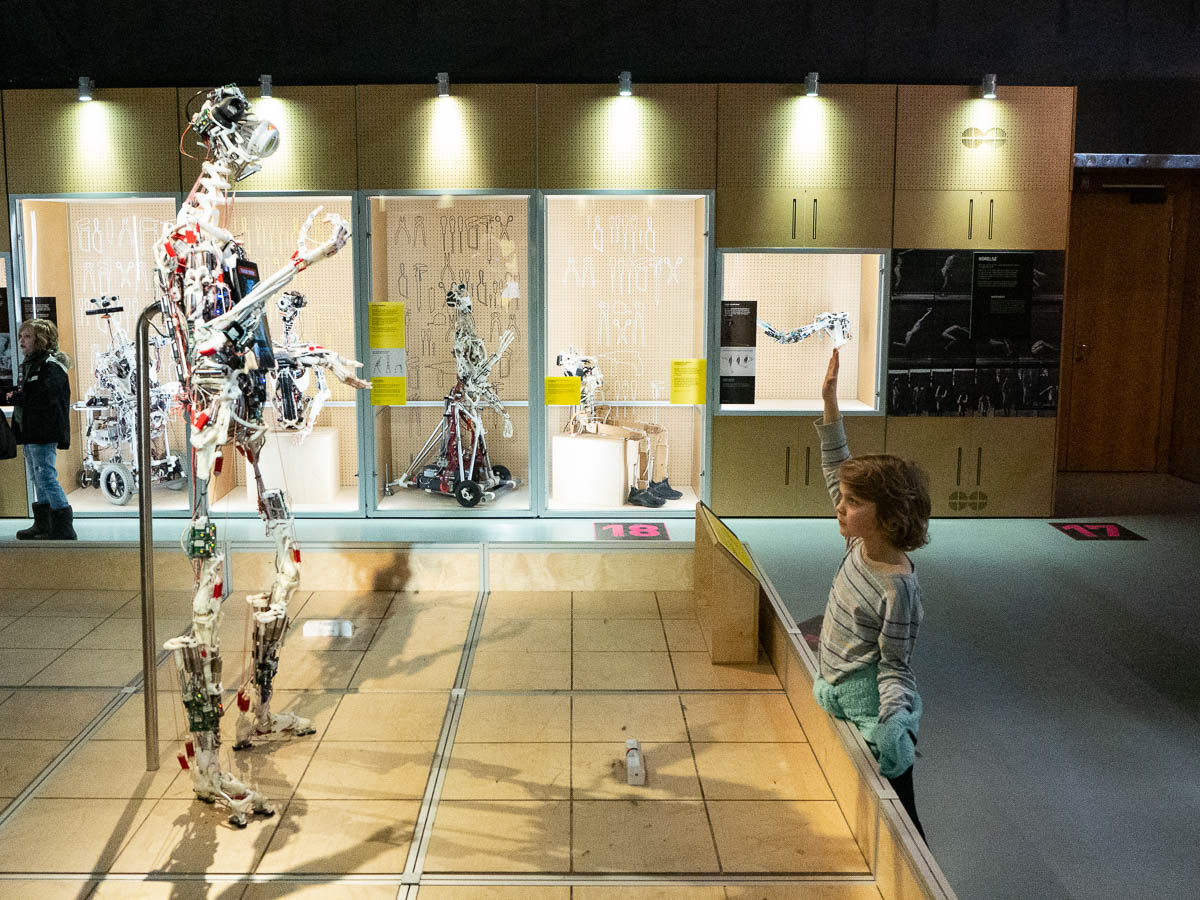
Tekniska museet has an exhibition about robots that we’ve been talking about for months now. This is the last but one weekend so today Adrian and I went and saw it.

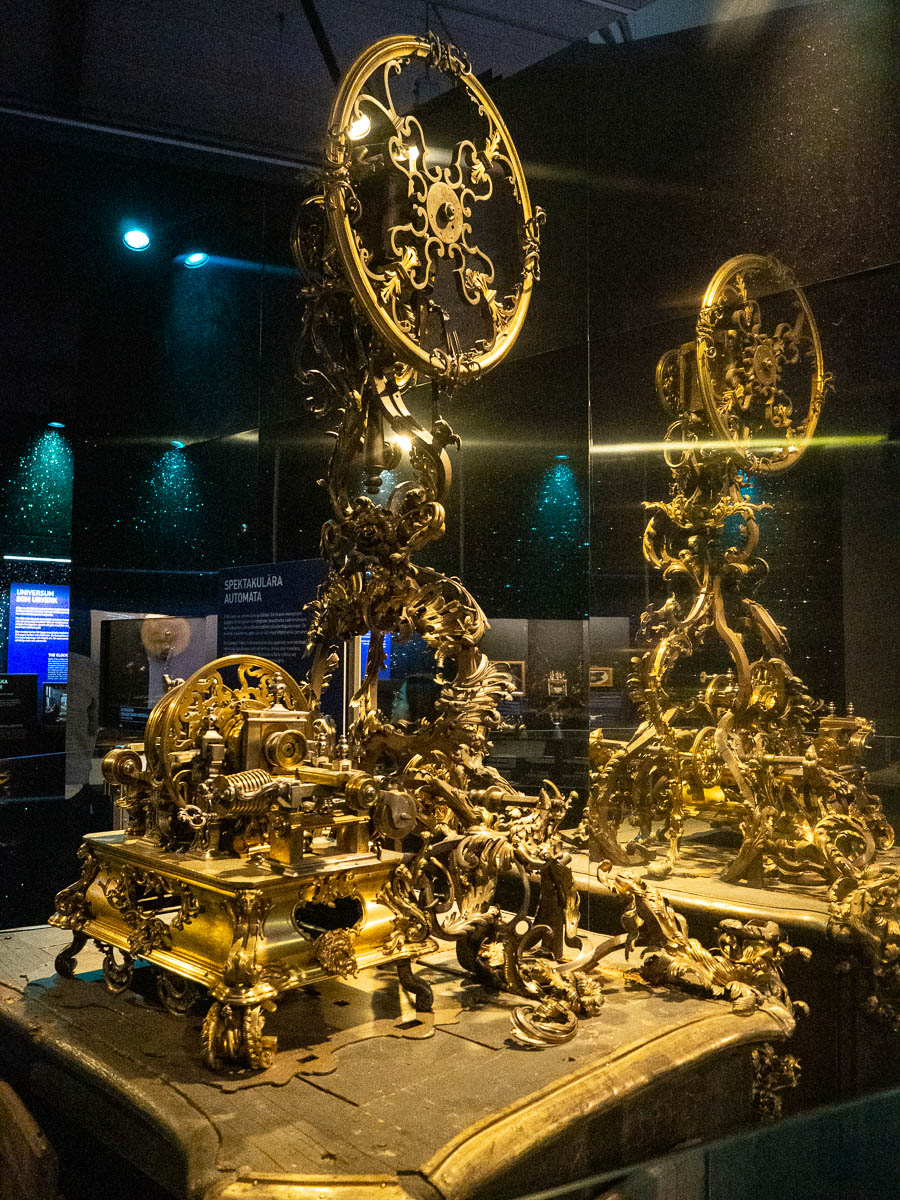
The theme was specifically humanoid and human-like robots – “making machines human”. The story starts back in the renaissance: on the one hand, new inventions such as mechanical clocks and ever more elaborate clockworks; on the other hand, a growing understanding of human bodies and anatomy. Those came together in impressive automata that then gradually inspired more and more human-like machines.

There were plenty of robots, robot parts and images of robots to be seen. Fictional robots, from Metropolis and R.U.R. through to the Terminator 800. The gradual evolution of robot anatomy, with wooden finger joints and rope ligaments and little motorized muscles. Locomotion, sensors, etc.

Many could have been even more interesting with more in-depth information. I can see that this is a robot arm with these and these parts, and the sign tells me it’s from 1970-whatever, made in some lab in some country. What was really new and cool about it? What could it do? What could it not do? How do more modern robots differ from it? What interesting results did it give rise to? What other experiments did it inspire?

Also unfortunately the robots that you could interact with were very basic. One seemed interesting because it could actually sense its environment and detect nearby people as well as their movement – but it was behind a pane of glass that seemed to interfere with most of its sensors.

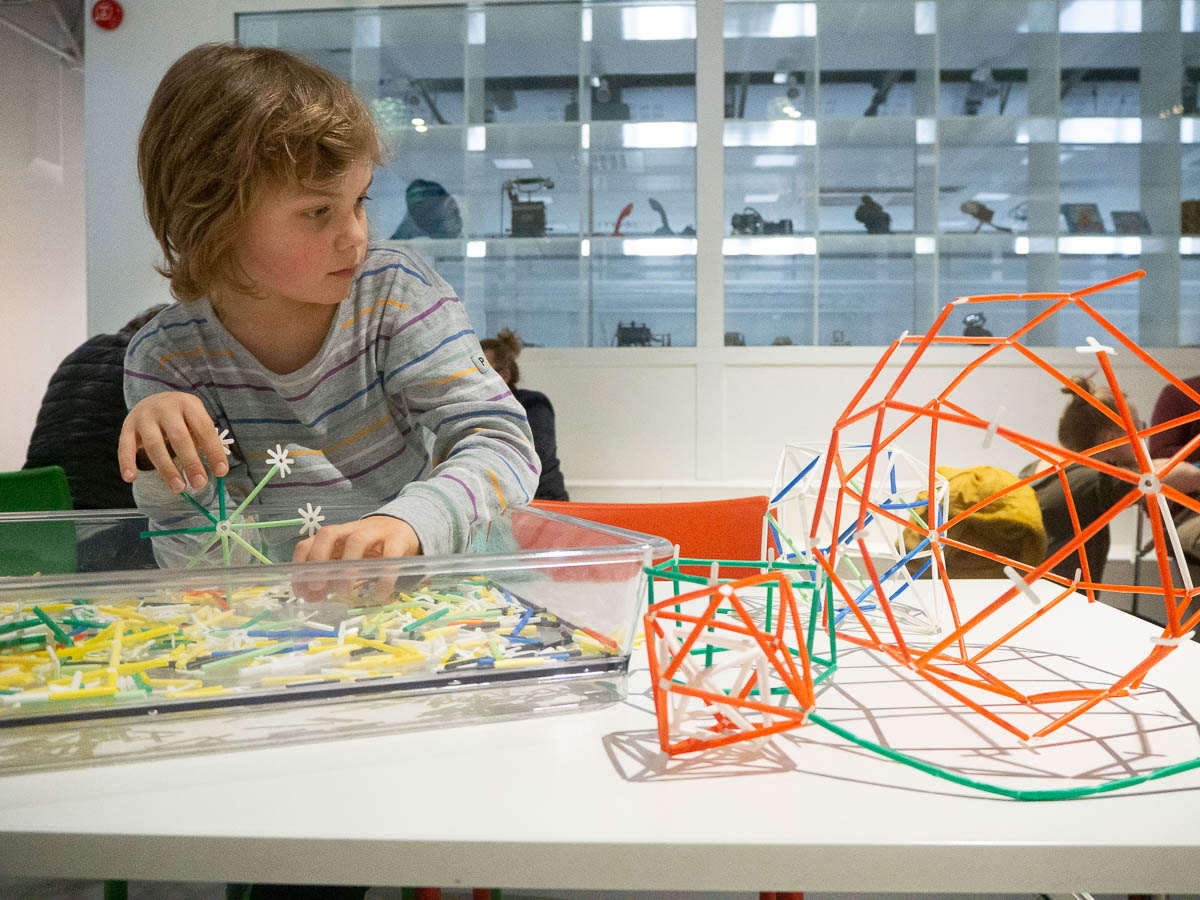
There were plenty of other activities at the museum and we stayed for hours. Construction toys; an indoor playground where the kids could let off some steam; various exhibitions. There was an entire exhibition about computer games through time, which had the same problem as the robots exhibition – not enough information.

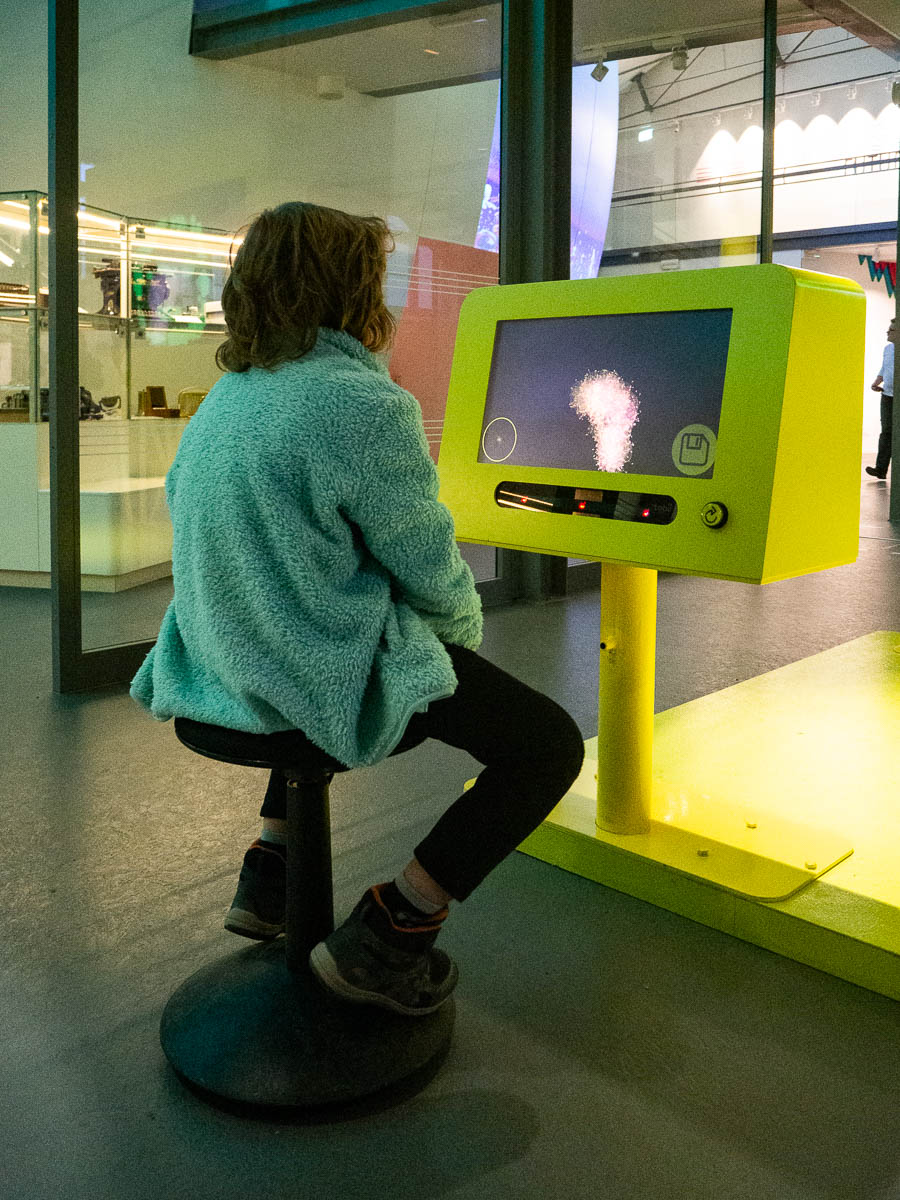
The exhibit that both Adrian and I enjoyed most was about eye tracking technology. Two monitors that you could draw on by looking where you wanted to put the “paint” – and a large monitor that superimposed the two individual pictures. As a nice touch, the virtual on-screen brushstrokes were very pretty, with interesting shapes and colour gradations, much nicer than the usual single-colour blobs. And drawing was pretty hard. You need to look ahead to where you want the line to go, but my eyes were often drawn back to where the line currently ended. With a lot of staring, I managed to draw some basic shapes. Using eye tracking for real must take a lot of practice.