Hot day today, 28°C in the shade. It’s not hot enough to make me feel like I’m being baked; I just feel sluggish and dull.

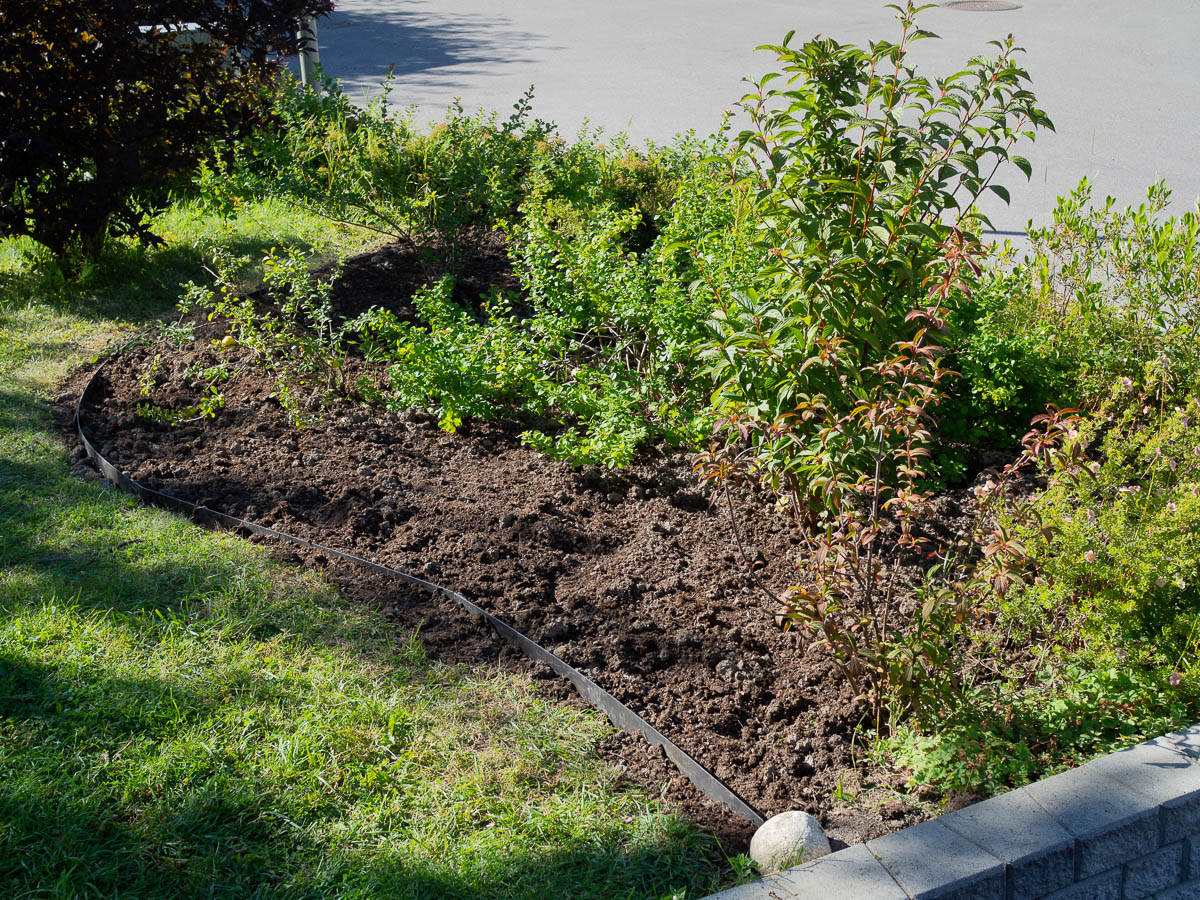
With careful timing I got the plants into the ground in the new flowerbed. There is a short while in the late morning when nearly all of that area is covered by the shadow of the house.

After that I mostly stayed indoors. Trying to find something useful and productive to do, I went through some of the boxes of books from the basement. Bookshelf space is limited, so some books by necessity stay in the basement. But I realized that if I don’t pack up at least some of the Estonian books, I will never read them again. Accessibility matters.

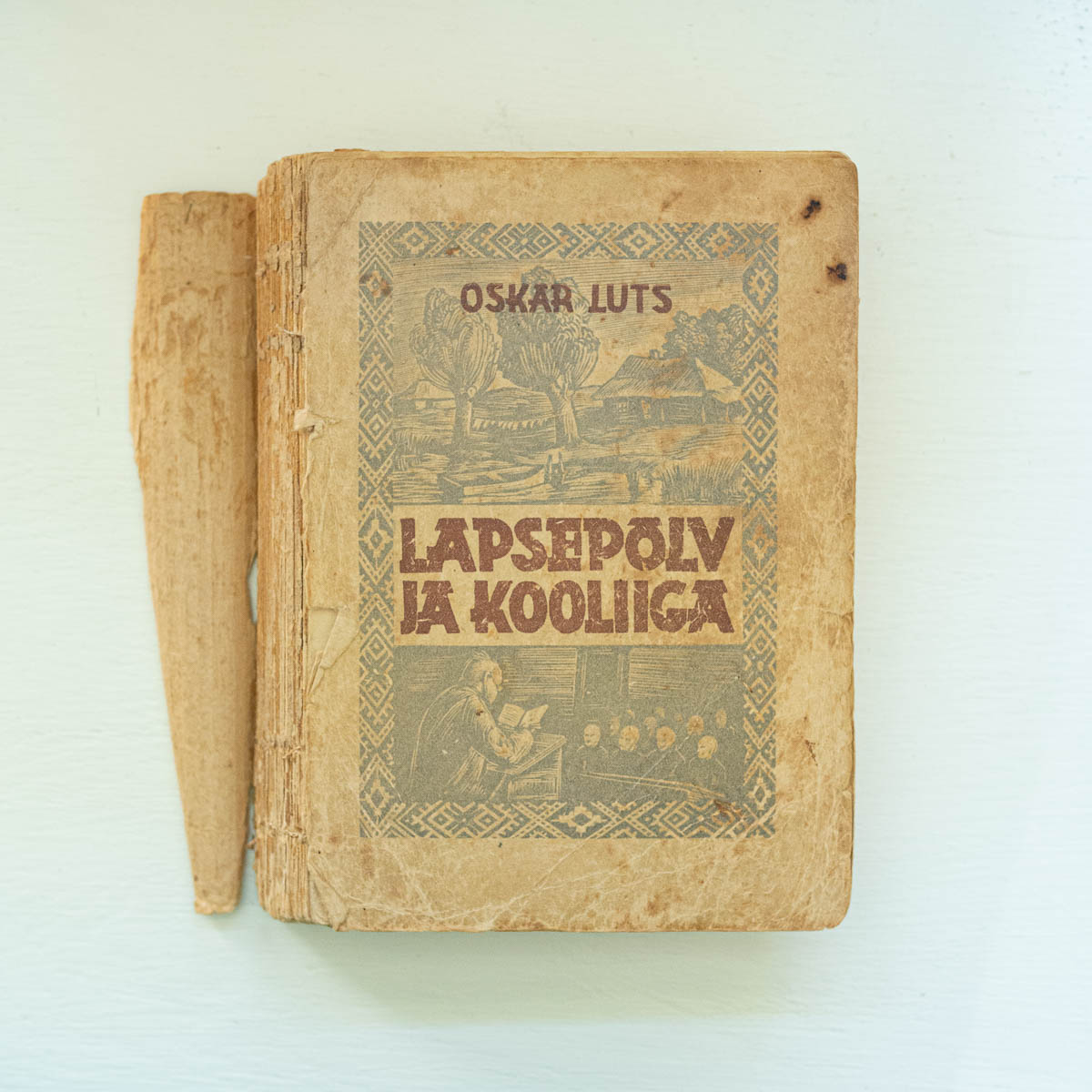
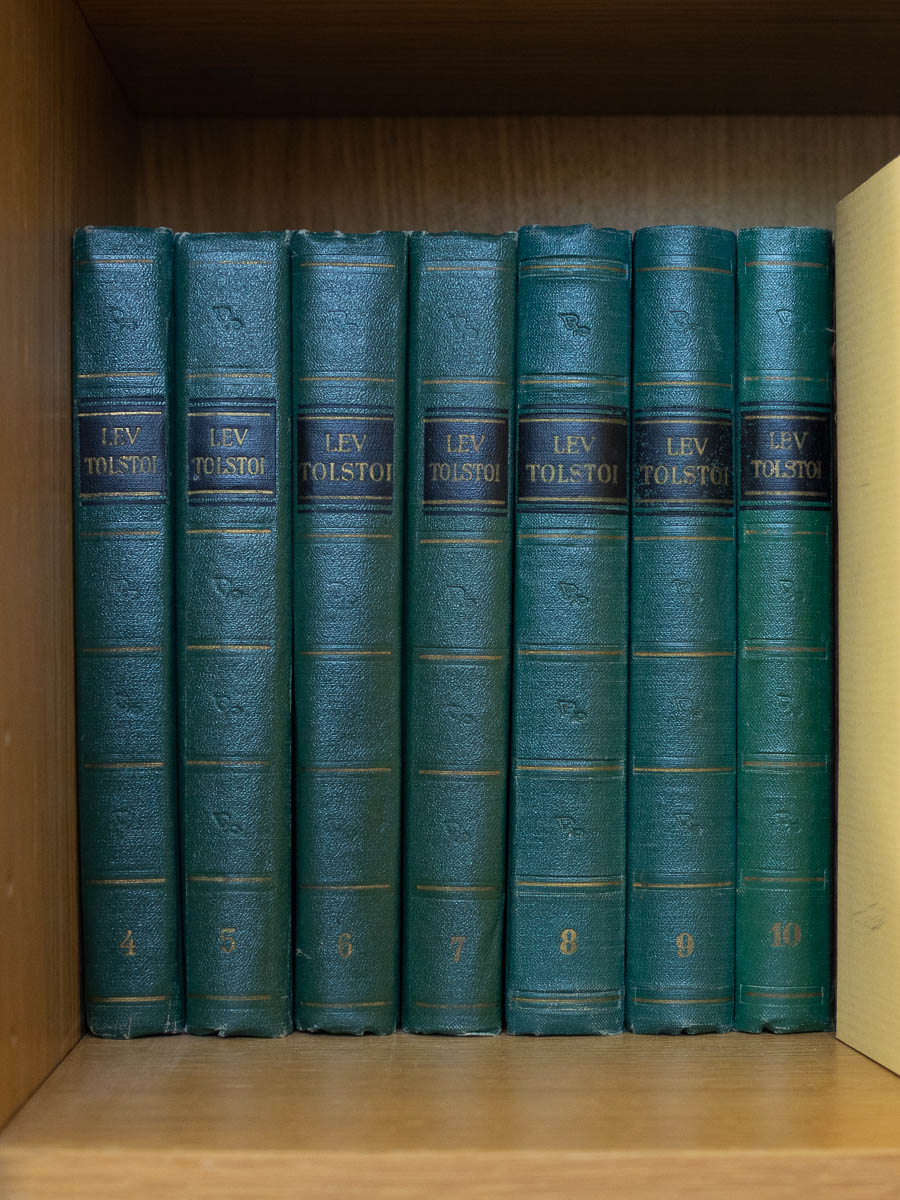
I culled the contents of these boxes ruthlessly. That fourteen-volume set with the collected works of Tolstoy? Some of it I am very sure I’m never going to read (there are too many other books in the world) so I’m keeping volumes 4 to 10 and throwing out the rest without pity. Tammsaare, “Tõde ja õigus” – a great and famous work but not my cup of tea and I cannot imagine any scenario where this would be my first choice of reading material. The memoirs of Oskar Luts – I read the first volume with memories from his childhood several times when I was a child, but didn’t find the rest interesting. Keeping that first volume, mostly out of nostalgia, and not wasting shelf space on the rest.

It does feel wrong to be throwing books away. Anything that has a chance of being useful to someone else, I make sure to donate. The boxes of culled Estonian children’s books I’ll try to give away to the Estonian school in Stockholm. The adult books… it’s possible though unlikely that some used book store in Estonia might want them. (I am pretty sure that newer editions exist and anyone who wants to read them will have no problem of getting hold of them.) The effort of packing, storing, and transporting these books for that slim chance is not worth it.

And it definitely feels odd to save half of a fourteen-volume set only. But my library is not a museum or an archive. It exists for my reading pleasure, and to some small extent for triggering fond memories, not for storing books out of a sense of duty only.

Ingrid is at a “Hack camp” all this week, learning game programming with Unity. She started out with Scratch, then moved on to experimenting with Python (which I think they started with at school) and now to learning Unity. (The camp is organized by Nox Academy and Ingrid has been really satisfied with her week. She’s had fun, learned a lot, and made several new friends.)

This has inspired Adrian to pick up Scratch as well. He’s dabbled before but not with any kind of persistence. It’s more fun with a friend to keep him company and help him come up with ideas. Levels! And bosses! And different backgrounds!

Any kind of overt encouragement from me has shown itself to be pointless, even counter-productive. All I can do is set an example and show that programming is enjoyable – and be there to answer questions and help them get unstuck when needed.

One thing that both Ingrid and Adrian are learning is that much of programming is about really understanding what you want to do, and breaking a project down into smaller tasks.

Adrian wanted “levels” in his game, and asked me how he can do that. It seemed hard, and he didn’t even know how to get started. But then we started untangling that concept. What does it mean for your game to have “levels”? When does the player advance to the next level? What happens then? And suddenly it wasn’t so impossibly hard any more.


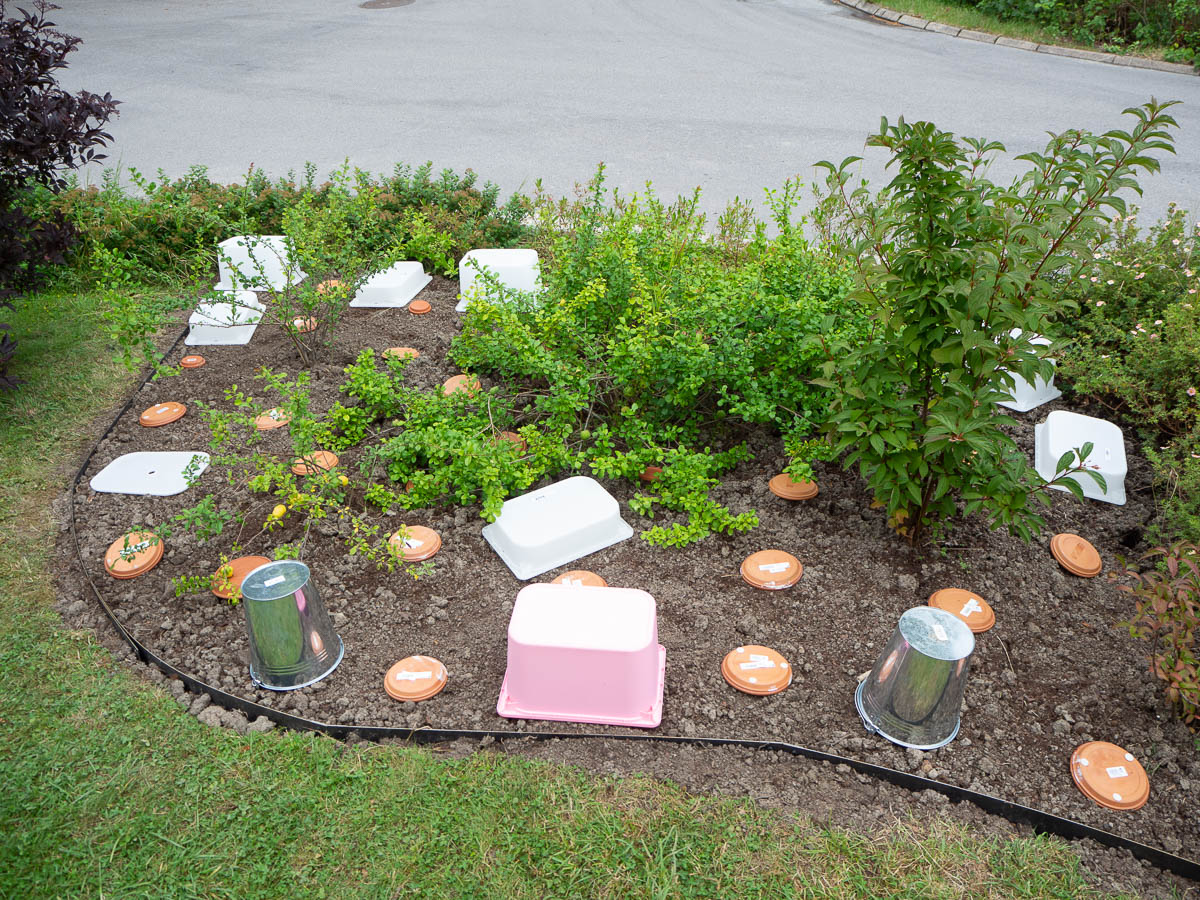
I’m playing with buckets and IKEA boxes again, to plan and design the new flowerbed. I first did this for the bushes and shrubs behind the house and this approach worked better than anything I’ve tried before. It gives a much better idea of the size of things.

I only have a limited number and variety of such design aids, though, so one bucket will have to stand in for a whole group of plants in some places, and the same kind of flower pot saucers means different things in different places.

That’s why phase two of the process is to take a photo of the design and annotate it with specific plant names. That made the groupings more obvious and I went back several times to move some boxes around and take a new photo.

Phase three was shopping, but buying fewer plants than I thought I needed based on the design, and then placing the flowerpots in their intended spots. And indeed as usual I had overestimated the number of plants that I had room for. A bucket looks large but three day lilies still take up more space.


The steel edging for the new flowerbed arrived today. I got it installed with a bit of shovelling – which was easy now that the soil is all soft and prepared. Ready for planting!

I have generally thought of this corner of the garden as sunny, but the time I’ve spent here digging has shown otherwise. It gets shade from the house almost all morning. And in the afternoon the cherry tree gives shade. The elder will also start shading the flowerbed more and more as it grows. So the most sun-loving plants will probably not work here.

A peony, I think, and daylilies, for some colour.


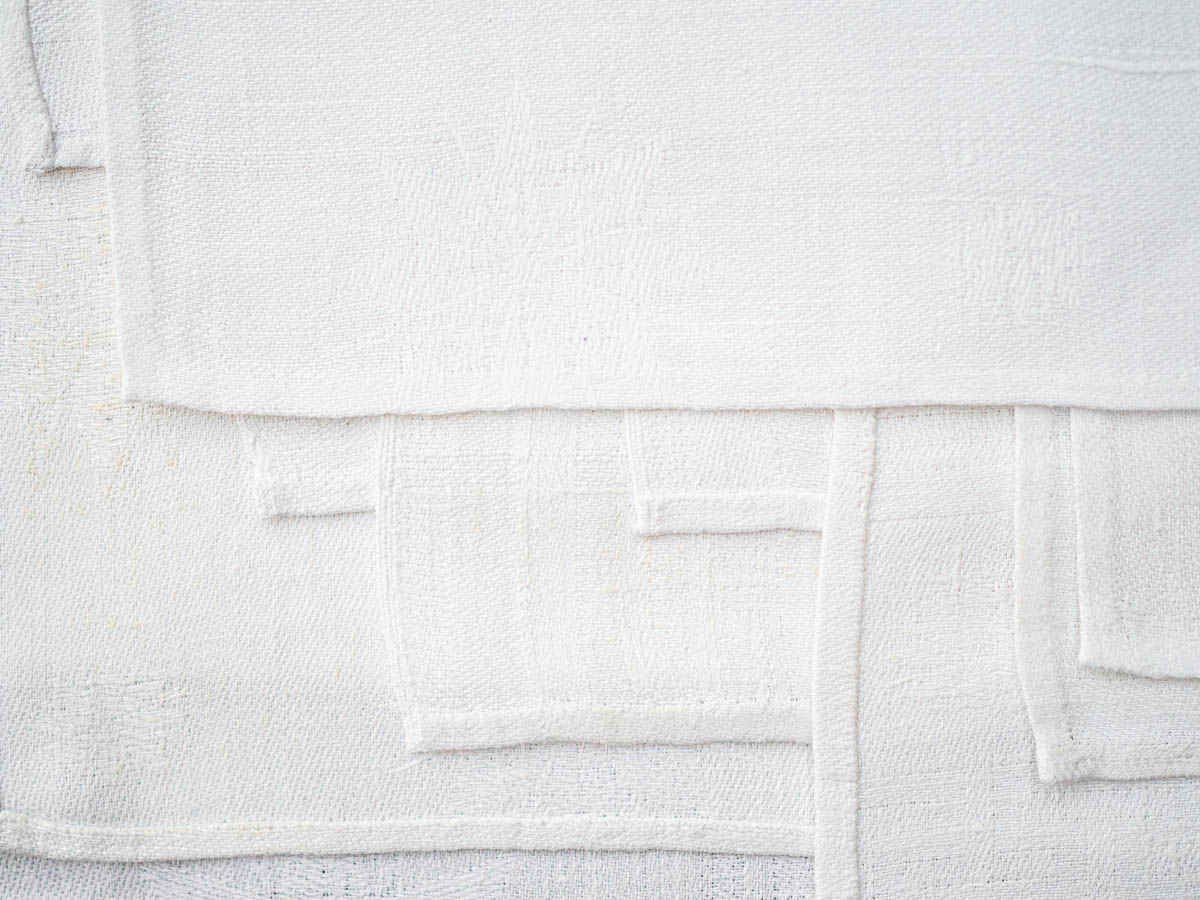
I’m done with the 48 napkin hems! And I’ve washed them, and Eric ironed them, and now they’re looking very sharp.

Some of them got discoloured somehow by the ironing – not burnt, but stained with some brown gunk, probably from the ironing board. (You can barely see one of the stains in this photo, along the left edge.) I washed them again and was very, very relieved to see that they were white again.

Both Adrian and I slept really, really well. Adrian didn’t wake until eight o’clock, which is about an hour later than he normally gets up at home. He said the hammock was great. I think we might need to get another one so that he and Ingrid won’t have to argue about who gets to sleep in it.

I always wake several times per night when I am not in my own bed. That’s normal and expected by now. I’m happy, though, when we’ve been camping and I don’t wake up all stiff and sore. The combination of inflatable mattress, extra wide sleeping bag, and nobody poking me with their elbows (which often tends to happen in tents) made for a good night’s sleep.

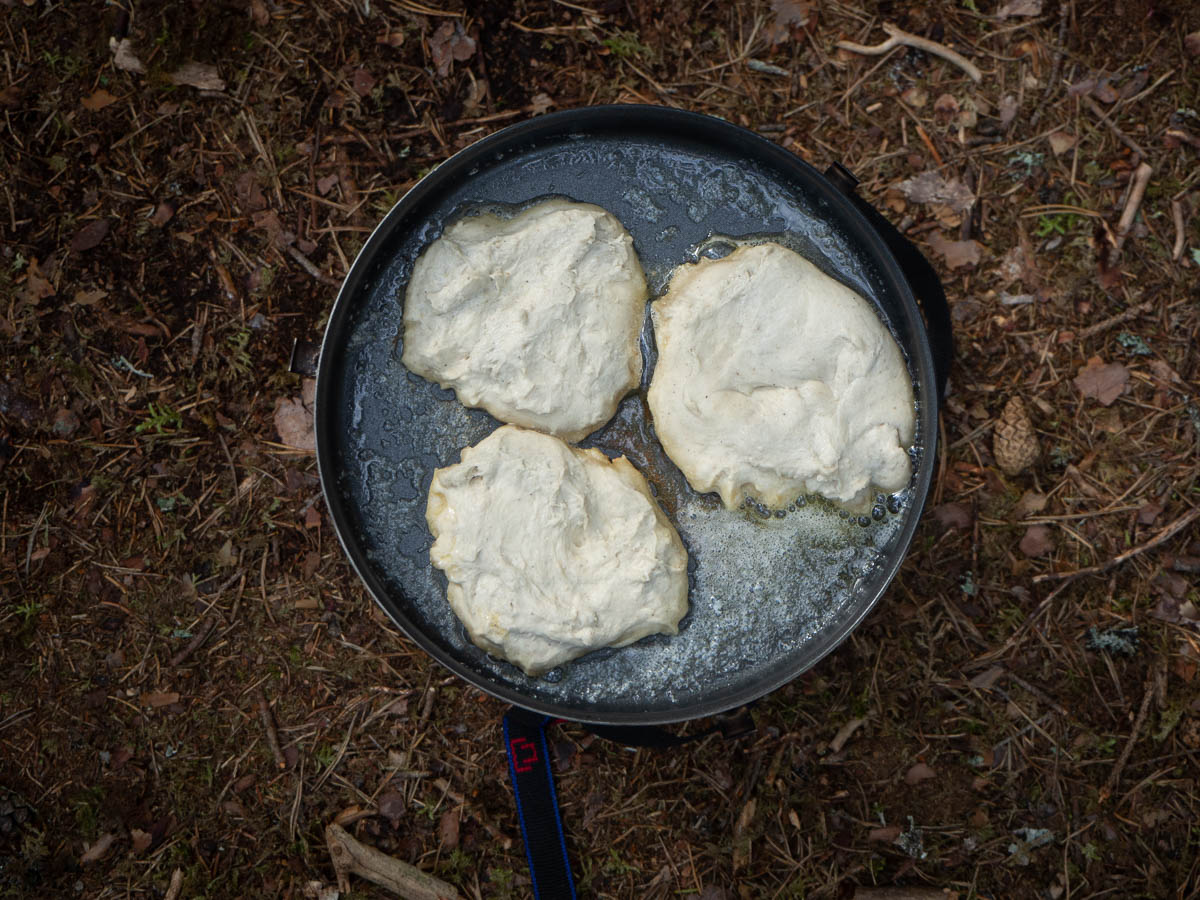
Breakfast was pancakes of sorts, fried in plenty of butter. They were more delicious than they look in the photo. Why did I photograph them before flipping them?

After breakfast we had a swim in the lake. Or rather, I swam while Adrian just sort of was in the water. He likes bathing but not swimming, and very much prefers to do it in shallow water, with predictable footing and in the company of friends.

Then we walked back to the car.

Walking home was apparently not much more fun than walking out. We took several breaks again. At the last one, Adrian borrowed my camera.


Ingrid gets a week of corona-adjusted scout camp, because her age group (“Upptäckarna”) can pretty much manage themselves, cook their own food, etc. But the youngest scouts, “Spårarna” like Adrian, don’t get any summer camp this year. Adrian likes camps and camping, and is a bit disappointed by this. So he and I went camping on our own, while Eric stayed at home and got some peace and quiet.

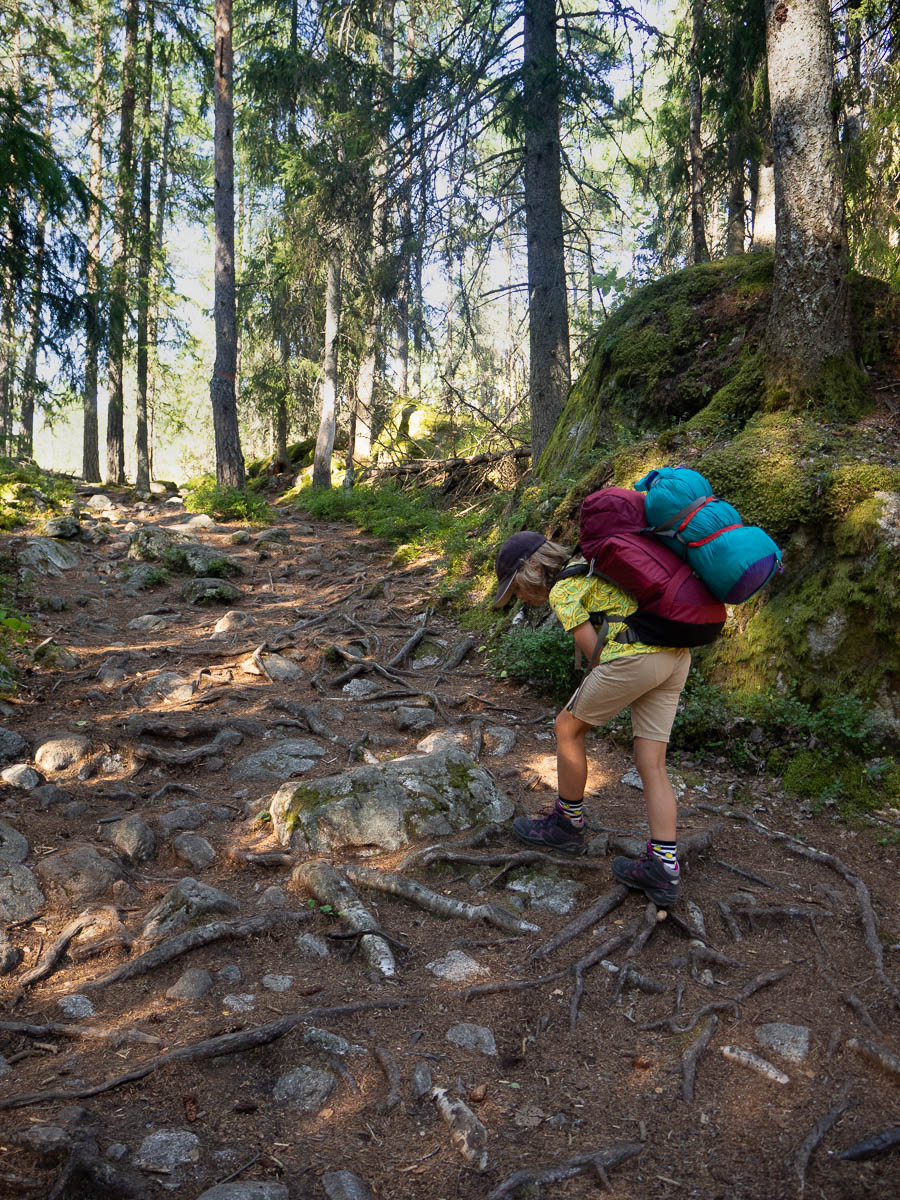
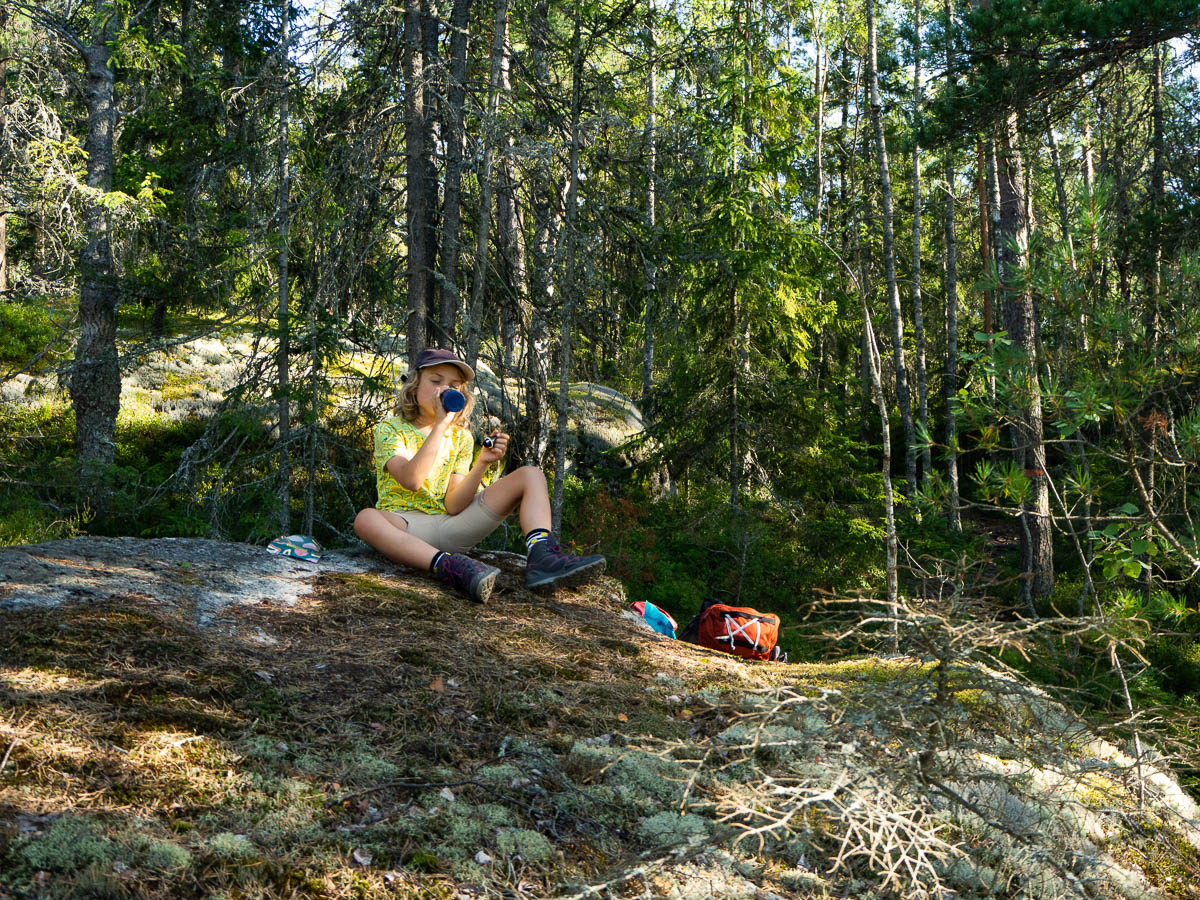
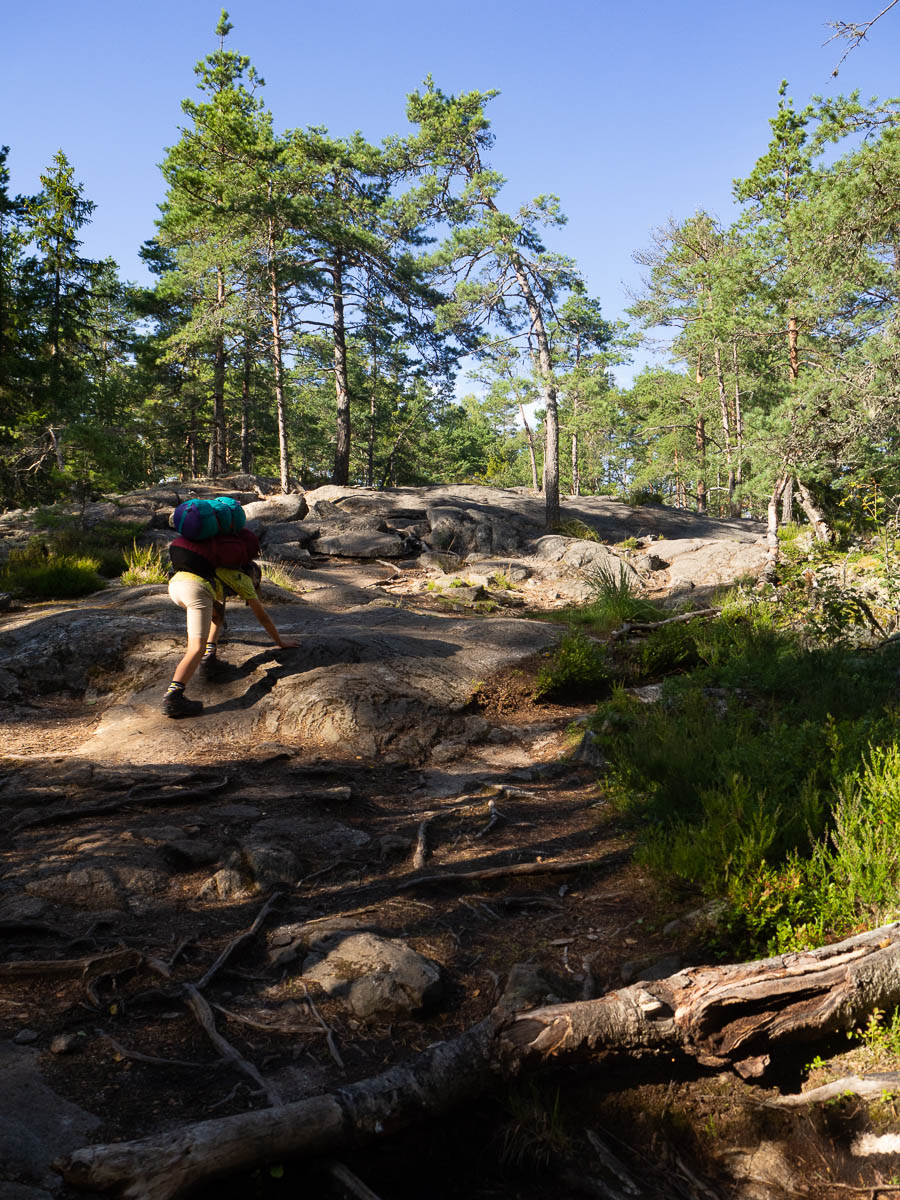
We aimed for the camping spot next to Årsjön in Tyresta. That’s about a 3 km hike from the parking lot. That’s nothing for Adrian, really, but today he really wasn’t in much of a walking mood and seemed to struggle with every single step. We took plenty of water and snack breaks on the way.

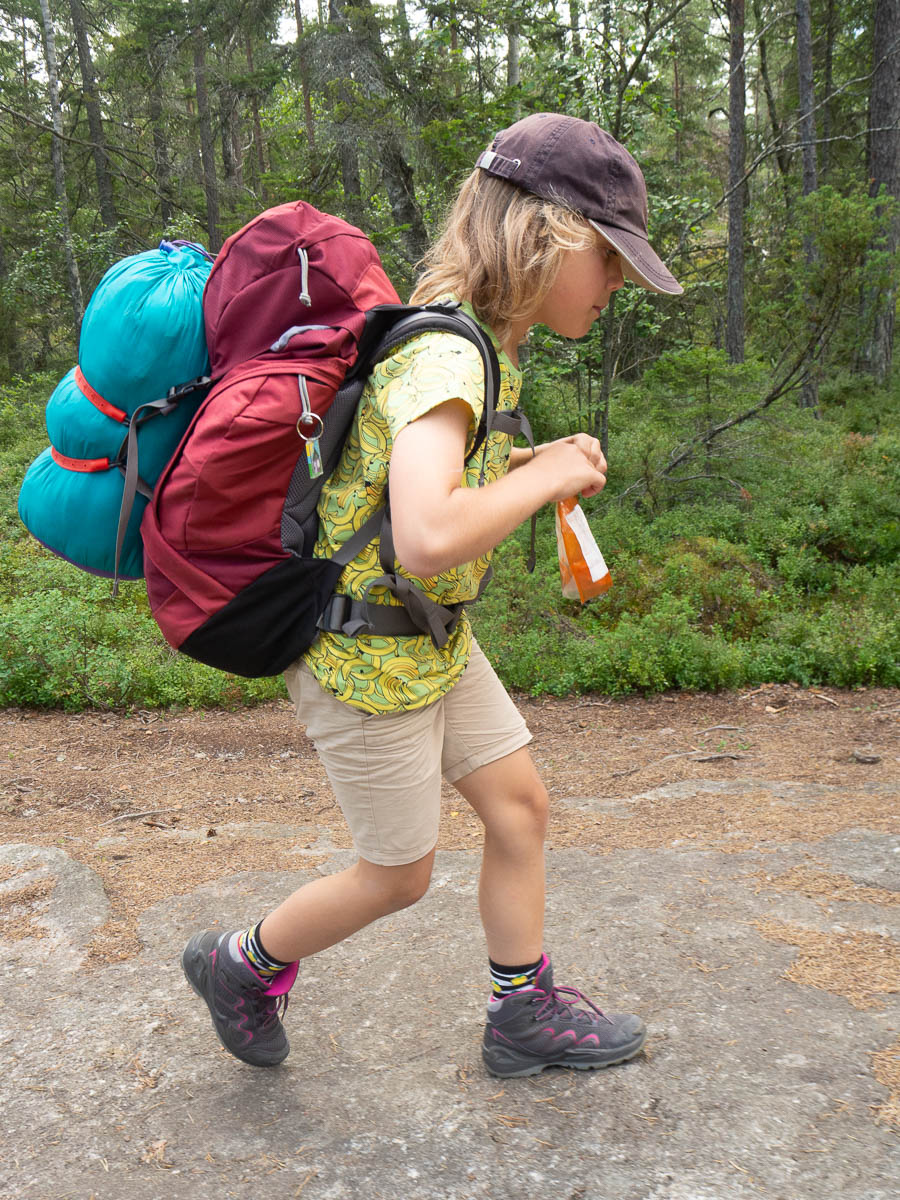
Part of the problem is his rucksack. At about 140 cm, he’s too short for most junior rucksacks. He uses the shortest large rucksack I could find, back when Ingrid was preparing for her first scout camp. It’s a decent pack, but it lacks a proper padded hip belt, so all the weight rests on his shoulders.

No, he doesn’t walk bent over as he is in the photos – he was demonstrating for me just how unbearably heavy his pack was, especially when the path went uphill over rocks and roots. All it contained was his sleeping bag and mattress, a few small items of clothing, our toiletries and his water bottle…

When we got to the camping site, we were surprised to find it incredibly crowded. This is not an organized camping ground with flat ground and amenities like water and electricity – it’s simply one of the few spots in the Tyresta national park where tenting is allowed. Today, there were at least thirty tents here. I’ve never seen anything like it.

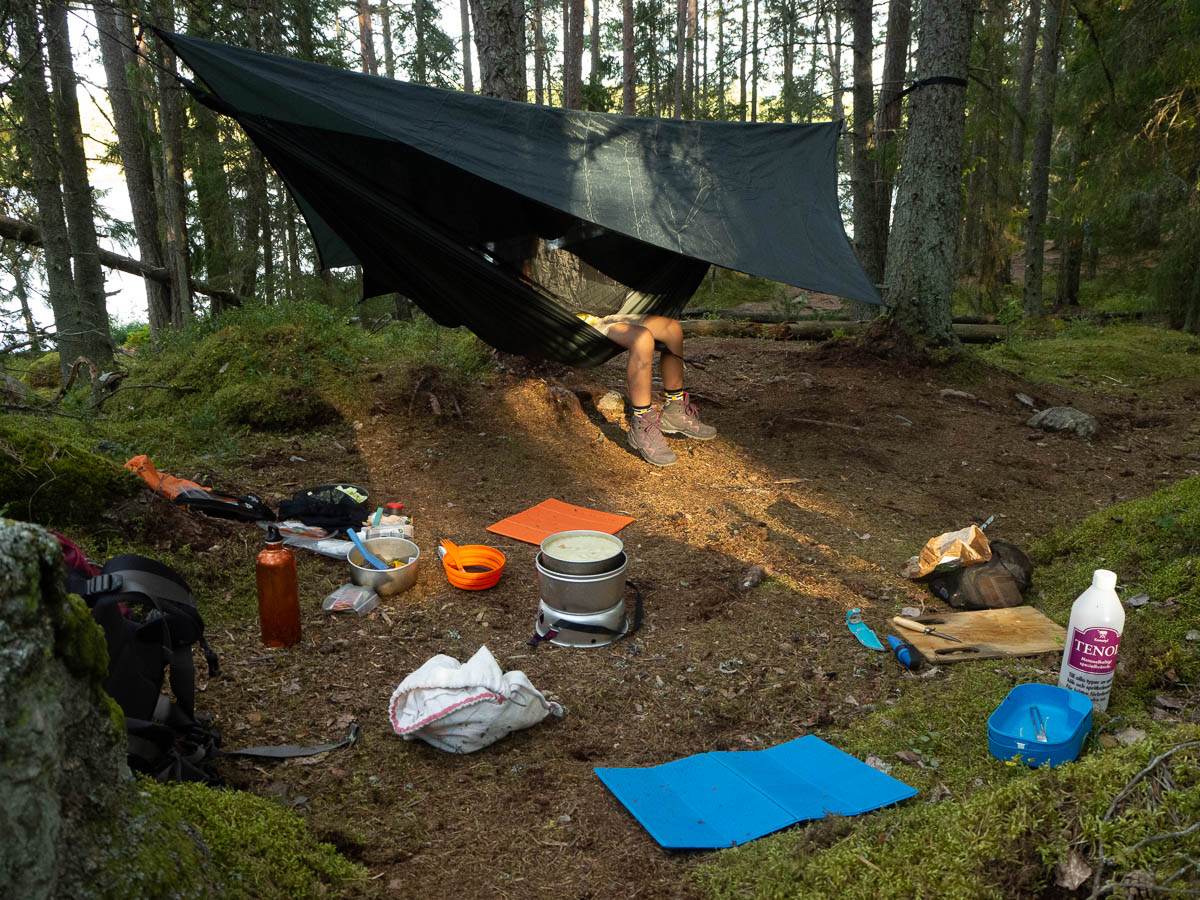
This was not at all what we had been hoping for. But it is what it is, so we just wandered as far as possible from the other people and the lake and the loo (this place now has a loo!) while still staying within the allowed area – and put up our hammock. Last time we were out camping and Ingrid waxed lyrical about the pleasures of sleeping in a hammock, I promised Adrian that it would be his turn in the hammock next time. Which was today. He flopped down in the hammock as soon as it was up.

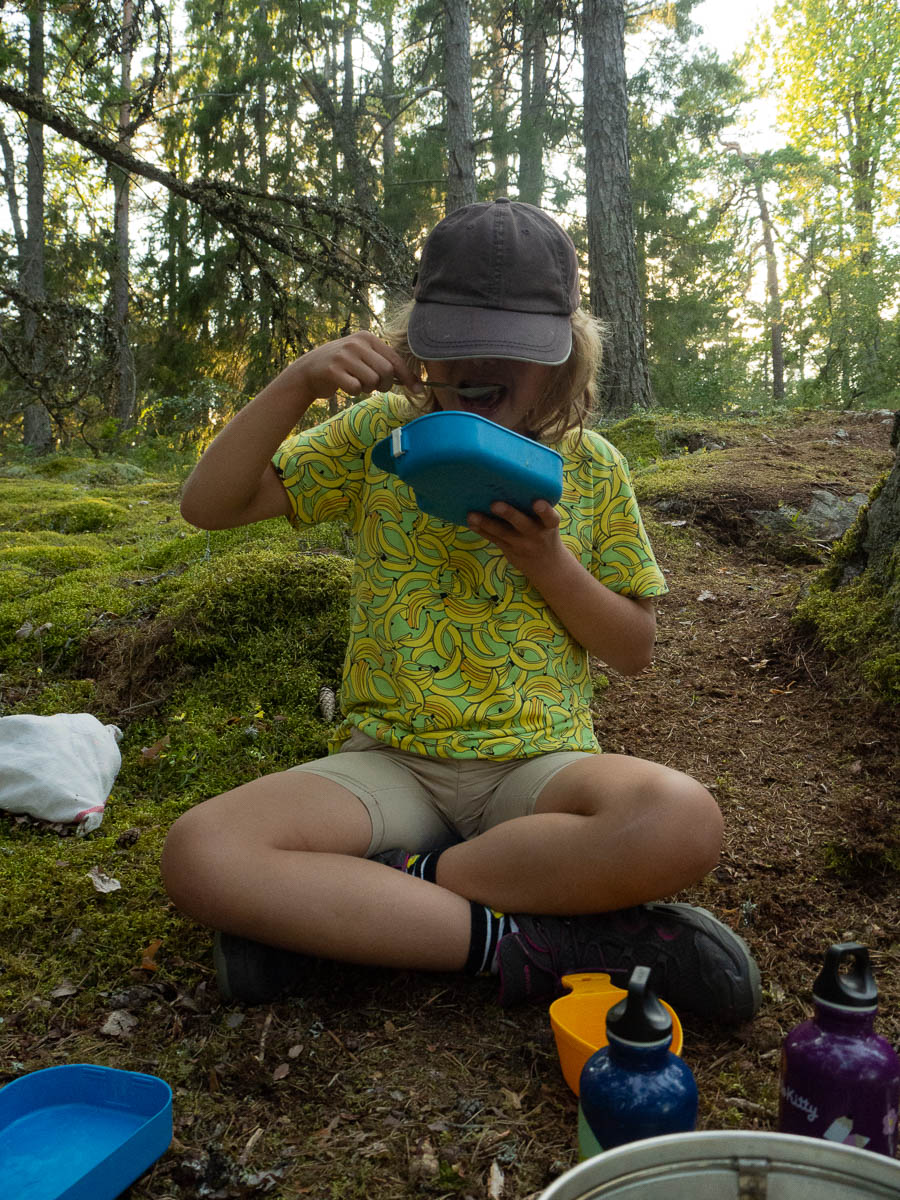
Once the packs were down and the hammock was up, we made dinner: a potato, chickpea and coconut curry. This is what Adrian called “shovel time”: when the food has cooled enough that he can shovel it into his mouth at a constant pace with barely any breaks for chewing.

Dessert was diced apples fried in butter, with almonds and melted dark chocolate.

We had some concerns about the noise level at the camp site: there were some larger groups there, and a band of young children who were still running around shouting quite late. But it did quiet down just when Adrian wanted to go to sleep.

I myself had hoped to sleep in the shelter here at Årsjön, and the shelter was also my plan B for Adrian in case he didn’t like the hammock. (He did like it.) But with the amount of people here, the shelter was out of the question. I fell back to plan C which was simply sleeping on the ground. The nights are warm and cloudless right now, so the only potential problem was mosquitoes.

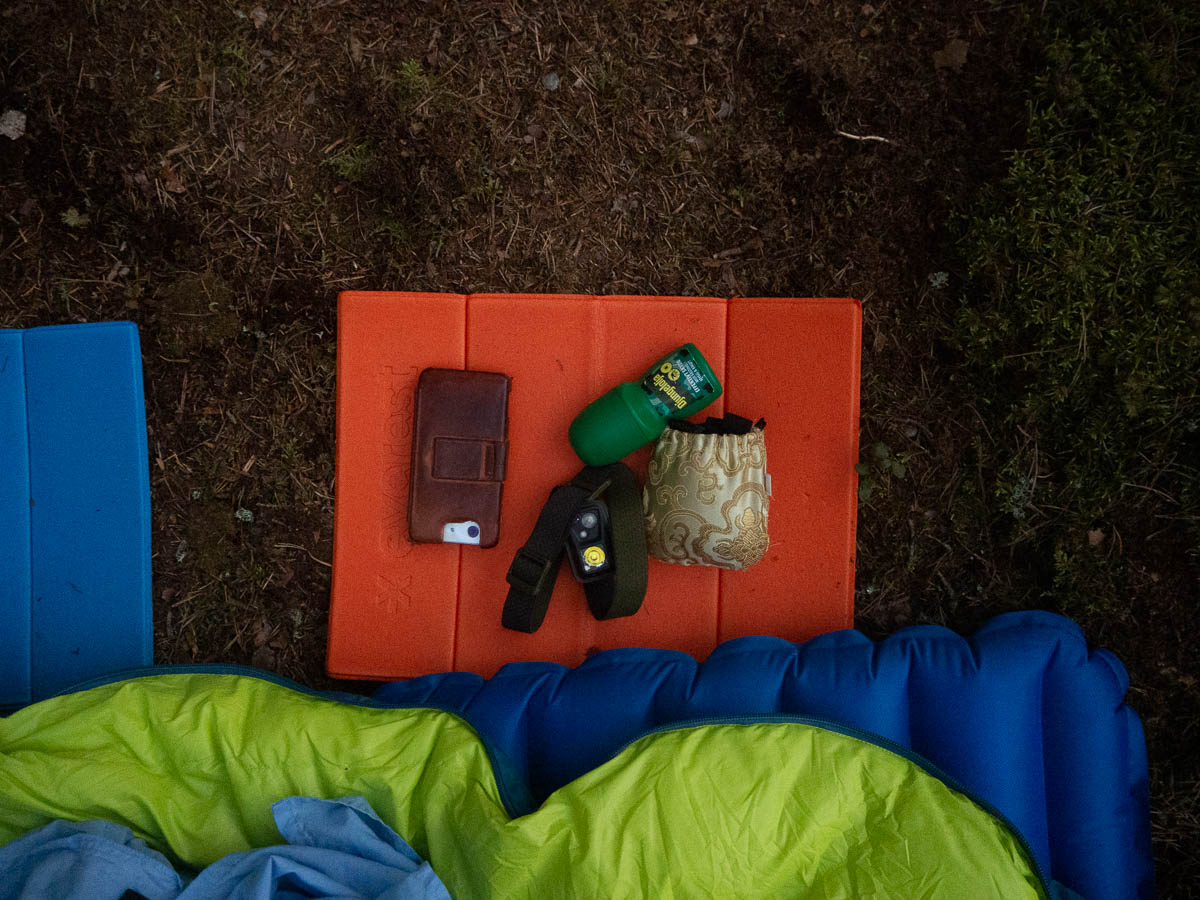
This was my “bedside table” for the night: phone, insect repellent, head torch, and a little bag with earplugs and a sleeping mask. I am a light sleeper and those last two are my lifesavers (sleepsavers?) when I sleep away from home.


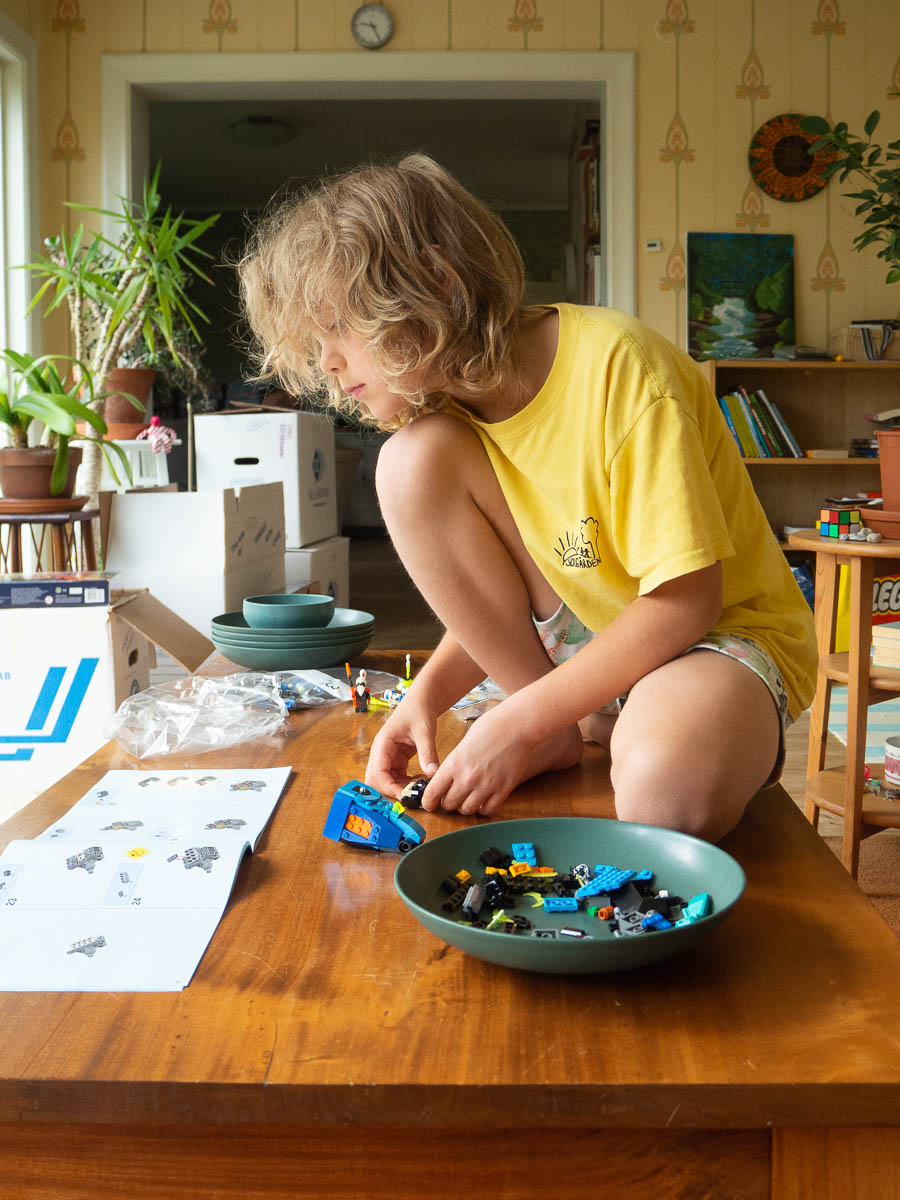
For the first time in a long while, Adrian is building with Legos. First we brought up boxes with his old Legos from the basement, and he rebuilt a few of his old Ninjago sets. Yesterday we went shopping in the Mall of Scandinavia for a new one, which he built today.

Of course the best way to build Legos is sitting on the table. Not on the floor, or the carpet, or the sofa.


The other thing we did in MoS was go to the movies for the first time in many months. Apparently movies are now allowed again, but with every other row empty and two empty seats between each group.

SF (now renamed to Filmstaden) is showing a few classics, now that there are no new releases. We saw Interstellar on the Imax screen. I’ve seen it before and it’s a great movie, and works exceptionally well on a supersized screen and with large sound as well.

I’d forgotten how long the movie is! Three hours, and it ended close to eleven o’clock. No problem for Eric and myself (and Ingrid is away at scout camp) but that is waaay past Adrian’s bedtime. I was worried that he might find Interstellar too impenetrable, that we’d dragged him there and forced him to stay awake at night for something he didn’t even enjoy. But he said he liked the movie and would like to watch it again, at home, with maybe a few more explanations.


Most people in MoS seemed to not care about social distancing and covid-19 at all. People walked so close that they brushed against each other. Young people feeling immortal – “This won’t affect me.”

Meanwhile a study found heart damage in 78% of people who had recovered from covid-19 even though these people were relatively young and most had not even needed hospital care. This is not a disease you want to get.

I’ve never been fond of crowded shops and malls. Now, after months of abstinence, the experience at MoS was more annoying than ever. I will stay away as much as possible in the future.


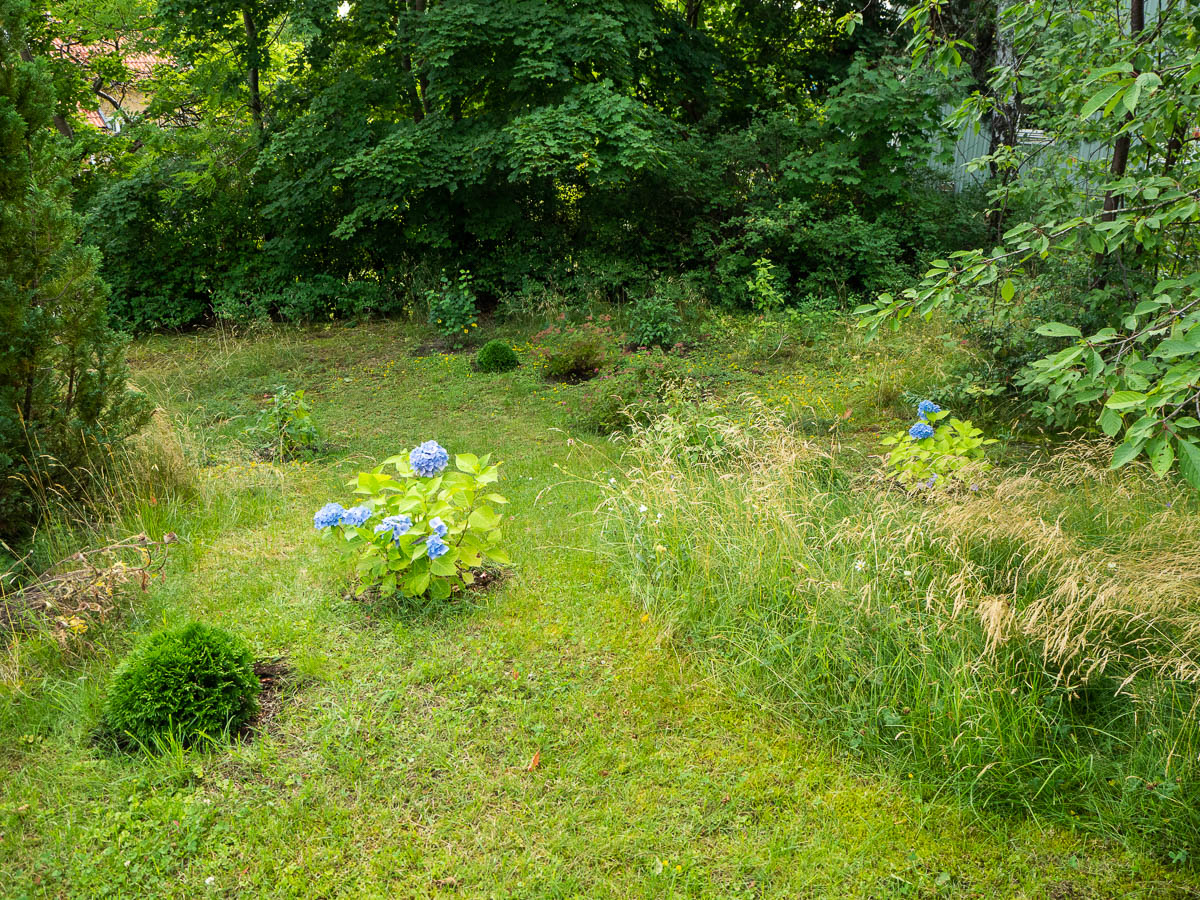
The bushes that I planted behind the house are coming along very nicely. They mostly don’t look very impressive, but all seem to be growing, which is all I can ask for in the first season.

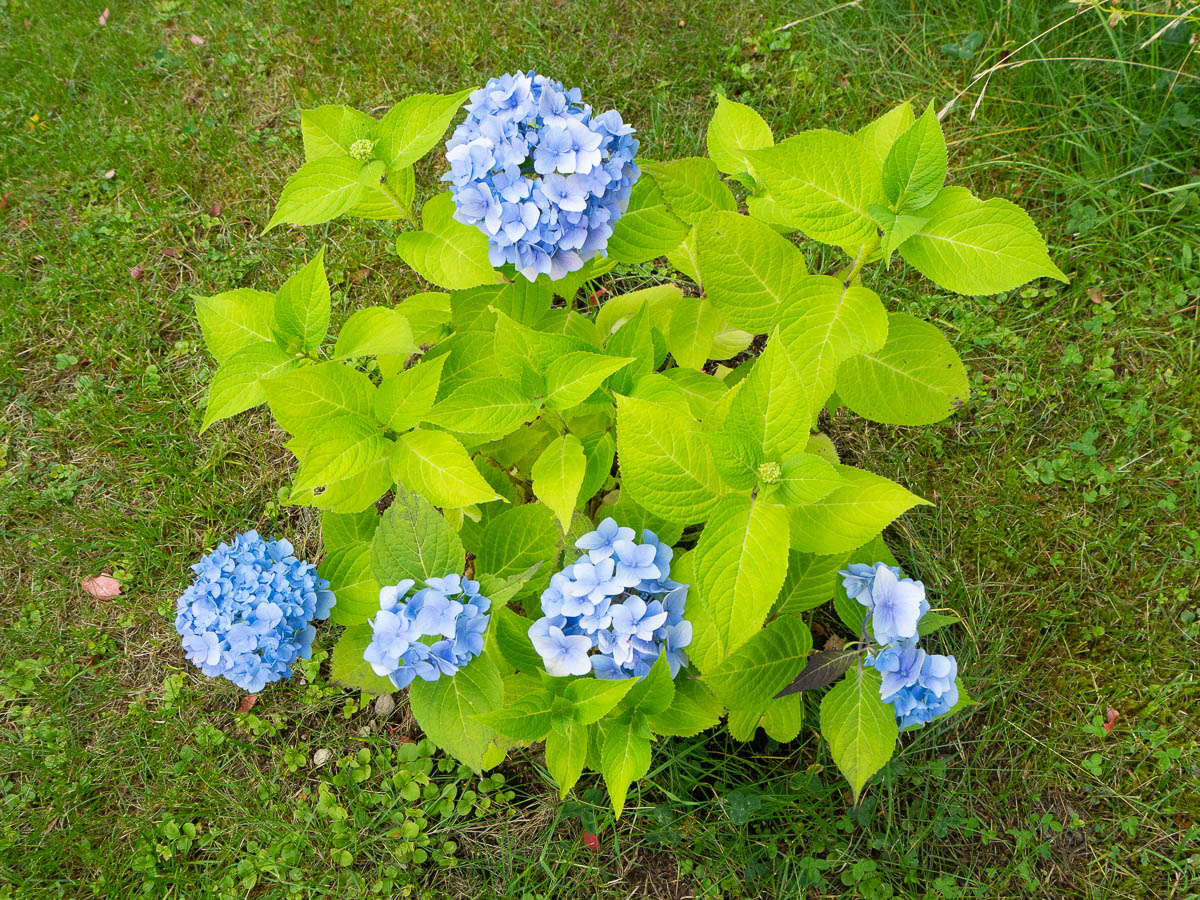
The hydrangeas, which I’ve seen described in various places as “extremely thirsty” and prone to dying because of lack of water, have behaved like any ordinary newly planted bush and not been particularly thirsty at all. One of the spireas has been much fussier and shown signs of wilting several times. Maybe all the talk about thirsty hydrangeas comes from people growing them indoors.

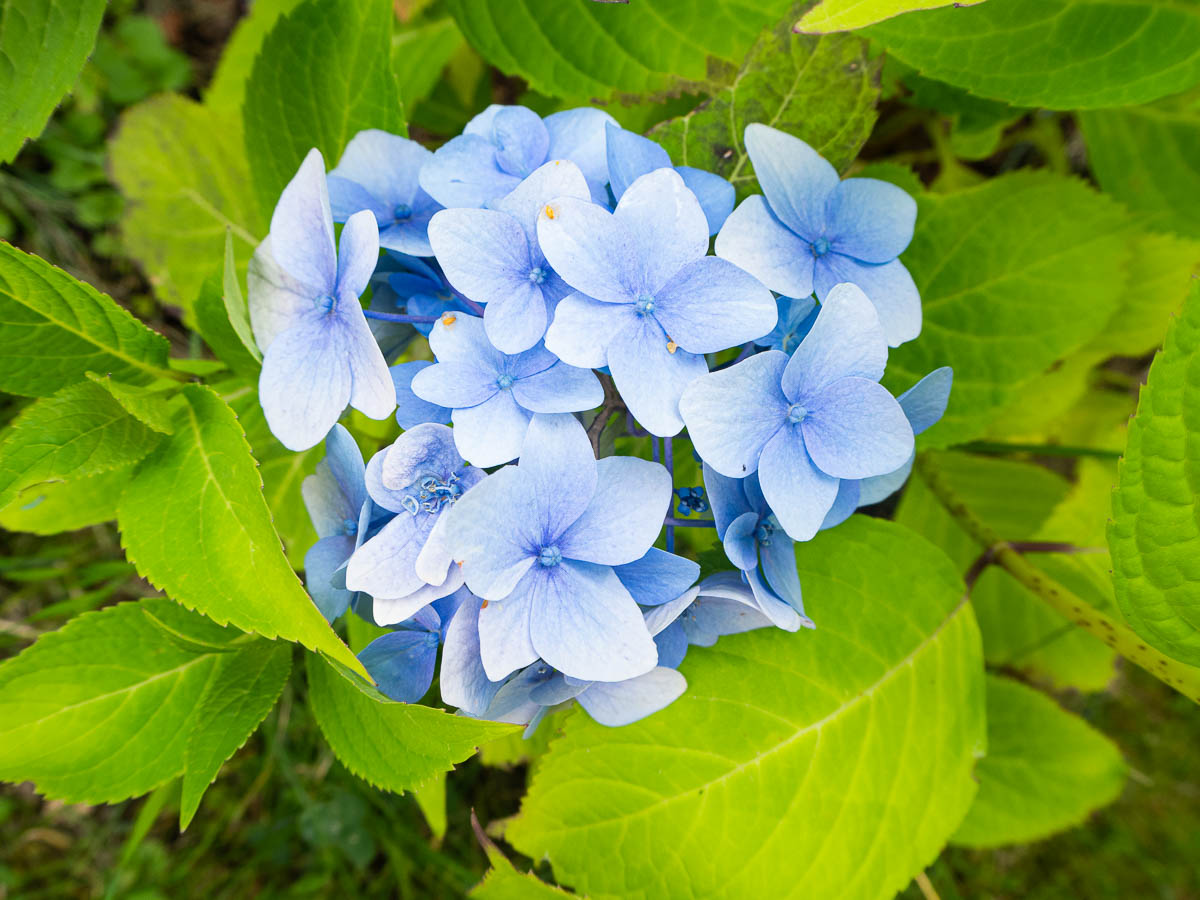
Both hydrangeas are currently flowering with blue flowers. I wonder if that’s because the soil here is slightly acidic after all, or if it’s due to the soil they came with. I guess next summer will show.

I keep digging. And I keep rediscovering techniques for getting through this clay. (I’ve done this before, after all, for the planting along the front of the house.) Shaving slivers off the untouched wall of soil works well, because then the chunk that I cut loose is thin enough to break up easily. The downside is that this risks killing a lot of earthworms. Cutting off larger chunks of earth is more work but spares the worms. When I break up the chunks, they tend to split along natural cracks, and the earthworms just sort of fall out, unharmed.

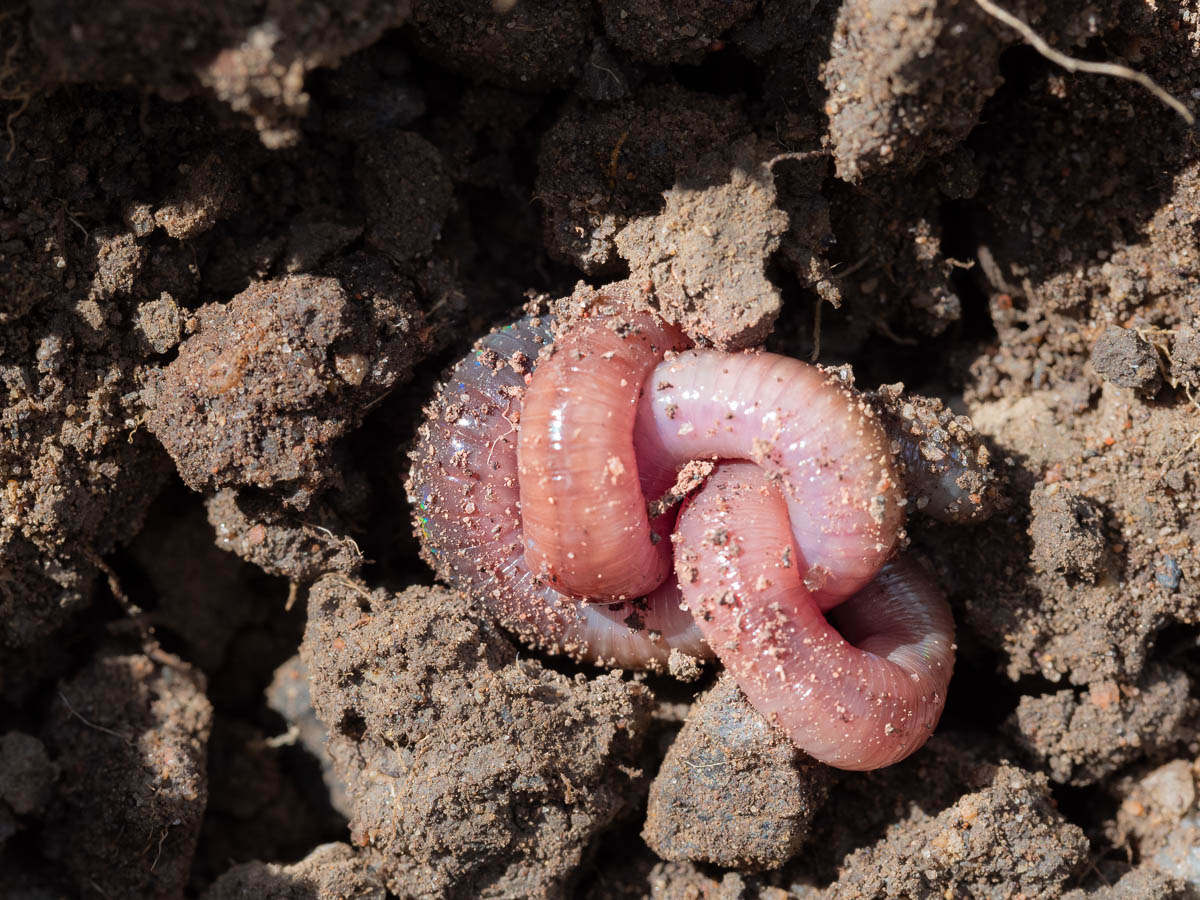
Earthworms apparently spend sunny days resting, about 20 cm below the surface, curled up into what looks like a knot.

In a few spots I ran across soil that was packed so hard that even my body weight wasn’t enough to get the spade into the ground. It was clay mixed with gravel, and probably compacted by some kind of machinery. The weight of the soil above it, or the weight of a human, would not be enough to pack it so hard. It felt like trying to hack through concrete. Hacking at it with various tools and from various angles finally got me through it.

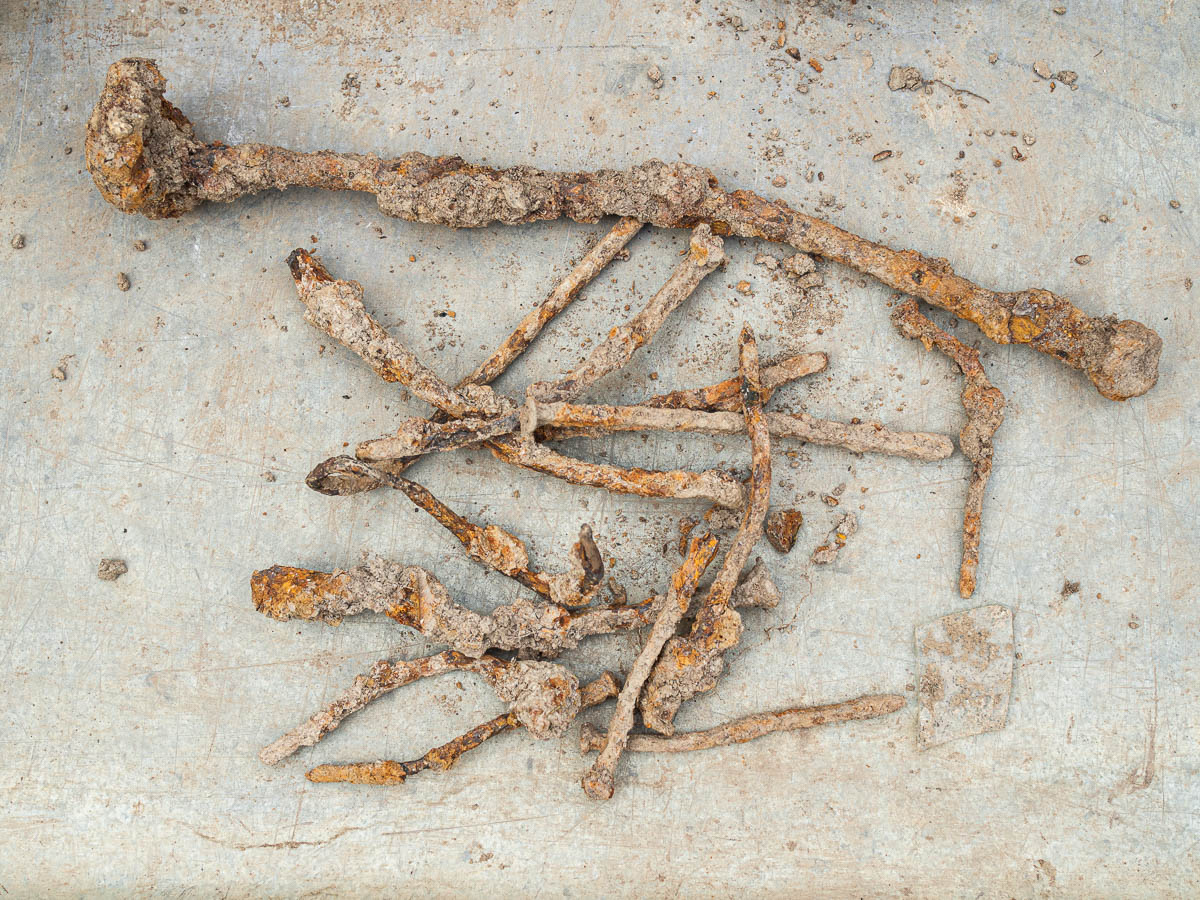
You know what’s harder to dig through than clay? Large, rusted nails. Unrusted nails would probably be almost as bad, but I haven’t found any so I can’t compare. They might be slightly less work because they wouldn’t be so camouflaged. Unlike rocks, rusty nails don’t make a sound, and you can’t make out their shape and size with the tip of the spade. Unlike roots, you can’t hack through them. The spade just stops.

People who throw building hardware into the soil in a garden deserve their own special circle in hell, where they have to dig through a patch of earth and pick out all the nails, and a demon walks behind them and makes new nails materialize in the soil that they’ve already dug through. Forever and ever.