For our last day in Mercantour we drove to Col de la Cayolle, a high mountain pass, for a grand finale. Vast views, flowering meadows, turquoise lakes, you name it!

This pass was higher up than the area around Villeplane where we had been walking until now, so the landscape looked quite different and everyone walked with extra energy. There were no trees here, only grass and a few low shrubs, and bare rocks in many areas.

And marmots. When we saw the first one we were all excited and crowded each other to get a glimpse. By the time we had our fifth (or whatever) marmot encounter, it felt rather ordinary.

The notes for this walk said it would be 12 km which we judged to be definitely too much for the kids, especially since a few walks have turned out to be longer in reality than on paper. But for once the numbers seemed to be too high. When we had walked about a third of the way and looked at the time, we decided that we would be able to do all of it, especially since the 2nd half was generally gently downhill.

Which was all very good, except we had gotten a late start (letting Adrian sleep in so he’d be well rested for our long hike) so we got caught out by an afternoon thunderstorm on our way down. First some rain, then a pause, then some more rain, then thunder and a torrential downpour mixed with hailstones as large as the tip of my little finger. Luckily the actual thunder and lightning was clearly and definitely on the other side of the mountain so we didn’t have to worry about getting hit. But we had hail hitting us so hard that it actually hurt even through a rain coat; so much rain and hail that we were wading through deep icy puddles towards the end. And that continued for roughly an hour I believe.

That whole last section is a blur in my memories; I remember green views and paths that resembled piles of kids’ building blocks, which I would really have enjoyed otherwise. But mostly I just remember all of us running to get back to the car as fast as possible; in the end I was running while carrying Adrian to protect him from the hail. Fortunately the path was stable and not slippery so nobody fell, but we all got very wet. Yet another one of those experiences that was pretty miserable while we experienced it, but that we can afterwards remember as a bit of an adventure.


A thunderstorm is approaching


We had aimed for an easier walk yesterday, to rest after the two long walks to and from Sauze. But the hike was longer than the trip notes said, even though we followed the planned route to a dot. Add the heat, and the hike was not a bit easier than the previous days. Today Adrian really needed a rest, so he and Eric stayed behind today while Ingrid and I did a walk on our own.

(Eric and Adrian drove to Valberg where they did a summer luge ride, had ice cream, and bought fresh bread for us all. The gîte has been serving the same bread since Thursday dinner, and it is by now very stale and unappetizing.)

Ingrid and I also wanted an easier day today, so we re-did the first day’s walk, which was a short one and also had some of the prettiest views in my opinion. Not the most spectacular ones with steep cliffs or wide vistas, but the ones that best combined mountains and greenery. On the first day we had the donkey to think about so I couldn’t always look around as much as I wanted, and definitely not take enough photos.

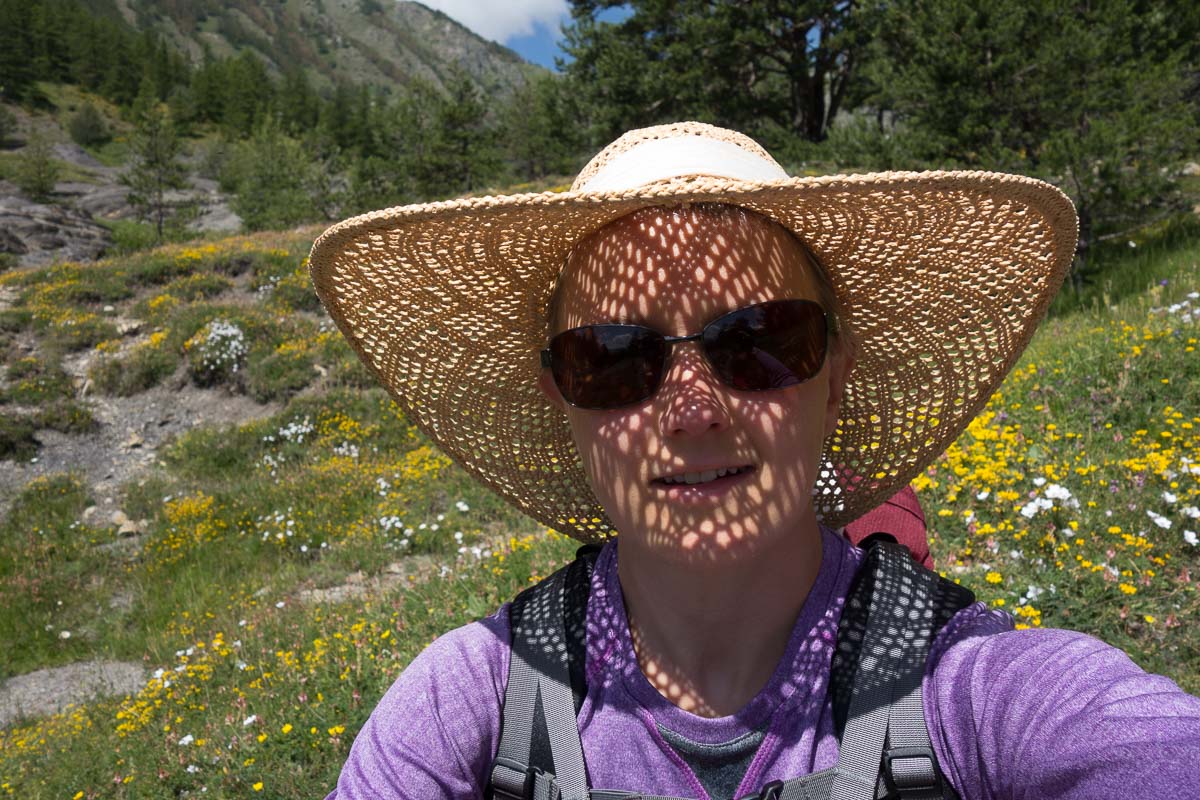
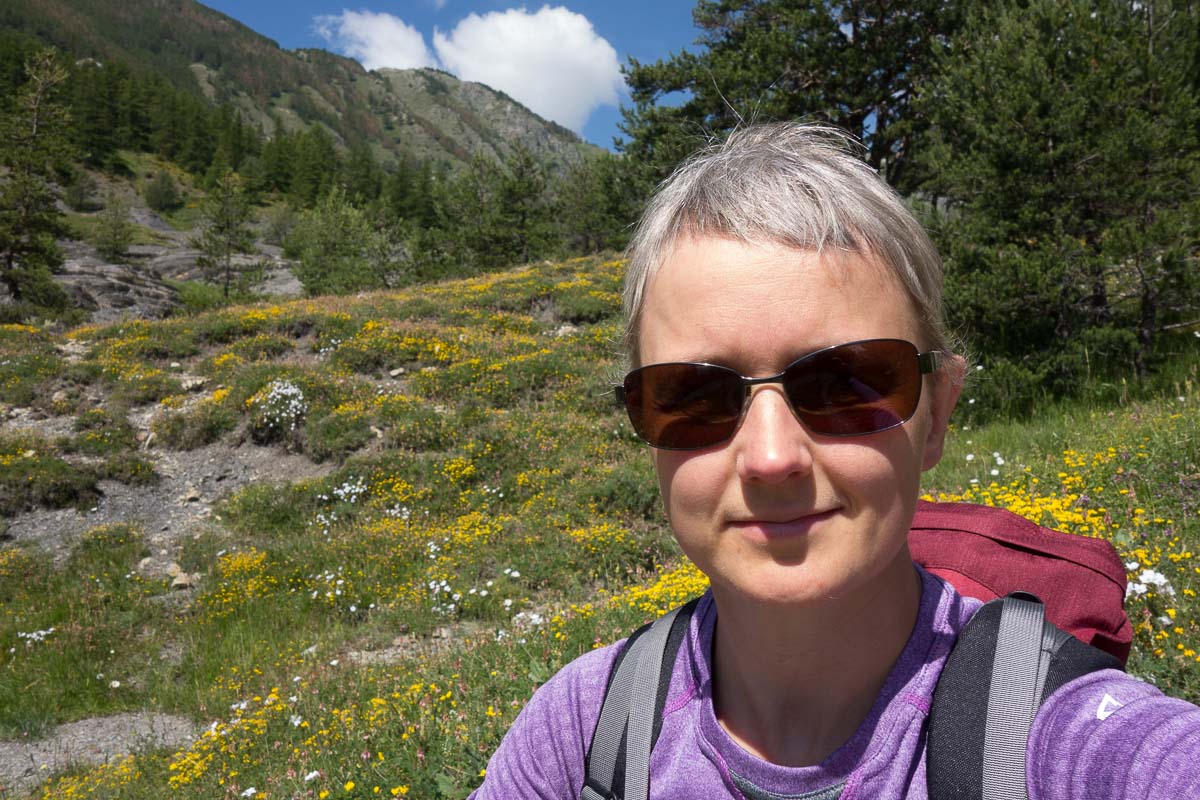
At the very prettiest spot we stopped for selfies. I also handed my camera to Ingrid so I could get some action shots of myself.


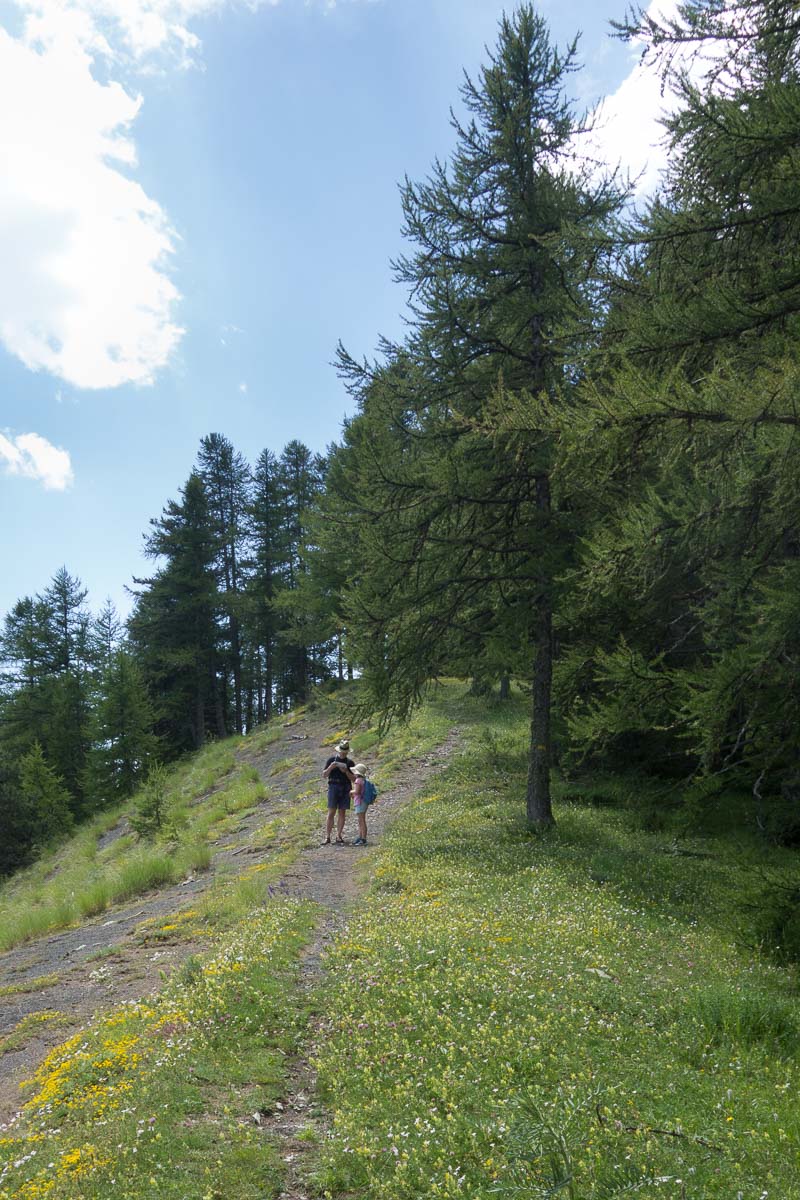
The hiking trails here are very user-friendly: well maintained and clearly marked. There are yellow painted markers at regular intervals, and signposts at each fork in the path. The signposts are numbered and marked on the maps, so they tell you not only which path to follow but also exactly where you are.

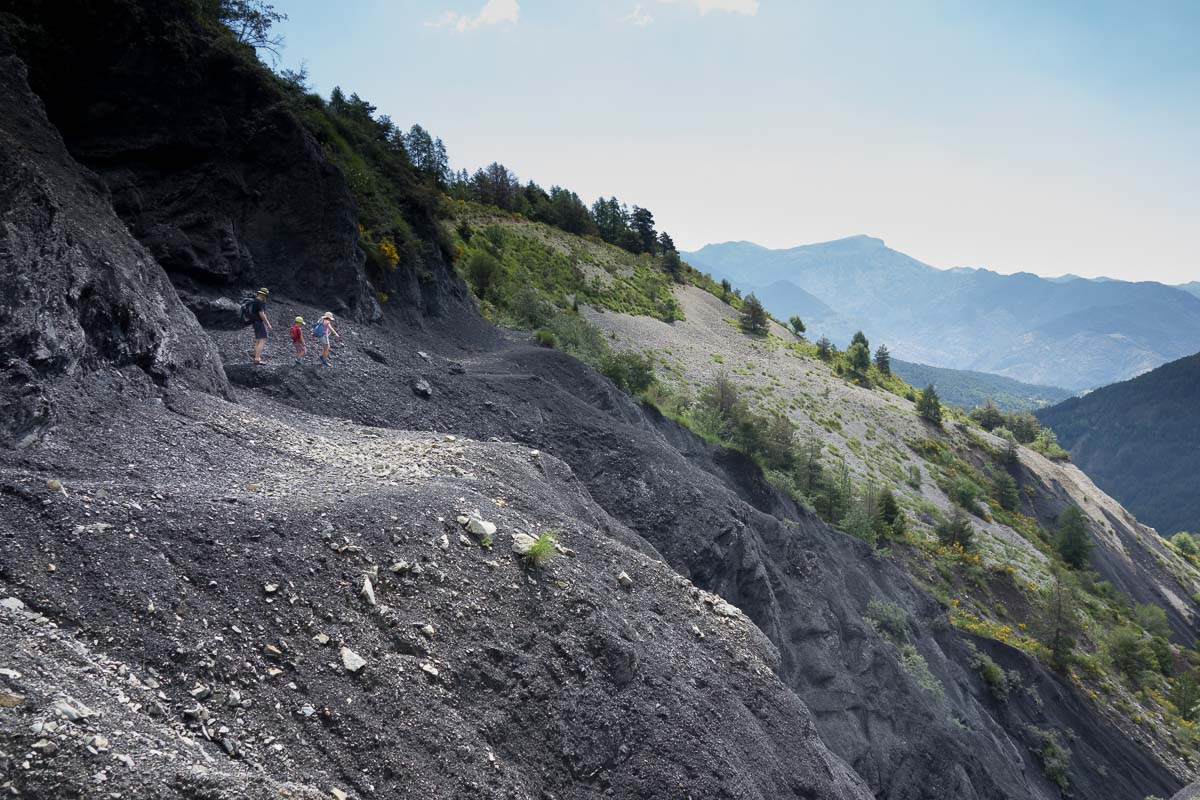
Some sections of the paths are narrow and steep, others are flatter but still rough. Very occasionally we walk on an actual road for a kilometer or two. Mostly the walking is easy for adults but challenging for the kids. They need frequent breaks, especially Adrian, so our average pace is only about 1.3 km per hour, including lunch and all other stops. (For comparison, when Eric and I used to go walking, we’d average about 3 km/hr on easy terrain, so I’d have estimated about 2.5 on these trails.) Our hikes have been about 8 or 9 km per day which is about 6 hours of walking, up to 7 hours on the longest day.

Much of their tiredness is in their heads and can be cured at least temporarily by interesting views, games, challenges etc. Adrian liked looking for and counting the yellow markers.

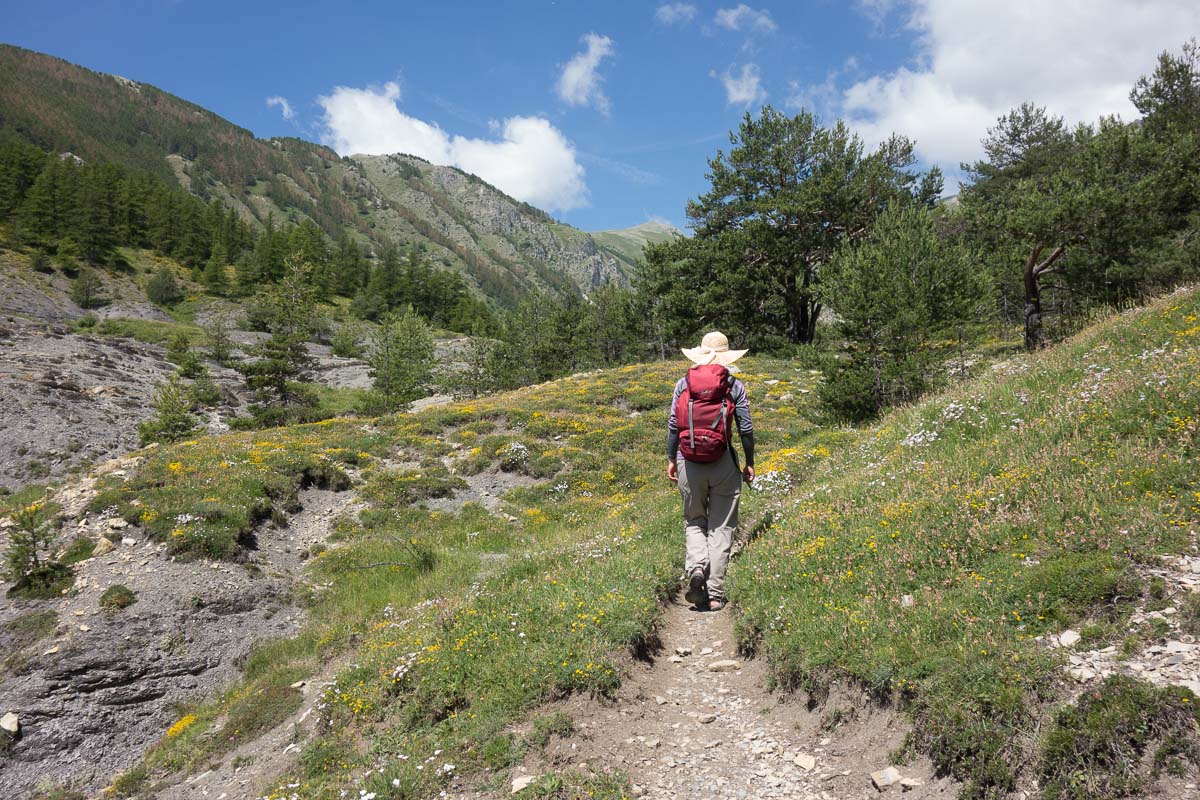
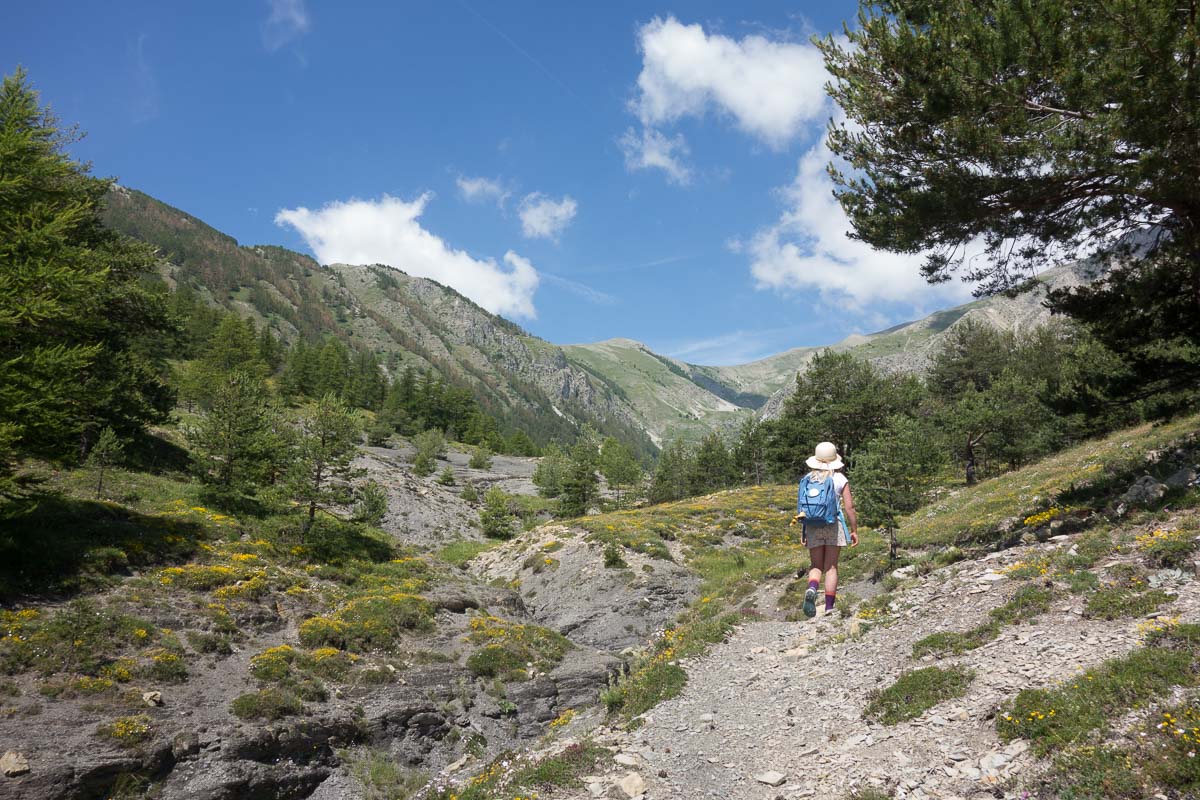
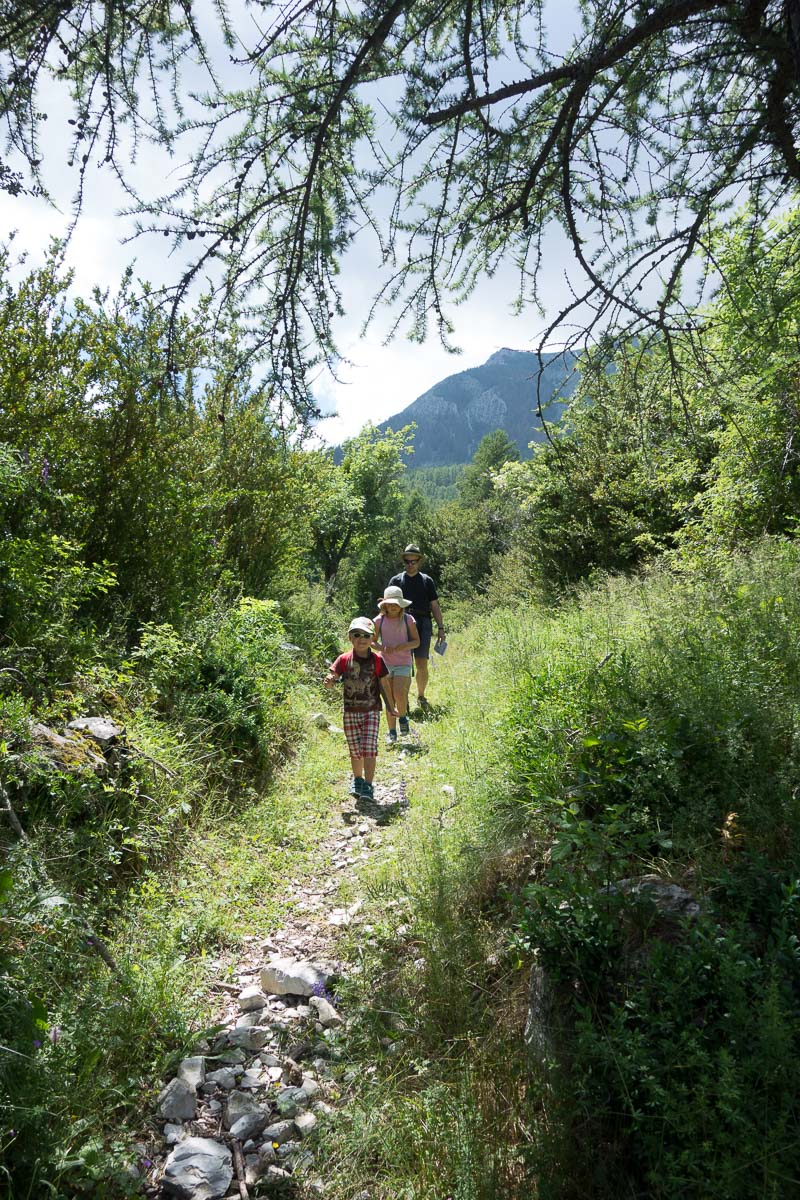
Both kids had very definite wishes about marching order, and of course the wishes were incompatible and changed over time. One wanted to go first, to be followed by me; but the other wanted to be second and definitely not third. And so on. Mostly we ended up with the kids in front and Eric and I at the back, which is why I mostly have pictures of the others’ backs. Sometimes I jogged ahead to get some variety in my photos.

Today we had a very, very hot and sunny walk today to the gorges de Daluis, the red sandstone canyon of the river Var. In the middle of the day we were crossing hot sunbaked rocks, totally exposed to the sun, and got so hot that we cooled off the kids by pouring water on their heads and clothes.

The highlight of the day was a viewpoint with excellent views along the canyon of the river Var. The viewpoint was a popular destination for tourists and we saw more people here than during all the other days together. These paths were off the beaten track so most days we never met any other walkers. The two exceptions were today, and the very last day when we drove to an even more popular site.


Breakfast à la française: bread, butter, jam/marmalade. Alternatively, corn flakes or super sweet musli. The sweetness got cloying after a day or two and I really did not enjoy it. I do not understand how French people can live on this kind of diet.

On the other hand, dinners at the gîte were varied and ranged from decent to really good, and the staff were fully familiar with vegetarian diets, which was a relief.

I still remember our experience at the little restaurant in Luchon in the Pyrenees, about 2004 or so, where Eric and I were served a “vegetarian” dinner consisting of three side orders (rice, French fries and boiled potatoes) and some mixture containing little pink specks that smelled distinctly of meat. When we asked the staff about those specks, our concerns were dismissed – those were just “tout petits morceaux de porc”, nothing at all to worry about.

The packed picnic lunches consisted of bread, cheese, a salad, a fruit and a chocolate bar. All salads were drenched in a mustard vinaigrette, and after a few days we were pretty tired of it. I asked the staff to please skip the mustard for the remaining lunches. He looked most puzzled.


We stayed in gîtes for the first few nights, and then in a Mongolian yurt that was embedded a bit incongruously in the French landscape. Interesting, spacious and convenient compared to a room in the gîte, but somewhat less convenient in that the shower was located outside at some distance, and the toilet was an outhouse.

Outhouses are a common thing in Sweden but apparently not in France – the one outside the yurt had a printed page with explanations and instructions on the door.

A totally unexpected benefit of late-night outhouse trips was that I was reminded to go out and see the starry sky. Summer skies in Stockholm are bright to begin with, and light pollution doesn’t help. Villeplane is further south and there are no cities nearby, so the sky was darker than anything I had seen for years. So full of stars! Even the Milky Way was easy to see.

For the first time in my life I also saw fireflies. Those don’t live in Sweden. I had expected them to shine with a constant light, but to my surprise these flashed on and off.


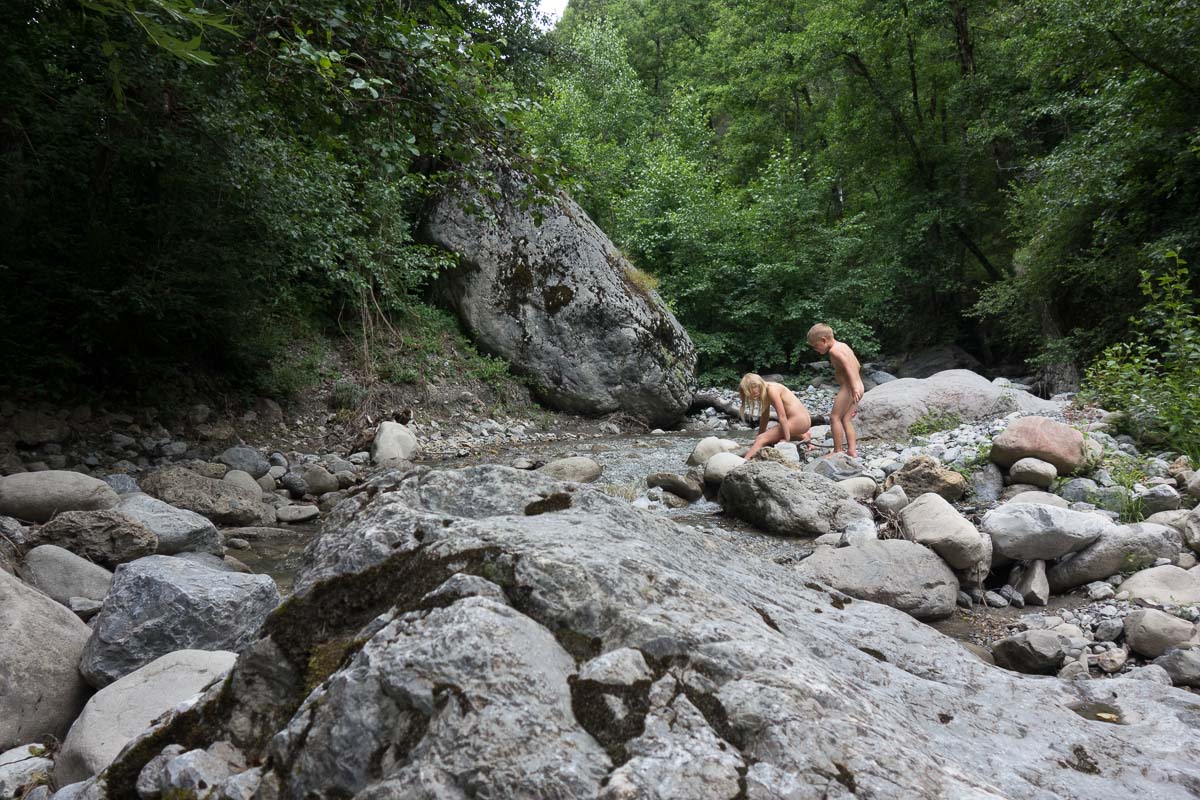
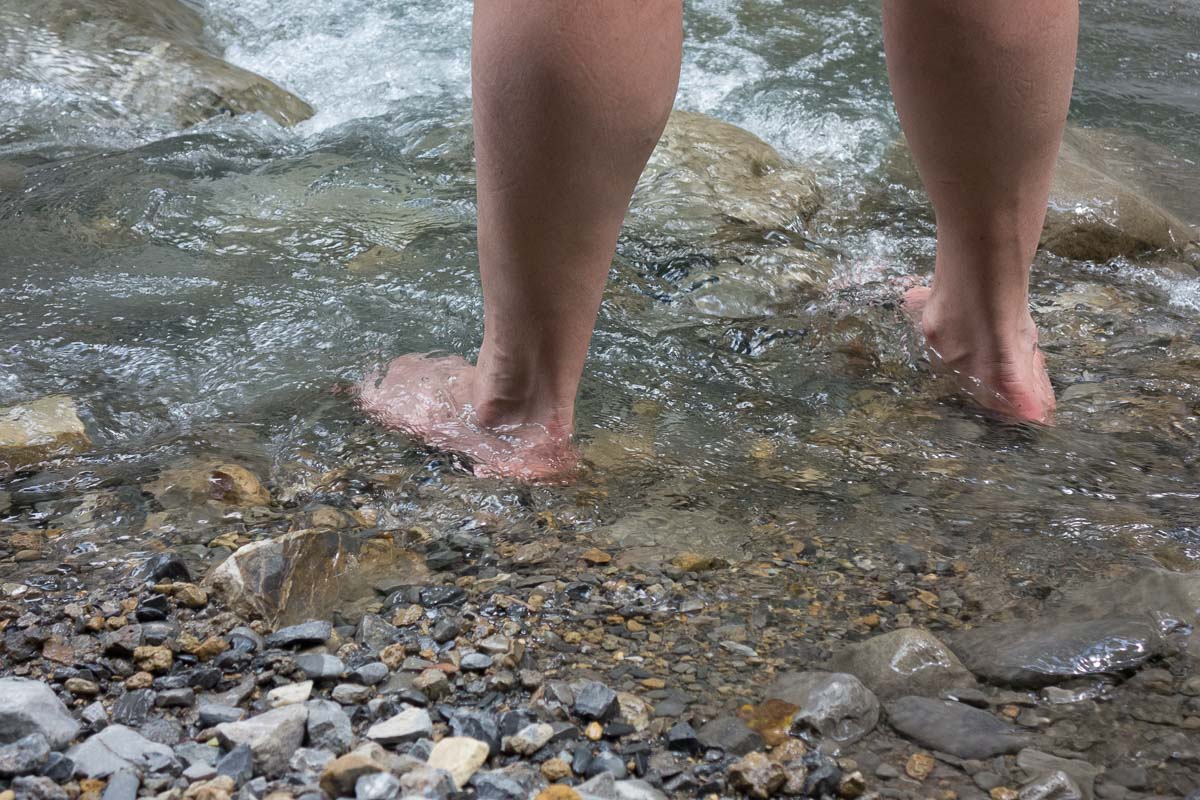
The highlight of today’s hike was our lunch break at a shallow stream. The water wasn’t cold at all so the kids spent a long time climbing and splashing around. Eric and I contented ourselves with cooling our feet.


Today was the first day of a two-day trek from Villeplane to Sauze (and back tomorrow).

The start of today’s walk followed the same trail as yesterday’s, but after about 2 km the paths diverged. The whole hike today was only about 10 km but there was an amazing amount of variety packed into those kilometers.

North-facing slopes were almost like Swedish forests and meadows, with familiar flora everywhere: familiar grasses, pines, daisies, wild strawberries. But then suddenly there’s a clump of orchids, or a martagon lily growing next to the path, and it was very clear that we were not in Sweden after all.

The mountains themselves were made of unfamiliar materials. Rocky outcrops are black shale instead of granite.

South-facing slopes were like picture-book scenes of Provencal nature: sun-baked rocks with tufty carpets of low flowers in all sorts of colours. From afar some of it resembled familiar vistas from our walks in Great Britain (Scotland and Cornwall) but what looked like gorse turned out to be Spanish broom, and instead of heather there was lavender and thyme.

The warmer, south-facing areas had a lot of small lizards, but they were so quick to hide that often the only sign we saw was brief movement and maybe a rustling of fallen leaves. In the forests we often heard cuckoos calling.

Everywhere was full of butterflies, grasshoppers and crickets. And ticks. So many ticks! The rest of the family got one or two each during the whole week. I got so many I lost count – I felt like I was constantly picking them off myself, despite wearing a long sleeve top and long trousers most of the time.


Donkey day!

We’re in Mercantour for a week of hiking. We have the option of being accompanied on our walks by a donkey to carry our stuff. Today we did a half-day hike to try out this donkey thing.

More work than it’s worth, was our clear conclusion. Libellule, our donkey, was good-natured and a good walker, but it was like having a third kid whom you always needed to be aware of. And a kid whose needs are totally orthogonal to the other kids. You had to keep her walking, but not too fast so she gets uncomfortably close the kids; keep her from eating grass all the time; find a place to tie her up when taking a break; make sure you’re not behind her where she can kick you by accident.

The final straw was when our path passed through a donkey grazing area and we (or she) were accosted by loose donkeys. She didn’t like them and aimed a few kicks at them, but they kept crowding us, to the point where we started to get worried about them accidentally pushing us off the rather narrow path. Eric had to hurry ahead with Libellule while I fell behind to push back the other donkeys, so the kids could walk without worrying about falling off the path.

Afterwards we could look back at the incident as an exciting adventure, but it was more stressful than fun at the time.

No more donkeys for us. Carrying our packs is just a bit of extra work for the body; managing a donkey is work for the brain which is not what we want from this vacation.


Another Sunday, another outing based on an idea from a book, this time from “Alla dessa cykelpromenader i Stockholmstrakten”. Since we hadn’t made any plans or preparations in advance, we chose a shortish cycle trip from Spånga to Riddersvik.

Riddersvik turned out to be a beautiful old manor house with a lovely café (excellent cakes, and pleasingly small in size as well) and pretty surroundings. There was an allotment garden below the manor itself, with views of lake Mälaren, and a rose garden on the other side of the manor, and a playground for the kids.

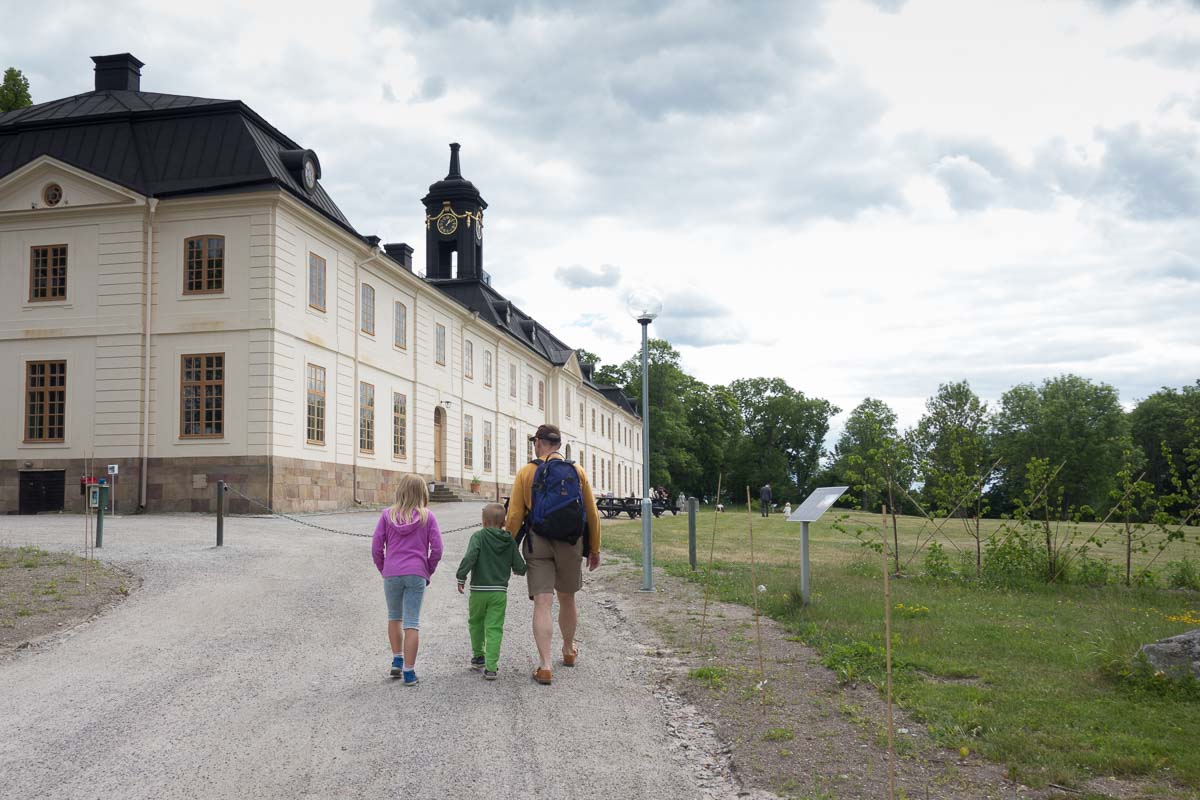
This was a nice contrast to what we saw last weekend at Svartsjö. I found the park around that castle rather depressing. This was a major castle, historically important, close to central Stockholm. It had obviously had grand surroundings once upon a time, but since then obviously hardly anyone had cared for it. For lack of better use it had been turned into a prison for a century, and the best that could be said of the park was that it existed, and was still more or less a park rather than wilderness. Overgrown and untended, with no plantings of any kind.

As a coincidence it turned out that Riddersvik was called Flottsvik some centuries ago and was the other endpoint of the ferry connection between Svartsjö and the mainland.


We went for a walk around Svartsjö (“black lake”) out on Färinge.

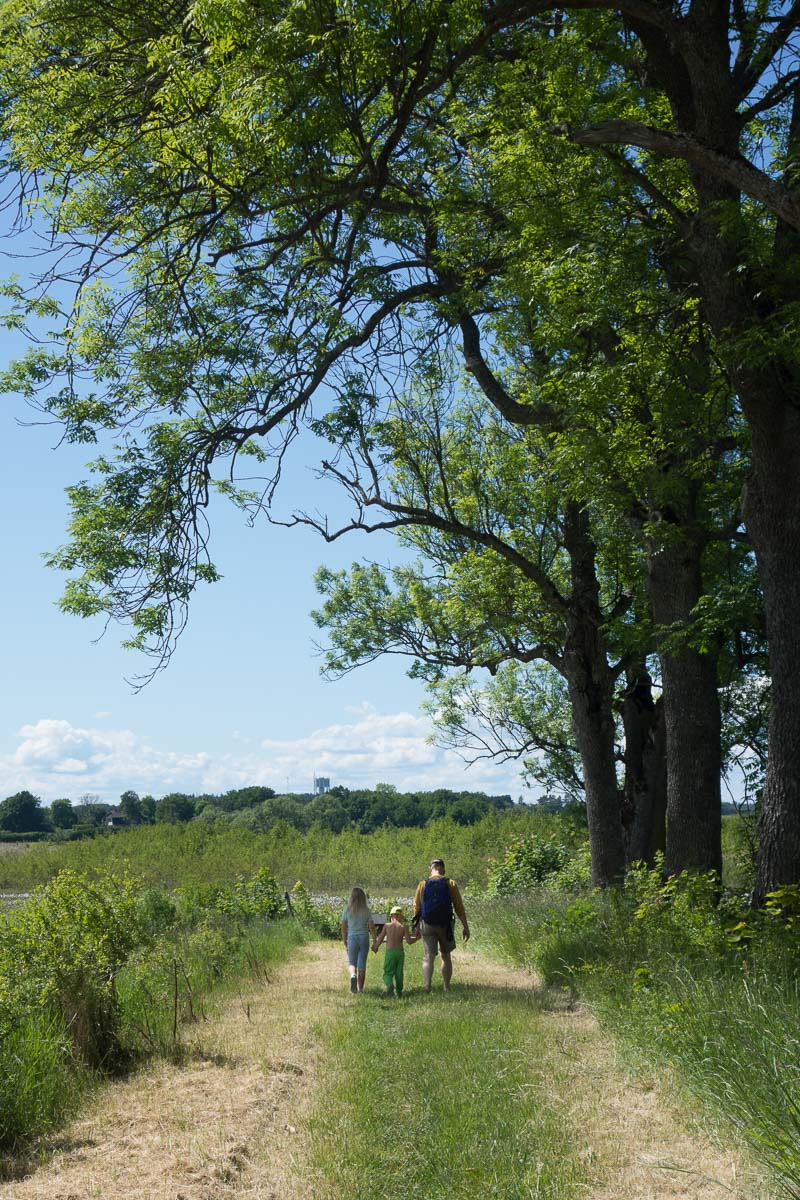
The book where I found this walk (“Alla dessa promenader i Stockholmstrakten”) described it as “beautiful, memorable and full of variation”. I wouldn’t rate it quite as highly as that, mostly because it hadn’t been maintained in recent years. The path was a rough mown trail, often uneven and with holes under the grass. Information signs had fallen down; the “viewpoints” were overgrown and barely distinguishable from surrounding nature. I guess the authors hadn’t re-walked this walk in recent years, even though the book claimed to be the new, revised edition from 2015.

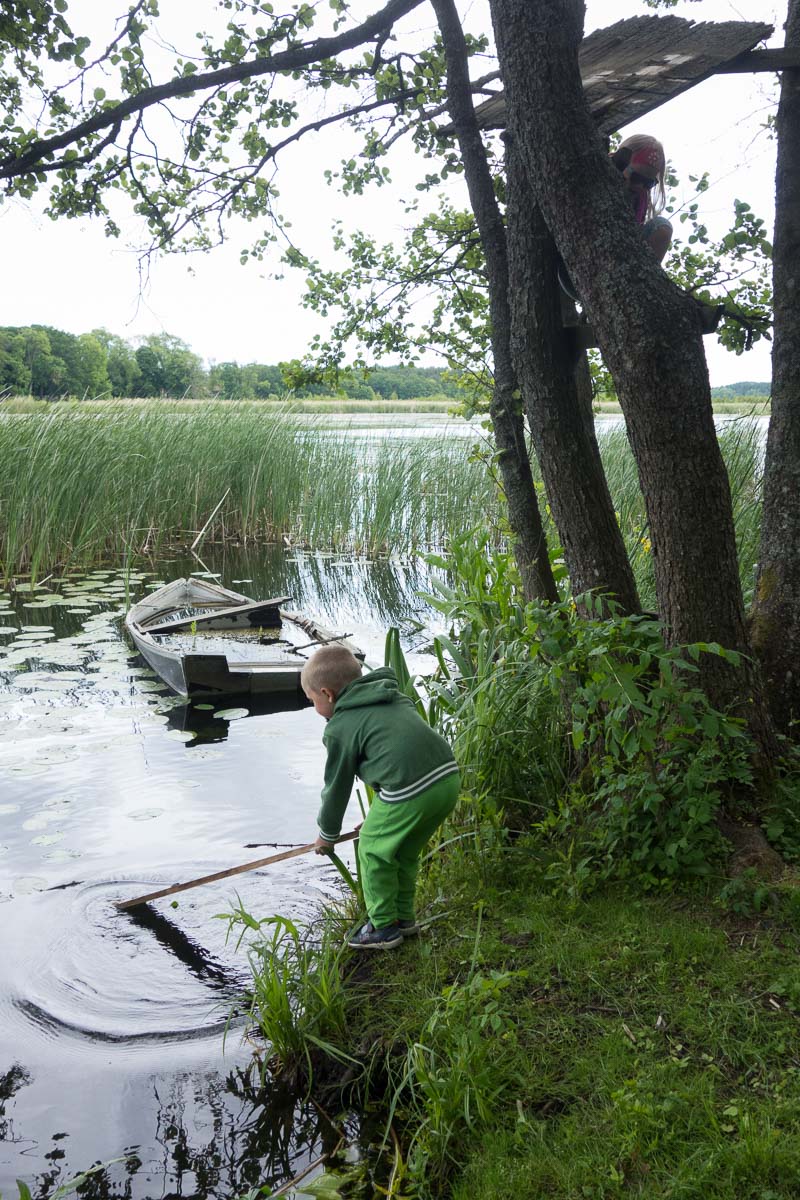
The lack of suitable picnic spots around the lake led to some grumpiness and emergency fruit stops. In the end we did our sausage grilling right by the side of the lake, in what had probably been a picnic spot some years ago but was now muddy and invaded by nettles. On the plus side, there was an almost-climbable tree, and a stick that could be used for poking stuff in the water.


Adrian and I went geocaching in Judarskogen nature reserve. We’ve been there before but then mostly followed the main trails, sometimes even on bikes. This time I kept us off those trails for a slightly wilder experience. It’s all criss-crossed with paths so it was still very easy walking, but a bit more fun this way.

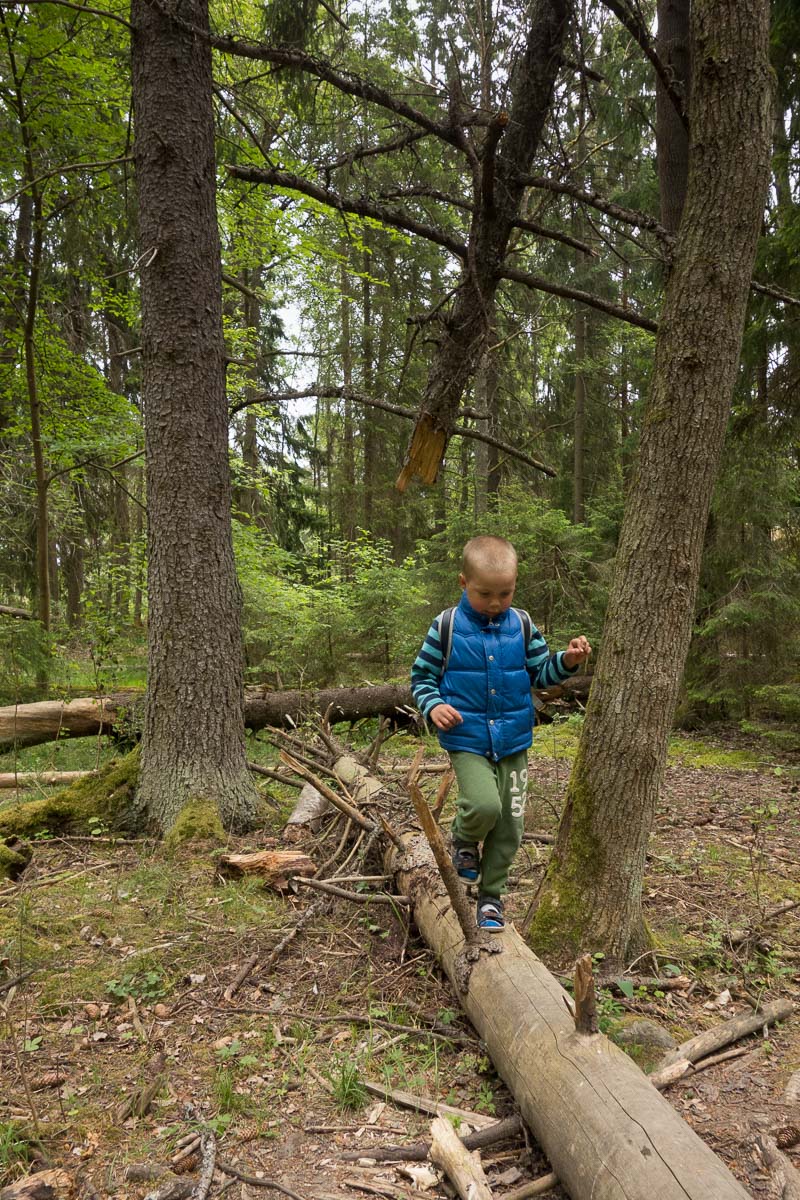
In addition to caches we found several fallen trees right across the path. Adrian liked climbing over/under/along those.

We stopped to look at one of the newt ponds. There are several in Judarskogen, all man-made to compensate for the loss of natural ponds suitable for frogs and newts – shallow ponds of still water, with no fish. At first the pond looked all brown, slimy and dead. Then suddenly something moved, and I saw it was a big, fat frog. We looked more closely and saw a whole bunch of them sitting in the shallow muddy water near the edges, with just their eyes sticking out, seemingly staring at us.

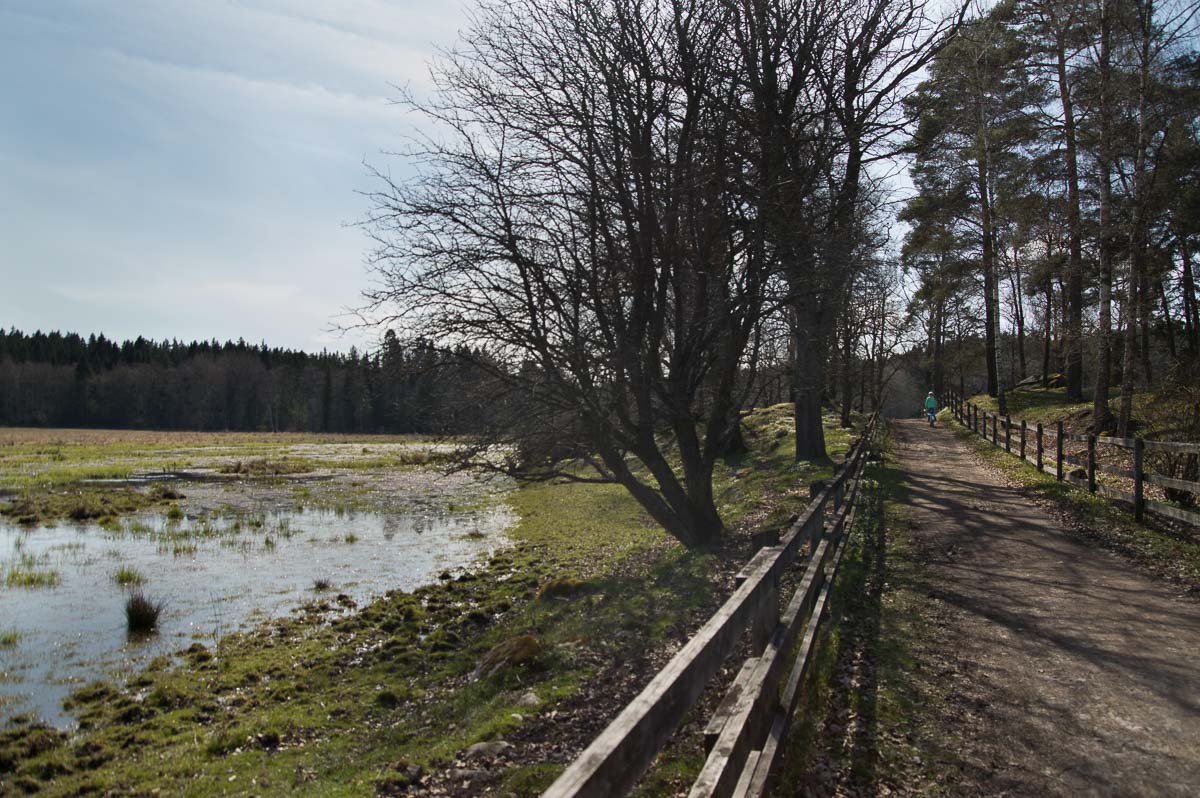
A lovely warm and sunny day, so we biked to Bögs gård, a farm on the edge of Järvafältet nature reserve. A pleasant bike ride through a variety of suburban green spaces, ranging from a disc golf park to forests and water meadows.

It was about 20 km altogether and I wasn’t sure whether Ingrid would be able to do it, but it was no problem at all. I have been underestimating her I guess.


The anemone fields in the forest were mind-boggling. They covered the entire forest floor and spread as far as I could see.

At Bögs gård we had lunch and ice cream and looked at the animals – chickens, goats, pigs and calves. The neighbouring Väsby gård also had calves, of hairy Scottish highland cattle. The calves looked like a cross between calf and bear, and behaved like puppies, running and leaping and bouncing around.