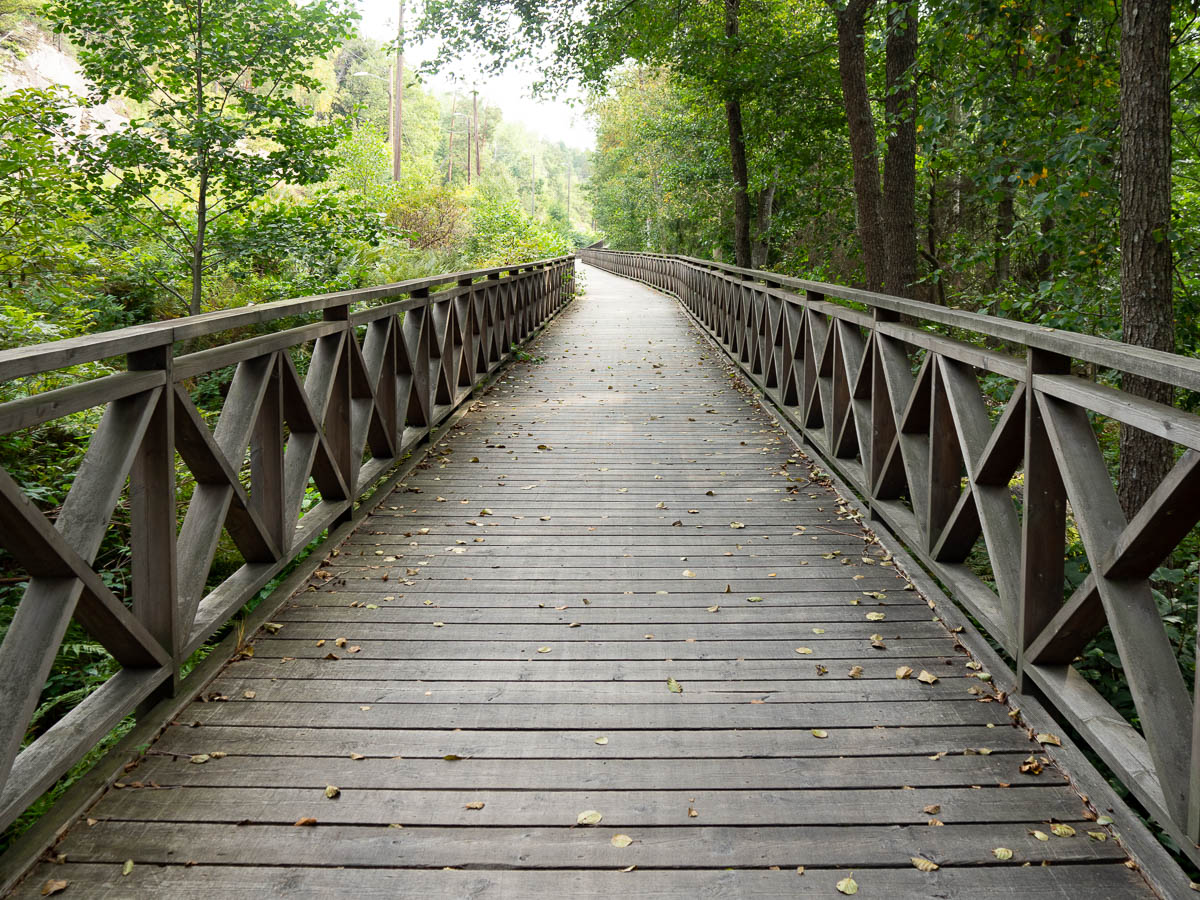
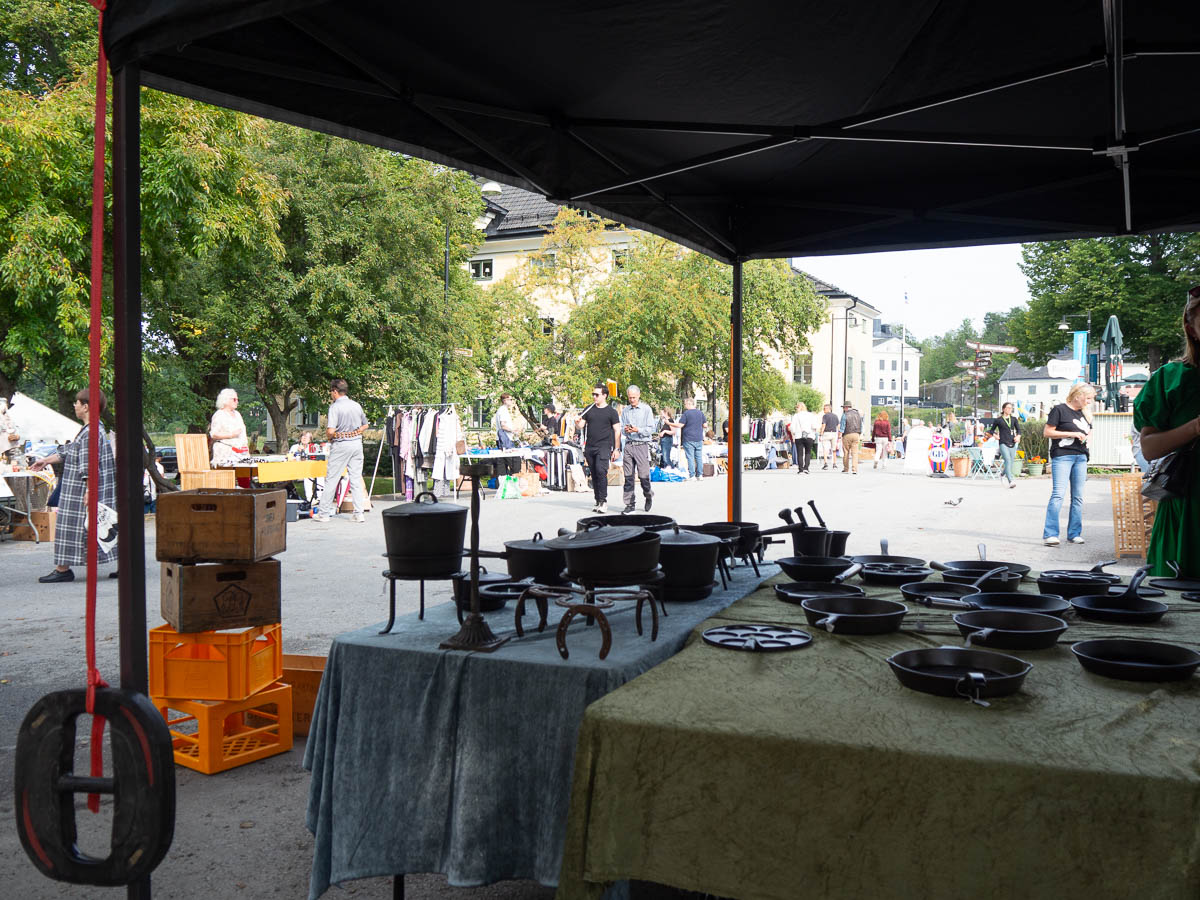
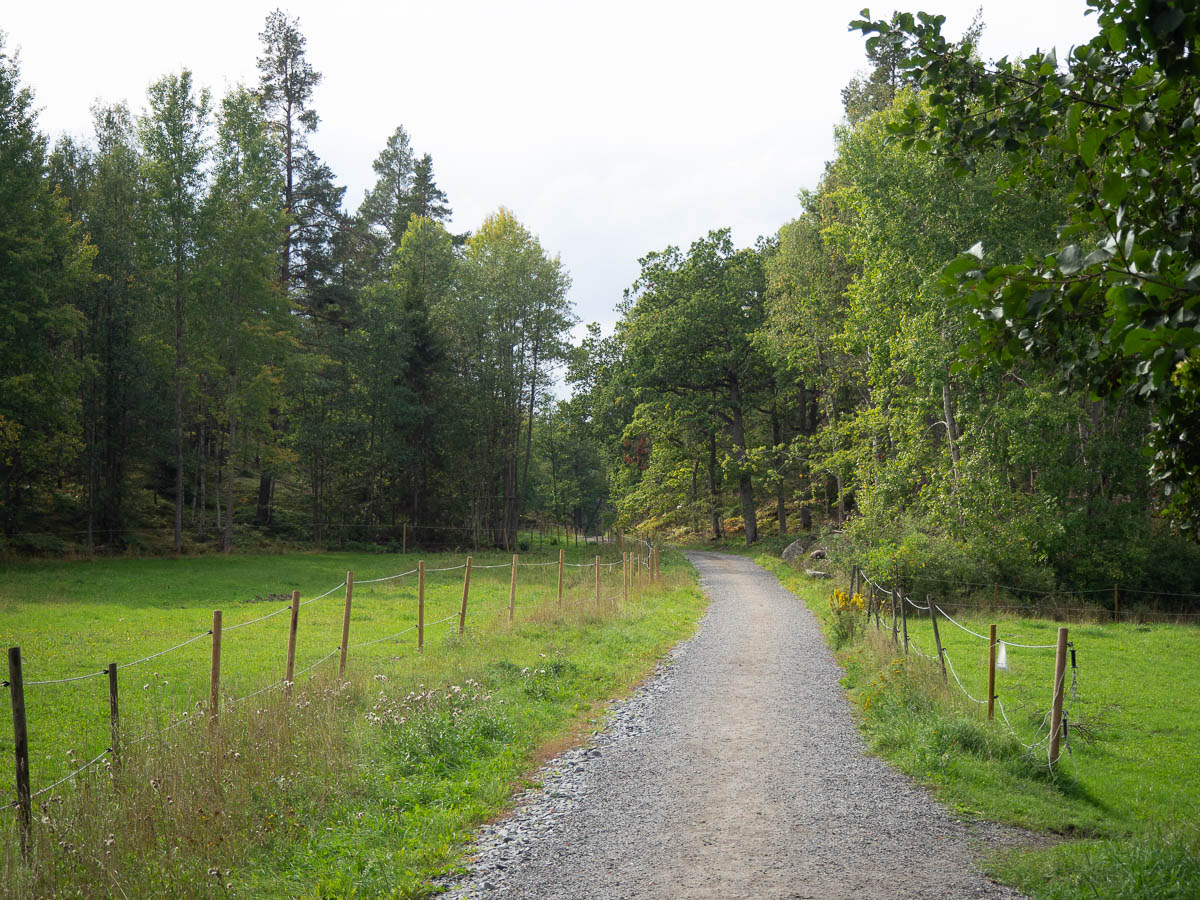
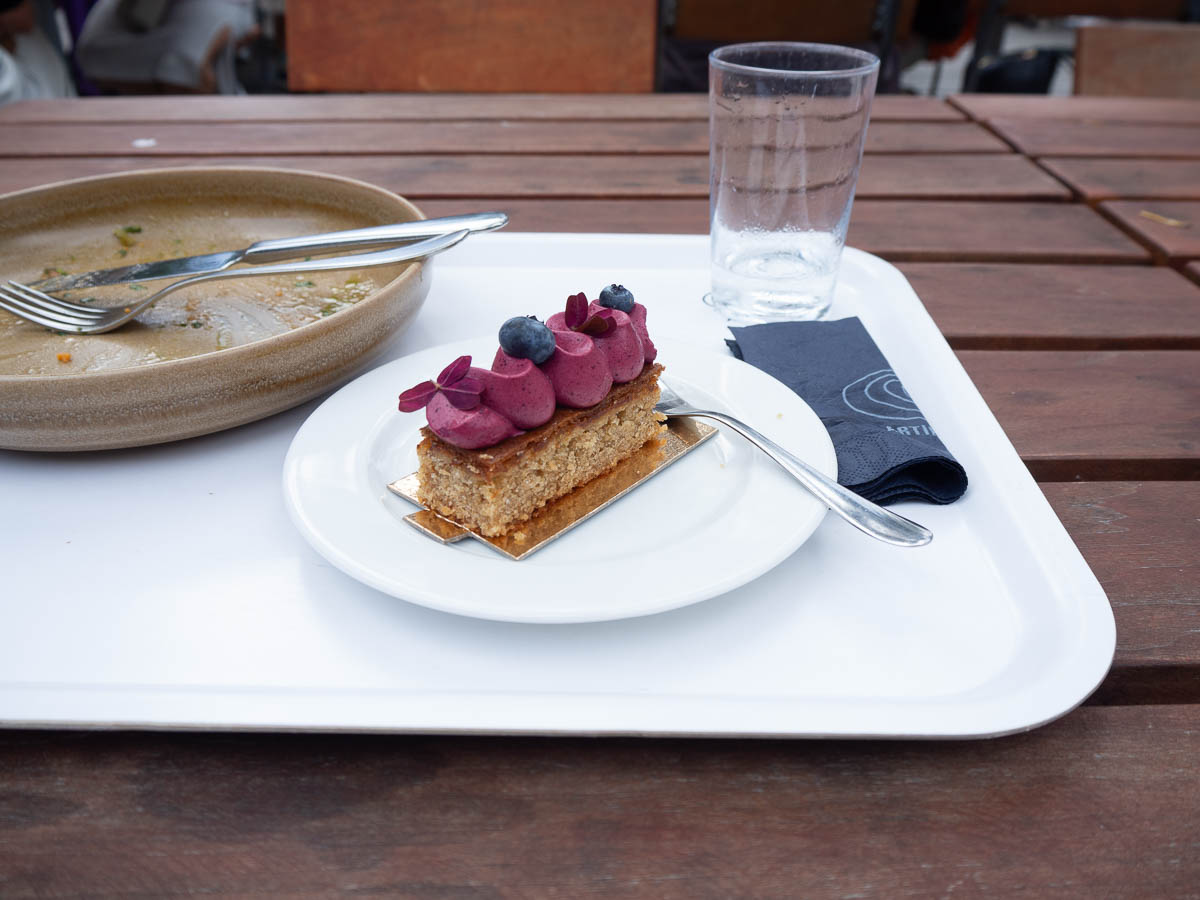
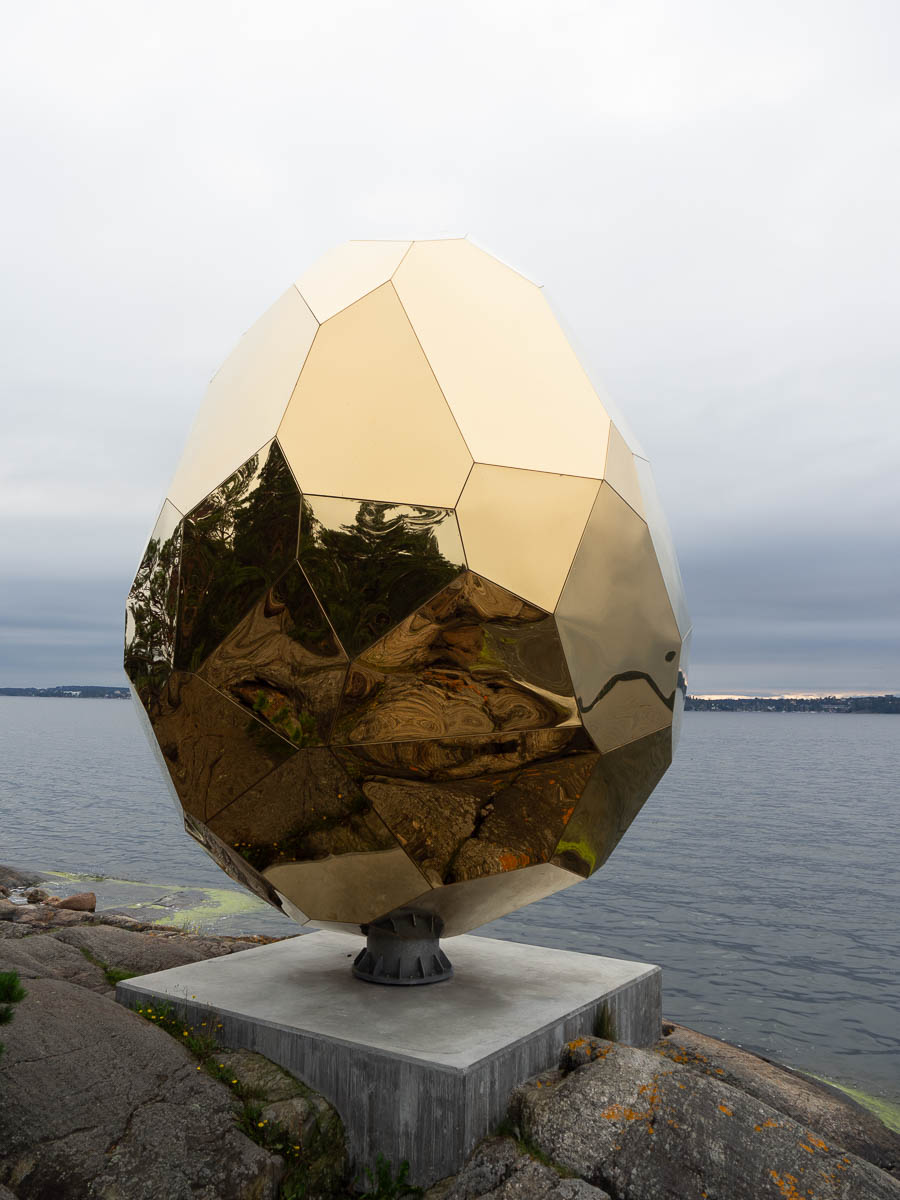
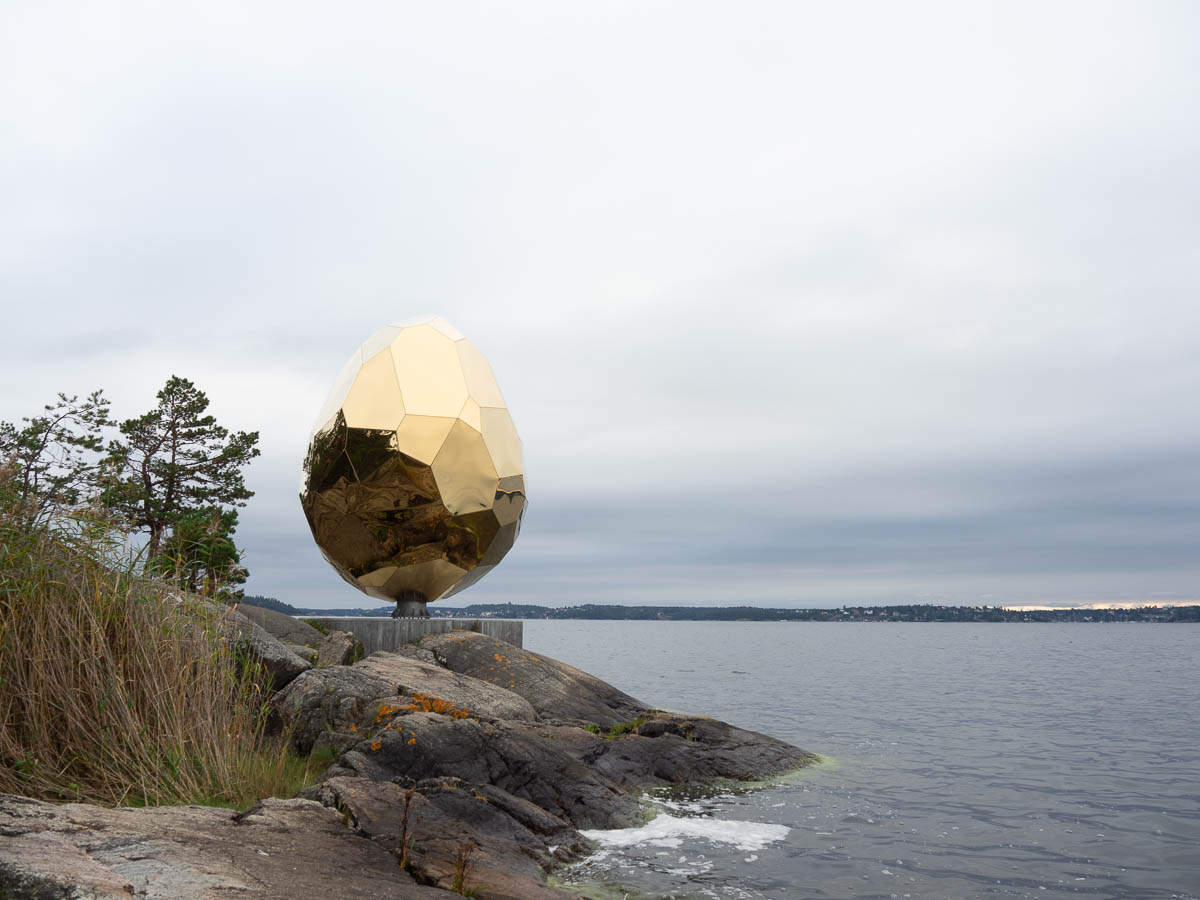
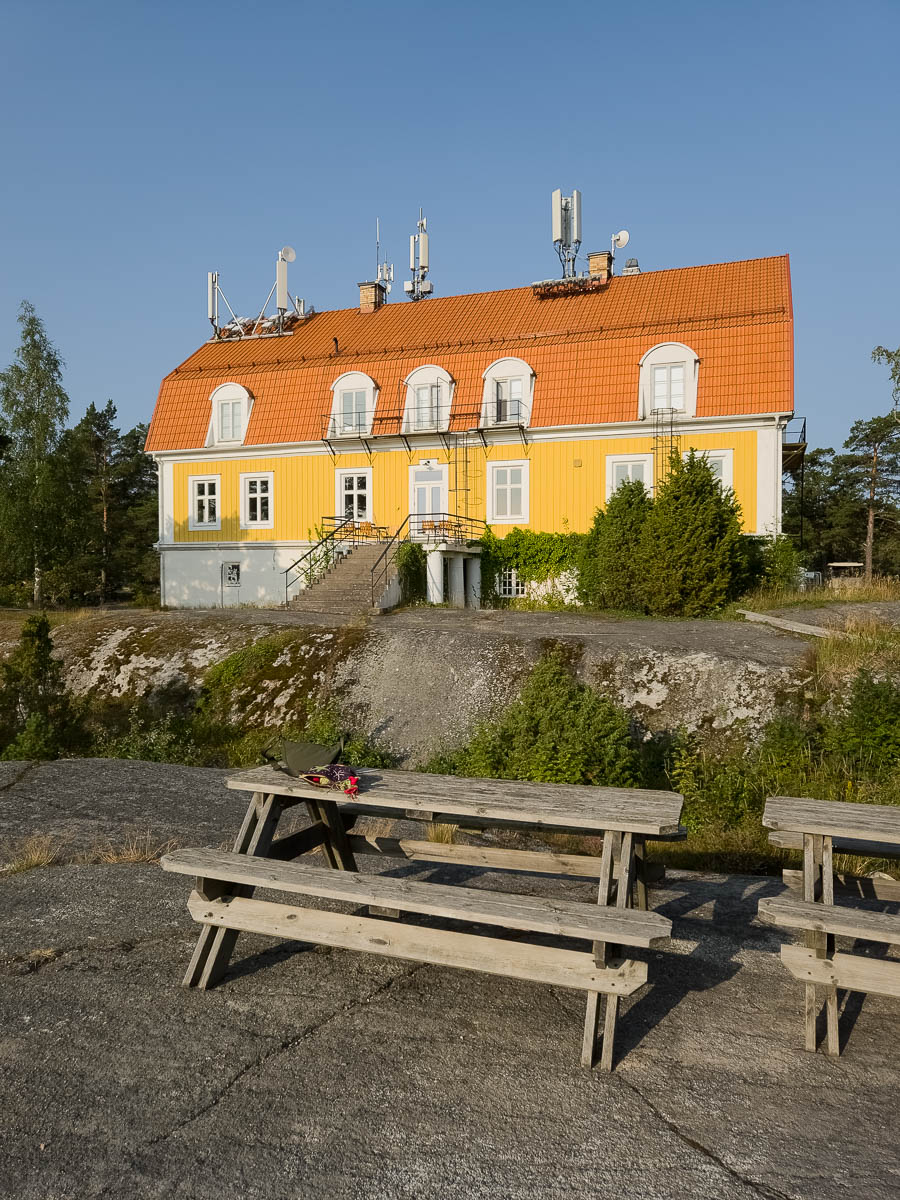
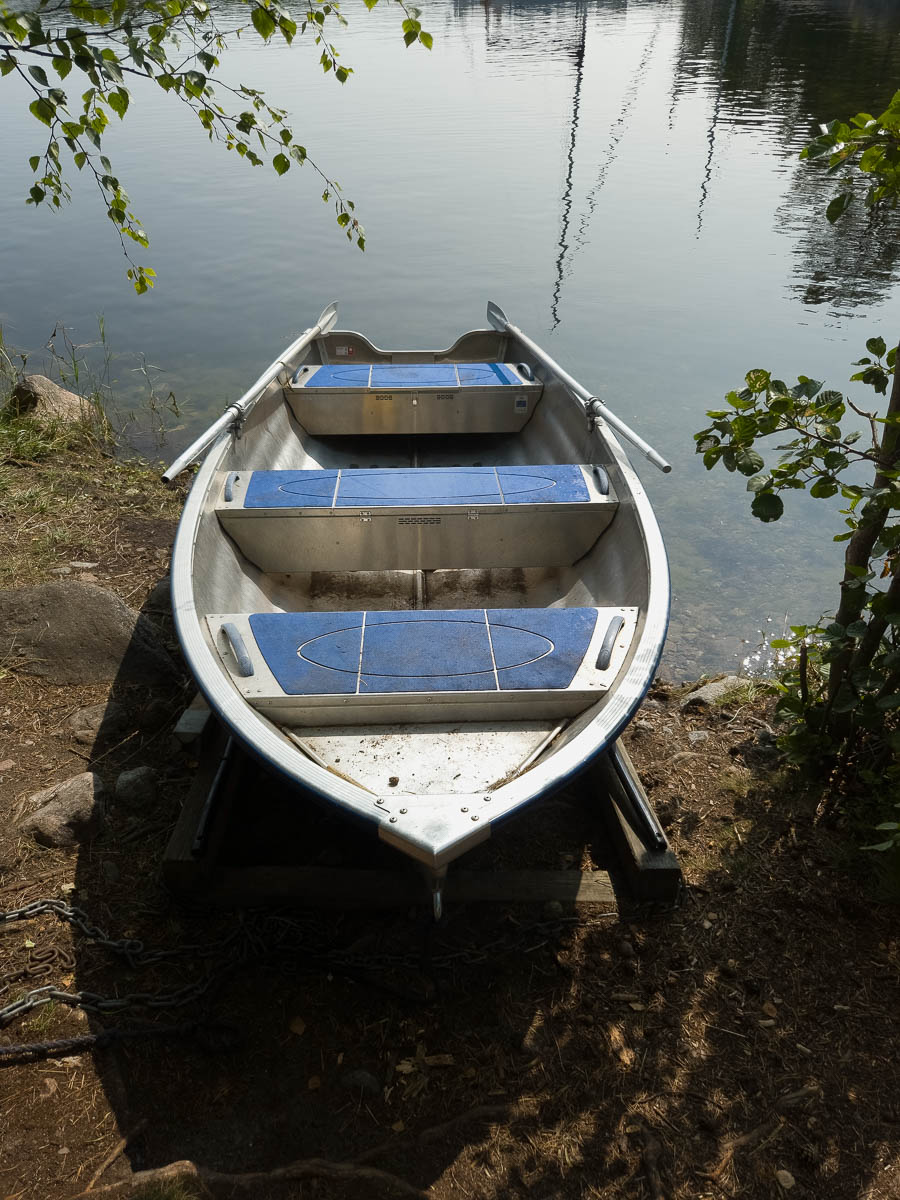
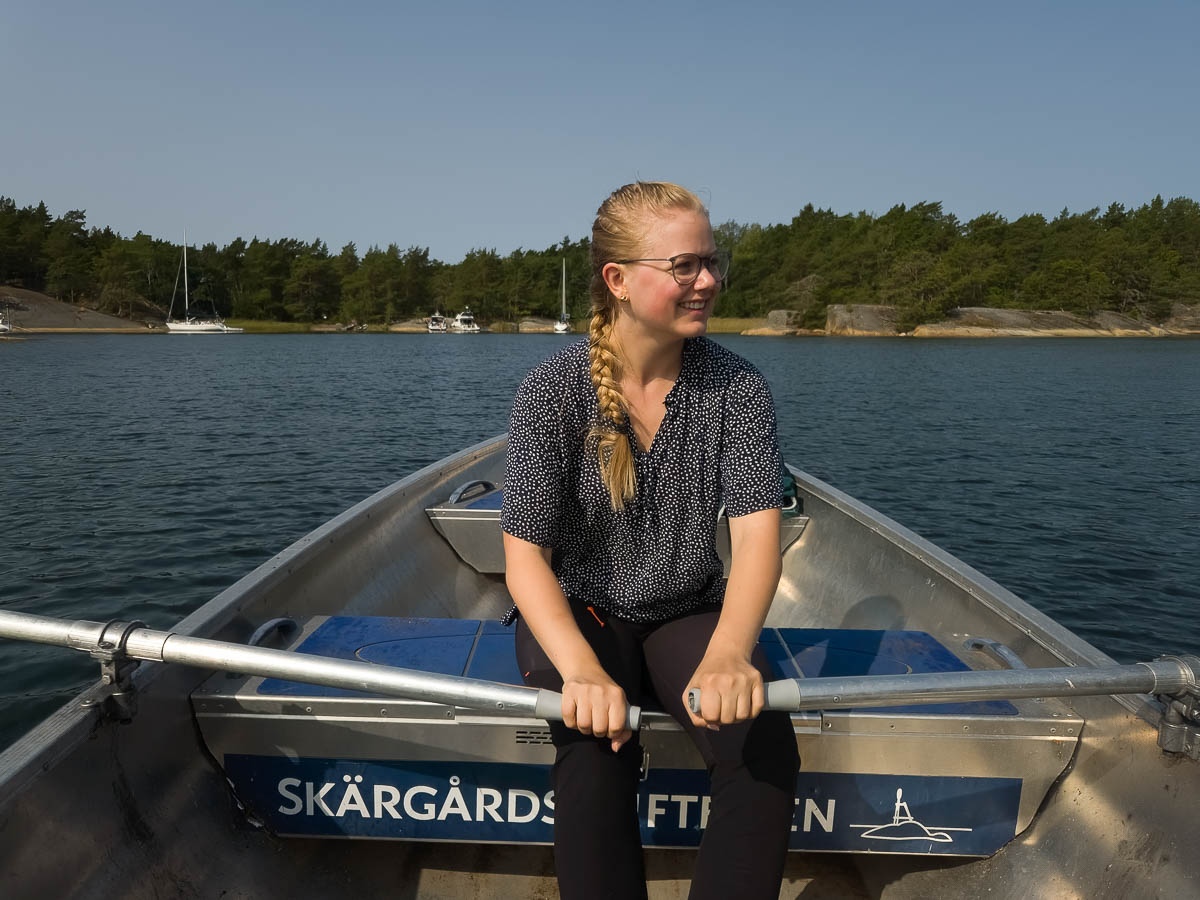
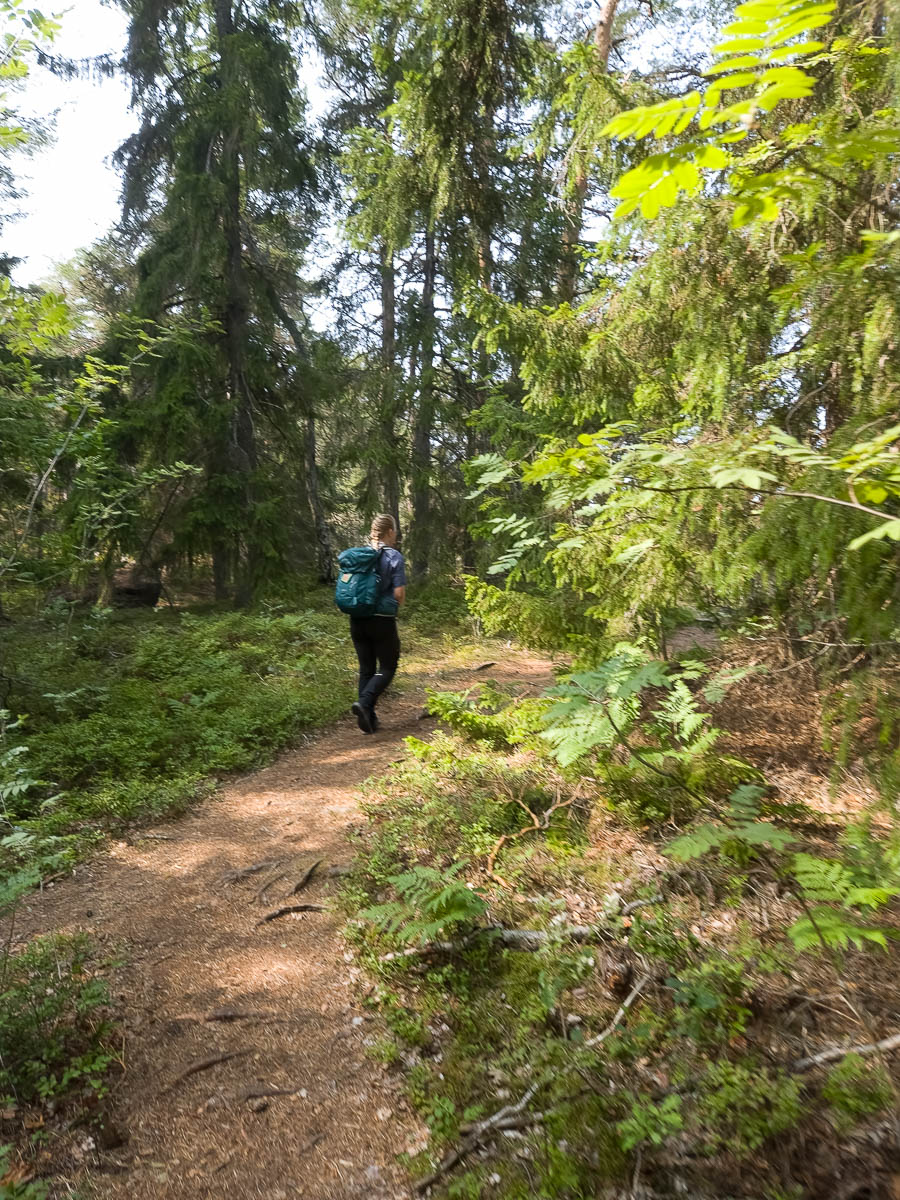
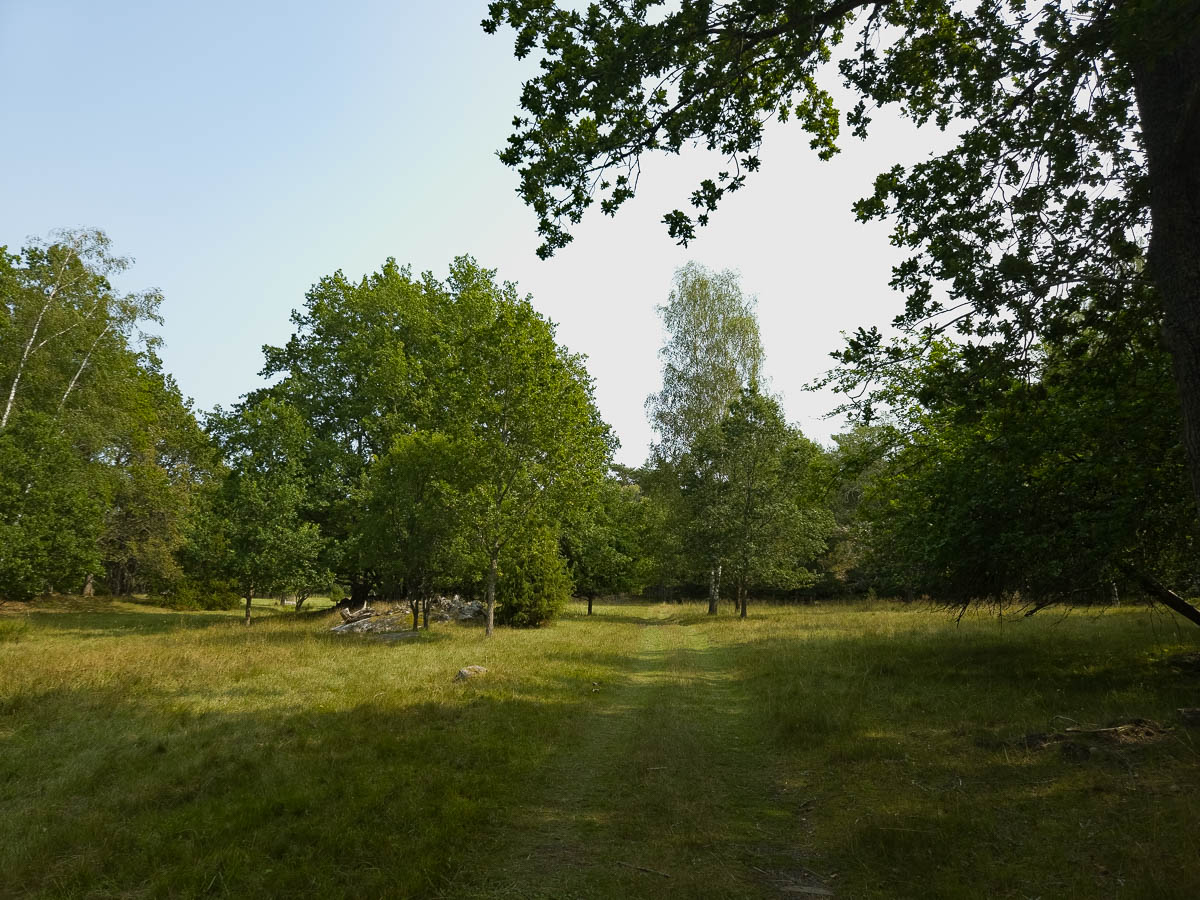
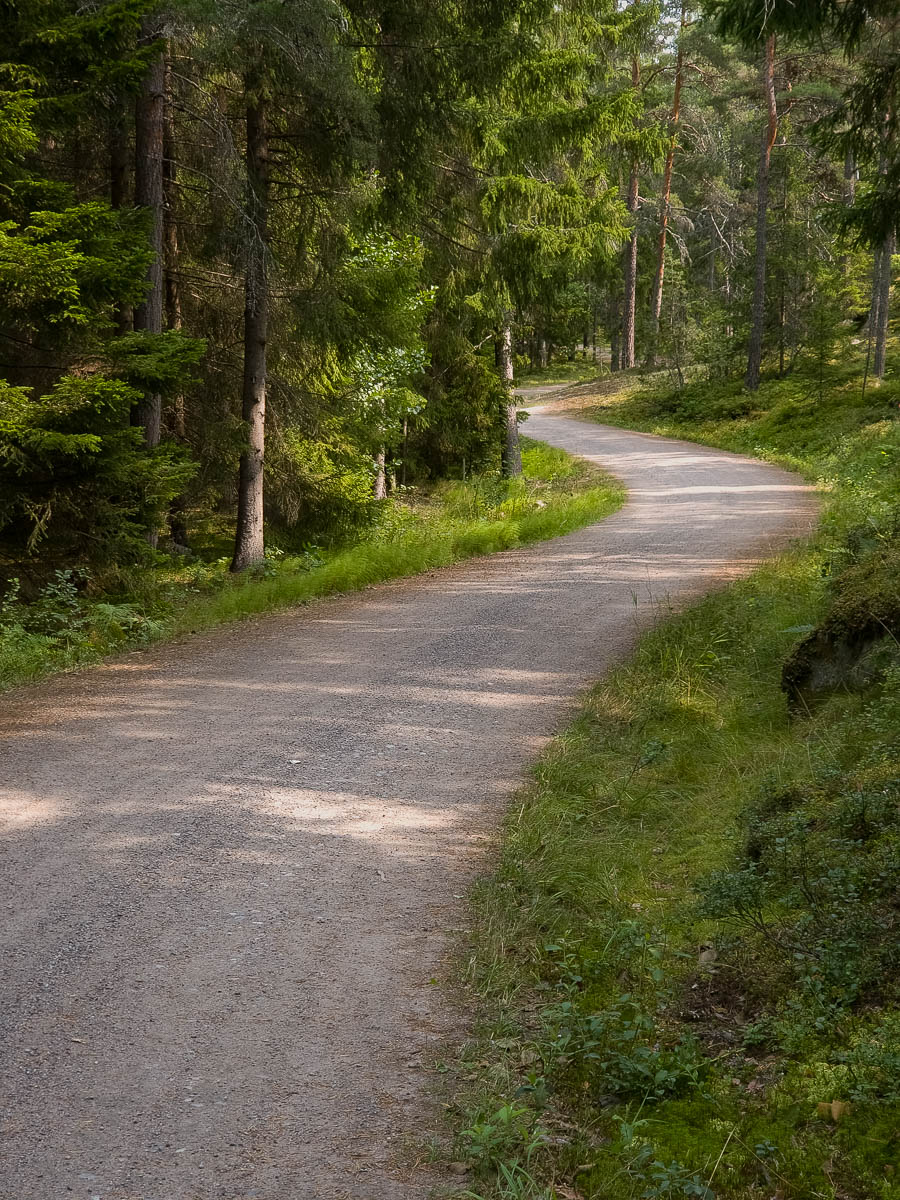
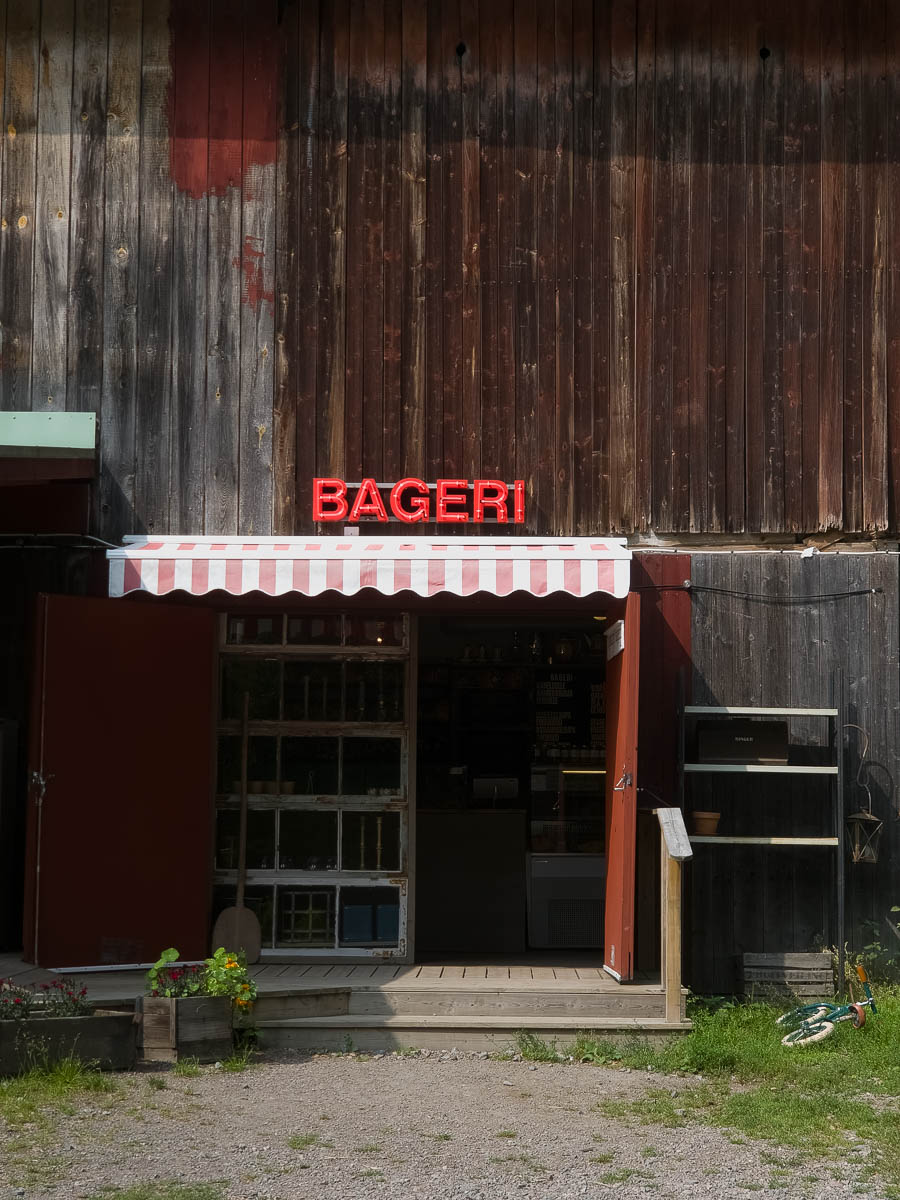
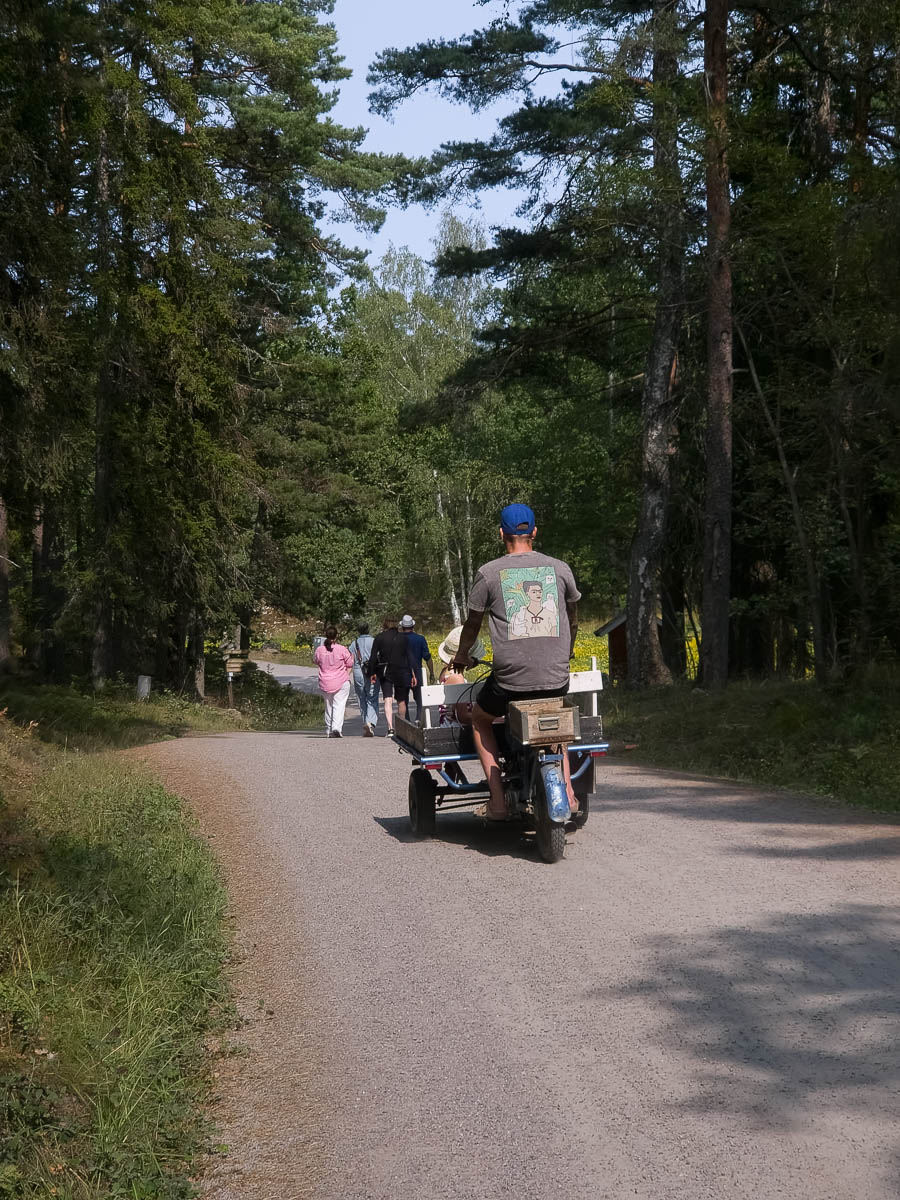
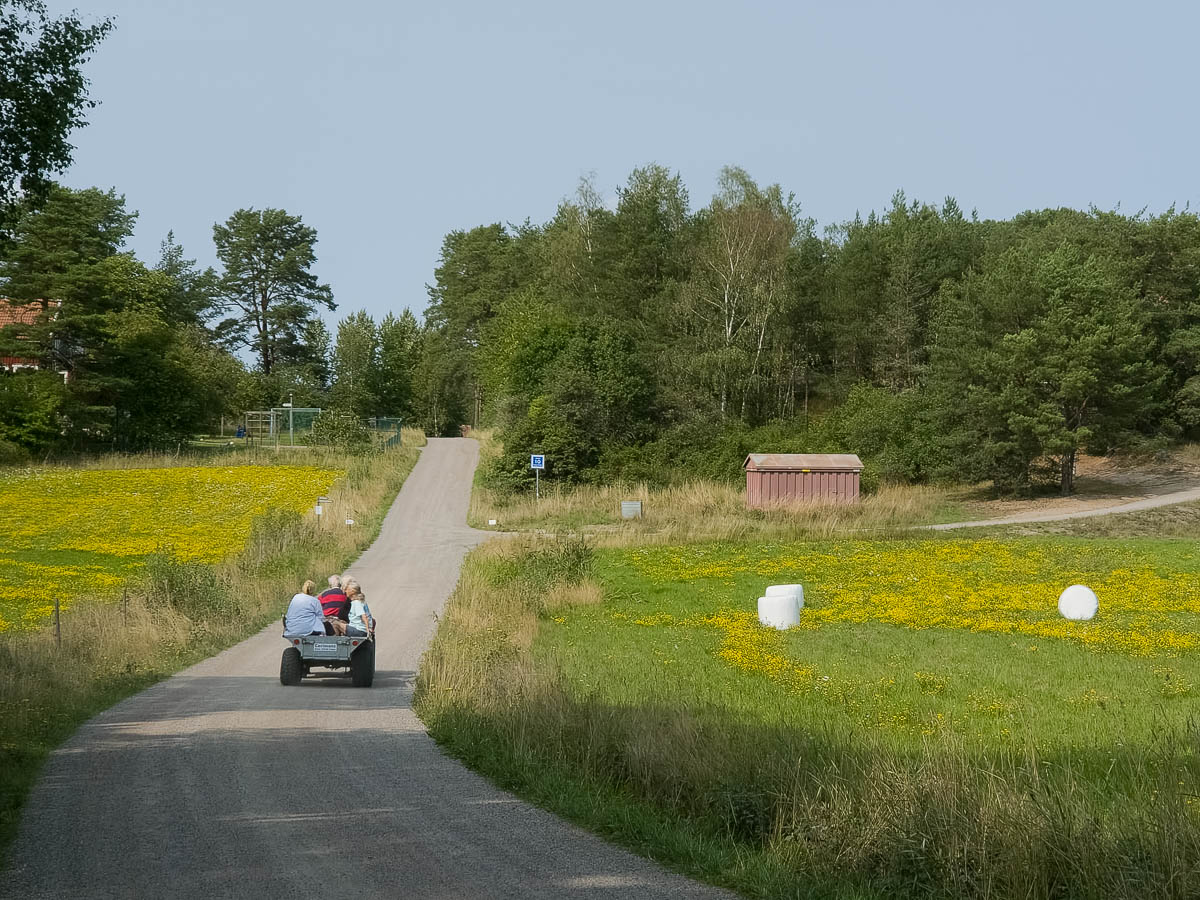
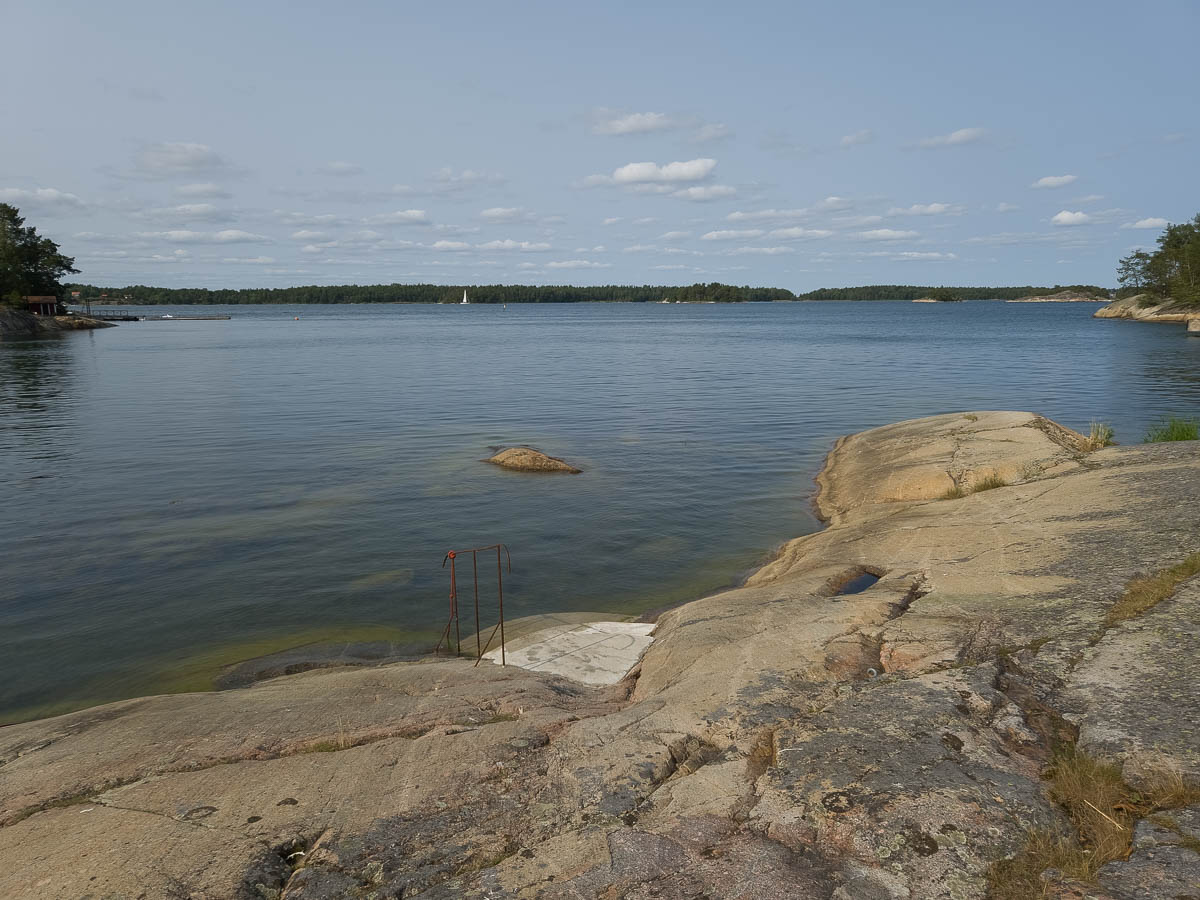
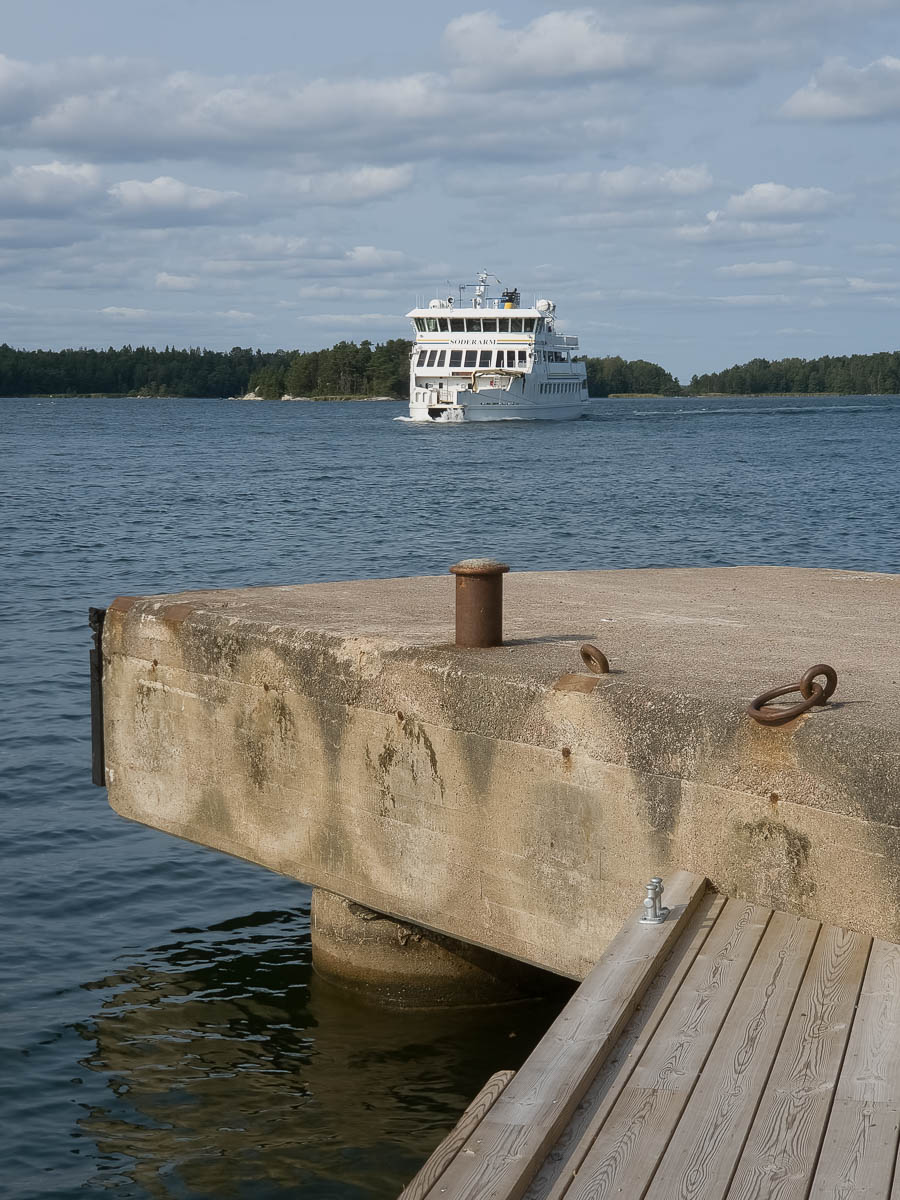
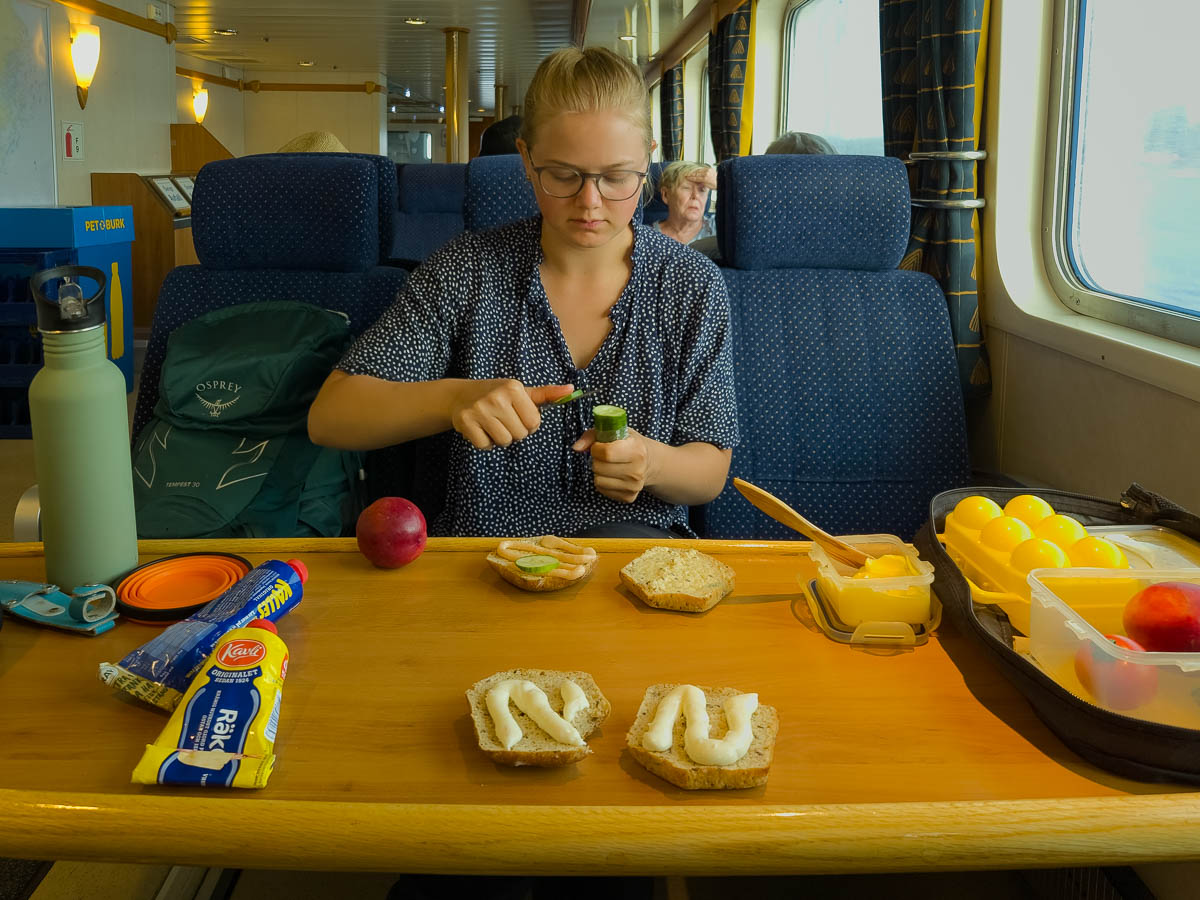
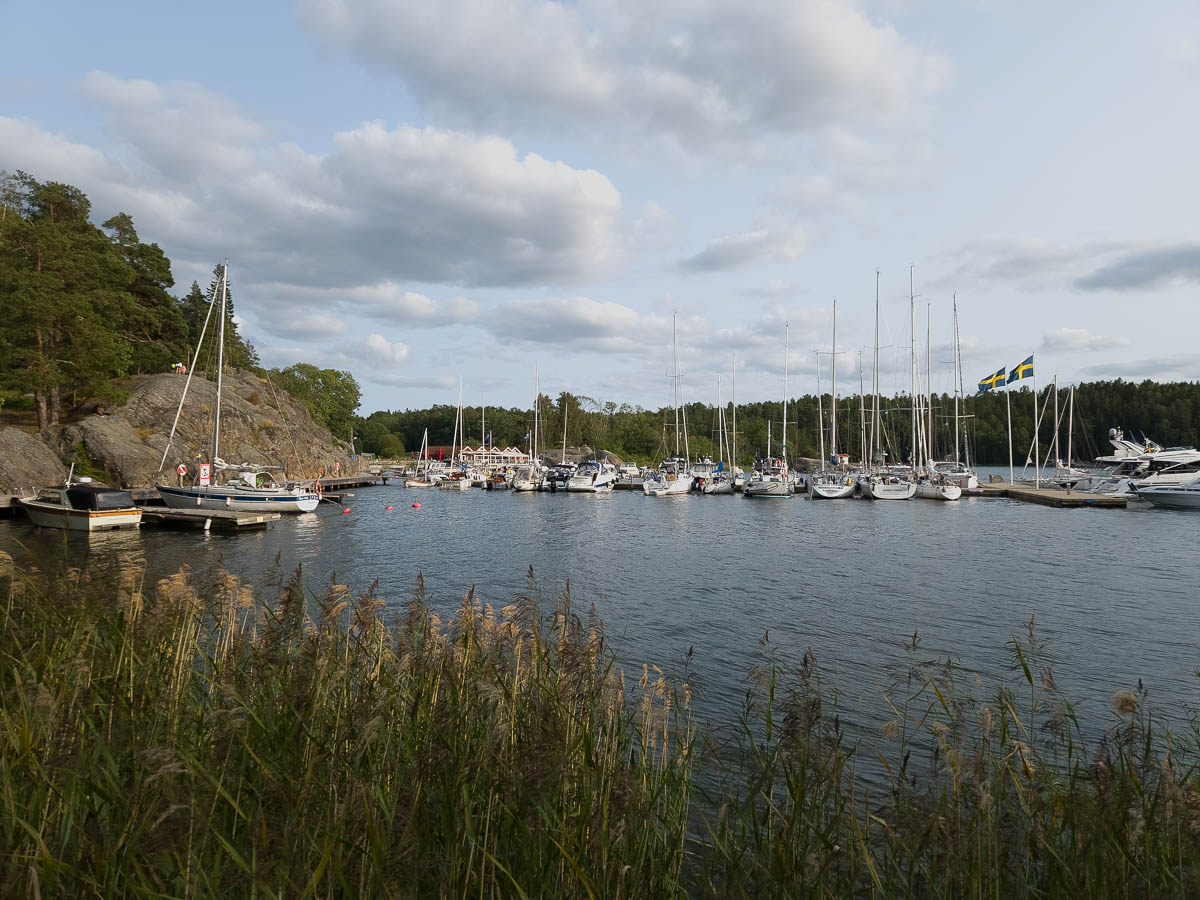
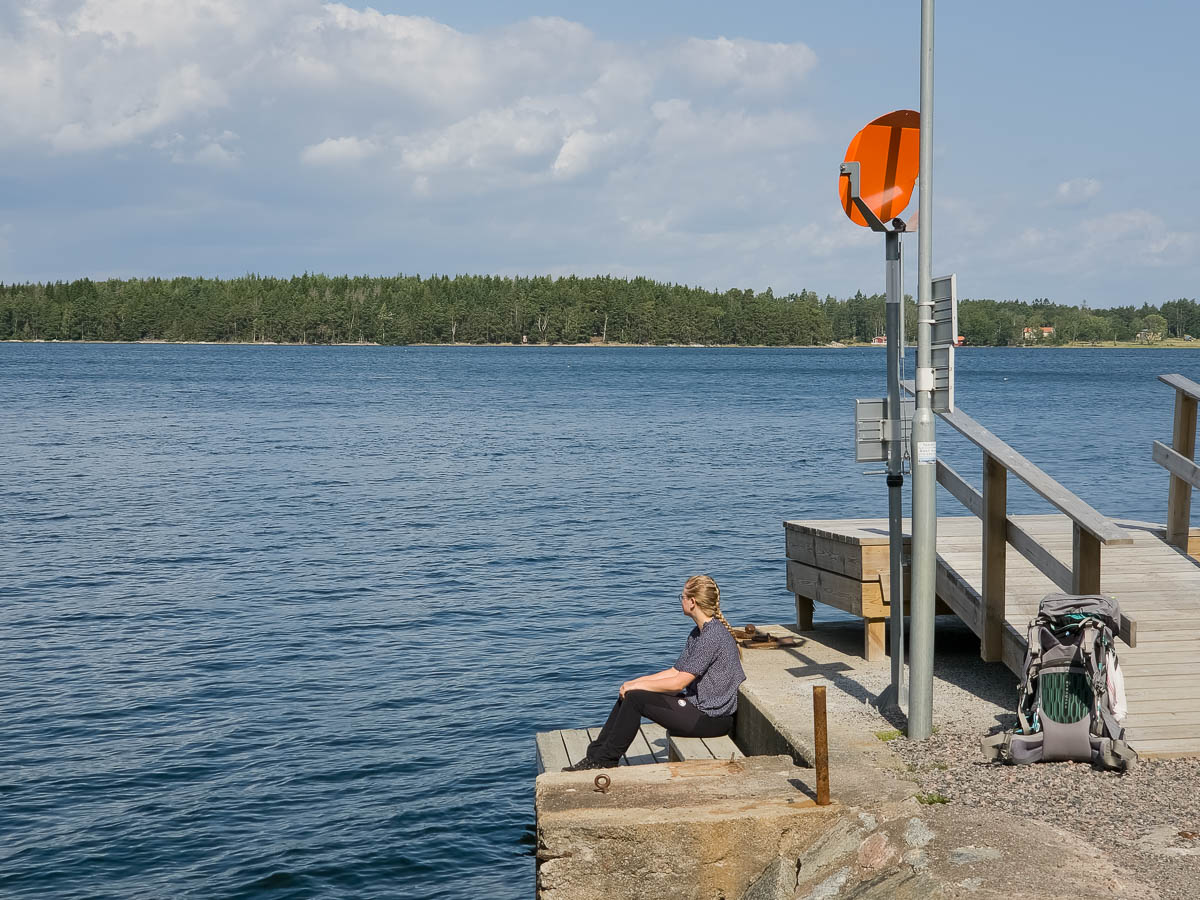
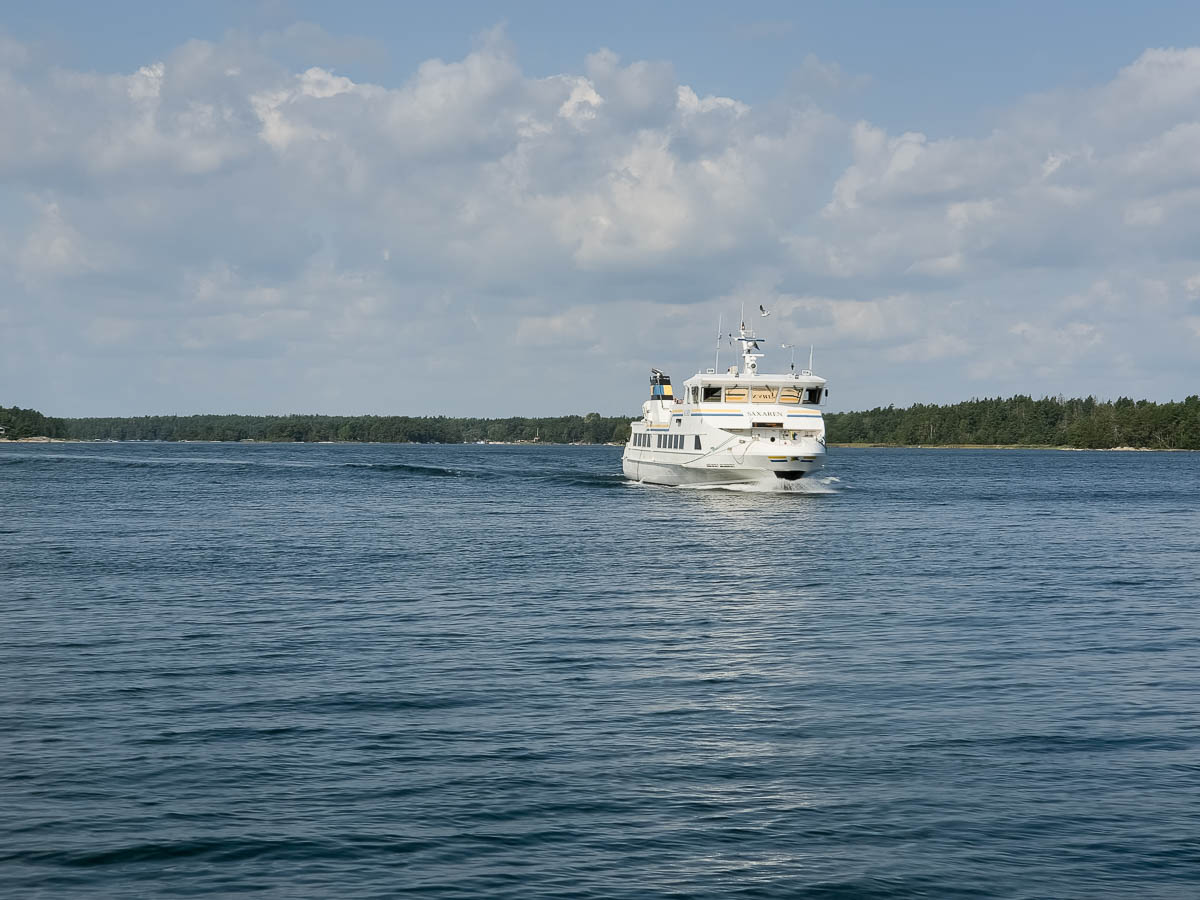
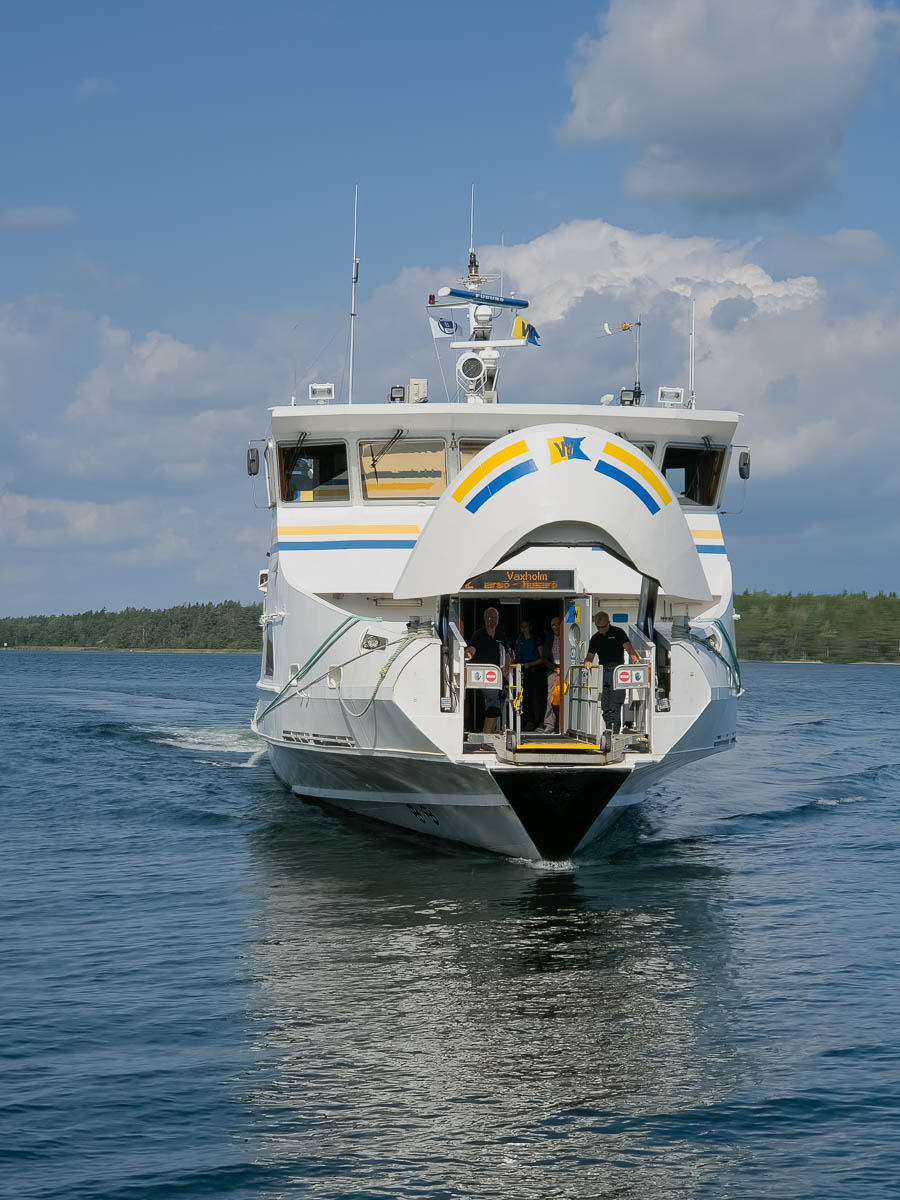
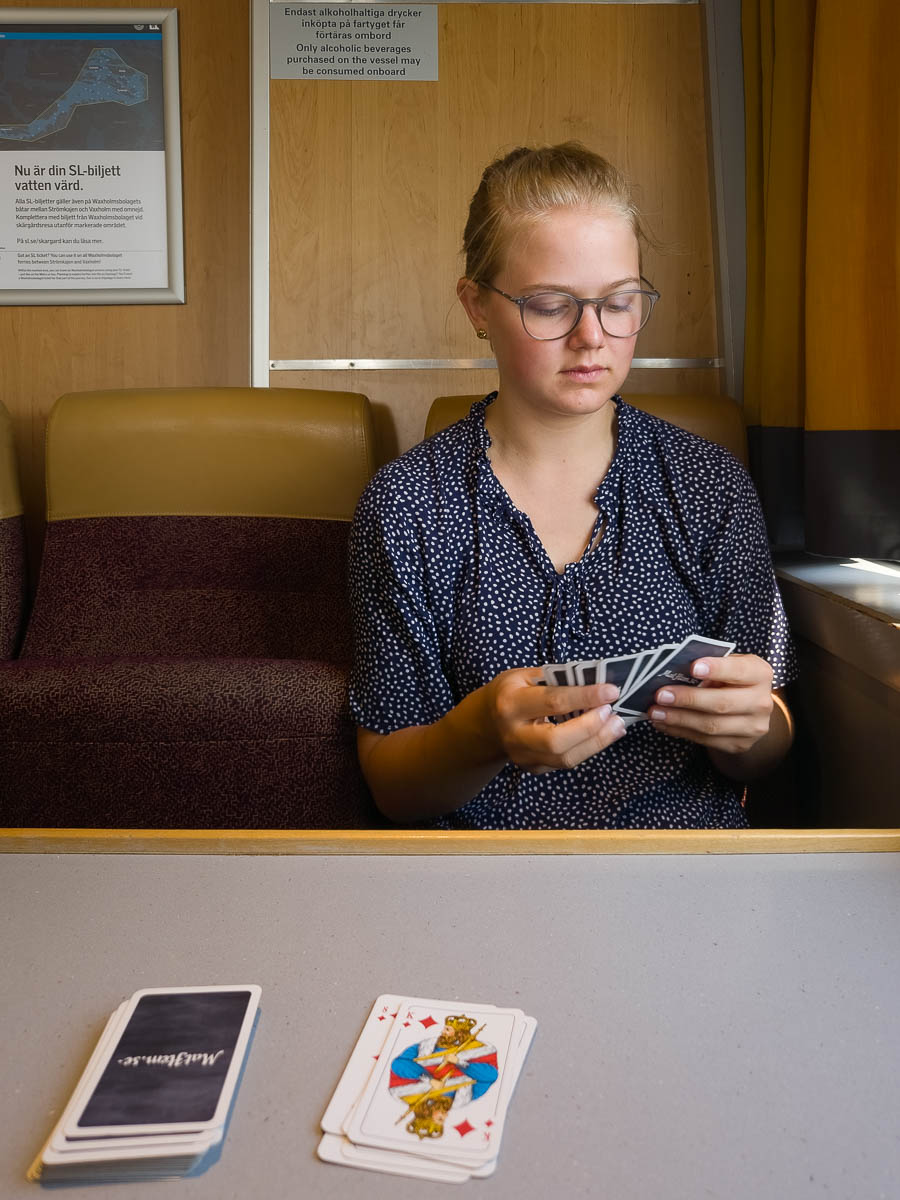
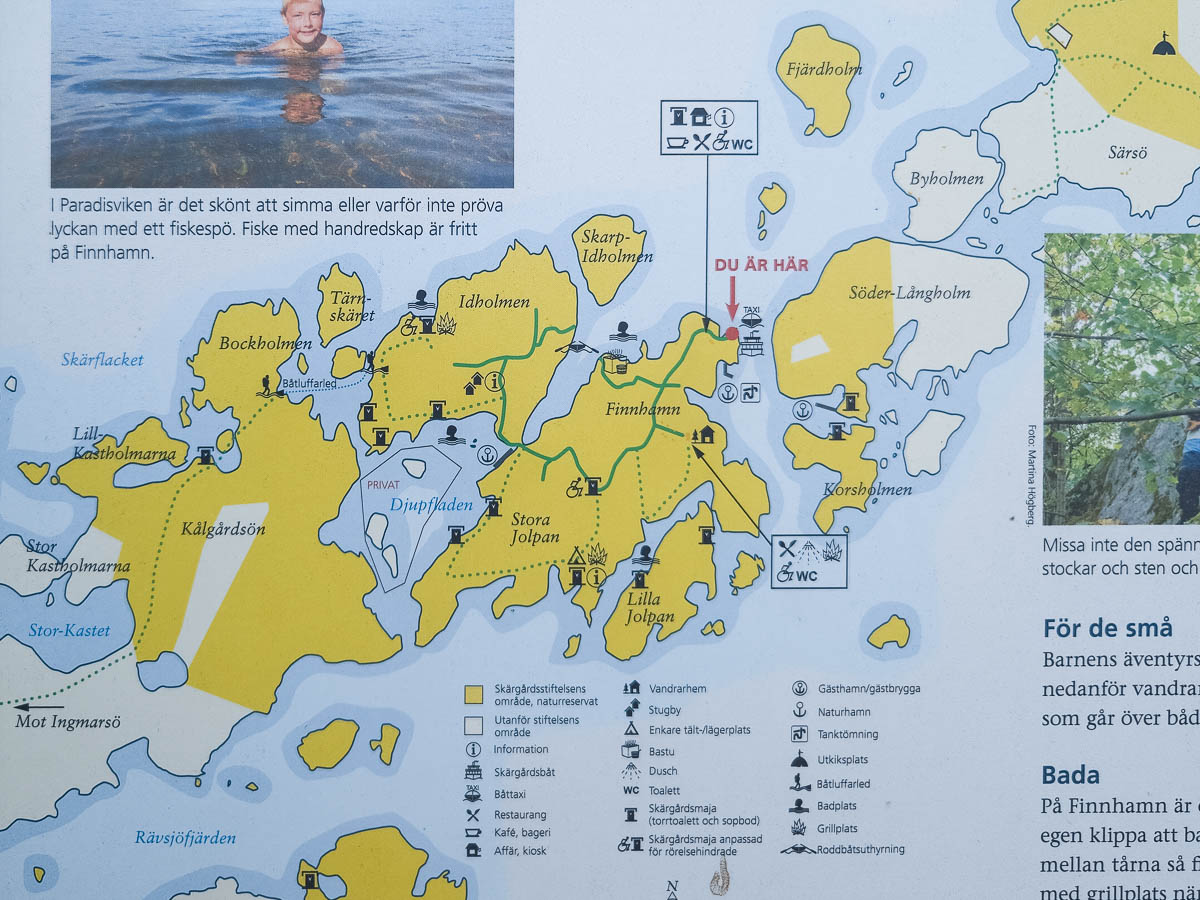
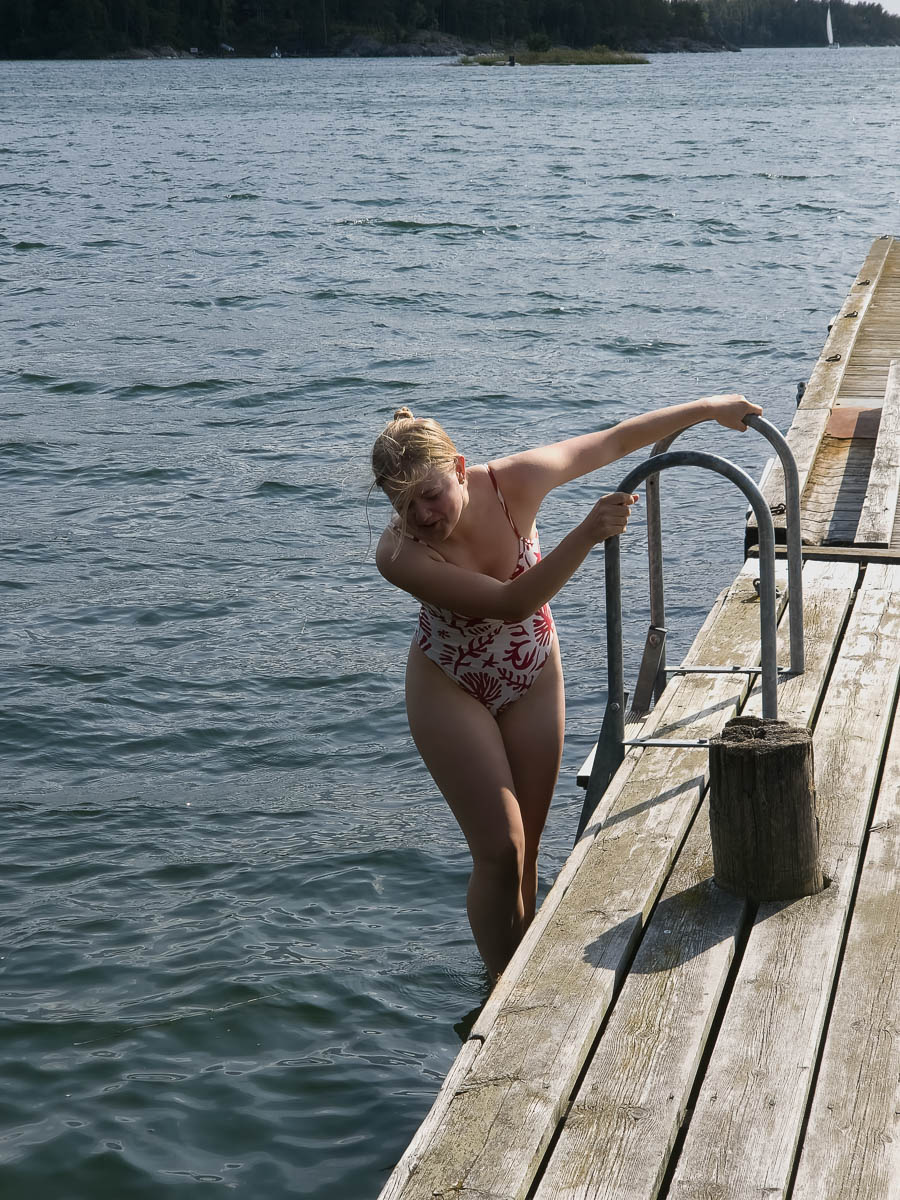
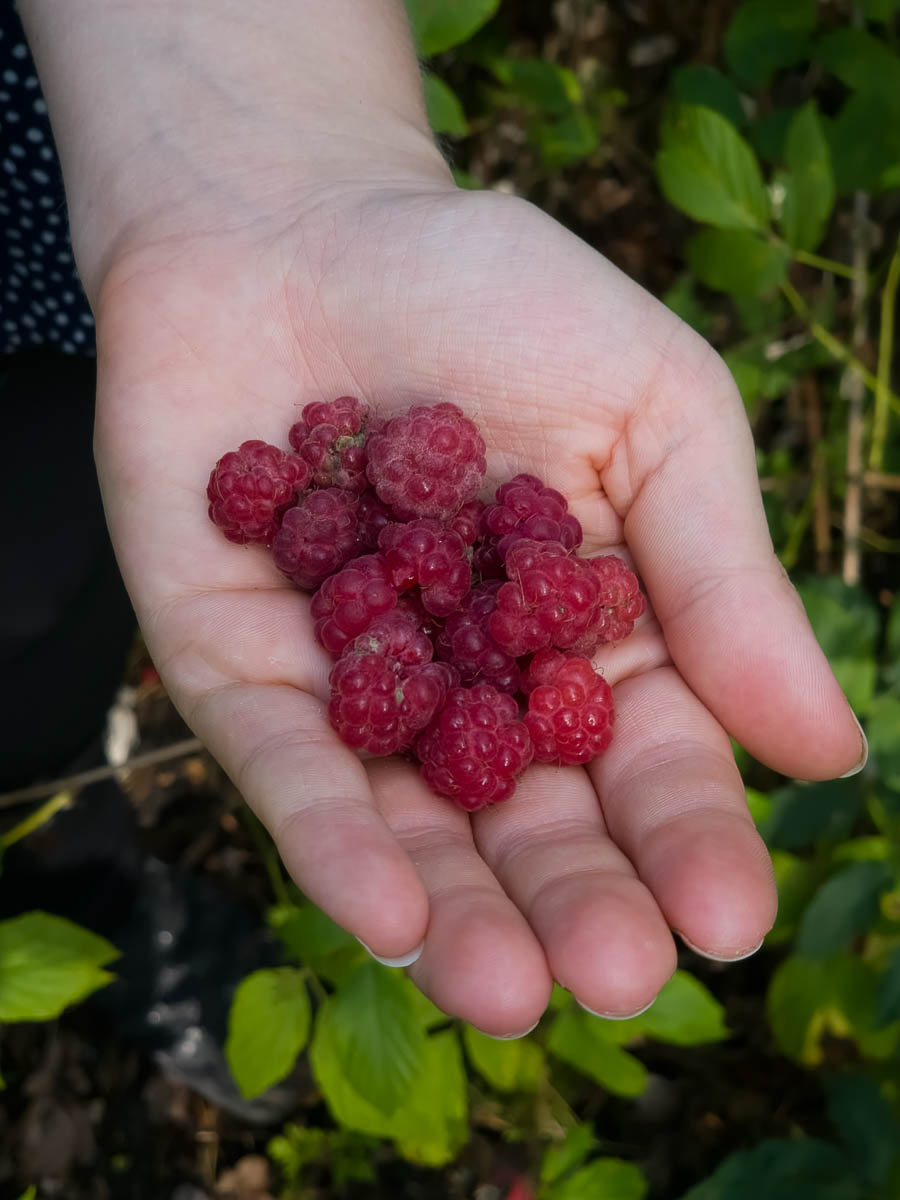
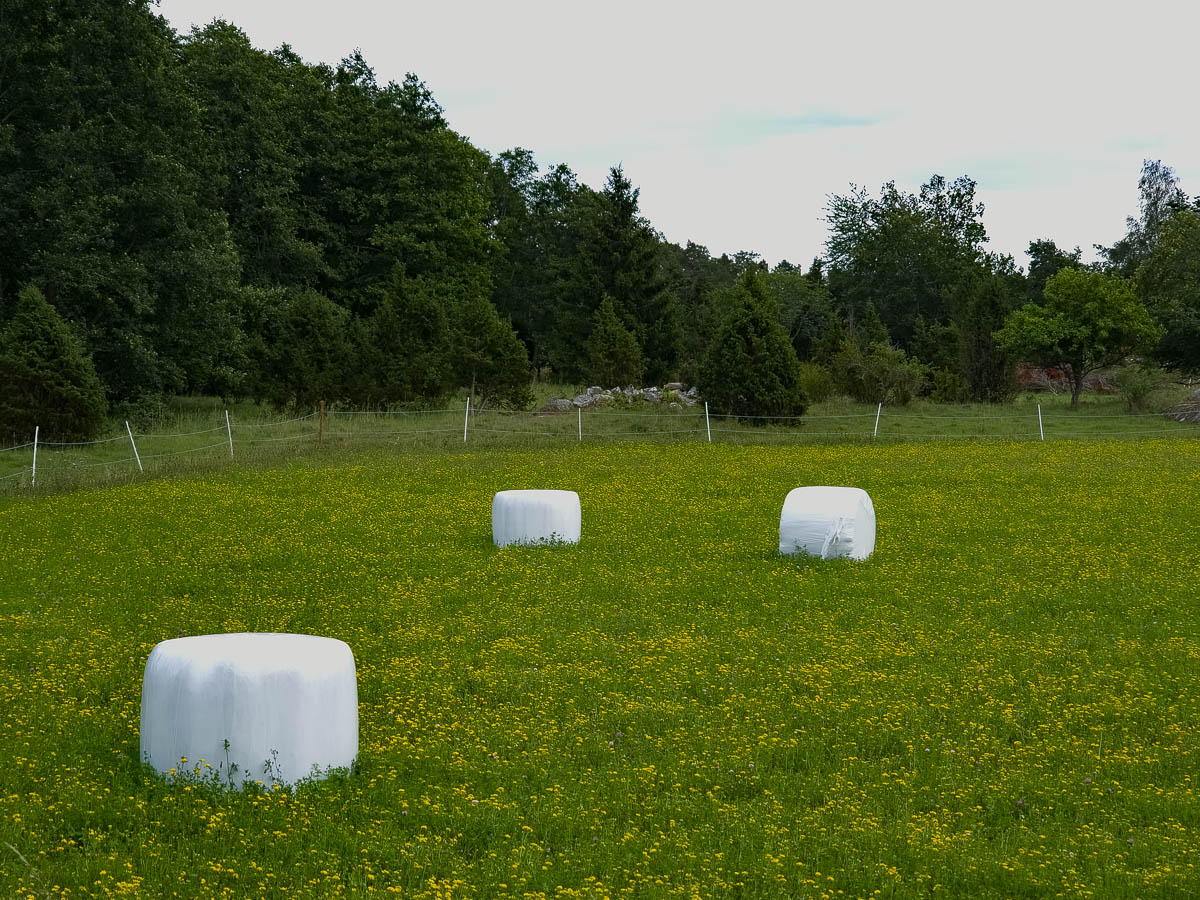
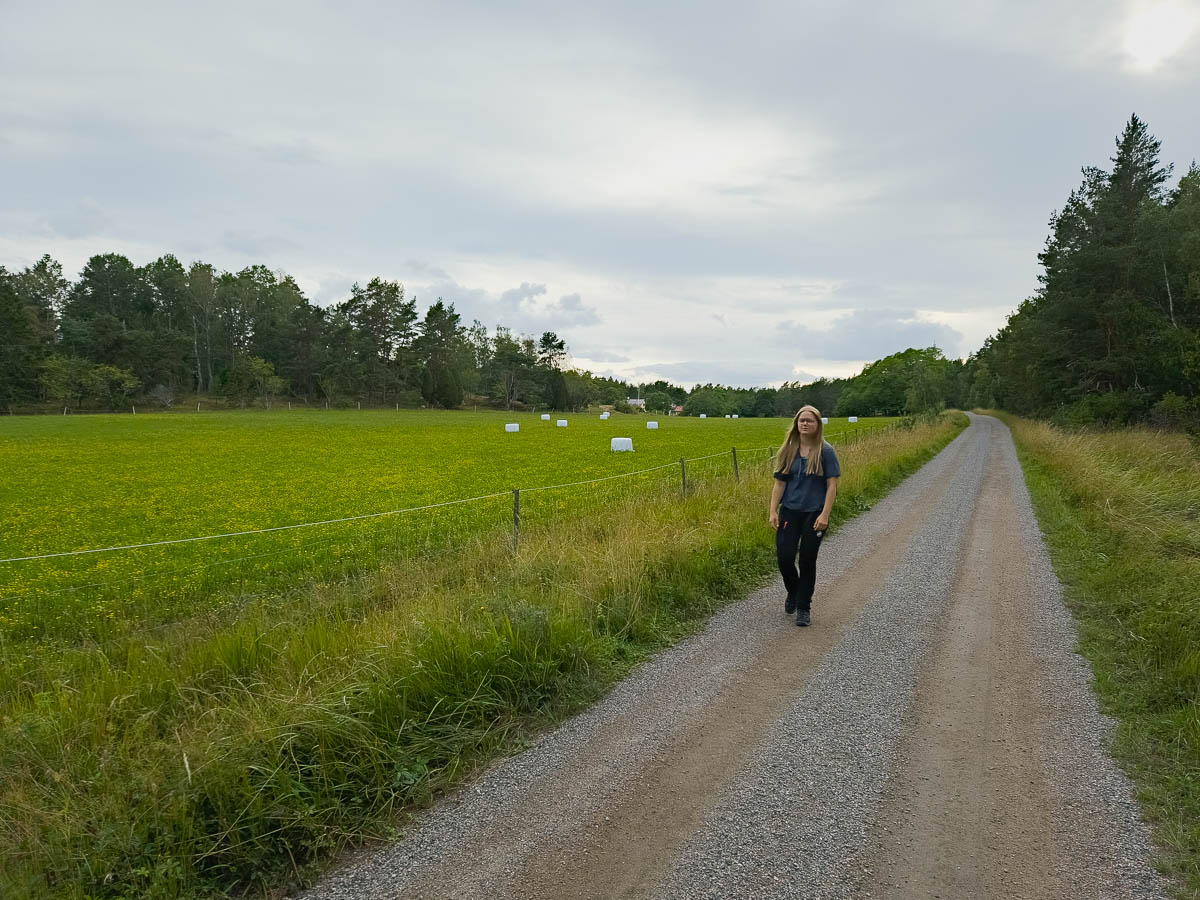
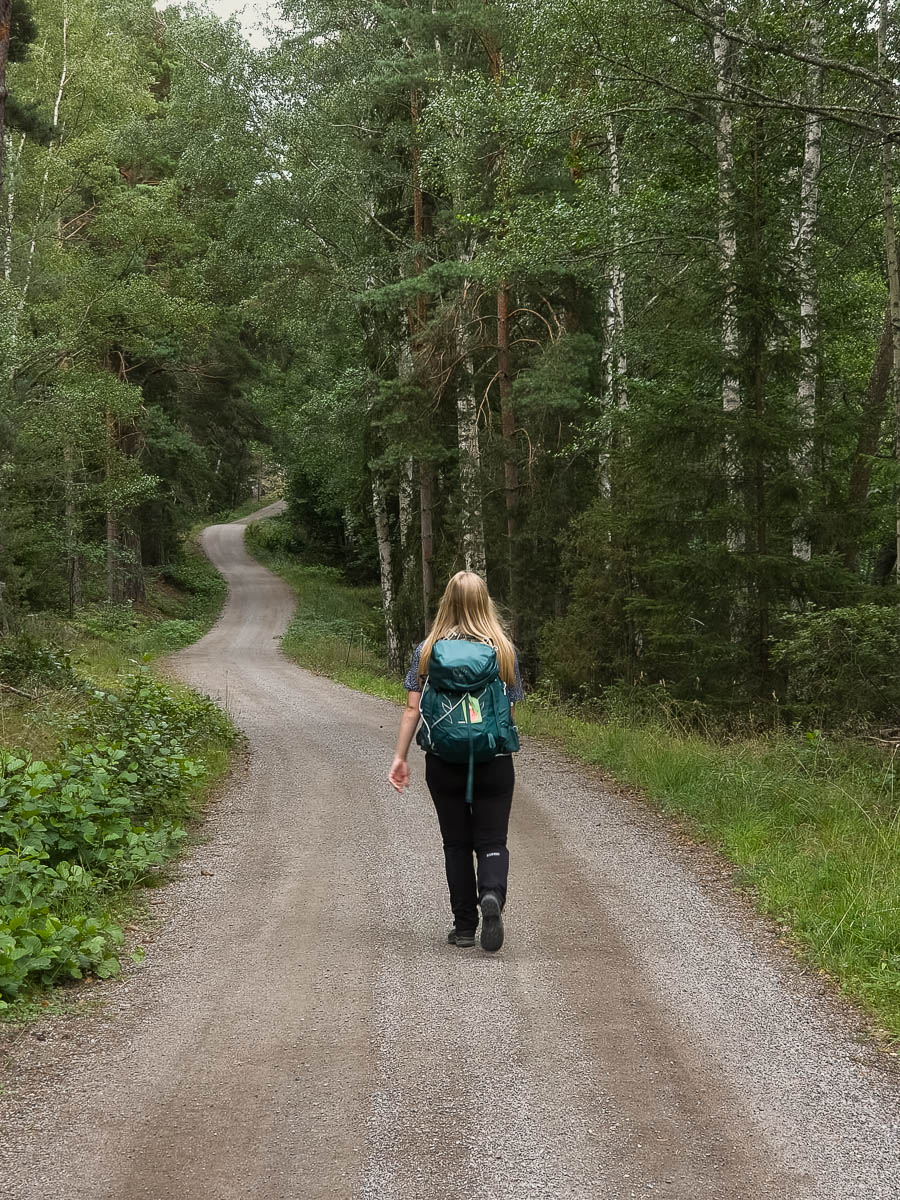
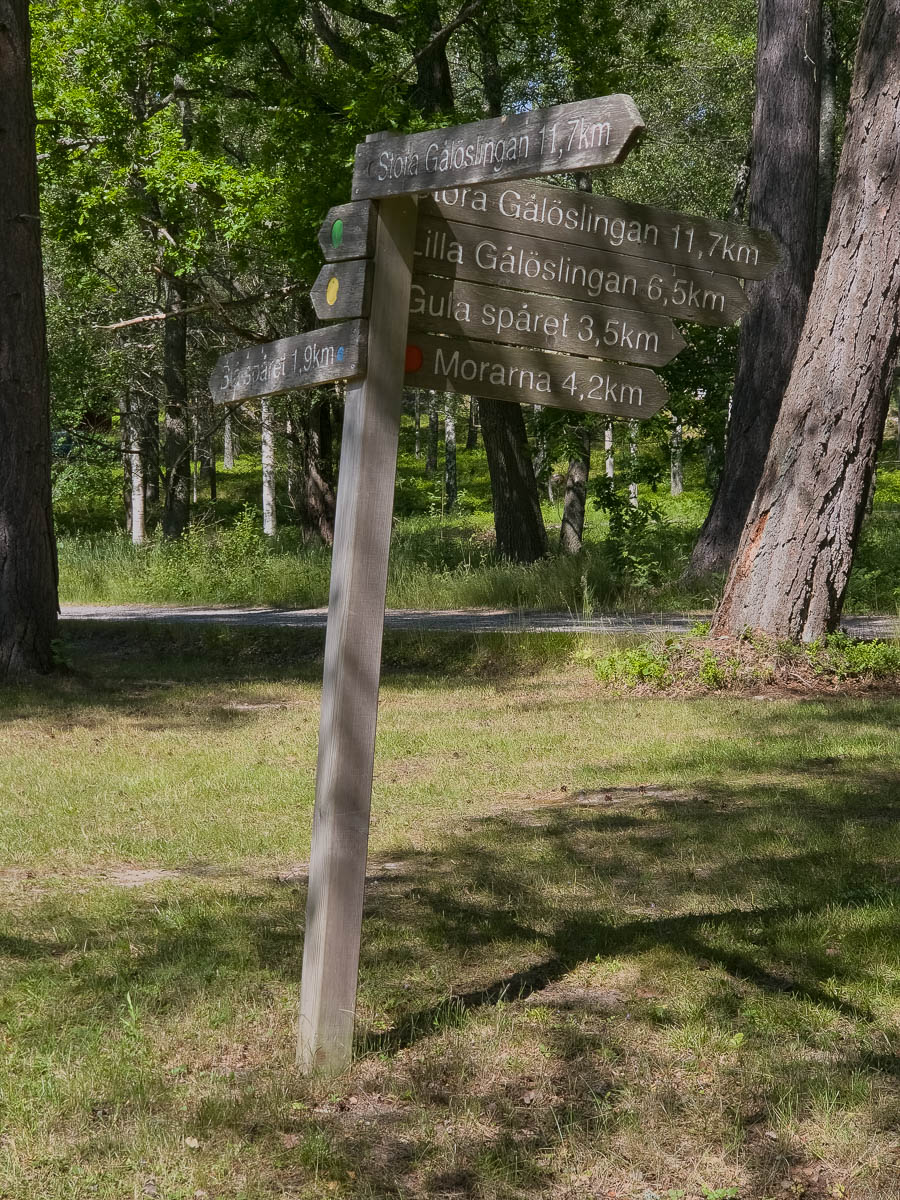
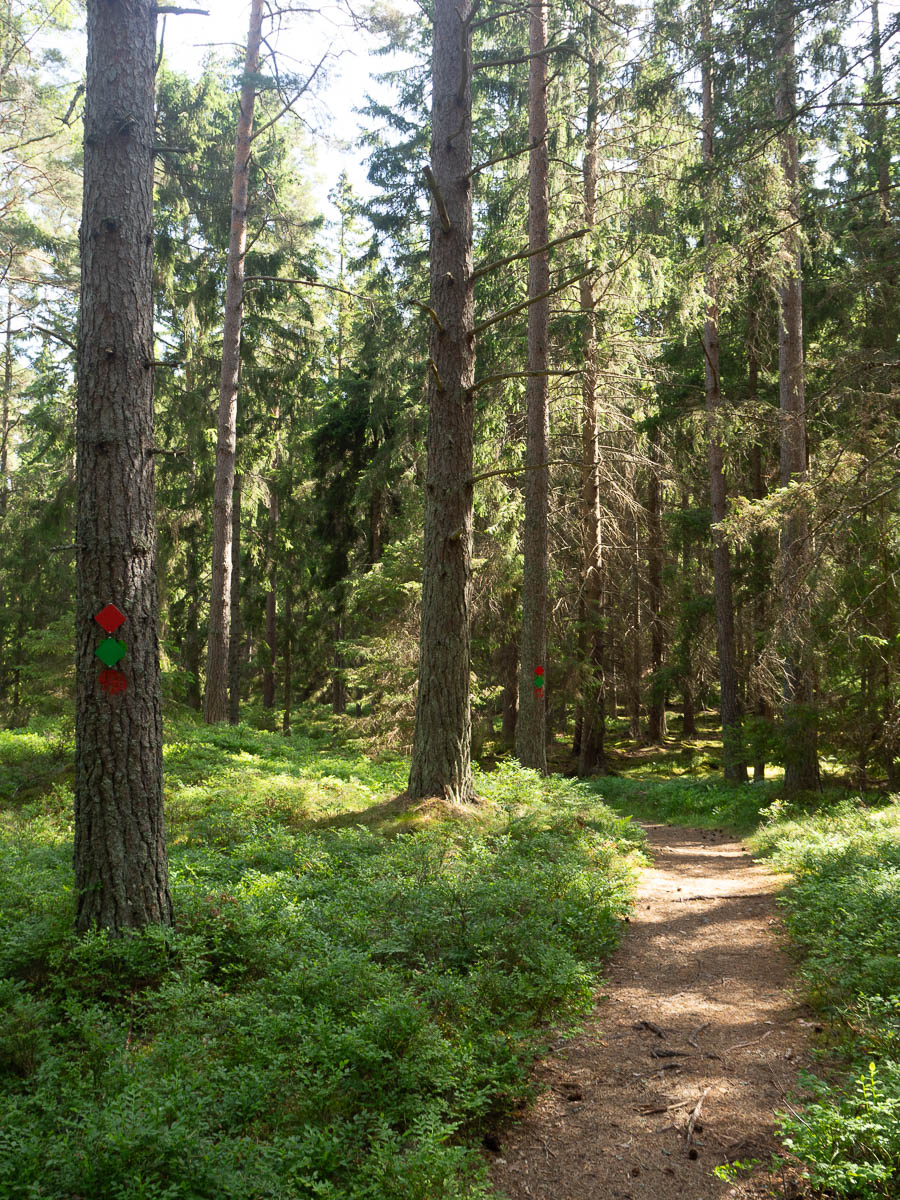
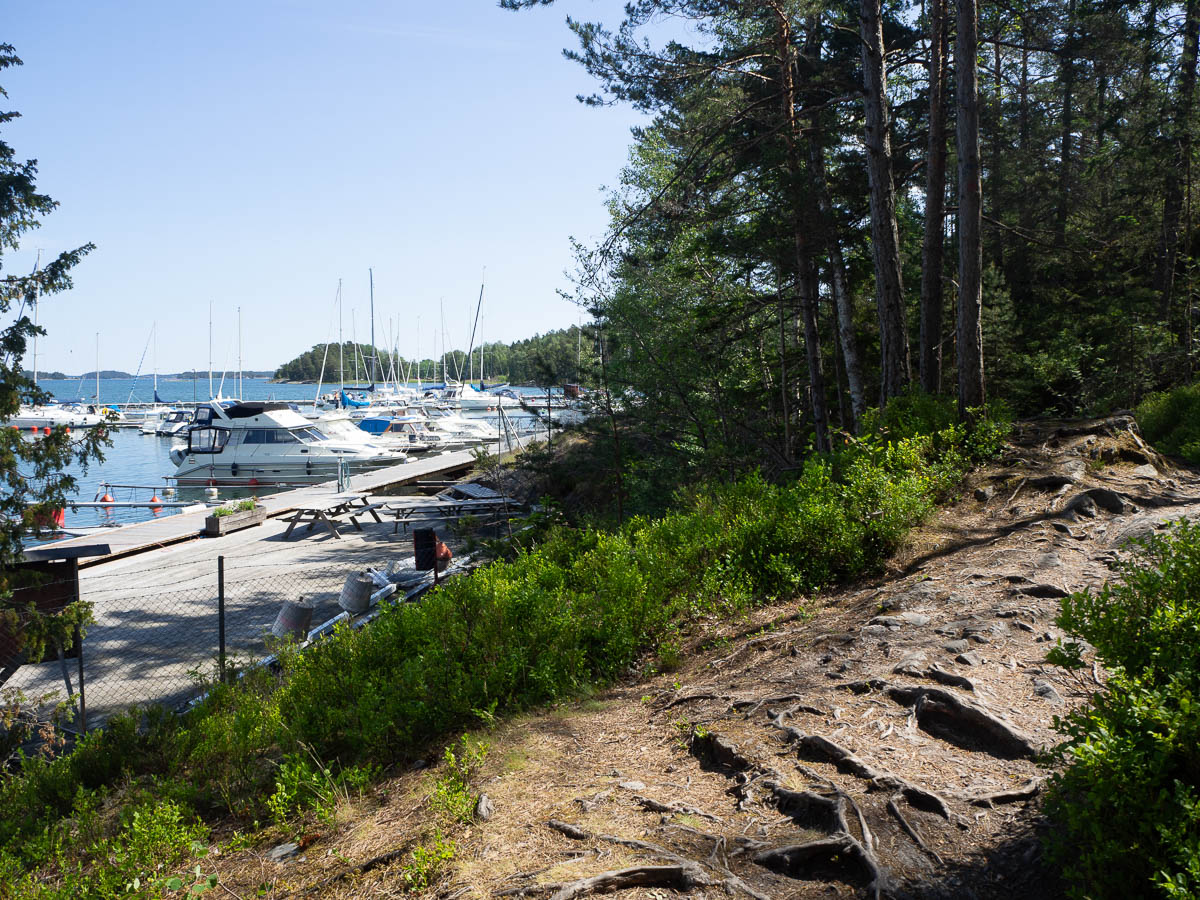
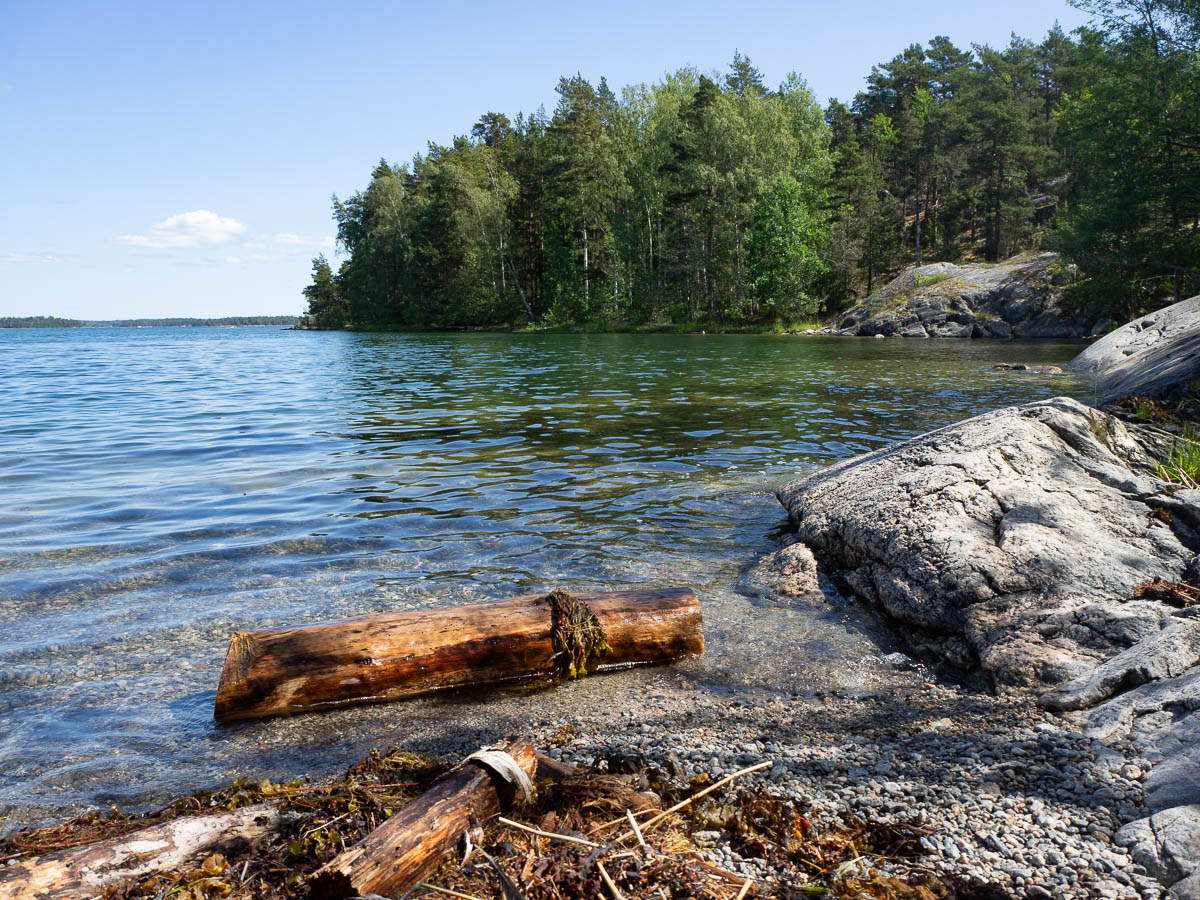
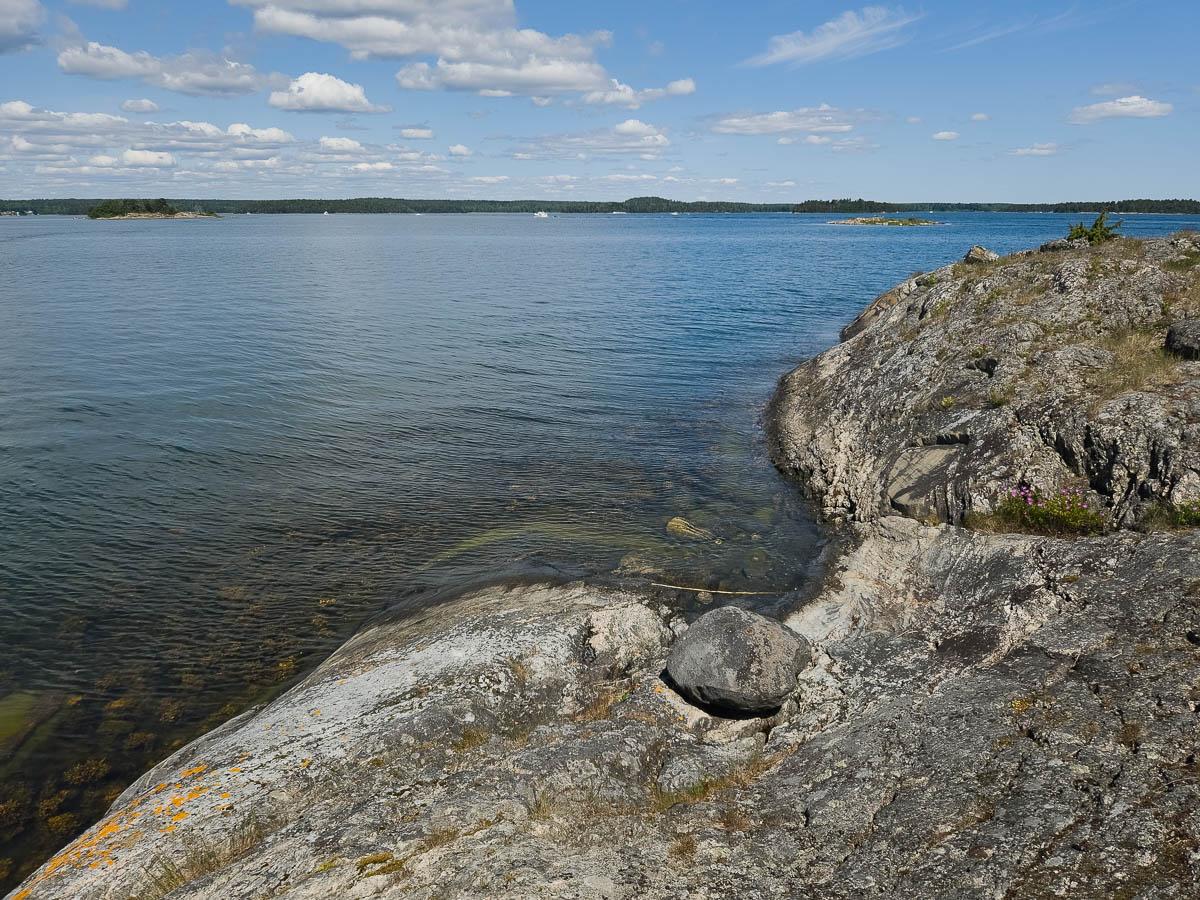
A beautiful day, not too hot, perfect for walking. I’ve been longing for some seaside views, so I revisited Gålö.

Last time we did a 4.5 km circuit along Havtornsudd, a long, skinny spit of land at the very tip of Gålö. I wanted more walking than that today, so I did the Greater Gålö Circuit, which covers that shorter circuit and adds more to it.

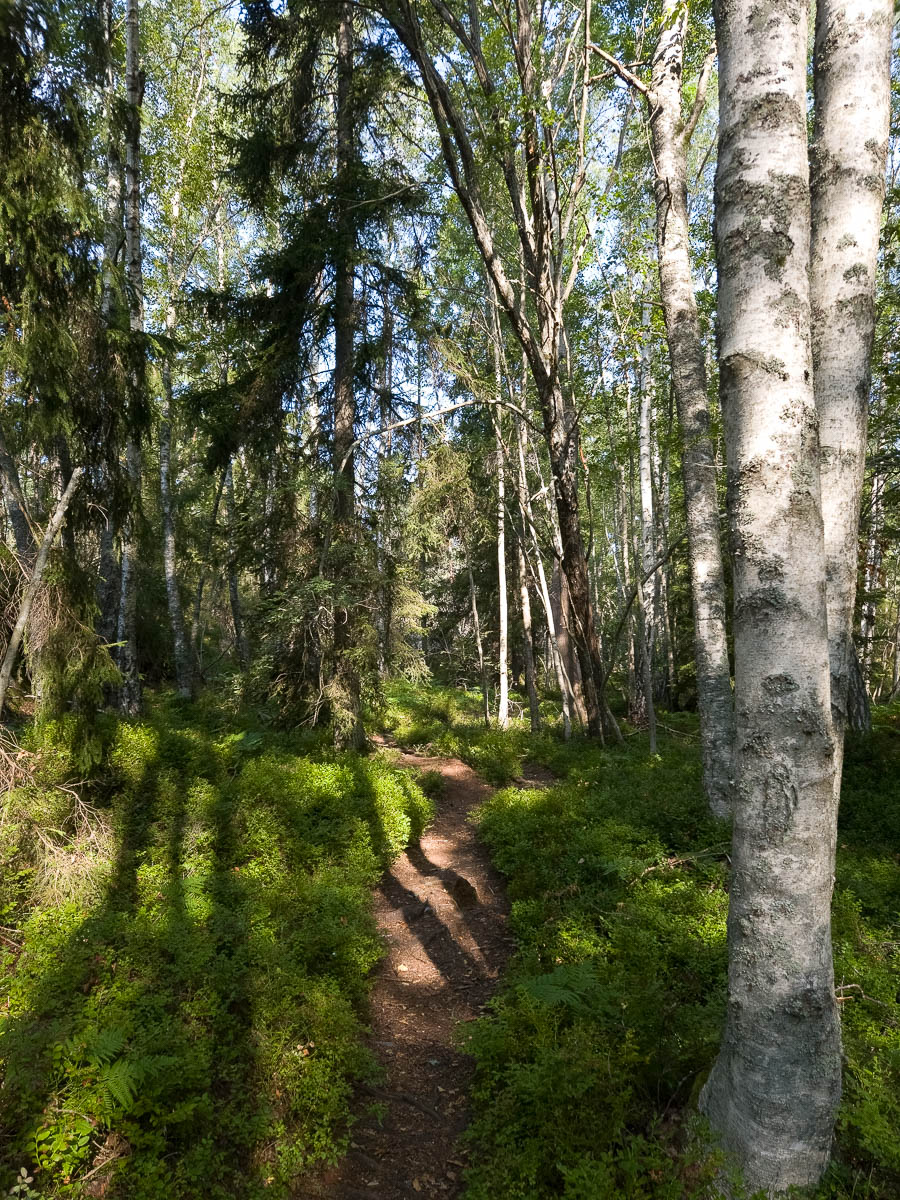
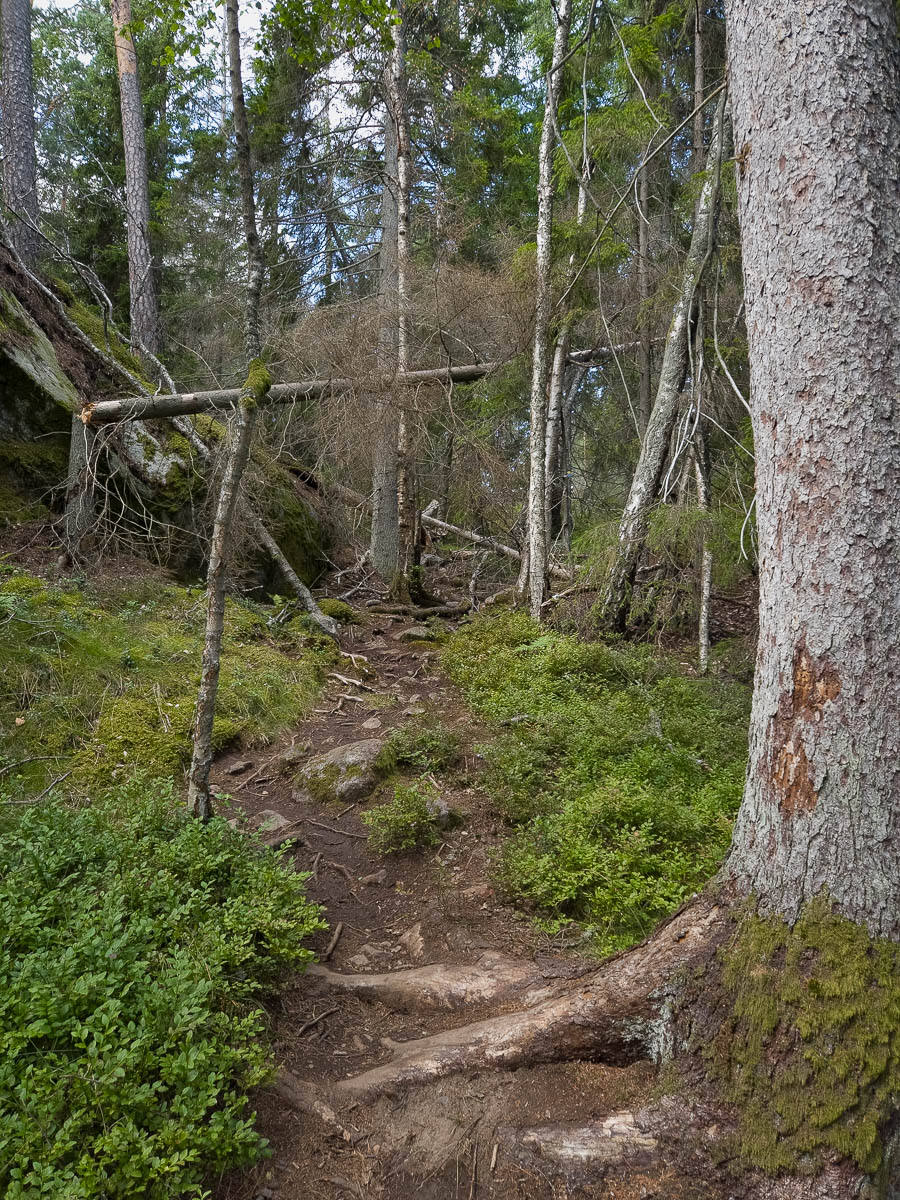
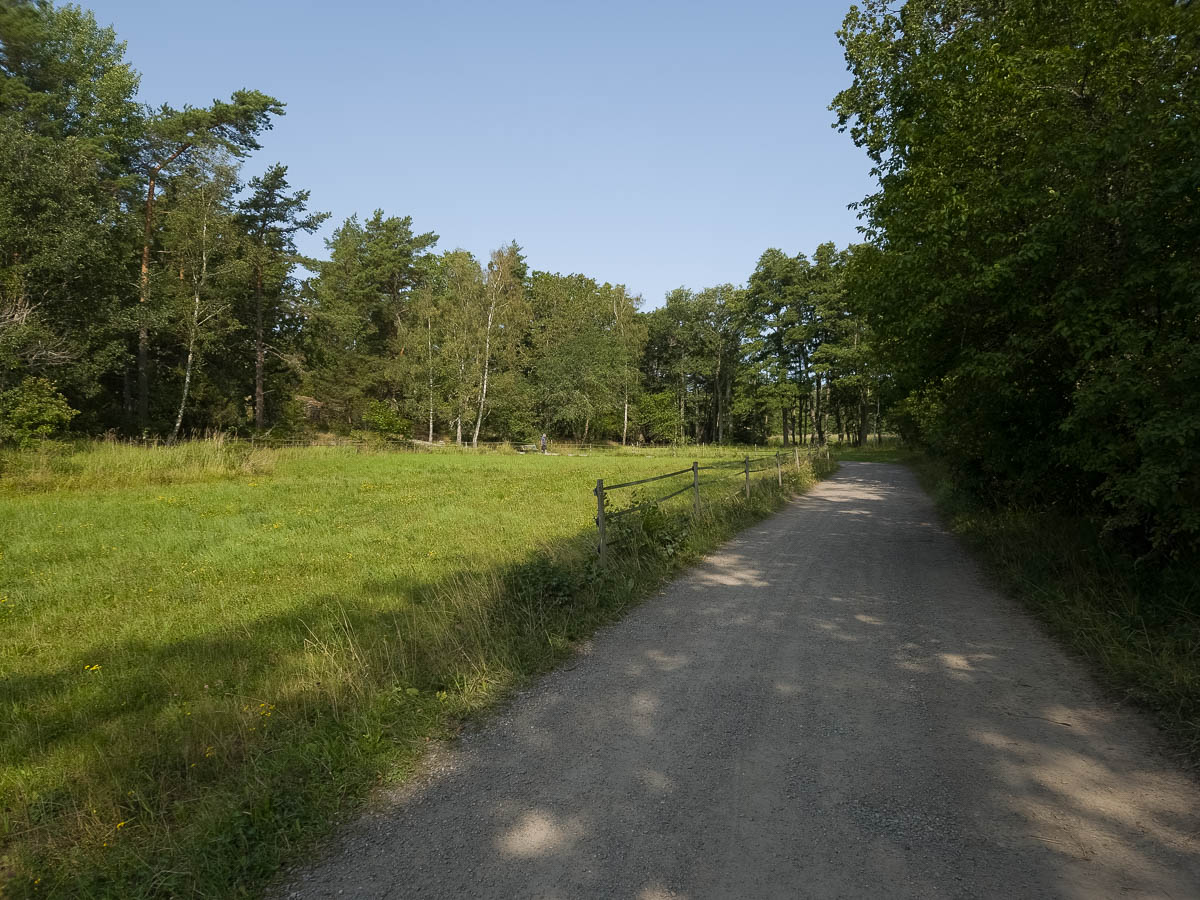
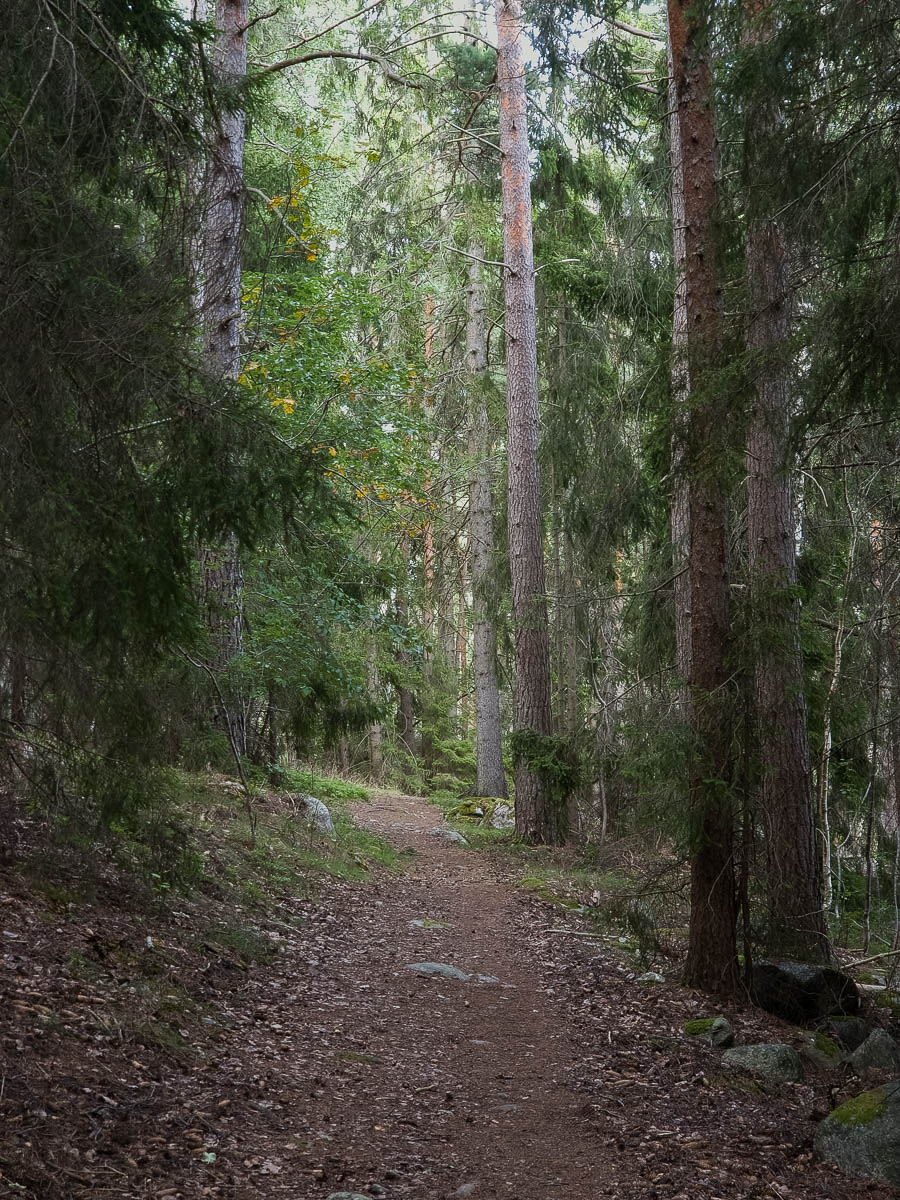
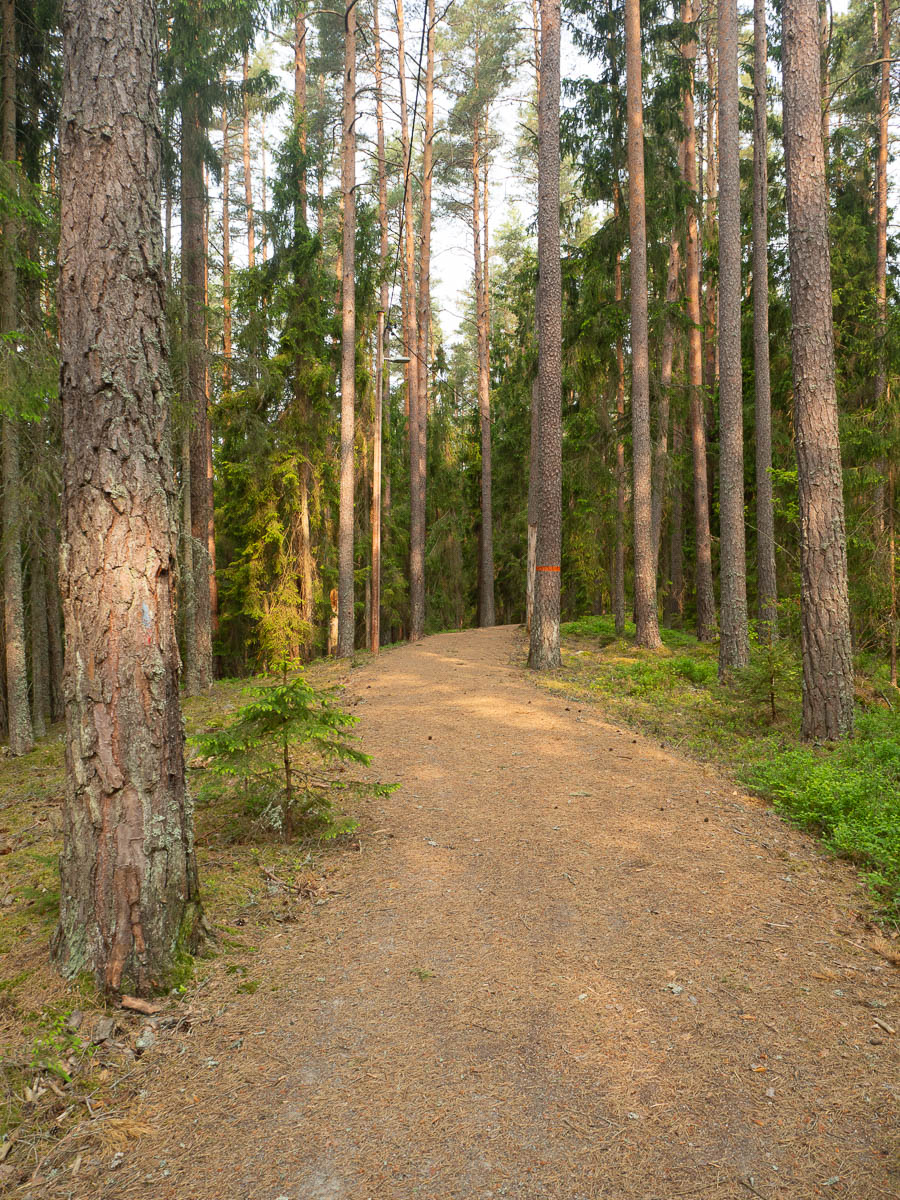
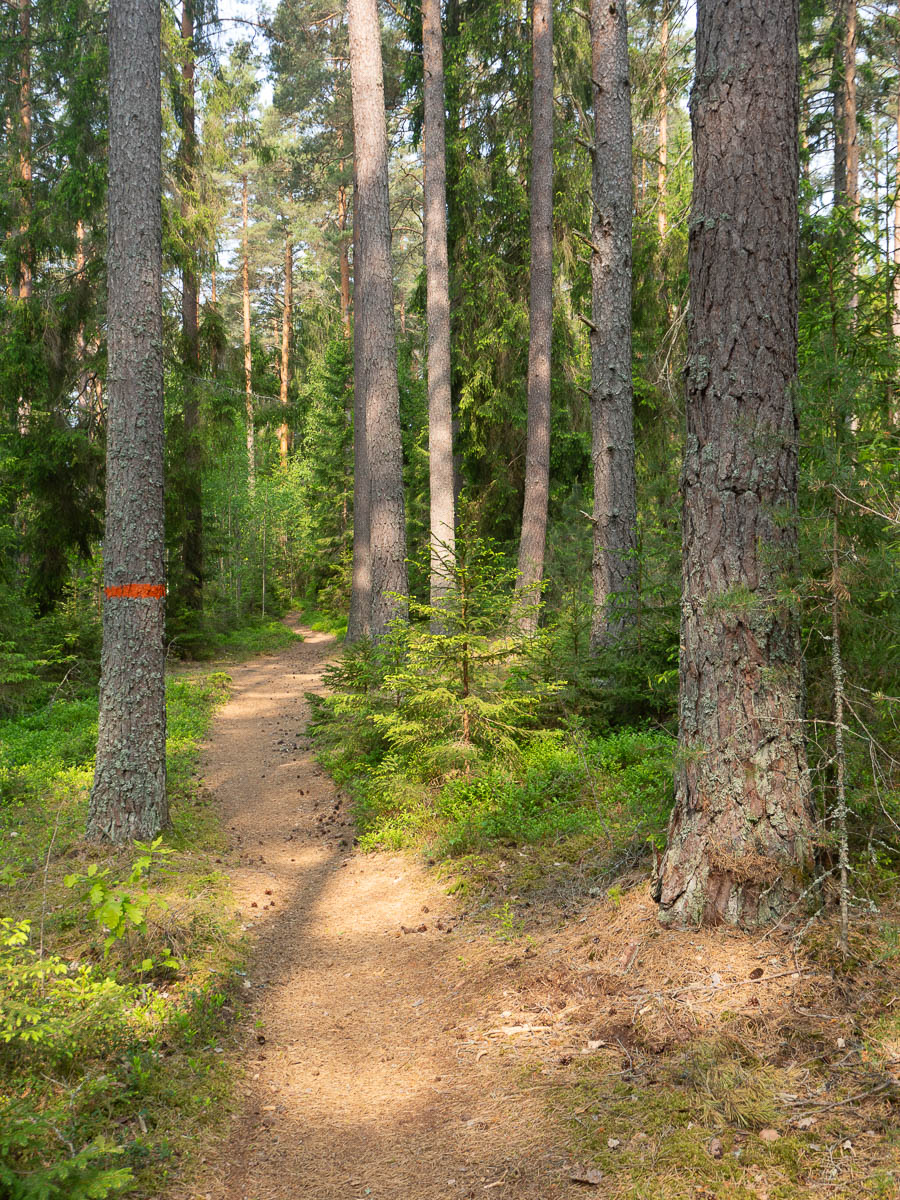
Havtornsudd was by far the most interesting part of the walk. The rest was kind of just additional kilometres. Nothing wrong with it – but there also wasn’t anything in particular to recommend it. Forest, trees, path.

After a while I reached Gålö camping and the familiar paths around Havtornsudd.

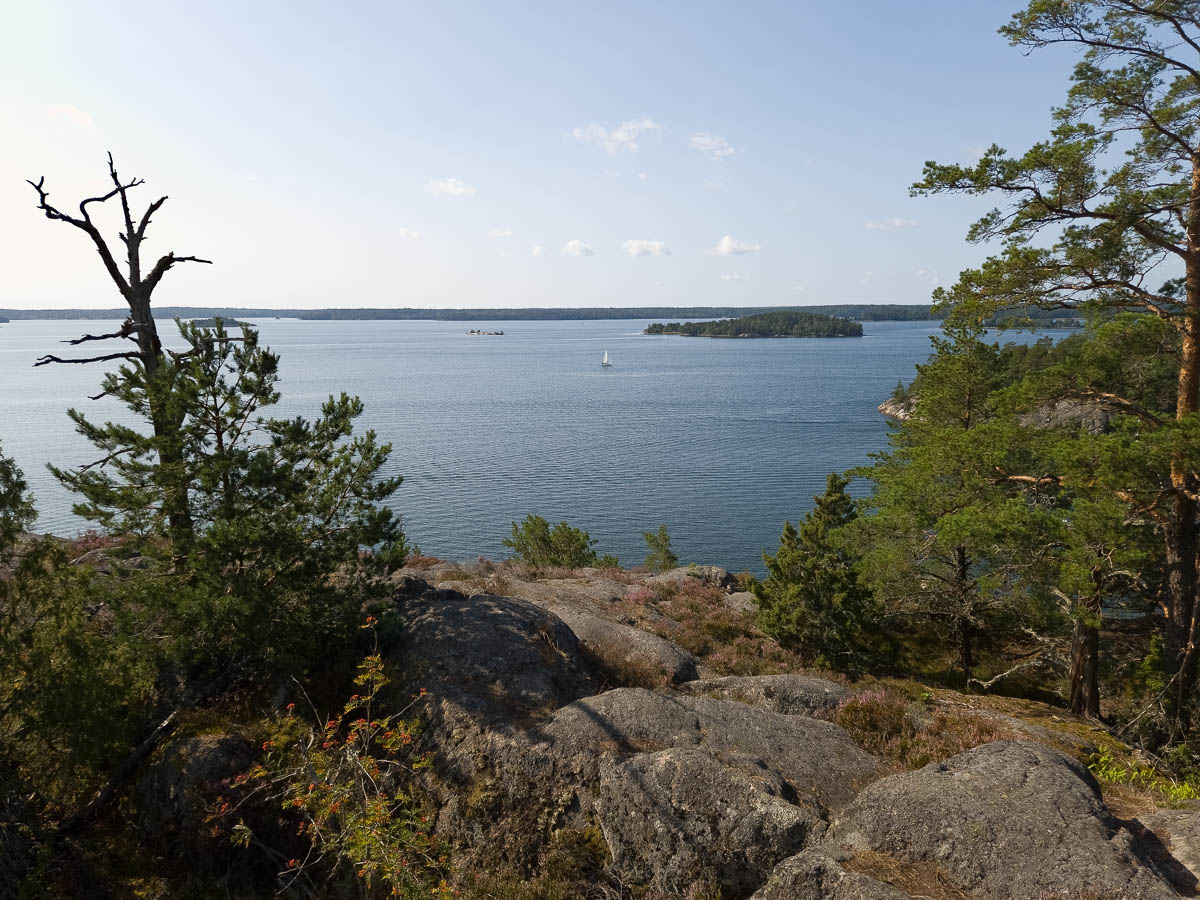
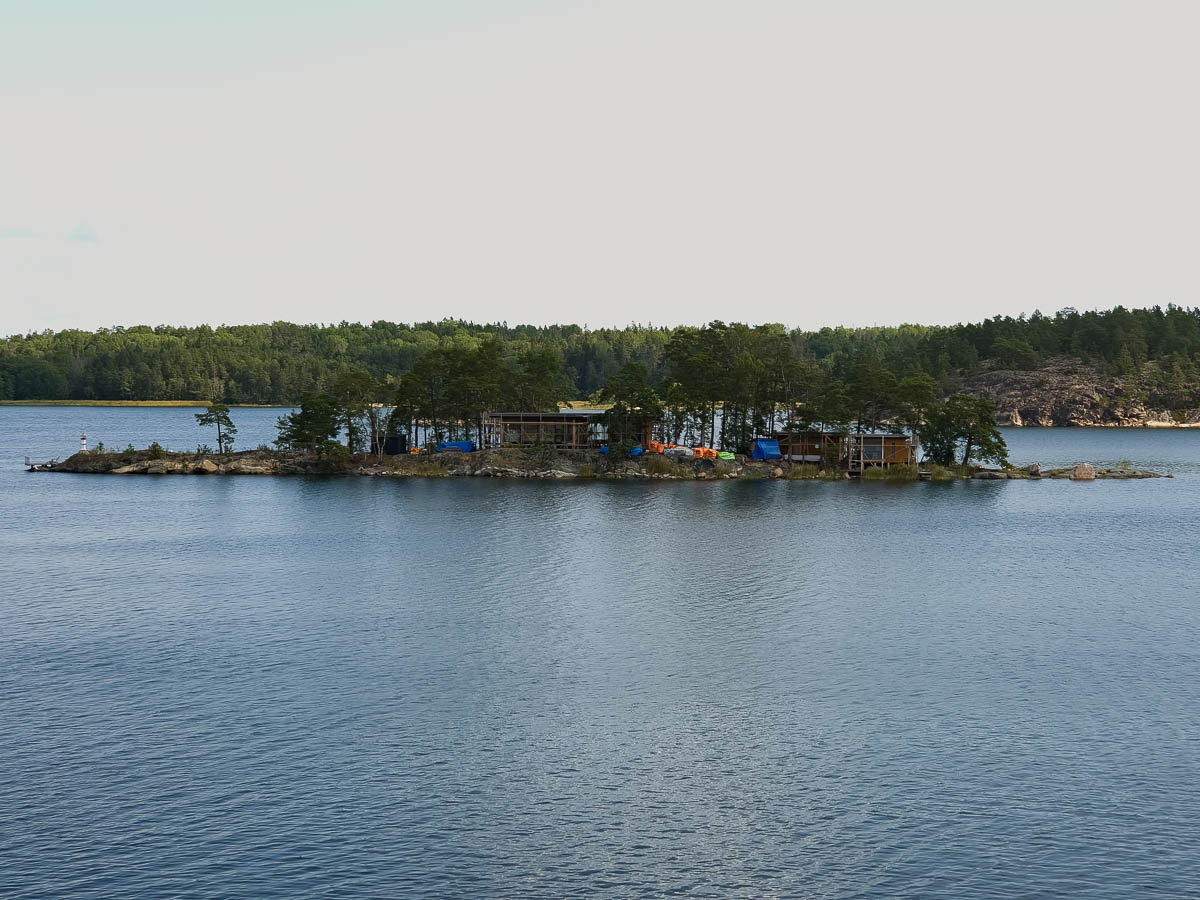
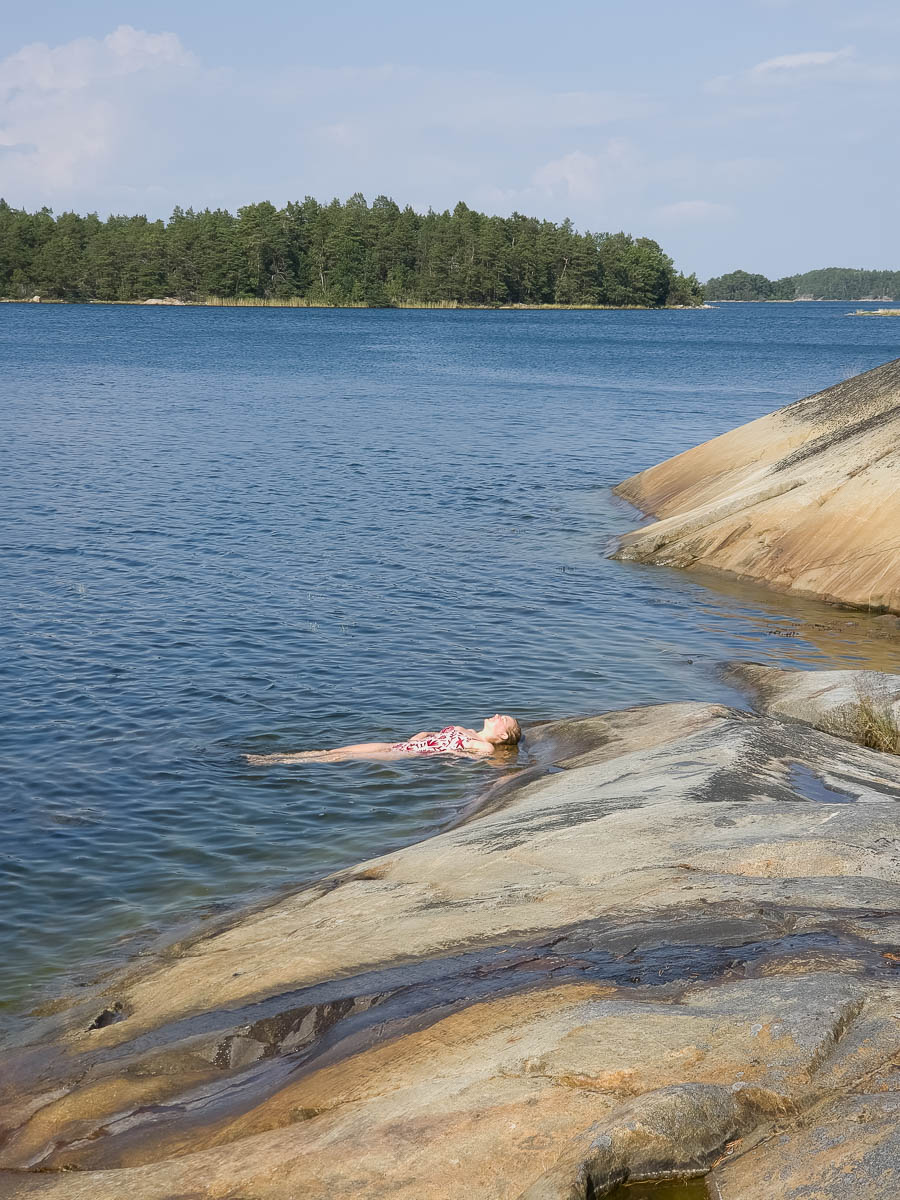
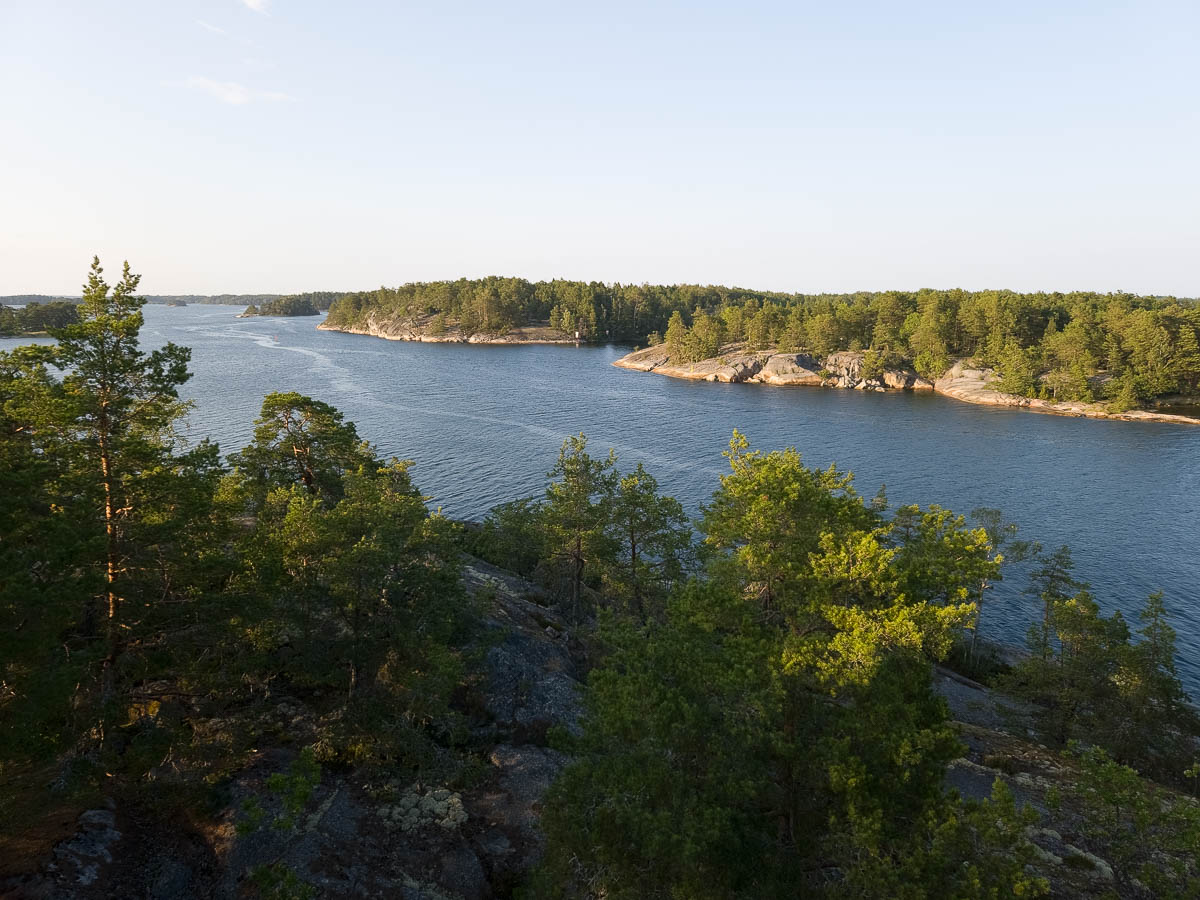
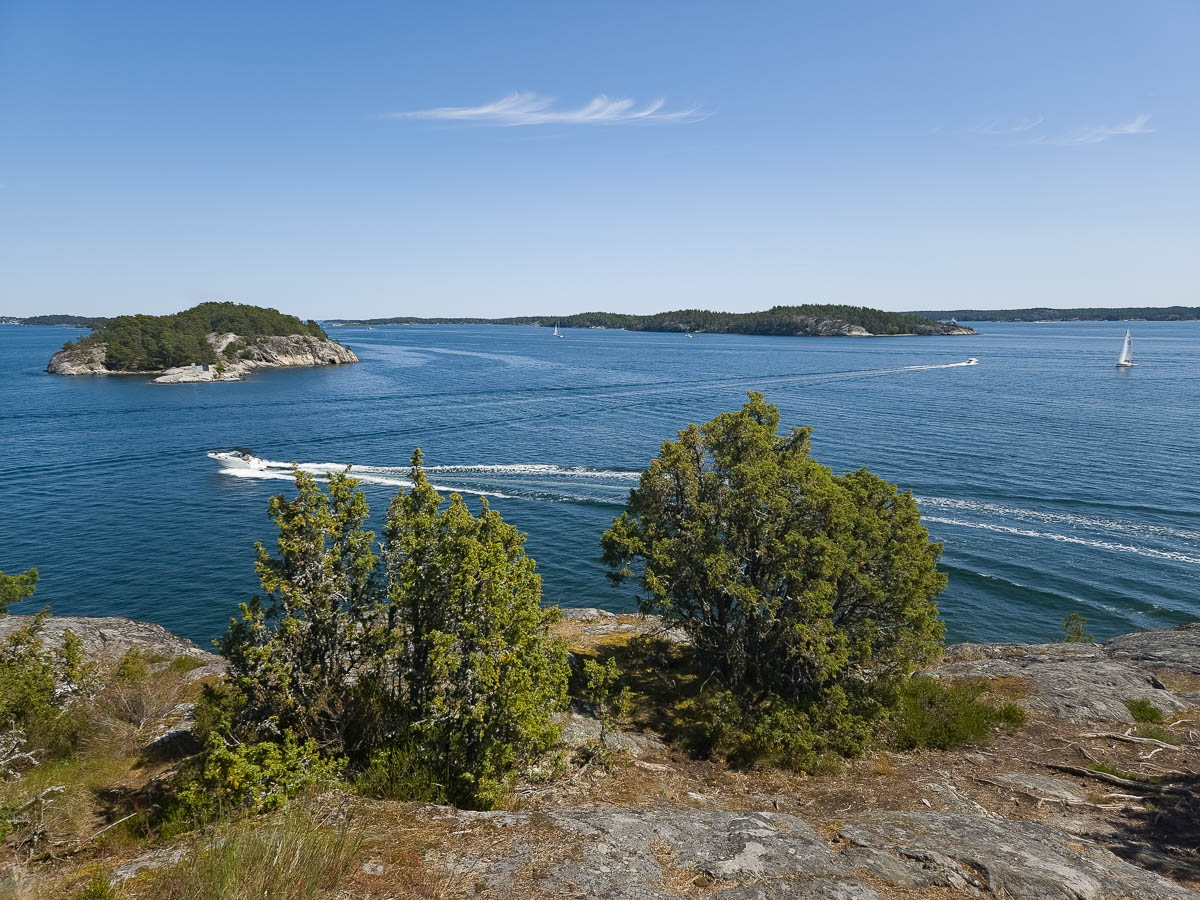
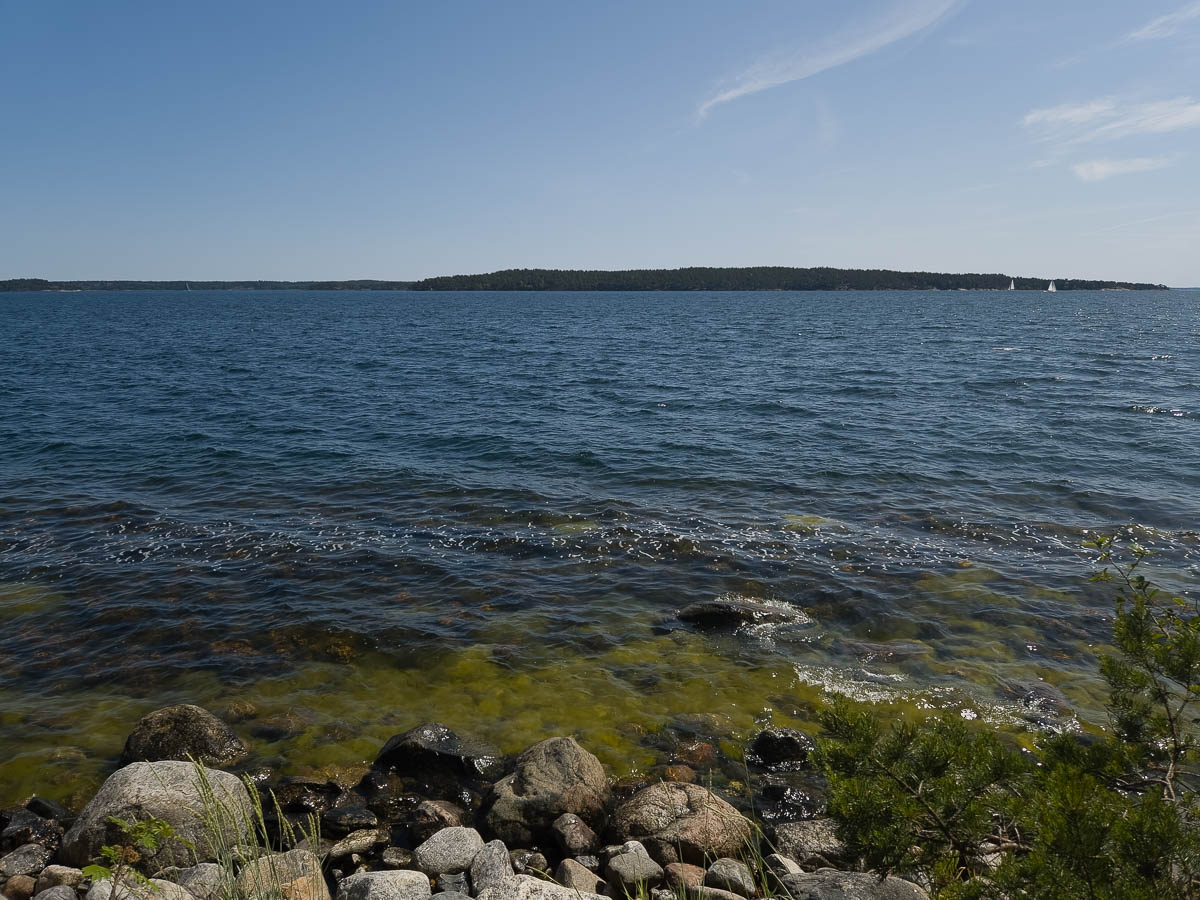
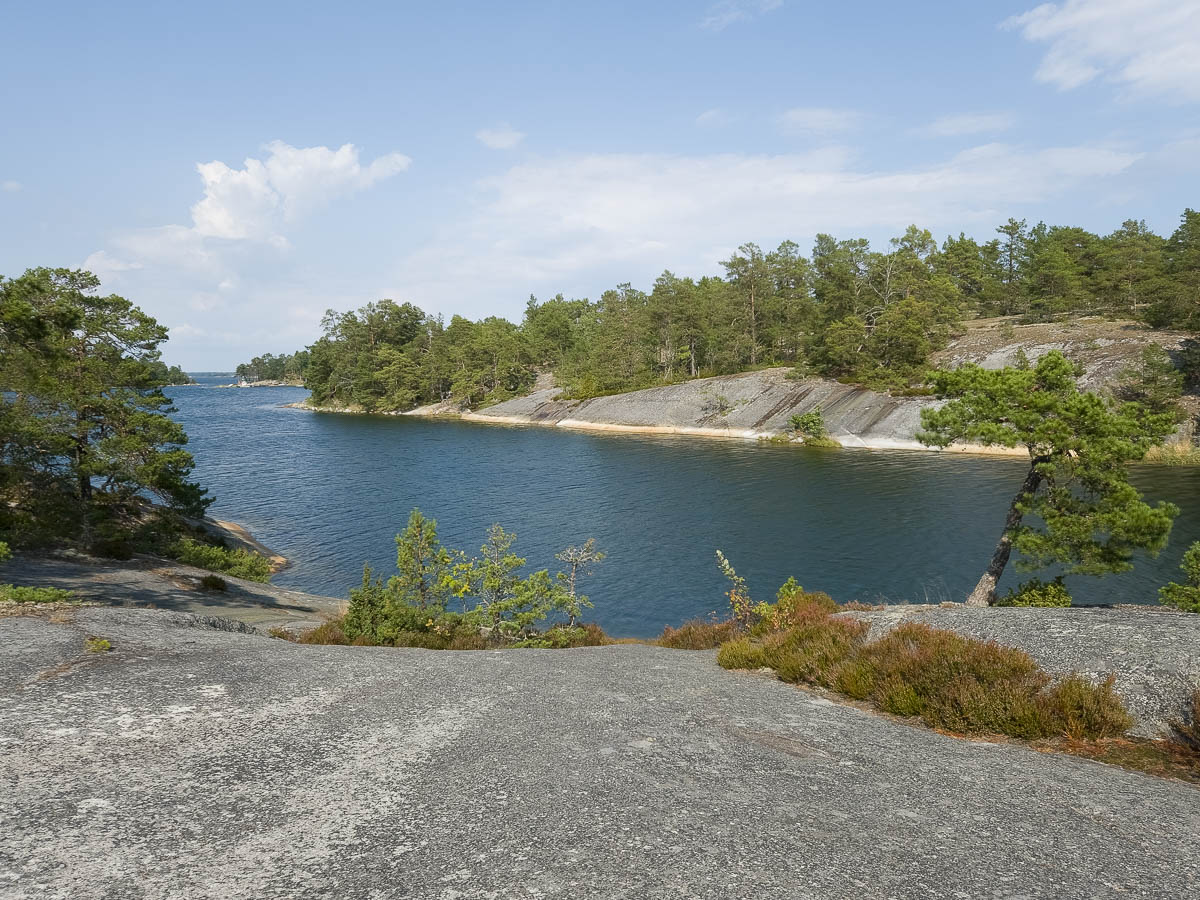
The path goes all the way around the peninsula, hugging the shoreline, so there’s plenty of lovely views. Lots of open air, lovely little islets, boats passing by.

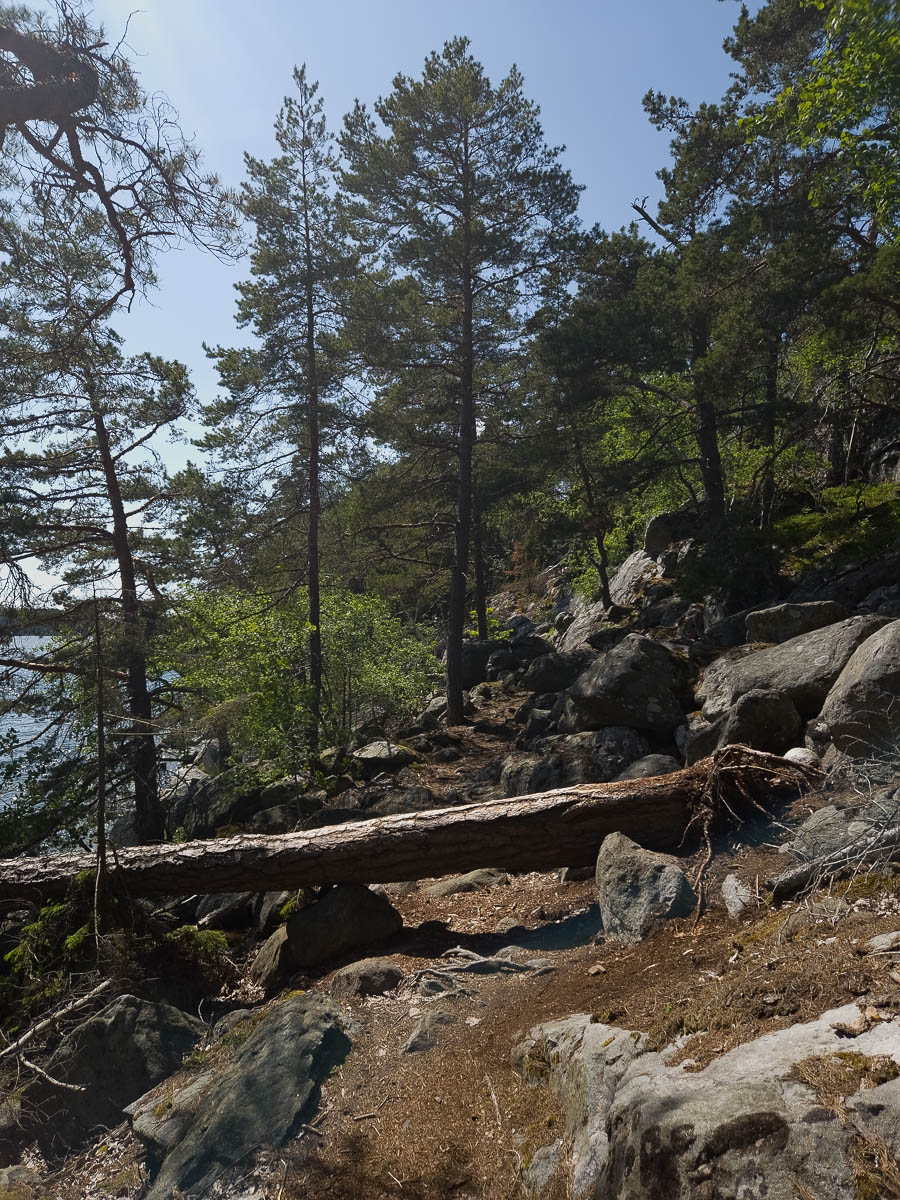
When the path goes slightly inland, you can mostly ignore it and scramble along the cliffs to still get the lovely views.

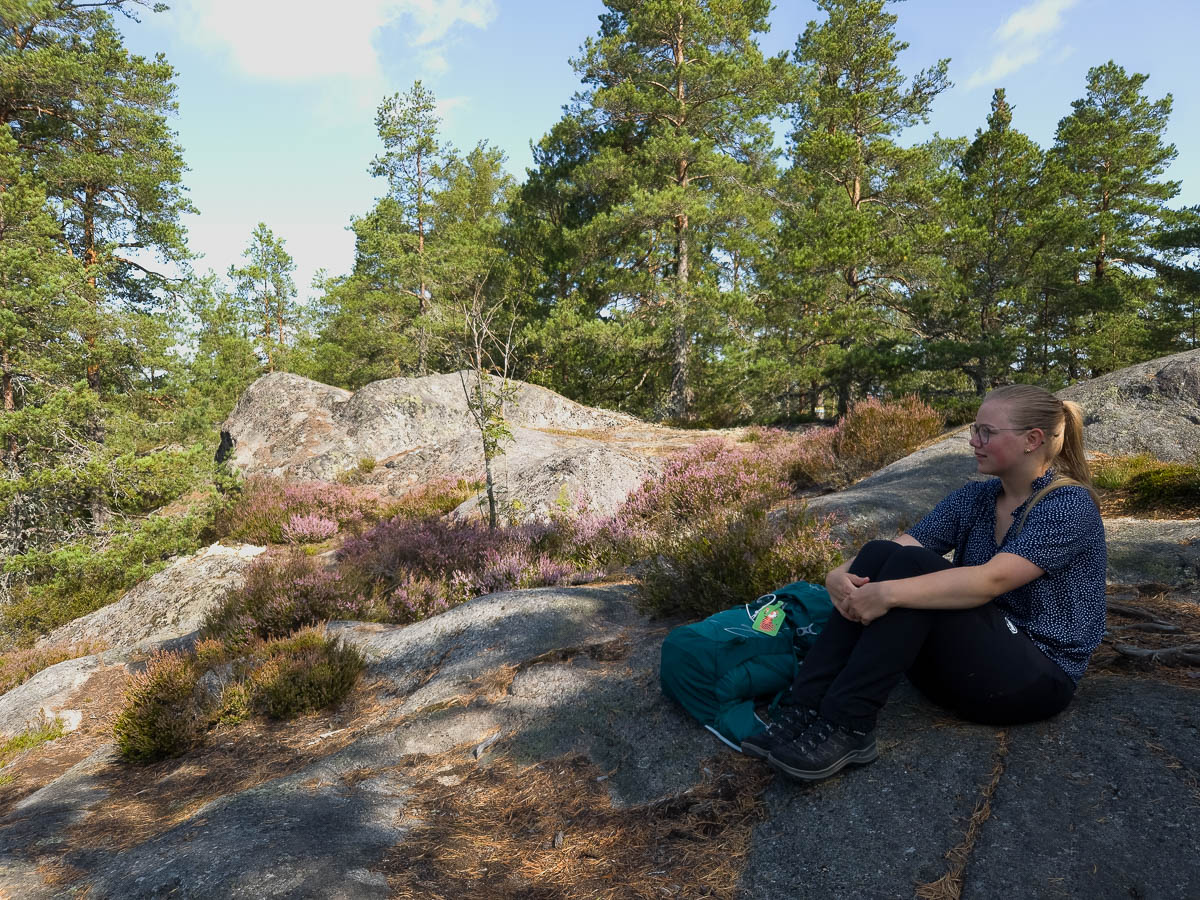
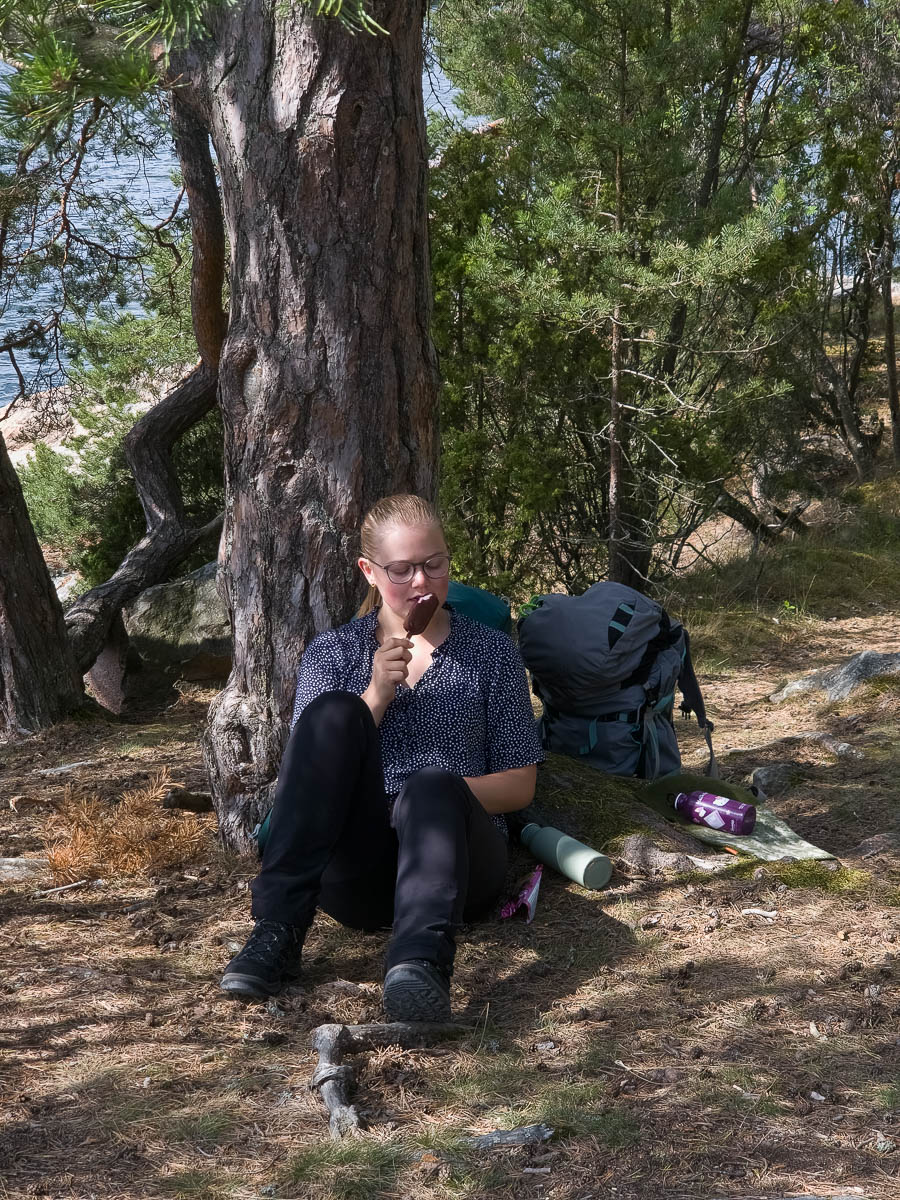
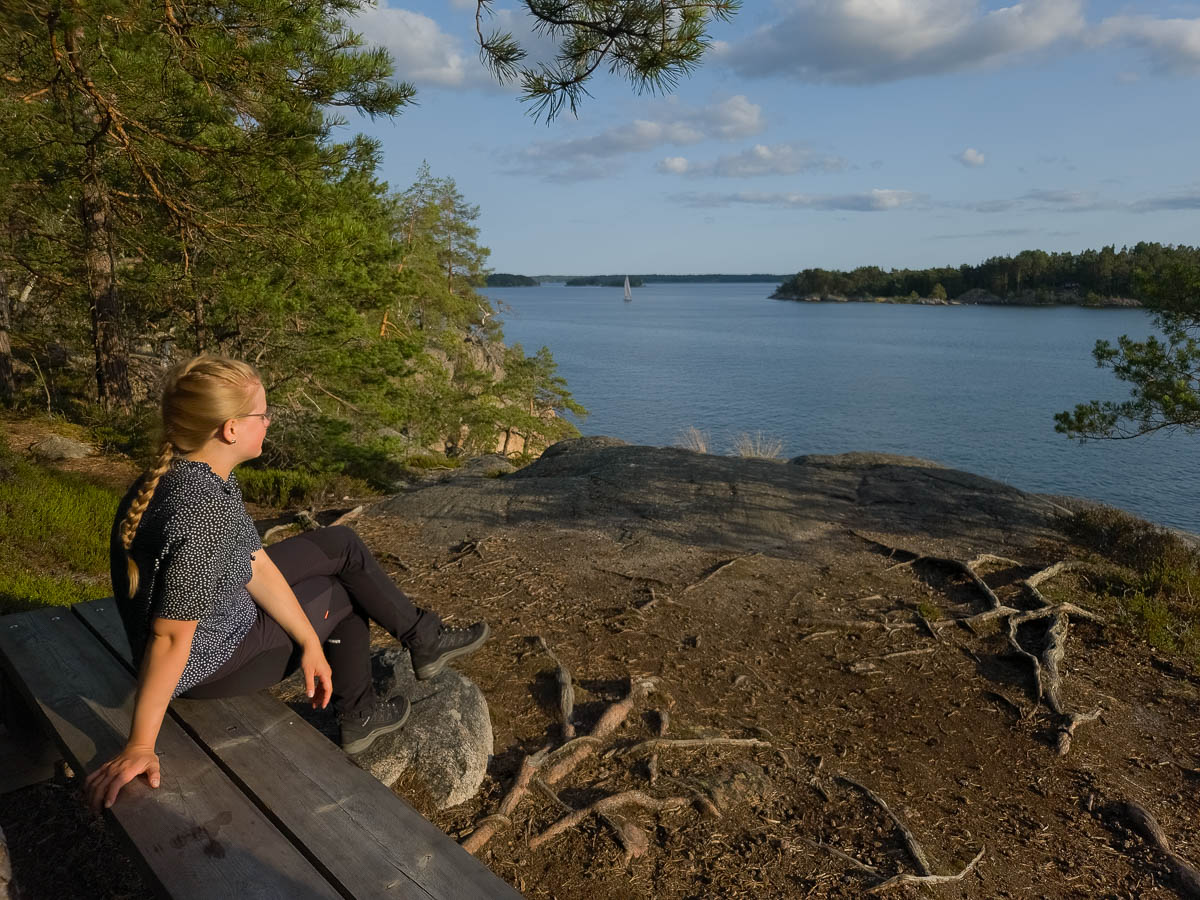
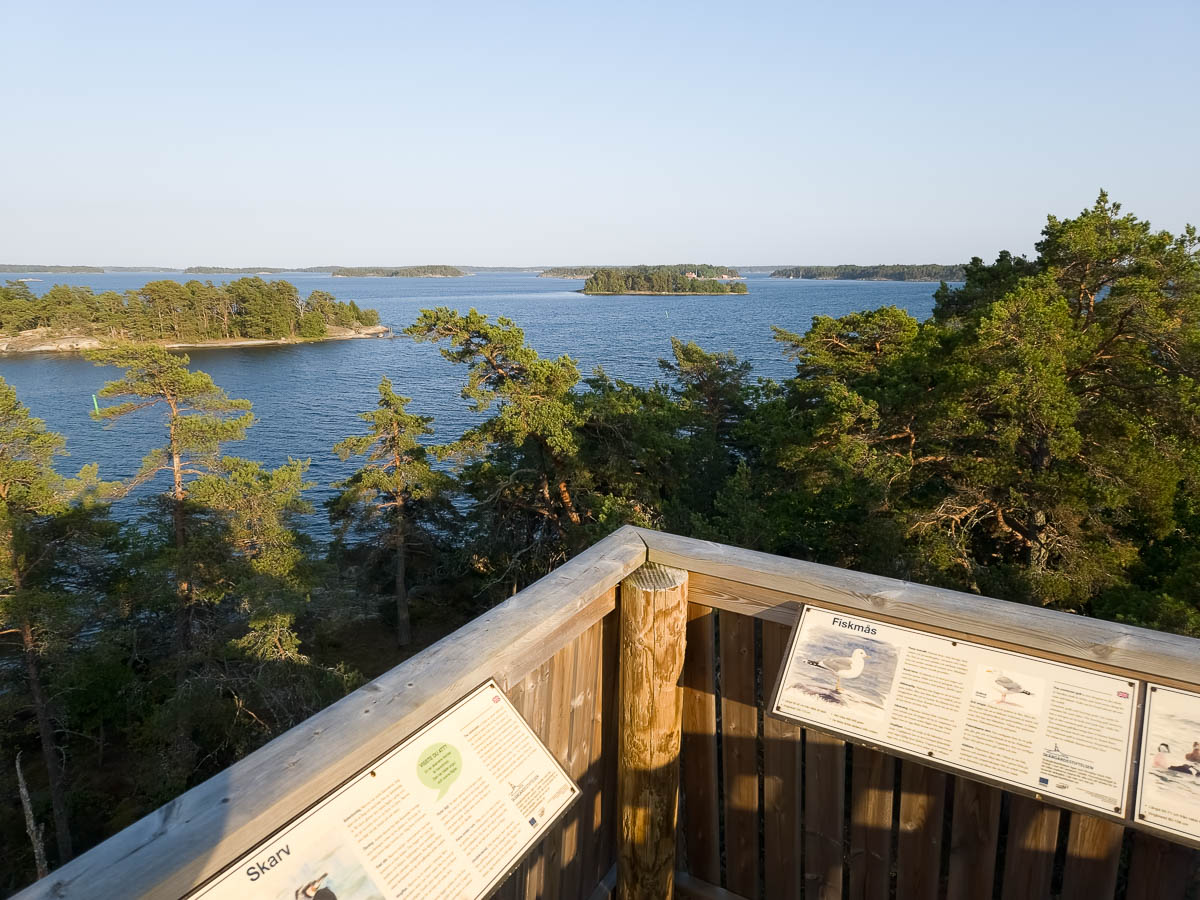
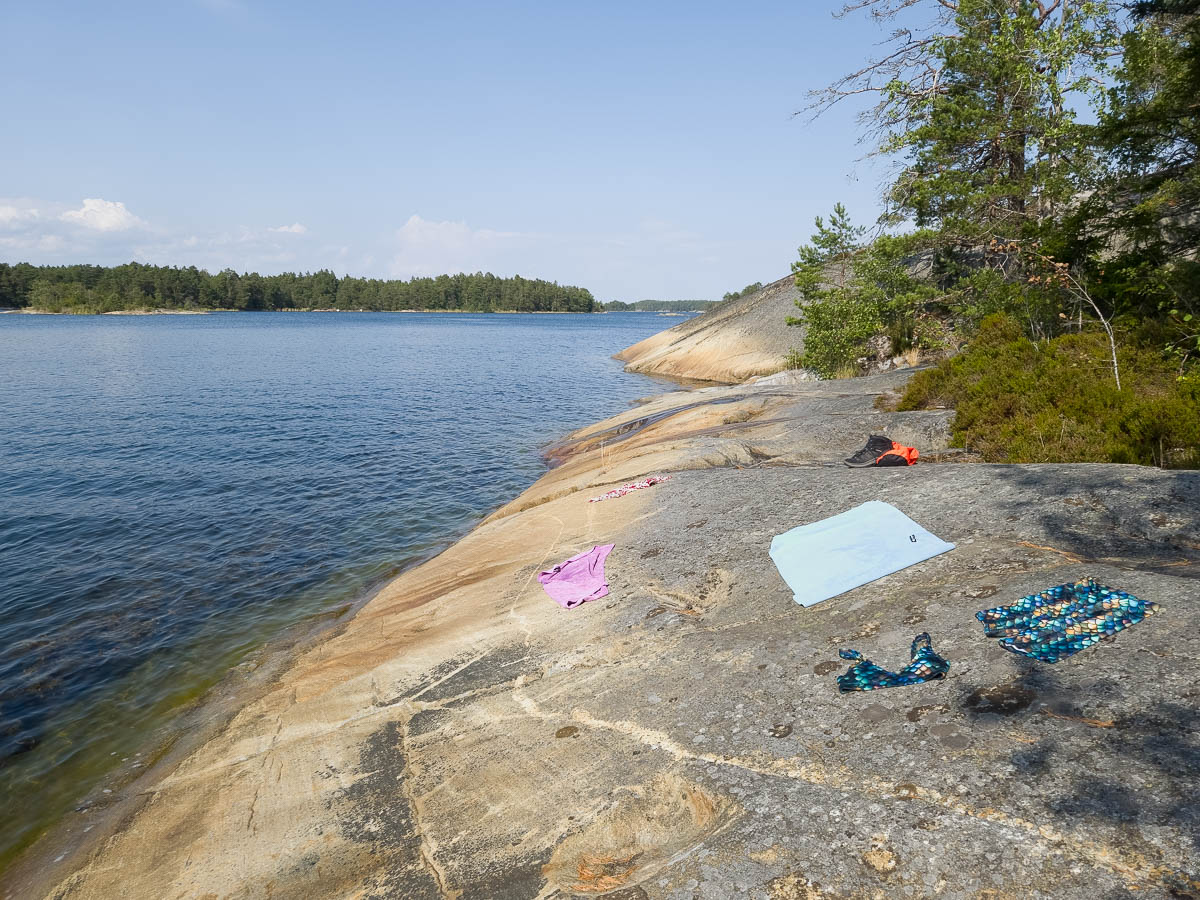
The tip of the peninsula is all high cliffs, with plenty of flattish bits for sitting down, for a perfect picnic with boat-watching. There were loads of boats passing by in all directions.

The way back was less scenic. On this side of the peninsula, the views were just of flat open water. For an optimal experience here, I think I’d skip the longer trail and just walk the Havtornsudd circuit, and do it counter-clockwise to get past the less exciting parts first.

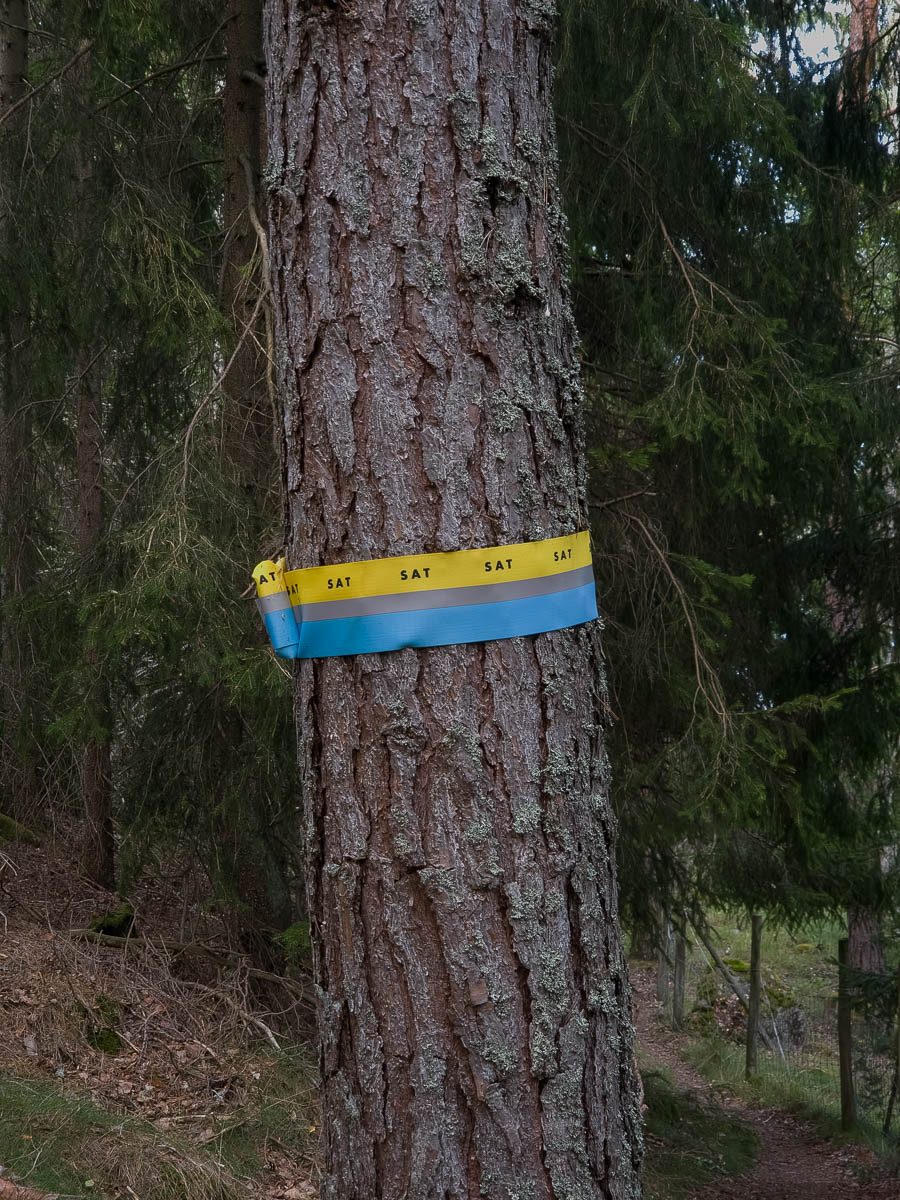
After leaving Havtornsudd, the trail was much less well marked. Occasionally I lost it entirely when it branched, or became invisible on open rocky ground. There was no risk of getting lost, though – just follow the seashore.

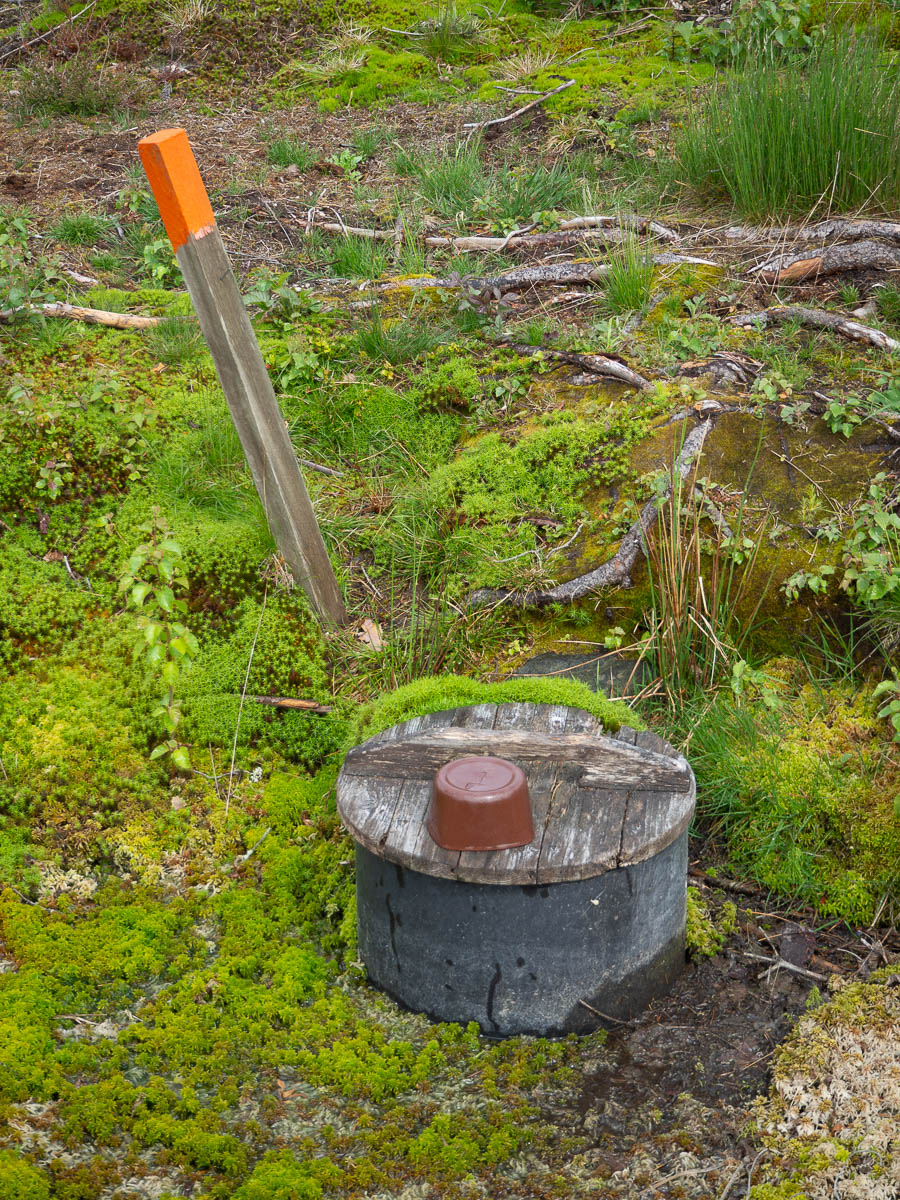
A typical spring in Sörmland is a gentle upwelling of water, protected by a concrete ring and a wooden lid. There’s sand and gravel at the bottom to filter the water. Often, but not always, there’s a dipper lying around. The water is usually right at ground level, so the ground around the spring is all muddy.

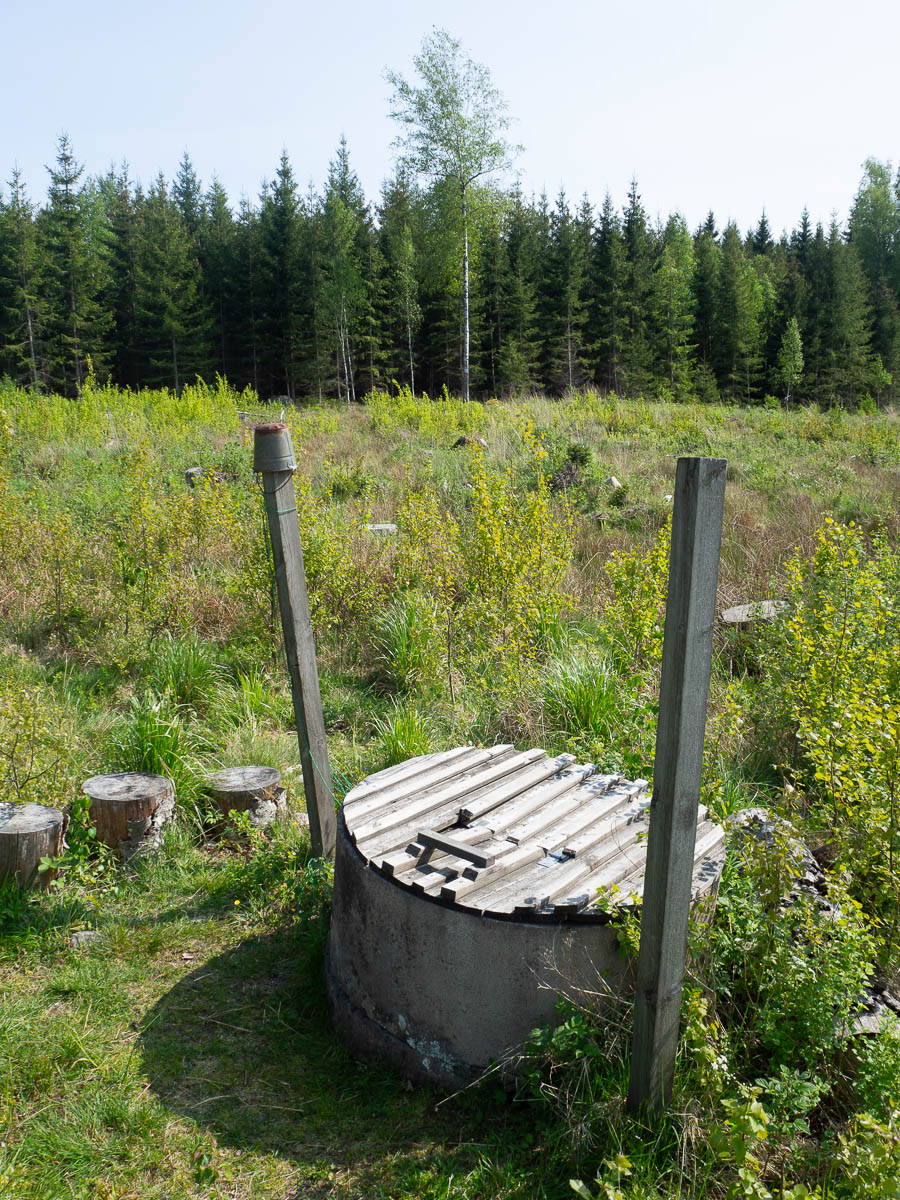
Sometimes the water is further down. On this hike, one of the marked springs was an actual well, with a tiny baby bucket on a piece of rope.

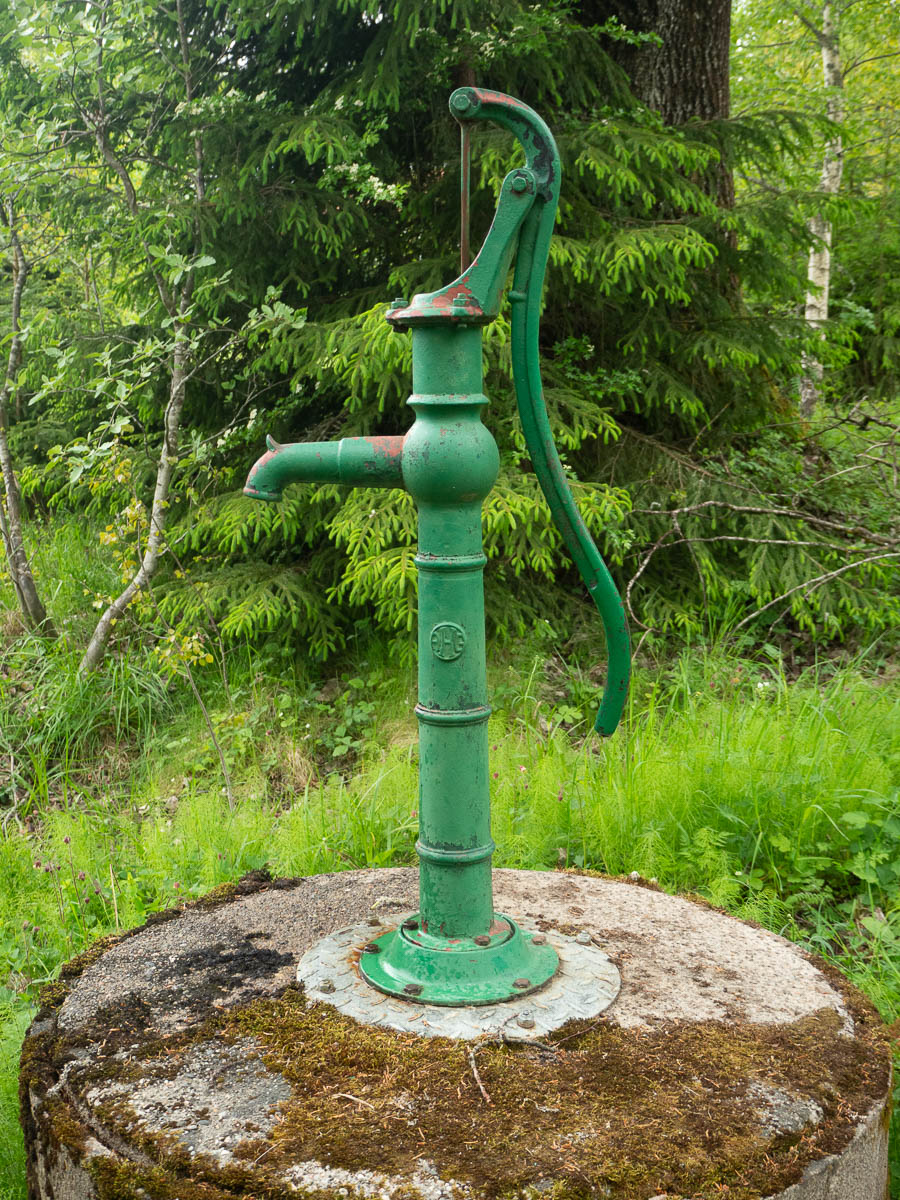
Very rarely there’s a water pump. Seeing this one made me wonder how old it is (looks old) and if manual water pumps like this are still being made and produced. They are, and the ones from reputable manufacturers cost about 5000-6000 SEK. You can also buy just the above-ground parts and install them as a decorative item; there’s a market for that.

Sörmlandsleden from Kolmården to Katrineholm. Today: Forssjö to Katrineholm, 12 km.

Semi-civilized nature reserves and recreation areas, with comfortable, even paths, made for easy walking.


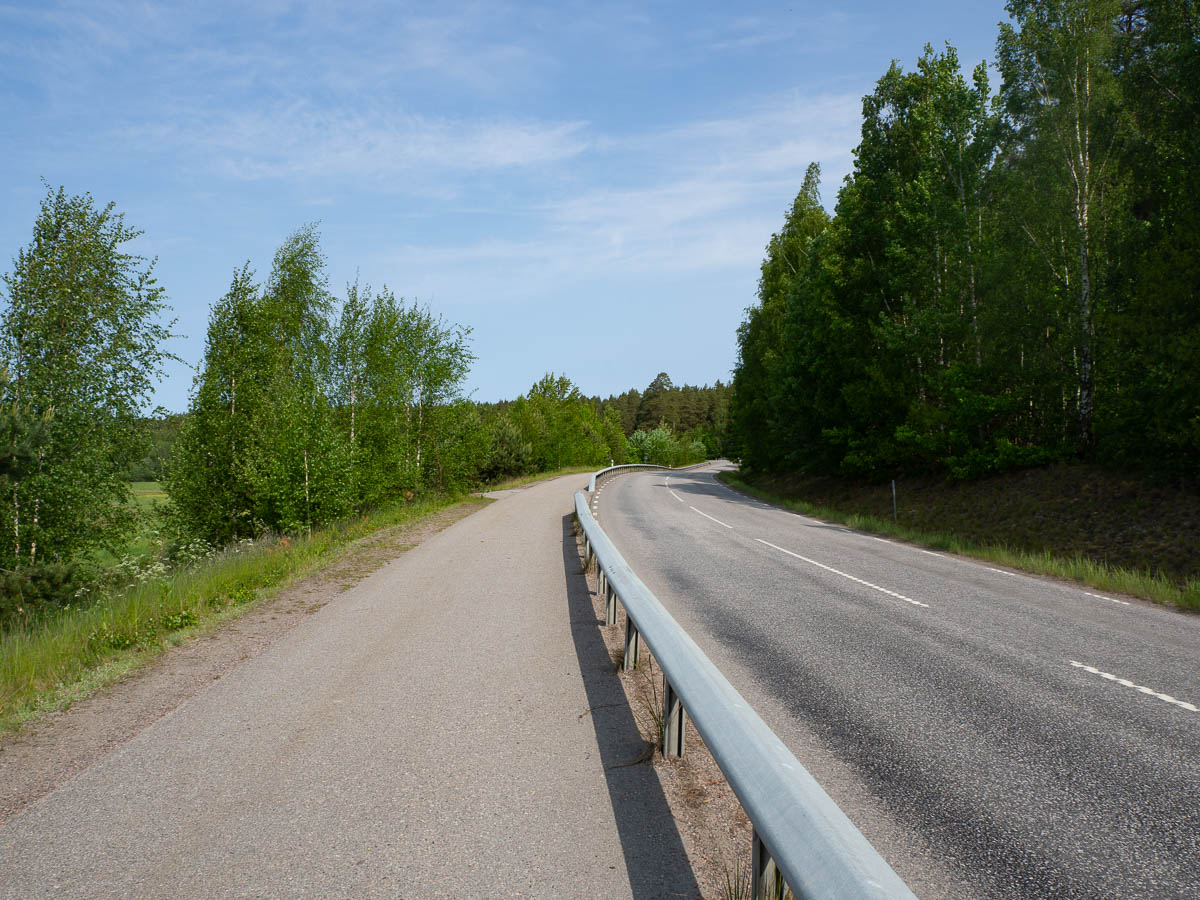
Inevitably, as I got closer to Katrineholm, the soft paths covered in pine needles were interrupted by stretches of asphalt, to get across roads and past farms. Asphalt truly is the nemesis of my feet – hard and unyielding. It looks like easy walking, and I guess objectively I make good time, but it is not comfortable.

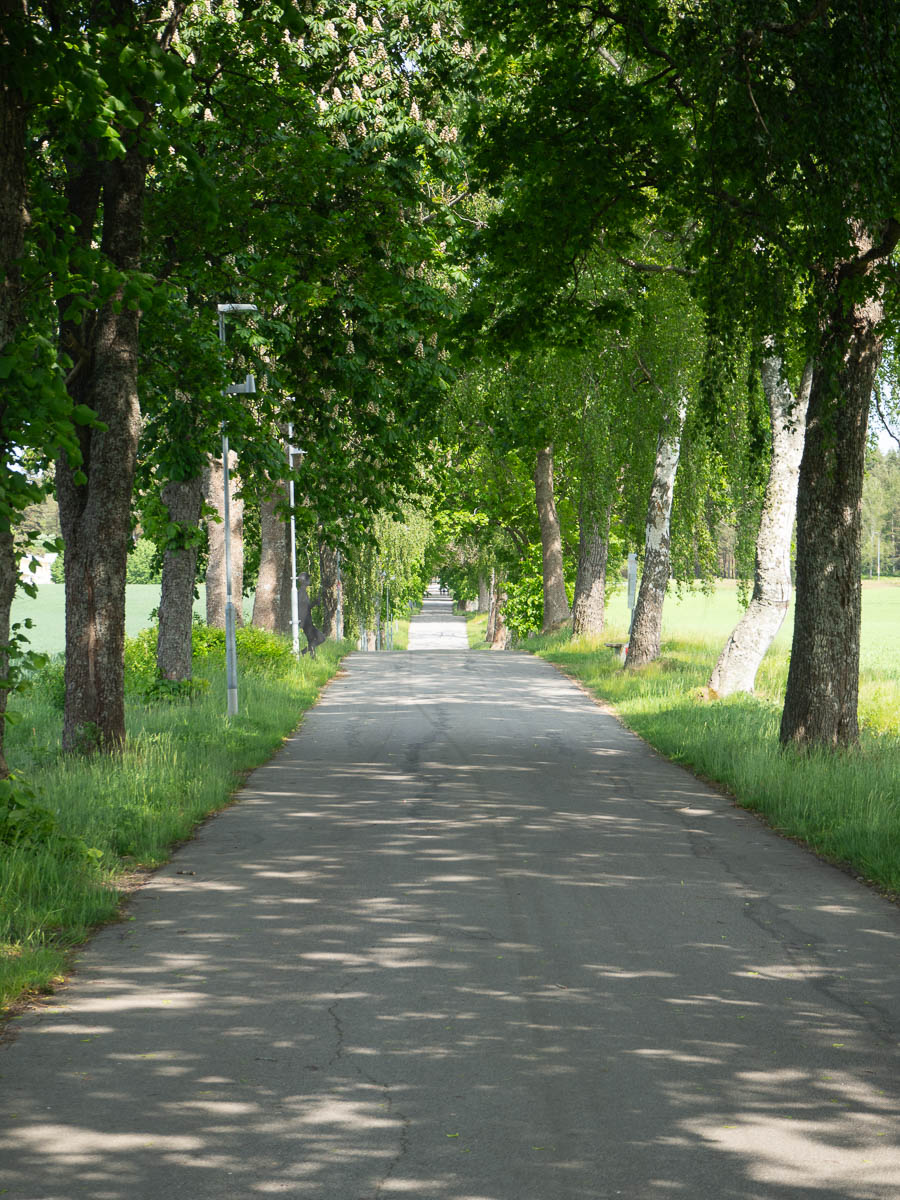
This tree-lined lane, just before I hit the first suburban streets, was popular with locals. Very nice if you’re cycling, or if you’re just out walking without a pack, but I felt every thud of my feet against it.

I think of these last kilometres as my payment to get access to the good kilometres out in the forest.

Compared to the wild nature of the past three days, this stage was blandly pleasant. Looked pretty enough, lacked character, so I don’t have much more to show or say about it.

Sörmlandsleden from Kolmården to Katrineholm. Today: Fagerö to Forssjö, stages 29, 28 and 27, for a total of 26 km.

Leaving the wilder parts of Sörmland behind me and getting closer to more inhabited areas around Katrineholm. The past two days I’ve seen maybe two or three people each day, but today I met several. Around me there were roads and farmland, and not just forest.


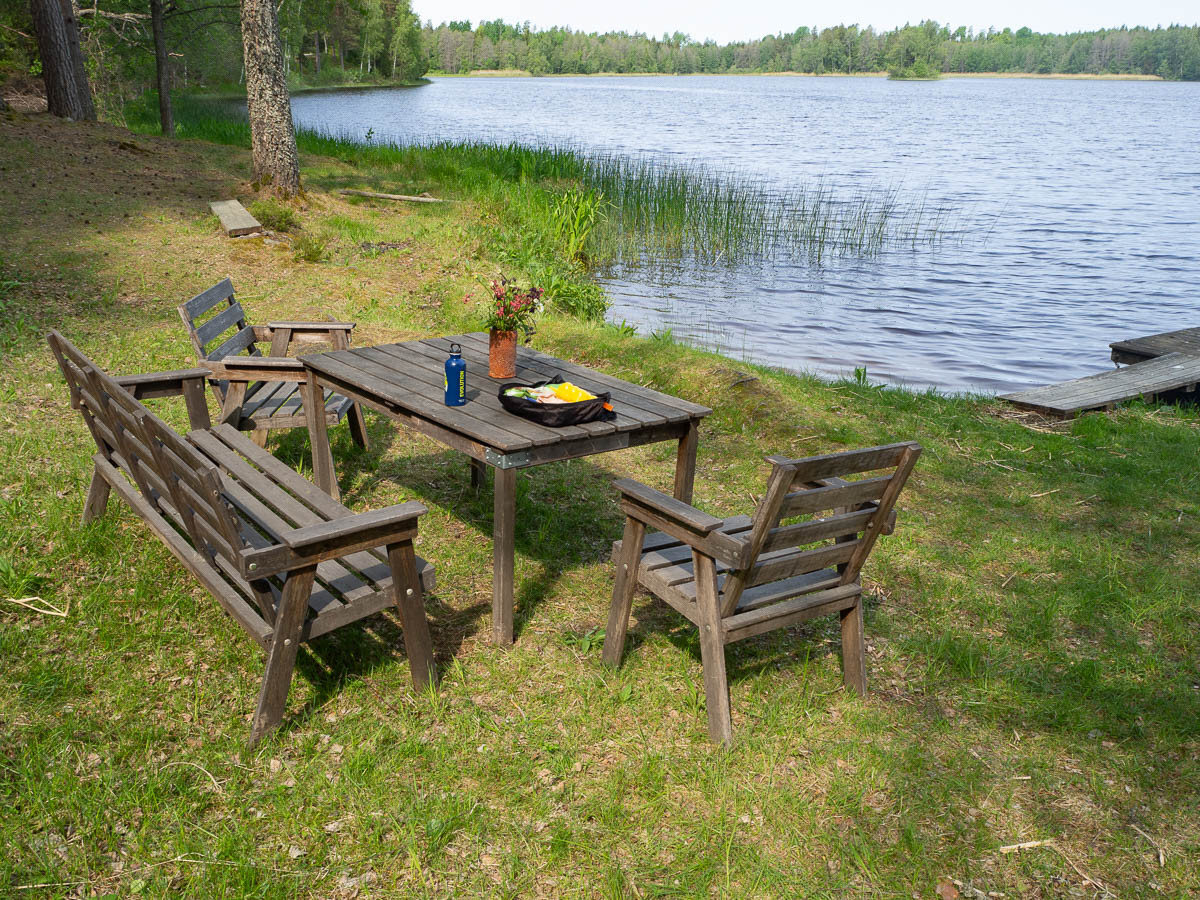
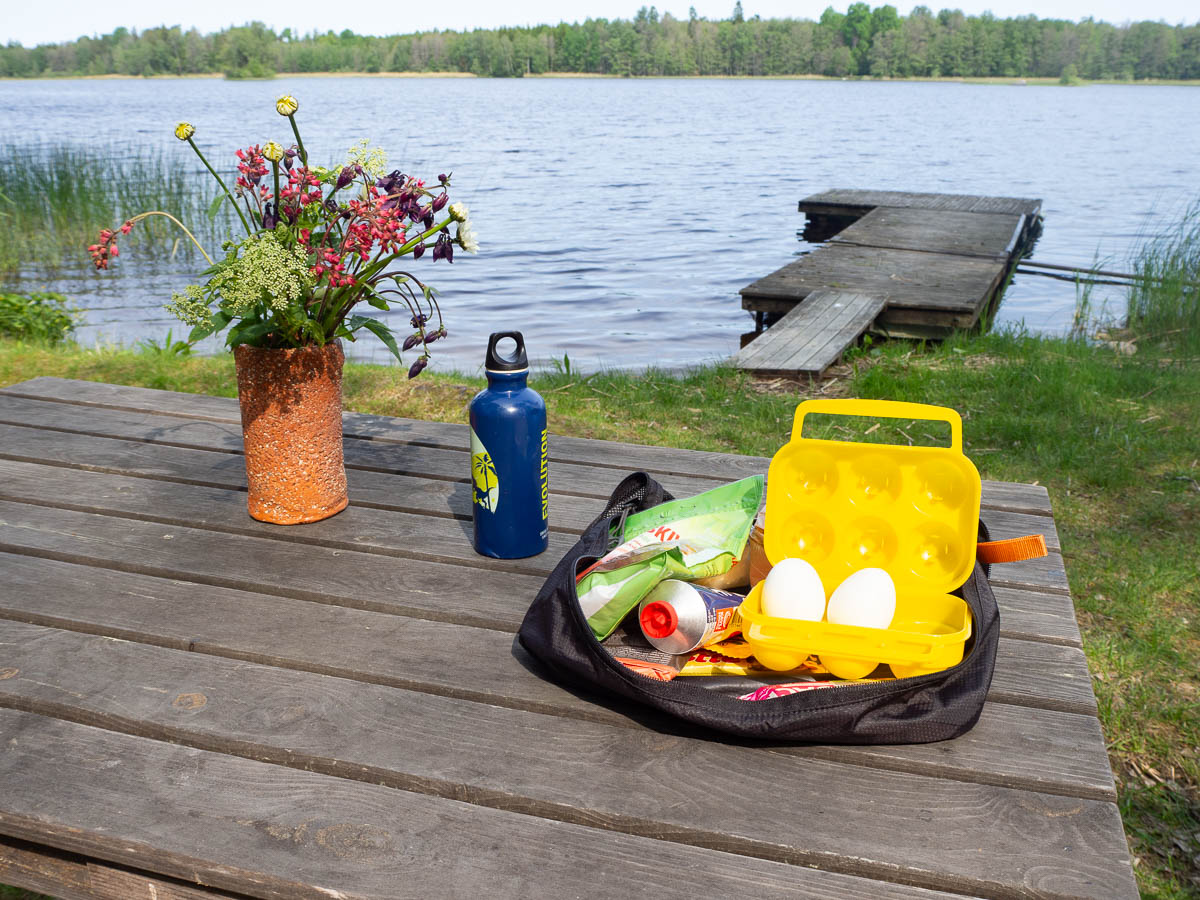
Right next to the small road that the trail was following, where it passed close to a lake, some kind local person had set up a picnic area. There were even fresh cut flowers in a vase. My snack breaks are not usually as pretty as this. It was quite windy, though, so I walked on.


Speaking of stopping for meals, and my troubles finding places for it due to rocks and roots and tree stumps, it was suggested to me that I could just sit on the tree stumps. Like, clearly I am an idiot who cannot see what is in front of me, and clearly that person with their very urban habits, who hasn’t been in a forest in decades, knows much better than me how I should be behaving outdoors.

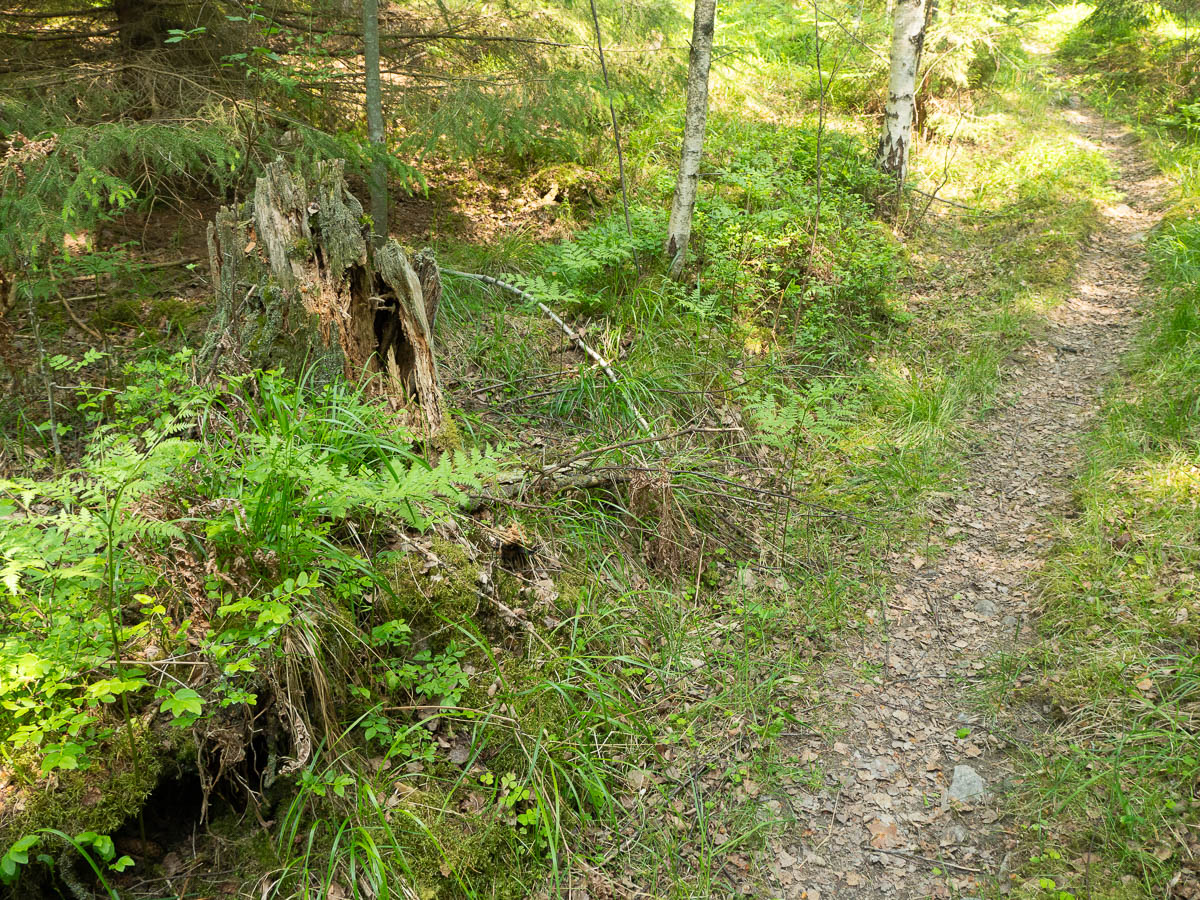
For the record, tree stumps in the wild are not like those in your garden or in a picnic area. They do not look like tree stumps do in picture books, or in stock photos. They are not dry, flat, even, and just wide enough for your bottom. This is what a real-life tree stump in the forest can look like: jagged, uneven, half-rotten. Or they can be a hands-breadth across, so you could at best fit half of one of your buttocks on them. Either way, not something you want to sit on.

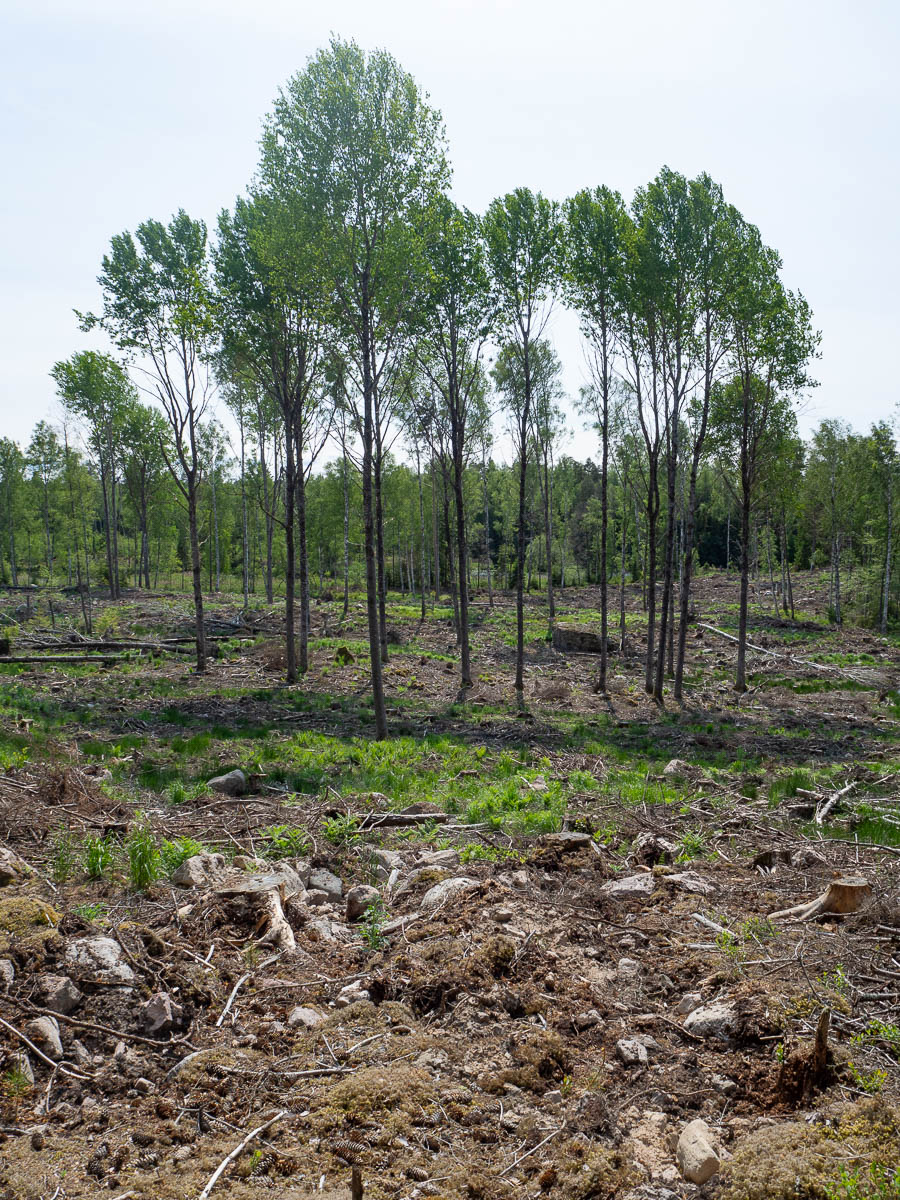
The closer I got to Katrineholm, the more clear-cut areas there were, just like on my previous hike when I approached Katrineholm from the other side. Is it an accident of timing, all the forests here reaching harvestable maturity at the same time, or something else? Unpleasant, in any case.

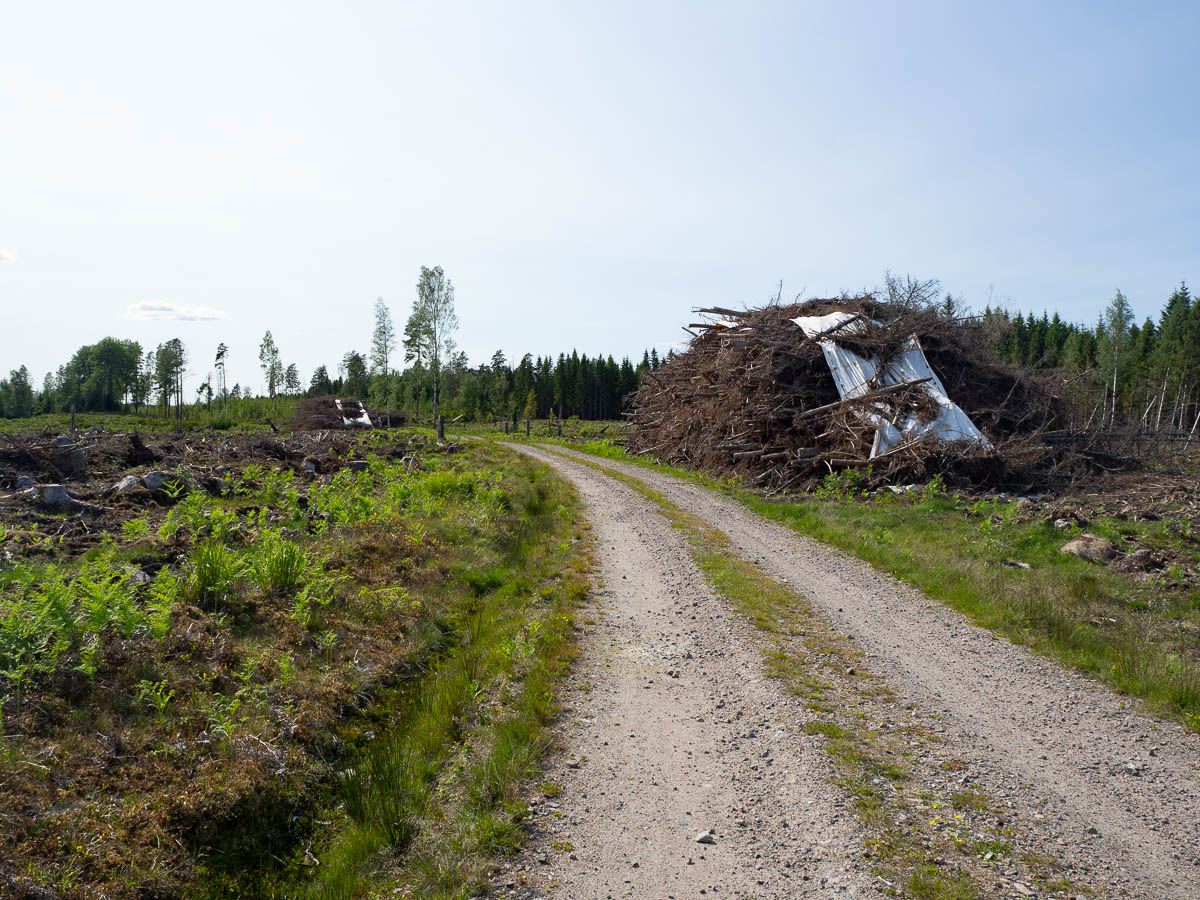
More clear-cut ground in the rough area where I had hoped to stop for the night, at the end of stage 28. Not much to do, other than keep going. I ended up walking 26 kilometres today, which is the longest I’ve ever done while carrying a tent and everything. It was light outside, the weather was good, the ground tent-unfriendly everywhere, and given the choice between stopping and going, going remained the better option for a long while.
I was less tired and sore this time than during my previous hike. Even though that one was just a long weekend, and an entire month has passed, I’m still feeling the benefits. And I’d had two days of warm-up, so all my muscles were in good shape. The part that got tired were my feet. Training doesn’t seem to help – after a full day of walking, the soles of my feet just get sore. Proper sit-down stops, even taking my boots and socks off, kept me going, all the way to Forssjö. The map promised a lakeside beach in Forssjö, and if that were to turn out not tent-friendly then at the very least there’s always some flat, grassy no-mans-land on the outskirts of a town.

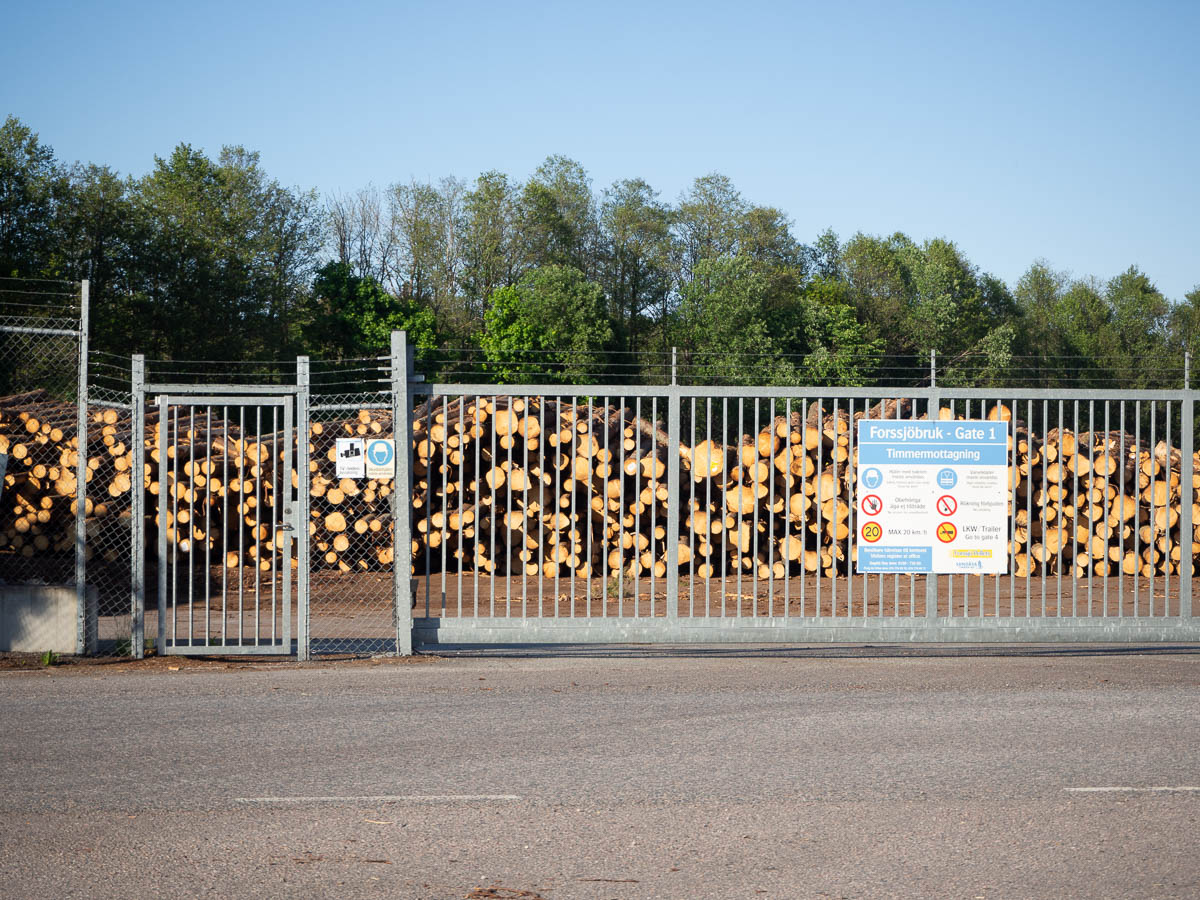
Forssjö is apparently also where the local timber ends up.

The map also promised a 24-hour grocery shop in Forssjö, where, I hoped, I could find some way to charge my phone battery. The shop turned out to be an unmanned one – which I rather should have expected. Not a problem, register for the app with the last dregs of charge on my phone, and get in. But inside the shop there were no visible power outlets except the two used for the self-checkout computer and some other electronics. So, no charging. I did get an ice cream and a lemonade, though.

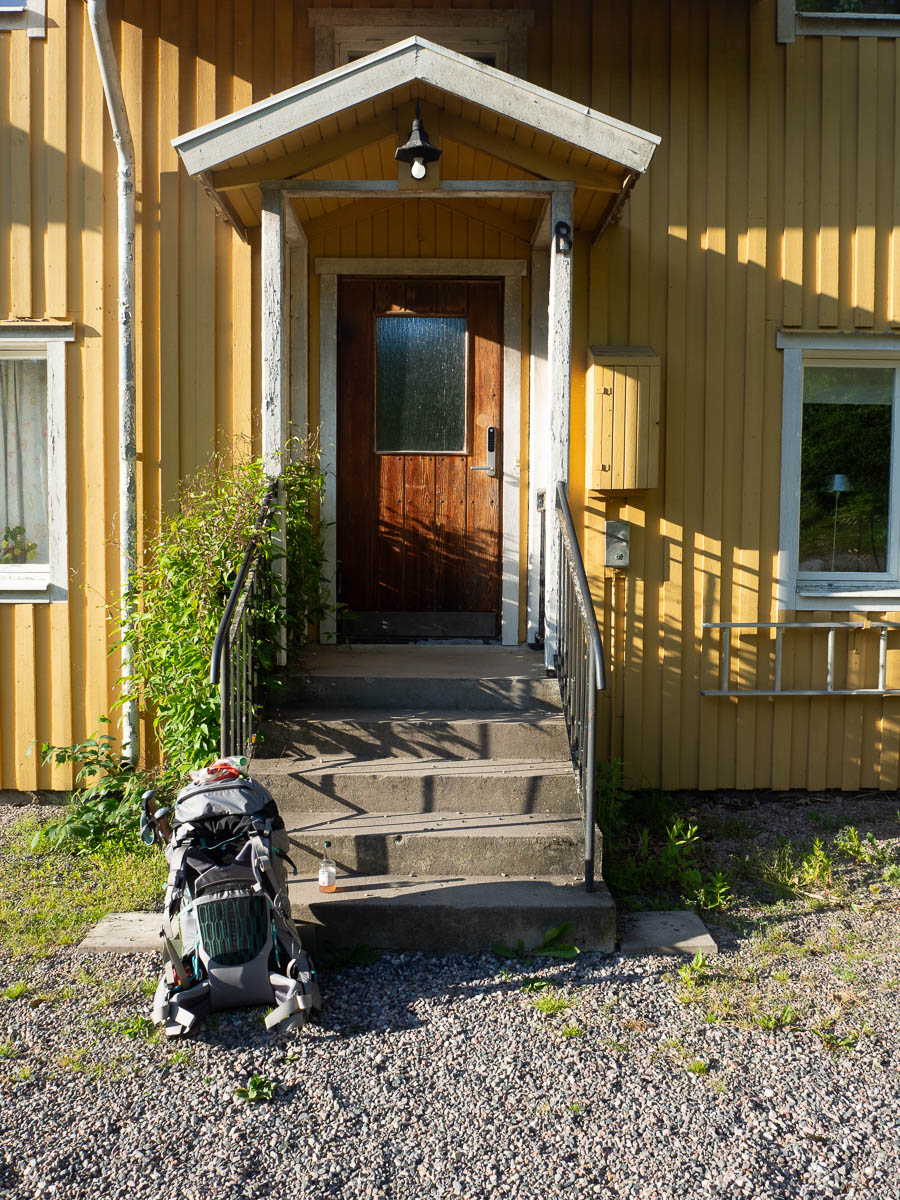
So I headed for a likely-looking area on lake shore to set up my tent. The last house on the edge of town had its door open, so I knocked and asked if I could charge my phone. It’s always worked out well for me when I’ve needed to top up drinking water, after all. It worked out equally well here – I left my phone charging in their hallway while I set up camp and made dinner, and got it back charged later. Thank you, kind stranger.

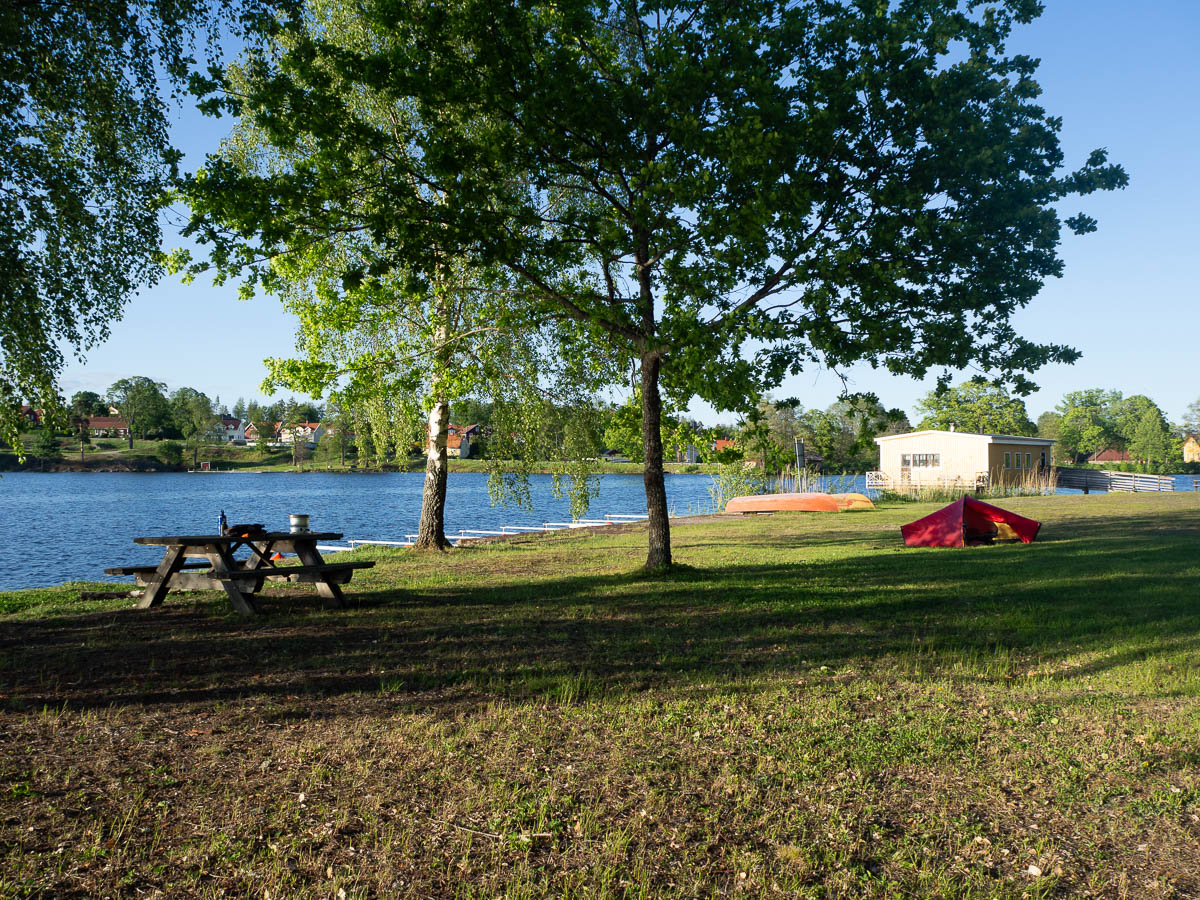
I ended up camping next to a harbour for small fishing boats.

Wildlife today: Hare. Roe deer with two kids. A small herd of fallow deer. A pair of cranes of some sort, glimpsed through the trees.

Sörmlandsleden from Kolmården to Katrineholm. Today: Eskilstorp to Fagerö. Part of stage 31, all of 30, and a teeny bit of 29; 20 km in total.

The first half felt pleasant but ordinary, while the later parts of the day were more scenic, and I’d say that stage 30 is among my favourites of the ones I’ve walked up until now.

Today was the day that the weather app had originally forecast a full day of pouring rain for, but that got downgraded over time, until all that was left was some rain in the morning. I had reached a lakeside shelter and had my breakfast shortly before the rain was supposed to arrive, and thought that I might sit it out in the shelter. It would be convenient to not have any wet gear to pack.

The sky was an even grey, I couldn’t see any difference in the direction where the rain was supposed to come from, so maybe another layer of clouds higher up was responsible for that?

The rain that finally came was so weak that I was almost disappointed. And instead of stopping, it petered out into a misty almost-drizzle. I didn’t want to sit around any longer, so I ended up getting out the rain cover and rain coat after all. An hour wasted for nothing.

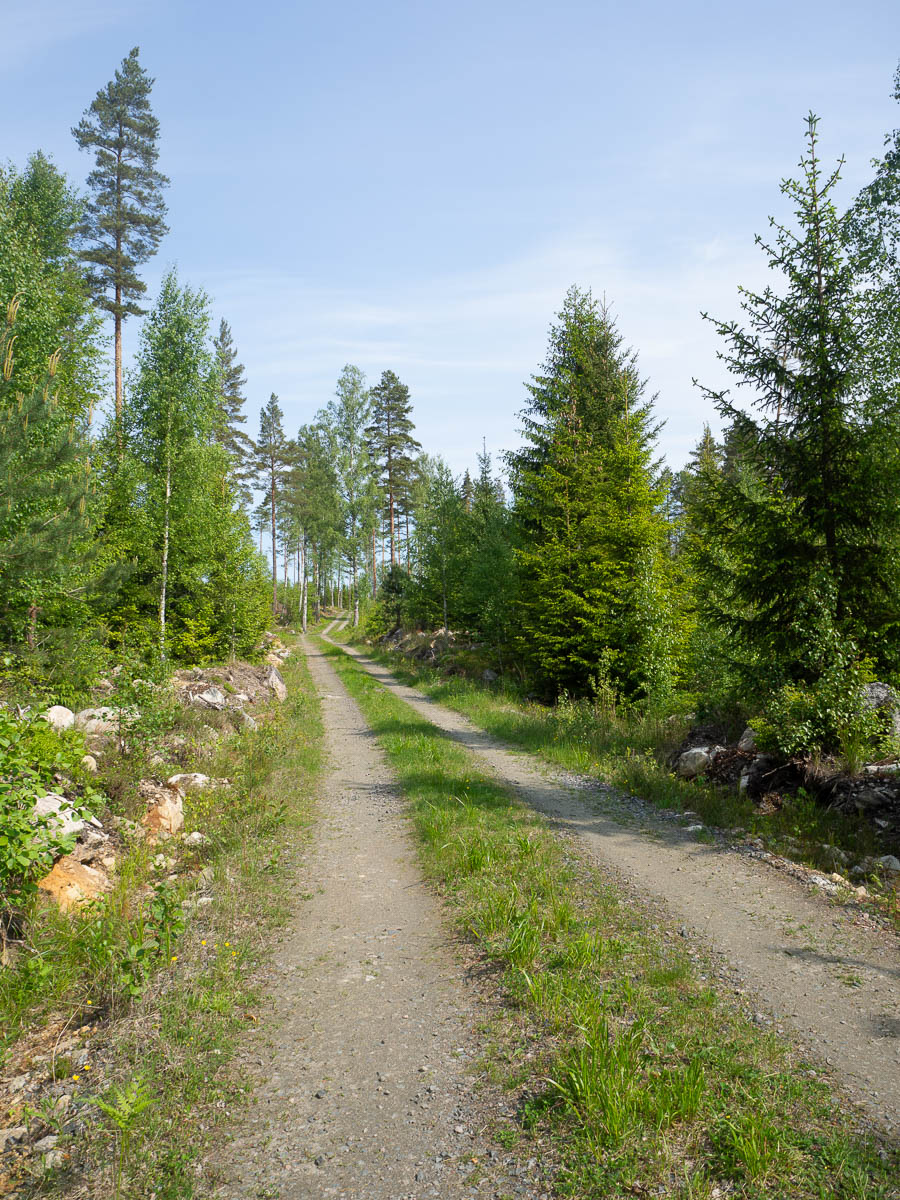
Stage 31 mostly went through the usual pine forests. There was a brief deviation onto a gravel road…

… because the original trail somehow passed through (or at least skirted the edges of) an area badly hit by the spruce bark beetle. That looks both unpleasant and dangerous.

On the gravel road I saw two baby birds. Still partly baby-coloured, but I think they looked like nuthatches. Apparently old enough to leave the nest – but still so young that they were just cluelessly wandering around in the middle of the road and chirping. A dangerous way to start your life.

Stage 30 had a more dramatic nature, with exposed bedrock and the occasional big boulder.

I was happy for my trekking poles – without them, I’d have spent all my time watching my footing, and probably still stumbled. Now I still stared a lot at the ground but could relax a little bit about it.


Lunch was late AGAIN because there was just nowhere to stop, with enough space for me, my pack, and my stove. I didn’t get a proper lunch until two o’clock, and I was starving by then. It feels inconsiderate to spread out my stuff right on the path itself, but I might have to force myself to get over that feeling, because eating does feel rather important.

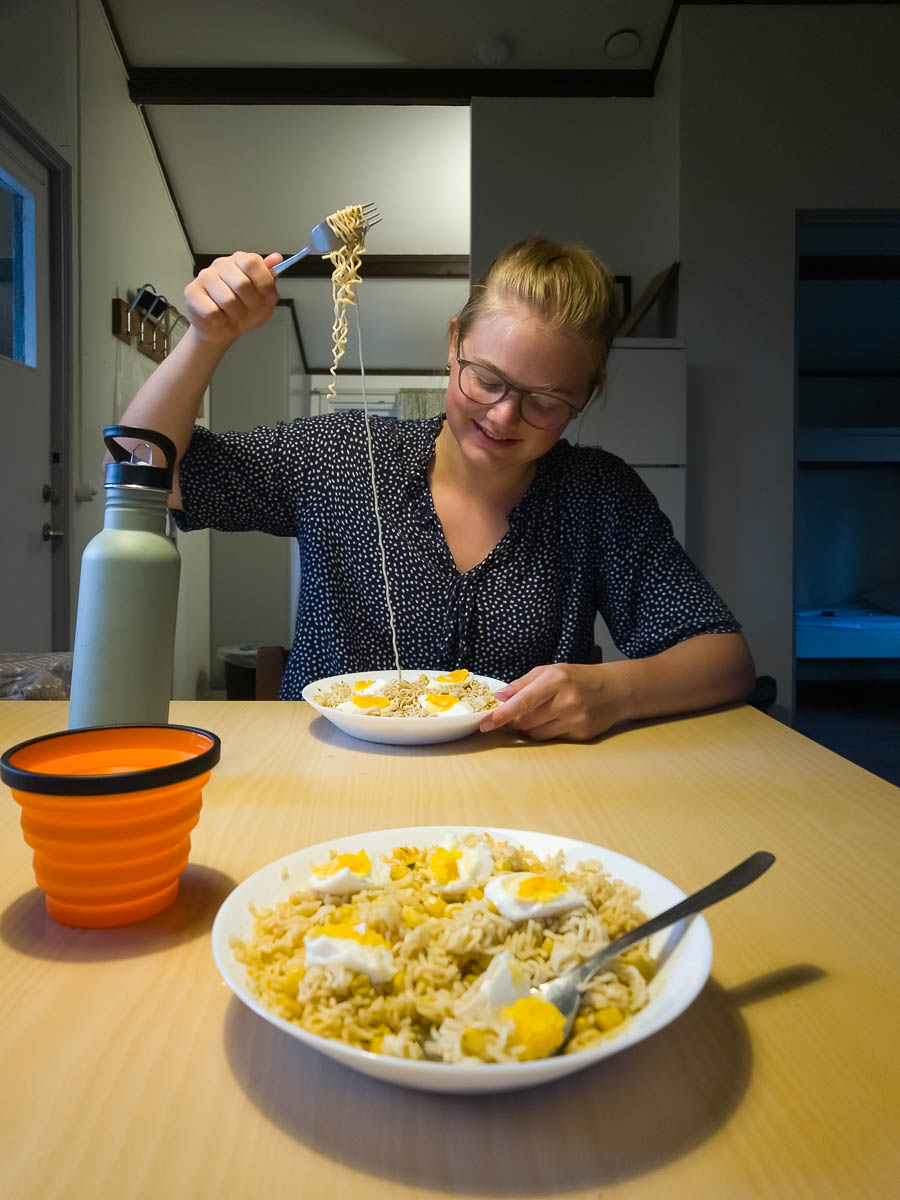
My current go-to lunch on overnight hikes is instant noodles that I top up with other stuff to make it more filling. For this trip, my noodle toppings are canned sweetcorn and hard-boiled eggs. Half a small can of corn is just right for one portion of noodles, and the other half keeps well enough overnight in a small air-tight container.

My lunch stop was at the top of Vensbrinksberget, the highest point in Sörmland. It has a viewing tower, which I now climbed. I’m impressed by the work that must have gone into this – hauling all the materials up here, and then building the tower. How do you even build a tower like this, in a place like this?

The views from the top of the tower were wide but not very exciting. There were markers for the cardinal directions at the viewing platform at the top, but they didn’t make much of a difference – everywhere I looked, it was just forest. The forest is much better viewed from ground level.

I stopped for the night at a municipal lakeside beach on Fagerö. According to the map there’s a shelter coming up in just over a kilometre, but it’s open towards the west, and that’s where the (strong) winds were coming from, so I chose an east-facing spot instead.

Wildlife: A fox, who ran as soon as it heard me. A small rodent who ran across the path during one of my breaks; I don’t know enough about them to say what kind. Loads of songbirds.

In addition to the baby nuthatches, I also saw a family of Great Crested Grebes (tuttpütt/skäggdopping). When they noticed me, the five babies all scrambled onto the back of their parent who took them into safer waters.

Sörmlandsleden from Kolmården to Katrineholm. This will cover stages 32:1, 32 to 28, half of 27, and 27:1. The planning is entirely dictated by public transport. Train + bus to Kolmården today, and I’ll be taking a train back to Stockholm from Katrineholm, so that’s where I’ll have to be by Friday mid-day-ish.

Today I walked the connecting trail 32:1 from Kolmården to the main trail, and then all of stage 32 and part of 31. 17 km altogether.

Stage 32 was among the most beautiful ones I’ve walked thus far. Not due to any spectacular feature or stunning views, but just the overall everything.

There was a lot of airy, open pine forest. The absence of scruffy undergrowth just makes it look extra beautiful.

There were stretches of plank walks across bogs. The bog was all dotted with the white flowers of Marsh Labrador Tea (skvattram/sookail). It’s a common plant, but I don’t think I’ve ever timed any of my bog walks to coincide with its flowering. Photos don’t do them justice (especially since the densest patches were a bit away from the path) – they were like swarms of tiny clouds hovering over the lower plants.

Cottongrass was doing the same.


I took my lunch break later than I might otherwise have done (again, I’m kind of getting used to this) because there just weren’t any good places. The spot I finally found was very cosy, though, even if the bench only had room for my things, especially the stove, and not for myself. The ground around the bench was firm enough to stand on, but very waterlogged.

After the bog, the trail followed the tracks of an old railway, long gone. Straight and even and smooth, it made for easy walking.


I passed a signposted hunting pit. It’s kind of weird that, nearly two hundred years after it was last used, it’s still here and recognisable for what it was. (With the help of a sign, at least.)

There were pretty lakes, as usual.

Dried fruit is the best trail snack. Especially larger fruit (so, like, figs or apricots rather than raisins or cranberries) that’s firm and dry. Sometimes I accidentally buy “wet” dried apricots – I don’t know what they do with them, but I find them horrible.

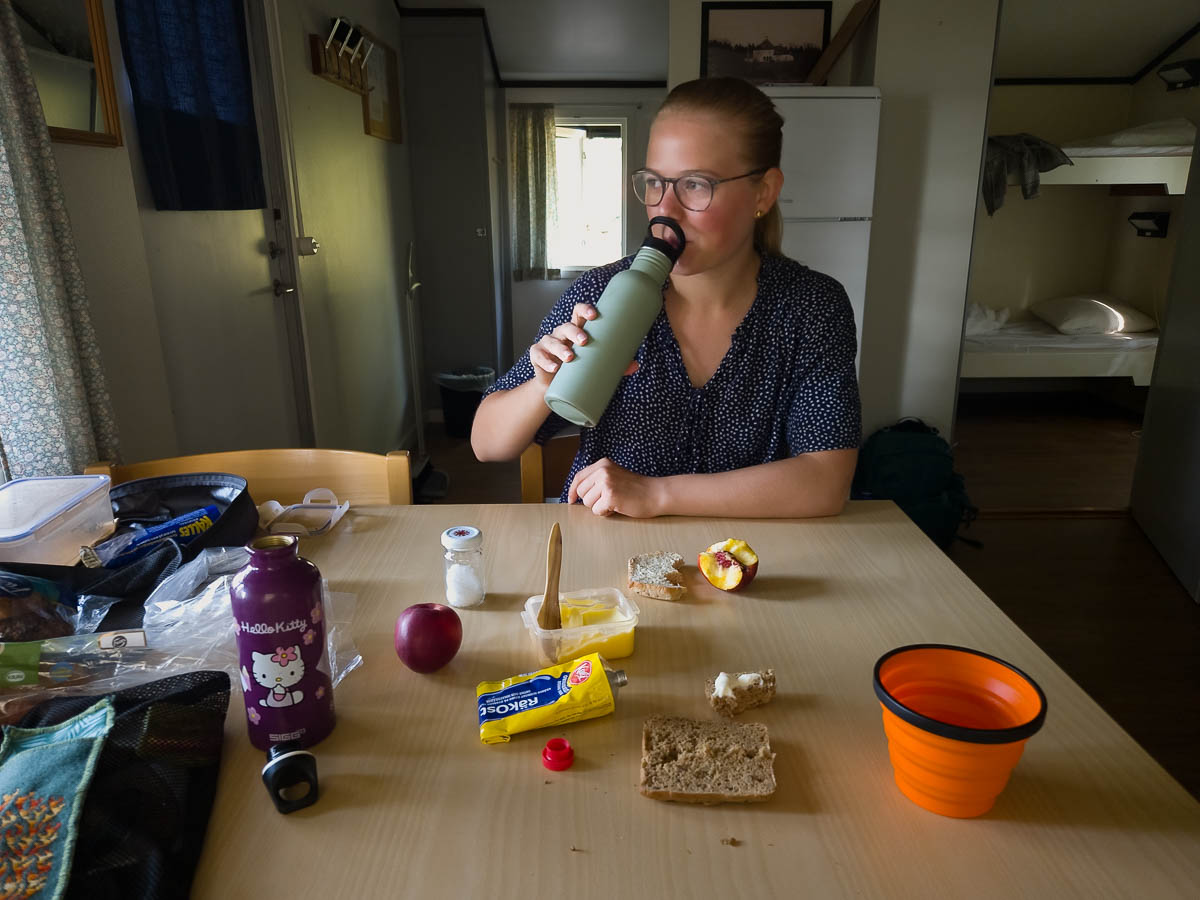
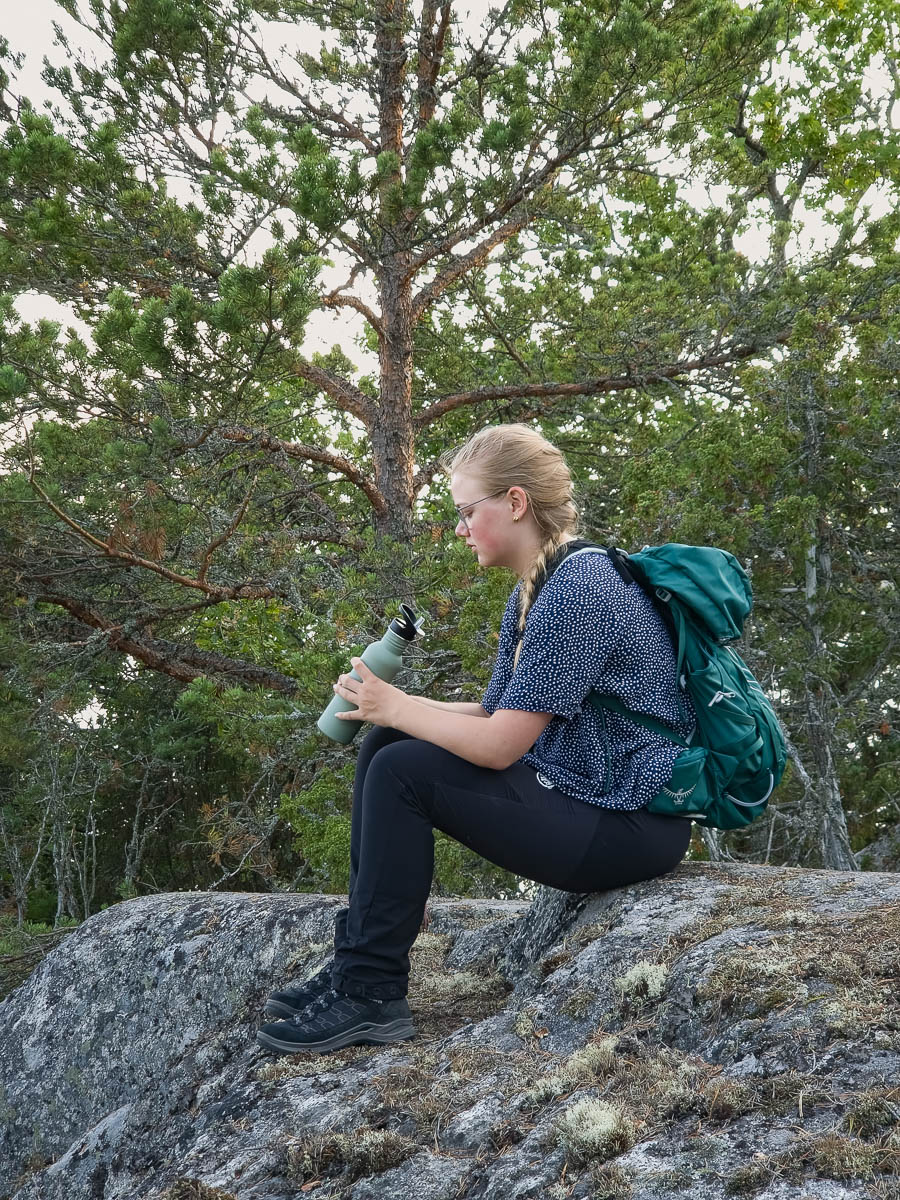
I’ve got two one-litre water bottles inside my pack, and a small one easily accessible in a hip belt pocket. The small one I inherited from Adrian. He’s too cool for dinosaurs now. I’ve got a Hello Kitty one from Ingrid as well. I’m not too cool to embrace my inner child.

The trail managed to stay away from human habitation nearly all the way. There were no clear-cuts and no gravel roads. Very beautiful and pleasant walking. Only once did the trail descend onto a short stretch of highway, to cross an even larger highway, but as soon as that was done, it moved onto a small path again.

Evening brought interesting rock formations in pretty evening light.

I had vaguely been thinking of aiming for the lakeside shelter halfway through stage 31, but got tired before I got that far. Stopped for the night at Eskilstorp, which, judging from the name, was at one point the site of a small farm or crofter’s cottage. The cottage was all gone, except for the stone foundation, which was still all square and house-shaped.

It was tempting to put up my tent in the middle of the foundation, but the ground there was lumpy and full of big tussocks of grass, so I had to move a few metres away.

Wildlife: a few bones of a dead deer, and birds. So much birdsong! Blackbirds and chaffinches everywhere, but I also heard cuckoos many times, and of course a background chorus of various smaller songbirds. Earplugs were a necessity to be able to sleep.

From the shelter south of Skogasjön on stage 27, to Katrineholm train station along connecting stage 27:1. 10 km. Walking as far as my feet took me every day left me with less walking for today than I had vaguely envisioned.

Inevitably every step took me closer to civilization.

I was already steeling myself for another slog along some horrible unshaded cycle path, but there was none of that. For a good while the trail ran parallel to a main road, but mostly managed to keep out of sight of it.

The forest became a tidily managed nature reserve.

The trail continued and stayed pleasant all the way to central Katrineholm, along a tree-lined avenue and through the city park.

With my usual early start and only 10 km to walk, I was at the station already by 11 and home by 14.

From lake Myr-Gryten in the middle of stage 25 to the shelter just south of lake Skogasjön on stage 27. 22 km.

The days from day 3 to the next to last day of the hike are the best ones. So for a four-day hike, day 3 is the zenith. Daily life is far away, I’ve settled into a good rhythm, and it feels like I could continue like this for a long time.

It’s a beautiful time of the year. Everything is getting greener and lusher, almost so I can see it happen.

Bilberries were only just getting started in some places, while in others they were already flowering. Bilberry flowers look like small berries of their own.

Around lunchtime, the trail veered close to Katrineholm and then skirted around its eastern edge for a while. All of a sudden I went from quiet forests to Burger King and big-box stores.

This worked out rather well, because I was getting worried about my water supply. The first freshwater spring this morning had several large frogs in it. The water looked crystal clear, but the idea of drinking frog bath water still felt strange. I filled up my flasks anyway – frog water is better than no water, and I can use it for cooking my noodles, if nothing else – but it’s not what I’d choose, if I had a choice.

The next spring was effectively dry. Quite often the springs around here have a short, wide section of concrete around them, to keep them clean, topped with a lid of some sort. This one had a pipe going down over a meter, and the water was all the way at the bottom, with no bucket or anything.

By the time I got here, I was down to less than half a bottle of clean, frogless water. From the supermarket here I got that topped up, and fresh fruit was also nice.

After the supermarket the trail stayed on the outskirts of the Katrineholm urban area for longer than I liked. This long, straight paved track went on forever, with an early-stage construction site on one side and some kind of logistics park on the other. Ugly, boring, sun beating down on me, asphalt hurting my feet, nowhere to even stop and take a break. I promised myself a proper sit-down break the moment I left this track, even if that’s next to someone’s back yard.

My rest stop did indeed end up being right behind someone’s yard. On my other side, fifty metres of sparse trees separating me from an industrial area. With some creative positioning I could get both out of my view and get some water and dried fruit in me. It was really well past lunchtime, but while this place was OK for a quick snack, I wasn’t desperate enough to set up my stove here.

The surroundings got nicer again when the trail got out of Katrineholm.

Unfortunately the nice areas kept getting interrupted by the churned-up ground of recently clear-cut terrain.

I got back in my groove and just kept walking. When it was about dinnertime, I reached a shelter and decided to stop there for the night. My tracker app showed that I had walked 22 km without really noticing it.

My plan was to set up my tent somewhere roughly in the vicinity of the shelter, just so I could use the picnic table and the outhouse. The cloudy sky made me change my mind. The first drops landed while I was in the middle of cooking dinner, and I ended up moving into the shelter.

Cons of sleeping in a shelter: cold. It wasn’t freezing in the morning, but it also wasn’t far off.

Pros of sleeping in a shelter: lots of space for my stuff, and lots of fresh air. The air in my small tent may be warm, but it can also get stuffy and stinky overnight.

From Svalboviken (ish) in the beginning of stage 24, to Myr-Gryten in the middle of stage 25. 20 km.

Birdsong woke me at five, but with earplugs I could get another hour or two of sleep. I get pretty decent sleep in my tent these days: maybe not a full night of deep sleep, because I wake up every time I want to change position, but I feel rested in the morning.

If the challenge for day 1 is to get my mind into proper hiking mode, then the challenge for day 2 is accepting and overcoming bodily hurts. My muscles are sore. I’ve got bruises on my hips from the rucksack’s hip belt, to the point where it hurts to pull the waistband of my trousers over them. There’s nothing for it other than gritting my teeth and putting the pack on and getting going.
The sky started threatening rain shortly after breakfast. I stopped to take this photo, and a minute later, it was raining. It was a rather pleasant rain, with sparse drops, not the kind of drizzle that gets everywhere. I could even stop to take photos without worrying about the camera.
It’s not always easy to find a suitable place to stop for a snack. This part of Sörmlandsleden mostly goes through rocky forest, and often there’s not enough flat ground next to the path to put down my pack. I like to be able to not just put my pack down, but also sit down myself and stretch my legs.

The trail keeps passing clear-cut areas. They’re so depressing to look at. Churned-up ground, rocks sticking up every which way, trees thrown down criss-cross. It looks like a battleground. Destroyed. I still can’t understand how this can be an acceptable way of doing forestry.

The forest today was less dominated by pine and spruce than yesterday. Deciduous forests in their most beautiful fresh leaf buds, and flowering anemones.

The afternoon was sunny but windy. I stopped in a woodland pasture, thinking I could lie down and read and enjoy the sun for a while. The sun was hot, but the air was cold, and I couldn’t manage to find a way to balance these. So I walked onwards.

I met a slow worm on the path. It was just laying there, looking like a pine root and being equally motionless. I thought that maybe it is named “slow worm” because it is slow, but apparently that is not the case.

It did the tongue-flicking thing that snakes and lizards do in the movies, but I didn’t manage to capture that in a photo.

I’ve been sharing the trail with a young guy who started stage 23 at the same time with me, and has been walking roughly the same distance as me both days. I walked past him during his lunch break; then half an hour later he walked past me on mine.

I’m an asocial hiker. I’m not out there to meet people and share stories. I’d rather not share my camping site with others, if possible. There are only so many places where you can stop for the night, though – even with a tent you do need some flat ground at least. He didn’t have one, as far as I could see, so I could guess where he’d end up for the night, and made sure to stop some ways away from the hut (yesterday) and shelter (today) where he was staying.
Sörmlandsleden. Hälleforsnäs train station to Svalboviken, 18 km.

After a few kilometres skirting the edges of Hälleforsnäs I got to where I left off last time, by the pretty wetlands of Bruksdammen.

From there on it was pretty typical Sörmland. Rocky pine forests, mossy spruce forests, small lakes.

The first day of a hike, I’m usually not all the way present. I can’t help thinking about kilometres and hours, and kilometres per hour. Am I taking too many breaks? Am I walking fast enough? Am I eating enough? It takes time for the mind to switch over to proper hiking mode.

Some awareness of where I am on the map is good, though, and a rough estimate of how fast I walk on average. It’s nice to be able to know that I’ll be reaching a lake in less than an hour, so I can snack on some dried fruit for now and keep walking, and stop for a proper break in a place with a nice view.

Forestry operations were going on near the trail. There was noise of heavy machinery very close to where I walked, even though today is a public holiday. They’d utilized the clear spaces of the trail itself to put down their loads, which I found rather annoying. But I guess it’s very temporary.
When I felt that it was time to stop for the night, I struggled to find a good stopping place. There was this grassy lakeside beach, looked rather nice, but there was a large road right behind me. I carry earplugs (always!) so I’m sure I could have slept here nevertheless, but it just didn’t feel right. I don’t want to start my day with the noise of cars. So I walked onwards.

The last kilometre or two were not fun. I was tired, and more hungry than I realized. If there had been forest around me, I would have found some flattish spot, but instead I walked past large clear-cut areas, and there’s nowhere to put up a tent in this.

I got past them, back into normal forest again, and put up my tent absolutely in the middle of nowhere. No other people, no noise other than night birds. Geese are loud.