One of the highlights of our Estonia trip is always the adventure park at Otepää. The coronavirus situation means that we get no trip to our friends and family in Estonia, so no visit to Otepää either.

I found two adventure parks similar to Otepää near Stockholm, and today we tried out the first of them – Accropark at Lida.

Eric unfortunately still had a sore back from our Gotland trip – too much sitting in the car and too many nights in on the wrong mattresses – so he couldn’t join us up in the trees.
I couldn’t help comparing Accropark to the park at Otepää.

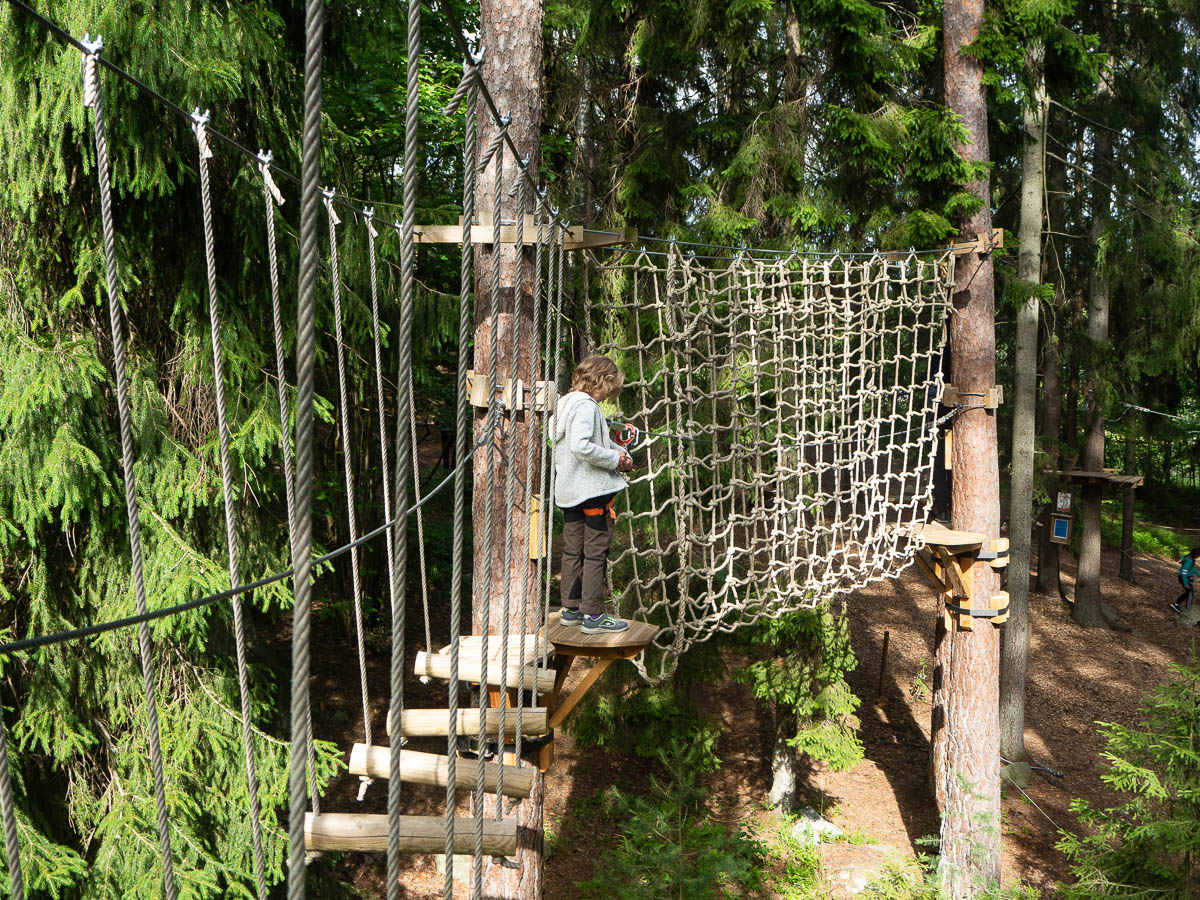
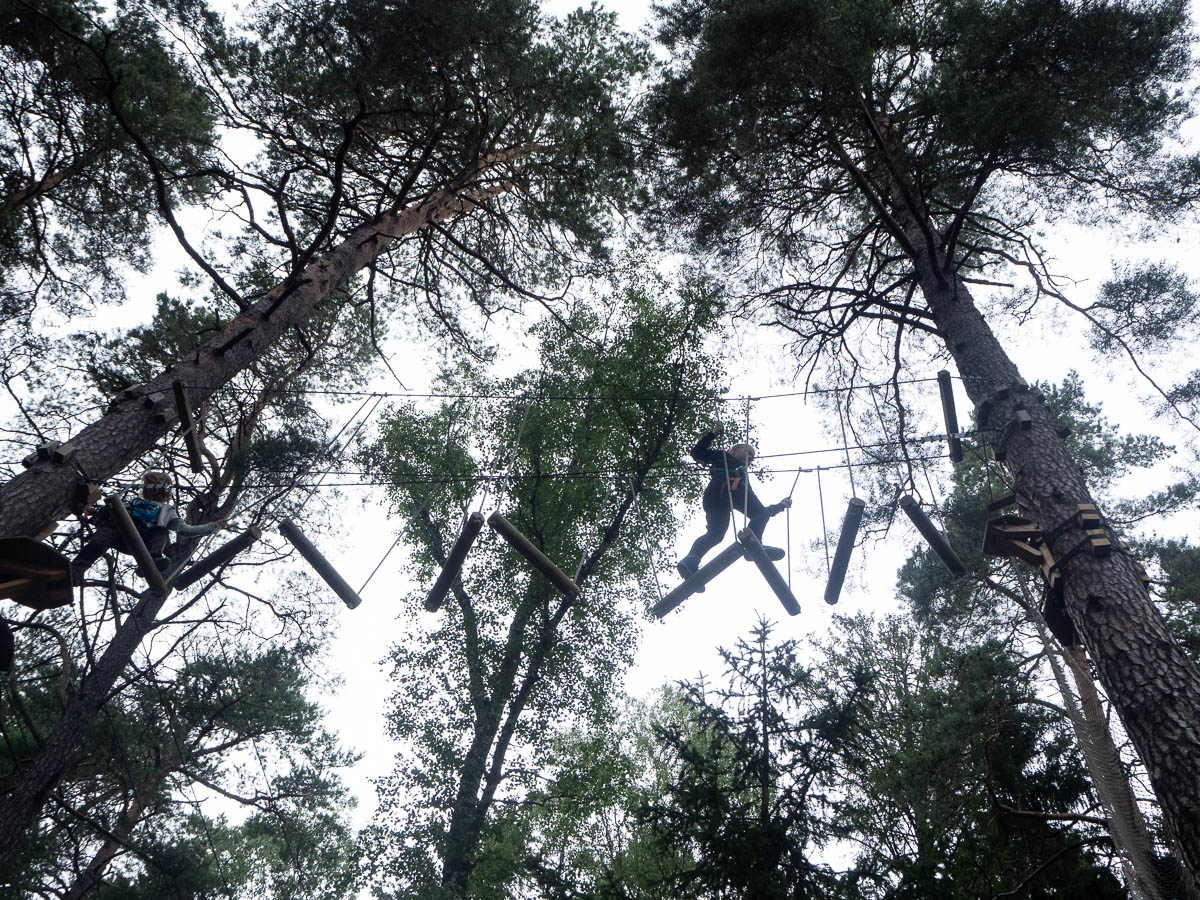
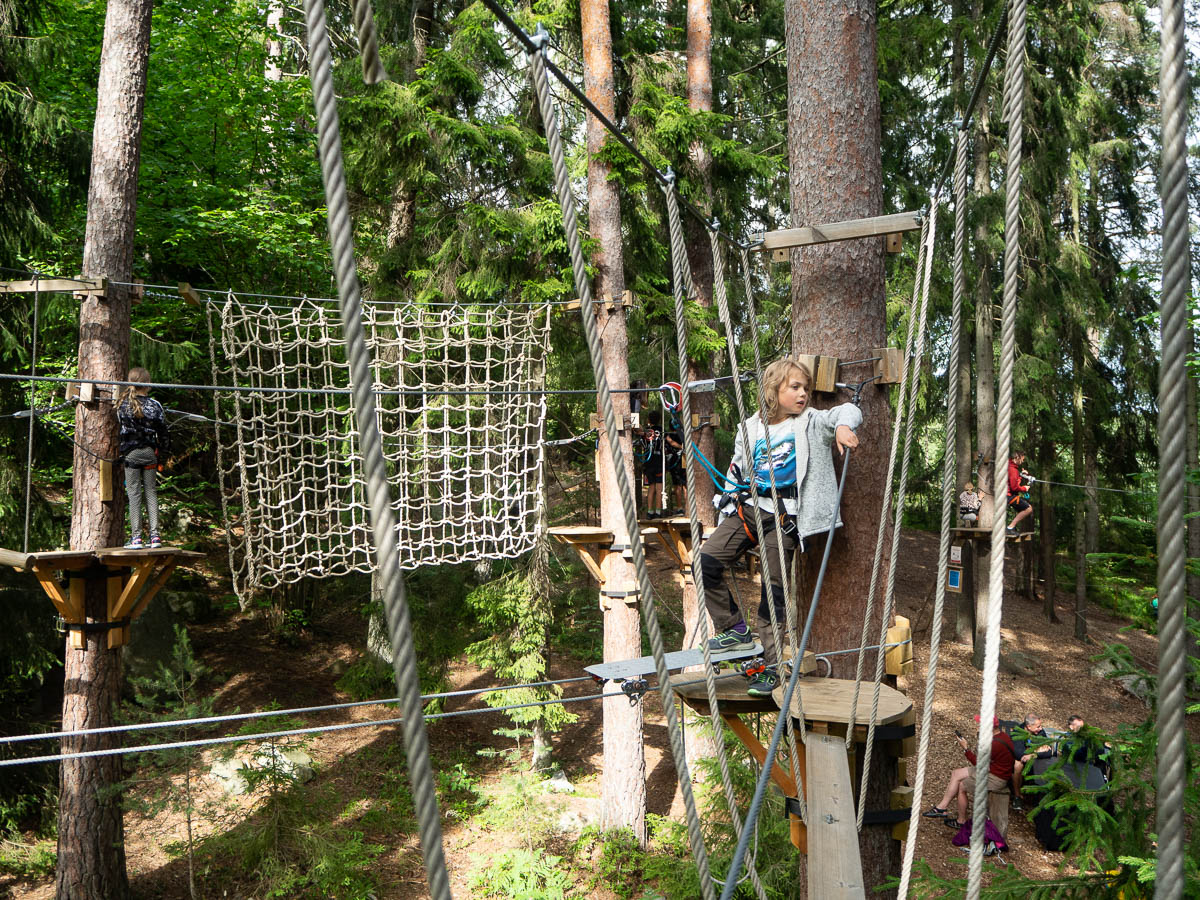
Much of it was very similar. There are obstacle courses/climbing trails up in the pine trees that you follow from platform to platform, while a carabiner hooked onto a cable keeps you safe at all times. The obstacles can be anything – plank walkways, nets, wobbly assemblies of logs and cable, etc. There are courses of various difficulties, ranging from “good for kids” to “requires real physical exertion”.
At Otepää, a ticket allows you to climb each trail once. Accropark tickets are timed and you can climb as much as you want during your two-hour slot. This is nice in theory, because you can skip the basic courses and do your favourite harder courses several times. But they sell too many tickets to each slot. There was a lot of waiting in queues at each course start and at the platforms.

The park at Lida was crammed into a much smaller area. The courses criss-crossed each other and the ground area felt nearly cramped. I found it a bit difficult to navigate. It was fine as long as we strictly followed the difficulty order, because the start of the next course was always close to the end of the previous one. But finding the start of, say, the “Blue+” course among all the stuff was not very easy.

The courses themselves also felt smaller, although I’m not sure how much that was actually the case and how much was my subjective experience due to the denser arrangement. I think the courses probably had roughly the same number of obstacles, but many individual sections/obstacles were shorter than I had become used to. This plus all the queueing meant that I got less climbing and more waiting than I had expected.
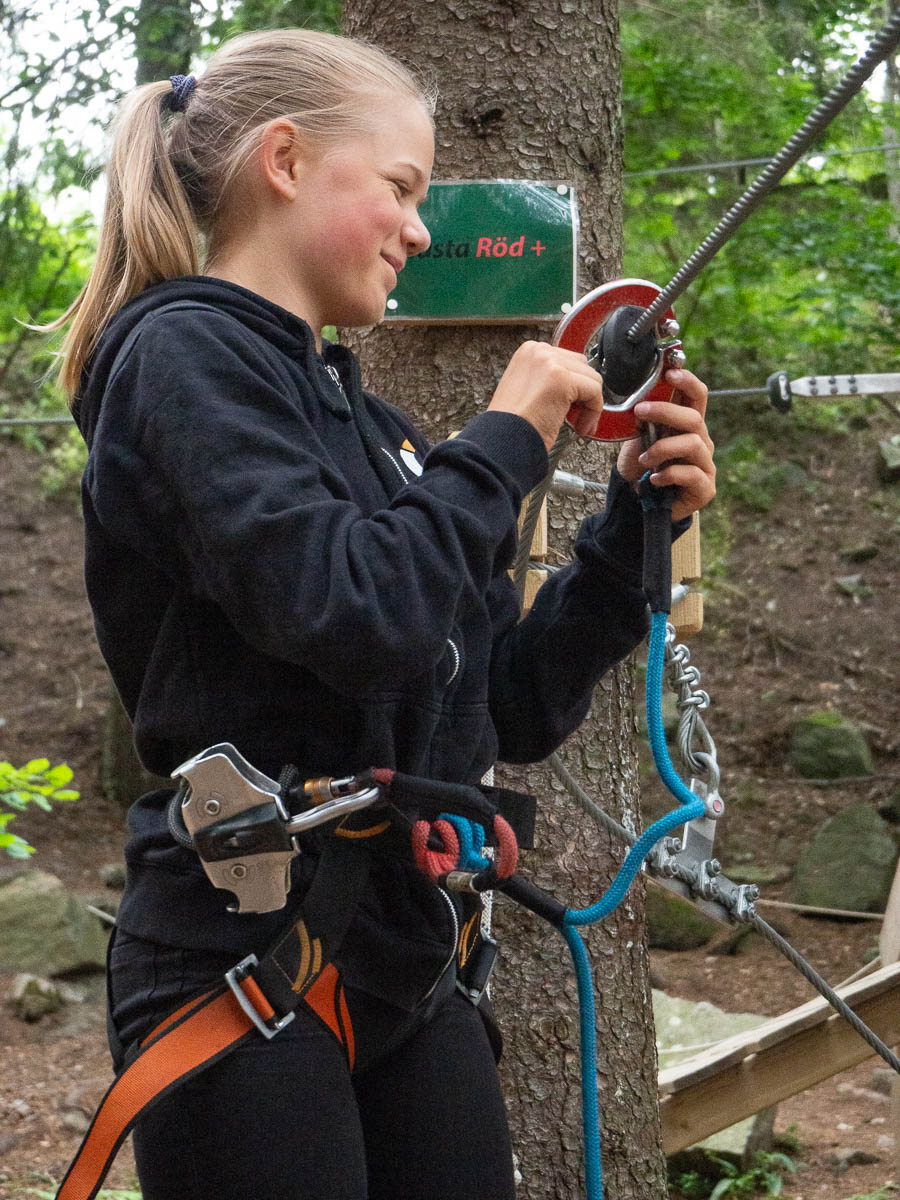
Accropark had a really clever security solution on their courses. The harnesses at Otepää have two carabiners that you move from cable to cable, one at a time, so you’re always attached by at least one. The harnesses at Accropark have one normal carabiner that you move yourself, and one red that is permanently attached to the cable that you simply cannot remove. Getting it from one cable section to the next one took a bit of practice, but was quite convenient once I got the hang of it. Adrian and Ingrid are experienced climbers by now and wouldn’t forget to clip on, but when they were beginners, this solution would have removed one big worry for me.
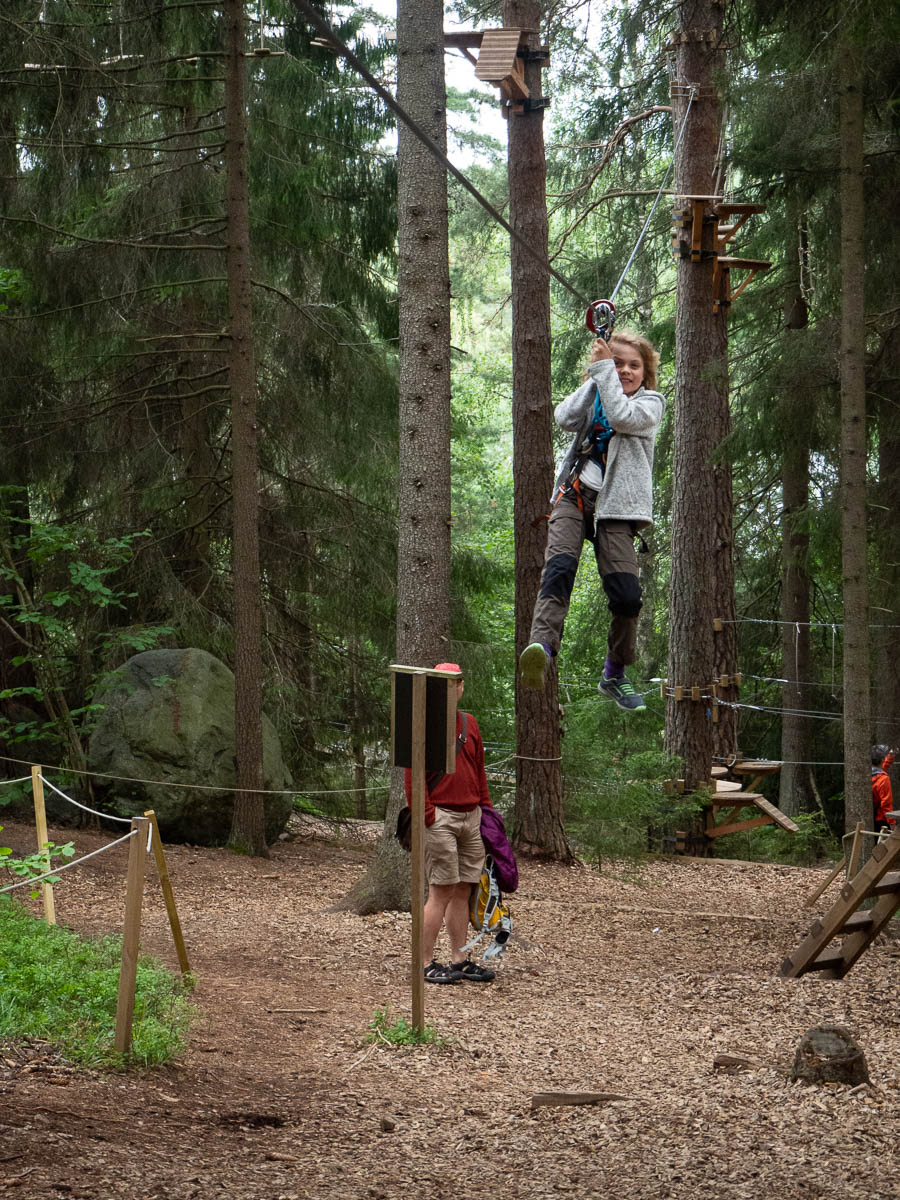
There was one real disappointment for me at Accropark, and that was the zipline rides. They were just plain uncomfortable. The harness I got had me hanging so high up that the zipline cable was level with my eyes. I was constantly thinking about how to keep my head away from the cable (and failed once when I got spun around and the cable chafed the back of my head). I don’t know if the harness was badly designed or if I got the wrong size or something.

Several of the short rides between platforms also ended with really hard stops with a strong yank to the harness and nothing to soften the braking. Actually painful. The long zipline rides across the valley at Otepää are the best part of the park; here I didn’t even try the pure zipline courses because my experience on the short ones sucked so badly.
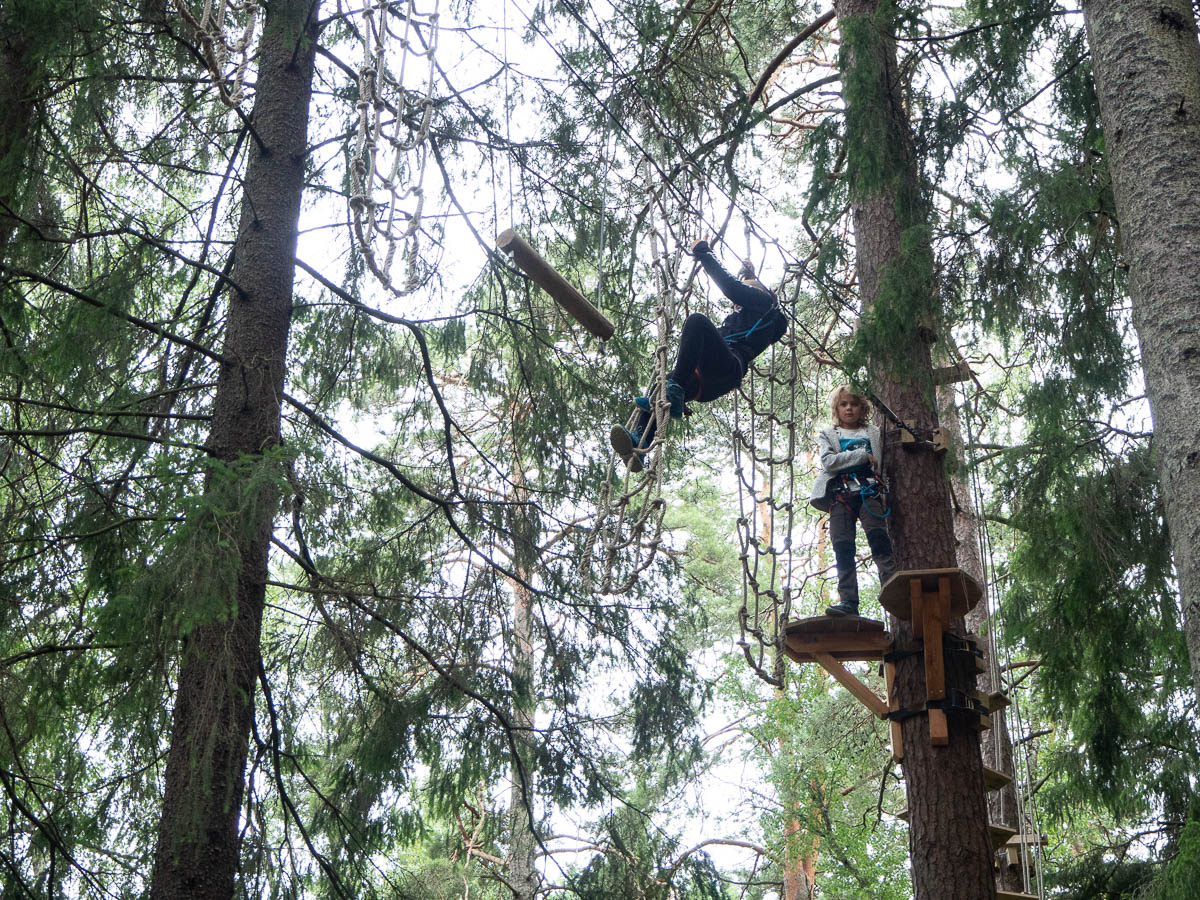
Ingrid and Adrian were both happy with the park and would be glad to go there again. Ingrid managed all the courses including the hardest “Red+” (although that one was a real challenge for her). Adrian did everything except that Red+.

I think we’ll try the other park at Vaxholm next time.

Bonus memory from Lida: the countless cute rabbits nibbling on the grass everywhere, including babies looking no bigger than my hand.
We are leaving Fårösund behind and heading towards Visby again, so we can take the ferry back tomorrow.

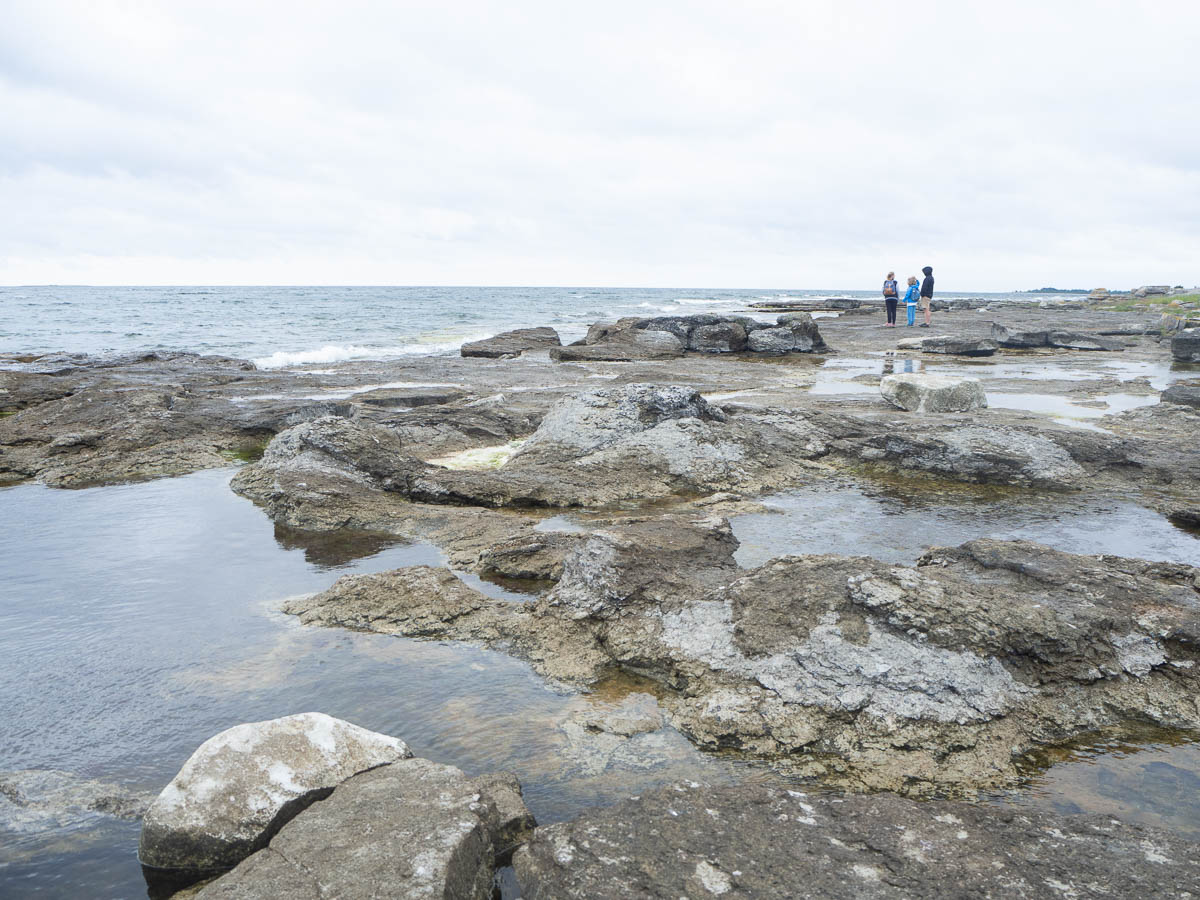
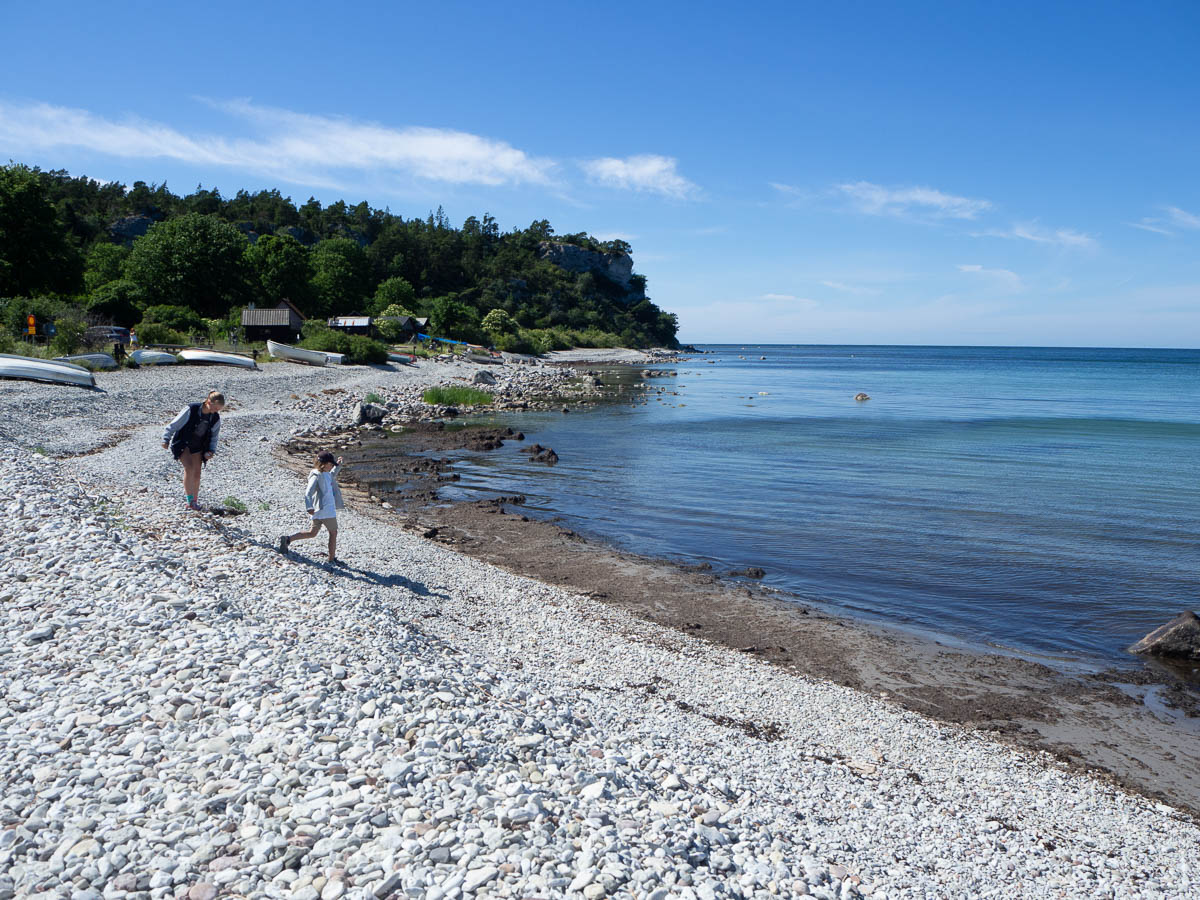
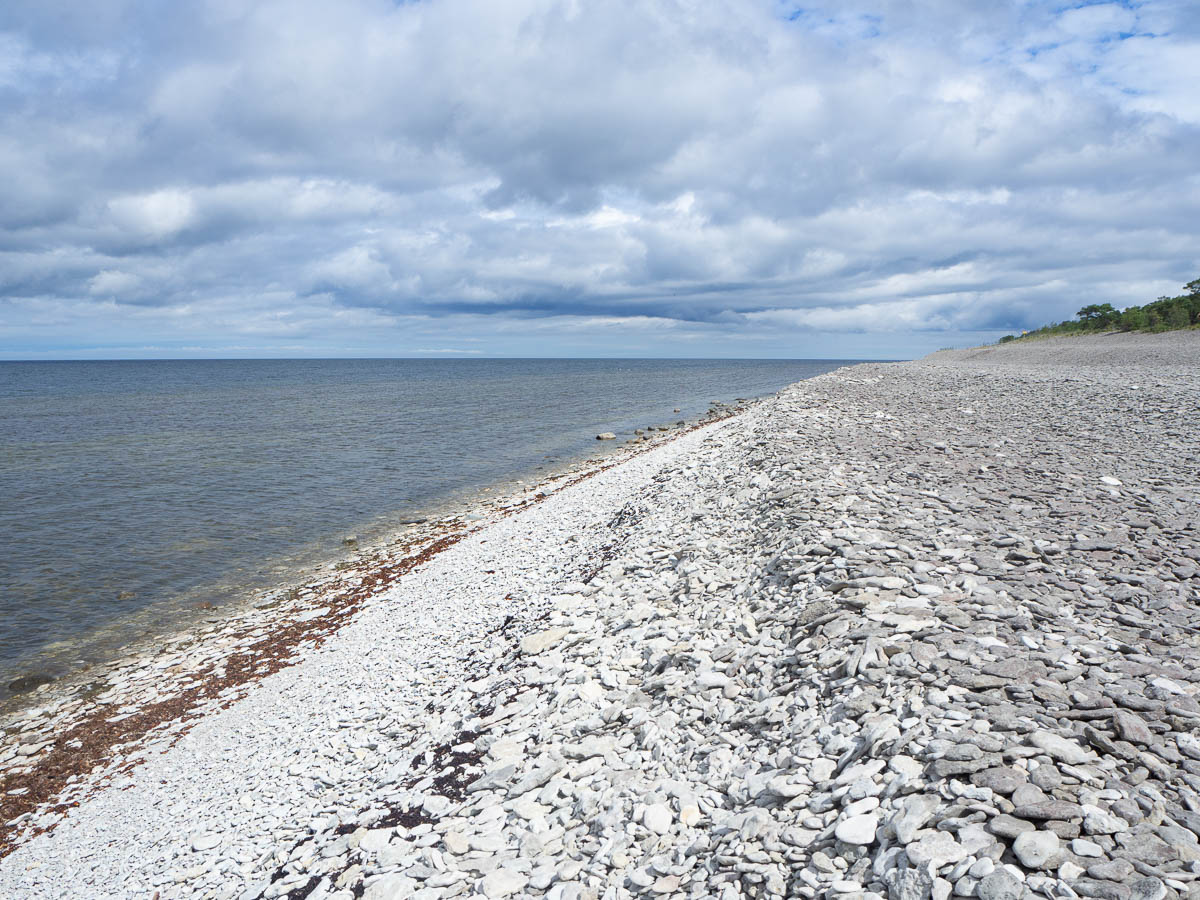
First stop: Stenkusten, the stone coast. This place looks unreal and a bit spooky. The beach is all stones, nothing else, in even-looking layers, looking almost artificial in their arrangement. At the top, furthest from the water, is a very flat surface of sharp-edged chunks of crushed limestone, which looks as if it came out of a production line at a cement factory and was evened out by a bulldozer. Next to the flat is a steep slope towards the sea, and then a flat surface again, but here the stones have been bleached white and tumbled to rounded shapes.

Next we headed for the lakeside beach of Tingstäde Träsk. Adrian wanted a beach where the water was warm and didn’t have any waves. When we got there, we were met by signs warning us of swimmer’s itch. Well, maybe a more protected seaside beach, then? But by now it was time for lunch, and finding a veggie-friendly lunch spot was not as easy in this part of Gotland as in Visby, and when we were done with lunch the weather had turned cold and windy again.

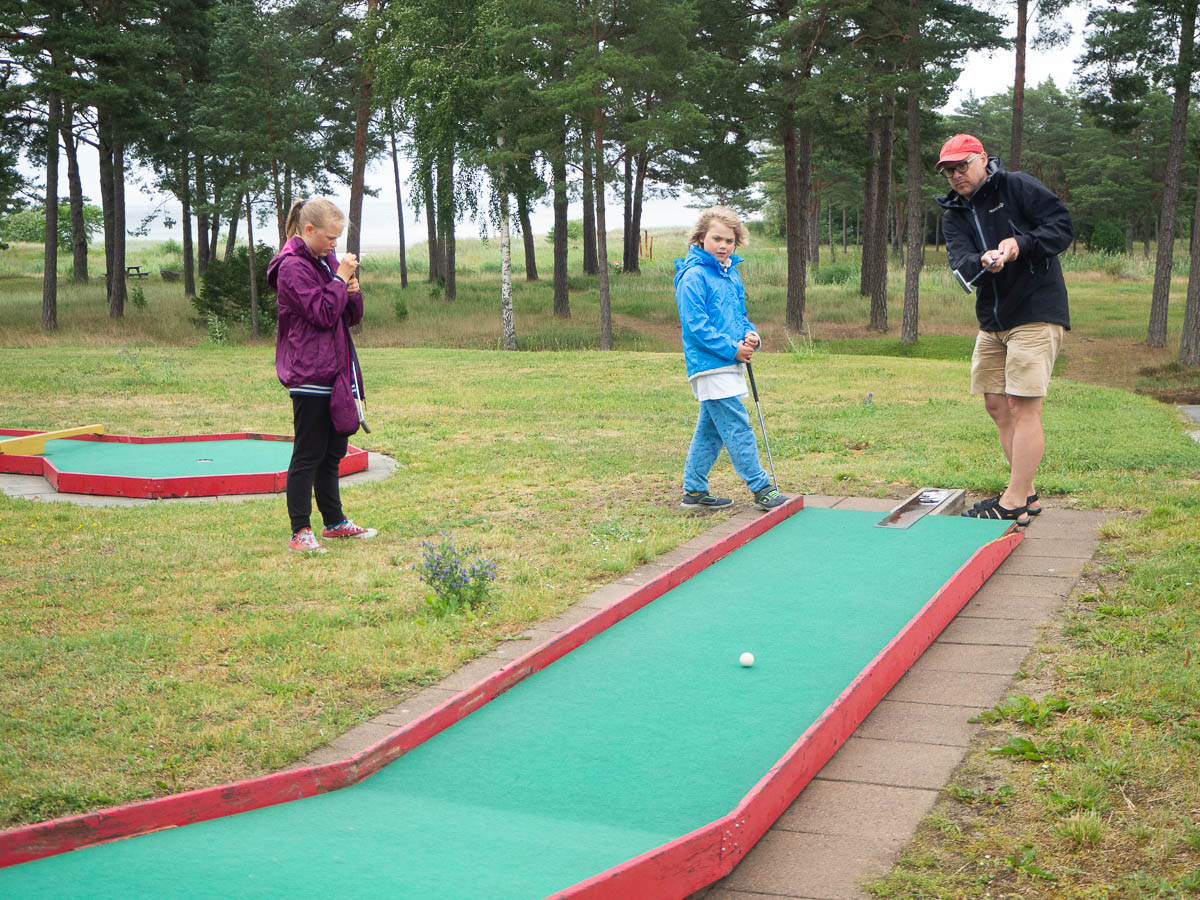
We postponed the bathing to another day and played minigolf instead. Through mostly dumb luck I won the game – I hit several holes with shots that I had no real hope for.


A full day of Fårö.

The ferry trip, which at peak times can involve hour-long queues, went quickly. Gotland in general seems to be relatively empty of tourists right now. Today the weather is wet and windy so almost nobody wants to make a day trip to Fårö. We shared the car ferry with just 5 other cars.

Initially we had a somewhat structured plan for exploring the island, but in practice Fårö is so small that you can criss-cross it repeatedly in an hour. So we just drove wherever we felt like.

First we headed south and wandered around Ryssnäset for a bit. It was seriously windy. We found more fossils, and plenty of tiny clams.


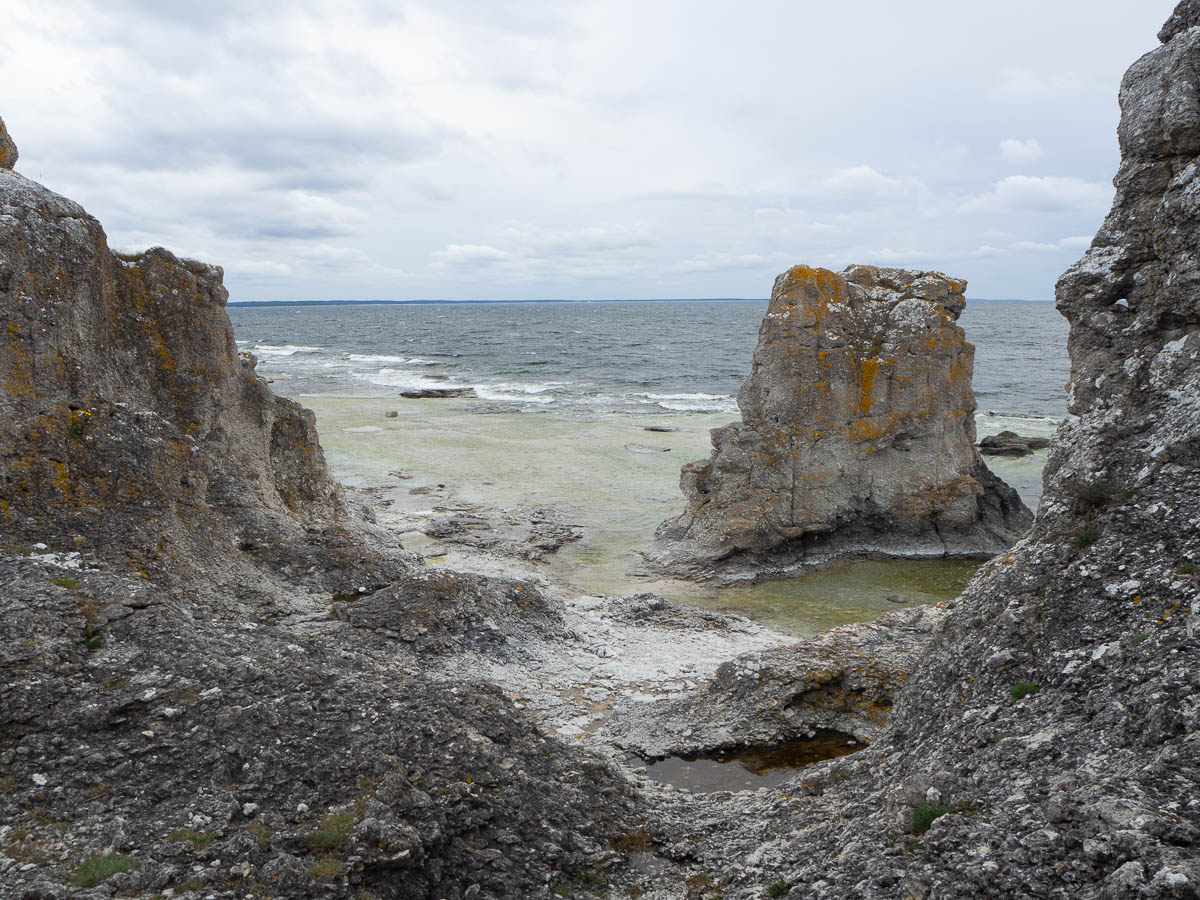
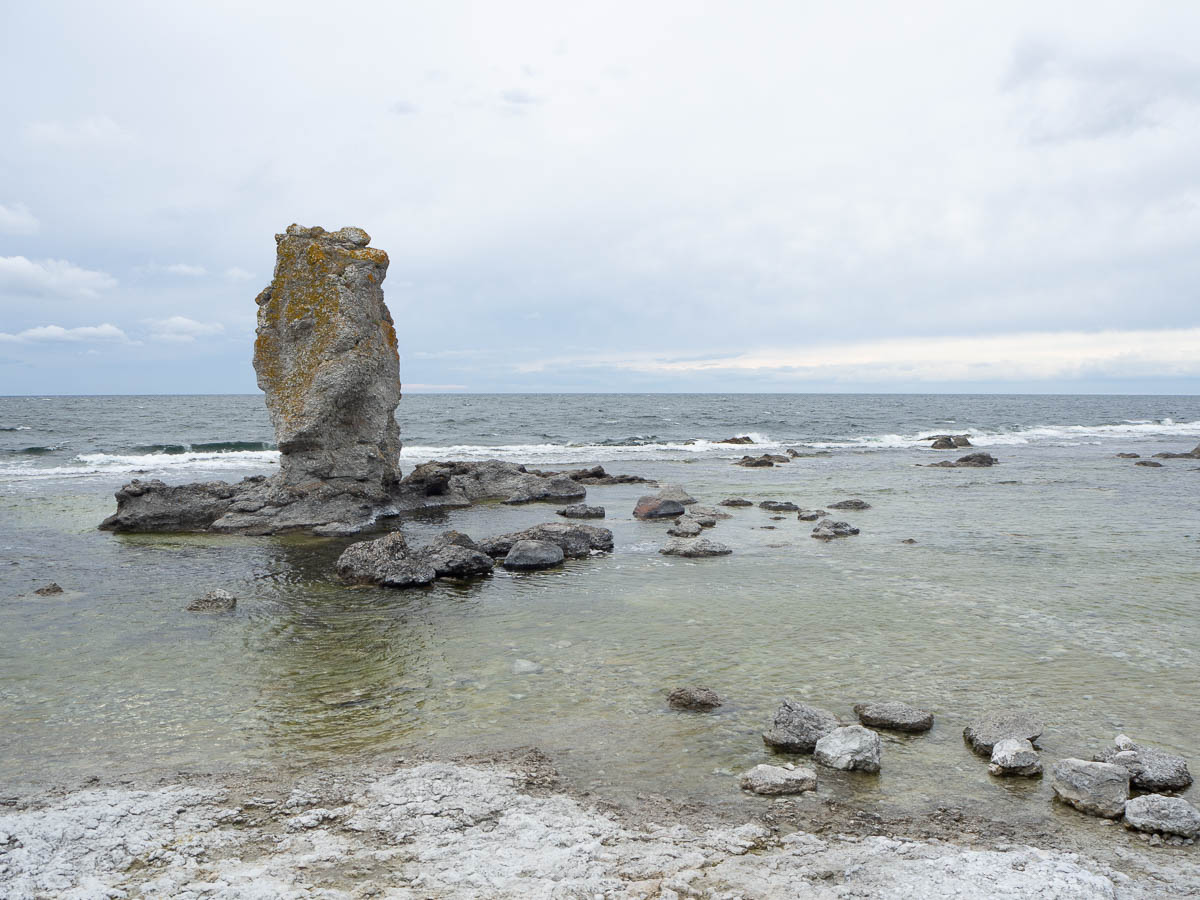
From there we turned north to see the rauk at Gamlehamn. It’s got a large, individualized rauk icon on the map so it’s got to be impressive!

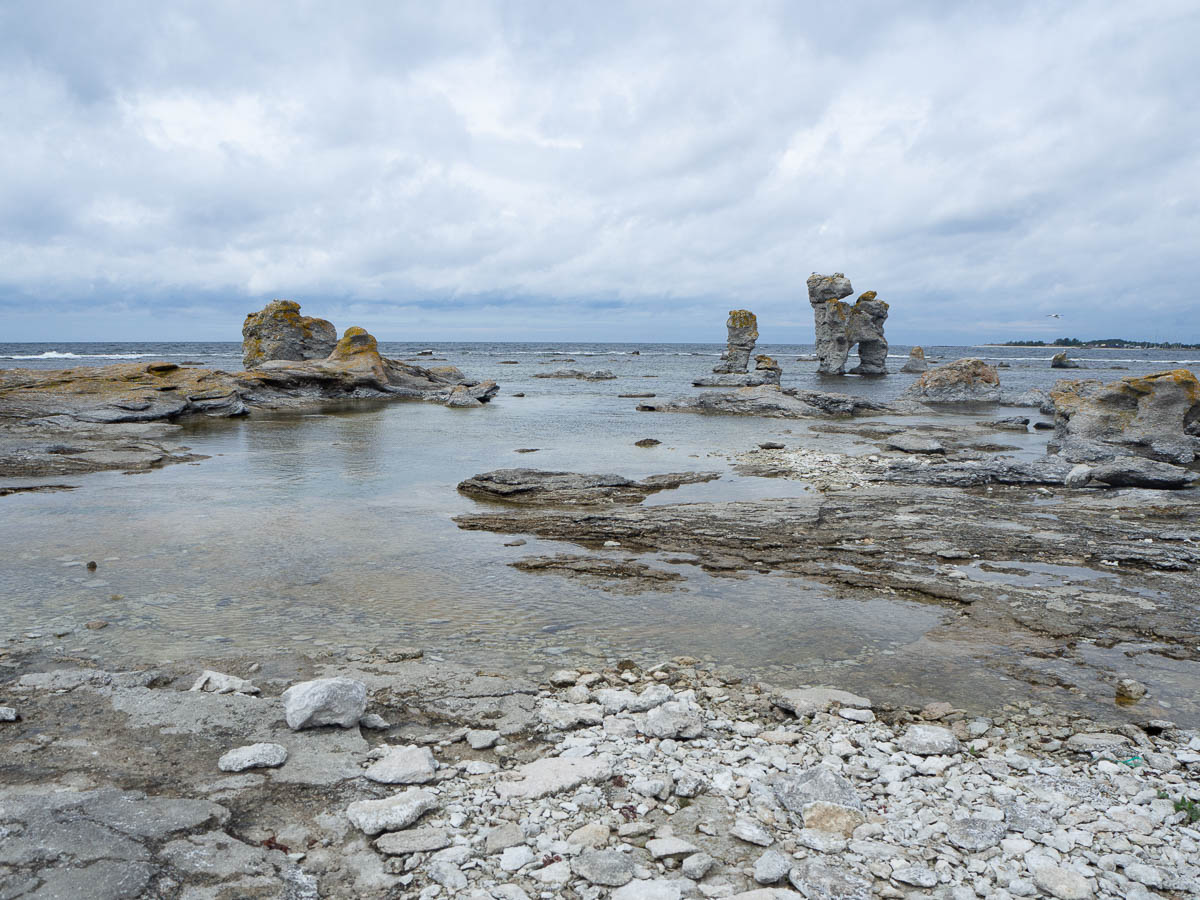
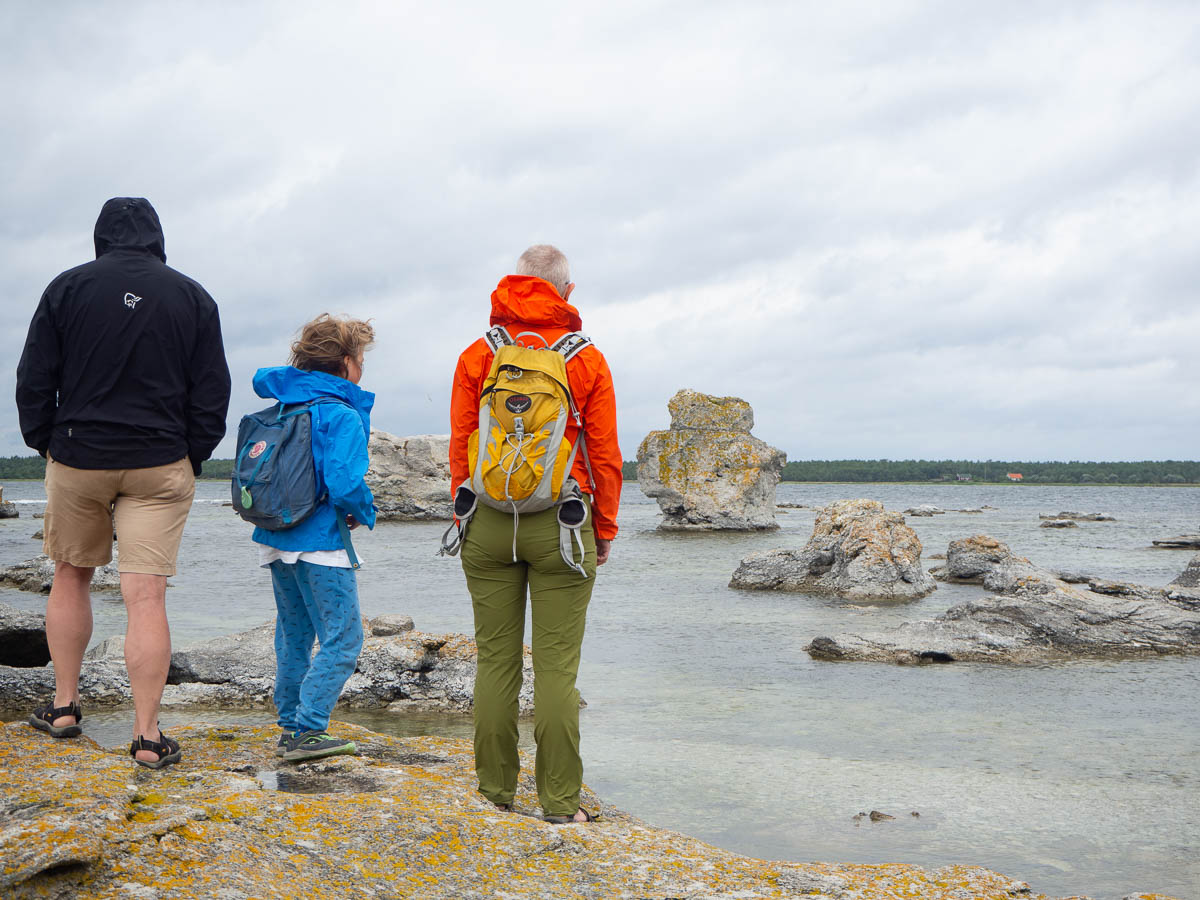
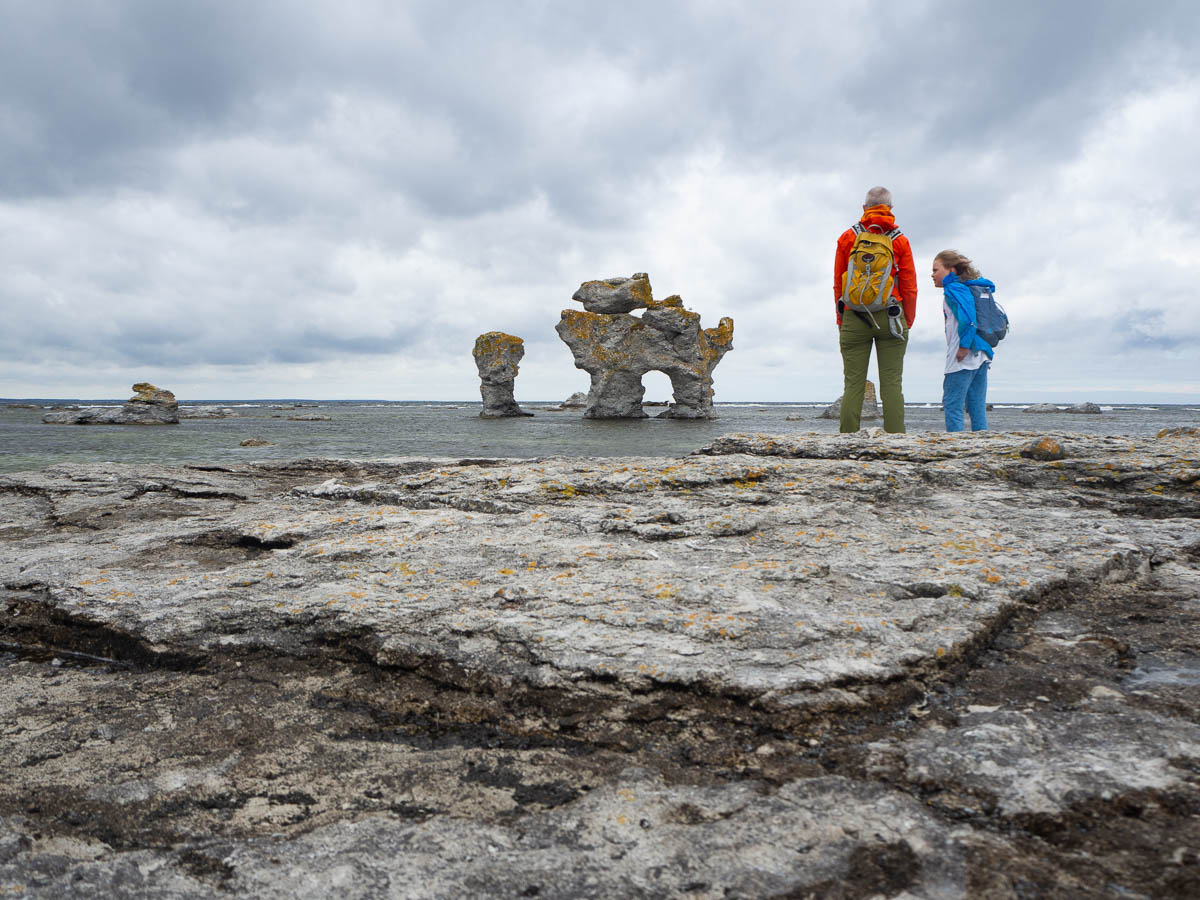
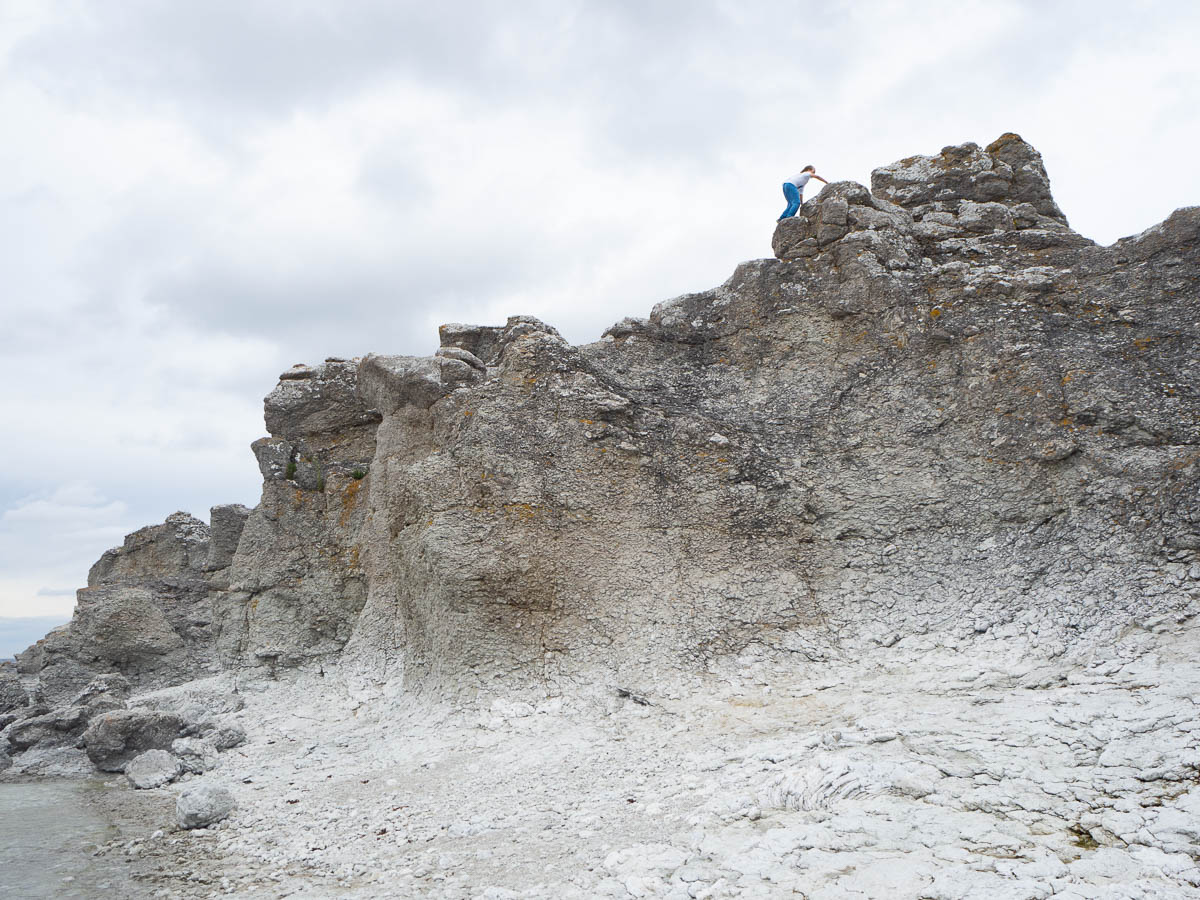
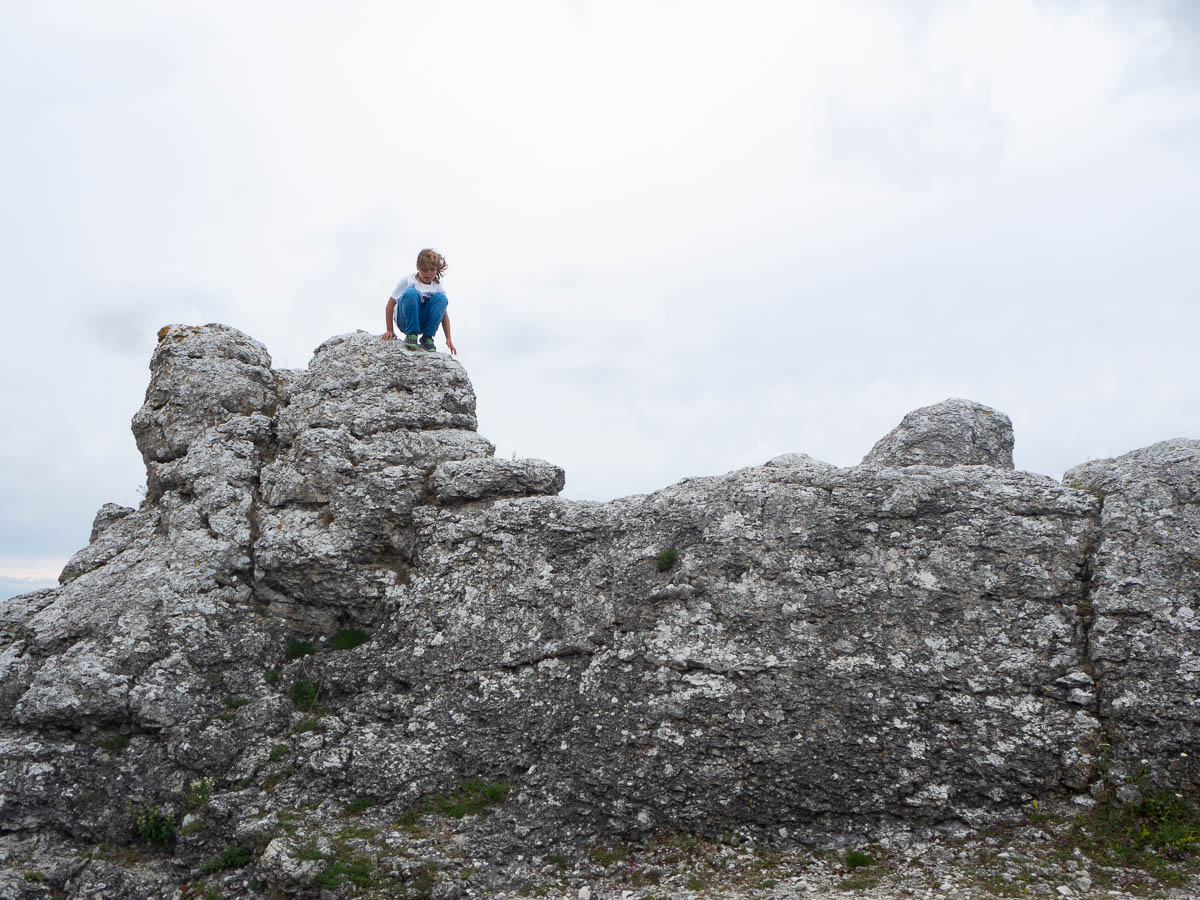
The famous one is vaguely dog-shaped one with two supports. It had many companions, and all together they made for an interesting place: the rocky coastline was broken up and varied, not like the straight and even stony beaches we’ve seen before. This place really invited to scrambling and jumping from rock to rock.


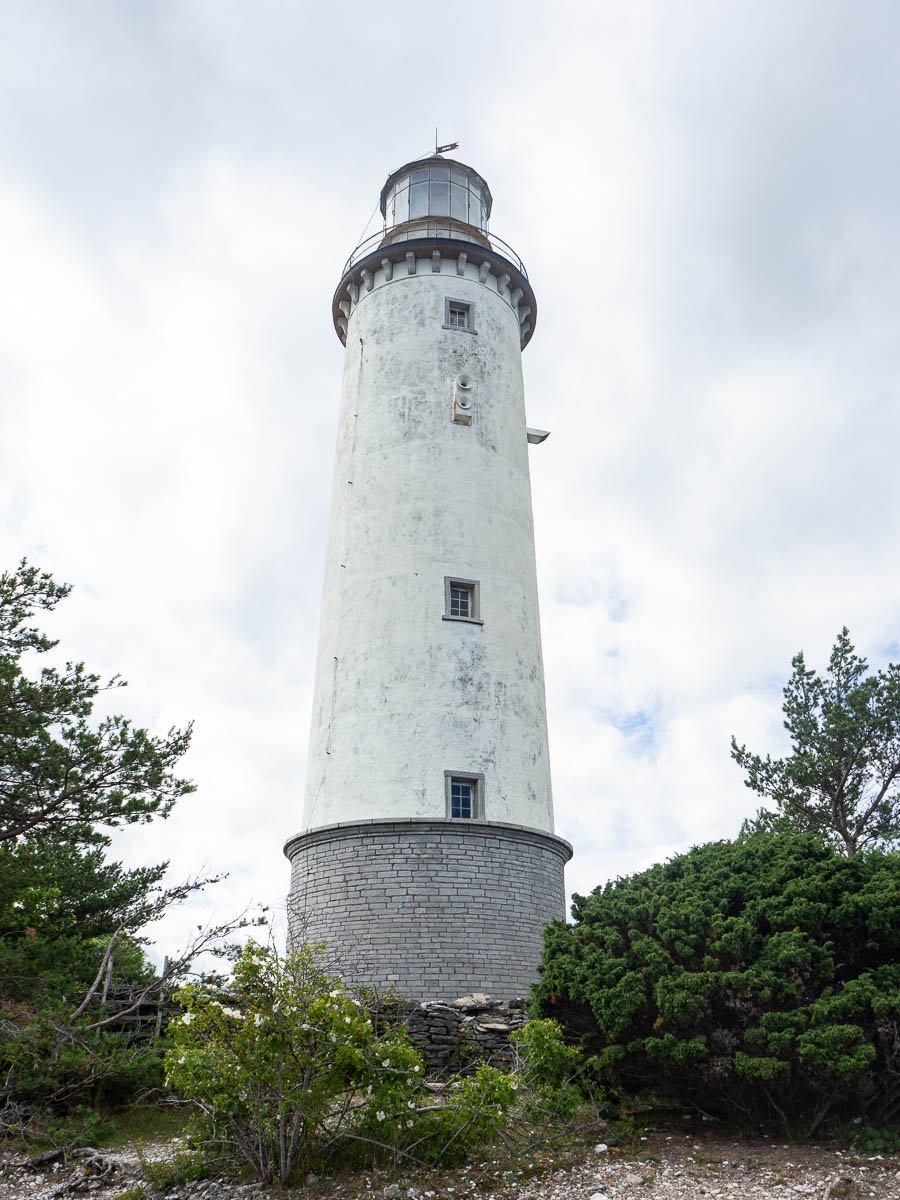
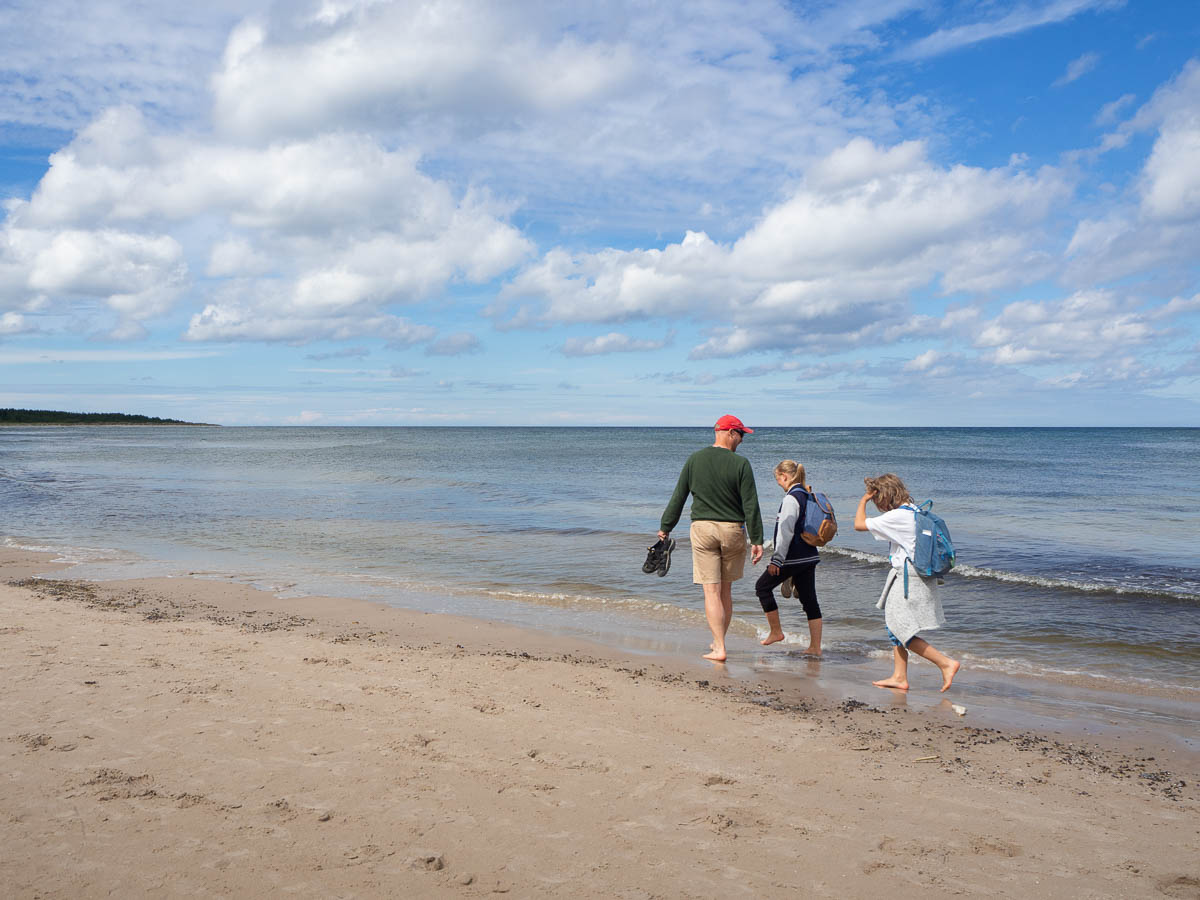
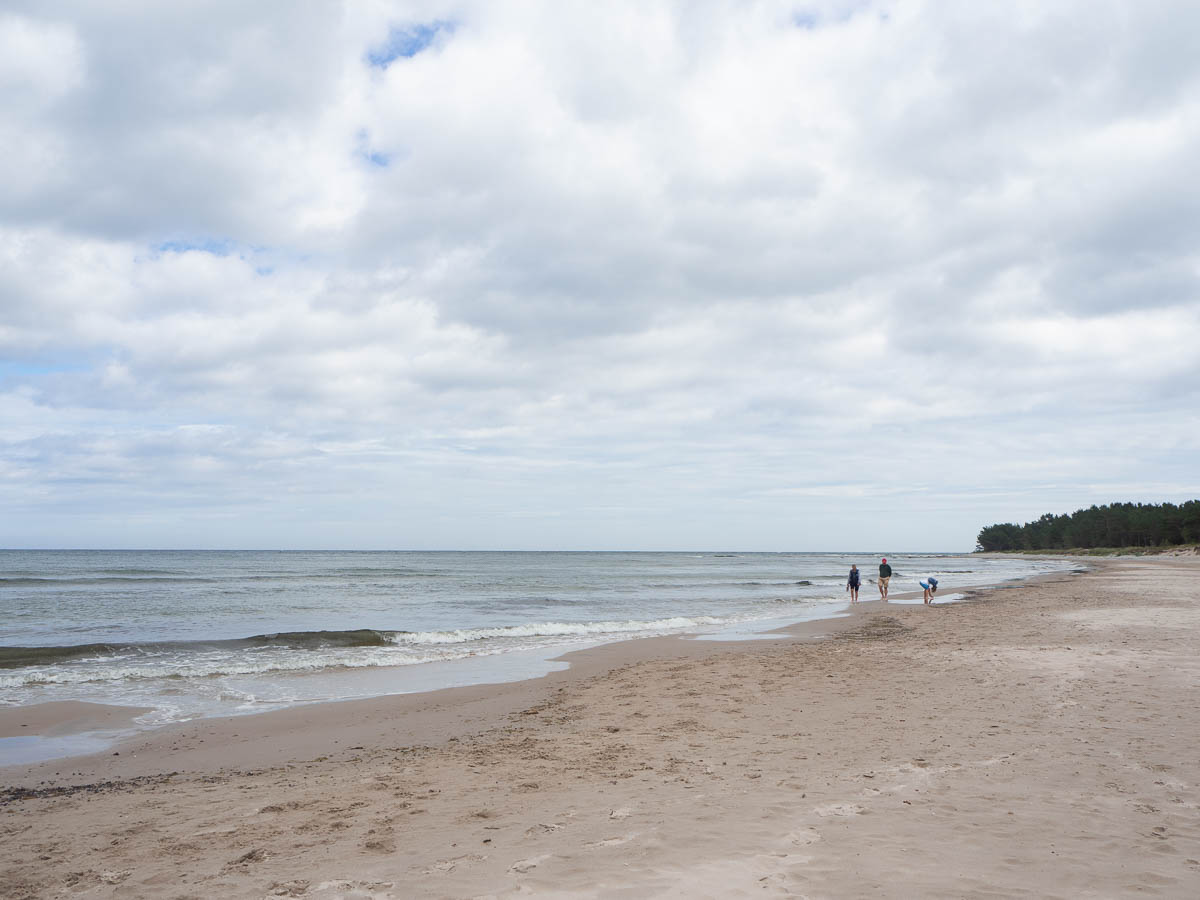
After lunch we drove east to Fårö lighthouse. Not a very interesting sight. But at the end of the road, beyond the lighthouse, there was a wonderful sandy beach, which we had all to ourselves!


The weather was still windy and the water was pretty cold. Eric and Adrian took a very quick dip and then stayed on the beach instead.

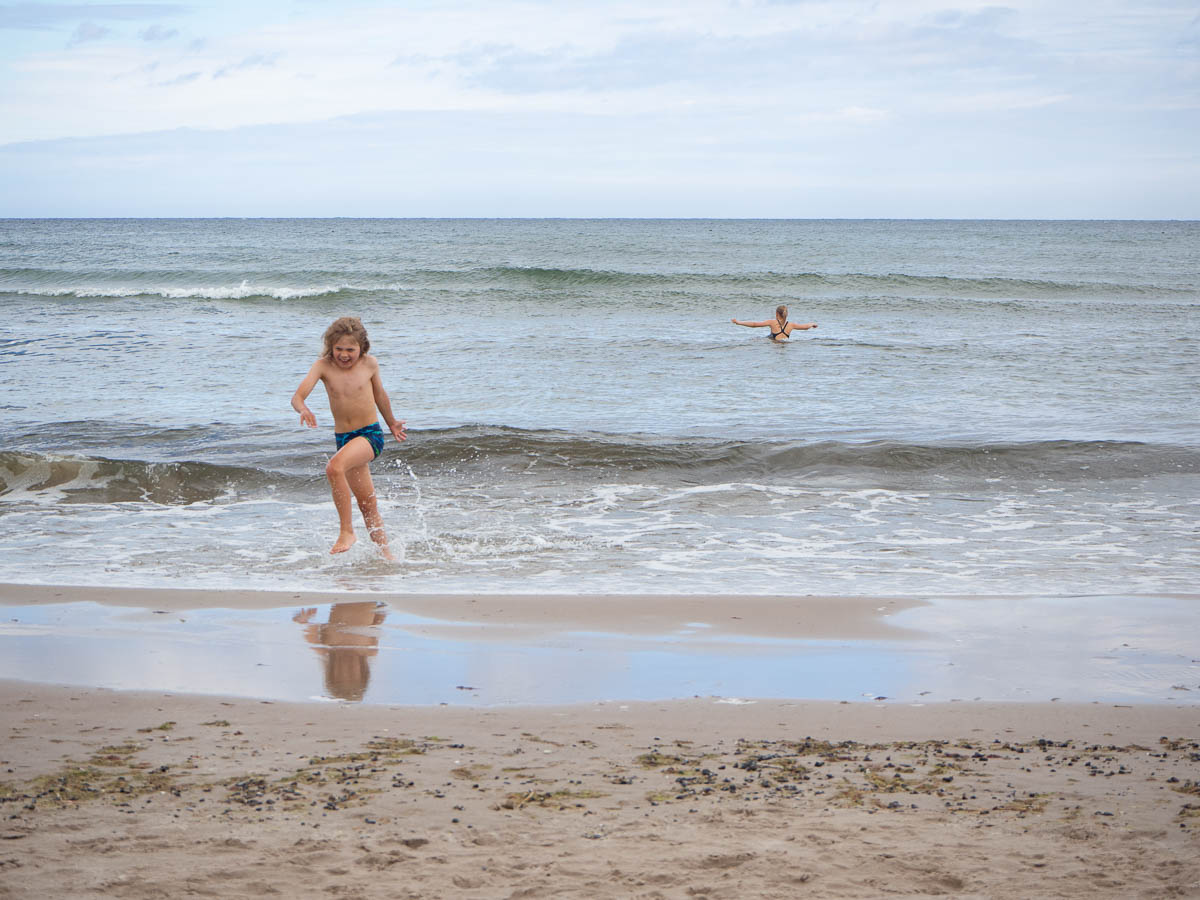
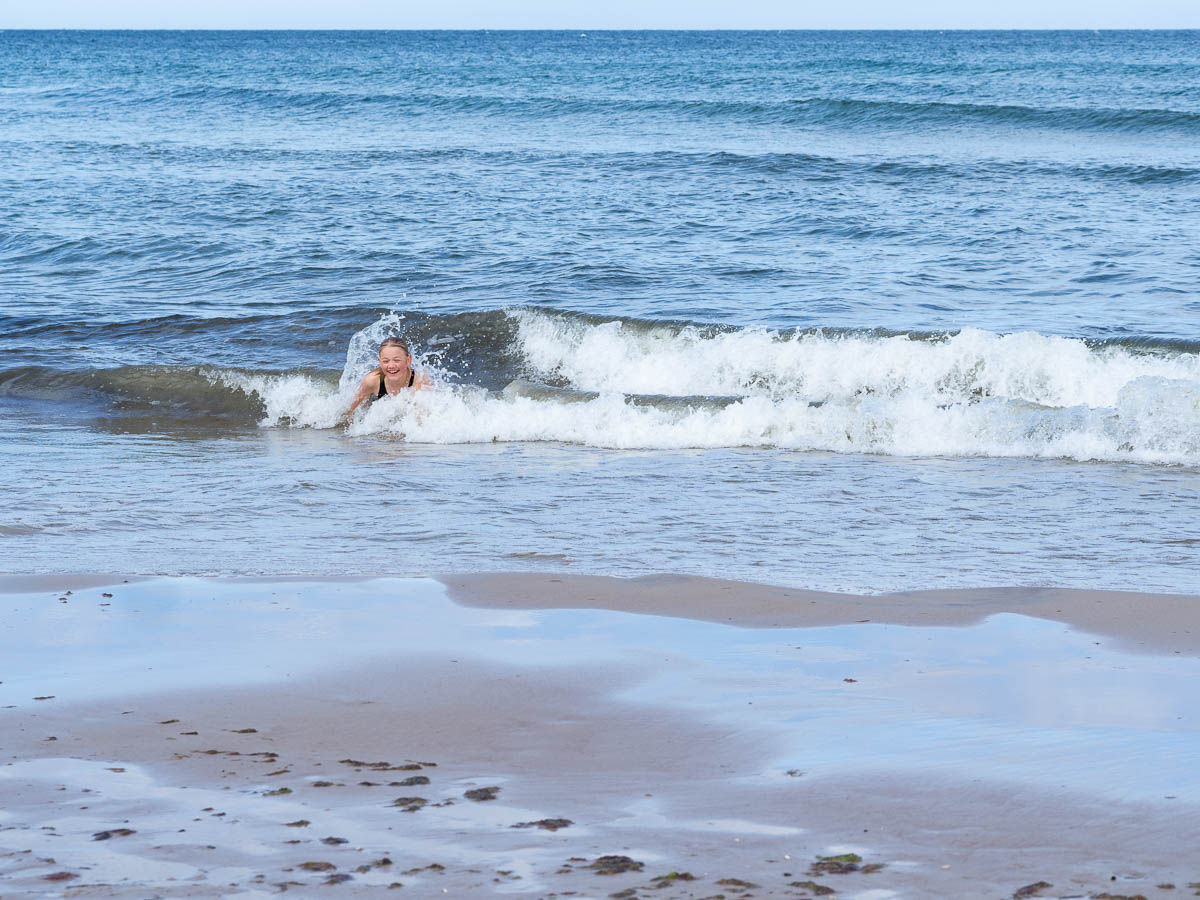
Ingrid however absolutely loved this! The cold didn’t bother her much, and the beach was made extra wonderful today by waves. Well, they weren’t large waves on any absolute scale, but for a kid who has had to make do with Mälaren and Kyrksjön and other very placid bathing spots, this was exquisite fun. She jumped the waves for a long, long time. I stayed with her for as long as I could, sharing her enjoyment. We kept looking for the spot with the best waves. Ingrid cheered every time we got one that was large enough to break into foam and was literally jumping up and down with excitement. Afterwards she said this was the highlight of the whole trip for her.


Afterwards we took the long way back towards the ferry harbour, driving past the rauk area on the north-west side of Fårö. Eric and Ingrid had had enough of rauks and rocky coasts by now so towards the end they stayed in the car while Adrian and I went out to climb and scramble among the rocks (and take photos).


Parts of the coastline here looked like something from another planet. There was water, and there were rocks in various tones of gray – and nothing else. Not even the smallest sprig of grass.


We’re leaving Visby behind and heading north and then north-east towards Fårösund, stopping whenever we feel like it.

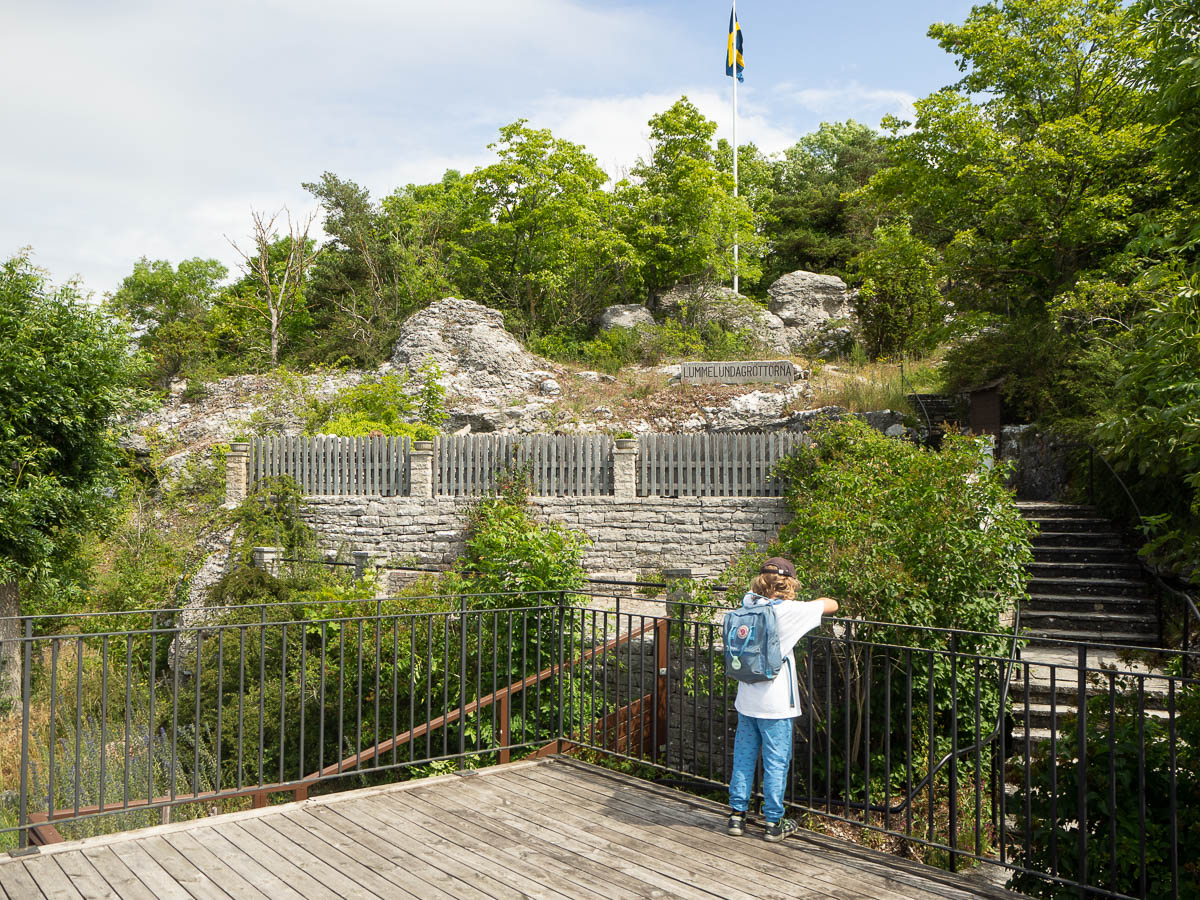
The first stop was already at Lummelunda even though we were there only yesterday. There’s a nature trail there that’s supposed to be nice, but we didn’t the chance to walk it yesterday. After our visit to the caves it was high time for lunch, but the café there had no proper vegetarian dishes so we started cycling back towards Visby to find food. Today we were properly fed and did that walk. It was rather underwhelming and the signage was laughably unclear and out of date.

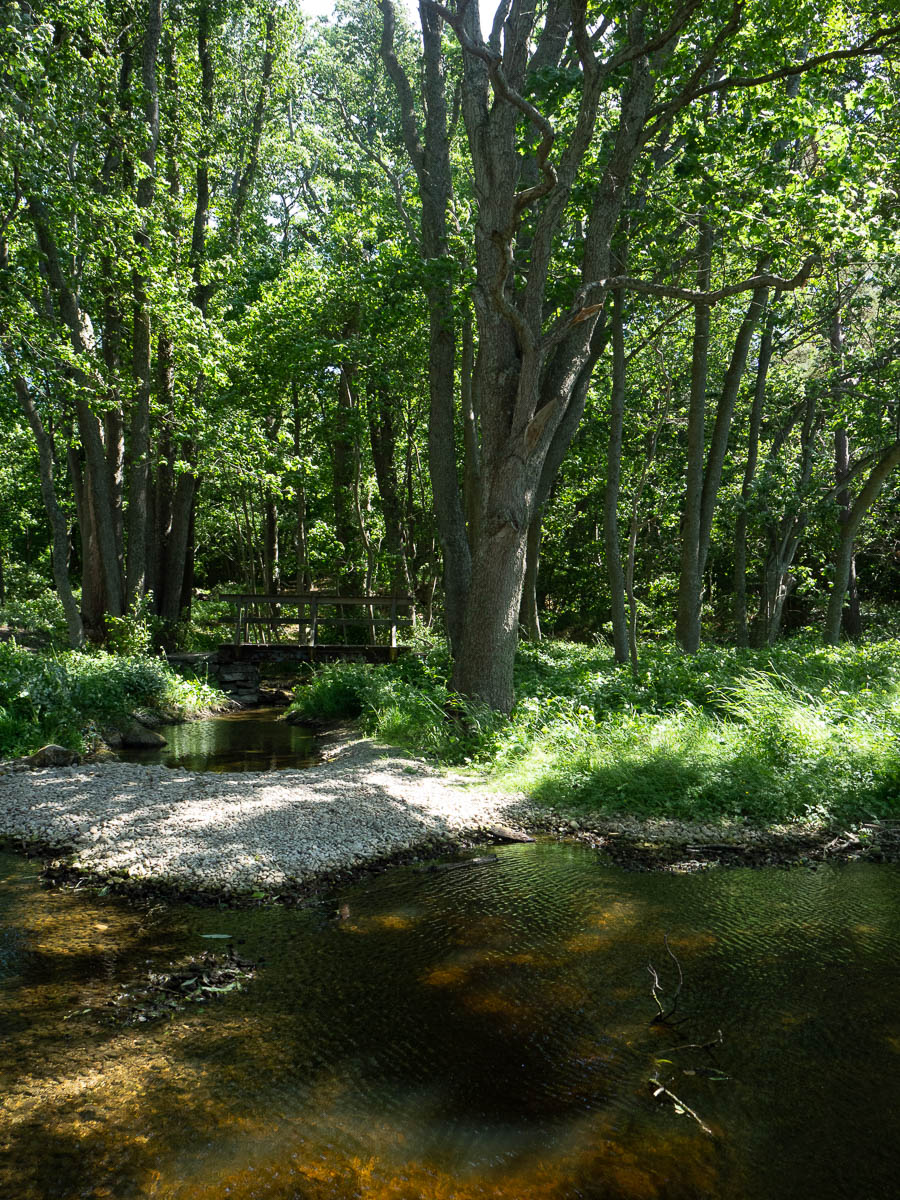
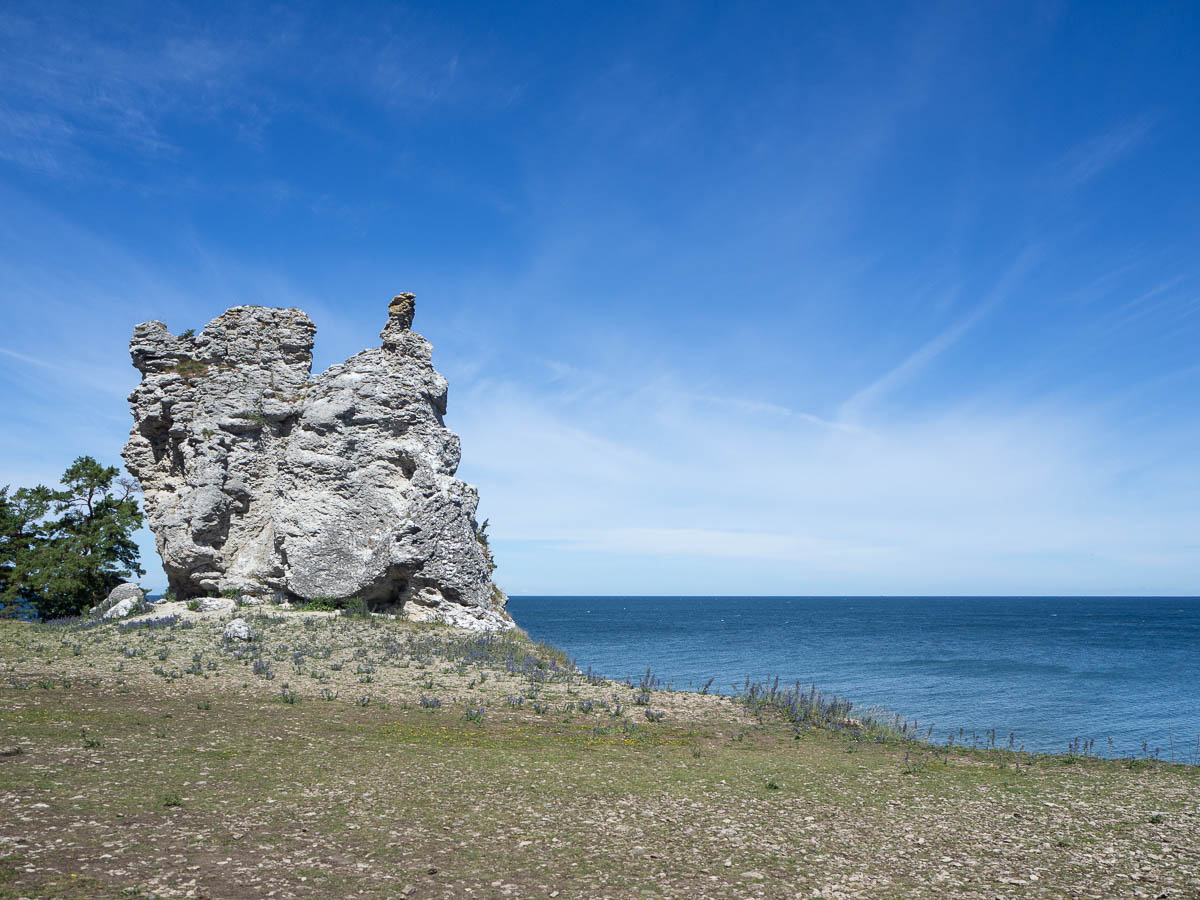
Next stop: Lickershamn, to see our first rauk – the Jungfrun. The rauk was cool, but the walk from the village to the rauk was actually even nicer. It’s mostly pine forest, which we do admittedly get a lot of near Stockholm as well, but it’s different here. The ground here is limestone instead of granite, so the undergrowth is completely different. It looks and smells like the pine forests of my childhood. (I lived in Tartu as a child but spent most summers near Tallinn, where the forests were just like this.)

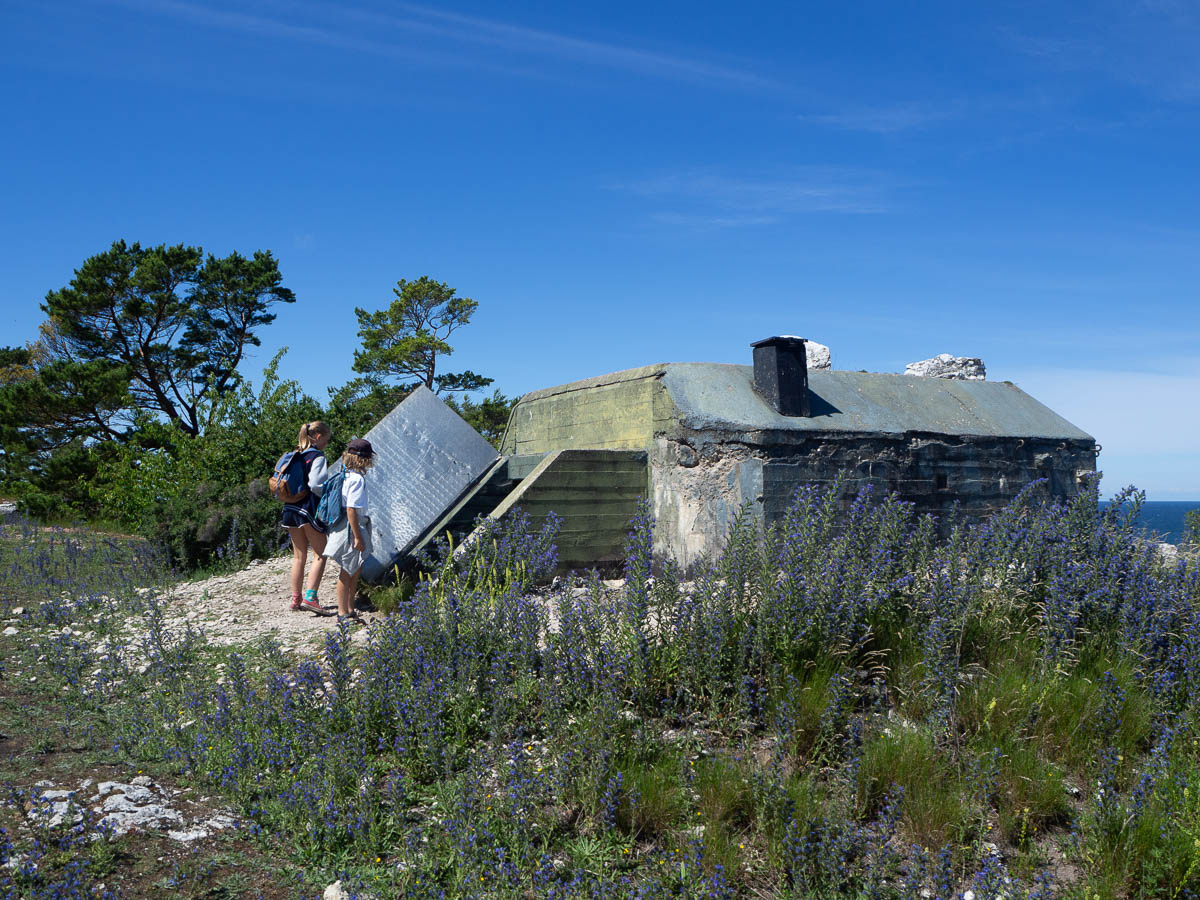
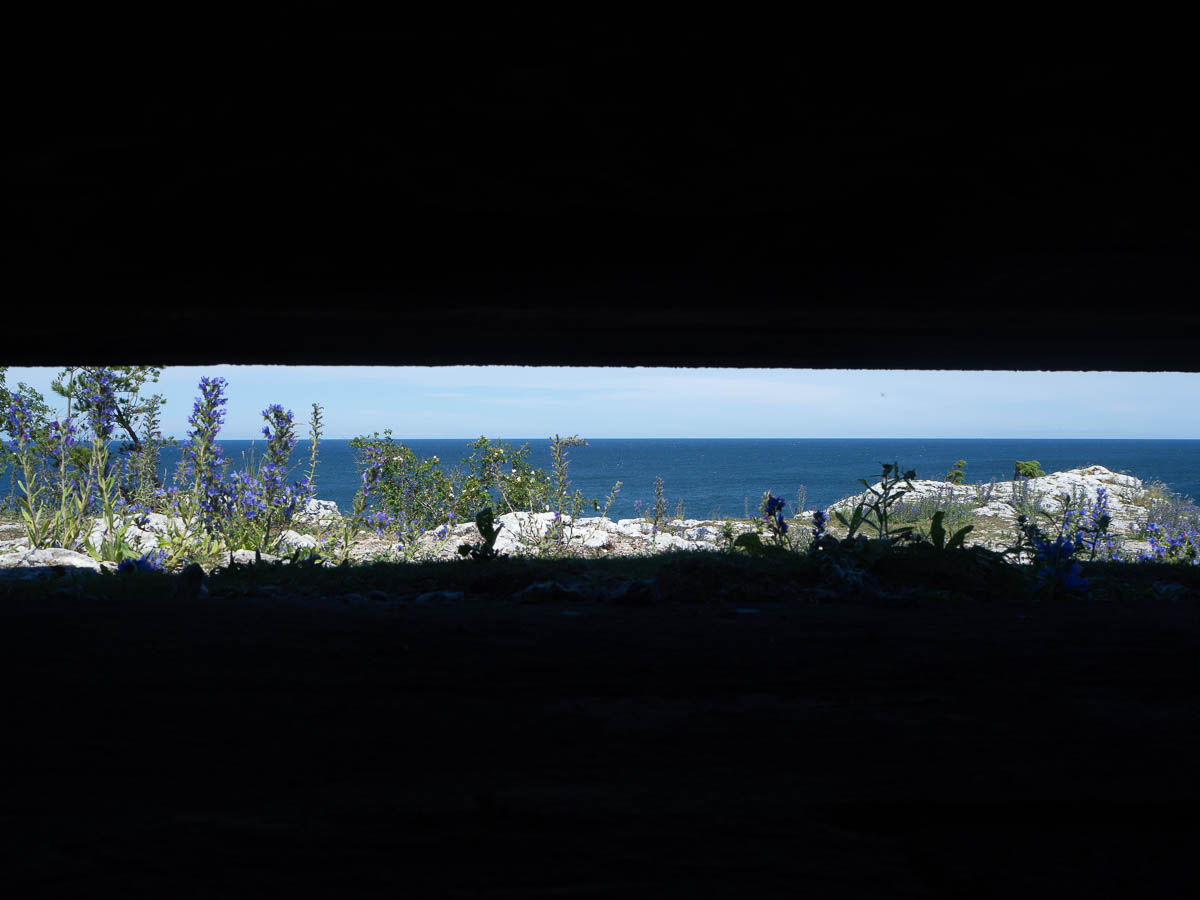
Ingrid and Adrian were more interested in the WW2-era concrete bunker that was situated high on a clifftop near the rauk.


After lunch we drove all of 8 km north to the next beach, at Ireviken. (Gotland is so small that we could start driving towards our next hotel at dinnertime and still make it there before the night.)

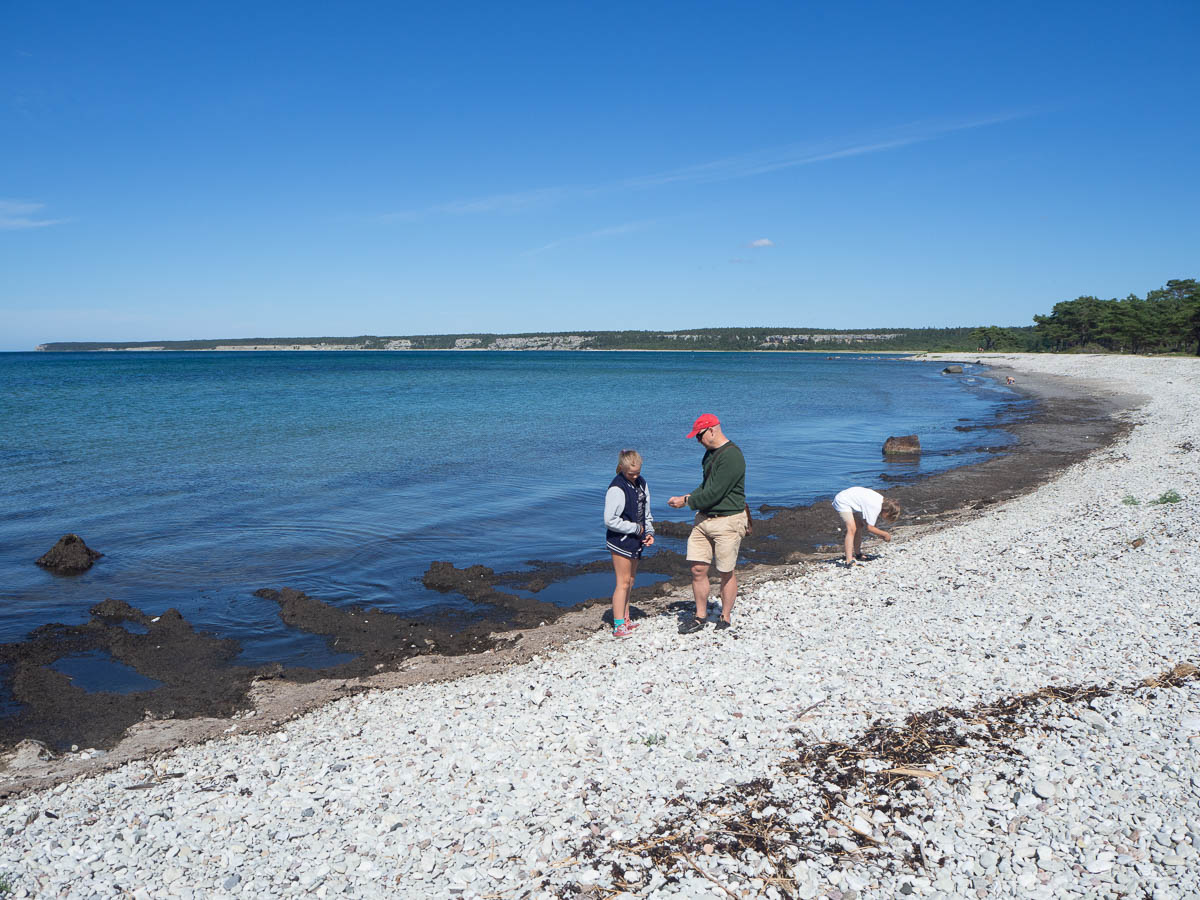
Ireviken one was recommended by the internet as a nice bathing spot and, even more interestingly, as a great place for fossil hunting.


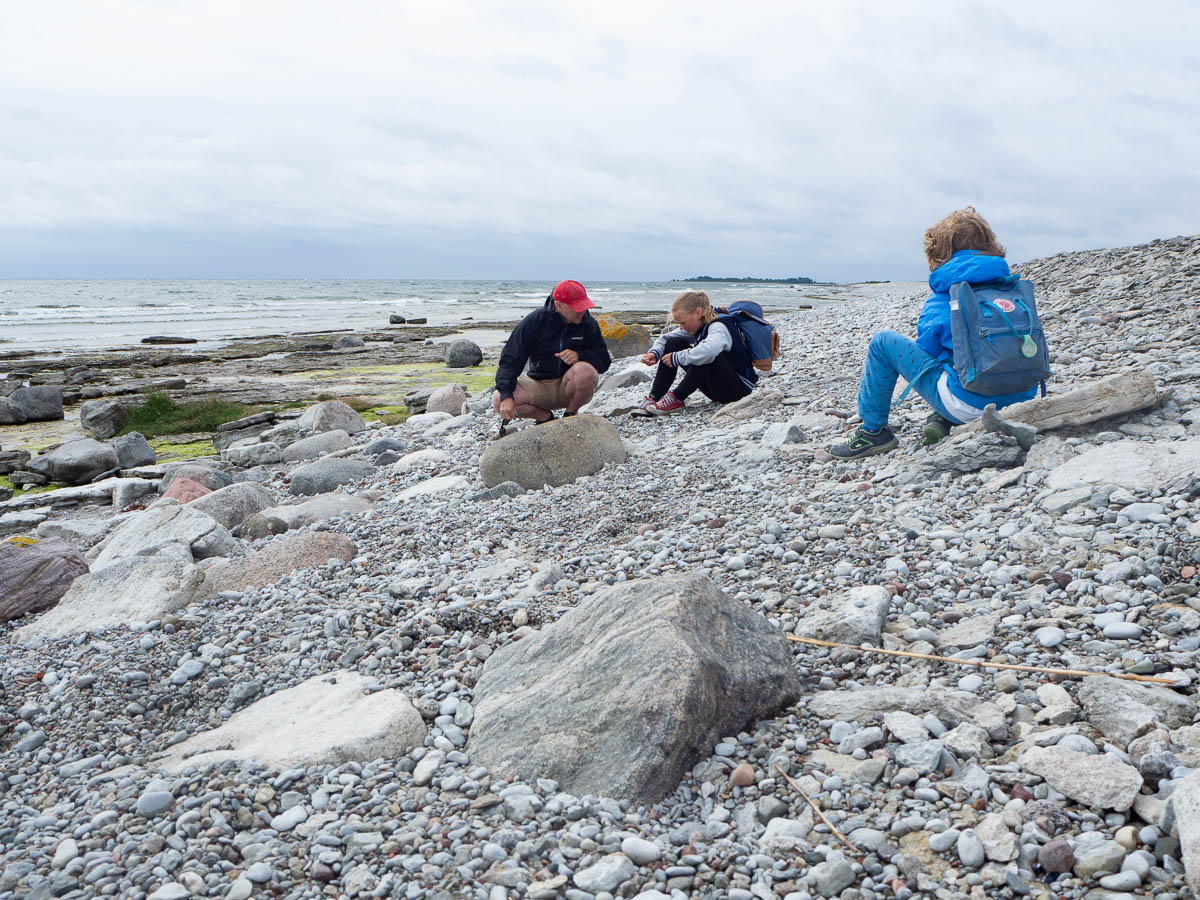
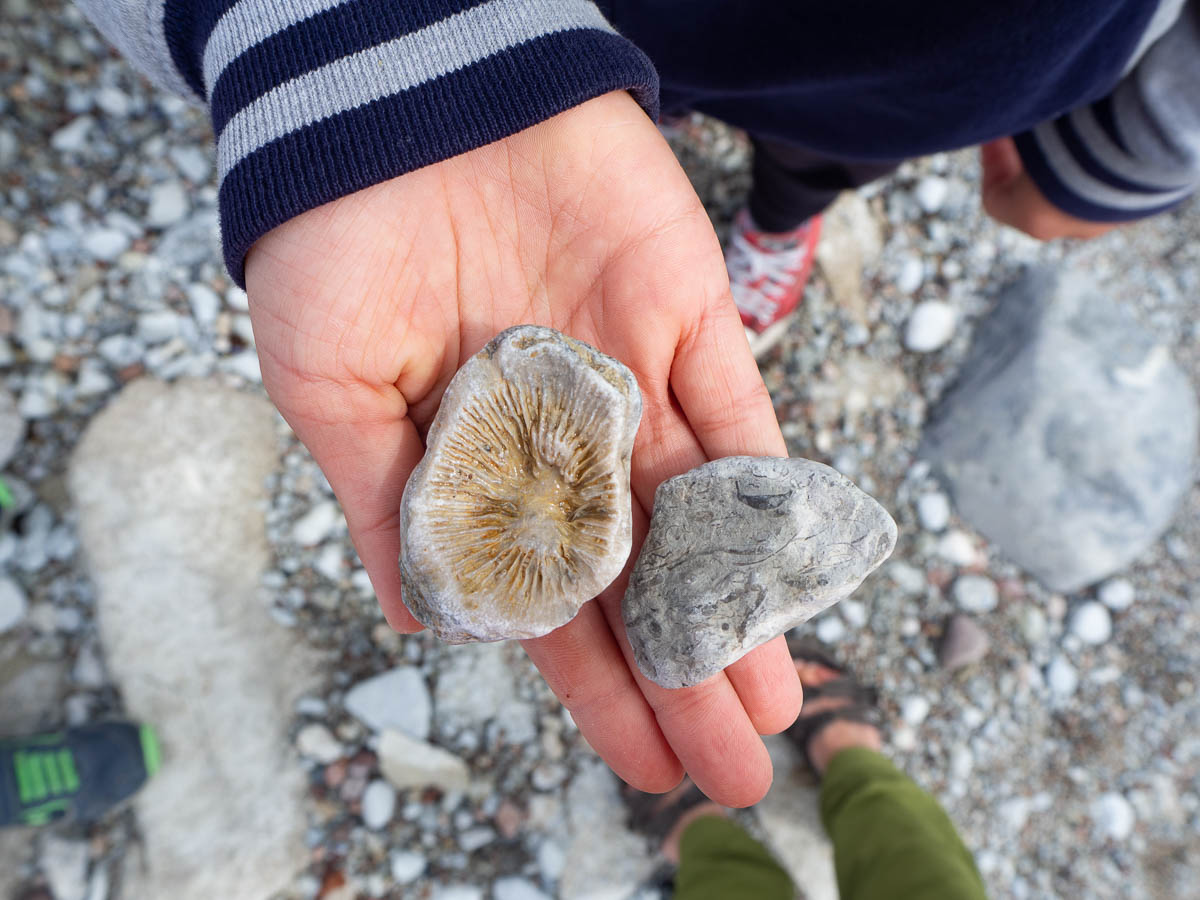
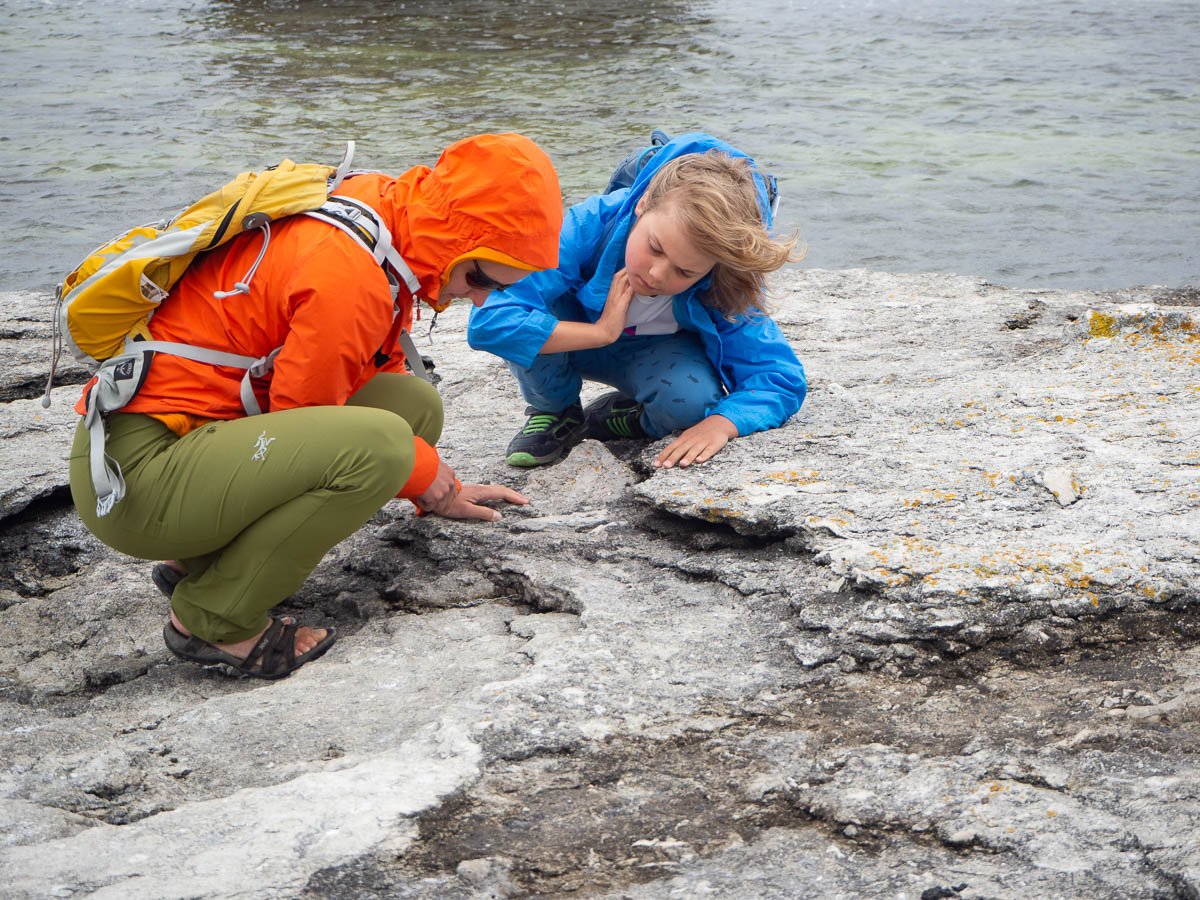
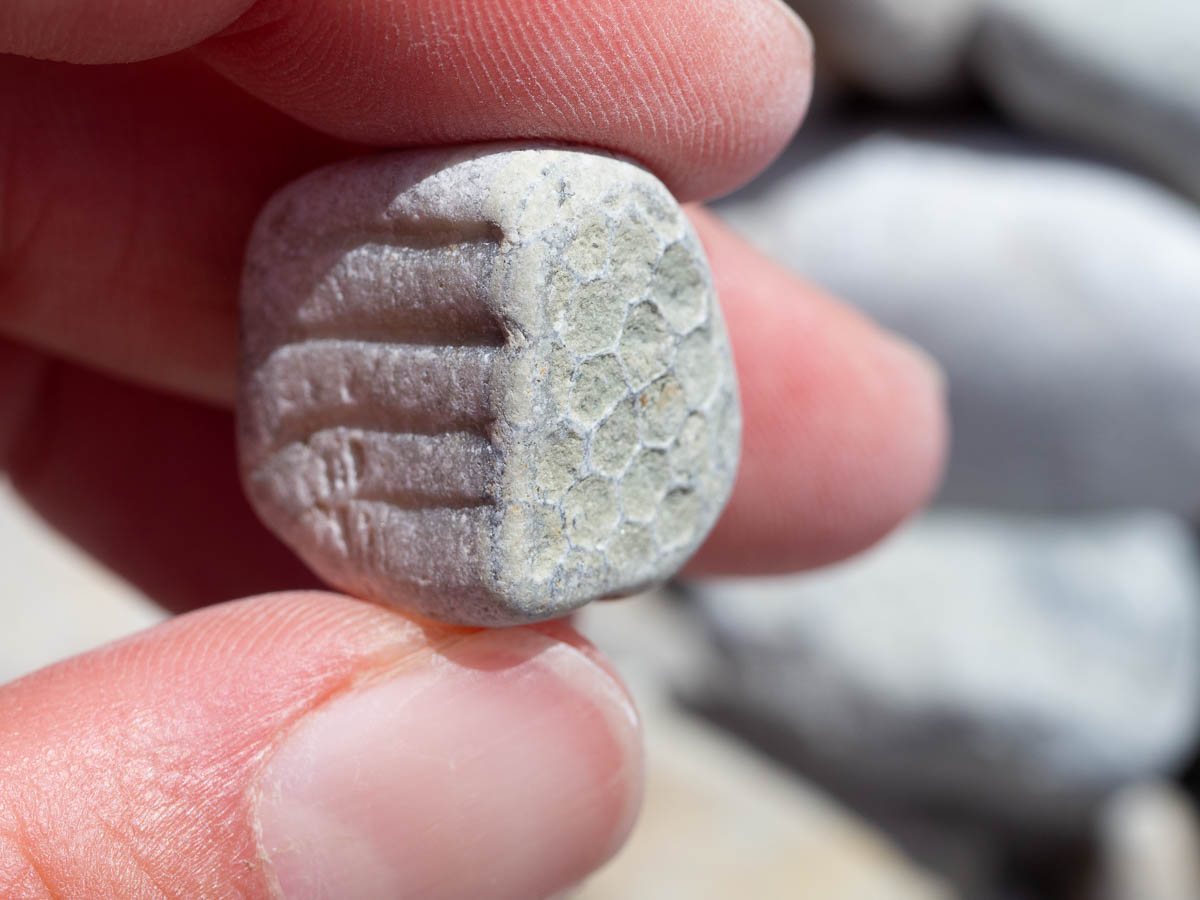
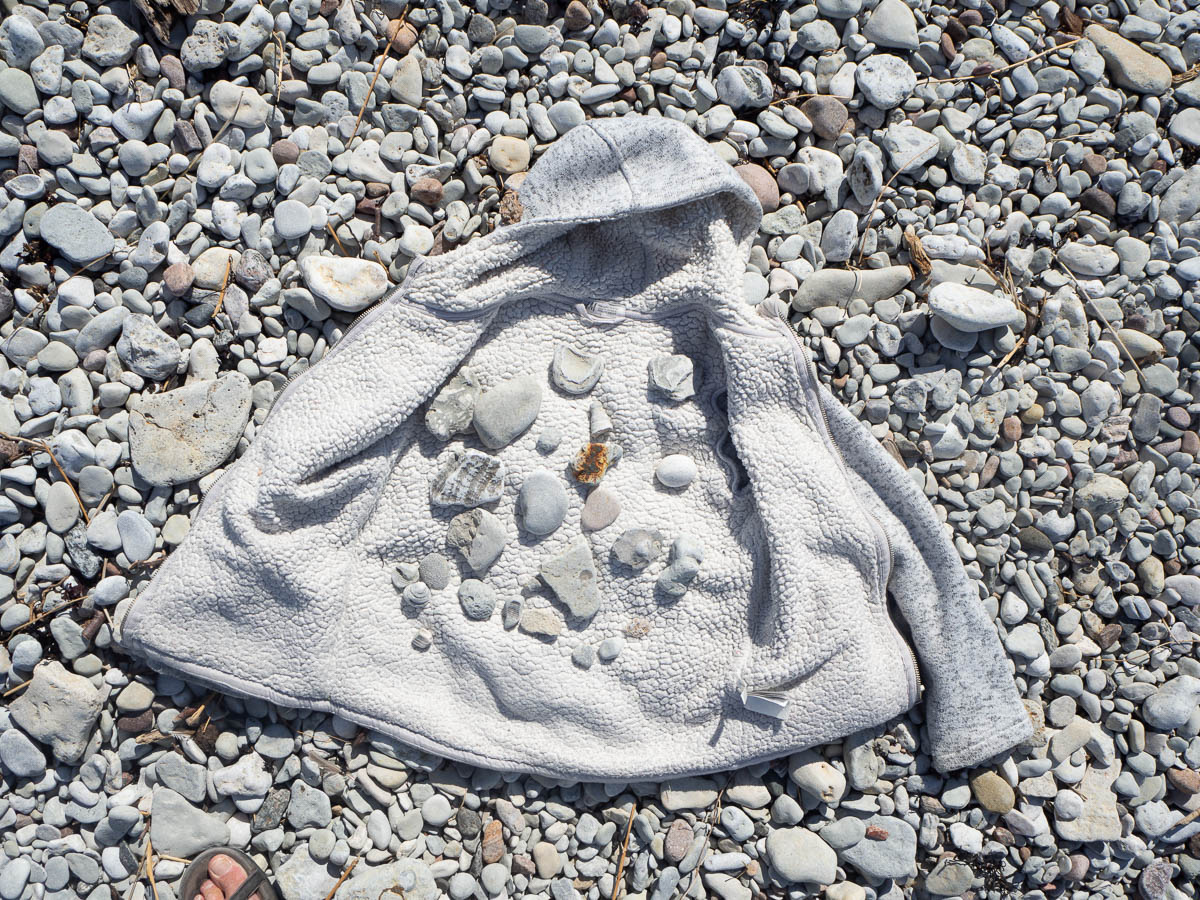
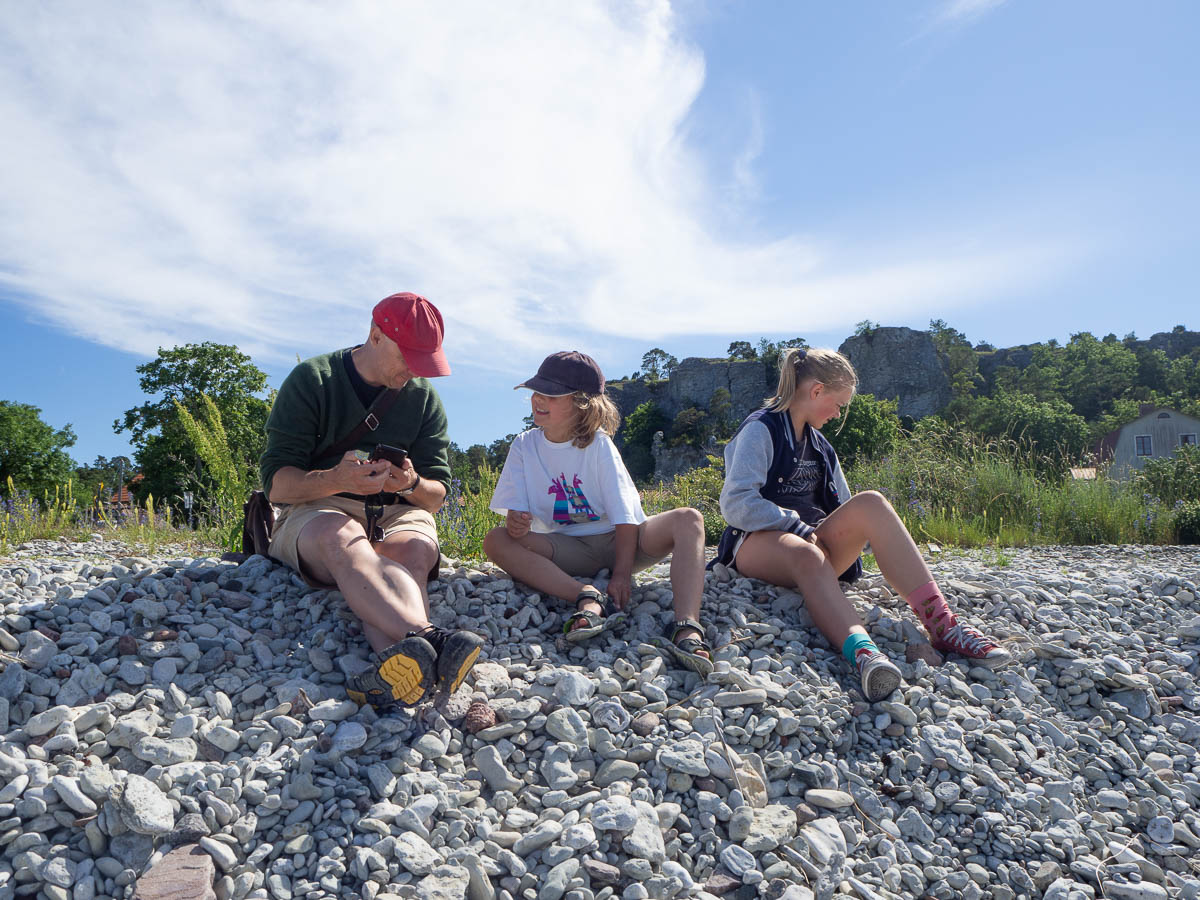
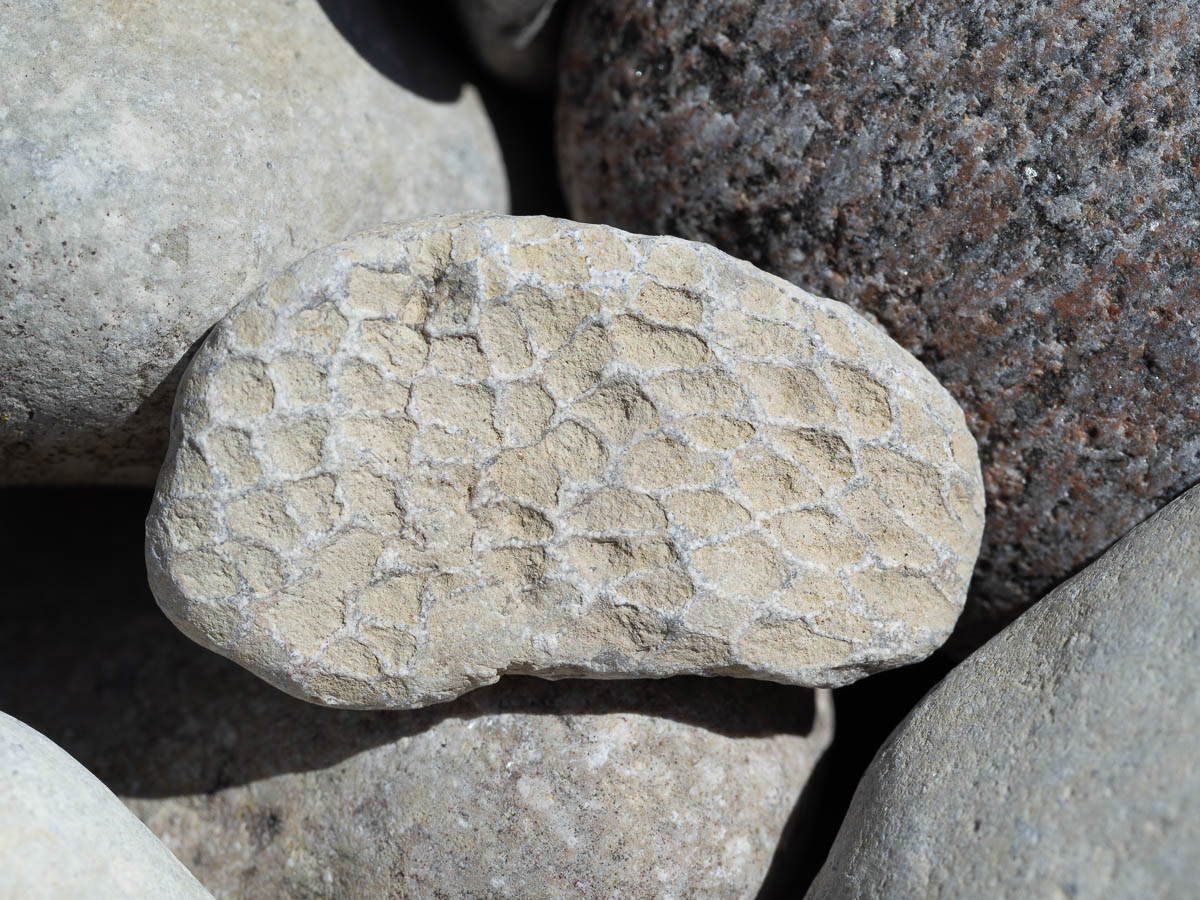
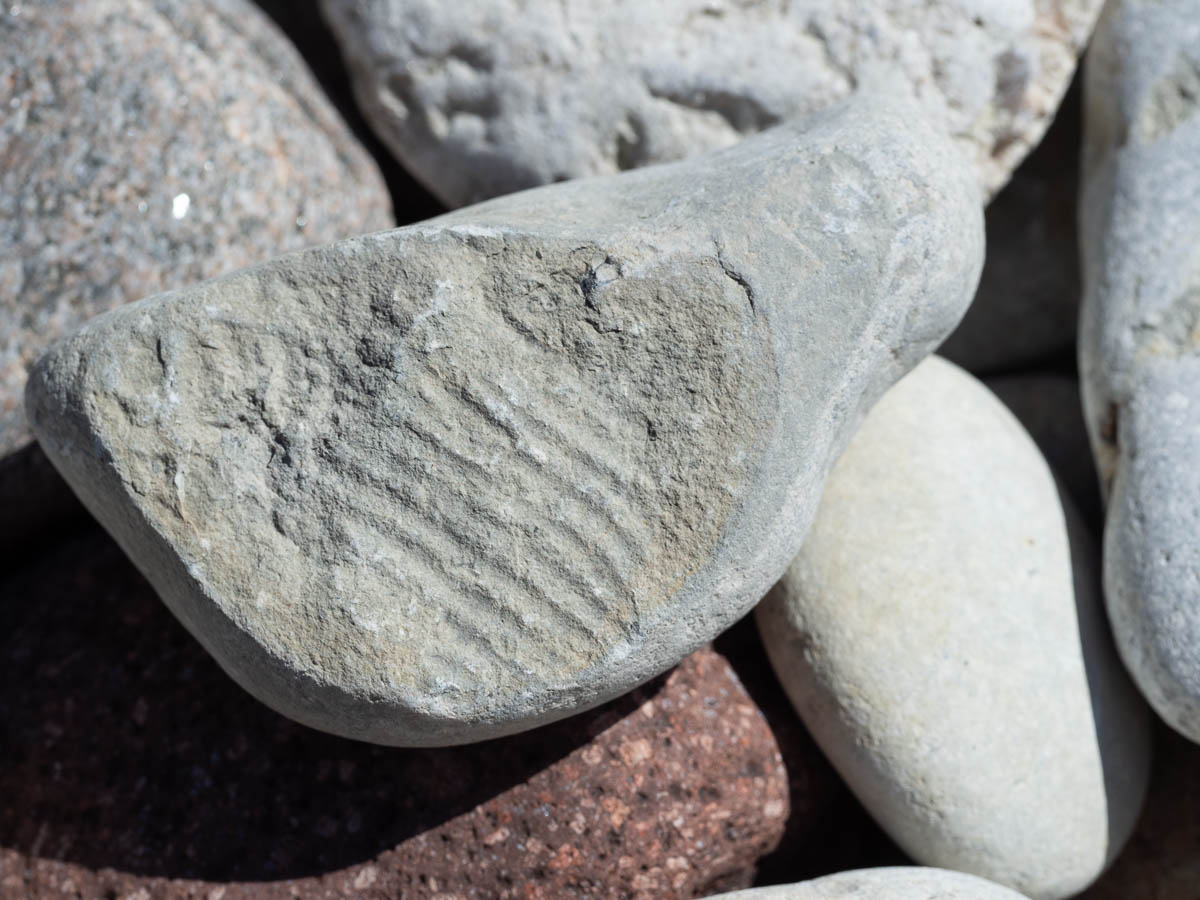
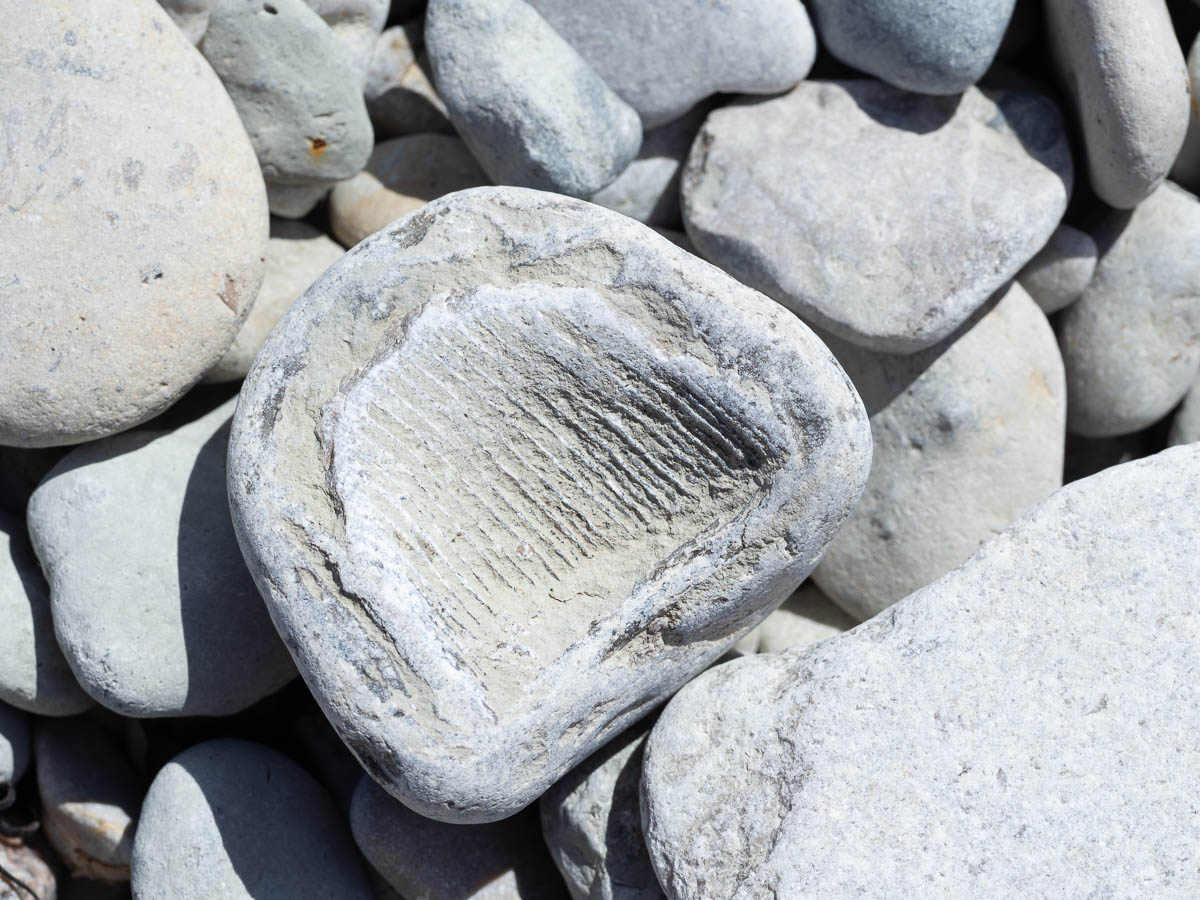
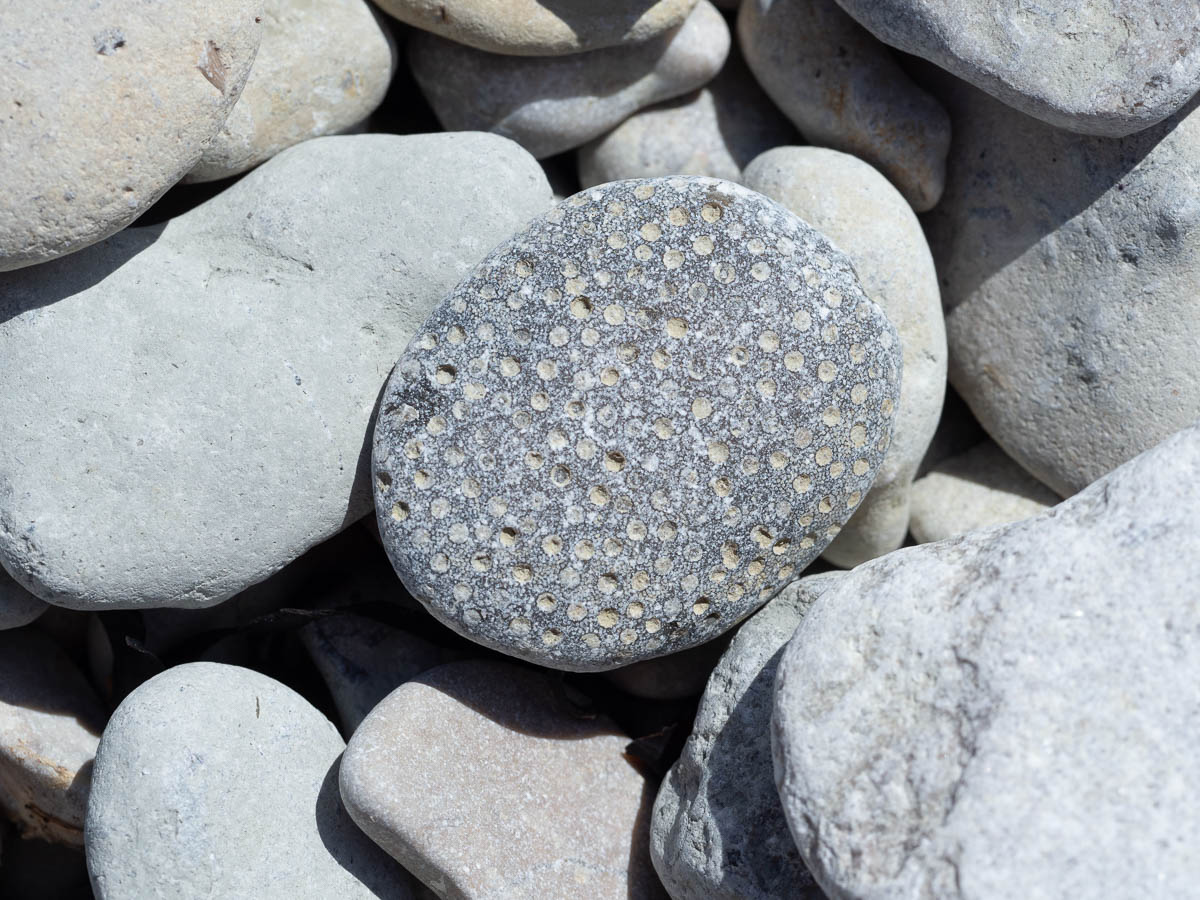
We spent a lot of time searching for fossils. At first when we looked at the rocks we couldn’t see anything other than pretty smooth rocks, all white and tumbled into round shapes by the sea – but mostly featureless. But when we sat down and looked more closely, there were fossils everywhere, of all kinds of shapes and sizes! There were fossils clearly shaped like seashells and snail shells, fossils that looked like corals, and loads of small round shapes.


This was definitely today’s highlight and we had a lot of fun combing through the rocks.

When we finally had enough of fossils, we had a quick swim in the sea. The water was pretty cold, but we wanted to at least take a dip so we could say we’d done it – just in case we don’t get a better chance. Swedish summer weather can be unreliable.


We’ve seen enough of Visby for now. Time for something different. We rented bikes today and cycled to Lummelunda and back.

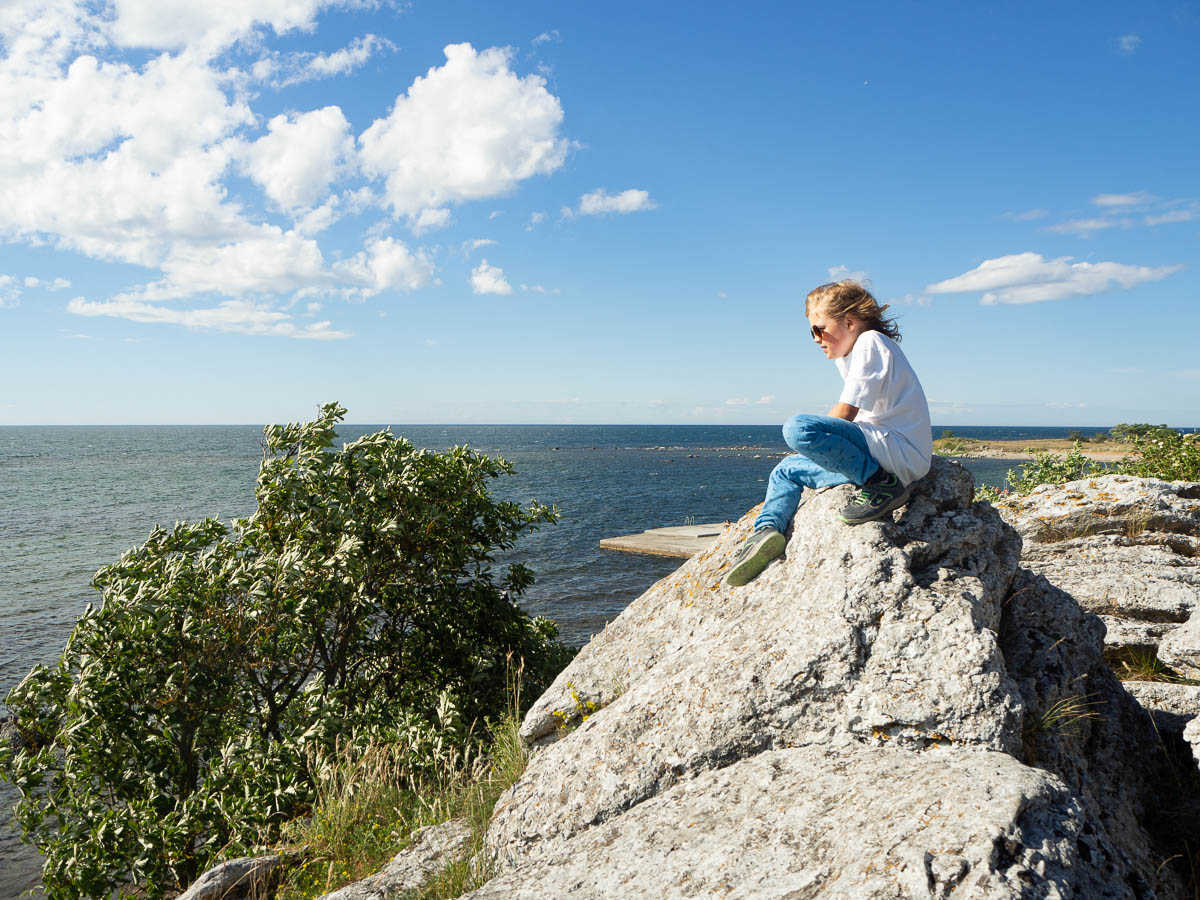
The caves at Lummelunda were our destination in a way but the cycling there and back was almost more important. And we made several stops on the way – to admire the views, climb rocks, take a walk in a nature reserve, etc. We took a long and lovely lunch break at Krusmyntagården. Almost all our food here on Gotland has been good but this was the best meal I’ve had here.

The caves themselves were somewhat underwhelming, to be honest. The parts that the public tour visits are so tourist-adapted, with wide concrete walkways and large man-made pillars, that it barely feels like being in a cave. And the guide was some random guy, probably employed for the summer only. He delivered his talk by rote with rather fake-seeming enthusiasm, and probably knows nothing more about the cave than the words of that talk.


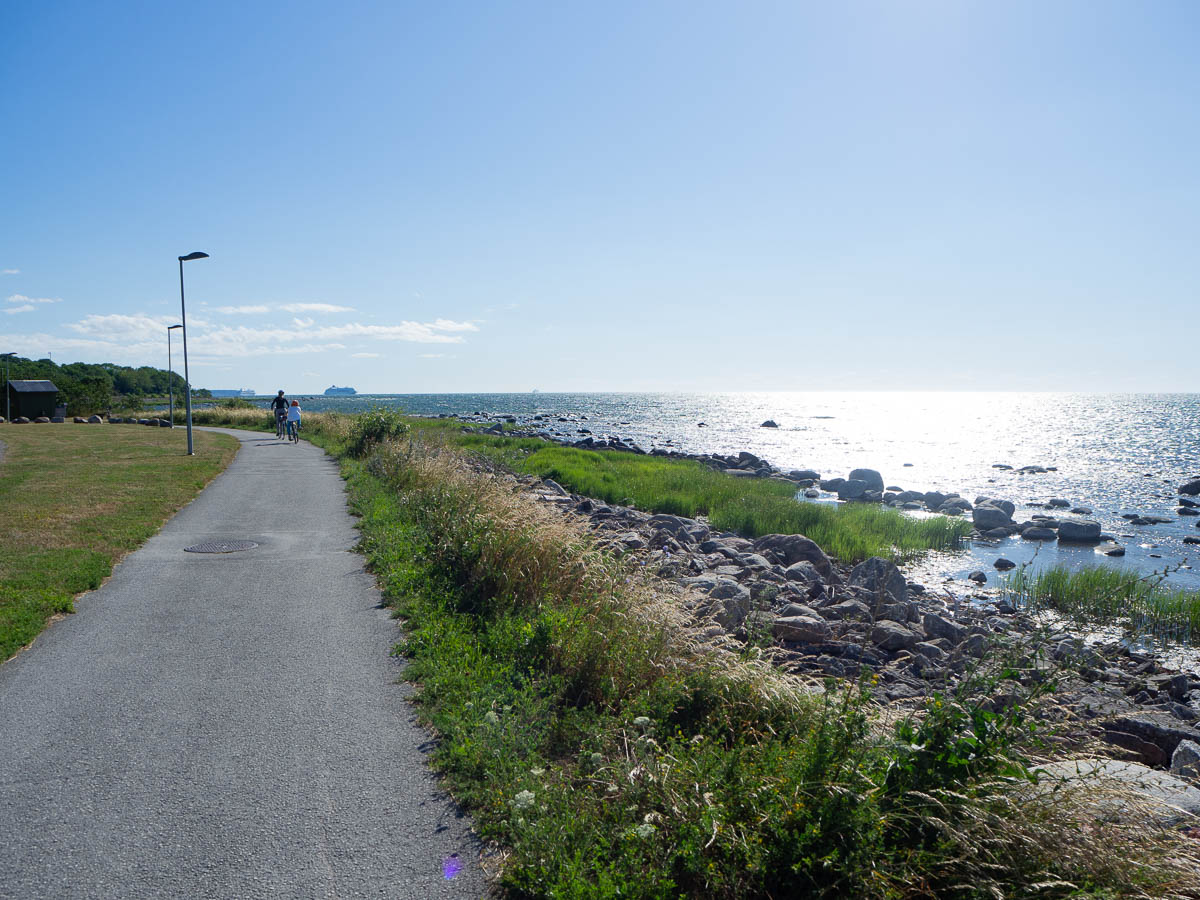
The cycling was very nice. Gotland is flat and bike-friendly. Much of the bike route from Visby to Lummelunda goes along a small seaside bike track with lovely views. Other parts followed small roads, although a part of the trip was along the main road as well (where cyclist had either a separate track off to one side, or at least a dedicated wide strip of road).

Even though the distance from Visby to Lummelunda is just 15 km, the outing took us the whole day: we left the bike rental at 11 and were back just before 18.

Adrian was pretty tired after the trip. He hasn’t learned to pace himself yet; he enjoys cycling fast so he does that until he runs out of energy and then instead of slowing down, or asking us to slow down, he just pedals harder. I had thought that maybe we could cycle around Fårö (which we’ll be visiting on Saturday) but that’s going to be even longer so I guess it’ll be the car then.

The only trouble with cycling is that it’s hard to take photos!


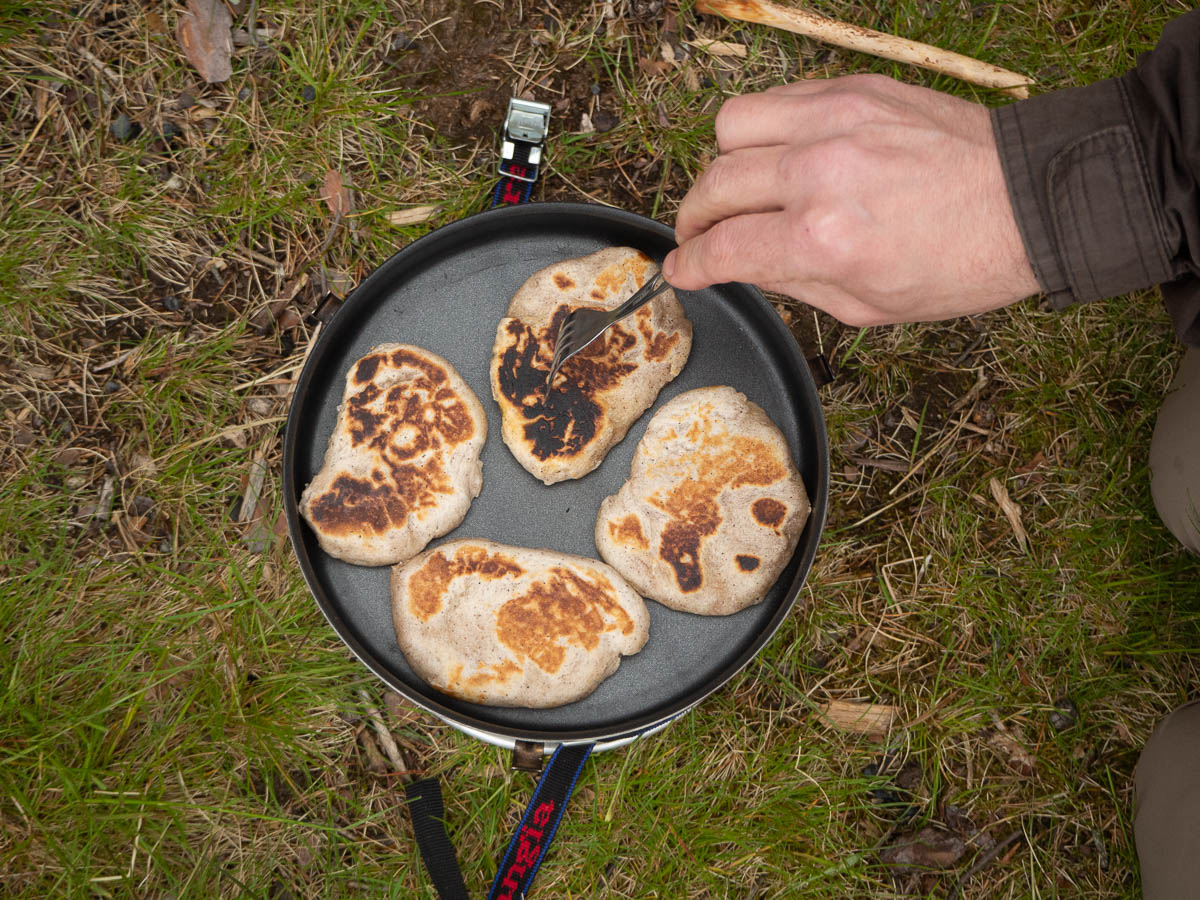
Last night’s sunshine was all gone this morning. Hot porridge and hot bread from leftover bread-on-a-stick dough went down quite well in the cool, cloudy morning.

The bread/cake/bannock things were not part of the meal plan at all, but were so delicious that I think we’ll plan for them next time.

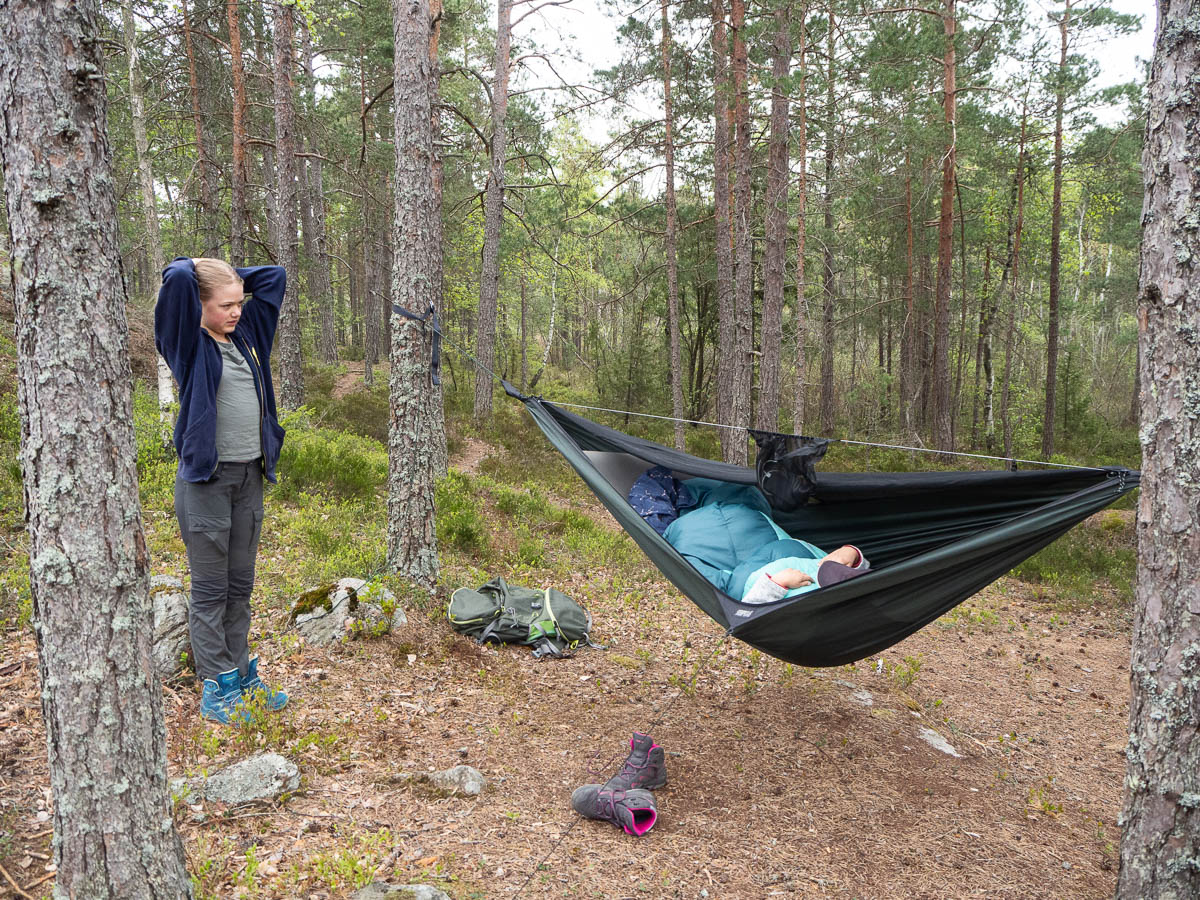
After breakfast, Adrian tested the hammock – fired up by Ingrid’s talk about how wonderful it is to sleep in one. And during much of walk home, he was already planning the next hike, when it would be his turn to get the hammock. We’ll see.

Walking home is never as much fun as walking out. The distance that felt like nothing yesterday, was suddenly long for the kids’ legs. “Are we there soon?”


Had this been a normal spring without a coronavirus pandemic, there would have been various scout hikes and camps in May. With the pandemic, all larger scout events have been cancelled, along with so much else of society. Instead we went camping/hiking on our own.

There are several beautiful nature reserves around Stockholm, and Paradiset and Tyresta are the ones I like best. Adrian and I camped in Paradiset once before and it was such a nice spot that I thought we could go there again, this time with the whole family.

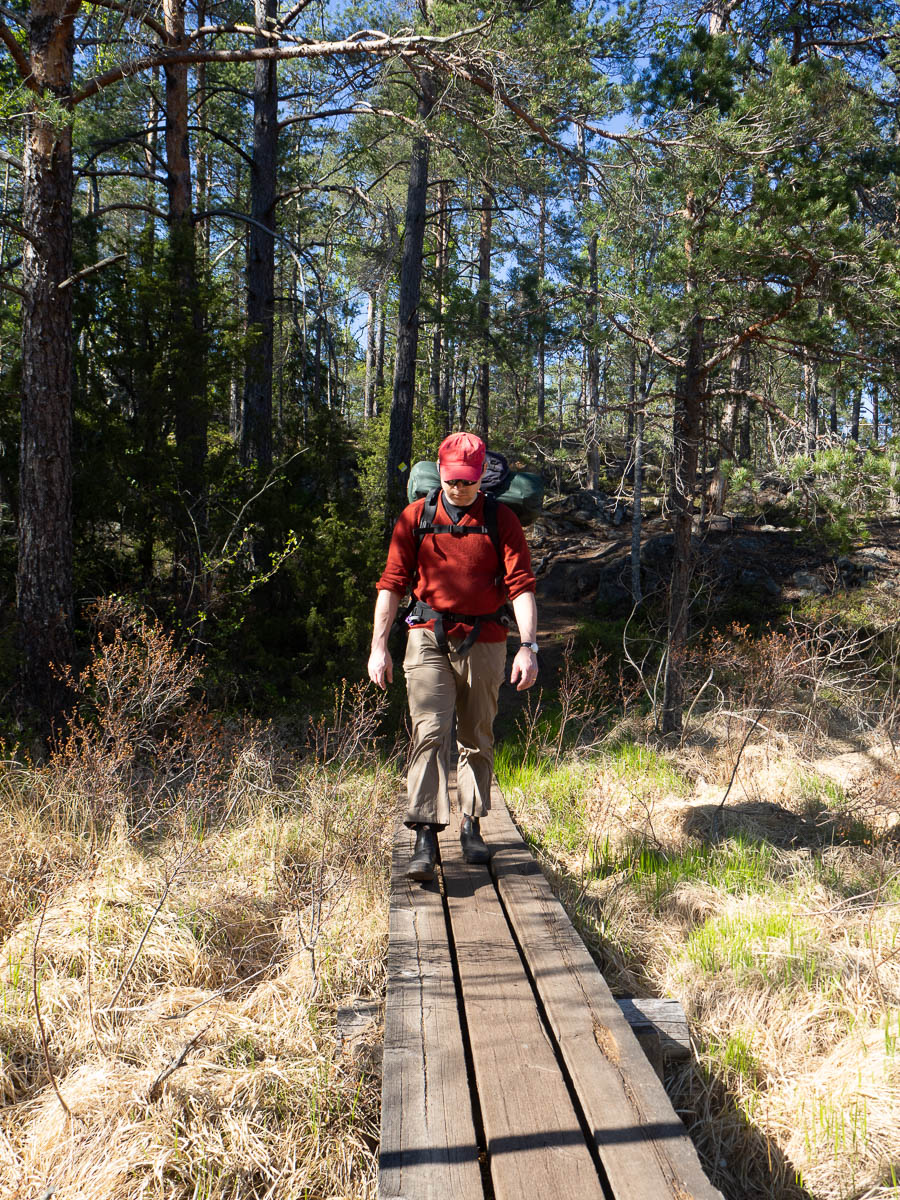
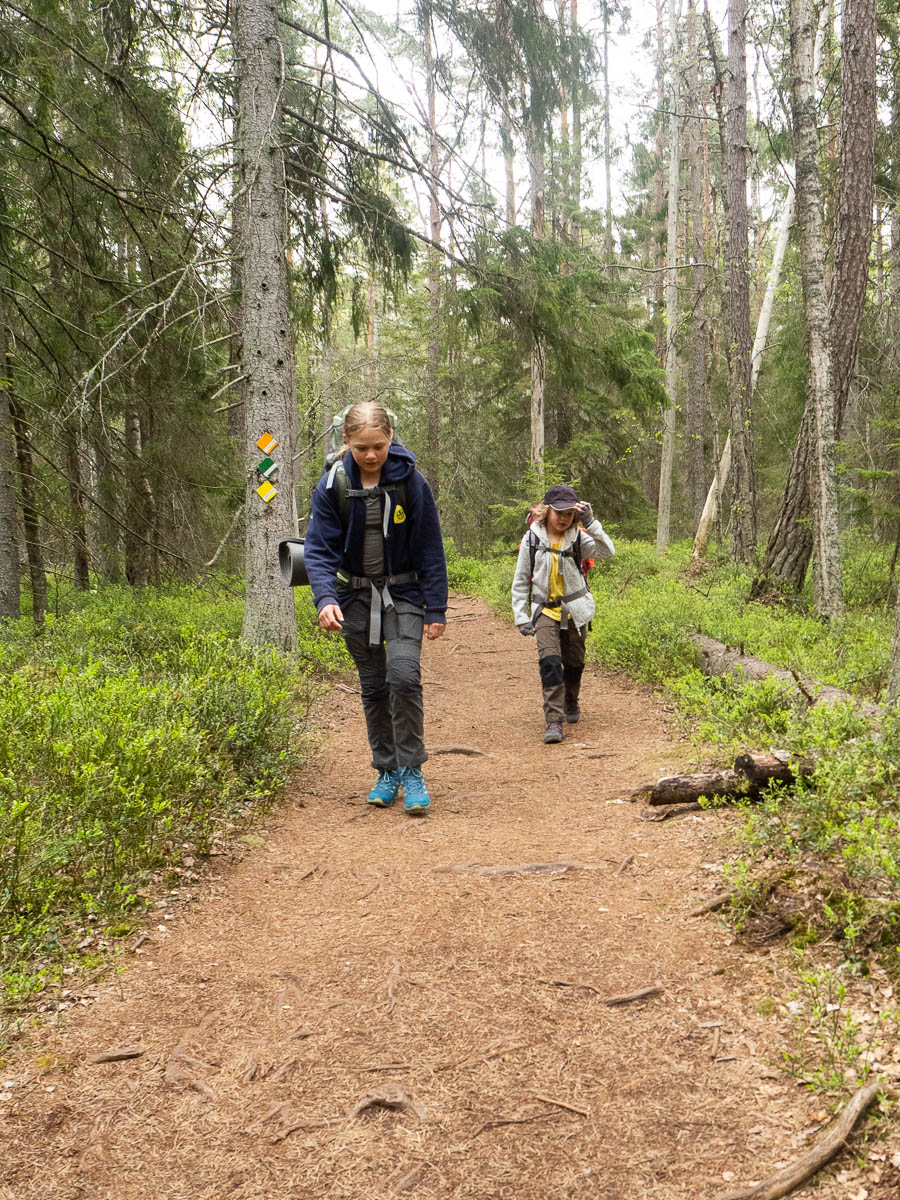
A closer look at the map showed that the shelter where we stayed last time, on the shore of lake Trehörningen, was just a kilometre from the parking lot. Back then Adrian was six, didn’t want to walk any long distances and left all the carrying to me… This time there’s four of us, all with strong legs and proper rucksacks, so we could walk a bit longer. The first scenic spot is likely to be the most popular one – further away we might find a spot with fewer people.


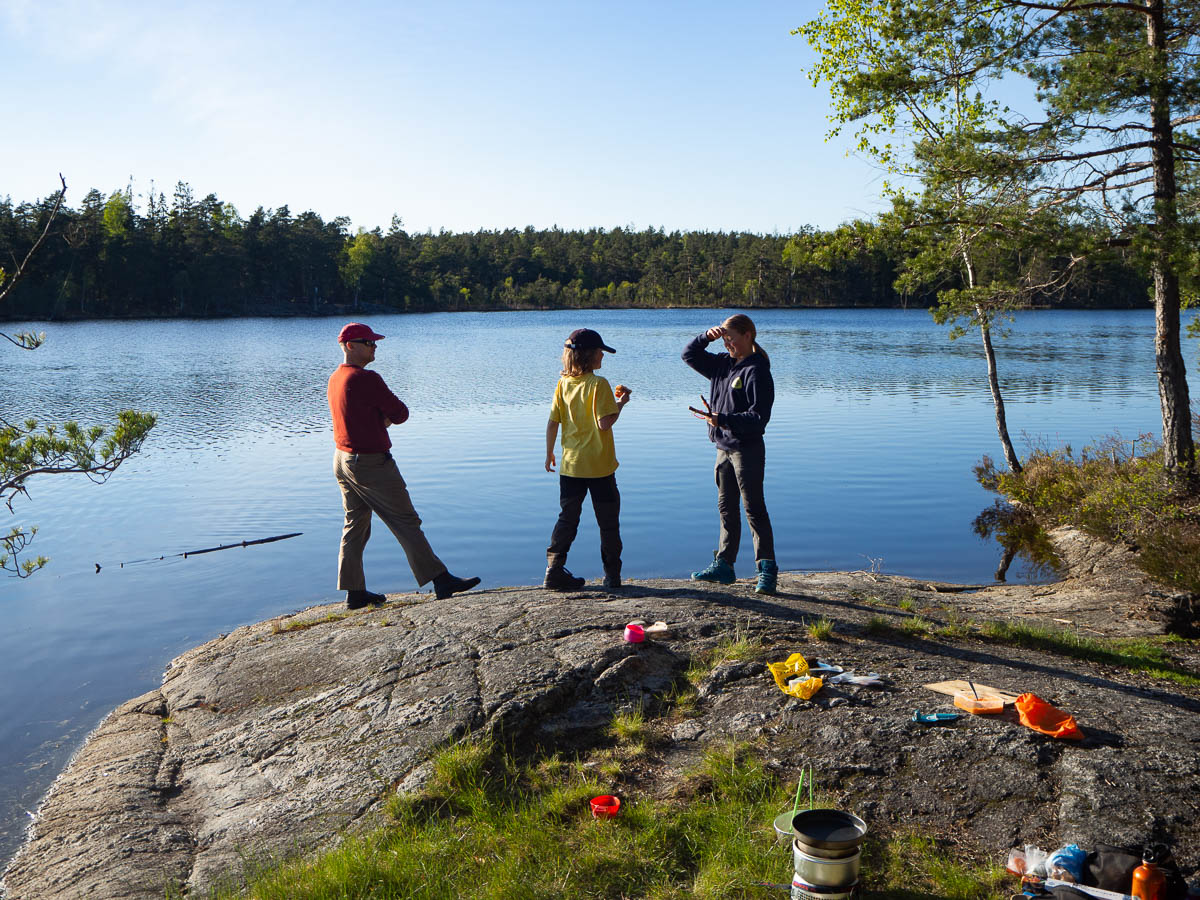
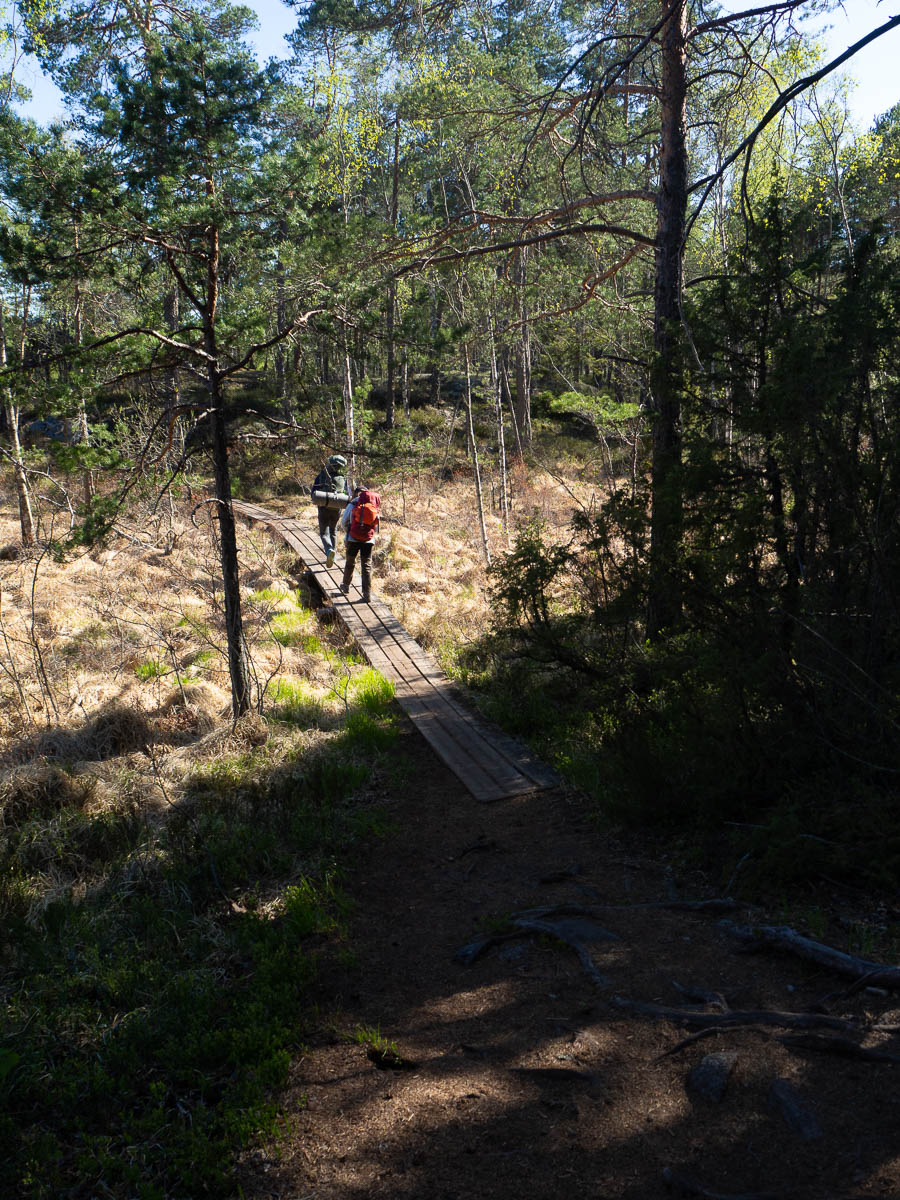
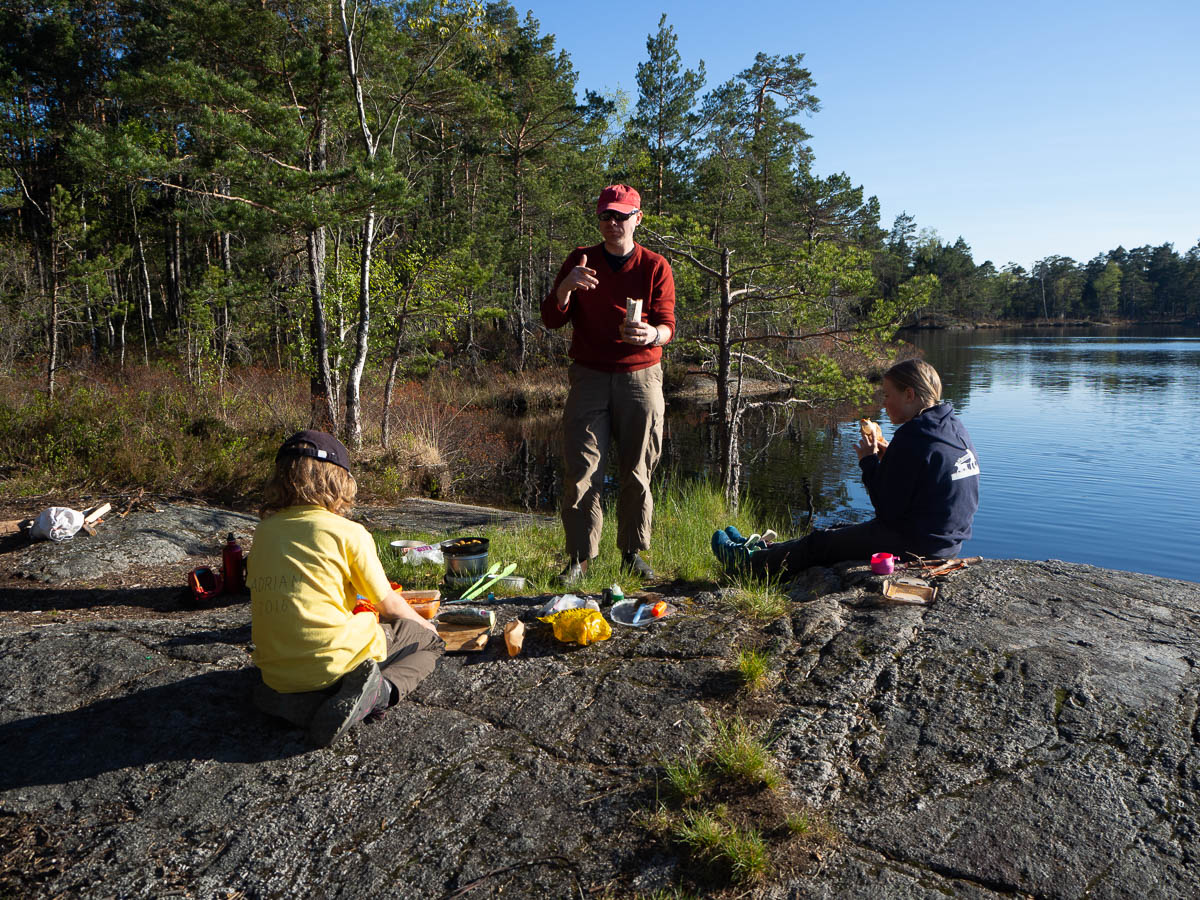
That was the plan. There were several tents in the woods around the first shelter, so we didn’t even turn that way. When we got to the second shelter on the shore of lake Långsjön, we found quite a crowd there as well. Eric spied a flat-looking place with what seemed to be a fire place on the other side of the lake, so we headed off there. There was no shelter there, but a good flat spot for a tent, and much more peace and quiet than at the shelter. Technically you’re really only allowed to camp at designated spots… but this spot had clearly been used for camping before, so we figured it would do no harm if we stayed here.

The original plan was for Eric to sleep in the shelter, me and Adrian in the tent, and Ingrid in a hammock. Everyone gets their preferred “roof” over their head. (Ingrid had tried sleeping in a hammock on her last scout hike and absolutely loved it, best thing ever.) Without the shelter, we were three in the tent, which was a bit cramped but OK for one night. I don’t really expect to get a good night’s sleep on a hike anyway.

Now that we had shelter, the next question was firewood. With all these people out in the woods, the nearest box of firewood was already empty when we passed it. I emptied my rucksack, and Adrian and I walked back to the first shelter to pick up firewood there. Luckily the box there still had some.


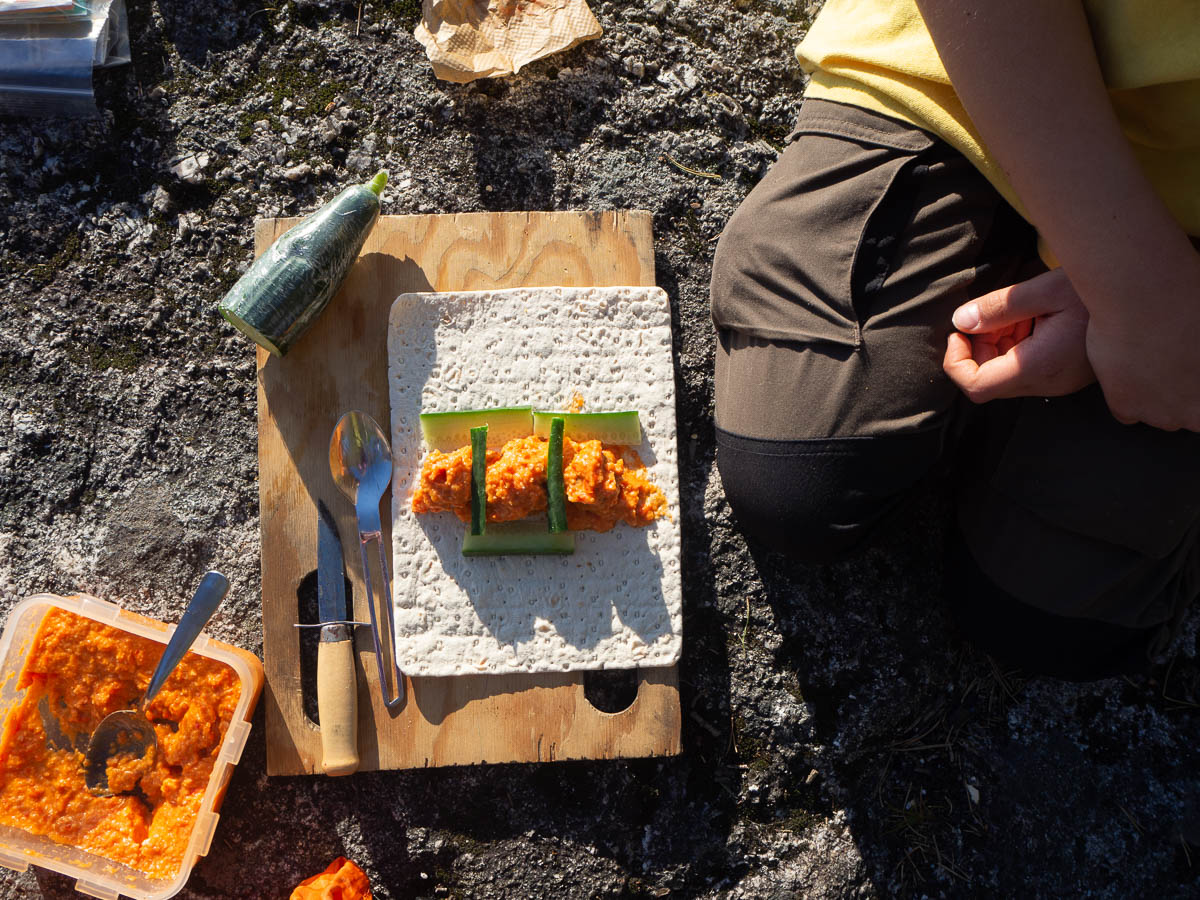
When we got back with the wood, it was definitely time for dinner: falafel wraps with salsa romesco and cucumbers.

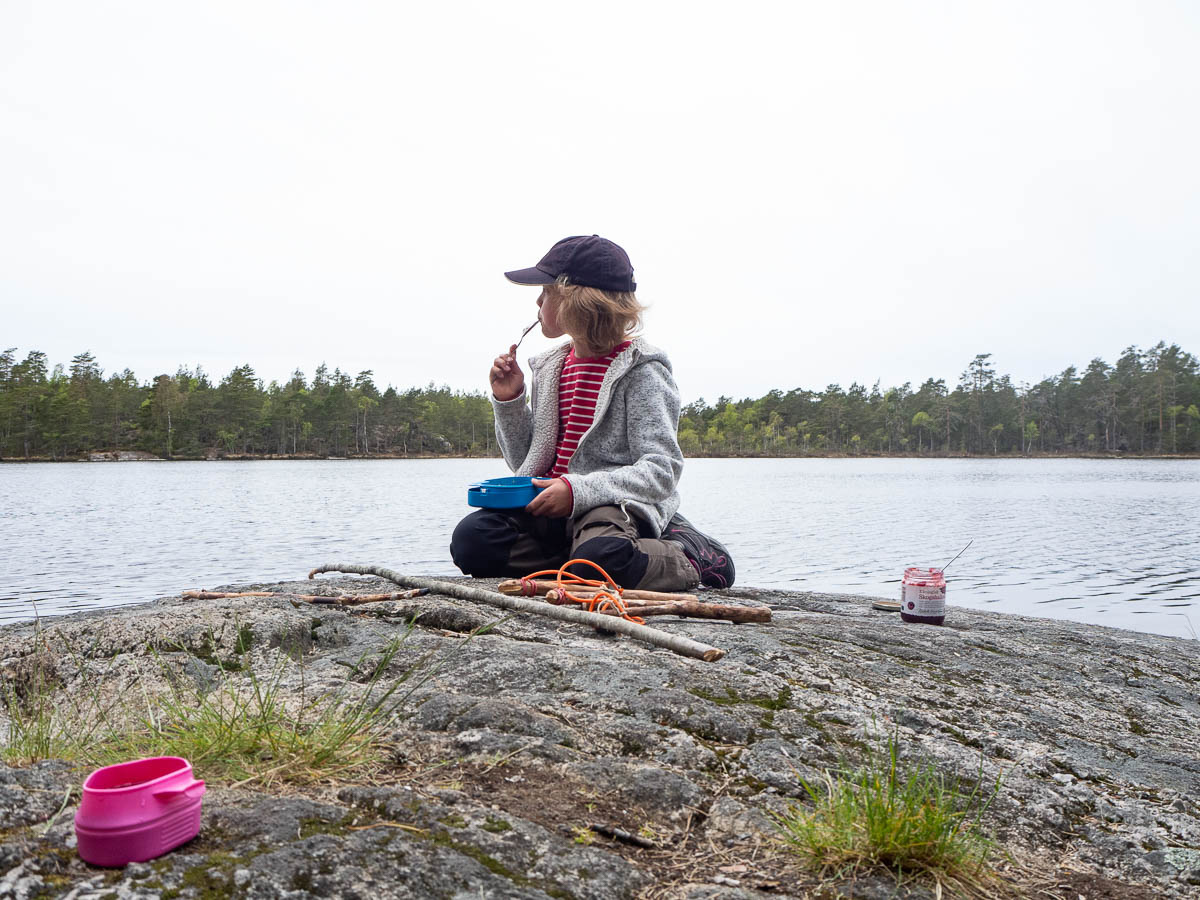
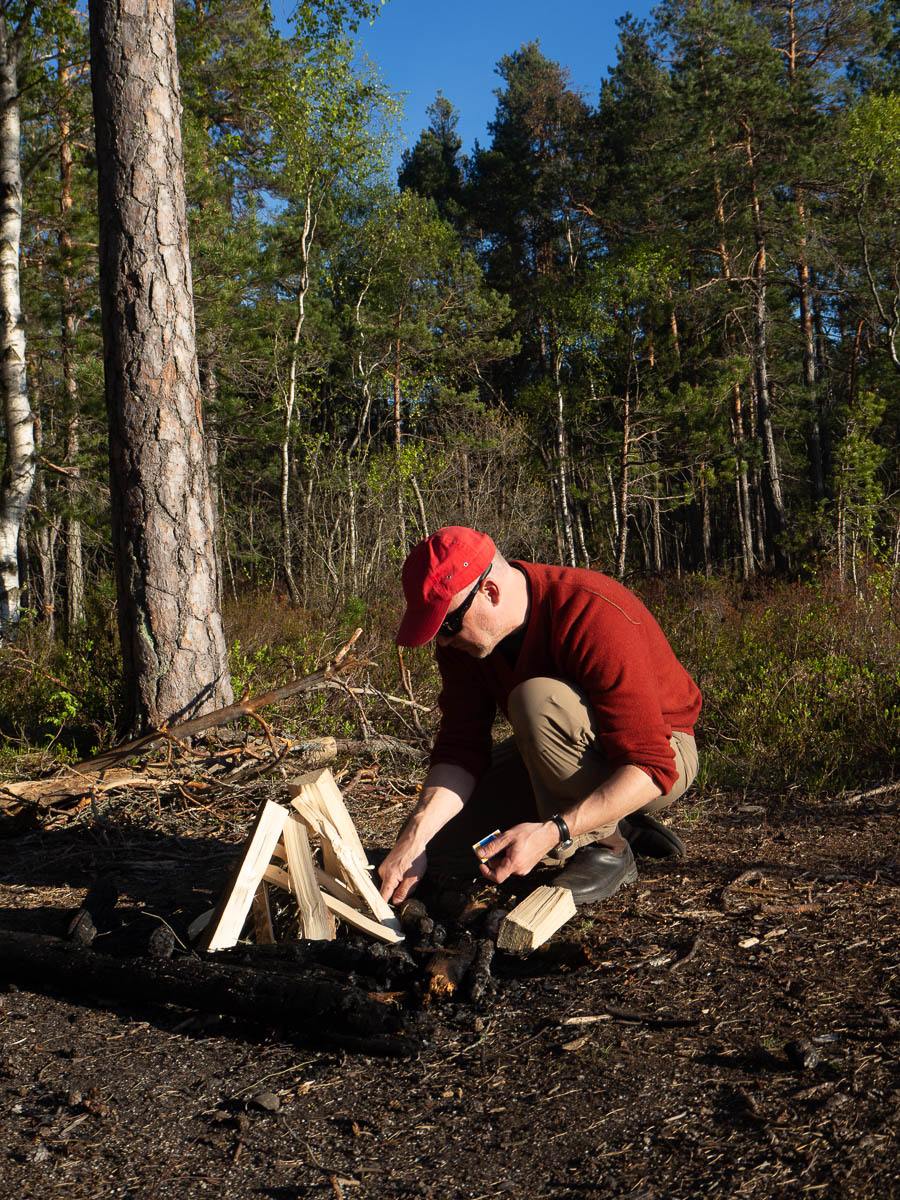
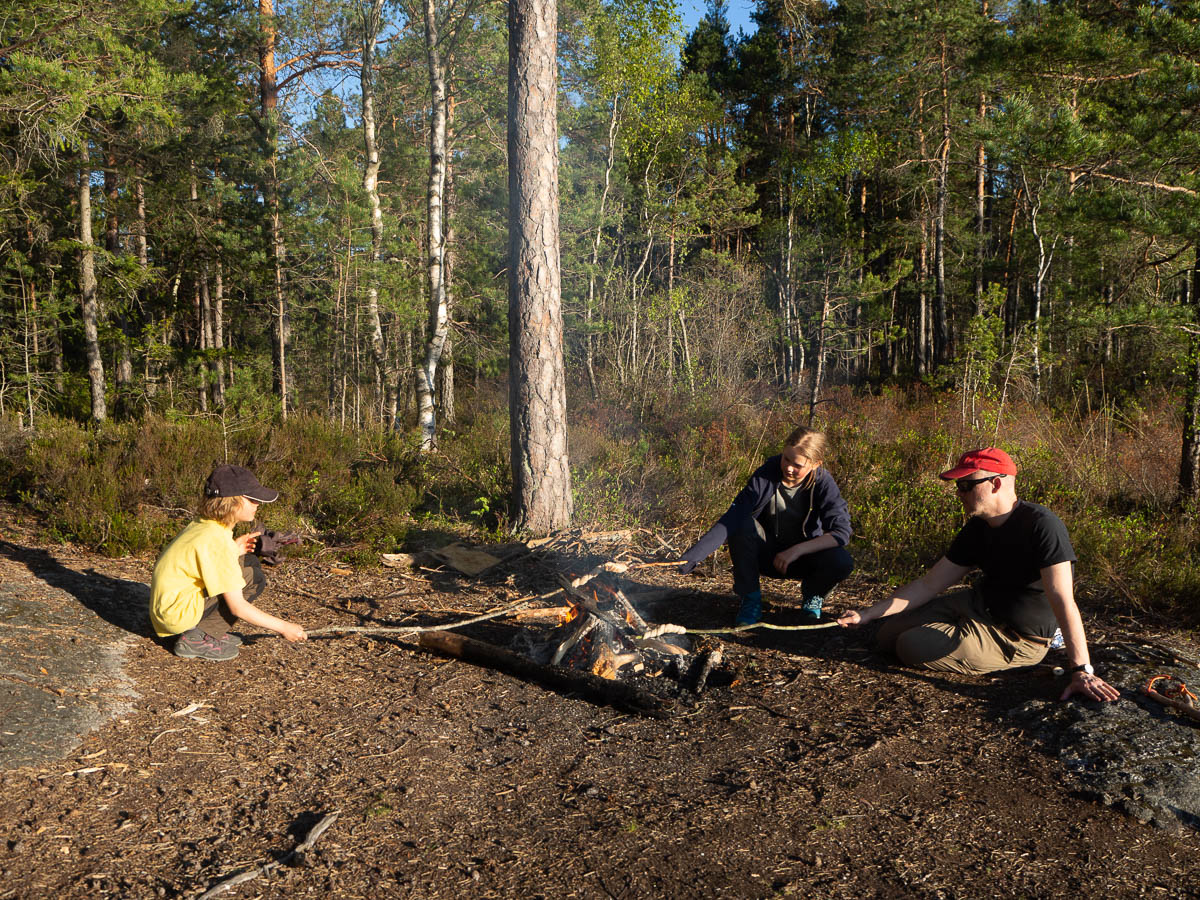
The firewood wasn’t for the dinner (its easier to fry up falafel on a stove) but for even more important things: bread on a stick, and a grilled banana dessert!


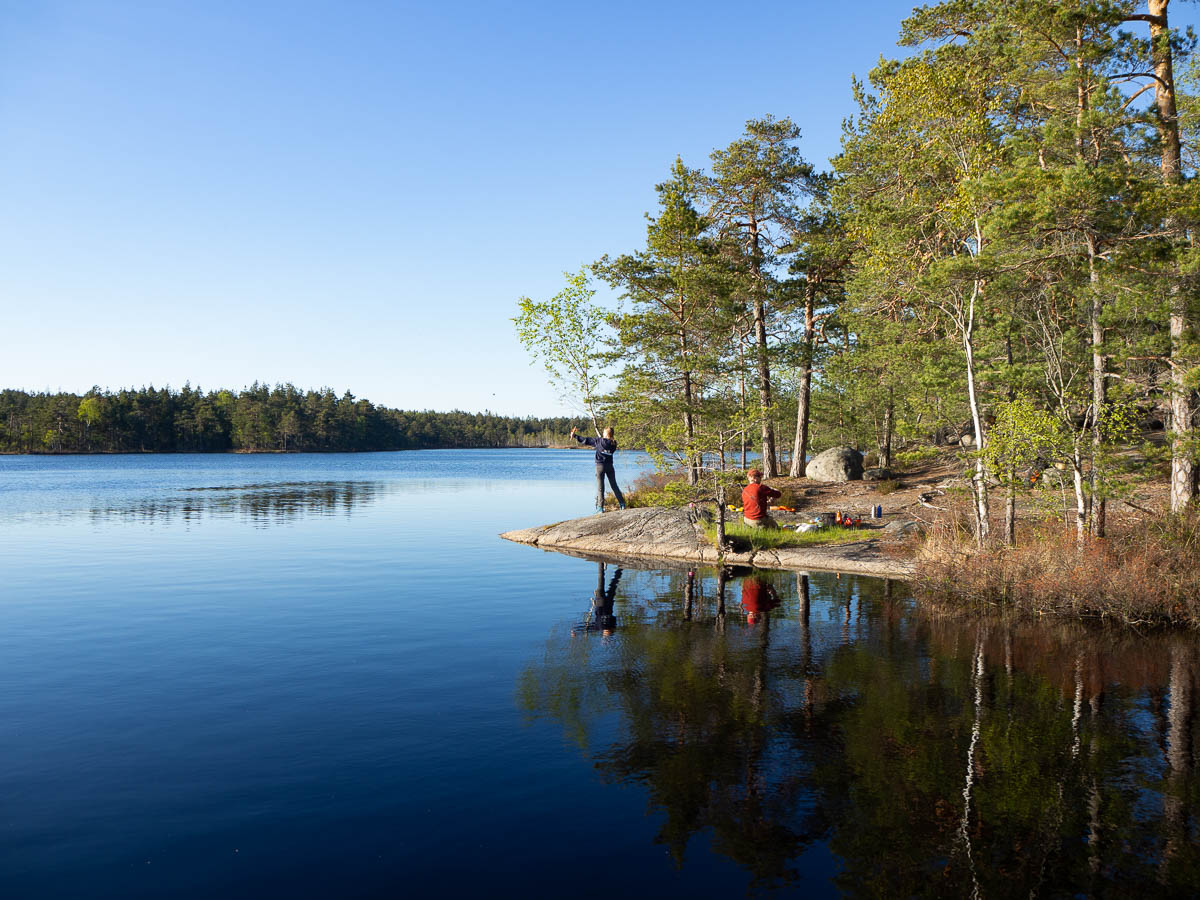
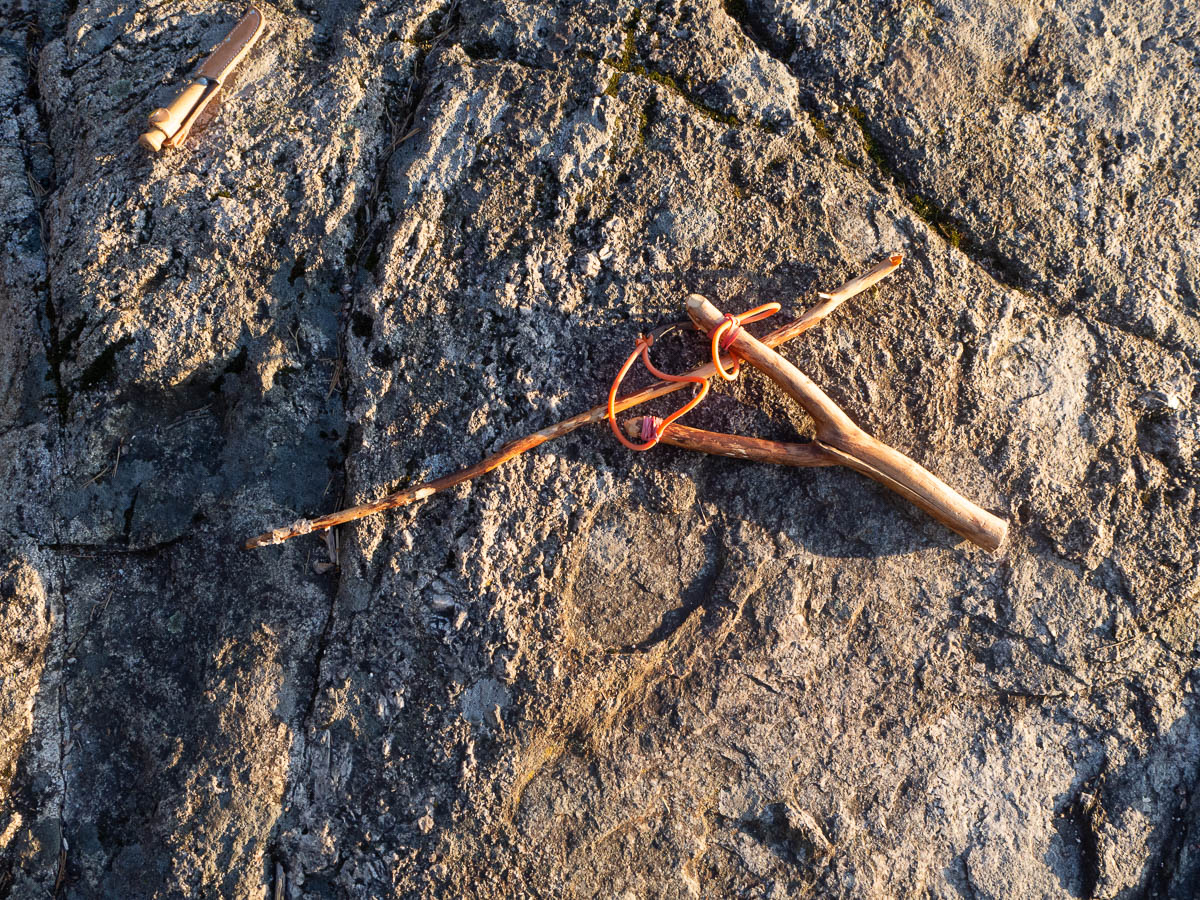
After dinner – and before dinner, and during dinner – Ingrid and Adrian played with slingshots. I once tried to make some using some random elastic bands but those didn’t work too well at all. Now I had bought some proper slingshot bands, and they made a big difference.

Rocks flew best, but there were almost none in the forest around us. There were plenty of pine cones, though. Ingrid experimented with different techniques and angles and differently shaped cones, trying to shoot them as far as possible.


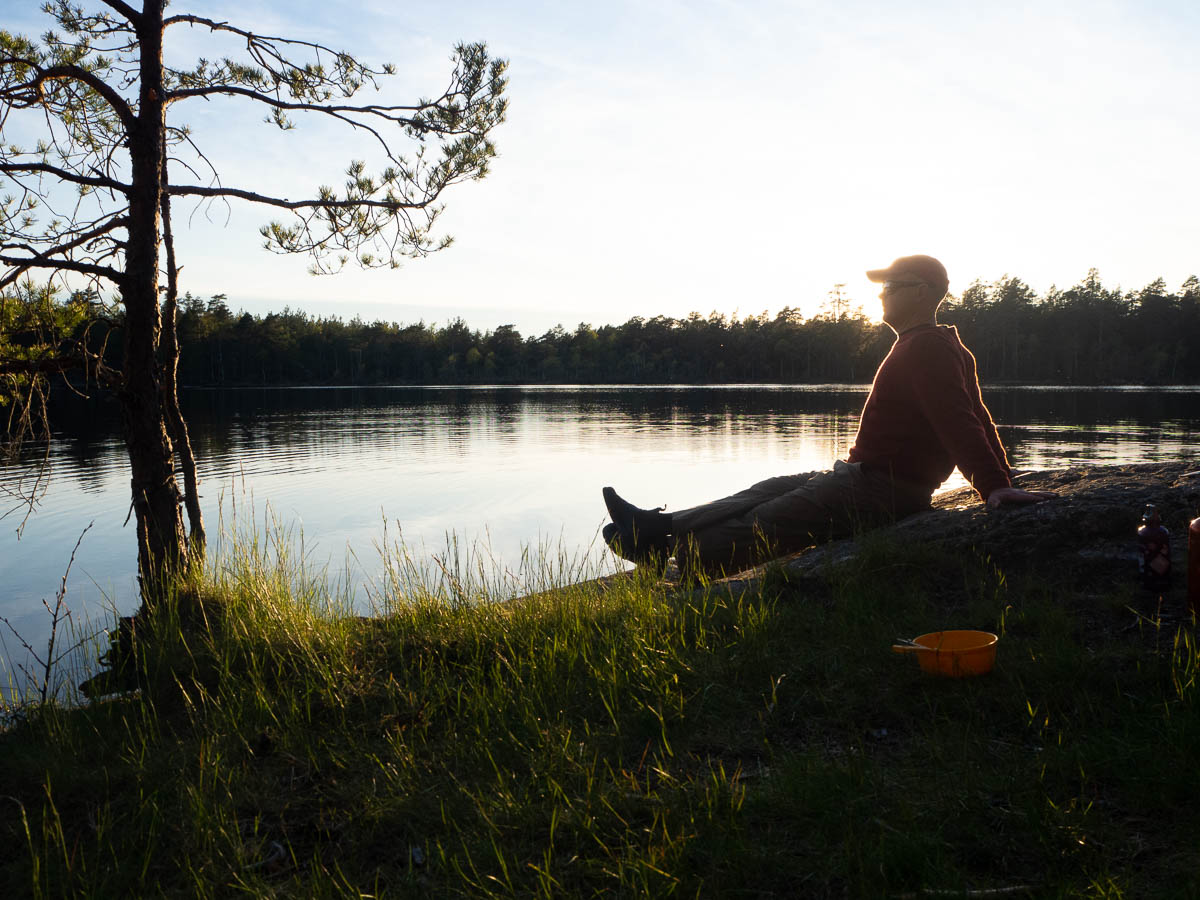
The weather was absolutely lovely, with blue skies and a hot sun, and barely any wind. And we were on the east side of the lake and thus had the evening sun shining on us until late. Only after the sun went down behind the trees on the other side of the lake did it get a bit cooler.

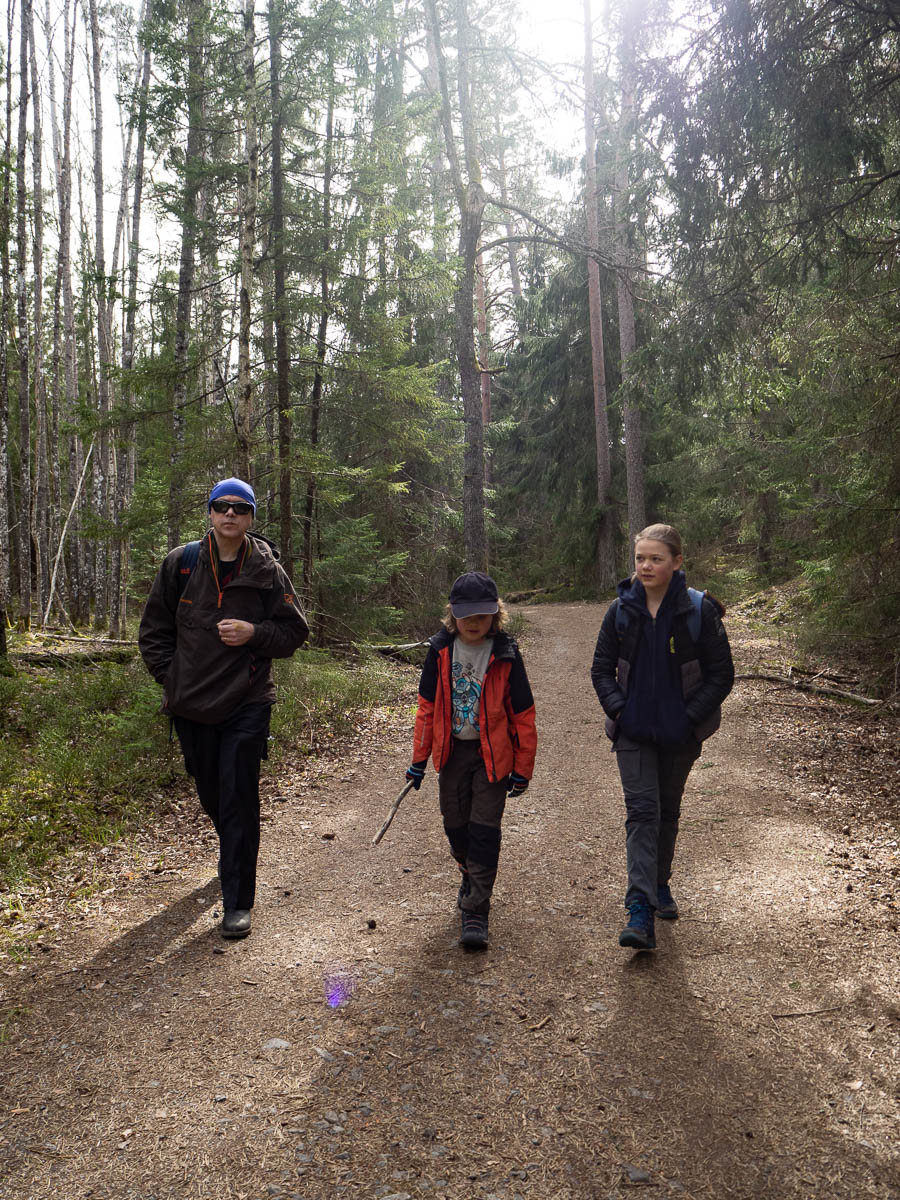
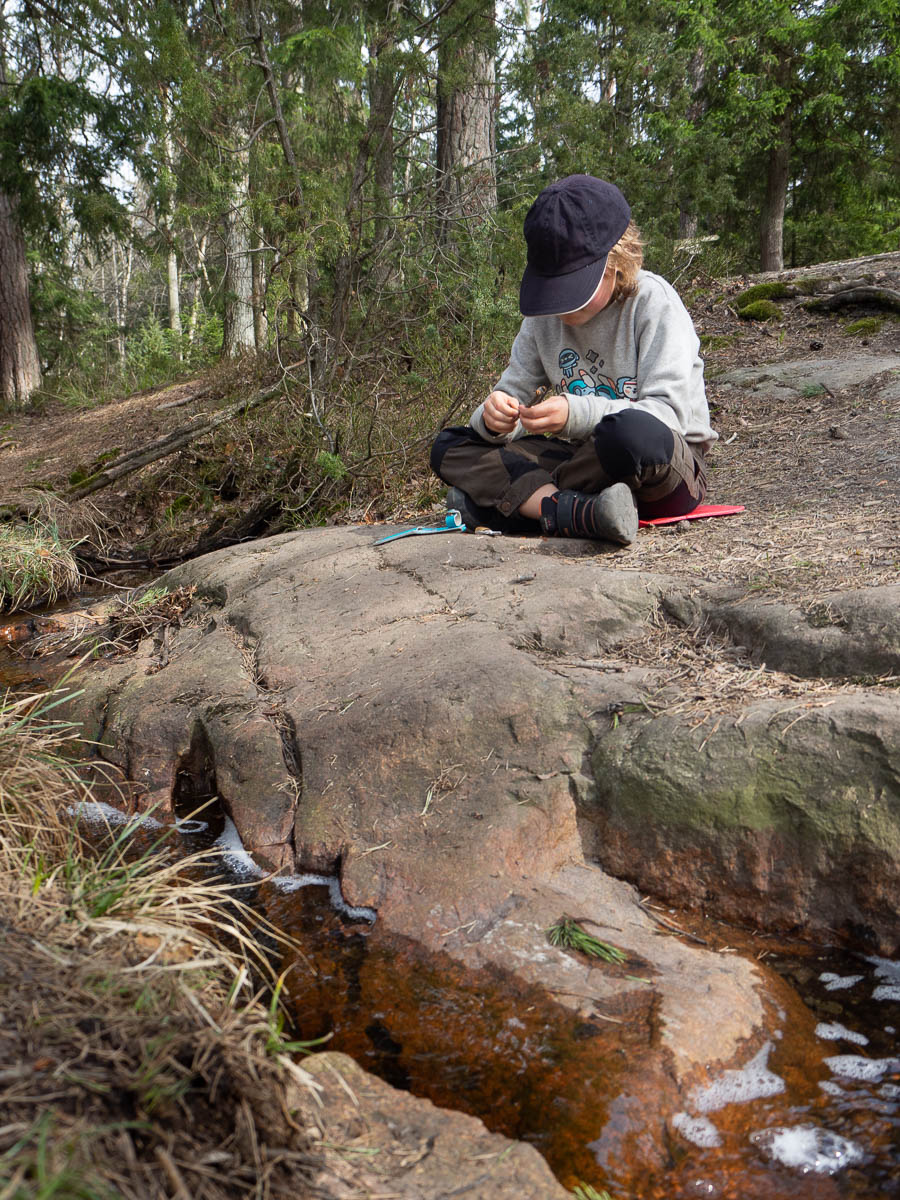
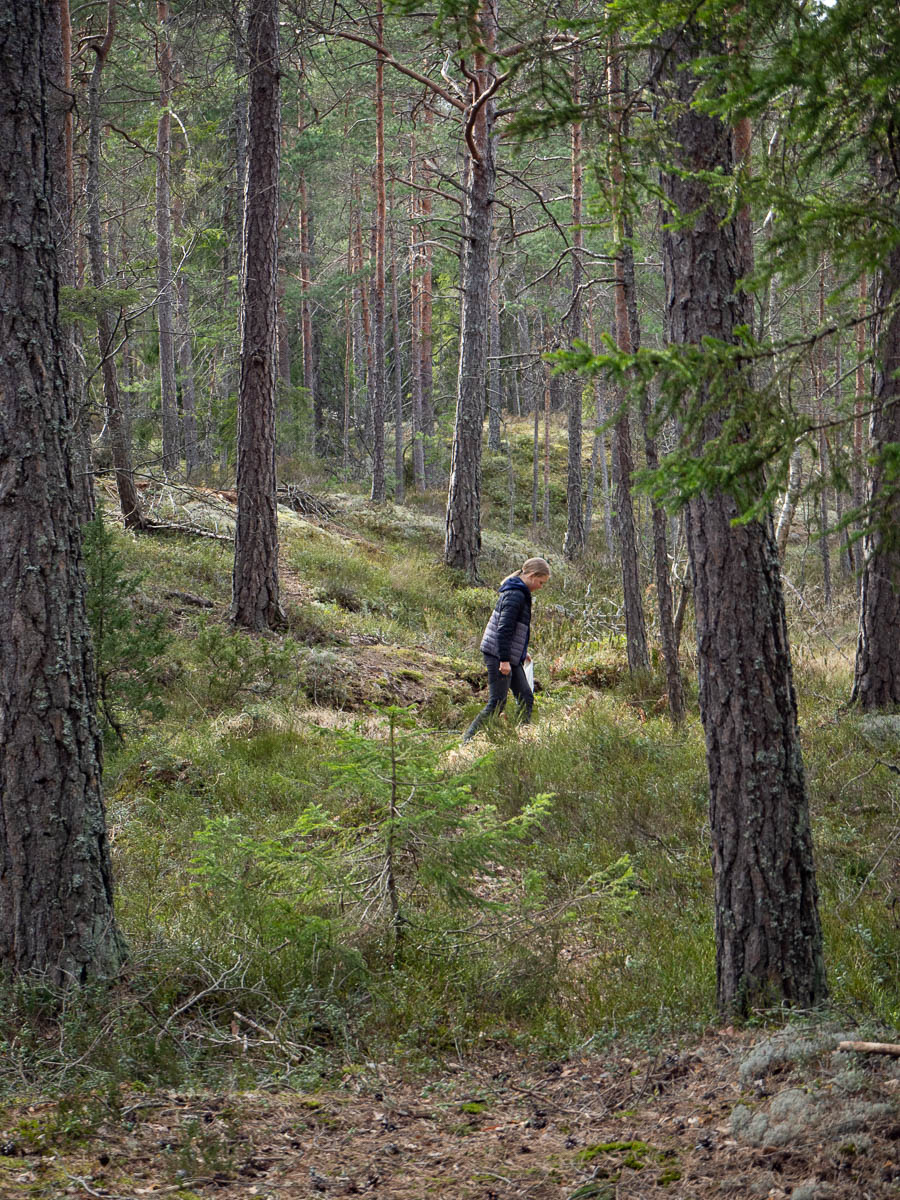
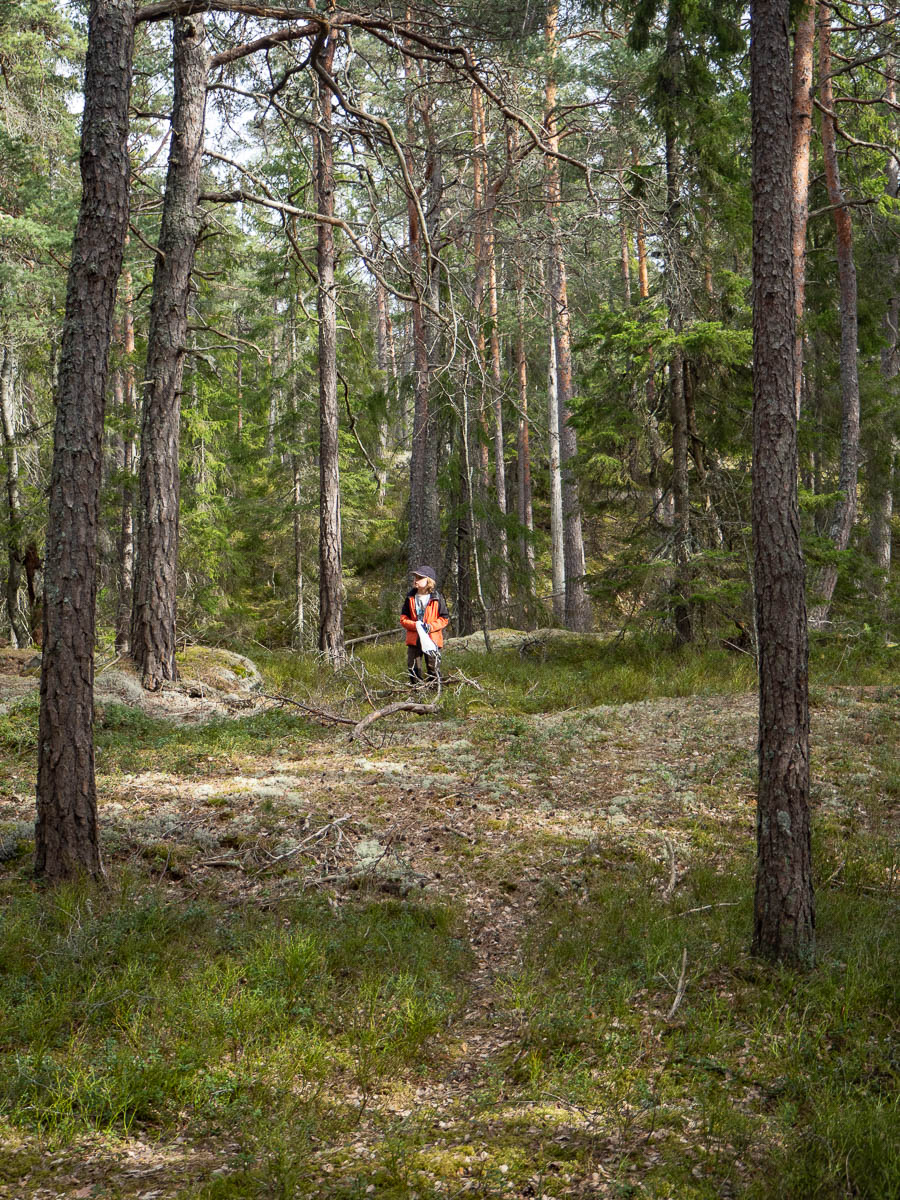
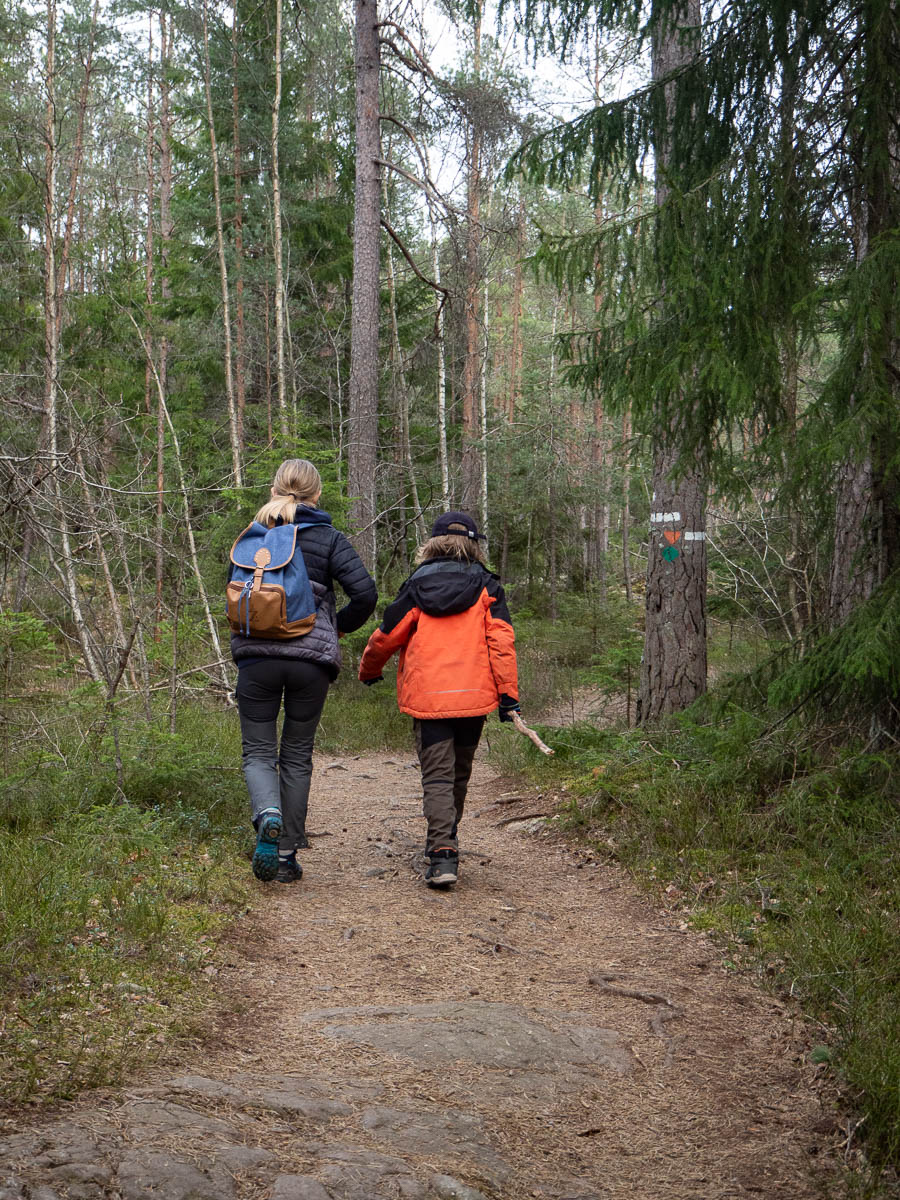
Ingrid is away on a scout hike this weekend, which gave me that little nudge to also go out. So Eric, Adrian and I went for a spring walk.

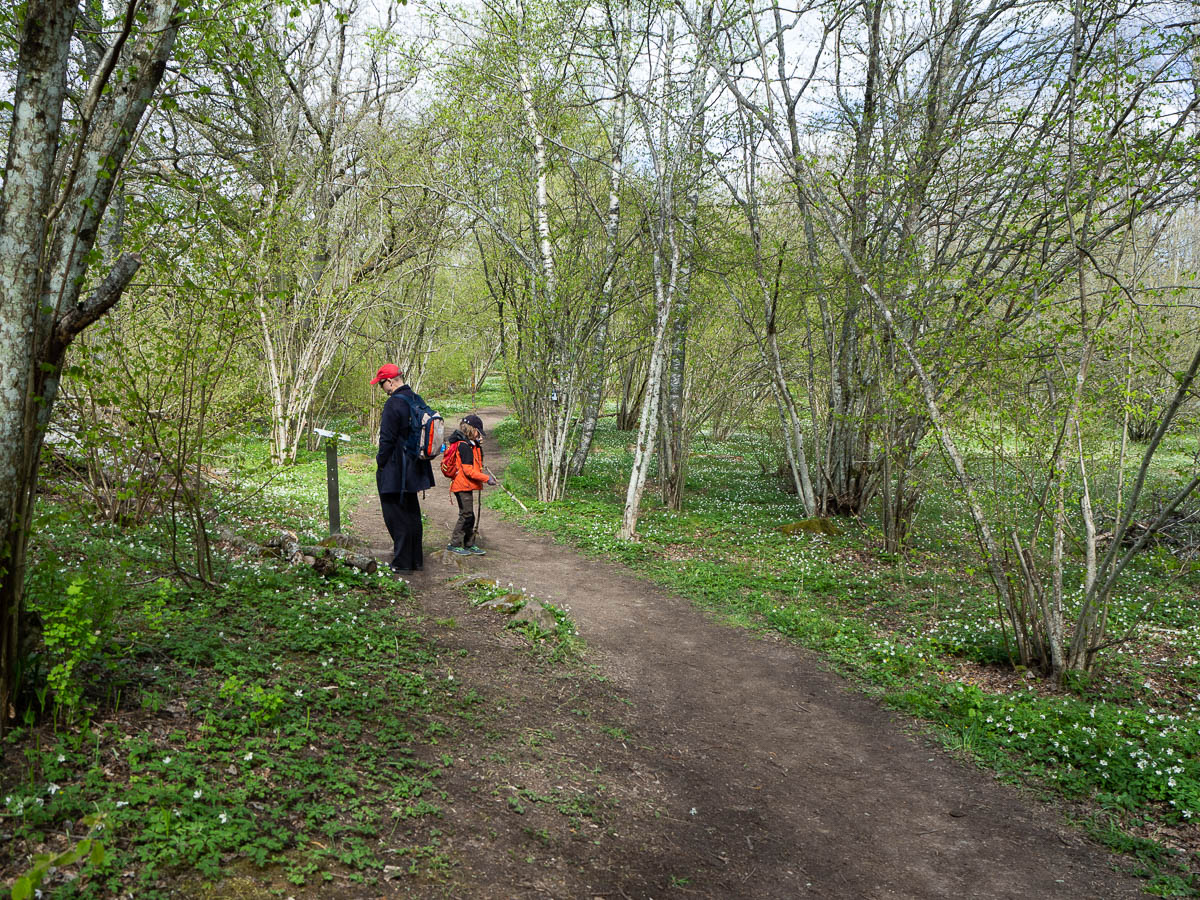
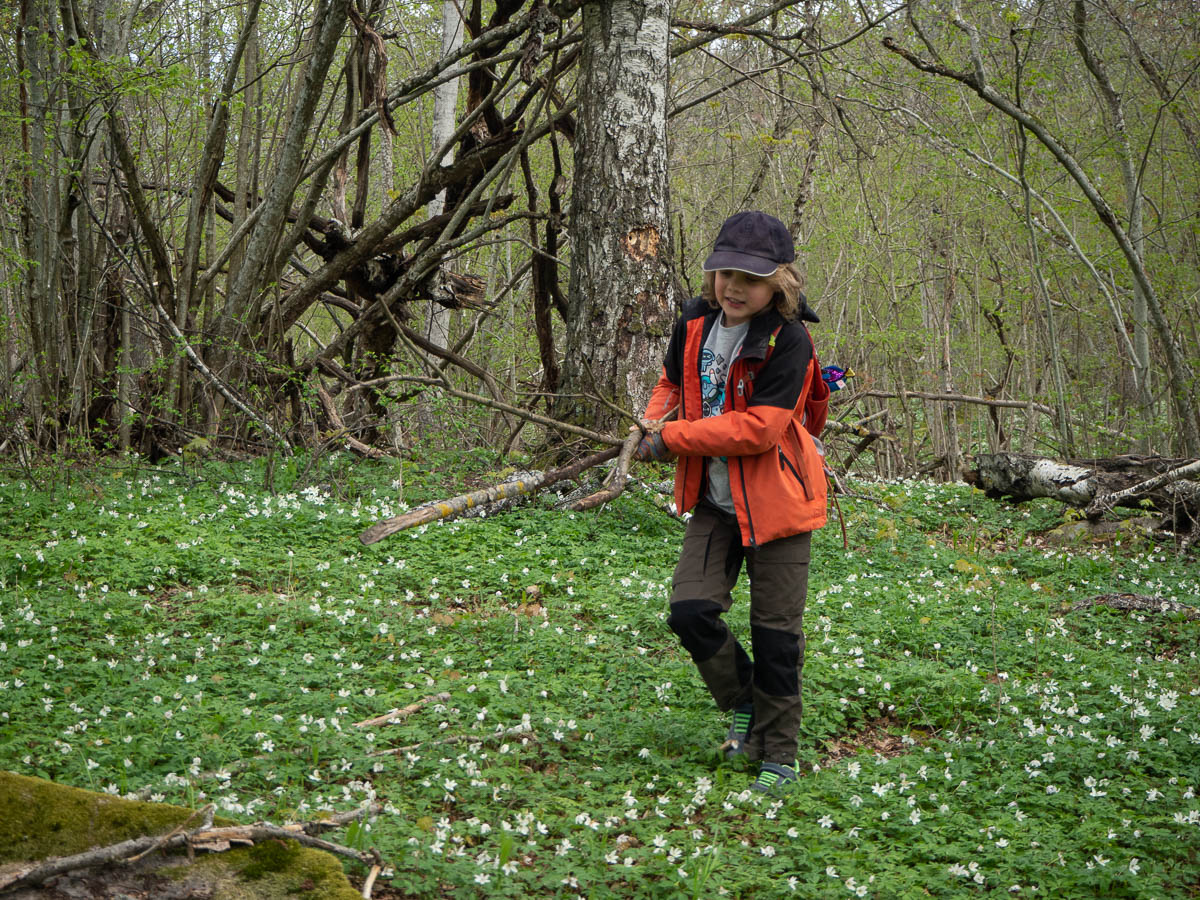
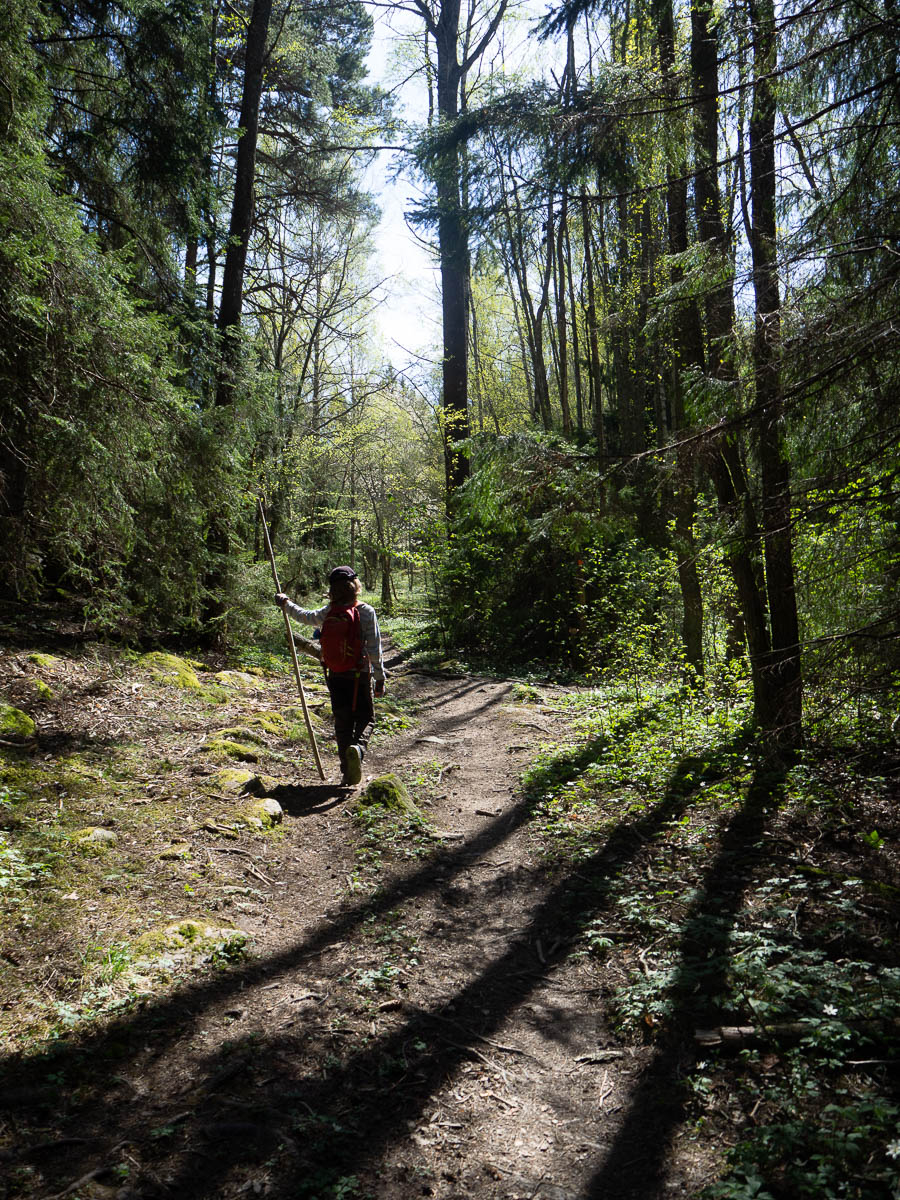
Spring is at its best in leafy places, where there is birdsong and flowers, not in pine forests. I vaguely recalled a woodland with anemone carpets in Hansta. I wasn’t 100% sure of its location, but when we got there, it was exactly where I thought it was, and fully as lovely as I remembered it.

Last time we cycled past the woodland and only took a brief look. This time we left the bikes at home and walked, and took a smaller zig-zaggy path instead of the wide, cycle-friendly track.

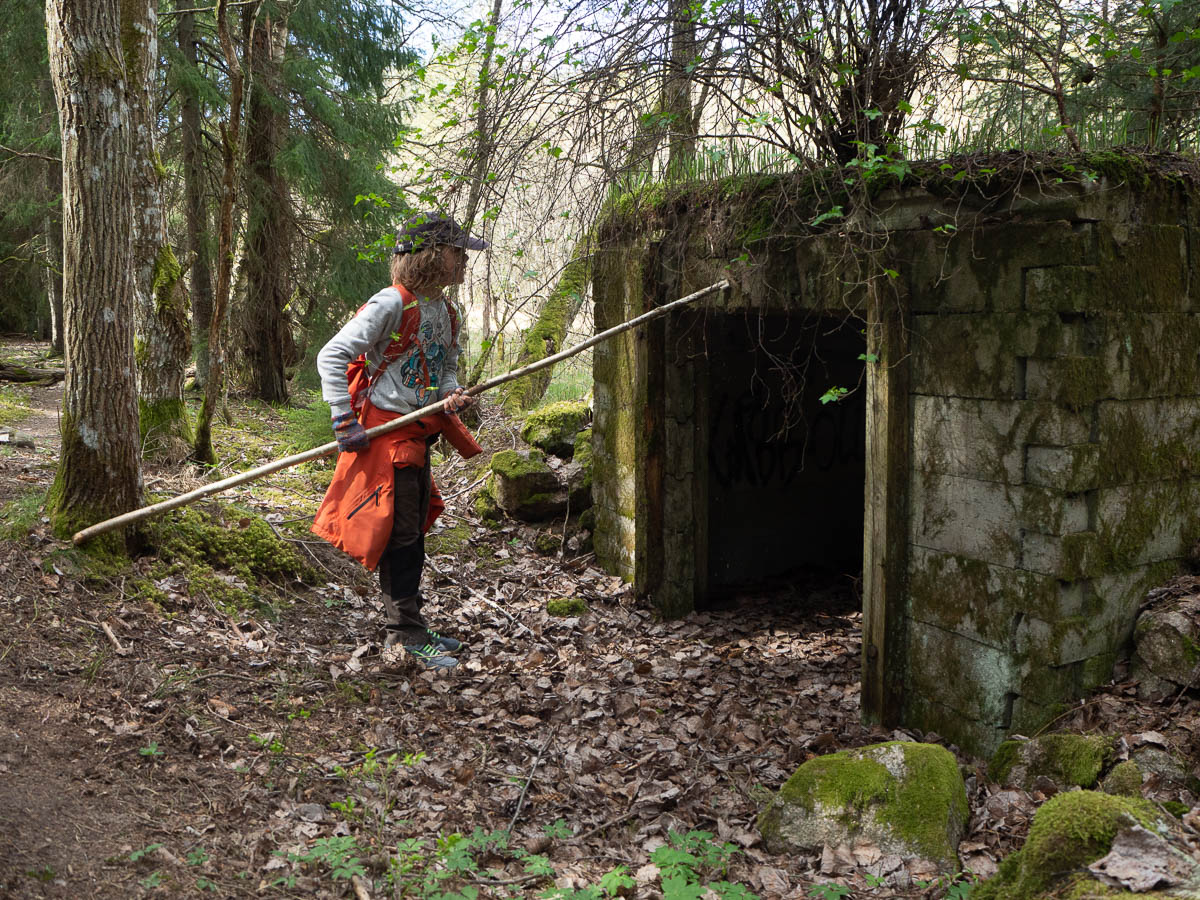
Adrian found plenty of great sticks. (That was his main reason for preferring walking to cycling. You can’t pick up and carry sticks and staves on a bike.)

I spotted a black woodpecker. Well, first I heard it. I’d never heard one before – its call is not what I would expect from a woodpecker!

Later during the day we also saw a grass snake. They’re pretty common, I think, but I don’t see them often; this was a rare chance.

There were several concrete foxholes dotted around the forest. (Of the military kind, not the kind that foxes dig and live in.) In surprisingly good shape, given how old they must be.

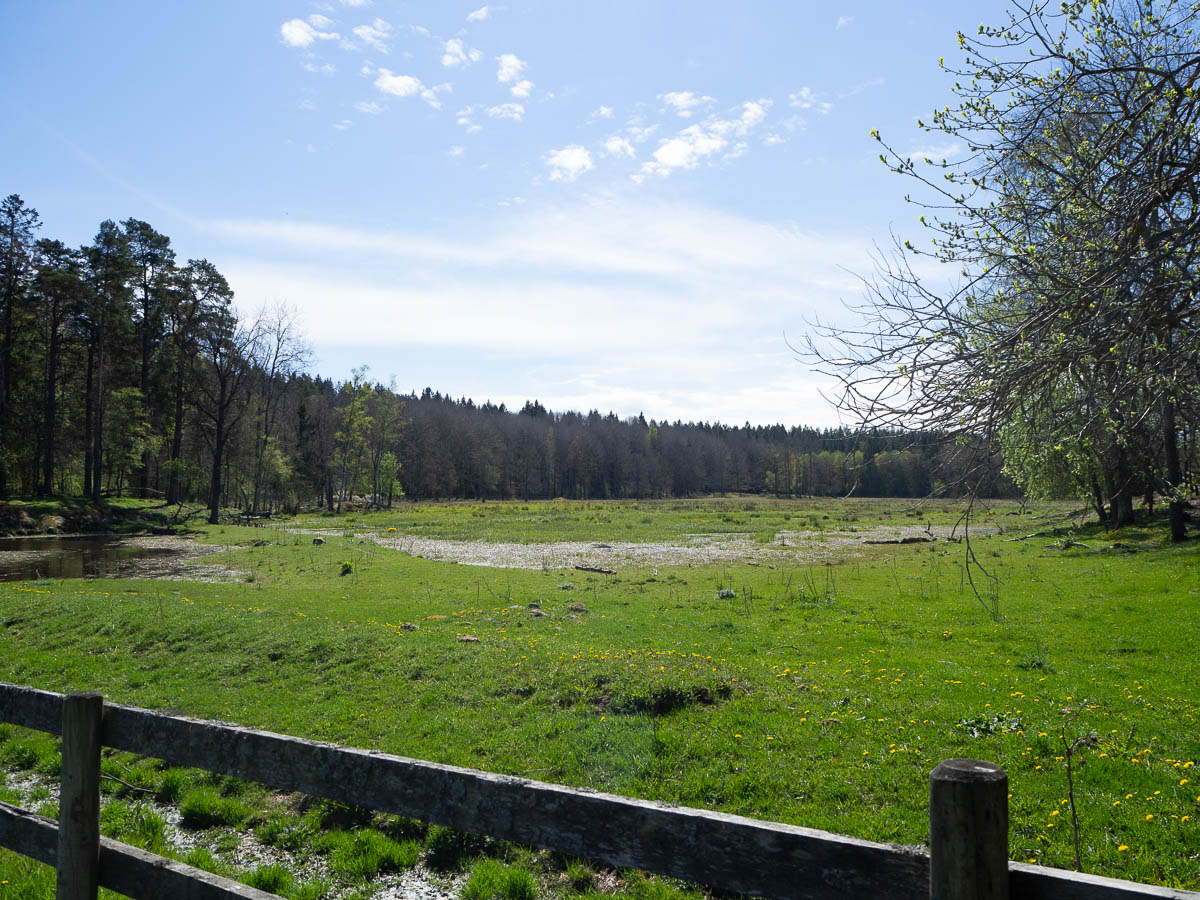
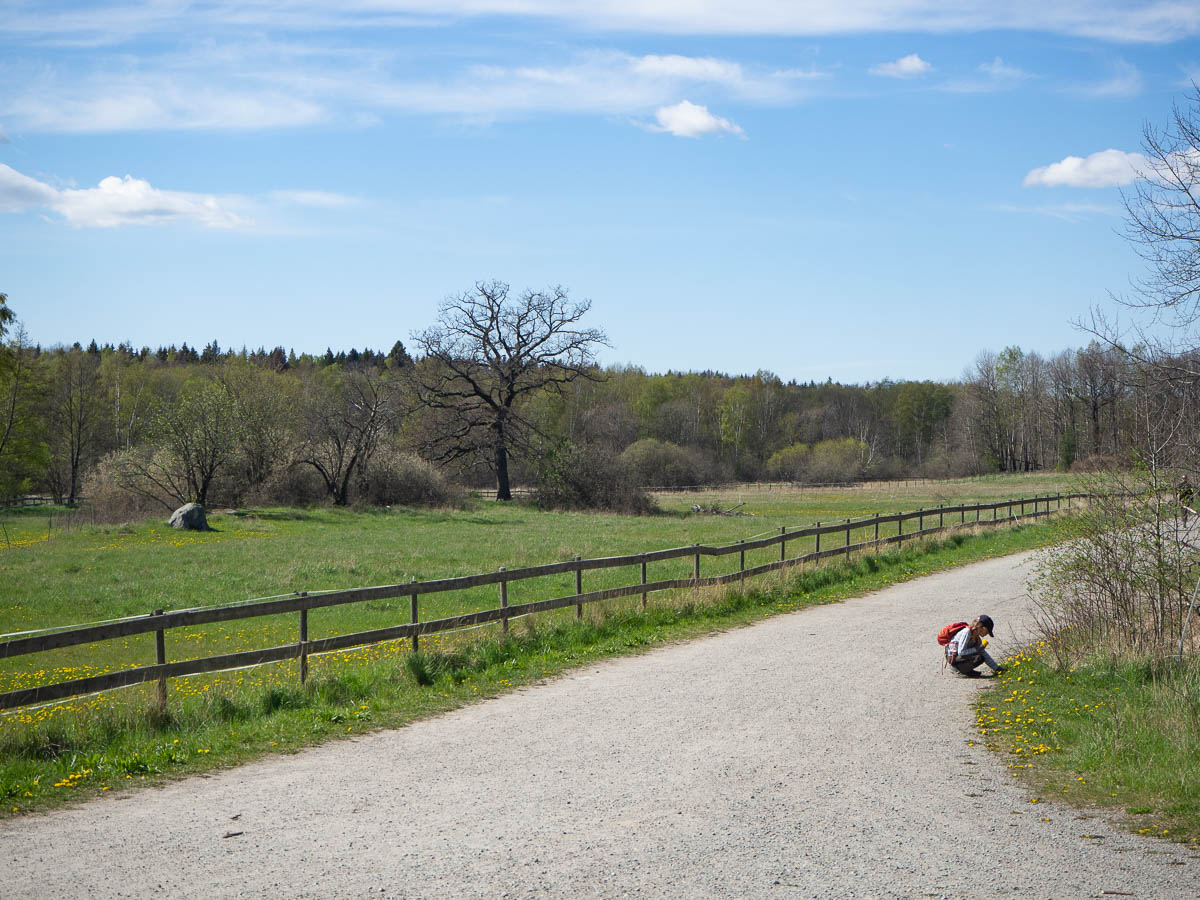
We made our way to the wetlands near Väsby. There were probably all sorts of interesting birds there, but none of them had the courtesy to come close to the trail. The only ones I could see were the large, visible ones (one pair of whooper swans with their young) and the ones who are used to humans (plenty of geese and ducks).

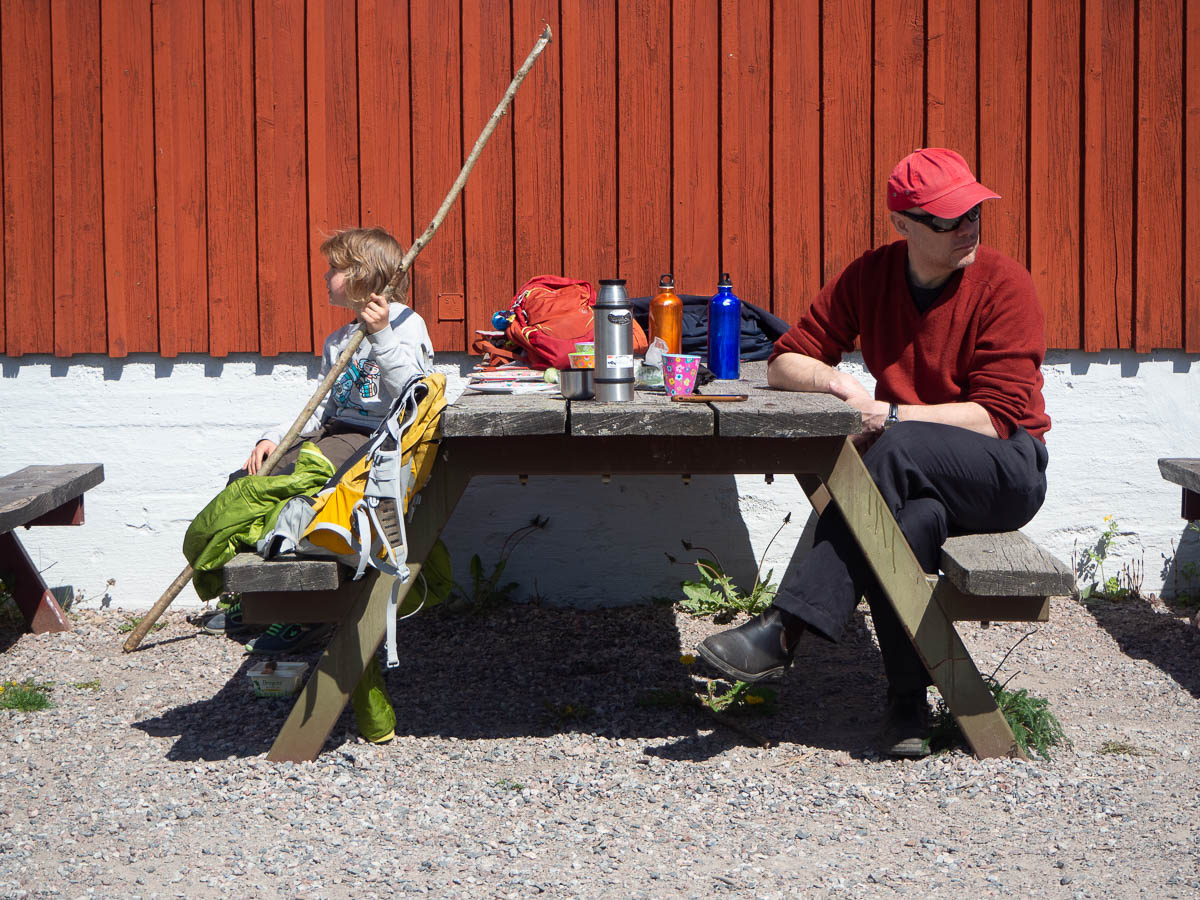
The cafe at Väsby farm was closed, but we came prepared with sandwich materials, hot and cold drinks, and flapjacks. And because the cafe was closed, there were plenty of free seats and tables in the sun.

Adrian reduced his stick collection to just one ultimate walking stick and walked with it all day. And it was a really nice one – a straight, smooth piece of some deciduous tree, maybe aspen or hazel. Unfortunately it was a good bit taller than Adrian so whenever he waved around with it, or even walked carelessly, it came dangerously close to our faces, so Eric and I kept our distance to that stick.

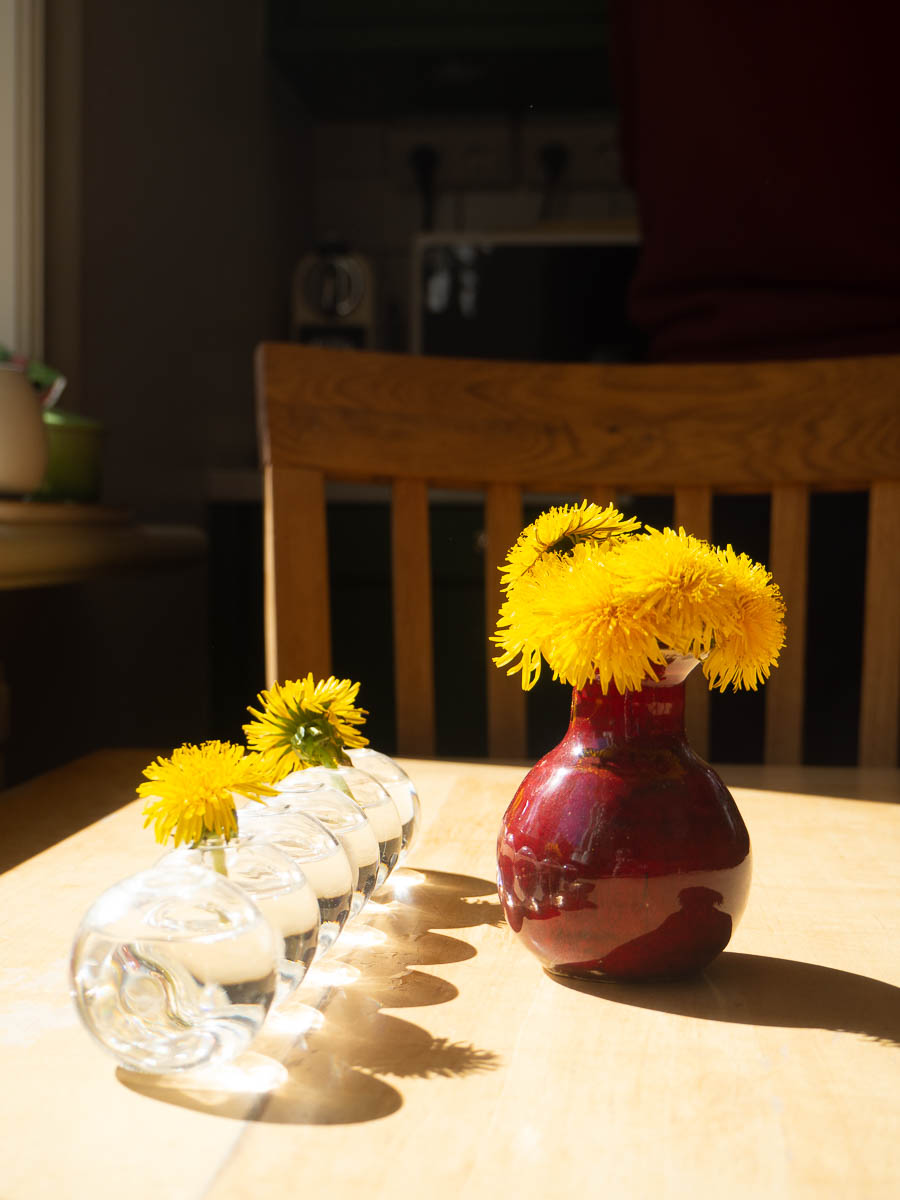
When we came out of the woods again near the parking lot, Adrian finished off the walk by picking dandelions. They do quite well in a vase, apparently. At night they close up as if they had wilted, but they open again with the sun the next morning.


We usually go to Uppsala and my mum and brother for Easter. But with all the government recommendations to stay at home, not travel, especially not from Stockholm to other parts of the country, not meet people, especially older people… that’s not happening.

My usual default solution for long weekends is to go out for a walk. Today we went to Tyresta, back to that north-eastern corner of the national park where we camped last summer. The walk to lake Långsjön and back is picturesque and varied and not too long, and there’s a fire place at a beautiful spot on the lake shore where we could heat our lunch. It’s somewhat harder to get to than the area around the main park entrance in the west, and it doesn’t have any of the super accessible stroller-friendly paths, so I was thinking it would be less crowded.
“Less crowded” maybe it was, but definitely not “not crowded”. Dozens and dozens of families had obviously found themselves in the same situation as us, and come to the same conclusion as us. The parking lot at the park entrance was completely full. Luckily there was another parking lot just a kilometre before it, where we got the last but one spot. (Technically we were probably outside the parking area, but the ground was flat and not in a shrubbery, so it worked.)
The resting place with its shelter and fire place was of course full of people as well. But again we were lucky to arrive a bit later than a large group who were mostly done grilling their sausages, so Eric found room for our “hike bombs” at the edges of the fire. (More good luck for us in that someone had brought their own firewood, because the park’s official firewood box was completely empty.)

On our way back we had an Easter egg hunt. I hid eggs for Ingrid on one side of the path, and she hid eggs for Adrian on the other. We’ve done this in our own garden several times, but there aren’t that many good places to hide colourful eggs in a bare, early-April garden, so this was a lot more fun. Under roots and under rocks and under twigs and moss. I wish I had thought to take close-up photos.

Ingrid and Adrian are both in a phase where they enjoy each other’s company. Well, Adrian has always enjoyed Ingrid’s, but right now she enjoys his as well, which isn’t always the case. Lots of silly jokes. It always makes me happy to see and hear that.


Today promised beautiful weather, warm and sunny, so I took the day off and went walking.

I have quite flexible working arrangements and this has always been possible, but I’ve almost never taken advantage of it. Somehow taking a day off feels like a smaller step when I’ve already been working from home anyway, with my afternoon walking and cycling breaks.

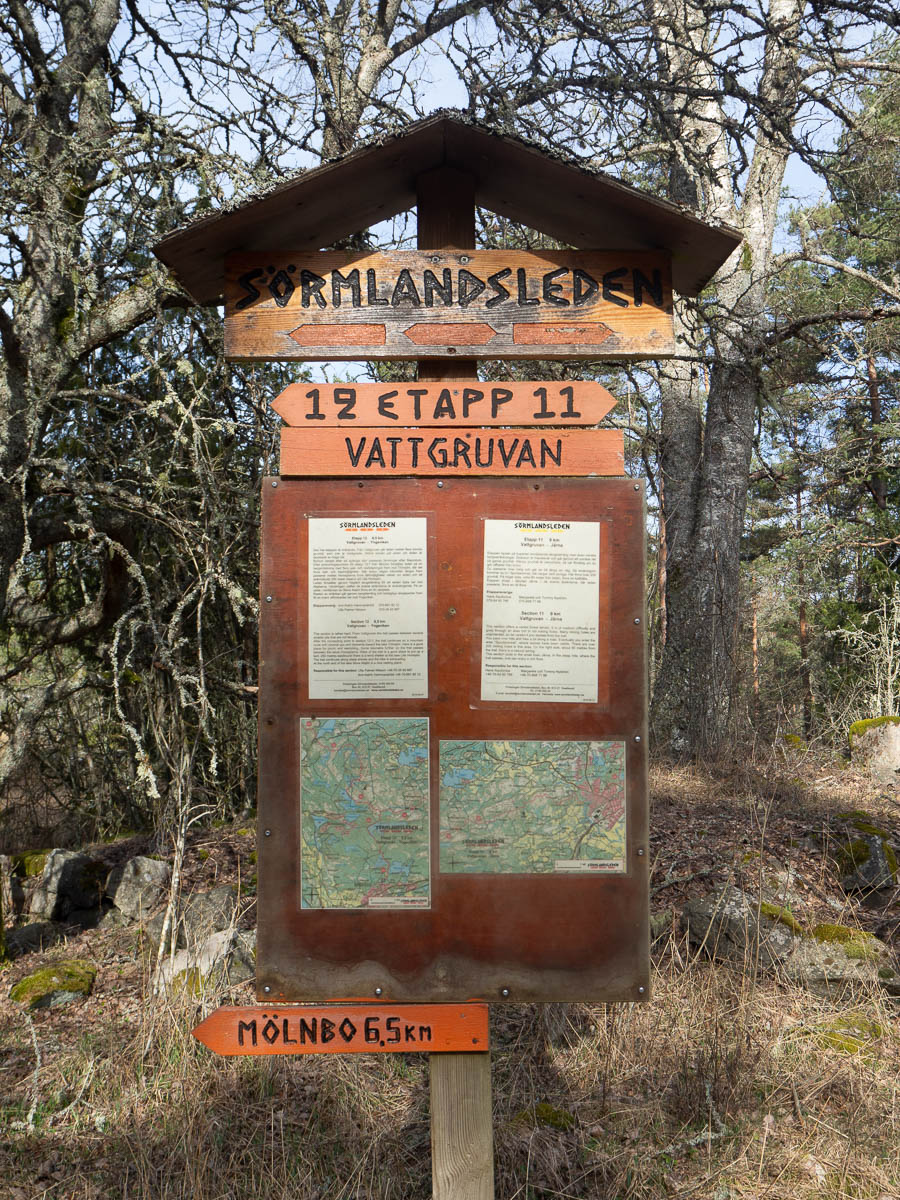
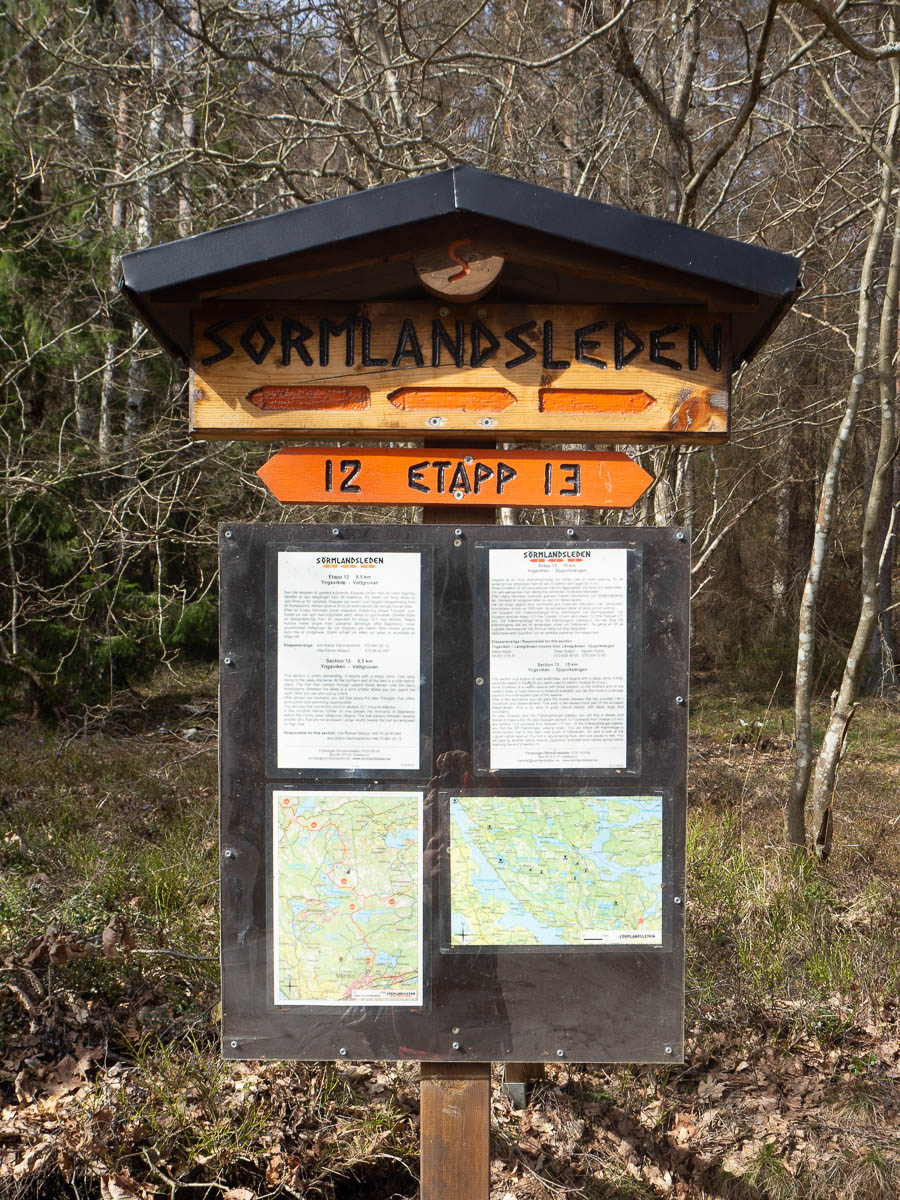
After a longish break from walking the Sörmlandsleden, I did another section today. I’ve done all the easy-to-reach low-numbered sections. The ones ahead of me now cannot easily be reached with public transport, and some cannot even be reached by car. The best way to walk them would probably be multi-day hikes. But I only have one day, so I just simply walked section 12 twice. There and back again.

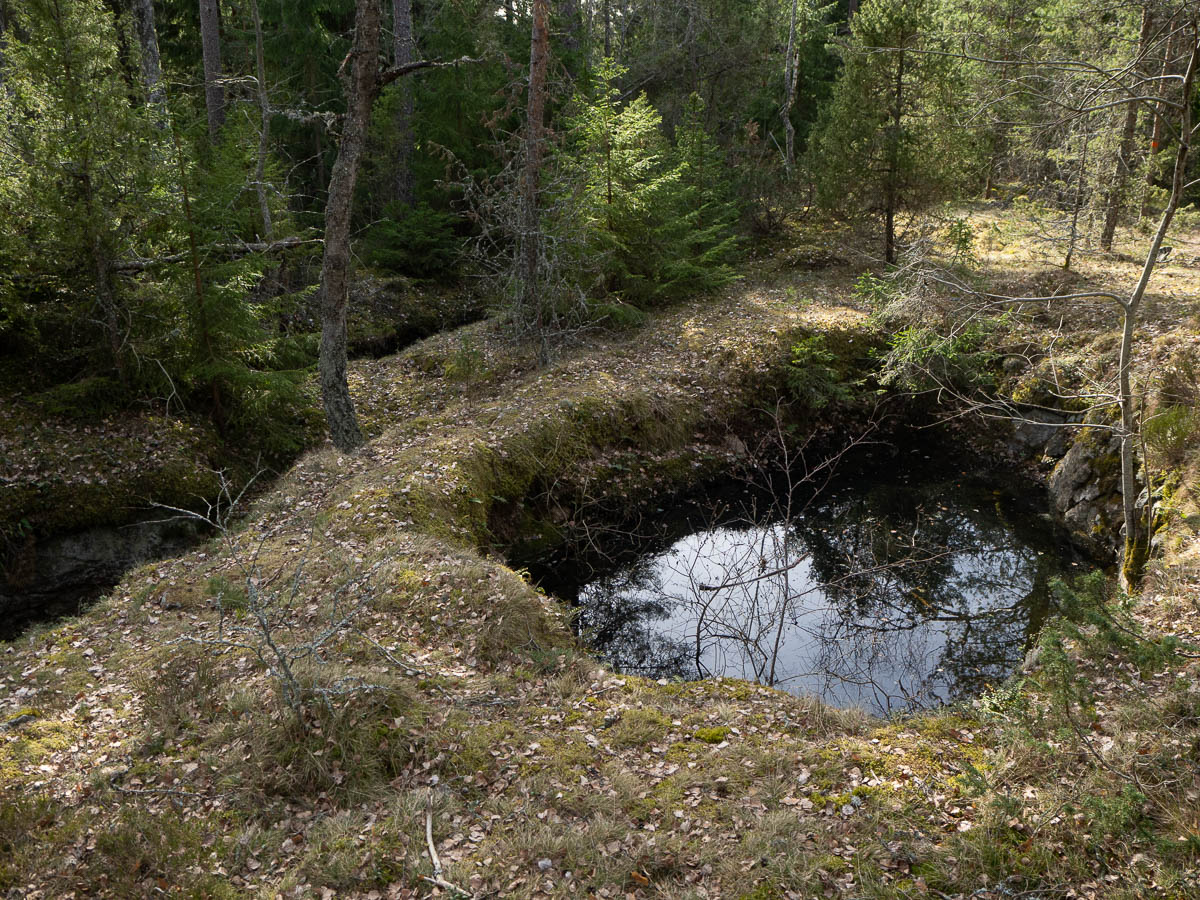
Section 12 starts near Järna, in an old iron mining district. For the first kilometer or two, the woods are pockmarked with small water-filled mining pits, most just a few metres across. There were several informational plaques here and there as well. I skimmed a few; the oldest one I noticed was dated 1985. That was a really durable, well-made sign, with the text and images etched into metal. No flimsy plastic signs here.

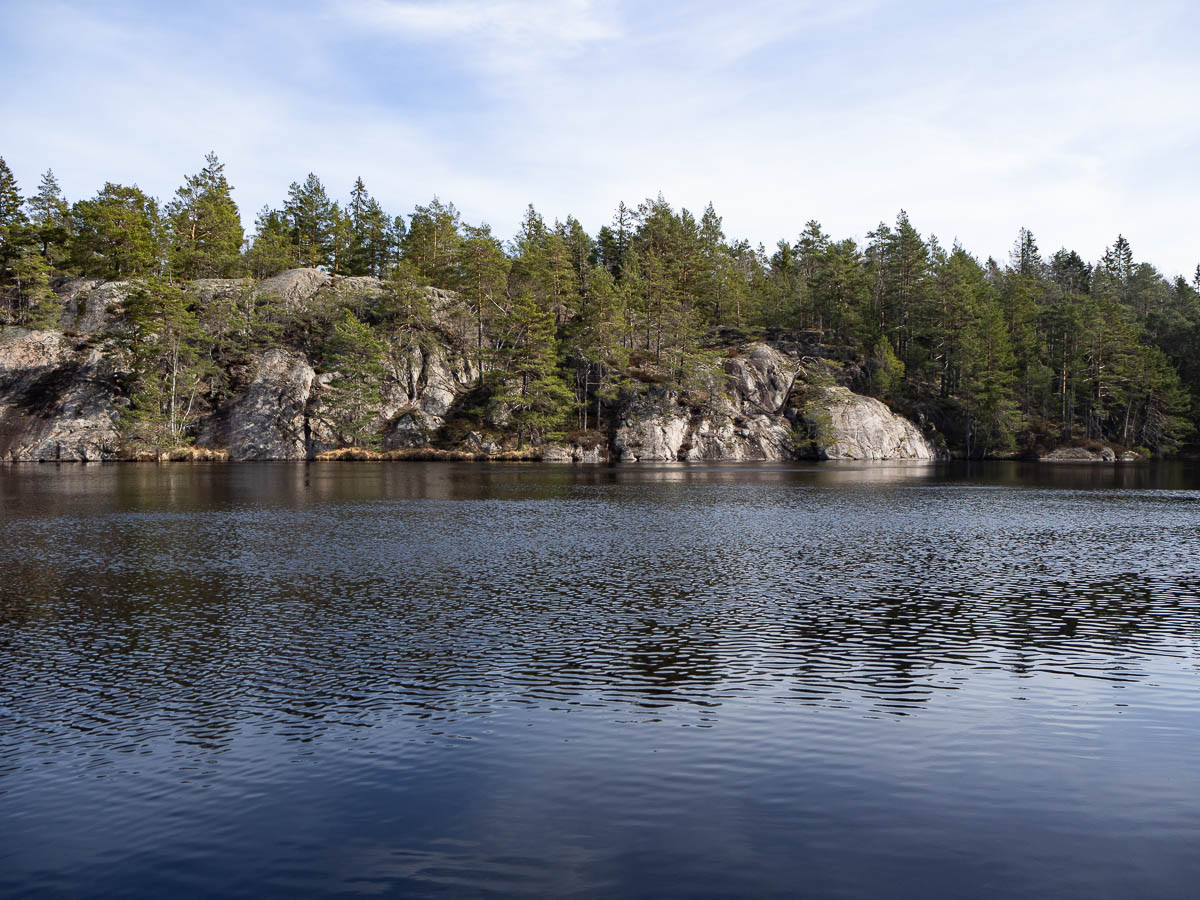
The rest of the section is pretty standard Sörmland pine forest with blueberry undergrowth. There were several lakes here and there offering resting places with nice views.

Much of it was quiet, as pine forest tends to be, except for the soughing of the wind, although I heard blue tits and finches in a few places.

Section 12 is 8.5 km according to the official notes. Adding another kilometre to walk from the parking spot I found to the beginning of section 12, and then doubling it all, brought the total to 20 km. A good distance for one day, especially when the walking is as hilly and rocky as this was.