I am not well and I am not sick. Slightly scratchy throat, slightly blocked nose, slightly chilled. And above all, tired.

I went out for a walk at lunchtime, hoping it would give me some energy. Instead I found myself thinking “are we there yet” and “can I go home soon”.

Tried to photograph hazel blossoms in the park but it was windy and they would not stay still long enough.


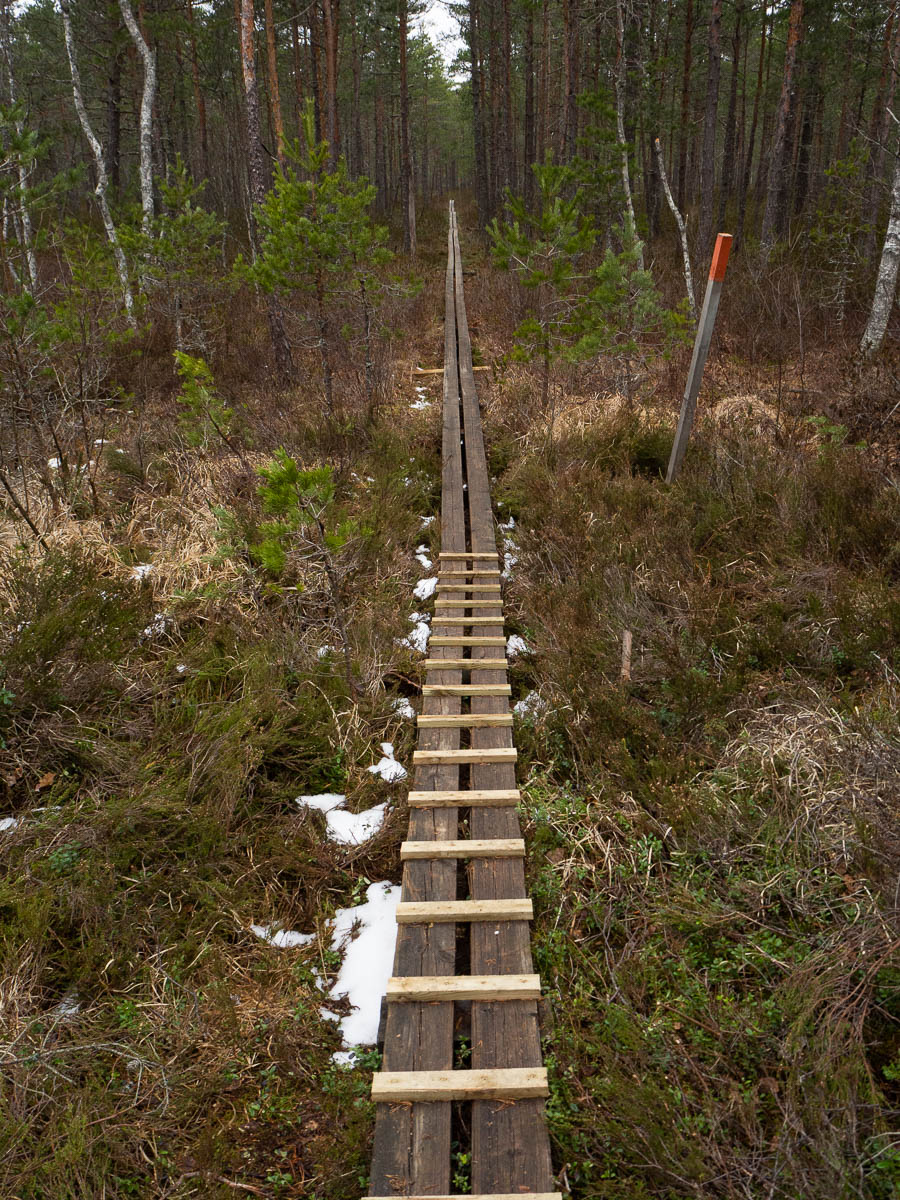
Sörmlandsleden stage 17, back and forth, 6 + 6 km.

Today’s walk was mostly just to get out of the house. With nothing going on in life, I’ve gotten used to nothing going on and lost the habit of doing things, of planning and making things happen. Planning something feels like so much effort. So it’s a good thing that my slow-burn Sörmlandsleden project makes it so easy to get out. Just take the next stage on the list.

12 km is far from a full day of walking, but with the driving there and back and a leisurely lunch + book break in the middle, the whole outing took over 8 hours anyway. Sörmlandsleden stretches many miles away from Stockholm and the point that I have reached is currently about one and a half hour’s drive from home. And it’s only going to get further and further away. Stages 18, 19 and 21 are all just over 10 km, so they’re also doable back and forth in a single day, albeit a long one. Stage 20 I’ve walked already.

It was a very quiet walk. There was no wind and none of the rustling or whispering sounds of wind. No birdsong. No sun, with its brightness and shadows. I met a single other person on the trail. He was running and doing the same as me, back and forth, so he ran past me twice.

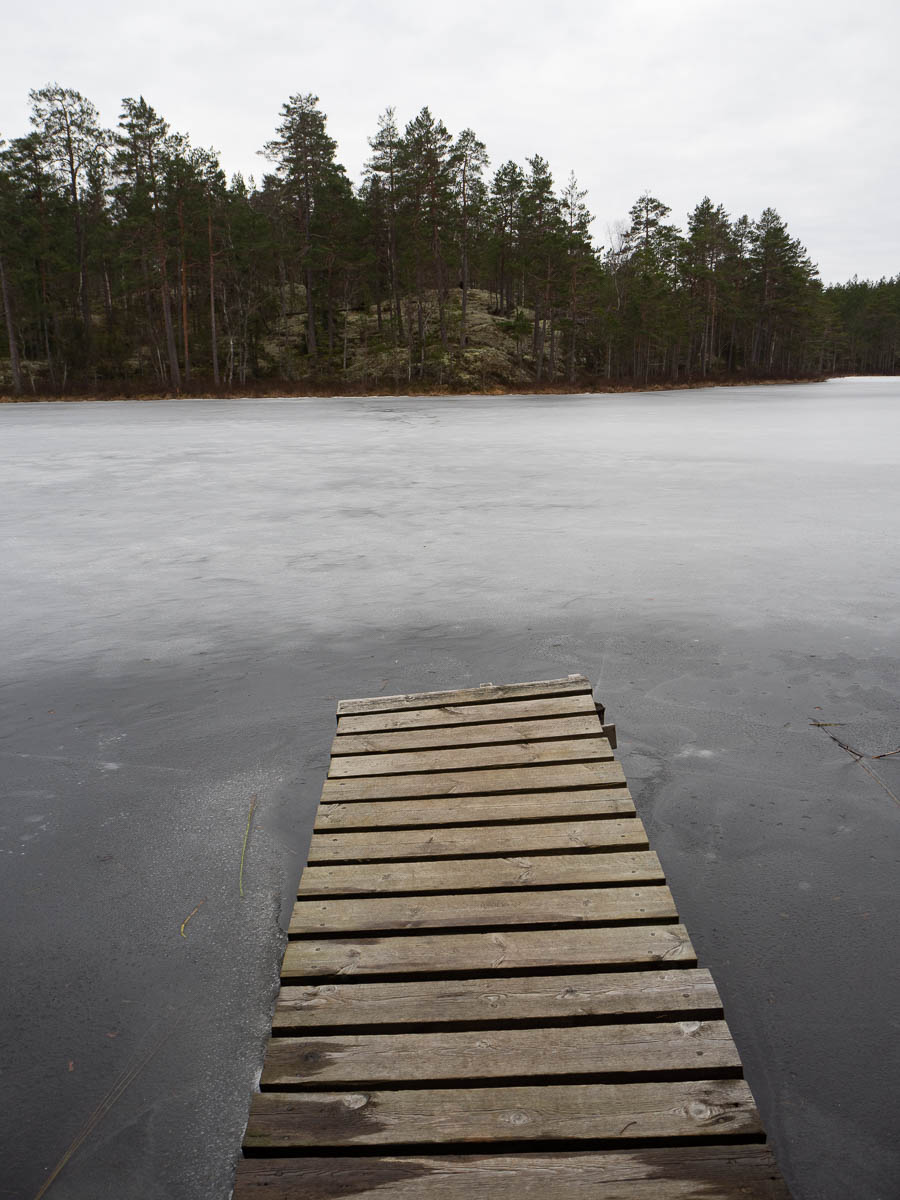
The ground was not as muddy as I had feared. In many places, what looked like soggy ground turned out to be still frozen. There were patches of grainy old snow here and there. The small lakes were all fully iced over, but the larger ones had open water.

I heard a black grouse sing. I didn’t know what it was; I don’t think I’ve ever heard one before. I walked closer, hoping to get a look, but it took flight. I got enough of a glimpse to see that it was like a large dark hen, which means it was some kind of grouse. Google and Fågelsång.se helped me figure out which one.

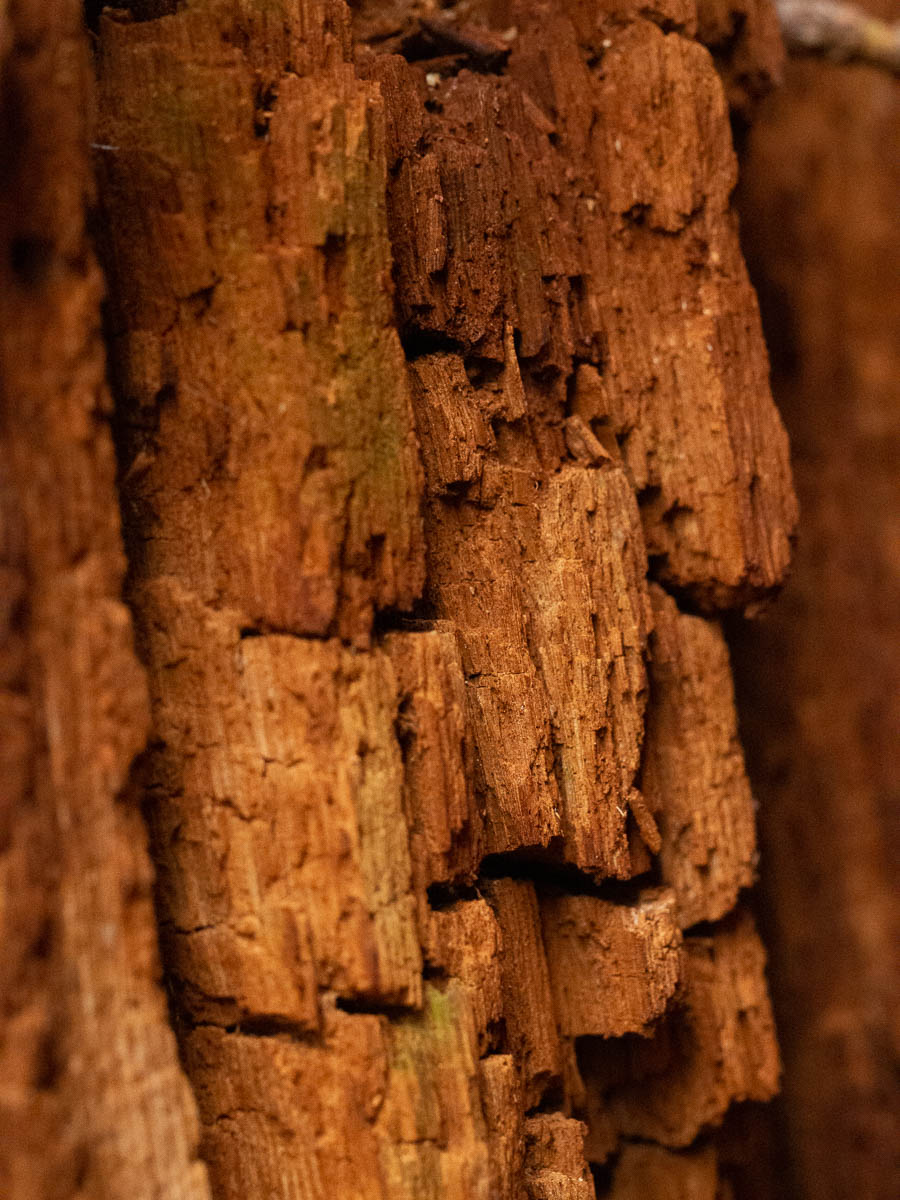
This is the inside of a hollow dead oak.


Part of my job is doing recruitment interviews. I do them quite regularly – recently at least once a week. 1337 is growing and we want to hire more developers, and someone needs to interview them from a technical point of view. These days I do roughly one per week, and often get requests for more. It’s getting to the point where I have to say no because I can’t take that much time from my “real” work. But I enjoy them, so I do try to take the time.

We’re a large enough firm to have specialists for the early phases – finding and winnowing out suitable candidates, and having a first interview with them. I’ve never enjoyed that part of the recruitment process so I’m glad that’s already done by the time I get involved.

The second step is a technical interview, and that’s where I come in. The third and final step is a manager interview.

In a tech interview, we spend one to two hours inventorying and mapping the candidate’s skills in a wide range of topics. We don’t usually dig into any one area in great depth, but we probe enough to get a good picture of where the candidate’s skills lie, and find out where there are gaps in their knowledge.

These days we have a comprehensive template document listing all the areas to cover, each one with a set of keywords to help jog our memories. This is a relatively new “tool”. We’ve invested many laborious person-hours in internal workshops to prepare this interview guide, and then to get used to working with it, and now it’s really paying off. I’ve been doing interviews for many years and they’ve never been as focused and well-organized as what I’m doing now.

We always do the tech interviews in pairs, which I really like. Not only is it good to always have a second opinion, but it also makes the interview run better. If I can’t think of a good follow-up question, my colleague is sure to have one.

It’s easy, relatively speaking, to interview a developer who is supposed to be roughly at my own level of experience. I know what I would expect from another senior colleague. Does this person know enough to be able to deliver production-ready code? Do they have enough experience to make architecture decisions? Are they able to consider the bigger picture, the business needs, the trade-offs?

It is much harder to interview a junior developer. Experience and knowledge can be judged more or less objectively. But judging potential is so much harder. How can I know what this person will be able to do in a few years? How much of their lack of knowledge today is due to lack of exposure, and how much is due to lack of initiative?

I’m quite glad that the final decision is not mine.

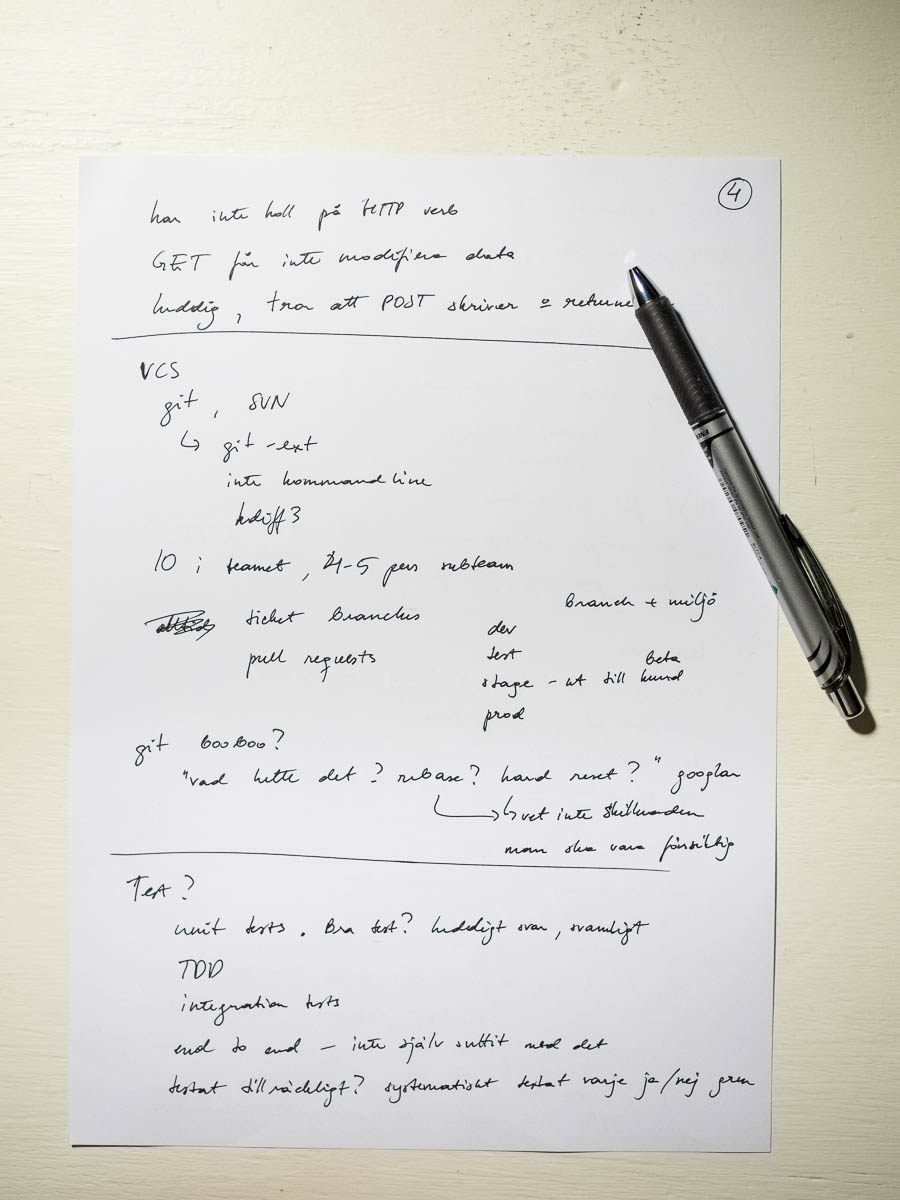
Despite all the digital tools we have, I always take notes with pen and paper. Nothing beats pen and paper when it comes to quick scribbles and unstructured comments.

I needed to go to the tretton37 office today. Last time was in September I think?

My back has occasionally been acting up still, so I didn’t dare to commit to cycling all that way, especially since cycling involves (1) bending at the waist and (2) pushing with my legs, both of which have been a bit problematic recently. So, train and tube it is.

I left home early to avoid the worst of the morning rush. I wouldn’t quite describe the train as crowded, but definitely not empty either. And those who were there didn’t seem to be thinking much about social distancing or any such thing. Less than half the passengers were wearing masks. And people were squeezing past others (and me) in the narrow aisles without any second thoughts, and likewise on the escalators.

I guess if you have to be on public transport every day because you cannot work from home then after a while maybe you simply stop worrying, because you run out of worry.


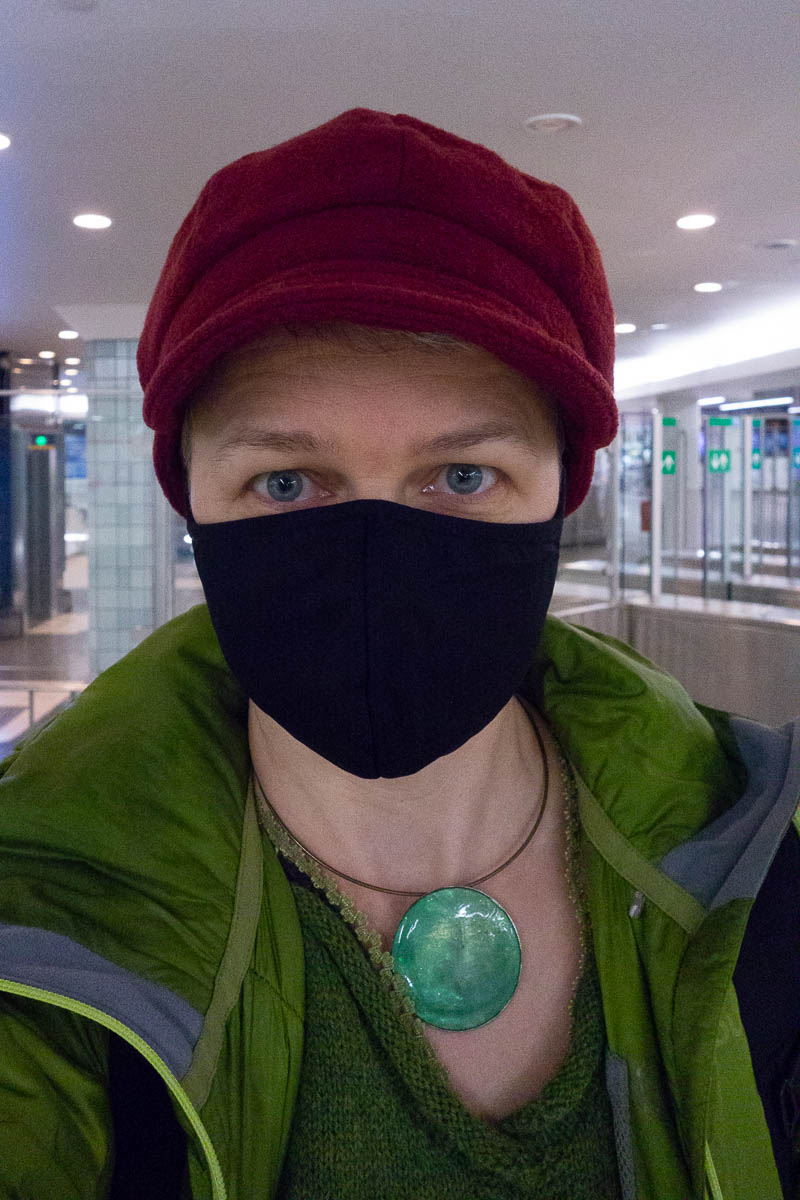
This was my first time in a crowded indoor space in months, so it was also my first time wearing a face mask for real. It didn’t feel like I had expected.

I had expected the bands around my ears to be uncomfortable. I usually hate such things. I only ever buy sunglasses with straight arms to avoid pressure behind my ears. But I didn’t even notice these.

I constantly noticed the mask itself, though. It comes up high enough under my eyes that I see it all the time. And especially when I tried to look down. When I wanted to read, I had to hold my magazine up high to see it properly past the edge of the mask. And when I tried to use my wallet to pay, and when I touched my key fob to the door pad, and so on.

If I had to do this daily, I’d probably try to find a different make that didn’t come quite as high up on the sides. But now it’s not worth the bother.

It got steamy inside the mask when I took the stairs fast.


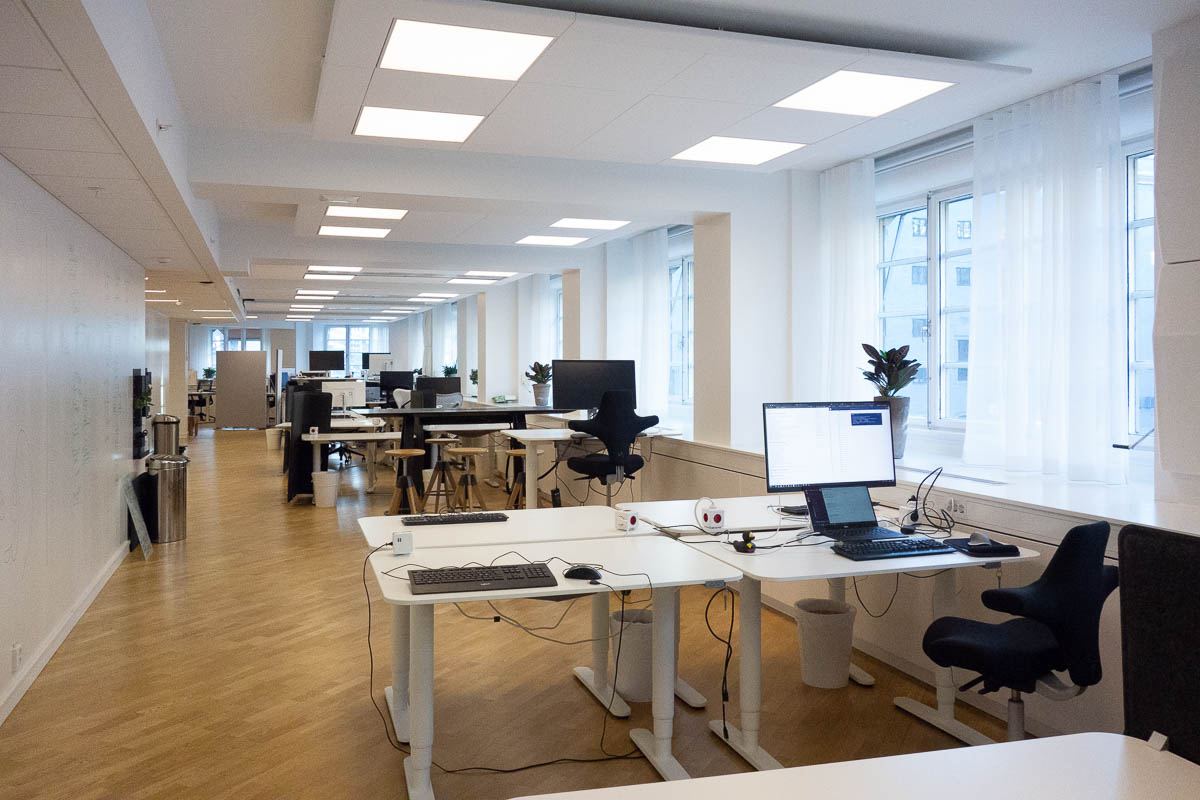
The office was mostly empty. A handful of people were there but the overall impression was of abandonment.

I left in the early afternoon to avoid the rush hour again and finished my work at home. The whole commute felt like so much wasted time. 40 minutes there, 40 back, all chopped up into little pieces so I can’t even do much with the time.


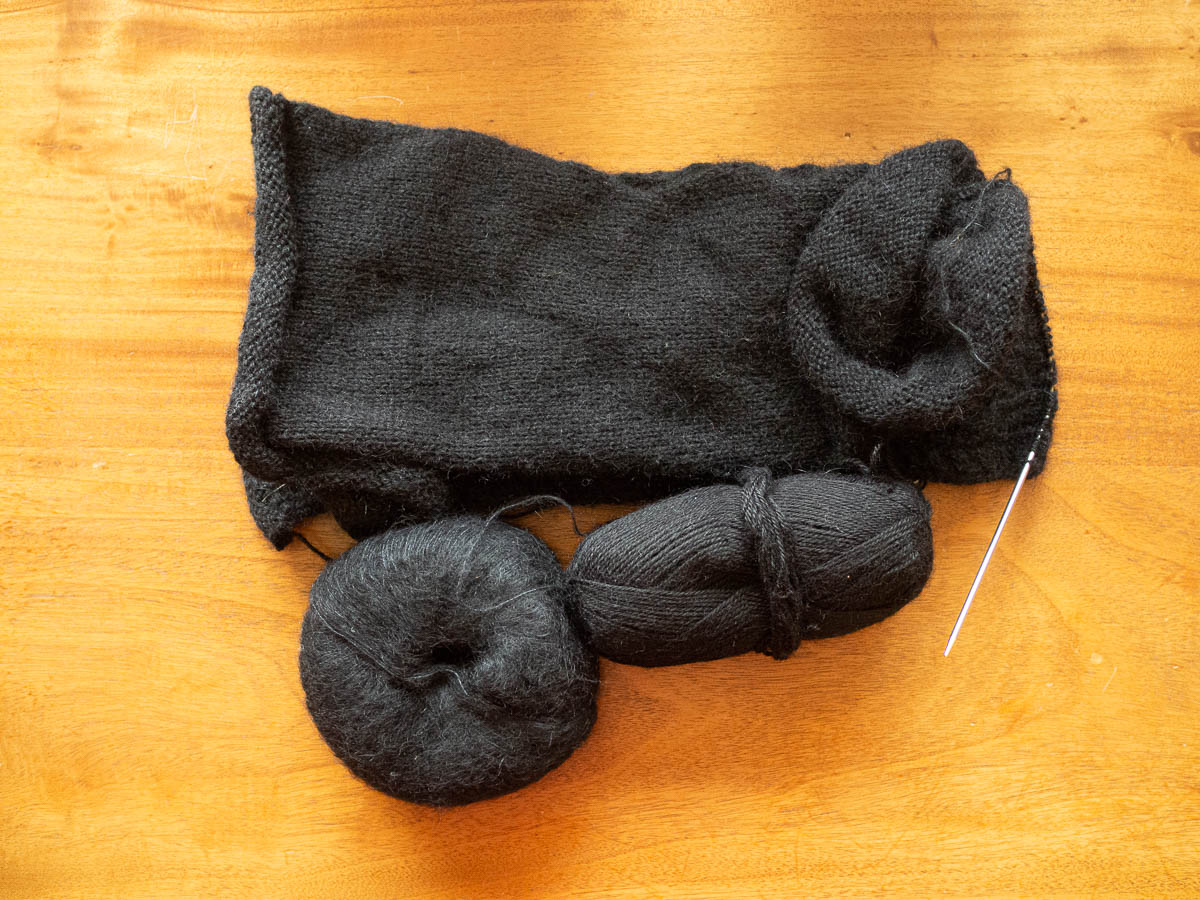
I’m picking up the cardigan again, after a break to knit two pairs of socks. I want more socks but I also want a cardigan. The socks are small, easy wins and I’d been putting off this larger project.

Working on it again is a pleasure. I’d forgotten just how soft the yarn was. If I could choose, I might never wear a cardigan in anything other than alpaca or mohair again.

I notice the same with other activities I enjoy. If enough time passes, I forget just how much I normally enjoy them. I wonder if there is a term for this. Sort of the inverse of the Pollyanna principle.


The snow is melting at an impressive pace in the warm rain, and apparently the weeds beneath it are already ready to go.

+4°C feels much warmer in February than it did in November. I go out dressed as I was back then, and before long I’m unzipping my coat and peeling off my gloves.

I put my back out yesterday – by pulling the handbrake in the car, of all things. I felt quite ridiculous.

The driveway is on an incline, so the handbrake needs to be engaged all the way, or the car starts to roll back when I lift my foot off the brake pedal. I guess I pulled too hard while my back was twisted the wrong way. There was a “click” and sharp pain and that was that.

Immediately after it happened, I could barely get out of the car. All of yesterday I only walked with very small and careful steps, and took great care when standing up or sitting down or doing anything else really. And absolutely no bending forward in the waist unless I supported my weight on something other than my legs.

Today was better. I still sense very strongly that I need to be careful with my movements, though, and preferably not move my back too much at all. So I spent most of the day sitting in the sofa in a carefully balanced position. It was a singularly monotonous day.

I imagine this is what reality is like for frail old ladies. Must move cautiously, can’t pick up things from the floor without risking hurt. Asking your grandchildren to do things for you because you can’t. I will do my darnedest to end up a strong old lady and not a frail one. I abhor this feeling.


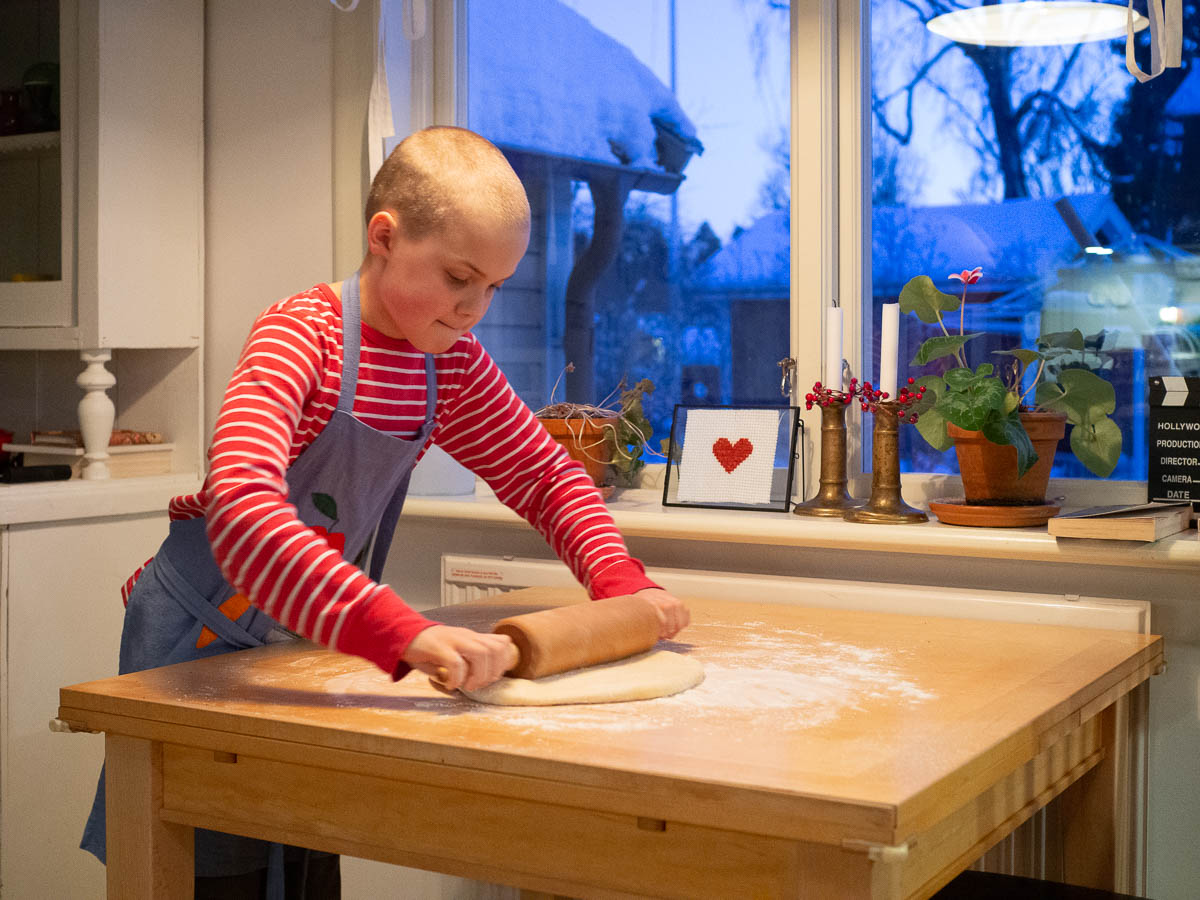
Adrian and Eric made swirl buns of various kinds: cinnamon, poppy seed, chocolate and orange peel. I like buns and all kinds of other cakes but the desire to eat them rarely grows strong enough to make me bake. I don’t even know why. It’s not that I dislike baking, or find it difficult. I just… don’t do it. How nice it is to have family that does.


Another thing that is near-permanently stationed next to my desk is my stack of shawls. This time of the year, especially in the morning, in this old and badly insulated house of ours, my “office” can be chilly.

I’m also rather picky about my body temperature. I don’t like being even slightly too warm, no more than I like being slightly too cold. I’m often buttoning and unbuttoning my cardigans, adding a shawl, opening up the shawl, etc. Other people don’t seem to be so bothered, I think – I don’t see others (at work or at home) fiddling so much with their clothes. Or perhaps their bodies are better at regulating their temperatures.

The flexibility that a shawl offers is unequalled by other garments. It’s so easy to shift the ends a little bit wider to let more body heat out, or wrap it more tightly around my shoulders to keep me warmer.

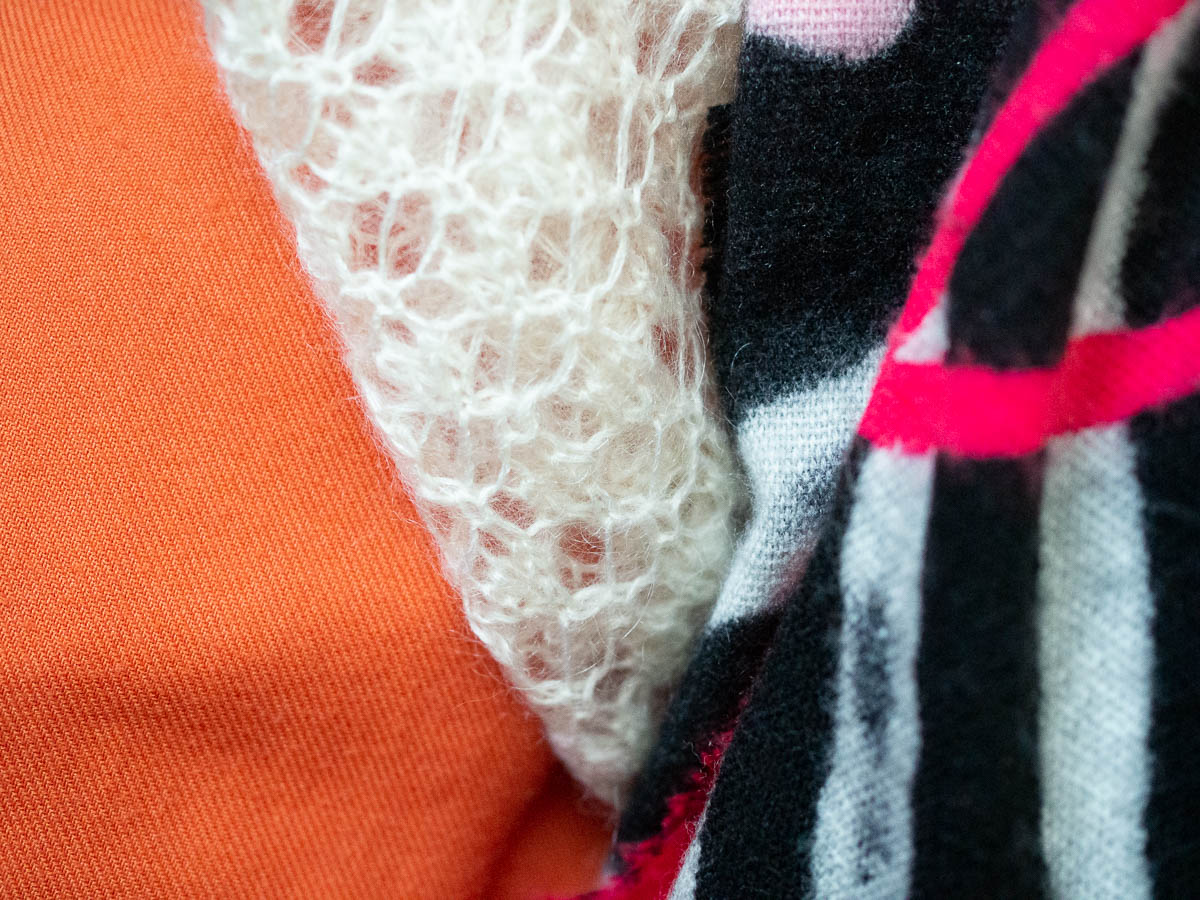
The white one I knitted myself in a lovely silk and merino yarn in about 2002 or 2003. I remember working on it in our first apartment in London. The orange one I bought somewhere, probably London as well. The black and white and pink one has a design of large rose or peonies or something. I got as a Christmas gift from my mum.

The best thing about them is that they’re all so luxuriously soft. I feel positively spoiled when I wear them. The next best thing is that they are so different. Whatever I’m wearing, one of these will look nice together with it.

Women don’t use shawls so much these days, other than perhaps decoratively draping one over a ball gown. But in old photos you often see women wearing a shawl or a wrap as an outer layer, especially in wool-producing countries, ranging from Ireland to Ecuador and Nepal. A coat is more practical, so I can understand why this tradition is dying out. But there is a special cosiness about wrapping myself in a shawl that a cardigan or jacket can’t achieve, no matter how soft the material.

Money wasn’t something we discussed in our family when I was a child. Still, I believe that during my first fifteen years, our purchasing decisions were limited not so much by lack of money but by lack of things to buy. Soviet planning, defitsiit, the usual story.

After I moved to Sweden to join my mother, we were poor. One adult and two teenagers living on the income of a single doctoral student, plus whatever welfare benefits we got. We always bought the cheapest variety of everything: those horrible artificial-looking apples, and whatever groceries were on sale. I remember a carton of orange juice that my mother bought because it was the cheapest, that tasted so bad that I refused to drink it. But we didn’t buy a different one until someone had drunk it.

Luckily I got a job within less than a year – illegally, for cash in an envelope at the end of the week. Other teenagers get an allowance; I worked to help pay the rent, and whatever I wanted or needed to buy for myself. The job was at a sporting goods shop and I got an employee discount even though I wasn’t formally employed, so I got good deals on cheap winter jackets and such. I still have one backpack that I bought there.

I could never afford going to the movies. I think I may have gone once during my four years of high school.

Buying books was a luxury. I remember the feeling of saving up for a single paperback, and then the difficulty of choosing just one.


I know my grandmother was poor in her retirement. I saw her always considering the prices of groceries oh so carefully, and wondering whether she could afford to repair her shoes.


I have no rational reason to expect my own retirement to be like that. I have a well-paid job and I live well below my means and I have significant savings. But underneath the surface there is still that small fear that I might end up there, like she was, like I was. Old and poor.