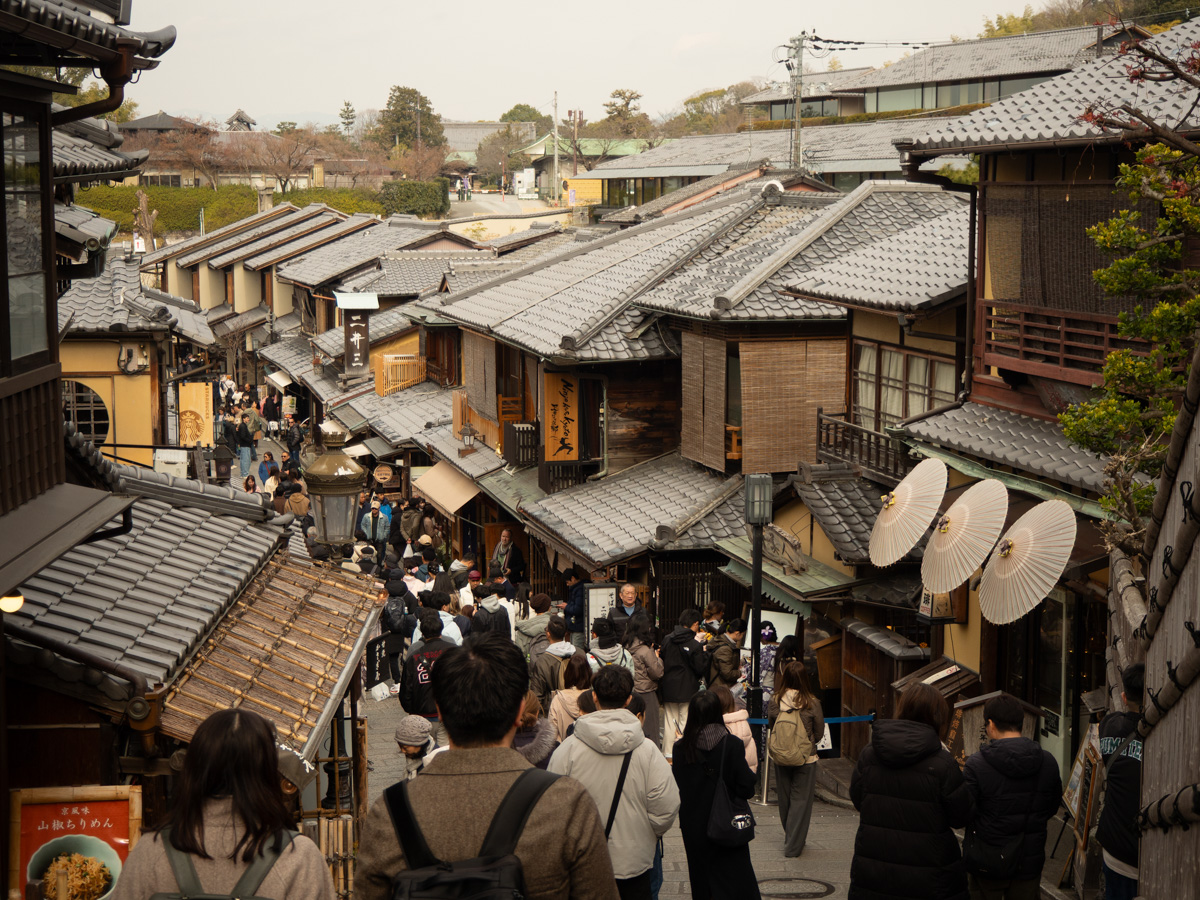
In between the temples and shrines, we spent this day walking around in the main tourist and shopping districts of Kyoto.

Gion is one of the best-known geisha districts, with streets lined with houses in the traditional style.
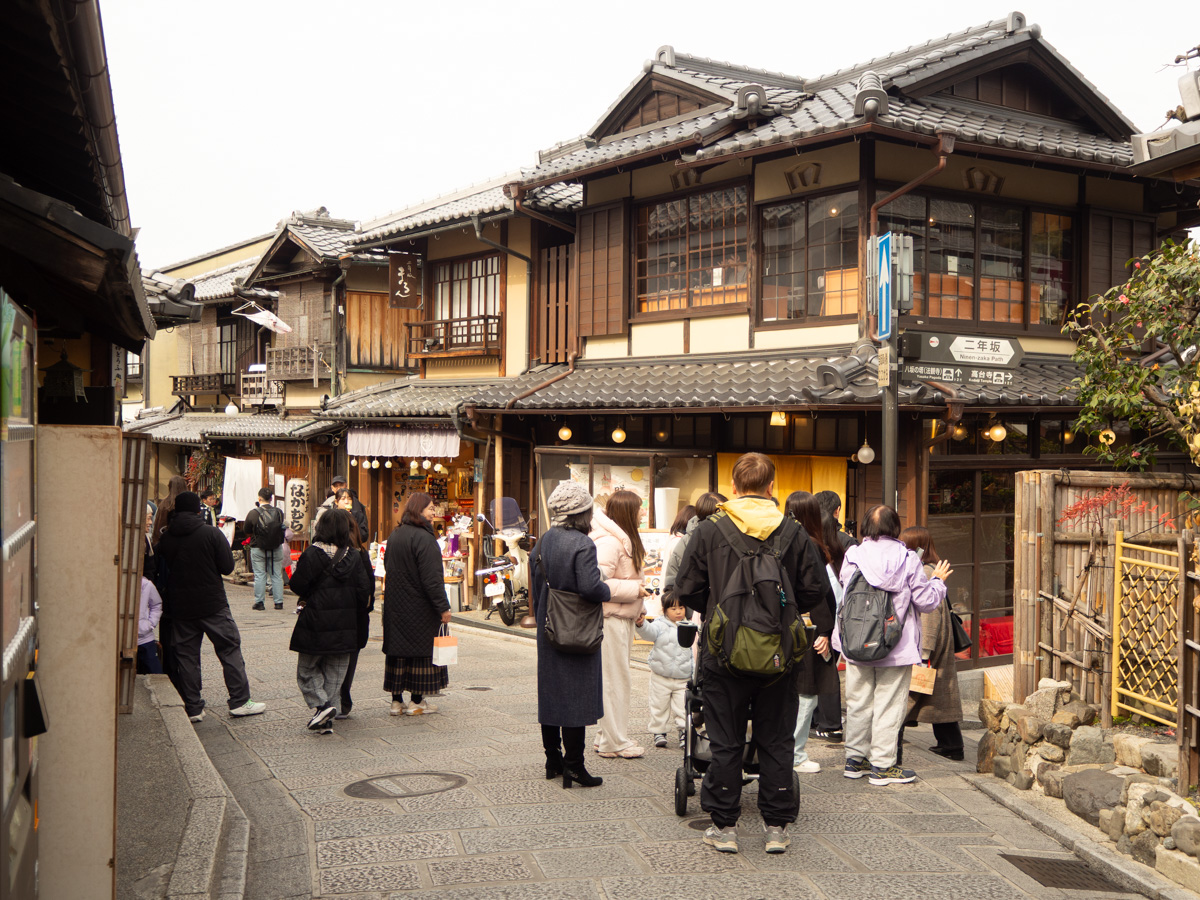
Many are shops or cafĂ©s aimed at tourists, and the street get quite full during peak hours. And this is in February, which is the lowest of the low season. I can’t even imagine being here in April or October. February may be rather chilly for walking around, but it truly was the best possible timing for us.
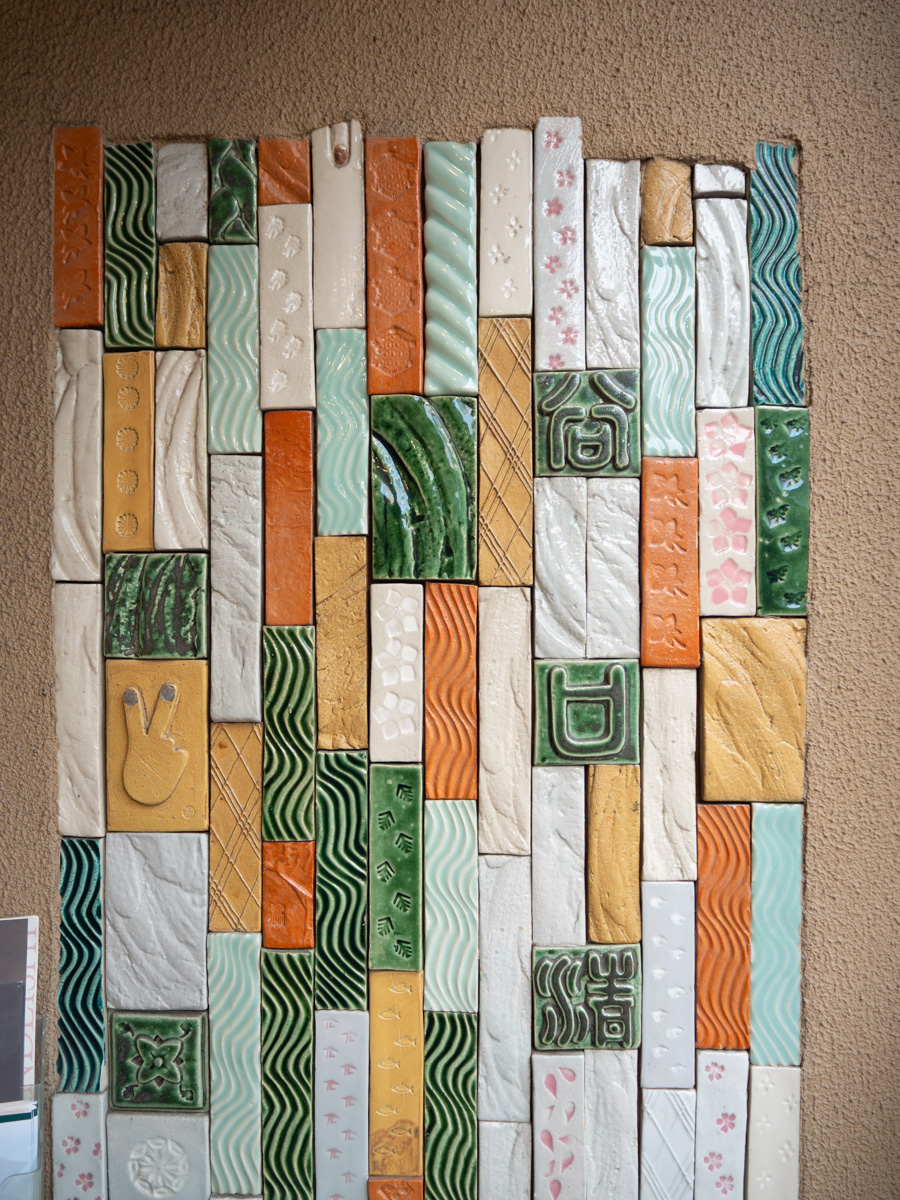
We, of course, zoomed in on the ceramics shops. This one had a wall display of ceramic tiles.
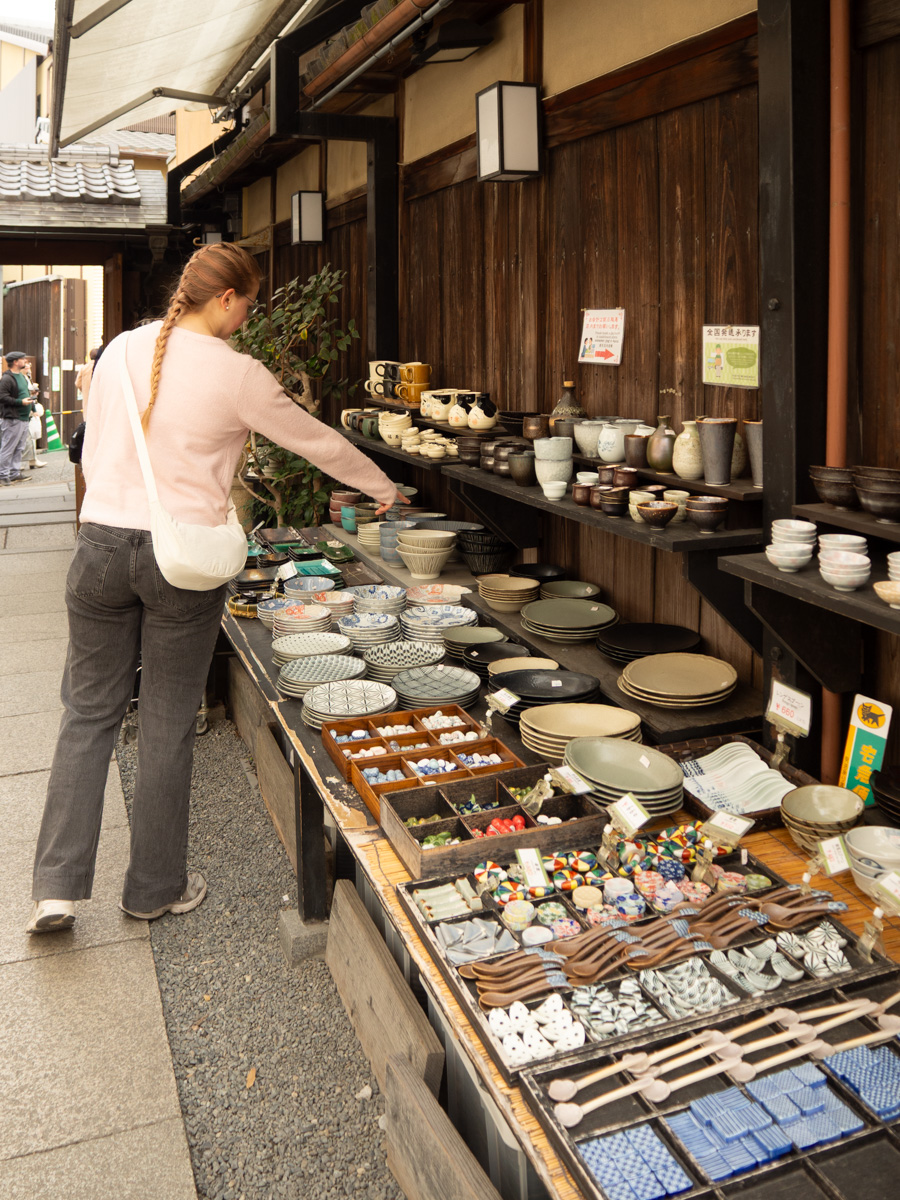
I wonder what they do with the outside displays at night. The bowls and plates aren’t even on any kind of trays or boxes – carrying them inside every evening, only to bring them all out again the next morning, seems like a lot of work.
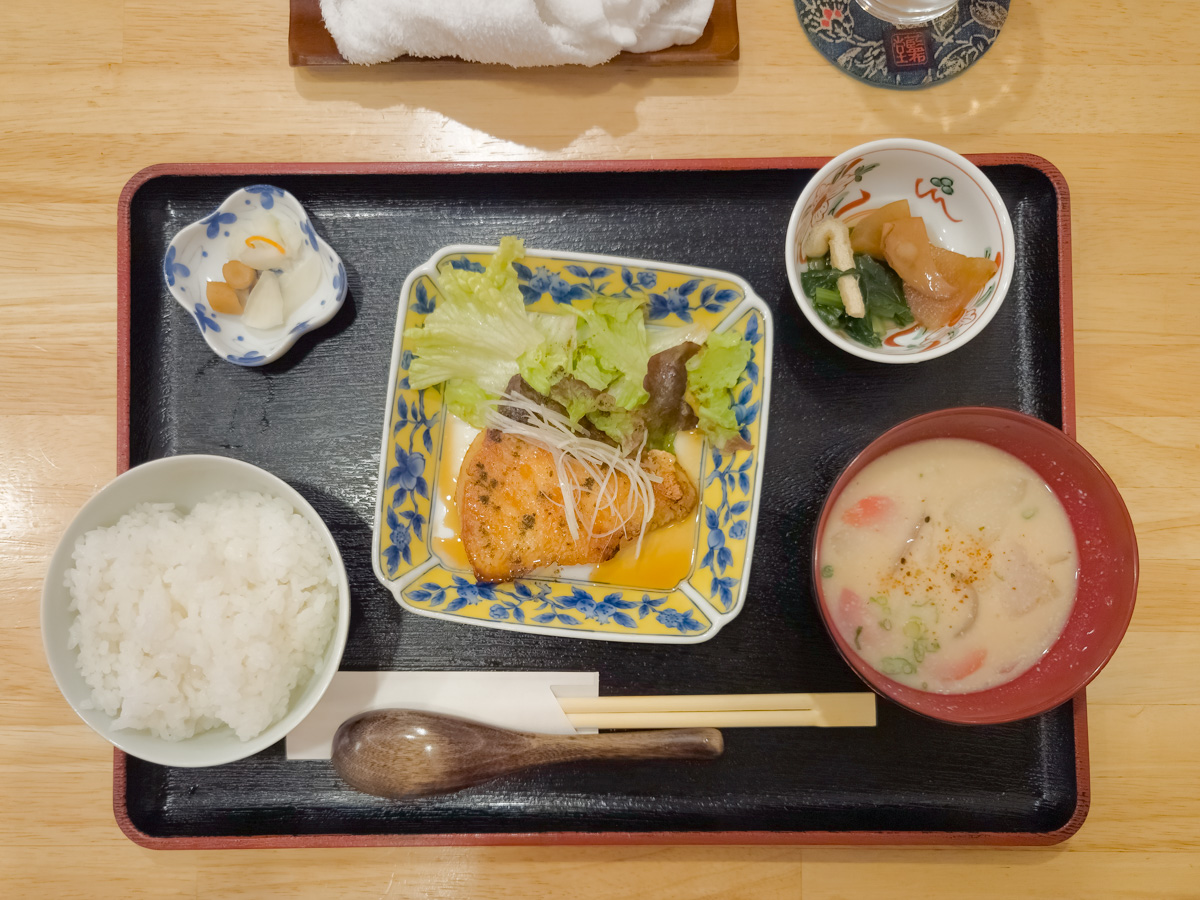
Lunch was at a tiny lunch place for locals, with just a handful of “dish of the day” type meals on the menu. Delicious as usual. The way the meal was served kind of explained the ubiquity of small, palm-sized bowls in all the shops: a little bit of this pickle here, a little bit of another one there. And served with a wooden spoon – we are of like mind here.
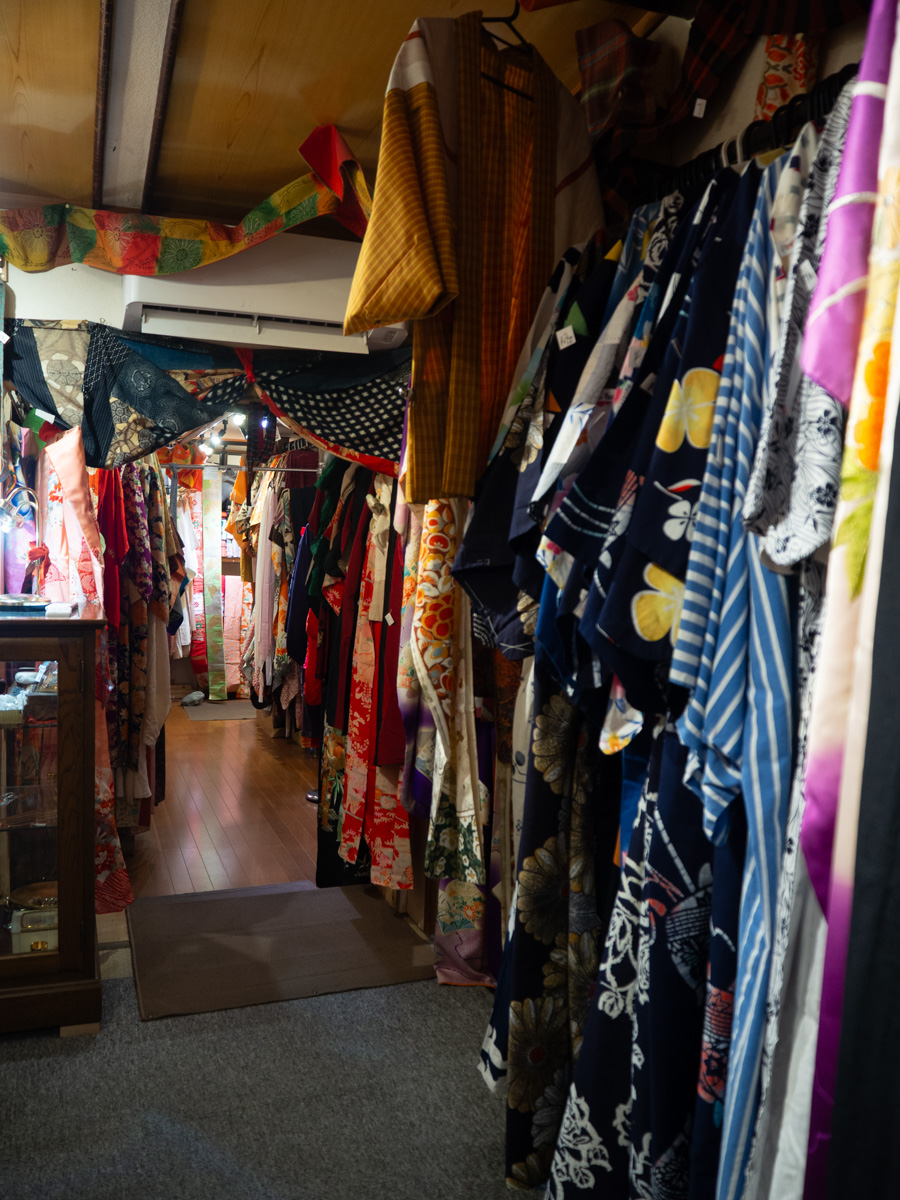
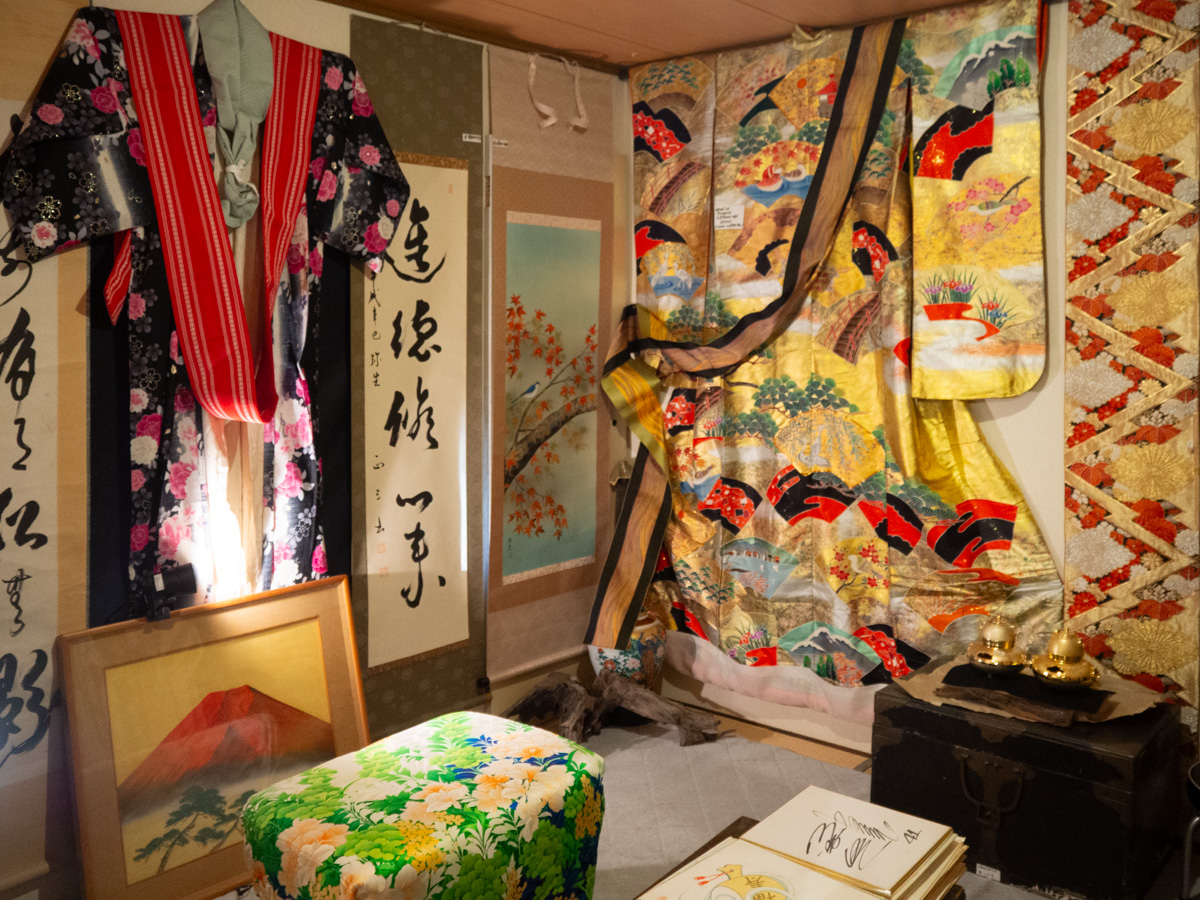
There are several vintage and antique kimono shops in Gion. Antique Kimono Lily Gion was a labyrinth of small rooms and hallways, with metres and metres of kimonos and yukatas, for men and women, of all kinds of ages and prices, starting at 1000 yen and ending somewhere in the stratosphere. On the upper floor there were antique wedding kimonos that were truly works of art.
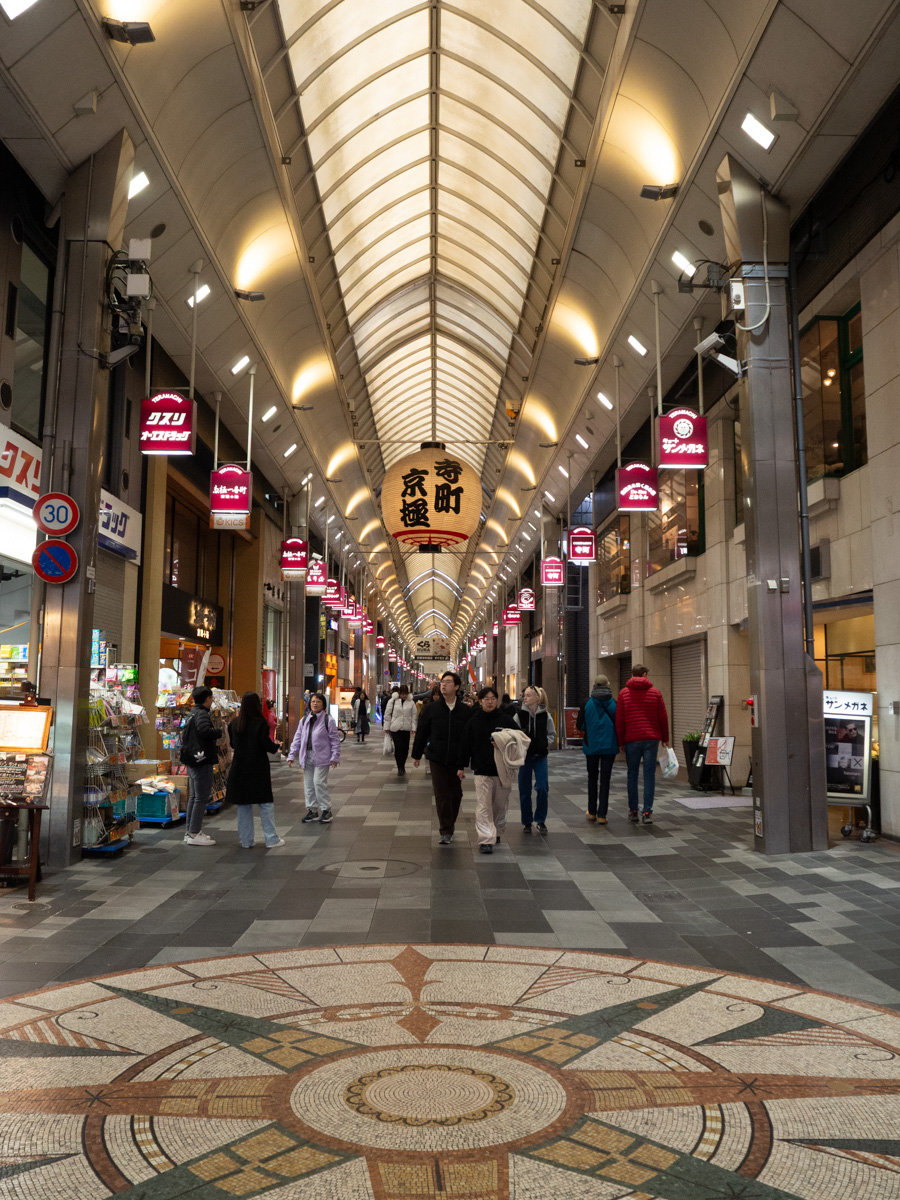
Many streets in central Kyoto – or at least things that look like streets on a map – are actually covered shopping galleries. They’re still streets, with crossings and side streets, and each shop an individual building, but all sheltered from the weather.
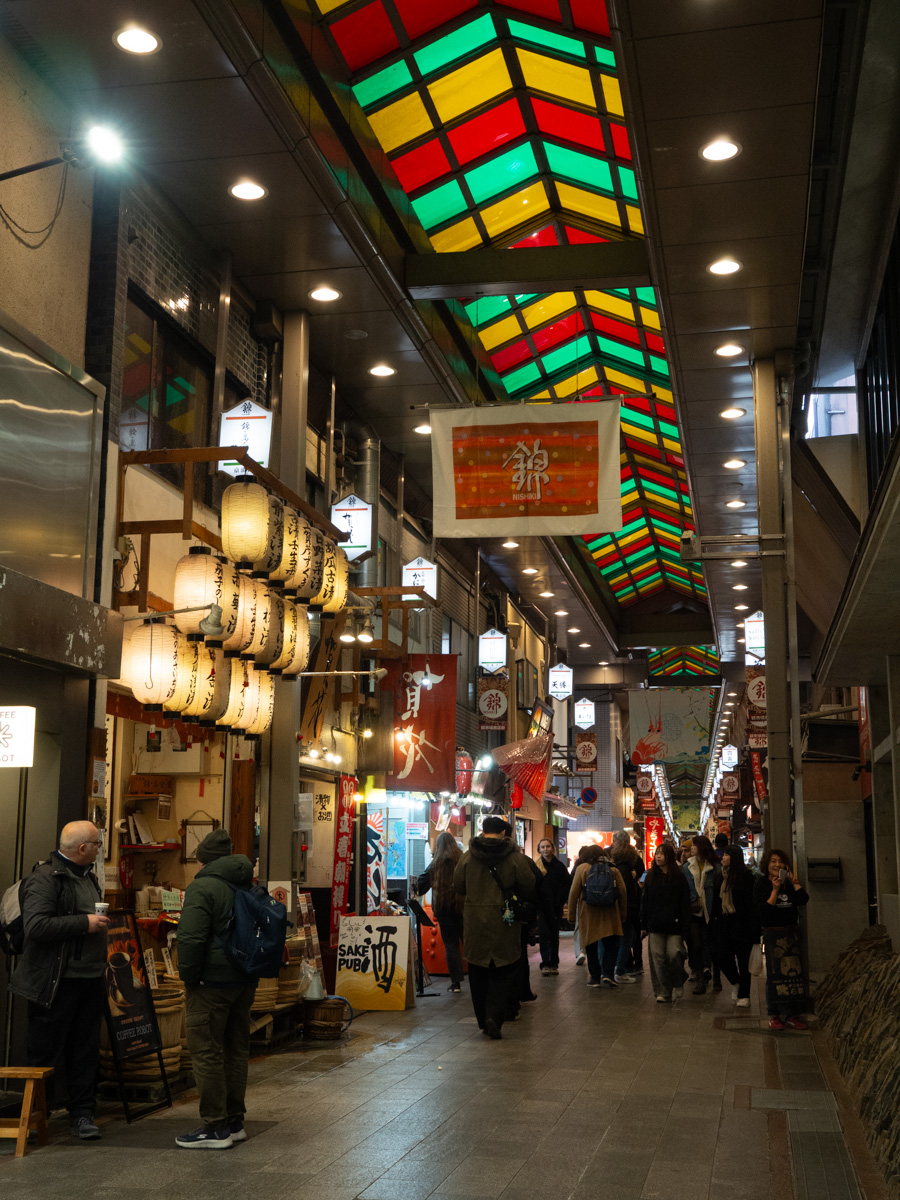
One of these galleries is Nishiki market, which focuses on food. Shops and stalls and restaurants everywhere, offering juts about everything. This is what we had expected Tsukuji market to be like – lively and colourful.
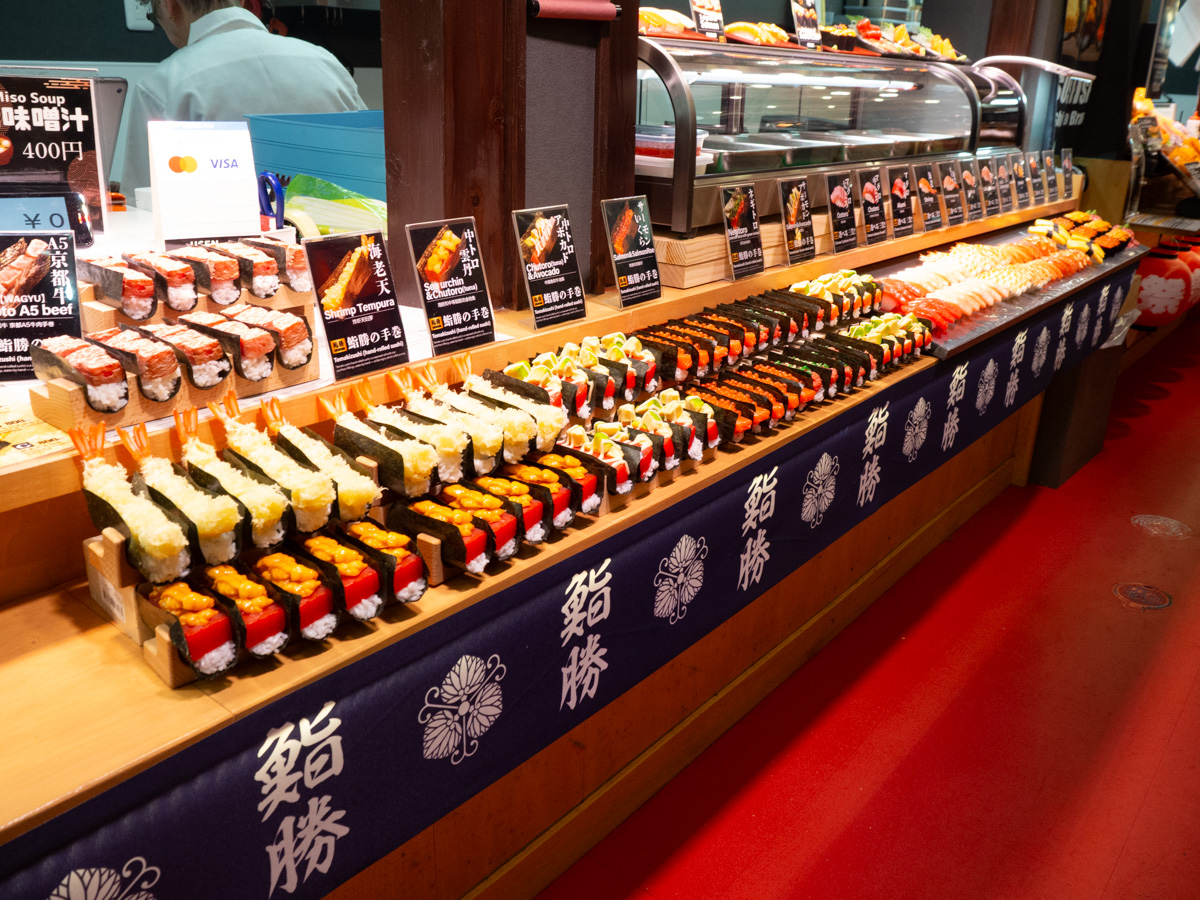
Displays of the uniquely Japanese art form of fake food.
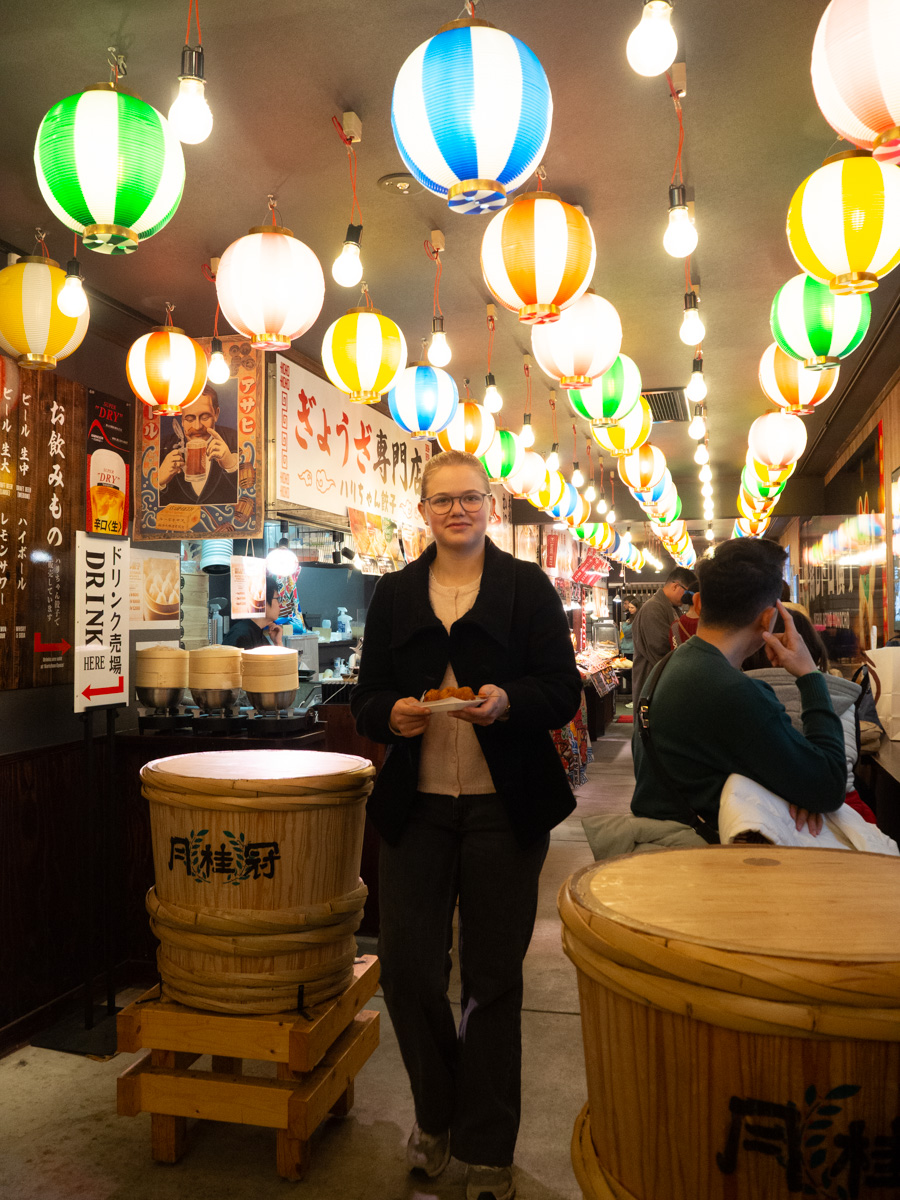
I wanted gyoza; Ingrid wanted takoyaki, dough balls filled with minced octopus.
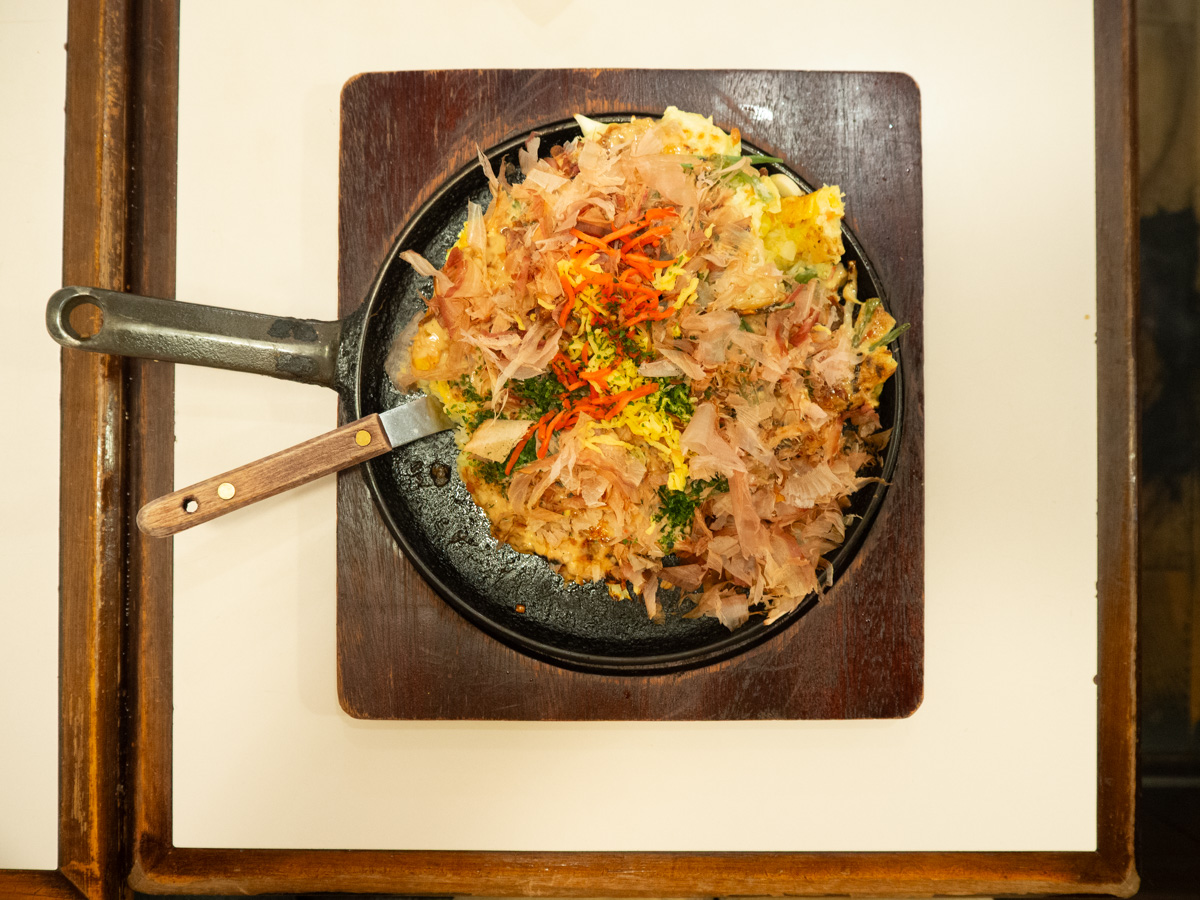
For dinner, we tried another okonomiyaki place – in part because I like it, and also because it does seem to be a bit of a regional specialty. It was recognizably a cousin of what we ate two days ago, but also very different. Still a pancake with shredded cabbage but prepared differently and served differently.
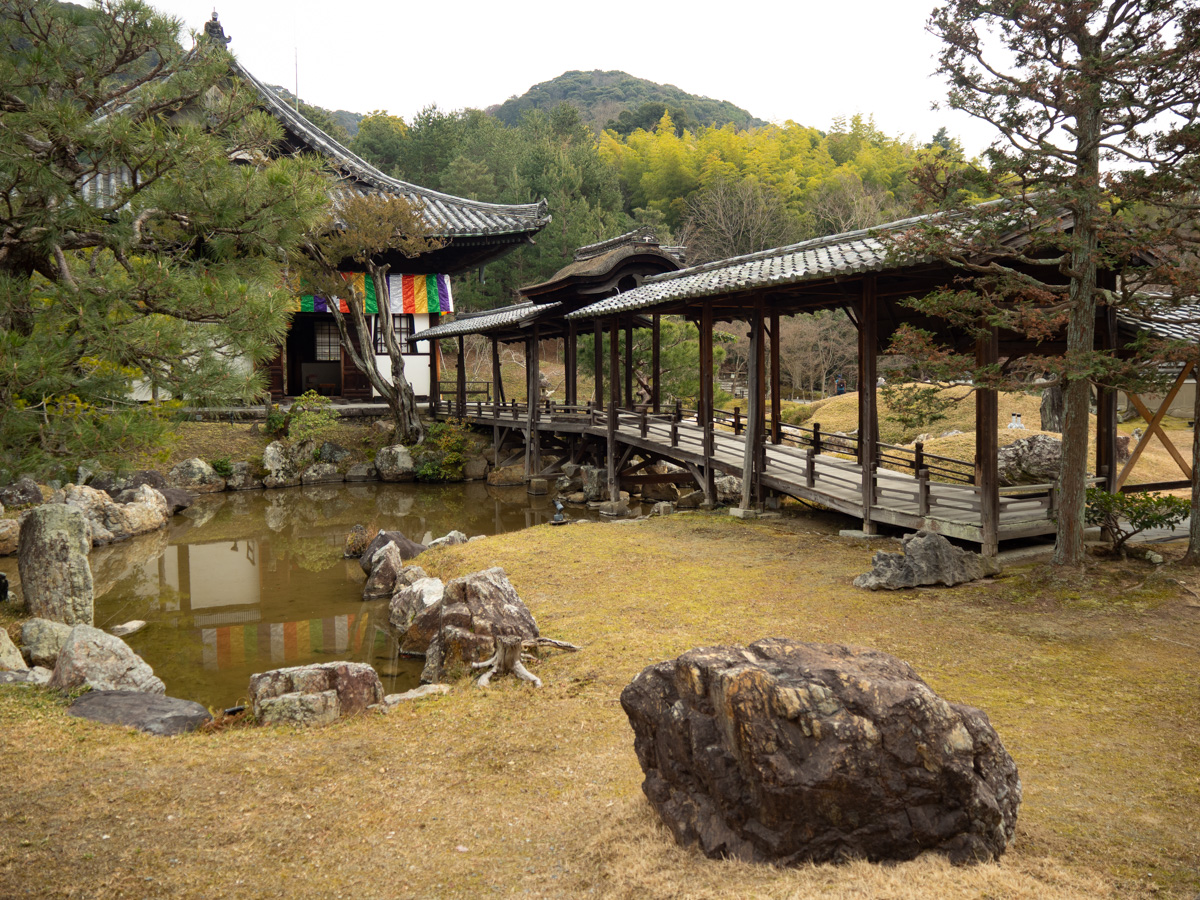
Temples and shrines truly are the thing to do in Kyoto. They are everywhere, and even after we’ve visited a bunch of them, I don’t get tired of them – I am happy to visit another one.

Kodai-ji was built to commemorate Toyotomi Hideyoshi, who unified Japan at the end of the 16h century.

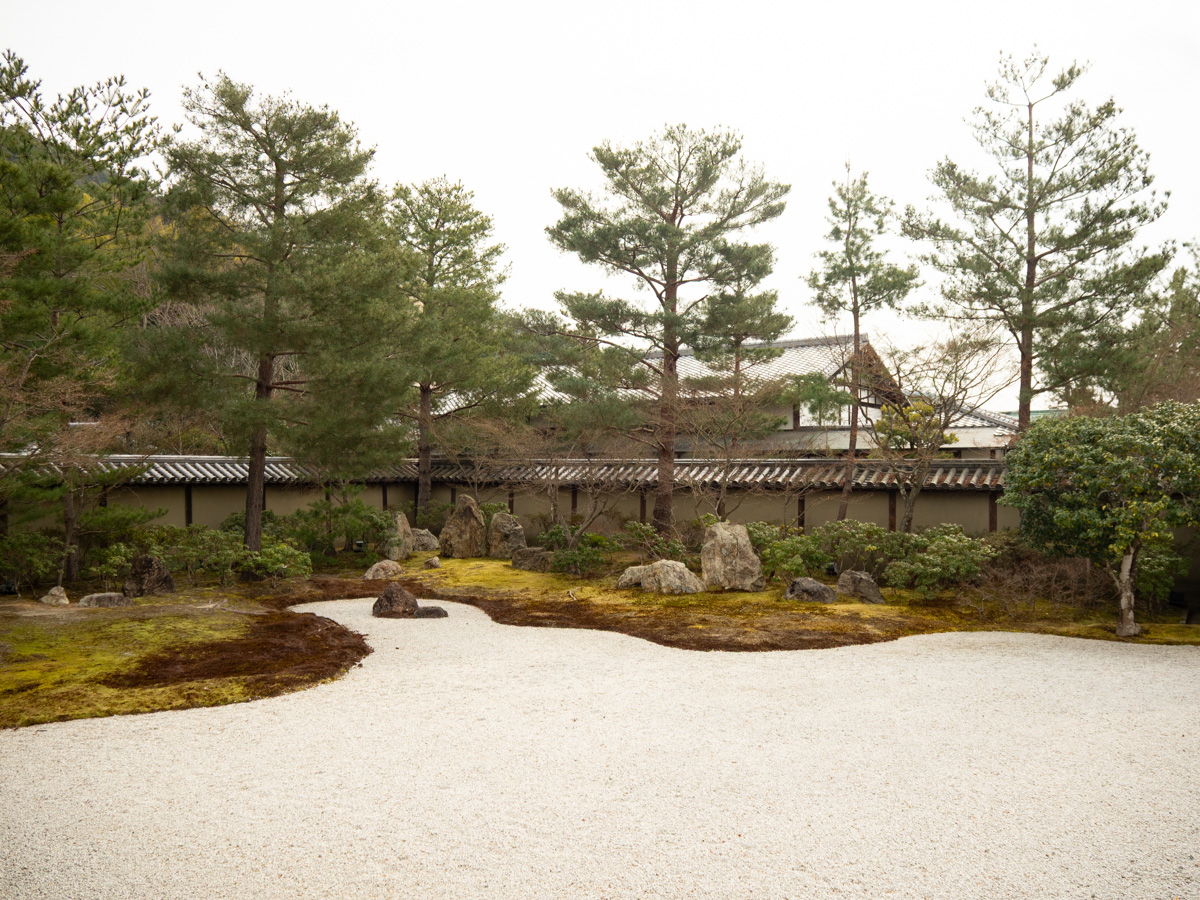
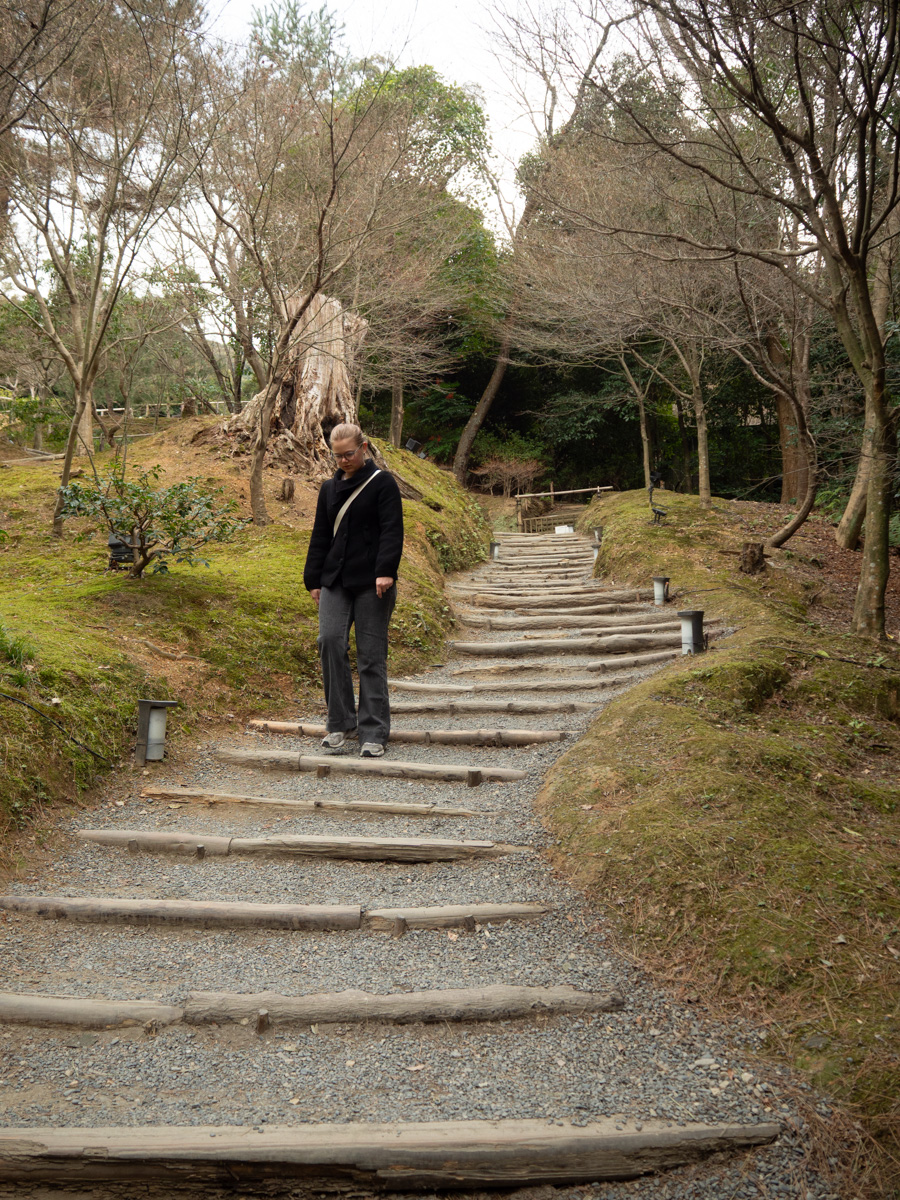
There is more of a Zen feeling to this temple than any of the others we’ve visited until now, with a stone and gravel garden. There was also a more sizeable park/garden up along the slope of the hill than I had realized from the outside, nice to walk around in.

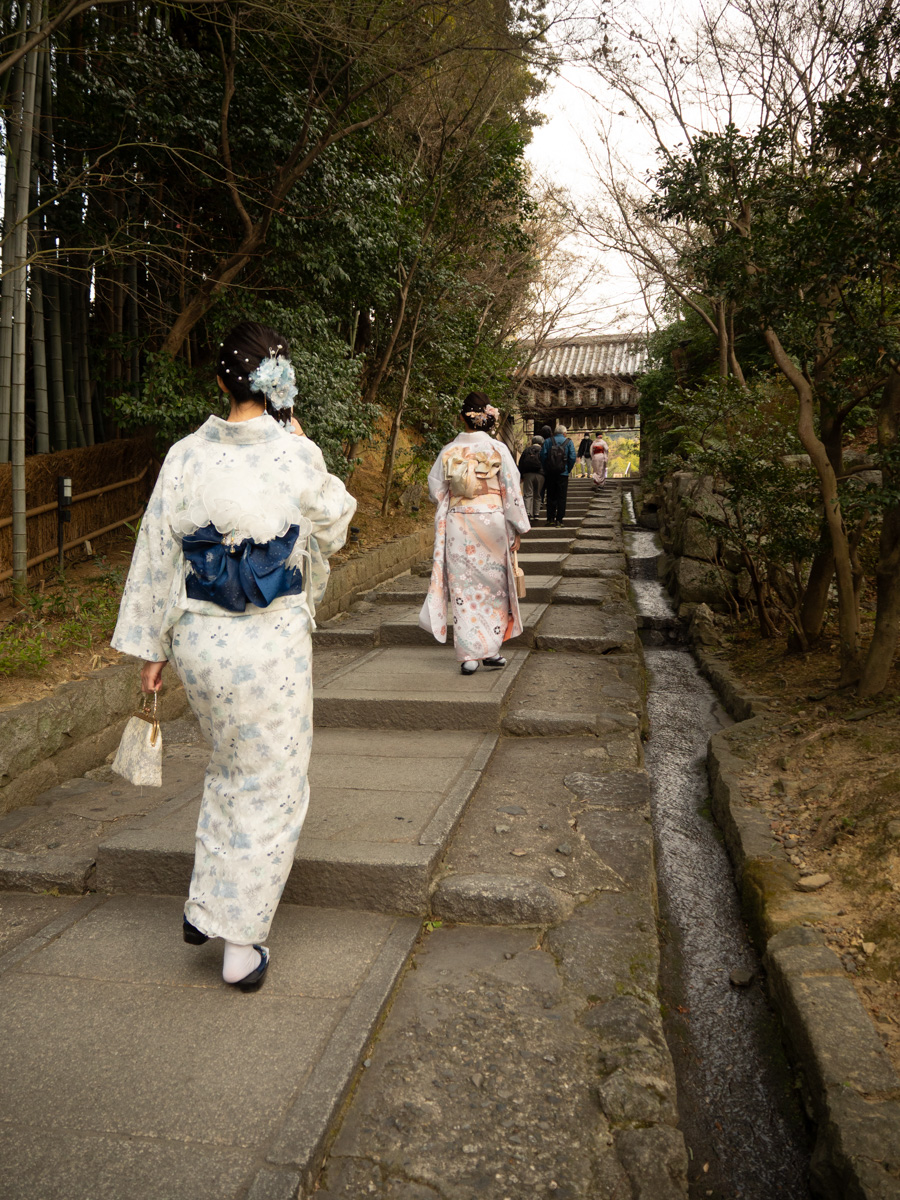
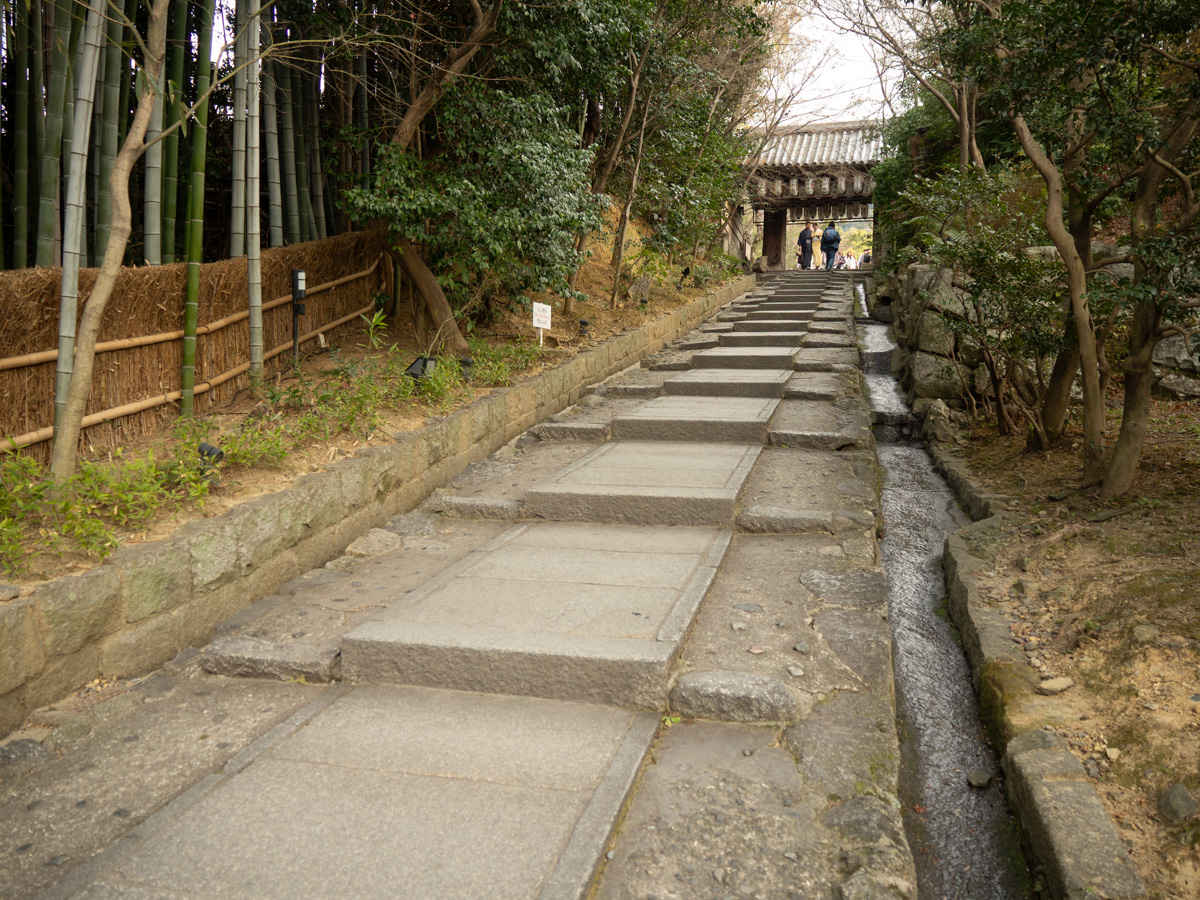
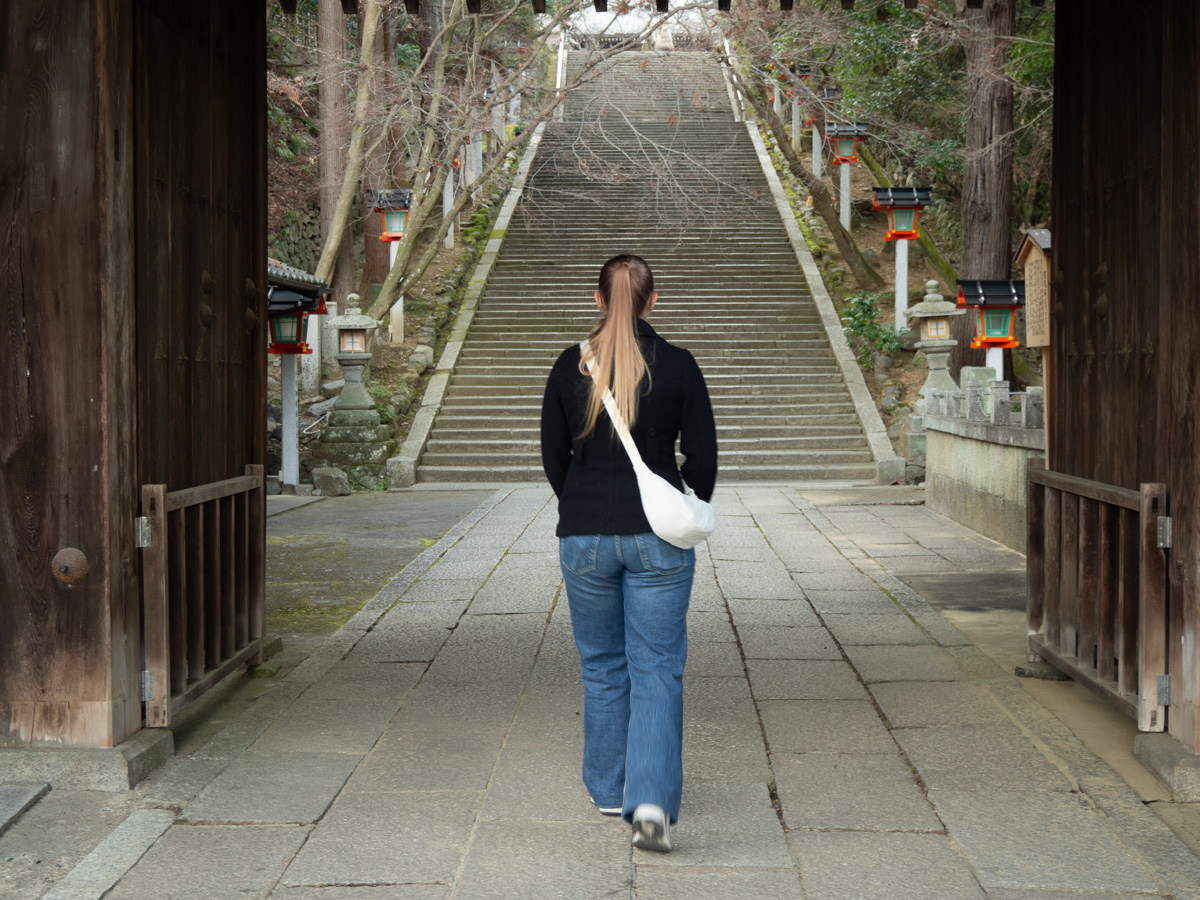
Even the stairs down from the rear gate of the temple were scenic.


Smaller bits and pieces of Kyoto, between the larger sights we saw.

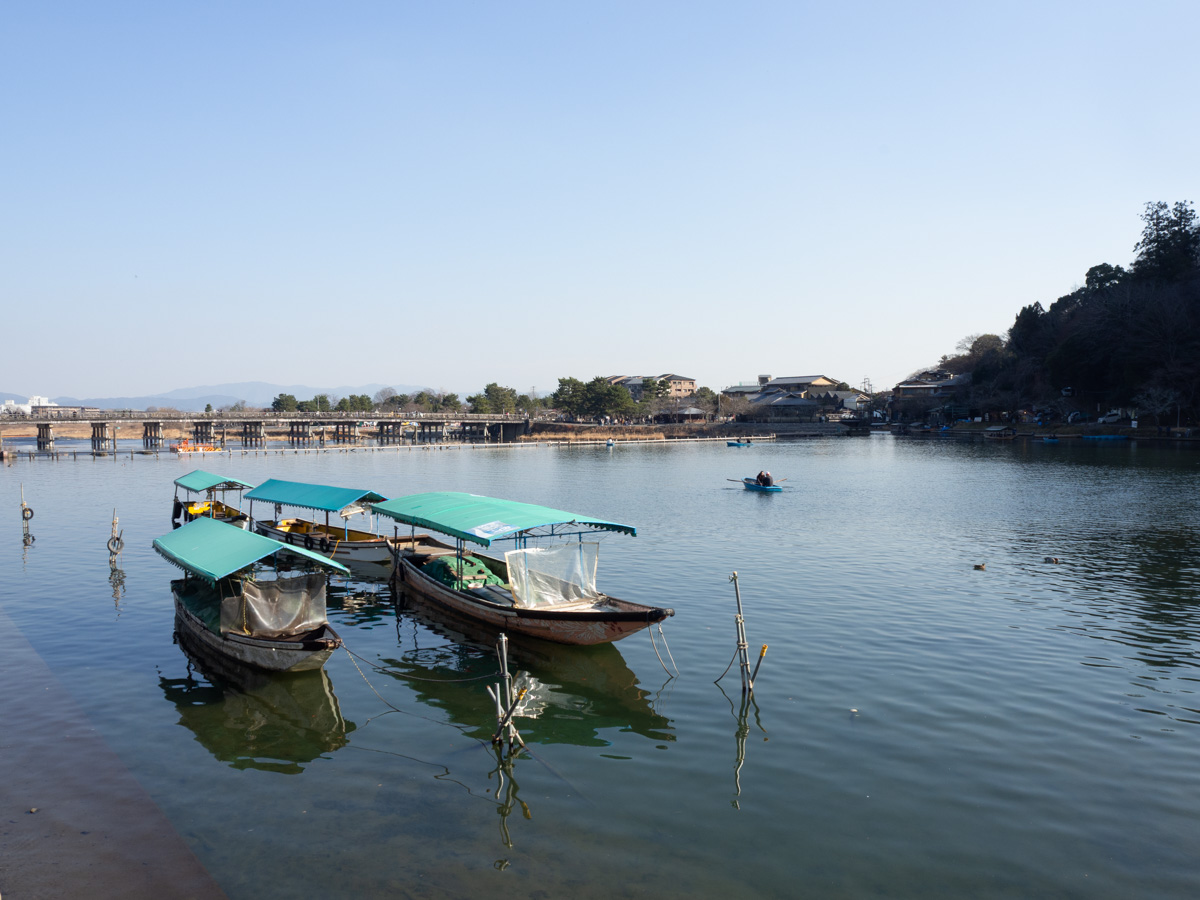
Katsura river. There was a boat rental that rented out blue boats to tourists that looked like plastic bath tubs. These covered boats were not that. These look a bit like Venetian gondolas, but on closer inspection seemed to be small cargo boats.

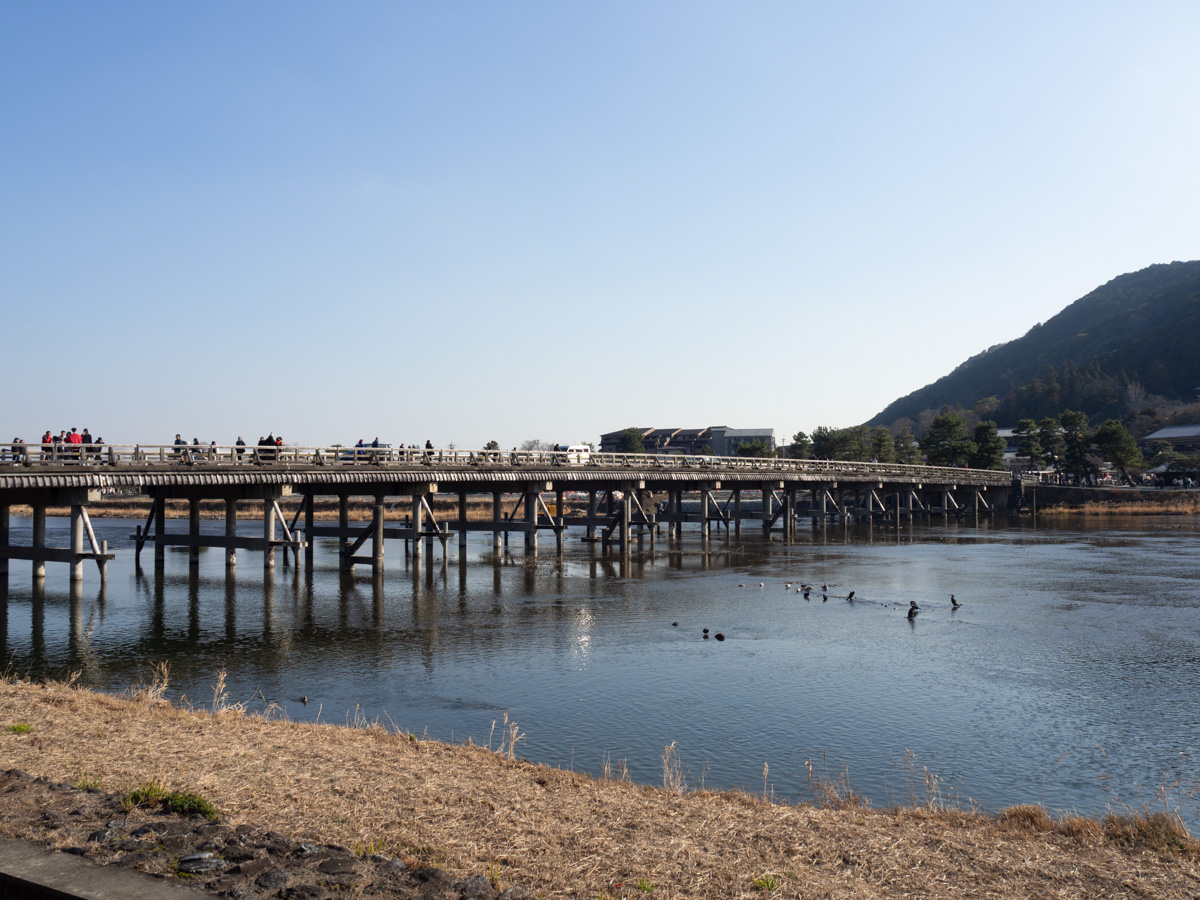
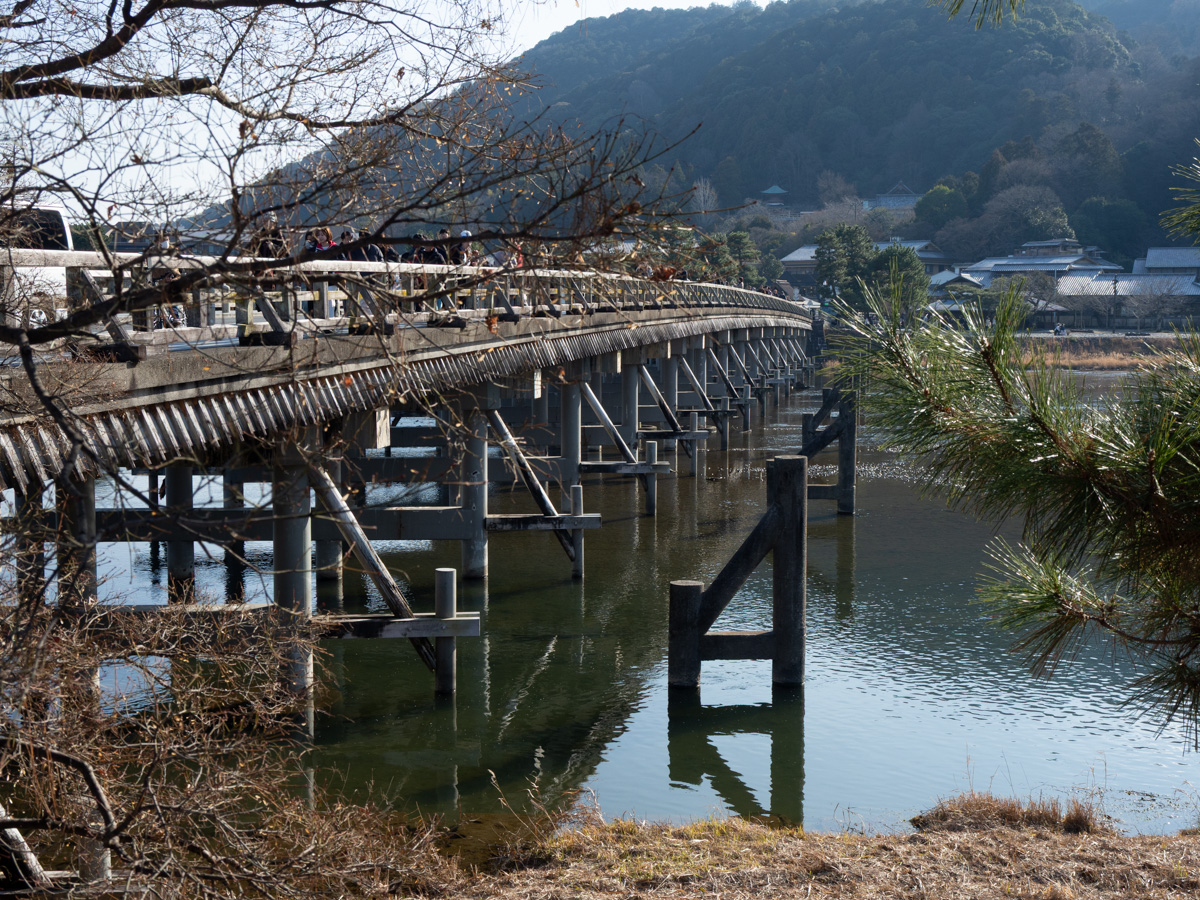
Togetsukyo bridge across the Katsura river. It looks like a wooden bridge from a distance, and used to be. It was rebuilt in concrete about a hundred years ago, keeping something close to the original design.


Horin-ji, a small and quiet buddhist temple.

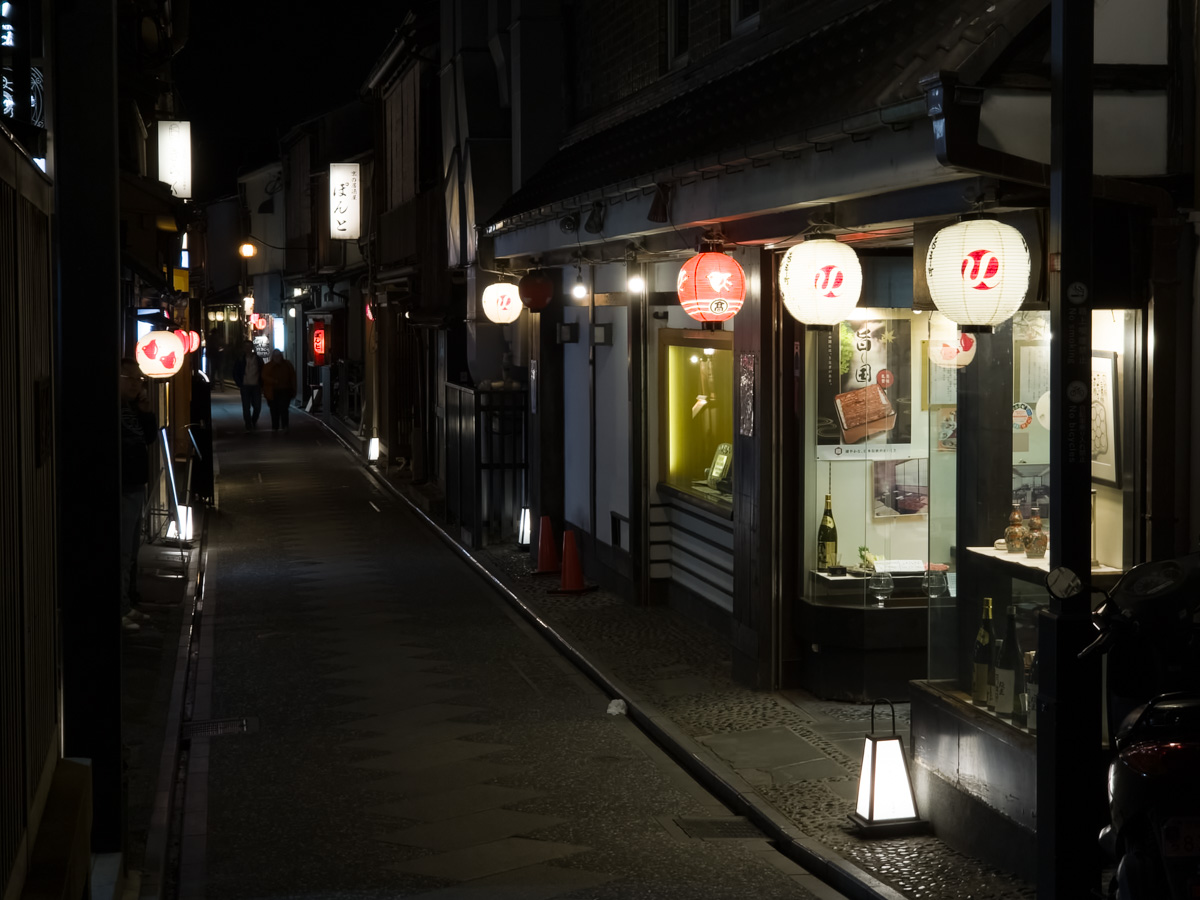
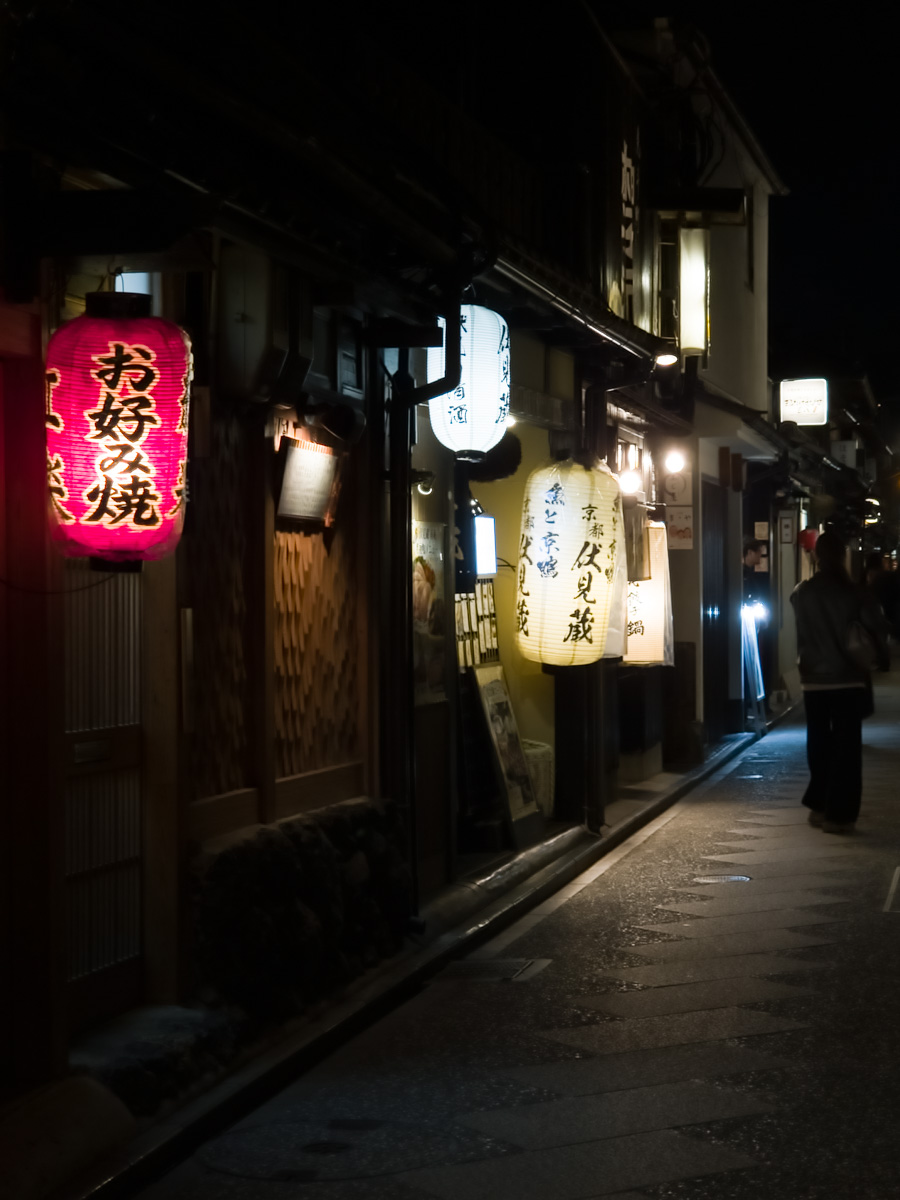
Nighttime in Pontocho alley with lanterns providing much of the lighting.


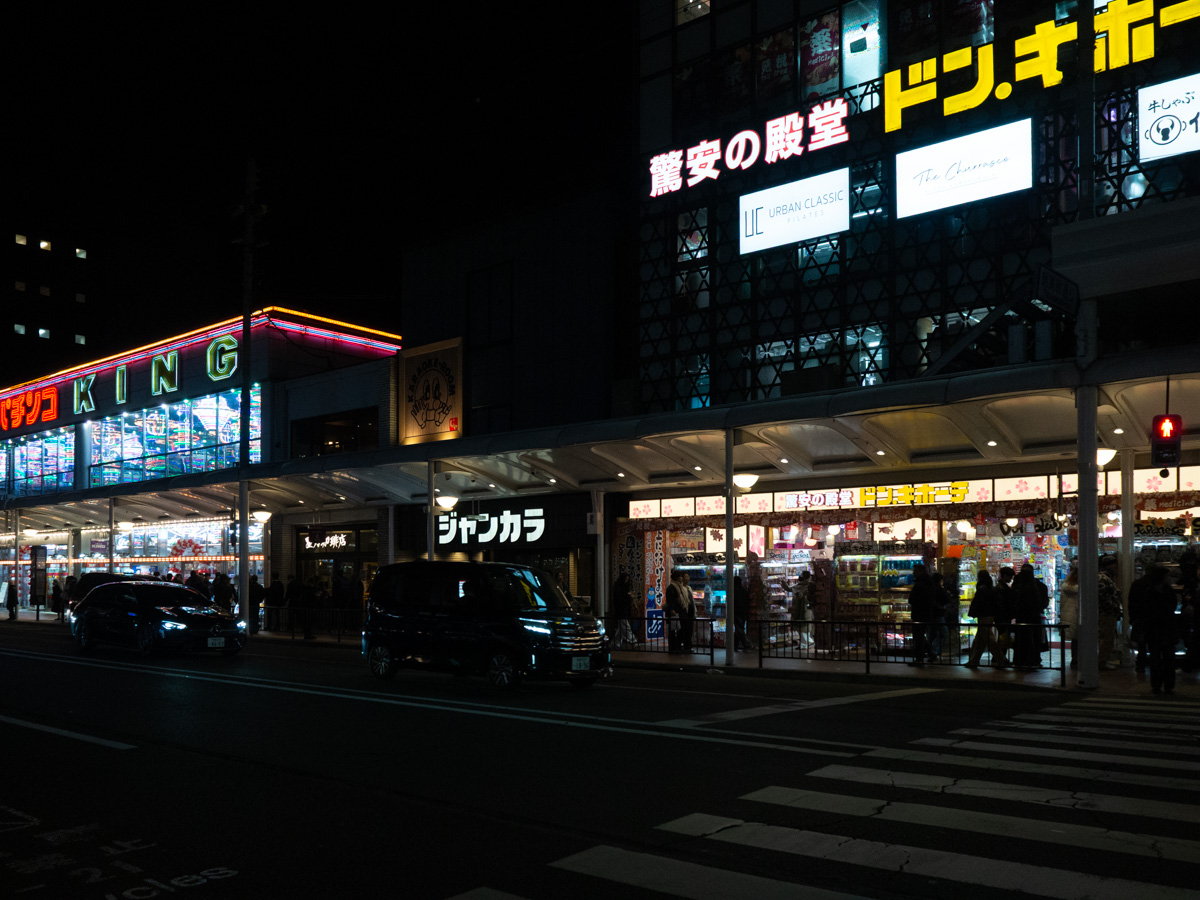
Main street shops, by way of contrast.

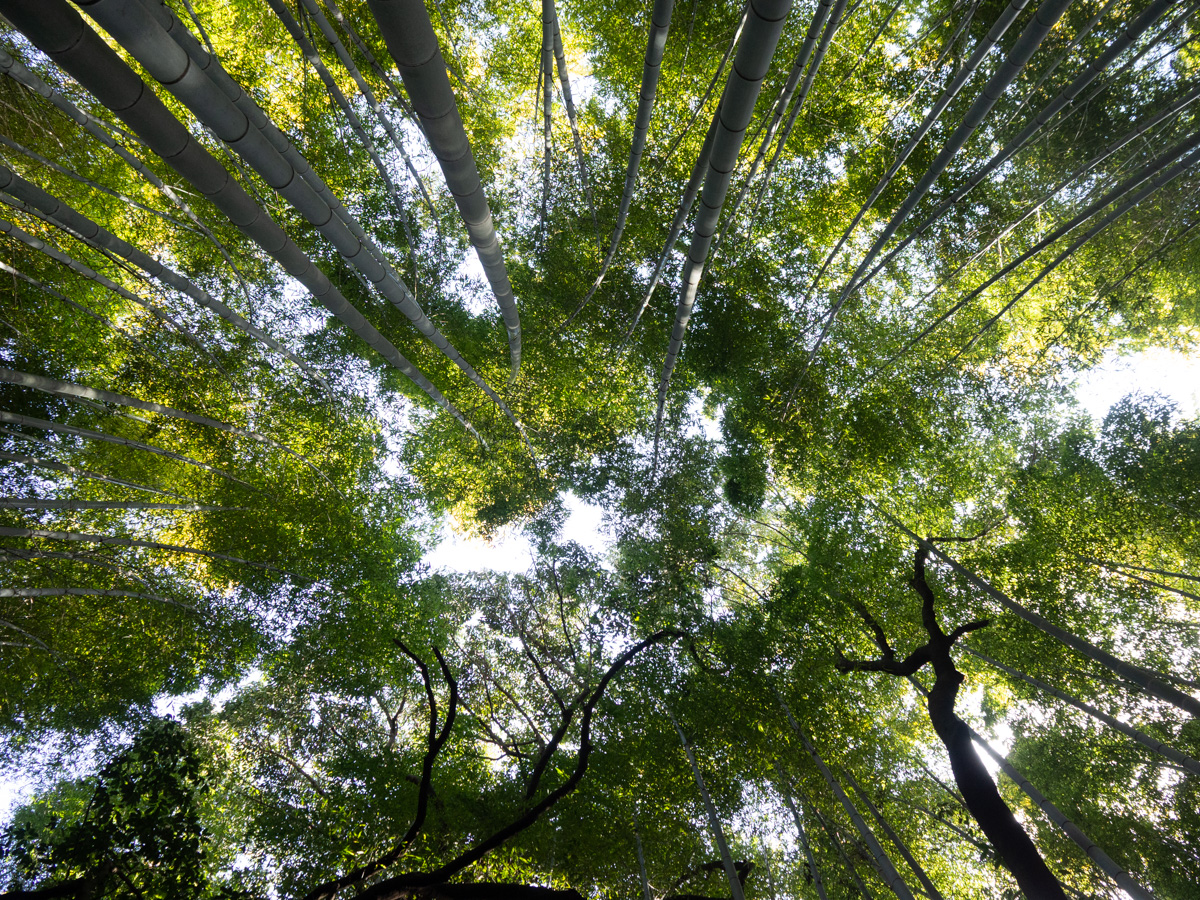
Among Kyoto’s many sights are bamboo groves. Some are famous and much-photographed, others are just there.

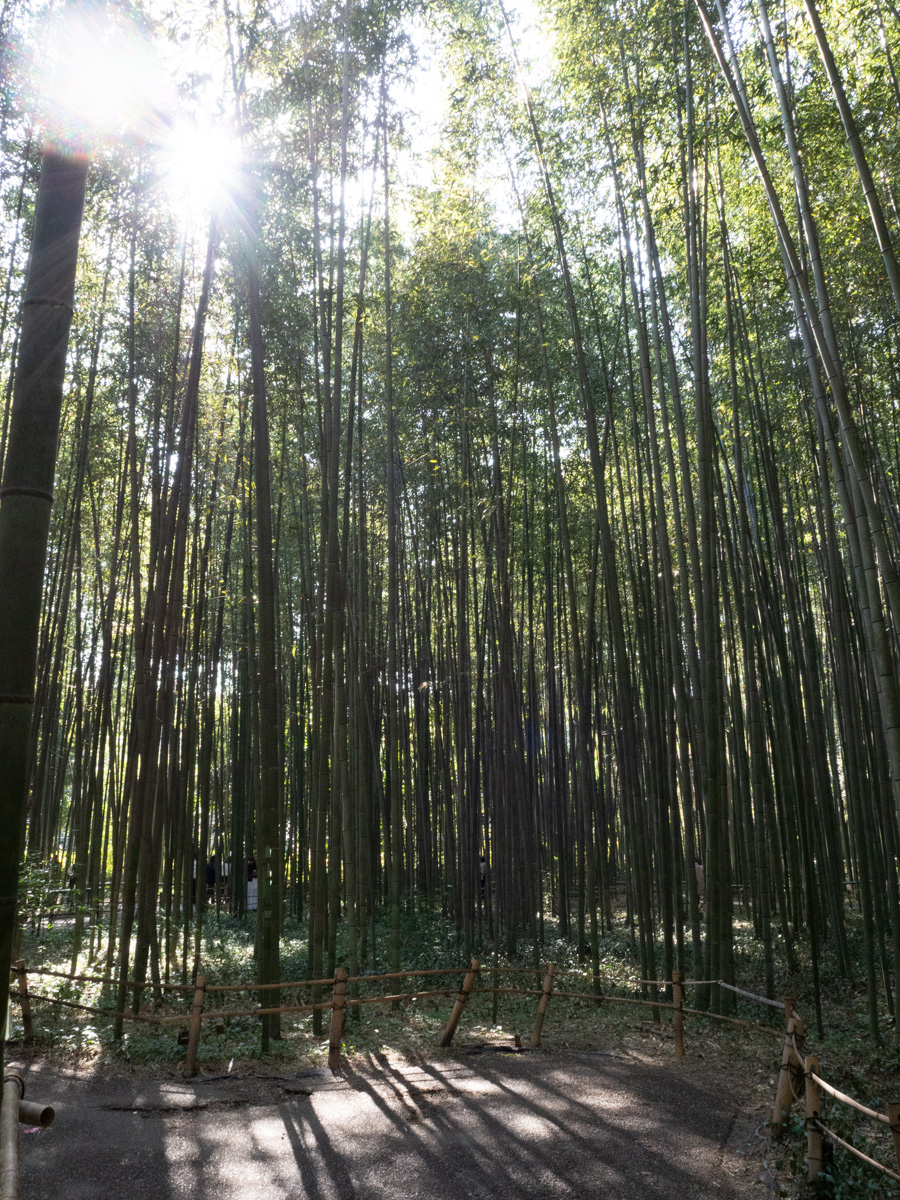
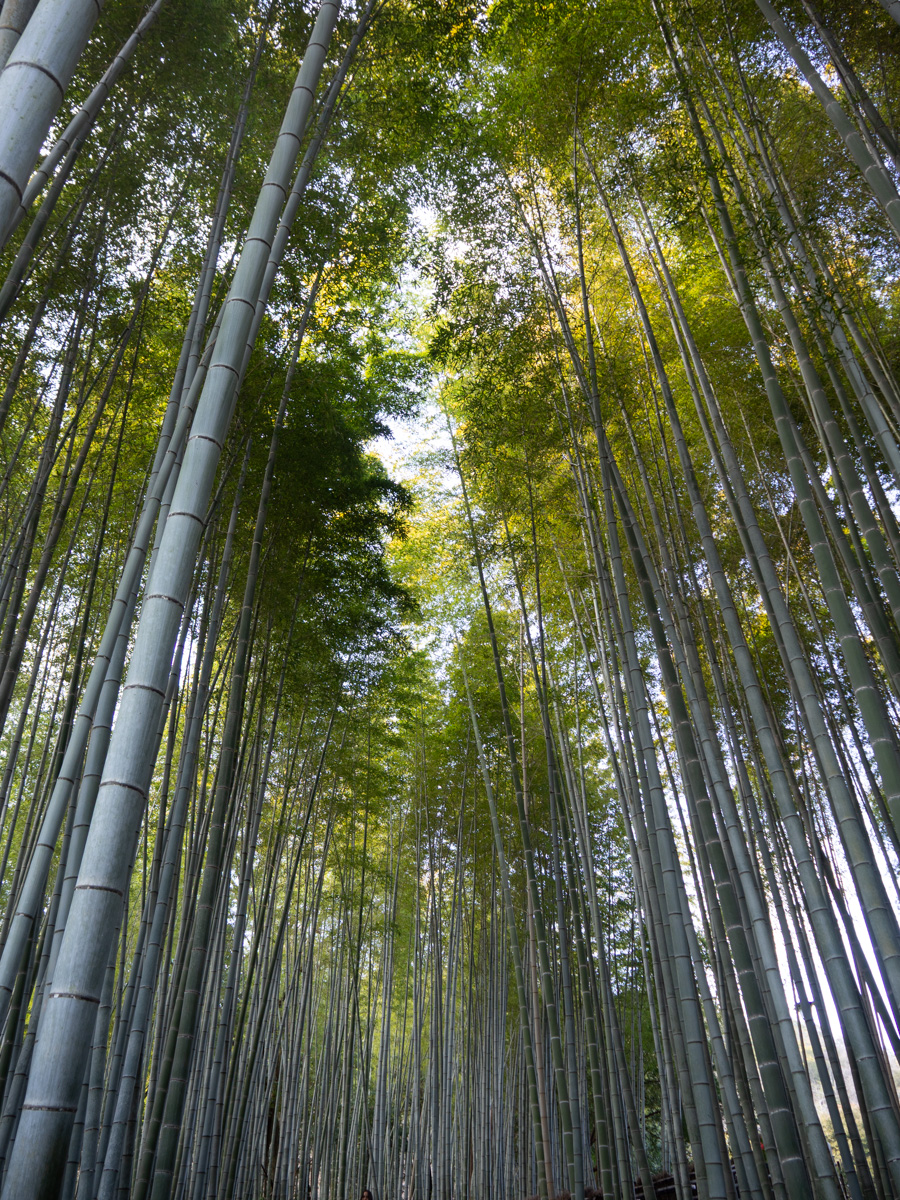
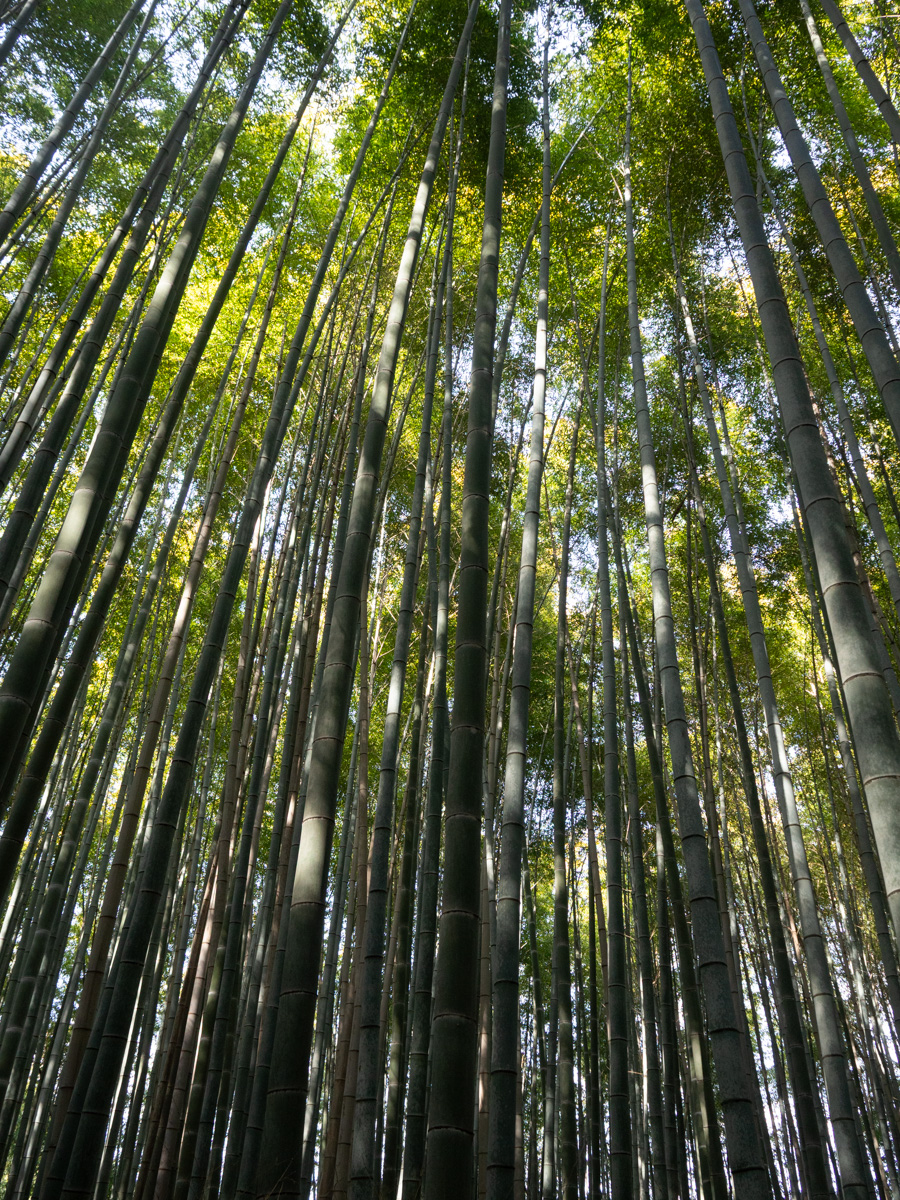
On our way to one of the famous ones with many Instagram photos, we passed one that was barely marked on the map. The low sun made for pretty light and shadow,

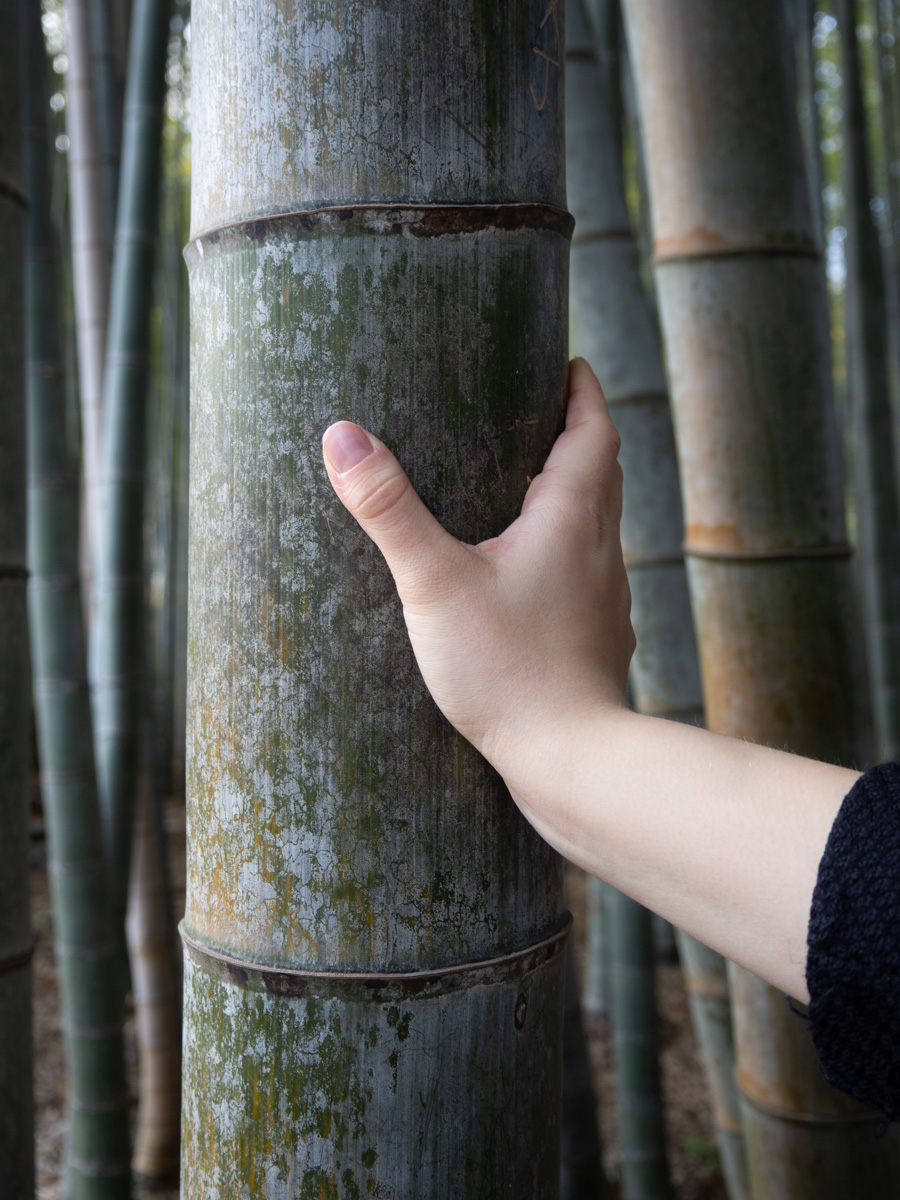
The largest bamboo stalks were as thick as tree trunks.

The tall, straight stalks, and the light filtering through the tufts of leaves at the top, make it feel sort of like the ribbed vaults of a Gothic church.

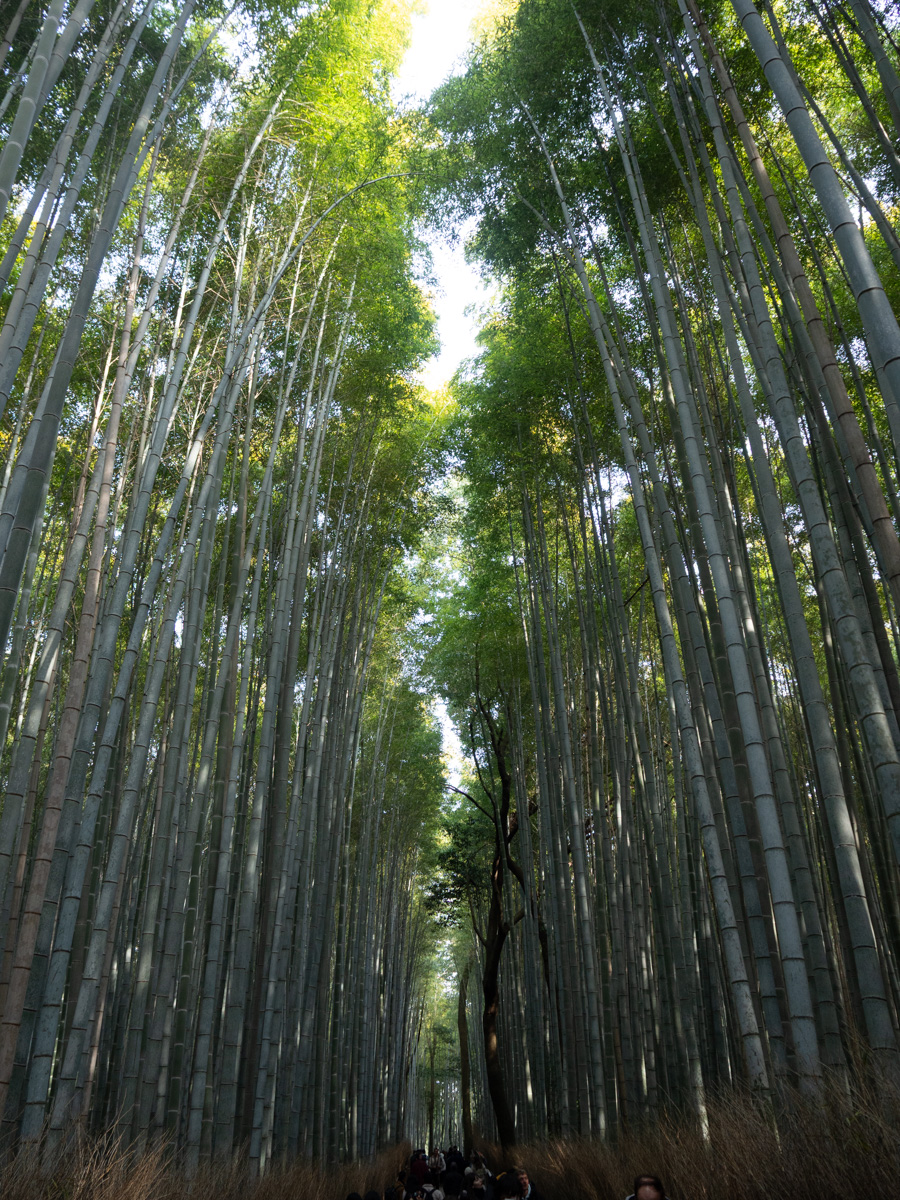
Arashiyama bamboo grove is a popular one. I had expected something the size of a small forest, but it was much smaller. Basically a single, mostly straight path of maybe a hundred metres, with bamboo on both sides. Given that there was only one path, it was quite full of people. You can’t see them very well because I mostly aimed the camera away from them, but the bottom of the photo is all full of people’s heads.

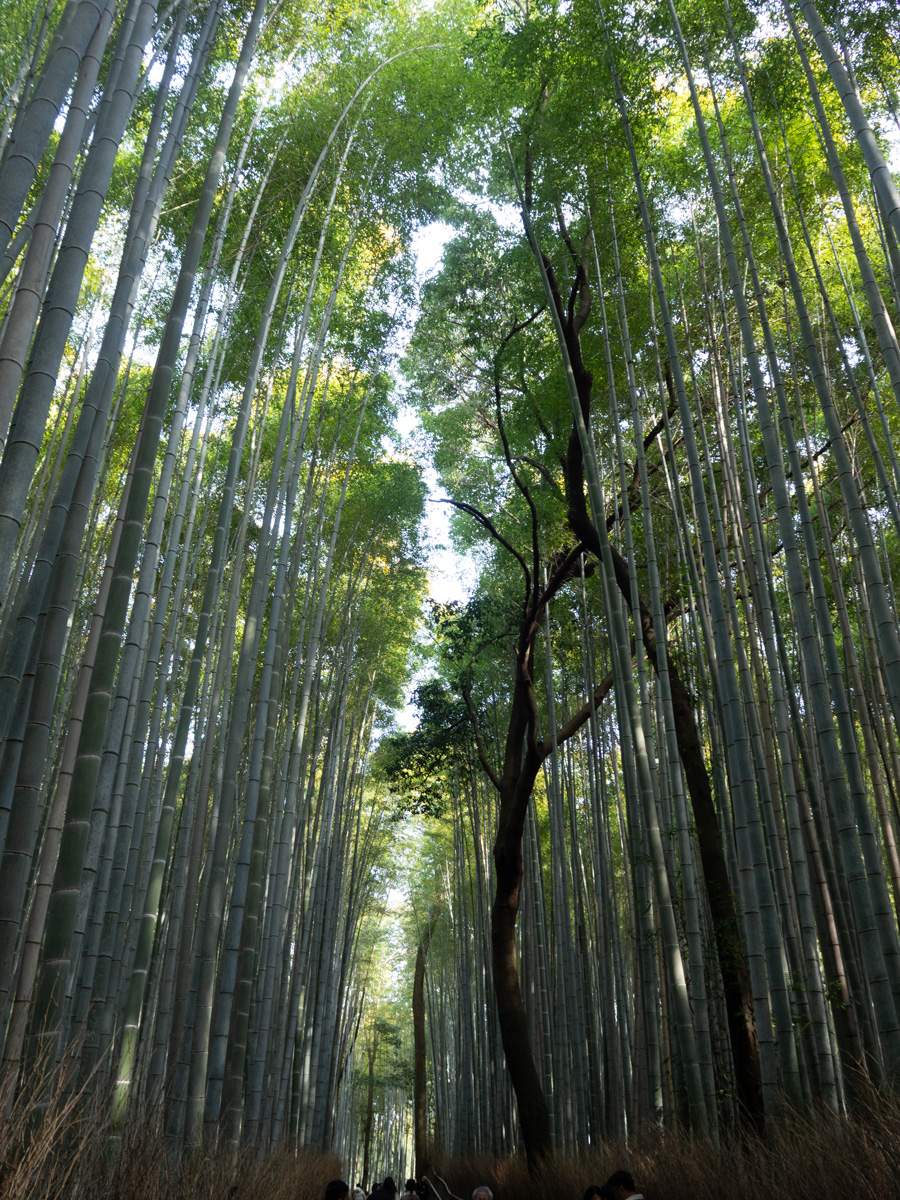
Among all the arrow-straight bamboo – a single dark and twisty tree.

I imagine the bamboo groves used to be larger. Probably still are, somewhere out in the countryside. I wonder what it would feel like to walk, surrounded by nothing but these straight pillars. Meditative?


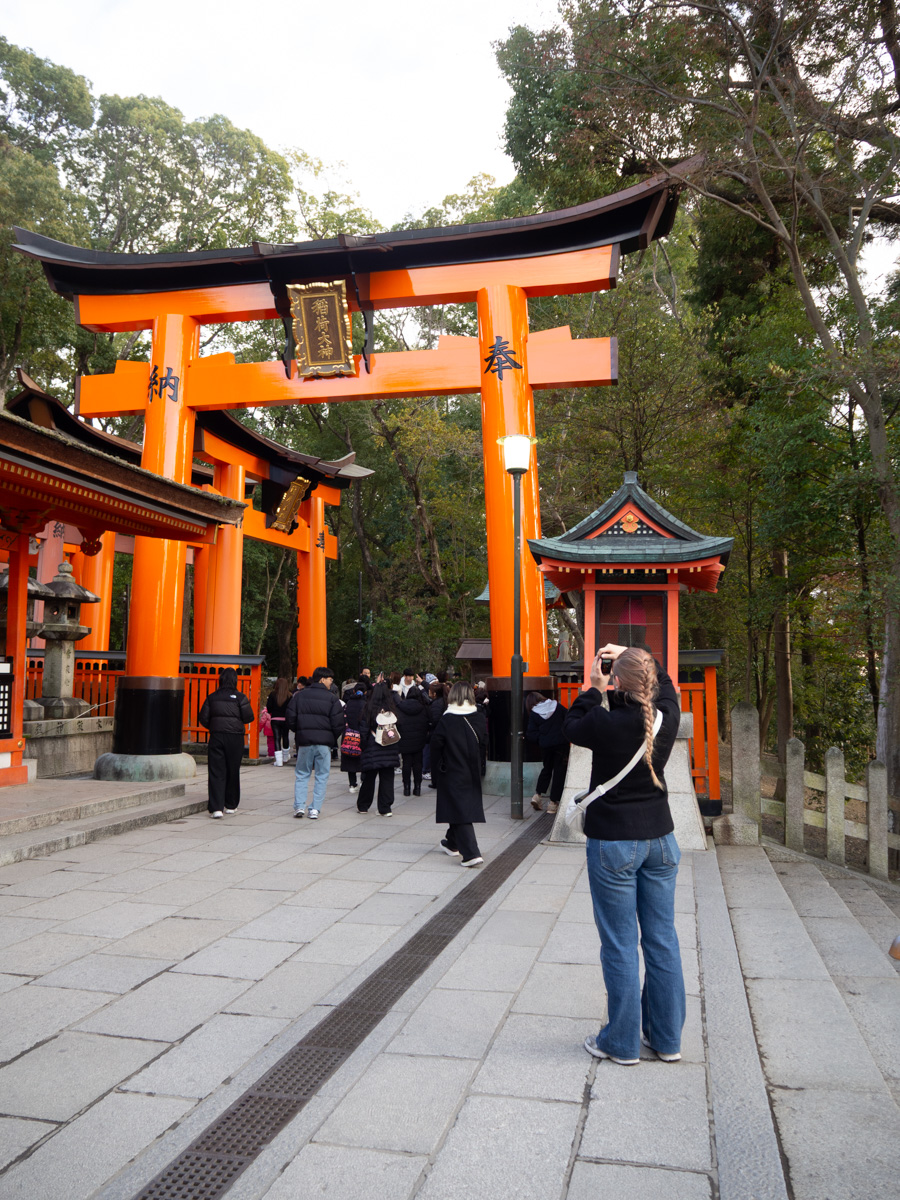
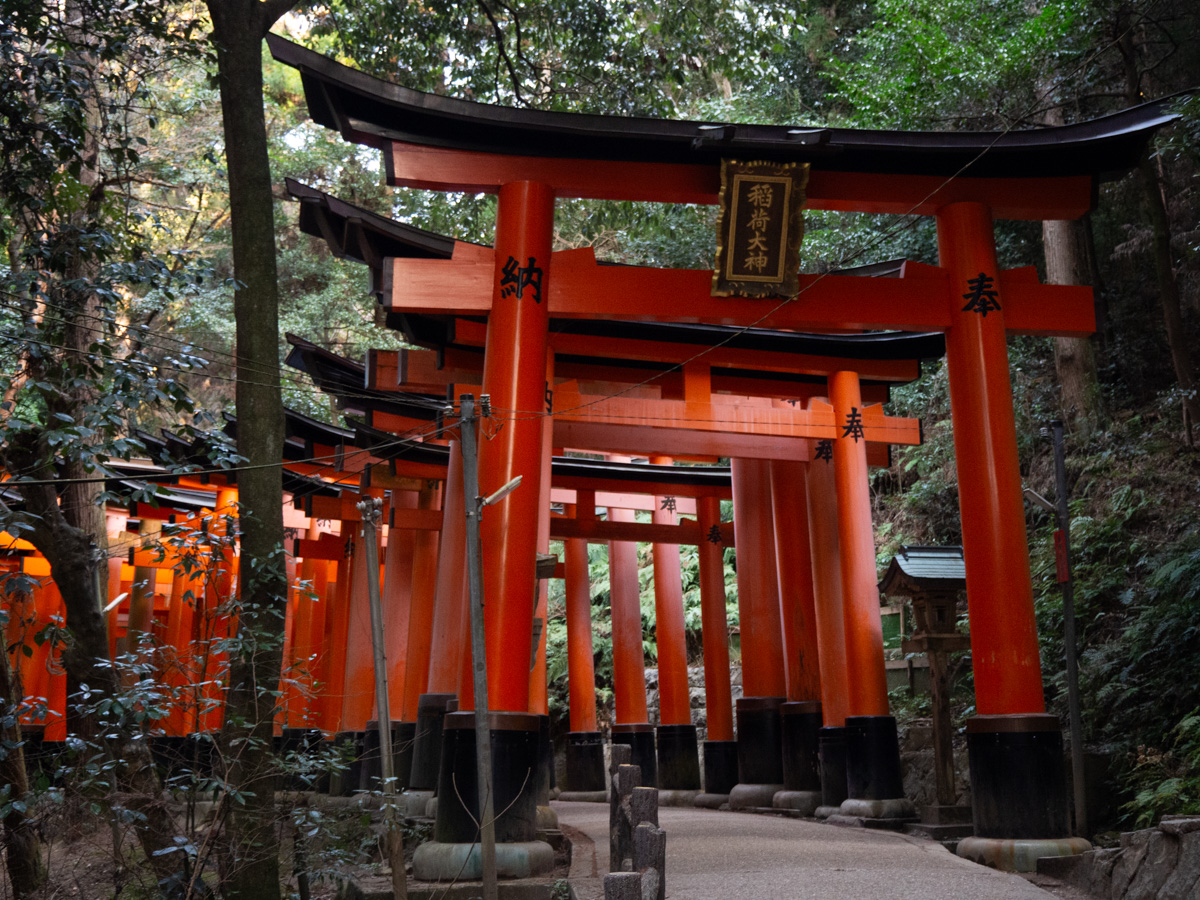
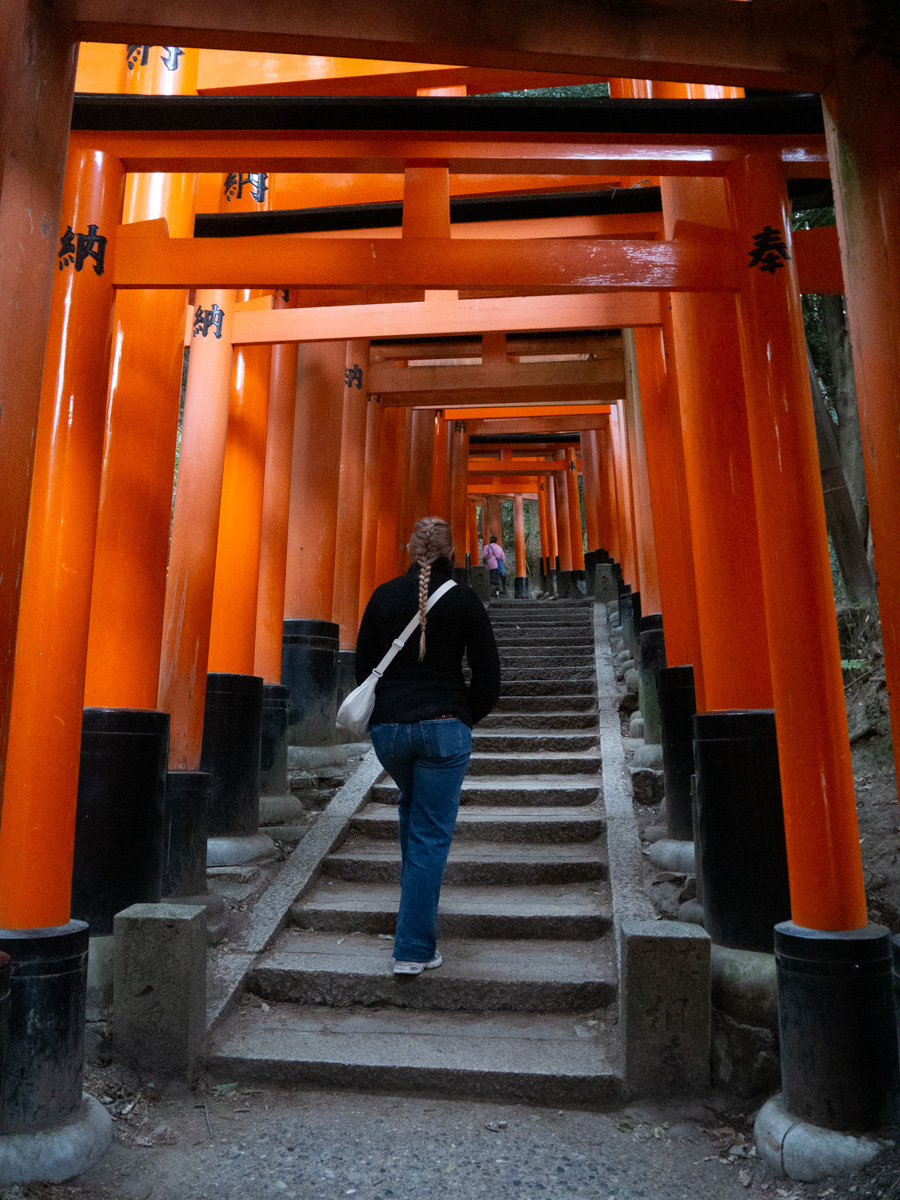
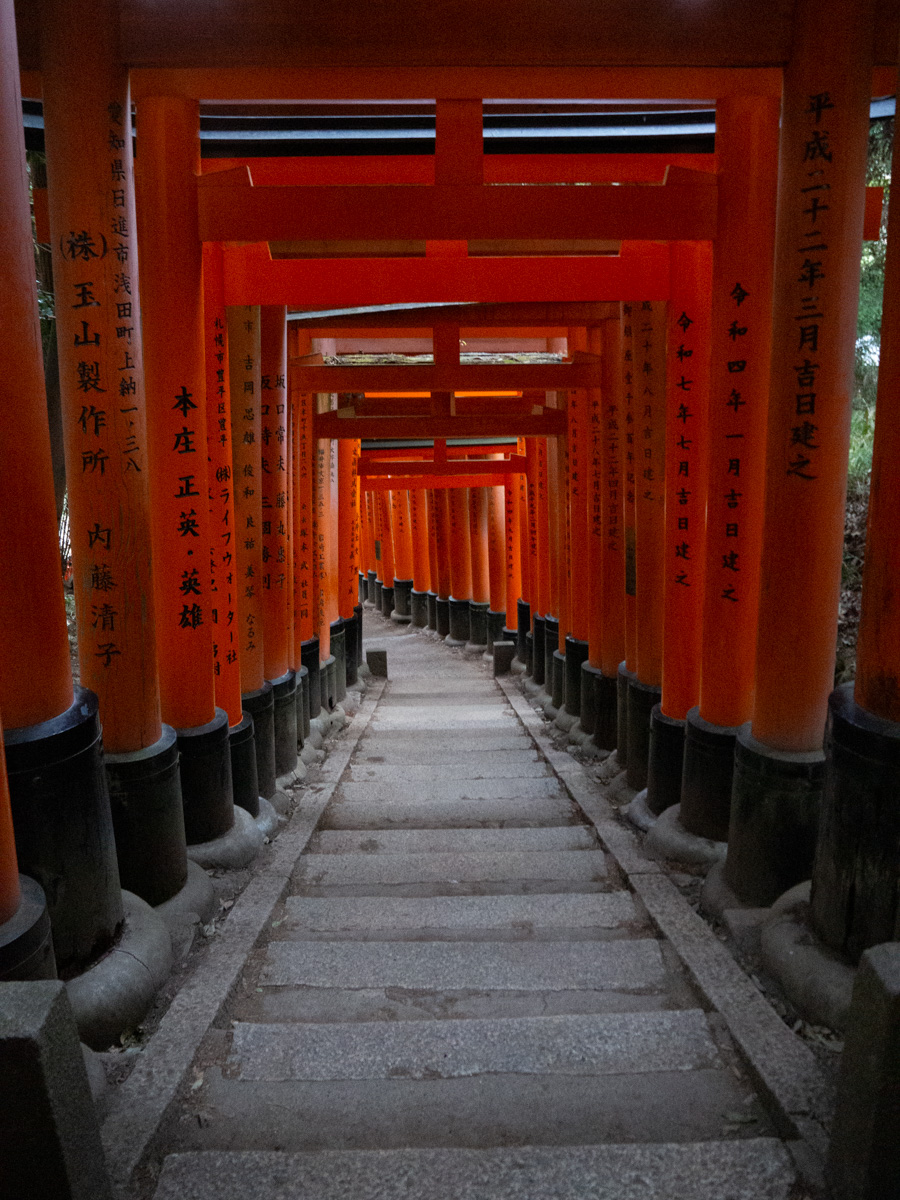
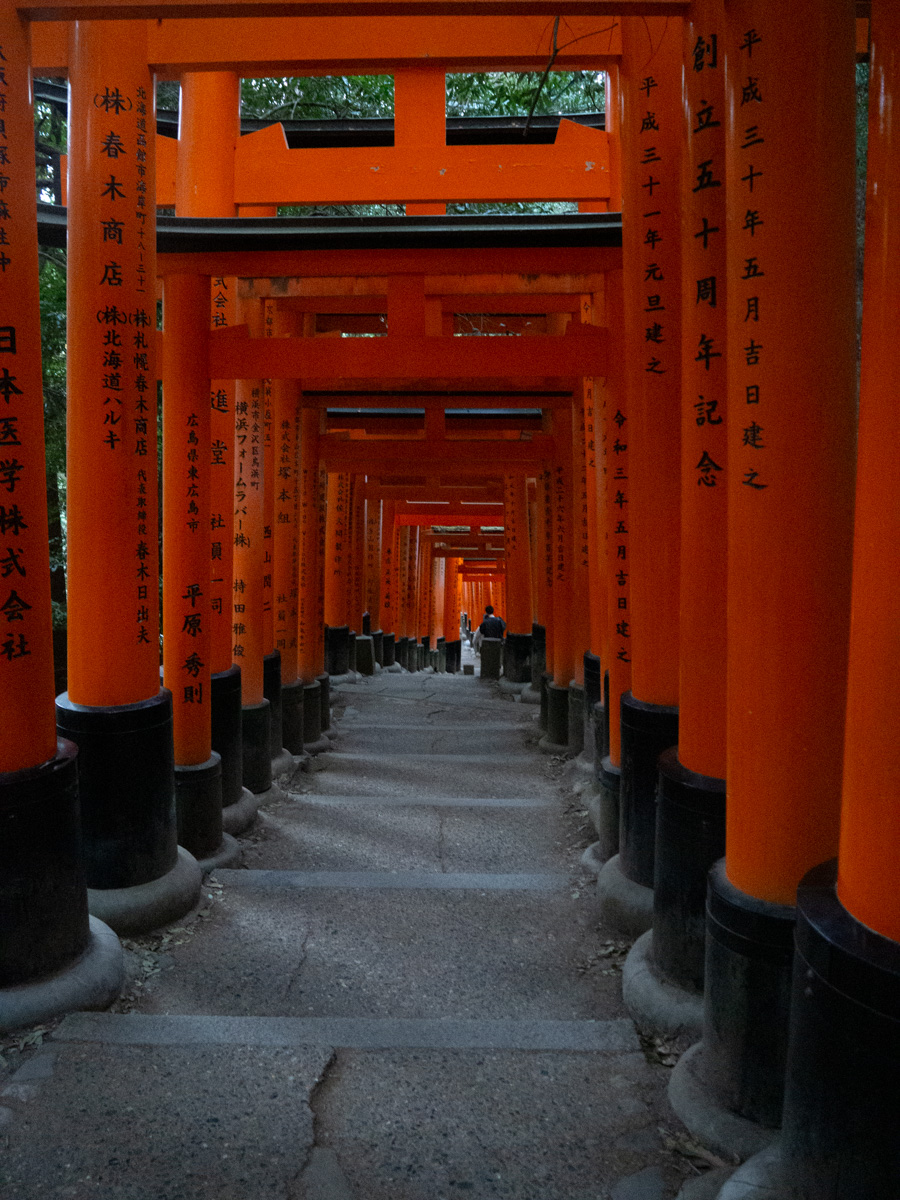
Upon arrival in Kyoto, we aimed straight for our top sight here and spent the whole afternoon at Fushimi Inari-taisha, a shrine complex known for its “thousand torii”. Inari is worshipped as the patron of business, and there is a tradition for businesses to donate a torii gate to the shrine.

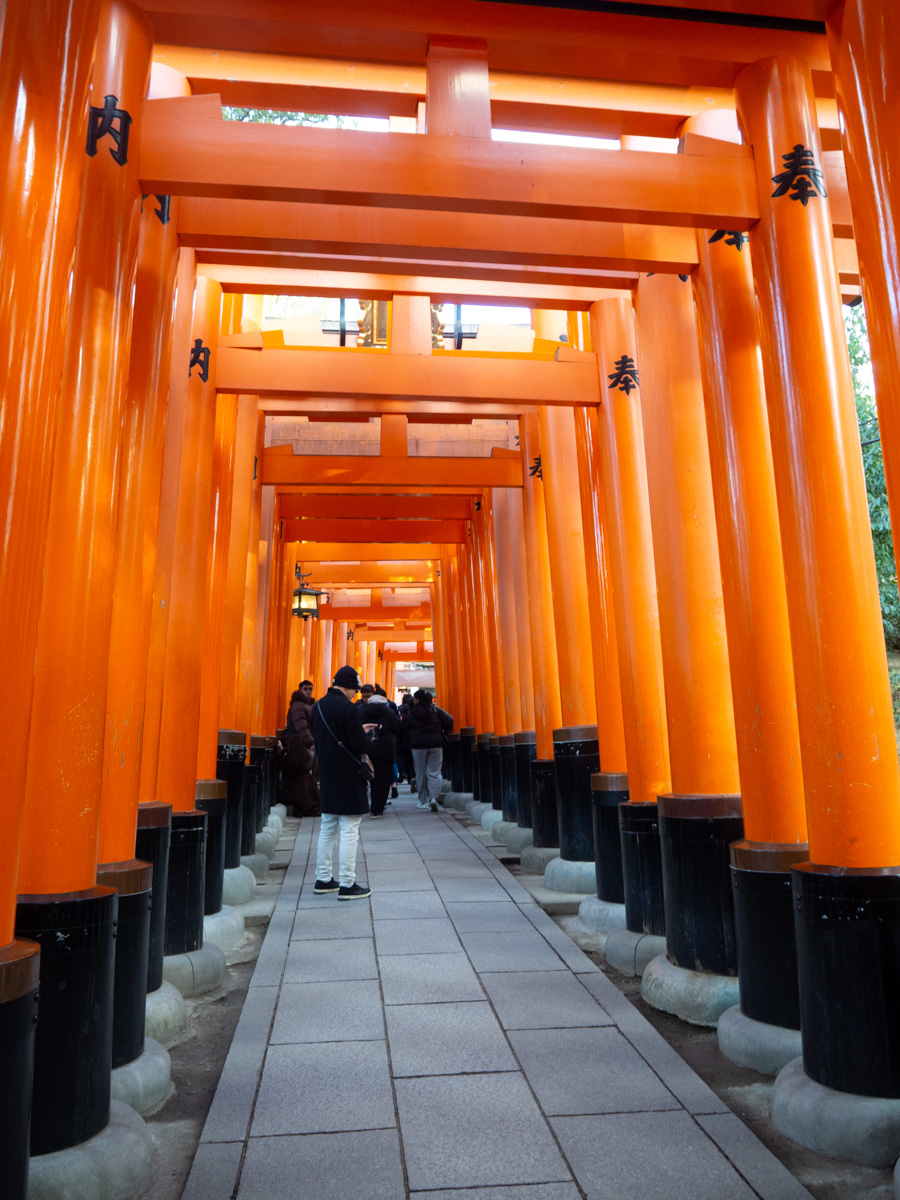
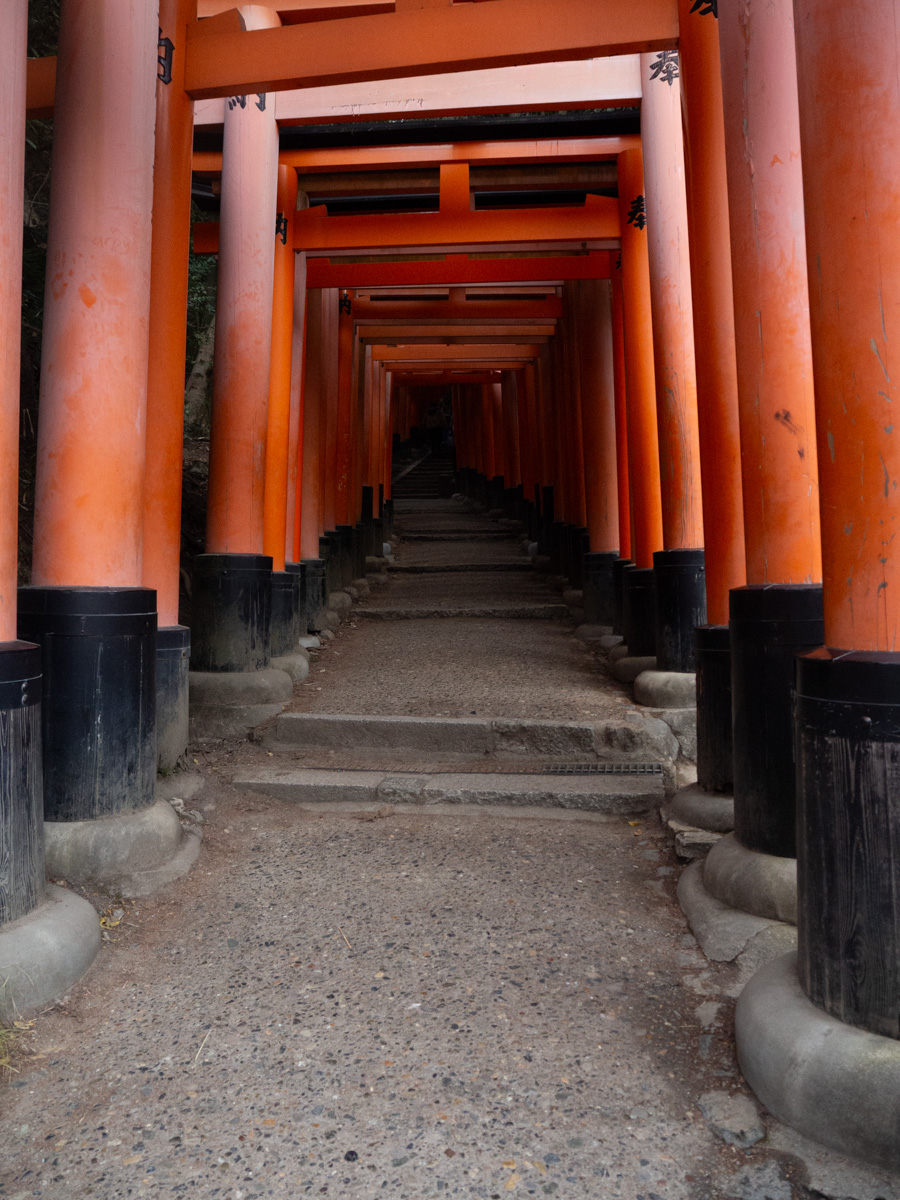
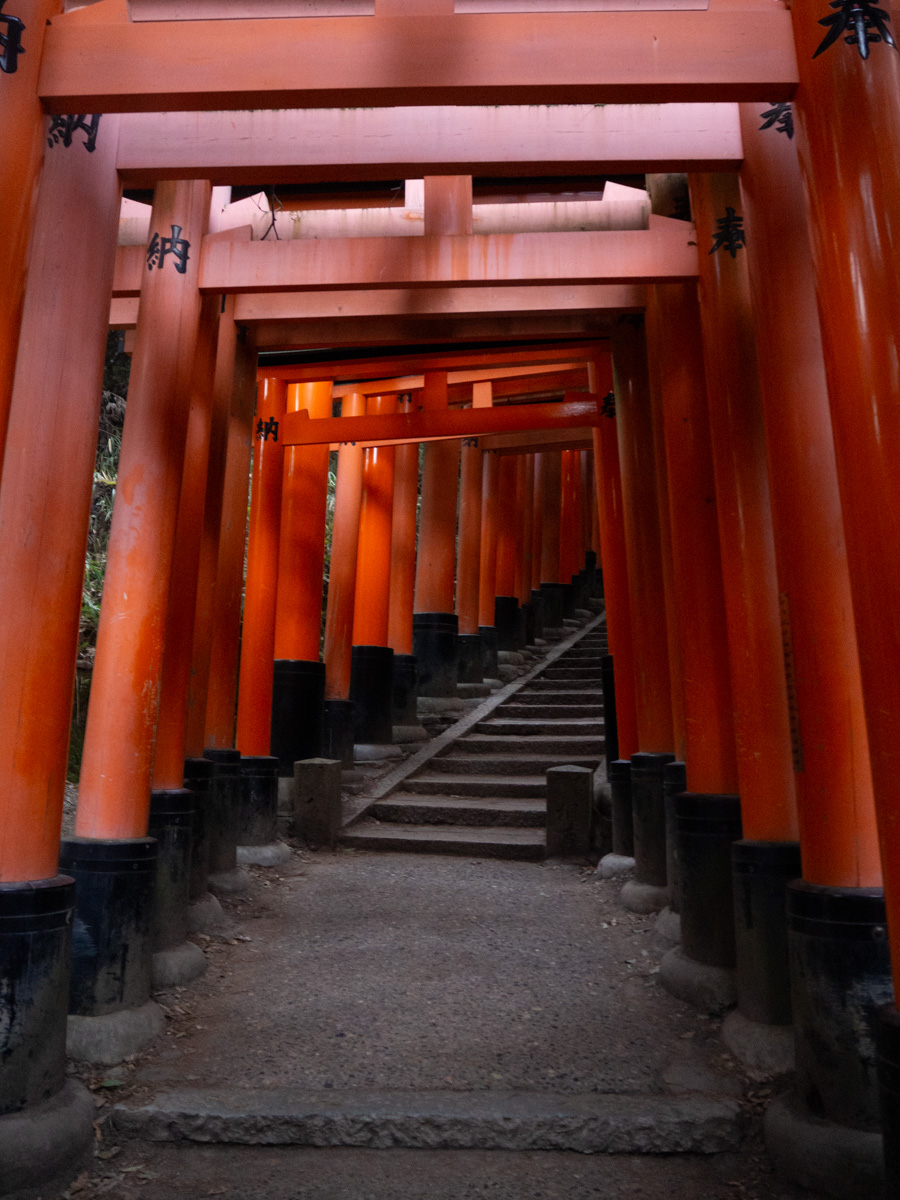
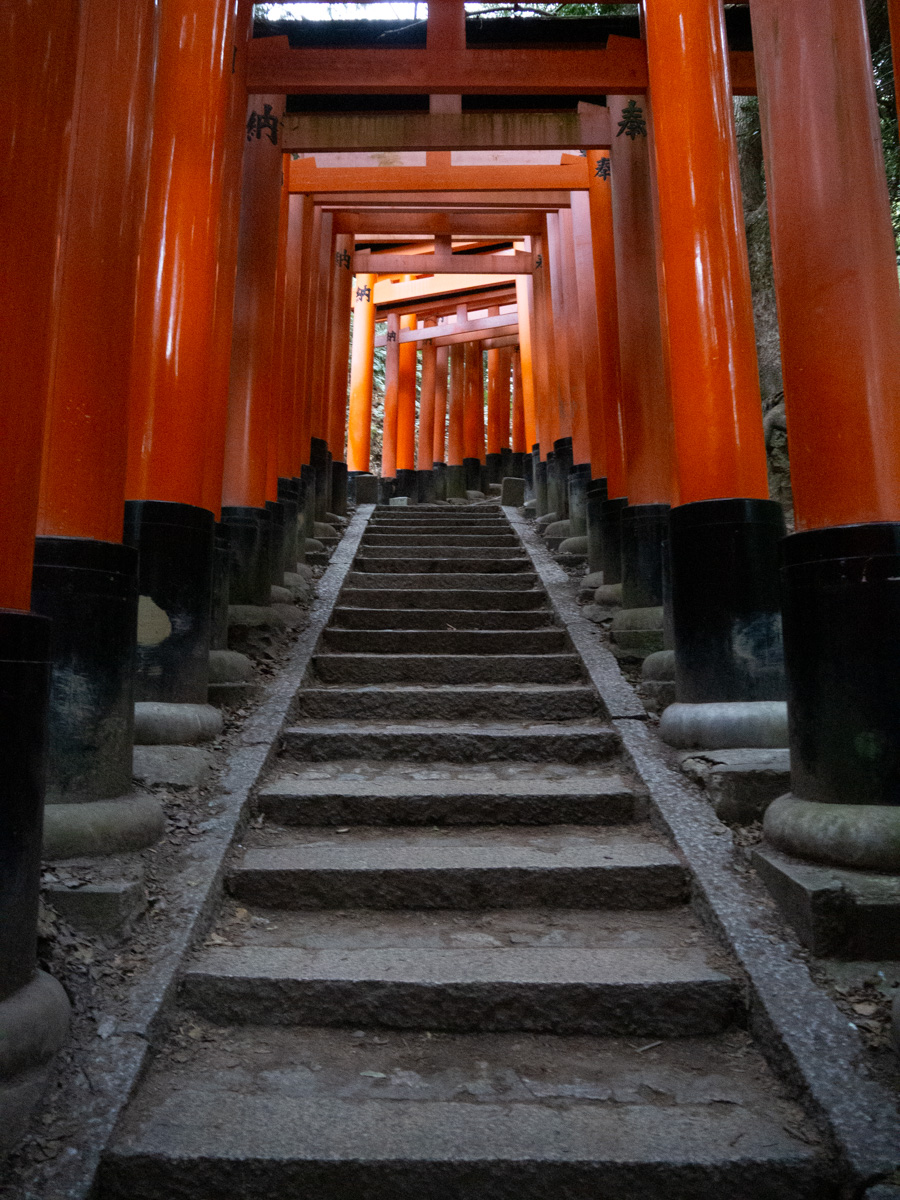
Fushimi Inari-taisha is very photogenic and very popular. The torii are arranged so as to form tunnels along the paths up the hill, and their uniform colour and size makes for unique and stunning views. The first few tunnels were full of people, as expected. But once you move up the hill, the crowds thin out very quickly.

Initially I thought that the sight of orange-red torii gates would get boring fast. I mean, how many identical gates do I want to look at? Then we started walking and saw just how much variety there was.

Torii on the shade side of the hill loomed almost spookily.

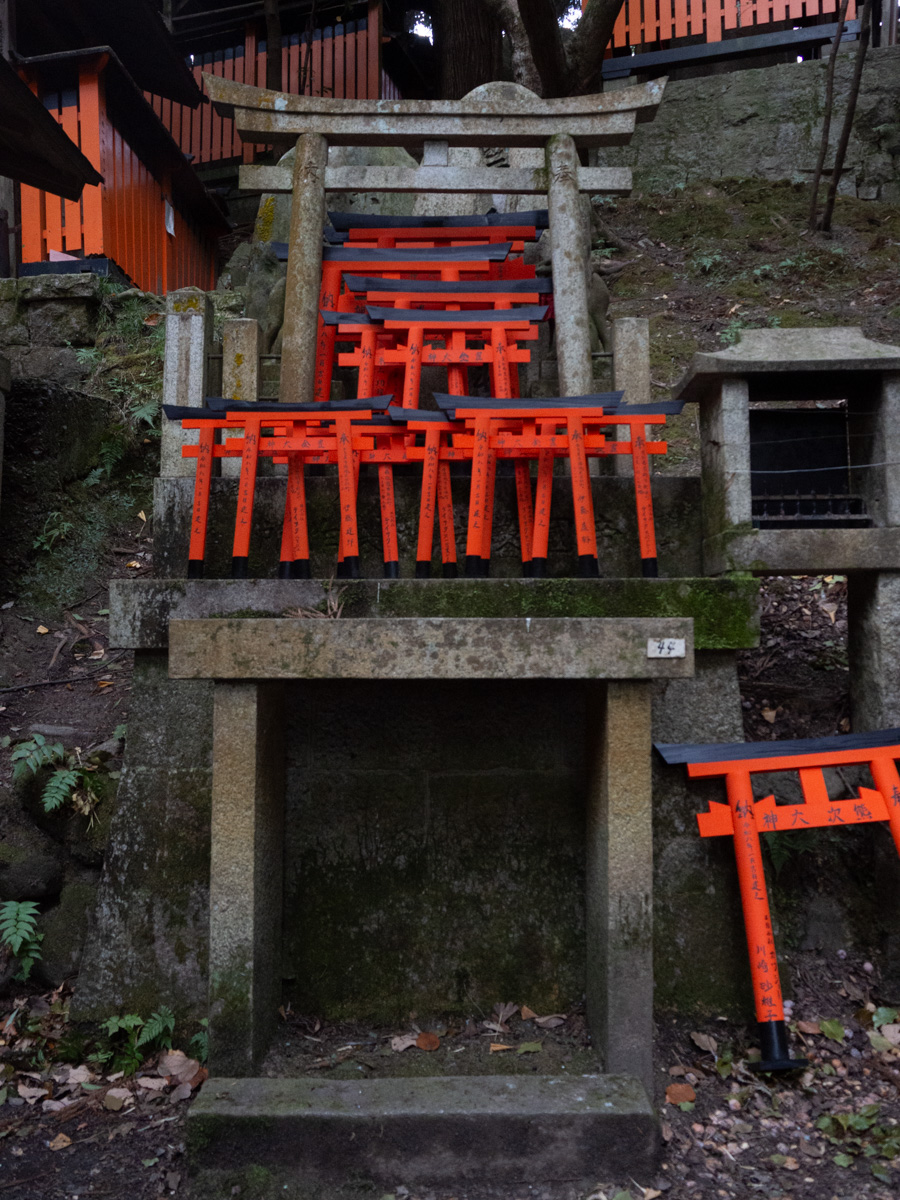
Small knee-high torii were propped up next to the path.

Further up the hill, the gates got smaller and less shiny.

Stairs and afternoon shadows.

Ingrid, for scale.

Turning around and looking back down the hill, you can see the writing on each gate. The torii are donated when making a wish or when a wish has come true, so I assume the writing details each donator’s wish.

Each time we rounded a corner, there were new, interesting views. We only turned back down the hill when the light really started failing.


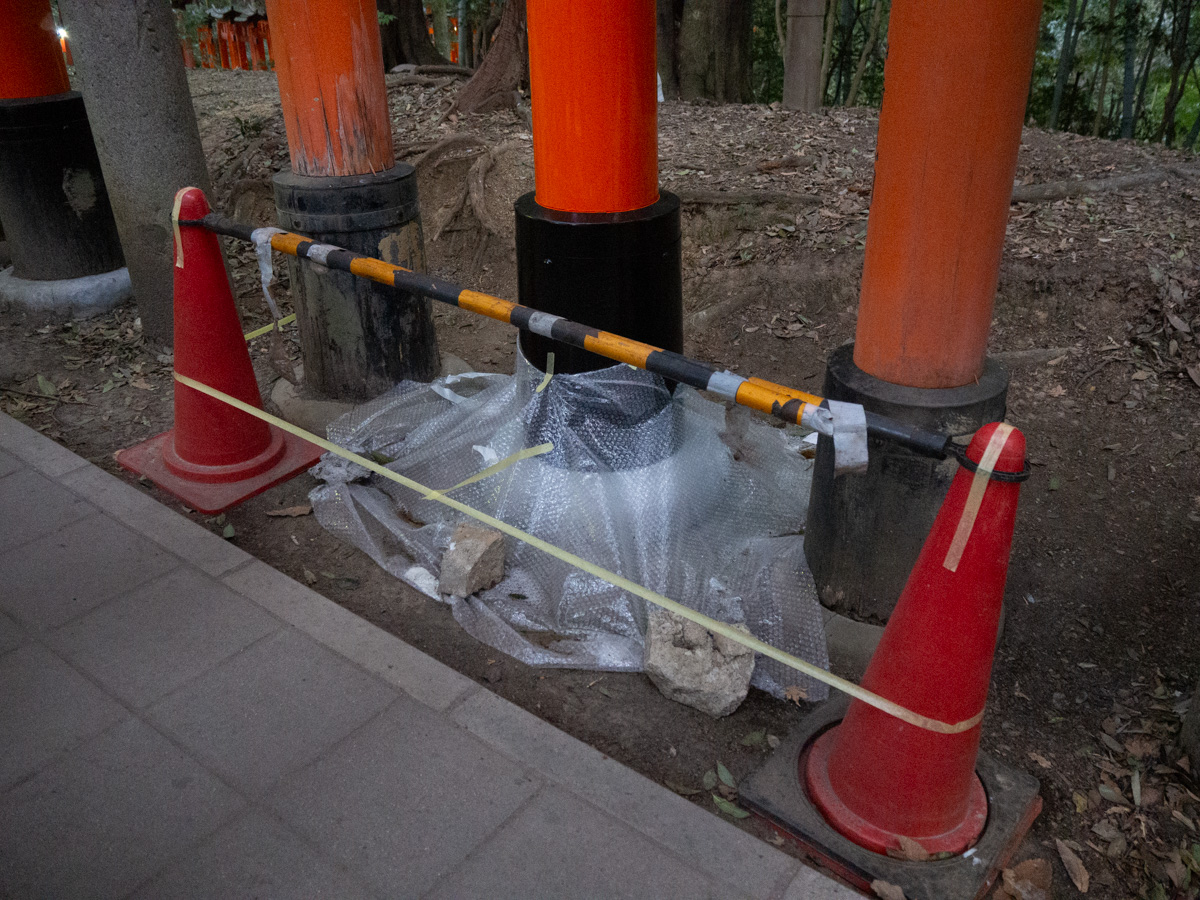
Many of the torii were bright and shiny, especially near the entrance, but further up the hill there were those that had started fading and rotting with age – as well as brand new ones that had only just been erected.

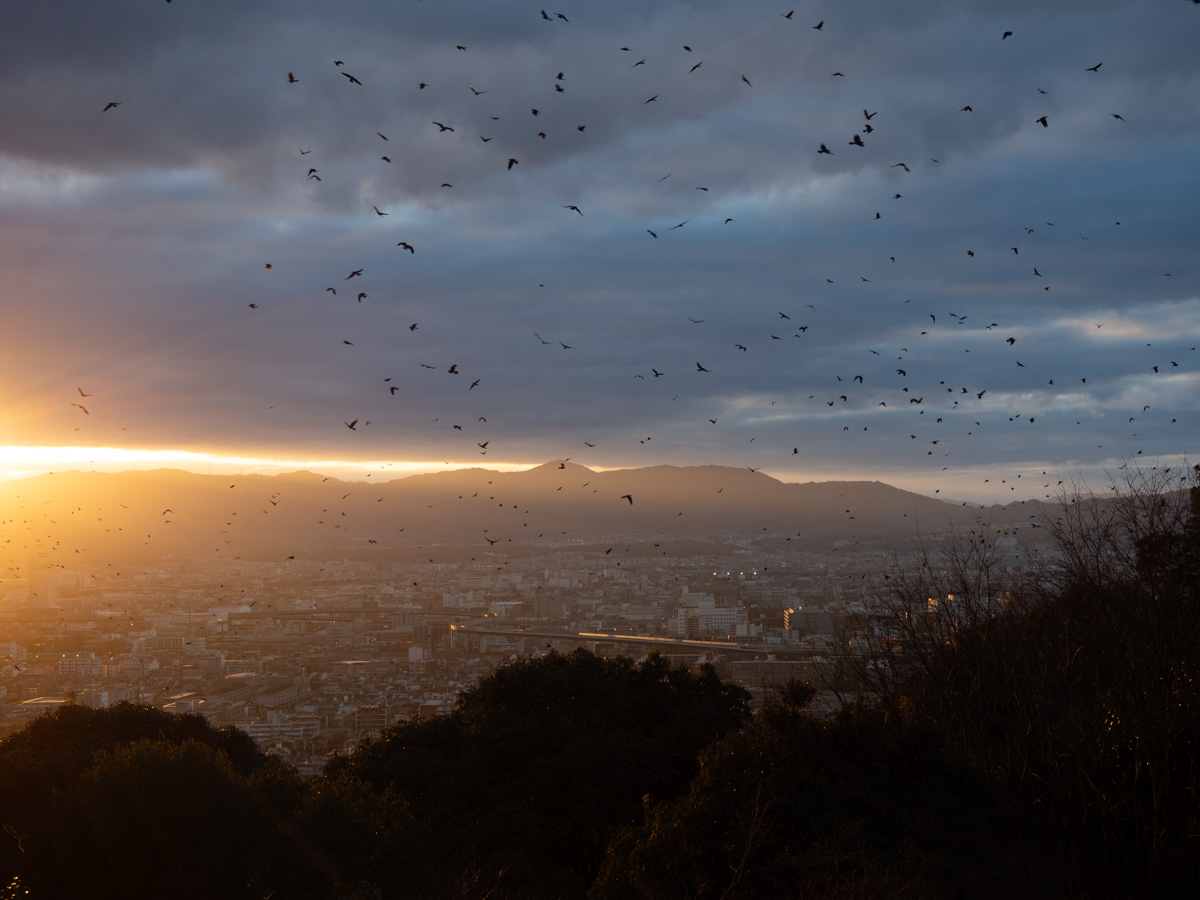
Our walk up and down the paths was accompanied by the constant cawing of crows. There were giant hordes of them here. Mostly hidden in the trees, but we saw them when we had come down to the edge of the wooded hill.


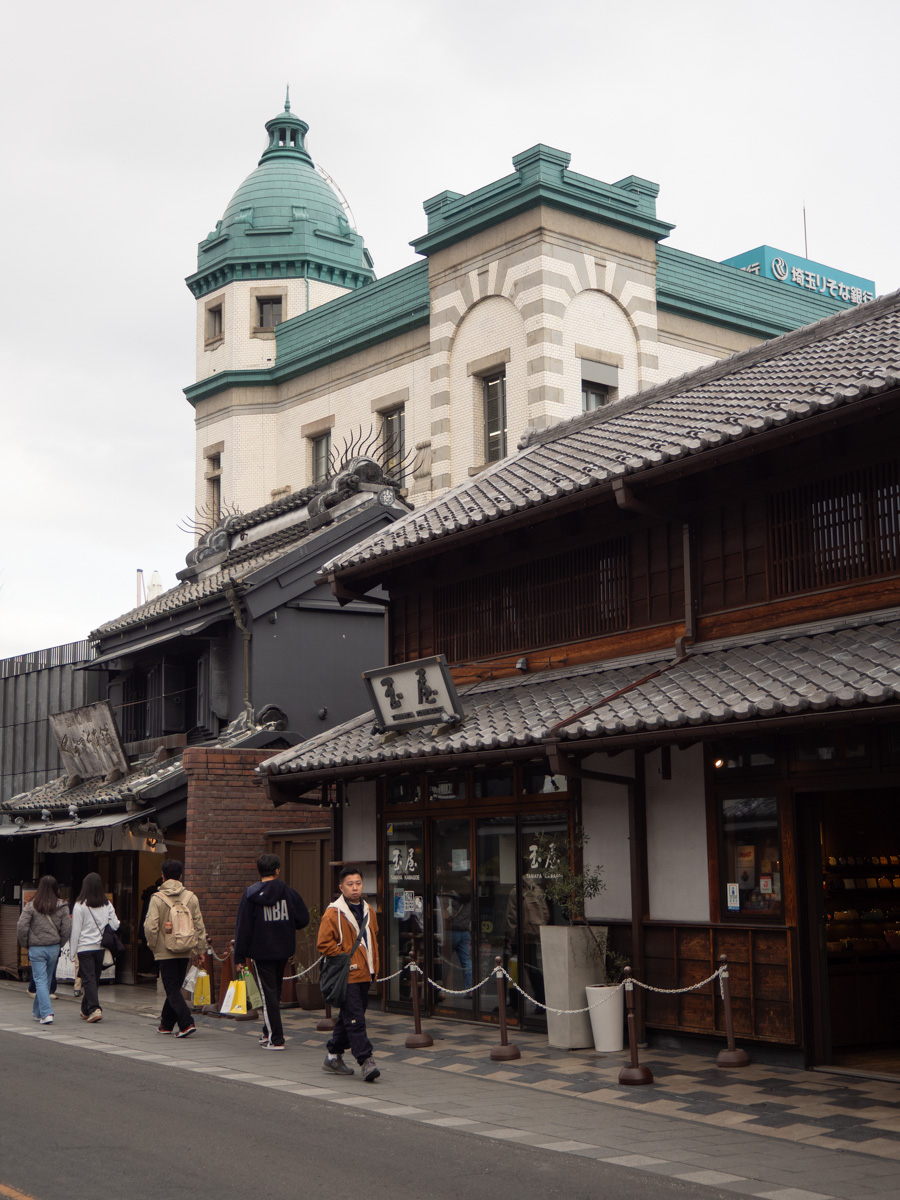
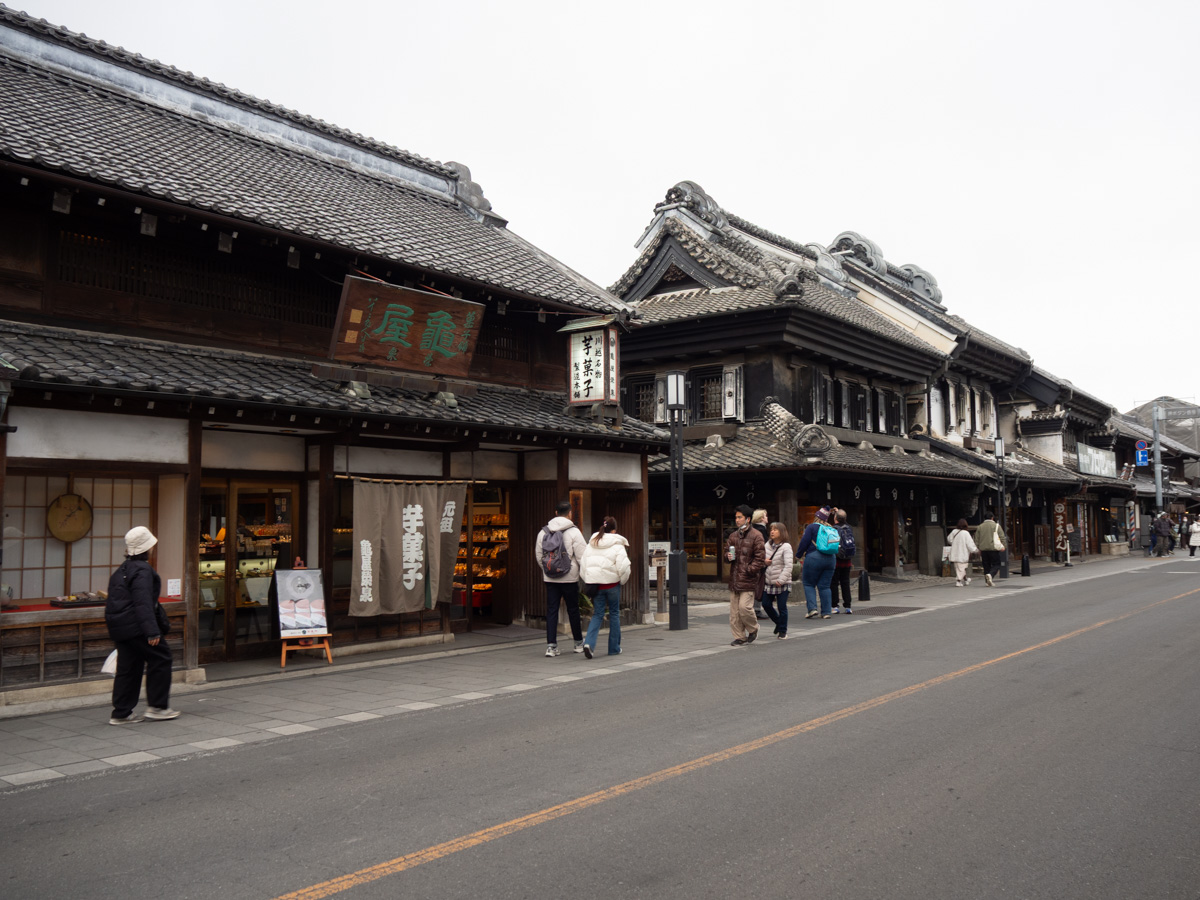
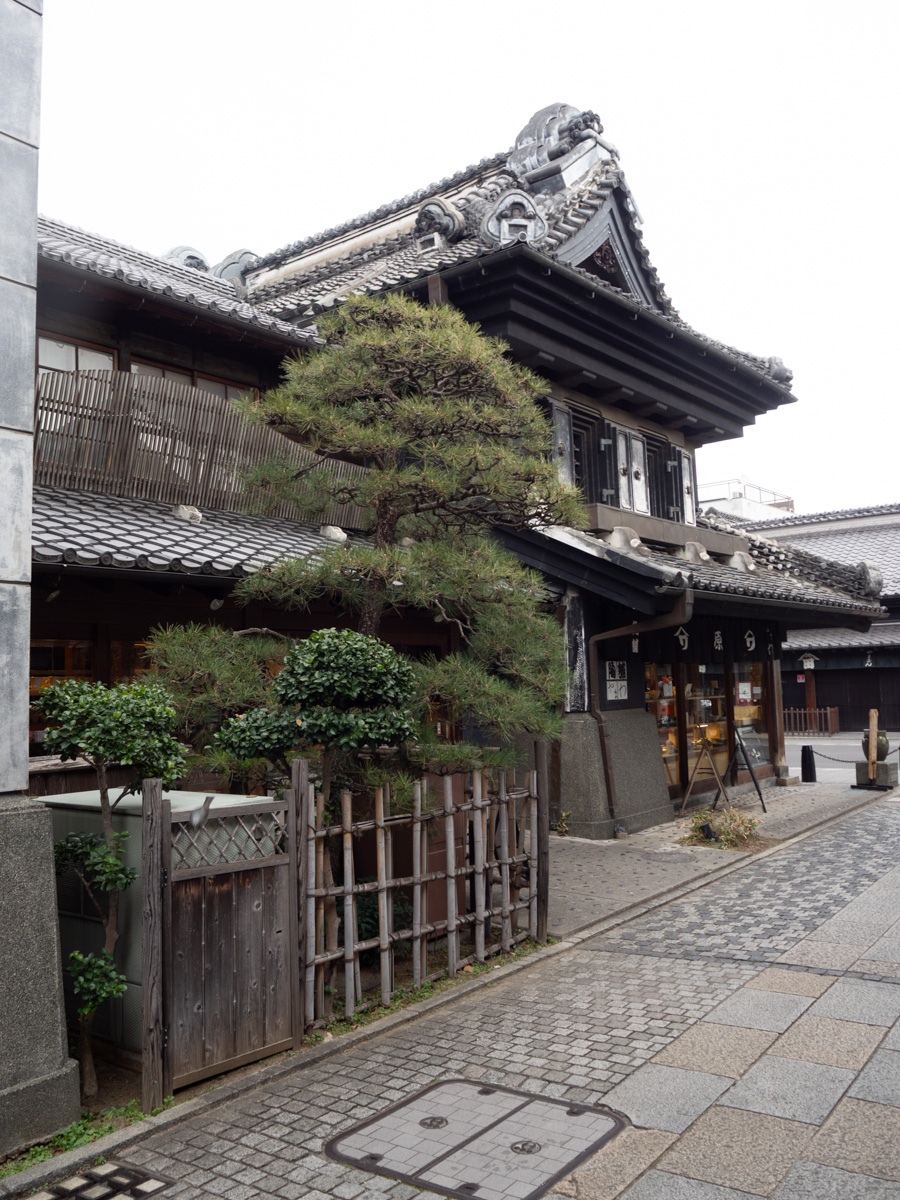
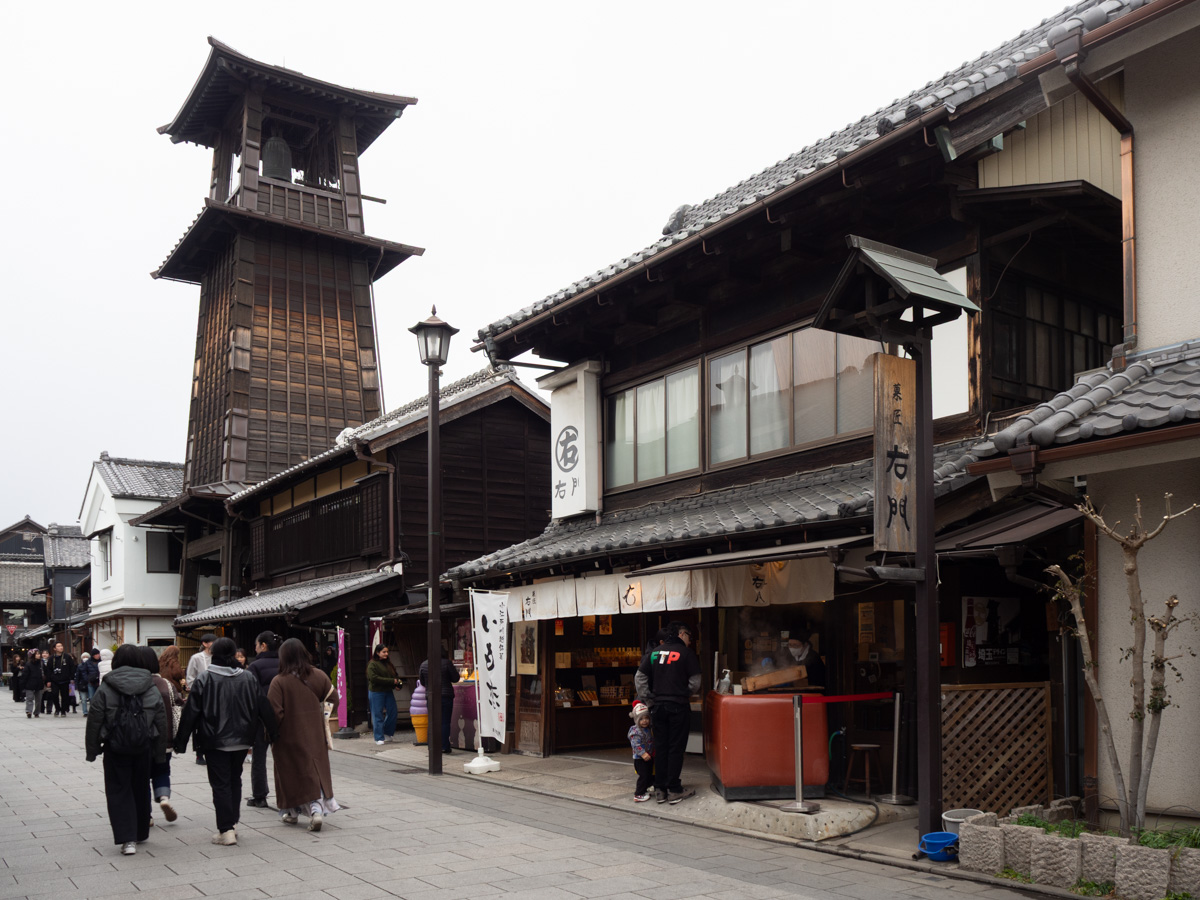
We made a day trip to Kawagoe, a small town near Tokyo that is known for still having entire streets with Edo-era architecture. There are some European-style buildings, but most look very Japanese to my tourist’s eyes: small two-storey buildings in dark wood, with traditional roofs and sliding doors.

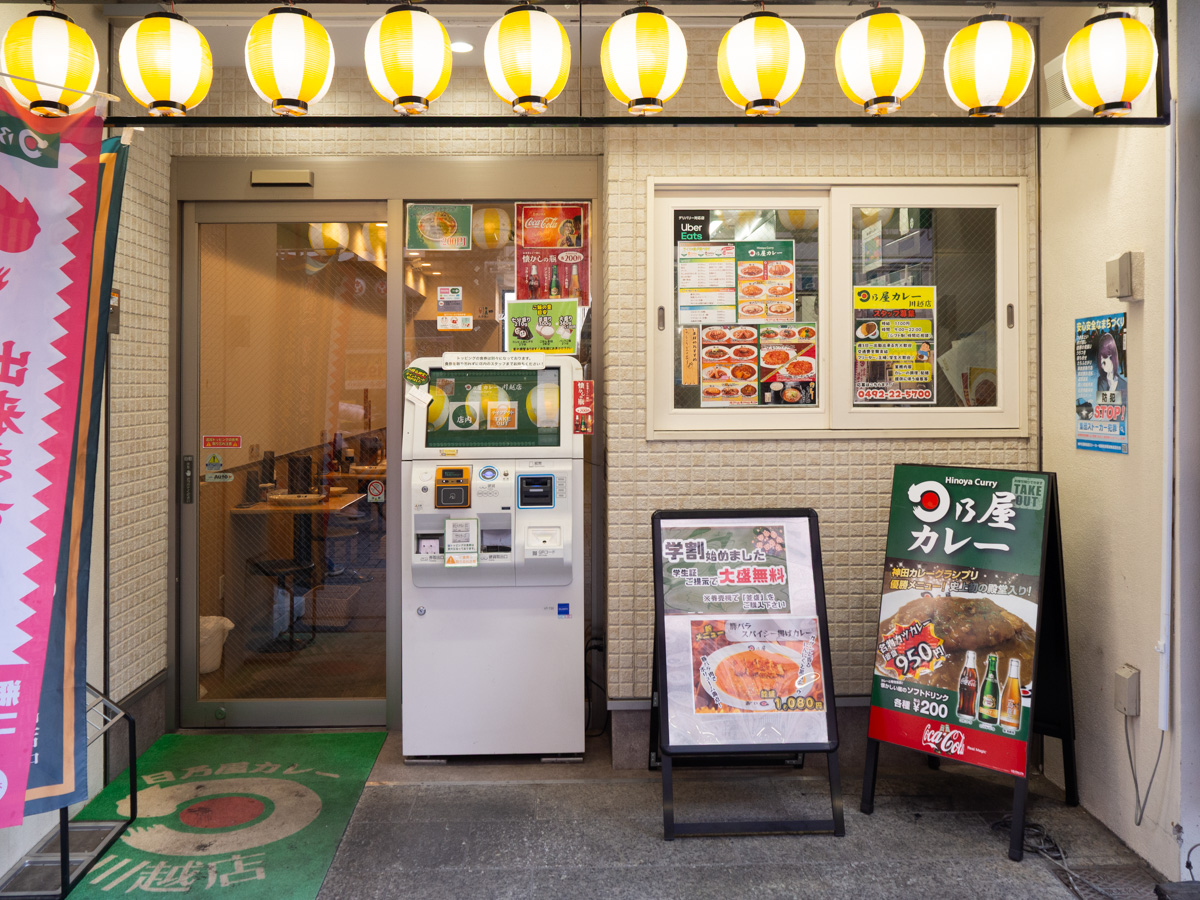
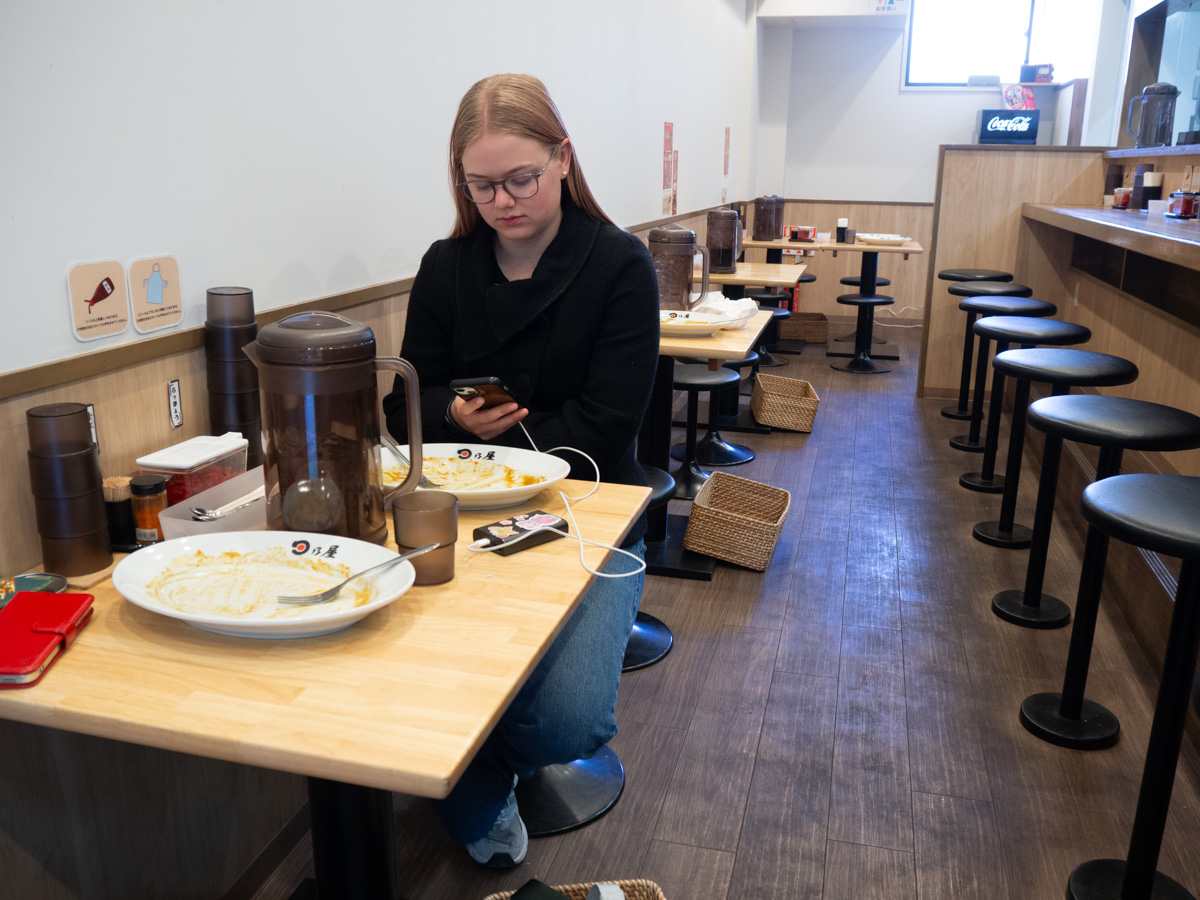
First, though, it was lunchtime. We’ve had noodles of a few kinds, we’ve had sushi; now it was time for Japanese curry. With the help of online reviews we picked a curry shop that, again, looked like nothing but served good food for cheap. The restaurant had a single member of staff doing everything, which basically consisted of ladling up rice, pre-made curry sauce, and your chosen toppings. Which you ordered and paid for in an automat out front. Another great meal at another hole in the wall.


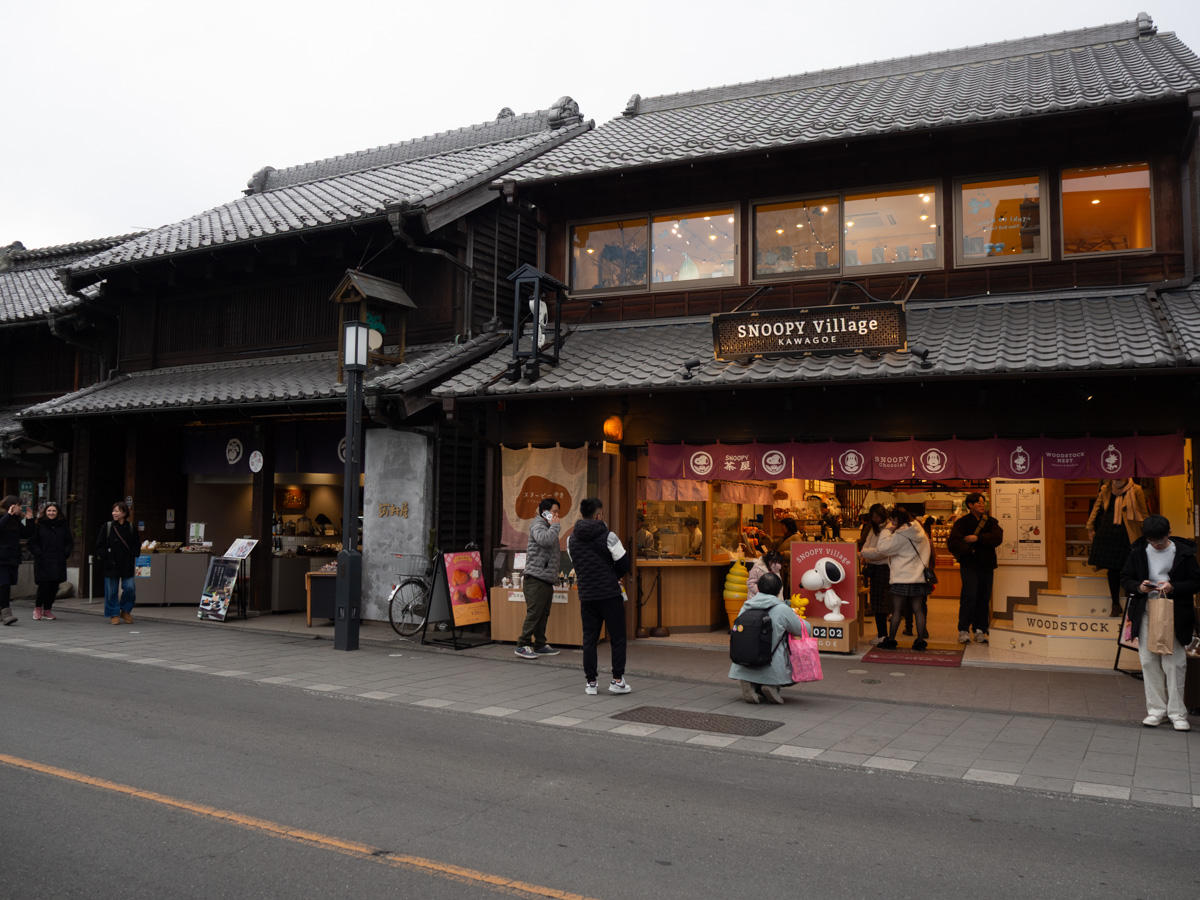
The main street in the old style was lined with small shops, mostly catering for tourists. Snacks, Japanese crafts, cute things.

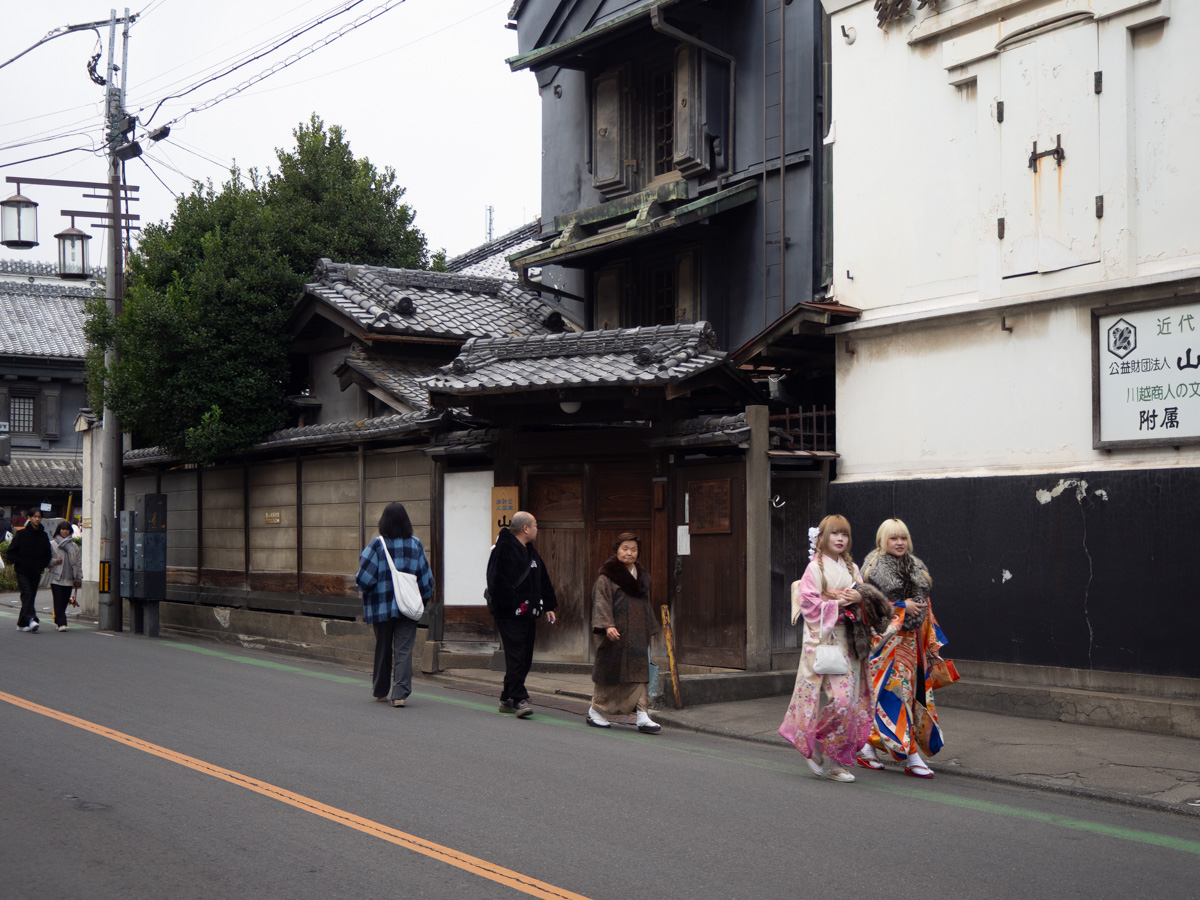
Japanese tourists, especially young girls, sometimes dress up in kimonos for their outings. There are kimono rental shops in all popular touristy areas. You can rent a whole outfit – kimono, all the layers underneath it, obi, sandals, toe socks, handbag. The fabrics and decorations used tend towards the frilly and shiny.

Just because the street looks old, doesn’t mean that the contents of the shops are traditional. There were plenty of shops focusing on Snoopy, Ghibli, and other popular entertainment brands.

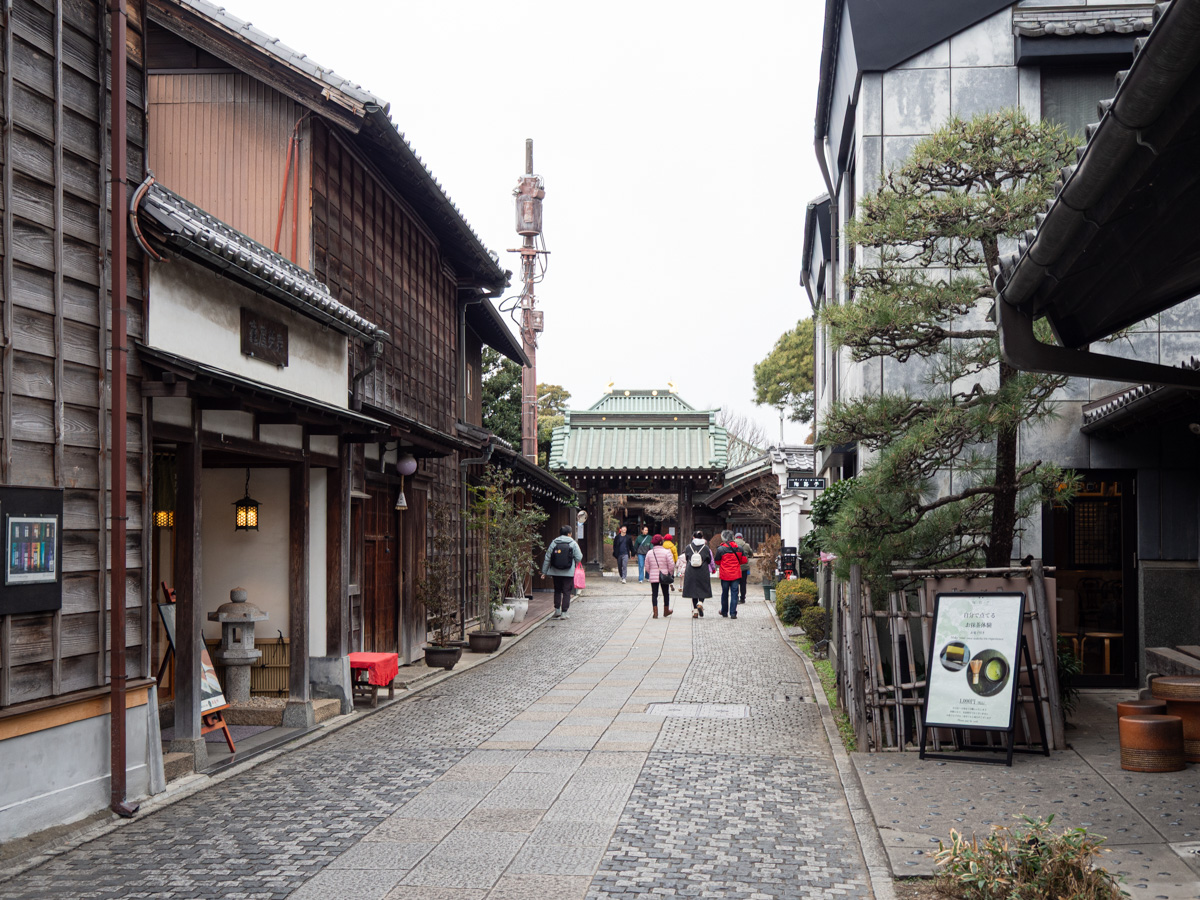
The side alleys were as interesting as the main street.


The bell tower was originally built in the 17th century. As with many historical buildings in Japan, the current physical embodiment of it is newer, rebuilt in the late 19th century after a fire. The same goes for all the wooden temples we’ve visited – just because the temple is described as being this many centuries old, doesn’t mean that the current physical structure has stood there constantly all that time. They’re rebuilt from time to time.

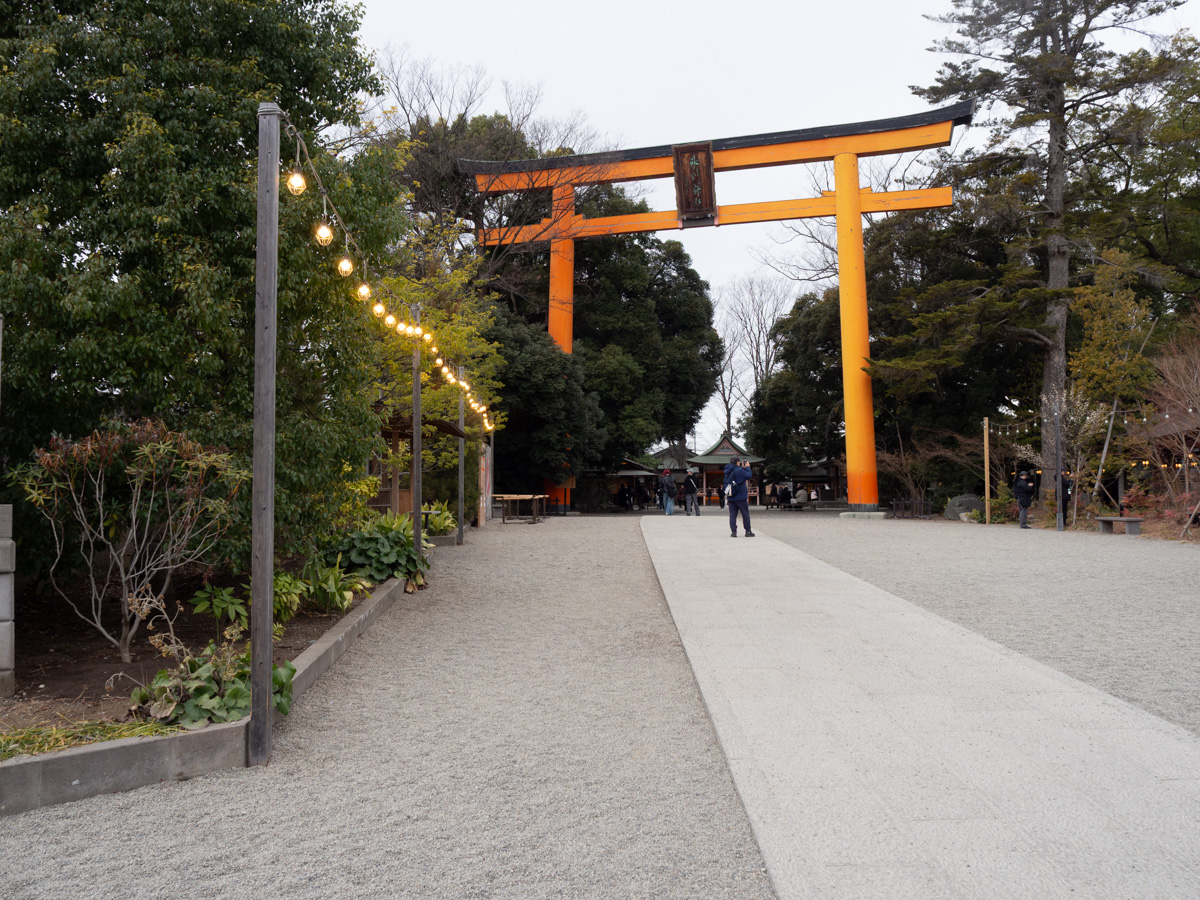
No day in Japan is complete without a visit to a temple or a shrine. Kawagoe Hikawa shrine was very picturesque. The torii gate is apparently one of the tallest in Japan.

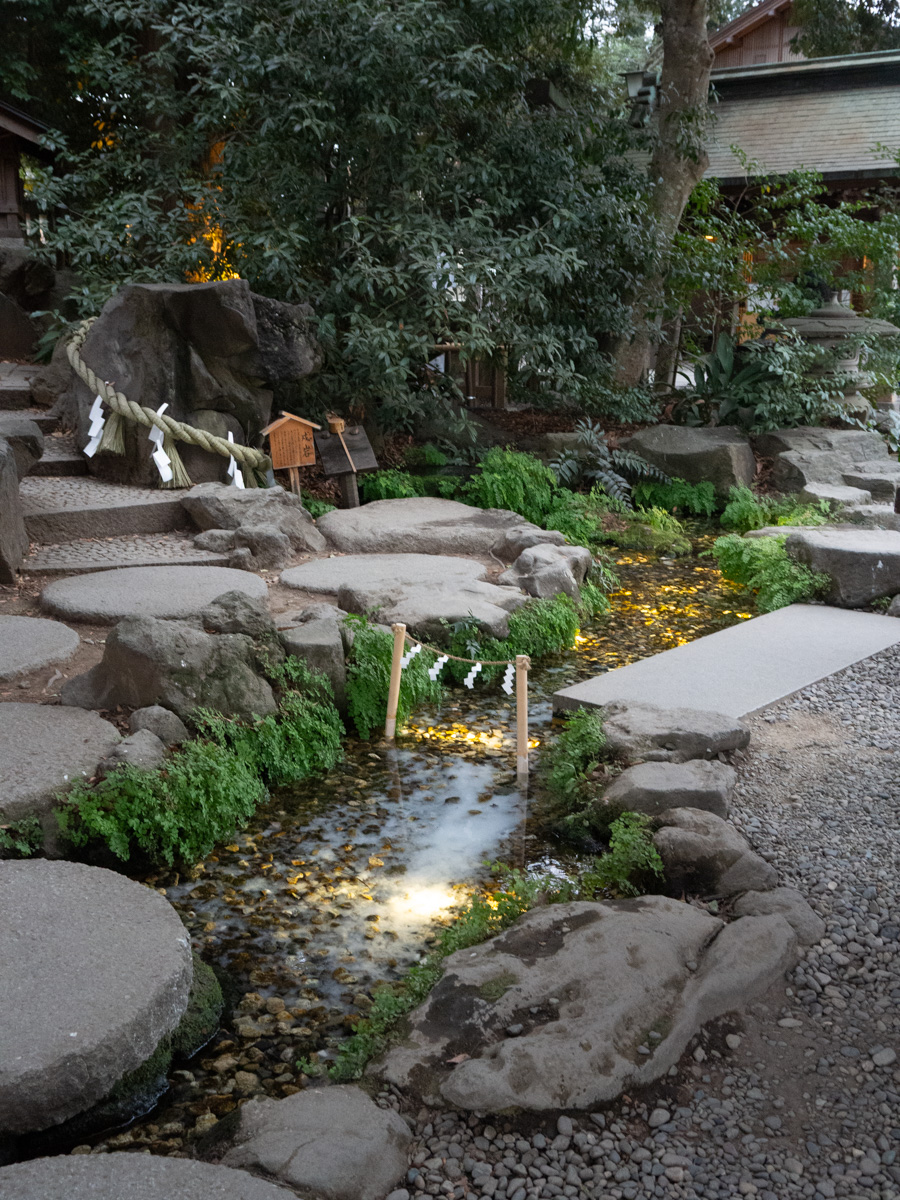
A small stream seemed to be used for dissolving prayers written on special paper.

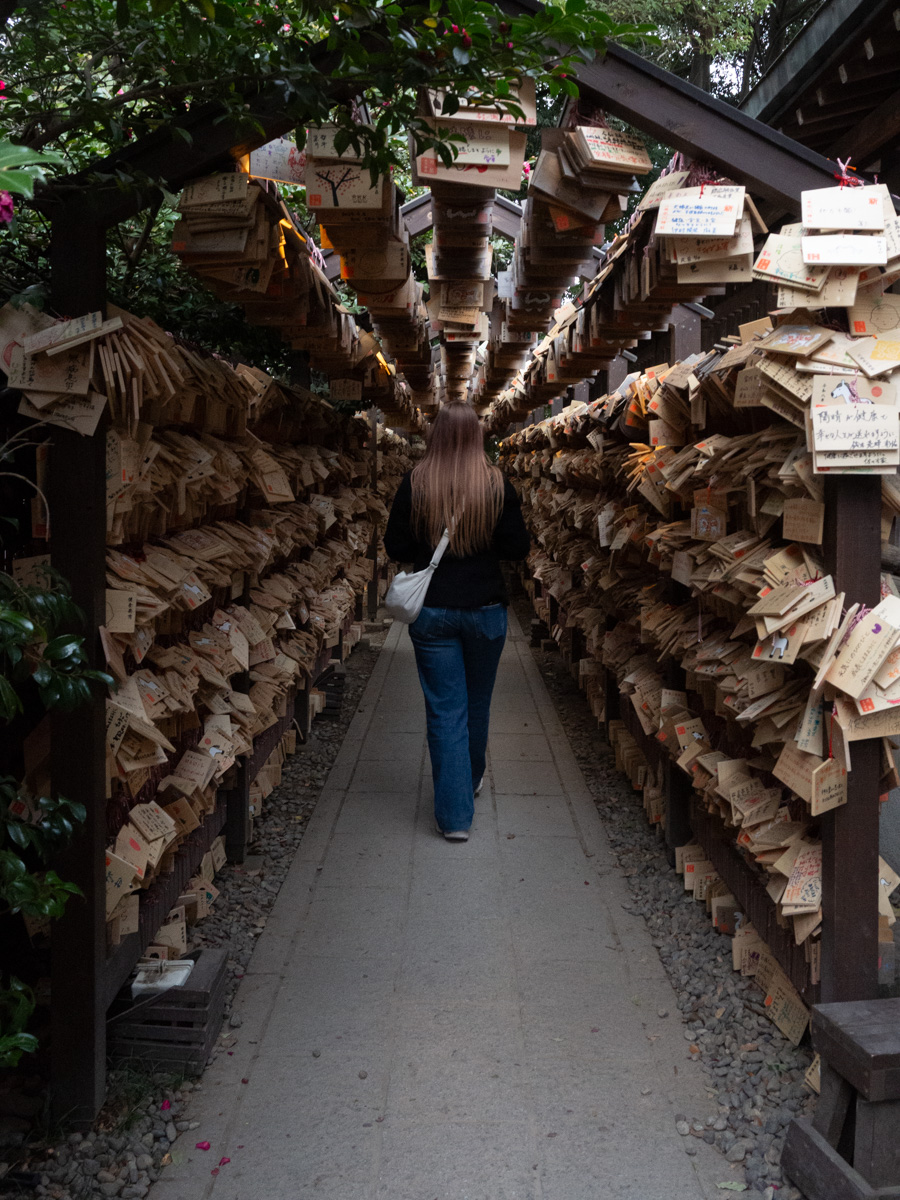
A tunnel of wooden prayer plaques.

Kawagoe Castle, on the other hand, was a total disappointment. There is basically no castle to be seen, just grassy mounds where the castle walls once stood.

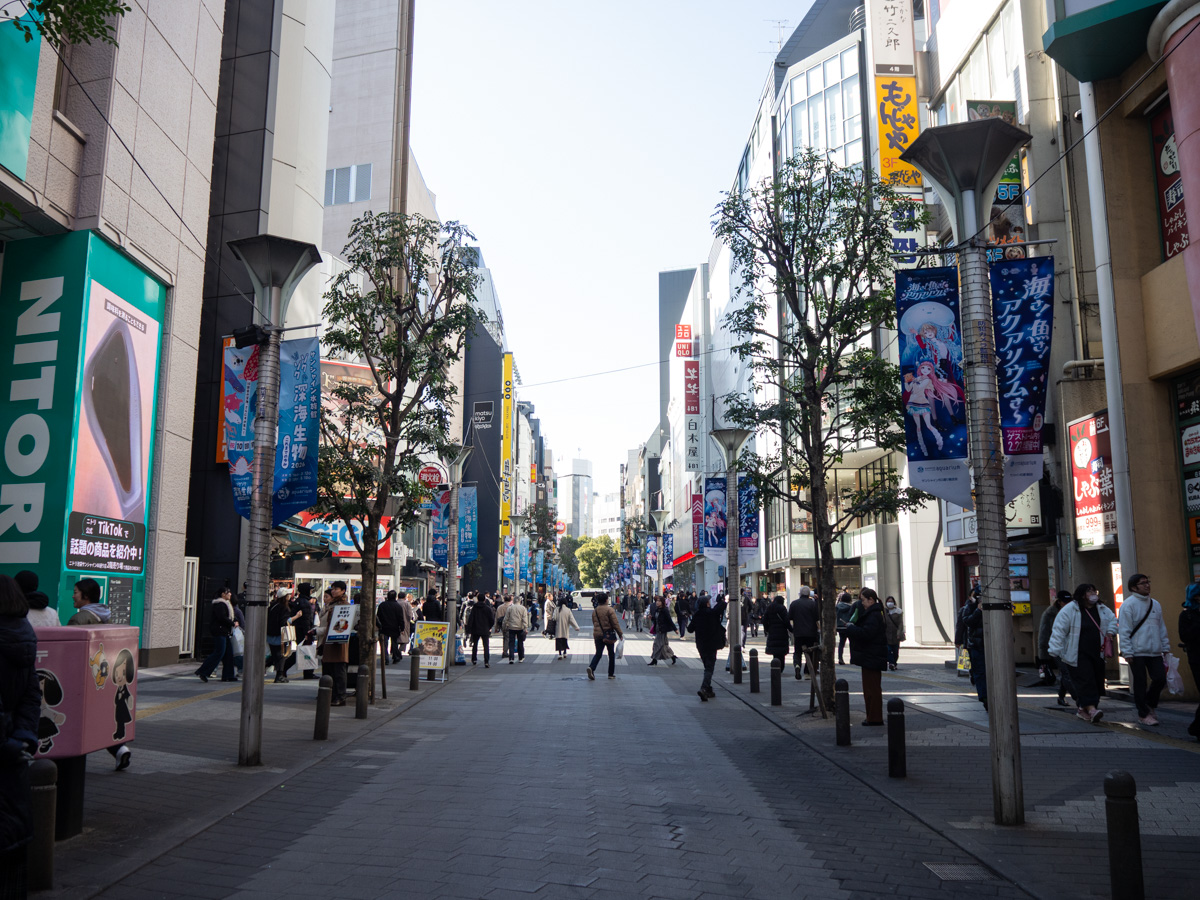
Our rental apartment is in Ikebukuro district, but we’ve barely seen any of it, apart from the routes to the two nearest metro stations.

We’ve got a trip planned outside of Tokyo for later today, but in the morning we walked around a bit in Ikebukuro.

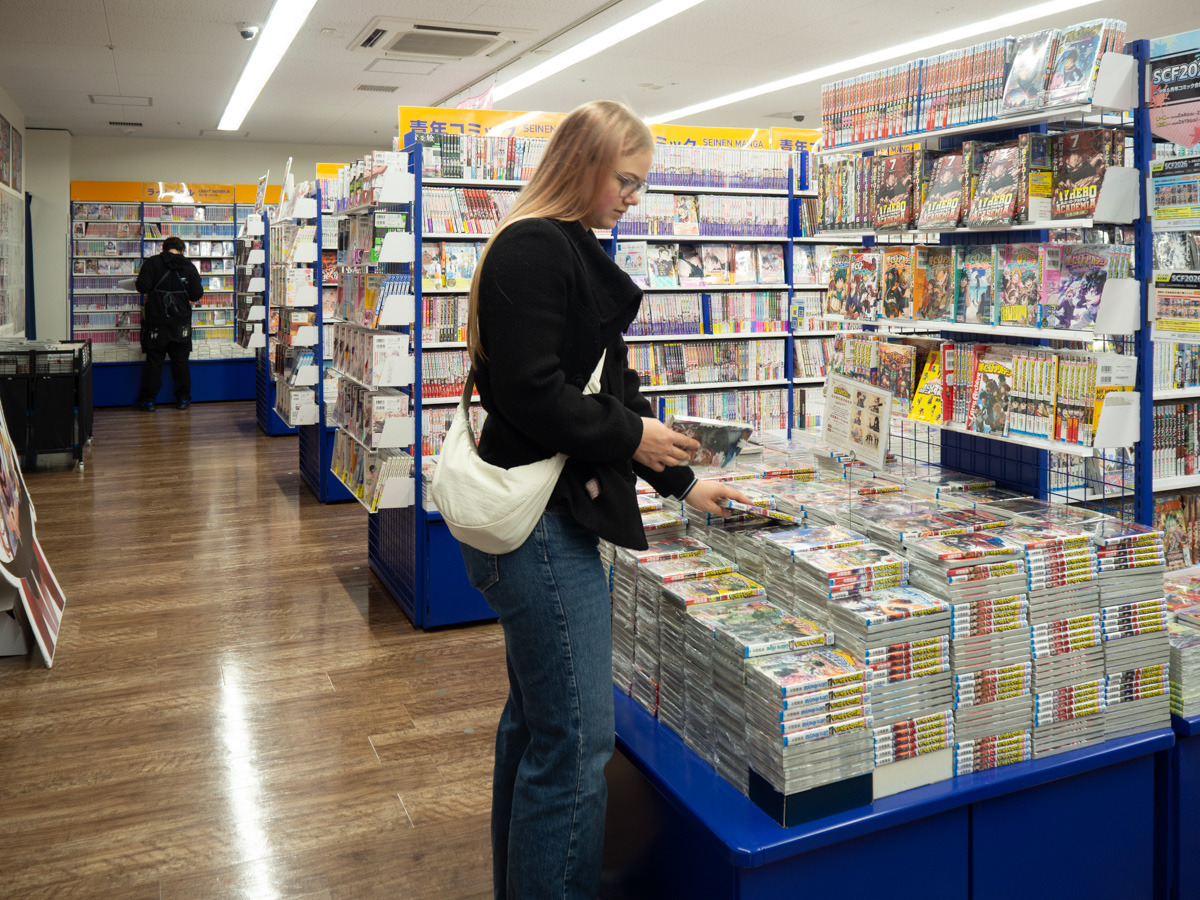
Ingrid visited Animate, a 7-storey manga superstore. I tried my best to occupy myself while waiting for her, but it became very boring fast.

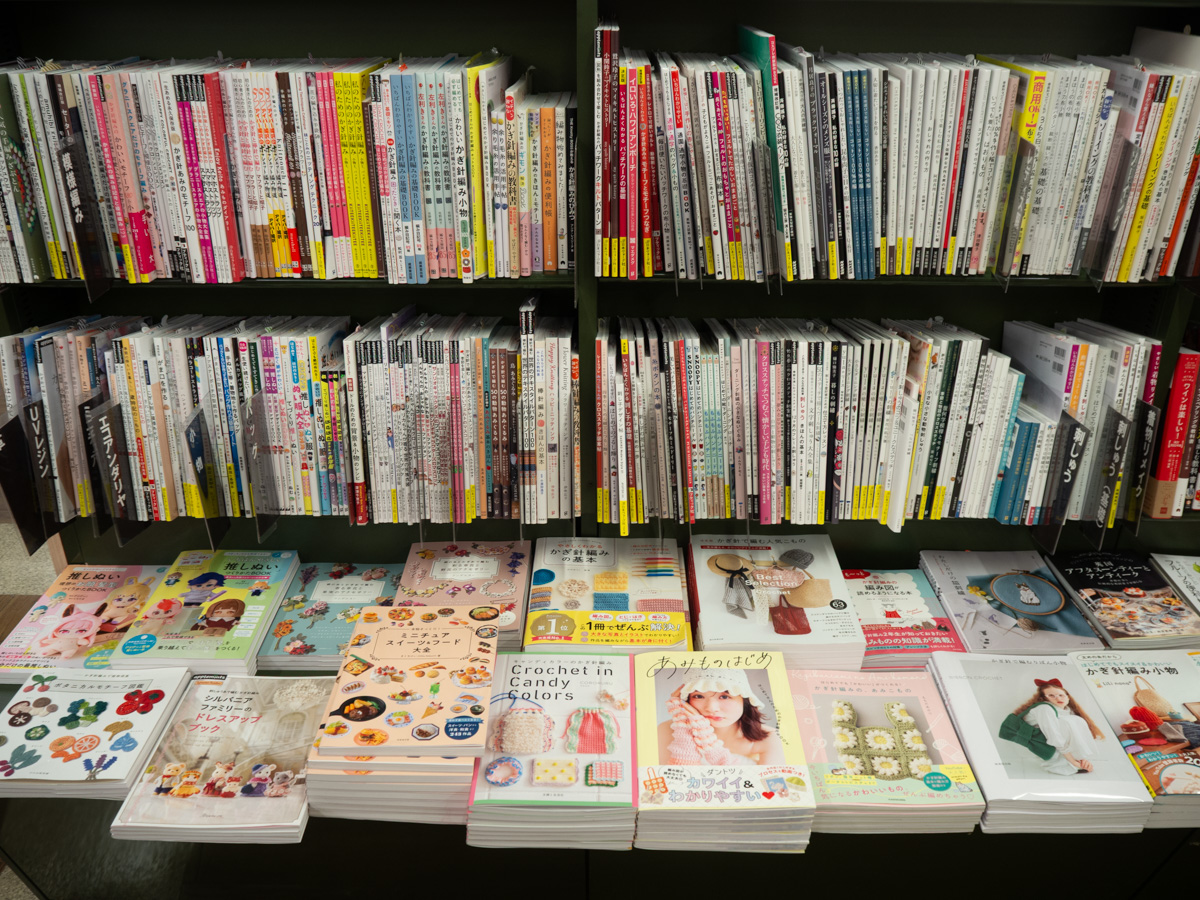
I browsed a bookstore. I was hoping that they might have something interesting in the knitting section. Japanese knitting books are quite different from Swedish ones. In Sweden, there are books like “Knit 20 sweaters” or “Knit for the home” or “Everything about socks and mittens”. Japanese knitting books were more based on vibes. “Here’s some cute stuff” – which could range from knitted sweaters to crochet flowers in the same book. If they want to knit a sweater, do they go through dozens of books to find a pattern?

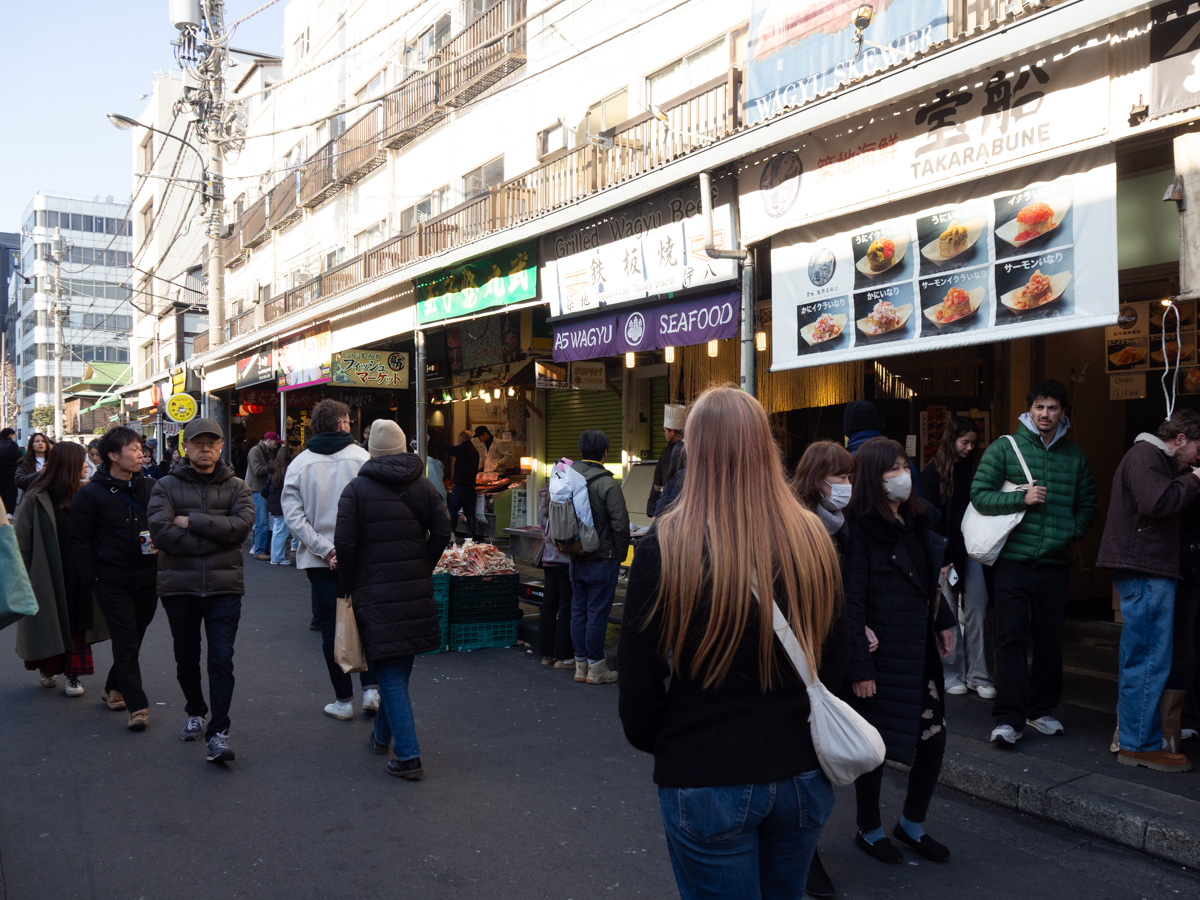
After the museum, we visited Tsukuji market, which is what’s left of the old fish market. I was expecting lively alleys, full of food stalls and restaurants, teeming with people. It was… not that. It felt rather dead. Maybe we came at the wrong time of day?

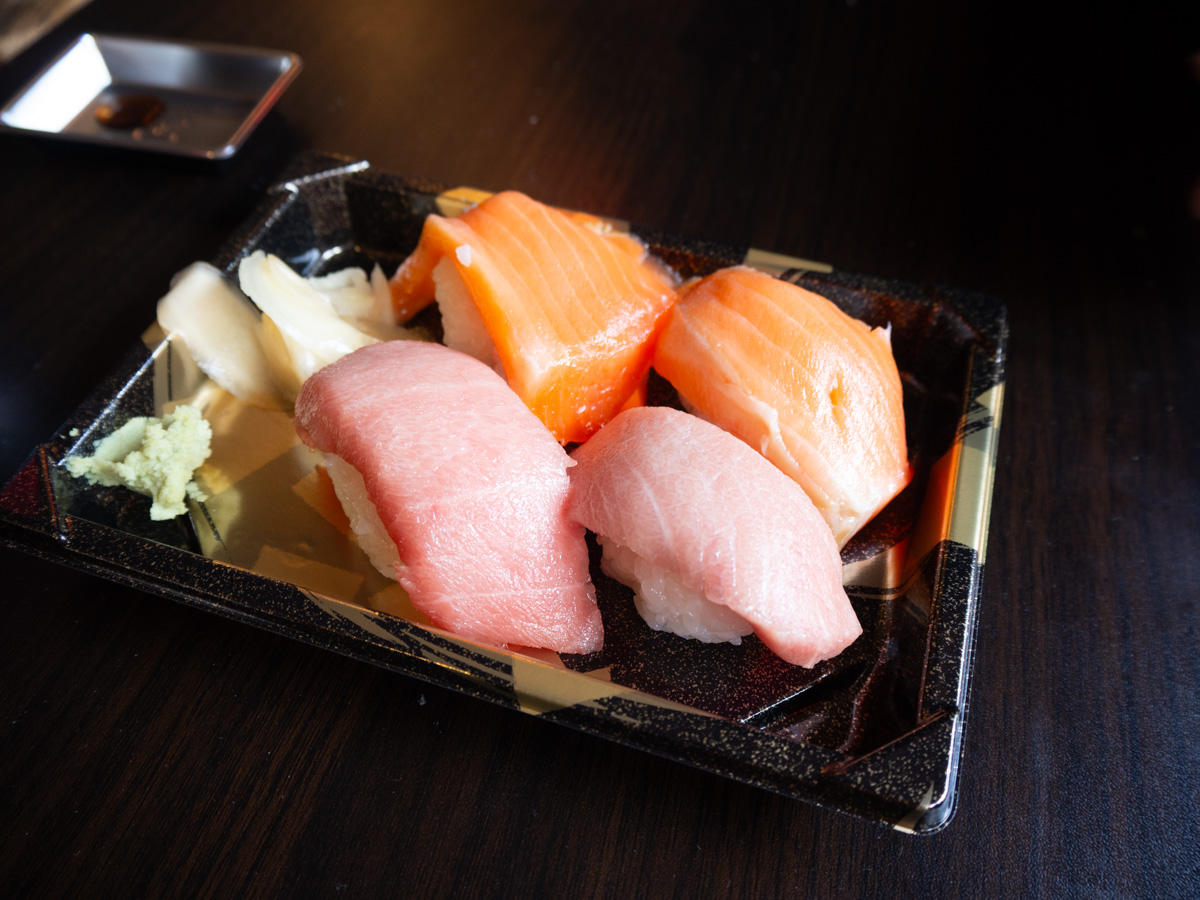
Since we were here, and hungry, we splurged on four pieces of fancy sushi. Generally there wasn’t much here that tempted us so I bought a simple cheese skewer to take the edge off my hunger, and we went elsewhere.

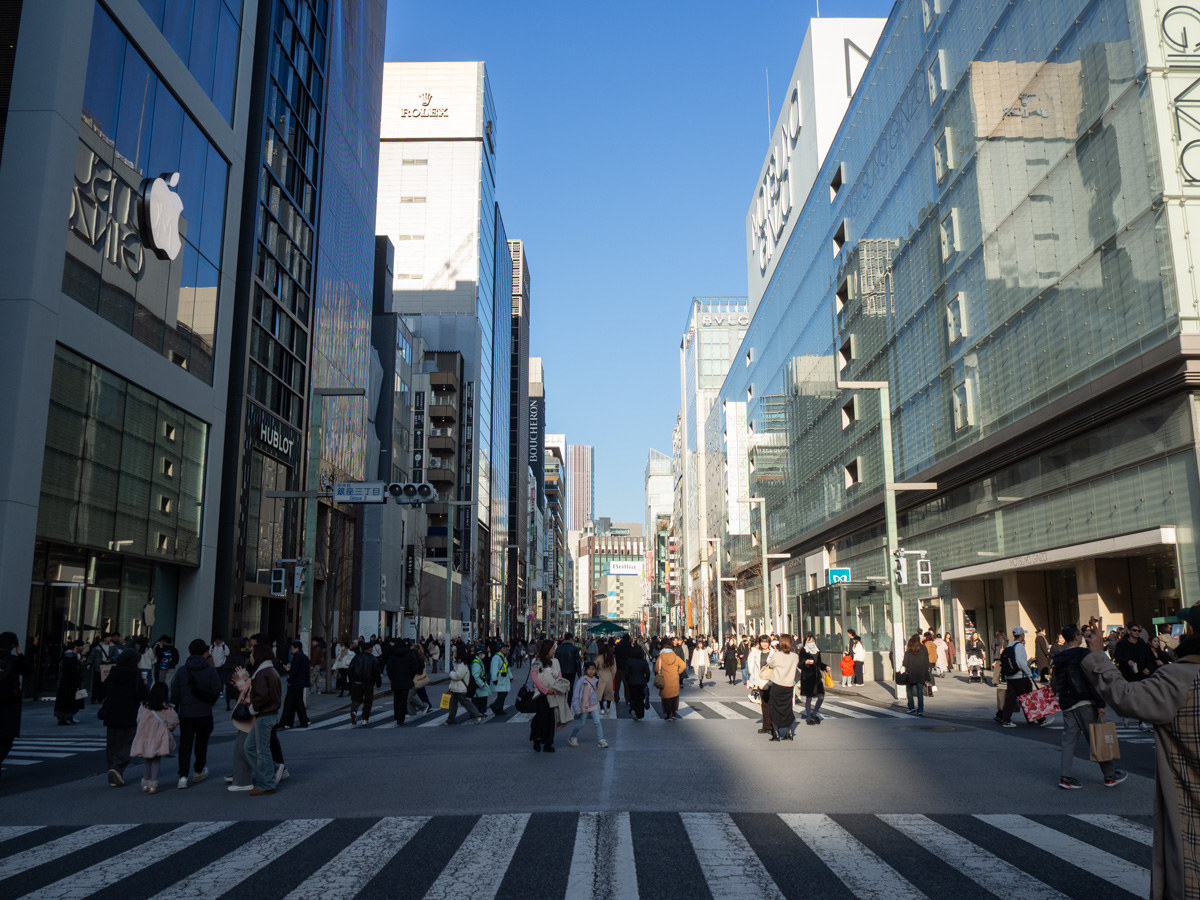
In Ginza, one of the main thoroughfares was closed for traffic. It felt like some kind of traffic apocalypse had disintegrated all the cars but left all the people.

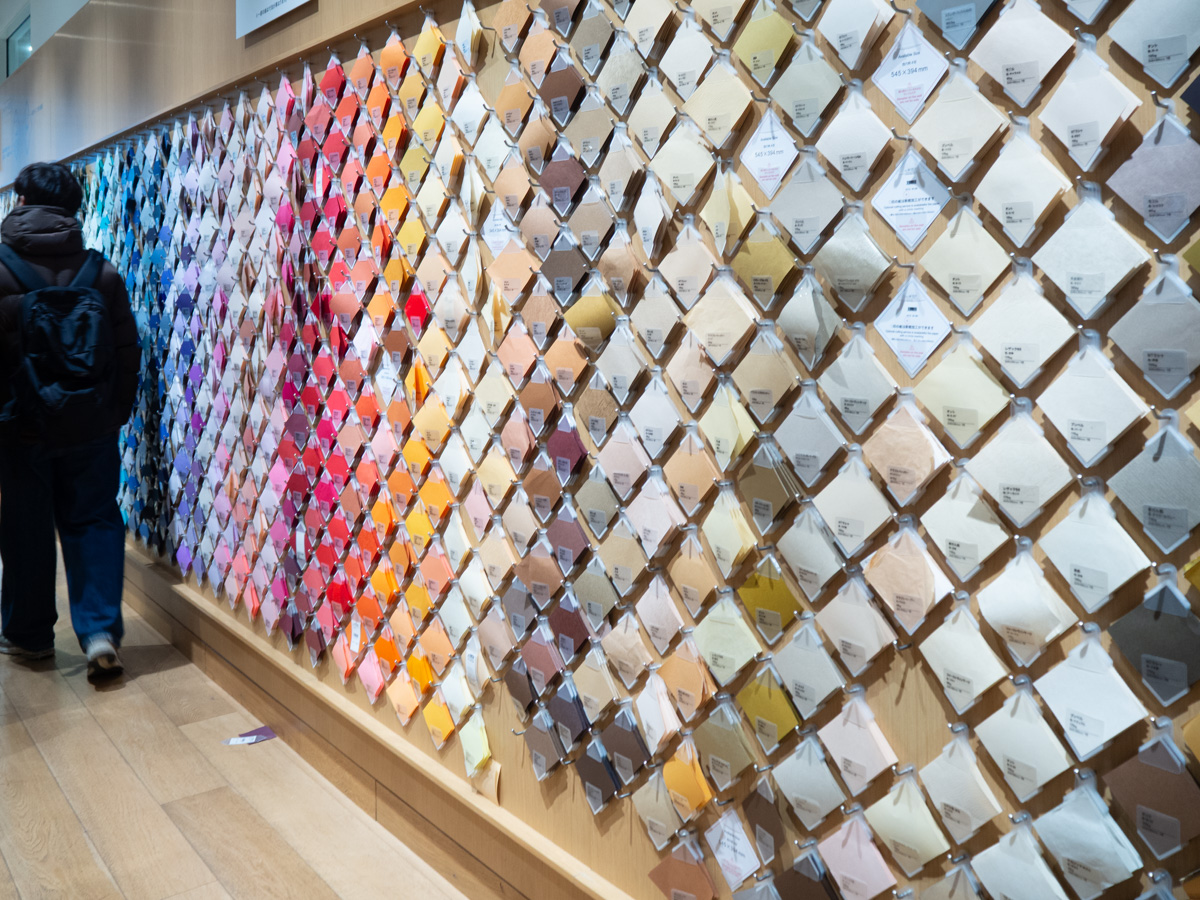
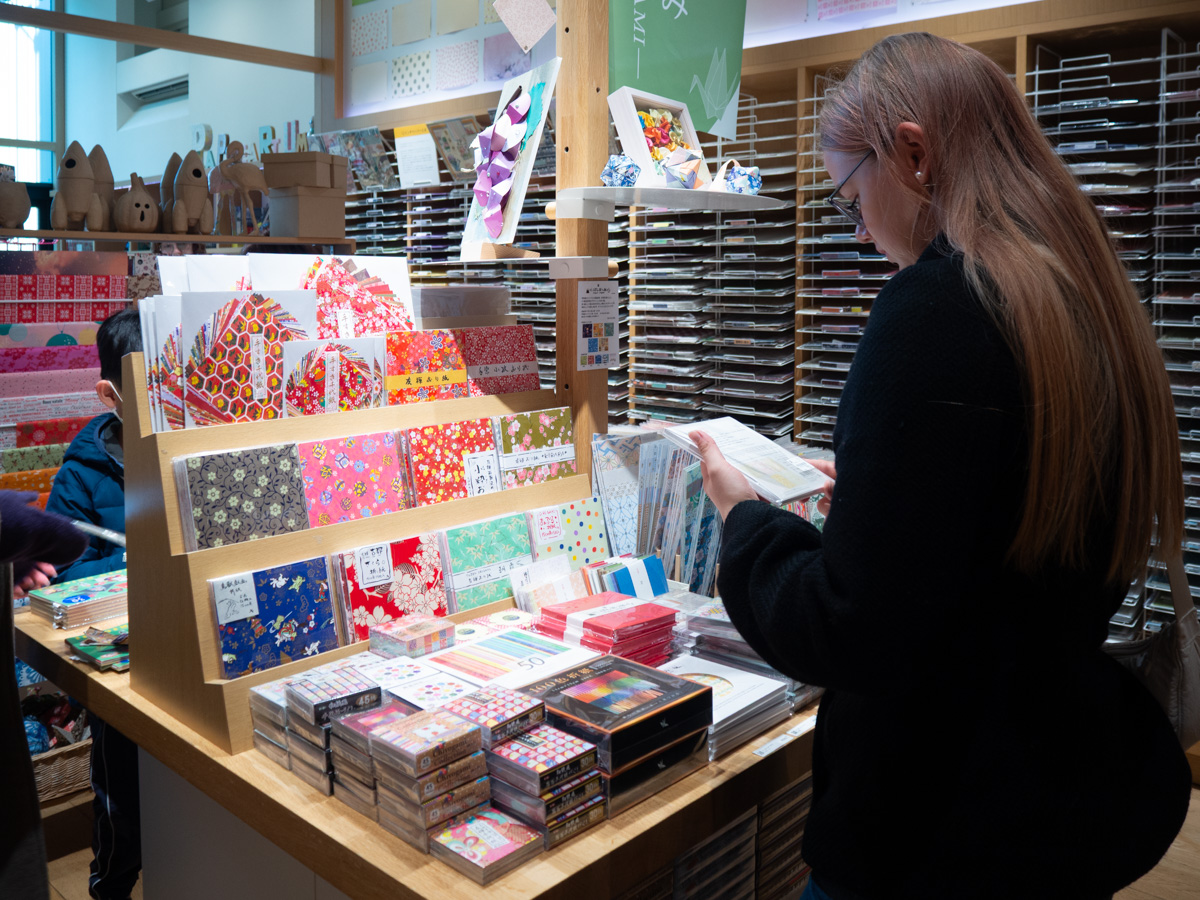
We browsed the Itoya stationary store. I am jealous of Japanese people who have access to so many fine paper products. Origami paper, wrapping paper, note-taking paper, cards, pretty cardboard boxes…


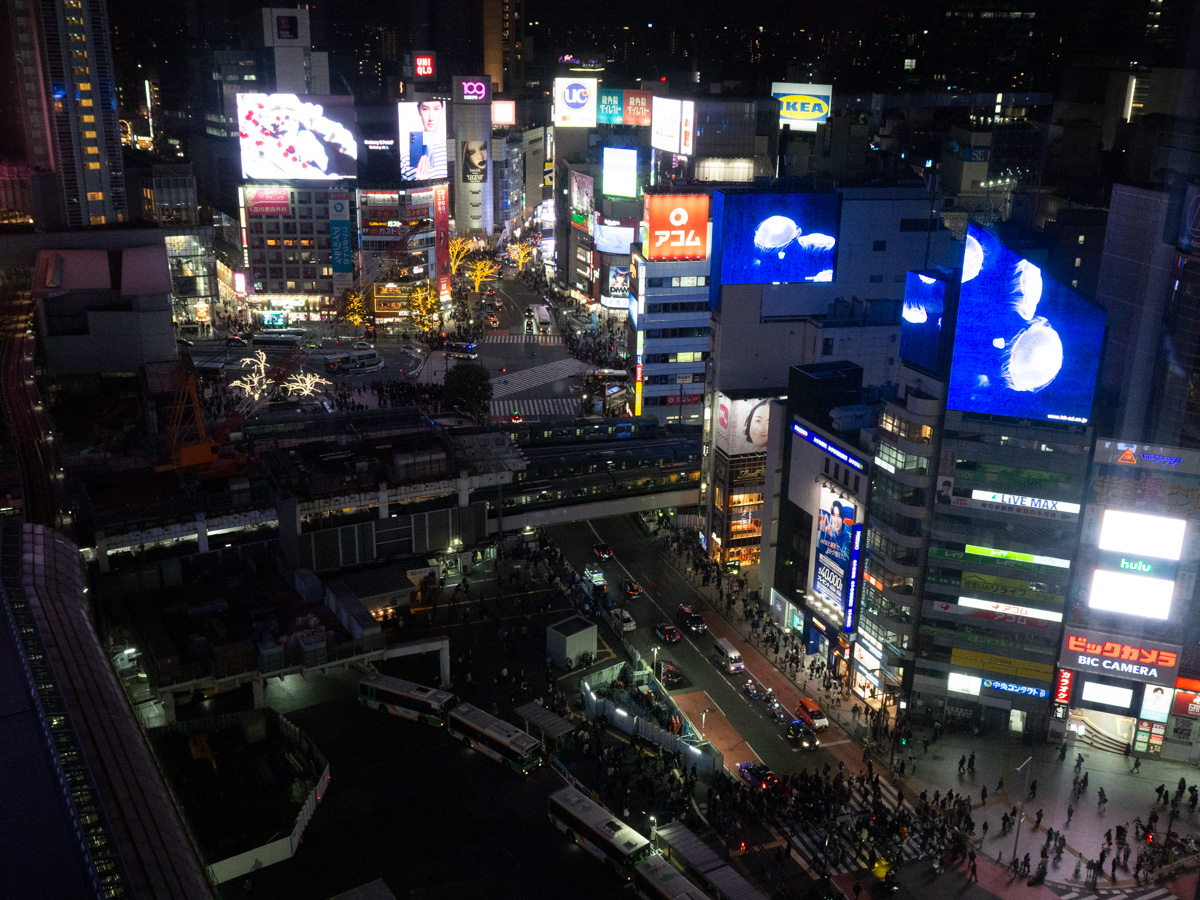
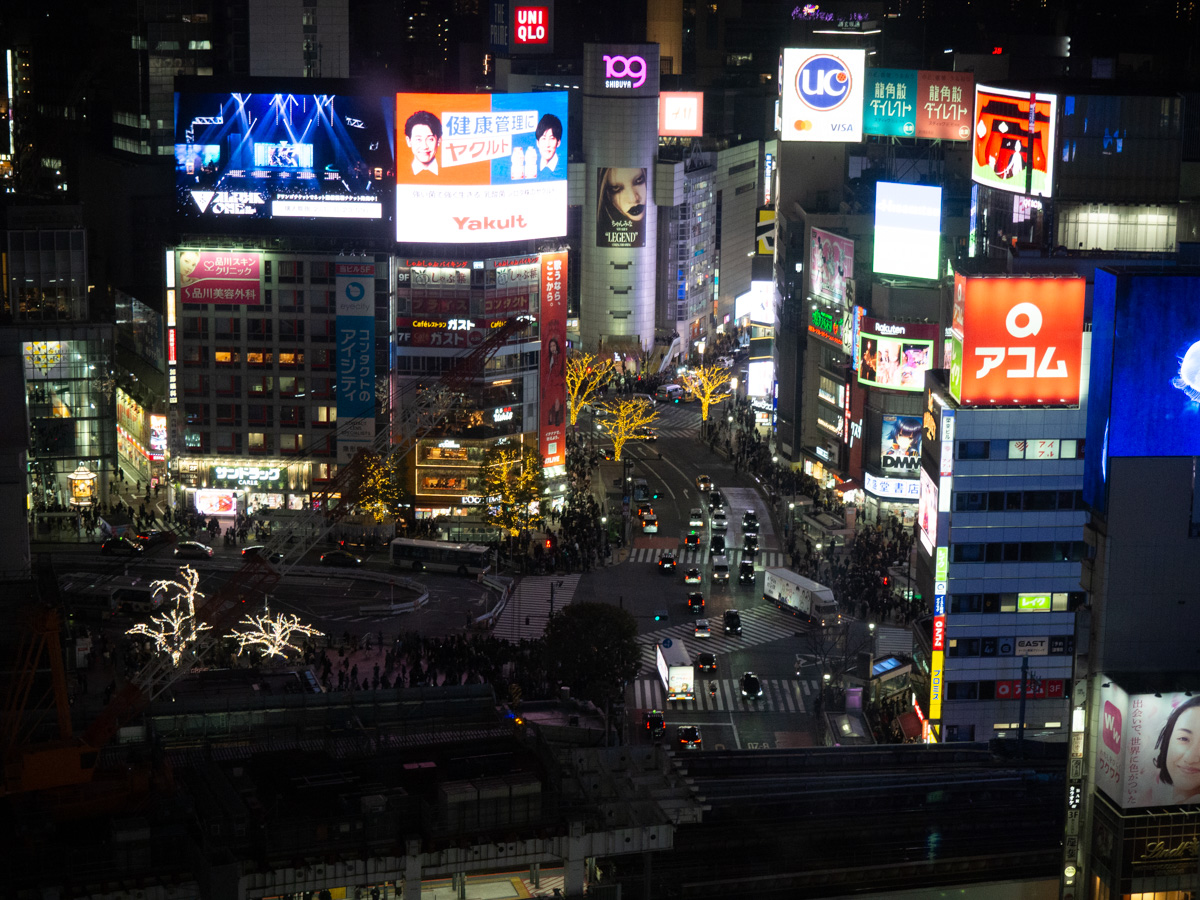
When it was dark, we went to Shibuya sky lounge to take photos of the photogenic street scene there. There is less traffic in Tokyo than I had expected, but a lot of people. Everybody is very obedient when it comes to traffic rules, traffic signals and street crossings. Traffic signals prioritize pedestrians. At the major street crossings, when the lights go green for pedestrians, they go green on all sides at the same time. People cross in all directions, including diagonally, and entire the entire crossing is like an ant hill. But a polite and organized ant hill!


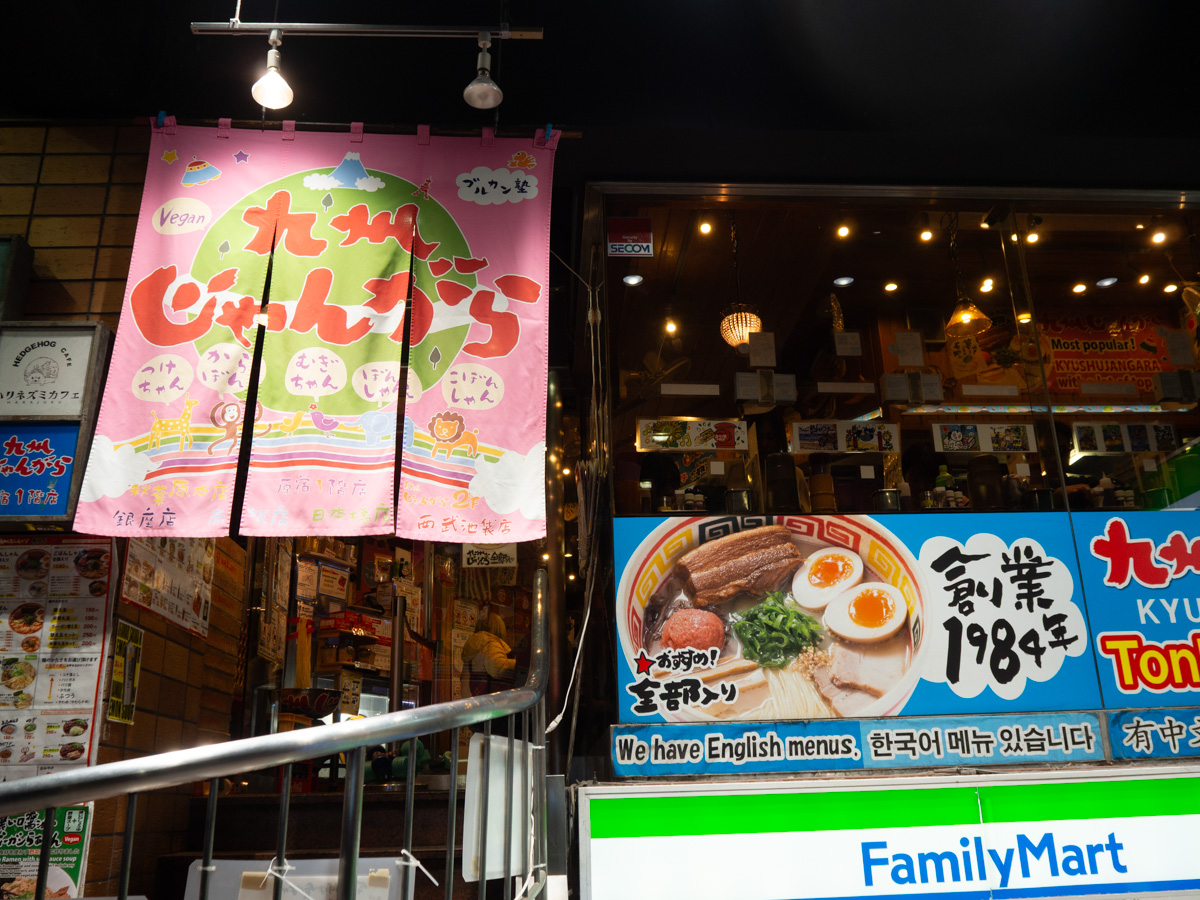
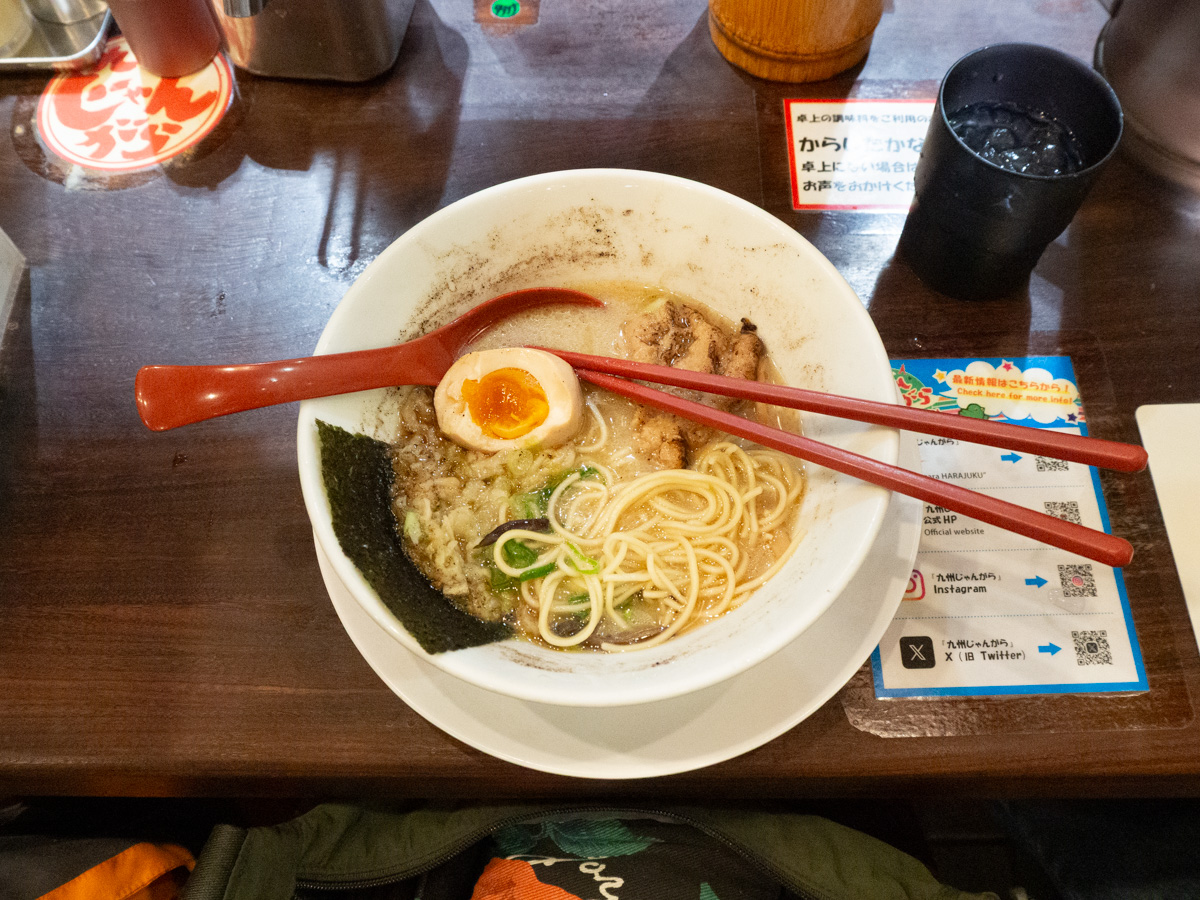
For dinner, Ingrid wished for ramen. We ate at Kyushu Jangara Ramen Harajuku, a total hole in the wall, with cheesy curtains and cheap-looking signage. Had I walked past it on the street, it would never have caught my eye. Possibly only to laugh at the cutesy creatures on the curtain. But Ingrid had done her research!

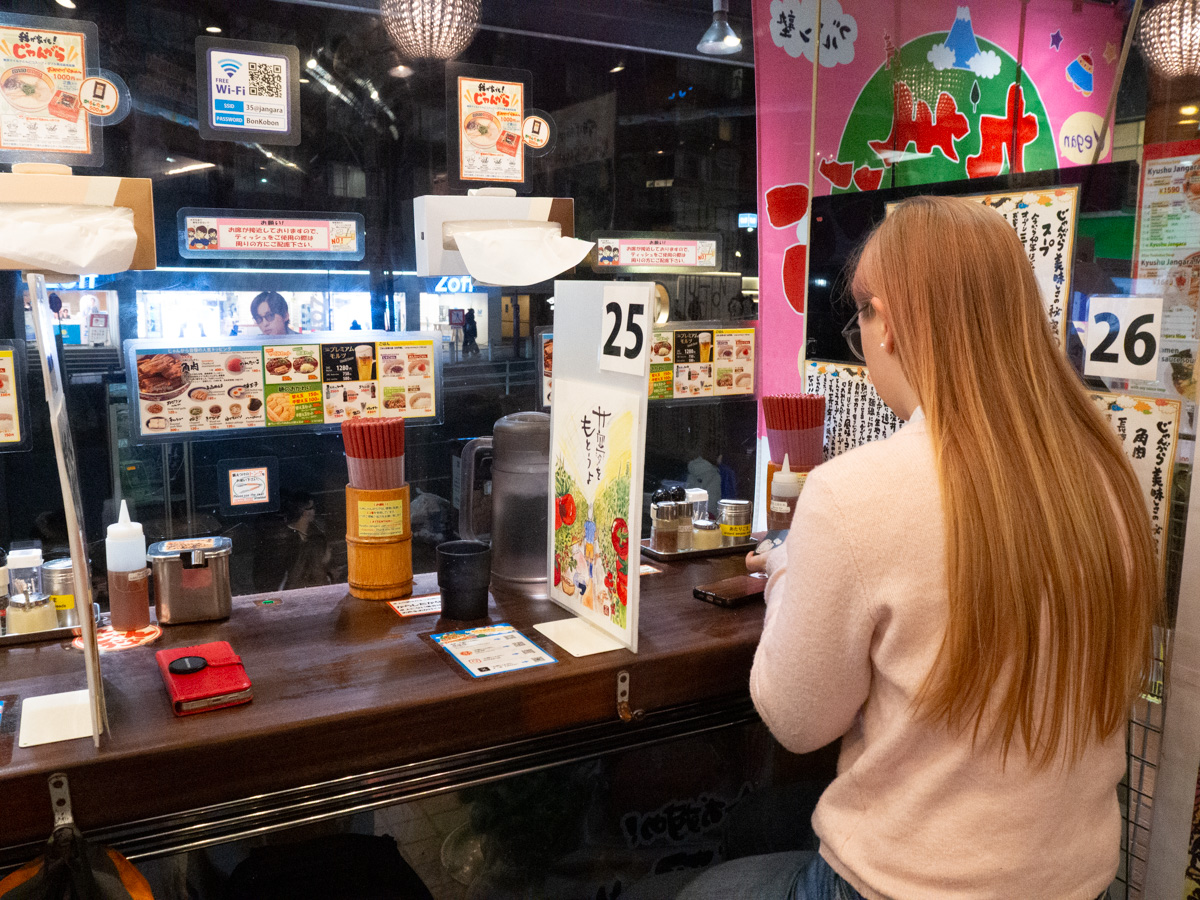
Inside it was just as cramped as a kaitenzushi place. Those dividers between seats make it possible to cram in more people than you otherwise could. Cosiness factor: zero.

The food was excellent, though. Flavourful broth, topped with noodles and vegetables and one of those lovely marinated eggs, as well as other strange things that I couldn’t even identify. They had ramen with vegetarian broth, which can be tricky to find – it tends to be pork-based. Ingrid said that her pork ramen was even better than my vegetarian one.

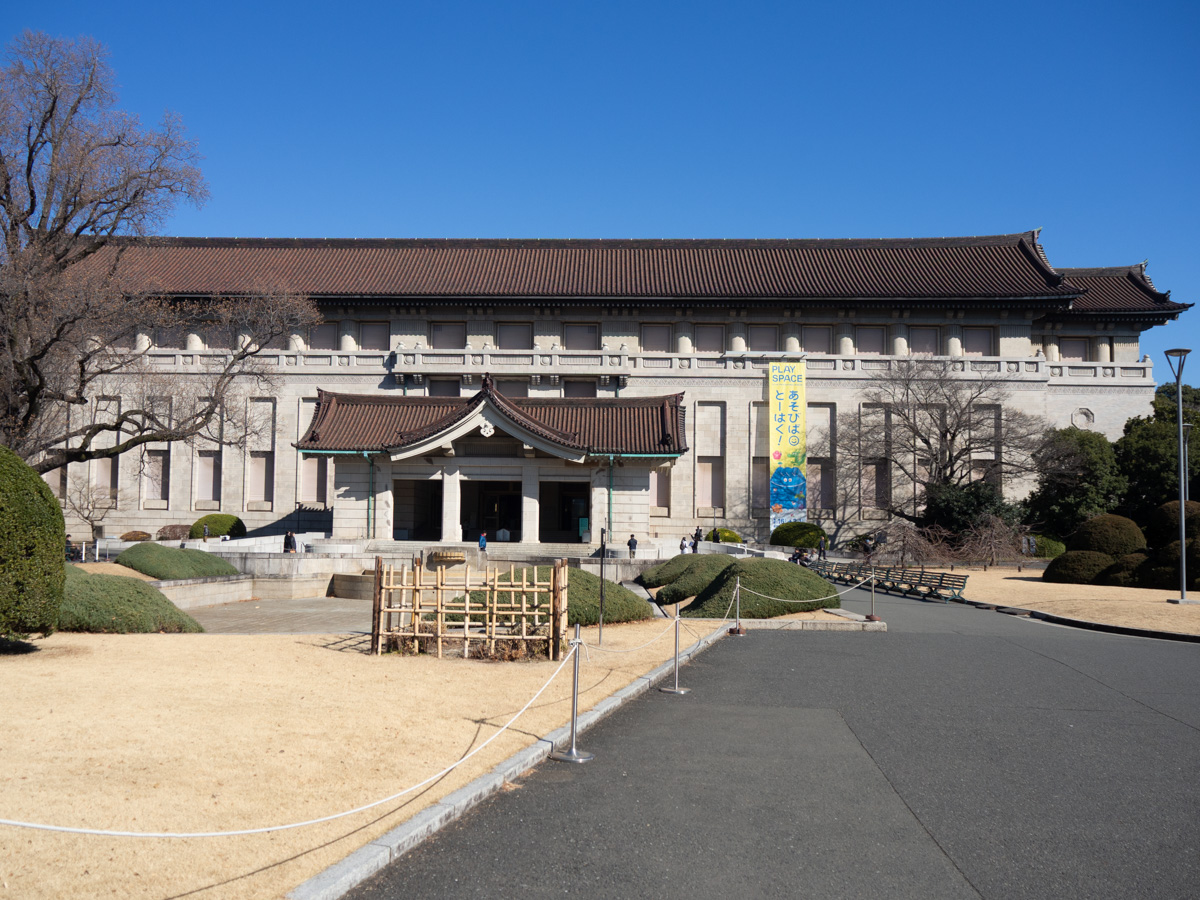
Tokyo National Museum in Ueno Park. Art and historical objects from Japan and other parts of Asia. We focused on Honkan, the main building with Japanese artefacts.

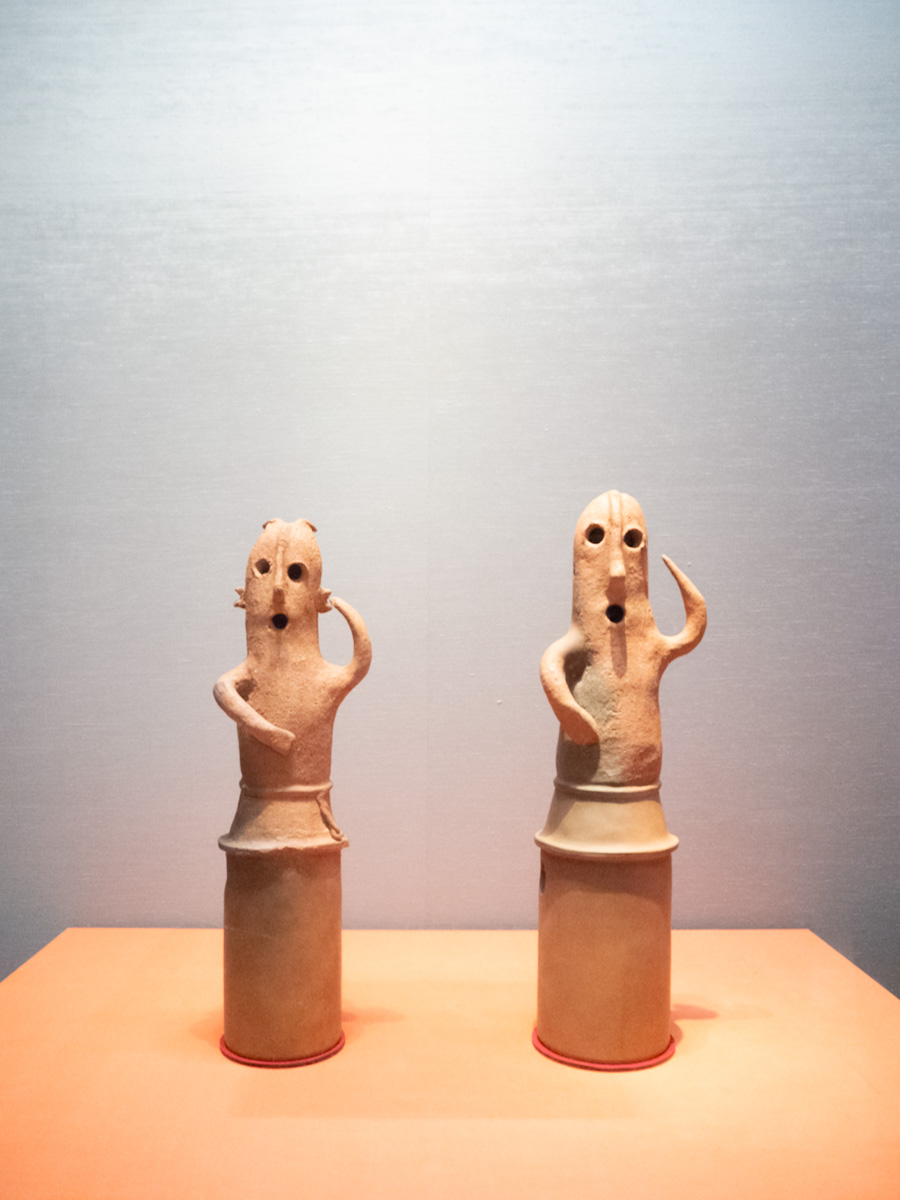
These two sculptures of dancing figures from the 6th century were the oldest items I saw. They are so old that they become new again. They make me think of Modigliani. Art has gone around the full circle.

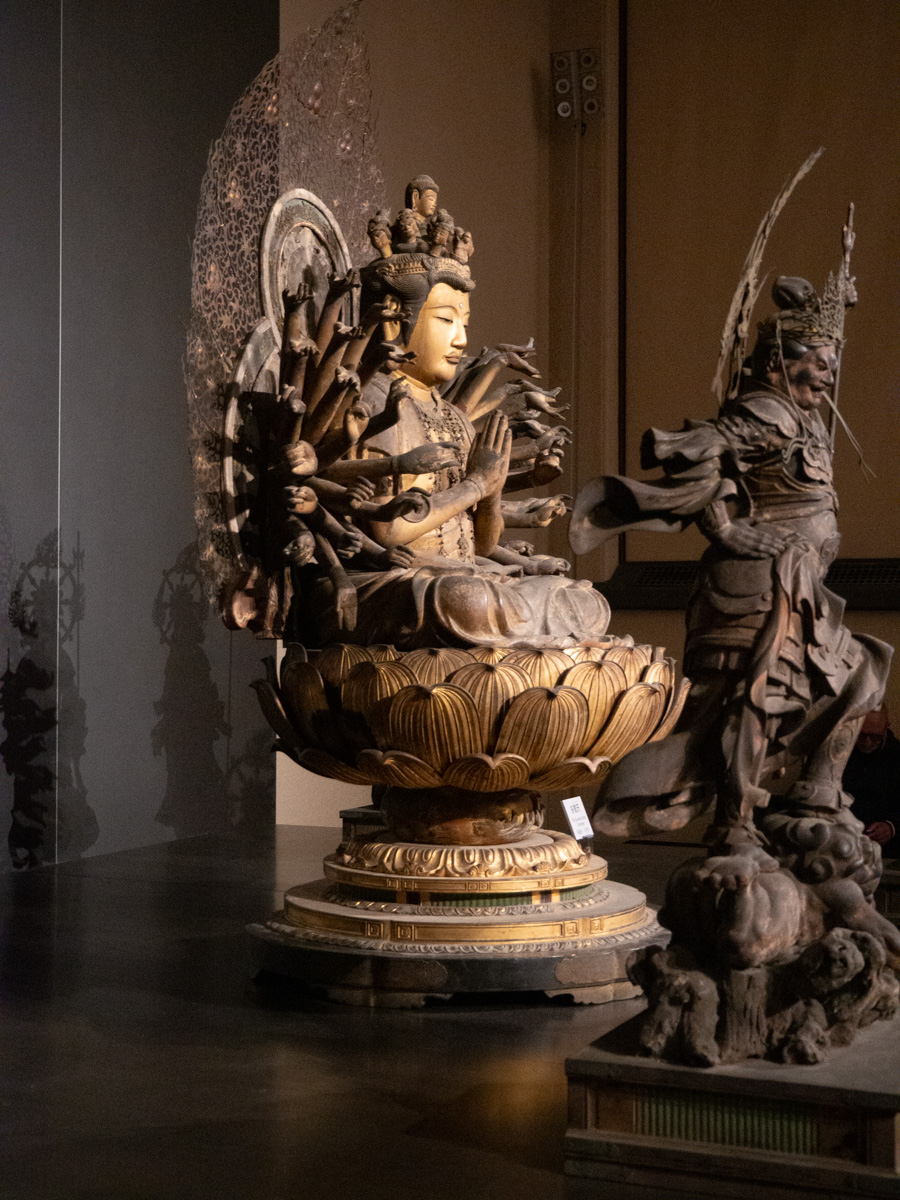
A lot of the older artwork displayed was religious in nature – Buddha statues, buddhist saints and demons. It can be technically impressive, but the highly stylized iconography, all full of symbolism, feels so impersonal.

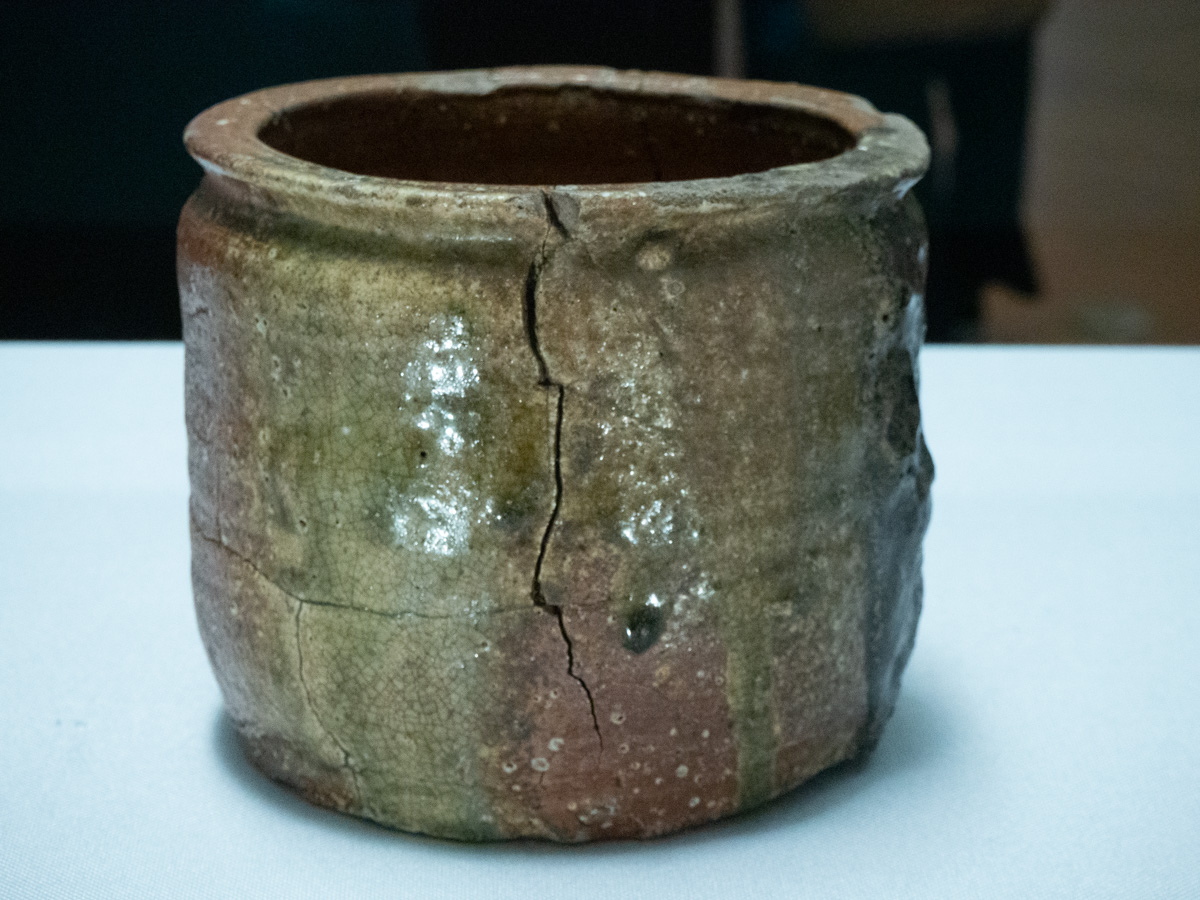
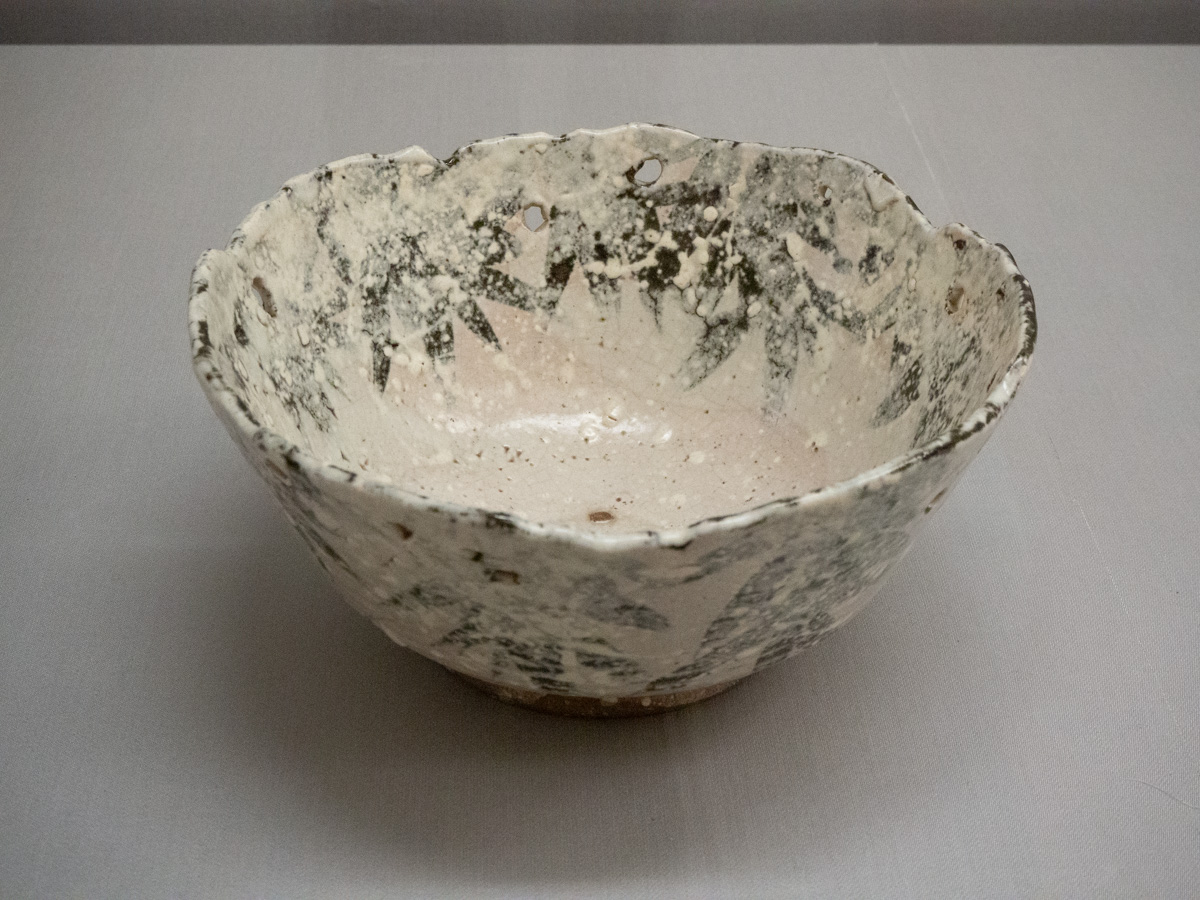
Old pottery with its wabi-sabi aesthetic was the opposite of impersonal. The maker’s hands are so present. It’s amazing that something so fragile has survived for four hundred years.

I’ve never done any pottery, but these pieces make me want to try it myself.

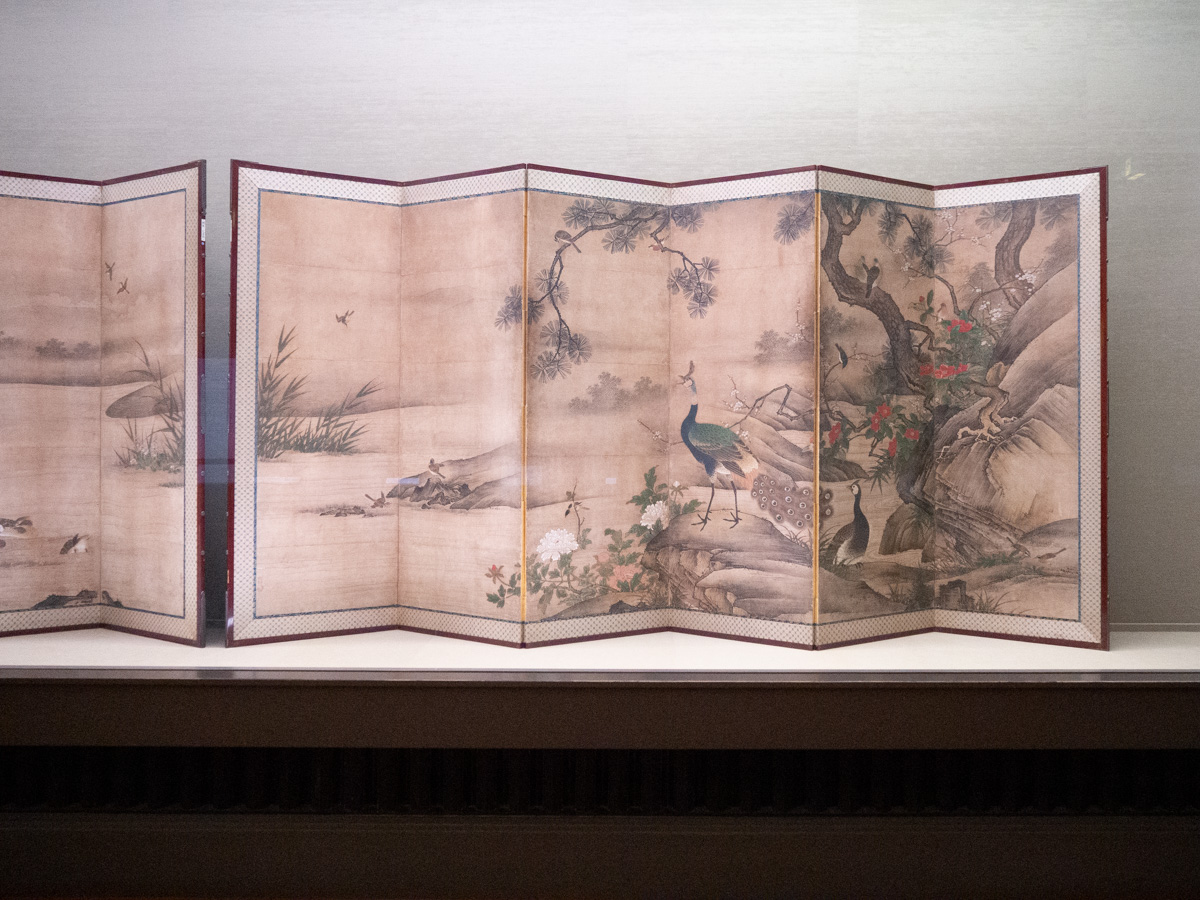
With this painted folding screen, we’re back to refined symbolism again.

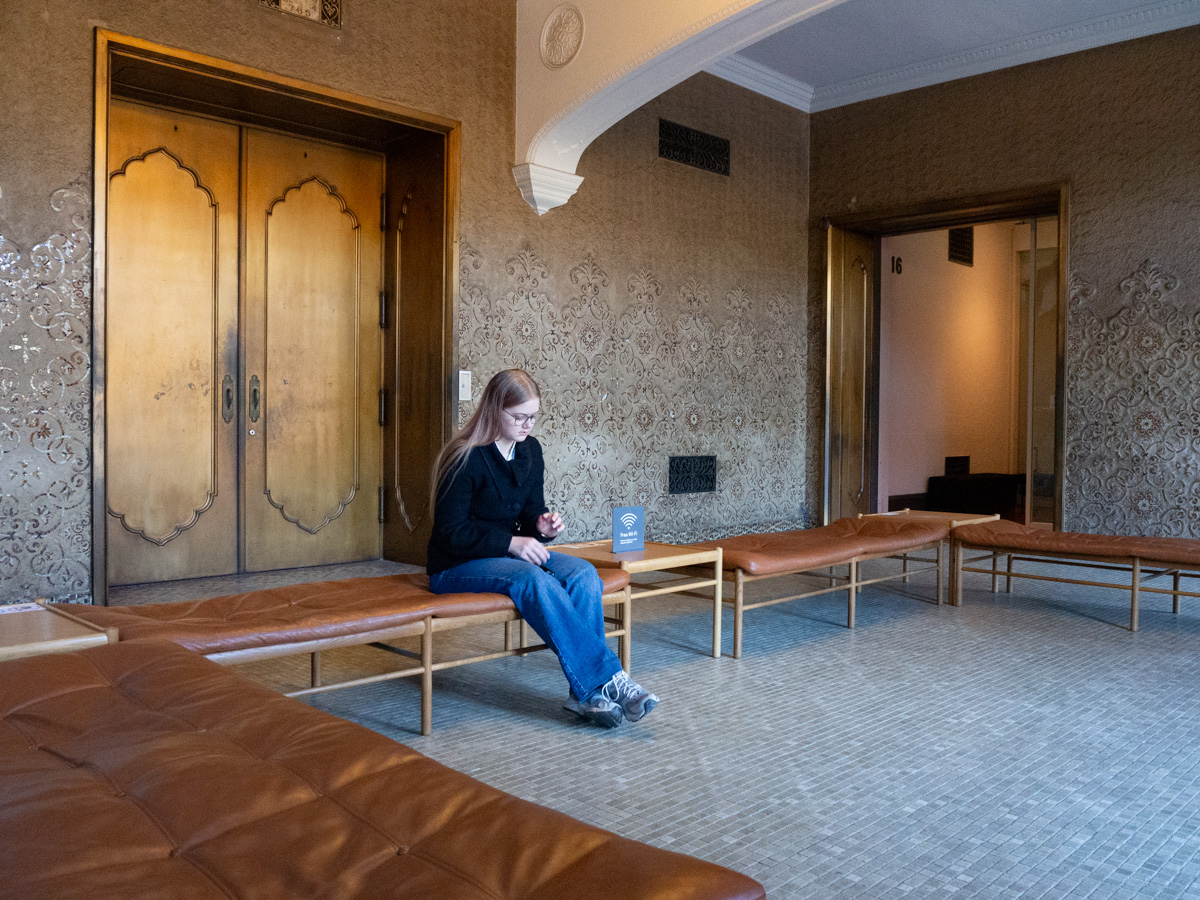
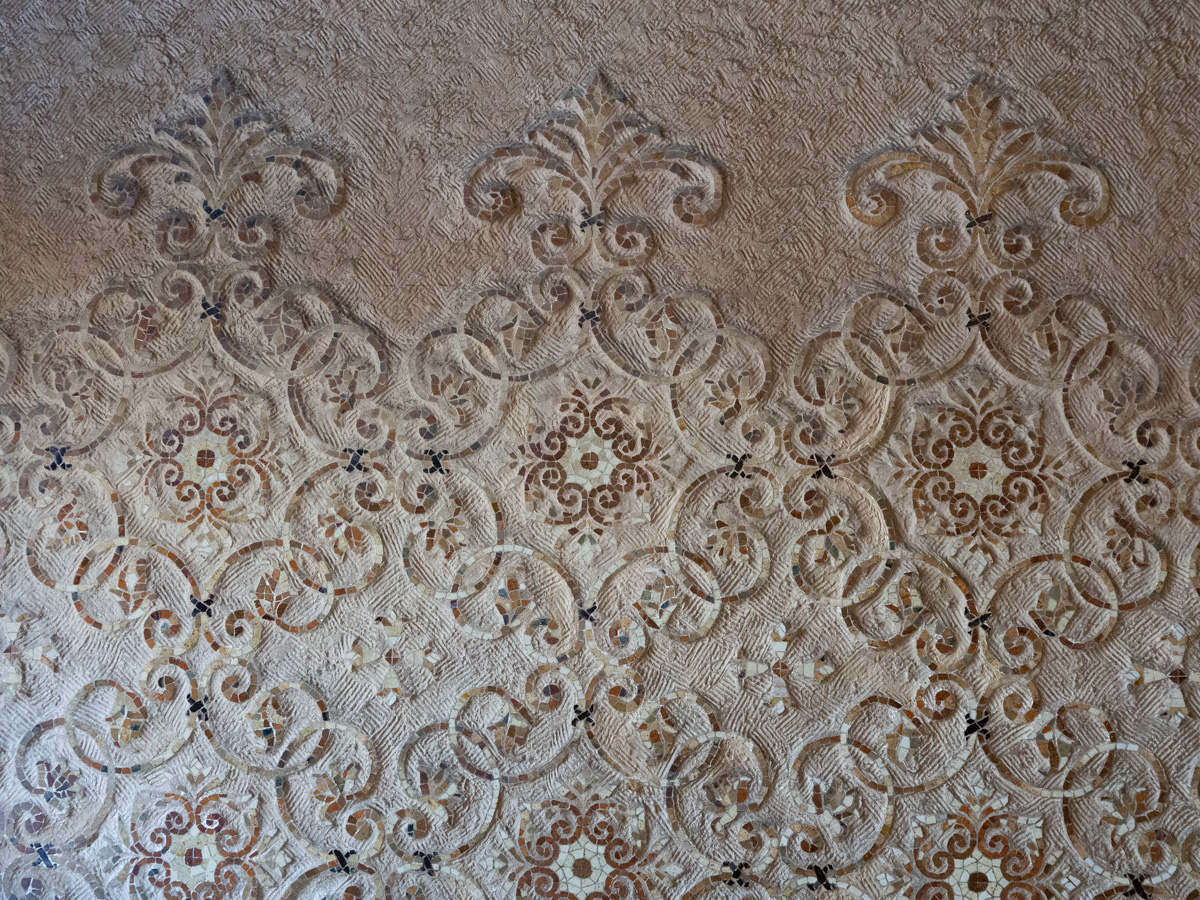
Taking a break to rest our legs. This foyer at the back of the museum had beautiful walls and beautiful light.


A visit to Japan would not be complete without seeing Mount Fuji.

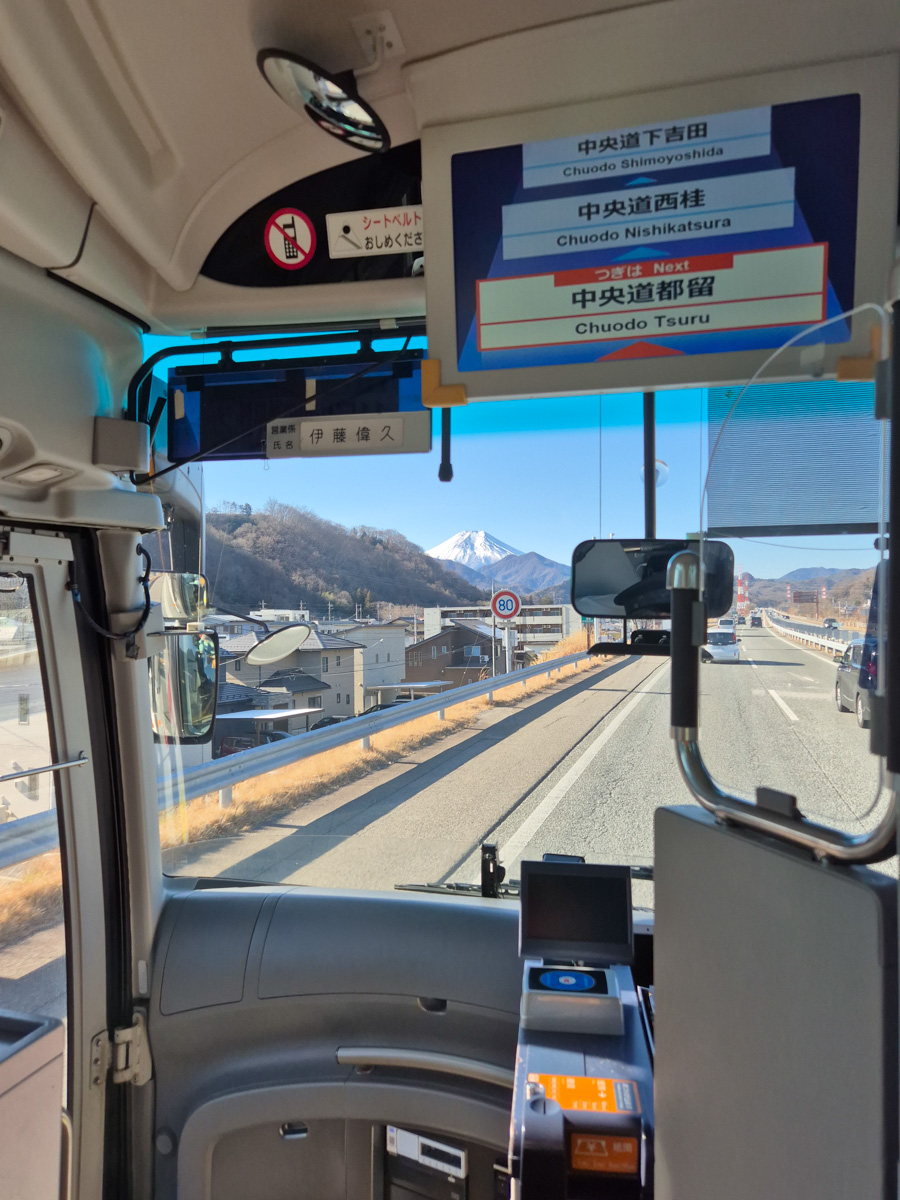
It takes under two hours to get to Fujikamaguchiko from Tokyo by express bus. Mount Fuji is visible well before the final stop.

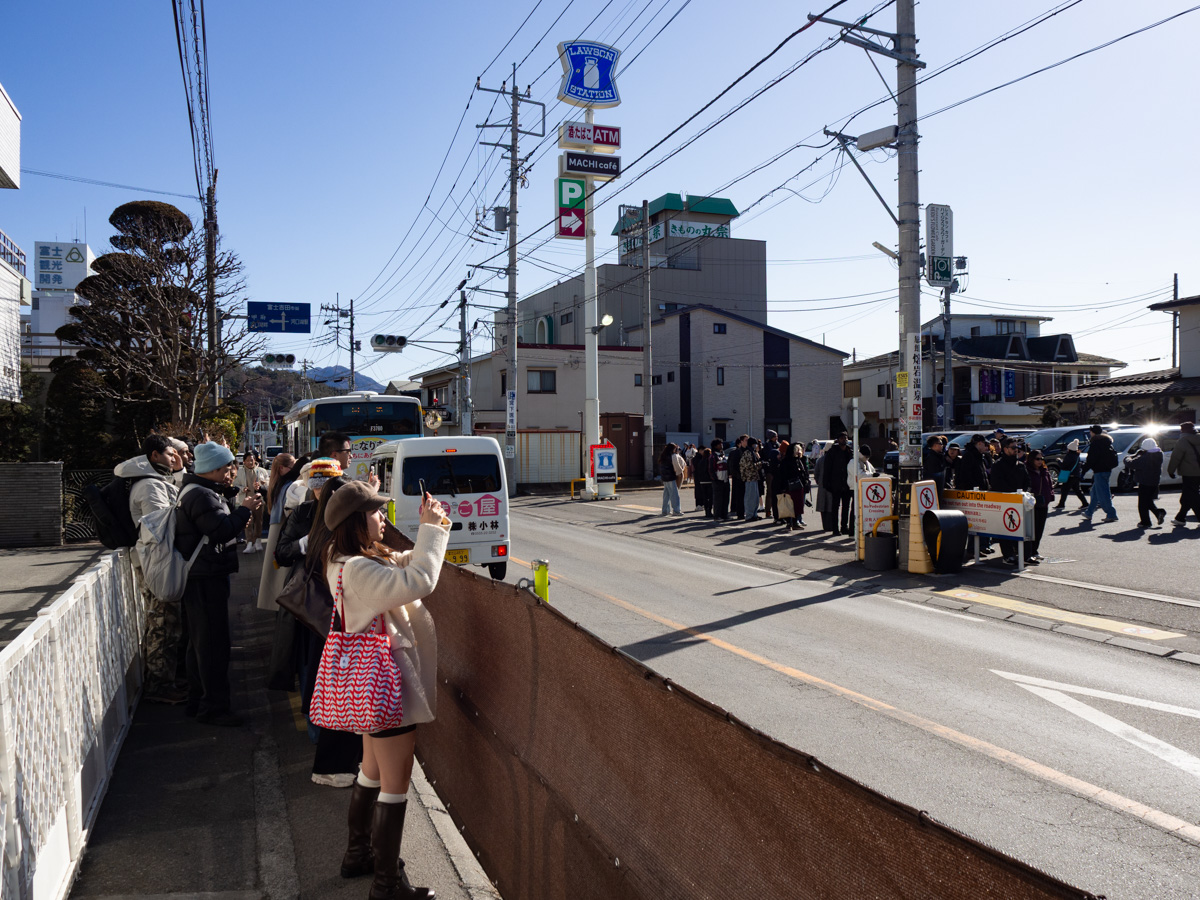
You don’t have to walk far from the bus station to get a view of the mountain. For some reason, a lot of people wanted a photo of it with a Lawson convenience store in the foreground. It’s a whole thing, apparently. There was a queue of people with cameras on one side the road, and their friends/partners on the other side, in front of the Lawson store. Everyone was queueing quite politely, but clearly the whole thing has been causing enough disruption to traffic that there were barriers in place to keep the photographers from wandering into the street, and even a security guard to keep an eye on the whole thing.
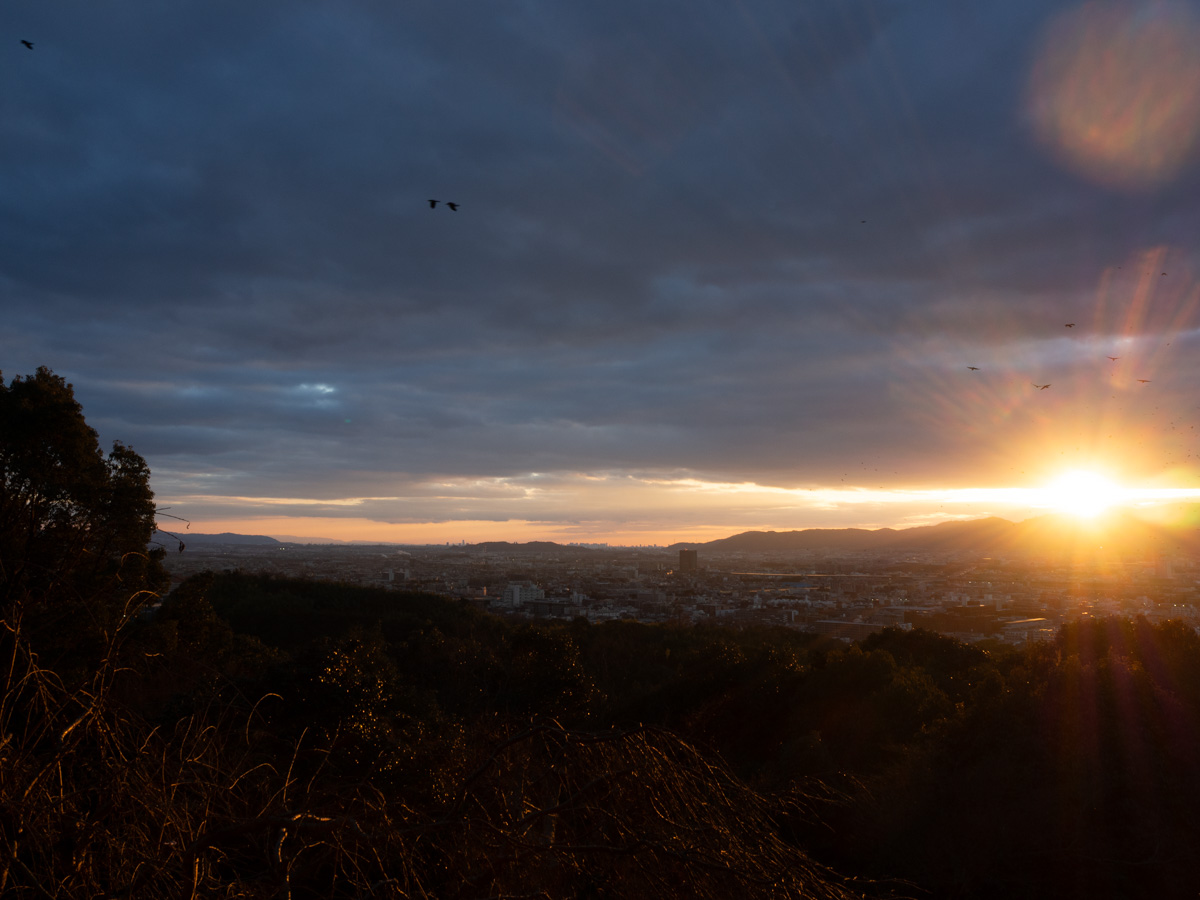
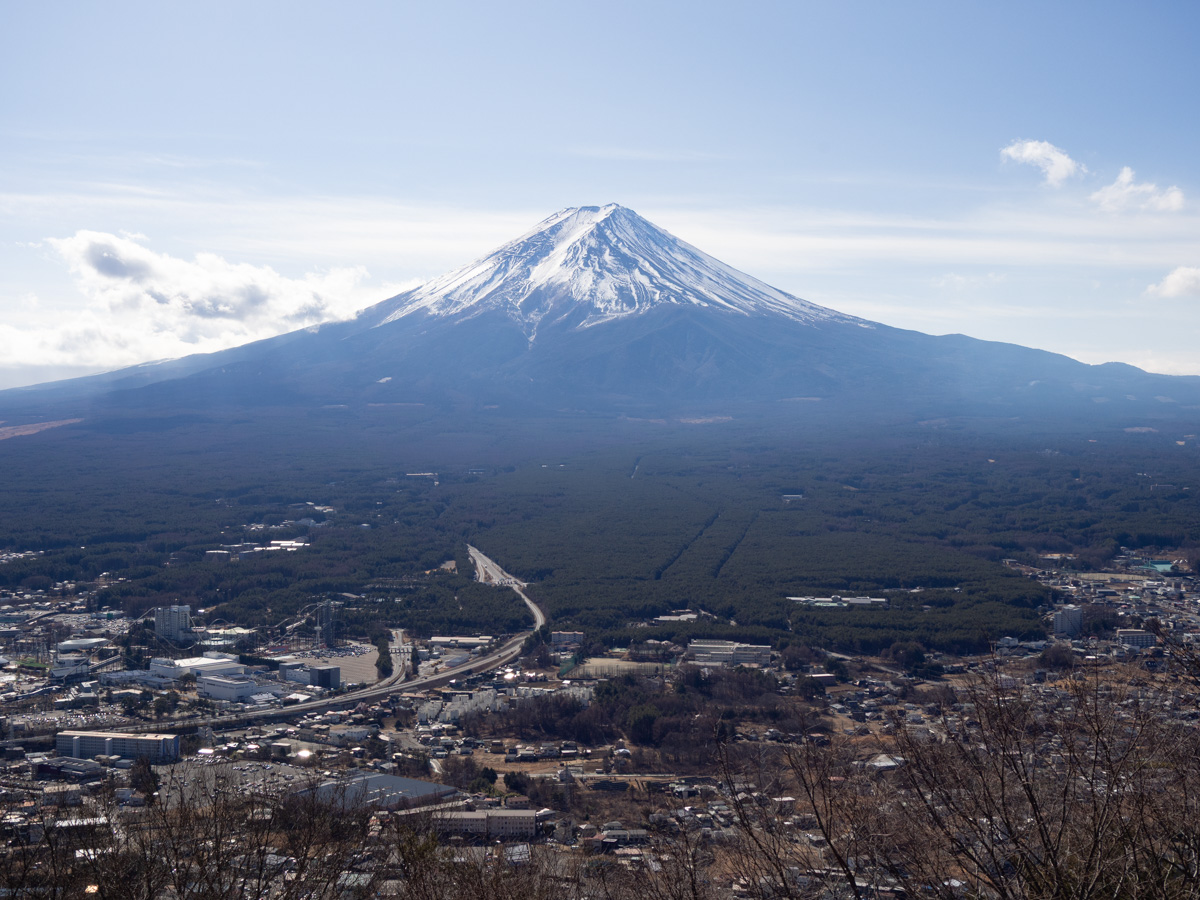
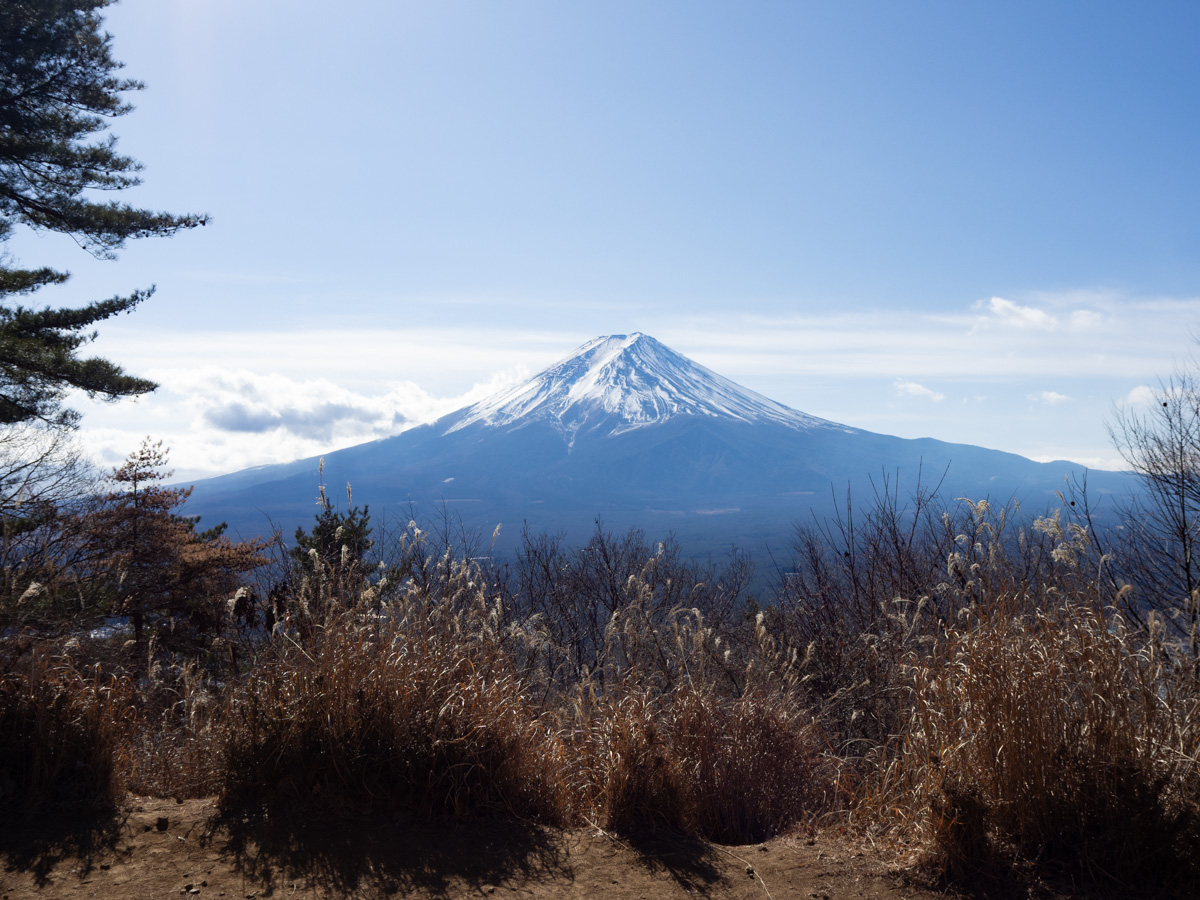
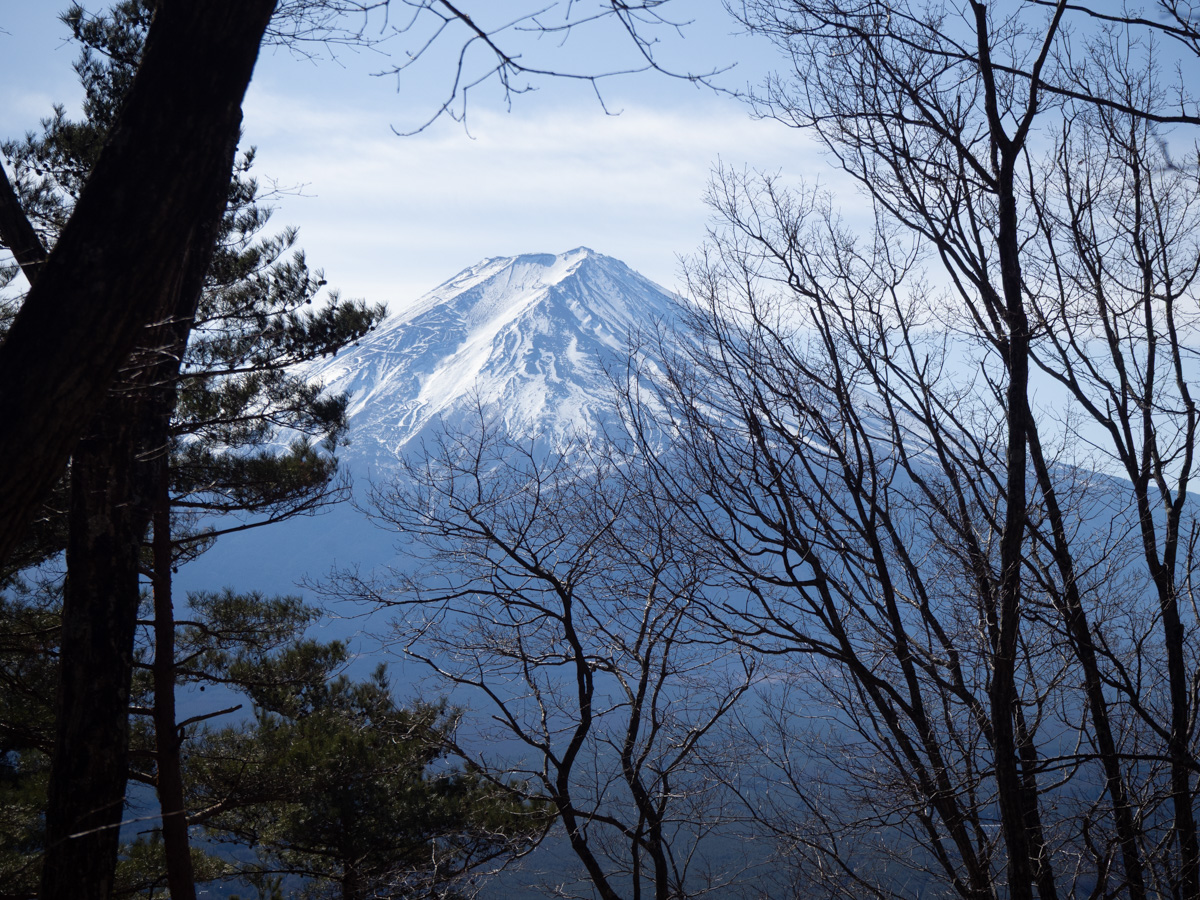
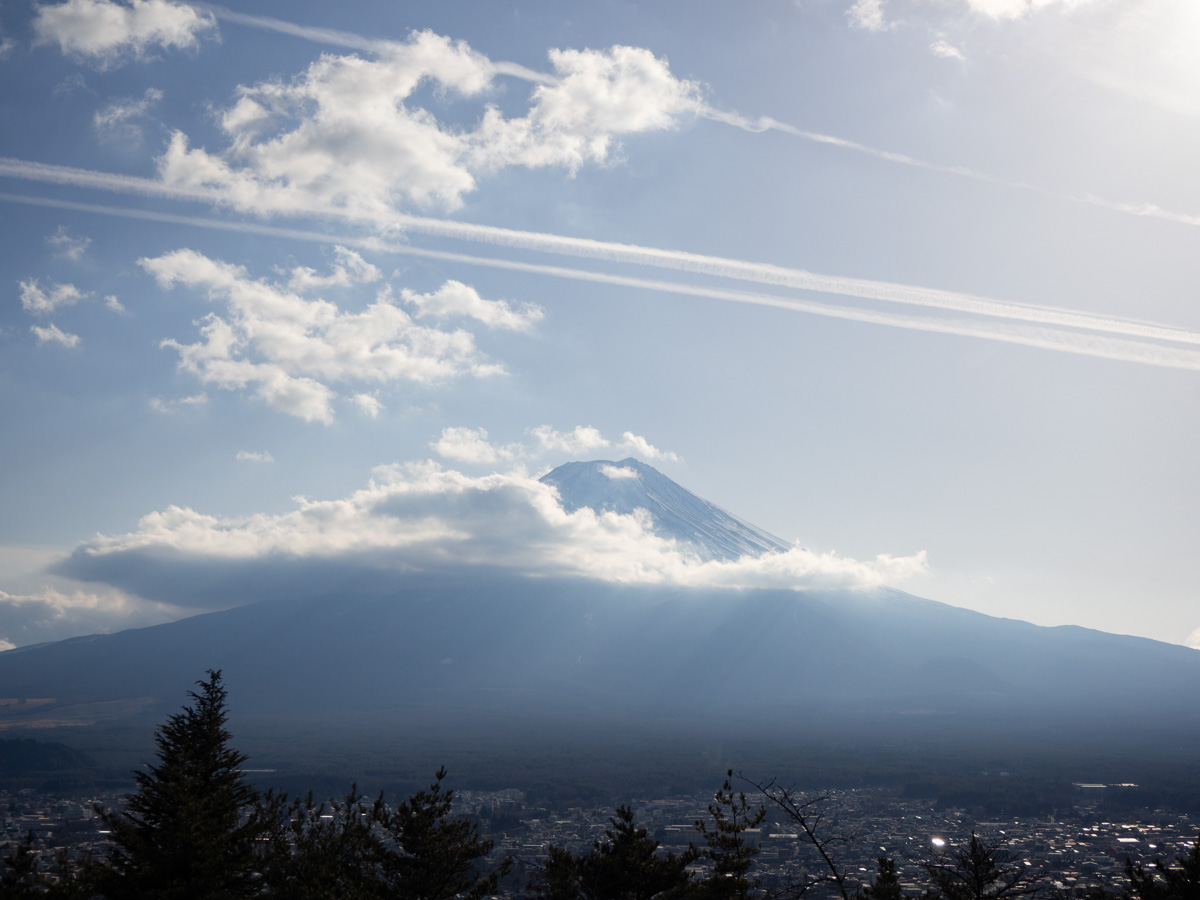
Better views of Mount Fuji can be had from a hill nearby. We took the cable car to the viewing site near the top of the hill and got pretty stunning views. It really is quite majestically large.
When we were planning the trip and Mt Fuji came up, my first instinct was that we should climb it. It’s a mountain, it’s there, of course we want to go to the top. Unfortunately quite undoable: firstly, it would take three days, and secondly, now is not a good time of the year. When we were here in the +5°C weather, the weather app said it was –29°C at the top of the mountain.

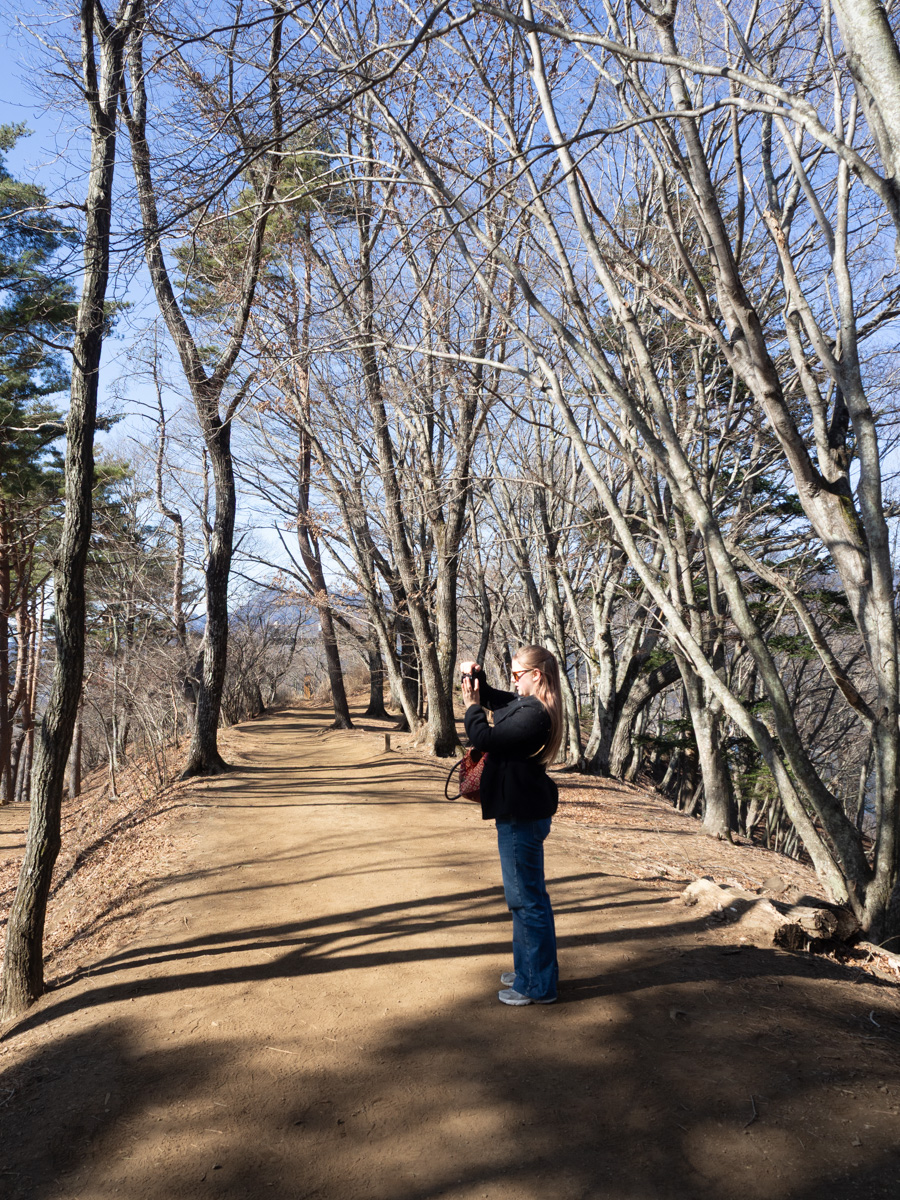
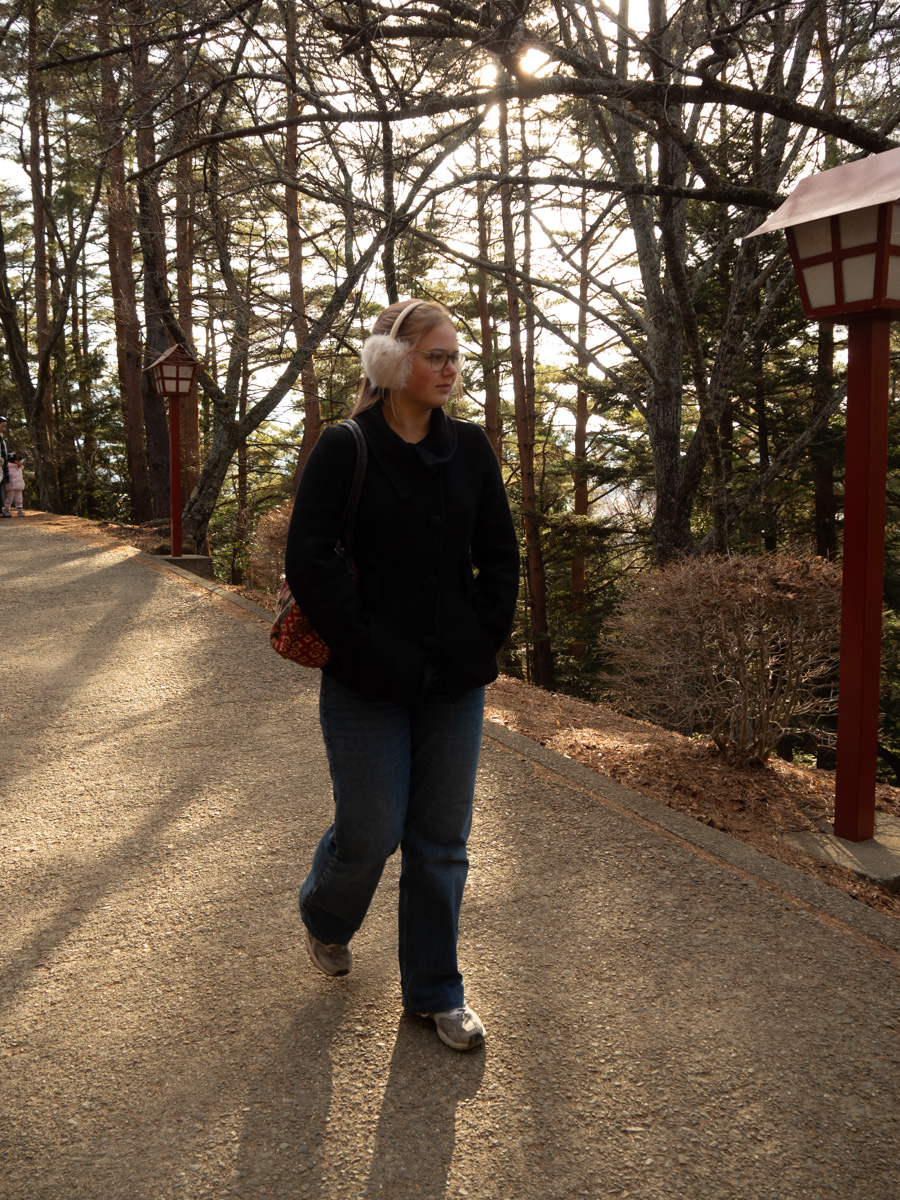
There was a hiking path to the top of the hill (and onwards to other hills and mountains) where we felt like we had the whole place to ourselves. The viewing platforms weren’t too badly crowded, either, even though it’s a Saturday, but up there was even better.


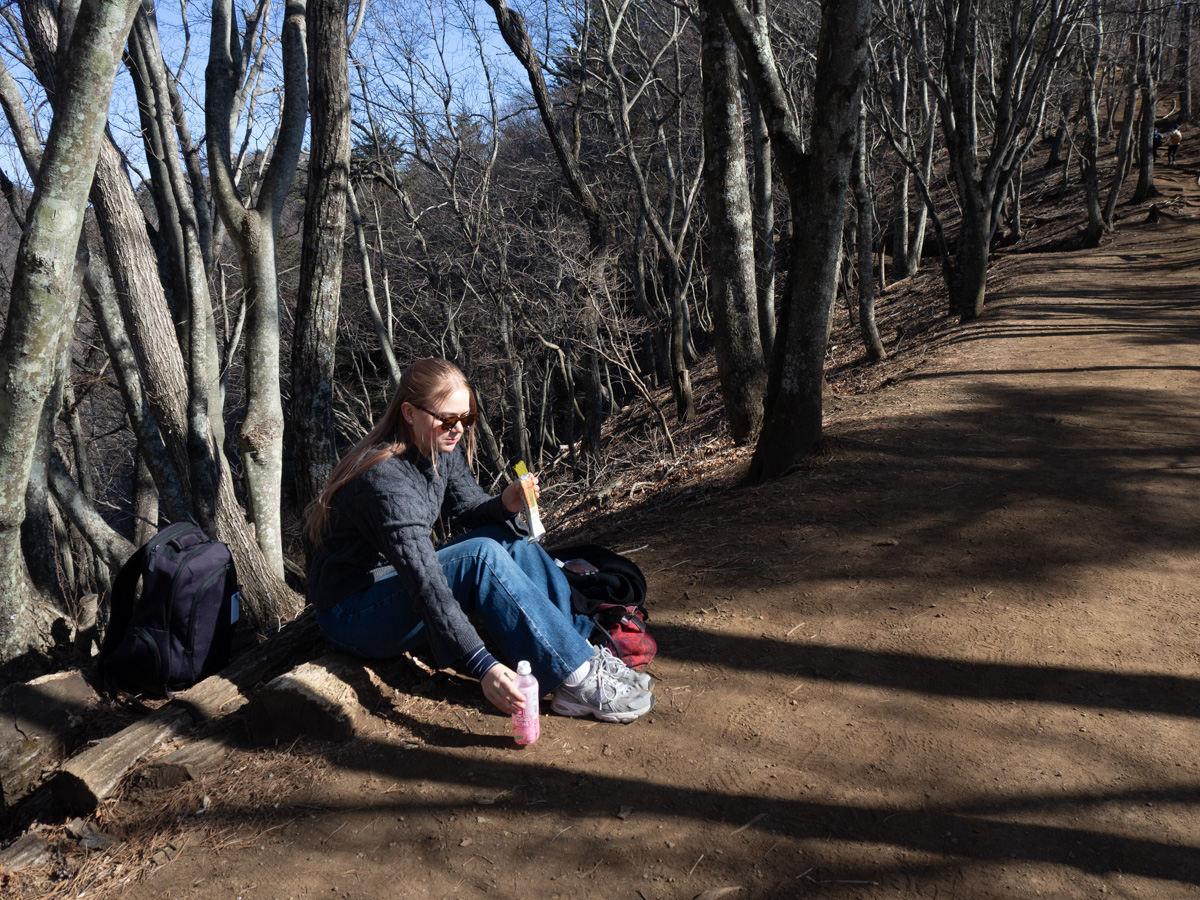
Snack break at the top of the hill. No benches anywhere, of course.

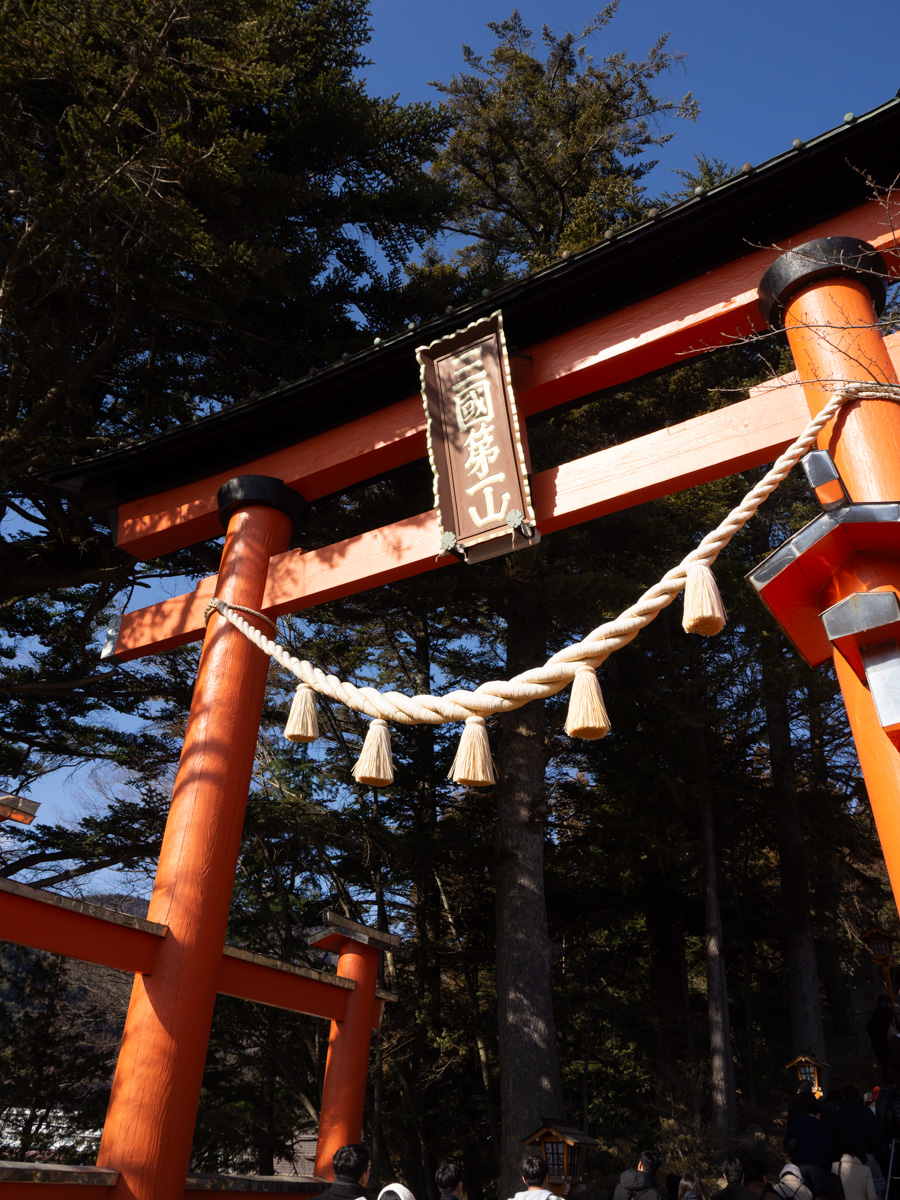
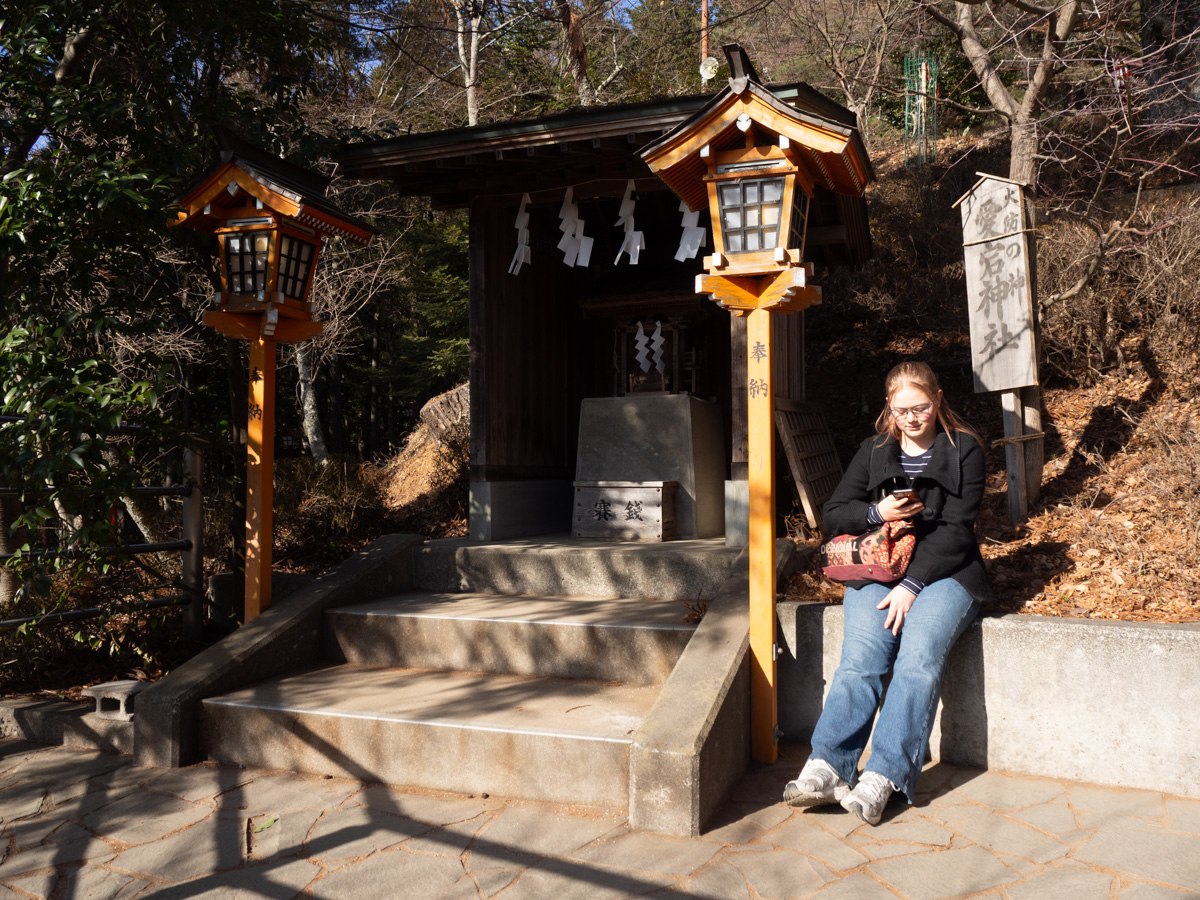
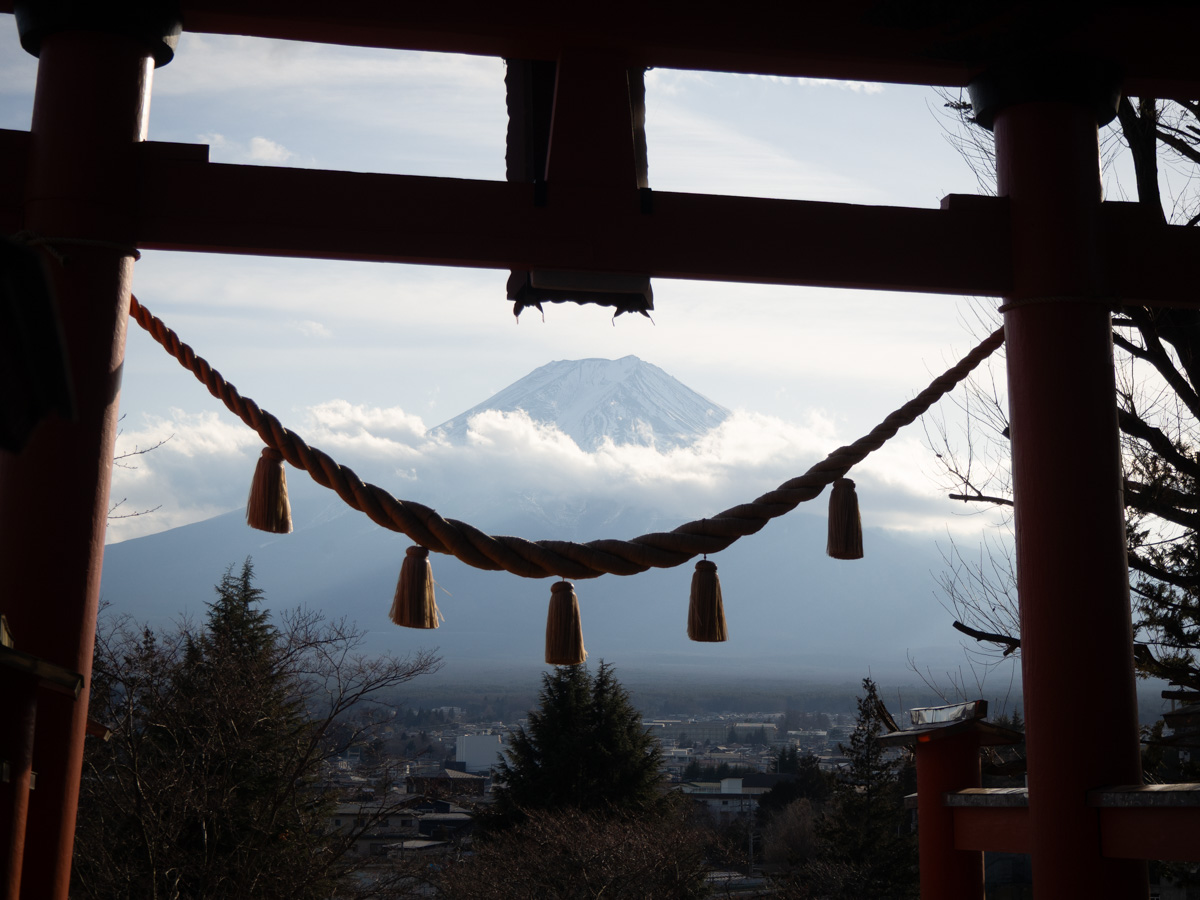
Fujikamaguchiko is a nice little town, with a lake, and pretty temples and shrines here and there. our focus was all on the mountain, though. When we got down from the cable car hill, we walked to Arakurayama temple on another hill for more views.

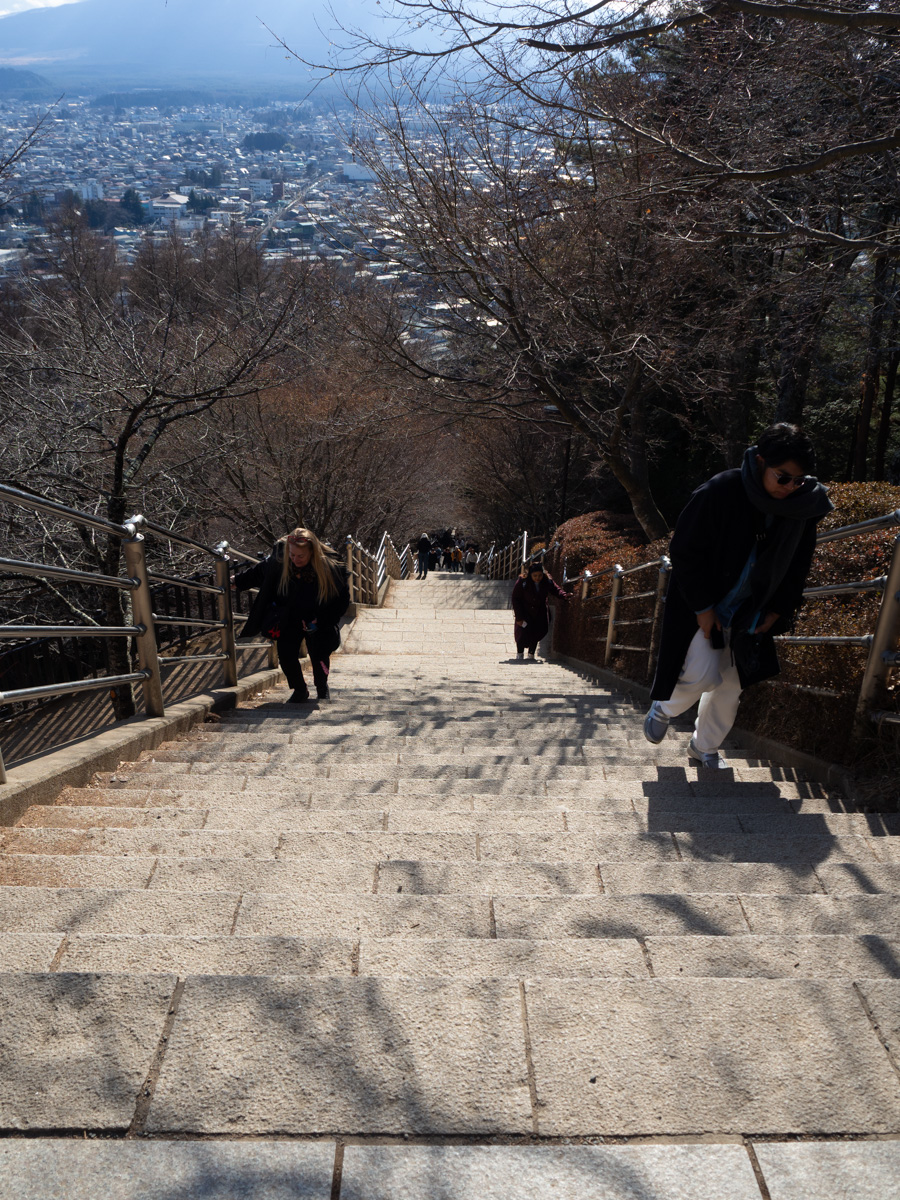
The walk wasn’t too long but turned out to be not at all pleasant. Much of it went along a large, noisy road. The pavement was very narrow; we couldn’t even walk side by side. Ingrid’s shoes hurt her feet, and of course there was nowhere to take a break. We regretted not having rented bikes.

And then there were stairs. Ingrid’s feet and knees were not happy.

This place was a lot more crowded. Most of the people stayed right at the top of the stairs; walking a bit further up got us away from them.

I’m glad we came here in the low season. I can’t even imagine how crowded it must be here in April, or in the summer.

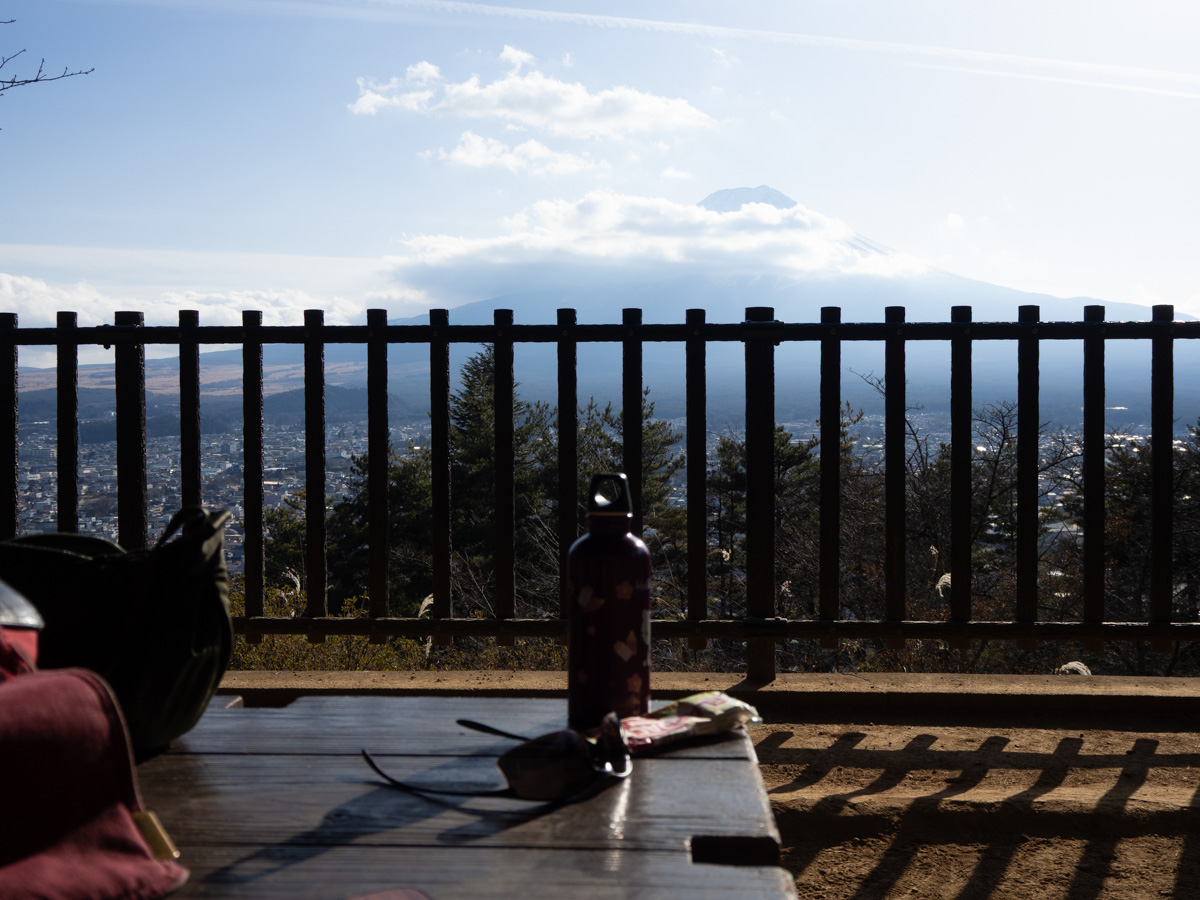
The views from up here were pretty stunning, but now the side of the mountain facing us was all in the shade, and the top of it enveloped in clouds.

Since our itinerary was very flexible, we picked the day for coming here based on the weather forecast. Ingrid told me that Mount Fuji is only visible on about 70 to 80 days in a year – that’s just one day out of every five. The rest of the time it’s hidden by clouds or rain.

We hung out here for a while and waited for the clouds to drift past the peak.

Our legs were quite tired by the end of the day.