It’s that time of the year! The garden is dominated by huge fluffy clouds of white cherry blossoms.
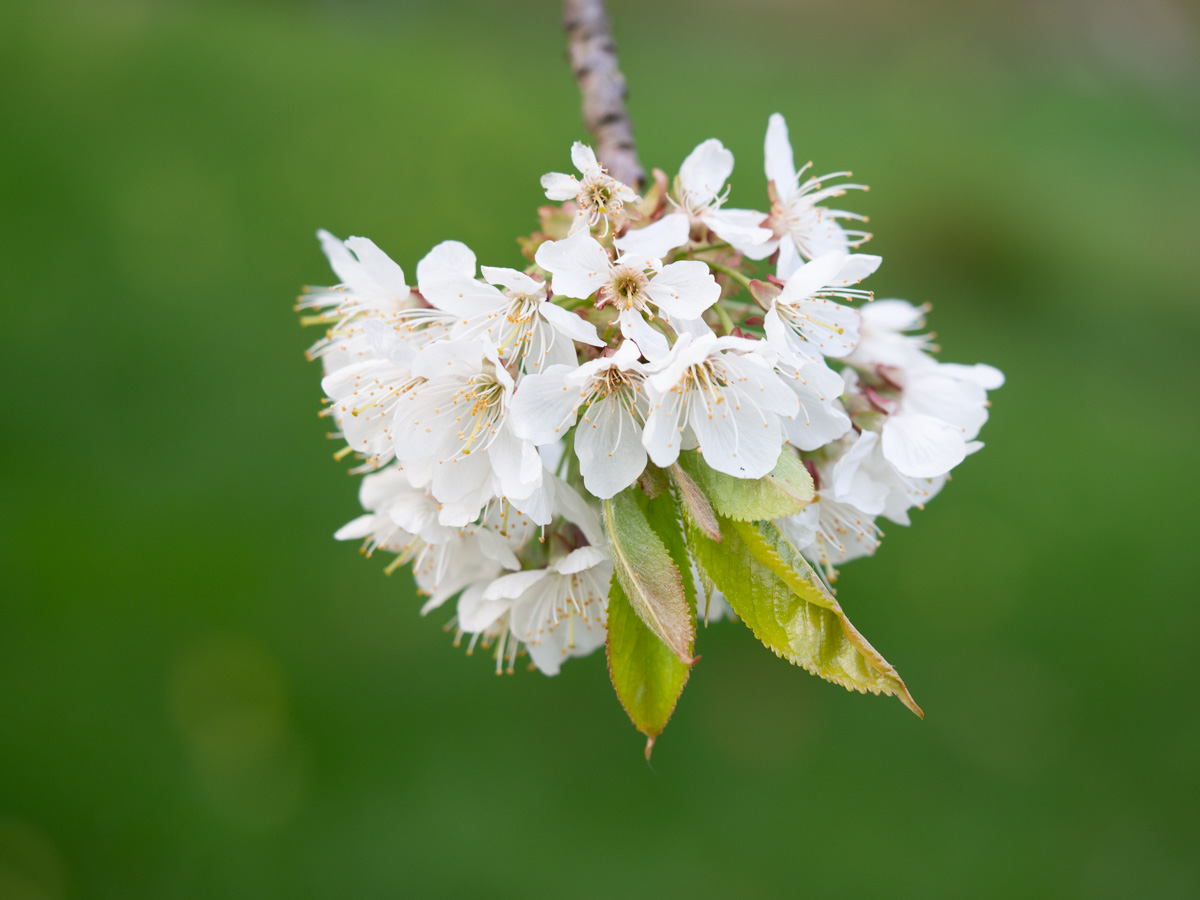
It’s that time of the year! The garden is dominated by huge fluffy clouds of white cherry blossoms.
If there are anemones flowering in the garden, there should also be anemones elsewhere. I went for a walk through the anemone fields of Hansta.
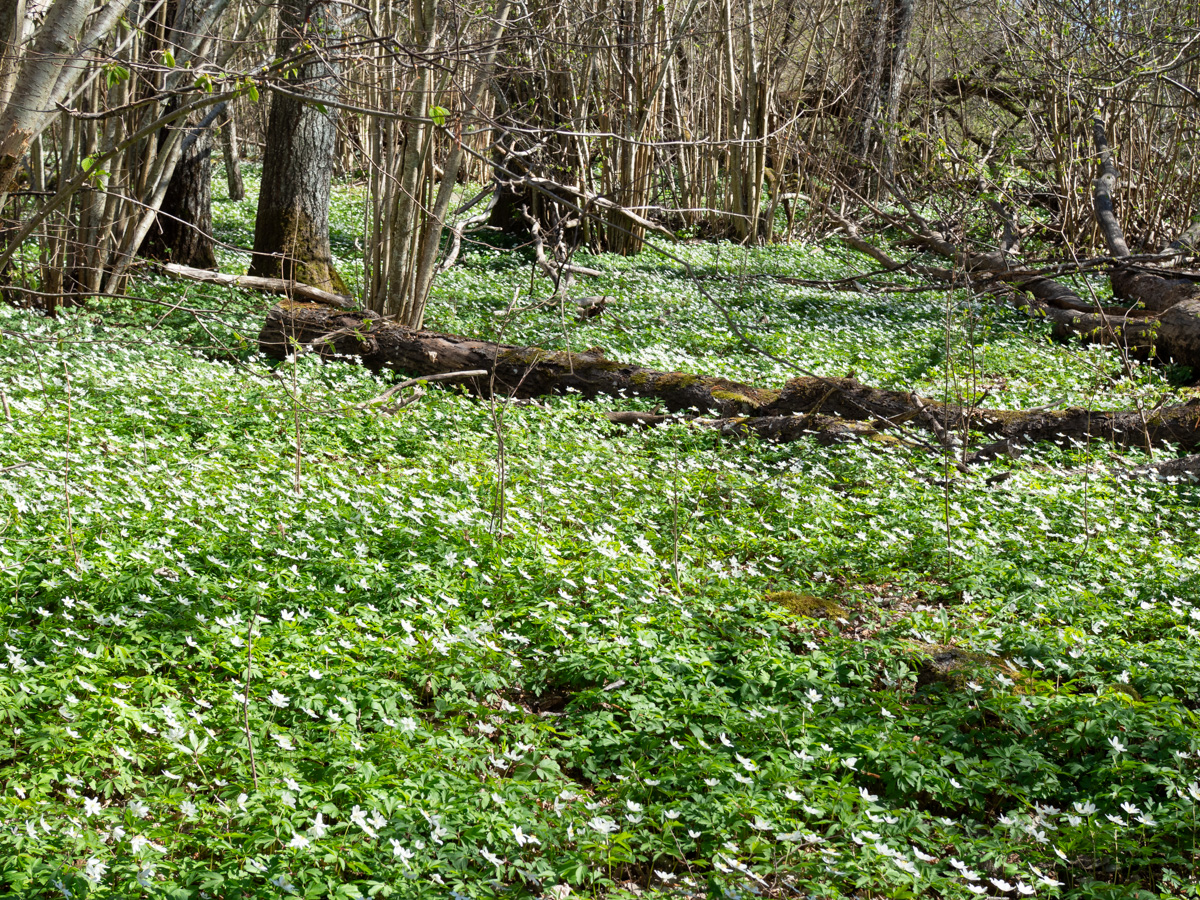
The downside of going out walking on a beautiful, sunny spring day, on a public holiday to boot, is that a lot of other people will have had the same idea. When I first got to the path, it felt almost crowded. There were two groups just ahead of me, one behind me, and a fourth one came towards us in the other direction, all talking loudly. Not, like, large groups, just couples or families, but still – I felt surrounded by crowds. I got off the path and found a nice log to sit on for a time, while the others walked further away and the mood was more like what I had come for.
Finding a usable sitting log was a challenge of its own. There were a lot of ants everywhere.
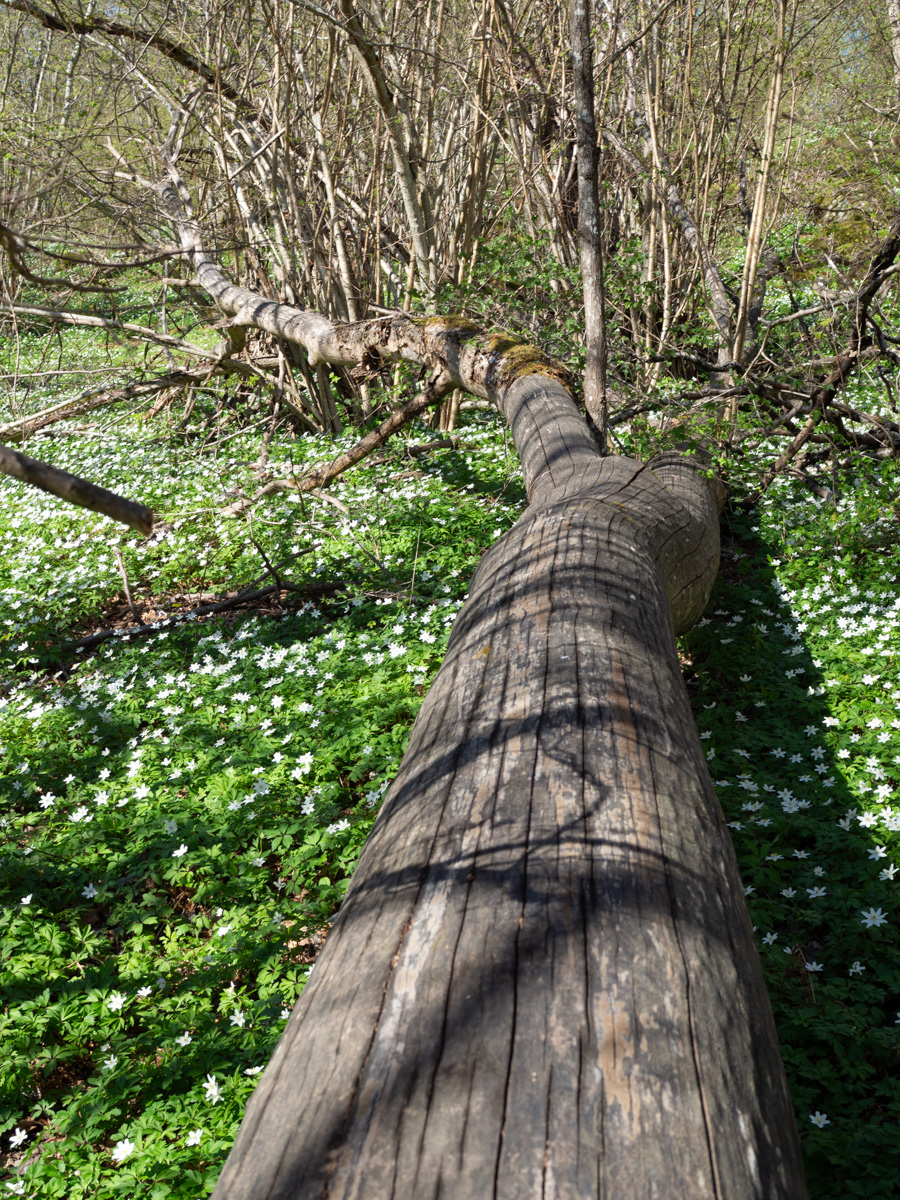
The groups were soon out of earshot and forest was quiet again. This is one of Stockholm’s designated “quiet places”.
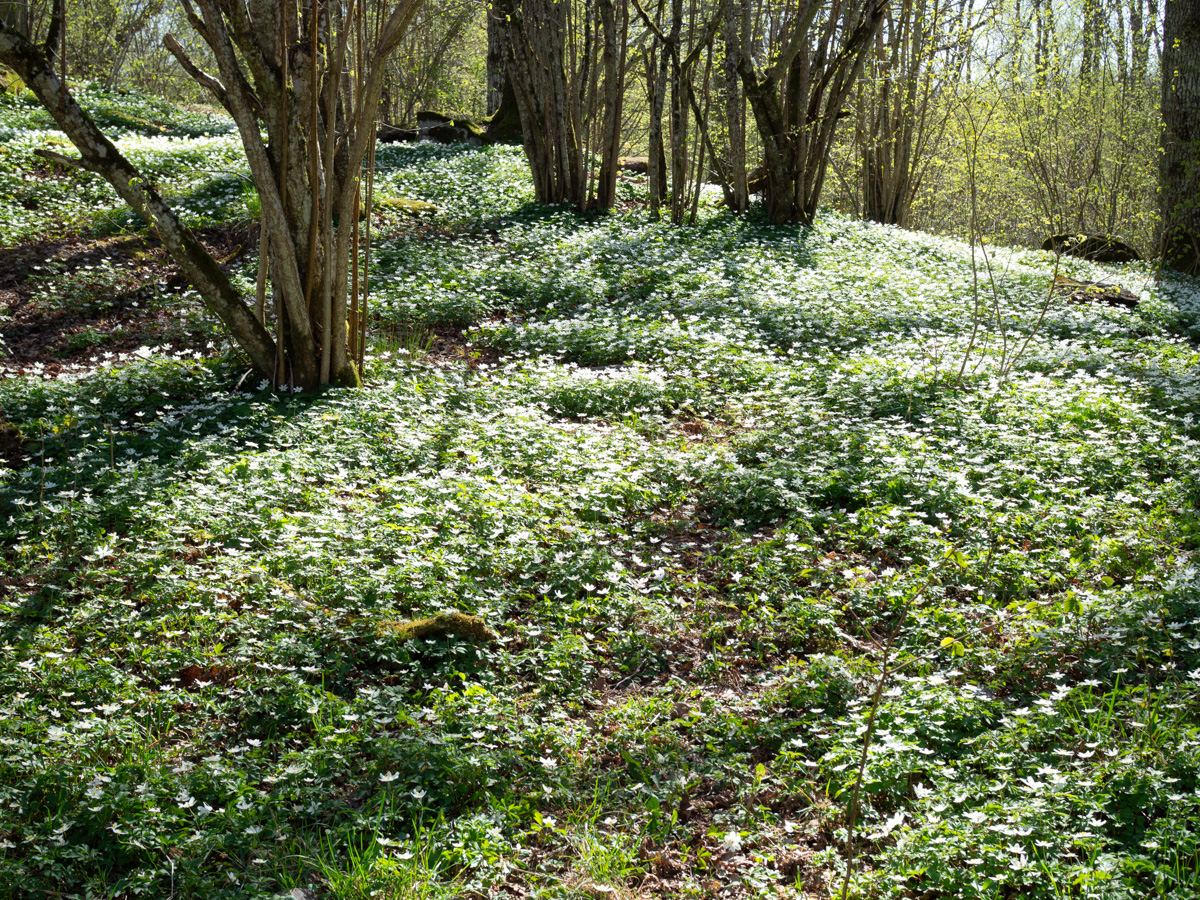
Ever since I read about how the number of tepals on anemones varies, I can’t help paying attention to them. I don’t know where Wikipedia’s sources observed their anemones: not here at least. Flowers with eight and nine tepals are not a majority here, but very much not rare.

There are small clumps of liverwort mixed up with the anemones here and there. Their flowers look so similar, while the rest of the plants are nothing like each other at all.

The main trail through the anemone forest isn’t long, maybe a kilometre, so I took a few meanders around it.
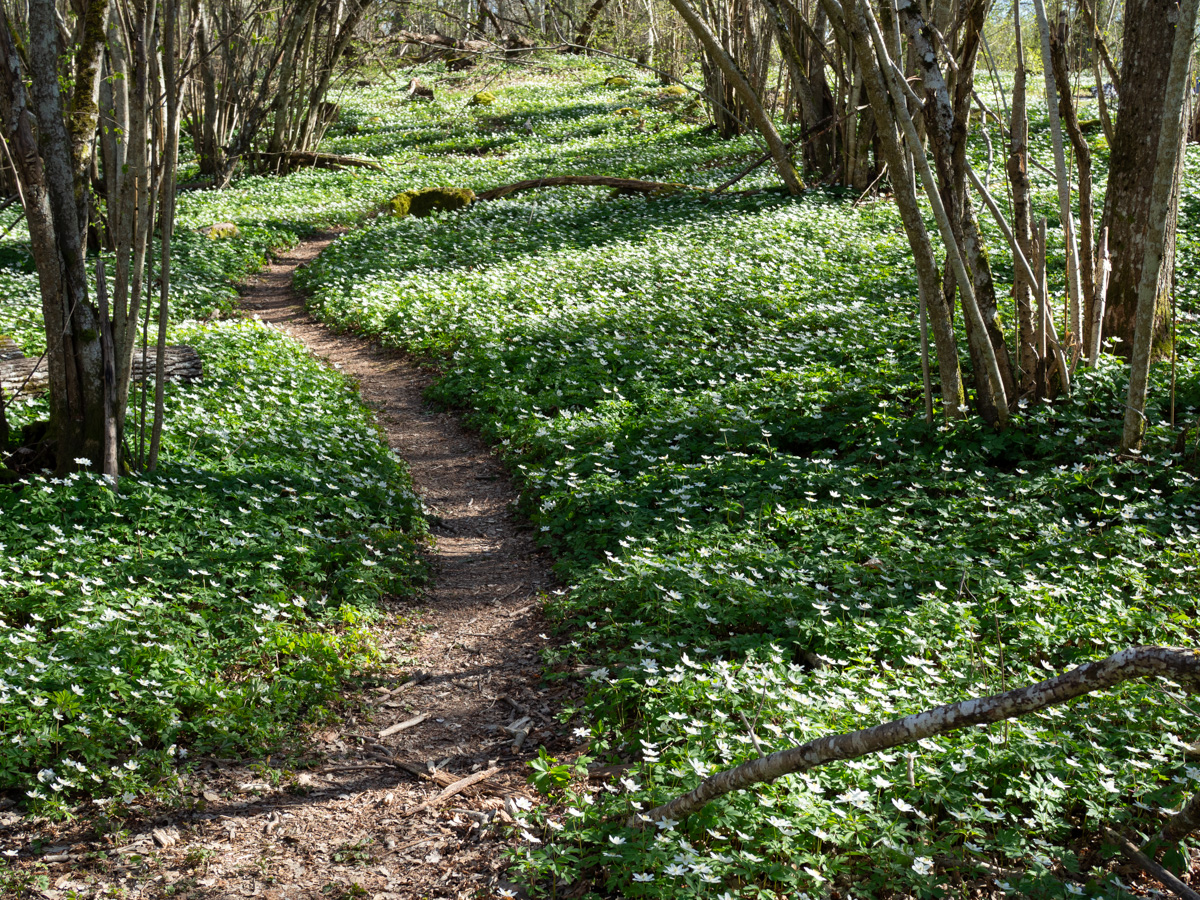
When I had zig-zagged there and walked all the way back, I realized that I had forgotten my sit pad at the far end, where I had paused for a drink of water. Walked all the way there again, and then of course back once more. I got more of a walk out of this small forest than I usually do.
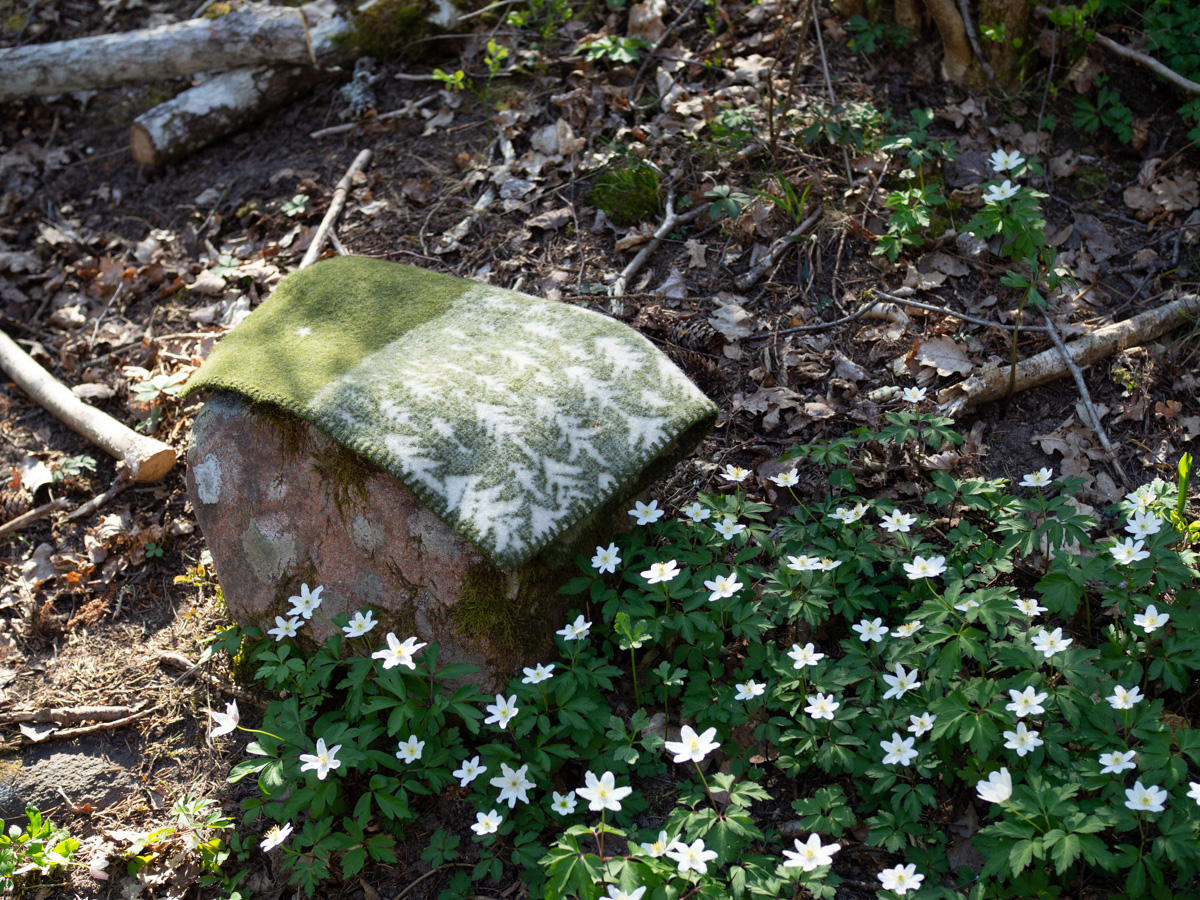
I seem to have missed my photo today so here’s one from earlier.
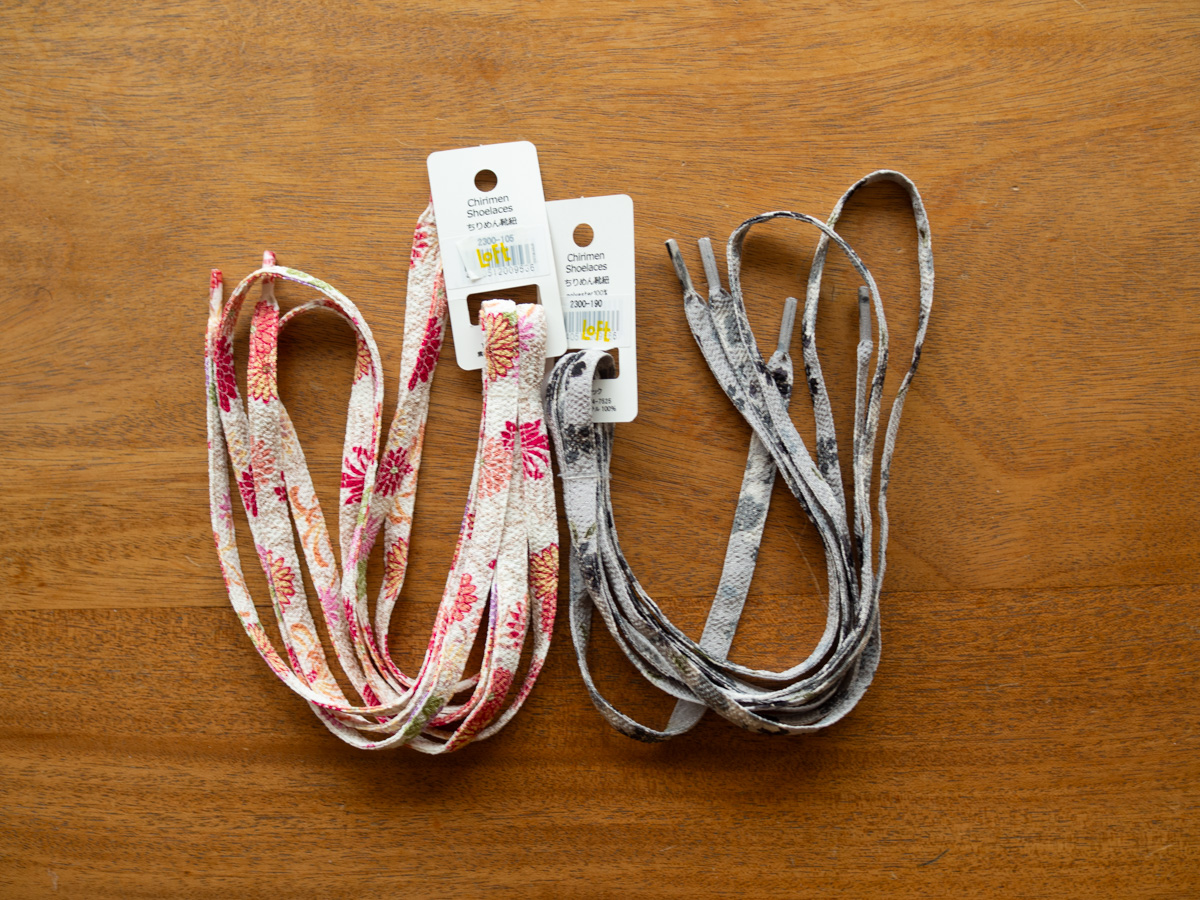
Things I bought in Japan: shoelaces in flower-patterned fabric. A tiny bit of Japan, a tiny piece of beauty that I can sneak into my everyday life. Every time I tie my shoes, I get a little spark of joy.
I don’t usually buy souvenirs or even local crafts that are just for looking at. Instead I look for things that carry with them the character of the place, that I can use, in my daily life rather than on special occasions – even though few such purchases can be used quite this frequently.
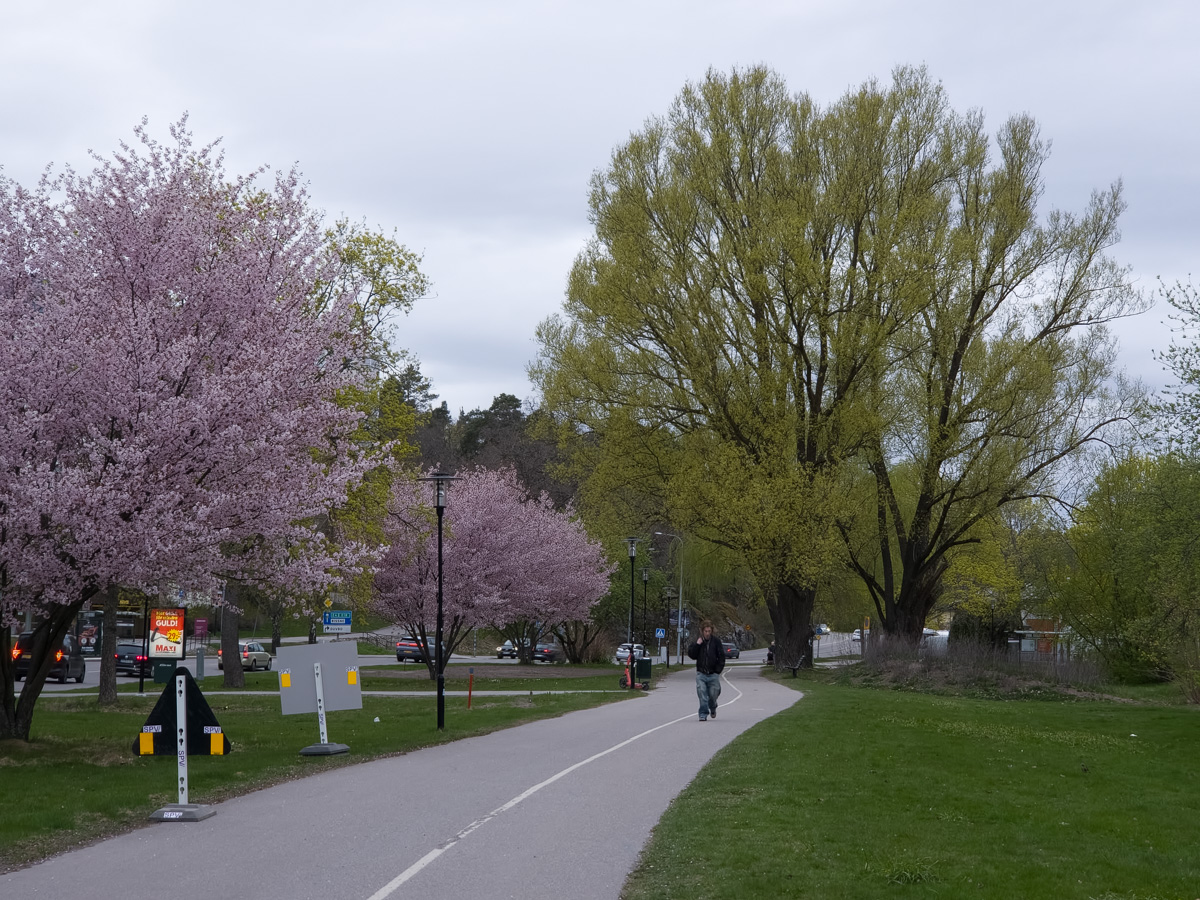
It may be blowy and chilly and grey, but the world is so, so vibrantly green now. And light, well into the evening!
A colleague who had spent half a year in South America (Peru, I believe) said she appreciates spring much more here because it is such a contrast to winter. In Peru, everything was green all the time, so it became nothing special. For her, the grey dark winter months are worth it for the joy of seeing spring arrive. To me it’s more like… you’re getting beaten for half a year and then finally it stops. And yes, I’m glad that the beatings stop, but it’s not like I’d ask to be beaten just to enjoy that moment when it ends. I would absolutely much rather have spring all year round.
A double act at the Royal Opera – Serge Lifar’s Suite en blanc followed by William Forsythe’s In the Middle, Somewhat Elevated. I’m sure I’ve seen both before, in some other combination, even though I can’t find any mention of Lifar on the blog.
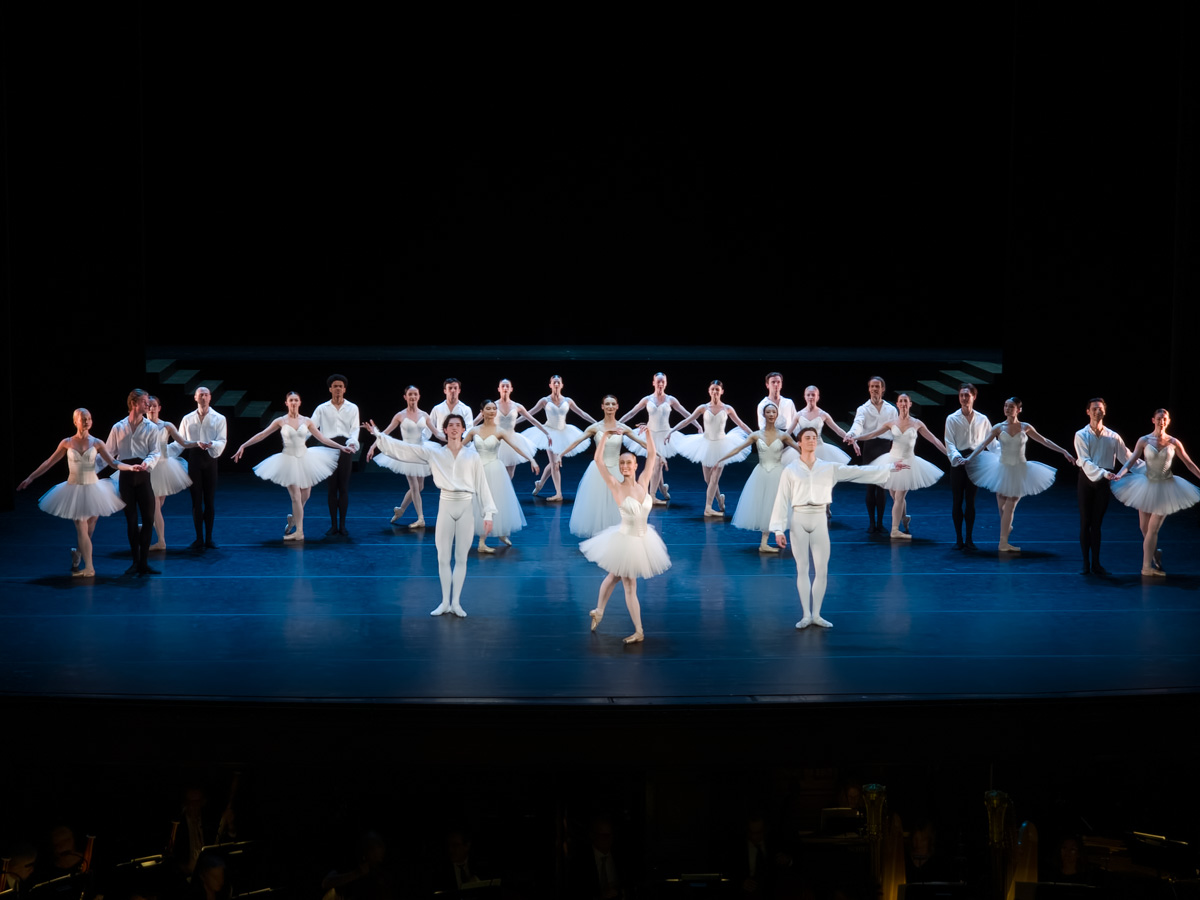
Suite en blanc is a technical demonstration. It is precise, symmetrical, beautiful – but nothing more. All skill, no soul. Artful but artificial. A pas de deux ends with the two gazing soulfully into each other’s eyes – but why? Without context, feeling, connection, it’s just empty posing and prancing. It is a series of poses and movements so disconnected from everything else that it draws all attention to the artificiality of it all, that ends up highlighting how ridiculous classical ballet actually is. Yes, beautiful, demanding, impressive, but also ridiculous. When eight women in white tulle skirts walk across the stage, in the quiet between the end of one tableau and the next, the tap-tap-tapping of their shoes comes across as silly. Why not cardboard cones on their heads instead of wearing tulle skirts?
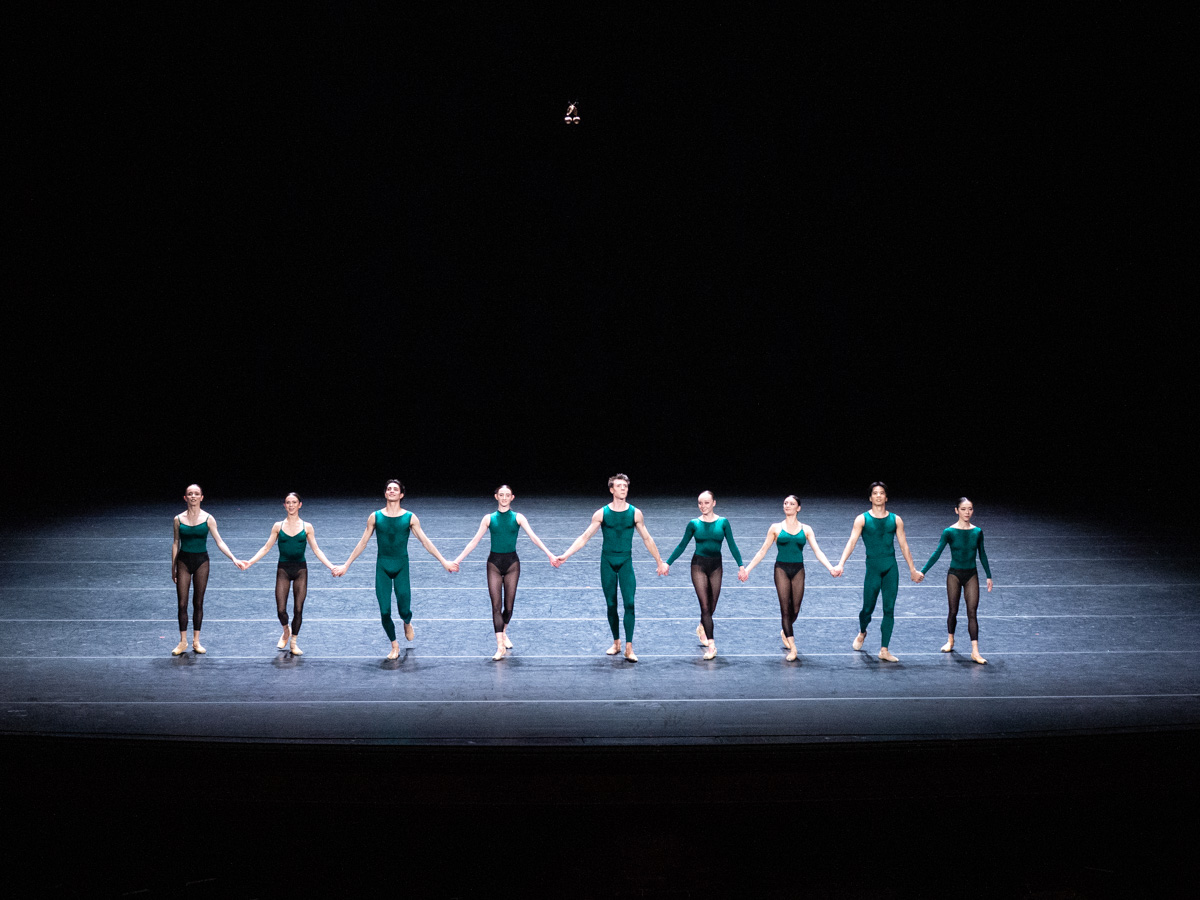
In the Middle, Somewhat Elevated is still clearly ballet (rather than modern dance) in its movements and “language” but uses them so very differently. There is a push and a pull, a raw intensity, a presence. There is classical precision, and then a subtle sinuous wave of a torso, or a hanging arm. Absolutely wonderful.
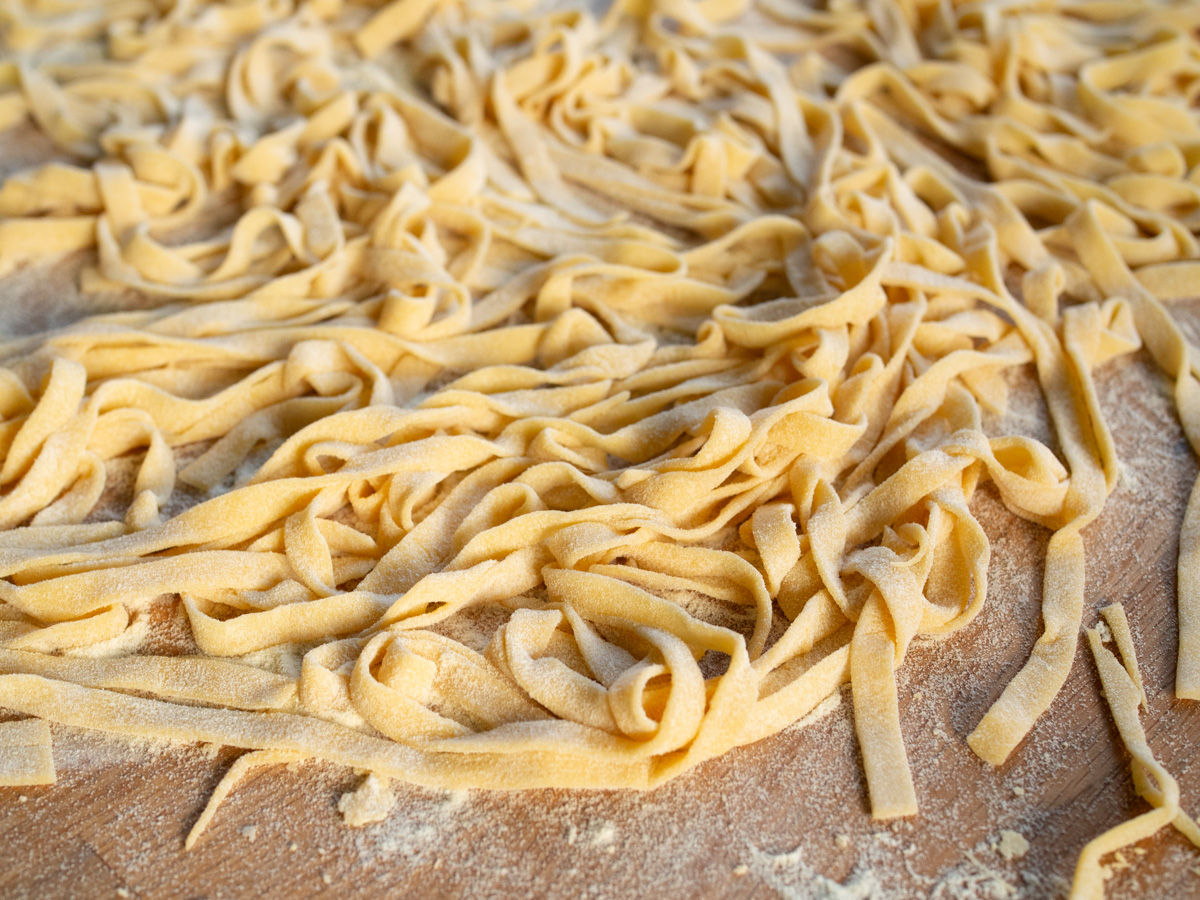
Made fresh pasta for dinner, to practise the skills from the masterclass in Italy this weekend. It came out really nice, fluffy and tender.
Woke up early because I usually do. Also because I didn’t sleep particularly well. There was a noise from some kind of machinery in our hotel room – from my walking around I suspect that our room was situated right below a machine room – and I’m no longer used to sleeping with earplugs all night.
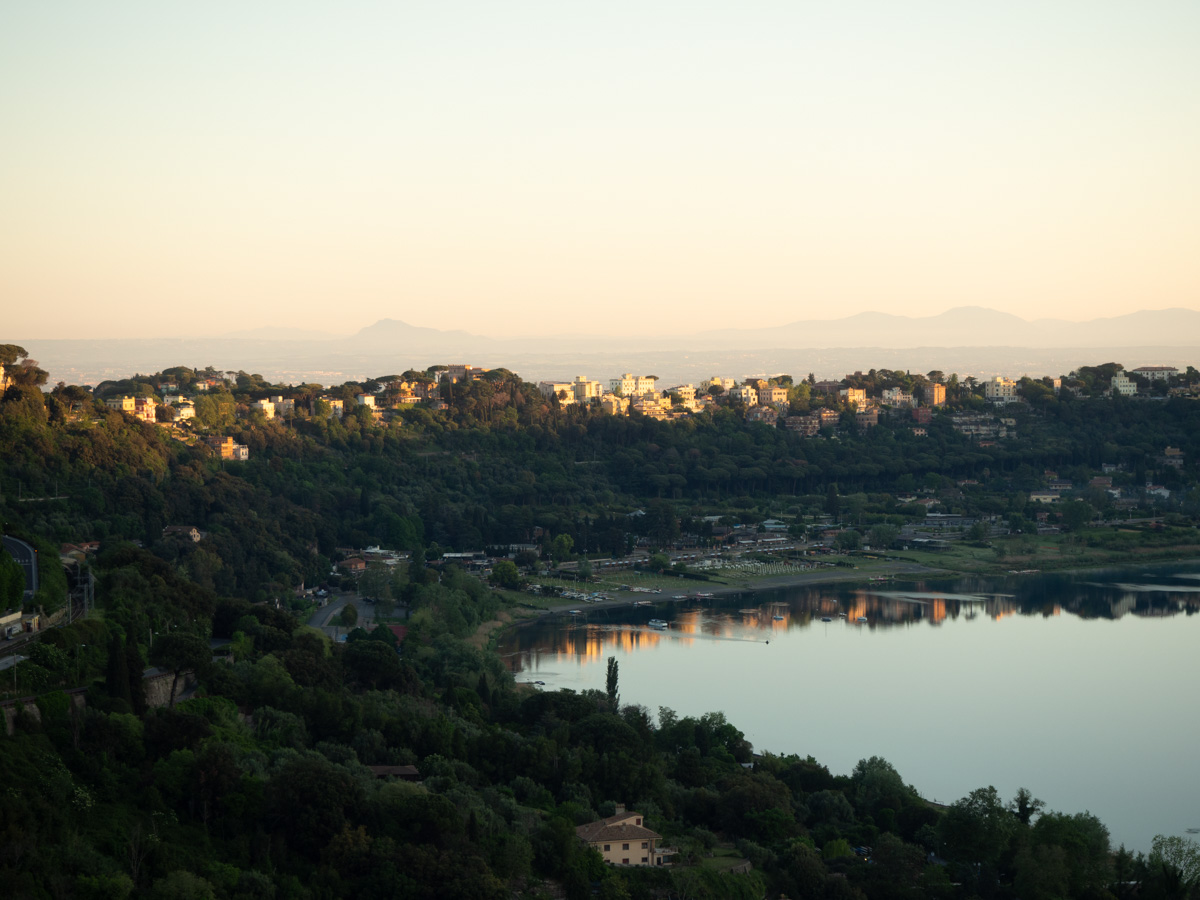
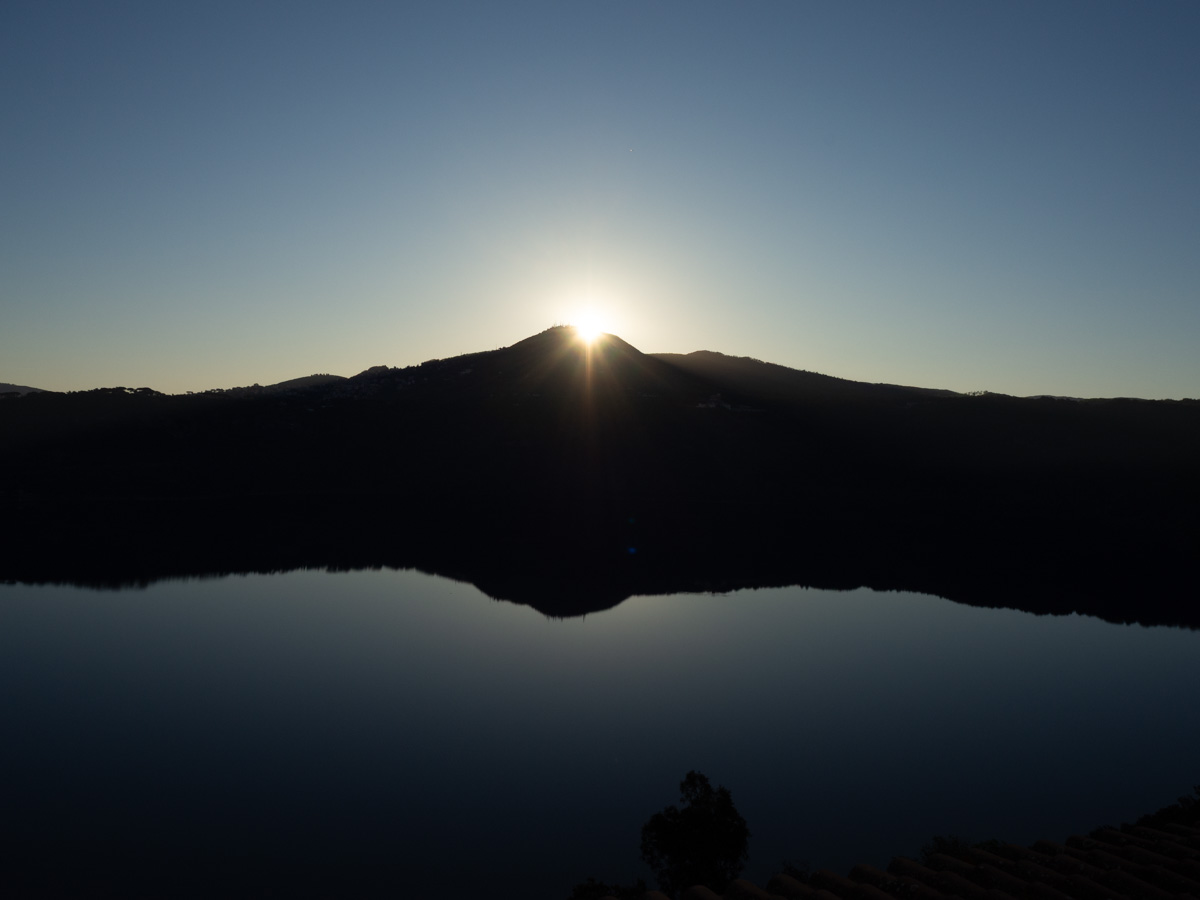
Anyway, this gave me nice views of the sunrise. The sun reached surrounding parts of the countryside and the town well before it reached the hotel terrace, since we’re on the inner edge of a crater lake and there’s a mountain to the east of us.
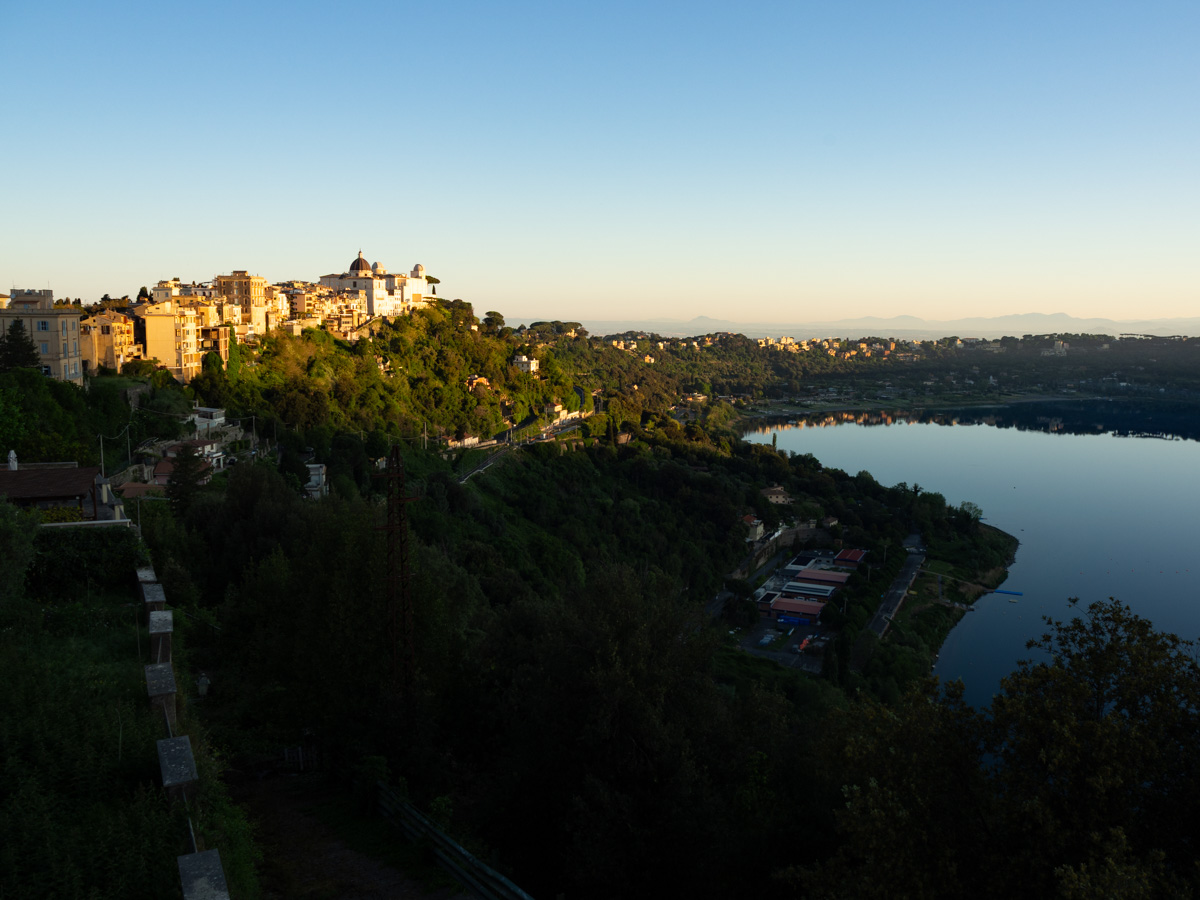
By the time the sun reached over the top of the mountain, it was quite high up already.
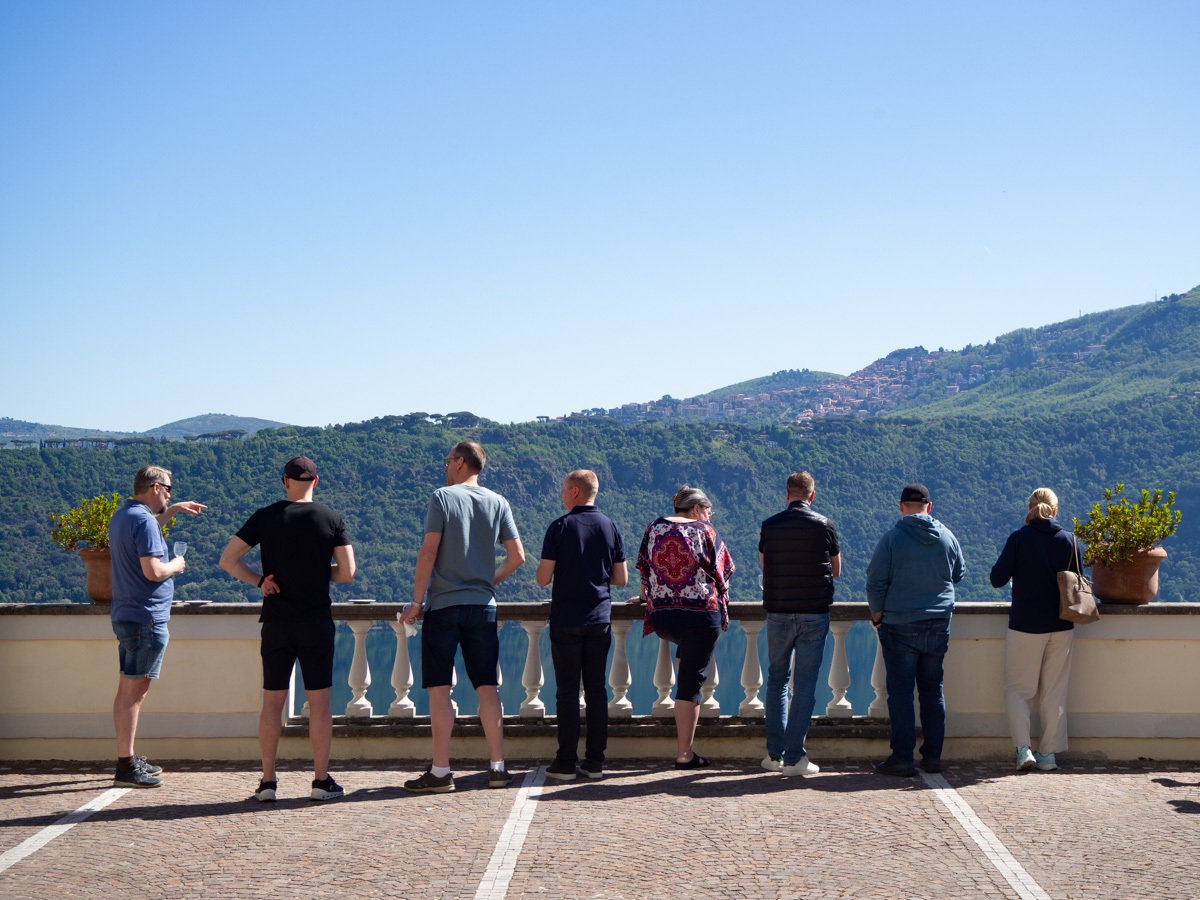
The first half of the day was knowledge activities again. We spent most of our breaks admiring the view over Lago Albano.
After lunch we had a couple of free hours, most of which I spent visiting the papal palace of Castel Gandolfo.
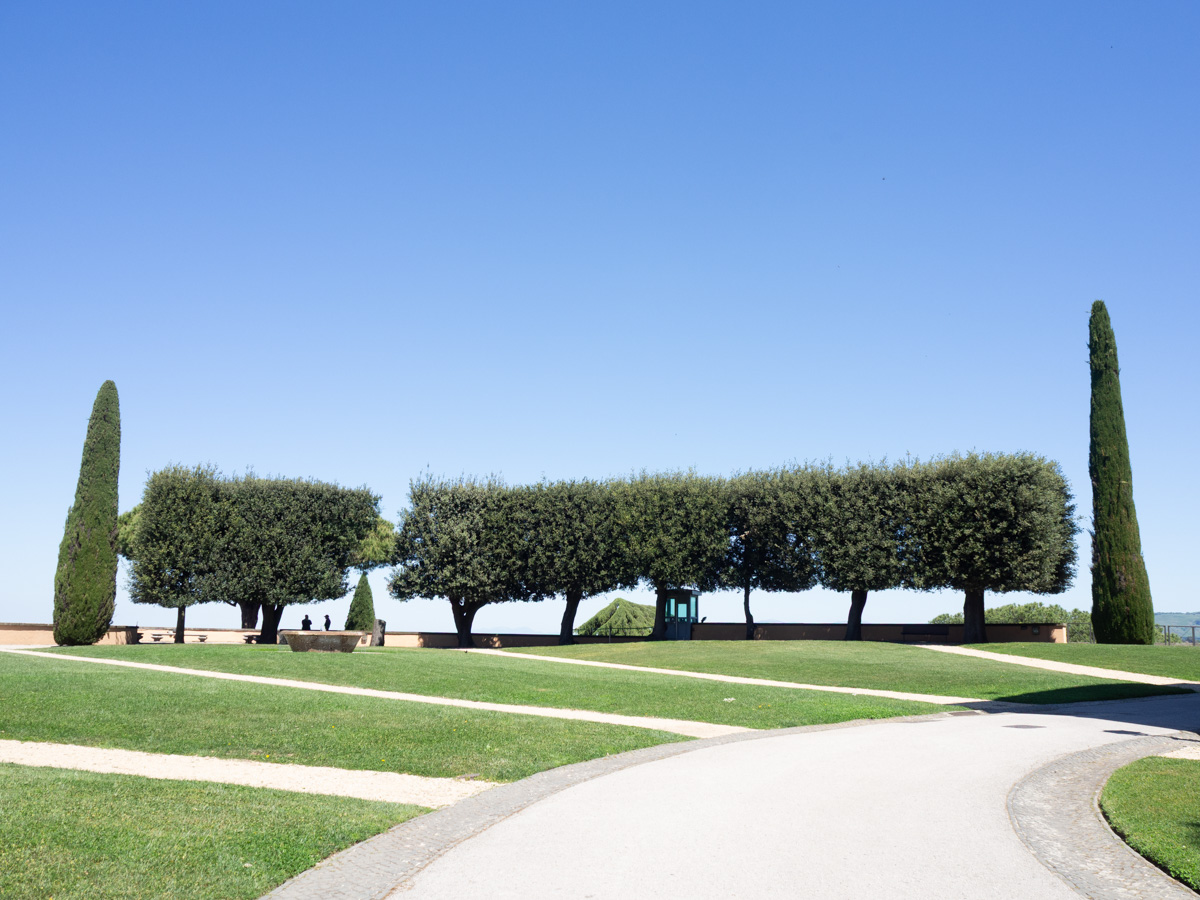
This morning I was viewing the palace from our hotel; now I got to look back from the palace towards the hotel.
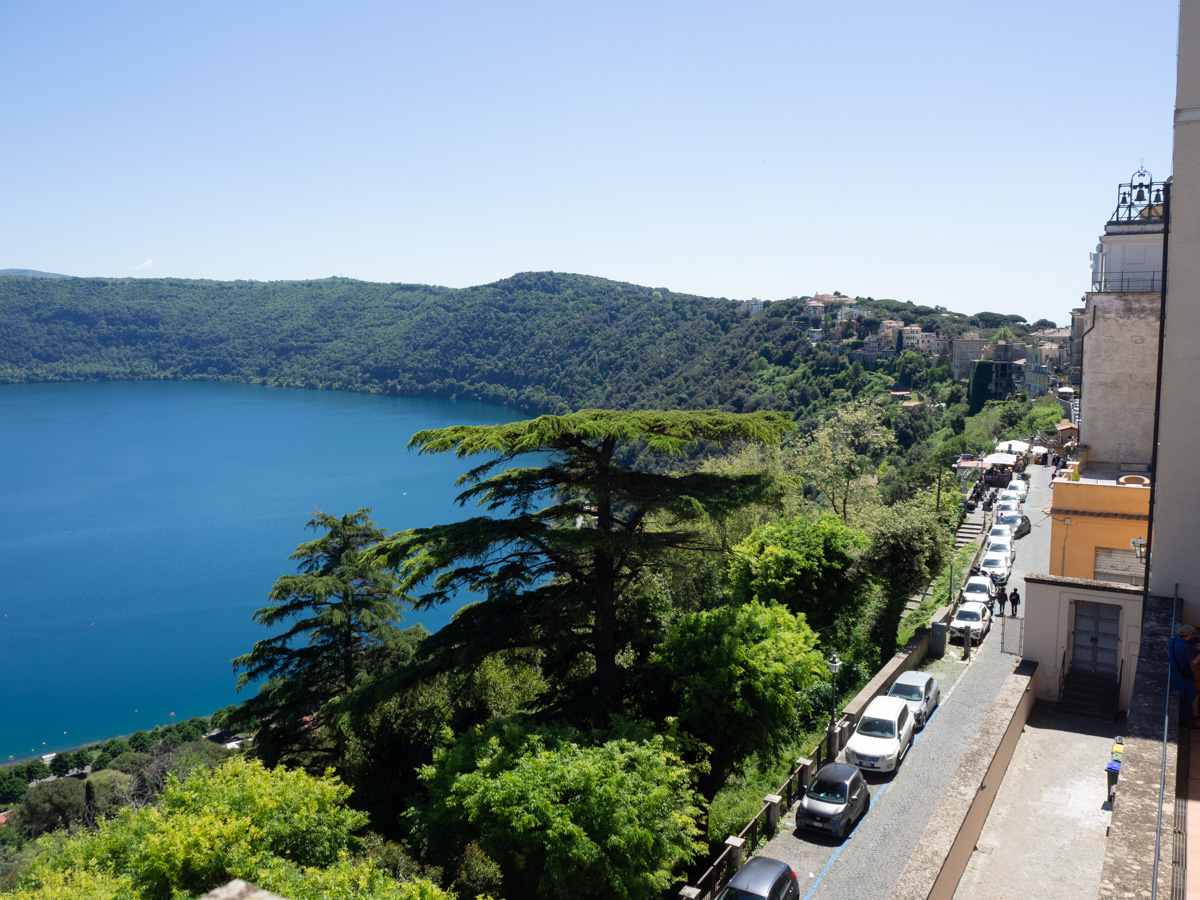
Inside the palace there was a museum section, mostly exhibiting paintings of past popes and mannequins showing costumes of papal staff, such as the traditional clothes of the guards. Not particularly interesting.
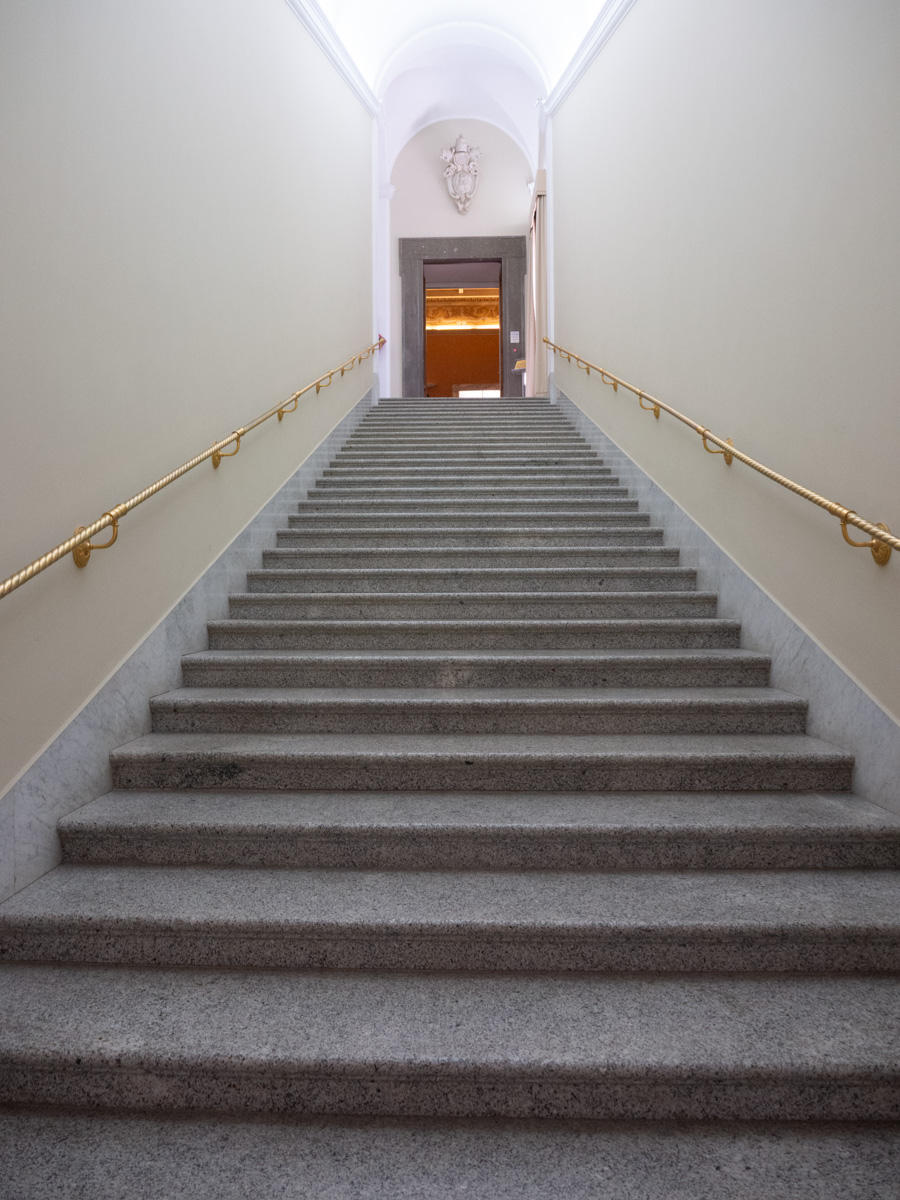
A tall, austere staircase led to the pope’s residential quarters – mostly large rooms with paintings and tapestries on the walls, and luxurious chairs lining the edges of the rooms. Not much more interesting than the previous rooms.
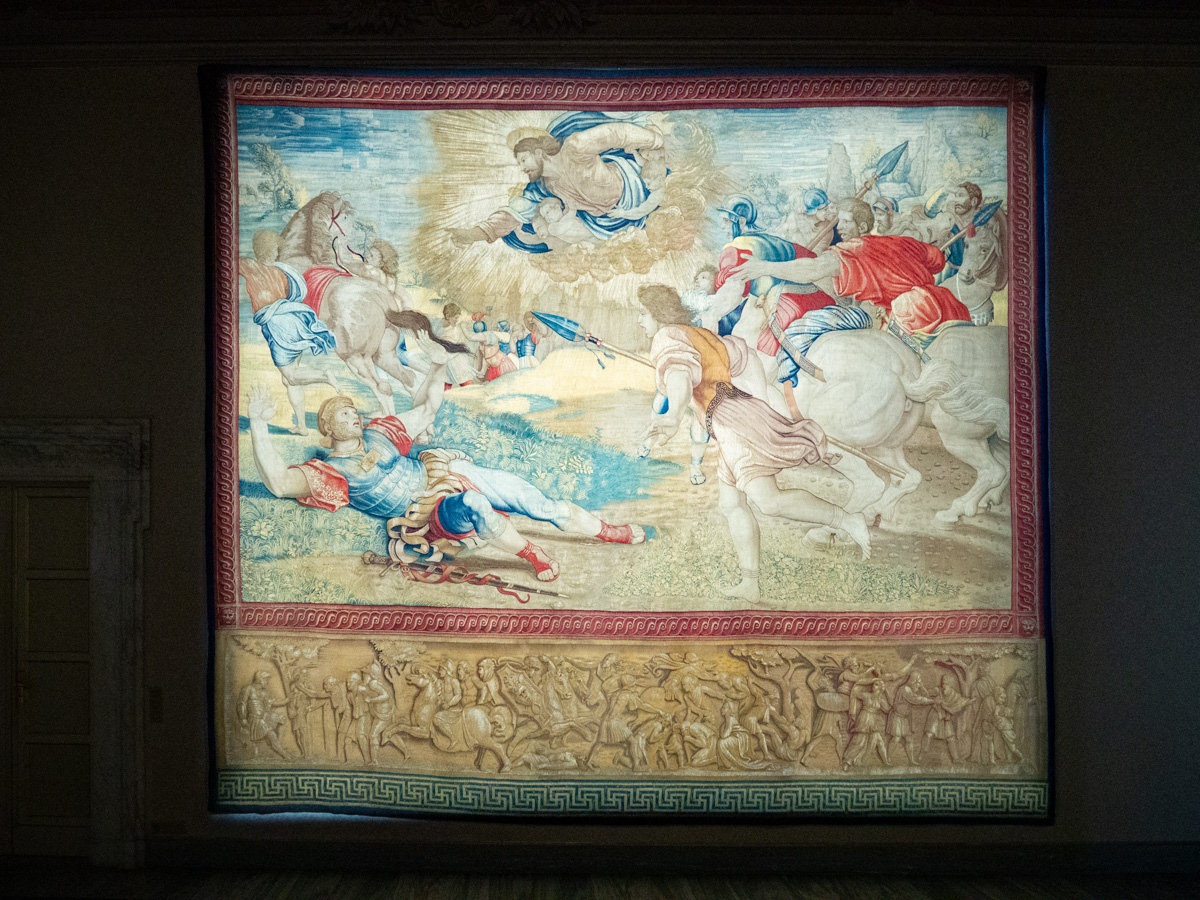
The highlight of the palace was a huge tapestry from the Sistine Chapel, one of ten designed by Raphael. Five by five metres, showing the Conversion of Paul.
The information board in the room talked about the making of the tapestries – cartoons painted by Raphael and his workshop, tapestries woven by the workshop of Pieter van Aelst, this much money, this many years of work – but nothing about what happened to them later. Wikipedia tells me that the tapestries were looted and either burnt for their precious metal content or were scattered around Europe. Only in the late 20th century was a full set was reassembled again, of tapestries produced from the same cartoons after the first set.
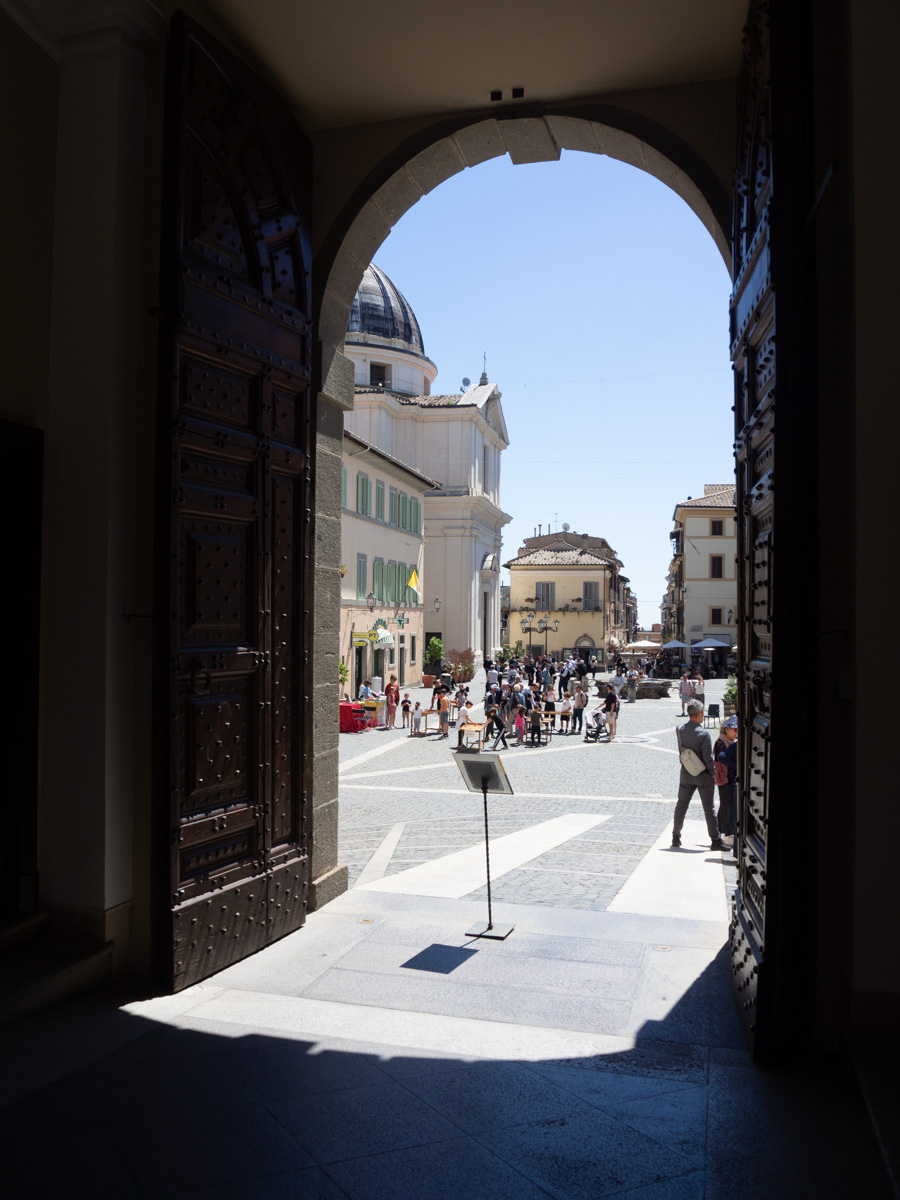
Back outside I had just enough time for a quick lunch. My go-to solution in situations like this – limited time, tourist town, beautiful weather – is to find a local bakery and buy whatever local bread-with-toppings they have, and then eat it at a park bench or similar.
In some countries this can be a triangle sandwich, in others a wrap, pierogi or pasties. Here it was a kind of flatbread with grilled tomatoes. A pinsa, I guess. I didn’t find a park nor a bench, but there was a shaded little walkway from the town centre down towards the lake, with a very sitting-friendly low wall to one side.
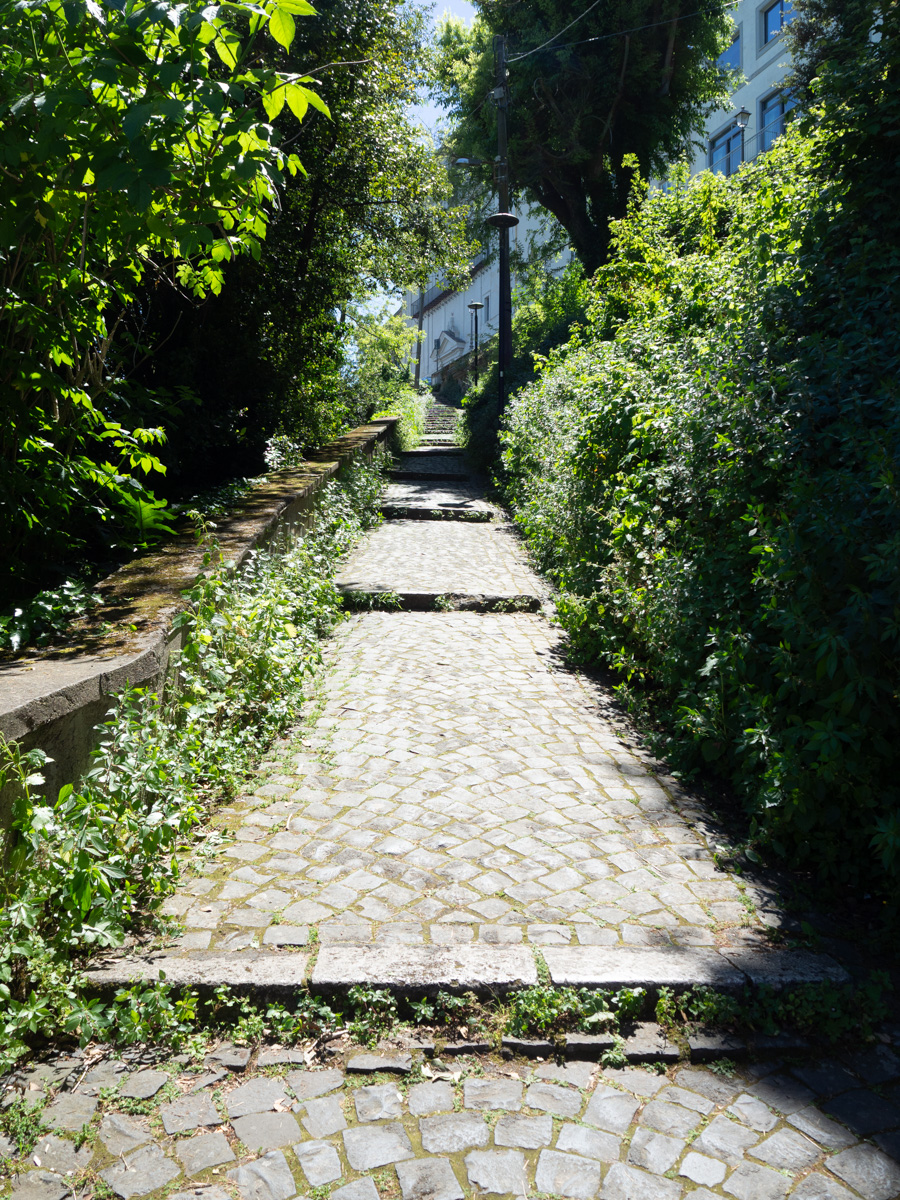
Day 2 of the Active Solution conference trip to Italy. Actual knowledge activities occurred today.
We are staying at a beautiful hotel in Castel Gandolfo, half an hour from Rome.
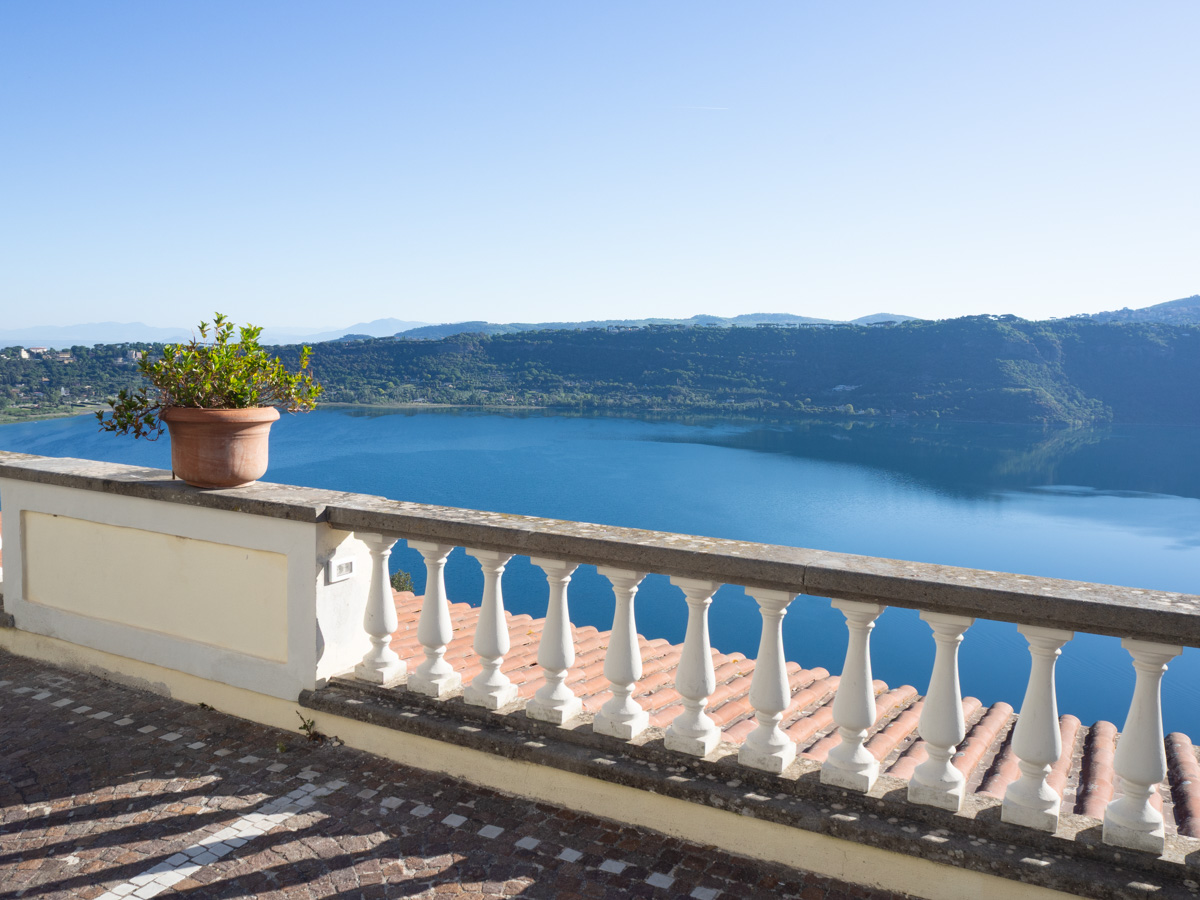
The theme of the conference is “AI”, which had me bucking and rearing in advance – I am rather fed up with being force-fed AI everywhere all of the time – but I managed to find an angle that felt productive and promising rather than insulting and distressing.
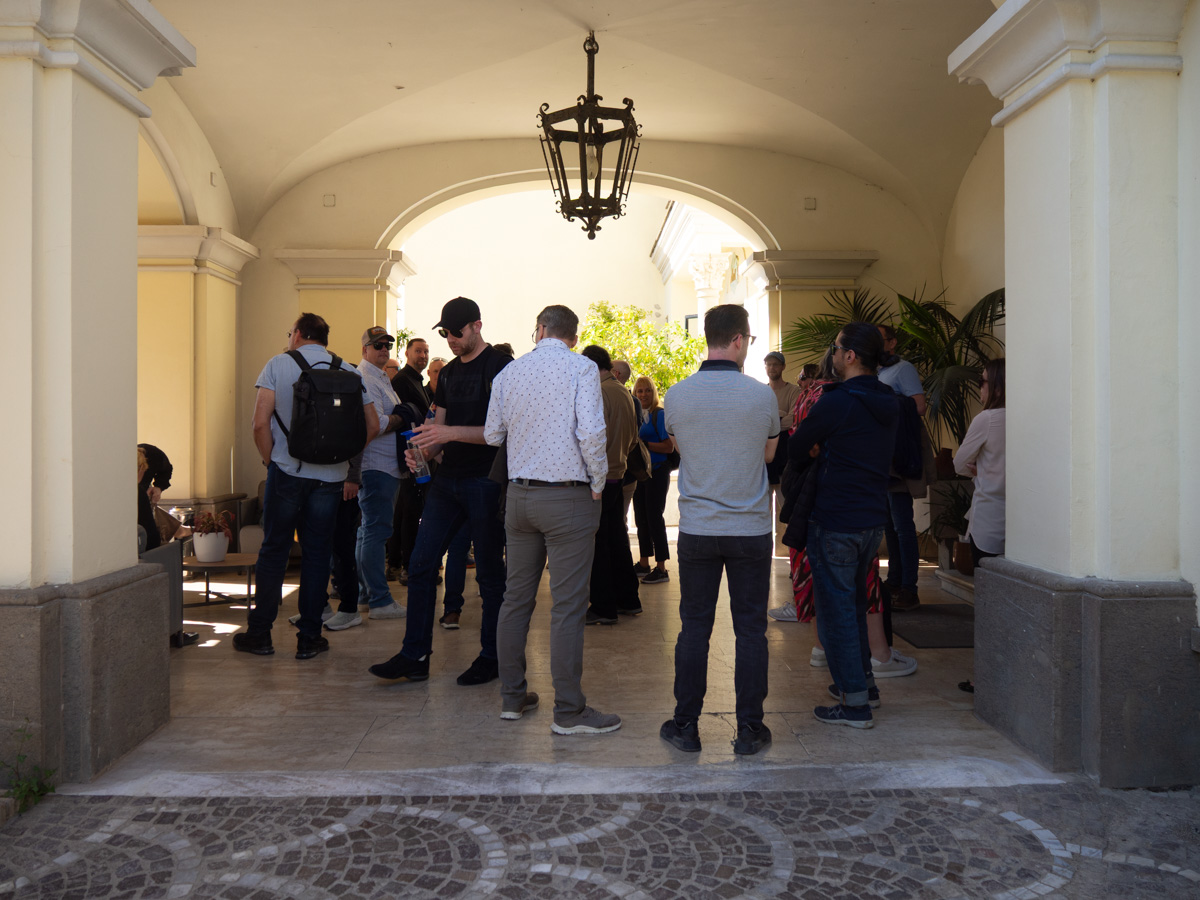
We worked in pairs or small groups in whatever part of the hotel we like, so there were plenty of people sitting on the terrace looking out over Lago Albano.
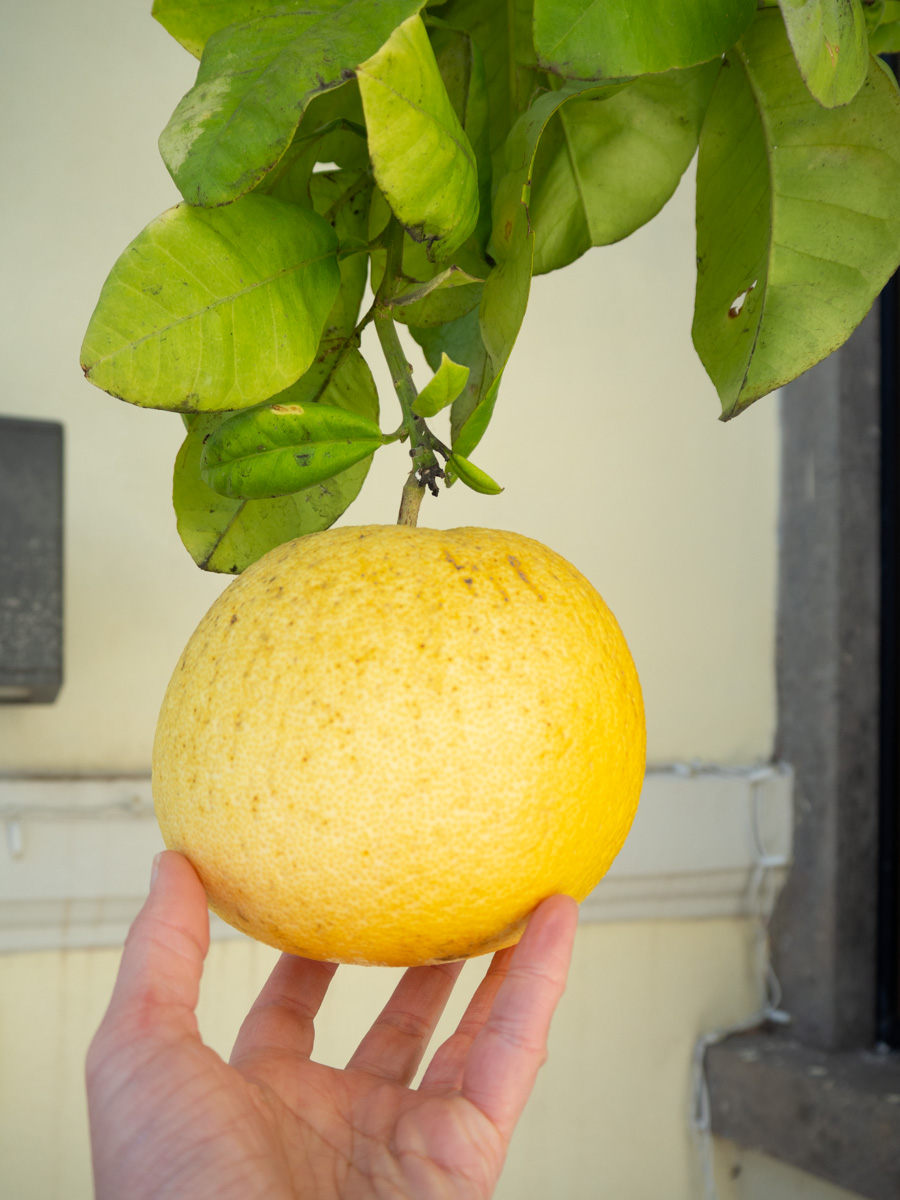
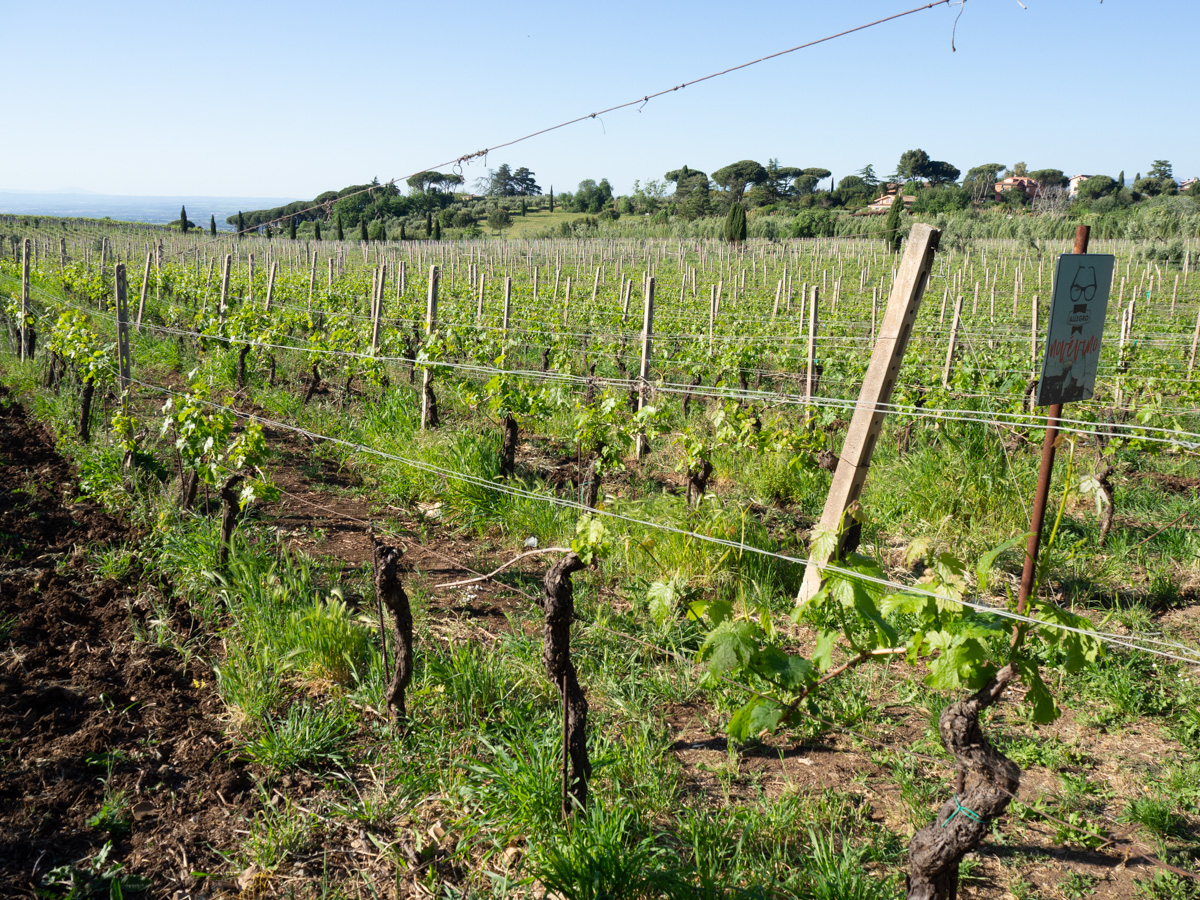
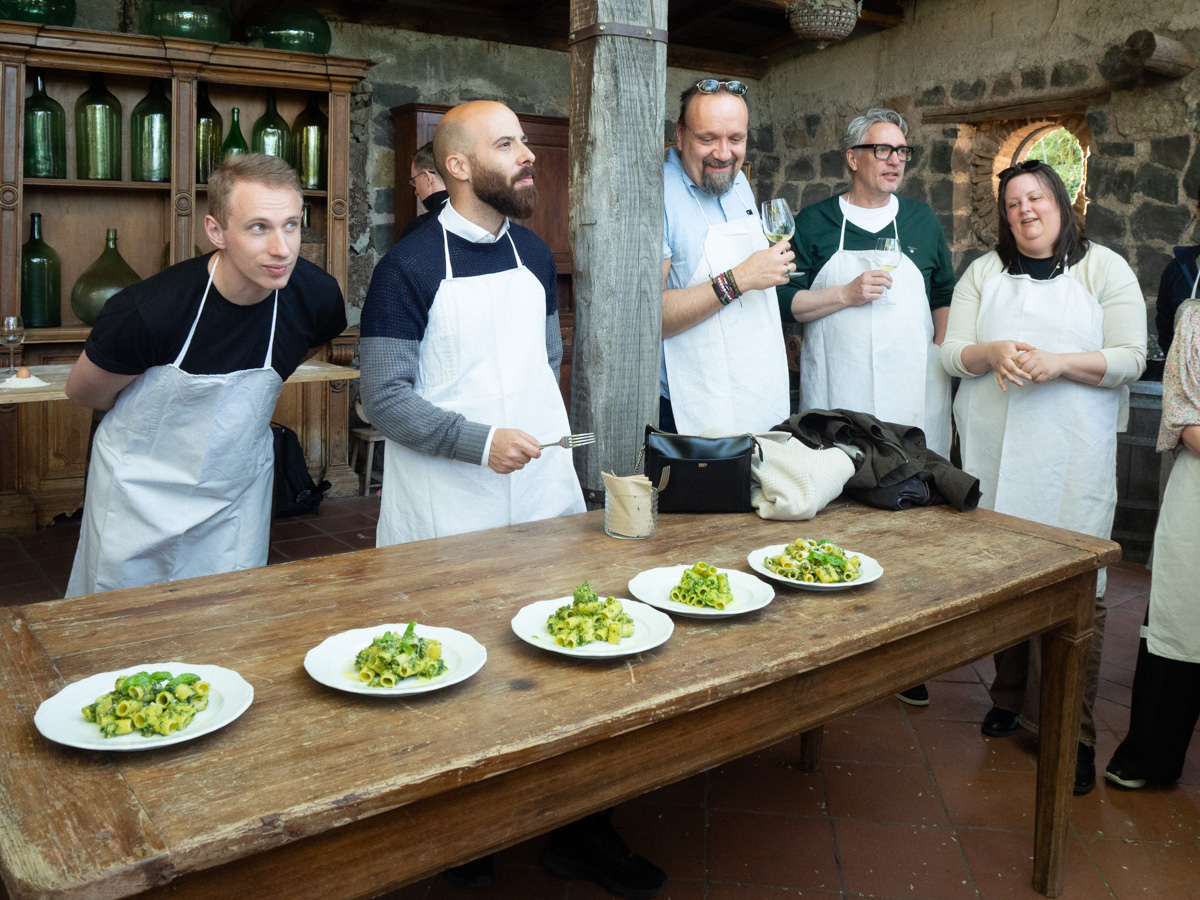
Late afternoon we were bussed to Santa Benedetta wineyard where we got a wine tasting and a lesson in pasta-making.
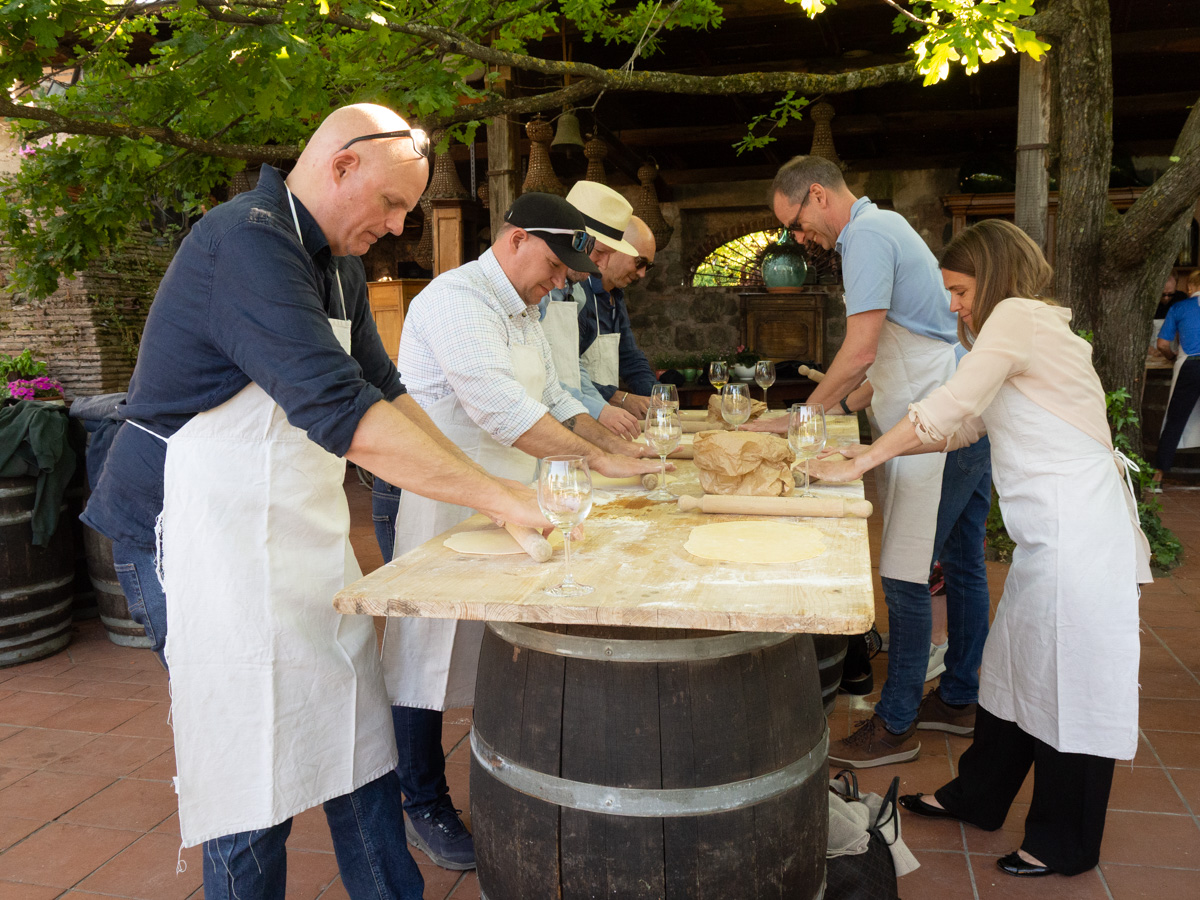
I’ve made pasta at home, but only from a recipe with fixed weights and measurements. Here I learned what the dough is supposed to feel like when there’s enough flour in it – noticeably softer than what I’ve been making until now. What I’ve made before hasn’t been bad, but this was better.
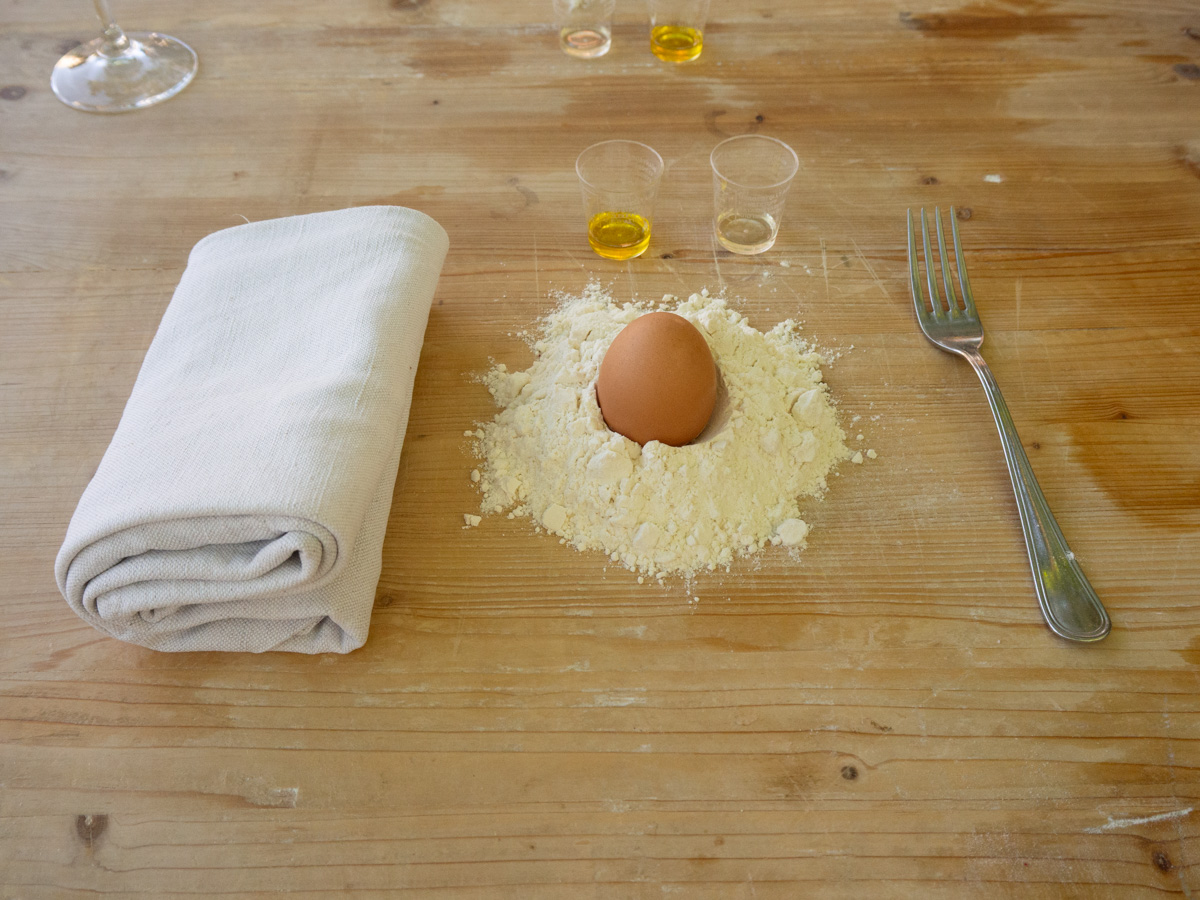
The recipe here was actually backwards compared to my previous one. My previous one started with an egg and a quantity of flour, worked those into each other, and then added water until the dough “goes together”.
This one starts with an egg and other liquids, and then works in flour until the dough is good. So instead of adjusting the water at the end, it adjusts the flour.
Another difference was that the liquid was a small splash of olive oil added, and an even smaller of white wine, instead of water.
We also had a pesto-making competition. My main revelations were that a lot of people like a lot of raw garlic in their pesto, and some of them have no common sense or intuition when it comes to food preparation.
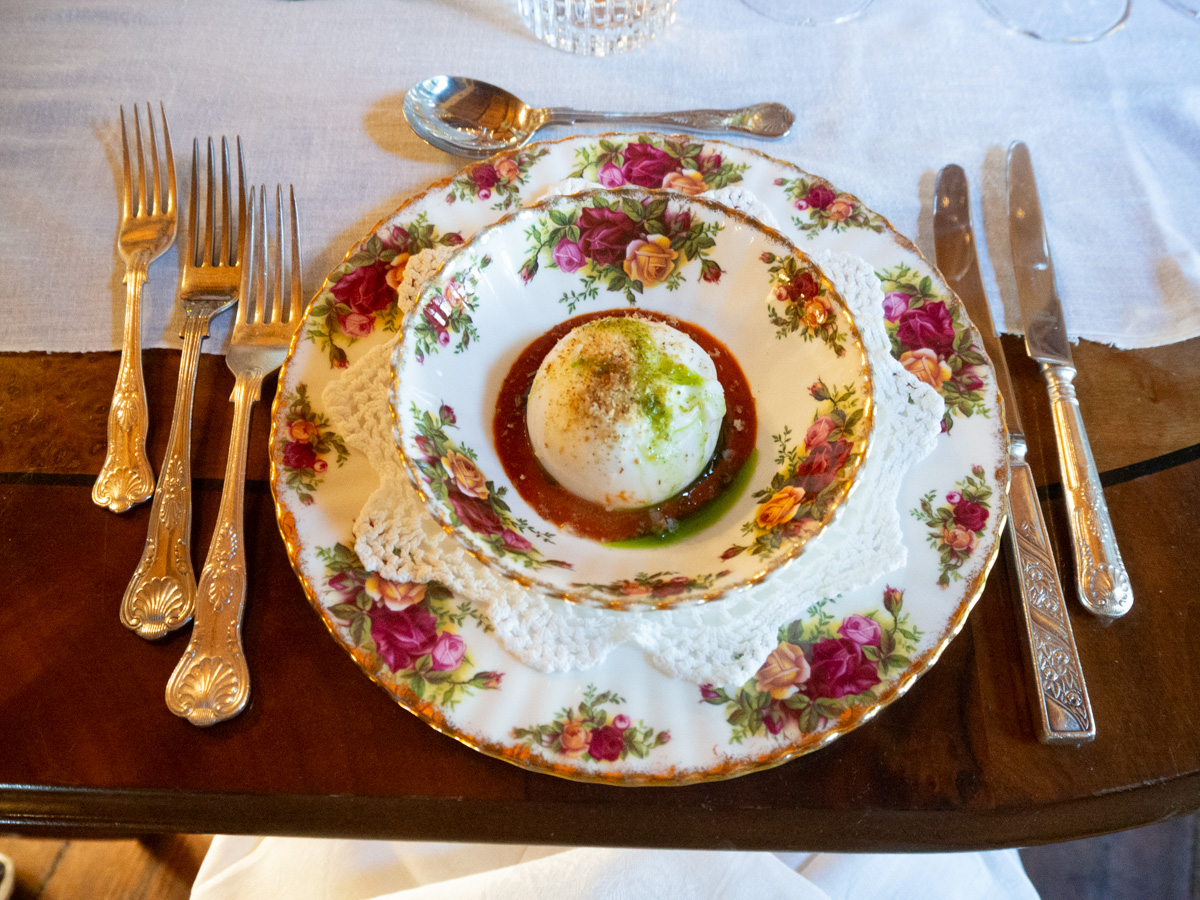
Dinner was served on vibrant floral porcelain, with hand-crocheted doilies in between the service plate and the food plate.
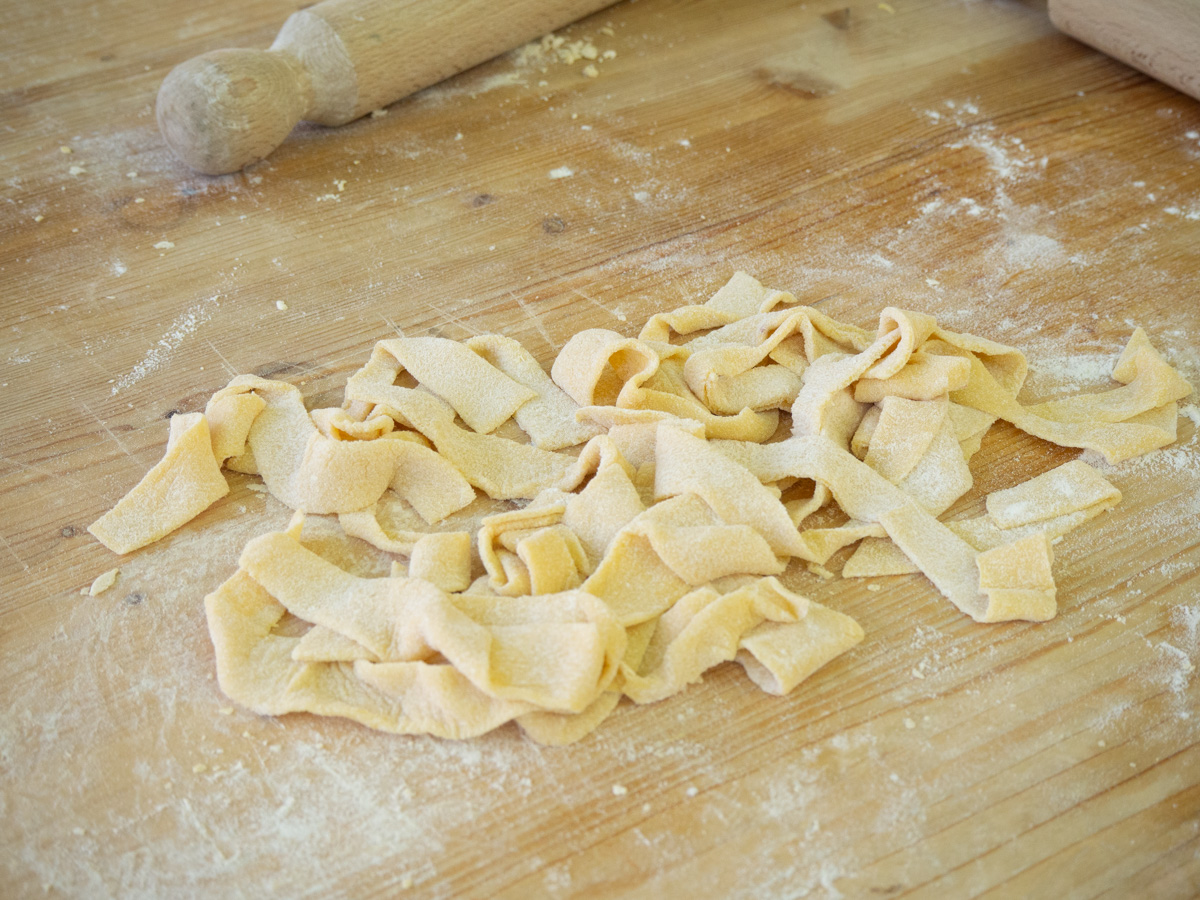
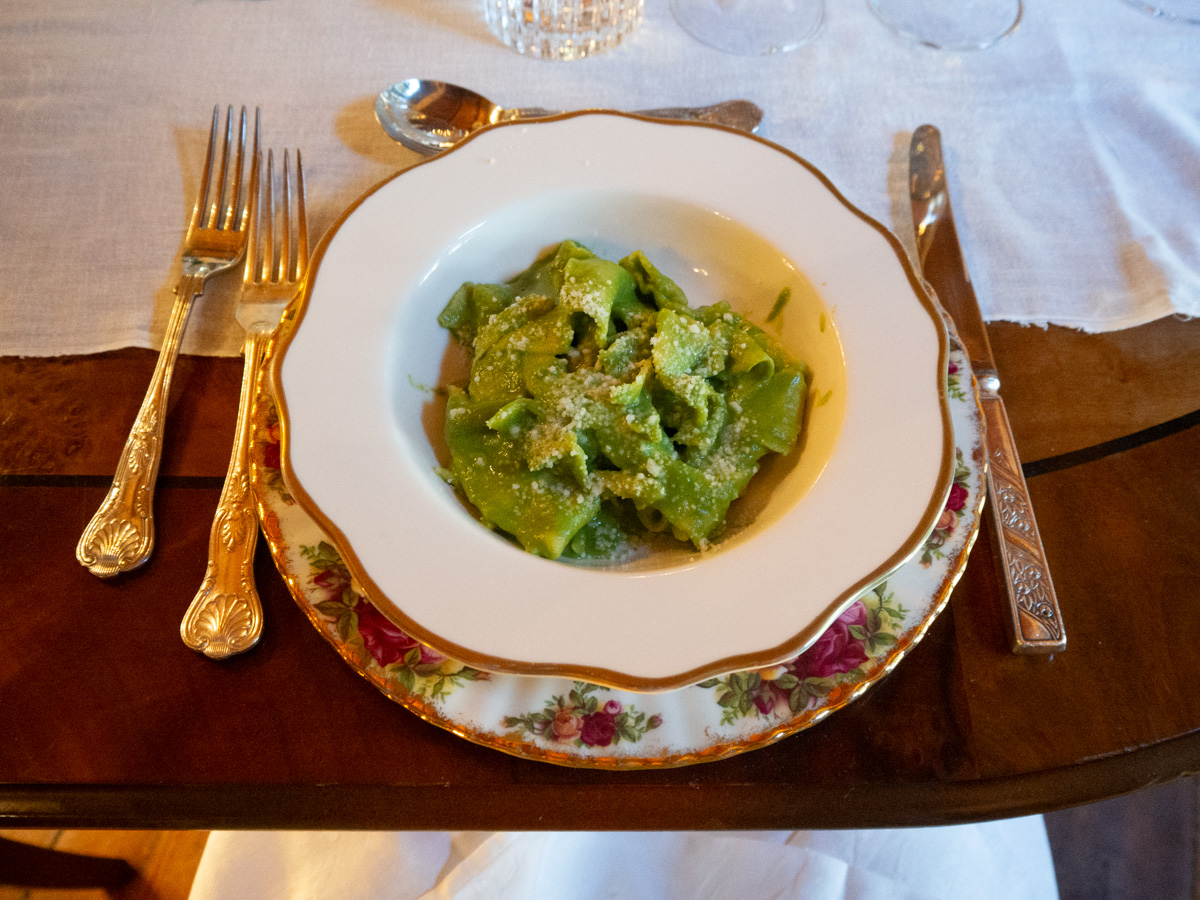
And yes, the primo was based on our own pasta, with an asparagus cream. I think they cooked each batch of pasta separately, because they were of varying thicknesses and textures, but for serving it all got mixed up. It was rather interesting to feel the differences: some light and fluffy, others more dense.
The days feel like summer here already, but the night was chilly.
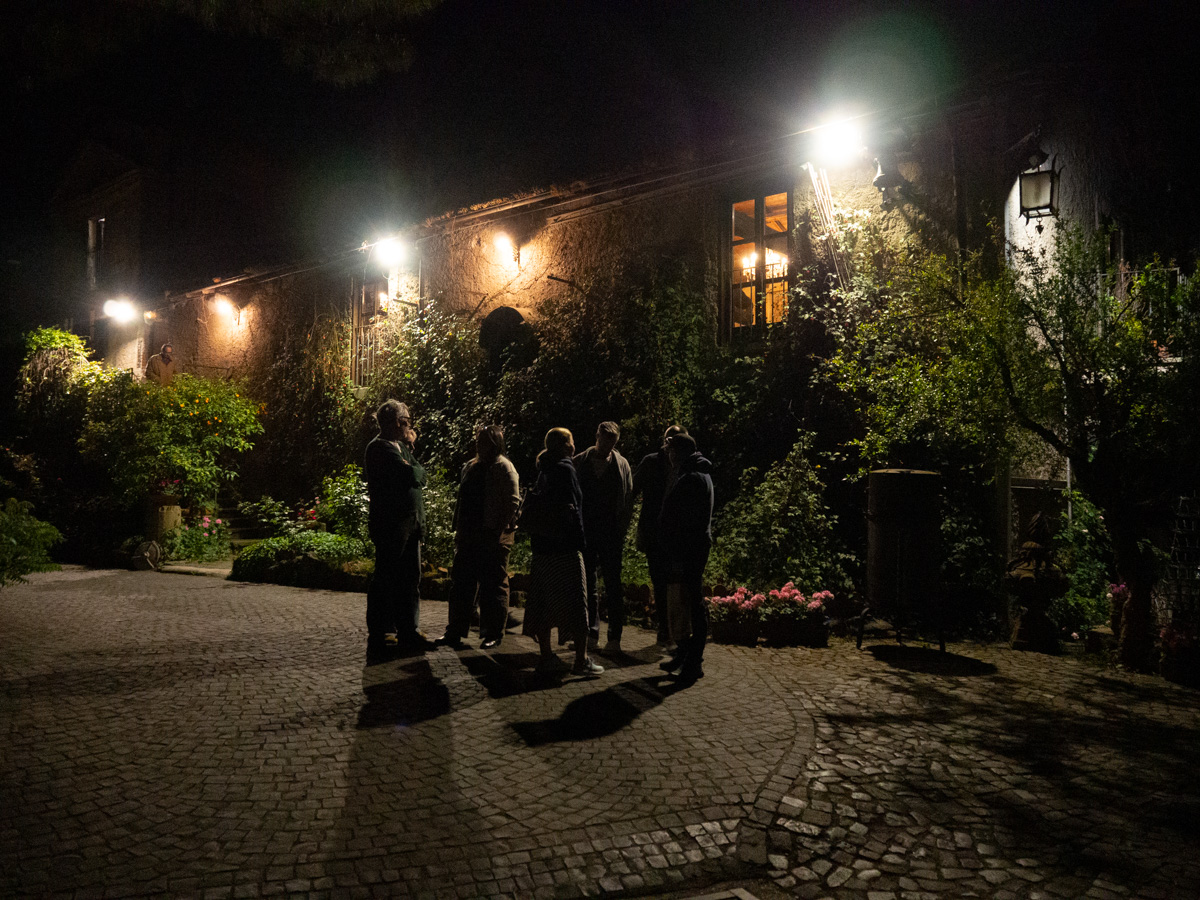
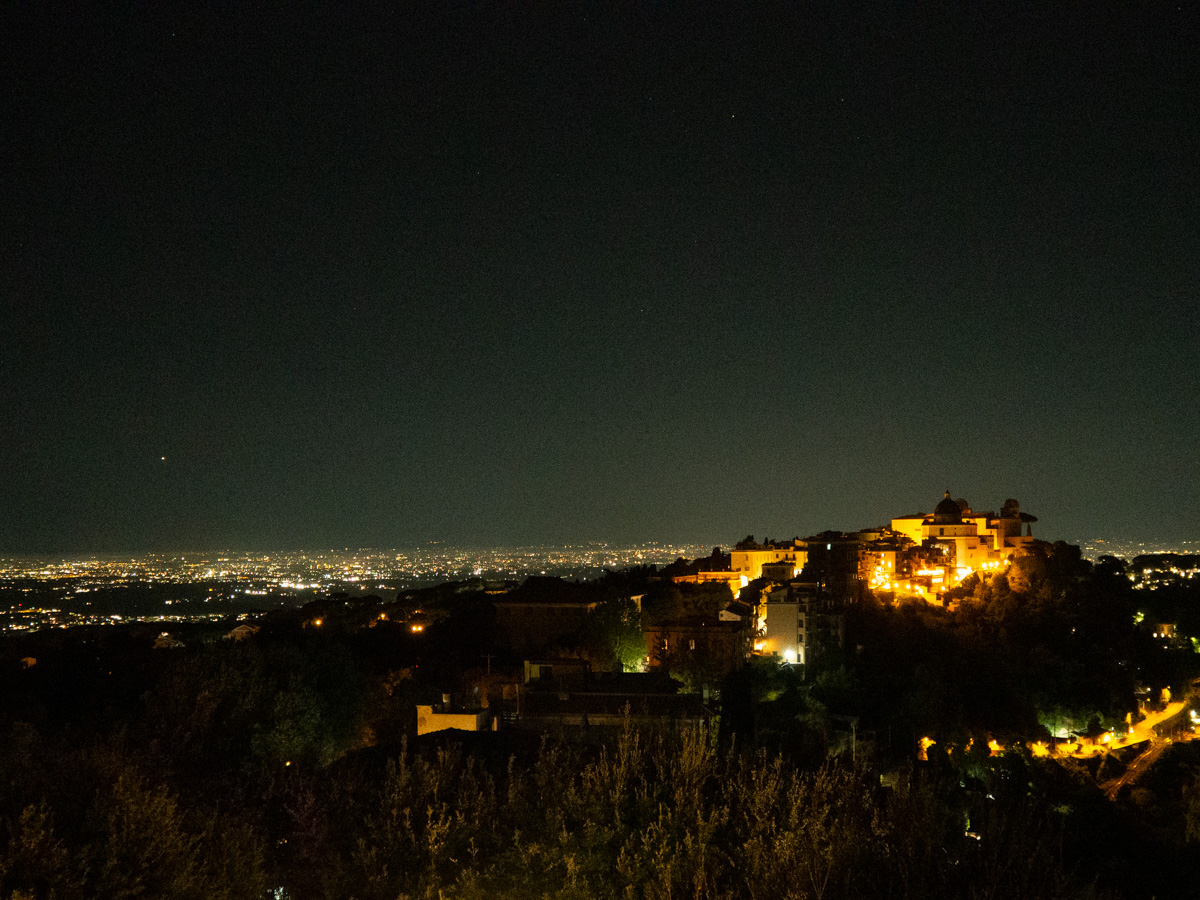
Rome isn’t far – I’m pretty sure that the sea of lights in the background is all Rome. The glowing hilltop structure on the right is the papal palace of Castel Gandolfo – mostly a museum, but also serving as the pope’s summer residence.
A three-day conference trip with Active Solution. Half of today was travel, and half was sightseeing in Tivoli, outside of Rome. I can’t believe I’m getting paid to do this.
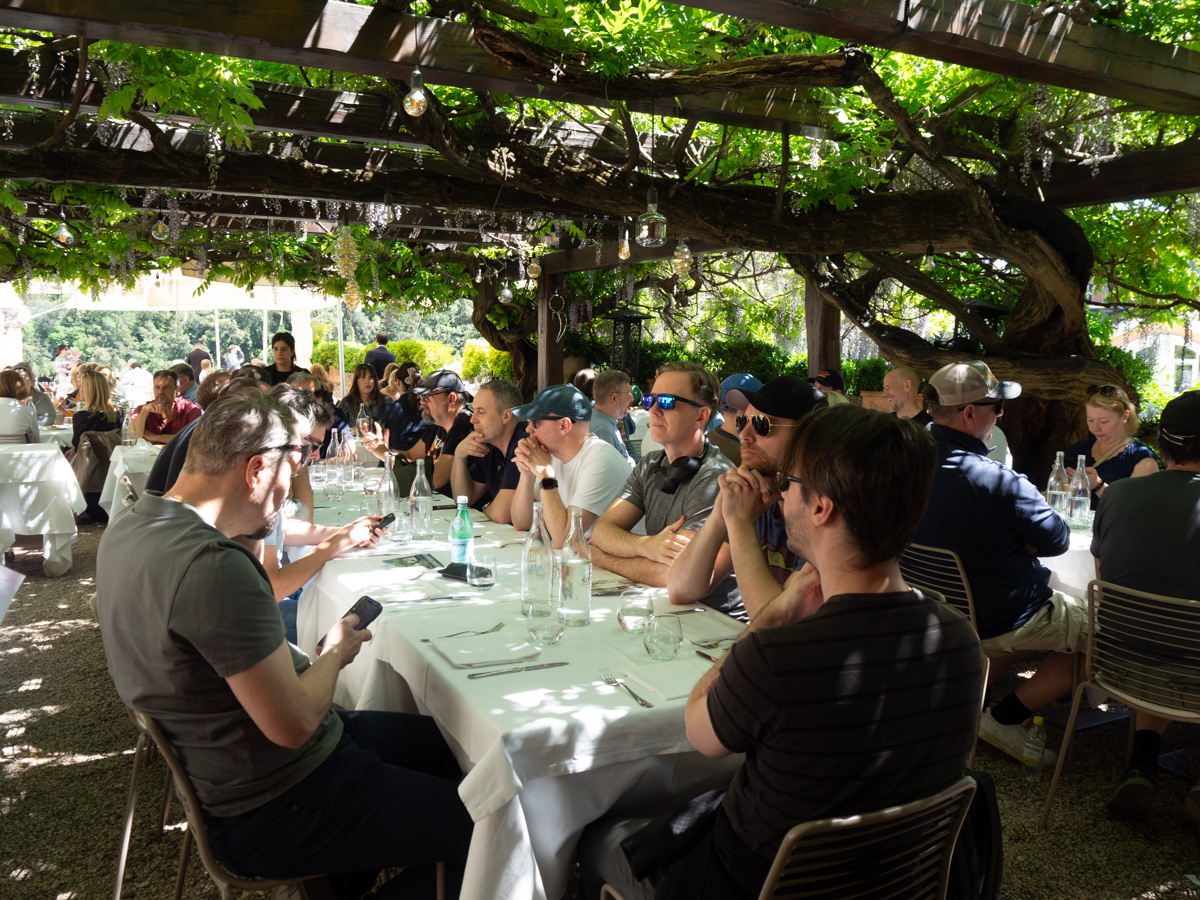
First: lunch, at a very picturesque restaurant in the middle of Tivoli, under a pergola of wisteria.
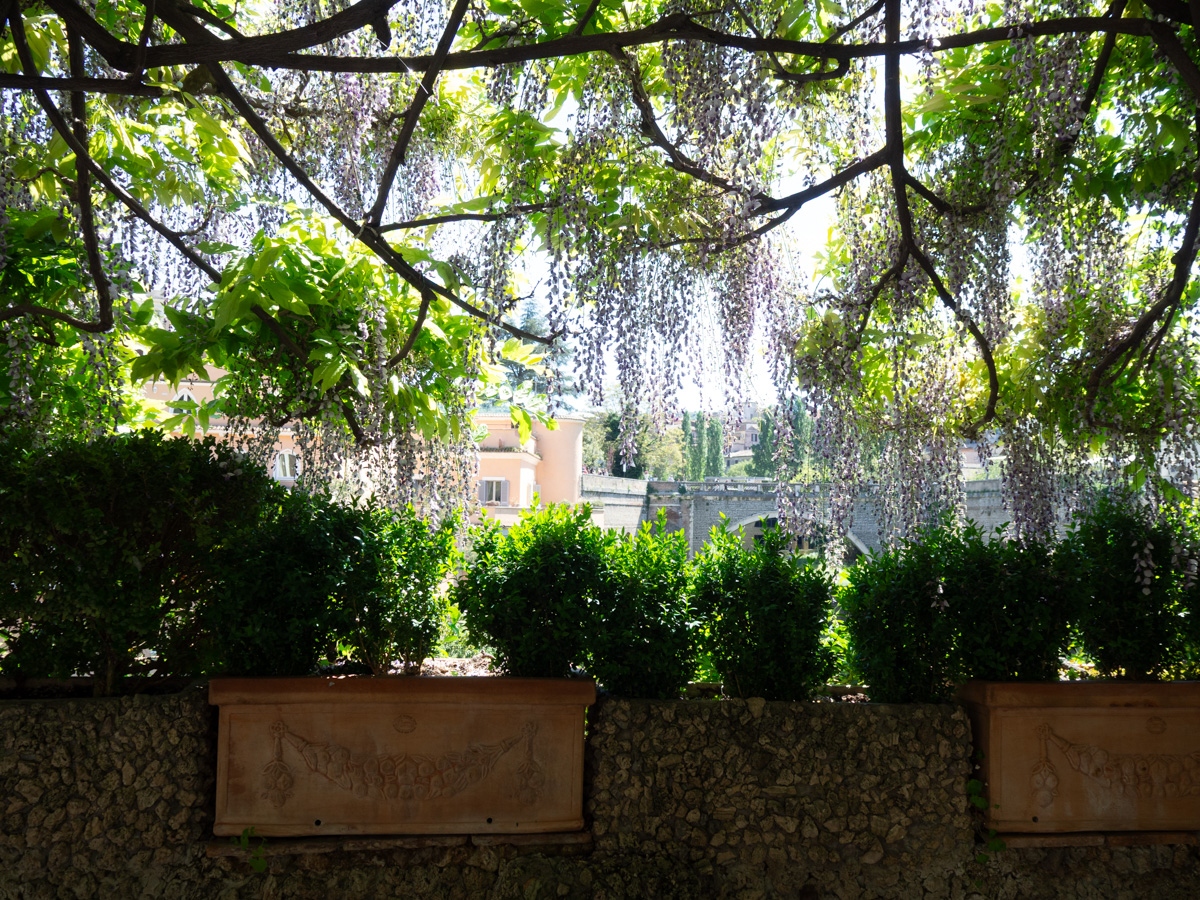
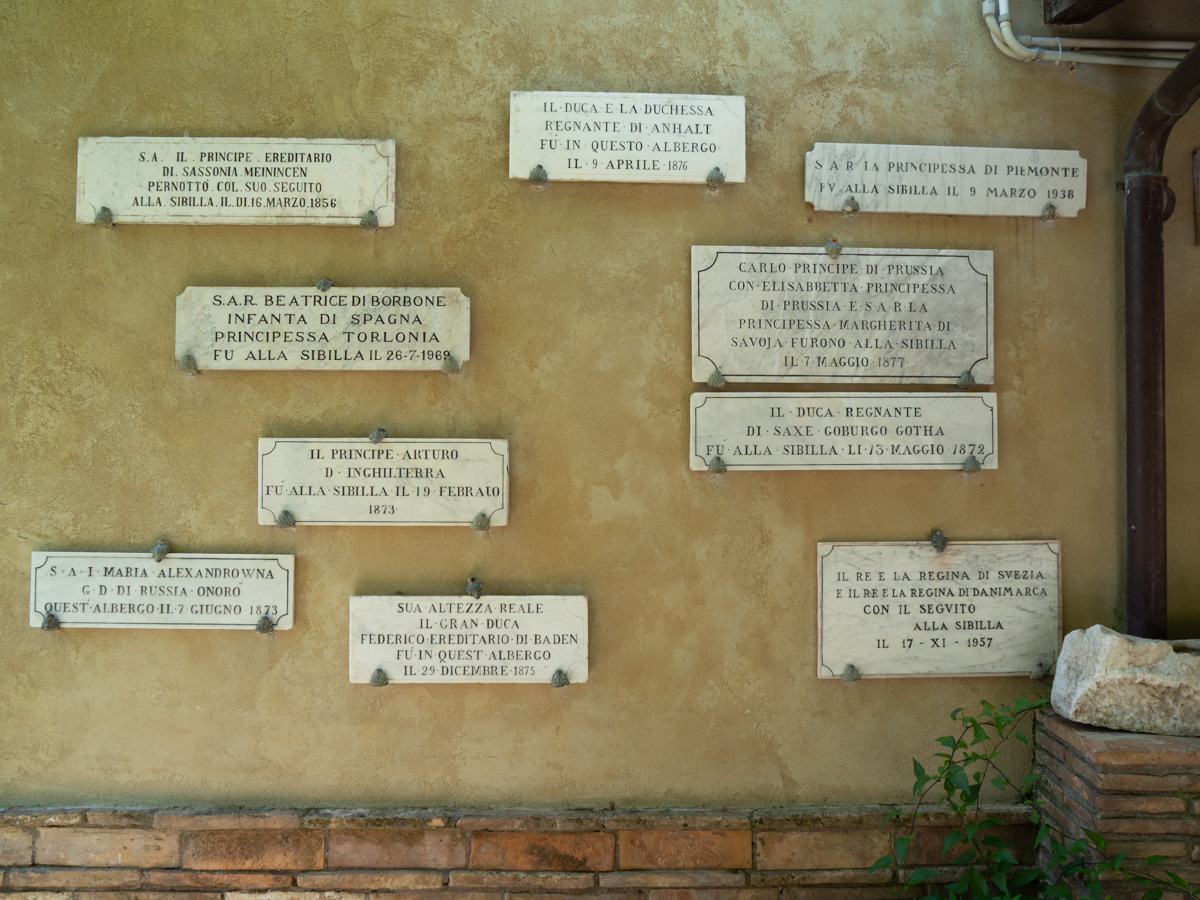
The restaurant was established sometime in the 18th century and has seen many illustrious guests throughout the years…
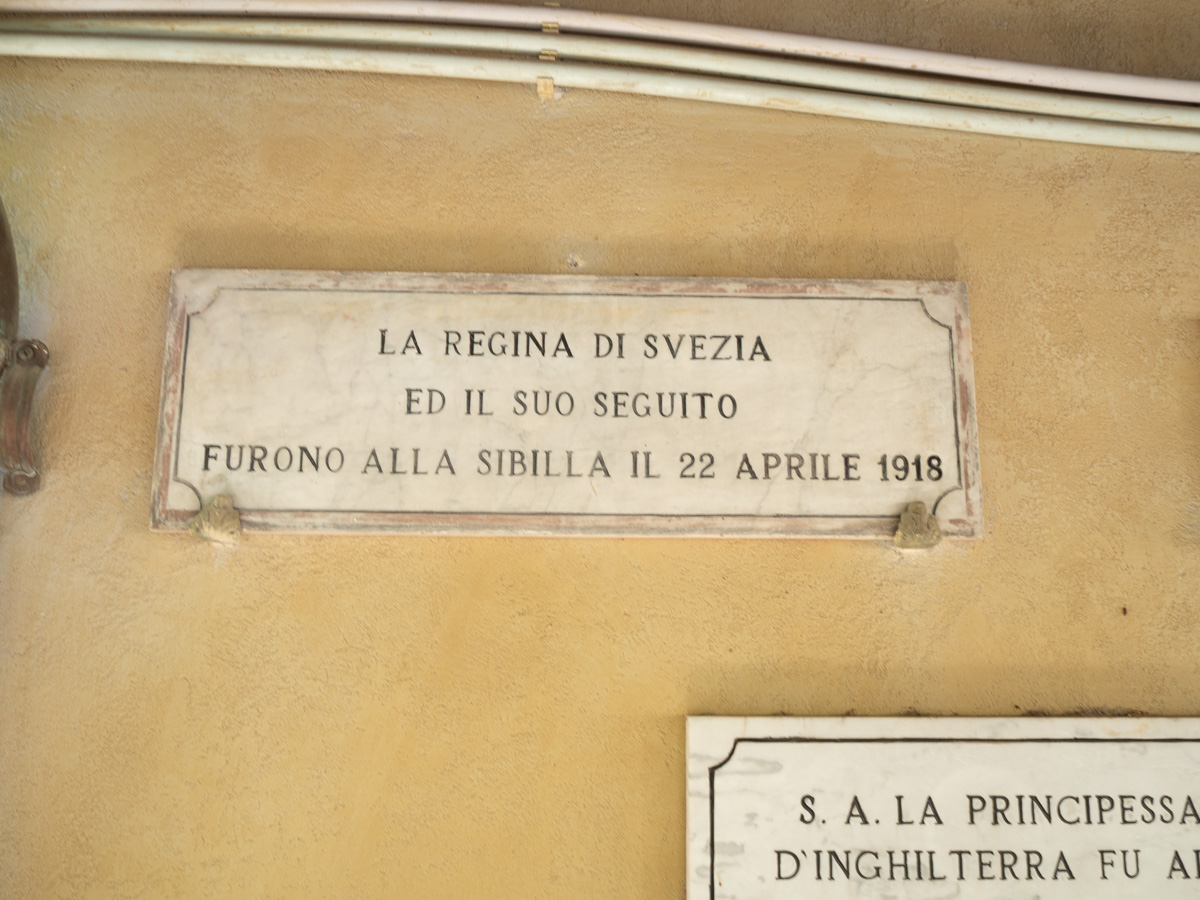
… including not one but two visits from Swedish royalty. In 1918, the queen of Sweden was Victoria of Baden. Wikipedia tells me she was sickly, not on good terms with her husband the King of Sweden, and lived the last ten years of her life in Rome.
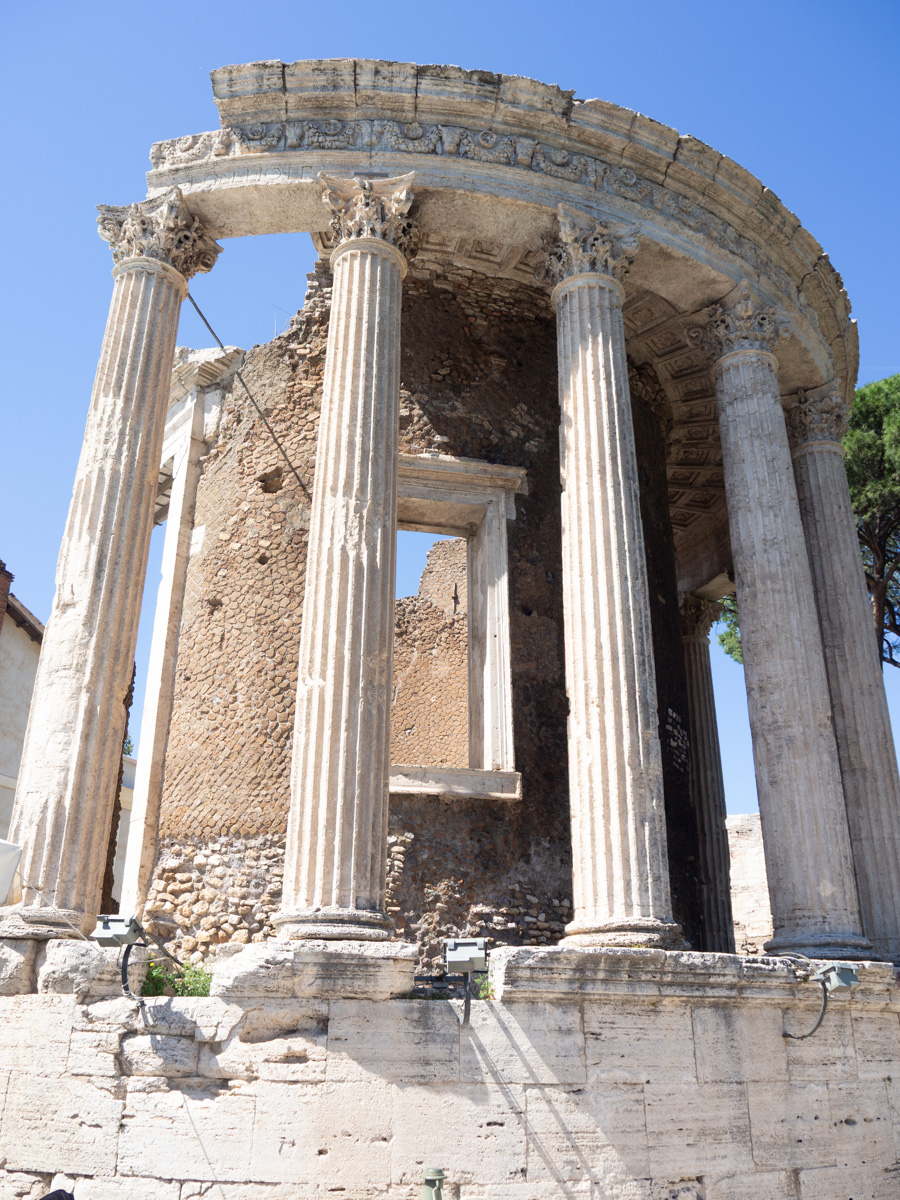
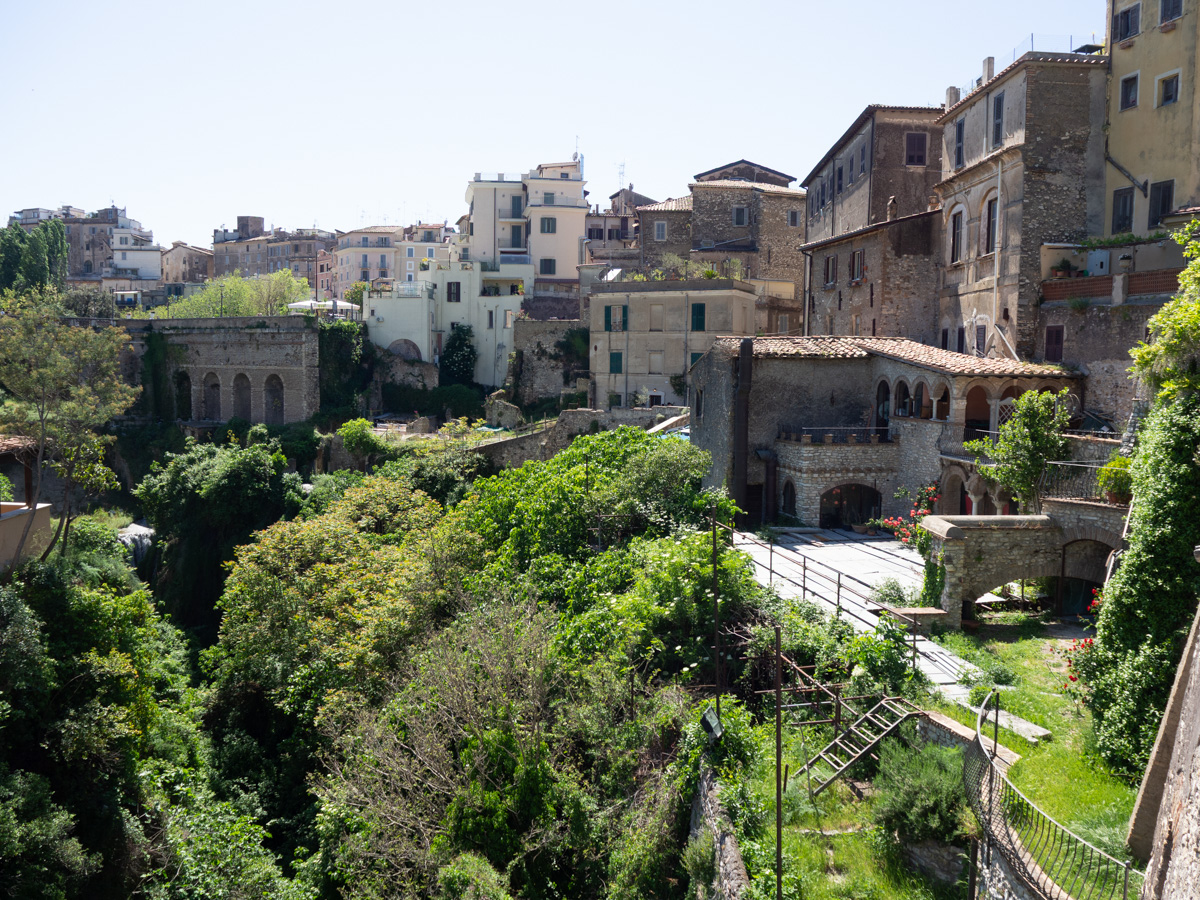
Look left and you see Roman ruins; look right and you see Renaissance buildings. I wonder what it might feel like to live in a place so steeped in ancient history.
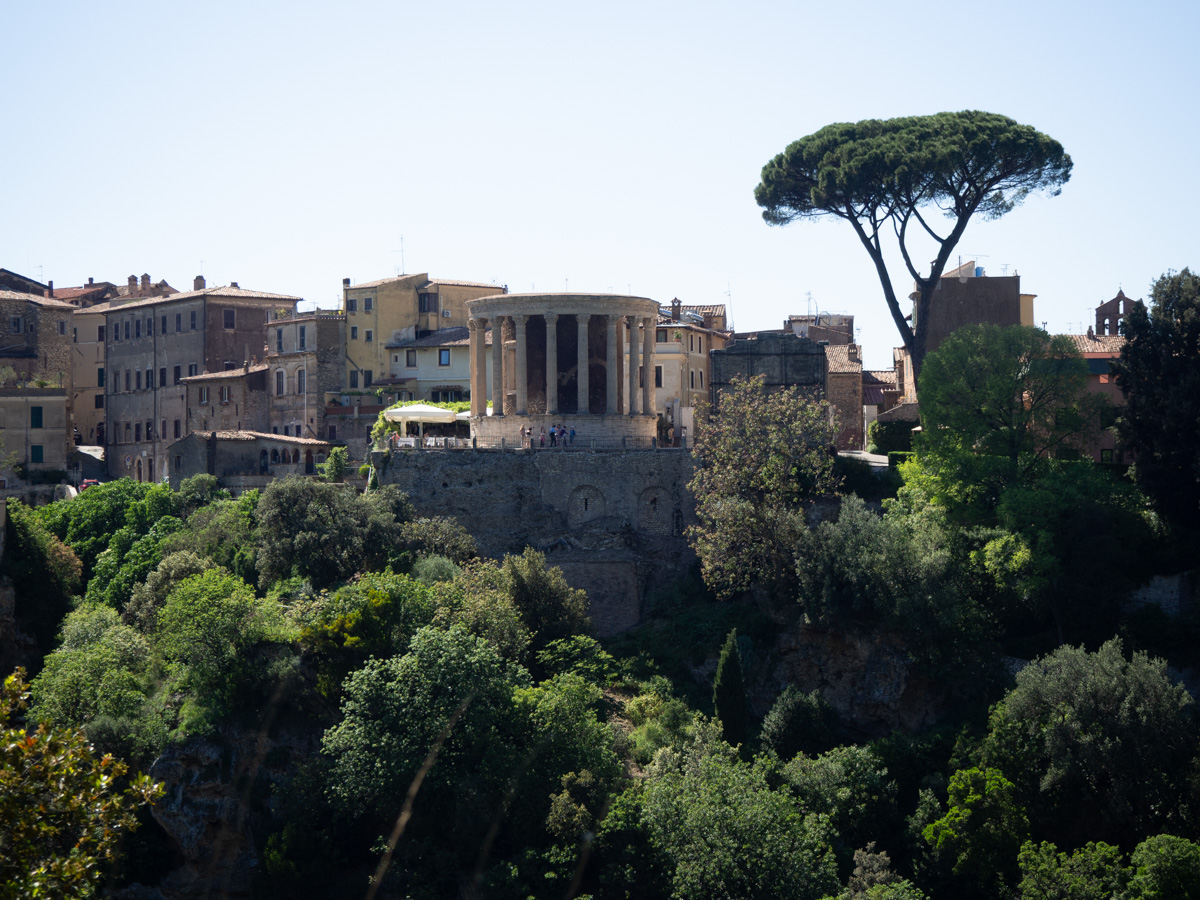
The restaurant was called Sibylla. Tivoli/Tibur was the seat of a sibyl, a prophetess of ancient Greece.
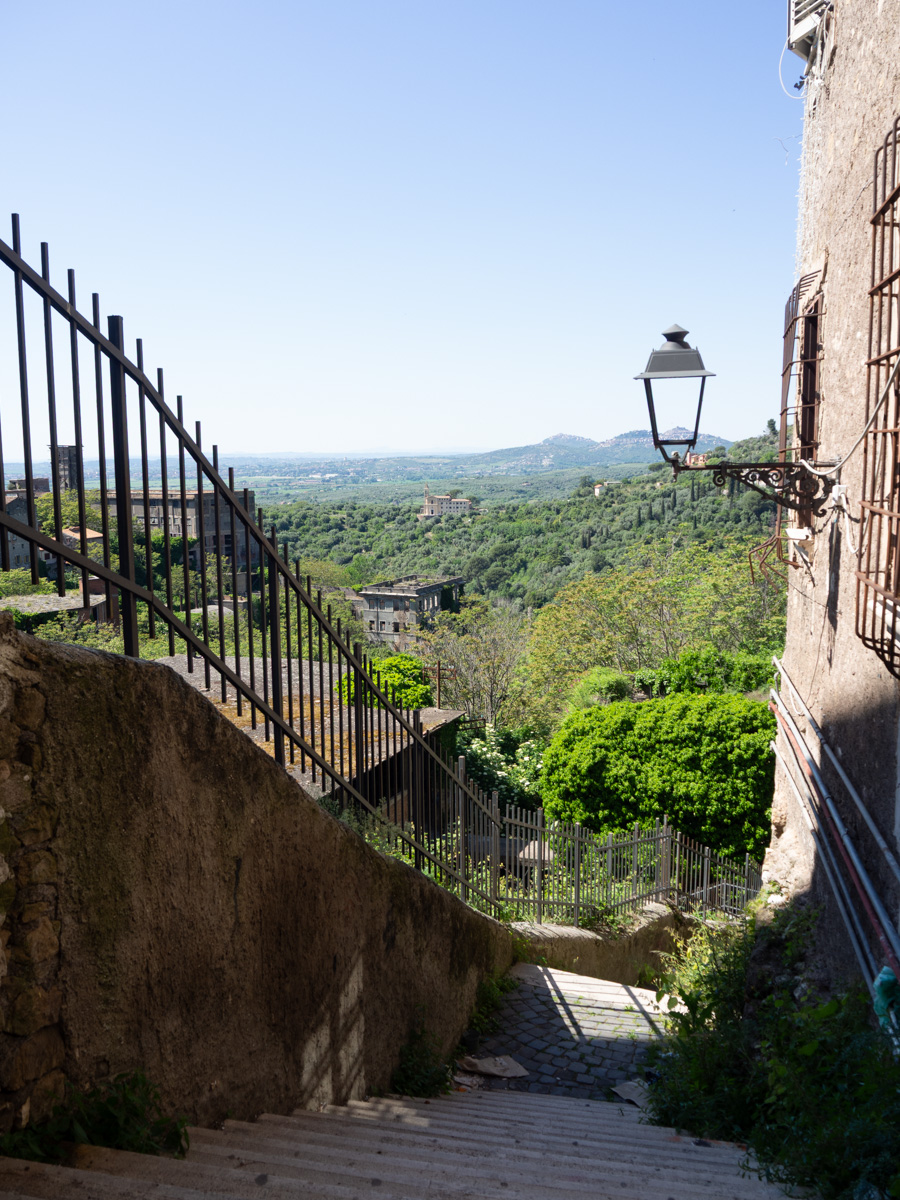
Lunch was followed by a brief visit the Villa Gregoriana, a park centred at the river ravine in the middle of the town. Our time there was so short that I don’t quite understand why we even went there – it wasn’t enough to get a real impression of anything.
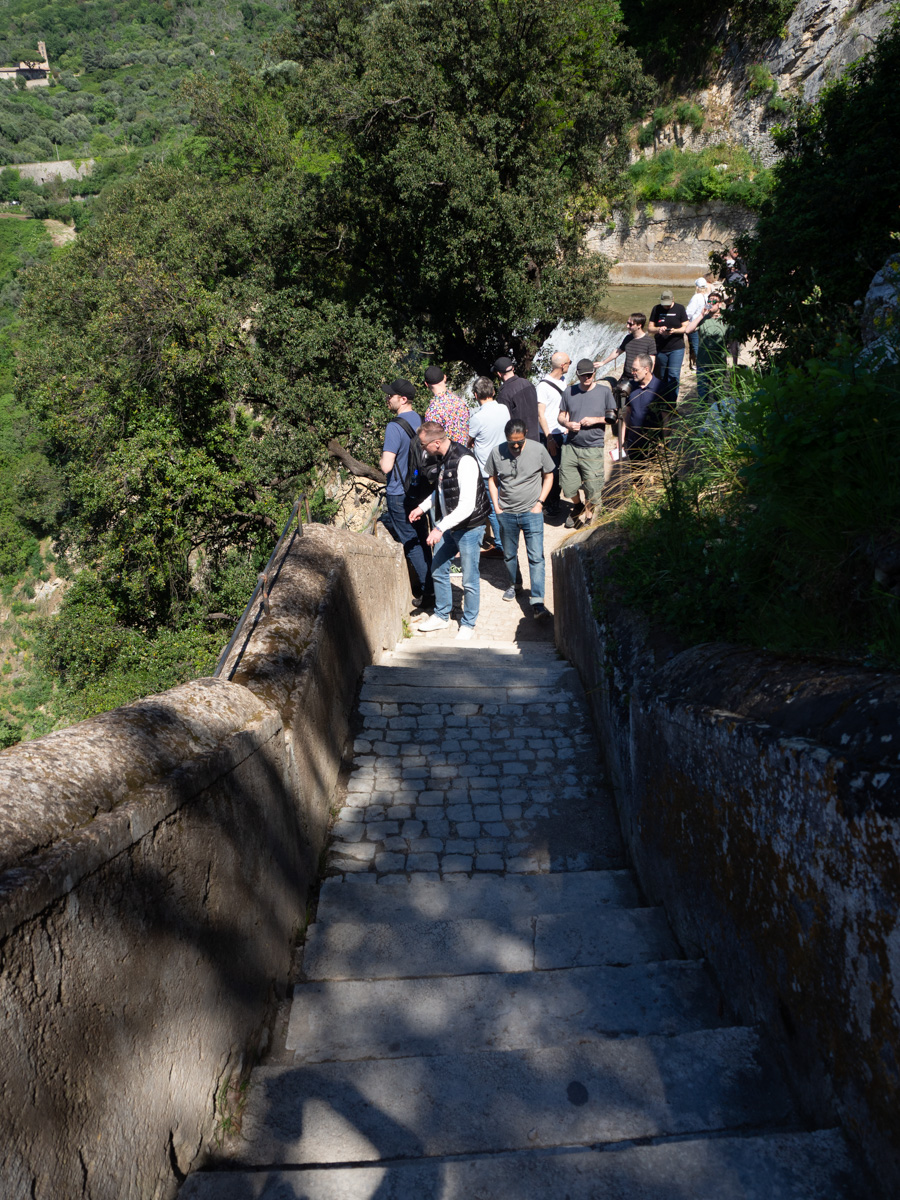
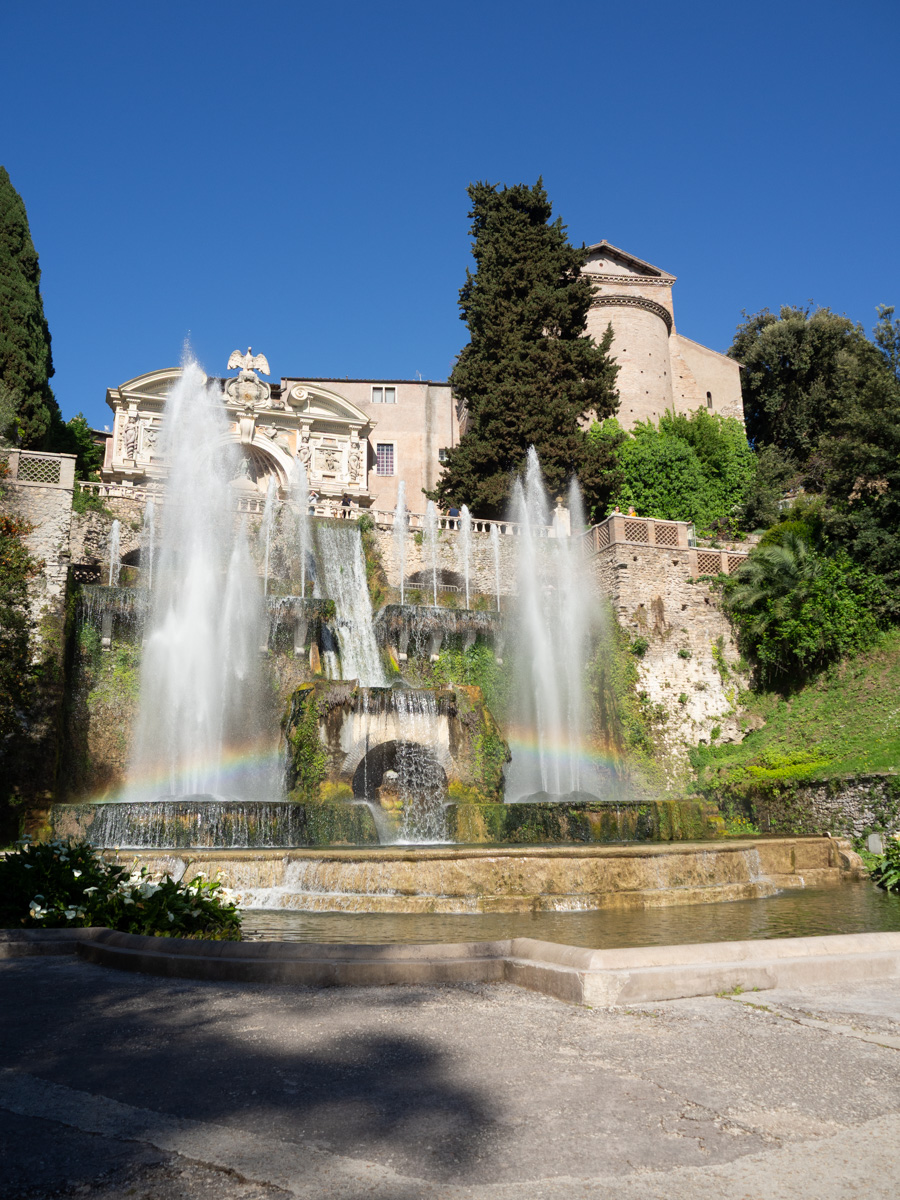
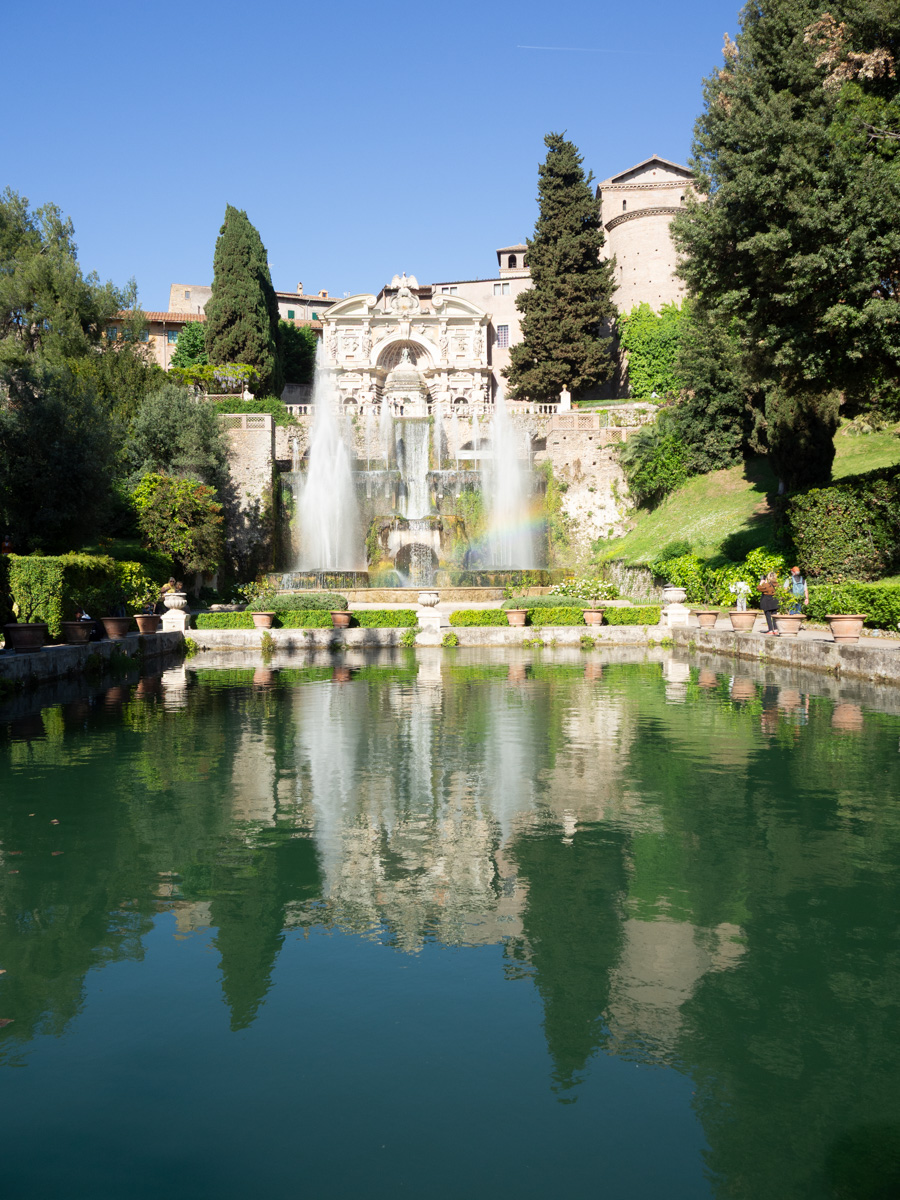
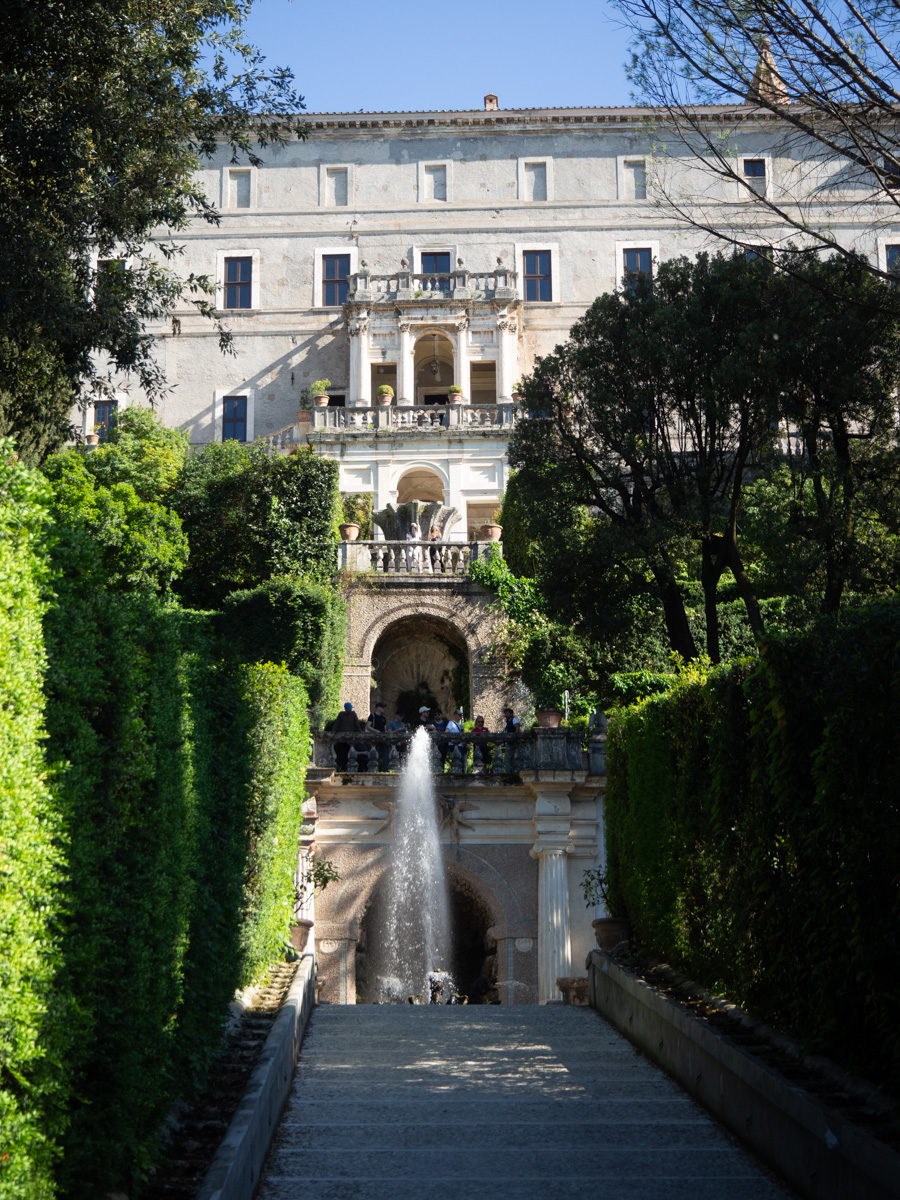
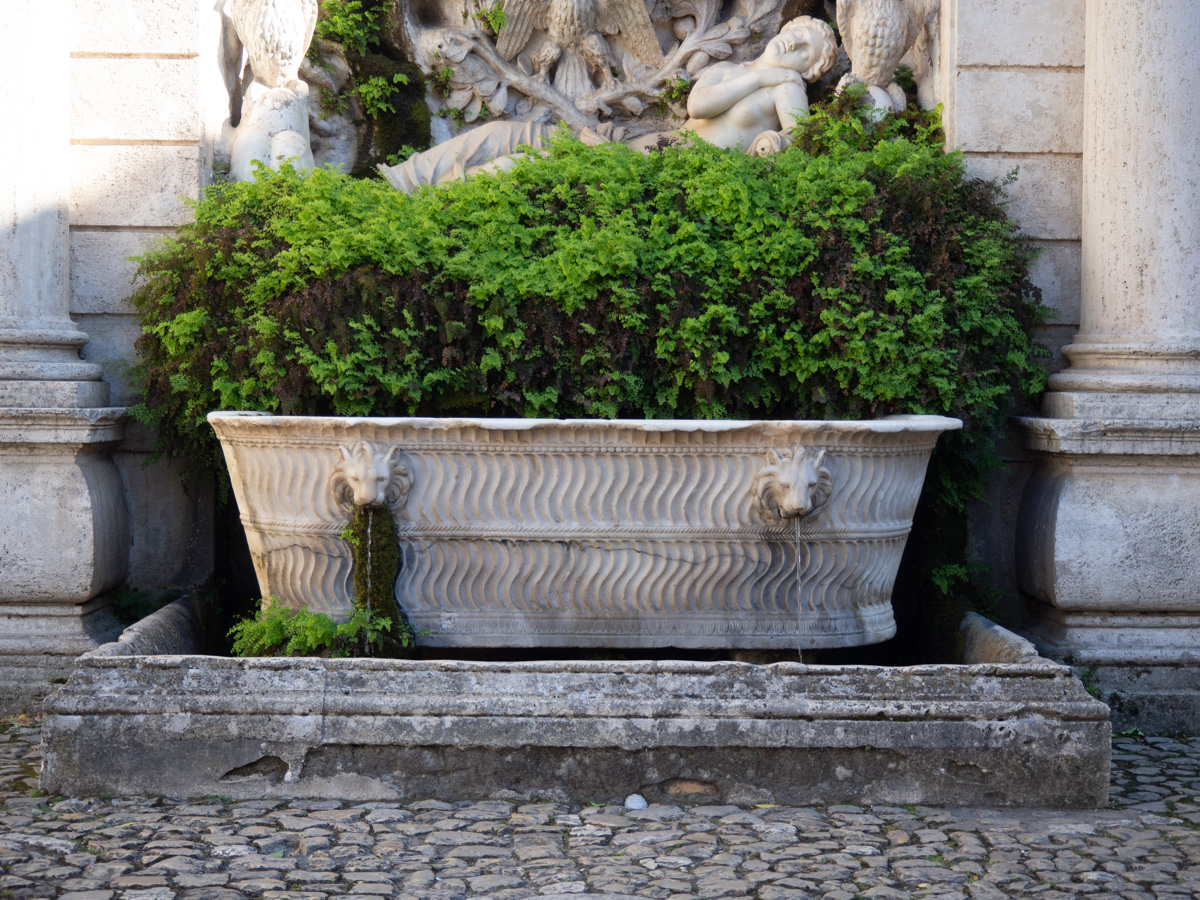
Then we went to see the Villa d’Este, where we actually had a good solid hour to walk around.
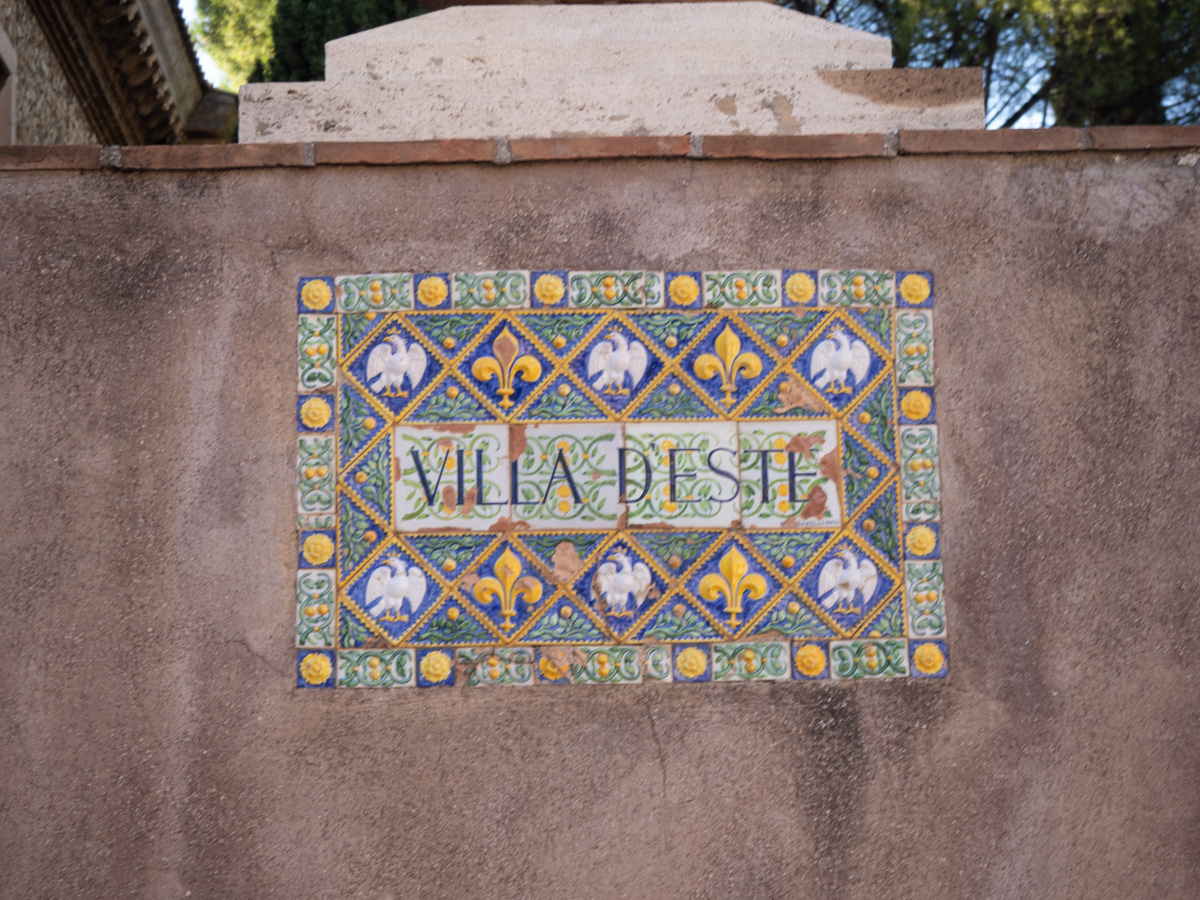
Villa d’Este is a Renaissance “villa” (read: palace) of Cardinal Ippolito II d’Este. It started out as a monastery, and some of the serene simplicity of that background is still present.
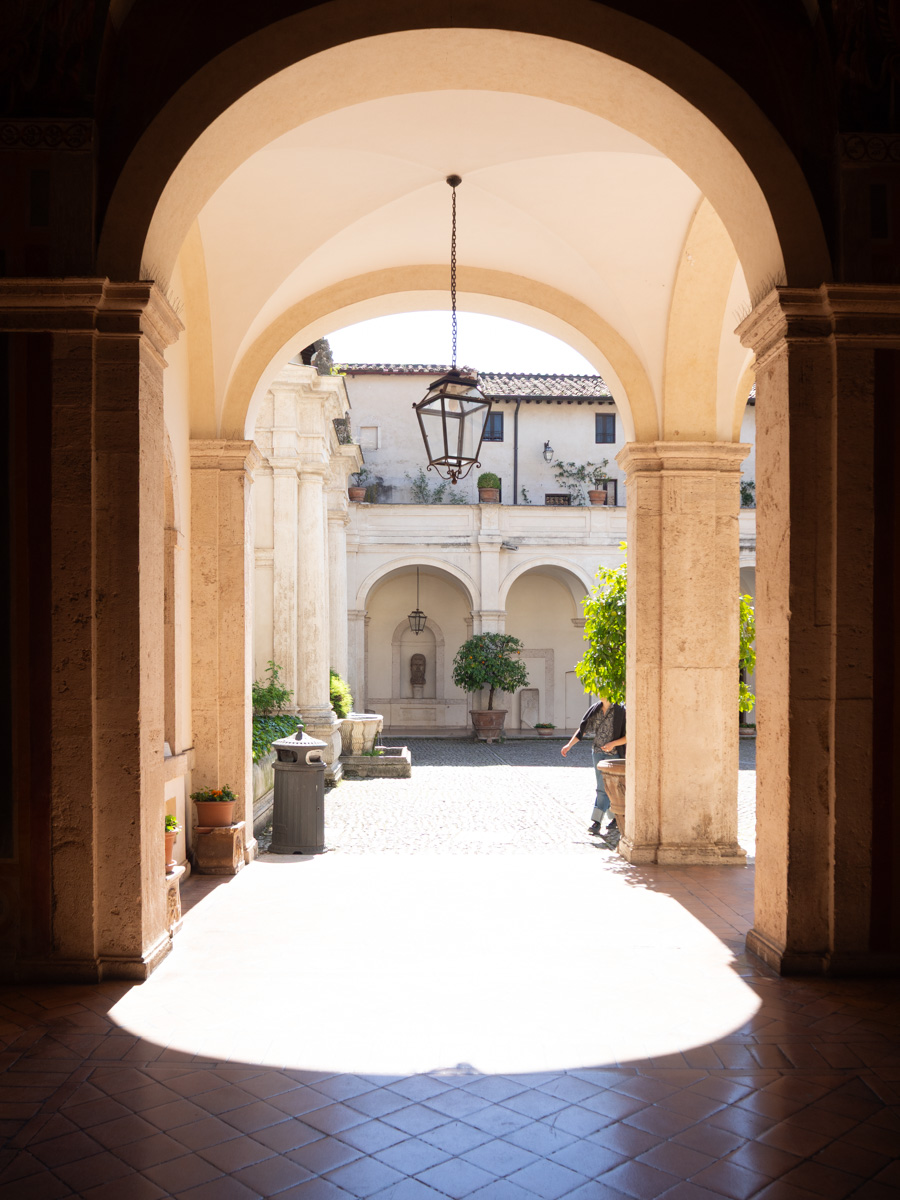
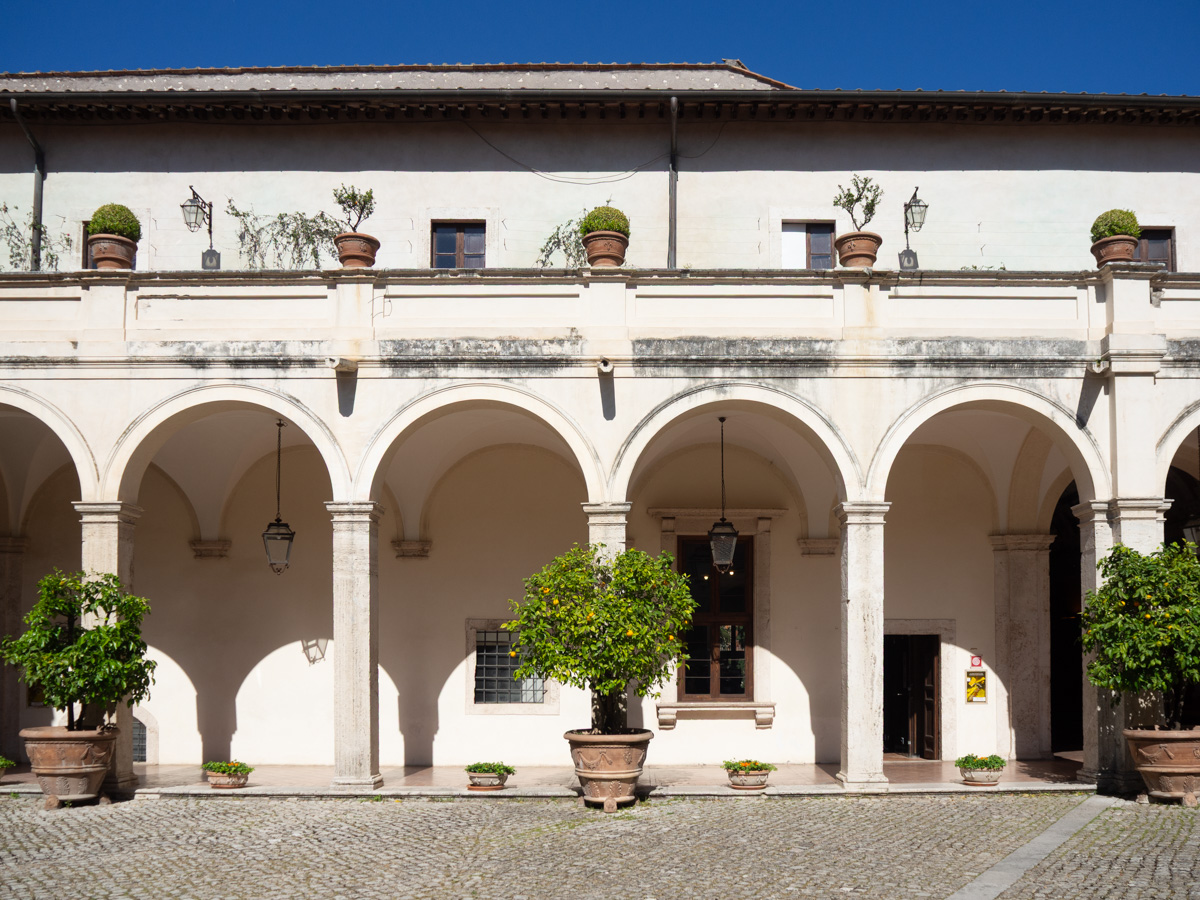
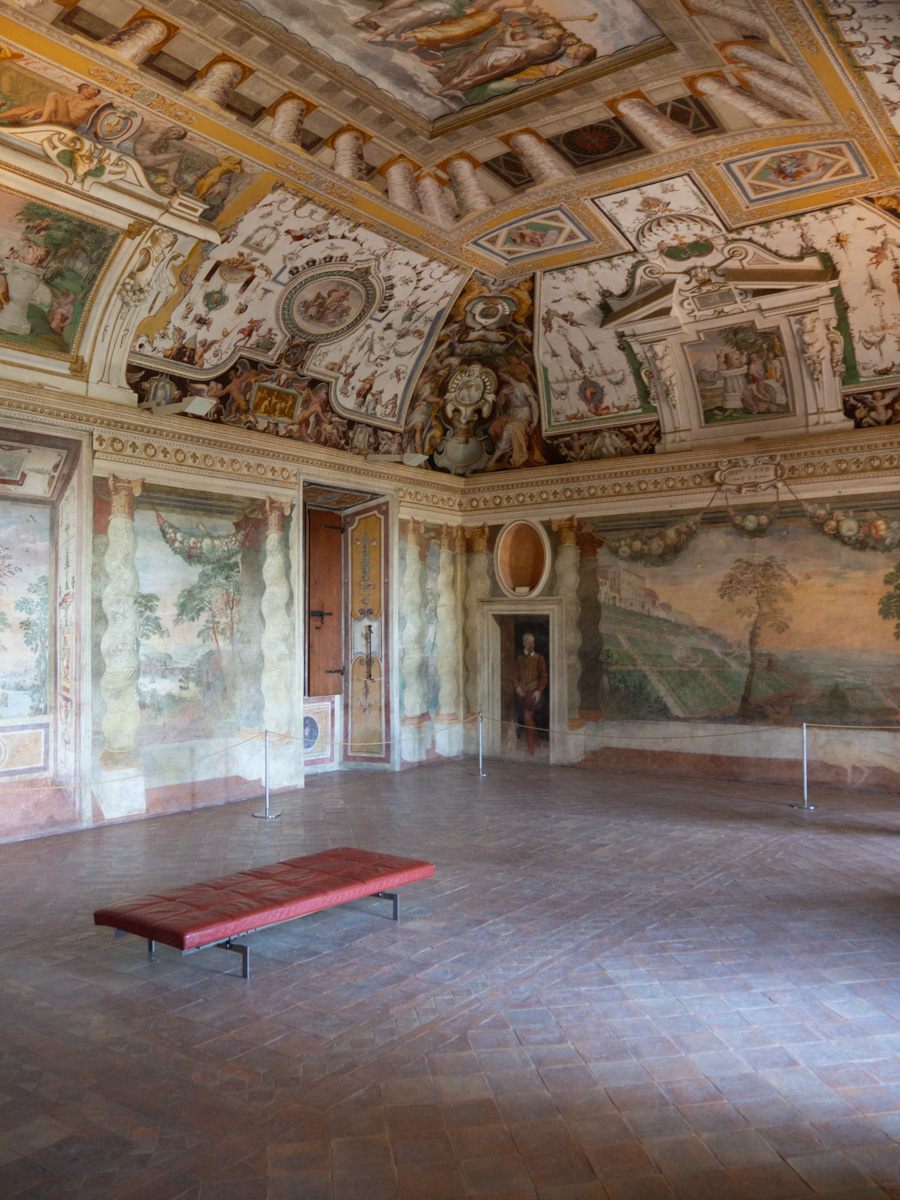
Inside, of course, it’s all opulent frescoes and tapestries. No luxurious furniture, though: later generations were unable to bear the cost of maintaining the palace, and its contents were sold and/or looted, while the palace itself fell into disrepair.
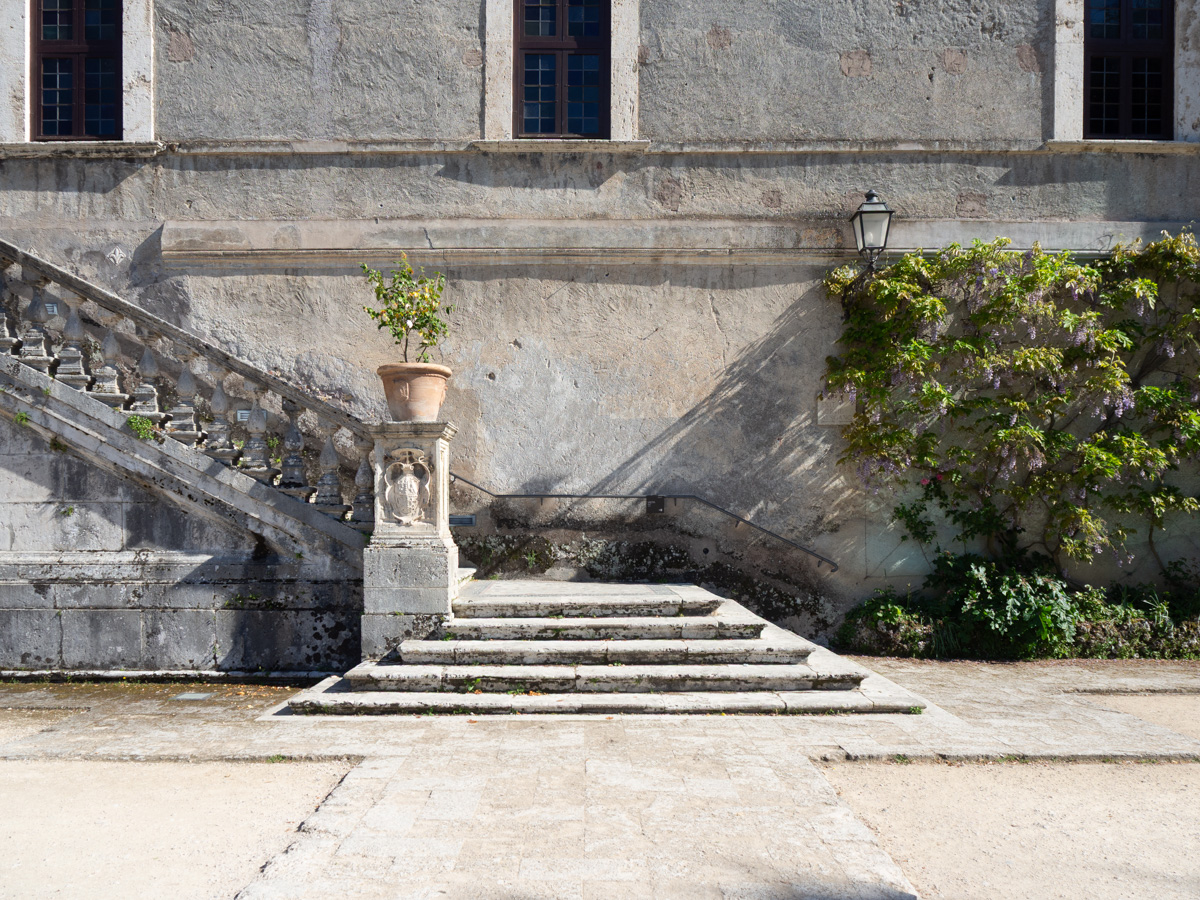
Behind the villa, there’s a large garden. Whole city quarters were razed to make space for it.
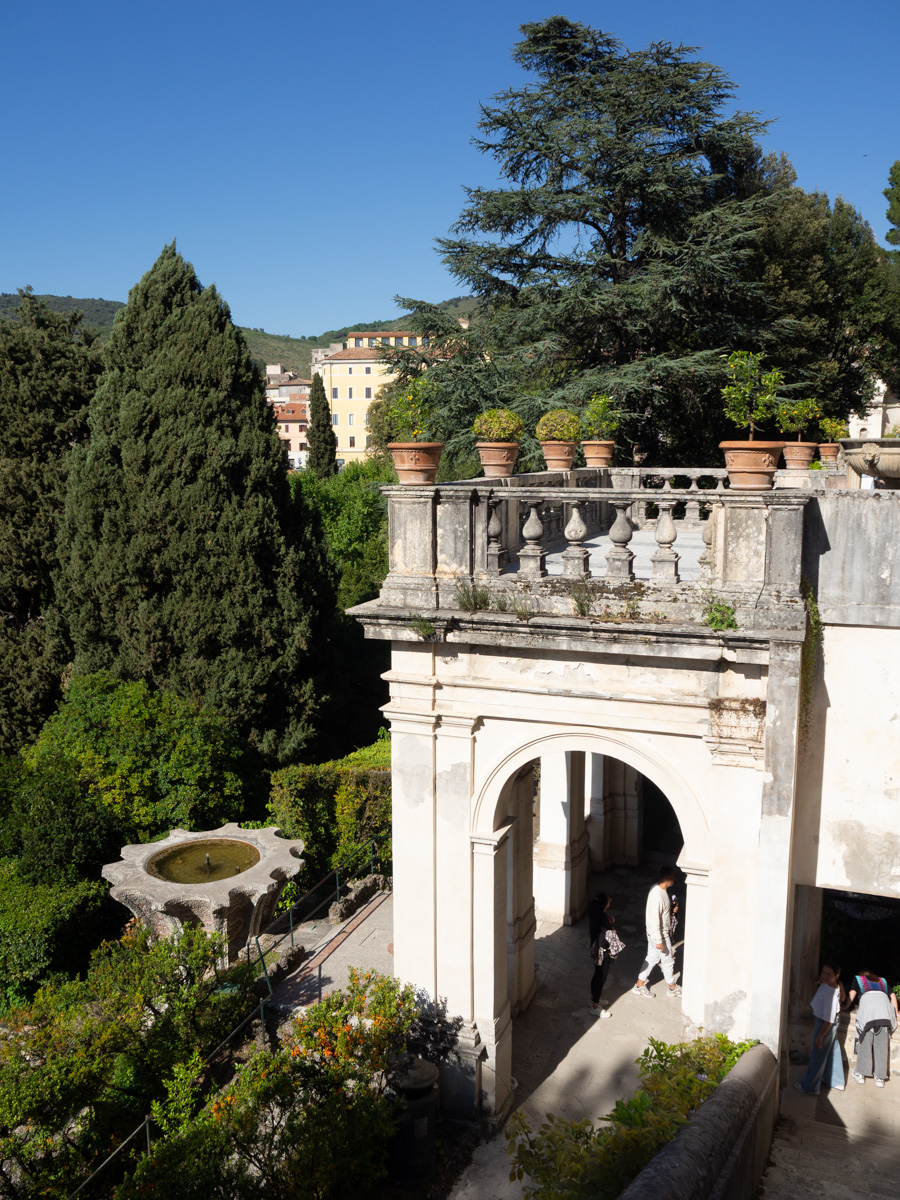
The main highlights of the gardens are its numerous fountains, pools, waterfalls and other water features.
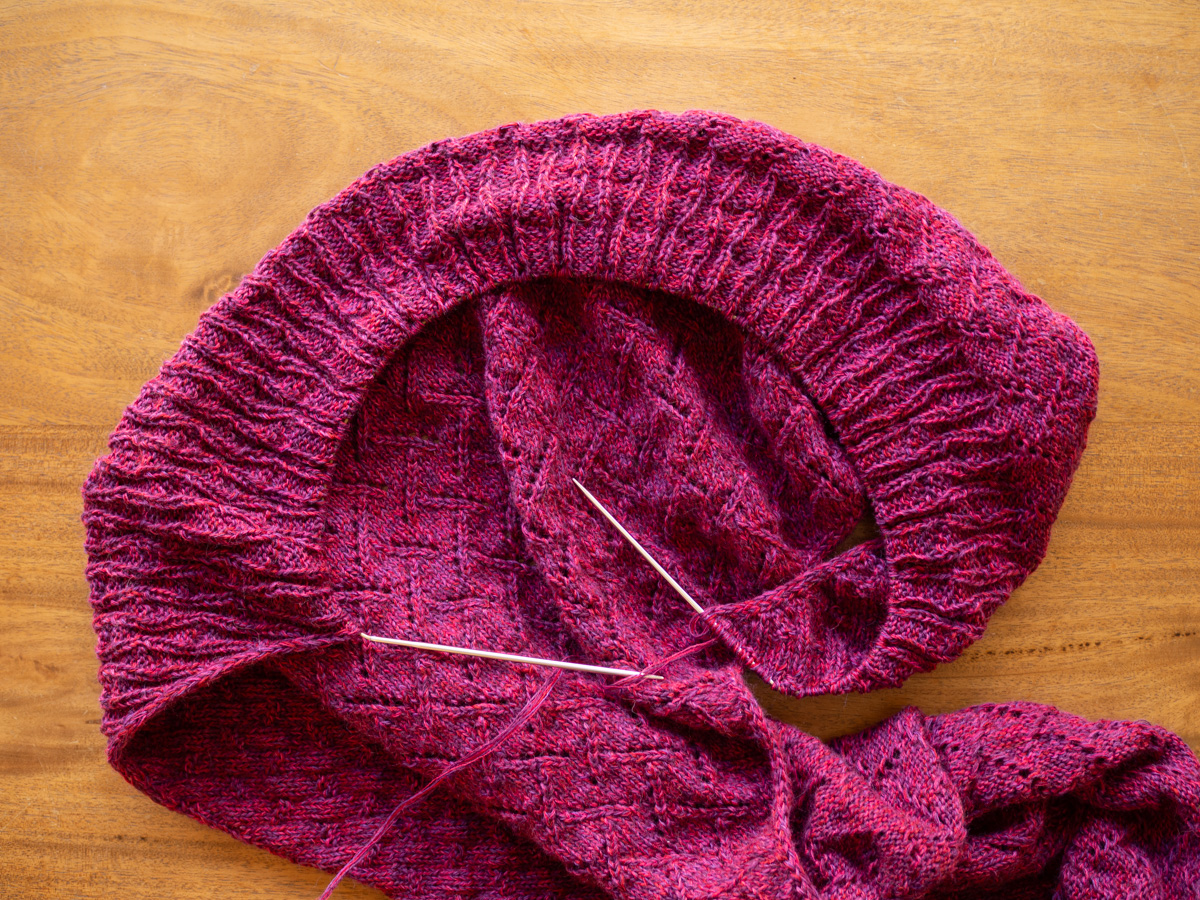
This shawl is coming out very nice, and I’m rather ready to be done with it. It’s a triangular construction that starts at one corner and ends at the opposite edge. Initially it feels like it knits up so fast, but then the rows get longer and longer, and it really feels like the progress stalls towards the end.
I’m so used to being able to combine knitting with another activity – maybe watch a knitting podcast on Youtube – but with this yarn it’s not so easy, I need to actually look at what I’m doing. At the same time the pattern doesn’t require much concentration. It’s rather perfect for knitting club, actually, where I can look at the knitting but still talk and listen to other people at the same time.
| « Older posts | Newer posts » |
