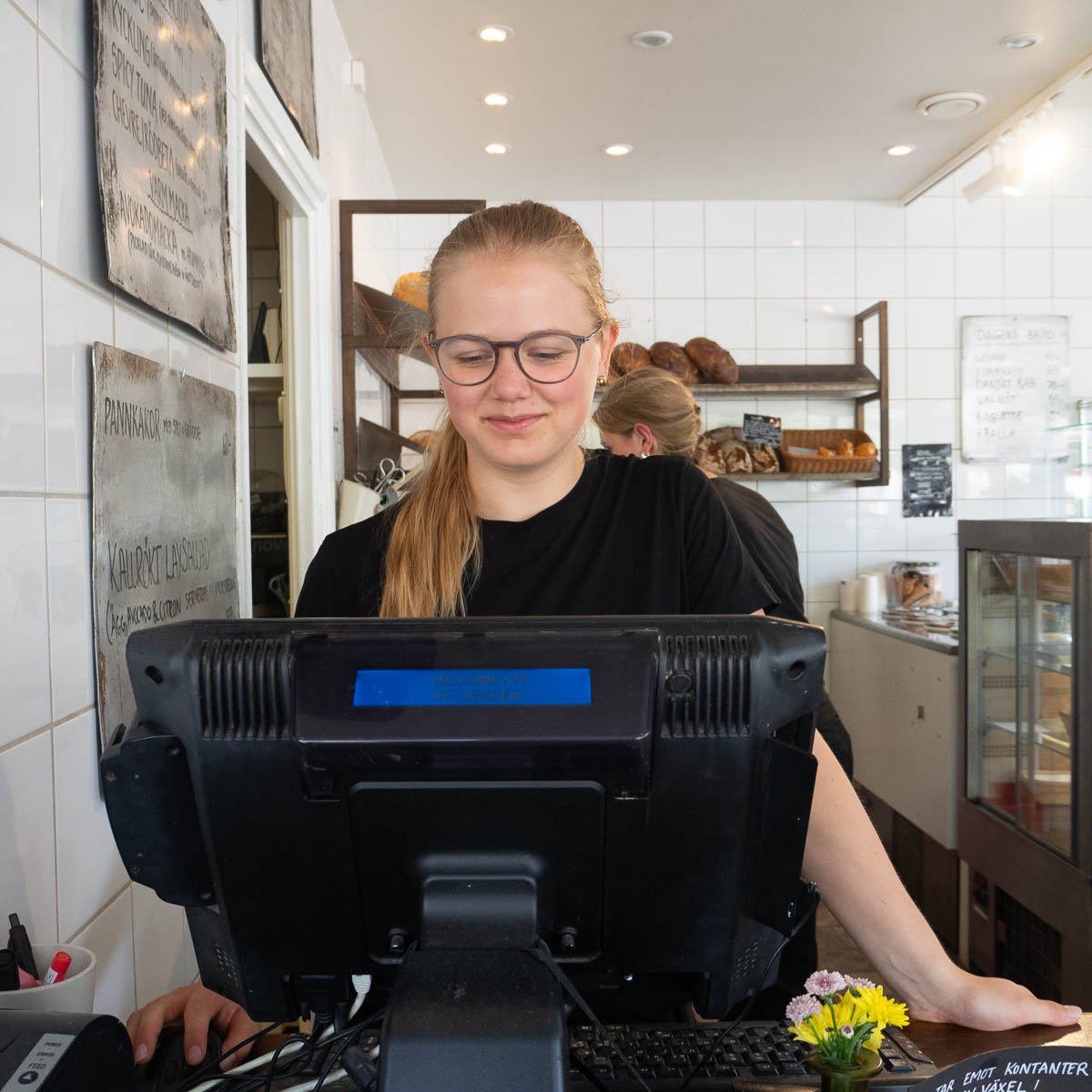
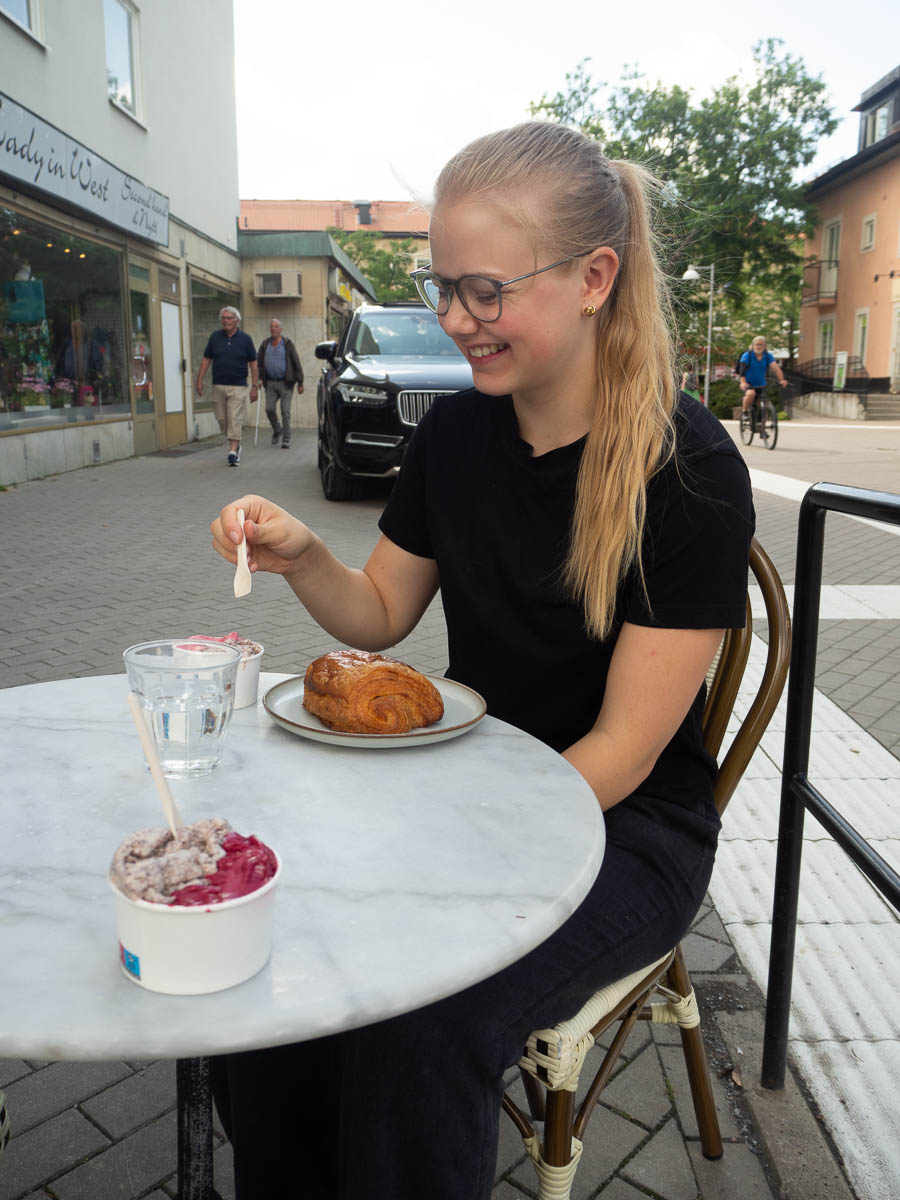
It’s Ingrid’s last day of work at the Spånga Konditori pastry shop. We managed to time a quiet moment when I could join her for a last fika with the employee discount – and try out the current ice cream flavours. (I got black cherry, and chocolate with blood orange.)

In September, she’ll be starting a four-month internship. It’s partly a time-filler: the real next step in Ingrid’s life will be fifteen months of military service, starting in March. But for now, she has a month of summer vacation to look forward to.

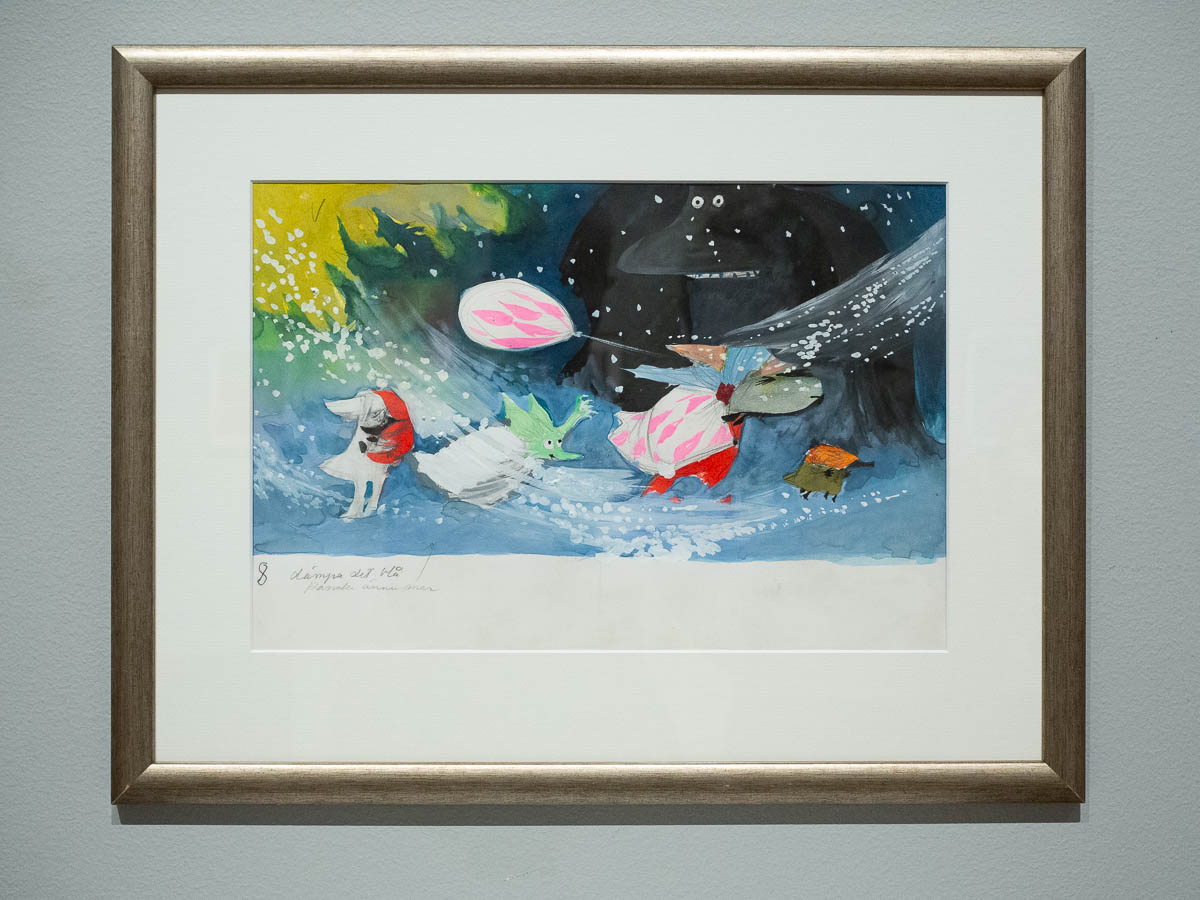
Ingrid and I saw an exhibition at Waldemarsudde with four popular Finnish/Swedish/Estonian illustrators of children’s books: Tove Jansson, Ilon Wikland, Pija Lindenbaum and Linda Bondestam.
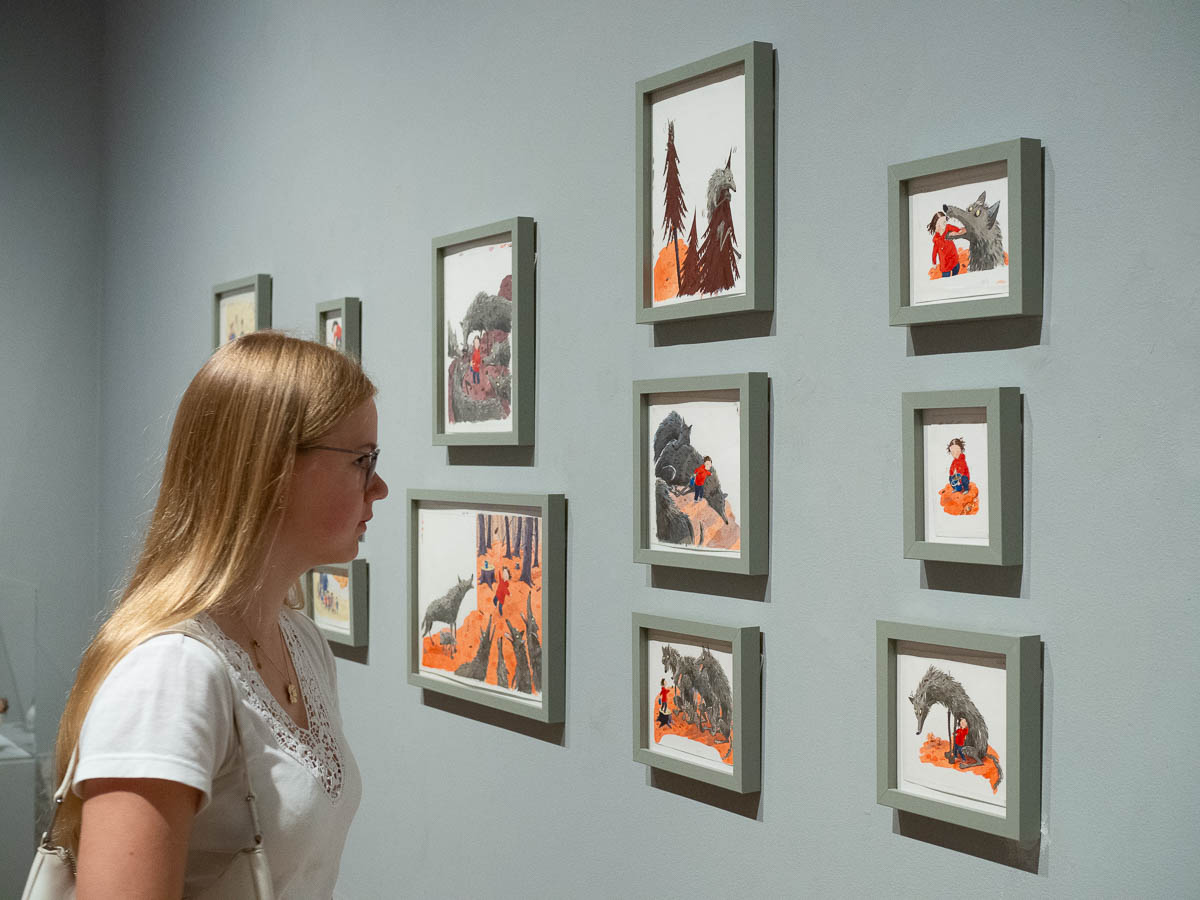
Tove Jansson is, of course, the creator of the Moomin books, which I read already when I was a child. Ilon Wikland illustrated many of Astrid Lindgren’s books, many of which were also translated into Estonian already back in the 1980s. Back when the children were children, I read a lot of those books again together with them.

I’m not sure how well known Pija Lindenbaum is outside of Sweden, but she is very well-known here. She has been giving out at least one book a year since, like, 1990, and some of the best ones came out just as Ingrid was in the picture book age, so we read those over and over again.

Linda Bondestam became active more recently, after Ingrid and Adrian had outgrown picture books, so I hadn’t come into contact with her work before.
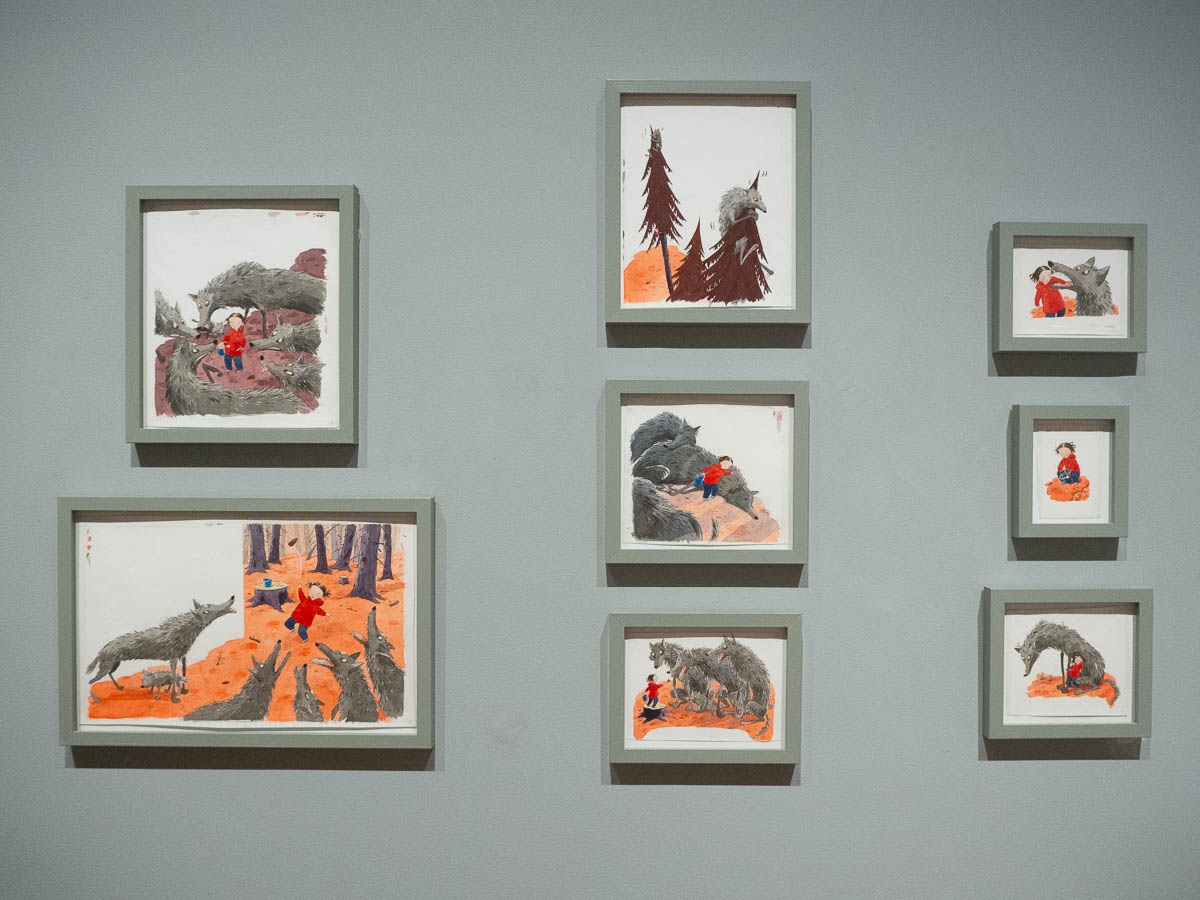
I loved this exhibition. There was lots of material, not just originals of the finished illustrations themselves (which were numerous) but also early sketches, notes, colour palettes, character studies, storyboards, etc. A fascinating look behind the scenes.

The illustrations themselves were interesting. Sometimes much smaller than I had thought (especially some Moomin drawings were tiny) and sometimes much larger (Linda Bondestam likes to work on a large scale).

Fascinating to see the tiny means by which a wolf’s eyes and snout can communicate its mood and feelings.

Seeing the pictures all like this, without any text and story to distract from them, highlighted the importance of layout. A normal picture utilises a canvas in whatever way it wants: sometimes all of it, sometimes just a part. But an illustration (at least in modern children’s books) takes text layout into account from the start. Sometimes leaving room for a lot of text, sometimes just a line or two. Sometimes stretching out to overlap with the text, or reaching out of its assigned area to play with space.

I was surprised to see how boldly Tove Jansson used colour in some of her works. In my mind the Moomin illustrations are black and white ink drawings, and where they are in colour (such as in Vem ska trösta Knyttet) it’s mostly plain fields of colour. But here were some very dynamic scenes.

Now I feel like re-reading all the Moomin books, and other works by Tove Jansson as well.
I couldn’t find a live-in catsitter for when we were away in Estonia, since both my brother and my mum were travelling to Estonia at roughly the same time. Eric came by at least twice a day to give Nysse food, but he didn’t get much company.

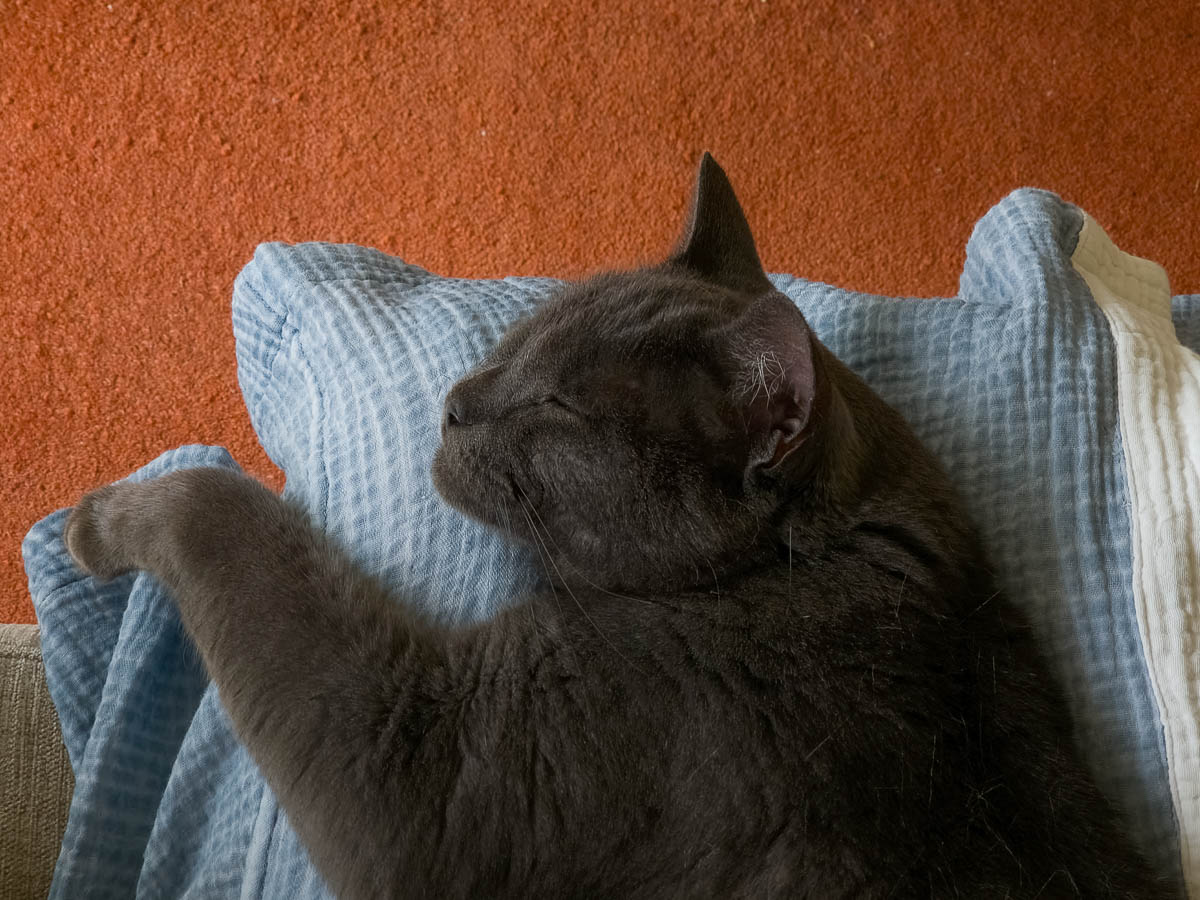
It’s easy to get the impression that Nysse is so independent, out hunting at all hours, sometimes gone all night. Does he even care about us – are we anything more than a source of food? Yes, he absolutely cares. He may come and butt his head against my legs, or stop by for a quick pet before going his own way again. Sometimes he simply walks into the house, says hi, does a little circuit to check that all is good, and goes straight back out again. But that brief contact matters.

The lack of company for ten days did not suit him at all. He was reticent and grumpy when we got back, and more or less avoided us. Didn’t want to be petted at all. It took at least a week for him to forgive us for the abandonment and start making proper contact again.

Now we’re back to normal. He comes to me for cuddles on his own initiative, and falls asleep on my lap.

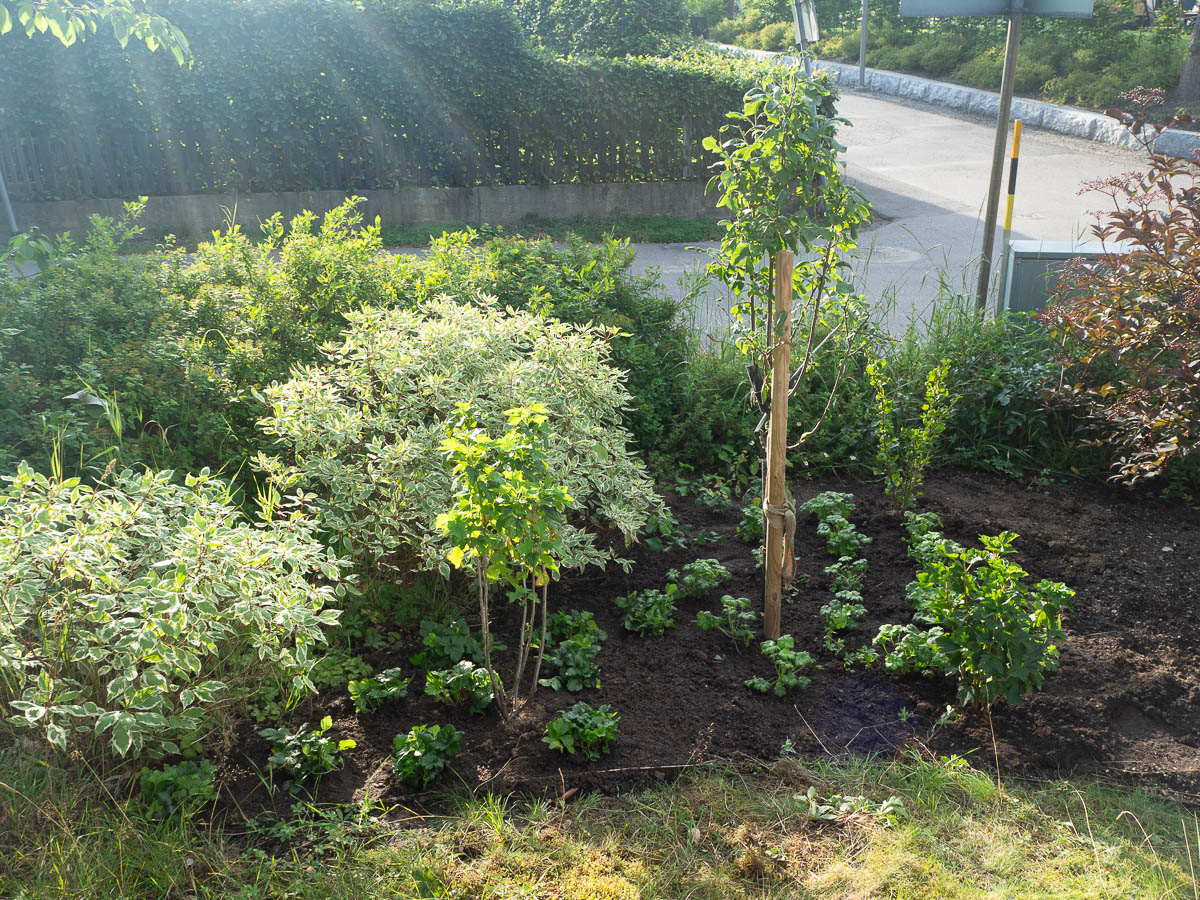
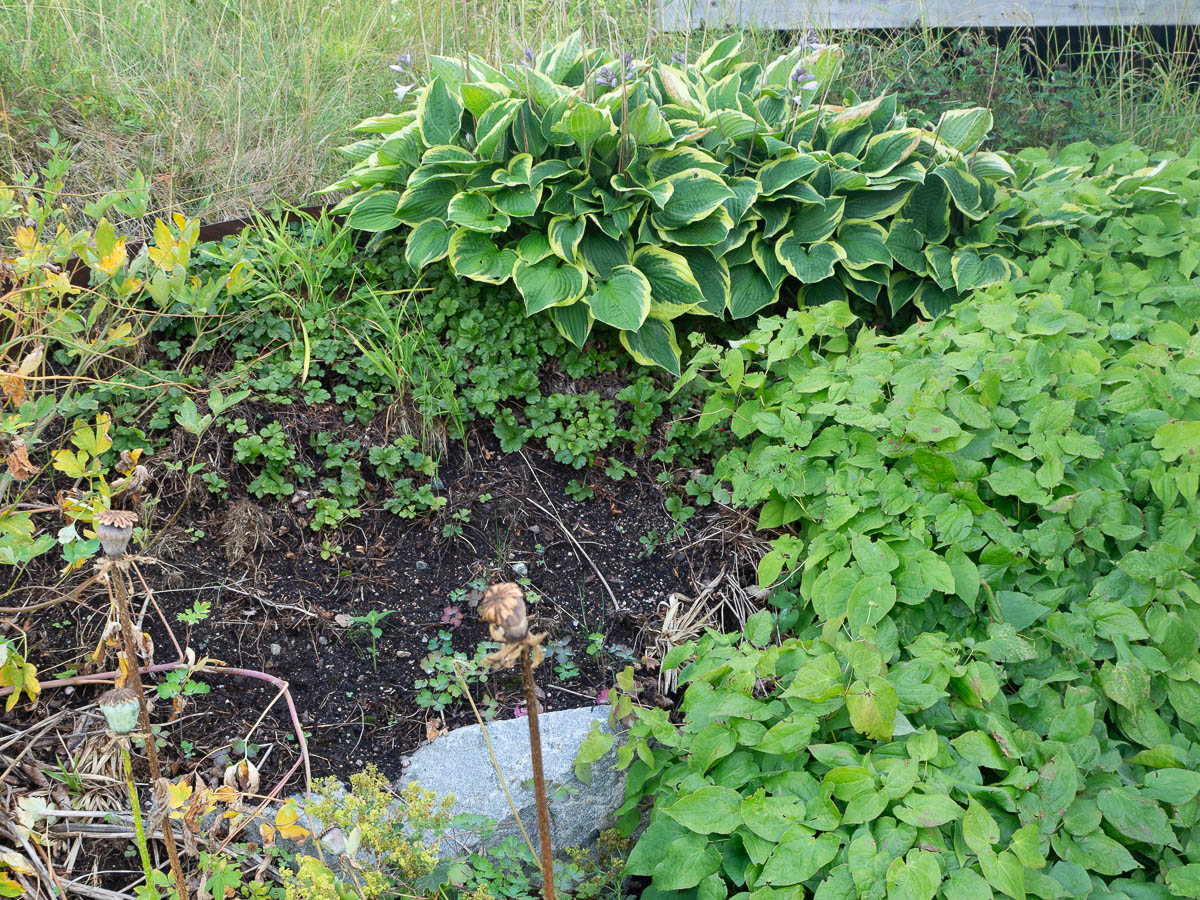
Planted berry bushes in the new area, and started on the ground cover.

One redcurrant bush, one blackcurrant, and one gooseberry. I love all of these for eating and cooking, and it’s very rare to be able to buy them here. If you want any, you need to grow your own. I tried a gooseberry bush in a planter box, but as with everything else I tried growing in the boxes, it required eternal watering and mostly died the moment I stopped. This corner of the garden is in partial shade (not great for berry bushes) and there’s other things here competing for resources, but the soil here is good and shouldn’t dry out in the same way, so maybe this will work.

Underneath, it’s simple ground cover plants. Some Epimedium at the back, Waldsteinia towards the left, Geranium macrorrhizum in the middle. I’m not at all fond of the bare earth (or mulch-covered earth) look. These have all been successful in other parts of the garden, so the odds are good.

What hasn’t thrived at all is day lilies (Hemerocallis). I’ve put them in two places and they’ve been weedy little things, literally no larger than a small tuft of grass. There, at the top left, surrounded by the Waldsteinia. They’re supposed to be pretty hardy, but apparently not here. They’re going out as soon as I have time to buy a replacement.

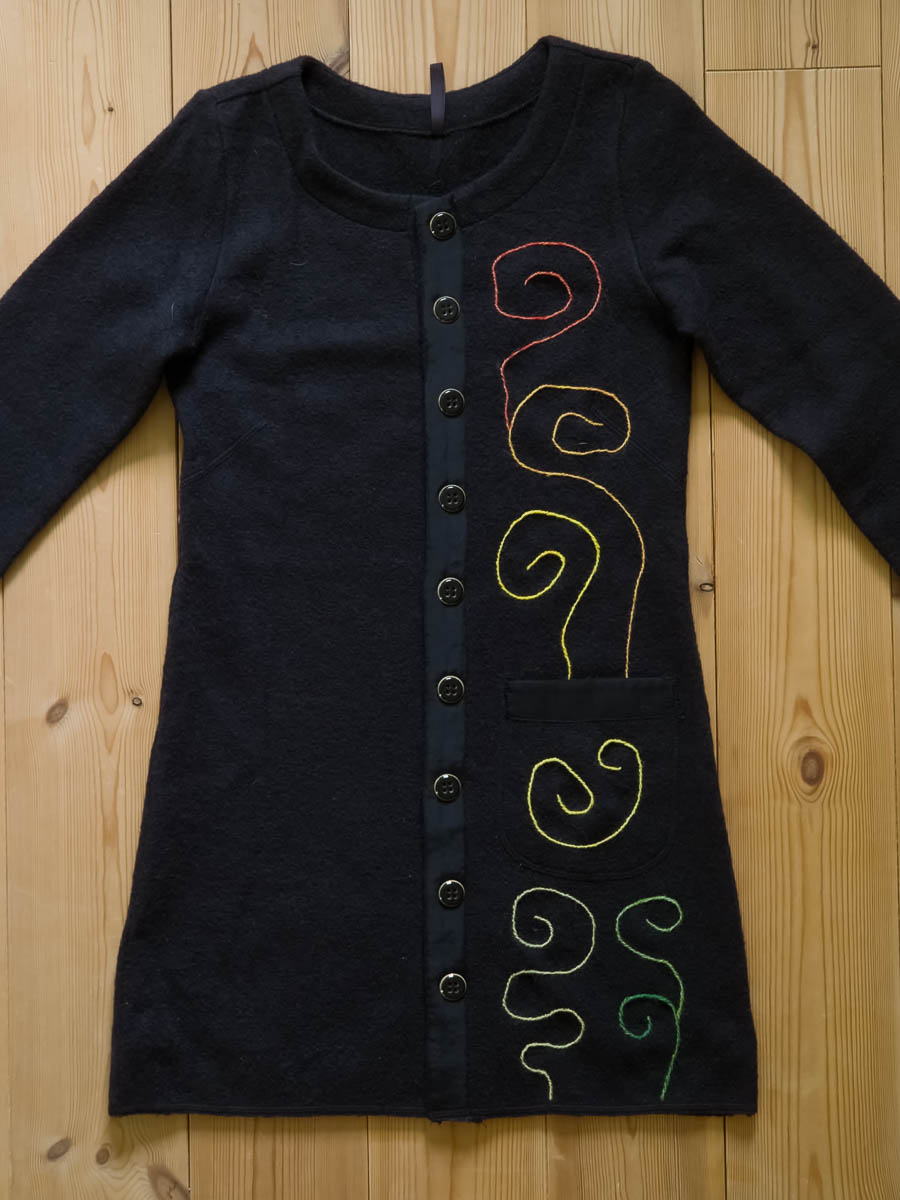
Today is World Embroidery Day. No more basement cleaning – I spent the whole day embroidering.

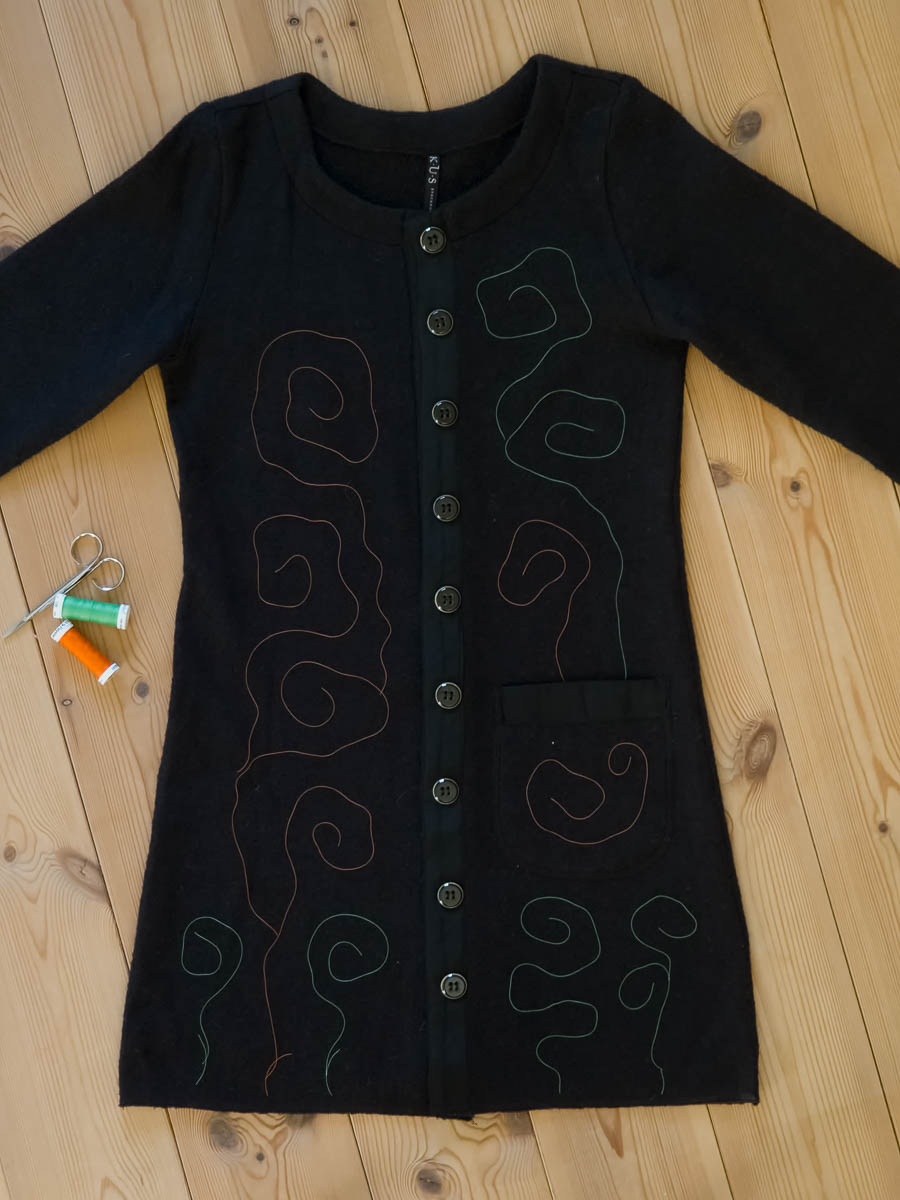
I have this long black cardigan that I bought online, second hand, a few years ago. Great quality, 100% wool, fits me perfectly – but it is so black. I’m not sure if I’ve worn it a single time, because I feel so dull and boring and washed-out in it. The plan has been for several years now to add colour to it, and I even had an idea for how that would look. I just hadn’t gotten around to it.

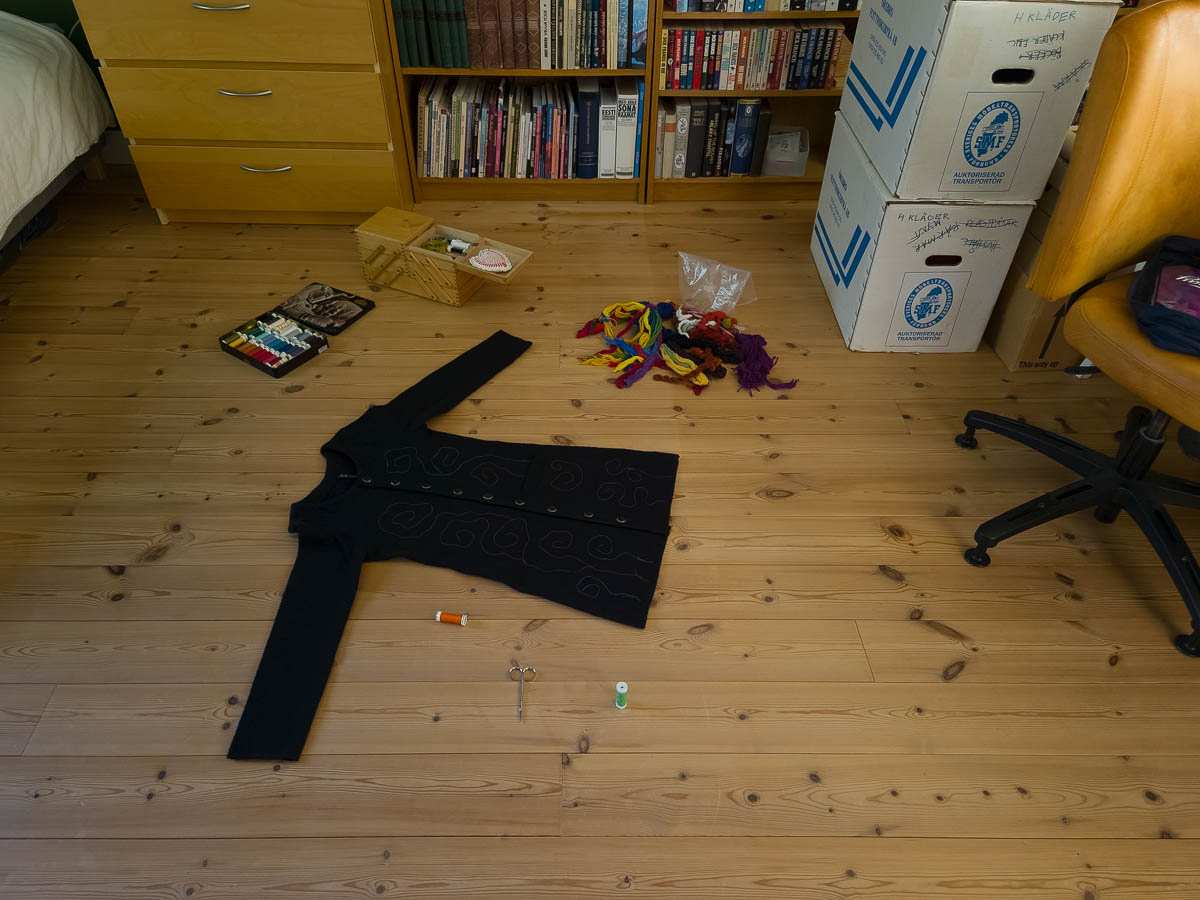
That wide unused space in the middle of my bedroom? Turned out to be a great place for planning and sketching out a large embroidery project. Spread it out without running out of table space; walk all around it without navigating around chairs and other furniture. I rather like working on the floor.

I was going to take a photo and then scribble on it digitally, but it was easier to “sketch” using contrasting sewing thread on the cardigan directly, and then take a reference photo of that.

Then I got stitching! Enjoyed stitching for the whole day, and was done with half of my design by the end of it.

It feels like I’ve spent half my vacation on this basement project. Today was, finally, the last of it.

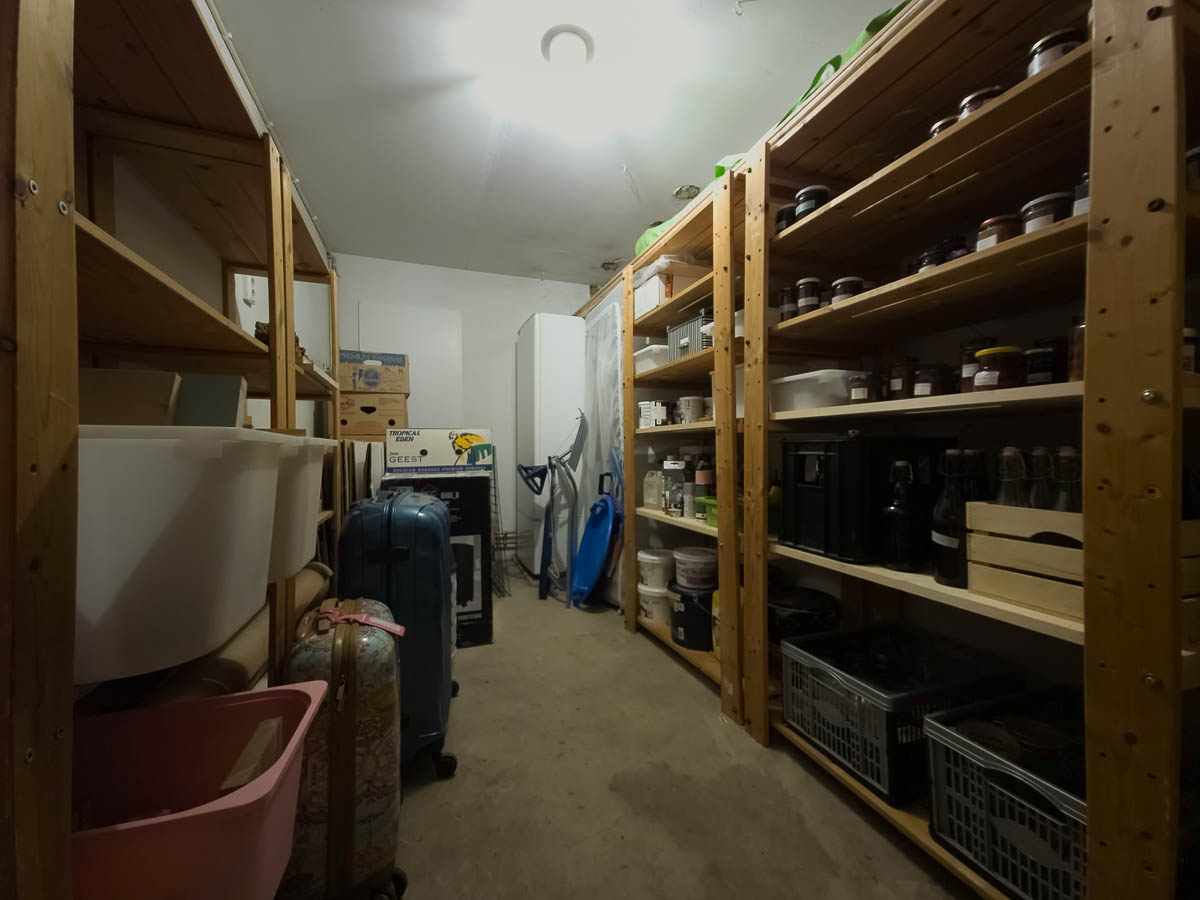
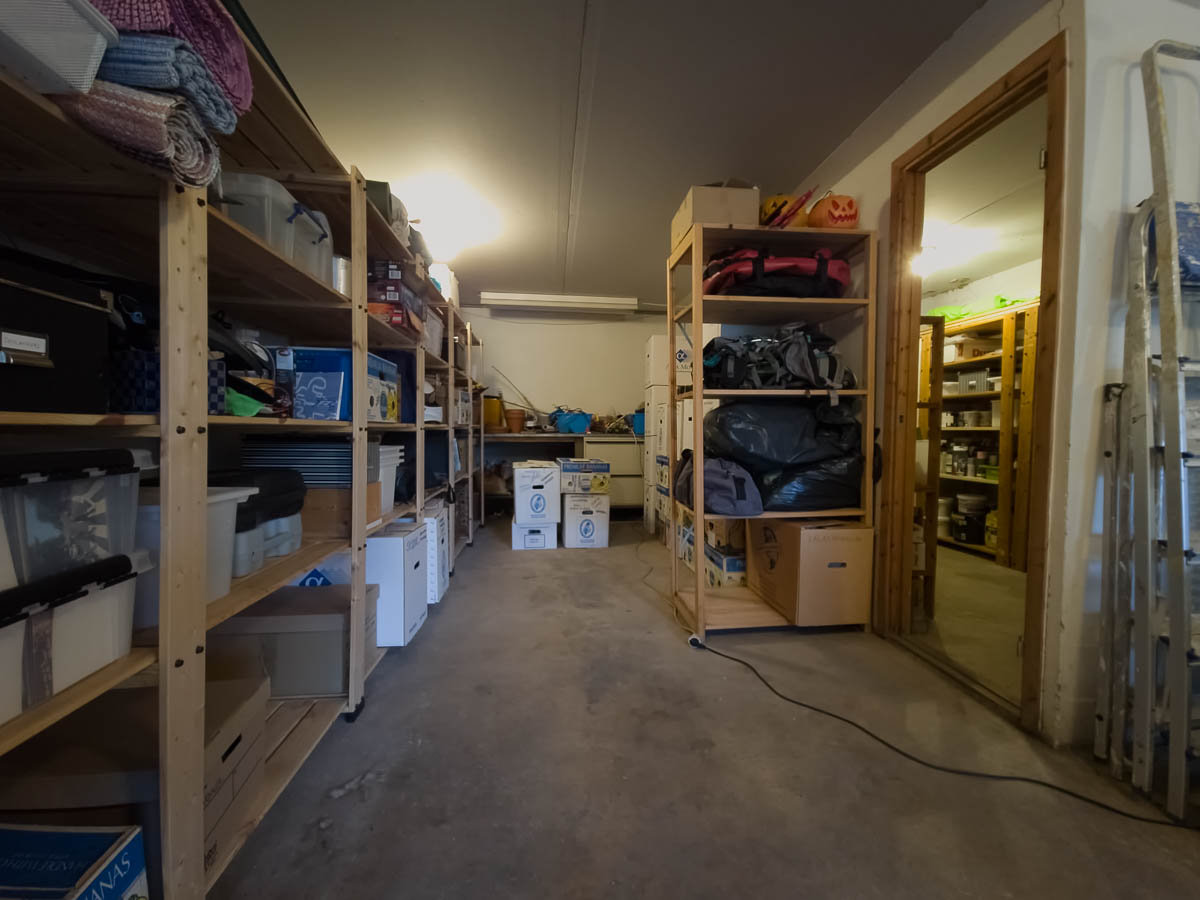
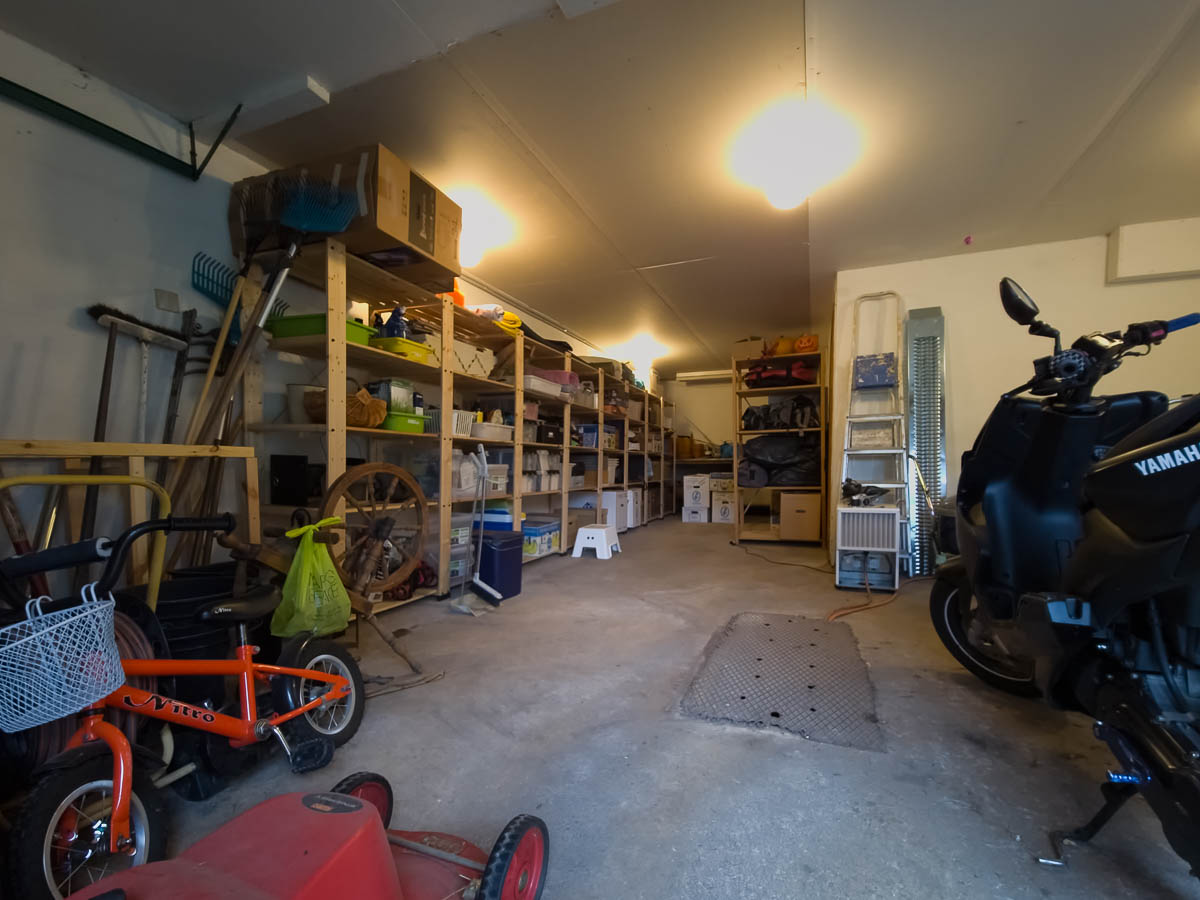
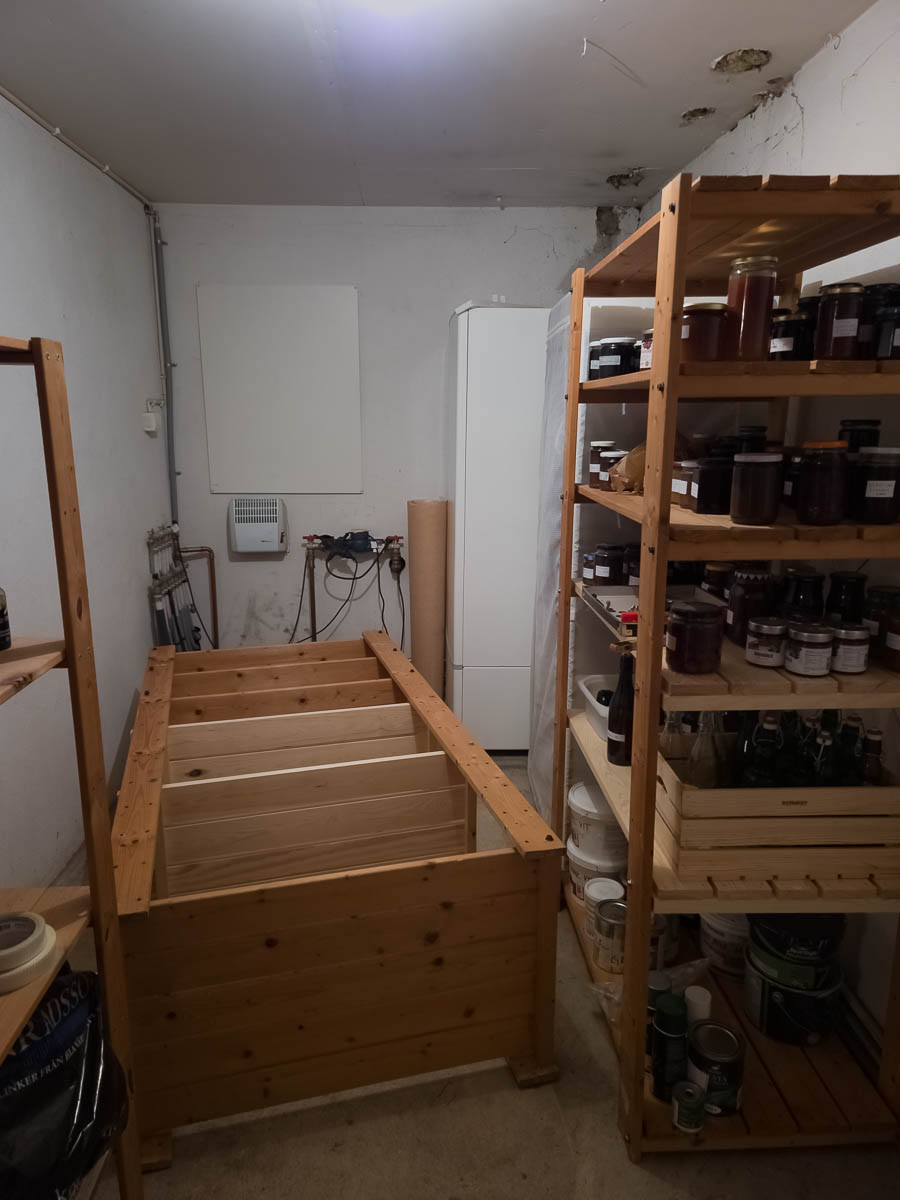
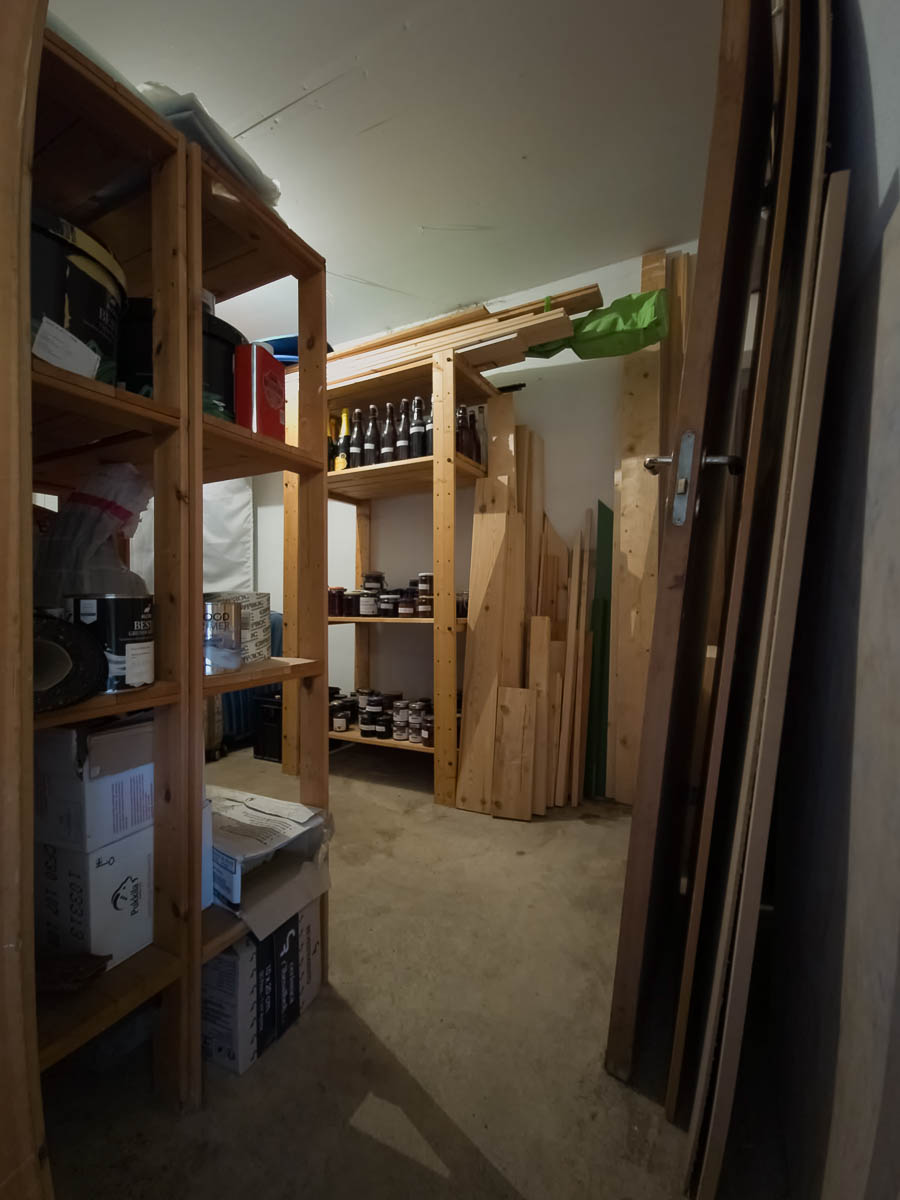
I do now have a very nice and well-organised basement. I know what I have in all the boxes, and where everything is. Plenty of room to access everything.

I don’t think it’s ever been this clean, given that some of the junk I threw out had belonged to the previous owners of the house.


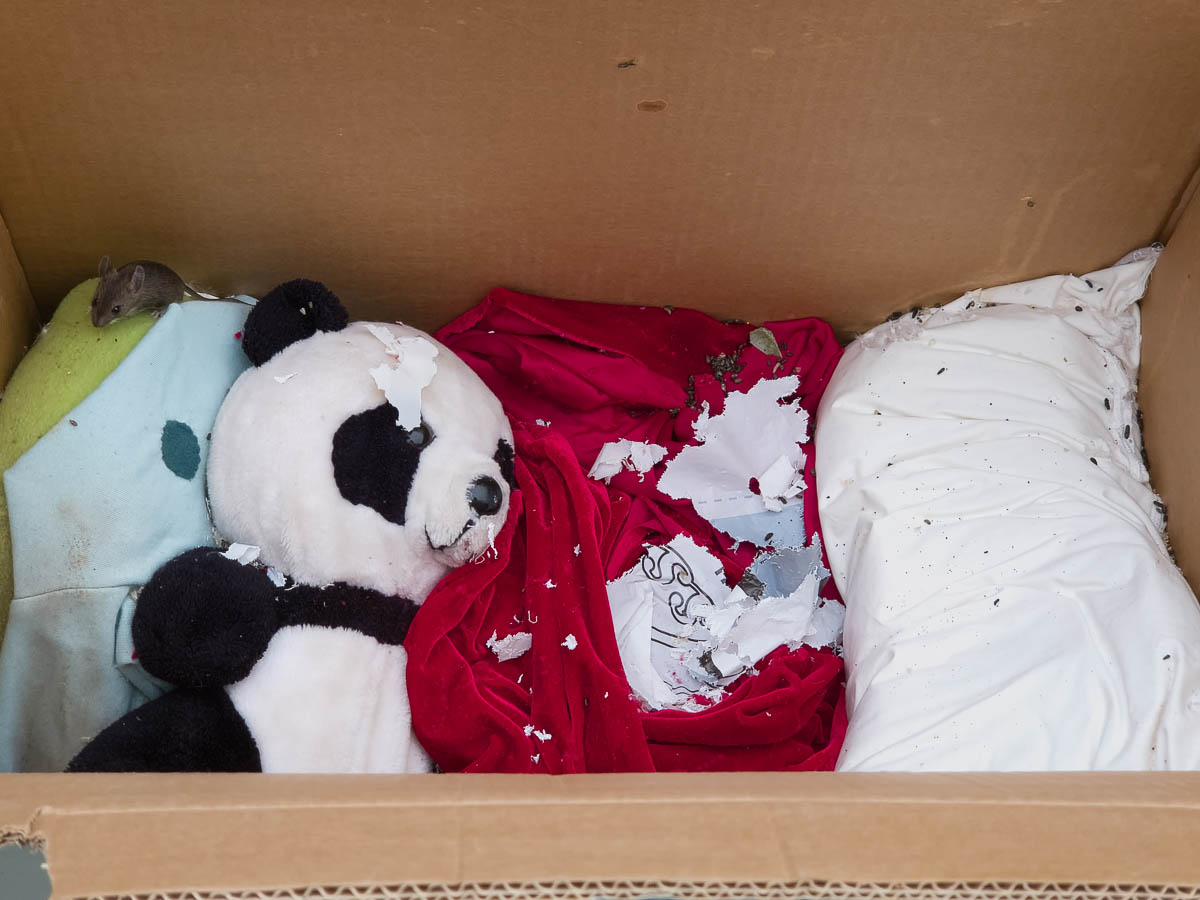
Today’s surprise: mice.

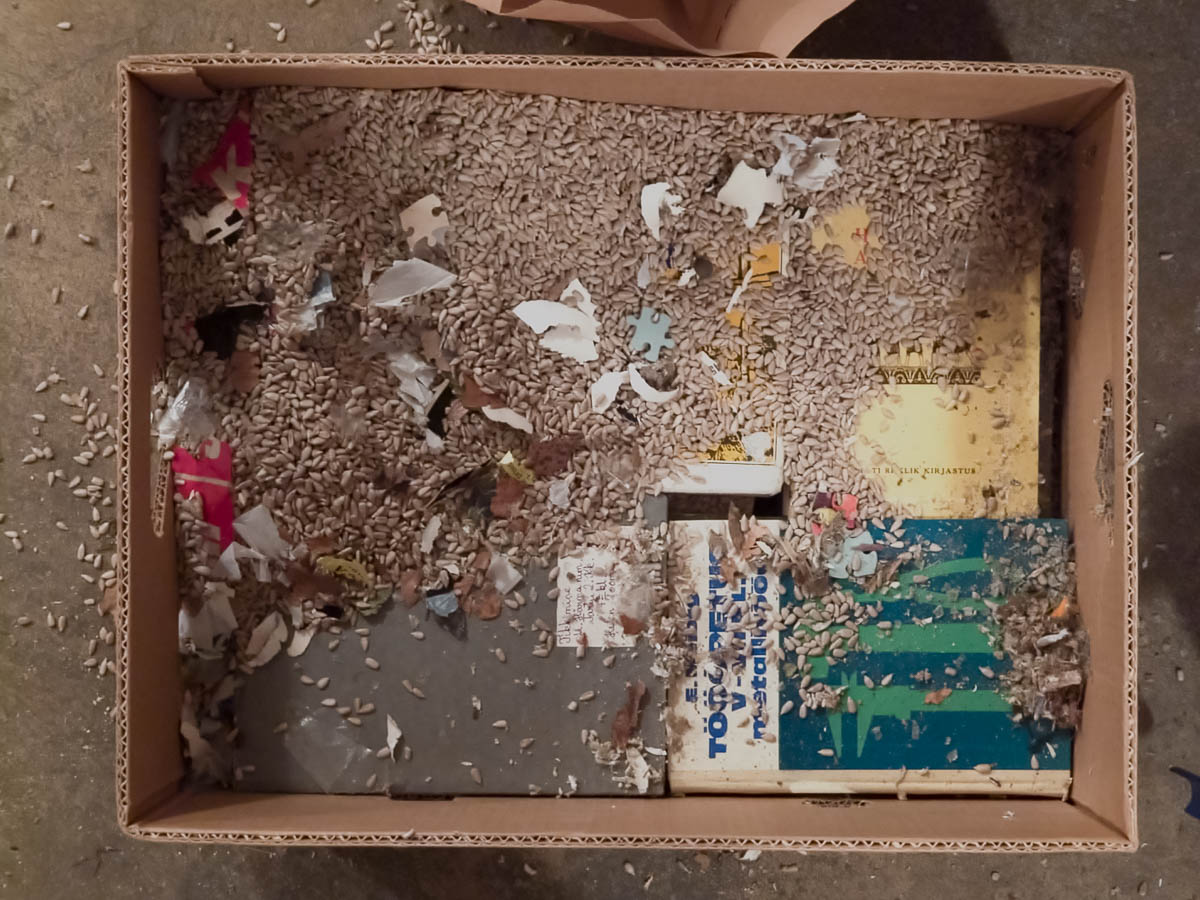
I had noticed before that a bag of sunflower seeds had been chewed up in one corner, but, not seeing any other danger signs, assumed that that was that. Maybe a mouse got in, ate some of it, and then left again.

As I was moving the boxes around and looking inside to see what’s what, I discovered that the mice had gotten into all sorts of places. Chewed things, made nests in boxes with clothes, built caches of sunflower seeds. I had to go through every single box to remove the sunflower seeds and mouse poop, and the flakes of paper and plastic and fabric that they’d used to build nests. Plus try to save what could be saved by washing and wiping off, and throw out that which was too badly chewed or too smelly.

This was totally not what I had planned for my vacation.

In two boxes, I was met by live mice when I opened the box. I don’t know who was more surprised, me or the mice.

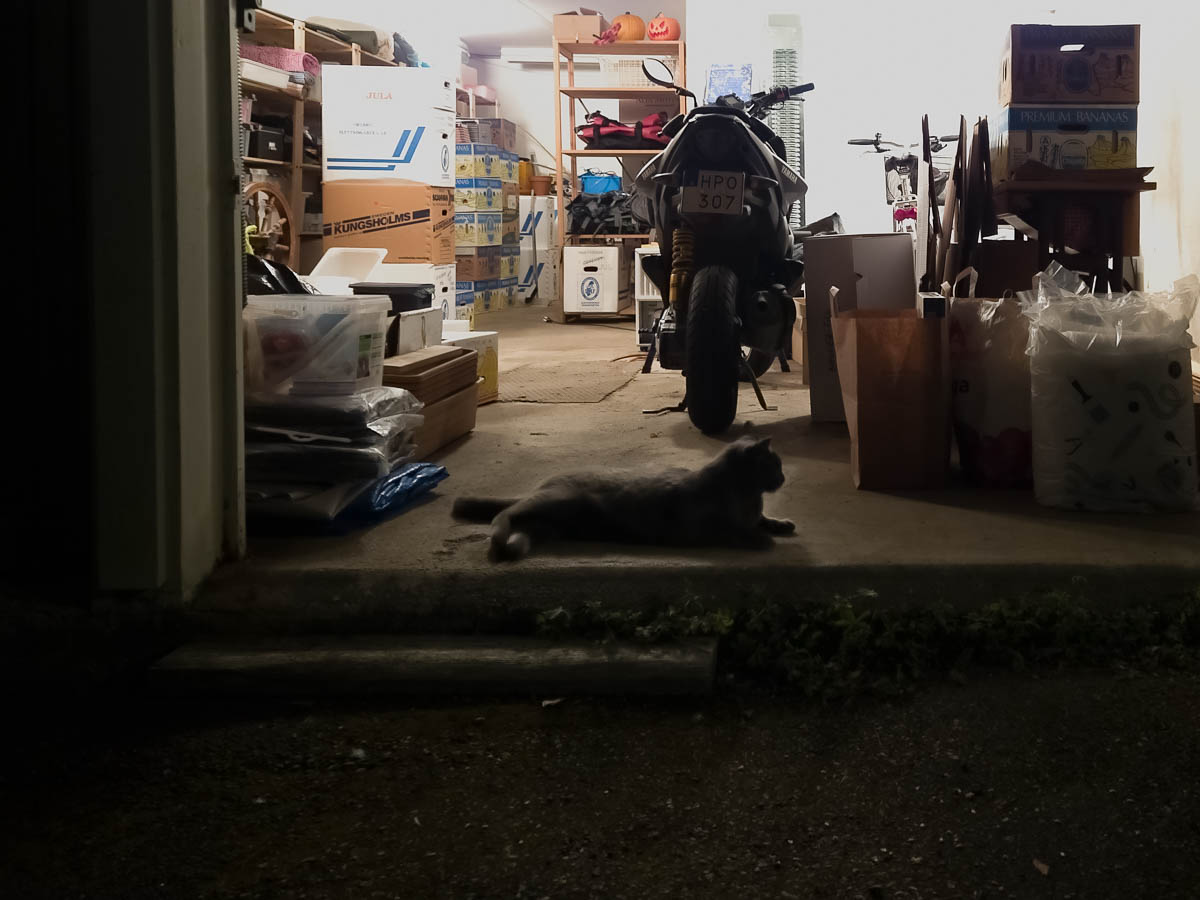
Nysse, good boy that he is, went into instant hunting mode. He quickly caught at least two of the mice that were loose in the basement, and one that I managed to dump outside. Then he kept guard and patrolled the basement for the rest of the evening. I’ll be bringing him back here daily to keep at it.

I didn’t want to take a break at this stage. Better to clear out all their hiding places and food caches as soon as possible, so that I don’t miss anything. I worked until close to midnight.

I got my shelves built yesterday. Nice, today I can screw them in place and then tidy up the rest of the basement and be done with it!

Nope. Just these shelves took all day.

What I didn’t take into account:

The time it took to empty the shelves of, among other things, nearly one hundred jars of jam, and move it all out of the way. And then move it back again afterwards.

The time it took to buy more timber so that I could adjust the shelves because, while I had measures the length and the width very carefully, I had not taken into account the fact that screw holes can’t be drilled just anywhere.

The time it took to drive to the DIY shop yet again because it turned out that I did not own a wrench. What kind of household doesn’t have a wrench? This one, until now.

The time it took to drive to IKEA to buy cross braces for the shelves. Their apparent stability until now has been a mirage; the moment I started moving them around, they wobbled and wanted to collapse on the diagonal. Seriously, so much driving today.

How hard it is to move heavy shelving units with just one person.

How awkward it is to assemble a shelving unit in a room where it just barely fits. I’m glad it fit at all, I’m not sure what I would have done otherwise.

Anyway, it’s all in place now. The shelves are fit for purpose, sturdy and stable. The doorway is clear. The jam jars are sorted by content, and so are the paint buckets.

Back to the basement. The focus today is on making more shelves for the shelving units in the inner room in the basement.

I’ve been told that the basement as a whole was built to house a previous owner’s taxi business. The main area of the basement was used as a garage, and this inner room was probably the only actual storage space. We haven’t had a car in here for years; it’s all storage now. This inner room is particularly cramped, and it’s hard to even get things in and out because of how stuff is partially blocking the doorway. The shelves look like they’ve been thrown up without any long-term plan, and the space is very inefficiently used.

Two of the shelving units look identical to the IKEA Hejne series, which we also have many metres of in the main area. But… either IKEA has slightly changed the dimensions in the decades that have passed since this was built, or this is a very close imitation by some other firm. Because the new shelves are just slightly off and do not fit. If I want shelves, I need to build my own.

Step one in my plan was to buy a drill, but in my cleaning and sorting of the basement, I found one. It’s a cheap model and not what I would buy – hence why it’s been lying unused. (Eric had a much better one.) But given the choice between this for free or a better model for plenty of money, this is absolutely good enough.

New step one: get the drill into a usable state. The plastic had leaked some sort of substance making it all sticky and gooey. Soap and water didn’t help. I tried cleaning it with gasoline, and that got the orange parts clean, but the black still felt disgusting. Tried acetone, and that started dissolving the plastic itself. Finally I oiled it in with paraffin oil, let it rest, and then washed it again with soap and water. And now it’s all good!

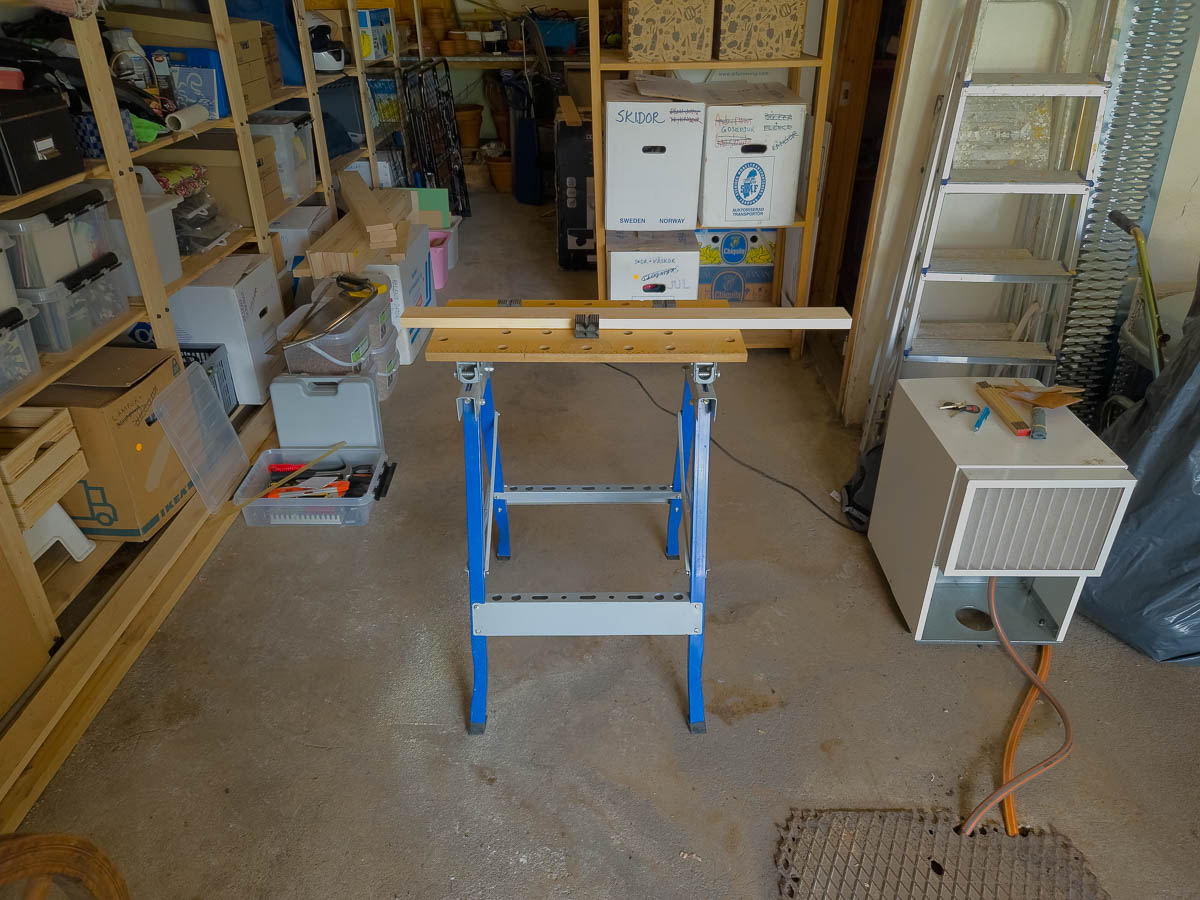
I also found a workbench in the basement. This is like a treasure hunt in my own basement. Again a cheapish model, and again it needed some oiling to make the screws run smoothly, but at zero kronor spent, a total steal. No more hunching over a step stool for sawing and drilling!

Step the next was buying timber. This is when I really wished the IKEA ready-made shelves had fit. The cost of the materials on their own was four or five times that of the finished product from IKEA. It’s just cheap pine, but if every little bit costs 50 to 70 kr and I need six per shelf then I’m quickly up at 1500 kr for four shelves. And that’s not even including the screws. I don’t know how IKEA do it.

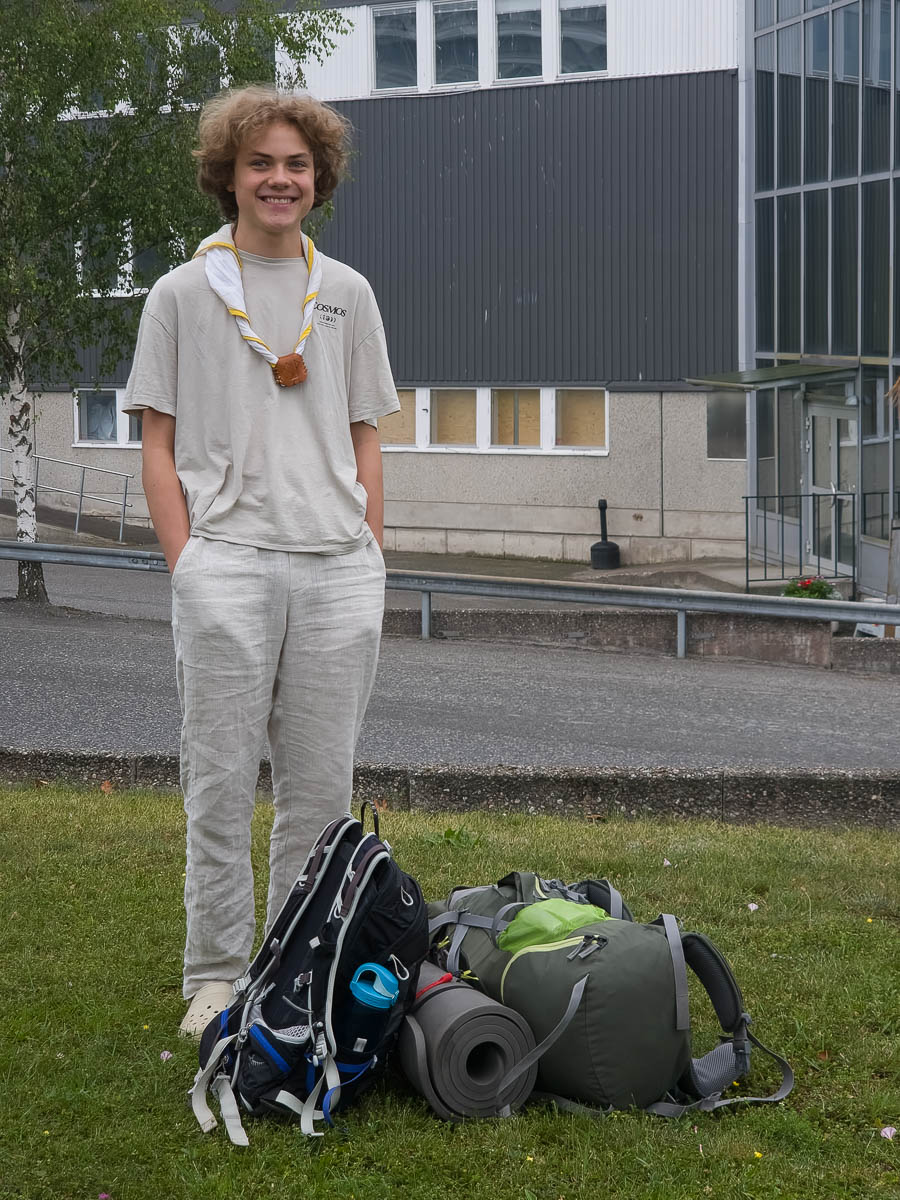
Adrian is off to a week-long scout camp. The scouts gather in an industrial area near Spånga at a quarter past seven, get counted and checked off, and then picked up by buses. By lunchtime they will be at their camping grounds, which is at Kopparbo this year.

The procedure has evolved with time, and the pickup location as well. It used to happen on a green at the side of a road, where the road widened into a spot suitable for temporarily parking a few buses. Easy for the buses, decent for the kids, tricky for the drop-off cars. Then it moved to a different green behind a residential area, with more room for everyone and especially more room for parking for the parents. This latest spot is in an industrial area between two large parking lots with dozens of spots each, which are probably all full on weekdays but completely deserted at seven on a Saturday morning. Great for everyone.