I volunteered to help at the SpĂ„nga scout group’s annual “autumn fixer day” where parents and other engaged folks help out with various maintenance tasks. This time around the task list included everything from deep cleaning the freezer and disassembling old desks so that they can be transported to the recycling centre, to removing thistles from the yard and mending tents.

It won’t surprise any of you to hear that I signed up for mending tents. However the notes about tents needing attention were hard to interpret, and much time and attention went to figuring out what the problem even was. That task required a fair amount of expertise and experience with the tents themselves, so the mending crew spent a lot of time just sitting and waiting. Whenever an actual rip was found, there was almost a queue of us waiting.

Looking back at my blog post about the scouts’ mending day two years ago, the situation was the same. Maybe someone could learn something from this experience. Who knows.
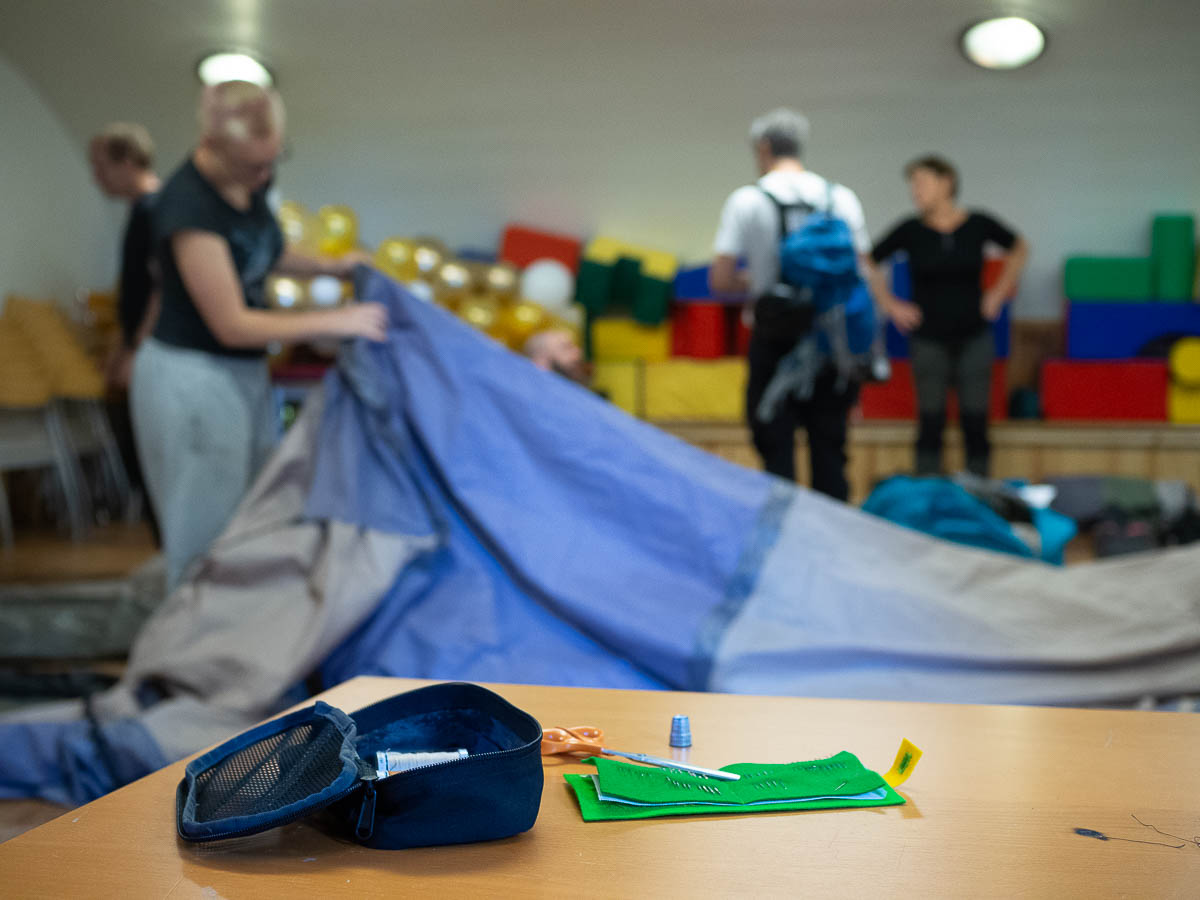
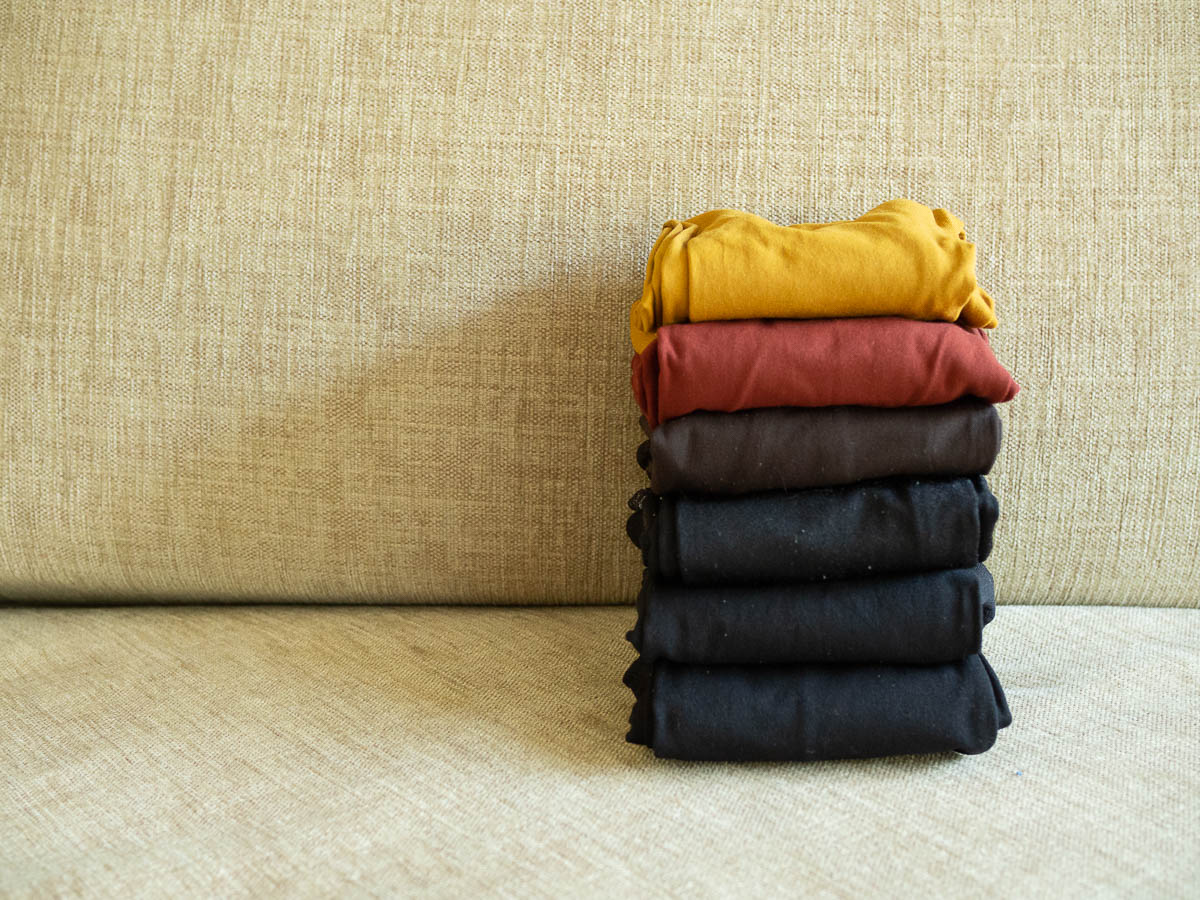
All in all I felt that I contributed much less than I had hoped. When I came home, dissatisfied with my morning, I picked up my own pile of mending and fixed up six pairs of tights. And felt much better about the day afterwards.
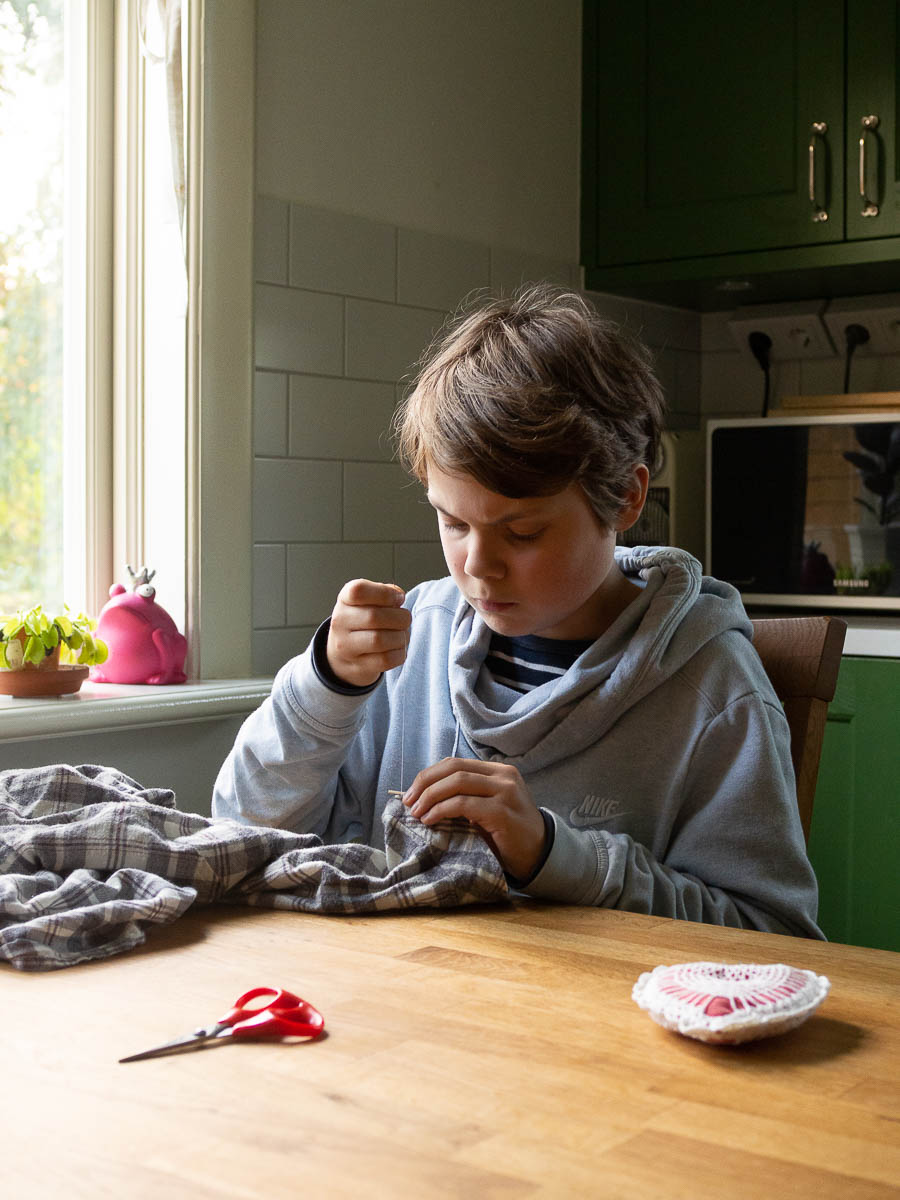
All this mending reminded Adrian that he had a list of homework tasks from his home economics class, one of which was to mend a small hole or sew on a button. My backlog of mending was now empty – except for a shirt waiting for a sleeve button to be re-sewn! He came just in time; had he mentioned the homework an hour later, I wouldn’t have had anything for him. I guess we could always cut off a button and reattach it, but it would have felt like a waste.
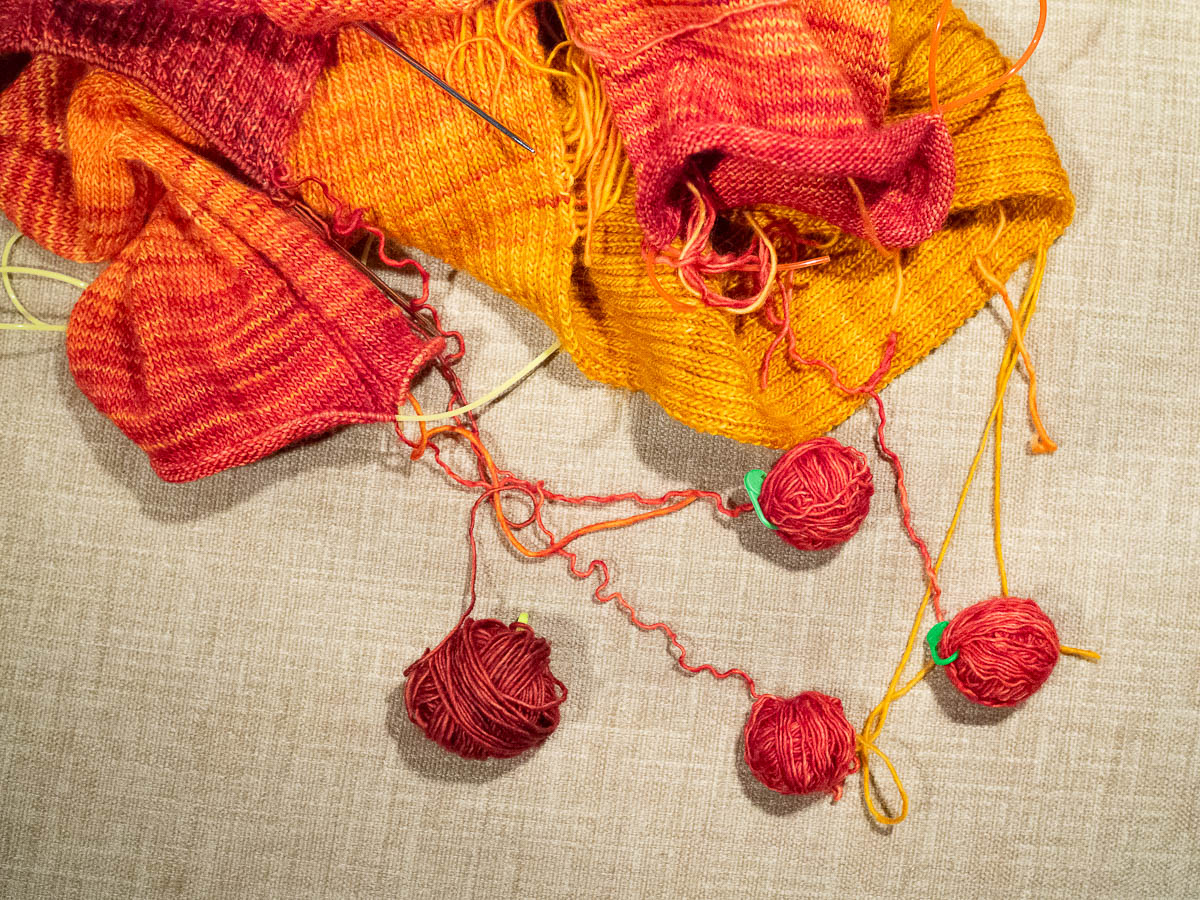
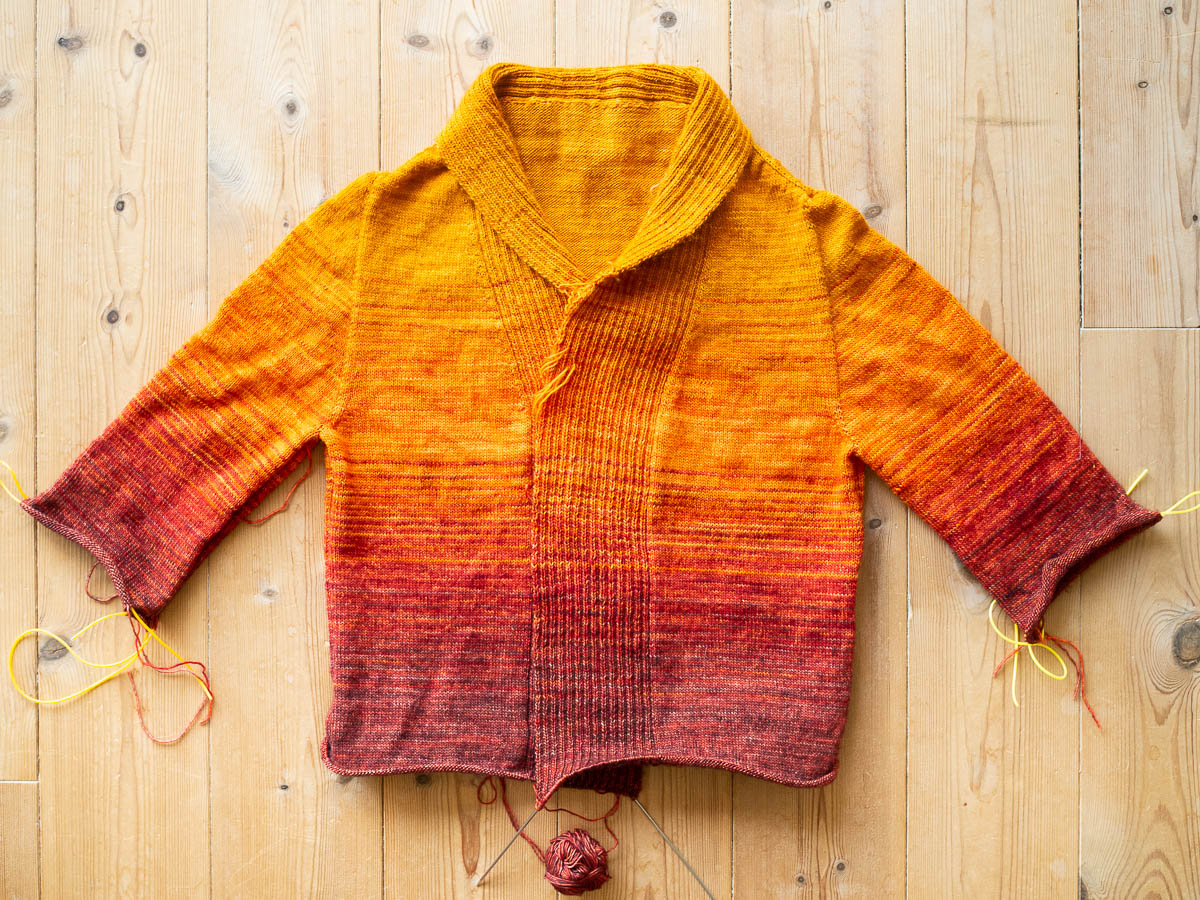
When the first ball of dark red ran out and I had switched to the second one and knitted a few rows with it, it became obvious that the two balls of dark red were from different dye lots. I really should have checked and noticed this earlier – this was pure noob sloppiness. And the sharp line between them really didn’t look good, and the one I used first was slightly darker so I really should have taken the other one first, so to make a long story short, I ripped up the whole red-to-dark-red fade and started over with it. I’m back where I was in early to mid-August. But the journey is the destination and all that, so I don’t even mind too much. I do mind the dangling yarn balls I now have everywhere – weaving in all the ends at the yoke is proving to be a minor nightmare, so now I don’t want to cut the yarn if I don’t have to.


The cardigan is looking good. The fade is all done, now it should be smooth sailing from here onwards.


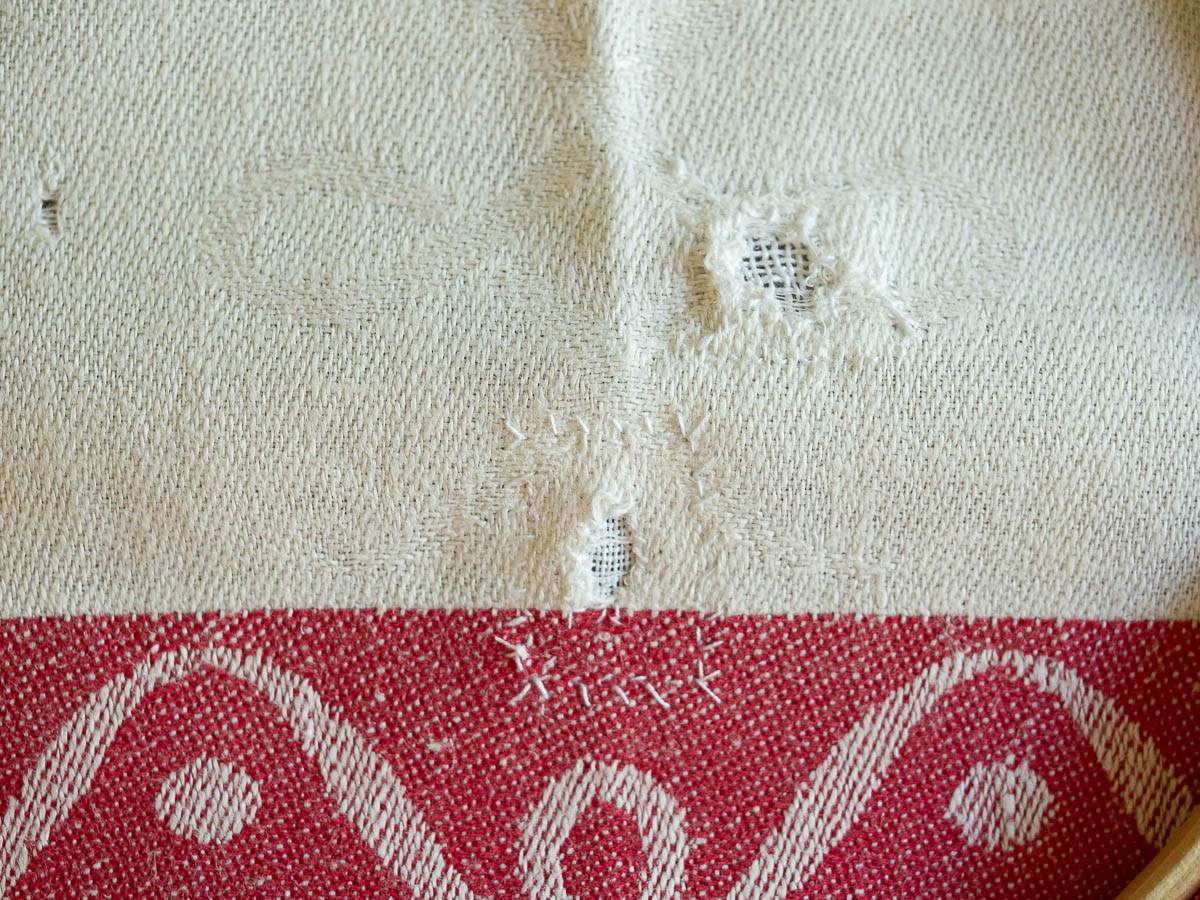
We have a lot of antique/vintage linen kitchen towels, many of which Eric inherited. We use them daily – they’re no decorative mementos – and they are starting to wear out here and there. I really don’t want to throw them out. Nothing wrong with modern towels (as long as they are 100% linen because cotton towels suck) but these have a history.

I’ve mended plenty of socks, and children’s clothing, and bags, but not towels. Towels seem tricky. They’re thin, to begin with, so I can’t just put a big thick patch on them. I’ve never tried darning anything this fine. And the mend needs to be flat and smooth and not scratchy, or it will make the towels unusable. And ideally it needs to look good from both sides of the fabric, which has never been a consideration for any of my other mends.

I did a trial run on two holes – darning one and patching the other. The darning was super challenging, even though I did it in the middle of the day in the best light. It’s not that I couldn’t see what I was doing, but it was exhausting for the eyes. I think I’d need to work with a magnifying glass if I ever wanted to try this again. But it does look pretty good – from the side of the fabric that was facing me when I worked, at least. From the reverse it’s a bit less impressive.

The patch was so much easier, but also stands out more, and I’m not sure how well it will hold up in use and in laundry. I guess I’ll leave the towel be for a while and see what it looks and feels like after a wash.

(Ten years ago, by the way, I couldn’t imagine spending time on mending a towel. You own and use and care for something long enough and closely enough, and you become attached to it.)


The cardigan colour fade saga continues.

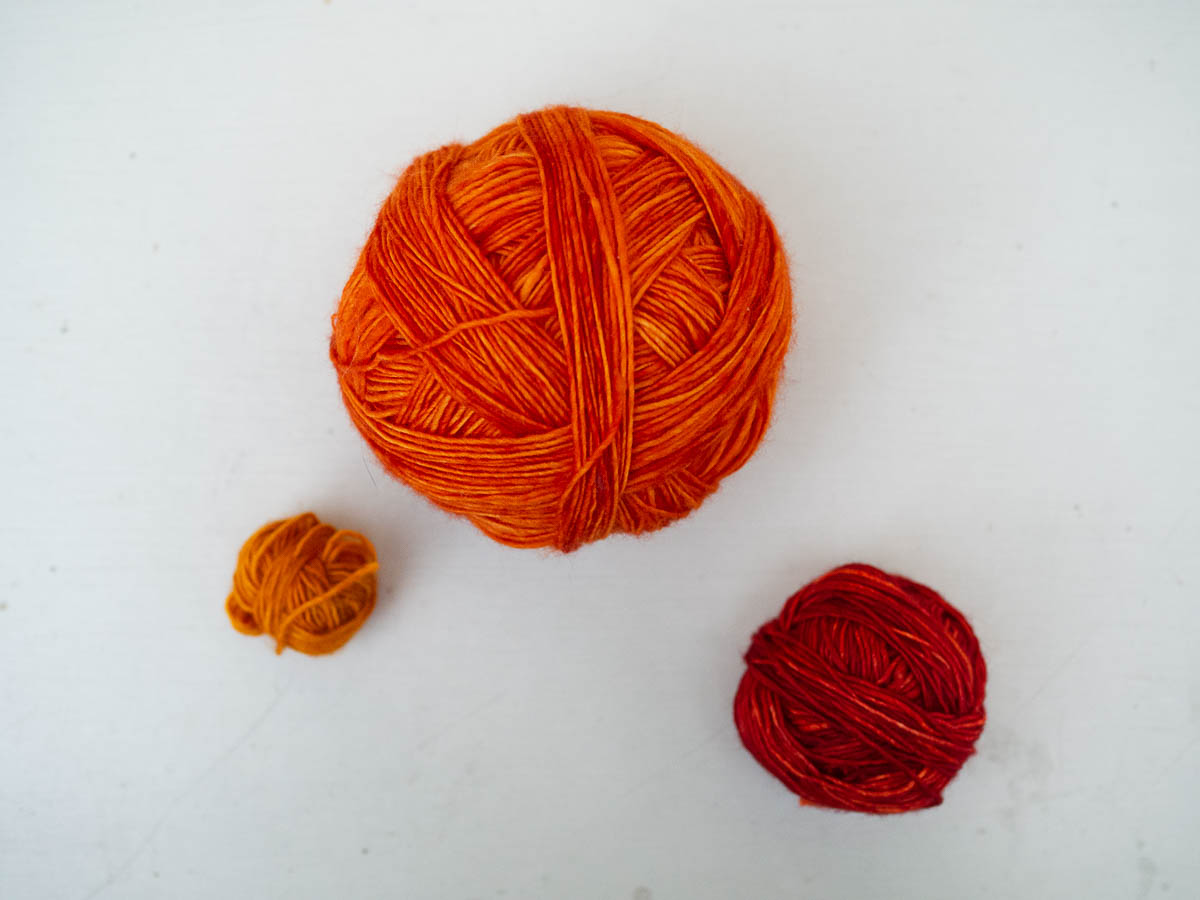
The first fade, from amber to orange, took me two attempts, but the second one was perfect in that it used up the entirety of the amber yarn, except for a small scrap.

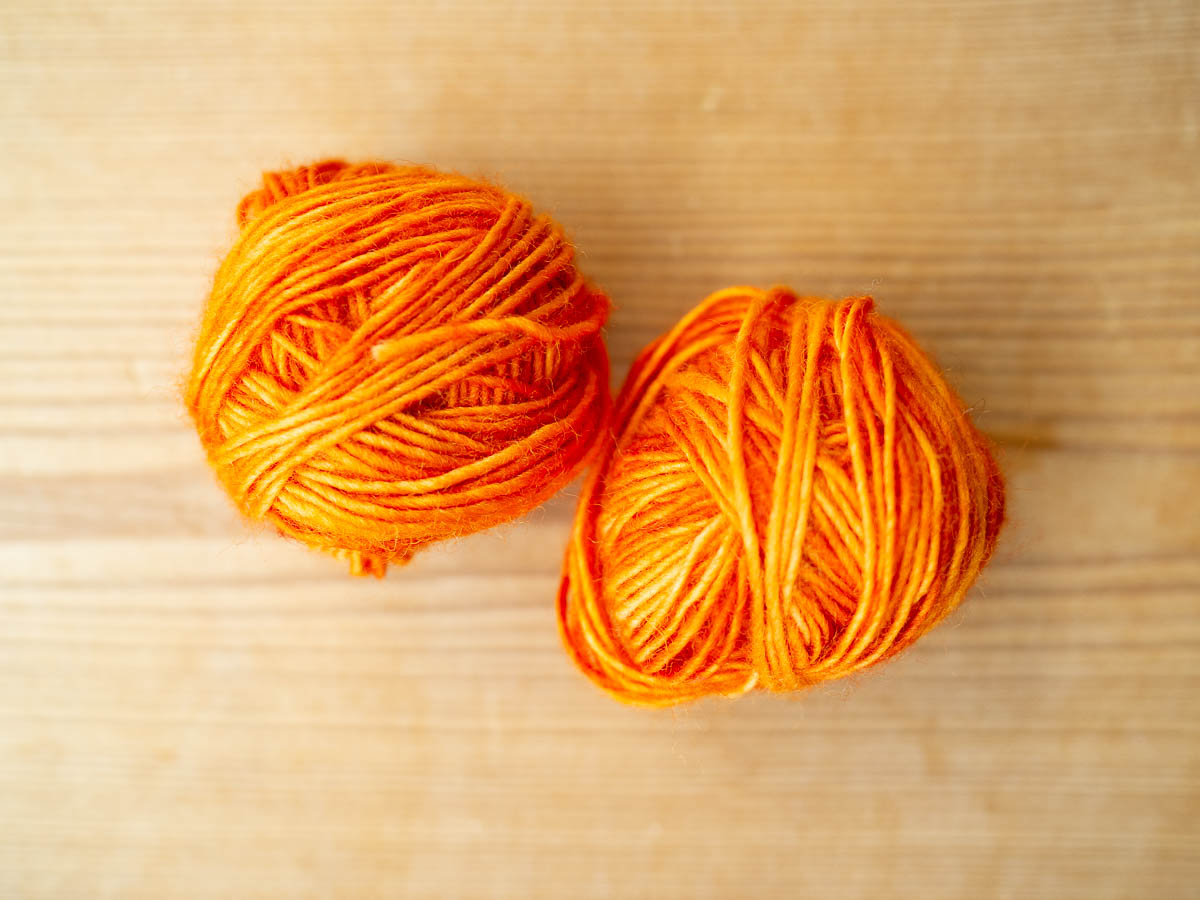
For the second fade, from orange to red, I calculated and measured and weighed and triangulated and still got it wrong. I ran out of the orange yarn before it was finished. I was missing only 20 metres or 5 grams of yarn. Not willing to frog the whole fade, I bought another whole hank, so the leftovers this time are 95% of a hank. Sigh.

The third and final fade, from red to a darker and more muted red, I finally got more or less right on the first try. About 20 grams left where I would have preferred 10, so I could have gotten another 5 rows of knitting out of it, but I’d rather err in this direction.

And now there is no more of that! Just keep knitting with no more counting and weighing.


We used to travel with colouring books and crates of Lego for the kids. Now it’s my hobbies that take up space in the car.

I brought my cardigan project with me. I did consider leaving it at home and just doing socks for 10 days, because they are much more portable. But the socks are mostly time-fillers, whereas I want to actually finish this cardigan.

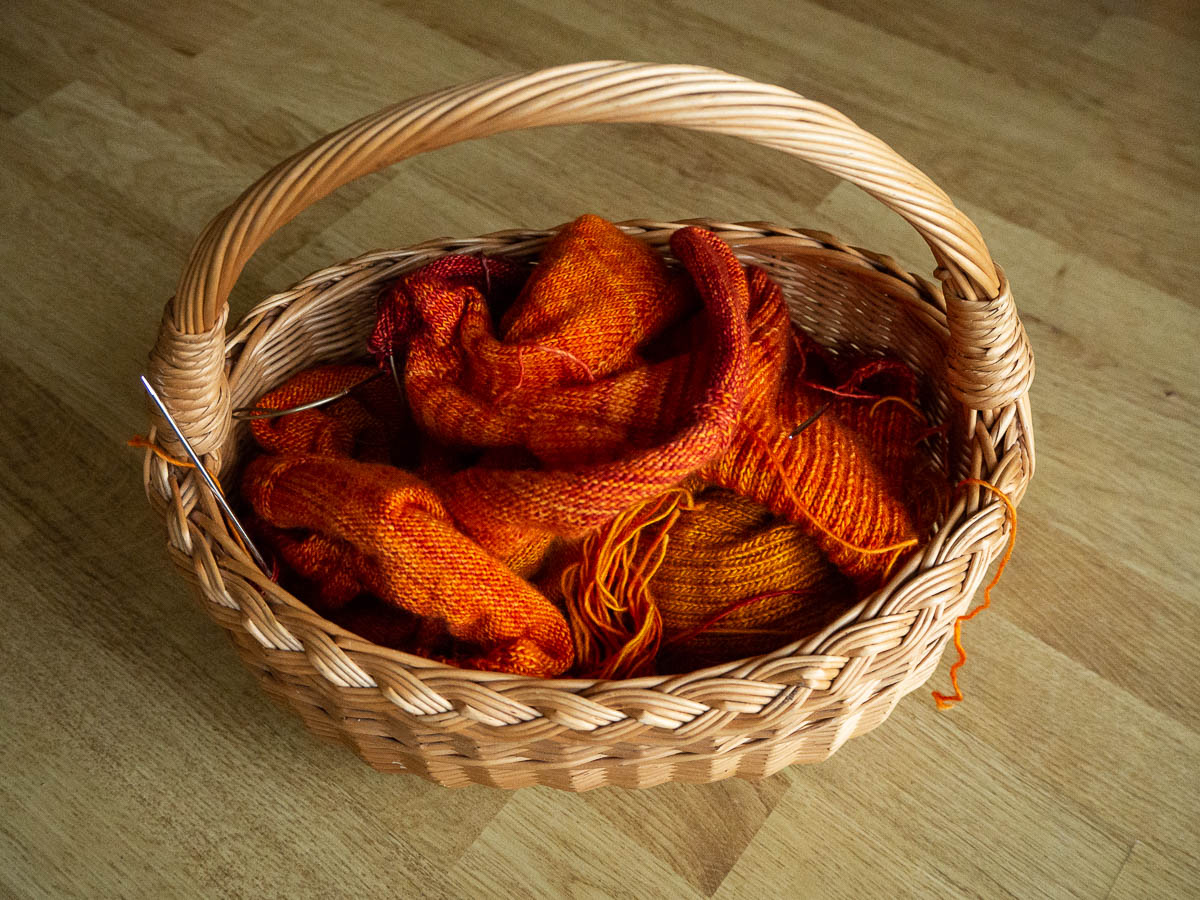
I’ve found nothing that beats a good-quality wicker basket for storing knitting projects. It protects the knitting and doesn’t get damaged by knitting needles or scissors. Unlike a bag, everything is clearly visible and there are no nooks and corners that eat up small things like markers or pieces of scrap yarn.

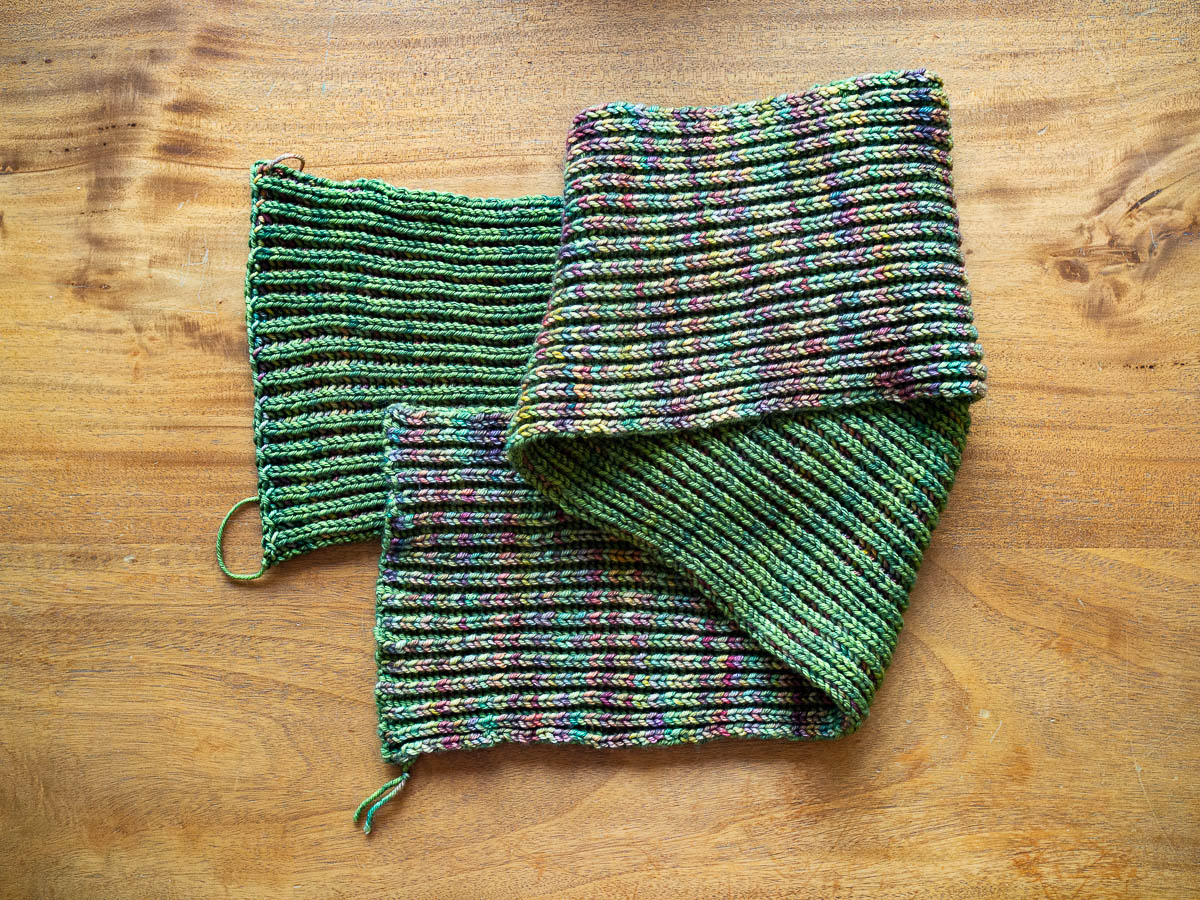
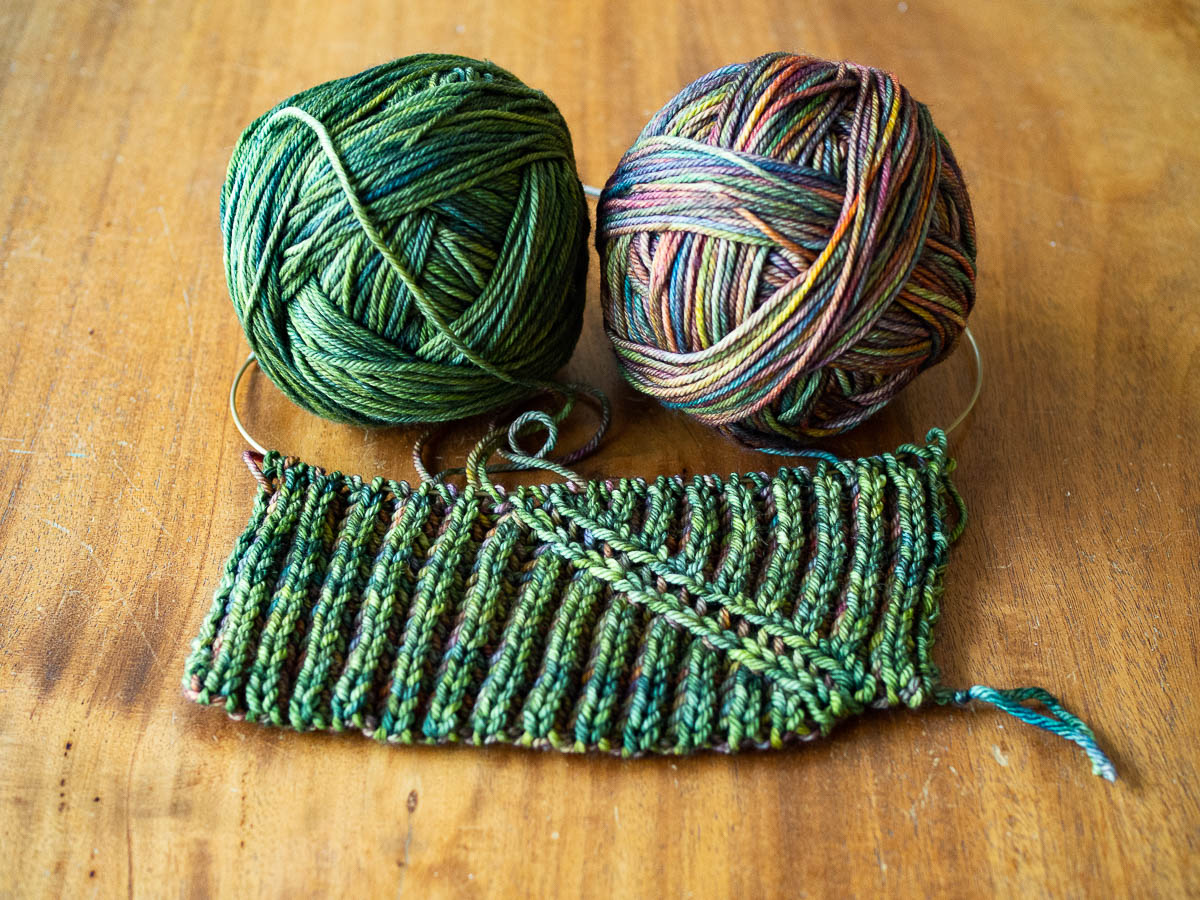
I finished the brioche scarf, with plenty of yarn left over.

I had guesstimated that two hanks of yarn would be enough for a scarf, but the store staff said it would only make a small one. So I doubled my purchase and got four hanks. Two was more than enough for a normal-sized scarf, I have no idea what kind of monster scarves they were picturing. So now I have two whole untouched hanks. I guess I’ll make another scarf, then. Can’t make an identical one, though (because that would be too boring) so the second one will get a zigzagging line. But now the first one will look plain in comparison so I’ll have to think of some sort of embellishment for it.

The yarn itself is lovely to work with. Butter-soft merino wool, after the fuzzy alpaca and sock yarn I’ve using recently. It felt weird in my hands at first, too smooth, almost greasy, but now I love touching it.


The first colour fade is done and I only have a teeny bit of yarn left over – perfect. It only took two attempts. (The first fade I tried was too abrupt AND I ran out of yarn before it was done.) I now realize that this photo doesn’t really tell that story very well. Trust me, they’re really small? I should have included something for scale.


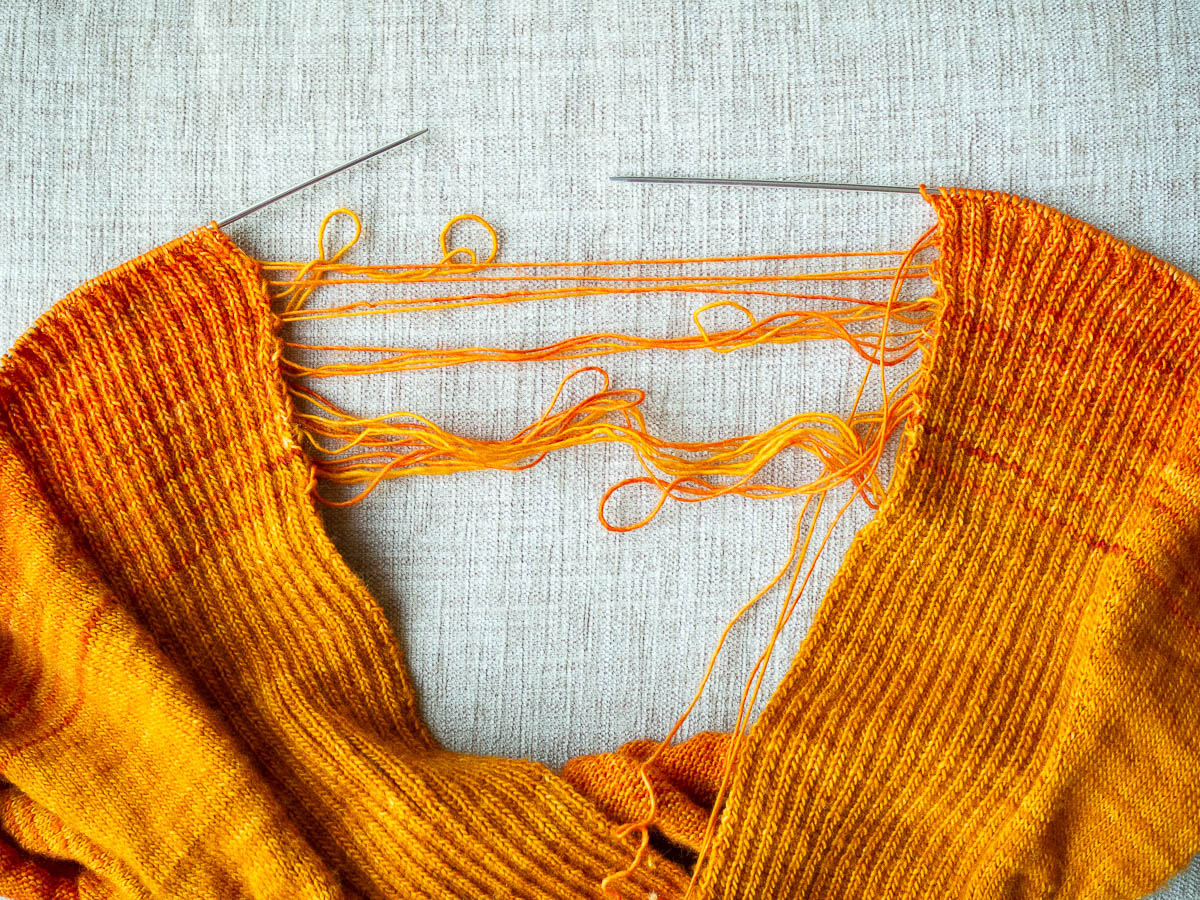
I’ve finally reached the sleeve divide, which means that I can try the cardigan on for real, rather than just draping it over my shoulders. And I’m super pleased to say that it fits pretty well.

This, in turn, means that I can finally cut all the annoying yarns across the chest!

The colour fade from yellow to orange meant a lot of switching between colours, and quite often the live end of the yarn I needed was on the other side of the knitted fabric. I considered just knitting from wherever the yarn was – purling if the yarn was on that side of the fabric, even though the pattern called for a knit row – but was afraid that that would make it too hard to keep track of all the increases. So I just let the yarn jump the gap to where I needed it. As long as I was unsure about the fit, I didn’t dare cut the yarn (wouldn’t want to end up with lots of small pieces if I had to unravel it all) so I had all these fiddly yarns going across the chest, from one edge to the other. Now I’m going to chop them all, which is going to make things a lot easier!


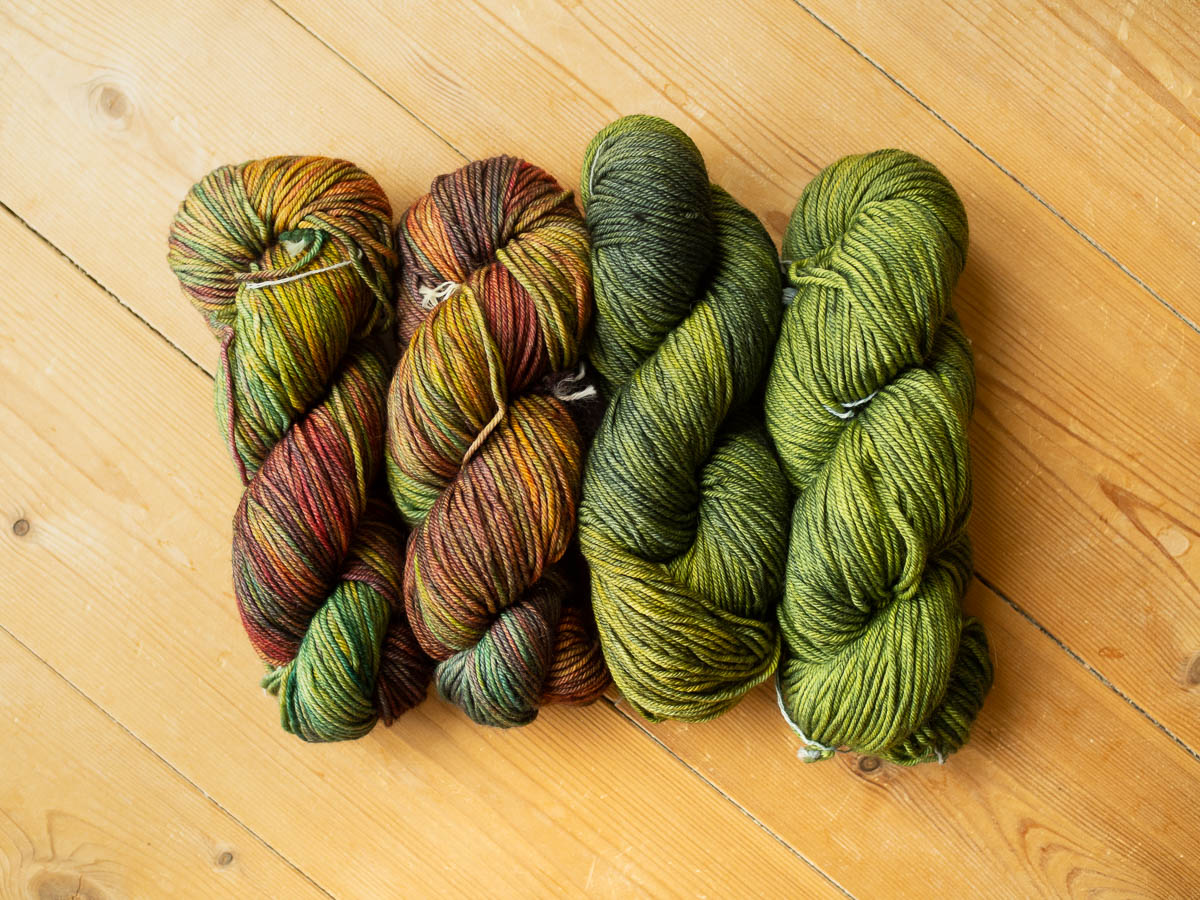
The result of yesterday’s yarn shopping.

I’m reaching the point – or maybe I’ve already passed it – where I really, really don’t need any more hand-knitted socks. I’ve got a few yarns still waiting and I’m going to use those, because I can already picture the socks and they will all look so fabulous, but I do need a new plan for meeting knitting.

First up: a scarf to give away.