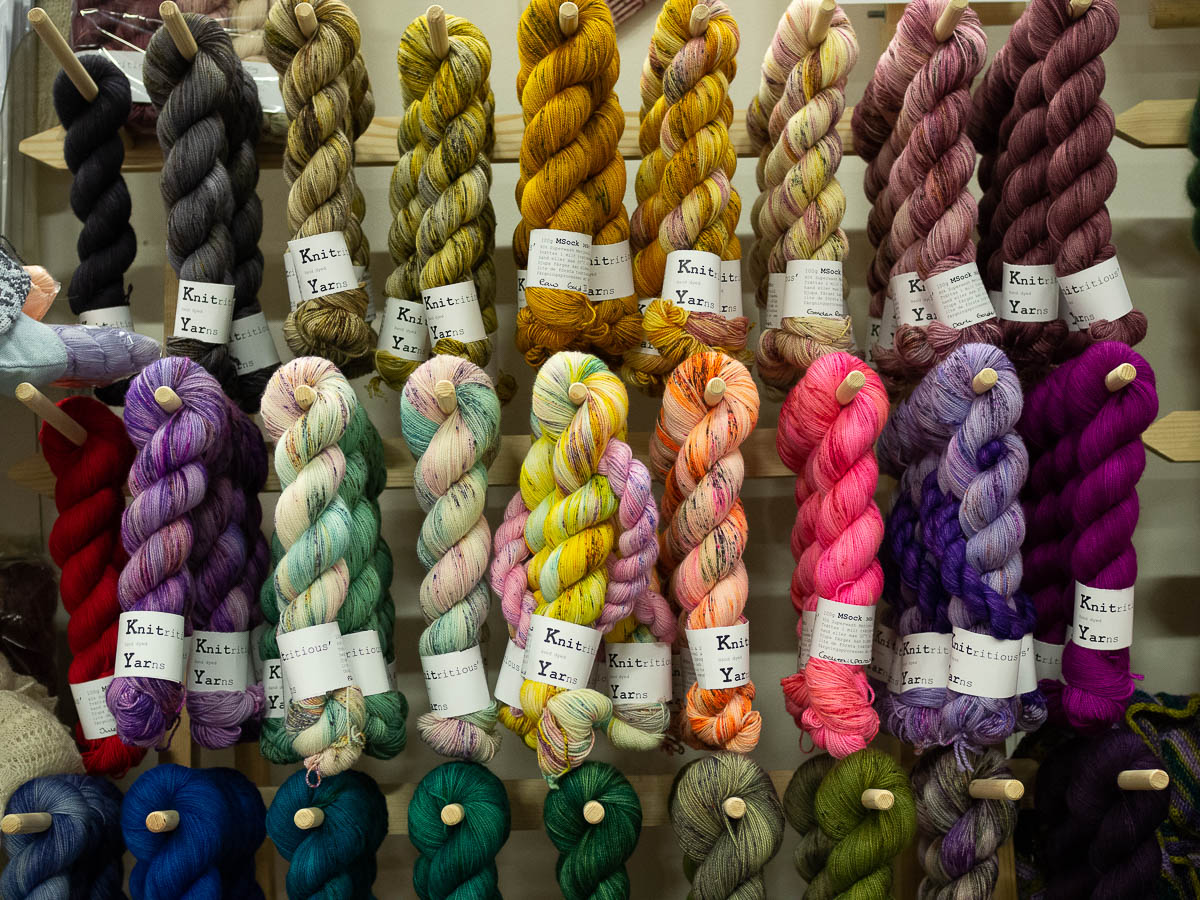
I took a half day off work to go to the crafts fair at Älvsjömässan. I’ve missed the last few fairs (it’s a semiannual thing) because of travels and other calendar conflicts, and really wanted to go. Not with any particular plans of buying anything – mostly just to go pet pretty yarn and be inspired by all the fun and colourful things.


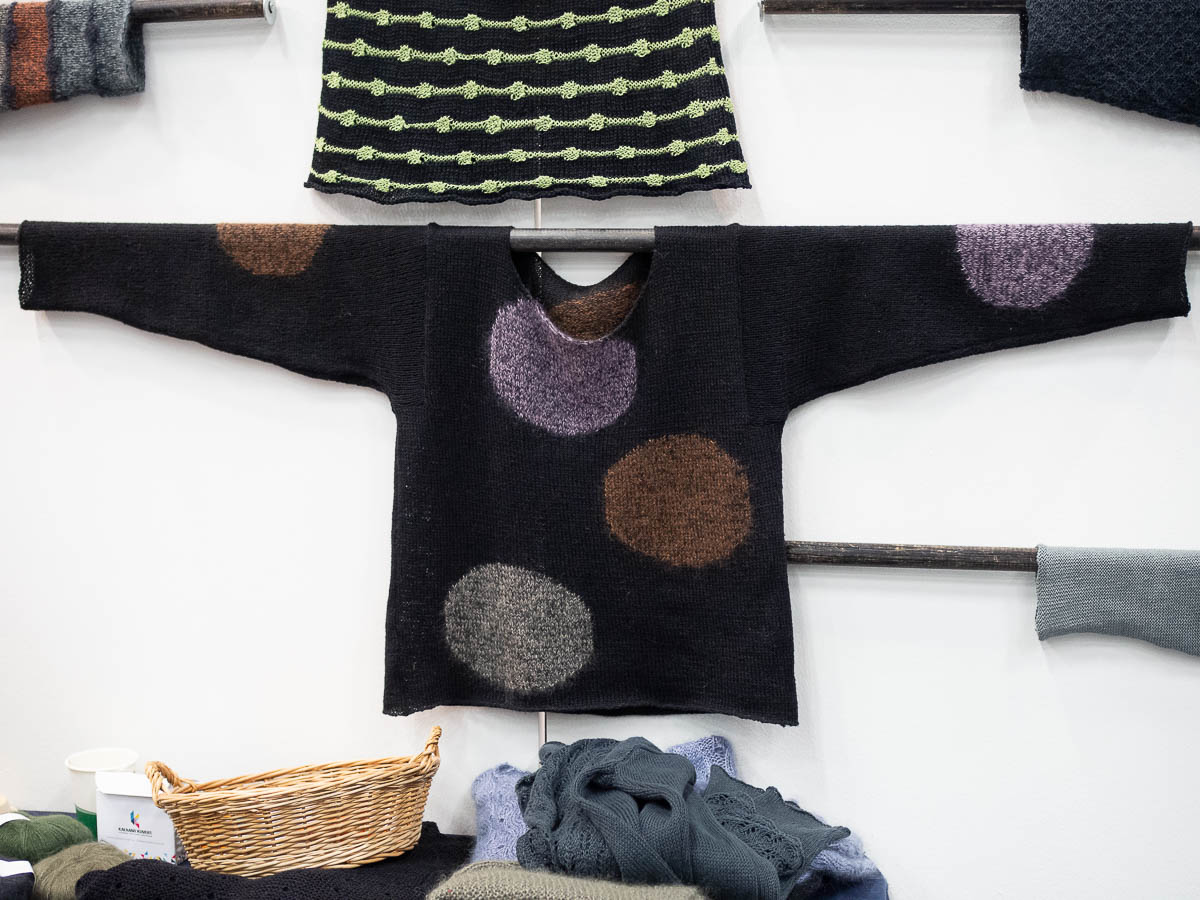
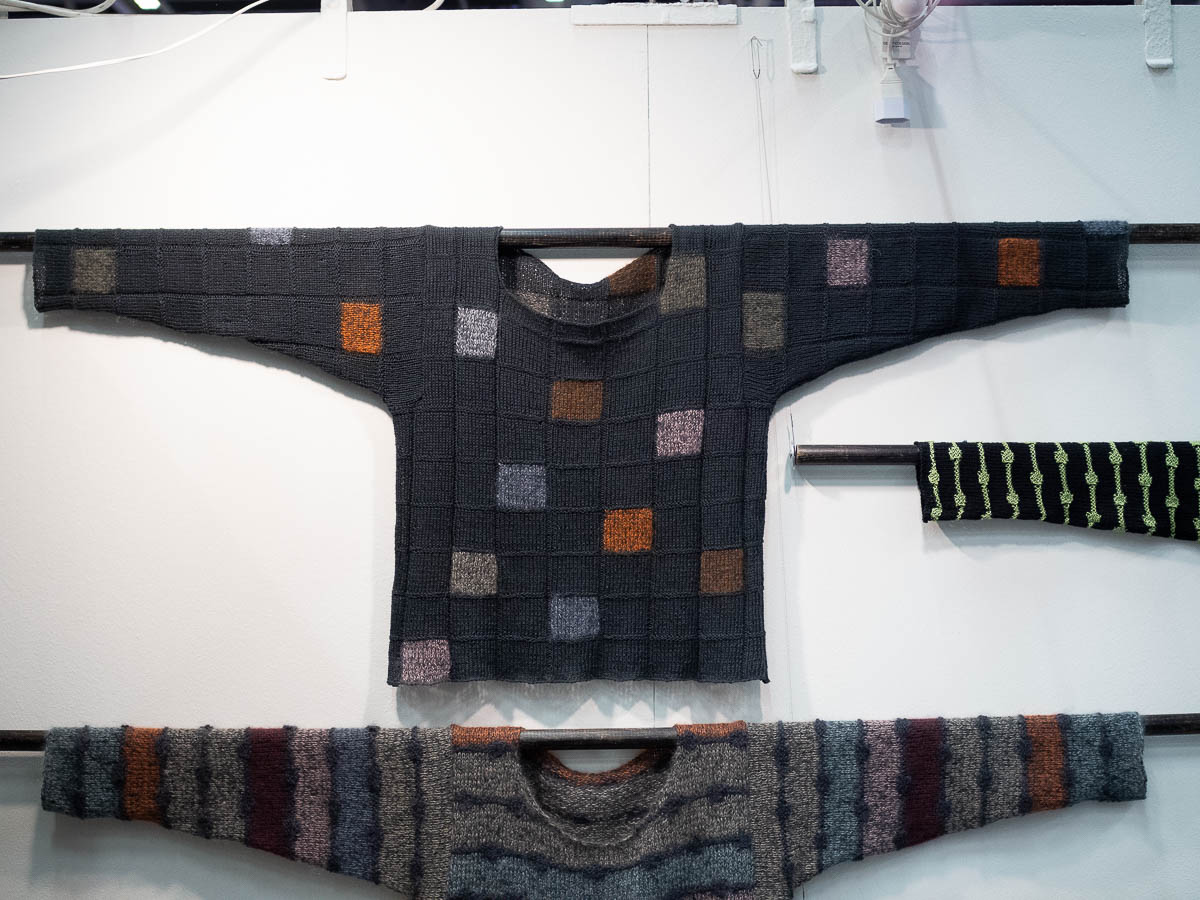
I really liked these sweater designs. Just a plain black base yarn, and the simple but striking design arises from combining it with a colourful mohair yarn. Such a simple but powerful idea.


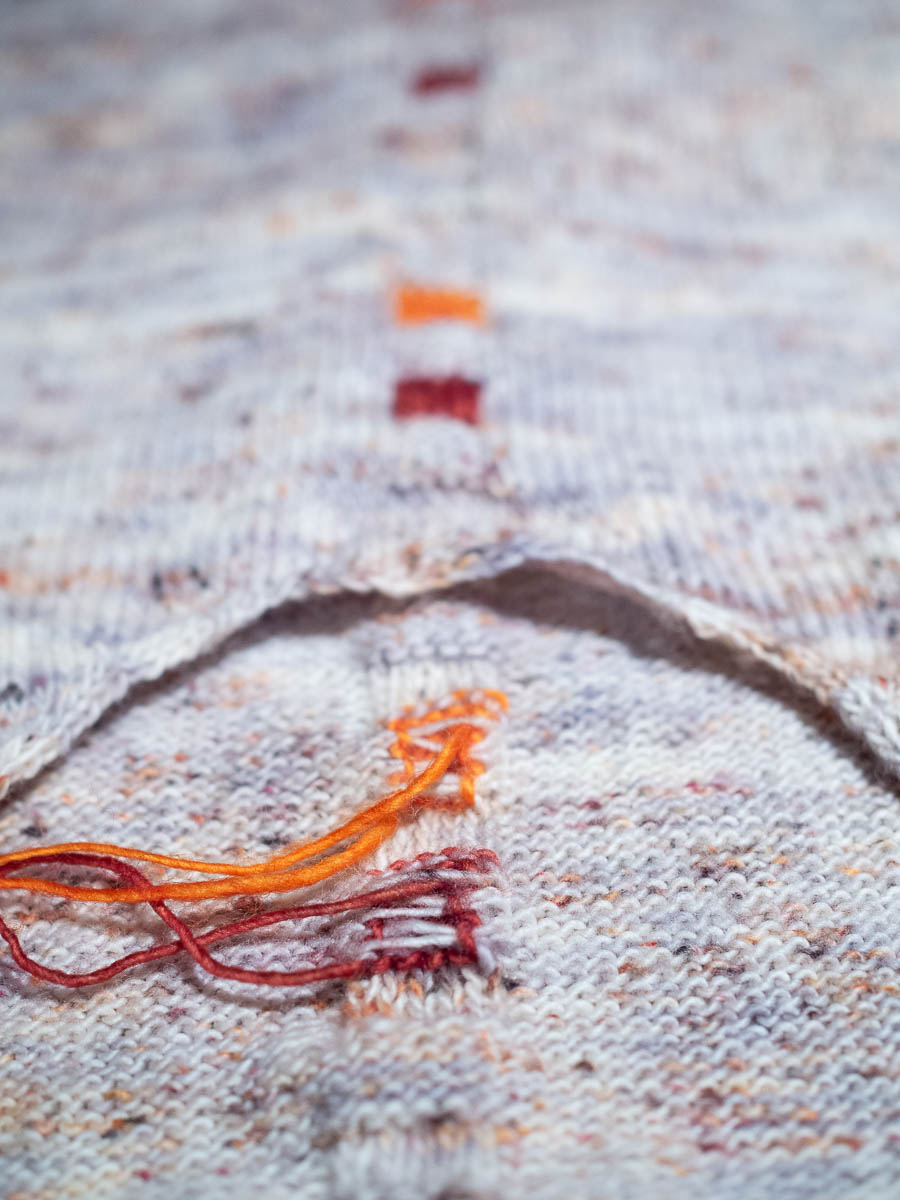
The sweater I’m knitting has rows of dots in contrasting colour going down the middle at the front and the back. It’s a weird technique – the main colour yarn runs behind the dots and the dots themselves are barely attached, they just sort of hover over the main yarn. It’s neither proper intarsia knitting nor proper stranded colourwork. I’m still not fully convinced that the dots will lie in place properly in the long run. On my first attempt at this sweater I actually skipped them and thought it would be better to embroider the dots afterwards, but it was a bit boring to just knit a single colour all the time and barely any pattern. So this time I’m following the instructions.


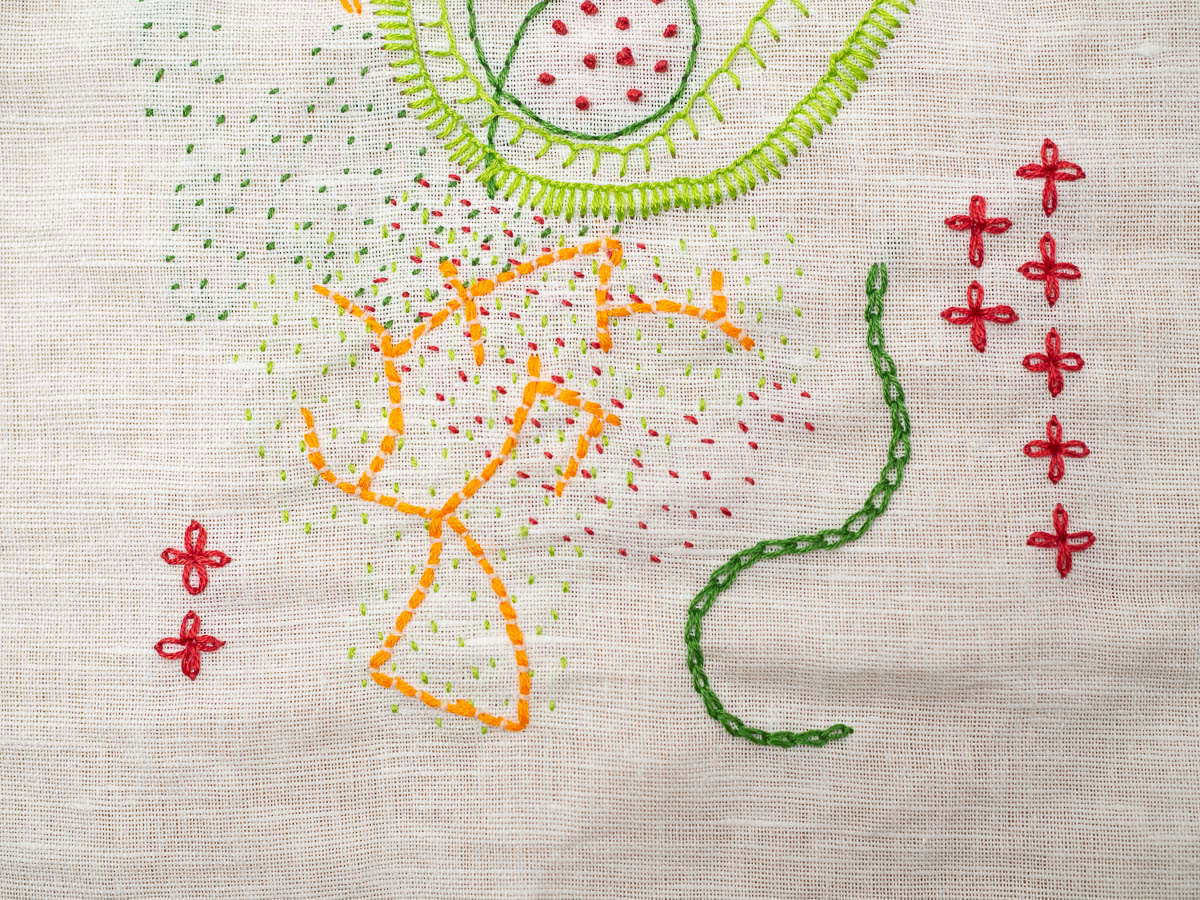
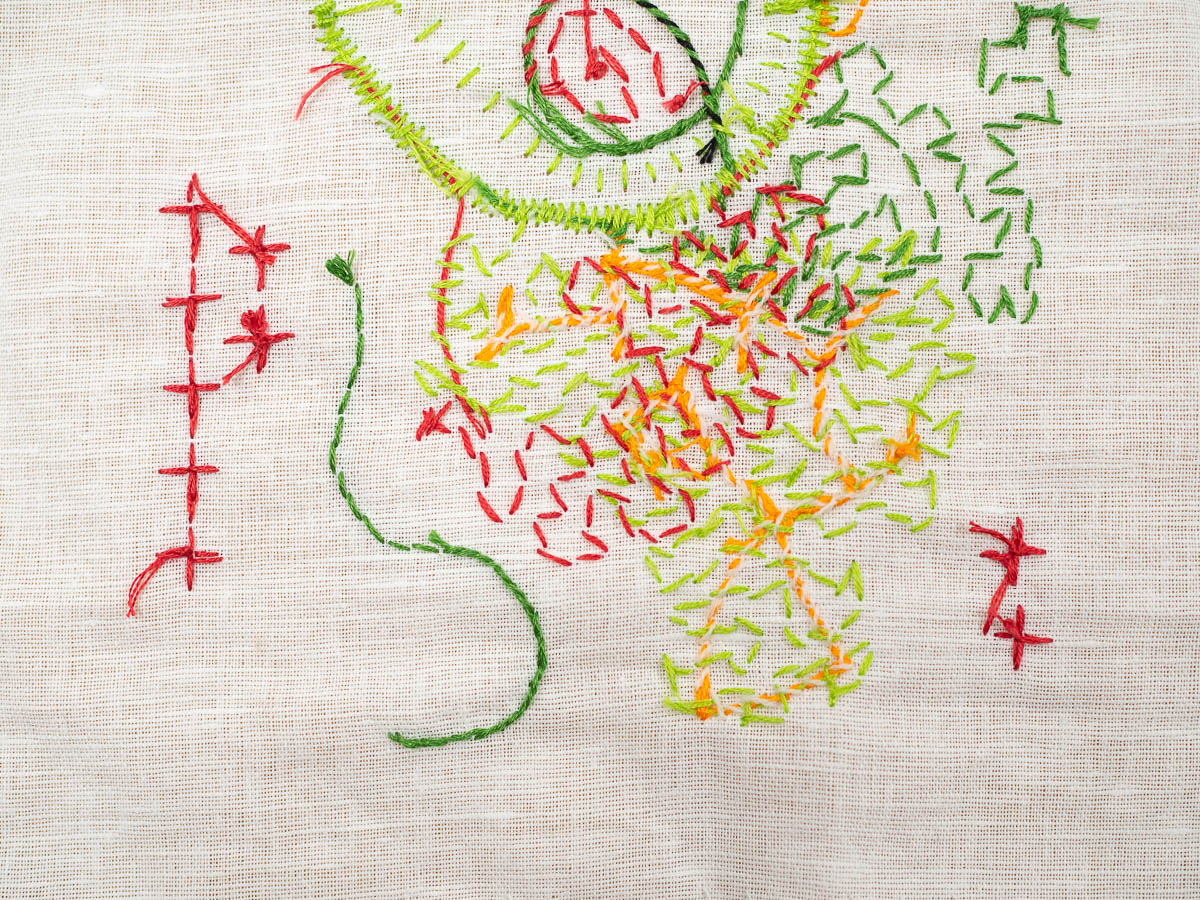
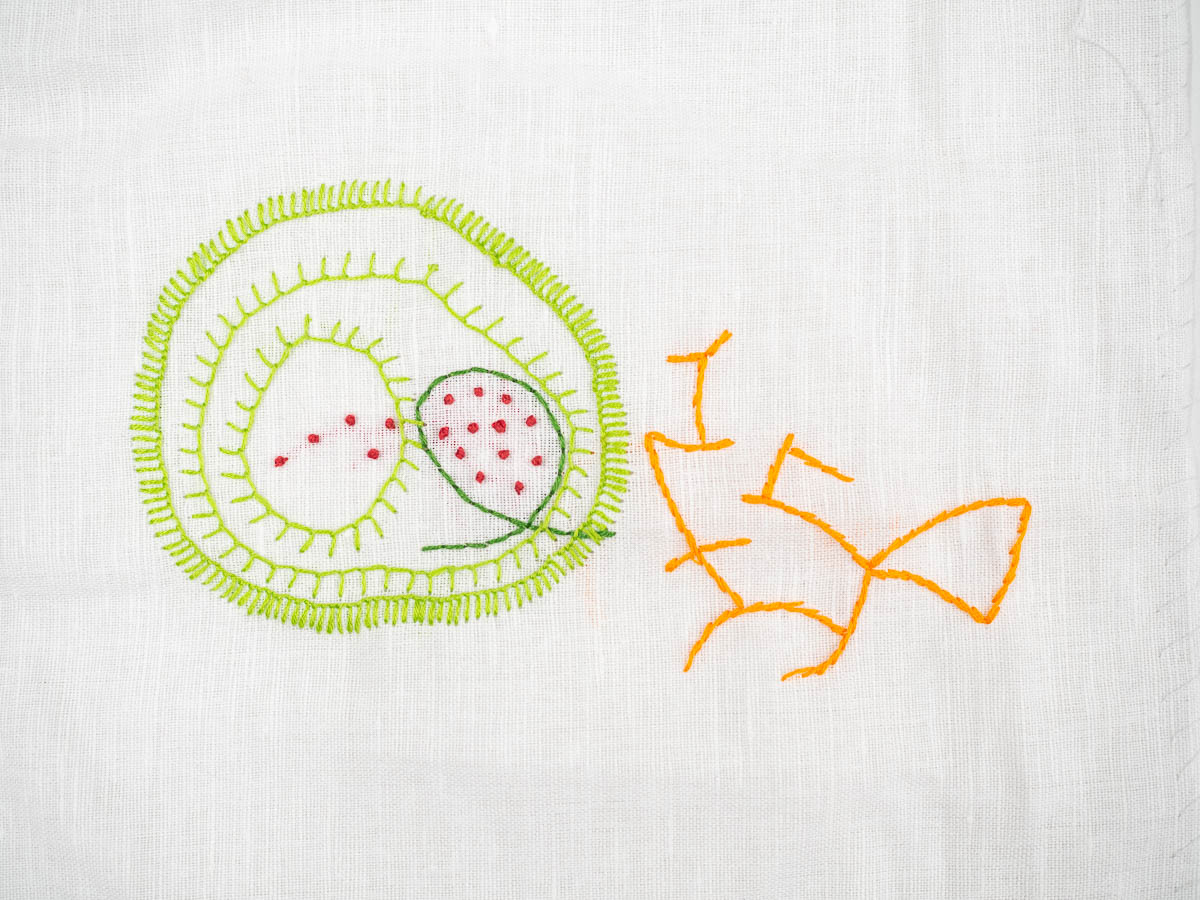
The dogma embroidery, continued. (Add chain stitch. Use a colour you don’t normally use. Add a pattern. Echo a part of your motif elsewhere. Emphasize a part of your work with a similar colour.)

As a piece of finished embroidery, it’s junk. A jerky, unbalanced, random agglomeration of parts that don’t go well together. Some of the later steps helped pull the earlier ones together a little bit, but it’s still very obvious that there is no overall design or composition.

As a creative approach, it’s been great. Letting go of all expectations regarding the outcome and just going with the flow, fitting in whatever curveball I’m thrown as best I can. Later steps overlapping with earlier stitches. It doesn’t matter what the result looks like. This doesn’t need to be either beautiful or useful.

As a learning process, it’s been interesting. I’ve learned – again – that achieving apparent randomness is hard. The seed stitches tend to start pulling into lines and naturally distribute themselves evenly. I’m not sure how to make them uneven for real. I also learned that I like the tangle that the seed stitch makes on the rear side.


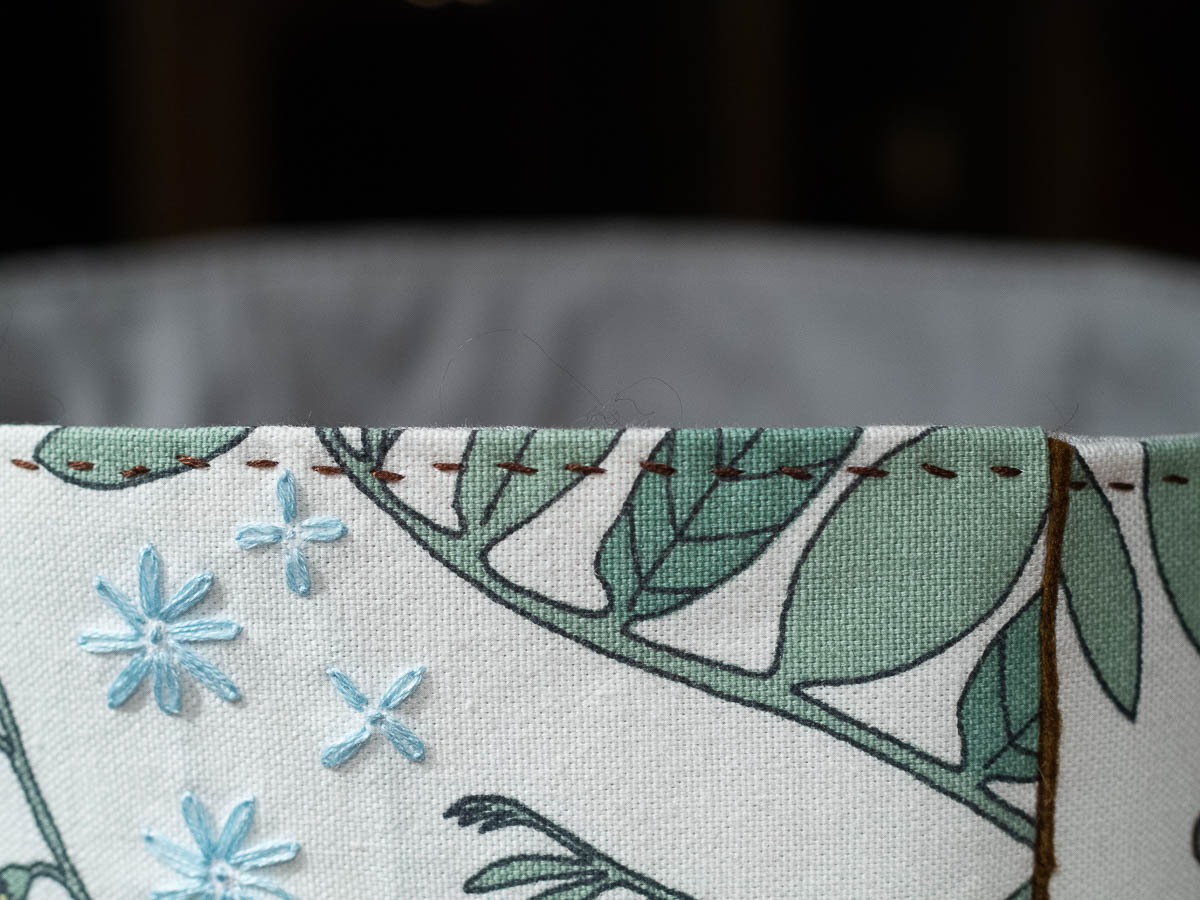
Lining attached, piping trimmed, top-stitching added.

Now I need to think of something to put inside it.

Learning point for next time: a padded lining takes up space, so for a perfect fit, it should be smaller than the outer walls.


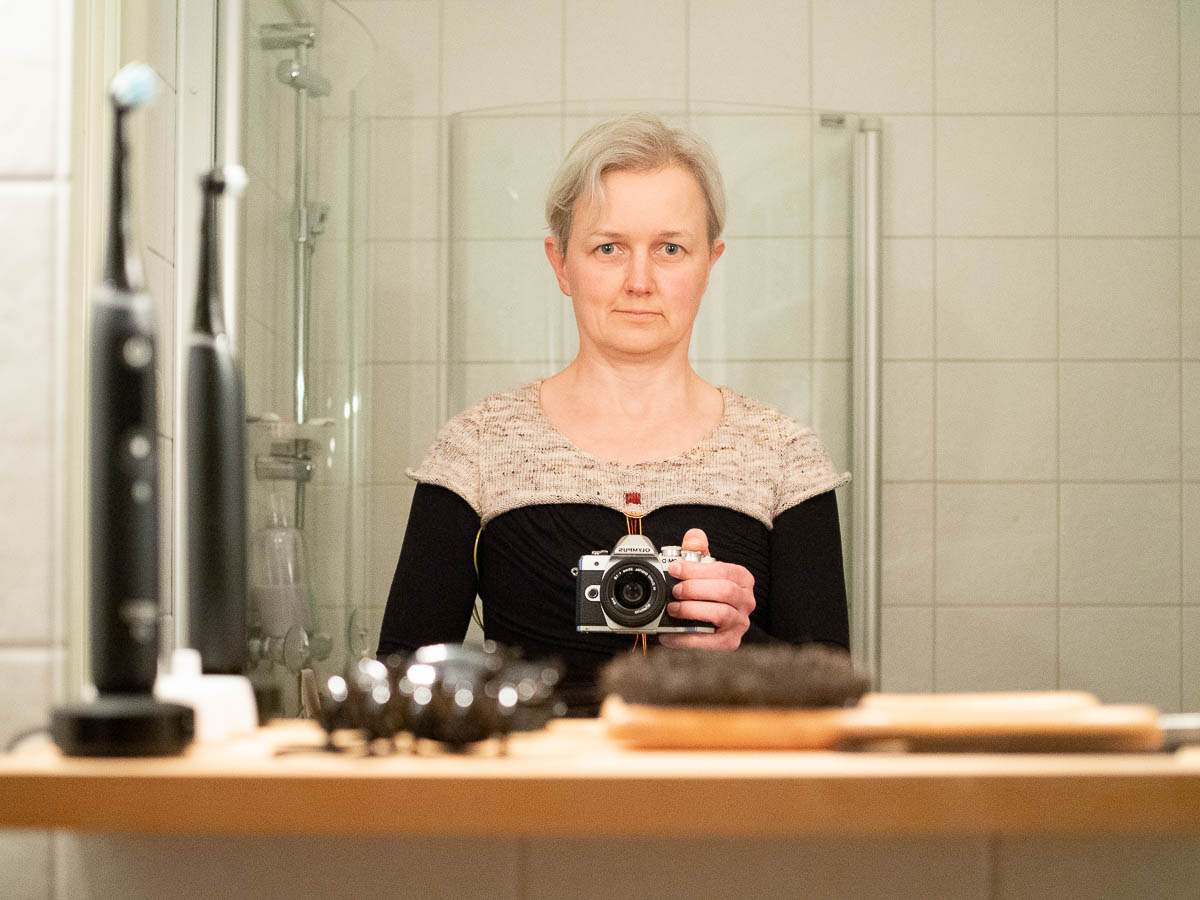
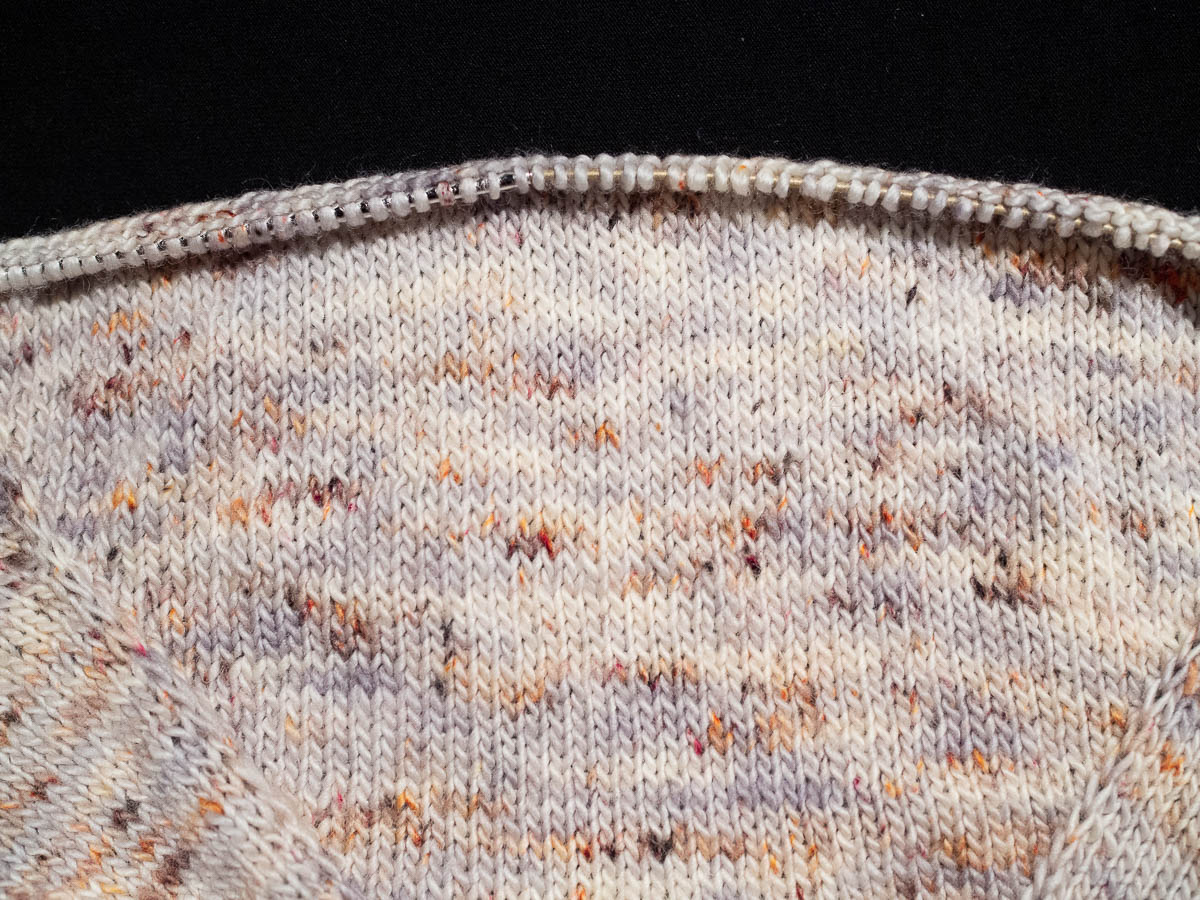
Sweater progress photo.

If I was filthy rich and had more rooms in my house than I knew what to do with, I’d have a crafts room with lots of natural light, and a large mirror well-positioned to take advantage of that light for all my sweater and cardigan selfies.

Now I don’t have that, so I can choose between a dark hallway and a well-lit but sterile-looking bathroom.

But the sweater is looking good!


This is going to be one seriously over-crafted storage box. Just attaching the lining to the padding means meters and meters of hand-stitching over many, many evenings. The effort is out of all proportion compared to the artistic merit of the embroidered panels that started it all, or the cheap materials.

Thinking of it as stitching meditation, though, it’s a perfectly good use of time. The fact that I’m producing something potentially useful and decently pretty is a side effect.


It doesn’t even feel like a big deal any more to rip up a sweater body after I’m done with a third of it, and start over. Just the way things are.


Thursday night embroidery club, for the second time.

Last time everyone worked on their own projects. For this time the group decided to try out dogma embroidery. I’m not sure what it might be called in English, and to be honest, I’m not sure the concept even exists outside of some very narrow pockets of Scandinavian crafts circles.

There’s an e-book at the bottom of it all, and articles about it draw parallels back all the way to the ancient Greeks. Since the author is Danish, I suspect it was more likely inspired by Dogme 95, a movement in film-making, originating in Denmark, that sets strict limits on the tools and techniques allowed. The embroidery version is not quite the same, but it’s still built upon the same idea of strict rules.

Jytte Harboesgaard, as quoted in the Täcklebo Broderiakademi members’ magazine in 2015:

Vi var vana vid att broderiet var ett stygnprov eller skulle bli något bestämt. Detta menar jag är en av orsakerna till att det är så svårt att förnya broderiet, vilket jag anser att vi måste om broderiet skall ha ett berättigande i framtiden. Det var här idén till konceptet Dogmabroderi föddes. I Dogmabroderiet broderar man efter regler som man själv bestämmer… Den viktigaste regeln är att broderiet inte ska användas till något bestämt. Istället är det själva processen att brodera “fritt” efter reglerna som är den viktiga drivkraften.

We were used to embroidering either a sampler or in order to make a particular thing. In my opinion, this is one of the reasons why it is so difficult to reinvent embroidery, which I believe we have to if embroidery is to have a future. This is where the idea of the concept of dogma embroidery was born. In dogma embroidery, you embroider based on a set of rules that you set yourself. The most important rule is that the embroidery won’t be used for any predetermined thing. Instead the process of embroidering “freely” based on the rules is the driving force.

In our case, since most of us were doing it for the first time, one of the members who’d done it before provided us with rules, one by one, so we’d see what dogma rules might look like. The first rule was “a 30×30 cm piece of fabric”. Then “using the greenest thread you have, start in the middle of the fabric, and make 30 backstitches”, followed by “at least 10 French knots” and “a doodle that doesn’t look like anything”. The next step, “three circles of blanket stitch around the French knots” was a bit of a challenge because there was not much room but I just had to think bigger.

The next two steps we got with us as homework. “Find an area where your work is unbalanced, and fill it with seed stitch” (which suits me very well because the doodle is crying out for something to link it to the rest) and “using white thread, lighten up your work” (which will be interesting given that I’m using white fabric).

To really push yourself out of your comfort zone, you’d finish one dogma embroidery, then take a new piece of fabric and repeat the exact same rules on that one, for a new and different outcome. And then do it again, and again.

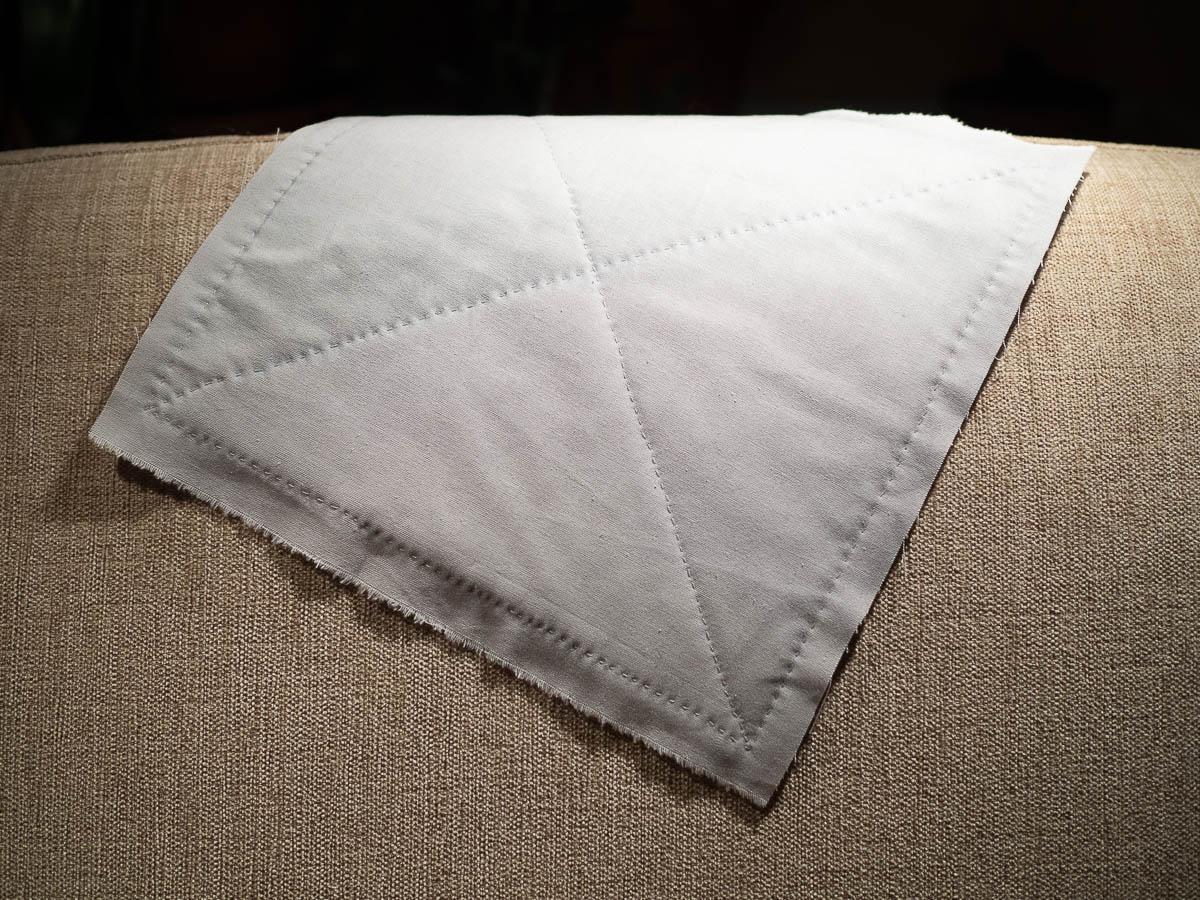
Reminds me of the running stitch sampler I made but never documented in its full glory. The first ten squares are easy; to complete all twenty-five takes perseverance and effort.
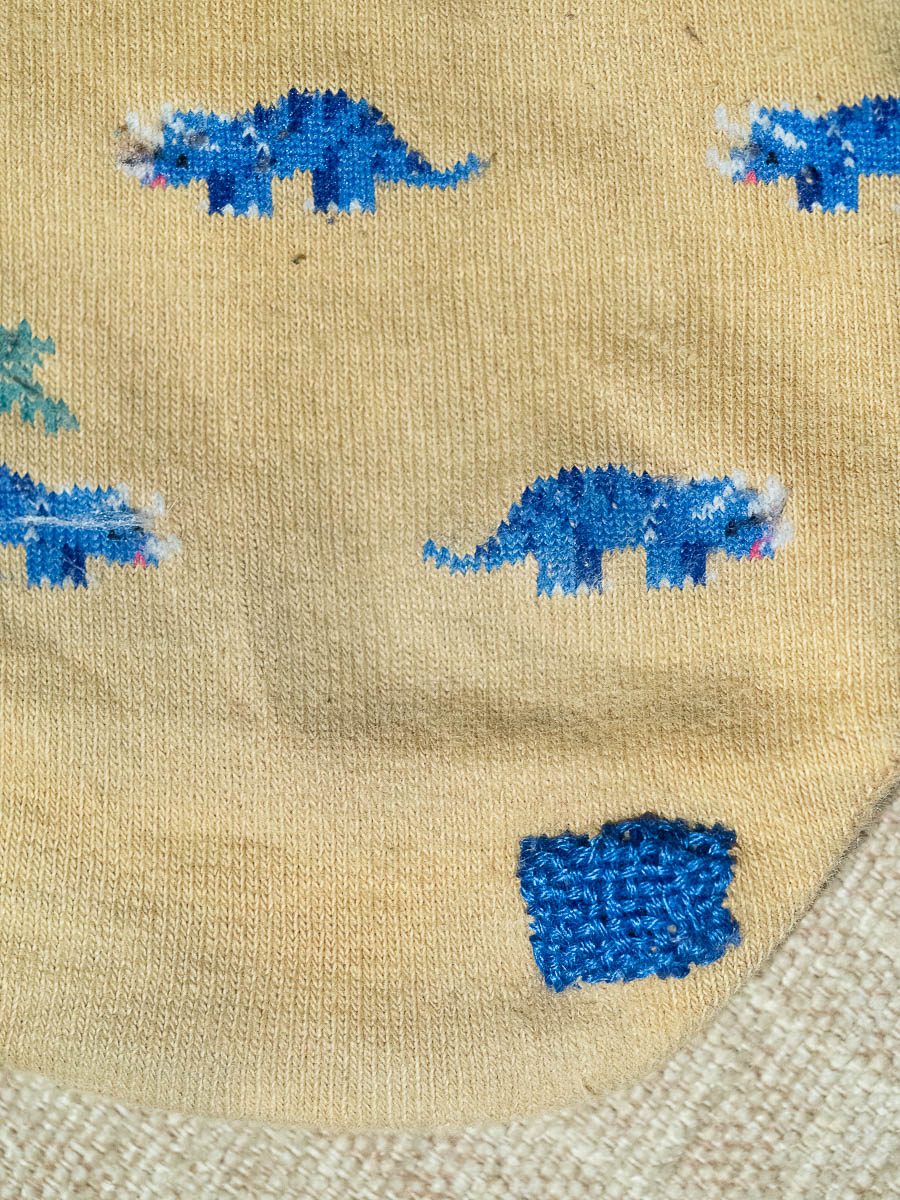
Adrian bought this pair of socks in Amsterdam, in early November. That’s three months ago. Say he has enough socks to last him two weeks between doing laundry. He’d then have worn these six days at most. How can he already have a fingertip-sized hole in them? Does he walk on sandpaper? Have small piles of gravel in his shoes?


Wise from experience, this time I did my photographing when Nysse was not nearby.

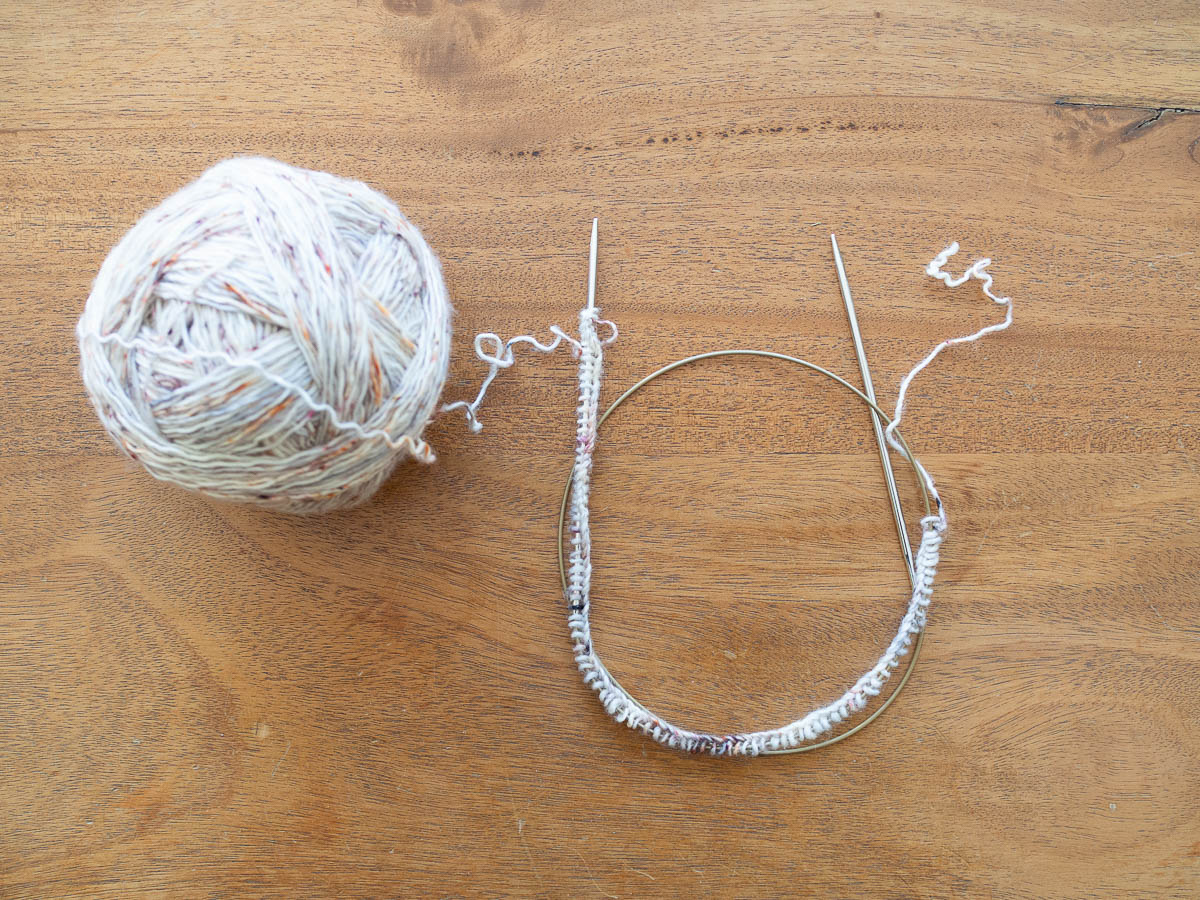
The producer named this colour of their yarn “Silver lining”. Thinking of clouds, I guess. To me it looks more like rock. The colours are like marble, but it’s not veiny enough, so maybe granite. But a very soft granite.