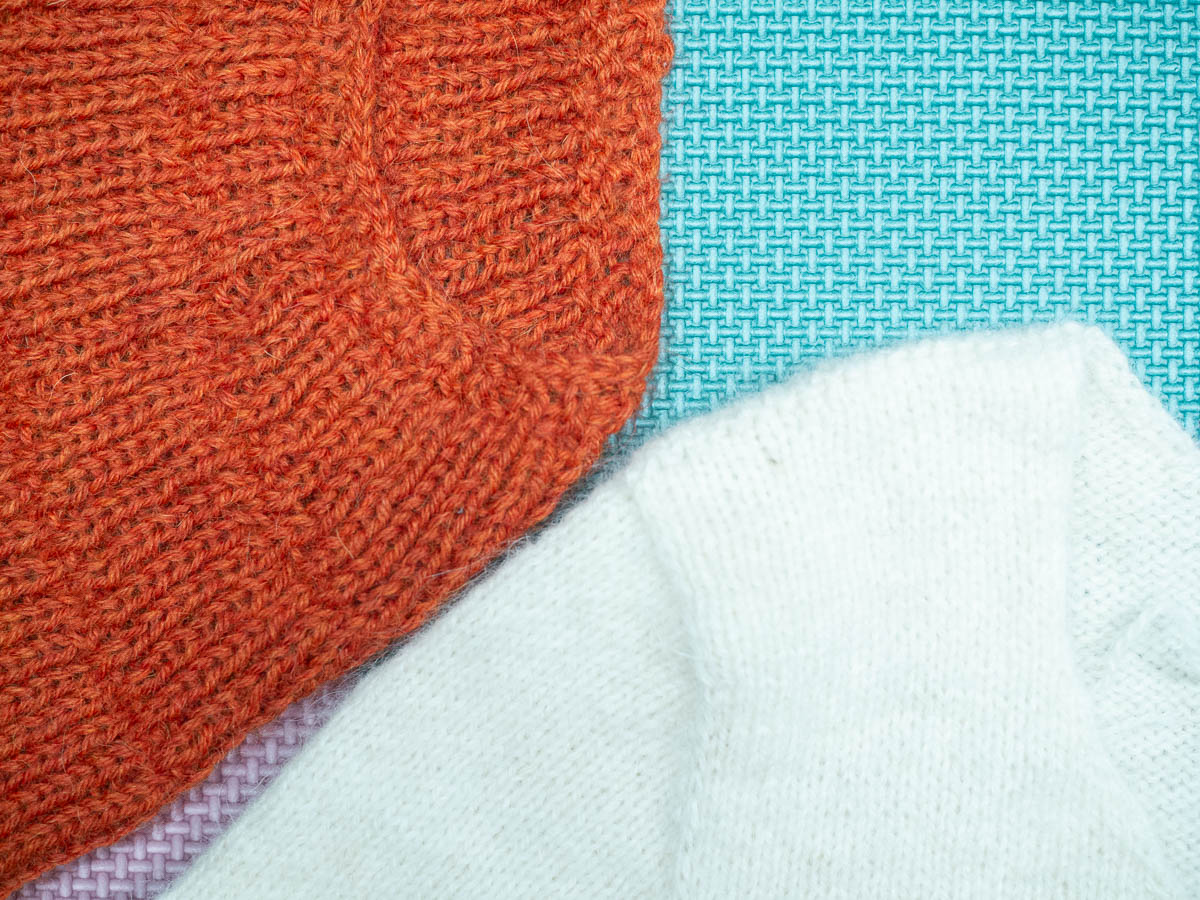
Still waiting. The knits are still far from dry. The weather has been humid, it’s been raining on and off, and this is taking forever.
Still waiting. The knits are still far from dry. The weather has been humid, it’s been raining on and off, and this is taking forever.
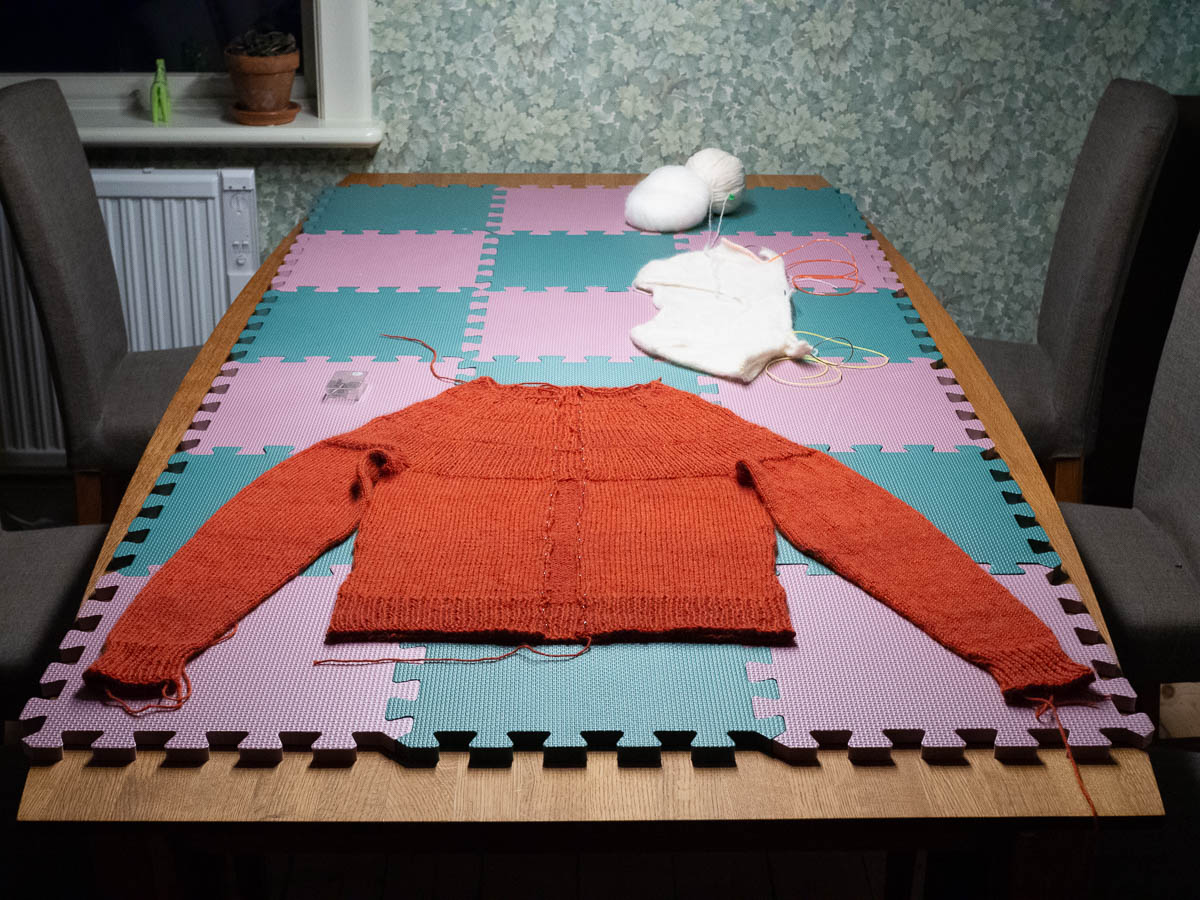
Both my bigger knitting projects reached a point where they need blocking, so I’m blocked from working on both of them.
The red cardigan I finished and blocked once already, two weeks ago, but realised that it grew more vertically than I had expected, so it was too long. I ripped back all the way to the top of the waist increases and re-did it. Nobody wants a badly fitting cardigan.
The white yoke of a dress is also ready for a size check, now that I’ve reached the bottom of the yoke and split it into sleeves and body. I followed the sizing instructions in the pattern very closely, but my previous knits using this pattern have all come out too large on the first attempt, and everything is pointing towards this being the case again.
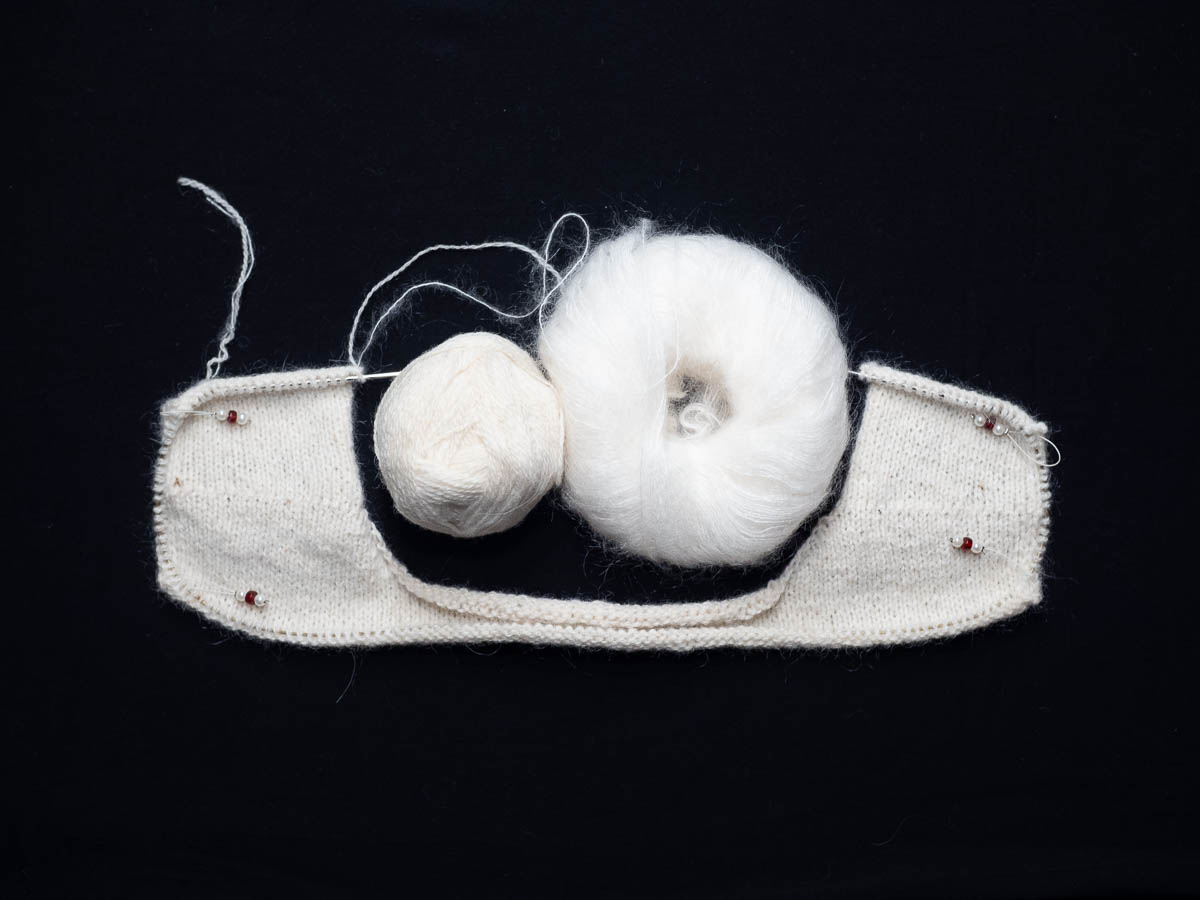
I have finally made a start on a project with the white yarn. I’ve been vacillating on what to make out of it, because it’s a little bit tricky to work with, and because I don’t want to waste it.
The decision is never going to get any easier, so I just bit the bullet and got started. Either it will work out, or it won’t, and I can’t find out which it will be without just doing it.
I’m aiming for a dress, after all. The top is going to be based on the Sweatrrr pattern. I’ve already made three sweaters based on this pattern and here I am, using it again. It’s just perfect. I like the clever shoulder construction, and it has fit me perfectly every time.
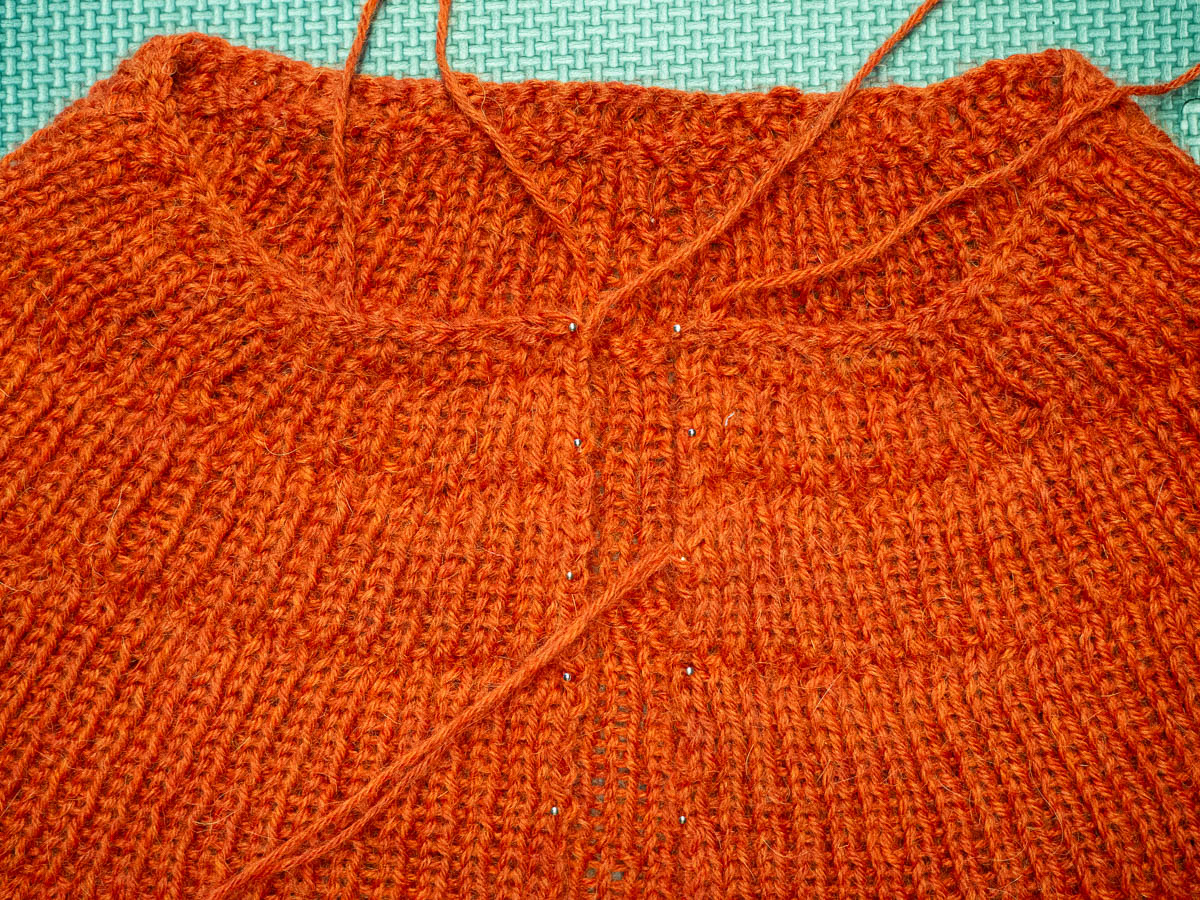
The main part of the red cardigan is all done – yoke, body, sleeves, neckline, bottom hem. Just missing the button bands. First it needs to be blocked, though, which I’ve done, just waiting for it to dry.
The angle of the yoke looks different from photos of cardigans with a similar construction, which makes me concerned that it won’t fit well. I’ll only be able to judge the fit properly when I can button it. It’s looked perfectly OK on me when I’ve tried it on and just held the front edges closed, and the maths and measurements all add up, so it should be OK. Still, I’m holding off with weaving in all the ends until I can confirm it for certain.
Do I need more socks? Most definitely not.
Do I need to knit more socks? I sort of do. Socks are the best background knitting project I’ve found, for meetings, commuting, waiting for the code to build and deploy, etc. Small, portable, simple. And the end result is useful – I’ll have more use for more socks than I will for hats or scarves.
I’ve got lots of sock yarn left over from socks I’ve already knitted. Most sock yarn is sold in hanks of 100 grams. That’s should be roughly enough for two pairs of socks, with my sizing.
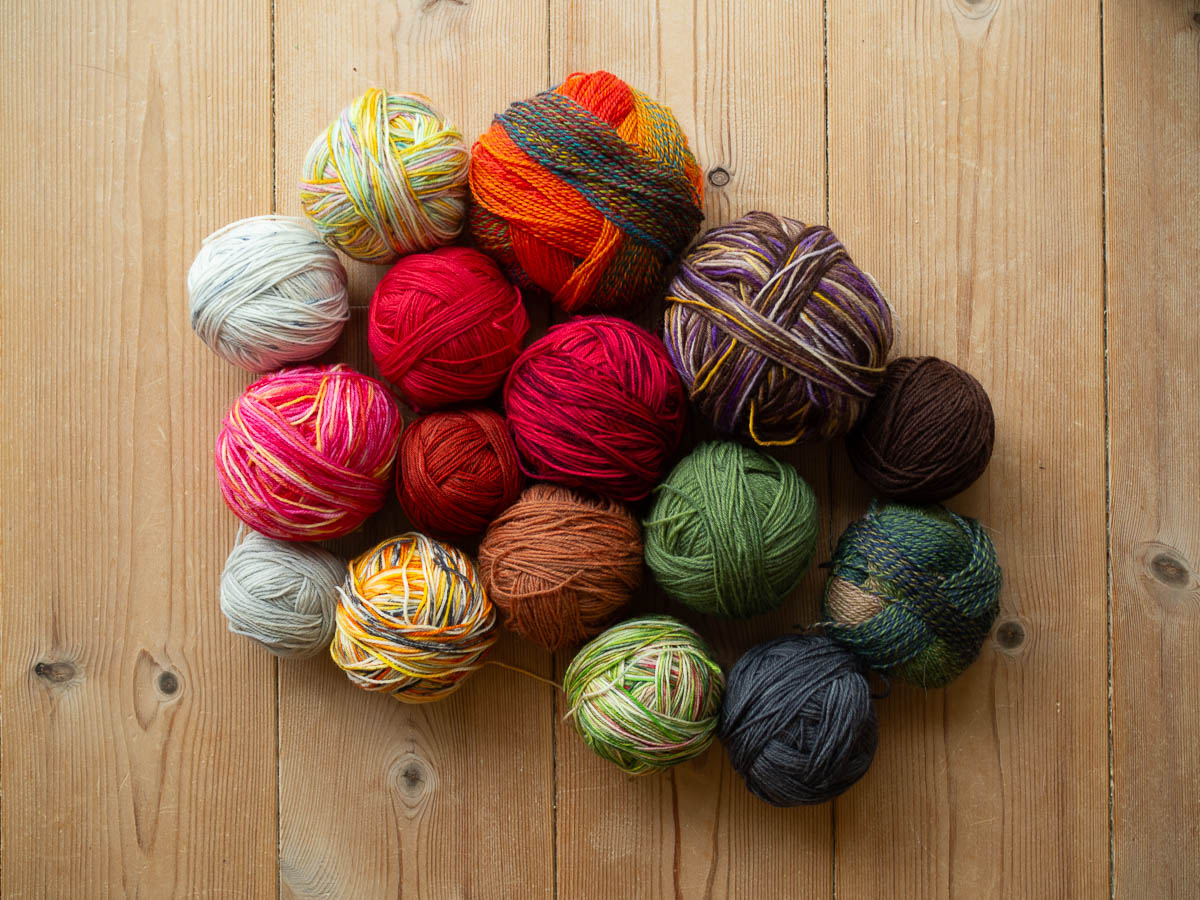
Knitting two pairs of identical socks does not feel ideal. I’d have to be mindful of which one goes with which, to ensure that each pair fades and wears evenly. No: either all socks are the same and you just pick two at random, like I did with my old black cotton socks, or all pairs are unique and pairing up socks after a wash becomes trivial.
I’ll just do simple combinations of two colours at a time, I thought.
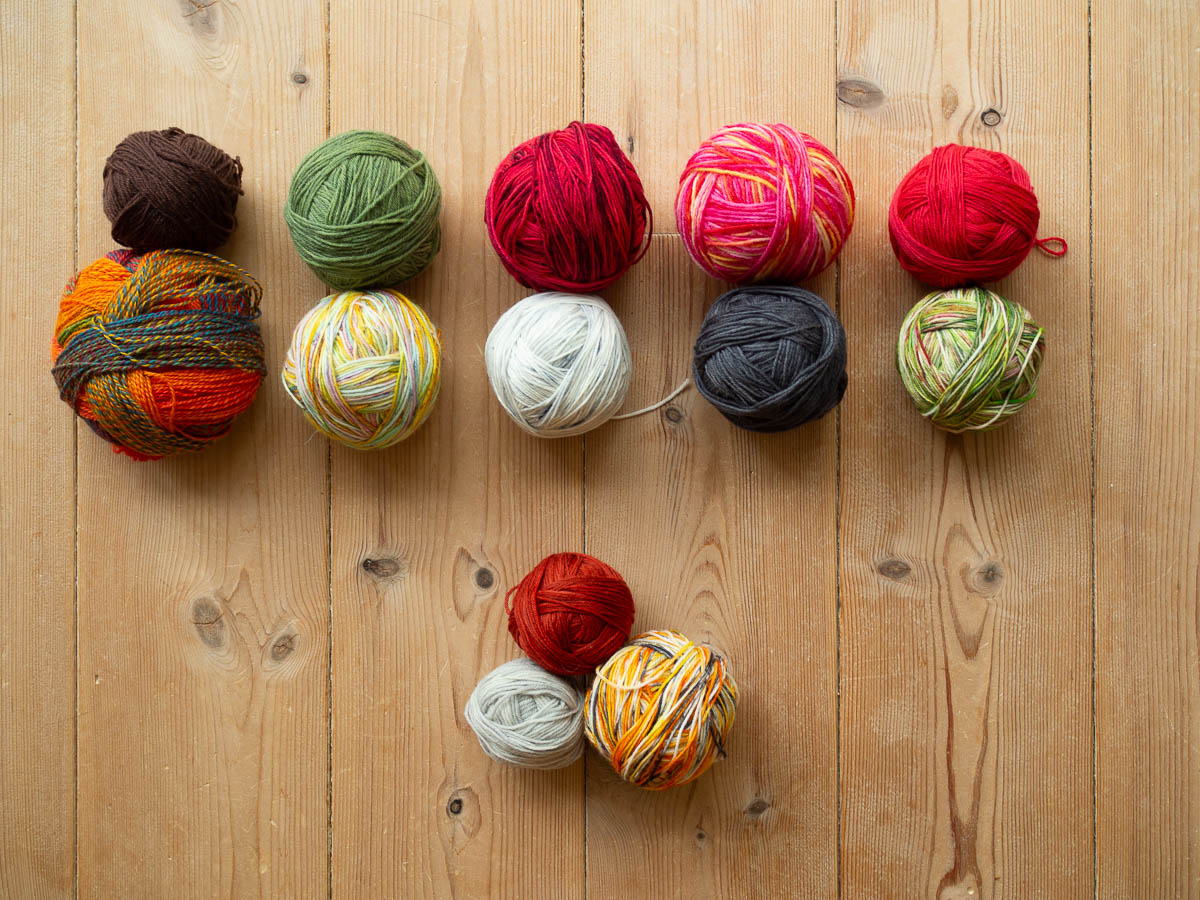
Surprisingly, even though each of these yarns individually resulted in lovely socks, pairing them up two and two led to more bad combinations than good ones. They all tended to be just slightly off. The reds don’t go well together; the light grey is too warm to fit with the slightly blue-toned dark grey. The muted green, which I thought would balance and complement the light candy, instead just made it muddy. It becomes obvious that they’re all sourced from different dyers and don’t belong to the same palette.
Buy some neutrals to combine them with? Do I really want to be adding to this pile, though?
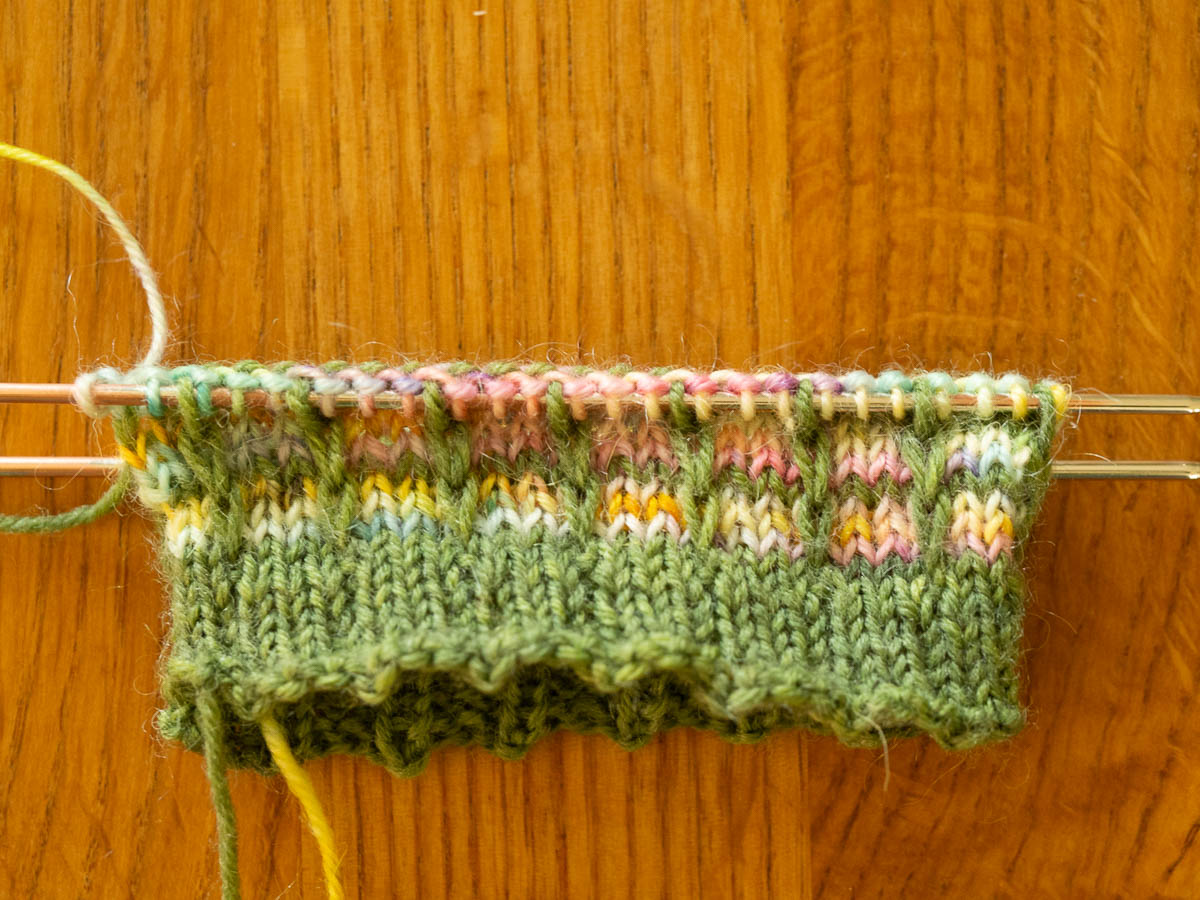
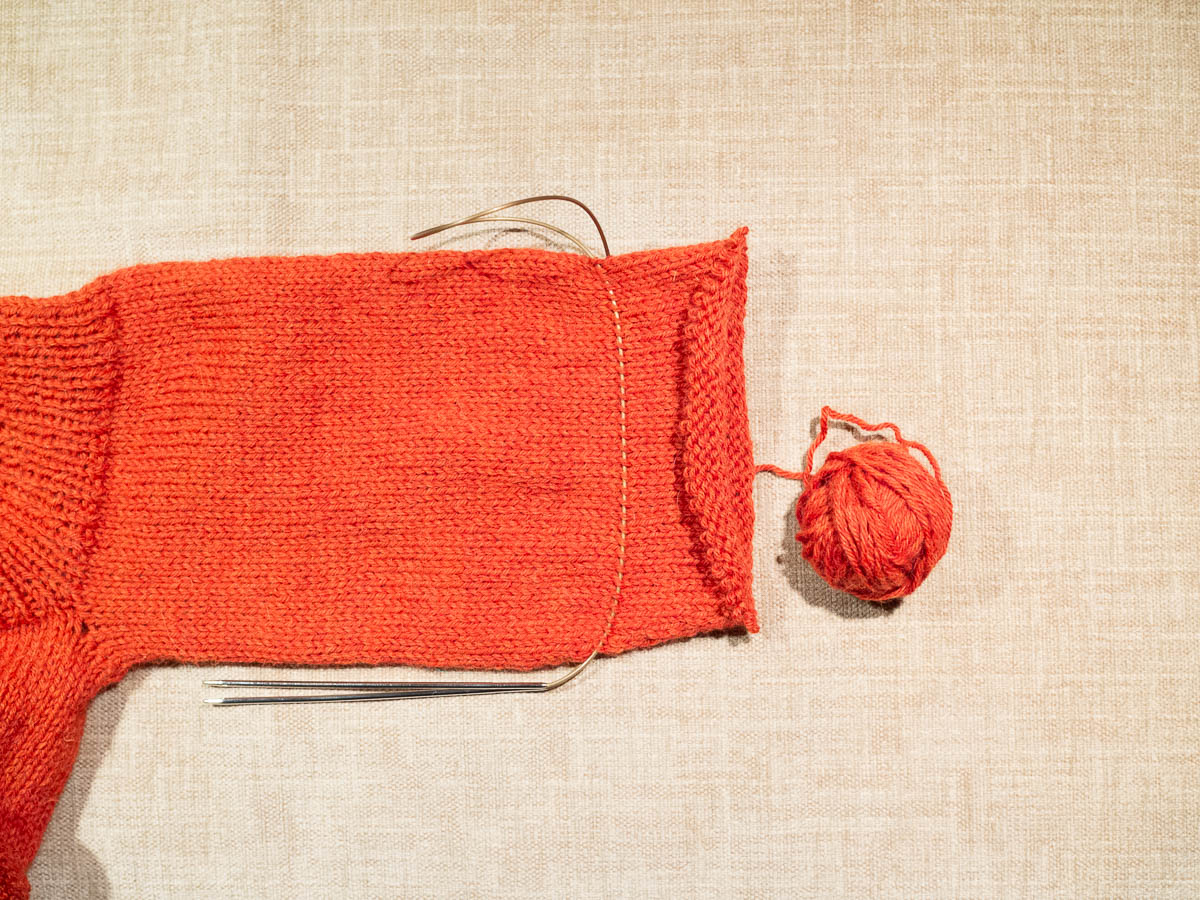
Many sweater knitting patterns suggest an even rate of decreases from just below the armhole to just above the wrist. On close-fitting garments, that often makes the sleeves too tight for me around the biceps. Instead I tend to knit straight until just above the elbow and only then start decreasing.
That bit worked well this time, as expected, but I wasn’t happy with the decrease rate afterwards. Too steep. Rip it up and do it again.
With a slightly thicker yarn and a slightly looser knit than I generally tend to choose, the cardigan almost knits itself. And when I change my mind, unravelling and re-doing a section is a piece of cake. With loose-ish stitches, there’s room for me to insert a thin cable needle in a row further down in advance, before I even start ripping it up. No need to painstakingly find and pick up the stitches afterwards. Re-knitting it takes an hour at most.
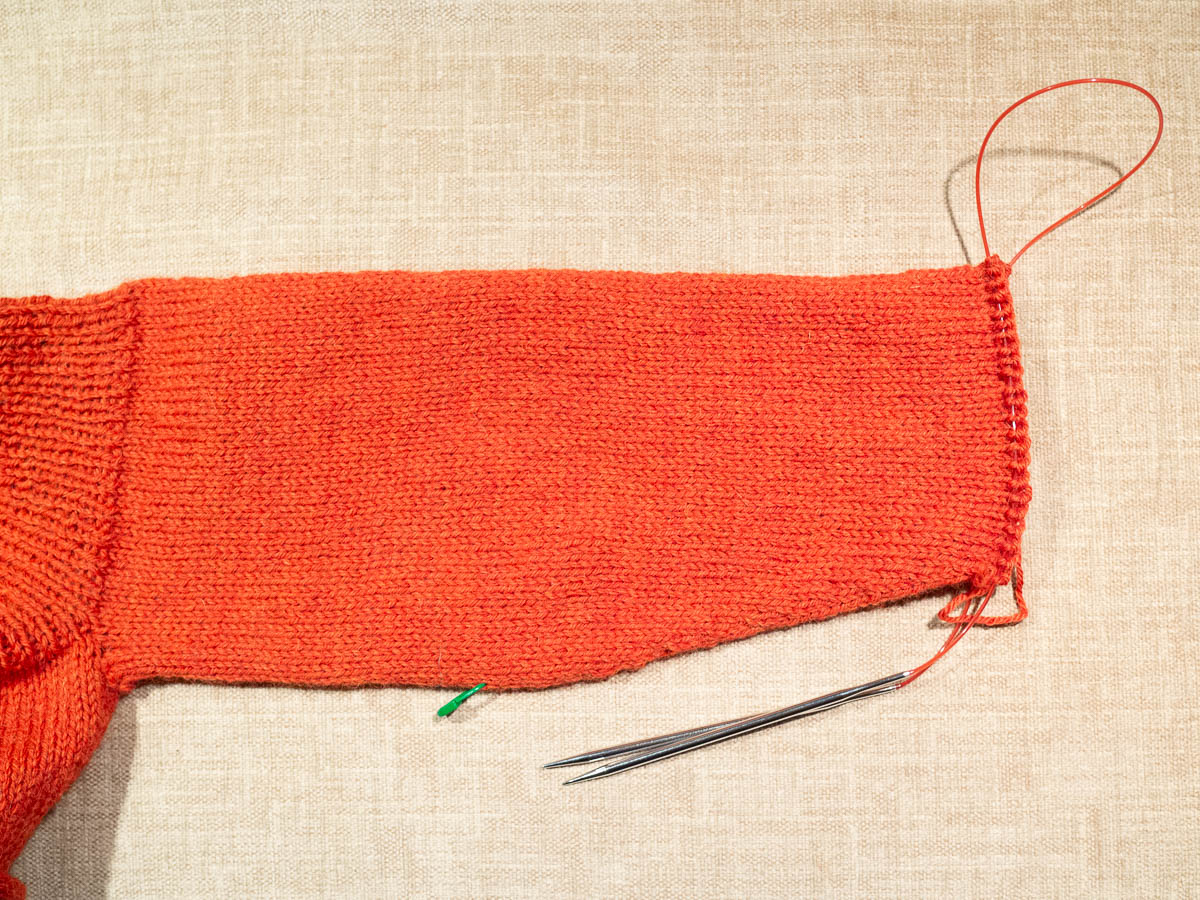
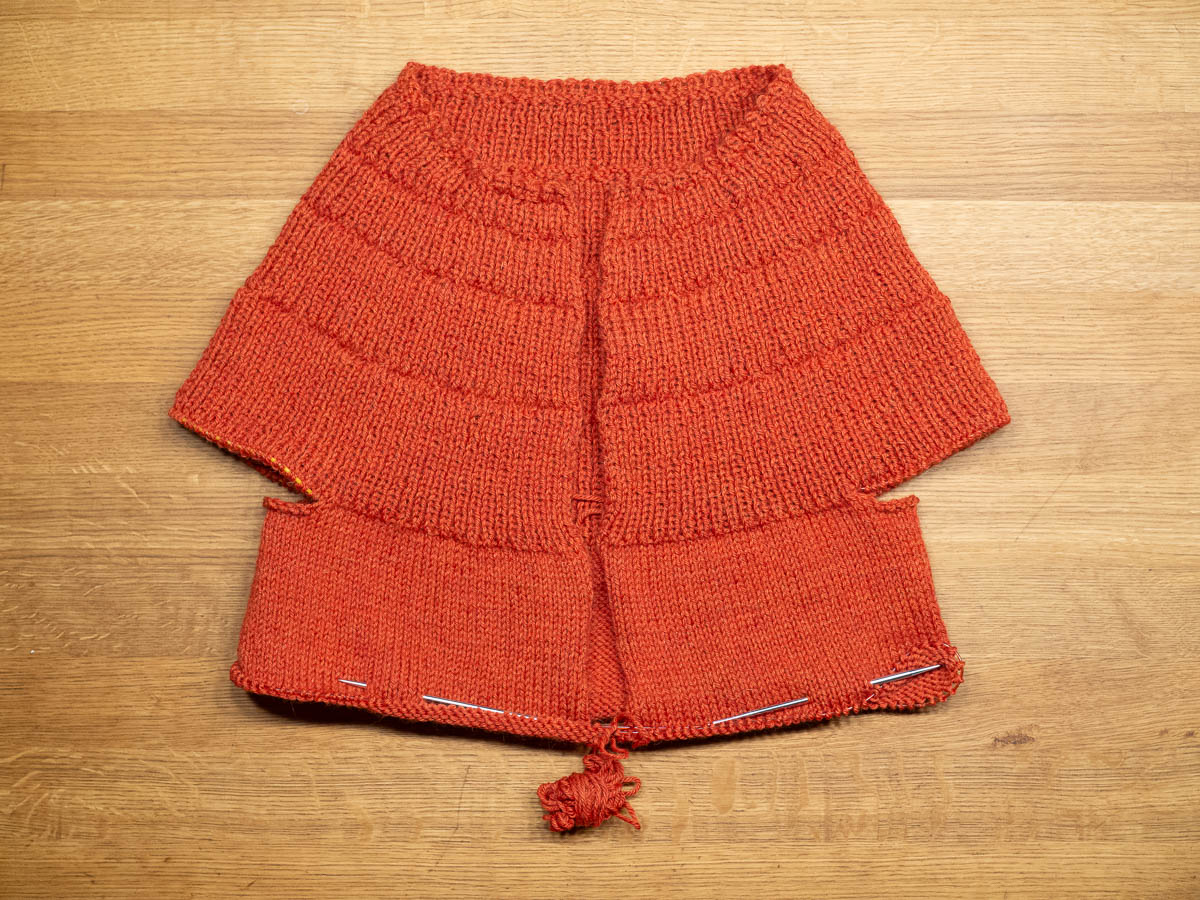
I started knitting on the next cardigan during the conference trip to Italy. With a thicker yarn than I tend to choose, and a slightly looser knit, it knits up fast.
The yarn is Drops Lima, a lovely wool and alpaca blend. I love the way alpaca yarn feels.
The design is a very simple one and mostly my own. I’ve been eyeing the Ankers cardigan, but I didn’t like the high neck with no neckline shaping. (Any cardigan design that does not show a single photo of it worn fully buttoned, is probably not going to look good fully buttoned. Knitwear designers ignore neckline shaping and waist shaping way too often, in my opinion.)
Overall a round yoke seems simple enough, and the yoke on the Ankers is just bands of ribbing interspersed with increase rows, and I figured I could do that myself. I’ve knitted enough sweaters now to feel like I mostly know what I’m doing, and the Internet is full of helpful tutorials and guides.
It took a full evening of arithmetic (there are a lot of details that need to line up!) and one aborted attempt that I ripped up, and now I have something that looks like it will work out and fit me decently well. It looks better on me than on the table. Even then it takes a bit of imagination to add the missing details, such as button bands, neckline edging. I hope it all comes together the way I have it planned.
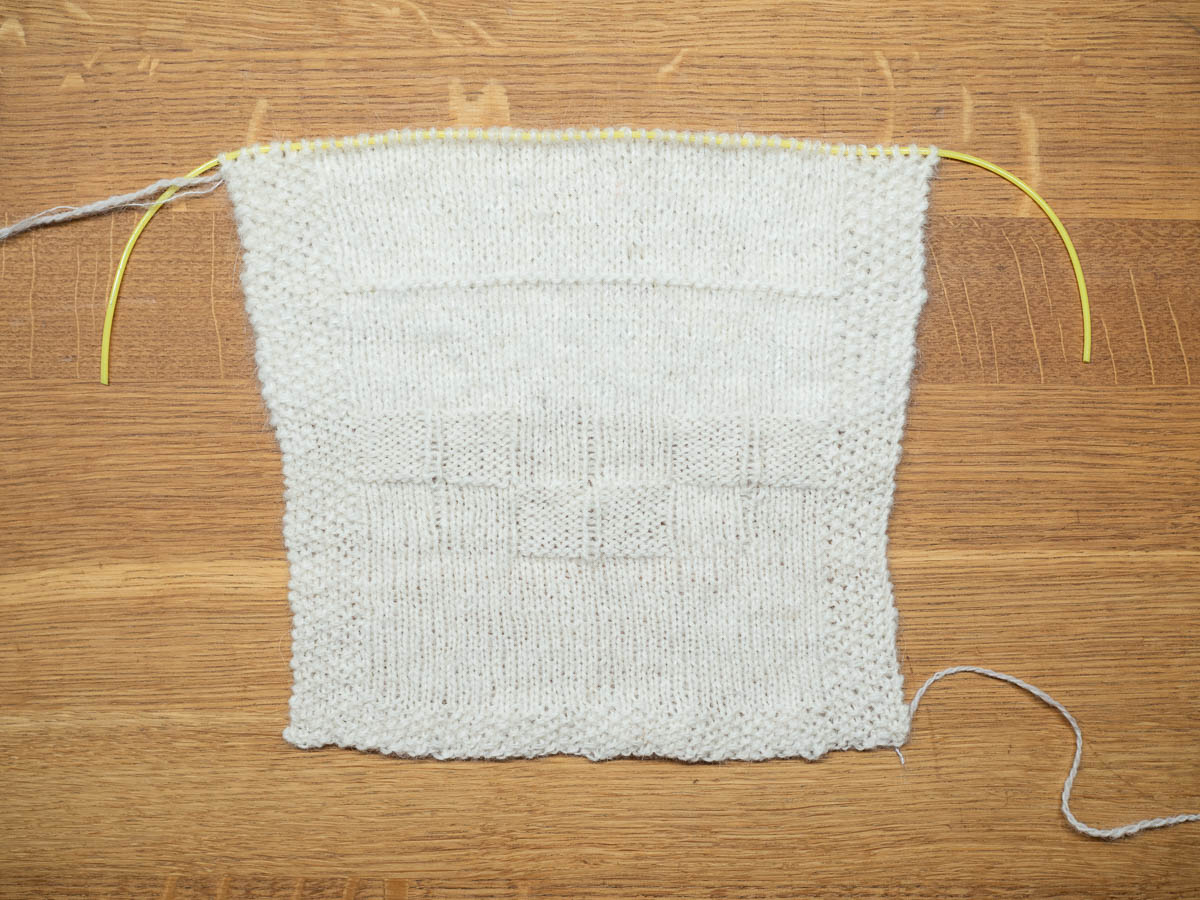
Remember the stiff white yarn I was struggling with? The internet reminded me to wash and block my swatches before drawing any conclusions. I did that, and the fabric was a lot softer afterwards. Actually floppy; much more wearable.
I also tried combining it with some white mohair (in the top half of this swatch) and the result was very nice. Fluffier and with more body than the wool on its own. It even looks a bit whiter – I’m not sure if the wool yarn is a teeny bit grey, or if it’s just the background shining through.
I had pretty much given up on the idea using the yarn for a dress, due to its lack of drape, and started picturing it as a sweater, holding the yarn double and adding mohair. I had even decided on a rough design. (A white sweater with a green design, something that could be a Christmas tree but could also just be a fir tree.) Now this swatch is making the dress idea seem not absurd, so it’s back in the game again.
I’ve been picturing a dress with the skirt knit sideways, with short rows in a contrast colour for shaping, something vaguely like this. An all-white dress seems impractical for everyday use, and the contrasting stripes would make it more versatile. However I have no idea how much fabric the yarn will knit into, and even if I did try to estimate, chances are I’d be wrong. I obviously have no way of getting more, so a skirt knit sideways seems risky. Make the skirt too long, run out of yarn too early, and I will have half an unwearable skirt. Make the skirt too short, and end up with unused yarn.
Today I was idly looking at my one and only (store-bought) merino wool dress, which is knit top-down, and realized that I could knit the white one top-down as well and just add embroidered vertical stripes afterwards. That would be a much more low-risk approach. I can knit a sideways skirt some other time, with store-bought yarn that I can top up when needed.
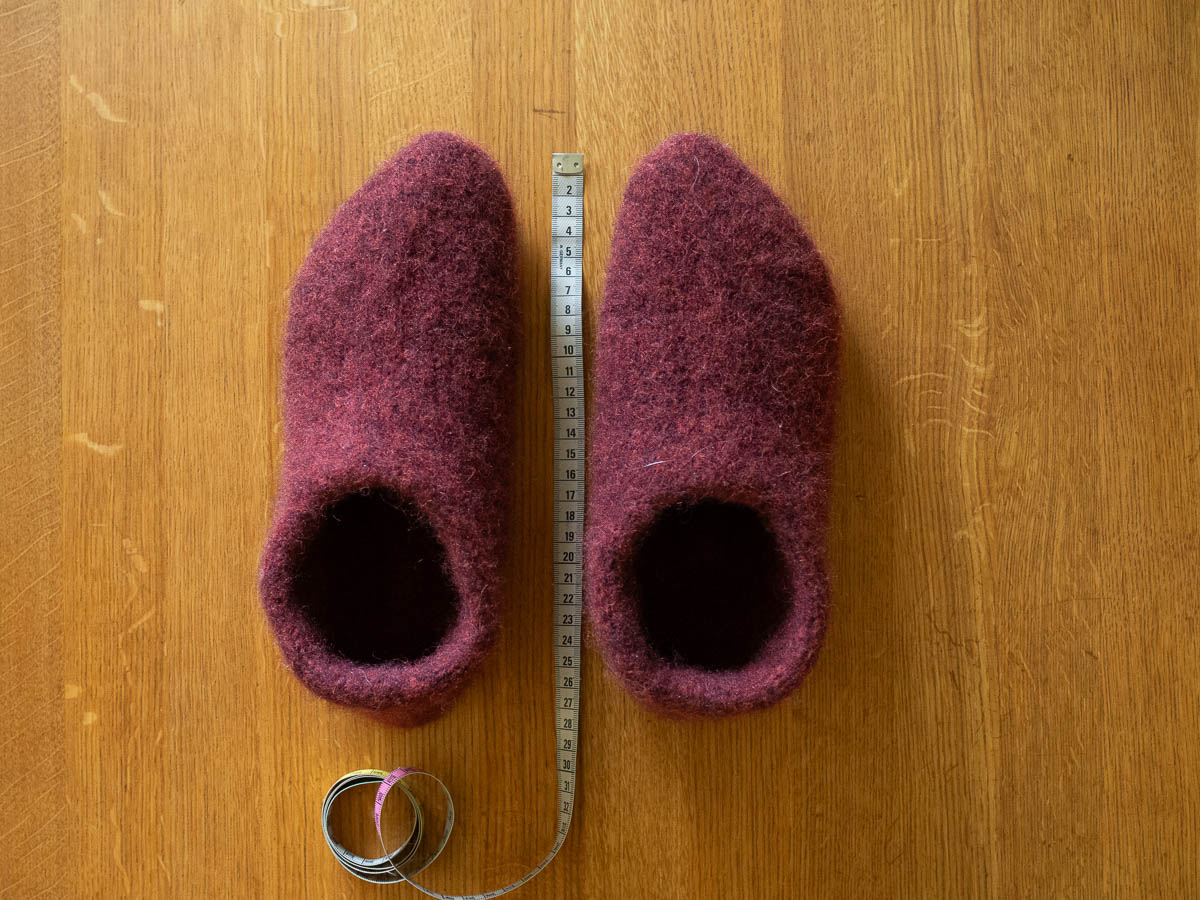
I girded my loins and felted the slippers! Blogging about a problem(ish) got me unstuck, not for the first time.
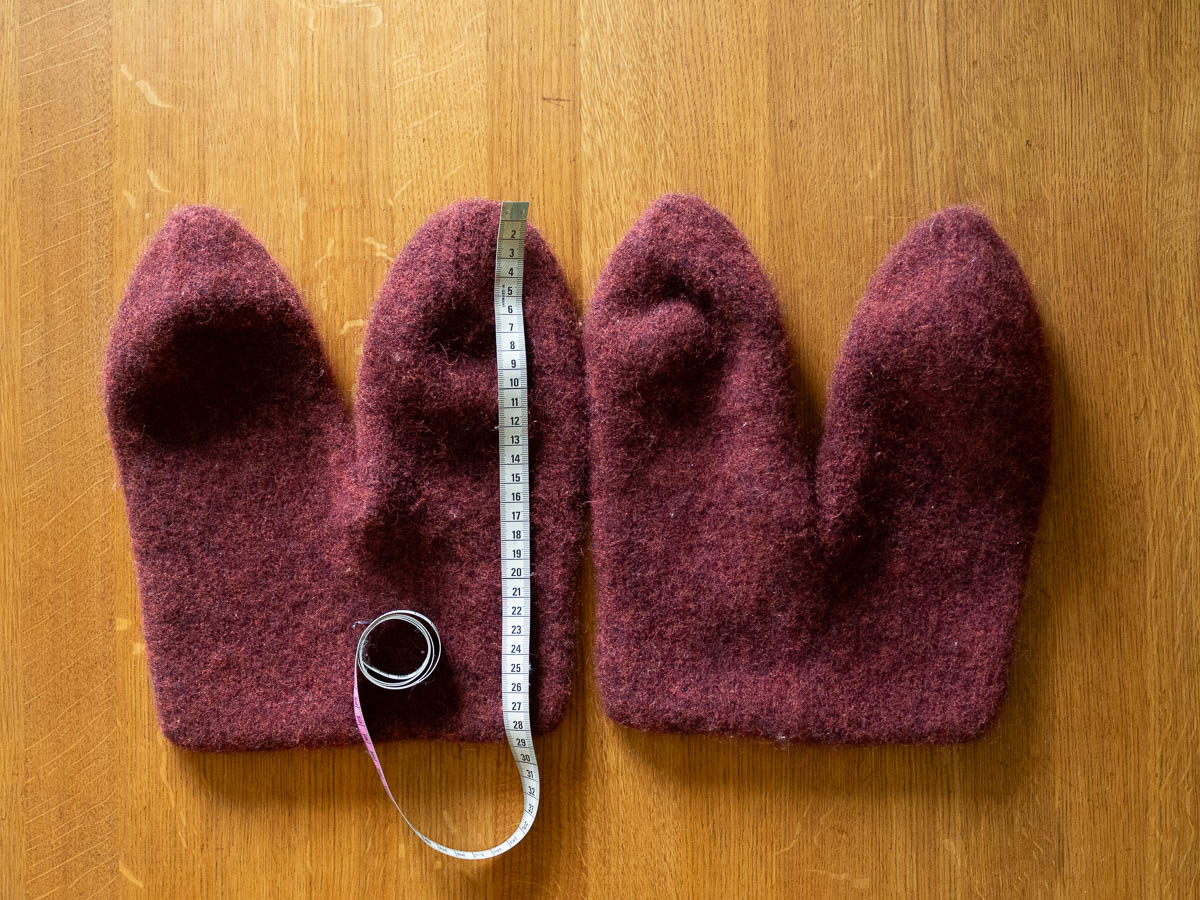
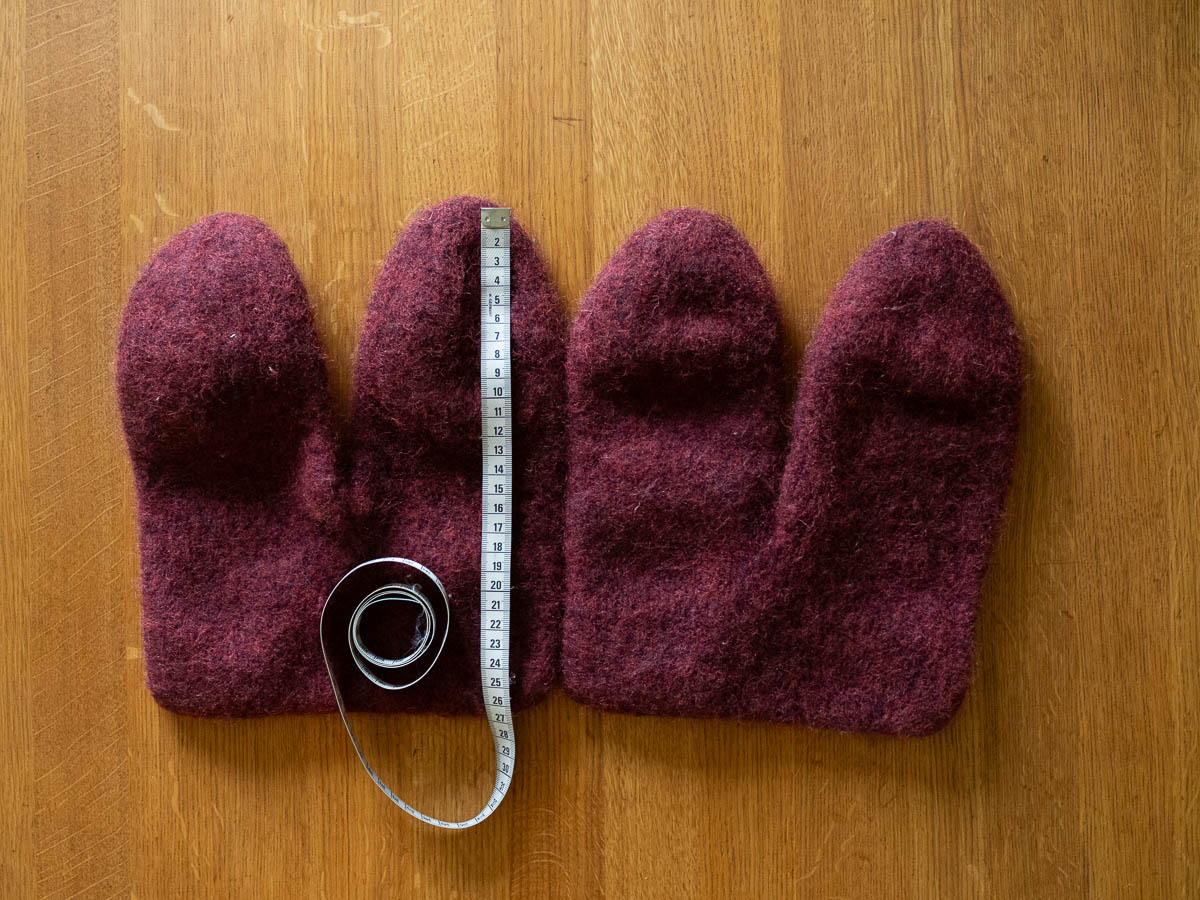
In their original, unfelted state, the slippers measured 37 cm from heel to toe. A standard wash and centrifuge cycle in the washing machine took them to 28 cm. That was still a bit too large, so I put them back in for a brief 30-minute cycle, which shrunk them by another centimetre or so. Shaping them and putting one half inside the other stretched them out a little bit again, so the end result was back to 28-ish. Maybe a teeny bit too large? Maybe not. It’s too warm to wear them now so I’ll have to see next season.
I was concerned that the inner layer would get bunched up, since it’s the same size as the outer one, but slightly wet felt turned out to be very squishable, and it formed itself very nicely. Or perhaps it was the outer one that stretched to fit the inner one. Either way, no bunching, no wrinkles, very slipper-like shape. Overall, a success.
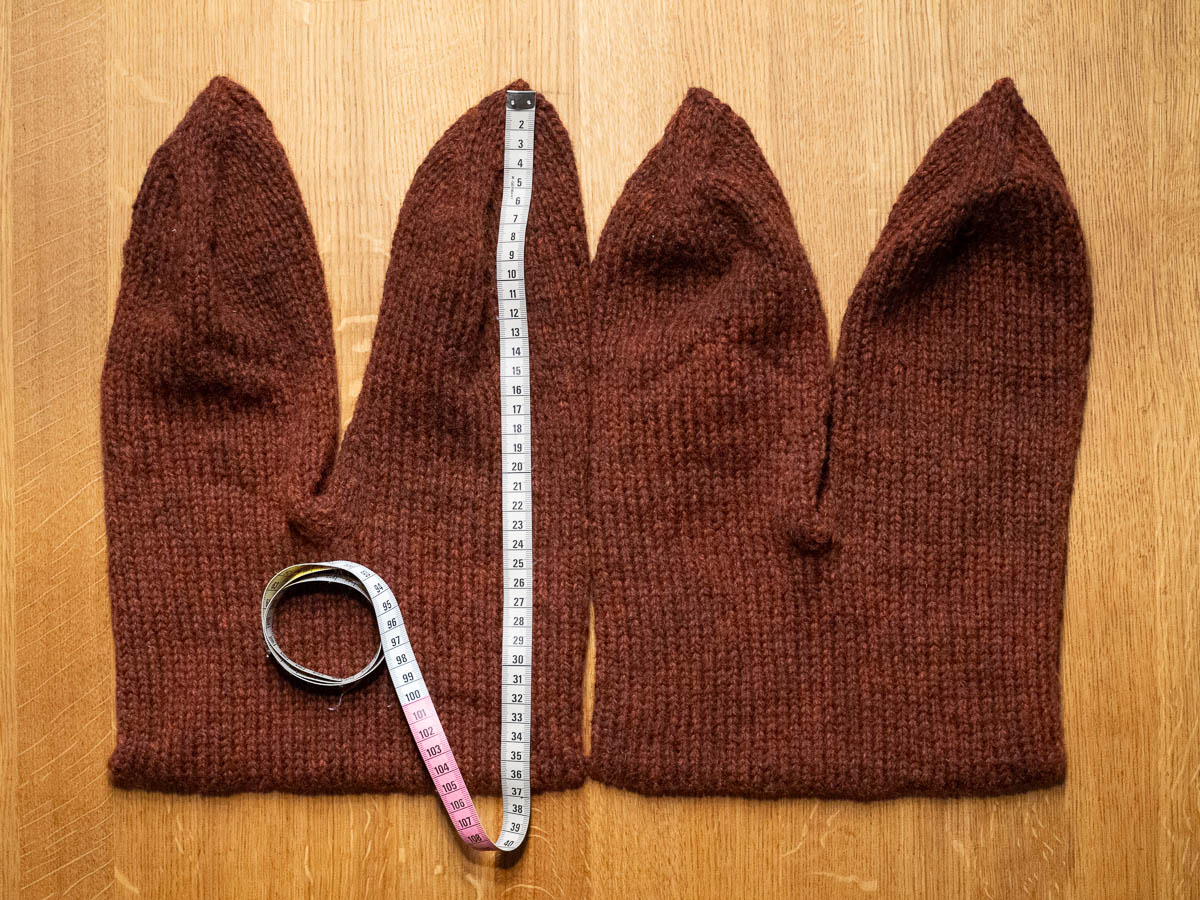
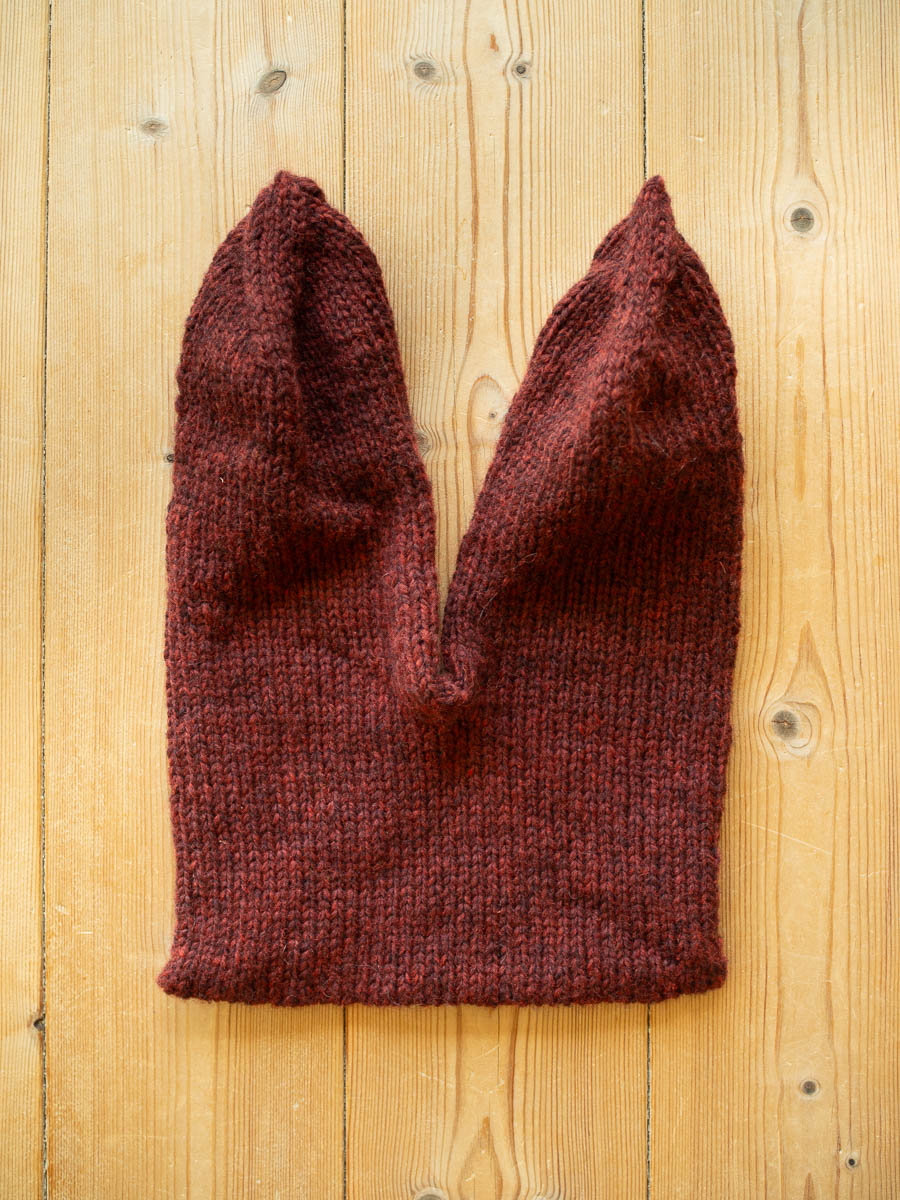
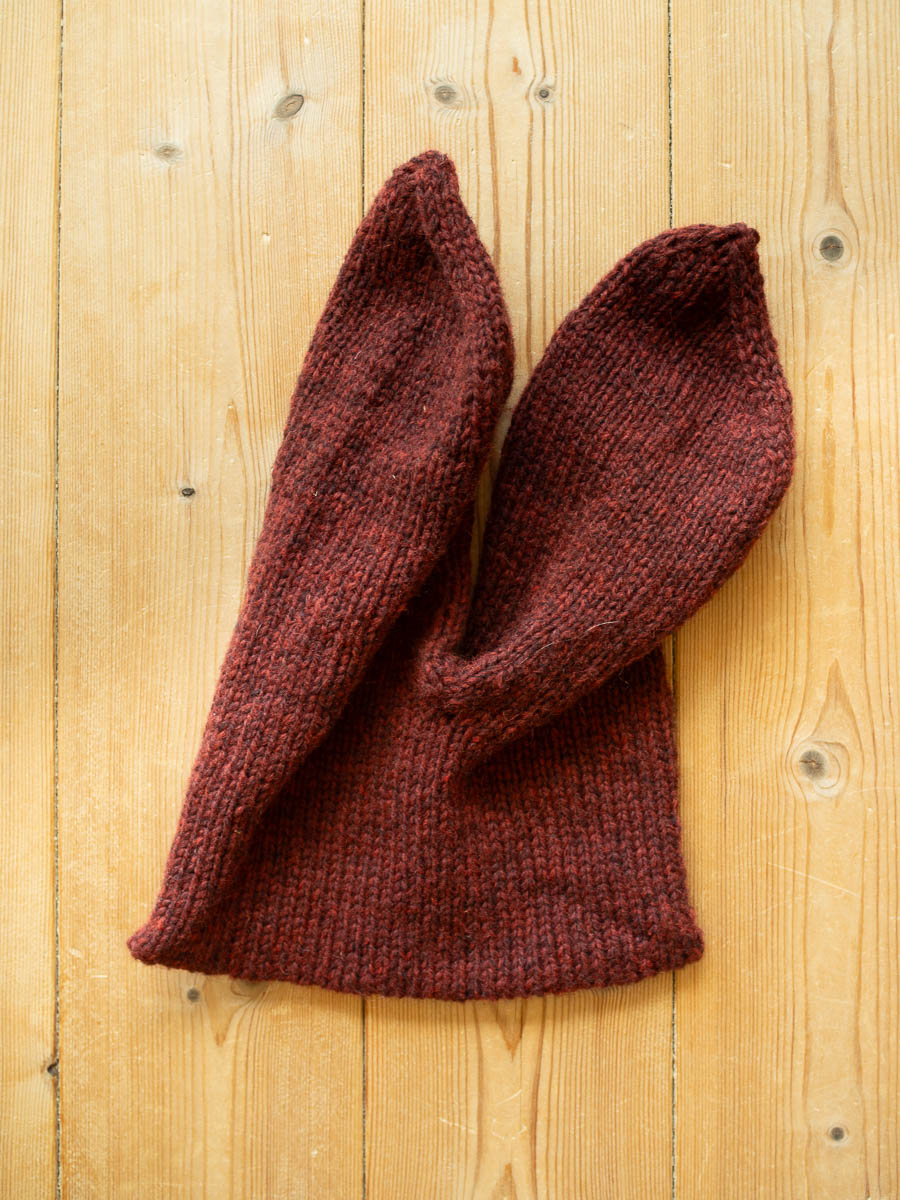
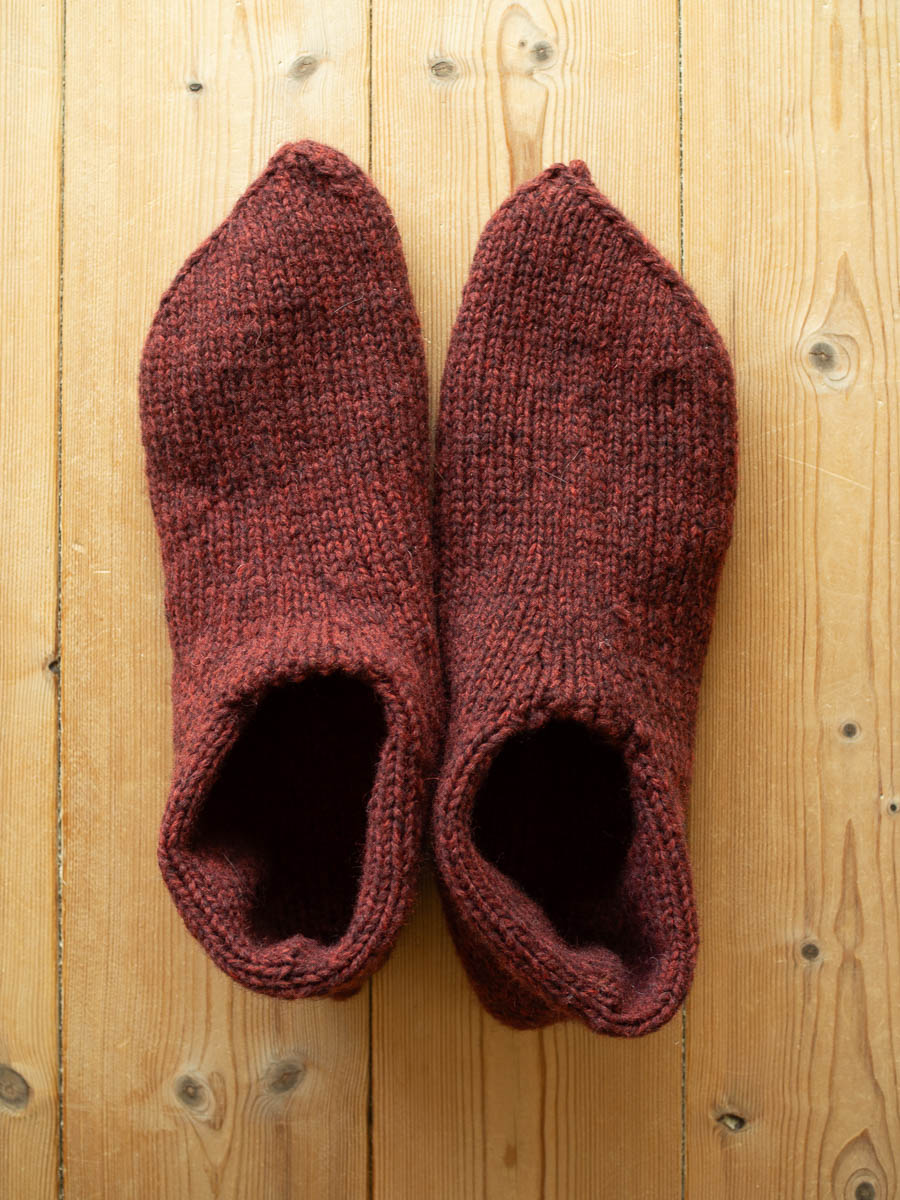
I am trying out a pattern for felted double slippers. You knit two conjoined slippers, which results in a shape that initially makes no sense and couldn’t possibly be anything, and then you turn half of it inside out, inside the other half, and boom, an actual slipper.
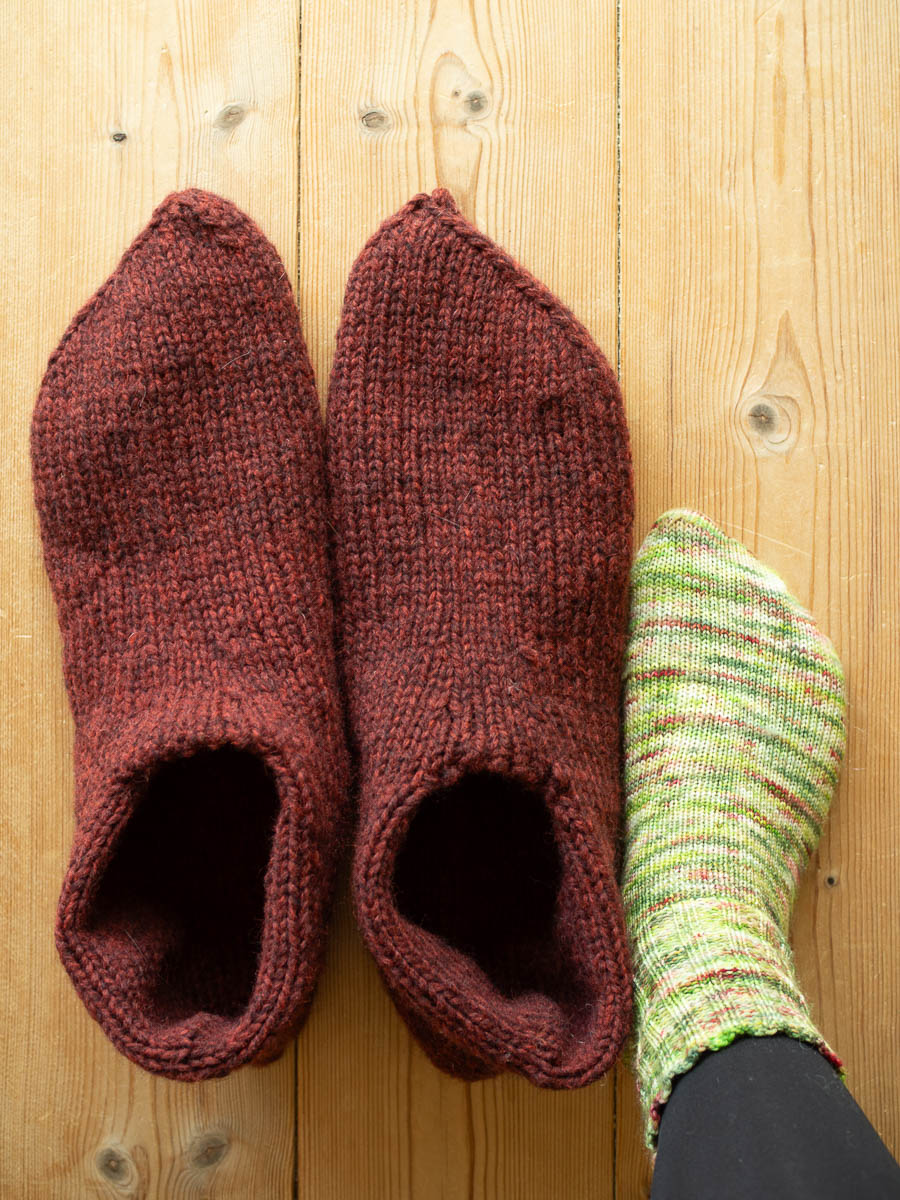
They look huge, which is as it should be, because the next step will be to felt them by machine washing them using a non-wool programme. That will be interesting. I’m using the exact yarn that the pattern recommended, but even with larger needles than they suggested, mine came out a few centimetres smaller than they should. I hope that they will nevertheless shrink to a suitable size when felted.
The socks I knit are all anatomically shaped and asymmetric, and I saw no reason to do anything differently with the slippers. Why would I want a rounded toe when my feet are not rounded? I’m not a cat. The shape is not too different from the original so it will hopefully felt equally well.
I’m curious why the pattern makes the two halves of each slipper exactly the same size. If you want one half to fit well inside the other, shouldn’t it then be slightly smaller? Maybe they wanted to keep the pattern as simple as possible.
I’ve been putting off the actual felting, always with some excuse. The electricity price is too high. I don’t have time today to invest several hours in this. But really I believe I’m a bit nervous about the felting not turning out well and then this will all feel like a lot of wasted work.
| « Older posts | Newer posts » |
