I figured it out!

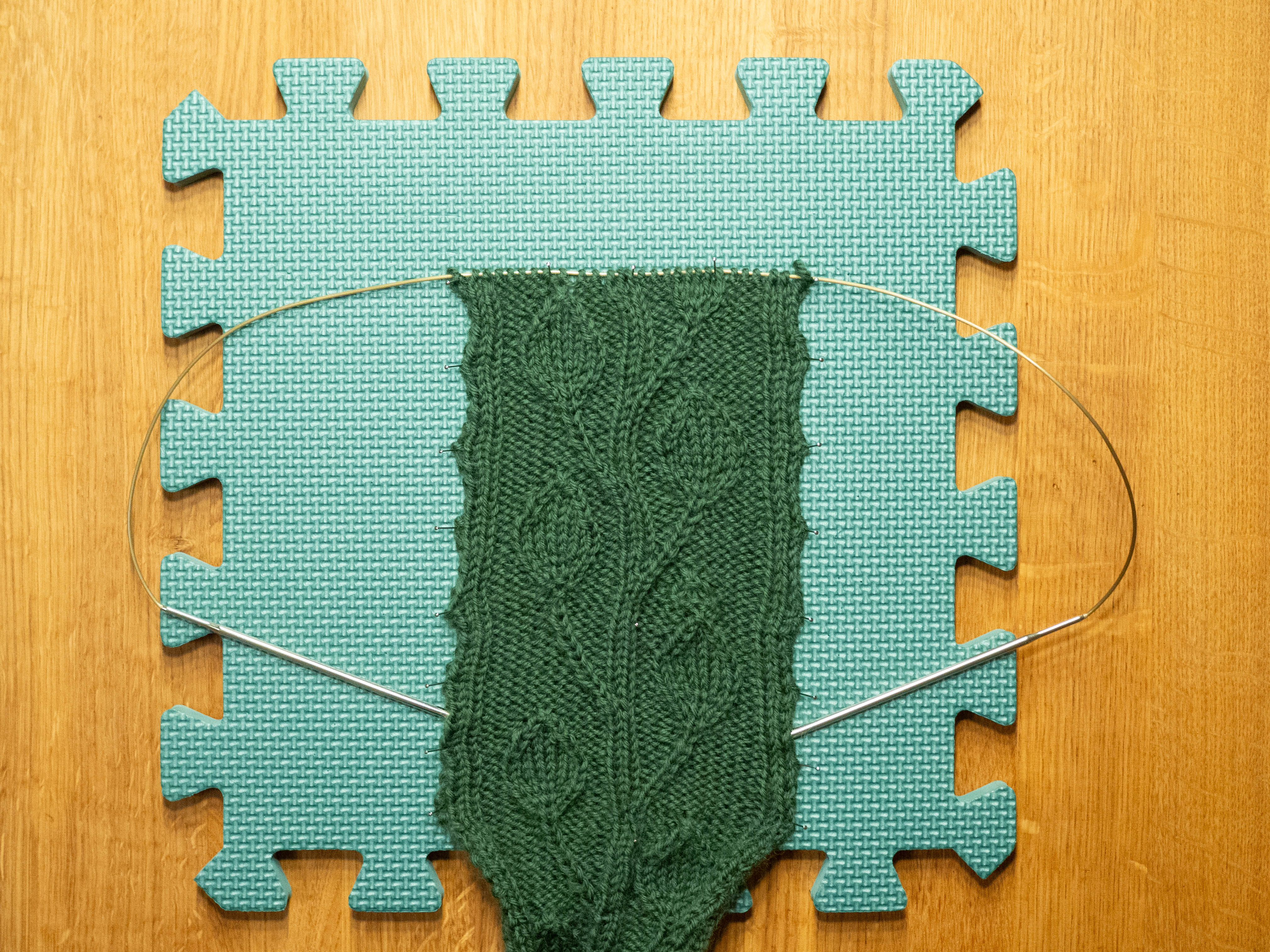
The two tweaks that I couldn’t think of yesterday were (i) changing the total width of the panel and (ii) shifting things vertically.

Yesterday I tried to add increases and decreases to shift the 11 + 11 stitches in the two halves into 12 + 10 and back, to make a curve in the middle. Today I took away two stitches from one side, so the curve is between 11 + 9 stitches. That left me with a shorter stem for each leaf. To make the stem actually reach the leaf, I put the leaves vertically closer to each other. In my first attempts, there was only ever one leaf going on at a time. Now the right-hand leaf starts before the left one ends. Not only did this give me that curved vine that I was after, I also got a tighter pattern overall, with less dead space.

With the white dress done and the striped sweater feeling like a bit of a slog right now, I think I might want to start a new project. In my stash I have yarn for a green cardigan (bought at the crafts festival in October). The green colour is crying out for a greenery-inspired design – something with leaves, maybe.

I saw pictures of a knit pattern with leaves on a vine that I liked. Too bad it’s only available in a book published in the US in the 1970s. Then I saw pictures of a sweater with leaves that was kind of close to what I had in mind… and turned out to be discontinued.

Could I reverse engineer one of the leaf patterns based on the photos? How hard can it be? Knits for the smooth surfaces, purls for the bumpy parts. Increases and decreases to make them grow and shrink; cables to make lines slant and cross.

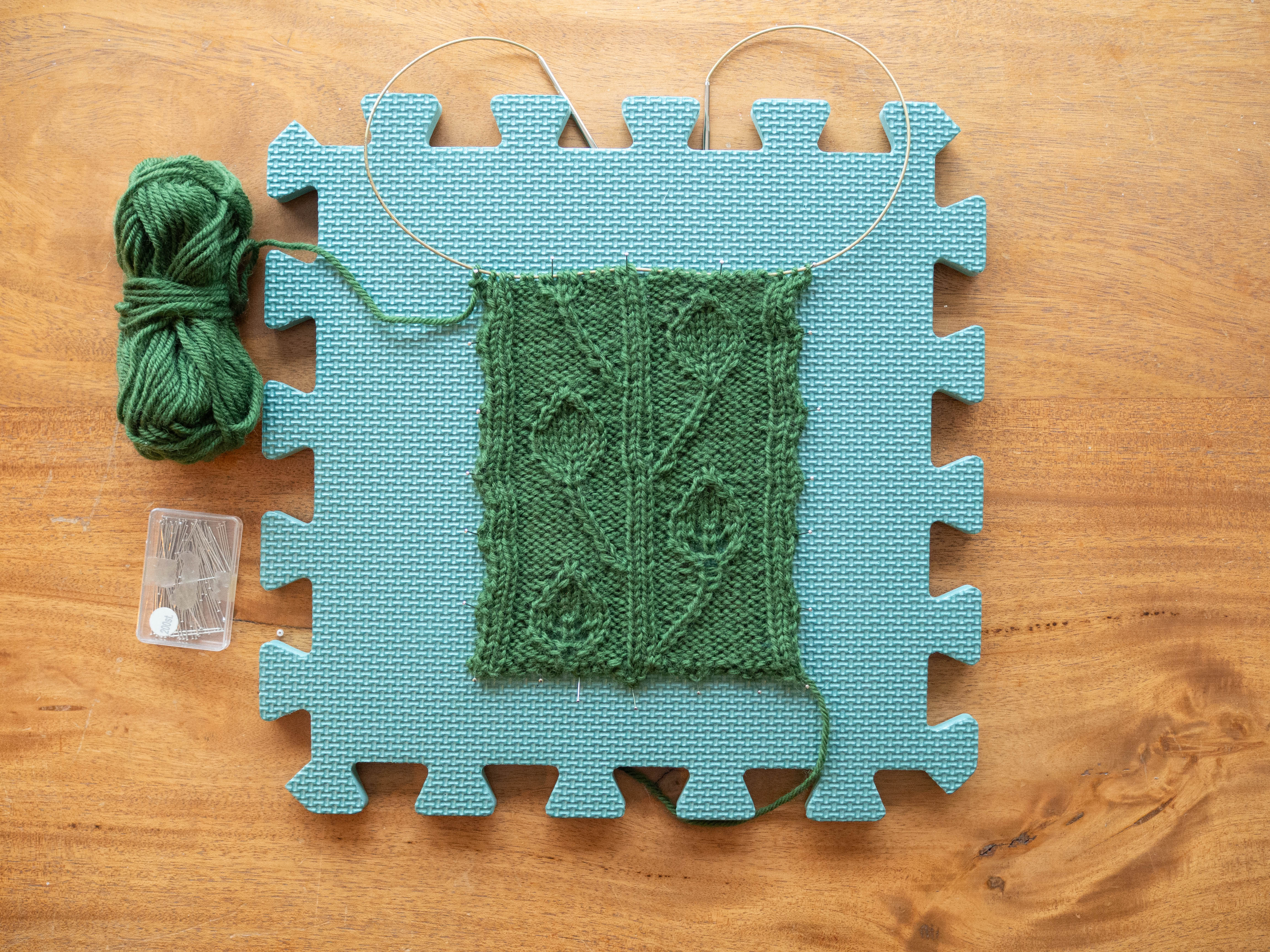
With lots of trial and error – mostly with pencil and eraser on graph paper, and a few attempts with actual yarn – I feel like I’m 90% there. It would all look smoother and tidier if I wet blocked the knit fabric but I don’t even need that now, I just want to see the shapes.

The leaves definitely look like leaves. My inspiration photos had eyelet increases like in the lower pair; I think I prefer the smooth surfaces of the upper pair.

The vine on the other hand needs more work. It’s a stick, not a vine; way too straight. I made several pen-and-paper attempts at making it curve – increase somewhere on one side while decreasing on the other – but couldn’t get it to work. Whenever I adjusted one part, it threw something else out of whack. The stem wouldn’t reach the leaf at the right row, or there wasn’t anywhere to put a decrease without distorting the entire panel.

Time to sleep on it.

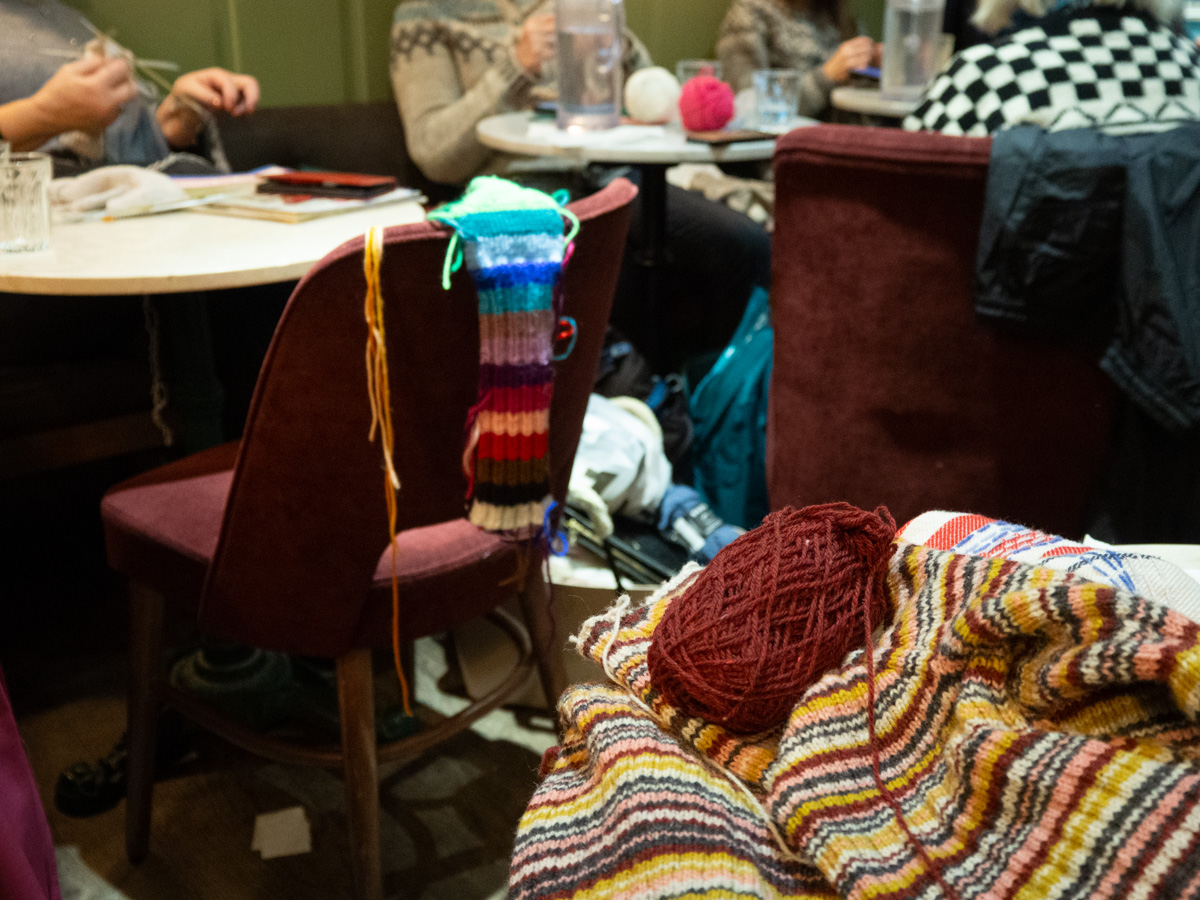
The knitting club has started up again after a break for Christmas and New Year. The Wednesday afternoon sessions are messy in the best sense. It’s crowded, there is barely any place to put your bag down, there are multiple conversations going on at the same time, and I know the names of maybe one fifth of the people. There’s no common project or theme like we sometimes have at the embroidery club – everyone just does their thing. Which is absolutely wonderful – I can be inspired by so many different ongoing projects. Today someone was wearing a cardigan based on a pattern that I’ve been thinking about knitting, and I could talk to them about it. Someone else turned out to have Estonian heritage and was knitting with a handspun yarn from Haapsalu. Another person had made felted slippers with the same yarn that I used for mine, but gotten them more felted than I managed, so we talked about what we did differently.

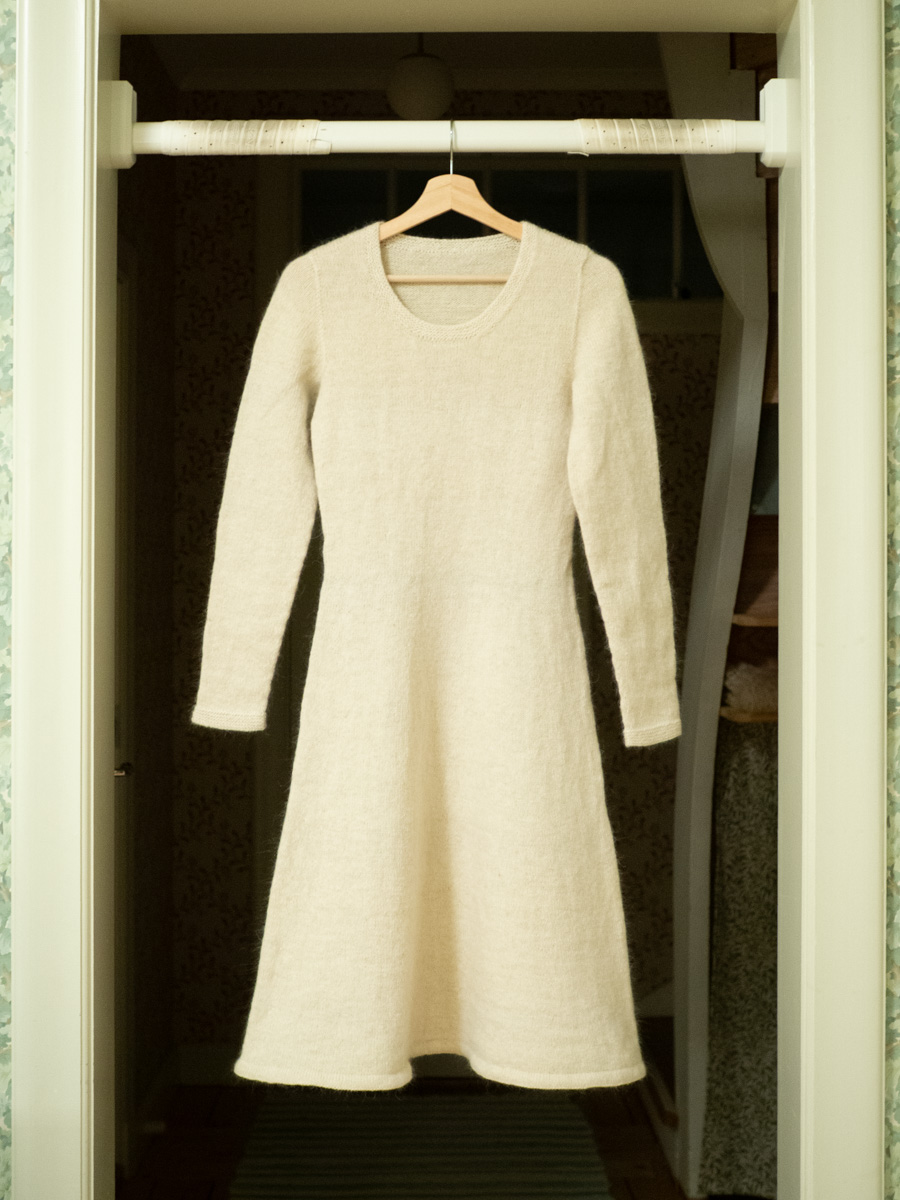
Here is the white dress in all its glory.

It came out just the way I had envisioned it. Fits well, looks great. By far the most elegant thing I have created.

And the most labour-intensive one. I tried to roughly estimate how many stitches I knit, and came up with about 133 000.

I am very grateful to my friend in Estonia who gave me the yarn that started this project. It’s a lovely fine vintage wool yarn, probably hand-spun and unbleached. I don’t think I could have found anything like it from a commercial source. I held it double with a silk mohair, and the end result is soft and woolly, but still drapes well.

This is no superwash merino yarn, the kind that almost doesn’t feel like wool, and it definitely feels woolly against my skin. Not so that bothers me – just so that I am aware of it. Like a gentle reminder that it is there, and it is wool. (I’m writing this several weeks later, after I’ve had a chance to wear it to a family Christmas party for several hours.)

I had planned to add embroidery to the dress, to make it look less stark. Now that I have it in front of me, I rather like it in all its simplicity. I think I’ll hold off on the embroidery for now.

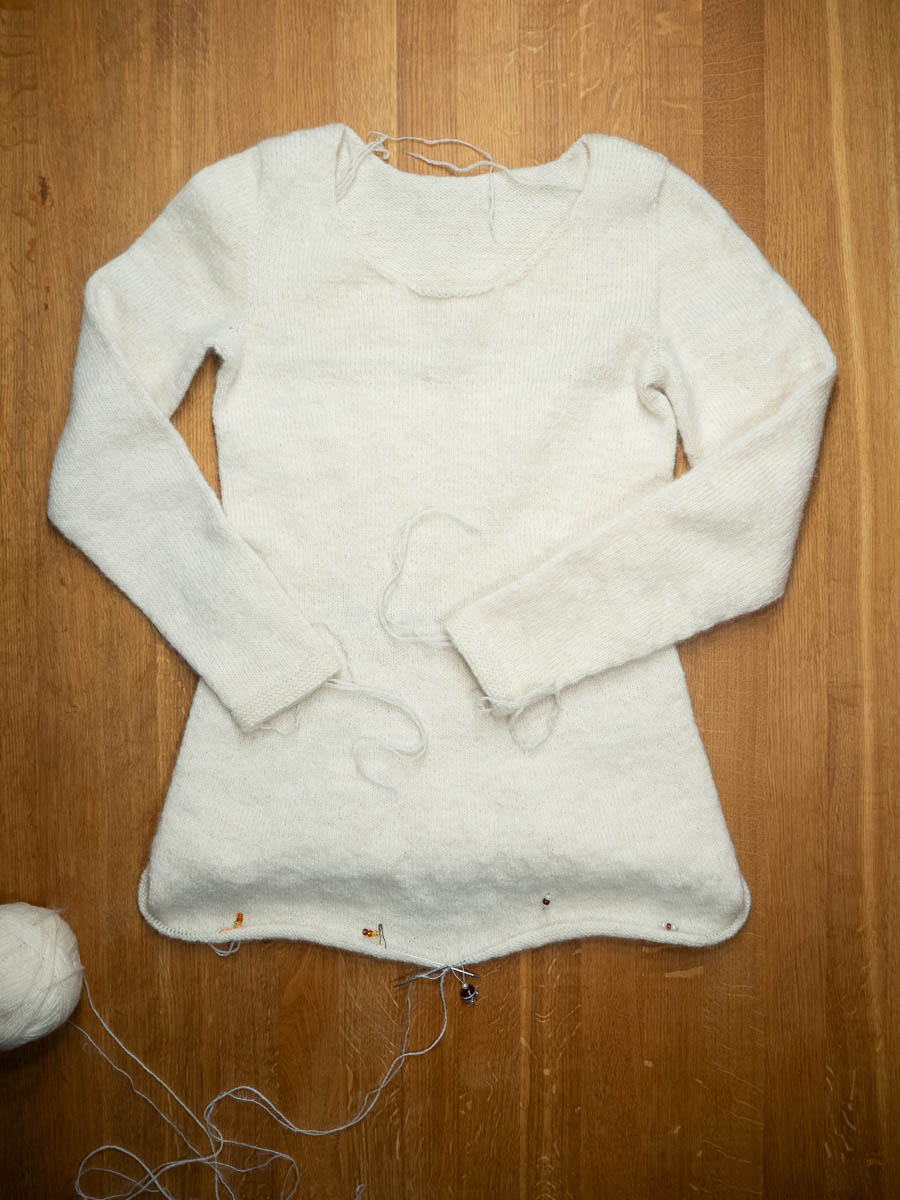
The knitted white dress is pretty much done! I set myself the goal of finishing it this year, and I’m going to make it. I only have the hem to finish now.

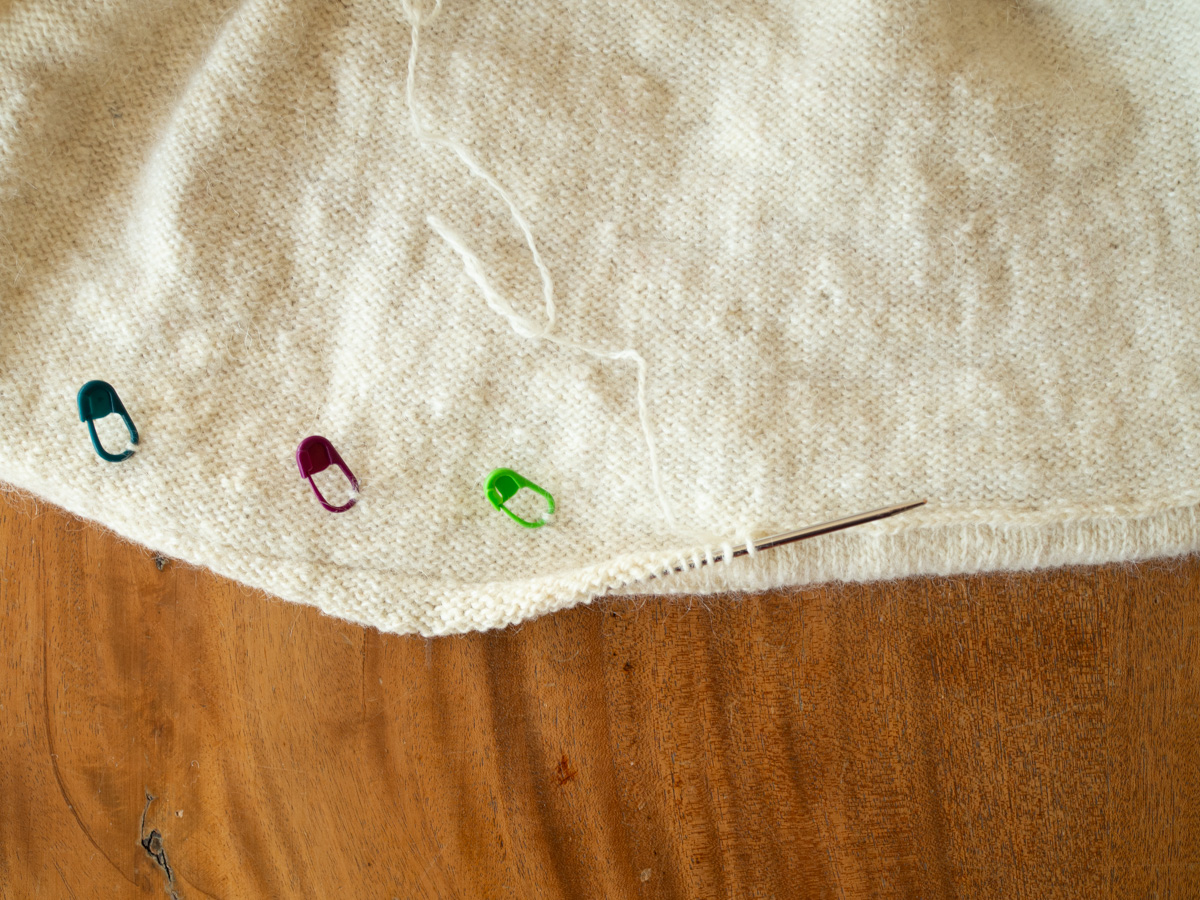
The skirt has curled up every time I’ve tried the dress on. It’s getting a folded hem and a lead weight cord (the kind that is often used for curtain hems) inside that to straighten it out.


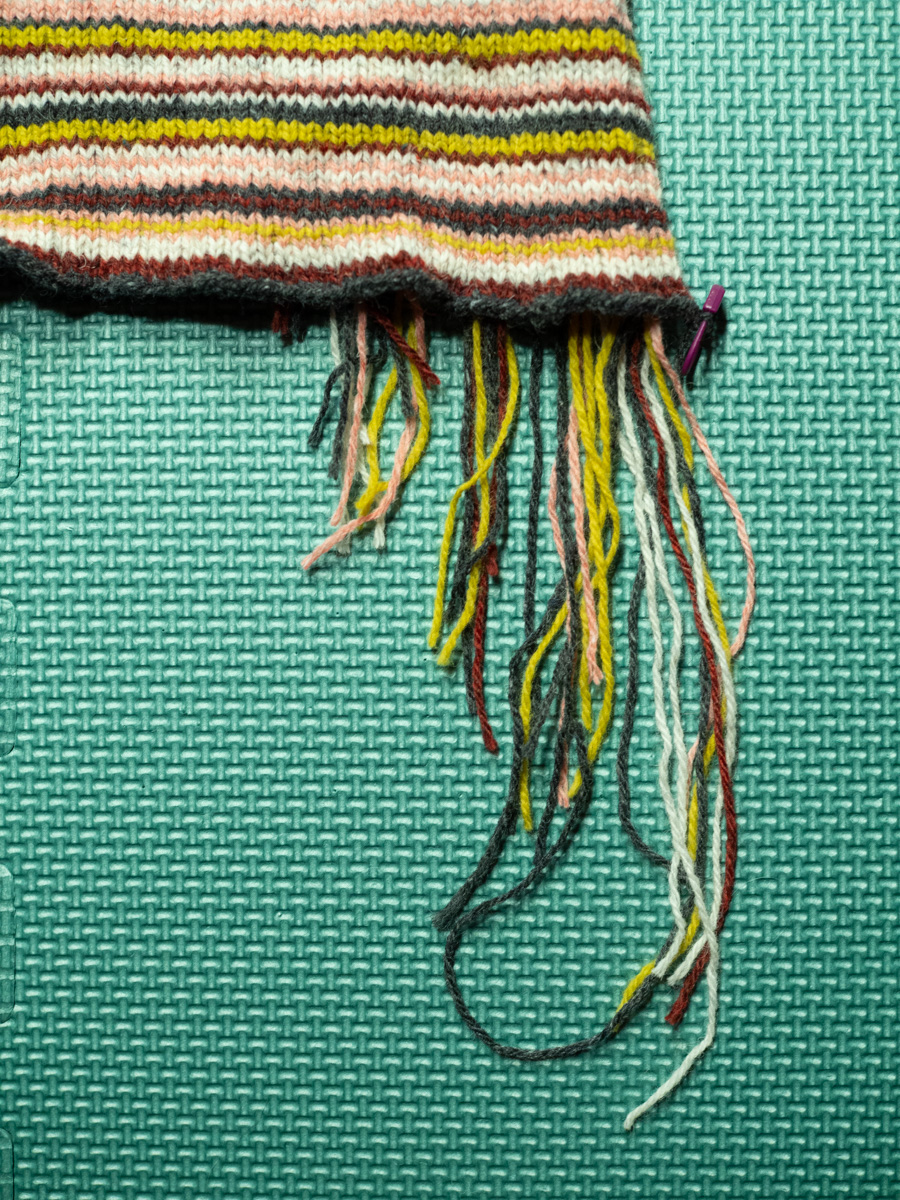
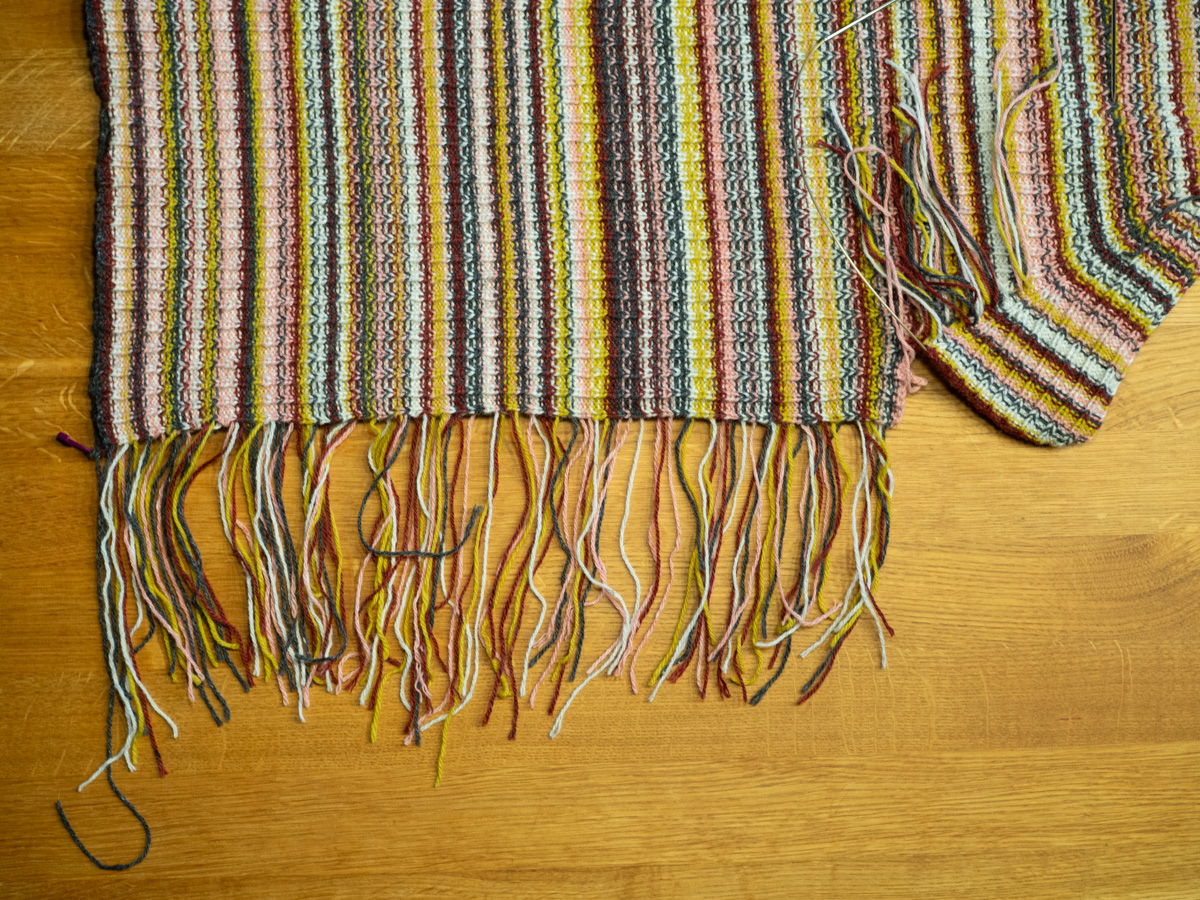
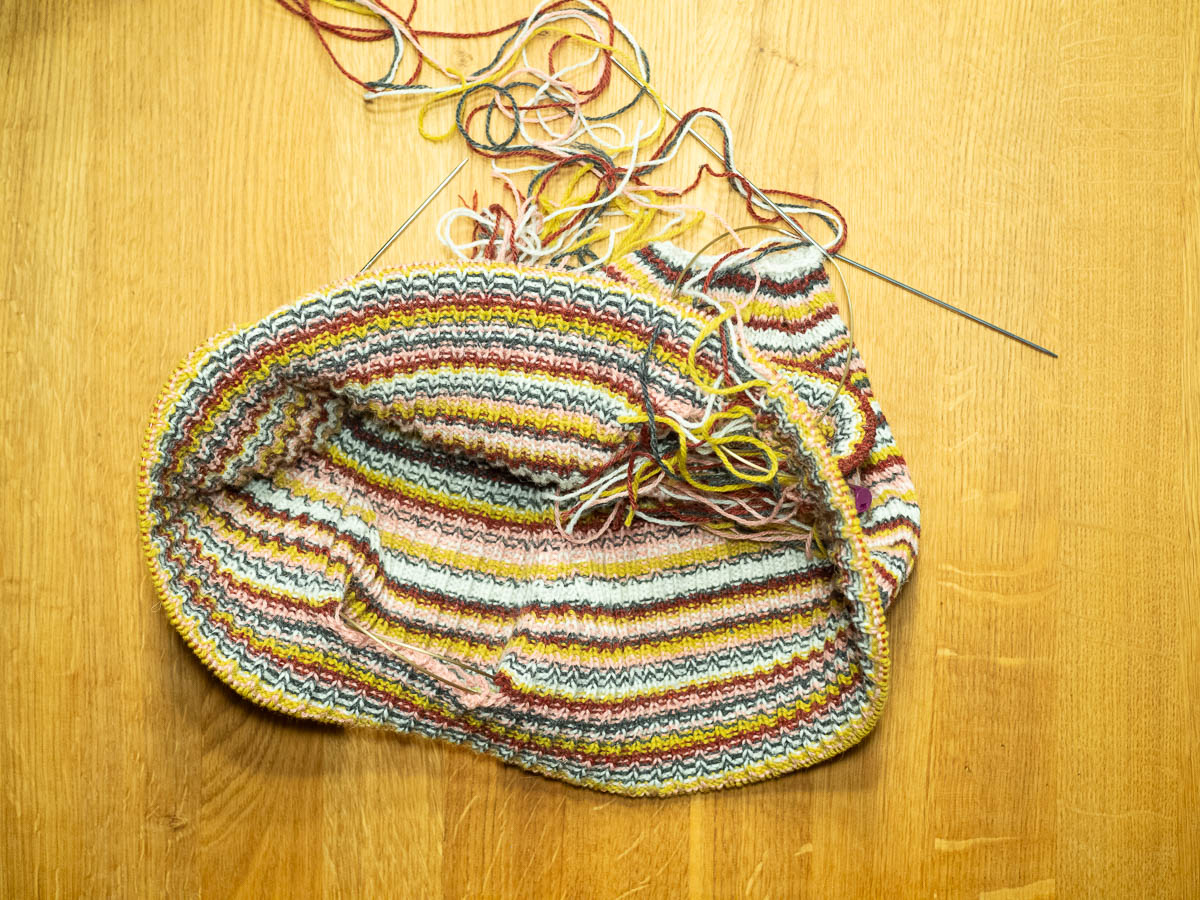
The body of the striped sweater is done. Now I need to do something about all the yarn ends.

I didn’t even cut the yarn for every stripe – only when it was unused for two centimetres or so. Even so, they are SO MANY. I regret that choice; I should have just lived with the long floats.

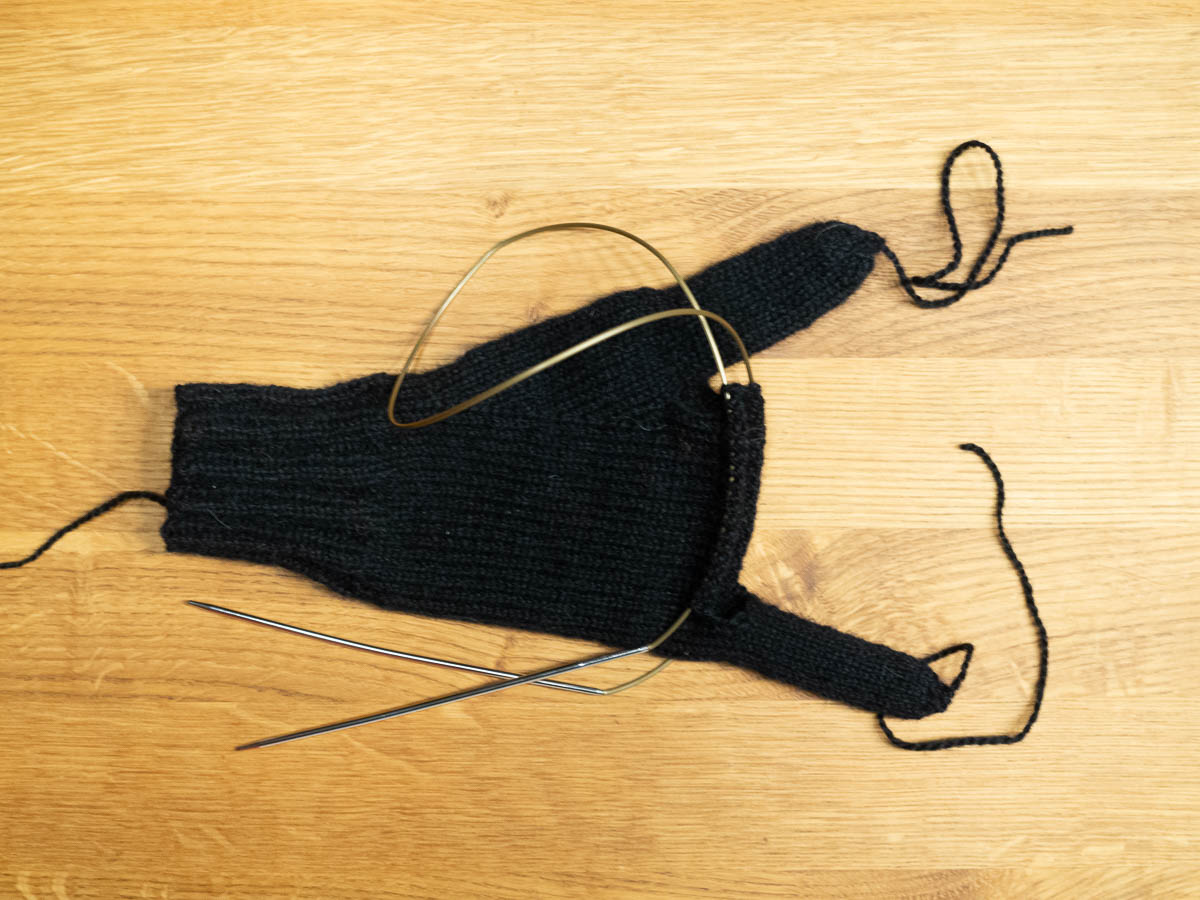
I really do not need any more socks, but I do need a background knitting project for meetings etc. Gloves are almost like socks, right? And I could do with a pair of basic, everyday knitted gloves. Something less fancy than the leather gloves I wear to town – more in style with a worn shell jacket than a fitted wool coat.

I don’t know what I was thinking. A glove is nothing like a sock! And a first glove, especially, is nothing like the 40th sock.

I can knit a sock with a standard fingering-weight sock yarn mostly without thinking. Cast on 60 stitches, knit 48 rows of ribbing for the leg, 18 rows of heel flap, etc etc. Adjust to 64/48/20 if the yarn is 420 m/hg instead of 400 m.

Knitting a glove, though? For the first time for this pair of hands with this particular yarn? It’s constant measuring, ripping up, picking up the stitches, re-knitting. The thumb took me two attempts, and the little finger took three. The polar opposite of mindless background knitting.

So now I have three ongoing knitting projects, and still nothing to bring with me to the office.

I’ve found myself a knitting club!

While I’ve been going to my embroidery club for close to three years now, I haven’t done anything similar with knitting – even though I knit a lot more than I embroider.

I tried a knitting café a couple of times but it was not my thing. People were sitting with those they came with, or otherwise knew, and they were not particularly interested in socializing with newcomers. I didn’t really get anything out of those sessions to be honest.

Today I went to a knitting club in Sundbyberg, to see what that was like. I’m a member of Sticka!, Sweden’s national knitting organization, and they publish a list of local clubs on their website.

I had such a wonderful time. The atmosphere was incredibly welcoming: people were helping each other, complimenting others’ work, sharing thoughts. The person in charge of the group was very focused on welcoming and including everyone. I think this may have been what was missing at the knitting café: someone to set the (right) tone.

Three hours passed in the blink of an eye. I will absolutely be going back. Maybe not on the weeks when the kids are here – I don’t want to miss so much of my time with them – but definitely on the other weeks.

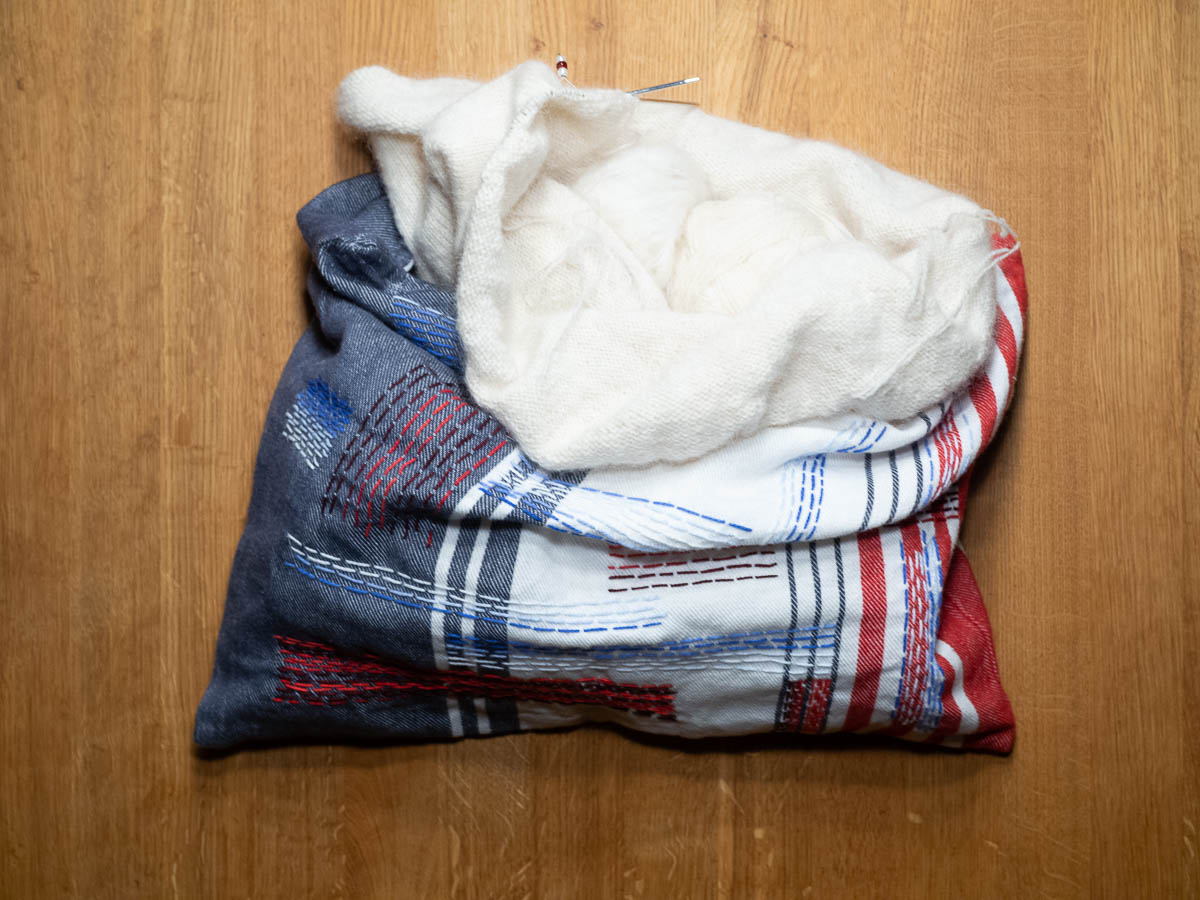
I wanted my knitting for my first time there to be something simple, so that I could focus on the social side of it. Which meant bringing the dress. It’s getting bulky and sprawly, but I’ve worked out a way to roll it up and stuff it into my pillowcase-turned-project-bag such a way that I can work on it without taking all of it out. The knitting gets protection, and the balls of yarn are kept contained.
The dress is starting to look dress-shaped.

It is also starting to get quite bulky, which makes it harder to work on. That’s the price I pay for a sleek silhouette. Some knitting patterns for dresses have you knit them in two parts – top and bottom – but the dress I pictured in my head was all in one piece, and I’m sticking to that plan.

On the plus side (ha!), the number of stitches has now increased to the point where they fill the entire cable and I don’t need to use a magic loop any more.

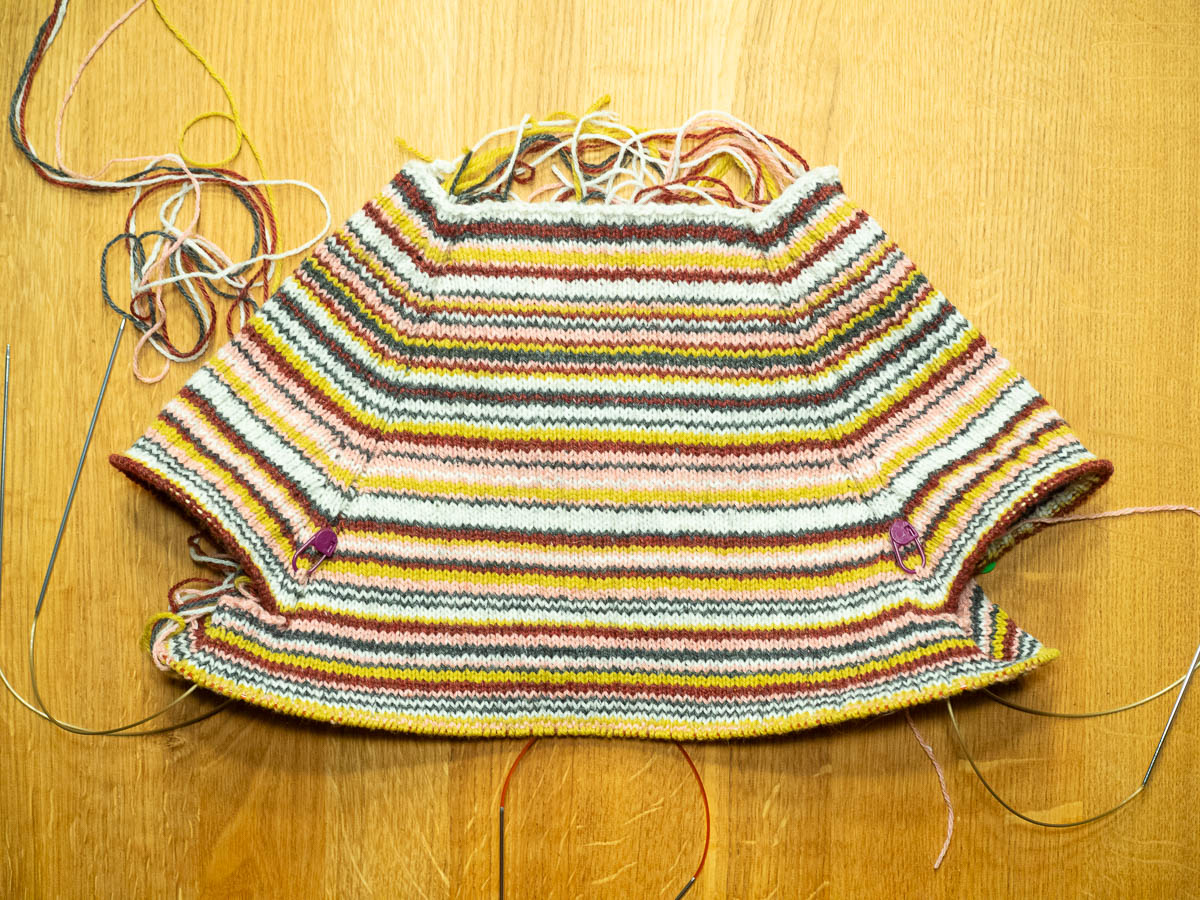
I’m making a sweater out of (five of the) six recycled yarns. A ribbed raglan sweater in crazy stripes.

This is not the kind of thing I normally wear. There is nothing in my wardrobe even remotely like it. I have been doubting my design decisions about this thing all the way. Then again, I had strong doubts about the last crazy sweater I made, and it still ended up among my favourites.

Even if it does end up not worn much, it’s been a useful learning experience. I’m experimenting with different rates of raglan decreases for the shoulder section, which I haven’t done before. You can do all the calculating and measuring you want, but the only way to really see if the numbers work out, is to knit the thing.

It’s also been surprisingly fun to knit. For the stripes, I bought a commercial pattern (Free Spirit) to follow, because fiddling around with those did not sound like an enjoyable task. This pattern does a good job of mixing up the colours in clever ways, much better than any attempt of mine would have been. It doesn’t try to keep all five going all the time – it focuses on, say, three of them for about eight or ten rows, then swaps in one of the others, etc. It’s still an awful lot of colour changes, and the inside is a mess of yarn ends and needle ends, but there won’t be an end to weave in for every single row.

The 3×1 ribbing is a constant mental challenge. I am so used to 2×2 ribbing for sock legs that I revert to that as soon as I lose focus. I can watch or listen to something while knitting this, but it’s far from mindless knitting.