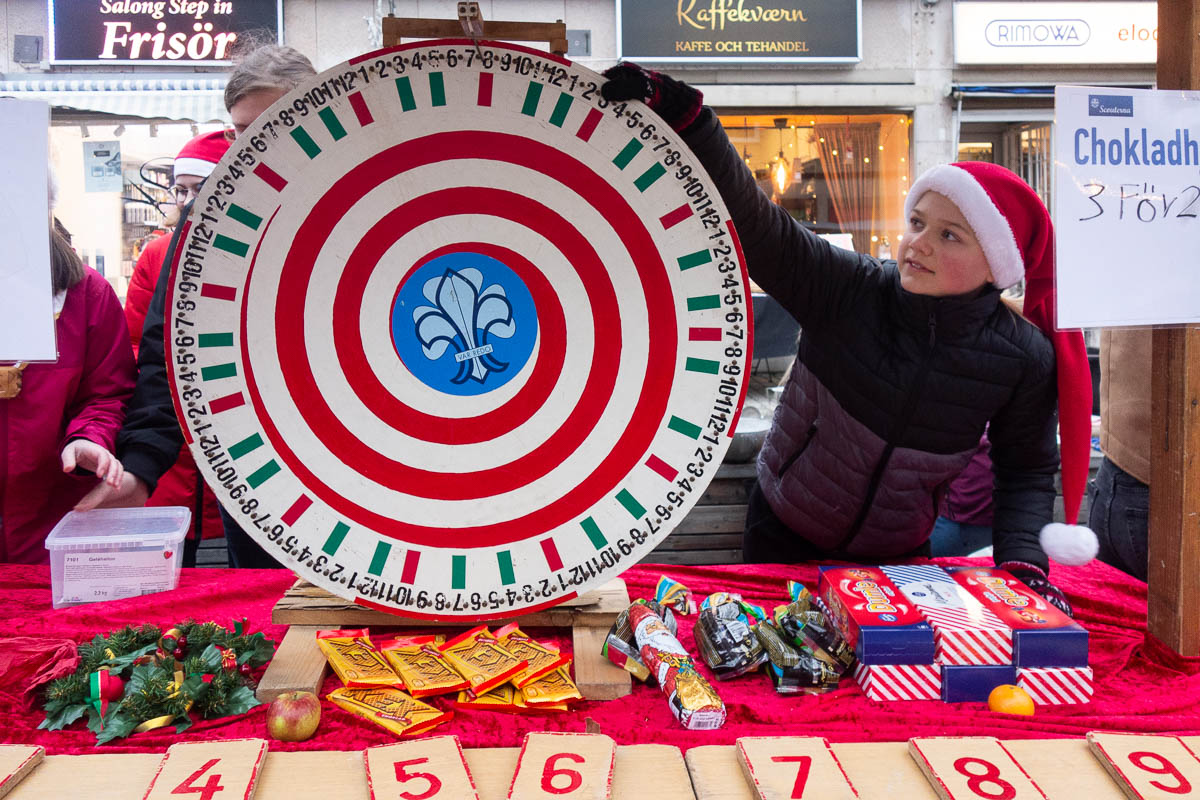
It’s the day of the annual Christmas market in Spånga. It’s mostly filled with school classes and sports clubs selling homemade sweets and cakes, and some stands with crafts. The Spånga scout group is out in force with their traditional chocolate wheel of fortune, and their gingerbread house lottery. Ingrid’s group is manning the chocolate wheel again.
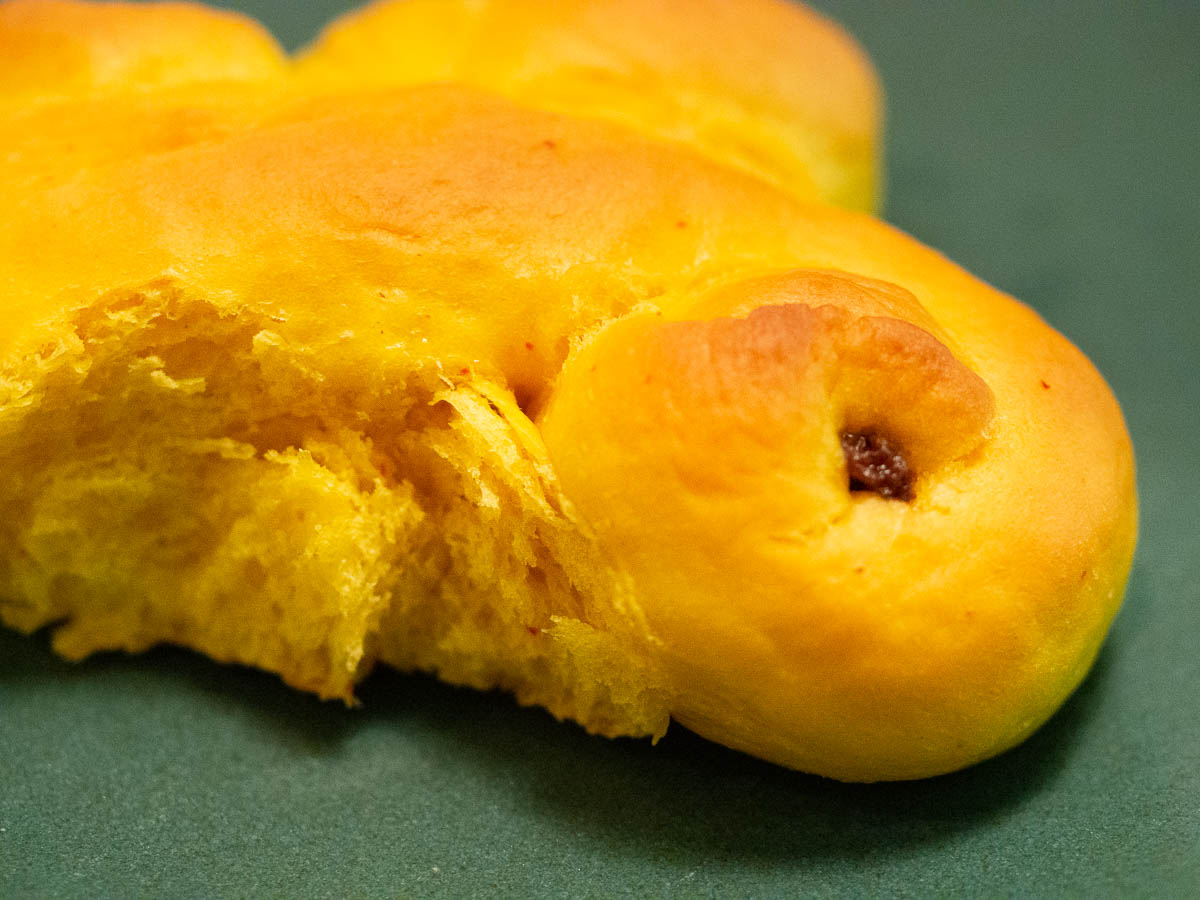
Our lussebulle-making sessions tend to be proper marathons. Eric makes a giant heap of dough, and then we roll a giant amount of buns, and fill the freezer with enough lussebullar to last us most of the Christmas season.
This time we made a smaller batch. The freezer is not so satisfyingly full as it usually is, but on the other hand the baking went much faster. And I think we all eat less sweets and sugar we used to (possibly with the exception of Adrian) so they probably won’t run as fast as they would have, even a year ago.
I tried store-bought lussebullar a week ago, and they barely tasted like anything. These home-made ones were better, but the saffron flavour wasn’t as strong as I remembered it. The colour looks good, but the taste is just kind of a bit weak. Either it’s nostalgia speaking, and the snow was always deeper when I was young, and the saffron buns more saffron-y, and the sun sunnier… or maybe we got lower quality saffron this year.

The company Christmas party this year took place at Såstaholm. It’s a place with a story, and the theatre theme ran strong through the entire interior. There were posters, photos, rooms named after recipients of their annual prize to young actors etc.
But better than all that was their collection of theatre costumes. Two large rooms in the basement were full of real, “retired” costumes from the Royal Opera and the Royal Dramatic Theatre. After we’d all eaten the traditional julbord, while some people went to the bar for drinks, others went downstairs to play dress-up. Later there were pirates and bishops and counts in capes in the crowd hanging out at the bar.

I found this amazing, wonderful skirt: black, floor length, wide and swishy, with several different luxurious fabrics, all shimmering and lacy. Underneath and between the visible layers there were hidden swathes of yet more fabric. With all its layers upon layers of cloth, the skirt was far heavier than my thick winter coat!
Looking inside I found one part that was like a thick tail, a rope of fabric tied together with string. It was bunched up at the top but the rest simply hung down, longer than the front of the skirt. I think it was supposed to add some fullness at the back, and structure and heaviness to the “train”. When I walked, the tail trailed behind me, invisibly under the skirt, and just sort of made the visible fabric fall differently. Quite an interesting construction detail, I thought.
I kind of wished I could take the skirt home and have it forever. But then again it was so supremely impractical that I would hardly ever wear it, not even for parties. That thing would be quite impossible to wear outside the house, but also nearly impossible to wear among other people. (Among modern people, that is, who are unused to walking among ladies with trailing skirts. I guess people used to manage, two hundred years ago.) Even as I was trying it on, someone already stepped on the fringe of the train. But still…

There were a few other skirts and dresses and corsets that I wanted to try, but couldn’t fit into. Here’s one from The Nutcracker that seems to have been used in six seasons, from 1984 to 1991. The label says “vita par” so I guess it was used for some “white pair” dance.
I’m not exactly large, but the ballerinas must be truly tiny to fit into those things! I know that they are super slim, so I wasn’t entirely surprised when the skirt waists were way to narrow for me. But even the corset tops were far too small. I don’t understand how they can have rib cages as narrow as that.
Maybe they were teenagers when they wore it, I thought. But I looked up one of the dancers (the things you can do with Google nowadays!) and, no, she was 24.
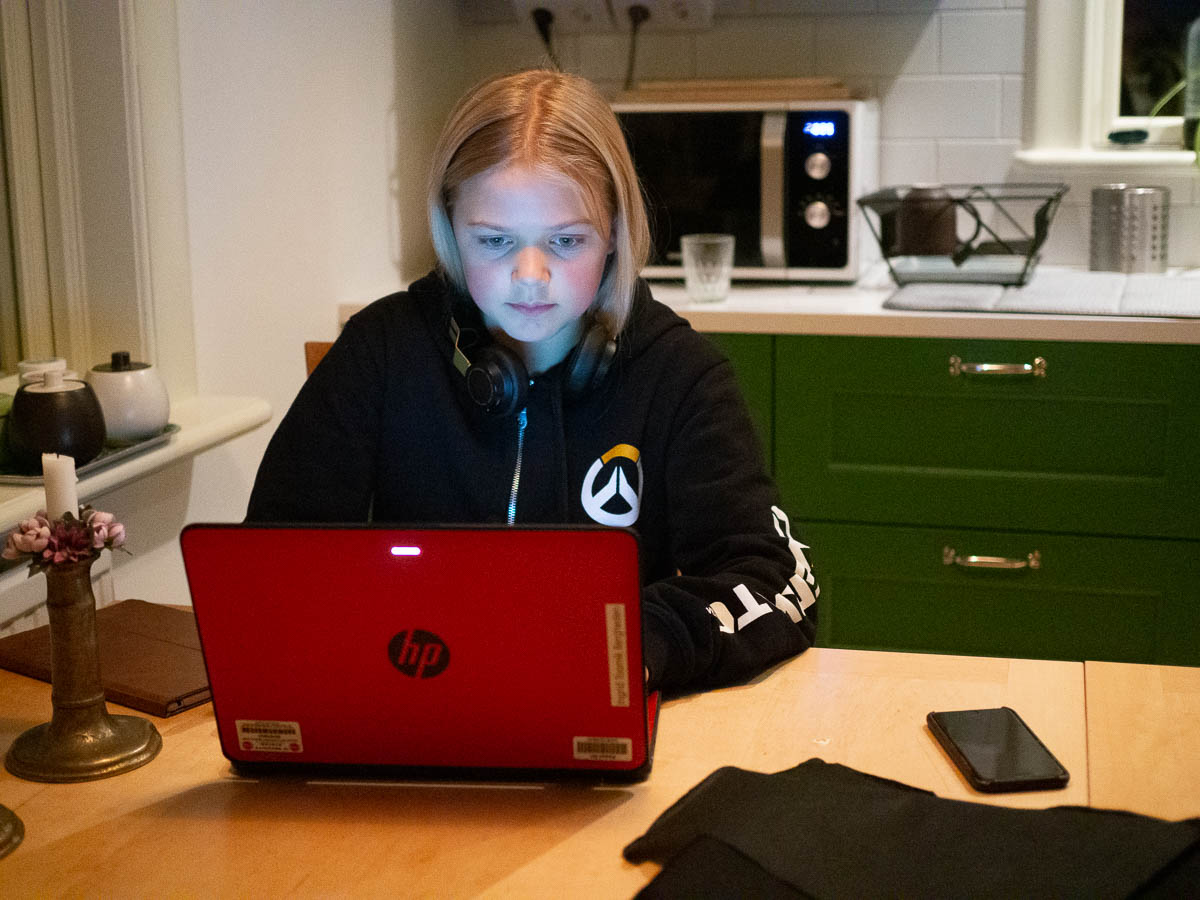
We have a teenager in the house. Ingrid just turned thirteen. I’m still trying to get used to this idea.
Ingrid’s birthday presents weren’t too photogenic. (Here she is doing homework instead.) The main one was a ticket to Hamilton the musical, in London, next weekend. She’s been quasi-obsessed with Hamilton for months, and almost knocked over the lights on the table as she jumped with happiness when she opened that present.
By the way, her class gets no specific homework as such. They just have tests and quizzes every week, so her study schedule is based on preparing for each such test. She likes the logical subjects – chemistry, physics, even ethics which they do as part of social studies – where stuyding means learning concepts and understanding how they relate to each other, and test questions can then be answered to a great extent by logical thinking. She’s not so fond of subjects where she just has to learn a bunch of random facts, like French spelling, or when the topic in social studies was the Jewish religion.
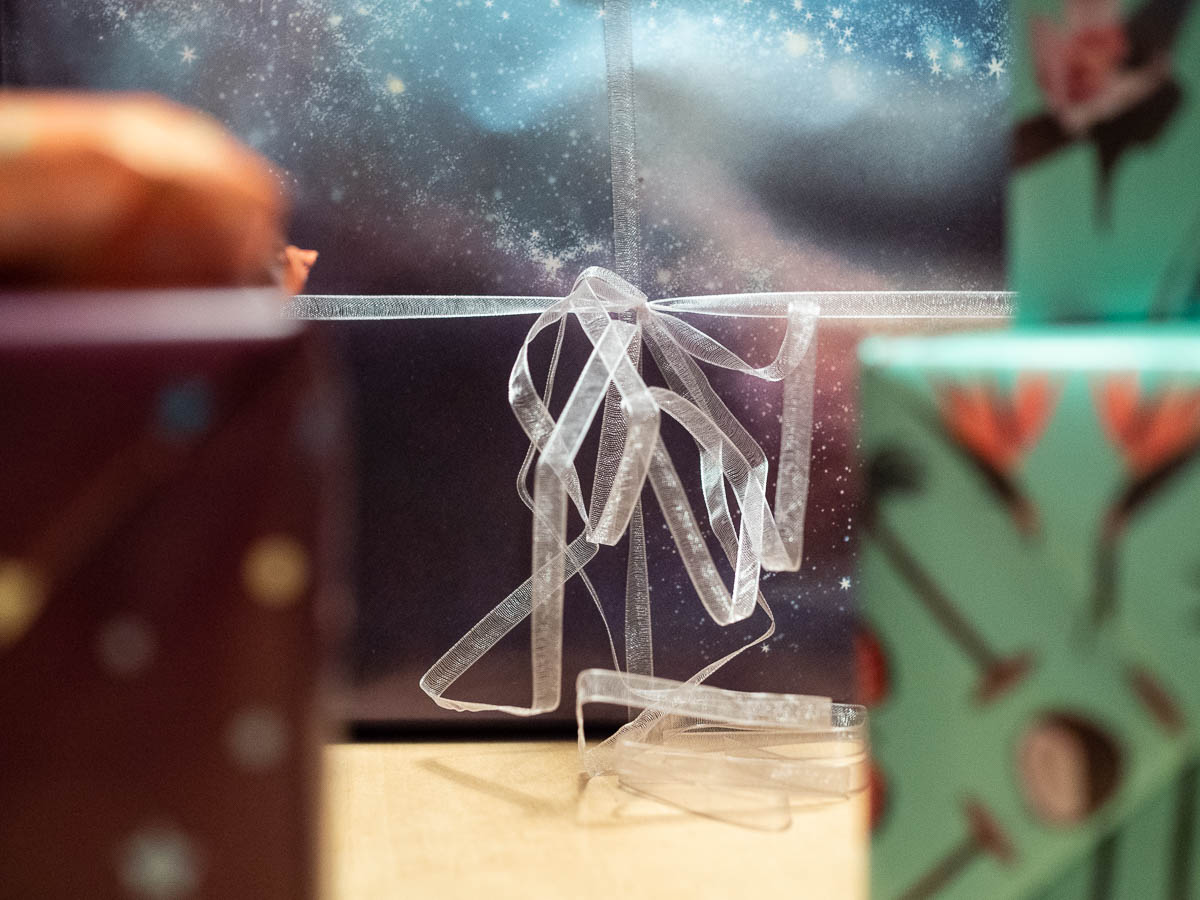
Tomorrow is Adrian’s birthday. He’s been incredibly excited about it and has been counting down days since it was more than 40 days away.
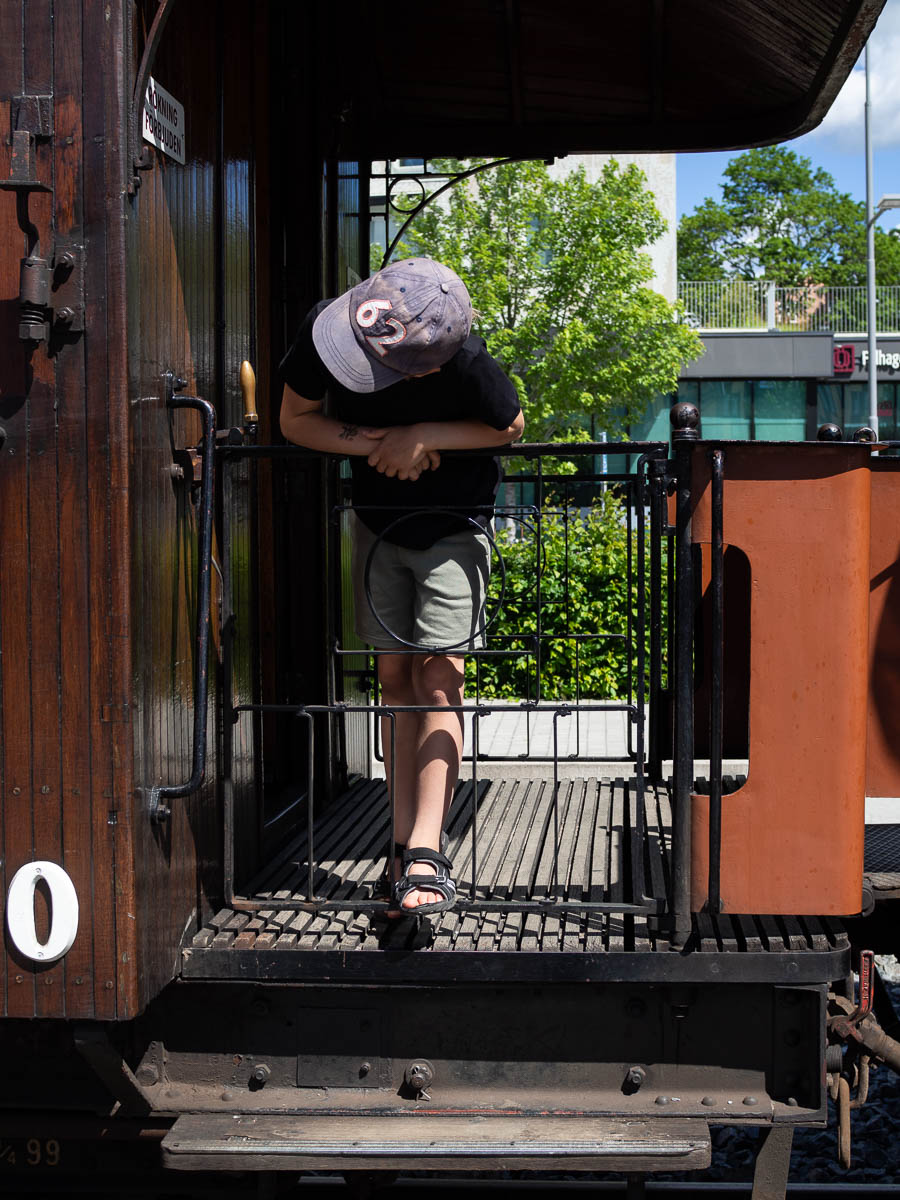
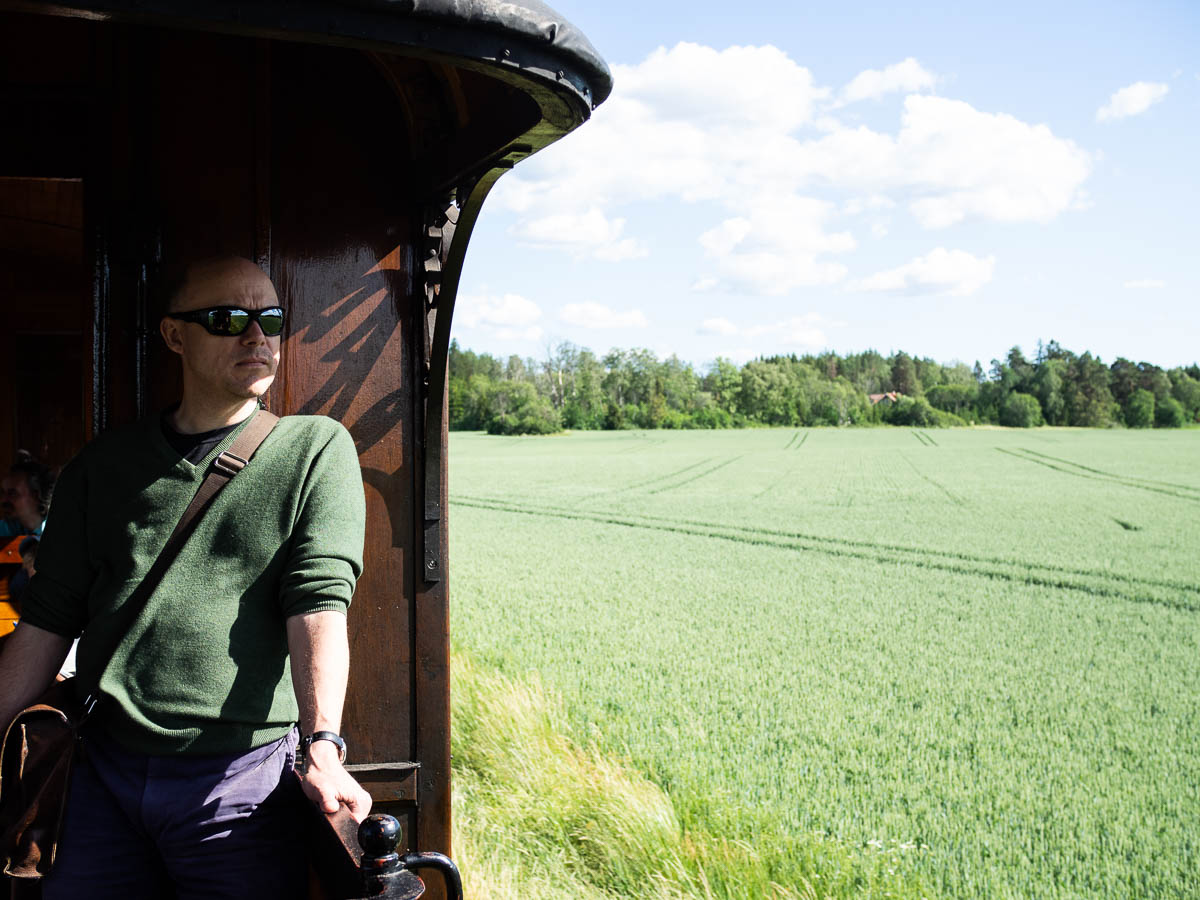
Midsummer. We usually celebrate with my mum, somewhere around Uppsala. (Christmas and New Year’s are at our place, Easter and Midsummer usually at hers.) There’s a handful of places that we alternate between. This year we opted for a ride on an old steam train (Lennakatten) to Marielund, where there is a traditional Midsummer’s picnic. None of us are interested in the singing or dancing around the maypole, but I like the train ride, and a picnic is never wrong.
This year we shared the train with a TV crew from the BBC who were filming for a documentary series called something like “Great train rides of Europe”. I’m going to have to look up that episode when it becomes available, to see what they made of it.
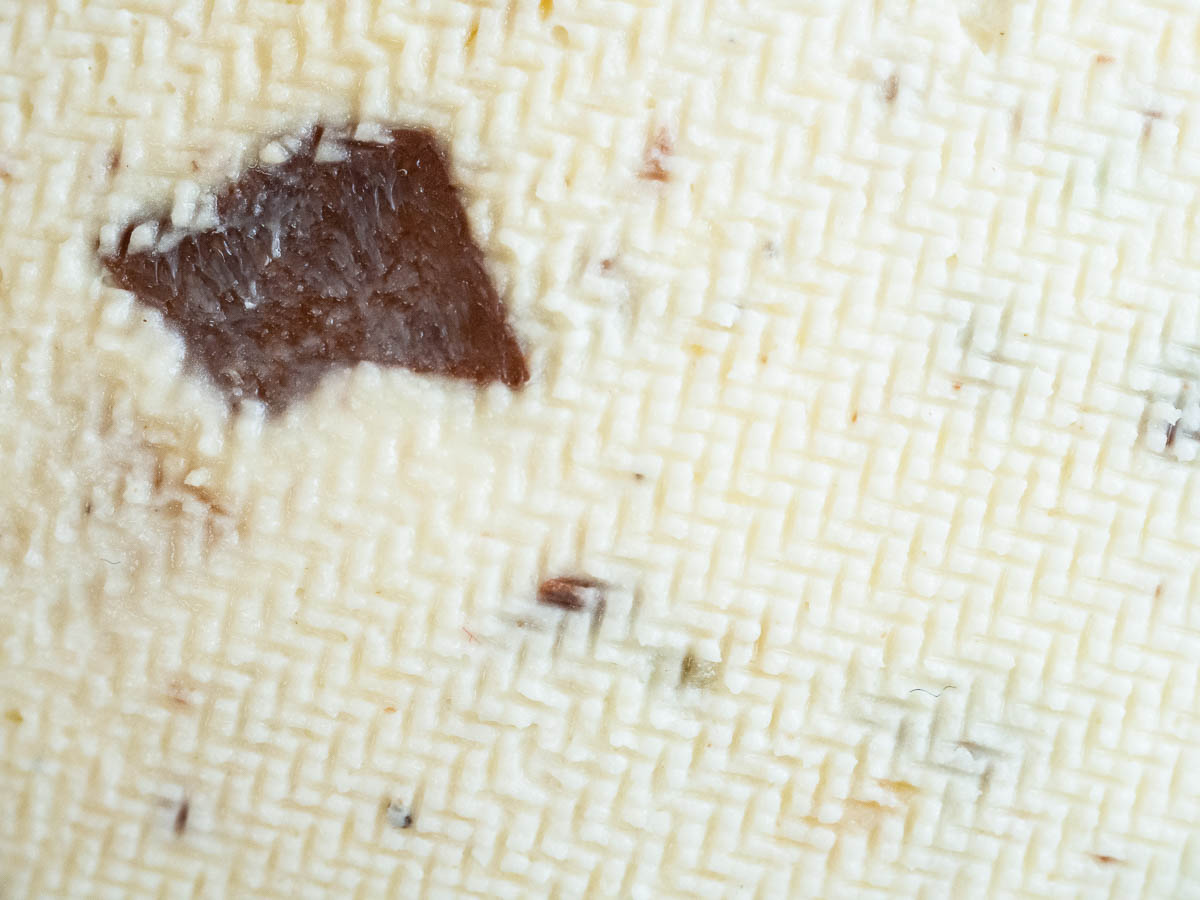
Pasha is an Estonian Easter dessert of Russian origin. When I was a child, we always had pasha for Easter – it was as much a tradition as eggs. Somehow we lost that tradition for many years, but now we’ve picked it up again. We usually go to Uppsala to my mum’s for Easter so she makes the pasha, but recently we’ve concluded that one or two days of pasha just isn’t enough, so we made another batch when we got back home.
The bulk of it is sweetened quark, fluffed up by adding whipped cream, but much of the flavour and texture comes from all the other ingredients: lemon peel, chopped nuts, finely chopped chocolate, raisins, candied orange peel etc. You mix it all up, spoon it into a mould, and then let it stand for a day to drain out some of the liquid. After a day you turn the finished pasha out of the mould.
I have a lovely hand-made wooden pasha mould with decorative designs cut into it. Did I take a photo of the beautiful pasha with relief patterns that came out of that mould? No… because we attacked it like a horde of hungry locusts, and before I could think of bringing the camera, there was nothing left to photograph. This photo is of the other pasha, made of the mixture that didn’t fit in the nice mould and that I put in a sieve instead. The photo doesn’t do it justice, although to be honest, pasha does taste better than it looks in real life as well.
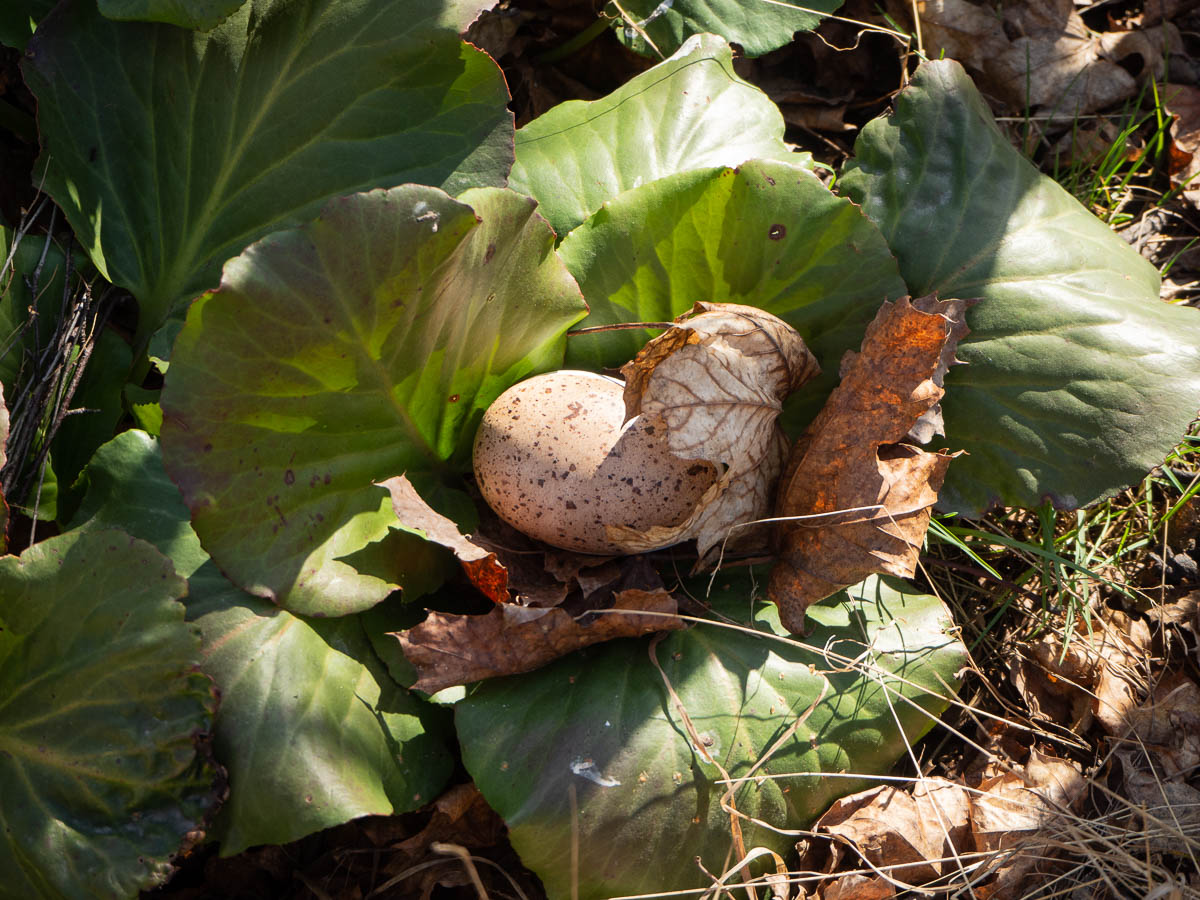
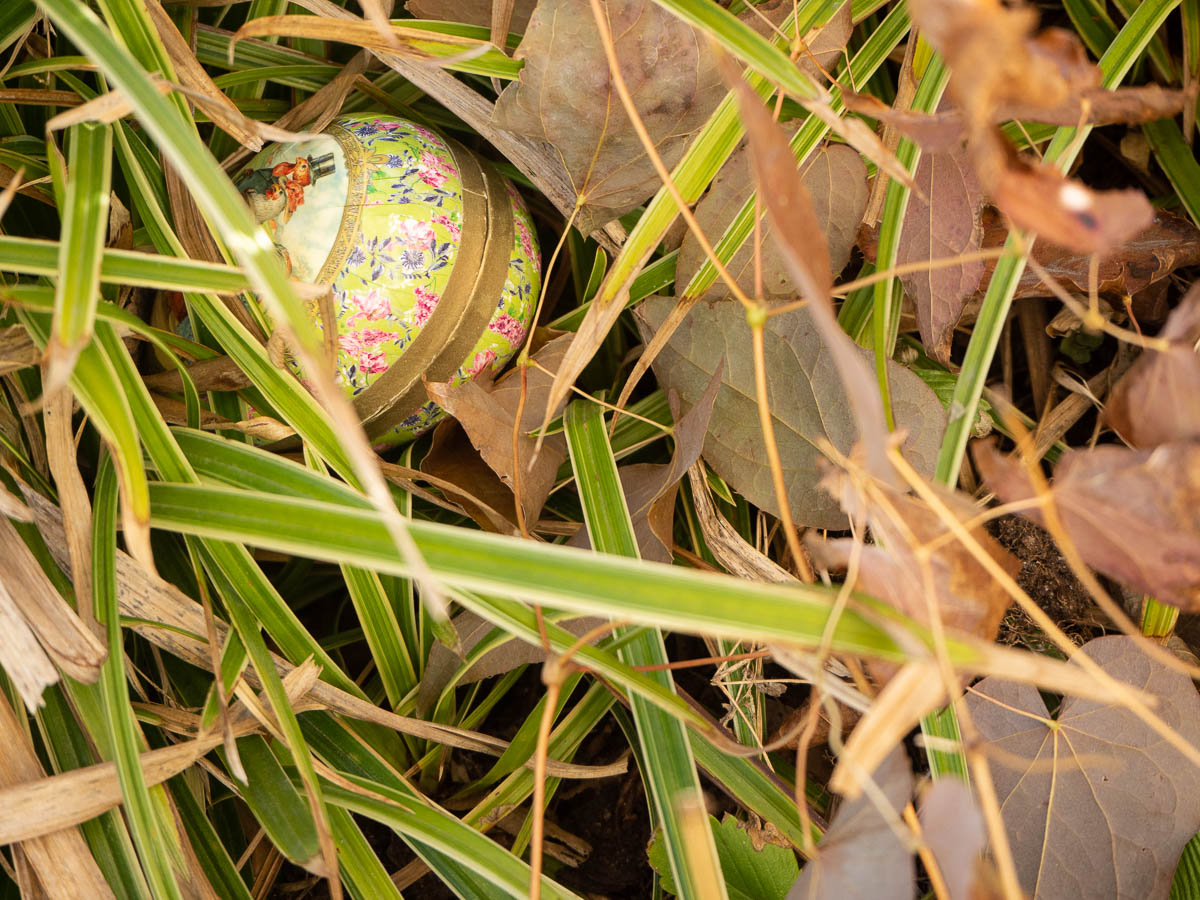
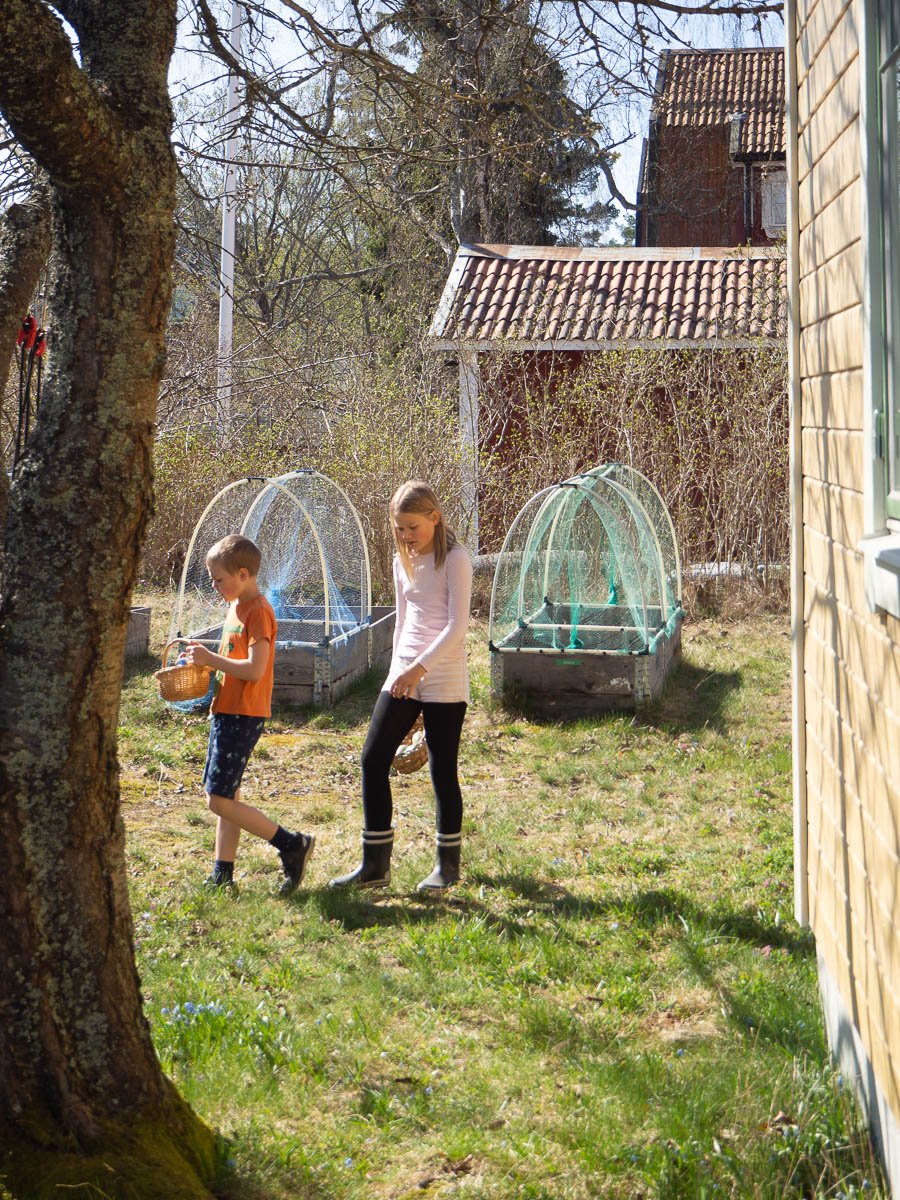
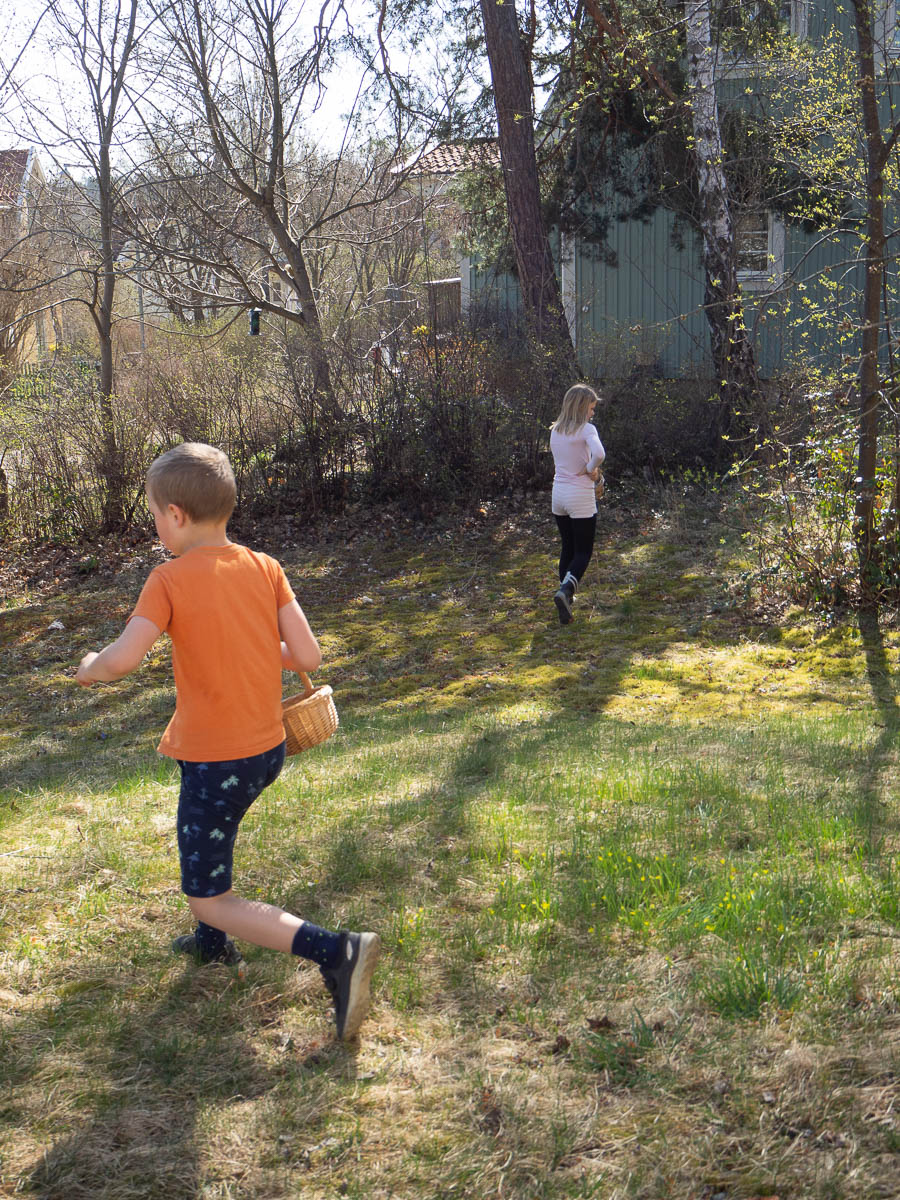
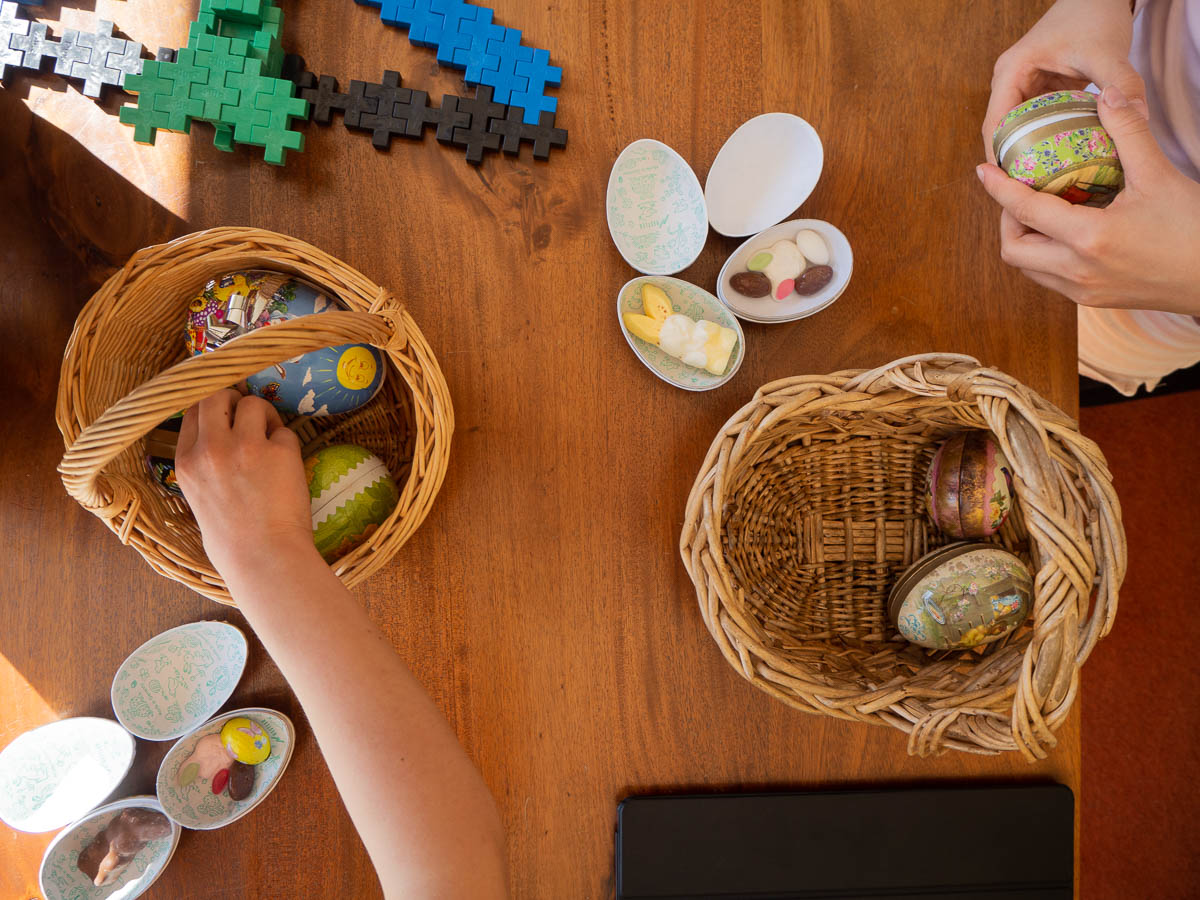
Our traditional Easter egg hunt.
By now the sweets in the eggs aren’t that important – the hunt itself is what the kids look forward to. I’d forgotten to buy candy to fill the eggs with. Luckily we had some leftover candy in the cupboard that Ingrid distributed in the eggs.
Ingrid hid Adrian’s eggs, I hid Ingrid’s eggs, and then the hunt began.
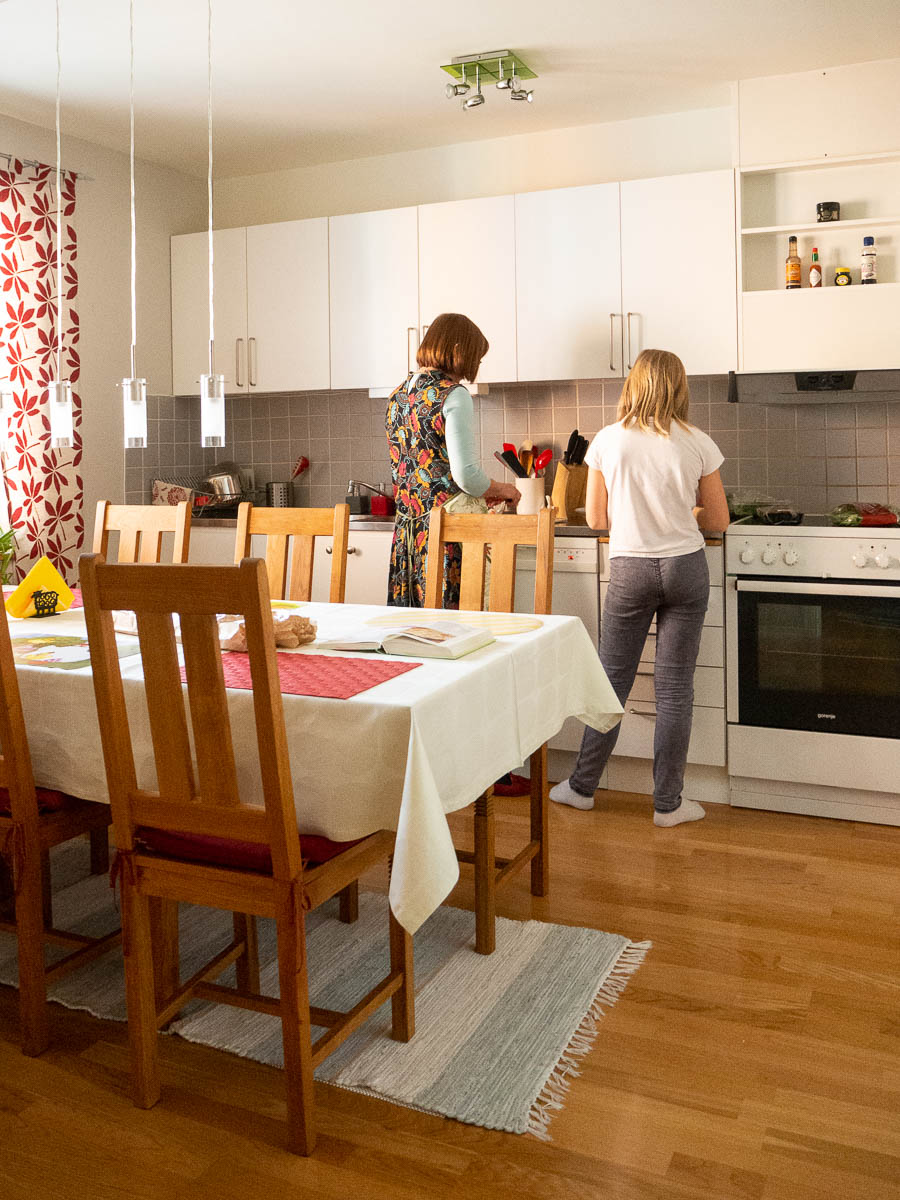
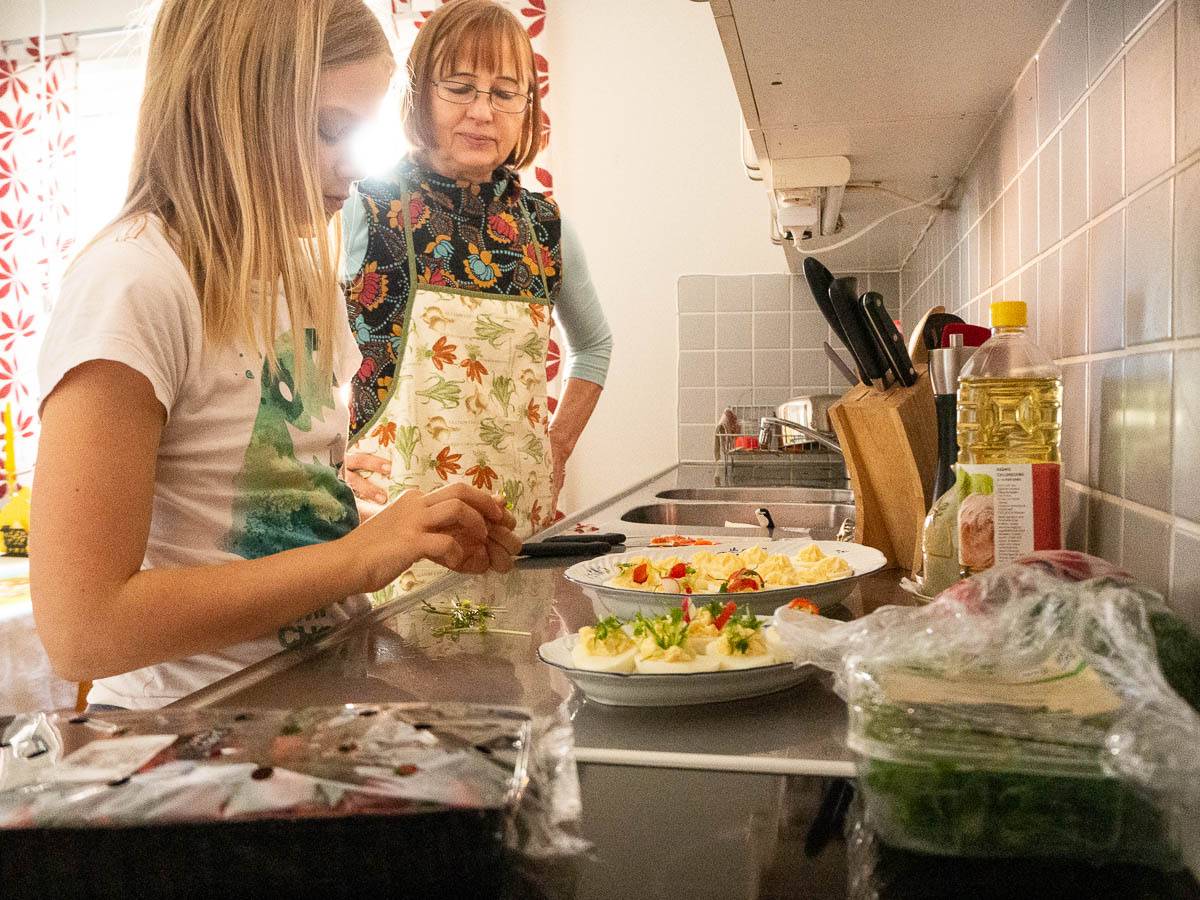
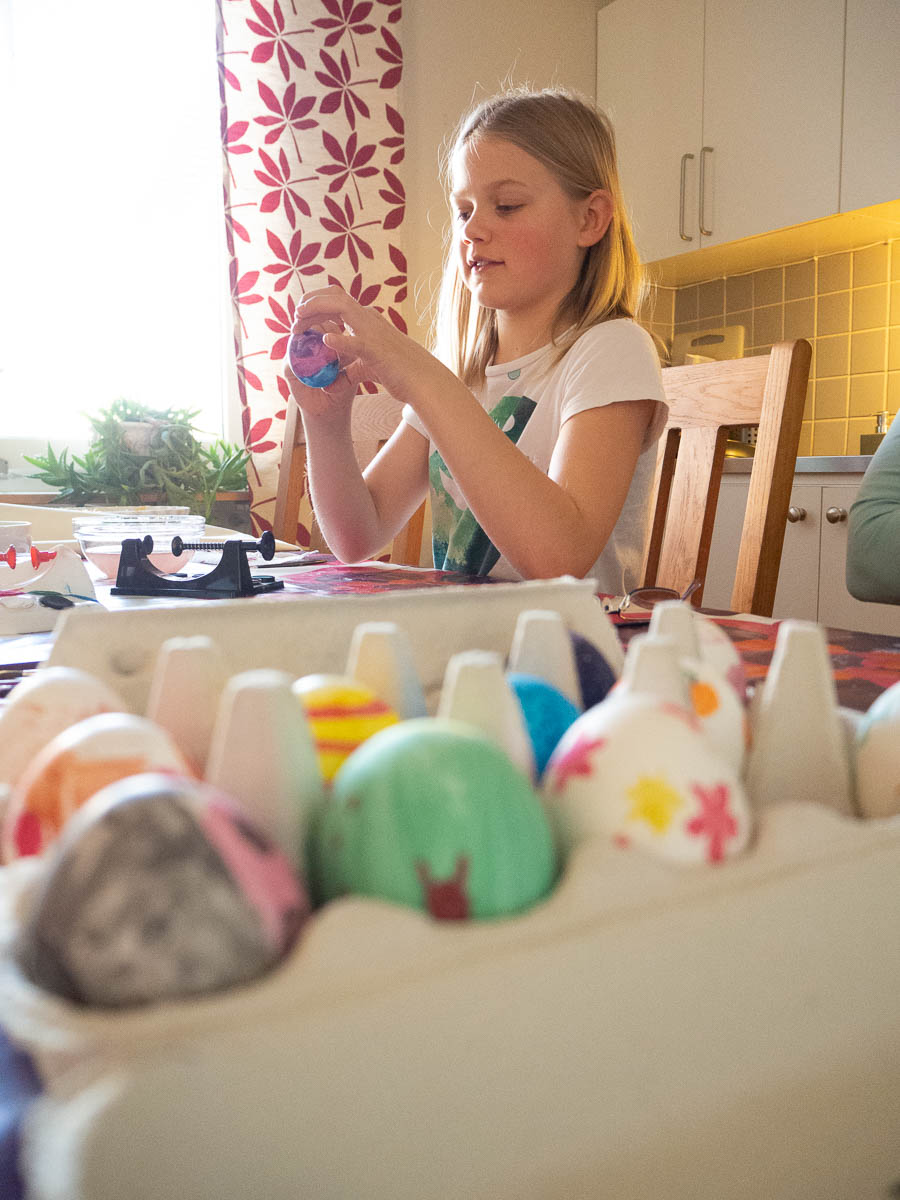
Easter in Uppsala. Ingrid and my mum bonded over cooking, of which we did a lot. And we painted plenty of eggs.
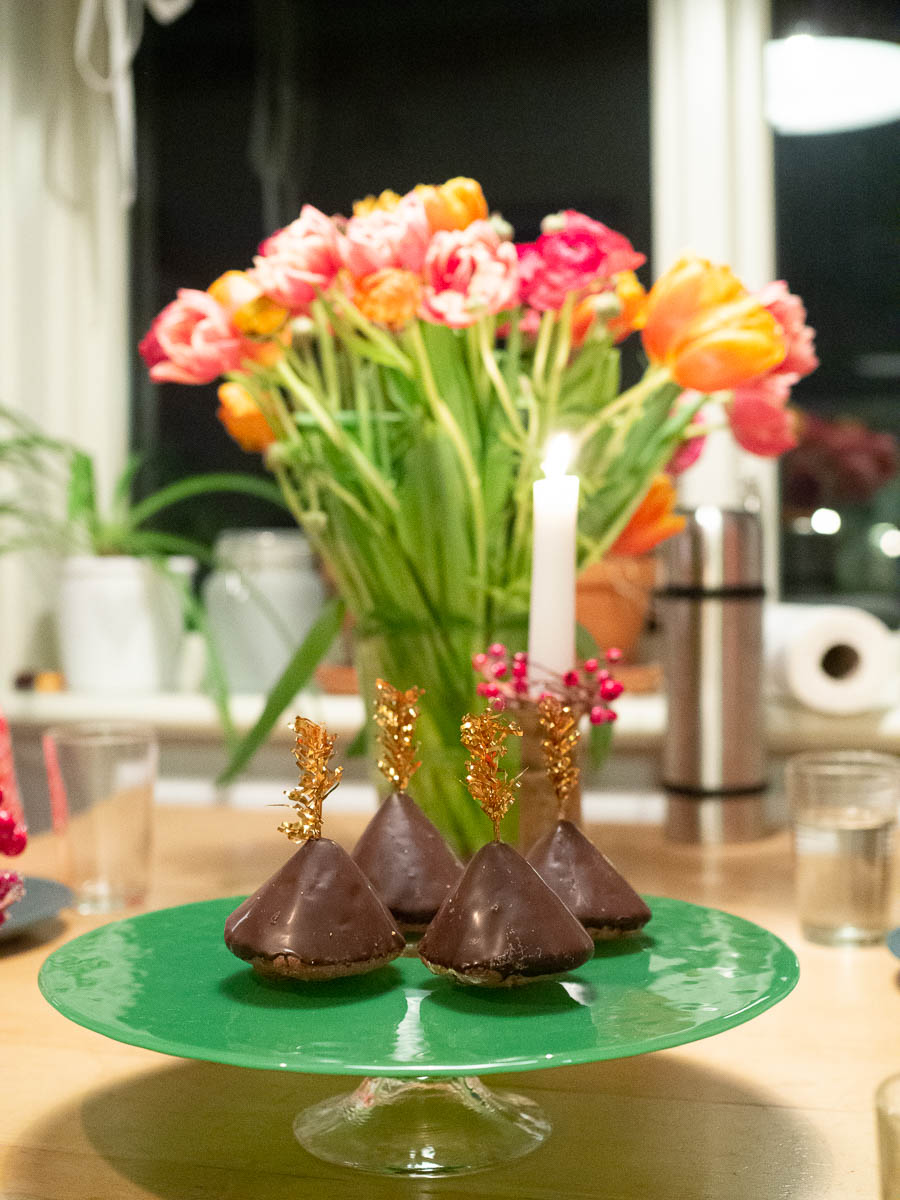
Eric was away travelling for work on his actual birthday, so we had a small celebration today. He cares as much about birthdays as I do, which is very little indeed. But we did have cake of sorts, and flowers and a candle.
| « Older posts | Newer posts » |
