I have been on a reading binge, neglecting just about everything I can neglect without feeling really, really bad about it – including workouts, blogging and laundry.

I still like paper books – old dog, new tricks, all that – but I am gradually getting more comfortable with the Kindle reader. It no longer feels like second best. Binge reading, for example, is an area where the Kindle beats paper books hands down. I saw a book recommendation, downloaded a sample, and bought the book within an hour. When I finished that book and wanted more, a few taps got me the next one, and then the next one after that. No searching, no waiting for days for a delivery.

The Kindle also handles better with one hand, for example when I’m reading lying down and need the other hand to support my head. Or with no hands at all, when I balance the book on my thighs because my hands are busy knitting. Some books don’t deserve my full attention but I still want to finish them. Can’t do that with a paper book. (Am I still “handling” the book when no hands are involved?)


I read differently with the Kindle.

It’s harder to skim backwards and forwards. With a paper book I can easily flip back a few chapters to look up some detail. I can usually remember roughly how far back that part was – how many centimetres back in the book. With the Kindle I have much less context about where I am. The e-reader can show some metrics for this – how many percent I’ve read, for example. But I would never have an intuitive feeling for how many percent or pages I’d have to scroll backwards to get back to something I’ve already read. So I’m less likely to do so.

Recently I turned those percentages off, anyway, so that they wouldn’t constantly remind me how much I have left of the book. You can’t do that with a physical book. The constantly diminishing amount of pages to read is always visible and tangible.

I’m more likely to re-read a page with the Kindle. Sometimes when the action is exciting and I just want to see what happens next, I only skim parts of the page. With the Kindle, I am more likely to notice this and read the page one more time, more slowly and carefully, before flipping to the next page. There’s nothing stopping me from doing the same with a paper book, but it just doesn’t happen. I think it might be because the Kindle page is less dense and contains less text, so one page is just the right amount of text to re-read. Paper book pages are denser and have too much text – re-reading an entire page would be too much.


When I’m a week behind with my blogging, as I am right now, catching up looks hard and blogging becomes a slightly icky task. I want blogging to be fun rather than icky, so I’ll leave the gap for now and catch up later. You’ll have to check below this post to see if and when I succeed.

Plus I now have a whole virtual pile of books that I want to review. The binge was most enjoyable but it’s a good thing that I ran out of books because otherwise I’d never get anything else done.
The Steerswomen are repositories of knowledge. They wander the world, wherever their curiosity leads them, learning things and sharing their knowledge with everyone else. They are sworn to answer any question from anyone, and in return, everyone is expected to answer theirs. Whoever doesn’t is banned and no Steerswoman will ever answer their questions again.

Rowan, the titular Steerswoman, is curious about a particular kind of rare blue jewel. She traces the jewels back to a particular area, and notices similarities in where and how the jewels are found. But someone powerful seems to take a dislike to this line of exploration and tries to have Rowan killed, repeatedly. The story follows her investigations and explorations into what this all means.

I rather like the Steerswoman concept, and several other ideas in this book. I like the way the world gets uncovered – how small but astonishing differences between that world and ours come up in asides.

Although sometimes the asides are quite contrived. “Do you remember anything else about that ordinary, unmemorable event 15 years ago? – Oh yes, I remember looking up at the sky and noting the position of the Eastern Guidestar.” Admittedly Guidestars are important navigational fixtures in this world, but who remembers that kind of detail 15 years later?

It’s not a bad book, really, but not a particularly good one either. The plot is a straightforward mystery, and every new revelation is so gradual and slow that none of it feels surprising. Maybe it’s meant to make readers feel good about being ahead of the game? To me, it just made the book feel really slow.

And for a book so focused on knowledge and logic, this one has logical gaps in the plot that are just too big to ignore.

That banning thing, to begin with. It would work for more or less famous people, but how would the Steerswomen enforce their ban for ordinary folks? How would they identify the people, keep track of the bans and communicate them to each other? “Hey everyone, that brown-haired peasant guy in that village a hundred miles away is banned now.”

To take another example: a young boy in a small village discovers explosives (probably gunpowder) by trial and error, using no prior knowledge. Just happens to mix a few things together? That he just happens to find, with no need for processing or refining?

The characters are likeable but there is no depth to any of them. They all have predictable reactions to everything and make trivial observations. “Oh look, this boy no longer annoys me, now that I don’t lie to him all the time.”

There’s one exception, though, and that’s their reactions to people being violently hurt or killed. From all that happens, I don’t get the impression that this is a violent world, or the people particularly cruel or fatalistic. Quite the opposite. And yet Rowan has no problem letting her sidekick torture someone, while she herself just zones out and thinks about some maths problem. When that boy with his gunpowder blows up a fortress with hundreds of people, none of them seems concerned at all.

The writing isn’t anything special, either. Not bad, but bland.

I don’t understand all the great reviews this book has gotten. It’s part of a series, the mystery is nowhere near resolution by the end of this book, but I don’t care enough about it to read more of this.

Outlander is a whole series of books, and a TV series as well. I’ve only read the first two books and not seen the TV series.

Claire, a nurse in post-WW2 Britain, accidentally ends up time travelling to Scotland in 1743. She meets Jamie, a charming Scot, gets married to him (not quite of her own free will) and then they have adventures and lots of romance.

Let’s just pause here for a moment. What is the probability that, thrown 200 years into the past, you would agree to marry someone you’ve only known for a week or two, even though you’re already married in your own time? So what if he is handsome, and you’re told you have to!

Jamie seems to be designed to be perfect in all ways, except for a few imperfections that are clearly also designed to charm. Most handsome, of course, but with scars to add character. He is noble yet down-to-earth; educated yet folksy; strong but tender; fiery but patient. Kind, intelligent, skilled at everything except singing.

Claire on the other hand is annoying. She’s pretty and competent and feisty, swears a lot, and spends a lot of time bandaging wounds. But she has a bad tendency to jump to conclusions and make assumptions, instigating quarrels and inadvertently putting both herself and others in danger. And she doesn’t grow out of it, either. I don’t need or expect a perfect heroine, but I don’t understand why the main character in a romance novel would be written to be so annoying.

I’m also surprised by how unsurprised and unbothered Claire is. She barely seems to notice the differences between the 1740s and the 1940s, and just slips into her new life with no effort to adjust. No comments on the lack of indoor toilets, or central heating, or the monotonous diet. And after several years in Scotland, with many people speaking Gaelic around her, she doesn’t bother to learn the language.

The numerous other characters are varied and colourful. Many of them are interesting and drawn with surprising depth, and I enjoyed getting to know them.

Jamie and Claire’s relationship is central, of course. Much of that relationship circles around sex. It’s like these two cannot communicate with or relate to each other without having sex. Tender sex, rough sex, angry sex, making up after fighting sex, healing sex, consoling sex, taking farewell sex, and sex in any other kind of mood and situation you can imagine.

It is a romance book, fine, so the amount of sex is perhaps not surprising. But its essential role in their relationship seems unrealistic to me. And so does the fact that neither Claire nor Jamie seem to have any preferences. Any kind of sex will do for them, even when it borders on rape! They’re like addicts.

The other thing they have in their lives is plenty of adventure. They both go from one danger to another. The plot, in fact, seems to be designed mostly to create opportunities for them to (a) have sex, and (b) rescue each other. Believability comes far down the priority list.

The author just throws things in, more and more, until the story becomes a melodramatic soap opera. Poisonings, oath ceremonies (yeah, of course Claire times her arrival for that once-in-thirty-years event), raids, rape, sadistic torture, wolf attacks, a witch trial, and why not throw in some magic as well while we’re at it.

Despite all of this, and in part because of all this, I did enjoy the first book. It may be unbelievable, but it is also engrossing and lively. Never a dull moment! Even as I was fuming at some of the shortcomings of book 1, I immediately went on to read book 2.

Book two has the same level of melodrama and the plot consists of the same types of dangers. It’s the same rape and raiding and a touch of magic and Claire binding an endless stream of wounds, but in a different guise, a different setting and different order. And the same “sex solves everything” approach to relationships. So it has quite a “been there, done that” feel. There is less adventure and more intrigue, and half the book takes place in Paris instead of Scotland. I liked adventures in Scotland better than intrigues in Paris.

After book two (Dragonfly in Amber), I didn’t feel any need to read book three, so I stopped here.

I’ve been a voracious reader for as long as I can remember. We had a great variety of books at home. I read children’s books at first of course, but moved on to adult literature around my tweens. Classics, detective stories, travel stories, adventure stories, and so on. (Everything except contemporary English-language literature, which was hard to get hold of until the early nineties.)

At my grandmother’s cottage where we spent our summers, there wasn’t much to read. Partly due to a lack of space, I imagine. The cottage consisted of a single large room, with the kitchen open into that same room. 35 m2 maybe? – and that housed as many as five of us at times. Or maybe the expectation was that we’d all be outdoors most of the time.

We took the train to town, to Tallinn, at regular intervals for laundry, baths, groceries and whatever else the adults did. My grandma’s apartment there was not much larger, but it did have a bookcase… which, however, contained almost no books that I recognized or that looked interesting. There was really a surprisingly small overlap between her library and my parents!

There were two or three (quite literally) children’s books from my father’s childhood in the 1950s. One was a picture book about how trucks were produced in the 1950s. One was about how spacecraft worked. I read both.

I read and browsed books about cooking and gardening, including giant gardening encyclopedias in German, which had gratifying amounts of illustrations. I’ve always liked well-written, illustrated “how-to” books.

I opened dull-looking books at random and stumbled upon a collection Tolstoy’s stories for children (in that same 14-volume series from the 1950s) and read most of those.

There was one small oasis in that reading desert – two books that I truly enjoyed and kept returning to. I think we may even have taken them with us to that tiny cottage. Both were memoirs. One was Kirurgi süda by Fyodor Uglov, a pioneering Russian doctor and surgeon. (“Heart of a surgeon”, full of fascinating medical case histories, not available in English as far as I can see.) The other was Eesriie avaneb (“The curtain opens”) by Mari Möldre, an Estonian actress.

My grandma passed away in 2003. Now I have her copies of these books in my bookshelf, and they always remind me of her.


Olen lapsest saati ablas lugeja olnud. Meie kodus oli lai valik raamatuid. Alustasin loomulikult lasteraamatutega, aga varases teismeeas läksin täiskasvanute kirjandusele üle. Klassika, krimkad, reisikirjeldused, seikluslood, jne. (Kõike pealse kaasaegse inglisekeelse kirjanduse, mida polnud saada enne 1990-ndaid aastaid.)

Minu vanaema suvilas, kus me oma suved veetsime, polnud eriti midagi lugeda. Osaliselt vist ruumipuuduse tõttu, oletan ma. Suvilas oli üksainuke suur tuba, ja köök avanes samasse tuppa. 35 m2 võib-olla? – ja seal elasime kuni viiekesi. Või oli arvestatud sellega, et kõik veedavad suurema osa ajast õues.

Sõitsime aeg-ajalt rongiga Tallinna pesu pesema, vannis käima, sisseoste tegema ja mida muud täiskasvanud veel tegid. Mu vanaema linnakorter polnud suvilast palju suurem, aga seal oli raamatukapp… mis küll ei sisaldanud peaaegu ühtegi raamatut mida ma oleks ära tundnud, või mis huvitav näiks. Tema raamaturiiuli sisu ja meie pere oma vahel oli üllatavalt vähe ühist!

Seal oli kaks või kolm lasteraamatut minu isa lapsepõlvest 1950-ndatel aastatel. Üks oli pildiraamat sellest, kuidas 1950-ndatel veoautosid toodeti. Üks oli sellest, kuidas kosmoseraketid töötavad. Lugesin mõlemat.

Lugesin ja lappasin raamatuid kokandusest ja aiandusest, muuhulgas hiiglasuuri saksakeelseid aianduse entsüklopeediad, milles palju illustratsioone oli. Hästi kirjutatud, paljude piltidega käsiraamatud on mulle alati meeldinud.

Avasin suvalisi igava välimusega raamatuid ja leidsin sedaviisi Tolstoi lood lastele (osa tollest samast 14-köitelises sarjast) ja lugesin suurema osa läbi.

Selles raamatukõrbes oli üks väike oaas – kaks raamatut, mida ma ikka ja jälle tõelise rõõmuga lugesin. Vist võtsime nad isegi kaasa sinna pisikesse suvilasse. Mõlemad olid mälestused. Üks oli kuulsa vene arsti ja kirurgi Fjodor Uglovi „Kirurgi süda“, täis põnevaid haigusjuhtumite kirjeldusi. Teine oli näitlejanna Mari Möldre „Eesriie avaneb“.

Mu vanaema suri 2003. aastal. Nüüd on need tema raamatud minu riiulis, ja nad meenutavad mulle alati teda.


Hot day today, 28°C in the shade. It’s not hot enough to make me feel like I’m being baked; I just feel sluggish and dull.

With careful timing I got the plants into the ground in the new flowerbed. There is a short while in the late morning when nearly all of that area is covered by the shadow of the house.

After that I mostly stayed indoors. Trying to find something useful and productive to do, I went through some of the boxes of books from the basement. Bookshelf space is limited, so some books by necessity stay in the basement. But I realized that if I don’t pack up at least some of the Estonian books, I will never read them again. Accessibility matters.

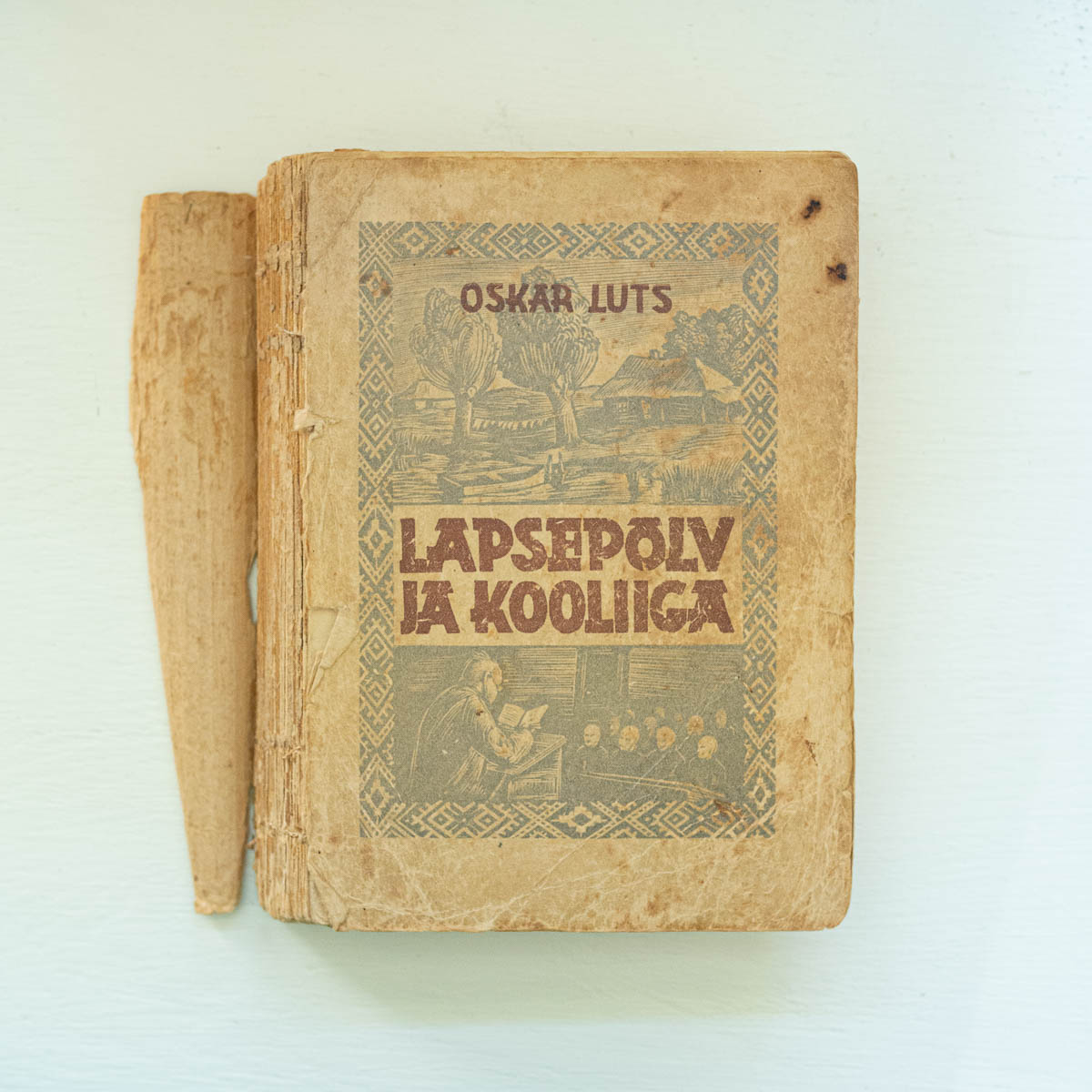
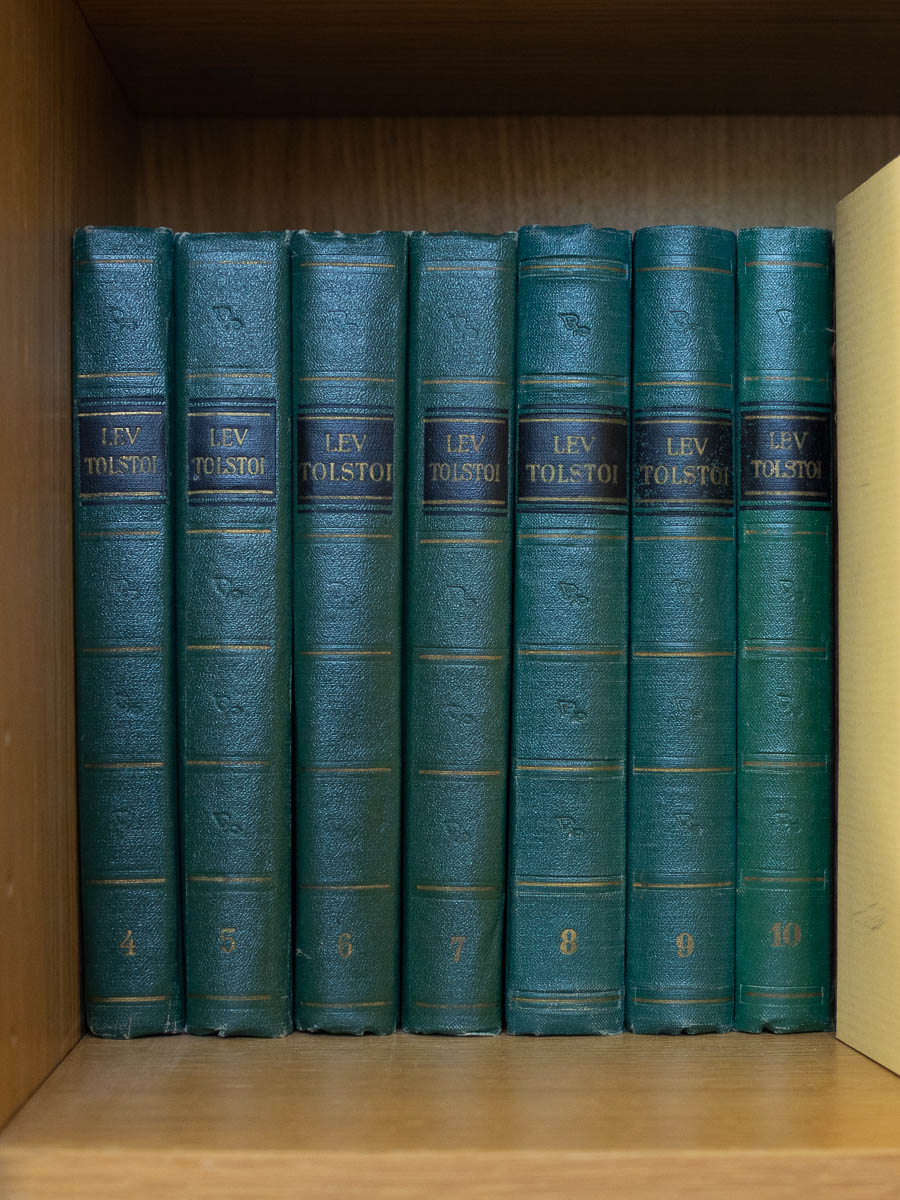
I culled the contents of these boxes ruthlessly. That fourteen-volume set with the collected works of Tolstoy? Some of it I am very sure I’m never going to read (there are too many other books in the world) so I’m keeping volumes 4 to 10 and throwing out the rest without pity. Tammsaare, “Tõde ja õigus” – a great and famous work but not my cup of tea and I cannot imagine any scenario where this would be my first choice of reading material. The memoirs of Oskar Luts – I read the first volume with memories from his childhood several times when I was a child, but didn’t find the rest interesting. Keeping that first volume, mostly out of nostalgia, and not wasting shelf space on the rest.

It does feel wrong to be throwing books away. Anything that has a chance of being useful to someone else, I make sure to donate. The boxes of culled Estonian children’s books I’ll try to give away to the Estonian school in Stockholm. The adult books… it’s possible though unlikely that some used book store in Estonia might want them. (I am pretty sure that newer editions exist and anyone who wants to read them will have no problem of getting hold of them.) The effort of packing, storing, and transporting these books for that slim chance is not worth it.

And it definitely feels odd to save half of a fourteen-volume set only. But my library is not a museum or an archive. It exists for my reading pleasure, and to some small extent for triggering fond memories, not for storing books out of a sense of duty only.

I’m rewatching the 1995 BBC Pride and Prejudice mini-series, and that also triggered a re-read of the book. There is some competition in the house about the TV, but none about the Kindle, so while I’ve only seen the first two episodes, I’ve spent the day binge-reading the book and have almost finished it. As a side effect, I have no photo from today.

Consuming both in parallel highlighted the TV series’ accuracy. They complement each other nicely. The TV series, inevitably, has to take some shortcuts and leave some gaps, which my reading of the book fills in. Also, I’m not good with faces, and the characters are often introduced so briefly or indirectly that, without the book’s support, I wouldn’t really know who they are.

When I first watched the series in , for example, I remember being puzzled by the girl who accompanies Lizzy on her visit to Hunsford. Yes, yes, if I had been paying perfect attention to all the faces then I would have remembered that I first saw that girl together with the Lucases, and that Charlotte asked Lizzy to join her (Charlotte’s) father and sister to Hunsford.

The TV series, on the other hand, brings the characters to life. Austen is very parsimonious with her descriptions. Which gives her works a timelessness they wouldn’t otherwise have, but I personally do want to know what the people in the story look like – not just that they have fine eyes and a noble mien, but to know the colour of their hair, the kind of dress they wear.


Afterwards I tried to buy Sense and Sensibility. The Kindle store was absolutely flooded with fake copies where certain words had been replaced with random near-synonyms. The books were probably generated by some thesaurus-based process that is supposed to modify the text just enough to ensure that Amazon’s own algorithms will not flag it as an exact copy of an already-registered work. Some even had stolen covers – there was one purporting to be from the Wordsworth Classics series. I bought one of these fakes by accident, but already the first page had such gratingly clumsy word substitutions that its fakeness became obvious, and some phrases were completely nonsensical.

“For many generations” becomes “for plenty generations” in one copy, and “for lots generations” (sic) in another. “The legal inheritor” becomes “the criminal inheritor” and “the felony inheritor”. One describes John Dashwood as a “young guy”.

With the next few books, I downloaded a sample before buying, so I wouldn’t get scammed again. Finally after several frustrations I realized that the upload date was a giveaway. All the fakes had been uploaded within the last few days. This sped up the winnowing process significantly and allowed me to find an actual, real, ungarbled copy.

A meteor crashes into the woods near the small town, except it turns out to be not a meteor but an alien spaceship. The only ones alive are the pilot and her child. Both are taken to a hospital. The pilot dies shortly after, but the child is sneaked away by a nurse who keeps him alive and basically adopts him as her child. But it’s hard to keep a curious, restless alien child a complete secret.

Overall, it’s a nice book, somewhat naive, with a feel-good tone. The couple who adopt the alien boy treat him with endless love and curious wonder. Nobody is ever frustrated or angry; everyone is lovely but flawed in an almost predictable pattern. Adopting the alien heals Molly’s spiritual wounds.

This is a small-scale story, about just a few characters and their small-scale joys and worries. The book doesn’t have any grander ambition and never rises above the late 1960s suburban atmosphere. “Be nice to people who look and act differently.”

Hey, look, a book review! I haven’t written any in a while, but this series that I finished a while ago really deserves one.

Brent Weeks’ Lightbringer is an epic fantasy series that I must have seen recommended somewhere. Reddit maybe? It is quite epic in scale and I won’t even try to summarize it here.

The foundation of the series is its interesting system of magic. People with the right gift (“drafters”) can turn light into a physical substance called luxin. Different colours of luxin have different properties: green is springy, red is flammable, etc. Those who can “draft” multiple colours are called polychromes, and full-spectrum polychromes are the rarest of all.

There’s a complex world and a complex plot and a lot going on, intrigue and battles both magical and mundane, and plenty of personal drama as well.

Things I particularly liked about the series:

  • Gavin’s story. Gavin is the Prism – the most powerful man in the world, a polychrome with extra powers, kind of like the pope and an emperor and supreme mage in one. But he has come to this position by deceit, and he is not who everyone thinks he is, and that is causing him major difficulties. The world has major problems, some of which only he can fix, but he’s distracted by his personal problems. Those personal problems include his new-found bastard son Kip, and his tricky relationship with his beloved Karris. And he acquires plenty more problems throughout the series.
  • Brent Weeks’ prose. These books contain so many intense, well-wrought phrases and sentences to savour! There are many nuggets of philosophy and life advice, masterfully expressed. I wish I had taken notes, so I could share some here.

Nevertheless my overall impression of the series is more negative than positive. There are some shortcomings in the plotting and world-building. I can look past those. The series has bigger problems.

  • The pacing and intensity. The books are cut up into short chapters, and every single chapter tries to be the most intense one. Reading these books, it felt like every chapter ended in a cliffhanger or a life-altering event. It was a constant flow of “I can never be the same person again” and “this changes everything” and “I will never be able to survive this”. It was as if the emotional intensity knob was turned to eleven for nearly every chapter. After a while it became exhausting. I was interested in the story, I wanted to know what happens next, but I had to put the book down for some days to rest – because there was never any rest in the books themselves. My main feeling when finishing the series was one of relief.
  • The shift in focus from Gavin to his son Kip and Kip’s friend Teia. Maybe it wasn’t a shift, maybe this was the case from the beginning and I just got the wrong expectations. I started reading what I thought was adult fantasy but after a while had a YA book in front of me instead. Gavin was an adult with a mature mind and complex adult problems. Kip and Teia were teenagers, whose teenage problems I wasn’t particularly interested in.
  • And Kip is annoying. Above all, he is annoyigly Mary Sue-ish. He’s a great drafter, just because. OK, I can give him one natural gift. But then he somehow also turns into a masterful leader and tactician – in his late teens, with little to no life experience, and with no one teaching or guiding him? Come on…
  • The deus ex machina solutions in the last book. Religion is an important part of the world of this series, tightly bound to its magic, and Gavin as pope/emperor is naturally particularly involved. He loses faith and finds it again, and much of that is finely written. But in the final battle (because of course there is one!) the good guys are basically saved by God, not once but repeatedly, and that is just silly writing in a book like this.
  • Some of the plot twists are too abrupt to make any sense. Gavin turns out to be an unreliable narrator who has apparently forgotten some very important things, and rediscovers them one by one. But it just seems incredible that he would not notice anything odd about himself or his beliefs, and that he could look at thing A and believe that it is thing B which is nothing like thing A. I get the feeling that the author put these twists here just to keep us readers on our toes even more. It doesn’t make the book more interesting, it just adds even more of the “this changes everything” moments, and the books really didn’t need any more of these.

The “Chalion books” or the “World of the Five Gods” novels are three. The Curse of Chalion, Paladin of Souls, and The Hallowed Hunt.


The first one, The Curse of Chalion, was fabulous. This was one of the best fantasy books I’ve read, and so well worth all its awards.

The back cover on my edition, with its mentions of “traitorous intrigue” and “darkest, most forbidden magics” and “lethal maze of demonic paradox” gives an entirely incorrect picture of the mood in the book. It sounds like a wild, lurid tale full of shocking acts of magic – which is about as wrong as it can be. This is a thoughtful, beautiful, intelligent book.

Technically the description is correct. Those demons and magics and intrigues are there, and they make for an interesting plot, with some clever solutions to thorny problems. But the plot is not what I will remember the book for.

The most interesting part was the role that religion plays in the story. The book is a work of fantastical theological speculation almost as much as it is a story of adventure. What if gods were real and actively involved in the world? What powers might they have, and what limitations? What shape might divine intervention take? What might a saint be like, or a saviour?

The story follows one main character on his journey, both internal and external. I was rather annoyed with Cazaril at first. Nerveless, hopeless, weak, reduced to begging, nearly whining. I remember thinking – do I really want to read about this broken man for hundreds of pages? But then I came to understand him, and he started growing, and by the end I loved him. (As we are quite clearly meant to.) There are plenty of other interesting characters as well, many of them pleasingly intelligent. Only the bad guys were too obviously set up to only be bad guys and lacking in depth.

And all of this is told in beautiful language. Always flowing smoothly, always just right, never awkward. Plenty of sentences and phrases to savour, to read again just for the pleasure of it.


The second one, Paladin of Souls, explores similar themes of religion and personal growth to some extent. A forty-year-old madwoman, widow, murderer, decides to take a second chance at life. She rides off on a vacation, calling it a pilgrimage to make it seem more comme il faut for a noble lady. The gods get involved, and she is put in service of the gods regardless of her intents.

The starting point of the story is interesting, but I found the book as a whole weaker than the first one in both plotting, character-building, and exploration of its themes. The first book was small and personal in scale but grand in spirit and ambition. This one was enjoyable, and Bujold’s writing is masterful as ever, but the book was somewhat predictable in plotting, and more lightweight and conventional than I had hoped for.


The third book, The Hallowed Hunt, was a disappointment. There was none of the depth of the earlier books: neither depth of theme nor depth of emotion. Instead this was even more of a mystery story than the second one. Every chapter uncovered more facts and added more complications. So many plot twists!

The main character was surprisingly, almost annoyingly passive and uninteresting. I don’t think he ever had an interesting thought. Or even took any interesting action – things happened to him instead.

And the book has a “love at first sight” romance which really stuck in my craw. The couple are proclaim everlasting love and are ready to marry after knowing each other for barely a few weeks, which they have mostly spent apart from each other. But their souls are connected, or something. Ew.


I’m very glad I read the books in this order, because if I had started with The Hallowed Hunt then I am quite sure I wouldn’t have been interested in the others. And what a loss that would have been!

No, I’m not mending books. These are books about mending.

I have three. Two go together, and the third one stands on its own. All three are in Swedish.

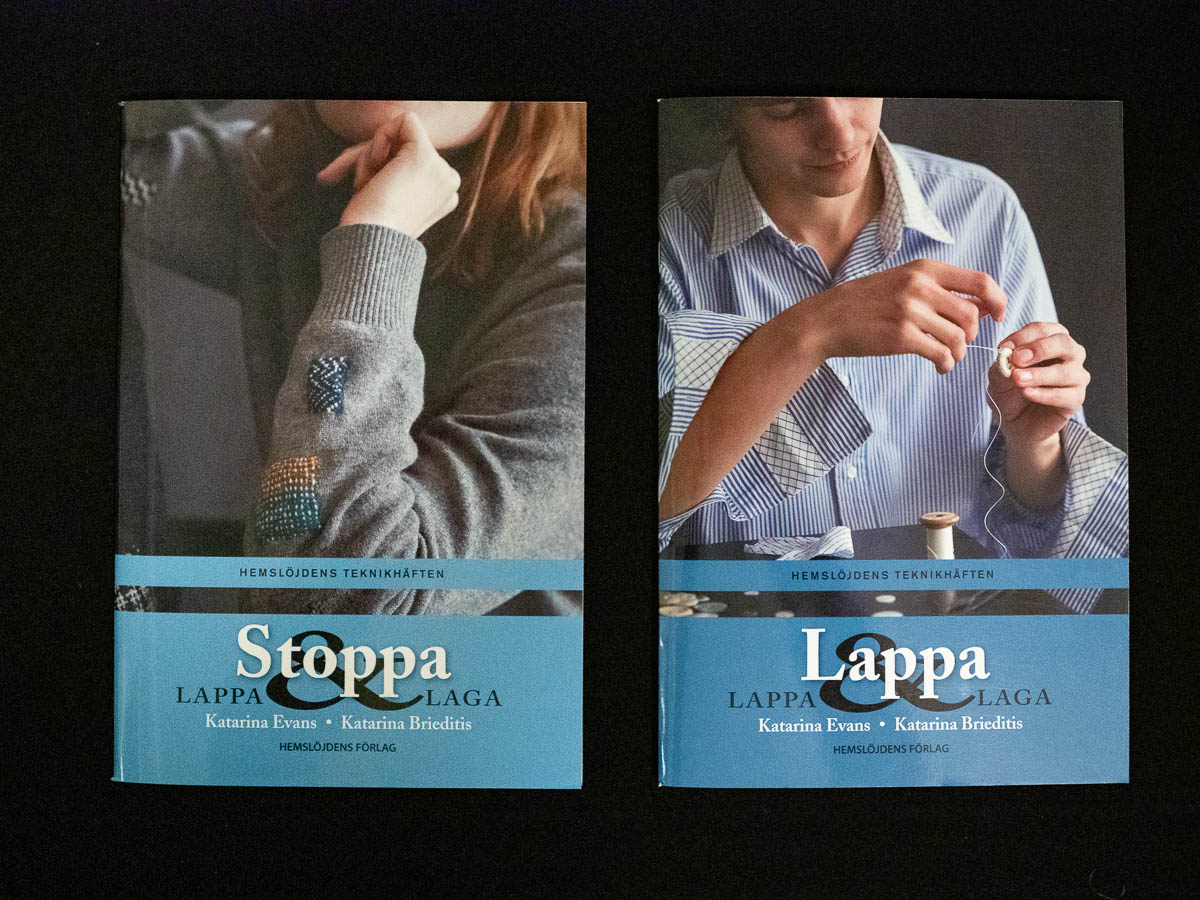
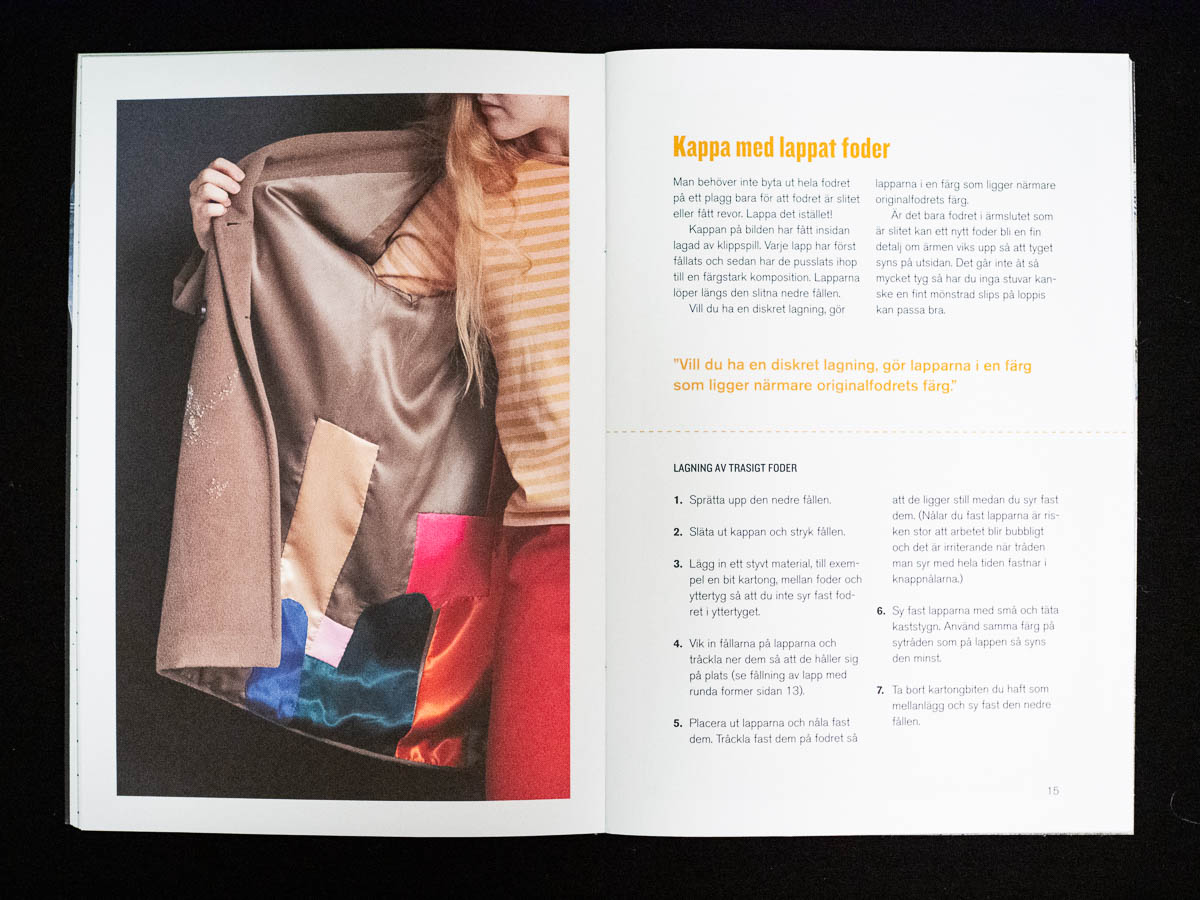
The two are called simply Lappa and Stoppa – “Patch” and “Darn”. They’re published by Hemslöjdens Förlag, a small publishing house (owned by a non-profit) that specializes in books about crafts. These two are part of their “technique booklets” series – slim, focused, practically oriented booklets about a specific technique, such as darning. Their other books are also practical in nature, rather than shiny heavy coffee table books.

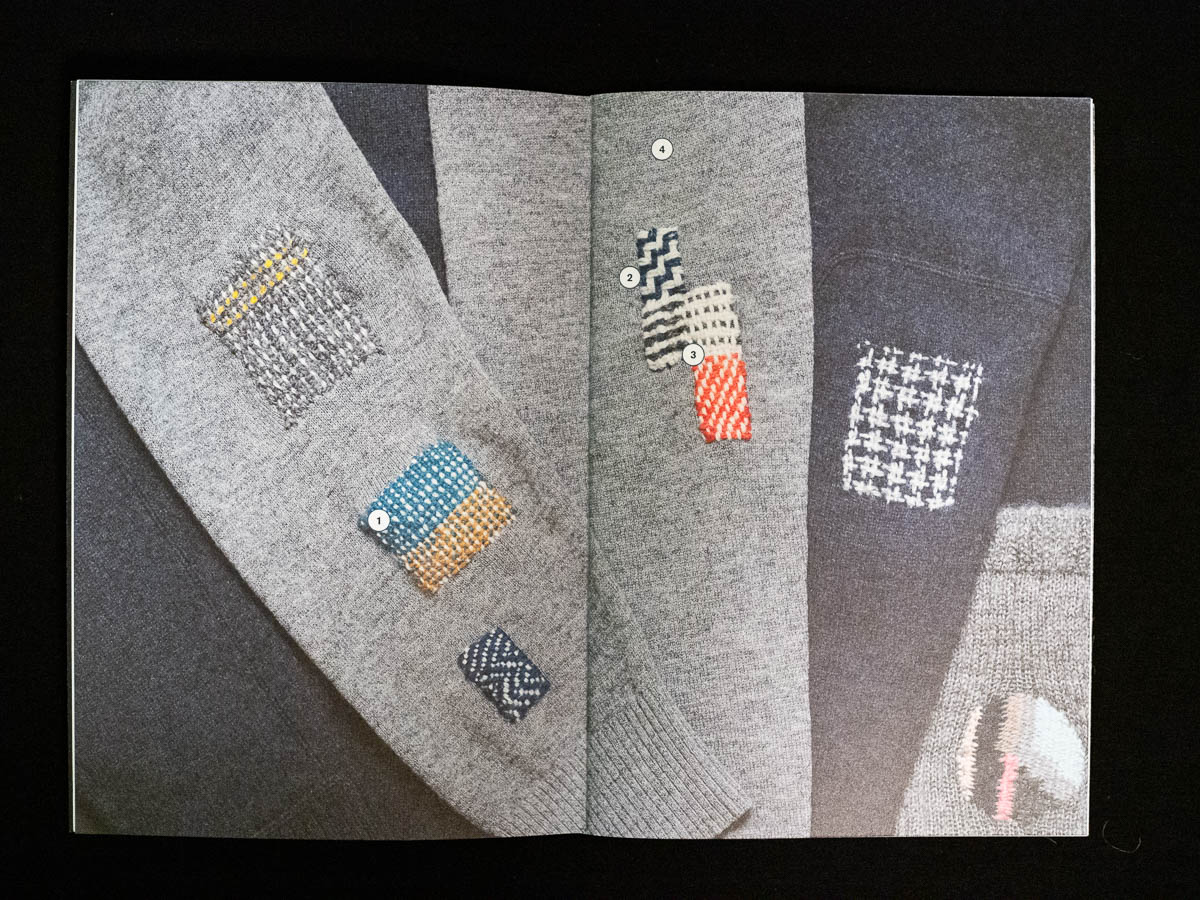
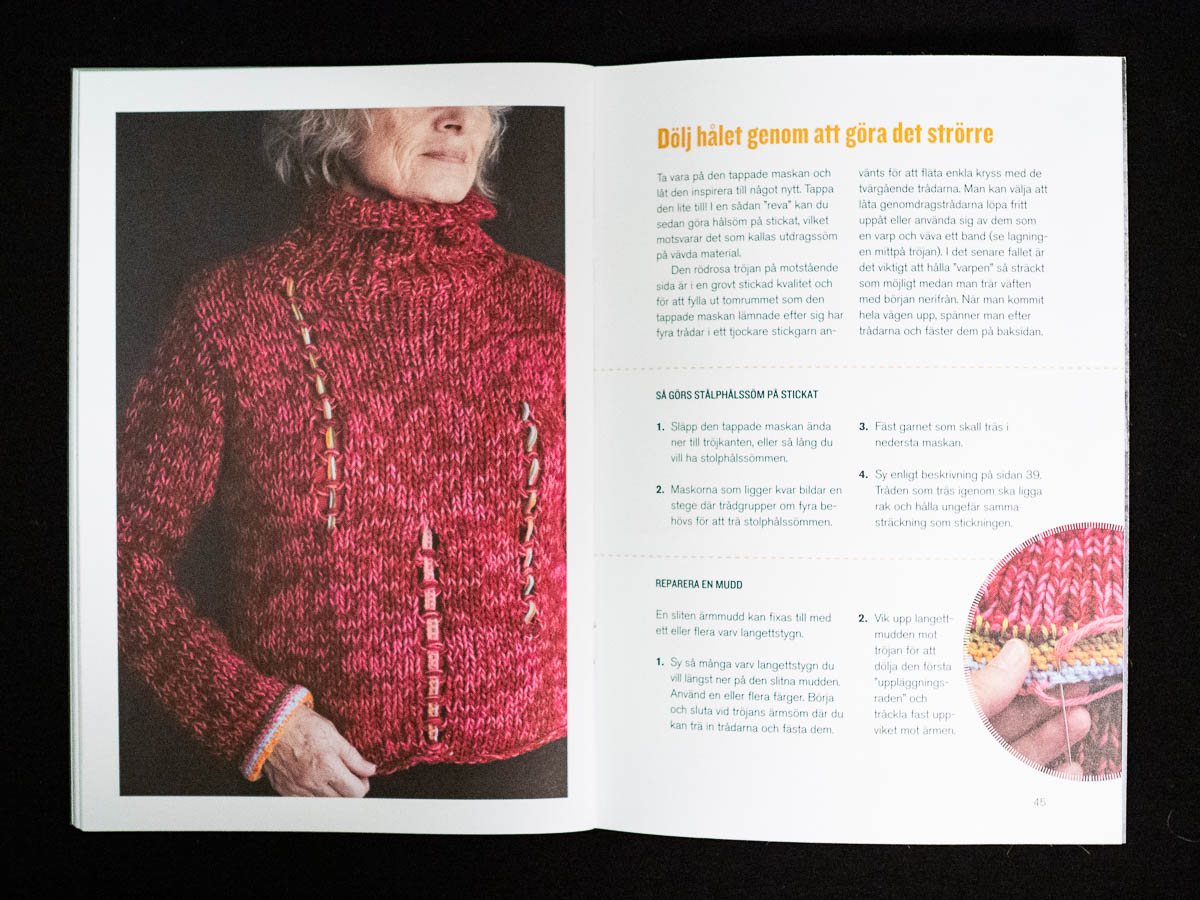
I like their books in general. I think I own about a fifth of their catalogue… But these two books are my favourites. They combine practicality with just the right amount of fun without turning too silly. Their examples are varied in style. And their way of mending things is wonderfully lighthearted and irreverent. Have a hole in your sweater? Make it larger! Or make more of them!

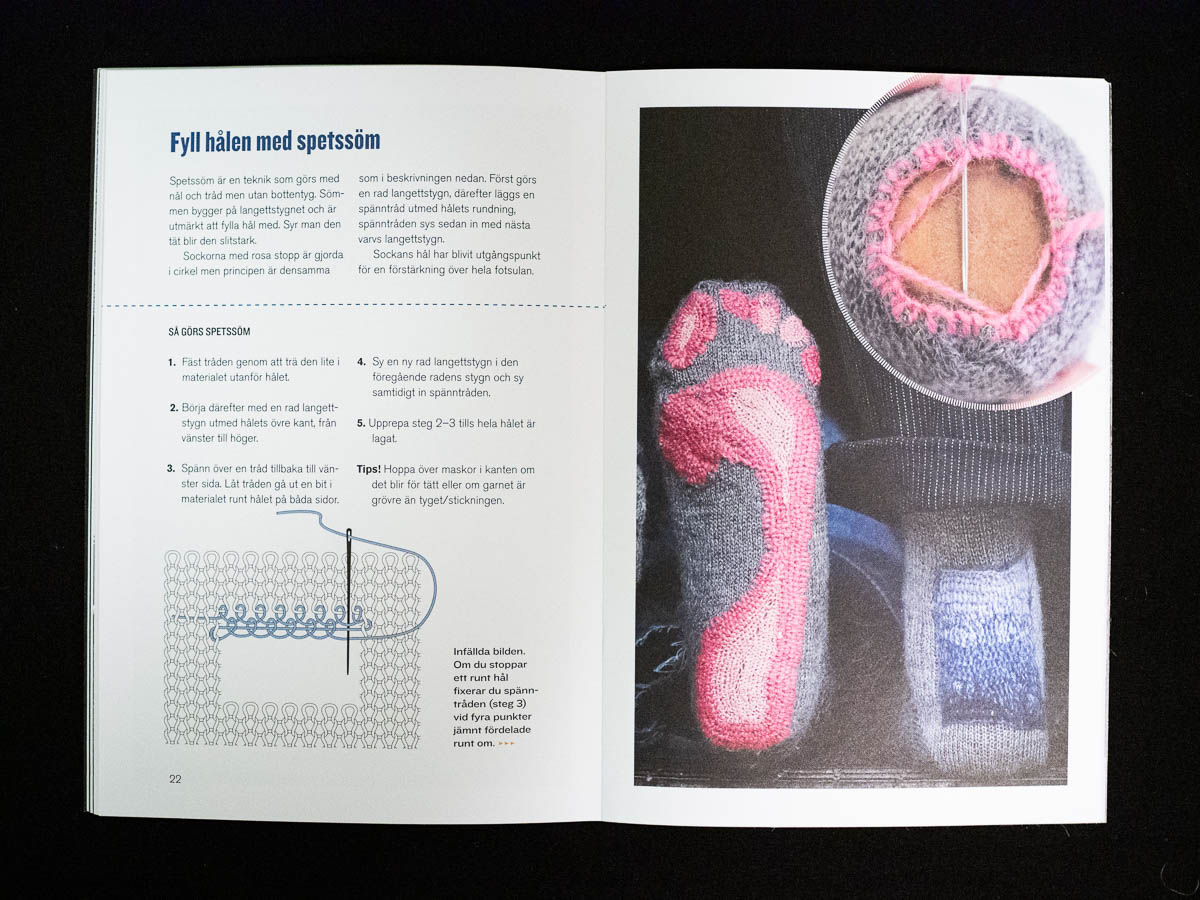
The booklets are heavy on pictures, both inspirational and instructional. Texts are mostly brief, often step-by-step.


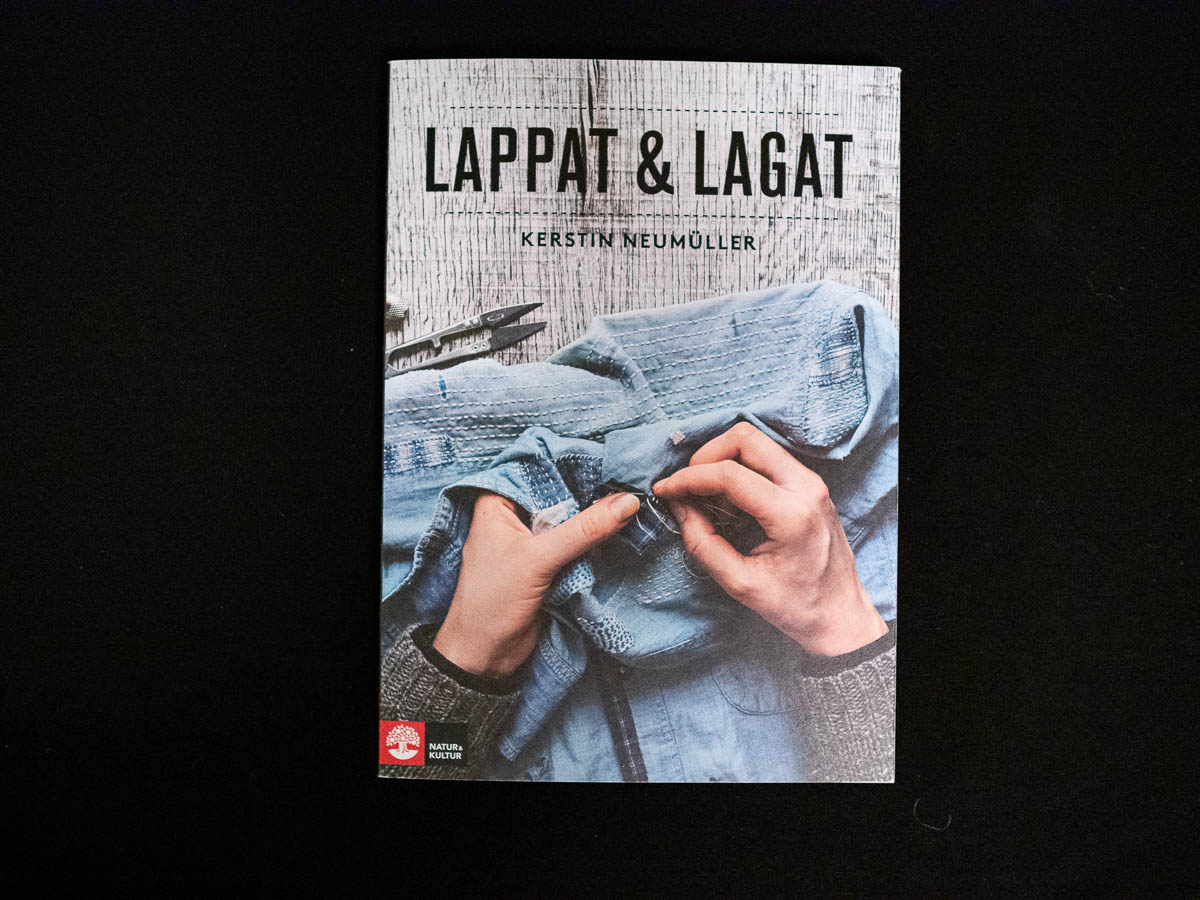
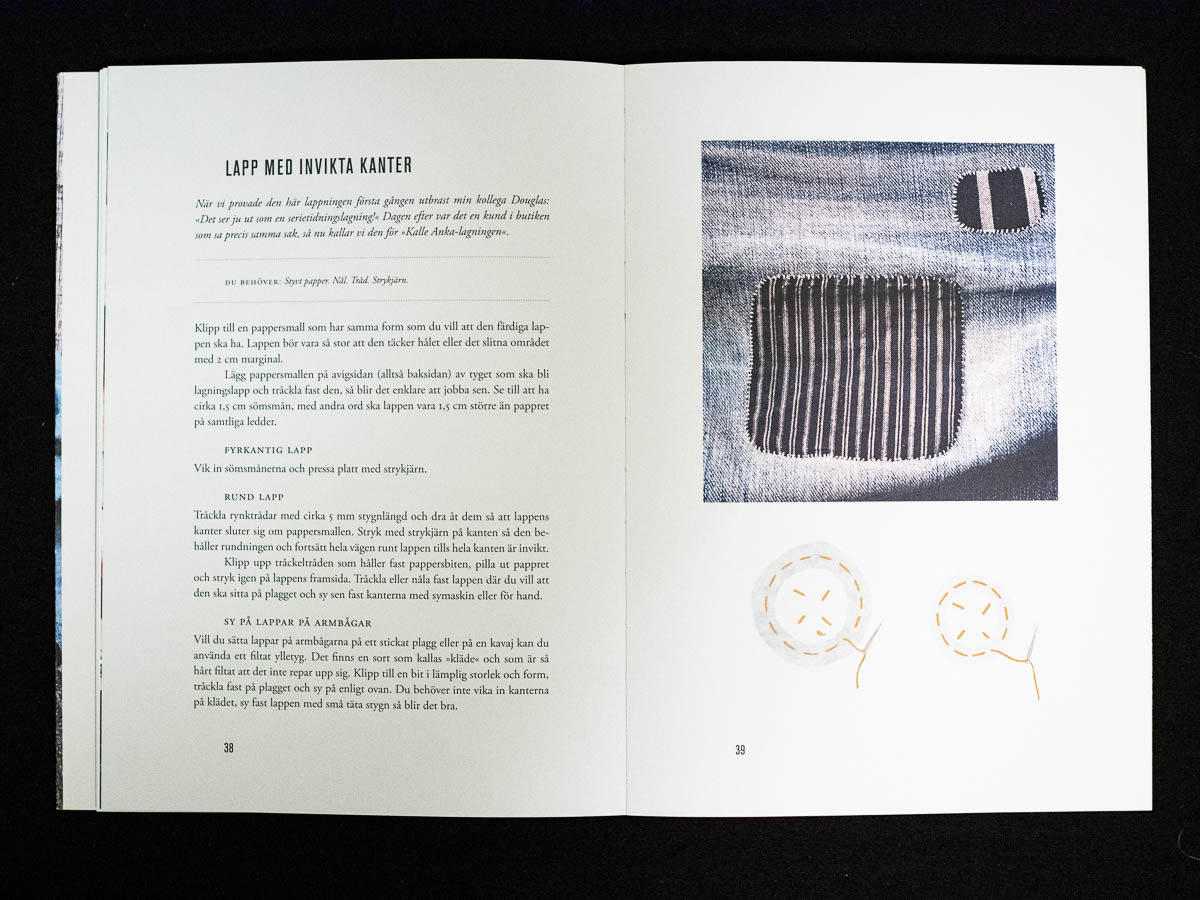
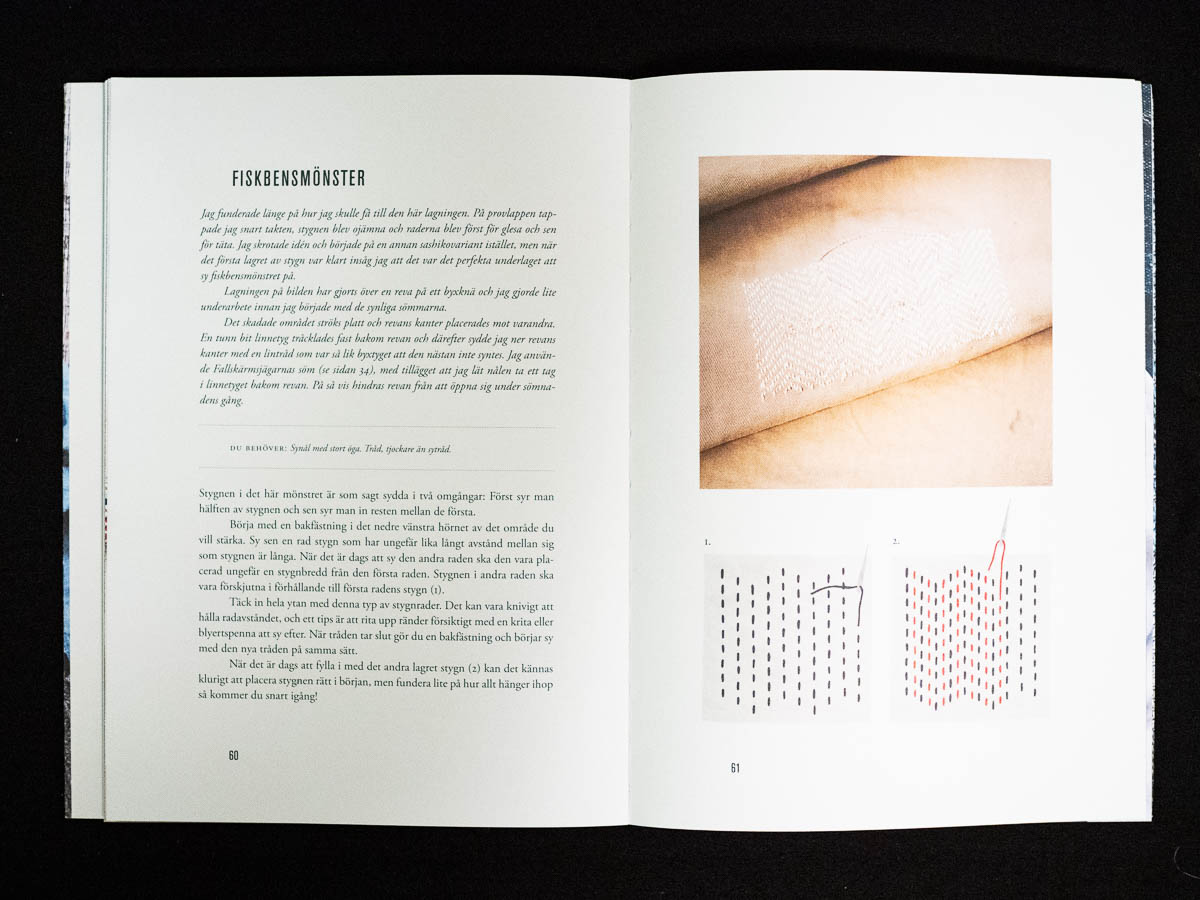
The standalone book by Kerstin Neumüller is also named simply Lappat & lagat, “Patched and mended”. It’s an actual book, thicker and more solid than the two booklets, and covers a broader range of mending topics than just patching and darning: how to repair a buttonhole, how to repair leather goods, etc. It’s more solid and serious in tone as well. More instruction and less inspiration; more text and fewer step-by-step lists. It’s a useful book and I’ve learned things from it, and if I didn’t have the others I’d probably be quite happy with it – but it’s simply not quite as much fun to pick up than the other two.