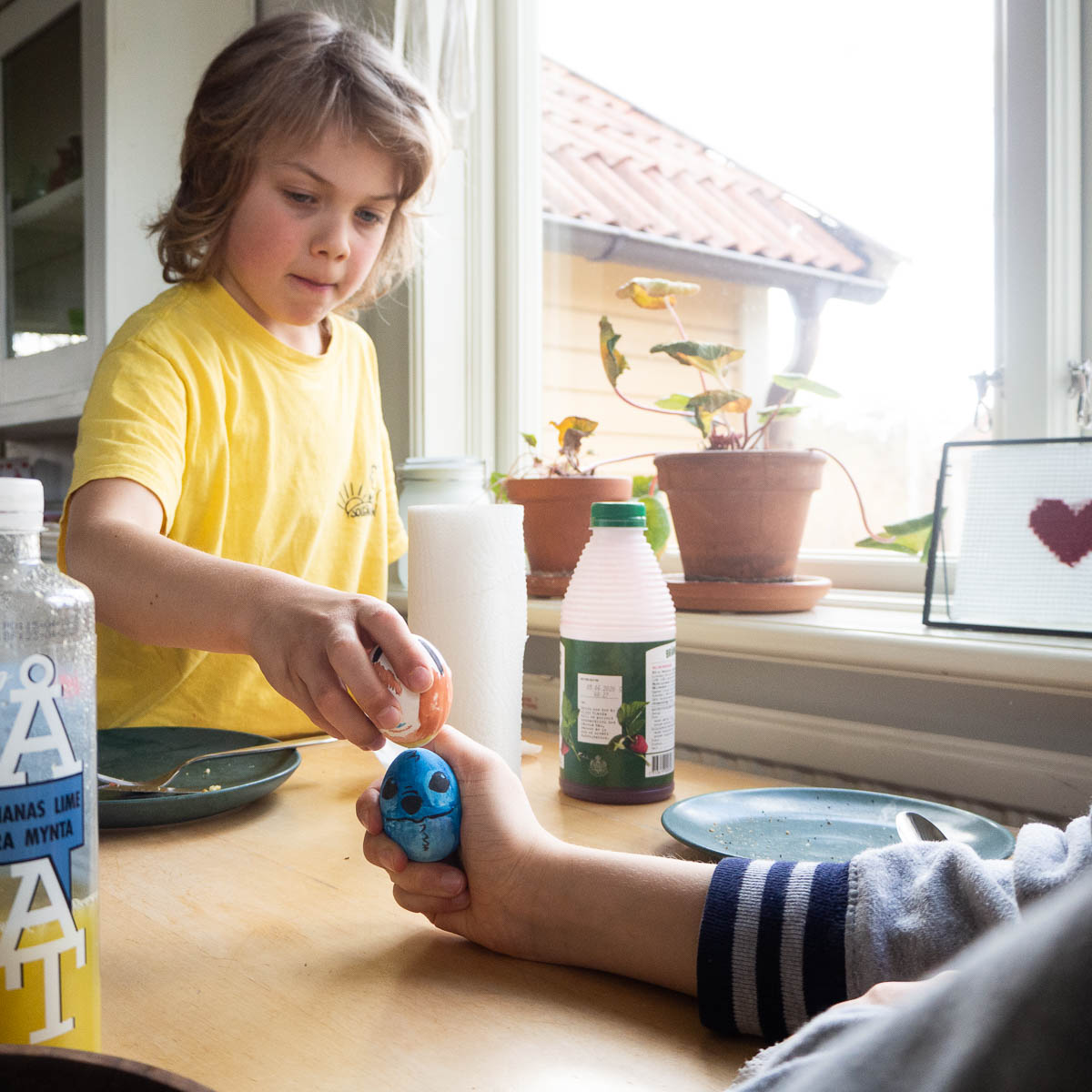
It’s taken us a while to eat all the Easter eggs. Hard-boiling is not the most delicious way of serving eggs. But some of them accompanied a cauliflower soup, and some we actually had for breakfast.

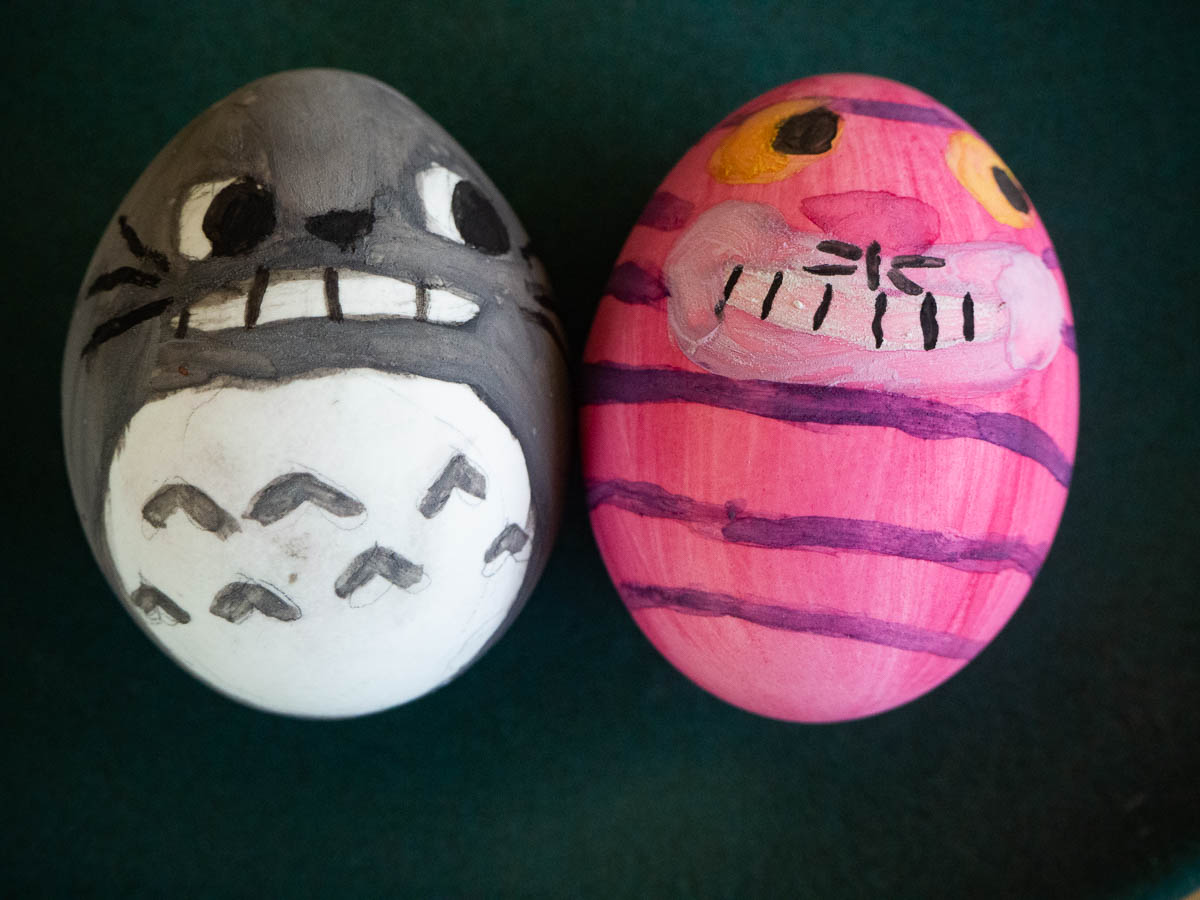
After knocking them first, of course. The tournament was won by Stitch, who’s just about to meet the referee here. (Stitch beat him, too.)


What would Easter be without painted Easter eggs? Nothing, that’s what!

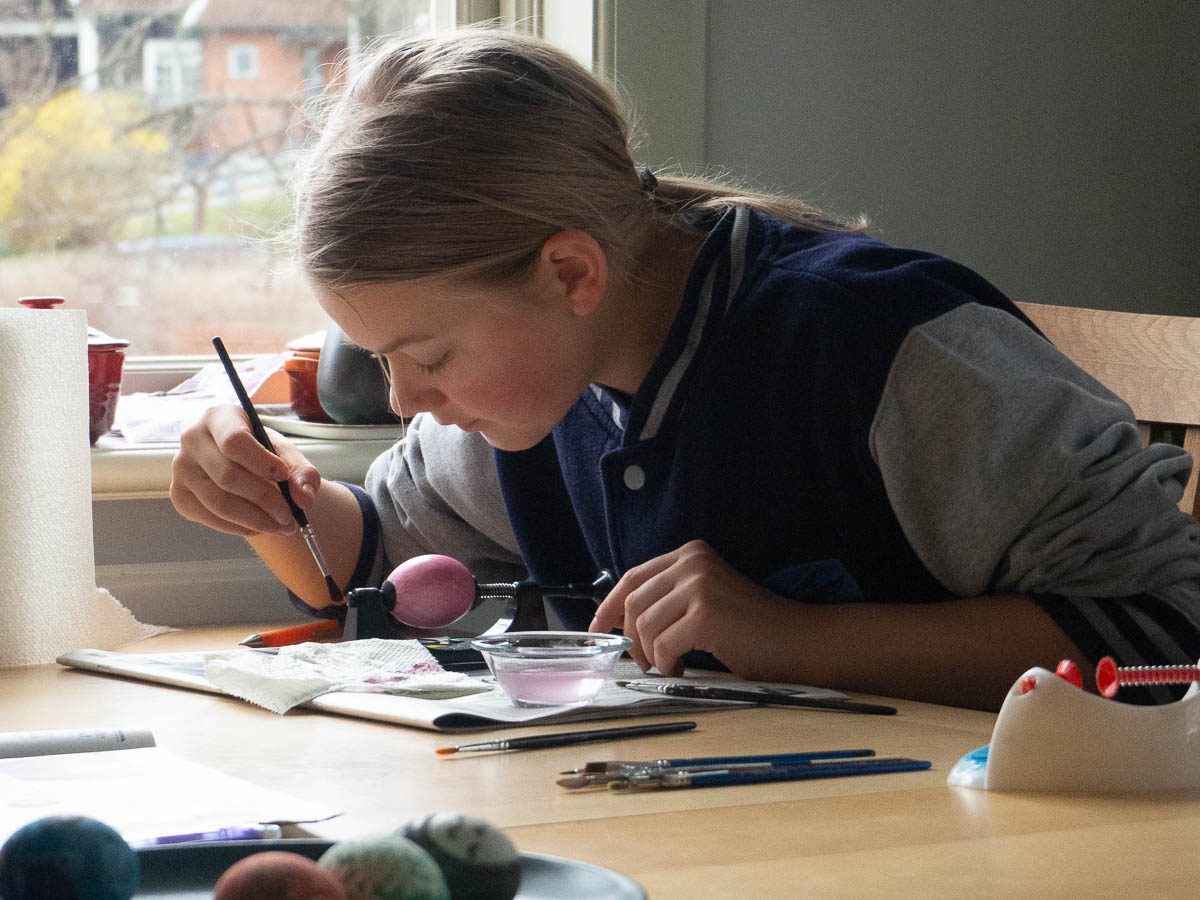
Ingrid had a theme in mind for her eggs, and I also found inspiration, so we got to work.

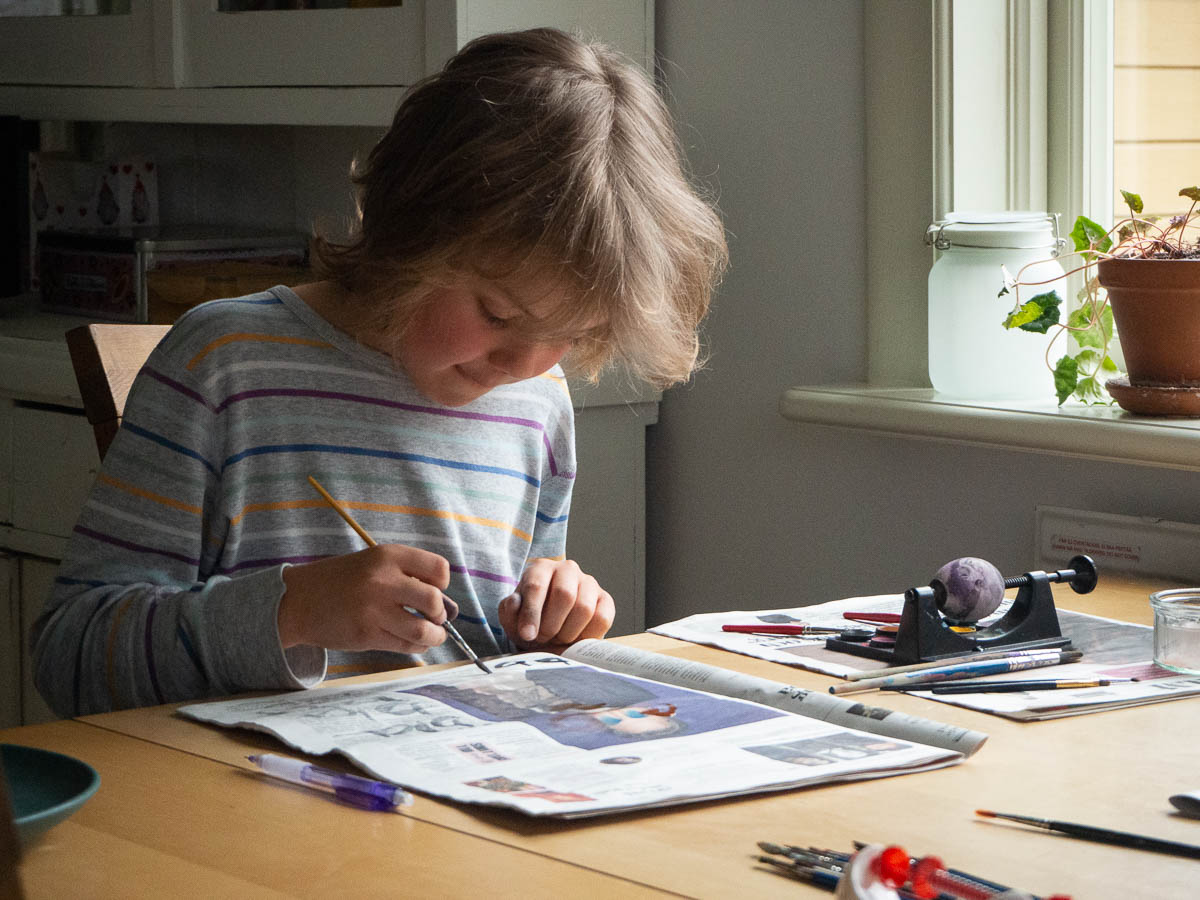
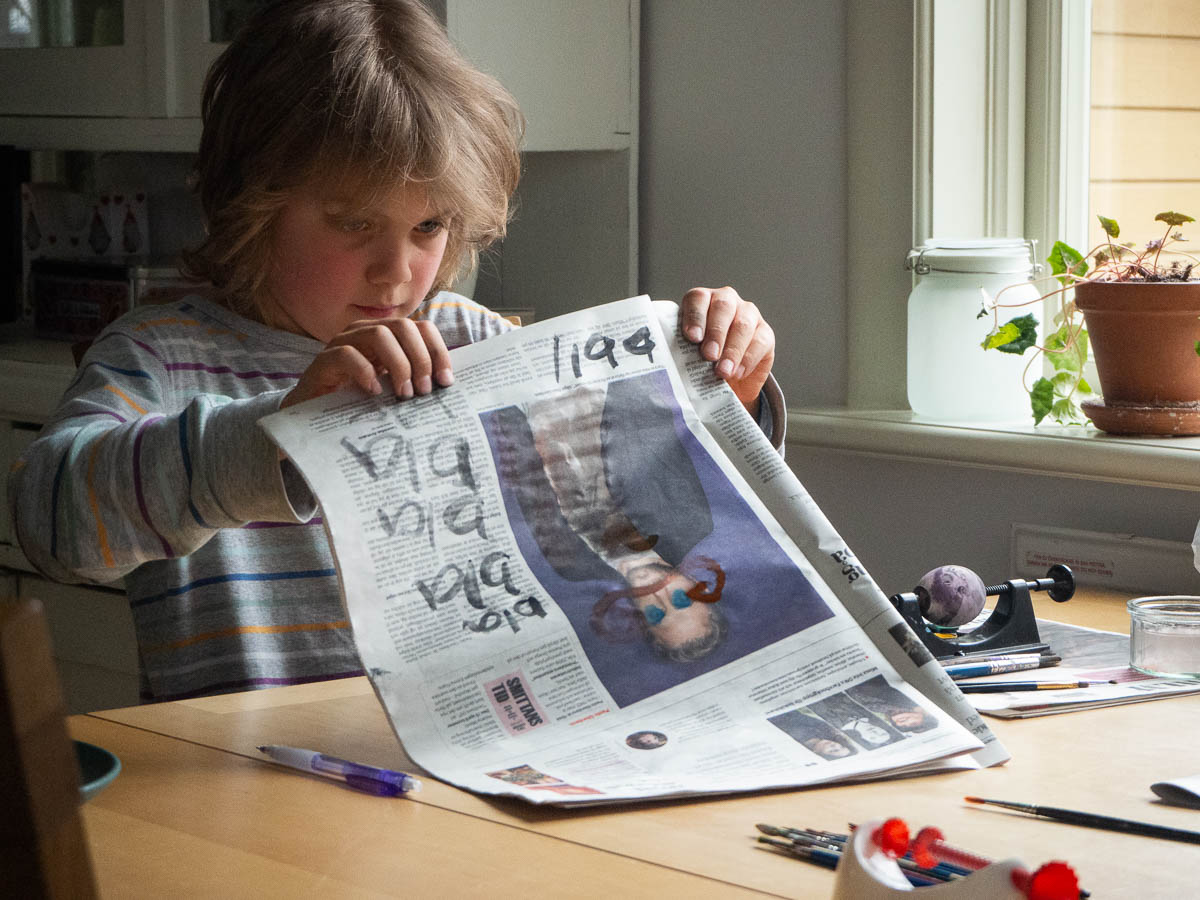
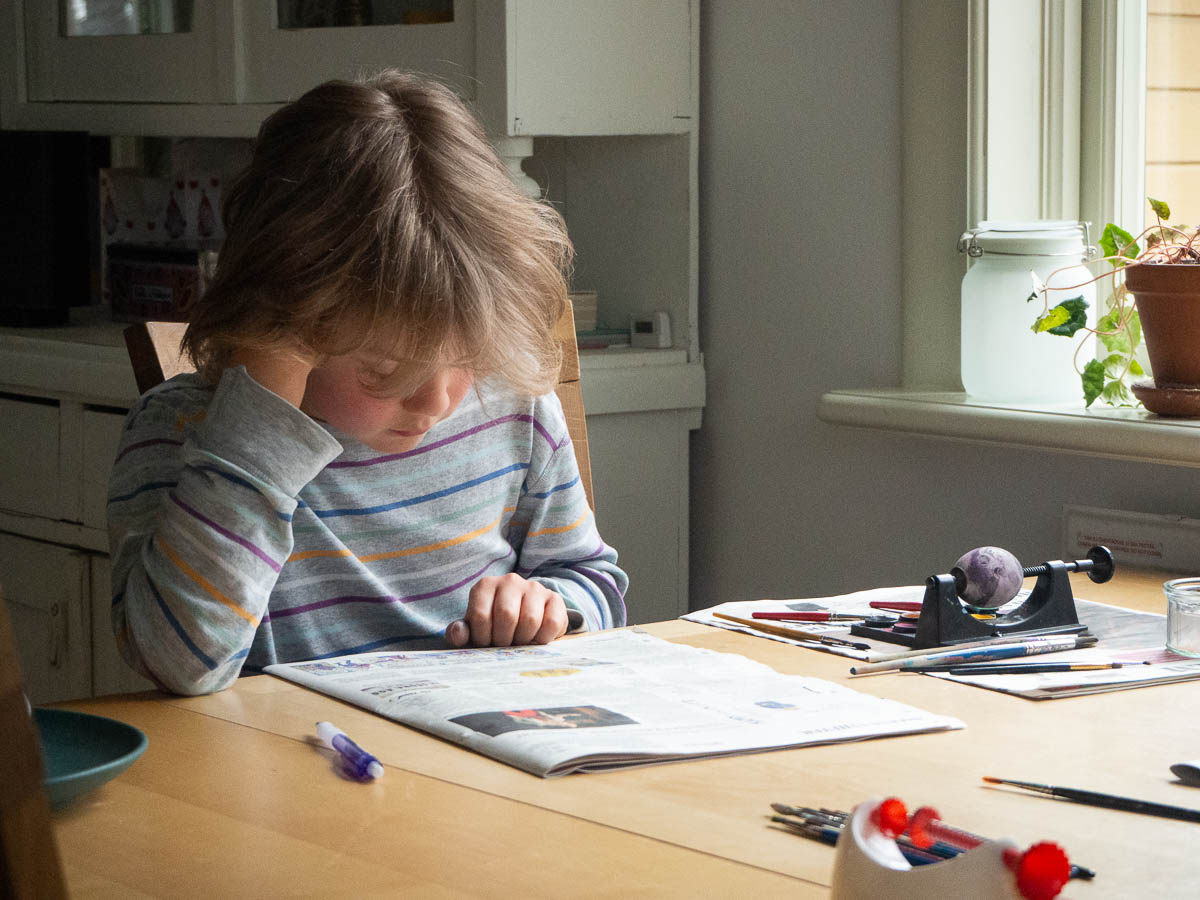
Adrian quickly finished his first egg but then struggled to find ideas for the next one. Instead he painted the newspaper protecting the kitchen table, and then got caught up in some article.


Finally I suggested that he just pick a colour and start putting some paint on the egg, and that was enough to get him unstuck.

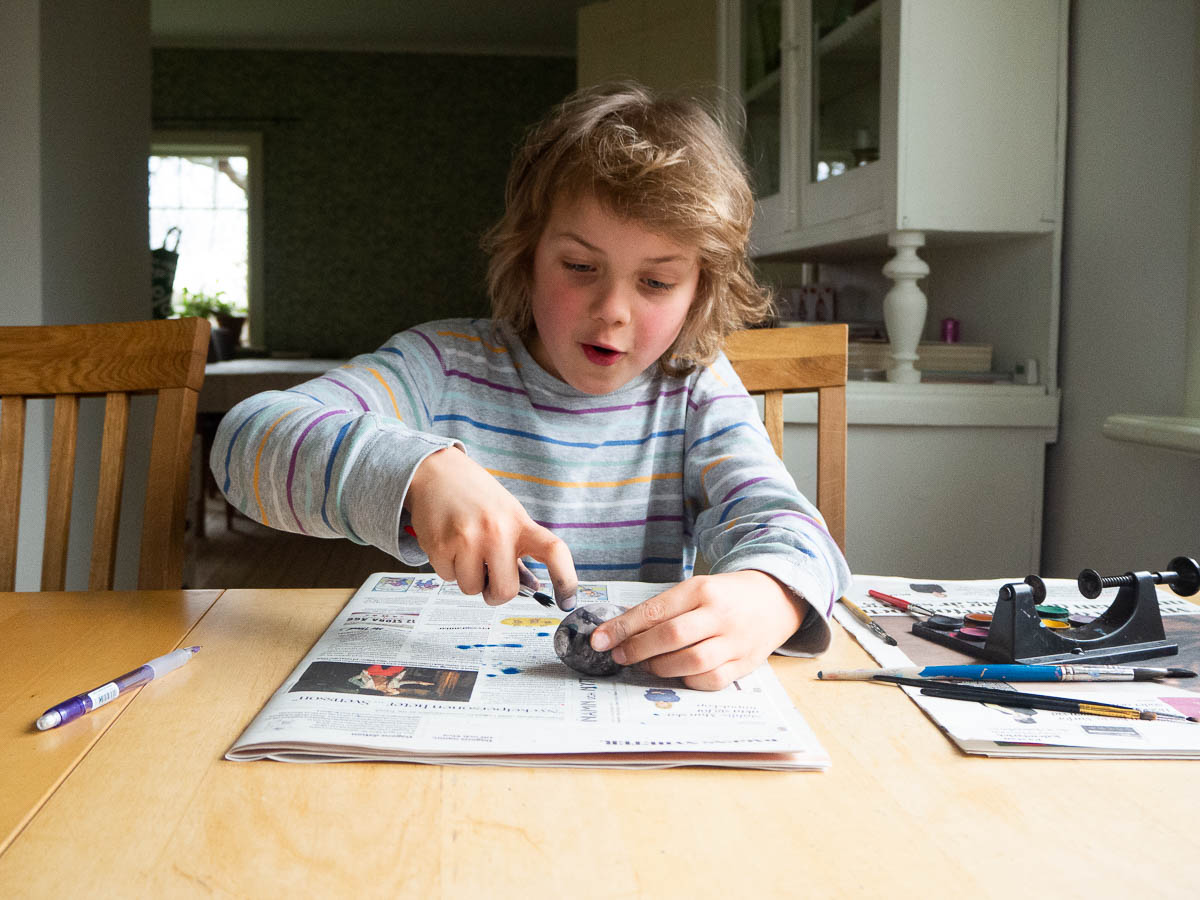
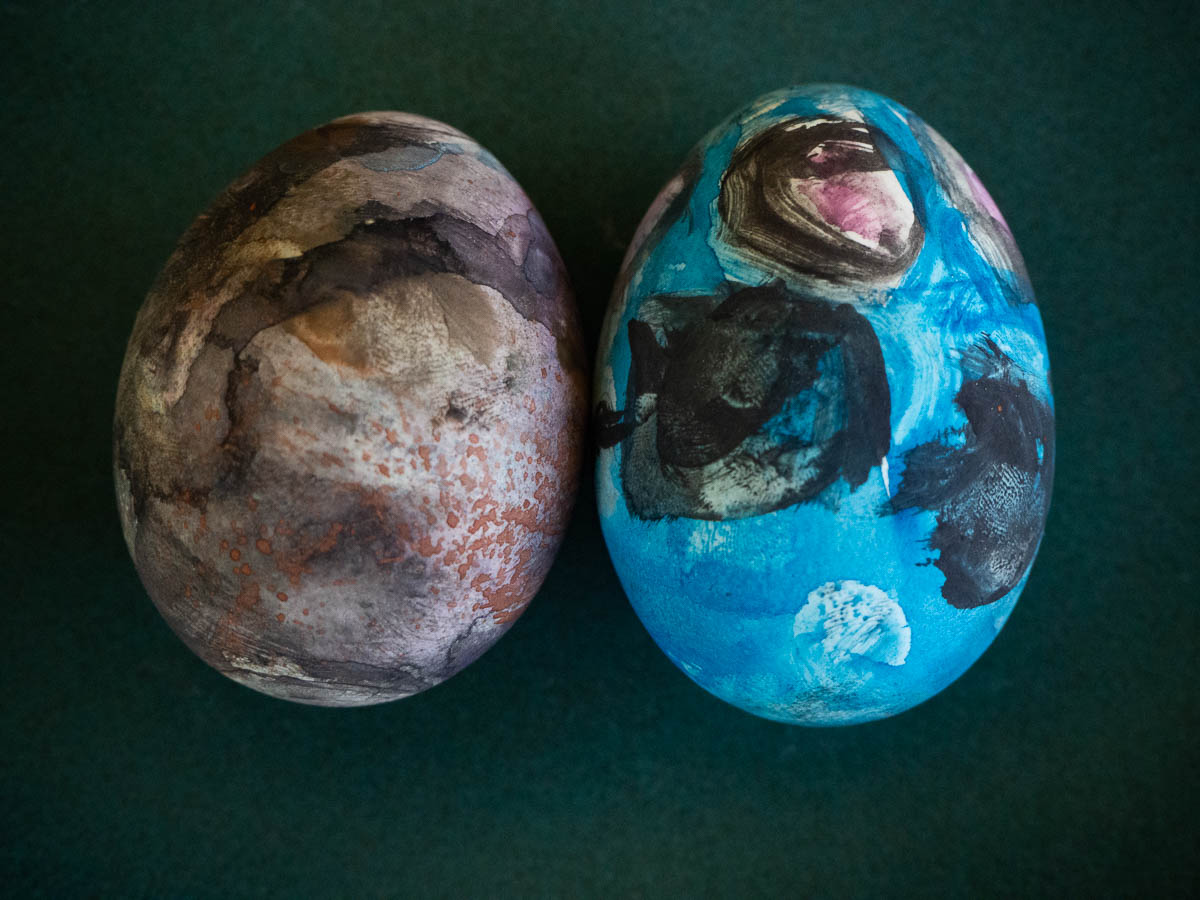
He usually makes abstract designs on his eggs, and today was no exception. This is him with a dark egg that he energetically splatters with small speckles for a starry-sky effect.

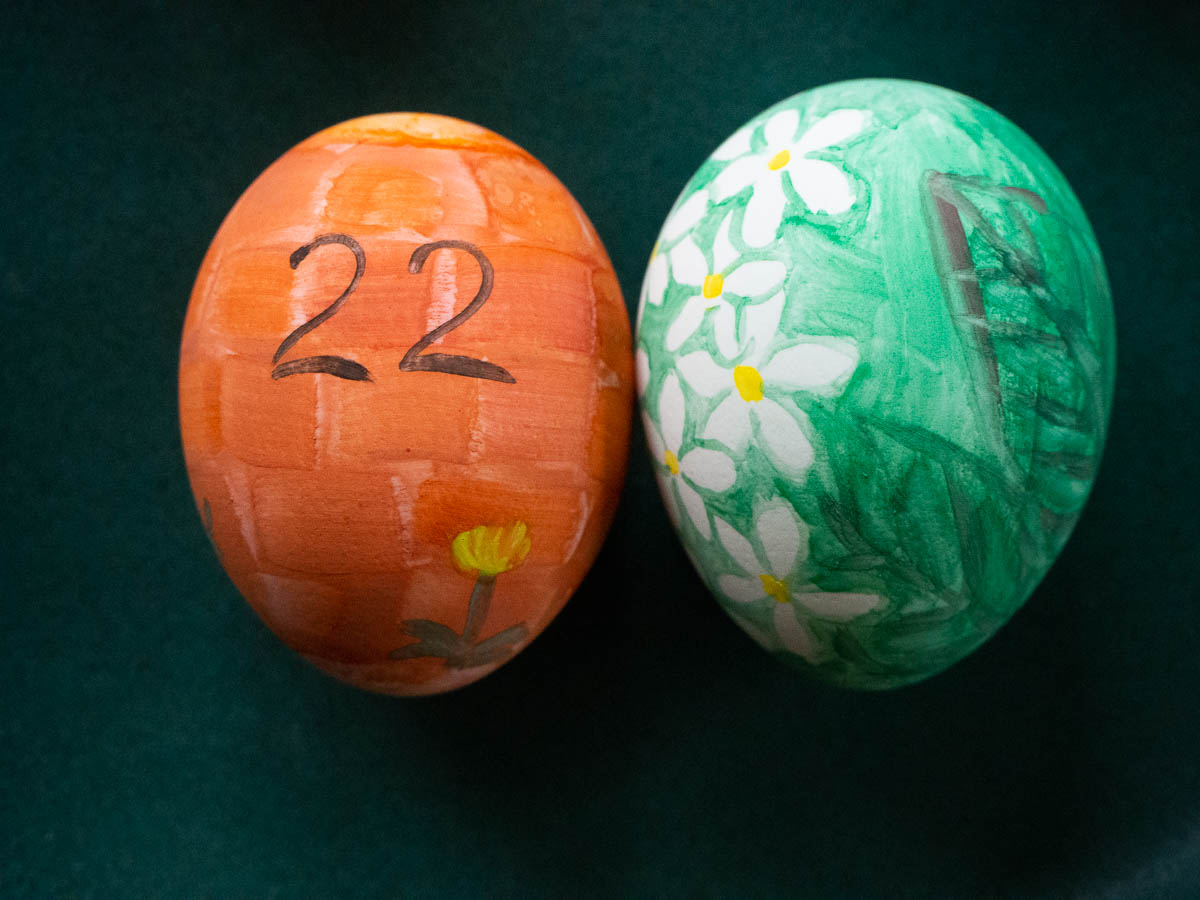
My eggs this year are a picture puzzle, but it only works in Swedish. I made a “vägg-ägg” and a “hägg-ägg”. (Vägg means “wall” and hägg means “bird cherry”.)


We usually go to Uppsala and my mum and brother for Easter. But with all the government recommendations to stay at home, not travel, especially not from Stockholm to other parts of the country, not meet people, especially older people… that’s not happening.

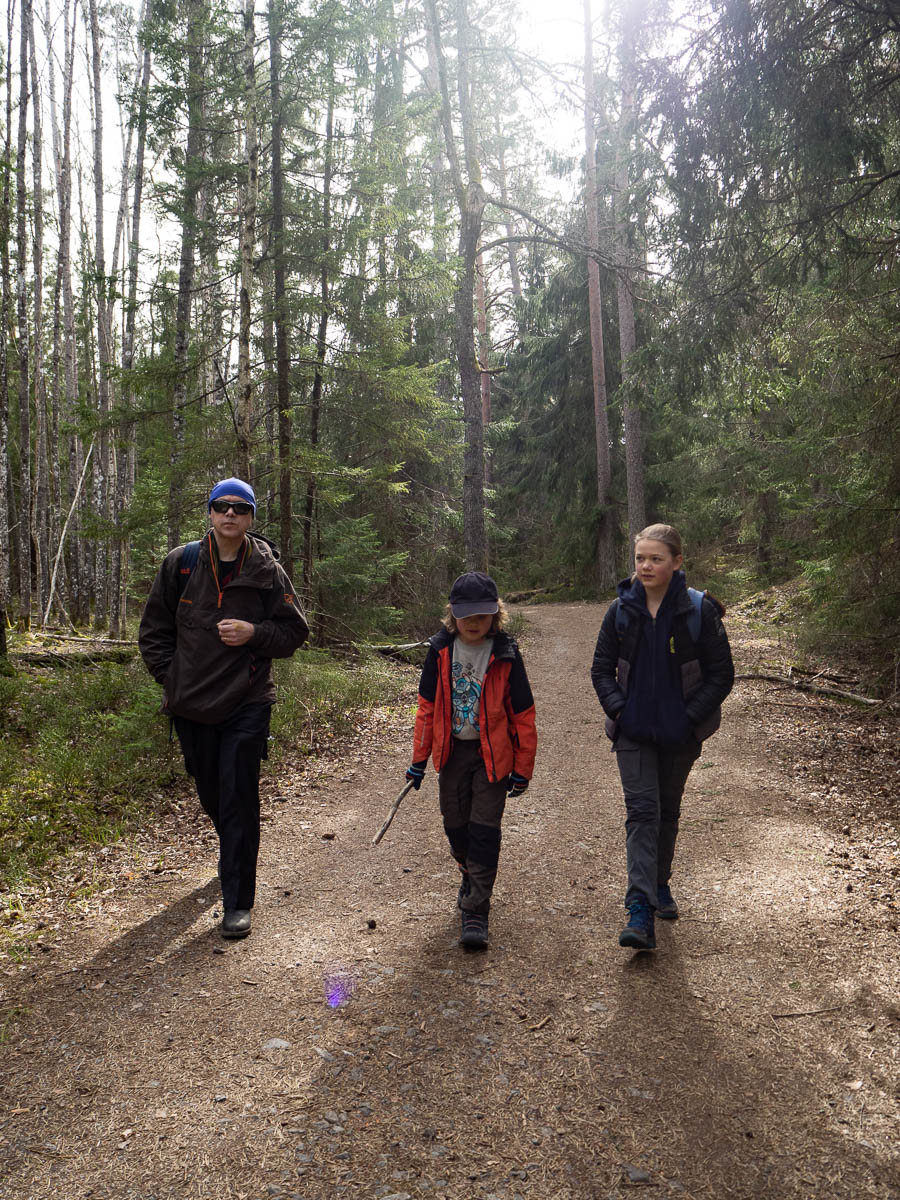
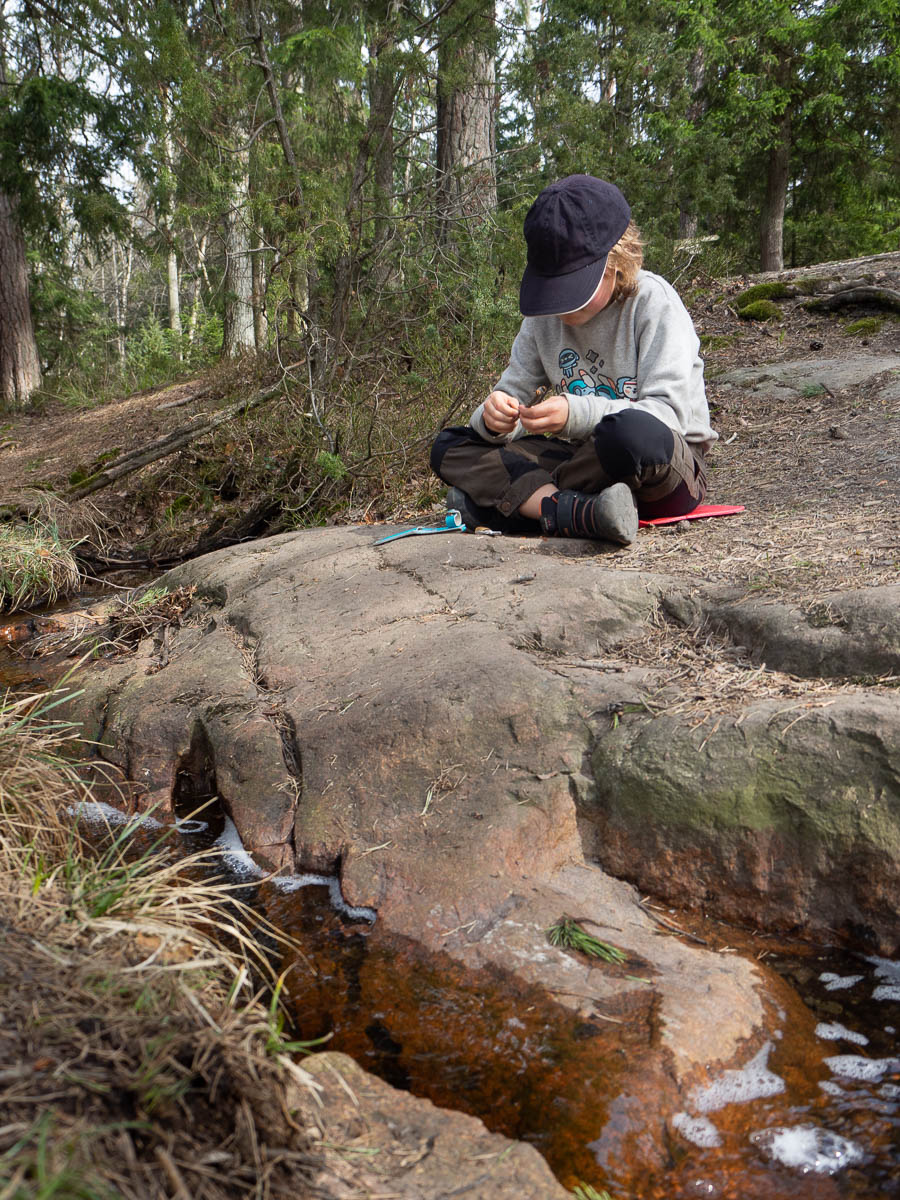
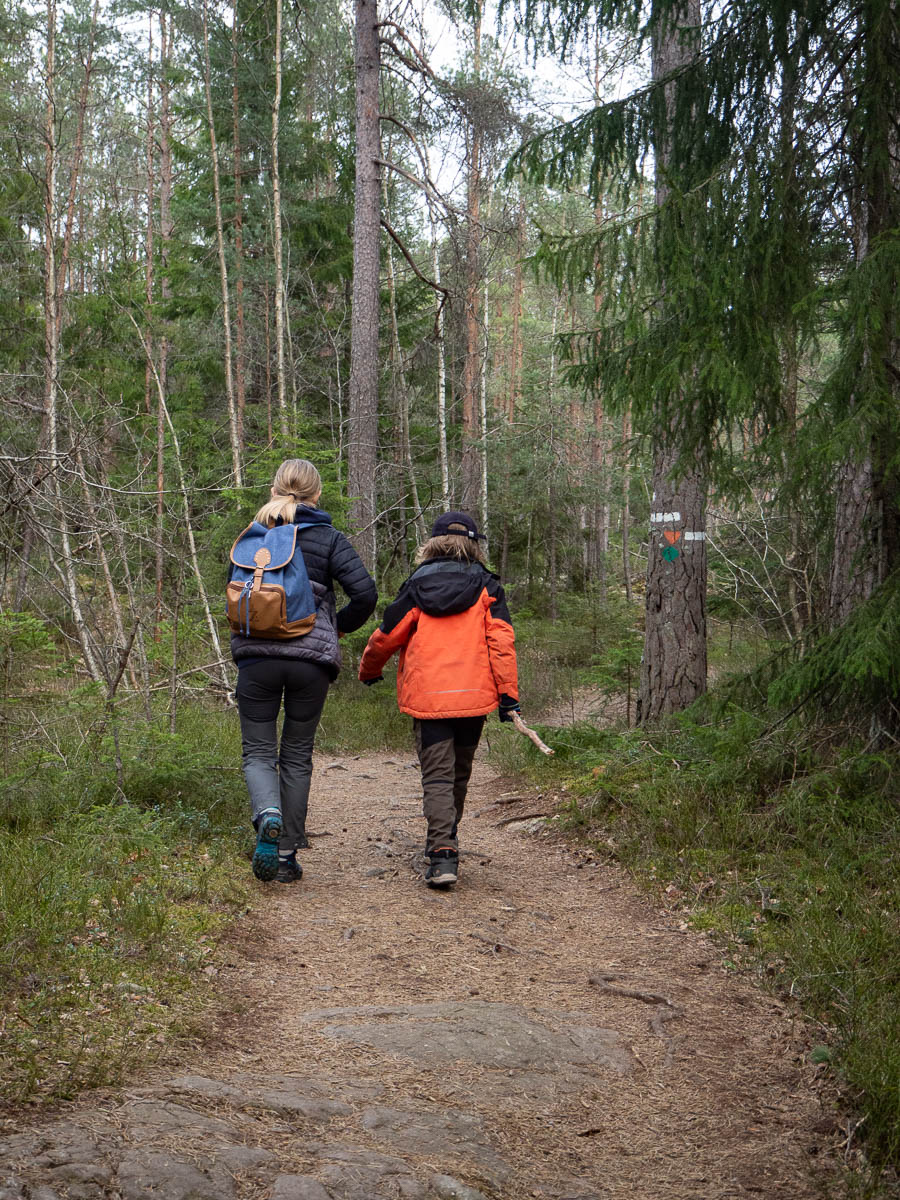
My usual default solution for long weekends is to go out for a walk. Today we went to Tyresta, back to that north-eastern corner of the national park where we camped last summer. The walk to lake Långsjön and back is picturesque and varied and not too long, and there’s a fire place at a beautiful spot on the lake shore where we could heat our lunch. It’s somewhat harder to get to than the area around the main park entrance in the west, and it doesn’t have any of the super accessible stroller-friendly paths, so I was thinking it would be less crowded.

“Less crowded” maybe it was, but definitely not “not crowded”. Dozens and dozens of families had obviously found themselves in the same situation as us, and come to the same conclusion as us. The parking lot at the park entrance was completely full. Luckily there was another parking lot just a kilometre before it, where we got the last but one spot. (Technically we were probably outside the parking area, but the ground was flat and not in a shrubbery, so it worked.)

The resting place with its shelter and fire place was of course full of people as well. But again we were lucky to arrive a bit later than a large group who were mostly done grilling their sausages, so Eric found room for our “hike bombs” at the edges of the fire. (More good luck for us in that someone had brought their own firewood, because the park’s official firewood box was completely empty.)

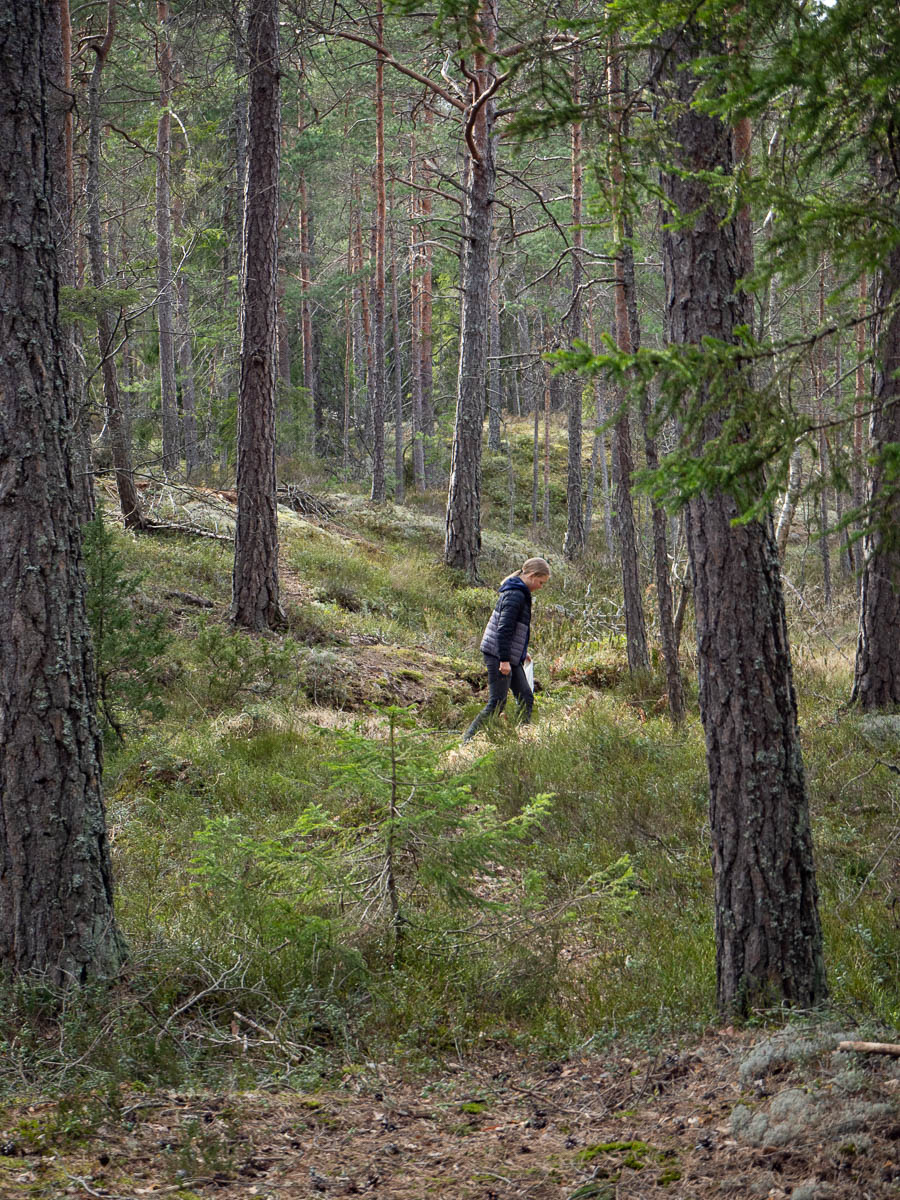
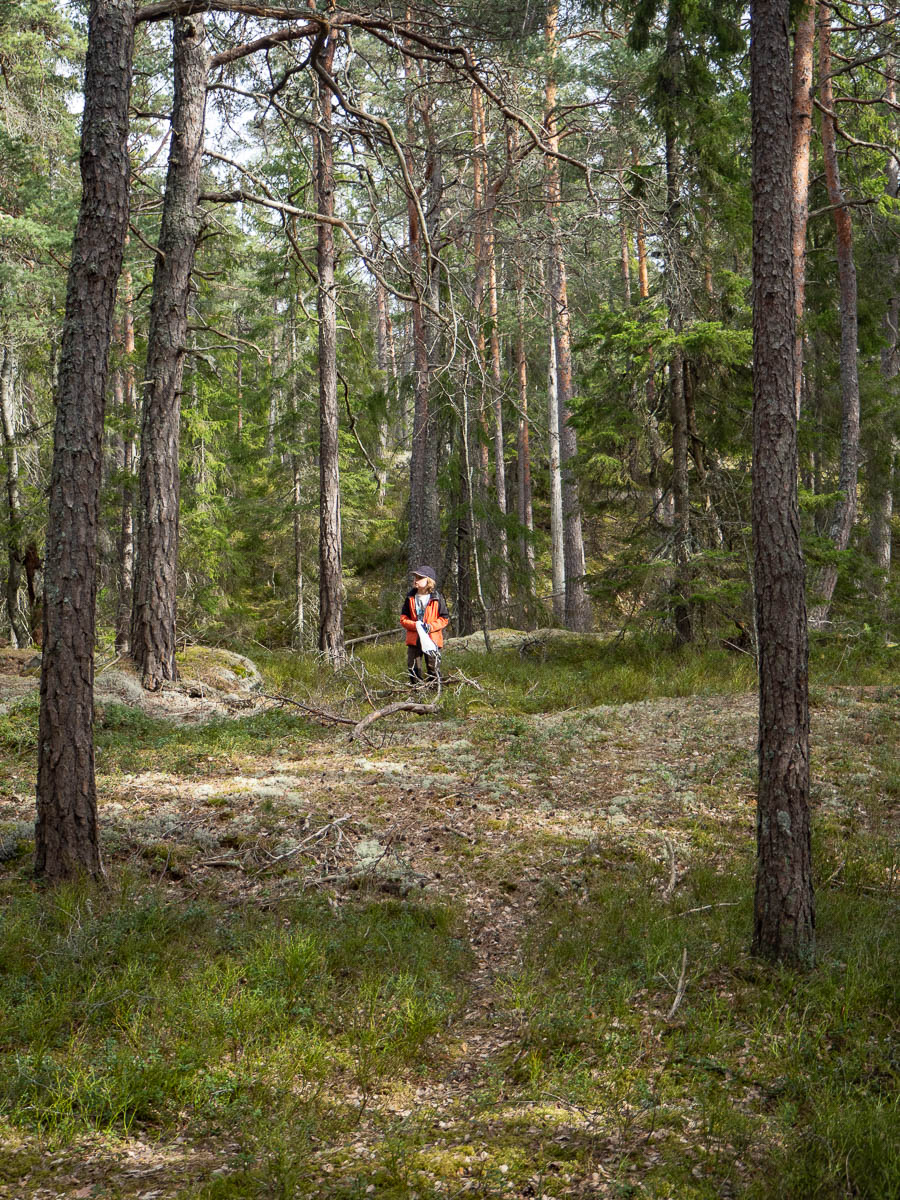
On our way back we had an Easter egg hunt. I hid eggs for Ingrid on one side of the path, and she hid eggs for Adrian on the other. We’ve done this in our own garden several times, but there aren’t that many good places to hide colourful eggs in a bare, early-April garden, so this was a lot more fun. Under roots and under rocks and under twigs and moss. I wish I had thought to take close-up photos.

Ingrid and Adrian are both in a phase where they enjoy each other’s company. Well, Adrian has always enjoyed Ingrid’s, but right now she enjoys his as well, which isn’t always the case. Lots of silly jokes. It always makes me happy to see and hear that.


Now that it’s spring and the weather outdoor is inviting and pleasant, Adrian wants to cycle. He’s outgrown his bicycle, though, and cycling on a too-small bike is not very comfortable.

We took the train to town last week to see if we could find something at Cykelåtervinningen, a second hand bicycle shop, but our timing was not the best. They only had bikes at the extreme ends of the quality scale left in his size (24 inches) – no-gear bikes with rusty scratches, and mountain bikes with more gears than I have toes and fingers – so we came home empty-handed. (Nothing wrong with many gears, but Adrian wants a back-pedal brake, and you won’t find that on a mountain bike. And they tend to be expensive.)

Yesterday we found a bike on Blocket that both looked good and seemed suitable. We met the seller the same evening and came home with a shiny new bike, barely used.

Today, of course, he wanted to cycle. Unfortunately Ingrid is completely bikeless right now, because her bike got stolen last summer. (She actually got two bikes stolen within less than a week, because she left them outside at night… so we didn’t want to buy her a new one. If she wants one, she can earn money for it herself.) But she’s now tall enough that her next bike might be a full-sized one.

We ended up with a whole chain of bike switches. Adrian took his new bike, but everyone else got something they don’t normally ride. Ingrid rode mine; I took Eric’s; Eric took his recumbent bike.

After adjusting the seat to the lowest possible height, Eric’s bike was about the right size for me. But I was really surprised about how “off” the whole geometry felt. The seat was too far to the front and the pedals too far back, and the seat angle felt wrong. Pretty uncomfortable, on the whole.

We cycled to Vällingby, just to have a destination of some kind. Once there we bought ice cream, after which we would “just browse” the bookshop for a moment but bought three beautiful jigsaw puzzles, two books and one GeoBender puzzle. And then had a lovely cycle ride back through the spring sunshine.
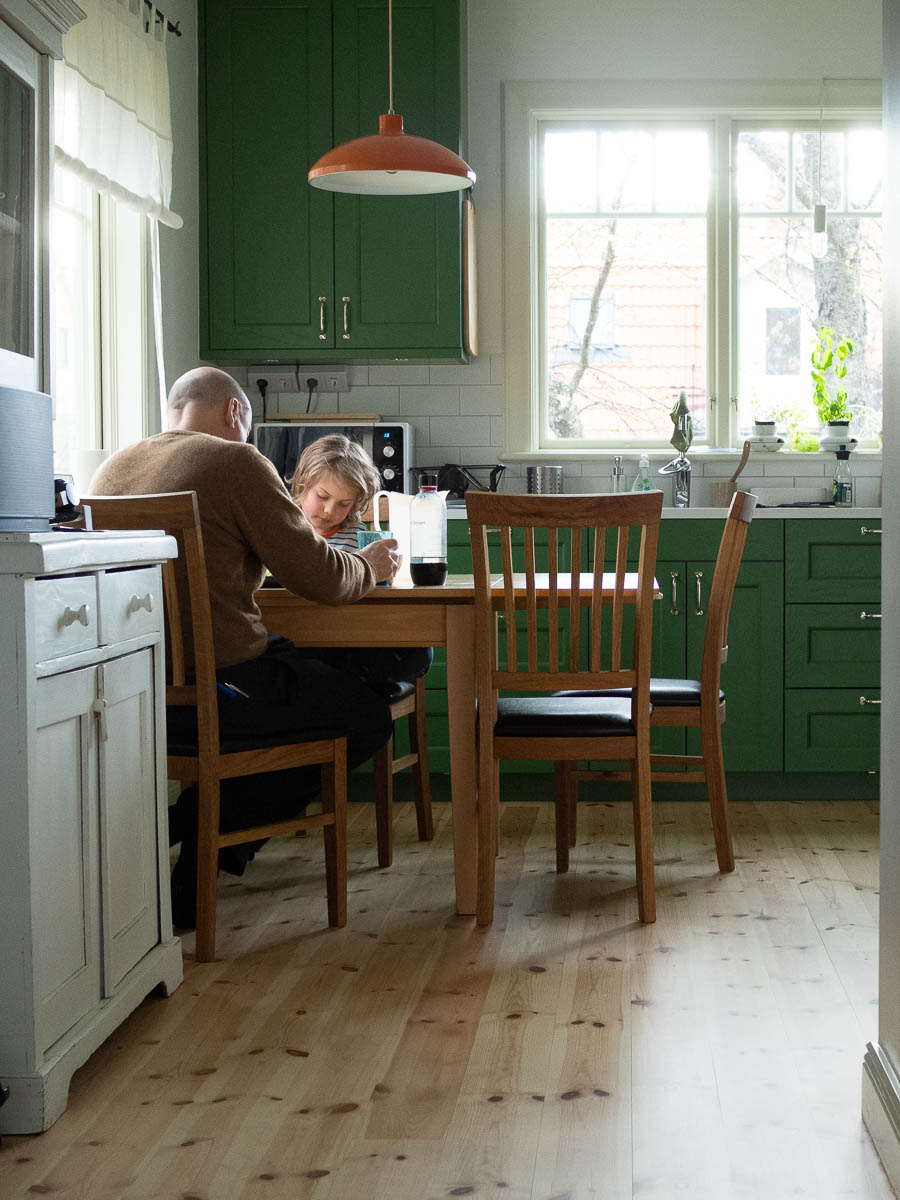
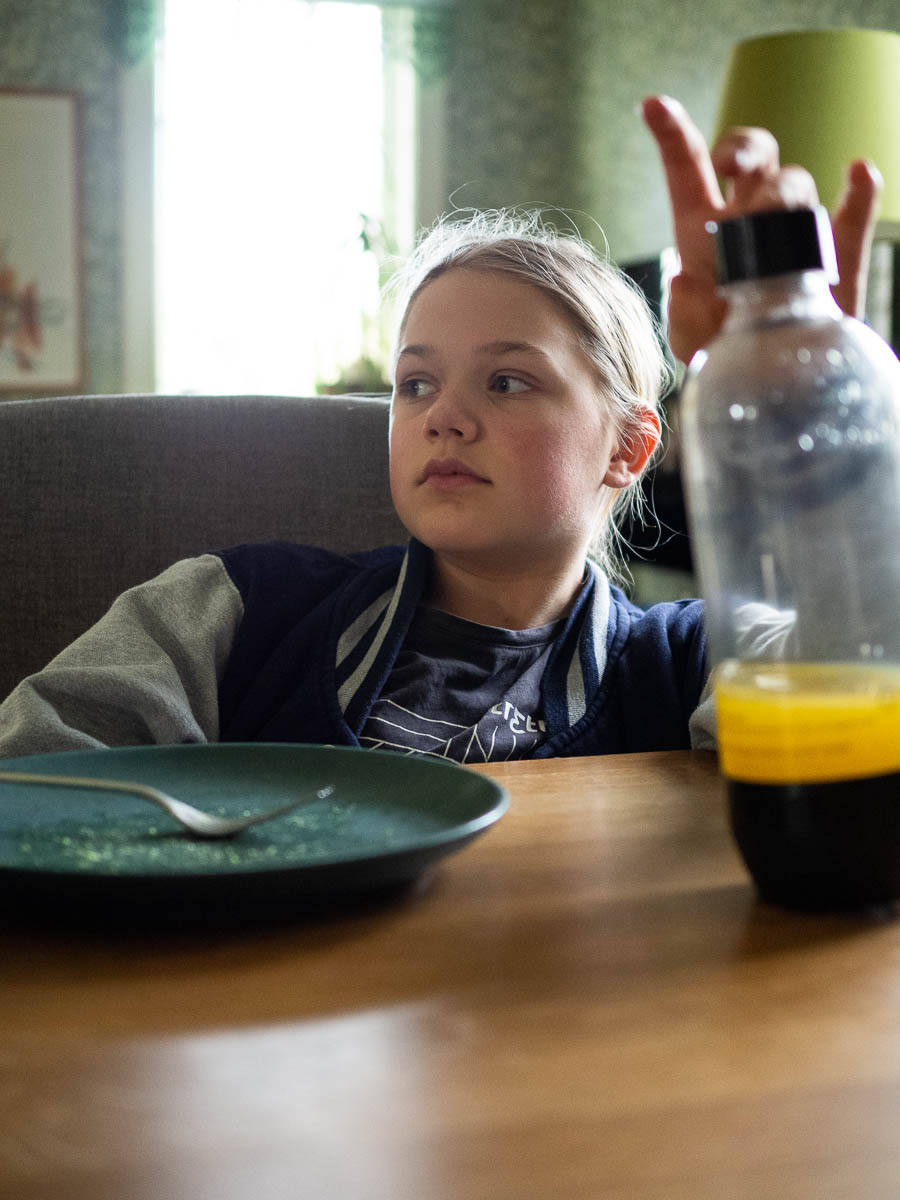
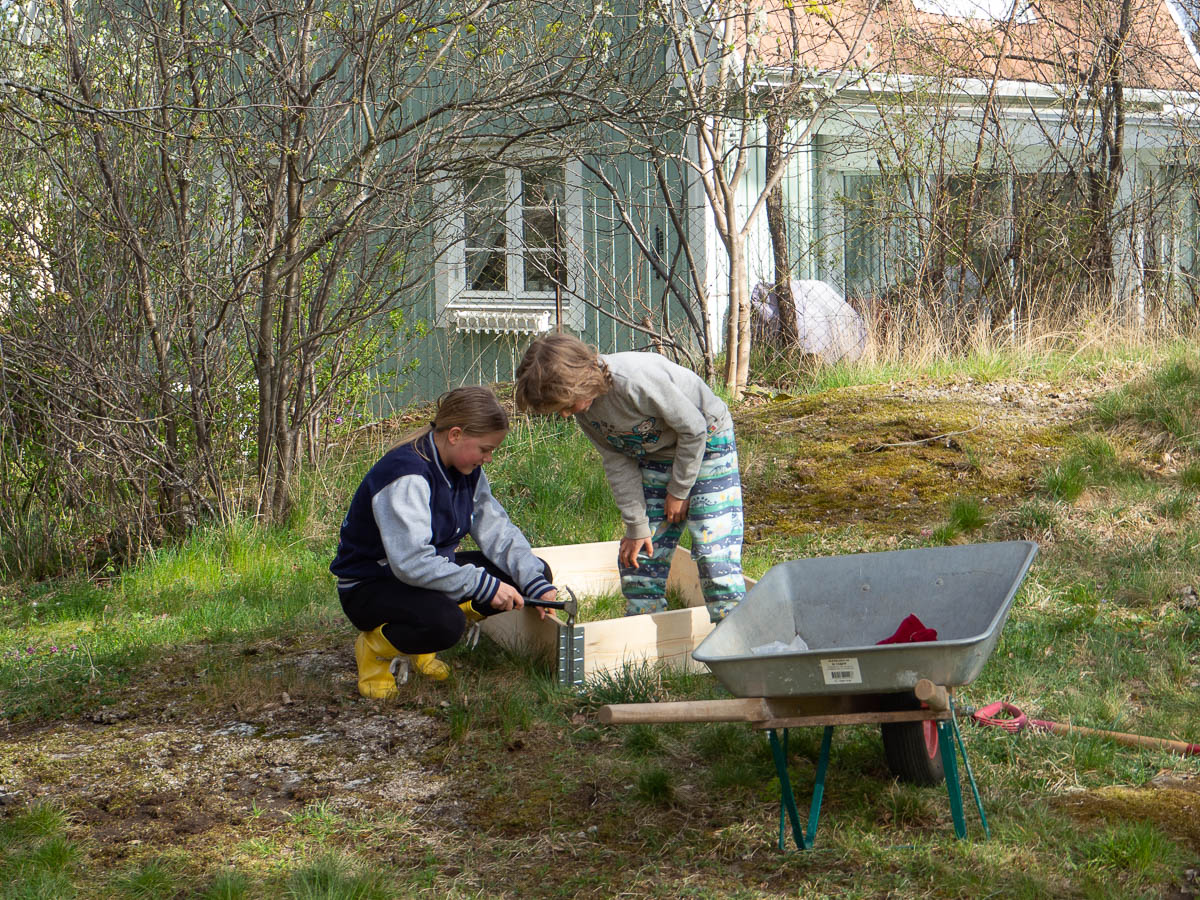
I’m guessing we might get a stricter quarantine soon, and I’ve tried to think about what that might mean for us. Boredom, of course, and cabin fever. We’re well equipped, with Netflix and Kindle and PlayStations and board games. But just in case, one of the things we did today was to buy the Nintendo Switch that Adrian has been saving up for, and letting him spread out the rest of the cost over the next six months. Just in case.

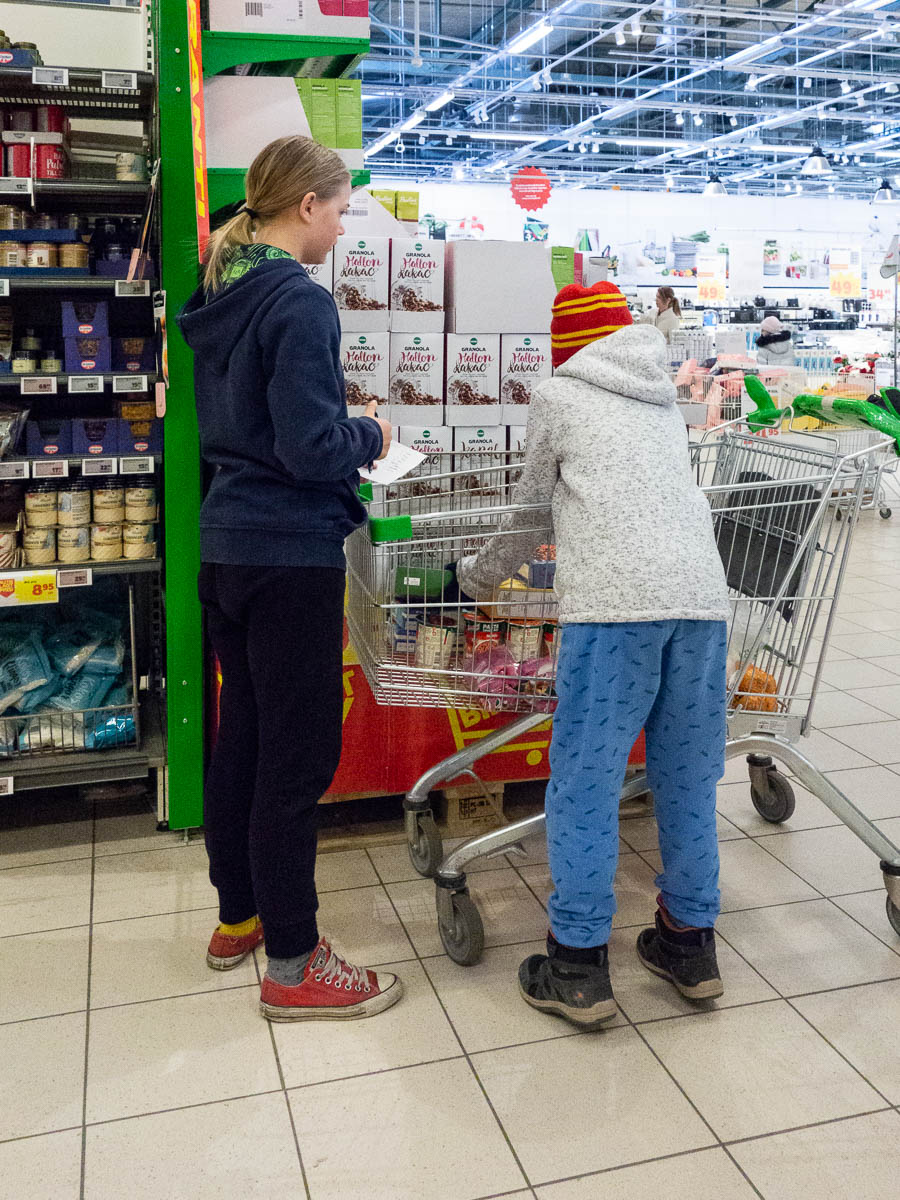
And we went quarantine shopping. If we get a quarantine, we might end up with the same kind of shopping routines that they have in the UK: strict limits of how many people are allowed to be in a supermarket at the same time, and hour-long queues outside. If this happens, it will probably be at its worst at the very beginning, so we stocked up with enough basic groceries to last us a week. No canned ravioli or meat soup or other panic food; just normal basics like pasta, rice, canned tomatoes and beans, and frozen vegetables, that we’ll eat anyway, with or without quarantine.

I made a list and Ingrid and Adrian immediately volunteered to take care of it, and seemed to have fun doing it. Meanwhile, Eric and I did the normal shopping for this weekend.

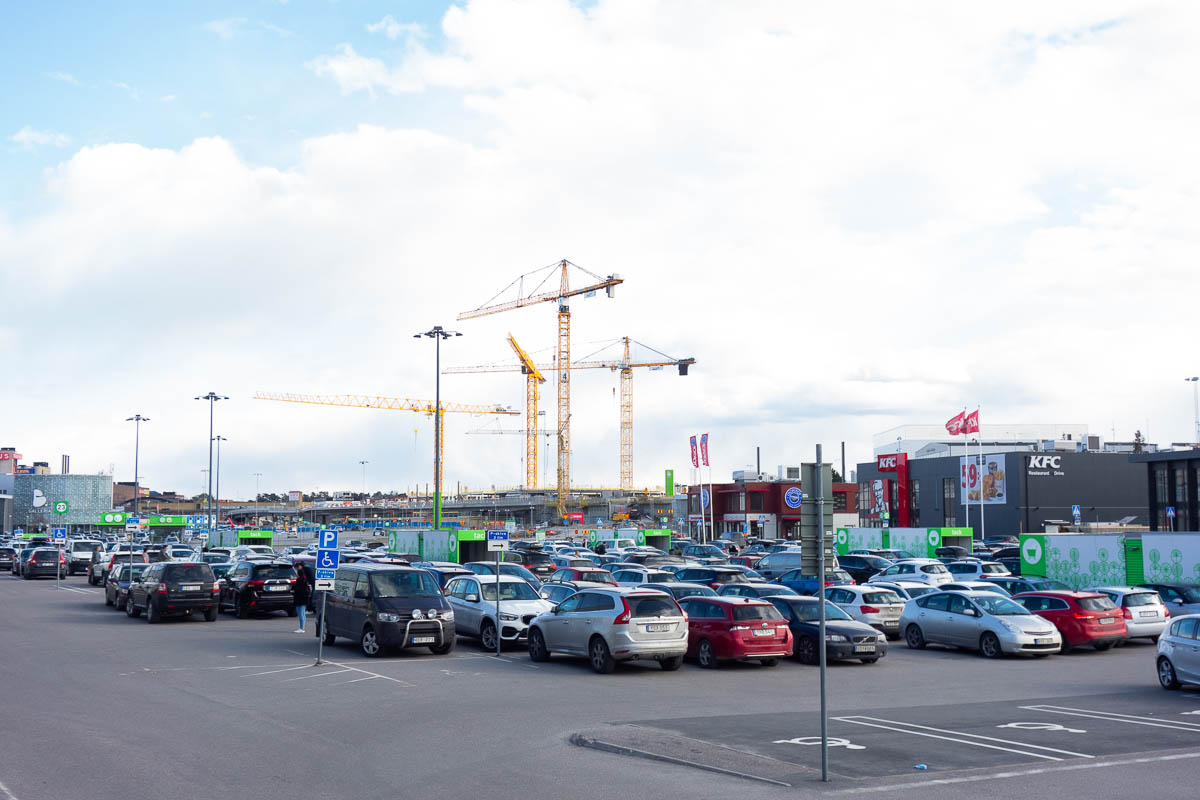
What we saw in Bromma confirms Google’s statistics. The parking lot wasn’t as packed as it would be on a normal Sunday, but it was more full than empty. Not much staying at home going on here.


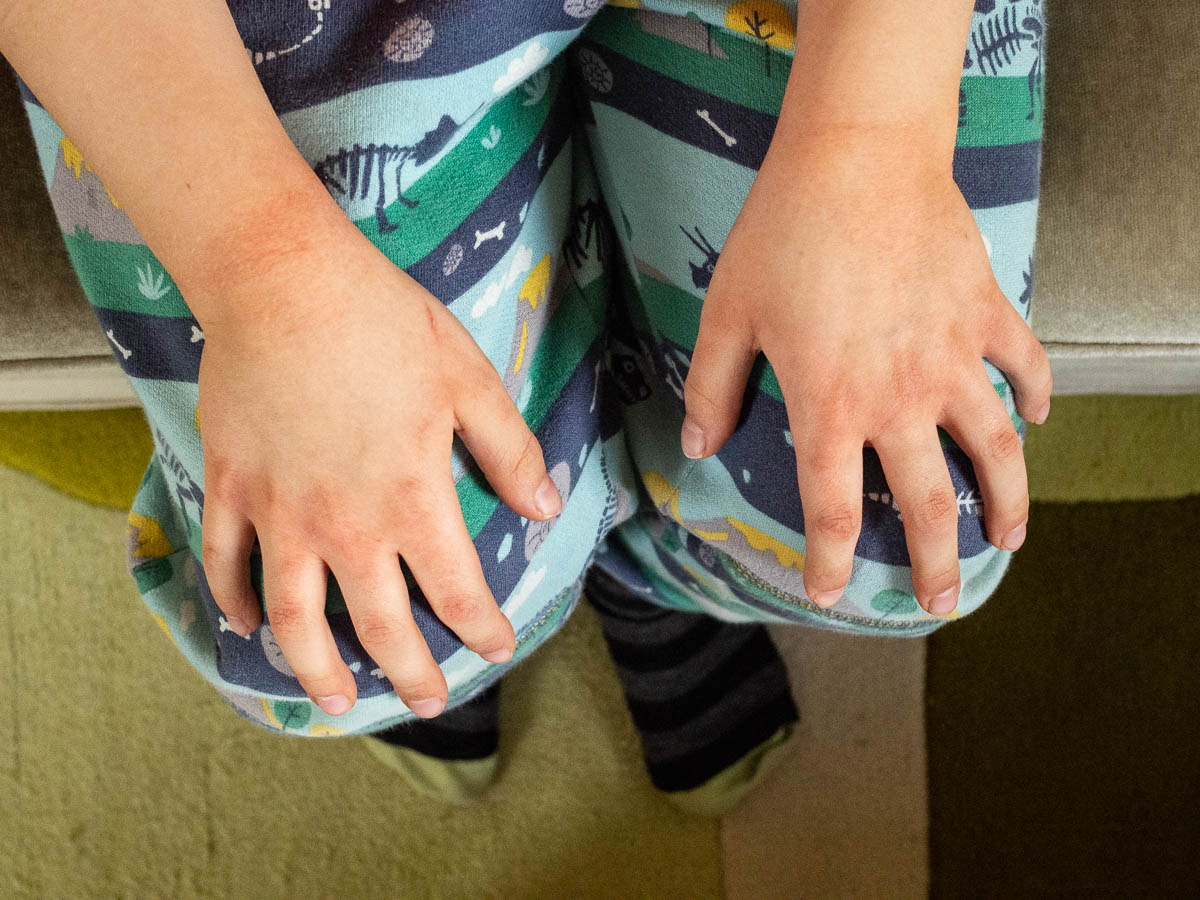
An unexpected side effect of the coronavirus pandemic: badly chapped hands.

Adrian (and all the other kids) are constantly reminded at school to wash their hands. Before meals, after breaks, after going to the loo of course, etc. And with plenty of soap and a lengthy scrubbing of course.

He has somewhat dry skin to begin with, and all this washing is affecting his hands quite badly. His knuckles are constantly chapped, red and rough. On bad days, it spreads to his wrists as well.

An “ultimate strength” hand salve is his constant companion through the day, and among the most important things he packs with him to school every day.


Ingrid is also back at school now. Her post-whooping-cough-coughing has finally subsided so she won’t be scaring people any more by her violent coughing attacks.


Adrian wanted to bake chocolate chip cookies. We made a batch a few days ago, but had to tweak the recipe a bit. It called for dark, milk and white chocolate, and we only had dark chocolate at home. Today we made a new batch, with all three kinds, as it should be.

And as before, the part that Adrian likes best is weighing ingredients. The rest can all be good fun – the mixing, and the cracking of eggs, and the tasting, and the rolling of the balls of dough. But weighing is where his enthusiasm lies.

When we cook, there usually isn’t much to weigh. But baking is full of weighing, especially in the “prosumer” recipe books that Eric has.


Adrian loved pasta-making so much that he wanted to do it again today, when it’s his day to cook dinner with me.

I read up a bit on pasta-making, we tweaked our process, and everything went more smoothly this time. I made the dough an hour in advance so it was easier to work with. We got a good feel for how dry the dough needs to be, and how much to dust it with flour to make sure it doesn’t stick to itself. I got a better understanding of the point of all that folding of the dough.

Once the dough was done and tested and we got a first batch through, Adrian took over the whole process of making pasta, which let me focus on all the other parts of dinner. So all in all, we got dinner done as fast as I would have on my own with dry pasta. Not bad.


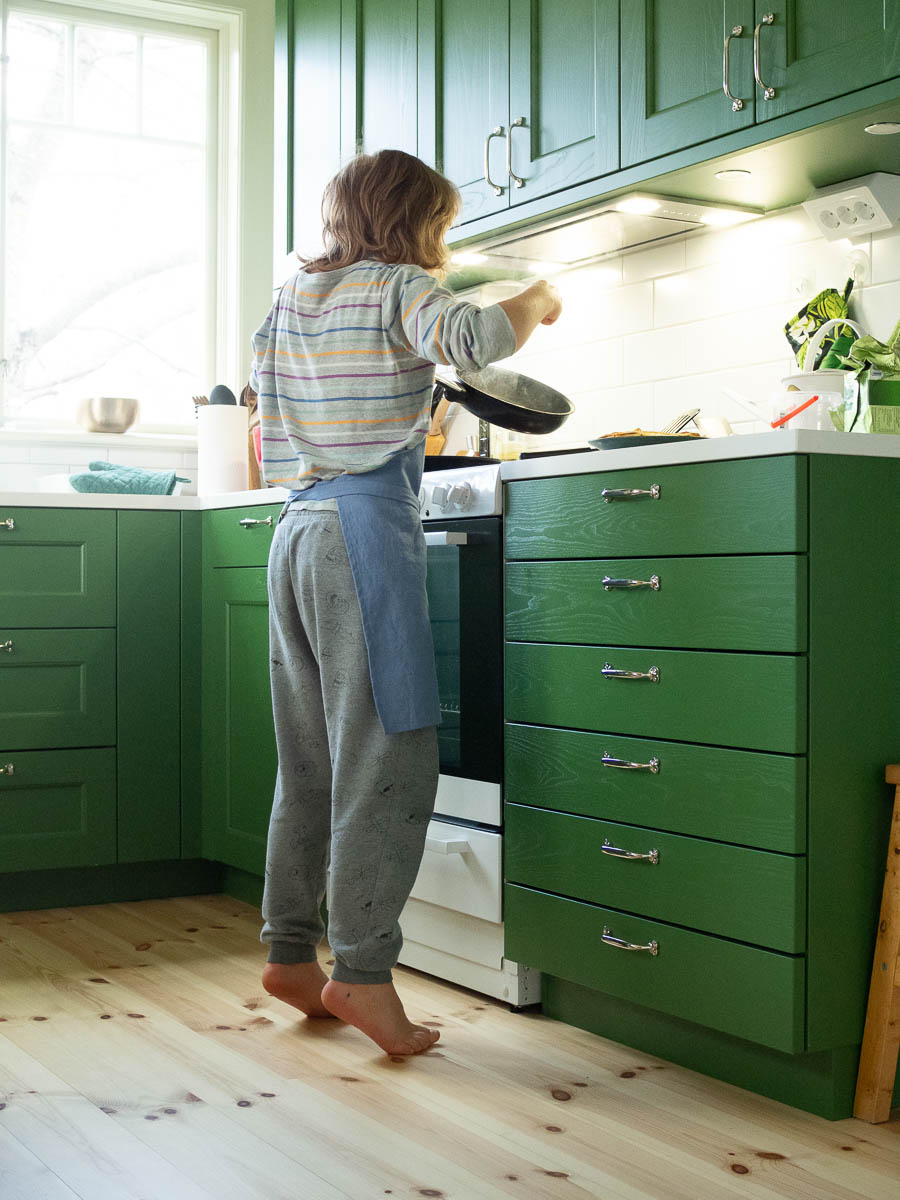
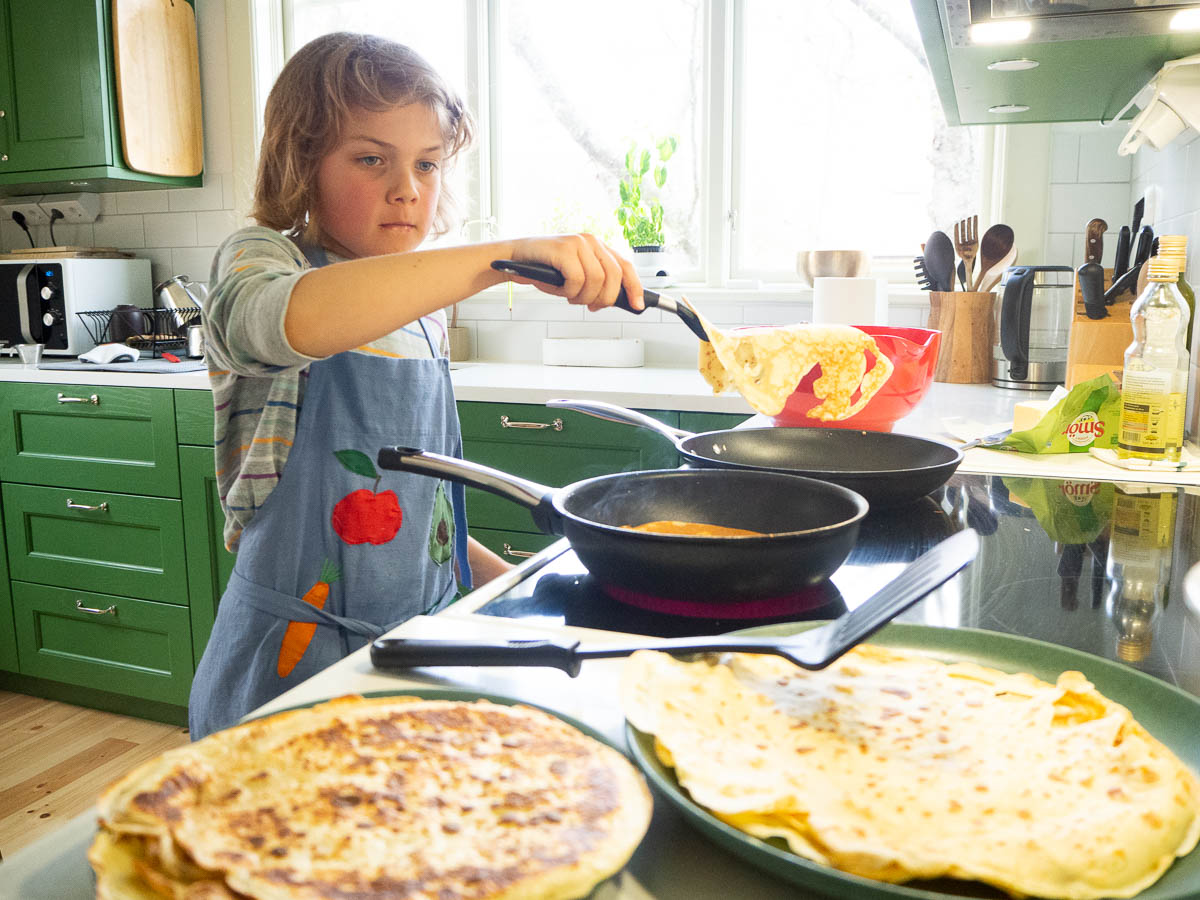
Everyone in this household is now cooking or baking regularly. Alone among us, Adrian had no apron that fit him.

Store-bought aprons aren’t quite one size fits all, but nearly: there are two sizes on the market instead of one. Kids’ aprons are sized for kids aged 4 to 6 or thereabouts, and the ones we had are now way too small for Adrian. Adult-sized ones are still way too large.

What does one do? Make one, of course!

I like easy sewing projects like this. No worrying about fit, just have fun. And it takes no more than a few hours to get done.

Adrian made the design, I made it happen.

He had a very clear idea of what his apron should look like, with colourful appliques of fruit and vegetables (and an egg) and cooking utensils. Most of them he chose, I think, because they look cool – he doesn’t even really eat avocados – but the cucumber got pride of place because it is his favourite vegetable.

We later replaced the orange with a carrot, because it’s hard to make an orange not look like an orange-coloured ball, and had to skip most of the utensils because we couldn’t fit them into the space we had. We switched from pink to blue because we couldn’t find a sturdy fabric in the kind of dusky pink he had in mind. But the final result is pretty close to the original design.

Functionally, the apron has three tweaks that I wish all my aprons had as well.
One: no pocket. I’ve never used any of the pockets on my aprons – all they do is get in the way and get dirty.
Two: ties of generous length. Both Adrian and I like taking the ties all the way around the waist and tying the knot in the front.
Three: neck strap adjustable using snaps instead of rings. Non-adjustable neck straps suck; I’ve ended up tying ugly hard knots in some to make them fit. And D-rings always end up slipping. Watching Master Chef on TV, I noticed that they had snaps instead. Of course that’s the way to go!


Tekniska museet has an exhibition about robots that we’ve been talking about for months now. This is the last but one weekend so today Adrian and I went and saw it.

The theme was specifically humanoid and human-like robots – “making machines human”. The story starts back in the renaissance: on the one hand, new inventions such as mechanical clocks and ever more elaborate clockworks; on the other hand, a growing understanding of human bodies and anatomy. Those came together in impressive automata that then gradually inspired more and more human-like machines.

There were plenty of robots, robot parts and images of robots to be seen. Fictional robots, from Metropolis and R.U.R. through to the Terminator 800. The gradual evolution of robot anatomy, with wooden finger joints and rope ligaments and little motorized muscles. Locomotion, sensors, etc.

Many could have been even more interesting with more in-depth information. I can see that this is a robot arm with these and these parts, and the sign tells me it’s from 1970-whatever, made in some lab in some country. What was really new and cool about it? What could it do? What could it not do? How do more modern robots differ from it? What interesting results did it give rise to? What other experiments did it inspire?

Also unfortunately the robots that you could interact with were very basic. One seemed interesting because it could actually sense its environment and detect nearby people as well as their movement – but it was behind a pane of glass that seemed to interfere with most of its sensors.

There were plenty of other activities at the museum and we stayed for hours. Construction toys; an indoor playground where the kids could let off some steam; various exhibitions. There was an entire exhibition about computer games through time, which had the same problem as the robots exhibition – not enough information.

The exhibit that both Adrian and I enjoyed most was about eye tracking technology. Two monitors that you could draw on by looking where you wanted to put the “paint” – and a large monitor that superimposed the two individual pictures. As a nice touch, the virtual on-screen brushstrokes were very pretty, with interesting shapes and colour gradations, much nicer than the usual single-colour blobs. And drawing was pretty hard. You need to look ahead to where you want the line to go, but my eyes were often drawn back to where the line currently ended. With a lot of staring, I managed to draw some basic shapes. Using eye tracking for real must take a lot of practice.