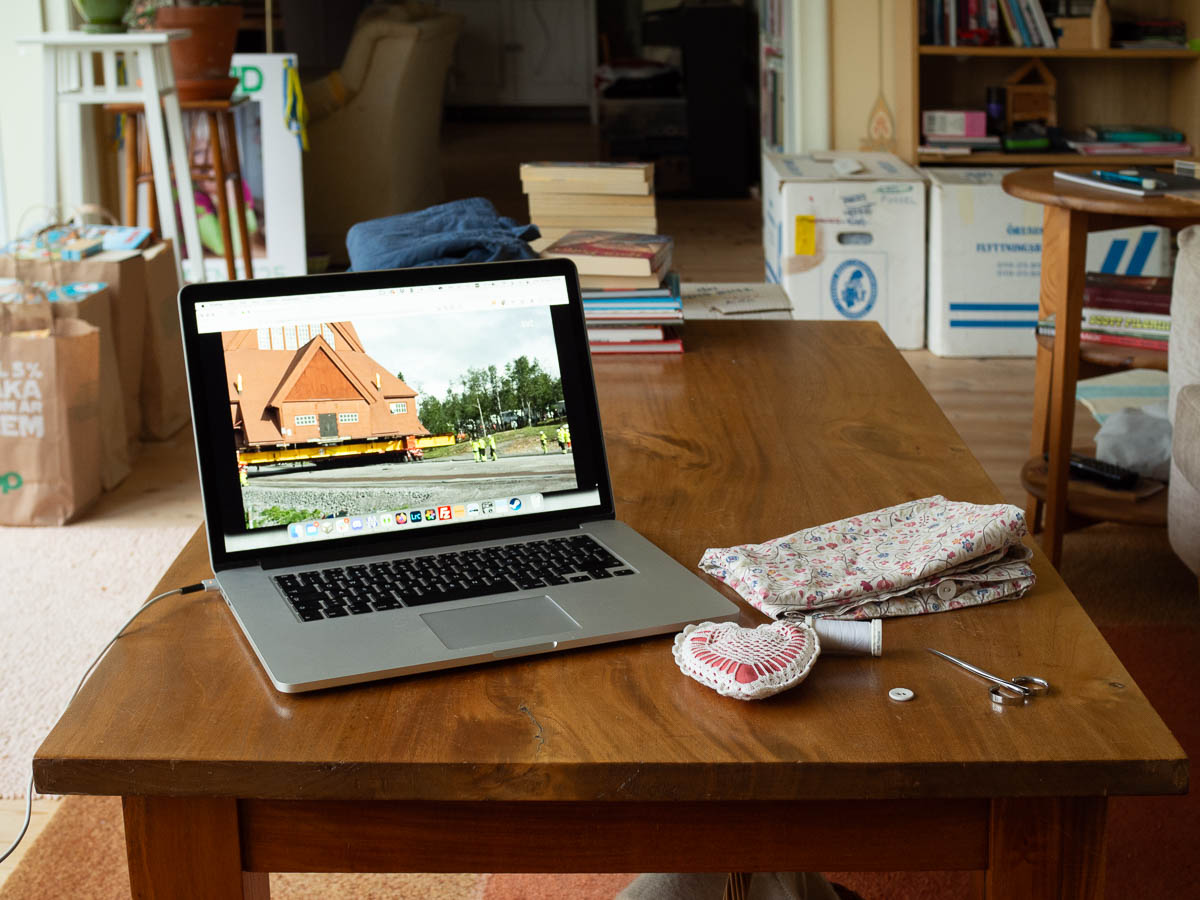
Mending a pillowcase while watching Swedish state television’s real-time reporting of the church move in Kiruna. “Heavy slow TV”, they call it. Unexpectedly fascinating.
The iron ore mine next to Kiruna has been getting closer and closer to town, and an effort has been underway for years to literally move the town. Ordinary houses get torn down and replaced; culturally valuable ones, such as the iconic and beloved church, get moved.
It’s mind-boggling to watch an entire church majestically roll from one side of town to the other. Like a ship, especially in the wider shots where you can see the top of the roof peaking out above treetops.
People in Kiruna have mixed feelings about the whole thing, of course. From a technical point of view, the process is fascinating, and the TV reporting represents it well. The move itself is shown from various angles, both up close and from a distance. The reporter in the outdoors “studio” interviews guests, including a project leader for the move who’s really good at explaining the process. Another reporter interviews random people in the audience.
Interesting facts: There are tilt sensors in the church to make sure that it doesn’t tilt too much, nor bend in any direction. There are people actually monitoring the move from the inside, and one of their main tasks is to listen to the (wooden) building because any creaking would be a sign of stress on the building.
The church measures 40 metres across and the minimum clearance in one of the turns is 1 metre to the house next to the street. They built an entire new stretch of road so that the church can go past (and not through) a 90-degree turn. Other roads have been widened temporarily. The church will move 5 km in total, at a maximum pace of half a kilometre per hour. It stopped for lunch in the middle of the day, and will stop for the night halfway through its journey.

Leave a comment