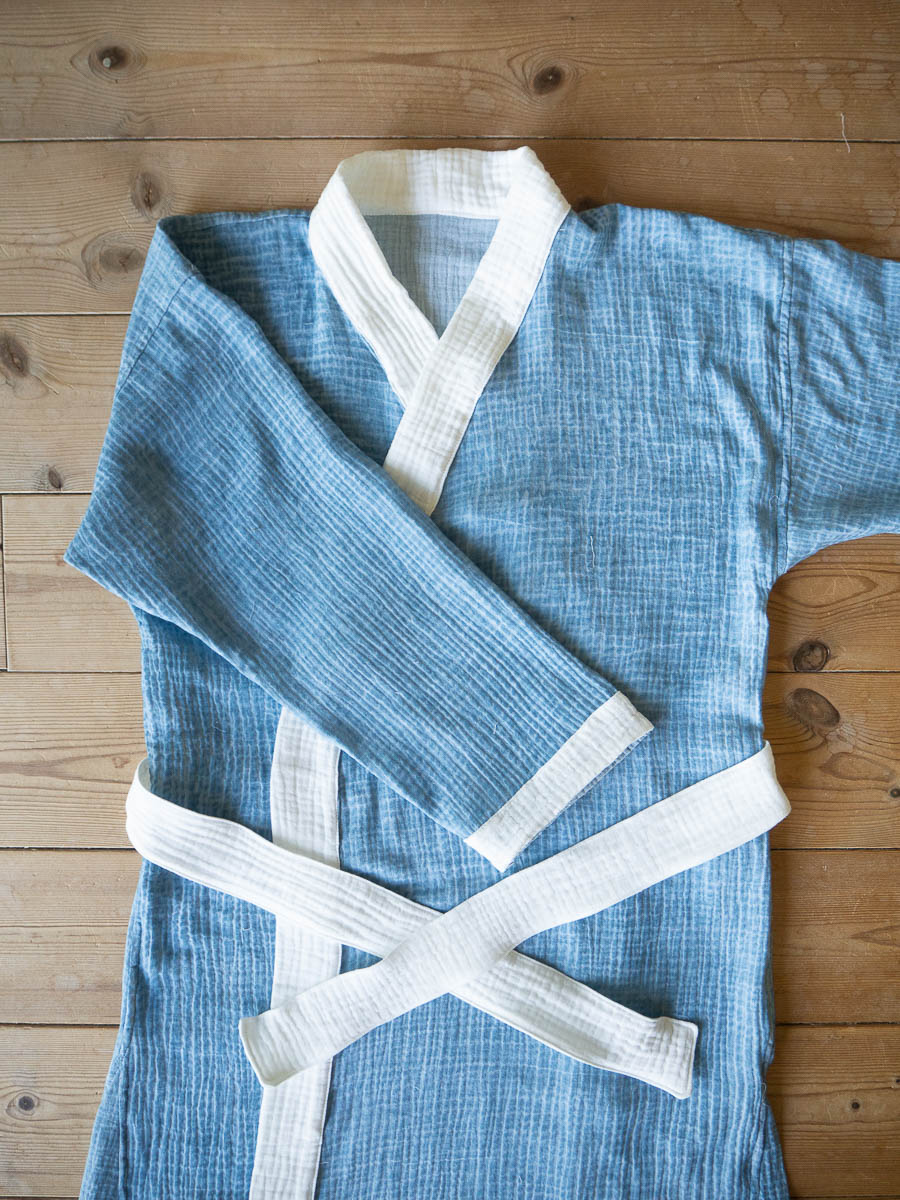
Not bad! Took me most of the weekend, but it came out pretty nice. Incredibly soft and comfy, almost makes me want to cuddle with it. A few slightly uneven seams here and there, but nothing that anyone will notice without a very close inspection. My top-stitching is never as even as I’d like, and it was extra tricky with a floppy fabric that would not stay as folded.

I could probably have had it finished in half the time if I hadn’t decided on flat felled seams. But they’re going to feel so much nicer, and be more durable as well.
The internet, by the way, is full of tutorials for felled seams; there are endless numbers of sewing tutorials out there and felled seams are a popular topic, I guess, because they look so professional but aren’t actually difficult. But those tutorials all stick to the basics and I couldn’t find a single one that covered more advanced topics – such as, how do you sew the meeting of two felled seams? I don’t know if it’s because no sewing expert has written about it, or because Google has gone to the dogs. Which it definitely has; it used to be possible to force the search to include every word in my query but now Google just ignores what I type and goes for the most popular results. “Hey, I know you typed something else, but how about you read this thing instead, I think you’ll like it better.” No, I don’t.
Where my felled seams meet, they sort of fall all over each other and get a bit tangled, but it’s all hidden anyway so that’s OK.
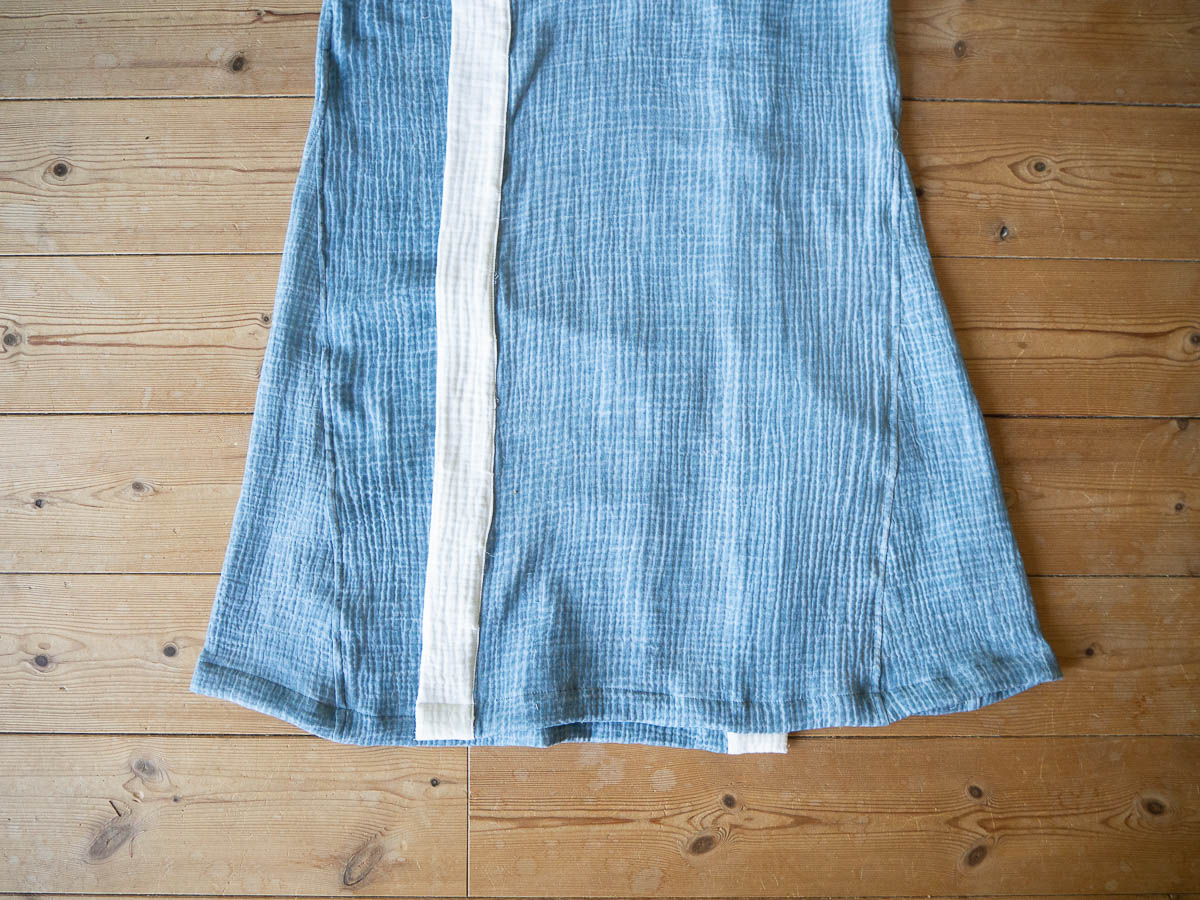
Why do my felled seams need meet each other, anyway? A simple dressing gown just has some straight armhole and side seams, right?
That would have been true if I had just followed the pattern. Unfortunately the pattern I bought looked good on the sketch but that turned out to be an “artist’s impression” only, and reality was different. Like the “artist’s impressions” of proposed new city squares that are all sunny and have trees in little containers and happy young people walking around, and by the time reality arrives the trees are gone and in their places there are garbage bins.
In the sketch the dressing gown was clearly wider towards the bottom and had a nice wide overlap in the front. In reality the body was all straight lines, which was the one thing that I did not want. I am never going to trust another pattern from Svenska Mönster again.
The way the pattern pieces fit on the fabric, I couldn’t easily make them wider, so I added extra pieces in the side seams. (I’ve now learned that the technical term for these is “godet”.) The result is maybe not as sleek as it could have been, but it definitely fits me better. If godets were good enough for the tunic of the Bocksten Man, they’re good enough for me as well.

Leave a comment