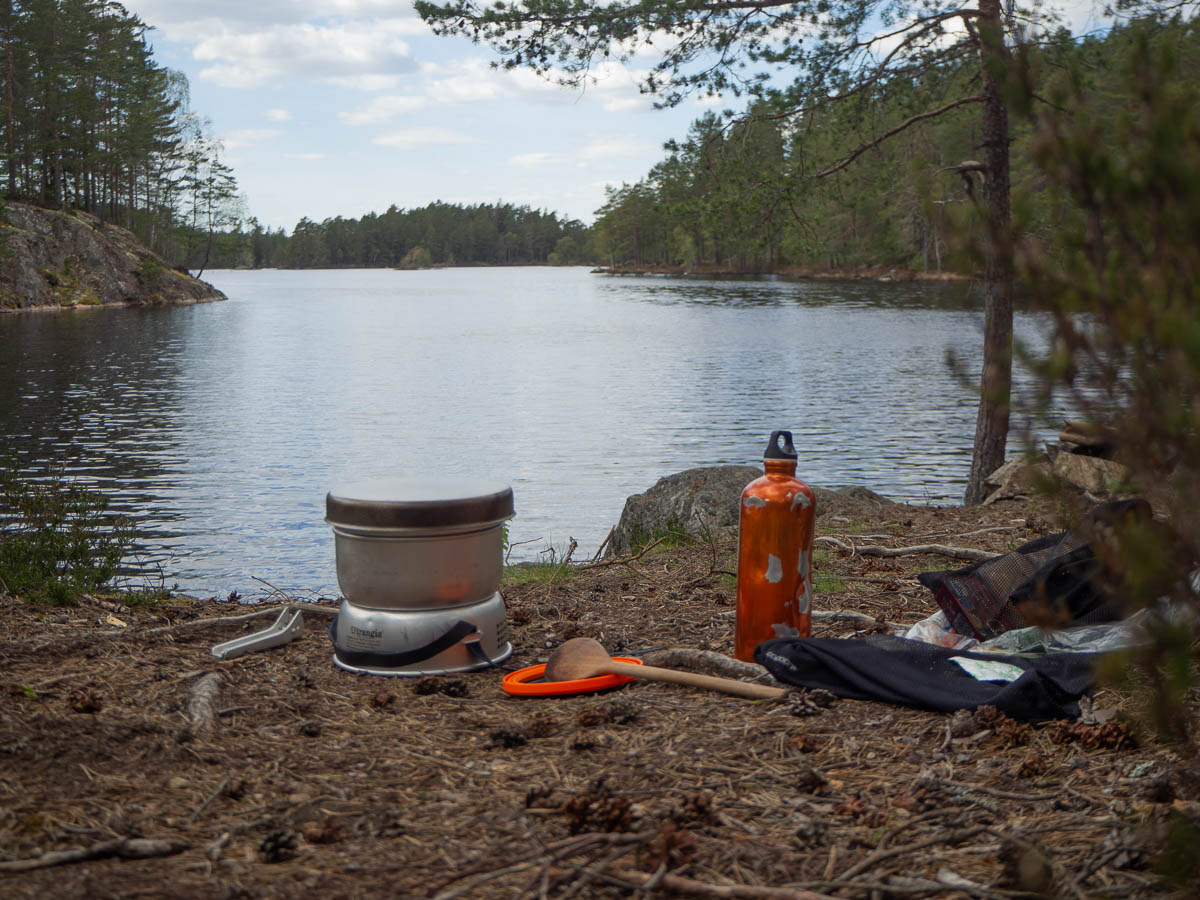
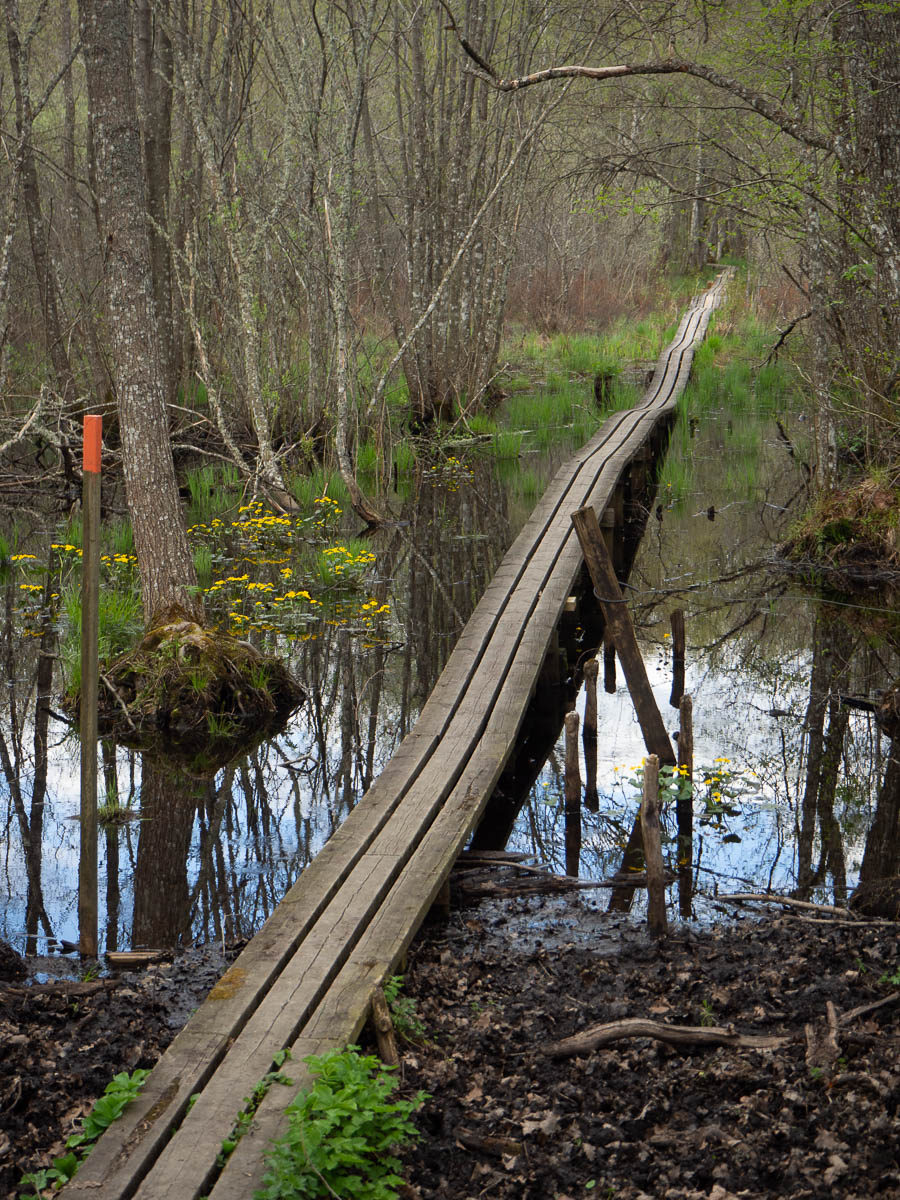
Stage 21 of Sörmlandsleden, there and back again, 21 km in total.

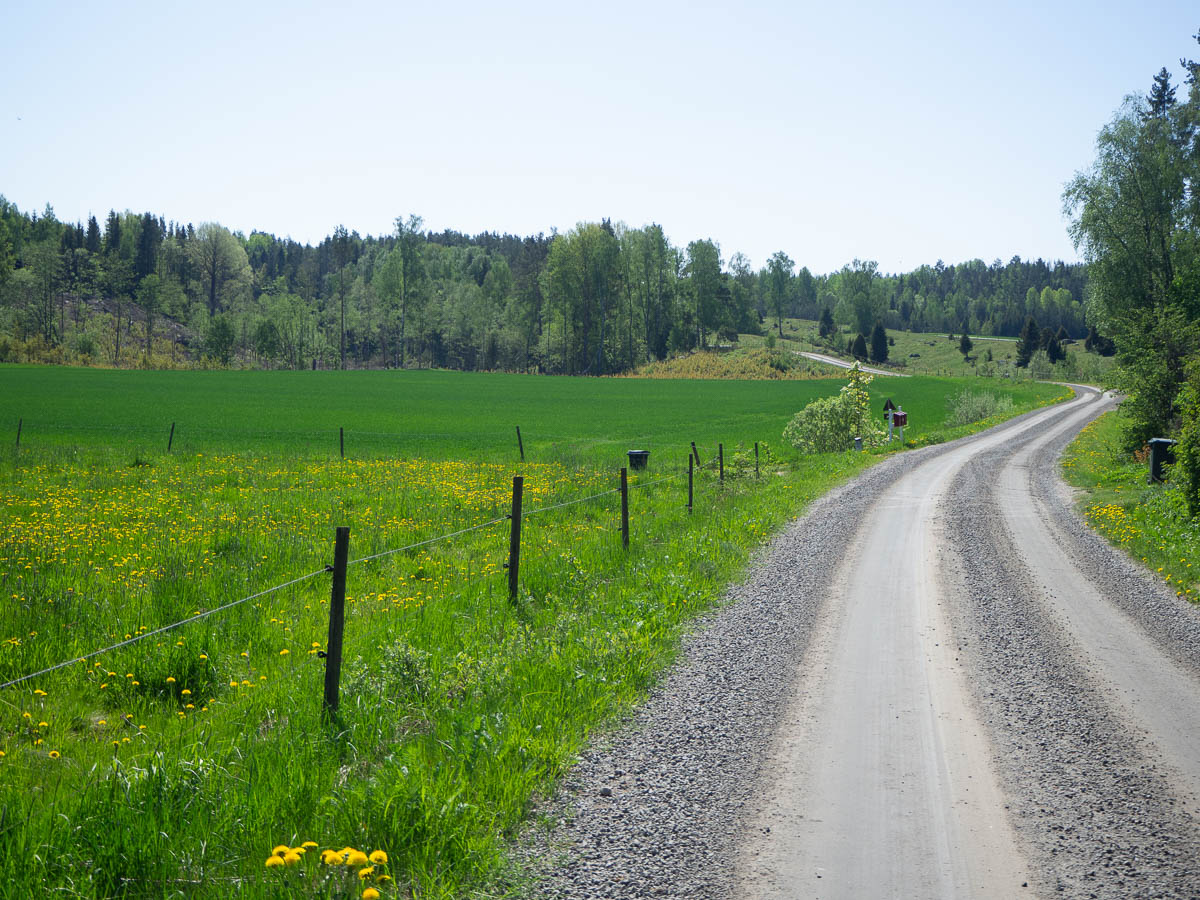
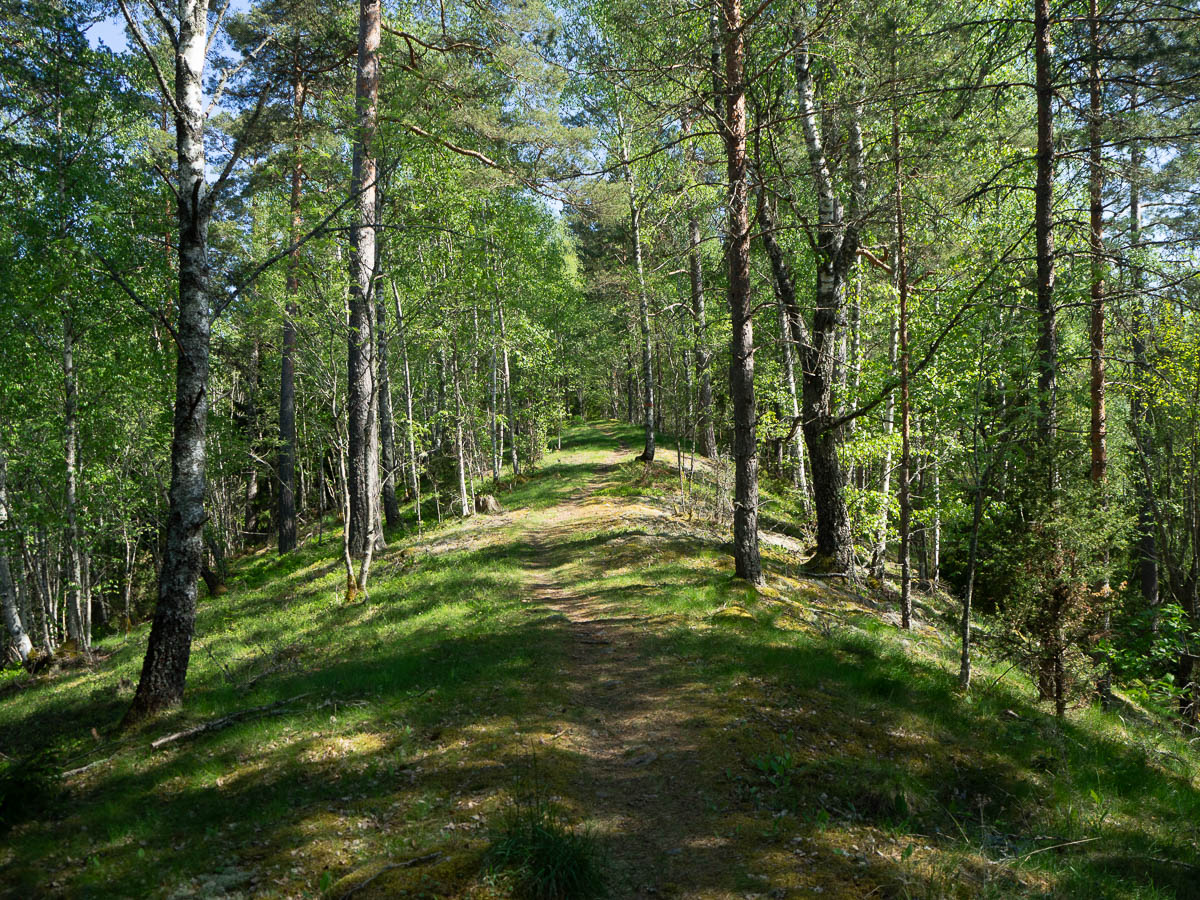
Much of this section of the Sörmlandsleden follows a ridge (or an esker if you want to be technical about it) through a narrow strip of woodland. Easy walking, but not particularly interesting, after the first novelty wears off.

Not much in terms of views, either.

Unlike stages 19 and 20, this one never let me forget that civilization is just around the corner. There was a large road parallel to the trail (or the other way round, I guess) that I could always hear and sometimes see, and smaller roads even closer.

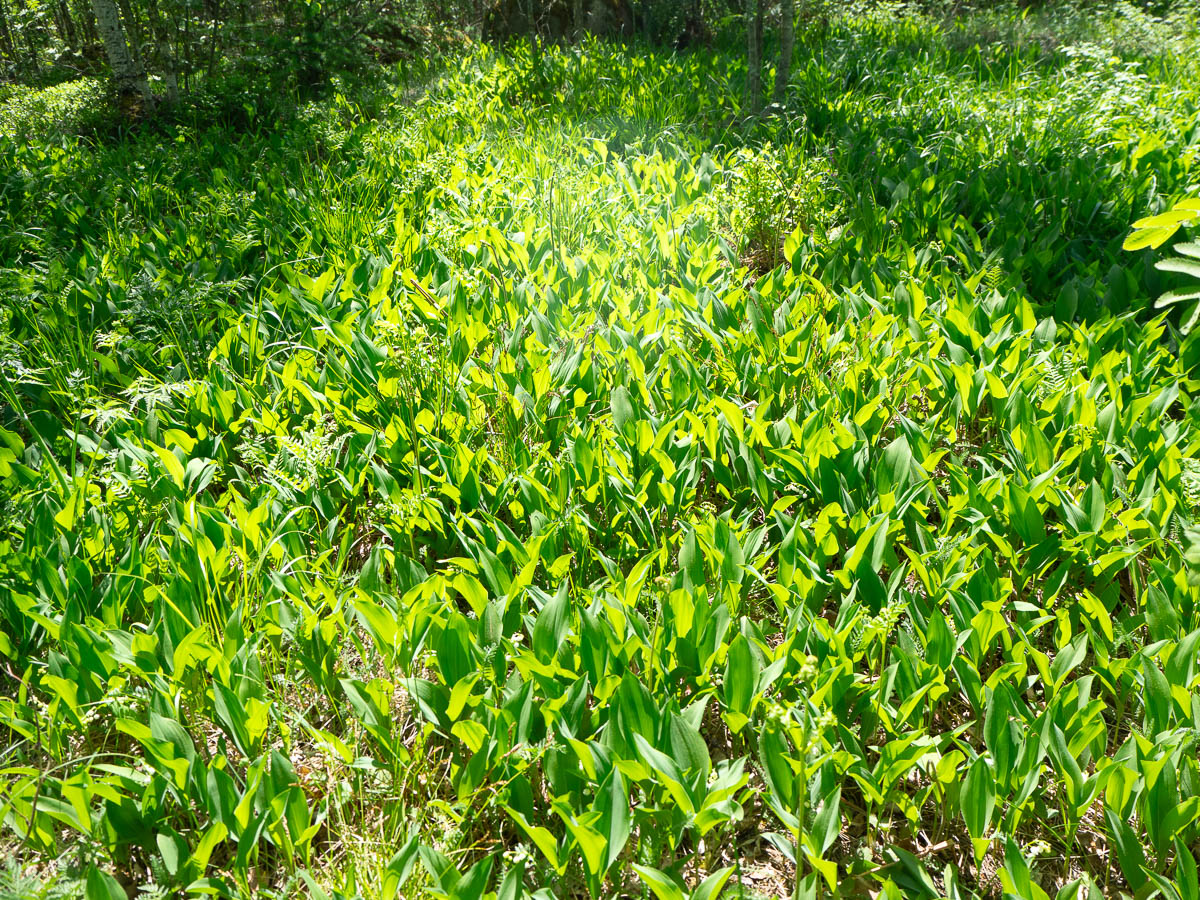
Some spots here probably look quite spectacular when the lilies of the valley are in bloom.

All in all this was more exercise than a nature experience, and while it was an OK walk, it’s not a stage I see myself revisiting.


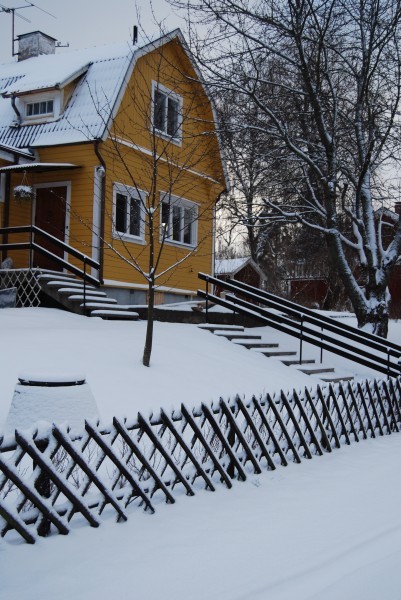
Aren’t they magnificent?

The younger one, closer to us in the photo, is about twice as tall as it was when we moved here in 2008. It’s almost caught up with its older sibling behind it.

Here’s the oldest photo I could find of it:


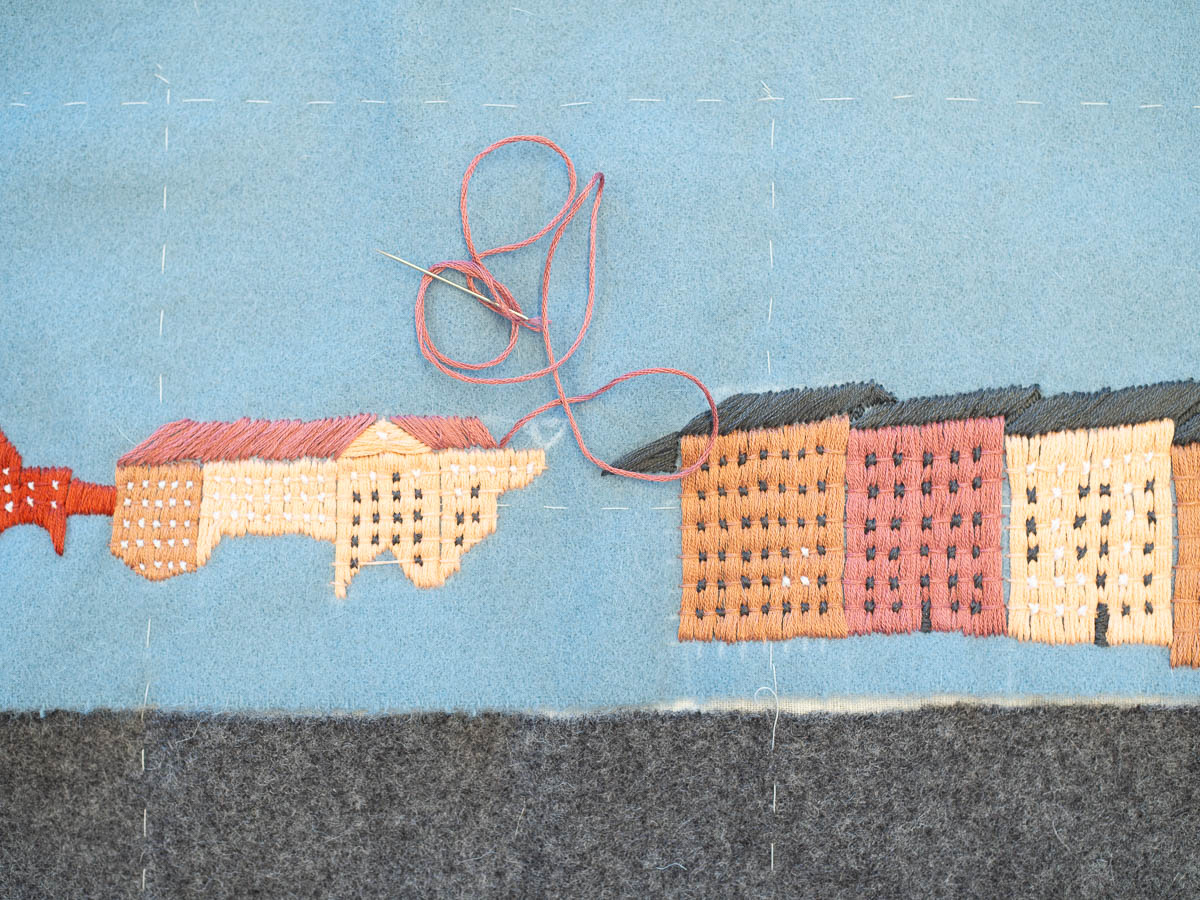
Without the discipline and routine of the bi-weekly embroidery club, how will I make any progress on this during the summer?


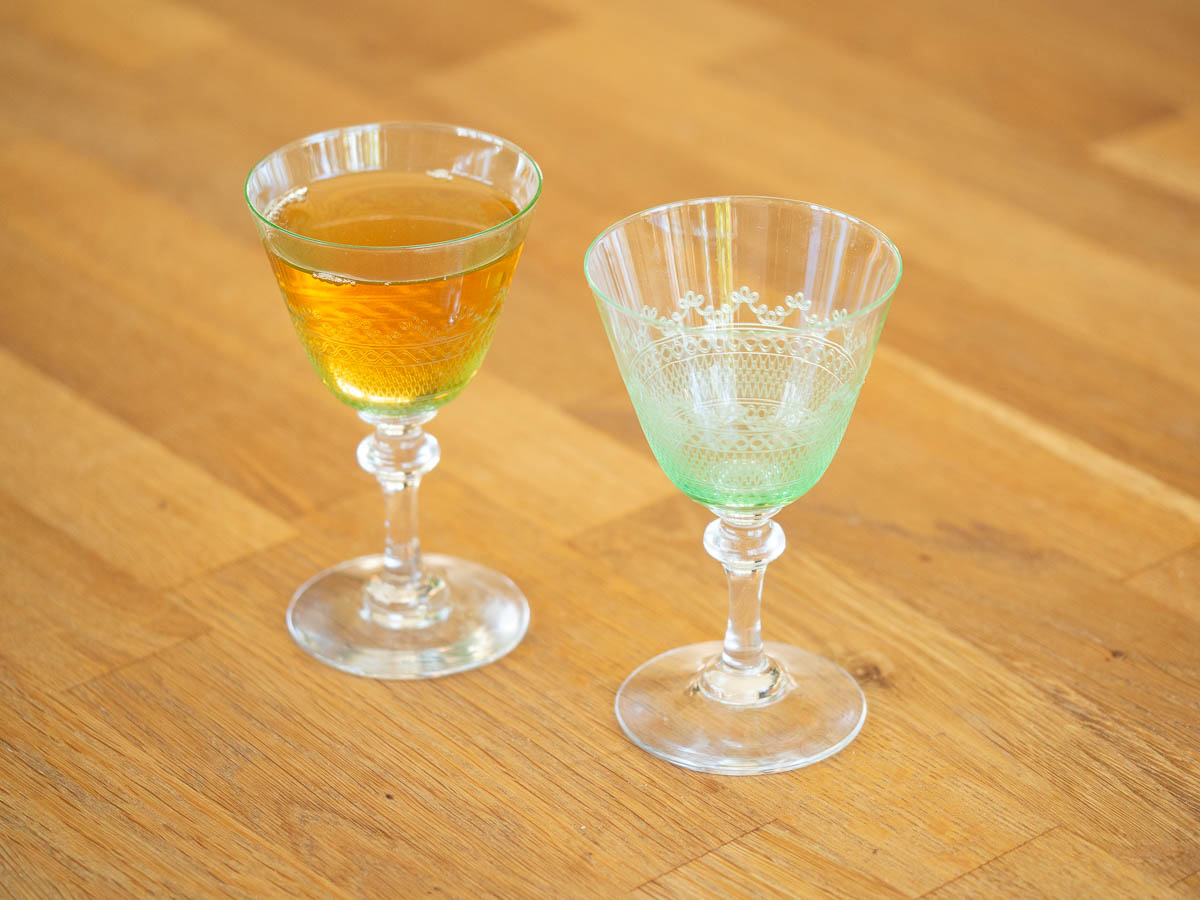
I bought some antique wine glasses a while ago. Tried to photograph them, but it was hard to do them justice.

I don’t drink beer or wine or champagne or anything like that, but I do like a splash of something sweet occasionally, such as a home-made dessert wine. And when I say “occasionally”, I mean like once a month maybe. I’ve made do with whatever receptacles we’ve had at home – plain water glasses, or Eric’s whisky glass – but then I ran across these and thought, why not. 19th century antiques for a pittance, probably because there were only three of them, so I bought all three.

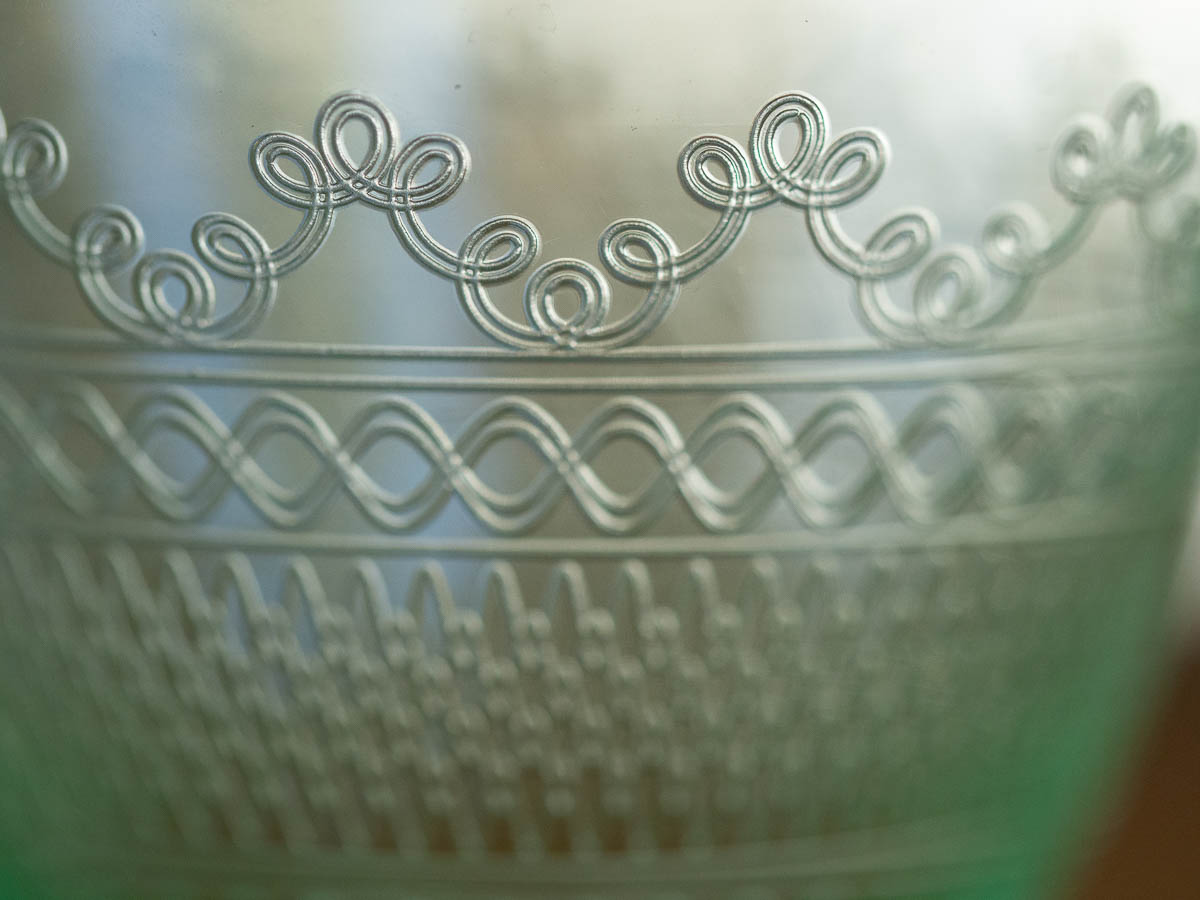
As I said, the photos don’t do them justice. Delicate and intricate, and gently green.


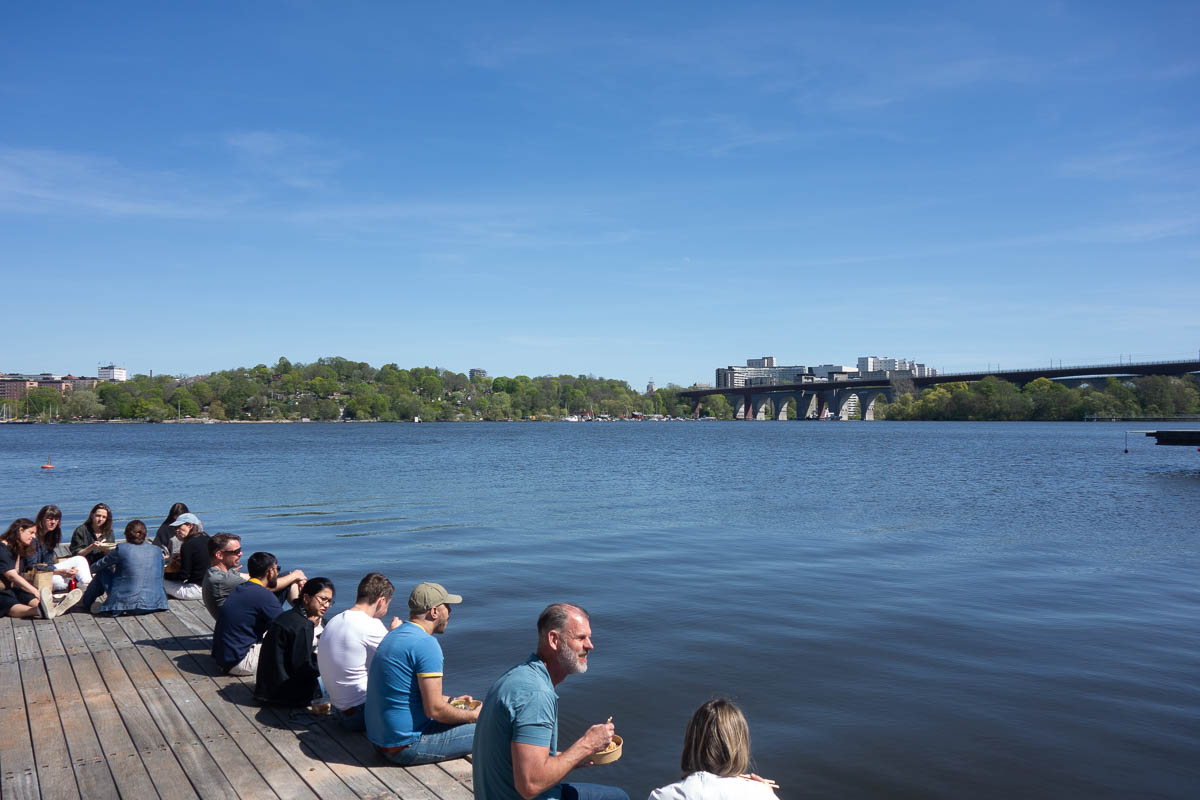
Lunch out in the sun on the quay at Liljeholmen.


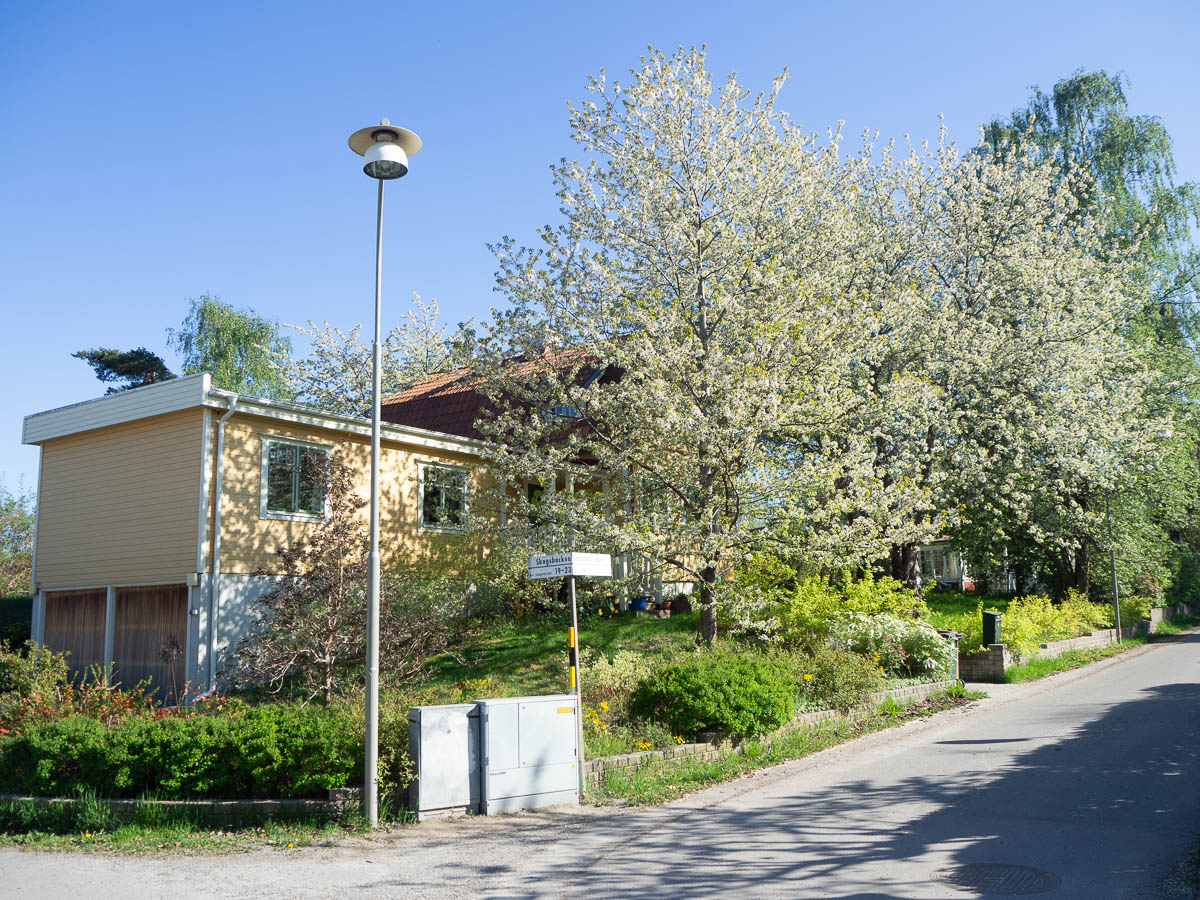
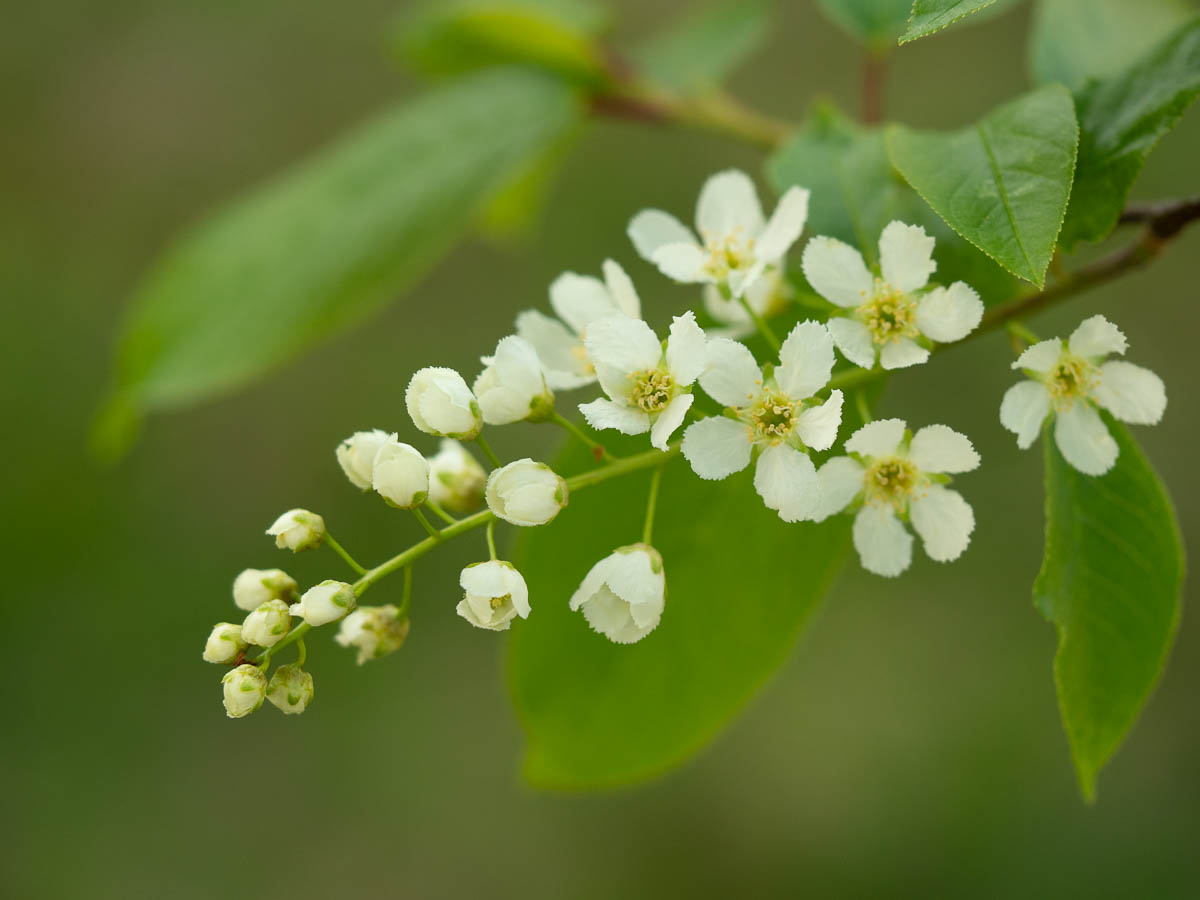
The bird cherry is flowering.

Back the way I came yesterday, from Henaredalen to Ånhammar, 13 km.

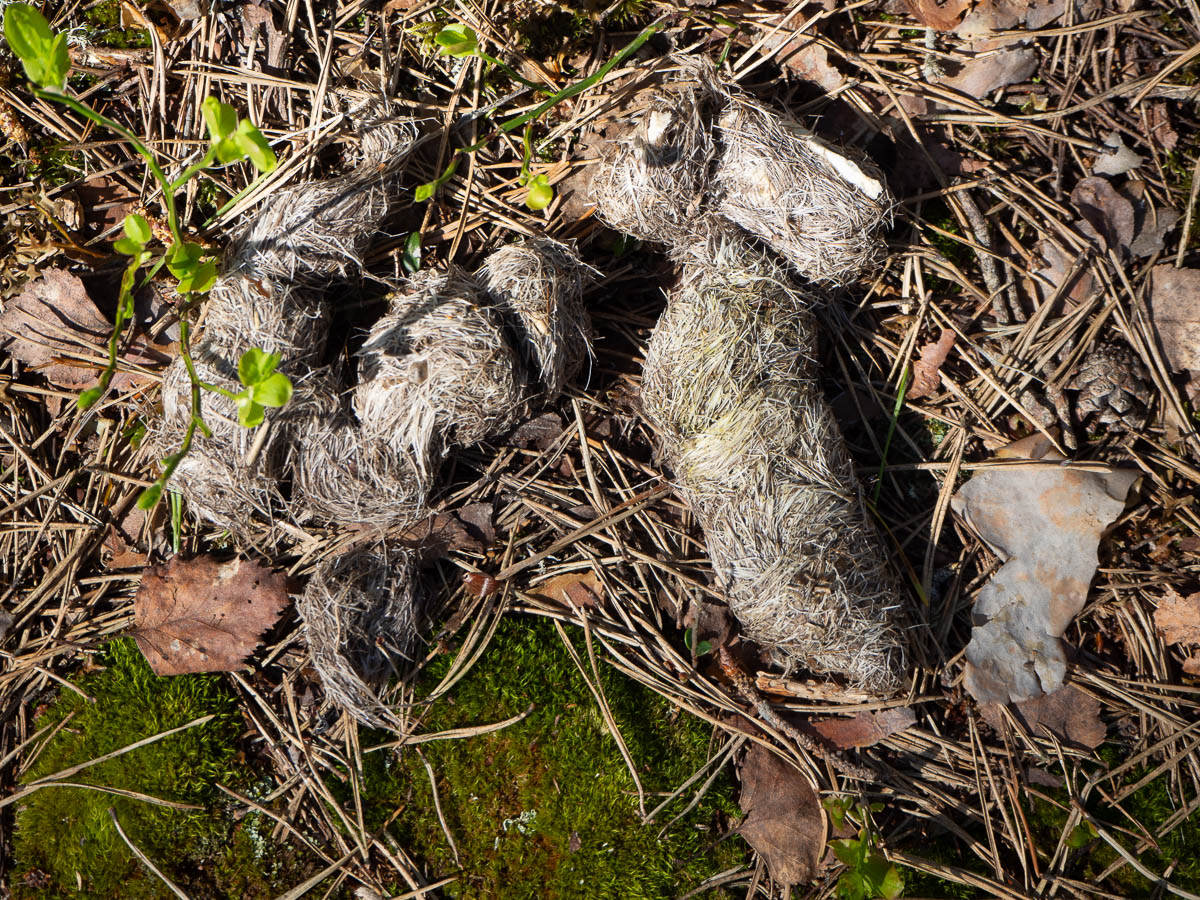
The paw print yesterday may have been wolf or dog, but the droppings I spotted are most definitely from a wolf, because they’re mostly made up of the hair of whatever animal the wolf ate.

I also met a hiker on the trail who was here specifically because he had seen a wolf here a year earlier and was hoping for a repeat. But I never saw anything more than the droppings.

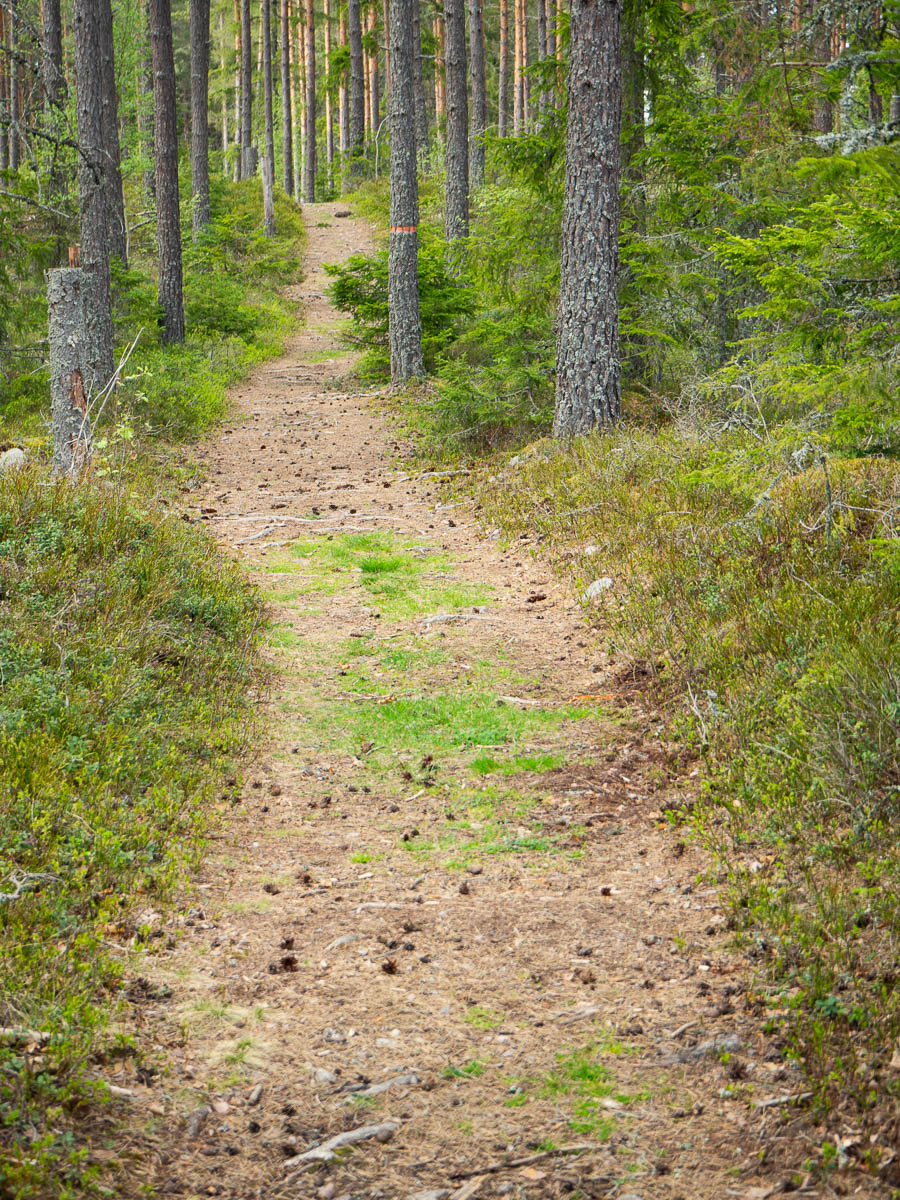
Unsurprisingly today was similar to yesterday.

As a bonus I already knew the best spots for taking a break.

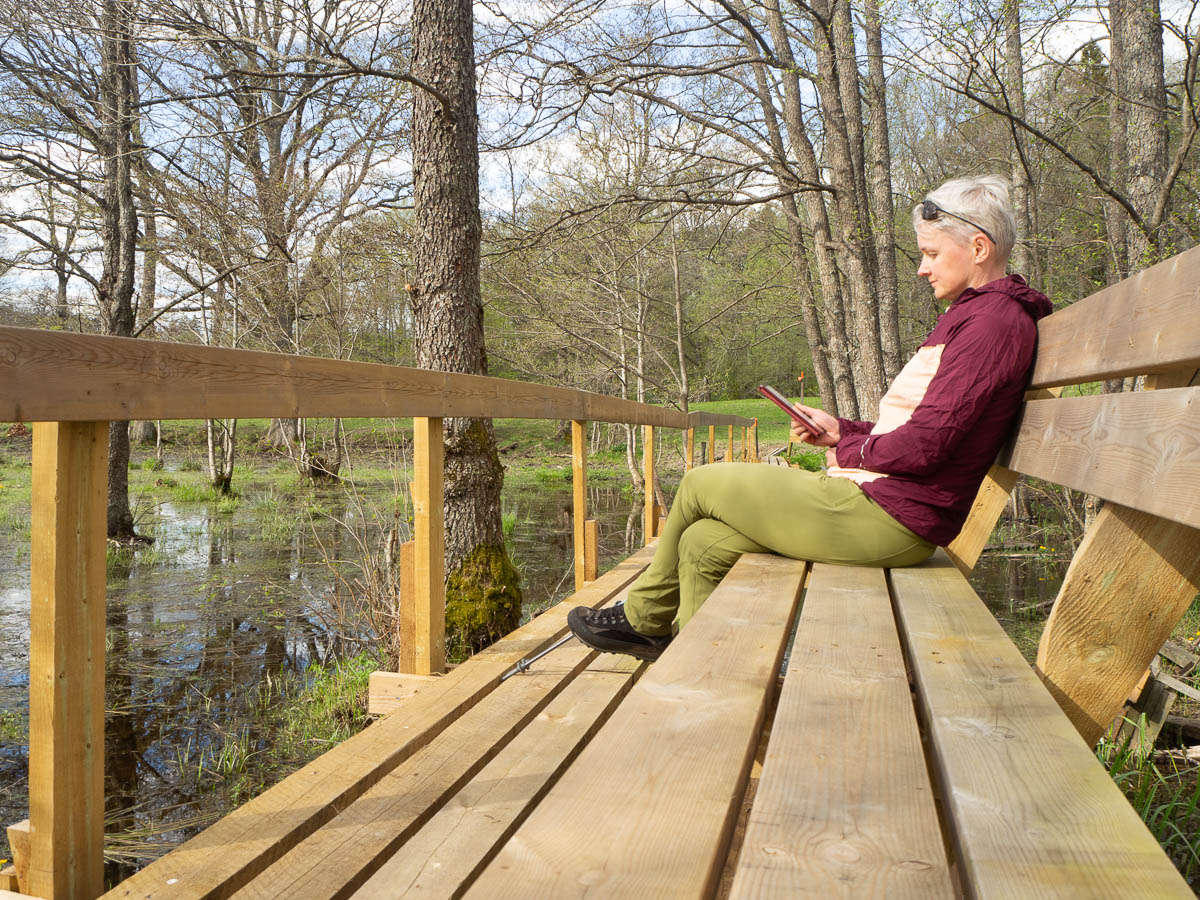
In no rush to get back early, I took a longer break towards the end of the trail, on what I guessed was a bird-watching bench next to a large lake, where I had the company of geese and ducks and herons.


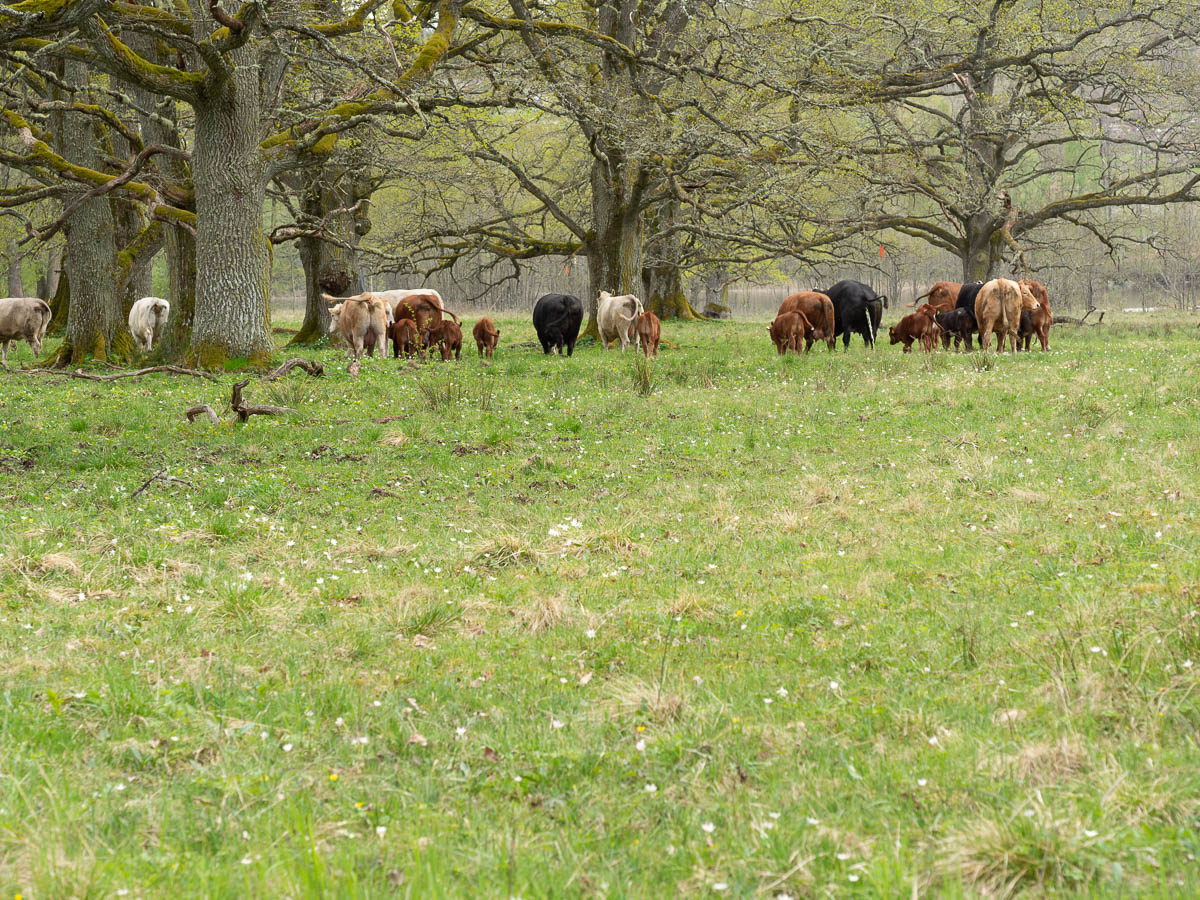
The cows in the oak pasture were at the near end of the pasture today, and seemed quite curious about me. I didn’t mind the curious cows or the calves, but they were accompanied by one or two bulls of impressive size, and I felt rather more cautious about them, so I hightailed it out of there.


Sörmlandsleden stage 19 + a little bit of stage 20, 14.5 km. From Ånhammar to Henaredalen in the middle of nowhere.

Stage 19 on its own is officially 12 km, which is a bit too short to make a full day, but also a bit too much for a there-and-back in a single day. Rather than pressing myself, I’m doing it over two days, and I added on an extra ramble around Henaredalen for this afternoon.

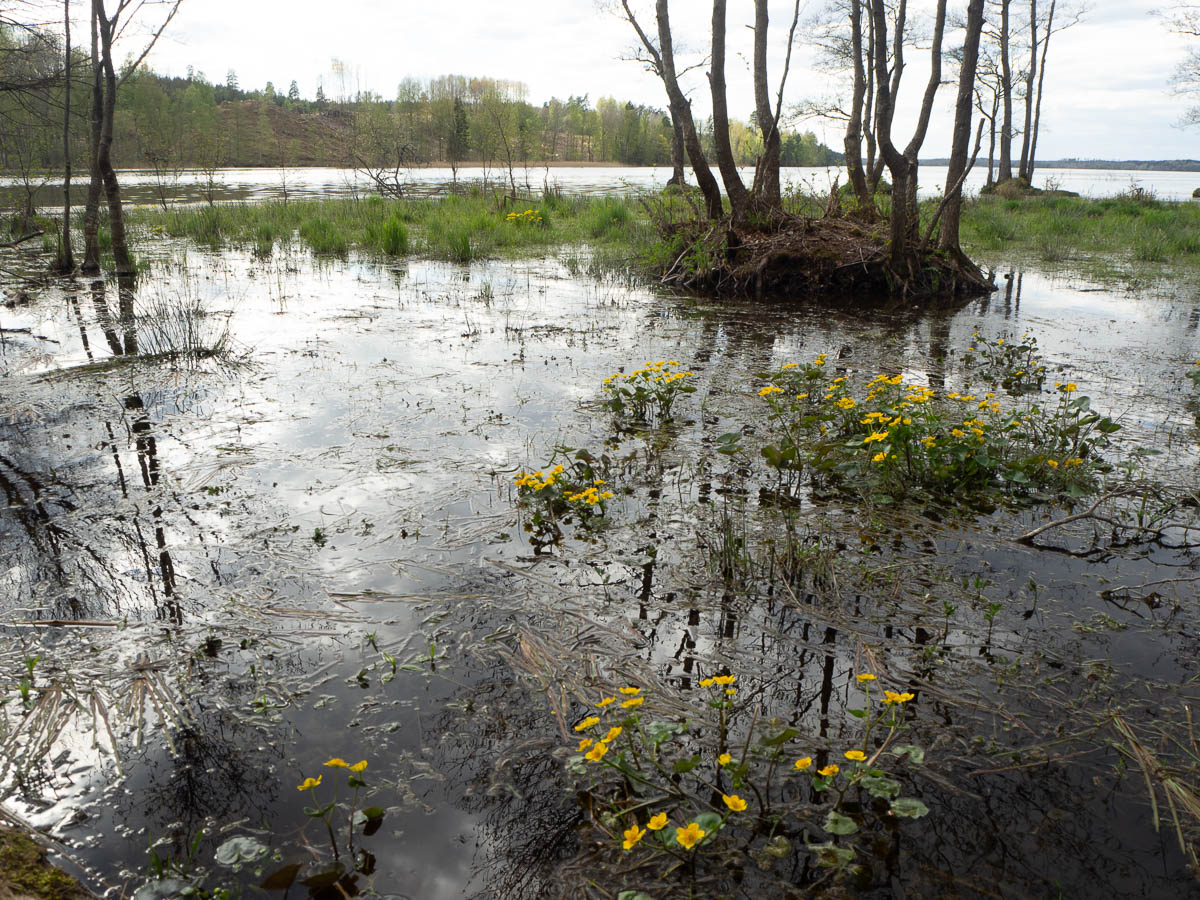
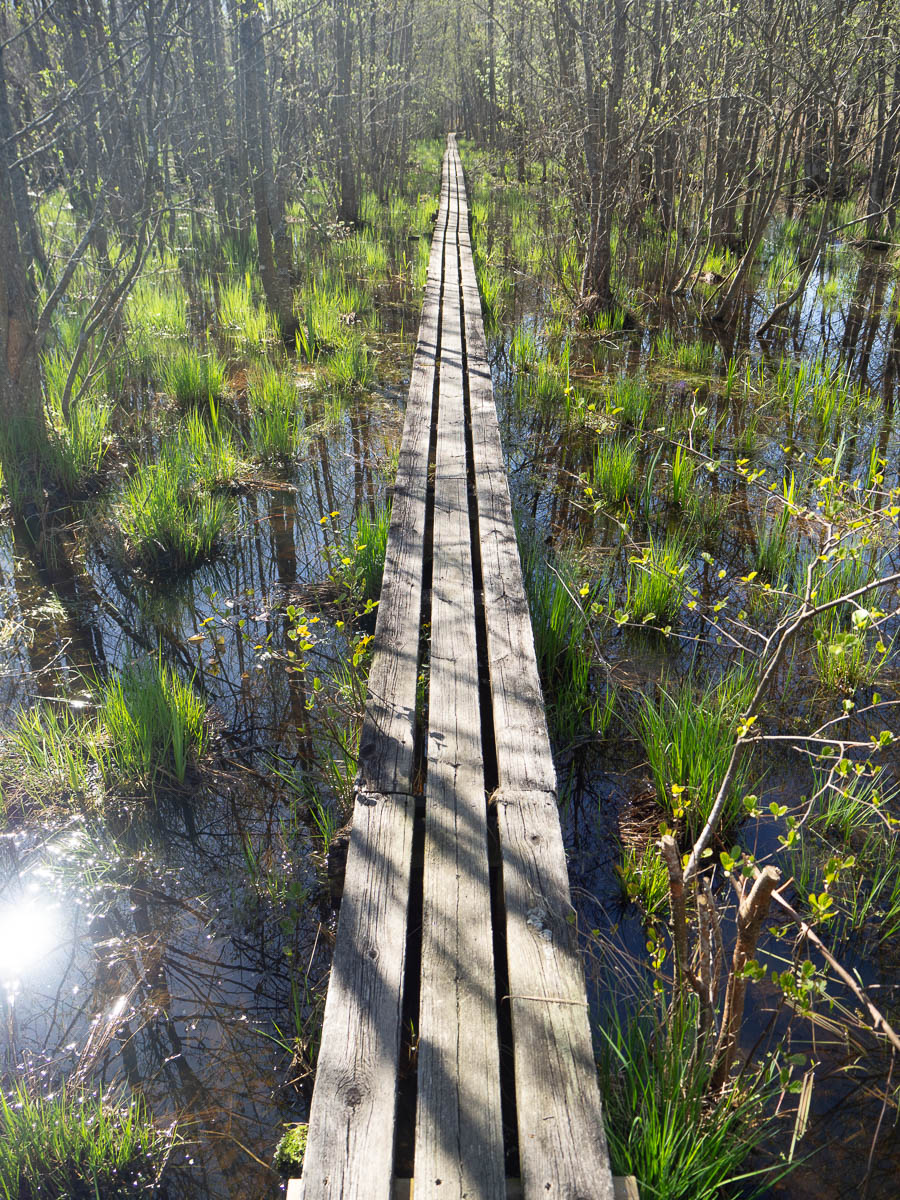
This was a beautiful and varied hike, going a flowering lakeside marsh…
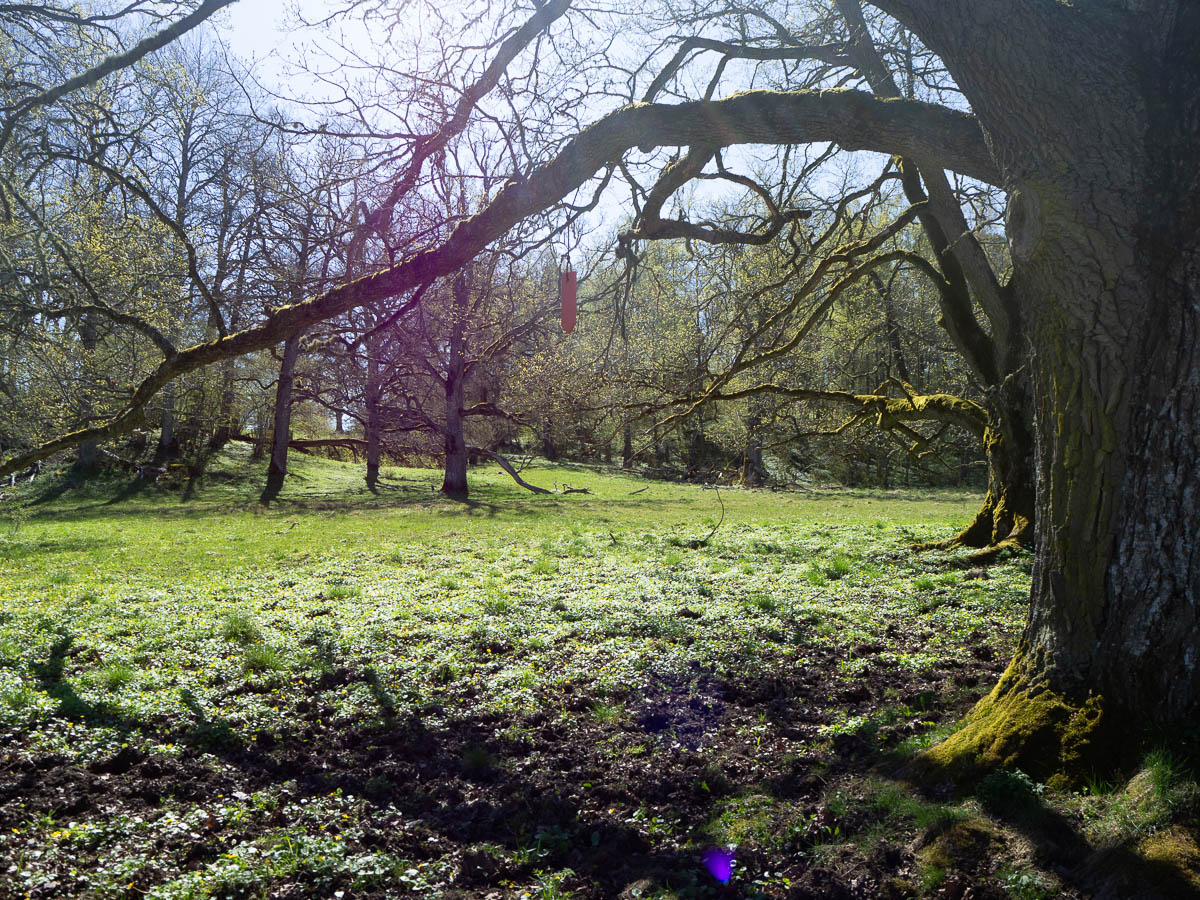
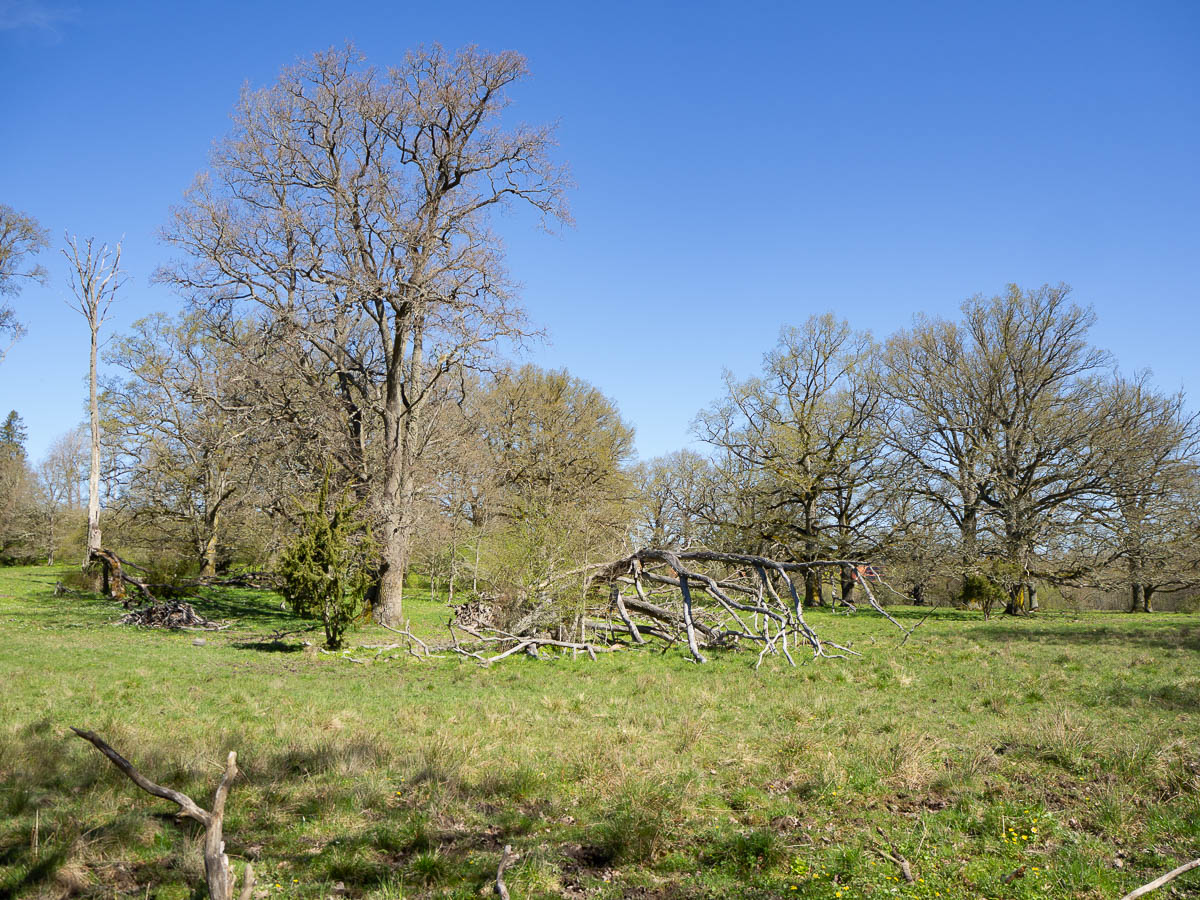
… through oak pastures…
… and heathery bogs…
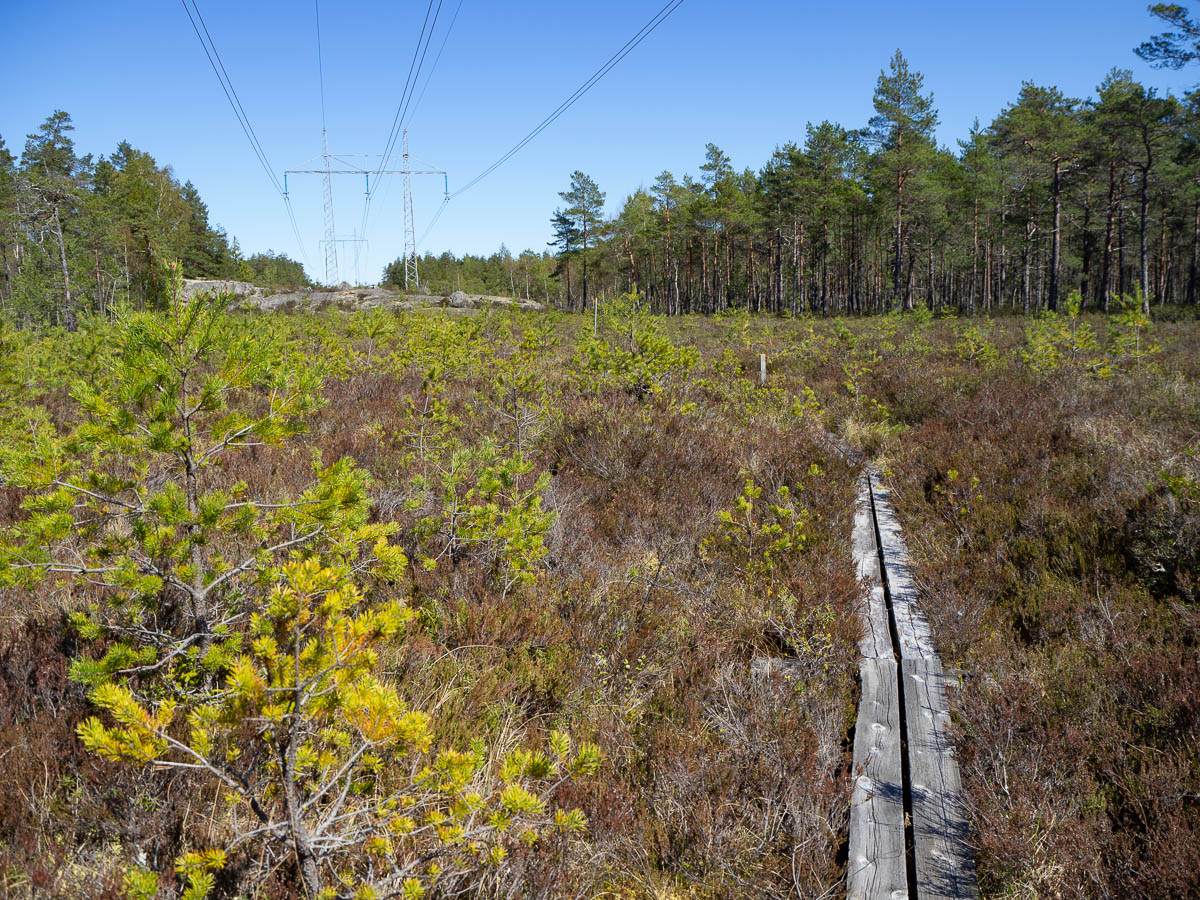
… to rocky pine forests dotted with little rocky lakes.
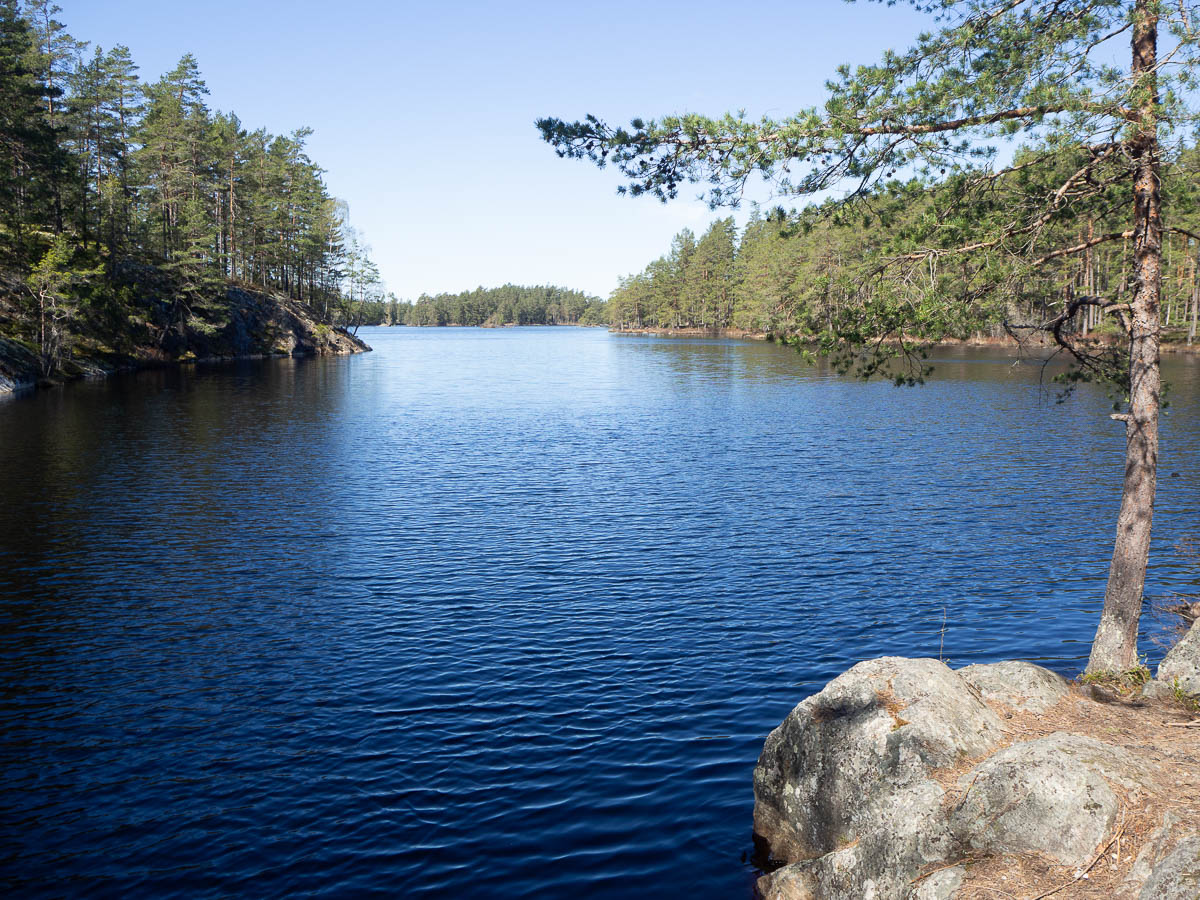
I’m glad I didn’t try to do the 12 + 12 km in a single day because this was not the easiest stage to walk. It wasn’t so much the ups and downs that made it hard, but the uneven path. Rocks and roots everywhere, and muddy patches.

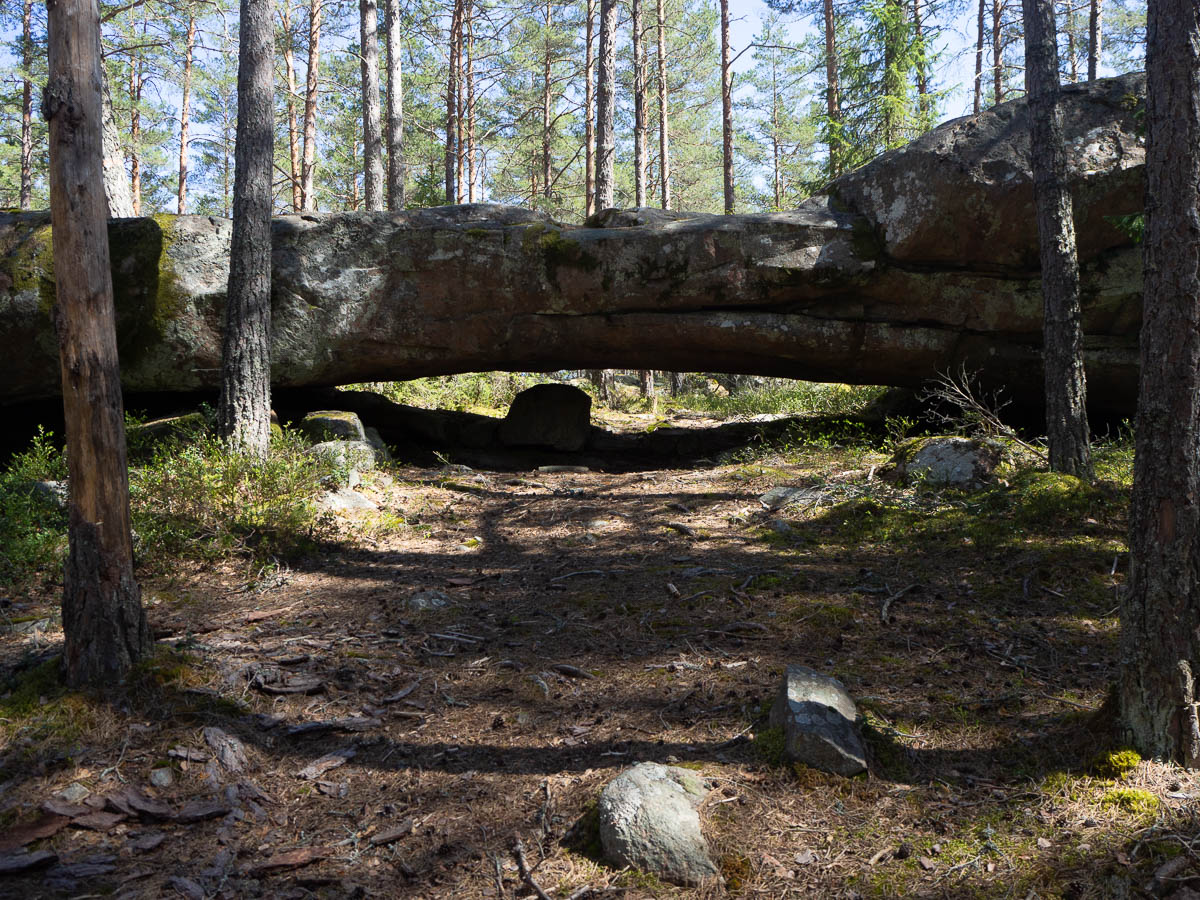
In the middle there was a ten-metre natural arch, all one unbroken piece of rock.
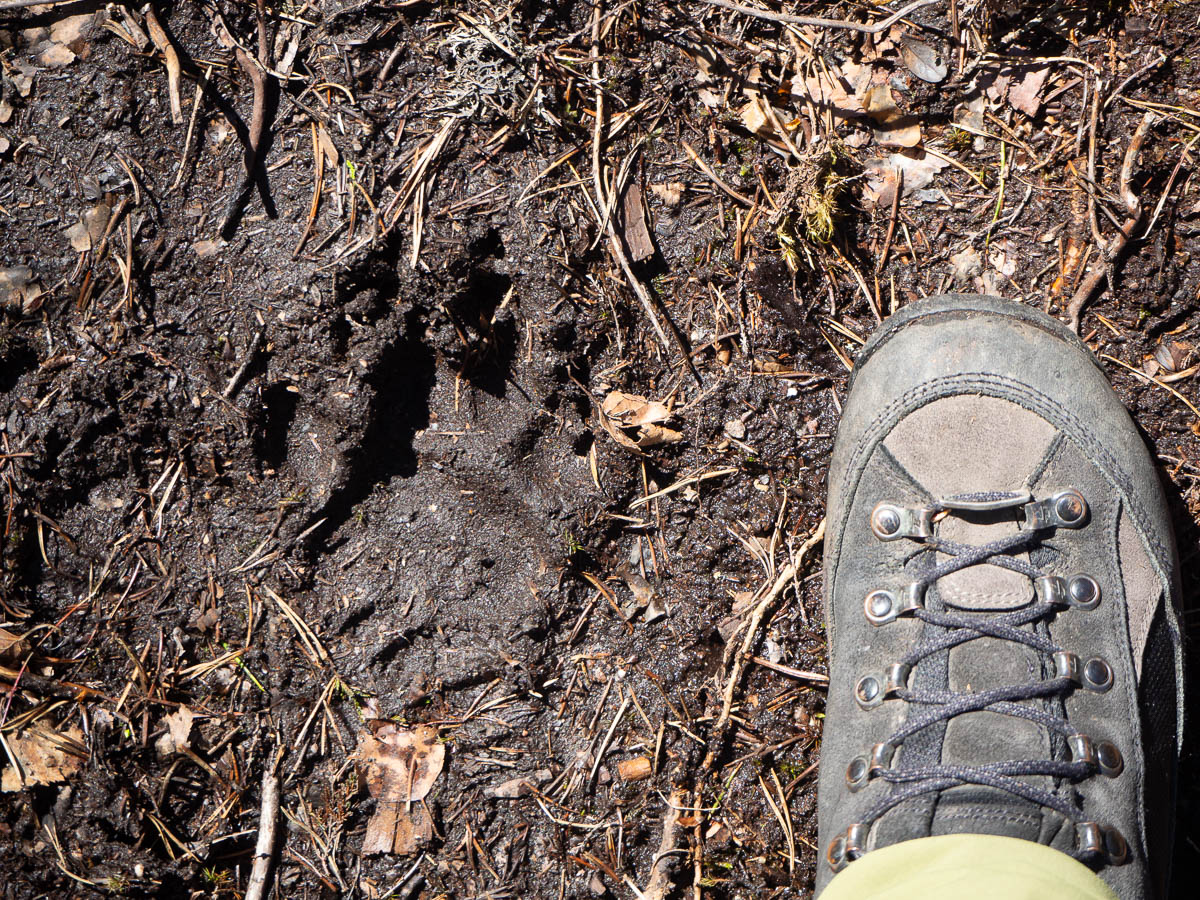
Another interesting sight was a very large paw print in the mud. Either a really large dog that somehow avoided all the other muddy spots on the path, or an actual wolf. I’ve heard from other hikers that there are several established wolf territories in this part of Sörmland, so that’s not entirely far-fetched.
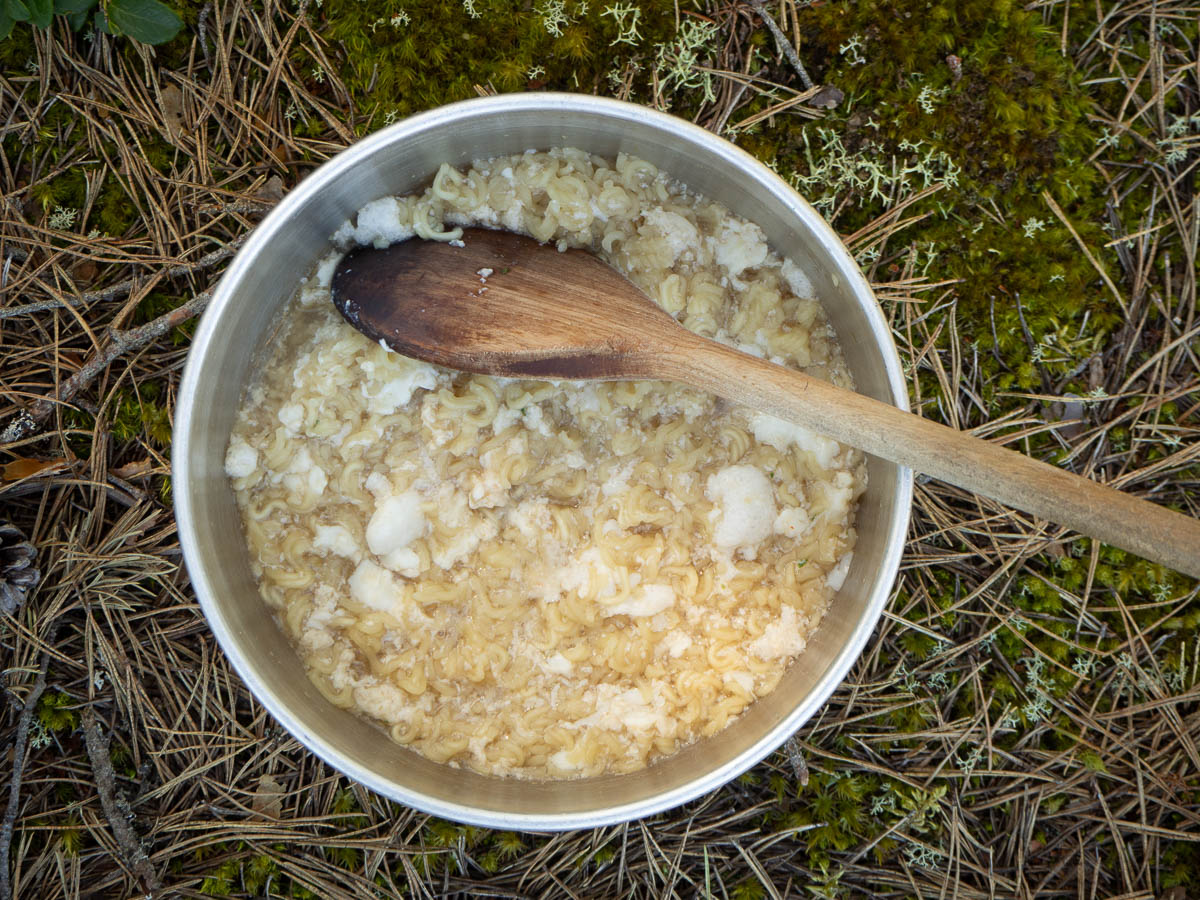
In other news, it turns out that walking around with egg whites in your rucksack will slowly whisk those egg whites into a soft foamy fluff. And if you then dump those egg whites into your hot instant noodles, they solidify into little foamy islands, sort of like sugarless îles flottantes.
Speaking of food, I wasn’t expecting to find anything edible in the forest at this time of the year, but I was wrong – some of last year’s lingonberries were still there and waiting to be eaten. Frozen and then thawed, and partially sun-dried, they were wrinkly but juicy, tart and sweet. Few and far between, and hard to spot, not like fresh ones where you can stop anywhere and eat your fill.
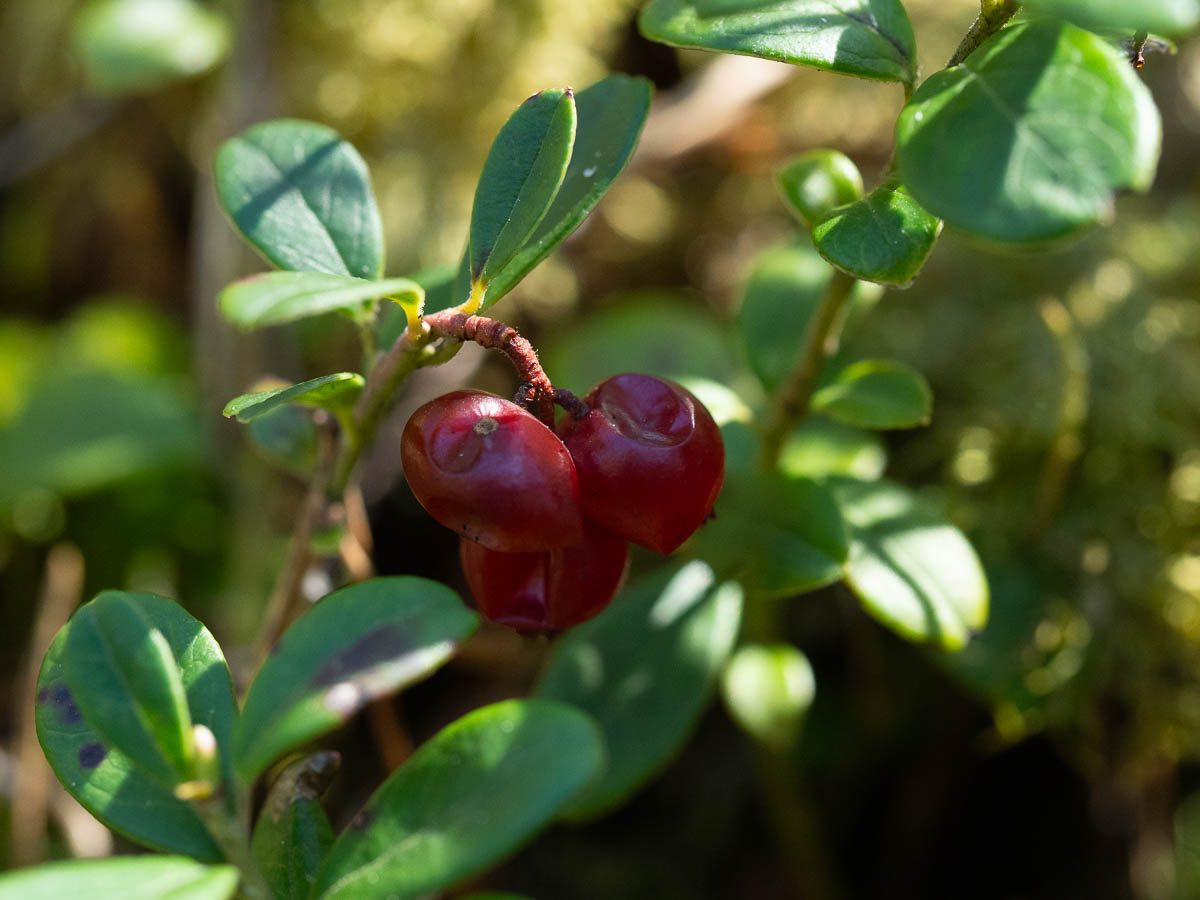
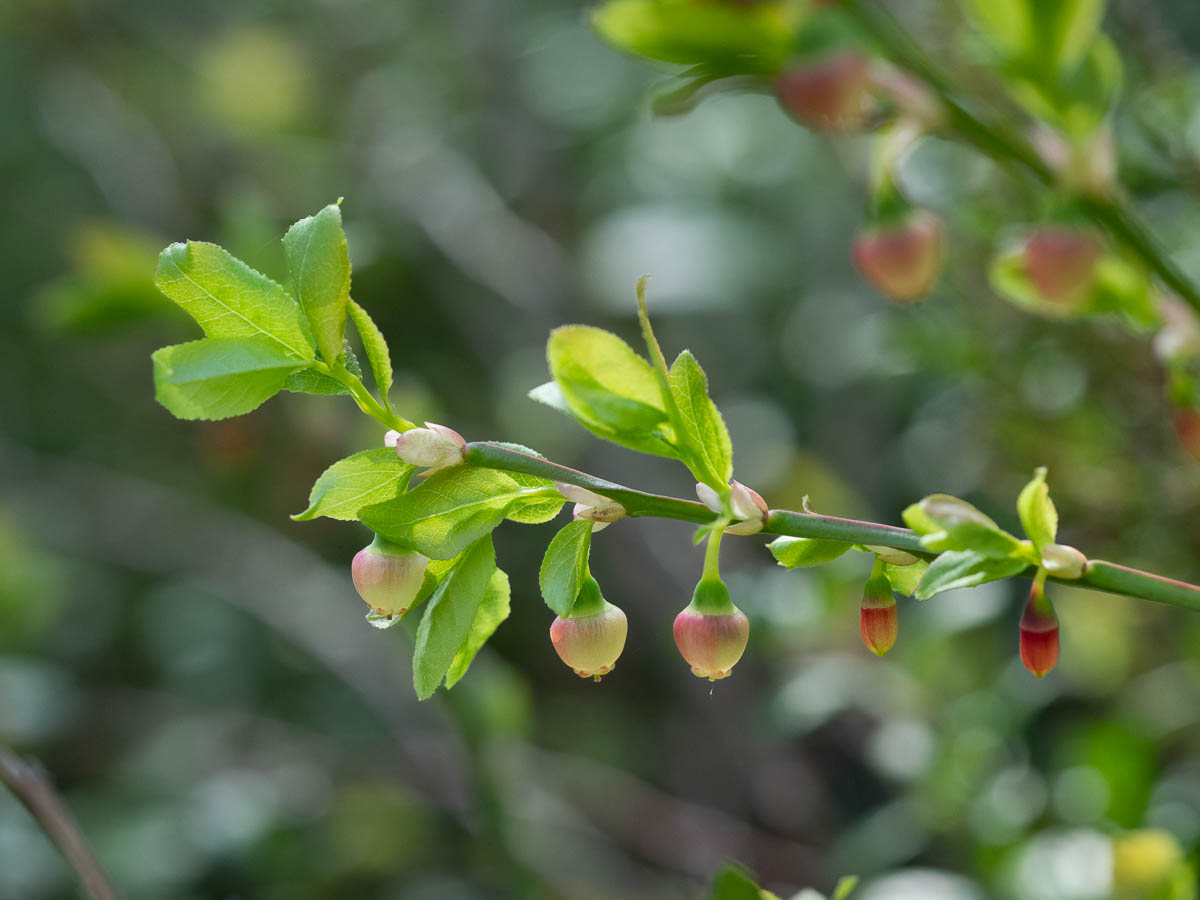
The forest was full of bilberry and lingonberry bushes, so later in the season there will be lots to eat here. Right now the bilberries taunted me with their berry-like flowers.
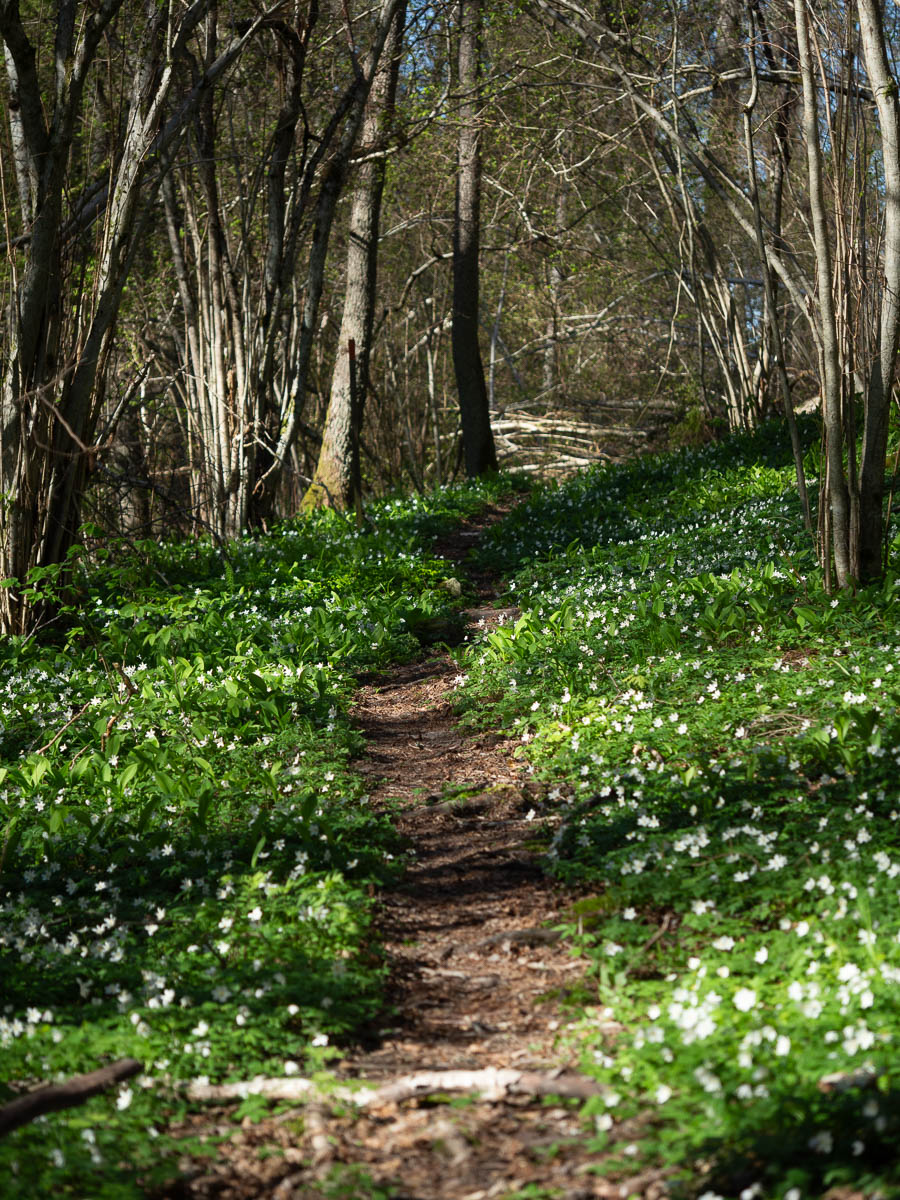
Henaredalen is a river valley that I walked in 2018 and wasn’t too impressed by. That was also in May, but this year, spring has come a lot further and the valley is more full of flowers. Much of the ground was covered by wood anemones.
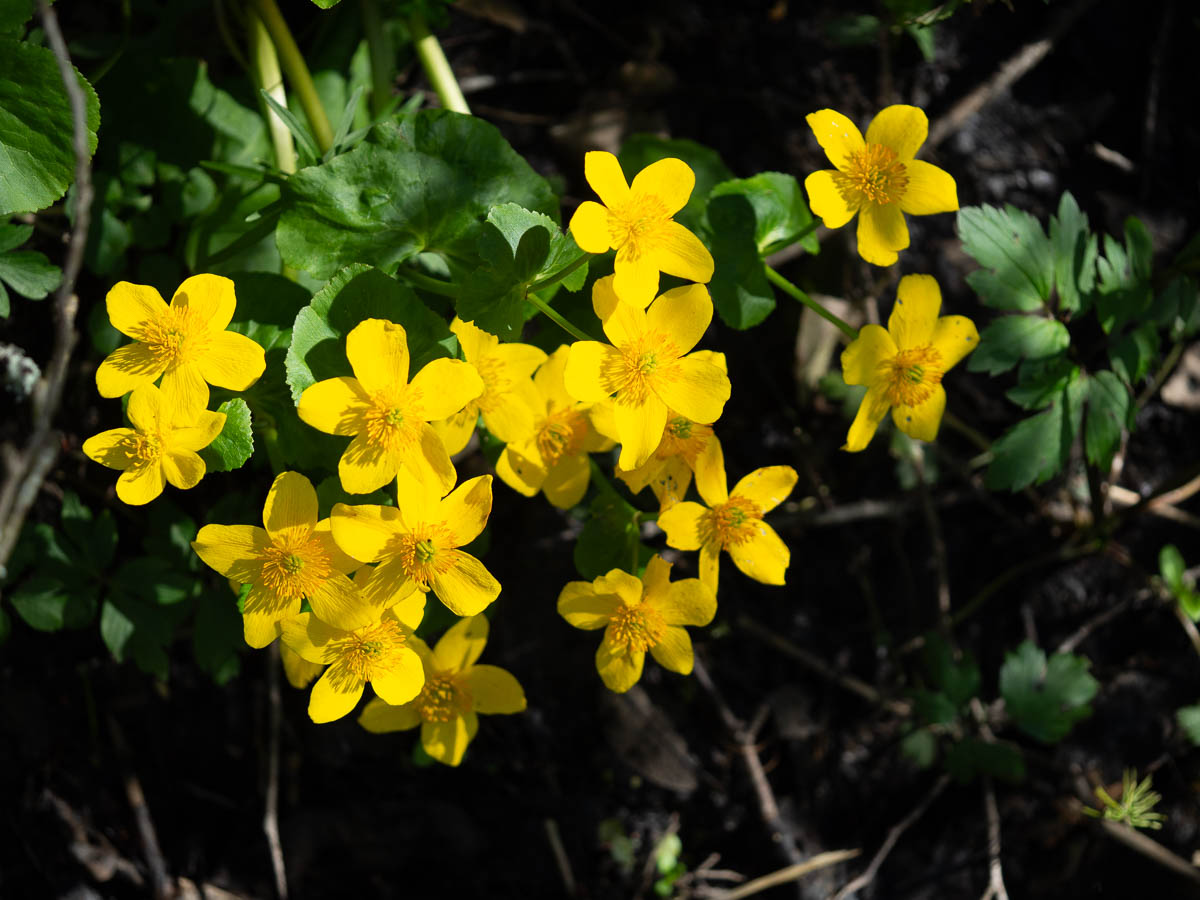
In between there were marsh marigolds…
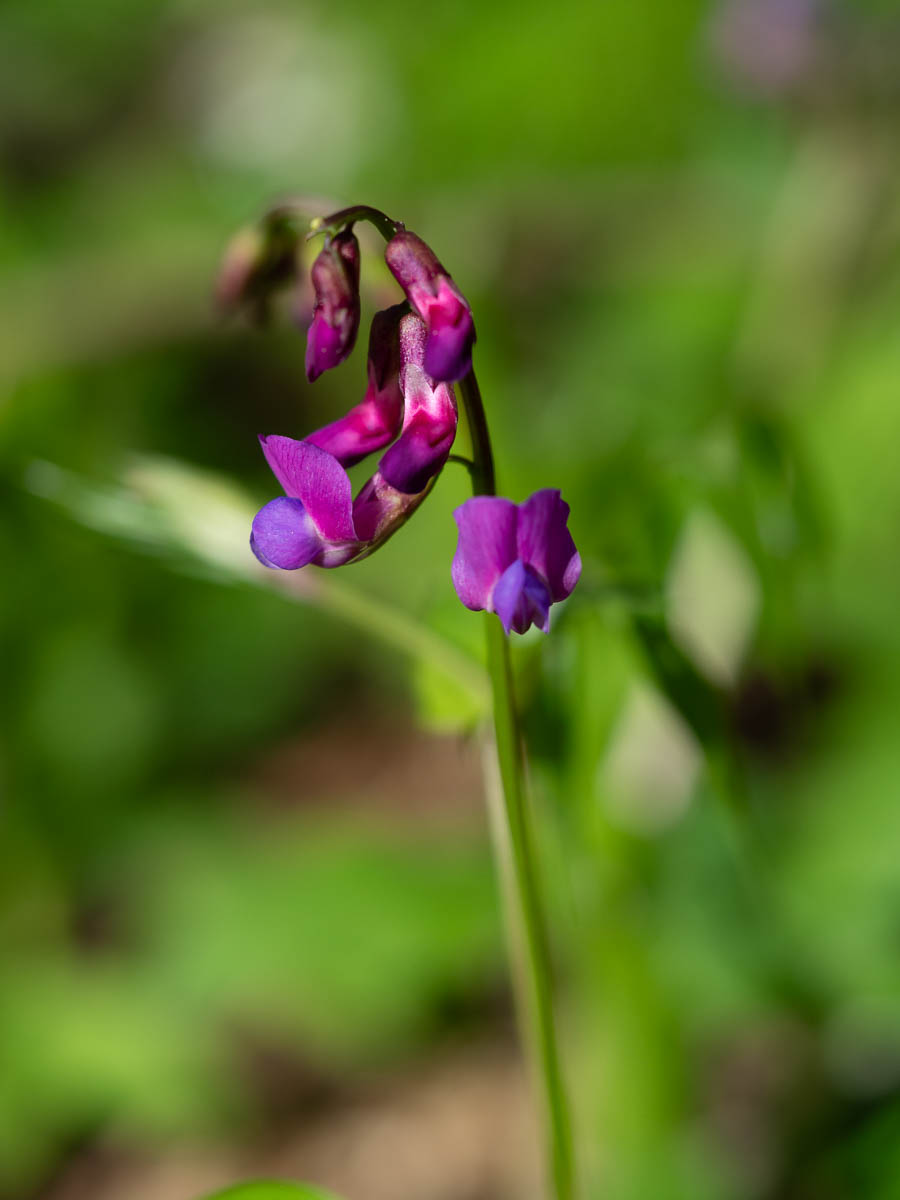
… and a pretty purplish-red flower that I later identified as some kind of Lathyrus (possibly gökärt, seahernes).
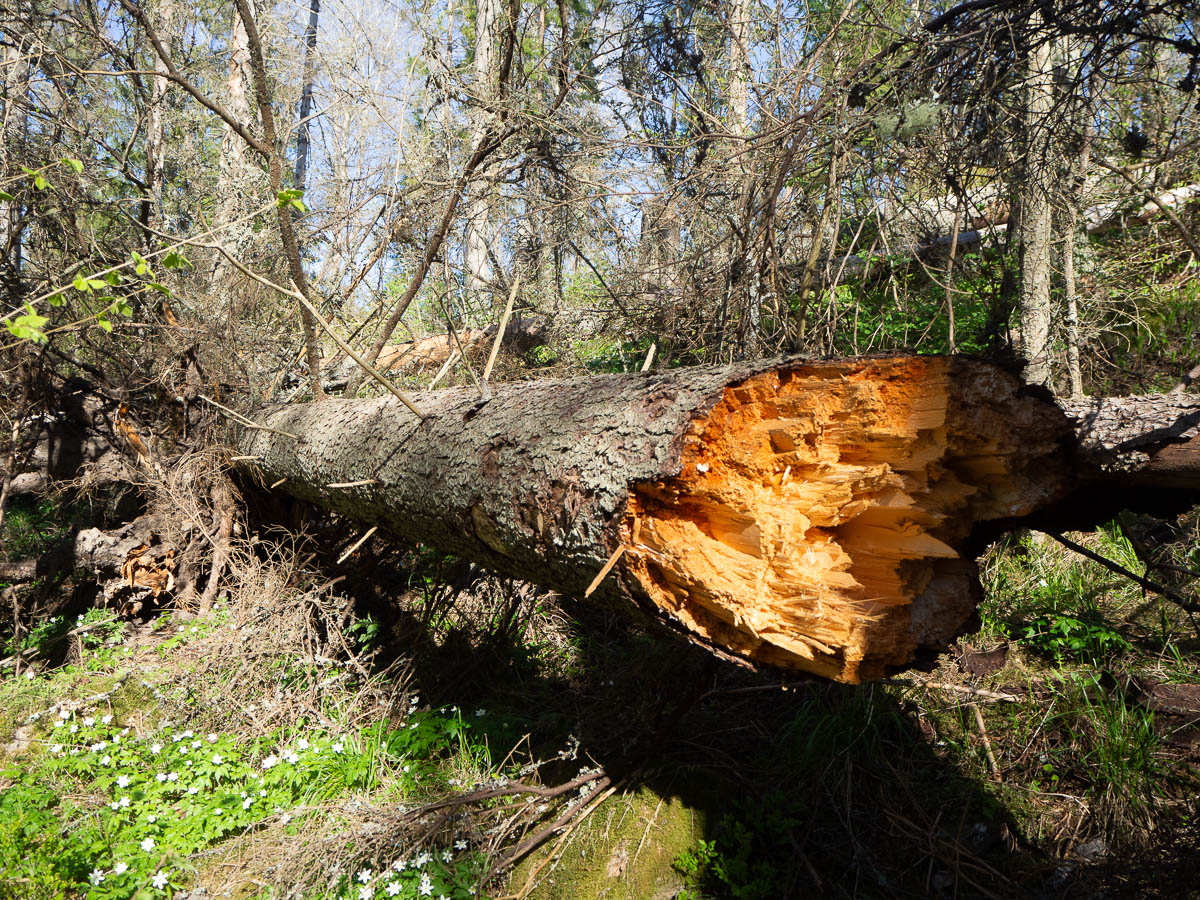
One big change from my last visit was the large number of fallen spruces. There was a sign explaining that the area is badly affected by the spruce bark beetle, and there’s a risk of spruces falling without warning. It looked to be at least a year old, and clearly plenty of trees had toppled since then.
Of wildlife, apart from the possible wolf print: butterflies of all sizes and colours. Birds, especially geese in that marshy lake, blackbirds in the deciduous forests and cuckoos in the pine forests.

Of other hikers, very few. For a while it looked like I would get the camping site all to myself, but just as I was making dinner, a couple turned up. We talked about other hiking trails in this general part of Sweden, and about the tricky logistics of hiking these hard-to-reach parts of Sörmlandsleden. They did it with a car + bicycle combo.
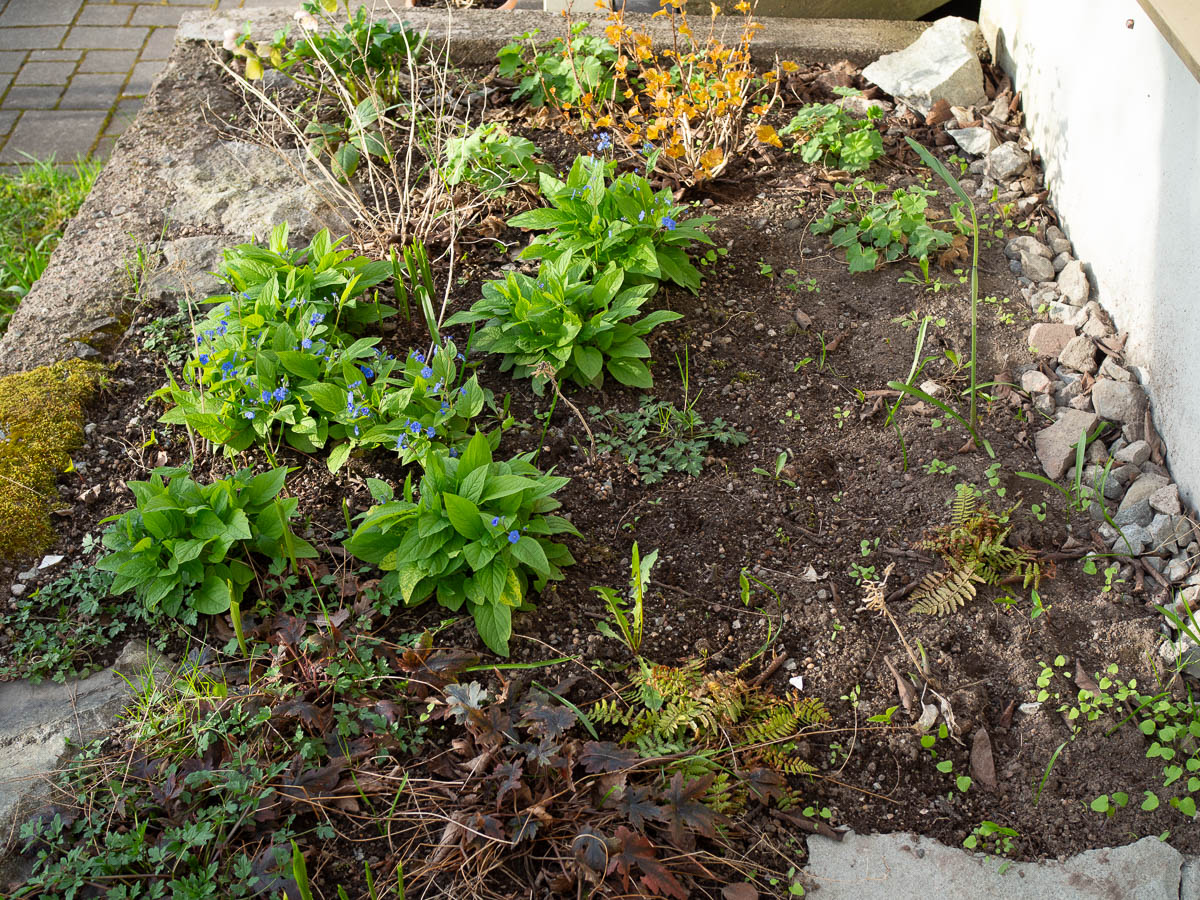
The planting in the corner in front of the house is delivering mixed results, which is pretty much as expected. The Omphalodes and Alchemilla are growing well, like the Helleborus that I’ve photographed before. The funkias, lilies of the valley and Tiarellas are slower to come up, but are present and accounted for.

The toad lily is technically alive, but its shoots have all been eaten level with the ground. I can see them when I push away the soil, but the ends are all bitten off. I’m not going to try and coddle it through this; it’s going out. The Polygonatum are mostly gone – a single one remains – and I really like them so I might give those another try. The Thalictrum have all disappeared; there’s not a single sign of them ever having been here, even. Time to replace them with something more suitable.

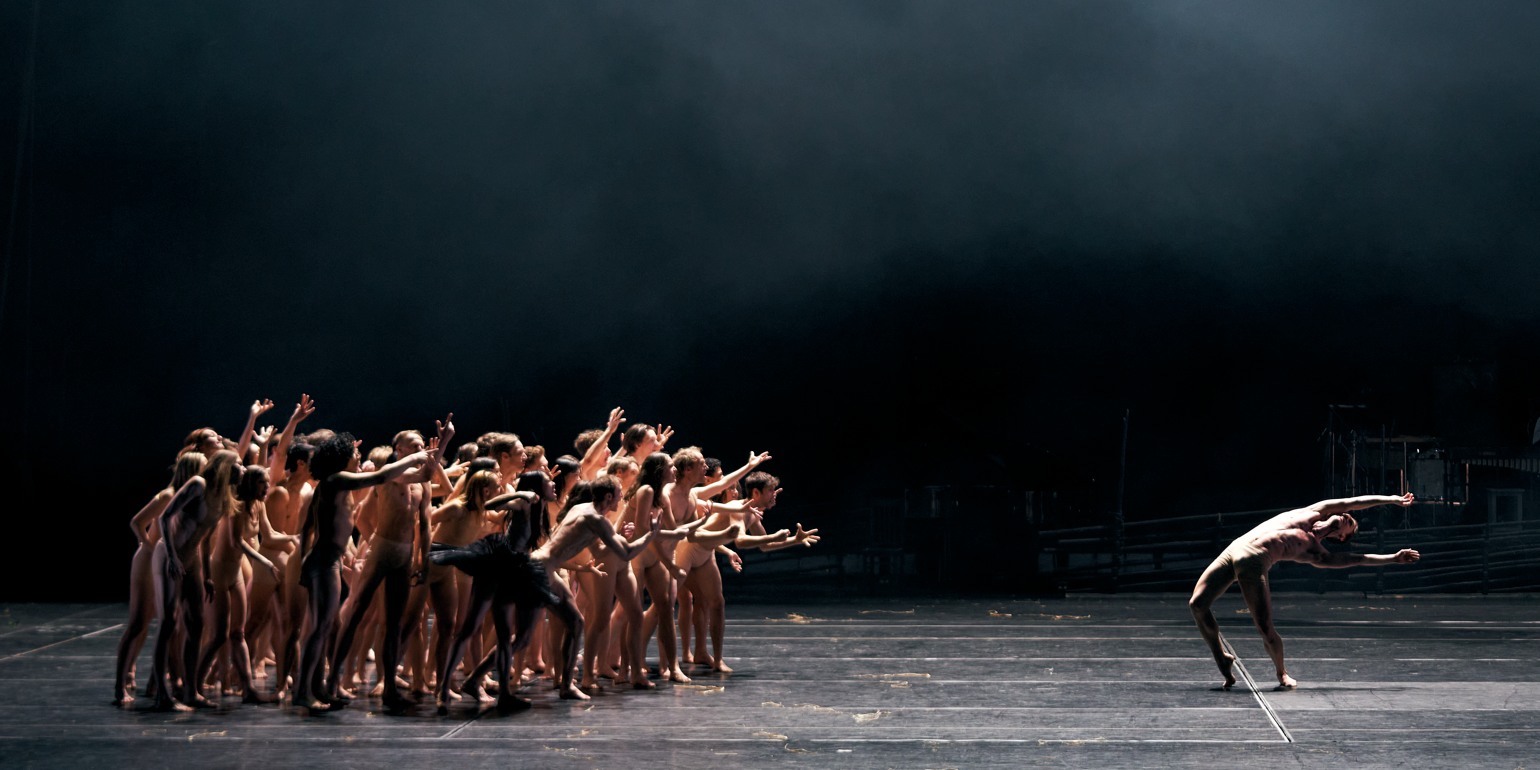
We saw Alexander Ekman’s Midsommarnattsdröm (“A Midsummer Night’s Dream”) at the Royal Opera during its first run, which must have been in 2015 or 2016. Now it’s back, and we saw it again.

From the first time around I remembered the most theatrical parts of it. Entertaining, somewhat pandering, but on the whole not bad. Since then I’ve seen two other pieces choreographed by Ekman (Eskapist and Cacti) and loved both of them, so why not enjoy this one again.

It turned out I’d managed to forget the more interesting parts of the ballet, so I’m glad I didn’t let my recollection of it keep me from giving it another chance.

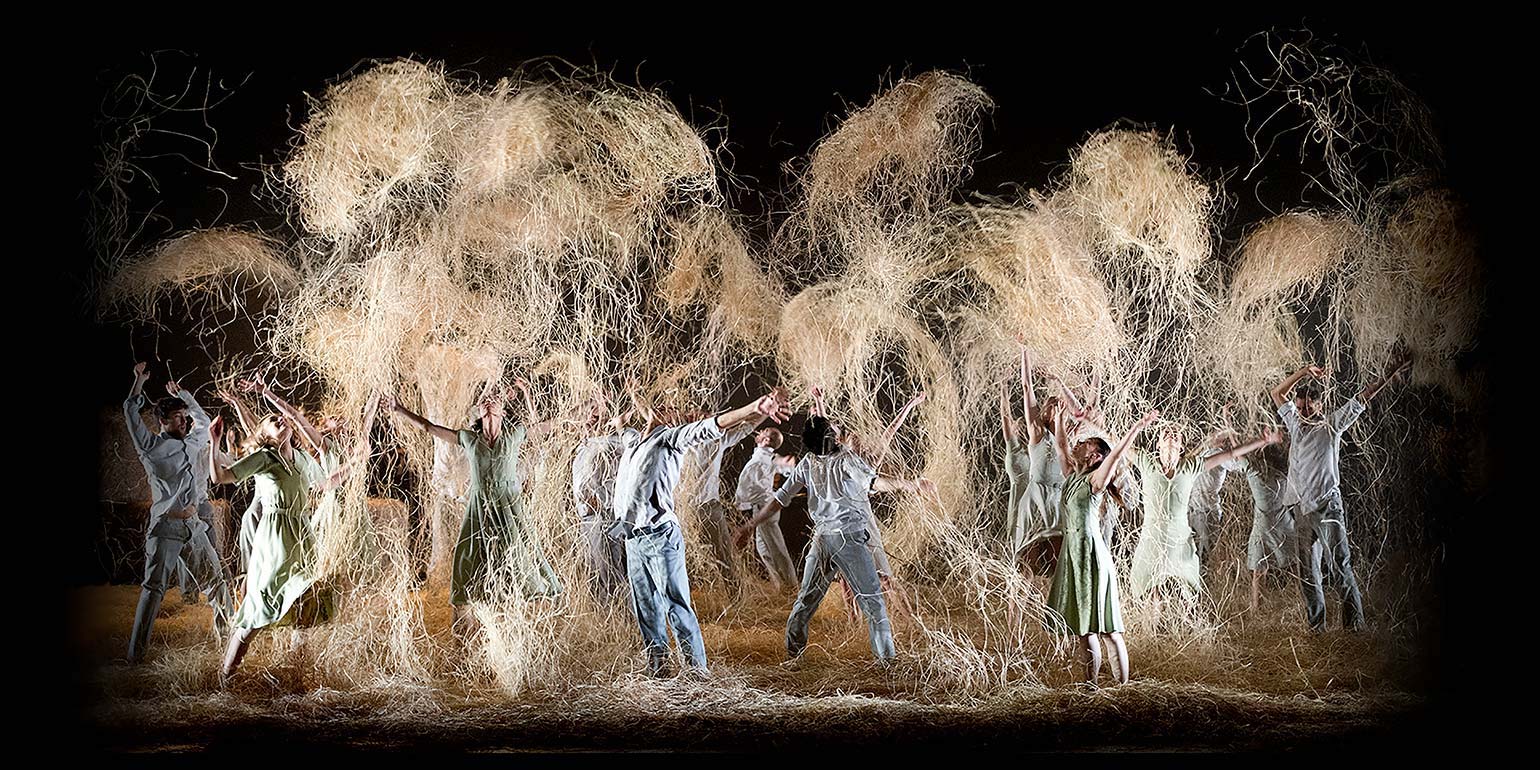
Act 1 starts with a wild and exuberant… harvest dance, ish. Short but fun.

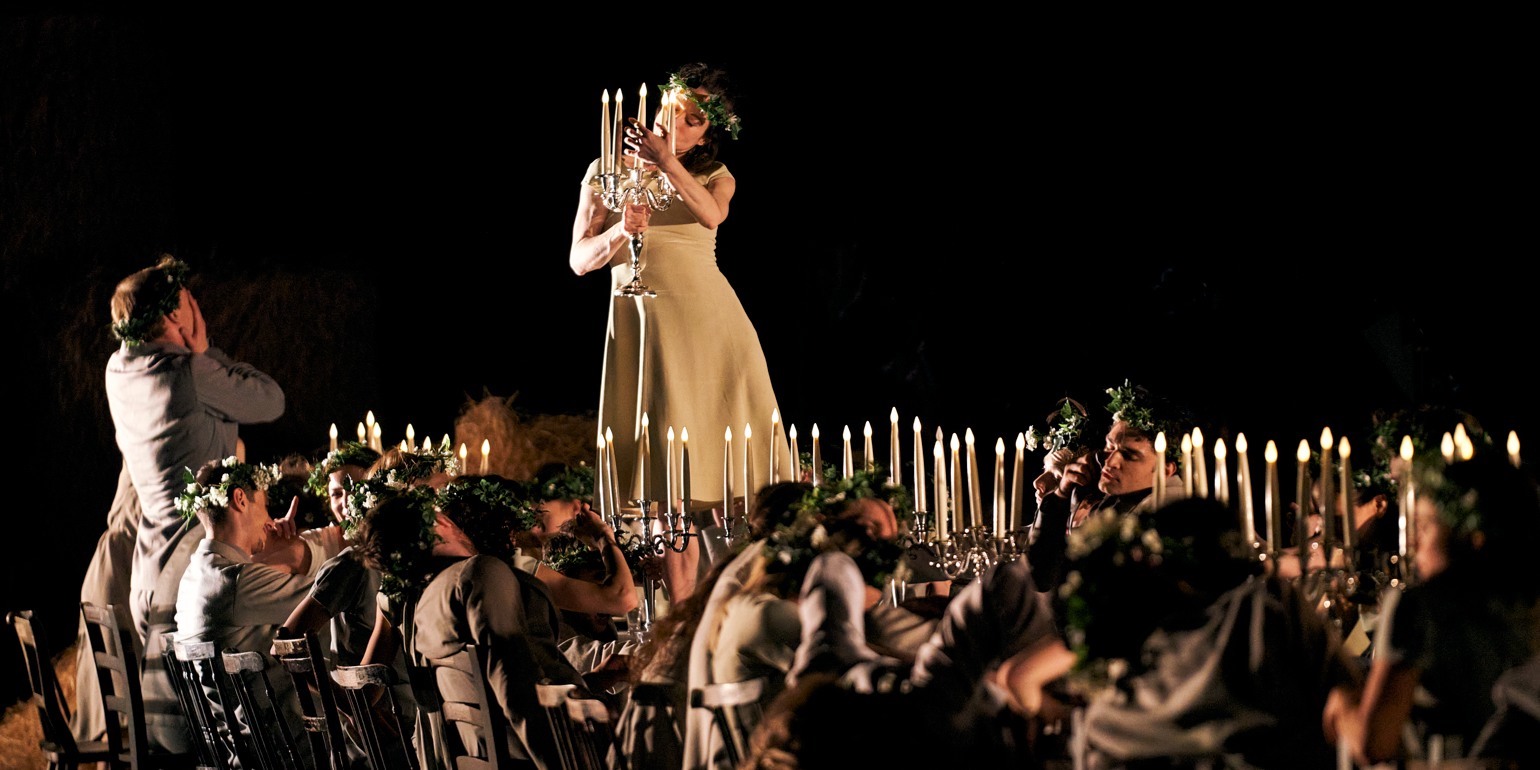
That is followed by the theatrical part: a parody of a Swedish Midsummer celebration, complete with an anxious hostess, forced cheer, that awkward looking-at-everyone while toasting, too much drinking, etc. I’m not a big fan of story-telling ballet, and I think this part could have been more interesting if it had been taken one step further from normality.

Which the second act definitely did. This is the night after the party, the actual midsummer night’s dream. A dreamscape that approaches magic and nightmare at the same time, where anything can happen. Things grow to absurd proportions, beds hover in the air, people lose their heads. The mood ranges from ethereal to grotesque.

I like beautiful, crazy ballets that keep surprising me.