Sörmlandsleden stage 19 + a little bit of stage 20, 14.5 km. From Ånhammar to Henaredalen in the middle of nowhere.
Stage 19 on its own is officially 12 km, which is a bit too short to make a full day, but also a bit too much for a there-and-back in a single day. Rather than pressing myself, I’m doing it over two days, and I added on an extra ramble around Henaredalen for this afternoon.
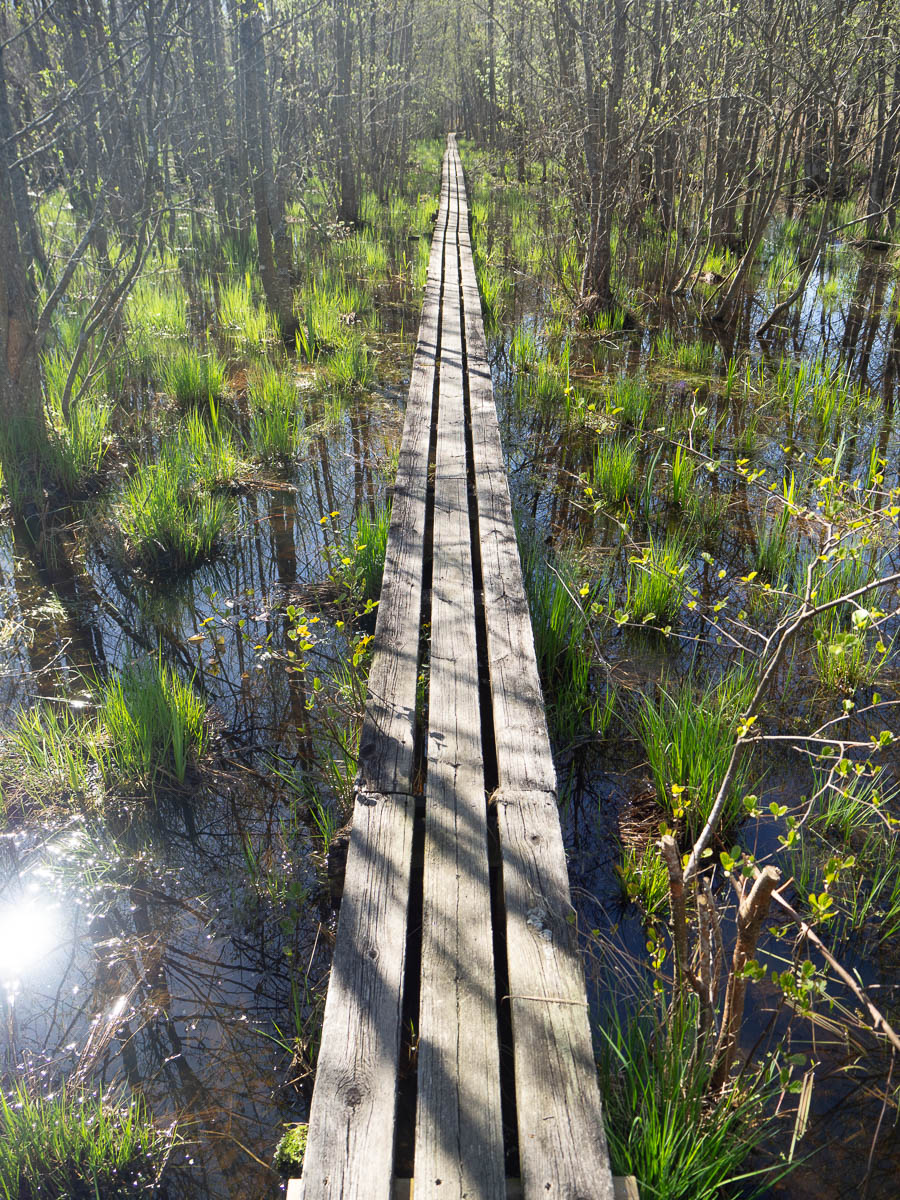
This was a beautiful and varied hike, going a flowering lakeside marsh…
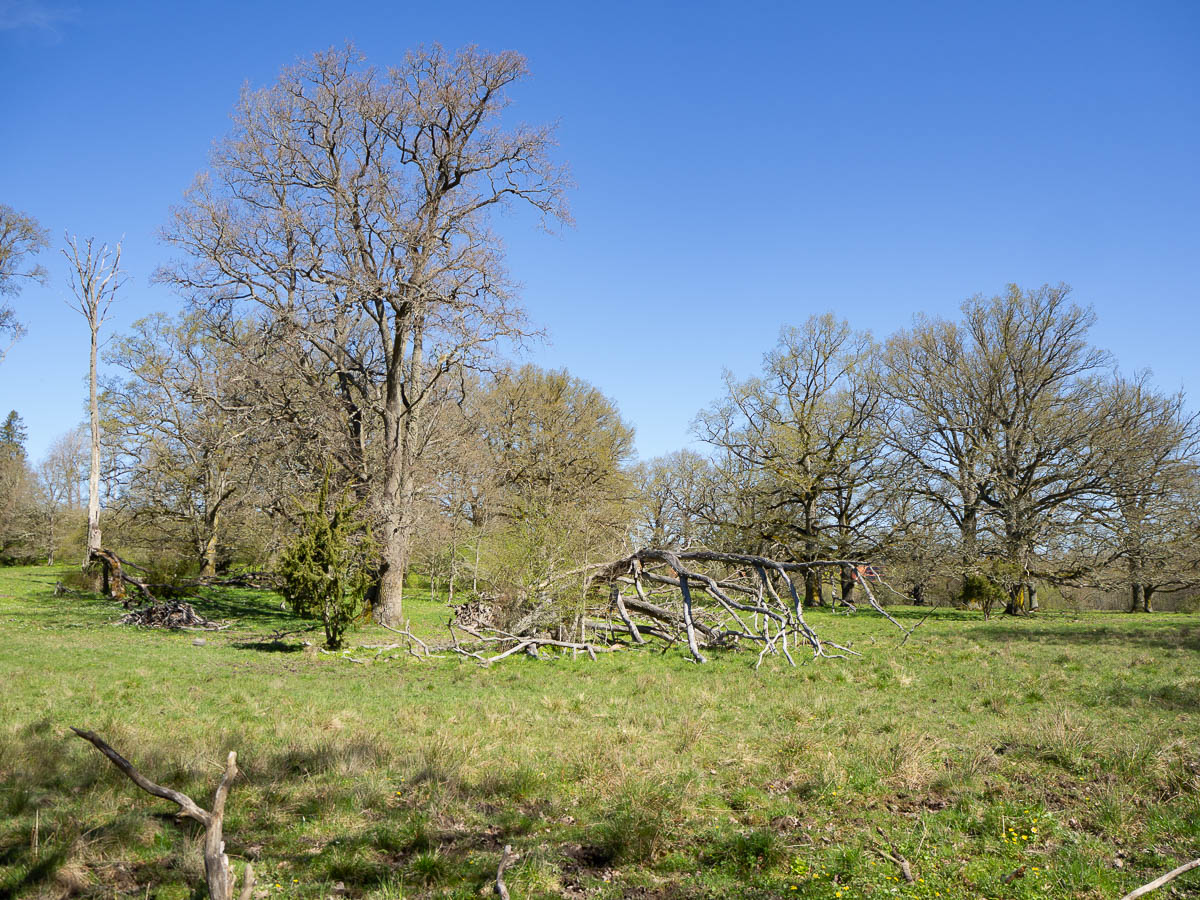
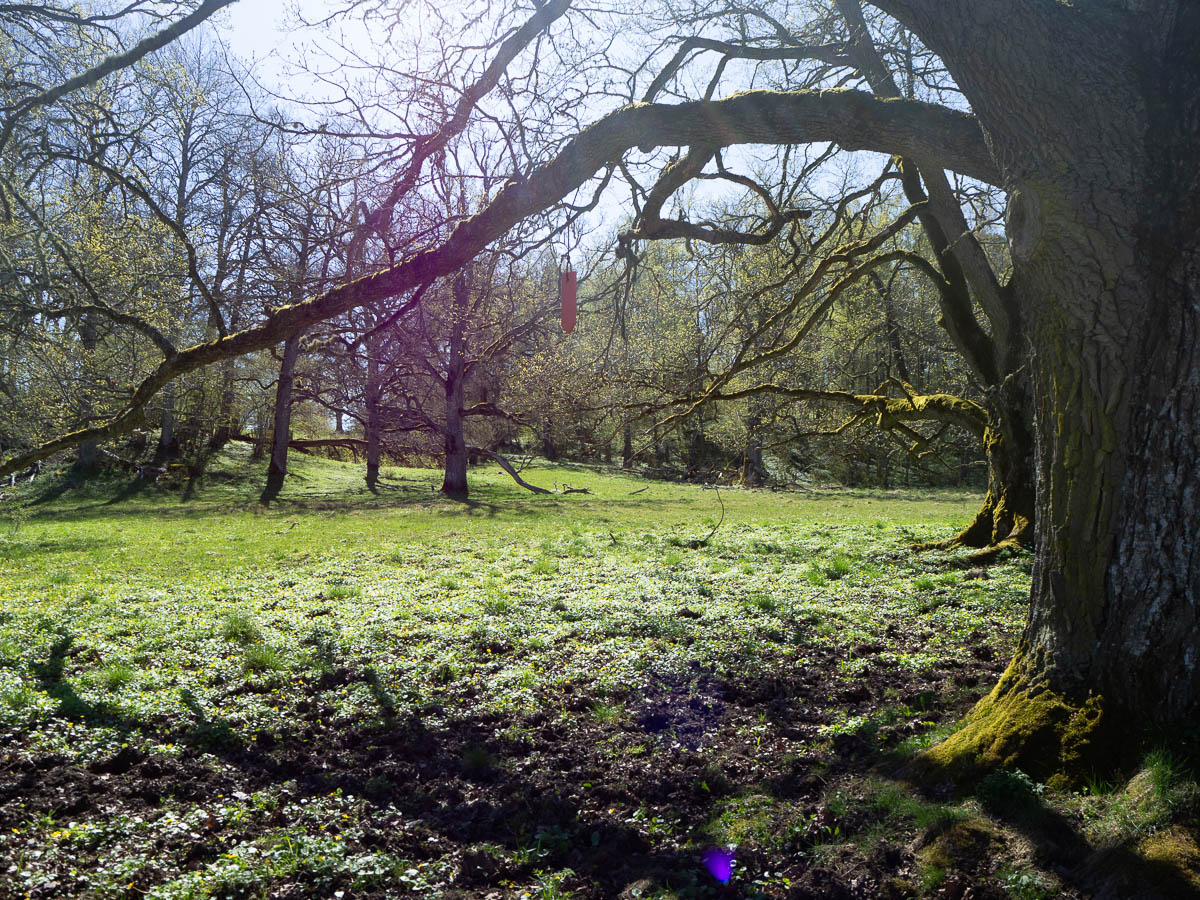
… through oak pastures…
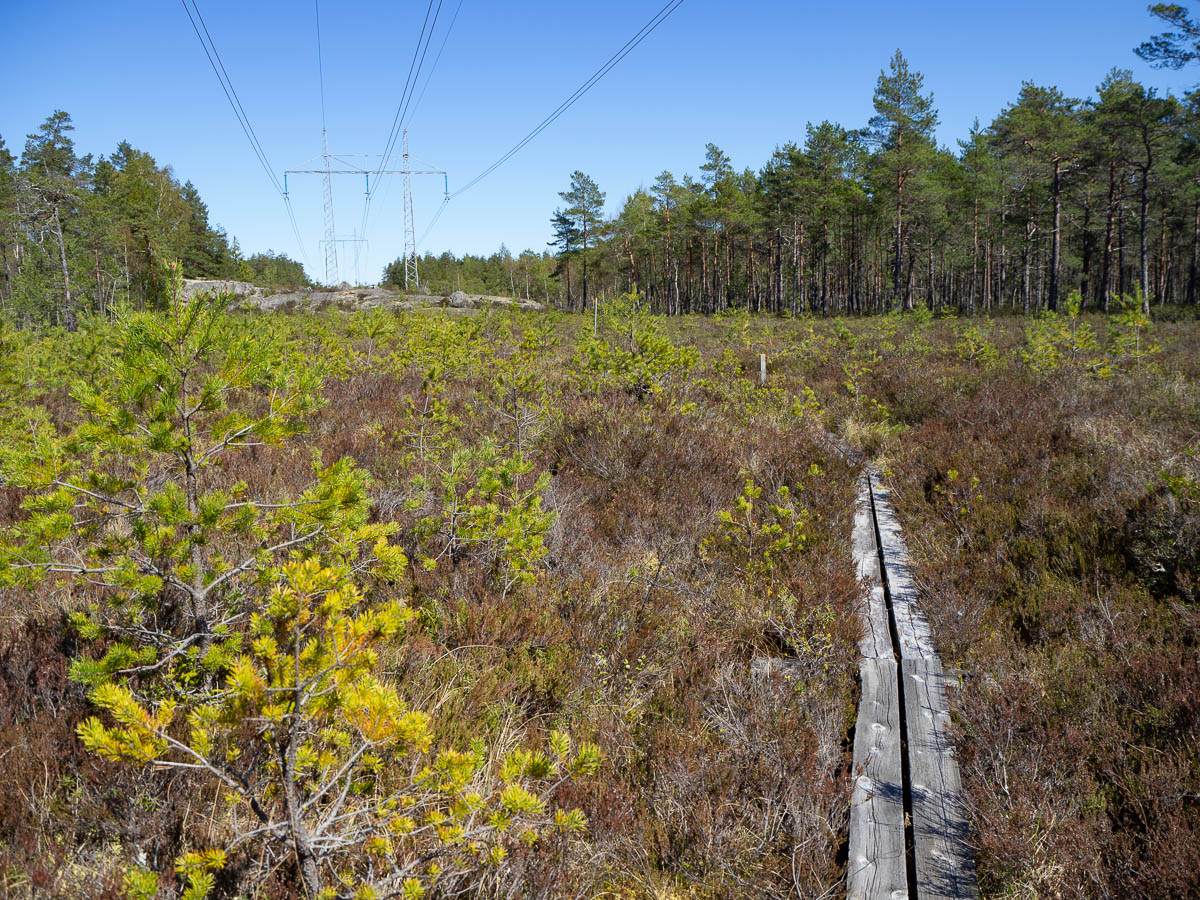
… and heathery bogs…
… to rocky pine forests dotted with little rocky lakes.
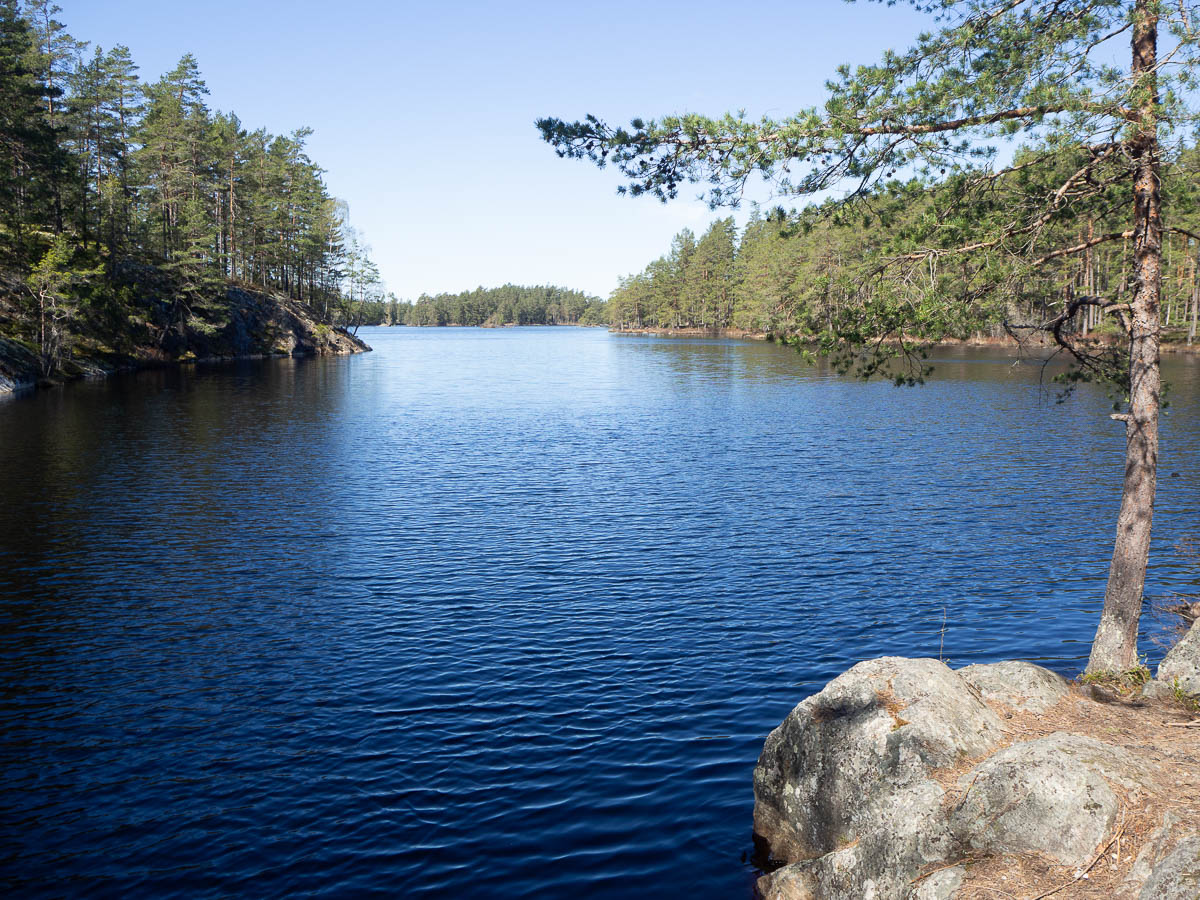
I’m glad I didn’t try to do the 12 + 12 km in a single day because this was not the easiest stage to walk. It wasn’t so much the ups and downs that made it hard, but the uneven path. Rocks and roots everywhere, and muddy patches.
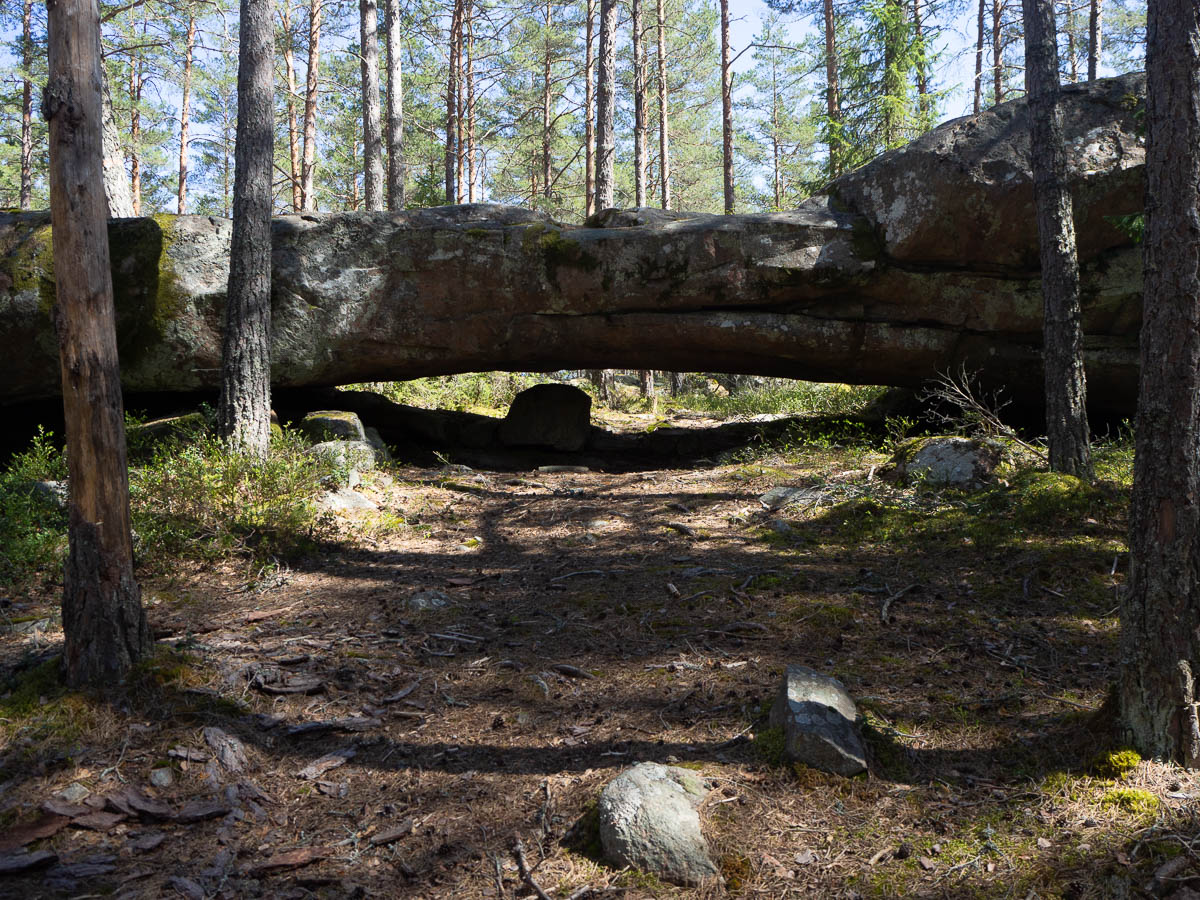
In the middle there was a ten-metre natural arch, all one unbroken piece of rock.
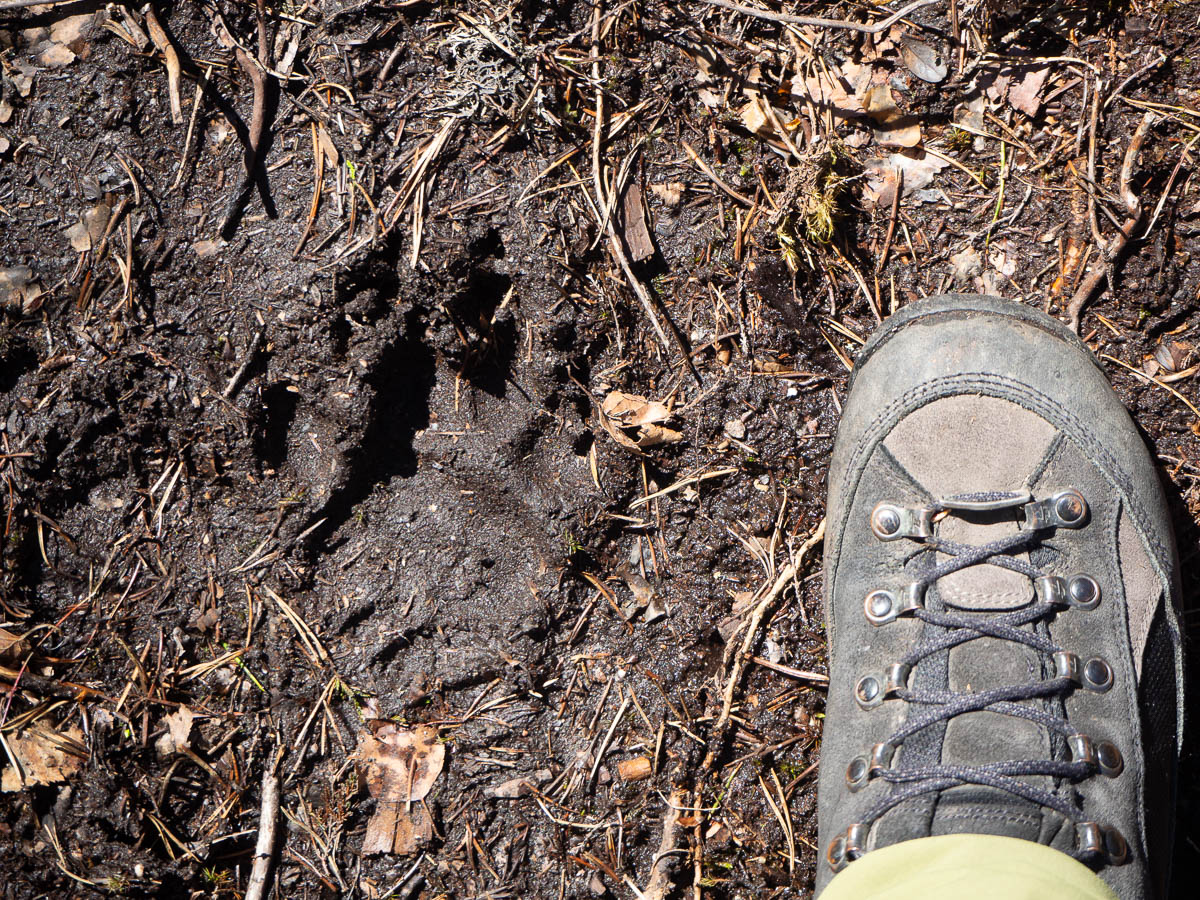
Another interesting sight was a very large paw print in the mud. Either a really large dog that somehow avoided all the other muddy spots on the path, or an actual wolf. I’ve heard from other hikers that there are several established wolf territories in this part of Sörmland, so that’s not entirely far-fetched.
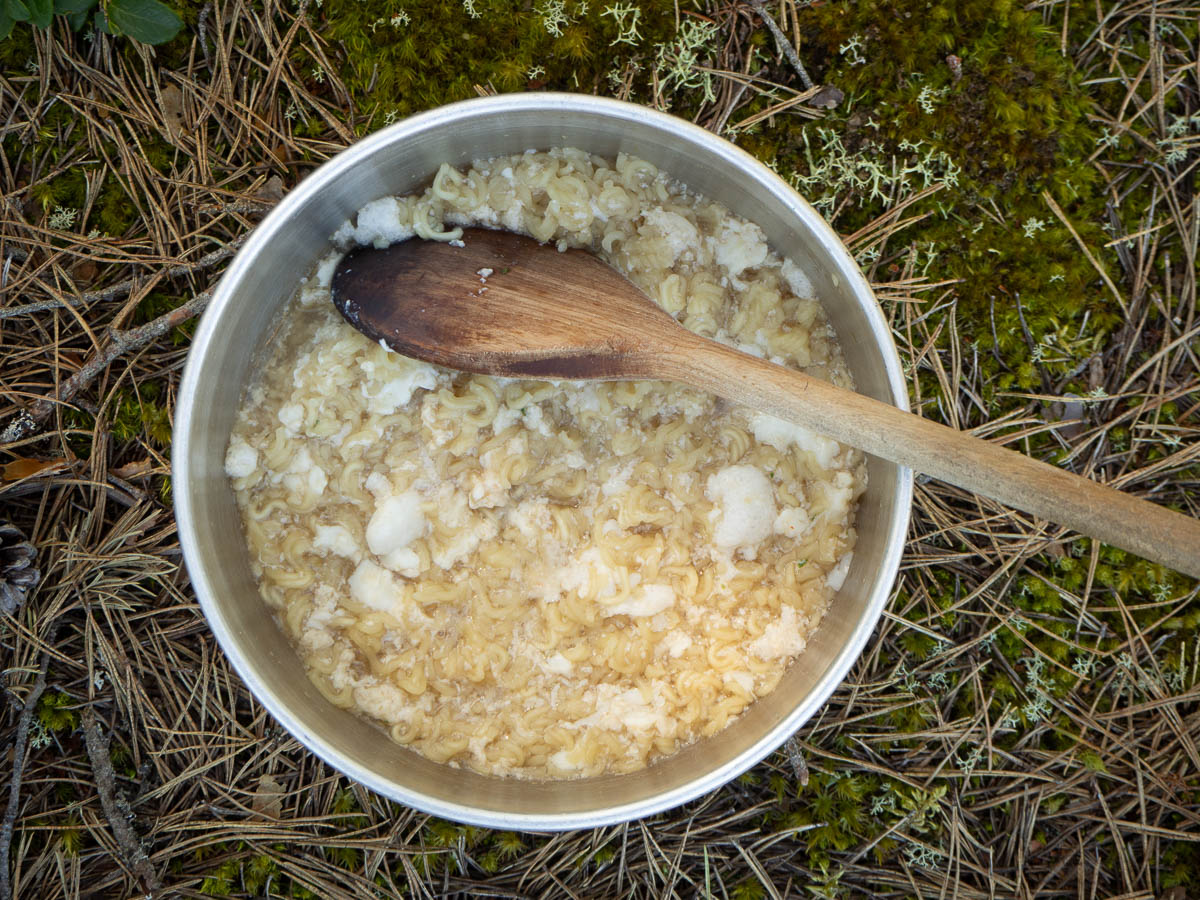
In other news, it turns out that walking around with egg whites in your rucksack will slowly whisk those egg whites into a soft foamy fluff. And if you then dump those egg whites into your hot instant noodles, they solidify into little foamy islands, sort of like sugarless îles flottantes.
Speaking of food, I wasn’t expecting to find anything edible in the forest at this time of the year, but I was wrong – some of last year’s lingonberries were still there and waiting to be eaten. Frozen and then thawed, and partially sun-dried, they were wrinkly but juicy, tart and sweet. Few and far between, and hard to spot, not like fresh ones where you can stop anywhere and eat your fill.
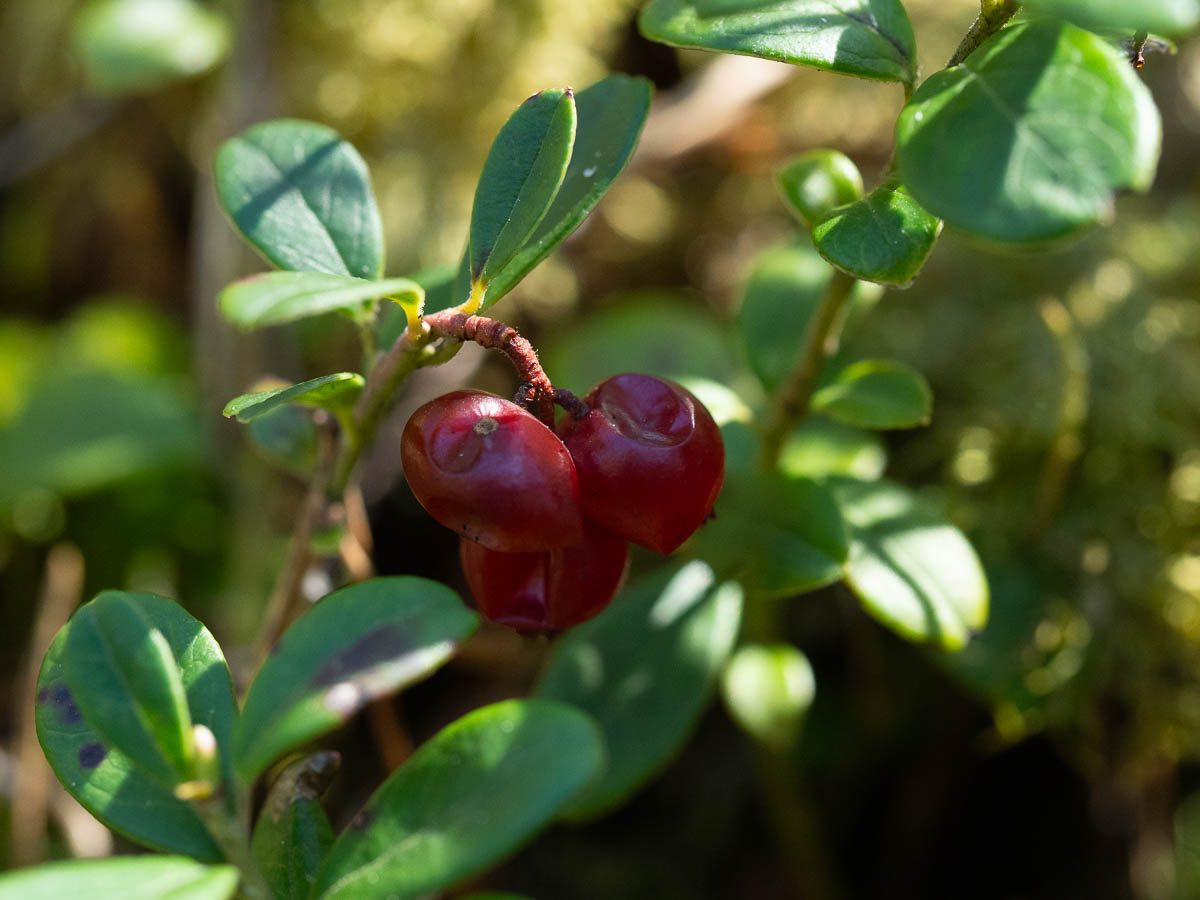
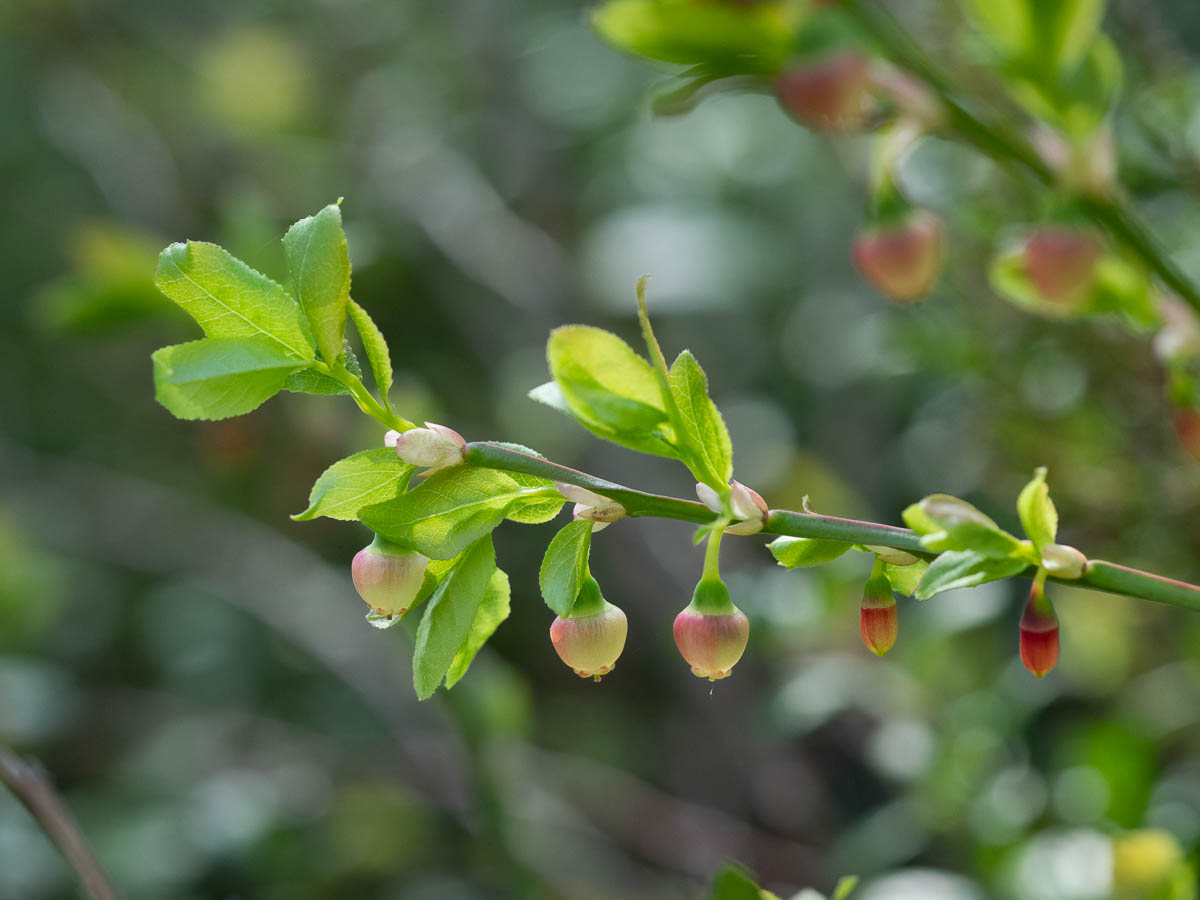
The forest was full of bilberry and lingonberry bushes, so later in the season there will be lots to eat here. Right now the bilberries taunted me with their berry-like flowers.
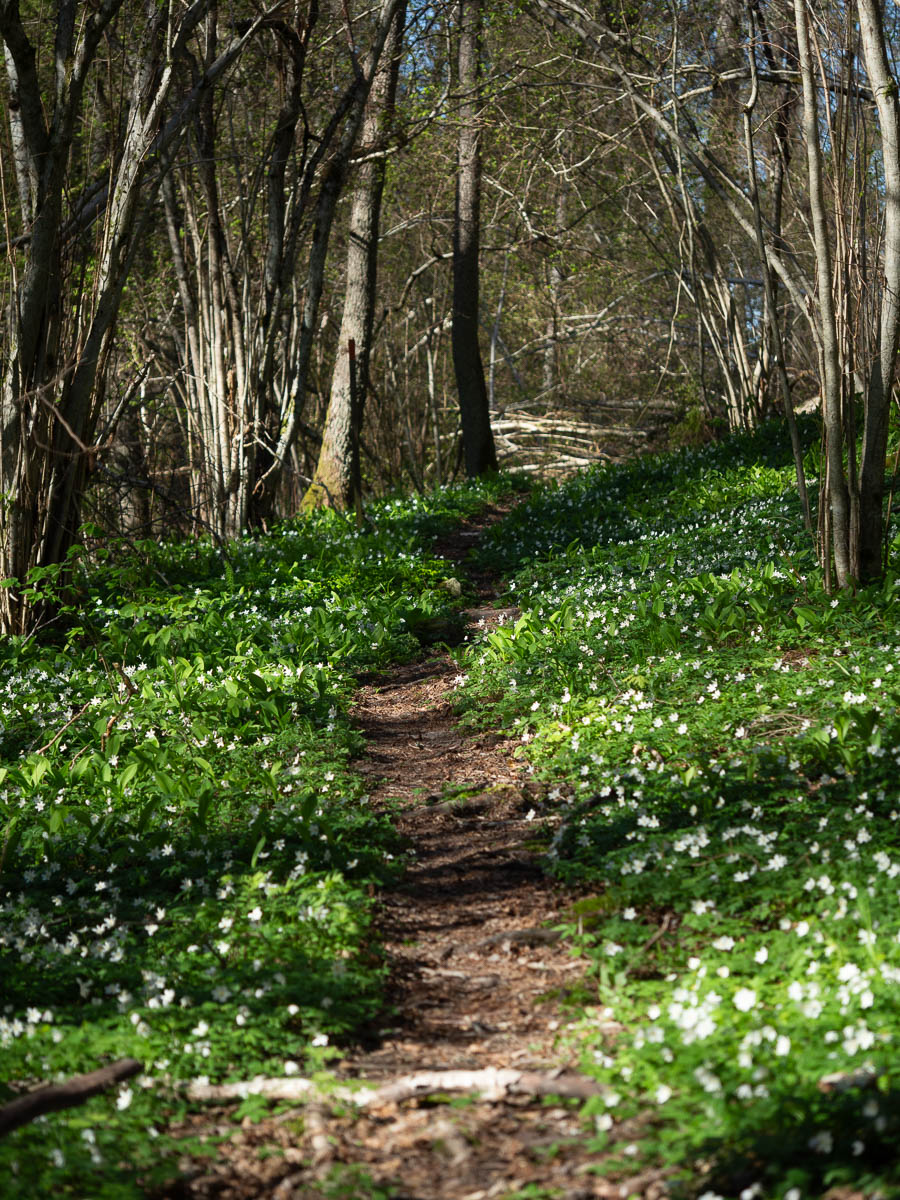
Henaredalen is a river valley that I walked in 2018 and wasn’t too impressed by. That was also in May, but this year, spring has come a lot further and the valley is more full of flowers. Much of the ground was covered by wood anemones.
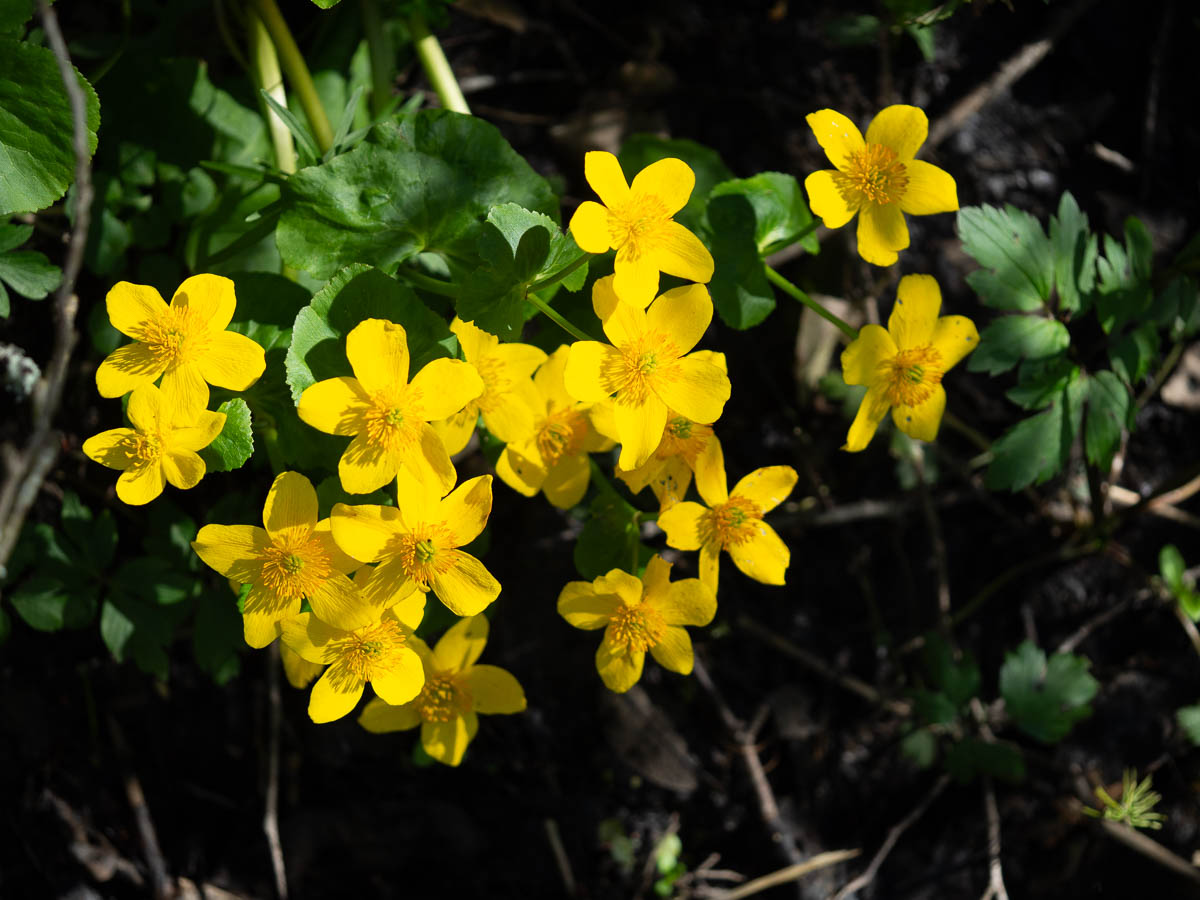
In between there were marsh marigolds…
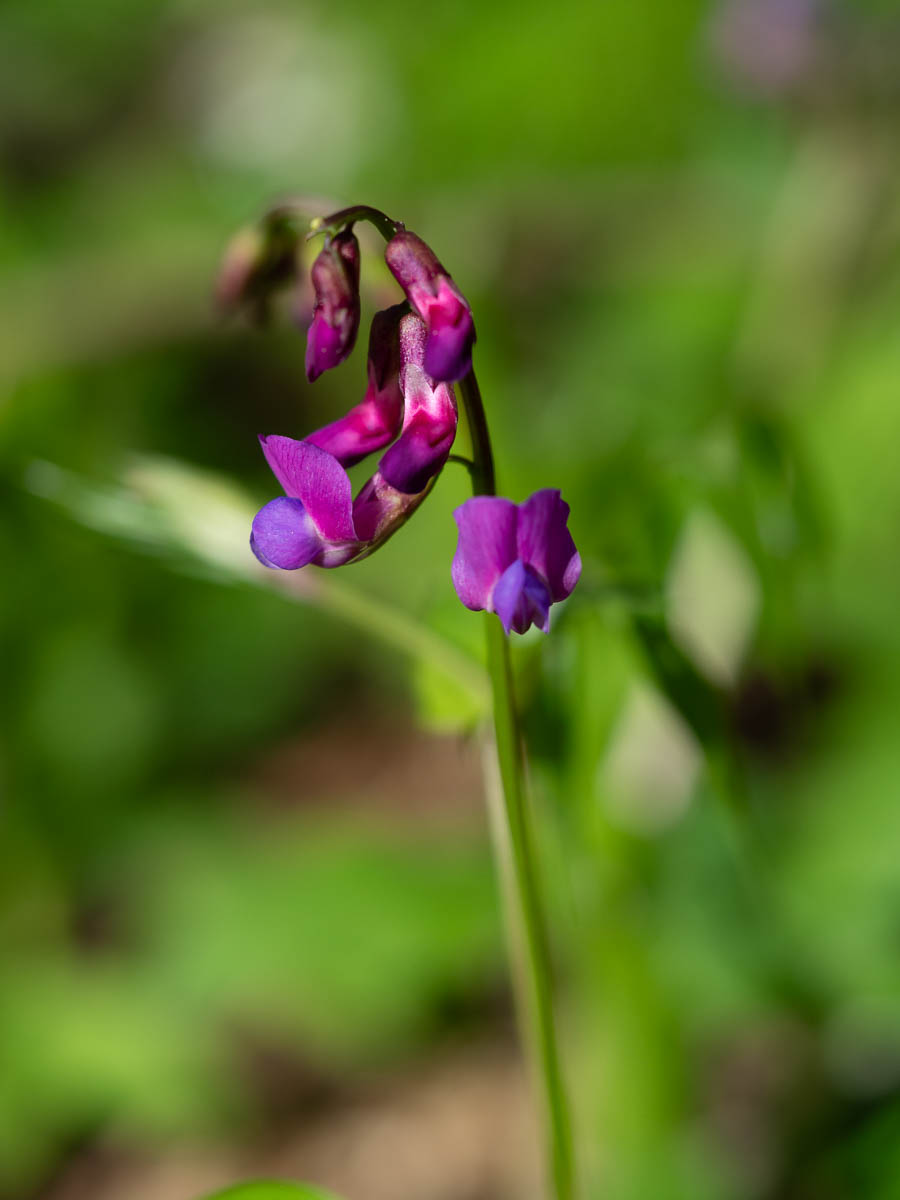
… and a pretty purplish-red flower that I later identified as some kind of Lathyrus (possibly gökärt, seahernes).
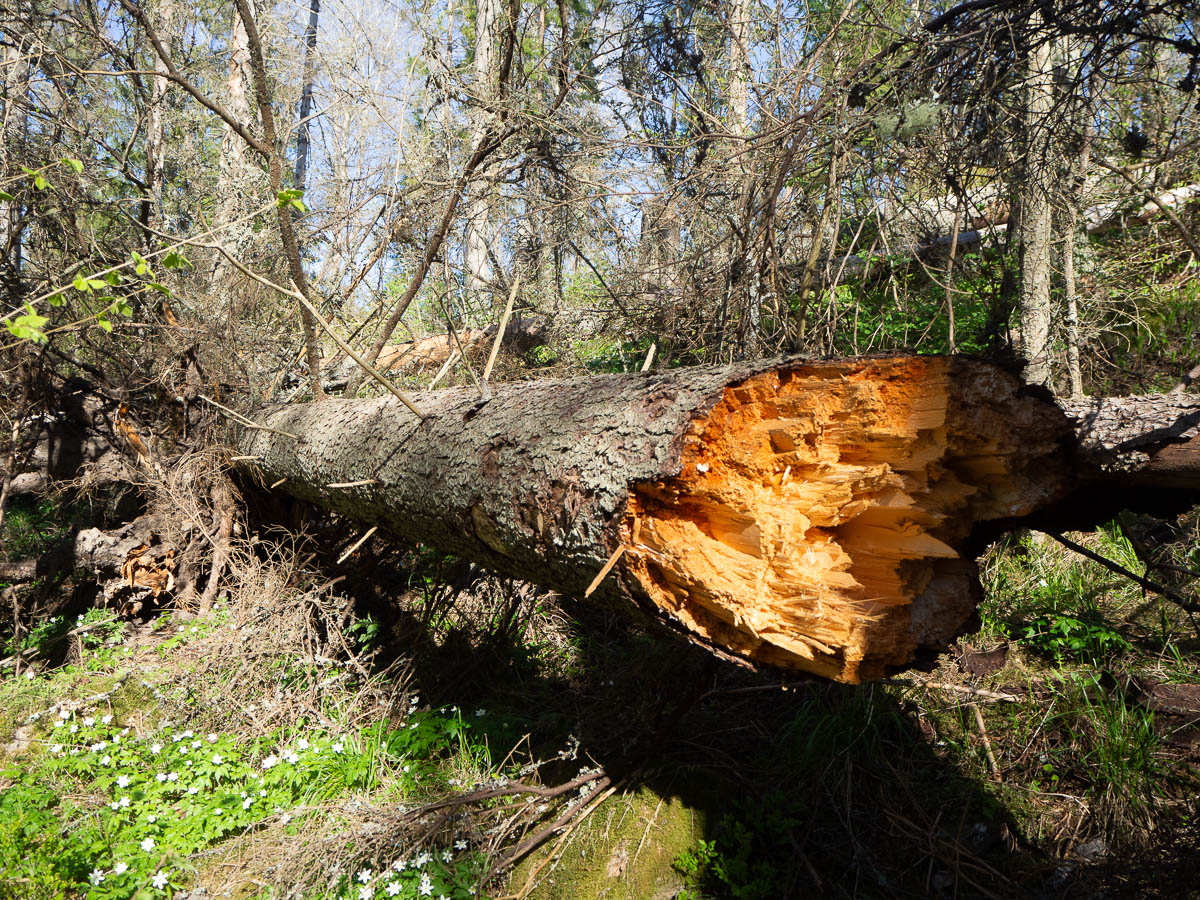
One big change from my last visit was the large number of fallen spruces. There was a sign explaining that the area is badly affected by the spruce bark beetle, and there’s a risk of spruces falling without warning. It looked to be at least a year old, and clearly plenty of trees had toppled since then.
Of wildlife, apart from the possible wolf print: butterflies of all sizes and colours. Birds, especially geese in that marshy lake, blackbirds in the deciduous forests and cuckoos in the pine forests.
Of other hikers, very few. For a while it looked like I would get the camping site all to myself, but just as I was making dinner, a couple turned up. We talked about other hiking trails in this general part of Sweden, and about the tricky logistics of hiking these hard-to-reach parts of Sörmlandsleden. They did it with a car + bicycle combo.

Leave a comment