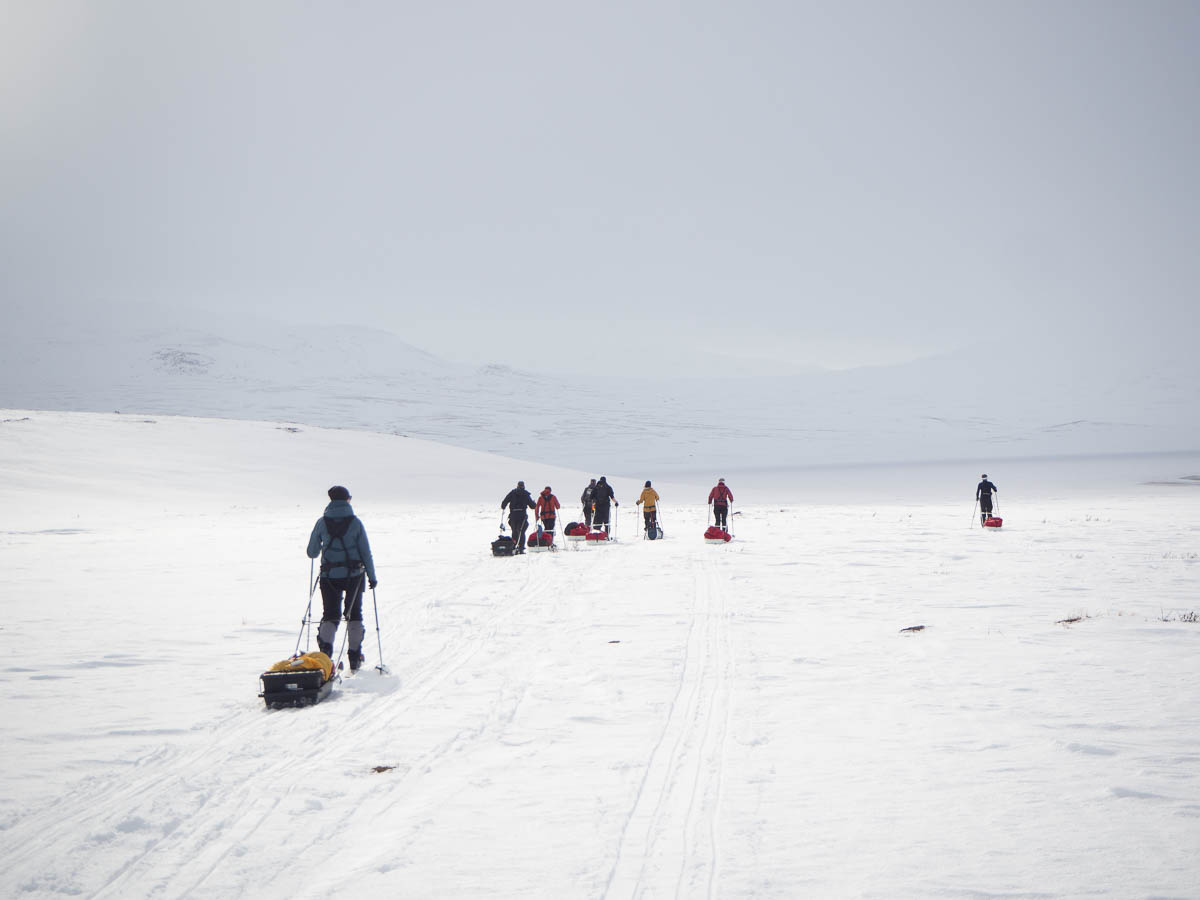
Árasluokta to Duottar, 20 km, 500 m of ascent.

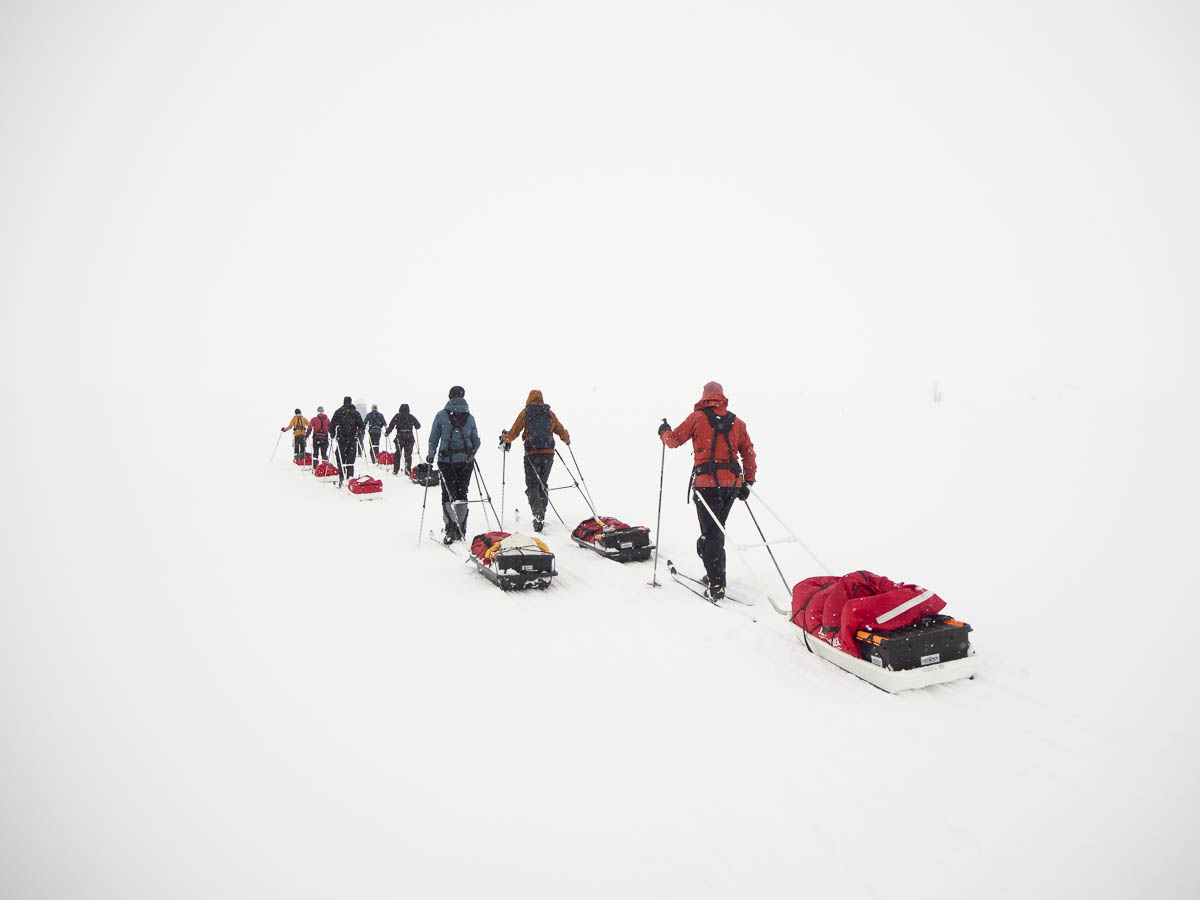
Mildly uphill all the day. The 20 km took us eight hours.
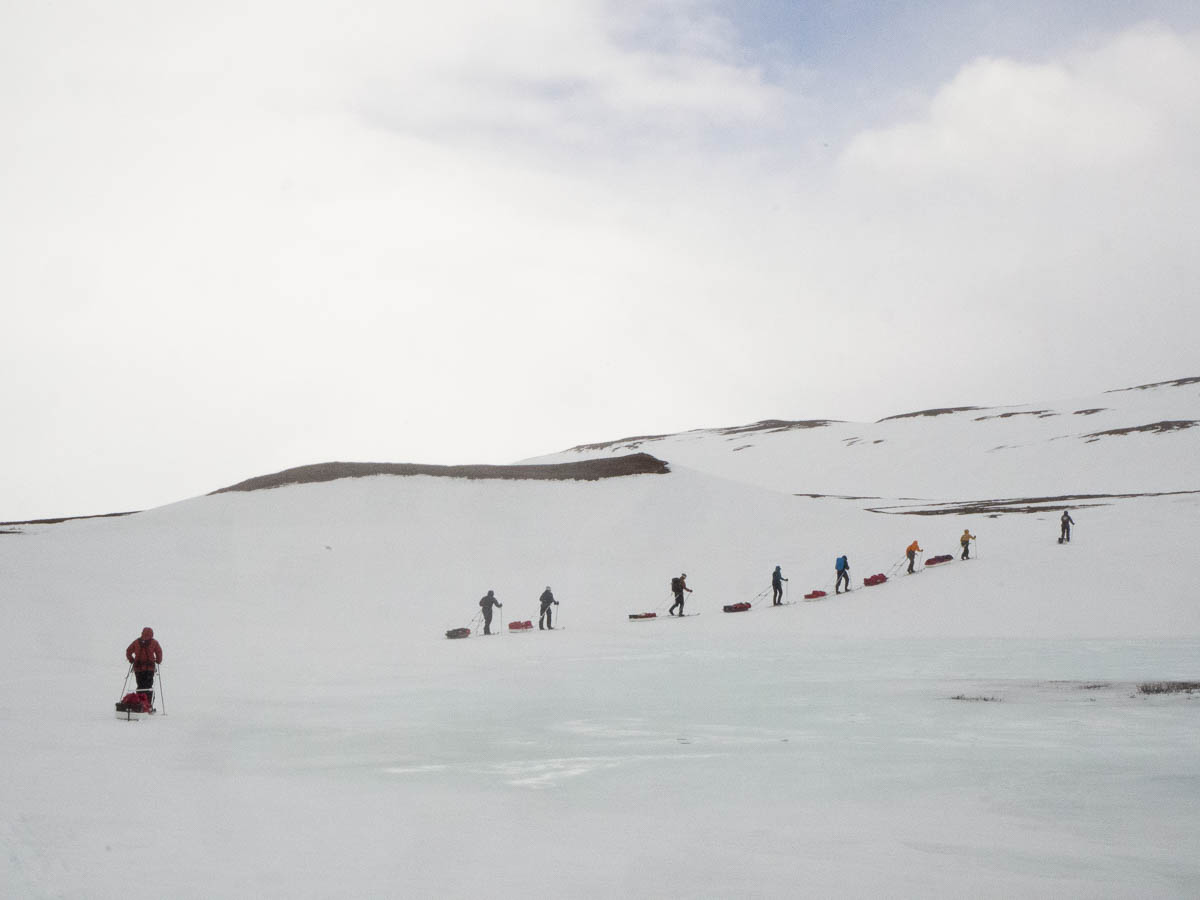
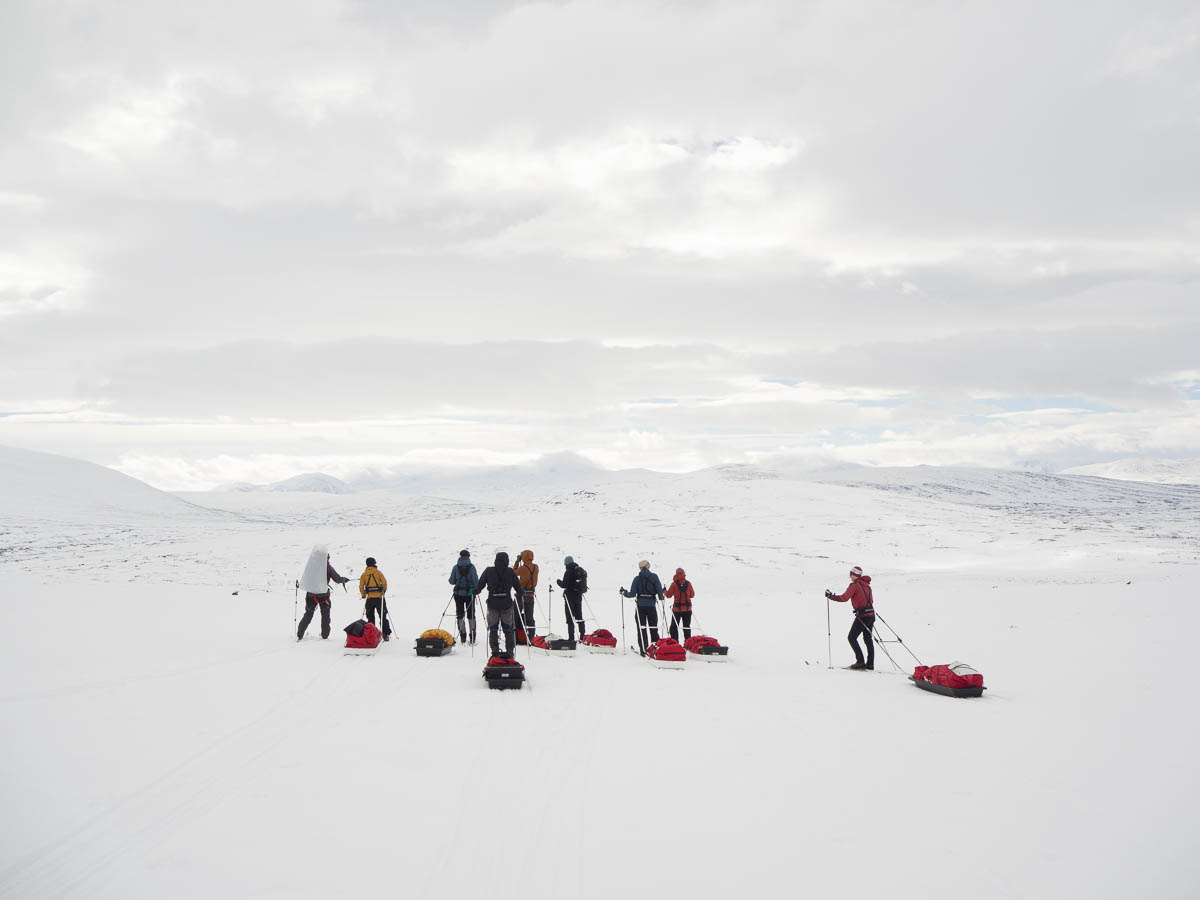
We had strong winds for six of those eight hours, and rain for four of them. Good thing I packed a rain cover for my rucksack. Also, wise from previous years, I’m glad that my packing list tells me to pack “a full change of clothes in a waterproof bag, regardless of season”. You’d think that on a ski trip you’d mostly risk simply getting cold, but this time of the year, wet is absolutely a risk, and wet + cold + windy is the worst.
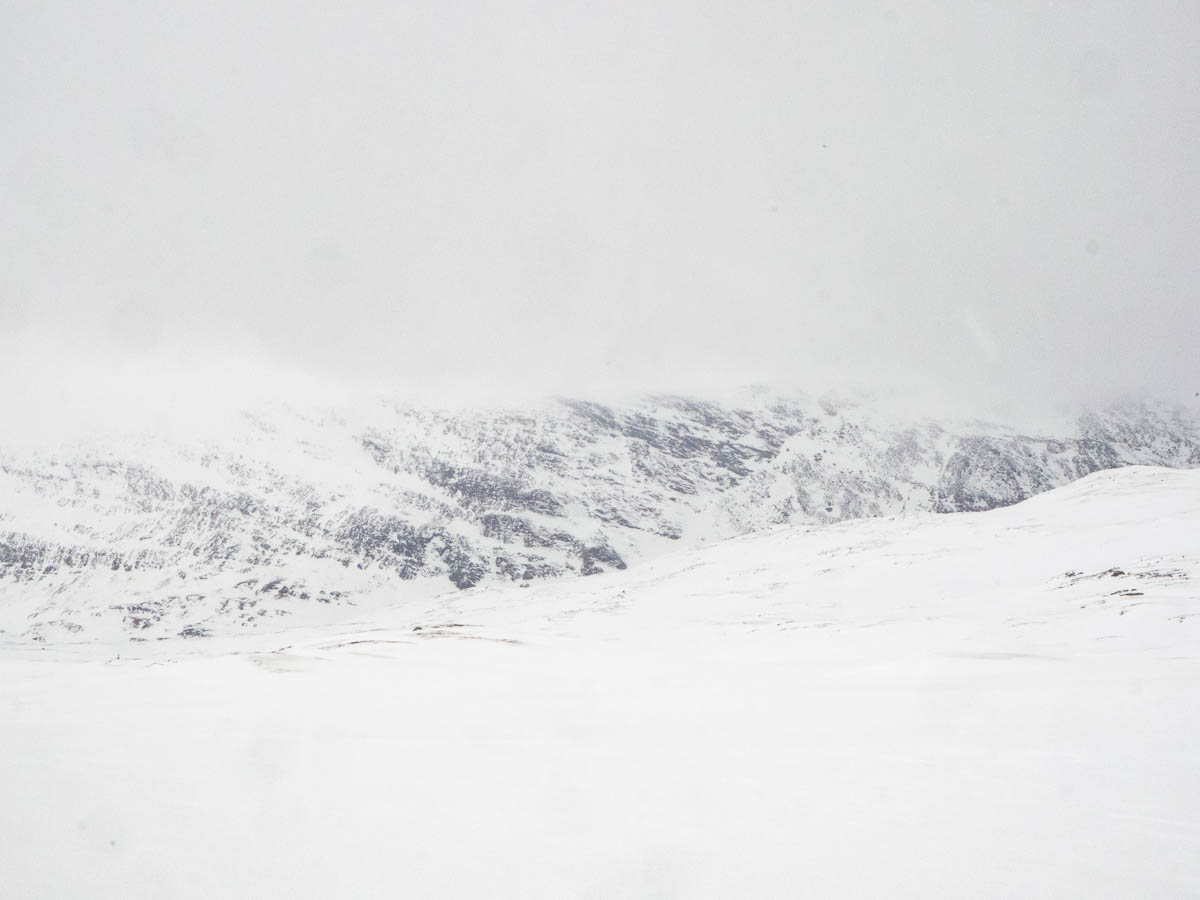
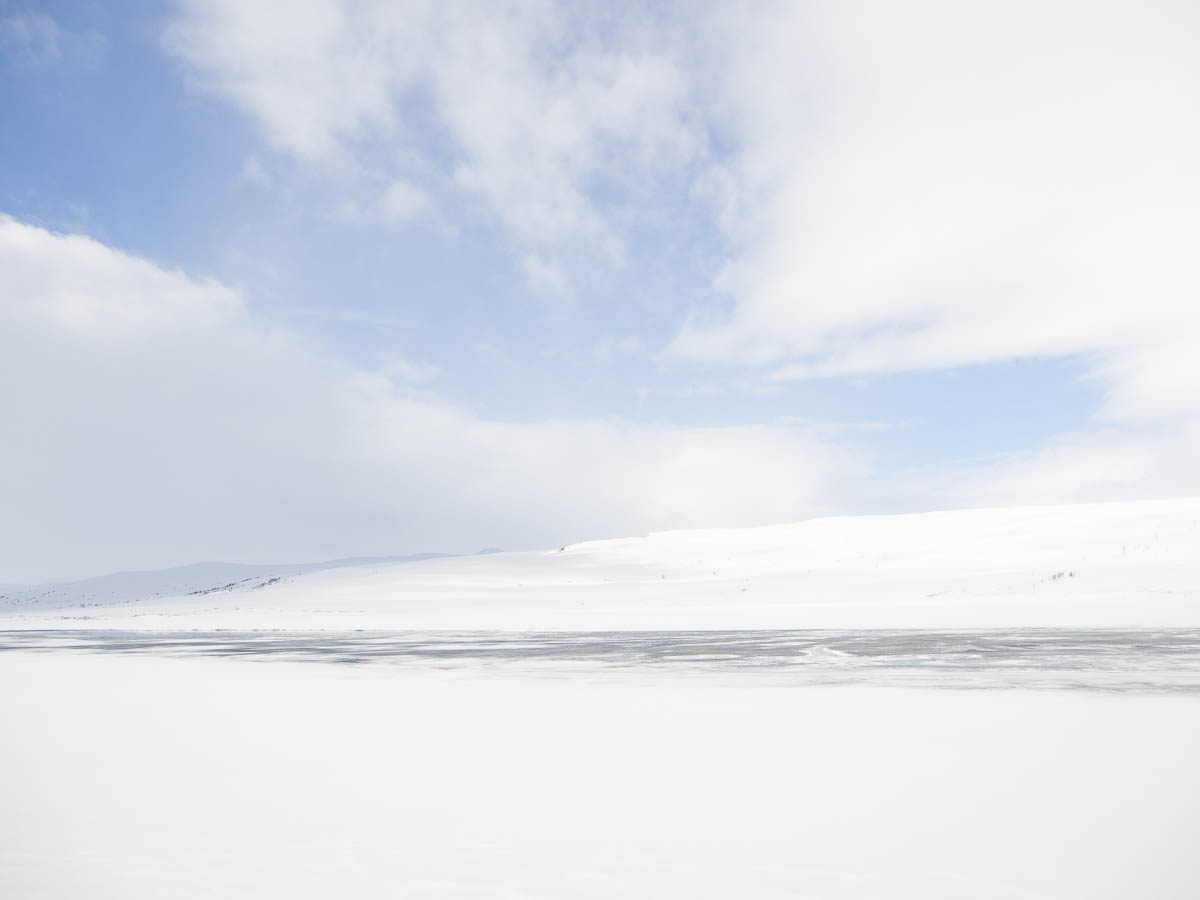
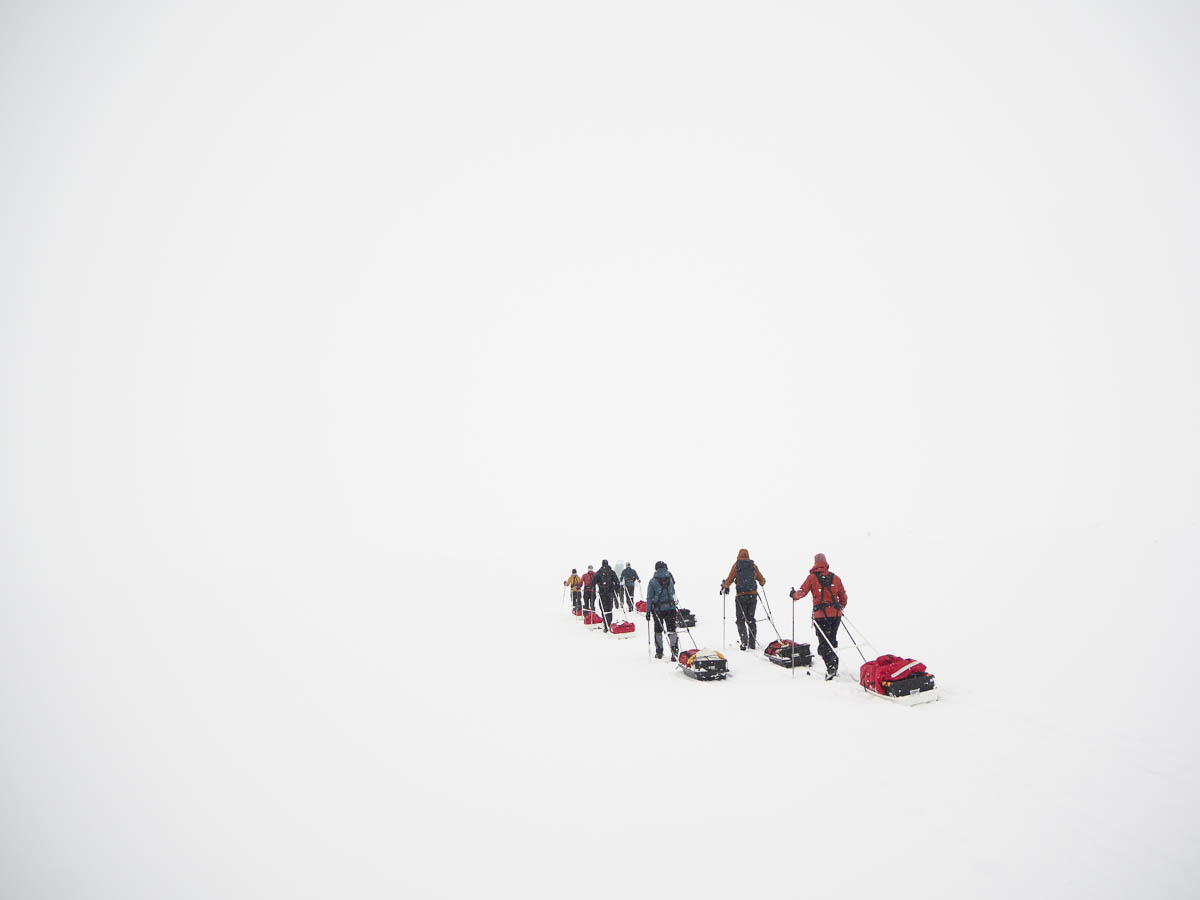
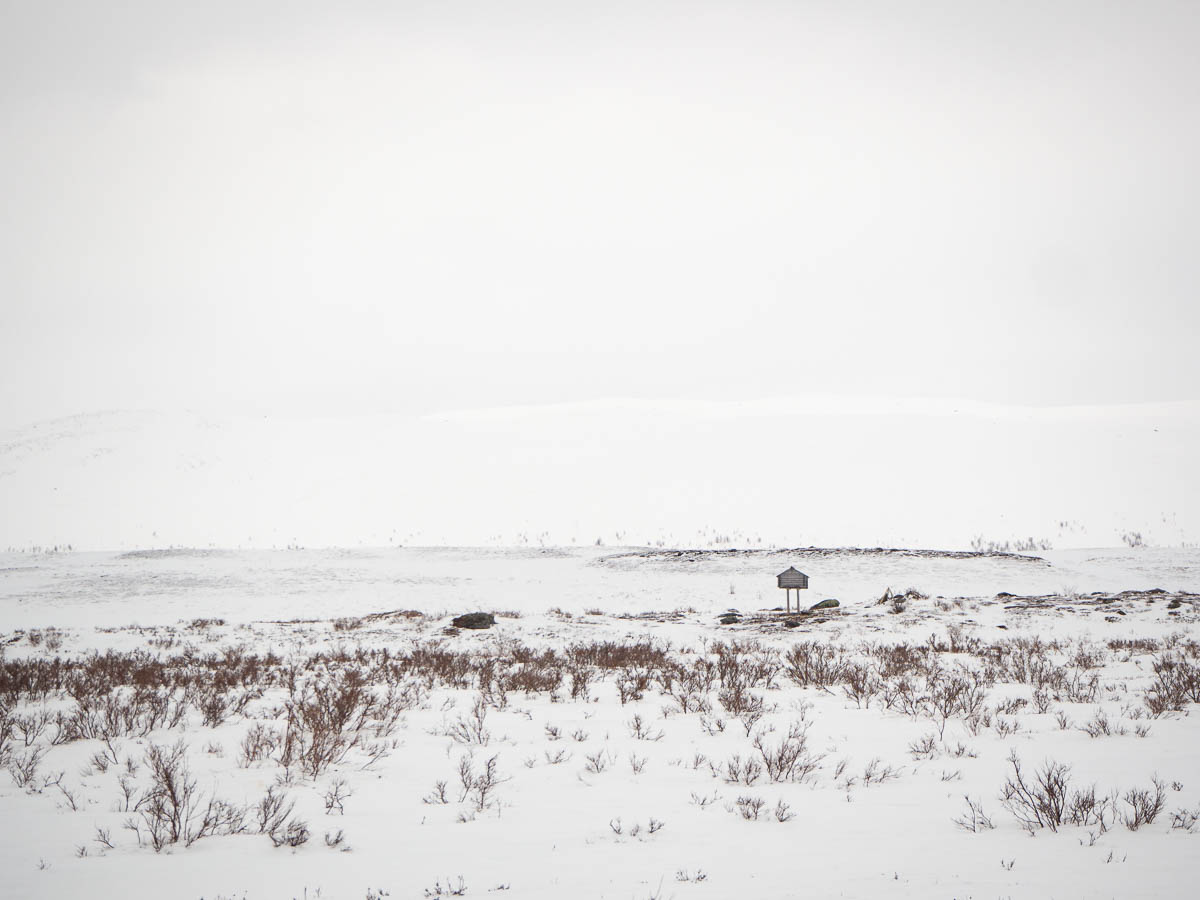
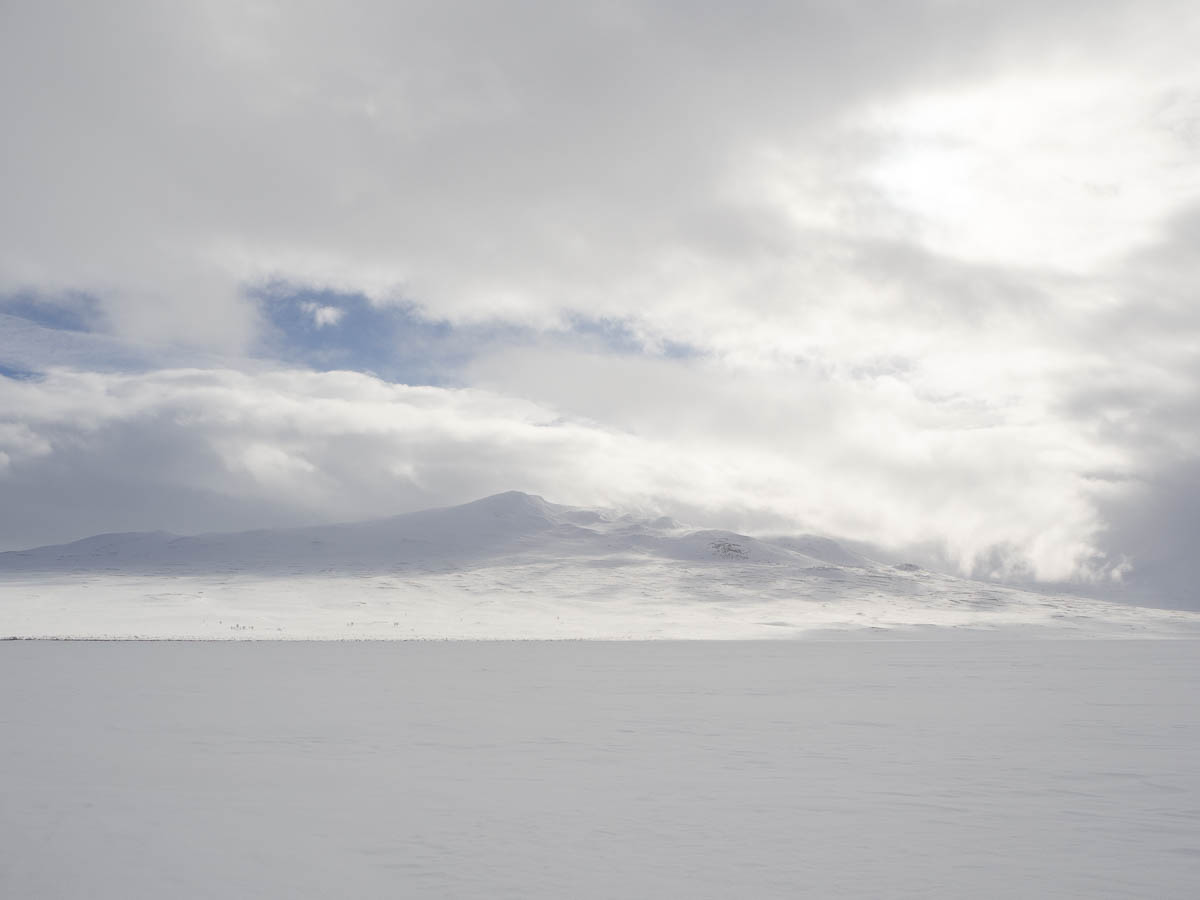
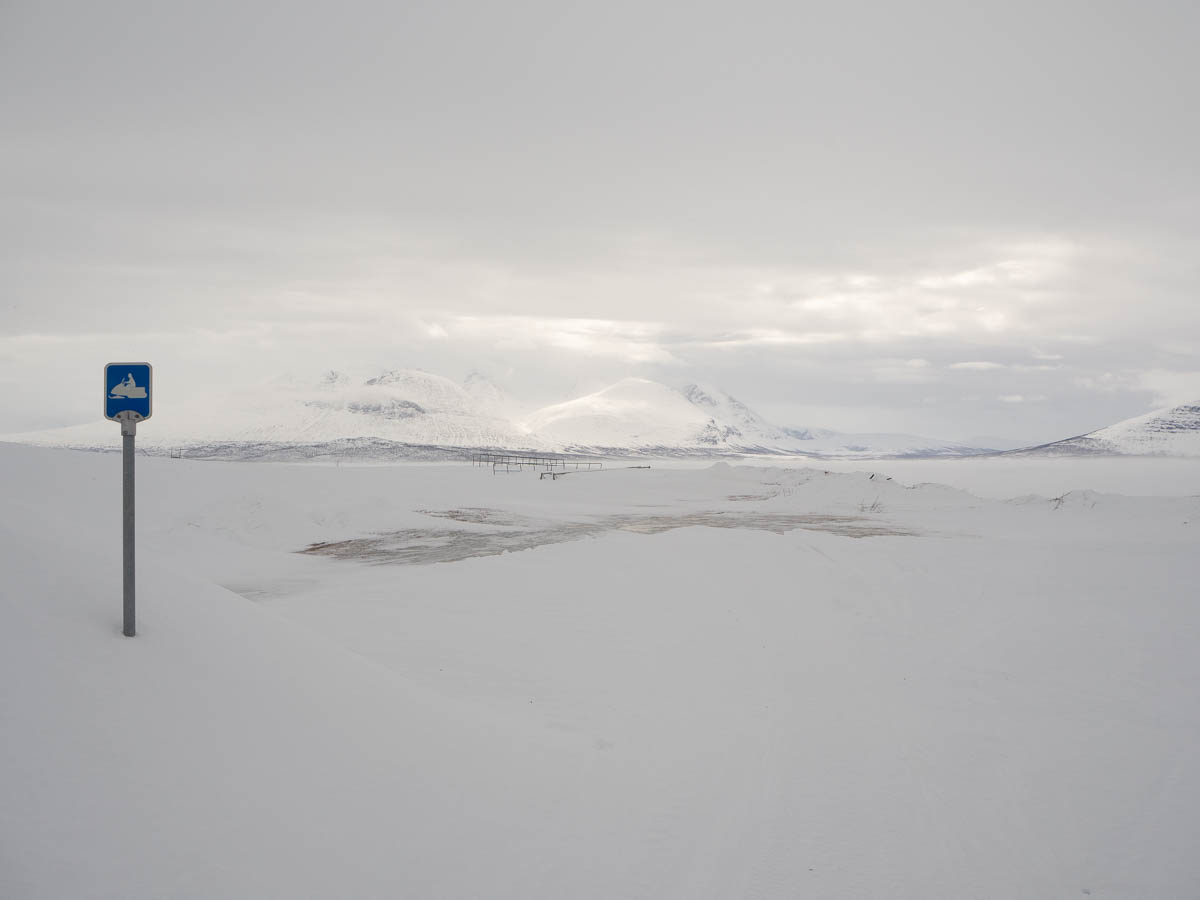
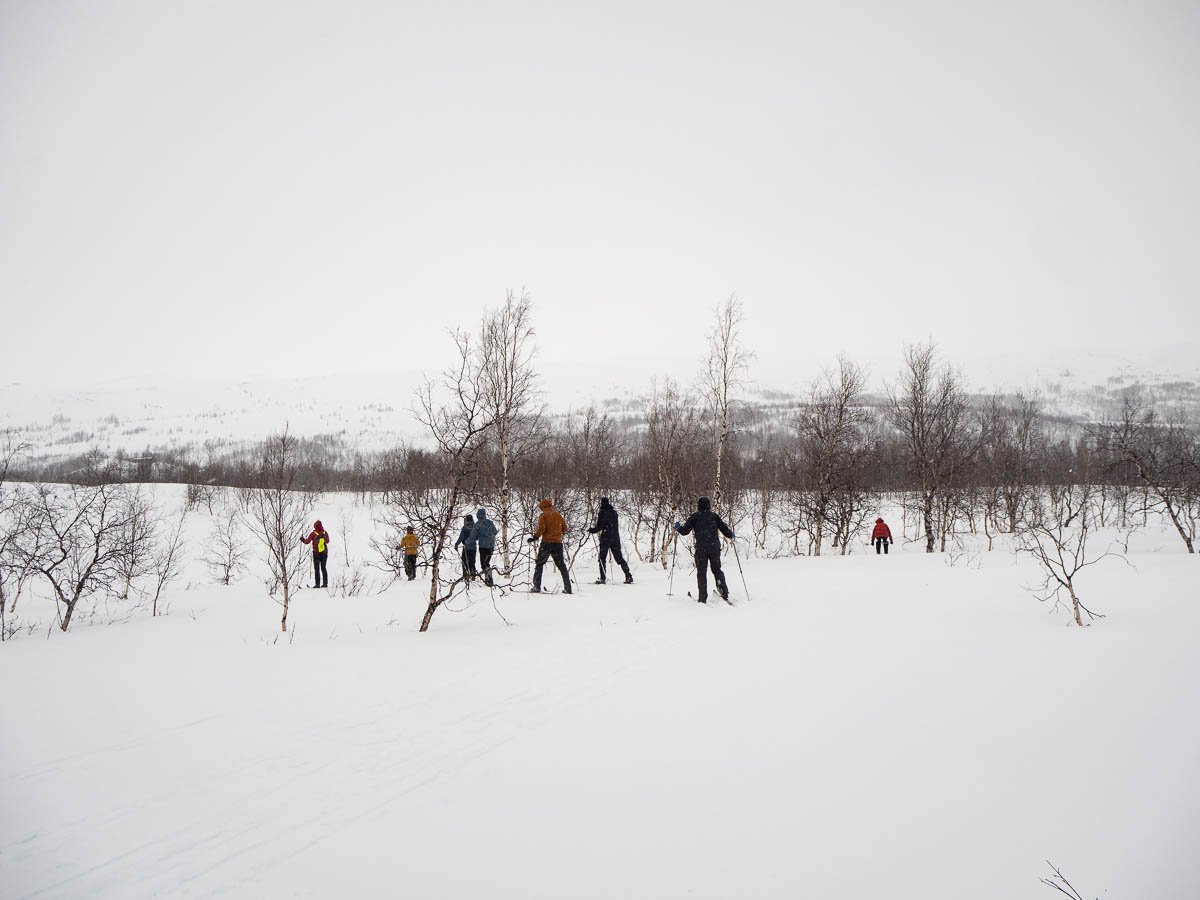
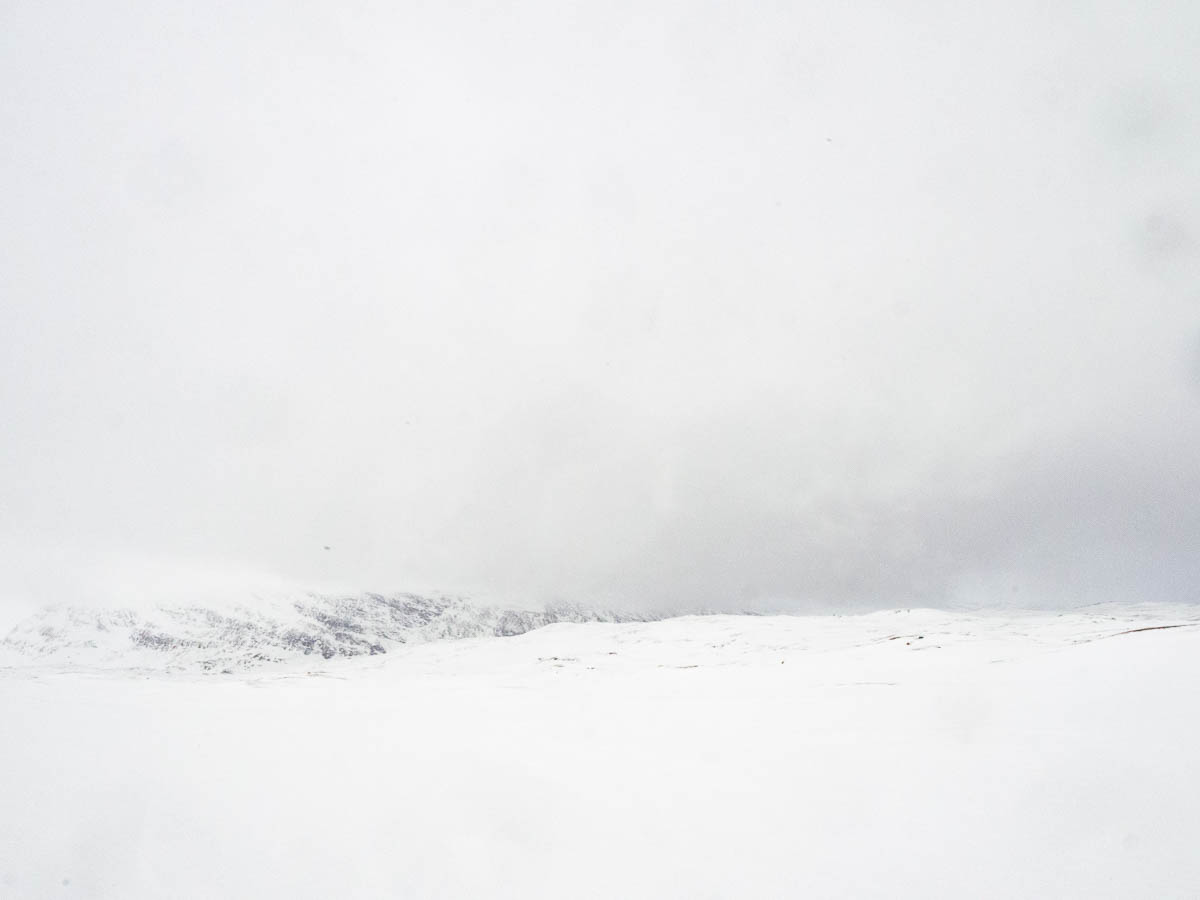
In the wet and cold it was difficult to enjoy the views (such as they were in this weather).
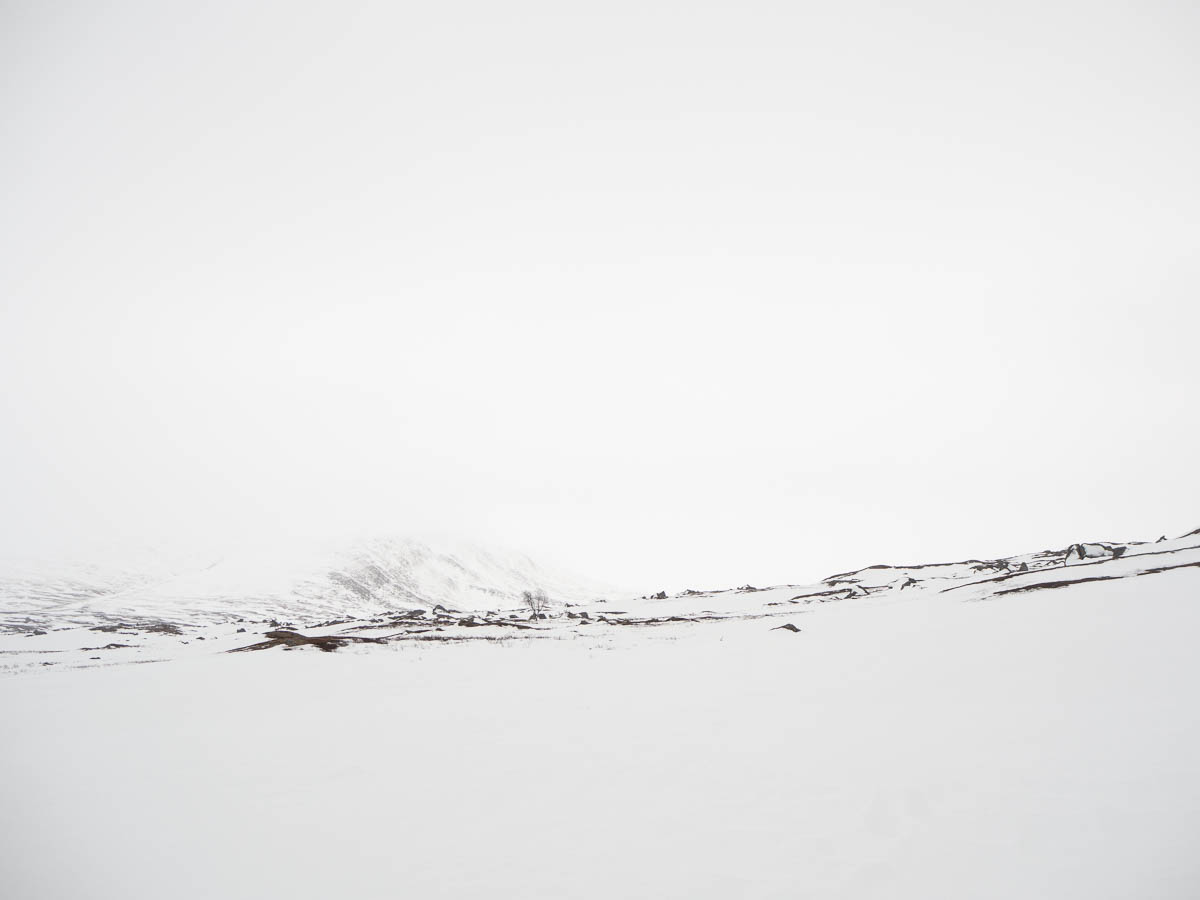
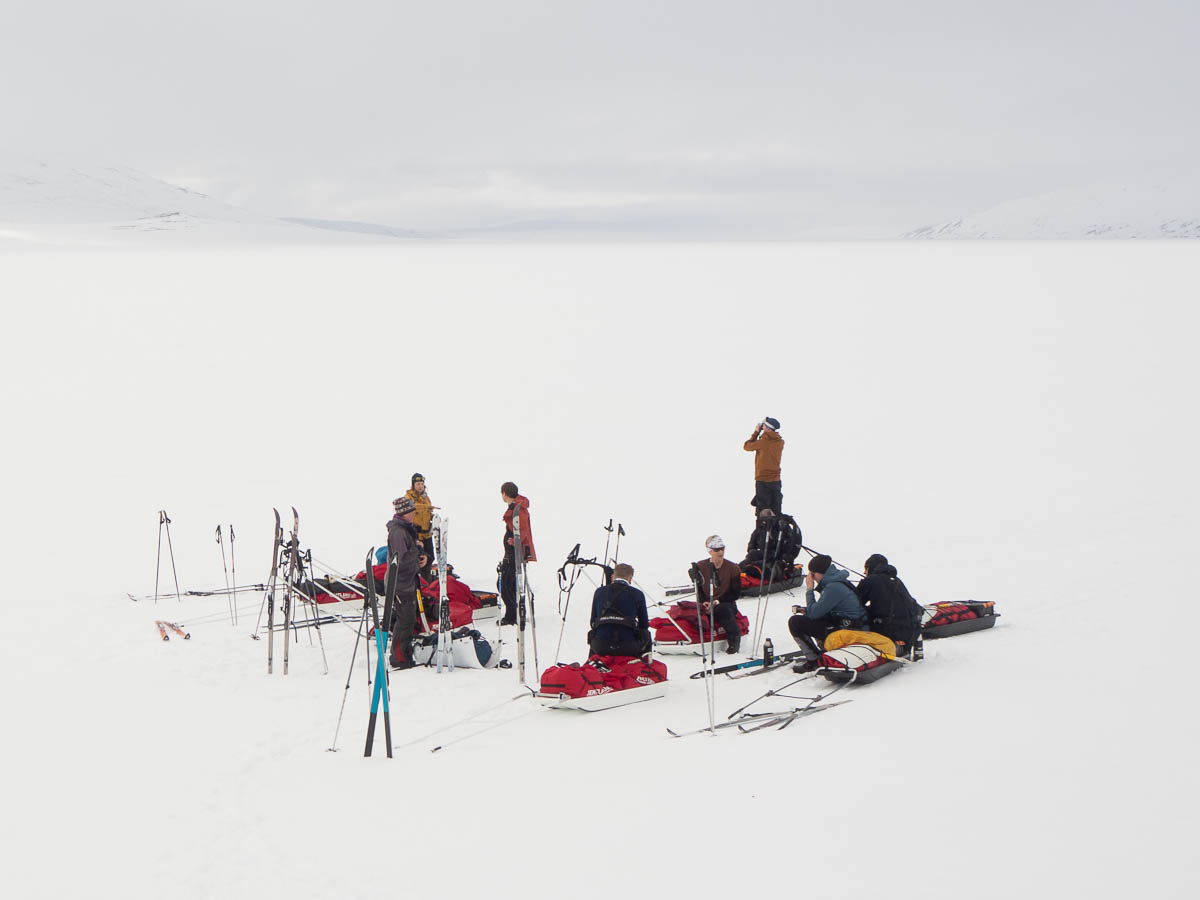
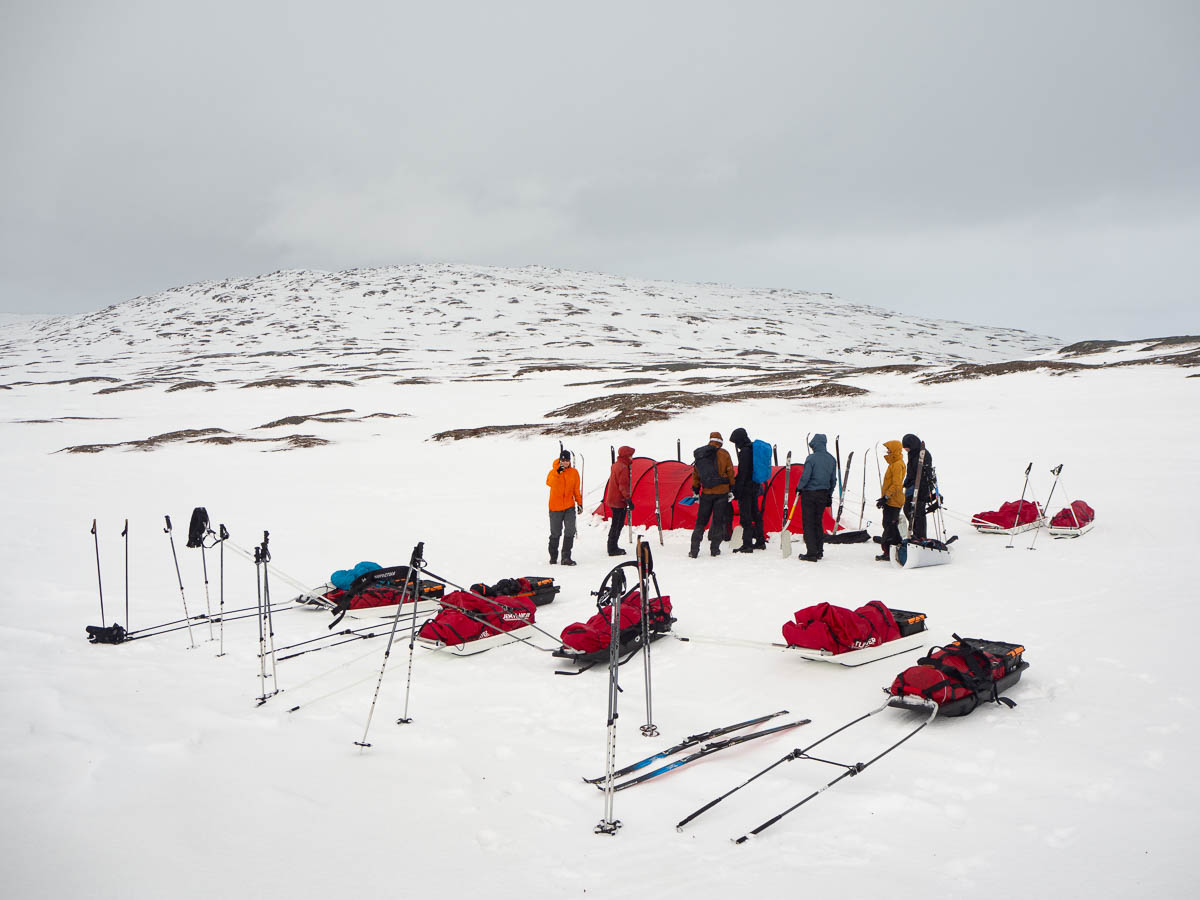
The guides from Laponia Adventures were well equipped even for this kind of unpleasant weather, with a good-sized lightweight tent that we put up for a lunch break. We only put up the outer layer of the tent, so no floor, and dug a sitting trench in the middle, so all ten of us fit inside. It got warm in there quite quickly, and we could have a luxurious sit-down lunch. This did wonders for our energy levels, compared to whatever brief, freezing cold snack we would have had without the tent.
While I’m skiing, some part of me is almost always paying attention to my body. When there isn’t much to look at, and there are no photo opportunities to consider, it’s even more.

I pay attention to how all the different parts are feeling. Where is there tension? Am I hunching over due to the wind? Am I arching my back due to the pulk harness? Is anything rubbing uncomfortably? Work and effort can always be offloaded to some other body part, to some extent. Is some part working too hard? Skiing involves just about every part of the body.

I pay attention to my toes, the pads of my feet, my heels, hips, thighs, butt, lower back, shoulders, arms, wrists, hands. Lift the heel a bit less to take pressure off the toes. Shift the angle of my grip on the poles to reduce strain on the wrists. Plant the pole more strongly to let the shoulders offload the thighs.
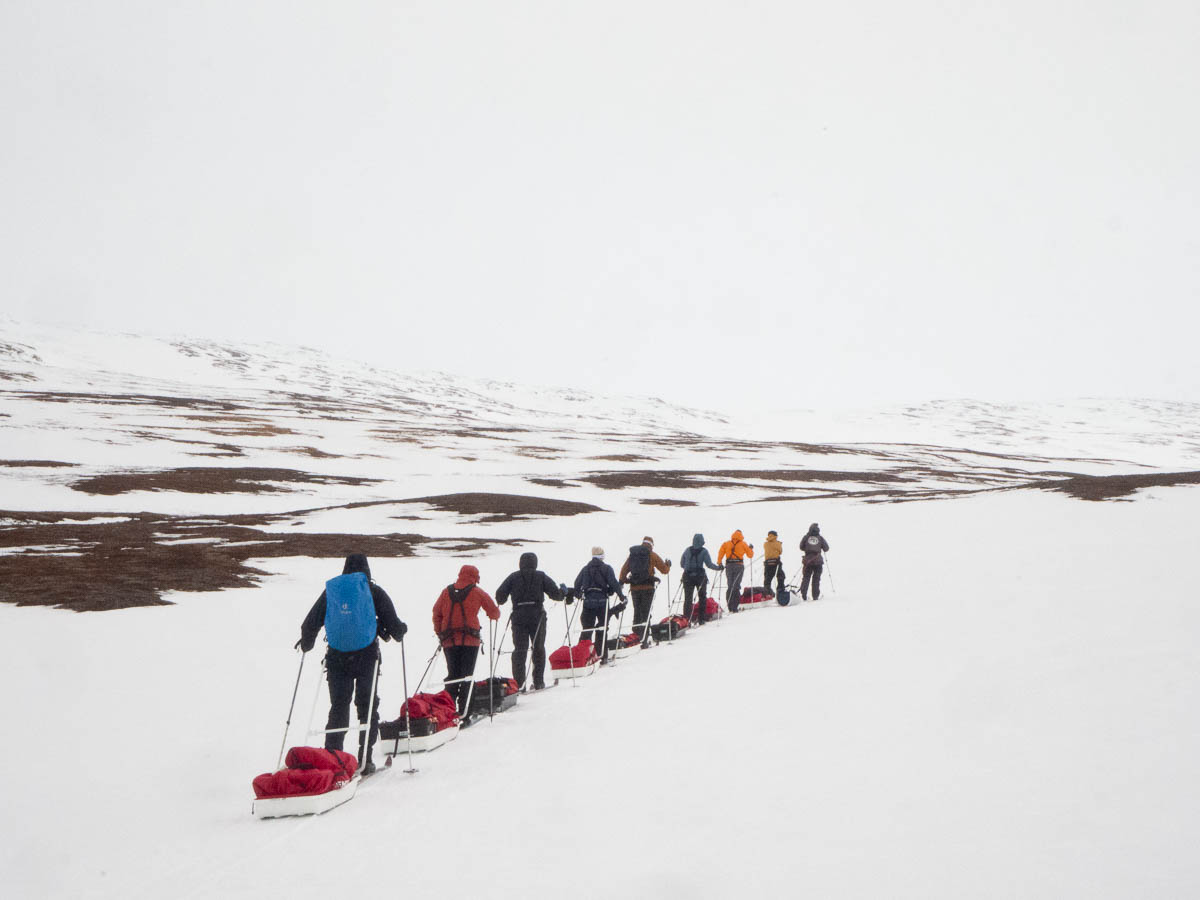
I’m not the fastest in the group, and not the slowest either. Still I often end up being last. Quite often I allow myself to fall behind for a short while, especially for photos, because I know that I can catch up without excessive effort.

Over the years I’ve learned to pace myself. I may be last, but at the end of the day I arrive in good shape, with decent energy reserves for anything that might still be needed.
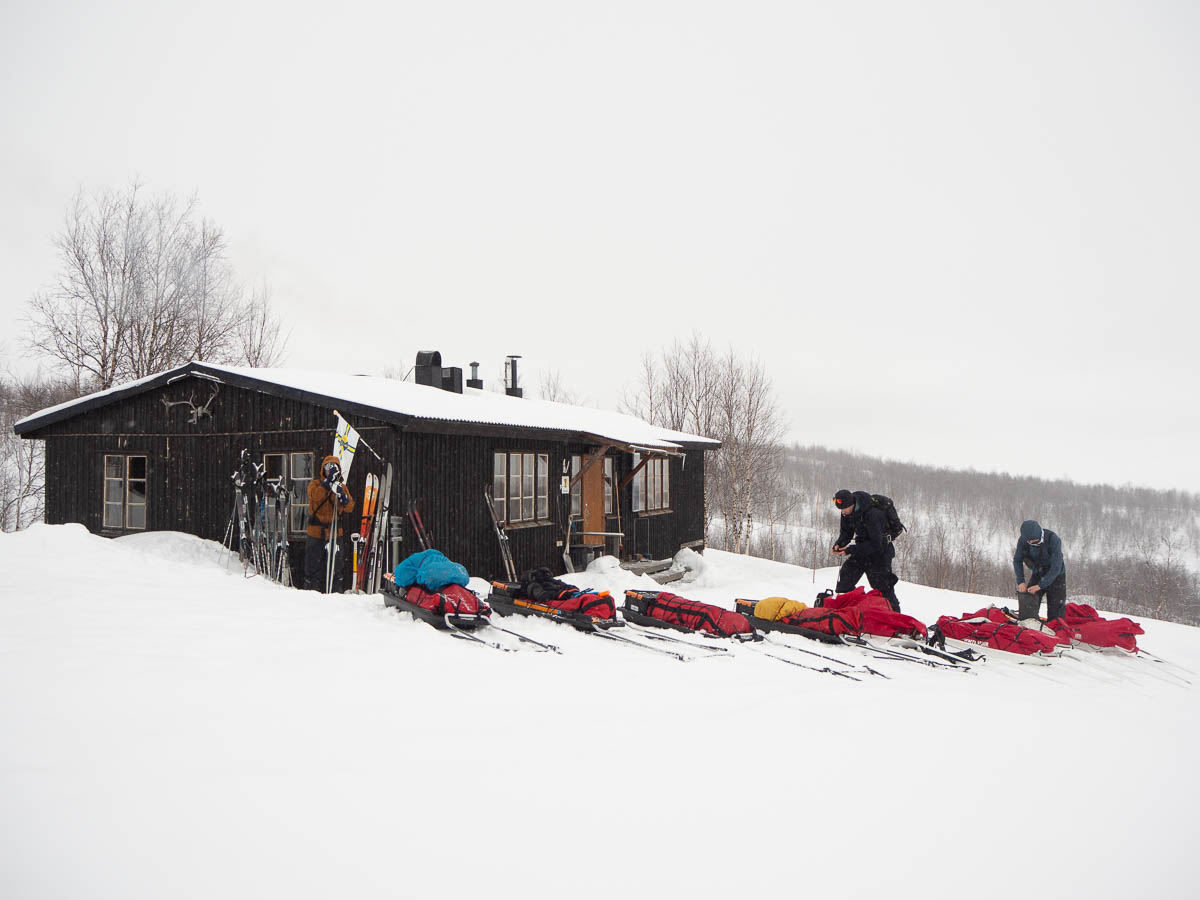
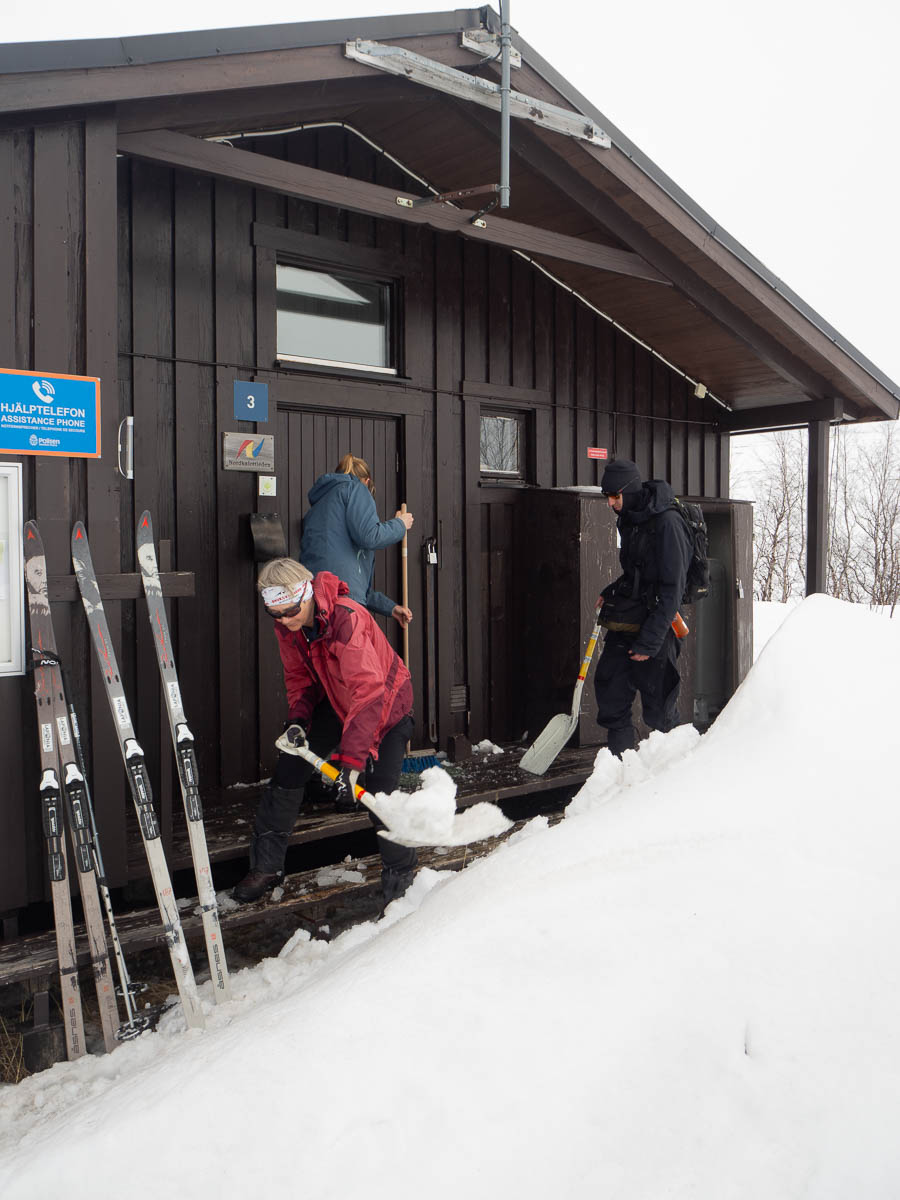
Upon arrival at the Duottar hut, our first task was again to shovel away the snow blocking the entrances. We were lucky to arrive when we did: the snow was soft (though heavy) and easy to shift. Later in the evening the temperature dropped, and whatever we hadn’t shovelled away by then was frozen hard and would remain.
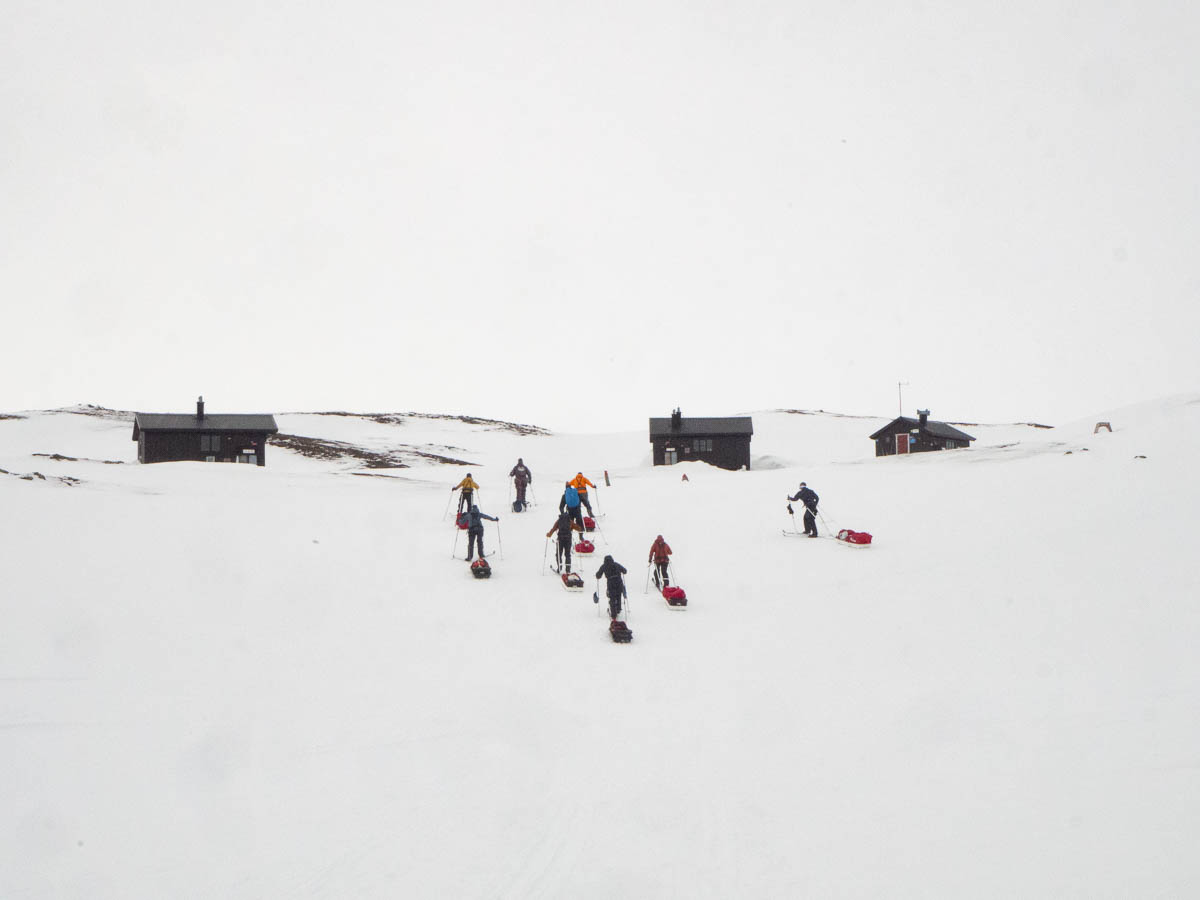
Spotted today: a few reindeer, two very distant moose (mostly just large dark blobs with long legs), ptarmigans.
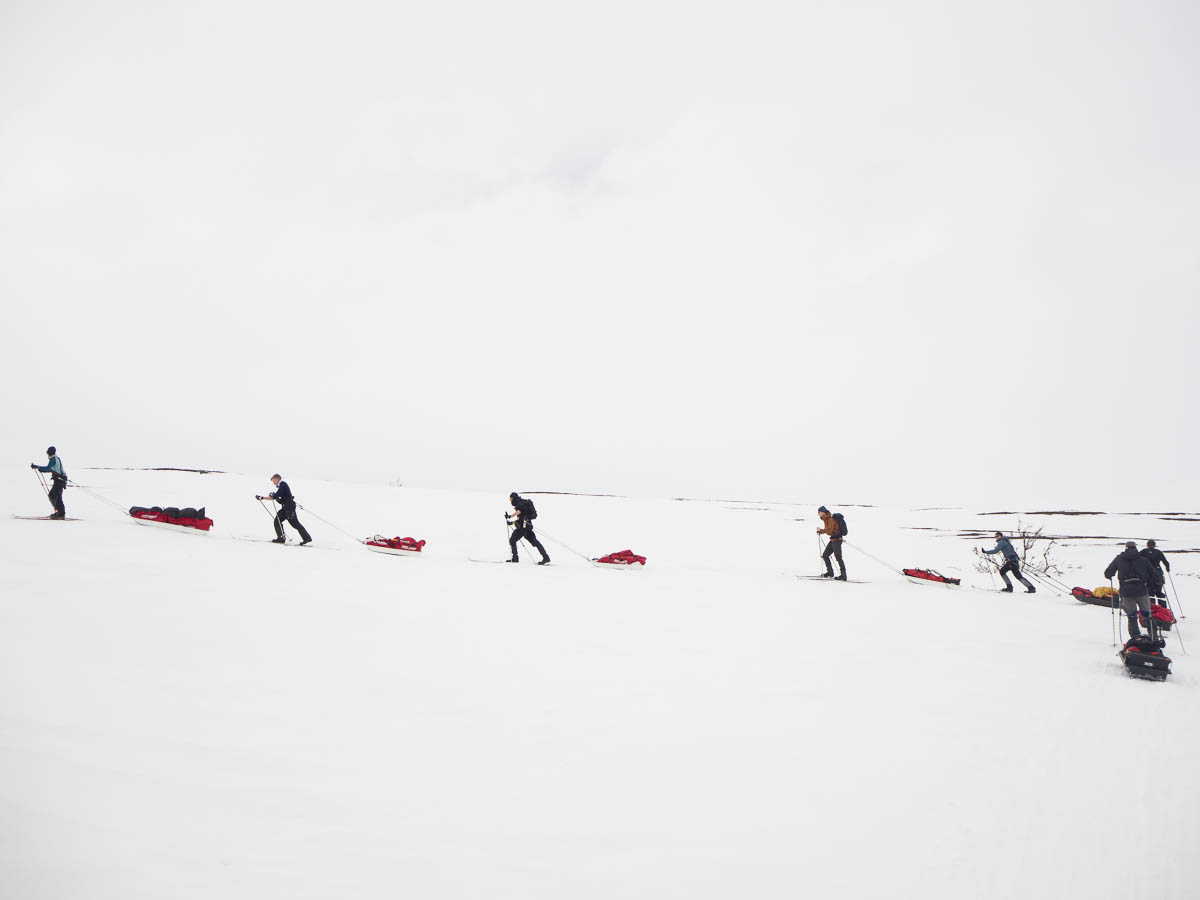
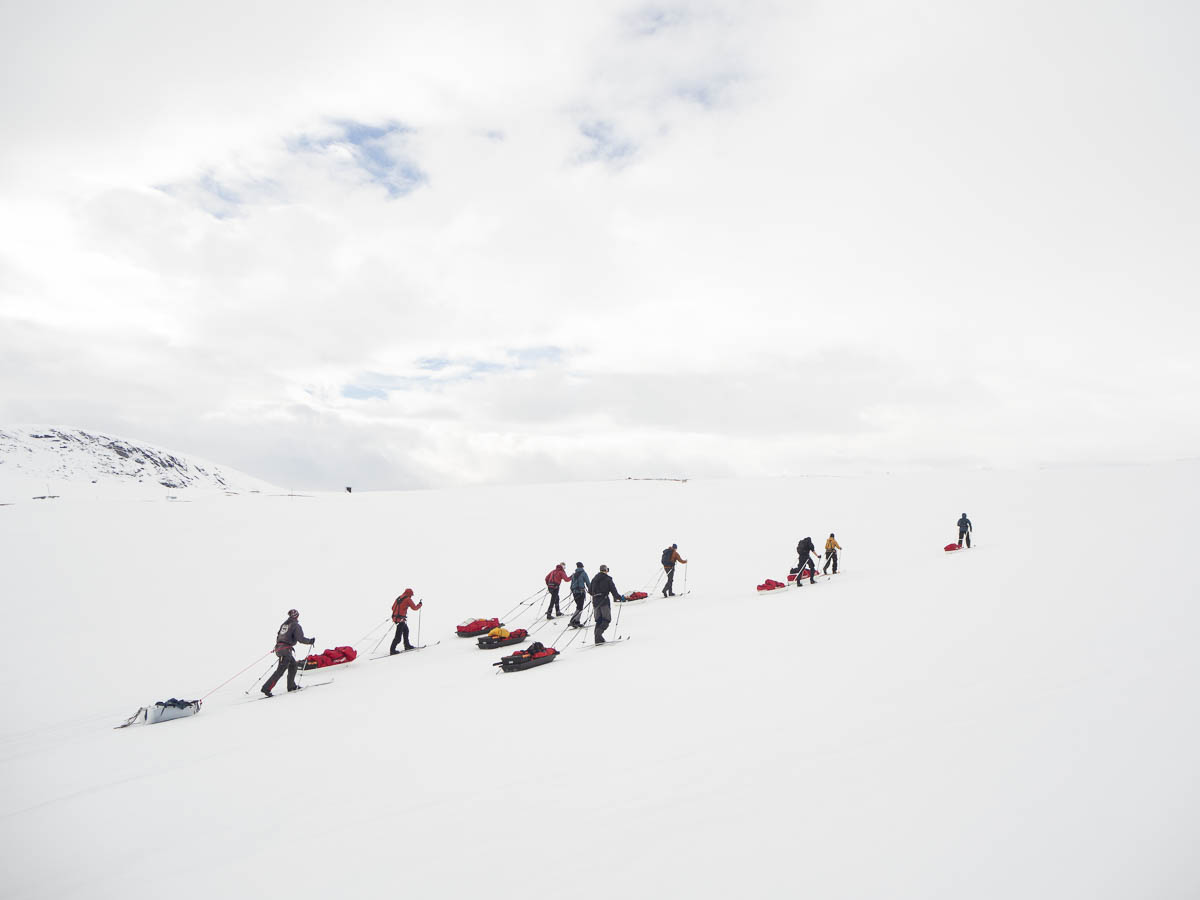
Låddejåhkå to Árasluokta, 13 km, with 350 m of ascent. Up and over a mountain pass and down again on the other side.

The ascent in the morning was long but not as hard as it first sounded. On skis with short skins it was just a bit of a plod. The hardest part was doing the zig-zag turns with a pulk – in the turn itself, you’re going one way but the pulk is going in another, and then for a moment right at the tip of the turn you’re trying to drag it straight up which is really heavy.

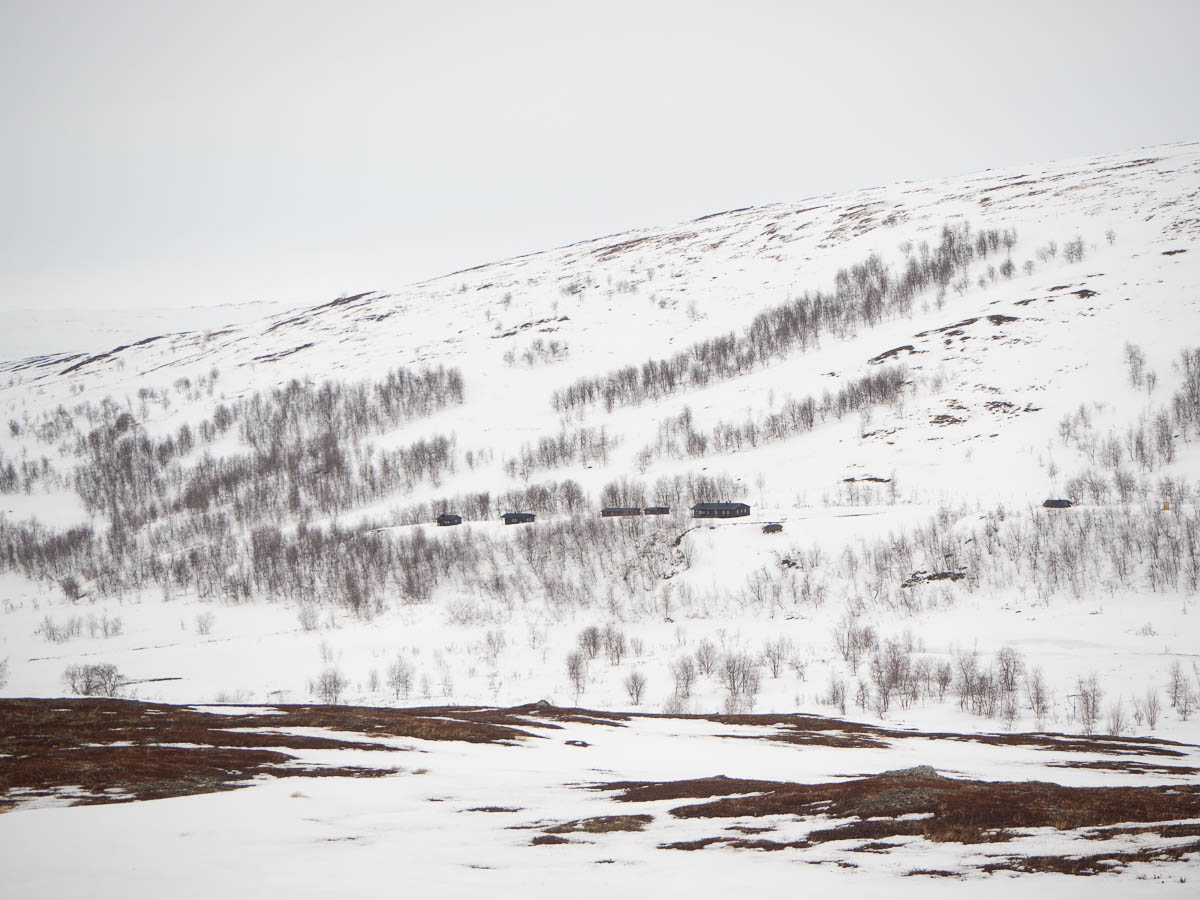
Looking back at the Låddejåhkå hut.

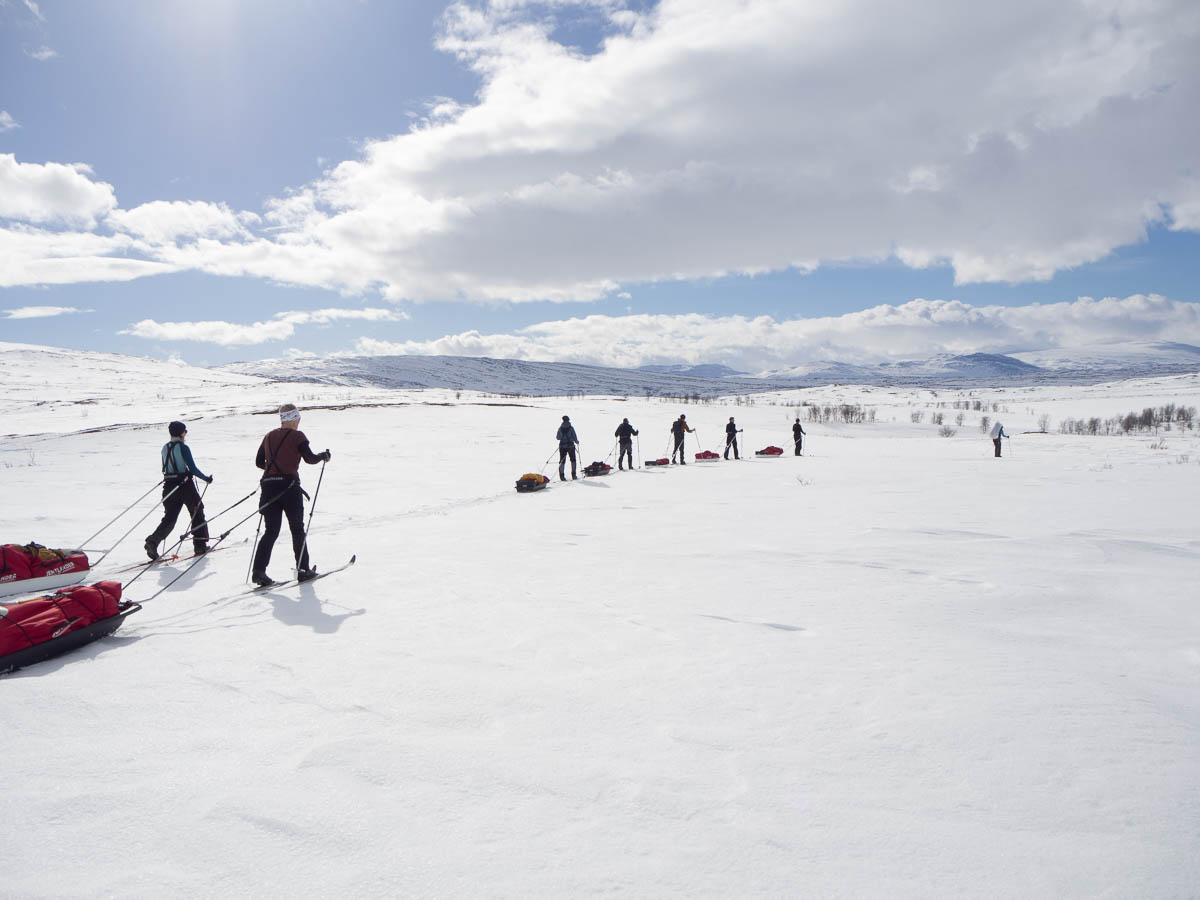
Up in the pass the snow was pretty great (even though we had slightly above-zero temperatures again) and the skiing really pleasant – except for the pulks acting as a brake. I do appreciate not having to carry any weight, but the pulks really kill the glide. Every time I felt like I could really actually get some speed, I was almost yanked back. Oh well.

The gentle downhill slope after the pass was even more pleasant. Especially when we got a bit of sunshine to go with it.

It kind of feels unfair that 350m of ascent takes so much longer than descending by the same amount.

The breaks in the clouds came and went. When the sun was out, it was nearly t-shirt weather.

We’ve seen and heard ptarmigans every day, sometimes closer, sometimes further off. Today there were also tracks of lynx.

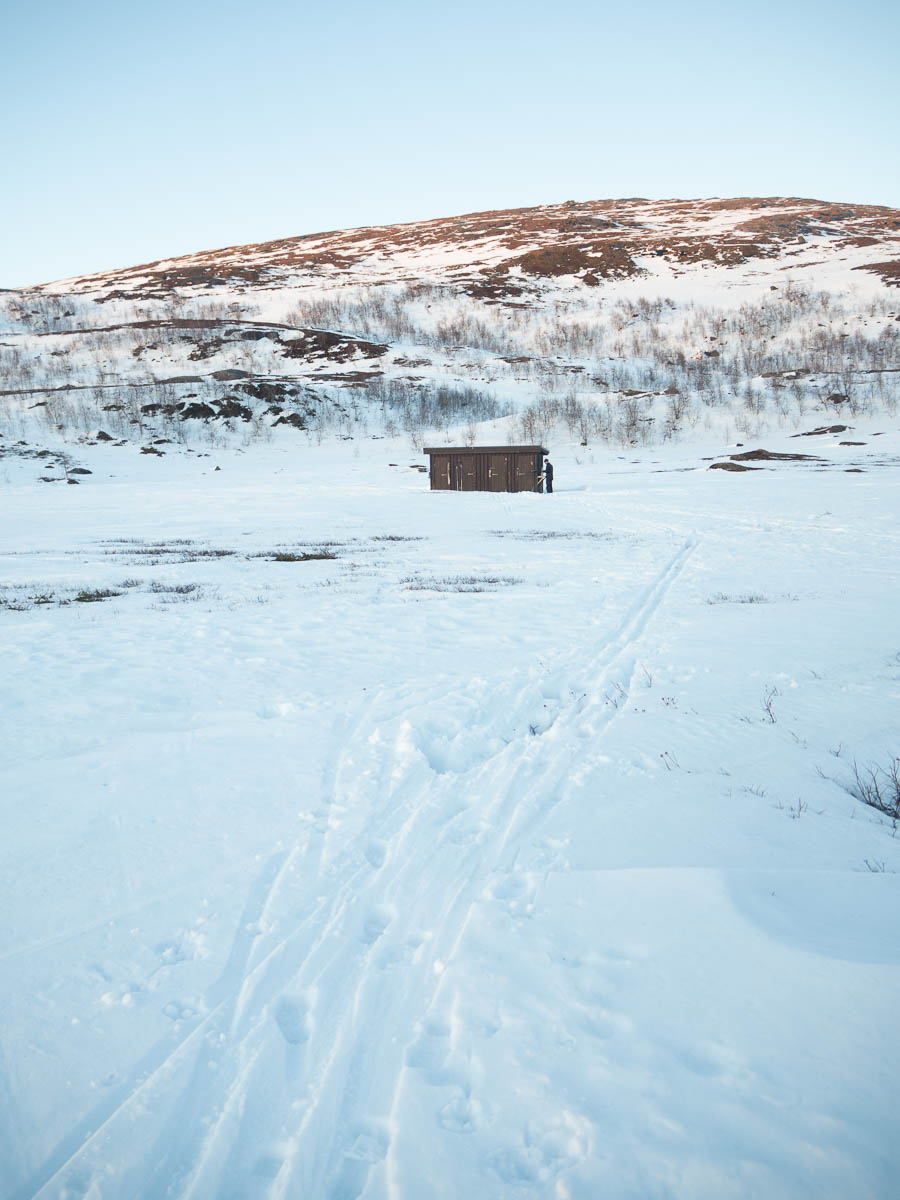
This, by the way, is the view from the hut we were sleeping in, towards the outhouse. A good 50 metres of deep snow between us and the outhouse. Trying to get there without skis on is a bit risky – it might work, or your foot might go through the icy crust and knee-deep into snow, and then you’ll have to wrestle it out again. Hence the tracks of skis heading that way.

At home I rarely go to the lavatory in the middle of the night, but something about the eating and drinking patterns on a ski tour messes up the body’s rhythm, so I almost always end up waking up in the middle of the night, needing to pee. So I make sure to leave my ski boots where I can find them, and likewise with the skis themselves.

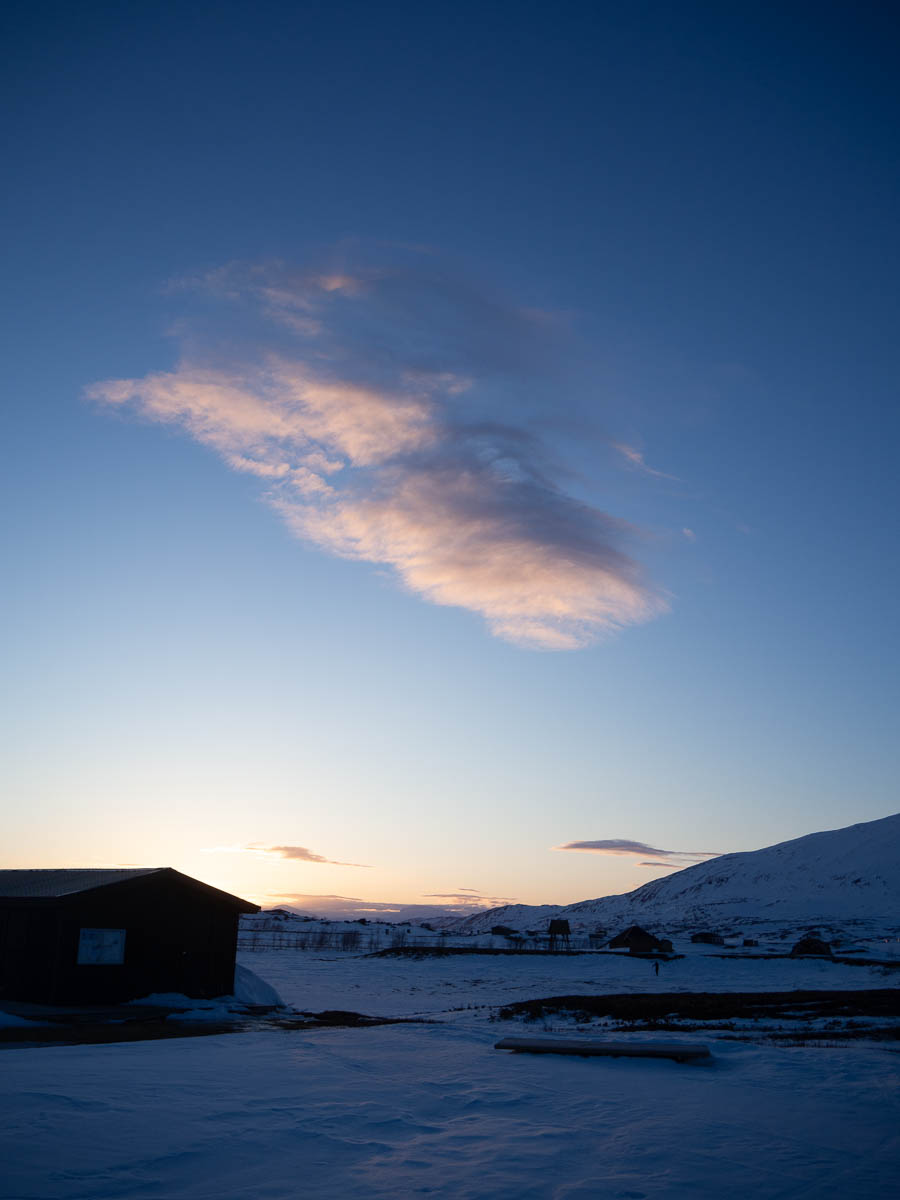
All nights thus far have been cloudy, but today we got at least mostly clear skies. I’m still hoping to see the northern lights, one of these trips, but it didn’t happen today. (Afterwards another member of the group said that they maybe saw a bit of green when they were out for their trip to the outhouse, but so briefly that it was gone before they could consider waking the rest of us.)

Kutjaure to Låddejåhkå, 20 km.

The Kutjaure hut, just outside the Padjelanta national park, is a manned one. Nevertheless guests are expected to take care of their own needs, so our day started with an expedition to fetch fresh water from the river. A path went down steep slope to a hole in the ice in the river. The water itself was a good metre and a half below the ice, so getting the water was at least a two-person job: one to heave up the water in a bucket on a long pole, and another to pour it into a large plastic can. Once the can was filled, it again took at least two people to get it up the hill: one to pull it up by a rope, and another one to push from behind.

Our own departure involved getting down that same steep hill, with all our skis and poles and pulks, and then across a steel bridge, all of which involved a fair bit of lifting and carrying and taking care not to fall over. And then finally we were off.


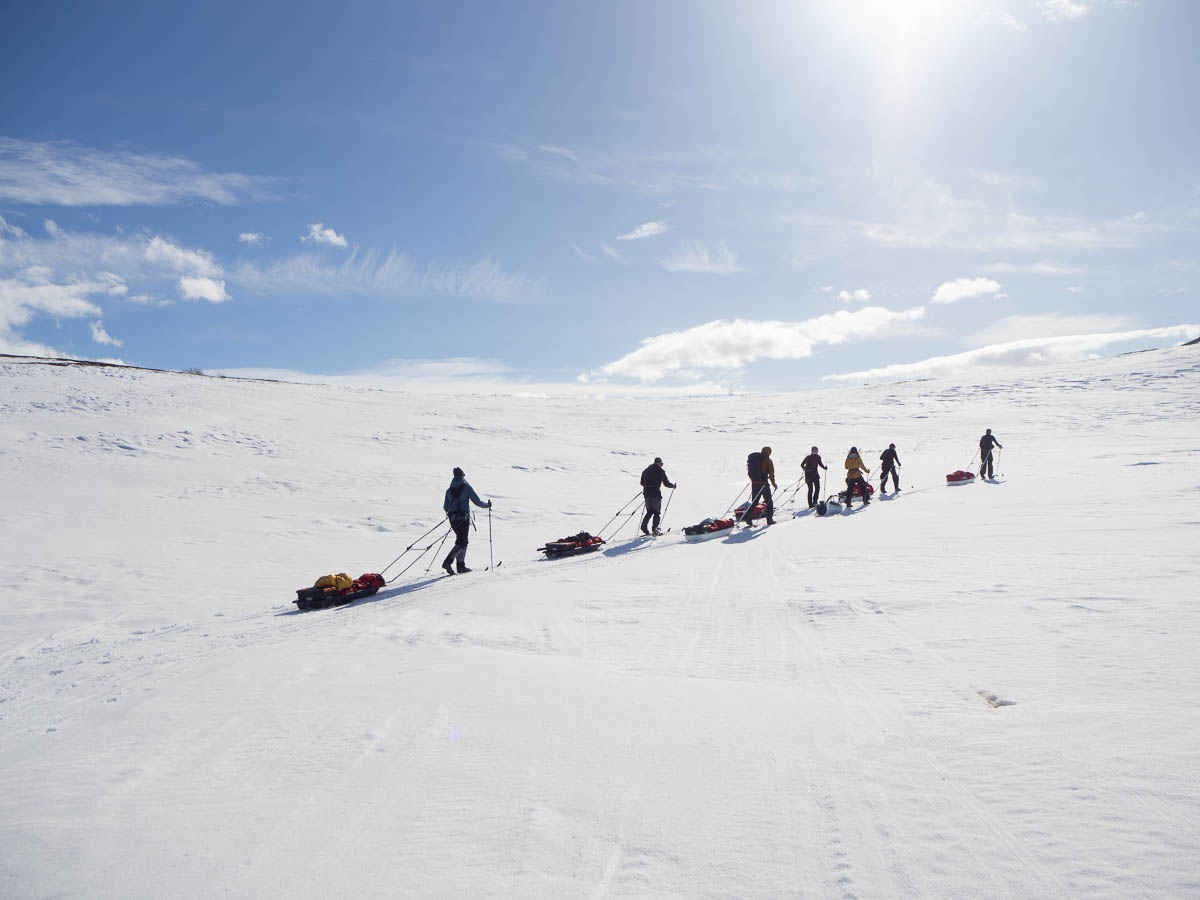
Today’s route was mostly flat, which was good for our first day. For some I believe it was their first time on cross-country skis (not counting yesterday’s little warm-up) and the pulks were new to all of us.

From afar the pulks seemed like they might be cumbersome, but it didn’t take long at all to get used to them. I grew to like them quite fast, after some time figuring out how to best adjust the harness and the frame.

In addition to everyone’s individual packs, we also had almost a week’s worth of food, plus shared safety equipment, shovels, etc. Nevertheless pulling a pulk with all that weight felt like less work than carrying just my own rucksack.


The weather was mostly cloudy today, with the occasional glimpse of the sun. Not much in terms of views.

The temperature was just below zero to begin with, which made for good skiing conditions. Later in the day the it got warmer and the snow got all sticky and difficult to ski on. In the late afternoon the temperature rose even further until we were skiing just in our base layers. The snow was wet and slushy, which perhaps felt less nice but was actually easier to ski on than the sticky stuff.
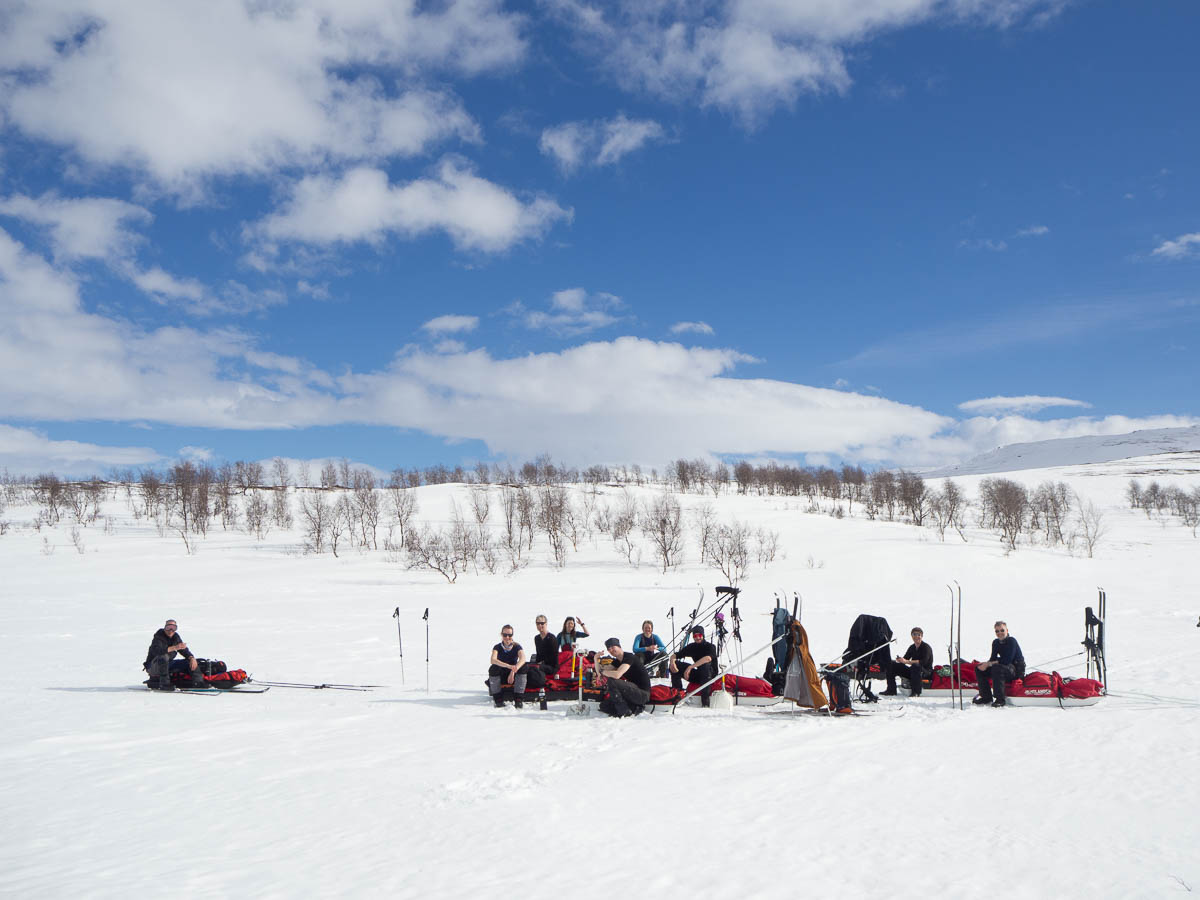
We had two sit-down lunches with sandwiches, snacks and hot drinks. Laponia Adventures promises good food, and they absolutely delivered. Västerbotten cheese, reindeer sausage, coffee, choice of teas and what not. A change from the relatively rushed meals I’m used to from my trips with Warthog Mountaineering (although even John’s lunch breaks have gotten longer as he has aged!) The food crates at the back of our pulks made for good seating.

The Låddejåhkå hut is not manned this time of the year. Our first job upon arrival was to dig away the snow from in front of the door so that we could even get inside.

Inside it was just like the STF huts I’m used to, with the pine furniture and bunk beds and a shared kitchen. One notable difference was the heating: STF huts usually have small wood-burning stoves, whereas here there were gas heaters, which were rather easier to manage.

Transportation day.

First from Jokkmokk to Ritsem by minivan, 200 km. First a normal public road up to Stora Sjöfallet, along the Lule river. At that point the road turns into a private one, owned by Vattenfall, so the road threads its way between the river with its dams and hydroelectric stations on one side, and an endless line of power line pylons on the other.

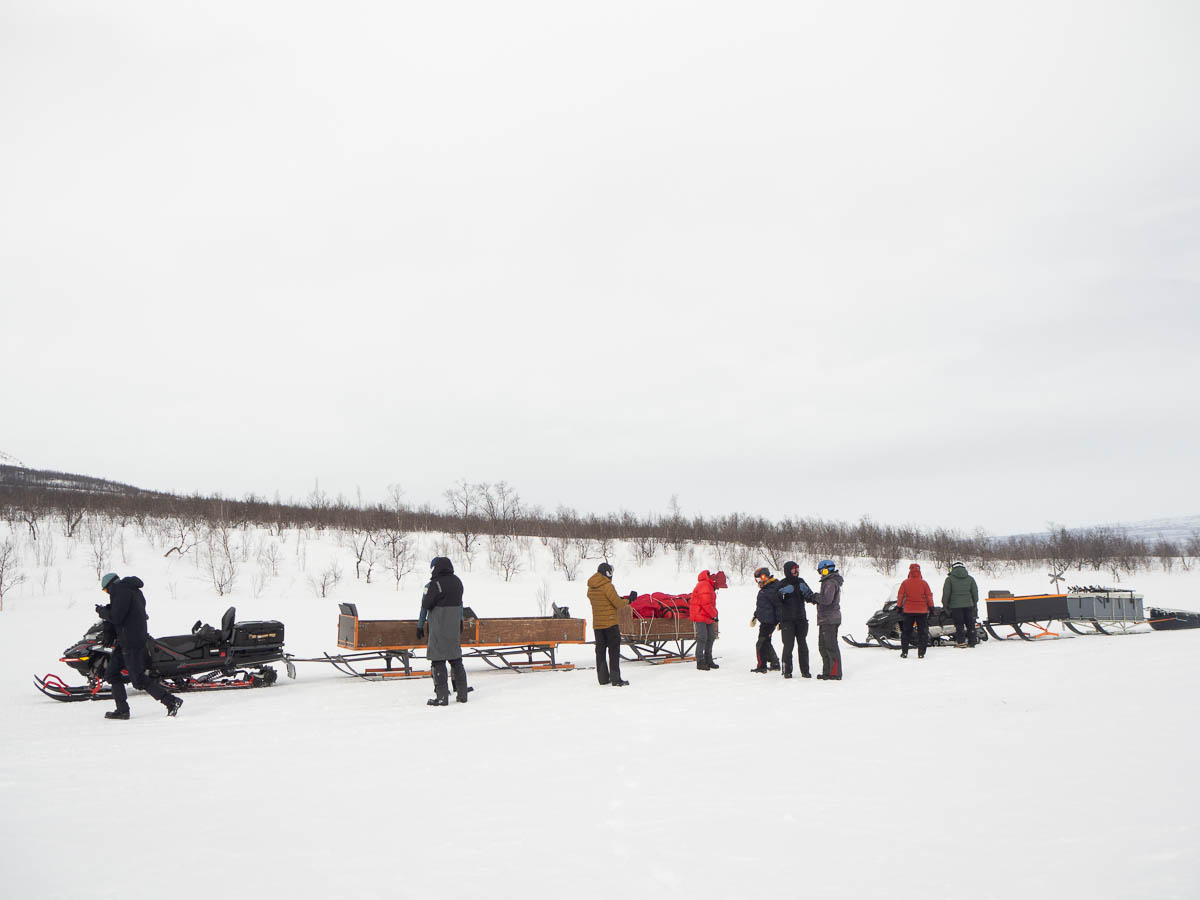
At Ritsem we packed ourselves and our equipment into snowmobiles. The initial plan was that today would be a warm-up day: we’d be dropped off somewhere between the Akka huts and the Kutjaure huts, and ski the last couple of hours. Due to near storm-strength winds that plan had to be abandoned and the snowmobiles took us all the way to Kutjaure.

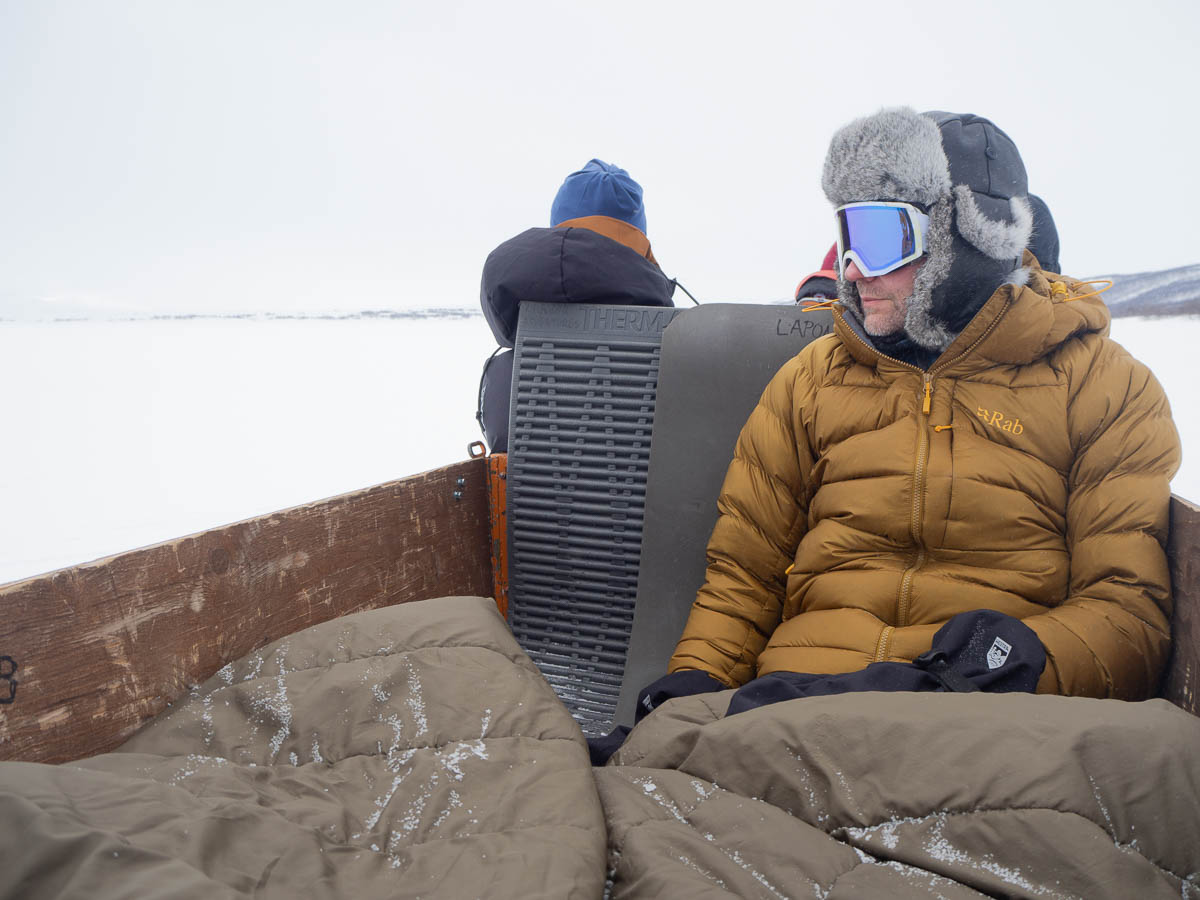
In good weather the snowmobile trip could have been scenic. Now it was so windy that all we could do was huddle down in our warmest puffy jackets and pull up the old sleeping bags we had for blankets to protect us from the wind. I didn’t even think about taking of my mittens to take photos.

When we stopped near the Akka huts, one of the snowmobiles refused to start. The trailers got reshuffled so the remaining working snowmobile could get all of us out of the storm, and the skis and bags and pulks got left behind to be picked up later.

In the early evening the storm died down, so we could go out for a small circuit when our equipment caught up with us. Just enough to get familiar with the rented equipment (for those who had that) and for the guides to see that everyone could make their way up and down gentle slopes without falling over.


A day of mostly hanging around and waiting in Jokkmokk. Took a walk, checked out the local supermarket, read my book.

The night train took me to Murjek, and from there I continued by bus to Jokkmokk, where I arrived at 9. Checked in at the hostel and then just sort of hung around, because the group for the trip only met up at 15.

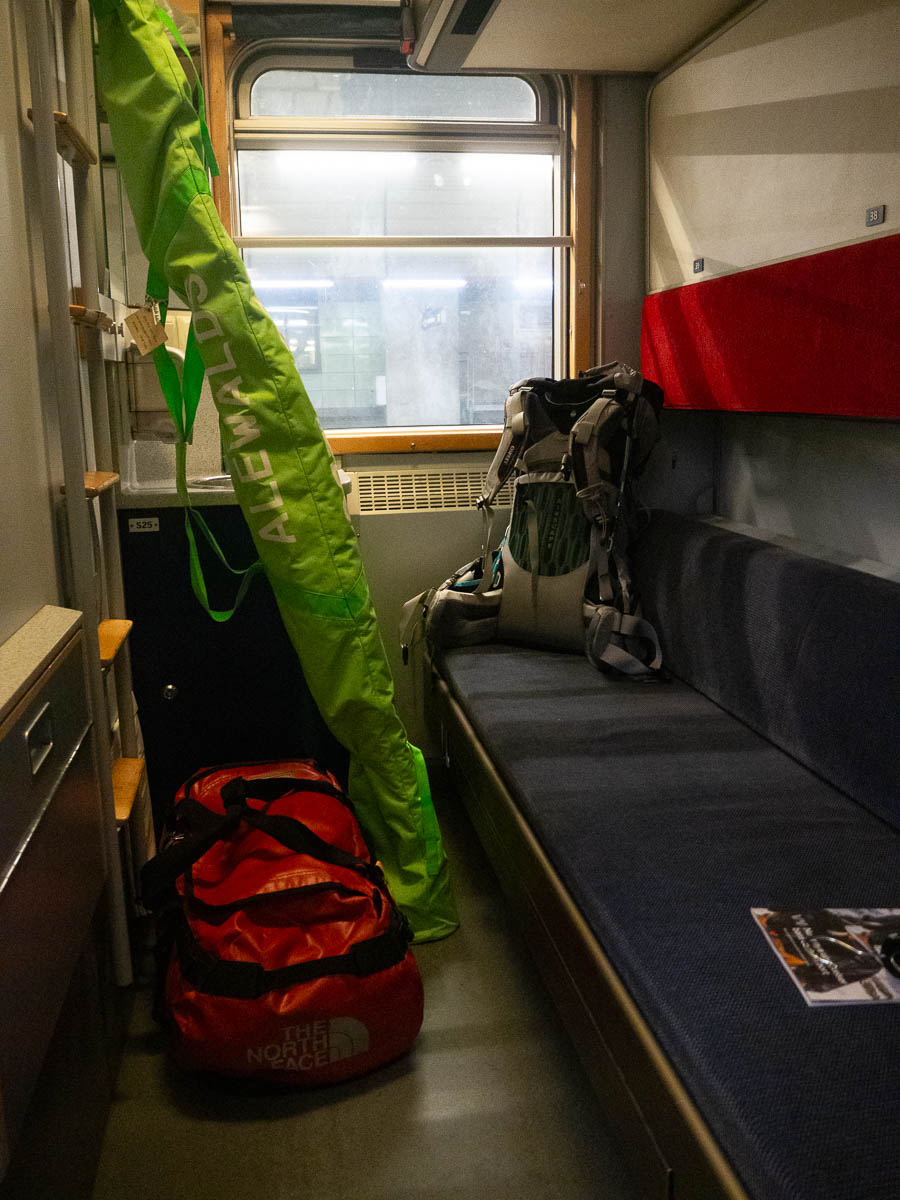
I could have visited Ájtte, the Sami museum, but I was rather tired and groggy after a night on the train and couldn’t muster the energy. First I slept badly because I had the top bunk and it was hot and stuffy up there. Then I had to get up early because the train was supposed to arrive in Murjek at 6:35. Then the train was delayed but with little to no information about it. There were no announcements on board the train at all (too early in the morning for that, I guess) but there’s a website for up-to-date traffic information. Enter the number of the train, and it gives you the latest estimated arrival times for all upcoming stations. Except that information was getting updated with a delay – at 7:19 it was still telling me that we would arrive at Murjek at 7:14. And it kept stopping at random points in the middle of nowhere, sometimes at places that looked like they could be train stations, and once even at an actual (disused) station. So I was constantly, anxiously trying to figure out – are we there yet? did I miss the station? almost there? do I need to grab my bags now? And when we did arrive, I think the train literally stopped for 3 minutes without any announcement so inattention would have been really bad.

In the afternoon we met up with Mirja from Laponia Adventures. Got to know the other group members, had our information meeting, went through the route etc. Thereafter we went through all the equipment that we’d be borrowing from Laponia Adventures, in particular the ski pulks that we’d be using to transport everything. The huts on this trip will be unmanned ones, apart from the first and last ones, so we’ll need to bring all our food with us. Most of the group were also renting skis and boots and needed time to try those on for size.

Then dinner, packing, and to bed.


I’m on my way to Jokkmokk on an overnight train for this year’s ski trip.

I’m trying out a new travel company this time, which I’m both looking forward to but also a bit anxious about. I’ve mostly been doing my ski trip with the same guide and the same group, so it’s only nominally a company and mostly just a group of friends by now, and we always have a great time. I strayed from that group once, with STF, and was rather disappointed with the outcome. (The group was too large, some of the people rather annoying, and the guide was clearly not very enthusiastic about being there.) It’s taken me some years to work up the courage to try again.

This opens up some new possibilities, though. This year’s ski trip will take place in Padjelanta national park, which is rather remote. It’s not like in the Norwegian mountains where you can step off the train and be at a DNT hut after 5 minutes of walking (or skiing). This is a train ride + a bus ride + a minivan ride + a snowmobile ride and THEN we can start skiing. Arranging this on my own without local ground support would have been impossible.


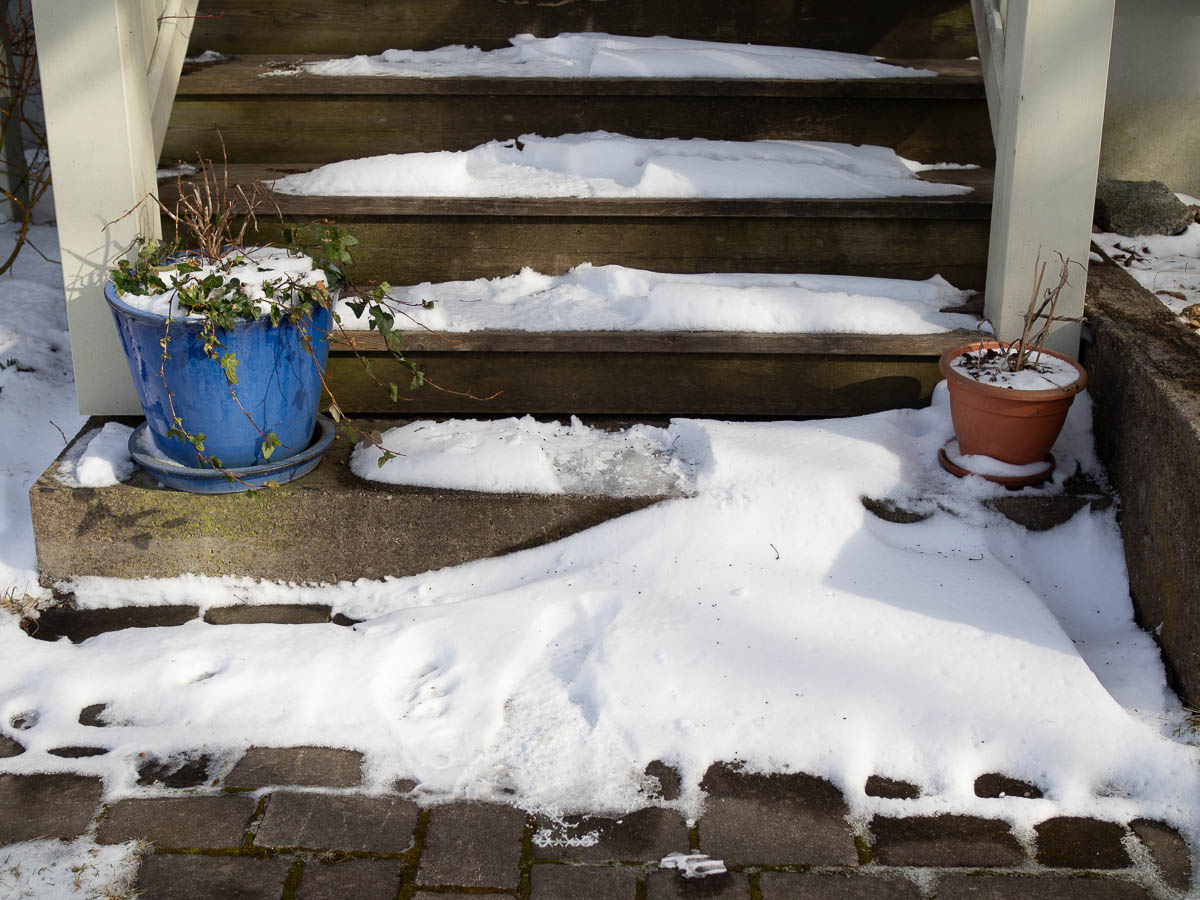
I thought we were done with snow for this year. Was this really necessary?


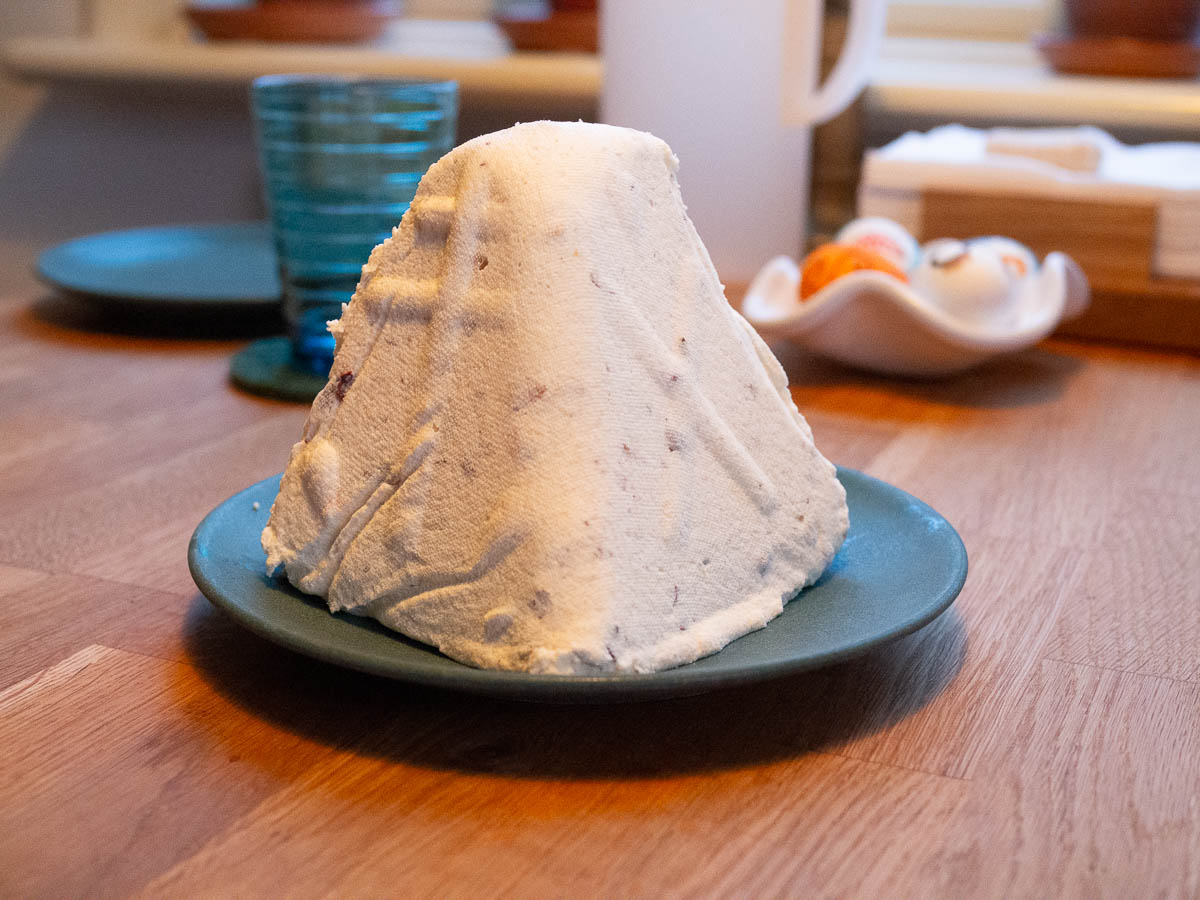
Easter is behind us, but Easter food, just like Christmas food, generally lasts longer than the holiday itself.

I realize that I’ve never shared my recipe for pasha. Those of you who make your own probably have a recipe already, and those of you who don’t are probably not interested, but here it comes anyway.

150 g butter
70 g sugar

3 egg yolks
1.5 tbsp vanilla sugar

0.7 dl chopped almonds and hazelnuts
0.7 dl candied orange peel
0.5 dl dried cranberries
40 g dark chocolate (4 squares of Lindt mild 70%)

grated zest of 1 lemon

750 g quark, for which I use 500 g Kesella (quark with 10% fat) and 250 g Keso (cottage cheese with 2% fat) which I press though a sieve to break up the grains

3 dl whipping cream


Cream butter with sugar. Add everything except quark and cream.
Add quark to the mixture.
Whip the cream and fold it into the mixture.

We visited Vårsalongen, the Spring Salon, at Liljevalchs art museum. Like last year, the works are all available for viewing online.

Paintings, sculpture, videos, textile art, mixed media etc.

There were plenty of impressive paintings but not many that left a lasting impression.

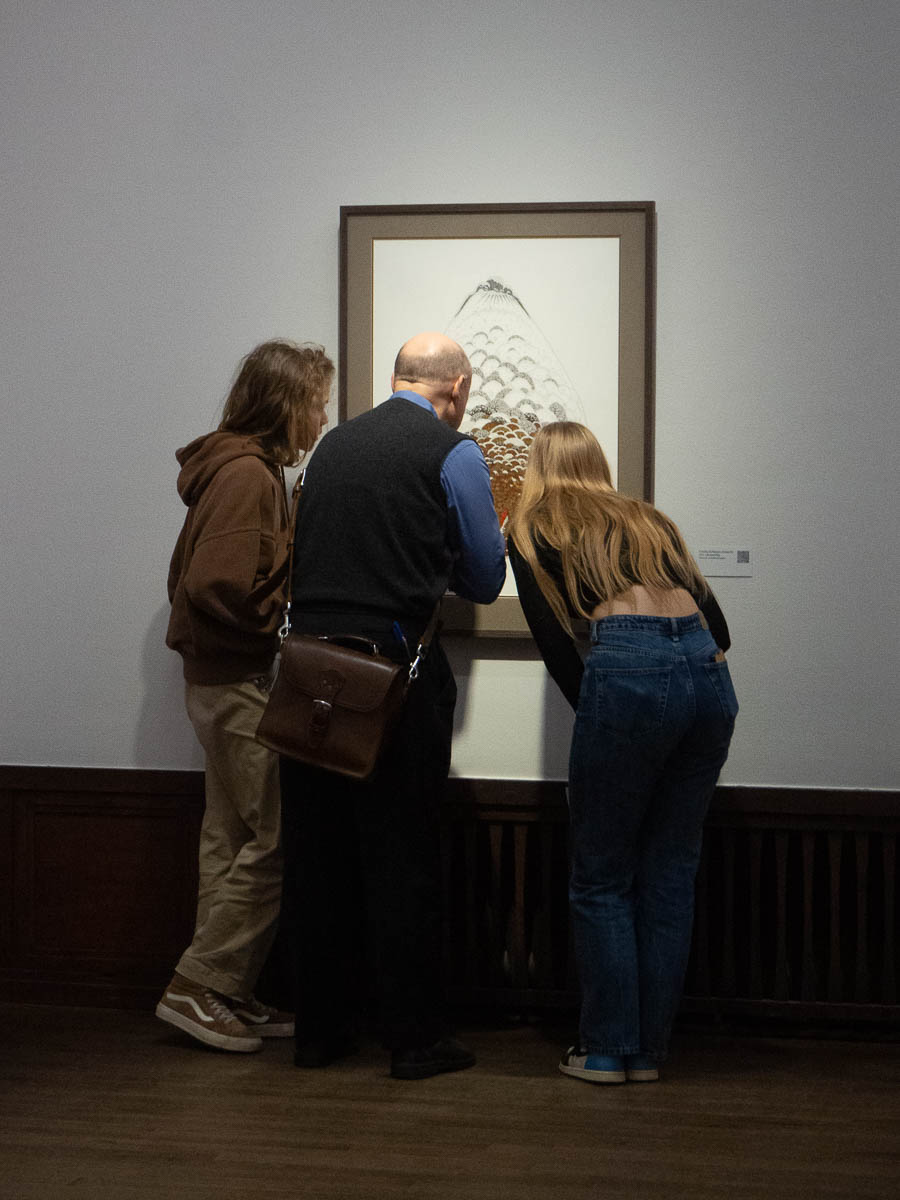
This intricate drawing/painting of ptarmigan – where the feather patterns hide everything from miniature lemmings to snowflakes – captured our attention.

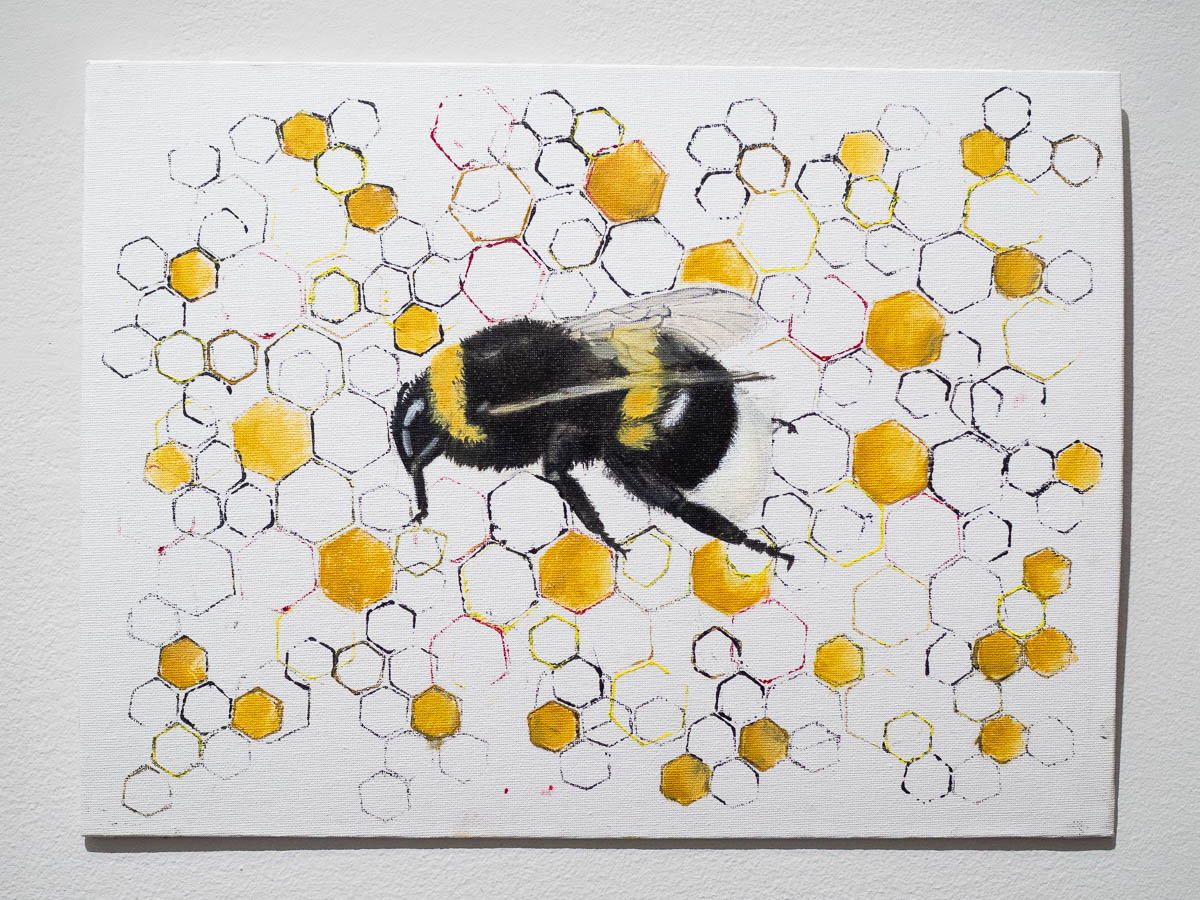
Whereas this bee-themed one mostly made me think that this could be turned into an embroidery.

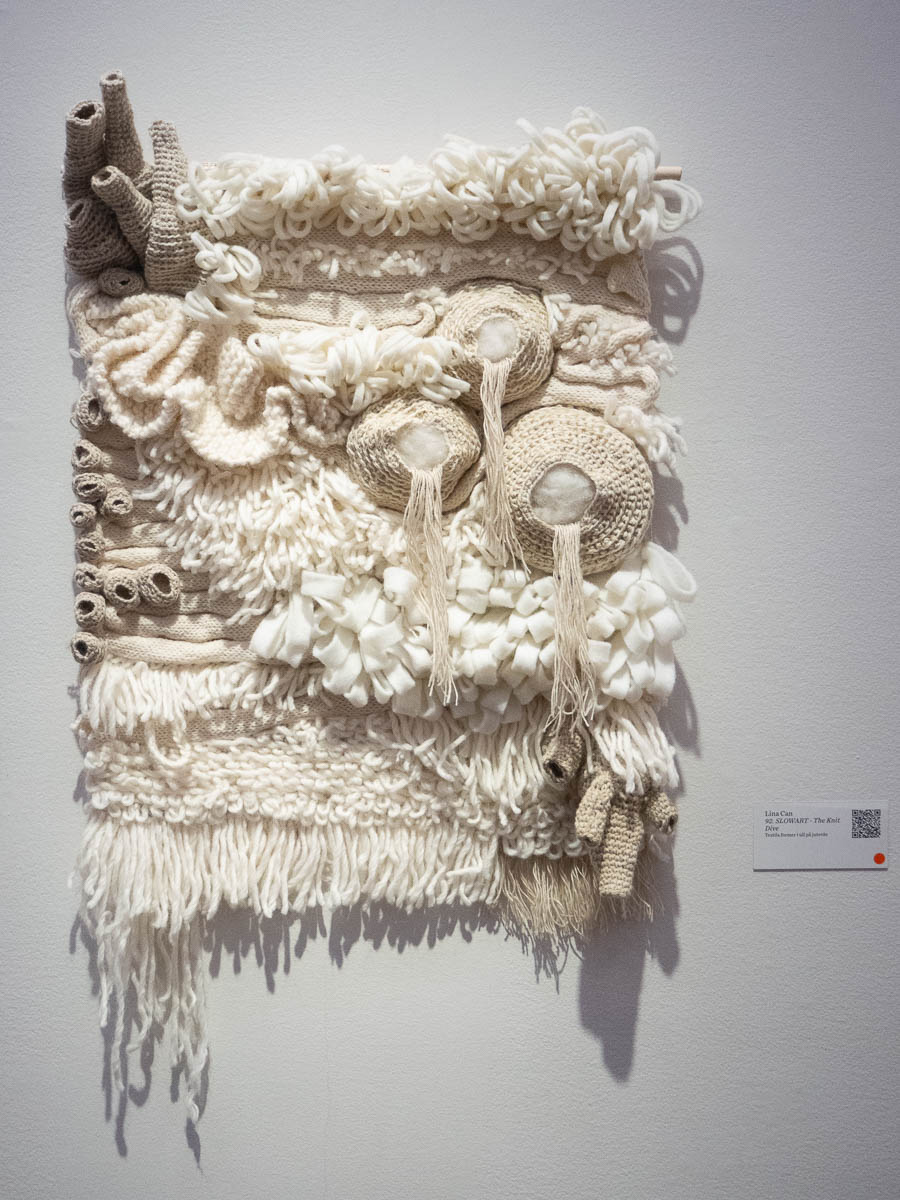
There were several textile works that I liked. Especially those that utilized the possibilities of thread and fabric and yarn for something more than just a flat image.

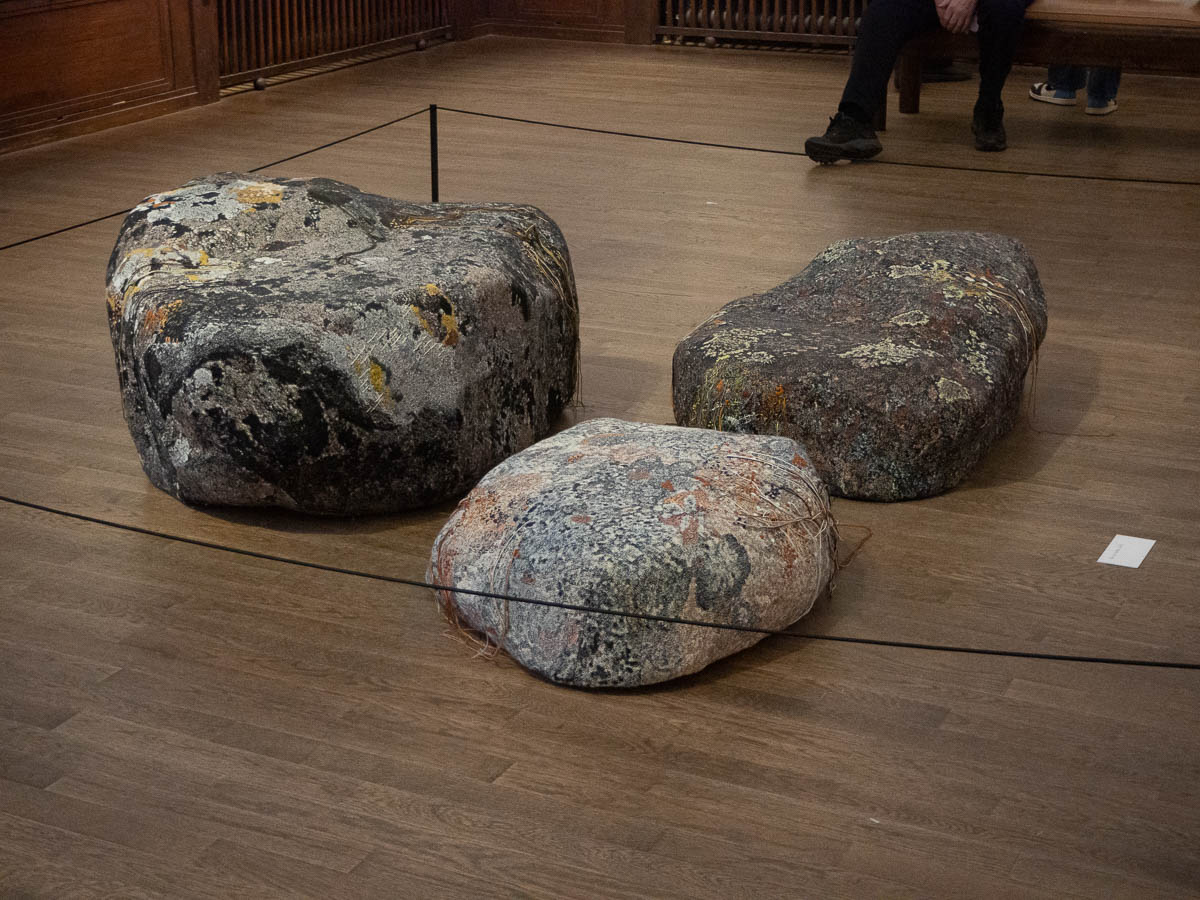
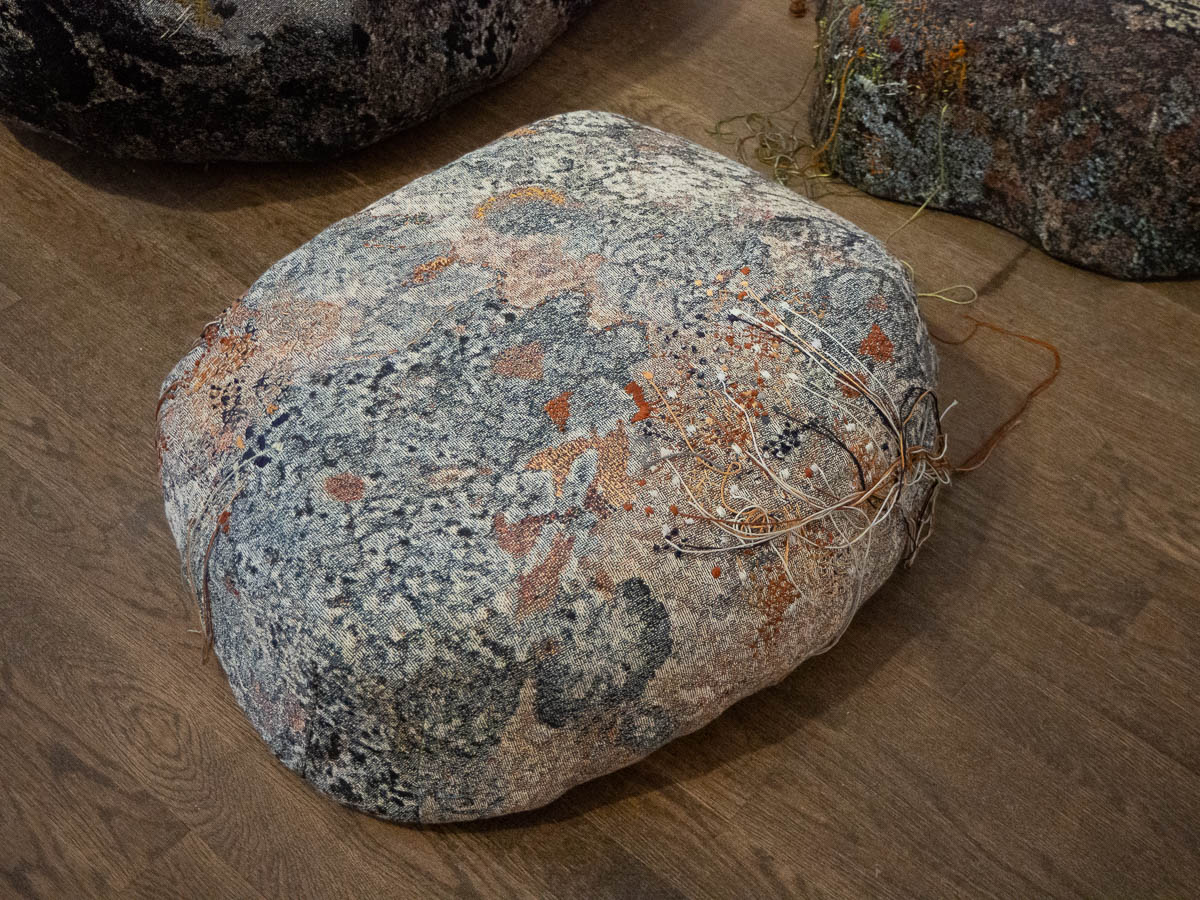
These rocks were my favourites: from a distance they just look like lichen-covered rocks, but up close you can see that it’s all woven tapestry and embroidery. Soft pretending to be hard.

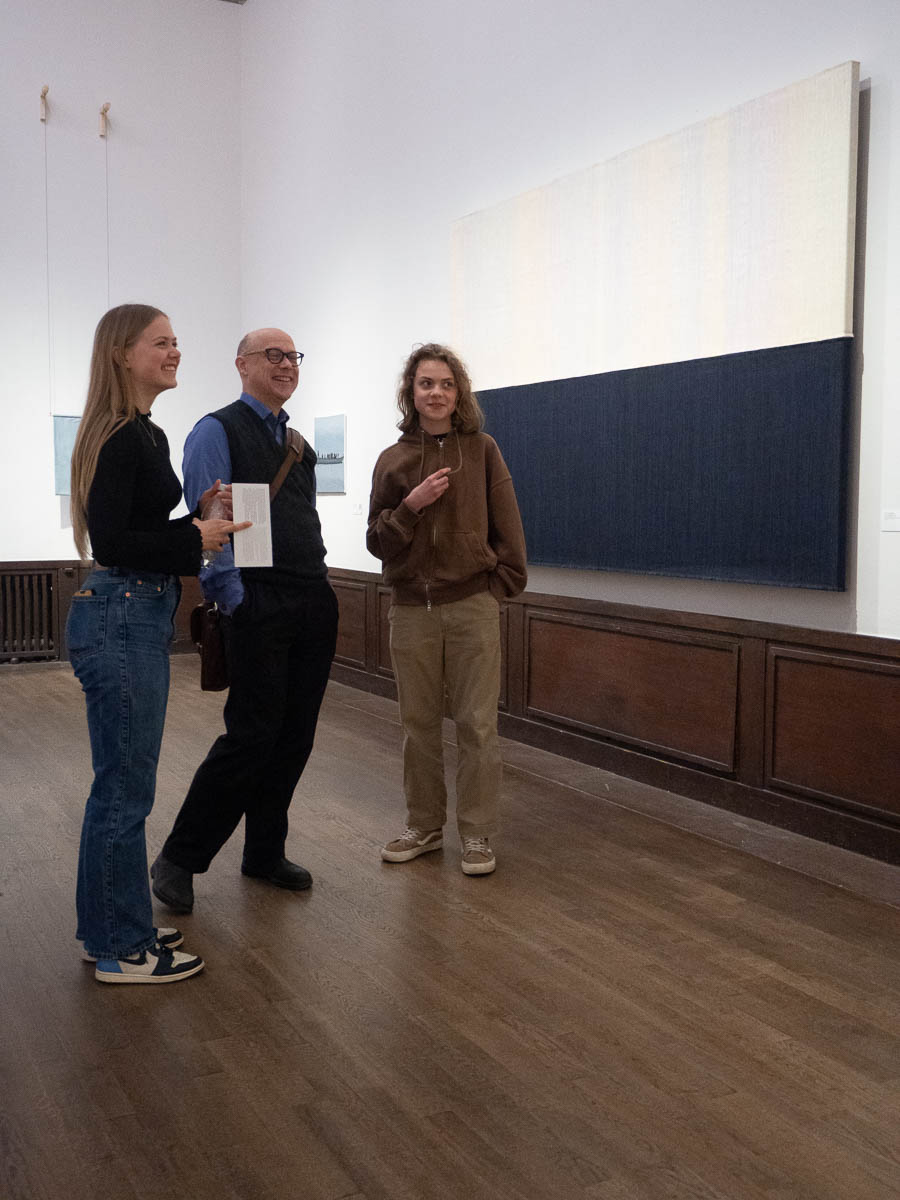
Others left us all puzzled. A rectangular hand-woven piece of fabric in black and white. (Next to it there was another one that was all yellow, with subtle variations in tone and shade.) What made this so special that it stood out from the thousands of other works submitted?

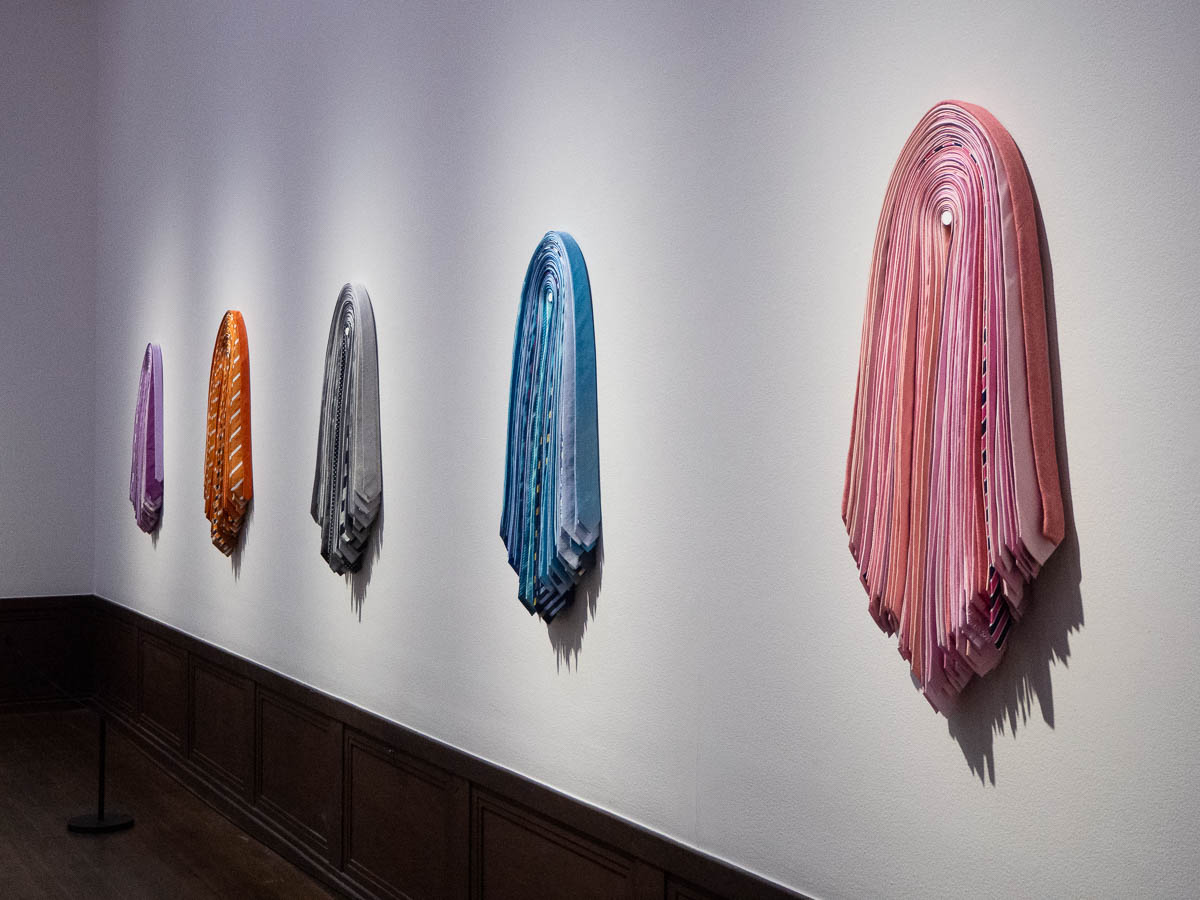
Yet other works sparked different kinds of questions. These five colour-coordinated stacks of men’s ties, seemingly just hung over a hook. How did they transport this work? Probably in parts. Who hung it up again? How did they ensure the ties were hung in the right order, and with acceptable (lack of) precision?

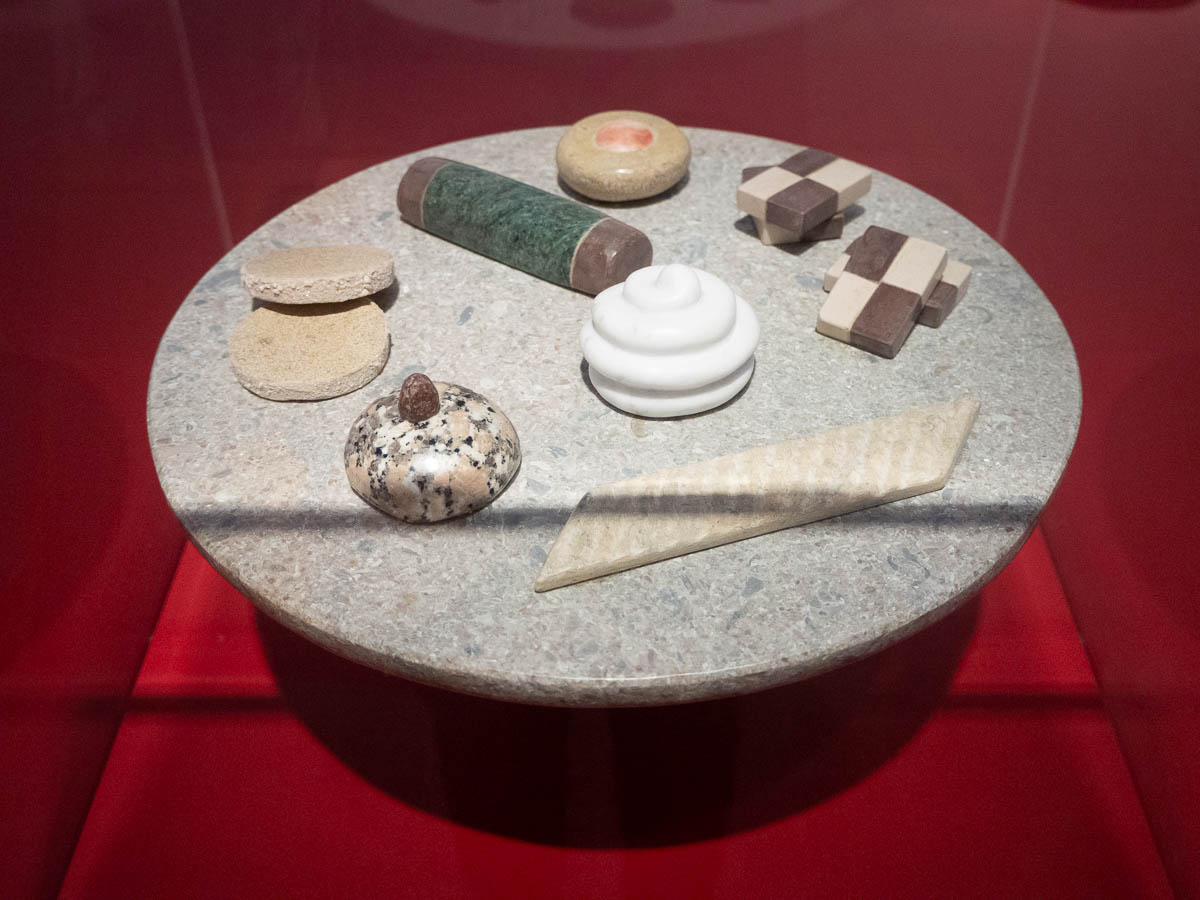
There were also numerous fun sculptures, including one of “seven kinds of cakes” in stone, inspired by a Swedish fika tradition.

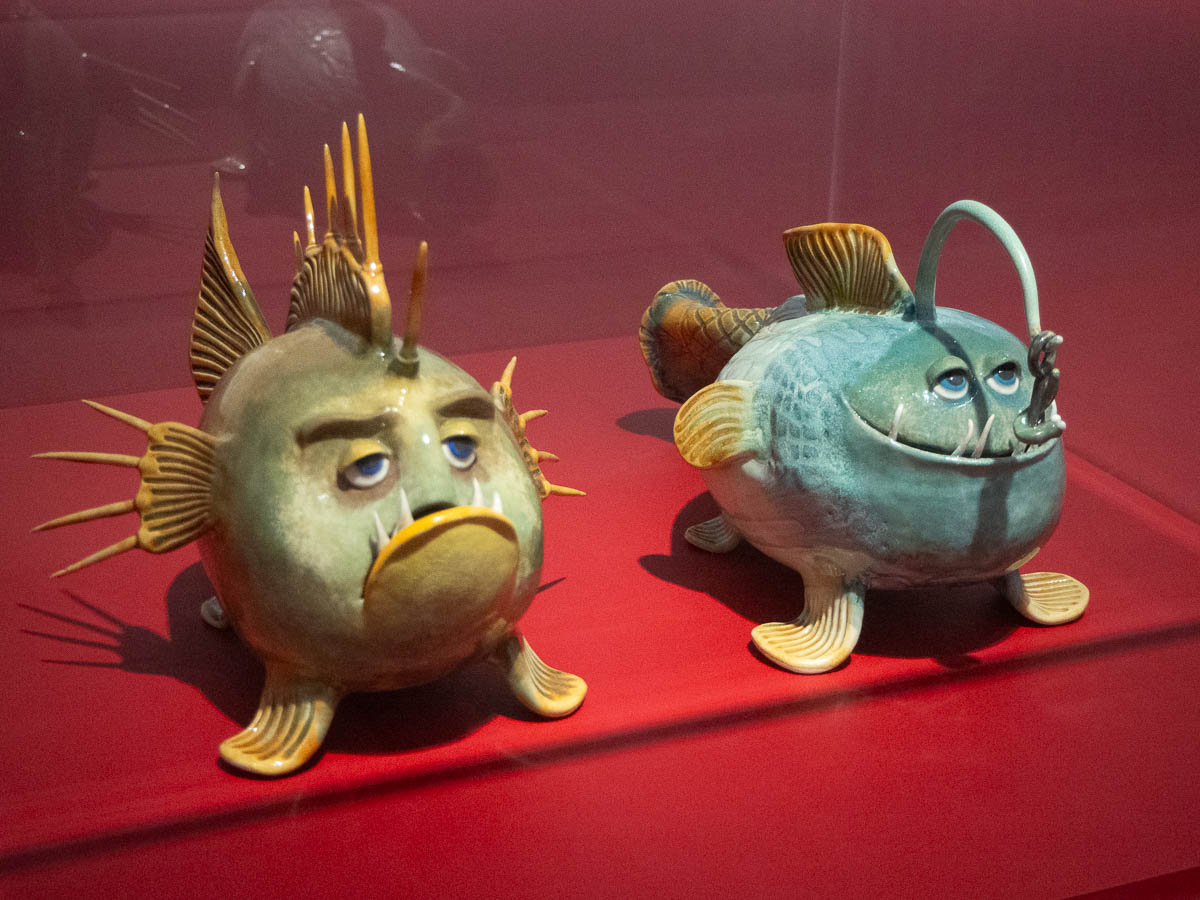
If I had room for sculptures and knick-knacks in my home, I would rather like something fun like these fish:

More about the works above: Ptarmigan, Rocks, Fish, Cakes, White yarn thing, Ties, Black & White Weave. Couldn’t find anything for the bee, probably because it was part of the Young Spring Salon.


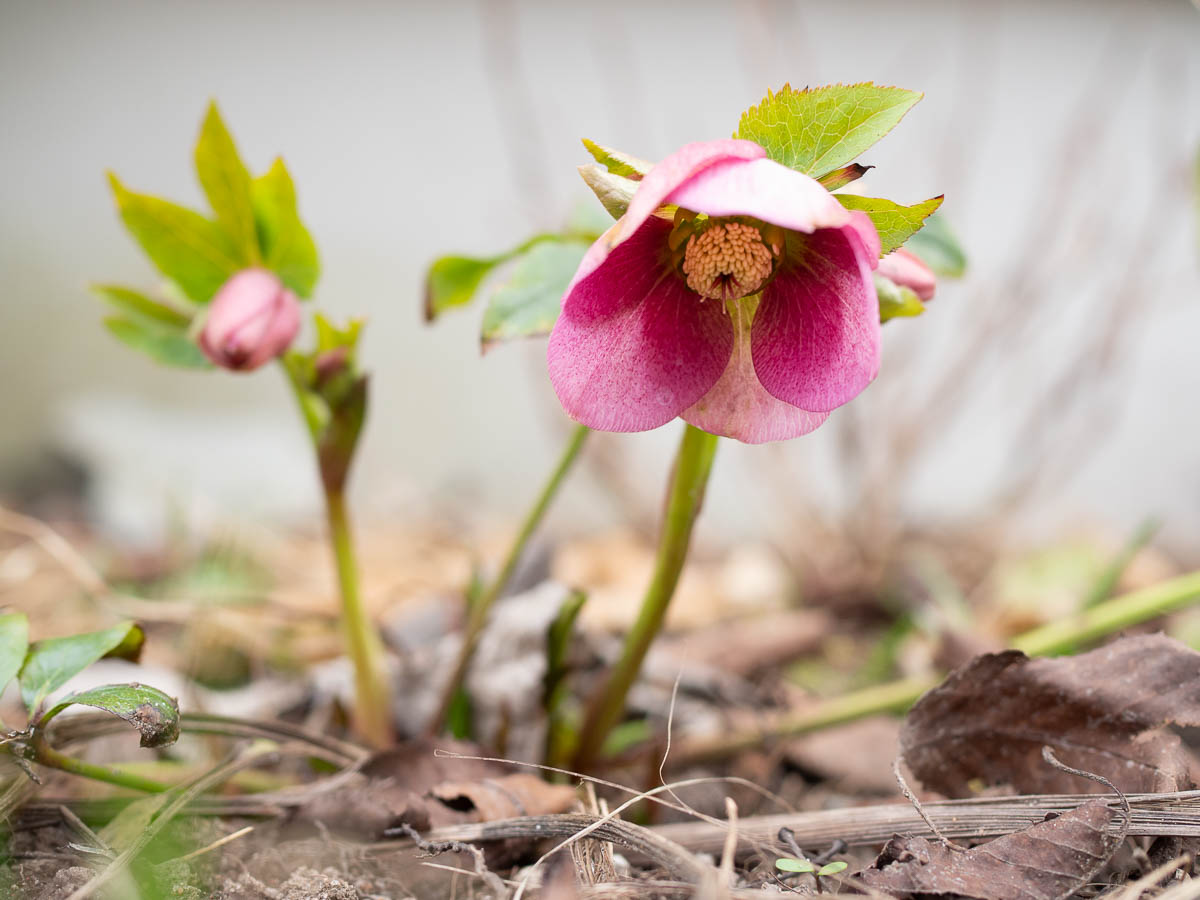
I planted a Hellebore in the new flowerbed in front of the house last year. I’m never quite sure what will survive and what won’t, even when I follow all the recommendations about sun and shade and soil conditions, but this one did, and now it’s flowering!