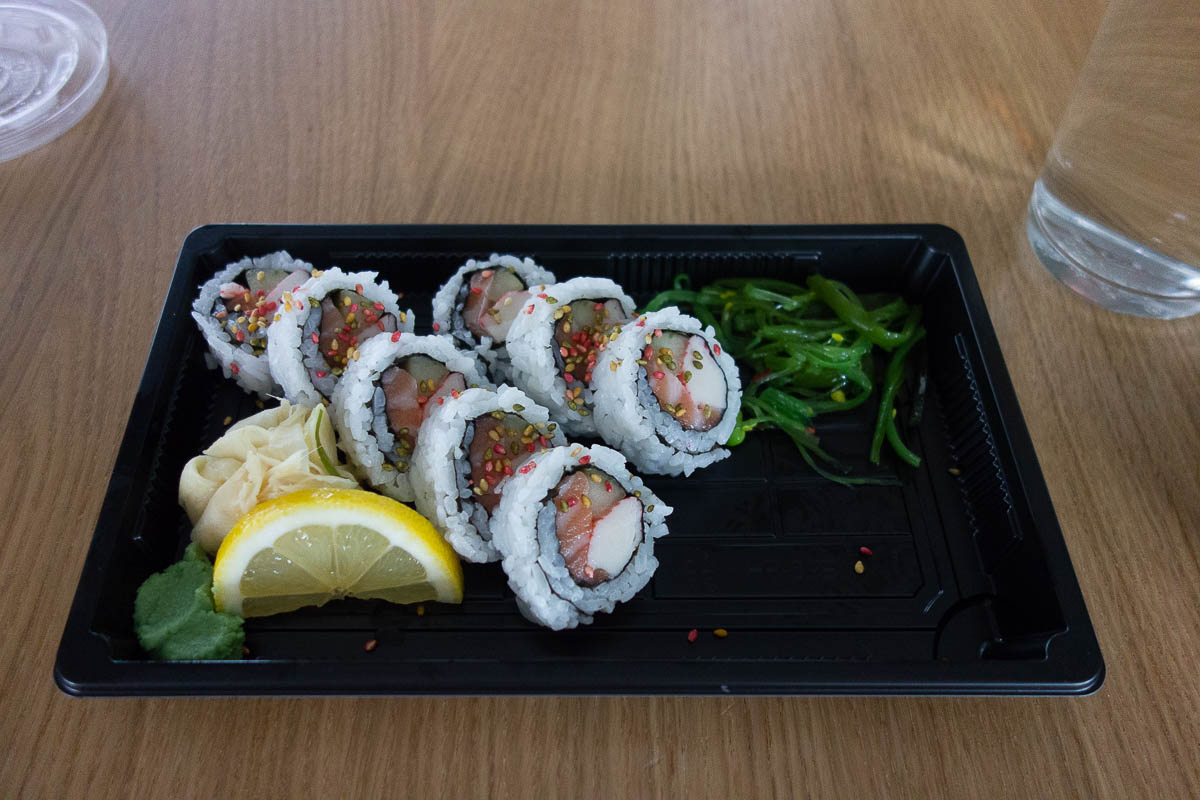
There’s a new trend at low-to-mid end sushi restaurants in Stockholm of smothering all sushi in sauces and toppings. Chili mayo, other mayo, even onion flakes of all things. I’m still expecting sushi to be served without this crap, and then I get an unpleasant surprise when I get my meal. And I usually don’t remember this until I’m already staring at the problem. But today I remembered, and asked them to skip the toppings, and actually got to taste the sushi itself.
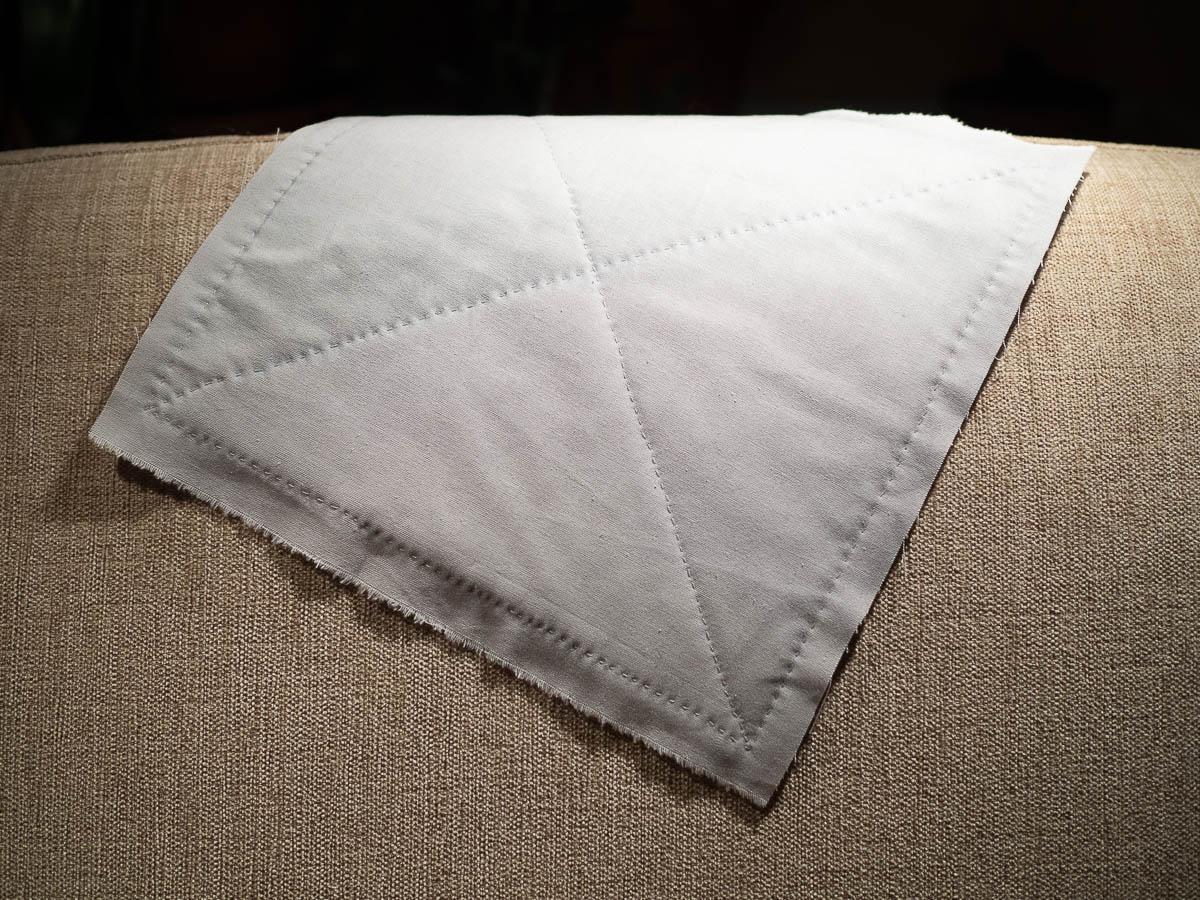
This is going to be one seriously over-crafted storage box. Just attaching the lining to the padding means meters and meters of hand-stitching over many, many evenings. The effort is out of all proportion compared to the artistic merit of the embroidered panels that started it all, or the cheap materials.
Thinking of it as stitching meditation, though, it’s a perfectly good use of time. The fact that I’m producing something potentially useful and decently pretty is a side effect.
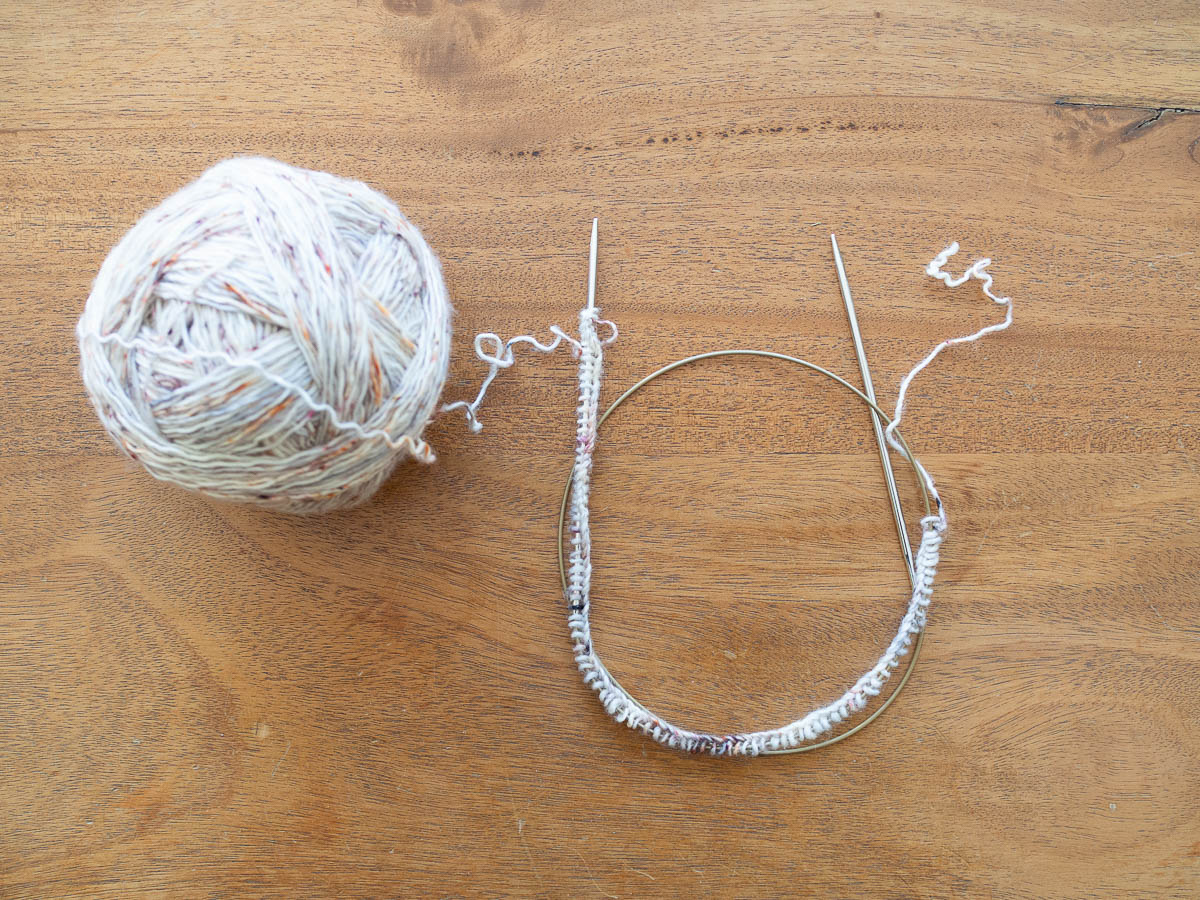
It doesn’t even feel like a big deal any more to rip up a sweater body after I’m done with a third of it, and start over. Just the way things are.
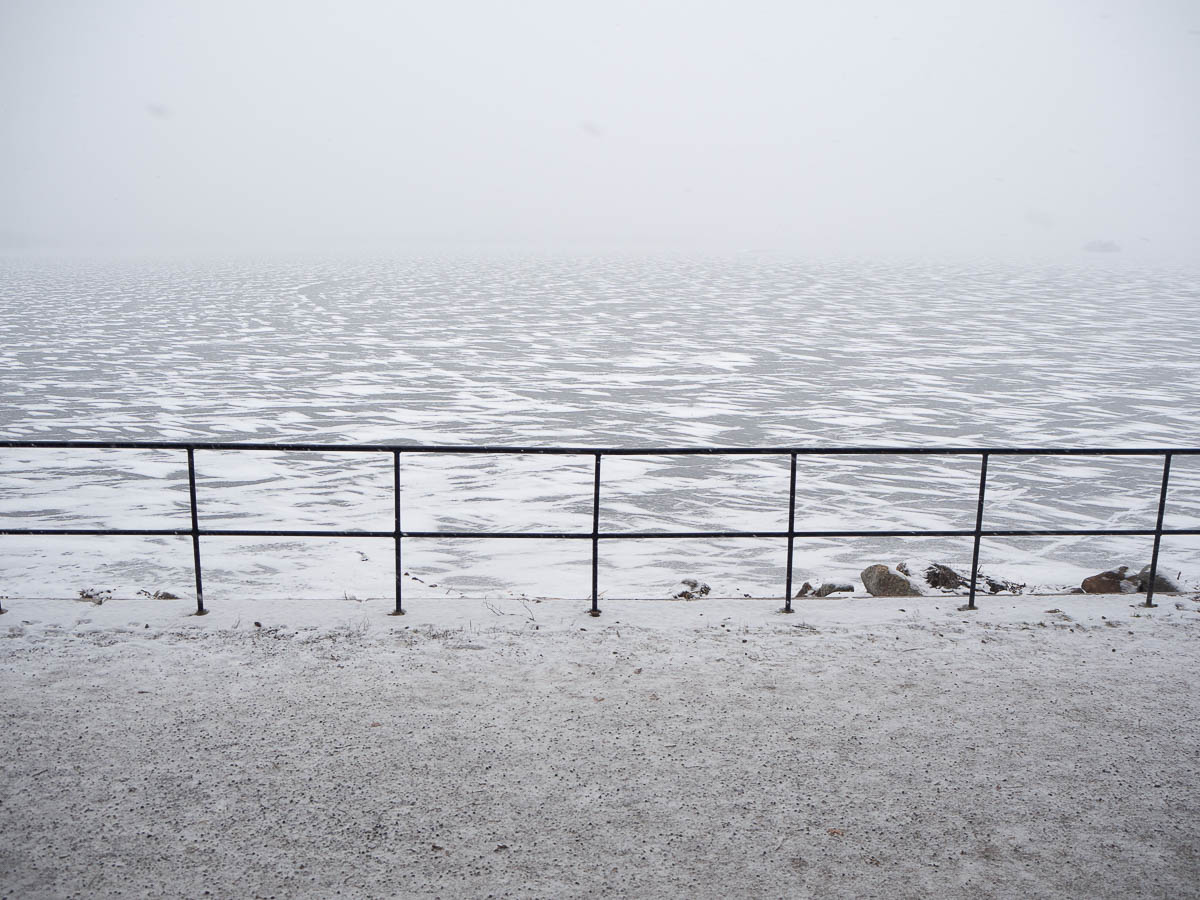
Went out for a walk. Kallhäll to Barkarby, along pieces of Upplandsleden and Mälardalsleden. Around 19 km in total. Familiar paths most of the way, but I’ve never linked them together quite this way. The last time I was here in winter was with Ingrid in 2018.
This was also part of STF’s Signature Trail Stockholm, one of over a dozen walking trails in various parts of Sweden that STF describes as “spectacular, while also being characteristic for the region”.
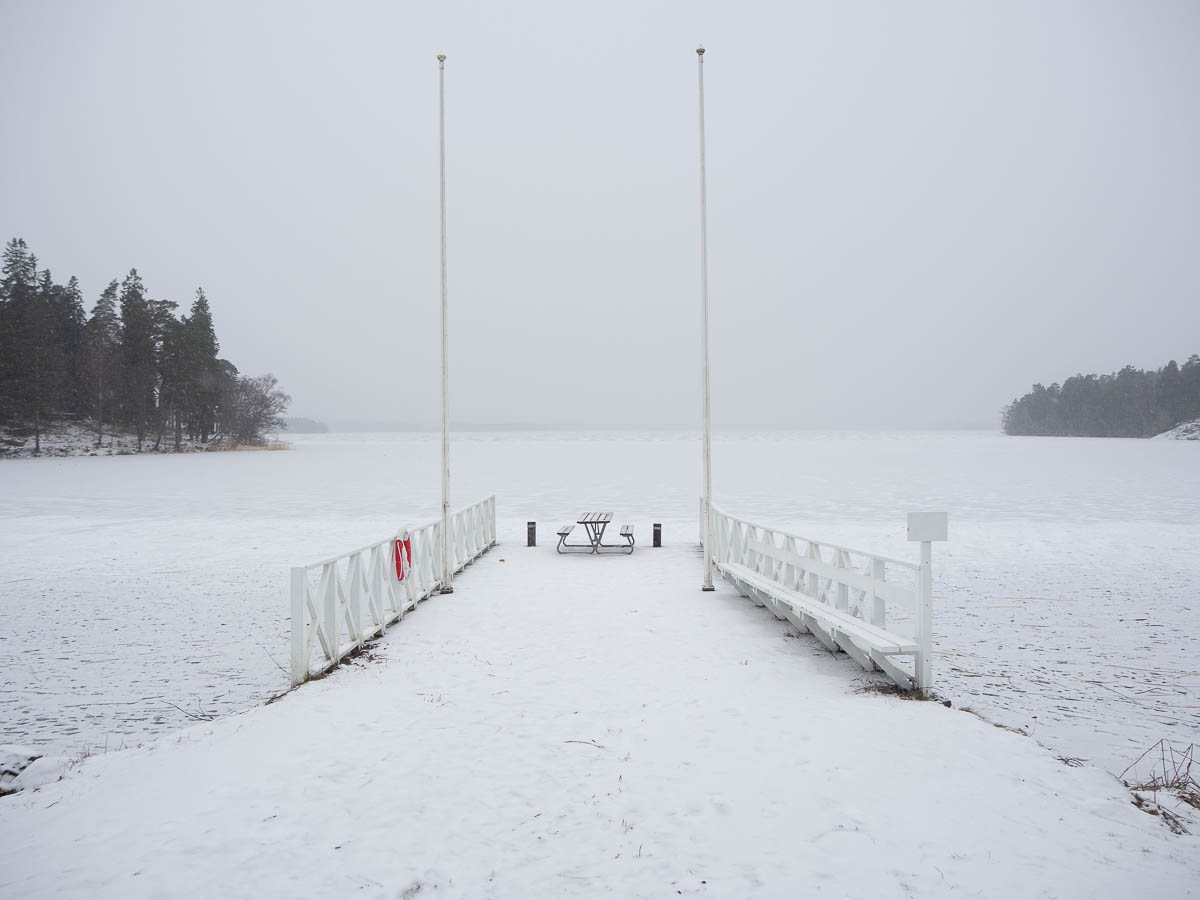
It was overcast, windy, and snowing lightly. On the one hand: nice, firm, mud-free ground to walk on, and dreamlike views out over Mälaren.
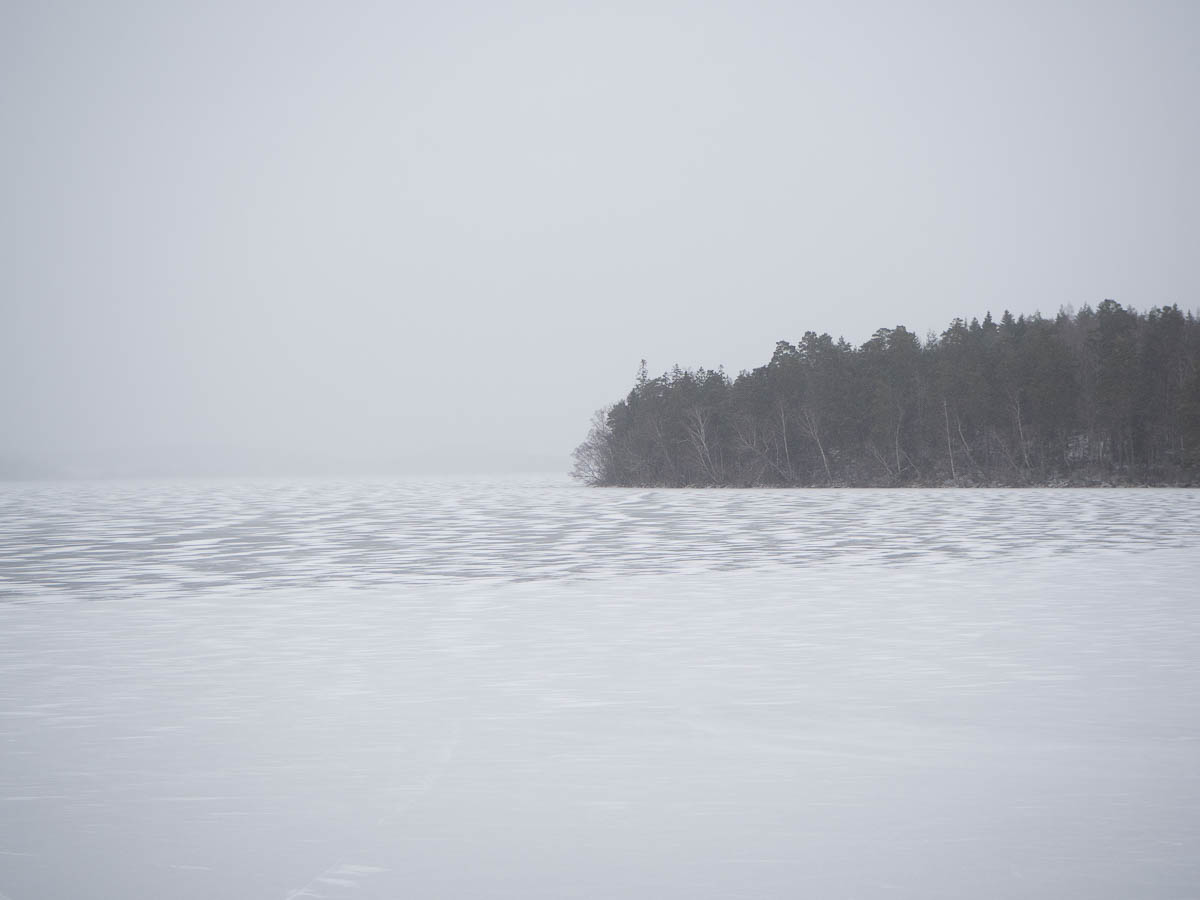
On the other hand, I kept hunching my neck to try and hide from the constant headwind. I suspect I might have a stiff neck tomorrow.
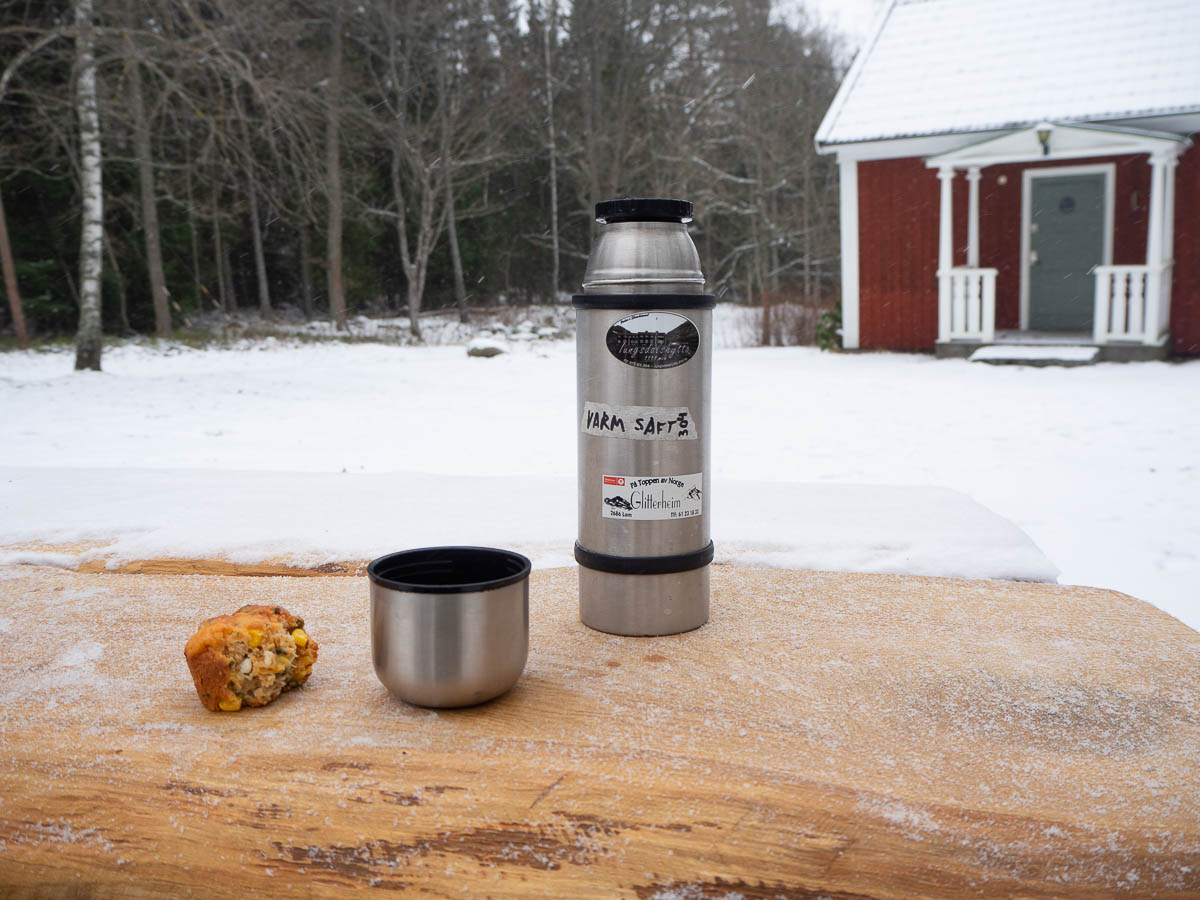
Lunch was leftover cheese and spinach muffins. I thought they might get all cold and hard after hours of freezing weather, but the warm air in the lunch box kept them insulated well enough.
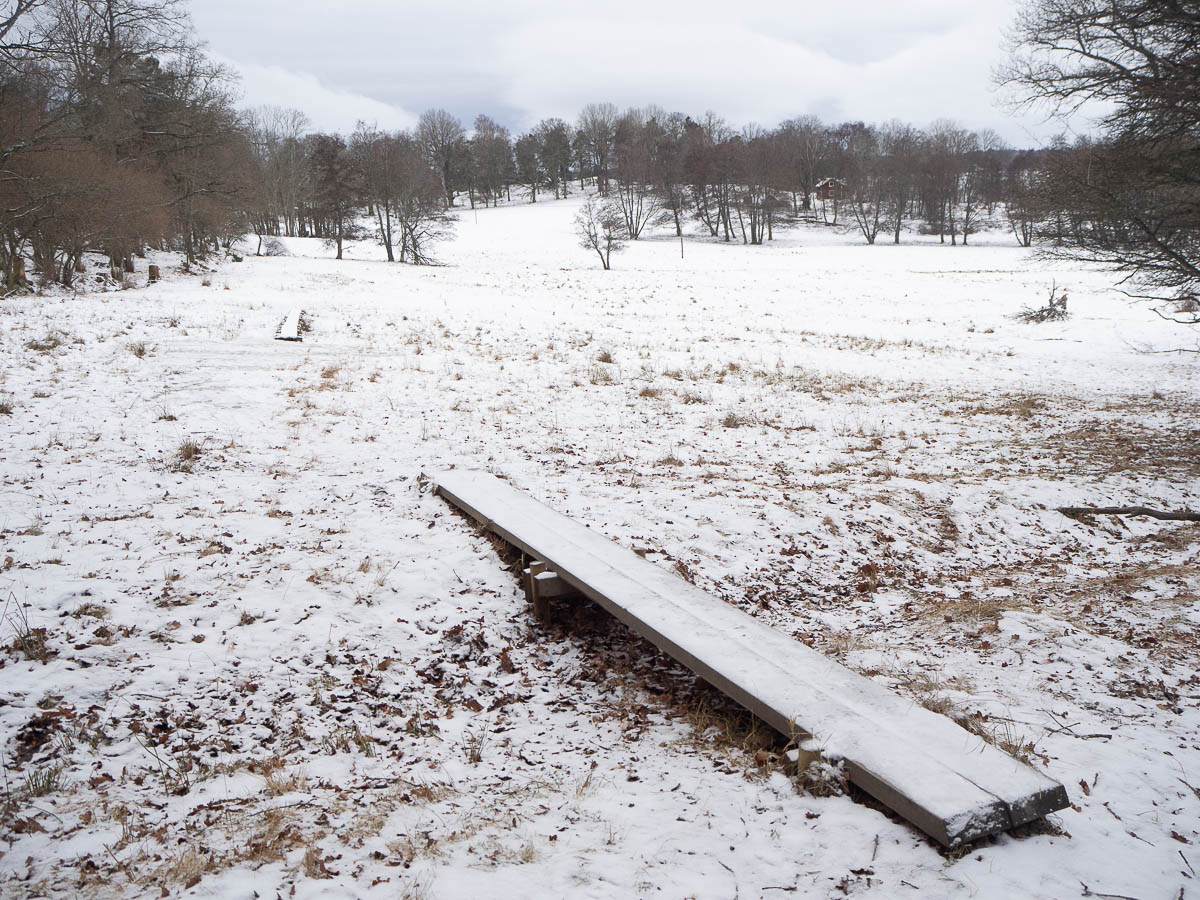
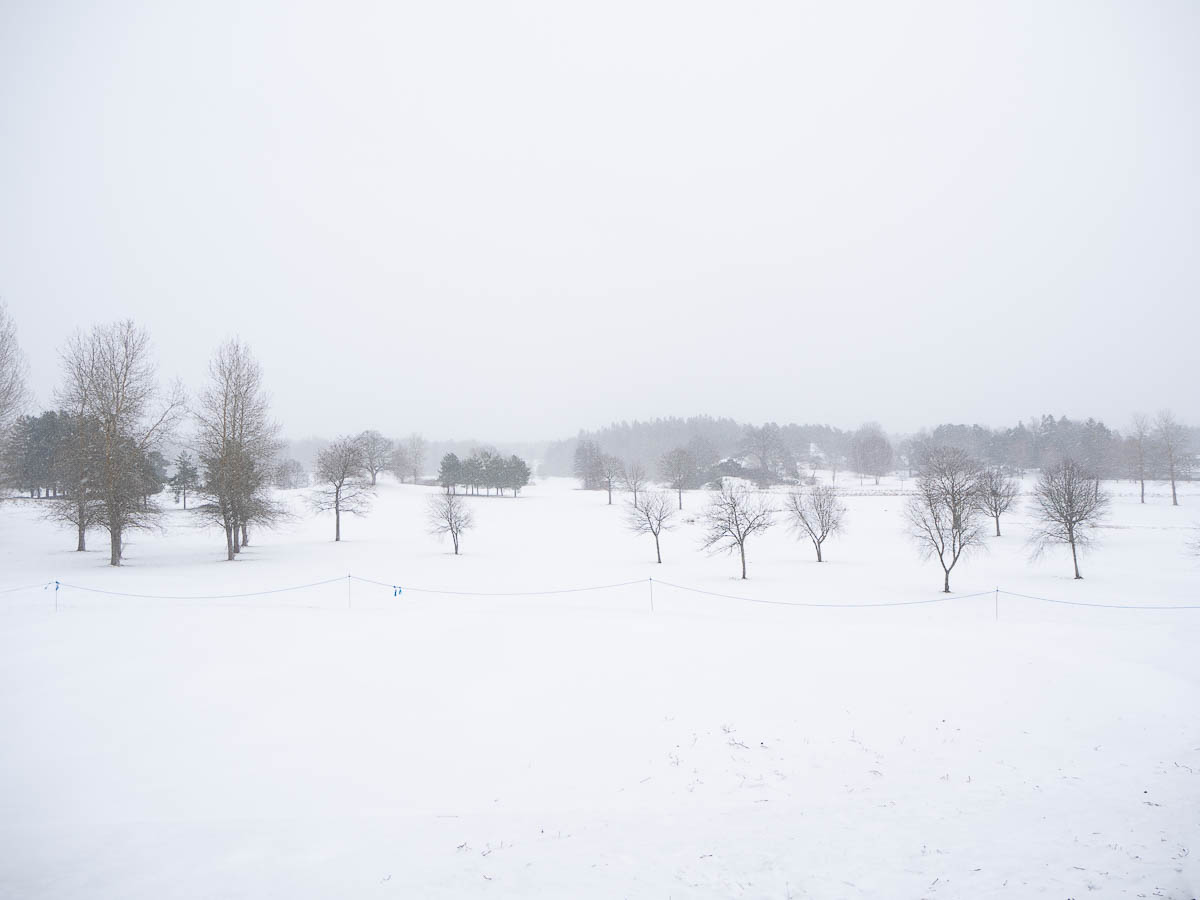
Getting closer to Barkarby, the trail started doing weird things. Instead of going across the large open green area, the orange markings took me along the edge of the field, only to then follow a large, noisy road. A closer look at the map showed that the field was actually a golf club, and during summertime you probably can’t just hike across it. In winter, though, you can! I backtracked and cut across the golf club’s grounds more or less randomly. There was more backtracking on the other side where some sections had fencing around it, but I got out in the end.
Getting back to civilization after a long walk is always a shock. Especially on a quiet day like this, and especially after walking through such silent places. It makes me want to pull into my shell like a turtle, and hide from all this, until I get back home.
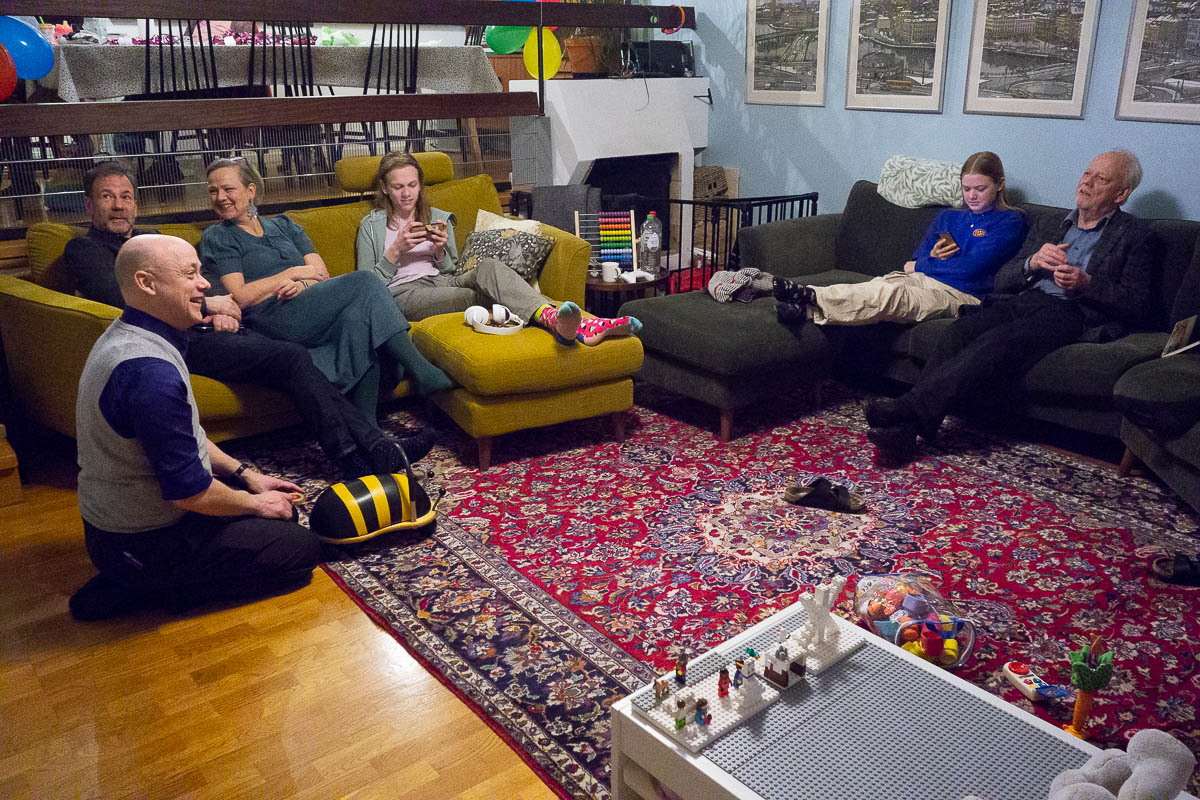
Birthday fika for Eric’s sister who turned 50.
The adults sat and talked and ate semla. Those too young to appreciate sitting and talking had a Lego Masters competition. Those too young for Legos hung around and explored the world.
Here’s a rhinoceros that Adrian built.

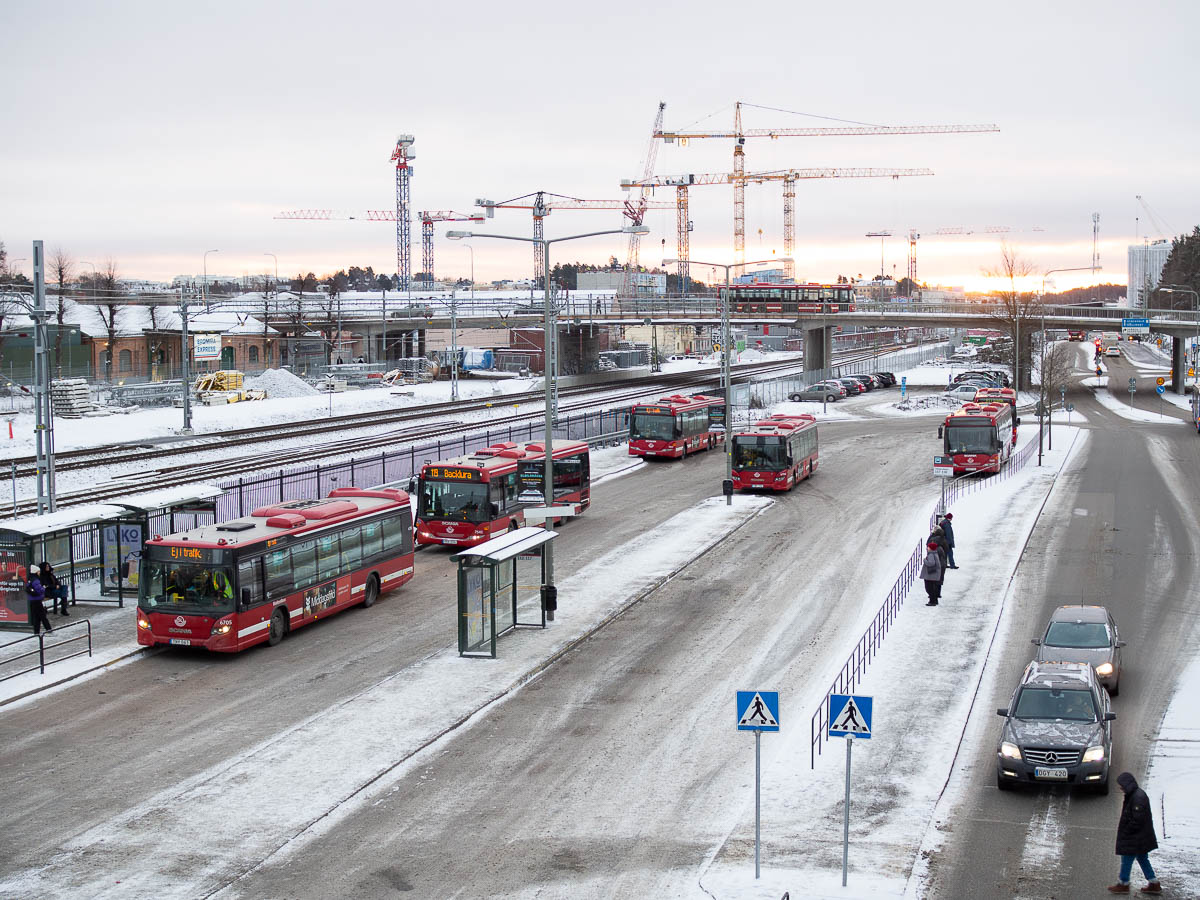
Early morning in Spånga, with sunrise, cranes and bus station.
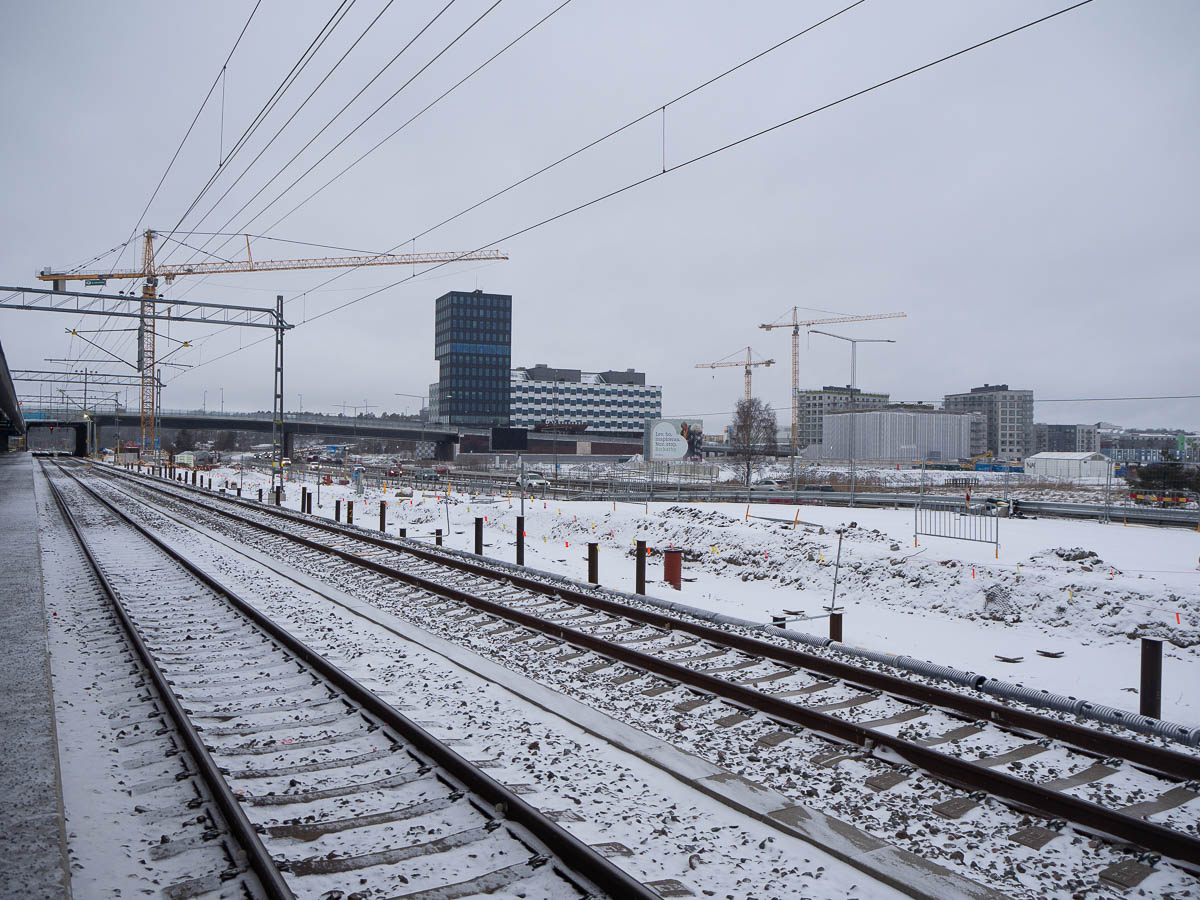
A whole new residential area is coming into existence on both sides of the railway tracks.
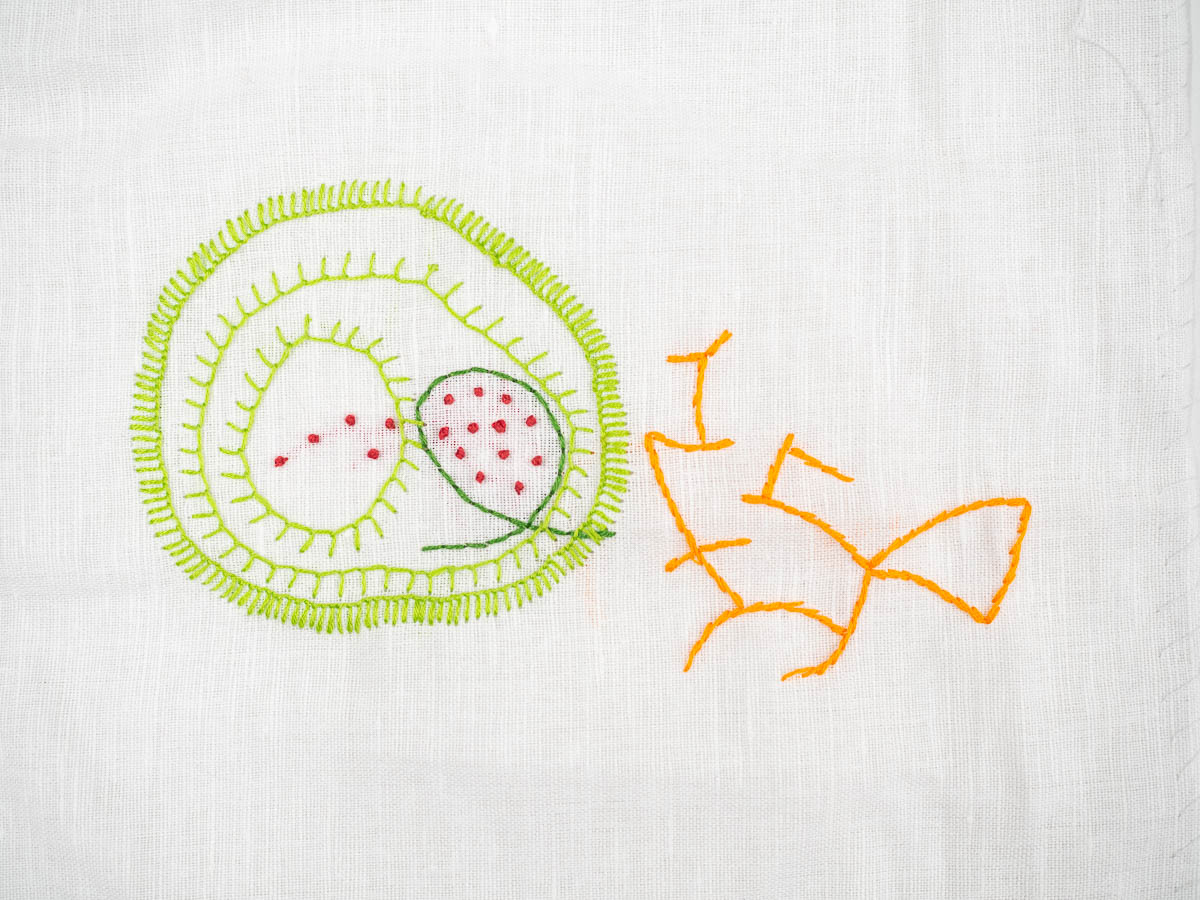
Thursday night embroidery club, for the second time.
Last time everyone worked on their own projects. For this time the group decided to try out dogma embroidery. I’m not sure what it might be called in English, and to be honest, I’m not sure the concept even exists outside of some very narrow pockets of Scandinavian crafts circles.
There’s an e-book at the bottom of it all, and articles about it draw parallels back all the way to the ancient Greeks. Since the author is Danish, I suspect it was more likely inspired by Dogme 95, a movement in film-making, originating in Denmark, that sets strict limits on the tools and techniques allowed. The embroidery version is not quite the same, but it’s still built upon the same idea of strict rules.
Jytte Harboesgaard, as quoted in the Täcklebo Broderiakademi members’ magazine in 2015:
Vi var vana vid att broderiet var ett stygnprov eller skulle bli något bestämt. Detta menar jag är en av orsakerna till att det är så svårt att förnya broderiet, vilket jag anser att vi måste om broderiet skall ha ett berättigande i framtiden. Det var här idén till konceptet Dogmabroderi föddes. I Dogmabroderiet broderar man efter regler som man själv bestämmer… Den viktigaste regeln är att broderiet inte ska användas till något bestämt. Istället är det själva processen att brodera “fritt” efter reglerna som är den viktiga drivkraften.
We were used to embroidering either a sampler or in order to make a particular thing. In my opinion, this is one of the reasons why it is so difficult to reinvent embroidery, which I believe we have to if embroidery is to have a future. This is where the idea of the concept of dogma embroidery was born. In dogma embroidery, you embroider based on a set of rules that you set yourself. The most important rule is that the embroidery won’t be used for any predetermined thing. Instead the process of embroidering “freely” based on the rules is the driving force.
In our case, since most of us were doing it for the first time, one of the members who’d done it before provided us with rules, one by one, so we’d see what dogma rules might look like. The first rule was “a 30×30 cm piece of fabric”. Then “using the greenest thread you have, start in the middle of the fabric, and make 30 backstitches”, followed by “at least 10 French knots” and “a doodle that doesn’t look like anything”. The next step, “three circles of blanket stitch around the French knots” was a bit of a challenge because there was not much room but I just had to think bigger.
The next two steps we got with us as homework. “Find an area where your work is unbalanced, and fill it with seed stitch” (which suits me very well because the doodle is crying out for something to link it to the rest) and “using white thread, lighten up your work” (which will be interesting given that I’m using white fabric).
To really push yourself out of your comfort zone, you’d finish one dogma embroidery, then take a new piece of fabric and repeat the exact same rules on that one, for a new and different outcome. And then do it again, and again.
Reminds me of the running stitch sampler I made but never documented in its full glory. The first ten squares are easy; to complete all twenty-five takes perseverance and effort.
| Newer posts » |
