


Potentilla flowers, and a cute little wasp. It’s nice to have something flowering abundantly and brightly this late in the season.
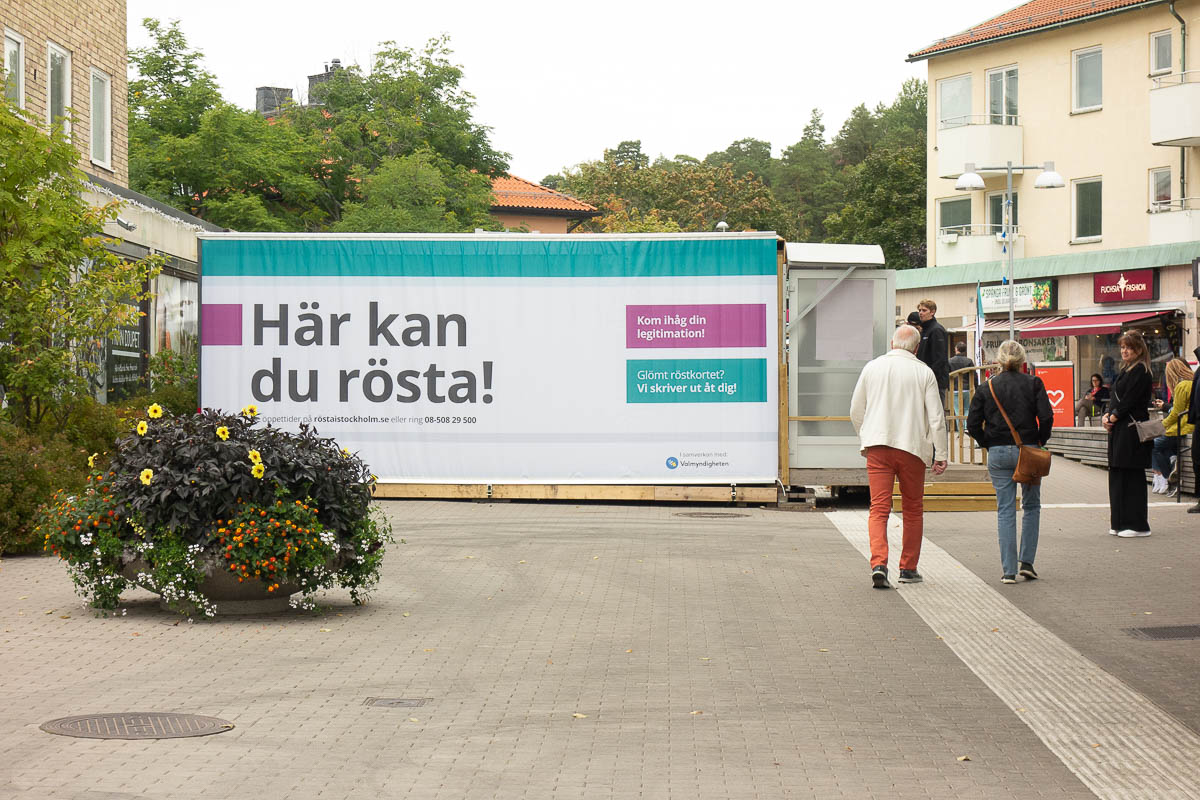
Tomorrow is election day, but advance voting stations have been open for something like two weeks already. I’ve been planning to get it done early, but kept putting it off. Now it’s done.
I am not a Swedish citizen so I only get to vote in the local elections. The county/kommun elections at least feel somewhat relevant. The regional elections on the other hand seem mostly pointless. The only services provided at the regional level is healthcare and public transport, and every single party promises more accessible healthcare and shorter queues, by magic, no hard trade-offs.
Adrian came with me to see how it all works. Their current focus area in social studies is democracy and elections and government and all that, so he wanted to see it live.
Ingrid voted herself in the School Elections, where middle and high school students across the country get to vote almost for real. Their votes are counted and the results published after the main elections, so as not to affect them. In the next election in four years’ time, she’ll be doing it for real.
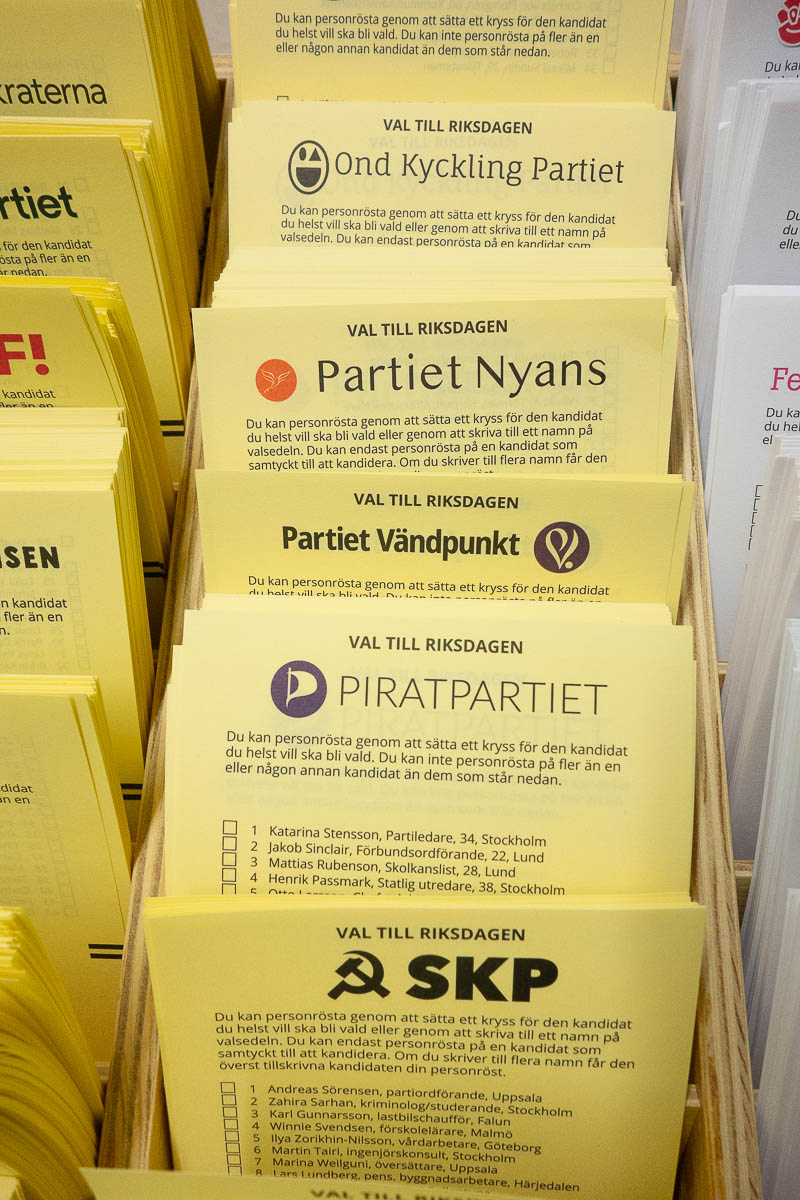
On the national level there are all sorts of weird parties trying to make their voices heard. Some seem sensible but niche; some are unworldly idealists; some are lunatics (like the Swedish Communist Party); some are simply there for the joke. There is a party calling themselves Ond Kycklingpartiet, “the Evil Chicken party”.
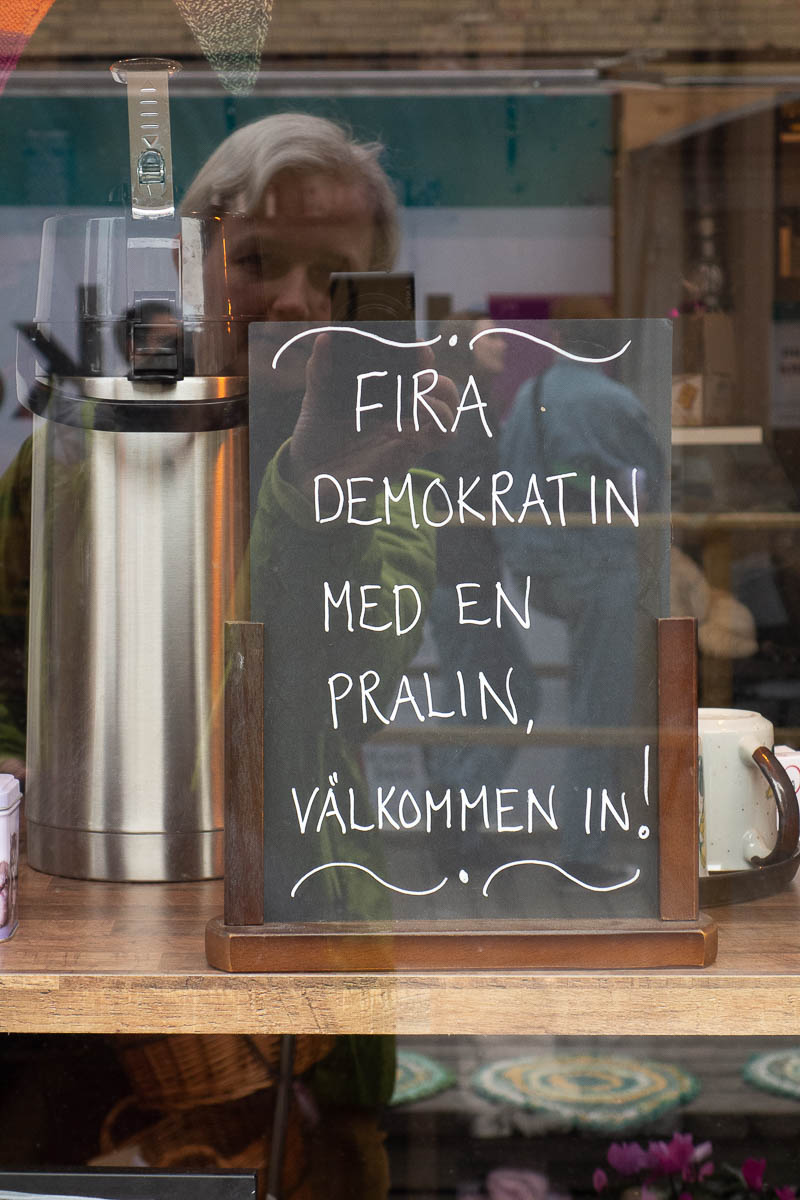
The café next to the advance voting station was urging us to “celebrate democracy with a praline”. This was cheeky enough to work, so Adrian and I bought fancy pralines for ourselves.
Jalet’s Kites and Eyal’s Saaba.
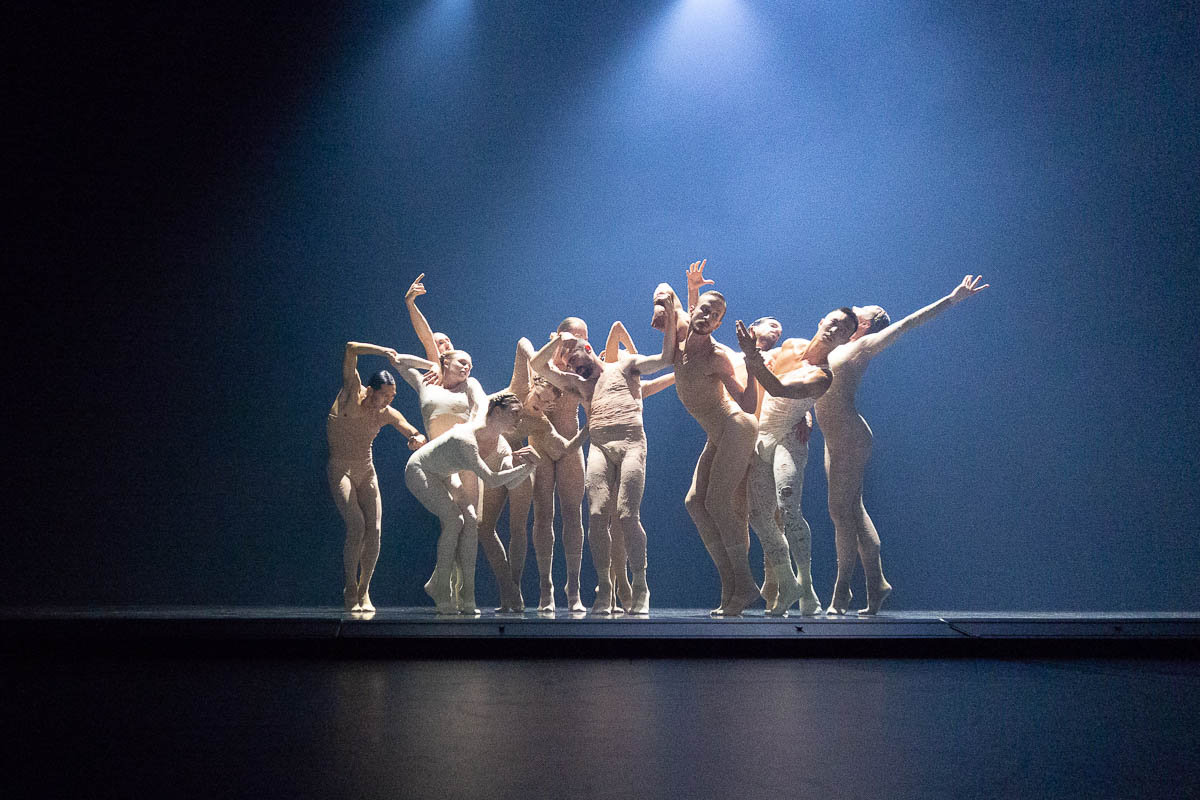
I usually post press photos in my reviews of dance performances but this time we had front row seats so I took my own. Obviously my little camera struggled with the dim lighting but it’s enough for some memories.
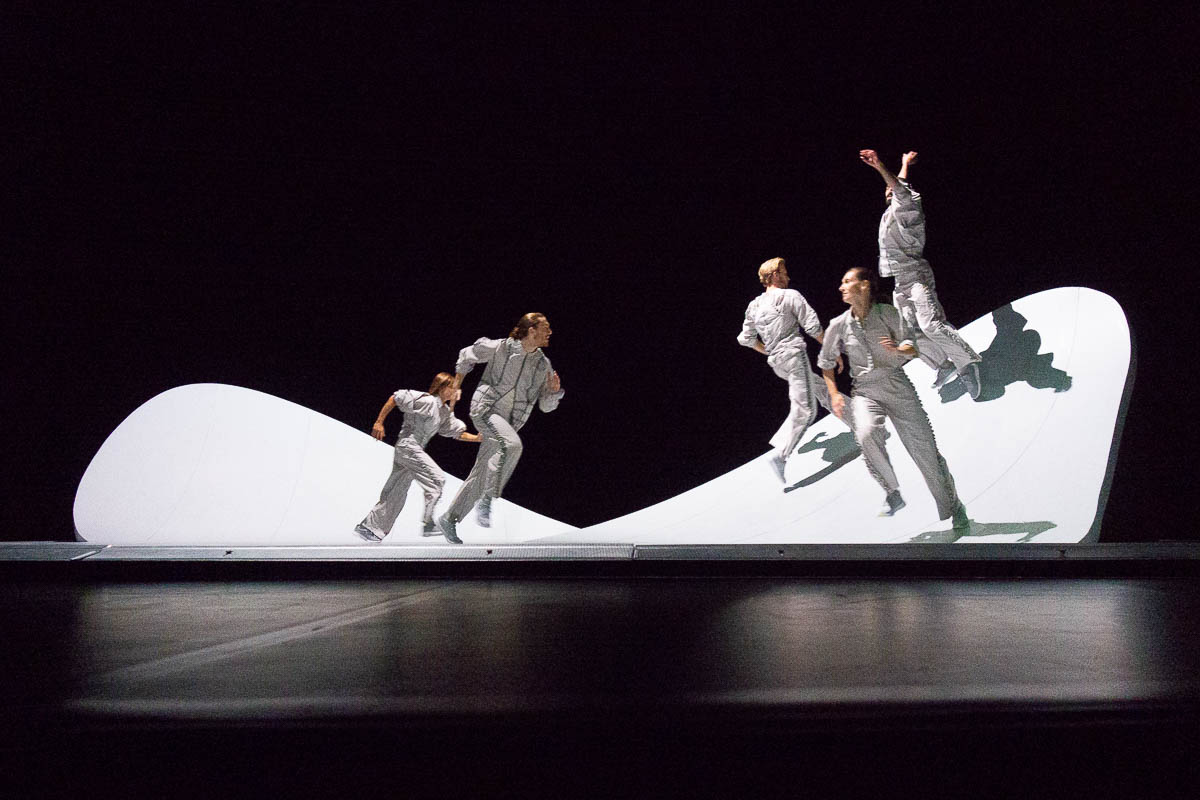
Damien Jalet’s Kites. My opinion of this piece went up and down.
First: a woman, lying down on the floor, moving to a poem about the wind. Then, a group running up and down white slopes, evoking the feeling of running in the wind. This section didn’t impress me much – I found it repetitive and lacking direction and choreography. It felt as if the dancers had just been told to run up and down the white slopes, and let their arms drag behind them. Kind of boring, but the constant motion was soothing, like looking at the foam wake behind a boat, especially together with the music.
Then the group gathered loosely at the front of the scene, dancing together but slightly out of sync. One of them starts a movement, and the others follow gradually, like a wave. The next wave had a different starting point and a different direction. It was still relatively aimless: the same kind of thing kept happening for quite a while, without any noticeable change or directionality. It reminded me of Koyaanisqatsi, music and motion blending into one, especially with the minimalist music. It made me see the previous section from a new perspective, and appreciate it a bit more. Still, my opinion of the whole piece kept oscillating between appreciating the minimalism, and finding it low-effort and boring.
The final section was gimmicky. Cords got pulled and clothes transformed – shirts blown full of wind, sparkly jackets, loosely blowing pants, glitter blowing in the wind. Childish and cheap, compared to what came before, lowering the tone.
Also, the streetwear-inspired costume design may be modern and cool but it detracted from the performance. The costumes were loose but stiff, so they hid the dancer’s bodies and made movements indistinct. A tighter design would have made the bodies more visible; a looser, softer fabric would have flown with the motion.
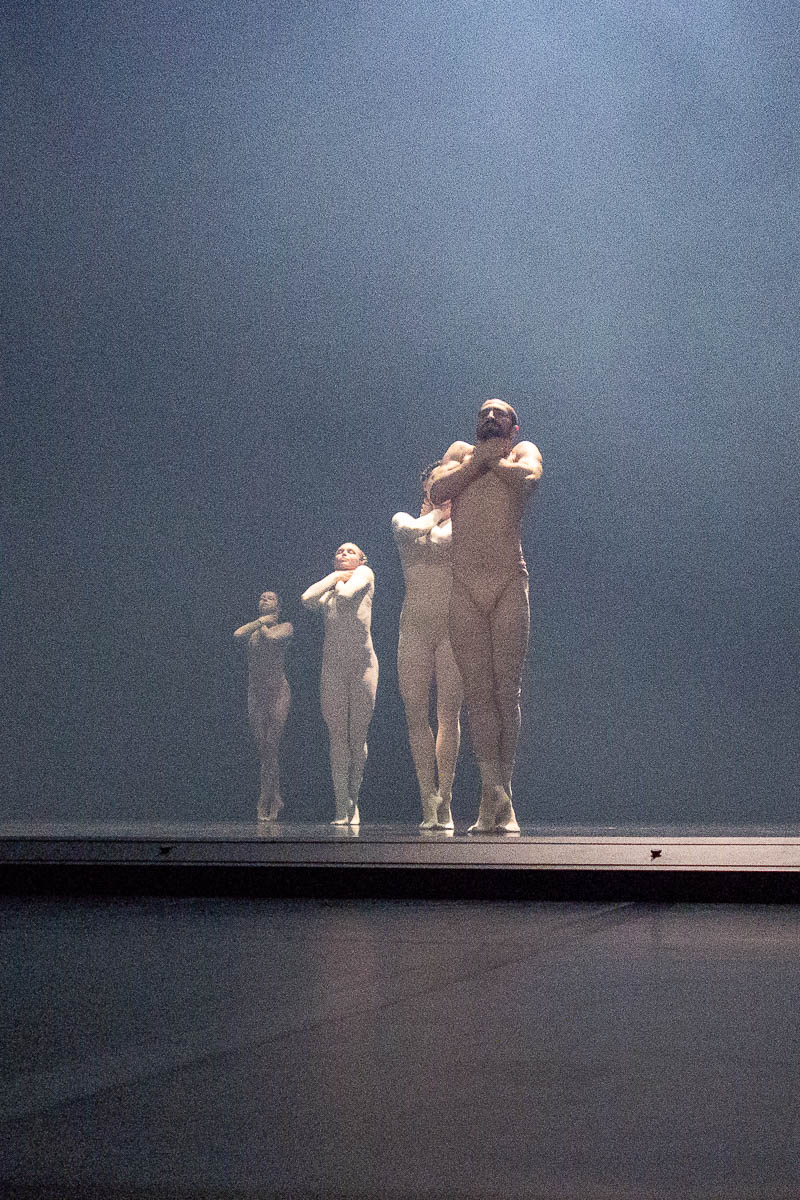
Sharon Eyal’s Saaba. This was spellbinding and awesome. It was as if she had seen the first piece and taken the best parts of the concept – minimalism, gradual change, waves of movement – and added emotional depth and vision, turned up the intensity to 11, and fixed all the niggling little shortcomings.
Like Kites, there is a minimalism to the choreography. There are rarely any large movements or radical changes. Unlike in Kites, everything always subtly mutating. It’s never just time passing. The group is constantly changing direction, or size, or motion, or role. In technical terms, the information density of this work is ten times that of Kites.
The style felt immediately familiar from the last time I saw a work by Sharon Eyal. The dancers move as a group, but their movements are not identical. There is always some deviation, someone going against the flow, or standing on their toes when the others have their feet flat on the ground, or looking left when the others look right.
What was most interesting about the choreography was the tension between the strict and the grotesque. Straight legs, controlled bodies, restrained movement, tightly braided hair – but also hunched shoulders, choked throats, pointed fingers, gaping mouths, distant gazes, pained grimaces. I got the impression of something demonic and obsessed, though it was far from wild or fiery. Possessed, otherworldly, especially with the dreamlike lighting making everything look slightly unreal.
And those amazing costumes of tight light-coloured lace, looking gritty rather than pretty, highlighting every movement.
Hypnotic, powerful, mesmerizing. I barely blinked during this performance, so as not to miss a single detail.
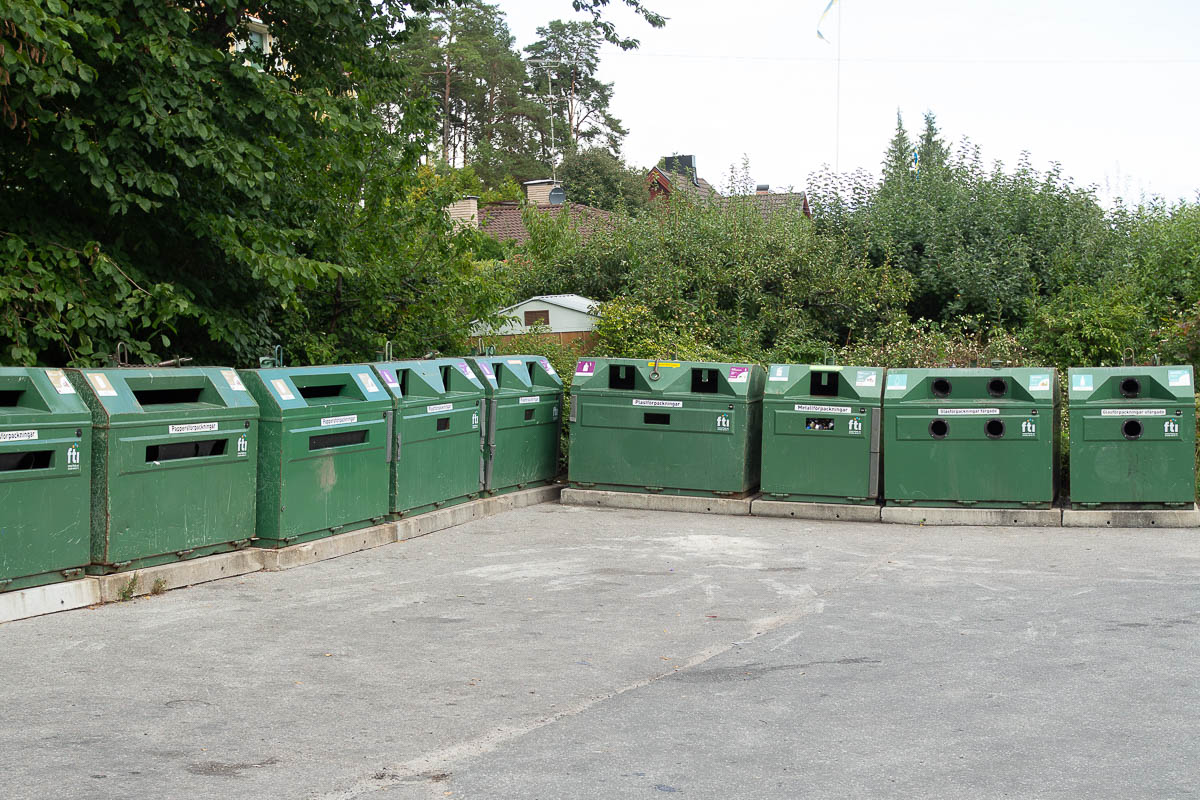
The recycling station across the road from Coop in Spånga has disappeared. Maybe it has moved, I haven’t checked. I guess I should.
Instead I’ve just gone to the other recycling station nearby, next to Spånga Folkets Hus. Which I think might technically be marginally closer to us. But because it lies in the wrong direction and doesn’t have a supermarket next to it, those 20 metres that I could possibly save by going there are useless. I can walk 700 metres to the recycling station and to the supermarket, and the same back again – or I can walk 650 metres to the recycling station, and the same back again, but still need to make the whole trip to the supermarket in the exact opposite direction.
Coincidentally there are DHL and Schenker parcel pickup points very close to each of the recycling stations. The algorithms usually pre-select the one next to the Folkets Hus, because I guess it appears closer. And I always override their choice and pick the one in central Spånga instead, because then I can pick up my parcel on my way from somewhere else. Technically closer does not mean better.
I still end up walking to the “wrong” pickup point regularly, though, because many online shops don’t let me choose and leave it to the algorithm.
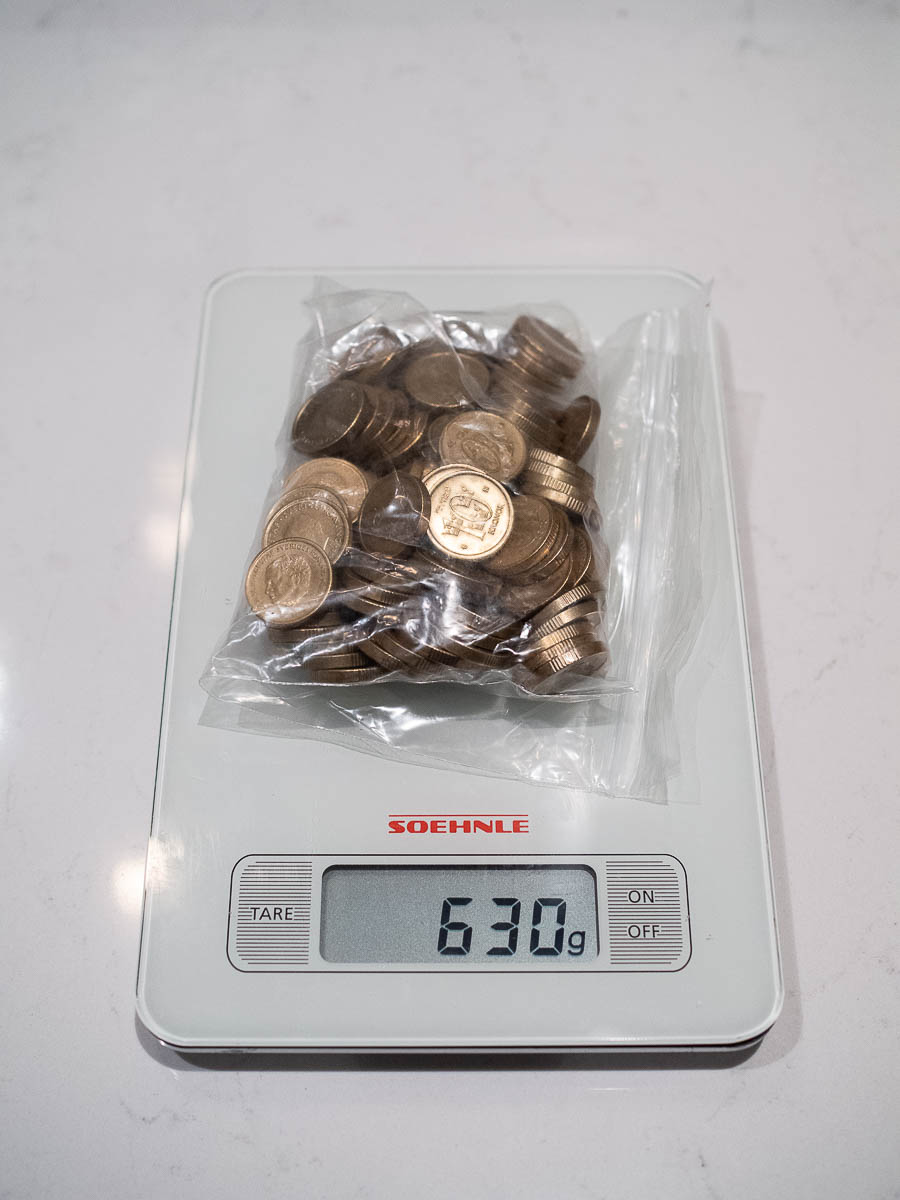
After some scout activity or other – probably from a Christmas market – we have a pile of cash in the house, that we (= Eric) took upon us to deposit. The scouts got their bank transfer, but we haven’t gotten around to doing anything with the cash, because it’s such a giant hassle.
We pay for all our normal purchases by card, so the cash isn’t going to get used naturally. You might think that I could take it to a bank, but no. Swedish banks don’t work with cash any more. Cash is a valid means of payment but banks don’t like dealing with it, and apparently they are allowed to just say no.
I managed to deposit the banknotes today. There’s about a twenty ATMs in Stockholm where you can deposit banknotes, and an online map to help you find them. I located one near the office, put in my tidy piles of sorted and aligned banknotes, and that was that.
A large amount of coins on the other hand is near impossible to get rid of. There appear to be no banks – not a single one – in Stockholm that handles coins. The website of a foreign exchange chain hints that they might be able to take them off our hands – for a 15% fee. That just feels so greedy that I don’t even want to consider it. I’d rather give the money to charity.
My next hope is that one of the local supermarkets might be willing to take the coins in large enough batches to make it worth the effort of carrying them with me. (For small-denomination coins, the balance of value vs weight and volume is silly.) I know the supermarkets generally do handle cash, but even they might have limits – I’m not sure any of them would be happy to accept, say, half a kilogram of 1-krona coins in a single payment.
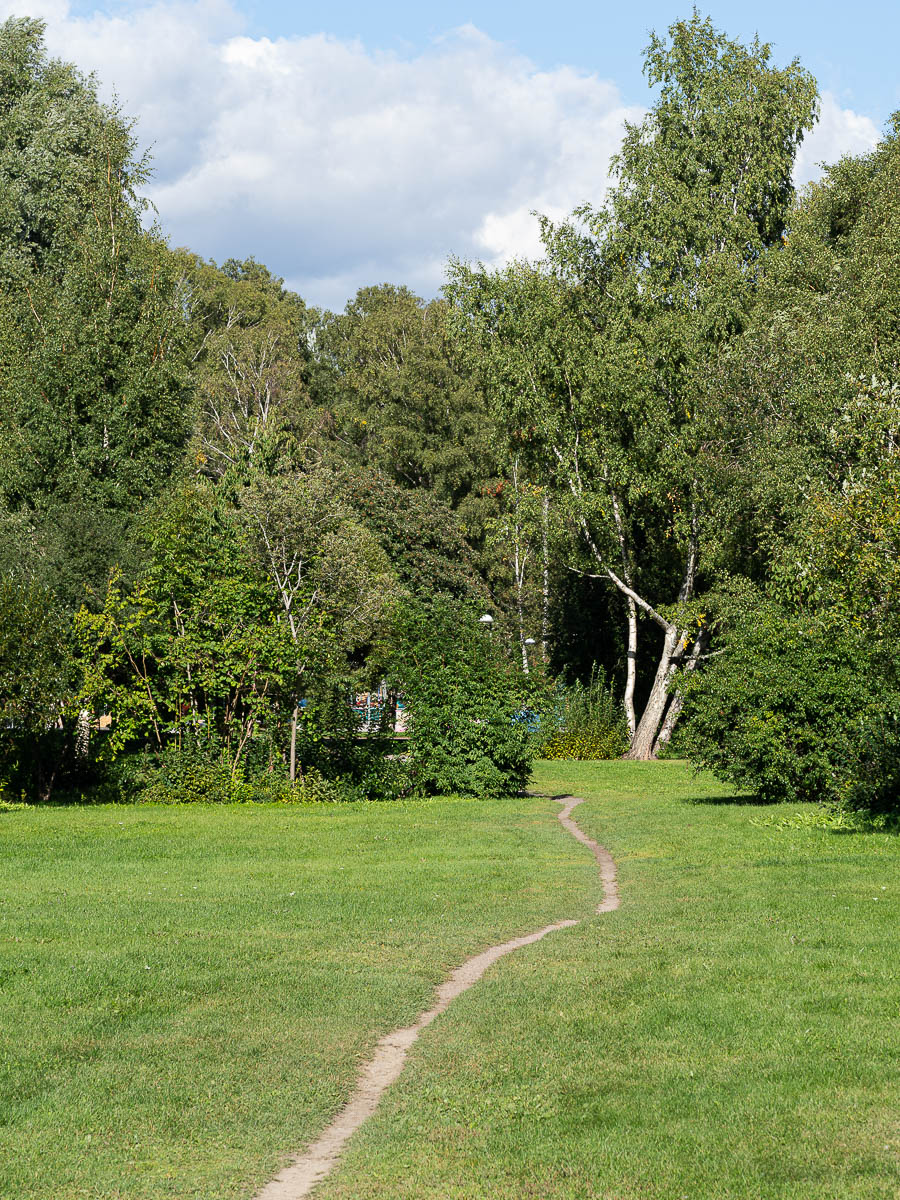
My standard 30-minute walk takes me through Starboparken in two directions.
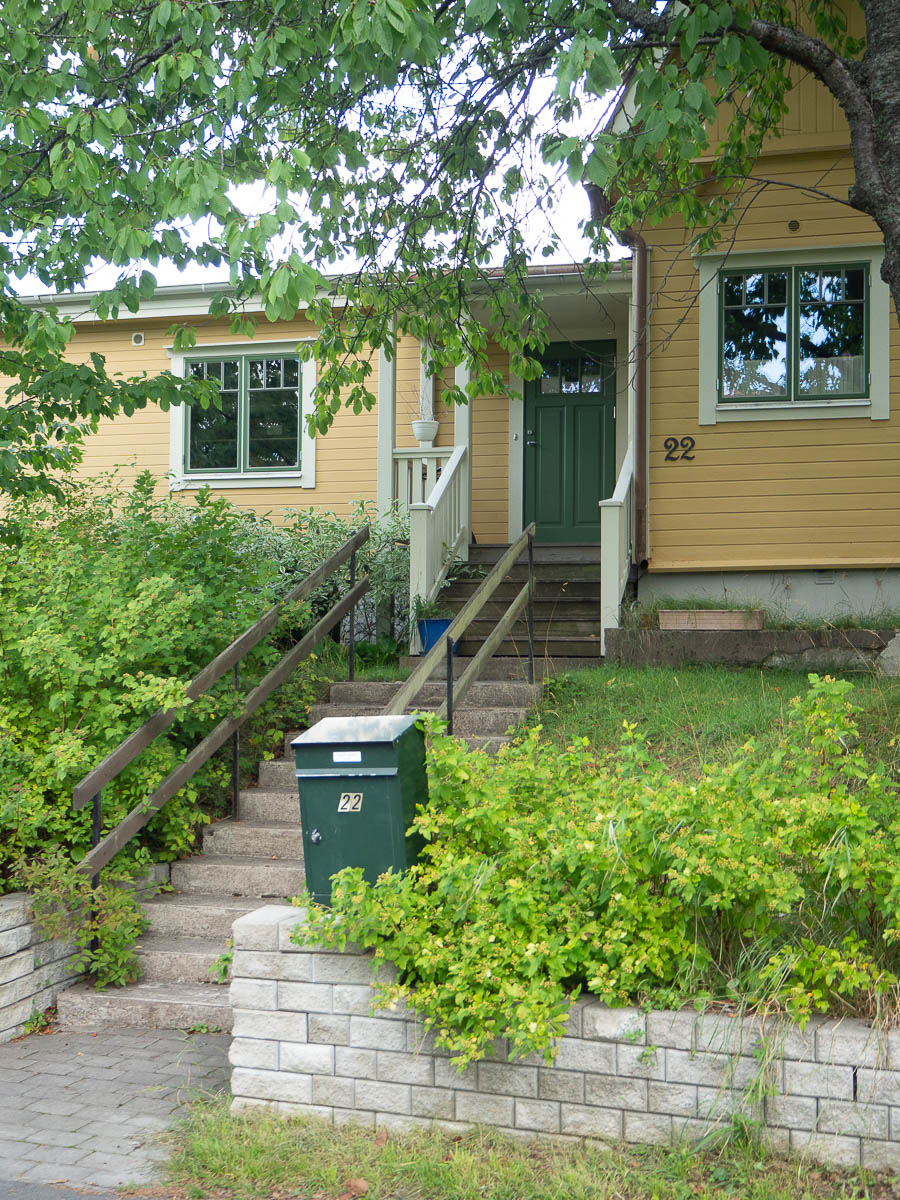
Returning from my daily walk, pleased to be welcomed by all this greenery. Almost every day I’m reminded of how much I love having a garden – even in a year I haven’t had any energy to plant anything new, the investments of time and effort from past years are paying off.
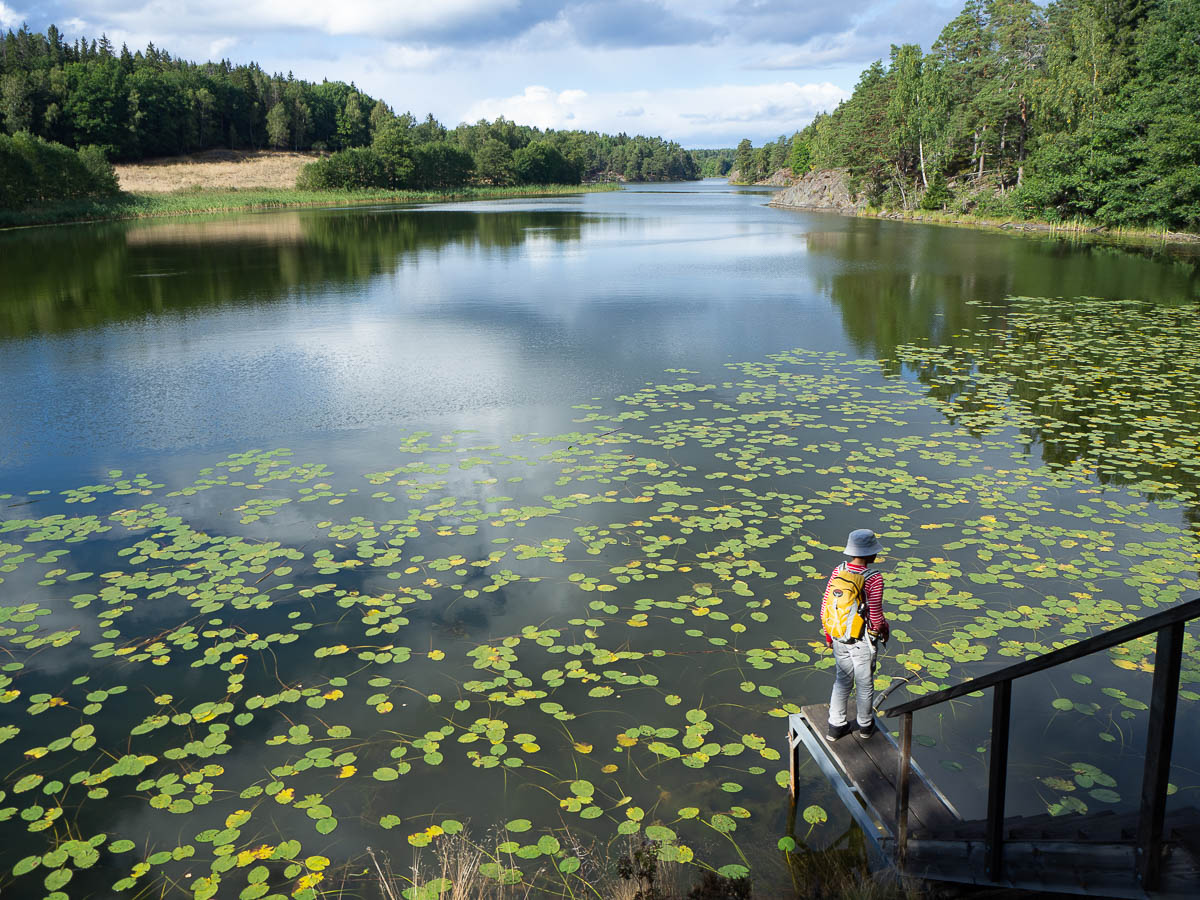
Adrian and I went out walking. I wanted someplace new, so we picked a walk from a book I recently bought, and walked around lake Albysjön, about 10 km. There are two lakes by this name, both just south of Stockholm but in different counties. This was the one in Tyresö.
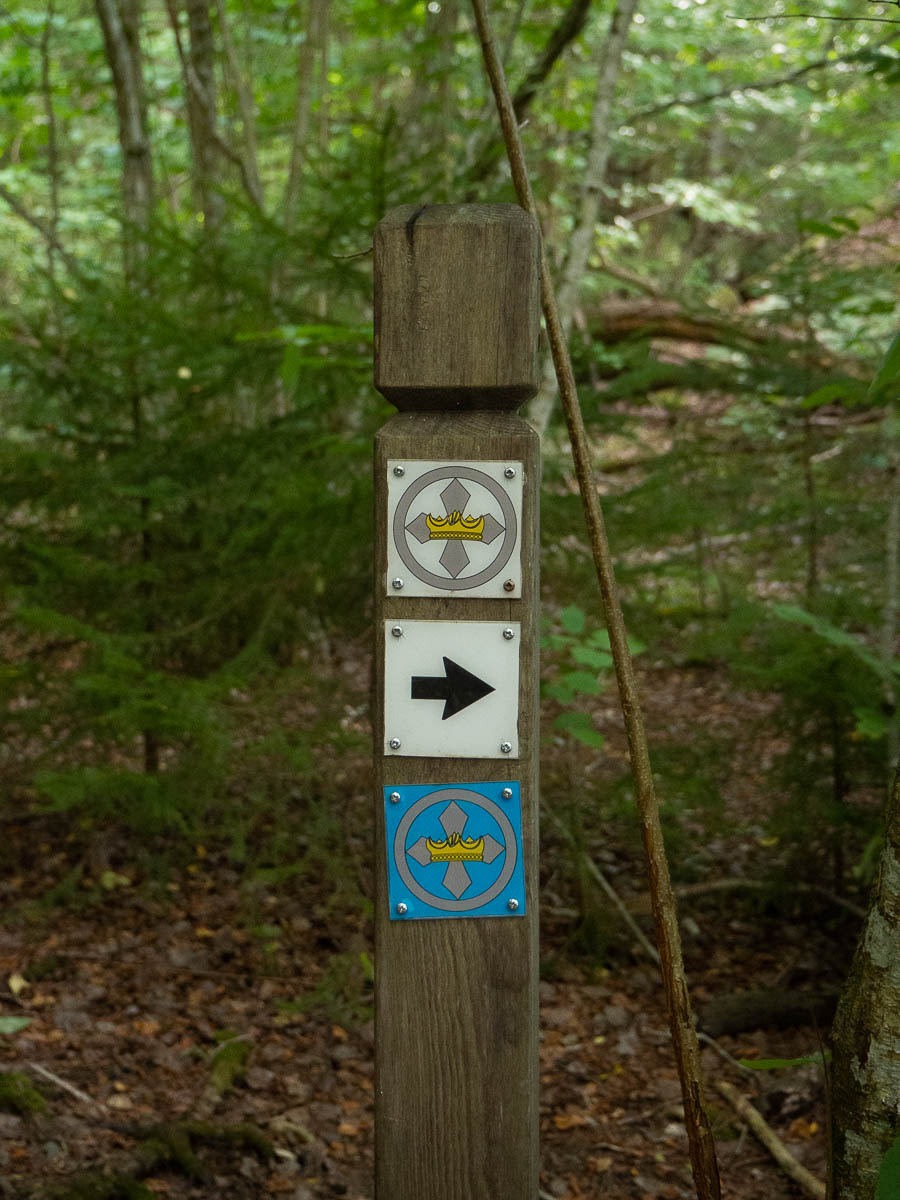
Following the guidance of a route description in a book feels very different from simply following signposts or markings on trees. It takes more attention from the walking itself – having to keep the book at hand, trying to figure out where we are in relation to the landmarks described, how far we’ve gotten, have we missed the turn they described… I liked seeing a new place, but I do like following a single well-marked trail better.
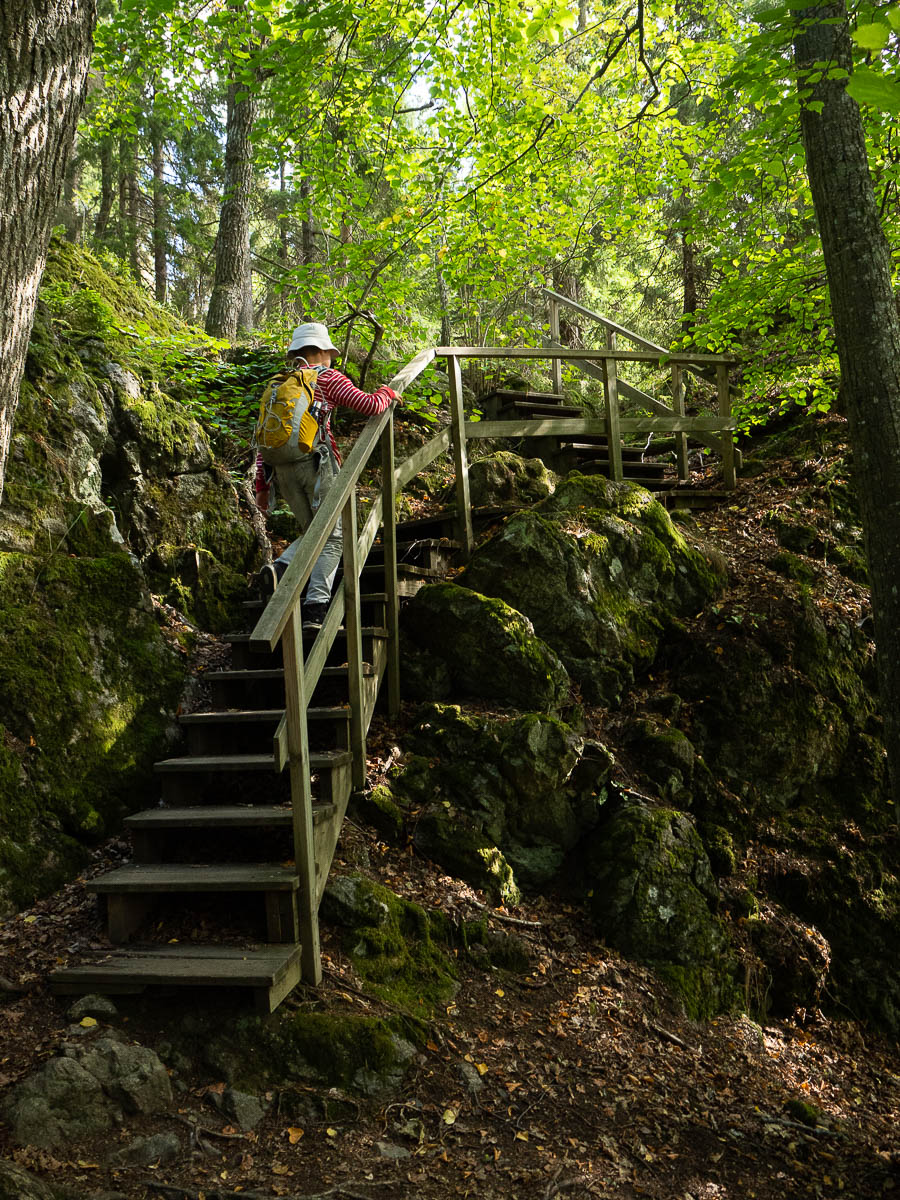
The walk itself was nice. The first kilometre or so went along asphalt roads among houses, which we (especially Adrian) didn’t particularly enjoy, but thereafter it was mostly forest paths and some narrow gravel trails through a lot of greenery.
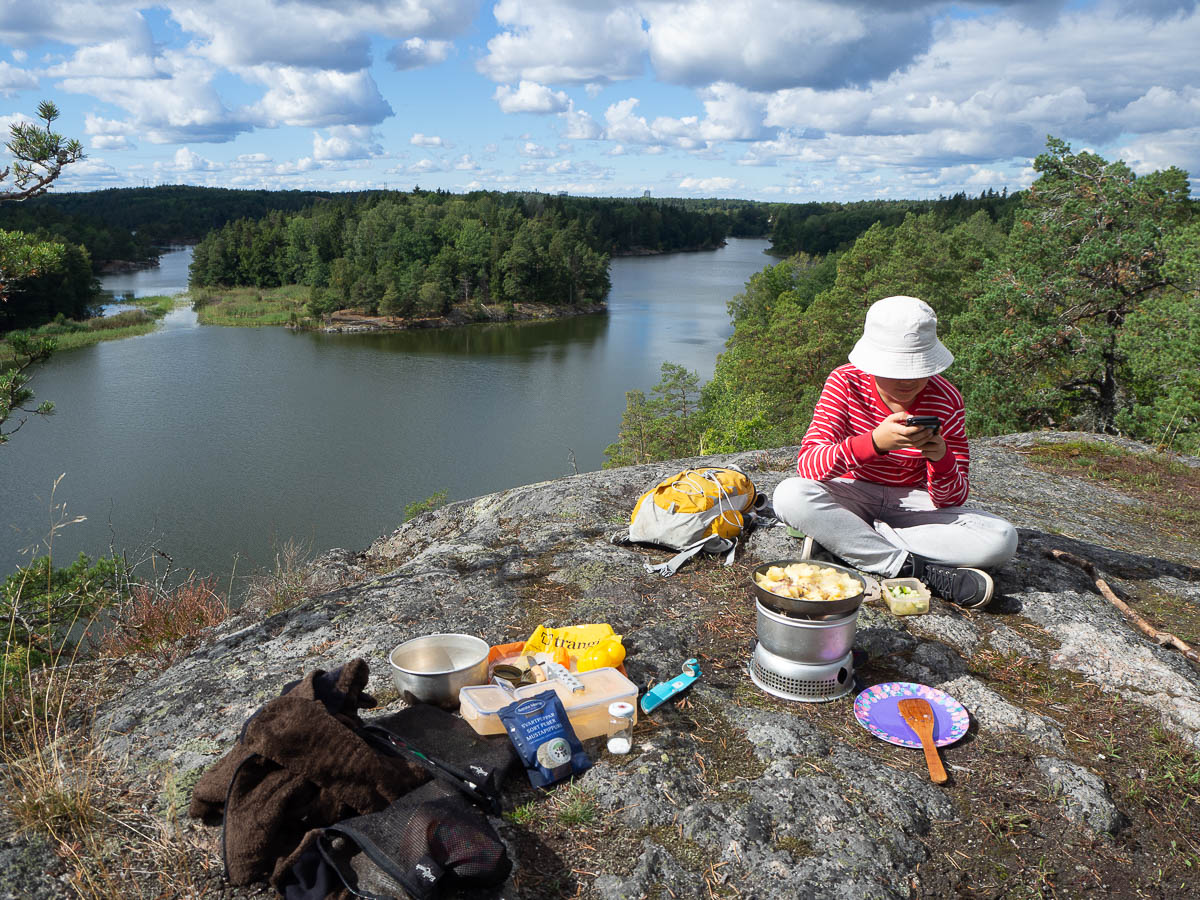
We found a nice clifftop spot for our lunch, with wide views over Albysjön. Halfway through our meal we got a tiny bit of rain – just enough to make Adrian seek shelter under a pine tree, and to get everything slightly wet, but luckily no more than that.

With just the two of us, we could take breaks whenever we wanted for whatever reason – such as finding a small jetty in the middle of a profusion of water lily leaves, which Adrian could throw pine cones at.
At the rapids at Nyfors, we saw a small, dark, furry animal run away across the stones. I can’t keep all the weasel-otter-marten-mink-polecat species straight: there are so many and they’re all so similar, small and slim and dark and furry. This one was on the larger side, and I couldn’t see any light-coloured markings at all, so afterwards, with the help of the internet, I tentatively identified it as maybe a mink.
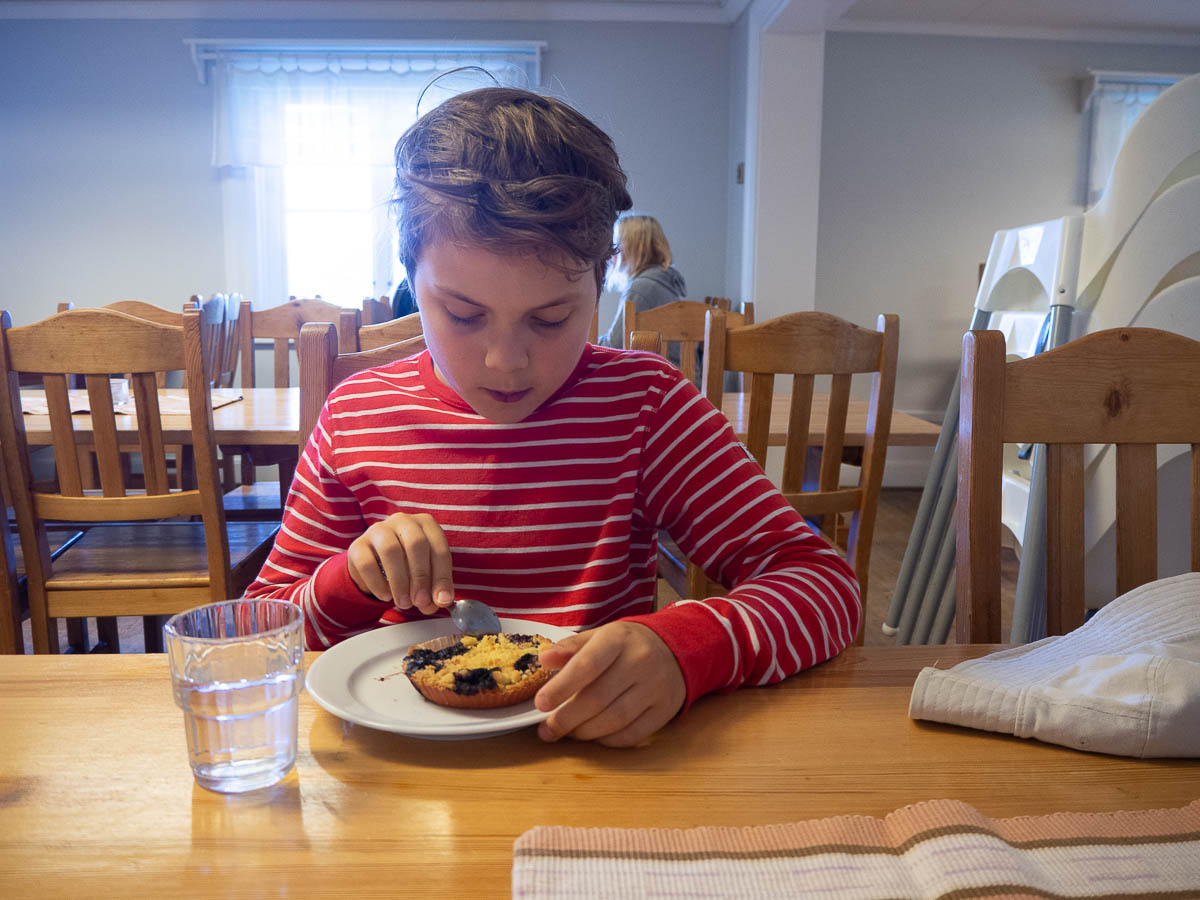
At the end of our circular walk there was a little café where we had a lovely blueberry pie.
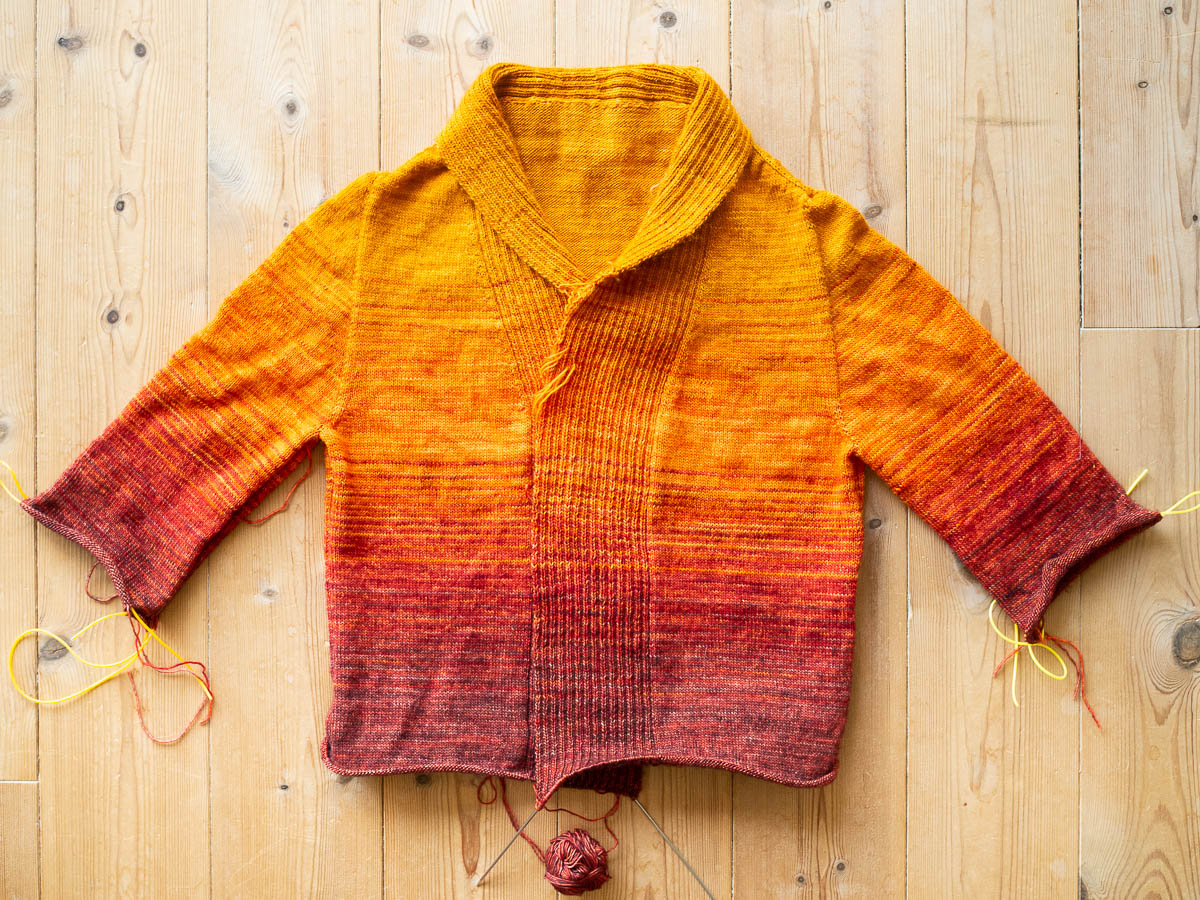
The cardigan is looking good. The fade is all done, now it should be smooth sailing from here onwards.
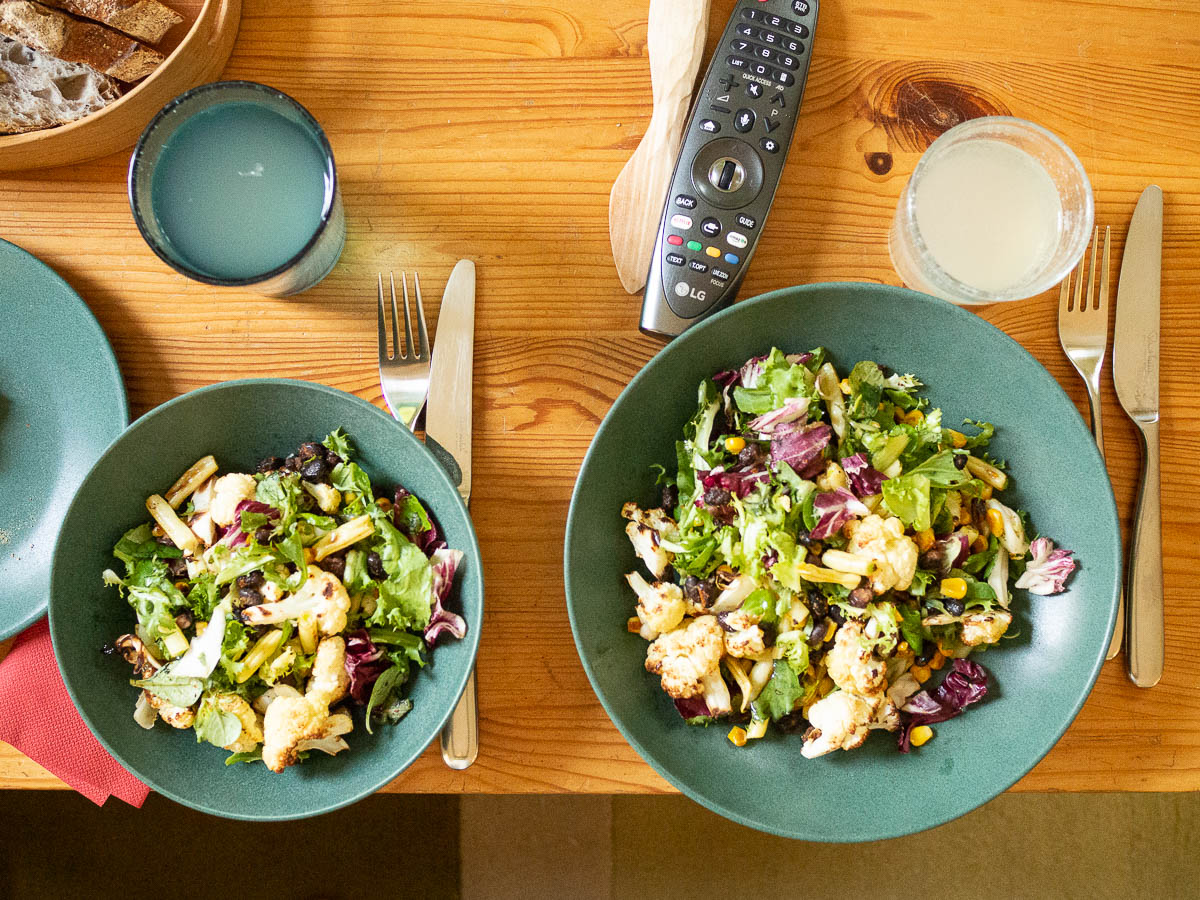
I’ve reached middle age, or something. Some time earlier this year, there was a step change in my caloric needs. All of a sudden I couldn’t finish what used to be normal portions. In the end I had to switch to a smaller serving bowl, because I kept serving myself more food than I could eat.
That’s my bowl of salad on the left, and Adrian’s on the right. It’s Friday movie night, so dinner is served on the chest that does double duty as a sofa table in front of the TV.
I’ve also stopped eating breakfast on weekdays, because I realized I no longer need all that food. I still haven’t quite learned to manage restaurant meals yet, and keep ordering as if nothing had changed. I made the mistake of ordering an entire pizza in Slovenia and had to send half of it back.
| « Older posts | Newer posts » |
