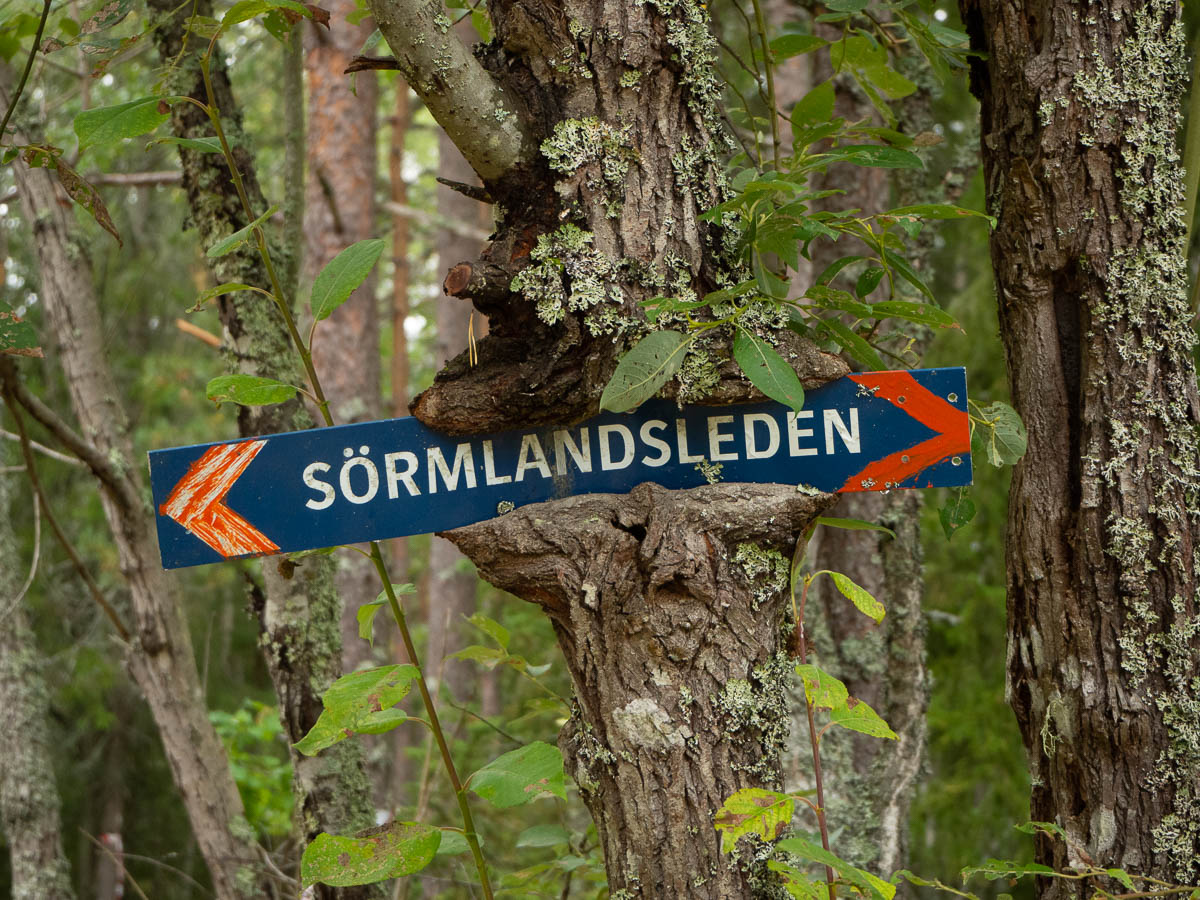
Stages 15:1, half of 15 and half of 14. From Läggesta to lake Glådran, 17 km.

The connecting trail from Läggesta conveniently starts right in front of the train station. The first kilometre of the trail unfortunately goes right alongside a noisy main road, but soon after the trail turns off onto a smaller road, and then from that onto a lane. Quite soon I was on a pleasant shaded path, leaving civilization behind.
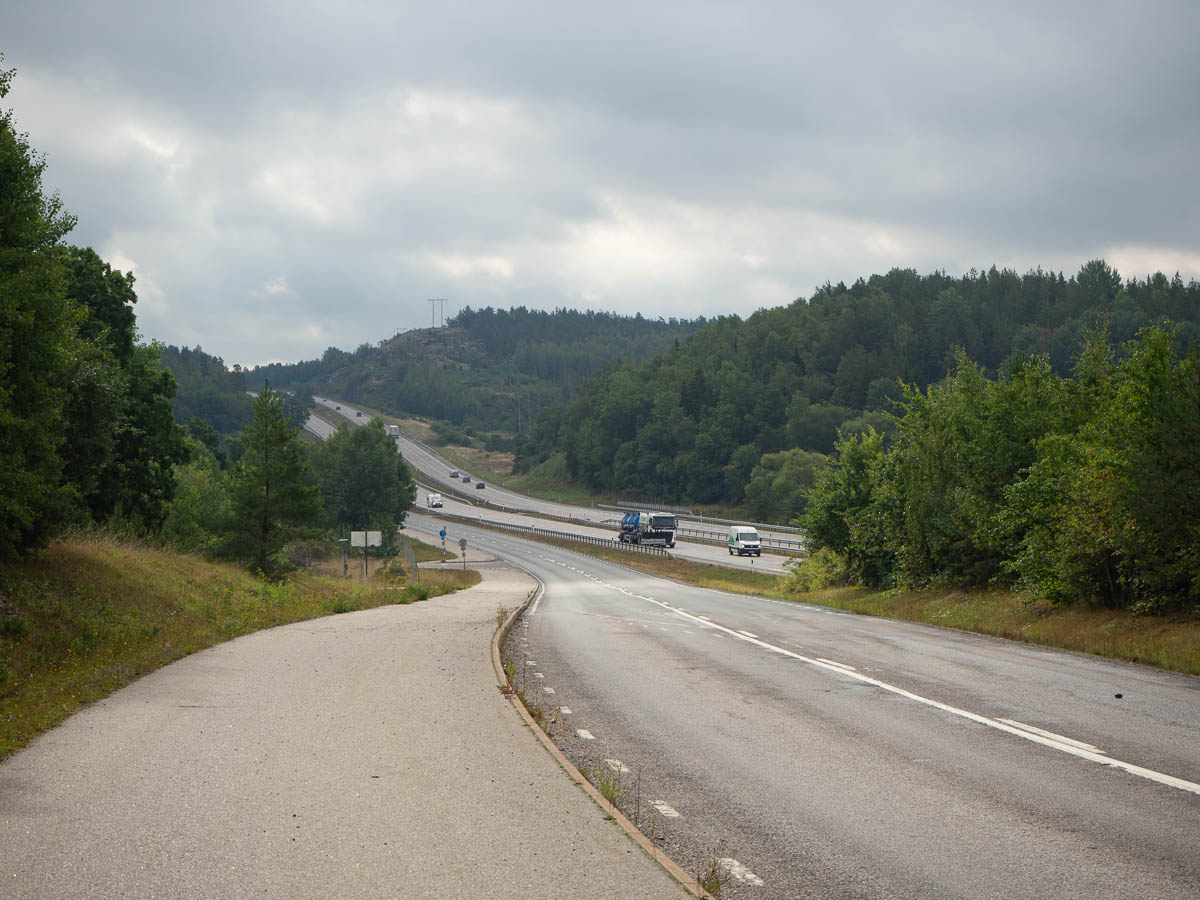
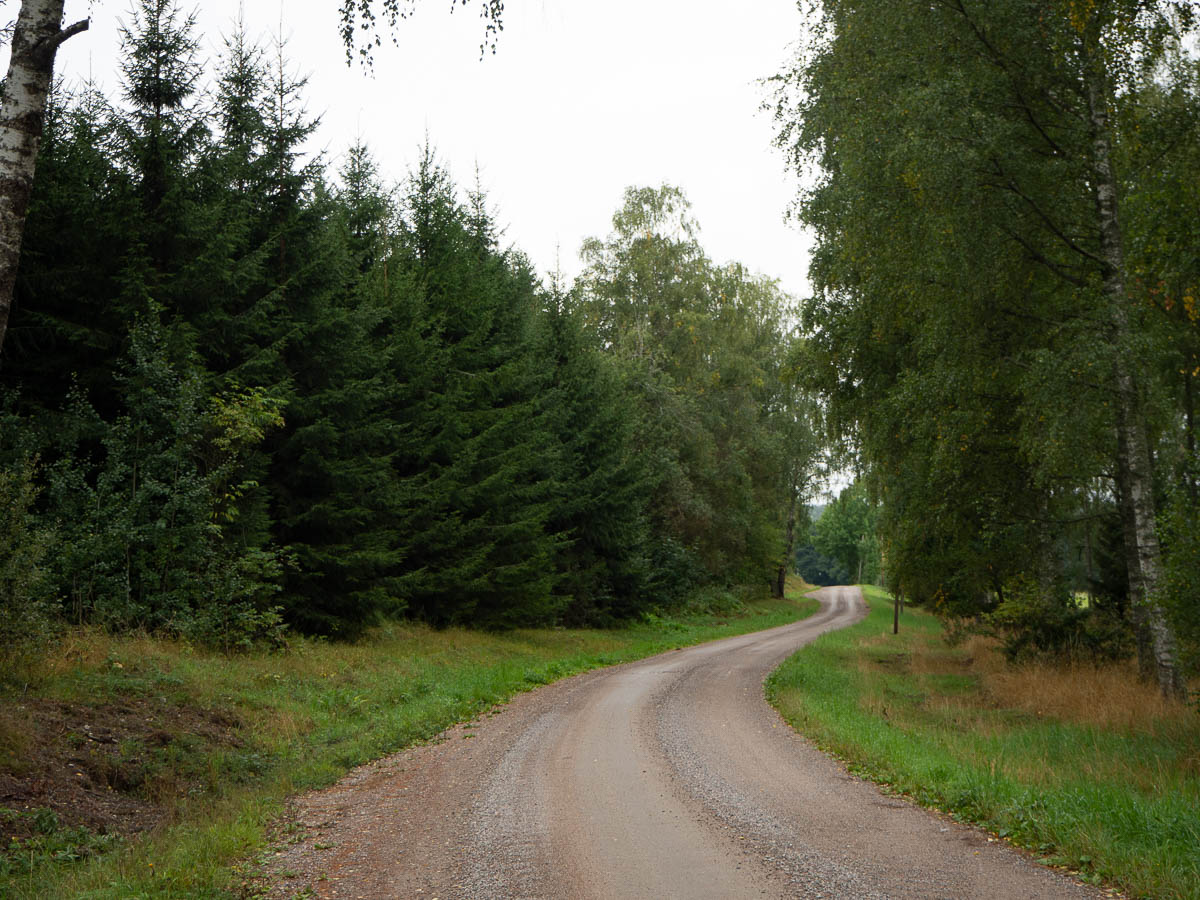
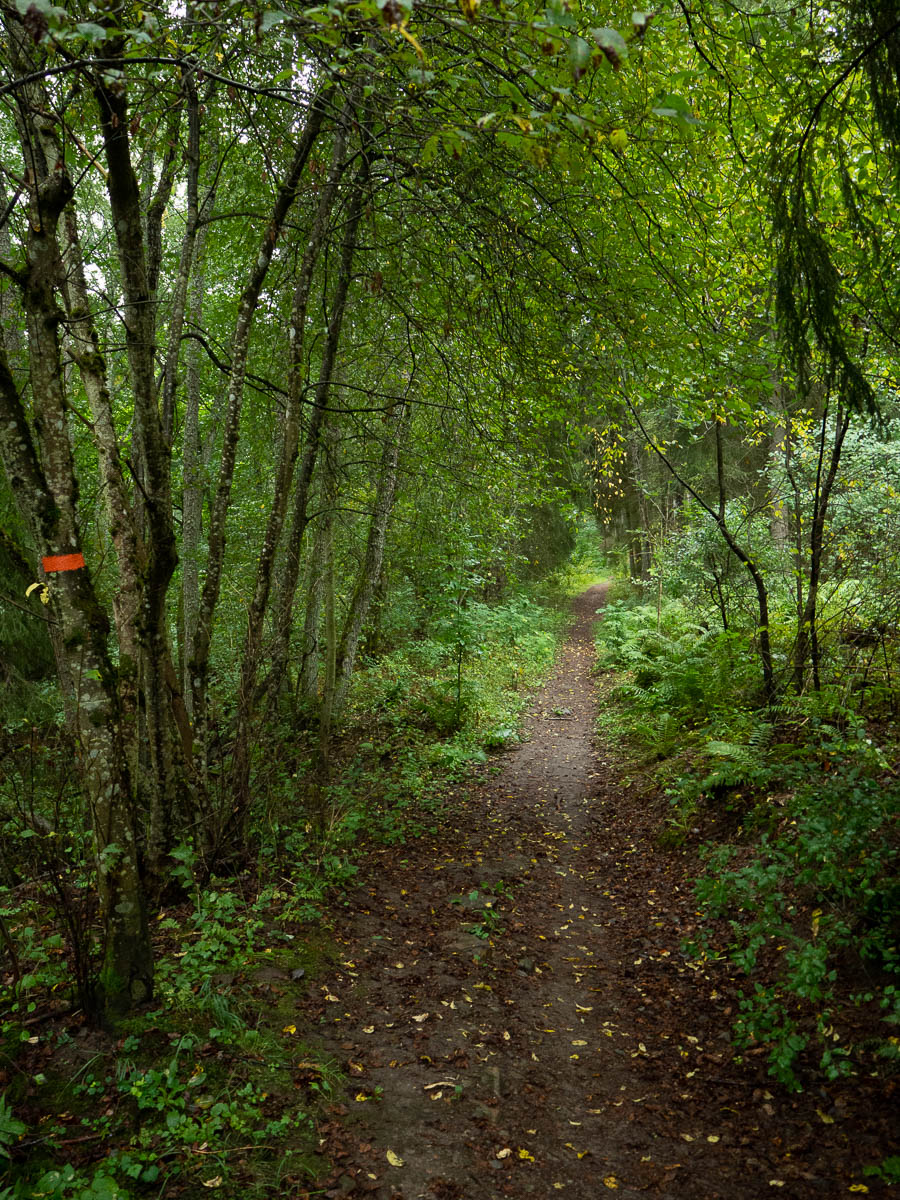
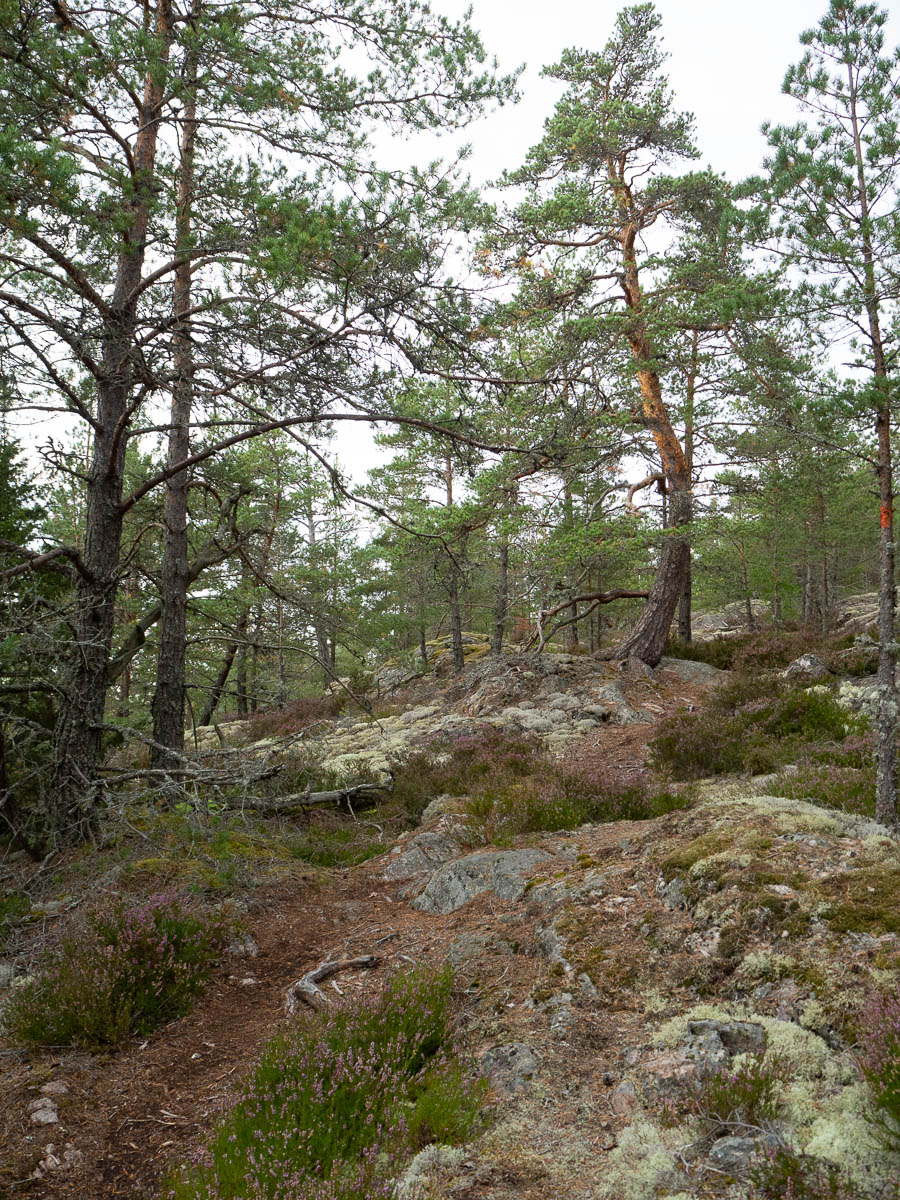
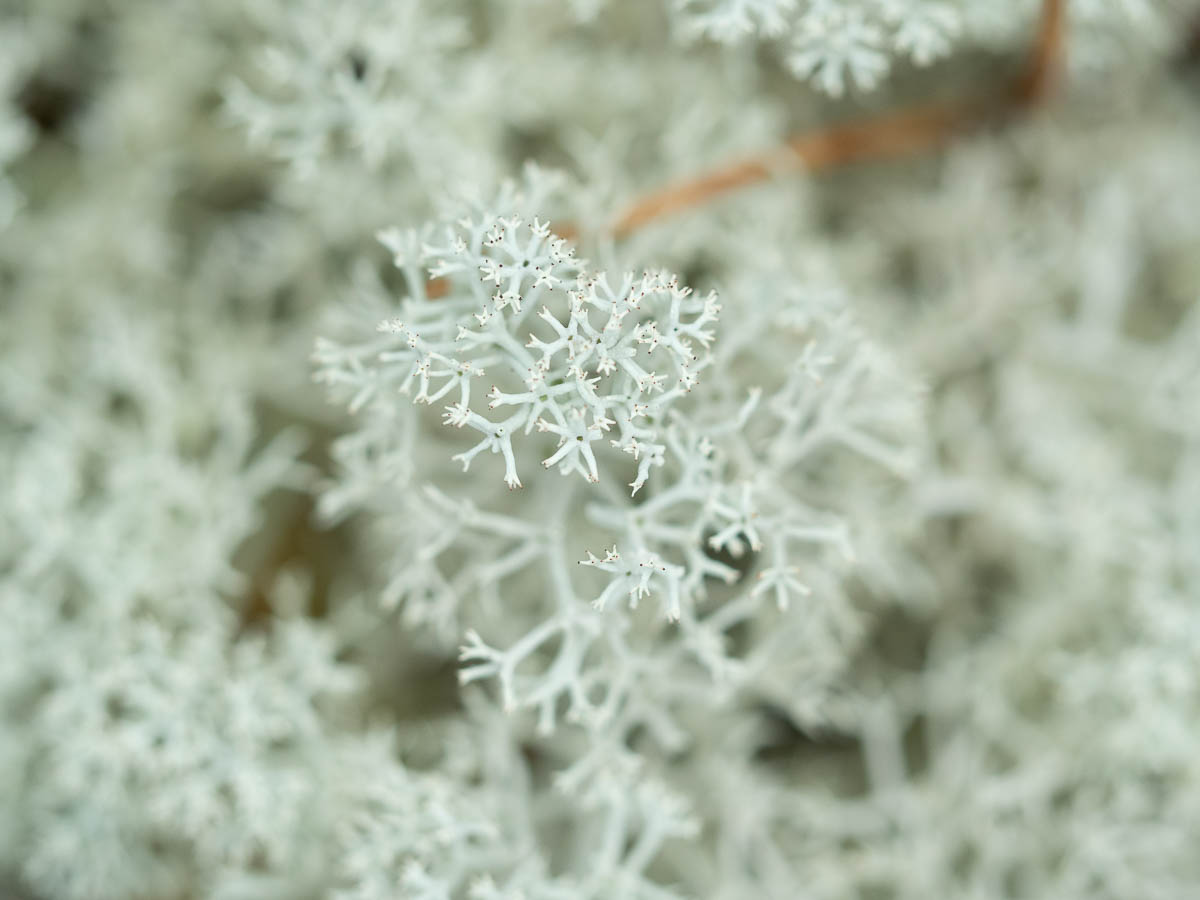
After that my surroundings were the usual mixture of Sörmland nature. Rocky pine forest with white mosses and heather; spruce forest with green mosses and ferns and bracken; mixed forest with spruce, birch and aspen. And bilberry bushes everywhere, with tons and tons of bilberries.
I’d walked half of stage 15 in 2017 and had most of the other half ahead of me today – but I realized now that there would be a gap between the two parts. I don’t know if I ever will walk all of Sörmlandsleden, but I want to keep that possibility open, so a gap here would leave a real itch behind.

I hid my pack behind a rock (not because I worried about thieves, but because I thought other hikers might worry if they found an abandoned rucksack) and just walked that missing bit back and forth, so I could check it off my list.

I felt like a gazelle walking without a rucksack. So fast, so easy!

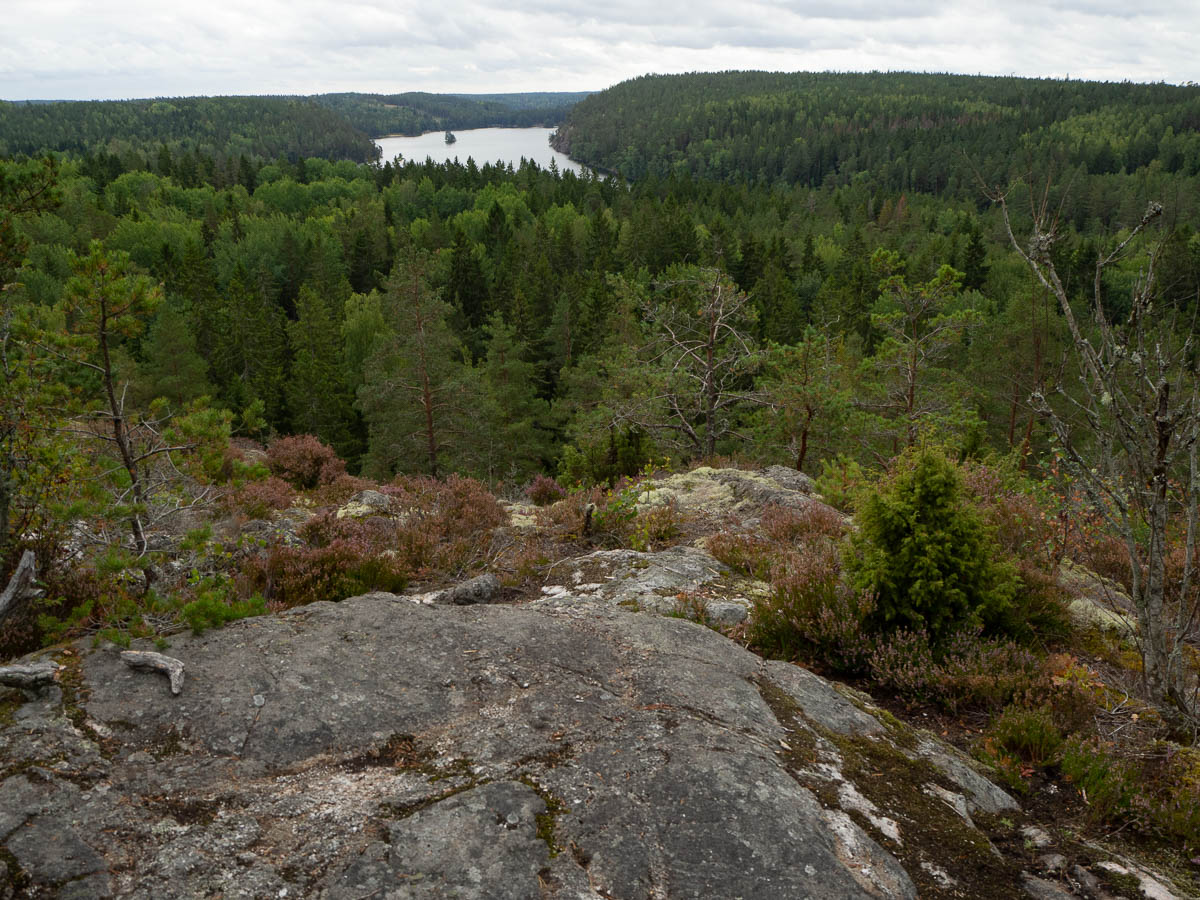
The contrast was extra strong when I picked up my pack again, because the path went steeply uphill from there, up to a high cliff with views over the whole area, with all its forests and lakes.
Today was an excellent day for walking. Warm and summery still, but mostly cloudy, so it didn’t get too hot. And because it’s a Friday, there were very few other people on the trail.

I like hiking on my own, and having the forest to myself. I love the peace and quiet. Hearing nothing but the wind, the creak of my rucksack, the occasional bird call and the buzzing of bumblebees.
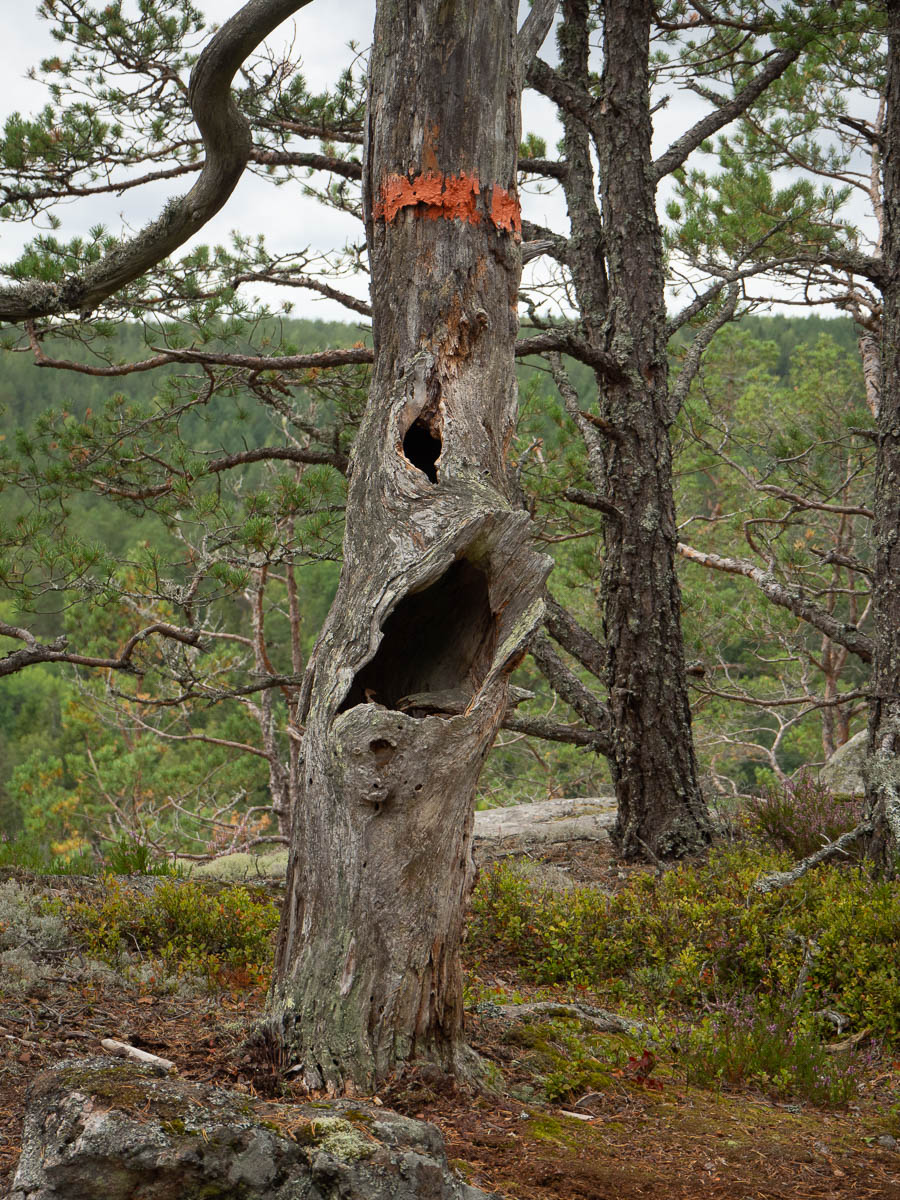
The first day of a hike, it usually takes me a while to get into the groove. I tend to worry about whether I’m walking fast enough to get to my planned destination by the end of the day. Mentally I’m partly still in my everyday life, with plans and times to keep. It takes time to let go of all of that, and some conscious effort. I forced myself to not think too much about the time, to take breaks, to be present in the here and now.

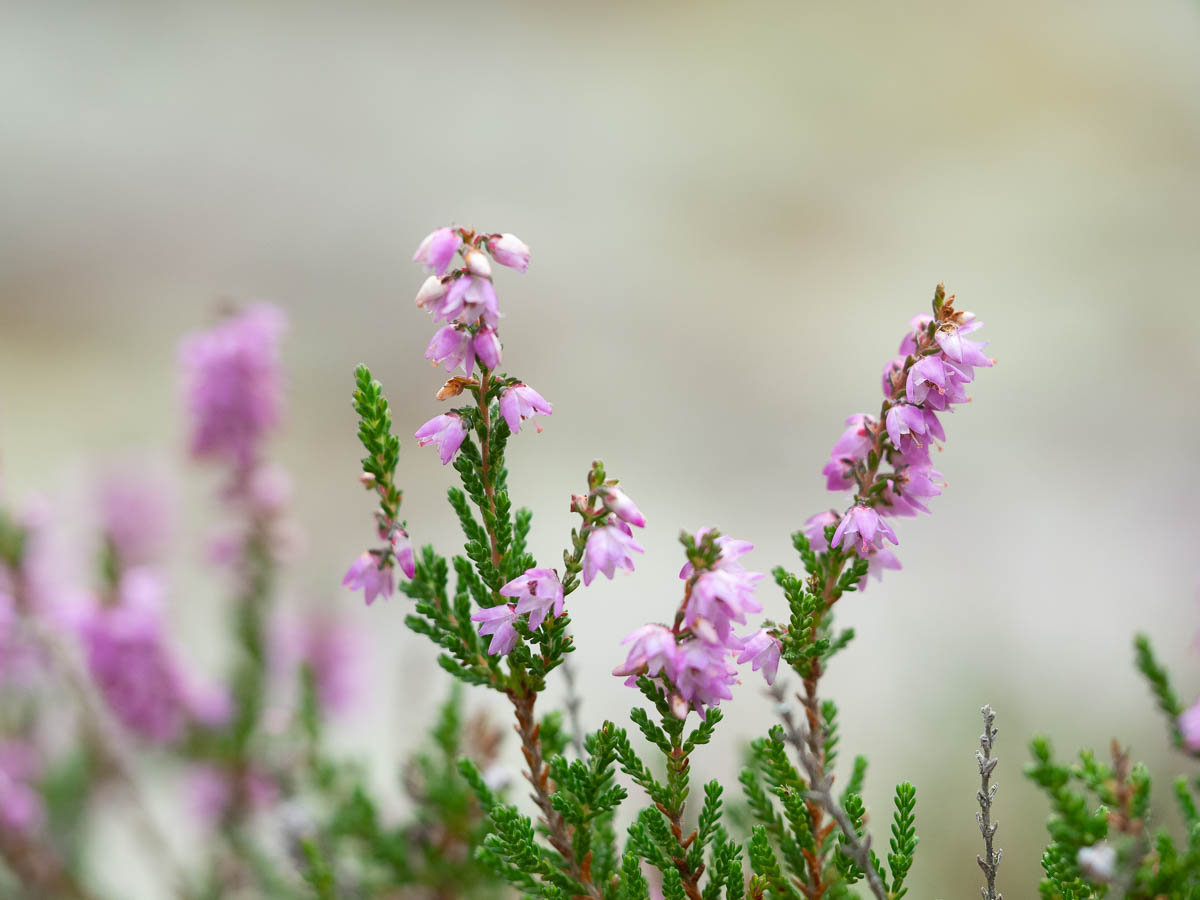
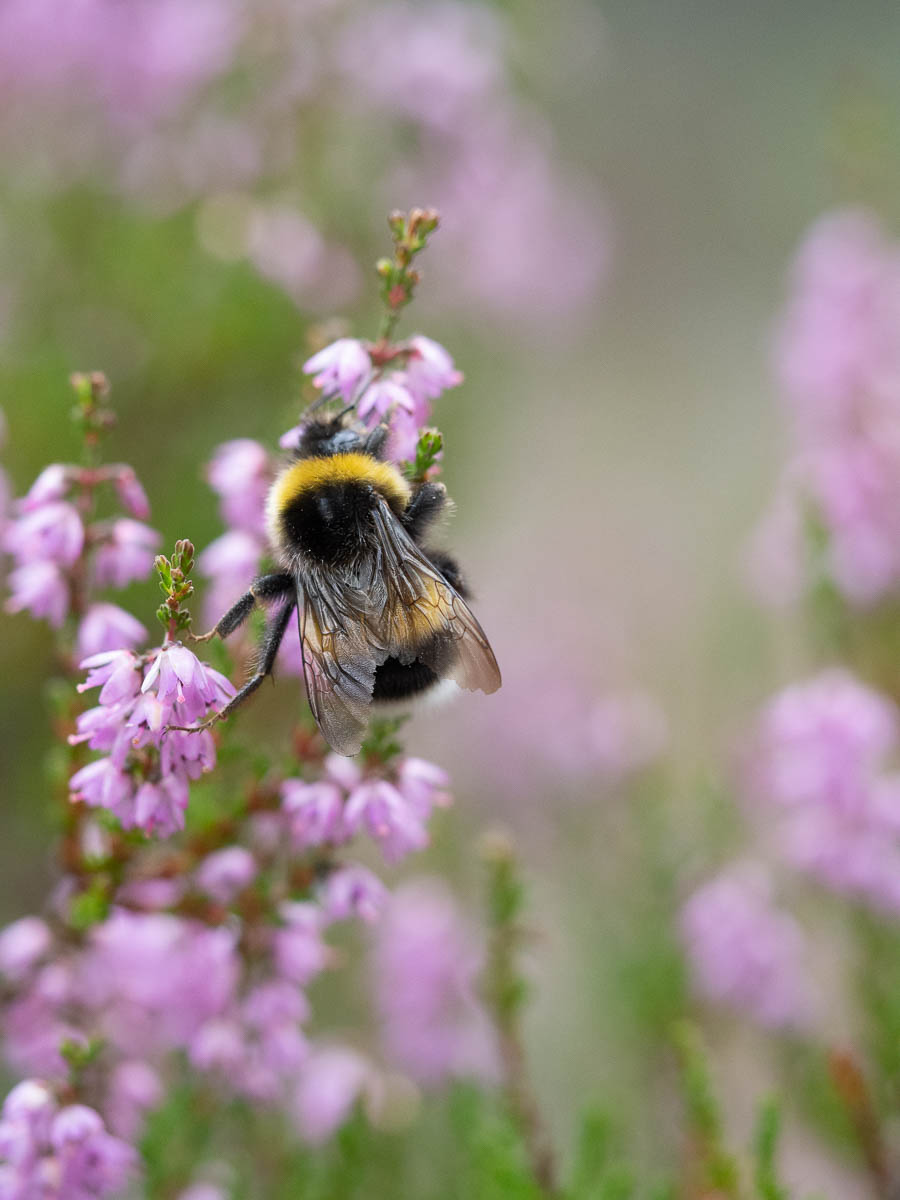
Macro photography always helps me relax. I tried to capture the bumblebees in the heather, but it was hard, because they never stayed still! The heather flowers are so tiny that a bumblebee empties one in the blink of an eye and is always moving on to the next flower.
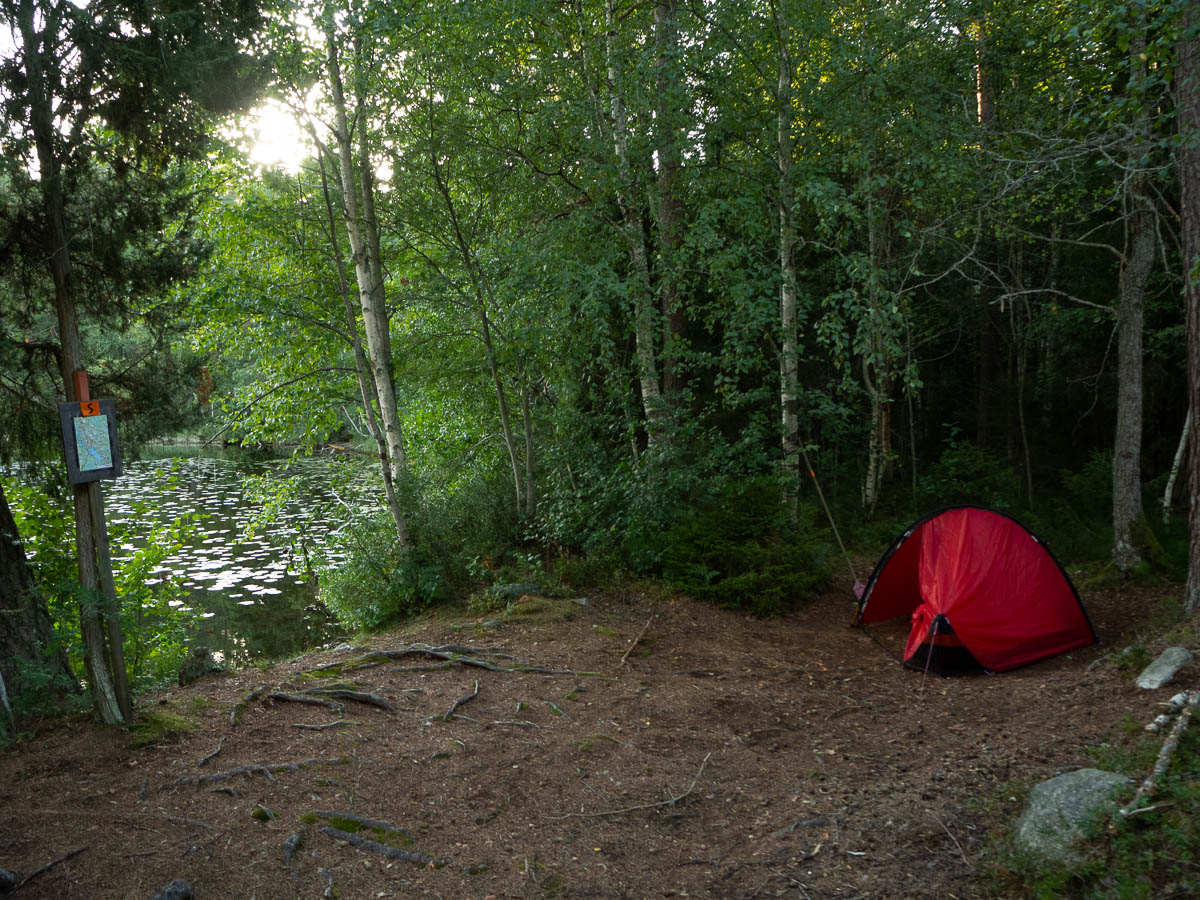
I stopped for the night at a nice little camping site next to lake Glådran. The site was very small, but unexpectedly luxurious. Not only did it have a fireplace and a picnic table, and a flat area for putting up a tent: there was also a bucket for water, and even a rake for clearing the ground of the inevitable pine cones.
What with the coronavirus, I’m not going on a hike in the mountains this autumn. They all “take precautions” but really, sharing a sleeper compartment in a train with random strangers all night, or cooking dinner shoulder to shoulder with random strangers in a mountain hut (or worse, trying to cook dinner while dancing around them at a two-metre distance) just does not seem like a sensible idea right now.

So, alternative plans. I’m taking tomorrow off for a three-day hike along Sörmlandsleden. It’s not as scenic and doesn’t offer the wide vistas of the Swedish Fells, but the forests of Sörmland offer some pretty nice hiking. And it costs nothing (now that I’ve paid thousands for a tent, haha) other than a day’s worth of flex hours, so I could actually do several of these.

I’ve checked off stages 1 through 12. The Sörmlandsleden web site suggests walking next few stages in reverse, starting with 15:1 in Läggesta and ending with one of the various connecting trails in the area – Nyfors, Mölnbo, Gnesta, or even walking all the way to Järna. I guess it’s because walking in this direction gives you more choice regarding the length of the trip. Or maybe because it’s easier to catch a commuter train back from Mölnbo/Gnesta/Järna than to time your arrival in Läggesta to fit in with the regional train schedule. Whatever the reason, I’m going to follow their suggestion, starting in Läggesta tomorrow, walking stages 15:1, half of 15, 14, 13, 12 and 12:1, and finishing in Mölnby some time on Sunday.

The official estimate is 45 km; reality will be several kilometres more, I’m sure. It always is.

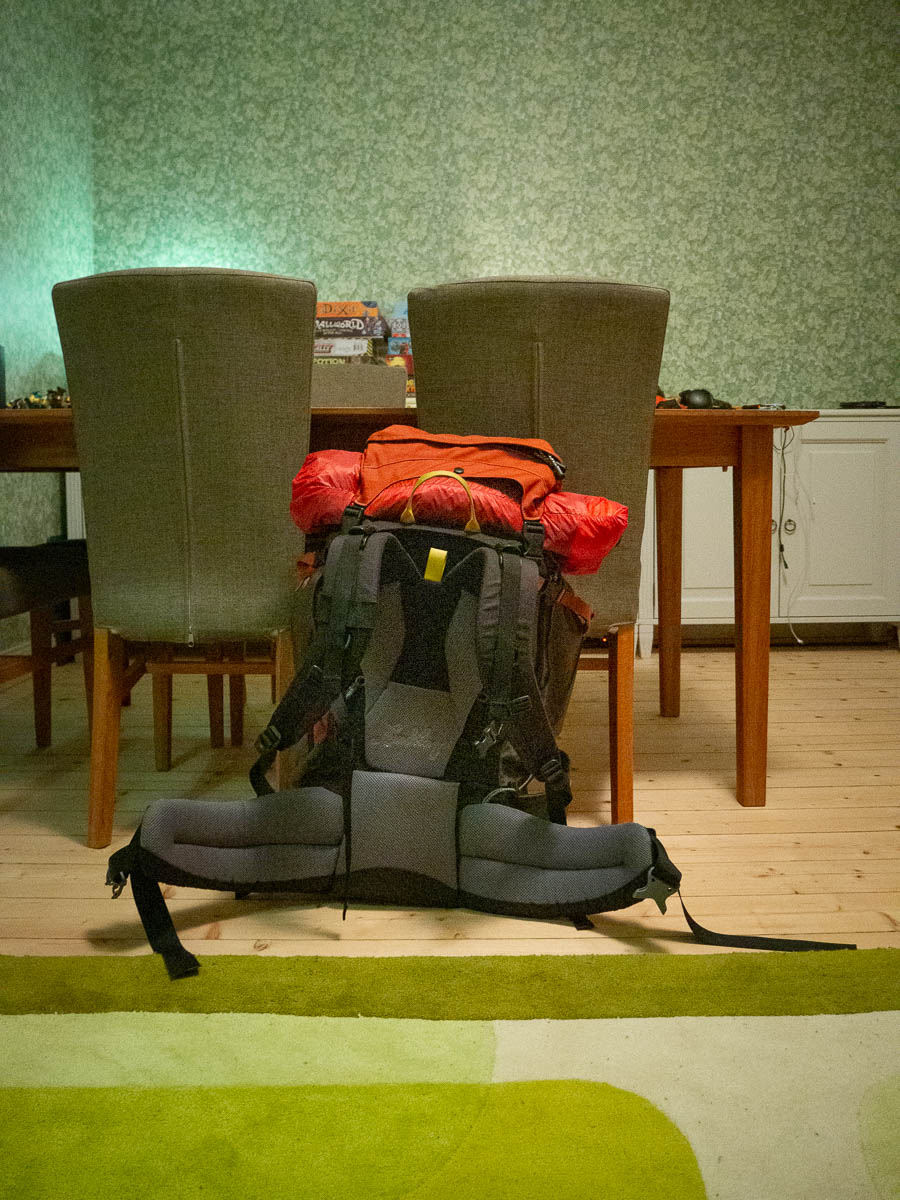
My pack weighs 16.5 kg with everything except my toothbrush and my keys, both of which I will add tomorrow morning, and my camera, which I don’t pack in the rucksack but keep in a waist bag for instant access. A bit on the heavy side, but I really can’t think of anything I would want to be without.

The hardest thing to pack is food. How much do I actually eat in a day? And how much extra will I eat because I’m walking up and down rocky hills and carrying this pack? At home I just cook food and eat food without worrying much about precise amounts. If I make too much, I’ll have leftovers for lunch the next day. If dinner was too small, I can have a piece of bread later in the evening. In the mountain huts also I can just buy more if I have too little of something. But there are no huts or shops of any kind along Sörmlandsleden. I really don’t want to be carrying leftovers, and I really don’t want to go hungry, either.


It looks like summer outside, but is beginning to feel like autumn. Mornings are cool. Noontime is warmish rather than hot; I put on an extra layer when I have lunch outside.

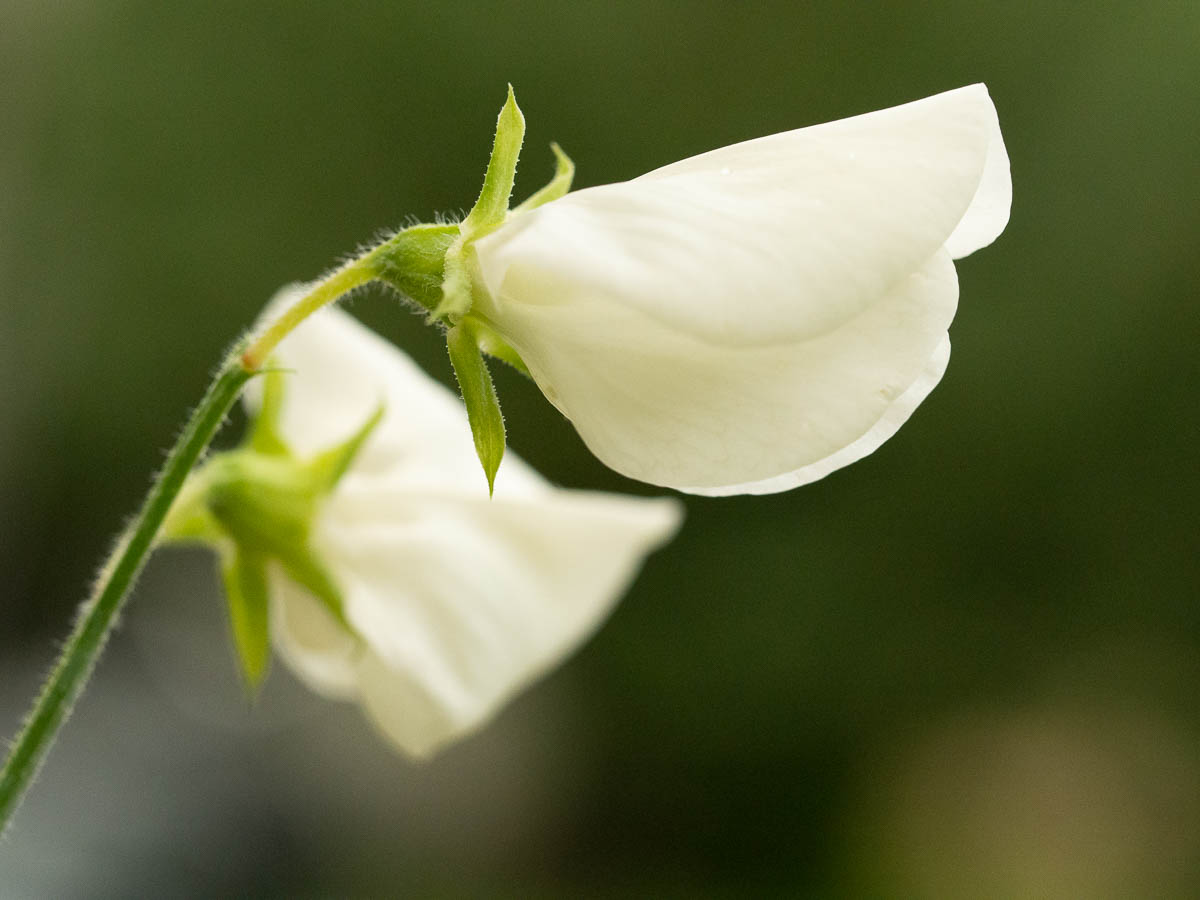
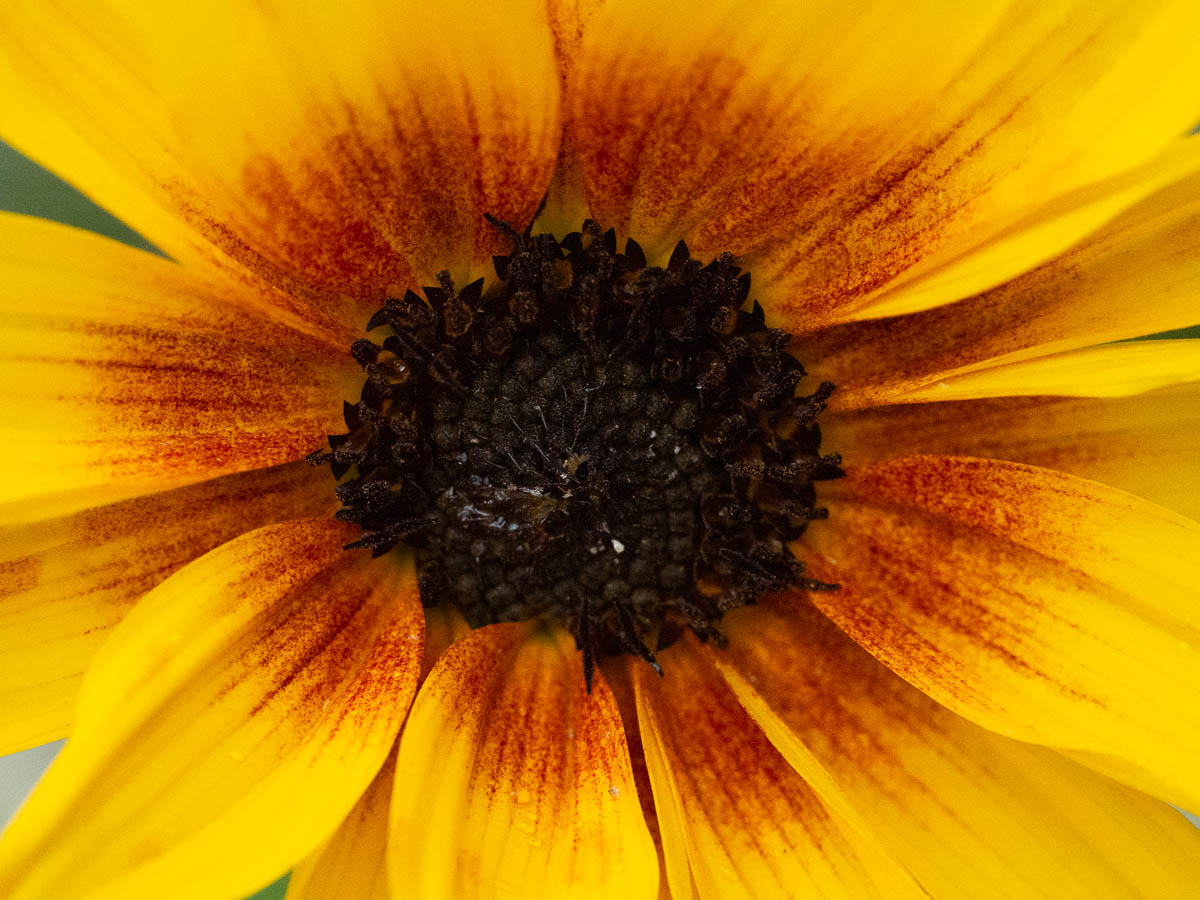
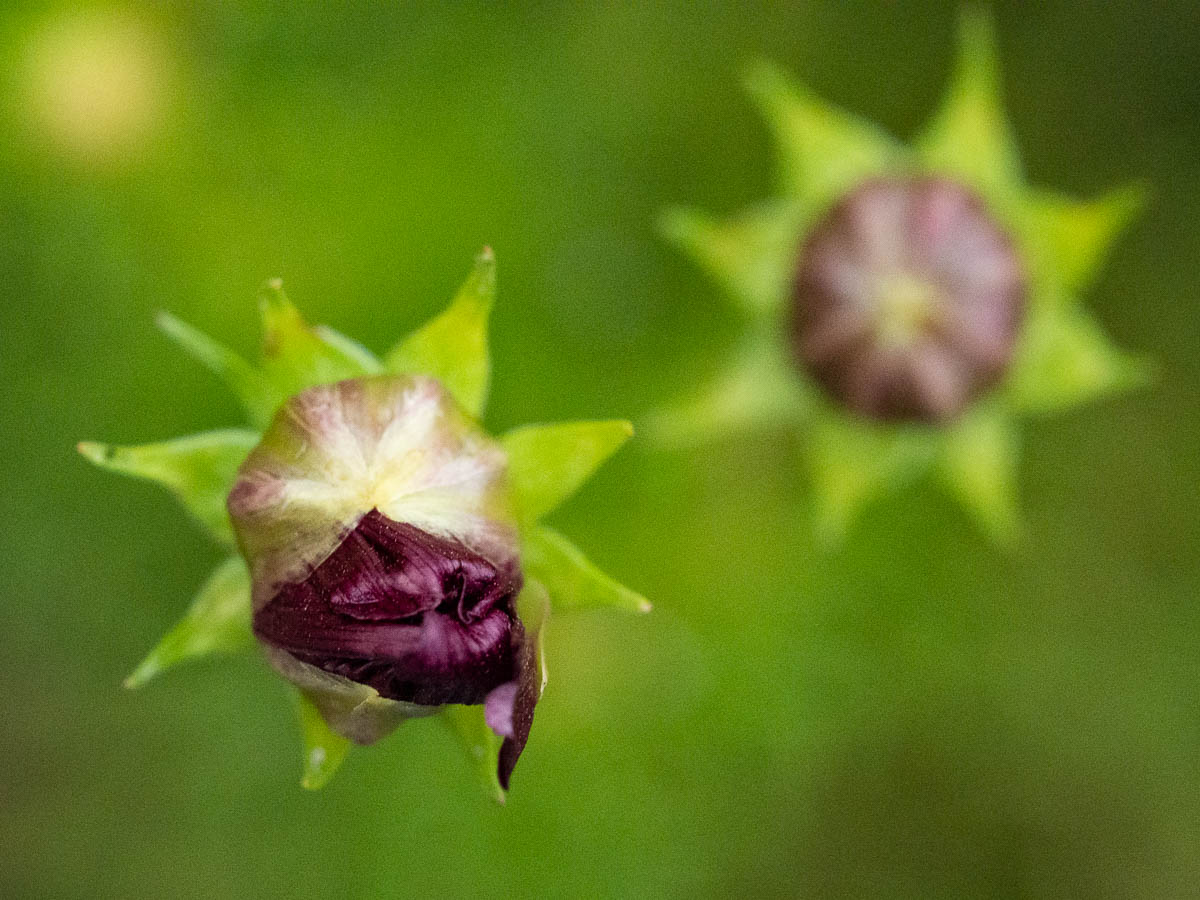
The summer flowers are still going strong, even sending out new buds still. I’ve never been home all summer, with no trips or hikes, and never been able to take such good care of my flowers. They’ve always started to die on mye some time in August. Look at what diligent watering can do!

Earlier in the summer, the bushy sunflower was always the first one to start wilting and showing signs of needing water. Now the African daisy has taken over that role.


The Steerswomen are repositories of knowledge. They wander the world, wherever their curiosity leads them, learning things and sharing their knowledge with everyone else. They are sworn to answer any question from anyone, and in return, everyone is expected to answer theirs. Whoever doesn’t is banned and no Steerswoman will ever answer their questions again.

Rowan, the titular Steerswoman, is curious about a particular kind of rare blue jewel. She traces the jewels back to a particular area, and notices similarities in where and how the jewels are found. But someone powerful seems to take a dislike to this line of exploration and tries to have Rowan killed, repeatedly. The story follows her investigations and explorations into what this all means.

I rather like the Steerswoman concept, and several other ideas in this book. I like the way the world gets uncovered – how small but astonishing differences between that world and ours come up in asides.

Although sometimes the asides are quite contrived. “Do you remember anything else about that ordinary, unmemorable event 15 years ago? – Oh yes, I remember looking up at the sky and noting the position of the Eastern Guidestar.” Admittedly Guidestars are important navigational fixtures in this world, but who remembers that kind of detail 15 years later?

It’s not a bad book, really, but not a particularly good one either. The plot is a straightforward mystery, and every new revelation is so gradual and slow that none of it feels surprising. Maybe it’s meant to make readers feel good about being ahead of the game? To me, it just made the book feel really slow.

And for a book so focused on knowledge and logic, this one has logical gaps in the plot that are just too big to ignore.

That banning thing, to begin with. It would work for more or less famous people, but how would the Steerswomen enforce their ban for ordinary folks? How would they identify the people, keep track of the bans and communicate them to each other? “Hey everyone, that brown-haired peasant guy in that village a hundred miles away is banned now.”

To take another example: a young boy in a small village discovers explosives (probably gunpowder) by trial and error, using no prior knowledge. Just happens to mix a few things together? That he just happens to find, with no need for processing or refining?

The characters are likeable but there is no depth to any of them. They all have predictable reactions to everything and make trivial observations. “Oh look, this boy no longer annoys me, now that I don’t lie to him all the time.”

There’s one exception, though, and that’s their reactions to people being violently hurt or killed. From all that happens, I don’t get the impression that this is a violent world, or the people particularly cruel or fatalistic. Quite the opposite. And yet Rowan has no problem letting her sidekick torture someone, while she herself just zones out and thinks about some maths problem. When that boy with his gunpowder blows up a fortress with hundreds of people, none of them seems concerned at all.

The writing isn’t anything special, either. Not bad, but bland.

I don’t understand all the great reviews this book has gotten. It’s part of a series, the mystery is nowhere near resolution by the end of this book, but I don’t care enough about it to read more of this.

Outlander is a whole series of books, and a TV series as well. I’ve only read the first two books and not seen the TV series.

Claire, a nurse in post-WW2 Britain, accidentally ends up time travelling to Scotland in 1743. She meets Jamie, a charming Scot, gets married to him (not quite of her own free will) and then they have adventures and lots of romance.

Let’s just pause here for a moment. What is the probability that, thrown 200 years into the past, you would agree to marry someone you’ve only known for a week or two, even though you’re already married in your own time? So what if he is handsome, and you’re told you have to!

Jamie seems to be designed to be perfect in all ways, except for a few imperfections that are clearly also designed to charm. Most handsome, of course, but with scars to add character. He is noble yet down-to-earth; educated yet folksy; strong but tender; fiery but patient. Kind, intelligent, skilled at everything except singing.

Claire on the other hand is annoying. She’s pretty and competent and feisty, swears a lot, and spends a lot of time bandaging wounds. But she has a bad tendency to jump to conclusions and make assumptions, instigating quarrels and inadvertently putting both herself and others in danger. And she doesn’t grow out of it, either. I don’t need or expect a perfect heroine, but I don’t understand why the main character in a romance novel would be written to be so annoying.

I’m also surprised by how unsurprised and unbothered Claire is. She barely seems to notice the differences between the 1740s and the 1940s, and just slips into her new life with no effort to adjust. No comments on the lack of indoor toilets, or central heating, or the monotonous diet. And after several years in Scotland, with many people speaking Gaelic around her, she doesn’t bother to learn the language.

The numerous other characters are varied and colourful. Many of them are interesting and drawn with surprising depth, and I enjoyed getting to know them.

Jamie and Claire’s relationship is central, of course. Much of that relationship circles around sex. It’s like these two cannot communicate with or relate to each other without having sex. Tender sex, rough sex, angry sex, making up after fighting sex, healing sex, consoling sex, taking farewell sex, and sex in any other kind of mood and situation you can imagine.

It is a romance book, fine, so the amount of sex is perhaps not surprising. But its essential role in their relationship seems unrealistic to me. And so does the fact that neither Claire nor Jamie seem to have any preferences. Any kind of sex will do for them, even when it borders on rape! They’re like addicts.

The other thing they have in their lives is plenty of adventure. They both go from one danger to another. The plot, in fact, seems to be designed mostly to create opportunities for them to (a) have sex, and (b) rescue each other. Believability comes far down the priority list.

The author just throws things in, more and more, until the story becomes a melodramatic soap opera. Poisonings, oath ceremonies (yeah, of course Claire times her arrival for that once-in-thirty-years event), raids, rape, sadistic torture, wolf attacks, a witch trial, and why not throw in some magic as well while we’re at it.

Despite all of this, and in part because of all this, I did enjoy the first book. It may be unbelievable, but it is also engrossing and lively. Never a dull moment! Even as I was fuming at some of the shortcomings of book 1, I immediately went on to read book 2.

Book two has the same level of melodrama and the plot consists of the same types of dangers. It’s the same rape and raiding and a touch of magic and Claire binding an endless stream of wounds, but in a different guise, a different setting and different order. And the same “sex solves everything” approach to relationships. So it has quite a “been there, done that” feel. There is less adventure and more intrigue, and half the book takes place in Paris instead of Scotland. I liked adventures in Scotland better than intrigues in Paris.

After book two (Dragonfly in Amber), I didn’t feel any need to read book three, so I stopped here.


Our windows got cleaned today. With more money than time, we pay a company to do it for us.

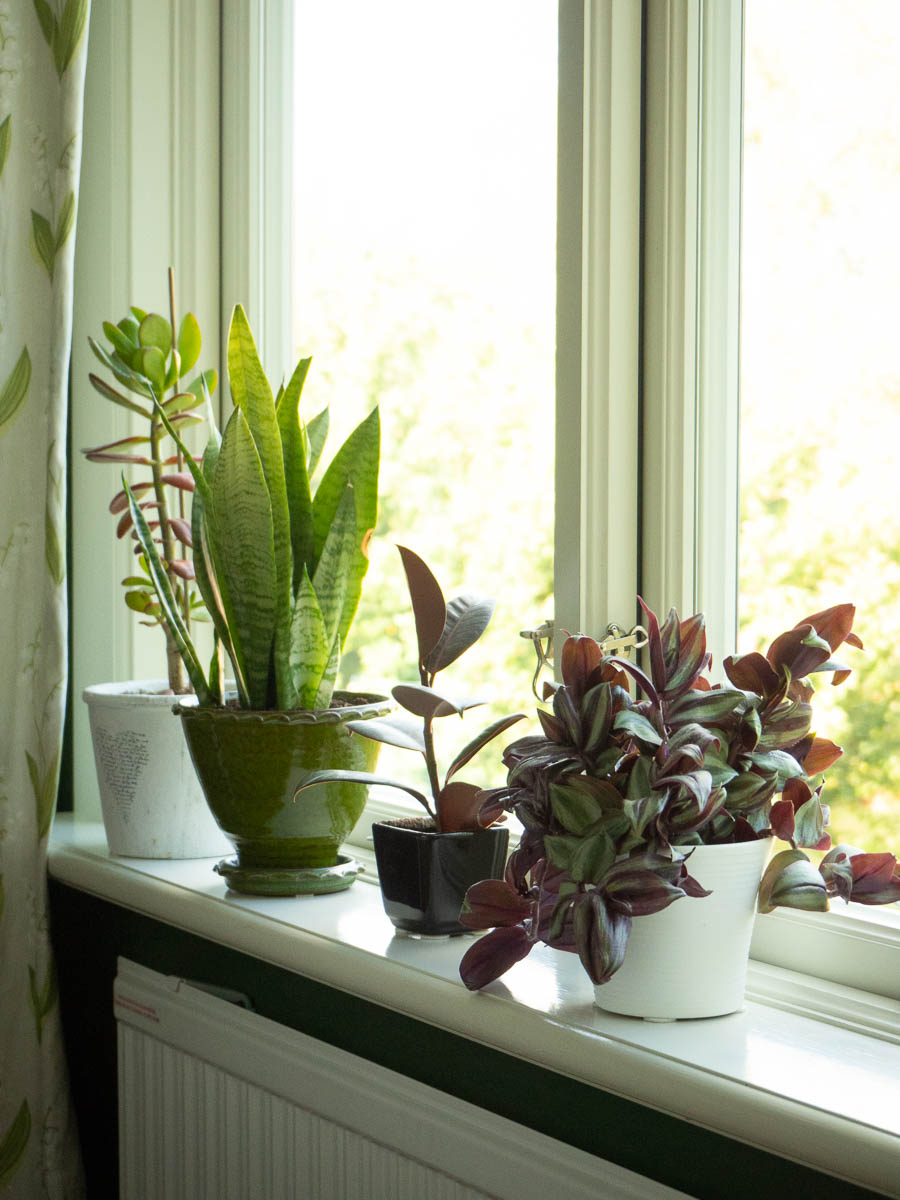
The plants on the windowsill in my office corner are the ones that I brought with me from the tretton37 office when we switched to remote working back in March.

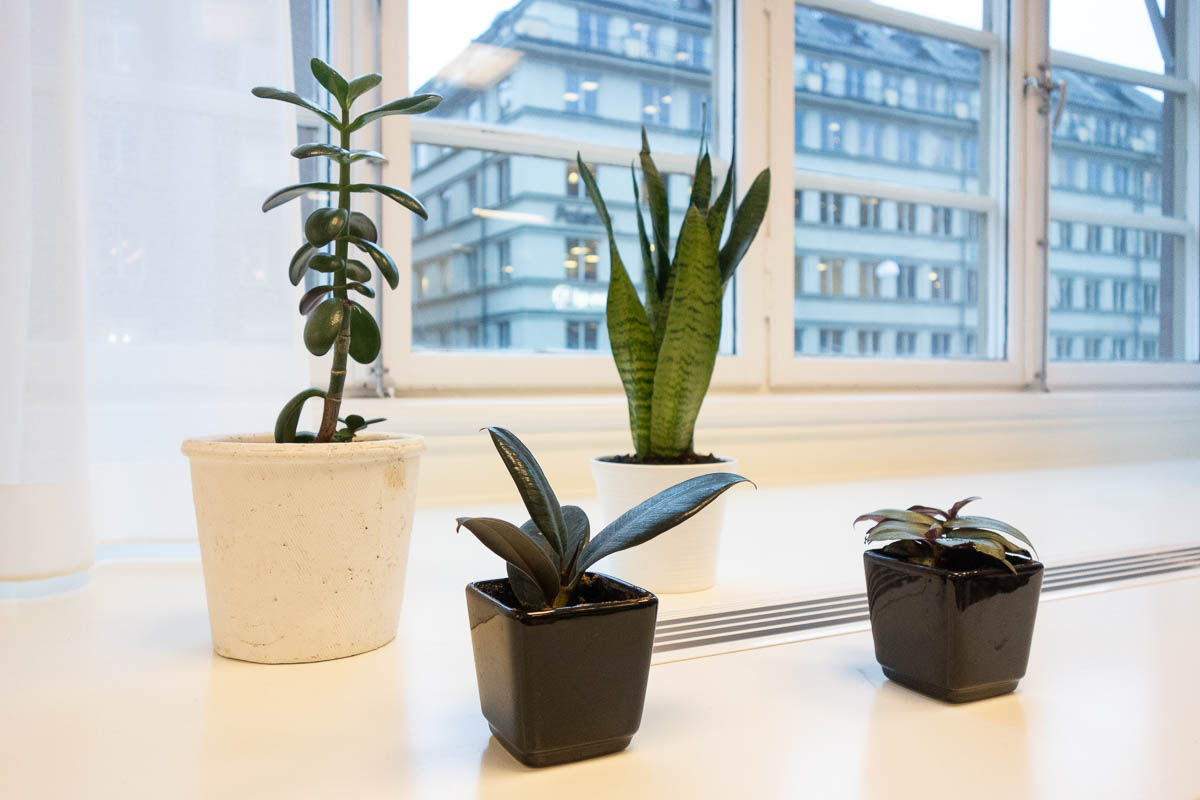
They’ve all grown a lot in this half-year. The crassula is 50% taller, and is beginning to send out branches. The dracaena and the ficus both have twice as many leaves now.

And just look at that thing with purple and gray leaves! It’s twenty times the size it was back in spring. I’m going to have to find a new place for it pretty soon. It’s getting squeezed between the window and the blackout blinds, which is starting to squish the leaves on one side.

Here’s what they looked like in February: