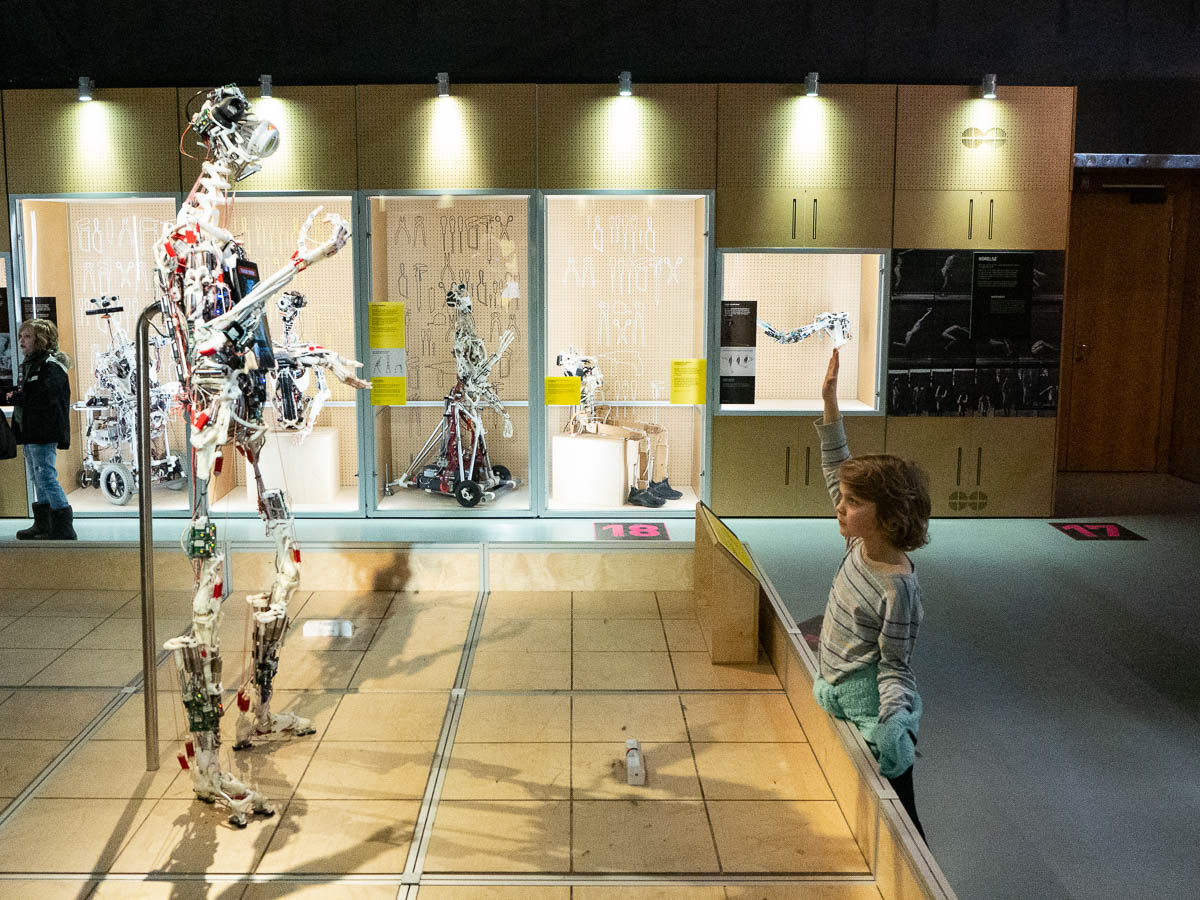
Tekniska museet has an exhibition about robots that we’ve been talking about for months now. This is the last but one weekend so today Adrian and I went and saw it.
The theme was specifically humanoid and human-like robots – “making machines human”. The story starts back in the renaissance: on the one hand, new inventions such as mechanical clocks and ever more elaborate clockworks; on the other hand, a growing understanding of human bodies and anatomy. Those came together in impressive automata that then gradually inspired more and more human-like machines.
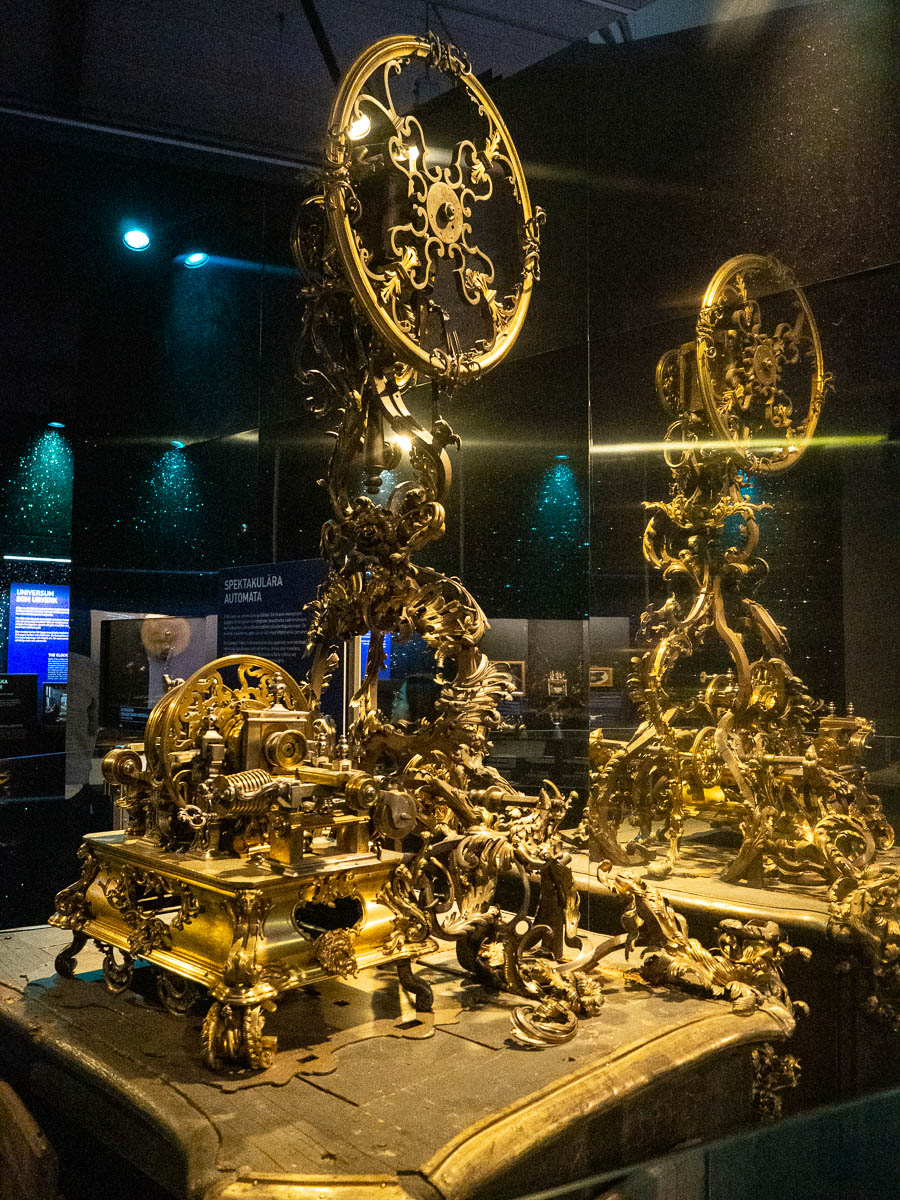
There were plenty of robots, robot parts and images of robots to be seen. Fictional robots, from Metropolis and R.U.R. through to the Terminator 800. The gradual evolution of robot anatomy, with wooden finger joints and rope ligaments and little motorized muscles. Locomotion, sensors, etc.
Many could have been even more interesting with more in-depth information. I can see that this is a robot arm with these and these parts, and the sign tells me it’s from 1970-whatever, made in some lab in some country. What was really new and cool about it? What could it do? What could it not do? How do more modern robots differ from it? What interesting results did it give rise to? What other experiments did it inspire?
Also unfortunately the robots that you could interact with were very basic. One seemed interesting because it could actually sense its environment and detect nearby people as well as their movement – but it was behind a pane of glass that seemed to interfere with most of its sensors.
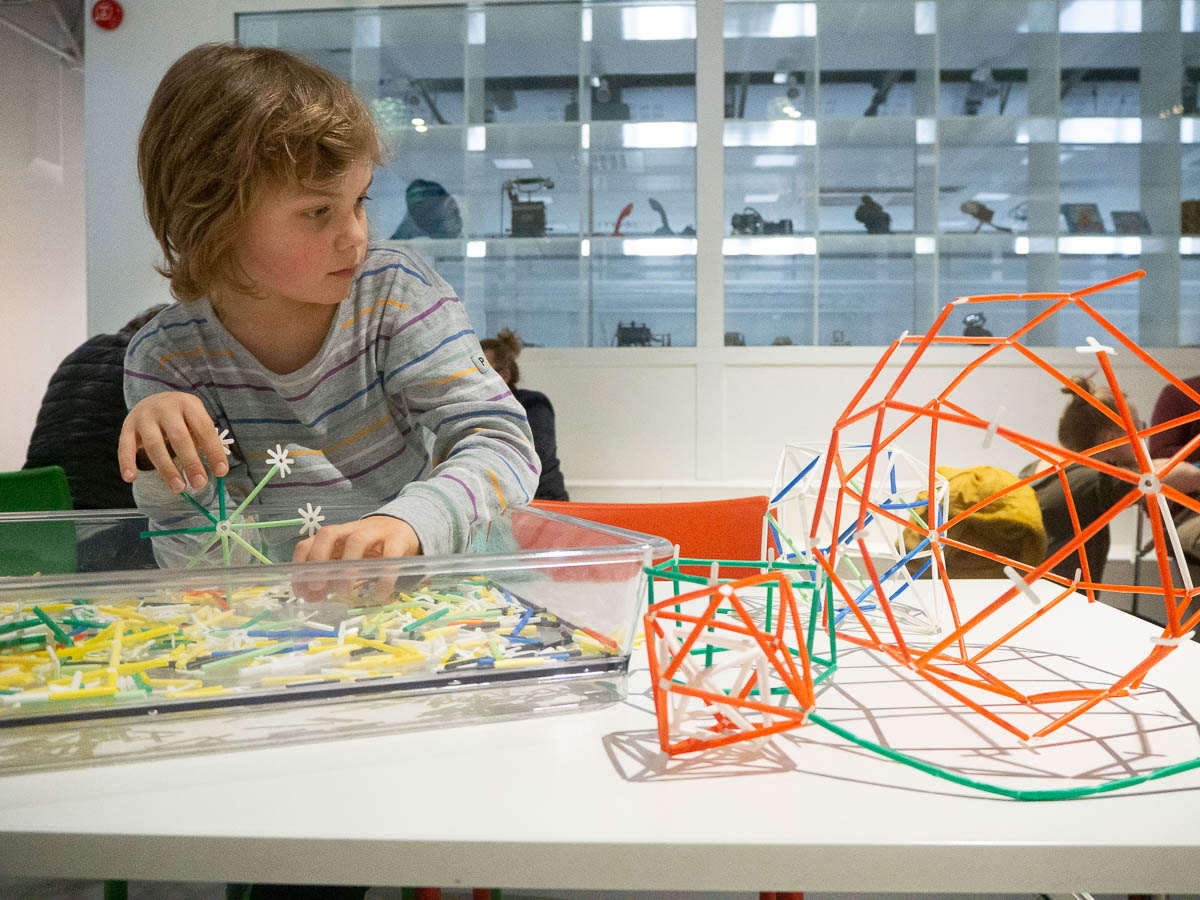
There were plenty of other activities at the museum and we stayed for hours. Construction toys; an indoor playground where the kids could let off some steam; various exhibitions. There was an entire exhibition about computer games through time, which had the same problem as the robots exhibition – not enough information.
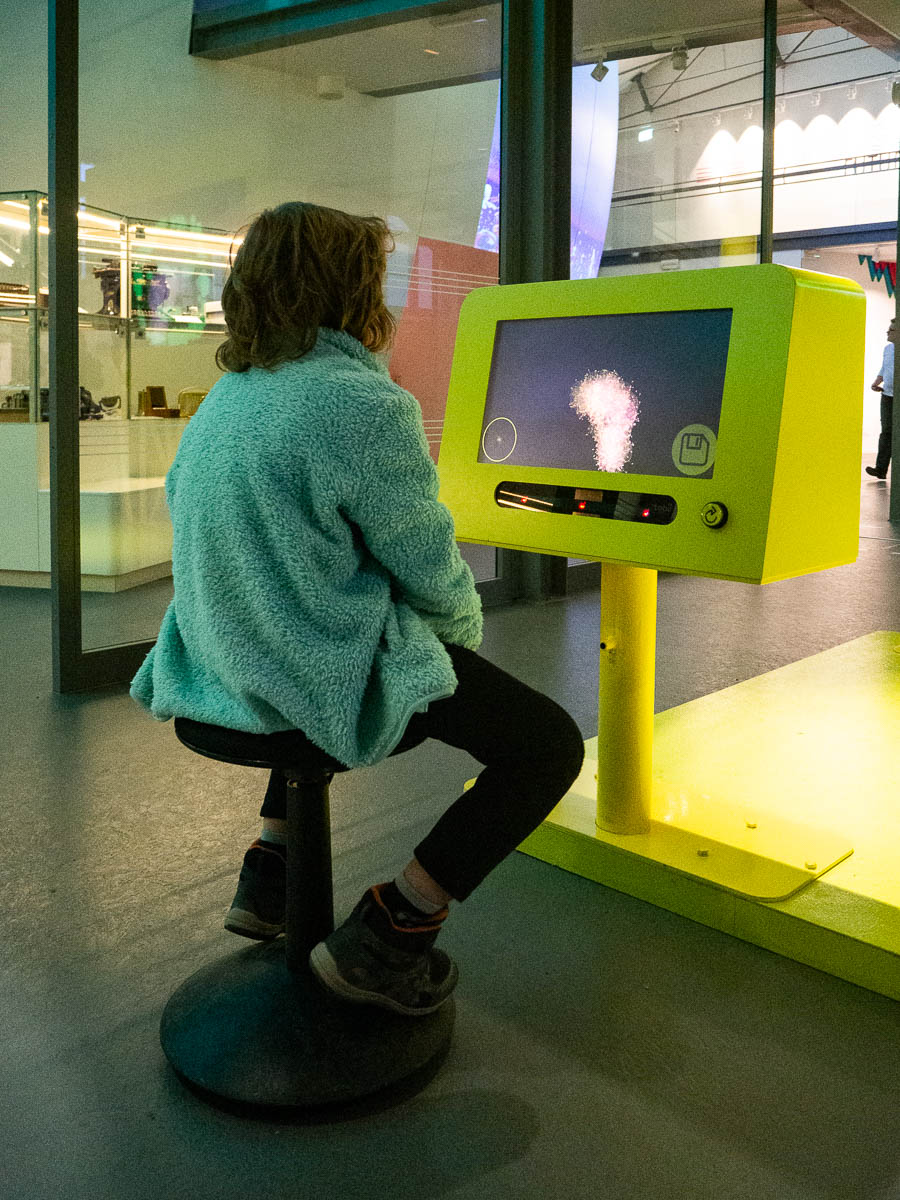
The exhibit that both Adrian and I enjoyed most was about eye tracking technology. Two monitors that you could draw on by looking where you wanted to put the “paint” – and a large monitor that superimposed the two individual pictures. As a nice touch, the virtual on-screen brushstrokes were very pretty, with interesting shapes and colour gradations, much nicer than the usual single-colour blobs. And drawing was pretty hard. You need to look ahead to where you want the line to go, but my eyes were often drawn back to where the line currently ended. With a lot of staring, I managed to draw some basic shapes. Using eye tracking for real must take a lot of practice.

Leave a comment