

I am a sweet snob. I find most candy – and biscuits and cakes – not worth eating. Good quality dark chocolate is one notable exception – in the shape of both bars and truffles/pralines (the Belgian kind, with a soft flavoured filling inside a chocolate shell).
My favourite maker of pralines is Chokladfabriken, a Swedish firm. In part because they make really good ones, and in part because they have a shop at St. Eriksplan, which was very close to my previous office. I could easily pick up pralines on my way home from work.
Then I changed jobs and lost my easy access to Chokladfabriken, and there was a serious chocolate drought at home. Even the children – who have learned to appreciate the pralines, especially Adrian – started telling me they missed the pralines, even though they are quite happy to eat the standard cheap sugary stuff as well.
And now I found out that the new office is right around the corner from another Chokladfabriken shop. They have three shops in Stockholm, and I’ve had the luck to move from near one to even nearer another. I’m happy again.

I love persimmons. They’re a perfect combination of juicy and sweet and tangy. They’re like a winter version of plums.
They’re also making me switch supermarkets.
Coop, one of the two local supermarkets, almost never has them (and when they do, the persimmons are hard and nearly flavourless) while the other, ICA, reliably stocks perfectly juicy and ripe ones.
For years, I was a loyal Coop customer with a membership card and everything. When we first moved here, I always chose Coop because their store has enough space for prams. ICA was very cramped – with a pram I was always blocking someone’s way, or vice versa – and the store felt kind of grotty, too.
Now all kinds of circumstances have changed and I’m on the cusp of switching my loyalty to ICA.
Pram-friendliness is obviously not relevant any more. ICA has redesigned their store so it feels much brighter and tidier and more spacious. But the main thing is that nobody at Coop seems to know or care about fruit and vegetables, whereas someone at ICA obviously does.
I do much less shopping in the supermarkets nowadays, anyway. I buy much of our groceries online, but I don’t trust the online shops with fruit and veg. Carrots and onions and apples are easy. (Although I was once delivered a bag of apples that were so unripe they were basically inedible.) But when it comes to produce that needs to be carefully handled or chosen, or to be just ripe enough, even many physical stores fail. (Such as the Coop store here.) The odds of some anonymous picker at the online shop getting it right are slim to none. I do not want unripe bananas or hard pale tomatoes. So ICA gets most of my custom from now on.
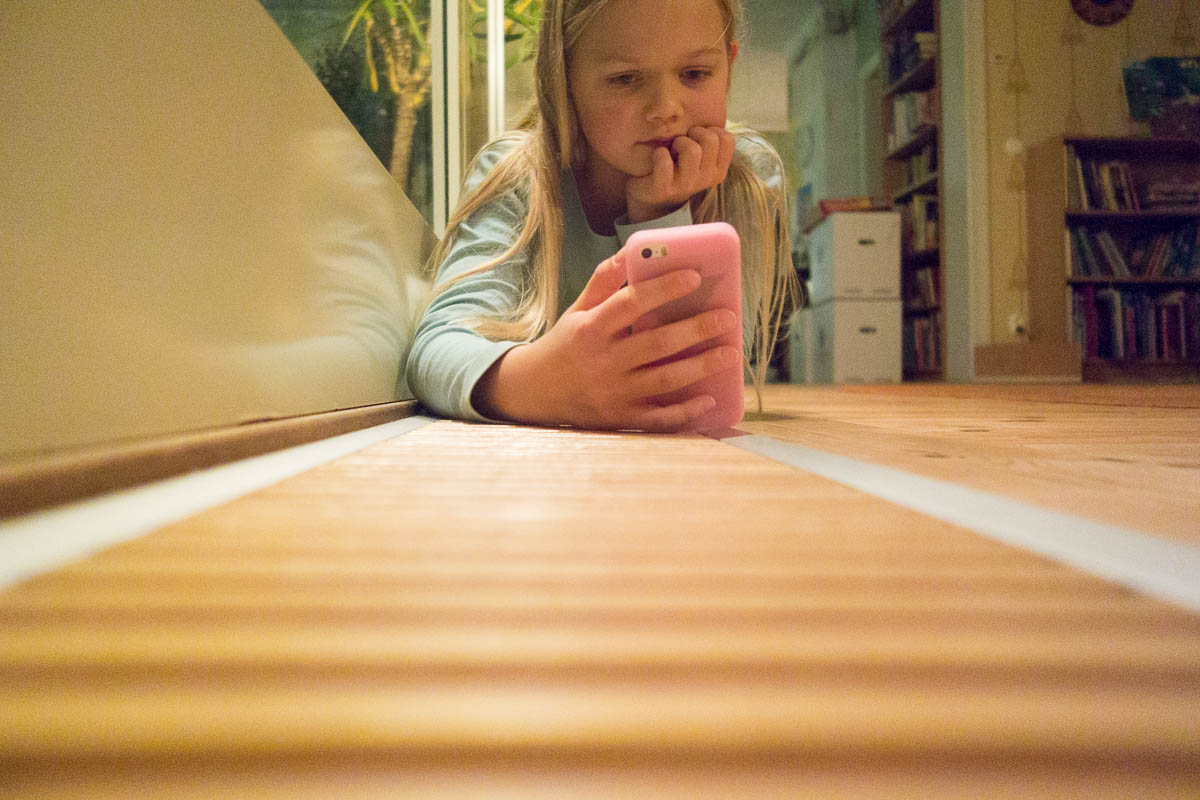
The day has come (and passed) when the sun actually reaches our kitchen window over the neighbours’ house in the afternoon. It still went behind the roof last weekend but above it today so the turning point was some time this week.
In Swedish I think of it as vårtakjämning. The vernal equitectum doesn’t quite have the same ring to it. In Estonian perhaps katuseharjapäev, to go with taliharjapäev?
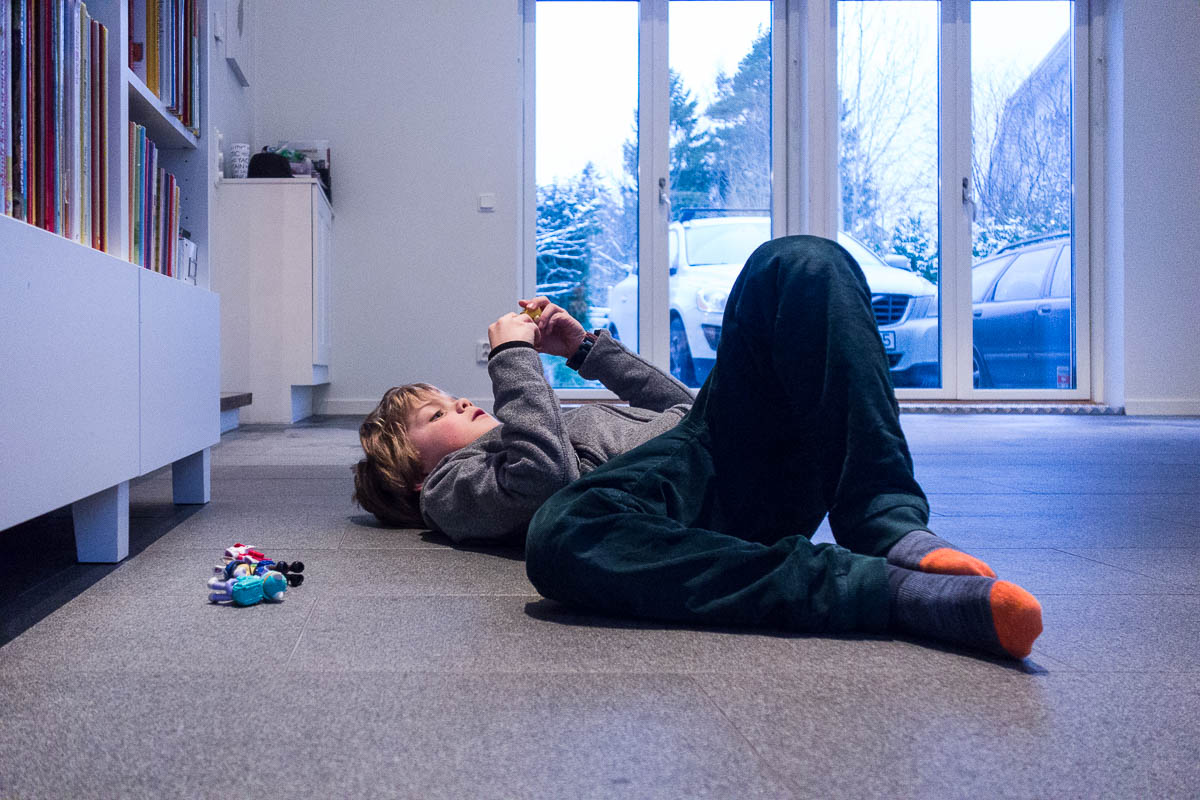
Half of that floor I scrubbed yesterday, plus Adrian.
1. Eleanor Catton, The Luminaries. Booker prize winner, rave reviews everywhere, and I just gave up when I was about halfway. What good is a clever, intricate structure and skilfully imitated Victorian plot and Victorian style, when I just cannot bring myself to care about any of the characters or what happens to them? Despite all the detailed descriptions, none of it felt real. Too much cleverness and too many characters for my taste. Had I decided to continue, I would have needed to go through the first half again and take notes. The final straw for me were the grating introductions of each character’s character (so to say), possibly intended to be incisive, but to me they just made the narrator come across as conceited and supercilious.
2. Sarah Waters, The Paying Guests. Every part of the plot was obvious and unsurprising, and it all felt plodding and boring. I found myself thinking that maybe I could skip a few pages without really losing out on much. While I don’t need my books to have likeable characters, I do expect them to be interesting in some way. When rather boring people do rather boring things and spend a lot of time having rather boring thoughts, the result is not very captivating.
3. Maja Lunde, The History of Bees. Three intertwined stories about beekeeping – one from the mid-1800s about a wannabe scientist who invents a new kind of beehive, one from around the current time about colony collapse, and one from a future where there are no bees and fruit trees are pollinated by hand by endless ranks of manual labourer. None of the individual stories is particularly strong, and since there isn’t much to hold the stories together – other than the shared themes of bees and relationships between parents and children – they also don’t make a strong whole. There is no shared idea or insight. The English translation is kind of clunky in places – several times I found myself jarred by some clumsy phrase, thinking that I could have done better.
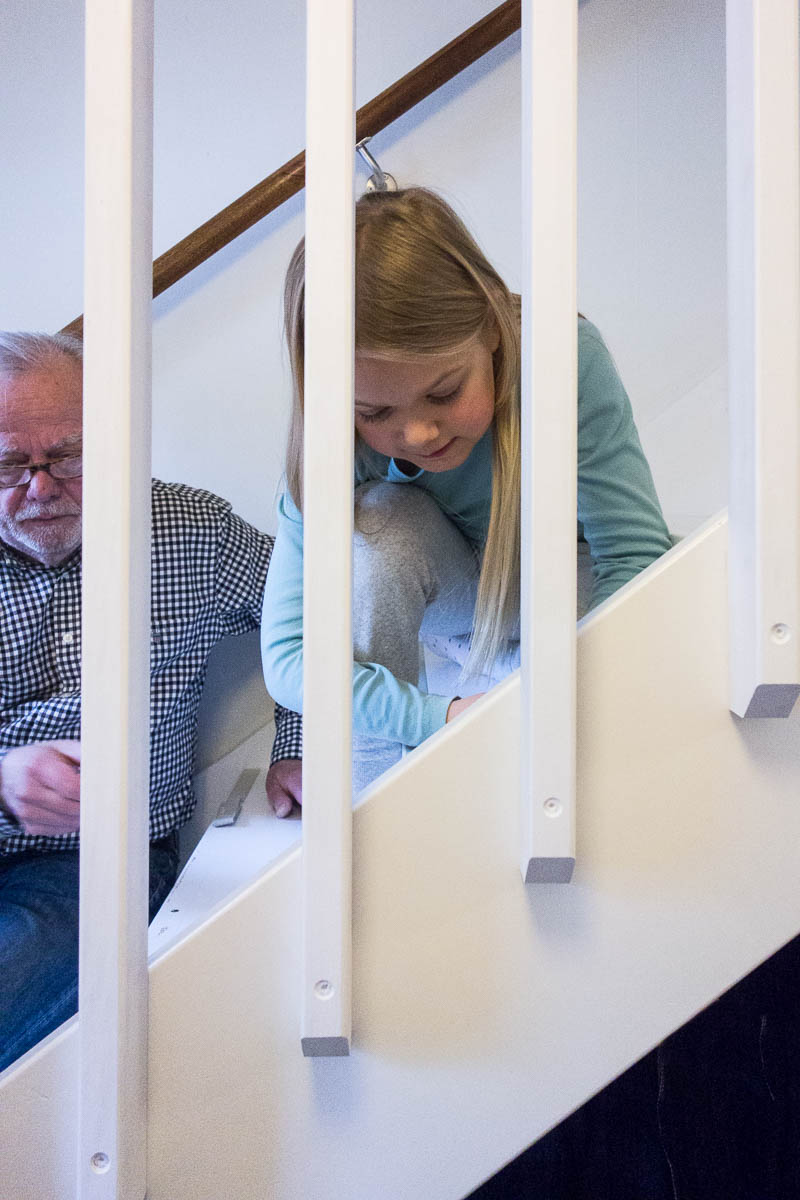
We spent today helping Eric’s brother and his family prepare for the upcoming sale of their house. I scrubbed stone floors with stinky chemicals; Eric helped carry and transport stuff to storage and recycling; Ingrid helped pack things and remove old anti slip tape from a staircase; Adrian kept us company.
I really miss my big camera. Taking daily photos with just a compact camera (even if it is a good one) is just not much fun. It doesn’t do well in low light, and it can barely focus closer than at an arm’s length. So many times now I’ve had a vague idea of a photo I want to take, and I cannot even get close. It’s like there’s an invisible wall between me and the idea, and regardless of which direction I try to approach from, I always get blocked.
| Newer posts » |
