Abiskojaure hut to Alesjaure hut (20 km).

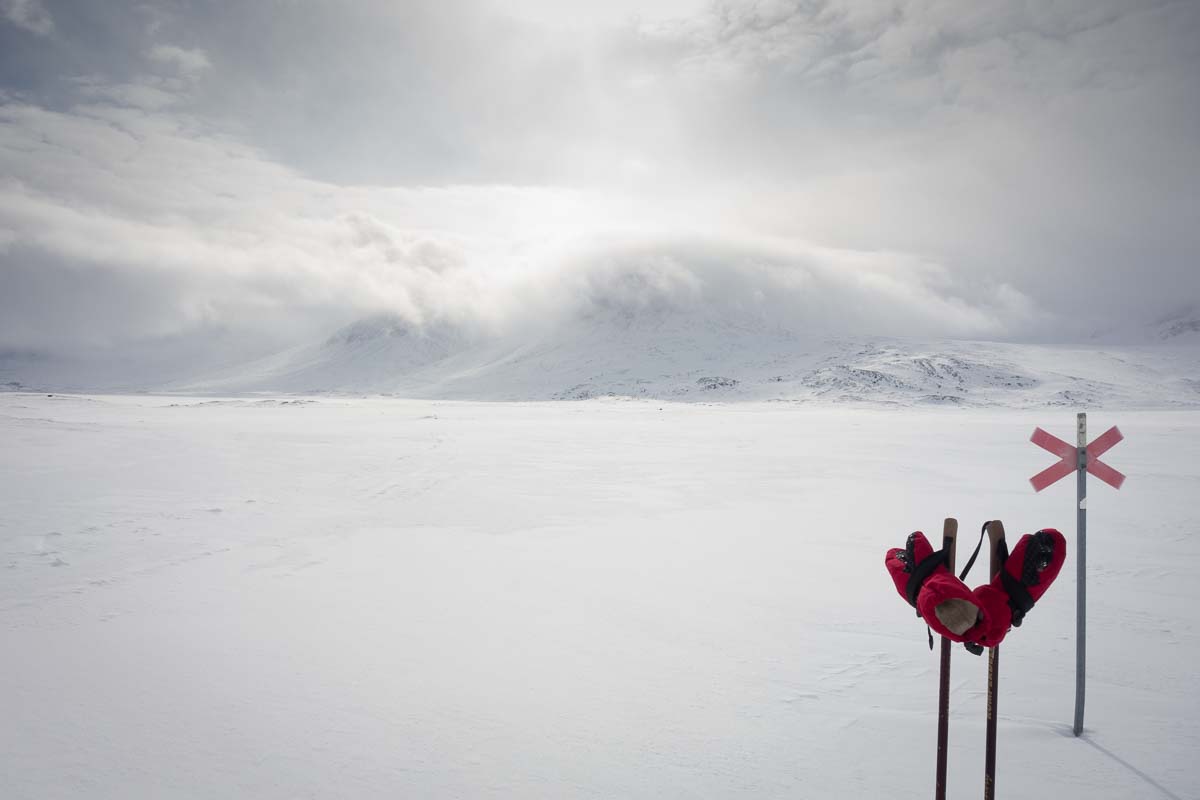
Up from Abiskojaure lake into Garddenvaggi valley, then on alongside lake Alesjaure. At the time I didn’t even realize there was a lake there; I only discovered it on a map afterwards. Sparse birch forest to begin with, endless expanses of softly undulating snowy hills later in the day.

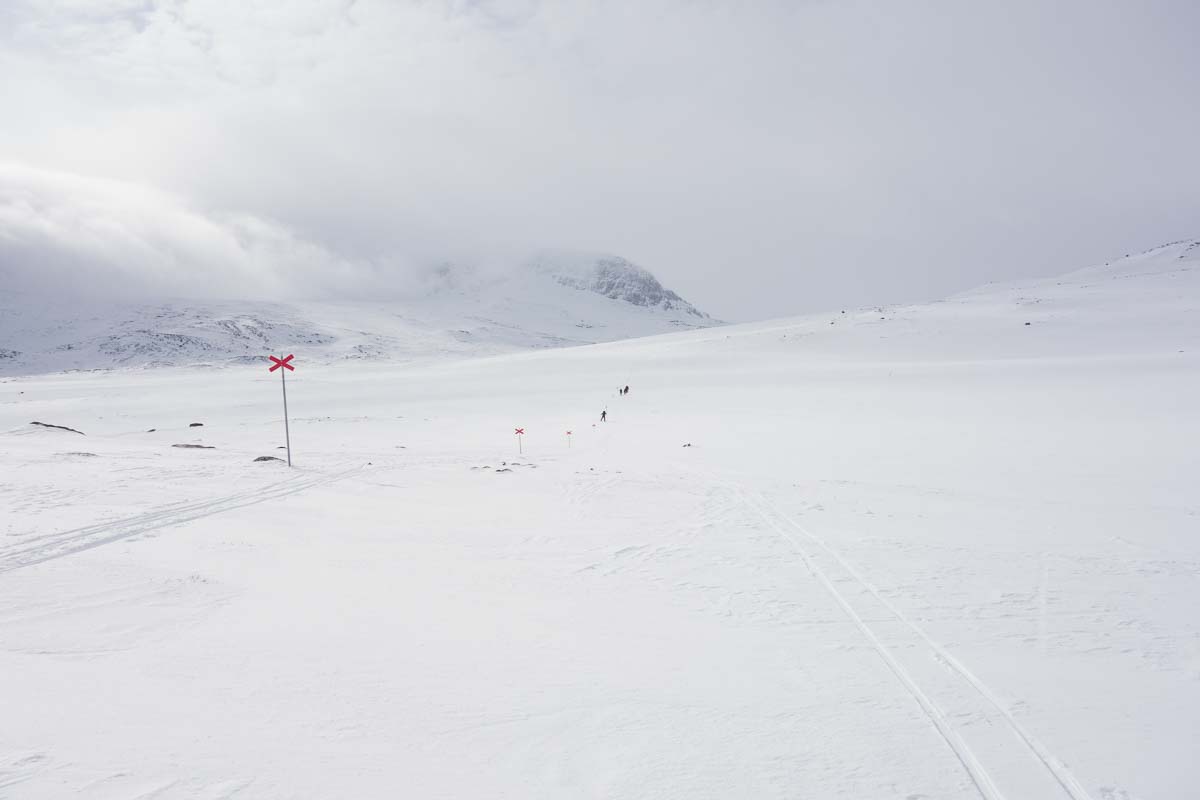
The winter route of Kungsleden is marked by red crosses on posts. (The summer route is not the same because of rivers and lakes.)

After a full day out in the snow, tired and hungry, the hut is a welcome sight. The STF (Swedish Tourist Association) huts are comfortable in a homey, rustic way. Most huts are actually a multiple huts: one for the host and a few for the guests. Plus a few other important buildings: a shop/reception, a sauna, a woodshed, and loos.

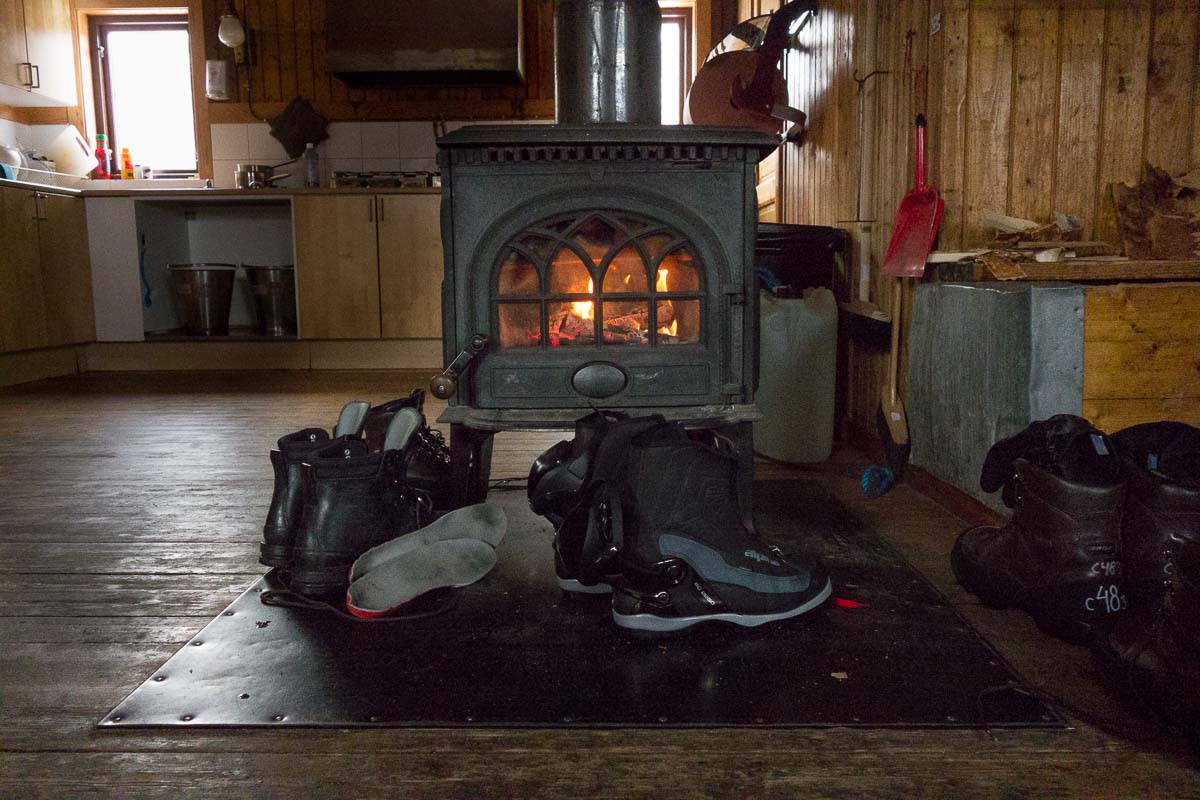
The guest huts have dorms of various sizes. Our group of 9 fit nicely into the 10-bed rooms which seemed to be standard. Each hut also had a kitchen, and often a drying room for clothes and boots.

Much of hut life is rustic and low-tech. There is no electricity. Huts have wood-burning stoves for heating and gas stoves for cooking. Water is fetched in large plastic jerry cans from an ice hole in the river or lake.

But there are small islands of surprising modernity. The shop/reception hut has a solar panel. This, together with a parabolic antenna, is used for two important purposes: (a) the host can communicate with the outside world, and (b) the host can accept credit card payments in the shop. No kidding.

There is a strong environmental awareness. Garbage is recycled even more religiously than I do at home. Whatever garbage has to be taken back to civilization goes down on snowmobiles only, and only on the return leg of restocking journeys, so there are no wasted trips.

The loos always seemed to be at the top or bottom of an icy hill, which made night-time loo trips extra exciting. An unexpected luxury in the loos was styrofoam loo seats. What an improvement over sitting on an ice cold wooden seat!

Train from Kiruna to Abisko tourist station. Rent skis. Ski from Abisko to Abiskojaure hut (15 km).
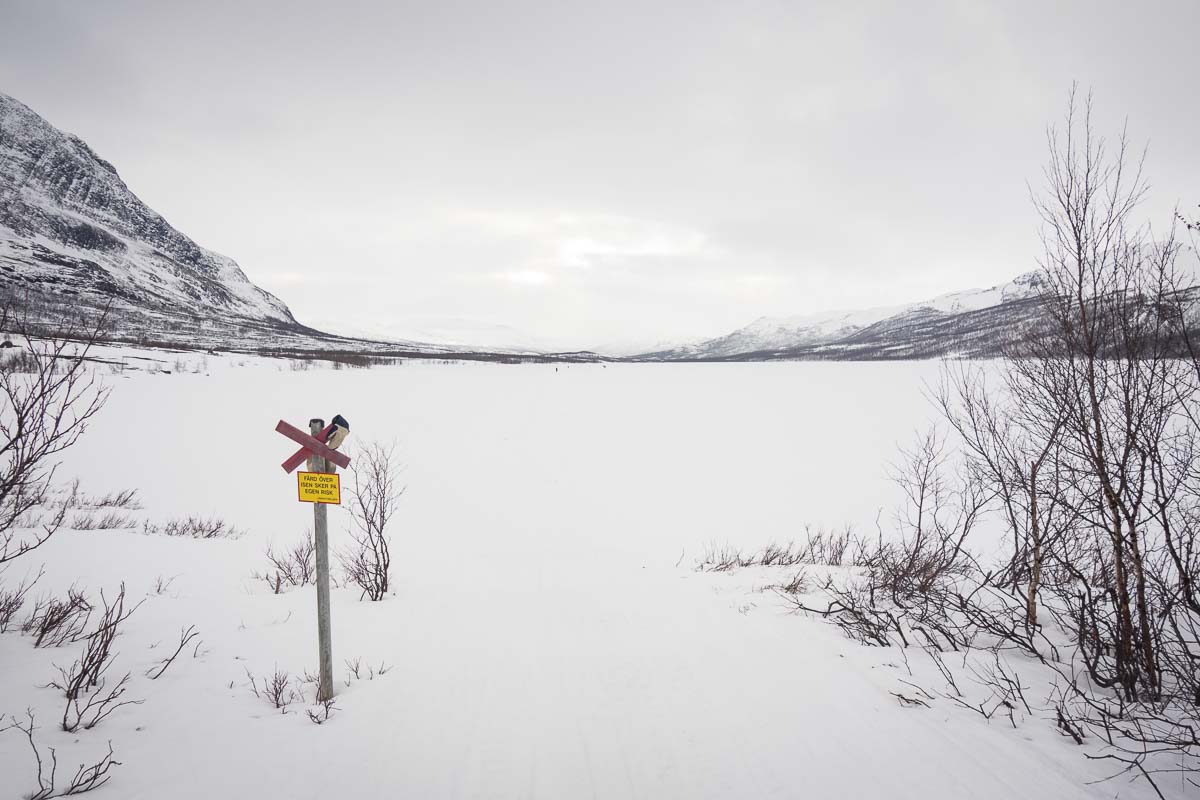
“Färd över isen sker på egen risk” / “Crossing the ice is at your own risk”

Leaving behind yesterday’s red planks, today we equipped ourselves with proper skis from the ski rental at Abisko tourist station (except those of us who brought their own). By the time we were done, it was already time for lunch. (Abisko tourist station serves great lunch, even for vegetarians, especially considering the remote location.) After lunch we packed away the last loose things, tightened the last straps, crossed the road and then we were off.

The skiing was initially as wobbly as I had expected, especially going downhill. I was quite focused on the skiing, busy trying to remember how it was supposed to feel and how my body was supposed to move, and didn’t pay much attention to my surroundings.

Snowmobiles are allowed on this part of Kungsleden, and they had been using it a lot. Especially the first half of the track was mushy and slushy and churned up – not the best to ski on. The best I could achieve was a kind of a plodding shuffle, or perhaps a shuffling plod, rather than any kind of gliding motion.

At first the trail passed through a sparse birch forest, with small hills and a frozen river. There were mountains in the distance, but nothing spectacular to look at, especially since the weather was dull and cloudy.

The last part of the trail went across the frozen lake of Abiskojaure: flat, featureless, somewhat icy – and windy. Not exciting, but (unlike most of our group) I actually liked the lake better than the preceding part of the track because I could finally put on some speed. At the far end of the lake was the Abiskojaure hut where we would stay the night.
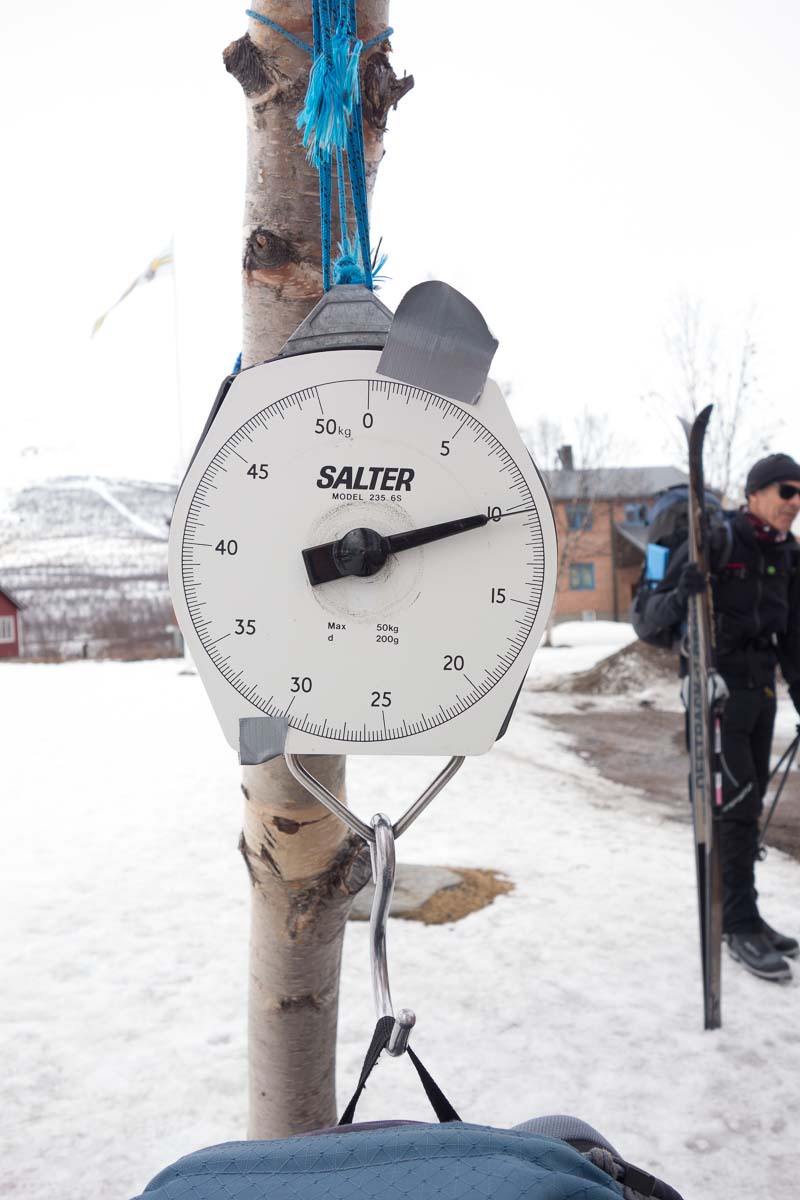
Outside the tourist station where we started, there’s a large wooden tripod with a scale for weighing your packs. We all weighed ours. Mine came in at just a smidgen over 10 kg. It was the second lightest pack in our group, which was a very good thing since I was the weakest skier. And it was the smallest one too: I got it all into my 35+8 litre rucksack.

I could have lightened the pack some more, but not by much, if I had been a more experienced hiker/packer. The heaviest two things in my bag were my thermos flask and my shoes, and there was no leaving those behind. But I could have left behind some other things:

  • Soap. Outside I was wearing gloves or mittens all the time and had no opportunity to get my hands dirty. Indoors in the kitchen there was water and kitchen paper rolls. There was even hand sanitizer in the loos.
  • Extra meals. I brought two freeze-dried meals in case any of the huts didn’t have vegetarian food. That was not a problem, but I ate the meals anyway because some days I was just too hungry to wait for dinner. But I need not have brought my own; I could have managed with something tinned or a packet of noodles from the hut shops instead.
  • Extra tops. The wicking tops didn’t get too smelly even after several days of use; I could have managed with just two (one for skiing, and a clean dry one for evenings).
  • The thick fleece top. A thinner, lighter one would have been enough.

Beyond that, I’d be cutting into things like shampoo and toothpaste, clean underwear and fresh socks, which I could have survived without but would really have missed. I want my hiking vacations to feel like vacations, not a week of deprivation. For this reason, there was some heavyish stuff in my pack that I will not leave behind next time either.

  • Raw Bite or other trail snacks. They are rather heavy, but I see no good alternative. All the manned huts did have shops with tinned food and pasta and such. They also stocked potato chips and peanuts, chocolate, sweets, soda and beer – but nothing that I would describe as a healthy snack. A Snickers bar is not a snack.
  • A Kindle. There is nothing to do in the huts in the afternoons. Most huts had some books, but it was all boring Swedish detective stories. Some people played solitaire for hours each afternoon. I got through two whole books on the Kindle I borrowed from Eric, plus one paper book in one of the huts. I would have been bored out of my mind without it.

There was only a single thing that I didn’t bring but wish I had.

  • Extra camera battery. Normally the battery lasts a long time, but in the cold up there it ran out unexpectedly fast. It didn’t even last me half the usual time.
In the years before kids, Eric and I used to go on hiking vacations together. There was one company that we particularly liked to travel with, or to be really honest, one favourite guy – John at Warthog (or more formally, Warthog Off-Grid Adventures). We did several hikes in the Pyrenees together with John, climbed Via Ferratas in the Dolomites, and even Kilimanjaro. (All done before the blog, so don’t go looking for any photos.)

Then kids came along. We did one hike when Ingrid was small, on Gran Canaria, with her in a sling. She grew, though, and could no longer be taken along on a hike almost like another piece of luggage. And then Adrian was born, and hiking receded even further from our lives.

For eight long years, hiking has been a distant dream. But now finally both kids are old enough join us on shorter hikes. We go geocaching now and again, after all, and that is hiking in everything but name. For this summer we have a week-long hike planned for the whole family in southern France.

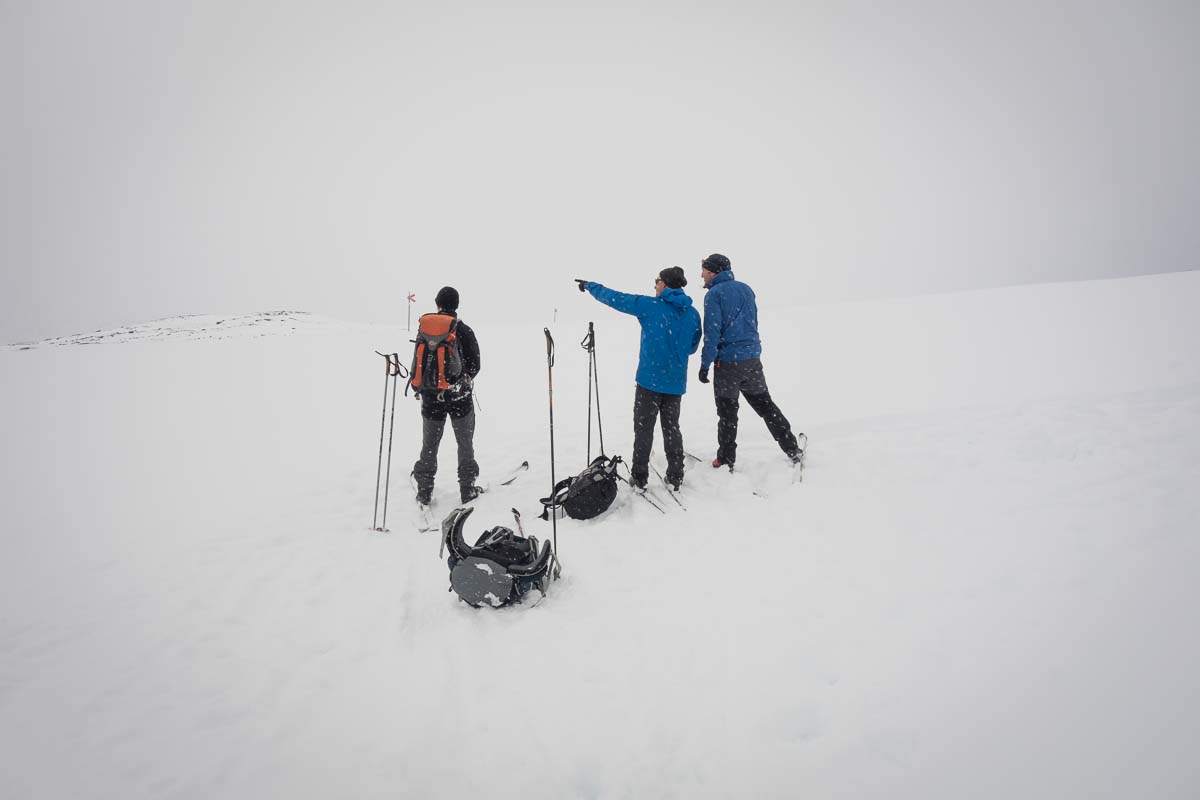
But I couldn’t quite wait that long. When an email came from Warthog about a week-long skiing tour in the north of Sweden in April, I signed up in a jiffy. How hard can it be?

Quite hard, actually. I’m reasonably fit, but it’s been eight years since I did any serious hiking, with an actual pack to carry. And I haven’t done any cross-country skiing since I was a child. I knew of all of that, and I knew the rest of the group would be strong and fit. I expected this to be hard work. It was. It was just barely on the right side of the fuzzy line between “hard but fun” and “so hard it’s no fun anymore”.

The trip lasted eight days, with six days of skiing and two days of transportation etc. Our route: Abisko – Abiskojaure – Alesjaure – Vistas – Sälka – Kebnekajse – Nikkaluokta. It just so happens that the Swedish Tourist Association has this very same route described and mapped on their web site, because it is one of the most popular ones. Here’s their map of the route:

Sunday was day 0. No actual skiing was planned for this day, just making our way to Kiruna and getting the group together. However there were two guys in the group who had never skied before, and I joined them for a brief refresher course in the evening: on a pair of wonderful antique Swedish army skis, effectively two red wooden planks with bindings. It all felt a bit wobbly.

(No, I am not skiing on those all week. I’ll be renting a pair of proper skis.)

I am behind with my daily photos, and I will be falling even further behind because I am now leaving for a week-long winter hike in the north of Sweden. I don’t expect there to be any Internet access up there so any photos will have to wait until I’m back.


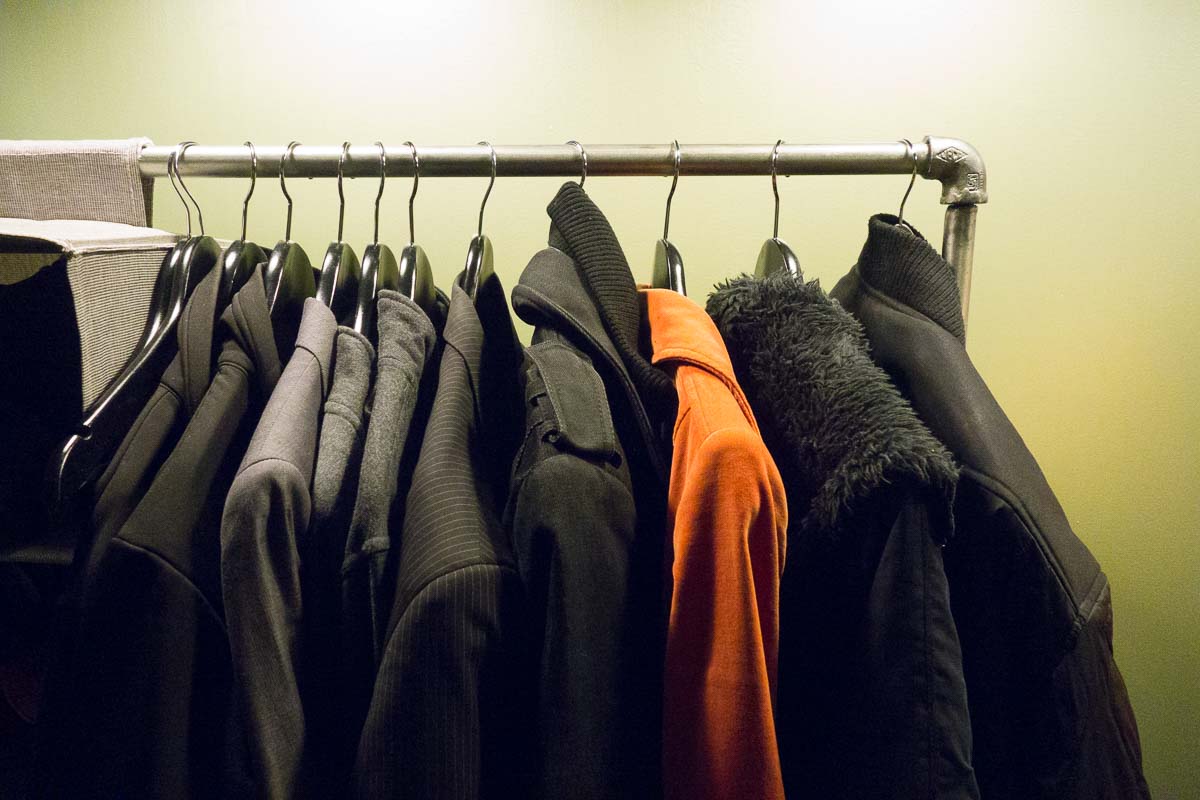
Guess which one is mine.

It’s orange and pretty and soft. But it’s wearing out and beginning to look rather ragged. Today it got caught on a door handle and I ripped one of the buttonholes pretty badly. I will have to find a new coat somewhere. I am not fond of clothes shopping at the best of times, and I am extra not fond of clothes shopping when I really need to (or believe I really need to) buy something, and all the options are crap.


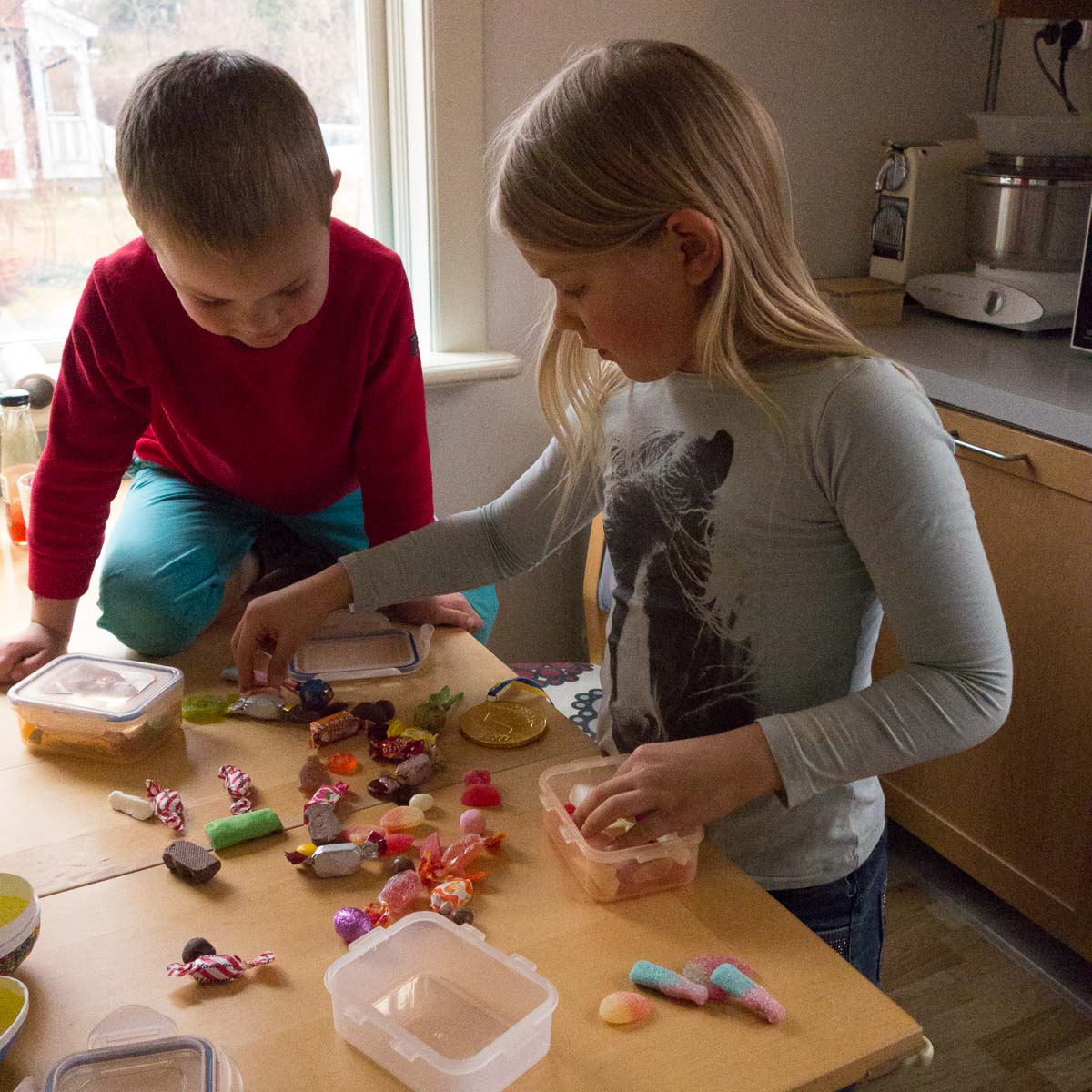
After Christmas, Easter, a disco, some birthday parties, and other already-forgotten events, Ingrid’s stash of candy is overflowing. Whenever she sets out to eat one, she pours them all out on the table and then picks among them to find one she wants.

Enough is enough! Now she has them all sorted into little boxes, by type: chocolatey candy, marshmallowy candy, sour candy, and I forgot whatever else.

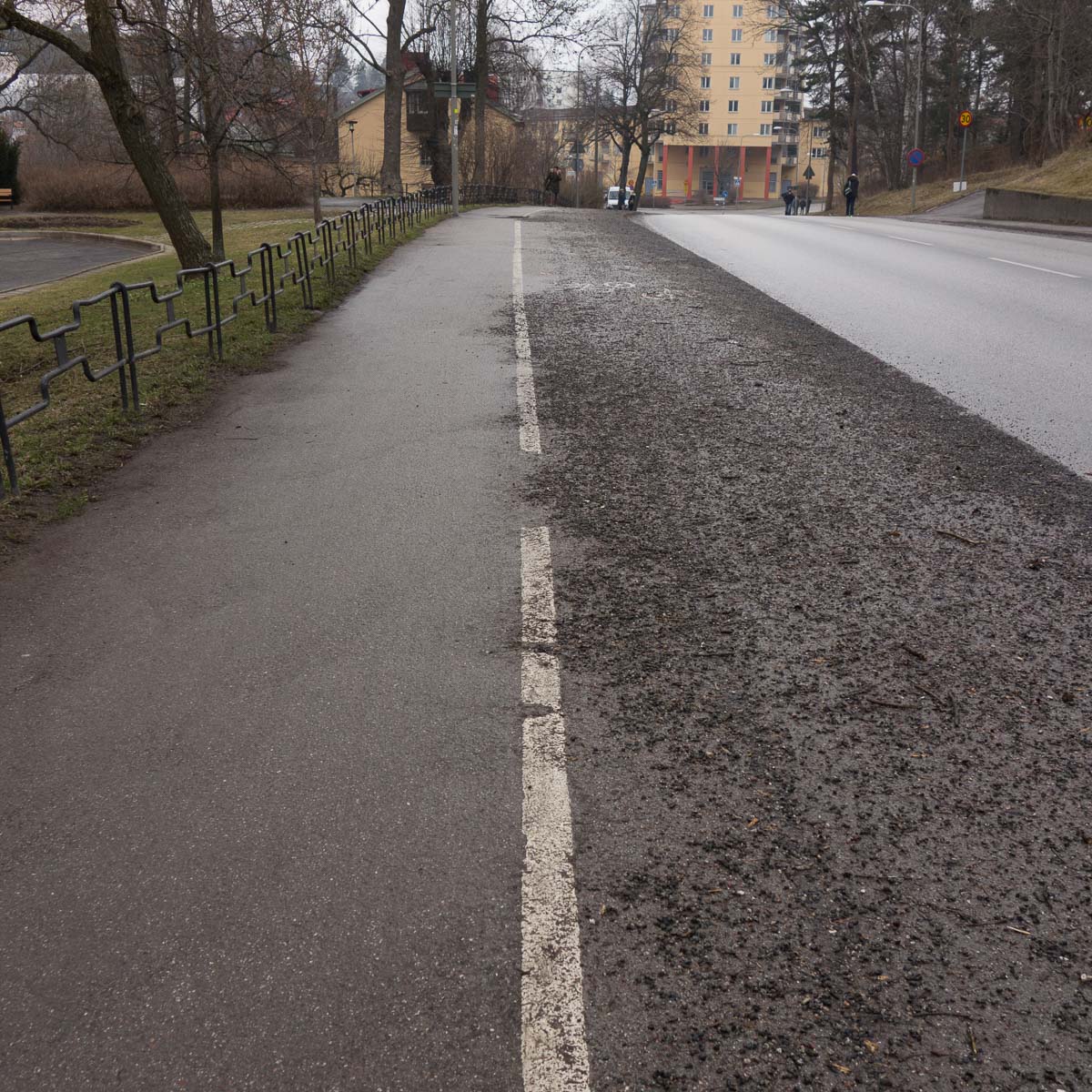
Spring. Sidewalks get swept and winter’s gravel gets collected and removed. I wonder what the plan was here, though: half the sidewalk has been cleared but not the other half. Do the street cleaners expect gravel to politely not cross the white line?

This year’s big project around the house and the garden will hopefully be a new retaining wall around the yard.

There is a sort of a wall there now, made of old railway sleepers. It was mostly rotten already in 2008 when we bought this place, and it has of course not grown any better since then. Some of the sleepers have crumbled, others have fallen down. There was a large birch tree (now gone) growing right through the middle of one of the sleepers.

Initially there was a diagonal lattice fence there as well, also rotten and falling to pieces and with sections of it missing. In fact the fence only stretched along two thirds the wall; the rest had probably disintegrated and been removed. We removed the rest of it in 2010 because it was in such bad shape and had large rusty nails sticking out here and there.

2008

Inside the fence there were the beginnings of a hedge of alpine currant, quickly getting smothered by grass. We dug away the grass sward and put in some edging, pruned and fertilized and watered the hedge, and it grew nicely. Then it grew some more and then yet a bit more, and now it is wild, uneven and out of control.

Alpine currant is supposedly suitable for a free-form, unclipped hedge, and that’s what I was hoping to have here. A formal clipped hedge doesn’t fit the style I have in mind for our garden. According to sources, its mature height is supposed to be 100 to 150 cm, which sounded pretty good. But ours has grown way taller and wider than I had imagined, with the most vigorous parts definitely at the top of that range, and more. I guess it likes the conditions here.

Even though we have pruned it several times each season, the hedge is also overgrown and has collapsed in some parts under heavy winter snow, especially those parts that get a lot of sun and grow fast. All in all, it is in a sorry state. We need to cut it down to the ground and start over, pruning it even more often. But I don’t much like that plan: a clipped hedge is not what I want, and I also don’t particularly fancy the idea of being forced to prune the hedge on such a strict schedule or else face a repeat performance.

But now since the wall will get torn down anyway, and trying to build a new wall without damaging the hedge would be difficult and expensive, the decision was easy: the hedge goes. We get to start over and choose new bushes that will cooperate with my plan for a flowering, unclipped hedge, and not grow more than waist high.

I am somewhat annoyed that the previous owners of this garden planted a new hedge behind a rotten, crumbling wall, so obviously near its end of life. All of the work of planting the hedge and caring for it now gets thrown to the compost heap. But replacing the wall is an expensive project (as I am finding out) so I can understand why they did it.

2009

2010

2012

2015


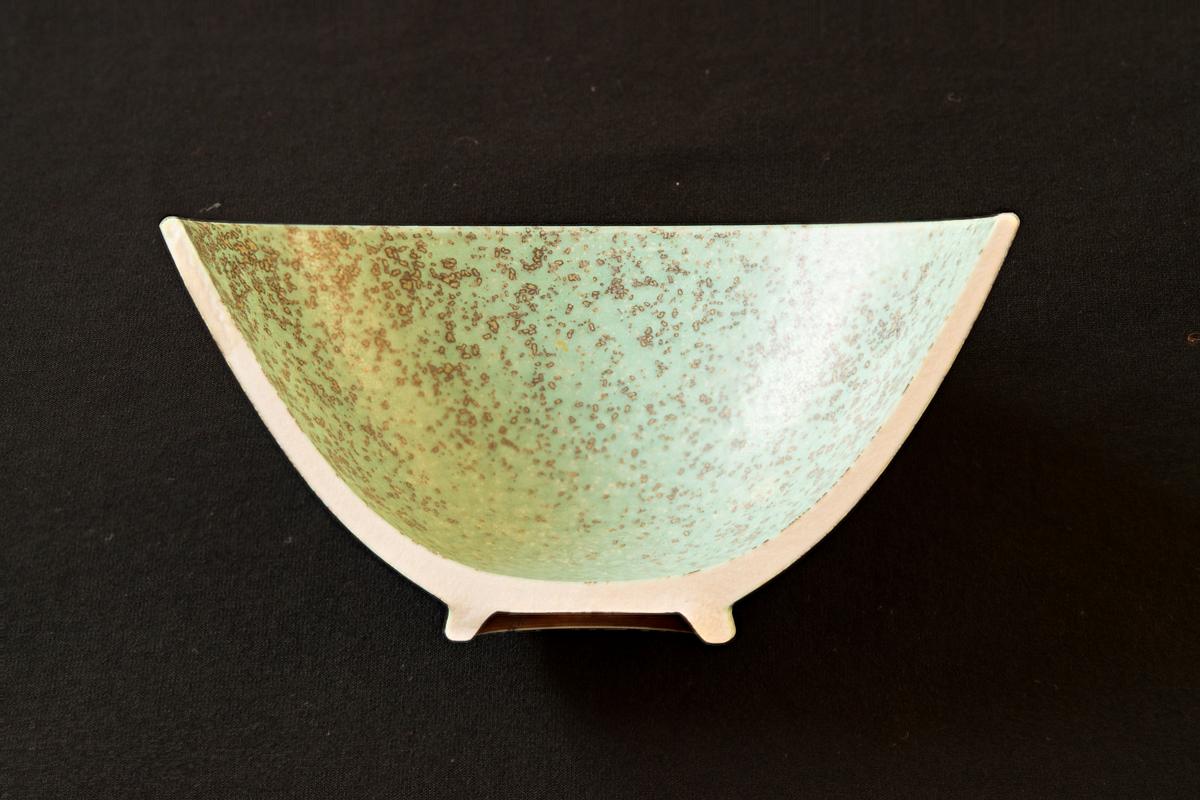
I broke my favourite bowl.

Luckily it broke in half very cleanly, so I can probably glue it together and it will look almost as before.

I broke another favourite bowl some while ago. That one was also small and green, and a souvenir from our Beijing trip. Now I have no more favourite small green bowls, so I think I will start looking for a new one. Or maybe two or three, so I have some to spare in case I break those too.

This one was designed by Gunnar Nylund for Rörstrand, and is probably from the 1940s. I have been trying to find out more about it so I can maybe replace it, but haven’t been able to find any similar bowls on the internet.