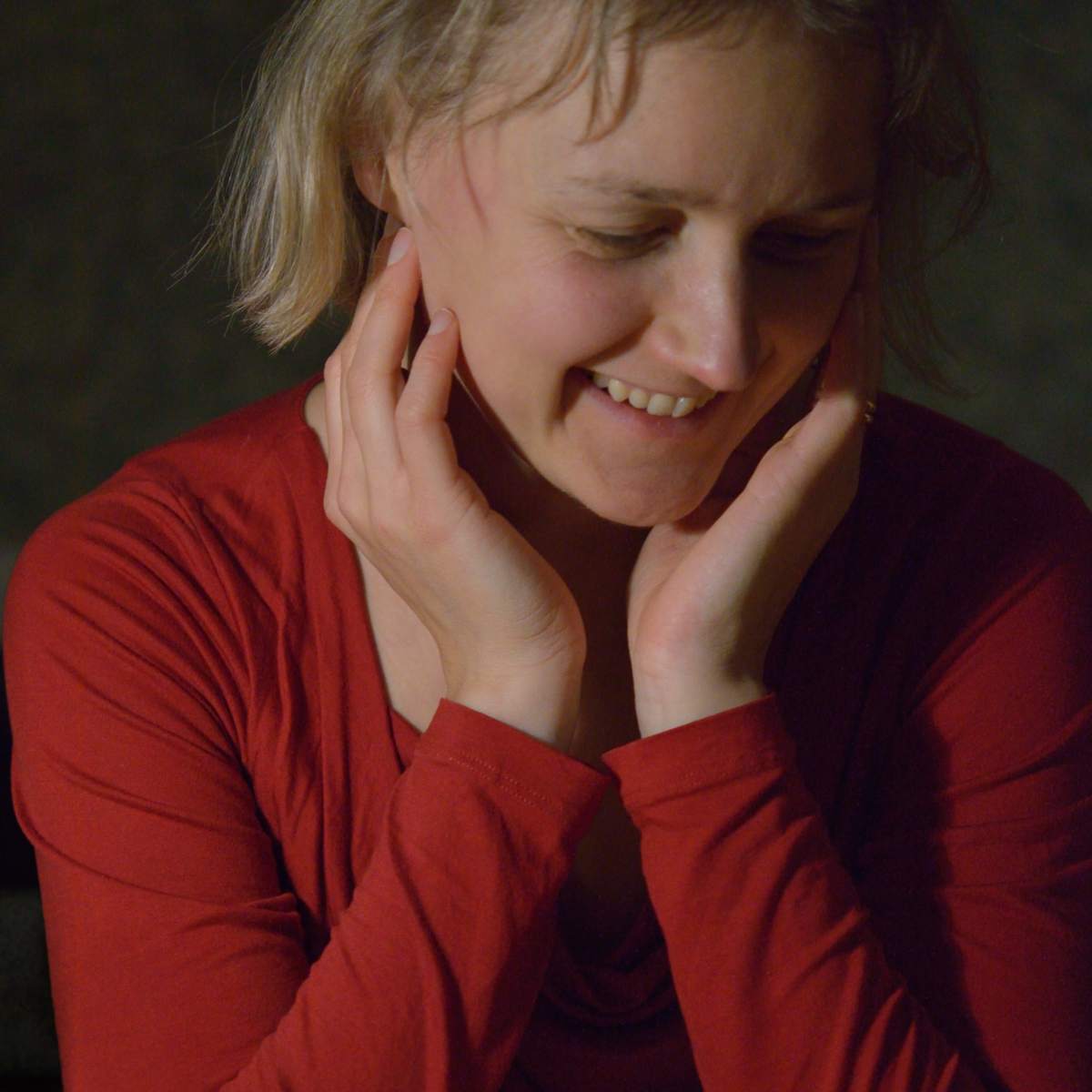
It is difficult to get a self-portrait with a genuine smile. I might achieve a slight smirk at best. Luckily Ingrid came by and helped me.
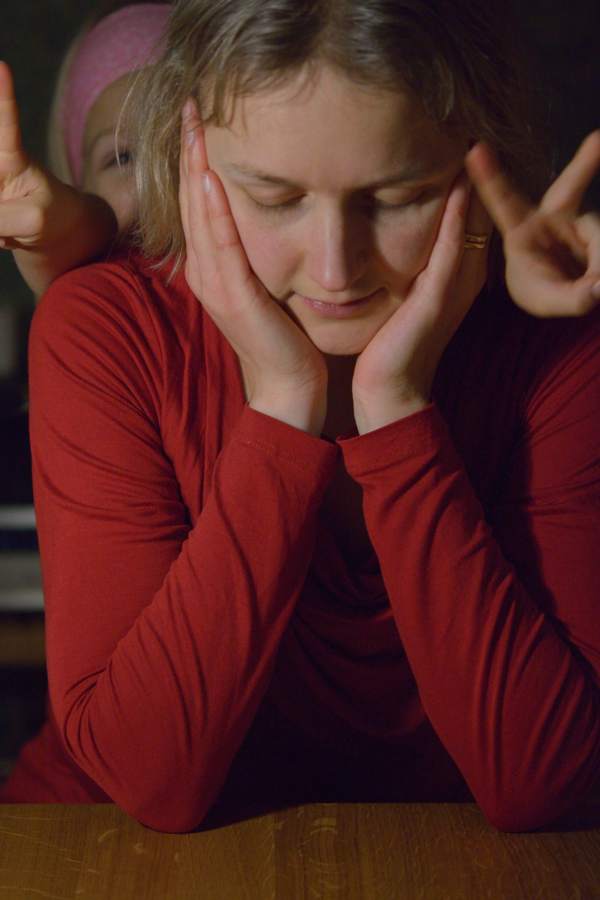
Bring Up the Bodies is the sequel to Wolf Hall.
By the end of book 1, king Henry VIII had freed himself of his first wife to marry Anne Boleyn, and incidentally also cut off the Church of England from Rome. By the end of book 2, his marriage with Anne Boleyn is over, after just 3 years.
Bring Up the Bodies covers a shorter time period (about a year) and so it is shorter and tighter than the previous one. It also has a rather different mood. Book 1 is about growth and becoming and arriving – Cromwell coming from nowhere to become Master Secretary to Henry VIII, Anne becoming queen. Book 2 is about revenge, unmaking and downfall. It is a tense book, full of fear and anxiety.
There is a feeling of inevitability: you know that the queen is doomed, Cromwell knows that the queen is doomed – it’s just that she herself doesn’t know it yet. Her relentless drive to marry the king is what leads Henry to break with the Vatican; her equally stubborn refusal to let go of him leads to her death, and others’ death too.
Anne really is framed as a villain here. But the picture we get of Cromwell is not much better. He almost seemed like a nice guy in book 1. He took care of his family and household, he was loyal to his master, he helped the poor. But while he is still nice and charitable and generous, another side emerges: Cromwell as a ruthless, calculating, vengeful man of expedience, serving no one except the king and himself, not hesitating to condemn men to death because it suits him.
It’s all about business, and not much about his personal or family life – he doesn’t have much family left, after his beloved wife, daughters and sisters all died in book 1. He gets close to no one. I was about to say that he treats everybody as chess pieces rather than human beings – but at the same time he uses their human frailties, their humanity, against them, to serve his purpose.
When the king needs men who are guilty, Cromwell produces some – not necessarily those who are most guilty, but those whose guilt is of most benefit to him. The law becomes a tool not for the good of the realm, but for furthering his personal aims. Only success matters. And because he is an excellent lawyer, clever and manipulative, he achieves it, seemingly without much effort.
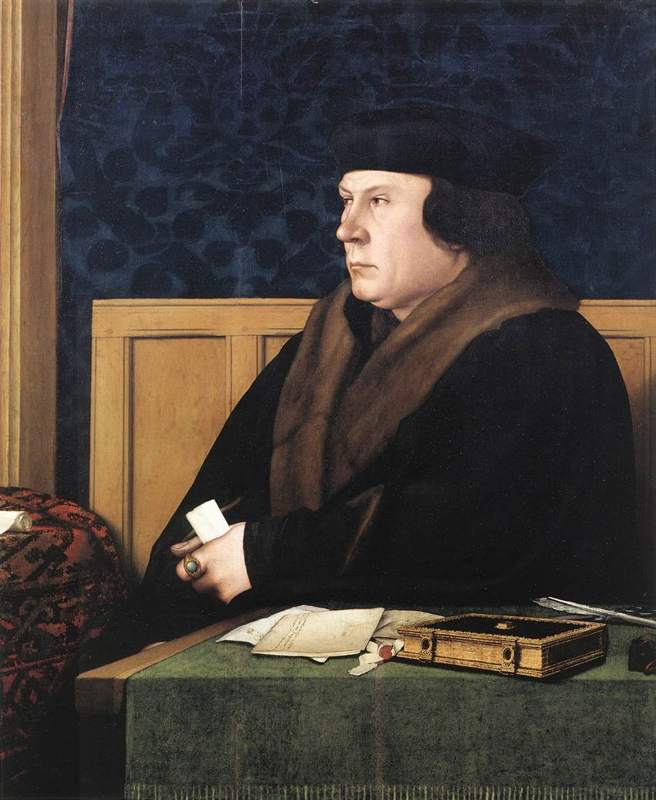
Hans Holbein’s portrait of Cromwell hangs in his house. Several times he jokes that Holbein makes him look like a murderer. But it seems he never thinks that he might actually be one – because he has the law on his side. And neither do we, really, because he is still such a likeable man.
Effectively the book frames the trial of Anne Boleyn (and those accused of adultery with her) as Cromwell’s personal revenge on those who brought down his master, cardinal Wolsey. Which is apparently not really in accordance with historical fact. And I don’t much like this idea as fiction, either: it gives Cromwell too much power, makes him too much of a “godfather” pulling all the threads, and wraps a complex series of events into a simplistic package.
But that’s a minor quibble. Bring Up the Bodies is still an excellent book, intense, beautiful, magnificently well written. I just loved it a teeny bit less than the previous book.
One good thing about reading prize-winning books is that lots of clever people write insightful reviews about them. If you want to find out more about this one, you might want to see what The New Yorker, The Globe And Mail and The Guardian have to say.
Mine.
My mother’s:

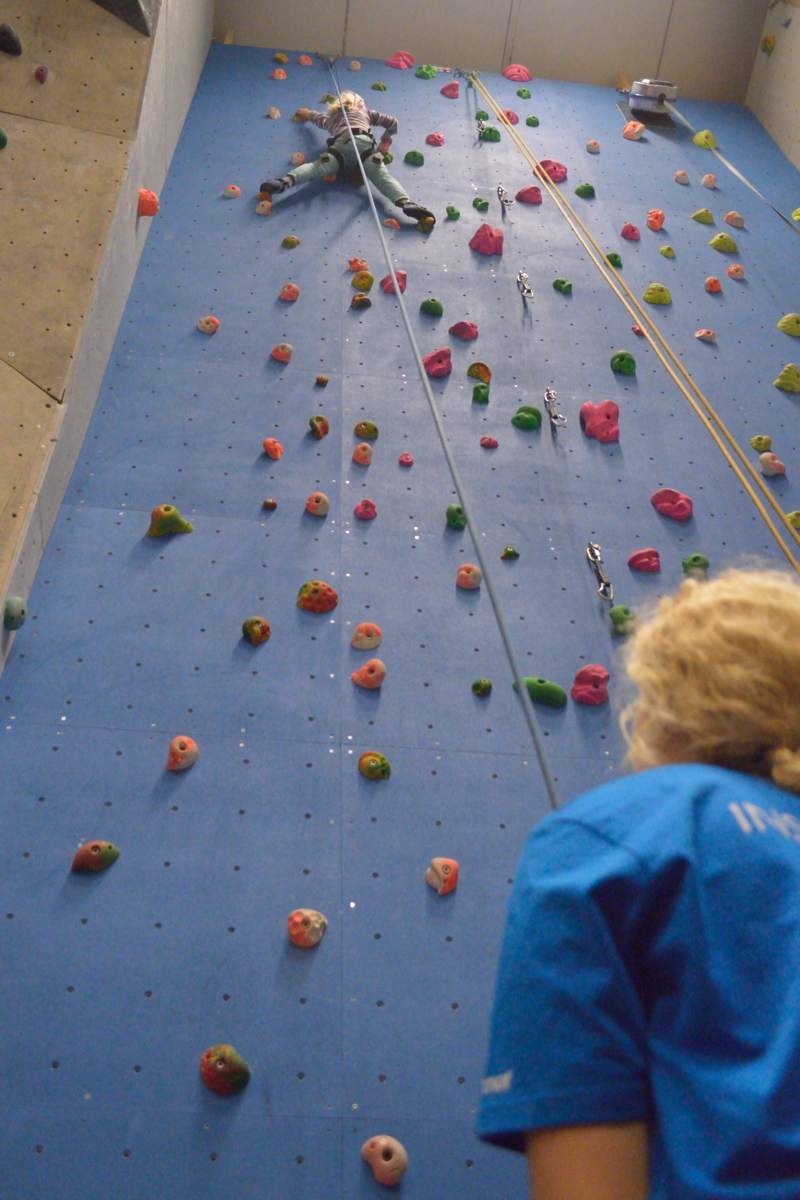
A few days ago Ingrid and I went climbing, at an indoor climbing centre.
Ingrid had been climbing once before with her class at school. Last spring maybe? She liked it, and has been asking to do it again since then. I have never done any climbing indoors, but Eric and I took several scrambling and via ferrata vacations back in the days before kids.
We started out on the beginners’ wall for some warm-up and then gradually tried harder trails, with a bit of overhang and sparser handholds.
Ingrid took to climbing like a fish to water. She is strong, has great balance and coordination, and no fear of heights at all.
Interestingly, it looked to me like each trail was about the same difficulty for both me and her. I’d have thought that she would have to work harder since her reach is shorter. But I guess that I just reached for the next handhold further up, while she reached for something at the height of my chin or something.
Ingrid has been in a sporty mood recently. We’ve been going skating a lot, sometimes daily. For the spring term, Ingrid’s signed up for more swimming, but she also wants to start judo again, as well as riding. (She did family judo when she was younger but then took a break. Horseback riding is a new one; she tried it this summer and adored it, so now she will be trying it for real.)
Three sports activities every week sounds ambitious… we’ll see if we can keep it up.
Achievements:
- I started learning photography for real. Switched to manual mode on my camera, joined a photo community and took courses. I’m extra pleased that I have started taking self-portraits.
- We finished digging out the slope of weeds and built a retaining wall instead. Did I post any photos of this? No? I guess I’ll have to do that next year when we fill up with fresh earth and plant stuff there.
Events I will remember:
- Our trip to Tenerife, the first time we travelled to a new place since Adrian was tiny.
- Our visits to Astrid Lindgrens Värld and Gröna Lund, where Ingrid and I had some fun rollercoaster rides.
Memorable non-events:
- The rat in our yard.
- Upgrading to a fresh new MacBook Pro.
| Newer posts » |
