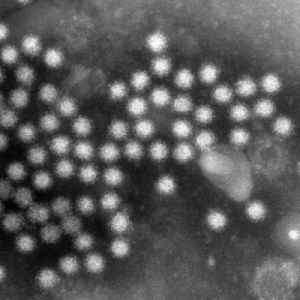
I’ve concluded that the bug we had was the notorious winter vomiting virus (vinterkräksjukan) which I had previously only known by name. It is also known as viral gastroenteritis, acute nonbacterial gastroenteritis, and (colloquially) stomach flu. The WVV is apparently distinguished from other stomach bugs by the very sudden onset of symptoms (vomiting and diarrhea, plus sometimes stomach pains and low fever). Symptoms last 1 to 3 days and clear up on their own. The disease is most common during November to April (here is a chart of reported cases in Sweden), hence the popular name.
The WVV is caused by caliciviruses / noroviruses and is highly contagious. The Swedish health advice service says that 10 to 100 virus particles is enough to infect you. The virus spreads through direct or indirect contact, not through air – washing your hands is the best way to try and avoid it, but in practice it makes little difference and it is almost impossible to avoid the virus, says an expert at the Swedish Institute for Infectious Disease Control. The incubation time is 12 to 48 hours, and you’re still spreading the virus up to 2 days after the symptoms disappear. There are many different strains of norovirus and immunity is short-lived, so even if you’ve just had it, you can get it again.
The Swedish NetDoctor site says that about four-fifths of those who come into contact with the virus catch it, but one-fifth don’t. And it’s not because they have developed resistance due to a previous infection – it seems to be a genetic thing. Apparently we are among the four-fifths.

Leave a comment